Archive

Tag Archives: bach

David Attenborough on Desert Island Discs with host Kirsty Young in 2012

One of the longest running radio shows is Desert Island Discs, which has been on the BBC since 1942. It is often said to be the second longest-running radio show after the Grand Ole Opry, which cranked up in 1925, although a few critics have discovered some obscure programs in foreign climes that may have been on longer, and there’s also the British Shipping Forecast which began in 1861, before radio was even invented, and first disseminated via telegraph before switching to radio in 1924. 

On Desert Island Discs, prominent people, whether politicians, entertainers, sports stars or academics, are asked to choose eight recordings they would take with them to the proverbial desert island, and place them in the context of their lives. Since the 1950s, they have also been asked to name a book, other than the Bible or Shakespeare, they would also take, and later still, adding on a “luxury item” they couldn’t live without. 

Nearly 4,000 episodes have been broadcast, with some predictable results. The music most often mentioned is Beethoven’s Ninth Symphony, and the luxury item most chosen is pen and paper, or “writing materials,” although Tom Hanks specifically mentioned “a Hermes 3000 manual typewriter and paper.” 

Many of the archived broadcasts can be heard from various online sources, and you can learn, for instance, that Alfred Hitchcock’s book choice was Mrs. Beeton’s Household Management, and his luxury item was “a continental railway timetable.” Some of the choices were equally eccentric. Oliver Reed wanted Winnie-the-Pooh to read and “an inflatable rubber woman.” Actress Janet Suzman wanted a “mink-lined hammock,” and Hugh Laurie asked for an encyclopedia and “a double set of throwing knives.” His long-time double-act partner Stephen Fry wanted a PG Wodehouse anthology and a “suicide pill.” 

My favorite, so far, is John Cleese, who asked for Vincent Price’s cookery book and “a life-size statue of Margaret Thatcher and a baseball bat.” 

One of the inevitable by-products of such a format is the urge to create your own list. And so, I have my own. 

I grew up in New Jersey in a family largely indifferent to music. What music there was came on TV in such variety shows as Perry Como or Dinah Shore. When I was little, there was a small portable record-player on which I played children’s songs, but I don’t count any of that. “Fire, fire, fire, raging all about. Here come the firemen to put the fire out.” 
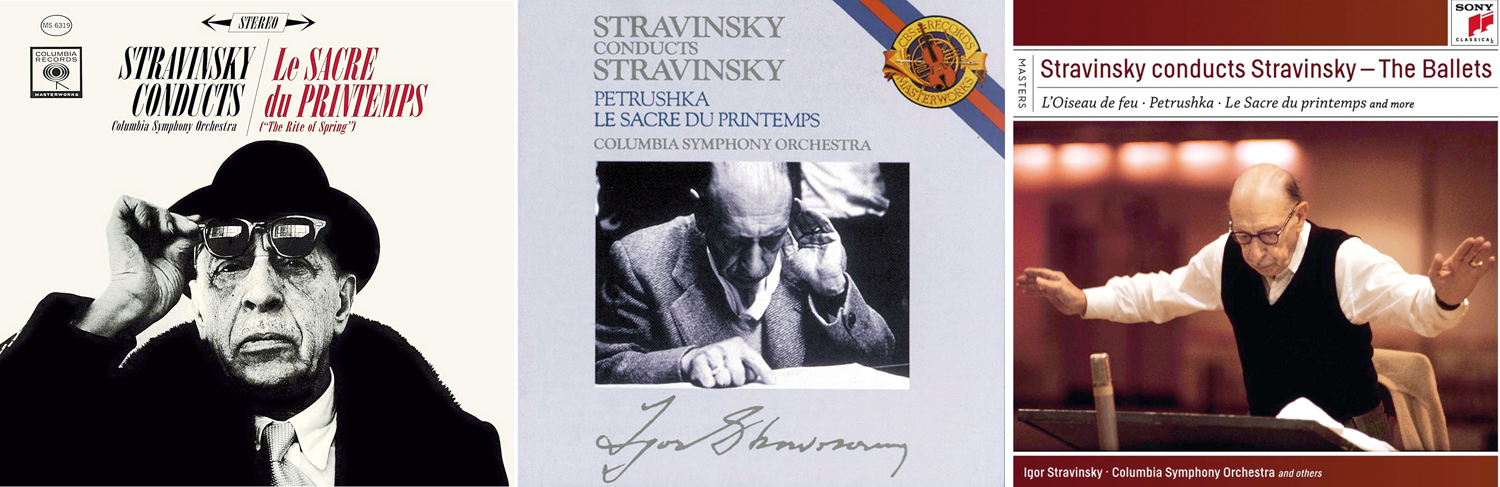
My musical education began in high school when my first serious girlfriend played music on the phonograph while we spooned on the sofa in her parents’ house. She went on to become a professional bassoonist and was studying at the time with Loren Glickman, who played the difficult opening bassoon solo on Igor Stravinsky’s recording of his Rite of Spring. I hadn’t known such music existed. It was mesmerizing. Who knew it was great make-out music? And so, that is my first choice for my desert island disc. 

There have been hundreds of other recordings of that music, and a few, perhaps, more exciting or primitive than the composer’s own, but that recording has never been out of print and comes in many versions, from LP to 8-Track to CD and now, streaming. As an introduction to classical music, I could hardly have done better — dive into the deep end. 
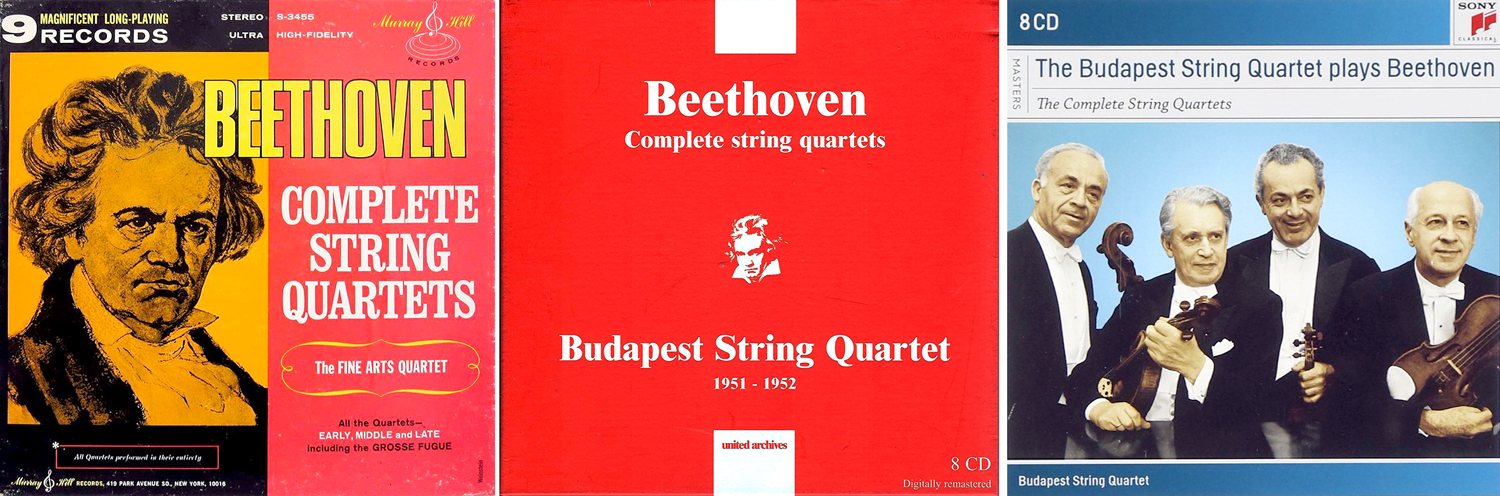
When I got to college in North Carolina, I made the acquaintance of Alexander Barker, who has remained my best friend for 60 years. He was as enthusiastic about classical music as I was and we spent hours in our dorm rooms spinning LPs and introducing each other to music that was our favorites. We were, of course, very serious about great music, as only college students can be, but we knew Beethoven’s string quartets were as serious as you could get. I bought a budget-line set of the quartets, by the Fine Arts Quartet on the off-brand Murray Hill label, and one evening, we started with Opus 18, No. 1 and played through all 16 of them, plus the Grosse Fuge, in one marathon session. (We later attempted the same thing with the piano sonatas, but gave up in exhaustion and the need for sleep by the time we hit the Hammerklavier.)

I have not been able to find a CD version of the Fine Arts Quartet set, but I found much better-played versions later on. I have owned a half-dozen or so complete sets of the Beethoven quartets, and as many of just the late quartets, but on the desert island, I would take the original mono versions by the Budapest String Quartet. They redid them later in stereo, but I like the earlier set better. I could have chosen the Guarneri, or the Tokyo or the Emerson, but I still think the Budapest have the measure of them best.
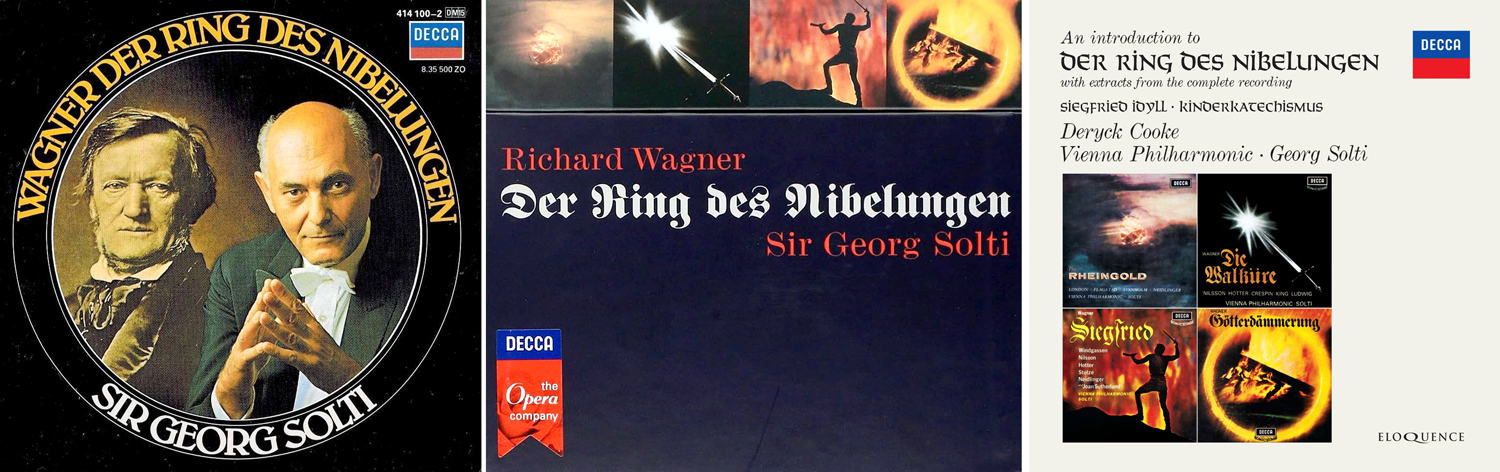
If you have the earnest seriousness of youth, you will eventually get into Wagner. After college and after a failed first marriage, I was living in North Carolina with my favorite redhead, scratching by on subsistence jobs, and I managed to save enough money to finally buy the Solti Ring. Something like 16 hours of music subsuming four operas, it opened up a world of myth and raw musical power. Now in retirement, I own five Ring cycles on CD and another two on DVD. And I’ve attended two complete live Ring cycles (not a patch on my late friend Dimitri Drobatschewsky, who went to Bayreuth 16 times beginning just after World War II.) But the Solti Ring of the Nibelungs is still my go-to set. And with it, I must also take the Deryck Cooke explication of the cycle, An Introduction to “Der Ring des Nibelungen.” Can’t have one without the other; they’re a set.
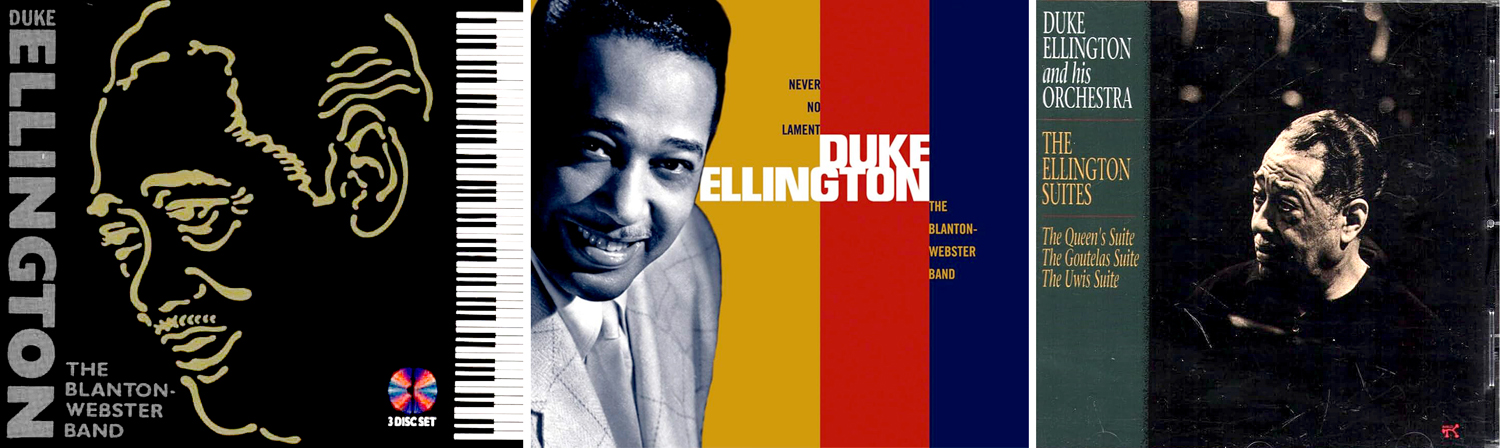
When the redhead and I split up, after seven years, I moved to Seattle and began working at the zoo, where I met a zookeeper whose hair was as blond as the sun. I fell. She had been a professional swing dancer at one time, and she played me old swing records on her Wurlitzer jukebox, which she had at her home. I had a whole new universe of music to learn about. But the one who stuck was the jazz musician closest to writing classical music, Duke Ellington. 

I still have about 50 CDs of Ellington’s recordings. There are counted several epochs of Ellington’s career, beginning with the “jungle music” of the 1920s and going through his rebirth at the Newport Jazz Festival in 1956. But most count the high point of his band and music to be those years in the early 1940s when Ben Webster was his tenor sax man and Jimmie Blanton was his string bass player. A collection of their recordings has been issued several times as “The Blanton-Webster Band.” It was the era of Take the A Train, Ko-Ko, Harlem Airshaft, and Perdido

But then, neither can I do without The Queen’s Suite, which he wrote with Billy Strayhorn in 1971, and is his most completely classically composed work. I love it. And so, I’m adding it to my Ellington entry. 

The zookeeper dumped me and I moved back to North Carolina. A few years later, I met Carole, who I married and lived with for 35 years, until her death in 2017. Marriage humanized me, and the most human composer is Mozart and the most humanistic of conductors was Bruno Walter. It was the the last years of the LP era, in 1980, and before digital took over, I found the last six symphonies of Mozart played by Walter and the Columbia Symphony Orchestra (a pickup ensemble, mostly of musicians from the New York Philharmonic). 

Walter’s Mozart remains the most humane and beautiful version of these works, which are now buried under historical-performance rhetoric and bounce along at a jog-trot, mechanistic pace. But one can still find the echt-Mozart, songful, emotional, and velvety rich, under Walter’s baton. Like all of my choices for the desert island, it has never been out of print. 
Carole and I moved to Arizona in 1987, where she took up teaching art to elementary pupils, and I began writing for The Arizona Republic as its art critic (later also its classical music critic). 

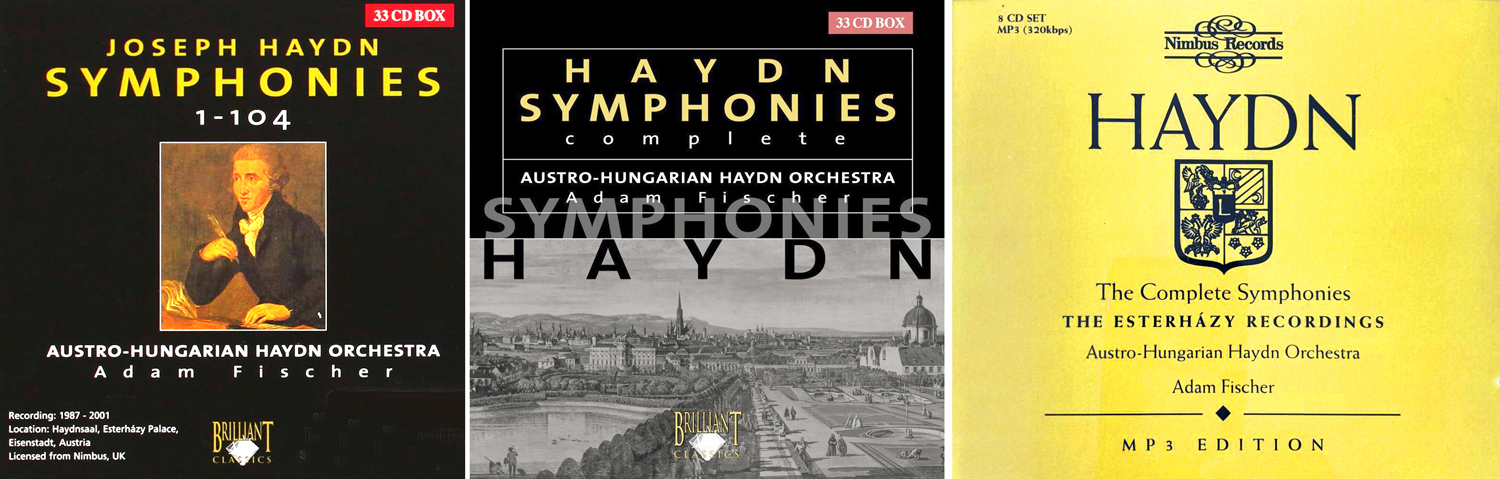
When we moved to a house at the foot of Camelback Mountain, it was a 20 to 30 minute drive (depending on traffic) to the Republic office downtown, and I found the perfect drive-time music, playing a Haydn symphony each way. I eventually went through all 104 symphonies, driving back and forth, three times, and absorbed their spirit from the Austro-Hungarian Haydn Orchestra and Adam Fischer. They have become my go-to performers for this music. I also have the earlier Antal Dorati version, which sometimes sounds like a quick read-through, and later was sent a review copy of the Dennis Russel Davies versions on Sony, which proved to be the most utterly humorless Haydn possible and I had to give them away. How can anyone misunderstand this music so thoroughly? 

When Carole died, and I sunk into grief, from which I have never fully recovered, I found myself listening with my whole being to Brahms German Requiem. I have spent the anniversary of her death every year driving up the Blue Ridge Parkway to find an old fire road into the woods, and sit quietly to Bruno Walter’s recording of the German Requiem. It is the most sympathetic, consoling music ever written. 

On Desert Island Discs, they also ask the guests to choose the one recording, above all, which they would take if everything else were not possible. And for me that is Johann Sebastian Bach’s Passion According to Saint Matthew, a three-hour musical retelling of the last days of Jesus and his death. I am not religious. (I am so not religious, I not even an atheist.) But every note of Bach’s music speaks to me on the deepest level of humanity. The opening chorus and the ending chorus are, for me, the greatest musical utterances ever penned. I’m keeping it with me.

There are many performances, and no one really does it badly, but most recordings now have been run through the historical performance wringer and the juice has been squeezed out. This is majestic and noble music, not something from a squeeze box. And the recording left behind by Otto Klemperer is the one I listen to over and over. He’s got the measure of this music. 
That leaves us a book and a luxury. People value books for, usually, one of three reasons. Either for the information they gather, or for the stories that are told, or for the prose they are written in. I fall into the last camp. I thought about Gibbon’s Decline and Fall of the Roman Empire, which is an utter joy to read, whether you care about the factual history of Rome or not. I revel in its river of words. But I read it in short segments, ultimately filling up like a rich meal and need to wait some hours before hitting the table again. And, for all the wonderful writing, there is a sameness that can creep in. 

Or I might have chosen a classic that somehow I’ve missed in 77 years of life. Many on Desert Island Discs have taken Marcel Proust’s Á la Recherche du Temps Perdu. But when it comes to monster works, I already put in my time, having gotten through The Gulag Archipelago. I no longer need to prove myself. 

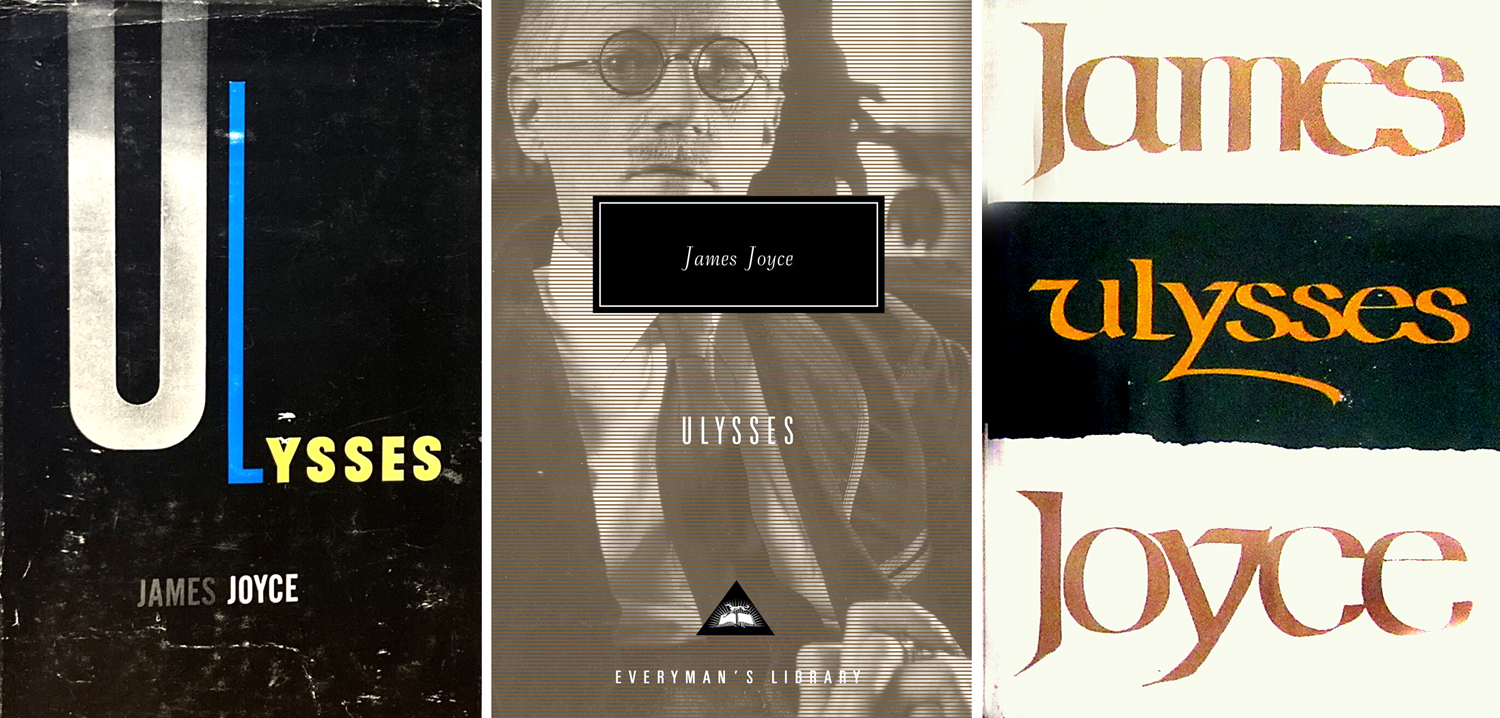
So, I have chosen Joyce’s Ulysses, the book I can read and re-read over and over, with such a variety of prose and method and such delicious words, that I don’t think I could ever tire of it. 

As for a luxury item, I had some difficulty coming up with something, because I am not much for luxury. But I have always owned a pear-wood handled Opinel folding knife. The current one sits in the glove compartment of the car, ready for anything called for. A man needs his tools.

Of course, the whole exercise is entirely pointless. There is no desert island, and with a house full of books, CDs, musical scores, and art, I don’t need to choose so parsimoniously. The whole idea is merely a pleasant game to play. 

But going through the process, and forcing myself to narrow the list arbitrarily, I come to see myself in a dusty mirror. And I surprise myself, looking back at me. 

No, classical music doesn’t all sound the same. In fact, sometimes it’s hard to find any relationship at all between the far corners of the field. What do Gregorian Chant and Karlheinz Stockhausen have in common? 

When someone complains that “it all sounds the same,” you can be pretty sure that the reason is simply lack of exposure. A sample group too small to generalize from. So, I thought, as a followup to my previous blog entry about classical music, I should try to stretch the boundaries of the subject, to stretch out the definition tightly from end to end to see how far it spreads. 

If you listen to the items on this catalog, you will find music so different as to be hard to assign a common category. 

In the previous blog entry, I attempted to move from one suggestion to the next in the most contrasting way, from, say, Renaissance polyphony to Stravinsky’s Rite of Spring — a clear jerk from one mode of hearing to the other. 

This time, I hope to provide some framework to see how what we call classical music, or art music, developed over time. You may object that about half of the music comes from the 20th- and 21st-centuries, but that is only being fair: You should remember that the Rite of Spring — which is the traditional mark for the beginning of Modernism in music — is actually closer in time to the death of Haydn than it is to us today. Twentieth Century music is no longer new — it is classical. 

(I’ve chosen a single piece from each of the large clumps of music history, varying both style and genre, including keyboard, chamber, vocal, choral and symphonic. From each period, I have supplemented the examples with two contrasting pieces for further listening.) Beginning with: 

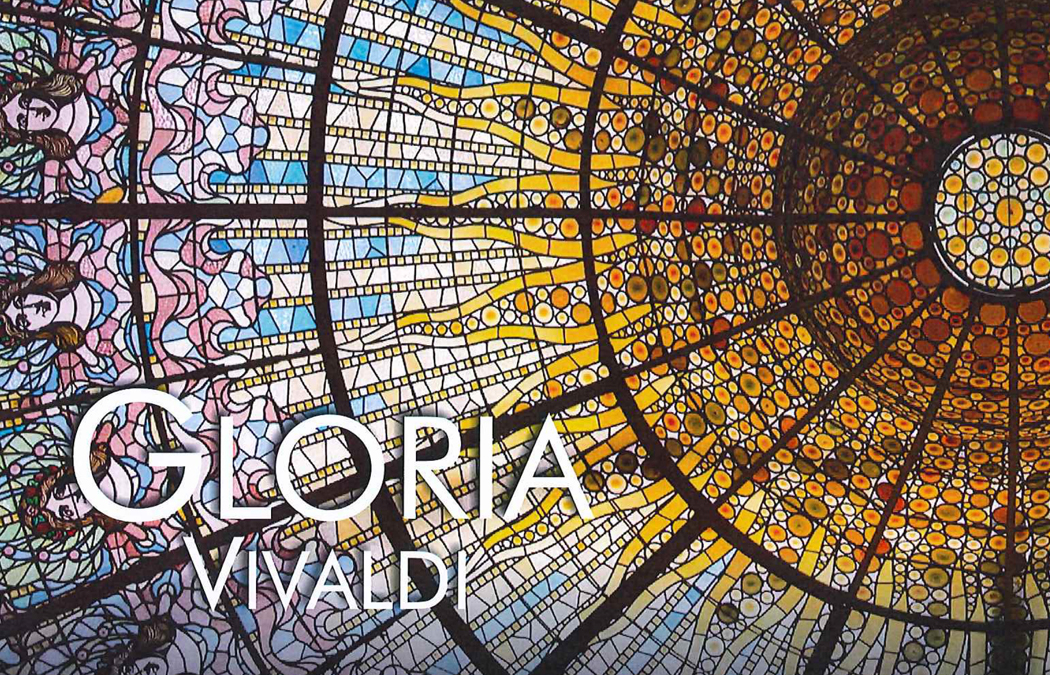
Vivaldi: Gloria in D Major, RV 589

Antonio Vivaldi (1678-1741) wrote at least three settings for the Gloria, but this one is the version everyone remembers, with its chugging motoric drive and its brassy fanfares. It is built from 12 short movements split between choral numbers, solos and a duet for soprano and contralto. 

Its catchy opening “one-TWO-three-four, one-TWO-three-four” with its octave leaps, returns later to unify the work. The Baroque era ran from roughly 1600 to 1750, although styles evolve slowly and overlap. It’s not like everyone stops writing one way and begins writing the new way. This piece, from 1715 lasts about 30 minutes and exemplifies the energetic forward motion of the Baroque. 

Alternates:

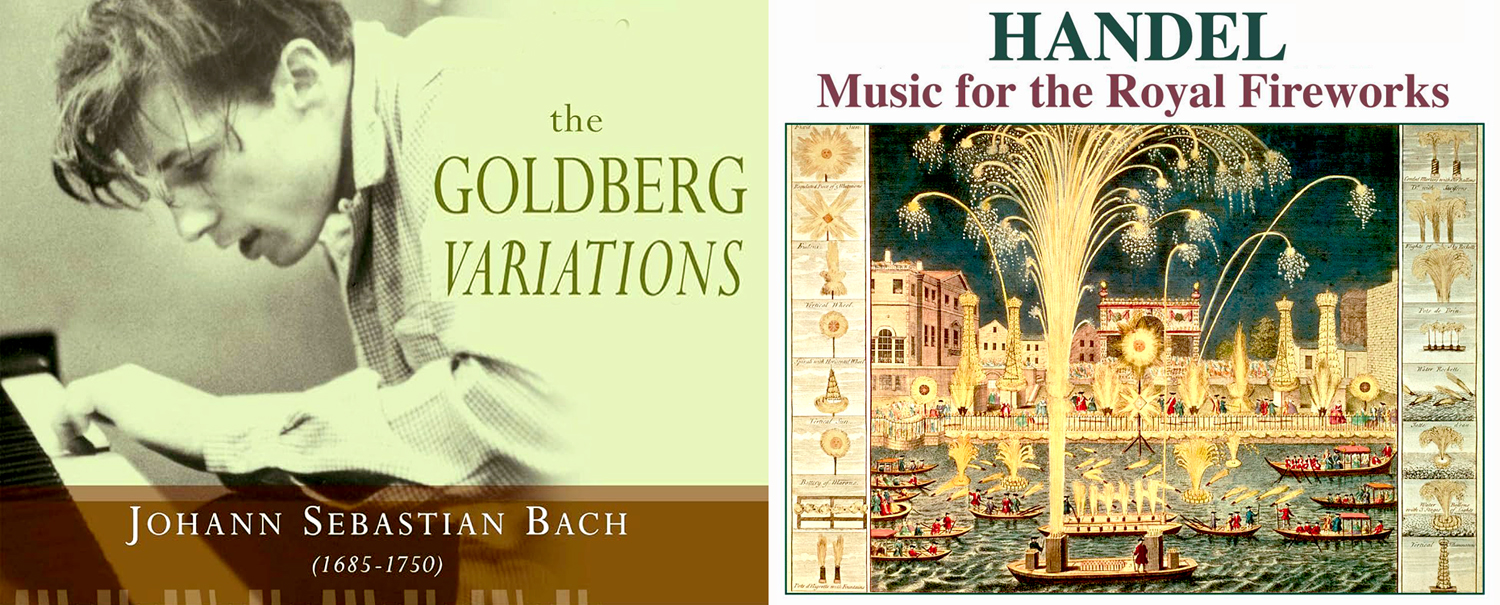
J.S. Bach (1685-1750), The Goldberg Variations (1714), a set of 30 variations on a repeating bass line, for keyboard; and George Friedrich Handel (1685-1759), Musick for the Royal Fireworks (1749), a suite for a large band of wind instruments, for outdoor performance during a famous fireworks display meant to celebrate the end of the War of Austrian Succession. The crowd loved the music, but the fireworks caused a building to burn down, blinded a soldier and injured several others. Later performances often added strings to the wind band, with no further reported injuries. 

Haydn: Quartet in D major, op. 64, no. 5 “The Lark”

It is often said that Joseph Haydn and Mozart wrote music in the classical style (roughly 1750-1828), but in fact, they created the classical style. If Haydn didn’t singlehandedly invent the symphony, he made it what we think of today; and he did the same for the string quartet — music for two violins, viola and cello. 

This is music generally less cluttered or fussy than the earlier Baroque, and seeks a kind of modest tastefulness, along with, in Haydn’s case, a witty sense of humor, as in the imitation bird calls at the start of this quartet, which was written in 1790 and has the usual four movements: an opening allegro, a dance movement, a slow movement and a jaunty finale. 

Alternates:

W.A. Mozart (1756-1791) Serenade No. 10 for 13 Winds in B-Flat, known as the Gran Partita (1781), which, in Peter Shaffer’s play, Amadeus, he has Antonio Salieri react by saying, “It seemed to me that I was hearing the voice of God.” Or Franz Schubert’s (1797-1828) Symphony No. 5 in B-Flat (1816), which is a really tuneful symphony built on Haydn’s model. 

Liszt: Piano Concerto No. 1 in E-Flat 

Franz Liszt (1811-1886) is the perfect Romantic composer, the greatest piano virtuoso of his time, and a matinee idol that all the ladies were in love with — something of which he took great advantage. His music, as in this 1855 concerto, is filled with all the wild emotion that the classical era avoided: over the top, loud, brash, and with a solo part for the triangle — it scandalized its first audiences. The jangle of the triangle was considered bad taste — but bad taste is the goal of much Romanticism. Audiences loved being scandalized. 

Alternates:

Robert Schumann (1810-1856) wrote a cycle of songs, telling a sad love story, called the Dichterliebe, or “A Poet’s Love,” in 1840, and includes a song claiming over and over, “I’m not angry,” to some of the angriest music ever. Clever. Or Bedrich Smetana’s (1824-1884) Moldau, an orchestral portrait of the Czech river (now usually called the Vlatva or Voltava), which is a perfect example of the Romantic Nationalism that swept over Europe. Great tunes. 

Debussy: Images for Piano, Book II

In the late 19th century and the 20th century before the First World War, music went through several changes. One of them is a rejection of Romantic excess, and the French composer Claude Debussy (1862-1918) came up with his own style — usually called Impressionism — of ambiguous tonality, exotic scales, and an approach to the piano that was soft and non-percussive. 

He wrote a great deal of piano music, including the famous Clair de Lune, but I’m offering the three pieces in his Images, second series (1907): Cloches à travers les feuilles (“Bells through the leaves”); Et la lune descend sur le temple qui fut (“And the moon descends on the temple that was”); and Poissons d’or (“Golden fish”).

Alternates:

Some composers went in the opposite direction, with larger orchestras, more chromatic harmonies of profound longing, in what is often called Late Romanticism, or Post-Romanticism. Gustav Mahler (1860-1911) often added voices to his orchestral music, or wrote orchestral song cycles, such as his Songs of a Wayfarer (1885). Richard Strauss (1864-1949) used huge orchestras and explodes out of the gate with Don Juan (1889), a musical version of a Don Juan more idealistic than lecherous. It is an avalanche of sound, with a huge six-horn signature that, in live performance, you feel through you fundament as much as hear with your ear. 

Janáček: Sinfonietta 

Now we are ripe in the 20th Century, and Leos Janáček’s Sinfonietta (1926), a five-movement piece for huge orchestra, including 25 brass instruments. The first movement has 10 trumpets alone, playing a hair-raising fanfare. 

All five movements are built from catchy tune-bits, extended and repeated. And although the music is clearly modernist, I’ve never come across anyone who didn’t instantly love the Sinfonietta

Alternates:

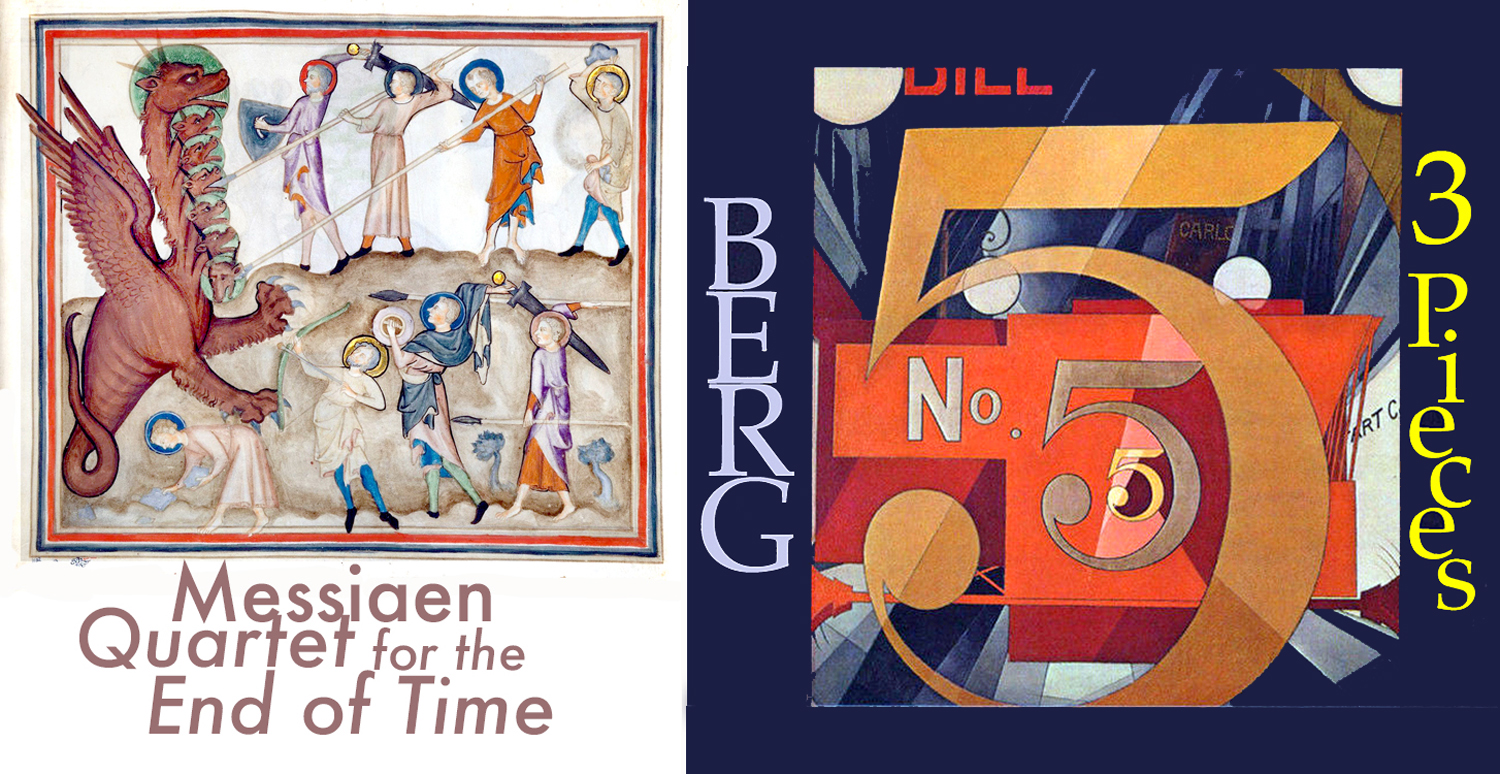
French composer Olivier Messiaen (1908-1992) was imprisoned by Nazis during World War II, and in prison camp, wrote his Quartet for the End of Time, for piano, clarinet, violin and cello (the instruments available in the camp). It is a hugely idiosyncratic piece, written to Messiaen’s own music theories, but can be overwhelmingly emotional in a good performance. And for the double-dip experience of atonal music, try Alban Berg’s (1885-1935) Three Pieces for Orchestra (1914), for something like what people used to call “modern music.” 

Penderecki: Threnody to the Victims of Hiroshima

Classical music, or art music, is still being written, and responds to life in the current world. We live in a post-Hiroshima age, and Polish composer Krzysztof Penderecki (1933-2020) summarized the feeling in his 1961 string-orchestra piece, Threnody to the Victims of Hiroshima, although you may have some difficulty recognizing it as string music made by violins, violas, cellos and double basses. It shrieks of the horror. 

It masses its 52 string players in tone clusters and dissonances, various vibratos and odd bowings, for 8 and a half minutes, that is not meant to be beautiful, but to evoke intense emotions. It is, nevertheless, beautiful. (Remembering Tom Robbins notion: “The ugly may be beautiful; the pretty, never.”)

Alternates:

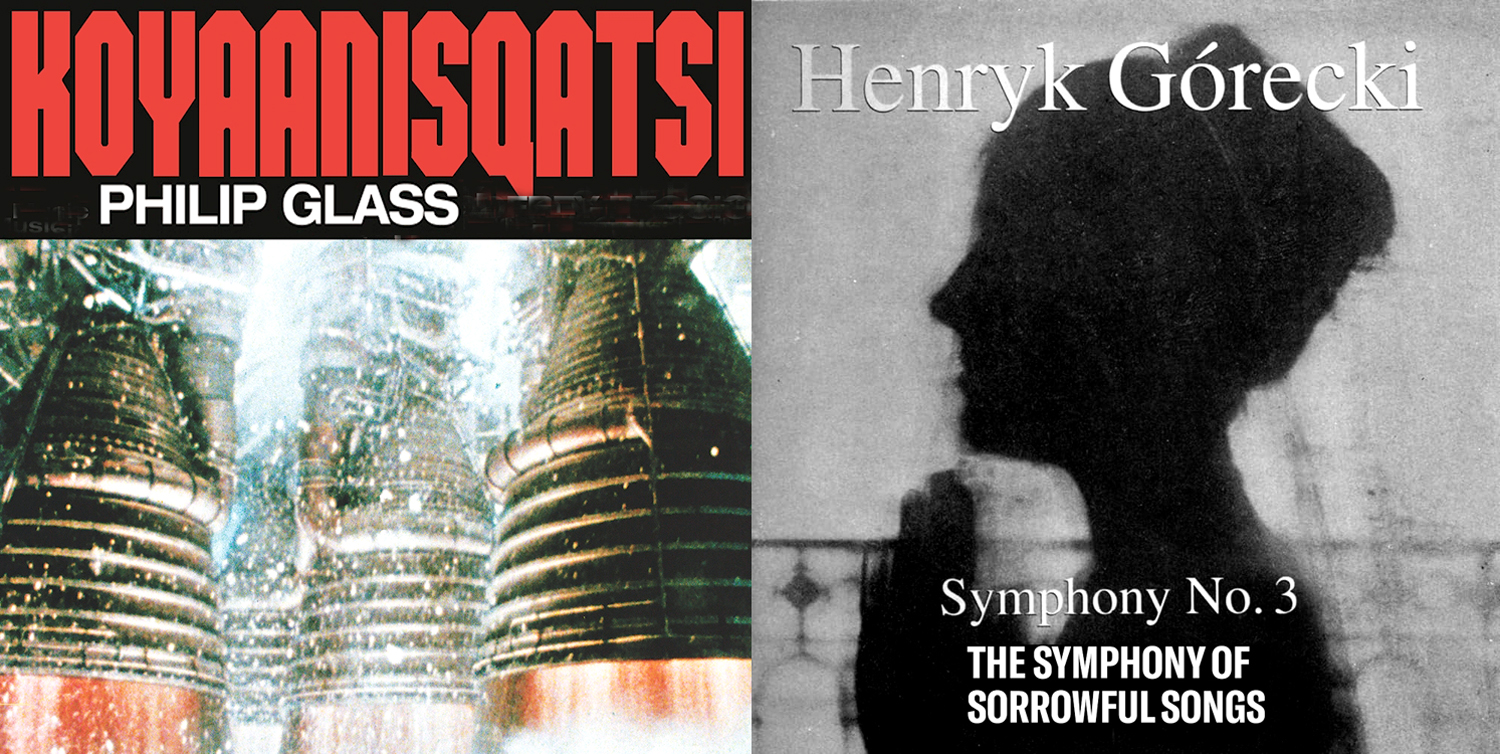
Minimalist composer Philip Glass (b. 1937) also reacts to the modern world in his film score for the Godfrey Reggio film, Koyaanisqatsi (1982). The modern world is a crazy world, as the film and music underline, but with quite a variety of minimalist techniques. The horrors of war fill Henryk Gorecki’s (1933-2010) Third Symphony (The Symphony of Sorrowful Songs) (1976), in which a soprano sings Catholic laments and words by victims of the Nazis, all to music so slow and so inexorable as to be almost a force of nature. Its 1991 recording by the London Sinfonietta sold more than a million copies. Gorecki, surprised at the popularity of such a sorrowful piece of music said, “perhaps people find something they need in this piece of music…. something they were missing. Something, somewhere had been lost to them.”

Epilogue

Of course, this diversity is among the European tradition of art or concert music. Most cultures have their own classical musics, such as the sitar or sarod music of India, the Chinese opera music, and Japanese flute music. Each is a tradition handed down from master to student and carried forth, with development and variation. That is what makes it classical. 

If I were to think of a purely American classical music, it would be jazz. It, likewise, has a wide range of styles and sounds, from Louis Armstrong through Duke Ellington and down through Ornette Coleman. 

But it is what we call classical music in the West that I am best familiar with and love. And writing this has given me the chance to listen once more to each of the pieces I’ve written about, and more joy me. 

Classical music critic David Hurwitz recently posted a YouTube video on works that “reduce me to a quivering puddle of emotional resonance.” He cited 10 compositions that seem to work, no matter how they are performed (although, they can be ruined by a miserable performance). 

“The crying can be sadness; it can be happiness. Usually for me it’s a confrontation with something which is so beautiful … it just seems to get to the heart of the universe and makes me weep. What can I tell you? It happens.”

He then invited his viewers to submit their own lists of works that bring on the waters. A subsequent video addressed those lists. 

Such lists usually come in round numbers: “Top Ten,” or “The Hundred Best,” etc. But when I made my own list, I realized I could go on for quite some time. 
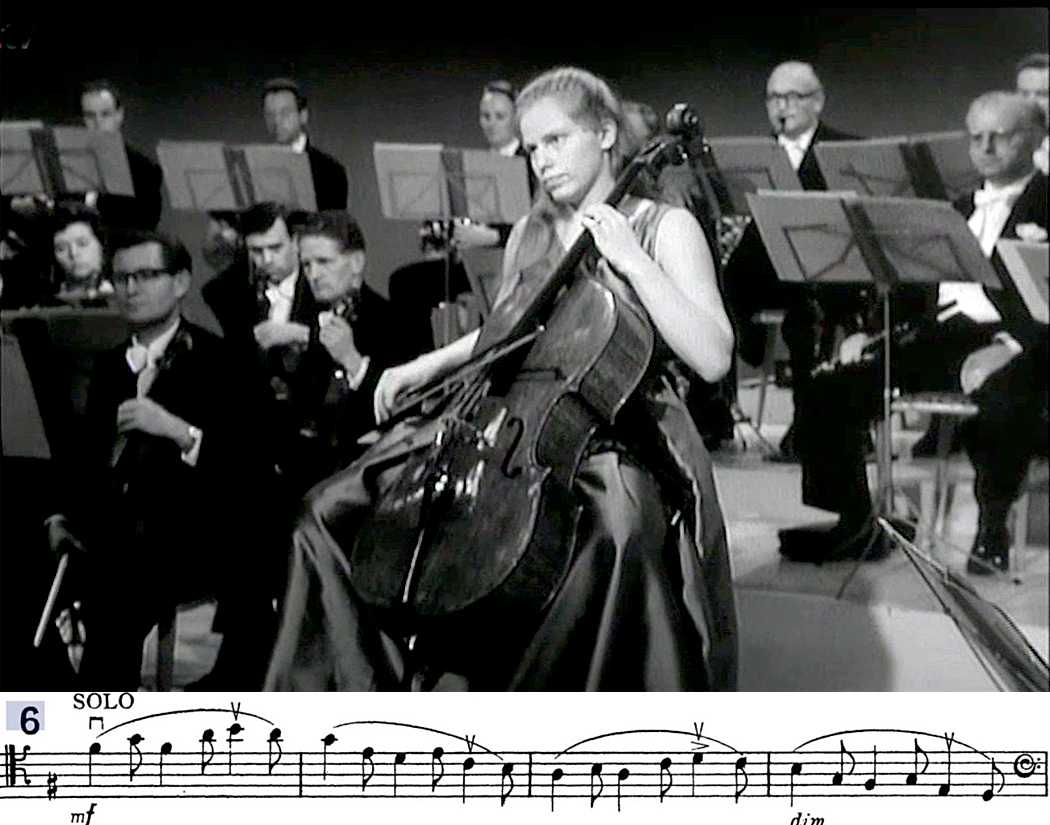
I begin my list with the sarabande in J.S. Bach’s Suite No. 5 for unaccompanied cello. It is a ridiculously simple composition, barely more than a hundred individual notes, almost all unrelieved slow eighth-notes, but notes that plumb the deepest depths of innigkeit — that profound sense of inner subjective experience, of aloneness from the world, contemplation of things beyond words. 

The tears come, not from sadness, but from a sense of being left to your own thoughts in the darkness, the knowledge that, no matter how much you love or engage, there is always an awareness of separation. An aloneness we share with everyone else on the planet. 

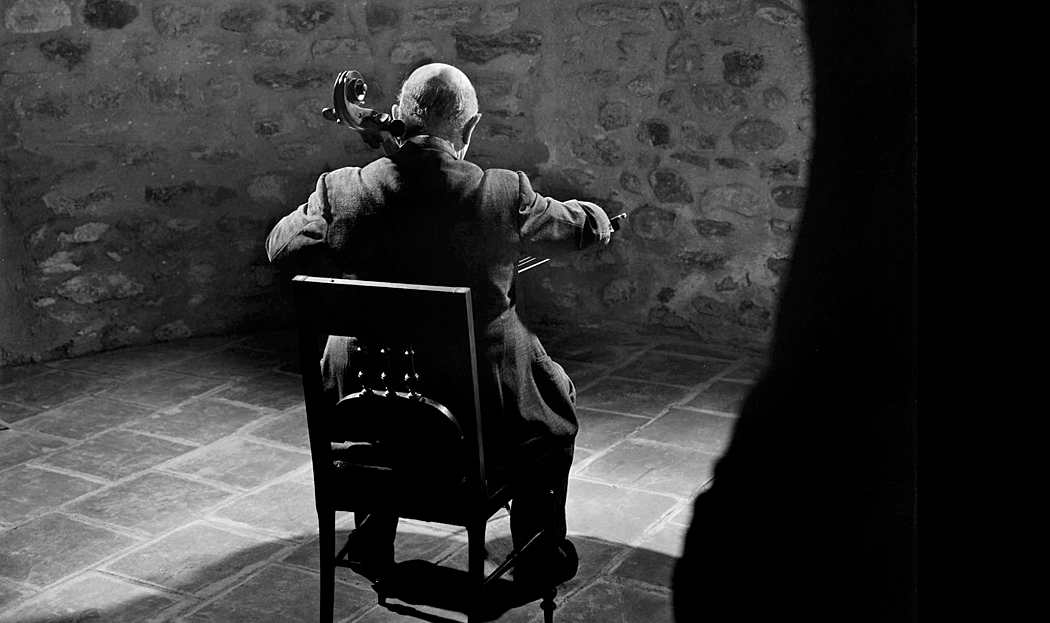
I’ve heard the sarabande, and the suite, countless times, both live and on recordings. The one that always does me in is the version played by Pablo Casals in 1939. Casals was the person most responsible for the resurrection of the score, after he found a forgotten copy in a used book store in 1889, when he was 13 years old. He waited until he was 60 before recording them. There is some fuzz and hiss to the old 78rpm recordings, but the depth of Casal’s playing speaks through it all. 

The sarabande has struck many as special, even among the whole of Bach’s works. Cellist Paul Tortelier called it an “extension of silence.” Yo-Yo Ma played it on Sept. 11, 2002, at the site of the World Trade Center, while the names of the dead were spoken, on the first anniversary of the attack. 

Second on my list is the final chorus of Bach’s Passion According to St. Matthew, Wir setzen uns mit Tränen nieder, which expresses grief over the death of Jesus on the cross. That chorus transcends religious doctrine so that I, as a non-believer, can internalize the sense of loss, of death, and grieve along with them. “We sit down in tears,” they sing, with a section that also asks for “peace, sweet peace.” 

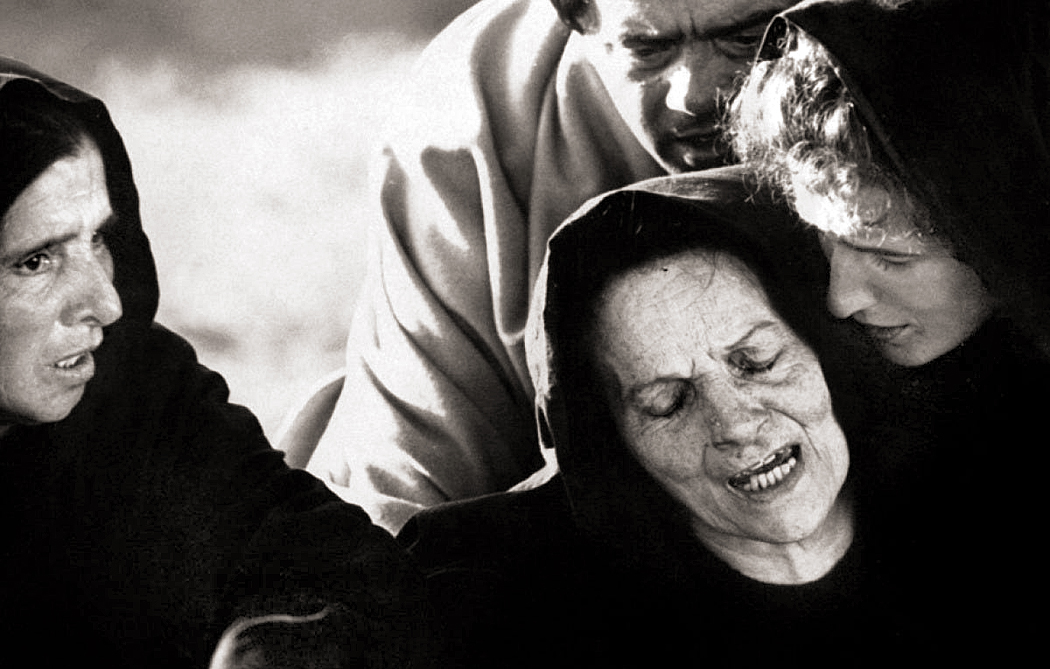
I first head the chorus as film-score music for Pier Paolo Pasolini’s Neorealist retelling of The Gospel According to St. Matthew, a dour black-and-white version, almost word for word from the Bible (and how peculiar that the most successful Christian film should come from a homosexual Communist atheist, but with reverence for the humanity of the story; no Cecil B. DeMille hokum and claptrap for this one). 

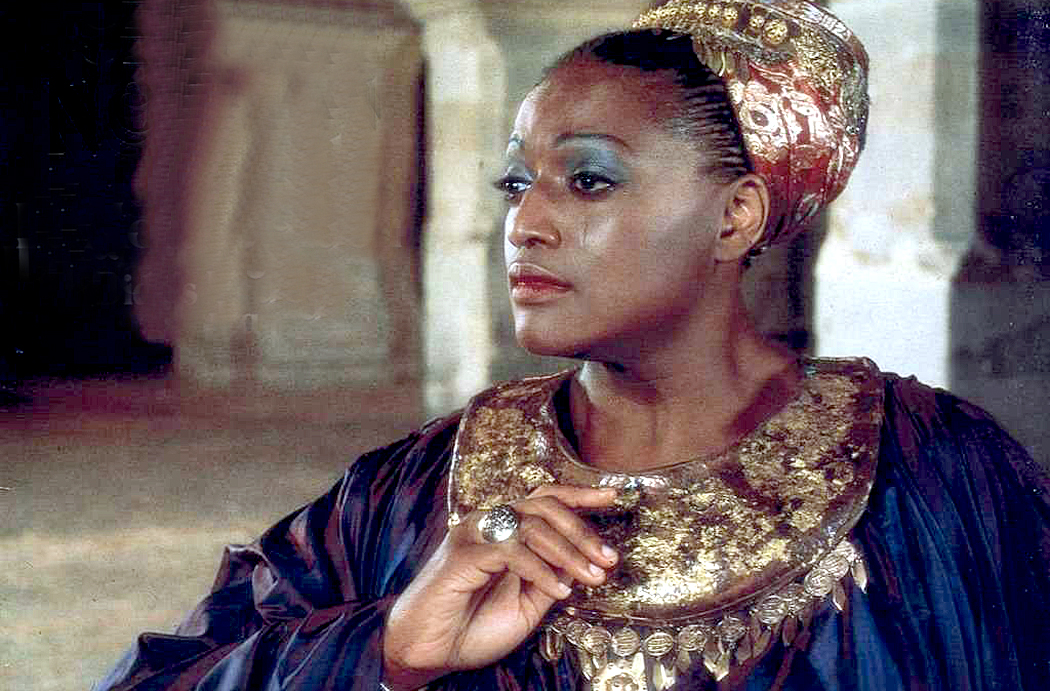
Grieving is one cause for the waterworks in listeners. How can you not feel the intense sadness of Dido as she faces her own death in Henry Purcell’s Dido and Aeneas, in the section known as Dido’s Lament, “When I am Laid to Rest.” It is a ground bass (repeated bass line), over which she sings “Remember me … remember me.” It is heartbreaking. 

Alban Berg used his entire Violin Concerto to express mourning over the death of Manon Gropius, daughter of Walter Gropius and Alma Mahler, who died of polio in 1935 at the age of 18. Berg dedicated his concerto “To the memory of an angel.” 

It begins quietly on the violin’s open strings, builds to an angry climax, and reaches a point of cosmic acceptance with a quote of J.S. Bach’s chorale, “Es ist Genug” (“It is enough.”) 

After all the turbulence of the anger, the simple hymn, albeit harmonized in a very 20th-century way, seems like the peace of the angels, a calm in the universe. I, for one, cannot listen to the concerto without tears streaming down my cheeks. 
Although it is written in his idiosyncratic 12-tone style, the Berg Violin Concerto is never simply noise: Even those who hate modern serial music love this concerto. It is music, not theory. 

These several pieces work because, while they are expressing their grief over a specific death, they also subsume the rest of us. And there is music which expresses not individual grief, but Weltschmerz — “the sorrows of the world” — that sense that all lives have an end, that life is suffering, that “no one gets out alive.” 

The work that seems to hit everyone in the gut with this is Samuel Barber’s Adagio for Strings. Originally the slow movement of a string quartet, Barber orchestrated it to create the version known best. 

The music is simple, barely more complex than a Gregorian chant, but builds slowly to an overwhelming climax, then silence, then a short peroration of calmness and repose. Never a dry eye. 

The only problem with the Adagio for Strings is that it has become so popular, played at the funerals of Franklin Roosevelt, John F. Kennedy, Princess Grace of Monaco, Albert Einstein, and Barber himself. It has become de rigeur for public tragedies such as Sept. 11, The Charlie Hebdo attack, the 2016 Brussels bombing and the Orlando nightclub shooting, and the 2017 Manchester Arena bombing, and in 2020 for the victims of the Coronavirus. To say nothing of how many movies it provides a trigger for emotions, as in Platoon, The Elephant Man and Lorenzo’s Oil. So that, for some, it can no longer be heard innocently, but only with irony, as in its appearance in Seinfeld, The Simpsons, and South Park

But so far, the Adagio has proved bulletproof. It always works. Emotions pour out. The music is powerful.

And talk about Weltschmerz: Another concerto brings out the emotions almost instantly, and that is Elgar’s Cello Concerto. Unlike most classical music concertos, it opens with the solo cello playing widely spaced E-minor chords, ringing sad and hollow, followed by a short cadenza before the orchestra ever plays a note. 

Elgar wrote it in 1919 in distress over the death and destruction of the First World War. It is a musical evocation of the famous lament of British Foreign Secretary Sir Edward Grey in 1914: “The lamps are going out all over Europe and we shall not see them lit again in our lifetime.” It is hard, with our distance from the events, and after the Second World War and the horrors of the Cold War, to fathom what a psychological wrench that first cataclysm was for the world, and how much it was clear that everything anyone knew had changed utterly and forever. So much was lost. Elgar’s concerto puts that sentiment into music. 

That sense of loss is personal as well as civic, and you sense it in the greatest of Richard Strauss’ Four Last Songs, “Im Abendrot.” It is a song for soprano and orchestra that conveys such a sense of longing and loss that even without the words, the orchestra alone can bring out the tears. 

In it an old couple stands on a hill looking at a sunset, a lark flies off into the twilight and the words by German poet Joseph von Eichendorff, say, “Wie sind wir wandermüde — Is dies etwa der Tod?” “How weary we are of wandering — Is this perhaps death?” 

There is something of the same feeling (and similar orchestral lushness) in Gustav Mahler’s Der Abschied, the final song of the cycle, Das Lied von der Erde, “The Song of the Earth.” The half-hour song tells of the beauty and permanence of nature and in the brevity of the human life. Even for a Mahler nut like me, who loves pretty much everything the man put on paper, Der Abschied is the single most beautiful and heartbreaking thing that composer ever wrote. 

O Schönheit! O ewigen Liebens – Lebens – trunk’ne Welt!” “O beauty! O eternal loving-and-life-drunk world!” And the voice finally shrinks down to near-silence repeating the word “Ewig,” “forever…” over and over until it and the orchestra dissolve in emptiness. 

Mahler himself asked whether the music should even be played. “Won’t people go home and shoot themselves?” he asked. The thing is that the highest art may tell the most dismal tale, yet the beauty of the telling is life-enriching and leaves us weeping but full of joy. 

Mahler gave us also a song of such inwardness and reflection in the Rückert Lieder, “Ich bin der Welt abhanden gekommen,” a setting of a poem by Friedrich Ruckert. “I am become lost to the world, with which I used to waste so much time. It has for known nothing of me for so long, it may well believe me dead.” The slow tread of the song, with its repeated incomplete upward motive, leaves you floating between earth and sky. 

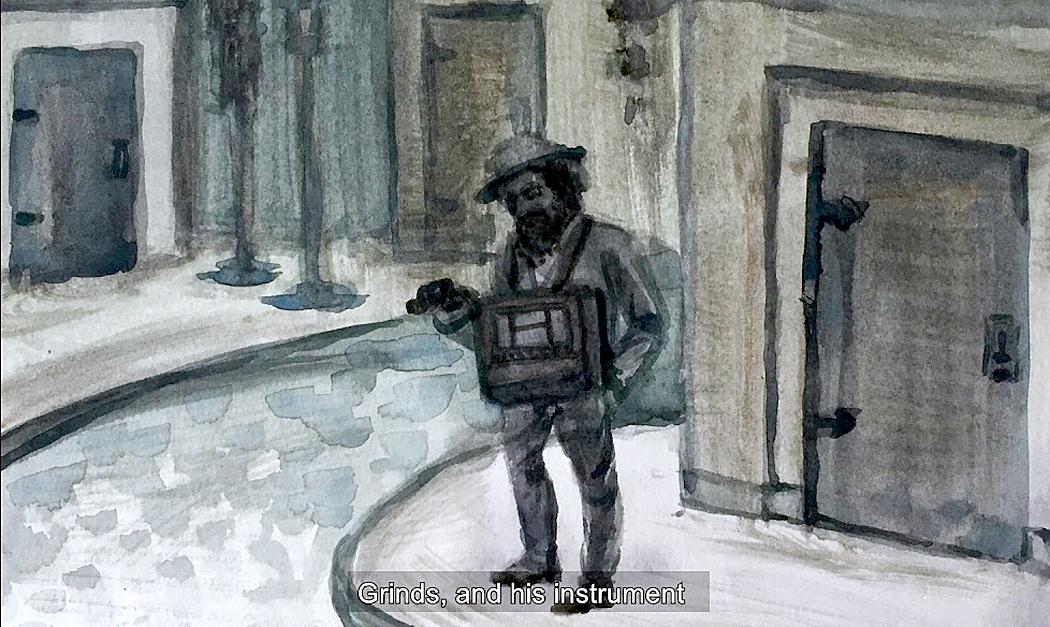
That Mahler song may not be the deepest expression of giving up on life. That honor has to fall to the final song in Franz Schubert’s song cycle Winterreise, “Winter Journey.” The cycle of 24 songs by German poet Wilhelm Müller collectively tell the story of a romantic young man spurned in love, who travels in suffering through a winter landscape, telling of loneliness, heartsickness, futility, fate, and finally, in Die Leiermann, “The hurdy-gurdy man,” finds an image of utter hopelessness. 

“Barefoot on the ice, he sways to and fro, and his little collection plate remains empty. No one wants to listen to him; no one looks at him. … He plays and his hurdy-gurdy never stops.” The piano accompaniment repeats the same figure over and over, with no sense of forward motion, and the singer sings his words over and over with little variation. This is psychological depression at its peak expression. “Strange old man, shall I go with you?” The implication is that the Leiermann is simply Death itself. 

 But I may be giving the wrong impression. While music of woe may bring on the deepest emotion, so, too, can music of joy and beauty. There is a reason people cry at weddings. When any emotion, from grief to ecstasy, fills the interior space, it can swell and overflow, and the overflow valves in the human being are the eyes. The emotional pressure in the body swells until it cannot be held in check. Tears of joy, tears in the face of beauty. 

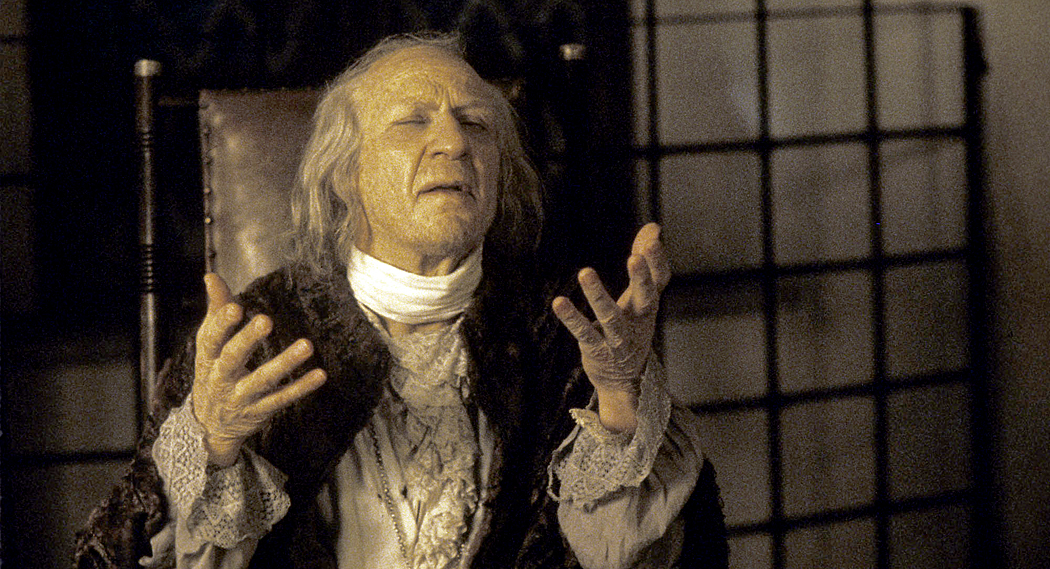
I remember the words that playwright Peter Shaffer put in the mouth of Antonio Salieri in his play, Amadeus. Salieri overheard the adagio of Mozart’s Gran Partita for winds. 

“Extraordinary!,” he says. “On the page it looked nothing! The beginning simple, almost comic. Just a pulse. Bassoons, basset horns — like a rusty squeezebox. And then, suddenly, high above it, an oboe. A single note, hanging there, unwavering. Until a clarinet took it over, sweetened it into a phrase of such delight! This was no composition by a performing monkey! This was a music I had never heard. Filled with such longing, such unfulfillable longing. It seemed to me that I was hearing the voice of God.”

It is an astonishing thing about beauty, real beauty, that it can sit beside the horrors of the world, the miseries, the deaths, the wars, the hatreds and injustices, and make you pause, fill you with emotions and remind you that no matter how bad things are, you still cling to life. The beauty can not excuse the suffering, but in some inexplainable way can somehow balance it. Beauty can stop time and fill you up to overflowing. 

Shostakovich wrote his 13th symphony, setting the Yevtushenko poem, Babi Yar, about the 1941 massacre of more than 30,000 Jews by Nazis at Babi Yar, near Kiev. It is a powerful poem denouncing anti-Semitism and the horrors of war and hatred (and a warning about Soviet anti-Semitism). The following movements of this choral symphony take on bitter humor as antidote to bureaucracy and tyranny; the hunger of food shortage; the use of fear by totalitarians; and finally, the difference between amoral careerism and the need for artists to express truth. 

This finale is introduced by a flute duet of such sweet delight, such soothing calmness, that although it cannot gainsay the horrors, it somehow balances them. The music itself, while beautiful, is nothing special in itself, but coming as it does at the end of this explosion of the miseries of the world (and especially Stalin’s Soviet Union), is such an unexpected release, it seems a miracle, and with the pressure taken off, at least momentarily, it can only be felt and expressed by its audience in the immediate explosion of waterworks. 

Now, all I have to hear is the flute bit, and I instantly recall all that went before, and I weep uncontrollably. 

That sense of beauty as counterbalance is the overwhelming sense you can get from the slow movement of Beethoven’s Ninth Symphony, which gives us 15 to 20 minutes (depending on performance) of stillness in the universe, a slow pulse that seems more cosmic than corporeal. It comes after a terrifying first movement and a relentless scherzo. The world then, after flowing through turbulent rapids, empties out into the calm ocean of the adagio. The release is overwhelming. 

It is also the slow motion of the finale of Mahler’s Third Symphony, which, after earlier movements titled “What the flowers in the meadow tell me,” “What the animals in the forest tell me,” What Man tells me,” and “What the angels tell me,” ends his symphony with a half-hour movement, “What Love tells me.” 

It is marked “Langsam — Ruhevoll — Empfunden,” (Slowly — Peacefully — Deeply felt,” and moves at a slow tread, first in the strings and building, a half-hour later, with trombones and brass and a final chord that can last to eternity. Conductor Bruno Walter, who knew Mahler and conducted the premieres of both his Ninth Symphony and Das Lied von der Erde, said of this movement, “Words are stilled — for what language can utter heavenly love more powerfully and forcefully than music itself? The Adagio, with its broad, solemn melodic line, is, as a whole — and despite passages of burning pain — eloquent of comfort and grace.”

The Swiss critic William Ritter said it was, ”Perhaps the greatest Adagio written since Beethoven.” Another anonymous critic wrote about the Adagio: “It rises to heights which situate this movement among the most sublime in all symphonic literature.” At its premier in 1902, Mahler was called back to the podium 12 times, and the local newspaper reported that “the thunderous ovation lasted no less than 15 minutes.”

That sense of time standing still reaches a much quieter apotheosis in the slow movement of Maurice Ravel’s Piano Concerto in G. With subtle cross-rhythms and a melody that seldom rises above a mezzo-piano, it is entirely hypnotic. The beauty of it brings me to tears almost even just thinking of it. 

And there is the sublime beauty of Mozart’s Ave Verum Corpus, a choral work that lasts a mere four minutes in just 46 bars of sighing chromaticism and sotto voce music, and, as one critic put it, is “capable of leaving the listener just as moved as might an entire five-day long cycle of Wagner’s Ring.” 

Some of these may work their magic only on my ears, some seem to work for everyone. And there are times when the listener may be too tired, to caught up in other things, or a bad meal or just in a sour mood, when such music can pass by almost unnoticed. And there are times in a concert when I am so tuned in, that almost any music, played well, may bring on the waterworks. 

But for me, this music almost never fails. The music triggers some empathetic response, and the emotions shiver to life. I am human; these are human feelings; these emotions are what make us human. 

Music can do that better, and more immediately, than any other art. 

Where I sit at my desk, typing this piece, I am surrounded by shelves filled with CDs. There are thousands of them. Eleven complete Mahler cycles (and I just ordered another). I don’t know how many boxes of Beethoven symphonies I have. I have literally lost count. Some are filed with Beethoven, some under the name of the conductor, some in my historical bin. Too much. Too much.

Henry David Thoreau famously advised “Simplify. Simplify.” And so, I’ve been cogitating, Marie Kondo style, how to reduce this agglomeration into a fine sauce, into the absolute essentials. 

And so, I decided I would pick a single composition and recording from each of the major composers and stack them up in a neat, tiny pile, figuring they would do me for the remaining years of my declining life. 

I realized, too, that I had to limit my list. There are simply too many composers out there. Do I really need Hans Pfitzner? Can I do without Louis Spohr, Max Reger, David Diamond? Surely, there is a short list of the pillars of Western art music. If not, I would make one. 

If you don’t find Palestrina on this list, or Josquin de Prez, it is not because I don’t value their work. I don’t even include Antonio Vivaldi, although I love his music and probably should include at least the Four Seasons. But I have chosen to start with Bach. He really is the fountainhead of the 250-year project we now call “classical music.” At least, those composers who followed him considered him so. 

Each of these winnowed-down composers can enter only a single work on my list, and I have chosen for each of these, a single performance to put in my “keepers” pile. 

Here are my suggestions, in roughly chronological order.

Johann Sebastian Bach — Since I want as much of him as possible on my pile, I will add the St. Matthew Passion, one of the greatest works of art ever assembled. It goes on for as much as three hours, depending on whether you’re listening to Otto Klemperer or Riccardo Chailly, who can squeeze the whole thing onto two discs. 

For my pile, I’m going with Klemperer, who brings a majesty and awe that few can match. In fact, if I had to have only a single recording on my pile, it would be Klemperer’s Matthew Passion. 

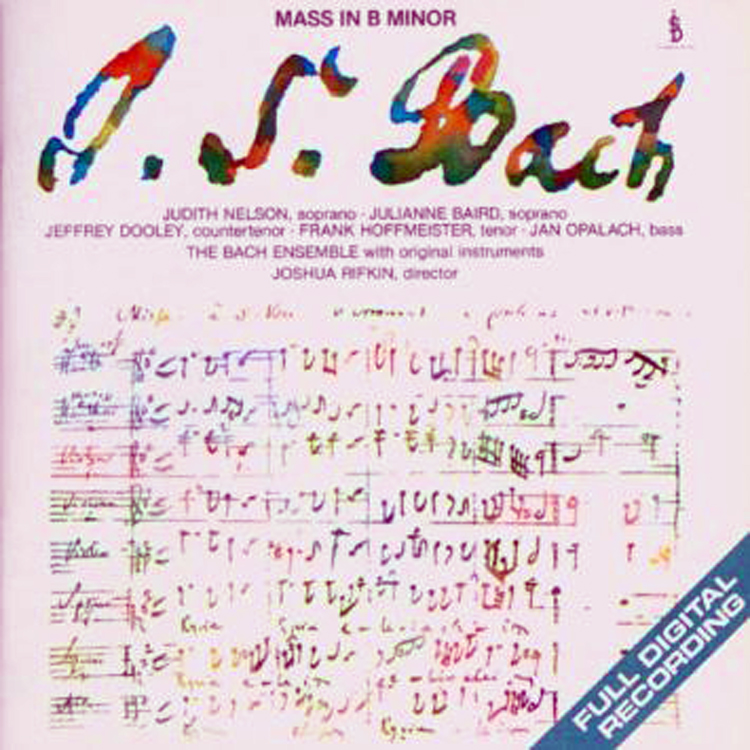
(If you find the passion too dour and downbeat, you can substitute the Mass in B-minor. I won’t complain. Klemp is good in that, too.)

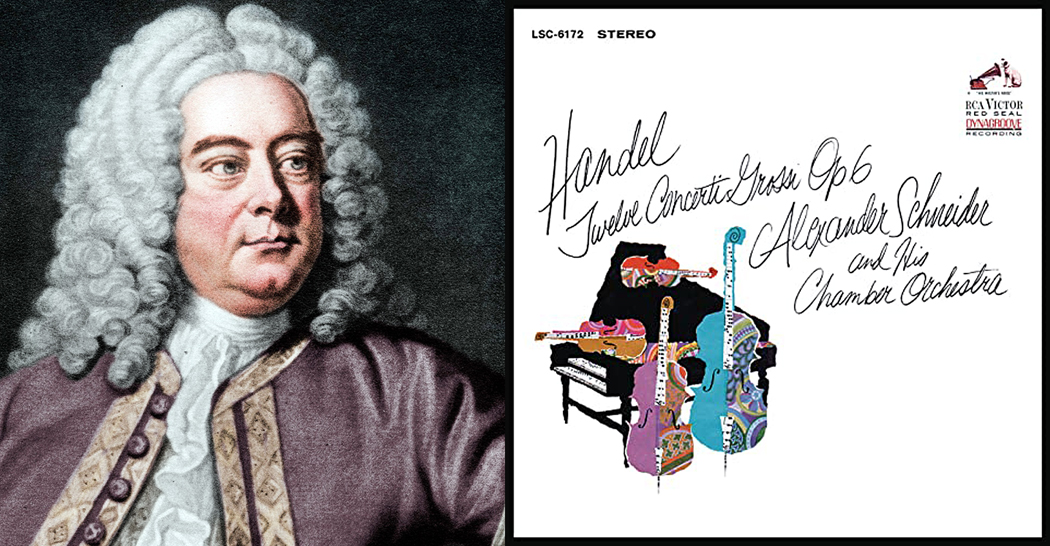
George Frederic Handel — If I can have three discs of Bach, I can do the same with Handel. I love the 12 concertos of Op. 6. They come in two forms: currently, the historically informed performance practice, bouncy, quick, staccato versions that dominate the market; and the old-fashioned warm Mitteleuropean version. No one does that anymore. 

I grew up hearing violinist Alexander Schneider in New York, and his brand of committed music making. And I have a set of his Op. 6 recordings, with a pick-up ensemble, that it horribly out of date, but glorious. Into the pile. 

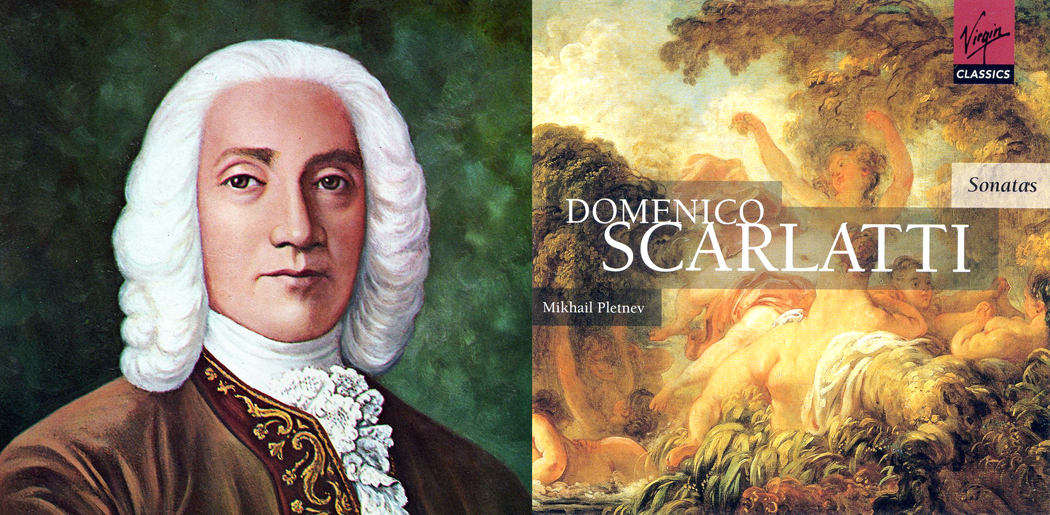
Domenico Scarlatti — On the shelves are all 555 sonatas, played on harpsichord by Scott Ross. But I hate the clangy, monotonous sound of the harpsichord and prefer my Scarlatti translated to piano. Most pianists now attempt to imitate the harpsichord by using no pedal and dry staccato. I want someone not afraid of using what the piano offers. My favorite used to be Vladimir Horowitz. He is still great. But I have since discovered an even richer performer in Mikhail Pletnev. This is magnificent piano playing. 

Joseph Haydn — Papa is hard to narrow down for me. He is one of my absolute dearest composers. But how do you choose a symphony over a quartet? Or a single symphony or quartet over all the others. Haydn’s work is so consistently excellent, it makes it hard to pick one as more essential than another. But there is The Creation. It is unlike anything else, and has the greatest sonic description of chaos ever devised. In his lifetime, The Creation was recognized as his crowning achievement. 

I have something like half a dozen recordings of it, including two by Leonard Bernstein, who had a magic sympathy with Haydn always. I will choose his second recording, with Deutsche Grammophon although I think the earlier with the New York Philharmonic is just as good. 

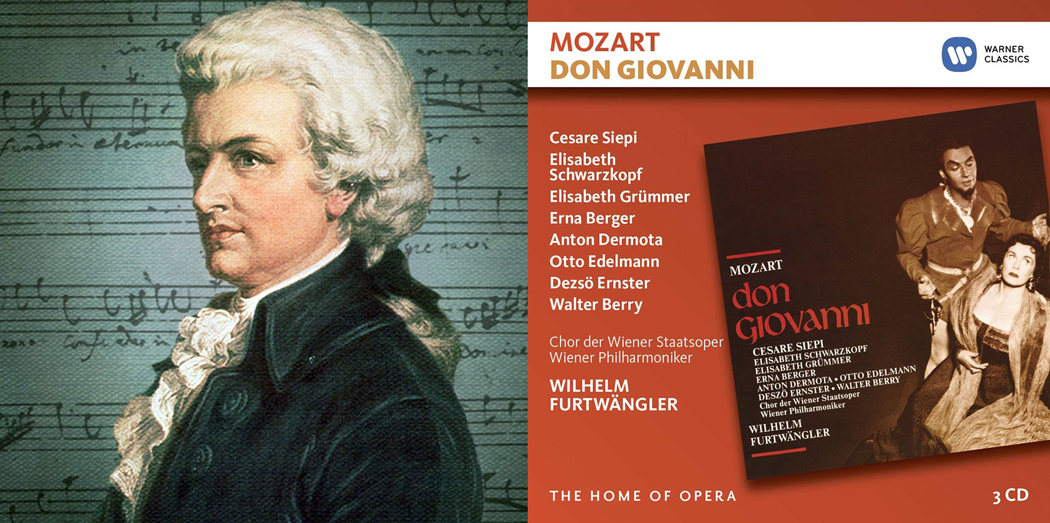
Wolfgang Amadeus Mozart — The problem with Wolfie is similar to that with Haydn: consistency. But Mozart is best in opera. I would have chosen The Marriage of Figaro — his most nearly perfect work and the world’s most perfect opera — but instead I pick Don Giovanni, which, although it sags a bit in the second act, has more emotional power and heft. 

There are many great performances, and lots by the newer, faster, punchier conductors who follow historically informed performance practice (pardon me while I spit at their feet). And my choice is the recording with Cesare Siepi as the Don, with the Vienna Philharmonic conducted by Wilhelm Furtwangler. What a supporting cast! 

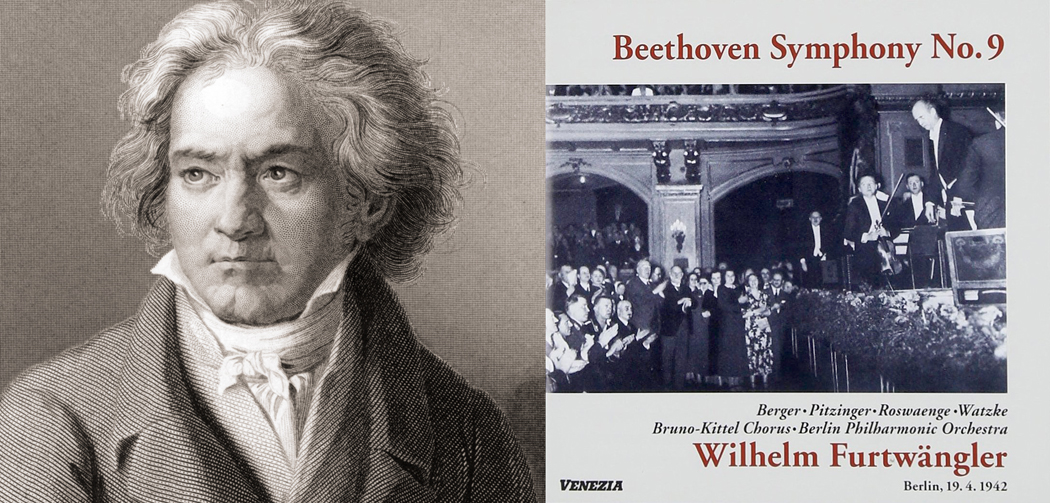
Ludwig von Beethoven — I hate to be caught out as predictable, but after considering one of the late quartets, or the Hammerklavier sonata, I realized that there is only one possible choice. I am sorry for it, but I have to pick the Ninth. If I had been really snobbish, I would have suggested the Missa Solemnis, but I don’t know anyone who really enjoys that music. Respects it, yes. Reveres it, even. But enjoys? No. But the Ninth. It was the sign over the door to the Nineteenth Century. Enter who dare. It cast a shade over the next hundred years. You wrote in emulation or reaction against. 

I’ve got to fess up to liking the first and third movements more than the second and fourth. The scherzo seems a little thin melodically speaking, and I always have to get through the first half of the finale before hitting the solid core of gold, which starts with the fugue after the Hogan’s Heroes’ march. The Adagio, though, is as sublime as music gets, and when it is done right, the first movement is a vision from Dante: If the conductor lets the tympani roar properly, the recapitulation can rouse the fight-or-flight in you. Too many conductors smooth that bit out, letting the kettle drums murmur underneath the themes. In 1942, Furtwangler unleashed his tympani in a recording that is both the greatest performance and one of the sloppiest and poorly recorded in history. You have to put up with a lot in that historical document (including knowing that Hitler was in the audience), but it is the version I put on my pile.

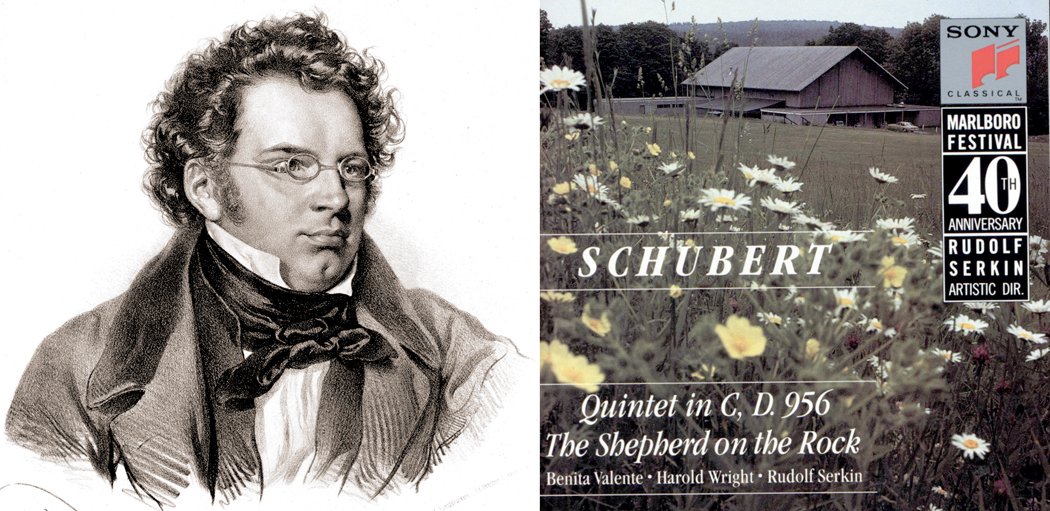
Franz Schubert — The riches are there: the Unfinished Symphony, the Trout Quintet, the B-flat Sonata, the Death and the Maiden quartet. Heck, the F-minor Fantasie for Two Pianos, the two piano trios, to say nothing of the songs, especially Winterreisse. But the most moving of all, deeply emotional and profound is the String Quintet in C, sometimes considered the greatest piece of chamber music ever — even topping Beethoven’s late quartets. That’s saying something. 

Lots of great performances, but my favorite and the one on my pile is by musicians from the Marlboro Festival. Some find it a bit over the top; I find the top cannot be gone over in this music. The disc also gives us The Shepherd on the Rock, sung by Benita Valente and so we have one of the songs, also. 

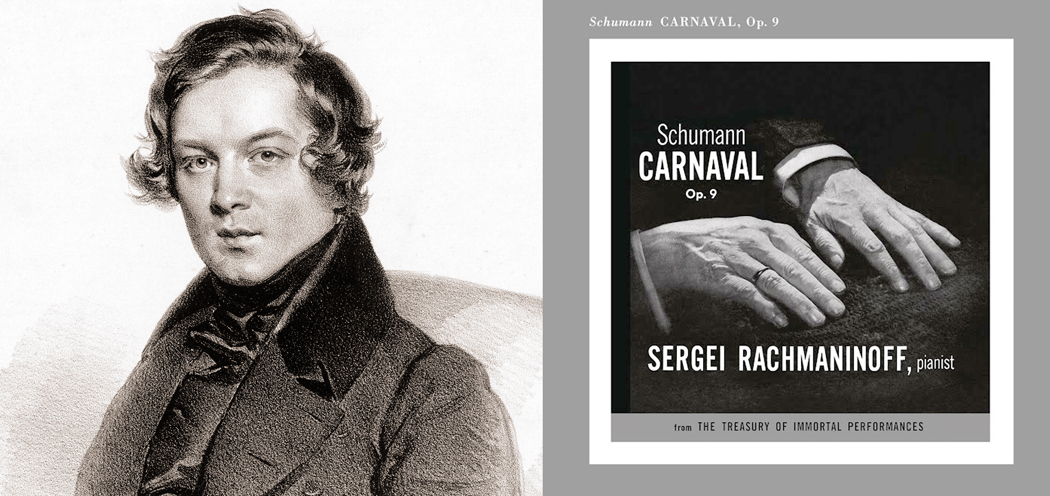
Robert Schumann — Bobbie doesn’t get a lot of props these days, and he can get repetitious. And as he aged, he became outright boring. But in his hot youth, he wrote a lot of the world’s most memorable tunes. For me, what goes on the pile is Carnaval, a series of sort-of variations, a necklace of character pieces for piano. 

There are two essential recordings of it: Artur Rubinstein and Sergei Rachmaninoff. When push comes to shove, I’m taking Rach with me. 

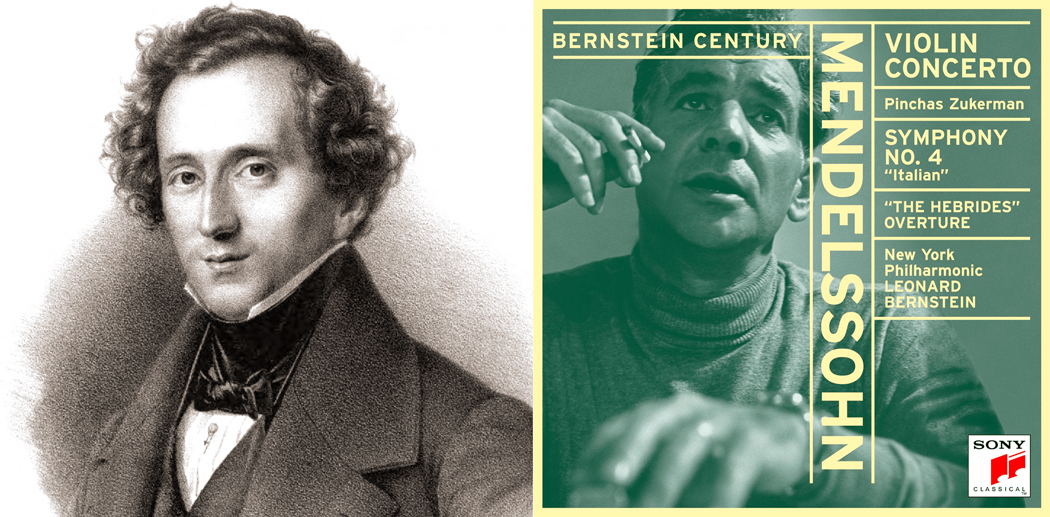
Felix Mendelssohn — My absolute favorite Mendelssohn is his Hebrides Overture, but it is too short for my pile, and so I pass by his symphonies and, god help us, his tedious oratorios, and pick the most elegant and refined of all the great violin concertos. 

I am in luck, though, because Pinchas Zukerman plays the bejeezus out of the concerto with Leonard Bernstein and the New York Phil and pairs it with the Hebrides and as a bonus, a rousing performance of the “Italian” Symphony. That’s hard to beat.

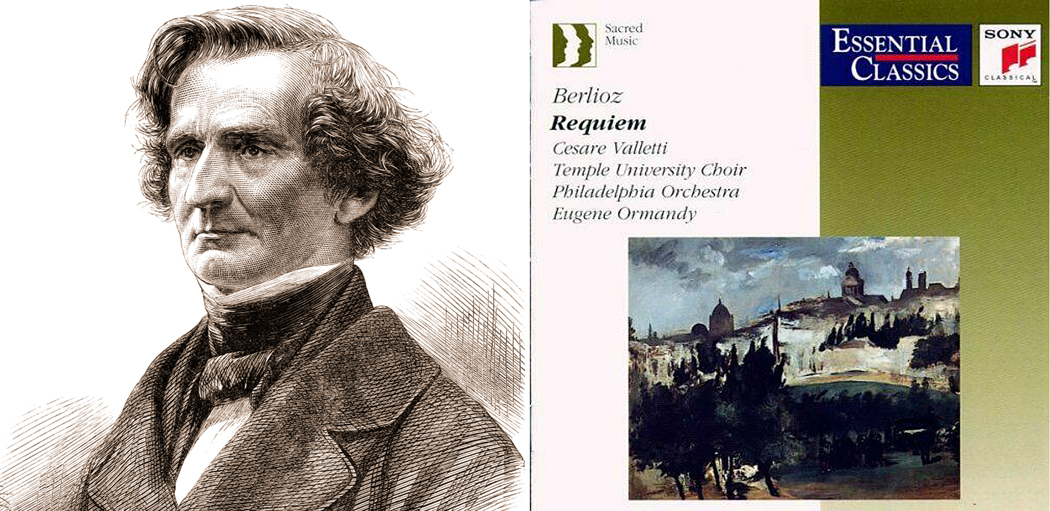
Hector Berlioz — This will probably be a controversial choice. How can you not choose the Symphonie Fantastique? It is his signature piece, and under the baton of Charles Munch, it can’t be beat. But my heart belongs to the Requiem. I love it without regard for its faults. It is ingenious, tuneful, and loud. (My college roommate’s brother used to love what he called “the loud classics,” by which he meant things like the 1812 Overture and Beethoven’s Fifth, but you can’t get much louder than the Dies Irae in the Berlioz “Wreck.” 

And there is one recording above all: Eugene Ormandy and the Philadelphia Orchestra. Too many other conductors (I’m looking at you, Colin Davis) attempt to make sense of this irrational music, to tame it and have it make sense. But Ormandy lets it all hang out, and his tenor, Cesare Valletti, is just cheesy enough. 

Frederic Chopin — This is a toughie. Chopin wrote mainly short pieces, and so picking just one would be giving him short shrift. I don’t particularly like his piano concertos, and his sonatas are fine, but what he really calls for is a program of mazurkas, scherzos, ballades, waltzes and the bunch. 

There are two contenders, almost opposite poles apart, interpretively, but they are the best at getting the spirit of Chopin. Most modern pianists are too dry and all seem to hate the pedal. The older Chopin tradition is closer to what the composer wanted. One could choose the 10-CD box of Artur Rubinstein Plays Chopin, which is a delight. But it is made of his later, stereo recordings, and his older mono ones were more idiosyncratic. Still, it is a great box. But on my pile goes Vladimir Horowitz: The Chopin Collection, with seven CDs. Volodya has all the snap and jump that sit in the music waiting to spring out. It’s a close call. The Rubinstein is more complete, but Horowitz is the only pianist who has ever taken the measure properly of the Polonaise-Fantasie, and so, I’m going with Horowitz. 

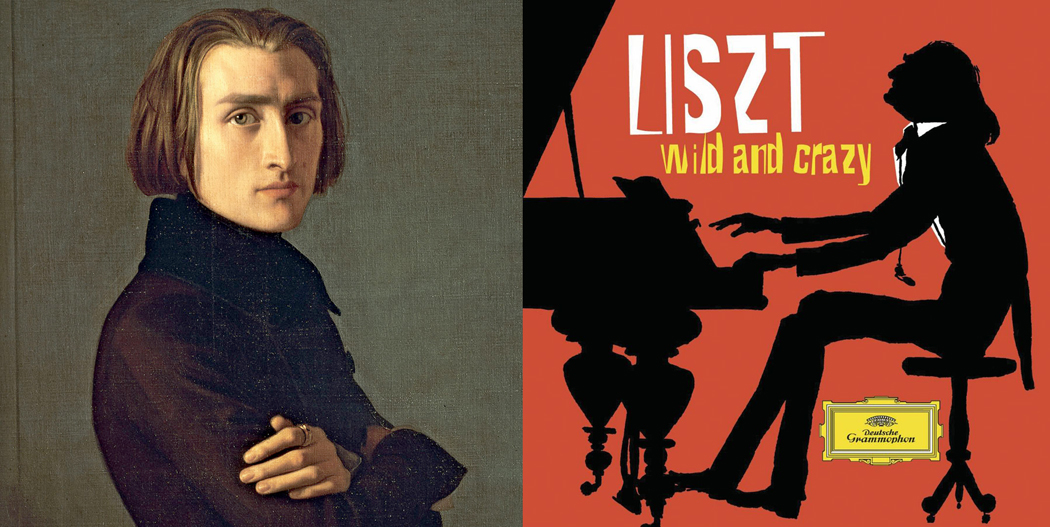
Franz Liszt — Like Chopin, Liszt is best in the shorter to medium size pieces. I’d want a compilation.

The best Liszt pianist going is Valentina Lesitsa, who understands that Liszt without the theatrics is not really Liszt. Those pianists who try to extract the “music” from the glitz only destroy the essence. The problem is that Lisitsa has not released a really good single Liszt disc; the best is spread out on several. No one does the second Hungarian Rhapsody with as much schmaltz as she does. She is great. But, I have to choose, and so, I’m going with a great 2-disc compilation on DG called Liszt: Wild and Crazy, with the works spread out among more than a dozen great pianists. 

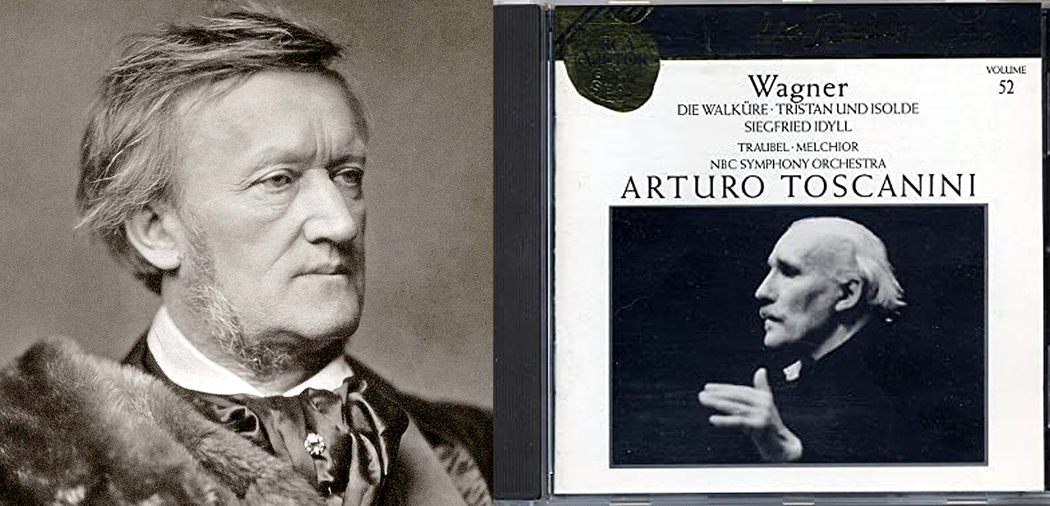
Richard Wagner — Oy, Wagner. This is a kind of classical music Everest, not just because the music is great, but because it takes a mountain-climber’s stamina. To a true Wagnerite, the music is transcendental, mythic, epic. To the not-so-convinced, it can seem bombastic, never-ending, and pretentious. I’m with the first group. I’ve attended two full Ring Cycles live, and own six cycles on disc. So sue me. 

But I’m not going to take all that with me, and so, Kondo-style, I will divest and choose a single disc. Each of Wagner’s operas contain longueurs, segments of what can seem like filler, as the story is rehashed once again. But the first act of Walküre is a perfectly enclosed whole, musically. Arturo Toscanini recorded Act 1, scene 3 with Helen Traubel and Lauritz Melchior that is, for me, the perfect Wagner recording. The disc also includes the Siegfried Idyll and the Prelude and Liebestod from Tristan und Isolde

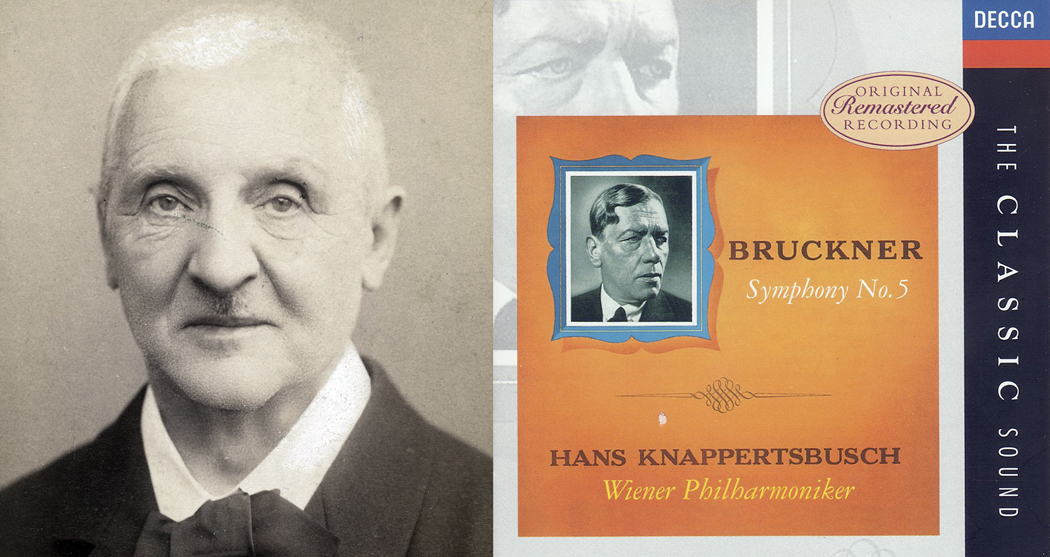
Anton Bruckner — Sometimes, it is hard to tell one Bruckner symphony from another. He had one tone, one message, one purpose in all his music. Symphonies Four and Seven are the easiest to love; Eight is the longest and most sublime; the unfinished Nine is profound. But if I choose just one, it will be Symphony No. 5 in B-flat. It has that fugal finale, and a first-movement ear-worm that you will carry with you for life.

And my recording of choice is with Hans Knappertsbusch and the Vienna Philharmonic. No one gets Bruckner quite like the quirky Kna. The disc also gives us Wagner’s Dawn and Rhine Journey, and so we get to cheat a little on our Wagner. 

Johannes Brahms — OK, this is painful. Old beard-face is very close to my heart. I’m going to want to add to my pile the DG box of “Complete Works,” but that would be cheating. Brahms is the greatest composer of chamber music since Beethoven and Schubert, and no one has equalled him since. His symphonies and concertos are top tier. But the music that moves me the most, that I could not live without, for it provides me with the deepest consolation is his German Requiem. “Denn alles Fleisch es ist wie Gras.” It is the most human, compassionate, loving music I have ever heard. I weep just remembering it. 

The greatest performance ever recorded, by general acclamation, is that of Otto Klemperer, with the Philharmonia and Elisabeth Schwarzkopf, Christa Ludwig, Dietrich Fischer-Dieskau, and Ralph Downes. I’m putting on top of my pile, so I can reach for it first. 

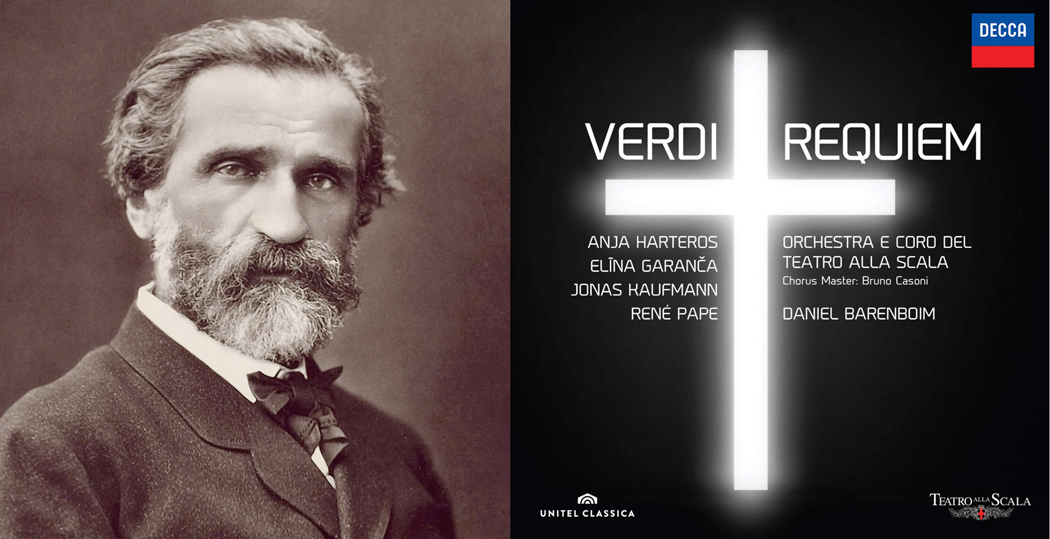
Giuseppe Verdi — I’m afraid am giving opera the short stick in this selection. I shouldn’t. And Joe Green is going to take a beating here. Because, although I would love to add Otello or La Traviata to my pile, I’m going to choose instead his Requiem. It is operatic, after all. 

Into the pile goes my Barenboim version, with the La Scala orchestra and chorus and Anja Hareros, Elīna Garanča, Jonas Kaufmann and Rene Pape. It is stunning. 

Antonin Dvorák — After Haydn, no composer has been more mentally and emotionally sound and hale than Dvorak. And that has translated, as with Haydn, into a remarkable consistency of quality across genres. You pretty much can’t go wrong with him. I’m going to go against the grain, here, though, and not choose the cello concerto or the New World Symphony, but an old Columbia box of the two piano quartets, the piano quintet and the lovely bagatelles for two violins and harmonium with the Juilliard Quartet and pianist Rudolf Firkusny. This recording is a delight.

Piotr Ilich Tchaikovsky — When I was younger, there was a prejudice against Tchaikovsky. My generation preferred irony and detachment. Tchike was all heart-on-sleeve. And besides, he wasn’t German, which meant he didn’t build his symphonies out of tiny germs of thematic material, like Brahms. We were too sophisticated for Tchaikovsky. We were, of course, stupid. Tchaikovsky was a great composer, a brilliant orchestrator, and put more of himself into his best music than almost anyone. For my pile, I’m going to pick his Sixth Symphony, the “Pathetique.” Everything about it is brilliant, emotionally deep and how can you not love the five-beat “waltz?” 

The performance I choose is Bernstein’s from 1987, with the New York Philharmonic, on DG. It is nearly an hour long (most performances run 40-45 minutes), and with anyone else, that slowness would dissipate all the forward motion of the music, but Lenny manages, even at the crawl, to keep the drive going, and the emotion he wrings from the performance is sui generis. Not to everyone’s taste, but it makes the music an experience, not just a pleasant listen. 

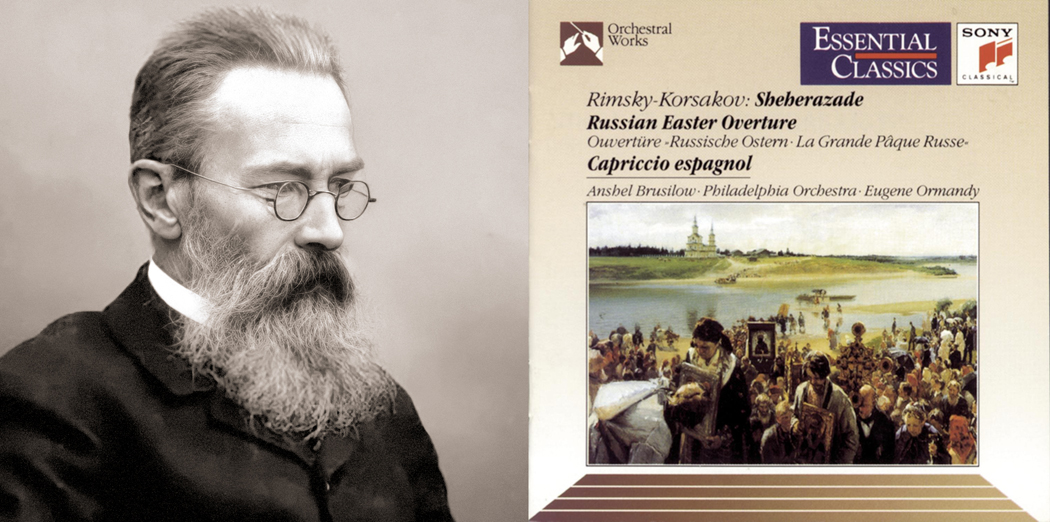
Nicolai Rimsky-Korsakov — I can’t live without Scheherazade. It is Rimsky-Korsakov’s greatest bit of tune-making and orchestrating. It is lush and washes over your ears like gentle surf. 

There are some great performances, including Beecham and Stokowski (I have both), but the one I’m gonna keep is Ormandy and the Philadelphia Orchestra, not only because it is a delicious recording, but it also includes the most joyous Capriccio Espagnol and the Russian Easter Overture, making it a Rimsky trifecta. 

_______________________

This takes us up to the end of the 19th Century. In the next piece, I’ll clean out my 20th and 21st century clutter.

It is plopped down in front of you and you poke it and prod it and try to figure out what it is. If it is something very new or very different, it may take more poking than usual, and you may very well come up with the wrong answer. 

This is what it is to be a critic — a real critic, I mean, not one of those Yelp scribblers, or self-certain mandarins with nothing more to offer but thumbs turned skyward or hell-ward. 

I was a critic for 25 years for a major daily newspaper (The Arizona Republic in Phoenix, Ariz.), and I always thought of my job as being a first reader, or first seer, or first listener — a pioneer trying to make sense of something before any sort of consensus has been reached. It is a risky thing to do — to proffer an opinion before you have anyone watching your back. 

When conductor Pierre Boulez first came out with his version of Wagner’s Ring Cycle in 1976, he played as if it were chamber music, it was such a different conception of the music that many critics first assumed it was a failed attempt to make the grand, Romantic mytho-philosophical monster it had always been taken to be. The BBC criticized the conductor’s “ruthless tempi” and “lack of expressiveness.” 

Consensus has now realized it was a brilliant re-thinking of the way the music could make sense. The clarity he brought to the muck (beautiful muck), was transcendent in its own way. Later criticism decided instead that “Wagner’s music doesn’t have to be murky to be metaphysical or massive to be overwhelmingly moving and Boulez gets playing from the too-often turgid Bayreuth Festival Orchestra that makes the music crackle and blaze with musical and dramatic meaning.”

Being a first listener is always risky. You may think something a failure because it doesn’t do what it has done before, failing to hear that it is doing something new brilliantly. 

When the Boulez Ring was new, the critics poked and prodded to see if it was alive. Now, we know not only that it was alive, but that it was a harbinger of a new way of playing classical music that has taken over the business. Out with the Furtwängler, in with the John Eliot Gardiner. Lean and mean drove out lush and weighty. 

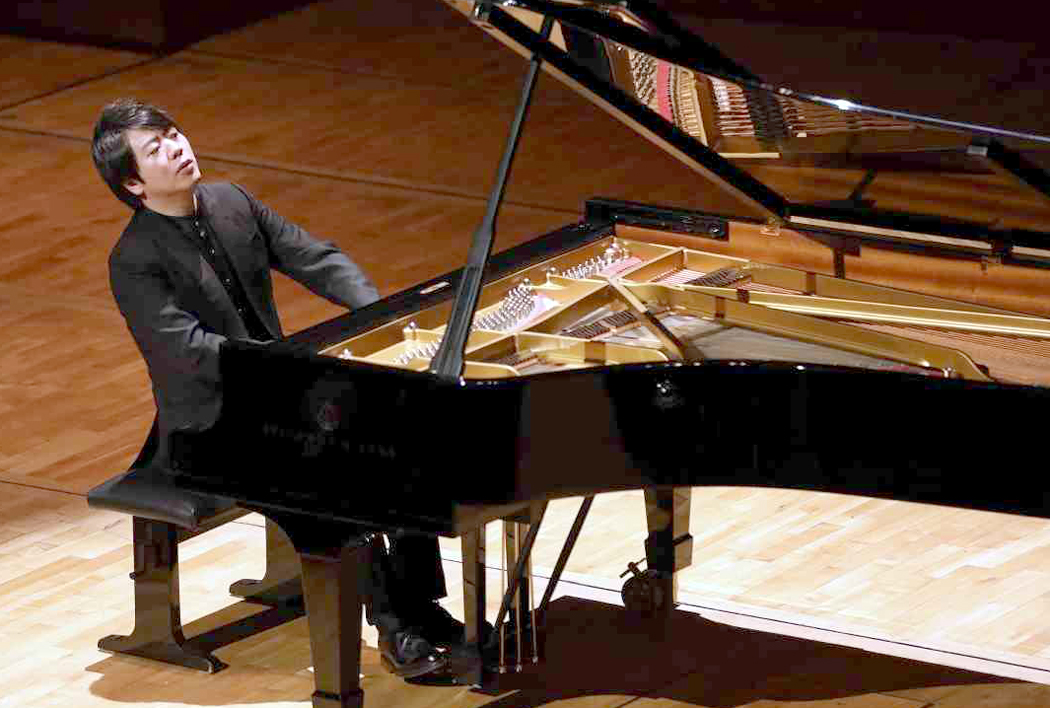
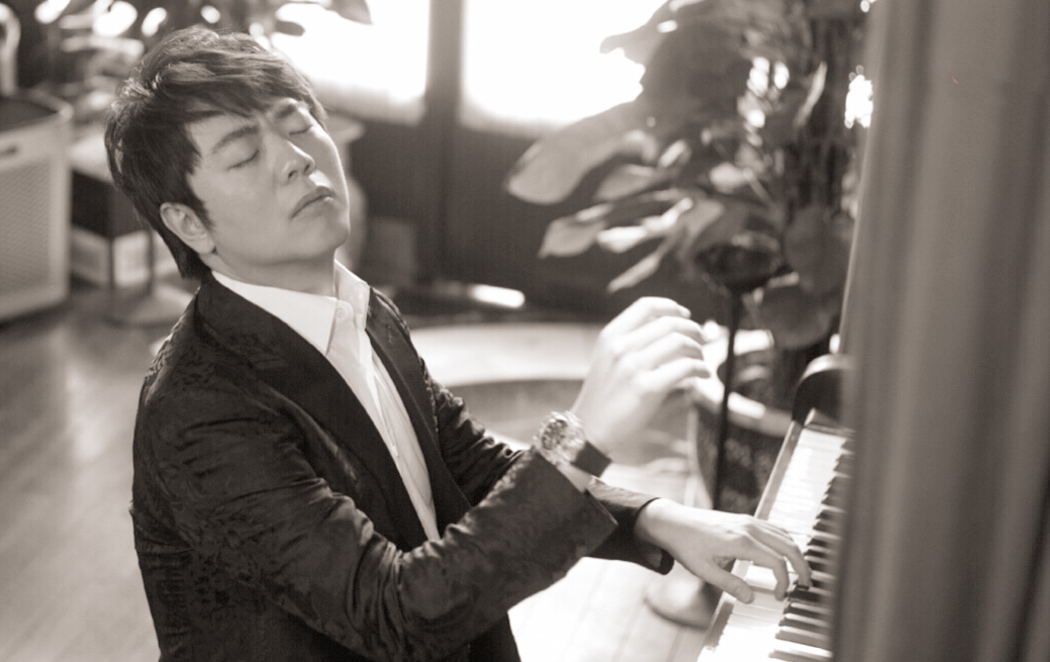
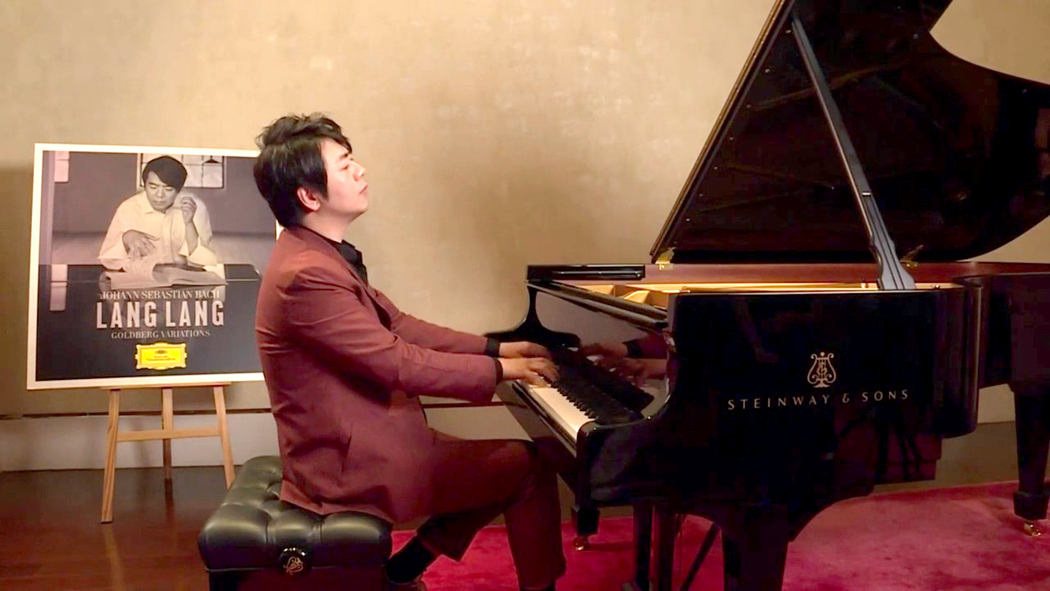
I am reminded of this because I have just been confronted by a new recording of Bach’s Goldberg Variations under the fingers of Chinese Wunderklaviermeister Lang Lang. Critical reaction has been all over the place, from deciding it was “the greatest version since Glenn Gould” to complaining that it sounded like a talented conservatory student sight reading. 

And I see what each reaction means: They parallel my own thoughts. Is this a brilliant rethinking, or is this a flaming dumpster fire? 

Mr. Lang, or if I may be so familiar as to call him by his first name, Lang, has always split opinions. Sometimes it is hard to bust through his relentless self-promotion — the kind of commercial huckstering usually identified with charlatans and snake oil salesmen — and then there are his stage antics, eyes closed in thesbian rapture, rolling his head back and forth in a way to make Leonard Bernstein seem like a mechanical clock. How can you take him seriously? 

And yet, there is often magic in his playing. I have heard him live several times, and his performances varied widely, from glib to dazzling to absolutely empty. Yet, at other times, it was profoundly moving. When I heard him play the Chopin E-minor concerto, the way he played the slow movement made time stand absolutely still. It is one of the most soul-satisfying performances I have heard in a half-century of concertgoing. It probably helped that I normally close my eyes when listening to music and therefore was spared his facial contortions. God, was that moment beautiful. 

His recordings are equally all-over-the-place, with some dead-on and concentrated and others distracted and hollow. Lang is capable of so much, but only delivers intermittently. 

So I am now confronted by a Goldberg Variations unlike any I’ve heard before. Is it brilliant or dunderheaded? Is it an aberration or is it a signal that classical music culture is shifting once again? 

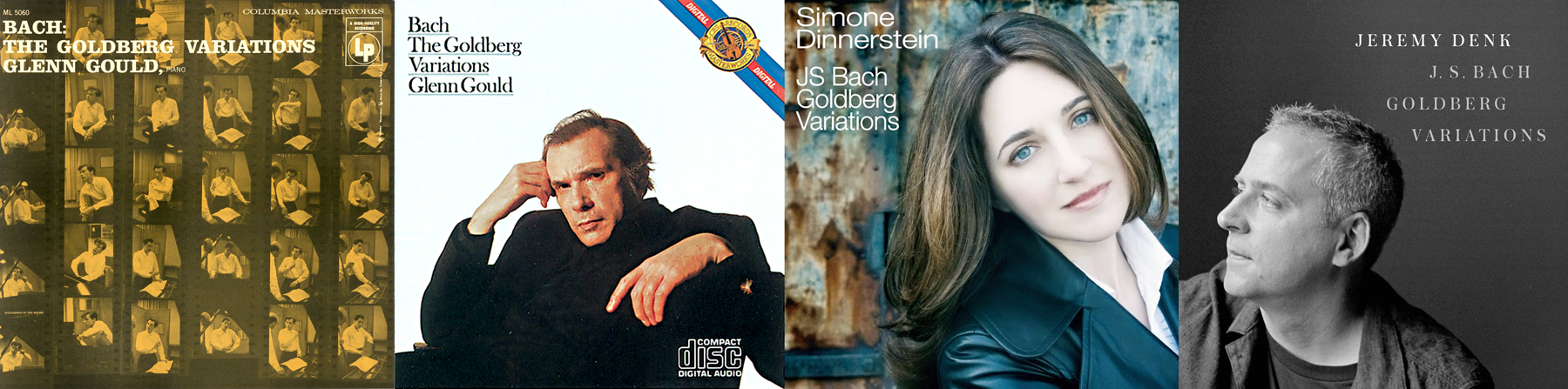
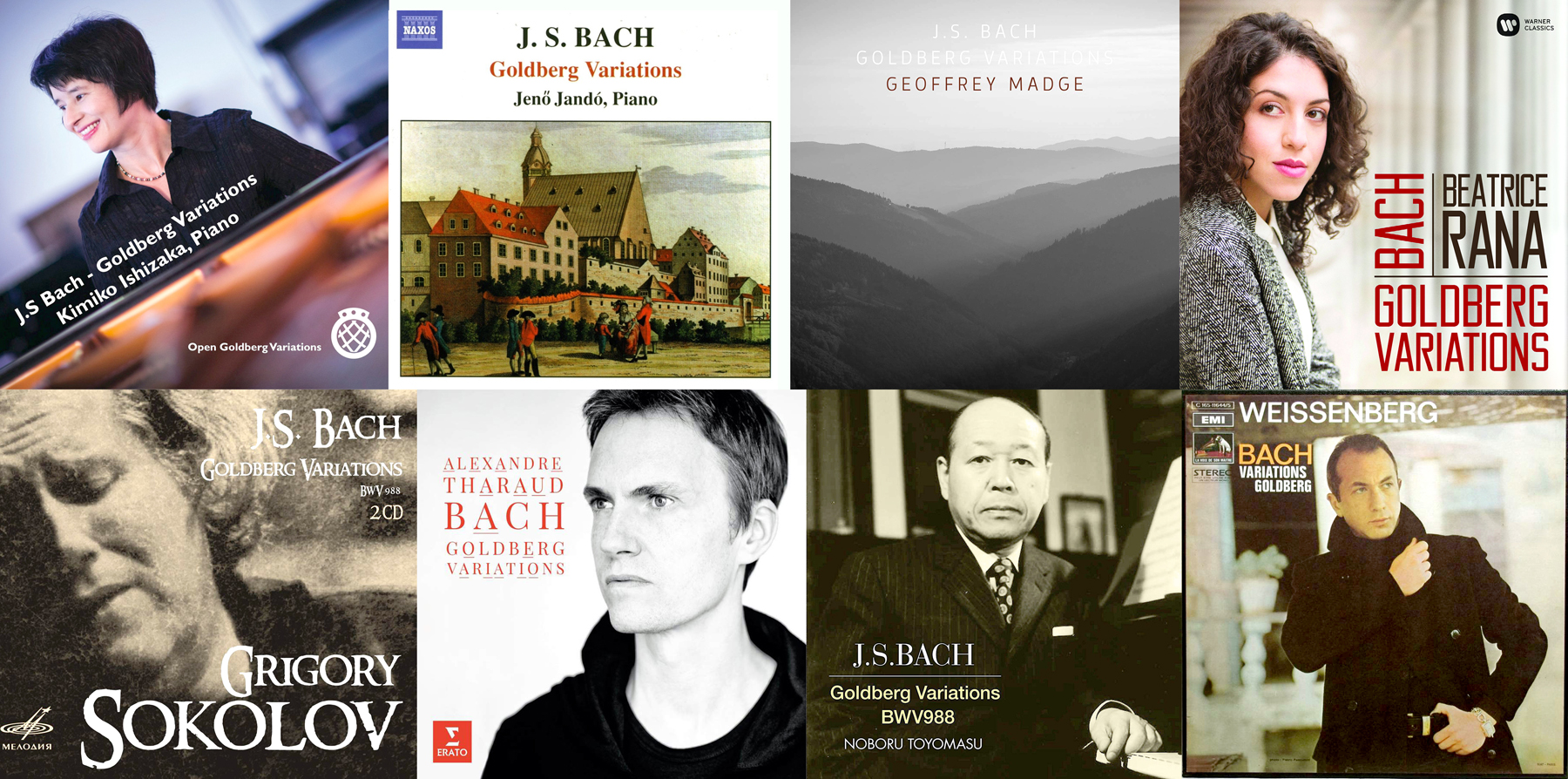
I’ve heard a lot of Goldbergs in my time. They were little known or played before 1955, when Glenn Gould launched them on an unsuspecting public, with a blazing performance that redefined Bach playing, clarifying the polyphonic strands and cutting down the pedal, almost mimicking the sound of a harpsichord. Since then, in the same way that no self-respecting art photographer can fail to make a photograph of a green pepper after being shown the way by Edward Weston, so no decent pianist can avoid recording a set of Goldbergs. Most of them are perfectly decent, if anonymous. 

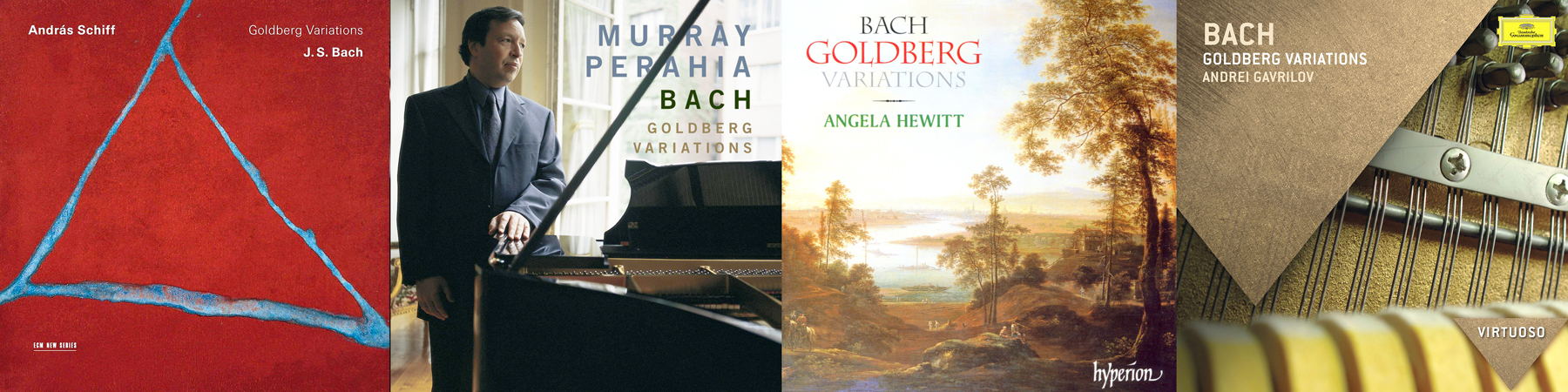
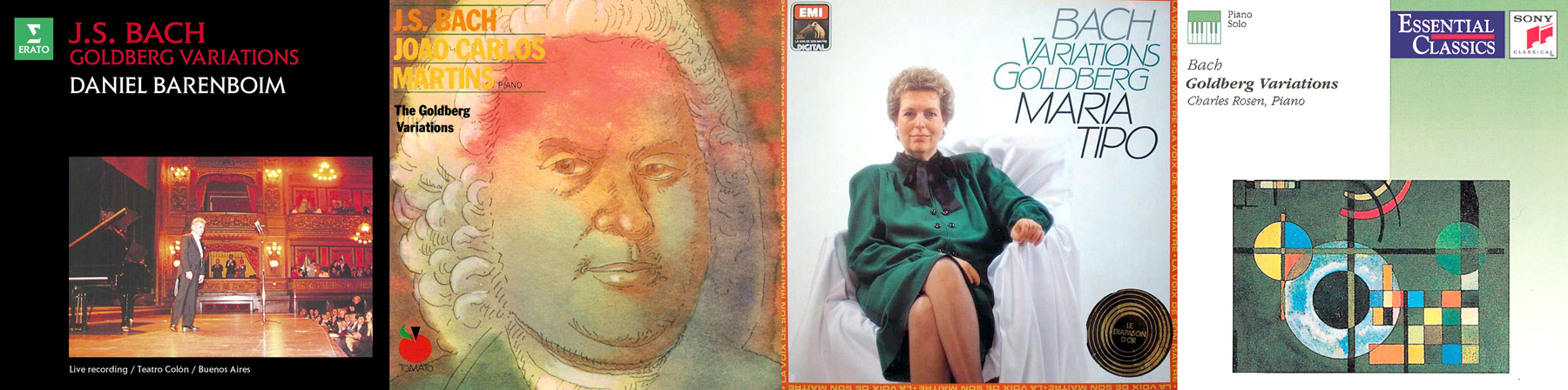
In recent years, a few with real personality have been released. Simone Dinnerstein has her set and more recently Jeremy Denk. Some may remember the brief surfacing of a recording by João Carlos Martins that was almost as idiosyncratic as Gould, although Martins’ piano never seemed to be quite in tune. 

The work has also been transcribed for accordion, marimba, harp, hammer dulcimer, guitar, saxophone quartet, string trio, string orchestra, synthesizer, and brass quintet. I have a recording of parts of them on Japanese koto, and Yo-yo Ma recorded the Aria on his cello. Avant-gardist Uri Caine made his version updating each variations individually for a heterogeneous mixture of voices, instruments and recorded noises. I once put together a CD mixing many of these oddball transcriptions into something I called the “Goldberg Variorum” — each variation played by a different instrument or group. 

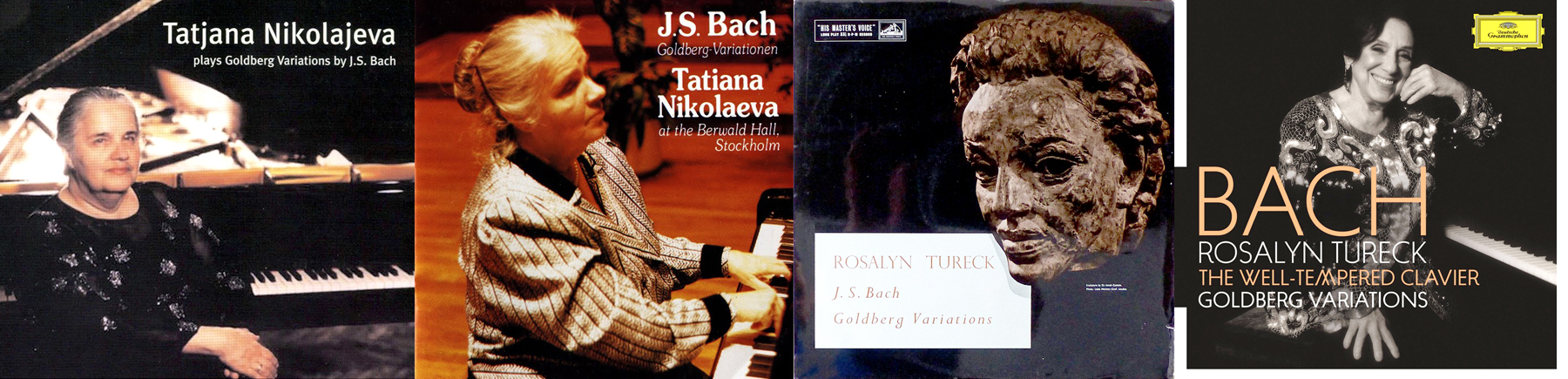
Gould recorded the Goldbergs at least four times — with untold bootlegs out there. The initial set has been reissued so many times in different albums, that it is impossible to keep count. Russian pianist Tatiana Nikolayeva recorded them five times and Rosalyn Tureck did it seven times. 

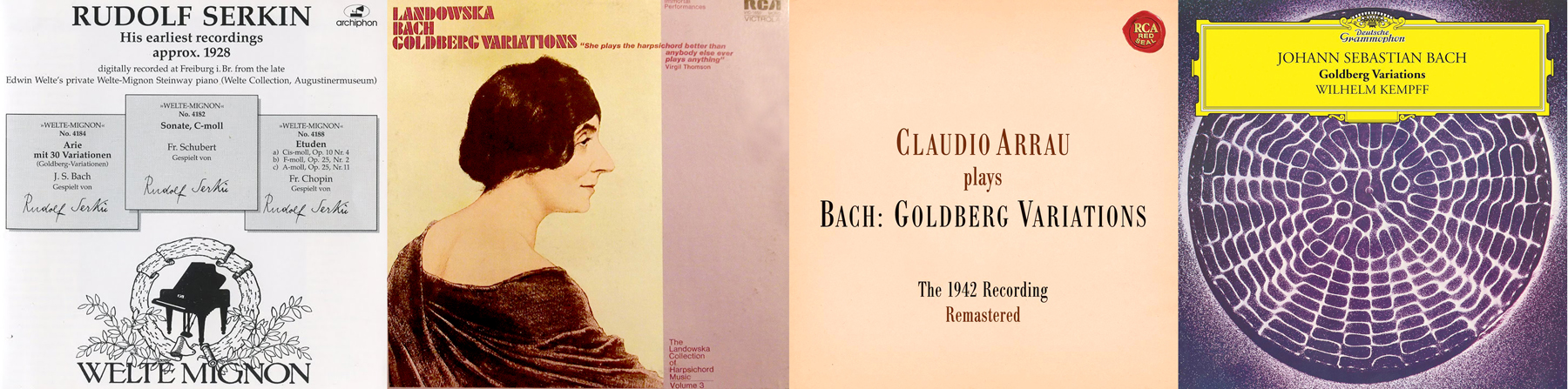
The earliest version I could find was on Welte piano rolls (a kind of player piano) from 1928, by Rudolf Serkin. (His son, Peter, left us three versions). Since then, there have been close to 250 recordings. About 50 of those are on harpsichord. A few are the transcriptions, but almost all are on piano. 

But since Gould, most pianists have hewn to the stricture that, since they were composed for the harpsichord, they should be performed as drily as possible, and with little or — preferably — no pedal. And since the arrival of “historically informed performance practice” (fie on the miscreants, I say, fie) boatloads of pianists have done their best to erase any notion that a performer should “interpret” the score. Just the notes, ma’am. 

This has led to quite able, but faceless performances by such as Angela Hewitt, András Schiff and Murray Parahia. I don’t mean to poo-poo these recordings, They are all excellent of their kind, but they are chaste. 

And so, we come to Lang Lang’s two-disc set, taken at a rather leisurely pace, but with lots of spark and crackle in the details. He likes to thump hard on stray notes and he adds many ornaments, especially in the repeats — and not all the trills and mordents are stylistically appropriate. Extra passing tones and tons of rubato. Worse: Pedal. In modern terms, this is Bach done in “bad taste.” 

In the old days (pre-HIPP), pianists tended to play Bach on piano as if he had written for piano. They brought out tunes and backed them with accompaniment. Now, we revel in the polyphonic strands, each brought out cleanly. If you listen to pre-World War II recordings of Bach, you will hear pianists such as Edward Fischer or Wilhelm Kempff play their Bach as if he were the godfather of Chopin. 

You can hear the echoes of this Bach in the Well-Tempered Clavier of Daniel Barenboim. They are magnificently played, but purists cover their ears and bray “Nyah-nyah” to block out the sound. Yet, there is a long tradition, now largely buried, of approaching Bach’s music as a pretext for piano playing, showing off the performer’s skills and sensibilities. After all, do you go to La Boheme for the story, or to hear Pavarotti? The present orthodoxy considers this a kind of blasphemy. 

Yet, the music no longer belongs to Bach; it is ours and we can express our ownership of it any way we wish (as someone once said about modernized performances of Shakespeare, set on the moon or done with an all-female cast, “It’s OK. They haven’t destroyed the text. It is still there, unharmed.”) And no matter what you may think of Lang Lang’s performance, the text is still there. It belongs to you, too. But Bach himself is no longer here; he has no say in the matter and we are presumptuous if we claim to speak for him. 

So, maybe, after 40 years of increasing musical priggishness and the cult of “composer’s intentions” we are beginning to loosen up. After all, it is Postmodern doctrine that it is all just “text” to be worked on by each of us. 

The audience that actually cares about classical music seems divided into two unequal groups. The larger posits a Platonic ideal performance and judges each concert by how close to this ideal it reaches. Of course, each listener has his own vote for what that ideal is. But the goal is always the “perfect” realization of the score. 

But the other group seeks constantly to be surprised, to see the notes through a newer lens and have the music refreshed. “To hear it again for the first time.” They expect each concert to give them a different version even of old chestnuts. The standard issue performance bores them. 

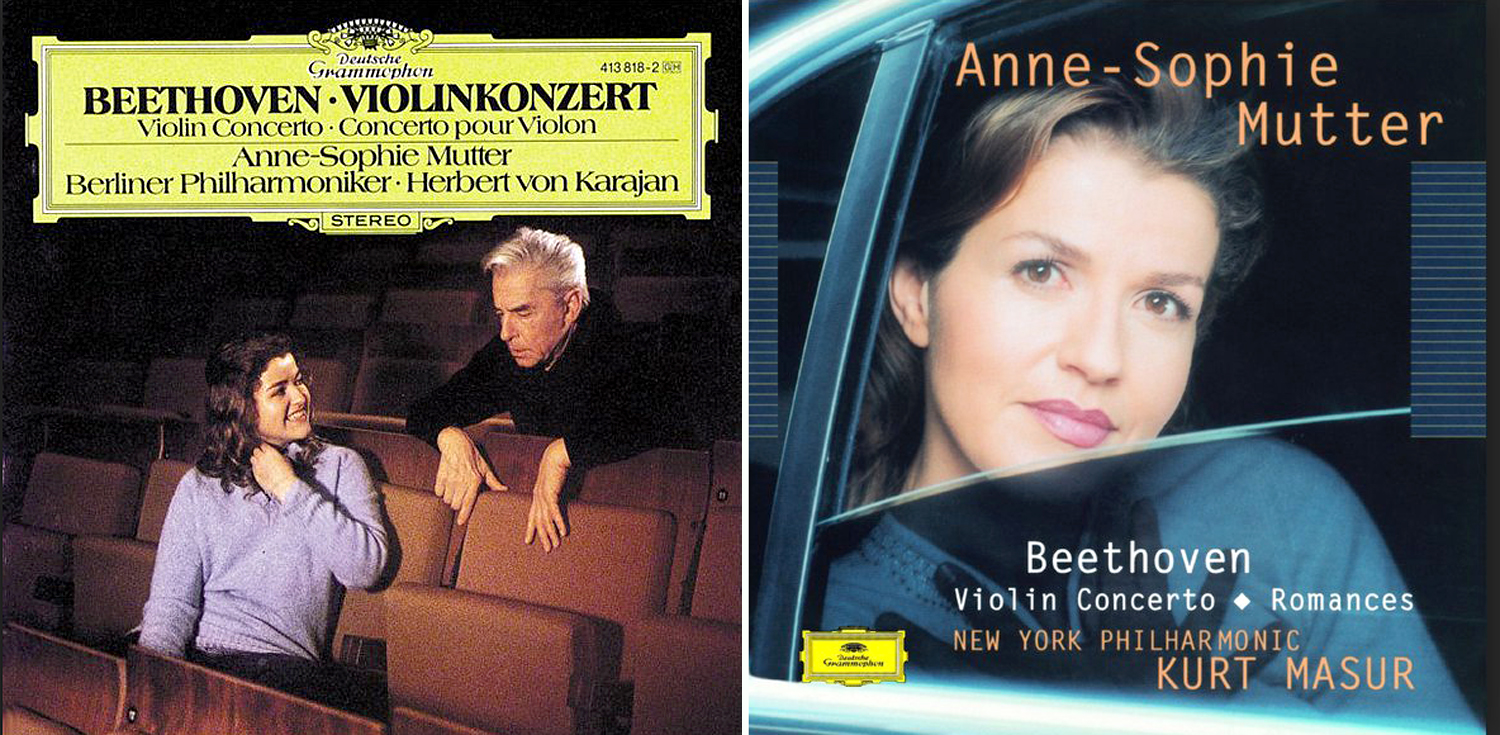
I can give a great demonstration of the difference. When Anne-Sophie Mutter first recorded the Beethoven Violin Concerto with the Berlin Philharmonic and Herbert von Karajan, she gave what must be the closest to the perfect ideal. Nothing out of place, everything beautiful and expressive. As if played by angels, not humans. It has remained in print since it was released in 1979. She recorded it again in 2002 with Kurt Masur and the New York Philharmonic, in a performance much more personalized, with very different phrasings and dynamics. No longer a Platonic ideal, but much more a here-and-now. You would never confuse it with any other performance or violinist. I love it; many fans hated it. Hate, hate, hated it. 

The problem with the Platonic performance is that the ideal changes over time. Once, the perfect Beethoven was Furtwängler, then it became Szell, and after that, it became John Eliot Gardiner. Tastes change over time. 

We seem to be in another shift, giving up the impersonal historically strait-jacketed version for a reintroduction of the more individuated performance. We hear it in the recordings not just of Lang Lang, but of Mikhail Pletnev, Valery Gergiev or the late Nikolaus Harnoncourt (operating under the deceitful guise as an “original instrument” guy — but really just sui generis.)

Really, the Platonic template has been in place mostly from World War II on. Before that, performance idiosyncrasy was the norm, from Vladimir de Pachman to Willem Mengelberg. Leopold Stokowski was famous for tinkering with scores and glamming up what he was conducting. Now, having gone through that, into the Post-war standardization and then the HIPP diminution, we seem to be re-entering an era of increased personal interpretation. 

And that brings us back to Lang’s Goldbergs. If we are in the cusp of a change, we cannot really be sure where the gamepiece comes down. This new recording may indicate a reshaping of the way we play Bach, the way Gould reshaped it from 1955. Or maybe it’s just a garish one-off. 

I poke it; I prod it. I place my bet. So many of the hundreds of recordings of the Goldberg Variations are magnificently well-played and satisfying in their own way, but how many are memorable? You could replace one with another and be equally pleased, indeed not even to notice the difference. Gould was memorable: You can spot it in a crowd of hundreds. Lang Lang’s recording is the most memorable I’ve heard since then, and I’ve heard a boxload of them. It is memorable, but is it good? Will its novelty wear thin, or become the new norm? 

I am going back for a fourth dive into the new recording. Then, maybe, a fifth. Perhaps after that, I’ll have an answer. 

Yo-Yo Ma is god. I don’t know anyone with an informed opinion who would disagree with the assessment, even atheists. There are some excellent cellists out there today, and who I would give good money to hear, but Yo-Yo is in a class by himself.

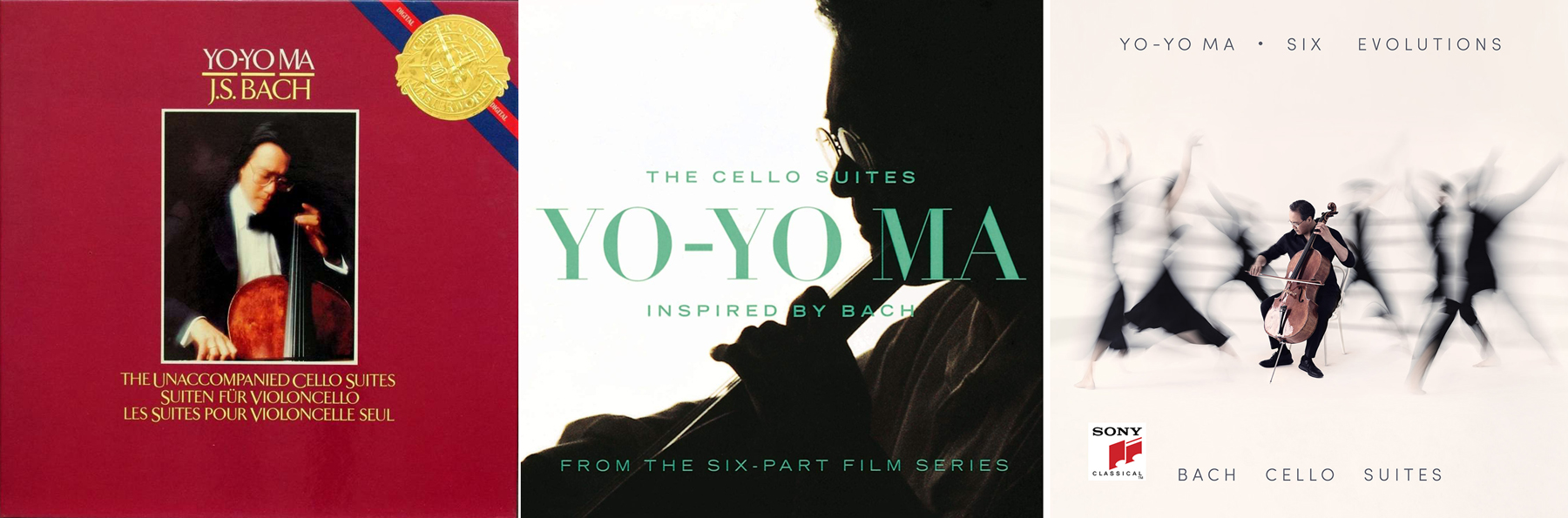
But even a god has his gods, and Yo-Yo Ma has now recorded the words of his own god three times; the first in 1983, when he was 28, and said himself at the time that he was too young; the second in 1998, when he was 43; and finally (he says) in a new version released this week, when he is 63. That music is Johann Sebastian Bach’s, six Suites for Unaccompanied Cello, which are the words god might speak to you in a still small voice inside your soul. 

I have spent the past four days listening to his performances, and have gone through the newest set three times, and individual pieces more than that. No current cellist has such a personal take on the music as Yo-Yo Ma.

(I’m going to continue with his full name. The Associated Press stylebook says that on second reference, I should just call him “Ma,” but that seems too perfunctory; “Mr. Ma,” as The New York Times would use it, sounds too much like a Bond villain, and “Yo-Yo” is out of the question, being too familiar — would a Christian call Jehovah “Joe?”)

There is something that sometimes happens with a master artist, who has so mastered his craft, that he feels free to take his work into new and personal spaces. Anne-Sophie Mutter recorded the Beethoven Violin Concerto in 1980 with the Berlin Phil and Herbert von Karajan, when she was 17; and again in 2002 with the New York Phil and Kurt Masur, when she was nearly 40. The first is a nearly pitch-perfect mainstream performance — the standard recording for anyone — and has seldom been done as well, not to say bettered. The second is so idiosyncratic that it almost seems like a different concerto. The second is deeply personal.

So, when Yo-Yo Ma made his first attempt at the Bach Unaccompanieds (I don’t mind using the nickname for the music) he seemed to want to make sure he dotted all the eyes and crossed all the tees. It is a note-perfect recording that would be a fine set for anyone who only wanted or needed one, but to me, it is oddly unsatisfying. It lacks personality. What can I say? He was young. 

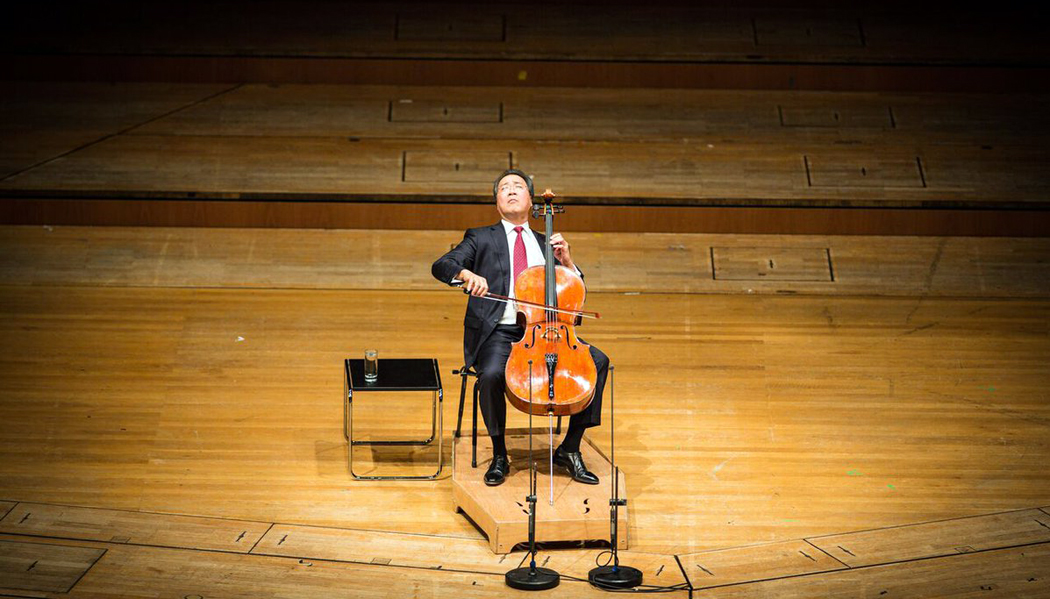
I have heard Yo-Yo Ma play all six live in concert twice, and both times, the concert is deeply remembered as one of the pinnacles of my concert-going career. Live, Yo-Yo Ma earns his godhead. No one I have ever heard has come close to the depth and interiority of his interpretations. The audience sat rapt for two-and-a-half hours hearing the music, not as entertainment, but as their very personal insides brought out to see and hear. 

I have heard him live on other occasions where he would play one of the Bach Suites as an encore. Each time, they brought the house to a reverent stand-still.

Alex Ross — former music critic for The New Yorker — wrote this about a 2017 performance by Yo-Yo Ma of all six Suites at the Hollywood Bowl — a venue not known for the attention spans of its patrons: “Almost no one made a sound. Almost no one moved. When a large audience is listening intently, it creates an atmosphere that cannot be measured or recorded, only remembered. Here, it was as if music had stilled the world … he was following his natural musical rhythms, to the point that it felt less like a performance than like an interior monologue … [The audience] was under the spell of a solitary searcher in the dark.”

That is the Yo-Yo Ma I know from hearing him in person. 

(An aside: Yo-Yo Ma in person and on recording are very different. This happens sometimes. In the studio, he seems to want to be note-perfect and thought-out. His studio recordings are models of propriety and elegance, but they lack the electric presence and risk-taking of his live performances. I remember hearing him play the Dvorak concerto in Phoenix in the 1990s, and the performance nearly destroyed me, it was so deeply emotional. His studio recording is tremendous, but cannot bring me to the same tears. Yo-Yo Ma is not alone in this. For years I thought of conductor Bernard Haitink as a mere Kappelmeister, plodding along competently. I had only heard recordings. But when I heard him do the Eroica with the London Symphony Orchestra at the Salle Pleyel in Paris, he blew me away with the most powerful Eroica I ever heard live. And Kurt Masur had something of the same reputation. On CD, his performances can be competent but routine. But I heard him live with the New York Philharmonic at Avery Fisher Hall in the Verklaerte Nacht and Beethoven’s Eighth that were soul-searing. Sometimes the recording is a miserable liar.)

But what about this new recording. It is not the one for a beginner: It is too idiosyncratic. But for anyone familiar with the music, the latest version provides almost constant new insight into the music — and not only into the music, but into human existence; into the cosmos. 

One aspect of the recording merits special mention: its engineering. One reviewer said it sounds as if we are hearing the music from inside the cello. There is a presence to the sound that is closer to having the performance in the room, live with you, than any recording I have come across before. You can feel the buzz of the low notes in your very sternum. It is body-feel as well as ear-sound. 

There are details to mention. In the Prelude of the first suite, about two-thirds of the way through, the music climbs the scale up to a fermata — a held note — which is usually played as the top of a crescendo. It is the climax of the movement. Here, Yo-Yo Ma gives us instead a diminuendo, so the final held note is a hush. In the Courente of the second suite, he takes off like a house on fire, twice the speed I’m used to. He brings a sense of spontaneity to his performance that can only come from having played the music since he was four years old (yes, he began, taught by his father, from before he even began school). 

No music I know is more interior than these suites, and the older Yo-Yo Ma gets, the more Innigkeit his performance. 

His second two sets each has a gimmick. In 1989, it was a series of six short videos made in collaboration with six different film directors and various other collaborators. In some, the suites are not even heard in their entirety. (The CD release is complete, however). 

In this new set, Yo-Yo Ma makes the case for understanding the six suites as a single artistic entity, a kind of through-composed drama, over two-and-a-half hours. There’s playfulness in the first suite, grief in the second, celebration in the third, contemplation in the fourth, the weight of the world in the fifth, and in the sixth, written in a higher tessitura (originally for a smaller, five-string instrument) what can only be called transcendence. Over those two-and-a-half hours, we are given not a potpourri or melange, but a psychic and emotional journey. 

The crux of this journey is the Sarabande of the fifth suite. Only 20 bars long, it is the bearer of all the weight, the moment the tenor of the music changes. Cellist Paul Tortelier called it “an extension of silence.” Yo-Yo Ma played this movement on September 11, 2002 at the site of the World Trade Center, while the first of the names of the dead were read in remembrance on the first anniversary of the attack. 

After its depths, everything to come is a dawning of light. That Sarabande is a single line of melody, arpeggiated  and coming to rest after every phrase in a note dropped deep into a well of sadness. It is a movement that requires the uttermost from a musician. It is so simple that underplaying it will let all the power out of it, but overplaying it can sound mawkish. Yo-Yo Ma invests it with such mournful simplicity, varying his tempo by minute amounts, hardly measurable, but carrying all the expressivity. I dare you to hear this movement without weighing your life in the balance and weeping. 

His only competition for this is the man who resurrected the suites after finding a copy in a junk shop in Barcelona in 1890. Pablo Casals made the suites the core of cello repertoire; they had been before that considered mere practice etudes. Casals recorded all six between 1936 and 1939 and set the mark rather high, expressively. For me, they have never been bested, not even by Yo-Yo Ma. They are old, scratchy recordings and allowances have to be made, not only for the engineering shortcomings, but also for Casals’ technique; it was the best, even brilliant for its time, but decades of cellists working out fingerings and bowings have made later performances more natural under the fingers. But for profundity and emotion, Casals has never been bested.

Yo-Yo Ma, live, plays them in such a way that they break any separation between musician and audience. The thoughts expressed in the music are the not so much conveyed to the listener as momently co-experienced by performer and audience. It is something they discover deep in themselves, and for the moment, there is no difference between audience, cellist and Bach himself. They are at one.

When Casals plays, however, it is as if he is playing for God alone. He is alone in the room with the paraclete, discussing the Cosmos. 

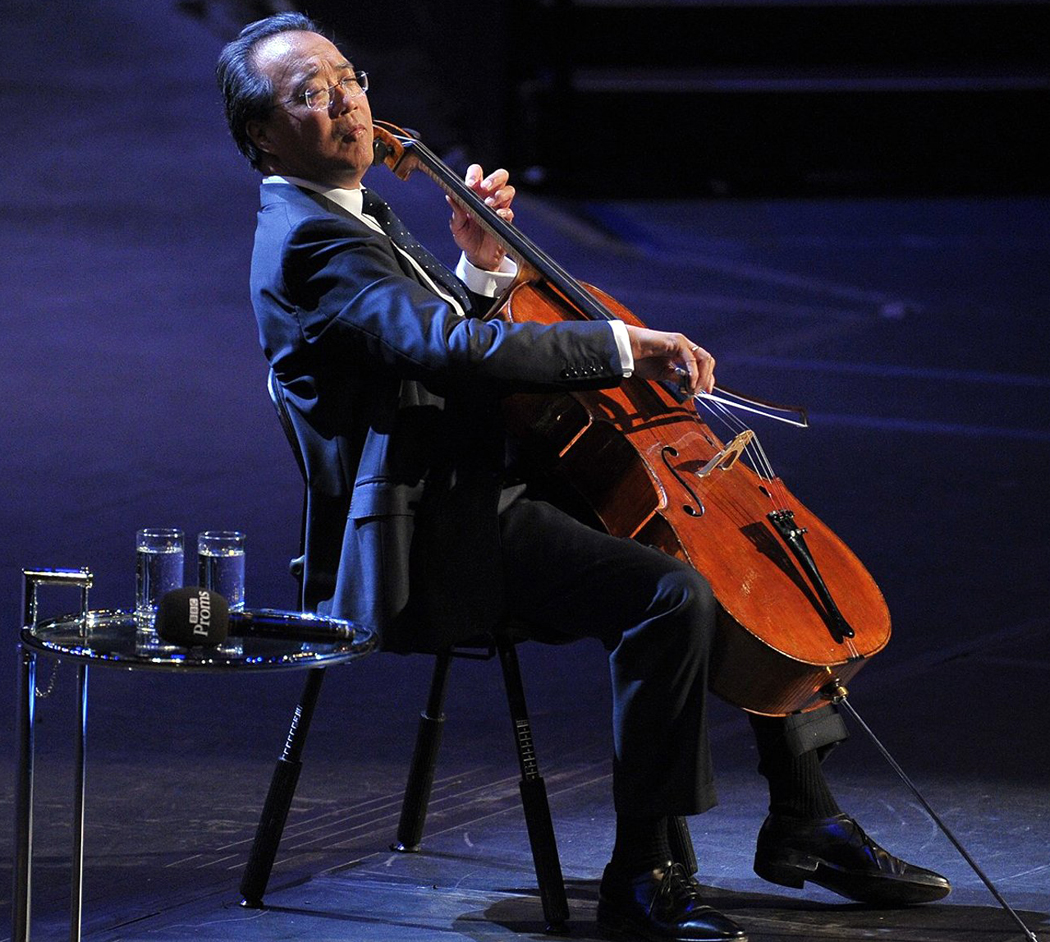
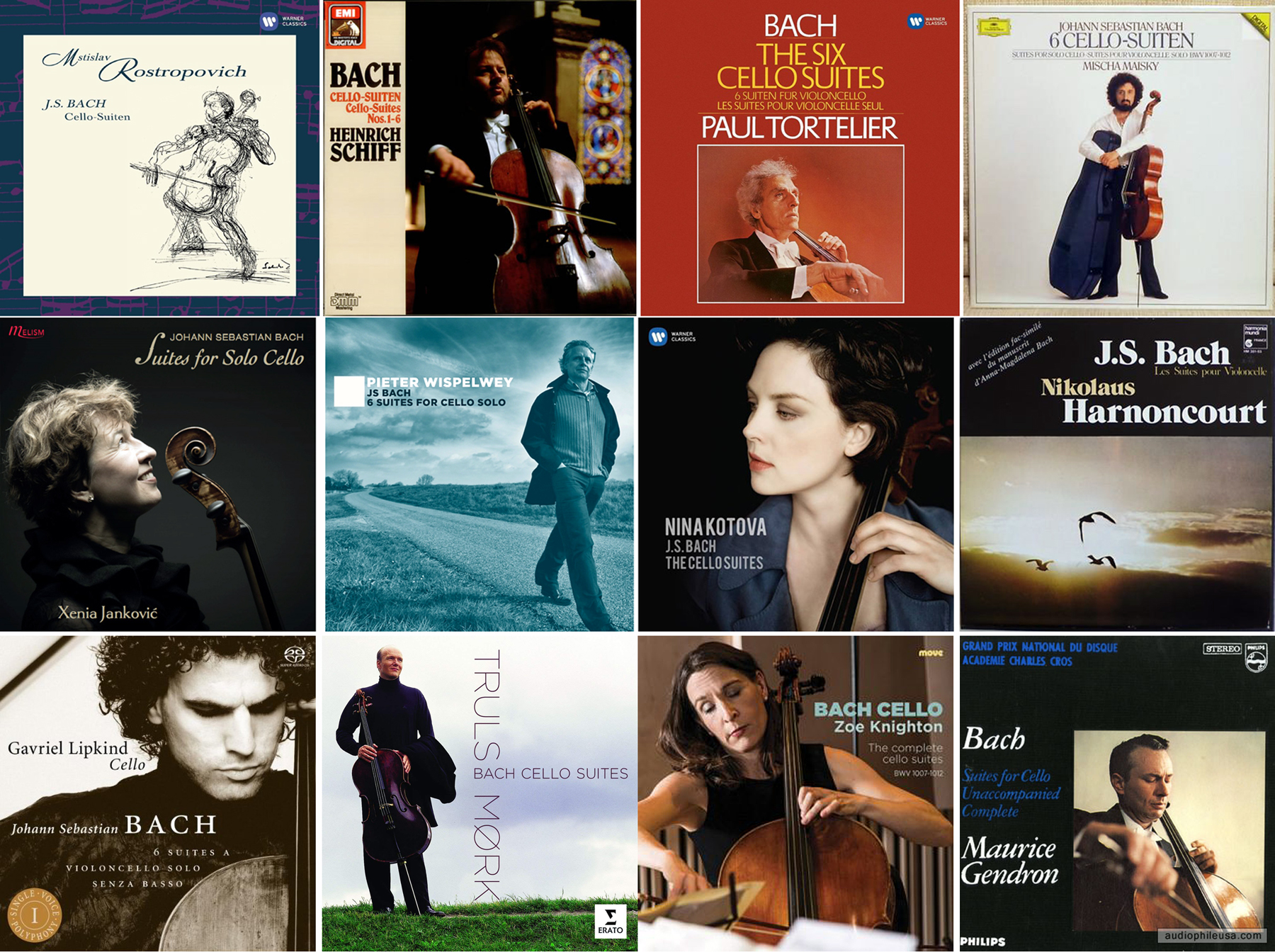
Surely no real music lover can live with only one set of performances. I have Casals, all three Yo-Yo Mas, Pierre Fournier, Anner Bylsma, Janos Starker, Mstislav Rostropovich, and Jaap ter Linden. There are also many performances on YouTube, including a video of Yo-Yo Ma playing all six at the Proms in London in 2015 (link here). 

For those for whom one version is sufficient, I recommend Yo-Yo Ma’s second set. They are deep but not idiosyncratic. If you want to dive deeper, get Casals (remastered by Ward Marston on Naxos) and Yo-Yo Ma’s newest set. You cannot go wrong with Fournier or Rostropovich. There are almost no bad recordings. 

But excuse me now, I’m going back into my fourth listening to the new set. I don’t think it is possible to get tired of this music. To paraphrase Dr. Johnson, to do so would be to tire of life. 

If you were to name the greatest composers in the Western musical tradition, three or four names would come up uncontested.

Yes, you might have your favorites beyond these, and good arguments can be made, but by consensus, you would have to name Johann Sebastian Bach, Wolfgang Amadeus Mozart, Ludwig van Beethoven and …

Bach, because he is the source. He towers above everyone in his emotional power and technical brilliance. Different composers can fill the needs of various moods, but you can listen to Bach in any mood. He is universal.

Mozart, because no one ever had such fluency of expression or more immediate melody. Music seemed to grow from him like peaches from a tree.

Beethoven, because no one ever strove higher or struggled more painfully to find the exact note, the exact emotion, the exact nexus of human and transcendent.

And …

You might nominate Richard Wagner, or Franz Schubert. Johannes Brahms or Claude-Achille Debussy. Stravinsky or Schoenberg. All good choices, in their way, but the name that comes up more than any other as worthy of the company of Bach, Mozart and Beethoven is Franz Joseph Haydn, yet he is so often overlooked. His name does not spring up with the alacrity of the Big Three, but is almost always mentioned: And yes, there is Haydn.

Why is he given such short shrift? He is one of the Big Four. He practically invented the symphony and the string quartet; at least gave them the form we have encountered them ever since. And the wealth of his invention is mind boggling. He wrote 104 symphonies (depending on how you count), with almost as many minuets and yet, not one of those minuets  could be mistaken for any other. How can you create that many third movements and yet make each one emotionally, melodically and rhythmically distinct? And memorable.

His music has never left the repertoire, but is so often played as a warm-up piece to start a quartet recital, or tucked into a symphony program before the Big Piece after the intermission. We pay him lip service, but seldom really listen. Mostly, he is a pleasant bit of music before we have to wake up for the Mahler or Sibelius that will follow.

I believe the reason is that for many of the more popular composers, you don’t actually have to listen: You can let the music wash over you in emotional colors and flavors. You just float downstream with the tunes. (I don’t mean that if you do actively listen, you won’t find a logical argument, but that for most concertgoers, the musical argument is beside the point; Tchaikovsky swells your heart whether you recognize a sonata form or a polonaise).

But Haydn is music meant to be listened to actively, because what he does in his work is to give you a pattern of notes, and then take you on a journey of wit, through the permutations afforded by that pattern of notes. Your ability to follow all the clever things he does is the key to your understanding — and your pleasure. Yes, there are some good tunes, but they are the grist for his art, not the point of it.

Certainly, all good composers do this, but none to quite the degree you find with Haydn, or to quite the point. Through most of his career, he wasn’t writing for the common public, but for a sophisticated audience, who could follow his clever construction and deconstruction of the sonata form, or the variation form. In other words, they listened actively. I.e., they got the joke.

Nikolaus I

His boss through most of his time at the Esterhazy estate was Prince Nikolaus, an avid music lover and himself a performer on the baryton — a now obsolete instrument, a sort of combination cello and guitar. Haydn wrote 126 trios for his employer to play on that instrument.

Because the prince was musically knowledgable, his court followed suit, and it meant that Haydn could inject his music with many a musical in-joke his audience would enjoy. I use the word, “joke,” but that doesn’t mean they are meant to be overtly funny. No, the “joke” was some catch or punchline the audience was meant to pick up on, like an odd key change, or the turning upside-down of a them. Some of them are funny, but the point is the wit — the cleverness.

Wit is a word that meant something different, larger and more important in the 18th century than it does now. We tend to use the word as synonymous with “comedy.” We expect to laugh at wit. A witty saying, a witty remark.

But in the century of Haydn (and before, to some extent), wit was an entire class of thinking. It meant, as Sam Johnson expressed it, “a kind of discordia concors; a combination of dissimilar images, or discovery of occult resemblances in things apparently unlike.” Or in his other formulation: “The most heterogeneous ideas are yoked by violence together.”

An easy example: his Symphony No. 60 in C, called “Il Distratto,” or the absent minded, or distracted. The first movement is a pile of jokes, from the very first notes: a pompous introductory fanfare that goes absolutely nowhere, followed by a spritely tune. In Haydn’s style, a first theme is usually followed by a second theme in a contrasting key and mood. But here, the second theme also goes nowhere; it consists of just one note and its ornaments, over and over, losing speed and energy until, as if the orchestra has forgotten where it is and what it is doing, suddenly wakes up and charges ahead with renewed energy. (Link here).

The conductor Kenneth Woods describes it as funny and modern. “Possibly the funniest and most modern symphony ever written”, going on to say that “Haydn uses most of the 20th-century ‘isms’ in this piece—surrealism, absurdism, modernism, poly-stylism, and hops effortlessly between tightly integrated symphonic argument and rapid-fire cinematic jump-cutting. This is Haydn at his absolute boldest—he undermines every expectation, and re-examines every possible assumption about music.”

And at the very end, the orchestra stops, mid-phrase, and retunes the violins, before getting back to business. Yes, that is musical slapstick, but no one did it any better before PDQ Bach.

Or the finale of his Symphony No. 61, a sprightly prestissimo punctuated throughout by comic oboes playing the same two notes over and over again. Never changing; over and over. Da-dah. (Link here). Da-dah. (Click on the timing listed in the dooblydoo for the last movement).

Or the opening of final movement his quartet, Op. 76, no. 5, which places the kind of cadential chords used to punctuate the end of a movement instead at the very beginning. (Link here). And, of course, the movement ends with the same final chords.

Fugue theme, Symphony No. 70

My favorite is the finale of Symphony No. 70, which begins with a joke: Five repeated notes, quietly played, repeated several times, lulling you into a reverie, then, the same five notes blasted at full volume, waking you up. It does this again, and you figure, this is going to be one of Haydn’s great jests, then, just when you think you have it figured out, a great, furious and very serious fugue breaks out, occupying the center of the movement. Finally, back to the five-note joke, ending with a forte crash of those notes. Light-hearted, or deadly serious — you can’t tell. (Link here). That is yoking heterogeneous ideas together by violence.

But it all depends on an audience with some knowledgable expectation of what is likely to happen, so when it doesn’t, it comes as a delightful surprise. If you don’t have this background, it just becomes pleasant tunes.

The string quartets came with a knowledgable audience built in. They were not meant so much to be heard by an audience, as played by amateur musicians at home, and so the pleasure in them is as much in the playing as in the hearing. And the wit is there for the musicians to enjoy.

When Prince Nikolaus died, Haydn was freed to travel and make his reputation outside the estate. His music became more public, and instead of his symphonies being made up of cleverness piled on cleverness for the delectation of connoisseurs, he made them bigger, louder and gave each one at least one great joke for the middle-class audiences to remember, like the most memorable scene from a movie they could talk about over coffee after it was over. So, there is the tympani bang in the “Surprise” symphony, the Turkish military band in Symphony No. 100, the tick-tock in his “Clock” symphony and the righteous, bumptious fart joke made by the contrabassoon in the slow movement of his Symphony No. 93.

This is not to imply that Haydn was all punchlines and gags. There is great depth of emotion in many of his works. Take for one, the Seven Last Words of Christ, a liturgical piece, originally for orchestra and later turned into a piece for string quartet (the version most often heard today). It is eight great adagios, one after the other, meant to evoke an introduction and the last seven utterances of Jesus on the cross (Link here). It is Haydn’s genius to be able to write them so distinctly that you never have the feeling of one long slow piece, but rather seven great, separate meditations.

Or, the Piano Variations in F-minor, written over the death of his closest female friend, Maria Anna von Genzinger, one of his most sober compositions.

Sometimes Haydn’s wit is funny. Sometimes, it is profound. It is always surprising. It is meant to surprise.

And Haydn’s wit can be found in some of his most serious works. The opening of his oratorio, The Creation, depicts primordial chaos in a disjunctive series of phrases and fragments in disparate tonalities (Link here). And when, after that, the choir sings, very quietly, “And God said, let there be light, and there was …” all heavens break out in trumpets and kettle drums  in a great C-major chord” “LIGHT!!!!” (Link here). It is a simple, even naive effect, but in live performance can make the hair on the back of your neck stand up. Wit can also render the sublime.

Of all the great composers, Haydn seems the most sane and even-tempered. Bach could bluster to city officials and get into fights. Mozart could squander his money. Beethoven had his heaven-storming bouts of choler. But Haydn found decent happiness on this earth and expressed in his music a satisfying sense of order and sanguinity, if occasionally a touch of mischief. His is the happiest music I know that is not also simple-minded.

I spend this much time on Haydn, because I love him. As I get older, I find that Haydn’s music has a staying power that sustains me. I can confidently turn to any piece and find deep and abiding pleasure.

Tallulah Rose

Tallulah Rose

I have an interesting “contest” going on with my granddaughter, Tallulah Rose. She is 16 and immersed in music, taking guitar, piano and banjo lessons; she has some genuine talent. When I chauffeur her around on those occasions when I am called on, and am playing some Bach or Beethoven on the car CD, she is apt to say something like, “Classical music is so boring; it all sounds the same.” And, of course, when I hear her listening to pop music on her iPad, my reaction is the mirror: Pop music is so boring; it all sounds the same. So, I scratch my head and wonder.

How can something sound so monotonous to me and not bore her to tears? How can something so varied and glorious as classical music possible sound to her as if it is all the same gluey mush? It is more than a question of taste; we are clearly hearing different things.

Most people are likely to think of this as merely a matter of taste — “I like indie rock, but she likes country,” —  and it is, to some degree — but while someone who likes Taylor Swift may say they don’t like Justin Bieber, they recognize it as merely a different genre of pop, and they wedge into their corner of sound comfort. Is there anything more insular than heavy metal?

But classical music doesn’t seem to function to Tallulah Rose as just one more Billboard magazine chart category, like soul or country-Western or hip hop. Those are all options out there for popular consumption and one chooses the category one feels most simpatico with.

But classical seems to be a different species altogether. It isn’t, for its serious listeners, just one more entertainment option. Its goals are elsewhere.

Modest Mouse

Modest Mouse

Tallulah Rose and I thought we might explore this question. She suggested an exchange. She would choose 10 pieces of pop music for me to listen to and I would choose 10 pieces of classical music for her. Tallulah Rose isn’t one of your ordinary junk-music fans: She has high standards for her music and would consider the bands she has chosen for me to be “art,” or at very least music that no one of any musical sophistication would be embarrassed to be heard listening to. She has excellent taste in her music. She picked for me music by Wilco, Vampire Weekend, Arcade Fire, Modest Mouse and Death Cab for Cutie, among others. I was to listen to her music and write about it, and she was to do the same for my choices.

What T-Rose chose for me:

1. Jesus, Etc. by Wilco
2. Australia by The Shins
3. Hannah Hunt by Vampire Weekend
4. Ragged Wood by Fleet Foxes
5. Wake Up by Arcade Fire
6. Young Folks by Peter Bjorn & John
7. Little Black Submarines by The Black Keys
8. This Charming Man by The Smiths
9. Missed the Boat by Modest Mouse
10. Dance Yrself Clean by LCD Sound System
Bonus track: Title and Registration by Death Cab for Cutie

In choosing music for her, I felt it only fair that I not bury her under the Bruckner Fifth or the Mahler Third, but try to find pieces of reasonable length, and I chose several movements instead of whole concertos or symphonies. Her music for me tends to run between 3 and 5 minutes. Here is my list for her (She snuck in an extra for me, so I added one extra Mahler track for her):

1. Gabrieli — Canzon Septimi Toni No. 2 for brass choirs
2. Bach — Prelude and Fugue in c-minor from WTC Book 1
3. Mozart — First movement of the Piano Concerto No. 20 in d-minor
4. Beethoven — Third movement from the “Tempest” sonata, Op. 31, no. 2
5. Chopin — Mazurka Op. 30, no. 4
6. Brahms — Finale of the Fourth Symphony
7. Mahler — Two songs: Wer hat das Liedlein erdacht? from Das Knaben Wunderhorn and Ging heut Morgen ubers Feld from Songs of a Wayfarer
8. Rachmaninoff — Finale from Piano Concerto No. 3
9. Villa Lobos — First movement from Bachianas Brasileiras No. 5
10. Copland — Fanfare for the Common Man

I have listened four times through to all of T-Rose’s music and I can say that none of them is musically unsophisticated, but neither can I say, outside the LCD Sound System’s Dance yrslf Clean, which actually does something with the music,  that they engage my deepest sympathies. Again, I am convinced that my music and hers simply are not attempting the same thing.

For a start, her music’s appeal depends greatly on the lyrics. Even when I read rock criticism in, say Rolling Stone, the criticism is less about the music qua music, and more about the quality of the words. The sentiment expressed is expressed verbally, not musically. (More on lyrics later).

Second, the parts of music that seem most treasured by the rock and pop listener is a consistent beat, often aggressively propulsive. Following that, it is a melody — although in contemporary pop music, melody sounds more like chant than tune — prosody is so slipshod that the same melodic note can sustain a single syllable or three or four, if that is what the words demand.

Johannes Brahms

Johannes Brahms

For my classically oriented ear, the unrelenting rhythm is monotonous; I keep hoping it will lead to something, but it doesn’t. For my ear, harmony is paramount. I am always aware of it, shifting from major to minor, or to a Phrygian mode or the endless unresolved but constantly yearning dissonances of atonal or serial music. I am always aware — more than the melody at the top of the orchestral heap — of the bass line. I remember Brahms saying when he got a new piece of music to look at, he’d cover up the top staves and look at the bass line. That way, he said, he could tell if the music was good or not. When I listen to popular music, the bass line is generally undistinguished, often repetitive, and rather more in the way of a continuo — a second reinforcement of the beat slammed out by the drums and cymbals.

When I say her music and mine are not doing the same thing, I mean, in part, that the music part of her music is meant to be a place to drop her head into for a few minutes, to grok on a pulse, while the verbal part is there to express, often elliptically, the concerns of a young mind. At worst, in the kind of pop music T-Rose wouldn’t be caught dead listening to, those concerns are numbingly conventional, but even the more sophisticated lyrics speak to the exaggerated optimism or cynicism of adolescence, the need to be appreciated as wise and knowing, even when those of us who have been through it already, now recognize those attitudes as pose.

angry young men

Slight digression: The question of pose is most obvious in the many band photos used for PR or for CD covers. The musicians look so serious and world-wise: You can’t put anything over on them. But you can run through hundreds of photos and they all seem to be the same people: surly faces, collars drawn up, hands in their pockets standing in a warehouse district street to prove their working-class origins. One can’t help recognize the same memes from the Angry Young Men of England in the 1950s and ’60s. It’s as if every band has seen photos of John Osborne and wants to be Richard Burton from Look Back in Anger or Tom Courtney from Loneliness of the Long Distance Runner. The straight-jacket of the meme is limiting.

Vampire Weekend: More hands in pockets

Vampire Weekend: More hands in pockets

Back to the main issue: The music of rock and pop seems meant to create a pervasive mood throughout the length of a song — and except for a few experiments, all this music falls into the 3 to 5 minute song form.

Classical music, on the other hand, revels in contrast: The tempos keep changing, vigorous first themes alternate with quiet second themes. An established key center is disrupted by a series of wrenching modulations only to be reaffirmed. Instead of a single simple emotion, there is a constant development of emotions. When I find T-Rose’s music boring, what I mean is it doesn’t grow — but then, it’s not meant to. And one of the things she finds boring in my music is that it never settles down into something she can depend on, to give her that one single, clear emotion she wants from her tune.

Another thing: For her music, as I said, the words are paramount. The music behind the words seems to function more like the music in a film: to underline the sentiment, but not to express it directly. Something interesting to hear while the “real” action is happening in the words. For my music — at least for the big 19th century pieces that make up the bulk of the repertoire — the music attempts to make an argument from start to finish, like the slow shift from c-minor to C major in Beethoven’s Fifth, or the chapters of Mahler’s Third, “What the fields tell me,” “What the birds tell me,” “What love tells me.” It works like an opera, telling a story — musically — from start to finish. To hear its meaning, you have to be aurally sensitive to changes in harmony, in orchestration, in dynamics, in the ways the themes change and grow. The way you hear the E-flat arpeggiated tune at the beginning of the Eroica changes from a closed-off, harmony-denying drop to its D-flat in the third bar to that bright, victorious arpeggio in the recap and coda, where the same tune ends on the upper B-flat dominant that seems to rise above all the violence and disaster of the previously heard music. Classical music is about development; pop music seems to be about stasis.

Arcade Fire: yet again -- hands in pockets

Arcade Fire: yet again — hands in pockets

I write as if I think classical music is superior to pop music — and I would be lying if I didn’t fess up to that prejudice — but that is not what I’m writing about here. Rather than argue that one music is superior, I’m saying their goals are so different, so at odds, that it is almost silly to compare them at all. One might as well compare apples to double-entry bookkeeping.

But I wanted to note something interesting about the words in the music T-Rose gave me.

The conventions of prosody have shifted dramatically. In the “old days” — as recently as the Beatles — words were written as poetry and scanned with regular meter, and carefully crafted to fit the tunes. In this, Paul McCartney and John Lennon were no different from Oscar Hammerstein II. Think of such lyrics as, “I once had a girl, or should I say, she once had me.” Every accented word drops on every accented note, with the weaker beats hitting off-beats in the tune. A comfortable fit. The same with “Some enchanted evening,” or “I’m gonna wash that man right outa my hair.”

“Blackbird singing in the dead of night…” or “You should see Polythene Pam, she’s so good lookin’ she looks like a man.”

Even the Rolling Stones followed the conventions: “I see the girls walk by dressed in their summer clothes; I have to turn my head until the darkness goes.”

This is what Robert Frost would call playing tennis with a net.

Playing with the net can bring delightful surprise and pleasure. Think of, “In olden days a glimpse of stocking was looked on as something shocking, now heaven knows, anything goes.”

Words and music: Hand in glove.

But listen to the songs T-Rose gave me, and something different is happening: First, the words don’t scan; they are more like snippets of prose. Some words have a strong beat, others fit in the space between, no matter how many or how few syllables. They just cram into whatever space is left for them.

Death Cab for Cutie

Death Cab for Cutie

The song is designed around a short, repeated pattern of notes that are memorable, or are meant to be memorable. The words fill in the interstices and the music is a mortar between the word-bricks. (This method would seem to derive from the blues, with its statement and licks, but they no longer follow the 12-bar harmonic pattern of the blues).

“You’ll be damned to pining through the windowpanes,/ You know you’d trade your life for any ordinary Joe’s,/ Well do it now or grow old,/ Your nightmares only need a year or two to unfold.”

There’s no regular rhythm to the words. But over and over in these songs, I do hear a pattern, and it is a surprising “revenant” from the past: It is the pattern of Medieval English verse — the four-beat line split in half with a caesura, or pause. Like The Seafarer or Piers Ploughman, the lines come with heavy stresses counted, but unstressed syllables come willy-nilly, and always that pause in the middle.

“I looked on my left side (pause) as the lady me taught
and was aware of a woman (pause) worthily clothed.”

Think of the line by Pope: To err is human; to forgive, divine.”

Then try these lines from Ragged Wood, by Fleet Foxes:

“Come down from the mountain (pause) you have been gone too long
The spring is upon us (pause) follow my ornate song.”

If Norwegian Wood had been written by Wilco, no doubt its words would be something like: “I got a girl (pause) She had me.”

(I doubt this is in any way a conscious or even unconscious DNA reappearing in pop music from the distant past, but rather that there is something meaningful in such a line that means it can reappear like convergent evolution that makes a marsupial Dingo look like a canine. Anyway, I’m sure I’m over-analyzing that habit.)

The pattern occurs in song after song that T-Rose gave me. With this one variation. In some songs, the two-beat (pause) two-beat is followed by a closing three-beat line. The Black Keys’ Little Black Submarine:

“I should’ve seen it glow (pause) But everybody knows
That a broken heart is blind” (three beats).

(In conventional prosody, “I should’ve seen it glow” would scan at three beats — “I SHOULD have SEEN it GLOW” — but with the music under it, it has only two beats: “I SHOULD’ve seen it GLOW.”)

It’s a whole different prosody; a whole nother esthetic.

I have listened yet again to the songs on T-Rose’s list, and I can hear many interesting bits in them. I even came to think very highly of the music in Dance yrself Clean — it actually goes somewhere. But overall, I’m stuck where I began: Popular and rock music — even indie music — is too simple musically, too repetitive, too harnessed in its beat, and written with lyrics created under an esthetic that I am simply too old to be simpatico with. I can respect it, but I cannot enjoy it.

I think the same for Tallulah Rose: I believe, on her part, she has already given up on Bach and Copland. I have not heard anything from her about it.

klemperer 6I am listening as I write this to Bach’s Mass in B-minor, in a version recorded in 1967 by the New Philharmonia Orchestra and BBC Chorus conducted by Otto Klemperer. I am blown away. rifkin cd cover

Not just at the music, which I know well, and have nearly a dozen recordings of, from Joshua Rifkin’s spare-outline version, with one singer per part, to the more full-blooded Robert Shaw version with his chorale and orchestra, to the zippy race-through by John Eliot Gardiner. Each is an event in its way — it is hard to make Bach’s music anything but beautiful and profound.

But Klemperer brings something else to the performance. You hear it with the first notes, the solemn adagio opening Kyrie. This is no period-instrument version, thin and edgy. This is the full power of Milton’s heaven resounding. You know this is not a collection of tunes, but rather a calling-into-being of the entire universe. One is reminded of the opening of the King James Genesis. This is serious music.

kyrie adagio

Since this recording, a prejudice has developed against grandeur: The authentic-instrument, period-practice movement took hold. One year after Klemperer’s recording, Nikolaus Harnoncourt released his stripped-down, lean and brisk period performance. Since then only a very few have ventured to record the music with a symphony orchestra and large chorus. Instead, we have chamber versions, and even smaller ones, such as Rifkin’s. I am not here to complain about them: Many are beautiful and thoughtful. And I would not want to do without Gardiner’s version. But in the quest for authenticity, something has been lost: In the search for “what Bach actually heard” using instruments of his time, we have given up what Bach meant.

This raises the question of “intent.” Period advocates measure intent by musicological and historical standards: Bach’s brass players had no valves, strings were gut, bows were slack, pitch was lower. All these things can be documented. But intent is more than that. Bach intended to create the glories of the heavens on earth. And one doubts Gabriel’s singers and instrumentalists were bound by the constraints of period technology. Bach intended his music to be as grand has possible. If what was possible in his age was limited, that should not restrict us to 18th century limitations.

Klemperer was famous for what has charitably been called “granitic” performances of Beethoven and Mozart: His slow tempos and careful orchestral balance underline the monumental structure of the music. If rhythmically driven or lyrically pretty music is what you seek, look elsewhere. Klemperer makes you see the music as something sculptural, complete from all angles and subject to minute scrutiny. This is certainly not to everyone’s taste, and when it comes to Beethoven symphonies or Mozart operas, Klemperer is a world I wish to enter only periodically, as a sort of reminder that not everything is Riccardo Chailly or Leonard Bernstein. Klemperer does not seem interested in our pleasure, and even less with our attention spans. This is serious music and he intends you to take it like that: It may be work, but you are better off for it in the long run.cd cover 2

But when it comes to Bach — and here we must mention also his monumental recording of the St. Matthew Passion — this approach gives us a weight and profundity that elevates the music. Instead of using his musicality to discover what Bach wrote, he uses Bach to discover the vastness and emotional depth of Creation. Bach is not the end, but the tool.

Now, for many current music lovers, this is a distortion of what Bach meant. And for many, this can come off like grandiosity. Expectations are lower these days: We find solemnity and profundity suspect. And Postmodern culture looks for art to be about art, about culture, and not about Providence or our place in the cosmos. We wish to remain modest about such things. “About what we cannot speak we must remain silent.”

The historical-performance people have this take on the music. Bach used dance movements, they tell us, and so the music should dance. They hit bar-lines like blacksmiths, beating out the rhythm, as if every movement were a Landler, OOM-pa-pa, OOM-pa-pa. They break phrases up into choppy bits, claiming scholarship for authority. And I won’t even mention the flat, vibrato-less performance and often-squeaky 18th century instruments. The results become not music, but a museum display.

I don’t dispute that we may learn something about how music was performed 250 years ago and I don’t dispute such knowledge can be important and interesting. But I will continue to dispute this is music. This is academia invading the concert halls. And it comes off as interesting as academic prose. And who but a scholar wants to read a dissertation?

So, Klemperer uses the music to find a place in the cosmos, and if the cosmos is vast, so the music expatiates. It fills the space of the heavens. If it takes three days for an astronaut to reach even our closest neighbor, the moon, then so what if it takes the conductor 13 minutes to span the Kyrie. Yes, we could get there faster if we up the tempo, but we lose the metaphor in doing so.

It should also be noted that Klemperer has some of the best soloists available at the time: Janet Baker, Nicolai Gedda, Hermann Prey and others. Full-throated singers who can rise above a full orchestra. klemperer caricature

One looks back at the history of art, music and culture and sees the pulse, diastolic and systolic, changing from an era that sees itself examining itself and human societies to one that looks for humanity’s place in the universe. We often call these impulses “classical” and “romantic,” but these terms are quite gross. The realities are more subtle. But think of Alexander Pope and compare him with Byron, for instance. Or compare Gluck with Wagner. We are in a slack period, uncertain about insisting on great themes, large statements, universal truths. In fact, we are likely to say there are no universal truths. The violent, murderous 20th century we lived through, full of ideologies and dogmas — all claiming to be universal truths — taught us to be more humble. Universal truths can be genocidal.

So, we have drawn back, like turtles into our shells, and claim that since a belief in truth can be bloody, therefore, there must be no truth. We have become a generation of Pontius Pilates. This makes emotional and historical sense, but it does not follow logically.

There is at least one universal truth, I believe, that is impossible to deny: We will all die. Death is universal. And if our own extinction is inevitable, so is its corollary: Everyone we love will die; everyone we love will leave us. Loss is a universal human experience.

If we start from first principles — and death and loss count as just that — perhaps there are inferences we can draw from these axioms. And even if some of them are not universal, they may still be widely prevalent among human cultures. Of course, we want to tread lightly with these. Stalin, Franco, Hitler, Pol Pot, Osama bin Laden may still give us pause. But we should not be deterred from seeking these inferences from first principles. Art that merely looks at art seems pasty-faced and weasely compared with the larger attempts of artists such as Michelangelo, Tolstoy, Homer, Beethoven — and Bach.

So, I say, open up the floodgates, let the dam overflow, give Klemperer his head and let it all fill us up, fill up that empty space we all feel, the community of humanity in our loss, our finality, our upward vision into the starry night for the immensity of creation.

And I say this as an atheist. Bach may be using the Catholic liturgy, but we don’t need to be Catholic to feel the power of the universe behind his notes. Bach, himself, wasn’t Catholic. His religion did not use the full Mass. But that didn’t stop him from filling out the words, in a language he did not speak, with counterpoint and harmony that reflects that immensity.

So, I don’t wish my Bach shrunk down to human size; I want my Bach to be a Mount Palomar opening into the cosmos.

The Mass has played out in the time it took me to write this short note. Now, I think I am ready to change the CD and begin the Matthew Passion. Open heavens, let me see into you.

Johann Sebastian Bach
Johann Sebastian Bach is the alpha and omega of music.

It’s one of the few things most musicians agree on. The question is whether to pay attention to the alpha part or the omega part.

For many, he’s the beginning of 250 years of the classical-music tradition: During most of that time, his music was the earliest regularly programmed and, for composers, the model of what good music should be.janus coin

Beethoven called him “the father of us all.”

But for an increasing number of listeners, he just as importantly is the culmination — the end — of the long tradition of polyphonic music dating back to the Renaissance and the Middle Ages. Like the Roman god Janus, he faces both directions at once.

He is the hinge on which the history of music turns, the hinge between early music and our modern tradition.

J.S. Bach was born 325 years ago in the dead center of what now is Germany. In 1685, it was the town of Eisenach in Thuringia.

eisenach 1647

So many of his family were musicians — uncles, cousins, grandparents — that in parts of Germany at the time, Bach was a slang term for musician the way “Einstein” is sometimes used for a scientist. His father was Eisenach’s bandleader.

The young Bach was a spirited fellow — caught once with a girl in the choir loft; another time, he fought a duel in the streets; and later, for another offense, spent a week in jail.

He must have had a very passionate side, given his two wives and 20 children, even in a cold German habitat.

He joined the family business, as it were, and had a series of musical jobs for the rest of his life.thomaskirche leipzig2

His career can be divided into three distinct parts. From age 18 to 32, he was a church organist, mostly in the city of Weimar. From 32 to 38, he wrote secular music for Prince Leopold of Anhalt-Cothen in Cothen. And from then until his death at 65, he was in charge of all music at St. Thomas Church in Liepzig.

At St. Thomas, he wrote a new sacred cantata every week for five years. About 250 of them survive: They make up a third of his output.

The composer didn’t get around much; few people did back then. All these places were within 50 miles of each other.

bach ms 2

The High Baroque

We call J.S. Bach a Baroque composer, but what does that mean?

Mostly, it means energy, emotion, drama and density.baroque art

From roughly 1600 to 1750, whether it is the painting by Rubens or Rembrandt, the poetry of John Milton or the counterpoint of Bach, Baroque art embraced its own artifice and reveled in florid extravagance.

You can listen to the music of Bach like any other, of course, letting it flow over you. Its tunes are memorable and its rhythms and harmonies are always interesting and pleasurable.

But Bach’s music offers special rewards that you can uncover if you try listening with your attention focused on these three things:bach canonic portrait

* Counterpoint: Much of Bach’s music is written in counterpoint, which means the playing of multiple melodies at the same time, overlapping each other. You can pick the top line and hear it as the “main tune” or you can listen to the subordinate parts and discover a tremendous richness of detail and meaning. Bach wrote many fugues, which are pieces of music in which the same melody overlaps itself in a different key, and races after itself (“fugue” comes from the Latin word for “flight,” as in “tempus fugit,” “time flies”). Listening to a fugue is like juggling with your ears.

* Bass line: Bach’s music has a forward movement driven by a clear and distinct bass line. You will find the music opens up for you if, instead of listening to the main tune, you focus on the lowest notes and see where they go: They will always guide where the top melody can settle. The 19th-century composer Johannes Brahms used to cover up the upper staves of music when looking at a new piece of music, and concentrate on the bass line. “That’s how you can tell if the music is good or not,” he said. You learn new things, like the way a football play opens up if, instead of keeping your eye on the quarterback, you follow the left tackle or linebacker.

* Dissonance: Oddly, for music that’s so listener friendly, Bach is one of the most dissonant of composers. It hardly sounds that way, because the sharp conflicts of notes are always resolved into a satisfying and harmonious manner, but the great emotional depth of Bach’s music — and its tremendous sense of humanity — comes in part from his use of dissonance as a metaphor for human suffering. (In an experiment, you might play one of Bach’s chorale hymn settings, such as “A Mighty Fortress Is Our God,” and play only the offbeats — it will sound surprisingly like Schoenberg.)

One of the canards about Bach’s music is that it is somehow academic and mathematical; the truth is, he was all over the map.

There is a core of irrationality in Bach’s music, a Dionysian freedom: You never know where he’s going next.

When Bach was working, music for church or concerts was polyphonic; that is, written not so much as a melody with accompaniment but as multiple melodies played one on top of the other to make a single whole.

Bach had an astonishing facility for combining separate lines and overlapping melodies with themselves, sometimes at different speeds at the same time, sometimes turning a melody upside down or playing it backwards.

There are worlds within worlds, and the contradiction of seeming to be the epitome of both order and spontaneity.WTC prelude 1

His music may have wheels spinning inside wheels, but it’s always surprising, like the C-minor prelude from the Well-Tempered Clavier, Book I, which begins with a repeated rhythmic figure, unchanging over a constantly shifting harmony, but about three-quarters of the way through, he simply gives up on the pattern and takes off on a flourish of notes like a skyrocket spinning in air, and just when you get comfortable with that, he settles into a melismatic cadence that keeps promising to come to a rest but refuses to stop.WTC prelude 2

Or that moment in the Fifth Brandenburg Concerto where everyone stops for fully five minutes to let the keyboard wander off on its own for a brilliant cadenza, essentially a rhapsody on a dominant pedal, that seems to find every possible permutation of its ideas, before the orchestra re-enters to conclude the piece.

Barroca

The word “Baroque” comes from the Portuguese word for a misshapen pearl, and it was initially applied to the art of the period as an insult, by the calmer minds of the era that followed.

The history of art is an alternation of periods that idealized order and simplicity with a succeeding age that valued emotion and drama. The Renaissance calm gave way to a Baroque frenzy, just as the Neo-classical stability of Haydn and Mozart gave way to the Romantic yearning of Berlioz or Wagner.Greek sculptures

You can find this alternation as far back as you want: The Hellenic stasis of the Parthenon frieze in ancient Greece gave way to the wild extravagance of Hellenistic sculpture of the time of Alexander the Great, with its writhing figures and tortured faces. The dour Romanesque of the early Middle Ages gave way to the bustling aspiration of the Gothic.

Philosopher Friedrich Nietzsche named the guiding spirits of the alternating eras Apollonian and Dionysian. They also are called Classic and Romantic.

Perhaps one of the reasons the music of Bach speaks to us again so strongly, through the newer interpretations, is that we’re currently entering another era of Baroque sensibility. The virtues of Bach’s time are re-emerging: variety and diversity rather than unity, the recycling of artistic material — Bach was not afraid to reuse material; he was one of the original samplers — and a mixing of high and low cultures. Bach used dance rhythms as the basis of much of his music, the way Duke Ellington and Chubby Checker might have.

(A modern version of the Baroque suite, with its allemande, courante, sarabande and gigue, might be an orchestral suite made up of a fox-trot, a waltz, a tango and a Charleston.)

Postmodernism has become a neo-Baroque, and Bach is speaking our language once more.

brilliant bach

Bach-Werke Verzeichnis

Bach’s output was enormous: The complete works fill 155 CDs in one collection. There are more than a thousand numbered compositions, running from music for solo violin to grand vocal works for multiple choruses and orchestras. Half the music was written for church services.

Much of the music is among the best known and dearest loved in the repertoire. Even those with no interest in classical music know his Toccata and Fugue in D-Minor for organ — it’s played endlessly every Halloween — and the Prelude to his first Suite for Unaccompanied Cello can be heard in several television commercials, including one for American Express.

His music connects with a lot of different audiences.bach at organ horizontal color copy

Culture wars

The problem is, there are two primary constituencies for the music of Bach, and the difference between them might as well be between red states and blue states: It’s a culture war.bach statue 2

The older tradition plays a beautiful Bach, with long, flowing melodic lines and a profoundly emphasized bass line, with clearly delineated harmonies. It is the Bach that for many, including Romanian philosopher Emil Cioran, “is the only argument proving the creation of the universe cannot be regarded as a complete failure.”

The composer Debussy said, “Bach is our lord of music. Every composer would do well to pray to him before commencing work.”

This is the Bach we inherited, thick with 250 years of performance tradition. It is Bach as the Alpha of our music. For this contingent, Bach is something universal, primordial, fundamental: Homer in music, or Shakespeare.

The name Bach in German means “brook” or “stream.” “He is not a brook,” Beethoven punned. “He is an ocean.”

But that’s the Bach who is the first modern composer; there’s a rising contingent that views him instead as the culmination of a century and a half of an older music tradition — The Omega. It is a Baroque style of playing completely at odds with the traditional symphonic approach.

The younger tradition mistrusts such grand religio-philosophical interpretations as pretentious piffle. And for them, as for the conductor Arturo Toscanini, “Tradition is just the last bad performance.” They want to clean the browned varnish from Bach and find the bright colors underneath.

These new historically informed performance-practice people want to dance, dance, dance, and they emphasize the rhythm and up the tempo, sometimes approximating speed metal.kimberly marshall

“Sometimes the tempi have become absurd,” says organist Kimberly Marshall. “You’d think you were playing your LP at 78 rpm, like the Energizer Bunny or something.”

The revisionists quote poet Ezra Pound, who famously averred that “music begins to atrophy when it departs too far from the dance.”
And they believe they’re performing the music in a more authentic way, meaning, the way Bach would have performed it himself. Usually, on the musical instruments that Bach would have known: valveless horns and trumpets, oboes with few keys, wooden flutes and short-necked violins with light bows. They strive to recreate the sound that would have resounded in Bach’s ear.

And this is the sticking point: Like believers in competing religions, their dogmas are irreconcilable. Whose ear is more important? Bach’s ear or the contemporary listener’s ear? After all, we can never have 18th-century ears. Too much has happened since.

“The loudest sound Bach would have heard might have been a door slamming,” says conductor Benjamin Rous, who began his career leading the Boston Baroque Ensemble at Harvard University. “If you wanted to give our listeners the experience that Bach had, you’d have to create a world without the last two centuries of history.” So, pick your side and make your argument.
hamlet burton

“It’s like politics,” says cellist Blythe Tretick of the trio Paradisa. “You get into some pretty heated discussions about these things. You can’t win, because it’s a matter of taste.”

Unexamined through all this is the basic premise that music should reflect the composer’s intent. It’s taken as an axiom. But few people are asking why. We don’t insist that Shakespeare be performed outdoors, with boys playing the women’s parts and with the rhetorical delivery of its actors. We don’t blanch at Richard Burton playing Hamlet in suit and tie.

So why do we argue over whether Bach’s musicians played with a vibrato or not? Shouldn’t the music be played to mean the most to modern audiences, the way we do with Hamlet? How much is composer’s intention and how much merely the limitations and conventions of his age? And is a performance something alive, or a museum piece under a vitrine?

Rock ‘n’ Roll

Perhaps this is the underlying truth of the historical-performance people: Unacknowledged by them, they aren’t so much re-creating historical fact as reflecting contemporary taste. We have grown up with a popular music based on rhythm and energy, so we may well now prefer our Bach the same way. Perhaps our ears are attuned to the virtues of Creedence Clearwater Revival bach with electric guitarand feel more comfortable with a Bach that sounds very like it.

And, too, after a violent century, we have become a little more circumspect about claiming the great philosophical ideas and universal truths we found in Bach’s music and that too often justified war and genocide. We have been humbled into seeking a more modest music.

Yet, the emotional and spiritual profundity is there, goading us into recognizing that if the current age is modest, the universe is still infinite, and someone with the genius to write the Mass in B-minor or the St. Matthew Passion is a brilliant mirror to that something bigger than our paltry selves.

You pays your money and takes your choice

Both styles of Bach performance are generously represented on CD. Arkivmusic.com lists more than 5,700 recordings.stern st. john pair

You might compare the recording of his violin concertos by Isaac Stern (old style) with those by Lara St. John (new style). You’ll get whiplash going from the first to the second.gould copy

The older style is warmer and richer; the newer style is bouncier and more rhythmic — and a whole lot faster. Discover which performance tradition speaks best to you.

One CD everyone should own is Glenn Gould’s 1955 recording of the “Goldberg Variations.” It’s not only one of the greatest Bach performances on disc, it’s one of the greatest recordings of all times: exuberant, manic in places, and with its counterpoint always clear. It has never been out of print. It’s neither old school nor new school: It is Gould school. Sui generis.

Here are other recordings to check out.

3 traditional recordings you can’t do without

old bach trio

* “Bach: The Great Solo Works,” with Rosalyn Tureck, piano. Tureck was a Bach specialist, and here she shows just how Baroque the composer could be, in a disc of lesser-known works. A must-have.

* “The Brandenburg Concertos,” with the Marlboro Festival Orchestra, Pablo Casals, conductor. This is old-style Bach, including a piano instead of a harpsichord in the Fifth Concerto (played by the great Rudolf Serkin).

* “Well Tempered Clavier, Book I,” with Daniel Barenboim, piano. Barenboim uses all the possibilities of the piano — pedal, arpeggios, strong bass notes — to make a heroic performance of this iconic music.

Revisionist Bach

new bach trio

* “Six Suites for Violoncello Solo,” with Anner Bylsma, cello. The music is played on a Baroque-style cello (the Stradavarius “Servais” instrument from the Smithsonian Institution) and shows it off at its best.

* “The Brandenburg Concertos,” with Concentus Musicus Wien, Nikolaus Harnoncourt, conductor. Harnoncourt is one of the leaders of the “original instruments” movement, and he buffs up and shines Bach’s chestnuts with a fresh vision.

* “Bach Cantatas,” with the Amsterdam Baroque Orchestra and Chorus, Ton Koopman, conductor. This DVD includes performances of five of Bach’s church cantatas, including the famous Nos. 140 and 147 — with the chorus “Jesu Joy of Man’s Desiring” — and his secular “Coffee Cantata,” which was essentially a singing commercial for the composer’s favorite coffeehouse.

Bottom line

The fact is, the music is so strong, so compelling, so moving — so graceful and so inevitable — that almost any performance will leave you in awe of the imagination and humanity of the grumpy little burger who wrote it.

It hardly matters if its the clever intertwining of voices in a Two-part Invention or a cantata in praise of a good cup of coffee or the cosmic agony of the final chorus of the St. Matthew Passion. graph

A former editor of mine created a little mind-game of an intellectual Cartesian co-ordinate system. Up and down its ordinate you map a person’s depth — how profoundly he or she can think and feel, and avoid cliche and generalization, with maybe Justin Bieber on one end and, say, Nelson Mandela near the other. And along its perpendicular abscissa you can map a person’s “width,” or how broad are his or her interests and competence.

There are people with great depth in a narrow band. They have a Ph.D. and know everything there is about the design of active site-directed irreversible enzyme inhibitors, but never heard of the infield fly rule. And there are those with a tiny dabs of knowledge in a very wide field — “Jack of all trades but master of none” — but very few, as my old boss pointed out, that score in both depth and width.

There is Shakespeare; there is Homer; there is Johann Sebastian Bach.

Alpha and Omega.