Archive

Tag Archives: baseball

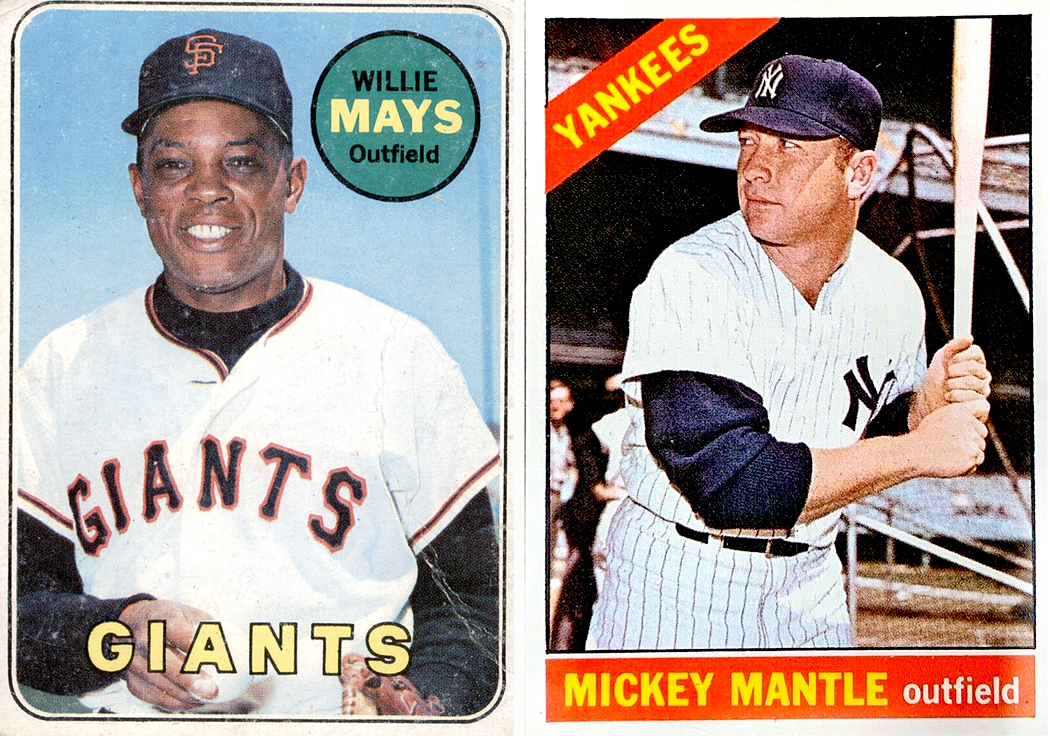
When I was a boy, one thing divided us into tribes: Was Willie Mays the greatest baseball player, or was Mickey Mantle? (This was before Mantle’s legs gave out). 

And of course, this was a silly argument, first because there were many other great ballplayers at the time, but mostly because choosing the “greatest” anything is a meaningless endeavor. (Just in the 1950s, we’re counting Stan Musial, Duke Snider, Hank Aaron, Ernie Banks, Yogi Berra, Ted Williams, Gil Hodges, Jackie Robinson, Ken Boyer.) 

But for us kids on the sandlot, it was a clear choice between Mays and Mantle. Was Mays the better hitter? Was Mantle as good a fielder? And are we comparing each player at the height of his abilities? Are we comparing lifetime batting averages, number of home runs, percentage of votes to enter the Hall of Fame? In the era of sabermetrics, there are so many obscure statistics to weigh, it all becomes bogged down and pointless. (Who is best at hitting with a 2-and-1 count, on an overcast day with men on second and third — it can get quite specific, i.e. quite anal). 

By the way, I was a Mays guy. Perhaps I was swayed by the fact that my father hated the Yankees. He was National League all the way. 

It’s all really quite silly. Above a certain level, players just count as exceptional and comparisons are meaningless. I mean, who was the greatest pitcher? Sandy Koufax? Bob Gibson? Nolan Ryan? Greg Maddux? They were all so different, with different strengths, and playing for widely different teams and different eras. (I remember when Roger Craig lost 20 games for the NY Mets, but was still considered the team’s pitching ace — how can you measure his quality when playing for one of the worst teams ever? How many games could Gibson have won playing for the 1962 Mets? They went 40-120.)

Ranking is a game, but one that is ultimately meaningless. Let’s face it, the most mediocre ballplayer in the major leagues is still hugely talented. We’re talking gradients of excellence. 

All this comes to mind when I remember how classical music listeners talk similar nonsense over the “greatest” conductor or orchestra, or recording of the Mahler Second. 

I was guilty of such silliness earlier in my life. When I was in high school, there was no question in my mind that Arturo Toscanini was the greatest. I had all his Beethoven symphonies on LP. Later, having listened to a wider range of recordings, it was clear that Toscanini had his limitations. And not the least of these were the lousy quality of his recordings — they were hardly hi-fi. 

Open any Gramophone book of recording ratings and you will find a “top ten” and the “best” recording of any particular work. Top 10 lists are immensely popular as clickbait on YouTube. Critics argue endlessly about why this Mahler Ninth is the greatest and that one is just awful. 

But the truth is, that pretty much any recording you buy will give you the music you want, in a performance that is generally very good. Even a middling performance of Beethoven’s Fifth will give you 80 or 90 percent of what’s in the music. 

The arguing usually comes over trivial details that the critic considers essential: Was the tam-tam audible in the finale? Was the oboe in the second movement a bit squeaky? Was the tempo in the finale too fast, or too slow? We all have these benchmarks that define what we demand from a performance of a particular piece. But should that disqualify an entire performance? 

I have to fess up to a level of insanity here — I have 30 complete Beethoven symphony cycles (I used to own more, but have since divested of some). It was a decades-long quest for the ultimate set, the perfect lineup of Beethoven symphonies. Which is best? 
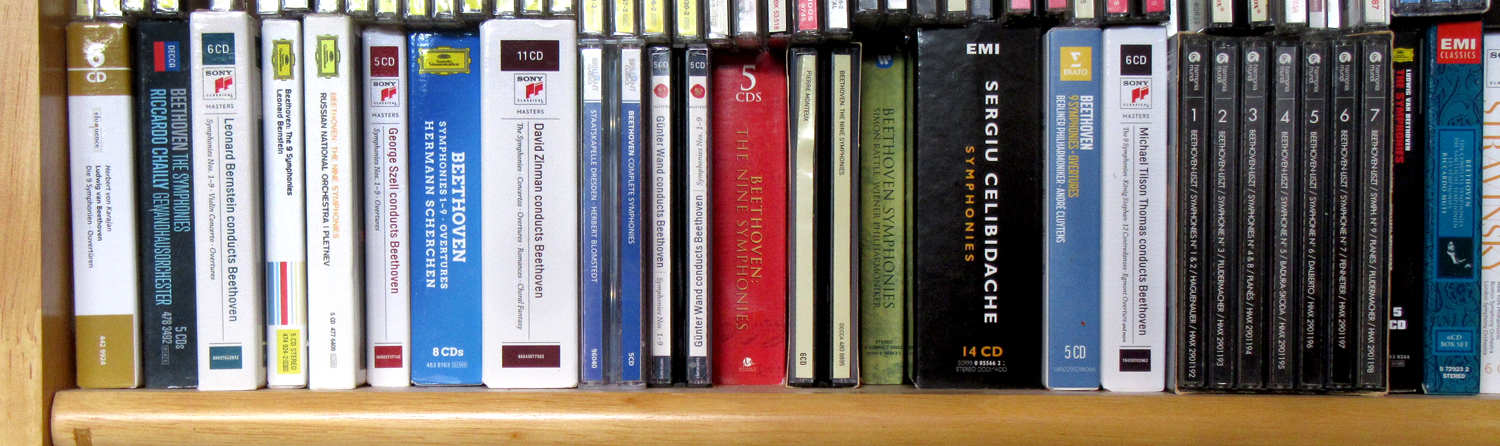
Well, now, I see them lined up on the shelf, and I realize they are all fine. They all deliver the goods. They are quite different, from Karajan’s smooth unctuousness to Hermann Scherchen’s outright weirdness. Toscanini (which I still own, now on CD) is quick, abrupt and rhythmic; Bruno Walter is gentle, humane, and warm. And so, at different times, in different moods, I will choose one over the other for the moment. But they are all perfectly good. Why rank them? 

Yes, there are some outliers, badly played or outrageously conducted — Listen to Sergiu Celibidache doing the Eroica and you wonder if you are playing the disc at the wrong speed — it’s the speed a novice orchestra might play for an initial sight reading. Glacial in a way that is just nuts. Or Roger Norrington, who conducts as if his bladder is bursting and he needs to get it all over with fast. (Norrington races through the adagio of Beethoven’s Ninth in 10 minutes; Bernstein in Berlin takes 20 minutes for the same music. You pays your money and you takes your choice.)

But the mainstream recordings, from George Szell to Andre Cluytens to Pierre Monteux to Joseph Krips, all give perfectly fine, reputable, performances, whether Beethoven, Brahms, Sibelius, Stravinsky or Shostakovich. They are excellent musicians with excellent orchestras (some, such as Maurice Abravenel, had less than excellent orchestras, but made them play on a level you can hardly credit). 

So, we search endlessly for that one performance that will send us into paroxysms of ecstasy, that single transcendental recording, and each CD we buy we hope will be that one. Wilhelm Furtwängler recorded Beethoven’s Fifth 13 times from 1929 to 1954 (most of them miserably low-fi, even amateur recordings), and the Furtwängler cult will search endlessly for a 14th, hoping it will finally fulfill their hunger for the ultimate, the one after which they will gladly give up life with a satisfied smile on their faces. 
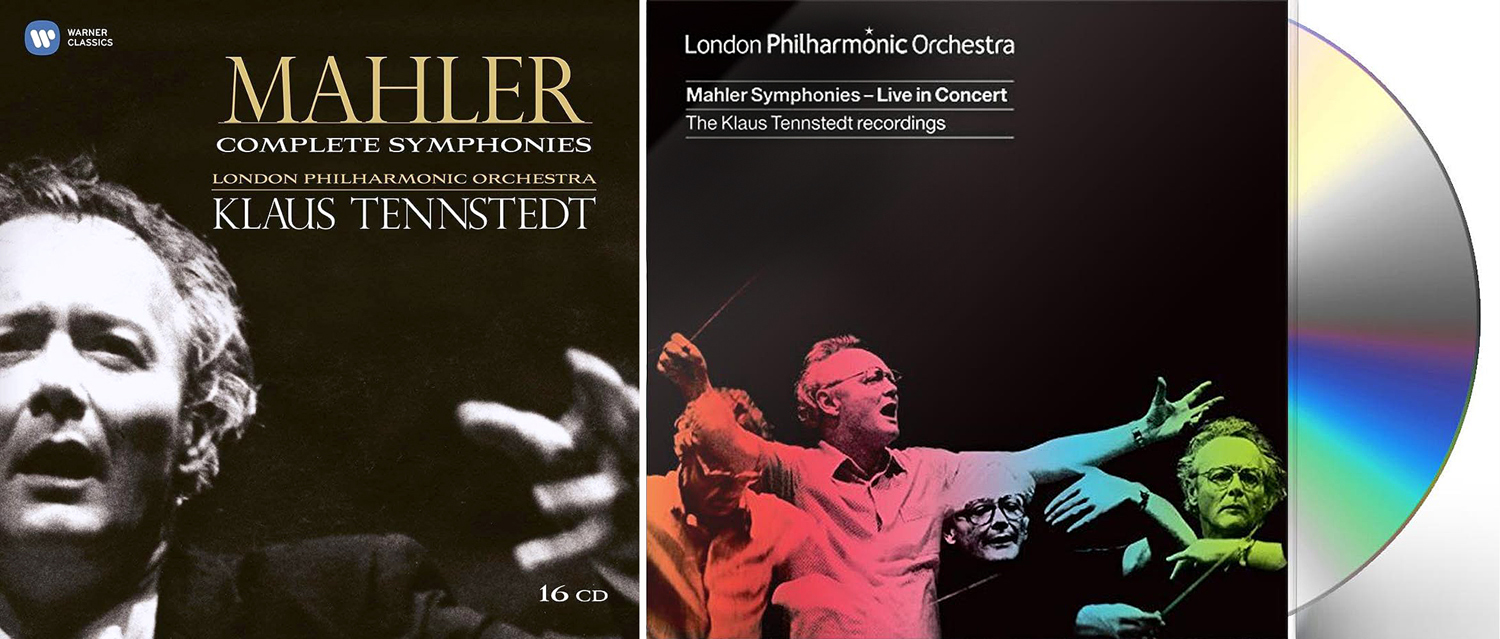
It is widely opined that Klaus Tennstedt’s live 1991 recording of Mahler’s Sixth Symphony is more emotional, more tragic, more vital than his earlier 1983 studio recording with the London Philharmonic. And that’s probably true. But if you only heard the earlier version, you would not be aware of anything missing or lesser in urgency or power. 

Martha Argerich has a habit of recording the same few concertos over and over again (how many Beethoven second piano concertos do we need from her? She has recorded it at least 13 times, and I may have missed a few.) And some people swear one or another is “the best,” but they are all excellent, and whether you prefer her with Abbado or Dutoit or Sinopoli is nothing more than a matter or taste. If you own one and you like it, there is no reason to buy the others, unless you are part of the Argerich cult, and if so, there’s nothing we can do for you. (Classical music does tend to generate cults: Maria Callas, Celibidache, Arturo Michelangeli, Jascha Horenstein, Toscanini, and, above all, Furtwängler. Cult members will search world over for the one missing 1949 partial recording from a radio broadcast from Rio de Janeiro. The heart goes pitter-pat.)
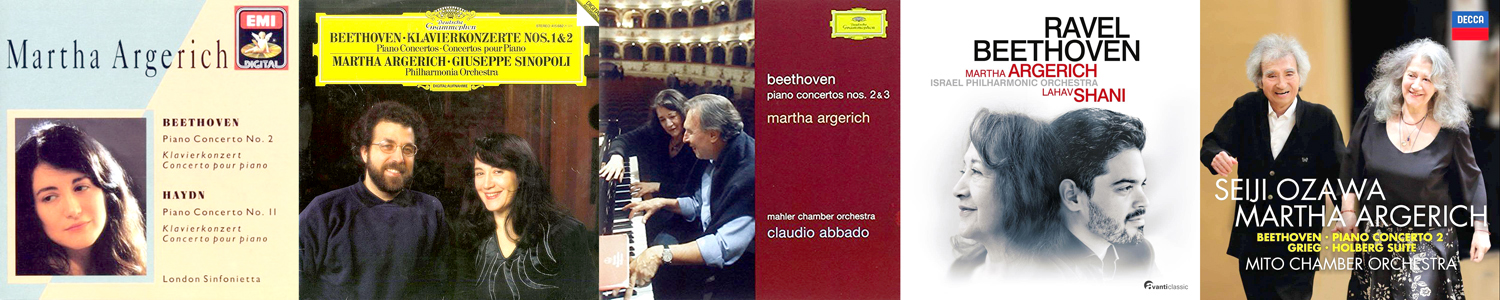
(Just for the record, Argerich has recorded once with herself conducting the London Sinfonietta; and also with Vladimir Ashkenazy; Gabor Takacs-Nacy; Gabriel Chmura; Lorin Maazel, Charles Dutoit; Neeme Jarvi; Giuseppe Sinopoli; Claudio Abbado; Riccardo Chailly; Seiji Ozawa; Lahav Shani; and again with Takacs-Nagy Please make her stop. She’s wonderful, but she needs to branch out.)

Yes, you will undoubtedly develop favorites, conductors who play more to your tastes. I know I have mine. But I cannot in honesty say that the ones I like best are demonstrably better than the ones I have less affection for. Taste is a different issue from quality. Basically, with a few unfortunate exceptions, if a performance was good enough to justify the expense of being recorded, produced, distributed and promoted, it will be perfectly fine. You don’t need 30 complete sets of Beethoven symphonies. 

So, one should not worry about what performance, what orchestra or conductor you get. Chances are, it will give you what you need. Bernstein or Walter; Mays or Mantle — they were each great players and picking one over the other is just silly.
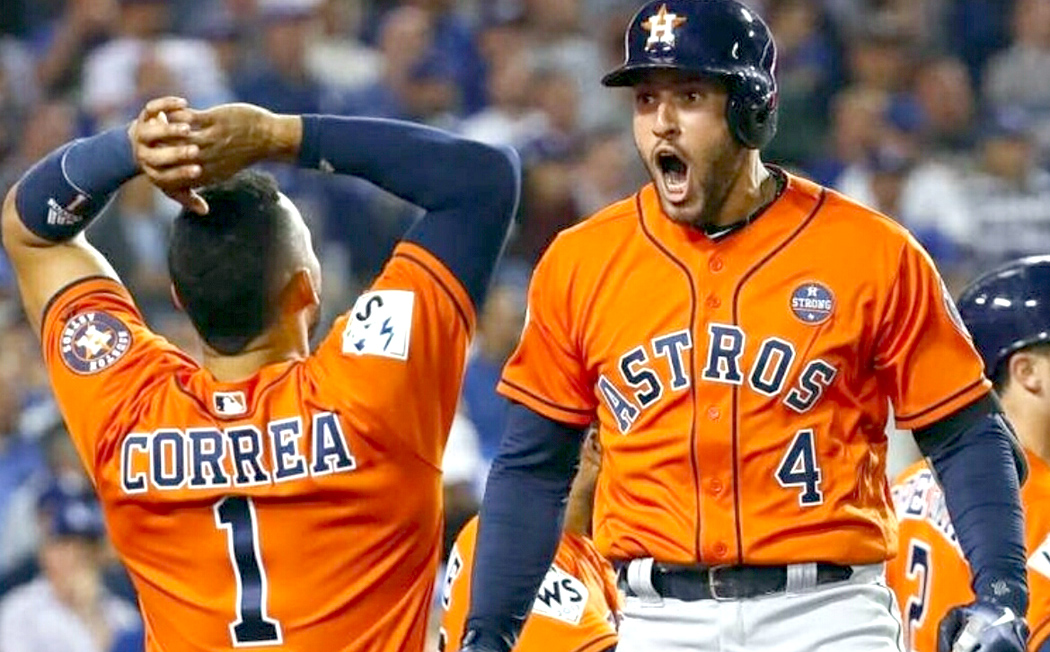
The Houston Astros have won the 2022 World Series, beating the Philadelphia Phillies 3 games to 2. I am conflicted. 

I have hated the Astros since their inception, and for several very good reasons. (I admit that any reason for cheering or despising a sports team, unless it’s your home-town team, is totally irrational. But humans are an irrational species, and so, hating the Dallas Cowboys, for instance, is a common impulse. Just like hating the Yankees.) 

It’s not that I was rooting for the Phillies. No one who cares about the Atlanta Braves, as I do, has anything but the rawest animosity for the team. But my hatred for the Astros trumps my natural disdain for the rival Phillies. 

I was hoping — planning, even — for a World Series with the Braves, but barring that, between the Dodgers (I was willing to accept the Dodgers) and the Yanks, such a face-off being the historical classic. But fate was not kind to me, and I had to watch the last bits of baseball for the year as an uninteresting back-and-forth between teams I don’t care about — even despise. 

Why do I hate the Astros? I’m afraid I have to confess that my animosity, like the Southerner’s for General Sherman, has its roots in ancient history. 

The marks against them begin with the Astrodome — the first domed all-purpose stadium and the progenitor to a plague of such ballfields across the country (gratefully, they are all now mostly demolished as historical artifacts, good for neither baseball nor football). It was an ugly stadium.

Secondly: AstroTurf. Since grass would not grow without sunlight, the roofed stadium had a problem, and it was solved through chemistry — i.e., Monsanto, the chemical company that brought us glyphosate-based herbicides, now recognized as carcinogens. AstroTurf spread like cancer around Major League ballfields — an ugly uniform green rug, layered on top of concrete, and making a playing surface that injured the players forced to work on it. 

Baseball was designed as a pastoral, bucolic game, and played on a field of grass. An industrialized baseball should be a contradiction in terms.  Grass is natural, uneven, varied; Astroturf is as uniform as Imperial Troopers in Star Wars.

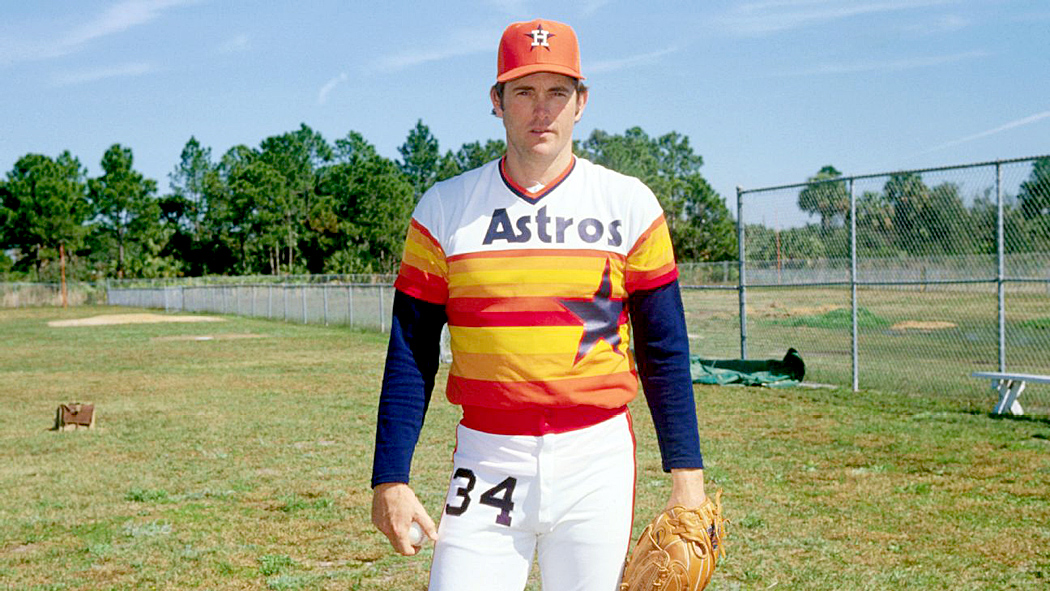
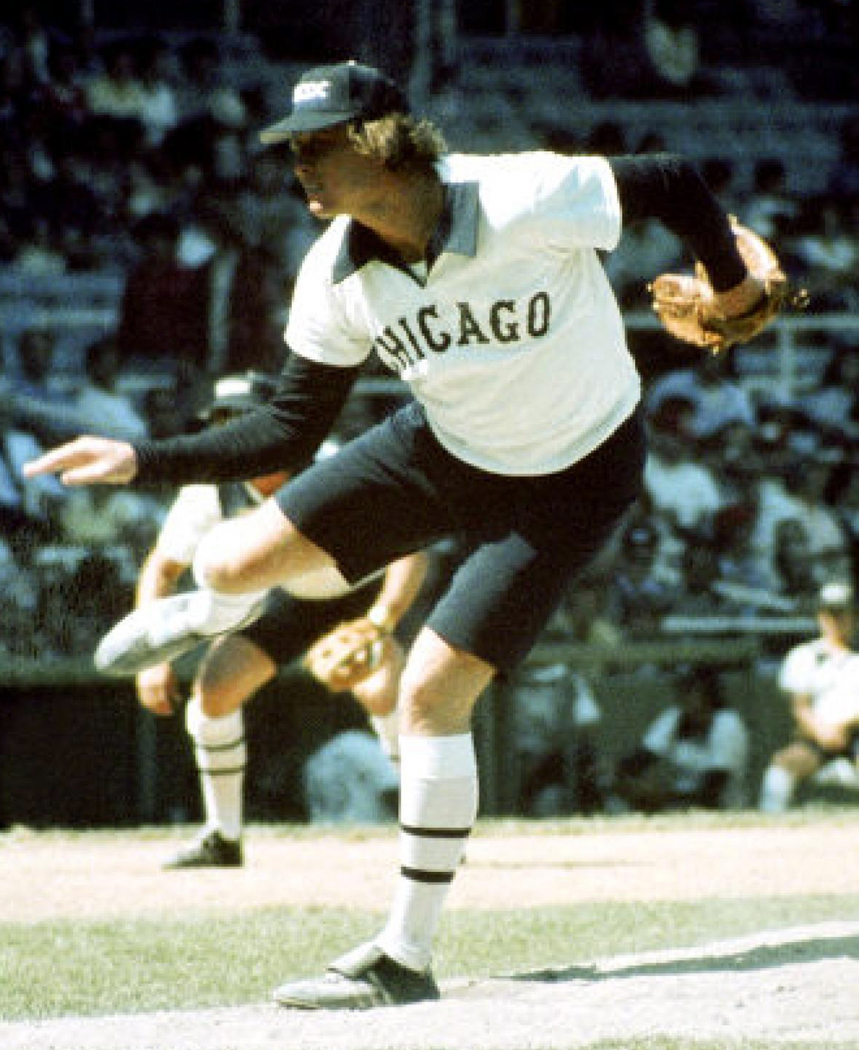
Thirdly, the early Astros uniforms were the start of another trend in baseball: ugly uniforms. The striped orange uniforms of the early Astros remain, in my mind, among the most despicable. They led to a rash of “re-imagined” uniforms that are now laughed at, such as the Chicago White Sox short pants version, and the San Diego Padres camo. 

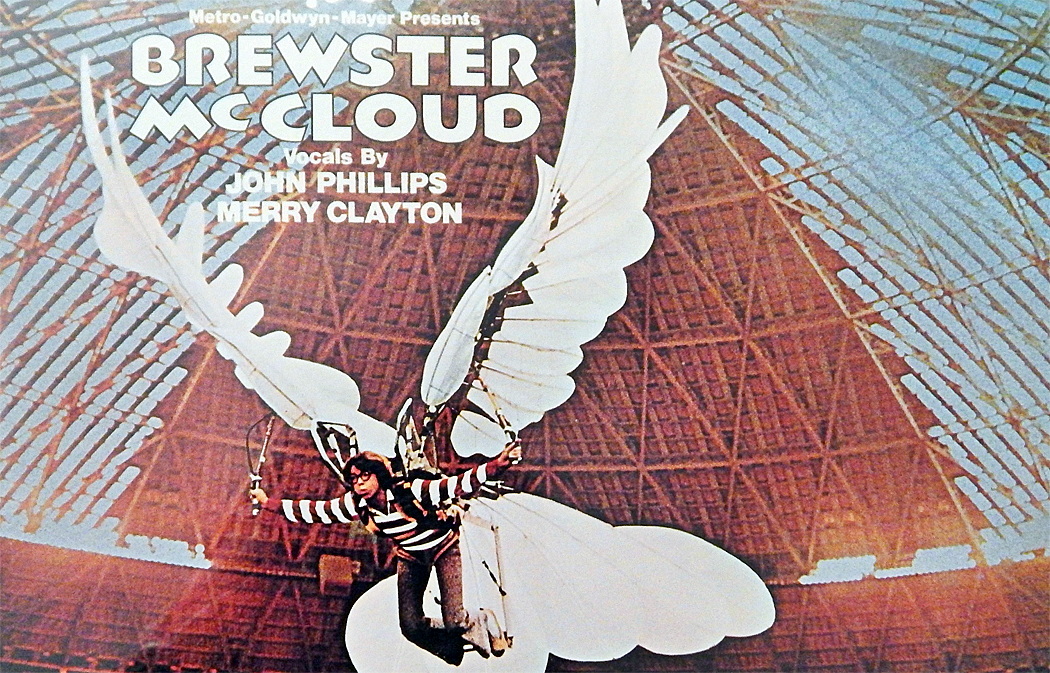
There are other reasons for me to hate the Astros, although some may be petty. I won’t argue that. But the Astrodome provided the setting for the climax of the Worst Movie Ever Made (or at least the most pretentious), Brewster McCloud. God, I hate that movie.


And after 51 seasons with the National League, they moved to the hated American League in 2013. The country may be divided politically into red states and blue states, but baseball fans have their own tribal affinities: National vs. American leagues. You have to choose one. My family, going back to my father, a die-hard Brooklyn Dodgers fan, has always been National Leaguers. 

Then, there is the 2017-2018 sign-stealing scandal, where the Astros used a video camera in center field to steal the opposing teams’ catchers sending pitching signals to their pitchers. Baseball has always allowed for on-field attempt to steal signs, as when a runner is on second base and can see the catcher’s signs, but to do it surreptitiously with hi-tech equipment was a clear violation of traditional fair play. The team and players were sanctioned when caught, but for many fans of the game, it was little more than a wrist-slap. 

All those are on one side. Maybe some of them are unimportant — I won’t argue about that — but look at the number of them. And what have we got on the other side?  

There are two mitigating factors in my mind that ease the discomfort of the Astros World Series win. 

The first is J.R. Richard, who, from 1975-1980 was probably the most unhittable pitcher in the majors and, for me, the most fun to watch. He could be wild, and regularly led the league in walks and wild pitches. Yet, he also struck out huge numbers and once had three consecutive complete game shutouts. I loved watching him.

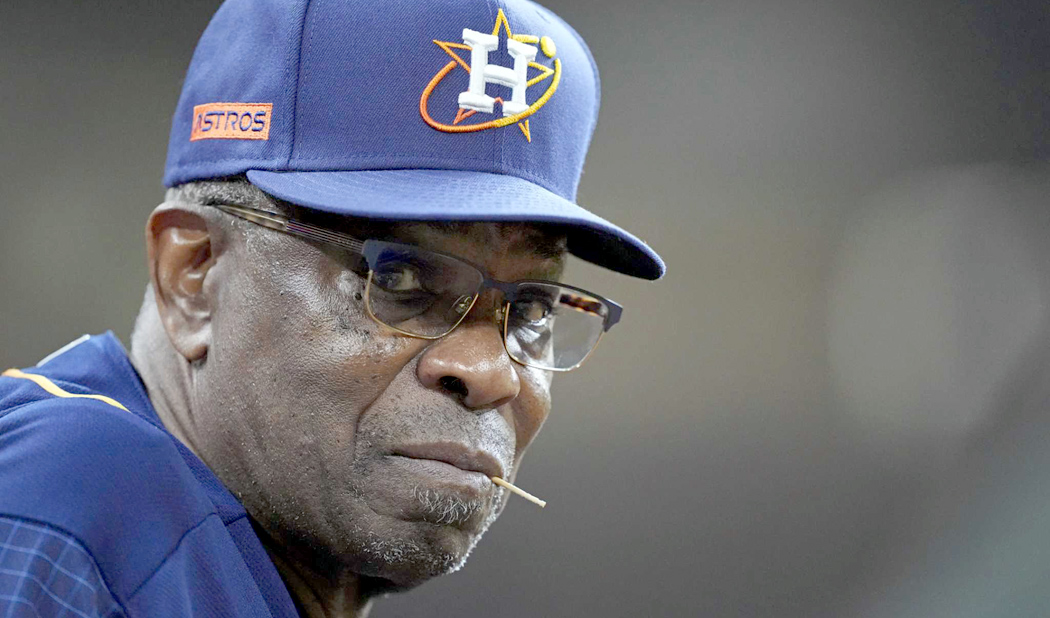
The other mitigation is Dusty Baker. I loved him when he played for the Dodgers, but even more when he took up managing and moved from team to team, always bringing his quiet, careful demeanor with him. If ever anyone deserved to win a World Series just for character alone, it would be Baker. 

And so, there you have it. I hate the Astros; I really liked two Astros on-field staffers. I’m not sure the positives outweigh the negatives. But then, this is only sports, and ultimately, it doesn’t matter. 

But that’s how sports works. It doesn’t matter, but we give it all our hearts and minds as if it did. As I said, human beings are irrational.

FootballOn tuning in to the Colbert show on Thursday, I became unavoidably aware that the new NFL season had begun. Each year, I swear I will not watch any football — It rots the mind. But it is inevitable: I end up watching anyway. There is something hypnotic about it. kursk battle 2

American football is a brutish game in which behemoths pound each other like the tank battle at Kursk, and, as my wife describes the game: “He runs with the ball, he throws the ball, he falls down with the ball.” It really is rather mindless.

And surprisingly dull. Most of the time is spent with nothing much happening on the field and while pickup trucks tell us they are tougher than the other guy’s, while beer tells us the way to a sexy woman’s heart (or pants) is through drinking swill, and through endless network promos for TV shows about terrorists, serial killers and clairvoyant crimesolvers.stopwatch

I once timed a football game with a stopwatch, starting it with the snap of the ball and clicking it off when the ref blew the play dead. In a three-plus hour game, there was, count’em, exactly 14 minutes and 49 seconds of actual playing time.

Why the American male has the patience for so much downtime, so much dead air, so much palaver by color commentators replaying minor points of how the quarterback is putting too much weight on his front foot — why this is taking up so much of our Sundays, Monday nights and now Thursday nights, is well beyond my ability to comprehend. But there you are, I wind up watching anyway. ebbets field

Perhaps my biggest complaint — aside from my own complicity — is that the beginning of the season steps on the feet of the retreating baseball season. Football is no Fred Astaire. Baseball is a game I can actually enjoy watching. I have been a baseball fan from the time before I even entered kindergarten. I would watch Brooklyn Dodgers games on TV when Vin Scully was the new kid, relegated to postgame interviews with the players.

Baseball is an aristocratic game, balanced, thoughtful, elegant. Football, in contrast is a bludgeon wielded by a mob enforcer. I have enjoyed boxing, even hockey, without finding the event as nasty, brutish and halting as an NFL game.

But I bring all this up not to badmouth football, but to discuss the impulse towards conservatism. It is something I discover in my own makeup that confuses me — the ineradicable desire for stability and a disdain of change.

This is, of course, the heart of genuine conservatism (as opposed to the radical loony movement that has coopted the name in the service of what is really a kind of anarchism tempered with religious intolerance).

It first came to me when I realized that watching football on TV, I inevitably root for the team that is older — that I root for any team that was in the original NFL before it became the NFC. Even the original AFL teams, which joined the NFL in 1960 seem like interlopers to me. And expansion teams since then hardly deserve notice as teams at all. Carolina Panthers? Give me a break: Real teams are named Packers, Giants, Bears.

Perhaps there is some rationale for this. In 2011, I wrote a story for The Arizona Republic looking at the history of the Super Bowl and discovered that original NFL teams held a two-to-one edge in Super Bowl wins: 30 wins for the old NFL, 15 wins for the AFL and all other expansion teams. (The ratio has shrunk some since then. In Super Bowls since 2011, only one old NFL team has won: The NY Giants in 2012. This still leaves the old guard with a 31 to 18 edge).

I don’t have a team I follow. When I watch a game, my rooting interest is always based on which team I judge more “legitimate,” i.e., original. So, if the 49ers are playing the Ravens, I root for the San Francisco. But if the Giants are playing the Niners, I root for New York, since San Francisco didn’t enter the league until 1950. They are the junior team. If the Giants are playing the Packers, I have to root for Green Bay; they are four years older (1921) than New York (1925 joining the league).

This may seem silly, but what other method can one choose for rooting? Hometown teams make sense, but on “any given Sunday,” as they say, for most Americans, there is no home team. You choose between Tampa Bay and Tennessee? Toss a coin?

This gets back to this unrooted conservatism. For me, there are only six hockey teams: the Rangers, Black Hawks, Bruins, Red Wings, Maple Leafs and Canadiens. I don’t know how San Jose ever qualified; it’s a joke.

In baseball, my first love, I always root for the older team, and if two old teams are playing, I root for the older league — yes, the American League is a parvenu, still. There are subtleties to this system; a franchise move bumps a team down several notches, so the Dodgers and Giants each have a penalty attached: They moved; if they were still playing in Ebbets Field or the Polo Grounds, they would still be at the top of my list, but they betrayed us (yes, I grew up in the New York area). But still, if the Giants are playing the Marlins, I root for the Giants.

This is a finely met system of game watching. One has to choose a team based not on current talent, but on history. It is a system prejudicial to Cincinnati, Boston, Chicago, Philadelphia, Pittsburgh, St. Louis, Cleveland and New York. And against upstarts such as Tampa, Denver, Anaheim and what? Arlington, Texas? Oy.

This all might be taken as ultimately frivolous. How seriously can you take sports teams? And rooting (quite apart from gambling on teams, which I never do) is completely irrational. Especially in these days of modern times when favorite players shuffle around the league in trades and free-agency, faithfulness to any one team no longer makes any sense.

Each year my team seems like the luck of the draw and any reason to favor them above any other team is quite unfounded. white sox 1976 Yet, there is this deeply imbedded need to root. One team over another, underdog against the bully, home team against the visitor, well-designed uniform against the cartoon version (how anyone can root for the brown camouflage of San Diego is beyond me, and remember the 1976 White Sox? — a travesty.)

And that is where this mysterious conservatism comes in. There is buried in me — as in many people — a desire to keep things as we have always known them. We are comfortable with the familiar, and what is more, they world as we came to know it when we were young seems to possess a legitimacy that novelty lacks.

This is despite the fact that change is often necessary and often makes things better for all of us.

A good deal of conservative backlash against things such as affirmative action have as much to do with the comfort of a familiar past than it has to do with overt racism.

I don’t deny the racism, but conservatism isn’t only racism; it is also a profound discomfort with change. Even change for the good.

And although no one takes precedence over me in my distaste for what I call “tin-foil-hat” Republicans, and the continued institutional racism of so many national traditions, I have to say that somewhere, deep down inside myself, I can have some inkling of understanding for the source of this disquiet.

I don’t condone it, but I share it.

NFL 1

We enter the second week of the pro-football season, and I have to make a decision: To watch or not to watch.

Like any red-blooded American male, sporting the mangled Y-chromosome that defines malehood, I cannot easily resist armored behemoths in a demolition derby of sinews and ligaments, with the prize being lifelong damage from accumulated concussions.

(A confession here: I am really a baseball fan, so my interest now is whether the Red Sox will be able to hold on, or whether they will collapse in the next few weeks. I care rather less about the NFL.)

I watch football, though, it’s just that I cannot justify the time wasted doing so. It is something like an addiction and just as fruitless and just as absurd.

After all, the game really can be summed up, as my wife says, as “he runs with the ball, he throws the ball, he falls down with the ball.” There isn’t much else that happens. Oh, yes, there is quite a bit of measuring.

Not that much happens to fill up that three-and-a-half hours on TV that a game takes. And, as a recent experiment on my part proves, even those things don’t happen much.

I timed a game.

What I actually did was record the game and play it back with a stopwatch in hand, fast-forwarding through the chaff, timing everything from each snap of the ball to the referee’s whistle ending each play.

To my utter amazement, three minutes and 25 seconds into the experiment, the gun sounded on the first quarter. Whoa, that was a rush.

In the three hours-plus that the game would have eaten up of  my Sunday afternoon, there was exactly 14 minutes and six seconds worth of actual playing time.

The rest was huddling, timeouts, zebras in confabulation, replays, reverse-angles, ex-jocks analyzing the fine points of the left tackle’s trap block and, most importantly, beer commercials with pneumatic women.

I have tried to go cold turkey. Last season I went 11 weeks into the NFL season before watching a game. I was a more productive member of society; I felt righteous.

But I finally caved in, sneaking a bit of a Giants-Redskins game. I watched till the end of the season.

This year so far, I have only watched one half of one game. I am hoping to avoid the steroidal monkey on my back.

But I have also found a way to enjoy the game without wasting my time waiting three hours for those few minutes of actual football: I have learned to dilute my drug of choice. I now put the game on and turn the sound off. I put some Brahms or Stravinsky on the stereo and I sit down in my favorite chair with the Sunday paper. I read, I listen, and when the ball is snapped, I can look up at the screen and catch all the action. And I mean all the action. It’s a great way to get something done and see those 14 minutes and six seconds that actually count.