Archive

Tag Archives: bear

I’m now 78 and I’ve done a few things in my life. Probably most people have. Things they can list that few others have managed. Places visited; people who have impacted their lives; adventures to recount to grandchildren. 

And so I think back to recount my own experiences, those particular to my own past. Maybe others have similar lists. This is mine. 

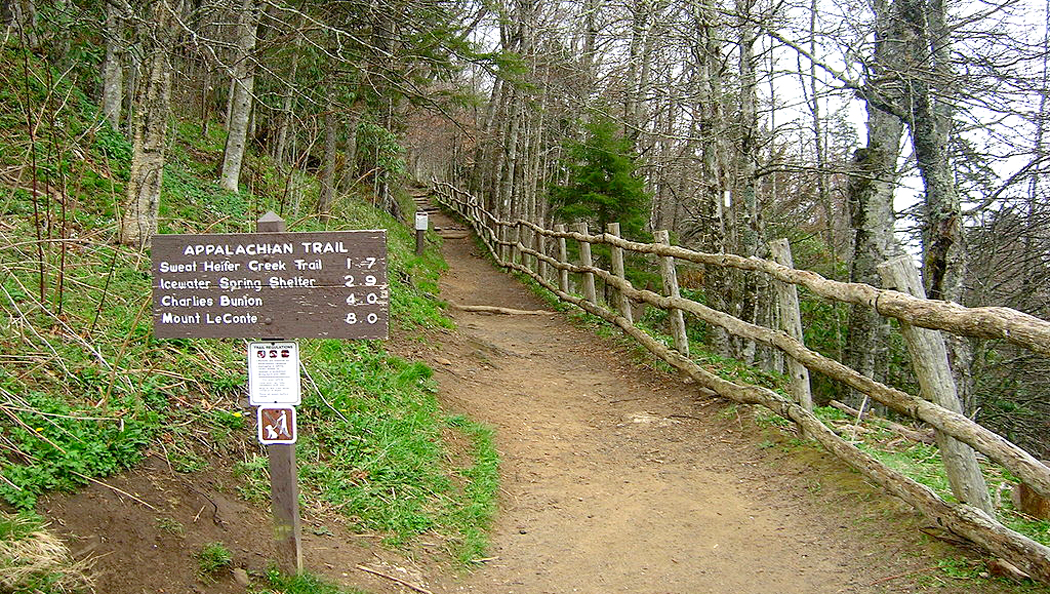
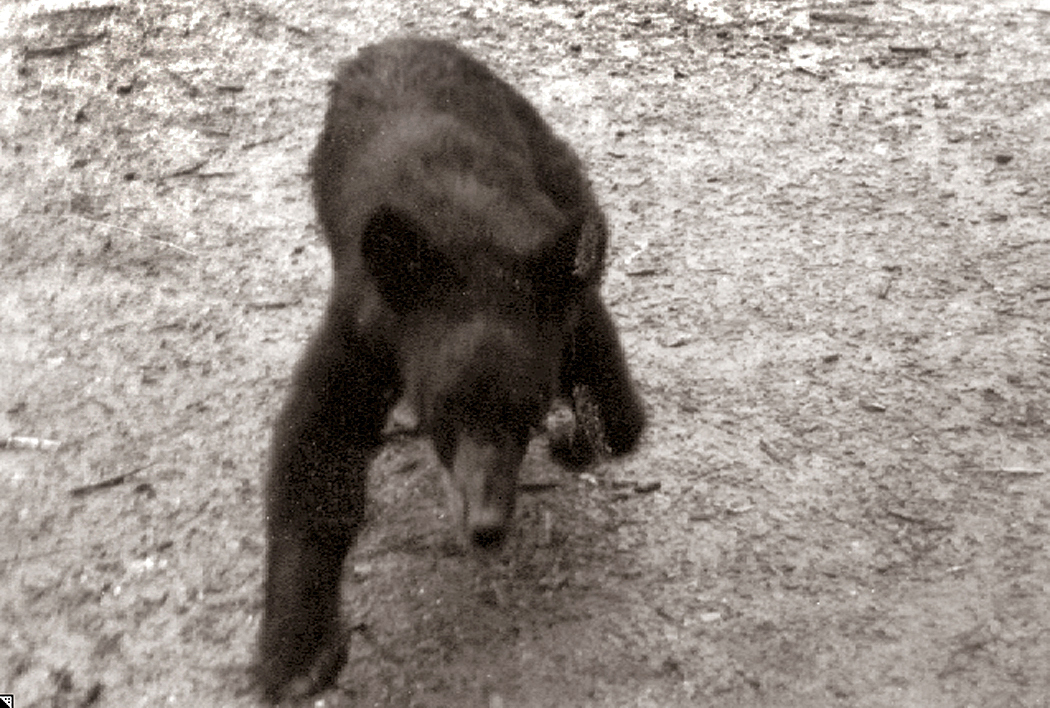
I’ve been charged by a bear, for instance. How many people can say that? I was hiking the Appalachian Trail in Smoky Mountain National Park with a few friends. By late afternoon, we reached a lean-to shelter and I walked out onto the path with my camera, when a black bear — maybe two or three years old — crossed the trail about 30 feet from me, spotted me, didn’t like what he saw and turned and charged at me. He was no more than five feet away when he veered off to my right and chugged off into the woods. I was stupid enough that while he came at me, instead of running back to the shelter, I took photos, so at least now, I have the evidence. If it’s a tad fuzzy, I’m sure you can understand. 
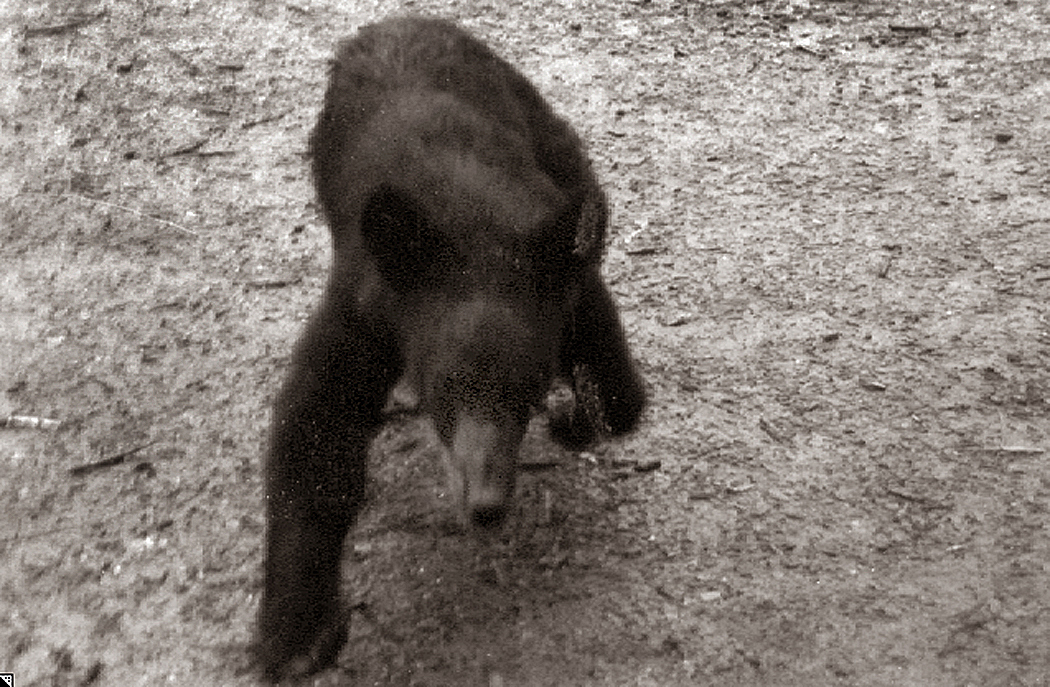
Certainly the bear makes my list. But I tried remembering other things that would make the list of things peculiar to my life, that few people are unlikely to have shared.

Almost no one now crosses the Atlantic on an ocean liner. I did, in 1966 aboard the MS Oslofjord from New York to Norway, when I accompanied my grandmother to the Old Country where she was born. I was a high-school student at the time, and I remember standing on the ship’s deck watching the Orkney Island lights at midnight, bright points on the black horizon as we sailed past. 

There’s a lot of travel in my past. I’ve crossed the U.S. twice by train. Once when I moved from North Carolina to Seattle, taking the Southern Crescent from Greensboro to New York, the Twentieth Century Limited from NY to Chicago and the Empire Builder from Chicago to Seattle. 
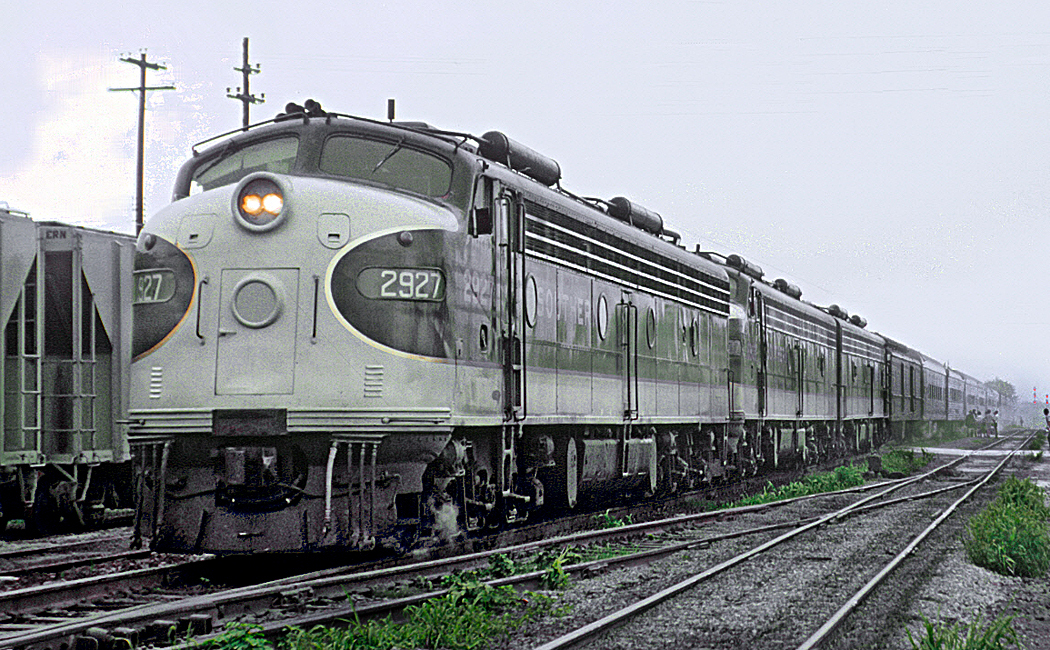
The Southern Crescent

I recall the dreamlike lights of Toledo factories as we passed after midnight; the 10-below zero air when I stretched my legs at the station in Minneapolis; the vast empty spaces between farmhouses in South Dakota; and the track-side elk watching the train pass by near Yakima, Wash. 

The second time was more luxurious: Working for the Phoenix newspaper, I was assigned to write a story about the then newly-launched Sunset Limited route from LA to Miami that passed through Phoenix, bringing the first rail service to the city in decades. 

The paper flew me to Los Angeles where I boarded, and flew me back from Miami when finished. In between, I had a sleeper compartment and ate my meals in the dining car, which Amtrak had fitted out initially with a first-class galley and real chefs. That didn’t last long after my trip, before cost-cutting turned steak into saran-wrapped bologna sandwiches. 
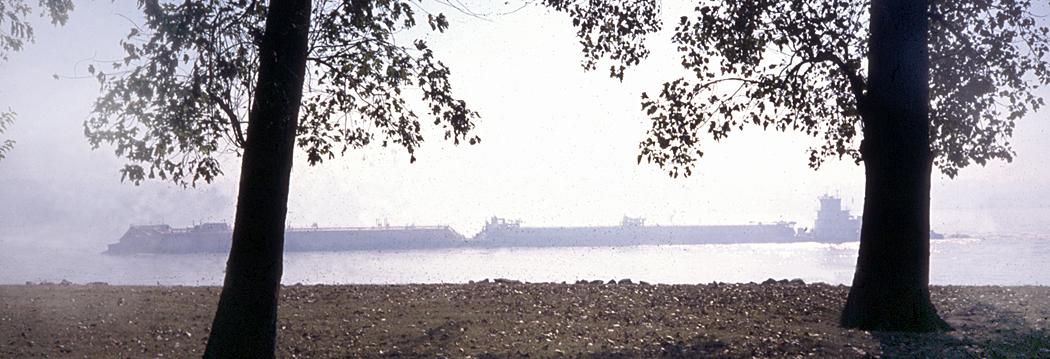
Mississippi at Cairo, Ill. 

One of my beats at the newspaper was as a travel writer and I got to choose many of my subjects. I have driven the length of the Mississippi River from its source at Lake Itasca in Minnesota to its end in the Gulf of Mexico. So, I’m one of the few people who have ever visited Cairo, Ill., which is a largely deserted town, at the tip of the state where the Ohio River pairs with the grandfather of all American waters. 
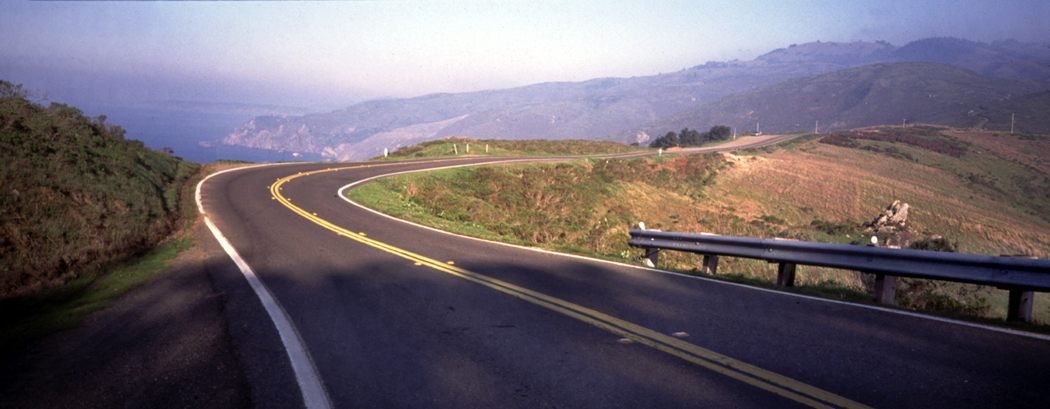
I have also driven the Pacific Coast Highway from Tijuana, Mexico to Vancouver, British Columbia. And as part of that trip, I got to stop off at Point Roberts, that tiny exclave of the U.S. that can only be reached overland by driving through parts of Canada. Virtually nobody visits there, because there is nothing to be seen or done, and the only reason to go there is to be able to say you had done so. 

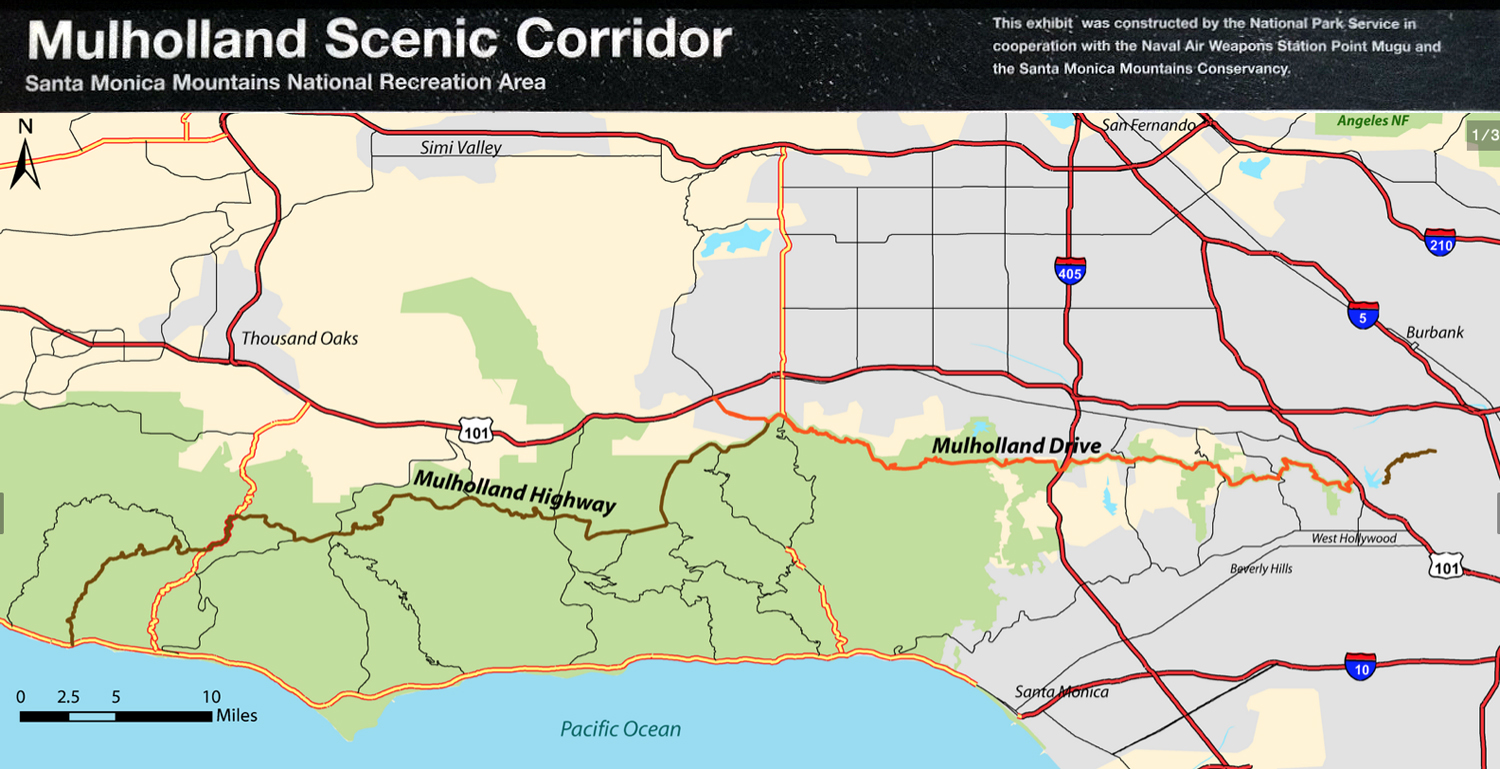
Back before the wilder parts of the road were closed to traffic, I drove the length of Mulholland Drive and Highway, across the crest of the Santa Monica Mountains, from its beginning at the Hollywood Freeway over Cahuenga Pass, past all the film stars’ extravagant homes into the brushland wilderness, with its dirt roads, and finally down to the Pacific Coast Highway at Leo Carillo State Beach, some 55 miles later. 
I pitched a story to my editor about the Hundredth Meridian that traditionally divided the East of the country from the West — the line that separated the land that got more than 20 inches of rain per year, from that which got under that amount. I drove from Laredo, Texas to the Canadian border, writing stories the whole way. And when I got back, I conspired with a page designer to take over an entire Sunday travel section with my pieces — all without telling my editor. “If you had told me, I would never have permitted it,” she said. “But I’m glad you did it. I looks great.” Easier to ask forgiveness than permission.
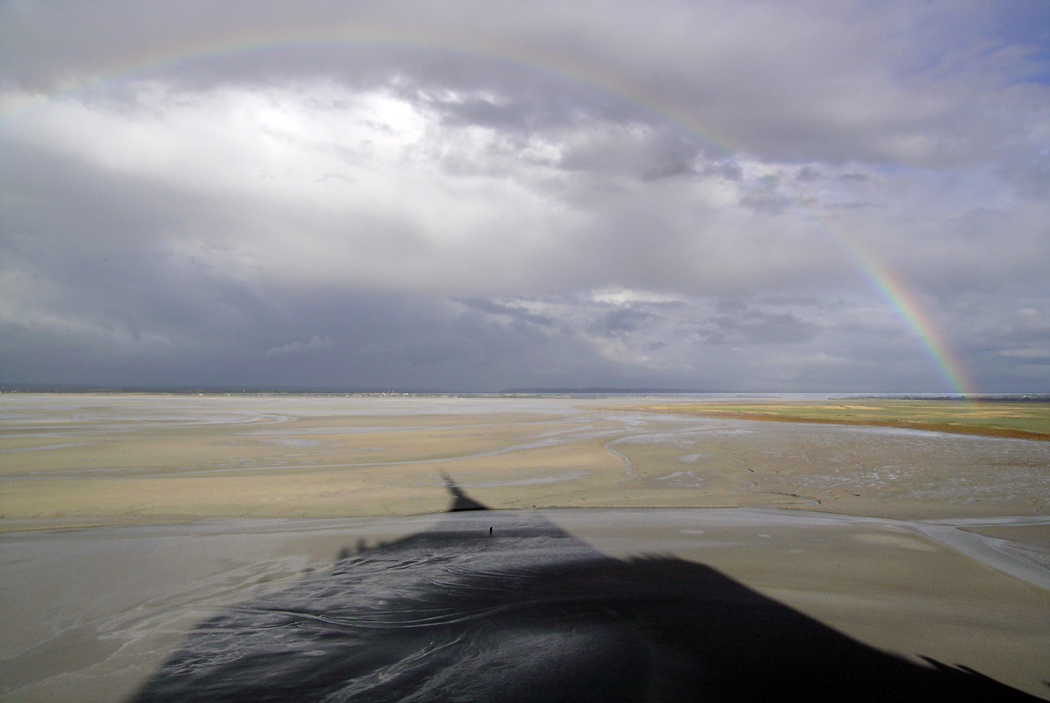
Clearing storm, Mont St. Michel

I have been many places in my life. I’ve been to Mont Saint-Michel in France, that island abbey on the coast of Normandy, where the tides come in at such a speed that anyone walking on the mud flats at low tide is in danger of drowning. I’ve been to see the Bayeux Tapestry in its current home. I’ve listened to the organist at Notre Dame de Paris play a recital of Messiaen. 
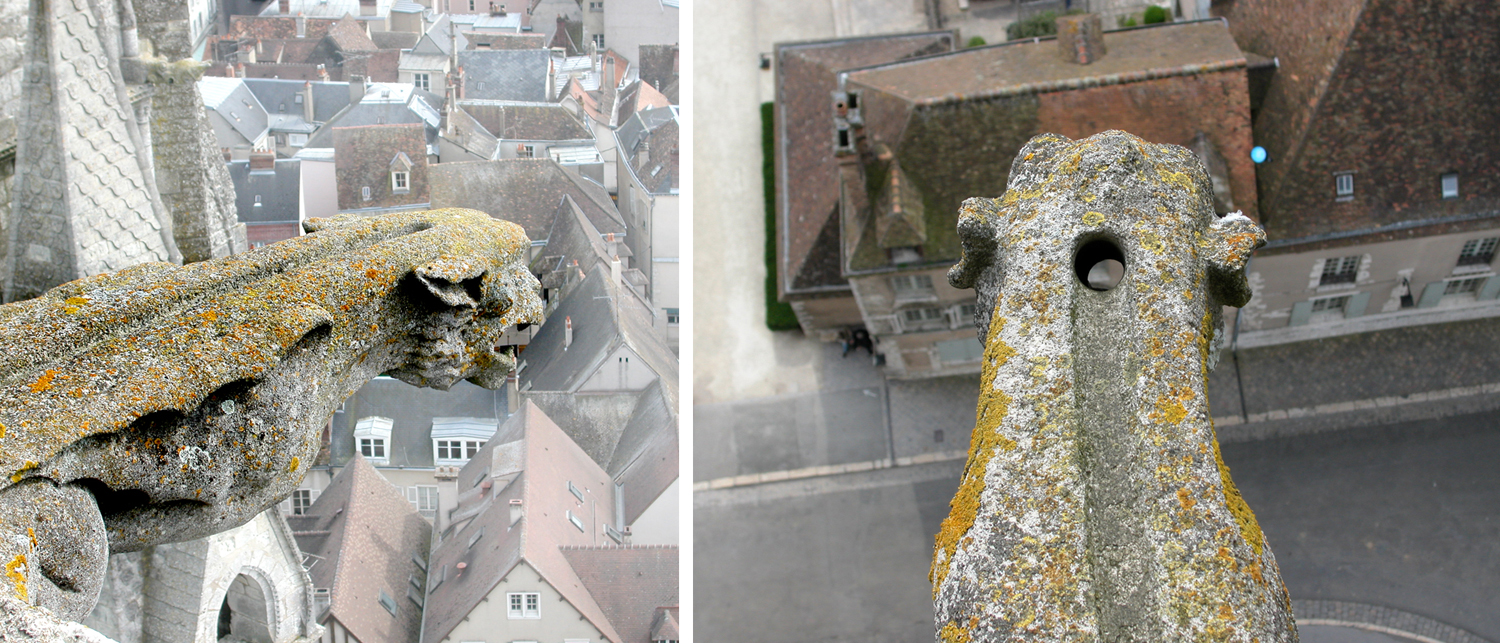
Two views of gargoyle rainspout at Chartres Cathedral

I’ve climbed to the top of Chartres Cathedral, where I could look down at the gargoyle rainwater drains and see their channels and spouts. For that matter, I’ve visited most of the major gothic churches of northern France. 

I stood at night on the banks of the Rhine River in Dusseldorf, German, where the composer Robert Schumann had lived and written his deeply romantic Rhenish Symphony. The rushing current of the mile-wide river, catching moonlight in its waves, seemed the essence and power of  nature. 
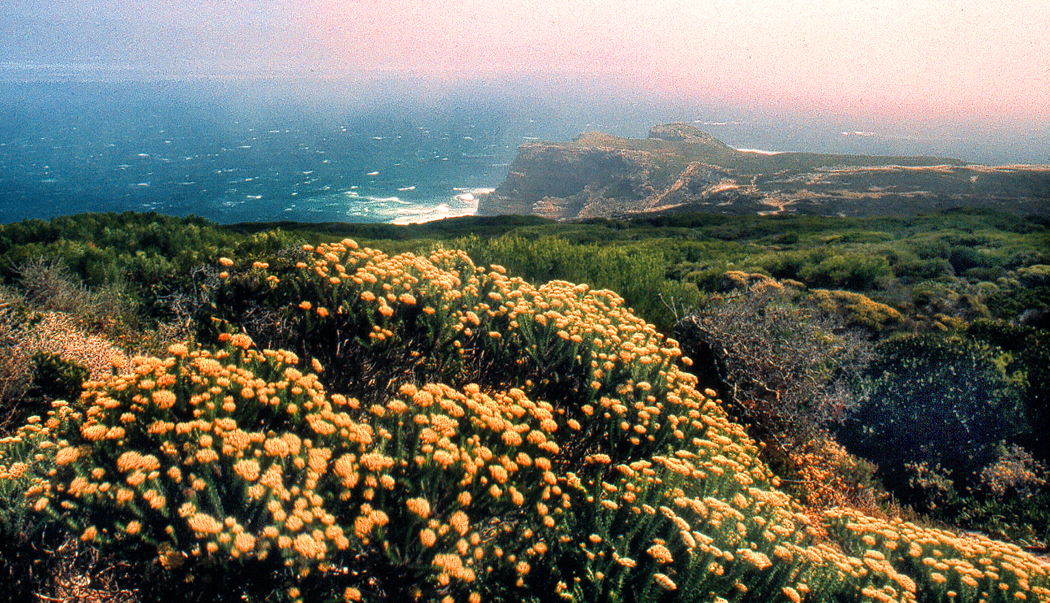
Cape of Good Hope, South Africa

I had always had an interest in the remote and isolated places in the world, and I got to visit the Cape of Good Hope in South Africa, which is as remote and isolated as you can pretty much get. While in that country, I also got to taste grilled mopane worms. Few Americans have managed that, or would care to. 

I’ve been to Hudson Bay in Canada, to Percé Rock on the Gaspe Peninsula, to Glacier Bay in Alaska, to the Yukon, and to the Cape Verde Islands (although that one hardly counts, since it was a layover on the flight to Africa; I didn’t get to see much; bragging rights only). 

I have been to all 48 contiguous states many times. I used to say “I’ve been everywhere, man, I’ve been everywhere.” And indeed, I can bore my wife when watching some film on TV and I recognize locations I’ve been. “I’ve been there,” I say. She gives me the side-eye. 

I’ve canoed with alligators in the Okefenokee Swamp. Driven through Death Valley in July in a car with no air-conditioning — nearly collapsed from dehydration and had to drink a full gallon of water to revive.  
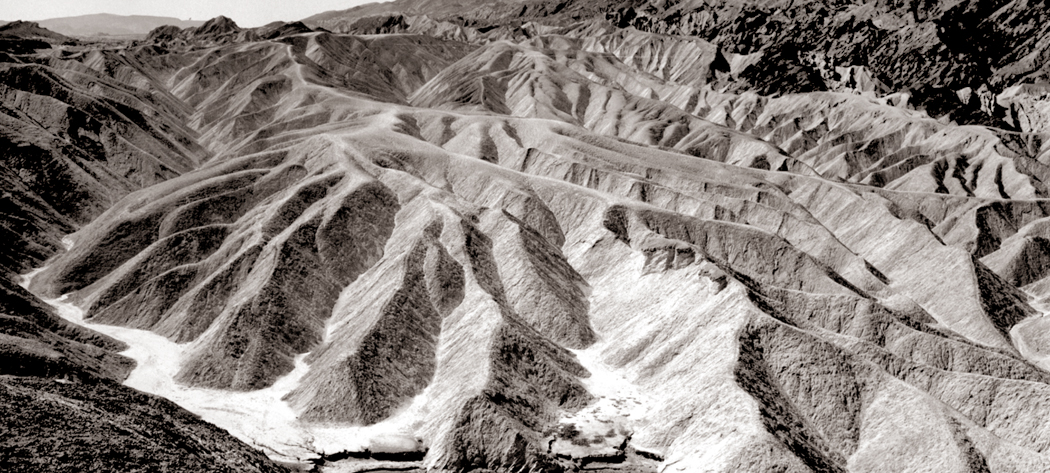
Zabriskie Point, Death Valley, Calif. 

I have driven the length of the Blue Ridge Parkway I don’t know how many times, and the continuing Skyline Drive, also. There are notable roads, often over mountain peaks, such as the Going-to-the-Sun Road in Montana’s Glacier National Park, the Beartooth Highway from Montana into Wyoming (we drove in the summer, but it still snowed in flurries), the Tioga Road over the Sierra Nevada. Or the roads in the East like the Kancamagus Highway in New Hampshire, the Natchez Trace from Mississippi to Tennessee, and the Colonial Parkway that runs from Jamestown to Yorktown in Virginia. Many more with no special names.
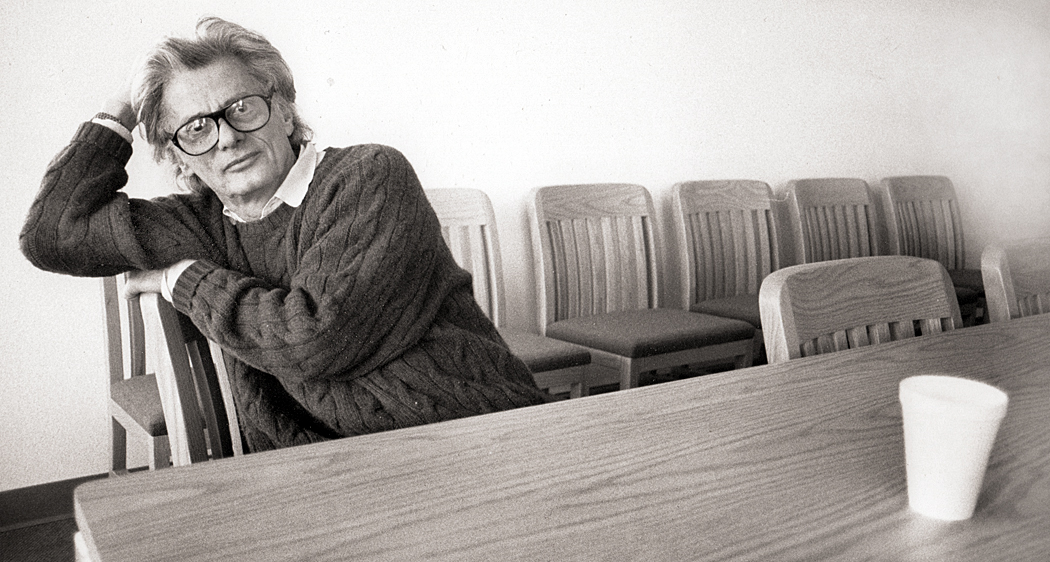
Richard Avedon

I took photographer Richard Avedon out to lunch at my favorite  Salvadoran restaurant in Phoenix. I interviewed Duke Ellington’s son, Mercer, when he brought the band to play in Phoenix. I talked to him only about his own music (sure that he was tired of repeating all the chestnuts about his old man), and at the concert, he dedicated a performance of his  Blue Serge to me, saying the band hadn’t played it in 20 years, but they brought it out and spiffied it up just for me. I knew Frederick Sommer, the reclusive Surrealist photographer who lived in Prescott, Ariz., and visited his home several times, where we talked about things that would have made no sense to anyone listening in. 

I’ve fired guns a few times over the years, once when I was training to be a security guard (a low point in my career), and several times at black-powder gatherings. My wife had a flintlock carbine that I had the pleasure of firing. A lot of smoke and a loud, brusque “whoosh” rather than a cracking “bang,” and a .50 caliber ball blew out the barrel at the target. 
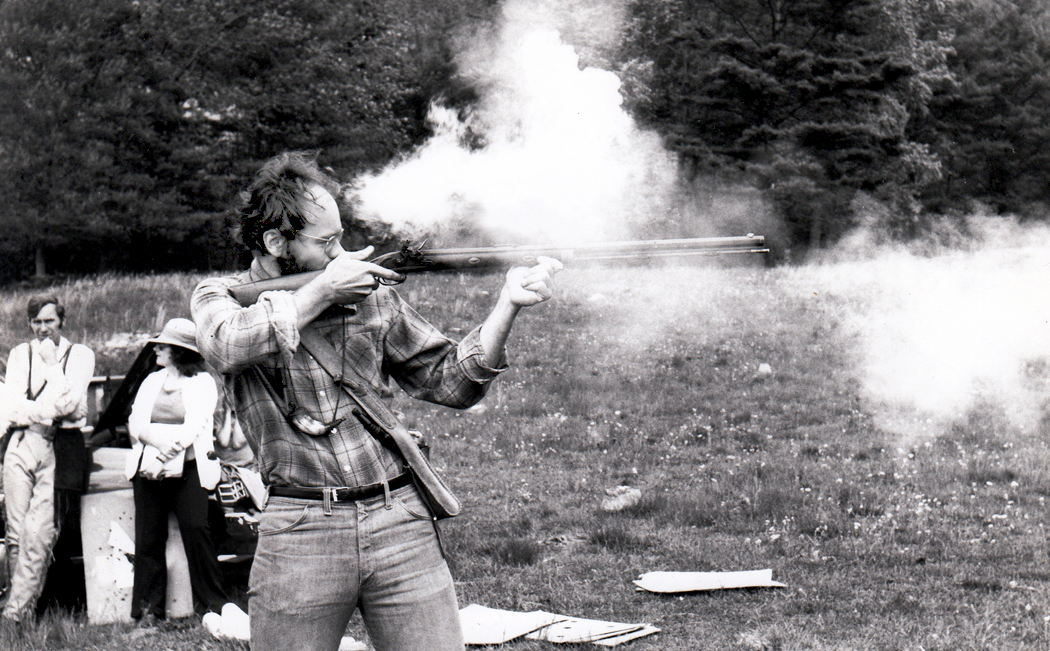
Yes, that’s me, ca. 1981

I worked at the zoo in Seattle, and most days, when the place closed for the public, I would accompany the bear keeper to the back alleys behind the exhibits and feed leftover food-stand hot dogs to the grizzly bears. We were behind the enclosure, about 20 feet above the bears. They would stand up, open their maws and we would toss the franks down their gullets. No swallowing, just straight down the chute to the stomach. 

Behind them was the back entrance to the tiger cage, with a small barred door to get in when the keeper needed to clean up. When a tiger came to the door, I saw what felt like the most enormous thing I had ever seen, its giant head, bigger than my imagination could hold, and when he “purred” the ground shook. I would rank that the single most impressive thing I’ve ever encountered. 
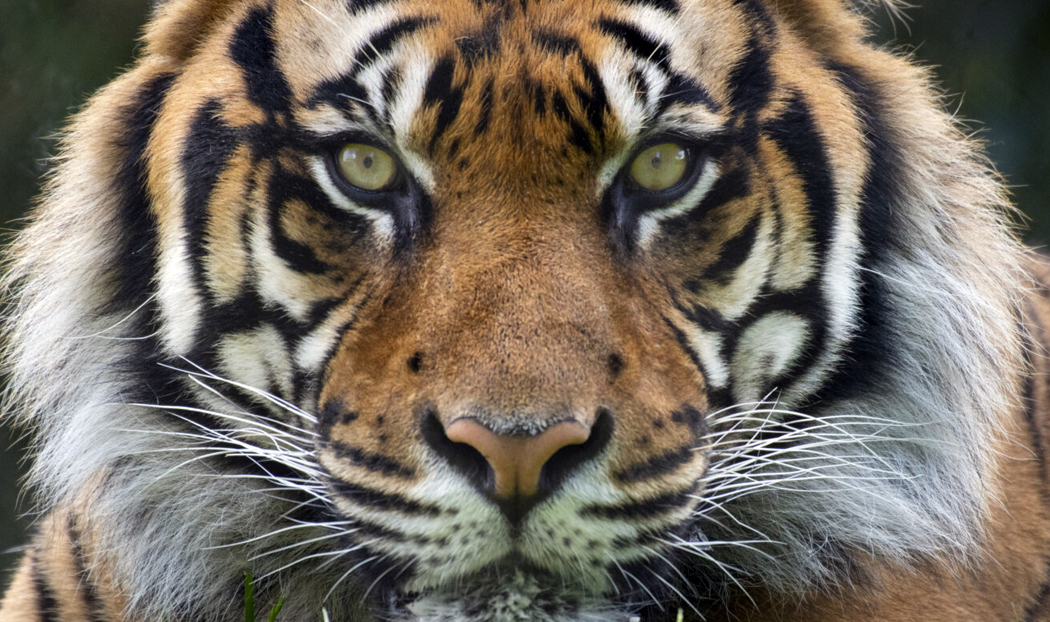
That zookeeper was my friend, and he once commented to me about the crowds, “You see all those kids, don’tcha just want to run them all over?” 

There were many more zoo stories, but most are not suitable for family reading. But more animals: I once had a six-foot boa constrictor wrapped around my neck. I visited the grave of Hopalong Cassidy’s horse, Topper, at the Los Angeles Pet Memorial Park in Calabasas, where you can also find Rudolph Valentino’s dog, Kaber, Petey, the ring-eyed dog from the “Our Gang” comedies, and Tarzan’s chimp Cheetah (real name Jiggs). 
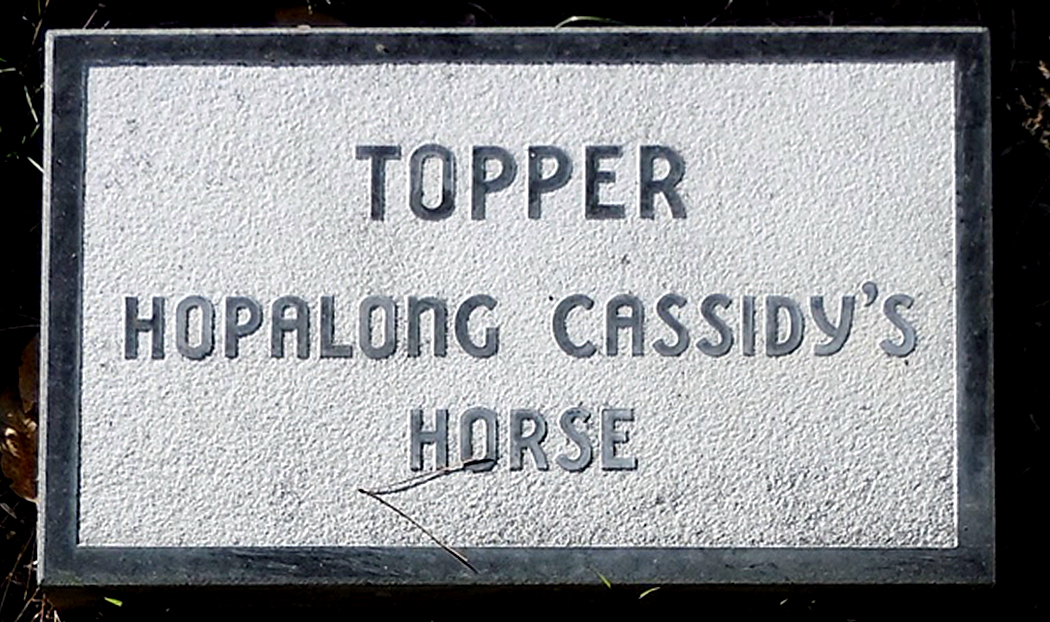
I might also mention driving to Maine in 1963 to see the total eclipse of the sun, or having crossed the equator twice, and in Africa, seeing the Southern Cross and the constellation Orion in the night sky standing on his head, with his sword pointing straight up. 

Which reminds me of the night camping in the Outer Banks of North Carolina with my friend Sandro, and discovering that someone had forgotten to close and lock the door to the Hatteras lighthouse, and so we snuck in, climbed to the top, heard the roar, and watched the black surf below us catch the light. 
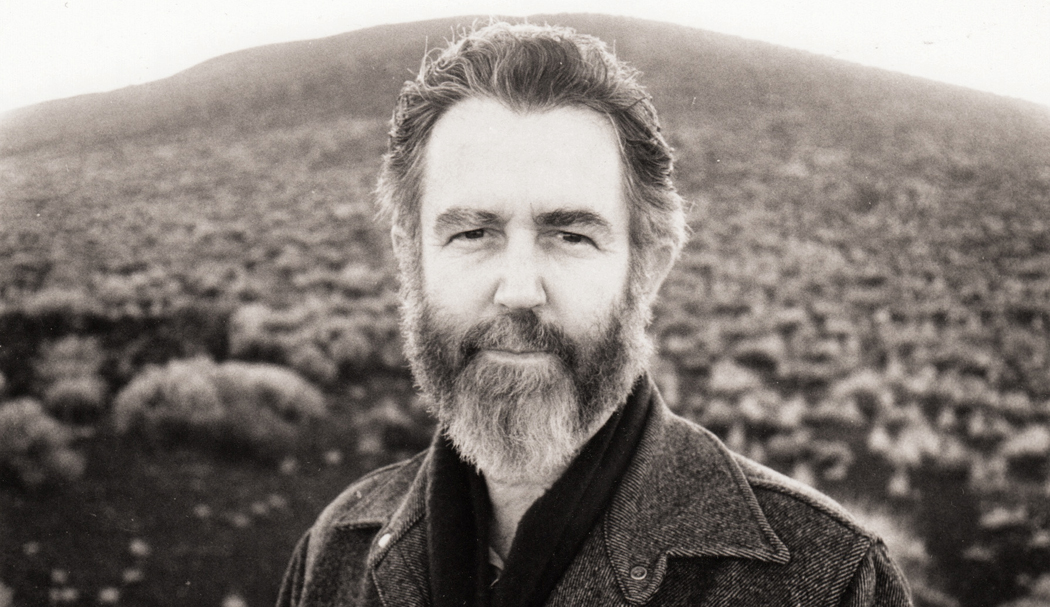
Or the time I climbed Roden Crater in Arizona with artist James Turrell, who was reshaping the extinct volcano to make an earthwork piece of art from the mountain. We were standing at the top as the sun set. “People talk of nightfall,” he said to me. “But they should call it nightrise, like sunrise.” Because, he pointed out, the night doesn’t descend, but rises, as a mass of dark sky climbs from the horizon in the east up into the sky, eating away the dusk. You can actually see the borderline as it rises, until all is dissolved in the general night. It is a startling effect that we don’t notice, because our horizons are generally blocked by trees or buildings. The phenomenon is a stunning revelation. I have looked for it — and seen it — many times since then. We walked down the mountain in the gathering dark. 
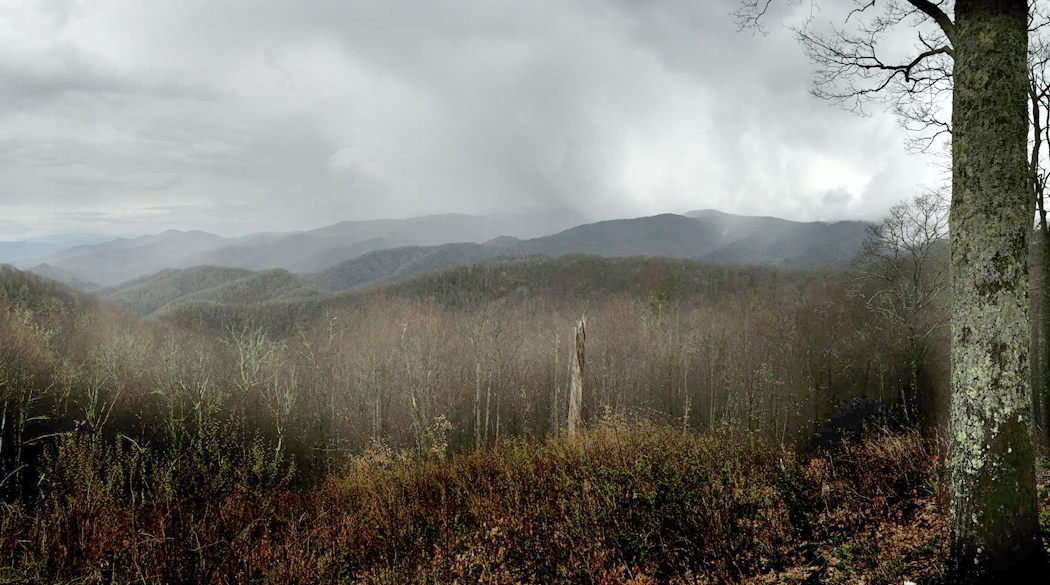
It has been 50 years since I was a Yankee student at Guilford College in Greensboro, N.C. The day I arrived, as a tender freshman, a 20-foot banner hung from the front of my dorm that said, “Forget? — Hell!” I had never been any farther south than Washington DC. I didn’t know what that meant until someone told me. The South has a long memory — at least for a grudge. 

I have since come to love the American South, and have lived in it longer than I have lived in any other region of the country. I don’t share its politics, but I was at a Quaker college and its values were those I shared. I studied hard — not really true: I took lots of courses and wanted to learn everything, but I can’t say with any honesty that I was a hardworking student. I read constantly, but not always those things required for my courses. 

One day, another student, Big Jim McLarty, said, “I’m going hiking in the Smokies next week. Wanna come?” The Great Smoky Mountains National Park strides the boundary between North Carolina and Tennessee with some of the highest peaks east of the Rockies. The Appalachian Trail balances on the top of its ridges. Big Jim wanted to hike the central portion of the range, to Ice Water Springs. 

Big Jim was the son of a noted Methodist minister from Asheville, and the baby brother of the actress whose stage name was Eileen Fulton. (Birth name: Margaret Elizabeth McLarty). For 50 years, she was a fixture on the soap opera, As the World Turns, where she played Lisa Miller Hughes Eldridge Shea Colman McColl Mitchell Grimaldi Chedwyn, wife of six husbands, divorced three times, widowed four times, participant in more than 30 love affairs and victim of amnesia, kidnapping, hysterical pregnancy and auto accidents.

Big Jim had a “stage name,” too. He was the Nunny (more properly, The Noney.) When he first came to Guilford, he had to fill out a form with personal information and in the box for “church preference,” he wrote: “None.” It caused a kerfuffle at the time (We’re talking the late ’60s in the South, where there is a church on every other street corner) and he became known for his freethinking answer. (I came a few years later, and when I had to answer the same question — church preference — I put down: “Gothic.”)

Anyway, The Noney said just to pack sleeping bags. He would bring the food for the trip. “I have lots of stuff left over from earlier camping trips,” he said. 

And so, we drove up U.S. 421, U.S. 64 and U.S. 70 to Asheville, where we stopped at The Noney’s ancestral home to pick up his gear and then drove down past Maggie Valley and Lake Junaluska to the Smokies. The sunny day turned cloudy and The Noney explained that the mountains sometimes make their own weather. This was a new concept to me and I was suitably amazed. Nothing like that happened in New Jersey, where I grew up. The turnpike never made its own weather, although perhaps the Monsanto plant did. 

We parked in Newfound Gap and began the hike about three miles north on the Appalachian Trail and stopped for the night at a lean-to at Ice Water Springs. 

The woods were thick around us, but you could see parts of Tennessee to the west. There was a wooden lean-to in a clearing. It had eight bunks along its back wall, in double decker, and with a chain link fence across its front. 

“Are there bears?” I asked, with some thought to my own safety. We didn’t have any bears in New Jersey. My only experience with a real bear had been at the Bronx Zoo. Other than that, there was Yogi Bear on TV and when I was an infant, a giant stuffed panda bear. But there were actual bears in these woods. 

“Don’t worry,” said The Noney. “You just treat ’em like a big dumb dog.” This pretty well capsulized The Noney’s approach to life in general. He was one of those sparkly people that nothing bad ever touches — or who remain unaware that bad things are even a possibility. 

It remained overcast and by late afternoon, I was standing just outside the lean-to making photographs, when a bear crossed the path about 30 feet away. It spotted me, hesitated a moment and then charged. It lumbered (as bears do) straight at me and got to within a few feet of me before turning away and running off into the woods. Big Dumb Dog. Big Dumb Me — I stood there and took a photo of the bear charging. Maybe it wasn’t the biggest bear in the woods, but it was big enough. And I snapped the shutter instead of ducking.

Come dinner time and the dusk, and The Noney scrounged around in his knapsack and pulled out a handful of tinfoil bags, looking for a dehydrated dinner. But there was nothing but dehydrated strawberry milkshakes. “I guess I must have already used up all my dinners,” he said. We were hungry after a day’s hiking and bruin-dodging, but the cupboards were bare. Lucky for us, some other campers in the lean-to were generous and offered us some of their food. The Noney just laughed it off. 

And so, in the middle of the night, sleeping behind the wire-mesh fencing that protected the lean-to inhabitants from the creatures of the woods (although not from the mice), a noise woke me up. The knapsacks hanging on the wall were rocking back and forth, the fencing was jangling. A bear — rather larger than the one I photographed — was attempting to steal our bindle, reaching between the fencing and the wall, stretching out its paw to get the goodies. It was pitch dark. I didn’t know what to do.

Then The Noney flew from his sleeping bag as if he were shot from a cannon, and screaming at the top of his lungs with his arms flailing, running toward the bear. The bear was stopped short and the half-dozen campers in the other bunks were jerked awake not knowing what all the noise was about. The Noney screamed and flailed; the bear withdrew judiciously and everyone else’s flashlights turned on. The Noney stood in the spotlight and smiled. “Big dumb dog.” 

In October my ex-wife and I decided to take a drive from Asheville, N.C., to Sullivan, Maine, to visit our old college friends, Sandro and Mu. This is Part 5 and the conclusion of that trip. 

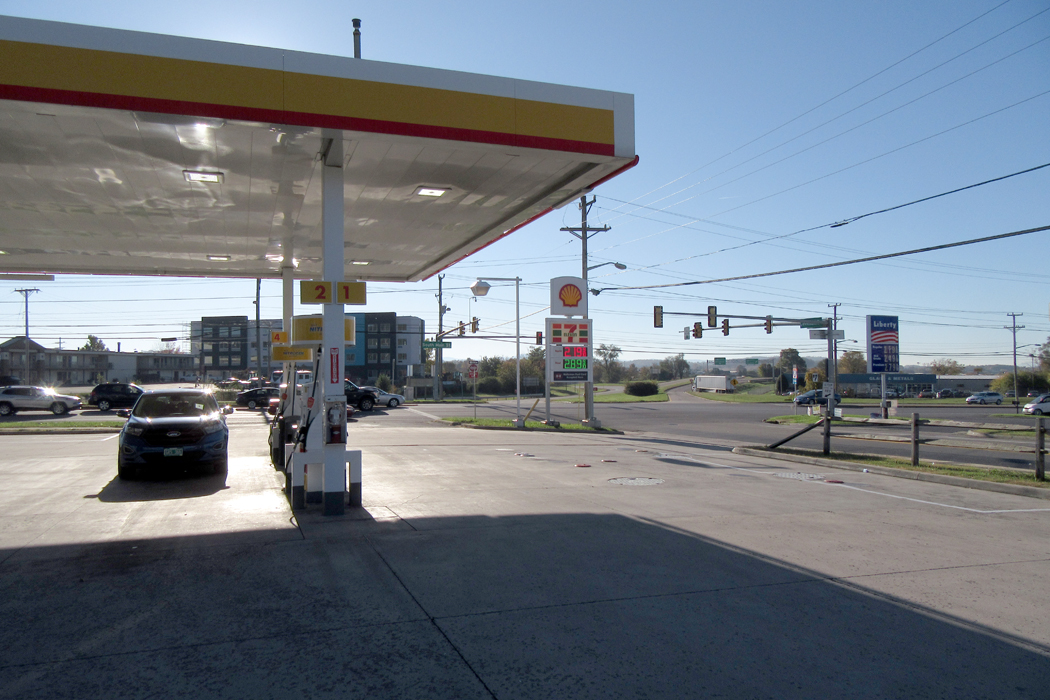
We left Sullivan on Friday, Oct. 25, and made it easily to Portsmouth, N.H. On the way north we took a desultory route with side trips and excursions. On the way south, the plan was to stay on the interstates and make time. I generally despise interstate driving. One such road looks very much like all the rest and you share the way with gargantuan trucks and impatient drivers who believe that no matter what speed you are driving, it is never enough, so, get the hell out of my way. 

There was one stop on the way, however, that took us off the four-lane. 

Oct. 26

We had tried to visit Walden Pond on our way up to Maine, but it was so clogged with traffic and visitors, there was no possibility of parking. “We can see it on the way home,” Anne said. 

When I was a young man, my attention was split between books and what we nostalgically used to call nature. I had a life list of birds and could identify any tree or wildflower by popular and scientific names. I was a hiker and once attempted, with my second unofficial wife, to traverse a large chunk of the Appalachian Trail. 

The one hinge that swung both worlds was Henry David Thoreau and I read everything he wrote, including his journals, which come in at 14 volumes and each of those come in at an average of 500 pages. 

There have been four writers who have most influenced my own feeble scribblings. They weren’t so much models as they were permissions. Henry Miller gave me permission not to care too much about being literature, i.e., to lose my self-consciousness about writing; Edward Gibbon gave me permission to write long sentences; Herman Melville allowed me to hide philosophizing in cryptic jokes; and Henry Thoreau taught me to think directly in imagery and metaphor. 

  “Time is but the stream I go a-fishing in. I drink at it; but while I drink I see the sandy bottom and detect how shallow it is. Its thin current slides away, but eternity remains. I would drink deeper; fish in the sky, whose bottom is pebbly with stars.”

I still read Melville and Gibbon with pleasure; I cannot read Miller anymore — he was a passion of my younger shallower self — and Thoreau I can seldom tolerate. His prescription for living now feels hyperbolic and not a little selfish. 

But I still love — and I use that word advisedly — love Walden Pond. I cannot count the number of times I have visited. I came to see it first with my second unofficial wife and have been back over and over. I have walked its circumference it three times, written about it too many times, both for my newspaper and for my blog. 

We must each have our sacred spaces. Places we go to for recharging, for awe, for a recognition of the larger things, for connection or reconnection with what matters. I have maybe five or six such locations on the planet. Walden Pond is one of them. 

When I first visited, the pond was just a place outside of Concord, Mass., who only a few students of American literature ever visited, except in the summer, when it was the swimming hole for locals, most of whom probably never connected it with one of the classics of American culture. It was a place I could consider proprietary. Only us acolytes knew or cared. 

Now, it is a spot on a tour bus itinerary. Hordes of people show up at the 335-acre state park during summer months and there are multiple parking lots, a visitor center and worse — signage. 

Yet, still, under it all is the 64-acre lake, the trees, underbrush and the birds and insects that populate it. 

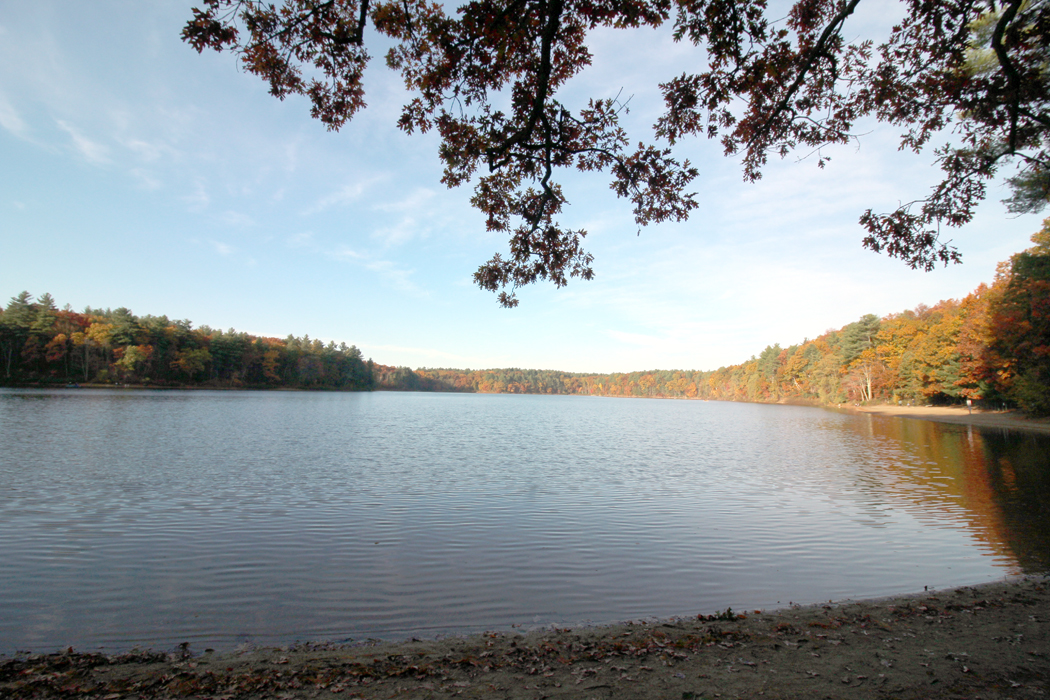
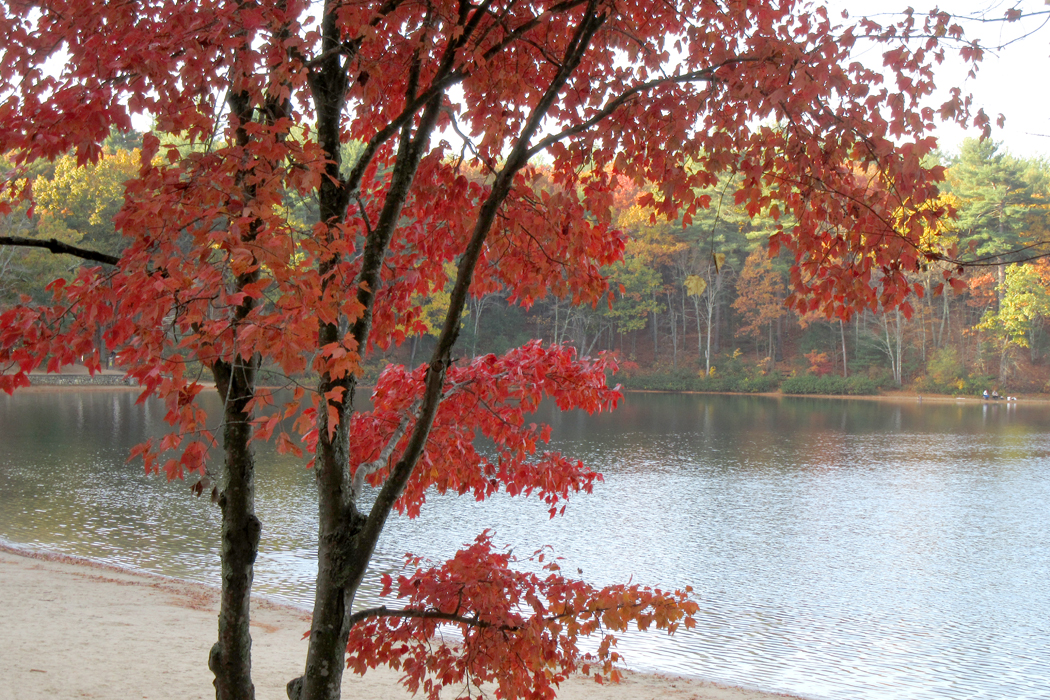
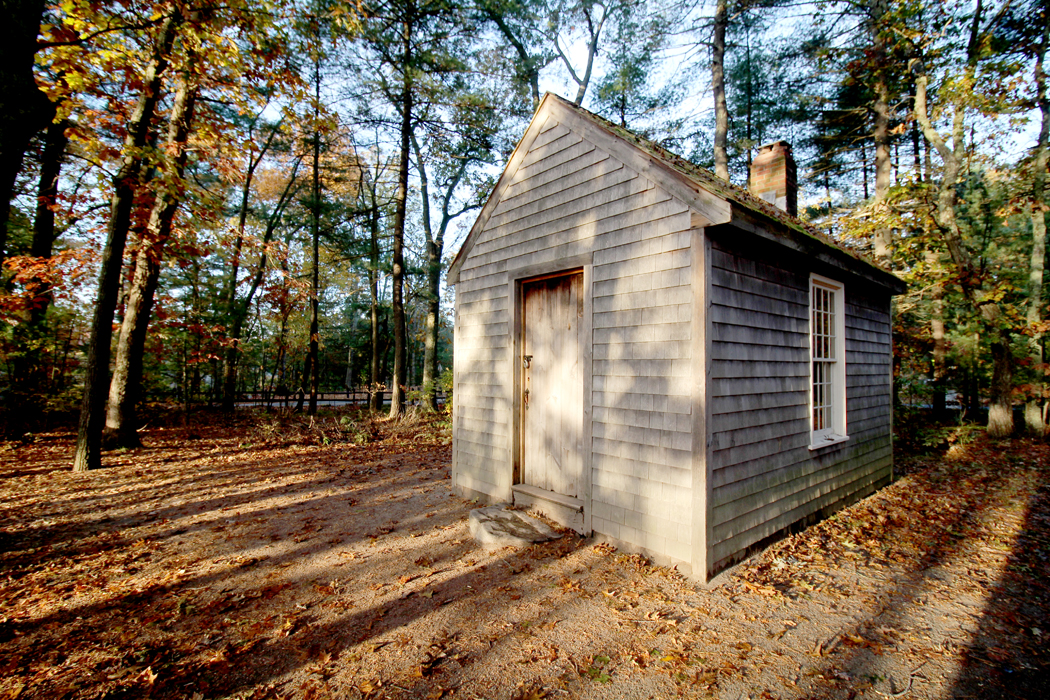
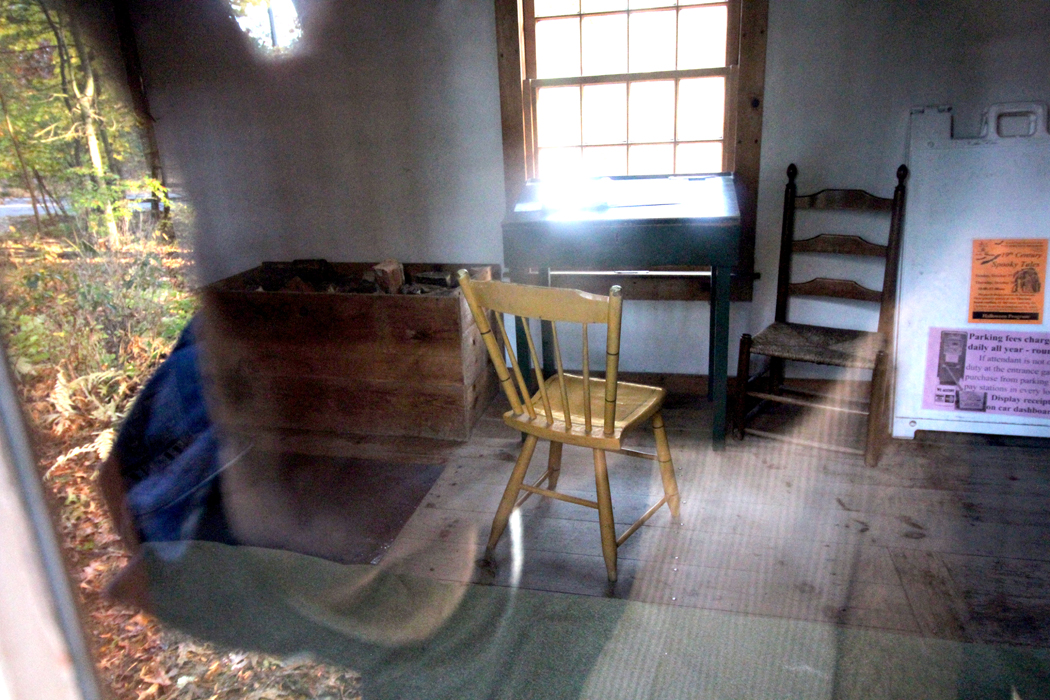
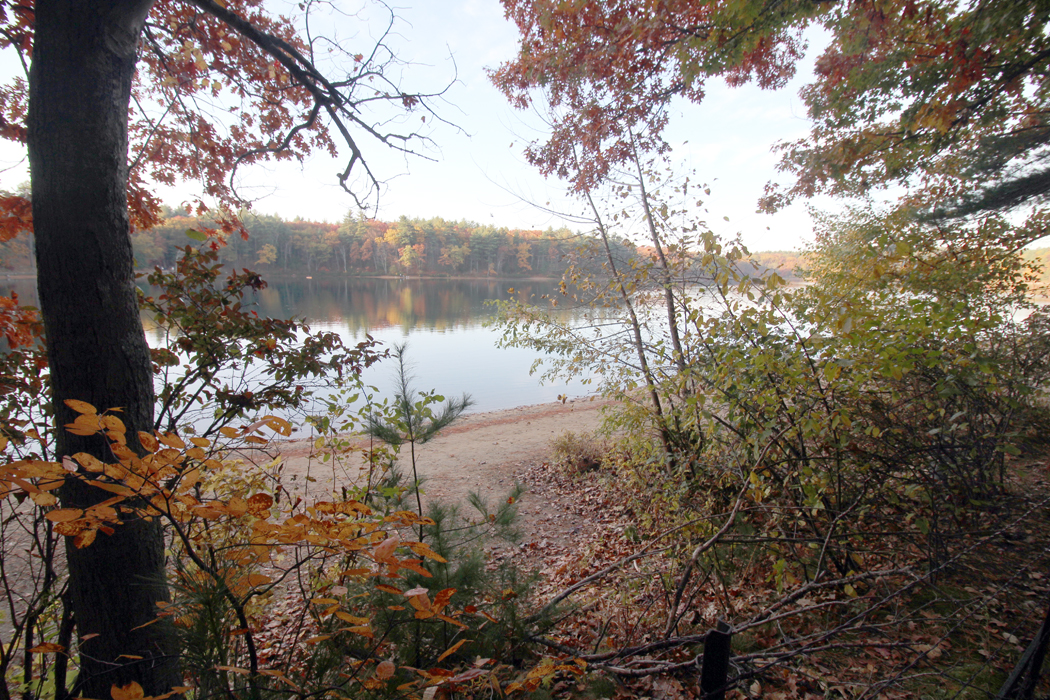
We arrived in early morning, it is chill and the only visitors so far are several fishermen and a kayaker. I walk past the reproduction cabin, peek into the window and continue on downhill to the water. 

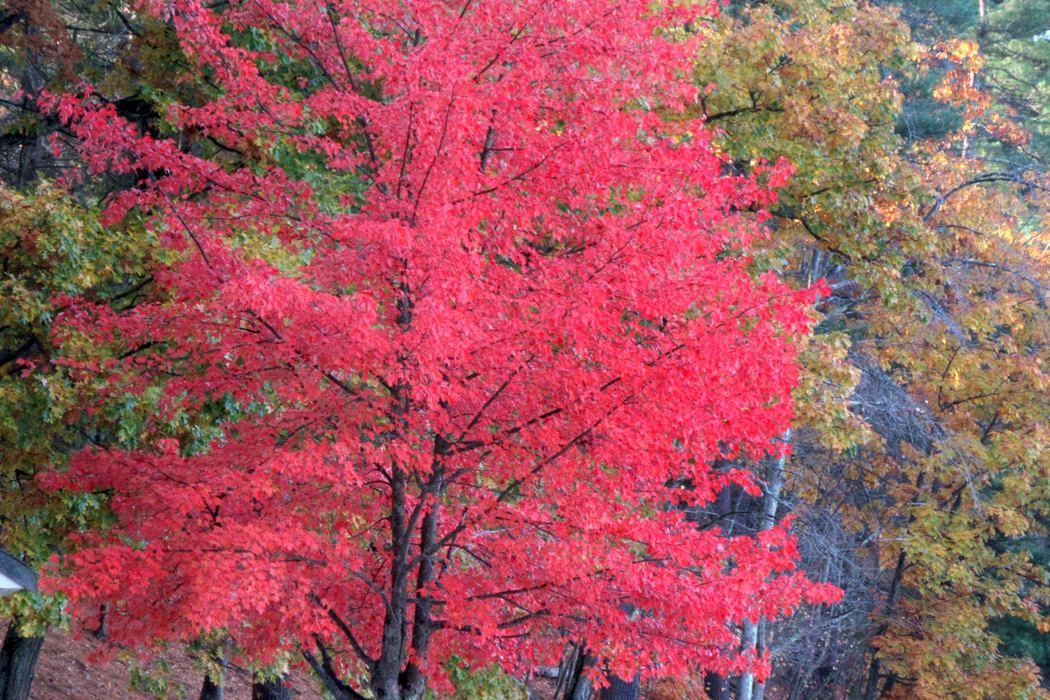
It is the height of fall and there are trees of bright red and yellow. 

I don’t have time to circumambulate the lake one more time, but I did walk about a quarter of the way counterclockwise around its shore. I do not need to do anything; just stand there as if soaking up the sun’s rays, but soaking up instead the sense of connection with: nature; time; history; literature; my own past; the sky; and what is beyond the sky, pebbly with stars. 

And finally, my recognition that this is almost certainly the last time I will ever be able to stand on this sandy, watery edge. Travel has become difficult, and what travel I still have in me should aim at the many other holies that need valedictory visitations. 

So, I walk back uphill to the car and head south through Connecticut, New York and New Jersey before finding a motel in Easton, Penn. I feel the loss of leaving Sandro and Mu, and of leaving behind Walden Pond for a last time. 

Oct. 27

What a satisfying end to a horrible, horrible day.

We left Easton, Pa, in a simple rain, but in only 10 miles or so, it became a Niagara. The sky was slate and then got darker. The windshield wipers could not keep up with the downpour and I had to slow down, not that anyone else did.

We were on I-78 and about an hour in, we hit a work zone in which there was no shoulder and a concrete wall on either side of the roadway, leaving no wiggle room. The visibility was often only a couple of car-lengths in front of us. And then — And then the semis would pass (I called them “bruisers”) and kick up a wash that blinded me entirely. I tried desperately to maneuver so that the truck would pass me on a straightaway, but of course, that wasn’t always possible.

The bruiser would pass and splash and I would have to slow down to 20 mph on the interstate, knowing that the vehicles behind me weren’t going to do the same thing.

I entered a completely Zen state, if you can call it that, or “wu hsin” — “no mind.” The Zen master attempts to get the student to empty his mind so that it is not processing any words, not thinking about plans or the future, not remembering past delights or grudges, but to be wholly in this moment, very like we believe animals must be.

Well, that pretty well describes the situation. Nothing was in my mind but concentrating on keeping the car in the road, in this moment, now, with no thought even of what might be around the bend. Nothing existed in the entire universe but this Buick on this road in this precise, rolling instant.

At one time or another, the dark lour would seem to lighten and gave us hope that the weather might break, but then it darkened once more and buckets poured onto my windshield and another bruiser passed, hissing up a gusher.

We crossed the Squeaky-Hannah River and continued down I-81. The sky cleared, the sun came out and the roads dried. I still flinched every time I saw a bruiser in the rear-view mirror, but I soon got over that. Pumped up to 65 mph and cruised into Chambersburg, Pa. and went on to Winchester, Va., and got a room. I have to say, I was blasted. The intensity of the drive through the weather took every ounce of constant focus I had, both hands on the wheel, grabbing tight and eyes bulging out wide staring through the windshield and glancing back through the rear-view. The expression “holding it in the road” took on new and immediate meaning.

I plopped down on the bed in our room and tried to keep the flashback to a minimum. Anne went to sleep. I couldn’t. We rested for a couple of hours and then the magic happened.

Anne searched on her phone for a place to eat and found what she called a Popoo-Syria. At first I didn’t understand, but as soon as I did, my face must have ignited like a skyrocket. I burst a giant grin and said: “Pupusaria. It’s a pupusaria! I haven’t had a good pupusa since leaving Phoenix.” I think I may have done a little jig.

“Where is it? Is it close?” This was important. I don’t know Winchester and was afraid I would never find it. Anne gave me the address; I punched it into my Google maps and lo, it was exactly one block from our hotel.

“I’m not really hungry,” Anne said. But she came anyway. We found the joint, a little storefront hole-in-the-wall — just as it should be. I ordered a couple of pupusas and a plate of fried platano with crema. An horchata to drink. The only people there spoke Spanish. The waitress could barely put together a couple of words of English. I felt completely at home. I spoke my best laughable Spanish. “Me gusta la comida.” It fulfilled every desire I had for pupusas.

Anne had one, too, a chicken and cheese pupusa and judged it “really good.” She actually liked it.

I sat there in the booth with a great shit-eating grin on my face. “Estoy muy feliz,” I told the waitress. I sat for a moment soaking up the pleasure, nay, almost ecstasy.

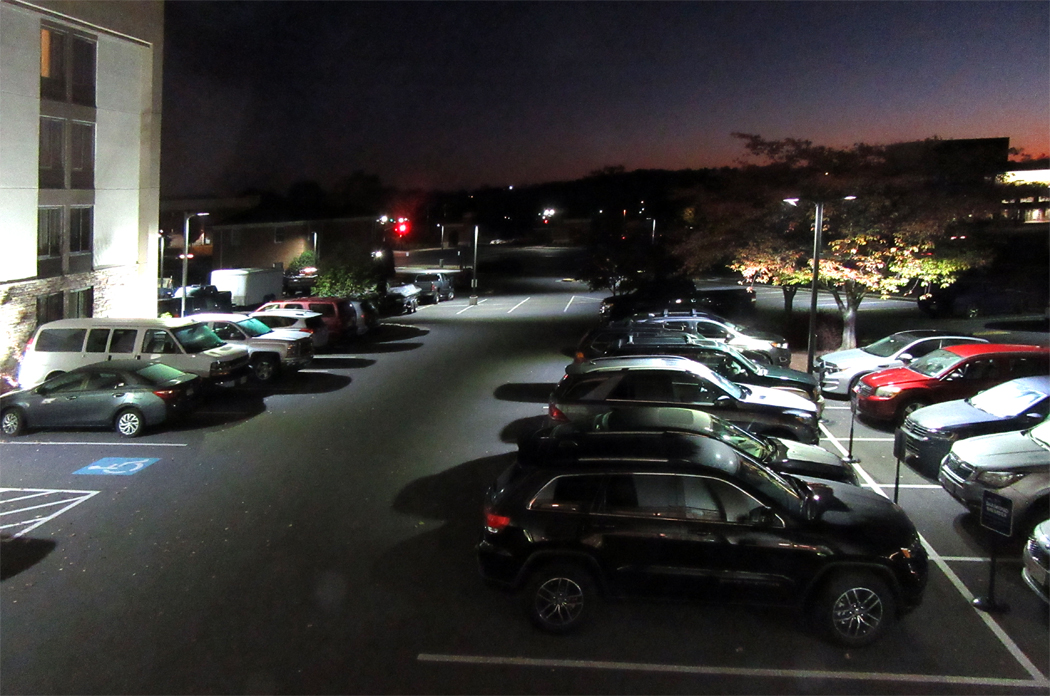
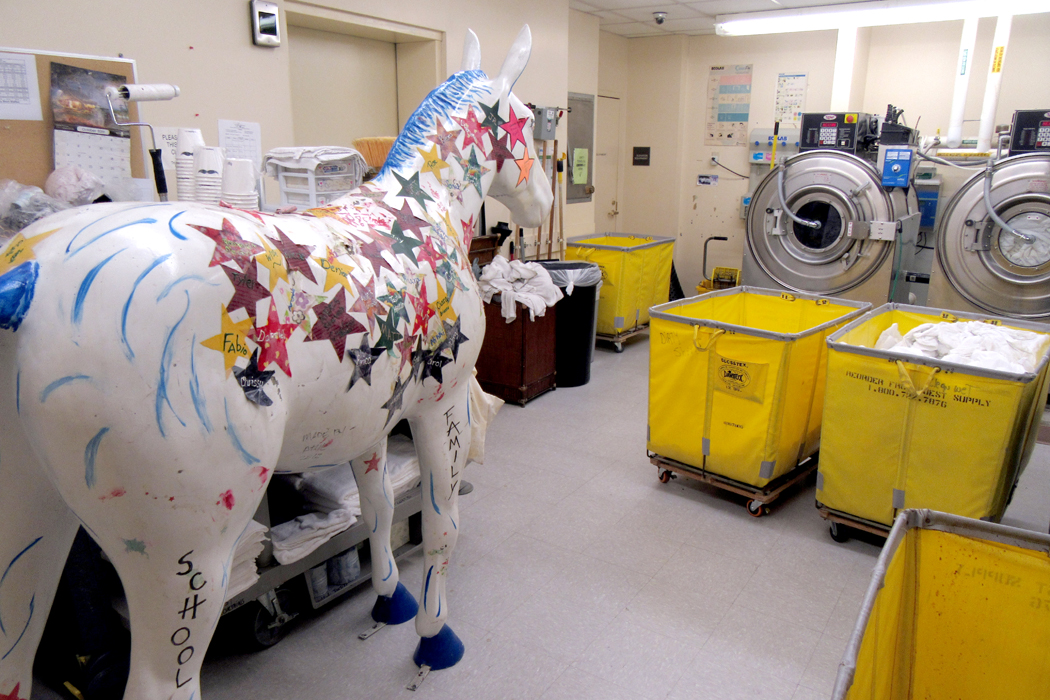
Back at the motel, there is a Halloween-themed wedding party and the halls are filled with costumed guests yelling, screaming and dancing. As I pass the hotel laundry room, the door is open and inside I see a pony-size fiberglass horse. I have no idea why. 

Oct. 28

Interstate 81 runs down the Shenandoah Valley along the western edge of Virginia. It is a chute-the-chute towards home. The Blue Ridge to the east and the long, low Allegheny Mountains and Massanutten to the west. 

We stop for a leg-stretch at Valley Pike Farm Market in Weyer’s Cave, Va., and Anne looks for some gifts to take back to her friends in Augusta, Ga. 

We make our night — the last one on the road — in Radford, Va. and find a chain restaurant for dinner. Tomorrow, home. 

Oct. 29

We shift from I-81 to I-26. As we near the North Carolina state boundary line, the highway twists through the mountains again on the way down towards Asheville. I begin to see familiar landmarks. There is a nervous sense of homecoming. 

We got home about noon. Total mileage for the whole trip: 3,419.3 miles. Finally, I pull up the driveway. 

“Look, a bear.”

“Where?”

“There. No. Up in the tree.”

We pulled up the driveway and turned the car off and I spotted a bear up in the tallest oak tree in our back yard. It was a young bear; not a cub, but not fully adult either. 

It was walking out on a branch about 30 feet above the ground. 

“No, wait. Two bears.”

There were two bears in the tree. I couldn’t get a photo of them both, because the one was around the back side of the tree trunk, mostly hidden. We watched for several minutes.

The second bear turned out to be an adult; I guess the mama. There were dogs barking in the next yard, behind the screen of trees and brush. We guessed that may be why the two bears were up in the tree. Anne went inside, since it seemed nothing was happening. I waited and saw the grown-up bear begin to descend, head downwards then turning around to shimmy down behind-first. Again, it was mostly on the far side of the tree and obscured by twigs and leaves, so I couldn’t get a decent photo. Then, I didn’t see either one of them anymore. 

A little later, dogs began to bark on the other side of the back yard, so I assumed the two had ambled on towards the woods and the Blue Ridge Parkway. 

My closest friends know who that bear was. 

Click any image to enlarge

effigy mounds fogThe Mississippi River on a crisp fall morning can be very beautiful. Between Wisconsin and Iowa, it is several miles wide and frosted with a thick layer of steaming fog. You can see that the sun is trying to break through, but it hasn’t yet and the trees on the river islands are a silvery gray silhouette; the water is a mirror.

And above the river on the Iowa bluffs just north of the bridge at Prairie du Chien, Wisc., there are relics of prehistoric Native Americans.mississippi river effigy

Effigy Mounds National Monument is a 1,475-acre park that preserves over 200 prehistoric Indian mounds, dating as far back as 2,500 years ago. Among them are 26 built in the animal-cracker shapes of bears and birds, only visible as such from the sky.

Indian burial mounds are found over much of the United States; effigy mounds are found in a relatively small area in northeast Iowa, southeast Minnesota and southern Wisconsin.wisconsin tree beside mississippi

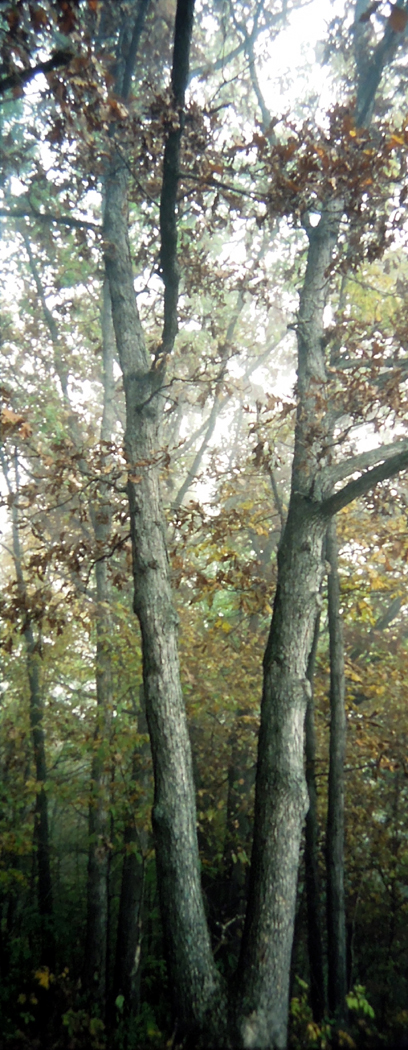
It’s a steep climb from the parking lot to the top of the bluff where the animals are. On a chilly, foggy morning, you breath condenses on your face. There are only the near trees and the wildflowers.

Oaks and maples make up the bulk of the trees, but there are also red osier, basswood and hickory.

The sumac is intense maroon; the maple a neon orange; the oak is the dark, brownish red of dried blood.

The understory is full of joe pye weed, queen anne’s lace gone dry and dark, and the last glories of aster.

The first “animal” you see at the top is a tiny bear, only a few feet long, spread out in profile on the ground with his nose to the left and round butt to the right. If it weren’t pointed out, you might easily miss it in the generally rocky, bumpy topography. But there he is; his function is unknown. It isn’t a burial mound, although those exist, too. He may have had some ceremonial purpose that we’ll never know.Bear Mound 1

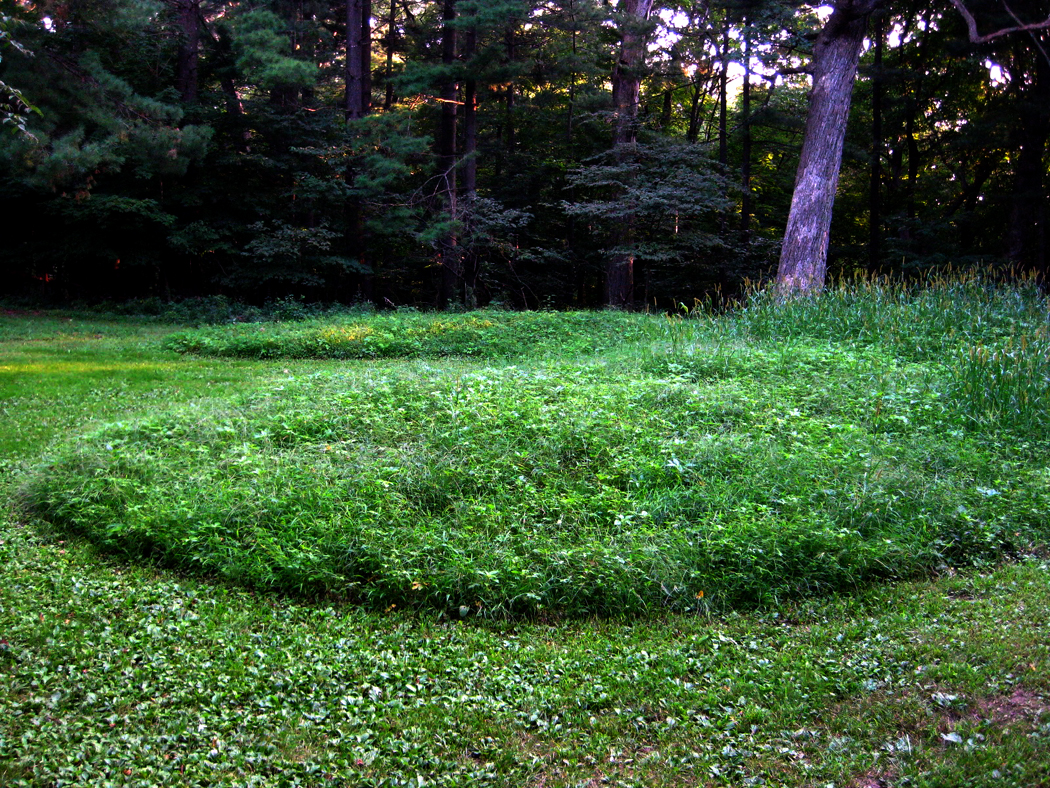
Other mounds are simply round, conical mounds from the so-called Hopewell culture. They are all initially disappointing. They don’t seem like much more than bean hills.Great Bear Mound pan

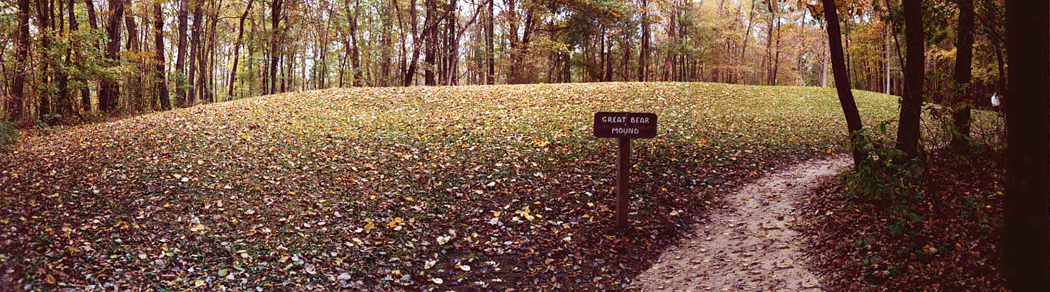
And then, finally, the Great Bear, some 120 feet long, although only three or four feet tall. His outline is quite clear, however: Two legs, a long body with a blunt head at the end.

Yes, this bear is long, but he’s still only a 3-foot-high pile of dirt covered in grass.

We live in a world whose yardstick is produced by Steven Spielberg. If it doesn’t sing and shout or have fireworks, we fail to be impressed. So I sat, for a long time, soaking in the bear and the wet air. The longer I looked, the more intriguing the mound became. Why a bear? And all the other bears look to the left, so why is this single giant bear turned in the opposite direction? Who was supposed to see it? Were there trees blocking the view of the gods then as there are now? And if they had meaning when they were made, what is their meaning now?aerial view 1

There are many odd and inexplicable things in human experience: Whirling Dervishes; the Hindu Juggernaut; the Republican budget. This bear is among them, though in a very quiet way, sitting silently in the Midwestern forest.

I sat for an hour in the woods and didn’t recognize the passing of time.

Our lives are lived in Twitter time, with gnat-like 140-character attention spans. But the things that matter live in a different now, one that moves very slowly and pays little attention to the gnats.

The mounds have been here a long time; the trees even longer; and the rocks even longer than that.

Such a time frame is important to experience on occasion.