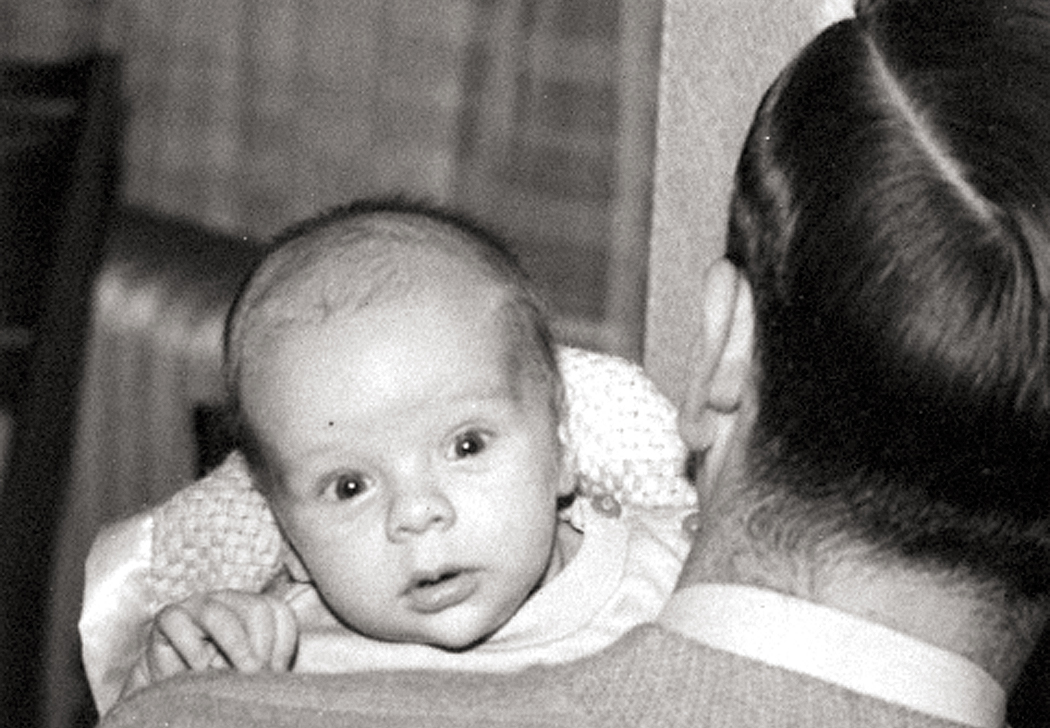
When I was born, in Teaneck, N.J., in 1948, I was given the name, Richard Wesley Nilsen, but I grew up being called Ricky instead. All through my toddlerhood and boyhood, that’s what everyone called me. But when I turned into a teenager, I rankled at the name as childish, and it changed to Rick, like the Blaine of Casablanca. It seemed more dignified. A bit.
I had been born — eight years after — in the same hospital as Ricky Nelson, son of Ozzie and Harriet. He was an Eric; I was a Richard. But the doppelgänger name hung on to me through childhood. People often still misspell my last name “Nelson” (or “Nielsen” or “Nilson,” — or “Bilson” or “Wilson,” for that matter.)
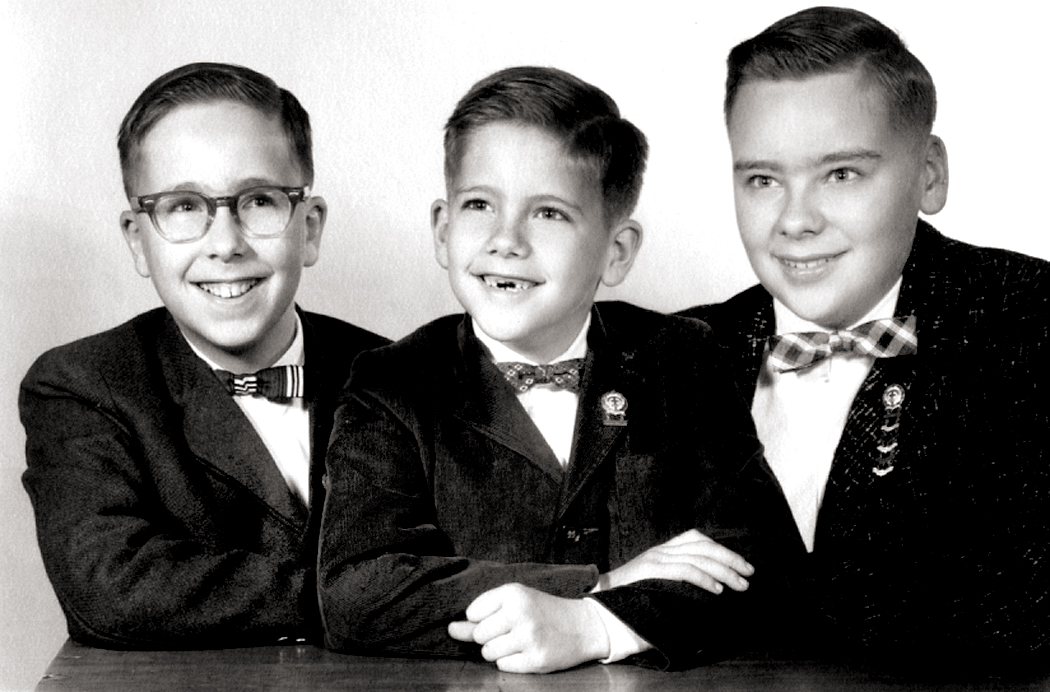
Nilsen brothers, 1961: Craig Allan; John Robert; Richard Wesley
Of course, when I misbehaved, as boy or teen, my parents would punch out my name, “Richard Wesley Nilsen — what have you done?” The stentorian tone was impossible to misunderstand.
When I left for college, I happily left that nickname behind and became known as Richard.
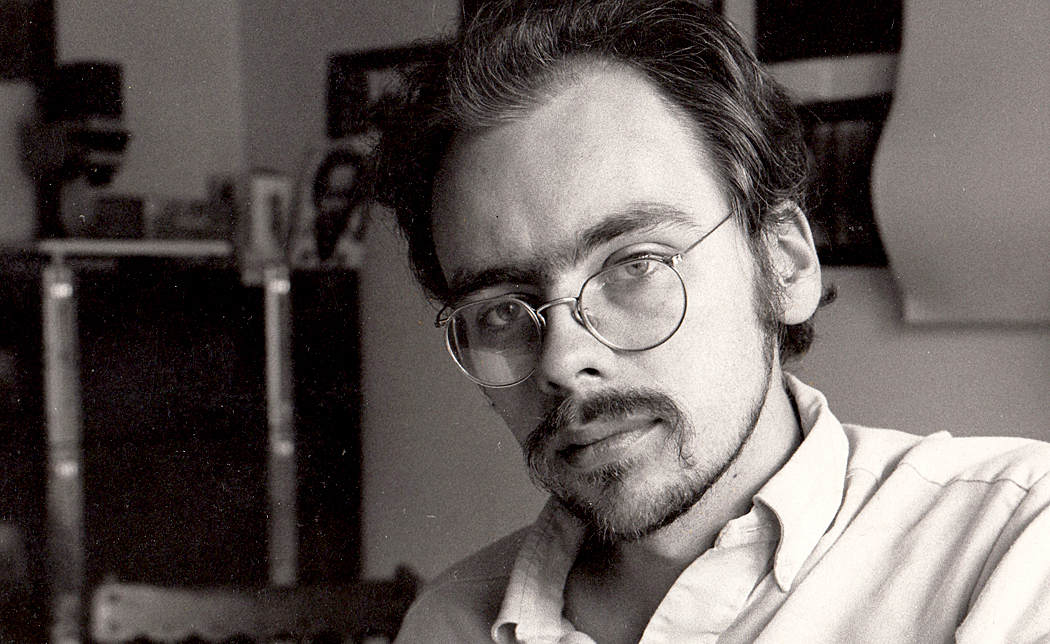
Richard, 1975
We all have multiple identities; we change as we grow. Even in the same age, different people know us as varied personalities: We act differently with parents than with children; different with teachers than with students; different when a policeman pulls us over for failing to stop at a stop sign and when we go to the office for our yearly evaluation. Different people, different language used to present ourselves. Different names.
Which name is the true name? When I was a teacher, I became Mr. Nilsen, although I called myself “Perfessor Rick.” When my step-daughter had twins, we needed to find a “grampa” name for me and came up with “Unca Daddy Richard,” or Uncle Daddy. That’s what they still call me, now they’re all growed up and out in the real world.
(My late wife chose her grandma name, now 26 years ago, to honor her own grandmother, who was a Pegram, a name the infant couldn’t pronounce, and so Grandma Pegram became “Mama Piggy.” So then my wife decided to be “Tiggy,” in sympathetic rhyme, for her grandbabies.)
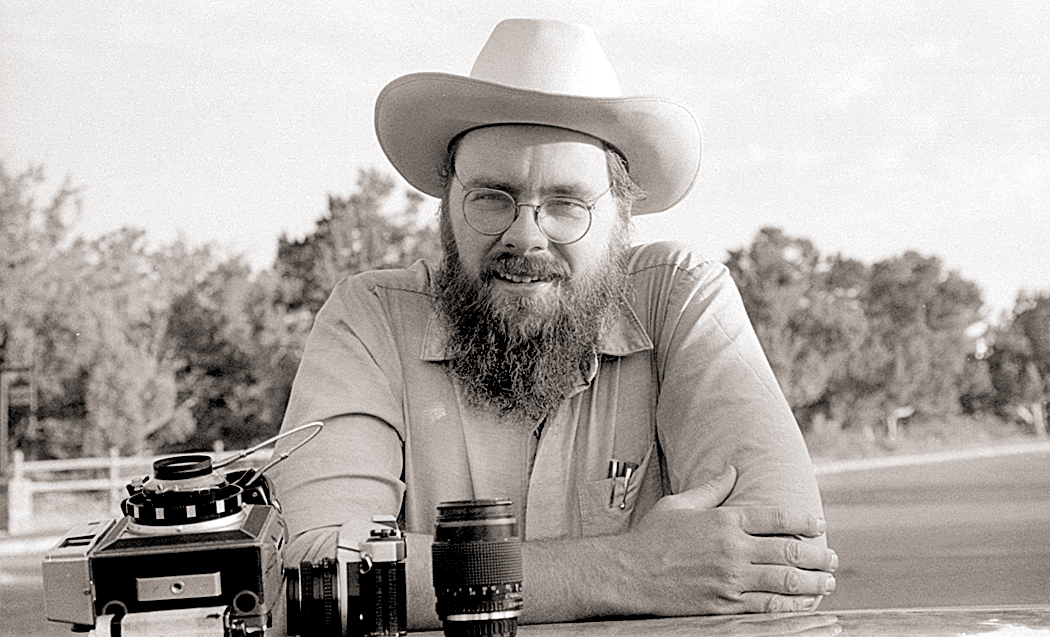
My own names make an even longer list: My best friend from college used to give me the name of a faux Dominican baseball player: Ricardo Nilsones (Nil-SONE-ayz). When I worked at the zoo in Seattle, with school kid employees half my age working through summer vacation, they just called me Grandad. My closest Arizona friend never calls me anything but RW. I answer to them all.
That college friend was born Thomas, but when I met him at school, he was Tom. He later took up using his middle name instead and he became Alexander, and his wife calls him Alex. I usually call him Sandro. Which one is his real name?
“Her name was Magill, and she called herself Lil. But everyone knew her as Nancy.”
One name is never enough; we all have many names.
T.S. Eliot wrote in Old Possum’s Book of Practical Cats that every cat has three names. “First of all, there’s the name that the family use daily… All of them sensible everyday names.” Then, he said, “A name that’s peculiar, and more dignified… Names that never belong to more than one cat.” Finally, there is the name “the cat himself knows, and will never confess.”
In my experience, the fancy second name is bestowed first, followed by a more familiar name that appears over time and usage. My first cat was the progeny of a great big tabby bruiser who ran the neighborhood where friends lived. That papa cat’s name was Trevose, after the cliffs in Cornwall called Trevose Head. He fathered a litter with another local cat, called Mama Kitty, and I got to inherit the one male tabby in the group, which we named, officially, Head. But we soon showered him with endearances and called to him “wood-jee, wood-jee, wood-jee,” and that became his name, even as he grew into a great bruiser himself. We usually spelled his name Widgie. Of course, we never found out what his ineffable, deep and inscrutable singular name. But there was a look in his eyes that told us, he knew.
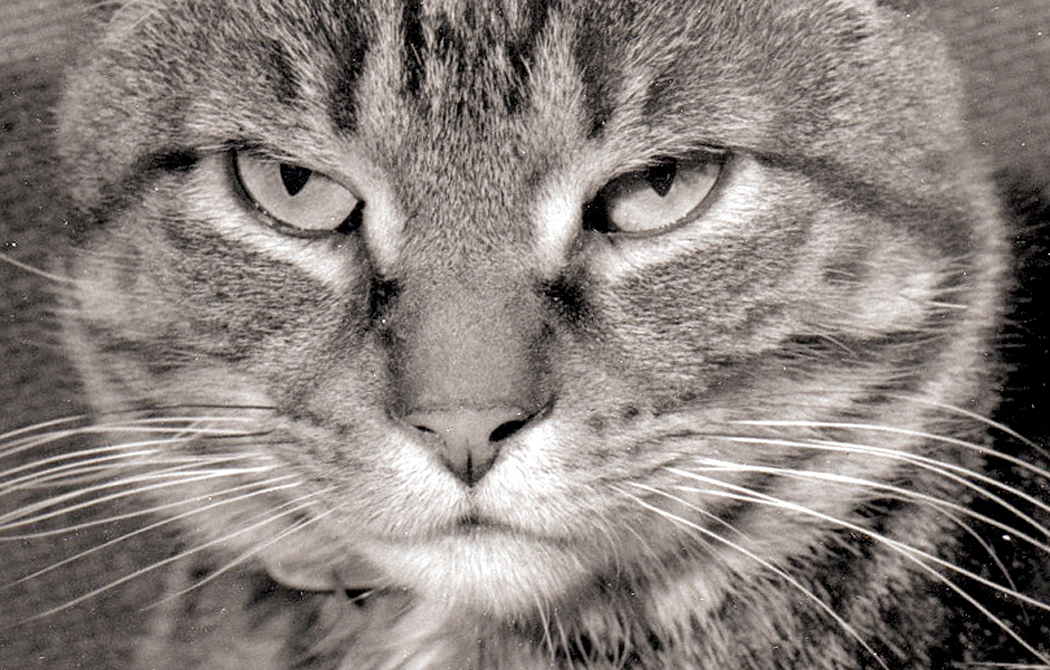
Our second cat was given the name Undifferentiated Matrix. (Yes, I was an insufferable student). One morning my girlfriend and I were awakened by this new cat musheling on our bellies with his tail in our faces and Sharon chirped, “Oh, look at his tiny little nutlets.” And so Nutlets became his name, even after he was snipped.
This proliferation of names, among pets and people is quite normal, even if we seldom think about it consciously. It can become quite confusing when reading Russian novels or trying to get a grasp on history.
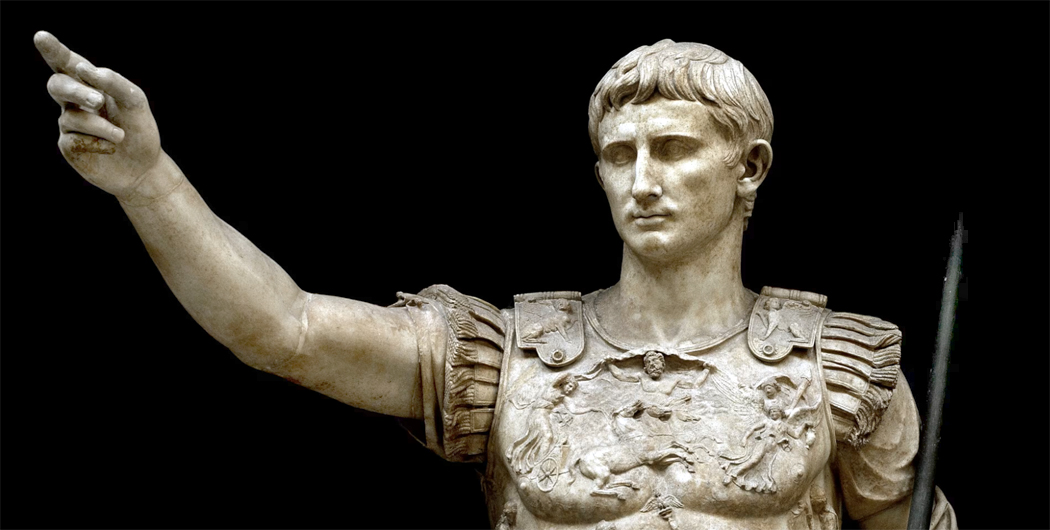
For instance, who was Caesar Augustus? He was born Gaius Octavius, but was soon known as Thurinus — a cognomen (like a nickname). But after Julius Caesar named Octavius his heir in 44 BC, Octavius took Caesar’s nomen and cognomen. Historians often distinguished him from the earlier Caesar by adding Octavianus after the name, denoting that he was a former member of the gens Octavia. Some of his contemporaries called him Gaius Octavius, or Gaius Julius Caesar Octavianus — “young Caesar.” Historians usually refer to him as Octavian for the period between 44 and 27 BC. That year, the Senate granted him the honorific Augustus (“the revered”). Historians use this name, or its converse Caesar Augustus, to refer to him until his death in AD 14.
As for Russian novels? My copy of Tolstoy’s War and Peace has several pages at the beginning clarifying everyone’s name, title, patronymic, nickname, familiar name, etc., all which makes it a confusing mess for anyone not familiar with Russian naming practices to keep track of what is happening. It takes some getting used to.
You have to remember surnames or titles (Count Rostov for example, or Prince Bolkonsky) and also your patronymic (like Sonia’s dad is Alexander so she’s Sophia Alexandrovna, and Nikolai’s dad is Ilya, so he’s Nikolai Ilych) and then the whole bait-pail of affectionate diminutives, like Sophia is Sonia, and then Sonyushka, and Alexander can be Sasha or Sashenka or Shura. And then someone talking to “Kolya” and then realize that’s actually Nikolai. Our hero, Pierre Bezukhov, is also Pyotr Kirillovich, and our heroine is Natalya and Natasha. Can’t know the players without a program.
That’s just the tangle of names everyone has for each other — the way your own family may call you something when your friends call you something else, and your spouse uses again something different. That’s really quite normal.
But changing your name can also be changing the face you show to the world. And so the German Hanovers became the British Windsors.
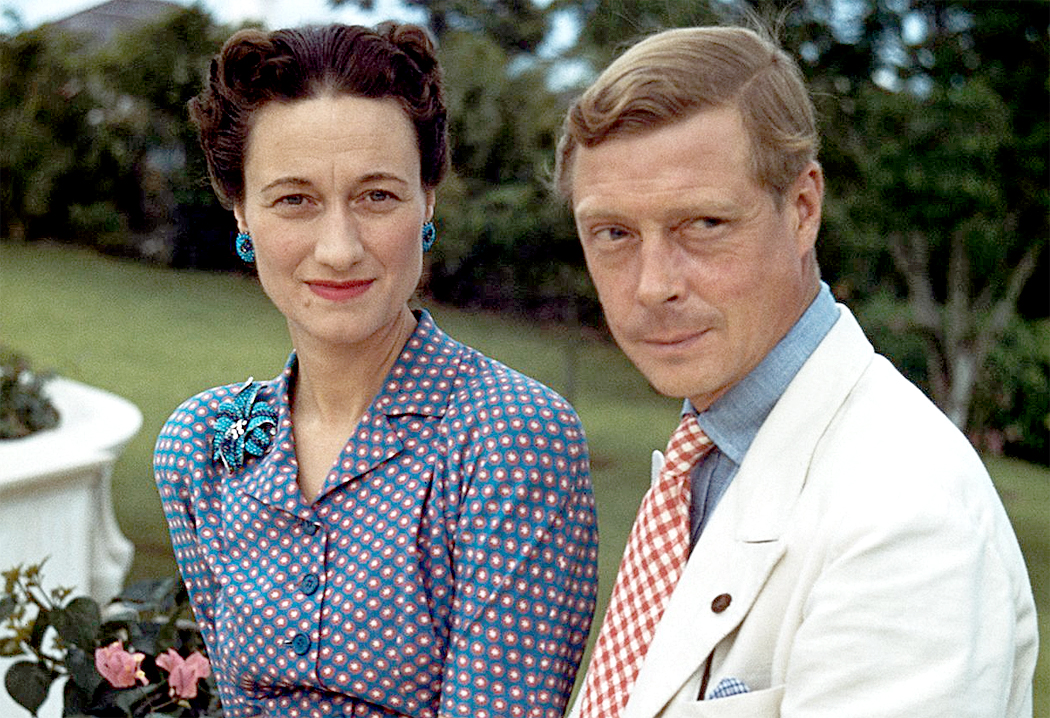
Names have always been somewhat labile. In some cultures, when a child becomes a man, he is given a new name. Women in Western cultures used habitually to adopt their husbands’ surnames, which makes Googling old schoolmates sometimes quite difficult. Given several marriages and divorces, they can have strings of obsolete names attached.
Just consider our politicians: James Donald Bowman became James David Hamel, and in 2013, he became J.D. Vance; Bill Clinton was born as William Jefferson Blythe III; Gerald Ford was originally Leslie Lynch King Jr.; Ulysses S. Grant was born Hiram Ulysses Grant. Like several others, he went by his middle name; the “S” was added by clerical error at West Point. He kept it. Woodrow Wilson’s first name was Thomas; Calvin Coolidge’s first name was John; Grover Cleveland was born Stephen and known to some as “Big Steve.” Even Dwight Eisenhower was first called David.
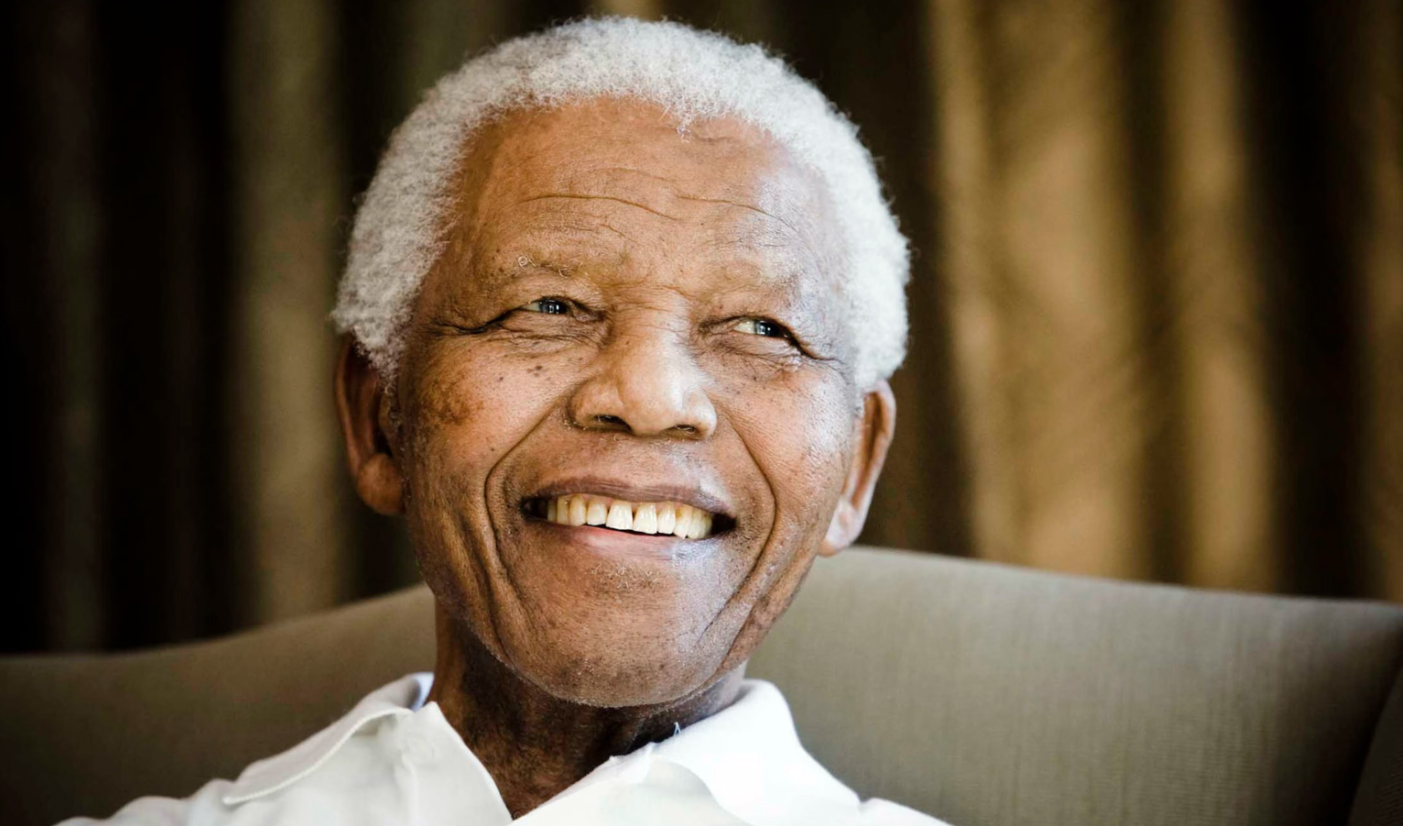
Nelson Mandela was born Rolihlahla, which means “yanking the branch of a tree,” but was understood to mean “little troublemaker,” for his mischief. Most of the names he was given him later in life were names of respect, including Dalibhunga (“creator of the council”), Madiba (his clan name), Tata (“father”), and Khulu (a shortened form of “grandfather”).
On his first day in school, his teacher gave each pupil an English name. “This was the custom among Africans in those days and was undoubtedly due to the British bias of our education,” Mandela wrote. “That day, Miss Mdingane told me that my new name was Nelson. Why this particular name, I have no idea.” It stuck.
And then, there are the actors and writers. We are all familiar with many of the stage names of movie stars. Tony Curtis was Bernard Schwartz; Rita Hayworth was Margarita Carmen Cansino. Their new names made them more “mainstream” and less ethnic. The way Krishna Pandit Bhanji won an Oscar as Ben Kingsley. Or Natalia Nikolaevna Zakharenko (talk about Russian novels!) turned miraculously into Natalie Wood.
Clunky names can be a problem. Elton John trips off the tongue more easily than Reginald Kenneth Dwight, and Michael Caine sounds better than Maurice Micklewhite.
Nineteenth Century women often used men’s names as noms des plumes to hide their gender — so Mary Anne Evans published as George Eliot and Amandine Lucie Aurore Dupin became famous as George Sand. Jane Eyre and Wuthering Heights were both first printed with male author names.
Famous vampire novelist Anne Rice had the opposite issue. Rice was born Howard Allen Frances O’Brien. She was given a man’s name at birth: her father’s. Her mother thought that “naming a woman Howard was going to give that woman an unusual advantage in the world,” Rice wrote.
It got even worse, when at age 12, she was confirmed in the Catholic church and took the full name Howard Allen Frances Alphonsus Liguori O’Brien. So, when she went to school, she just told her teacher her name was “Anne.” Rice was her husband’s name. As Thoreau wrote: “Simplify, simplify, simplify.”
A name is a badge. It tells the world something about you. If your life changes, your name can change with you, and so Steven Demetre Georgiou became Cat Stevens and then Yusuf Islam. Cassius Clay became Muhammad Ali. Saul of Tarsus became Paul the letter writer.
But for many actors, the name change was forced upon them. In the U.S. and in the U.K., the actors union or guild won’t allow multiple members to share the same name, so, if there is already one of you on the boards, you will have to come up with a new one.
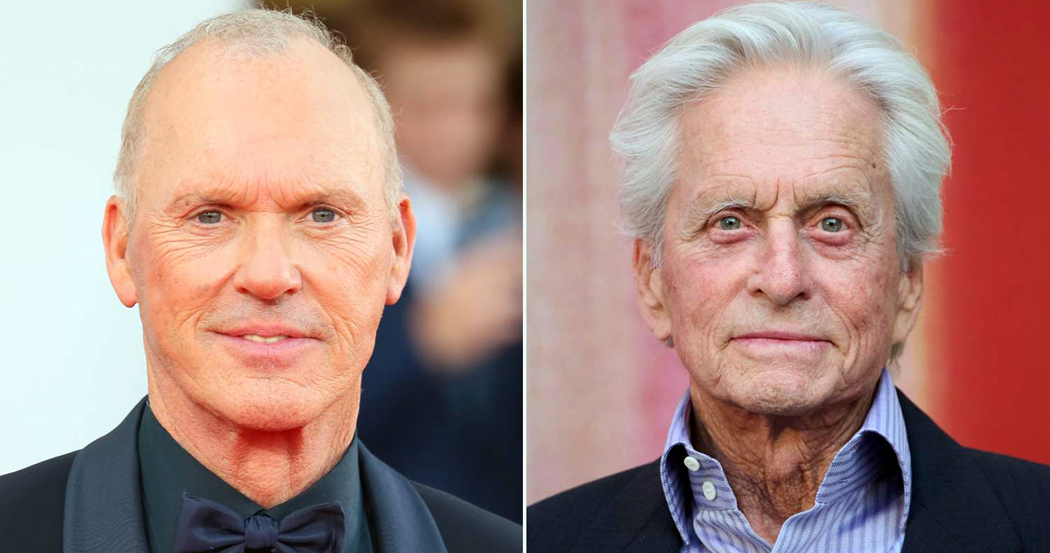
Michael Keaton was born Michael Douglas, but wasn’t allowed to keep the name when he joined Actors Equity, since a Michael Douglas already existed. Of course, the original was the son of Kirk Douglas, who was born Issur Danielovitch, although his Russian-born family changed that to Demsky and the young dimpled actor grew up using the name Izzy Demsky. Button, button, who’s got the button?
 Richard Nilsen