Archive

Tag Archives: classical music

Occasionally I get asked (OK, once) where should I start listening to classical music. Classical music is something that a few people as they age past Top 40 songs, come to believe they should begin to know, the way they should read Proust or watch foreign films. 

Philip Larkin mentions the drive in his poem Church Going: “Much never can be obsolete,/ Since someone will forever be surprising/ a hunger in himself to be more serious.” 

I have been listening to what is called classical music for 60 years, and my first thought is that classical music does not exist. Not really. 

What is called classical is a combination of old church music; popular music that has been around so long, it no longer sounds like the pop music we know; and music meant to entertain, first, a class of aristocrats who could afford to pay for it, and then an aspirational middle class that took up the buying of tickets. 
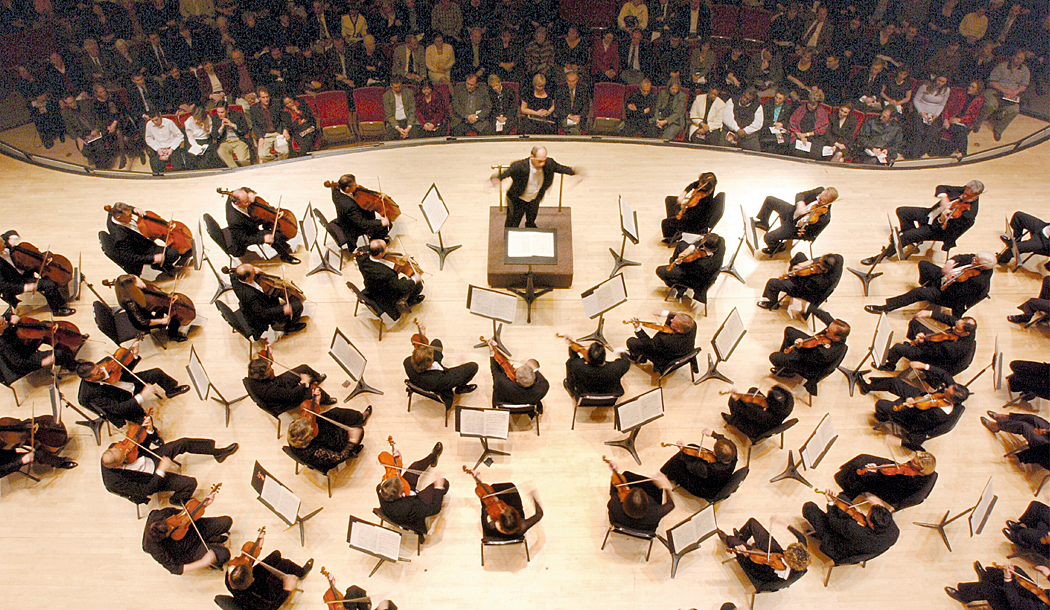
It wasn’t until late in the 19th century that anyone really considered such music “classical.” And only in the 20th century that most symphony orchestras were organized to play what in the past had just been music, but was now given this new label. 

Until then, most concerts consisted of new music mixed with a few old favorites (much like modern pop music — they wanted to hear the hits). And so, old standards became classics. 

Not all of the old standards were heavy and serious. Mozart wrote tons of divertimenti to be played as the count and countess ate lunch. It was only meant to sound nice, with catchy tunes. Yes, some classical music is meant to evoke deeper thoughts and emotions, some even meant to change lives. 
But there is pop music that is serious, too. Consider the Beatles’ A Day in the Life, or Queen’s Bohemian Rhapsody. They aren’t always short. 

And so, when you ask about classical music, you aren’t asking about a single thing. If you were to open up that can of worms and try to learn what classical music has to offer, you will have to recognize that no one thing can suffice. Nor any one style; nor any one century. 

If there is anything that marks music as classical, it is its length. Most tunes last three or four minutes, while a symphony can run anywhere from a half-hour to 90 minutes. The popular music is meant to put a tune in your head and you like it (or not) and may sing it to yourself as you wash the dishes. Such music is usually meant to be absorbed passively. 
What is called classical tends to be more like a story, even a novel, with multiple characters and changing moods, so where you start is not where you end up. It is music you pay active attention to. It goes somewhere and you have to pay attention to notice the plot. 

The story told in music, though, is not one that can be translated into words. It is one you listen to as it unfolds in musical terms: the melody changes, sometimes broken into pieces, the harmony turns grim or lilting, sometimes the melody might be played half-speed, or faster, or even upside down. These are all part of the musical story-telling. 

So, what do I say to my friend asking advice on how to start listening to classical music? 

The complaint I hear often is that classical music all sounds the same. It doesn’t. And so, I want to offer examples both of the stories and of the diversity. And I want to start off with a symphony with the clearest, most direct “story” to tell.
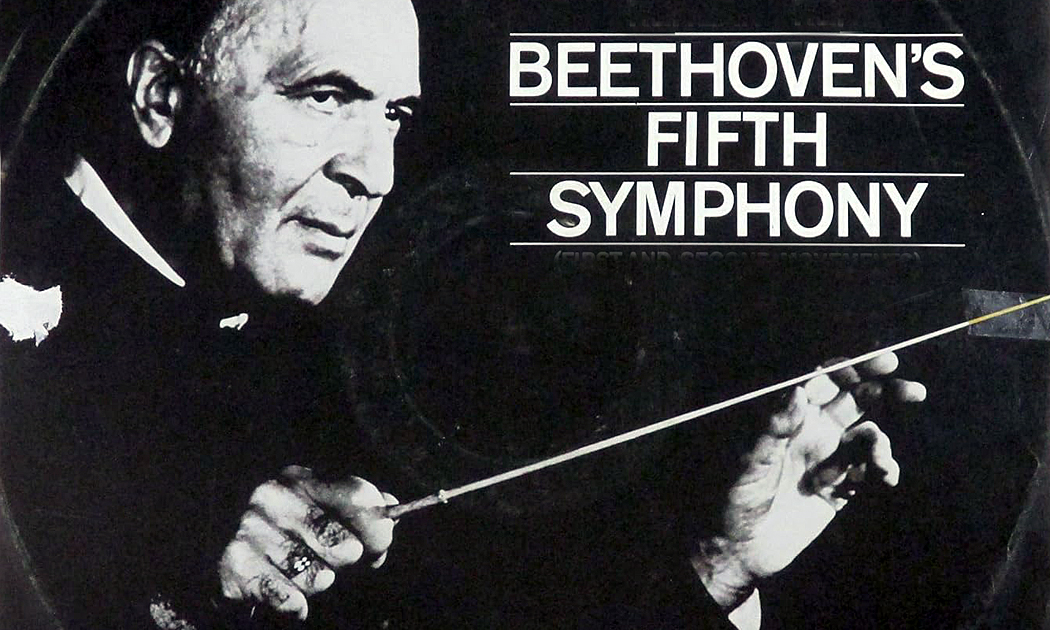
If there is any single place to begin, it is with Beethoven’s Fifth Symphony, or, more formally, Symphony in C-minor, op. 67, first performed in December, 1808, in a freezing cold concert hall in Vienna, along with a host of other new works by the composer, making for a concert lasting more than four hours. For all that music, the orchestra — a pickup ensemble paid for by Beethoven himself — had only a single rehearsal to work out the kinks. In one of the pieces played that evening, the orchestra got lost and had to stop and begin the whole piece all over again. 

But that Fifth Symphony eventually became iconic — the single stand-in for all of symphonic music. 
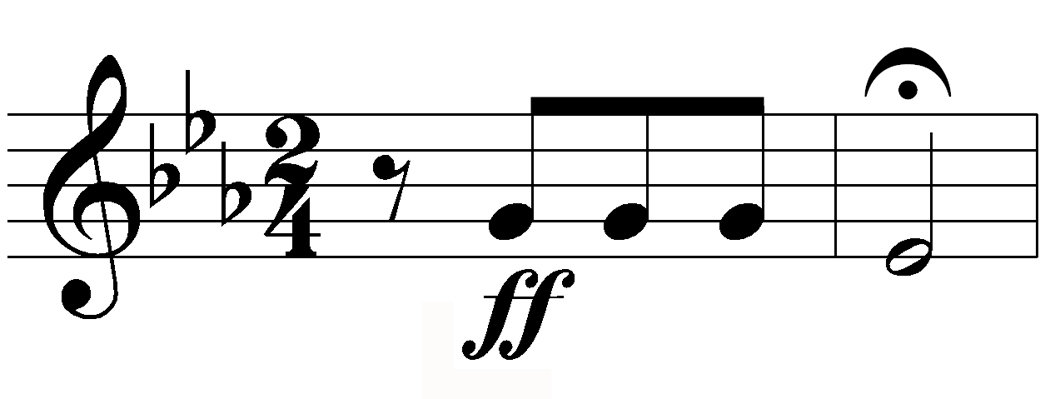
It begins, as almost everyone knows with the heavy tread of the dah-dah-dah-DUMM. Those four notes are played over and over through all four movements of the symphony, sometimes straight, sometimes altered, sometimes as a drumbeat underneath another tune. I once counted in the symphony score more than 700 repetitions of dah-dah-dah-dumm. That works out to once every three seconds of music from start to finish. It’s almost OCD. It’s no wonder the notes are often compared with hammer blows. 

The symphony is in the minor key, a key of angst, anger, uncertainty, which Beethoven underlines by having the music stop outright several times after we hear the four-note motif. As Peter Schickele said, in his comic sportscast of the symphony, “I can’t tell if it’s fast or slow, because it keeps stopping.” 

But it picks up steam to an intense, driving rhythmic motor, all in that relentless C-minor. It blasts you over the head with it. The first movement (of four) lasts, in most performances, only about five minutes, but you may very well be worn out by all that hammering and minor-keying. 

The second movement is a relief from the drive of the first, but the dah-dah-dah-dumm is often there, heard beating away in the bass line. The third movement starts with an ambiguous arpeggiated melody in the basses, but then brings back dah-dah-dah-dumm as a main theme, with the drive of a forced march. The movement doesn’t really end, but rather morphs into a chaotic repeated note pattern that doesn’t seem to be going anywhere, until … until… it does — and it explodes into a big, brassy blast of C-major — the major key the entire symphony has been trudging toward for all its length. The feeling is absolutely triumphant. The spirit soars. 

And yet, if you listen carefully, you will recognize that those happy, brilliant tunes are actually a metamorphosis of the dah-dah-dah-dumm, buried in a longer, rising optimistic melody. And at the very end, Beethoven drives home that C-major with 25 bars of pounding C-major chords in the full orchestra. You know you have reached the finish line with the last long-held chord. Having won it, he’s not going to let go. 

The story the symphony tells is from anger and angst into triumph and joy. It is this long development of an idea that marks what is called classical music as different from popular music. 
And even in classical music that doesn’t have the symphony-long coherent story to tell, each movement has its own plot and narrative. The most common narrative in classical music is presenting a theme or two, or three, in order, then mixing it all up, taking them apart, replaying them in foreign keys and disruptive orchestration, and then, finally, bringing them back in something like their original form so that you have a satisfying feeling of having returned home after a journey. Roughly half of all classical music is built on this pattern — with infinite variations. 

It is the surprise variations from the standard pattern that often delights music listeners. But to get the variants, you have to have become familiar with the expectations. It is hardly different from knowing the general plan of a TV sitcom, and being delighted when the show gives you a turn on your expectations. In a modern sitcom, you almost always have a main plot, a secondary plot, and a third, smaller background action, and they alternate in your attention, but are all wrapped up by the end. Same with a symphony or sonata. 

Next, about classical music all sounding the same (I have my own ignorance, too: For me, all pop music sounds the same). I have come up with a list of five classical pieces to spread the parameters. Each of these pieces can be found on YouTube to be listened to for free. 

Orchestral music is what most people think of as classical music. But there is so much more. 

Let’s start with some choral music. Before the late 17th century, most art music was vocal, and most often for the church. What instrumental music there was was usually improvised, rather like jazz. 

So, first, listen to Spem in Alium by English composer Thomas Tallis (1505-1585). It is a 40-part motet setting the Latin text “I have never put my hope in any other but in thee, God of Israel.” (Spem in alium — “Hope in other”). It was written about 1570 for a combined eight choirs of five voices each. 

It starts with a single soprano voice, adding others until, about three minutes into the piece, the entire five choirs all burst forth in a glorious racket. It is quite sublime. 

Then, let’s go the other direction. In 1913, Igor Stravinsky’s Le Sacre du Printemps (“The Rite of Spring”) was premiered as the score to Vaslav Nijinsky’s choreography for the Ballets Russes in Paris. That premiere famously caused a riot. Stravinsky fled the theater in fear for his life. Or so he claimed — one never knows just what to believe in a self-mythologizing artist. 

The music is rhythm torn apart, pounded home as part of what Leonard Bernstein called “Uncle Igor’s Asymmetry Machine.” It tells the ballet story of primitive Russian society and its ritual sacrifice of a young woman who dances herself to death. With its riotous dissonance, pounding percussion, and extreme orchestration, it remains perpetually modern. 

But we should not forget chamber music — music for a small group of players, often just two, such as violin and piano. César Franck’s Violin Sonata in A-major is about the most tuneful sonata ever written. He wrote it in 1888 as a wedding present for the famous violinist Eugene Ysaye. 

Its four movements borrow tunes from each other, and so although the movements are quite distinct emotionally, they are all tied together by the memorable melodies. 

And I cannot forget song. Most of the great composers also wrote songs, though they are nowadays called lieder, which is just the German word for “song,” but gives a higher-toned, more prestigious ring to the name. But they are songs nonetheless. 

The greatest of these classical song-writers is undoubtedly Franz Schubert (1797-1828). Poor all his life, and hardly recognized as a great composer by any but his closest friends, he was a gushing fountain of melody. His song Erlkönig tells the story of a father and son riding through the night on a horse, stalked by the evil elf-king who wants to take the boy. The child screams in fear, the father tries to protect him, and the goblin tries to seduce the kid away. It is a frightening song, but full of tremendous melody. 

This should give you some sense of the incredible range of the art music of Western culture. And a start in classical music. 

Next: A look at the changing eras of classical music

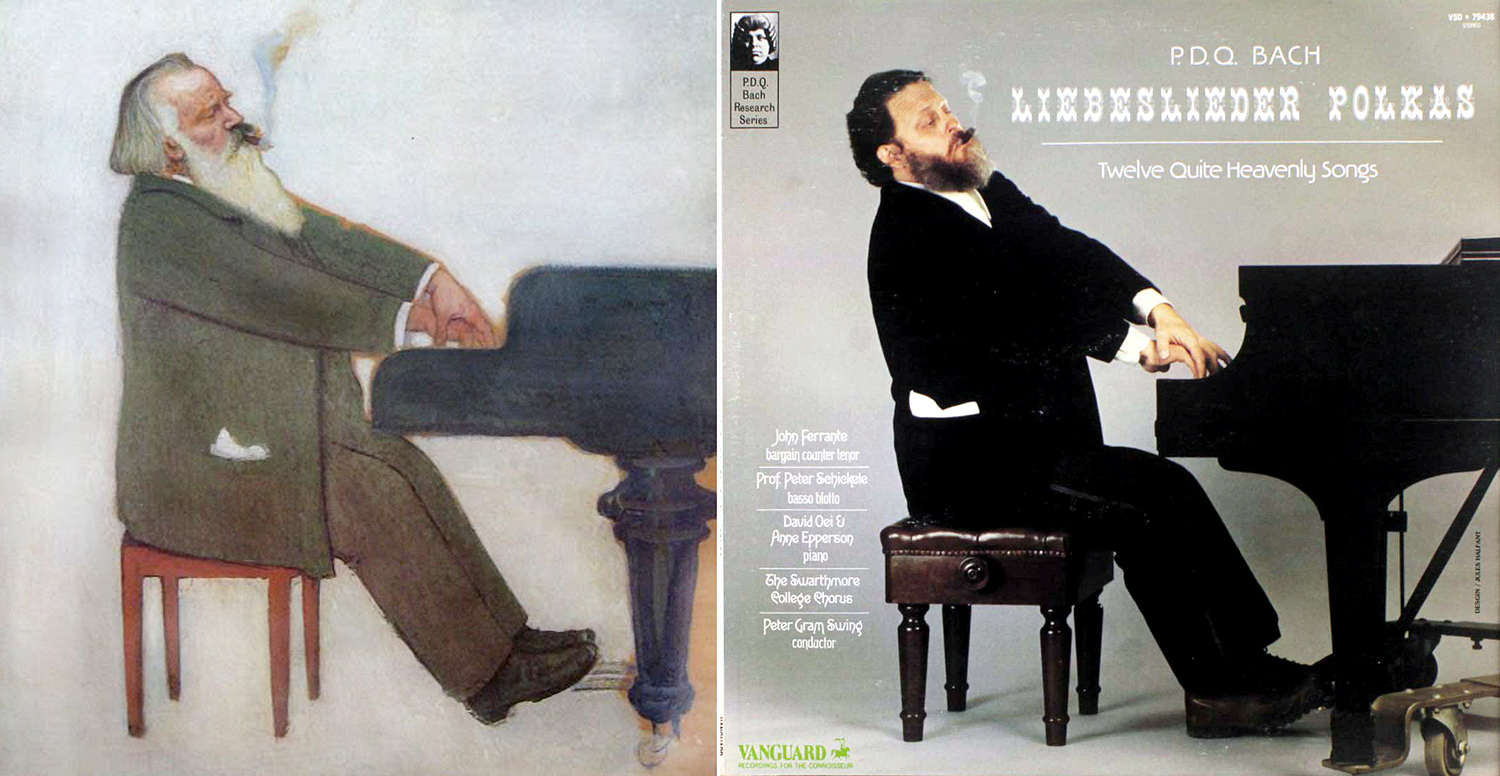
Professor Peter Schickele has died, and there is one less star twinkling in the sky. 

Schickele, who was the creator of PDQ Bach, was 88 and had been ill. 

I have a long history with PDQ Bach, and I will miss his music and wit terribly. He came from a notable line of musical satirists and clowns, including Spike Jones, Anna Russell, Victor Borge and, of course, the Hoffnung Festival in Great Britain. But, at least initially, his target was Baroque music in particular. 

At the beginning of what was called the “Baroque revival” in the 1960s, Schickele devised PDQ as a way to parody some of the excesses, cliches, tropes, and habits of the newly popular historical style. His first concert was in April of 1965 at Town Hall in New York. I did not attend that one, but in December of that year, he brought the program to Philharmonic Hall, and I was there for the Concerto for Horn and Hardart, the cantata Iphigenia in Brooklyn, and the Pervertimento for Bagpipes, Bicycle and Balloons. Schickele was there as narrator and explicator; he arrived late at the hall, and swung onto the stage, Tarzan-style from the balcony. 

It was one of the funniest things I ever saw or heard. 

“In general, the dance music of PDQ Bach suggests that one of his legs was shorter than the other.”

The cantata — “Scholars are unaware Iphigenia ever was in Brooklyn” — has Orestes “being chased … by the Amenities” and he sings the sorrowful aria “Who knows what it is to be running? Only he who is running knows,” followed by “Run-running knows, run-running knows, ru-u-u-u-u-ning running knows.”

It was all a bit goofy, but made fun of things familiar from Baroque music. (Anyone familiar with actual Baroque opera will realize this “running knows” isn’t that much sillier than the real thing.)

The Hardart was a vast instrument made up of bells, whistles and gongs, each tuned to a different pitch, and with little windows on its front from which you could get pie. The second movement was a theme and variations, but “the variations have nothing whatever to do with the theme.” 

I was a teenager then, and attended the concert with my high-school girlfriend, who became a professional bassoonist, and, in fact, later played with Schickele in PDQ concerts, and even occasionally appeared with him on radio interviews promoting concerts. 

We came the next year to the second season of PDQ Bach, then at Carnegie Hall, to hear The Seasonings, The Echo Sonata for Two Unfriendly Groups of Instruments, and Eine Kleine Nichtmusik

In fact, through marriages, break-ups, divorces and remarriages, I attended a PDQ Bach concert every year for more than 20 years. Schickele took his act on the road, and wherever I was living, whether Greensboro, N.C., Seattle, Wash., Norfolk, Va., or Phoenix, Ariz., Schickele found his way and I found a ticket. 

In Norfolk, I caught up with him backstage after the concert and we talked about my bassoonist ex-girlfriend. Unfortunately, she wasn’t part of the Norfolk performance. I would have loved to catch up. 

PDQ Bach always functioned on two levels. Even those who knew little about classical music could enjoy the slapstick and the bad puns; but anyone with familiarity with music history could catch the often sophisticated in-jokes. 

Schickele in Phoenix

I, of course, bought all the albums, and later, CDs. The last time I got to hear a PDQ Bach concert was in Phoenix in March, 2001, when Schickele and the Phoenix Symphony performed Oedipus Tex with Michèle Eaton as Billie Jo Casta, and Schickele as Tex. The program also included Swing Sweet, Low Chariot.

As his career-shtick progressed, Schickele widened his target to include the Classical era, giving the treatment to Mozart and Rossini with such things as The Civilian Barber, and The Abduction of Figaro, and into the Romantic era, with a parody opera, Hansel and Gretel and Ted and Alice

Schickele and his sidekick Robert Dennis famously gave a sportscast of Beethoven’s Fifth Symphony. “I can’t tell if it’s fast or slow because it keeps stopping.” In one live performance of this, in the early 1970s, when the Vietnam War was still an issue, the “game” began with what started as the National Anthem. Half the audience stood up, hand over heart; the other half, self-righteously in protest, sat motionless. Except that the arpeggiated beginning of the anthem ended immediately with a descending arpeggio ending after a couple of bars. The whole thing took less than five seconds. Everyone in the audience, standing or sitting, was caught red faced. 

He took on contemporary music, also, with Philip Glass’s Einstein on the Beach turned into Einstein on the Fritz. and Koyaanisqatsi became Coy Hotsie-Totsie.

The titles of his schlamperei are enough to draw whoops, especially for anyone familiar with the originals. Among them: Concerto for Piano vs. Orchestra; Fanfare for the Common Cold; Goldbrick Variations; Hindenburg Concerto; Liebeslieder Polkas; No-no Nonette; Notebook for Betty-Sue Bach; Royal Firewater Musick; Safe Sextet; Schleptet in E-flat; The Short-Tempered Clavier; Traumarei for Unaccompanied Piano; The Triumphs of Thusnelda. Wikipedia lists more than a hundred titles. 

In fact, he had leftover titles, ready to attach to newly “discovered” works: Rosenkavalier and Guildenstern; The Passion According to Hoyle; the Half-Nelson Mass; and Famous Last Words of Christ.

The Hoffnung Music Festival in London lasted for only seven concerts. PDQ Bach lasted from 1965 through 2015 (with a break in the 1990s) and encompassed 20 albums, 2 video recordings (many more on YouTube), and the definitive biography of PDQ Bach, titled The Definitive Biography of PDQ Bach

I should mention that Schickele was also a serious composer, with many works published under his own name, and wrote the film score for the 1972 movie, Silent Running

So, it wasn’t all tomfoolery. But even his parodistic work is well crafted and full of memorable tunes. PDQ will likely last a very long time. 

I will miss hearing new works and weird concerts. 

French composer Camille Saint-Saens was smarting from a concert tour in Germany that didn’t go over well, and so, in 1886, he withdrew to small Austrian village and wrote a short piece about music critics, which he called Personnages à longue oreilles, or “Characters with long ears,” in which the critics bray in imitation of asses — “hee-haw.” It is barely 45 seconds long, but it seems to have given him a bigger idea. 

And so, he wrote thirteen accompanying short, mostly comic,  compositions, each describing another animal, and had them played privately as La Carnaval des Animaux, or “The Carnival of Animals.” He wrote his publisher in Paris that he knew he should be working seriously on his Third Symphony, but that instead, he was having “such fun.” 

Yet, fun wasn’t what he wanted to be remembered for. He was to be a serious and honored composer of five symphonies, many concertos and 12 operas. And so, he refused to allow the Carnival of Animals to be published until after his death. 

The irony is that, along with his Danse Macabre and the Bacchanale from his opera Samson et Dalila, what he is best remembered for, and most loved, is this 25-minute-long musical menagerie. In fact, his best-known piece is undoubtedly The Swan, for cello and piano, the second-to-last section of the Carnival

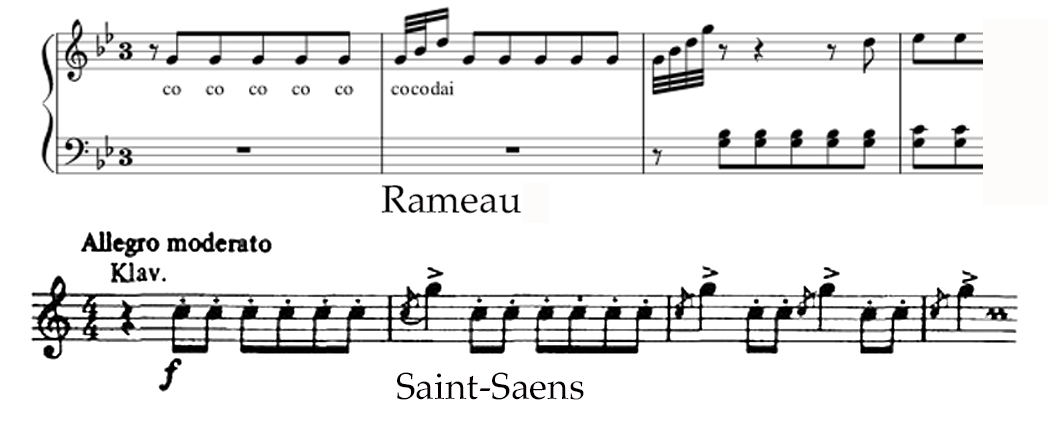
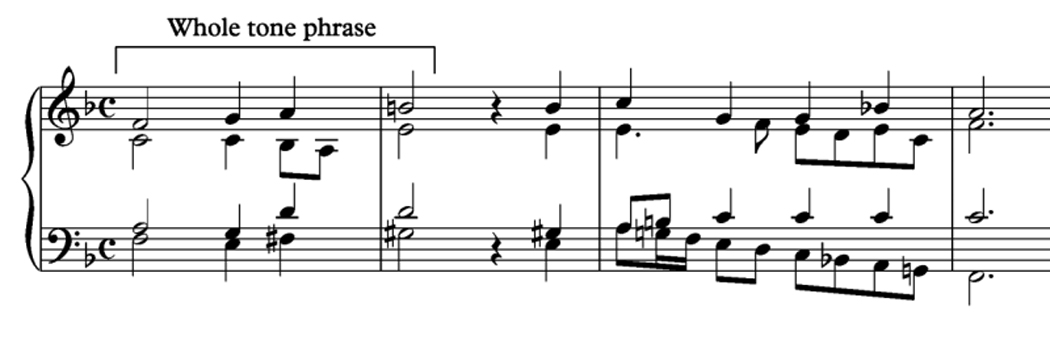
Many of the pieces parody famous music by other composers and popular songs, but I want to pick out, in particular, the second section, Poules et Coqs (“Hens and Roosters”), which gets its main theme from a 1726 piece for harpsichord by Jean-Philippe Rameau, called La Poule (“the Hen”), from his Suite in G from his Nouvelles Suites de Pièces de Clavecin

You can see the similarity, even in these few bars. 

But that set me off on a search for other music about or imitating animals. It’s not just “Old MacDonald” and his “oink, oink, here and an oink, oink there,” but in fact, a long history of musical animals. Some famous, some obscure. 

Of course, such animal imitations go back to prehistory, if we believe the musicologists, who tell us that they often feature in folk songs, from all around the world. “Old MacDonald” is only one of them in English. But there are Chinese songs, Turkish songs, Swahili songs, all with animal noises as part of their lyrics. 

But I was most interested in Western art music, after the invention of musical notation and printing, where the music could be tracked down and maybe even listened to (on YouTube when available). 

The earliest I found was from the middle of the 13th century, a ditty called Sumer is icumin in, with its lyrics “lhude sing cucu,” which have been set to various tunes, most of those I have heard include a melodic line that imitates the falling third of the cuckoo birdcall. 

No doubt because the cuckoo’s call is so distinct and so clearly a falling third, it is about the most frequently used birdsong in classical music, as we will see (followed by the trilling of the nightingale). 

Indeed, the next entry is Par Maintes Foy, by 14th century composer Jean Vaillant, which not only has the singers call out the cuckoo and the nightingale, but also the goldfinch, starling and quail. “Lire, lire, lirelon,” Toowee, toowee, toowee.” 

But it isn’t all birds. In 1505, Josquin de Prez, perhaps the most famous of all early composers, published his El Grillo, which has its singers imitate the sound of a cricket. 

Clement Jannequin (11485-1558) wrote Le Chant des Oiseaux (“Song of the Birds”) with a blackbird singing “Ti-ti, pi-ti;” the nightingale trilling on “Frian, frian;” and the cuckoo again doing his “Cu cu, cu cu.” 

Pierre Passereau (1503-1553) wrote Il est Belle et Bon, in which a wife praises her husband for being so compliant and even feeding the chickens, which she then imitates “co co co co da.” 

In his Book of Ayres with a Triplicitie of Musicke, from 1606, John Bartlett published a madrigal called Of All the Birds That I Do Know, in which words get repeated in a way that clearly evokes the chatter of birds. “Of all the birds that I do know, Philip my sparrow hath no peer … Philip will cry still, ‘yet, yet, yet, yet, yet, yet.’” 

As we leave the vocal Renaissance and enter the more instrumental Baroque age, we begin having fiddles and hautboys imitating various birds and beasts. 

Sonata Representativa (1669) by Heinrich Biber dedicates a movement each to imitations of nightingales, cuckoos, frogs, hens and roosters, quails and cats. Written for violin and continuo, it alternates short interludes with sections depicting animal sounds. After a Preludio, a Nightingale on the violin sings four eighth notes repeated and a long trill over a pedal; a Cuckoo hits repeated fast eighth notes making the usual cuckoo sound; then come Frogs with an appoggiatura of dissonant seconds, sounded together, and resolved upward, over and over to make croak; Hens cluck with upward portamento; quail have a repeated dotted rhythm “dah, da-dah;” a Cat comes mewing portamenti in nursery-rhyme-like tune; then all is rounded off with a march.

Georg Phillip Telemann wrote his Alster Overture, with a fourth movement imitating “Concertizing Frogs and Crows.” There is also a swan in another movement. 

Of course, the most famous and familiar sounds come from Antonio Vivaldi’s Four Seasons. In the opening movement of the four concertos, we hear the squawking of birds. In the second movement, he has dogs barking, and in Summer, the slow movement has the strings buzzing around as a swarm of flies. 

But it wasn’t only the Seasons: In his Flute Concerto, op. 10, no. 3, “Il Gardellino,” he has the flute imitate a goldfinch. 

The keyboard is well represented, too. In addition to Rameau’s La Poule, there is Louis-Claude Daquin’s The Cuckoo and Francois Couperin’s Le Moucheron (“The Gnats”), to say nothing of Domenico Scarlatti’s Sonata No. 30 in E-flat, known as the “Cat Fugue,” with a tune that imitates a cat walking distractedly up a harpsichord keyboard (an early version, I guess, of Zez Confrey’s Kitten on the Keys).

 Then, there’s Georg Friedrich Händel’s Organ Concerto No. 13, known as “The Cuckoo and the Nightingale,” from 1739, with birdsong in the second movement. 

There’s no counting the birds, beasts and bugs in the music of Franz Joseph Haydn. He loved a good joke, and among his 104 symphonies and 68 string quartets (to say nothing of his 41 piano trios, 52 piano sonatas, and 126 baryton trios — not counting the additional 36 baryton works for that obsolete instrument with other pairings) you can find Symphony No. 82, “The Bear;” Symphony No. 83, “The Hen;” String Quartet op. 33, no. 3, “The Bird;” Quartet op. 50, no. 6, “The Frog;” Quartet op. 64, no. 5, “The Lark.” 

And in his magnum opus, The Creation, in Part 2, describing Days 5 and 6 of the biblical creation, he has the orchestra imitate multiple birds and animals, including an eagle, a whale, a stag, lowing cattle, and even a worm.

As we move into the Romantic 19th century, the animals are truly fruitful and multiply, beginning with the slow movement of Beethoven’s Pastoral Symphony, which ends with a cadenza that quote quail, nightingale and cuckoo. 

So, let’s make a quick list — as quick as it can be with such a long zoo parade. There is Schubert’s song, The Trout; Robert Schumann’s Papillon and the Prophet Bird; the braying donkey in Mendelssohn’s Overture to A Midsummer Night’s Dream; Chopin’s Etude, op. 25, no. 9, known as “The Butterfly Etude.” Not forgetting that it was said that Chopin’s “Minute Waltz” was inspired by the composer watching his dog, named Marquis, chasing its tail.

Cats screech over and over in the Cat Duet, attributed to Gioacchino Rossini (jury’s out on the authorship). 

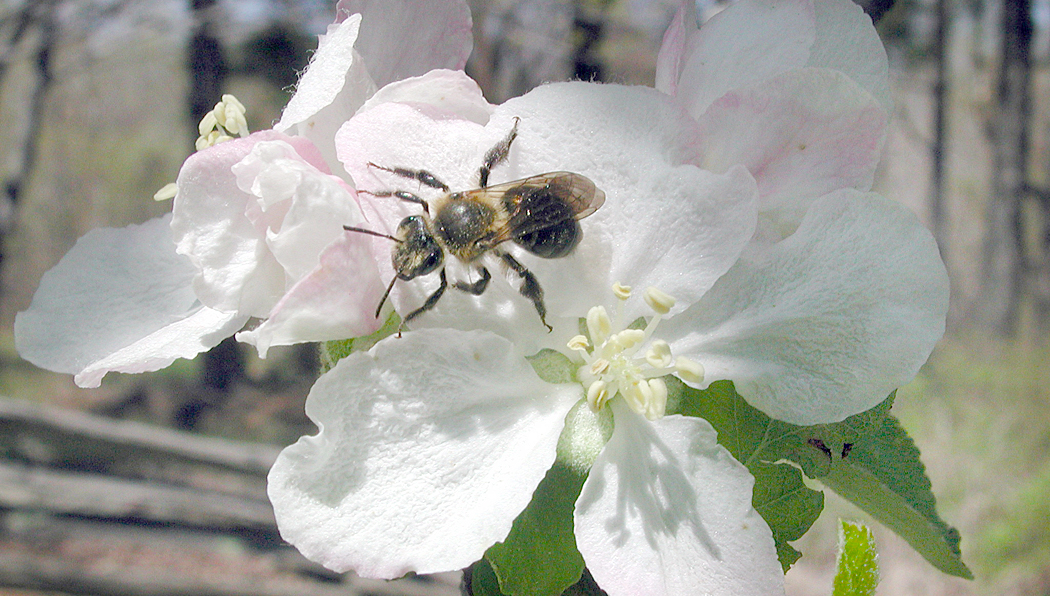
To continue: There are birdsongs in the woodwinds in Bedrich Smetana’s Bohemian Woods and Fields; The Flight of the Bumble Bee, from the opera Tsar Saltan by Rimsky-Korsakov; The Lark by Mikhail Glinka; the Ballad of the Unhatched Chicks from Mussorgsky’s Pictures at an Exhibition; the “Dying Swan” and the “Dance of the Cygnets” from Tchaikovsky’s Swan Lake; and The Swans of Tuonela by Jean Sibelius. 

In Scandanavia also, we have, but Edvard Grieg: The Butterly; Little Bird; The Pig; The Horsefly and the Fly; and Cow Call. And from his contemporary Norwegian composer The Hare and the Fox by Harald Saeverud. 

Serge Rachmaninoff’s Etude Tableau, op. 39, no. 2 for piano is called “The Sea and the Gulls.” Enrique Granados wrote The Maiden and the Nightingale. And Richard Strauss caused some grumpiness and consternation in his staid German audience when, in the middle of his tone poem Don Quixote, he has the orchestra imitate a herd of sheep. But Strauss was no stranger to vulgarity: It is one of his strong points. 

Which brings us up to date with Saint-Saens’ Carnival of the Animals, which gives us, in order: a lion; hens and roosters; wild asses; tortoises, the elephant, kangaroos, fish in an aquarium, personnages a longue oreilles; a cuckoo in the woods; birds in the air (aviary); pianists practicing scales; fossils; the swan; and a finale that brings back many of the menagerie. 

But it’s not over yet. As we move into the 20th century (and the winding-up of the 19th), there are some very beautiful evocations of nature and the animals in it. Such as: Delius’s On Hearing the First Cuckoo in Spring. Or the fourth movement of his North Country Sketches, called “The March of Spring: Woodlands, Meadows and Silent Moors.” 

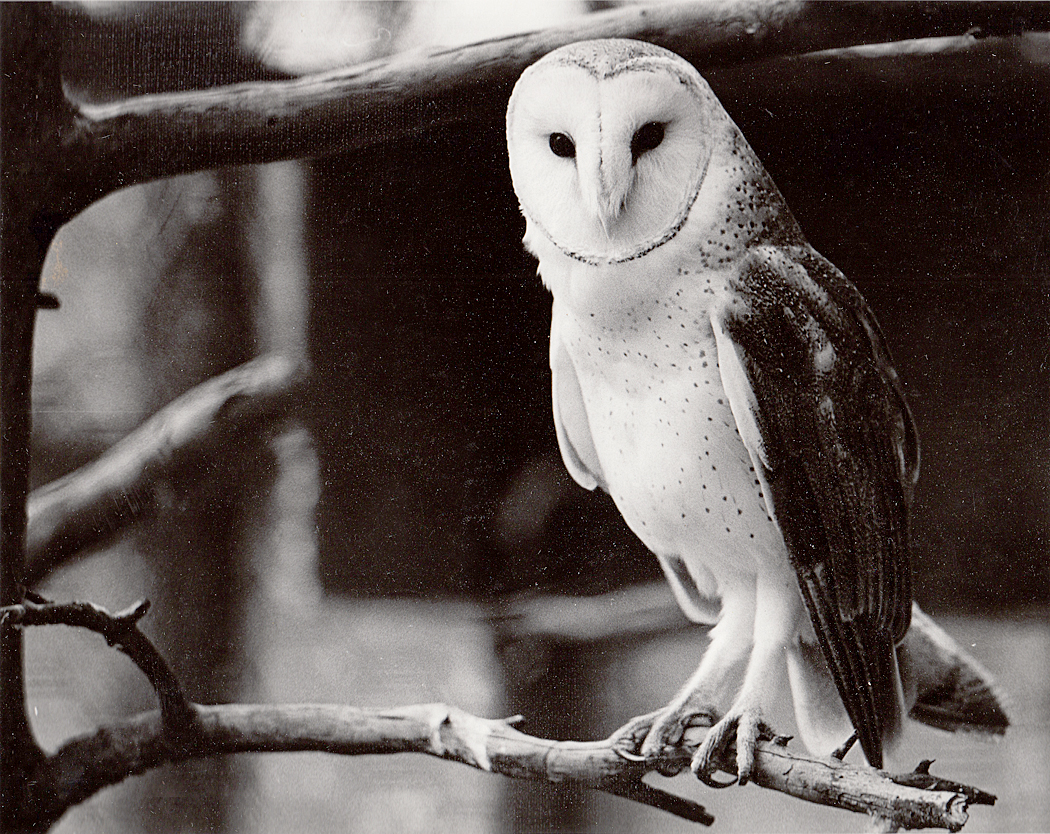
Ralph Vaughn Williams gave us one of the most beautiful violin show-off pieces in his The Lark Ascending. He also put some swarm sounds in the overture to his ballet The Wasps. Edward Elgar wrote for voices a very peculiar piece called Owls: An Epitaph. Pianist Leopold Godowsky gave us, in his Java Suite, a movement called “Chattering Monkeys.” 

Claude Debussy wrote Poissons d’Or (“Goldfish”) in his Images, Book 2, no. 3; and his counter-Impressionist Maurice Ravel wrote Oiseaux Triste (“Sad Birds”) in his Miroirs. Paraguayan guitar virtuoso Agustin Barrios wrote Las Abejas (“The Bees”). 

Ottorino Respighi took music from early composers and reworked and orchestrated it in his Gli Ucelli (“the Birds”), with movements called “The Dove,” “The Hen,” “The Nightingale,” and “The Cuckoo.” But he goes one better in his Pines of Rome, by including an actual sound recording of a real nightingale. (Tape recorded animal sounds return later in the century.)

Whole chapters might be given over to Gustav Mahler, who began his very first symphony with cuckoo calls, and inserted all sorts of animals, birds, and natural sounds into his music, including cow bells in his Sixth Symphony and a donkey braying in his Third, so say nothing of the sleigh bells in the Fourth, fish in his song Saint Anthony of Padua Preaches to the Fishes. They show up again in his Second Symphony. Nature is never far from the surface in Mahler’s music. 

But more than in Mahler, bird song is everywhere in the music of Olivier Messiaen. The man was obsessed with bird sounds. He used them often as the source of his thematic material (I hesitate to call them tunes), not simply transcribed, but often lowered in pitch, slowed down radically, or even played upside down or backwards. 

His 1958 Catalogue d’Oiseaux (“Catalog of Birds”) is a collection of 13 pieces for piano, each of which is based on the call of a different bird, running from the Alpine chough, the Eurasian golden oriole, the blue rock thrush and the tawny owl, through the woodlark, Cetti’s warbler, the common buzzard and the Eurasian curlew. The whole catalog takes just short of three hours to perform. 

Then, there is the Petites Esquisses d’Oiseaux (“Small Sketches of Birds”) from 1985, six short piano pieces, about 2 minutes each, that picture blackbird, skylark, thrush and robin. The L’Abîme d’Oiseaux (“Abyss of Birds”) is one movement from the Quartet for the End of Time. Le Merele Noire (“Blackbird”) is from Le Reveil des Oiseaux (“Dawn Chorus”), La Fauvette des Jardins (“Garden Warbler”) — on and on through his works, the birds are the foundation of his music. A devout Catholic, Messiaen saw birds and their song as emblematic of the beauty of God’s creation. 

Although, to be honest, it is usually hard to hear the music as bird calls, since they are so transformed by the composer. You kind of have to take his word for it. 

It’s hard to keep up with Bela Bartok, also. He wrote many short piano pieces, some of which bear the names of animals. But there’s The Diary of a Fly (Mikrokosmos vol. 6, no. 42), and the famous Bear Dance from his Ten Easy Pieces

But he is best known for the several “Night Music” pieces, from his Out of Doors suite for piano; the slow movement of his Music for Strings, Percussion and Celesta; and the middle of his Piano Concerto No. 3. Wikipedia lists some 20 compositions where Bartok employs his Night Music, which imitates the sounds of a Hungarian summer evening, with insects chirping, birds singing and frogs croaking. The effect can be miraculous. 

(Duke Ellington wrote his own versions of night music in his Queen’s Suite, with movements called “Sunset and the Mockingbird,” “Lightning Bugs and Frogs,” and “Apes and Peacocks.” I mention it here because, really, Ellington is classical music.)

Igor Stravinsky has elephants dancing in his Circus Polka, and nightingales warbling in his Chant du Rossignol. It has been reported that his Rite of Spring contains quotations from Russian folk songs about animals. I’m taking the musicologists’ word for that. 

Sergei Prokofiev has his own menagerie in Peter and the Wolf, and Malcolm Arnold attempted to add animals to Saint-Saens’ zoo with his own Carnival of the Animals, written for the comic Hoffnung Festival in 1960. His additions are: The Giraffe; Sheep; Cows; Mice; Jumbo; and Chiroptera (Bats) — the last of which is a joke, since the musicians “play” so high in frequency that “only bats can hear it.” The audience hears silence until a final tinkling on a bell. 

Several 20th century animal-musics were created as humor or jokes, including The Monk and His Cat from Hermit Songs, op. 29, no. 8, by Samuel Barber; The Cat and the Mouse by Aaron Copland; the Promenade (Walking the Dog), written by George Gershwin for the Fred Astaire film, Shall We Dance, and The Procession of the Cats on Solstice Night by Bohuslav Martinu. 

Then, there’s Ferde Grofe’s On the Trail from the Grand Canyon Suite, with its clopping hooves and braying donkey. 

The Critics

Francis Poulenc took on the grasshopper, bear, lion and roosters for his Les Animaux Modèles, a ballet from 1942 based on the fables of La Fontaine. 

I mentioned earlier Respighi’s recorded nightingales in The Pines of Rome. Alan Hovaness famously used recordings of the humpback and bowhead whales in his And God Created Great Whales. (George Crumb’s Vox Balaenae does not include actual whale songs, but uses electric flute, electric cello and amplified piano to imitate both whale songs and seagulls.)

And in 1972, Finnish composer Einojuhani Rautavaara wrote his Cantus Arcticus, subtitled Concerto for Birds and Orchestra, which uses recorded sounds of birds from northern Finland against a symphony orchestra. 

This list does not exhaust the trove of animal-inspired concert music, but it is what I could dig up without spending two years on a doctoral dissertation. It is a tradition that continues, both in a simple vein, as with Sally Beamish’s Songs from Hafez, which reference the nightingale, the peacock and the hoopoe, and the more avant-garde work, such as Chris Hughes’ piece for cello and bird recording, Slow Motion Blackbird, which repeats the blackbird call for six minutes, slowing down each bar of music 5 percent (without changing pitch) until it is a slow, almost unfollowable adagio. 

Most of this music is easily available, either on commercial recordings or through a YouTube video. Chirp chirp. 

Ouroboros: Infinity

Classical music critic David Hurwitz recently posted a YouTube video on works that “reduce me to a quivering puddle of emotional resonance.” He cited 10 compositions that seem to work, no matter how they are performed (although, they can be ruined by a miserable performance). 

“The crying can be sadness; it can be happiness. Usually for me it’s a confrontation with something which is so beautiful … it just seems to get to the heart of the universe and makes me weep. What can I tell you? It happens.”

He then invited his viewers to submit their own lists of works that bring on the waters. A subsequent video addressed those lists. 

Such lists usually come in round numbers: “Top Ten,” or “The Hundred Best,” etc. But when I made my own list, I realized I could go on for quite some time. 

I begin my list with the sarabande in J.S. Bach’s Suite No. 5 for unaccompanied cello. It is a ridiculously simple composition, barely more than a hundred individual notes, almost all unrelieved slow eighth-notes, but notes that plumb the deepest depths of innigkeit — that profound sense of inner subjective experience, of aloneness from the world, contemplation of things beyond words. 

The tears come, not from sadness, but from a sense of being left to your own thoughts in the darkness, the knowledge that, no matter how much you love or engage, there is always an awareness of separation. An aloneness we share with everyone else on the planet. 

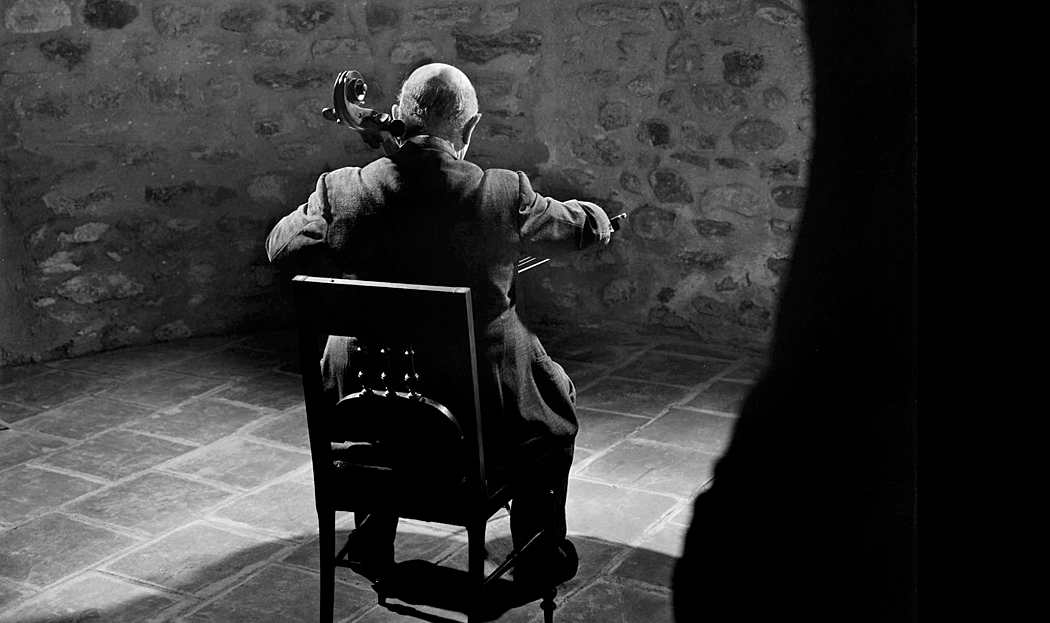
I’ve heard the sarabande, and the suite, countless times, both live and on recordings. The one that always does me in is the version played by Pablo Casals in 1939. Casals was the person most responsible for the resurrection of the score, after he found a forgotten copy in a used book store in 1889, when he was 13 years old. He waited until he was 60 before recording them. There is some fuzz and hiss to the old 78rpm recordings, but the depth of Casal’s playing speaks through it all. 

The sarabande has struck many as special, even among the whole of Bach’s works. Cellist Paul Tortelier called it an “extension of silence.” Yo-Yo Ma played it on Sept. 11, 2002, at the site of the World Trade Center, while the names of the dead were spoken, on the first anniversary of the attack. 

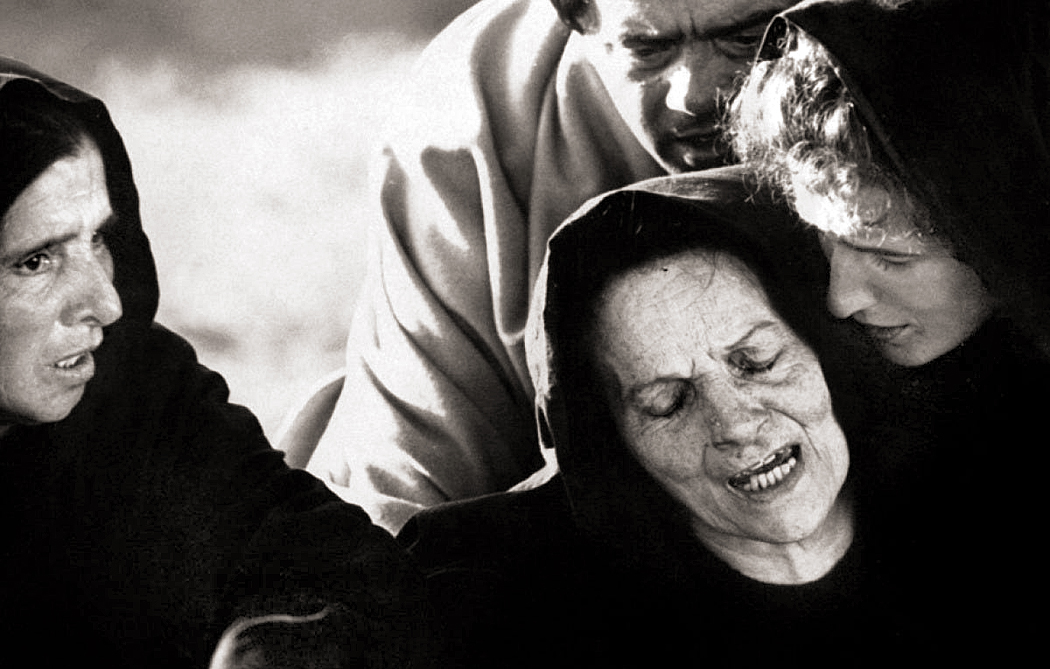
Second on my list is the final chorus of Bach’s Passion According to St. Matthew, Wir setzen uns mit Tränen nieder, which expresses grief over the death of Jesus on the cross. That chorus transcends religious doctrine so that I, as a non-believer, can internalize the sense of loss, of death, and grieve along with them. “We sit down in tears,” they sing, with a section that also asks for “peace, sweet peace.” 

I first head the chorus as film-score music for Pier Paolo Pasolini’s Neorealist retelling of The Gospel According to St. Matthew, a dour black-and-white version, almost word for word from the Bible (and how peculiar that the most successful Christian film should come from a homosexual Communist atheist, but with reverence for the humanity of the story; no Cecil B. DeMille hokum and claptrap for this one). 

Grieving is one cause for the waterworks in listeners. How can you not feel the intense sadness of Dido as she faces her own death in Henry Purcell’s Dido and Aeneas, in the section known as Dido’s Lament, “When I am Laid to Rest.” It is a ground bass (repeated bass line), over which she sings “Remember me … remember me.” It is heartbreaking. 

Alban Berg used his entire Violin Concerto to express mourning over the death of Manon Gropius, daughter of Walter Gropius and Alma Mahler, who died of polio in 1935 at the age of 18. Berg dedicated his concerto “To the memory of an angel.” 

It begins quietly on the violin’s open strings, builds to an angry climax, and reaches a point of cosmic acceptance with a quote of J.S. Bach’s chorale, “Es ist Genug” (“It is enough.”) 

After all the turbulence of the anger, the simple hymn, albeit harmonized in a very 20th-century way, seems like the peace of the angels, a calm in the universe. I, for one, cannot listen to the concerto without tears streaming down my cheeks. 

Although it is written in his idiosyncratic 12-tone style, the Berg Violin Concerto is never simply noise: Even those who hate modern serial music love this concerto. It is music, not theory. 

These several pieces work because, while they are expressing their grief over a specific death, they also subsume the rest of us. And there is music which expresses not individual grief, but Weltschmerz — “the sorrows of the world” — that sense that all lives have an end, that life is suffering, that “no one gets out alive.” 

The work that seems to hit everyone in the gut with this is Samuel Barber’s Adagio for Strings. Originally the slow movement of a string quartet, Barber orchestrated it to create the version known best. 

The music is simple, barely more complex than a Gregorian chant, but builds slowly to an overwhelming climax, then silence, then a short peroration of calmness and repose. Never a dry eye. 

The only problem with the Adagio for Strings is that it has become so popular, played at the funerals of Franklin Roosevelt, John F. Kennedy, Princess Grace of Monaco, Albert Einstein, and Barber himself. It has become de rigeur for public tragedies such as Sept. 11, The Charlie Hebdo attack, the 2016 Brussels bombing and the Orlando nightclub shooting, and the 2017 Manchester Arena bombing, and in 2020 for the victims of the Coronavirus. To say nothing of how many movies it provides a trigger for emotions, as in Platoon, The Elephant Man and Lorenzo’s Oil. So that, for some, it can no longer be heard innocently, but only with irony, as in its appearance in Seinfeld, The Simpsons, and South Park

But so far, the Adagio has proved bulletproof. It always works. Emotions pour out. The music is powerful.

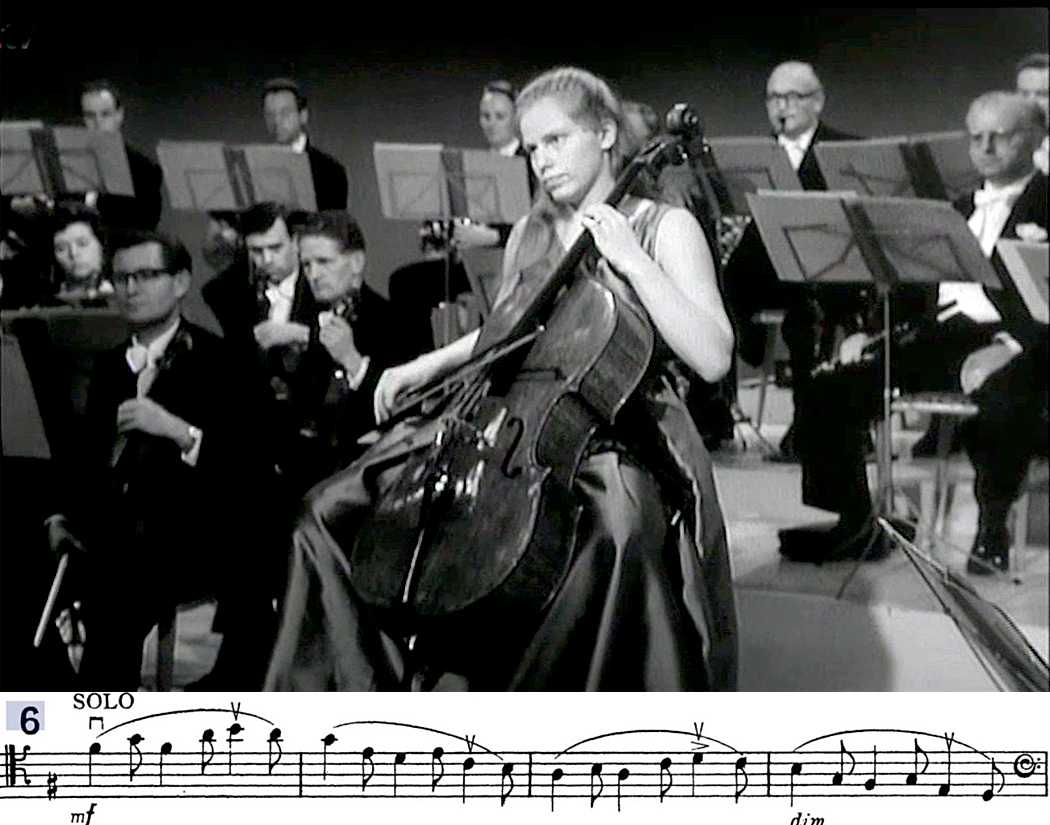
And talk about Weltschmerz: Another concerto brings out the emotions almost instantly, and that is Elgar’s Cello Concerto. Unlike most classical music concertos, it opens with the solo cello playing widely spaced E-minor chords, ringing sad and hollow, followed by a short cadenza before the orchestra ever plays a note. 

Elgar wrote it in 1919 in distress over the death and destruction of the First World War. It is a musical evocation of the famous lament of British Foreign Secretary Sir Edward Grey in 1914: “The lamps are going out all over Europe and we shall not see them lit again in our lifetime.” It is hard, with our distance from the events, and after the Second World War and the horrors of the Cold War, to fathom what a psychological wrench that first cataclysm was for the world, and how much it was clear that everything anyone knew had changed utterly and forever. So much was lost. Elgar’s concerto puts that sentiment into music. 

That sense of loss is personal as well as civic, and you sense it in the greatest of Richard Strauss’ Four Last Songs, “Im Abendrot.” It is a song for soprano and orchestra that conveys such a sense of longing and loss that even without the words, the orchestra alone can bring out the tears. 

In it an old couple stands on a hill looking at a sunset, a lark flies off into the twilight and the words by German poet Joseph von Eichendorff, say, “Wie sind wir wandermüde — Is dies etwa der Tod?” “How weary we are of wandering — Is this perhaps death?” 

There is something of the same feeling (and similar orchestral lushness) in Gustav Mahler’s Der Abschied, the final song of the cycle, Das Lied von der Erde, “The Song of the Earth.” The half-hour song tells of the beauty and permanence of nature and in the brevity of the human life. Even for a Mahler nut like me, who loves pretty much everything the man put on paper, Der Abschied is the single most beautiful and heartbreaking thing that composer ever wrote. 

O Schönheit! O ewigen Liebens – Lebens – trunk’ne Welt!” “O beauty! O eternal loving-and-life-drunk world!” And the voice finally shrinks down to near-silence repeating the word “Ewig,” “forever…” over and over until it and the orchestra dissolve in emptiness. 

Mahler himself asked whether the music should even be played. “Won’t people go home and shoot themselves?” he asked. The thing is that the highest art may tell the most dismal tale, yet the beauty of the telling is life-enriching and leaves us weeping but full of joy. 

Mahler gave us also a song of such inwardness and reflection in the Rückert Lieder, “Ich bin der Welt abhanden gekommen,” a setting of a poem by Friedrich Ruckert. “I am become lost to the world, with which I used to waste so much time. It has for known nothing of me for so long, it may well believe me dead.” The slow tread of the song, with its repeated incomplete upward motive, leaves you floating between earth and sky. 

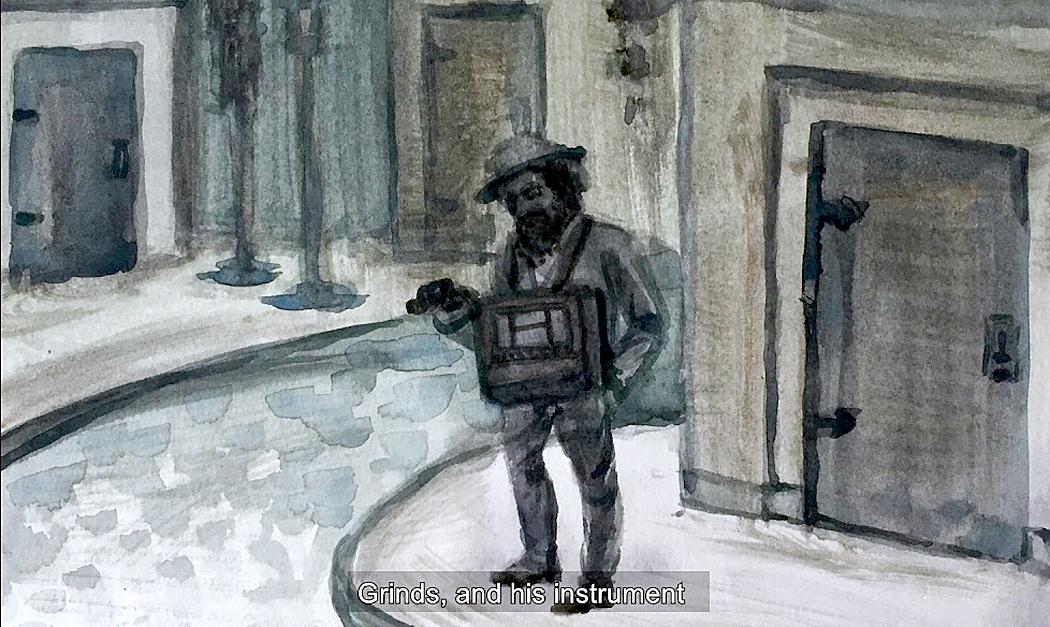
That Mahler song may not be the deepest expression of giving up on life. That honor has to fall to the final song in Franz Schubert’s song cycle Winterreise, “Winter Journey.” The cycle of 24 songs by German poet Wilhelm Müller collectively tell the story of a romantic young man spurned in love, who travels in suffering through a winter landscape, telling of loneliness, heartsickness, futility, fate, and finally, in Die Leiermann, “The hurdy-gurdy man,” finds an image of utter hopelessness. 

“Barefoot on the ice, he sways to and fro, and his little collection plate remains empty. No one wants to listen to him; no one looks at him. … He plays and his hurdy-gurdy never stops.” The piano accompaniment repeats the same figure over and over, with no sense of forward motion, and the singer sings his words over and over with little variation. This is psychological depression at its peak expression. “Strange old man, shall I go with you?” The implication is that the Leiermann is simply Death itself. 

 But I may be giving the wrong impression. While music of woe may bring on the deepest emotion, so, too, can music of joy and beauty. There is a reason people cry at weddings. When any emotion, from grief to ecstasy, fills the interior space, it can swell and overflow, and the overflow valves in the human being are the eyes. The emotional pressure in the body swells until it cannot be held in check. Tears of joy, tears in the face of beauty. 

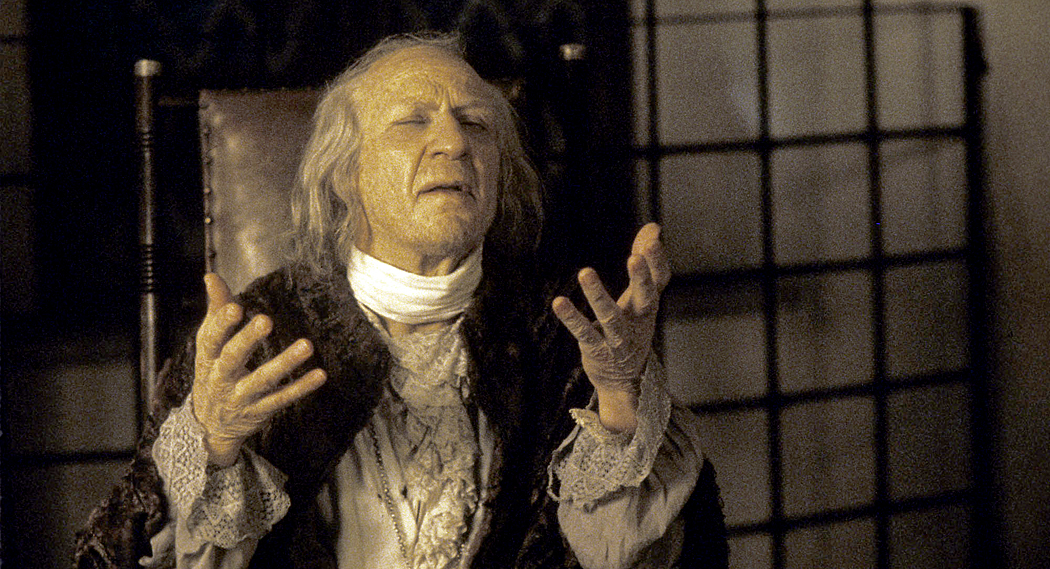
I remember the words that playwright Peter Shaffer put in the mouth of Antonio Salieri in his play, Amadeus. Salieri overheard the adagio of Mozart’s Gran Partita for winds. 

“Extraordinary!,” he says. “On the page it looked nothing! The beginning simple, almost comic. Just a pulse. Bassoons, basset horns — like a rusty squeezebox. And then, suddenly, high above it, an oboe. A single note, hanging there, unwavering. Until a clarinet took it over, sweetened it into a phrase of such delight! This was no composition by a performing monkey! This was a music I had never heard. Filled with such longing, such unfulfillable longing. It seemed to me that I was hearing the voice of God.”

It is an astonishing thing about beauty, real beauty, that it can sit beside the horrors of the world, the miseries, the deaths, the wars, the hatreds and injustices, and make you pause, fill you with emotions and remind you that no matter how bad things are, you still cling to life. The beauty can not excuse the suffering, but in some inexplainable way can somehow balance it. Beauty can stop time and fill you up to overflowing. 

Shostakovich wrote his 13th symphony, setting the Yevtushenko poem, Babi Yar, about the 1941 massacre of more than 30,000 Jews by Nazis at Babi Yar, near Kiev. It is a powerful poem denouncing anti-Semitism and the horrors of war and hatred (and a warning about Soviet anti-Semitism). The following movements of this choral symphony take on bitter humor as antidote to bureaucracy and tyranny; the hunger of food shortage; the use of fear by totalitarians; and finally, the difference between amoral careerism and the need for artists to express truth. 

This finale is introduced by a flute duet of such sweet delight, such soothing calmness, that although it cannot gainsay the horrors, it somehow balances them. The music itself, while beautiful, is nothing special in itself, but coming as it does at the end of this explosion of the miseries of the world (and especially Stalin’s Soviet Union), is such an unexpected release, it seems a miracle, and with the pressure taken off, at least momentarily, it can only be felt and expressed by its audience in the immediate explosion of waterworks. 

Now, all I have to hear is the flute bit, and I instantly recall all that went before, and I weep uncontrollably. 

That sense of beauty as counterbalance is the overwhelming sense you can get from the slow movement of Beethoven’s Ninth Symphony, which gives us 15 to 20 minutes (depending on performance) of stillness in the universe, a slow pulse that seems more cosmic than corporeal. It comes after a terrifying first movement and a relentless scherzo. The world then, after flowing through turbulent rapids, empties out into the calm ocean of the adagio. The release is overwhelming. 

It is also the slow motion of the finale of Mahler’s Third Symphony, which, after earlier movements titled “What the flowers in the meadow tell me,” “What the animals in the forest tell me,” What Man tells me,” and “What the angels tell me,” ends his symphony with a half-hour movement, “What Love tells me.” 

It is marked “Langsam — Ruhevoll — Empfunden,” (Slowly — Peacefully — Deeply felt,” and moves at a slow tread, first in the strings and building, a half-hour later, with trombones and brass and a final chord that can last to eternity. Conductor Bruno Walter, who knew Mahler and conducted the premieres of both his Ninth Symphony and Das Lied von der Erde, said of this movement, “Words are stilled — for what language can utter heavenly love more powerfully and forcefully than music itself? The Adagio, with its broad, solemn melodic line, is, as a whole — and despite passages of burning pain — eloquent of comfort and grace.”

The Swiss critic William Ritter said it was, ”Perhaps the greatest Adagio written since Beethoven.” Another anonymous critic wrote about the Adagio: “It rises to heights which situate this movement among the most sublime in all symphonic literature.” At its premier in 1902, Mahler was called back to the podium 12 times, and the local newspaper reported that “the thunderous ovation lasted no less than 15 minutes.”

That sense of time standing still reaches a much quieter apotheosis in the slow movement of Maurice Ravel’s Piano Concerto in G. With subtle cross-rhythms and a melody that seldom rises above a mezzo-piano, it is entirely hypnotic. The beauty of it brings me to tears almost even just thinking of it. 

And there is the sublime beauty of Mozart’s Ave Verum Corpus, a choral work that lasts a mere four minutes in just 46 bars of sighing chromaticism and sotto voce music, and, as one critic put it, is “capable of leaving the listener just as moved as might an entire five-day long cycle of Wagner’s Ring.” 

Some of these may work their magic only on my ears, some seem to work for everyone. And there are times when the listener may be too tired, to caught up in other things, or a bad meal or just in a sour mood, when such music can pass by almost unnoticed. And there are times in a concert when I am so tuned in, that almost any music, played well, may bring on the waterworks. 

But for me, this music almost never fails. The music triggers some empathetic response, and the emotions shiver to life. I am human; these are human feelings; these emotions are what make us human. 

Music can do that better, and more immediately, than any other art. 

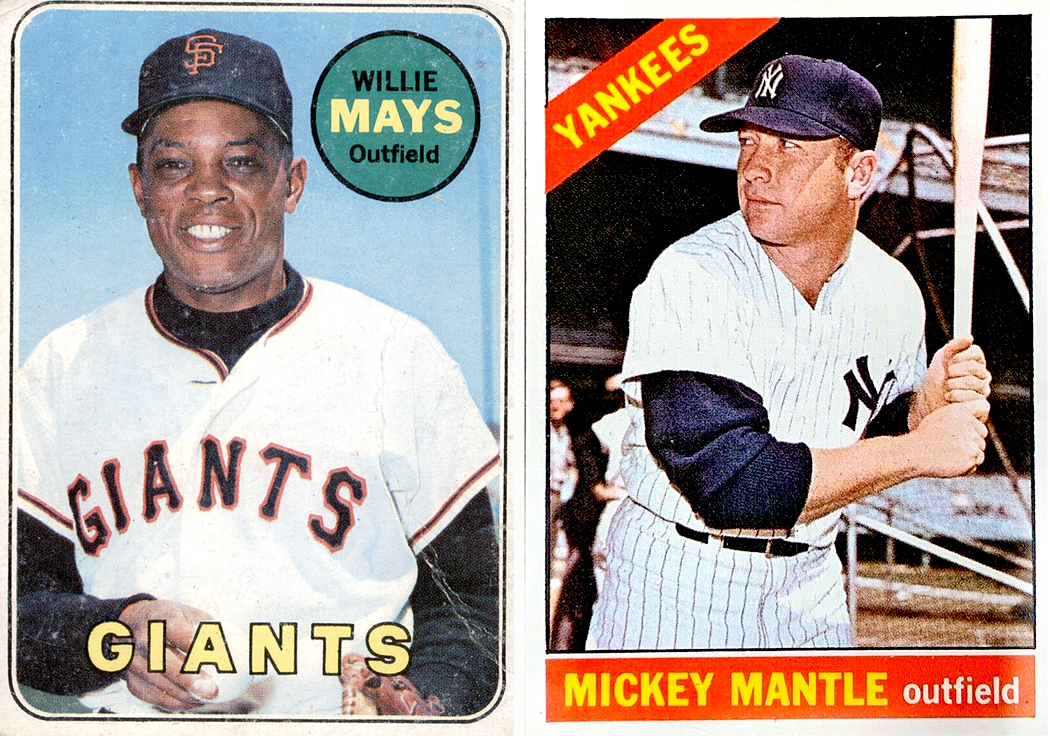
When I was a boy, one thing divided us into tribes: Was Willie Mays the greatest baseball player, or was Mickey Mantle? (This was before Mantle’s legs gave out). 

And of course, this was a silly argument, first because there were many other great ballplayers at the time, but mostly because choosing the “greatest” anything is a meaningless endeavor. (Just in the 1950s, we’re counting Stan Musial, Duke Snider, Hank Aaron, Ernie Banks, Yogi Berra, Ted Williams, Gil Hodges, Jackie Robinson, Ken Boyer.) 

But for us kids on the sandlot, it was a clear choice between Mays and Mantle. Was Mays the better hitter? Was Mantle as good a fielder? And are we comparing each player at the height of his abilities? Are we comparing lifetime batting averages, number of home runs, percentage of votes to enter the Hall of Fame? In the era of sabermetrics, there are so many obscure statistics to weigh, it all becomes bogged down and pointless. (Who is best at hitting with a 2-and-1 count, on an overcast day with men on second and third — it can get quite specific, i.e. quite anal). 

By the way, I was a Mays guy. Perhaps I was swayed by the fact that my father hated the Yankees. He was National League all the way. 

It’s all really quite silly. Above a certain level, players just count as exceptional and comparisons are meaningless. I mean, who was the greatest pitcher? Sandy Koufax? Bob Gibson? Nolan Ryan? Greg Maddux? They were all so different, with different strengths, and playing for widely different teams and different eras. (I remember when Roger Craig lost 20 games for the NY Mets, but was still considered the team’s pitching ace — how can you measure his quality when playing for one of the worst teams ever? How many games could Gibson have won playing for the 1962 Mets? They went 40-120.)

Ranking is a game, but one that is ultimately meaningless. Let’s face it, the most mediocre ballplayer in the major leagues is still hugely talented. We’re talking gradients of excellence. 

All this comes to mind when I remember how classical music listeners talk similar nonsense over the “greatest” conductor or orchestra, or recording of the Mahler Second. 

I was guilty of such silliness earlier in my life. When I was in high school, there was no question in my mind that Arturo Toscanini was the greatest. I had all his Beethoven symphonies on LP. Later, having listened to a wider range of recordings, it was clear that Toscanini had his limitations. And not the least of these were the lousy quality of his recordings — they were hardly hi-fi. 

Open any Gramophone book of recording ratings and you will find a “top ten” and the “best” recording of any particular work. Top 10 lists are immensely popular as clickbait on YouTube. Critics argue endlessly about why this Mahler Ninth is the greatest and that one is just awful. 

But the truth is, that pretty much any recording you buy will give you the music you want, in a performance that is generally very good. Even a middling performance of Beethoven’s Fifth will give you 80 or 90 percent of what’s in the music. 

The arguing usually comes over trivial details that the critic considers essential: Was the tam-tam audible in the finale? Was the oboe in the second movement a bit squeaky? Was the tempo in the finale too fast, or too slow? We all have these benchmarks that define what we demand from a performance of a particular piece. But should that disqualify an entire performance? 

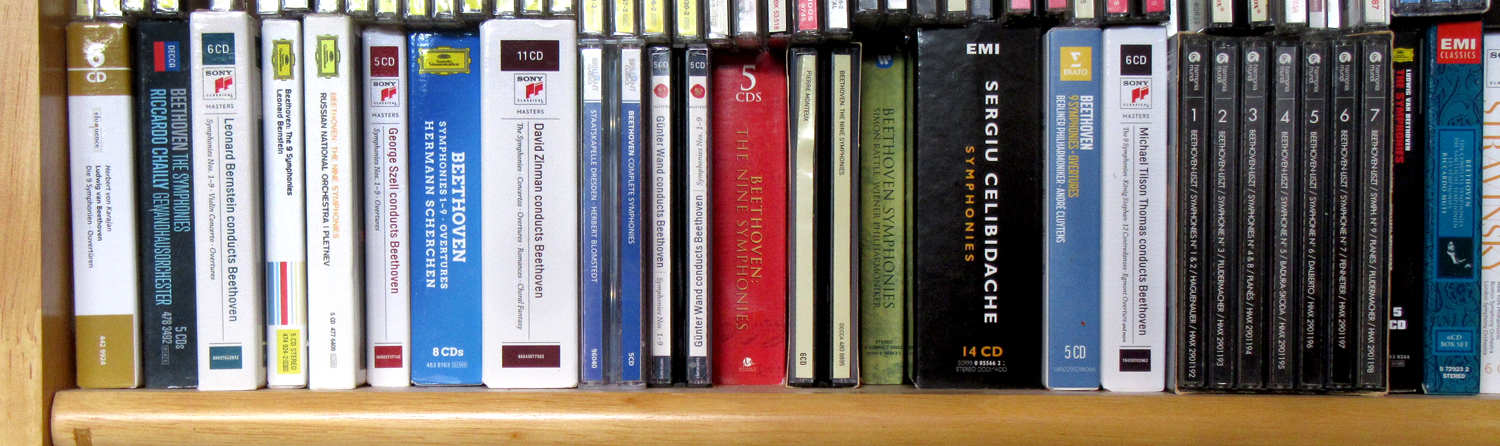
I have to fess up to a level of insanity here — I have 30 complete Beethoven symphony cycles (I used to own more, but have since divested of some). It was a decades-long quest for the ultimate set, the perfect lineup of Beethoven symphonies. Which is best? 

Well, now, I see them lined up on the shelf, and I realize they are all fine. They all deliver the goods. They are quite different, from Karajan’s smooth unctuousness to Hermann Scherchen’s outright weirdness. Toscanini (which I still own, now on CD) is quick, abrupt and rhythmic; Bruno Walter is gentle, humane, and warm. And so, at different times, in different moods, I will choose one over the other for the moment. But they are all perfectly good. Why rank them? 

Yes, there are some outliers, badly played or outrageously conducted — Listen to Sergiu Celibidache doing the Eroica and you wonder if you are playing the disc at the wrong speed — it’s the speed a novice orchestra might play for an initial sight reading. Glacial in a way that is just nuts. Or Roger Norrington, who conducts as if his bladder is bursting and he needs to get it all over with fast. (Norrington races through the adagio of Beethoven’s Ninth in 10 minutes; Bernstein in Berlin takes 20 minutes for the same music. You pays your money and you takes your choice.)

But the mainstream recordings, from George Szell to Andre Cluytens to Pierre Monteux to Joseph Krips, all give perfectly fine, reputable, performances, whether Beethoven, Brahms, Sibelius, Stravinsky or Shostakovich. They are excellent musicians with excellent orchestras (some, such as Maurice Abravenel, had less than excellent orchestras, but made them play on a level you can hardly credit). 

So, we search endlessly for that one performance that will send us into paroxysms of ecstasy, that single transcendental recording, and each CD we buy we hope will be that one. Wilhelm Furtwängler recorded Beethoven’s Fifth 13 times from 1929 to 1954 (most of them miserably low-fi, even amateur recordings), and the Furtwängler cult will search endlessly for a 14th, hoping it will finally fulfill their hunger for the ultimate, the one after which they will gladly give up life with a satisfied smile on their faces. 

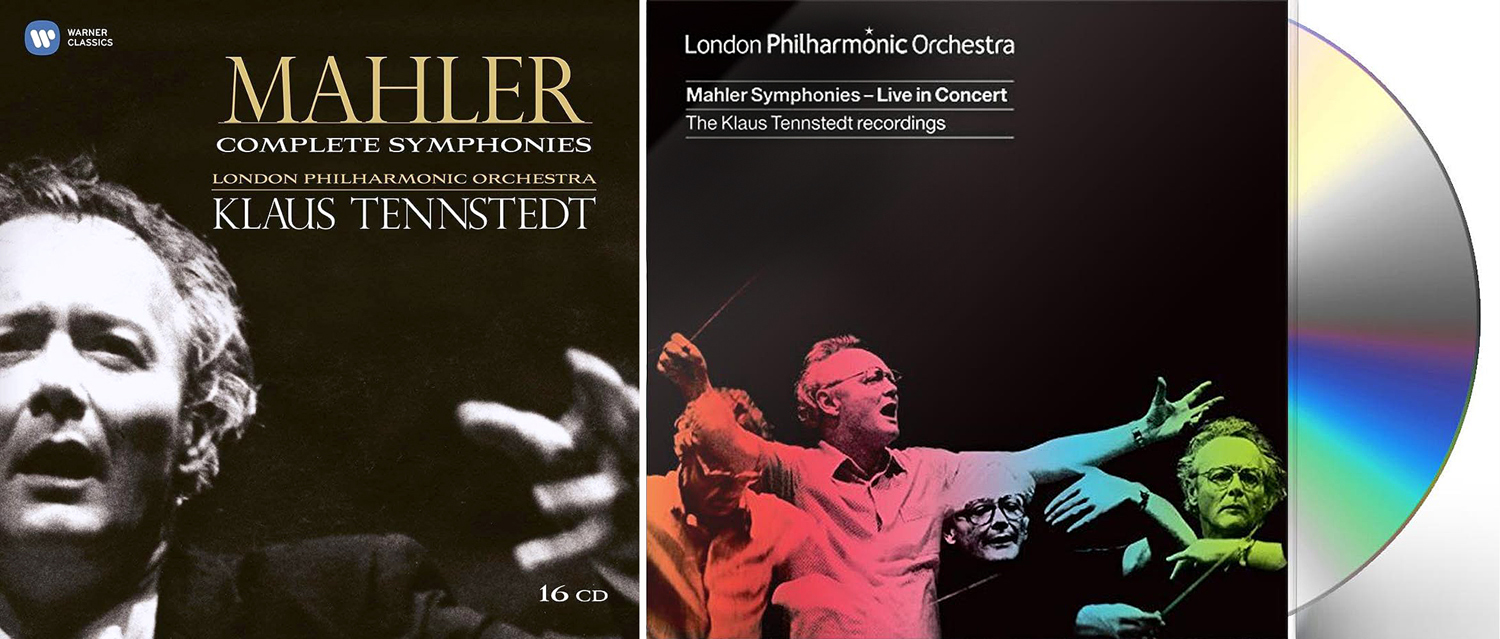
It is widely opined that Klaus Tennstedt’s live 1991 recording of Mahler’s Sixth Symphony is more emotional, more tragic, more vital than his earlier 1983 studio recording with the London Philharmonic. And that’s probably true. But if you only heard the earlier version, you would not be aware of anything missing or lesser in urgency or power. 

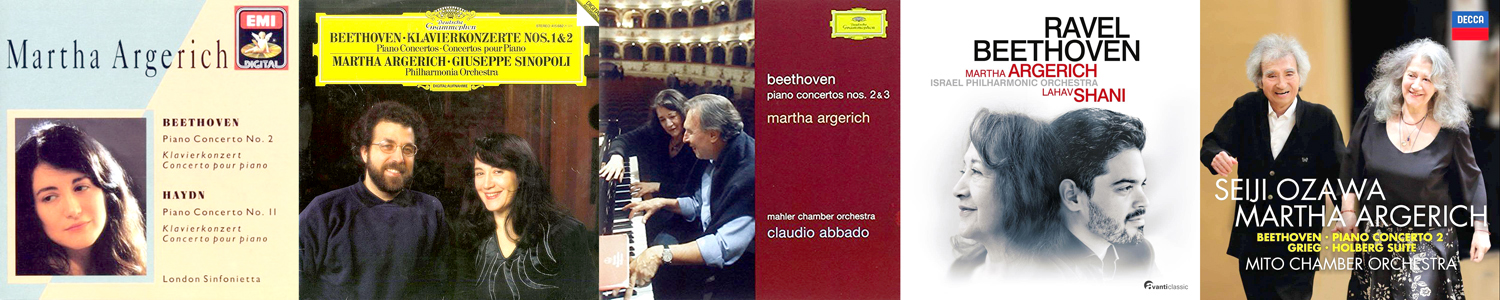
Martha Argerich has a habit of recording the same few concertos over and over again (how many Beethoven second piano concertos do we need from her? She has recorded it at least 13 times, and I may have missed a few.) And some people swear one or another is “the best,” but they are all excellent, and whether you prefer her with Abbado or Dutoit or Sinopoli is nothing more than a matter or taste. If you own one and you like it, there is no reason to buy the others, unless you are part of the Argerich cult, and if so, there’s nothing we can do for you. (Classical music does tend to generate cults: Maria Callas, Celibidache, Arturo Michelangeli, Jascha Horenstein, Toscanini, and, above all, Furtwängler. Cult members will search world over for the one missing 1949 partial recording from a radio broadcast from Rio de Janeiro. The heart goes pitter-pat.)

(Just for the record, Argerich has recorded once with herself conducting the London Sinfonietta; and also with Vladimir Ashkenazy; Gabor Takacs-Nacy; Gabriel Chmura; Lorin Maazel, Charles Dutoit; Neeme Jarvi; Giuseppe Sinopoli; Claudio Abbado; Riccardo Chailly; Seiji Ozawa; Lahav Shani; and again with Takacs-Nagy Please make her stop. She’s wonderful, but she needs to branch out.)

Yes, you will undoubtedly develop favorites, conductors who play more to your tastes. I know I have mine. But I cannot in honesty say that the ones I like best are demonstrably better than the ones I have less affection for. Taste is a different issue from quality. Basically, with a few unfortunate exceptions, if a performance was good enough to justify the expense of being recorded, produced, distributed and promoted, it will be perfectly fine. You don’t need 30 complete sets of Beethoven symphonies. 

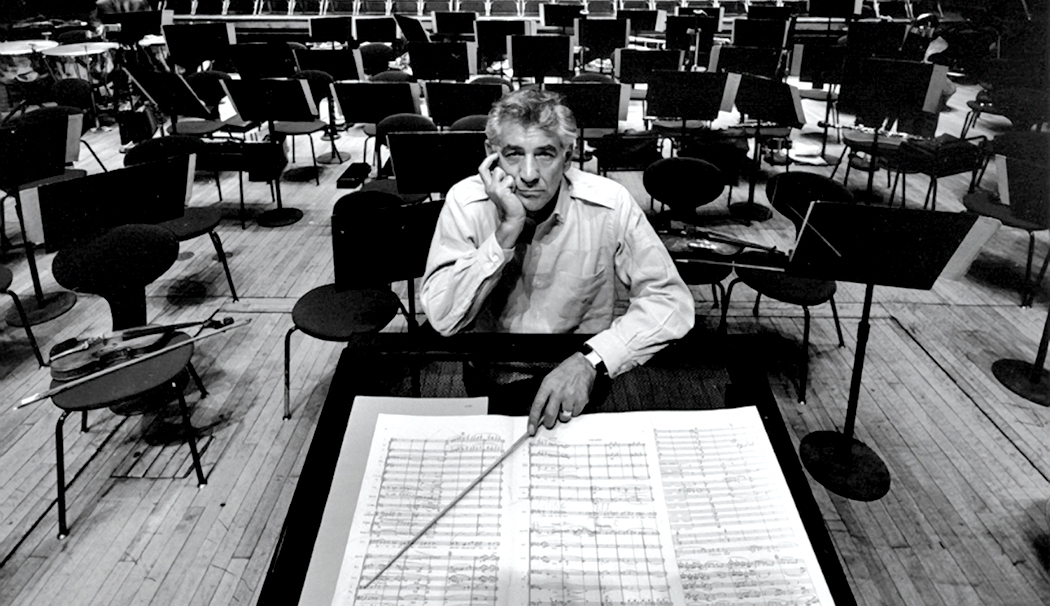
So, one should not worry about what performance, what orchestra or conductor you get. Chances are, it will give you what you need. Bernstein or Walter; Mays or Mantle — they were each great players and picking one over the other is just silly.

Until relatively recently, 20th century concert music was a tough sell. It had the reputation of being dissonant, noisy, difficult, and unpleasant. It was a century that began with Arnold Schoenberg dispensing with harmony and Igor Stravinsky upending rhythm, followed by a World War that knocked the complaisance out of any rational being and told us that the coming century was going to be anything but calm and easy. 

A number of composers felt that music needed to reflect the mood of the angst-ridden age. 

But even Schoenberg admitted “There is still plenty of music left to be written in C-major.” He didn’t believe his 12-tone revolution would destroy all tunes to come, but was simply a logical conclusion to music history from Bach through Wagner, from tonality through chromaticism to atonality. And we shouldn’t blame poor Arnold for all the dreary ruckus that followed: His own music is quite emotional and beautiful, even if it often requires some serious commitment from his listeners. 

He was right about one thing certainly: There was plenty of music written in C-major, throughout the century. And F-major and D-minor. In fact, most of the music written in that century was based on familiar scales, albeit with plenty of playing around and trying new ways to use them. 

 It’s just that the music-industrial complex, so to speak, was hijacked around mid-century by a clutch of academically-minded composers — the “Darmstadt Mafia” — insisting that serialism was the only music to take seriously, and that the more unlistenable it was, the greater it must therefore be. (Some of these composers did write interesting music in that style — it wasn’t a complete loss — but they looked down their noses at anything that might stink of a tune.) 

And so, contemporary music turned its back on the concert audiences and those composers wrote only for other composers of their ilk, and audiences shrunk from any concert program that insisted they listen to the stuff. Modern music acquired a very bad reputation. 

But I find that after 60 years of concert-going and music absorption, I listen to 20th century music more than that of any other era. It is music that speaks directly to me. Oh, I listen to bunches of Haydn, Mozart, Beethoven, Brahms and Tchaikovsky, but the plurality of my music listening edges to the century in which I grew up. 

So, I wanted to create a list of representative compositions from the century in question and present them as a course in great music that anyone can listen to and enjoy. 

I went through my collection of thousands of CDs and chose 30 pieces to offer. I listened to each one, in order, to refresh my memory — and to flat out enjoy them all over again. 

The roughly chronological list begins with a surprising entry. Most people think of Ives’ music (if they think of it at all) as noisy, crashing, impish tomfoolery. But Ives was a well-trained musician, with a degree from Yale University. His Symphony No. 2 is pretty tame, except for his borrowing of familiar popular tunes, and a raspberry at the end. 

Here is my list:

1900-1920

Charles Ives (1874-1954) — Symphony No. 2 (1902; premiered in 1951) (42 minutes long). Performance listened to: Eugene Ormandy, Philadelphia Orchestra, recorded 1973.

Ives studied under the respectable, if stuffy Yale professor Horatio Parker, and after graduating in 1898, began working on his second symphony (the first was his senior thesis composition for Parker) and included bits from Camptown Races, Turkey in the Straw and Columbia the Gem of the Ocean run through a kitchen blender. He finished Symphony No. 2 in 1902, although, with Ives, he was never completely finished and continued tinkering until his death in 1952. The symphony wasn’t premiered until Leonard Bernstein and the New York Philharmonic played it in a radio performance in 1951. The house-bound but still cantankerous Ives heard it on his radio in Connecticut and his response was that he spit. 

I listened to Ormandy’s version from 1973. The recordings listed here are not my choices as “best” — although they are all good — but merely the ones I had to hand when I started this project. 

Frederick Delius (1862-1934) — On Hearing the First Cuckoo of Spring (1912) (7 minutes long). Performance: Thomas Beecham and Royal Philharmonic, recorded 1958.

Delius’ score instructs, “With easy flowing movement,” and the quiet, peaceful evocation of the countryside (presumably English) and its birdcalls, it is a calming balm for a tussled soul. Originally, it was one of Two Pieces for Small Orchestra, the other half being Summer Night on the River. Beecham championed the composer’s music and his performances of the music are definitive.

Manuel de Falla (1876-1946) — Nights in the Gardens of Spain (1916) (21 minutes long). Performance: Arthur Rubinstein, piano, Ormandy, Philadelphia Orch., recorded 1969.

Falla was an Andalusian composer and the quasi-Impressionist Nights in the Gardens of Spain functions as a kind of piano concerto, with three movements, each describing a different Andalusian garden. Rubinstein heard it first soon after its premiere in 1916 and performed it regularly after that.   

Serge Prokofiev (1891-1953) — Classical Symphony (1918) (13 minutes long) Performance: Ormandy, Philadelphia Orchestra, recorded 1961.

Prokofiev’s Symphony No. 1 is the Sara Lee of symphonies: No one doesn’t love it. It is a jaunty, energetic gloss on the Classical-era symphonies of Haydn, seen through the “wrong-note Romanticism” of the composer’s style.  

Gustav Holst (1874-1934) — The Planets (1918) (50 minutes long)

 Performance: Ormandy, Philadelphia, recorded 1975.

Marketed as “space-age music,” the intent of Holst’s seven-movement suite is astrological, not astronomical, and each movement is a musical description of a psychological type. It has become enormously popular, and it has been recorded more than 80 times, first in 1926 with the composer conducting.  

Igor Stravinsky (1882-1971) — Pulcinella (1920) (39 minutes long) Performance: Claudio Abbado, London Symphony Orchestra, recorded 1979.

Stravinsky took some old compositions by 18th century composers and reworked them into bright, colorful Stravinskian cogs in what Leonard Bernstein once called “Uncle Igor’s Asymmetry Machine,” giving them new life as a ballet score, complete with voices. 

1920s

Ralph Vaughan Williams (1872-1958) — The Lark Ascending (1921) (16 minutes long) Performance: Zina Schiff, violin, Dalia Atlas, Israel Philharmonic, recorded 1989.

Poet George Meredith wrote of the lark in his poem from 1881, “He rises and begins to round, He drops the silver chain of sound…” and Vaughan Williams gives us the violin and orchestra version, with the British pastoral, And whose primary intent seems to be the creation of simple beauty.

Darius Milhaud (1892-1974) — La Création du Monde (1923) (17 minutes long) Performance: Simon Rattle, London Sinfonietta, recorded 1986.

European composers began hearing jazz and they loved it. Milhaud even moved to Harlem for a while, to soak it all up. One of the best translations of jazz to the classical idiom is his Création du Monde, with its resonant  saxophone solo at the beginning. 

Arthur Honegger (1892-1955) — Pacific 231 (1923) (6 minutes long) Performance: Charles Dutoit, Bavarian Radio Symphony, recorded 1985.

A steam locomotive begins to move, gathers speed, churns along and comes slowly to a stop, in this propulsive tone poem to modernity. Trains have been a theme in 20th century music, from Duke Ellington’s Happy-Go-Lucky Local to Villa-Lobos’ Little Train of the Caipira. Chug-chug. 

Ottorino Respighi (1879-1936) — The Pines of Rome (1924) (20 minutes long) Performance: Ormandy, Philadelphia, recorded 1958.

There were no flying humpback whales in Respighi’s original score; blame Disney for that. But what you do get are rousing tunes and some spooky catacomb music, with a grand finish, the kind that gets you out of your chair cheering. 

Jean Sibelius (1865-1957) — Symphony No. 7 (1924) (22 minutes long) Performance: John Barbirolli, Halle Orchestra, recorded 1966.

Sibelius’ final symphony is also his shortest, being in one movement, but by some accounts his best. My old teacher said when he was young, he wanted to play the French horn, because it had all the great solos. But he wound up with the trombone, which “only plays supporting material,” he said. But in this symphony, the trombones get the big tune, the one you will most likely remember and hum after it’s over. 

George Gershwin (1898-1937) — Piano Concerto in F (1925) (32 minutes long) Performance: Andre Previn, piano and conductor, Pittsburgh Symphony, recorded 1998.

Who was Arnold Schoenberg’s favorite composer in America? His frequent tennis partner, George Gershwin, who was much more than a Tin-Pan Alley songster. At the time, there was a big rush to figure out how to incorporate jazz into concert music. Well, here’s how. 

Leos Janacek (1854-1928) — Sinfonietta (1926) (23 minutes long) Performance: Claudio Abbado, Berlin Philharmonic, recorded 1989

What grabs you at first are the 14 trumpets, four horns, trombones, tuba and euphoniums. But the rest of the music pops with chunks of memorable tunes, piled like crabs in a bucket, and the way Janacek uses musical “jump cuts” to go from one to the next. 

1930s

Howard Hanson (1896-1981) — Symphony No. 2 “Romantic” (1930) (29 minutes long) Performance: Gerard Schwarz, Seattle Symphony, recorded 1989.

All those American symphonies written in the 1930s and ’40s have been largely forgotten, despite their quality, but when Ridley Scott used Hanson’s music during the closing credits of his 1979 film Alien, it resurrected this “Romantic” symphony, which developed a second life. Scott did it without Hanson’s permission, which pissed off the composer, but Hanson never sued, probably because of the boost it gave his music with audiences. 

Maurice Ravel (1875-1937) — Piano Concerto in G (1932) (21 minutes long)

Performance: Samson François, piano, André Cluyten, Orchestre de la Société des Concerts du Conservatoire, recorded 1959.

The French were just as taken with jazz as Americans were, in the 1930s. Lots of composers attempted to weave the syncopations and blues notes into their work. Ravel did it twice, with each of his piano concertos. But this one has a slow movement of such hypnotic ethereal peaceful beauty that you feel in a trance, broken by the explosion of the finale. 

Alexander Glazunov (1865-1936) — Saxophone Concerto (1934) (14 minutes long) Performance: Marc Chisson, saxophone, José Serebrier, Russian National Orchestra, recorded 2010.

Glazunov was exiled to Paris when he wrote his own jazz-influenced concerto for alto saxophone, which is perhaps less jazzy than Russian, but is nevertheless probably the best concerto ever written for the instrument. 

Samuel Barber (1910-1981) — Adagio for Strings (1936) (8 minutes long) Performance: Ormandy, Philadelphia, recorded 1957.

Canadian filmmaker Guy Maddin made a movie in 2003 titled The Saddest Music in the World, about a contest to find such music. Well, he needn’t have worried: Hands down, the winner (ignored by the film) is Sam Barber’s orchestral transcription of the slow movement of his string quartet. Unbearably beautiful, it is near impossible to hear it without weeping. 

Colin McPhee (1900-1964) — Tabuh-Tabuhan: A Toccata for Orchestra (1936) (17 minutes long) Performance: Howard Hanson, Eastman-Rochester Orchestra, recorded 1956.

McPhee heard Javanese gamelan music on a visit to Bali and then moved there. He became an ethnomusicologist as well as composer and wrote his own gamelan-influenced music full of the percussive tintinnabulation that is so catchy. Tabuh-Tabuhan is his most popular work, meaning it’s pretty much the only piece most people know, McPhee having otherwise fallen into undeserved oblivion.

Heitor Villa-Lobos (1887-1959) — Bachianas Brasileiras No. 5 (1938) (7 minutes long) Performance: Bidú Sayão, soprano, orchestra of cellos, conducted by Leonard Rose, recorded 1949.

The composer was fascinated by the long-line melodies that Bach sometimes wrote and came up with his own. Originally a single movement for soprano and eight cellos, it was recorded that way in 1949 by Bidú Sayão in a recording of singular beauty and power. It is very difficult, as the final third of the movement is required to be hummed through the nose, with the mouth closed, and ending on a nearly impossible octave leap. He later wrote a second movement, but this recording of just the first is so exceptional, it has to be heard. 

1940s

Sergei Rachmaninoff (1873-1943) — Symphonic Dances (1940) (35 minutes long) Performance: Leonard Slatkin, Detroit Symphony, recorded 2002.

It is sometimes hard to realize that Rachmaninoff is essentially a 20th century composer. And all his later music (the Paganini Rhapsody, Third Symphony and this, the Symphonic Dances) is rife with irony and astringency. Heart no-longer on sleeve, but with unforgettable tunes and absolutely brilliant orchestration. These Dances were his final composition, and for my money, his best. 

Aram Khachaturian (1903-1978) — Violin Concerto (39 minutes long) Performance: Ruggiero Ricci, violin, Anatole Fistoulari, London Philharmonic Orch., recorded 1956.

Khachaturian doesn’t get much love. His music is catchy, tuneful, and never very deep. And so, the Music-Industrial Complex (i.e. German musicographers) turn their noses up. But what is music if not melody? And bright arresting orchestrations. At some point, the world will catch up with Khachaturian and realize there’s room for music that is simply enjoyable, with no philosophical baggage attached. 

Bela Bartok (1881-1945) — Concerto for Orchestra (1943) (47 minutes long) Performance: Fritz Reiner, Chicago Symphony Orchestra, recorded 1958.

Bartok was ill and in hospital when Serge Koussevitzky visited him in 1943 and presented him with the commission for this orchestral masterpiece. Bartok had fled Hungary because of the war and was dying of leukemia, but he got out of bed, left the hospital and wrote what became his most popular work, essentially his symphony, a five movement piece featuring brilliant solo work for pretty much everyone member of the orchestra. He died two years later. 

Paul Hindemith (1895-1963) — Symphonic Metamorphosis on a Theme by Weber (1943) (22 minutes long) Performance: Wolfgang Sawallisch, Philadelphia Orchestra, recorded 1994.

So much of the century’s music seems to have been written as gloss on music of the past: Stravinsky’s Pulcinella, Rachmaninoff’s Paganini Rhapsody; Prokofiev’s Classical Symphony — even Ives’ symphonies constantly quote old tunes. Hindemith’s most popular piece (popularity not having followed the composer into the 21st century) is his recasting of melodies written by Carl Maria von Weber. It is brilliant. Hindemith should be played more. 

Aaron Copland (1900-1990) — Appalachian Spring (1944) (24 minutes long) Performance: Leonard Bernstein, New York Phil, recorded 1961.

When the century’s music seemed to becoming more intellectualized and abstruse, Aaron Copland developed a simpler, more audience-friendly style, best captured in this hugely popular ballet score. Copland became the American composer. Originally for a chamber group, the orchestral version is now a standard concert piece. 

Erich Wolfgang Korngold (1897-1957) — Violin Concerto in D (1945) (24 minutes long) Performance: Jascha Heifetz, Alfred Wallenstein, LA Philharmonic, recorded 1953.

Korngold was a prodigy once compared to Mozart, came to America and became the Ur-film composer (three Oscar nominations). But after WWII, he tried to reestablish his bona fides as a serious composer, with this most beautiful of 20th century violin concertos, now in the standard repertoire. It begins with a startling two-octave run in just five notes. Championed by Jascha Heifetz, it is now in every serious violinists repertoire. 

Benjamin Britten (1913-1976) — Variations and Fugue on a Theme by Purcell (“Young People’s Guide to the Orchestra”) (1946) (17 minutes long) Performance: Ormandy, Philadelphia, recorded 1974-1978.

Another gloss on old music, Britten wrote his “Young People’s Guide to the Orchestra” as a means to teach about the instruments, along with narration.  But much better without the sometimes condescending talking, it is a brilliant showpiece for the orchestra. 

1950s

Joaquin Rodrigo (1901-1999) — Fantasia para un Gentilhombre (1954) ( 22 minutes long) Performance: Manuel Barrueco, guitar, Philharmonia Orchestra, Placido Domingo, conductor, recorded 1996. 

Rodrigo reworked the music of 17th-century Spanish composer Gaspar Sanz, in another retro work, mixing the old dance music with eminently listenable modern orchestra colors.  

Alan Hovhaness (1911-2000) — Mysterious Mountain (Symphony No. 2) (1955) (19 minutes long) Performance: Fritz Reiner, Chicago, recorded 1958. 

Hovhaness wrote 67 symphonies and sometimes it is hard to tell them apart: His style was his style and he stuck to it. But his second symphony, called Mysterious Mountain, is his most popular and a perfect introduction into what you get with this Armenian-American stalwart. 

Leonard Bernstein (1918-1990) — Candide Overture (1956) (4 minutes long)  Performance: Leonard Bernstein, London Symphony Orchestra, recorded 1989. 

The best overtures are bouncy, tuneful, catchy and bright. It is almost as if Bernstein had absorbed all of the best overtures of the past and wrapped them up in his ultra-brilliant Candide overture, certainly the composer’s most-often programmed work. 

Dimitri Shostakovich (1906-1975) — Piano Concerto No. 2 (1957) (20 minutes long) Performance: Christina Ortiz, piano, Royal Philharmonic Orchestra, Vladimir Ashkenazy, cond., recorded 1989.  

The composer write this late concerto for his son, Maxim, to perform. He didn’t have a very high opinion of the work, thinking it a throw-away piece, but it is his most accessible concerto, with a second movement nearly as hypnotic as the Ravel. It may be lightweight Shostie, but it is nothing to sneeze at. 

In going through these recordings, some of which had to be dug up out of the lower shelves of my collection, I have redoubled my admiration for the music of the previous century. 

I recently discovered Glazunov. 

Discoveries are what keeps life interesting. Some are life-changing, like when you first discover the opposite sex, or late in life encounter the music of Bruckner. Others are just a pleasure you hadn’t known the universe afforded, such as chipotle chiles or books by David Sedaris. 

Glazunov is one of the latter. I don’t want to make too big a case for him, but his music is effortless enjoyment. 

Alexander Glazunov was a Russian composer, born in 1865, the same year as Sibelius and five years after Mahler. He grew up in a Russian musical world split between nationalists and internationalists. On one side, you had “the Mighty Handful,” of largely self-taught composers, such as Glinka, Borodin, Balakirev, Mussorgsky and Rimsky-Korsakov (the last distinctly well-trained), all of whom wanted to create a genuinely Russian brand of music. On the other side were Tchaikovsky, Anton Rubinstein and others, who looked to Germany and western Europe for their influence. It was isolationism vs. assimilation. 

Glazunov, born into this world, was a prodigy and he was taken on as a student by Rimsky-Korsakov when little Alexander was still a high school student. “His musical development progressed not by the day, but literally by the hour,” Rimsky-Korsakov wrote. Young Glazunov excelled in counterpoint, harmony, orchestration and large-scale form. It seemed he could do anything. 

His first symphony was performed when he was just 16, and was a huge success — the audience was astonished when the composer came onstage to accept their applause and turned out to be a kid in his school uniform. It was unofficially titled, “The Slavic Symphony,” for its use of Russian and Russian-style melodies, and it would have seemed as if the young composer was going to launch a new generation of nationalist composers. (To put the symphony in context, when it was written, Tchaikovsky had only written four of his six symphonies.) It joins Bizet’s Symphony in C and Shostakovich’s First Symphony as prodigies of teenage composers. 

Glazunov as student, young man, middle aged and old

But Glazunov’s second symphony, written only five years later, was “dedicated to Franz Liszt,” and clearly showed Glazunov gazing westward to more modern musical influences. 

In all, Glazunov wrote eight symphonies and part of a ninth. Every one of them is a joy to hear, full of great tunes, rich harmonies, fresh orchestration. His style is seen now as conservative and old fashioned, but while it is always familiar, it is never clichéd. He finds new ways of using the old composing tools. 

His music also never attempts to move heaven and earth, like Bruckner or later, Mahler, but rather attempts to please, to keep his listeners entertained. For this, he has sometimes been belittled and, as the 20th century progressed, largely forgotten. 

But you need to remember that most of Mozart’s output was simply meant to entertain, also, and it is a worthy goal. Glazunov’s music is a delight. Beethoven may churn our souls, but Glazzy just wanted to show us something of beauty and craftsmanship. 

That doesn’t mean all his music is major-key bouncy and empty. There is plenty of introspective substance, and the occasional disruption to remind us that the world isn’t always placid. But it is all to the end of keeping our ears interested. 

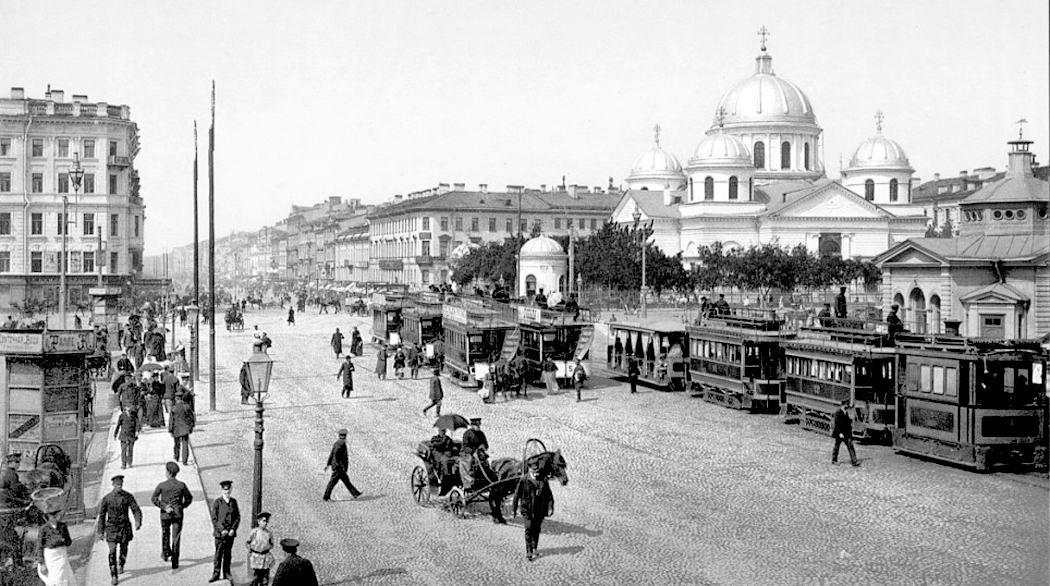
St. Petersburg Conservatory, ca. 1900

As his career developed, he became a respected member of the Russian art establishment, and eventually became head of the St. Petersburg Conservatory, where he trained many younger musicians, most importantly, Dimitri Shostakovich. His tenure was marked by a great improvement in the conservatory’s reputation and the quality of its instruction. Glazunov took his directorship seriously. 

He ran the school from 1905 to 1930, and while the instruction remained rather conservative, built on the principles of 19th century romanticism, its students entered the new century with other ideas. 

“Glazunov was ‘born in the middle,’ so to speak,” wrote critic Leo Eylar.  “He was born a generation later than the initial great Russian composers such as Tchaikovsky and Rimsky-Korsakov, and was born a generation before the modernist revolutionaries such as Stravinsky, Prokofiev, and Shostakovich.  As such, he was destined to occupy a rather difficult position in Russian music history.”

Glazunov continued writing music into the 1930s, and by then seemed like some musical dinosaur. But it is important to remember that he was 32 before Brahms died. His taste was formed before Modernism was even thought of. 

St. Petersburg

He was born in czarist Russia and lived through the Communist revolution and into the Stalinist era. He held the conservatory together during some tumultuous years, and with considerable integrity. When he was offered honors (and extra pay) by the regime, he replied asking for some firewood instead, so the students could heat their classrooms. During the privations of the Revolution and civil war, many students were near starvation and would have died but that Glazunov ensured they were given scholarships and the food allowance that came with them. 

“This was a period of terrible famine,” said Shostakovich. “The gist of the scholarship was that its possessor was able to receive some groceries. In a word, it was a question of life and death. If you’re on the list, you live. If you’re crossed off, it’s quite possible that you may die.” 

Shostakovich was on the list. 

And when an increasingly anti-Semitic government required he list the names of all the Jewish students, he sent back a message: “We don’t keep track of such things.” 

He listened carefully to his students’ music, even if he was sometimes shocked by it. He attended all of the school’s recitals. If he didn’t like something, he would listen over and over until he understood what was being attempted. This quality made the young Shostakovich love his schoolmaster. 

“After the Revolution, everything around Glazunov changed and he lived in a terrible world that he didn’t understand,” Shostakovich said. “But he thought that if he died, important work would perish. He felt responsible for the lives of hundreds of musicians, so he didn’t die himself.”

Shostakovich describes his perfect pitch, his ability to spot any mistakes in a student’s composition, like hidden “parallel fifths,” and his astounding memory. When Borodin died, leaving his opera, Prince Igor, unfinished, Glazunov reconstructed parts from memory, having heard Borodin play them on the piano years earlier. 

He understood the instruments of the orchestra. He learned to play the violin well so he could write his violin concerto. Once, visiting London, a french horn player complained that a note in the score was “unplayable.” Glazunov picked up the horn and played the note for him. 

“And Glazunov played the piano well,” said Shostakovich. “He didn’t have a real piano technique and he often played without removing his famous cigar from his right hand. Glazunov held the cigar between his third and fourth fingers. I’ve seen it myself. And yet he managed to play every note, absolutely everything, including the most difficult passages. It looked as though Glazunov’s fat fingers were melting in the keys, drowning in them.”  

On the minus side, though, Glazunov was a lifelong alcoholic, who kept a hidden bottle of hooch in his office desk, with a tube running from the desk drawer to his mouth, so he could sip while discussing music with his students. His alcoholism is sometimes blamed for the disastrous premiere of Rachmaninov’s First Symphony, which Glazunov conducted in 1887. The performance was so disastrous that Rachmaninov stopped composing for three years. 

During his life, Glazunov’s music was held in high esteem, especially in Russia. But as the 20th century began, his music was seen as more and more out-of-date. His efforts at the conservatory slowed his musical production, and by the time of his death in 1936, only his violin concerto remained in the active repertoire, helped mainly by the fact that virtuoso Jascha Heifetz played it frequently. 

Glazunov gave up active directorship of the conservatory in 1928 and left Russia. He never expressed any political concern, but it was clear that Stalinism was not going to put up with Glazunov’s independence of spirit, and so the composer moved to France, where he remained until his death. 

In all, Glazunov composed eight symphonies, with a fragment of a ninth. He also wrote several multi-movement orchestral suites, which might as well be counted among his symphonies including From the Middle Ages and The Kremlin. He composed several successful ballets that continue to be staged even in the 21st century, most famously, Raymonda and The Seasons

He was a master of orchestral color and orchestration, and handled the large forms admirably. Especially his inner movements — the slow movements and the scherzi — are memorable and moving. He was fond of unequal phrase lengths, which kept the melodies from being predictable or monotonous (a problem that often beset Robert Schumann, who too often fell into 8- or 16-bar patterns). 

Glazunov wrote a handful of concertos, among them the popular violin concerto and, as his last major composition, a concerto for alto saxophone, which is quite forward-looking for the old master. There are a pair of piano concertos and some concertante works for cello. 

But for me, his real masterpieces are his quartets. He wrote seven numbered quartets, a Suite for string quartet, and his Five Novelettes, a full-length Elegy, and a Quintet for strings. These works highlight what Glazunov was best at.  

Quartet writing after Beethoven became a problem for many subsequent composers. The importance and depth of Beethoven’s quartets, especially the dense late quartets, tended to lead later composers to approach the form with such utter seriousness that they become clogged with polyphony (ahem: Reger) and the need to keep each string player occupied all the time. There are exceptions, like the quartets of Dvorak, but even Brahms gummed up his string quartets with thickness. 

Glazunov, however, could write counterpoint with clarity and grace. Many of his quartets start with a fugal introduction, but you never get the feeling that he is writing an obligatory chunk of polyphony to prove his seriousness. Rather, his fugues flow like real music, charming and direct. 

The quartets have almost orchestral color, as Glazunov alternates timbre with changes in register, double stops, muting, harmonics, and pizzicati. You never tire of the string tone, it is always varied. 

He splits the melodic material among his players so that everyone gets a turn with the big tunes. Glazunov wrote his quartets primarily for his friends to play among themselves, and I think they must have been a joy to perform, even more than to listen to. It’s a mystery to me why they don’t show up more often on recital programs. Audiences would love them.

For his symphonies and concertos, there is an inexpensive box set on Warner Classics, conducted by Jose Serebrier that is, I think, the best currently available set. There are other versions with Vladimir Fedoseyev and the Tchaikovsky Symphony Orchestra of Moscow Radio, in somewhat lesser sound engineering; and Naxos has its series of Glazunov’s music, with the symphonies conducted by Alexander Anissimov and the Moscow Symphony Orchestra. Serebrier beats them all with sound, performance and price. 

As for the quartets, there is a complete set box with the Utrecht String Quartet that is beautifully played and recorded, on MDG. You can get them individually played by the St. Petersburg String Quartet and several by the Shostakovich Quartet. 

And, since everything — and I mean everything — is available on YouTube, you can find multiple versions of almost everything Glazunov wrote, often with the musical scores to read as the music plays. 

I am not making the case that Glazunov should be seen as some forgotten Brahms or Dvorak. His music lacks the emotional and philosophical ambition to take on the deepest meanings you find in Beethoven, Wagner or Mahler, but none of the big names can claim supremacy in terms of technical proficiency or tunefulness. Glazunov wrote music, and seen in purely musical terms, he was a great master. 

Much art and music from before the First World War fell out of favor with the rise of Modernism. Glazunov fell with them. But now that Modernism is old-fashioned, we can reappraise a good deal of work that was denigrated in the 20th century. Rachmaninov no longer has noses turned up at his music. Even academic painting from the second half of the 19th century is finding new audiences. Glazunov deserves to be among the rediscovered.

It has been now perhaps 30 years since what was once called the “original instrument” movement in classical music took solid hold. Now usually referred to as the “historically-informed performance practice” movement (what a bureaucratic sounding phrase; I loathe it; there must be something better to call it), it has permeated not only the small bands of re-enactors (like Civil War re-enactors, really), but the mainstream classical music culture as a whole. Even when playing on modern instruments, performances are likely to be inflected by the historical re-enactor crowd. 

And so, you get bouncy Beethoven and manic Mozart, often played with two or three fiddles to a part. It all sound anemic to me. 

But I’ve been listening to the perfect antidote. I recommend you listen to the 1968 recording of The Antiphonal Music of Gabrieli, played by the combined brass sections of the Philadelphia, Cleveland and Chicago orchestras. It is absolutely glorious and I cannot imagine anyone coming away from listening to these choirs and not thinking “Wow!” and wishing they instead had heard the music on wheezing sackbutts and cornetts. (Sample here). 

Or Glenn Gould in his 1955 recording of Bach’s Goldberg Variations, a disc that can still shock a listener with its energy and life. The re-enactors insist Johann Sebastian should only be played on a harpsichord, but there is no keyboard more prone to monotony of tone and expression than the clangy jangly ear-assault of a harpsichord. Give me Bach on a piano any day, whether Gould or Rosalyn Tureck or Daniel Barenboim or Jeremy Denk. (Sample Gould here).

Just listen to Hélène Grimaud play the Busoni transcription of the chaconne from the Bach second violin partita, listen to it build to a glorious climax, with such brilliant pianism. This is music. (Link here). 

Now, before you go away thinking I am a cranky old codger refusing to move with the times, I assure you I recognize the benefit to humankind wrought by the young whippersnappers. As far back as 1978, I got on board when I purchased an LP set of Handel’s Op. 6 concerti grossi led by Franzjosef Maier with the Collegium Aureum. It was bright, energetic, forceful and clean. For me, it was a revelation, compared with those soggy older recordings I had on Nonesuch or Turnabout. Handel was freed from the concrete shoes he had been wearing since the 19th century. It was liberation.

Many a composer has benefited from the historically-informed performance practice and many of the old works have been rediscovered. Vivaldi, Telemann, Geminiani and others have been reborn with new interest in their works. Beyond the Four Seasons, we now have scores of recordings of Vivaldi’s operas and vocal works. And a host of French work by Lully, Couperin, Rameau. 

It wasn’t all peaches and roses, however. Under the mistaken idea that “original instruments” would refresh just about anything, I bought another LP, this time of Handel’s Water Music played by La Grande Ecurie and La Chambre du Roy under Jean-Claude Malgoire. What a horrible sound they made, scratchy, whiny, out of tune and struggling with the notes. The horns in the minuet, about 20 minutes in, is enough to make your eyes water. It didn’t just put me off original instruments, it put me off my soup. (Sample the opening of the Royal Fireworks Music here).  

Of course, in those prehistoric-instrument days, string players were way ahead of wind players, who had not yet quite figured out how to play the old hautbois and chalumeaux. Things have improved greatly since then and many old-music specialists have become quite virtuosic. Nowadays, you can buy a CD of some obscure Baroque composer and feel sure you’re getting the real goods. 

But, of course, while the re-enactors have gotten better, there has been a down side, also. When you find a new plaything, you want to daub it everywhere, and so, we even now have “historically informed” Berlioz, Wagner, even Bruckner. Like mustard on watermelon.

The tenets of the historically informed have become a kind of dogma and doctrine, and it gets applied to everything. A recent recording of a Beethoven symphony had four first and second violins, two violas, two cellos and a single bass. That might work well for Vivaldi, but for Beethoven it is a travesty. When he had the opportunity, Beethoven himself preferred 20 first and second violins. Brahms, who is now offered with chamber orchestras (because he once did that at Meiningen), actually much preferred the Vienna orchestra with 68 string players. 

A recent recording of Mahler’s Fourth Symphony was released, conducted by François-Xavier Roth, according to “historical” practice. All the rules were followed. A reviewer lauded the performance, writing, “Thanks to Roth’s fleet interpretation — he seems intent on freeing Mahler from excess romantic baggage — we hear details usually buried under bulbous bellows and portamento-laden strings.” I had a good laugh: Mahler went to great lengths to put that romantic baggage into the work.

I wonder if next we can expect an edition of Mark Twain with all the excess humor taken out, or perhaps a Picasso run through a computer program to rearrange those Cubist faces back into something more like a passport photo. The portamentos are written into the score, after all. 

As far as it being performed according to historical principles, well, one has to wonder what principles these might be. Roth could, for instance, have checked with the recordings of at least three conductors who actually knew Mahler, and two who actually conducted with him. Perhaps they might have some insight in the way the Fourth Symphony is supposed to sound and what true historical performance practice was. Check with Bruno Walter, Otto Klemperer, or Willem Mengelberg (who performed the Fourth for Mahler and got his direct approval and appreciation — and there is a recording to check.) Note: They all play with vibrato. Roth’s twin vices of arrogance and ignorance are astonishing.

But, of course, Roth isn’t really interested in the composer’s intent. The movement has given up all pretense that they are recreating the music the way it was first heard. (“We’re trying to show what the symphony would have sounded like when Beethoven first heard it.” “But Beethoven was deaf.”) Because the actual driving force behind the movement isn’t historical accuracy, but rock and roll, popular music, which privileges — as do the HIPP performers — rhythm, beat, and energy over harmony and melody. “Beat me, daddy, eight to the bar.” 

Younger musicians have grown up with rock music, with heavy metal, with the drive of rhythm guitars (i.e., the continuo), and the pounding beat of drums. And as with rock music, there creeps into HIPP performances a kind of sameness — the mustard on the melon. 

And so, Roth, like the other re-enactors, is interested in making the music sound like all the other HIPP performances — whether Handel, Berlioz or Bruckner. Thin strings, clipped rhythms, rushed tempi. 

Modern conductors now too often have ideas where their ears are supposed to be. And so, instead of a performance of music, you get a lecture on how the music is “supposed” to be played. 

It reminds me of film director Lars von Trier and his Dogme 95  film movement and its “vow of cinematic chastity,” where a filmmaker was required to  adhere to a series of “dogmas:” required to shoot on location, not on a constructed set; to avoid using music unless it was being played onscreen as part of the story; to use no artificial lighting; to make no film not set in the present time, no costumes but what the actors bring with them … and a host of other rules restricting the “artifice” of moviemaking. It was a set of rules so puritanical that even von Trier had to give them up eventually. 

The period re-enactors of classical music have their own manifesto: To avoid vibrato; to observe strictly the composers’ metronome markings (even when Beethoven specifically tells them not do to so); to phrase in short, often two- and three-note groups; to hit the rhythms by barline with a sledgehammer; to use small instrumental groups; to employ countertenors when possible (given castrati are no longer available); to employ valveless trumpets and horns; to use old instruments or recreations of old instruments, with fewer keys, and wooden flutes, or recorders. And please, no pianos allowed; harpsichords or vintage fortepianos only. 
The result, too often, is music in a strait-jacket. We know that Beethoven complained harshly about the restrictions of instruments available in his day, and that future instruments would be better able to express his intentions. In essence, some of the peculiarities of Beethoven’s orchestration are because of the limitations of instruments in his time. 

As Donald Francis Tovey once observed, “Scholarship itself is not obliged to insist on the restoration of conditions that ought never to have existed.”

Which brings me back to Gabrieli and the great brass players of the big American orchestras. This is music as a glory, as joyous, as sheer pleasure. Is it what Gabrieli would have heard in Venice in 1597? No, but I’m sure he would have loved it. It was meant to be music, not a treatise. 

The current dogma forgets one important fact: The music doesn’t belong to Gabrieli; it belongs to us. The same with Bach, Beethoven, Chopin, or Mozart. They are dead and the music survives. And it is we who now own it. The sheet music is an artifact that needs musicianship to bring it to the ear and musicianship is now and always has been more important than scholarship. 

Imagine if we insisted that Shakespeare be performed only outdoors, with boys dressed up in the women’s parts, and all declaiming their lines loudly enough to be heard in the back rows, and no breaks into acts and scenes. Interesting as an experiment, to understand the theater of Shakespeare’s day, but hardly an ideal way to do Hamlet. Could we now take seriously Romeo making love to a Juliet in drag? 

You can now find Mozart, for instance, played by John Eliot Gardiner or Roy Goodman or Frans Brüggen and it zips along almost like a mechanical clock, fleet, crisp and rhythmic. All the notes are there, and the instructions in the score are obeyed. But something vital is missing. Something human. 

And so, I turn to hear Mozart played with humanity and and emphasis on songfulness, not metronome markings and I hear Bruno Walter’s Mozart, or Pablo Casals’. 

I used to have the complete Mozart symphonies played by Charles Mackerras, in period style, but I gave them away and got Karl Böhm and the Berlin Philharmonic. Böhm understood the style, the music, and what the music meant. There is nothing really wrong with Mackerras — he was a wonderful conductor — but his Mozart imitates the period-re-enactor esthetic and turns what should be warm melody into a patter-song. I have given up on historically-informed Mozart.

(I make a slight exception for the early symphonies performed by Nikolaus Harnoncourt, but then Harnoncourt, aka “the Wild Man of Borneo” was sui generis — not really original instruments as much as the original Harnon-world. He was never afraid of bringing his Harnon-personality to the performance. Harnoncourt is always full of personality, albeit, sometimes you scratch your head.)

One of the seeming goals of period-re-enactors is to erase the musician from the music. They complain, for instance, that Leonard Bernstein’s Mozart is more Bernstein than Mozart. Well, of course — it is meant to be Mozart filtered through the sensibility of a performer. The notes on the page are neutral. The performance should not be. The musician puts the blood back into the notes. The score is only a skeleton. 

I’m not making a case here particularly for Bernstein’s Mozart; he was never as trenchant in Mozart as he was, say in Haydn, where he was magnificent. But rather making a case for interpretation. The re-enactors say they don’t want their music “interpreted,” but merely played. 

Someone once said that reading a cookbook doesn’t make you a good cook. Period-re-enactors want us to enjoy the raw ingredients — the mise en place — without the actual cooking. Really, more like eating a cookbook. 

I don’t wish to proscribe historically-informed performance practice. After all, it revitalized Baroque and earlier music. But I should point out that we can’t actually know what the music sounded like back then. It is guesswork. The sources for period performance practice are not in agreement. Some 18th century writers tell string players not to use vibrato; others instruct the opposite. Which pedagogue do you believe (obviously, the one that makes your music sound more like rock and roll). 

Further, the fact that some of the old teachers instruct their students not to use vibrato is actually evidence that they were bucking the system, that, in fact, most fiddlers back then really were using it and needed to be told to give it up. 

Even if re-enactors can re-animate the forgotten Baroque composers, and make us understand Handel and Vivaldi in a newer, brighter way, musicianship is still more important than scholarship. I cannot stand the revisionism applied to Bach. The two- and three-note phrasing makes hash of Bach’s long line, and ignores the intricate play of harmonies in order to emphasize the forward drive — the relentless bang-bang-bang. 

But most of all, I miss the personality of the performer in the re-enactors. When I listen to Bach by Gould or Tureck or Martha Argerich, I hear the music as the melded expression of both composer and performer — someone making sense of the notes. And that sense changes over time and place. It cannot be fixed in an imaginary historical moment. It is ours to parse out. Mozart has no say in it, and obviously, cannot. 

And so, if we get Walter’s Mozart on one night, we get Harnoncourt’s on another. Or the warmth and humanity of Pablo Casals. (Bruno Walter’s Mozart Symphony No. 39 here). Each version is valid, but the music is waiting there for yet another. Of course, HIPP is an interpretation, too. John Eliot Gardiner  brings his personality to the Orchestre Révolutionnaire et Romantique. Unfortunately, it is the personality of an accountant.

Yesterday, I accidentally came across a YouTube video of Leonard Bernstein conducting the Vienna Philharmonic in the finale of Joseph Haydn’s Symphony No. 88, which is one of the composer’s bounciest, most ebullient movements, and therefore one of the bounciest, most ebullient in all music. And I was transfixed: After a tiny initial tempo beat with the baton, the conductor dropped his arms and stood there, letting the orchestra play the entire movement, indicating directions entirely with facial expressions. (Link here). 

He was conducting with his face. It was brilliant. Every fleeting emotion played across his face, as if he were the music. And each expression came a half-second before the orchestra reacted, so Bernstein wasn’t following the music, but leading it. Extraordinary. It was one of the best performances of that finale I’ve ever heard, with a naturalness and clarity, but more important, a joy and spontaneity. 

I go back a long way with Lenny. When I was a mere bairn, I watched him on the Young People’s Concerts and I remember his explanation of Beethoven’s Fifth Symphony on the Omnibus TV show. I was just six years old in 1954, so I don’t remember much of what he said, but I remember the set, with the score of the symphony on the floor, so he could position his players on their staffs to show what they were doing. I was fascinated. 

Since then, Lenny has been a part of my life. Sometimes a small part, in the background, sometimes I spent extra money to buy one of his recordings over a cheaper Turnabout or Vox recording, with the trust that I would be rewarded by something special. I usually was. 

I heard Lenny conduct at New York’s Philharmonic Hall (later Avery Fisher Hall, now David Geffen Hall — it changes as much as the names on ballparks). I remember a rousing version of Debussy’s La Mer with the New York Phil. But mostly, I heard Lenny via recordings, first LP and then CD. There were also videos and TV presentations. 

I don’t deny that Lenny talking could be hard to take, with that resonant basso voice that he seemed to be in love with, and sometimes a ham actor’s thesbianicity. But if you can get past that surface, what he says is almost always revelatory, precise, and true. I listen to his Harvard lectures over and over, and despite some tedious Chomskian linguistic folderol, really insightful. (He drops the Chomsky in the latter lectures, thank god). 

But it is the music that really counts. For many, Bernstein was the great podium presence of the second half of the 20th century. The singer Christa Ludwig, who performed with Lenny often, once said she worked with three truly great conductors: Karl Böhm, Herbert von Karajan and Bernstein, but the difference was, she said, “Bernstein was a genius.” 

Others have commented that when he conducted, he “became” the music. A member of the Vienna Philharmonic told my old friend, the late music critic Dimitri Drobatschewsky, “Name one other conductor who, just by standing in front of the orchestra, could make them play better than they thought they could.” Bernstein seemed to have a special relationship with the Vienna Phil, and many of his later recordings were with them.

Lenny had his detractors, who thought he was showing off in front of the audience and orchestra, or that he exaggerated details, or — especially later in his career — dragged tempos. But, as critic David Hurwitz has said many times, “Every time I think Bernstein has distorted something, I look in the score and see that it is exactly what the composer had notated. He was truer to the score than almost any other conductor I know.” 

It is true that for Lenny, as for Old Lodge Skins in Little Big Man, “Sometimes the magic works, sometimes it doesn’t.” But the best recordings have something to give that few others can match: commitment, power, emotion, persuasiveness. 

I have chosen 10 of Lenny’s recordings that for me summarize his best. There are many others. He was especially great with Haydn, with Beethoven, with Mahler, with Stravinsky, with Shostakovich. And Modern music — if it was tonal or polytonal, like Milhaud — he made it all just bounce. 

We’ll start with Haydn’s Paris Symphonies, that is symphonies Nos. 82-87, including “The Hen” and “The Bear.” It is pretty well consensus that Bernstein’s Paris Symphonies are the reference recordings. Sprightly, bright, witty, energetic and beautifully played. Bernstein was always good in Haydn, and I would have listed his Creation here, or his Nelson Mass or Tempore Belli Mass. You can’t go wrong with Bernstein and Haydn. In comparison, almost everyone else just feels soggy. 

In roughly chronological order, we come to one of his most controversial recordings ever: the live recording of Beethoven’s Ninth Symphony from 1989 and the fall of the Berlin Wall. Bernstein substituted the word “Freiheit” (“freedom”) for Schiller’s “Freude” (“joy”) in the finale, caught up in the moment’s exhilaration over the fall of East Berlin and Communism. Actually, he only does it once, and later reverts back to the original. But it is jarring when you hear the baritone intone it at the start of the finale. Yet, I am listening to it now as I write this and it is an absolutely thrilling version of the Beethoven’s greatest symphony. Members of six different orchestras came together and meld perfectly under Lenny’s baton. It is my go-to version of the symphony. It is a symphony played so often (I can’t count the number of times I’ve heard it live) that it has lost some of its magic as occasion, but here, it magnifies that sense of occasion. Despite the mutilation of the “Freiheit,” but because of the intensity and emotional engagement of the 20-minute Adagio — more like a prayer than anything else. (Roger Norrington takes it in 10 minutes of throw-away carelessness.) 

Then, there’s Berlioz’s Grande Messe de Morts, or Requiem. There are few decent recordings, and most fail for exactly the same reason: They attempt to make sense of the thing, toning it down into something “normal.” That is the issue with Colin Davis’ version. But Lenny lets it all hang out. What is fevered and hysterical, comes across as fevered and hysterical, just as Berlioz wrote it. 

If there is any symphony from the 19th century more Haydnesque than Bizet’s Symphony in C, I have yet to discover it. It is fresh, bright, tuneful and unendingly happy. The composer wrote it in 1855, when he was 17, and it remained unplayed until 1935 and I feel pity for all those audiences who, for 80 years could have been enjoying it, but never had the chance. Lenny was the perfect conductor for its joie de vivre and rhythmic snap. It is as if Bizet wrote it with Bernstein in mind. 

Lenny recorded Tchaikovsky’s Sixth Symphony at least twice, once with the New York Philharmonic, in 1964 for Columbia, and then again in 1987 for Deutsche Grammophon, with the same orchestra. What a difference. The first — an excellent version — takes about the usual 45 minutes. The second comes in at just a chip under an hour. Most of that extra time comes in the finale, which in the second recording is wrenching and heartbreaking. One critic wrote that it “devastates the emotions. … At the end of the last movement, the despair is complete.” Of course, the performance has its detractors, with some finding it distended and, as one always hears the complaint against Lenny, “is more about the conductor than the composer.” Poppycock. This is Tchaikovsky titrated and distilled into pure essence. 

Lenny recorded Stravinsky’s Rite of Spring many times, also, but there is no quibbling about the one to go to. It is his first, from 1958 with the New York Phil. When the composer first heard the recording, his only response was “Wow!” Lots of conductors have the measure of the Rite, but there is a rhythmic vitality, a violence and explosiveness to the 1958 recording that has never been matched, even by Lenny. 

Just seven years after Stravinsky’s blast, came Darius Milhaud’s Le Boeuf sur le toit (“The Bull on the Roof”), which he says he wrote as “fifteen minutes of music, rapid and gay, as a background to any Charlie Chaplin silent movie.” It is a piling up of Brazilian tunes, in several keys at once, and is as bright and toe-tappy as anything. Indeed, it becomes an ear-worm and you will be hearing its tunes over and over in your head for the rest of the day. The Bernstein recording also features La Création du Monde from 1923, which is a fully realized jazz composition for a ballet about an African creation story. This is Lenny in his element. You can just see him dancing on the podium with happiness and joy. 

Then, there is another highly controversial recording — his DG performance of George Gershwin’s Rhapsody in Blue. Lenny, playing the piano part himself, plays it not as a jazz riff, but as if it were, from bottom-to-top, a classical piano concerto, rather like Ravel’s Concerto in G. Critics miss the easy jazzy element of famous performances by Earl Wilde or Oscar Levant, but Bernstein’s version seems to those who adore it (as I do) as a perfectly genuine alternate view. And it is gorgeous. Did I mention that? Absolutely gorgeous. 

Dimitri Shostakovich wrote his massive Symphony No. 7 “Leningrad” during the German siege of that city in 1942. It is a piece that defeats many orchestras and conductors; it is very difficult to keep it from diffusing into long, undigested sections. Lenny keeps it going as a single directional line from beginning to glorious end, and the Chicago Symphony has the cojones to perform what is asked of them. Almost everyone agrees, this is the Leningrad Symphony to hear. 

Finally, I’ve kept last (and out of order), Mahler, which sometimes seems like Bernstein’s personal property. It isn’t, of course, but he brings something special to his Mahler performances, and none more so than with the Ninth, which he recorded at least six times (1965 NY Phil; 1971 Vienna Phil; 1979 Berlin Phil; 1979 Boston Symphony; 1985 Concertgebouw; 1985 Israel Phil). It is perhaps the Mahler symphony Bernstein felt closest to. Only four of these are genuine releases, not bootlegs, and among them it is hard to choose, but I suppose I migrate to the late Concertgebouw recording. Berlin has the intensity, but there is a major cock-up in the finale when the trombone section failed to play in the climax (apparently an audience member had died of a heart attack directly behind the brass section and there was some commotion that distracted the players). But listening to any one of them seems as if the music becomes more than music; it is a direct communication from one soul or heart to another. There are other great performances of the Ninth — it seems to draw out the best in most conductors — but there is something extra in the Bernstein versions, something more immediate, more direct. 

That is a list of 10 (or more), but I feel I’ve left out so much. There’s his Bartok Music for Strings, Percussion and Celeste; there’s two complete surveys of Beethoven symphonies; there’s his Copland, his Ives, his Schumann, his Sibelius. And so much more. But I believe the 10 I’ve chosen are not just great, but peculiar to Lenny — and I choose the word carefully. He was an idiosyncratic conductor, but all the personality that went in to his performances meant they are often memorable in a way more straightforward ones are not. 

Many moons ago, when I was a snotty college kid, I went through a period of disdaining Lenny. I bought the canard that he was shallow, heart-on-sleeve and bombastic. I wuz a idjit. One should never let the opinions of others block your ears. There is a world of difference between words and sounds, and the sounds are always more meaningful. I am older now, have experienced a great deal more of living, discovered depths in myself I hadn’t understood, and now Lenny’s insistence on finding the marrow is what I value. My ears are opened to what is gifted to me. 

Click on any image to enlarge

In 2003, idiosyncratic filmmaker Guy Maddin released his most popular film (these things are relative), starring Isabella Rossellini and titled The Saddest Music in the World, about a contest held in Winnipeg, Canada, to find the most depressing music in the world. Each country sent its representative to win the $25,000 prize put up by beer baroness Helen Port-Huntley (played by Rossellini with artificial glass legs filled with beer). The middle portion of the film features performances by many of the contestants. But the film misses the serious winner in its hijinx of weirdness. 

Because the truly saddest music in the world is, hands down, Edward Elgar’s Cello Concerto, music that can only rip your heart out and leave you prostrate with Weltschmerz. For it is not simple personal grief that Elgar wrote into the music, but the sense of the core sadness of life and the failure, of the world he knew, to survive the First World War.

Elgar was born in 1857, a decade before the deaths of Rossini and Berlioz, and became widely regarded as the first great English composer since Henry Purcell (1659-1695). He lived to see the rise of Adolf Hitler in Germany — a long life full of incident and occasion. 

But until the age of about 40, he was primarily a choral composer and a maker of musical trifles — salon music such as the ever-popular Salut d’Amour that is still an occasional encore piece. Still, that music gave him the reputation as the most important composer in England, second only to  Sir Arthur Sullivan. He became an itinerant musician, sometimes teacher, and, at 29, married his student, Caroline Alice Roberts, whom he remained married to for 31 years. Because Elgar was Roman Catholic and from a working-class background, Alice’s upper-class parents disapproved and disinherited her. But their marriage was successful and productive. After her death in 1920, Elgar wrote no more music of significance. He died in 1934. (Despite his Catholicism, he told his doctor at the end that he had no belief in an afterlife. “I believe there is nothing but complete oblivion.”) 

Elgar always wanted to write more significant music and then, in 1899, at the age of 42, he made his bid for musical importance with a set of variations for orchestra. The “Enigma” Variations remain his most popular and most performed composition, a brilliant set of 14 variations, each of which was meant as a portrait of one of his friends. 

The following year, he premiered his masterpiece oratorio, The Dream of Gerontius, setting the poetry of Alfred Cardinal Newman, in a rich, late-Romantic orchestration rivaling the style of Richard Strauss. Its Catholic doctrine (a soul’s journey to Purgatory) may have prevented it becoming as popular as it might, but it is lush and gorgeous. 

In the years up to the First World War, Elgar wrote the bulk of what he is now famous for. His Introduction and Allegro for String Quartet and Orchestra (1904); First Symphony (1908); Violin Concerto (1910); Second Symphony (1911); Falstaff (1913). He was knighted in 1904 and a shower of awards and honors fell upon him after that. 

He is usually thought of as an Edwardian composer, and identified with those years of English jingoism and colonialism. And it is hard to shake that notion when you hear, once again, his Pomp and Circumstance marches. But he really was no Colonel Blimp. And the Great War defeated him, knocked him down and left him deflated. The world order he grew up in was ripped apart and left in tatters. As British Foreign Secretary Sir Edward Grey remarked in 1914, “The lamps are going out all over Europe and I do not think we will see them lit again in our lifetime.” 

All the optimism and faith in progress that marked late Victorianism and the early years of the century were gone. It can be hard for us to imagine now, after the even-worse cataclysm of WWII and gulags and the Cultural Revolution, just how monumental and devastating the Great War was. It was to those who lived through it, as if the world were ending. Twenty million deaths, the overturning of governments, the shift of world power from the Old World to the New. 

All this, Elgar felt. The concerto was composed during the summer of 1919 at Elgar’s cottage in Sussex, where during previous years he had heard the sound of the artillery at night rumbling across the Channel from France. And at the end of the war, he summed up his despair in the Cello Concerto in E-minor, his last great orchestral work. After it, he could never work up the enthusiasm to write more. 

The work is intensely beautiful, but also profoundly sad. All the sense of loss is bound up in it. And while Elgar’s music had been regularly applauded wildly on premiere, sometimes encored twice. The Cello Concerto was a failure when it was first played at Queen’s Hall, London, in 1919, partly to being under-rehearsed and badly played, but, mostly because of its somber tone. 

In fact, it languished, rarely programed until a 1965 recording by 20-year-old Jacqueline du Pré with John Barbirolli and the London Symphony — a recording that has never been out of print since its first release. Du Pré’s performance was so emotionally present and direct, so attuned to the music, that it has been the benchmark performance ever since. And it reawakened interest in the concerto, so that now almost any cellist worth his or her salt, has it in their repertoire. 

After the concerto, Elgar wrote three great pieces of chamber music: his Violin Sonata, a string quartet and a piano quintet, all written by 1920. After that, only trifles — reworkings of old music and orchestrations of the music of other composers. He found an interest in the new technology of recording and made a groundbreaking series of discs of his own music, recordings still available, now on CD. 

But the war and Alice’s death seem to have taken the drive out of him. Elgar died Feb. 23, 1934 at the age of 76 and was buried next to his wife at St Wulstan’s Roman Catholic Church in Little Malvern, in the English Midlands.

Elgar was without doubt a great composer, but, as critic David Hurwitz has said, “a great composer but not a necessary one.” Elgar himself knew he was a bit of an anachronism, a late-Romantic composer in a century headed toward Modernism. By the time of his Cello Concerto, Stravinsky had already written his Sacre du Printemps and Schoenberg his Pierrot Lunaire. Some of the loss and longing of Elgar’s concerto is surely his sense of being adrift in the Luft von anderem Planeten — the air from another planet, that Schoenberg announced. 

The history of music would not have been any different if Elgar had never written — something that cannot be said of Stravinsky or Schoenberg. Yet, you cannot listen to Elgar’s best music — the two concertos, Gerontius or the “Enigma” Variations — and not sense in him a power and emotional sweep that lifts him to the first rank. In that sense, his music is indeed necessary. 

__________________________________

“There is music in the air, music all around us, the world is full of it and you simply take as much as you require.”

—Edward Elgar, 1896

__________________________________

There are certain pieces of music that everyone knows, whether they know it or not. They are simply in the air. They are heard not just in concert halls, but in film, TV commercials, pop songs — and at every high school graduation ceremony in the English-speaking world. Edward Elgar’s Pomp and Circumstance March No. 1 is the graduation music — or at least the “trio” portion of it. 

It is the portion of the march that was re-written, by Elgar himself, as the popular British patriotic song, Land of Hope and Glory, now sung by the home crowd with soccer victories, and as the audience stands and sings along at the final Proms concert of the season in London. And as the new high school graduates line up to receive their diplomas in school auditoriums everywhere. 

The practice began at Yale University in 1905 when Elgar was awarded an honorary degree for which the composer traveled to the U.S. It was decided to surprise him by playing his own music for the event, and they played Pomp and Circumstance. The practice caught on elsewhere, and is now ubiquitous as “The Graduation March.” 

And so, generations of Americans know the music well, without knowing, necessarily, what the music is they are hearing. It’s just “the Graduation March” of unknown provenance, as if it had just always existed. 

There are other such tunes, well known but genericized. There is Wagner’s Wedding March from Lohengrin — “Here comes the bride, all dressed in white…” — probably not recognized as from an opera. Or Mendelssohn’s Wedding March from his incidental music to A Midsummer Night’s Dream. Mendelssohn has ceased to own it: It is truly public domain. 

For many Americans, our first exposure to classical music came from Warner Brothers cartoons, and Bugs Bunny conducting Liszt’s Hungarian Rhapsody No. 2 in a parody of Leopold Stokowski. Or Elmer Fudd singing “Kill the Wabbit. Kill the Wabbit” to the tune of Wagner’s Ride of the Valkyries
That Hungarian Rhapsody got heavy use from animated films. Not only Bugs conducting, but Bugs playing the piano, and others, from Tom and Jerry to Woody the Woodpecker also took their turns with Liszt. 

Or maybe watching the Lone Ranger on TV and hearing the William Tell Overture. Or television reruns of the old Buster Crabbe serials of Flash Gordon, with Liszt’s Les Preludes as its persistent soundtrack. 

Some scores have been used scores of times in movies. Samuel Barber’s heartbreaking Adagio for Strings has shown up in at least 32 films and TV shows, including: The Elephant Man (1980); El Norte (1983); Platoon (1986); Lorenzo’s Oil (1991); The Scarlet Letter (1995); Amelie (2001); S1mOne (2002); and three episodes of The Simpsons

Popular songs have stolen classical tunes. The Minuet in G from Bach’s “Anna Magdelena Bach Notebook” became The Lover’s Concerto, recorded in 1965 by the Detroit girl group, The Toys. The Big Tune from Rachmaninoff’s Second Piano Concerto became Full Moon and Empty Arms, sung by Frank Sinatra in 1945. Tony Martin turned Tchaikovsky’s First Piano Concerto into Tonight We Love. I’m Always Chasing Rainbows was originally Chopin. The Negro Spiritual Goin’ Home was actually taken from Antonin Dvorak’s “New World” Symphony. Stranger in Paradise is one of Borodin’s Polovetsian Dances, and so is Baubles, Bangles and Beads

The list goes on: Tin Pan Alley was full of burglars. Hot Diggity, Dog Ziggity was based on Chabrier’s España; Catch a Falling Star (and Put it in Your Pocket) was the Academic Festival Overture by Brahms; Love of My Life, by Dave Matthews and Carlos Santana is from Brahms’ Third Symphony. You can find hundreds of these “steals” on Wikipedia.  

I asked my brother, Craig, for any examples he might think of, and he sent back this barrage:

“So, what’s Classical? It’s probably a close cousin to porn — I know it when I hear it.

“There are Classical music quotes all over TV and movies, and my Classical education was jump-started by Bugs Bunny and his friends, and a little later by Fantasia and Silly Symphonies. A really surprising amount of music got introduced to me in cartoons.
“But that is a different thing from pieces of music being a part of our lives, like ‘Here comes the bride,’ and ‘Pomp and circumcision’ at every graduation ever. WW2’s theme song was Beethoven’s 5th. The military loves them some Sousa marches. Everybody knows the more popular Ave Maria. Everyone knows some snippet of Figaro. In fact there are a ton of little pieces of operas than we are all a little familiar with, even if we can’t name the opera or composer. If we played “Name that Carmen” most people would say, oh, yeah, I know that, but couldn’t name the source. There are a whole poop load of snippets we’ve all heard without knowing where the came from. (Thanks, Bugs.)

“Toccata and Fugue, a passel of Puccini, Bolero, (Thanks, Bo Derek), The Blue Danube, the Saber Dance (Thanks Bugs?), the Ritual Fire Dance (Thanks Ed Sullivan and the plate spinners), Für Elise, Chopsticks (Thanks, Tom Hanks), the Ode to Joy, the thoroughly quotable Swan Lake, Ride of the Valkyries (Thanks Robert Duvall), Voices of Spring, O Fortuna from Carmina Burana (Thanks Madison Avenue), Funeral March of the Marionettes, (Thanks, Hitch), Adagio for Strings, The Skater’s Waltz, Minuet in G, the Olympics theme, “Moonlight” Sonata, anything from the Nutcracker, The Sorcerer’s Apprentice (Thanks, Uncle Walt). 

“This is a pretty pointless list, because it is kind of endless. And I might well be making a baseless assumption about American’s familiarity with these things, just like I am thinking that American’s familiarity with these pieces of music is inversely proportional with the number of guns they own.

“Pachelbel’s Canon in D (which is much more memorable than his Canons A through C), Flight of the Bumblebee (the theme music for The Green Hornet, which is I’m sure too obscure a reference to be very useful), the 1812 Overture (Thanks, Boston Pops and Quaker Puffed Rice), A Clockwork Orange made the point pretty directly about Classical music being embedded in the culture, with street thug Alex loving Beethoven deeply.  Strauss’ Zarathustra in 2001 (Thanks, Stanley), Flash Gordon used Liszt’s Les Preludes (which I have had playing nonstop in my head since I thought of it). Lugosi’s Dracula used Swan Lake (which always strikes me as a real cheapskate move to do).

The Lone Ranger music isn’t even a decent trivia question anymore because everyone knows the musical source.

“So I’m just throwing up blunderbuss answers to ‘what’s embedded in our culture.’ So I’m gonna stop here. I hope there’s something you can use.”

And I’m sure, you, dear reader, can think of many more.