Archive

Tag Archives: clouds

I remember, as a child, going to the zoo and being impatient if I couldn’t see the animal immediately. The lion was off in the shade at the back? Move to the next animal. Children often have short attention spans, and I was no different. 

As I’ve aged, I’ve been surprised to discover how much more I can concentrate, how much more patient I’ve become. I can look long and hard until I see the lion, and wait to see what it will do next. Perhaps lick its paw; perhaps roll over and snooze. Oddly, with less time left on this earth, the amount of time I’m willing to wait has become inversely proportional. 

I am now an old man, with a powerful sense of how few years I will be able to enjoy this existence. People I knew and loved have left before me, giving me an imminent sense of what to expect.  

Maybe I am just growing soft in the head, or is it simply old age and the recognition that annihilation isn’t that far off, or some other cause, but I am almost daily having moments of utter beauty that remind me what I love about being. Moments that James Joyce might have called “epiphanies.” 

I have been going out and sitting on the back patio pretty much every day, usually for a half-hour at a time, sometimes longer, and saying to myself — or is it to the universe — “Show me something.” And every day, if I wait long enough and be patient enough, something will happen. 

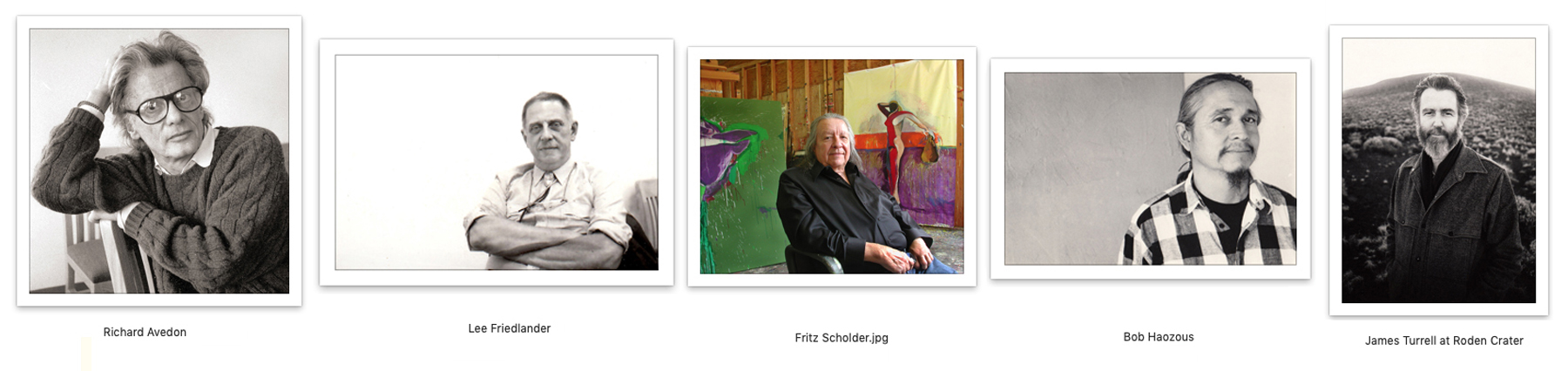
Yesterday, a hummingbird flew not more than a couple of feet from my face to hover in front of a basil flower and then buzz back past me as he left. Another time, it was two cottontail rabbits hopping across the back yard, first one and as I watched it, a second one caught up. 

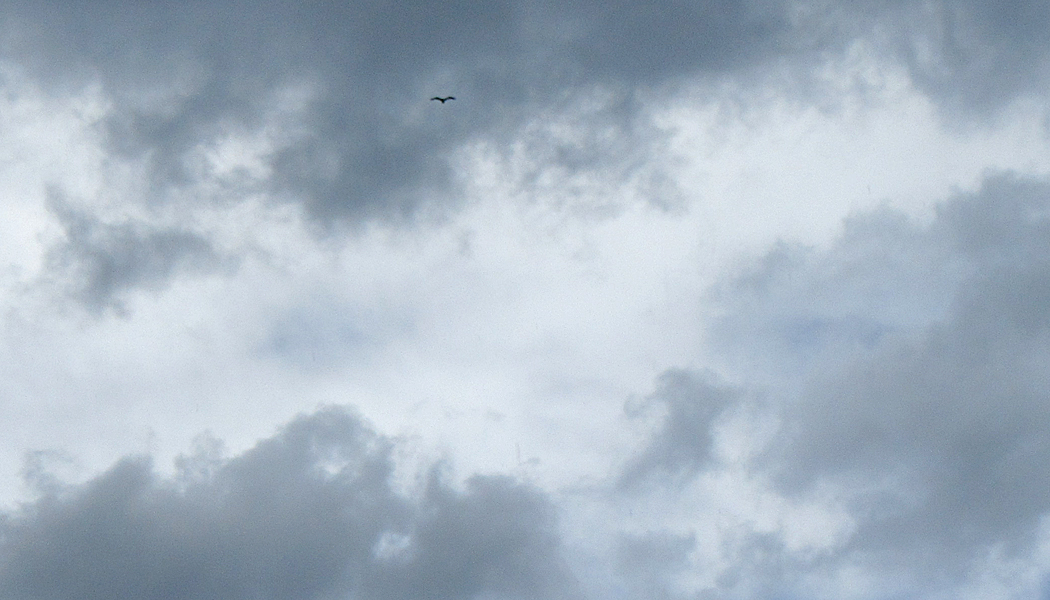
Once, I watched 15 vultures soar and climb in the air currents, one eventually so far up it was no bigger than a period at the end of a sentence in a book held at arm’s length. Yet again, a mockingbird sat on the roof of the shed beside the patio and sang his medley over and over, like I wasn’t there. Squirrels run around with acorn in their tiny front arms. A towhee landed on the steps of the shed. A rise of cumulus clouds was so white against the sky blue it nearly blinded. 

It never seems to fail. Each day, it is something new to delight me, and to remind me of the tremendous animation of the cosmos, and how minor fluctuations pile on top of one another to make it all new. 

A bright red cardinal flew directly at me, just a few feet above the grass, and turned away at the last minute to fly to my right and up over the roof behind me. 

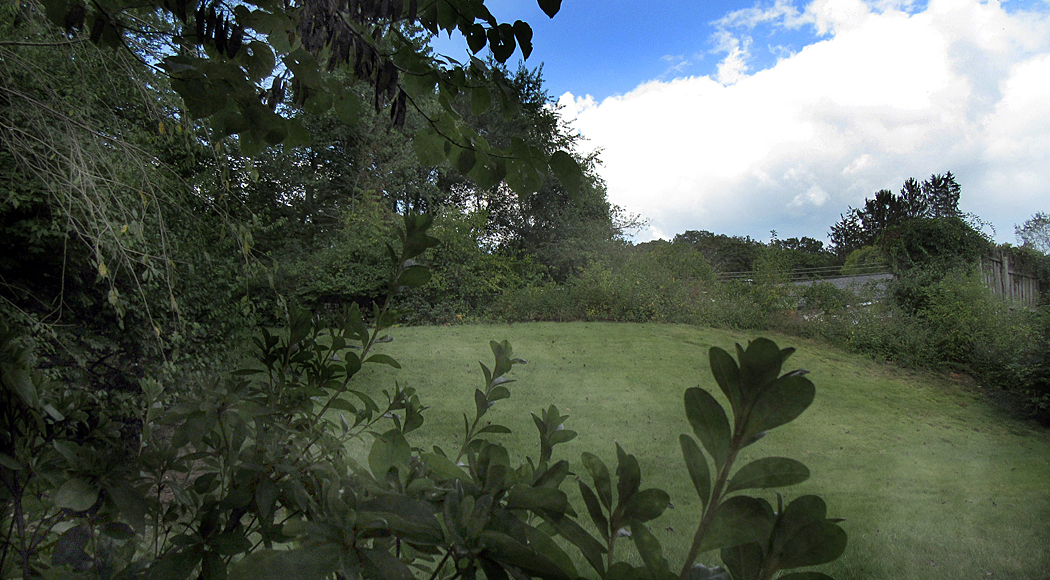
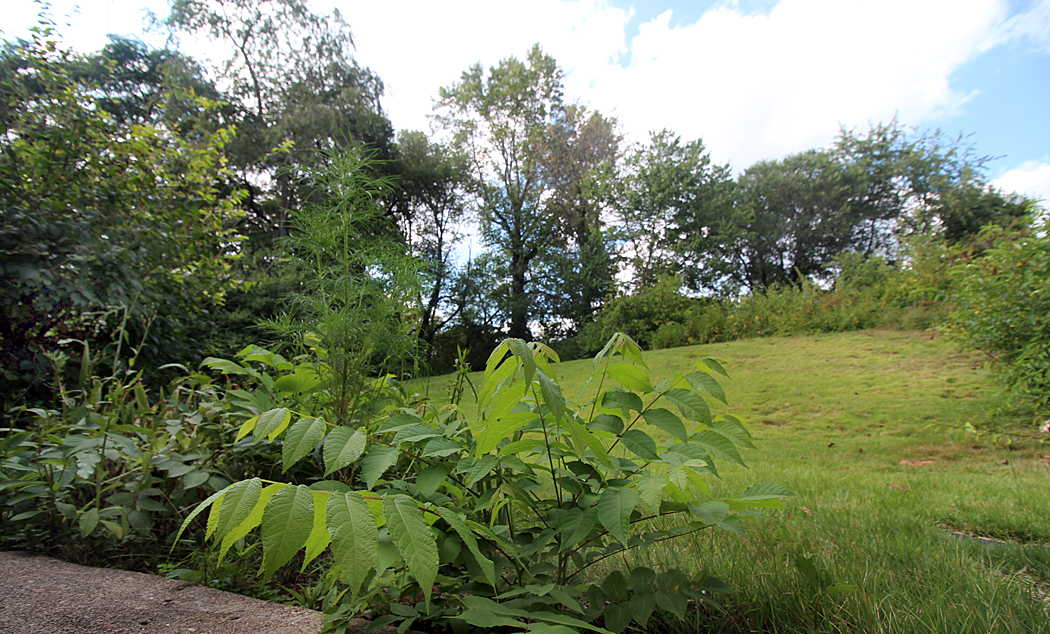
A groundhog poked out from the brush and glanced at me and then, apparently deciding I was no threat, waddled across the full stretch of the back lawn to disappear in the brush at the other side. Not a lot happens over the course of an hour sitting there, but every time I go out, there is something for me, as if the cosmos knew I was paying attention and wished to reward my efforts. 

Recently, I heard a crow caw, looked up and watched as he flew in a great “S” curve, coming from behind me on my right, flying past me to the left no more than 20 feet away, then looped back to the right, circled away and looping back to the left and eventually behind the stand of trees, uttering caws the whole way. The curve was so graceful, I felt it in my esthetic sense. “As the crow flies?” Not a straight line. 

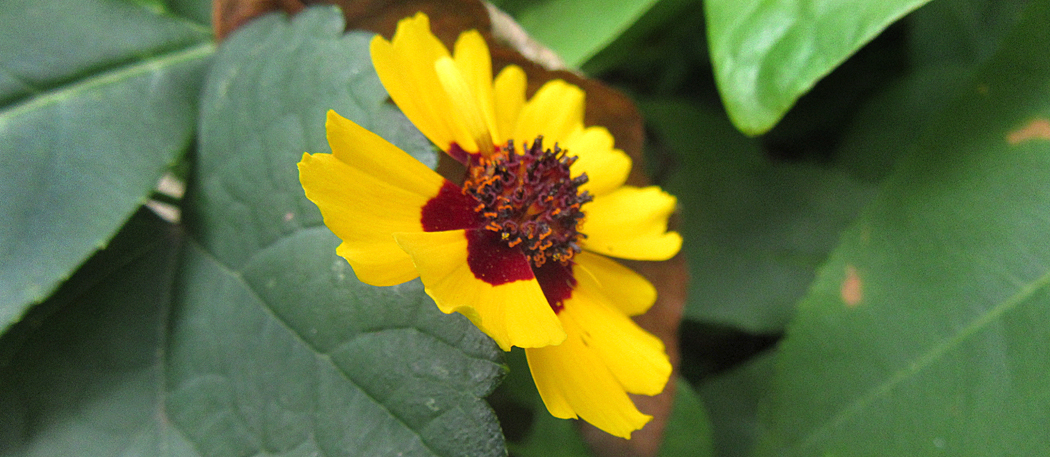
And so, every day, I sit and wait for the moment that the butterfly will land on the flowers at the edge of the patio, or the wasp will pause on the bluish florets of the mint. Or I will notice a small yellow flower that wasn’t there the day before. 

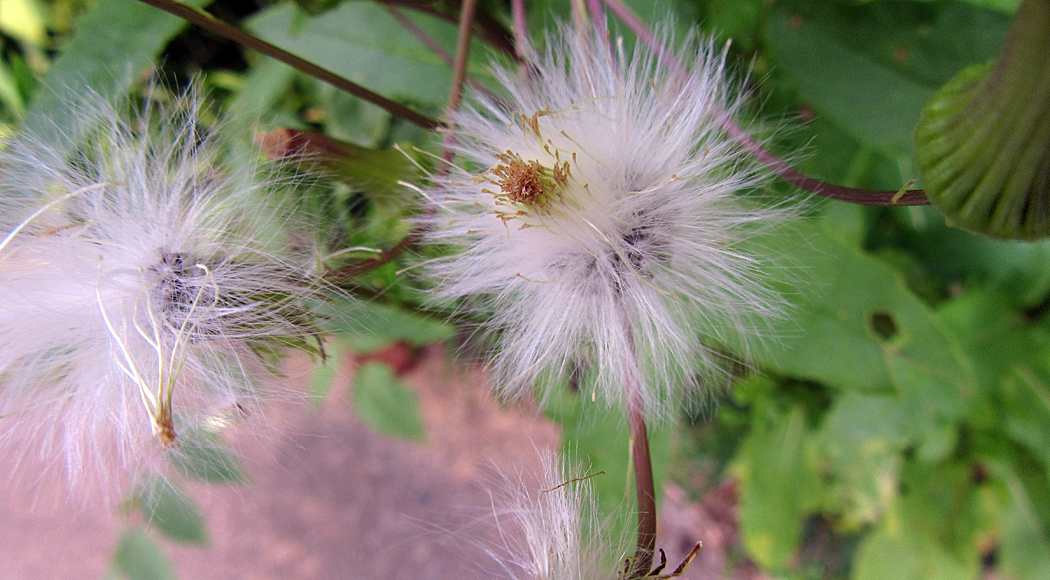
It is fall, and one of those flower seeds with its wisp of fibers landed on my shirt. I held it up in the light to see its tiny hard black seed and it reminded me of Carl Sagan’s “spaceship of the imagination.” 

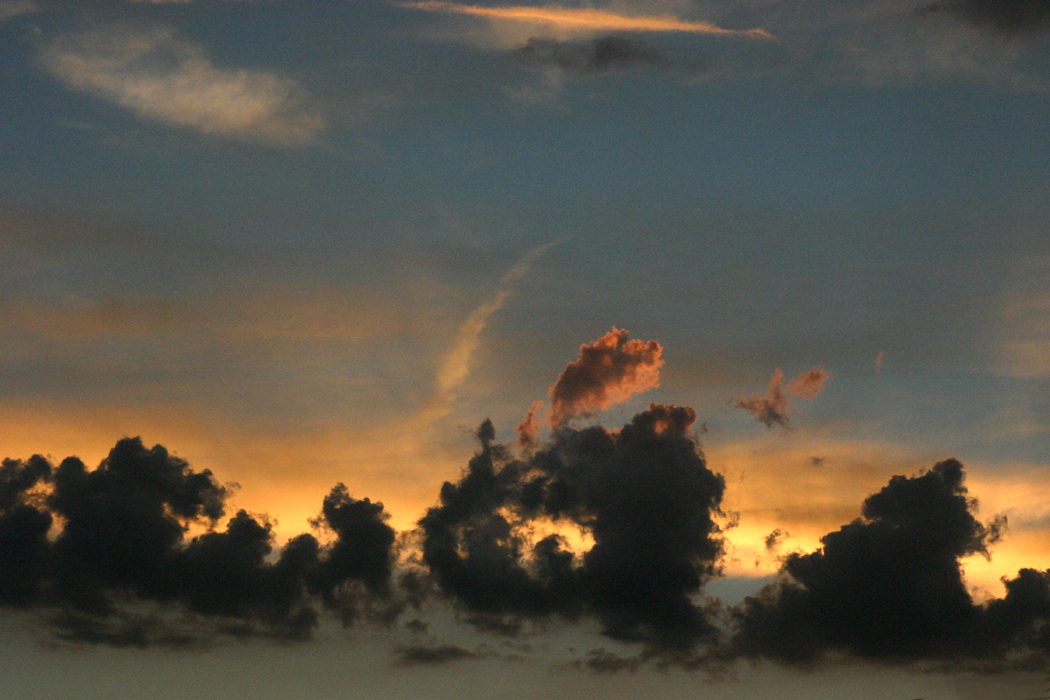
Today, it looks like rain. Dark clouds are everywhere, with the occasional white brightness poking through. And I sat in my silent seat when the wind came up, as it often does just before a rain, and all of a sudden, from the tall oak tree at the top of the hill in the back yard, a hundred leaves let go to flutter down, but, since the wind was blowing toward me, the leaves did not drop straight down, but all floated toward me, up in the air, like a hundred butterflies, or snow in the wind, or bubbles bobbing around in the currents. And so, from a hundred feet up at the top of the tree at the top of the hill, the tumbling leaves filled the sky from edge to edge of my vision, dancing in the air, each showing shadow and light as it twisted, making a glitter in the sky. It was so ungodly beautiful, I began weeping. 

This is the beauty I don’t want to leave. It fills me up. I know I will have to leave, and sooner rather than at some indistinct time in a future that once was only imaginary, but now is palpable in muscle and bone. 

So, perhaps I am going soft in the head. Should I be so moved by such pedestrian events? I am more aware now than when I was young and had other goals in mind, of the complex connectedness of all of the sensate  world, and how that makes an organism too immense to take it all in or understand it. Little things we may understand and describe, but the wholeness of it all can only be apprehended as beauty.

And so I feel gratitude for the world and what it is willing to show me. I do not want ever to leave it, though I know I must. 

And when the final curtain drops on the final scene, I can say “NO” to the end, and “YES” with the same conviction. 

Sometimes, while driving through a neighborhood, I will see an old person, a retiree, sitting in a chair on the front porch, or in the driveway, just watching the traffic go by. It’s become a meme, much like the “Get off my lawn,” thing that shows up in single-panel cartoons. 

I have to admit, I am of that age, although I don’t find traffic that interesting. 

But after several years of being partially house-bound by the Covid virus, and at times suffering from cabin fever — to say nothing of the fatigue that comes with hours staring into an iPad screen checking out the news or watching cat videos — I have discovered the pleasures of sitting quietly in my back yard. It gets me out of the house and it reacquaints me with what I jokingly call “reality.” That is, the sense that there is a world without electromagnetic signals commandeering my attention, a world that has been there always, before my greatest-grandparent was born, and will be there when all the power grids in the world are rusting back into the soil. 

I can sit there for half-an-hour at a time, maybe 40 minutes, without thinking about anything and just watching this tiny bit of the world as it moves in the breeze, as the cardinals and mockingbirds swoop across it into the low tree branches, as a white butterfly flits over the irises and a rabbit lopes across the bit of lawn. 

Occasionally, there is a groundhog who will waddle into the yard, get about halfway across before noticing me sitting there; stare at me for two or three seconds before turning back and returning to where he came from. 

This morning a bumble-bee dive-bombed me briefly. I don’t think he was attacking me; more likely he didn’t even recognize I was there. 

After a morning of staring at a computer screen, or watching an iPad, it is important to move to somewhere so my eyes can refocus at a distance, perhaps to infinity. I watch the clouds and notice which direction they travel. I listen to the birds nattering, or hear the neighbor on the next block mowing the lawn. An airplane may cut across the blankness leaving a contrail, and dropping a rumbling jet sound that always seems to be coming from some distance behind where you see the plane. 

It may seem to some, in the rush of civilization, that nothing is happening, that sitting quietly and watching is the very definition of boring. But for me, it is not. Something is always happening. It may be subtle, but it is happening. The leaves wiggle, the sky shifts from sunlight to shadow as the clouds pass, a mockingbird lights on the top of the shed and repeats his mantra over and over; he seems to notice that I’m there, but perhaps I am no different to him from the patio furniture. 

But I have noticed, over the weeks I have been doing this, at least three psychological states I have found myself in. 

First, if I am distracted by other thoughts, or if I am not really paying attention, my relationship with the yard is that I am looking at nature, almost as if I was still staring at my computer screen. I may notice things, may enjoy what I see, but it is quite separate from me and is, as I look, clearly something in front of me. 

There is nothing wrong with this, but it isn’t why I go out each day and sit there. I consider it a failure when I can’t get to the second state. 

That second state is when I feel not that I am looking at nature, but rather I am in nature. That is, it is all around me, and what is more it exists behind as well as in front. It extends into the air and to the clouds; I become aware of the soil under me, the weeds to the right and the undergrowth beneath the tree branches. 

To be in Nature is to be taken away from the self and redeposited into the wider world. I can easily lose myself in this state and that is when the watching becomes something more. I can feel the space around me expanding to the rest of the earth and sky and my bit in it, however tiny, is plugged in. I feel alive in a live world. 

These two states of mind depend primarily on my mood. If I am tired or distracted, I cannot reach the higher state; it just doesn’t come. But when I can silence my brain for a bit, it is like the coupling of a locomotive to a train. There is a click and it all becomes connected. 

It is the same state you enter when you are absorbed in a book and the room you are in disappears because you are so focused. 

But I said there is a third state, and that comes only with something like grace. It is when I neither look at nature nor feel in nature, but rather am nature. 

The barriers between me and the rest of the world, even the universe, vanish and I realize that I am part of it all. No. I don’t realize it. It just is. The very idea of realizing, or thinking, ceases to have meaning. If I look at the rabbit, I know he looks at me, too. No, again. It isn’t a question of knowing. We look at each other. A recognition. The metabolism that takes place in the cells of my meat is the same as that in the green iris leaf. The motion of the clouds across the blue is the motion of my blood through my arteries and veins. “For every atom belonging to me as good belongs to you.”

I disappear, except that I don’t. In fact, I am more present. It becomes one thing, and it is not that I am a part of the one thing, but that it is just one thing. 

That is, of course, a truism. Even Miss America might say the same thing through a Pepsodent smile. But just saying, or knowing it is not what I’m talking about. It is not knowledge I mean; it is the experience. I sit there in the back yard and it just is.

This cannot happen every time I sit in the back yard. And it isn’t necessary to have a back yard. It is just, as I say, a kind of state of grace, psychologically. 

What is required is receptivity, an openness without expectation. Paying attention. 

As I get closer and closer to the point when every atom belonging to me will belong again to the soil, I remember the lines in Thomas, that “it will not come by expectation, but it is all around us and we do not see it.” 

But once in a while, the veil is lifted and we can see. It is not what we see but that we see.

Many years ago, my late wife bought me a copy of A Book of Clouds, published in 1925 by author William A. Quayle. It is a hefty clothbound volume, primarily of old black-and-white photographs of clouds, layered with Quayle’s particular garish encomia and reminiscence about the glories of skywatching. 

Clouds seem to bring out the gooey and poeticizing cliches in a writer. “I was kinsman of the clouds,” Quayle writes. “And as I grew, the clouds still sailed their crafts of  snowy sail across the blue sea of my heart. Clouds, so to say, were indigenous to my soul. I did not begin to notice them: I always noticed them. I did not learn to love them: I always loved them.” 

The book is fervid with such expostulations: “When clouds give reports of portentous skies, of prepending tempests, when they are black as pools of midnight water, their eminences wrinkled as if zigzag lightnings had been the shears which cut their patterns, then as the sun lurches behind their darkness, the fine fire that rims them and seizes all their peaks gives a touch of delirium to the soul.”  

I love this book, for all its gushy writing, because Carole gave it to me, and because, in an era of irony and unbelief, there is something utterly sincere under the purple prose. 

A few years later, she gave me another book, The Cloud Collector’s Handbook by Gavin Pretor-Pinney, a small volume and kind of a field guide to cloud identification — almost a Peterson guide. In it, Pretor-Pinney gives genus and species names of various formations, implying that a taxonomy of anything as gaseous and impermanent as a cloud might be spoken of almost as if it were a wildflower or a bunting. 

And so, there are is a list of Latinate names, not just the familiar “cumulus” and “cirrus,” but also “lenticularis,” “castellanus,” “radiatus,” and “undulatus.” Carl von Linné would have been proud. Each page is devoted to another cloud form, or cloud-related or -adjacent subjects: “pileus,” “virga,” “nacreous,” “noctilucent,” etc. It’s lots of fun. 

Pretor-Pinney, it turns out, is a veritable cheerleader for cloud watching. His full name is Gavin Edmund Pretor-Pinney, son of Anthony Robert Edmund Pretor-Pinney and Laura Uppercu, daughter of George Winthrop Haight — in other words, he’s British and has the “twitcher’s” enthusiasm, but for clouds rather than finches. And in 2004, he founded the Cloud Appreciation Society and two years later, wrote both The Cloud Collector’s Handbook and The Cloudspotter’s Guide. In 2019, he wrote A Cloud A Day, which features 365 cloud images accompanied with a short piece of cloud science, an inspiring sky quotation or a detail of the sky depicted in a classic painting. 

The Society has its website (link here) and features galleries of cloud art by painter-members, collections of cloud poetry, and many, many photographs. The paintings are especially entertaining, and hugely varied in approach.

Artists L-R — Top: Peter Nisbet; Carol McCumber; Elizabeth Busey. Bottom: Judy Friesem; Jethro Buck; Barbara Miller. 

And there is a Cloud Appreciation Manifesto (of course, there is): 

“We believe that clouds are unjustly maligned and that life would be immeasurably poorer without them. We think that clouds are Nature’s poetry, and the most egalitarian of her displays, since everyone can have a fantastic view of them.

“We pledge to fight ‘blue-sky thinking’ wherever we find it. Life would be dull if we had to look up at cloudless monotony day after day. We seek to remind people that clouds are expressions of the atmosphere’s moods, and can be read like those of a person’s countenance. We believe that clouds are for dreamers and their contemplation benefits the soul. Indeed, all who consider the shapes they see in them will save money on psychoanalysis bills.

“And so we say to all who’ll listen: Look up, marvel at the ephemeral beauty, and always remember to live life with your head in the clouds!”

Of course, Pretor-Pinney isn’t alone. 

There are loads of books, including a raft of children’s books, all about clouds. 


The sky is a slate upon which we can project our sense of beauty, our sense of meaning, the expanse of creation, and the progress of time. We look up and always, it is new. Always it is moving. To rephrase Heraclitus, you can never look at the same sky twice. 

And the sky has been there in painting for centuries, but usually as a background for more important goings-on in the foreground. Then, in the late 18th- and early 19th-centuries several artists began studying the clouds and the sky for its own sake.

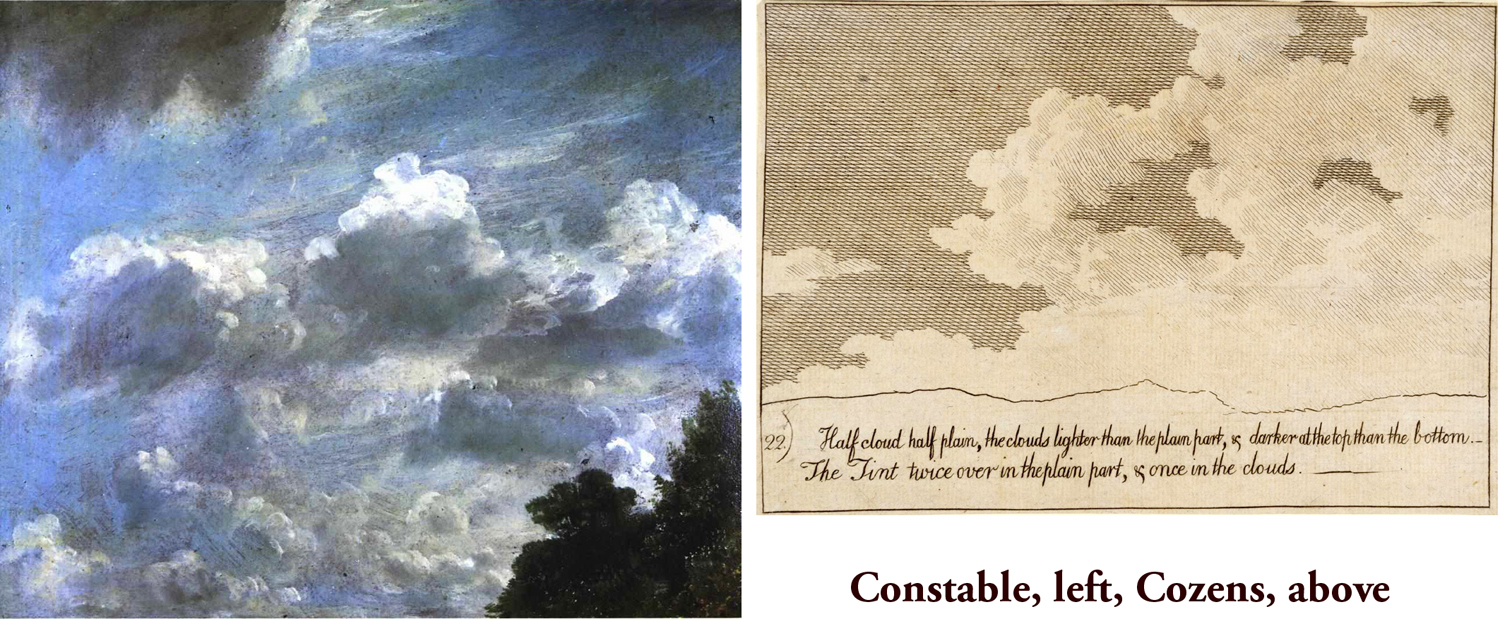
Most famously, a series of cloud studies by John Constable and sketches by Alexander Cozens. 

Cozens:

Constable:

“Clouds, for Constable, were a source of feeling and perception, an ‘Organ of sentiment’ (heart or lungs) as much as meteorological phenomena,” writes author Mary Jacobus in the book Romantic Things: A Tree, a Rock, a Cloud. “If painting is another name for feeling, and the sky an organ of sentiment, then his cloud sketches are less a notation of changing weather effects than a series of Romantic lyrics: exhalations and exclamations, meditations and reflections, attached to a specific location and moment in time.”

In other words, the clouds, either painted or merely watched, become a subject for contemplation, even meditation. Beginning in the 20th century, paintings became increasingly abstract and the point being not subject matter but the substance of paint — color, shape, line, form, design. To look at a Jackson Pollock painting, or one by Mark Rothko, you are asked not to name a subject matter, but to relate the canvas to human affect, i.e., what does the painting make you feel?

A number of artists and photographers have turned to clouds to make images that are both abstract and descriptive. The clouds themselves provide the abstraction. 

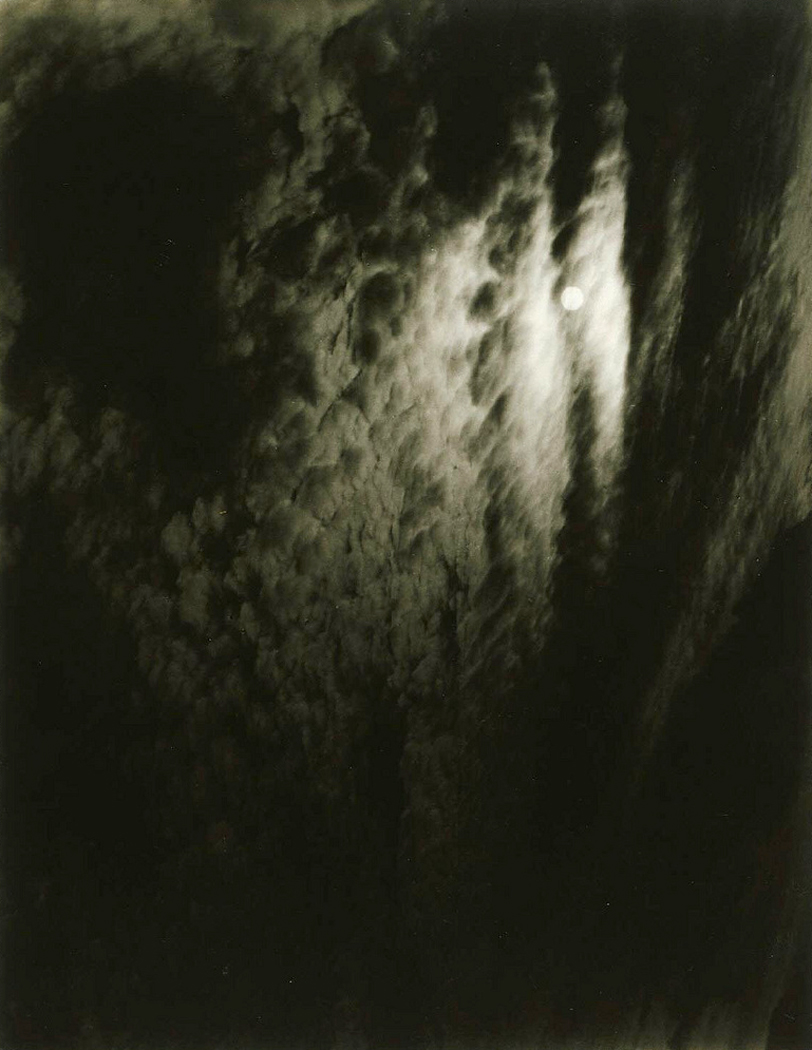
At the beginning of the 20th century, Modernist photographer Alfred Stieglitz made a tremendous series of images of clouds, which he titled, “Equivalents,” meaning that the visual was an equivalent of the emotion. 

He made more than 200 such images, with the intent that they could express emotions, much as music can, purely by abstraction. They are images of actual clouds, but they are also shapes on a piece of photographic paper. You can see them as photographs of the sky, or as pure abstractions. Either way, for Stieglitz, the important part was that an emotion be evoked. 


Another photographer, Edward Weston made pictures of clouds through his lifetime, less consciously manipulated than Stieglitz’s, but cloud abstractions nonetheless. 

The German painter Gerhard Richter made a series of cloud paintings in the 1970s. A Sotheby’s catalog said, “the clouds are caught in a moment of confrontation between the painterly and the photographic, the representative and the abstract, the natural and the supernatural.” Much of Richter’s art is political or otherwise Postmodern tricks about the nature of art itself. As for the clouds, Richter himself said, “I felt like painting something beautiful.”

He kept a notebook of images, which he called “Atlas,” in which he kept many sketches, photos and paintings of everyday items, and a whole section on nothing but clouds. 

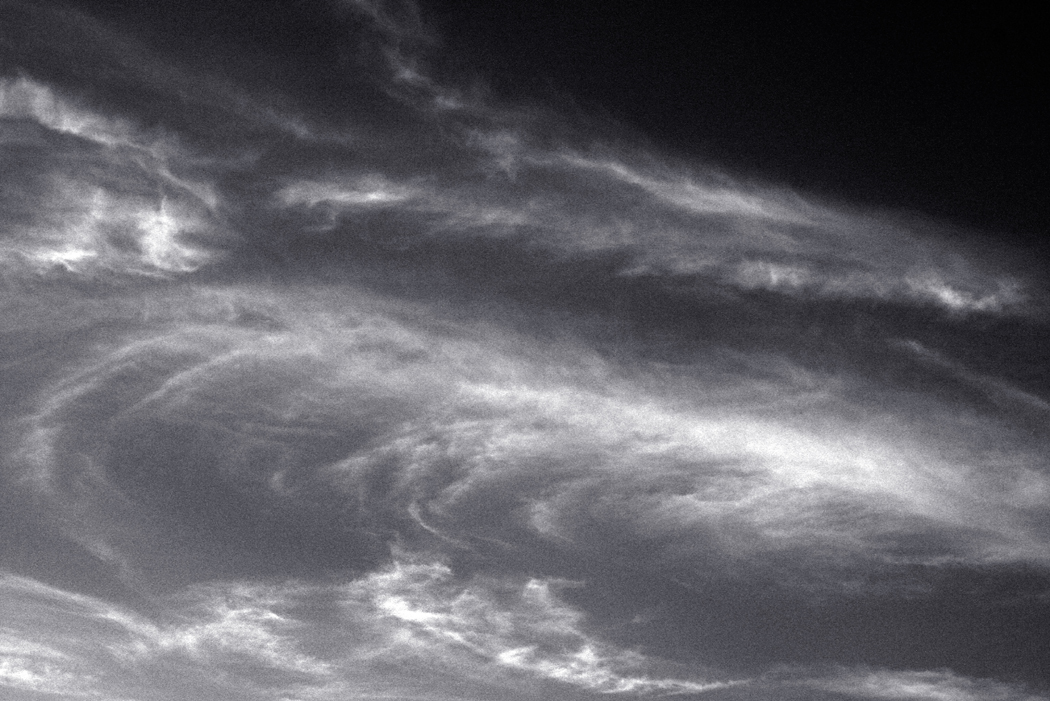
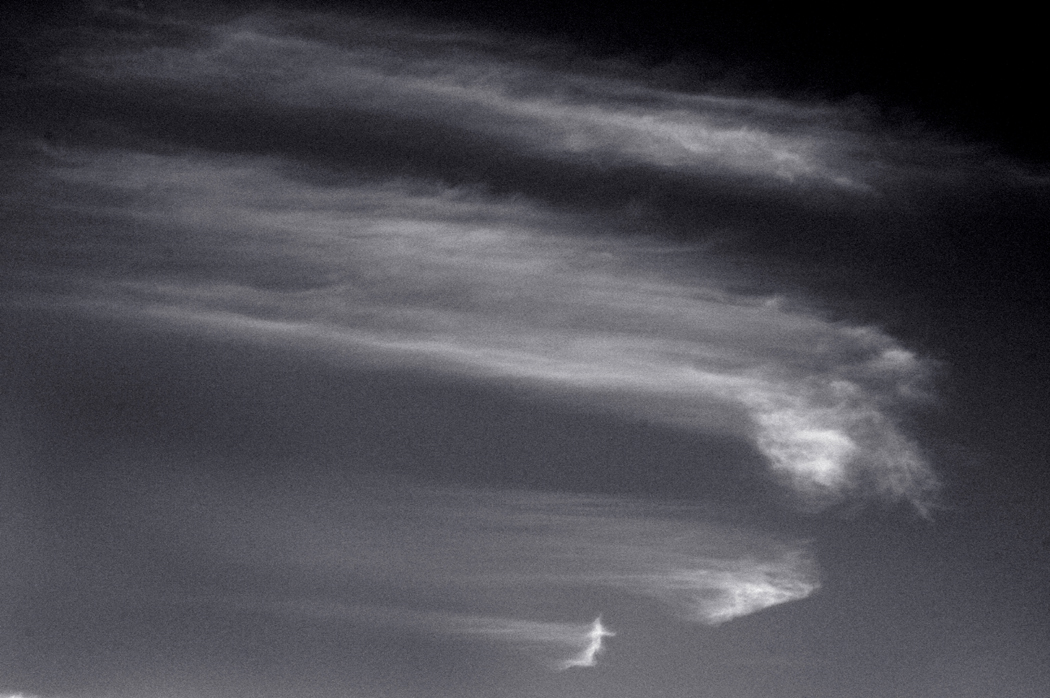
I have made countless photographs of clouds. I step out of the house pretty much every day, just to look up and watch clouds. They keep my eyes fresh and my mind invigorated. I have two books I have made: one of images of landforms and clouds seen from my airplane window; and a second of clouds pictures made all on a single afternoon in Arizona during the rising and waning of a monsoon storm. They can be viewed online here and here

When we spend as much time indoors as most people have these past two pandemic years, it is a relief to refocus our eyes outward (and upward) to a distance beyond the four walls. The clouds are far enough that our stereoscopic vision interprets the distance as indistinguishable from infinity. That refocus is necessary to keep us in touch with the greater things. Too often our eyes are focused on electronic screens held less than arms distant. Stretch your eyes back out. Look up. Keep watching the skies. 

Click on any image to enlarge

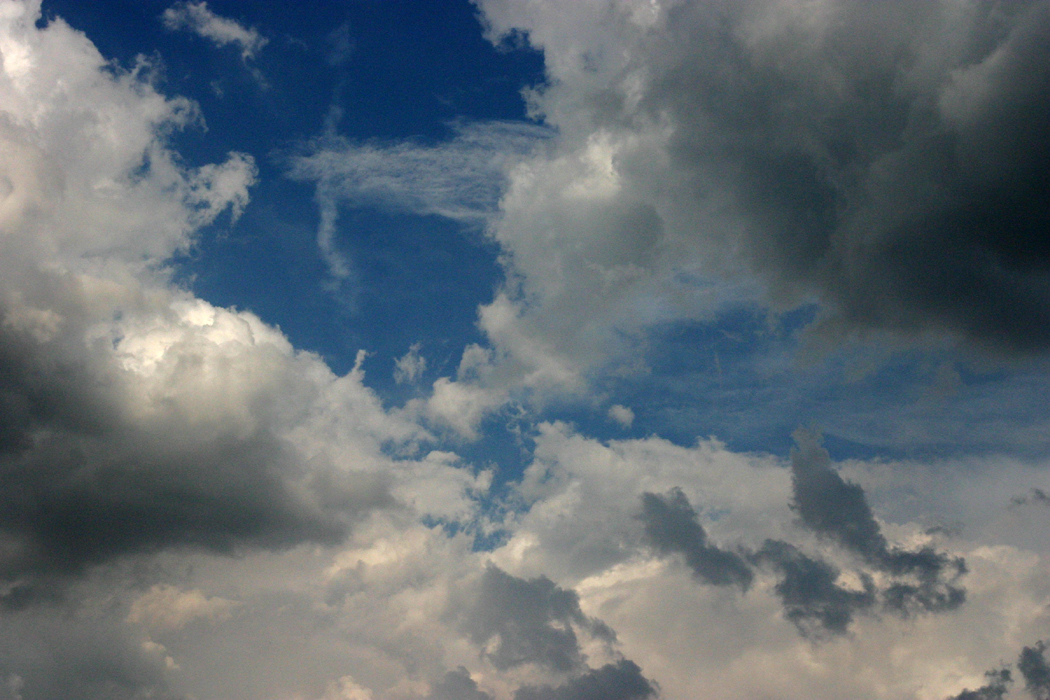
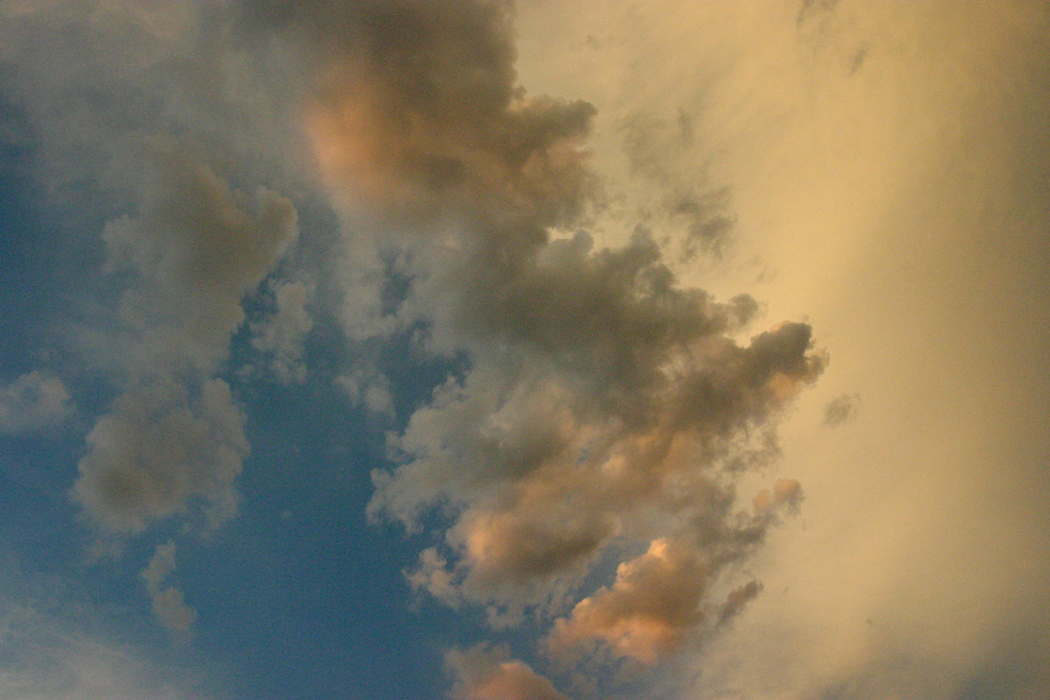
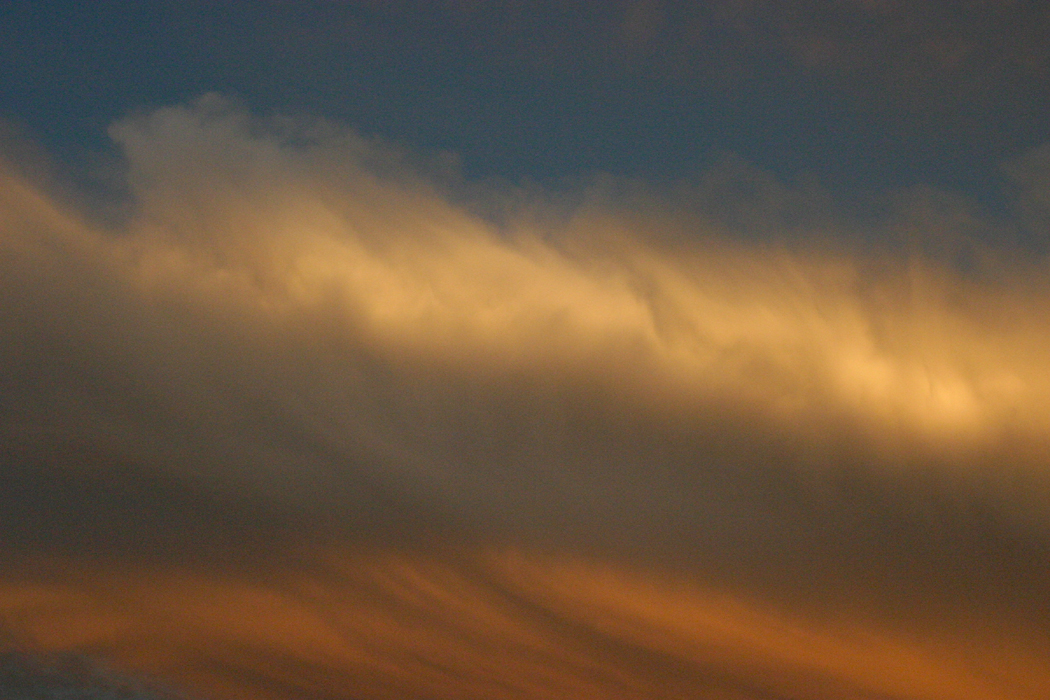
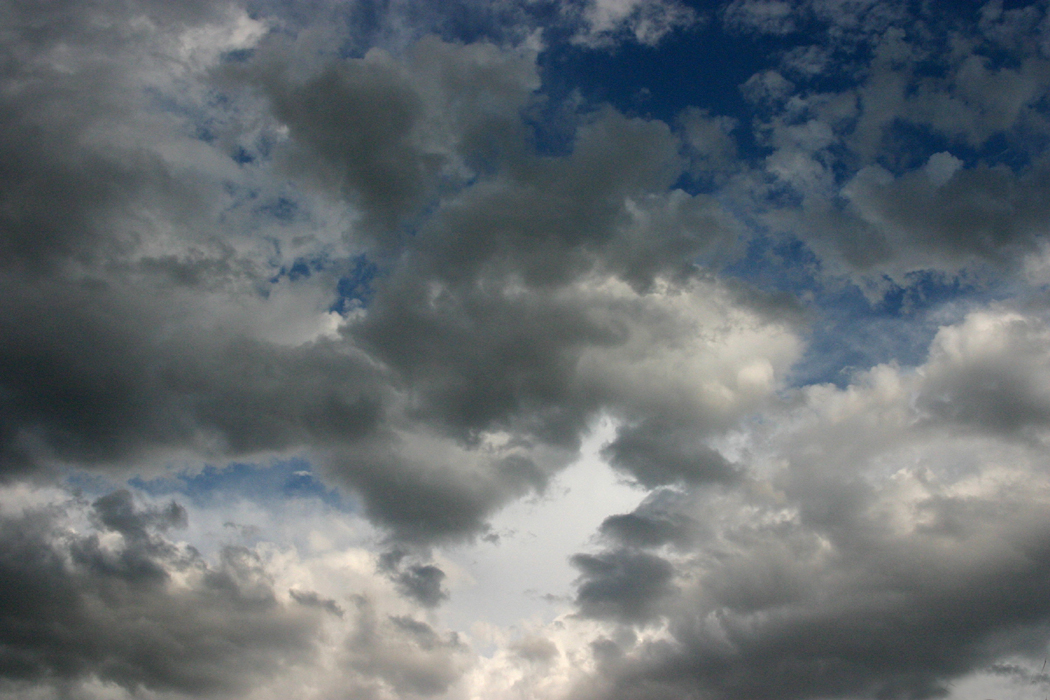
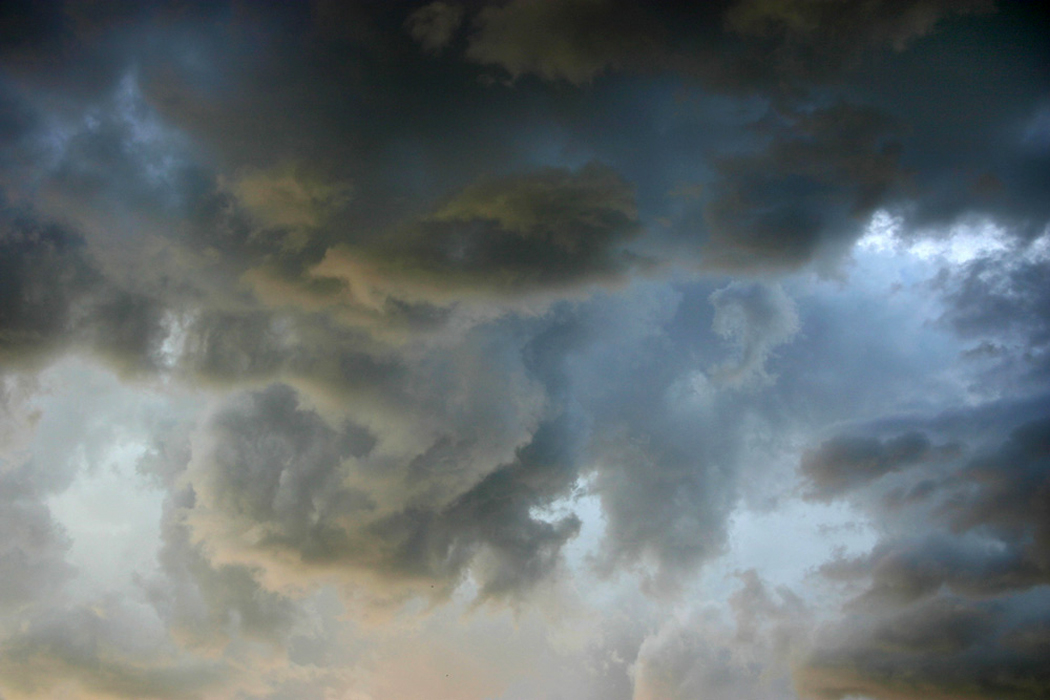
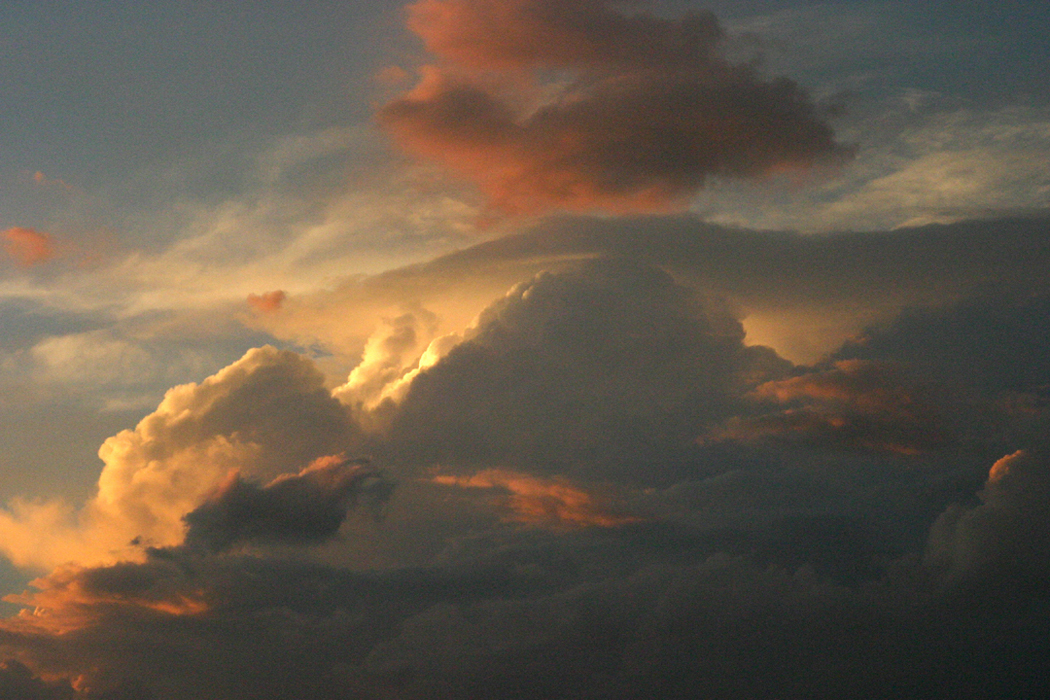
color sky 03One grows as a human being, and the art cannot help but grow, too. When I was young, it was art that impressed me most: the forms, textures, colors, the transformation of stimuli into esthetic forms. Don’t blame me — it was the times in which I grew up; Modernism was in the ascendency and we all mouthed such platitudes as “art changes nothing,” and “Subject matter? The subject doesn’t matter, only what you make from it.” In those years, life drawing ceased to be taught in most art schools; students were asked merely to “be creative.” The divorce between life and art was complete. cloud30 The prejudice was that the subject, say in my chosen medium, photography, was only there to catch light and make for a splendid arrangement of greys and blacks printed out in rich silver on glossy paper. Anything else was pretty pictures for calendars or chamber of commerce brochures. A kind of puritanism set in. If you are old enough, I’m sure you remember it: No cropping, previsualize, etc. So, when I was younger, I concentrated on the beautiful print, in black and white, and archivally processed. Zone system, anyone? cloud 01 My life turned in a different direction. Instead of a photographer, I turned out to be a writer. And lucky for me, it was on a newspaper and not in academia. I never had to slog through the atrocious trends of literary theory then current (still current). When asked to lecture to writing classes, I always had one lesson to give: Good writing is having something to say. Writing in fancy words or jargon, clever euphues, gongorisms, or acrostics or esoteric allusion only get in the way. One can be so caught up in the allure of a classic Bugatti that you forget its purpose is to get you somewhere. Fancy writing is that shiny Bugatti sitting unused in a garage, cherished and polished but useless. cloud08 I continued to make photographs, nevertheless. And I have had gallery shows. But as I got older I came to see that the Bugatti was there to drive somewhere, not to show off. Subject matter not only counted, it was the reason for making the picture in the first place. But — and this is a big proviso — not to share the subject with your audience so you can all go “Ooh, what a beautiful sunset.” That really is a calendar photo. cloud16 No, the entire purpose of art, if it can be said to have a purpose, is to make a connection with the world. To reconnect with what habit has made invisible. To see what you normally ignore, to find the glow of liveliness in the experience of being alive. Few people need to be told that a sunset is pretty; there is no art in that.cloud25 But to find the chispas — the sparks — in the crack of a sidewalk, or the bare winter trees, or the clouds that sail over us every day — this is not so much a finding of a source for perfect prints to hang on the wall, but rather the illumination of a hidden fire. These things are all alive: Every bush is the burning bush. That is what makes Van Gogh’s landscapes so alive. They burn from within. This is not something he has applied from the outside; it is something he was able to see as the scales fell from his eyes. And so it can be for anyone willing to look, to see. It is what makes life drawing so indispensable for an artist. Drawing is not simply making an art object, drawing is learning to see, to break through the cataracts of habit. cloud26 And so, when I come back to clouds as an old man, I see in them not merely abstract shapes from which I can make suitable art. I don’t care about art. I see something that wakes me up, and I try to capture it with the snap of my shutter. For me. Not for some appreciative audience. For me. I am the one I want to keep awake, alive. Others have helped me in this; if I can pass this on to others, all to the good. But I no longer care about making art.cloud38 (Note: All but three of these photographs were taken on the same day during monsoon season from my back yard in Phoenix, Ariz.) cloud42 cloud43

color sky 01 cloud45 color sky 02 cloud07

clouds134In the 1920s, a fundamental change occurred in the part of photography that was attempting to be seen as art. What had always previously been seen as a picture of something became a picture of its own.

In this, it followed the progress of Modernism in other media. What had been a photograph of a house or a boat, and judged by how well it set off the house or boat, it now became an arrangement of grey and black, of line and form.

If anyone could claim to be the leader of this shift, it would be Alfred Stieglitz. “I was born in Hoboken. I am an American. Photography is my passion. The search for truth is my obsession.”

Despite his tendency toward oracular declamation — or perhaps because of it — Stieglitz became the prophet of a new type of photography in America. Modernist. Stieglitz equivalent 1

His first work, from the late 1890s through the 1920s was mostly figurative, but he became dissatisfied with the idea that his photographs were praised for their subject matter.

In 1922, he began photographing clouds and turning them into the equivalent of abstract paintings.

“Through clouds to put down my philosophy of life — to show that my photographs were not due to subject matter — not to special trees or faces, or interiors, to special privileges — clouds were there for everyone — no tax as yet on them — free.”

These first series of cloud abstractions he called “A Sequence of Ten Cloud Photographs.”  When he showed a new series in 1924, he renamed them “Songs of the Sky.” He continued making these prints, usually exaggerated in contrast and printed quite dark, making the blue sky black. He made them by the dozens, and by 1925, he was calling them “Equivalents.”stieglitz equivalent 2

“I have a vision of life and I try to find equivalents for it sometimes in the form of photographs…(Cloud photographs) are equivalents of my most profound life experience.”

This idea of “equivalents” was later taken up and expanded by photographer Minor White and others, but in essence, the abstraction of the clouds were to stand for “equivalent” emotional and intellectual experiences.

There is certainly a grandiosity to Stieglitz’s language, indeed to his person. But the photographs remain and many of them are deeply moving, perhaps compared to the late quartets of Beethoven.

But the underlying idea was that the medium of photography, rather than the subject matter the camera is pointed at, could be expressive: that the surface of palladium printed paper, or silver prints, and the blacks and whites of the silver on its surface, and the shapes they make, almost as if a Rohrschach test, could be sufficient for art.

Abstraction became a subset of 20th century photography, and even when there was a subject, such as a portrait or landscape, the photographer, whether Edward Weston or Paul Strand, or White or Bill Brandt, would insist on its essential abstraction as the basis of its value.

constable cozens pair But there is a problem with this: Those Equivalents that Stieglitz made are still clouds, and clouds carry with them all the baggage of subject matter. From the clouds in Renaissance paintings through the glorious cumulous in the seascapes of Aelbert Cuyp to the drawings of Alexander Cozens and countryside of John Constable. Clouds are an endless source of inspiration for the imagination of shape.

charlie brown and clouds In photography, it is almost impossible to eliminate subject matter, short of making photograms. The forms, colors, shadows, textures of the recognizable sensuous world keep intruding, no matter how extracted from context. When I was a teacher, one of the assignments I gave my students was “to photograph something so that I cannot tell what it is.” I expected them to get ultra close, or turn something upside down, or extend the contrast. But, try as they might, I could always tell what I was looking at.

I do not see this as a deficiency in photography, but a strength. Photography can keep us tethered to the world when we might wish to float free; it reminds us that our primary obligation is to the existence we occupy and work in.

clouds105 Given that, photographs of clouds still has a powerful attraction: We can see that abstraction and reality are not necessarily in opposition: We can have both at once.

Put this way, it seems obvious, a commonplace. But this “double vision” is one of the things that keeps art lively, and informs our interaction with the everyday — keeps us aware that the world is alive, not inert.

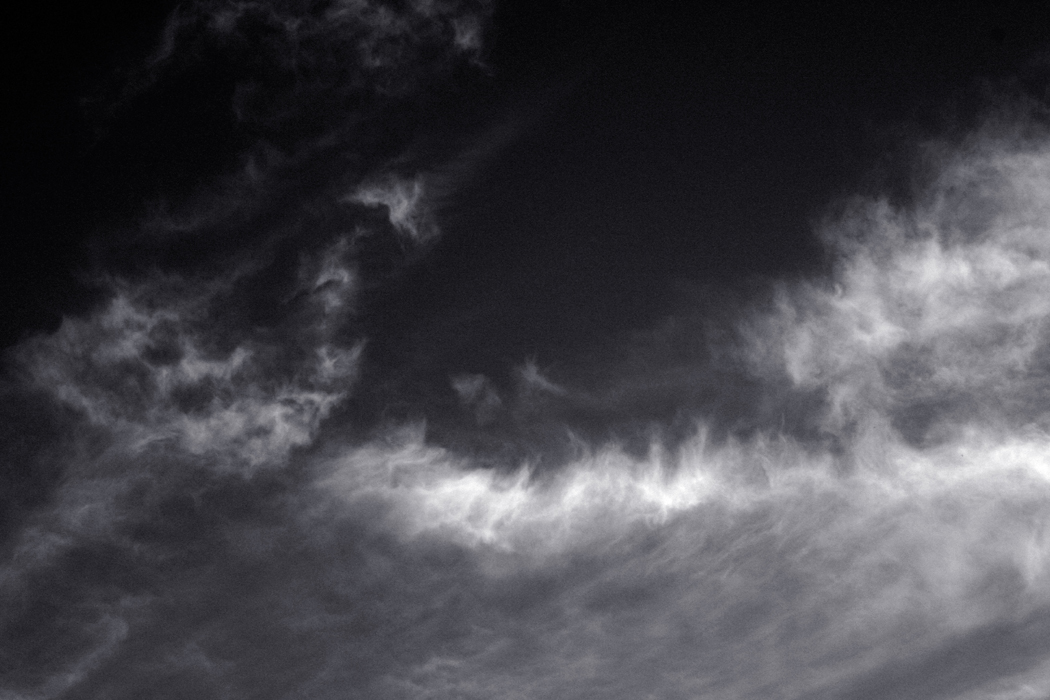
And so, I have made my own cloud photographs. The first series, seen here, are a rank imitation of Stieglitz’s Equivalents. The next blog installment will follow with the development of the idea. clouds116 clouds129 clouds115 clouds119

clouds130 clouds131 clouds139 clouds142 clouds145