Archive

Tag Archives: culture

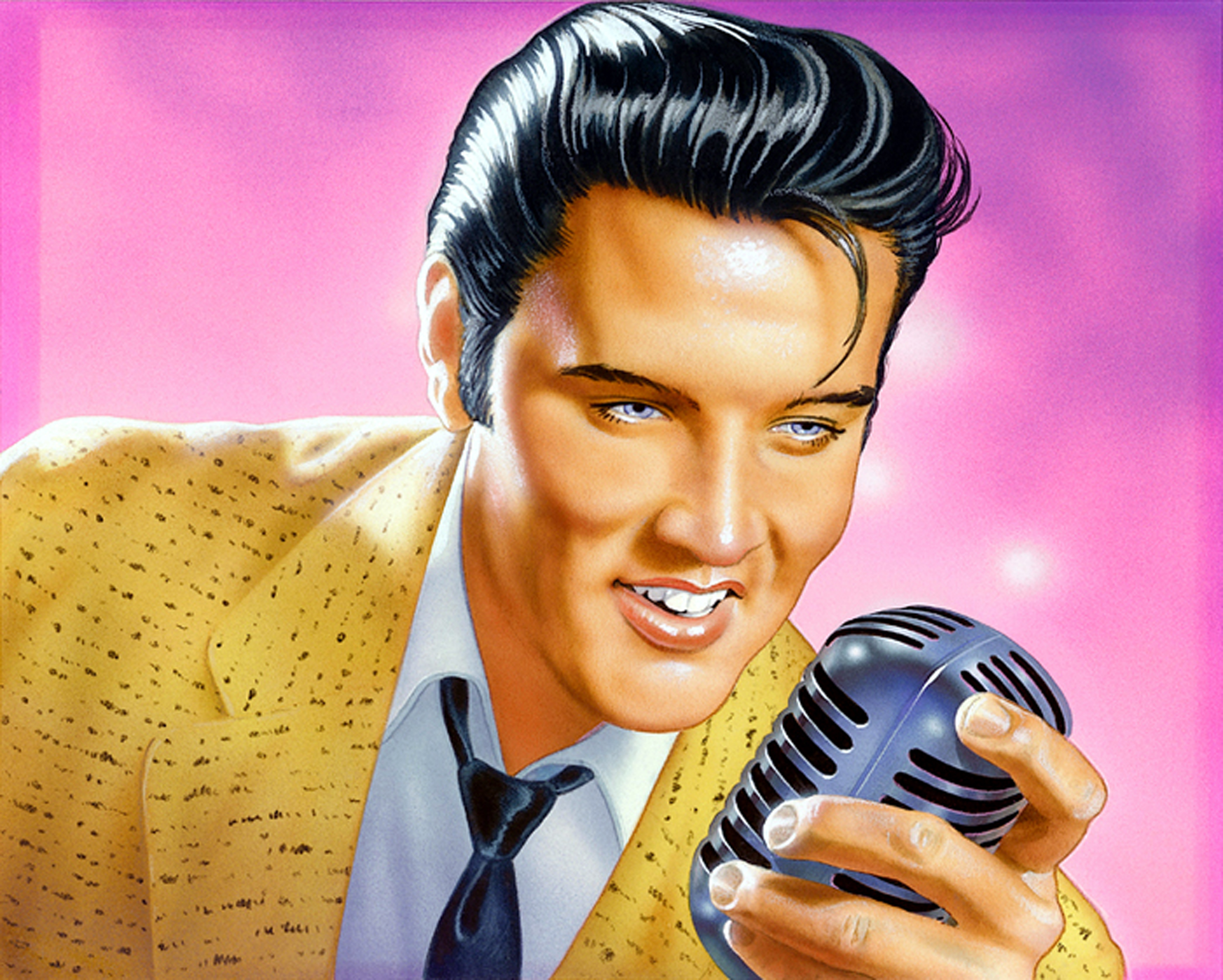
old elvis 1

Elvis is America.

I am not entirely delighted by that fact — even somewhat embarrassed by it — but there is no other figure, public or private, from the past 200 years that sums up so succinctly what the United States is all about.

And three and a half decades after his disappearance and reported death, Elvis Presley remains both what Americans are and what they want to be.

Of course, what they want to be is Young Elvis — brash, sexy, talented. And, compared to most Old World cultures, that is just what America is. Its pop culture has preempted many indigenous folkways throughout the planet precisely because it is so appealingly energetic. Content doesn’t matter nearly so much as style points, and Elvis — and America — can swivel and two-step like a blue demon.6/30/00 DS - REF="Elvis_ao_MCos.psd"

The effect is so pervasive that in deepest Africa, you don’t hear tribal drumming so much as you hear Top-40 tunes. And Japanese karaoki is not, after all, based on the music of the classical Noh plays.

No, what appeals to the world is America’s optimism, its lack of guilt, its comfort with itself. America may be a novice in world history, but it is a refreshingly guileless novice — or at least, it has been.

Like Young Elvis, we think of ourselves as dangerous without being threatening.

But America would prefer not to notice the Old Elvis in the mix, which is also part of our Elvis-selves.

For America is also crass, loaded with bad taste, money-chasing, conspicuous consumption, anti-intellectualism, sentimental Christianity, drug hypocrisy, junk food and mindless consumerism.

On the surface, the Young and Old Elvises seem like opposites, but they are not: The one naturally evolves from the other. You cannot have the Young Elvis without the Old One waddling behind, two halves to the same coin.

The flip side of our energy is our anti-intellectualism; our self-confidence is also our provincialism.

Our sober, well-educated founding fathers envisioned an America modeled on republican Rome — or rather modeled on imperial Rome’s nostalgic vision of its republican past.

Washington, Madison, Adams and Jefferson imagined something brand new in the world, something bursting with energy, new ideas and vitality.

That is Young Elvis. But just as republican Rome turned into the empire of Tiberius, Nero and Elagabalus, so America quickly added to its repertoire the Jacksons, the No-Nothings and the Tea Party and Neocons.

Indeed, Andrew Jackson, who kept goats in the White House and stabled his race horses on the grounds, was probably the first Old Elvis in our history. He was even known as “The King,” in his day — King Andrew, he was called by his political opponents, who disliked his monarchical yet proletarian ways.

There is something in American culture that is illogically ambivalent about royalty. We claim to be a classless society and righteously argue that anyone in America is as good as anyone else. Heaven help anyone who “puts on airs.”

Yet, Old Elvis is what America wants to be, too.old elvis 2

It is the ultimate goal of American democracy, not that we all share equally a modest and comfortable life, but that everyone should be a millionaire — and Old Elvis is America’s vision of what a millionaire should dress and act like.

So, we make an image of our desires and create a kind of celebrity aristocracy and pay homage to them by gobbling up tales of their every peccadillo in tabloid exposes.

It is a kind of trailer-park version of royalty: Bad taste, emphasis on wealth and glamor.

Glamor is to beauty as rhinestones are to rubies: There was some genuine grace in the Young Elvis; the Old Elvis is cubic zirconia to the bone.

race gravure

When I was a schoolboy and too young to know better than to ask foolish questions, I wondered why I, with my ruddy pink skin, was called ”White” and why Charlie Johnson, with chocolate skin, was called ”Black.”

What I saw around me was a huge variety of skin color, from the pasty Irish winter skin to the darkest African blue-black. There weren’t two colors, but thousands.

It was one of those cultural inconsistencies that sometimes bother children, but that adults seldom seem to puzzle over. I now recognize that it is as if a linguistic pattern were cast over reality, taking its place, so that we see words and not skin.

The question of race has followed me into adulthood, as I see people argue back and forth, usually at cross purposes, without ever having stopped to ask themselves, ”What is race?”

If they took time to define what they mean, they might have a better chance of making themselves understood.

For race isn’t one self-contained category; we mean many things by it, and sometimes contradictory things.

It would help if we could tease out some of the strands of the knotty problem.

The problem of definition began with the 18th century European obsession with taxonomy. They wanted to name everything. Europaeid types
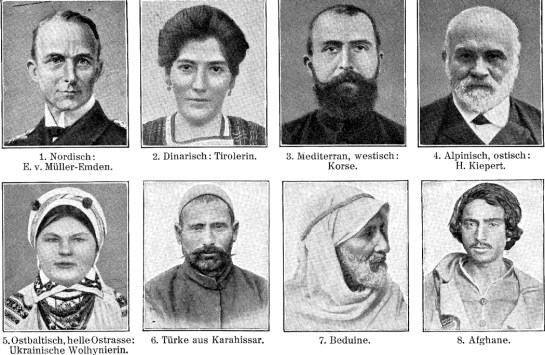
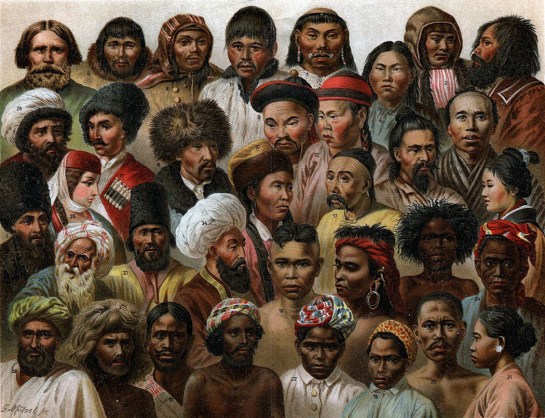
While it had been recognized for millennia that there were distinctive population groups in the world — The Greeks knew their Ethiopians, Shakespeare knew his Othello was a Moor — it is only during the Enlightenment that anyone tried to pin the variations down to uniform categories.

Race as a scientific idea began with the Swede Carl Linne, who devised an ingenious system for classifying animals and plants by morphology. He devised a system of phyla, orders, families and genera that worked its way down to species and, occasionally, subspecies.

A dog is Canis familiaris, a swamp rose is Rosa palustris. Humans are Homo sapiens.

Linne further divided humans into four ”races,” or subspecies, which he named H. sapiens americanus, europaeus, asiaticus and afer. These, he said, were red, White, yellow and Black. He also defined them by personality and culture.

H. sapiens europaeus, for instance, ”wears tight-fitting clothes” and is ”nimble, of the keenest mind, innovator.” H. sapiens afer, however, are ”cunning, lazy, careless,” and they ”smear self with fat.” Guess which race Linne considered himself to be.

American Indians, by this system, are cheerful and resolute, and Asians are proud and greedy. It should be noted that Linne didn’t get to travel much; it was the 18th century, and what he knew of other peoples was largely peculiar hearsay.

The confusion of race and behavior continues. I remember one White minister in Greensboro, N.C., who announced that his ministry was to aid ”the alcoholic, the drug addict and the Negro.”

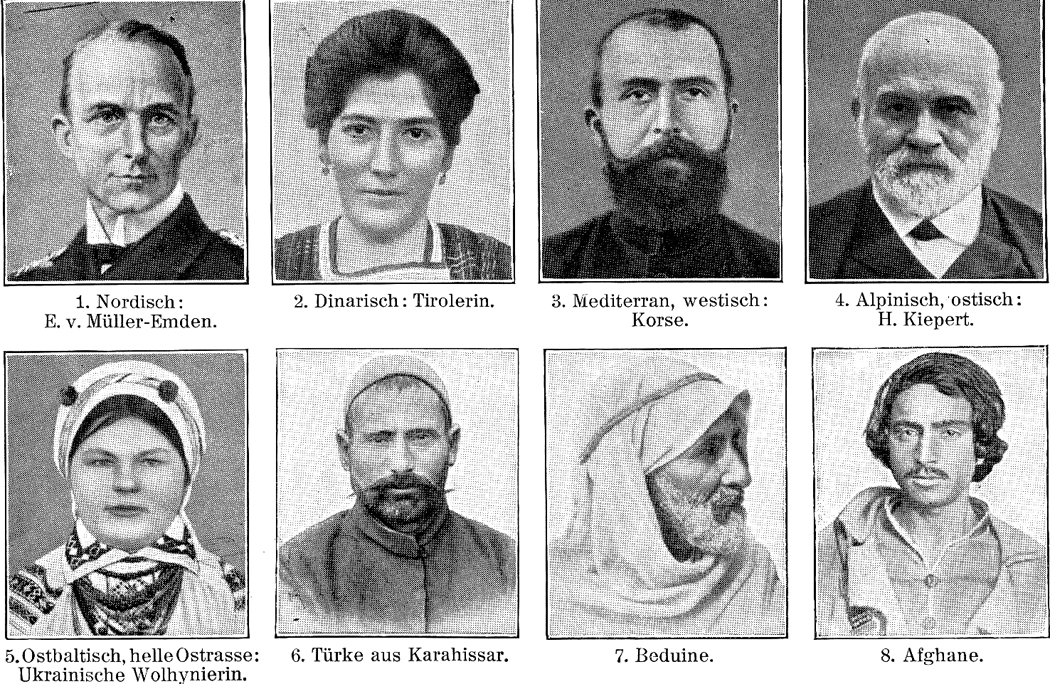
Later biologists narrowed the races to three, eliding the red and yellow races, and they called the three Caucasoid, Mongoloid, and Negroid. Then others, noting the number of population groups that could not easily fit into these three classes — Polynesians, for instance, or Australian aborigines — came up with newer and more distinct races and sub-races. The number proliferated to the point that there were nearly as many races as there were people, and race as a useful scientific classification evaporated.

MISSING IN MODERN SCIENCE

Most scientists now discount the idea of race; you will be hard pressed to find the term used in any modern text.

The initial idea was that genetic ”types” exist in regional populations. The problem is that there is more variation between individuals within each group than there is between the groups themselves. Dravidian Caucasoids may very well be darker of skin than Nilotic Negroids.

As a biological concept, race was a convenient but misleading shorthand, made nonsense after a deeper look at the facts. race types

And the very distinctions made between populations — skin color, nose shape, resistance to malaria, lactose tolerance, etc. — are not distributed uniformly through the so-called races. The characteristics are likely to be distributed regionally, but the regions are multifarious and overlapping, not monolithic and co-equal.

It is a very few people who have all the many characteristics used to define a ”Negroid” or ”Caucasoid.” There are dark-skinned Caucasoids and straight-haired Negroids.

It makes even less sense in America, where the variations are no longer regional, and the bloodlines are no longer separate.

Yet, the notion of race persists. It is this nation’s most intractable social problem. If it is not biological, what is it?

Even before science took over the idea, race was a short word for ”bloodline.” Each family, insofar as it can be distinguished from its neighbors, is the culmination of a race. In Wagner’s version of Germanic myth, for instance, there is the race of Wolsungs, the race of Gibichungs, the race of Niebelungs.

I come from a race of Nilsens, although I can only trace it back a handful of generations, and there is no eponymous hero at its source.

But that is not what most Americans mean when they evoke the word ”race.”

In this country, with its peculiar history, race most immediately means skin color.

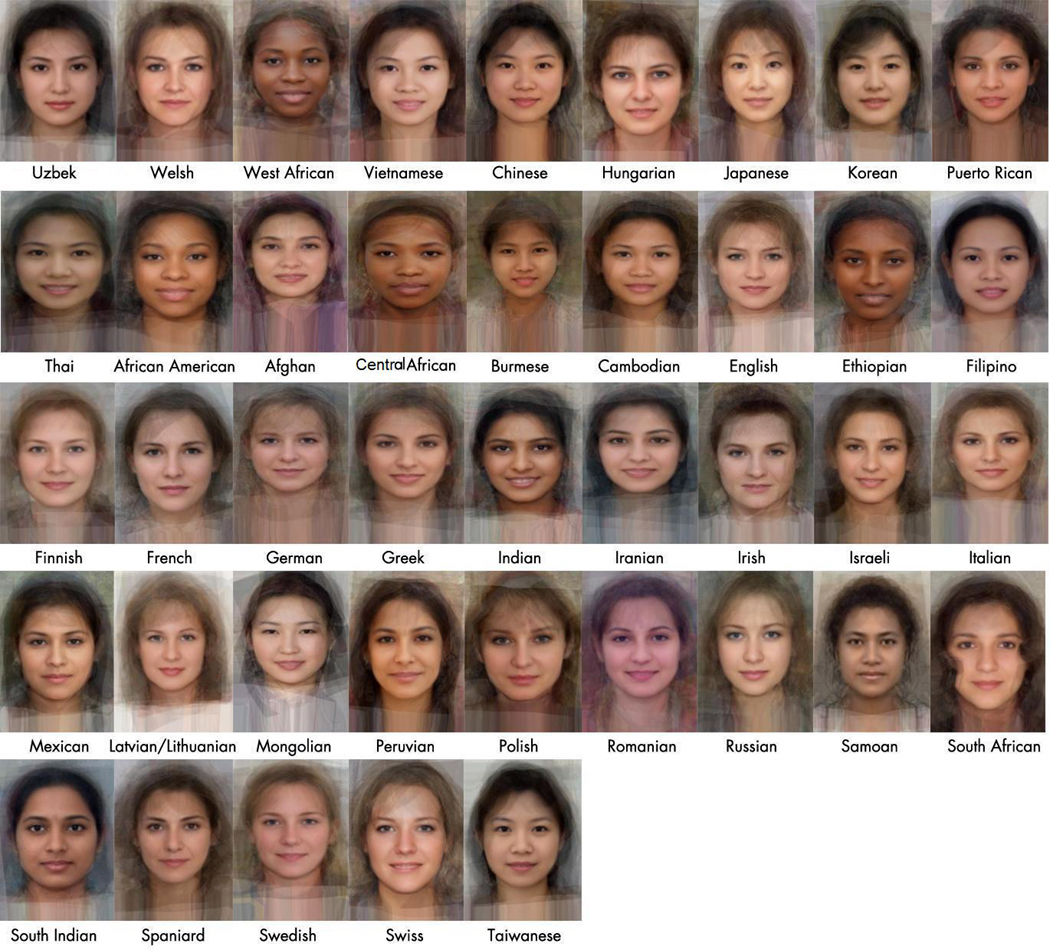
Yet the distinction is the least useful. If you took all the peoples of the world and lined them up, not as in an old grammar school photograph, by height, but by skin shade, you would not find any distinct breaks, but a continuous spectrum of color: a wash, not a palette. average female face
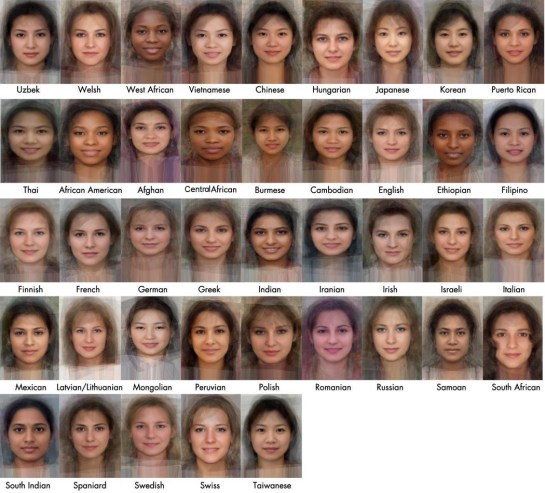
In the U.S., we have an artificial sampling of skin color. It is as if a dollop of red from one end of the spectrum were plopped down square on the blue end. The colors seem distinct and different, but this is a historical accident, not a true picture of racial difference.

While skin color is the most obvious racial marker, the most important is culture. People brought here from Africa had a different culture from those who came here from Europe.

The cultures have blended together quite a bit, yet it is astonishing how conservative culture is. Cultural forms can be maintained over centuries without anyone really thinking about it. Why does a wooden church in New England so often have the pointed arch of a Gothic stone cathedral? It makes no sense in wood.

We enter our jet planes from the left side, just as we mounted our horses. We let our children play with ”choo-choo trains,” despite the fact that their grandparents were likely the last in their race to have ever seen a steam locomotive.

When I visited South Africa, I was astonished to find it seemed so much like the North Carolina I had lived in for 20 years. I saw an old Black man in a worn blue suit and no shoes, waiting in front of a wooden store/service station for a ride. He could have been from Hobgood, N.C.

I heard a choir of cleaning women singing as they worked, and I recognized in the tone of their voices Ma Rainey and Aretha Franklin.

It is often these cultural differences that we use to separate the races in the U.S. — Rap vs. bluegrass; basketball vs. hockey, grape soda vs. root beer.

We feel comfortable with our own way of doing things, suspicious of other ways. There is considerable xenophobia in our racial attitudes.

Another important facet of what we call race is more accurately called class.

The reaction of many well-to-do Whites to poor Blacks is not much different from their reaction to poor Whites. “Trailer trash,” they call them. One remembers that in the 19th century, when there was so much prejudice against Irish working-class immigrants to the U.S., there were attempts to prove that the Irish were little different from African slaves. Irish negroes
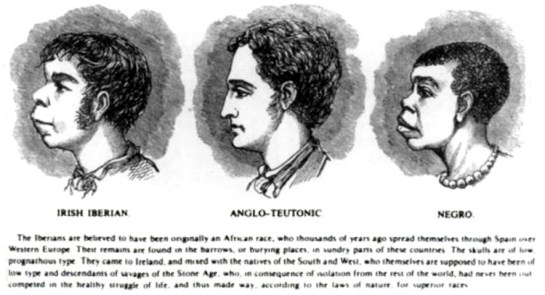
Poor people are seen to have different work ethics, different hygiene patterns, different cultural ideals. That so many more Blacks than Whites, by percentage, are poor, leads to a bleeding of one attitude into another. Much of what is ascribed to African-Americans by their White neighbors is class consciousness, not simple racism.

Both are pernicious, but the two become confused in argument.

POLITICS AND POWER

Then, too, race has become politics. And by politics, I mean power.

Political leaders speak as if they mean to ameliorate the problems of society, but the main goal of politics is power, its acquisition and maintenance. Those in power don’t want to give it up, those disenfranchised want to get it. When they can use race, from either side, they will.

This is used by both sides: White politicians have a glossary of code words that warn their voters that Blacks will take their jobs and their women. The privileged mean to prevent the dispossessed from getting power.

But the Black politician often complains about a Black conservative that he is somehow turning his back on the ”solidarity,” which is needed to gain power. Voter blocks on each side line up to scrimmage at the poll.

If a demonstration of the political definition of race were needed, one only has to consider the concept of ”race mixing,” seen in two different contexts.

Consider these two political systems and their apportionment of political power. In South Africa under apartheid, the admixture of White blood and Black ”ennobled” and made a new category, ”Colored,” above Black and not far under White and with most of the rights of Whites, whereas in the old U.S., a percentage of Black blood mixed with White ”degraded” and created a Black person and the lack of rights that came with the color.

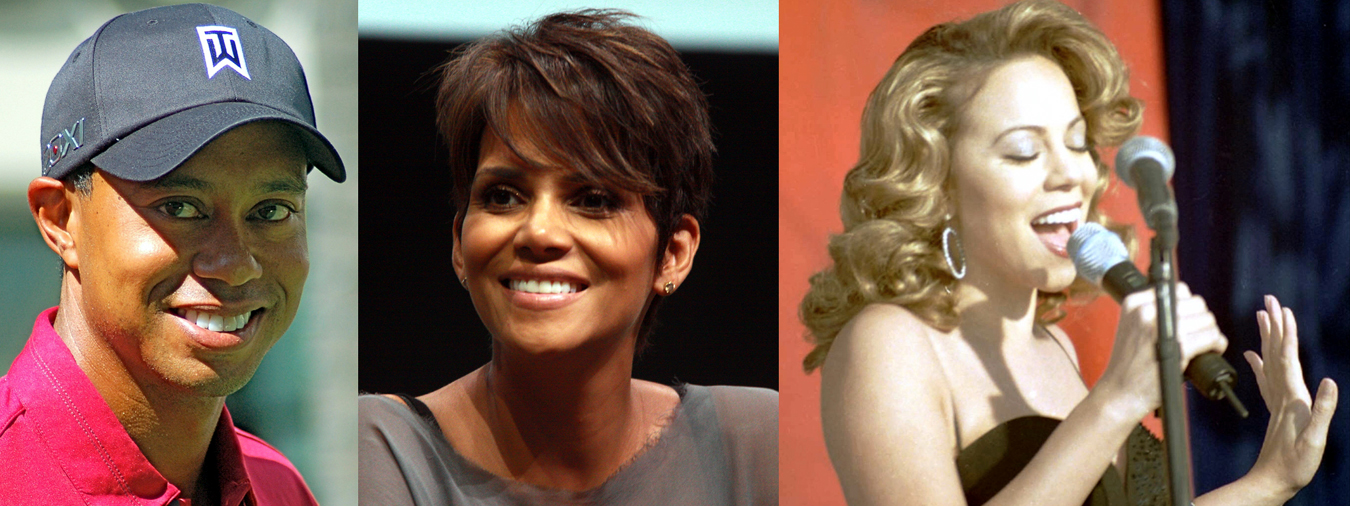
It is an odd system indeed that forces Mariah Carey or Halle Berry into the category, “Black woman.” And how we scratch our heads over the categorization of Tiger Wood. trio
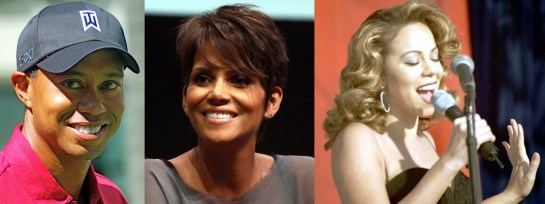
Nor can we forget history when we talk of race. The United States cannot escape the evils of its own past. Whites would like to forget slavery: ”That was a long time ago. I never owned any slaves,” they say. They seem to have no sense of history (unless it’s the Southern White’s sense of grievance about the Civil War.)

But Black Americans cannot avoid the burden of history. It is brought home to them every day. They cannot forget that they arrived on this continent under protest. They cannot forget that they were once legally less than fully human.

They cannot help seeing the vestiges of that past, even when such vestiges are invisible to Whites. What they call ”racism,” is often just the comet-tail of history, still affecting the course of events.

There are still more facets of race: linguistic usage, self-image, marketing. In one sense, race has turned from being a caste marker and into a demographic group.

So, when we open a dialogue on race, as the president has asked, we need to try to be clear about what we mean, and not address skin color when we mean class, not argue over culture, when it’s politics we are concerned with.

I don’t have the solutions to America’s race problems, but I am certain that unless we begin by defining what we mean by race, by beginning with the simplest questions, we will continue to repeat ourselves over and over until we are neither Black nor White, but are merely blue in the face.

Musicals collage with knife

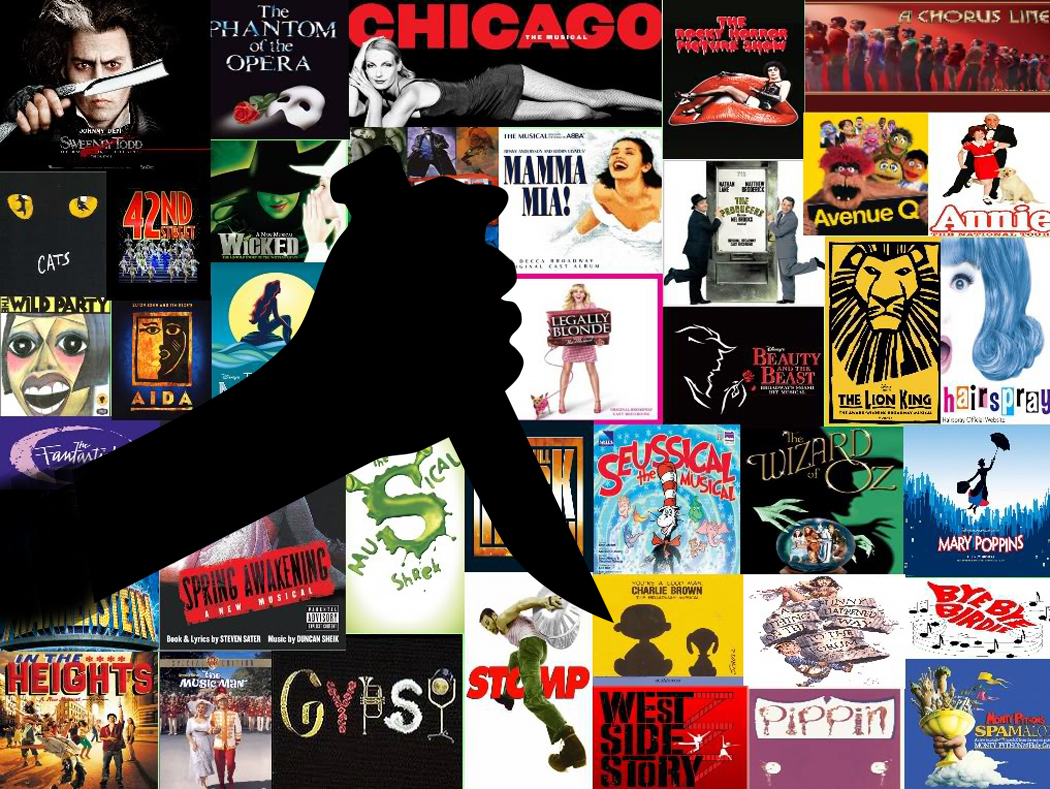
Musical theater is said to be the backbone of the American theater experience. Certainly, in this century, from the creaky story lines of George M. Cohan to the creaky tunes of Andrew Lloyd Webber, musicals have raked in the big bucks while “legitimate” theater plays to smaller, sober audiences.

Yet, are musicals more than merely feel-good entertainment? Can they claim to be real theater?

Let me begin by stating in the clearest possible terms, I hate musicals. I mean, I really hate musicals. They make my skin crawl. They give me the heebie-jeebies. I reach for my revolver.

And I don’t mean just the recent, cat-screeching extravaganzas with their central ponderous ballad. No thinking person can possible defend Les Miz, which was the single worst experience I have ever had in a theater, and that counts once when I was young and spent a night with Brecht after eating some bad clams.

Less miserable? No! I couldn’t have been more miserable.

Les Miz and Phantom are beneath contempt. Pretention amplified by lack of musical talent.

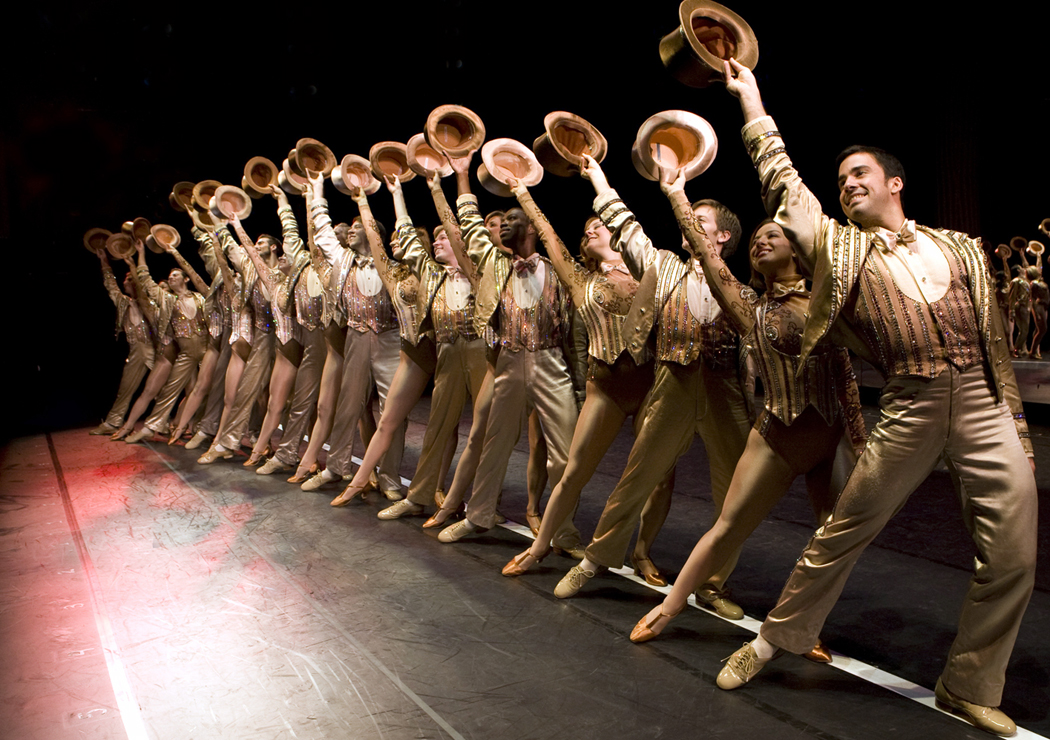
They’re bad enough, and they have taken over Broadway. But what I am talking about, what really makes my flesh turn livery and my eyes spongy, are the bright-faced, cheery musicals of the past, those dynamos of pop standards, with their boy-gets-girl plots and their sparkly chorus numbers. I despise them. I have hated them since I was a kid and watched their corny production numbers on the Ed Sullivan Show.

a chorus line

My face turned in embarrassment for them. And I still suffer occasional tinnitus from having heard Ethel Merman sing once.

From Oklahoma! and On the Town in the 1940s to Assassins and Rent in the 1990s, I hate them all. With a few notable exceptions, they foist off on the public a distorted, happy-face world view. Even Rent ultimately has a chamber-of-commerce take on misery.

It is at best a miserly and partial vision of existence that musicals afford us, running the gamut of emotions from wistful to plucky.

And the thing I have the hardest time with: their arrogant naivete. They are at rock bottom, unsalvageably corny: “To siiiiiing the unbearable soooooong!”

At least the old Rodgers and Hart or Rodgers and Hammerstein shows had some memorable tunes, and extracted from their treacly context, I can enjoy them. But nowadays, the music is aimless harmonic wandering reaching a high-held note cynically plotted to stop the show. “Memories?” Only memories of the kind of tunes Leonard Bernstein could write for Candide. That musical, one of the few I can bear to touch my skin, is pleasantly acid, whereas most musicals are unpleasantly optimistic. I don’t believe in that optimism. It is a lie.

You can point out a Carousel here or a Candide there. Or a whole canon of work by Sondheim, which fails for another reason — tunes no one can remember.

But the form is inherently sentimental, and the actors who sing the tunes in their breathy, oh-so-earnest manner only accentuate the mawkishness of them.

This is different from opera, where the subject matter is usually tragic, and the music is so much richer, more subtle and wider of emotional range, to say nothing of harmonic complexity and drive.

Give me Wozzeck over Brigadoon any day.

I hate musical theater button


art critic cap copy

I first recognized that the common baseball cap had taken over the world the second time I drove through eastern Washington, through the vast green and blowing wheat fields of the Palouse. The first time, in the early 1980s, all the farmers and ranchers wore curl-brimmed Western hats, either straw or felt. There was a distinctly cowboy feel to the agricultural workers.

But a few years later, these same wizened, leather-skinned and toothpick-thin men wore the duck-billed “gimme cap” of their local John Deere dealer or seed company.

johndeerecap

The artificial romance of the cowboy was gone for good. The gimme cap became standard.

If we think of Abraham Lincoln in his stovepipe top hat, or Harry Truman in a gray fedora, we are more likely to think of Bill Clinton in a ballcap. Fashions change.

You can still find the gimme cap in rural America, where it gives its wearer an honest day’s labor, but it is in the city that the cap has grown up. A John Deere cap on a farmer means one thing, but the same hat on an advertising company’s art director means quite another.

He is showing off his sense of hipness.

In fact, it is precisely this sense of irony that gives the ballcap — on MTV or on a city lawyer’s weekend head — its cache. We wear the caps to say something other than what the caps seem to say.

I know. I have had a ballcap collection going for something like 20 years, always looking for the corporate logo or bumper-sticker slogan that can be read ambiguously.

My collection is nothing like it used to be: As we get older, our need to express ourselves to strangers weakens and seems less important. Yet, I still have some of my favorites:

There is a DeKalb Seed Company hat with its logo of a flying corn-on-the-cob. I have always taken this as something of a personal totem. Anyone who has read much of my writing will recognize this immediately and have a good laugh.

Dekalblogo

Then there is the red cap with the giant “X” across it. Such hats were the rage when Spike Lee’s film, Malcolm X, came out. But most of its wearers were Black. I wore the hat nonetheless, and when asked about it, I always said it wasn’t about the Black Muslim leader, but was rather a tribute to my favorite chromosome.

O also love the suede gray, elegant cap with the winged “A”  on its front that was sold to advertise the Tony Kushner plays, Angels in America. It is a very butch hat for so subtle a play. It implies a great deal, but its message is only readable to a very few.

My favorite cap recently has been the gray and black Nixon hat. When I wear it to the ballpark, I tell people it honors Otis Nixon, my favorite of all former Atlanta Braves centerfielders — a very large and distinguished group of alumni. Nixon is also a charter member  of my personally selected “All-Ugly” squad. Lord, I enjoyed watching him play.

otis nixon

The perfect gimme cap, though, has the logo of the Shakespeare fishing gear company on it, written in an elegant script as though it were the signature of the Elizabethan playwright. When I wore it, my highbrow friends assumed it was in honor of the author of Hamlet; my more sports-minded friends took it as an endorsement of a rod-and-reel. It was perfectly ambiguous.

I wore that hat out and its replacement is a little less perfect, for added to the signature is the slogan “Since 1897,” which flattens some of the irony.

shakespeare logo

Many gimme caps are promotional items, meant to hawk a new movie or rock band. The most misaimed of these has to be the A&E network cap, with the logo on the backside, so it can be worn bill-back in home-boy style. What used to be the Arts and Entertainment network has given up completely on art, and given over to rednecks making duck calls, or chasing wild pigs across Texas. Artless.

Of course there are people who wear their caps with no sense of irony at all. They don’t mind advertising the Nike swoosh or their favorite baseball team or their brand of cola. They are left hopelessly behind. We read their lives like a book. The irony is meant, instead to hide, while revealing to the initiated.

The non-ironic ballcap is the equivalent of one of those oh-so-earnest bumper stickers that the politically committed paste on their cars. Yes, we care about whirled peas, and our gunless hands will be cold and dead. We should not be so one-dimensional.

But giving out a more complex message, the wealthy Hollywood actor, Tom Selleck can wear the blue-collar Detroit Tigers hat and pretend to be one of the proletariat.

Brooklyn cap

Which is why I choose the Brooklyn Dodgers cap, or the sky blue of the “Oral & Facial Surgical Center of Corinth, Mississippi,” or the plaid Bear Surf Boards cap.

It makes you think twice.

img0151A

I want to acknowledge a debt. It comes as a bit of an ugly confession. And it comes wrenchingly from my throat: I write a great deal about books and poetry. I spout Roman history a little too glibly and am apt to swoon glowingly about Homer’s Iliad.

But I must acknowledge that the high tone of fine art and literature is only a patina. I have been most hewn and polished not by literary sources, but by television. It is the same for most people under the age of 65.

Television is not often enough considered when we talk about intellectual development; it actually hurts to put the words ”intellectual” and ”television” in the same sentence — and I just did it twice. I’m a masochist.

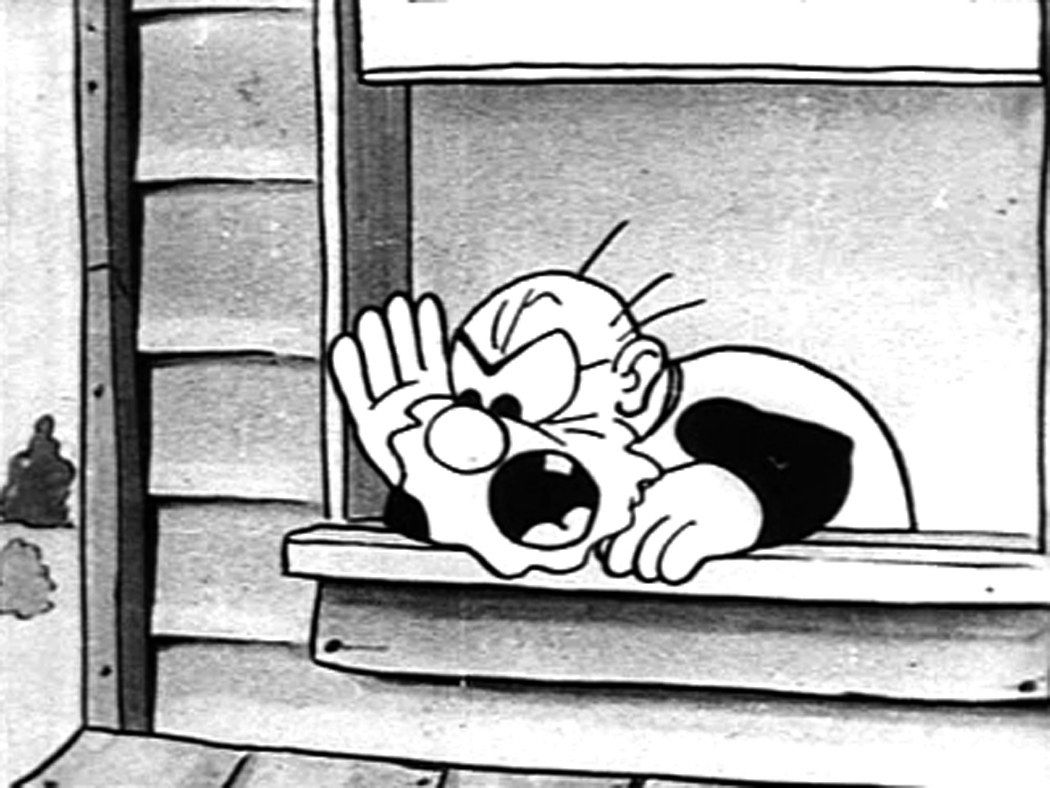
But it is true. My first introduction to classical music was on the Bugs Bunny cartoons I watched on the box. First introduction to jazz from the added soundtrack to the silent Terrytoons I saw on Junior Frolics, an afternoon kiddie show on New Jersey’s Channel 13, hosted by “Uncle” Fred Sayles. Those silent-era animations, with their added jazz scores influenced my youth in a way that Aeschylus would never be able to.

farmer alfalfa

My first theater came in the form of sitcoms; first sculpture was the Rodin Thinker that Dobie Gillis sat under to question why he could never make time with Thalia Menninger.

dobiegillis

Oh, there were a few ”highbrow” things on the tube: Sometimes we watched Omnibus with Alistair Cook or the Young People’s Concerts with Leonard Bernstein.

Nevertheless, the effect of such educational shows was as a single tiny green pea to the overwhelming harvest of corn that poured out of the box.

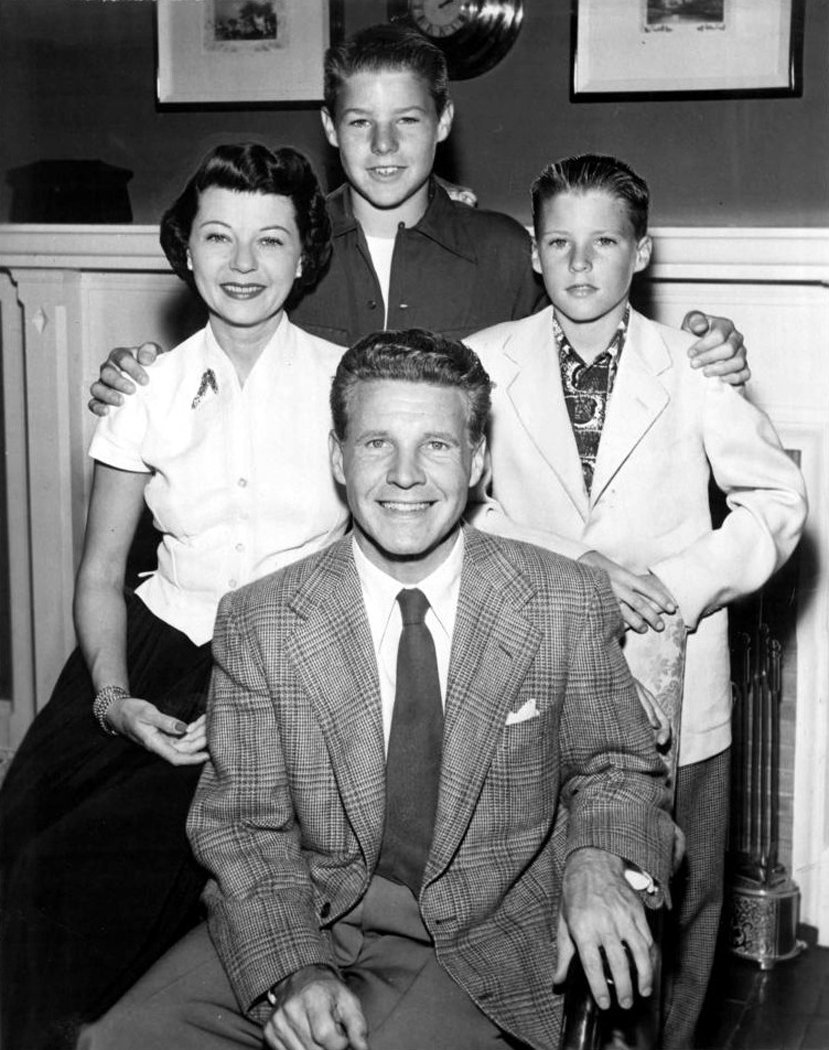
Bonanza, Ed Sullivan, Jackie Gleason, Ozzie and Harriet, Dave Garroway’s meaty palm held forward to the screen as he intoned the word, ”Peace.”

I learned about animals from Ivan Sanderson and, later, Marlin Perkins. I learned about Eastern Europe from Boris Badinov. It all twirled around in a great pop-culture spin cycle.

It’s frightening to think how much American history was gathered from watching Hugh O’Brian as Wyatt Earp or Guy Madison as Wild Bill Hickok.

It is all still there, like petroleum under the covering layers of rock. If I dig deep enough, the Tacitus recedes and Sky King comes back to the fore.

But it isn’t mere nostalgia that I mean to invoke, but rather a change that has come about as television has come of age.

What distinguishes the generation that came after mine — those called ”X” to my ”boomer” — is the quotes that have now been put around everything that appears on the screen.

Television was new to us. We approached it naively. What we saw on its glowing front we took to be an image of the real world. Those that came after us were enormously more sophisticated about what they saw. Television was for them clearly an ironic ”parallel universe,” which they somehow lived in, used for their cultural reference point, but never took seriously.

The Adventures of Ozzie and Harriet was not exactly the world I inhabited, but it bore a close enough resemblance to it that I could read it as ”real.” Ozzie really was married to Harriet.

By the time The Brady Bunch came on, it so deviated from the reality of its viewers that the only way to enjoy it was as an in-joke.

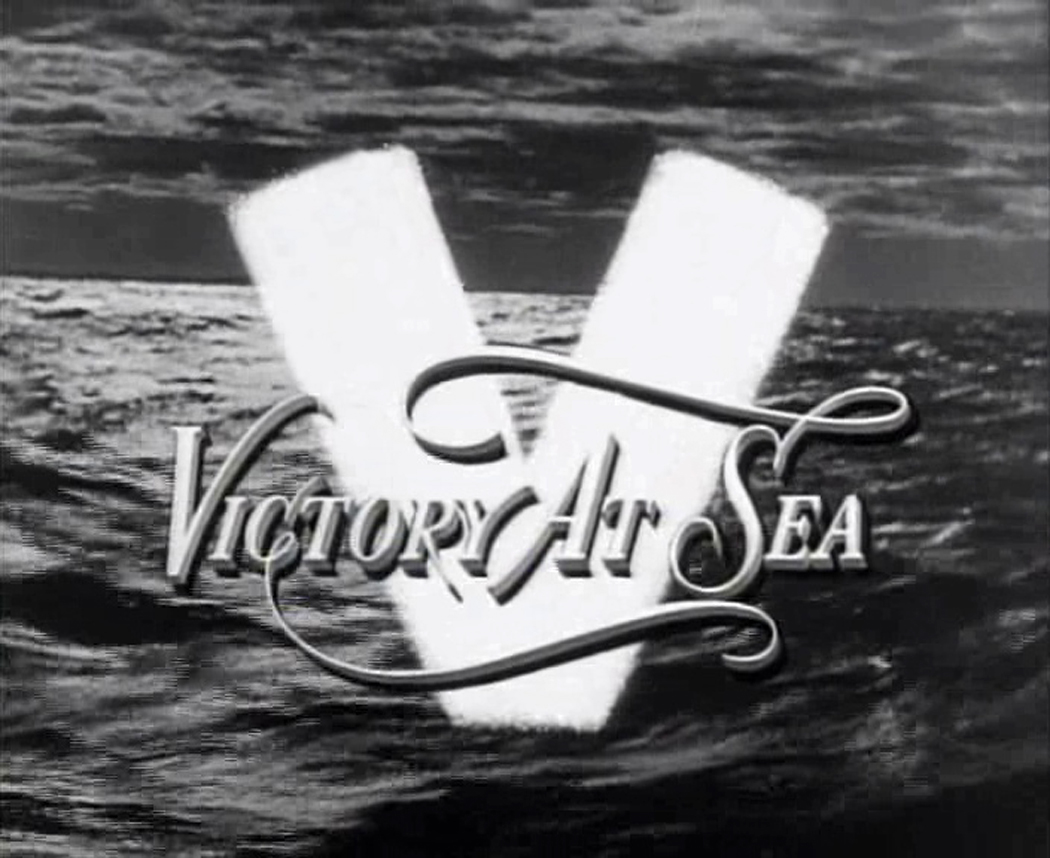
victory at sea

My generation learned about World War II from Victory at Sea; the following generation learned from Hogan’s Heroes.

There are many a plus and beaucoup minuses to both sides of the generational equation. It is usually better to be sophisticated than naive. I’m mortified that I ever thought that Gene Autry really was a cowboy.

But the downside for the later generation is the disconnect they make between life and art. For them, culture is a web of references they get, the way you either get or don’t get Stephen Colbert. If you suggest to them that art might somehow mirror their daily existence and confront the questions that arise outside the TV world, they look at you like you just suggested Larry the Cable Guy should be the next James Bond.

If we have all become much more knowing about the apparatus of media, we are also in danger of drowning in that world in a kind of cultural schizophrenia, and forgetting that the world that counts is found outside prime time.

albers1

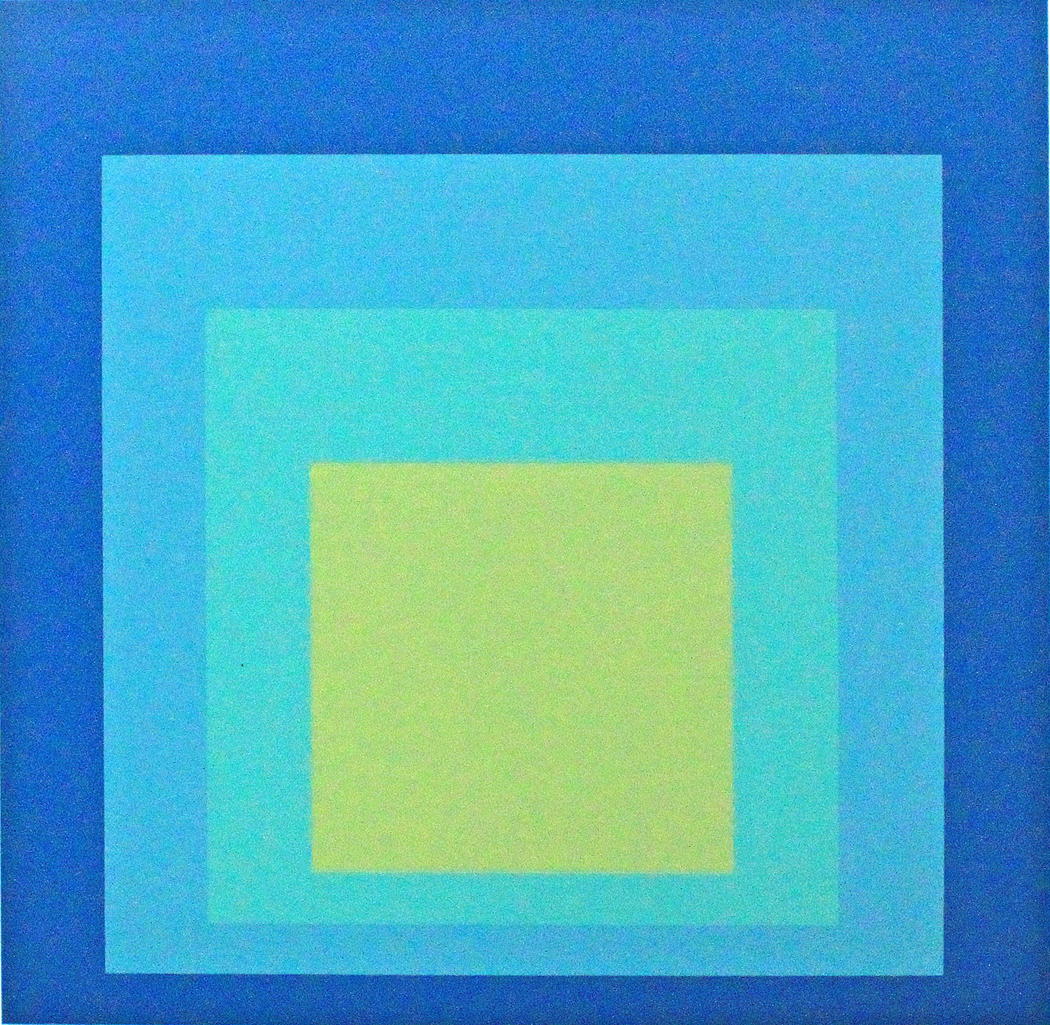
The right angle is king of the world.

Look around you and everything is square. The streets, the buildings, the windows in the buildings. The TV you watch and the refrigerator you lean into to grab a snack.

If there is a single, overarching symbol of civilization, it is its rectilinearity. Honeybees make hexagons; humans make squares.

I write this in a square office in my square woodframe home on a suburban block, staring at a rectangular computer monitor, typing in letters on little cubic keys embedded in a rectangular keyboard.

The books I consult are square-edged, the file cabinets I keep my research in are boxes. Even the take-out Chinese food I eat at my square desk comes in a plastic foam clamshell cube.

We are so inundated with right angles, that I’m afraid we don’t see them anymore. They become like the invisible air we breathe. Yet, if you begin to notice them, they can become oppressive. There is a tyranny of the box.

There are reasons, of course, that our built environment relies on the square. Of all shapes, it is the most space-efficient. The dairy industry, for instance, discovered many years ago that square milk bottles took up less space on the delivery truck than the older round bottles.

And because they can share walls, square buildings can fill up space just as efficiently as the milk bottles. It becomes like playing dots-and-boxes, connecting the dots to make little sub-squares.

suncity

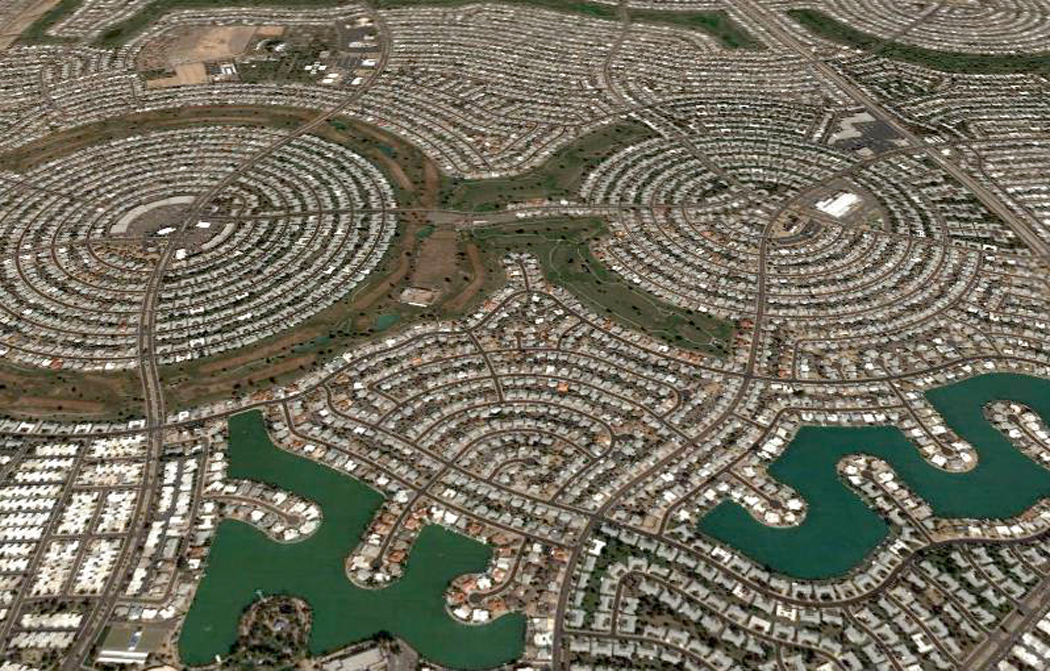
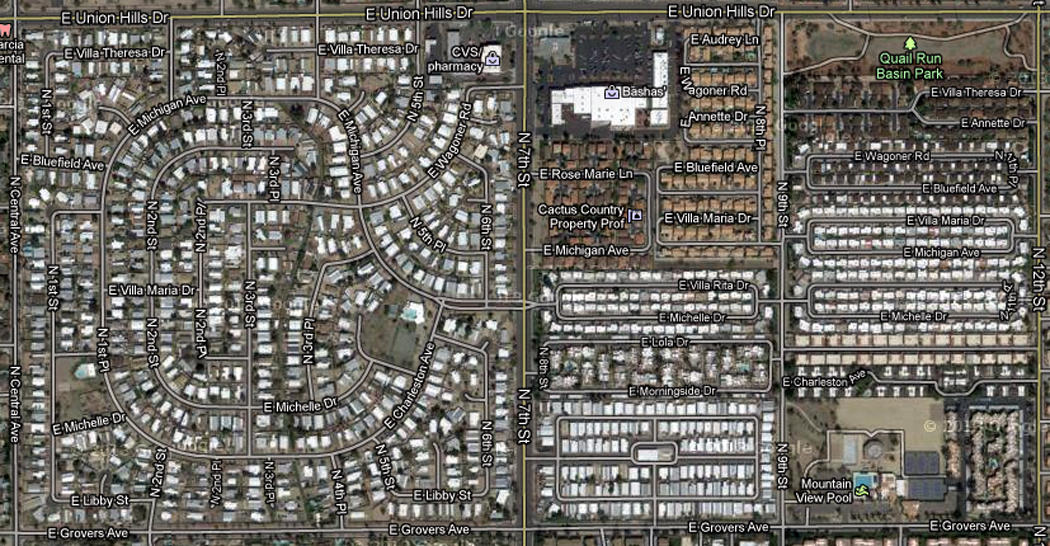
There are attempts to break up the squares: the swirling streets of planned retirement cities, such as Sun City, Ariz., for instance. Even in the larger city, new tract housing is often built on curvy streets, but those streets are all contained within the larger squares — the “major cross streets” — of the larger Phoenix metro area. Those mitochondriacal squiggles are almost like the irregular growth of cancer cells inside the regular structure of the urban grid — a virus waiting to bust out and infect the next municipality.

square blocks

What is round is escape: the wheels of our cars, the CDs of our Walkmen, the cylinders of our vodka bottles.

Considering how ubiquitous the square is in the human world, it is striking to discover how rare it is in nature. Certain crystals are square — look at a grain of salt under a magnifying glass — but more common are rhomboids and hexagons.

And nature so dislikes the cubic salt crystal, that she dissolves most of them in seawater as if they were collectively the Wicked Witch of the West.

In fact, nature seems perpetually at odds with right angles. She wears them down through erosion, attacking the sharp mesa edge or the overhanging rocks of Niagara Falls.

Nature grows things asymmetrically, profusely, and just as avidly, breaks them up into chunks and sands them down into dust. You cannot expect humans to match that fecundity or ferocity, so instead, we build safe, boring little squares and put cupboards in the corners.

If you look out over any American city, you can see the incessant cubicularity of its architecture, tiny and regular against the larger, organic rising and falling forms of the landscape it occupies and the constant metamorphosis of the amoebic cumulus clouds that break up the shapes with moving shadows.

How static the architecture seems.

grass fireworks

This world is filled with useless things: old habits we refuse to give up; new answers to problems that long ago vanished; professional football.

Most of them are inoffensive. We can live with them. But there are some that really get under my skin. Prime among these is the front lawn.

In my list of senseless things, the suburban front lawn takes the lead, surpassing such other bits of silliness as:

1. neckties

2. chrome detailing

3. parsley garnishes

4. extended warranties, and

5. nipples on men.

Explain for me, if you will, why so many well-meaning people work so hard to put a spot of green along the street, in an area of their property they never visit, save to mow it.

Of course, a thirsty lawn makes even less sense in the American Southwest, where it might well be considered a crime against nature. Yet, drive the streets of Phoenix and see all the pretty lawns: like kangaroos in Greenland.

It has been argued that front lawns are beautiful. Certainly grass growing in the meadow is among the most satisfying sights in nature, with its rusty autumn seedheads waving in the breeze above the thousand wildflowers that fill out the landscape.

OLYMPUS DIGITAL CAMERA

Birds and butterflies are drawn to the meadow. It is a perfect Eden.

But lawns are not the same thing as grass. In a lawn, we chase away the wildflowers, which we call weeds, and discourage insects with noxious chemicals and we shoo away the birds that might eat up the newly seeded turf.

And the ample seedheads, with their glumes and awns, are slaughtered by the riding Toro, so the lawn approaches its Platonic ideal: AstroTurf. The lawn, as envisioned in the American suburb, might as well be a green shag carpet.

It is also argued that the tightly mowed lawn is a delight to walk upon, that it is a wonderful place for children to play or for the family to have a picnic.

That might be true of the back yard. But almost none of us does such a thing in the front yard. The neighbors would stare. About the only purpose the front lawn serves is to provide a comfortable place for the neighbor’s dog to poop.

That is a long way from the English estate lawn, which the American suburban lawn attempts to emulate.

We didn’t have lawns in America until after the Civil War. Houses were built right up on the street.

Dirt, which could be swept clean, was the ground cover of choice.

But after the Civil War, urban patterns began to change. Streetcars and passenger trains allowed more people to move out of the city to live and commute to work.

There are many reasons for the triumph of lawns in American landscaping. The idea took root in a century that was much more concerned with nature than our own. It was a time of Romantic poetry and art, and people looked for ways to be closer to nature. The lawn satisfied this need, in a small and distorted way.

But what began as bringing nature to suburbia ended, by the 1950s, as outright war against nature.

“A good many homeowners feel this way,” said Changing Times magazine in 1954: “Mother Nature has beaten them to a stand still for so many years that revenge is worth almost any price, as long as it comes in the form of a real good, drought-tolerant, weed-resistant lawn.”

I once lived in a house next to a jowly retiree who kept his lawn cut to the same length as his Marine crewcut. He was so intent on regimenting the naturally wild grass, that after he finished giving his lawn the buzzcut, he actually rode his mower for a half-mile up and down the road shoulder in front of his house to keep it all perfectly manicured. He did this at least twice a week.

I suspect he spied on his lawn at night to make sure it didn’t misbehave.

For if a lawn is a bit of nature, it is nature bridled and harnessed.

In his book, Second Nature, author Michael Pollan argues that “Lawns are a symptom of, and a metaphor for, our skewed relationship to the land. They teach us that, with the help of petrochemicals and technology, we can bend nature to our will.”

If we followed the logic of the lawn, we would create the front-yard equivalent of the plastic wood-grain walnut tabletop. Indeed, a friend of mine in Seattle, to avoid having to mow his lawn, poured in a layer of concrete instead, and painted it green. It frees him up to drink beer and watch ballgames.

If anything, the lawn is a peculiar case of cultural persistence. All around us are things that once made sense, but as they persisted through changing times, they lost touch with reality. Parents teach their children to play with “choo-choo” trains, although no one has seen steam locomotives since their grandparents.

We find Gothic pointed-arch windows — which made engineering sense in Medieval stone churches — in modern wooden churches.

And we get on and off the left side of jet airplanes because right-handed cavalry officers used to wear sabers on their left side, making it more sensible to mount and dismount their horses from the left. Early military airplanes — as part of the “air cavalry” — took the cue and the practice has never changed. (Indeed, those WWI biplanes often had “stirrups” on which to climb up into the open cockpit.)

Even neckties may once have had a reason to exist. It is said they served as bibs for sloppy eaters; but let’s face it, today you can throw a shirt in the washing machine, but you have to take the tie to the dry cleaners to get that mustard spot off. Tie as bib does not make economic sense.

And so, lawns, which originally functioned on English and French estates to provide hay for agricultural animals, later became symbols of rank, wealth and title.

Maine grass

They oddly persist this way in American suburbs.

It played into the curious American delusion that in our democratic nation — where everyone is theoretically equal — we are not equal as commoners, but as aristocrats. Every man in his white clapboard house was king in his castle. And each of us deserves his own rolling green estate, and if we only own enough property for a postage-stamp lawn, so be it.

Thorstein Veblen, the social critic who first came up with the concept of “conspicuous consumption,” at the turn of the century, saw the American obsession with lawns as yet another example of showing off your wealth, no matter how pitiful its amount.

And we began a century of “keeping up with the Joneses.”

After World War II, it became almost unpatriotic not to have a perfectly kept lawn to show off.

I suppose the reason I get so exercised about lawns is that I really, really love grass. I love the lacy panicles of panic grass, the bushy-eyebrow racemes of sixweeks grama, and the three-fingered tassles of big bluestem growing man-high in the few remaining patches of Midwest tallgrass prairie.

Grass B&W

And nothing beats the stiff stalked timothy, where the redwings like to squat and squabble.

It has been suggested that people value lawns in part because we have some faint genetic memory of developing as a species on the savannahs of Africa. I feel that atavistic pull, but it is prairie that excites it, not front lawns.

In the prairies, vast fields of wheat or wildgrass blow like seawaves in the wind.

In America’s suburbs, the front lawns mock “nature without check with original energy.”

It has been said that an eagle in a cage is not an eagle. And grass in a lawn is not grass.

stooges2

There is nothing more American than the Three Stooges throwing a pie in the face of a soprano warbling “Voices of Spring” at a soiree.

The opposition of high and low culture has been so ingrained in us that it may come as a shock to find out that high culture as an idea is a fairly recent invention. And an unfortunate one.

It is one more cultural polarization stuck in the nation’s gullet. Not only blue and red states, but also the slack-jawed triumph of pop culture and the watering down of art.

Symphonies and ballet companies struggle more than they ever have. Arts commissions fund safe populist and folk art rather than more difficult work. Cities even consider closing public libraries.

It didn’t have to be this way.

It wasn’t until the middle and late 19th century that Americans with newfound wealth went to Europe, bought paintings and sculptures to prove their good taste and formed symphony societies and opera guilds to promote a form of culture that set them apart from the hoi polloi.

It isn’t that high art didn’t exist before high culture, but that before the bluebloods took it over, high art was just one end of a continuum of arts and entertainments that spanned everything from the drawing room to the barroom.

Thomas Jefferson, for instance, played fugues on his spinet and Virginia reels on his fiddle. There was no cognitive dissonance in this. It was assumed that those who wanted a more complex experience, who wanted to face the difficult paradoxes of life, would naturally gravitate to Euripides or Shakespeare, and those who wanted simpler pleasures and diversion would read Smollett or Poor Richard’s Almanack.

And it would be perfectly reasonable for a music lover to listen to Handel in one mood and sing a bawdy ballad in another.

This was true in both America and Europe. We think now of Mozart as being for the educated elite, but when he was alive, organ grinders on street corners played his arias, in simplified form. Non piu andrai could be struck up by a group of jolly topers at the public house. It was a good chune.

It was the same for the other classical composers of the time.

That all this changed, we can blame the Victorians. And worse, Victorians in America.

First, in England, Matthew Arnold wrote, in an influential essay titled “Culture and Anarchy” (1869), that culture is “contact with the best which has been thought and said in the world.” He separated all that was pure and holy, all that was serious and elevated, all that was morally improving, and put it in one pile, called “culture,” and relegated all that was trivial, simple, vulgar and fun to the pile marked “kitsch.”

Like all truly Victorian thinkers, his goal was to improve the world.

What had been a continuum has been reduced to a polarity: High Culture vs. Slob Culture.

It can hardly come as a surprise that “culture” became a synonym for snobbery.

In America, this general tendency to “improvement” — a buzzword of the 19th century — became mixed with a revivalist religious fervor and the many strains of utopian idealism. Art, like religion, was supposed to make you a better person.

Victorianism gave us the Metropolitan Opera, the civic symphony orchestra, the art museum and the Harvard “five-foot shelf.”

five foot shelf 2

In part, all this moral rectitude was a cover for vicious social Darwinism. Those who had made a fortune could buy the respectability of good taste. They improved themselves, in the jargon of the time. They deserved to be rich.

But America has an opposing force: From the time of Andrew Jackson on, there has been a second stream of American culture — although it would never use that word — that mistrusted education, mistrusted privilege, mistrusted any elite.

These are the denizens of Artemus Ward and Finley Peter Dunne writings. They valued common sense over erudition, elbow grease over talent and simple pleasure over taste. They tended to think of those too educated as effete, unmanly — “pointy-headed intellectuals.”

Until recently, these two strains coexisted in America, and acknowledged each other. Our intellectuals praised the common man, and although that common man never went to the opera, he recognized that his betters did go.

Many things went into the overthrow of this peaceful coexistence.

Certainly one irony is that the educated elite ceased to have any faith in their own superiority when they learned the wrong lesson from the civil-rights movement.

The social consciousness of the 1950s and ’60s did not come from the silent majority, for instance. It came from the elite in alliance with the oppressed. Both groups wished to replace the inequalities of society with social equality. Civil rights, social welfare, equality before the law, were all ideals that any educated and sensitive person could sign on to.

But, translated into “no one is better than anyone else,” there was no longer any reason to value Rembrandt over, say, Thomas Kinkade. Even the college-educated believed it was just a matter of personal preference.

kinkade sleigh

In America, even the intellectuals are anti-intellectual.

That’s where we are now: Instead of the death of Victorianism bringing back the full spectrum of human endeavor, it has marginalized the high end and glorified the bottom end. Those few remaining High Enders lament in books and Commentary articles the end of civilization and loss of the canon of Western literature.

At the other end, those many fans of Adam Sandler don’t even know Plato ever lived. They no longer throw a pie in the face of the soprano: Sopranos are no longer important enough to be targets. They throw pies at each other, gleefully and pointlessly. And make that American Pie.

But it isn’t all gloom.

The decline of high art is a temporary reaction to its history and its usurpation by moneyed classes.

The fact is, the high end is not going to go away. It cannot. There are people — of all classes, races, genders and ethnicities — who require an art of greater complexity than popular culture usually affords them. Whether you compare Kenny G with Miles Davis or Danielle Steel with Virginia Woolf, it hardly matters. The simpler, less comprehensive art is always eventually cloying or monotonous. Popular music is annoyingly repetitious; mass-market fiction helplessly shallow; the standard television fare is “chewing gum for the mind.”

All of it can distract us for a time, and some of it is genuine fun, but after a while, to anyone with an active mind, it becomes a droning in the ear, like a mosquito in the bedroom. There is a hunger for something deeper, more complex, something that reflects the human experience, or attempts to.

Perhaps, when the boat is righted, there will be a continuum again, with high, low and everything in between, with no artificial boundaries between them.

In the long run, this is good news for those looking for such things. In the short run, it will do very little to help the foundering symphony orchestras of America’s midlevel cities.

Because when the hunger for complexity is filled in the future, there is no reason for it to fill the vessels of the past. Art music will not be symphonic music. It may very well be electronic. Poetry needn’t be sonnets; novels needn’t be narrative; visual arts will almost certainly not be oil paint.

We are already seeing certain manifestations of the hunger for less trivial art: the independent film movement, for instance, and the re-emerging popularity of poetry.

Regional theater has burgeoned in recent years, bringing a higher-grade drama to part of the nation that used to satisfy itself with an annual Brigadoon put on by the high school.

Although television is usually the villain in this story, the boob tube increasingly offers us entertainment of complexity and depth. You cannot throw pies at The Sopranos — television has rarely offered something as rich. And when it comes to complexity, contemporary relevance and universal characters, you have The Simpsons, one of the best shows in the history of the medium. It includes both ends of the spectrum in one: low comedy and intellectual vigor.

Just like Shakespeare.


It is a commonplace that America is materialistic, that it grasps after money and wealth and lacks the spiritual values it used to have.
Of course, that nostalgic view ignores that Americans have always chased wealth: It’s built into the Constitution.
But more importantly, it ignores the fact that America isn’t really materialistic at all, and in fact, is largely indifferent to the material world.
If we were really materialistic, we would never tolerate walnut-woodgrain plastic.
No, the physical composition of their existence is simply not a high priority for most Americans. Yes, they are after wealth, but wealth isn’t a material value, but a spiritual one.
When we say Americans “worship the almighty dollar,” we aren’t saying that they value material objects over spiritual ones, but rather that they place worth on one set of spiritual values instead of another, more worthy set.
Money, after all, isn’t a physical object. It isn’t material. It is no more physical than an inch or a pound. It is a measuring item, to measure wealth.
Real wealth is the possession of useful or meaningful things. To own land, or to grow 40 acres of artichokes is to possess wealth. You can eat artichokes; you can’t eat money.
Money cannot be worn, it cannot be used to build with. It must be translated back from its symbolic existence to a material existence by spending it.
I’m not saying that money isn’t nice to have around. But that it is a mental construct, not a physical reality. If we want money, it isn’t because sewn together, dollar bills make a nice quilt.
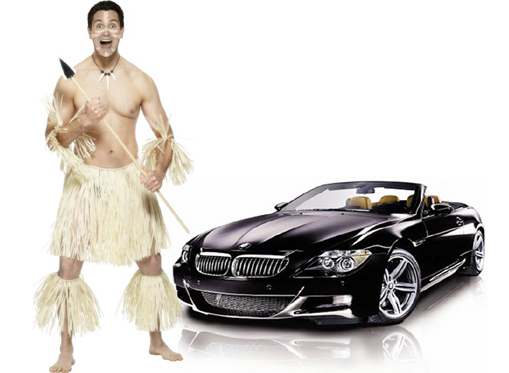
Even the things Americans spend their money on tend to be owned for spiritual rather than physical reasons. If we want to own a BMW or a Lexus, it isn’t because these are better cars than a Honda or an Ford — though they may be (I’m not convinced) — but because they are status symbols that let other Americans know where we rank on the totem pole. Armani suits and Gucci bags are not something most Americans really enjoy on a physical level. They are the civilized equivalent of the eagle feathers the chief wears, or the lion-ruff anklets worn by the Zulu leader: They confer prestige and denote status.
These are spiritual values.

As a matter of fact, America would be a whole lot better off if it were more materialistic. The planet is bursting with stuff: It all has a texture, a feel, a smell, a taste, a sound. If we were materialistic, we would be aware of how much richness the material existence affords, and we would revel in it. We would be mad — as Walt Whitman says — for us to be in contact with it.
And what is more, the deeper we involve ourselves in the physical world, the more spiritualized we will become — that worthy spirituality. It is because we are so unmaterialistic that our environment suffers so. We don’t value the physical world we live in. It doesn’t bother us that there are fewer birds singing in the morning, or that codfish are disappearing.
In part, this is a remnant of the contempus mundi that was fostered under Medieval Christianity. It is that suspicion of the physical world that the Old World monks felt would seduce them from the righteousness of prayer and ritual.
We have inherited the contempt, but without the prayer. It leaves us in a hollow place.
As an adult I have come not to trust anyone who doesn’t love the physical world.
I don’t trust him to make policy choices about oil drilling or lawn seeding. I cannot imagine how it is possible not to fall in love with the things of this world, but I see just that happening all the time.
I pick up the lump of spring earth and squeeze it in my fist to judge whether it is time to plant my potatoes. I listen for the birds globing and twisting as they rise from the trees in the morning. I look for the light caught in the cholla spines and the twill in my gabardine. There is velvet in heavy cream and scratchiness in wool blankets.
The physical sensations make us more aware, more awake. The love of the physical world keeps us from becoming dullards. Living in a world of symbol and status dulls us. At its worst, it leads to ideology.
Would that America really were a materialistic society.