Archive

Tag Archives: death

“It was six degrees last night,” I said. I was on the phone with Stuart. “A huge mass of cold has dropped down from the north. Tonight, it’s predicted to hit 5 degrees.”

“Sounds nasty,” Stuart said, although I know he was being diplomatic — He and Genevieve live in Portland, Maine. I’m pretty sure he’s seen his share of six-degree days. 

“But,” he went on, “I’m not sure cold actually exists.” I settled in for a Stuart session. He has these bouts of brain flurries. 

“It’s something I’ve been thinking about recently,” he said. “Cold is a judgment, not a thing. I mean, there’s no such entity as cold; it’s really just the absence of heat. Heat is real — the commotion of molecules. Cold is our perception of the lack of heat.” 

I don’t think he was being deliberately sophistical; it’s just that sometimes the gears in his brain spin rather fast. 

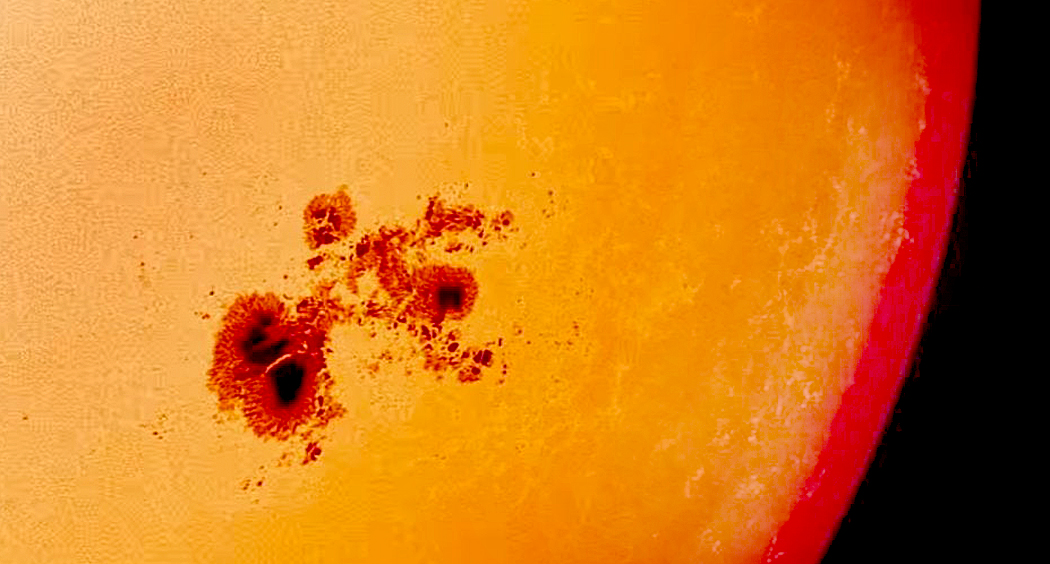
“We think of things being hot or cold,” he said. “But they are a single thing, which is an amount of heat. Sunspots, for instance, are ‘cold spots’ on the sun’s surface, even though they can measure 7000 degrees Fahrenheit, and frozen nitrogen can melt when heated above 346 degrees below zero.”
He knows this is a hobby-horse of my own: the gap between language and reality. I’ve written many times about how what we call opposites are usually just points on a single scale. A thermometer measures heat and we express it with words like “hot” and “cold.” We usually take words as reality, when they are merely a separate, parallel thing, with its own rules and forms. 

“There are things that we take for granted that only make sense in the language we use to describe them, but don’t really exist in any real way,” he said. “Real life isn’t so black-and-white.” 

Stuart went on: “Take black and white, for instance. You’ve heard it said that white is the combination of all the colors added together, cancelling each other out. That was what Newton demonstrated with his prism. But that’s if you are talking about light. If you are painting, the combination of all the colors is black. So which is it really? Well, we aren’t talking about color so much as about hue. There are millions of colors and we give them names, like ‘teal’ or ‘pink.’ They are the combination of hue, shade and tint. Hue is a specific spot on the spectrum, a basic ingredient, like an atom. From them we build molecules — specific colors. A blue can be light or dark and still be the same hue, although the colors are sky blue or ultramarine. 

“So, realistically, both black and white are the absence not of color, but of hue. In reality black and white are the same thing, just different shades of it, with all the grays in between. If you realize that black and white are simply variations of the same thing, then you realize that darkness, like cold, doesn’t exist: It is merely the absence of light.” 

OK, I thought. But does that really shed much light on our day-to-day lives? 

“We take these confusions of language as something real, when they are not,” he said. “When I hear terms like ‘left wing’ and ‘right wing,’ or ‘conservative’ and ‘liberal’ bandied about, as if they actually mean something, I develop a kind of psychic acid reflux. Beliefs shift with time and what was once considered conservative, is suddenly dangerously leftie. And vice versa. Is it conservative to believe in a strong central government or in a small government? Is it conservative to try to minimize change and keep things in place that have been there for ages? Or to radically transform government and shake things up? It changes over time, making the terms we use basically useless. Republicans call themselves conservative, but have complained for decades about an ‘imperial president,’ and yet have happily elected just that.”

It seems to me, this has immediate relevance to our lives today. Language matters. 

“You know, scientists have decided fish don’t exist,” I said. “Turns out a salmon is more closely related to a camel than it is to a hagfish. Just because it looks like a duck and quacks like a duck doesn’t mean it’s a duck. Just because something has fins and gills and swims in the water, doesn’t mean it’s in a common group called ‘fish.’ In the 17th century, a whale was a fish, too. And in earlier times, squids and mussels were also counted as fish. Jonah, after all, was swallowed by ‘a great fish,’ which tradition has it, was a whale.”
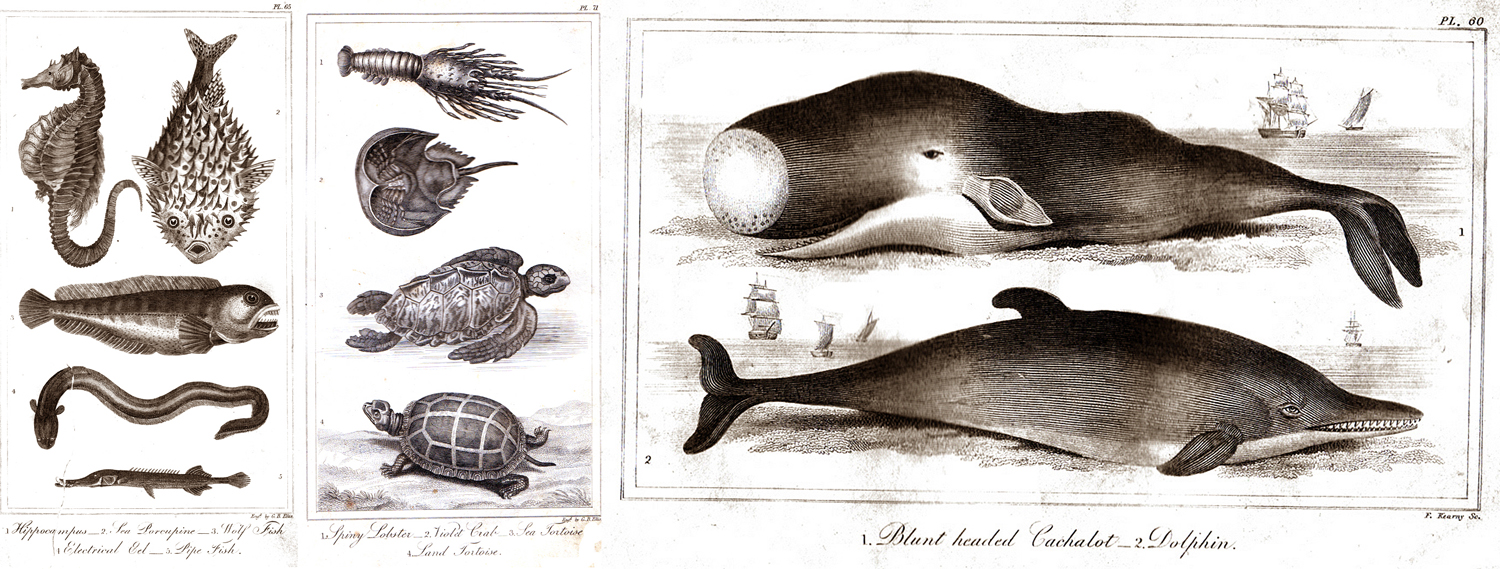
Once, these were all fish

“I have been thinking that language is really myth,” he said. “I don’t mean it doesn’t exist — that’s not the kind of myth I mean. 

“The world is itself. It was before there were humans to perceive it. We see it, however, through language. Take a car. We all know what a car is. That car is in a terrible crash and smashed up. Is it still a car? It gets taken to a junk yard and disassembled for parts. Are the parts still a car? Grind them up into bits of metal and ask the same question. Melt down the metal into a molten form. The same atoms every time, but at what point did it stop being a car? The thing was the thing; the word was just the word.”

“The ship of Theseus,” I said, “that Plutarch wrote about, that had each of its parts replaced as they rotted, leaving the identical ship but completely new. Is it the same ship?” 

“Our brains are hard-wired to see the world as things and those things have names,” Stuart said. “And we take the names seriously. It’s quite silly to worry if it’s the same ship: The question is entirely linguistic. All that piffle that Plato went on about, it’s all really just about language.

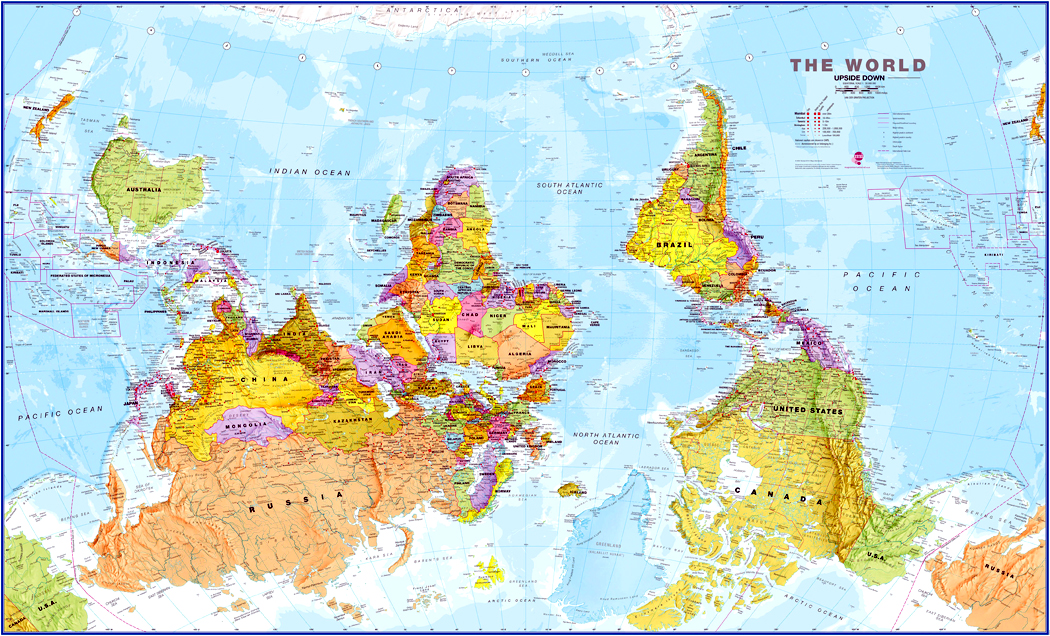
“It is our Umwelt,” he continued. “Which, as I’m using it, is a model of the world built into our psyches not only by experience, but by evolution, and through which we tend to filter our perception of the world, narrowing it down to what seem to be comprehensible limits. A pattern we impose on experience. In our Umwelt, the sky is up, the ground is down. Without thinking, we assume that north is up and south is down, although in a round world in a chaotic cosmos, up and down are meaningless terms. If we hang our world map on the world with Antarctica at the top, it looks wrong. Just wrong. It shouldn’t. 
“It’s why quantum physics is so hard to accept. Our Umwelt is built from human-size experience and the quantum theory makes no sense. In a world of things, we understand atoms as tiny pellets. How could they be vibrating strings? We attribute human emotions to animals, we assume other beasts see the same colors we see, we take anything larger than ourselves as big and anything smaller as little — but why should human size be the standard? 

“Weeks.” Stuart was on a roll. “We take weeks for granted, but they don’t exist except as a custom. We’d be rather upset if we didn’t have weekends punctuating our worktime. The metric system the world uses and believes is derived from nature, is all nowadays built on a measured second, which is an utterly arbitrary duration — no natural fraction of experience, but one counted by an arbitrary number of cesium vibrations. We think of the earth as flat, although we know it isn’t. I mean, we know the earth is a globe, but if I separate out North Carolina in my mind, spread out, it is as flat as a map. It’s how it feels. That we orbit around the sun, when in fact sun, earth, all the planets and moons spiral around in complex motions as the whole shebang skitters through space. 
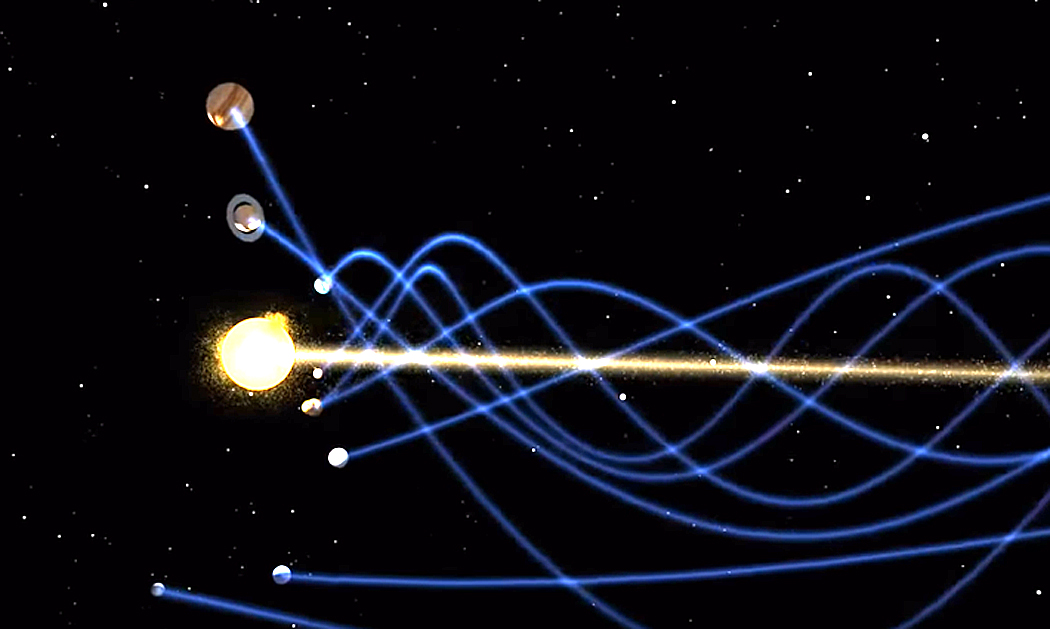
“If we don’t simplify and schematize the world, we could never navigate it. That is what I mean when I claim that language is myth. It  explains what cannot be explained. It actually functions as myth, explaining the world to us. And so, we can personify nameless things by naming them.” 

“We think of myth as being, like Zeus and Theseus, but if Ancient Greeks thought of Zeus as a deity, he becomes a folk story when no one worships him anymore. But myths are also ways of explaining the world when science has no good answer — or rather, when the reality exceeds our tiny brain’s ability to grasp it all. Like when we were children and when we were scared of thunder, our parents might tell us not to worry, the noise was just angels bowling in the sky. It was a story that made sense to our infantile brains. 
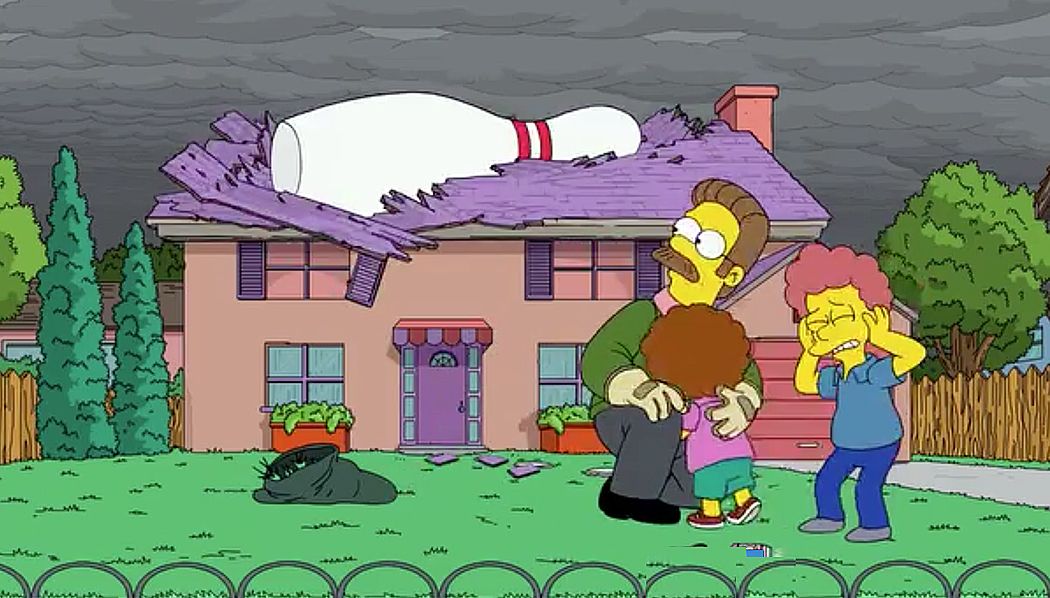
“Language is angel bowling for grown-ups. We use words to box up ideas, tidying them so our feeble brains can swallow them. We cannot begin to understand where the cosmos came from, so we use Genesis to explain it, or, nowadays, we use the Big Bang. Existence is something so far more complex and chaotic than our tiny minds can begin to understand. So, we make language, a 2-D version of a 3-D world.”  
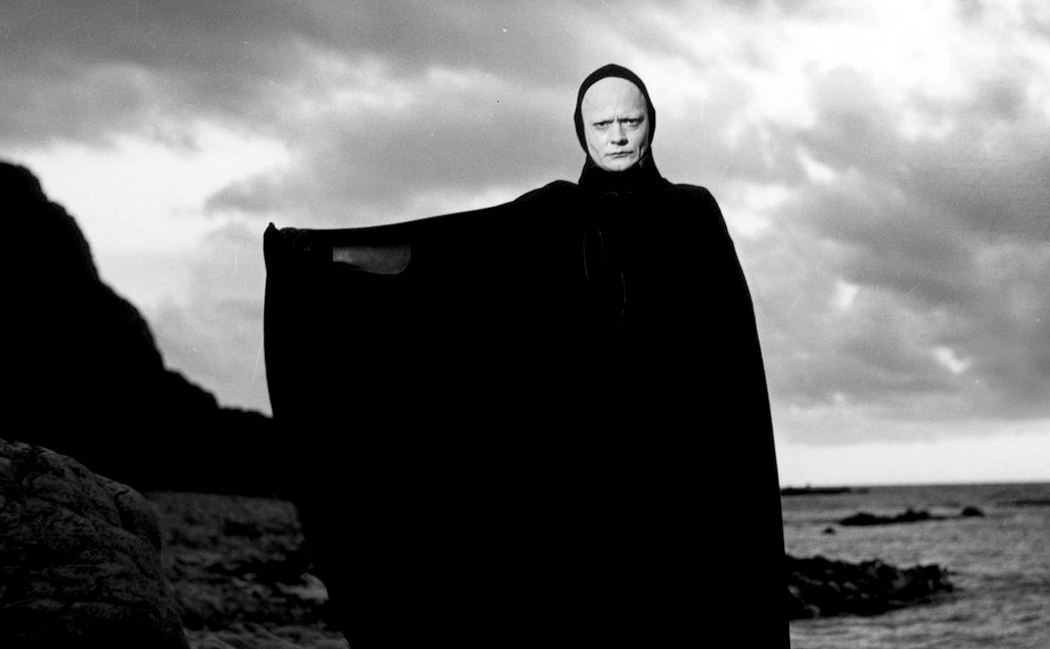
“Like death,” I said. “Death is a skeleton with a scythe in myth, or on a pale horse, or death hovers bedside over the terminally ill. But death doesn’t exist. Dying exists, but death is a myth. Death doesn’t take over our bodies, but the metabolism of our bodies ceases manufacturing life. The machine breaks down.”

“Yes,” Stuart said. “I remember someone pointing out that ‘life’ is not the opposite of ‘death,’ but that ‘birth’ is the opposite. They are verbs, not nouns.”

“I saw this with gut-tightening immediacy when Carole died,” I said. We watched her last inhalations, and then they stopped. She ceased being Carole. There were no 21 grams floating away, she just ceased manufacturing her own life. The light bulb burned out. Light didn’t go anywhere, it just stopped being generated. Almost instantly, her flesh began feeling like clay, cooling off. I’m sure it might soften the loss for those who believe in religion that her soul went somewhere else, but I just saw a factory close down, leaving an empty building.”
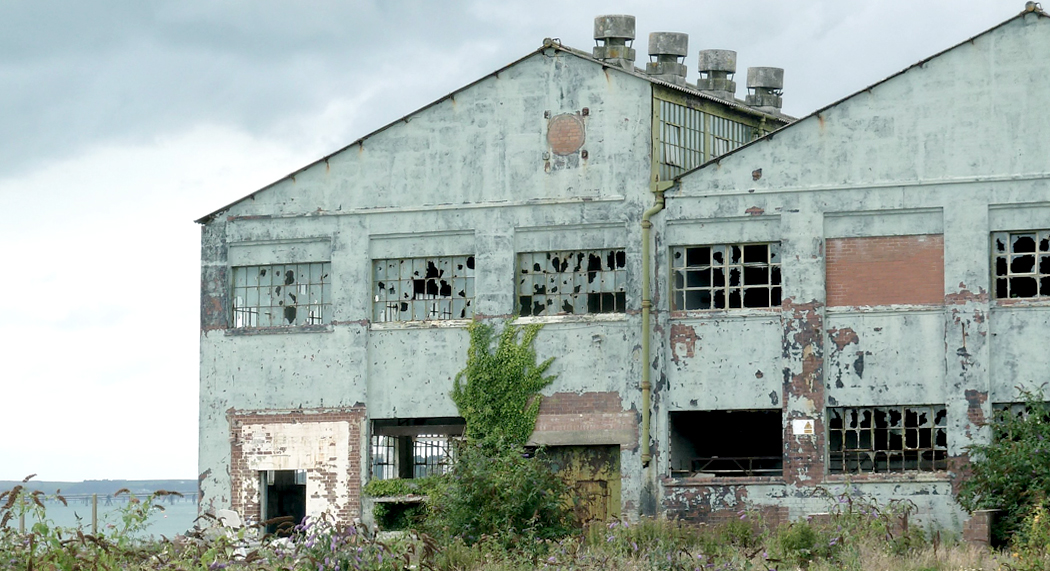
“Nice metaphor,” Stuart said. “All language is ultimately metaphor, and metaphor and myth are essentially the same thing. A way of talking about the unsayable.”

This was the moment I heard the faint voice of Stuart’s partner, Genevieve, somewhere in the other room say, simply, “Sophomore dorm room!” and we moved on. And I remembered that women know the real world a lot more than men. 

Now that I am past-ripe and a wizened old man, what do I spend my time thinking about? Certainly not the things I thought, or cared about when I was in my 20s or even my 40s. Gone is any career ambition, or the delights of sex or ownership or the esteem of my peers. 

I am not the same person I was when I was young. I can’t feel bad about who I was, or feel guilt about the stupid things I thought or did. That was then and cannot be changed. And one of the most important lessons I have grown into is the realization that I can effect very little change or improvement on the world. It will always be joyful and cruel, intelligent and mind-numbingly dumb, individual and collegial, important and inconsequential. I can attempt to reduce my contribution to the cruel, dumb and evil. 

I think also the related thought that while I am an infinitesimal mote in the cosmic history, and count for absolutely nothing in the big picture, that so much of the world can fill me with afflatus and pleasure. And how much meaning such things afford me. 

Beyond that, I think about the experience of being alive, in the sense of paying attention to the physical world around me. I don’t mean “mindfulness,” which is a repellent and trendy buzzword. To say, “being in the moment” is not quite it. The moment doesn’t much count, but what does is the fact of paying attention, and feeling a part of it all. Me and the universe, a single thing. My emotional connection is a silken thread in the weft of an immense fabric. 

And so, I concern myself instead with whether I am a good person, whether I have atoned for the foolish, selfish or hurtful things I may have done or been in the past. Do I listen? Am I generous, especially in spontaneous fashion? Do I try to make others happy? 

Then, I think of death. Not in any romanticized Sorrows of Young Werther way, but rather the recognition that extinction is within touching distance. Blankness, non-existence, evaporation. I never think that I have existence beyond the body that generates my consciousness. When I die, my spirit will not hover in some afterlife; rather, I will cease being created, moment by moment. Gone. This is not something I spend much time fearing, but rather a speculation I attempt in cool realization of fact. 

Death is now always sitting on the front steps waiting for me to answer the door. And not only my own death. Not even principally my own. 

I cannot avoid experiencing grief. I don’t mean sadness, but gut-hollowing grief and the universal experience of loss. There are two such experiences that humanity gets to share and the irony is that although it is common to all, to each it feels as if we are the only and first ever to feel it. Those two things are love and later, grief. It can be sympathized with, when someone you care about goes through it, but it cannot be shared. It is the most personal intimate thing I have ever been through. You may think that granite is real, but you don’t know real until you know grief. 

These are all some of the things that occupy my brain throughout the day. 

They are not all cosmic. Just as much a taker-up of my brain power, is language. How can it work? Why can I understand a thick Brooklyn accent and an Appalachian twang although the sounds they generate have little to do with each other? Why we think language corresponds to experience when it clearly refers primarily to itself. It is a parallel universe. Yet, we believe it describes reality. Why? 

What does not much concern me is politics. I have my own beliefs, of course. And I vote. But as I wrote some 40 years ago, “Politics answers no question worth asking.” It may make life possible, but does not explain why we should live. 

To be truly alive is to pay attention. Engagement. Being aware. 

When I was a callow college student brilliant at giving a professor what he or she wanted, taking it all in, and giving it all back. But then, one of them shocked me awake by giving me a D grade for doing just that. He didn’t want me to give him what he wanted. Regurgitation isn’t learning. He wanted me to engage with the material, directly. Not words about the material. And he made me do actual work, no more coasting on cleverness. He prevented me from settling for glib. It was one of the most important lessons I ever got. “Engage with the subject.” I have been forever grateful for that. It has been my guiding principle.

A famous British comedian has reckoned, in a serious moment, that the most important human emotion is gratitude. He called it the “mother of all virtues.” 

Others, like love or hate, may be more immediate in power, but love, for instance, is of little use without the recognition of it gained through gratitude. And as I look back over a long life, I feel gratitude for so much.

The first is an impersonal gratitude for the mere fact of the spark of consciousness between two infinite darknesses. And the awareness of that gives me not the unreflective “thanks for that,” but a deep and pervasive gratitude for just breathing, and being aware that I am breathing. 

The fact that I was born in an unprecedented era — one of relative peace after two disastrous world wars, and an era of modern medicine, booming economy, wide education, increasing social justice (though far from perfect) — has not gone unnoticed. All are to be grateful for. 

Other gratitude is more focused on people. Primarily I am grateful for the 35 years my late wife, Carole, was willing to share with me. She, and those years, made me who I became more than anything else — and I include the parents who raised me and the DNA that governed much of the happenstance of existence. No, she was most responsible. I cannot thank her enough and always feel unworthy of the love she offered me. She died seven years ago. I grieve for her every day. 

I do, however, recognize what my parents gave me and wish I could, now that they are gone, share my gratitude with them. I cannot say they were exceptional parents, but they gave me a sense of security, a sense of fair-mindedness, of tolerance. And there was never any doubt from them that I would be college educated and set off on a successful life. I am grateful for the fact they never forced a religious orthodoxy on me. And that they made sure we traveled and saw a wider sense of life. 

I once made a list of all the people I feel gratitude toward. It went on for pages. I can’t include them all here, and you wouldn’t know who they were, anyway. But they were important to me. You surely have your own cast of characters and your own gratefulness. None of us grows purely on our own. 

And so, aiming into year 77, I can admit such a welling of gratitude that the thought of the non-being shortly ahead of me seems more like a fine rounding-off than a horrible cheat.

I remember, as a child, going to the zoo and being impatient if I couldn’t see the animal immediately. The lion was off in the shade at the back? Move to the next animal. Children often have short attention spans, and I was no different. 

As I’ve aged, I’ve been surprised to discover how much more I can concentrate, how much more patient I’ve become. I can look long and hard until I see the lion, and wait to see what it will do next. Perhaps lick its paw; perhaps roll over and snooze. Oddly, with less time left on this earth, the amount of time I’m willing to wait has become inversely proportional. 

I am now an old man, with a powerful sense of how few years I will be able to enjoy this existence. People I knew and loved have left before me, giving me an imminent sense of what to expect.  

Maybe I am just growing soft in the head, or is it simply old age and the recognition that annihilation isn’t that far off, or some other cause, but I am almost daily having moments of utter beauty that remind me what I love about being. Moments that James Joyce might have called “epiphanies.” 

I have been going out and sitting on the back patio pretty much every day, usually for a half-hour at a time, sometimes longer, and saying to myself — or is it to the universe — “Show me something.” And every day, if I wait long enough and be patient enough, something will happen. 

Yesterday, a hummingbird flew not more than a couple of feet from my face to hover in front of a basil flower and then buzz back past me as he left. Another time, it was two cottontail rabbits hopping across the back yard, first one and as I watched it, a second one caught up. 

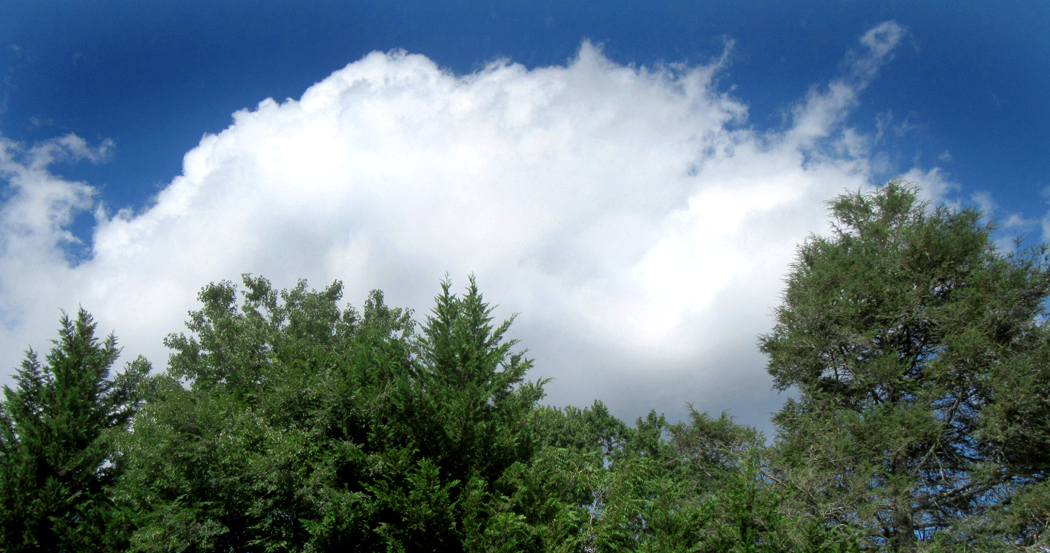
Once, I watched 15 vultures soar and climb in the air currents, one eventually so far up it was no bigger than a period at the end of a sentence in a book held at arm’s length. Yet again, a mockingbird sat on the roof of the shed beside the patio and sang his medley over and over, like I wasn’t there. Squirrels run around with acorn in their tiny front arms. A towhee landed on the steps of the shed. A rise of cumulus clouds was so white against the sky blue it nearly blinded. 

It never seems to fail. Each day, it is something new to delight me, and to remind me of the tremendous animation of the cosmos, and how minor fluctuations pile on top of one another to make it all new. 

A bright red cardinal flew directly at me, just a few feet above the grass, and turned away at the last minute to fly to my right and up over the roof behind me. 

A groundhog poked out from the brush and glanced at me and then, apparently deciding I was no threat, waddled across the full stretch of the back lawn to disappear in the brush at the other side. Not a lot happens over the course of an hour sitting there, but every time I go out, there is something for me, as if the cosmos knew I was paying attention and wished to reward my efforts. 

Recently, I heard a crow caw, looked up and watched as he flew in a great “S” curve, coming from behind me on my right, flying past me to the left no more than 20 feet away, then looped back to the right, circled away and looping back to the left and eventually behind the stand of trees, uttering caws the whole way. The curve was so graceful, I felt it in my esthetic sense. “As the crow flies?” Not a straight line. 

And so, every day, I sit and wait for the moment that the butterfly will land on the flowers at the edge of the patio, or the wasp will pause on the bluish florets of the mint. Or I will notice a small yellow flower that wasn’t there the day before. 

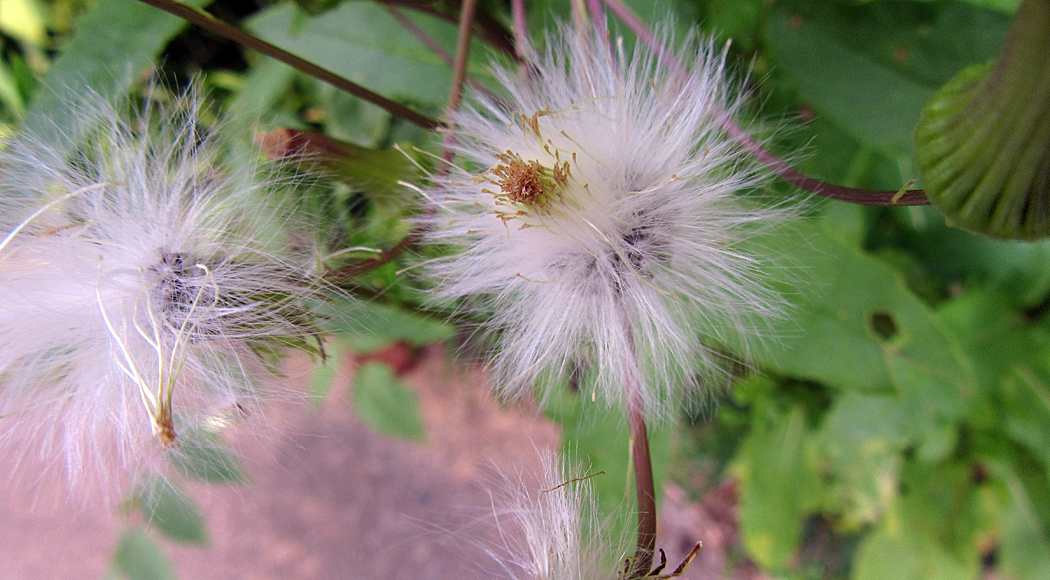
It is fall, and one of those flower seeds with its wisp of fibers landed on my shirt. I held it up in the light to see its tiny hard black seed and it reminded me of Carl Sagan’s “spaceship of the imagination.” 

Today, it looks like rain. Dark clouds are everywhere, with the occasional white brightness poking through. And I sat in my silent seat when the wind came up, as it often does just before a rain, and all of a sudden, from the tall oak tree at the top of the hill in the back yard, a hundred leaves let go to flutter down, but, since the wind was blowing toward me, the leaves did not drop straight down, but all floated toward me, up in the air, like a hundred butterflies, or snow in the wind, or bubbles bobbing around in the currents. And so, from a hundred feet up at the top of the tree at the top of the hill, the tumbling leaves filled the sky from edge to edge of my vision, dancing in the air, each showing shadow and light as it twisted, making a glitter in the sky. It was so ungodly beautiful, I began weeping. 

This is the beauty I don’t want to leave. It fills me up. I know I will have to leave, and sooner rather than at some indistinct time in a future that once was only imaginary, but now is palpable in muscle and bone. 

So, perhaps I am going soft in the head. Should I be so moved by such pedestrian events? I am more aware now than when I was young and had other goals in mind, of the complex connectedness of all of the sensate  world, and how that makes an organism too immense to take it all in or understand it. Little things we may understand and describe, but the wholeness of it all can only be apprehended as beauty.

And so I feel gratitude for the world and what it is willing to show me. I do not want ever to leave it, though I know I must. 

And when the final curtain drops on the final scene, I can say “NO” to the end, and “YES” with the same conviction. 

Over the past dozen years, since my retirement, I have written and posted some 730 blog entries. But I have started many more than that. Some just get forgotten when something more urgent appears; some end short because nothing longer needs to be said. Some just led nowhere. Others began as lists, but ended as lists, unfilled by full sentences. And still more still wait to be written. 

The odd thing, to me, is that there is always something new to write about. With 75 years of life packed into this aging piece of meat, there are endless stories, bits, adventures, ideas, experiences, disappointments and discoveries to draw upon. The well keeps refilling. 

But here are a few fragments that never filled out beyond their early inspiration. Maybe I will get around to it, sometime. 

What is it that women see in men? Because I am a man, I know what men see in women, but I have a hard time reversing the equation. 

I am not here talking of sex or the ardor of the loins — understanding is not required for that; it is simple, direct action — but the desire of women to share company with men. What is the reward for that? Women are so much more interesting, and interested in such a variety of vital issues. Men seem interested only in sports and politics, neither of which carry much import in the lives we live. As I used to say, “Politics answers no question worth asking.” 

____________

2. I was a writer for many years, making my living from putting words against words, hoping to find the best way to express something I hoped would be genuine. 

Recently, my old employer, Gannett, made a new hire, and announced it in such a clot of management-buzz that I got a bad case of hiccups. Newspapers used to have editors, now, with middle management bloated beyond belief, while laying off reporters, photographers and copy editors, what they have is a “Chief Content Officer.” 

The announcement came with a gnat-swarm of buzz words, which may mean something to other management types, but not anything penetrable by actual human beings:

“ ‘We are thrilled to welcome Kristin to Team Gannett to champion innovative storytelling opportunities and develop strategic content initiatives to expand our audience and drive growth,’ Reed said in a Monday news release.”

“Strategic content initiatives?” You would think that those people who run a newspaper would have some sensitivity to language. If I had written prose like that, I would have been out of a job. 

3. The glory that was Greece and the grandeur that was Rome. Or maybe not so much. 

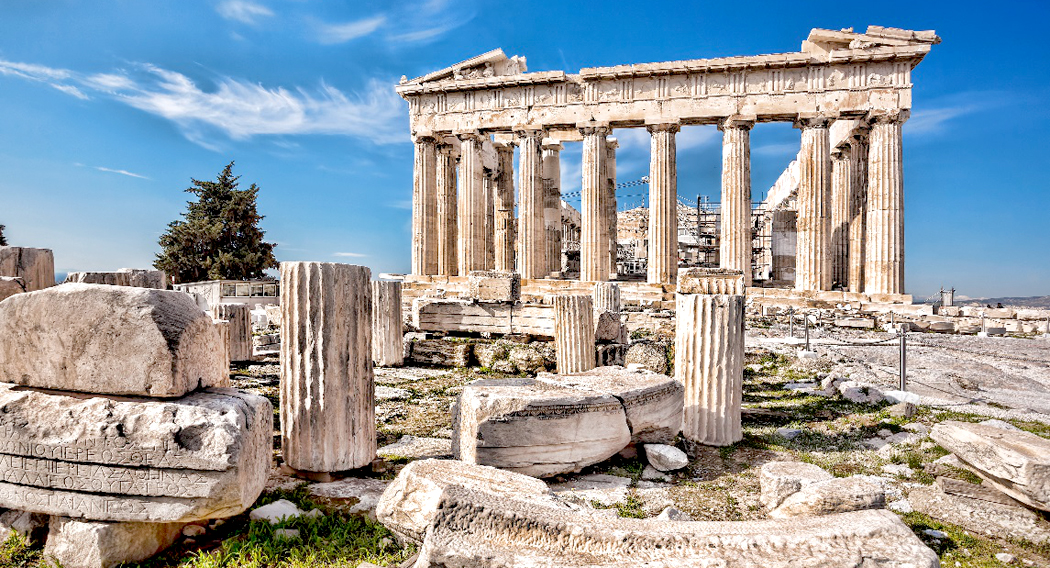
We owe a great deal to ancient Greece. At least, we pay lip service to our debt of democracy, philosophy, literature, science and not least, saving European culture from being overrun by that of Persia. But there are a host of words that describe the part of ancient Greece we would rather forget: Misogyny, xenophobia, pedophilia — come to us dressed in Greek etymology, and descend to us from Greek ideas and practice. We need to address some of the less attractive legacies of that Golden Age. 

Such as patriarchy, idealism, imperialism, colonialism, religious intolerance, cults, ethnocentrism, slavery. To say nothing of understanding sex as an exercise in dominance. And while we may think of Plato as the source of all philosophy, remember that he despised democracy and was an ardent believer in totalitarianism. 

____________

4. Columbus Day is a month away. I expect more anti-Columbus newspaper columns, art, a few tracts and manifestoes and perhaps a new opera. Much current art that tries to be political is really just polemical. To espouse any ideology is to strip life of its complexity. Yes, Columbus was a bad man and the evils he brought with him are real. But instead of preaching to us self-righteously, there are real problems to be discussed, such questions as, “What is in the nature of humans that causes territorial expansion, that causes them to make invisible the people they subjugate, that causes them to divide the world into Them and Us? Why does the boundary of ‘us’ expand and shrink periodically? Why is a world once headed in the direction of one-world nationhood, where the ‘tribe’ is humanity — why is that world now constricting so that nationhood is more tightly defined by blood, so that Serb kills Croat, Azerbaijani kills Armenian? The ethnic separatism that is emerging worldwide is, I believe, a source of exactly the same intolerance that the European West has for so many centuries visited on the rest of the world. Will it devolve to the point that Chiricahua despises Mescalero, or Venetian rises to kill Neopolitan? At what point does a coalition of interests grow from our recognition of our shared humanity?”

Questions such as these are avoided by nearly all political diatribes, whose authors prefer to point fingers and whine like grade-school tattle-tales. If a short perusal of the history of the world teaches us anything, it teaches us that war, inhumanity, violence, intolerance are universal. It isn’t only the Hebrews with their God-ordained genocide of Moabites and Amonites; it isn’t only the Pol Pot regime in Cambodia; it isn’t only Hitler killing Jews and homosexuals; it isn’t only Japan subjugating Manchuria; it isn’t only Custer at Sand Creek; it isn’t only the Hopi at Awatovi.

No one gets off the hook. Native Americans are no more righteous in this than anyone else, from Inca to Aztec to Lakota. If artists and writers chose to look a little closer, they could use Columbus as a metaphor for something richer, profounder, truer. They could have seen that Columbus was not sui generis, but rather representative of the species.

As it is, they came off sounding self-righteous. And no one self-righteous ever has much self-knowledge.

____________

5. Stasis is the enemy. Or rather, because stasis is utterly impossible, the idea of stasis is the enemy. It is the fatal stumbling block of every religion, political philosophy and marriage that has ever existed. Over and over, hundreds, thousands, millions of people die because someone promised them that if we only do things my way, everything will be forever hunky peachy. 

It is the lie behind the “original intent” argument espoused by some Supreme Court justices, and behind the infantile promises of politicians — most on the right, these days — that their policies will “finally” fix things and make them good forever. (In the past, it was the left and Marxism that promised a final end of historical change. It is not the sides one takes, but the phantom of permanence). 

The problem is that stasis is always temporary, which makes it not stasis. I.e., stasis is a pipe dream. 

____________

6. In America, “no” has become a dirty word. Americans like the positive attitude, the gung-ho approach to things. We feel actual moral disapproval of the word “no.” 

It can make your life easier and simpler. It can shake a load of guilt off your back. Although people talk of simplifying their lives, you can never simplify by doing something, you can simplify only by not doing something.  Just say no. It is the yang to “yes’s” yin, and the universe cannot function without both. 

“Yes” is kind of namby-pamby. “Yes” doesn’t want to hurt anyone’s feelings. “Yes” is go-along to get along. 

“No” is emphatic, direct, take-no-prisoners. “No” means no. Every change and improvement in life, every revolution begins with a “no.” 

In some way, every important historical development starts with somebody or some group saying no. Dissatisfaction, after all, is the great inspirer of humanity. If we were all duck happy all the time, nothing would ever get done.

7. I am 75 and am near death (Oh, I’m generally fine, but old and weak) and I think about non-being quite a lot, but not with fear, but a kind of objective interest in the whole idea of no longer hearing birds or feeling the breeze on my skin. Death seems to me a natural “rounding off” of a life and not something that I need to hold in my mouth like a tough crust of bread. 

I saw Carole take her last breath. I felt her turn instantly cool to my touch, like I was touching unfired clay. She ceased being. It was uncanny. My grief was incalculable — and it still is, although worn down — but it felt as inevitable or as natural as the coming of winter. I know the same awaits me — “To die — to sleep no more.” No dreams. Nothing. 

I didn’t sense a spirit or soul leaving her body, just her body ceasing to produce her being, like a light bulb blown out. We don’t ask a burnt-out lightbulb “where did the light go?” It ceases being generated. 

____________

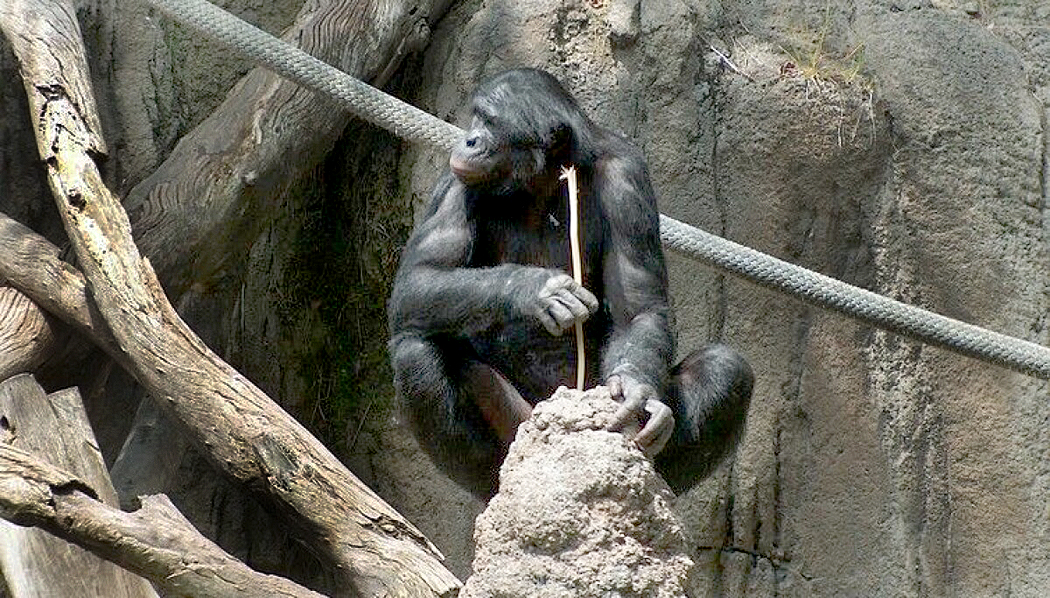
8. One of my problems with Rilke is that I have no use for categorizing angels and animals. Angels don’t exist — not even as metaphors for me — and I accept that I, as a human being, am an animal. I am not so fast to accept that no animals know they are going to die. We have no evidence for that assumption. Perhaps they do; perhaps they don’t. I suspect that some, such as porpoises or whales, may very well have some concept of death. I remember when we human beings were so sure that what separated us from the beasts was tool-making. Ah, but then we discovered how many other animals forge tools.

9. It has seemed to me that part of the German soul is to speak in general and categorical terms, in ideas, rather than in things. It leads to mistaking words for reality. Logic has its own logic, but it is not the logic of the world. (Whole rafts of philosophy, including my hated Plato, only seem to work in words. You can prove with logic that Achilles can never catch the tortoise, but that ain’t how it works in reality.)

But I fear that they are much more about language than about experience. And that is my problem in a nutshell. I made my living with language, and I love words to distraction, but the older I get the more I am convinced that language is merely a parallel universe, with an order and meaning of its own, roughly mirroring the world, but never actually connecting, never touching the pulse of reality. I know, it’s all we have, but I still counsel wariness. 

10. “These fragments I have shored against my ruins.” Why write at all? It is a question I have wrestled with all my life. Do I have anything worth saying to be value to anyone else? Dr. Johnson said that “nobody but a blockhead ever wrote except for money.” Well, I’m a blockhead: I no longer get paid to string words together. But it doesn’t seem to come as a choice. Some may choose to write; I write with the same volition as I breathe. 

Early in my life, words were thin and sparse; it seemed as if there were a lack of hydrostatic pressure from within: I needed to fill myself first. But after living a certain time, the inside pressure grew and it had to come out. It became a fountain I could not stop if I had wanted to. And the well was constantly recharged. 

Now I am old, and travel becomes difficult, habits become settled, reading more and more becomes re-reading. In retirement I can no longer afford to attend concerts, plays and dance the way I used to. The incoming has slowed, and I suppose the outflow has dwindled in response, but the backpressure is still there. Hoping to cease not till death.

“Nature’s first green is gold, her hardest hue to hold.”

I am seeing my seventy-sixth spring. The first, I don’t remember, because I was only four months old. And most of the rest tend to blur into clumps — the springs of my New Jersey childhood; the springs of my adolescence; those from my college years; those from just after — each clump has its own resonance and emotion. 

Now that I am 75, the spring is more poignant for the fact I have so few left to experience. 

When I was a child, springs were so far separated from each other, they were wholly new each time. They augured the end of the school year and the beginning of an eternal summer vacation. Now, they come thrusting upon each other like jostling ticket-holders in a queue, pushing toward the head of the line. Through that door, though, is an end.

Through my twenties and into my thirties, I was living in North Carolina, and spring brought what was called “mud season,” when the ground thawed and turned into muck, which caught your shoes as you walked. The air was still crisp and the trees just budding, but it was clear winter was over and daffodils were already yellow. Next step, the redbuds and then the dogwoods. I’m afraid winters just aren’t as cold anymore, and the ground never really freezes. Climate change is obvious for anyone with enough years to remember. 

It is often said that spring is a rebirth, as the seasons circle around and the grey and brown of naked winter trees turn first yellow-green (nature’s “first gold”) and then leaf subsides to leaf, darkening to the deep forest green that augurs summer. Animals rise from burrows; bees begin circling gardens; birds squawk and chatter; the sun rises higher in the sky each day. 

But that is not spring for me. Instead, at my age, the changing seasons are like mile-markers on a highway, and each passing one means there are fewer in front of me. It is a straight line rather than a cycle. 

As the years are squeezed, so the pressure increases to take it all in, to pay attention to each small detail, to garner pleasure from the tiniest bits. What once was simple pleasure is now joy — an increase in appreciation for what I am going to have to leave behind. 

I sit on the deck behind the house I’m visiting in the North Carolina Piedmont, in the scant shade that the freshest, newest leafs make before fully fledging their trees, and listen to the wrens and nuthatch, the rattle of the woodpecker. I feel the warming air and look up to the clouds shifting against the blue. 

It is a sensuous recognition of the variety the planet holds. The many greens of the newest foliage. The varied textures of the leaves, smooth, dentate, glabrous or slick. 

The fullness in my chest as I take all this in, is a form of love. I watch the new spring. It is now Earth Day once again. The world is ticking on. This blue planet — this green planet — and the parent will outlive its child.

One of these springs, perhaps even this one, will be my last. My hand is always at my lips bidding adieu. 

When I was a young man, each loss, however devastating, was temporary, an emptied pool to be refilled by a gushing spring. But now that  has changed, and I know that the final loss will bring only oblivion. I hold on to what I love with tighter grasp. A bumble bee hovers; the cat yawns; a breeze teases the upper tree branches; a cardinal yawps. 

I want to hold it all tight in my arms.

I am 74 years old and it is fall again. Again. There are a countable number of them left for me, a fact of which I am daily aware. It will soon be winter.

It is the middle of October and the leaves in Rockingham County, N.C., are falling like snow all day and clotting the ground; the woods around the house are turning brilliant colors. It is something I’ve seen 74 times and each cycle around it seems more beautiful and more precious. 

Fall color can be reduced to mere postcard cliche. We drive the highway and look for the yellows of oak and the reds of maple and see them gleam in sunlight and think, Oh how pretty. 

That is the view from the car window; it is too far away to see the leaves clearly — just broad patches of attractive color. I am not saying that view is a lie. It is beautiful and we should enjoy it if we take a weekend drive into the mountains to see the hues. We enjoy what it is given to our age and awareness to see. 

But at 74, I walk out into the grounds behind the house and pick up one of those expired chlorophyll factories, wet and matted from under my feet and what I see is very different. Not less beautiful, but much less pretty. 

The dead leaf is ribbed and spotted, with holes eaten through, worn at the edges. Patches of dun yellow, raw red and sometimes so dark in maroon as to be almost black. Few leaves fall in a perfect and whole shape. Most have been damaged, mostly by time, bit by bugs. They are curled and sere. 

The highway view of the fall is a generalized one, the close up is individual, almost personal. The highway view is the short story; the individual is the novel — a great Tolstoyian or Dostoevskian epic. It is a constellation of detail. Like a great abstract painting, you can gaze at it and see a palimpsest of accretion, of time having its way, of decay not as the loss, but rather as a build-up of detail, each on top of the other. A Pollock able to reward the look at any detail pulled from the whole. 

We are all sitting on the patio in the back yard, with woods acres deep behind and the sweetgum tree has covered the deck. While we talk, I pick up one and feel its roughened surface, its crisp desiccation, but mostly its bruised and patterned color. 

And I recognize myself in them, now that I am old. My skin is also sere and crisped. It has its mottling and discoloration. The sheen of youth is  rasped away. This is not a lament, but a recognition. Surely there are recompenses for the years’ brutality. 

Primary among them is an equanimity. Motes that seemed essential are washed away; acceptance promotes forgiveness; the need to advance in the world vanishes. 

And, perhaps most important, I find beauty in things that, when I was younger, I could not recognize, or found ugly. After such long experience on earth, I look for different things — very different from when I was young and ignorant. Now I am aged and ignorant, but have learned to see things with a wider eye. 

So those failing leaves speak to me of a profound beauty. A beauty of mortality. Of multiplicity, of profuse accretion — of time as a building up of one thing on top of another, a layering of meaning. A depth. 

I don’t know if this will be my last fall season. I could live another 20 years, although no reasonable actuary would advise placing a bet. I do know that it forces me to appreciate the worn leaf and see its innate glory.

Click on any image to enlarge

Anne says, “There must be a word in German for it.” There probably is, but I don’t know it. 

But it is something I have begun feeling, often, now that I am three-quarters of a century old — or in another way of looking at it, at a point where the fraction of life I’ve lived has a numerator quickly rising to equal the denominator. 

I frequently go out my front door to watch the treetops wave in the breeze, to see the birds wheel in a sky filled with brilliant white cumulus clouds, bees and butterflies dip from flower to flower, the palette of multiple greens in the garden leaves leave almost a taste in my mouth, and I think it is all beautiful. Unutterably beautiful. I feel in love with the things of this world.

But I know, as my body tells me every morning, that I am coming to my own end, that even if I live a long life, there is still only the tail end of it remaining, and I feel a confusing sense both that I will miss all this so dearly when I am gone, and that when I’m gone, I won’t be around to miss anything. 

And so, I am having a kind of premature sense of loss for what I have not yet lost, but know I will lose — and yet, know I will not miss it when I do, because I will be annihilated and will not exist to miss what I already know I must miss. 

Do you get the paradox of all this? And this is what there must be some German compound-word for: the sadness of loss you know you would suffer if you could, but know you will not be able to. As Keats has it, “Joy, whose hand is ever at his lips bidding adieu.” 

Perhaps Vorausschauendsehnsucht is the word I’m looking for. It is long, impressive and German. Whether it is or not, and whether it even exists outside my construction of it from parts, the emotion is very real for me. 

It is said that humans are distinct from other animals in that they know they will die. And this awareness must make everything in our lives seem both fleeting and dear. For me, the closer I get to the great blackening halt, the dearer it all gets, and the faster it flies. 

And so, I walk out the front door with no other purpose than to watch the treetops wave in the breeze, to see the birds wheel in a sky filled with brilliant white cumulus clouds, bees and butterflies dip from flower to flower, and enjoy the palette of multiple greens in the garden that leave almost a taste in my mouth. And I think it is all unutterably beautiful.

The great tree in the backyard has died, leaving a wide-branched skeleton over the shrubbery underneath. 

The house sits on the side of a small hill in a middle-class neighborhood and the ancient red oak grew at the crest, with a regal view of the mountains surrounding Asheville, N.C., the Swannanoas to the south, the Black Mountains to the north.  

Soon after moving here in 2012, I wrote a blog (link here) about that tree, seeing it as a kind of mythological presence. It was lord of the hilltop and a kind of noblesse oblige permitted it to shade our yard in the summer. But now the king is dead. 

I know dead. It is different. 

Winter trees mimic death, no doubt. But the mere lack of leaves is not the same thing. In fact, all winter long, you can see the tree progress, from leaf loss to slow bud expansion. There is vitality under the thin brown and greenish skin of the twigs. They fairly pulsate. Yes, from a distance, the tree seems lifeless, a network of empty branchings against the sky. But look close, and you can see the constant change over the winter season and the slow building up to the explosion of spring. 

Many years ago, I was living in the Piedmont of North Carolina and had a line of red maples across the yard along the street. That yard was my Eden; it had more than a hundred species of plants, from trees to shrubs to weeds. I knew every one intimately. There was the great black walnut just off the porch, the hundred foot pecan in the back, the chinaberry and sweetgum on the side and an ancient apple tree to the south with a line of wild roses at the border of the property. But my favorites were the maples. They showed me that the trees were well named, for they were not simply red in the fall when their leaves turned, but red all year long, with red twigs tipped with buds that spread their bud scales in February to show a blush hidden underneath, to the ignition of red flowers to the red “polynose” seeds. Finally, the first leaves unfurled a florid red before gaining their green. 

When I left that Eden to live in Seattle, I didn’t know how much I left behind. Seattle certainly had its attractions, but I couldn’t help but notice that all the trees I saw in those vast forests were either Douglas firs or western red cedars. I came back to North Carolina in large part because I missed the infinite variety of its nature. Helas, I never regained my Eden. 

Eventually my new wife and I moved to the Sonoran Desert and found mesquite and palo verde. They were gnarly and dense, and so much of the foliage there only threw out leaves when the weather gods managed to squeeze out a bit of moisture from the sky. For most of the year, they looked dead. When we both retired, we moved back to the Blue Ridge and the trees that were our psychic comfort food. 

And that red oak, at the top of the hill was a reminder that Eden is still possible, even if it remains merely a spark. And now it is dead. 

There are a lot of adolescent and romantic ideas about death. Popular culture is filled with them. Death head tattoos, zombie movies, goth pallor and Chatterton’s death. Whether it is the grim reaper or Kali, the goddess, the pale horseman, the Dance of Death or little devils running around with pitchforks. There are coffins and graves, tombstones and crosses. But these are merely symbols, and far removed from the real thing. Death is not a going someplace, death is cessation, an emptiness, a nullity. 

A dead tree is simply defunct. It has passed from a thou to an it. It has been hollowed out and left an unchanging corpse. Not unchanged — it is being decomposed by saprophytes and brown rot, but unchanging in that it no longer produces the life that pushes leaves out of their leaf-tip capsules, no longer stretches new growth from the fingertips of twigs and branches. 

I remember driving through Yellowstone National Park after the great wildfire of 1988 and seeing into the distance miles of blackened trunks. It was a kind of moonscape, with not a living thing to see. 

Life is not something invested in a body, but something the body generates, as the tree produces leaves and fruit. So, when the red oak dies, it isn’t as if an élan vital has left the corpus of the tree, but as if the wood itself has given up, ceased production, closed the shop. It stops. Life is not invested, it is generated. 

The tree looks different. There is an absence in its woody bones. 

I know dead. I saw it when my wife died. She was ill over several years, slowly declining. Then, at 7:28 a.m. I saw her stop breathing. Then another gasp, and then nothing. Her body ceased generating the life that had worked the gears and levers of her muscles and psyche, her organs and mind, for 75 years. When a light bulb had burned out, one doesn’t ask where the light has gone; the light simply has ceased being generated. And one cannot worry where life has fled; the body has stopped manufacturing it. The factory has shut down. The body begins immediately to grow cold, the flesh becomes like damp clay. 

One paragraph in my original story of this tree stands out for me: “This is not a tree of beginnings, not a tree of new fruit, but the kind of tree that functions as a ‘witness.’ It sees all that happens. It cannot change what happens; it cannot interact. But it knows. What it knows, we mere humans can never fully know, but myth tells us over and over, it is not necessarily a happy knowledge. The Garden of Eden may have contained the tree of immortality, but my tree tells me of a longer time, when everything passes. It is a tree of the knowledge of death.”

I make no claim of wisdom. In fact, the older I get, the less wise I feel. But I can claim, at the age of 70, to have amassed a life of experience. I have been through a lot, from the turmoil of the 1960s, divorce, near homelessness, the death both of a brother and of my late espoused saint. I have been both unemployed and had a successful career and traveled three continents. Finally, I have grandchildren and see with trepidation into the 21st century, beyond my time here. 

And it is that last that gives me pause. If there is one regret that haunts my senescence, it is that all the experience I have lived through can never be transmitted to the twin granddaughters that I love. Sure, I can tell them things, and perhaps some of what I tell them helps. More is surely ignored — I know I ignored the importunings of my elders when I was their age. It cannot be otherwise. When I was young, I knew so much; now that I am old, I know so little. They certainly see that in me, now that they are 18, headed off to college and know so very much. 

But it isn’t advice I am talking about. I am talking about the impossibility of transferring experience. From my brain, from my heart, to theirs, of for that matter, to anyone. A whole life of accrued sensation and false step, of battering and acceptance, of the shiftings of love and the devastation of failure, the afflatus of joy and the satisfaction of doing good work, remains bottled up inside me — and inside everyone. 

I am reminded in this of the soldier back from the war, with the thousand-yard stare, who can say in words what he has been through, but can never actually share the reality of it. The horror, the horror. So many, like my own father, a veteran of World War II in Europe, never talked about it. When he was old, I tried to tease it out of him. I asked questions about his war experience, but he always deflected. I know at one point near the end of the war, that 11 German soldiers walked out of the woods to surrender to him. But as far as he was concerned, he had no part in that. It was just something that happened while he was there. He avoided ever talking about the war and when pressed, made light of it, in a way that made it clear there was little lightness about it at all. 

Things of the magnitude of war and destruction cannot be adequately talked about. You had to be there. And having been there, you never wanted to be there again, even in recollection. 

I had a similar experience when my wife died. There is no way to express the enormity of the loss, or the singularity of the experience. There were many who expressed sympathy, and I greatly appreciated those words intended to comfort. But they cannot know what it was like. Is like. In no way. The only people I could truly commune with were those who had also lost a mate. They had been through it, too. They understood. It is a kind of brotherhood. 

The actual complexity and depth, the horror and devastation of it cannot be conveyed in mere words. The experience of it is different from language. It is the biggest event in my life, and remains so a year and half later. 

In the same way, all the years that have been poured into and out of my body and my psyche can not be expressed in words that begin to touch the heart of it. Language is a parallel universe, a train out of whose windows you may watch the world pass without having the need to experience it. The real thing is bigger, inexplicable, devastating, body-filling, rich, dense, multifarious and always connected, piece to piece in a larger and larger construction, which is me. Or you. 

It is the final frustration of life that all that history buried in my mind is stuck there, doomed to die when I do. In a way, all that learning I have amassed is ultimately pointless; poof, gone. 

I am aware of the irony: I made my living as a writer, and words are my only useful tools. But no matter, I have always felt the inadequacy of those ink squiggles on the paper. 

I am reminded again of those lines in Andrew Marvell’s poem, The Garden: “The mind, that ocean where each kind/ Does straight its own resemblance find,/ Yet it creates, transcending these,/ Far other worlds, and other seas…” 

The idea being that inside us is a world actually bigger than the outer one. It takes it all in and creates even further, making connections not obvious, building from imagination “far other worlds and other seas.”

“Annihilating all that’s made/ To a green thought in a green shade.”

And it’s the “annihilating” part that digs at me. I have no fear of death — after all, I was not afraid before I was born; non-existence is a neutral state (of course, like Woody Allen, I don’t want to be there when it happens). Like Herman Melville told Nathaniel Hawthorne, “I have pretty well made up my mind to be annihilated.” But all that life, all that experience of which my cup overfloweth, will ultimately count for nil. That is the part that vexes me. 

I want to make the twins’ lives easier, happier, with less of the pain and frustration that comes to all of us. I want to impart to them the equanimity that age confers, but I cannot. No one can. All that experience is ultimately wasted in me, moiling about inside with no escape. No purpose, no benefit. It is life’s greatest frustration. And I feel it intensely.

Roll on, thou deep and dark blue ocean, roll.

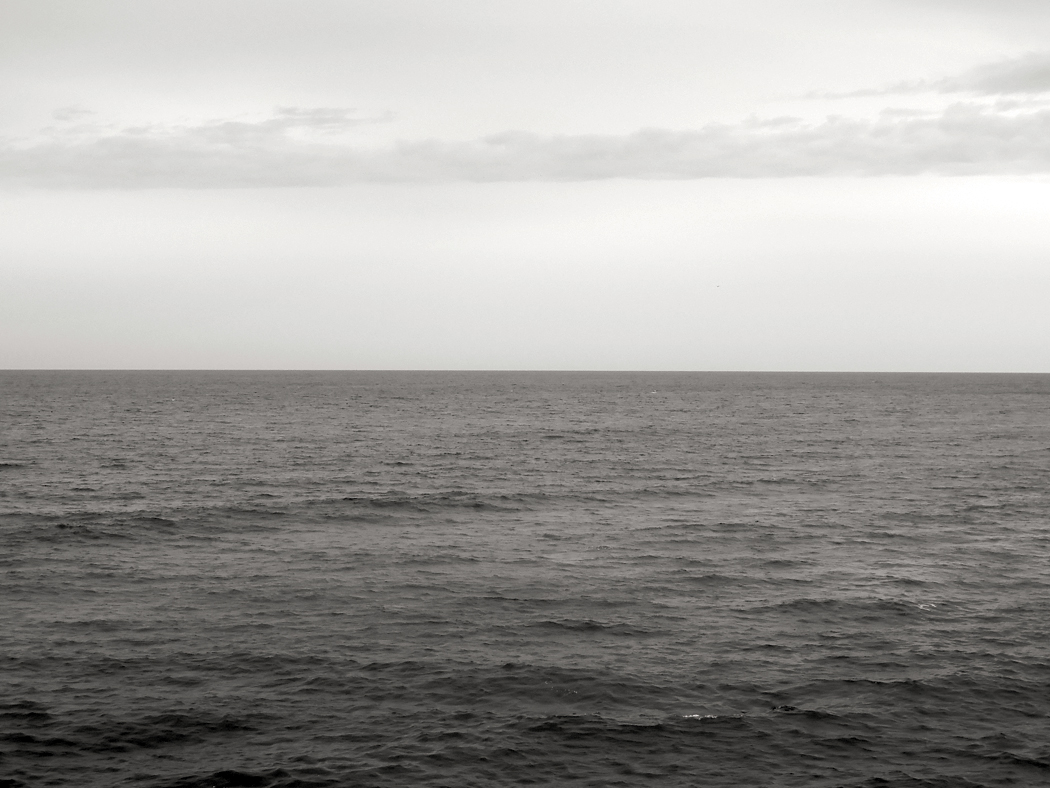
I am sitting at the edge of a continent, looking out at a flat expanse of grayish blue, which falls away from me, and when I force myself to notice it, rolls downward at the horizon and below my line of sight – it is the rounded top of a ferris wheel revolving eastward at some speed.

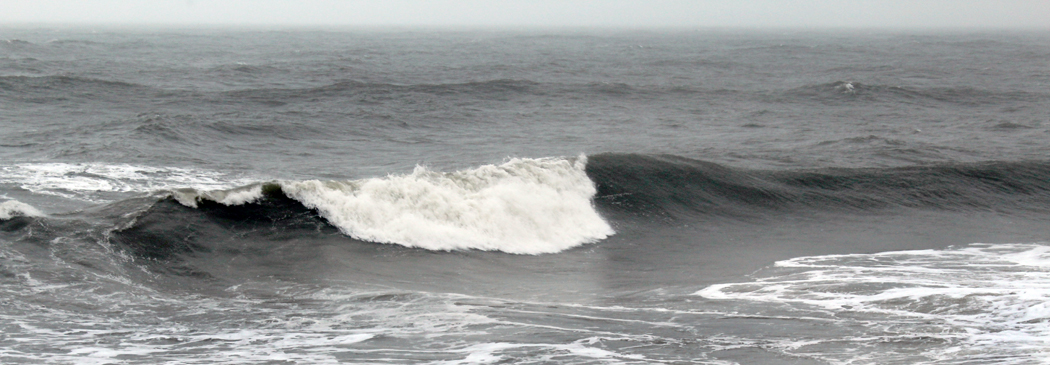
Nearer to shore, the color is broken with bands of white, breakers on the beach, but further out it is expansive. Somewhat below the horizon, far out to sea, a hurricane is sending its message in waves to our shore. Wind blows the trees nearby, and the surf is riled. There is mizzle in the air. The storm has passed here once again, only glancing at us as it moves by.

When we are young, the sea is romantic. It is the cradle endlessly rocking, we write poems about it, spindrift and seawrack, we stare out at it as if we were expecting to discover our adventure.

Many of us manage to maintain this sense of awe in the face of the waters, but for others, the sea has become a summer rental, or a weekend away from the city. If you were privileged to sail across the ocean on a ship, you will change your attitude in another way: It will become a daily monotony of wet flatness. Either way, the ocean will lose some of its mastery over us.

It is the edge of a continent. I have been back and over that continent more times than I can count, and have a body memory of its extent. I know in my bones the size of it, measured in days on the road, in the exchange of one horizon for the succeeding one. There are hills, cities, forests, grasslands, rivers, traffic lights – let’s not forget the traffic lights – and the homes of friends we stop to visit.

Looking east from here, though, out to sea, the globe is not speckled with features; it is uniform, save for the wiggle of waves and the rise and fall of the swell. It is a face without eyes, nose or mouth. And one senses that if you were to reach the horizon – that edge of your vision from any single location – you would find only another, identical horizon the same distance hence.

Inland, the picture is busy, it is our daily lives, the commerce between people, the schedules, the hubbub, the striving, the disappointment. It is populated and squirming. In that sense, it is life.

Outward, the sea shows us blankness of the non-human cosmos, seeming to be unlimited, at the very least, with no surveyor’s stakes plotting out squares of ownership. It is the blankness of death, and therefore, death itself. It is why we stare out at it, why it stares back, why it fills us up so we are like a bottle overflowing.

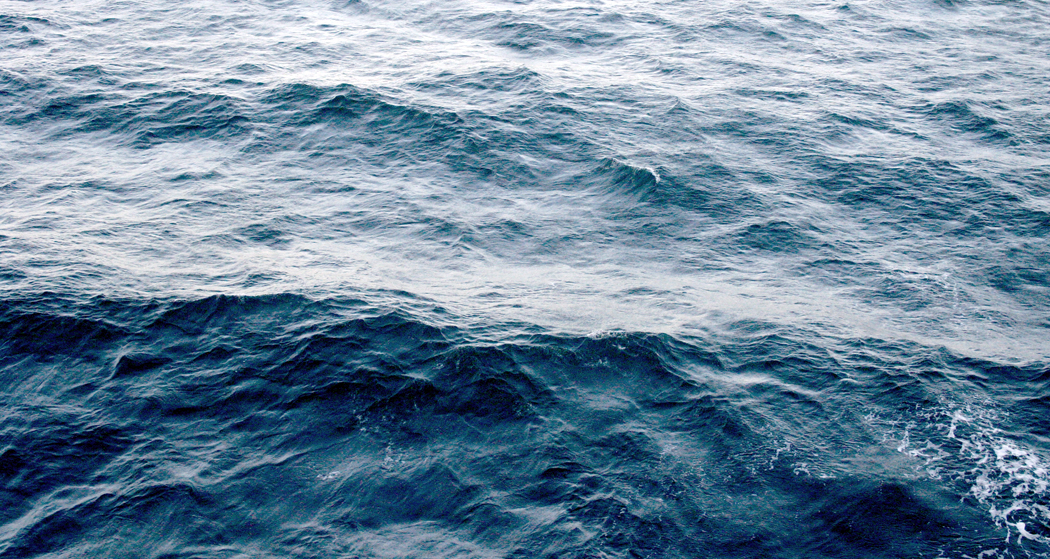
I have seen three of the planet’s oceans and several of its smaller seas – small but still immense. I have lived on the Atlantic shore and on the Pacific Coast and felt very different oceans. I have sailed on both. I have seen the Indian Ocean, and felt the warm, humid air, thick as a fur coat, from its shore. I have seen the North Sea and the Mediterranean, the Gulf of Mexico and the Sea of Cortez. And all of them leave me with a sense of a flatness stretching out like a drumhead, but curling down over their horizons, and always, I know that past that eye-reach is more flatness. More water; more swell, more wave, more whitecaps, more low clouds, shifting with the barometer.

The oceans are not infinite, I know. They are not eternal, I know. Byron’s encomium is nowadays wishful thinking: “Man marks the earth with ruin; his control/ Stops with the shore.” Pace Byron, but we are fouling the seas quite efficiently now.

Nevertheless, that does not change our sense of the watery parts of the world. They beckon us to our life adventure – at least in our minds, they do – and they speak what Whitman called the low, delicious word, “The word final, superior to all.”

They remind us of the vastness of the universe, our measly place in it as pismires, our short parole upon the watery planet, to be revoked at a time unknown to us – a knock on the door, a suitcase packed ready to go.

No doubt it is why the oceans look so beautiful to us. They promise that there is something larger, less transitory, less mutable.

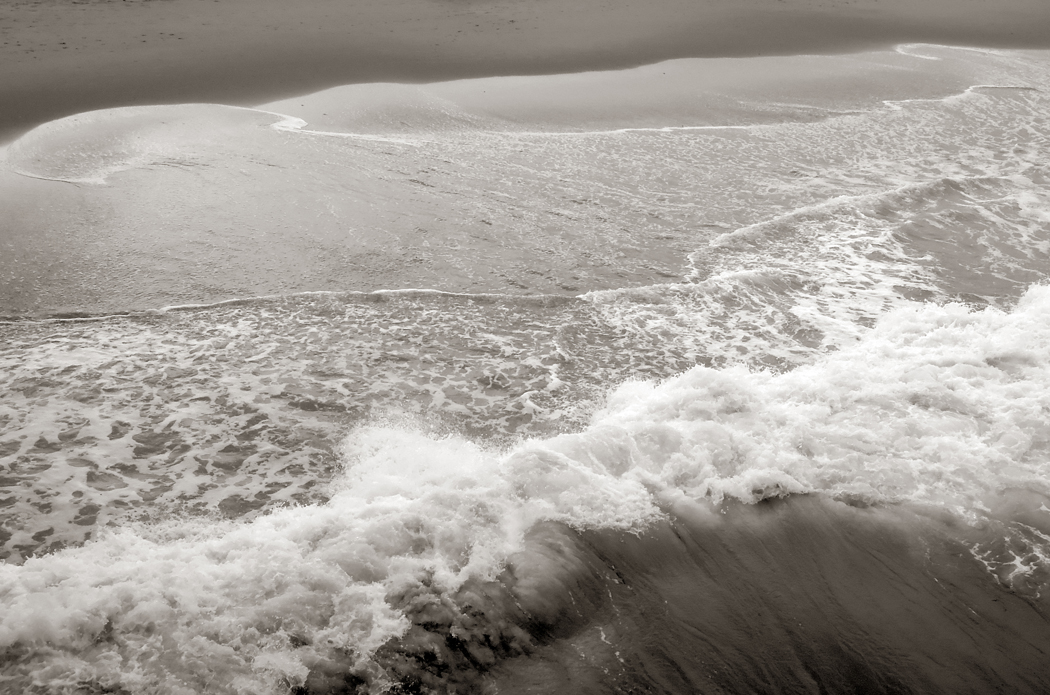
I look out on the Atlantic this morning, storm offshore, waves pawing the sand around like a cat playing with a mouse. I look up at the clouds, gray as the water beneath; I look beyond them.

“If they but knew it, almost all men in their degree, some time or other, cherish very nearly the same feelings towards the ocean with me.”