When that Aprille with its sweet showers has vanquished the roaring lion of March, then “longen folkes to goon on pilgrimages” — or at least on spring break. The ice has broken on the rivers and the trees are budding. You want to get out of the house again. Go somewhere.
I’ve been on many pilgrimages, although I had never really thought to call them that. The line between what constitutes pilgrimage and what can be called merely travel is impossible to draw in black ink. Each of us must decide where one endeavor shades into the other. There are many who walk to Santiago de Compostela merely for the adventure of it, while, on the other hand, there are those who may vacation in some spot that has developed, for them, the quality of a shrine.
Utah
I am not religious and subscribe to no doctrine, but there is still something deeply satisfying about going somewhere, away from life’s everyday concerns, to discover something bigger, more important and more meaningful. That is how I define for myself the nature of a pilgrimage.
Some call this meaning “spiritual,” but the word, for me, has too much incense around it. I leave it to the New Age conjurors and the church-goers. But it hits something more than merely day-to-day in our consciousness.
Oregon
In some sense, nearly all travel I have taken has functioned as pilgrimage. I go to see something, or I go to learn something, or just to be near something that has meaning. And there’s a crux. “Meaning” is a squishy term, difficult to define. It is not an equation: “This means that,” as if we were translating something, like “amigo” means “friend.” In the sense I use it here, meaning cannot be translated; you can’t always say what something “means;” it cannot be paraphrased, but it inheres in an experience. You feel that it has meaning or significance. Like a dream you cannot parse, but won’t leave you; you know it is meaningful. Meaning is not understood; it is recognized.
Maine
You will have your own meaningful travel; consider why some places seem important, perhaps because of something that happened earlier in your life; perhaps because of something you read and admired; perhaps because of religious belief. You want to visit the house where you grew up, or the farm your ancestors worked. Perhaps, even, because it matches some undefined longing deep in your chest.
It was such a longing, or empty space in my experience, that led me to Chartres cathedral. It was certainly more pilgrimage than tourism that led me to it first time. It overwhelmed me.
Northern France
It prompted, a few years later, a more traditional pilgrimage: an intentional voyage from shrine to shrine, as I traveled west to east across northern France seeing many of the notable churches and cathedrals: Rouen; Amiens; Beauvais; Laon; Reims; Noyon.
I’ve been back to Chartres several times; in Paris, to Notre Dame too many times to count. But also to Sainte-Chapelle, Saint Denis, and several smaller churches, such as Saint Séverin, Saint Germain l’Auxerrois, Saint Eustache. Each fed a hunger to experience that unexplainable sense of space and time.
And despite my utter lack of religious faith, there was no denying the power of this architecture and the meaningfulness of its vast interior space as metaphor for both the infinite exterior and our psychic interior — dome of heaven and dome of skull — both of them larger and more important than our puny day-to-day lives.
Giverny
I’ve also made the pilgrimage three times to Monet’s garden at Giverny — which is one of my holy-of-holies — first in the spring and then twice in the fall. My life is infinitely more alive for my having spent time there.
One important thing about pilgrimage is that there is a layer beyond the quotidian. There are many other gardens I have visited, from Butchart Gardens in British Columbia to Brookgreen Gardens in South Carolina, and however beautiful they are, they don’t have the added psychological punch of being conjoined with the historical, artistic or biographical significance of its founder.
Texas
Giverny has been memorialized in the paintings of Claude Monet, and are a monument to a moment and a movement in art history — and what is more, one that I particularly resonate to. And so, visiting Giverny has the significance of pilgrimage for me. The more deeply you become emotionally engaged with the things and places of the world, the more likely a site may become such a destination.
Hatteras Island, N.C.
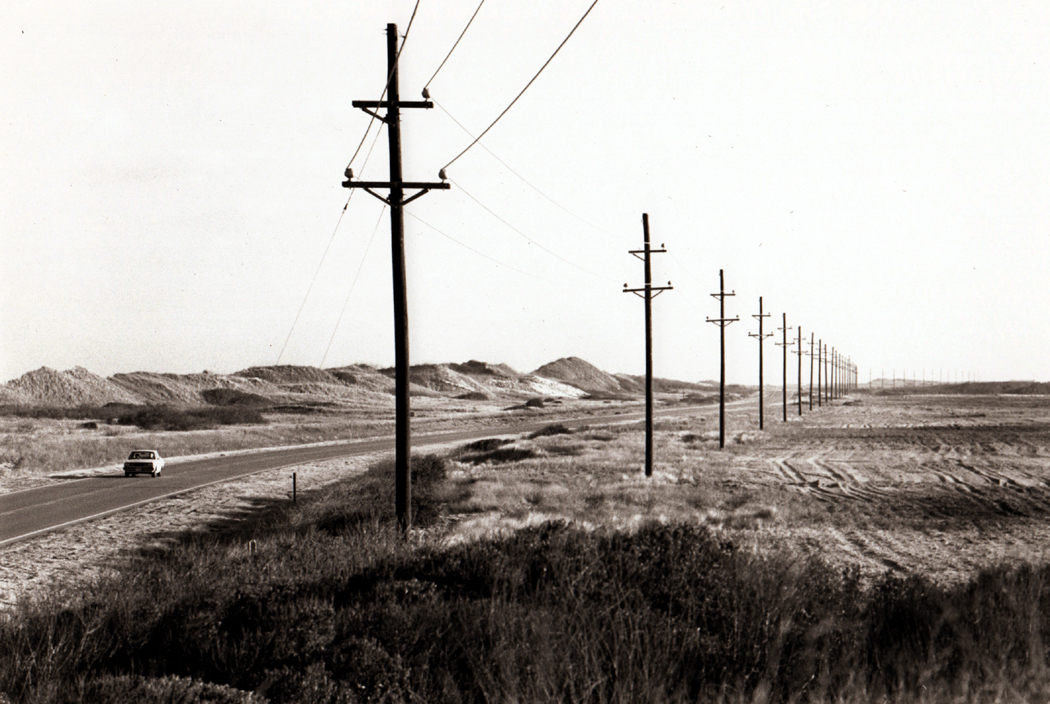
Cape Hatteras has become such for me. In college, my friend and I visited several times. We camped in the dunes directly under the lighthouse and at night the surf misted the air with a salty haze. The nighttime sky with the roar of the ocean was another mirror turned simultaneously inward and outward. I return periodically, although when I first went, much of the barrier islands were empty; now, except for the protected National Seashore, it has become a Manhattan of the coast, with three- and four-story condos lining the single road that runs south along the island. Its magic is mainly now in the memory.
Vermont
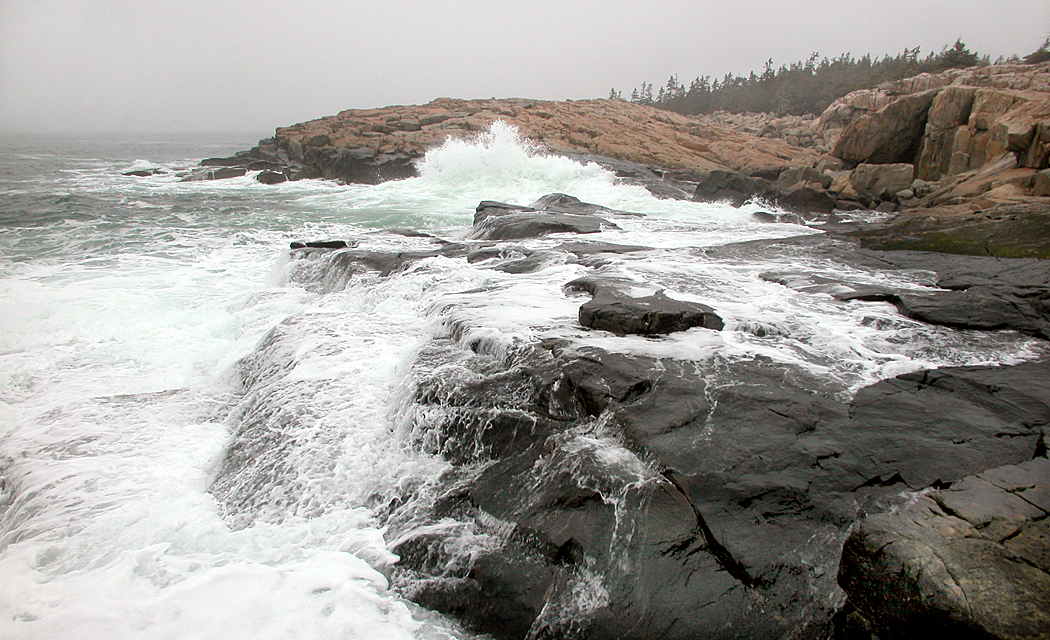
One can make pilgrimage not only to claim something new, but to pay homage to what has become sacred. Every time I visit Maine, I go to Schoodic Point where the waves crash over rocks and wash back into the sea in torrents. It is pilgrimage in so far as each visit reassures me that the world I know survives — both the interior and the exterior. I reabsorb what it gives me and I am remade.
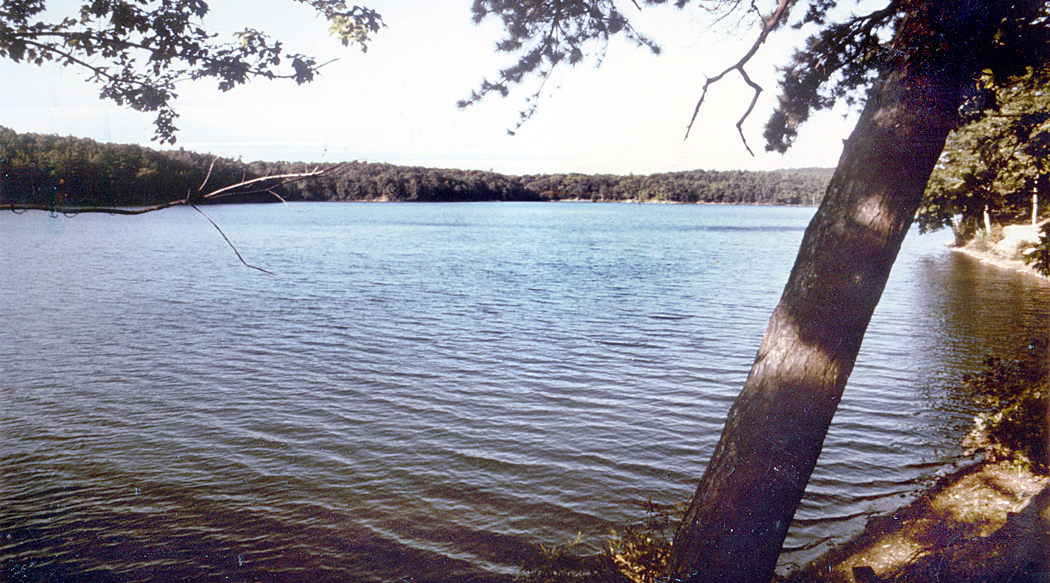
Road to Walden Pond
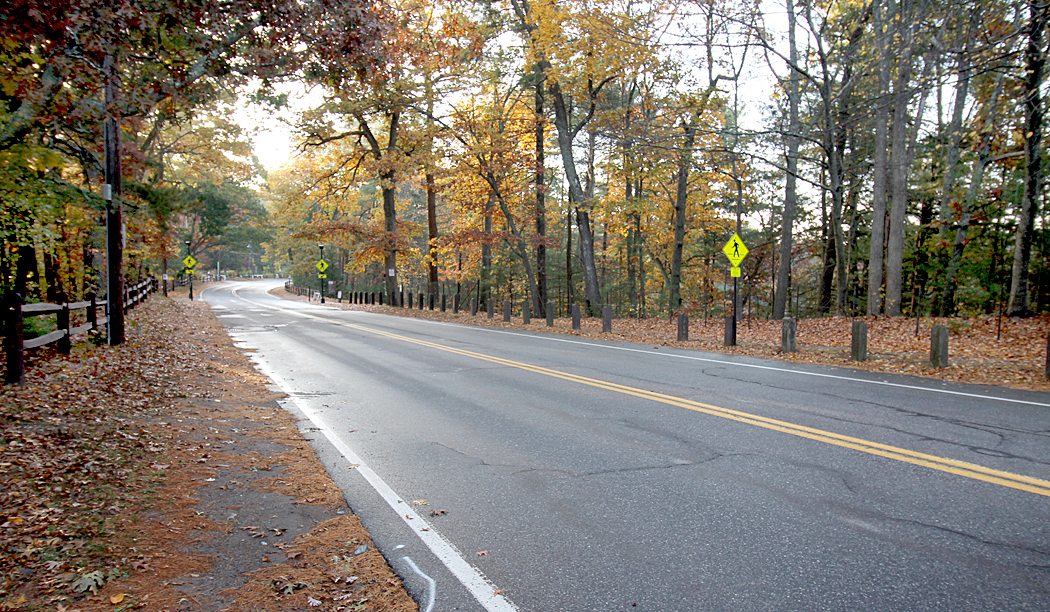
When I was a young man, I read through the writings of Henry Thoreau and made the pilgrimage to Walden Pond in Concord, Mass. I can not accurately recall the number of times I have made it to Walden Pond; they all blur together. I’ve been there in spring and in fall; I have had the place all to myself, and I have had visits I had to share with busloads of tourists; there were moments when I felt I was communing with the eternity that Thoreau found there, and moments that were bound by the clock — I had elsewhere to get to before dark.
Blue Ridge Parkway, North Carolina
With my second unofficial wife, I hiked a good portion of the Appalachian Trail in the mid-1970s, in a more traditional pilgrimage on foot. We never finished that one, giving up because we discovered that unlike what we had imagined — leisurely enjoying the beauty of nature — the reality was driving ourselves to the next lean-to by nightfall and not losing track of the paint blazes that marked the trail. A trudge rather than a Thoreauvian saunter. Nevertheless, even incomplete the hike has informed who I have become in profound ways.
Pacific Coast Highway, California
Other pilgrimages I have made include driving the the length of the Mississippi River from its source at Lake Itasca to its mouth on the Gulf of Mexico. I have also traveled the length of the Appalachian mountain cordillera, from Alabama to Percé Rock at the tip of the Gaspé Peninsula in Quebec; and have driven from Mexico to Canada up the fold in the middle of the map of the 48 states — along the 100th Meridian.
Each of these, and several others, have been journeys of intent, that is, trips made with an end in mind, as opposed to a vacation trip, whose whole point it to avoid the work involved in achieving a goal.
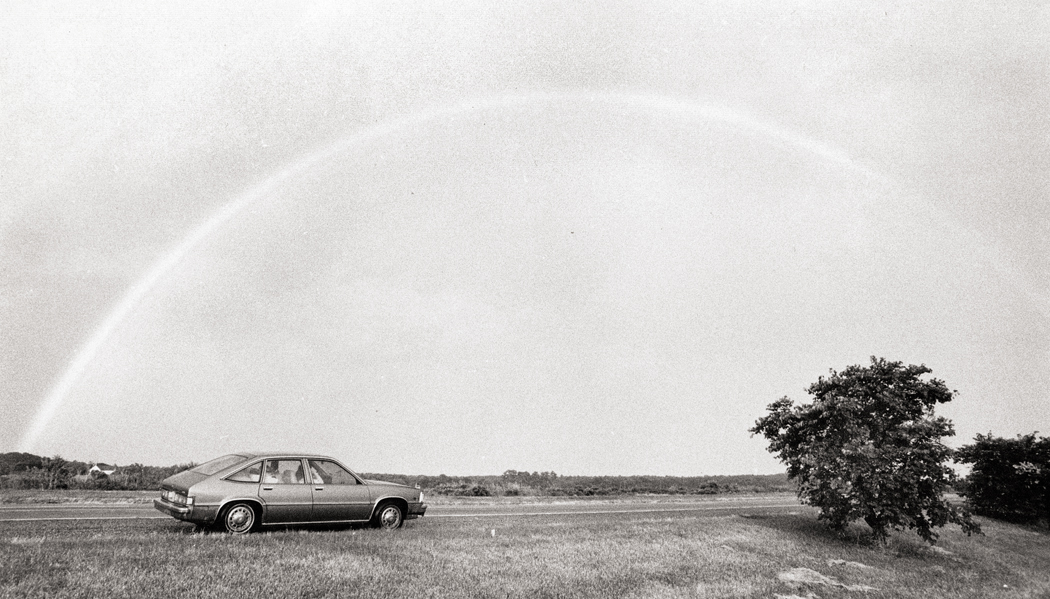
Rainbow, Delmarva Peninsula
Perhaps the most salient difference is the goal: For a pilgrim intends to change or be changed, while the vacationer usually purposes only to recharge the batteries and come home feeling more himself. But leaving home and passing through the unfamiliar will always change who you are.
I have traveled more widely than most, I believe. I was a travel writer for my newspaper (among other things). But even outside of vocational duties, travel has been central to my life. My late wife and I have been on the move considerably, visiting each of the 48 contiguous states many times, and gone outside the country when we could. In the summer of 1981, for instance, we put 10,000 miles on the car while driving around the country. We were both teachers and the summer gave us the chance to wander.
There are places, however, that I have gone back to, over and over, throughout my life, not through mere happenstance, but because they have been meaningful. They are destinations for non-religious pilgrimages.
Meaning can be hard to define. On first thought, one thinks “meaning” implies a second message: “This” means “that.” “I know what he said, but what did he mean?” That sort of thing.
But meaning has a more personal existence, a psychological one. Something can have meaning even if you don’t know what it means. I suppose you might otherwise call this significance. And there are places I visit over and over because they bear the weight of personal significance. They have meaning. And I go back to them.
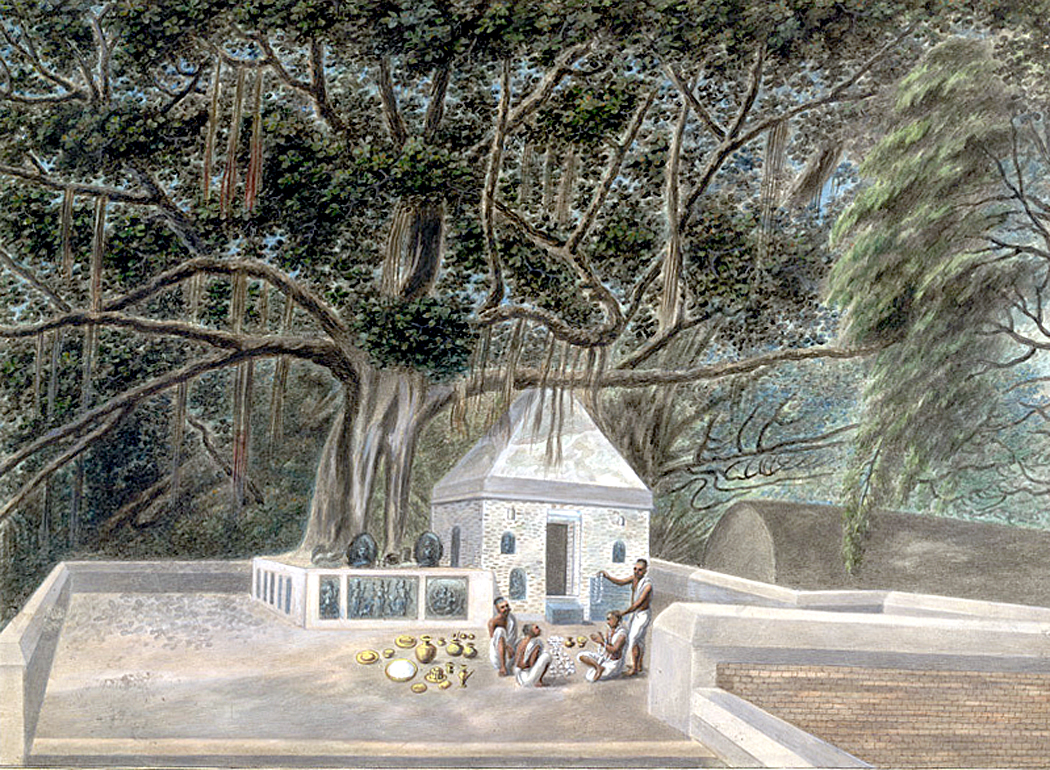
Bodhgaya
It isn’t just me. The world is full of such places, some personal, some cultural, some religious or spiritual. They can be sacred spaces or holy ground. They have accrued some emotional hold on those for whom this kind of significance has meaning. It can be the Buddhist bo tree, the Dome of the Rock, the Western Wall, Independence Hall. For a few of us, the list would include Fenway Park. These are places of social significance and people will make the hajj to see them out of devotion or just to absorb the numinous halo surrounding them. Life is empty without meaning, although what we call meaning and where we might discover it is personal.
Meaningful places needn’t be so to groups, or to have religious importance. I have no belief in ghosts, spirits or ouija boards and I don’t believe that the past hangs on to the present to make itself palpable. But I have several times experienced a kind of emotional resonance when visiting certain famous sites.
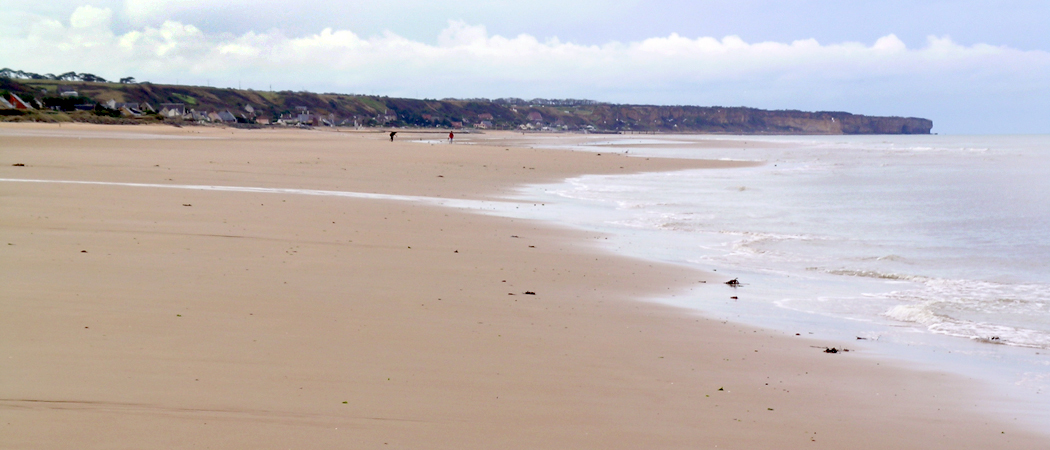
Normandy beach
The thought re-emerged recently while watching the recent commemoration of the 80th anniversary of the D-Day landings in Normandy. I have visited those beaches and had an overwhelming rush of intense sadness. It was inevitable to imagine the thousands of soldiers rushing up the sands into hellish gunfire, to imagine a thousand ships in the now calm waters I saw on a sunny day, to feel the presence in the concrete bunkers of the German soldiers fated to die there manning their guns.
The effect is entirely psychological, of course. If some child with no historical knowledge of the events that took place there were to walk the wide beach, he would no doubt think only of the waves and water and, perhaps, the sand castles to be formed from the sand. There is no eerie presence hanging in the salt air. The planet does not record, or for that matter, much note, the miseries humans inflict on each other, and have done for millennia. But for those who have a historical sense, the misery reasserts itself. Imagination brings to mind the whole of human agony.
Perhaps I should not say that the earth does not remember. It can, in certain ways. Visiting the woods of Verdun in France, site of a horrendous battle in World War I, I saw the uneven forest floor, where time has only partially filled in the shell craters. Once the trees were flattened by artillery, leaving a moonscape littered with corpses. The trees have grown back, but the craters are still discernible in the wavy forest floor. The same child who thought of sand castles in Normandy might well think the churned land at Verdun merely a quirk of geology, but the land itself bears its scars.
The presence of the dead was overwhelming at Antietam, site of the bloodiest battle during America’s Civil War. In one spot alone, a 200-yard stretch called Bloody Lane, 5,000 men were blown apart in a few short hours.
Before Sept. 17, 1862, the brief dirt drive was called the Sunken Road, and it was a shortcut between two farm roads near Sharpsburg, Md. All around were cornfields rolling up and down on the hilly Appalachian landscape.
The narrow dirt road, depressed into the ground like a cattle chute, now seems more like a mass grave than a road. And it was just that when Confederate soldiers mowed down the advancing Federals and were in turn mowed down. The slaughter was unimaginable.
You can see it in the photographs made a few days after the battle. The soldiers fill the sunken road like executed Polish Jews. It was so bad, as one Union private said, “You could walk from one end of Bloody Lane to the other on dead soldiers and your feet would never touch the ground.”
It is difficult to stand now in Bloody Lane and not feel that all the soldiers are still there, perhaps not as ghosts, but as a presence under your boot-sole, there, as blood soaked into the dirt.
But it needn’t be horror or blood that gives meaning to a place. It may be achieved through personal association with something we lived through, or through esthetic appreciation — the sudden awareness of sublimity — or through an awareness of a less traumatic history born in a landscape. And I thought about places I have gone back to over and over; places that bear significance to me. I’m sure most of us could make such a list, whether long or short. Here are 10 of my personal pilgrimage sites that I have visited and revisited over a long life.
Walden Pond — I cannot count the number of times I have visited Concord, Mass., or how often I have made the pilgrimage to the glacial kettle lake just outside downtown where Henry David Thoreau built his cabin and lived for two years, and which led him to write his book about the experience.
The most recent visit was only two years ago, passing through on my way to friends in Maine. The site now has a large parking lot and a visitor center (although the parking is primarily for summertime local beachgoers, who use Walden Pond as a swimming hole). When I first saw it, there was not much there but the water and the woods; I had to park alongside the road.
I have circumambulated the pond, a walk of just under two miles, the first time in the early morning when a mist hung over the water and the sun slowly burned through. I have read Walden several times, and own several editions, both cheap and deluxe, and Thoreau’s other books, including his Journals, and eaten up his idiosyncratic style of writing with relish.
Walpi
Hopi Mesas — In northern Arizona, the Hopi have built their towns primarily on three mesas, First, Second, and Third, which are really the southern fingers of the larger Black Mesa. We have visited all three mesas many times, including one snowy Christmas spent with a Hopi family we knew on First Mesa in the village of Walpi. The warmth of the hearthfire in the stone house, and the cookies we were offered, and the smiles on the faces of the children are indelible.
Another time, we were invited to a social dance on Second Mesa in Old Oraibi, and climbed to the roof of one of the houses with the rest of the Hopi to watch and cheer the Kachina dancers. Another time, driving past New Oraibi, at the foot of Second Mesa, we were caught as traffic was halted so the sacred Kachina dancers could cross the road from where they emerged from the kiva and marched toward the plaza. We were not supposed to be there but couldn’t leave, with the Kachina traffic cop in front of us and several cars behind. We apologized profusely, but the angry cop didn’t seem to care. We shouldn’t have been there, but we also couldn’t have known a sacred dance had been scheduled for that day.
You can stand at the cliff edge on First Mesa and look south over the Navajo Reservation, nearly to Flagstaff and marvel at the intense beauty of the Colorado Plateau.
Chartres Cathedral — It wasn’t until our second visit to France that we managed to get to Chartres, but after that we went back over and over. The cathedral is, of course, a World Heritage Site, and a sacred place to many. But it spoke to me less of religion than of history — architecture 800 years old and still functioning for its original purpose.
Most of the cathedrals and basilicas of Northern France have been restored and reworked (Notre Dame, before the fire, was largely re-imagined in the 19th century as it was restored by Viollet-le-Duc) but Chartres is almost entirely original. If you are sensitive to it, you can feel all that passage of time embodied in the stonework and the interior space.
The cathedral sits at the top of a hill at the center of town, and can be seen in the distance from miles around. I have spent hours sitting in the transept meditating over the great north rose window, which remains the single most beautiful manmade object I have ever seen. The entire experience engenders awe.
American Museum of Natural History — I was originally going to list New York City here, but then narrowed it down to Manhattan, but, really, the center of magic for me is the Natural History Museum. I first visited on a third-grade school trip and fell in love with the dinosaurs. But all through my childhood and adolescence I visited the museum as often as I could. I loved the dioramas, the dinosaur bones, the giant stone Olmec head, the huge suspended blue whale — even the “Soil Profiles of New York State.” To say nothing of the room full of chunks of quartz, each with a little typed tag explaining where it was collected.
I could also have mentioned the George Washington Bridge, which my grandfather helped build; he was an engineer working on the bridge in the 1930s. Through most of my life, when living in or visiting New Jersey, I would take the bus to the bridge and walk across the bridge to 178th St. I have walked the bridge too many times to count.
The Outer Banks — I went to Guilford College in North Carolina beginning in 1966 and soon met lifelong friend Alexander and we made annual camping trips to Cape Hatteras, usually in winter when the beaches were empty. Later, my first wife and I spent our honeymoon camped directly under the lighthouse. It was February and the regular campsites were closed, and so we pitched our tent in the dunes.
I have been back over and over, with each succeeding wife or possl-q, although as I got to be old, we tended to sleep in motel rooms. When my brother began teaching in Virginia, he lived at the northernmost bit of the Outer Banks, Sandbridge, and when visiting I often made a side-trip back down to Hatteras and Okracoke.
Once, with Alexander, we went after a huge storm, and parts of the road were washed out just north of the lighthouse. He got out of the car and walked in front, feeling the asphalt under his feet and leading me safely past the overwash. Another time, at night, we walked down to Cape Point with a Coleman lamp projecting our shadows, like giants, up into the misty black sky.
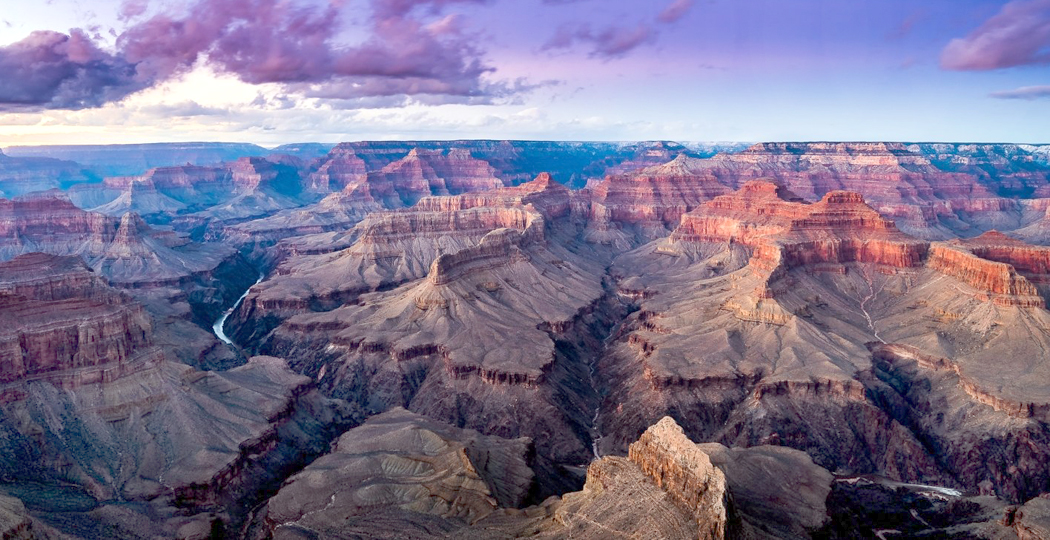
Grand Canyon — My brother once observed that unlike most hyped destinations, where you are always at least a tiny bit disappointed when you finally get there, the Grand Canyon is actually more impressive, more overwhelming, when you actually see it live: It never lets you down. It is 200 miles of vast geology, color, and depth.
We lived in Arizona for 25 years and so I cannot number the times we visited the Canyon, mostly the South Rim, where most of the tourist action happens. But the second time we came, in 1982, we went to the North Rim and when we couldn’t get a room at the hotel there (it is always full), we went out of the park after dusk into the national forest, where it is legal to camp anywhere, and pulled into a side road in the dark. In the morning, we got out of the tent and discovered that if I had backed the car up 10 feet further, we would have tumbled down into the canyon. We were right on the edge.
And once, on assignment from the paper, I drove 60 miles off road to the Toroweap Overlook, also on the North Rim, but in pure wilderness where only a rare person ventures, and camped away from all city lights, where the night sky was neon in intensity.
Hudson River Valley — I grew up in northern New Jersey, in the apotheosis of suburbia. But my father’s family had a rustic house — a “bungalow” — in West Park, N.Y., halfway up the Hudson River, and we spent many summer vacations, and at least one winter ski vacation, at the bungalow. It was the town where the once-famous nature writer John Burroughs lived. There was woods, a swimming hole with a waterfall.
But up and down the river, from Dunderberg through Bear Mountain and the Seven Lakes Drive, it was the escape from the ordinariness of the suburbs. We regularly went swimming in the summer at Lake Welch, or watched ski jumping at Bear Mountain.
In 1986, we drove up Perkins Drive to the top of Bear Mountain, during an outbreak of gypsy moth caterpillars. The tower at the top was covered in a sheath of hairy worms and the ground was gooey with the squashed ’pillars. It was eerie and more than a little stomach churning.
The bungalow at West Park
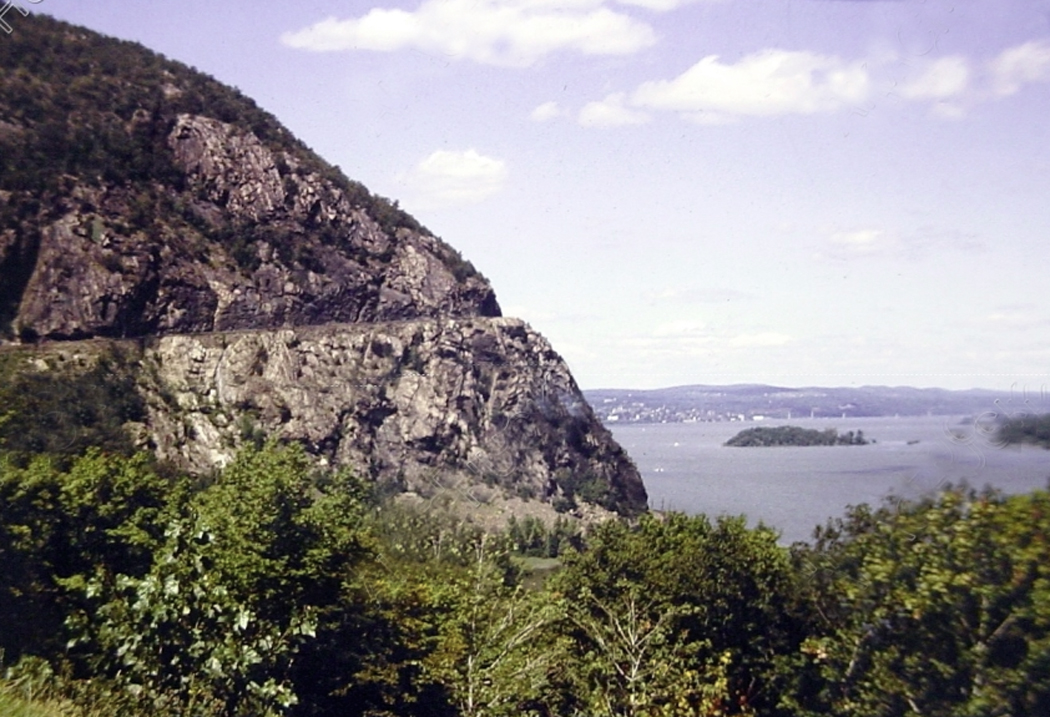
The Nilsen family drove up Route 9W on summer weekends to visit the bungalow, and the three-lane highway had to curl around Storm King Mountain, a section of road that made my cautious father extremely nervous with a sheer drop down the edge to the river. They are gone now. That portion of 9W has now been re-routed and the treacherous third (middle) lane now long gone. Near Haverstraw, the “Ghost Fleet” of WWII-era liberty ships were moored. They are gone now. So is the bungalow. I am sorry for that.
From the Palisades up through the Catskill Mountains, the Hudson River is holy ground, as far as I am concerned. It glows with the inner light of myth.
Schoodic Point — Maine is its own mythology, and like the city of New York, I was going to include the whole state in my list, but likewise, I have narrowed it down to the place that I have been back to over and over for the longest. I first visited Maine as an infant when my parents took a trip there. I can’t say I have any memory of then. But subsequently, I have been there many times, now to visit my friends Alexander and Mary Lou. I’ve traveled the whole state over, camped at Mt. Katahdin, driven round Mooselookmeguntic Lake, reached the summit of Cadillac Mountain on Mt. Desert Island, took the tour of the paper mill in Millinocket — and you can get there from here.
But the mythic center of Maine for me has been the rocky bit of coastline that juts out into Frenchman’s Bay north of Acadia National Park, called Schoodic (with the double “O” pronounced as the “oo” in “good.”) It is one of those windswept romantic landscapes where the spume blows into your face, the waves crash against rock with an explosive boom, and the sky, water, and land still seem of one substance.
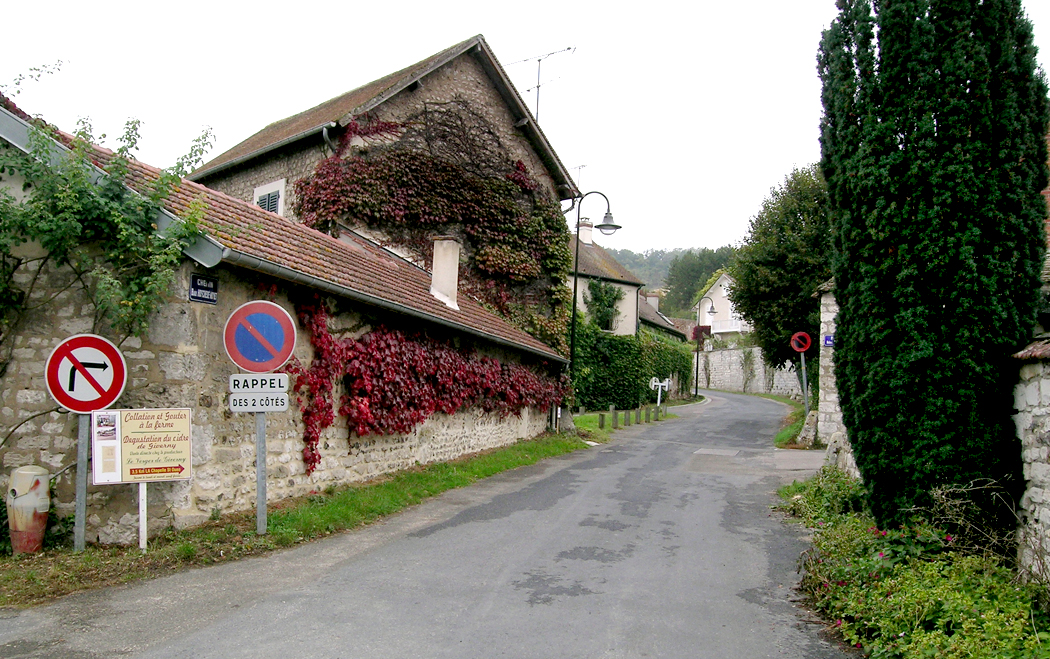
Giverny — I’ve been to Monet’s house and gardens three times, once in the spring and twice in the fall. He and his family lived in the small town 50 miles north of Paris, from 1883 until his death in 1926, and many of his greatest works were made there, primarily his extensive series of water lily paintings.
I had become familiar with some of those wide canvases in museums in New York and at the Carnegie Museum in Pittsburgh. And I had been inspired to make scores of photographs of waterlilies in imitation of Monet’s paintings.
But the chance to get to see the genuine article in situ, in the grand gardens in Giverny was a pilgrimage from the get-go. One enters, of course, with curiosity, but also with reverence.
Austin house
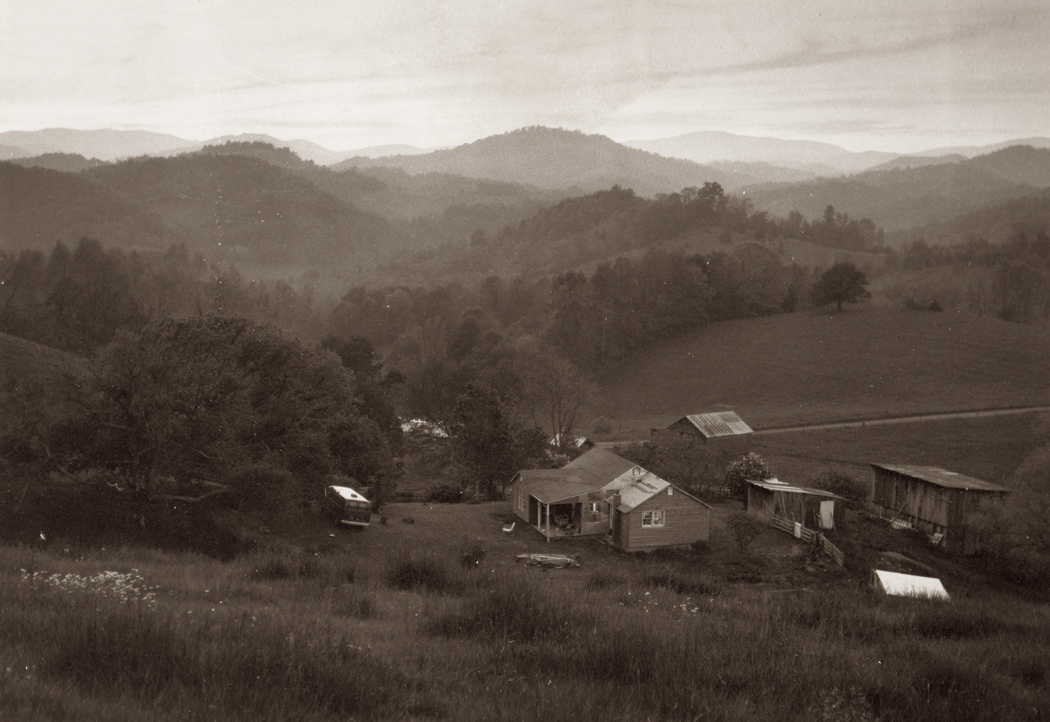
Rock Castle Creek, Woolwine, Va. — Some of the happiest and unfettered moments of my life have been spent on the porch of the Austin house along Rock Castle Creek in Virginia. I have been back many times, beginning during my college years, when a group of Guilford students hiked the five or so miles up the creek, fording over logs, and reaching the 1916 farmhouse, with its spring house and barn.
With my companion, or with a group, we would break into the house (not recommended, for legal reasons) and roll out our sleeping bags on the floor. At night in the summer, the field in front of the house was a galaxy of blinking lightning bugs.
At the end of Bergman’s film, Wild Strawberries, the old professor Isak Borg, lies in bed after a tumultuous day, full of cares and regrets, and in voice over, says, “If I have been worried or sad during the day, it often calms me to recall childhood memories,” and he thinks of a time he saw his parents together, with his father fishing. It soothes him and he sleeps peacefully. For me, that moment of pure calm happiness that I recall is of sharing a hammock with my beautiful red-headed mate on the second floor porch of the Austin house and watching the sun go down over the creek and meadows beyond. Such moments consecrate a place.
These are all places I have gone back to multiple times. But there are places where I have only ventured once that still have that emotional buzz that signifies a sacralized locale. These may be places set aside by history or by personal experience, or simply by their extraordinary natural setting.
We all have such places, and they while they may be widely shared, such as the World Trade Center, they are just as often special only to one or a few people. Places where we stand in awe, and may not even be able to speak.
From top right: Cape of Good Hope; Gaspe; Montauk; Finisterre
For me, many have been where the land runs out and the seas begin. There is something about the extremity, the sense of the limitations of land and the seeming infinity of the watery horizon. I seek them out, such as the Gaspé Peninsula, Long Island’s Montauk Point, Brittany’s Finisterre, or South Africa’s Cape of Good Hope. At my age, I know my existence shall soon run out and the dark infinite void is the horizon, and that I will not likely ever get to visit such places again.
And I have been to Civil War sites where I felt the ghosts in the soil: places such as Shiloh, Vicksburg, Appomattox, Gettysburg, Petersburg, Bull Run, Chancellorsville, Fredericksburg, and Five Forks. And important places in the Western expansion: Sand Creek, Little Bighorn, Wounded Knee, Washita. Japanese internment camps at Manzanar and Poston. And to the Lorraine Motel in Memphis, where Dr. King was shot; and the slave quarters at the Oakley Plantation in Louisiana. All places where death and suffering are felt in the air breathed there — at least to anyone with an awareness of history.
Mt. Saint Michel
And I could list many less fraught places with their own resonance that I have only visited once, but that have created space in my psyche: Mt. Saint Michel; Big Bend National Park; the catacombs in Paris; the caves at Lascaux; the town of Moosonee on James Bay in Ontario; the Okefenokee swamp in Georgia; Mt. Angeles in Washington’s Olympic Mountains; Hallingskarvet mountains in the spoon of Norway; Chaco Canyon; Taliesin in Wisconsin; Ice Water Springs in the Smokies; the Salton Sea; Glacier Bay in Alaska.
Each of these places has become a part of me. They are my sacred spaces.
There are books that give us pleasure in the reading, books that inform us, books we are required to read, and there are books that become so internalized, they essentially shape the course of our lives. We can probably all name such books for ourselves. I made a list, maybe 15 years ago, in a moment of quo vadis self reflection, of those books that have most shaped who I am. I stopped listing after 50 books. Since I made the list, I could add several more; after all, I keep reading.
Pageant of Life
Of course, it is the earliest reading that had the most influence — as the twig is bent, so the tree inclines. Even the best of the more recent books cannot have influenced me even a percentage of how much I was shaped by, say, the Life magazine book, The World We Live In, which my grandmother gave me on my eighth birthday, and which left me wide-eyed at the wonder and diversity of nature — volcanoes, blue whales, dinosaurs, jellyfish, rainforests, barchan sand dunes. I wear the badge of that book in my deepest heart’s core. It is the holy of holies.
But what caught my attention as I reread my old list, was that it continued to include lists of other things that shaped who I have become: music that influenced my developing psyche; art (that I saw in person, not just in books); movies; TV shows; — and last on the list of lists — landscapes.
We don’t often think of how deeply landscape affects us, guides the direction of our lives — but how different might be the novels written by Fenimore Cooper or Washington Irving, or Mark Twain if those authors had lived elsewhere and seen different rivers, different mountains, different forests. I think of James Joyce’s Ulysses, which is practically a landscape — a cityscape — spread into lines of type.
Back Bay, Va.
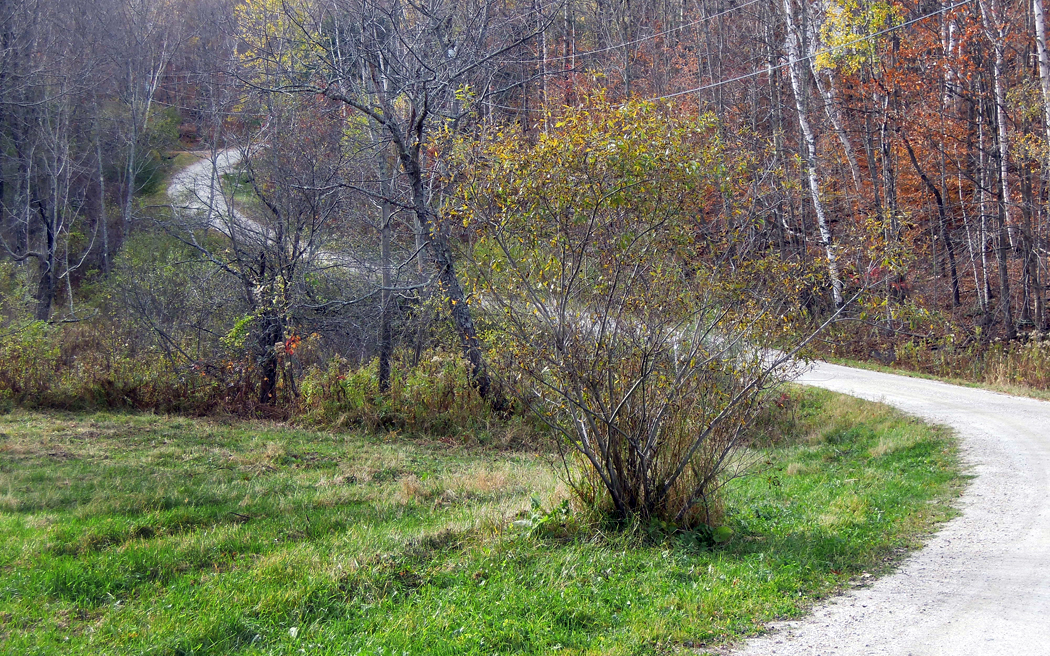
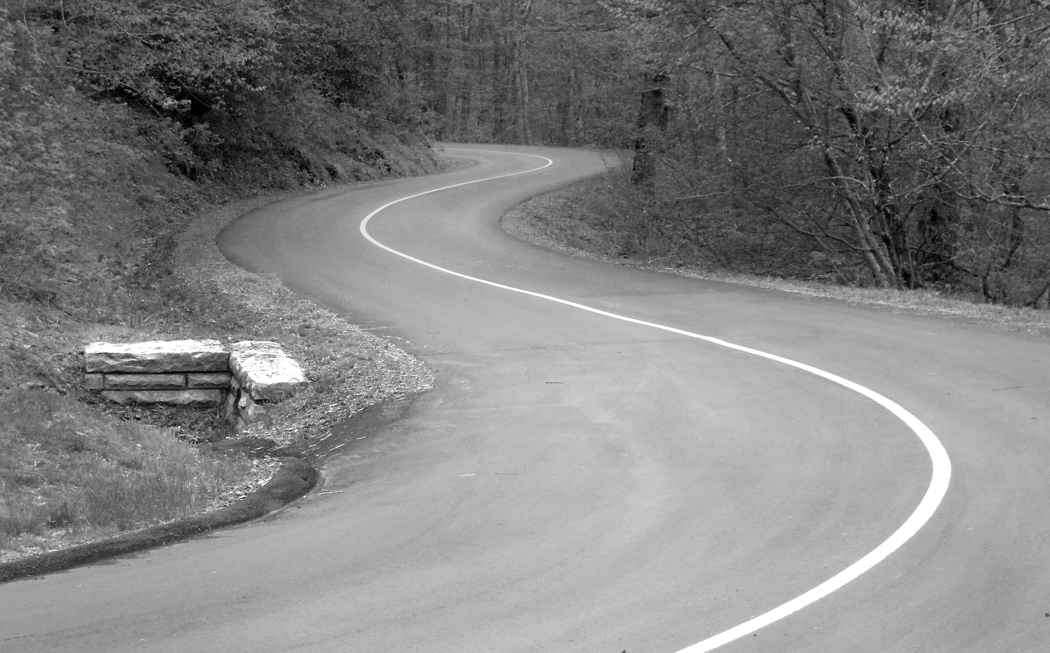
Joyce had Dublin; Thomas Wolfe had Asheville, N.C., where my wife and I now live. Recently, I opened the first pages of Thomas Wolfe’s Look Homeward, Angel and read his description of Oliver Gant’s trip to western North Carolina. At one point, he describes a trip up the face of the Blue Ridge from “Old Stockade” to “Altamont” — thinly disguised versions of Old Fort and Asheville — and as I read it, I knew that landscape — I knew that gravel road; I’ve driven it myself just last month. It’s still gravel and few cars venture it as it wanders and loops through the trees and snakes up the mountain. The interstate long ago made the trip faster and easier. But freeways are boring. As the old road loops and hairpins its way, you can frequently spy the railroad line as it winds its way uphill. That railroad was just being built as Wolfe wrote about it but even now, it passes just under the hill where I live, and hear the locomotive whistle blow every night. It is uncanny to read about something fictionalized that you know as real.
But, in a sense, all the landscapes that are buried in the psyche are fictionalized: They have been transformed from mere fact into meaning. They are now metaphor and their existence takes on a reality that is imaginative rather than quotidian. It is imprinted as deeply as the smells of childhood, a mother’s kisses, the woodgrain of the school desk scratched with initials and scribbles.
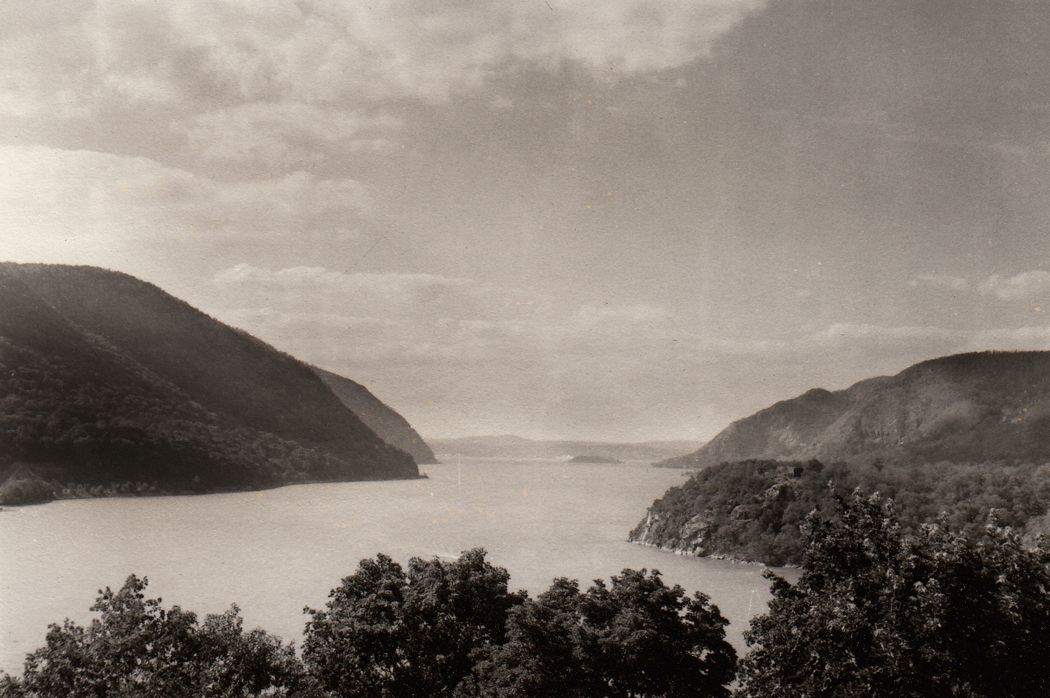
Hudson River, West Point
Dunderberg
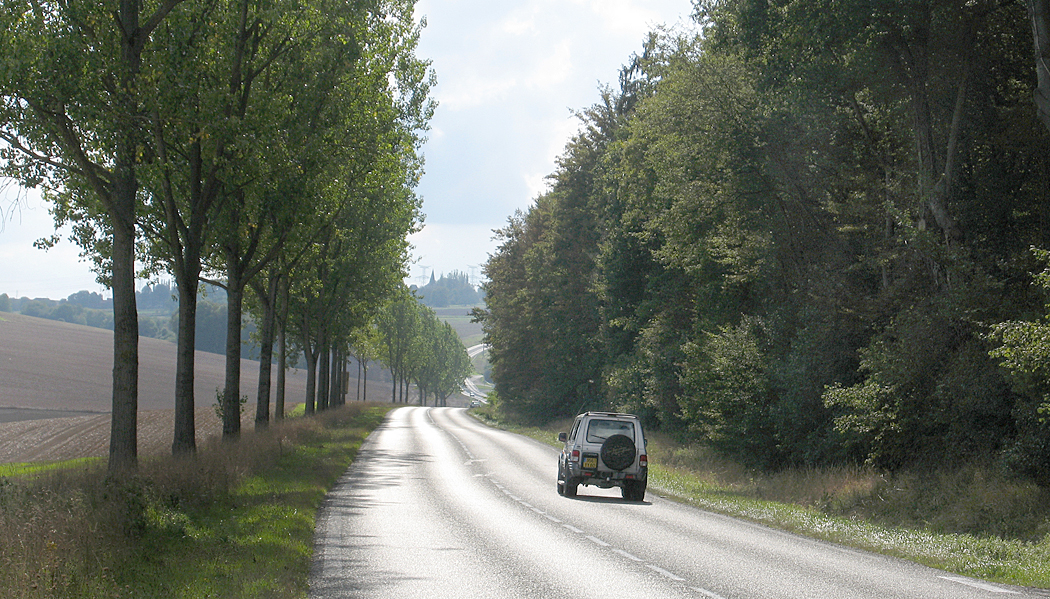
My own internal landscape begins as I do, in New Jersey and New York, with the Hudson River running through it and the Catskills bumping one bank and the Taconics the other. The automobile drive around the dizzying Dunderberg north of Tomkins Bay was a white-knuckle ride when I was young, the three-lane highway incised into the edge of the cliff. My father hated that part of the drive; we kids loved it. The “mothball fleet” of rusting liberty ships off Jones Point was a living link to the war my father had returned from only a few years before. There was Bear Mountain, with its ski jump and the suspension bridge over the Hudson; there was Seven Lakes Drive through Harriman State Park, all trees and granite; there was the Red Apple Rest and its billboards on the highway.
I don’t know why, but the suburban life I lived in Bergen County barely registered as landscape. The housing developments and county roads never embossed themselves on my synapses in any significant way. But the summer vacation trips we took up the Hudson to Newburgh, NY, and to the “bungalow” that was my father’s family summer cottage in West Park burned themselves deeply into my awareness of the world. The Hudson River was the aorta that pumped the lifeblood of my awareness of the larger world.
Deep River, NC
So, when I moved to North Carolina and college, I was amused at the Tar River or the Deep River. They weren’t rivers. The Hudson was a river. Guilford County’s Deep River was a wet gully. I could have jumped across it.
I have lived many places, and in many landscapes, but they haven’t all dug wormholes into my psyche. I’ve traveled to every continental state of the union — most several times. When Hank Snow sings, “I’ve been everywhere, man, I’ve been everywhere,” I can honestly say that I have been to the places he names in the song: “Hackensack, Cadillac, Fond Du Lac … Pittsburgh, Parkersburg, Gravellburg, Colorado, Ellensburg, Rexburg, Vicksburg, El Dorado, Larrimore, Atmore, Haverstraw” … the song goes on.
And all those places have landscapes that accompany them, the way a song accompanies each Fred Astaire dance number. They are there in the memory. But not all of them have transformed from geography to mythology. There are moments in life when you are particularly open, when your very skin seems adhesive to experience. It is like that when you are a child, but it also happens when you go through some life altering change, a first divorce, or a move across country, a close call, the birth of a child, or a new job. The rind of the psyche gets pulped, and becomes a place for a mythic sense of life to become rooted.
At vulnerable moments in the course of living, the world takes on an extra glow, a mythic noumenon and becomes fixed in the synapses as something larger than itself. The landscape thus internalized becomes an emotional nexus, a place where complex thoughts and feelings can be induced merely by seeing an image of that landscape, or reading an evocative description, perhaps even hearing a certain piece of music.
Mendocino County, Calif.
And so, these landscapes can influence the way you see the world. If you live by the river, you become Twain, if you live by the sea, you become Sarah Orne Jewett, if you live in Manhattan, you become Woody Allen — and all you write takes on the world view the land provides. Think of Faulkner and the red clay, of Hemingway and Michigan, of Henry Miller and Brooklyn (I know Paris comes first to mind, but it is the Brooklyn of the Rosy Crucifixion where you see the real Miller world view).
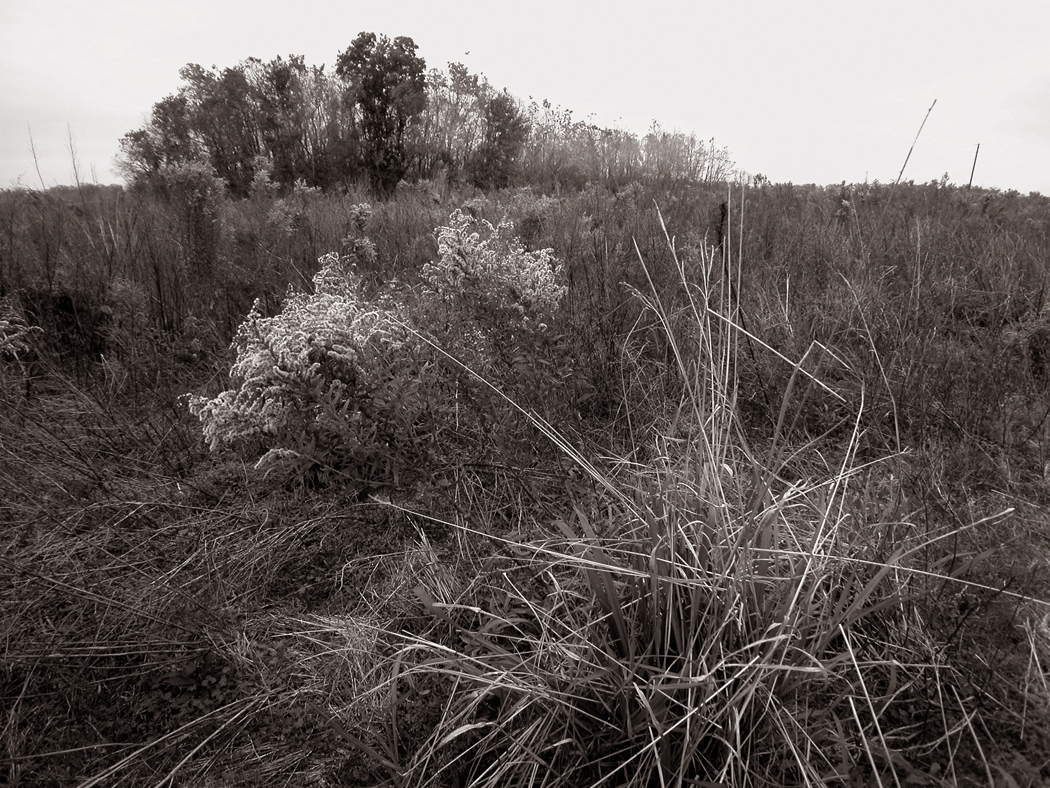
And so, when a seven-year relationship was breaking down in suspicion and acrimony, we took a trip up through Pennsylvania and the Delaware River to try to make things right. The heart was a sodden wet rag, and one chill fall morning at Port Jervis, the sun rose over a field by a railroad roundhouse that was choked with more wildflowers than I have ever seen before: yarrow, aster, ironweed, joe pye weed, mullein, sunflower, black-eyed susan, queen-anne’s lace. It burned into me, and is still there as a kind of metaphor for the infinite sadness of paradise.
Watauga County, NC
Years later, when I first came to live with the woman who has been my wife for the past 30 years, our house was on a ridge overlooking the New River in the Blue Ridge, and the landscape of rolling mountains and hills, divided between pastures and forest, coves and hollows, whitewashed churches and unpainted barns, took on that numinous glow. It is why we have moved back to the mountains, although the same landscape has now quieted down into comfortable daily life.
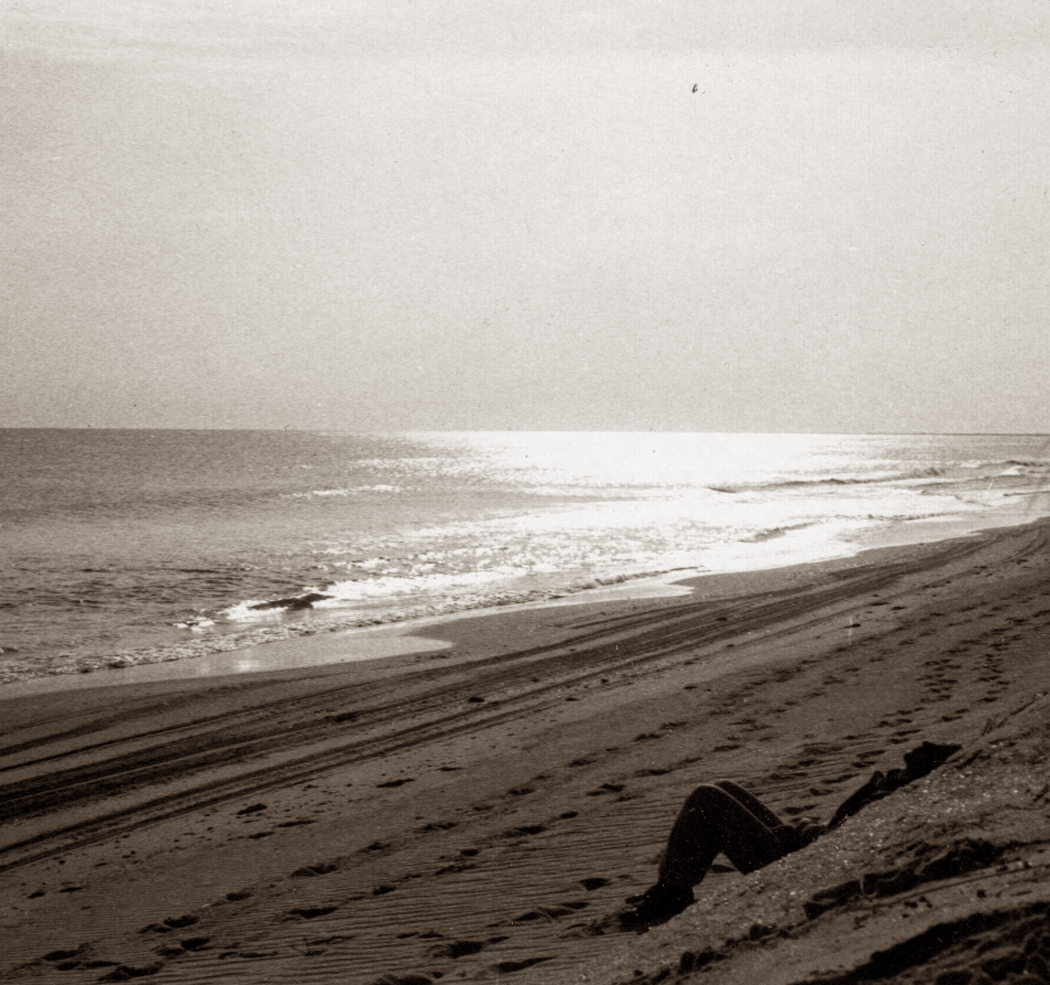
Hatteras
When I first entered college, and the intellectual world gaped open for me, I traveled several times with my friend Alexander to the Outer Banks. The sea oats and dunes, the long beach, Hatteras point — climbing illegally to the top of the lighthouse at night under a blanket of stars, feeling the steady wind on my cheeks, the smell of salt in the air — so that coming back to the dorm and listening to Debussy’s La Mer on the tiny Sears Silvertone portable phonograph, sealed the experience into the brain like a mordant fixes dye in a fabric.
In the years I was unemployed and nearly homeless, I traveled back to New Jersey with my brother for Christmas. On the way back South, we drove through West Virginia, where he had friends, and we spent New Years Day on the top of a mountain. Before dawn, I woke and dressed and went out into the biting cold, where the grass was brittle with frost and my breath clouded in front of me and I surveyed the Cumberland Plateau, bumpy with mountains, spread out to the horizon. I felt lost and alone in all that frozen landscape.
Tsegi Canyon, Ariz.
The opposite emotions were engaged the first time my wife and I drove out West, in 1980, and the first time we saw buttes and mesas. The land seemed even more expansive than the West Virginia mountains, but they seemed to offer unlimited potential. The air was clear; you could see mountain ranges a hundred miles away. Over the quarter-century we lived in the West, there were many such landscapes printed on my psyche, from Christmas in the snow in Walpi, on First Mesa, spent with a Hopi family; to driving across the Escalante National Monument alone; to spending the night camping north of the Grand Canyon in a forsaken part of the Arizona Strip, one of the least populated plots of land in the country.
Landscape functions not merely as a stage set, a backdrop of other memorable occurrences, but for themselves alone, as metaphor, as an image of the inside state of one’s emotions and mind. It can be as if the landscape were not injected into your mind through your eyes, but rather, projected outward upon existence from the deepest recesses of your mind. If you were to enter my skull and photograph what you found, it would be landscape.
Big Bend NP, Texas
From my list, other landscapes you will find inside my head include the Olympic Mountains in Washington; Schoodic Point in Maine; Big Bend National Park in Texas; the sea-swell grasslands of eastern Montana that I rode past on the Empire Builder train from Chicago to Seattle; driving by night through the Big Sur in California; and Walden Pond in Concord, Mass., which I have circumambulated half a dozen times.
I do not know if it is rare — I have not asked many people — but many of the dreams I manage to remember as I wake up, are dreams consisting purely of landscape, often highly imaginary, exaggerated like the Andes of Frederick Church. It is the space in these dreams that seems to carry meaning, the emptiness from the spot where I stand to the thing I see before me: In between is air, and the air has shape and meaning.
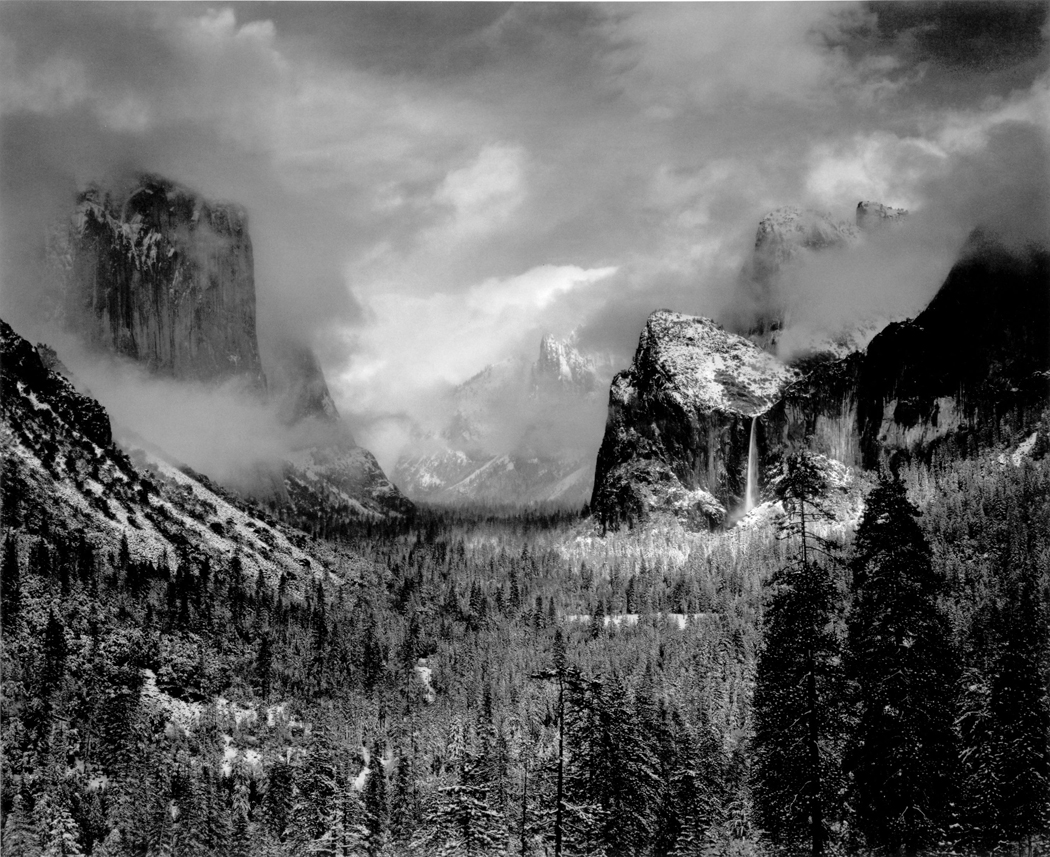
Ansel Adams, Clearing Storm, Yosemite
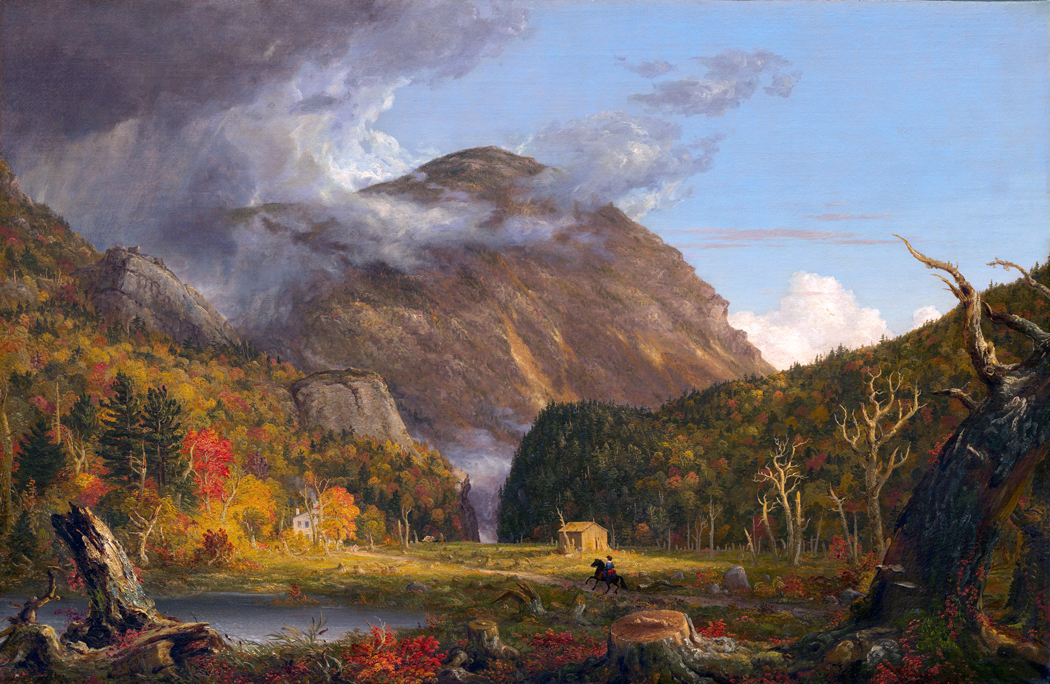
The best landscape painting and photography functions not as a record of the topography, but rather as an image of the interior state, vast and romantic, like Ansel Adams’ Yosemite in a winter storm, or Thomas Cole’s Crawford Notch. O blow you cataracts and hurricanoes, in the scumble of Turner, or cooly glow on the horizon, like the misty suns of Claude Lorrain, or the chessboard order of Canaletto.
Thomas Cole, Crawford Notch
Skull Island
When I was very young, perhaps 6 or 7, I first watched King Kong on TV, and what has stuck from then to now is the steamy, vine-clogged, rocky-cliffed landscape of Skull Island. That skull is mine, seen from the inside out.
If you want to shake the world out and make it larger again, get up at 3 in the morning and drive across the flatness of Indiana and Illinois. It is dark, the stars are thick as the July humidity. And the world seems quiet, empty and stretched once more to full size.
The sky grows upward as the stars populate it, lightyears away. Not only is the earth big, but you can see that you are a pebble at the bottom of a very deep universe.
You drive alone for miles and the only thing you see is distant headlights, like fireflies, flitting along the horizon line that shows up as the boundary between two different shades of black.
One set of headlights gets closer. You recognize a kindred spirit, someone else is driving in the lonely, vacant night. You wait a very long time for the lights to draw close. They are still miles away.
As the car gets nearer and dims its headlights — that salute of recognition in the dark — you see that it is the God of the Nighttime Highway, whose eyes are headlights and whose halogen gaze keeps the world from disappearing when everyone else is asleep.
And he passes and you drop once more into the large darkness.
It is a bit of sand that emerges from the ocean 30 miles out to sea off North Carolina. It is a place where you go to be reminded that you don’t live in an apartment, you don’t live in a city, but rather, you live instead on a planet.
For years in the late 1960s and early ’70s, my college friend Alexander and I went to Hatteras each February to experience the organ-point surf and a constant 20-knot wind that keeps your lapels flapping and your skin wrung raw. It’s a wind that can part your eyebrows.
Others may visit in the summer, when the ocean is tamed and the wind warmed, but February is the only real time to visit if it is a pilgrimage you are on.
Hattaras is much congested these days, but in 1968, at least in February, you could grab a mile or two of beach all for yourself.
In February, the last nor’easters of the season have blown through and chiseled the dunes into new shapes.
And each February, it seemed, there was a stretch of about a week when winter breaks and the temperature would climb each day to the mid-70s and the sun could warm your chill-chapped face.
It was then that Hatteras gave up its best.
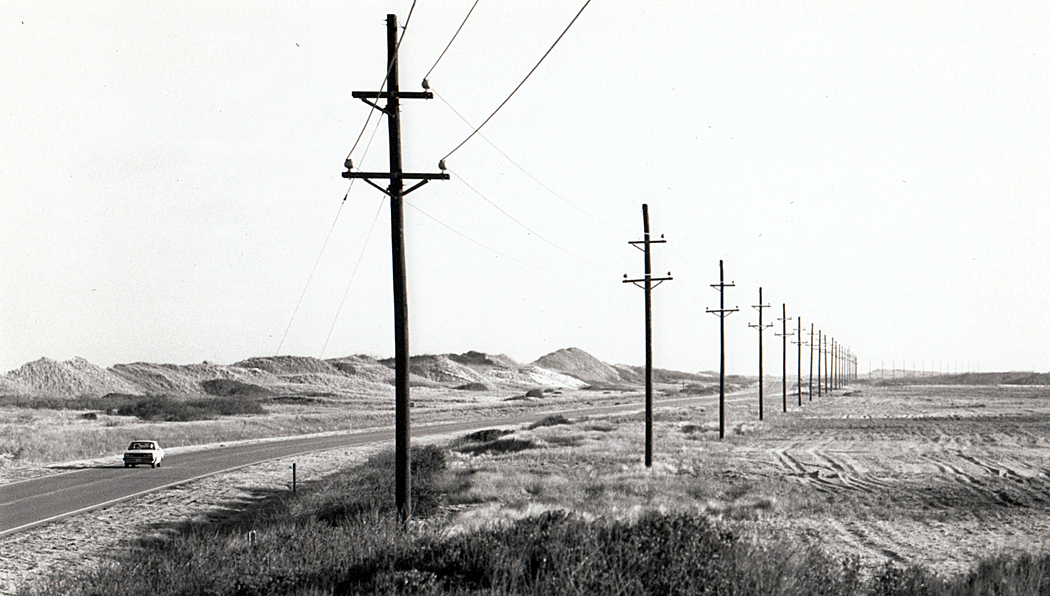
To get there, you take N.C. 12, a two-lane blacktop that runs the length of the Outer Banks like the vein down the back of a shrimp. For the 50 miles from Nag’s Head to the cape, the road runs straight between the Atlantic Ocean on one side and Pamlico Sound on the other.
The Banks are a series of barrier islands that begin to tear away from the mainland in Virginia and reach their greatest distance from terra firma at Cape Hatteras, about 100 miles farther south.
At their skinniest, the banks are only a few hundred yards wide, with its single road protected from the stormy Atlantic by only the skimpiest of sand dunes.
And in February, it is not unusual for portions of the road to be flooded or blown over with sand.
After one vicious nor’easter, the road about five miles north of Buxton at the cape was nearly washed away. A vast pool of salt water covered what used to be highway. To make our way through it, Alexander had to take his shoes and socks off and wade through the icy water, feeling for the pavement with his bare feet. I followed in the car, driving at a cautious crawl through water that washed over the top of our hubcaps.
As befits a pilgrimage, we had our rites. We camped in the dunes and drank Alexander’s ceremonial hot chocolate in the mornings. His penitential recipe called for equal parts milk and Hershey’s syrup.
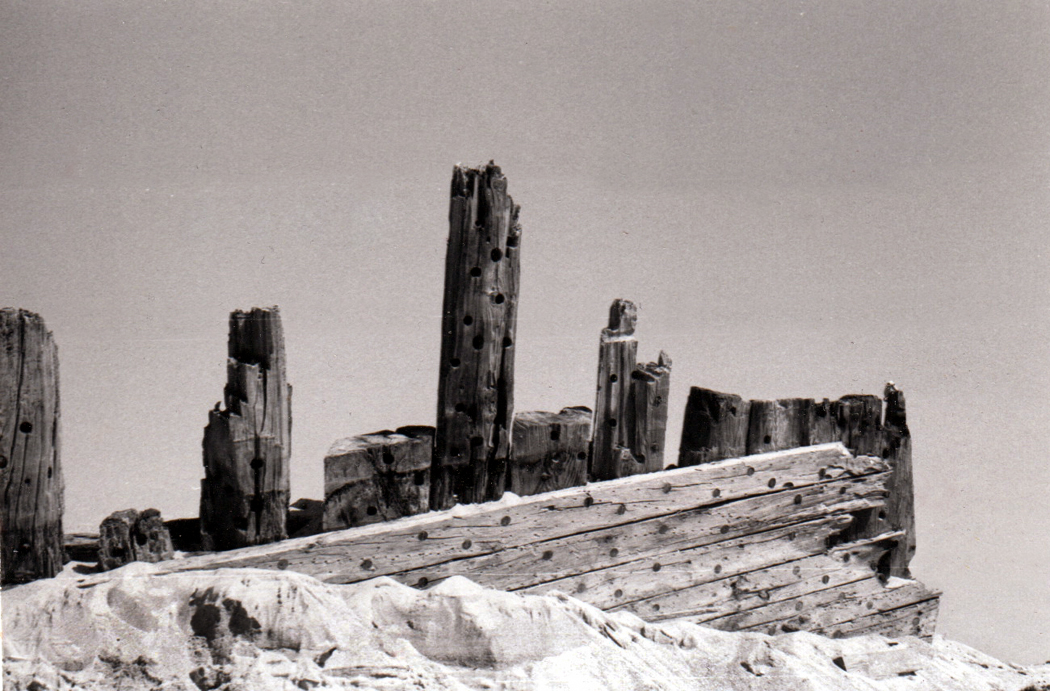
There were the whelks, Scotch bonnets, skate egg cases, dogfish carcasses, the 360-degree aural horizon of surf crash, the snap of the tent’s oily canvas in the wind, the intermittent flash of the lighthouse at night seen from our campsite, the squeak and squawk of the gulls and terns, the beef stew simmering in the black iron pan, the corroded spikes pulled from the wreck of the Laura Barnes — iron pulled and twisted like taffy — the swig of Courvoisier in the morning followed by that tar-thick hot chocolate.
There were those mysterious — to me anyway — channel markers land-locked on the mud flats near the Bodie Island campsite — the surf so far away — that unnamed wreck near the lagoon at the Cape, those Loran towers, the old dune-covered ruins of the former Route 12 near the light house that we walked along one evening and watched the stars through binoculars — the most stars I had ever seen.
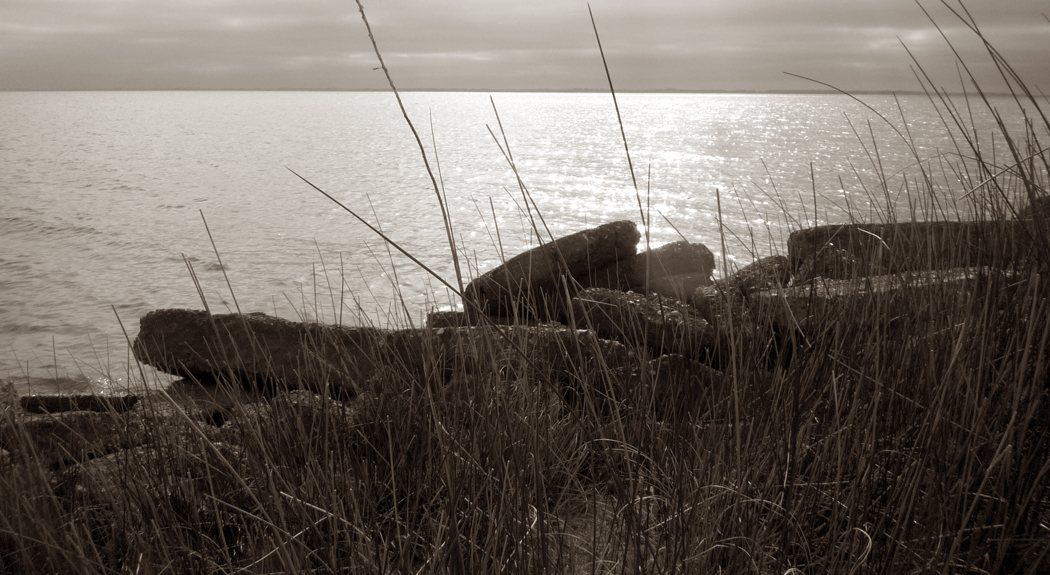
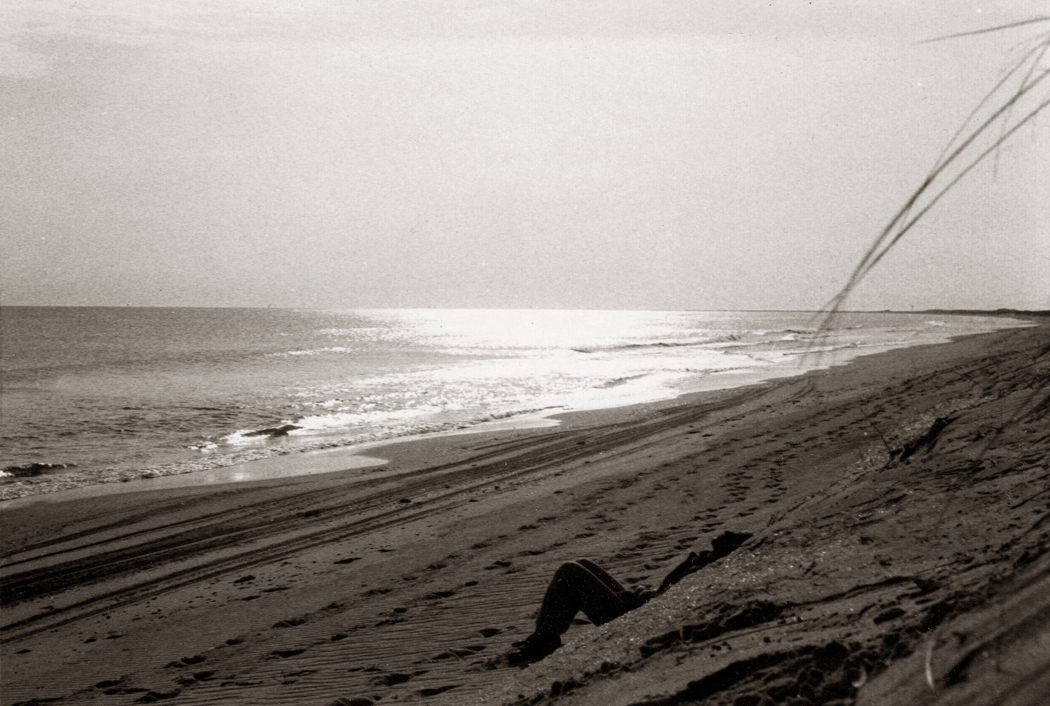
A great deal has been erased and recorded over in my memory, but these items are indelible. I can even see it in these photographs awful as they are.
In all the years we went on this pilgrimage, two episodes stand out.
First, one inky night, we walked past the base of the lighthouse on our way to the beach. For some reason, the door to the lighthouse, which was always locked, was left open. There was no one around, and we didn’t hear anyone in the lighthouse tower when we poked our heads in, so we started climbing the iron spiral stairs.
It is a long way up the tallest lighthouse on the East Coast, and when we got to the top, we opened the door to the balcony that surrounds the lamp and walked out in the wind and watched the light flash over our heads and swing out to sea, where the tiny stars of ships shown on the black horizon.
The other episode occurred as we walked out in the dark toward the cape point, a mile or so from the lighthouse.
At the cape point, the surf crashes around you in all directions. You can lose your bearings quite easily, especially when you are below the dunes and can’t see the lighthouse.
The air is thick with the mist of exploded breakers; it collects in your beard and dampens your peacoat.
To make our way, I carried a hissing Coleman lantern that threw our shadows on the sand at our feet. And when we looked up to spy Orion in the sky, we were startled to see two giants walking in the air.
The lantern threw our silhouettes up into the sky, and we walked among the constellations.
In many ways the Outer Banks have become a place in my head — an eternal place in my head where all the adventures are always happening — and have slipped out of place in time.
Which year did I photograph Alexander inside Okracoke lighthouse?
I want desperately to recapture every detail.
But in another sense, he always in that lighthouse, looking up its whitewashed core.

















 Richard Nilsen