Archive

Tag Archives: humility

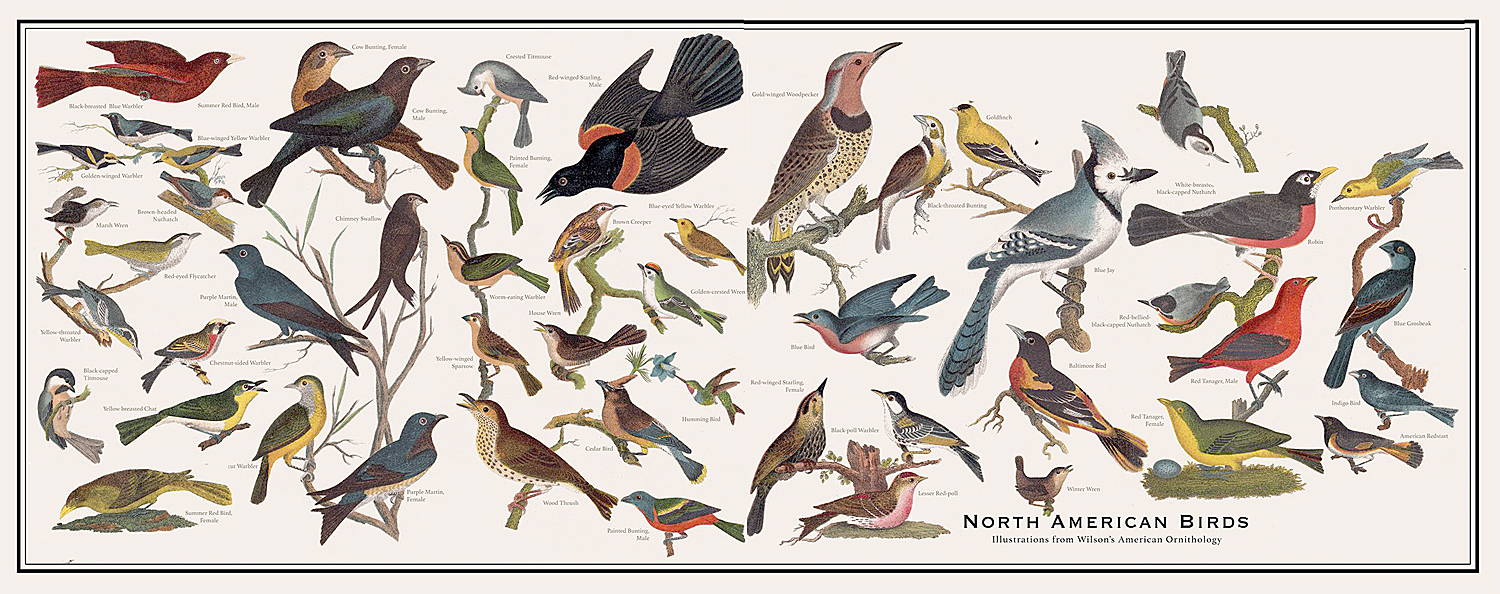
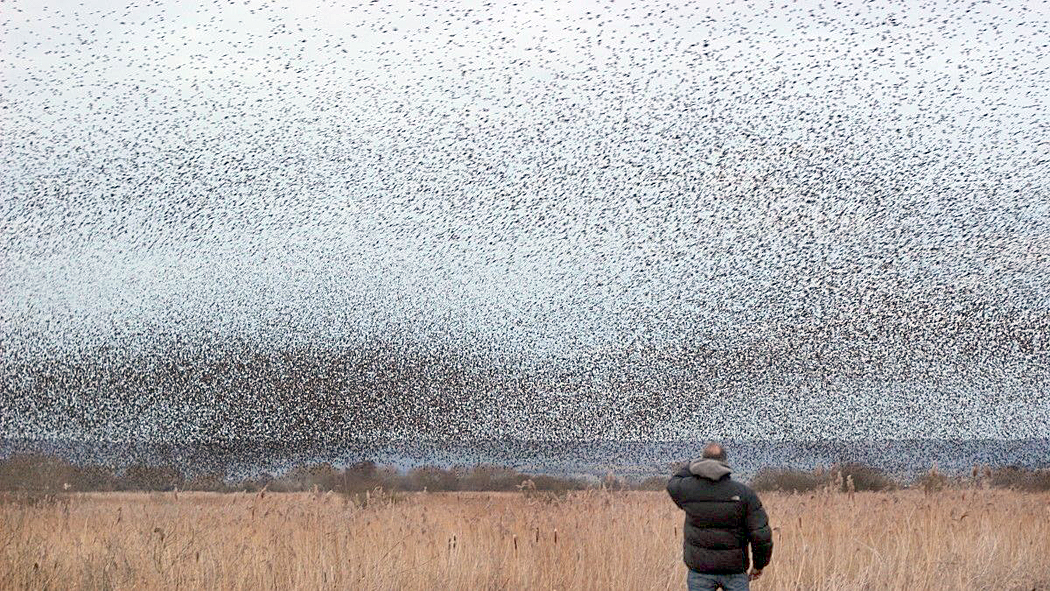
There was a time, many years ago, when I was an active birder and kept a life list. On one trip to the beach in South Carolina, I added 27 new species to my list. I was pretty chuffed about it. I don’t remember how many my list totaled by the time my interest shifted to something else, but it was in the hundreds. The checklist published in BirdLife magazine’s Handbook of Birds of the World catalogs 11,524 species of bird in the world, so my list is hardly detectible in the murmuration of life lists by serious bird watchers. 

I had done the same for wildflowers before that. Many of them, I even had learned the scientific name for, which drove my wife nuts to the point she teased me about calling them all, “Know-atia dudiflorum.” Naming and cataloguing have been among the main preoccupations of humankind at least since Adam.

Mine has been a lifetime of learning — trying to learn everything. A quixotic quest at best. 

In third grade, I learned — or seemed to learn — the names of all the popular dinosaurs. In fourth grade, I did all the whales. There seemed to be an endless supply of things to learn about. And that is the problem. 

There is too much of everything. No one can grasp it all. Not even all of a limited subgroup, or sub-subgroup. Pigeons of Southeast Asia or sharks of the South Atlantic. You can find books about most of such things. 

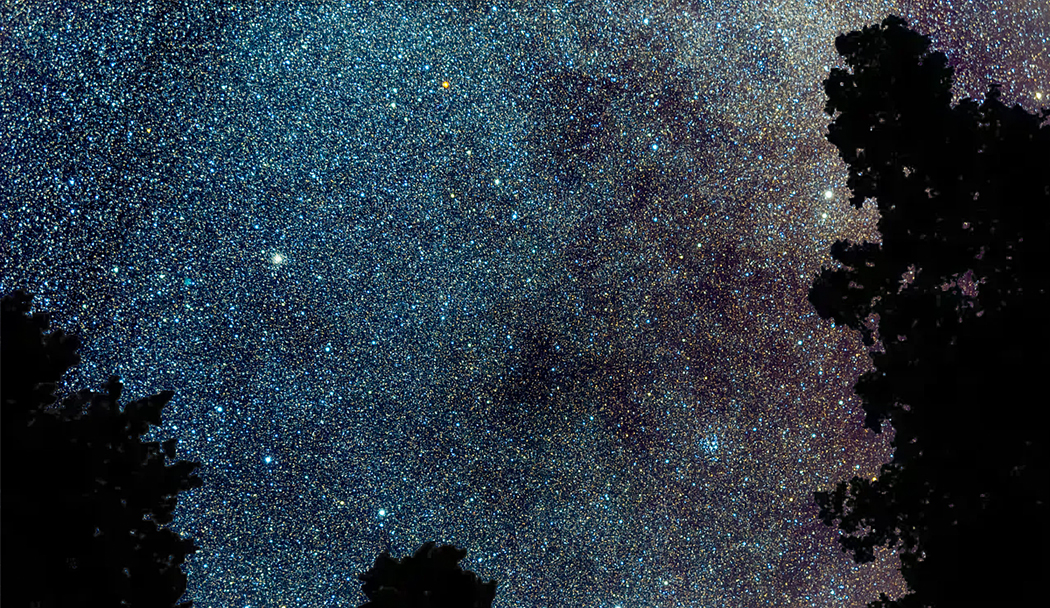
By most standard rankings, I am a reasonably well-read man. But I have looked up at the night sky in the desert wilderness, 50 miles from the nearest paved road, and seen millions of stars and the Milky Way, and thought, “That’s how many books I have not read.” 

It may once have been possible to read almost everything ever published. After getting his Masters degree from Cambridge University in 1635, poet John Milton took six years off, reputedly to read everything available in English, Latin, Greek, Hebrew, French, German, Spanish, Italian, Old English and Dutch. As impressive as that is, he did not read Chinese, Japanese, Sanskrit, Arabic, Aramaic, Turkish, or any other written Asian tongue. That is a lot left out of his erudition. 

Over the years, I have collected thousands of books, and know that, like the birds or beasts, there are so many more out there that I have not even known existed. The sum total of human publication I doubt anyone has ever fully tallied. It would not be possible, even for a single language. 

It is that way with almost anything. Too much. Even a post-doctoral scientist, who may know more than any other person about the subject at hand, will not have been able to read everything in that field. There is too much. Even the experts are mere dabblers, given the immensity of the task. 

Take movies. I have seen more than most people. I spent part of my career for my newspaper as a back-up and later, temporary film critic (until a new full-time critic could be hired after the previous one left). My experience is with film from all over the world, not just Hollywood. But it is estimated that American film studios have produced more than 25,000 movies since they were invented. In 1940 alone, 1,973 films are listed. And that is just the U.S. Overall, the count is nearer 500,000 films worldwide. In fact, more films are listed as lost than I have seen — by far. It is estimated that half the films made before 1950 have been lost. Early Hollywood never carefully archived what it produced. 

What about painting? Pablo Picasso produced more than 13,000 paintings over his 78 year life, to say nothing of the estimated 100,000 prints, 34,000 illustrations, 1,200 sculptures and thousands of ceramics. Admittedly, he was preposterously prolific, but he was just one artist. Consider all the paintings in all the galleries, museums, and private collections around the world. How many has any one person seen? What minuscule percentage? How can anyone claim to be an expert based on knowing such a small sample? 

I have been going to concerts since I was 16. I can’t count them. I have a huge collection of recordings — thousands of them — but I know that I cannot ever reach the end of classical music. Yes, there’s Mozart and Stravinsky, and all the familiar gang, but what about Joseph Martin Krauss (the “Swedish Mozart”), Mieczysław Karłowicz (who was killed in an avalanche), or Johann Georg Pisendel (friend of Vivaldi). To say nothing about all those Italian Baroque composers: Corelli, Tortelli, Tartini, Martini, Spumoni (well, maybe not that last one). Wikipedia lists 406 Italian Baroque composers. Not even Naxos has recorded music by more than a fraction of them. 

There are even more German Baroque composers, most with three names, beyond Johann Sebastian Bach. There were Johann Philipp Krieger, Johann Jeremias du Grain, Johan Gottfried Walther, Johann Heinrich Buttstett, Johan Paul von Westhoff, Johann Jacob Löwe, Johann Gottlieb Janitsch… And that’s not even leaving the “Johann” list.

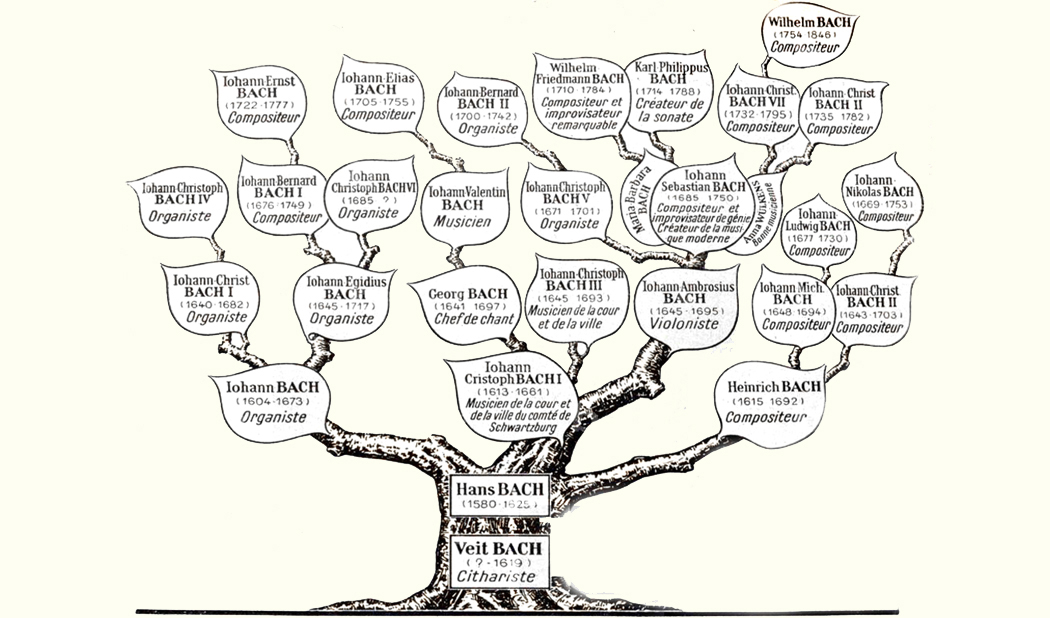
Bach alone counted among his ancestors and descendants more than 50 musicians and composers (one list counts 77), beginning with Veit Bach, born about 1555. In parts of central Germany at the time, the name “Bach” was a synonym for “musician.” 

And all that is merely a subset of European composers. I am humbled. 

Even if we look at popular music, it’s the same thing. Irving Berlin, alone, wrote an estimated 1,250 songs (even he had no accurate count). Yes, everyone knows God Bless America, and probably Blue Skies and Alexander’s Ragtime Band, but what about Alexander and his Clarinet, The Blue Devils of France, or Everything in America is Ragtime? 

No one can count the number of songwriters who wrote for the publishers on Tin Pan Alley: Harold Arlen; Irving Berlin; George M. Cohan; George Gershwin; Dorothy Fields; Scott Joplin; Fats Waller. And uncounted more. The 19th century gave us Stephen Foster, Philip Bliss, Joseph Skelly, Eva Carter Buckner … There really is no need to list them all, even if I could. And these are just Americans. Songs were being written everywhere, and continue to be.

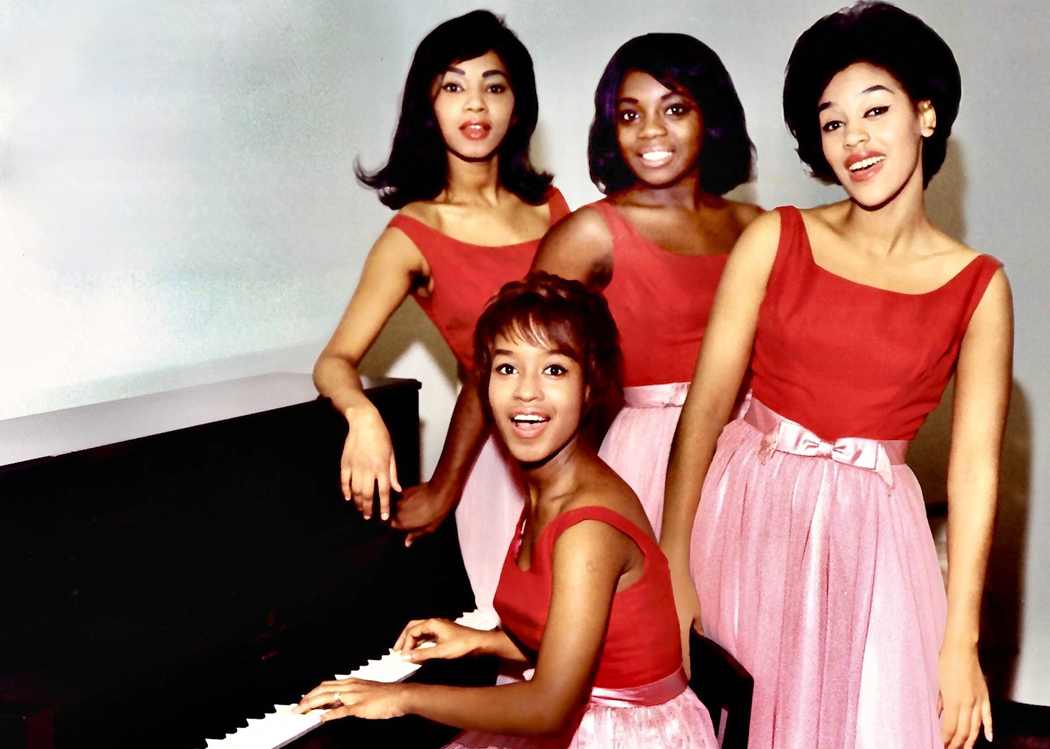
Shirley Gunter and the Queens

Try to tally up all the rock and pop bands, beginning in the 1950s and ’60s. For every Bill Haley and the Comets, there are a hundred Bill Black Combos and Shirley Gunter and the Queens (Oop Shoop). For every Beatles or Stones, there are a thousand Jive Fives and Dyke & The Blazers. A few pop up infrequently on Golden Oldie radio stations, but most are buried under the avalanche of whatever followed, only for those to be buried in their turn. 

There are more than 7,000 languages in the world, not counting languages long extinct. I’m proud of being able to manage the simple vocabulary of a French newspaper. Milton could read 10 languages. Pikers, all of us. There is so much more. 

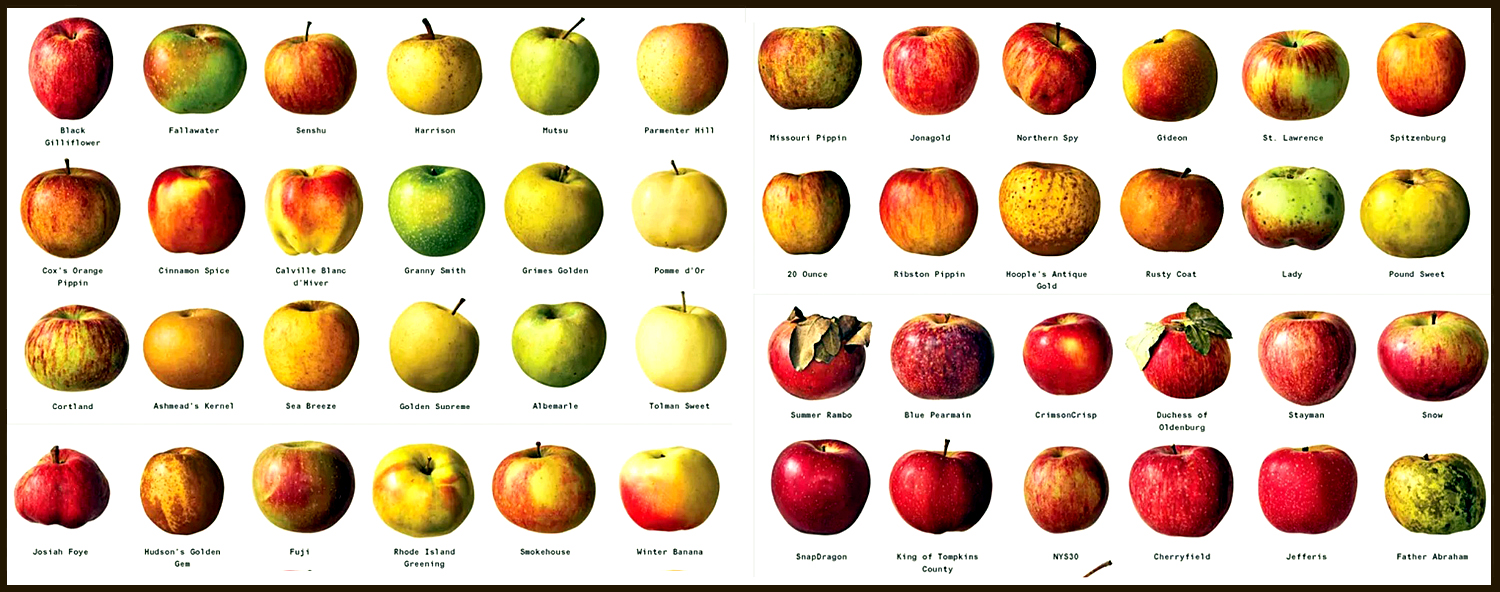
How many types of apples are there? How many breeds of pig? There are 7,500 cultivars of apple in the world, 2,500 grown in the U.S. No one knows how many wild strains have not been catalogued. As for hogs, according to a study by Chinese universities, around 600 breeds of pig have been created by farmers around the world, mainly in Europe and Asia. 

The same could be asked of sheep, goats, kine, cats, dogs, and, I’m sure, even for fleas.

A million insect species have been formally described, but scientists estimate the true total is closer to 5.5 million. There are approximately 17,500 to 20,000 known species of butterflies worldwide. They are found on every continent except Antarctica, with roughly 750 species found in the United States and Canada. 

There are eight billion people in the world. How many of them do you know? That’s a million of them eight thousand times over. If they were a parade and it moved past you at one soul per second, it would take 250 years to reach the end, but by then, the first billions would have died of old age, and billions more born to join the queue — so you would never reach the end. 

This is all not to disparage expertise. We need people willing to learn as much as possible about as many things as possible. Ignorance is never a helpful contribution. But it is meant to foster a healthy humility about what we do know and what we even can know. Each of us is limited; the world is too vast, varied, and ever changing for any of us to claim much. There are as many recipes for cassoulet as there are families who prepare the dish.

I always remember what my wife told me. She was a primary school teacher and one day a third grader complained about how much they were expected to memorize. 

“My mama told me the human brain can only hold so much or it will explode,” he said. He was serious.

I graduated from Northern Valley Regional High School at Old Tappan, or NVRHS at OT, which always reminds me of Professor Peter Schickele’s USND at H — University of Southern North Dakota at Hoople. (I’ve been to Hoople. There is no university there. There are cows. But then, there was no valley I ever noticed in Old Tappan.) 

In northern New Jersey, our school’s football team played our arch-rival, Hawthorne, and before the big game each year, there would be a pep rally, in which we were inculcated with “school spirit,” and induced to yell, “We’re Number One!” over and over, despite the fact that every fall, Hawthorne trounced us badly. Their players always seemed twice the size of ours and looked more like a farm team for the Chicago Bears. 

Yet, we were “the best high school in New Jersey,” a claim that was patently untrue. (We were a perfectly good school; I’m not complaining. But the other schools were also fine.) All over the country (probably the world) schools are making the claim that they are the best and we should all feel proud of our, what? Accomplishments? We were pimply faced kids, let’s face it. I never did understand the school spirit thing. 

Why should we claim that our group is better than your group. And this goes for nations, religions and ethnicities as well. I never understood nationalism, the metastasized big brother of school spirit. What evidence do you have that America is the greatest nation in the world? “America is Number One!” Number One in what? School shootings?

My point isn’t that the United States is the root of all misery in the world. My country has done many praiseworthy things in the past 250 years. But so have other countries. I have seen no evidence that we are any better or worse — that Americans are any different at all — from other peoples. Yes, there are cultural differences. Germans, Chinese, French, Paruvians all have national cultural tendencies. But under it all, we have the same genetic construction. 

Despite that, nations war, and worse, ethnic groups choose to idealize themselves and demonize their neighbors. And just to make it all just that much sillier, usually these contending ethnicities are almost identical. Ukrainians battle with ethnic Russians. Armenians with Azerbaijanis. Israelis with Palestinians. Croats and Serbs. If one writes the language in Roman letters and the other in Cyrillic, they can claim their languages are totally different, even if they can talk to each other over the phone with no problem. 

When I say we are genetically the same, I suppose that also entails the atavistic gene that makes us tribal. This may have been helpful when humans traveled across the landscape in extended family groups and needed to protect themselves from other groups also seeking the limited resources. But now that we have nuclear bombs, this tendency threatens to be fatal. For the whole species. 

You can’t really have an “America first” without also having a “screw you” attitude to the rest of the planet. And if we do that, where will we get our bananas and computer chips? 

If we wish to think that the United States is better than everywhere else in the world, then why are Danes happier than we are? Why are Cubans healthier? Why are the Swiss better educated? In the most recent rankings, the U.S. is listed as 22 out of 178 countries in economic freedom. Educationally, we rank number 40 in math education, 25 in science and 24 in reading. We are 46th in maternal mortality and 42nd in life expectancy. In standard of living, we are only 13th. In political corruption we ranked 23 out of 198 countries, and that was before the Trump administration. We are only 45th in press freedom. And 21st out of 128 for the rule of law. 

Another place we are not No. 1: Many Americans think we pay more in taxes than anyone else, but actually we pay less than any other developed nation, except Mexico — and that counts Mexico as a developed nation. 

Oh, we have a few titles: We are Number One in child deaths by firearm. And we have the biggest military budget, spending more than the next 10 countries combined. 

Other firsts: The U.S. incarceration rate is 716 per 100,000 population, which is the world’s highest. Even 36 of our states have higher incarceration rates than any country in the world. We’re No. 1 in gun ownership both overall and per capita. We watch more TV than any other nation.

And yes, we are No. 1 in corona virus infections. 

Further, more Americans think the U.S. is the greatest country in the world than citizens of any other nation. We’re even No. 1 in smug self-satisfaction. 

This is all not an attempt to denigrate my home country. After all, we’re a long way from the bottom of most of these lists. But it is to counsel modesty. It is to say we’re not exceptional; we have good points and bad points. Yes, we had slavery and we had a national plan of ethnic cleansing toward Native Americans, but we also had the Marshall Plan, and a long history of accepting immigrants and refugees (this last has always been in danger from the “America Firsters.” Trumpism is not all that new; we had “Know-Nothings” in the 19th Century.)

As has been pointed out, those who believe America is the best country in the world probably haven’t been anywhere else. 

And my main point isn’t to make the case for or against the U.S., but rather to decry the universal tendency for human beings to think what they have, what they do, and what they believe, is better than anyone else has, does or believes, and further, is willing to kill them over it. 

We have had what has been called the longest stretch of world peace in the earth’s history, from the end of World War II until now. But that is true only if you don’t count the myriad regional conflicts and minor wars that have been constant. Wikipedia lists more than 75 armed conflicts since 1945 (counting them is a bit inexact — which are separate and which are just phases of continuing conflict). And even this moment, there are wars in some 20 countries, the major ones in Afghanistan, Yemen, Syria, Turkey, Somalia, and Libya, and all through central and northern Africa. 

We are Israelis and Palestinians; Sunnis and Shias; Ukrainians and Russians; Azerbaijanis and Armenians; Armenians and Turks; Muslim Kashmiris and Hindu Kashmiris; Tamil and Sinhalese; Tutsis and Hutus; Burmese and Rohingya; Hatfields and McCoys; Republicans and Democrats. Us and Them. 

 I get it: We are more comfortable around people with the same values and habits. And we may be put off by the folkways of others. We don’t eat a lot of snails in the U.S. But is that a reason to condemn those who enjoy a bit of the old escargot? We worship different gods (or the same by a different name), but that shouldn’t be an excuse for killing them. One religion crosses themselves with three fingers, another with two. Get the scimitar! (My favorite was the Albigensian Crusade, where the besieging general was asked how to tell the heretics from the believers, said, “Kill them all and let God sort them out.”) 

I am put in mind of the plea of Oliver Cromwell to the Church of Scotland (“England’s Canada”), “I beseech you, in the bowels of Christ, think it possible that you may be mistaken.”

A little humility goes a long way to helping us recognize our commonality. Our essential humanness. But humility is in short supply. 

“Knowing this and that better cannot be had, know then why old men should be mad.” Or as my late wife used to say — frequently — “We are all just dumb monkeys.”

hisitory mosaic

History is endlessly fascinating.

If I were restricted to one class of reading, history would be it. I am not alone. Whenever politicians are asked for their favorite books, they seem to be history and biography (even as you suspect that the list was actually compiled by an aide), and the busiest corners of used bookstores seem to be the history sections.

When I was a boy, devouring the school library, I avoided fiction. “I don’t want to read anything that isn’t true,” I told my parents — misunderstanding the nature of truth, as one is likely to do in the second grade.

History provides at least four important things for the growing brain. In order of ascending importance, they are:

Entertainment — A well-written history is fun to read. When you are reading Barbara Tuchman or Edward Gibbons, you are reading a page-turner. As one history lover has written on his Web page: “It’s not the facts or dates we want. We want, for a time, to be the person who rode out of Paris to go on a Crusade, and rode past serfs tilling the land, dressed in browns and blacks because they were forbidden to wear bright colors by law. We want to feel the pride of being French, thinking that we could defeat the German army because, we are French! But alas, the Germans crush us anyway. What did we feel then? Tuchman tells history as a story, and makes us feel the wonder of the connection we have with all the myriad, strange, and beautiful humans who have lived and died to bring us to where we are today.”

Guidance — Reading history shows you what other people have done when faced with situations similar to those you may find yourself facing. You can benefit by their mistakes as well as their successes. It is also useful to know history to recognize the prospects for current policy choices made for us by government. Should we get into this war?

Before entering Syria, we might want to re-read our Herodotus. We wish to god George W. Bush had read it before going into Iraq.

But you don’t have to go all the way back to the Persian Wars. You have a different view of it if you know the history of the division of the Mideast into mandates after World War I. If you want to really understand the recent presidential elections, you must know the organization of the Roman imperial and republican governments and the sway they held over this nation’s founding fathers. The roots are that deep.

The saddest truth of all — after Jean Renoir’s quote from Rules of the Game: “The awful thing about life is this: Everyone has his reasons” — is that, pace Santayana, it is not those who don’t learn from history who are condemned to repeat it; those who have learned their history are the ones who see it repeated endlessly. To those who know nothing of history, it’s brand spanking new each time it happens.

Humility — More important than reading popular histories, though, is attempting to do some actual history, yourself. Few people ever give much thought to what a historian does. I suppose if you asked the man on the street, he would say a historian reads a lot of books and then writes his own. But history is altogether more difficult and tenuous. For what is history? (I know Gibbon himself gives one answer: “little more than the register of the crimes, follies, and misfortunes of mankind.”) No, history is the tentative answer to the puzzle of missing parts. history tondo

A historian sifts through the extant records of a time long extinguished and attempts to piece them together in a way that makes convincing sense. He reads letters, court records, newspaper accounts, bank statements, weather records, church chronicles and royal edicts; he attempts to put them in chronological order and reconcile the inconsistencies; he has to weigh which records to trust and which to doubt; he has to be familiar with the biases of the times, to know what “code words” mean — and each age has its code words.

You can do some genuine history for yourself: Attempt to write the story of your grandparents, for instance, using your parents’ recollections, old family Bibles, family snapshots, birth and marriage certificates. You will be astonished at two things: how difficult it is to make it all coherent, and how fascinating it is to make the attempt. And that leads to the fourth and most important thing history can bring us.

Respect — If there is a single sin that is most widely committed by the public, it is that of presentism — the belief that people in the past thought and acted just as we would, only without the benefits of modern technology.

In fact, those in the past not only thought differently, they lived in a world differently defined: Things which were manifest to them are ignored by us; things we find self-evident, they never gave a thought to. What we learn is a different kind of humility. Not just the humility of the historian knowing what effort it takes to recreate the past, but the humility of knowing that there are other ways to organize and value the world than those we currently take for granted.

We wander into church in shorts and shirts; our grandparents wouldn’t have dared. They lived in a more formal world, in which the formality expressed respect. We live in a culture that values independence and individuality. Other cultures valued group cooperation more highly.

History shows us that we aren’t always “right” and the past isn’t always “wrong,” but that at all times, we are seeking to know and do what is real and just, but are blinded or frustrated by the biases of the day.

I’m not talking about excusing our slave-owning founding fathers but understanding how they believed the world to be organized by the divinity they believed in. Understanding is different from judging. If we recognize the sincerity of Thomas Jefferson, and not just the hypocrisy, we may allow the possibility that we, living now, may be just as guilty of another sin, which we ourselves cannot see clearly.

History makes us less self-righteous. And the less smug, the less likely we are to make evil on our fellow human beings. This is why the last aspect of reading history is the most important.