Archive

Tag Archives: men and women

Over the past dozen years, since my retirement, I have written and posted some 730 blog entries. But I have started many more than that. Some just get forgotten when something more urgent appears; some end short because nothing longer needs to be said. Some just led nowhere. Others began as lists, but ended as lists, unfilled by full sentences. And still more still wait to be written. 

The odd thing, to me, is that there is always something new to write about. With 75 years of life packed into this aging piece of meat, there are endless stories, bits, adventures, ideas, experiences, disappointments and discoveries to draw upon. The well keeps refilling. 

But here are a few fragments that never filled out beyond their early inspiration. Maybe I will get around to it, sometime. 

What is it that women see in men? Because I am a man, I know what men see in women, but I have a hard time reversing the equation. 

I am not here talking of sex or the ardor of the loins — understanding is not required for that; it is simple, direct action — but the desire of women to share company with men. What is the reward for that? Women are so much more interesting, and interested in such a variety of vital issues. Men seem interested only in sports and politics, neither of which carry much import in the lives we live. As I used to say, “Politics answers no question worth asking.” 

____________

2. I was a writer for many years, making my living from putting words against words, hoping to find the best way to express something I hoped would be genuine. 

Recently, my old employer, Gannett, made a new hire, and announced it in such a clot of management-buzz that I got a bad case of hiccups. Newspapers used to have editors, now, with middle management bloated beyond belief, while laying off reporters, photographers and copy editors, what they have is a “Chief Content Officer.” 

The announcement came with a gnat-swarm of buzz words, which may mean something to other management types, but not anything penetrable by actual human beings:

“ ‘We are thrilled to welcome Kristin to Team Gannett to champion innovative storytelling opportunities and develop strategic content initiatives to expand our audience and drive growth,’ Reed said in a Monday news release.”

“Strategic content initiatives?” You would think that those people who run a newspaper would have some sensitivity to language. If I had written prose like that, I would have been out of a job. 

3. The glory that was Greece and the grandeur that was Rome. Or maybe not so much. 

We owe a great deal to ancient Greece. At least, we pay lip service to our debt of democracy, philosophy, literature, science and not least, saving European culture from being overrun by that of Persia. But there are a host of words that describe the part of ancient Greece we would rather forget: Misogyny, xenophobia, pedophilia — come to us dressed in Greek etymology, and descend to us from Greek ideas and practice. We need to address some of the less attractive legacies of that Golden Age. 

Such as patriarchy, idealism, imperialism, colonialism, religious intolerance, cults, ethnocentrism, slavery. To say nothing of understanding sex as an exercise in dominance. And while we may think of Plato as the source of all philosophy, remember that he despised democracy and was an ardent believer in totalitarianism. 

____________

4. Columbus Day is a month away. I expect more anti-Columbus newspaper columns, art, a few tracts and manifestoes and perhaps a new opera. Much current art that tries to be political is really just polemical. To espouse any ideology is to strip life of its complexity. Yes, Columbus was a bad man and the evils he brought with him are real. But instead of preaching to us self-righteously, there are real problems to be discussed, such questions as, “What is in the nature of humans that causes territorial expansion, that causes them to make invisible the people they subjugate, that causes them to divide the world into Them and Us? Why does the boundary of ‘us’ expand and shrink periodically? Why is a world once headed in the direction of one-world nationhood, where the ‘tribe’ is humanity — why is that world now constricting so that nationhood is more tightly defined by blood, so that Serb kills Croat, Azerbaijani kills Armenian? The ethnic separatism that is emerging worldwide is, I believe, a source of exactly the same intolerance that the European West has for so many centuries visited on the rest of the world. Will it devolve to the point that Chiricahua despises Mescalero, or Venetian rises to kill Neopolitan? At what point does a coalition of interests grow from our recognition of our shared humanity?”

Questions such as these are avoided by nearly all political diatribes, whose authors prefer to point fingers and whine like grade-school tattle-tales. If a short perusal of the history of the world teaches us anything, it teaches us that war, inhumanity, violence, intolerance are universal. It isn’t only the Hebrews with their God-ordained genocide of Moabites and Amonites; it isn’t only the Pol Pot regime in Cambodia; it isn’t only Hitler killing Jews and homosexuals; it isn’t only Japan subjugating Manchuria; it isn’t only Custer at Sand Creek; it isn’t only the Hopi at Awatovi.

No one gets off the hook. Native Americans are no more righteous in this than anyone else, from Inca to Aztec to Lakota. If artists and writers chose to look a little closer, they could use Columbus as a metaphor for something richer, profounder, truer. They could have seen that Columbus was not sui generis, but rather representative of the species.

As it is, they came off sounding self-righteous. And no one self-righteous ever has much self-knowledge.

____________

5. Stasis is the enemy. Or rather, because stasis is utterly impossible, the idea of stasis is the enemy. It is the fatal stumbling block of every religion, political philosophy and marriage that has ever existed. Over and over, hundreds, thousands, millions of people die because someone promised them that if we only do things my way, everything will be forever hunky peachy. 

It is the lie behind the “original intent” argument espoused by some Supreme Court justices, and behind the infantile promises of politicians — most on the right, these days — that their policies will “finally” fix things and make them good forever. (In the past, it was the left and Marxism that promised a final end of historical change. It is not the sides one takes, but the phantom of permanence). 

The problem is that stasis is always temporary, which makes it not stasis. I.e., stasis is a pipe dream. 

____________

6. In America, “no” has become a dirty word. Americans like the positive attitude, the gung-ho approach to things. We feel actual moral disapproval of the word “no.” 

It can make your life easier and simpler. It can shake a load of guilt off your back. Although people talk of simplifying their lives, you can never simplify by doing something, you can simplify only by not doing something.  Just say no. It is the yang to “yes’s” yin, and the universe cannot function without both. 

“Yes” is kind of namby-pamby. “Yes” doesn’t want to hurt anyone’s feelings. “Yes” is go-along to get along. 

“No” is emphatic, direct, take-no-prisoners. “No” means no. Every change and improvement in life, every revolution begins with a “no.” 

In some way, every important historical development starts with somebody or some group saying no. Dissatisfaction, after all, is the great inspirer of humanity. If we were all duck happy all the time, nothing would ever get done.

7. I am 75 and am near death (Oh, I’m generally fine, but old and weak) and I think about non-being quite a lot, but not with fear, but a kind of objective interest in the whole idea of no longer hearing birds or feeling the breeze on my skin. Death seems to me a natural “rounding off” of a life and not something that I need to hold in my mouth like a tough crust of bread. 

I saw Carole take her last breath. I felt her turn instantly cool to my touch, like I was touching unfired clay. She ceased being. It was uncanny. My grief was incalculable — and it still is, although worn down — but it felt as inevitable or as natural as the coming of winter. I know the same awaits me — “To die — to sleep no more.” No dreams. Nothing. 

I didn’t sense a spirit or soul leaving her body, just her body ceasing to produce her being, like a light bulb blown out. We don’t ask a burnt-out lightbulb “where did the light go?” It ceases being generated. 

____________

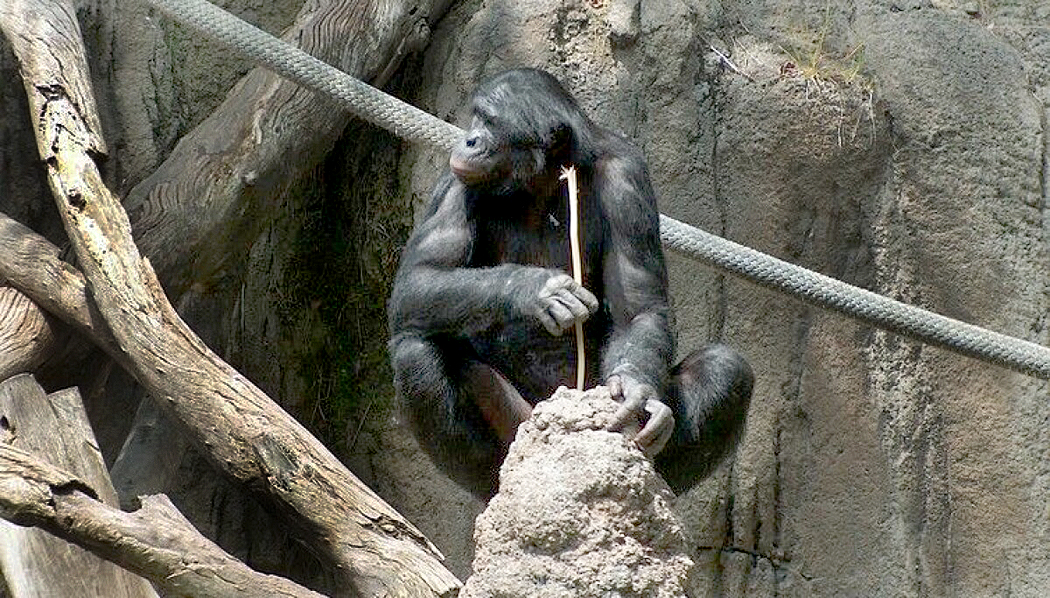
8. One of my problems with Rilke is that I have no use for categorizing angels and animals. Angels don’t exist — not even as metaphors for me — and I accept that I, as a human being, am an animal. I am not so fast to accept that no animals know they are going to die. We have no evidence for that assumption. Perhaps they do; perhaps they don’t. I suspect that some, such as porpoises or whales, may very well have some concept of death. I remember when we human beings were so sure that what separated us from the beasts was tool-making. Ah, but then we discovered how many other animals forge tools.
9. It has seemed to me that part of the German soul is to speak in general and categorical terms, in ideas, rather than in things. It leads to mistaking words for reality. Logic has its own logic, but it is not the logic of the world. (Whole rafts of philosophy, including my hated Plato, only seem to work in words. You can prove with logic that Achilles can never catch the tortoise, but that ain’t how it works in reality.)

But I fear that they are much more about language than about experience. And that is my problem in a nutshell. I made my living with language, and I love words to distraction, but the older I get the more I am convinced that language is merely a parallel universe, with an order and meaning of its own, roughly mirroring the world, but never actually connecting, never touching the pulse of reality. I know, it’s all we have, but I still counsel wariness. 

10. “These fragments I have shored against my ruins.” Why write at all? It is a question I have wrestled with all my life. Do I have anything worth saying to be value to anyone else? Dr. Johnson said that “nobody but a blockhead ever wrote except for money.” Well, I’m a blockhead: I no longer get paid to string words together. But it doesn’t seem to come as a choice. Some may choose to write; I write with the same volition as I breathe. 

Early in my life, words were thin and sparse; it seemed as if there were a lack of hydrostatic pressure from within: I needed to fill myself first. But after living a certain time, the inside pressure grew and it had to come out. It became a fountain I could not stop if I had wanted to. And the well was constantly recharged. 

Now I am old, and travel becomes difficult, habits become settled, reading more and more becomes re-reading. In retirement I can no longer afford to attend concerts, plays and dance the way I used to. The incoming has slowed, and I suppose the outflow has dwindled in response, but the backpressure is still there. Hoping to cease not till death.


“We need ice,” she said, just as he had gotten his shoes off. “There must be an ice machine somewhere. All motels got them, don’t they.”

“OK.” And he started to pull his shoes back on.

“And what about a Coke machine? Did you see one when we came in?”

“No, but I’ll look.”

“If they have one, I want a Dr. Pepper, OK?”

“OK.”

Vernaise pulled her sweater up over her head and caught her elbows in the wool. She looked like an animal trying to wriggle out from under a tarpaulin. When it finally came loose, her glasses were lost and she had to dig through the sweater as if it were a suitcase.

“Here they are,” she announced, but Bill was already off in search of ice and drink. The smell of wet wool was everywhere.

The weather in the mountains had been just awful and they abandoned their campsite for the Capri 700 motel with gingerbread decorations on the veneer four-poster bed and scenes from Pompeii framed around the walls. The TV had cable and adult video. Vernaise had chosen it.

“No ice,” Bill slammed the door. “But here is a Mountain Dew.”

“No Dr. Pepper?”

“No.” He looked at her in her underwear. It didn’t fit. The elastic in her panties was all stretched out of shape and her bra was too big. Her breasts looked like hard boiled eggs rolling around in cereal bowls.

“The rain looks like its getting worse,” he said. “I think we did the right thing.”

“No shit. I’m soaked,” she said with more than a hint of whine in her voice. “Even my bra is wet.”

She unhooked it and hung it over the towel rack in the bathroom. It looked friendless.

The pasty marks it left on her back and sides was a topographic map. Red lines on clammy, white skin.

Bill pulled the tab on her Mountain Dew and took a slug himself. “Here.” He offered it to her.

She took it and turned the knob on the TV. As the tube crackled and whistled while warming up, she sat on the edge of the bed and sipped her drink. A game show came on and she got up and spun the dial.

“Nothing but game shows.”

“What did you expect in the afternoons?”

“But what about those adult videos? They gotta be here somewhere.”

Bill started taking off his wet clothes. His shoes squeaked; his socks left wet black lint between his toes. His thighs stuck to the damp denim of his jeans. His scrotum shriveled.

“Isn’t this romantic,” she sighed.

“Your glasses must be fogged.”

“No, I mean, here we are in a motel, pretending to be married. And we can spend the whole night together in bed.”

“That’s what we would have done in the tent.”

“But this is different. Everybody camps together. Staying in a motel is something that would give Mom shitfits.”

Bill unbuttoned the last layer of flannel shirt and peeled it back from his skin. “That makes it romantic, huh?”

“Sure. It’s exciting.” She turned the dials some more and settled on Family Feud.

He walked to the bathroom, picking up rug lint on the bottoms of his wet feet, and turned on the hot water for a shower. The water was hot enough, but the spray from the shower head was a mere drizzle. “Hey, there’s no soap.”

His voice sounded to Vernaise like it came from an oil drum. “I’ll look through the pack  and get ours.”

She pulled nearly everything out of the pack — it was all damp. She found the soap and it was already lathering. “Here it is.”

“Thanks. Want to join me?”

“I never take showers. Only baths. Bad for my hair. It gets all frizzy.”

He was already burbling and sloshing before she finished her sentence. She went back to Family Feud.

As she was watching, she unconsciously started pulling off her panties. All Bill heard was a horrible scream.

“A tick! A tick! Get it off!” She had found it clinging to her skin just above the dark line of her pubic hair. She jumped and wiggled her hands aimlessly in the air. “Get it off! Get it off!” Her voice was an octave higher than usual.

He ran into the bedroom, not knowing what to expect and dripping like a mop. He saw Vernaise performing a St. Vitus dance in the middle of the floor. “Get it off! AAAAAAAHHHH!”

“Calm down. Let’s see.” Sure enough, there was a tick burrowed in. “Calm down, we’ll get him off.”

“Now! Now! Don’t wait!”

“Lie down. Sit still. Let’s see.”

She sat down on the bed and then lay down. Bill tried to brush off the offending spot, but it wouldn’t move. “I’ll try a match.” He rummaged around through the pack and found the watertight capsule. He lit one and blew it right out. He applied the smoking end of the match to the tick’s head, but it wouldn’t pull out. He tried again. Then he tried dousing it with mercurochrome from the first aid kit. It looked pretty all in red, but it didn’t budge.

“I’ll have to pull it out,” he said, and grabbed the tick’s body and yanked. The body came, but the head stuck firm. Vernaise thought she would be sick. Bill somehow grasped the remaining head between two fingers and it pulled loose, taking a sliver of skin with it.

“Yuck. Yuck. Awful. I’ll never go out in the woods again.”

“Come on, it isn’t that bad.”

“You wouldn’t say that if it was your body. I feel so unclean. I gotta take a bath.”

Bill just stood there, dripping, naked, holding a tick’s head in his fingers and wondering if it were time for a tick check of each others’ bodies.

The tub filled and Vernaise sloshed in. “Yuck!”

2

The mood had been ruined for Vernaise. All she could think about was crawly things. Bill found a Marx Brothers film on one of the cable channels and reclined on the bed, watching the film between his feet. Vernaise  dried off and wrapped herself in a blanket. The red lines on her body had faded somewhat, but her skin, no longer clammy, was still wet.

“Bring those lips over here,” said Bill, in the way of being romantic.

“No, I couldn’t. Are there bedbugs in the bed? Fleas?”

“No. Don’t be silly.”

“Silly?”

“Sure. It was just a tick.”

“Just a tick?”

“Yeah. It won’t kill you.”

“Men!” She was only 19, but already she knew the curse that described all that was wrong with the universe.

Duck Soup.”

“Huh?”

Duck Soup. Marx Brothers. It’s on.” He gestured toward the tube but she didn’t seem interested. She sat on the edge of the bed, turned away from Bill.

“Don’t be that way,” he said, reaching across the bed to squeeze her boiled eggs. She jumped up, taking him with her and he fell, flat on his nose on the floor.

“AAAGGHH!”

She screamed, too. “Bill! Are you OK?” His nose was a bleeding pancake.

“What’d you do that for?” He sounded a little like an oboe. “Why’d you pull away?”

“You scared me. Besides, I don’t feel like it, after the tick and all.”

“Jesus.” He held his nose and walked naked to the bathroom where he pulled off a skein of toilet paper and mopped his schnoz with it.

“It’s swelling,” he yelled from the oil drum.

3

They slept in the bed with its stiff sheets and hard mattress. Bill’s arm wrapped around her. She had her back to him. Once, in the night, she had to get up to pee. He hardly noticed.

The next morning, it was still raining. One of those warm April rains that rises in steam to your nose and saturates the air with humidity.

Bill could hardly breathe. His right nostril was split and a black plug of blood hung on the fleshy part. The nose was not only larger than it should be, but bent, too, he thought.

Vernaise rolled over towards him, opened her eyes to a slit, barely aware of the daylight. She saw the plug of blood and let out the beginning of another scream, but caught it mostly in her throat. In the haze of sleepiness, she thought it was a tick, or it reminded her of the tick she had.

It wasn’t a pleasant way to start off the morning. She lifted the sheets and looked down at her crotch. The tick was gone. Hardly even a little ring of redness remained.

“Damn, my period started,” she said. It was regular as the full moon, and because of that dogged dependability, she purposely refused to keep track of it, and it surprised her punctually every 28 days.

“Huh?” Bill honked. He was just waking up, too. In fact, he didn’t want to wake up. He wanted to stay asleep. But he slowly became aware of something wet in the bed, and consciousness jumped him like a bandit.

“What’s that? Oh.” He knew as soon as he asked the question. This wasn’t a new thing in their relationship.

“I’ll get a towel.”

He got up, walked to the bathroom, stood over the toilet and drained for a minute or two, grabbed one of the face towels and wiped the clot off his nose, brought the towel back into the bedroom and handed it to Vernaise.

“No, I don’t want your bloody old towel,” she said. “I want a clean one.”

“OK.”

He walked back into the bathroom, picked up another towel and stood there for a minute, as if he had forgotten what he was doing.

It is important to realize that men don’t, in such situations, actually think about love or relationships. They wouldn’t have the vocabulary for it even if they had wanted to. But there were fleeting sensations and images flashing across the inside of his skull. He stood there and thought about the wet, sticky part of the mattress. He thought about Vernaise demanding a clean towel. It reminded him of the time she wanted a sticky bun for breakfast, and when he went out to the 7-Eleven and brought one back, she had complained it wasn’t the right kind of bun. He shoveled that thought on top of his memory of the red-striped skin from yesterday under the elastic of her underwear. That soaked over the thought of the way her voice rose an octave when she got upset. It not a pleasant squeak in her voice. More like a door that needed oiling. Annoying. Oh, and he thought about her mother. Large woman. Muu-muus. Teased hair. They say you can tell what a woman will become by looking at her mother. He pictured her mother with Vernaise’s face. He pictured Terry Bradshaw passing to Lynn Swann in the Super Bowl. He was losing focus.

“You have the towel?” she asked from the next room.

“Oh, yeah.” He remembered why he was there.

Vernaise sat on the edge of the bed, feeling a little logey. Perhaps it was the time of month, perhaps it was the interrupted camping trip and the lack of sleep. She looked toward the bathroom and saw only Bill’s behind as he stood there like a statue with his head cocked to the side.

She had been attracted to him, she realized, because — well, now she was wondering. She thought it was because he seemed older and more experienced. But she realized now that he wasn’t really. He played in a band, but then, it was only a garage band. He took her places. They had sex. She liked that. Mostly.

She tried to remember exactly why she was with Bill. Probably because he asked, she realized. Being wanted is the most potent aphrodisiac.

But she also admitted to herself that she already knew he wasn’t the one. Her thoughts were more direct than his. She didn’t wander: She compared him with Paul. She compared him with Shelley. Then with Al and Frederick. She had a mental tab column in her head.  Make a list. Looks. Potential. Sense of Humor. Check, check, check. Al gets a double check here. Oh, and Ted, too. She had forgotten Ted. She hadn’t stayed with any of them longer than she did with Bill, but she wasn’t really sure why.

Later in the morning, still in the room, since there was no place to go for breakfast, they mixed up some of their trail food — a strawberry shake that tasted less like strawberries than liquified cardboard.

They signed out of the room at noon when the maid knocked, went back to the campground and struck the tent. It was twice as heavy with all the water soaked in. They threw it in the trunk.

“Some romantic weekend,” he said.

All he could think about was the squeaky hinge. All she could think about was the tick.


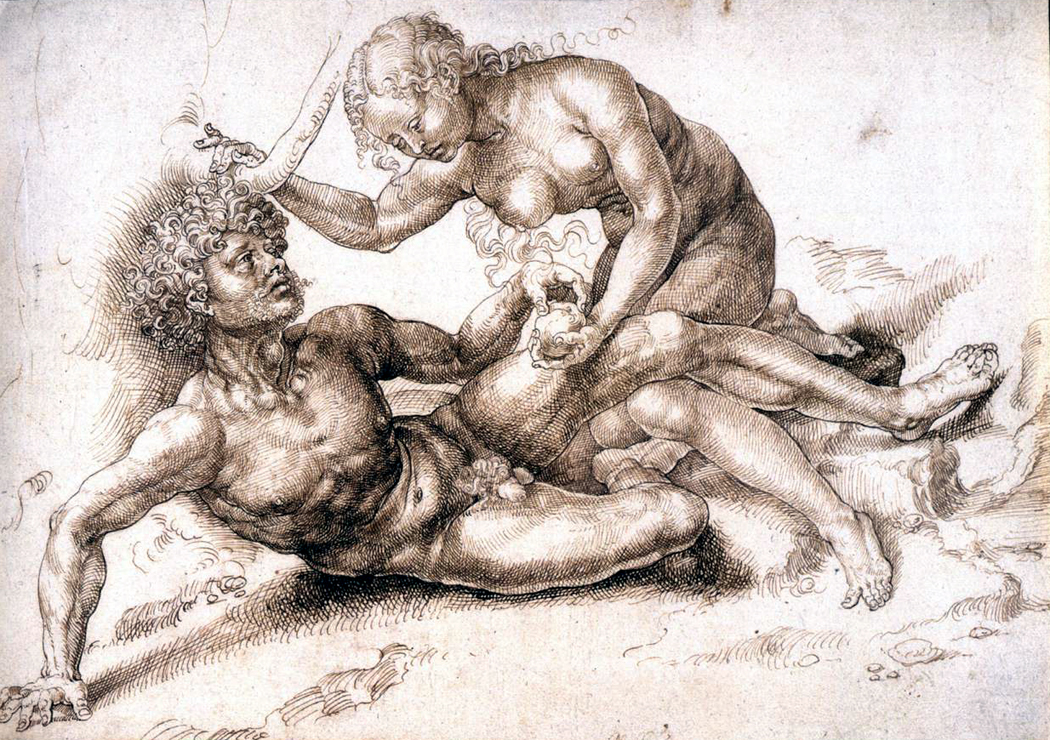
adam and eve poster 1958

Stuart is a friend of mine and he always has an opinion. They aren’t always completely thought out, but then, that’s the way it often is with our opinions; we form them out of instinct and then seek factual support.

Stuart has always had definite opinions about men and women. The fact that he has had two official and two unofficial marriages, and continues to forge his way through one failed relationship after another has not blunted his faith in his grasp of the matter.

I recently wrote a blog about the difficulty most men have in multi-tasking (https://richardnilsen.com/2014/02/17/keeping-life-simple/), and Stuart brought it up when he came to visit on another one of his cross-country trips, unsure of where he would settle this time.

Stuart did, in fact, have a theory. Like all his theories, it was more about spouting off than about solid sociological, theological or scientific research.

“OK, here goes.

“Men are all fetishists. This is the primary distinction between men and women,” he said.

“I don’t mean all men are into leather or vinyl, but that men localize their interests. It all comes down to a focus on a single issue, and all others can fend for themselves.”

“You mean men can’t multi-task?”

“That’s a good way of putting it.

“Think of porn. Why do women not respond? Why do men? People say it’s because women are not visual and men are, but that’s not the main problem. After all, women don’t respond to verbal porn either. It’s because men localize their sexual interest in one spot on their bodies. And, believe me, it’s always the same spot.

“By the way, if you attend to that spot, it doesn’t matter what else you do, they’ll be happy. It’s really rather simple. Everything about men is really rather simple. I know that’s hard for women to understand, because women are wired for complexity.”adam and eve woodcut

“That seems like a stereotype,” I said. “As in: Women can multitask.”

“But it’s true,” he continued. “Look at D.H. Lawrence. He adds a religious layer to the whole thing, and makes a god of that spot on his body, and believes that both men and women worship that dangling deity. But it’s really only a man’s religion.

“It colors everything in a man’s life. But it especially colors his attraction to women. Not only does he believe that women care about his equipment, he actually believes women go around talking about it in hushed, worshipful tones. Is it big enough? Am I man enough? Very little thought goes into anything else that might be thought manly.

“So now, when a man looks upon a woman, that same single-mindedness makes him pick out a single attribute of the woman for worship. It is seldom her equipment. Why? I don’t know. Ask Freud. Wait. No, don’t ask Freud.

“So, for a man, it is her boobies he fixates on, or her hair, or her legs. Her big booty or the light down of hair on her arms. It becomes the trigger for his attraction.adam and eve comic

“You see it all the time. A man loves a woman because her hair is blond, or because she has a turned-up nose, or pouty lips. She can weigh 200 pounds, but because her hair is curly, he sighs and pines.

“It can be something less tangible, like a sense of humor, but it seldom is. Mostly it is a physical endowment. Some like saggy boobs, some like a high arch on the instep. Some like just the hint of a mustache on her upper lip.”

“Gross!”

“But it’s true.

“When in the act of love, it is usually this one particular that the man is obsessing on. He is wildly in love with her hair, or the mole on her cheek, or the way she cuts her fingernails short.

“It can be perfume. It can be the fact she wears short pants. It can be the one button left undone on her blouse. But it is one thing.

“Women, on the other hand, tend to see the whole man, to see him as a person. When women complain about the objectification of themselves by men, they are right to do so, but they also miss a central truth of existence and the propagation of the species.

“Men simply don’t see the counter-indications: If that blonde in fact does weigh 200 pounds, or is a shrieking harpy, it doesn’t figure into his erotic calculations.

“The woman, however, always takes all the conflicting data into account and makes a profit-loss calculation. Is there enough there to work with? Does the good outweigh the bad.”adam and eve etching

I objected, the way you do when presented with something you know is true but don’t wish to acknowledge, hoping that denying it will make it go away, at least for the moment.

“It can’t be that simple,” I said.

“It isn’t. And I always make room for the standard disclaimer: Individual variation trumps gender variation. You can find exceptions to every so-called rule, but in aggregate, women and men have their ways. There are women who could beat me to a pulp, and I wouldn’t want to tangle with one of them, but on the whole, men have greater upper-body strength.

“I’m not saying you should make laws based on this. Should you outlaw women from operating bulldozers or backhoes? Of course not. Individual variation is greater than any difference between men and women as a whole.

“But, what’s most interesting to me about this thesis about men and their fetish-oriented sexuality is this: In the long run, the whole thing reverses.”vigeland old age

“What do you mean?”

“I mean that after living with a woman for 20 years, a man finally learns to see the whole woman, to access all the other parts of her personality and personhood that he was blind to in the first rush of ‘let’s-make-babies.’ She grows in his estimation. What he should have seen from the beginning, he now understands. The fire has spread into a circle, leaving the grass in the middle burnt, but a wider horizon of concern and interest expanding.

“By the way, learning more about the woman isn’t always a good thing. It also may lead to divorce.

“But the reverse is true for the woman. After living with the man for years, she is likely to latch onto the one thing, the one attribute, the one saving grace he has that makes up for all the failings.

“So, his appreciation for his wife grows, her appreciation for him narrows, but deepens.”

“At some point, though, it would seem there should be a crossing of the lines on the graph,” I said. “There should be a point when her narrowing and his expanding meet at one perfect moment of mutual understanding.”

“Well thought. I don’t know,” Stuart said. “That’s what you will have to find out. I never got there.”

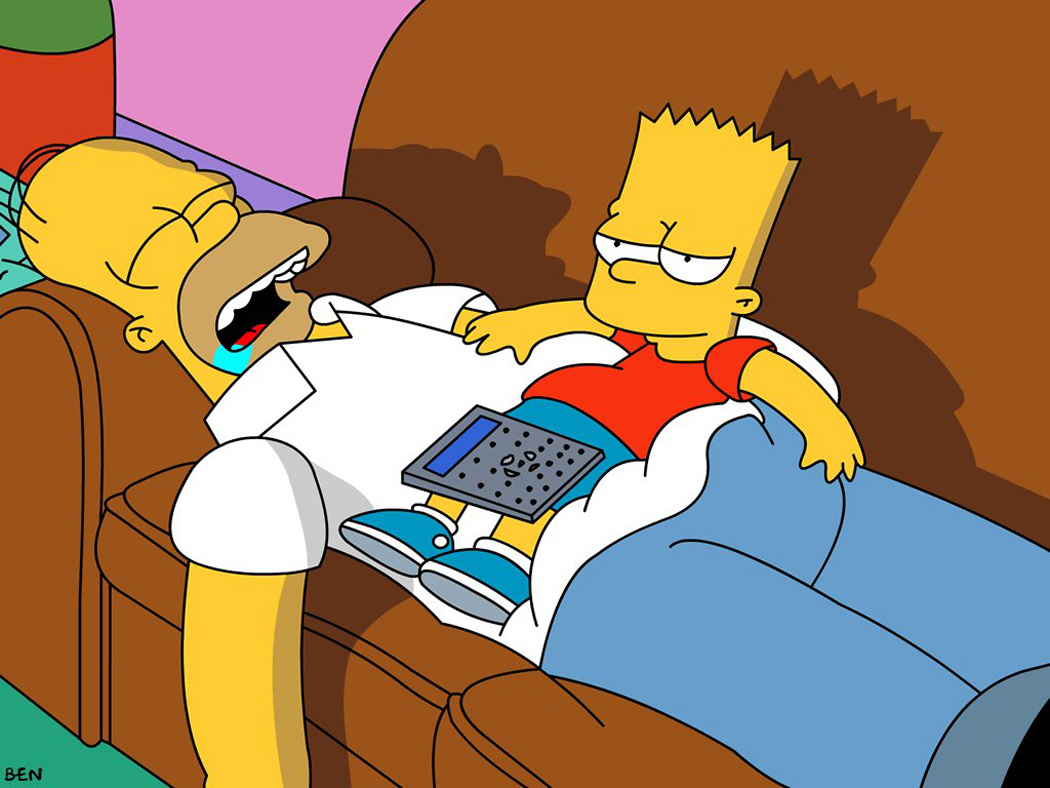
Father and Son

This is not news to America’s wives, but: Men hate change.

I don’t mean only a pocketful of pennies and dimes — fishing weights in the trousers — I mean that a man feels uncomfortable if his favorite easy chair has been moved for vacuuming and put back no more than an inch from its original spot. He will feel compelled to nudge it that last inch.

I mean that when a favorite shirt finally blows through at the elbows, he won’t throw it out, but will wear it on Saturdays, to the dismay of his wife and daughter; and when it is finally no more than strings of tattered fabric hanging from a collar, he will use it to polish the car.

And what is more, when he needs to replace a work shirt, he will find a carbon copy, preferably bought from the same store, even the same rack, as the first.

I mean that when an old TV goes on the fritz, a man will stand there holding the aerial in his hand, watching the Cubs through the snow, rather than go out and buy a new tube.

Guys who buy Fords trade them in on new Fords, guys who buy Chevys later buy more Chevys.

How many men do you know who try different hairstyles?

Most men I know settled on a hairdo in high school and have kept it until there was no hair left to do.

I’ve seen 50-year-old bald men who have gathered what fringe remains and greased it into a ducktail.

Sometimes this aversion to change is misread by wives as being laziness. And sometimes it may be, but by and large, a man doesn’t fix that creaky door because for him the creak has become a familiar part of the home, and he simply doesn’t want to change it.

The great example of this principle in literature is the story by Herman Melville, “I and my Chimney.” It is comic and depressing at the same time.

Its narrator stands guard against the constant plans for improvement his wife devises.

“Old myself, I take to oldness in things; for that cause mainly loving old Montague, and old cheese, and old wine; and eschewing young people, hot rolls, new books, and early potatoes and very fond of my old claw-footed chair … But she, out of the infatuate juvenility of hers, takes to nothing but newness; for that cause mainly, loving new cider in autumn, and in spring, as if she were own daughter of Nebuchadnezzar, fairly raving after all sorts of salads and spinages, and more particularly green cucumbers (though all the time nature rebukes such unsuitable young hankerings in so elderly a person, by never permitting such things to agree with her).”

The narrator’s fallback position, always, like the hero of Melville’s other story, “Bartleby, the Scrivener,” remains, “I would prefer not to.”

The basic instinct men have for what can be seen as monotony is a part of the way life is compartmentalized for them. For women, I often feel, life is all of a piece. Each part flows into the next, and women seem quite happy to think about or do several things at once.

Men are not that talented, and part of what has become an aversion to change is really just a man’s way of putting certain things on automatic pilot so he doesn’t have to think and act on them, so he can focus his attention on whatever he believes is important.

If one attacks life freshly and alertly each day, there are millions of decisions that will have to be made. A man feels overwhelmed by them. busy mom

So whatever can be decided by rote — the shirt, the socks, the route to work — is preset and unaltered, so that he can expend his energy creatively at the office.

So it is a matter of priorities. For mothers, what must be attended to is whatever minor emergencies present themselves, in whatever order they occur. The baby needs changing, the third-grader has skinned his knee, the teen-ager needs the car keys.

She cannot do as the man does and make a list of things in their order of importance, and address them in that order. Some men spend their whole lives on that list, rearranging it as new problems present themselves and never getting to the actual problems themselves.

Like many people, I used to think that gender differences are merely learned behaviors, but the older I get, the more I realize that the different wiring of men and women is more fundamental. If women are unhappy about the way men act, they shouldn’t immediately ask that men be different; you might as well ask that they have three arms instead of two.

It is more to the point to ask why they are as they are, whether tens of thousands of years ago on the veldt such behavior made a kind of genetic sense that in a 20th-century city is now obsolete.

Perhaps women as nurturers must keep their attention as widely spread as possible, so as not to miss the one kid headed for the pool while attending to the other’s bruised arm.

Men as protectors needed to focus their attention very narrowly, ignoring lesser commotions for the larger one of a preying lion or wolf.

At which point matching socks are kind of silly.