Archive

Tag Archives: MOMA

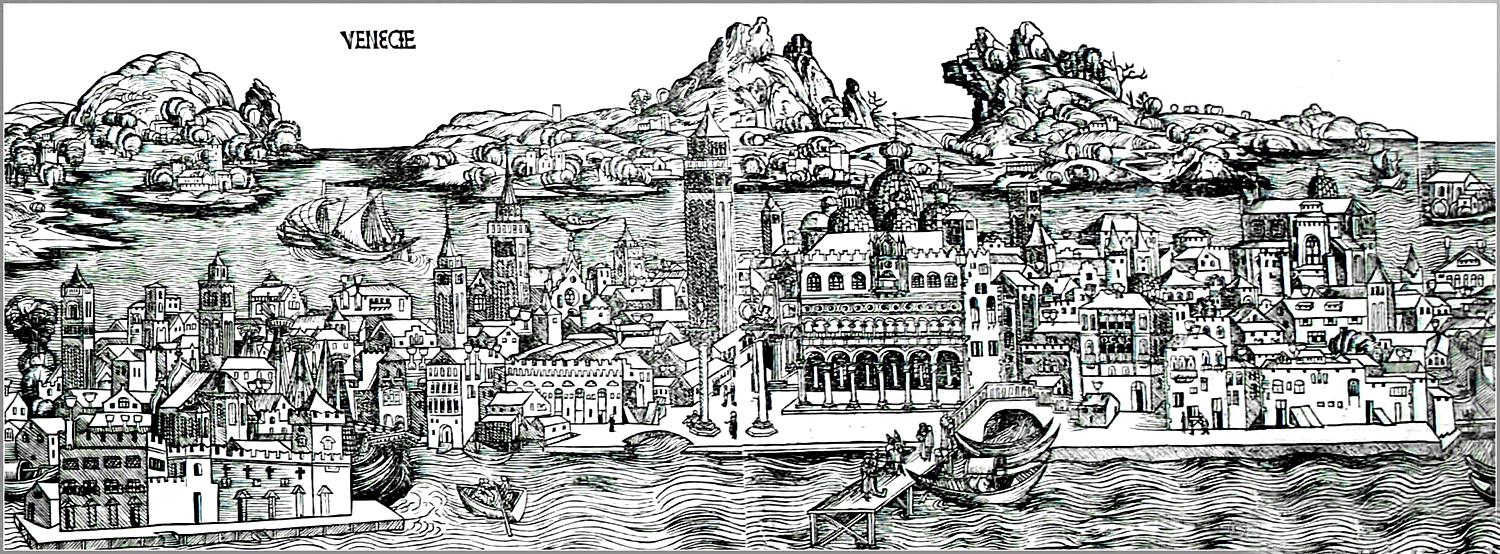
“Venice,” woodcut by Dürer

In 1494, at the age of 23, after years of apprenticeship as an artist in Nuremberg, Albrecht Dürer left Germany to visit Venice and Italy and find out what all the Hoohah was about. He was amazed at what he saw and  when he returned home to Germany, he brought the Italian Renaissance with him. He went back south for seconds in 1505 and stayed for over a year, soaking up the influences. It was what he had to do if he wanted to see what the Big Boys were doing. 

If you wanted to see, you had to travel. There were no full-color coffeetable art books to thumb through. If you wanted to see the work of Bellini, you had to go to Venice; for Raphael, to Rome. 
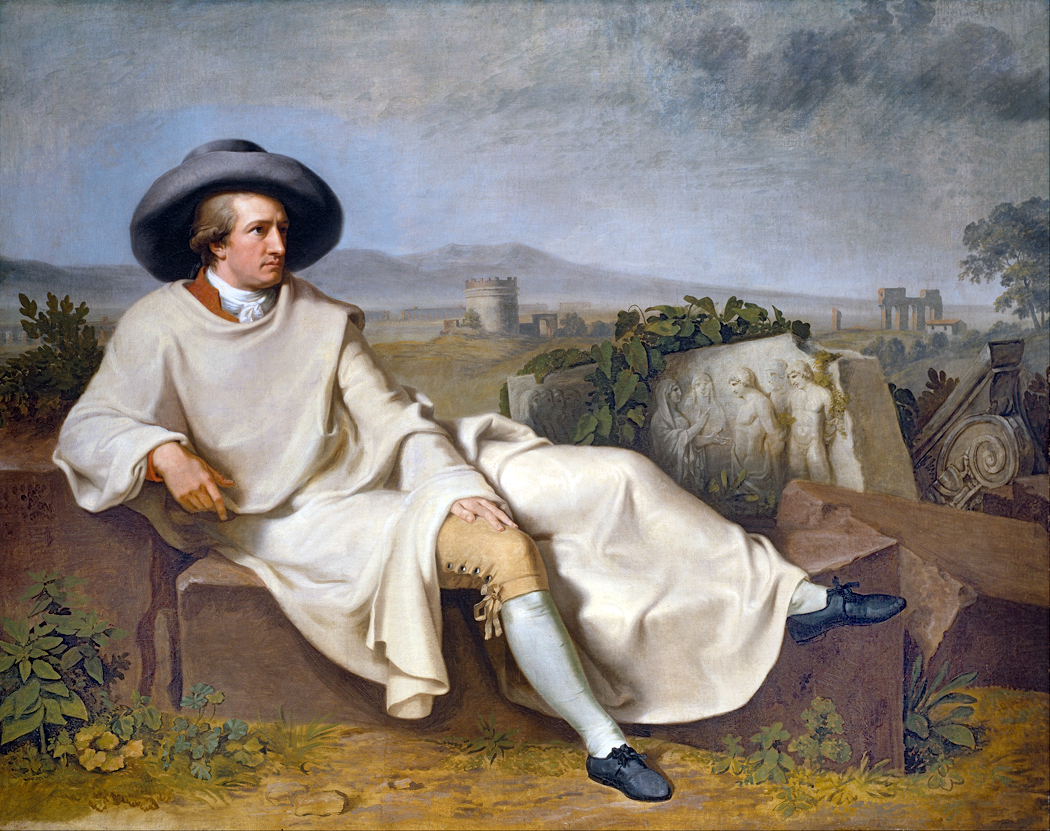
“Goethe in Italy” by Johann Heinrich Wilhelm Tischbein, 1786

In 1786, Johann Wolfgang von Goethe, then age 37, made the trip, this time to see the Roman and Greek sculpture that had been so highly praised in the work of Johann Joachim Winckelmann. He stayed until 1788, studying more than the statues, including many statuesque young women, which he later wrote about in his book of poetry, Roman Elegies

For most of history — until improvements in color printing in the middle of the 20th century — the only way to see famous art was to leave home and go there. Yes, there were engraved black and white copies published, and later monochrome halftones, but you could not really get a sense of Rembrandt or Titian without traveling. 

It gave rise in 17th century to the practice of upper-class families sending their sons on the “Grand Tour” to become educated and cultured. From the 1600s to about the middle of the 19th century, it was common for well-off young men to take a “gap year” — or two — to visit the Continent and see the sights and become men of the world before taking up their roles in government or business. Of course, many of these youths were more attracted to the live demoiselles and regazze than to the canvas madonnas. 

“Rose,” Philbert-Louis Debucourt 1788

It wasn’t just visual art. Before recordings, if you wanted to hear a Beethoven symphony, you had to attend a live concert. If you lived outside the city, you had to travel to get to the concert hall. Bach famously walked 280 miles from Arnstadt to Lübeck in order to hear Buxtehude play the organ. Even to hear now-famous symphonies and concertos you likely had to wait years between programmed performances. You might be lucky to have heard Beethoven’s Fifth once or twice in your life. Now, it seems, you can’t get away from it. 

Today, when you can own 30 different CDs of the Beethoven symphonies and have your choice from Furtwangler to Norrington; you can fill your bookshelves with illustrated volumes of any artist you want; and watch endless YouTube videos about the Mona Lisa, it is important to remember that they are not the actual experience of the art in question, but varyingly faithful simulacra. You still need the real thing. A three-inch color plate of Gericault’s Raft of the Medusa cannot replicate the experience of seeing the real thing.
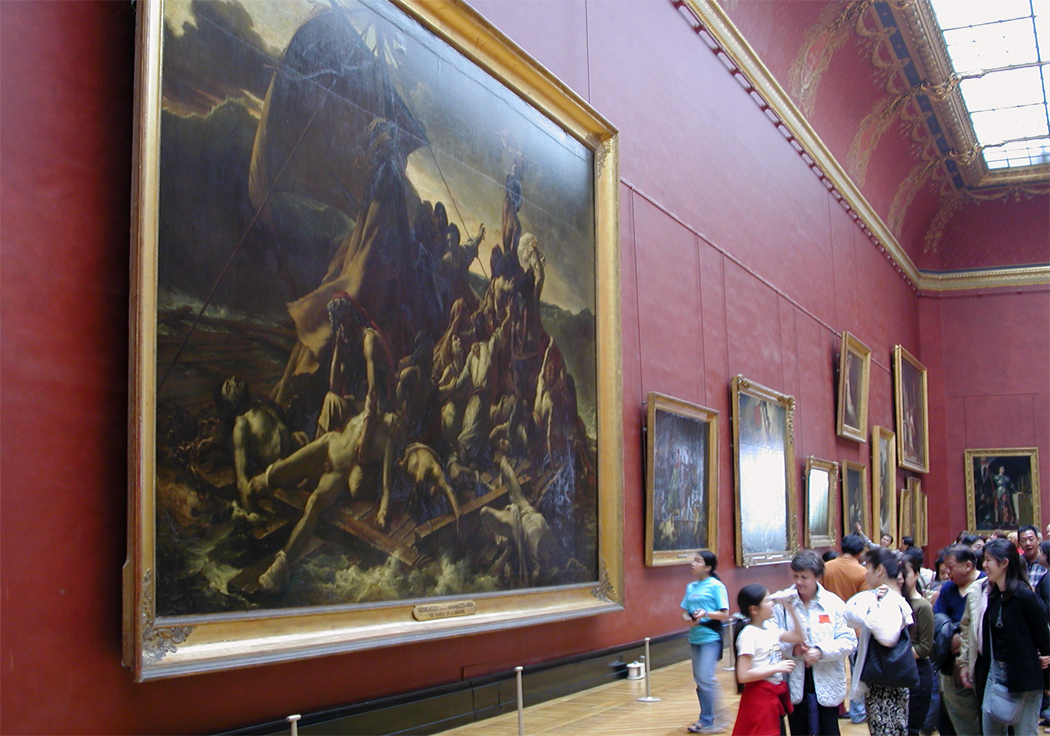
And so, we go to museums and galleries to get to know the art that is our cultural inheritance. Even today people travel across the world to see some of the world’s most famous art. The Grand Tour still exists, if only in ghost form, as a gap year or a summer abroad. My granddaughter had her high school summer in Italy. The traditions continue. Such travel affords an education that books just cannot give. 

In the 1960s, I accompanied my grandmother when she went back to the Old Country for the first time since she was five years old. We went to the village where she was born, Mosby, in southern Norway, and as part of that trip, I was sent on a (literal) Cook’s tour of Western Europe, taking in Germany, the Netherlands, Belgium, Luxembourg and France. I saw the Cologne cathedral, Notre Dame de Paris, Ste. Chapelle and the Louvre, among other things. Mostly, it made suburban New Jersey seem even more banal. 

Met; Guggenheim; Frick; Whitney; Cloisters; MoMA

But then, I tried to escape the Garden State as much as possible. I was lucky: I had my own Grand Tour just a few miles away. During my own high school years, living on the Jersey side of the George Washington Bridge, I spent as much time as I could in Manhattan, going to concerts and visiting all the museums: The Met, the Guggenheim, the Frick, the Whitney, the Cloisters, the Asia Society, even the long-gone Huntington Hartford Gallery of Modern Art on Columbus Circle. 

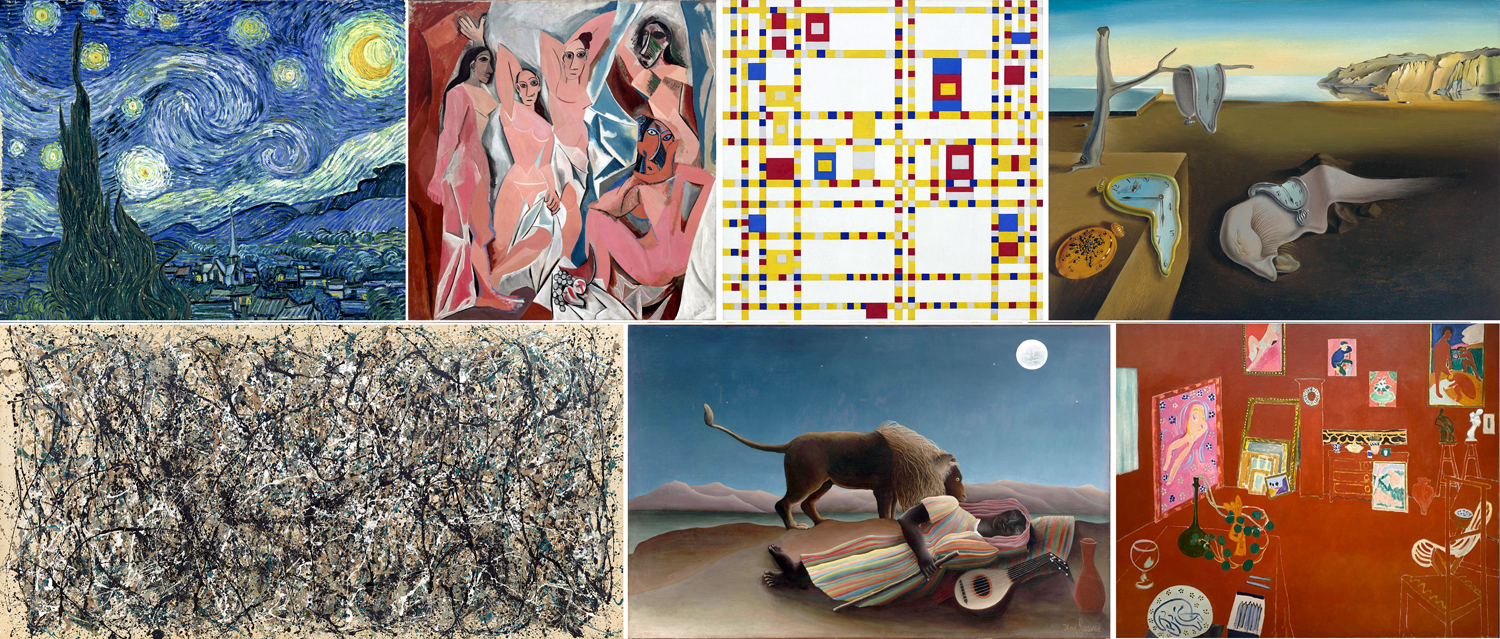
And most of all — the Museum of Modern Art, where I felt most at home. I came to know many famous paintings as old friends. Van Gogh’s Starry Night; Matisse’s L’Atelier Rouge; Picasso’s Demoiselles d’Avignon; Pollock’s One Number 31; Mondrian’s Broadway Boogie-Woogie; Henri Rousseau’s Sleeping Gypsy; Dali’s Persistence of Memory — all proper blue-chip Modern Art landmarks. 
After I went away to college, I frequently made the trip to Washington, D.C., to visit the National Gallery of Art, and later, the Hirschhorn and Corcoran. I ate up art like a starving man. It’s hardly surprising that I later made my career as an art critic. 

And working for the newspaper, I was sent around the country for major exhibits in Boston, New York, Chicago, LA, San Francisco, Seattle, Philadelphia. I was even sent to South Africa in 1989 to study the art scene there. And vacations brought me and my wife to France many times. Seeing as much as possible and finding troves of art in even small corners of the Continent. 
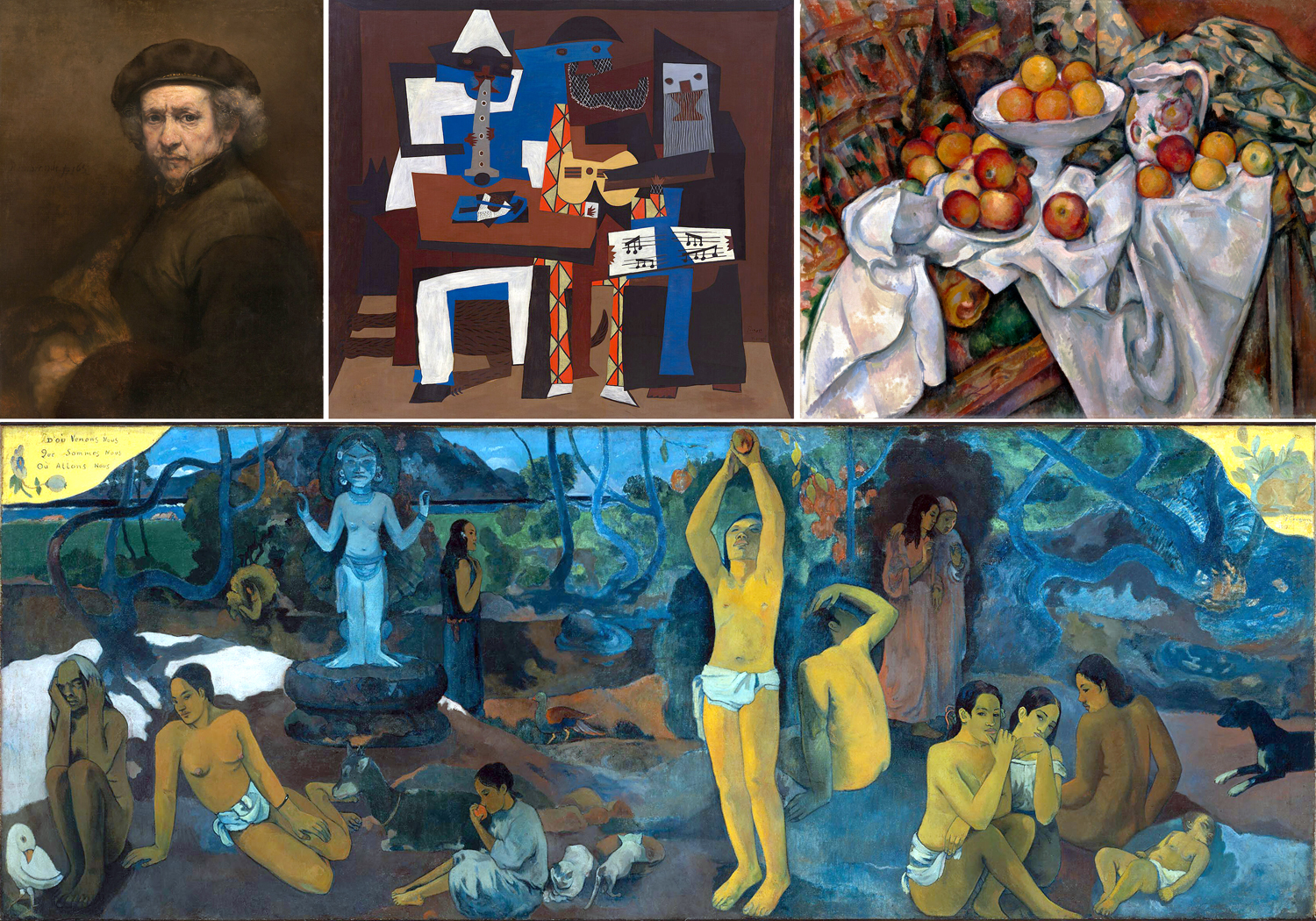
There have been dozens of important artworks I have been grateful to have known, not just in reproduction, but live, in front of my own eyes. My inner life is infinitely enriched by the experiences. There are many I could name, from Rembrandt’s self portrait in DC to Gauguin’s Where Do We Come From? What Art We? Where Are We Going? from Boston, but I need to pick out at least these six as central to my understanding of art, and of life. 
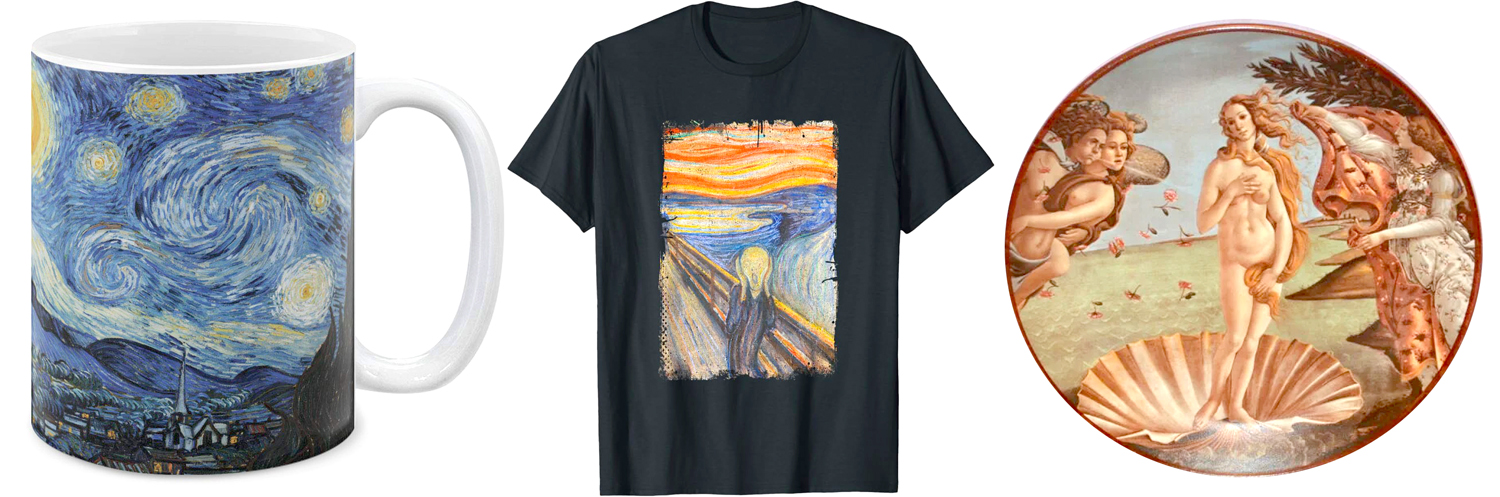
When you know works from reproduction, you cannot feel their size, cannot know the precise colors and pigments used, cannot grasp their tactile surfaces. Some of the most famous art in the world is known to most people by their reproduction on coffee mugs, T-shirts or commemorative plates. What you think is art is really just iconography — the nameable subject matter. The actuality, the physicality of the work is irrelevant in such cases. Seeing the original can then be a revelation. 

So here are the six works that have meant the most to me, that I am most grateful for having been able to know personally.
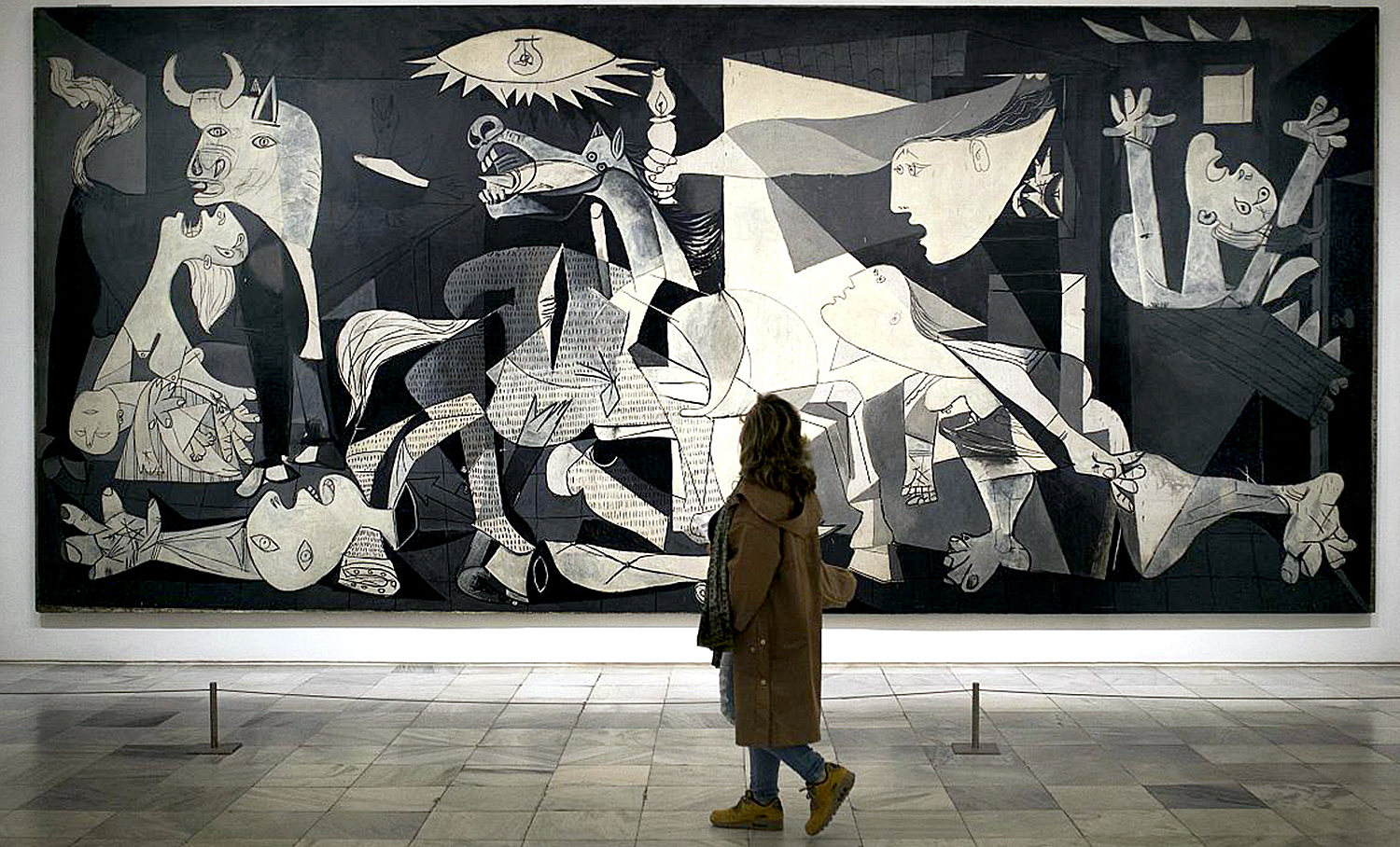
Picasso, Guernica — When I was growing up, this, perhaps the greatest painting of the 20th century, was sitting in the Museum of Modern Art in Manhattan, and I visited it often. As a teenager, I knew it was “important,” because I had seen it in books and magazines. But I thought of it as “mine,” because I knew it would always be there for me. Alas, in 1981, it was repatriated to Spain, where, I have to admit, it belongs. An old friend moved away. It was the first important artwork that I had what felt like a personal relationship with. 

Jackson Pollock, Blue Poles — In reverse, Blue Poles is a painting that came to New York for me. Pollock’s 16-foot drip painting from 1952 was auctioned off from a private collection in 1973 and sent to Australia. I loved many of the great Pollocks from MoMA and the Met, but thought I had lost the chance forever to see perhaps his most famous work. But a retrospective Pollock exhibit in 1998 at MoMA brought it back temporarily to the Big Apple. I got to see it there, where it was the jewel-lit highlight of the last gallery. 
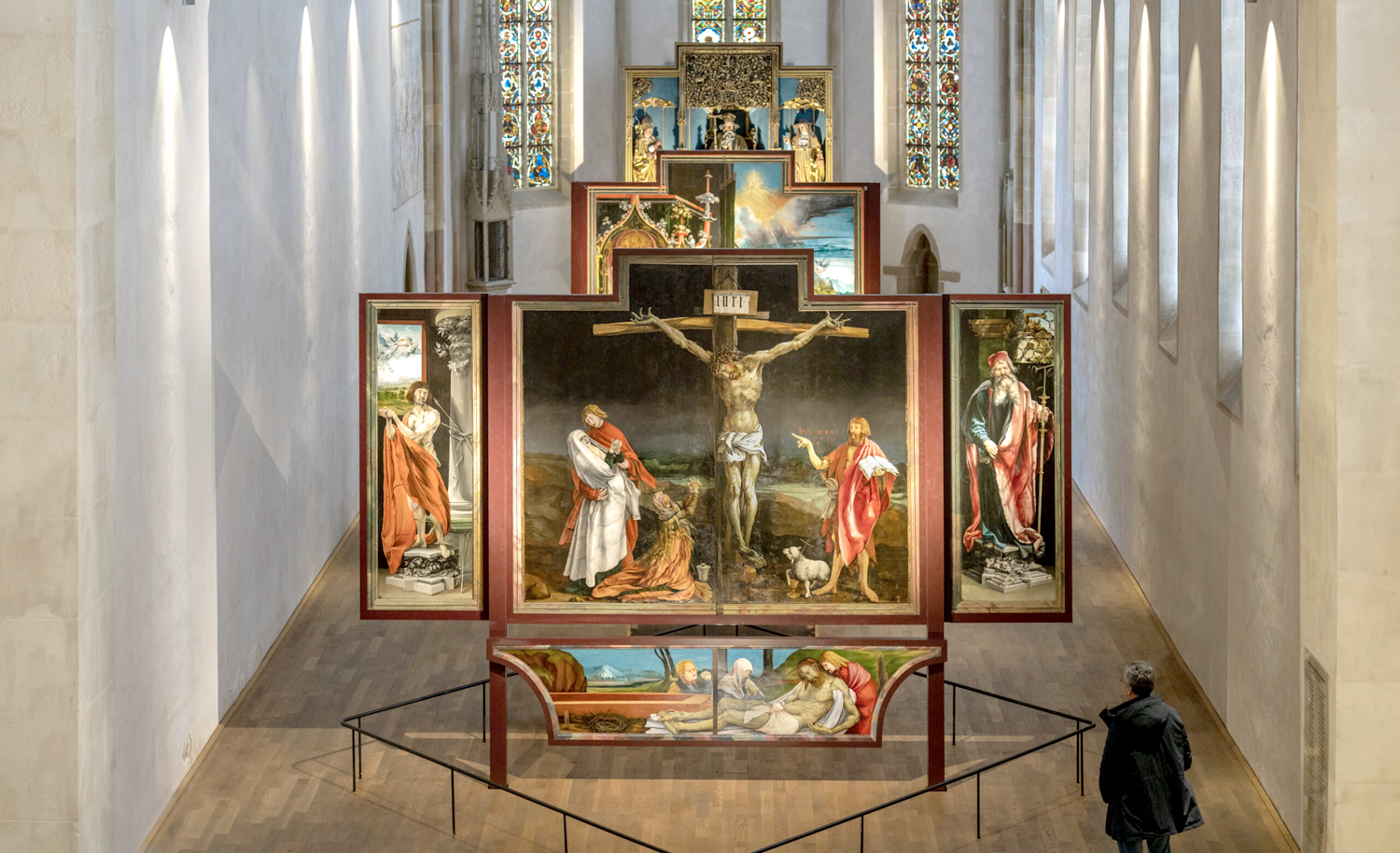
Grünewald, Isenheim Altarpiece —  The giant altarpiece comprises 10 paintings by Matthias Grünewald, including the pathos-laden crucifixion as its centerpiece, and a group of polychrome wood sculptures by Nikolaus Hagenauer, executed between 1512 and 1516. It sits in the Unterlinden Museum in Colmar, Alsace, France. The altarpiece was designed to be either closed or open, with various panels showing at different times in the Catholic calendar. I have no stake in the religious significance, I cannot help but be overwhelmed by the pathos and power of the work. 
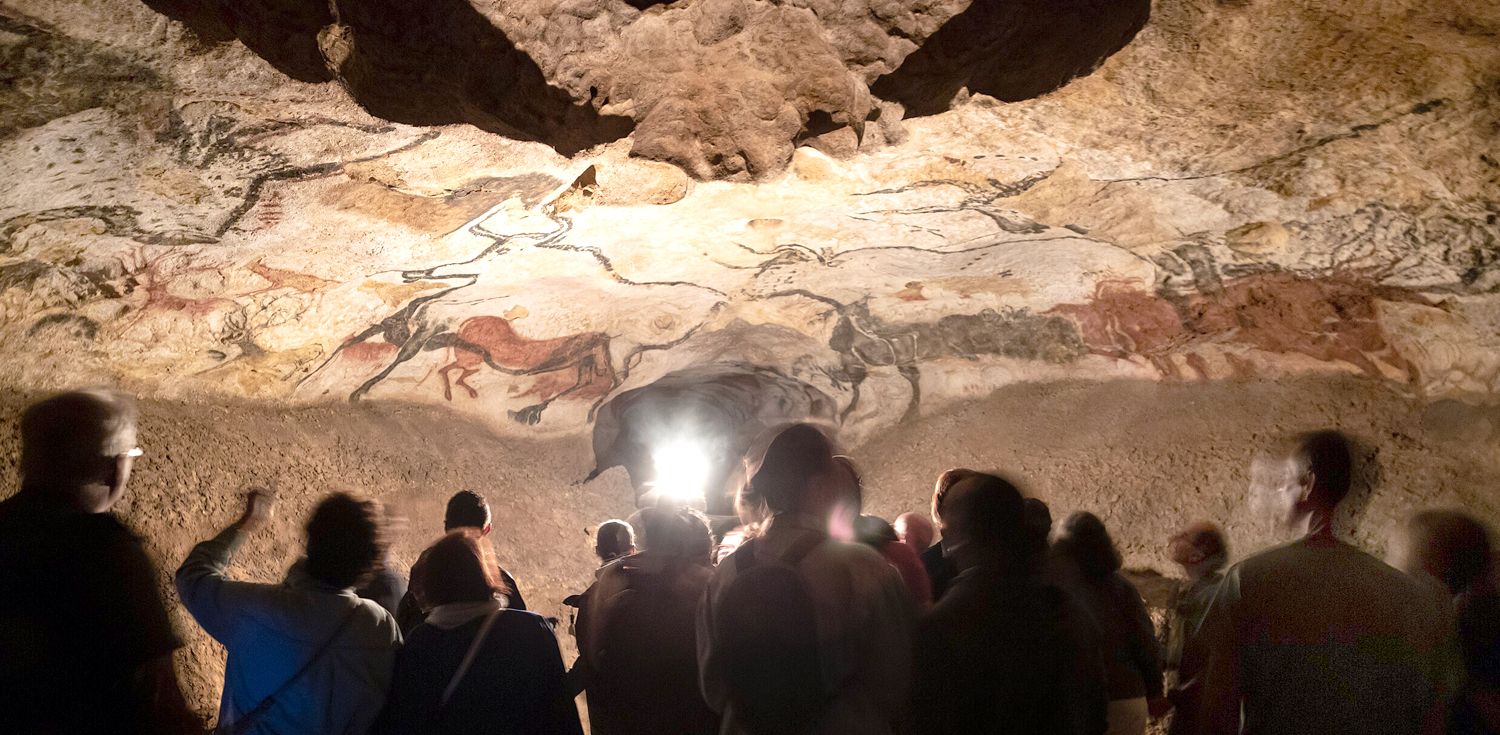
Lascaux II — The cave paintings at Lascaux, France, date from about 20,000 years ago. They were discovered in 1963 and include about 600 images of prehistoric animals. The caves have been closed since 1963 to protect them, but a copy has been made and open to the public. I never thought I would get to experience them, but I got to visit both the reproduced experience at Lascaux II, but also the genuine cave art at nearby Font-de-Gaume. Seeing the original art there threw my spine into a buzz of uncanny deep-time — a state not rational but limbic. 
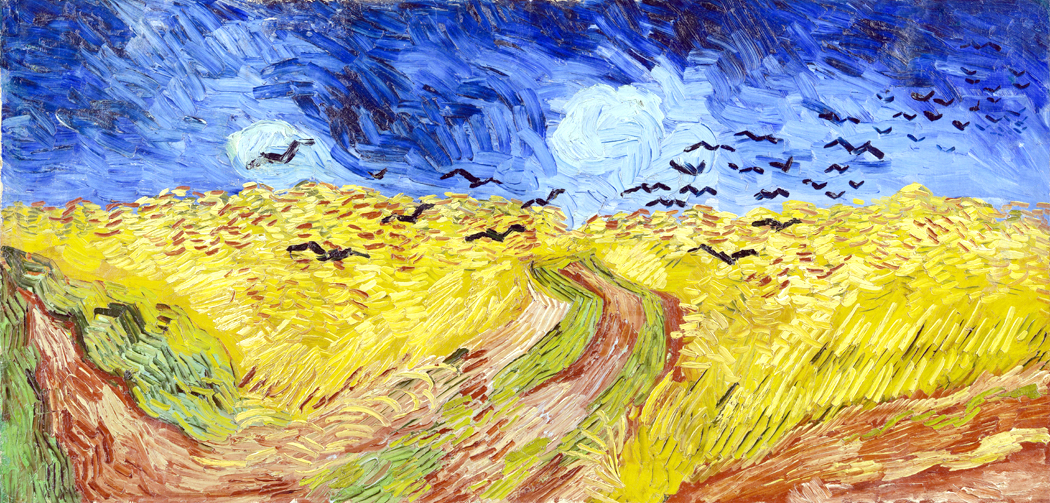
Van Gogh, Wheatfield with Crows — In 1999 the LA County Museum of Art mounted a 70-piece show of the paintings of Van Gogh from the Van Gogh Museum in Amsterdam, including many of his most famous works. My job got me sent to cover the exhibit and I was blown over by the works (also, astonished at how amateurish and awful many of his early works were: It took a while for Van Gogh to become Van Gogh). 
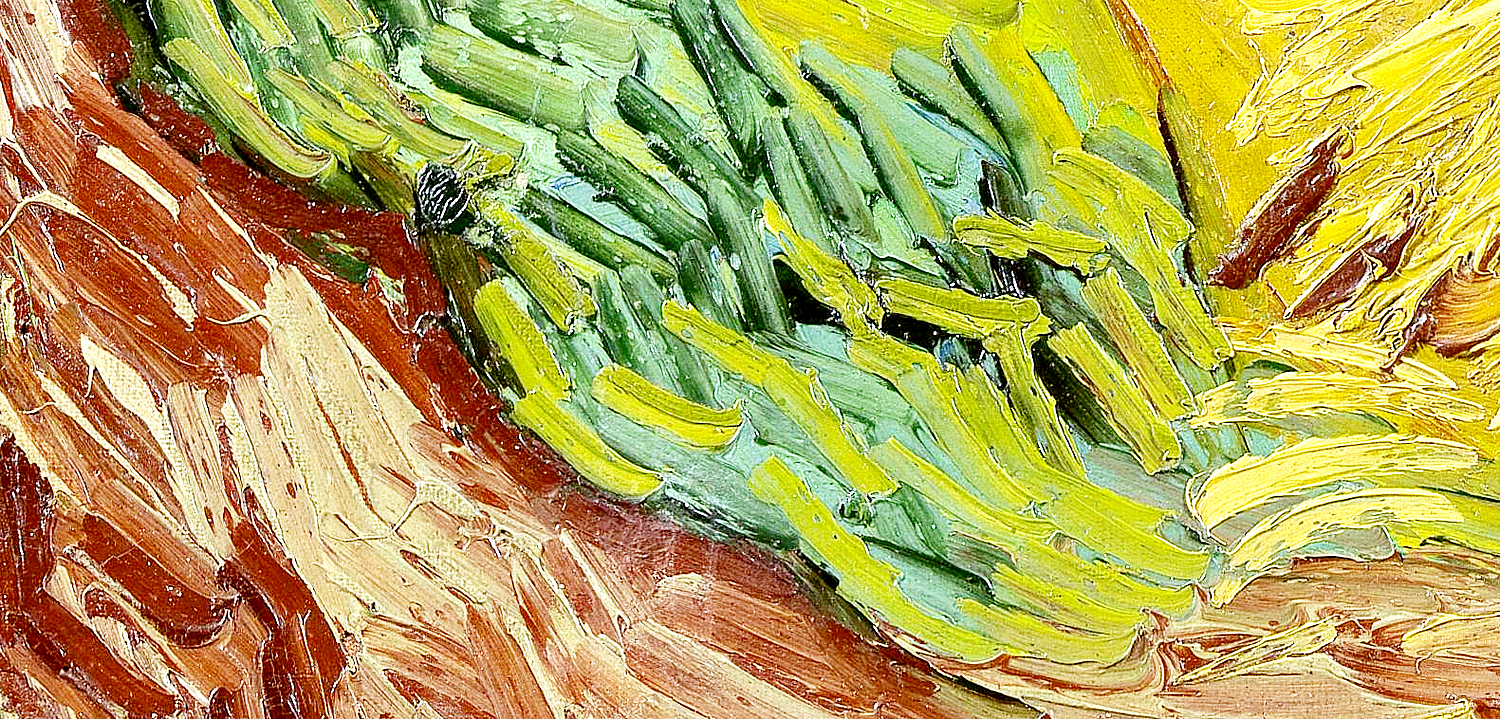
One of the last paintings in the last gallery was Wheatfield with Crows and up close you could see who wild and feverish the artist’s brushstrokes were, and what colors sat on his pallete, left largely unblended on the canvas. 
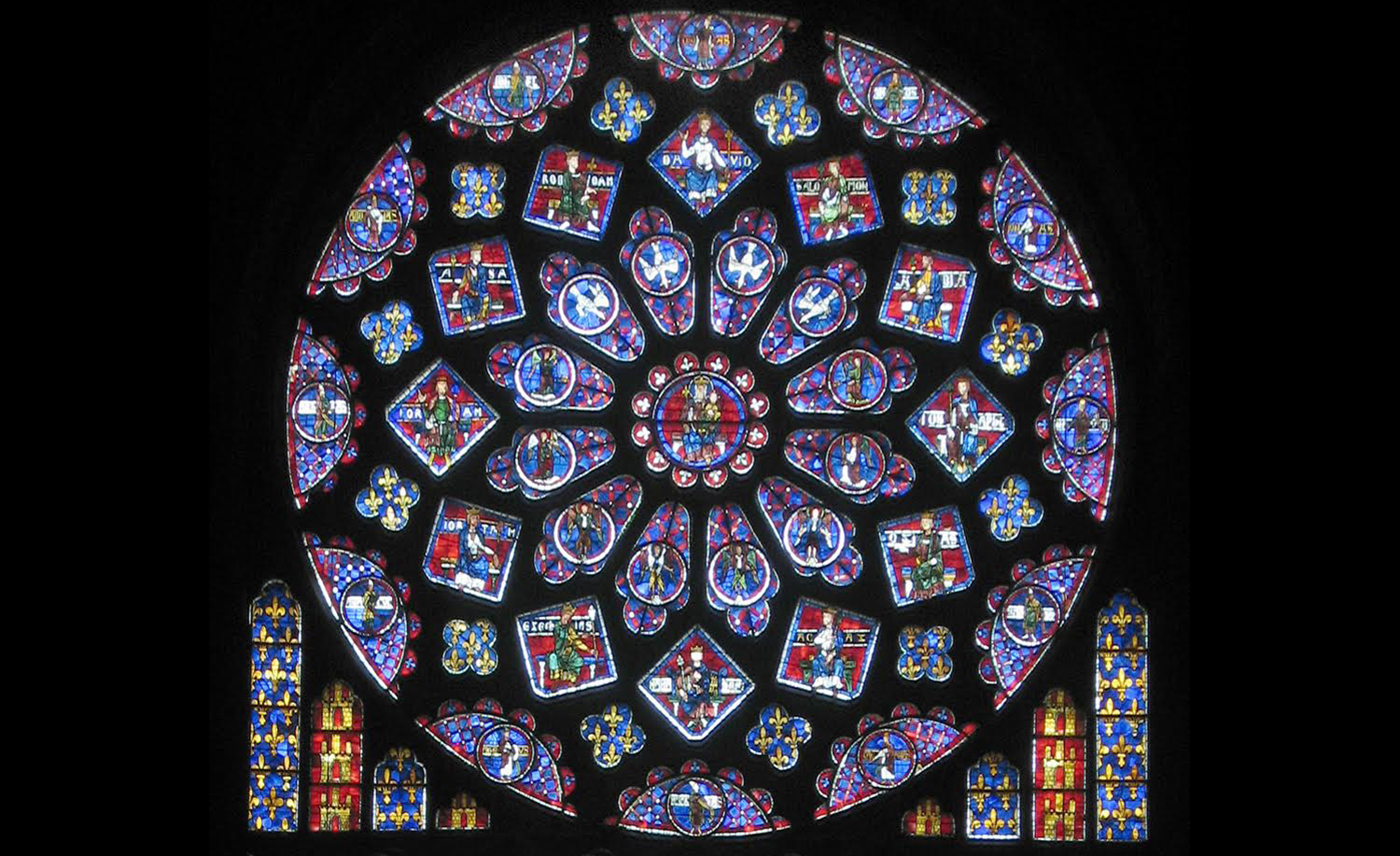
North Rose Window, Chartres Cathedral — I have been back to Chartres many times, and each visit, I spend a half hour, at least, sitting in the transept staring at the North Rose Window. It is, as I have said many times, the single most beautiful man-made creation I have ever seen. It is transcendent, a glowing object of meditation, whose shapes seem to move, to dance around the centerpoint. I am awe blasted. It almost makes up of all the misery, suffering and death human beings cause to each other. 

This is, of course, a limited selection. Before writing, I made a list of paintings, sculptures, plays, operas, architecture, poems, novels — I could just make a list of the types of art that would already be too long to include in a single blog entry. Narrowing down to visual arts still left me with too many things to write about — hence my squeezing it all into only six works. (It tried to make a conventional 5, but I already feel bad about only including six.) 
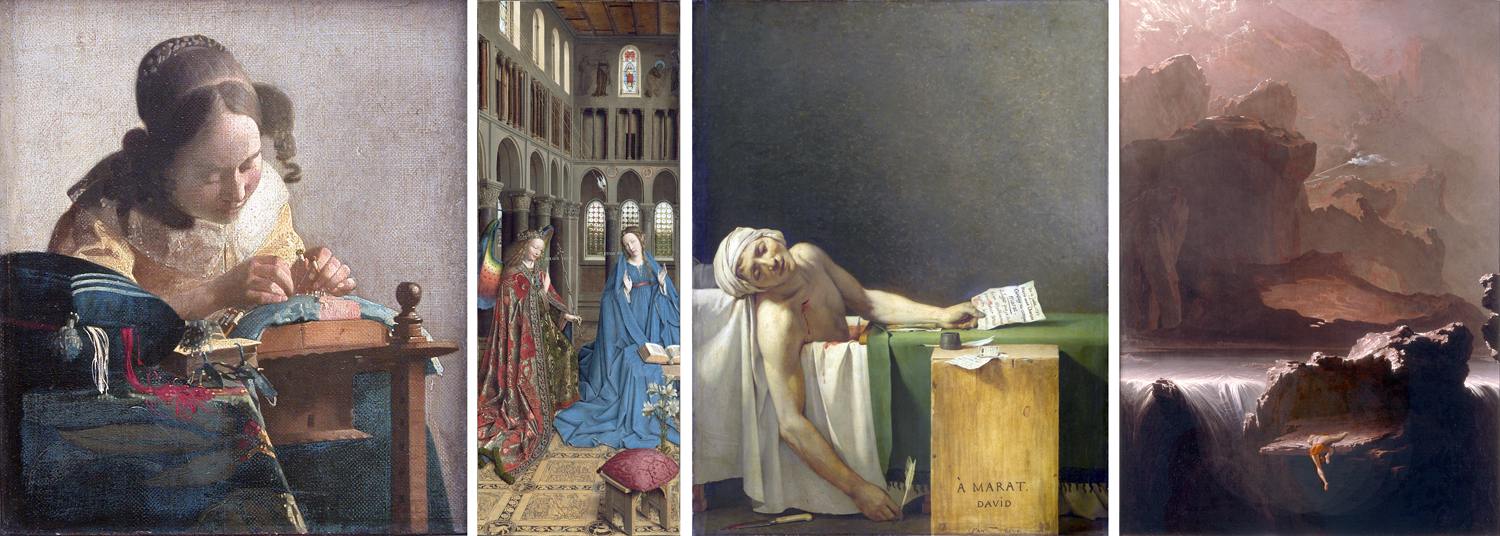
Seeing all this art and lamenting all that I never had a chance to see, only reinforced my sense that art is not just what makes us human, but how it makes us human. 

I was talking with my very Southern wife about how those brought up down here have a stronger connection to the land than us Yankees. Southerners have often lived on the same patch of land for generations and their sense of identity can course back through great-grandparents and beyond. Your sense of who you are includes the centuries before you were born. New Jersey never gave me that.

But I do have that same sense when looking at the paintings or hearing the music of the past. This all gave birth to me; it is who I am. We too often think of culture in terms of hoity-toity high culture. But really, culture is all the things that have accumulated over time to make the lives we now take for granted. 
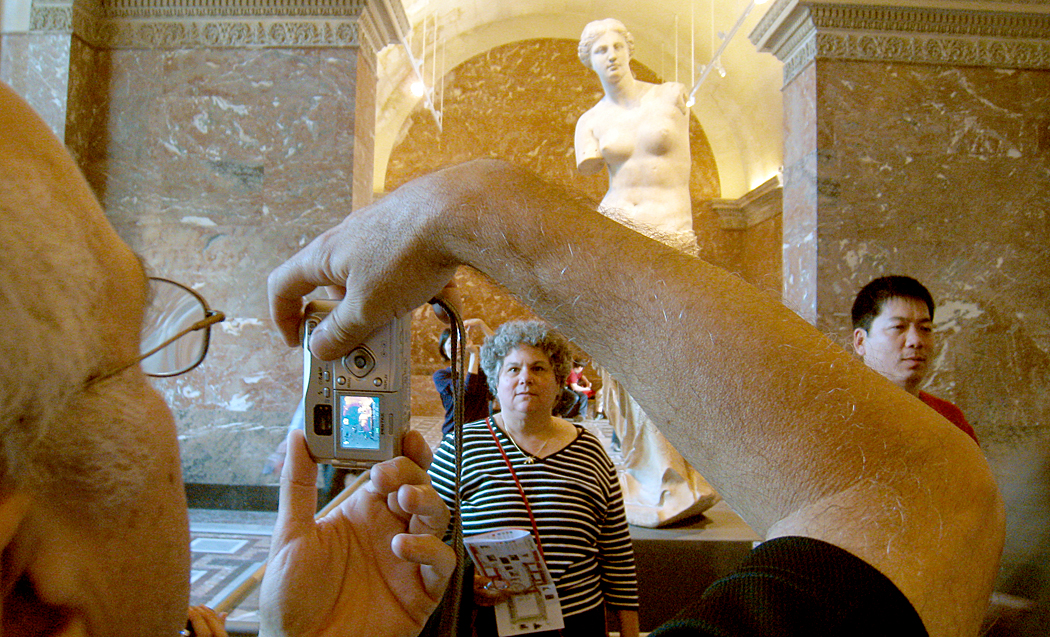
When I see or hear the so-called canonical works of Western culture, I have that sense of belonging to a long, continuous line. It speaks to me; it tells me who I am. 

Gustav Flaubert was said to have expressed “contempt for the bourgeoisie.” It is a sentiment I shared when growing up, as a bookish kid in a bookless family. Flaubert was himself a member of the middle class, and, alas, so am I. As much as I despised the suburban, middle-class New Jersey milieu in which I grew up, as I have aged, I have come to realize that it is this same middle class that allowed me to pursue my own interests. There was a bland tolerance inherent in mid-century suburbia that, while it watched Donna Reed and Bonanza, thought that college might be a good idea for its offspring — not knowing just what a subversive venture that education would turn out to be. 

As for me, even when I was in seven years old, I couldn’t wait to leave New Jersey and head off to college. As I entered second grade, I am famously (in the family) reputed to have asked, “does that mean I can go to college next year?”

My brother and I often ponder where we came from. Craig is an artist and I am a writer. Nobody else in our extended family of aunts, uncles, cousins, grandparents, in-laws or anyone else, had the slightest interest in art, literature of other intellectual things. The closest my mother came was daubing a few paint-by-numbers canvases. The primary reading matter in the house was the Reader’s Digest nested on top of the toilet tank. When I mentioned classical music, my uncle asked if I meant, “like Montovani?” When my high-school buddies were listening to Chubby Checker and Bobby Vinton, I was listening to Stravinsky and Bach. Where this taste for the high-brow came from remains a mystery, but it is deeply buried. 

There was early on a hunger for things that seemed deeper, truer, more complex than what I saw on TV or heard on AM radio. And I found that hunger fed by art and literature. In eighth grade, we had been required to read Shakespeare’s Julius Caesar and to memorize a few lines (“you blocks, you stone, you worse than senseless things. Knew ye not Pompey? Many a time and oft…” etc.) But the mere reading seemed archaic and incomprehensible. But late in the year, 1962, we took a class trip to Princeton, N.J. to the McCarter Theatre, where we watched a performance of the play, and it all then made sense. I loved it. 

But Julius Caesar is, after all, a fairly easy play to get through. Even the less inclined in class found it entertaining. 

The next season, though, on another class trip to the McCarter, we watched Long Day’s Journey Into Night, a rather tougher nut to crack. And I felt I had found a home. Eugene O’Neill was the kind of thing that spoke to me: To a green teen, it felt grown up, like the real thing I longed for. 

Looking back, I can see I was just a kid and had a somewhat limited understanding of what it actually meant to be grown up. By high school, I had subscriptions to the Evergreen Review and Paul Krassner’s The Realist. I read Kerouac and Ginsberg, and was a member of the Literary Guild — an off-brand Book of the Month Club — where I bought and read things like Jean-Paul Sartre’s autobiography, The Words

I look back now and remember Last Exit to Brooklyn and The Hundred Dollar Misunderstanding, and boy oh boy, what I misunderstood as a pimply-faced adolescent. I reread Saul Bellow’s Herzog again last year and was surprised to discover how funny the book is. When I read it in high school, I only knew it was a book that adults read, and so I dove in. That it was a comedy complete passed me by.

Art, music and literature: I knew — or felt in my bones — that this was the real stuff. All the quotidian was mere distraction. I was truly lucky: I lived only a short bus ride from Manhattan and could easily get into the city to visit museums, bookstores and concert halls. New York was real; New Jersey was boring. And what I found in the city turned my life.

In 1966, I heard Russian pianist Emil Gilels at the Brooklyn Academy of Music. He played, among other things, the Liszt B-minor sonata. It is the first of many concerts and recitals that made in imprint on my life. I was there with my high-school girlfriend, who later became a professional bassoonist (played with both Philip Glass and PDQ Bach). We went to dozens of concerts, mostly in New York, and in Carnegie Hall. 

Speaking of Peter Schickele, my girlfriend and I were at the first PDQ Bach concert in Carnegie Hall, and after that, I was practically a PDQ groupie and managed to get to one of his concerts annually for at least 25 years, either in New York or when he took his circus on the road. 

I also had the Museum of Modern Art to go to, and the Metropolitan, the Guggenheim, the Whitney, the Frick Collection, and what was then the Huntington Hartford Gallery of Modern Art on Columbus Circle. 

The permanent collections in all these institutions became my dear friends. But there were changing exhibitions, too. The first serious art show I went to that altered the course of my life was also in 1966, at MoMA.   

It was a curated show, intended to make a case. It wasn’t just a collection of paintings, but a curatorial argument, intended to persuade and make us think of something in a new way. It attempted to prove that English painter Joseph Mallord William Turner was a precursor to the French Impressionists and Modernism, that his soft-focus paintings and, especially, his washy watercolor sketches, were somehow a step forward in the history of art, and led to the breakthrough we all know and love with Monet, Renoir and Pissarro. (It was an age that still believed in art history as a grand and natural procession from then to us, the enlightened). 

It was called “Turner: Imagination and Reality” and ran from March through May of that year. It made the claim that “During the last 20 years of his life, Turner developed a style of extraordinary originality. He evolved a new order of art, which was virtually unparalleled until the 20th century.” According to the curators, Turner was a harbinger of American Abstract Expressionists. Several of the images on view were so inchoate as to be purely abstract, like his Pink Sky, which might well be an early experiment by Mark Rothko, nothing more than strata of color spilled across the paper. 

In the catalog to the show, art historian and curator Lawrence Gowing wrote, “These pictures from the last 20 years of Turner’s life, reveal potentialities in painting that did not reappear until our time. They tell us something about the inner nature of a whole pictorial tradition, of which recent American painting is an integral part. Turner not only saw the world as light and color; he isolated an intrinsic quality of painting and revealed that it could be self-sufficient, an independent imaginative function.”

I was transfixed and went back to the exhibit a second time, convinced I was privy to a secret about art that few others knew; only those who had seen this show really understood what a revolutionary Turner had been. Please remember, again, I was a teenager at the time. 

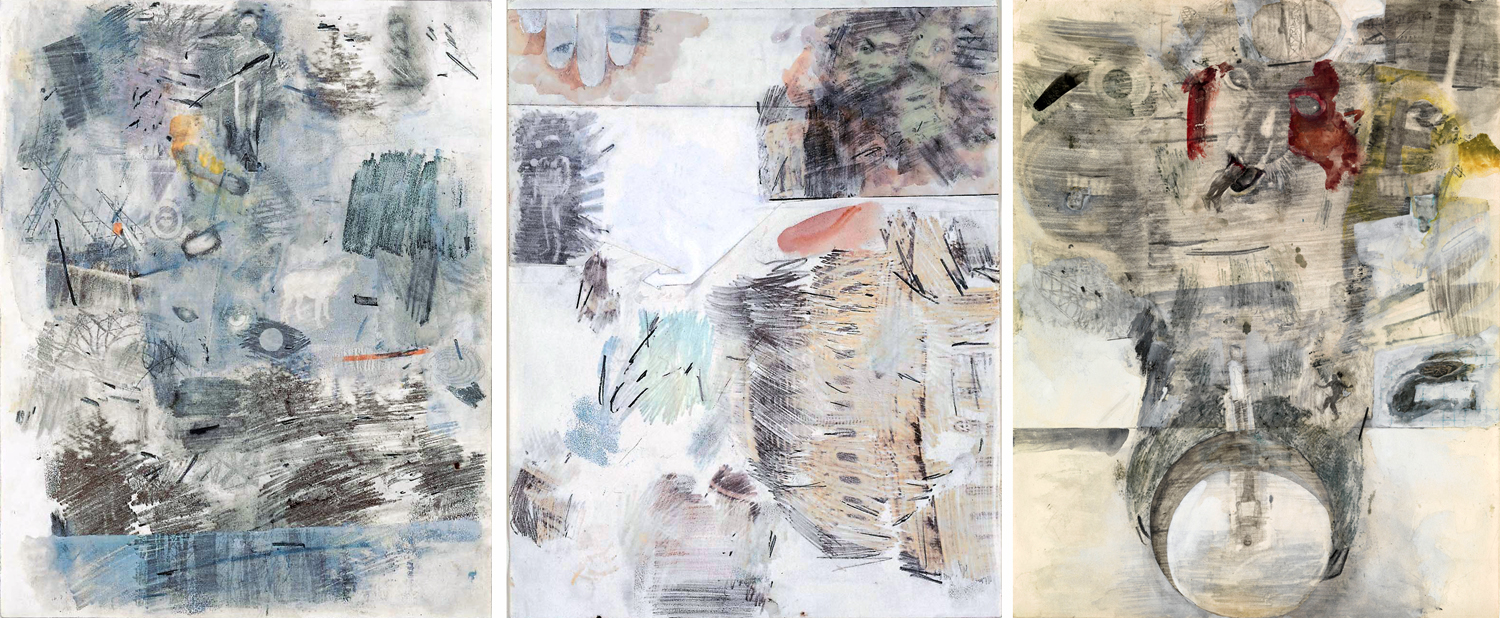
In tandem with the Turner show was a smaller exhibit of Robert Rauschenberg’s “Illustrations for Dante’s Inferno,” a set of 34 drawings and ink transfers, one drawing per canto in Dante’s poem. It is difficult to recover the sense of elation and immersion a teenager in love with art could feel in the presence of something so new and so exciting. 

When I did get to leave New Jersey and go to Guilford College in Greensboro, N.C., I was in a candy shop: I signed up for Greek, Shakespeare, esthetics, astronomy — I wanted it all. 

There was also a film series, carefully programmed to expose us to the best in cinema. We saw La Strada, Seven Samurai, Seventh Seal, Jules and Jim, Last Year at Marienbad, Hiroshima, Mon Amour, Andalusian Dog, and even Birth of a Nation, although the student projectionist ran it without the sound on, calculating that it was a “silent film,” and not considering their was a musical soundtrack to accompany it. The racism was hard to swallow, but it was even worse — with no music, it seemed to last forever. 

With my new college girlfriend, we went to the downtown theater to see Antonioni’s Blow Up. That sense of being on the edge of art made being young  

All those films, added on to the reading material, and the concerts we had in the college auditorium, felt like what I had waited my whole life to gain access to. I fell in love with Chaucer; I read tons of Shelley — even stuff no one but a doctoral candidate bothers with. There was Classical literature in translation. There were three semesters of Comparative Arts. I minored in music composition (although, our stodgy professor der musik, Carl Baumbach, really only taught us figured bass and to harmonize chorales — and avoid parallel fifths. He could barely get himself to listen to anything as modern as Debussy.) 

I was a well, down which you could toss everything and never fill it up.

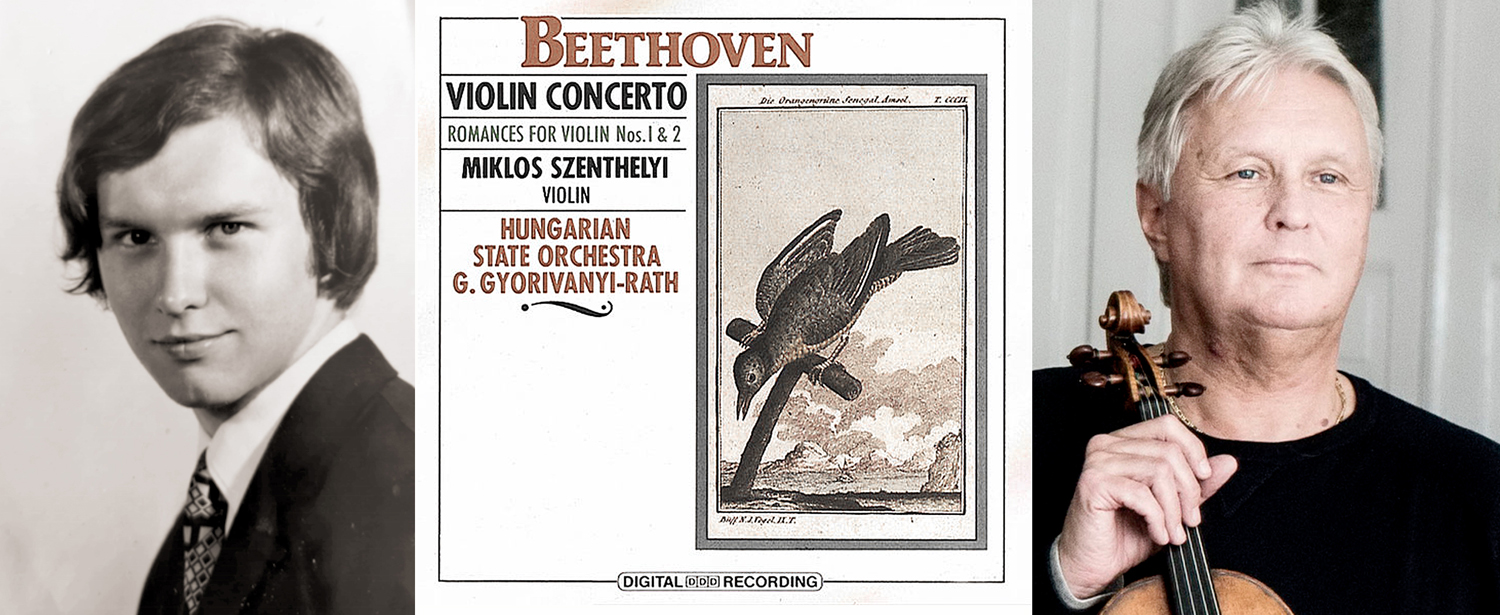
After graduation, I continued with it all, without the need to worry about grades or term papers. Every summer, there was the Eastern Music Festival, for which I acted as unofficial photographer. I sat in on master classes, went to concerts. A few were so memorable, I still keep them in my psychic storehouse: Walter Trampler giving a master class; Miklos Szenthelyi playing the Bartok First Violin Concerto — which seemed at the time the most beautiful thing I had ever heard. Szenthelyi was a young Hungarian, virtually the same age as me, and his posture on stage was almost Prussian, his tone penetrating and perfect. (I still own several of his recordings. He is now a white-haired Old Master in Budapest. A half century has intervened.)

I also first heard Yo-Yo Ma. He must still have been a teenager. He performed both Haydn cello concertos in High Point, N.C., one before intermission and one just after. Yo-Yo has been as much a constant in my life as Peter Schickele. What a pair.

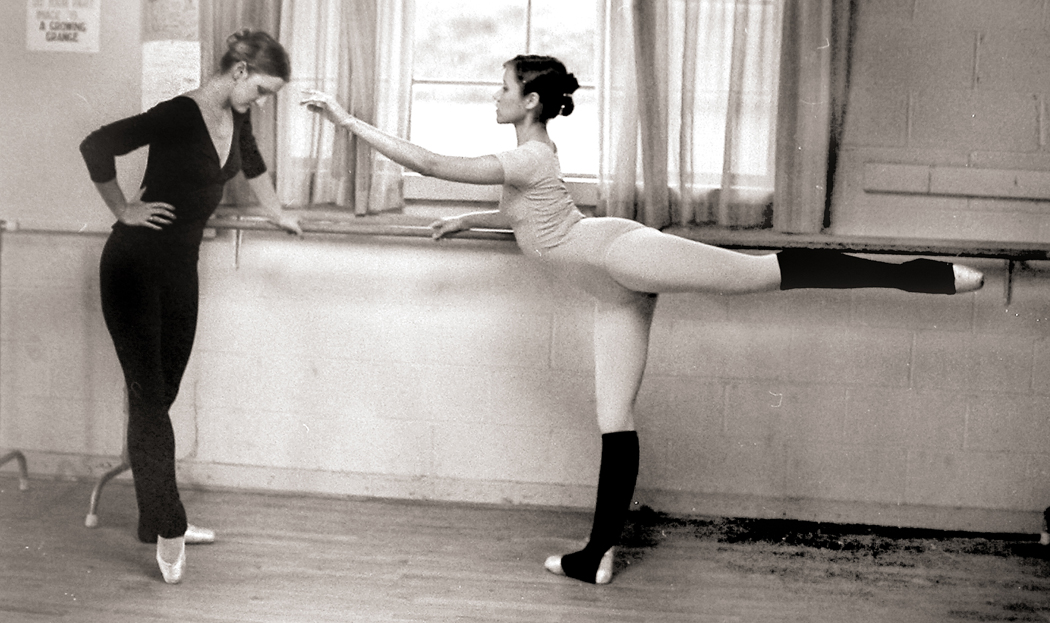
I also photographed the Greensboro Civic Ballet. I wish I had paid more attention to the dance in the 1970s, but my plate was otherwise full. Many years later, I came to love dance more than any other artform. (After my late wife and I traveled to Alaska, she asked if I might want to live there. Without trying to be funny, I said reflexively, “No. Not enough dance.” It was the natural answer.)

There have been hundreds of concerts and recitals, scores of theater and dance performances, bookshelves still filled with thousands of books and CDs, and more museum and gallery shows than I can count. 

I want to write about a few of them next time. 

Not every life-changing event happens on the road to Damascus: a blinding light, knocked to the ground, twitching galvanically. The death, the religious conversion, the falling in love. But there are smaller turnings also, often dozens of them in a life, perhaps passed unnoticed at the time, but nudging our lives on a slightly new heading. “As the twig is bent, so is the tree inclined.” The butterfly in Brazil. These are also life-changing. 

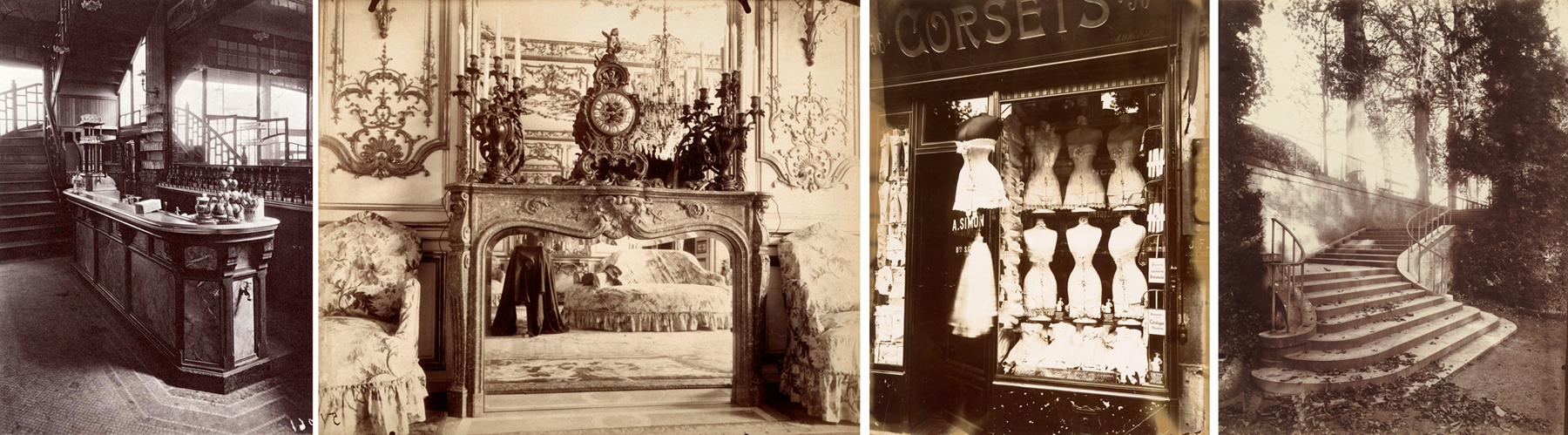
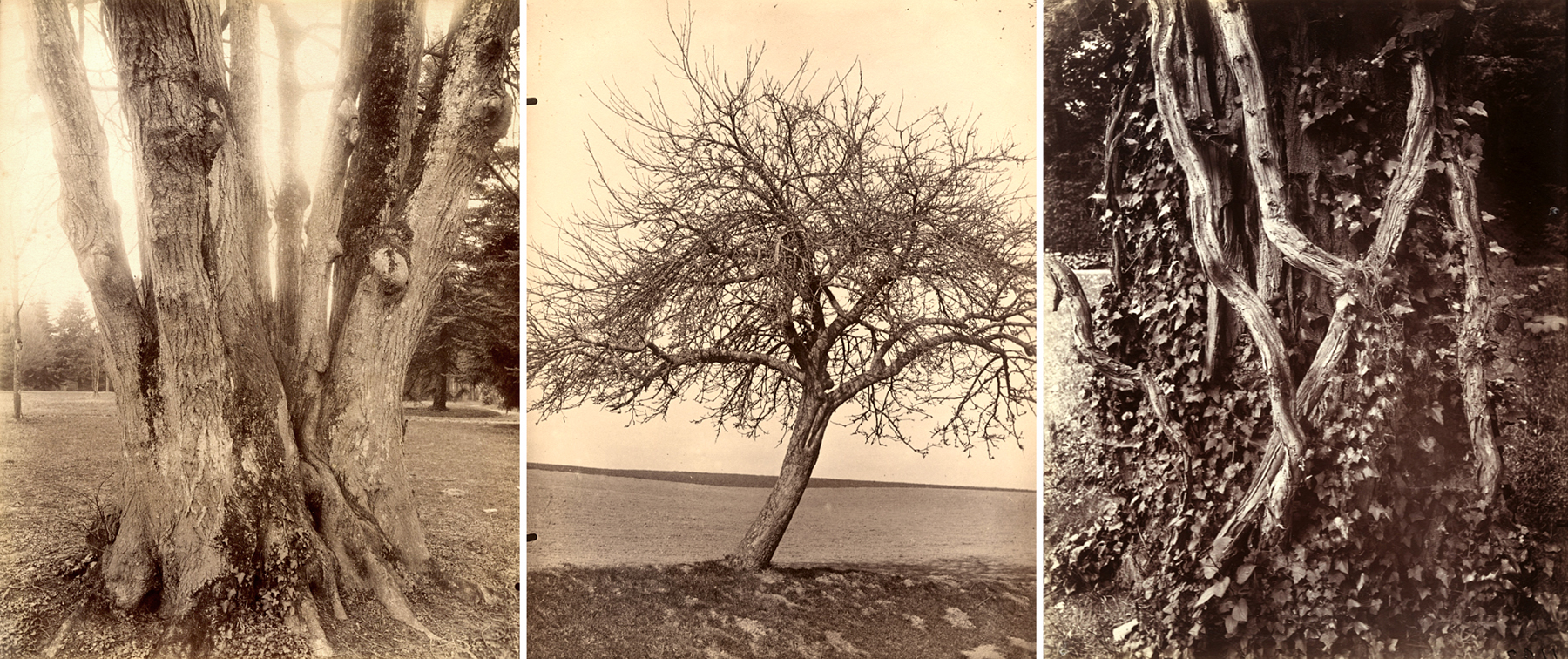
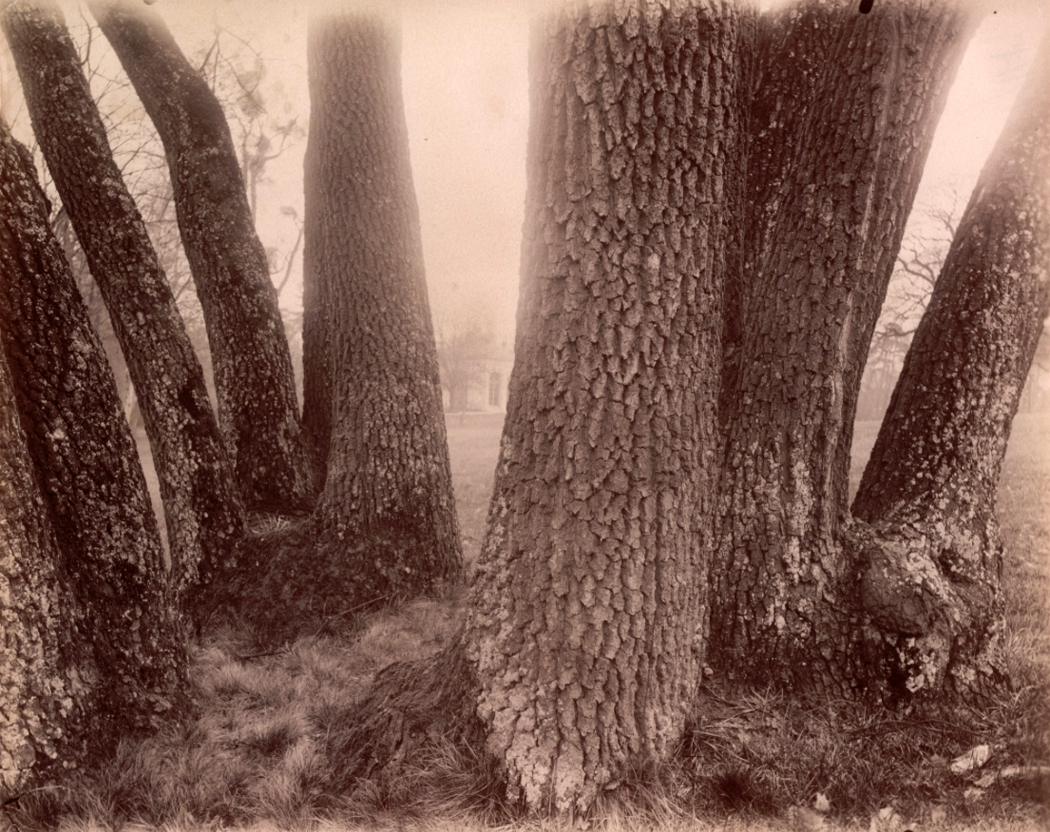
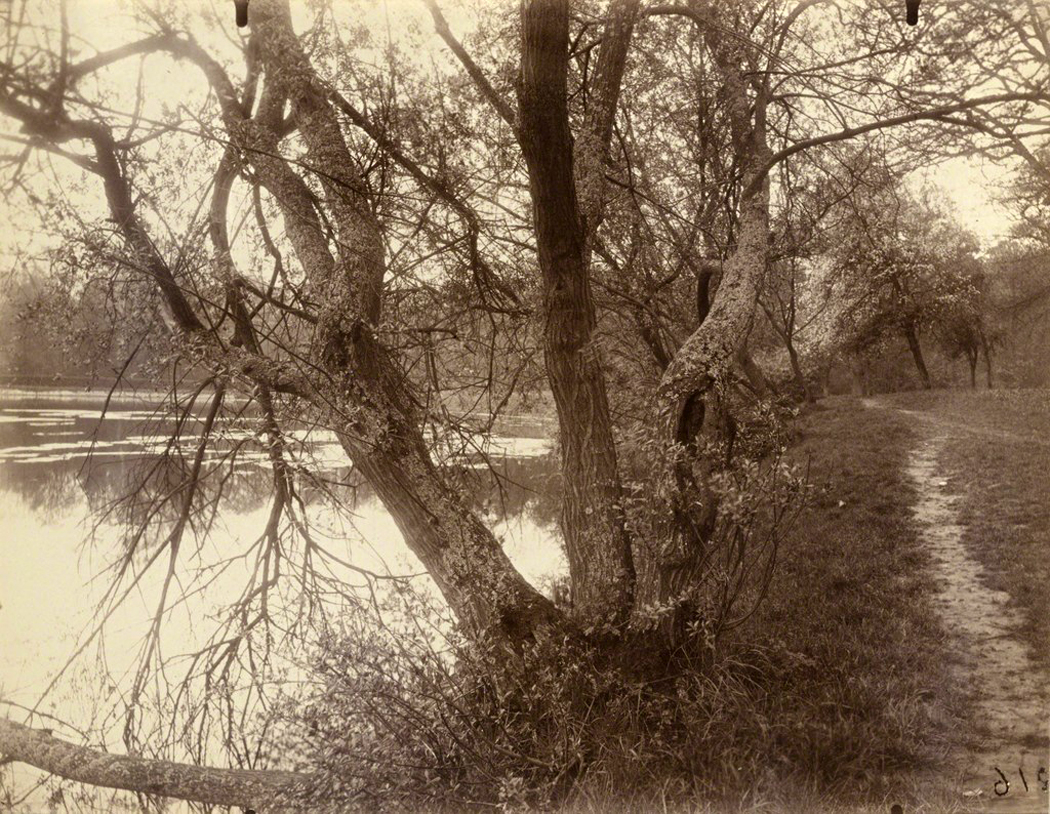
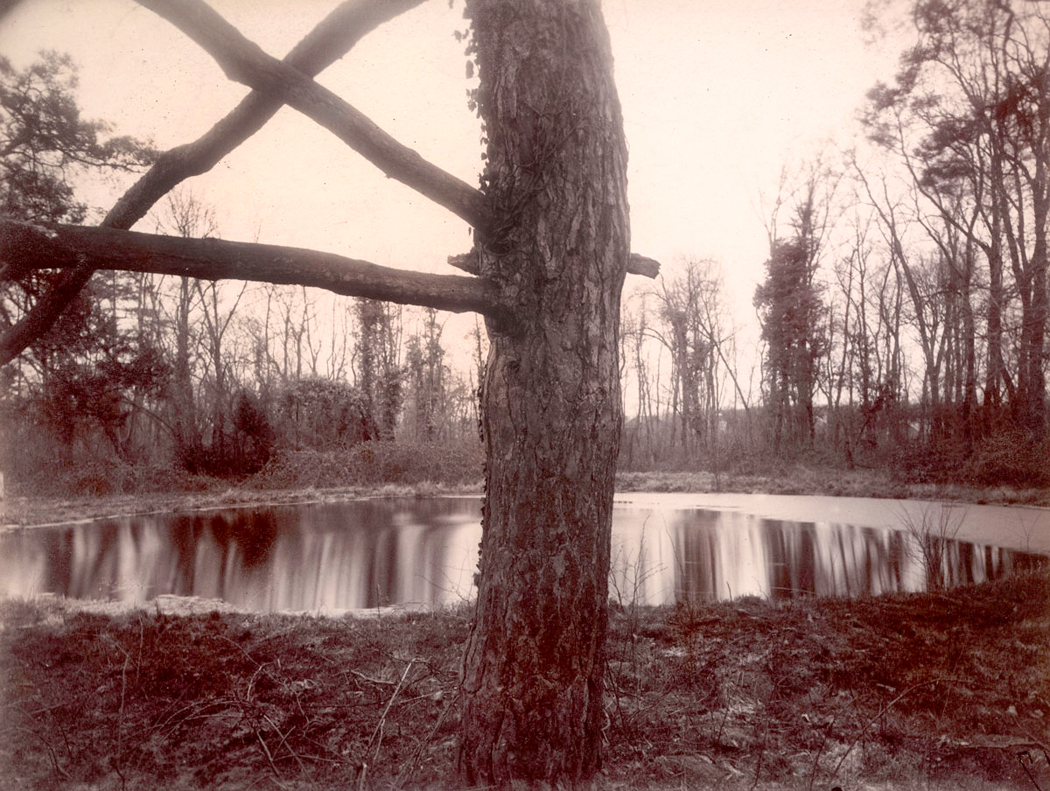
In the summer of 1972, the Museum of Modern Art in New York mounted a small exhibition in its downstairs gallery, behind glass doors. “Atget’s Trees” put together 50 photographs by the French artist Jean-Eugène-Auguste Atget (1857-1927). Lined up on the wall in a darkened space, with brilliant track lighting that made each photograph gleam like a jewel, the photographs made my heart jump and my eyes happy. (That kind of lighting is now largely verboten in museums, as they adhere to a strict limit of only so much illumination to protect sensitive materials from light damage. Silver-image black and white photographs are largely immune to such light damage, so the restriction on lighting seems shortsighted and misguided; it dulls the brilliance.)

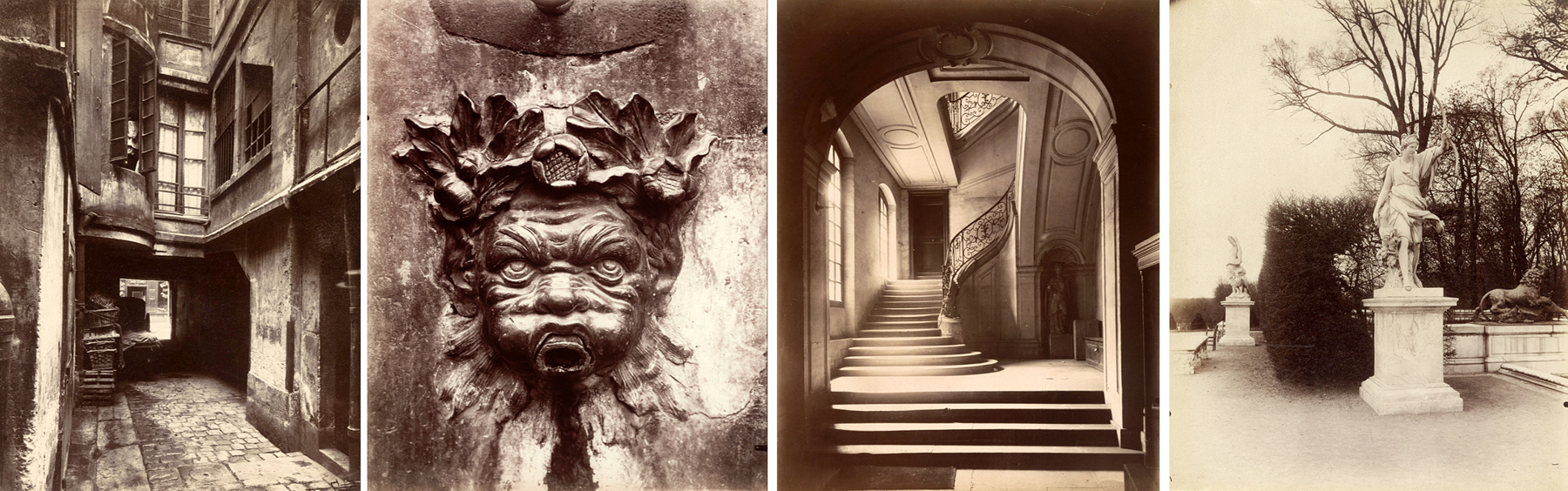
Atget (At-zhay) was an odd little man who taught himself photography in order to document art, architecture and decor that was disappearing as Paris and France entered the modern world. Originally, beginning in 1890, his work was meant for painters, architects and stage designers to provide models for their work, and he sold his pictures to them. But he seems to have become more and more interested in the details of his city for their own sake. He took thousands, maybe tens of thousands of negatives. Many were sold to various institutions interested in historic preservation, such as the Bibliothèque Historique de la Ville de Paris. 

In 1925, he met American photographer Berenice Abbott, who began buying his photographs and collecting negatives. In 1968, she sold her collection to MOMA, from which the “Atget: Trees” show was developed. 

The majority of Atget’s subjects were buildings, statues, door knockers, gardens and street scenes. No detail was too humble for his attention. There are photographs of doors, photos of stairways, photos of balconies and railings, of fireplaces, of courtyards and alleyways. His curiosity was omnivorous and ravenous. 

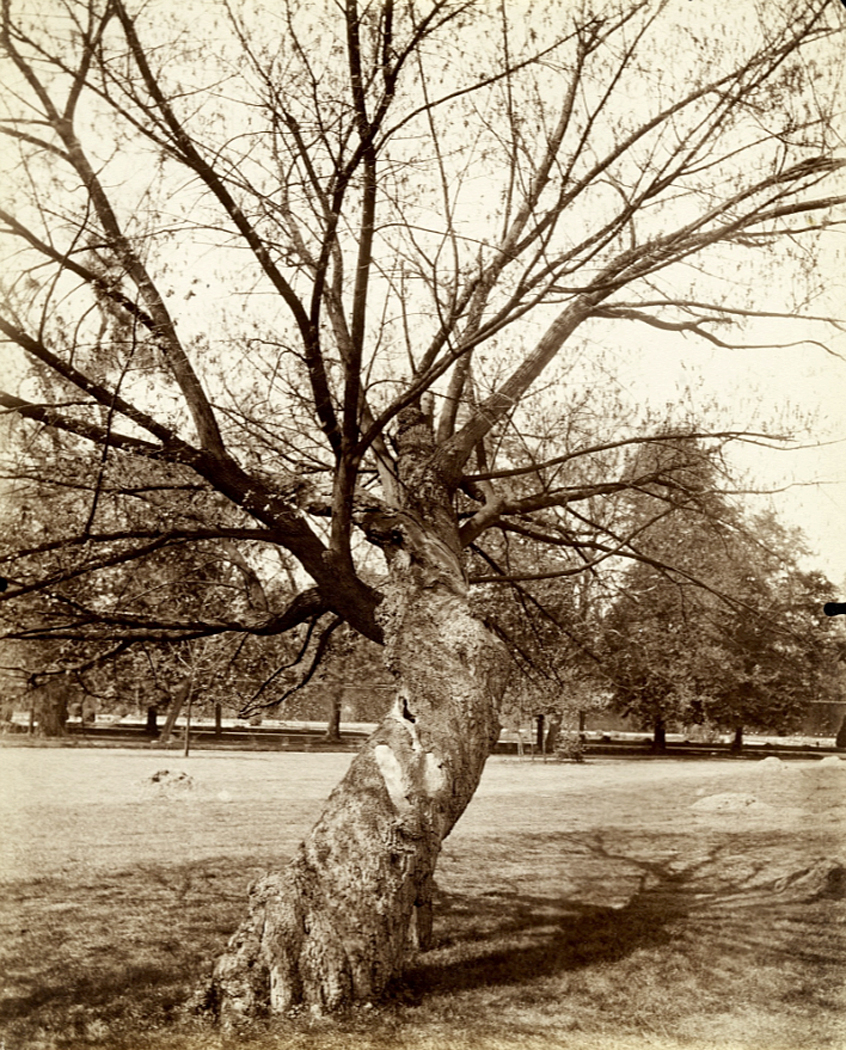
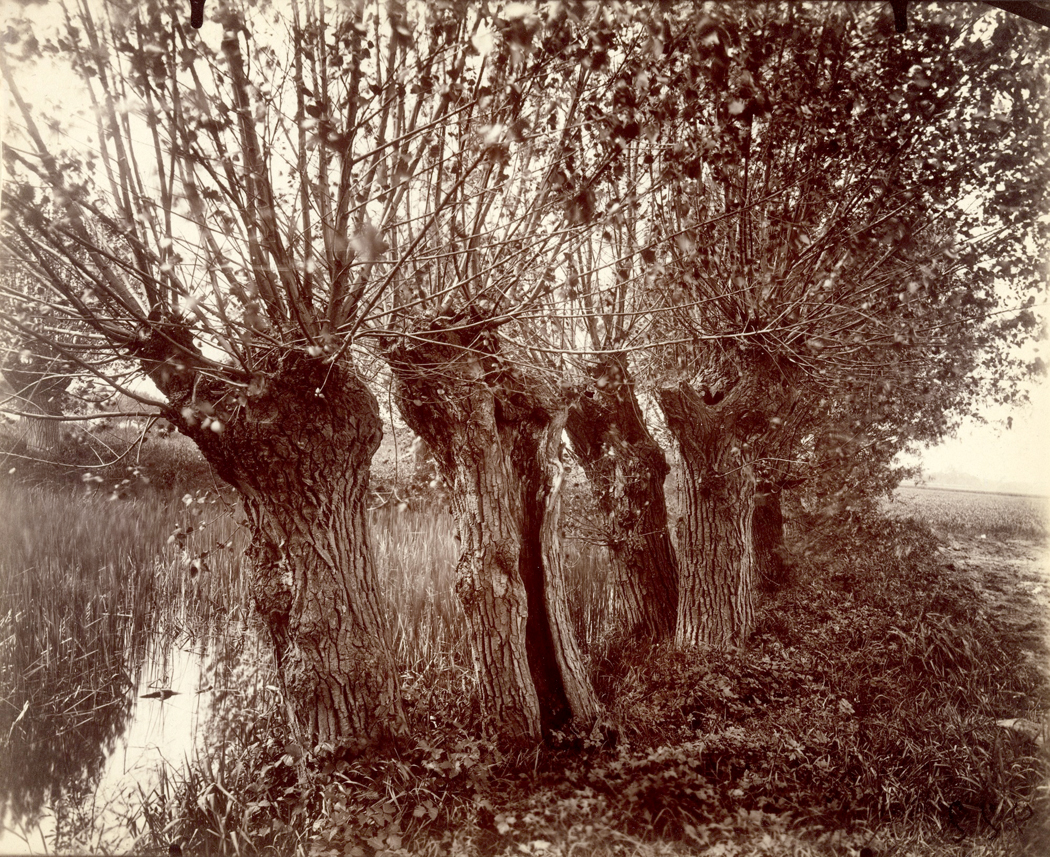
But through all, there was one subject he came back to over and over: trees. Most were in parks, like Saint-Cloud or Sceaux; some were at Versailles; others simply out in the countryside. He seems especially taken with ragged bark and gnarly roots. Often, he has photographed the same tree over and over, from very slightly different angles, or in different seasons. There is something sensuous in the growth and surface of trees that excited his artistic libido. 

Atget’s equipment and technique were already antique when he began, using an old bellows camera and large negatives, printing them on albumen paper and toning them with gold chloride. This gave his images a sheen (from the egg white) and rich, chocolatey tone (from the gold) that, in the right light, makes them jump from the frame with gem-like luster. 

And there I was, in 1972, ripe for the message they were giving me. 

You have to remember that 50 years ago, the art world — and especially the world of photography — was deeply buried in a type of snooty puritanism. We were taught you never “crop” your images, but framed them precisely in the viewfinder. Anything else was “sloppy” and perverted the natural uses of the camera. You must used archival paper and processing. Frames must be neutral, matting must be white or ivory.

And most of all, you were made aware that a photograph was all about photography. Art about art. Subject matter hardly mattered; it merely provided an armature on which to make your statement about the nature of photography and art. 

This was the art world the late Tom Wolfe railed against in his book, The Painted Word, where the deacons of art criticism slapped their hands down on a kind of outstretched bible of certainty: A painting must be flat, it must not mix genres, it must investigate the possibilities of paint and never, ever “illustrate” a story or event. Hellfire and brimstone of a different sect.  

This was the heyday of Ansel Adams and his Zone System of photographic exposure and development, to carefully control the results, which were by necessity “previsualized,” i.e., you were to know before you snapped the shutter, exactly what the end result would be, including its printed size and what sort of paper you would print it on. God, it was constricting. What a constipated way of approaching art. 

And here was Atget before my eyes, messy, uncoordinated, obsessive and obviously fascinated with the things of this world. 

Not that it made a dent in the attitude of exhibit curator John Szarkowski, one of the deacons of that puritan orthodoxy. Szarkowski was Director of Photography at MOMA from 1962 to 1991, and one of the most influential voices of the time. He performed many miracles for photography as an art at a time when the status of photos was still doubted in some corners of the art establishment. But he also issued some very dubious edicts. 

About the “Atget: Trees” exhibit, he wrote in a wall label for the show, “On the basis of a small and heterogeneous collection, the quality of effortless poise that identifies Atget’s work might easily be read as naivete. A study of his repeated investigation of the same or similar subjects, on the other hand, suggests a conscious and sophisticated concern with the ultimately formal problems of picture making. 

“Atget was acutely aware of the literally infinite number of images that are potential in a given ‘subject,’ and he knew also that none of them was true, in the sense that it shared a privileged identity with the object photographed. The subtle variations in framing included here among the six plates of the Beech Tree, St. Cloud, for example, make it clear that Atget did not confuse the subject with the object. He understood that the true subject is defined by (and is identical with) the picture.” 

That is art gobbledy-gook for, “Don’t think Atget was a bumpkin. No, he knew that the real subject of a photograph is the photograph itself, and the finished print, given to us, is the only actual goal of taking the thing in the first place.” (I especially note the condescending quotation marks around “subject.”)

And that, my friends, is a complete misreading of Atget and his art. 

What I came to realize, adoring those luscious trees on the wall of 53rd Street, was that what mattered was not the print, but the attention that Atget gave the world he loved. That, in fact, the subject does matter, and the photographer’s engagement with it was the photograph’s raison d’etre. The photo was merely a lasting and sharable byproduct of the artist’s attention. 

Atget was an indifferent craftsman. His photographs are often poorly exposed, a bit out of focus, show effects of lens flare from an uncoated lens; the prints are sometimes poorly processed and some are fading, or picking up spots and stains. In a Postmodern world, all these things might have been consciously introduced to make us aware of process in privilege over subject matter. But Atget was no such. The power of his work, and its attractiveness is in its naivete — or rather, its directness. Art theory cannot touch it, cannot sully it or soil it. 

Soaking in the MOMA show, I fell in love with Atget’s art, but even more, I learned to mistrust the vox auctoritate. Just because a respected and learned expert speaks ex cathedra does not mean he is right. After all, a scholar is shooting in the dark, just as we all are. Just as Atget engaged with the things he loved, I tried my best to engage with his photographs and not be led into believing orthodoxies that had little to do with what I actually saw. 

And this visit to 53rd Street also freed me to loosen my own approach to the camera and use it to engage with the things I love.

I have had many such life-changing encounters, small but meaningful. This was just one of them. 

Click any image to enlarge