Archive

Tag Archives: music history

“Postmodernism” is a catchall word that seems to have lost all meaning, especially because it hardly seems “post-“ at all. In the popular mind — if it thinks about such art-historical buzzwords at all — it means paintings of “Donald Duck Crossing the Delaware,” a mashup of pop culture and the history of fine art. 

But such things are hardly new. In fact, rejiggering the past has been a central tenet of Modernism for more than a century. Old wine in new bottles. It could be argued that remaking the old is central to all art for as long as it has existed. Virgil remade Homer and Milton remade them both, and Derek Walcott’s Omeros does it all over again. And even the Iliad is the result of its previous oral tellings and retellings. Churn and rechurn. 

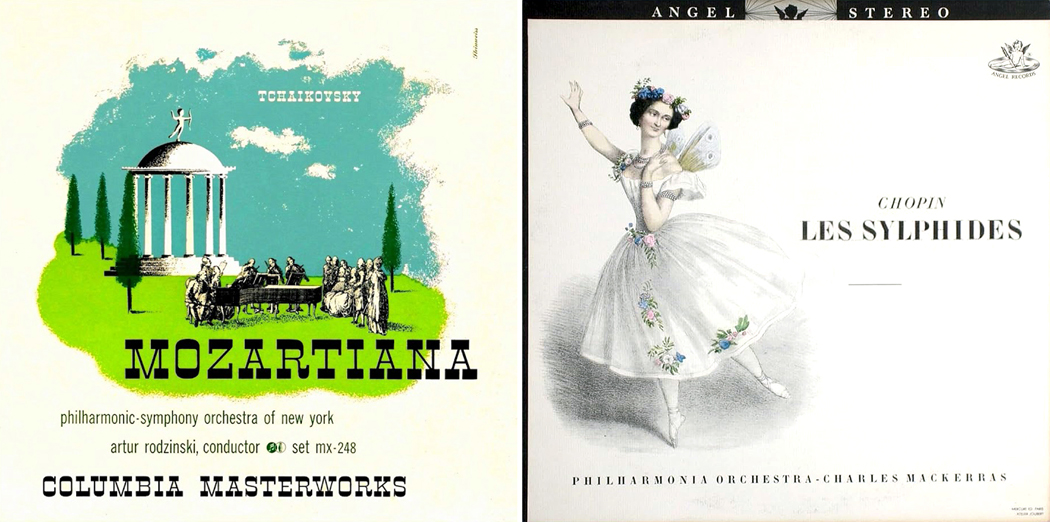
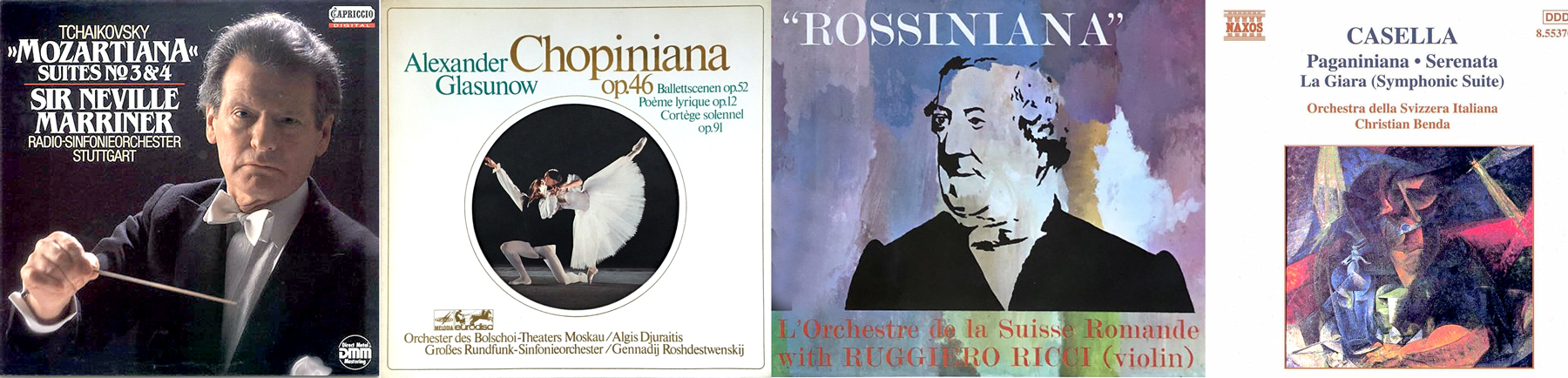
This is true in music, also. Not just the parody masses of the 15th century, or all those Baroque composers “borrowing” tunes from themselves or their contemporaries, or the many recomposings of La Folie, but more recently, Tchaikovsky rescoring Mozart and Glazunov turning Chopin into the ballet Les Sylphides

Of course, all the arts build on previous, if not through quoting or re-use, but at the very least just by existing in a continuum of culture. You could not have had the Renaissance without Classical Rome, or Hedda Gabler without As You Like It. All one forward surge. 

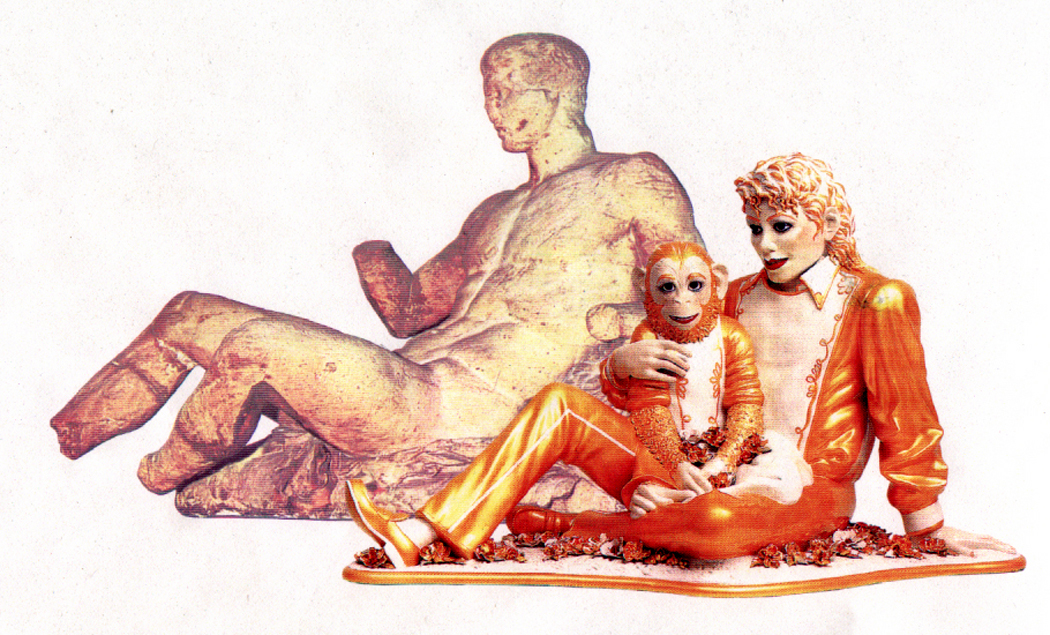
All art is, on one level, a conversation with the past. Even Jeff Koons’  sculptural portrait of Michael Jackson and Bubbles is a gloss on Pheidias’ statue of Dionysos from the east pediment of the Parthenon from the Fifth Century BCE.

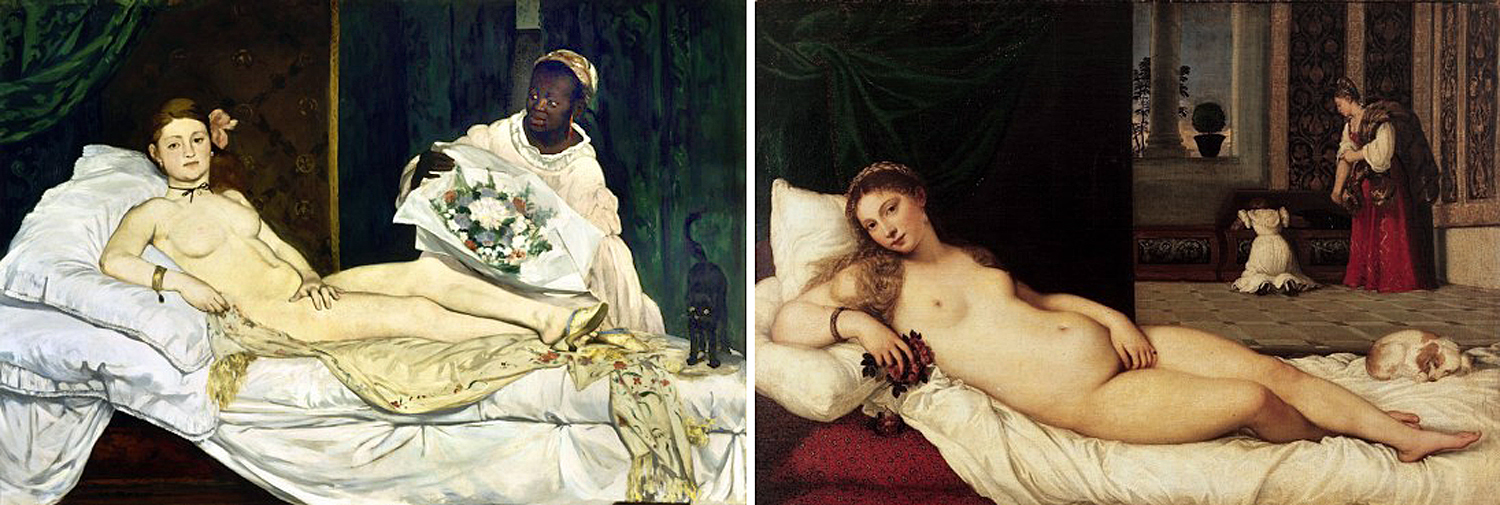
Or, take Manet’s Olympia, which ironically quotes Titan’s Venus of Urbino. (I wrote an exhaustive essay in “Meme and Variations,” from this blog in 2014. Link Here

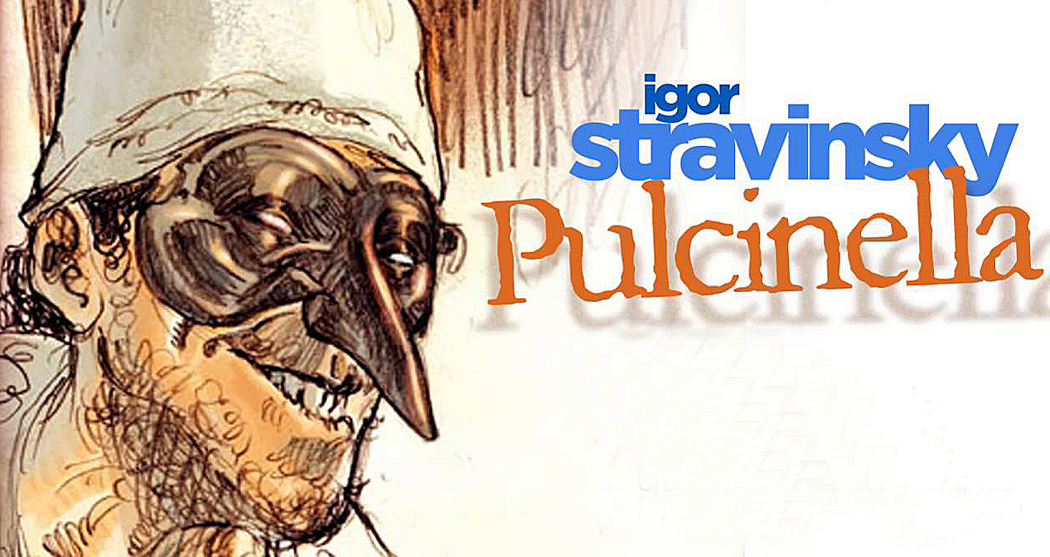
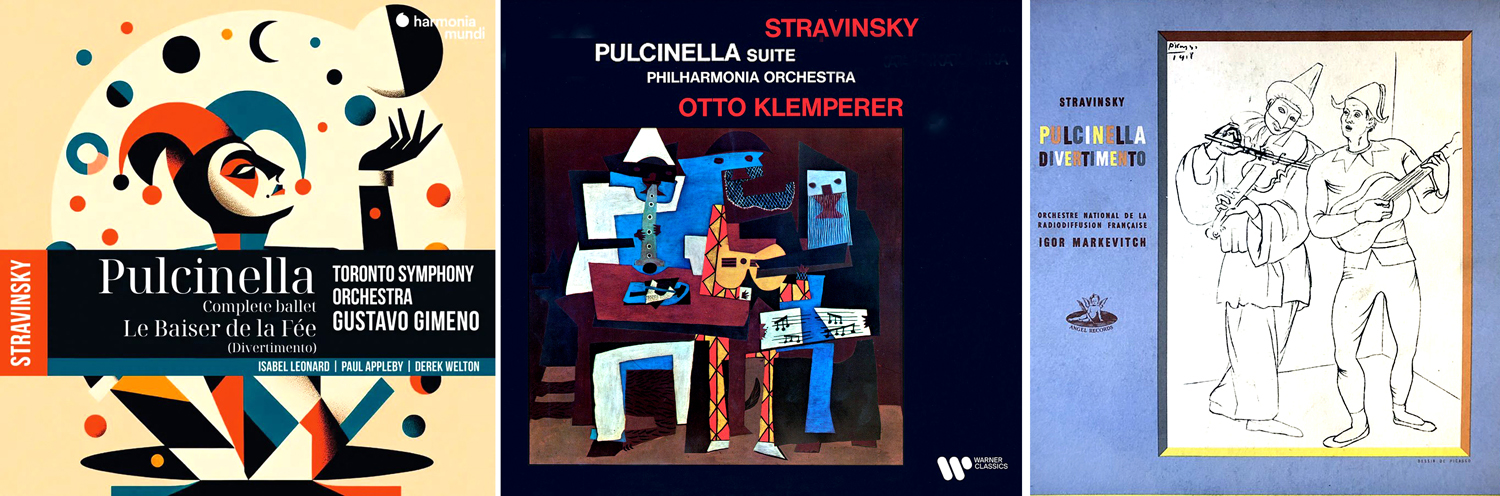
Manet was tweaking his nose at the Renaissance painting, and in 1920, Igor Stravinsky was doing something similar to what he assumed was the music of Giovanni Pergolesi, in his ballet score, Pulcinella

In 21 movements, he rebuilt and re-orchestrated the 18th-century music and made it sound utterly Stravinskian. “Uncle Igor’s Asymmetry Machine,” as Leonard Bernstein called it. Catchy tunes and astringent orchestration. (The fact that the source-music wasn’t Pergolesi but mostly keyboard music by Milanese composer Carlo Ignazio Monza and trio sonatas by Domenico Gallo, a lesser known Venetian composer, both of  whose works were sometimes bootlegged under the more salable name of Pergolesi. A YouTube video with the original compositions is available. Link here)

It’s surprising how little Stravinsky changed his originals, except by a little nipping and tucking, and using brilliant and cheeky orchestration. 

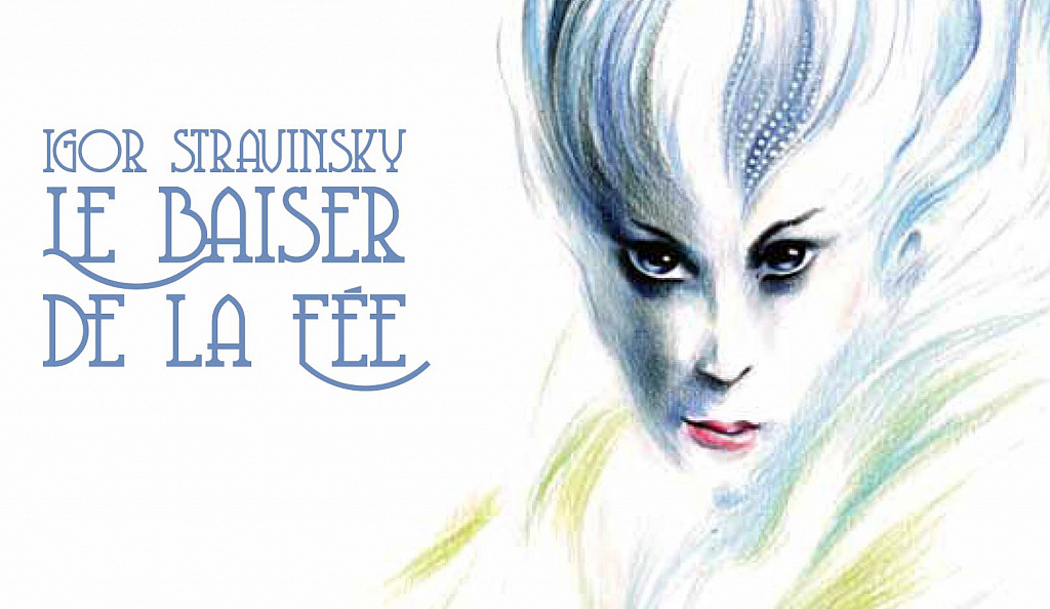
But this habit of updating ancient music was a frequent technique among composers, especially in the 20th century. Stravinsky himself applied the spice to Tchaikovsky in Le Baiser de la Fée (“The Fairy’s Kiss”) from 1928. 

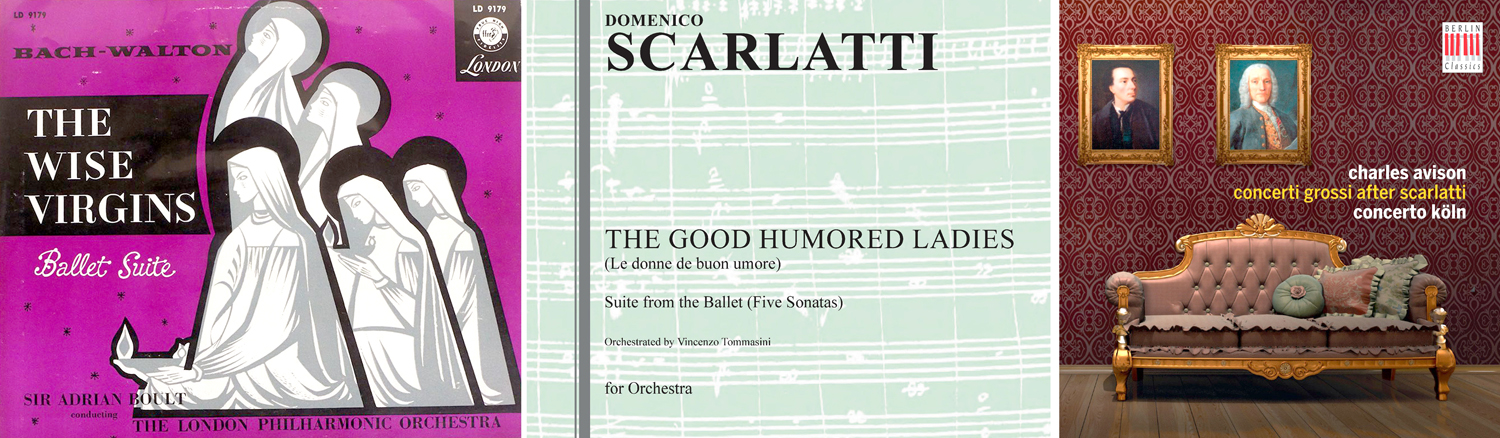
When I was a young recent college graduate, with little or no money in my pocket, I found a battered LP in a castaway bin of a local bookstore. It was on an Eastern European recording label, perhaps a Soviet one, lost to time and my ancient loss of memory. It cost 98 cents and contained William Walton’s The Wise Virgins on one side and Domenico Tomassini’s The Good Humored Ladies on the other. That LP’s fate is lost to 60 years of peregrination, and I only recently found a CD with these works on it. I was emotionally transported to another time and place. 

The Walton was a re-orchestration and revamp of work by Johann Sebastian Bach, and the Tomassini did the same with music by Domenico Scarlatti. Both were designed as ballet scores. 

(Scarlatti’s keyboard sonatas were first orchestrated in 1743 by English Baroque composer Charles Avison in 12 Concerti Grossi After Scarlatti, but Avison did the opposite of Stravinsky: He smoothed over Scarlatti’s pungent harmonies and expressive dissonances, to make them “pretty.” Avison did the same for a dozen violin sonatas by Francesco Geminiani.) 

All this piqued my interest, and I spent the past week listening to recordings of all the refurbished music I could find, and there is a lot of it. Two people, in particular, are the source for a great deal of it. 

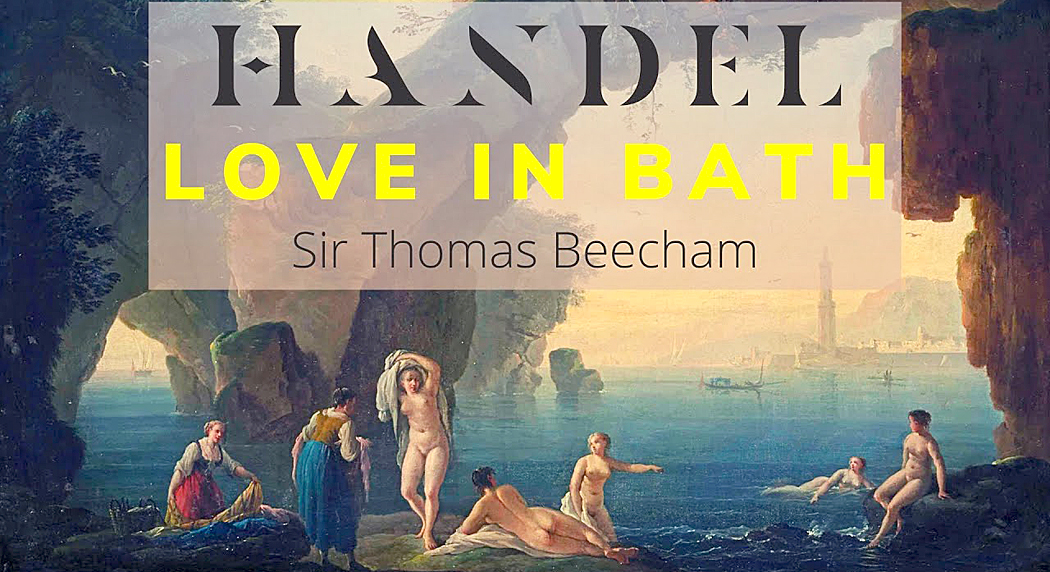
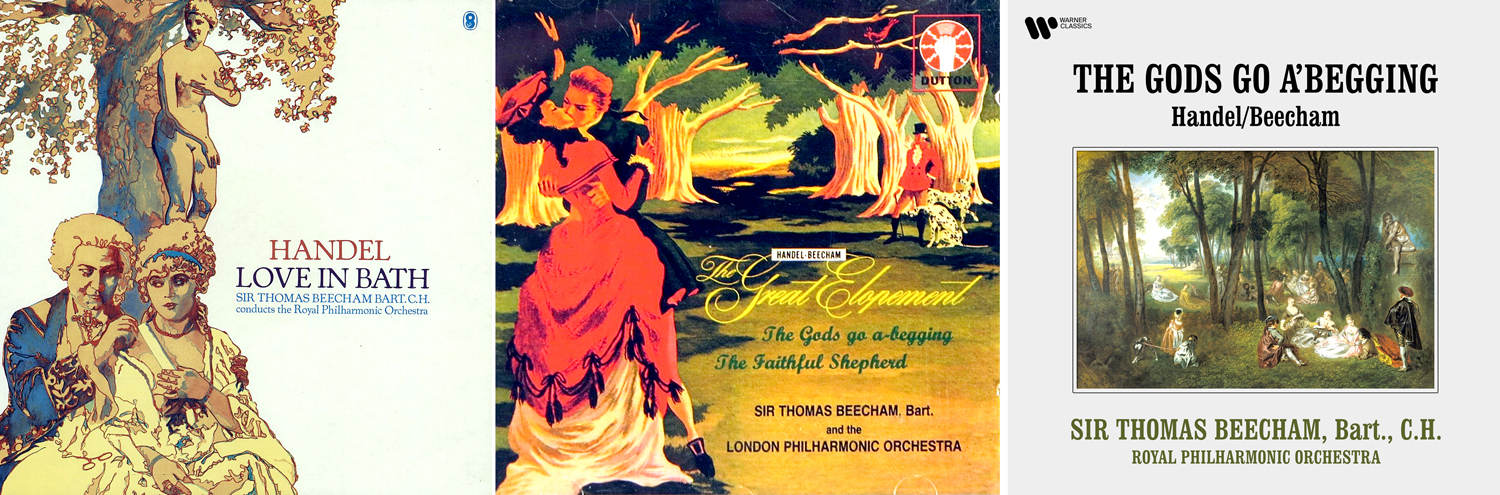
The conductor Thomas Beecham performed the music of Handel back in the early 20th century when Baroque music was practically unheard, outside of the annual Messiah productions. But Beecham not only recorded whole Handel operas and oratorios, he brought excerpts of them into ballet scores he compiled, with his own modern re-orchestrations of them, but often played bits in his concerts. 

The best known is probably Love in Bath, a ballet score made from arias, choruses and sinfonias from various Handel works, in rescorings much less snarky than Stravinsky’s, and entirely pleasant on the ear. 

He began with The Gods Go a’Begging in 1928, then The Origin of Design (1932), The Faithful Shepherd (1940), Amaryllis (1944), The Great Elopement (1945) and finally, Love in Bath (1956). They often varied each time he presented them, changing suite movements according to his pleasure each time they were programmed. 

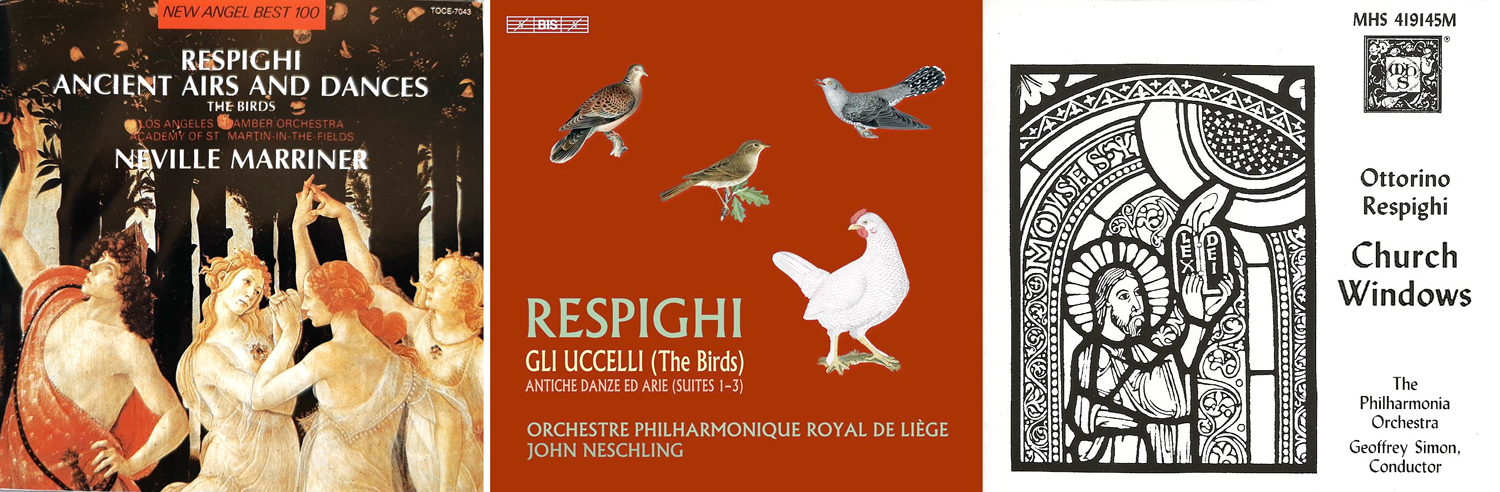
The other popular champion of ancient music was Ottorino Respighi, who made popular hits out of Renaissance and Baroque lute and keyboard music, most famously in his three suites of Antiche danze ed arie (“Ancient Airs and Dances”) which he wrote from 1917 to 1931. They remain popular in concert and have often been recorded. It’s hard not to love them and whistle the tunes for the rest of the day. 

Then, there’s Gli Uccelli (“The Birds”) from 1928, in which Respighi orchestrated keyboard pieces by early (mostly) Italian composers from the 17th and 18th centuries. And Vetrate di chiesa (“Church Windows”) from 1926, based on Gregorian chant and plainsong. 

Richard Strauss wrote two suites updating and orchestrating keyboard music by François Couperin. First, Tanzsuite (“Dance Suite”) from 1923, consisting of eight movements, and then Divertimento, from 1942, with 25 keyboard pieces arranged in eight movements. 

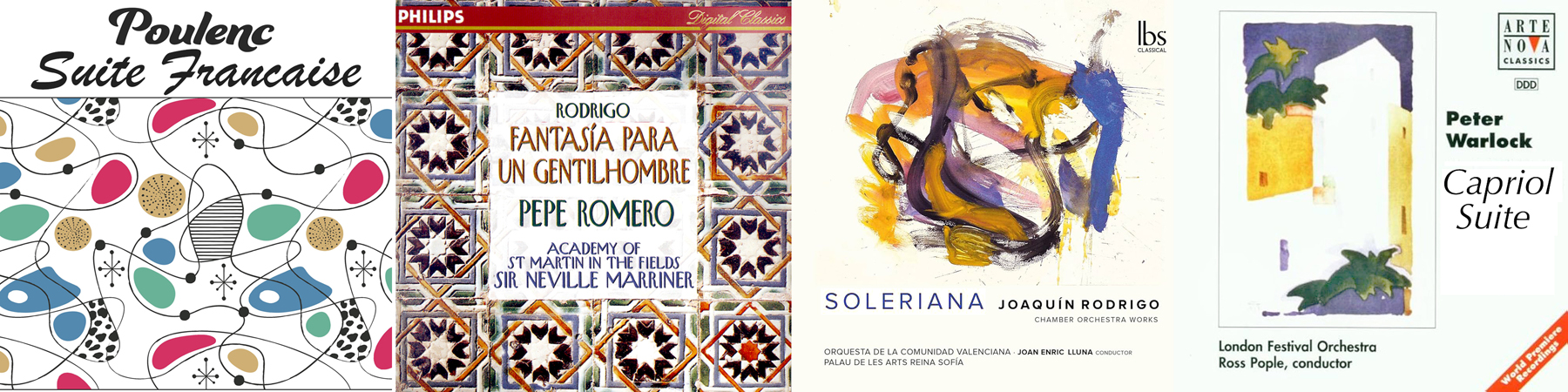
In 1935, Francis Poulenc wrote a suite for wind band, called Suite Français, using the tunes of 16th century composer Claude Gervaise. 

And among the most popular pieces from the 20th century was a four-movement guitar concerto, based on six compositions by the 17th century Spanish composer Gaspar Sanz. It was written in 1954 by Joaquin Rodrigo and titled Fantasia para un Gentilhomo (“Fantasy for a Gentleman”) Dozens of guitarists have recorded it. 

Rodrigo also put together an eight movement suite called Soleriana, orchestrating the harpsichord music of 18th century composer Antonio Soler. I had a hard time tracking down a recording, but I found one and have to say it was just as catchy and memorable as the Fantasia

Finally, among works of this kind, I should mention Peter Warlock’s Capriol Suite, built, according to the composer, on tunes in Thoinot Arbeau’s Orchésographie, a manual of Renaissance dances. 

But all this rewriting and modernized orchestration wasn’t only applied to antique music. There’s plenty of 19th century music that gets reworked, usually to accompany a ballet. And a lot of them get named some form of “ianna.” Like Mozartiana, Rossiniana, Paganiniana, Soleriana, and Offenbachiana. (Not to mention Bachianas Brasileiras, but that’s another thing.)

Gioachino Rossini wrote 39 hugely profitable operas by the age of 39. Then, in 1832, he retired to live comfortably for the next 40 years. But starting in or about 1857, he began writing short pieces, songs, piano works, choral works — some 150 of them — meant for friends and family and never intended for public performance. He called them his Péchés de vieillesse – “sins of old age.”

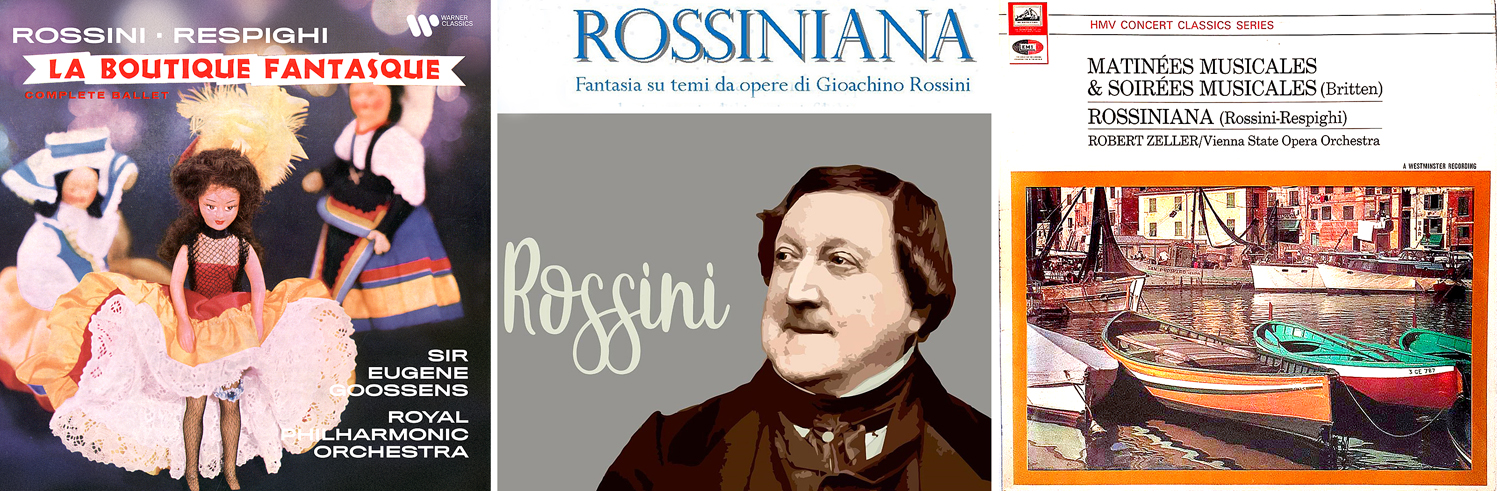
In 1918, Respighi orchestrated nine of these “sins” for a ballet, La Boutique Fantasque. It remains enormously popular with dozens of recordings. Later, in 1925, he dove back into the collection to “freely orchestrate” his Rossiniana

Benjamin Britten used bits from Rossini’s late works for his Soirées Musicales from 1937, and later, his Matinées Musicales from 1941. 

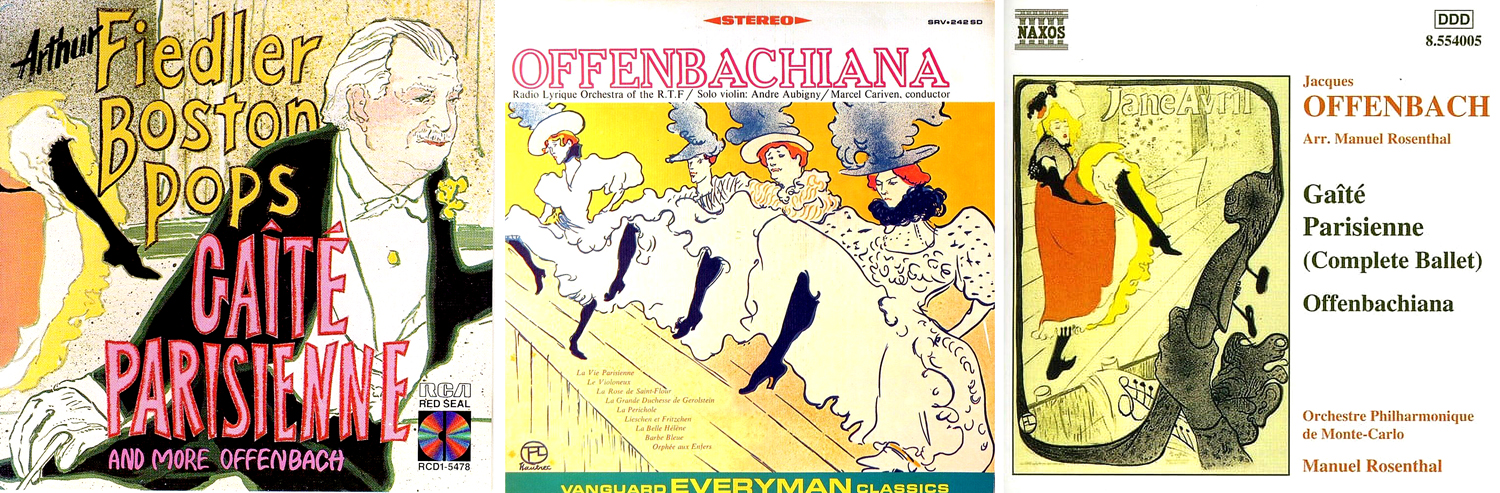
Strangely by default, French composer Manuel Rosenthal was tasked with selecting and orchestrating music by operetta champion Jacques Offenbach for a Massine ballet, Gaité Parisienne, in 1938. It remains popular in concert. Then, in 1953, he dipped once more into the well for Offenbachiana

But let’s face it, this becomes a rabbit hole: There are endless workings and reworkings of music, turning piano pieces into orchestral showpieces, or chamber works into ballets. I should mention just a few of the most famous or popular. 

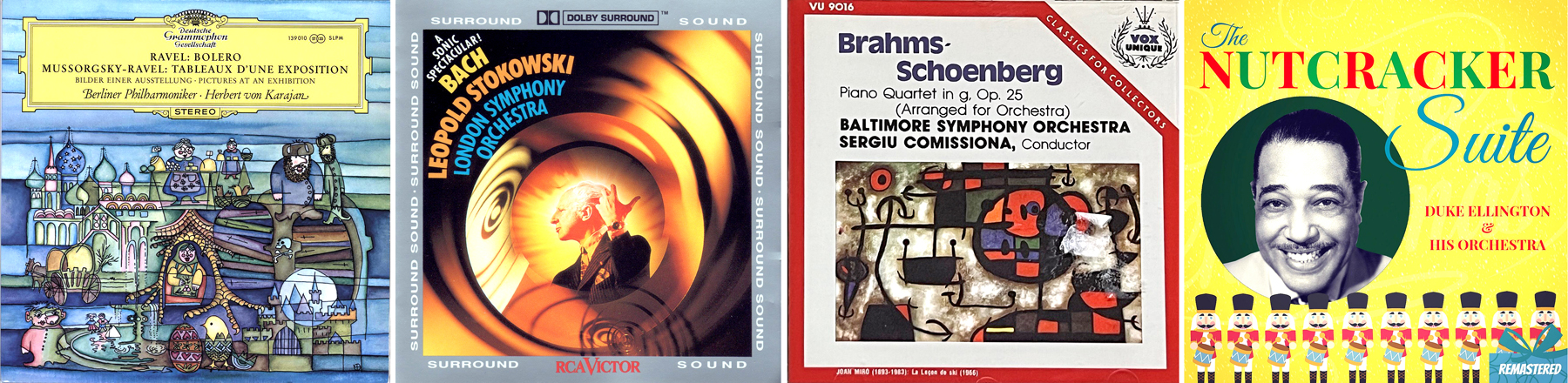
Maurice Ravel took Modest Mussorgsky’s Pictures at an Exhibition and did such a number on those short keyboard works, that some people are shocked to discover they weren’t originally written for the orchestra. 

Leopold Stokowski made a career of turning Bach organ works into hyper-lush symphonic showpieces. (He was also not shy about changing around, cutting, or adding cymbals or tam-tam crashes to established symphonies.) 

Arnold Schoenberg decided to orchestrate Brahms’ G-minor piano quartet because, he said, “1. I like the piece; 2. It is seldom played; and 3. It is always very badly played, because the better the pianist, the louder he plays, and you hear nothing from the strings. I wanted once to hear everything, and this I achieved.” He was also commissioned to do it by L.A. Phil conductor Otto Klemperer, where it was first played in 1937. 

And finally, I should mention Duke Ellington, who recorded his jazz-orchestra versions of both Tchaikovsky’s Nutcracker Suite, and Grieg’s Peer Gynt Suite. Both hugely fun. 

It never ends. Kismet, a broadway musical with songs borrowing tunes by Borodin. A nearly infinite number of variations by a nearly infinite number of composers on Paganini’s 24th Caprice for solo violin. All those “Reminiscences” of various operas for solo piano by Franz Liszt. Charles Gounod’s Ave Maria built on top of Bach’s C-major prelude from the Well Tempered Clavier.  Franz Waxman’s Carmen Fantasie. Paul Hindemith’s Symphonic Metamorphoses on Themes by Weber

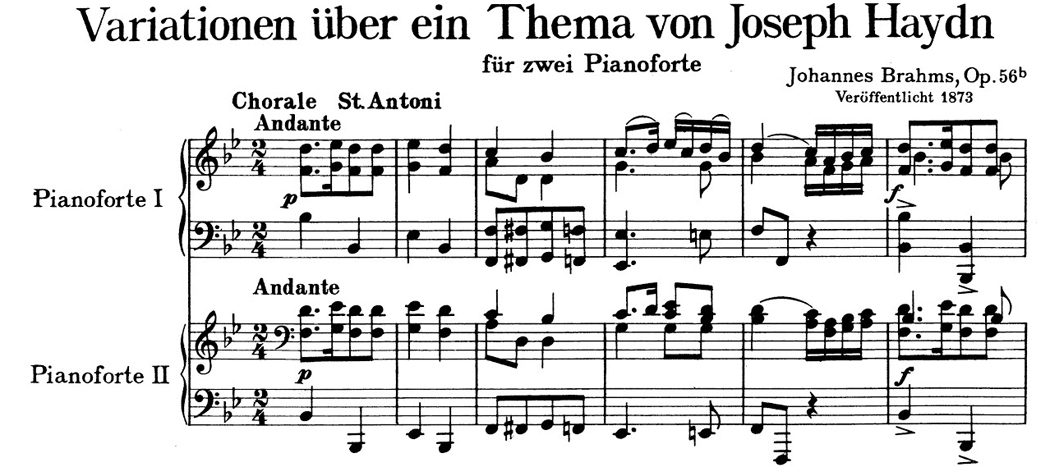
And let’s not leave out Brahms’ Variations on a Theme by Haydn, which was on a theme Haydn had borrowed in the first place. He didn’t write it. 

A quick check of Wikipedia lists hundreds, perhaps thousands (too many for me to count and still have a life) of “variations on” or “hommage to” or quotations from or transcriptions of orchestral music for home piano, or vice versa, piano music turned orchestral. No Haydn, no Beethoven, no Beethoven no Wagner, no Wagner, no Schoenberg, no Schoenberg, no  Lutosławski. Piles on piles. 

So, this idea that anything Postmodern is new needs to be chucked out the window. Postmodernism is a catchall phrase, with rather more meaning in architecture than in art or music. After all, we’ve been feeding on the past since the beginning. 

Happiness is a strange emotion, not a single thing, but really an umbrella term for a diffuse group of hard-to-define states. Periodically, studies are published about which nation is the happiest (usually, it seems, a Scandinavian country.) But what they are measuring is a rather tepid version of happiness. Usually, if we ask if someone is happy, what we mean is an absence of problems — basically a neutral state in which we are not currently threatened, hurting, being oppressed, or worried. “Are you happy?” “Yeah, sure, I guess so.” Enough to eat, a roof over the head, a relationship that isn’t a chore, no pending hospital bills or tax audits. 

Really, that is a condition to be wished for, as dull as it sounds. For most people in the world, its achievement would be a godsend. So, I don’t want to downplay such a state. Not getting bombed is a net positive. Yet, there are other happinesses. Falling in love, birth of a child, success at work — these all provide a joyful uplift that raises the psyche above the day-to-day and makes life more radiant, if only briefly. It is a state we cannot maintain over long periods without being considered a bit loopy. So, we return back to the state of happiness that is unremarkable. 

But, as adults, we can watch our children at play and recognize in their faces such a state of unreflective happiness that can only break our hearts. Oh, what they don’t know yet about being alive. It’s not just an emotion: The entire body explodes with it.

There is what I might call “body happiness,” which they express in movement, in play, in dancing and skipping, singing, letting out squeals that express the inner state that, as adults, we can only mourn the loss of. “There hath passed away a glory from the earth.” 

I mention all this because one of the reasons I listen to music — primarily, for me, what is called classical music — is its ability to evoke emotions in its listeners. They arise sympathetically and are often emotions more subtle than mere language can name. It has been said that music is more precise than words, and I recognize that, whenever I am moved by a quartet or sonata but cannot speak exactly the words that would distort the emotion into easily fixed categories. 

A standard symphony moves from thought to thought, emotion to emotion, in ways that express the same sort of progress a story makes, beginning, middle, end. Episodes all build together to a longer, coherent emotional or intellectual ride. Our limbic system moves along with that progress and we can basically take our emotional selves through the moves. The widest range is the most completely human. 

And one of the things music can express is that ebullient, body happiness, so that we can feel it again. 

Mostly, it jumps out of a single movement in the whole, or even a few bars in the movement, but it is inexpressible joy, and it makes our body move, to tap toes or sway our bodies to and fro, often with a surprised smile on our faces. I think of the finale of Haydn’s Symphony No. 88, for instance, or the scherzo from Dvorak’s Eighth Symphony. I can’t sit still while listening. 

George Frideric Handel has two “happy”numbers in his Acis and Galatea. The opening chorus sings of “Oh the pleasures of the plains, happy nymphs and happy swains,” which extolls the life of the peasants, and a love duet that repeats endlessly, “Happy, happy, happy we.” It all sets up the tragic ending. 

But, there are a very few works that take that body happiness from start to finish, works you can play or stream, that will infallibly lift your mood and remind you of the happiness that is upwards of neutral, and can replace all the fret and sorrow for the length of its performance, and usually, for some time after, as you bathe in the memory of its tunes. 

There are at least eight of these that I can name, which always leave me uplifted, my senses turned up several notches, and my memory of childhood’s version of happiness is re-animated. 

Prime among these is Franz Schubert’s “Trout” Quintet. It bounces and sings through five distinct movements, each of which floods with tune, rhythm and color, anchored by the bottom notes of the double bass. 

It was written in 1819, when Schubert was 22 years old, and before the lingering illness that eventually killed him nine years later. The haunting of death darkens the later String Quintet that he completed in 1828, just two months before his death. But the “Trout” is the antithesis of all that: Life giving, life affirming, joyful from first bar to last. What can you do when every tune is an ear-worm. Once inside your body, you carry the “Trout” with you the rest of your life. Play it every time you need it. 

Less well-known, but even more relentless is Darius Milhaud’s Le Boeuf sur le Toit, or “The Ox on the Roof.” Milhaud wrote it in 1919 after living in Brazil for two years in the French diplomatic service, and quotes dozens of Brazilian folk songs, adapted into a dance-hall band playing Latin rhythms, complete with güiro. He employs a polytonal technique, where different parts of the band play in different keys at the same time, giving the whole a piquancy and aliveness that has a feeling of spontaneity, like an amateur band in a smoky bar. It’s always just about to come apart. 

Written in the Baroque form of ritornello, with an 8-bar tune coming back over an over between alternate dances, it has some 20 Brazilian tunes buried in it, with infectious beats that express the unabashed happiness of a sweaty dance hall. Evybody dance now!

Mostly we think of Johannes Brahms as a sober German burgher writing symphonies with the seriousness required of höchste Deutsches Kunst. But the boy could let his hair down, which he did with two sets of vocal quartets, Liebeslieder Waltzes, op. 52 and op. 65. 

Brahms made his living, early in his career, when he moved to Vienna, as leader of various choruses such as the Singakademie and Musikverein, for which he wrote tons of choral music and songs. So, he had a popular streak in him. 

The 33 songs, each no longer than a minute or two, celebrate bourgeois domestic love in tunes so meltingly gemütlich that you will have them running through your head for days. They were meant to be sung in homes or in taverns, so they are best with normal voices, not the operatically trained soloists that so often record the set. “Ich gäbe dir so gern hunderttausend Küsse” — “I long to give you a hundred thousand kisses.” 

When Georges Bizet was a mere stripling of 17, he wrote a Symphony in C as an exercise for his studies at the Paris Conservatoire. It was never performed in his lifetime and ultimately forgotten about, until it was rediscovered in 1933, and performed two years later by Felix Wiengartner, a suitable conductor, whose first name means “happy.” 

Bouncy and tuneful from first note to last, it has proven hugely popular since then, and one wonders why Bizet never had it published, in fact, never even mentioned it. It is a masterpiece, but not on one of those marble pedestals, but the kind that makes your ears grateful to be on your head. It is breezy and fluent and just makes you happy to be alive. 

Georges Balanchine choreographed it for the Paris Opera Ballet, and I was lucky enough to see the New York City Ballet perform it with a live orchestra at the Palais Garnier in Paris, (where it was first performed in 1947). One of the highlights of my life. 

Also a youthful work is Serge Prokofiev’s Classical Symphony, written in 1916 when he was a conducting student at the St. Petersburg Conservatory. When one of his teachers, Boris Asafyev, mused “that there is no true joyfulness to be found in Russian music,” as Prokofiev wrote, he responded with one of the happiest works ever written by a Russian. 

And so, he wrote in his diary, “I composed a new finale, lively and blithe enough for there to be a complete absence of minor triads in the whole movement, only major ones.” 

It displays what is often called the composer’s “wrong note Romanticism,” with catchy tunes and ascerbic harmonies, and was meant to mimic the spirit of Haydn and Mozart. What a joy. 

Much shorter, at merely five minutes, but so fresh and lively as to become its composer’s most frequently performed piece, the overture Leonard Bernstein wrote to his musical Candide just can’t stop laughing, and teasing, with bubbling wit and elan. 

The musical (or operetta — it could never entirely make up its mind and went through multiple reworkings) never quite caught on the way West Side Story has, but its overture, shaped as a mock Rossini overture, is irresistible. 

Johann Strauss II produced music the way a lawn sprinkler sprays water. The “Waltz King” composed over 500 waltzes, polkas, quadrilles, and other types of dance music and several operettas, all of surprisingly consistent craftsmanship.

No one in his right mind, though, would sit for all of it; before too long the program would become monotonous: How do you tell one polka from another. That is, except for the large handful of truly memorable masterpieces, all of which will raise you spirits and make you want to dance. 

I mean, the Blue Danube, the Voices of Spring, Tales of the Vienna Woods, the Artist’s Life, the Kaiser Waltz — a CD full of the best Strauss is a must-have for any collection. It’s hardly surprising that Brahms envied Strauss’ gift for melody. Each is basically a tone poem in three-four time. Lift the spirits, make you smile and move your body. 

Finally, there is Benjamin Britten’s Simple Symphony, which displays a childlike joy in just spinning tunes, which is hardly surprising, since he wrote those tunes when he was a child, between the ages of 10 and 13. When he turned 20, he reworked the tunes into this four-movement suite for strings, with movements titled “Boisterous Bouree,” “Playful Pizzicato,” “Sentimental Sarabade,” and “Frolicsome Finale.” It premiered in 1934 with Britten conducting. 

Since then, it has been recorded dozens of times, usually as a filler on discs with other Britten pieces. 

There are other joyful pieces, but these are eight that come immediately to mind. They are each available in videos on YouTube, and worth seeking out, especially if you’re having a bit of a down day. 

I once made a list of my Top Ten Films and the list had 40 movies on it. What is more, if I had made the list a year before, or a year later, the 40 movies might have been quite different. One cannot really pick a permanent set. 

So, when Classics Today executive editor David Hurwitz published his list of “12 Operas I Cannot Live Without,” and challenged his audience to come up with their own lists, the same problem popped up. “You mean the dozen I cannot live without today?”

While I love opera, like Hurwitz, I have to admit I am not an opera nut. That’s a different breed. Opera does seem to attract the crazies — the ones who swear by a 1948 barely audible recording, made over a telephone line, of Maria Callas singing La Sonnambula — in the unauthorized 1848 edition only performed once, in Belfast, Ireland in 1873. You know, the one with the interpolated aria in Act 2. Yes, crazy like that. 

I have been listening to classical music for more than 60 years, and am a classical music generalist: I love it all, from pianists to chamber music to symphonic and vocal music — and, of course, opera. But opera has no special place for me. Opera people care who the tenor is; I am more interested in the composer, which means I’m not included in the opera inner circle. 

So, my list is not made up of the usual names: Verdi, Bellini, Puccini, and doesn’t automatically include the ABCs of opera popularity — Aida, Boheme, Carmen. It’s not that I dislike them, but I have seen them enough times that I don’t need to experience them yet again. They will always sell enough tickets, even without my attendance. 

These are the works that I choose when I want to hear opera, to enjoy the music in them and the emotions they arouse. I could list more than 12, but Hurwitz’s assignment limits the number — although I might cheat a bit.

1. Handel: Rodelinda

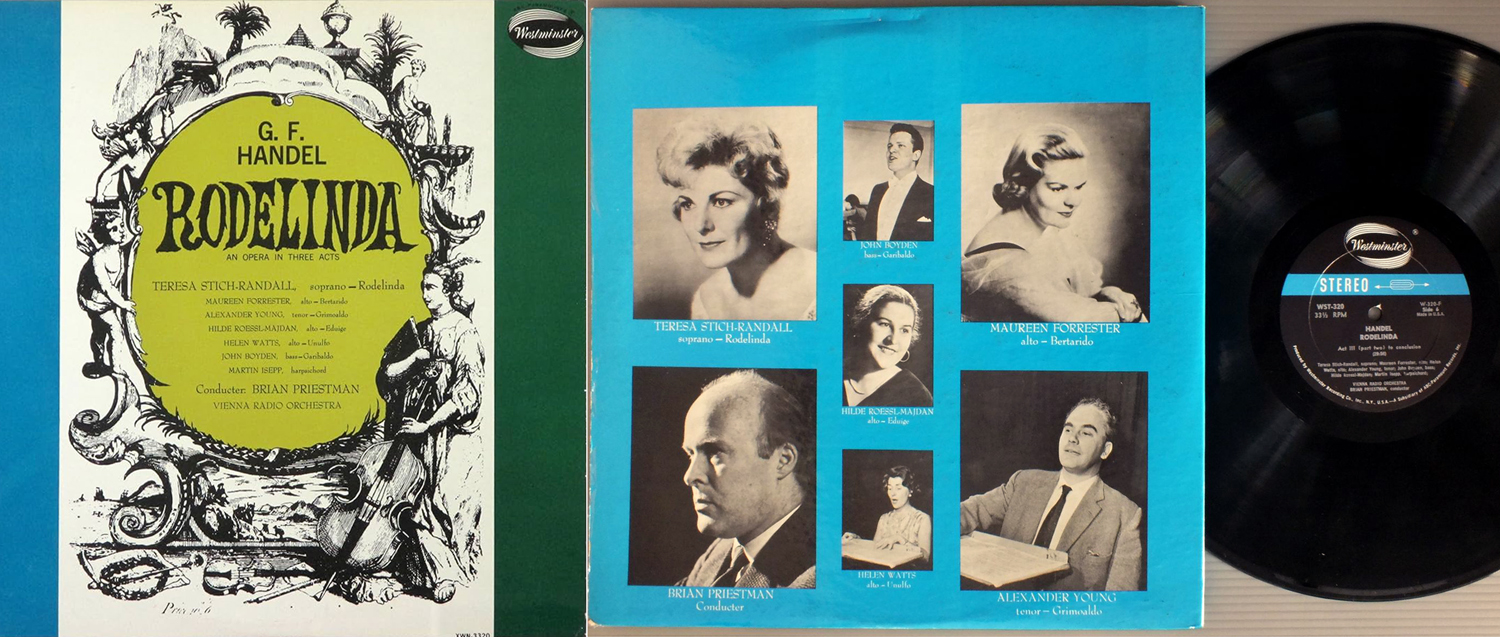
The first opera I ever attended was in 1966 when the Handel Society of New York staged Rodelinda at Carnegie Hall with Teresa Stich-Randall and Maureen Forrester with a pick-up pit orchestra conducted by Brian Priestman. I couldn’t stop humming the tunes. 

Years later, I found a three-disk LP album of the opera in a smooshed-up box in a thrift store. I don’t remember who performed it, probably some Eastern Europe company on a back-water label no one’s ever heard of. I played it over and over. The familiar melodies were comforting.

The same year I saw Rodelinda, the same group also performed Xerxes and I saw that, too. Since, I have seen Giulio Cesare live and a truly brilliant staging of Semele by the Arizona Opera Company, but it is Rodelinda that sticks.

2. Mozart: Don Giovanni

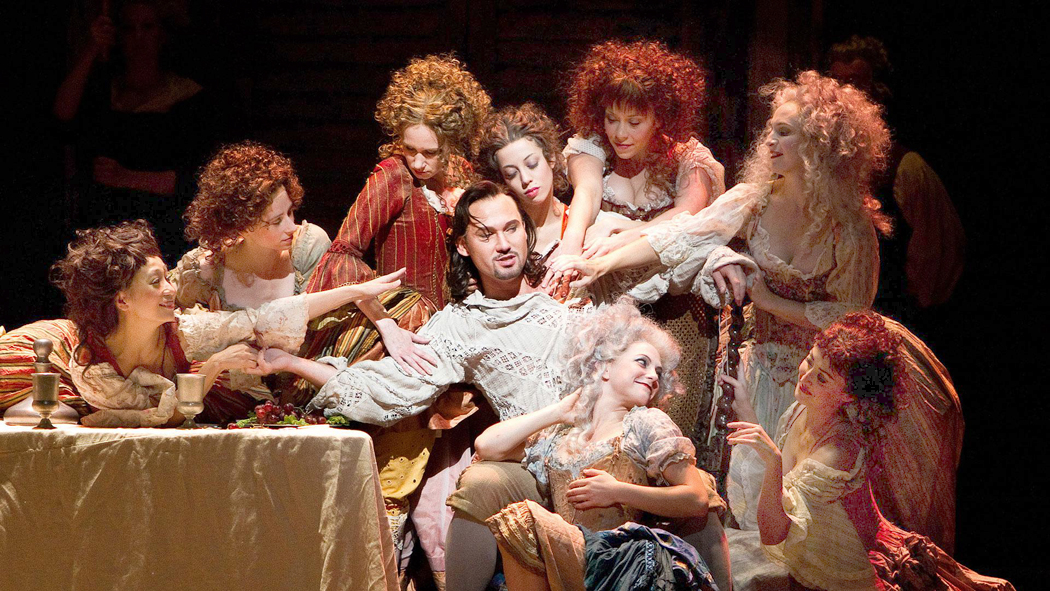
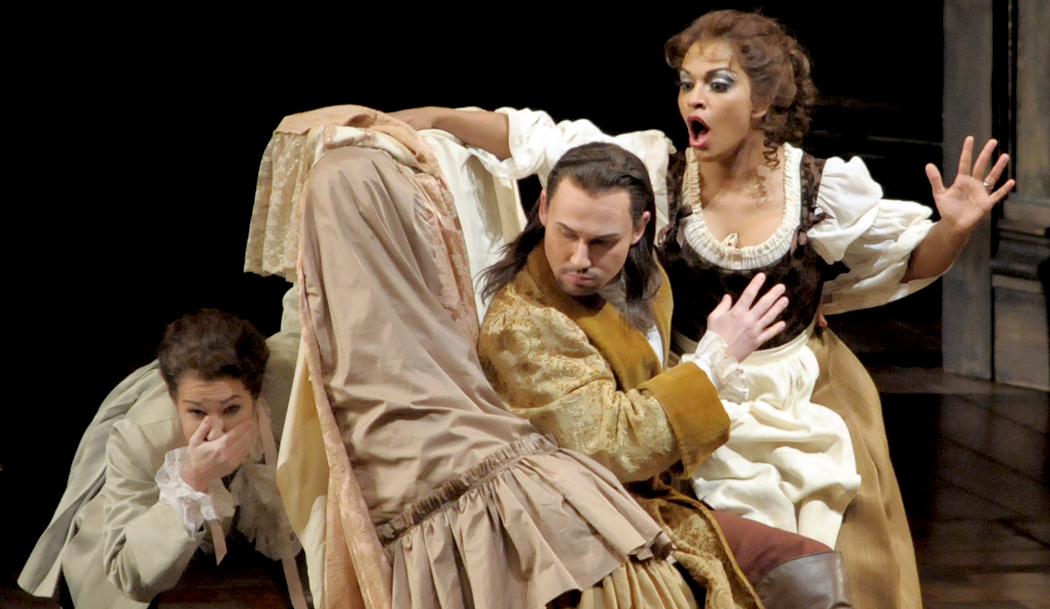
The opera I have seen most, and that I love as music as well as theater, is Don Giovanni. I’ve seen it more often than any other live opera (except the infinite Bohemes and Carmens I saw through duty as my newspaper’s opera critic). 

Most operas, even the really good ones, can not be defended on the basis of their plots, which are, at best, nonsensical and goofy. But Don Giovanni has a story with action, believable characterizations, and psychological subtlety. To say nothing of some really great tunes. 

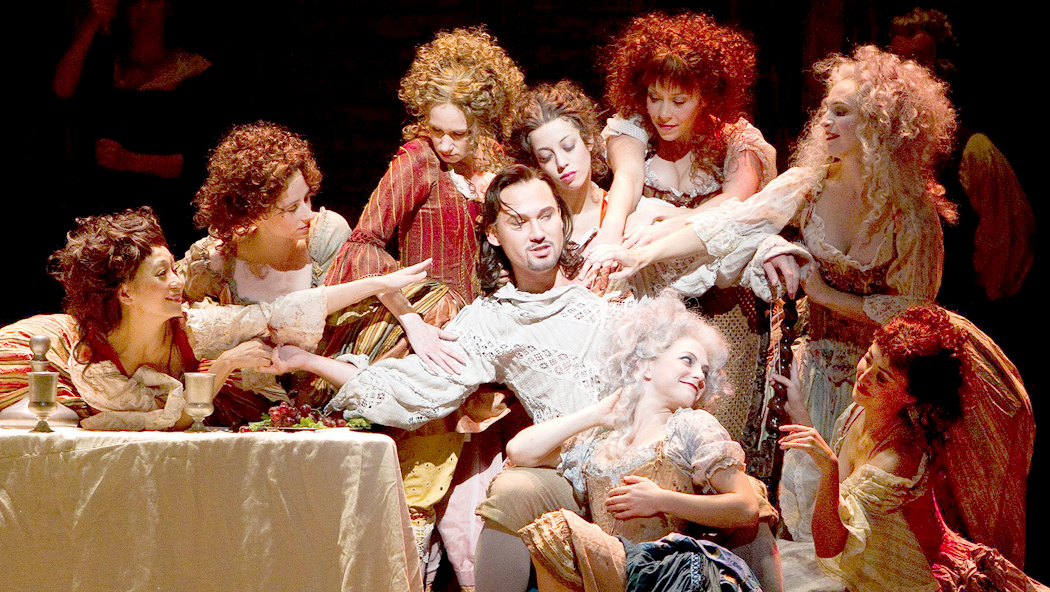
And it is a truly revolutionary work, written at a revolutionary moment in history. I love when the partygoers at the end of the first act just kind of stop everything and belt out the words, “Viva la Libertad!” And also that, at the end, the Don has the courage to refuse to repent. He may be the villain of the piece, but he is also the hero. 

I’ve owned a half-dozen versions of the piece on LP and now CD, but my go-to performance is the oddly cinematic, opened-up film staging with Cesare Siepi as the Don, and conducted by Wilhelm Furtwängler, available on DVD. 

3. Mozart: Nozze di Figaro

On his list, Hurwitz permits only one opera per composer, but I can’t do that, because the three operas I love most, and can listen to over and over, are all by Mozart. Years ago, I wrote about what I was calling the “perfect” operas — that is, those with no longueurs, boring parts, added and unnecessary show-off arias to highlight the tenor or soprano. These are operas with plots that are defensible, if not great, pacing that doesn’t drag, and some level of human reality in them. 

By any of those standards La Nozze di Figaro tops the list. These are all real people doing real people things, hurting like real people, loving like real people, and most importantly, forgiving like real people. And, all the the perfectly psychologically apt music of Mozart. If I were to choose the best opera ever written, this would be it.

4. Mozart: Zauberflöte

Talk of silly plots: Just about the worst story in opera is found in one of the most popular works. Everything about the story in The Magic Flute is preposterous. But the music is so infectious, you give up and don’t care.

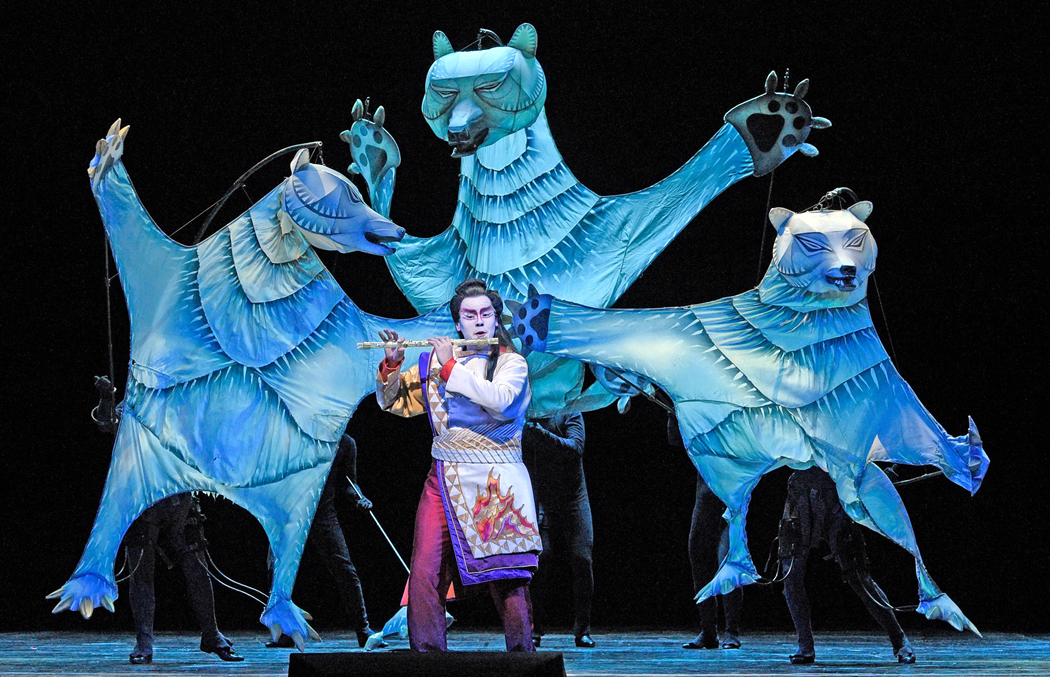
Especially if you get to see the staging by Julie Taymor with its giant bunraku puppets. It is stage magic along with great music. It is a slightly abridged version and sung in English, but it is so good, and so much fun, you really have to watch it. 

Or there’s Ingmar Bergman’s film version, sung in Swedish, which captures all the fairy-tale flavor of the thing. But really, there are dozens of recorded versions, both on CD for listening and DVD or Blu-Ray for watching. 

5. Berlioz: Le Damnation de Faust

I hadn’t ever thought of it as an opera, but I saw the Metropolitan Opera staging of it in 2009 and was persuaded: It works really well in that Postmodern presentation. Actually thrilling. 

As with so much of Berlioz, its reach much exceeds its grasp. Since the composer couldn’t include everything from even Part 1 of Goethe’s Faust, he chose to pick episodes to put to music, making a rather choppy story. Still, the music can be overwhelming when performed with the right belief and energy.  

6. Wagner: Der Ring des Nibelungen

I’ve attended two live Ring cycles, which were quite magnificent (although I am humbled by the fact my dear friend, the late Dimitri Drobatschewsky went to Bayreuth 16 times). But I have to admit this four-opera trilogy (yes, that’s an oxymoron) is best heard on recordings. Not so much because with the great voices of the past, the singing is better (although that is true), but because the action in these “music dramas” is so mythic, and so German Romantic, that no scenery or stage machinery can adequately portray the Rhine maidens singing underwater, the valkyries riding their horses in the air, the gods crossing a rainbow bridge, or the Rhine river overflowing its banks to quench the fire that has set alight the entire world and ended the reign of the gods. Watching it onstage can seem a little tawdry. 

But listening to the recording with your eyes closed and imagining the rocky crags, the dark forests, the ring of fire on the mountain top, is so much more convincing as theater of the mind. I say with eyes closed, but you really also need to read the libretto as you listen. Or not libretto — that sounds too much like opera — Wagner doesn’t have a libretto; he has a text. 

I have five Ring cycles on CD (Barenboim, Böhm, Furtwängler, Janowski and Solti) and another two on DVD (Boulez and Levine). Is that a little nuts? I suppose. The one I listen too over and over is Solti, which was specifically designed to be played on speakers, with various sound effects added to it by producer John Culshaw. 

And yes, I’m counting all 15 hours of the Ring as a single entry. 

7. Offenbach: Les Contes d’Hoffmann

If the Ring is too serious, The Tales of Hoffmann counters with frivolity. I love this mini-trilogy (in four parts), especially when all three heroines are sung by the same soprano. 

It has some of the chunky episodic feeling of the Berlioz, (compare the Chanson de Kleinzach tavern song here with Mephistopheles’ Song of the Flea in Damnation. Both completely extrinsic to the story, but a chance for the composers to interpolate a great bit of ditty. 

The opera is a bit of a mess, as Offenbach never settled on a final version. But any version is a delight.

8. Strauss: Salome

I’ve seen several versions of Richard Strauss’ first opera, and it always seems to work on stage. It’s a short one, in a single act and tells of King Herod, his wife and daughter — Salome — and the prisoner John the Baptist, who Salome has a “thing” for. The prophet rejects her advances and she dances a striptease and has her daddy behead the prophet, whereupon she kisses the severed head. Grand Guignol, for sure, but great music and a surefire staging. 

If the Ring fares best on recording, this opera needs to be seen live (or at least on DVD). It is as much theater as music. 

9. Bartok: Bluebeard’s Castle

Another short, one-act work of psycho-sexual complexity, Bela Bartok’s early work, which seems to take place entirely in the nation of Allegory, tells the story of Duke Bluebeard and his new wife, who can’t seem to let alone the secrets of her husband’s previous marriages. She forces the secrets out and winds up prisoned with all of them. All very Freudian.

Those secrets are hidden behind doors, and as she opens each door, she finds a world of shimmering music and deadly horrors. There are only two singers/actors in this story, one who wants to uncover the past, and the other who begs her to let them lie. But it is the impressionistic score that makes this work so irresistible.

10. Berg: Wozzeck

There is a second “perfect” opera, after The Marriage of Figaro, one with no unnecessary bits, and everything leading to a single inescapable and shattering climax. It is written in a sort of atonal, 12-tone style (purely Berg’s own version) and is both musically inevitable, and emotionally devastating. Too many people avoid this work, fearing the music will be too dissonant, but every note serves a purpose, and even those fearing to enter the opera house will likely leave knowing they have experienced a work of utter genius. 

I claim Wozzeck as my favorite opera of all. There are many versions on disc. This is another one, like Salome, where it is so well designed for performance that almost any version will do, and it’s amazing how many versions there are on Amazon. A serial opera that is actually popular!

11. Adams: Nixon in China

Initially, I thought this piece by John Adams was a gimmick, but I saw it performed in concert by the Phoenix Symphony under Michael Christie and it blew me away. As no other contemporary work for the opera stage, this has joined the repertoire. (Did anyone else notice how the showstopping aria, “I am the wife of Mao Tse Tung” is a gloss on the“Tuba Mirum” section of Mozart’s Requiem?)  

No other figure in recent American history figures as so deeply mythic as Richard Nixon — a version of Nixon he seems to have bought into himself (check out the opening line of his autobiography: “I was born in the house my father built.” Can’t get much more Jungian.)

12. Golijov: Ainadamar

Christie also brought Dawn Upshaw to Phoenix to perform Osvaldo Golijov’s Postmodern take on the death of Spanish poet Garcia Lorca. With its mix of musical styles and bouncy, infectious score, it tells of the Spanish actress Margarita Xirgu, who recounts the life and execution of her friend Lorca. 

Like all great tragedies, it is both depressing at emotionally exhilarating at the same time. To say nothing of it now being an uncomfortably historical warning about fascist governments. 

There seems to be only a single recording of the opera, but with Upshaw in the lead role. The opera led me to seek out other music by Golijov, and I have loved all of it. 

Postlude

You may wonder, where is Verdi? Rossini? Puccini? Are they not worthy? Of course they are, and I love them, too. And how can I have omitted Rosenkavalier, which I love to pieces? There is so much more that could have been included, from Monteverdi’s Orfeo to Weill’s Dreigroschenoper

But this is a list of operas I can’t live without, the ones closest to my heart. The one’s that will make me actually buy tickets. Your list will be different, but if my selection prompts you to try something new, so much the better. 

And, finally, seeing opera (with one exception, noted above) is always better than just hearing it. Live is best of all, but DVDs will do in a pinch, and many movie theaters present showings of operas live on their screens, most famously the Metropolitan Opera. Check with your local theaters to see where such performances might be scheduled.  

Intro: What We Get Wrong

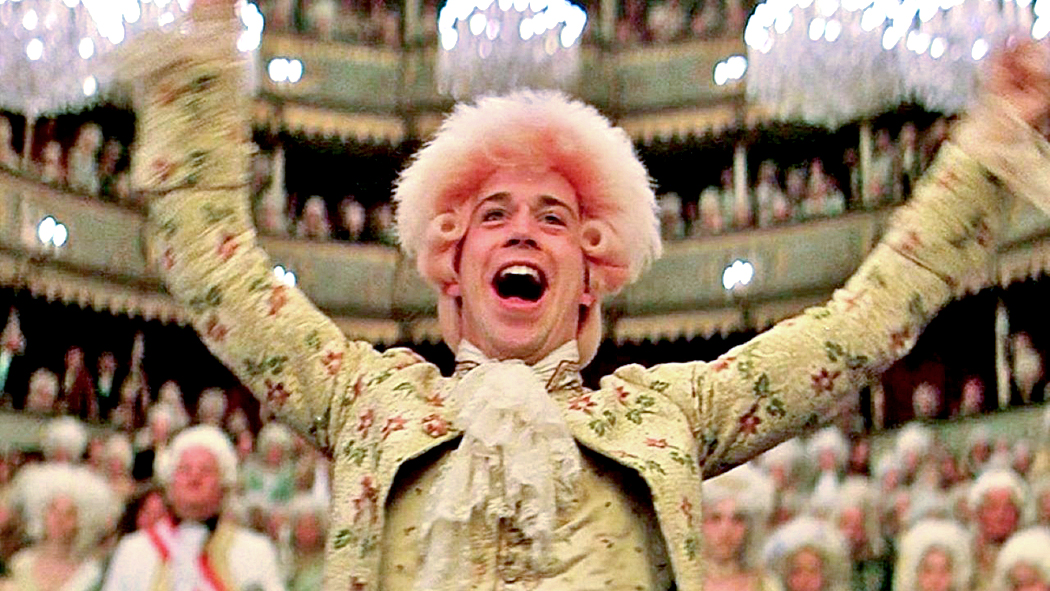
The 1984 movie, Amadeus, won eight Oscars and has been seen by millions of people. It was an excellent film, but it lied through its teeth. Mozart was not an arrested-development adolescent potty mouth. And Antonio Salieri never tried to kill him. 

Poor Mozart, he has had his life twisted over the centuries to illustrate cultural trends, and those trends have changed over those years. 

The 19th century first saw him as old fashioned, then he became a proto-Romantic, with his life deeply mythologized. The 20th century first saw him as a kind of porcelain doll, and after WWII, saw him as a polite precursor to Beethoven. In the 21st century, he has been the victim of countless historical-performance strictures that leave his music in a kind of inexpressive jog-trot strait-jacket. 

The man sometimes considered the greatest composer of all time has been so mauled over by his biographers, fans and later writers and filmmakers that the legend has taken over from the fact.

So, the plot of Amadeus is only one of a myriad of distortions, legends, myths and factifications. The truth, as usual, is more interesting.

What are some of the worst Mozart myths?

— Mozart began writing masterpieces before he turned 10.

* Yes, he wrote music beginning before he turned six. But some of that music was arrangements of other composers’ work, some may have been outlined by his father for the boy to complete, and none of them are masterpieces, or noteworthy, other than for them to have been jotted down by one so young. The early works are generic. They get played, when they are played at all, simply because they have Mozart’s name attached. 

— Mozart was buried in a pauper’s grave.

* Although it’s often said he died so poor he was buried in a pauper’s grave, the fact is Viennese law required anyone other than an aristocrat to be buried in a common grave, after a funeral service at the church. It was a reaction to recent outbreaks of plague in the country. And Mozart wasn’t poor. He lived quite well, although, working in what we would now call a “gig economy,” he had his income ups and down. 

But, over his last year, he earned 10,000 florins when an average laborer averaged 25 florins a year. It put him in the top 5 percent of the population of Vienna, according to H.C. Robbins Landon, author of 1791: Mozart’s Last Year. The man was no pauper, and his music was hugely popular, not only in Vienna, but across Europe. And when he died, he had a hit on his hands: The Magic Flute. He left his widow reasonably comfortable. 

— Mozart wrote his music spontaneously, without effort.

* Mozart’s facility with music was remarkable, but there are plenty of sketches and studies for his music. The pieces without such preliminary work most likely had them at one time, but they don’t survive. His widow, Constanze, burned most of the sketches, not thinking that fragments had any value. Mozart even writes to his father about doing such preliminary work. 

In 1787, he told the conductor of his opera, Don Giovanni, “It is a mistake to think that the practice of my art has become easy to me. I assure you, dear friend, no one has given so much care to the study of composition as I.”

— His middle name was Amadeus.

* He was baptized as Joannes Chrysostomus Wolfgangus Theophilus Mozart but his parents called him Wolfgang Gottlieb (Gottlieb being German for Theophilus). He usually signed his name Wolfgang Amadé. It was only after his death that people began regularly calling him Wolfgang Amadeus, which is a Latinized form of Gottlieb.

— His music is simple, direct, easy to listen to, easy to perform.

* And at the time of his death in 1791, at a mere 35 years old, his music was considered difficult to play and demanded careful listening. Mozart asked a lot. When the progressive Emperor Joseph II famously told Mozart his music had “too many notes, my dear Mozart. Too many notes.” he wasn’t being an ignoramus; he was reflecting the general taste of his times. To understand this, we need to place him in context. 

Some Context: The Classical Era

Something else we get wrong: It is usually said that Mozart and his contemporary Joseph Haydn wrote in the classical style, as if such a thing existed, and all they did was follow the rules. That’s got it completely backasswards. They didn’t write in the classical style; they invented the classical style. They were making it up as they went along.

Music history is taught as consisting of succeeding eras. The Renaissance gave way to the Baroque, which led to the Classical era and on to the Romantic, to Modernism and currently, Postmodernism. As if they were clearly defined and separate. And it is true that after about 1740 or so the heavily contrapuntal Baroque lost its hold on the ears of its listeners. They wanted something simpler, clearer, more charming and that wouldn’t be so serious. All those fugues and counterpoint of what was called “the learned style” gave way to homophony — that is, tuneful melodies and supporting harmonies. Something you could hum along with: Simpler and more direct. 

This is sometimes called the Style Galant; it followed the Baroque the way Rococo followed in the visual arts. Composers such as J.C. Bach, Johann Joachim Quantz, Johann Stamitz, or Domenico Alberti published torrents of light, catchy three-movement sinfonias and bright concertos, to say nothing of keyboard music to be played after dinner by the daughters of aspiring middle-class burghers. I’m grossly simplifying this, but the outlines are true. 

This is the kind of music both Mozart and his older contemporary Haydn produced in their younger days. Mozart wrote more than 20 symphonies in this popular style before the age of 17 and if they still get played it is because, again, they have Mozart’s name on them, and also, because they are full of great tunes. Mozart always wrote great tunes. 

Haydn had his own orchestra, paid for by his boss, Prince Nikolaus Esterhaza, a ridiculously wealthy Hungarian nobleman, who loved music. Hidden away at the prince’s countryside palace in Esterhazy for some 30 years, Haydn developed on his own, inventing new ways to delight and surprise an educated audience who learned and grew along with the composer. The palace was far from Vienna. Haydn said, “I was cut off from the world. There was no one to confuse or torment me, and I was forced to become original.” 

He basically invented the modern form of the symphony and the string quartet. 

Prince-Archbishop Colloredo

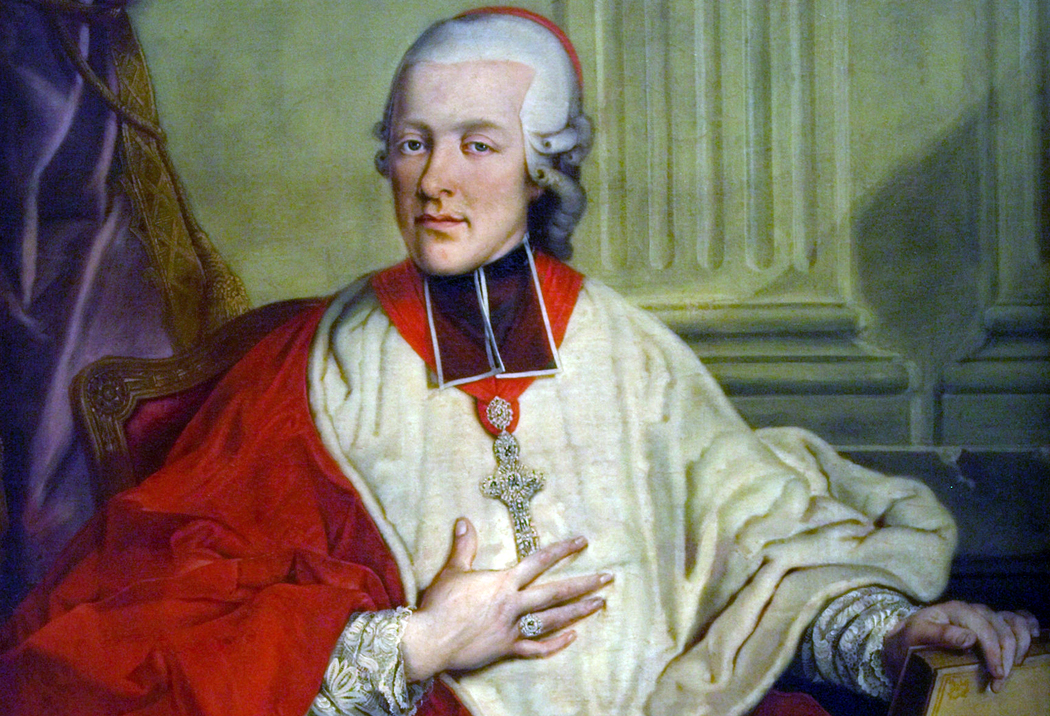
Mozart, however, was truly cosmopolitan and after freeing himself from the employment of Salzburg’s prince-archbishop Colloredo, earned his crust as a freelancer in what was becoming a “gig” economy, living from commission to commission, and from concert to concert and opera to opera. 

He learned a lot from Haydn, and joined him in making his music increasingly more complex than the usual run of gallantries. They added back counterpoint to their works, increased chromatic and harmonic subtleties. Mozart’s music, for instance, is always more complex than it sounds.

Mozart asked his musicians to do more than did other composers: to play higher, lower, more quickly; to play notes unfamiliar to their instruments or voices; to attempt unusual phrasings and colorations.

At the end of Act I in Don Giovanni, three bands play onstage at the same time, performing different music in three different rhythms, but entwining their harmonies so they mesh perfectly in a tour de force of compositional cleverness.

His music sounds simple and perfect and symmetrical, but you look at the phrase structure and it’s highly irregular. Normally, you expect 4- and 8-bar phrases, but you take a look at one of Mozart’s late scores and you see phrases of 4, 5, 3, 7, 8, 6 — but you would never guess it was so irregular just from hearing it. It always sounds smooth.

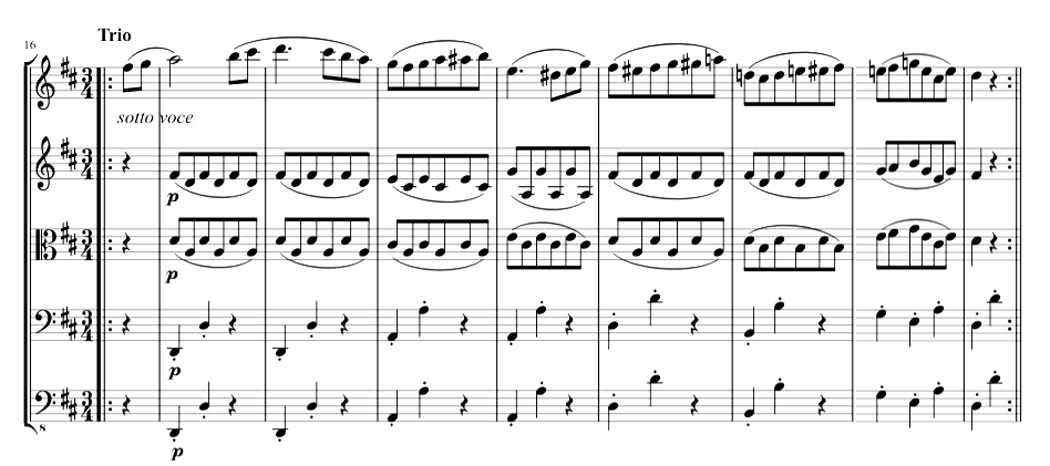
And although the surface of the music is always velvety and seductive, it’s frequently chromatic, introducing notes that shouldn’t belong. Even so graceful and simple a tune as the trio from the minuet in the popular Eine kleine nachtmusik manages to use 11 of the 12 notes in the chromatic scale. It verges on Schoenberg, though it sounds as simple as a nursery rhyme.

While Haydn’s metier was primarily instrumental music, Mozart shone in vocal music, and especially opera, where he brought psychological complexity to what is sung. 

Mozart as Shakespeare

Mozart was the Shakespeare of music. No composer ever displayed a wider sympathy for the human condition or a greater breadth of musical style. At the bottom of his music is a profound humanism, which is all the more obvious in his best operas — The Marriage of Figaro, Così fan tutte, The Magic Flute and Don Giovanni.

Of all the great composers, Mozart also is the easiest to love. Bach may be more sublime, Haydn wittier, Beethoven more in-your-face and Schubert one of the few who could write melody to equal Mozart, but Mozart remains the most accessible. He speaks directly to us, because he is the most humane.

That quality underlies all his major operas: His plots are filled with three-dimensional people, not the stock characters of most other operas. No hero is flawless, no villain unredeemable.

The miracle is that it isn’t just the libretti that convey this complexity, but the music itself. It gives us the subtle psychological undertow.

Mozart understood all of his characters well. None of them is tossed off as inconsequential. He imbues each character with definitive musical qualities.

So that Don Giovanni’s ebullient life force is expressed in his headlong “Champagne Aria,” with barely a moment to inhale. Or the Queen of Night’s rage in Magic Flute, when she launches into Baroque arabesques and arpeggios in her showpiece “The vengeance of hell boils in my heart.”

Even in Figaro: Has adolescent horniness ever been better expressed than the “amorous butterfly” take the hero sings about the love-struck Cherubino?

All these characterizations are built on the composer’s willingness to accept without judgment everything that is human. Perhaps that’s why nobody ever wrote forgiveness better than Mozart.

Each of his major operas has a scene of forgiveness in it, and it’s usually the turning point of the action, when a character recognizes the frailty of human nature. Such forgiveness is not bestowed from a feeling of superiority but from shared compassion.

It’s not that we believe the Count in Figaro will now be faithful to the wife who forgave him, but that we know she will always forgive him, because this is what it means to accept the human condition.

But the particular mood Mozart raises in such moments also is carried into his purely instrumental music: The slow movement of his Piano Concerto No. 18 is the echo of such a moment in Figaro. It sighs, and we sigh with it.

Such genius, whether Shakespeare or Mozart, can’t be explained. You just accept that it is.

Don Giovanni

Mozart’s Don Giovanni has been called the perfect opera. It ingeniously balances comedy and drama, music and theater, the aristocracy and the peasantry, the past and the future.

It was first performed in 1787 in Prague, where the composer was a musical superstar, and told the story of the seducer Don Juan (Don Giovanni in Italian).

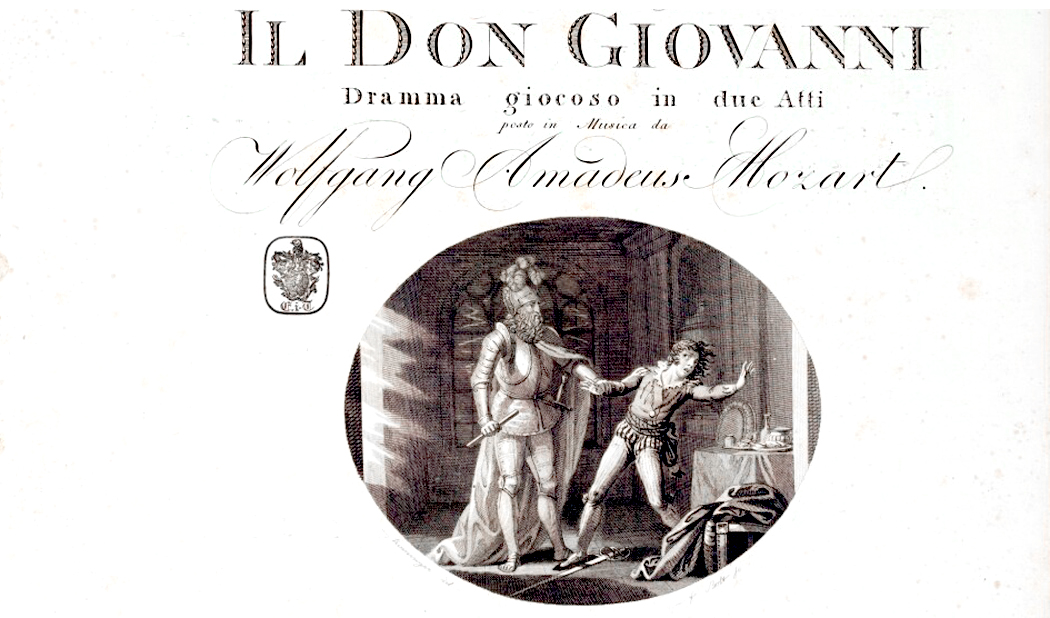
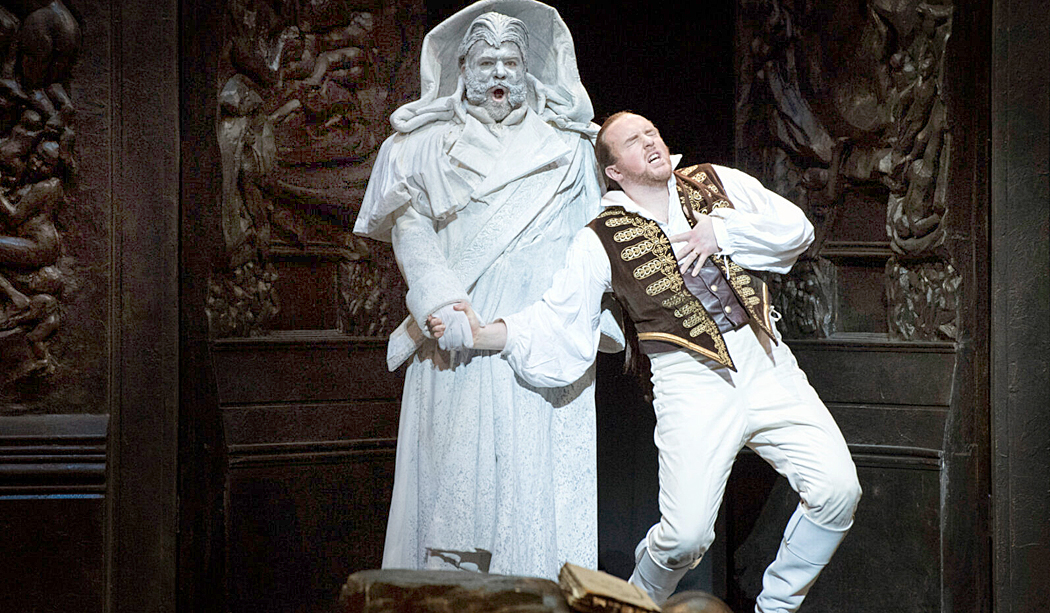
The story is simple in outline: After he kills the outraged father of one of his amorous conquests, Don Giovanni is tracked down by his victims. When he hides in a cemetery, the statue of the dead father miraculously asks him to dinner and, later, when the don shows up, the statue drags him to his judgment in hell.

But Mozart and his librettist, Lorenzo da Ponte, took what was a traditional story of sin and punishment and made it into a paean to the life force. Technically, Don Giovanni is still the villain, but Mozart and da Ponte made him such an engaging and vital presence that in the end, when he refuses to repent, despite the demons that surround him and the brimstone that burns, he actually rises to the heroic. Is he hero or villain? Or both.

This is where the Classic past meets the Romantic future: The cautionary moral tale of the past turns into the Byronic hero of the upcoming 19th century, and Mozart is in the avant-garde.

Digression I: Rake with a Quill Pen

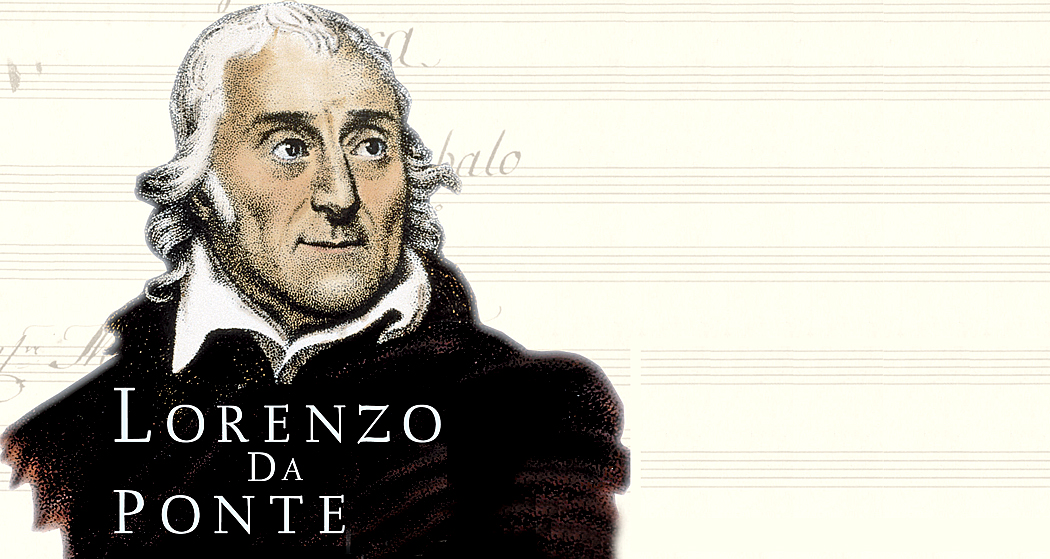
Opera is a collaborative art. Mozart’s music is great, but so was the libretto written by Lorenzo da Ponte. Da Ponte was born a Jew in Venice in 1749, was ordained a priest and opened a brothel with his mistress, where he entertained the clients by playing violin in his priest’s vestments. He was the perfect choice to write the libretto for Mozart’s dramma giocosa, Il dissoluto punito o sia Il Don Giovanni (“The Rake Punished, or Don Giovanni”).

Da Ponte was a friend of the infamous seducer Casanova and was forced to flee Venice after a trial for sedition, settling in Vienna, where he wangled a position from Joseph II, the Holy Roman Emperor. When he was asked how many plays he had written, he answered, “None, sire,” to which the emperor replied, “Good, then we’ll have a virgin muse.”

He wrote libretti for dozens of lesser operas by lesser composers, such as Antonio Salieri, before landing a job writing — or rather rewriting — Beaumarchais’ popular play The Marriage of Figaro as a libretto for Mozart. He also wrote Don Giovanni and Così fan tutte before being shown out of the city by the police.

Da Ponte’s post-Mozart life is hardly less interesting. After marrying (quite a trick for a priest), he moved to the United States, where he failed as a grocer, became friends with Clement Moore (reputed author of ’Twas the Night Before Christmas), who helped him gain a faculty post at Columbia College (now Columbia University), where he was the first faculty member to have been born a Jew.

In 1828, he became an American citizen, died 10 years later, had a grand funeral at St. Patrick’s Cathedral and is buried in Green-Wood Cemetery in Brooklyn.

The Pop Star

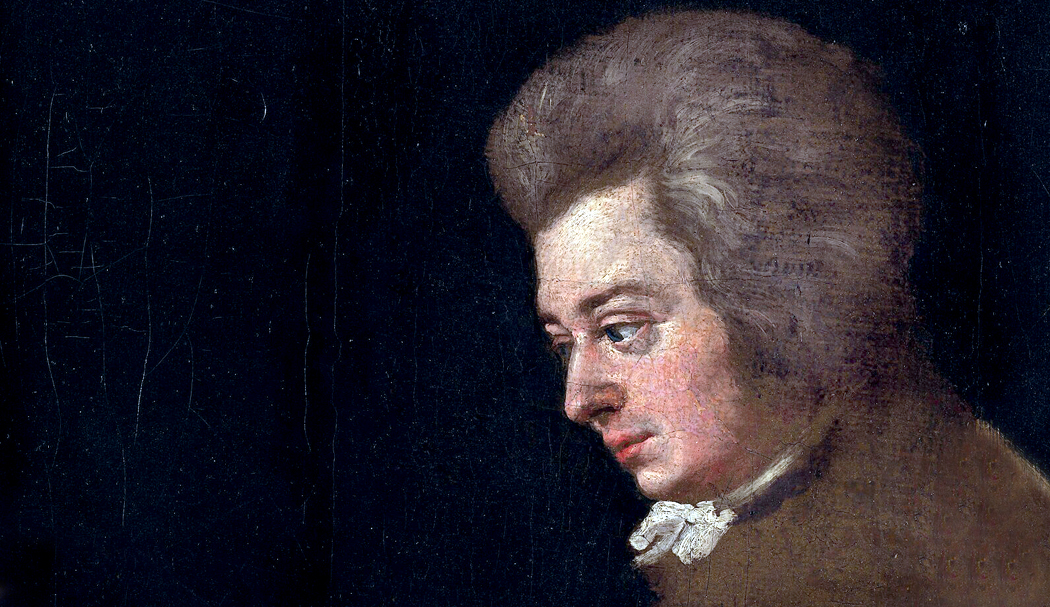
Mozart’s time was the late 18th century. He was born in Salzburg, Austria, in 1756 and was one of the great child prodigies of all time, picking up the violin when he was four and composing by the time he was five. His first opera was written when he was 12.

He was trooped across Europe by his father, playing for the amazed aristocracy and gathering gifts of money and jewels.

He outgrew his boyhood cuteness but grew to be one of the most prodigious composers of all time: He wrote 22 operas, 50 or so symphonies, 27 piano concertos, 23 string quartets, 17 settings of the Roman Catholic Mass. His complete works take up 170 CDs in one current set.

And he became enormously popular.

Mozart was the pop artist of the time. People wanted to play and hear that music so much, they transcribed the music for all kinds of ensembles. Every town had a wind band and they played arrangements. Every little village in Belgium or Bavaria could play arias from the latest Mozart opera, the way halftime marching bands now play show tunes.

Mozart makes fun of this phenomenon in the finale of Don Giovanni, when the don has a dinner in his castle, with a band playing the latest hits from operas, including “amorous butterfly” from Figaro.

He dismisses it: “I’ve heard this piece too much, he says. We laugh because it shows Mozart could take a joke. And that only makes him more human.

Digression II: Mozart and Haydn

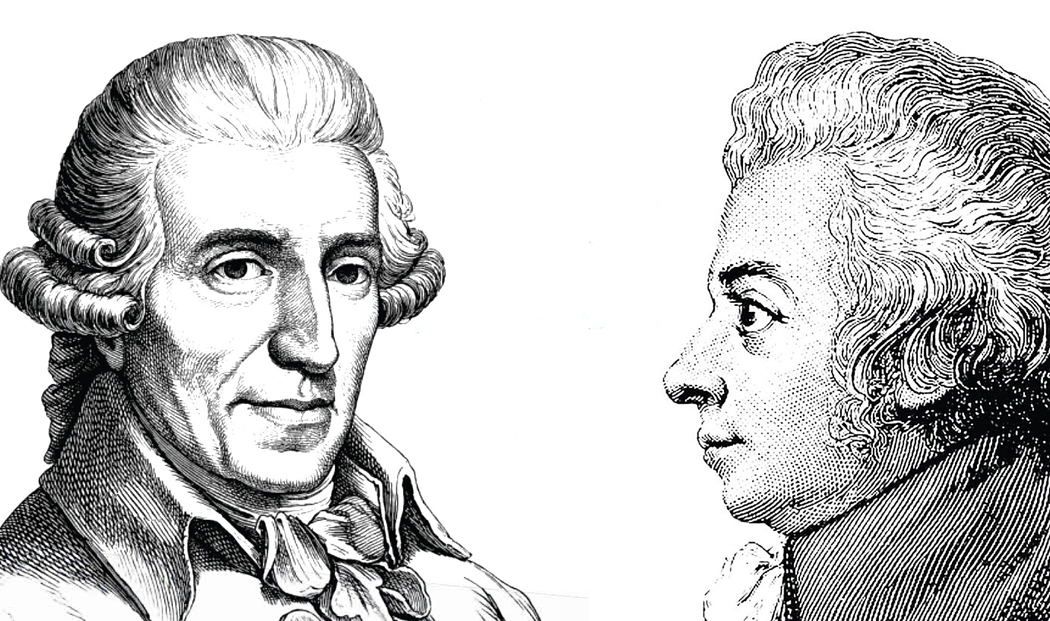
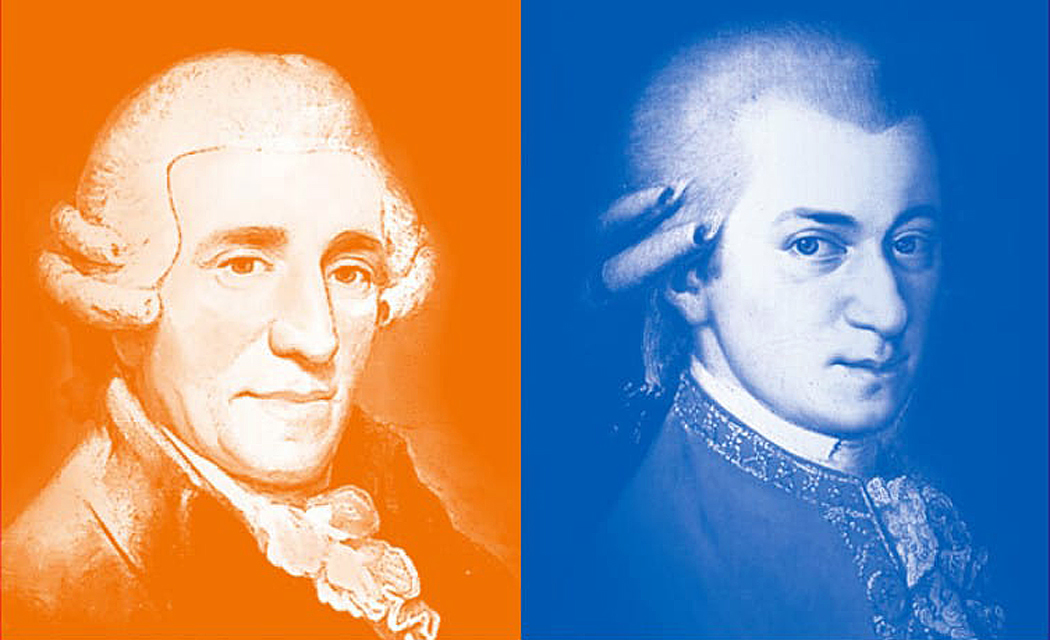
The era from about 1770 to 1810 is called “Classical.” It’s the age of music defined by two names: Joseph Haydn and Wolfgang Mozart.

They were the twin colossuses of the time: one witty and bright, the other deeper and more melodious.

But the two men were very different. Haydn brighter and more brittle sounding, with an emphasis on what the 18th century valued as wit, making in-jokes in his symphonies and working simple themes into complex textural patterns that his audience recognized with pleasure — they got the joke.

Mozart’s music is darker, more chromatic, with a more blended sound, and he focused his attention on grace and style.

If Haydn is the brain of 18th-century music, Mozart is the heart.

They valued each other above anyone else and recognized each other’s genius. Mozart learned more from Haydn than from any other source. Haydn said Mozart was the greatest composer alive.

To many, Haydn and Mozart sound alike. They are very different but shared a musical language. So, how do you tell them apart?

One wise old professor explained his simple test: “If you can remember the tune after it is over, it was Mozart.”

Reason and order

The 18th Century is called “The Age of Reason,” although sometimes I think it may be said ironically, since, after all, it was also the age of Rousseau, the French Revolution and the Reign of Terror. But the overall tenor of the era was one of rationality and balance, of a just God in his heaven keeping proportionality in everything human and cosmic. 

In German-speaking lands, it was the Aufklärung, the “clearing up,” and prompted enlightened rulers, such as Joseph II in Vienna, to downplay religious fervor, mindful of the chaos of the Thirty-Years War, and promote scientific enquiry and philosophy. Coffeehouses rose filled with debate and Freemasonry became fashionable. Mozart became a Freemason, and his final opera, The Magic Flute, was a Masonic allegory, of sorts. 

There were certainly many points of view, but the general sense was one of moderation in all things. Don’t go overboard. Keep an even keel. Music followed suit: nothing too extreme, but nothing too simple-minded, either. It was a perfect walk between opposites.

And the major musical innovation of the era was the rise of the Sonata-Allegro form. It was the primary organizing principle for Haydn and Mozart and held sway in various permutations for the next century and a half. It is usually taught in a technical way: first theme in the home key, second theme in the dominant, followed by a development section and rounded off with a recapitulation of the two primary themes, but now both in the home key. But that is not why the form became so dominant. That is like describing an angel as having wings and white robes, without ever noting it is a messenger from God. 

The point of the sonata form was to establish an order, in terms of recognizable melodies, to then disrupt the order by breaking up the tunes into bits, rearranging them, and playing those pieces in a hodge-podge of shifting key-centers, leaving the listener with no firm ground to stand upon, and then reasserting clear order once again, so the universe is set right. Order – disorder – order reaffirmed. 

Once you understand the metaphor of the sonata form, you will never again be hoodwinked by the academic palaver. The music is about the primacy of providential order. 

This is a metaphor that has provided the foundation of much of art. Shakespeare’s histories and tragedies are all about disturbed natural order that has to be set right. Opera plots are almost all about illegitimate threats to the way things are supposed to be. It is the mega “A-B-A” of countless poems and novels. 

The form made such satisfying intellectual and emotional sense that it ruled western instrumental music almost until now. Those composers who didn’t write sonata form wrote in protest to it. Take a side. It was that influential.

L’Envoi

It is nearly impossible to write words about music. One tends to write impressionistically and metaphorically about what one hears, but such language become like trying to describe color to a blind person. 

The result is that when most people talk about their favorite popular music, they talk about the lyrics. The music is barely mentioned. In fact, most popular music contains scant little actual music at all: just a few familiar chord changes under a meandering set of melodic intervals. You may mention the beat, but that, too, tends to drone on monotonously through the song. 

You could, if you wanted to, talk about the music, but it would take specialist vocabulary that would convey almost nothing to the lay reader: “The composer used the Neapolitan relationship to modulate from B-minor to A-flat major while dividing the treble from the bass line in hemiola.” There, does that mean anything to you? Two against three? 

One reads scores rather than text to understand what is going on, but even that does not really tell you what you are hearing, only how it was done. 

And so, when writing about Mozart, almost everyone falls immediately into biography. We can tell you fascinating things about his family, his sister, he relationship with his patrons or the order in which his symphonies were composed. 

But the ear can hear how, in sonata form, we hit the comfort of the home key as the recapitulation calms down the churn of the development. It is something instantly felt through the ear — if you are paying attention. But how to write about that in the Jupiter Symphony or the K. 545 piano sonata comes a cropper. Just listen. It’s obvious. 

One can say that Mozart blends his wind instruments while Haydn tends to keep his winds distinct. It is true, but you have to hear it to understand. Mozart’s recapitulations are usually a return to order, while Beethoven uses his recaps (in his mature work) to take the music to a new place, a “new normal” that means we have moved through the development from Point A to Point B. Mozart’s melodies tend to be step-wise, as a human voice might sing, while Haydn often jumps around because fingers on a keyboard can do so. 

These are swooping generalities, and there are plenty of exceptions, but they are attempts to write about the music rather than the historiography. 

The only recommendation is to listen to more music, lots of it, and absorb what you can, so you can distinguish the difference between a sonata form and a rondo, between an English horn and a bassoon in its upper register. Hear it and pile it into your trove of experience. It is the sounds that are made that is the music. Words get in the way. 

And pay attention. Music isn’t a warm bath you slide comfortably into, but a conversation the composer is having with you.

When you have ideas where your ears should be, you can be such a self-righteous moron. My Tchaikovsky problem is a case in point. I wasted years not listening to his music. What I thought closed my ears to what I might hear. 

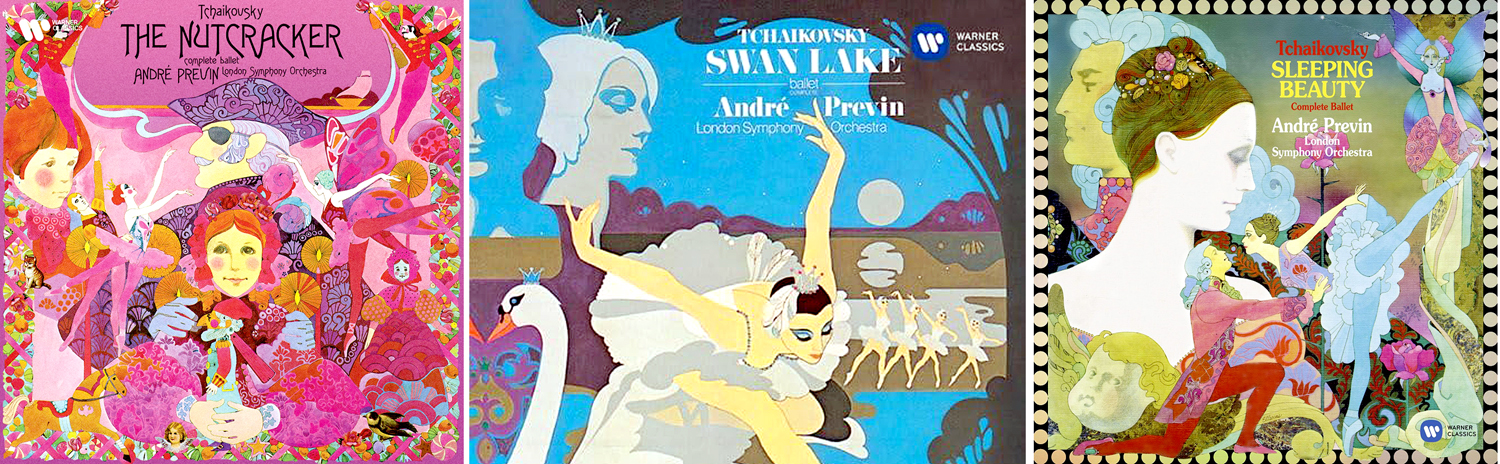
When I was a boy, longer ago than even your parents can remember, the music of Tchaikovsky was easy to love — all those sweeping tunes and swelling fiddles. His music was, in that antediluvian age, pretty well ubiquitous. Concert halls played his symphonies, pianists conquered the Soviet Union playing his piano concerto, and supermarkets offered LP specials for 49 cents with grocery purchases. And that is where I was first exposed to the Nutcracker Suite, played by an anonymous orchestra and conductor (Grieg’s Peer Gynt Suite was on the “B” side). 

My parents bought successive volumes from the supermarket and I became exposed to “The World’s Greatest Music,” including Beethoven’s Fifth Symphony, the Brahms Second, the Sorcerer’s Apprentice and all of those now-familiar war horses a friend of mine used to call “The Loud Classics.” 

A few years on, as puberty hit, it was music like Tchaikovsky’s that spoke to me, with its pile-driven emotional excess and immediacy. My insides swelled with powerful feelings. That sort of “heart-on-sleeve” thrum speaks to those newly activated hormones. 

But then, unfortunately, I became smarter, learned more, read what critics had written. I discovered that such music was trivial, shallow, showy and unserious and learned how wrong I had been. My taste turned to Beethoven’s late quartets and Bach’s unaccompanied violin works. That was serious music. 

This is something that happens to many of us when we are becoming adults and presume to take on more grown-up tastes, pretending to understand more than we actually can. Ideas about the music supersedes what we actually hear. 

And so, for the next 40 years or so, I disdained listening to much Tchaikovsky. Occasionally I would spin the Pathetique on the record player. It, after all, had a second movement in 5/4 time. Like Dave Brubeck. 

Looking back, I realize that the musical culture was traveling much the same route as I was taking. Music that had been pilloried for being too “modern” and “dissonant” became more mainstream. One could hear Bartok or Stravinsky in the concert halls, played alongside Beethoven and Sibelius. And musicians and conductors, grown up in the same era as I did, shared much of my taste. Tchaikovsky slowly became out of fashion. Astringent drowned out lush.

It was still played, of course, but less frequently, and by orchestras and conductors more simpatico with Modernist esthetics than the tired old Romanticism. Stravinsky had stated, in no uncertain terms “Music is, by its very nature, essentially powerless to express anything at all.” And Toscanini has said Beethoven’s Eroica was not about heroism, but about “E-flat.” (Neither man actually believed their own words, and their music and music-making prove that, but their words proved highly influential). 

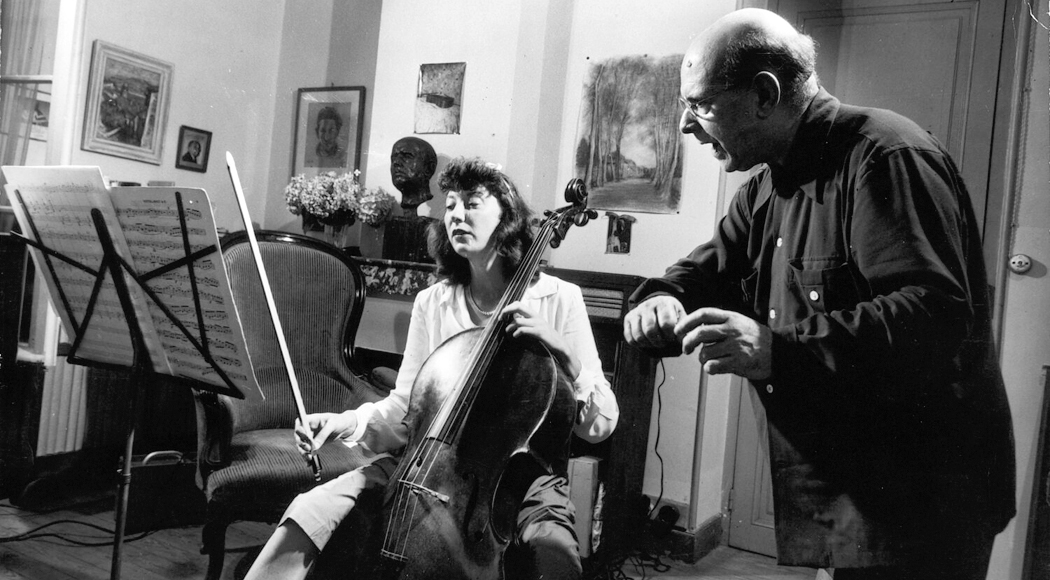
Toscanini also said, “Tradition is only the last bad performance.” But tradition is the very heart of any classical music — music handed down from one generation of masters to a younger generation. Whether it is Indian classical music, Japanese Noh flute playing, or Pablo Casals teaching Bernard Greenhouse (of the Beaux Arts Trio) and Greenhouse teaching Paul Katz, onetime cellist of the Cleveland Quartet) it is tradition that defines it. 

Orchestras and conductors who had learned their art before the 20th century and continued the traditions up through, perhaps 1970 or so, had the music in their old bones, understood how it was meant to go, and how the musical arguments played out in the notes. But the older musicians died out and the younger generation taking charge had a more “objective” view of the music. A tradition was dying. 

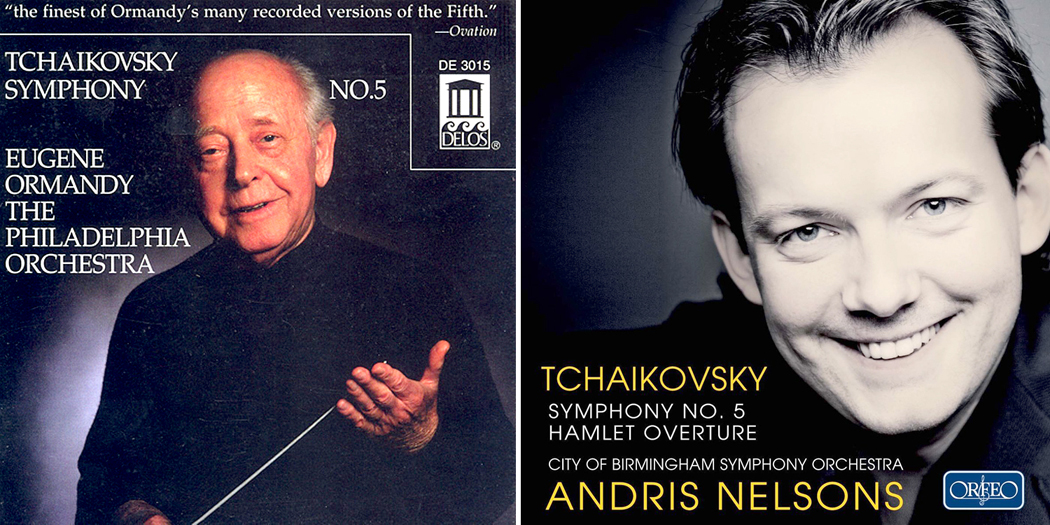
You can hear this by comparing any Tchaikovsky symphony recorded by Eugene Ormandy (1899-1985) or Yevgeny Mravinsky (1903-1988) with the same performed by Andris Nelsons (b. 1978) or Vladimir Jurowski (b. 1972). The younger players play the notes clearly and cleanly, even with excellent musicianship, but notes and music are different things. The younger generation grew up with Stravinsky or Prokofiev and had no problem with their complex scores. It was a shift in sensibilities. Younger musicians can breeze through Le Sacre du Printemps perfectly, while many old recordings show esteemed conductors fumbling through, missing accents and here and there. It’s a new tradition. (And I’m not even talking about “historically informed performance practice.”) 

But in the 19th century music, the older conductors knew much the younger generation had no grasp of. They knew how the music “went.” What it was saying. 

The true divide between the old and new were the World Wars and millions of dead. And especially after the genocide of the Second World War, it was no longer possible to believe in such old ideas as nobility or heroism. And music about such things no longer rang true. Listen to the version of Franz Liszt’s Les Preludes performed by Kurt Masur and the Leipzig Gewandhaus Orchestra, from 1978 and you hear all the notes, and certainly there is excitement. But listen then to the 1929 performance by the Amsterdam Concertgebouw and Willem Mengelberg, and you hear music that believes what it is saying. There is an earnestness to it, a fervor, that feels second-hand in the Masur recording. The difference between a hero and an actor playing a hero.

 And so, I and the generations that grew up with me and after me no longer had the stomach to hear such “universal” emotions as Tchaikovsky tried to evoke in his music. Nothing universal could be trusted anymore, and the grand statements of fate and tradition were dumped.

I remember when teaching, a student pushed back on something I had said. “It’s all relative,” she said. “Nothing is true. It is your truth or my truth, but nothing is universally true.” It was a common belief for her generation. And given the “truths” espoused by various institutions that were shown to be mere self-serving hypocrisy after Watergate, after “I did not have sex with that woman,” and most of all, after Auschwitz, it was hard to fault her. 

But I replied: “There is one truth that is universal. You will die. I will die. All living things will die.” That, I said, is the starting point for all art. After that, we look for anything else that we may make art from. Second truth follows from the first: The people you love will die, and many of those will die before you and you will suffer loss. How do you react to that loss? Yes, some Victorian pieties seem like sentimental claptrap to us now, but the impulse behind them is very real, and we can react to that reality. 

And so, when I hear Tchaikovsky’s Pathetique, I feel deeply in my psyche the sense of death and loss inherent in the harmonies and melodies, and I am moved. Deeply moved. If the stylistic idiosyncrasies of his age are not ours, the underlying emotions are. 

It is incumbent upon us, as listeners (and readers, and theater audiences) not to be deaf to the content of art. Yes, some music is meant only as divertissement, as Mozart serenades or Schubert ländler, but the more ambitious pieces — symphonies, operas, even ballets — are responses to the larger questions. Not only death or loss, but the subsequent propositions built from those original two: What is happiness, what is narrative, what is rhythm and physical movement and how does it all reflect the experience of being alive? 

If you listen to Tchaikovsky’s music with ears instead of ideas, you hear not only emotions both bright and dark, but extraordinary melody and harmony, often rather advanced for its time, and unparalleled brilliance of orchestration. 

Even so minor a piece as his Nutcracker ballet is built from absolute crystal gems of sound combinations. Pure genius. 

The disdain so many now feel for the music of Tchaikovsky, or, for that matter, Rachmaninoff, or others of their era, is, as far as I am concerned, unearned, and merely an expression of ignorance. One should never cut oneself off from such delight, pleasure, and the emotions evoked. One should never close off one’s ears to music, or let ideas about the music take charge. 

Is just being alive enough? It is a question I have been facing, with continued difficulty, ever since I retired a dozen years ago after 25 years as a newspaper writer. 

For all those years, and for the many years before, I held jobs that contributed, in some way — often small, even negligible — to the business of society. I had a sense of being productive. This is not to make any major claim about how important my production was. It was admittedly quite minor. But it was a contribution. 

Doing so was a part of my sense of self, that being a productive member of society was not merely a way of occupying my time, but was actually a moral duty. If I were slacking off, I would be harming my society. And even worse, harming my immortal soul (something I don’t actually believe in).  

This is not something I thought much about on a conscious level. In fact, when I do think about it, I realize it’s quite silly. Society gets along quite well without my input. But it is buried deep down somewhere in my psyche that I must be productive. 

The opposite of being productive is being lazy. And I can’t help but feel that laziness is a moral failing. I have tried to excavate my brain to discover where this sense comes from and I cannot be sure. 

The easy answer comes up, “Protestant work ethic,” and it is true that I was raised in such an environment. But religion has never played an important part of my life. As I have said before, I have no religion; I’m not even an atheist. 

But somehow, I seem to have been injected with this guilt about not always doing something. Making something; teaching something; selling something; performing something. 

It is true that my grandparents, on both sides of the family were quite religious. My father’s parents were even infected with a kind of Lutheran religious mania. They went to church three times a week, prayed constantly, and when they were young, before World War II, my father and his siblings were not allowed to listen to the radio, to music or to dance. In fact, this church-craziness led my father to promise never to inflict this kind of joyless religion on his children. 

And so, although we all went to church on Christmas and Easter, it was only to make my mother’s mother happy. She was religious in a more normal way, and was always kind and loving. But I and my two brothers managed to escape our childhoods without any religious sentiment at all. 

 Or so it seems. While I have no supernatural beliefs — the whole idea of a god or gods seems pointless — something of the culture seems to have leaked in. 

For all of my 25 years at the newspaper, I averaged about three stories per week. I always felt as if I were slacking off and that I should be writing more. My editors constantly told me I was the most productive member of the features staff. But it never felt that way. Even on vacations, I took daily notes before going to bed, and used those notes to write travel stories for the paper when I got back to the office. 

Before I retired, I used the computerized data base to check on my output and discovered I had written something like 3 million words during my tenure. If an average novel is about 90,000 words, it means I wrote the equivalent of more than 30 novels in that time. My last project for the paper was a 40,000 word history of architecture in Phoenix. 

And so, when I left my job, it was like stepping off a moving bus,  racing to a halt and trying to keep my balance. 

My colleagues at the paper bought me a blog site as a retirement gift, and I began writing for it instead of the newspaper. At first, I was writing an average of three blog posts per week, unchanged from my time at work. 

I have slowed down greatly since then, and am now aiming for about three posts a month. I don’t always make that many. But I have written more than 750 blog entries in the 12 years since I left the newspaper. which is still more than one a week. And I also write a monthly essay for the online journal of the Spirit of the Senses salon group of Phoenix. That’s an additional 103 essays, each averaging about 1500 words. Blog and journal, it all adds up to about an additional million and a half words written since giving up employment. Old writers never really retire, they just stop getting paid. 

And none of this is paid work. I write because I cannot not write. When I am not blogging, I am writing e-mails. Old-fashioned e-mails that are more like actual letters than the quick one- or two-sentence blips that constitute most e-mails. Scribble, scribble, scribble, eh, Mr. Nilsen? 

But that all brings me back to my original concern: Is just being alive enough? Can I in good conscience spend an hour or two sitting in my back yard and listening to the dozens of birds chattering on, watching the clouds form and reform as they sail across the sky dome, enjoying the random swaying of the tallest tree branches in the intermittent wind? Thinking unconnected thoughts and once in a while noticing that I am breathing?

In 1662, Lutheran composer Franz Joachim Burmeister wrote a hymn titled Es ist genug (“It is enough”) that Johann Sebastian Bach later wrote into one of his more famous cantatas. It is notable for including a tritone in its melody. And, in 1935 Alban Berg incorporated it in his violin concerto, written “in memory of an angel” after the death of 18-year-old Manon Gropius, daughter of Alma Mahler. It is one of the most heartbreakingly beautiful musical compositions of the 20th century. Es ist genug

I remember reading that in India, the idealized life is understood to be a youth of play, and adulthood of work and an old age of seeking spiritual truths. That one is meant to lay down one’s tools and contemplate what it has all been about. And I take some comfort in the possibility that, at the age of 76, it is now my job no longer to produce, but to absorb all those things that were irrelevant to a normally productive life. To notice my own breathing; to feel the air on my skin; to recognize my tiny spot at the axis of my own infinitesimal consciousness in an expansive cosmos. To attempt to simply exist and to feel the existence as it passes. 

Buddhism has its Noble Eightfold Path, and I have my list of Seven Noble Violin Concertos.

There are two basic varieties of concerto in the Western tradition. In one, the purpose is to be pleasing, either through beautiful and graceful melody or by entertaining the audience with the soloist’s virtuosity. 

But the other path — what I’m calling the “noble concerto” is more symphonic in conception, where an estimable composer uses the concerto form to express some deep or profound feelings and the solo instrument is just a means to do so. 

This is not to disparage the first type of concerto. Two of the greatest and most popular violin concertos fall into this group: the Mendelssohn concerto (certainly one of the most beautiful ever and perhaps the only one that could be called “perfect.”) and the Tchaikovsky, which, although it is difficult for the performer, cannot be said to plumb the emotional depths. Doesn’t mean it isn’t a great concerto, but its emotional qualities tend to be melodramatic rather than profound. 

The concertos of Paganini are tuneful, also, but mainly exist to show off his digital gymnastics. The concertos of Vieuxtemps, Viotti, and Wieniawski are all adequate but shallow works. Don’t get me started on Ludwig Spohr. Even Mozart’s concertos for violin are more pleasing than profound. It’s all they were ever meant to be, and we shouldn’t ask for them to be more. 

Some of these concertos are among my favorites. Beyond the Mendelssohn and Tchaikovsky, I adore the Korngold, the Barber, both Prokofievs and the Stravinsky. I even love both Philip Glass goes at the genre (has he written a third while I wasn’t looking?) I listen to all of them over and over, with great pleasure and satisfaction. So I am not writing them off simply because they don’t make my list of noble concertos. 

The noble concerto doesn’t seek to ingratiate itself. It is not written with the audience in mind, but rather to express the thoughts and emotions common to humanity. They bear a seriousness of purpose. They may seem more austere, less immediately appealing, but in the long run, they reward a lifetime of listening, and in multiple interpretations. You learn about yourself by listening to them. 

I am not including concertos earlier than Beethoven, which means, no Bach, no Vivaldi, Tartini, Locatelli or Corelli. In their day, “noble” simply meant a spot in the social hierarchy, a position of privilege unearned but born into. Beethoven changed that, claiming a place for an earned nobility of purpose and ability.

“Prince,” he told his patron, Prince Lichnowsky, “what you are, you are through chance and birth; what I am, I am through my own labor. There are many princes and there will continue to be thousands more, but there is only one Beethoven.” Which would sound like boasting, if he didn’t have the walk to back up the talk. 

Nobility of the kind Beethoven meant was defined in Samuel Johnson’s dictionary as, “a scorn of meanness,” or low intention and an embrace of moral and ethical excellence and personal integrity. 

I call these seven concertos “noble,” but that is a word well out of fashion these days, when anything elevated, whether nobility or heroism or honor, is suspect. The facile use of such words by fascists and totalitarians  have made them stink to the mind. Yet, the truths of them are still there, and can be found in words, actions, art and literature. And in these seven concertos. 

It’s not that I want to listen to these seven to the exclusion of the others. They each have their place, their purpose and their virtues. But these seven are just more, what — serious. They make more demands on the listener, and provide greater rewards for the effort. A seriousness of purpose. 

—Let’s take them in historical order, beginning with the obvious first choice, the Beethoven Violin Concerto in D, op. 61, from 1806. 

At one time, I owned more than 40 recordings of the Beethoven concerto, which I listened to and studied with the score, and so, I am quite familiar with most of these CDs. I got rid of almost all of them when I moved from Arizona to North Carolina, along with three-quarters of all my classical music collection (now, I’m reduced to little more than 2500 CDs. Weep for me.) 

There have been more than a hundred notable recordings of the Beethoven concerto, from the time of acoustic recording to our streaming present. 

I  count five distinct ages of recorded music. The first from the era of the 78 rpm record, where concertos and symphonies had to be spread out onto many discs, with odd breaks in between. This was an age of giants, of Fritz Kreisler, Mischa Elman, of Bronislaw Huberman, Albert Sammons, Efrem Zimbalist, Adolf Busch, and, crossing over eras, Jascha Heifetz. 

The second era was that of the LP, both mono and stereo. This was the golden age of classical music recordings, where established stars of an earlier age got to show off their stuff in hi-fidelity, and newer star performers made their names. 

This was followed by the digital era, beginning in the 1980s, with the introduction of CDs. A few conductors and orchestras dominated the market — Herbert von Karajan re-recorded everything he had previously done in 78s and on LPs, and not always to the better. 

The new century has been marked by an entire new generation of soloists, better trained and technically more perfectly accomplished than most of the great old names, and they have made some astonishing recordings. What I sometimes suspect is that they lack the understanding and commitment to what the music means, intellectually. Facile and beautiful and technically perfect, but not always as deep. 

And now, we live in an age that overlaps that, of historically informed performance, in which everything is played lighter, faster and punchier — and all the nobility is squeezed out as suspect and as fogeyism. 

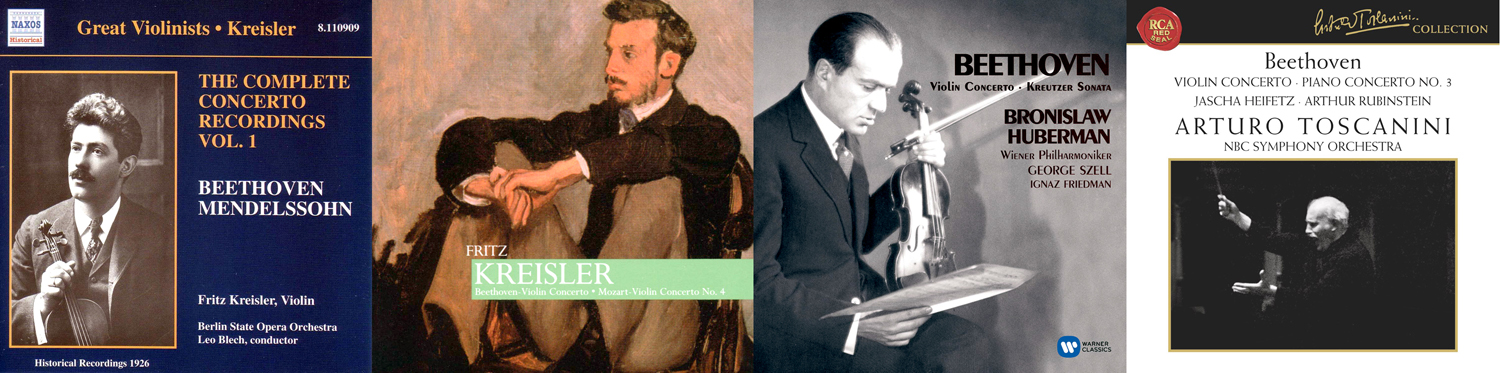
From the first era, we have two recordings by Kreisler, from 1926 with Leo Blech conducting and a second from 1936 under the baton of John Barbirolli. You might think the later recording was in better sound, but they are pretty equal in that way. Clearly they are old scratchy recordings, but the brilliance of Kreisler shines through anyway. In many ways, these are my favorite recordings of all. Kreisler has a warmth, a beauty of phrasing and a nobility that is exceptional. 

There is also the Bronislaw Huberman with George Szell from 1934 in surprisingly good sound, and by Jascha Heifetz with Arturo Toscanini from 1940 that some prefer over his later LP one with Charles Munch. 

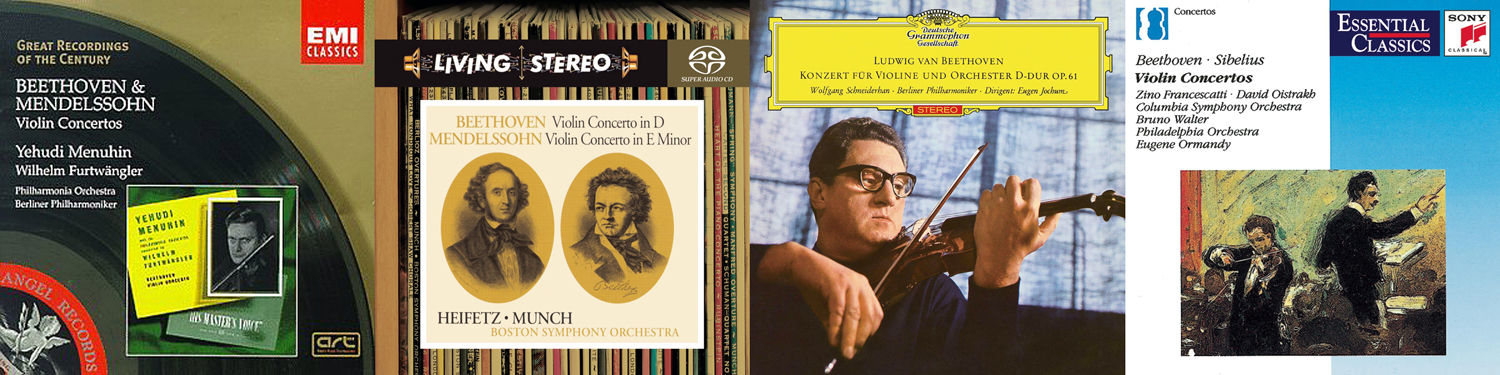
From the second era, there were many great performances. Four I would never do without are my favorite in good sound, Yehudi Menuhin and Wilhelm Furtwangler from 1953; the second Heifetz recording, from 1955 with Munch; the one that is a consensus reference recording, Wolfgang Schneiderhan with Eugen Jochum, from 1962; and for utter beauty of tone, Zino Francescatti with Bruno Walter, from 1961. 

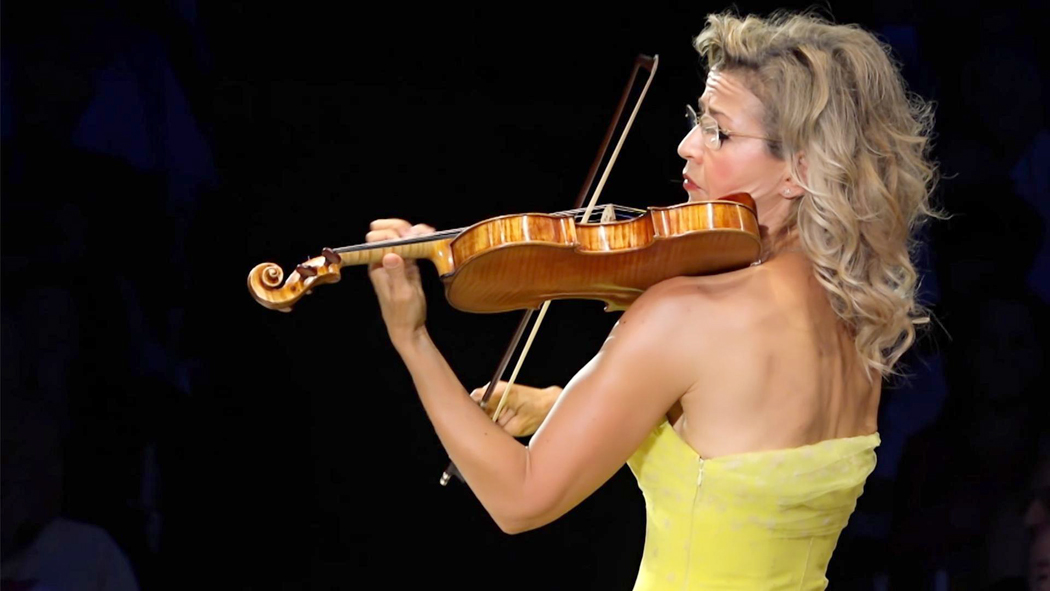
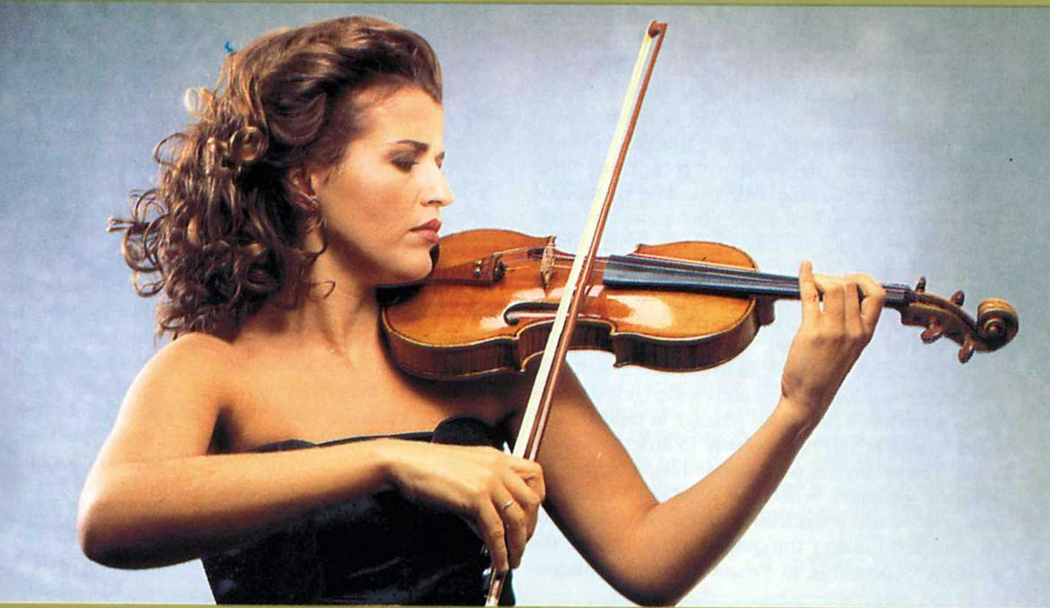
Also, later in the LP era, some big names with some big sounds: Isaac Stern with Leonard Bernstein (1959); Itzhak Perlman with Carlo Maria Giulini (1981); Pinchas Zuckerman with Daniel Barenboim (1977); and Anne-Sophie Mutter with Karajan in her first recording of the work (1979). Any of these is a first rank performance in good sound, and define what the Beethoven Violin Concerto should be.

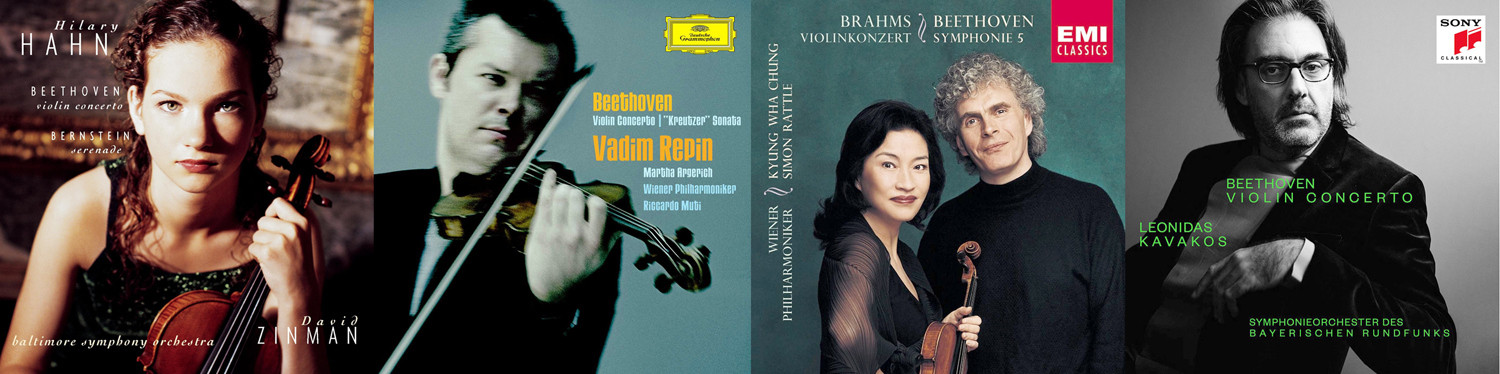
Among the younger violinists, there is plenty of good playing, but fewer deep dives. You still find the old grandeur with Hilary Hahn and David Zinman; and clean musicianship with Vadim Repin and Riccardo Muti; and Kyung Wha Chung and Simon Rattle; and Leonidas Kavakos conducting and playing. 

All the famous fiddlers of the golden age made multiple recordings of the concerto, the Oistrakhs, the Milsteins, the Sterns, the Perlmans and Grumiauxs and Szeryngs. And mostly, they were consistent across performances, with different orchestras and conductors. But Anne-Sophie Mutter re-recorded the concerto with very different results. In 2002, she played it with Kurt Masur and the New York Philharmonic and gave us a complete re-interpretation of the concerto. Some loved it; some hated it; few were indifferent. I love it. 

It is one of several outliers among interpretations. You can always count on Niklaus Harnoncourt (aka “the Wild Man of Borneo”) to be wayward, and his recording with Gidon Kremer is peculiar by including a piano in the first-movement cadenza. Why? Beethoven didn’t write a cadenza for his violin concerto, but he did write one for his piano transcription of the work, and Kremer used the piano version to reverse-engineer a version for violin, but left in a supporting piano (and tympani part). That still doesn’t answer a “why.” 

Christian Tezlaff recorded a version with Zinman and the Tonhalle Orchestra Zurich that, while on modern instruments, comes highly inflected by the original instrument ethos. It is beautiful in its way, but it is fast and zippy.

I also include a personal favorite with little circulation: A budget-label recording by the Hungarian violinist Miklos Szenthelyi. I saw him live and I’ve never seen anyone with such perfect posture or so fine a tone. I can’t recommend it for everyone (and it probably isn’t available anymore, anyway), but I have a soft spot in my heart for it.

—The next big concerto comes some seven decades later with Brahms Violin Concerto in D, op. 77 from 1878. Brahms was clearly modeling his concerto and its mood on Beethoven’s. He wrote it for his friend, Joseph Joachim, who was also the violinist who popularized Beethoven’s concerto after years of neglect. 

The Brahms concerto is more genial and has always been popular with audiences. There are as many recordings of it as there are of its predecessor, including a version by Fritz Kreisler that is still worth listening to, through the scratches and clicks of a recording made in 1936. 

Of all of them, these are my favorites, that I listen to over and over, and from all the different eras of recording. 

The Heifetz is quick, dead-on, energetic and exciting. He is sometimes thought of as cool and unemotional, but I think instead that it is white-hot. The Szeryng recording is the one I’ve had the longest and listen to the most — it’s my go-to recording, but that may just be that I’m so used to it, it has imprinted on my mind. The polar opposite of Heifetz is Oistrakh, which is rich and warm, with Szell providing the secure setting for the jewel violin. Of more recent recordings, Hilary Hahn is utterly gorgeous. It gives lie to the myth that only “historical” recordings are great.

—Chronologically, the next in line is Sibelius’ Violin Concerto in D-minor, op. 47 from 1905. If ever music required the ice of Heifetz, it is Sibelius’ concerto, which sounds like a blast from the Arctic. His recording, from 1959 is riveting. But so is the warmer version with Isaac Stern and Eugene Ormandy and the Philadelphia Orchestra from 1969. We may forget what a stunning and brilliant violinist Stern was, if we only knew him from his later years, when his intonation went south. In Sibelius, he is one of the great ones.

Of the modern era, Perlman with Andre Previn, from 1979, has all of Perlman’s grand personality and character, with technical perfection. But the one I listen to most, and with total love, is by Anne-Sophie Mutter, also with Previn, from 1995. 

I need to note, somewhere in this rundown, that the list of dependable fiddle stars are just that — dependable. If Mutter is my favorite here, that doesn’t mean that you aren’t getting the goods from Oistrakh, Vengerov, Hahn, Mullova, Bell, Chang, or Zuckerman. Whether it is Beethoven or Bartok, you will not likely be disappointed. I am here listing just my own favorites. My own taste. 

—And my own taste runs strongly to the Elgar Violin Concerto in B-minor, op. 61 from 1910. This is a testament to my own growth and change. There was a time when I wouldn’t touch Elgar with a 10-foot phonograph stylus. I found him stuffy and boring. But that was because I hadn’t really heard much of his music. Then, I heard Steven Moeckel play it with the Phoenix Symphony and was swept away. I discussed the concerto with Moeckel and he advocated for it with devotion — indeed, it was his insistence that the the Phoenix Symphony tackle it that made the performance happen. (Moeckel also has a CD out with the Elgar violin sonata that makes a case for it, too.)

This is the longest concerto on my list, but also one that I have to listen to with complete attention from beginning to end. It speaks to me with a directness that I recognize. It is rich to overflowing and absolutely tears my heart out. 

My go-to recording is also the oldest, by English violinist Alfred Sammons, made in 1929 with Henry Wood conducting. It has the greatest breadth and depth of any I have heard, in sound that is not as bad as its birth year would imply. A famous early recording was made with Yehudi Menuhin under the baton of the composer, that should show us how the composer meant it to go — if only Elgar were a better conductor. 

The concerto kind of disappeared after that, until the young fiddler Kennedy (he went by only one name back then) came out with a best-selling version in 1984 with Vernon Handley and the London Phil. It is still Kennedy’s best recording (he went pop soon after). 

But my favorite remains Hilary Hahn and the London Symphony with Colin Davis. Rich, warm, and in truly modern sound, it breaks my heart every time. 

—Speaking of broken hearts, there is no more personal utterance than Alban Berg’s Violin Concerto from 1935. Subtitled, “To the memory of an angel,” it commemorates the death of 18-year-old Manon Gropius, daughter of Alma Mahler and Walter Gropius. It is also the most listener-friendly piece of 12-tone music ever written, as Berg managed to cross atonality with tonal music in a way so clever that doctoral dissertations are still being written about it. 

In two movements, it is blood-curdling in parts, and soul-soothing in others. Every emotion in it seems authentic, and not conventional. It is one of those piece of music you cannot ever just put on in the background — you have to listen and you have to invest yourself in it completely.

It was commissioned by violinist Louis Krasner and we have a performance by him conducted by Berg’s colleague Anton Webern, from 1936, which should demonstrate the most bona fides, despite the poor sound quality. 

I first learned the piece listening to Arthur Grumiaux and it is still one of my favorites. Yehudi Menuhin played it with Pierre Boulez, who brings his own authority to Second Vienna School music.

But the one I listen to now, over and over, is Mutter, with James Levine and the Chicago Symphony. This is serious music for the serious listener.

—At roughly the same time, Bela Bartok wrote his Violin Concerto No. 2, from 1938. In three movements, it was commissioned by Zoltan Szekely and first recorded by him with Willem Mengelberg and the Concertgebouw Orchestra. It is a recording of the world premiere and has authority for that reason alone, other than that it’s a great performance, although hampered by horrible sound.

Much better sounding, and one of the great recordings, is by Menuhin and Wilhelm Furtwangler and the Philharmonia, from 1954. It has always been my reference recording. Good sound for the era and great performance. 

Isaac Stern is also great, with Bernstein, and his performance is usually paired with Bartok’s lesser-known and seldom-performed first concerto, which is youthful and unashamedly beautiful. 

And I wouldn’t be without Mutter’s version, with Seiji Ozawa and the Boston Symphony. 

—It would be hard to choose which is Dimitri Shostakovich’s best work, but my vote goes for his Violin Concerto No. 1, in A-minor, op. 99 from 1948, coincidentally, the year I was born. As personal as the Berg concerto, but with a powerful overlay of the political, and written under the oppression of Stalin, this is the most monumental violin concerto, probably, since Beethoven. When well-played (and it is difficult), it drains you of all the psychic energy you can muster. 

It is the bottom line on all seven of these concertos that we are meant to listen to them with the same beginning-to-end concentration that we would spend on poetry or defusing a bomb. They are not “put it on while I do the dishes” music, but life-and-death music. 

And that is what you get with David Oistrakh, who was the originator of the concerto and a friend of Shostakovich. He recorded it multiple times, but the first, with Dimitri Mitropoulos and the New York Phil, from 1956 is still the greatest one, the most committed. It is the one I listen to when I want to really dive deeply into what the music means, and come away shattered with the realization of all the horror of the 20th century. 

Performances by Lydia Mordkovitch and Dmitry Sitkovetsky are in modern sound and also brilliant. Hahn is especially well-recorded, with Marek Janowski and the Oslo Philharmonic. 

But the Oistrakh. If the concerto was personal to the composer, it was to the violinist, too. They both had known it all, seen it all, suffered it all. 

And so, these seven concertos — seven sisters — seem a notch above the rest, in terms of seriousness and execution. You should have all of them in performances that express all the humanity that is packed into them. These are my suggestions; you may have your own. 

Click on any image to enlarge

If I say we have entered a new Romantic era, you may lick your chops and anticipate the arrival of great poetry and music. But hold on. 

Nothing gets quite so romanticized as Romanticism. It all seems so — well — romantic. We get all fuzzy inside and think pretty thoughts. Romanticism means emotional music, beautiful paintings, expansive novels, and poetry of deep feeling.

Or so we think, forgetting that Johann Wolfgang von Goethe called Romanticism a “disease.” 

The surface of Romanticism may be attractive, but its larger implications are more complex. We should look deeper into what we mean by “Romanticism.”

Initially, it is a movement in art and literature from the end of the 18th century to the middle or latter years of the 19th century. It responded to the rationalism of the Age of Reason with a robust faith in emotion, intuition and all things natural. We now tend to think of Romanticism as a welcome relief from the artificiality of the aristocratic past and a plunge into the freedom of unbuttoned democracy. We read our Shelley and Keats, we listen to our Chopin and Berlioz and revel in the color of Turner and Delacroix. Romanticism was the ease of breathing after we have unlaced our corset or undone our necktie.

Yet, there is something adolescent about Romanticism, something not quite grown up. It is too concerned with the self and not enough with the community. There is at heart a great deal of wish fulfillment in it, and a soft pulpy core of nostalgia and worse, an unapologetic grandiosity. One cannot help think of Wagner and his Ring cycle explaining the world to his acolytes. Music of the Future, indeed.

I’m not writing to compose a philippic against a century of great art, but to consider the wider meanings of what we narrowly define as Romanticism.

Most importantly, one has to understand the pendulum swing from the various historical classicisms to the various historical romanticisms. Romanticism didn’t burst fully grown from the head of Beethoven’s Eroica, but rather recurs through history predictably. One age’s thoughtfulness is the next generation’s tired old pusillanimity. Then, that generation’s expansiveness is followed by the next and its judiciousness.

The classicism of Pericles’ Athens is followed by the energy of Hellenism. The dour stonework of the Romanesque is broken open by the lacy streams of light of the Gothic. The formality of Renaissance painting is blown away by the extravagance of the Baroque. Haydn is thrown overboard for Liszt, and later the tired sentimentality of the Victorians (the last gasping breaths of Romanticism) is replaced by the irony and classicism of Modernism. Back and forth. This is almost the respiration of cultural time; breathe in, breathe out. You could call it “cultural yoga.”

We tend to label the serene and balanced cultures as classical and the expansive and teetering ones as romantic. The labels are not important. Nietzsche called them Apollonian and Dionysian. William Blake personified them in his poems as reason and energy.

We are however misled if we simplify the two impulses as merely rationality vs. emotion. The twin poles of culture are much more than that.

Classicism tends to engage with society, the interactions of humans, the ascendency of laws instituted by men (and it is men who have instituted most of them and continue to do so — just look at Congress). AT its heart, it is a recognition of limits. 

Romanticism, of whatever era it reveals itself, engages with the cosmos, with history, with those things larger than mere human institutions, with Nature with a capital “N.” Romanticism distrusts anything invented by humans alone, and surrenders to those forces mortals cannot control. Romanticism has no truck with limits. 

These classical-romantic oppositions concern whether the artist is engaged with man as a social being, an individual set in a welter of humanity — or whether he is concerned with the individual against the background of nature or the cosmos.

Yet there is an egotism in the “me vs. the universe” formulation. It tends to glorify the individual as hero and disparage the community which makes life possible. 

In the 18th Century, for instance, Alexander Pope wrote that “The proper study of mankind is man.” The novel, which investigates human activity in its social setting, came from the same century. Fielding and Defoe come from that century.

The succeeding century is concerned more with man in nature, or man in his loneliness, or fighting the gods and elements. One thinks of Shelley’s Prometheus Unbound or Byron’s Manfred.

There are many more polarities to these movements in art and culture. One side privileges clarity, the other complexity. Just compare a Renaissance painting with a Baroque one. The classical Renaissance tends to line its subjects up across the canvas in a line, while the Baroque wants to draw us in to the depth of the painting from near to far. Renaissance paintings like to light things up evenly, so all corners can be seen clearly. The romanticised Baroque loves the great patches of light and dark, obscuring outlines and generally muddying up the works.

Look at this Last Supper by Andrea del Castagno. See how clear it all is. 

But the Baroque painter Tintoretto had a different vision of the same biblical event. It is writhing, twisting out into deep space, with deep shadows and obscure happenings. The Renaissance liked stability and clarity; the Baroque, motion and confusion.

One side values unity, the other, diversity. One side values irony, the other sincerity. One side looks at the past with a skeptical eye, the other with nostalgia. One side sees the present as the happy result of progress, the other sees the present as a decline from a more natural and happier past. One side unabashedly embraces internationalism, the other, ethnic identity and nationalism. If this sounds familiar, think red and blue states.

One of the big shifts is between what I call “ethos” and “ego.”

That is, art that is meant to embody the beliefs of an age, thoughts and emotions that everyone is assumed to share — or art that is the personal expression of the individual making it.

We have so long taken it for granted that an artist is supposed to “express himself,” that we forget it has not always been so. Did Homer express his inner feelings in the Iliad? Or are those emotions he (or she) described the emotions he expected everyone would understand and share? He tells of what Achilles is feeling, or Ajax or Hector or Priam — and they are deep and profound emotions — but they give no clue to what Homer was feeling.

In music, Haydn’s symphonies were written about in his day as being powerfully emotional. Nowadays, we think of Haydn as a rather witty and cerebral composer. If we want emotion, we go to Beethoven or Schubert. You cannot listen to Schubert’s string quintet and not believe it expresses the deepest emotions that its composer was suffering at the time. It is his emotion. We may share it, but it is his.

The history of art pulsates with the shift from nationalistic to international styles, from that which is specific to an ethnic or identity group, and that which seeks to transcends those limitations.

In music, Bach imitated the national styles in his English and French suites and his Italian Concerto. The styles are distinct and identifiable.

But the Galant and Classical styles that replaced it vary little from country to country. Perhaps the Italian is a little lighter and the German a little more complex, but you can’t get simpler or more direct than Mozart.

Nationalism reasserted itself in the next century, so that you have whole schools of Czech music, French, Russian. In the early 20th Century, internationalism took charge once more and for a while, everybody was writing like Stravinsky.

The main architectural style of the first half of this century is even called “The International Style.” That style is now so passé as to be the butt of jokes.

The classical eras value rationality and clear thinking, while its mirror image values irrationality and chaos.

You’re ahead of me if you have recognized that much of what I am calling Romanticism is playing out in the world and in current politics as a new Romantic age.

Nationalism is reasserting its ugly head in Brexit, in Marine Le Pen, Vladimir Putin — and in Donald Trump and his followers.

The mistrust or outright disbelief in science is a recasting of Rousseau. Stephen Colbert invented the term “truthiness,” and nothing could be a better litmus test of Romanticism: The individual should be the arbiter of truth; if it feels true, we line up and salute. In a classical age, the judgments of society are taken as a prime value. Certainly, there are those who resist, but by and large, the consensus view is adopted.

The previous Romantic age had its Castle of Otranto and its Frankenstein. The current one has its Game of Thrones and its hobbits, and wizards and witches. The 19th Century looked to the Middle Ages with a nostalgia; the Postmodern 21st Century looks to a pre-civilized barbarian past (equally mythologized) with a vision for a post-apocalyptic future. 

(Right-wing nostalgia is for a pre-immigrant, pre-feminist, pre-integration utopia that never actually existed. The good old days — before penicillin.) 

This neo-barbarianism also shares with its 19th Century counterpart a glorification of violence, both criminal and battlefield — as the huge armies that contend in the Lord of the Rings films, to say nothing of the viciousness of Game of Thrones

As we enter a new Romantic age around the world, one of dissociation, confusion and realignment, we need to recognize the darker side of Romanticism and not merely its decorative accoutrements.

We will have to accept some of those adages propounded in William Blake’s Marriage of Heaven and Hell:  “Sooner murder an infant in its cradle than nurse unacted desires.” And, “The tigers of wrath are wiser than the horses of instruction.” Is this not the Taliban? The Brexiteers? The Republican Party? And those elements in academia who want cover their ears and yell “nyah-nyah-nyah” when faced with anything outside their orthodoxy? 

Because it isn’t only on the right. The Noble Savage has come back to us as a new privileging of indigenous cultures over Western culture. The disparagement of European science, art, culture and philosophy as “hegemonic” and corrupt is just Rousseau coming back to bite us on the butt. (The West has plenty to answer for, but clitoridectomies are not routine in New Jersey. There is shame and blame found everywhere.) 

And the political right has discovered “natural immunity” and fear of pharmaceuticals, while still thinking it OK to run Clorox up the kiester. 

The last Age of Romanticism kicked off with the storming of the Bastille — a tactically meaningless act (only seven prisoners remained prison, four of them were forgers and another two were mentally ill) which inspired the French Revolution and all the bloodshed of Terror, but had enough symbolic significance to become the focus of France’s national holiday. We have our January 6, just as meaningless and perhaps just as symbolic. But perhaps that riot has more in common with a certain putsch in Munich. 

The first time America entered a Romantic age, in the 19th century, it elected Andrew Jackson, arguably the most divisive president (outside the Civil War) before Donald Trump, and certainly the most cock-sure of himself and the truthiness he felt in his gut. Facts be damned. For many of us, Trump feels like the reincarnation of Jackson, and this era feels like the reemergence of a Romantic temperament, and we may need to rethink just how warm and cuddly that truly is.

This piece is updated, expanded and rewritten from an April 2017 essay for the Spirit of the Senses

There is Mahler before Bernstein, and Mahler after him. This is not to say that Lenny is the summum bonum of these nine-plus symphonies, but that before his 1960’s advocacy, Mahler was one of those niche composers that a few people knew about and appreciated, and afterwards, no right-thinking conductor could fail to offer a complete cycle — Mahler joined Beethoven, Brahms and Tchaikovsky and one of those whose works would be recorded by the yard. A Mahler program now draws a paying audience like almost no other. 

But there is Mahler and there is Mahler. When everyone gets into the act, the quality level evens out — It’s hard to find a really bad recording anymore, and it is also hard to stand out with something exceptional. Yet, both ends do still exist. 

I have not heard every release; no one could, not even David Hurwitz, who is as close to nuts as anyone I know of. But I have experienced a whole raft of Mahler recordings and I have my favorites, and a few excrescences that I have to keep as “party records” to share with commiserating friends. 

My bona fides include more than a half-century of listening to classical music, reading scores, and being a retired classical music critic on a major daily newspaper. I have owned at least 15 complete Mahler cycles and uncounted individual CDs and LPs — going back to the 1960s. I did disgorge about two-thirds of my collection of CDs when I retired eight years ago, but even since, I have added more Mahler (among others) and currently sit with 10 full sets and two shelves of individual recordings. Am I as nuts as Hurwitz? I leave that to the jury. (It isn’t only Mahler: I once owned 25 complete sets of Beethoven piano sonatas and 45 recordings of the Beethoven Violin Concerto). 

Yes, I listen to a boatload of music. I cannot imagine my life without music. 

And I have my Top 10 list of Mahler recordings. Really, a Top 11 — one for each of the nine completed symphonies, and add-ons for the incomplete 10th, for Das Lied von der Erde, and the song cycles, so it’s really like a Top 15 or so. And there are a few bombs I want to include, just for fun. Let’s take them in order. 
Symphony No. 1 in D

The symphony begins with an ethereal A, barely audible and transforms into a cuckoo call, evincing nature, the woods and eternity, but then opens up into the fields and streams borrowed from Ging heut’ Morgen über’s Feld in his song cycle Lieder eines fahrenden Gesellen.  The first four Mahler symphonies all borrow from his songs. The third movement is a grotesquerie built from a minor-key version of Frere Jacques played first by a solo double bass; it is an ironic funeral march, interrupted by klezmer music and a bit of gypsy wedding. It is one of the most peculiar movement from anyone’s symphonies.
Then it all burst out in a tormented and blazing fourth movement with horns wailing out over all, and comes to an abrupt conclusion with an orchestral hiccup. 

The symphony is qualitatively different from the ones that follow, but it is easier for most first-time listeners to comprehend. It is a great place to start a Mahler journey. 

The greatest version I ever heard live was Gustavo Dudamel and the Los Angeles Philharmonic; it blew me away. There is a live recording, from the young maestro’s debut concert in LA. It is hard to get the same effect from a recording, but this is my sentimental favorite. But there are some other great ones. 
The consensus (but not universal) favorite is Raphael Kubelik and the Bavarian Radio Symphony Orchestra from 1968. It includes the Lieder eines fahrended Gesellen and Dietrich Fischer-Deiskau. 

The version I first learned from, a billion years ago in another galaxy, and on vinyl, was Bruno Walter’s with the Columbia Symphony Orchestra. Walter knew Mahler and premiered his Ninth Symphony. The sonics are not always great, but there is tremendous authority in Walter’s Mahler. 
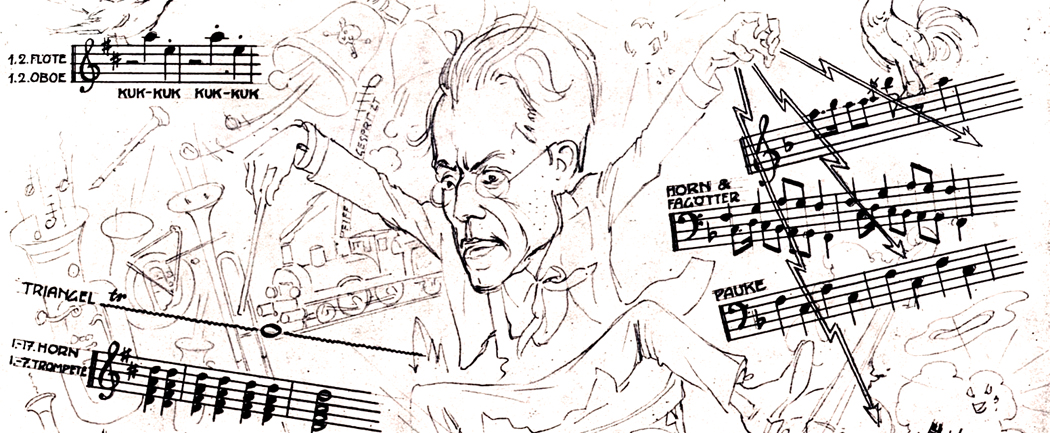
Symphony No. 2 in C-minor (“Resurrection”)

Many people hold the “Resurrection Symphony” as their nearest and dearest, with its uplifting finale of rebirth and optimism. But I have always found the end a touch forced and insincere, as if Mahler really, really wanted to believe in a renewed life after death, but couldn’t, and could only mouth the words. “Words without thoughts never to heaven go.” 
Yet, its music is still magnificent, especially the first movement funeral march, which comes to a climax so disturbing and dissonant, he never matched it until the orphan adagio of his 10th symphony. The inner movements are some of the most beautiful he ever wrote and the alto solo, Urlicht, is transcendental. 

Everyone, it seems, has taken a crack at the “Resurrection”, including businessman Gilbert Kaplan, who learned to conduct only to lead this symphony and never conducted anything else. (OK, he did make a stab at the Adagietto from the Mahler Fifth, but that hardly counts.)

My favorite is Otto Klemperer with the Philharmonia Orchestra and Chorus. Klemperer always makes the music feel as important as it needs to be; he seems to believe in what it says, not merely to play the notes.
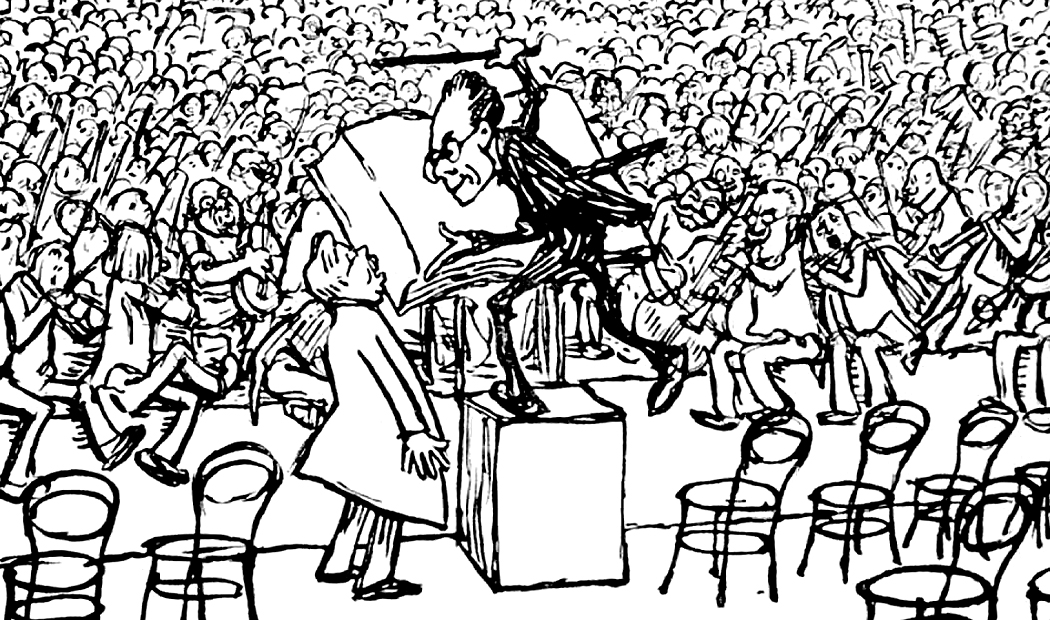
Symphony No. 3 in D-minor

There are some music you cannot listen to very often. Beethoven’s Ninth, for instance, or the Bach Matthew Passion. They are too big, too meaningful, too overwhelming, that to maintain the sense of occasion, you can only pull them out at special moments. You have to be ready to accept what they have to offer. It is almost a religious experience. 

The Mahler Third last an hour and a half. It is almost an opera without words, except there are singers. It is a full evening by itself. But if you are not in the right frame of mind, it can just seem endless. The first movement alone lasts longer than any Haydn symphony.

Mahler explained his ideas for the symphony, though he later recanted. The words are not what the symphony says, but they give an approximation. The first movement is “Pan awakes; summer marches in,” and pits a relentless and ruthless nature, “red in tooth and claw,” against the riotous optimism of the season of growth, in an overwhelming march of joy and hedonism. 

The second movement is “What the flowers of the meadow tell me.” The third is “What the animals of the forest tell me.” In the fourth, an alto sings “What man tells me,” in a doleful lament that “Die Welt ist tief,” “The world is deep.” Following that comes “What the angels tell me,” with a choir and bells telling of “himmlische Freude” — heavenly joy. 
But all of this, for an hour, is really prolog to the final movement Adagio, “What love tells me.” It is built on a theme taken from Beethoven’s final quartet and its “Muss es sein? Es muss sein.” (“Must it be; it must be”).  It is a 22-minute-long meditation, rising to ecstasy. 

When the premiere was given in 1902, Swiss critic William Ritter wrote this finale was “Perhaps the greatest adagio written since Beethoven.” If you can come away without collapsing into a puddle of weeping, you’re a better person than I am. 

The recording that overwhelms me more than any other, not only because of the performance, but because of its engineering and immediacy of sound quality is Riccardo Chailly and the Royal Concertgebouw. 

A nearly equal second, in slightly less perfect sound, is Leonard Bernstein’s 1961 recording with the New York Philharmonic. It is the gold standard for the finale. 
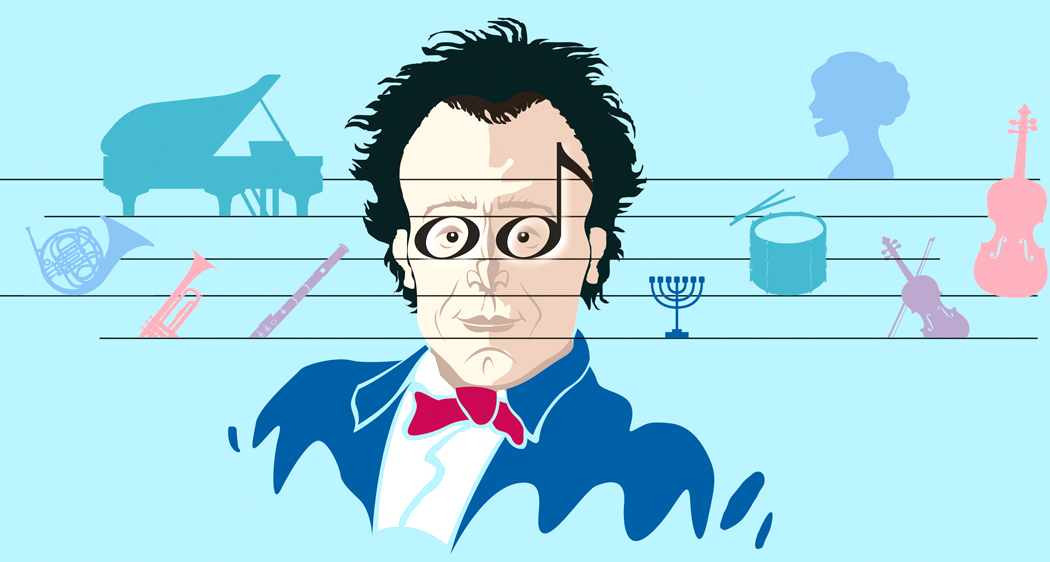
Symphony No. 4 in G

On the opposite end of the emotional scale — and what a relief — comes the Fourth Symphony, with its sleigh bells and Kinderhimmel. It is, without doubt, Mahler’s happiest symphony. It is also his shortest. Coincidence? 

But I’ve got a problem picking a best, because there are three performances I cannot do without, each highlighting a different aspect of the work. 

First, there is Willem Mengelberg and the Concertgebouw  Orchestra, recorded in November, 1939. Mengelberg knew Mahler, and we have evidence that Mahler endorsed Mengelberg’s interpretation of the symphony, although that endorsement came for earlier performances. Mahler died in 1912 and this recording is from 27 years later. Still, it is the best evidence we have for the way Mahler probably intended his work to sound. And, compared to the way it is played nowadays, it is ripe with violent tempo changes and swooping portamentos. 
Second, there is Benjamin Zander, with the Philharmonia. In the hour-long discussion disc packaged with the performance, Zander makes the case that Mahler wanted the violin soloist in the second movement to play like a country fiddler, not a trained violinist. A “Geige,” not a “Violine.” He has the violinist retune his fiddle a full tone sharp to play the Totentanz — he is to be Freund Hein, or “Friend Hank,” a nickname for the Grim Reaper. Zander is the only conductor to really take the composer at his word; most recordings, the soloist can’t bring himself to make the ugly sounds Mahler wanted, and smooths the part’s rough edges. It should sound like the Devil’s fiddle in Stravinsky’s L’Histoire du Soldat, with that edge. 
In all his Mahler recordings, Zander is scrupulous in following the anal retentive storm of written instructions Mahler included in his scores. If this means the long-haul structure of the work is sometimes disrupted for the spotlit detail, well, that’s the nature of Romanticism over Classicism. Those details were put there for a reason; we should hear them. 

The third recording is Bernstein’s first version, with the New York Philharmonic and soprano Reri Grist. Bernstein’s Mahler is always good, but sometimes, it is the best, and this is one of those times. Grist has a fresh voice that is perfect for the innocent text of the finale, which is a child’s vision of what heaven will be like (“Good apples, good pears, good grapes … St. Martha must be the cook.”) 
Symphony No. 5
Wagner has his “bleeding chunks,” and Mahler has his Adagietto. Everyone knows the Adagietto, from movies and TV commercials. But the whole symphony, the first one since the First Symphony not to have voices, is a great rumbustious tussle, from its funeral march start to its manic contrapuntal finale, where he takes five melodic fragments, stated at the outset, and combines and recombines them like a Braumeister. 

The Adagietto fourth movement was, per Mahler, intended as a love letter to his wife, Alma, but is so elegiac that it has become the aural metaphor for loss and grief. Considering Alma’s serial infidelities, perhaps it is only fitting that the movement has morphed in its cultural meaning. (One critic calls Mahler “a composer with a dodgy heart who married a trollop.” “Alma, tell us: All modern women are jealous. You should have a statue in bronze, for bagging Gustav and Walter and Franz.”)
The recording to have is Bernstein’s second recording, with the Vienna Philharmonic. It has beautiful playing from one of the world’s best orchestras, and all the energy and commitment that emanates from Lenny’s spiritual leadership. 

Another legendary performance is John Barbirolli’s with the New Philharmonia. If you think Bernstein’s fever is suspect, then reach for a cold bottle of Sir John.
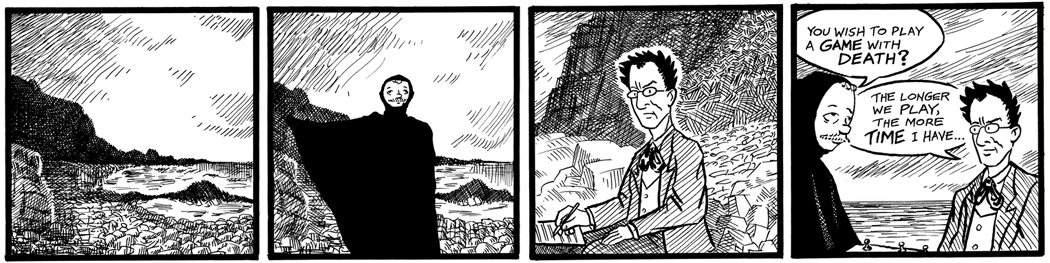
Symphony No. 6 (“Tragic”)

Labeling any of Mahler’s symphonies as “Tragic” may seem redundant, but this is clearly his gloomiest, opening with a relentless stomp, stomp, stomp of a marche fatale and leading to the crushing hammer blows of destiny in the finale. 

Nevertheless, it has what I think is an even more persuasive love letter to Alma in the slow movement, which has to be one of the most tender and lovely in all of the canon. 

But Mahler never quite figured out if it should be the second or third movement, so nowadays, you find it both ways in performance, and find angry and assertive essays by critics proving once and for all it simply has to be the way they see it. Me, I like the adagio second to separate the angry first movement from the angry scherzo, which shares its rhythm with the first. Play them back to back before the adagio and it can seem like too much of the same thing. But then, that’s my opinion; you are free to have yours. 
Then, in the finale, Mahler never quite resolved whether there should be three hammer blows or only two. He was a seriously superstitious man and feared that a third hammer blow might prefigure his own death, and took it out of the score. But hammer blows come in threes in life — at least in Mahler’s — and I prefer all three to be there. Nor did he ever quite specify what he meant by hammer blows; they are written into the score, but how should they be produced? Each orchestra is left to come up with its own solution. Some have used hammer and anvil, others have built large resonant wooden boxes hit with great wooden mallets. There’s a lot of room for interpretation. 

Ben Zander comes to the rescue: His recording includes both the duple and triple hammer blows. You get to choose which finale you want to hear. As usual, Zander is perfect for following Mahler’s precise instructions in the score: a sforzando here, a ritardando there, a subito piano or a purposeful mix-mash of rhythms there. Now make the clarinet sound like a dying cat, now let the violins swoop with a portamento. Zander obeys where most other conductors smooth it all out to make pretty. This should not be a pretty symphony. 
Symphony No. 7

Guess what? Whether two or three hammer blows, Mahler didn’t die after the Sixth Symphony, which may explain why the Seventh is so giddy. All the other symphonies are programmatic in some way, with funeral marches, or heroic deaths, but the Seventh is just music. Mahlerian music, which means fantastic orchestrations and effects. But no overt meaning. 

It has five movements. The inner three are a scherzo sandwiched between two nostalgic sweetnesses he called “Nachtmusik,” or “night music.” In them, he uses rustic cowbells to symbolize — cowbells — and adds a mandolin and guitar. They couldn’t be lovelier. Between them is a vicious scherzo. 

But then, there’s the finale, which really makes no sense at all. It’s a complete hodge-podge, starting with a manic tympani solo and rushing off like a Turkish Pasha into what sounds like Ottoman grandiosity. But you have to remember the advice of the Talking Heads: “Stop Making Sense.” Just enjoy the effervescent joy of it all, up to the penultimate C-augmented horn chord before the final tonic C. One of the oddest endings before Sibelius’s Fifth. 

 The Third and the Ninth are certainly deeper and more profoundly moving, but the Seventh is my favorite for when I just want to hear Mahler without having to weep and sob and contemplate the Weltschmerz of it all. 
My go-to recording is a sleeper. Daniel Barenboim is not known as a great Mahler conductor, but his recent Mahler Seventh, with Staatskapelle Berlin on Warner Classics is brilliant and one of the best engineered recordings I’ve heard, so you get not only a perfect performance, but a recording that sounds more like an orchestra playing live in your room than any other. He hits the crazed finale with the perfect get-on-the-roller-coaster attitude. 

I’ve been choosing great performances to recommend, but really bad ones can be fun, too. There is a Mahler Seven that is so unbelievably bad, you just have to hear it. Otto Klemperer is — let’s be honest — a really great Mahler conductor. Many of his recordings rank at the top of the list. But his Seventh is a real dog. What was he thinking? Barenboim comes in at 74 minutes. Klemp’s Seventh goes on for an hour and 40 minutes. Cheez Louise. It’s like Glenn Gould’s Appassionata, playing it like they were sight-reading it for the first time. 
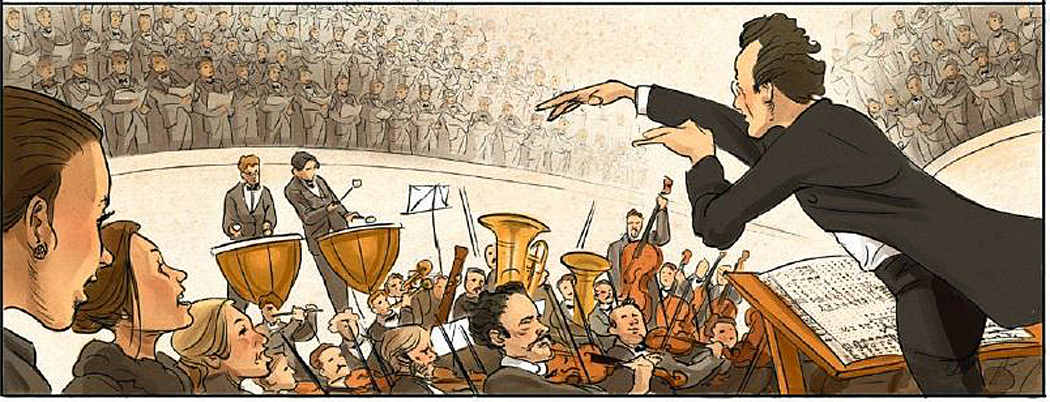
Symphony No. 8 (“Symphony of a Thousand”)
I’m afraid I have never warmed up to the Eight Symphony. Its first movement is outright hysterical — I don’t mean it’s funny, but rather the manic half of a bipolar cycle; and its second movement is an opera manque built on Goethe’s Faust that just seems to wander without getting anywhere. Maybe I just need to listen to it another 20 times or so to get it into my head. It was Mahler’s biggest popular success during his life, but it has not worn well with me. 

It is a choral symphony with an alleged 1000 performers taking part, including eight solo voices, two different choruses and an organ, which blares at the beginning when it all explodes open in a “Veni creator spiritus” — “Come, Creator Spirit” — like one of those tweets typed in all caps. 

It has its fans. I am happy for them. George Solti and the Chicago Symphony is a consensus recommendation and zips through it all in under 80 minutes, which is shorter than almost all other performances, and therefore qualifies it as the greatest.
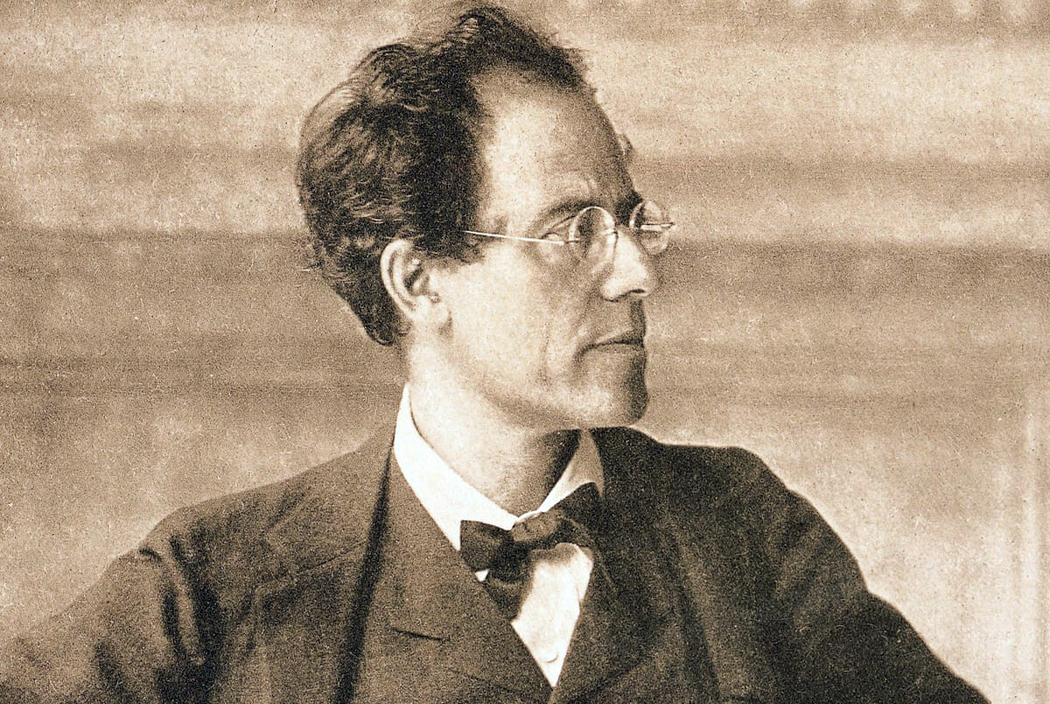
Symphony No. 9
Mahler had a congenital heart defect and he put its irregular rhythm into the beginning of his Ninth Symphony, an off-kilter beat that is the first thing we hear as the orchestra begins. Over that we hear the harp and muted trumpet. Added to that comes a little shiver in the strings followed by a two-note descending theme. These layers form the basis of the entire symphony, the way dot-dot-dot-dash forms the genesis of Beethoven’s Fifth. 

There follows an earthy Ländler as a second movement and a scurrilous Rondo Burlesque for the third. The final adagio is a kind of culmination of Mahler’s death music. Instead of a funeral march or a heroic death, the music dwindles to a quiet and inevitable cessation of its heartbeat. It trails off in a morendo so still and hushed that in a good performance, you can never quite tell when the orchestra stops playing. It just dies away. The effect can be overwhelming. In some famous performances, the audience refrains from applauding for as long as five whole minutes before exhaling in bravos and cheers. It is music that strikes deep. 
Bernstein made a meal of this symphony and recorded it four times, not counting a few live performances caught on tape outside the Bernstein canon. In the only time he ever performed with the Berlin Philharmonic, he recorded the Mahler Ninth. It is held in reverence by many, despite a glaring lapse by the trombone section in the finale (reputedly, an audience member sitting behind the section had a heart attack and died and the trombonists were understandably distracted). Even so, it is a powerfully emotional recording. But then, all of Lenny’s Ninths carry that wallop. 

If you wish to escape the Bernstein reality distortion field, there are other tremendous Ninths. Barbirolli’s with the Berlin Philharmonic, from 1964, is a clear and unsentimental, but still emotional performance. Bruno Walter premiered the work in 1912, a year after Mahler’s death, with the Vienna Philharmonic. He made a stereo recording with the Columbia Symphony exactly 50 years later; that recording is a benchmark for many. 

It has been recorded by almost every conductor out there, up to Bernard Haitink and the Royal Concertgebouw just last year. 

The version I learned on was a surprisingly good version by Leopold Ludwig and the London Symphony, from 1960, on the old Everest label. I still enjoy his Ländler above most.   
Symphony No. 10
Mahler never finished his Tenth Symphony, but left it in tantalizing form as piano short score. He did orchestrate the opening adagio, and until recently, the adagio was performed as a stand-alone. That piano sketch has been orchestrated since, essentially by committee, and there are now many full recordings out there. 

I have never been convinced by the attempted realizations of the whole, but the adagio is absolutely scarifying. It slowly builds up to a climax that is so frightening that in a good performance, your fight-or-flight hormones should get nightmares, the hair on the back of your neck should prickle and you should feel as if the gates of hell have opened and disgorged its contents. It is a scream of pain, an Edvard Munch level scream: “Ich fühlte das grosse Geschrei durch die Natur” (“I felt the great scream in nature.”)
Mahler had found out about Alma’s infidelity and he scribbled in his score several pained comments about it. He was devastated and the music shows it. At one point, nearly all twelve chromatic notes are played in a single harrowing dissonance, distributed across the orchestra in a way to make a musical chord rather than simply noise, and then a screaming trumpet breaks through the din to make things even more unbearable. After that moment, things go quiet and the movement continues to its distressed end. 

If you want to hear all five movements, there are many good performances, including Simon Rattle with the Berlin Philharmonic. But I will cling to the adagio alone and the first version I knew — Bernstein’s first with the New York Philharmonic. Any time the emotion is more to the point than the music, Bernstein conducts the emotion. This is Mahler at his most Mahlerian, and Lenny at his most Bernsteinian. 

Das Lied von der Erde

After all that, if I were forced to accept having only a single work of Gustav Mahler, it would be Das Lied von der Erde (“The Song of the Earth”), a six-song cycle-symphony. Mahler had planned to publish it as his ninth symphony, but, superstitious about ninth symphonies (the final symphonies of so many composers), he refused to give it the title. When he then came to publish his next, he could name it the Ninth, knowing that fate would understand it was really his tenth.

But aside from that biographical titbit, Das Lied is an overwhelming and emotional work, even among an oeuvre that practically set the parameters for overwhelming and emotional. 

Mahler’s output falls into three large groups. The first four symphonies are called his “Wunderhorn” symphonies, because they make use of his settings of songs from a book of poetry called Des knaben Wunderhorn (“A Boy’s Magic Horn”). The second group are his purely orchestral symphonies, numbers 4 through 7. The Eighth is sui generis and doesn’t count (see above). But the final three works, the Ninth Symphony, the trunk of the Tenth and Das Lied von der Erde are profoundly inward. You get the feeling that Mahler didn’t write them so much for audiences, but as a way to question his own existence. 

The songs of this symphony are taken from a book of Chinese poetry, translated into German (or invented) called “The Chinese Flute.” The texts investigate beauty, isolation, nature and death, and where all these intersect. “Dunkel ist das Leben, ist der Tod.” 

The sixth and final song — Der Abschied (“The Farewell”) — lasts as long as the first five and features some of the most ethereal orchestral writing Mahler ever penned, and a text that Mahler supplemented with several lines of his own. 

“I seek peace for my lonely heart,” the contralto sings. And ends, “The dear Earth everywhere/ blooms in spring and grows green anew./ Everywhere and forever blue is the horizon./ Forever … Forever.” 

That last word — “ewig” in German — repeats and repeats ever more silent, until it completely evaporates. It is impossible to hear it without sobbing. 
The symphony was premiered by Bruno Walter in 1911, six months after Mahler’s death, and Walter recorded it at least three times, in 1936, 1952 and 1960, the last in stereo. Either of the last two can be considered the one to have: Each has its champions and both are magnificent and echt Mahler. 

But the one you cannot do without is by Otto Klemperer, released in 1967, with Fritz Wunderlich and Christa Ludwig. It has better sound than any of the Walters and magnificent singing. This is music right in Klemp’s wheelhouse. 

Complete sets

Warning at the outset: No single set of complete recordings is great in all of the symphonies. But having a complete set gives you a consistent vision of what the work is all about. 

Bernstein recorded them all three times. The first for Columbia (now Sony), mostly with the New York Philharmonic. The second for Deutsche Grammophon, mostly with the Vienna Philharmonic. And finally, a video set, on DVD, for Unitel, mostly with the Vienna Phil. The first two are canonic, and while each cycle has its proponents, you really should have both. 

Pierre Boulez is kind of the anti-Bernstein, cool and analytical, precise and controlled. For Boulez, Mahler is a 20th century composer — or at least a prefiguring, and the source of the Second Viennese School. You can hear every instrument with clarity
But is Mahler Mahler without going over the top emotionally? Klaus Tennstedt has many devotees, and falls more into the Bernsteinian camp. He recorded them with the London Philharmonic. It is a great set. I gave mine away, not because I didn’t like them, but because I gave them to my best friend; he deserved them. 

A sleeper among sets is David Zinman with the Tonhalle Orchestra Zurich. It is the best engineered set I have heard and with beautiful playing by the orchestra. 
There have been sets that mixed and matched conductors and orchestras. Both DG and Warners have great sets. Another, called the “People’s Edition” had a promotional vote to choose which recordings to include. The fact that each set chooses from their proprietary recordings means that there is no agreement on what are the best recordings. Everyone, after all, has their opinion. In Mahler-World, opinions are strong. 

Other conductors have less-than-complete boxes out there. Klemperer only recorded Symphonies 2, 4, 7, 9 and Das Lied von der Erde. His No. 2 and Das Lied are consensus choices for best ever. The Seventh is just awful, but you should hear it anyway. 
Hermann Scherchen has a box with all but the Fourth and no Das Lied. He recorded with second-rate orchestras, for the most part, and is often so wayward his interpretations have been called “Variations on Themes by Mahler.” The sound engineering is highly variable. This one is for specialists only. 

In the BB list (“Before Bernstein”), you get to hear all nine symphonies with Ernest Ansermet and the Utah Symphony and hear what they sound like before the current Mahler Tradition was assembled (largely by Lenny). They are surprisingly good, and you get a different slant on the music (less peculiar than Scherchen’s). 
Benjamin Zander and the Philharmonia has not yet recorded the Seventh or Eighth, but the rest are among my favorites and I listen to them often. More than any other conductor, Zander follows Mahler printed directions accurately, and brings out expressive details glossed over in other recordings. There are those who disparage Zander for this detail orientation, but for me, it is the heart of a Romantic interpretation. This is the way they were played under Mahler, I am convinced. I love them all. And each comes with an hour-long lecture, explaining many of the details. He is a great speaker as well as conductor. 

There are others: Chailly, Bertini, Gielen, Sinopoli, Rattle. And all have their merits. 

The sets just keep coming. Everyone gets into the act. I have not been anywhere near complete. 

But these are the ones I have come to love. And, of course, there are many individual recordings, not part of sets. And many of these are among the greatest. 

And I have not even mentioned the other song cycles. Maybe another time.
And then, there’s Schubert.

We could name the musicians that rise to the top of the list in Western art music, and it’s an impressive list: Bach, Haydn, Mozart, Beethoven, Brahms, Tchaikovsky, Wagner, Debussy … But then, there’s Schubert, a name we tag onto the end as almost an afterthought. Oh, yes, then there’s Schubert. Little Franz, the “Schwammerl” — little mushroom. 

I don’t know why he is so often forgotten, or left at the remainders pile. In almost any terms you want to define quality or greatness, he is right there, a shiny, bright face, almost a puppy dog demanding our attention.

Oh, he gets his kudos. No one can talk about lieder, or art song, without putting Schubert’s name at the top of the menu. But, he belongs there with his piano music, his chamber music, his choral music, too. And three of his symphonies have never left heavy rotation in the repertoire. 

Each time I have overlooked his music and hear one of the three late piano sonatas, or the final quartets, I think: There is nothing better than this, not in Beethoven or even in Bach. It is emotionally powerful, harmonically rich and melodically persuasive. And then I find myself in a Schubert-orgy for the next week or so, realizing over again how deeply profound and psychologically acute is his music.

So why is he so often relegated to the also-rans? It was that way from the beginning, when little Franz lived in Vienna under the dark shadow of Beethoven. Schubert wrote thousands of compositions during his sadly short lifespan, but very little was published or performed during his life. Mostly his music was shared with friends at dinner parties — or “Schubertiades” — where he and his musician buddies would gather to play music, hoist a few, and sing along. 

He was little over five feet tall and pudgy, with a double chin and a button nose that held up tiny spectacles. He had a hard time finding his place in society, trying at times to be a school teacher and at other times to earn a living as a music tutor. None of it clicked. 

But from the earliest age, he could write really good music. He wrote his first symphony (now only a fragment) when he was just 14. The official Symphony No. 1 came just two years later and was written for his family to play — everyone in the house played an instrument. 

He was one of the great musical prodigies. We think of Mozart or Mendelssohn — who wrote his famous Octet when he was just 16 — but Schubert composed his first genuine masterpiece, “Erlkönig,” when he was 17.  He wrote well over a thousand pieces of music before he died at the age of 31 in 1828, just a year after Beethoven. Mozart, in contrast, lived to the ripe old age of 35. 

Perhaps Schubert lags in popular estimation because he was such a slipshod worker. He left more unfinished pieces than any other great composer, sheaves of piano sonatas left as torsos, a movement here or there, and other bits left in fragment. His most famous symphony, after all, is the “Unfinished Symphony.” 

And perhaps he lags because his melodies are so memorable, they may be mistaken as facile. Beethoven, after all, hardly ever wrote something you could hum distractedly as you polish the silverware. Da-Da-Da-Dumm is hardly a tune. Schubert is endless song. 

And because we think of melodies as lightweight compared with, say Wagner or Brahms, we may think of Schubert as emotionally trifling. “Wer hat das schöne Liedlein erdacht?” “Who wrote this pretty little ditty?” Couldn’t be more wrong. 

Schubert has perhaps the widest range, emotionally, of any other composer. On one hand, he wrote what has to be the happiest, bounciest, most joyful music ever, the “Trout” Quintet, and the single bleakest, most desolate music ever, the C-major String Quintet. (I’ve written about the “Trout” before.) 

The String Quintet is another beast. Written for two violins, two violas and two cellos, it is most often named, when such lists are drawn up, as the greatest piece of chamber music ever written. My late friend, Dimitri Drobatschewsky, who was a longtime music critic at The Arizona Republic in Phoenix, when he died at the age of 90, had requested the quintet be played at his funeral. The slow movement, in particular, is about the deepest and most profound that music can reach — which is rather deeper and more profound than any words can reach.

Schubert had an intimate relationship with death. He learned several years before his own death that he was suffering from what has been subsequently diagnosed as mercury poisoning (which likely also killed Beethoven), typhoid fever, or tertiary syphilis (mercury was a common treatment for syphilis). He wrote his final works — the final three piano sonatas, the final three string quartets, and the String Quintet, with the full knowledge of his looming extinction. These works, along with his final two symphonies and song cycles, are the height of his achievement. At the same age, Beethoven was just writing his first symphony. One can only imagine what Schubert might have written if he had lived even to Beethoven’s young 56 years old. 

It is a miracle that someone who barely left Vienna during his life, and who had only lived three short decades, could write with such expressiveness about such dark matter. 

Take his final and greatest piano sonata, in B-flat. It opens with a jaunty and optimistic tune that is almost immediately interrupted by a low trill on a G-flat — a note not in the key of B-flat major, but injected from its minor. It is a discordant lowered sixth that resolves to the dominant and leaves an uneasy feeling, as if happiness was being threatened by a baleful presence. That sense of immanent evil or impending doom keeps returning, even as the first movement comes to a seemingly positive conclusion — and then, there’s that threat, that bottom-feeding trill, again. No good will come of that. 

I listen again to a performance of that sonata by Artur Rubinstein, made in 1965, and start sorting through my CDs — I suppose I am about to begin another weeklong Schubert marathon. I’ll certainly go through the quartets and sonatas, even the symphonies. But mostly, I will dive deep into the two great song cycles, Die Schöne Müllerin and Winterreise. 

The last is a 24-song cycle setting poems by Wilhelm Müller that tells the tragic story of a man betrayed by his lover; he wanders through town and country dropping deeper and deeper into madness and depression. It would be hard to find a more trenchant exposition of German Romanticism that this song cycle. 

My late wife, Carole, loved to make music with others and often did so. I have no meaningful ability on any instrument, but was once persuaded to join her in singing “Gute Nacht,” the first song of the Winterreise cycle. It is tuneful and although it is strophic, the last go-round switches from minor key to major, with a stroke like lightning. The effect it had on me, in my pathetic attempt to sing to her piano accompaniment led me to attempt to translate Müller’s poems into English. 

The odd thing was that the further I went along, the more I found myself not so much translating as re-imagining. “Gute Nacht” turned out to be a more or less literal translation, beginning with the first stanza:

But by the time I got to the end, the devastating and desolate “Der Leiermann,” in which our protagonist finds himself back in the village listening to a hurdy-gurdy man and imagines his tragedy sung to the accompaniment of the pathetic little squeeze-box, I had left the original behind altogether. Schubert’s music for the entire song never leaves a single A-minor chord played as a slow pulse to the lament. The effect is a complete collapse of our hero’s personality. 

My version of Müller’s poem also left 19th century Germany and shifted to what I thought was the parallel situation in our own time. The whole series of my translations was in itself a metamorphosis from the original style of Müller to my own voice — in other words, I took the poetry seriously and personally, which is what the best art always gives us. 
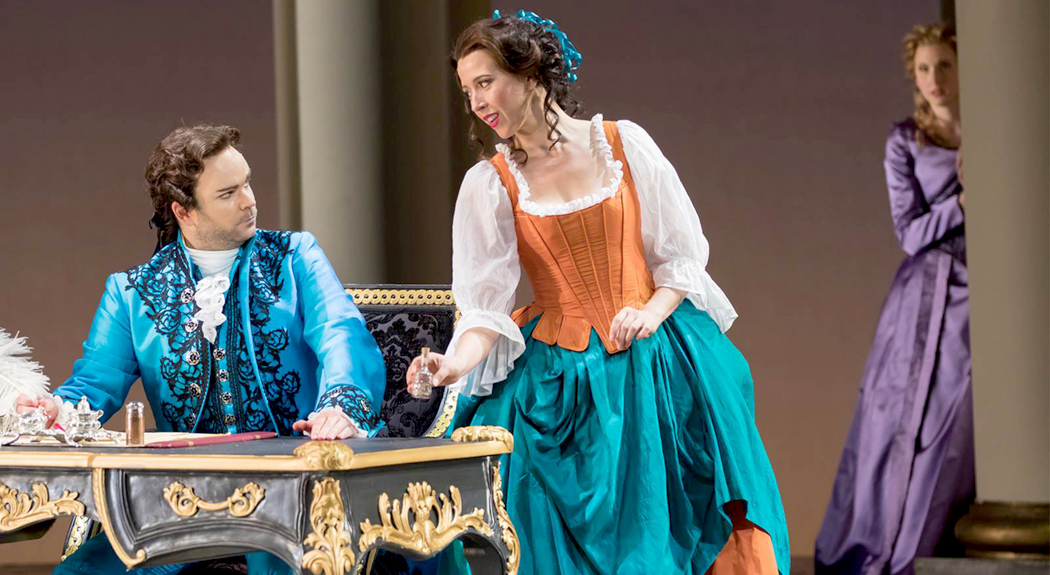
There are many great recordings of Winterreise available. Among the best are four different versions by baritone Dietrich Fischer-Dieskau, made with Gerald Moore, Jörg Demus, Alfred Brendel and Daniel Barenboim in turn at the piano. They are all near perfect, but I have always favored the first, with Moore. But my favorite is even older than that one: Hans Hotter with Moore, recorded in 1954. Hotter’s voice is more bass than baritone and gives added heft to the work. 
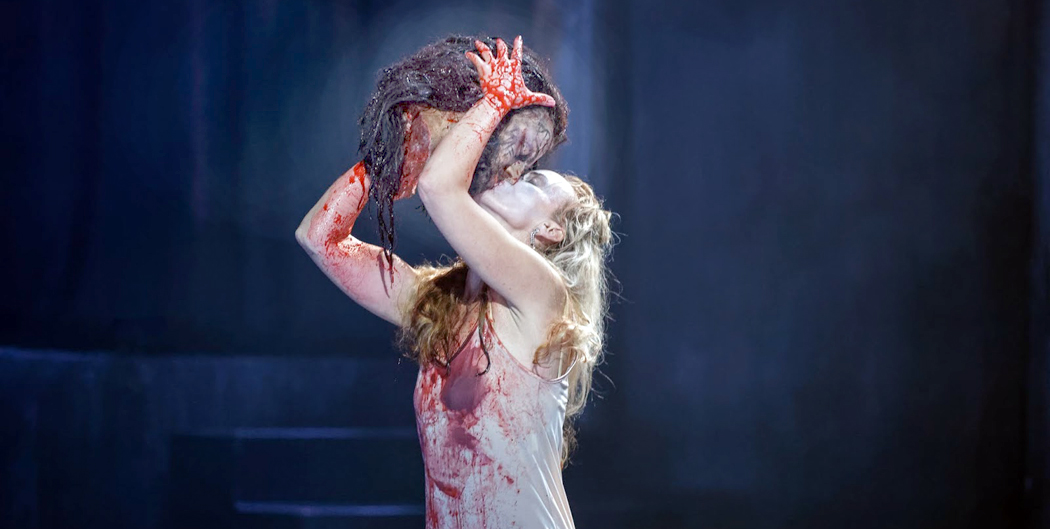
Other Suggested Recordings

It’s hard to suggest a CD of the “Trout” Quintet: I have never heard a bad one, although the one I love most is by Alexander Schneider with Peter Serkin, David Soyer, Michael Tree and Julius Levine. You can never go wrong with Schneider. 

The three final quartets, including the “Death and the Maiden” and with the String Quintet, are all in a box with the Emerson Quartet and Mstislav Rostropovich on the second cello. Not a shabby addition. 

There is an 8-disc box of piano sonatas by Mitsuko Uchida that is a great performance and a bargain to boot. 

For the symphonies, you can hardly do better than a set by Daniel Barenboim and the Berlin Philharmonic, which is currently selling for under $15. But you should also check out two very different ideas of the “Great” C-major symphony (usually listed as No. 9) by Wilhelm Furtwangler and Arturo Toscanini. I should have said “Furtwangler vs. Toscanini.” 

But in this short overview, I have not had room for so many masterpieces. I have not mentioned the Arpeggione Sonata, the Fantasie in F-minor for Two Pianos, the Moments Musicaux, the “Wanderer” Fantasy, the Impromptus, or the simply titled, “Three Pieces,” which rank up there with the sonatas. Or the hundreds of other lieder that he wrote, to say nothing of the masses and the choral works. And there are operas, too, with beautiful music, if silly plots that make them almost unperformed anymore. 

There is much music that is meant only to please the ear, and Schubert wrote his share of that, too. But music can plumb the depths of human psychology, and provide a sonic metaphor for the most profound emotions and thoughts — at a depth where thought and emotion cannot be told apart. The best of Schubert’s music takes us there.