Archive

Tag Archives: music

Is just being alive enough? It is a question I have been facing, with continued difficulty, ever since I retired a dozen years ago after 25 years as a newspaper writer. 

For all those years, and for the many years before, I held jobs that contributed, in some way — often small, even negligible — to the business of society. I had a sense of being productive. This is not to make any major claim about how important my production was. It was admittedly quite minor. But it was a contribution. 

Doing so was a part of my sense of self, that being a productive member of society was not merely a way of occupying my time, but was actually a moral duty. If I were slacking off, I would be harming my society. And even worse, harming my immortal soul (something I don’t actually believe in).  

This is not something I thought much about on a conscious level. In fact, when I do think about it, I realize it’s quite silly. Society gets along quite well without my input. But it is buried deep down somewhere in my psyche that I must be productive. 

The opposite of being productive is being lazy. And I can’t help but feel that laziness is a moral failing. I have tried to excavate my brain to discover where this sense comes from and I cannot be sure. 

The easy answer comes up, “Protestant work ethic,” and it is true that I was raised in such an environment. But religion has never played an important part of my life. As I have said before, I have no religion; I’m not even an atheist. 

But somehow, I seem to have been injected with this guilt about not always doing something. Making something; teaching something; selling something; performing something. 

It is true that my grandparents, on both sides of the family were quite religious. My father’s parents were even infected with a kind of Lutheran religious mania. They went to church three times a week, prayed constantly, and when they were young, before World War II, my father and his siblings were not allowed to listen to the radio, to music or to dance. In fact, this church-craziness led my father to promise never to inflict this kind of joyless religion on his children. 

And so, although we all went to church on Christmas and Easter, it was only to make my mother’s mother happy. She was religious in a more normal way, and was always kind and loving. But I and my two brothers managed to escape our childhoods without any religious sentiment at all. 

 Or so it seems. While I have no supernatural beliefs — the whole idea of a god or gods seems pointless — something of the culture seems to have leaked in. 

For all of my 25 years at the newspaper, I averaged about three stories per week. I always felt as if I were slacking off and that I should be writing more. My editors constantly told me I was the most productive member of the features staff. But it never felt that way. Even on vacations, I took daily notes before going to bed, and used those notes to write travel stories for the paper when I got back to the office. 

Before I retired, I used the computerized data base to check on my output and discovered I had written something like 3 million words during my tenure. If an average novel is about 90,000 words, it means I wrote the equivalent of more than 30 novels in that time. My last project for the paper was a 40,000 word history of architecture in Phoenix. 

And so, when I left my job, it was like stepping off a moving bus,  racing to a halt and trying to keep my balance. 

My colleagues at the paper bought me a blog site as a retirement gift, and I began writing for it instead of the newspaper. At first, I was writing an average of three blog posts per week, unchanged from my time at work. 

I have slowed down greatly since then, and am now aiming for about three posts a month. I don’t always make that many. But I have written more than 750 blog entries in the 12 years since I left the newspaper. which is still more than one a week. And I also write a monthly essay for the online journal of the Spirit of the Senses salon group of Phoenix. That’s an additional 103 essays, each averaging about 1500 words. Blog and journal, it all adds up to about an additional million and a half words written since giving up employment. Old writers never really retire, they just stop getting paid. 

And none of this is paid work. I write because I cannot not write. When I am not blogging, I am writing e-mails. Old-fashioned e-mails that are more like actual letters than the quick one- or two-sentence blips that constitute most e-mails. Scribble, scribble, scribble, eh, Mr. Nilsen? 

But that all brings me back to my original concern: Is just being alive enough? Can I in good conscience spend an hour or two sitting in my back yard and listening to the dozens of birds chattering on, watching the clouds form and reform as they sail across the sky dome, enjoying the random swaying of the tallest tree branches in the intermittent wind? Thinking unconnected thoughts and once in a while noticing that I am breathing?

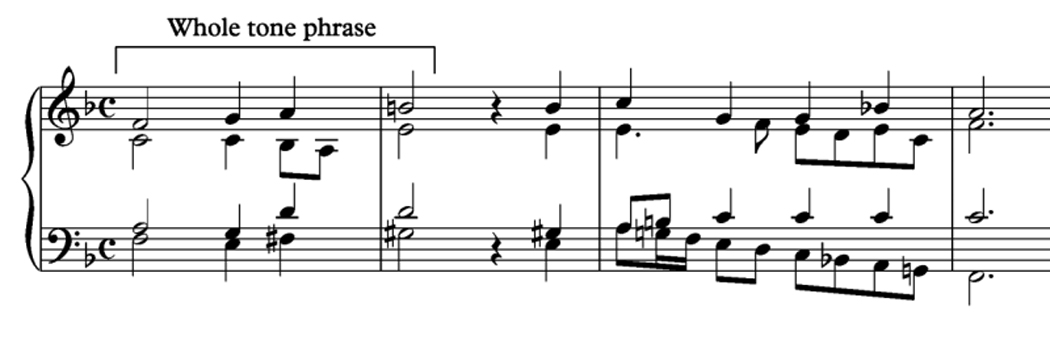
In 1662, Lutheran composer Franz Joachim Burmeister wrote a hymn titled Es ist genug (“It is enough”) that Johann Sebastian Bach later wrote into one of his more famous cantatas. It is notable for including a tritone in its melody. And, in 1935 Alban Berg incorporated it in his violin concerto, written “in memory of an angel” after the death of 18-year-old Manon Gropius, daughter of Alma Mahler. It is one of the most heartbreakingly beautiful musical compositions of the 20th century. Es ist genug

I remember reading that in India, the idealized life is understood to be a youth of play, and adulthood of work and an old age of seeking spiritual truths. That one is meant to lay down one’s tools and contemplate what it has all been about. And I take some comfort in the possibility that, at the age of 76, it is now my job no longer to produce, but to absorb all those things that were irrelevant to a normally productive life. To notice my own breathing; to feel the air on my skin; to recognize my tiny spot at the axis of my own infinitesimal consciousness in an expansive cosmos. To attempt to simply exist and to feel the existence as it passes. 

When I was a young and poor college student and wanted to buy a classical music LP, I was faced with a choice. Most of the biggest names in the field recorded for one of the major labels: Deutsche Grammophon, Decca, Columbia, RCA or Angel (aka EMI). And those disks were pricey. 

In some cases, I would just have to suck it up and spend more than I really should have. But there was an alternative. There were budget labels, offering their records at cheapie prices. 

Most were sub-labels of the pricier brands, as Seraphim sold older versions of Angel releases, or Victrola from RCA and Odyssey for Columbia. And Vanguard Everyman. And there were some bottom of the barrel labels, with really poor recordings of Eastern European, and Russian musicians, such as Melodiya and Urania. Those sounded awful. 

And their album covers were usually cheaply designed, or copies of how the premium brands showed themselves, with photos of the conductors or musicians, or with pretty landscapes. After all, classical music was serious. It was art. 

But then came the Baroque revival, and instead of Beethoven symphonies, we were offered Vivaldi, Telemann and Monteverdi madrigals. The Sixties were in full swing, the budget labels dove into bright, colorful, more lively album covers, often with whimsical illustrations. 

These were Nonesuch recordings and the Vox budget label, Turnabout. My collection was full of them

There were two labels in particular that went for the comic and the hip. Westminster and Crossroads. The created memorable cover art, but took very different paths. 

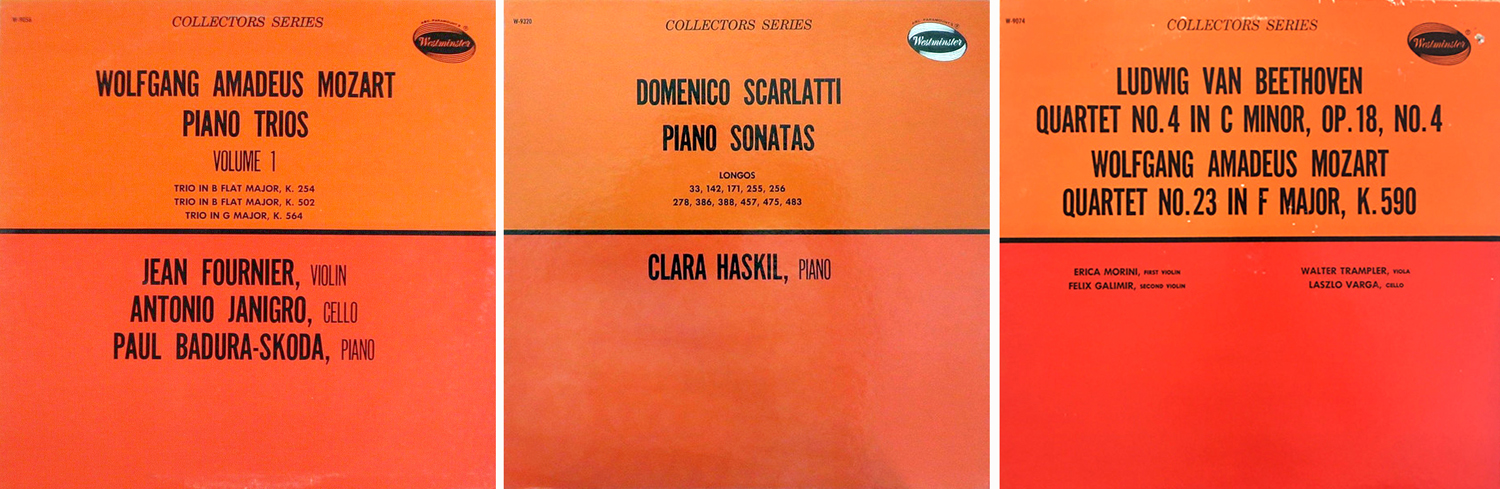
Westminster Records began life in 1949 as a high-end audiophile label, but by the time I came to know them, they were a low-end budget brand, and their covers were as simple and unadorned as the “plain brown wrapper” that used to hide racy novels. Those red covers, with a horizontal black line were easy to spot in the record store bins, and for those of us on a limited budget, an instant look-see. The performances were generally very good, if by musicians more noted more in Hungary or Poland than in Carnegie Hall. They were dependable. I owned bunches. 

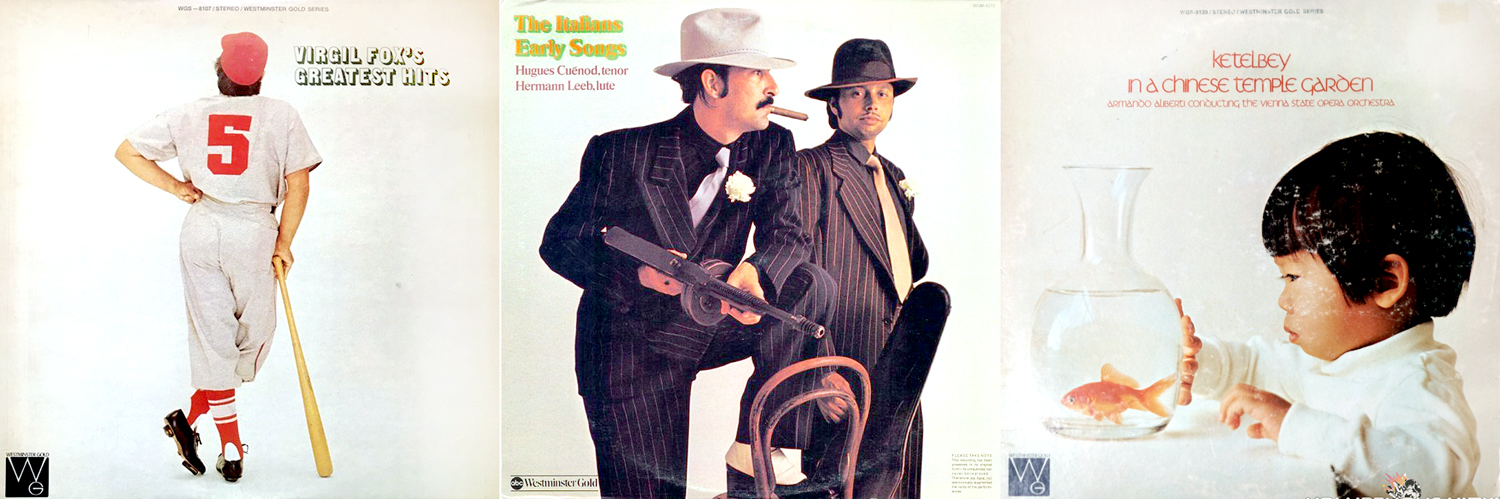
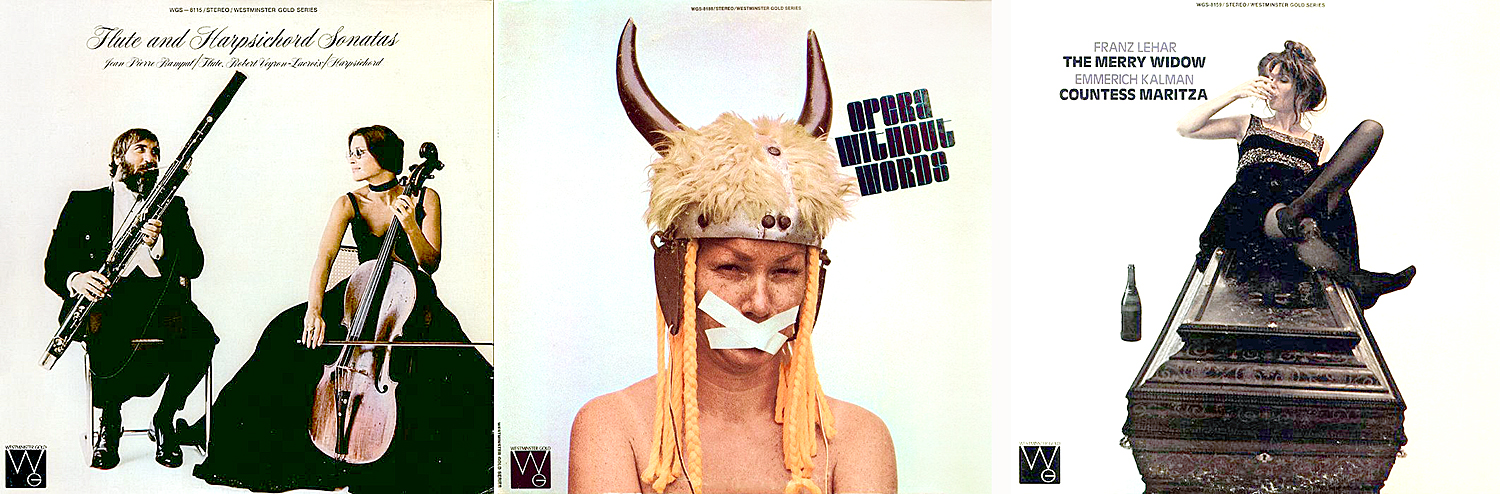
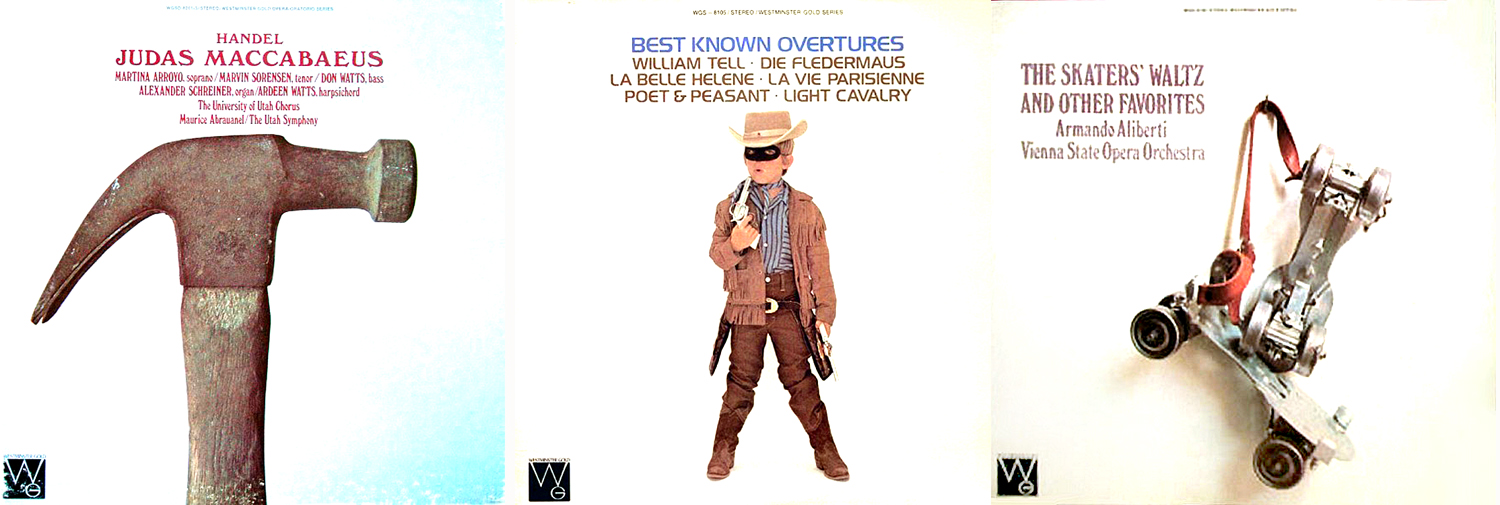
But, the label was bought out by ABC-Paramount and by 1970, they began marketing their back-issue catalog with sometimes ridiculous and campy cover art. To attract the kids, I guess. 

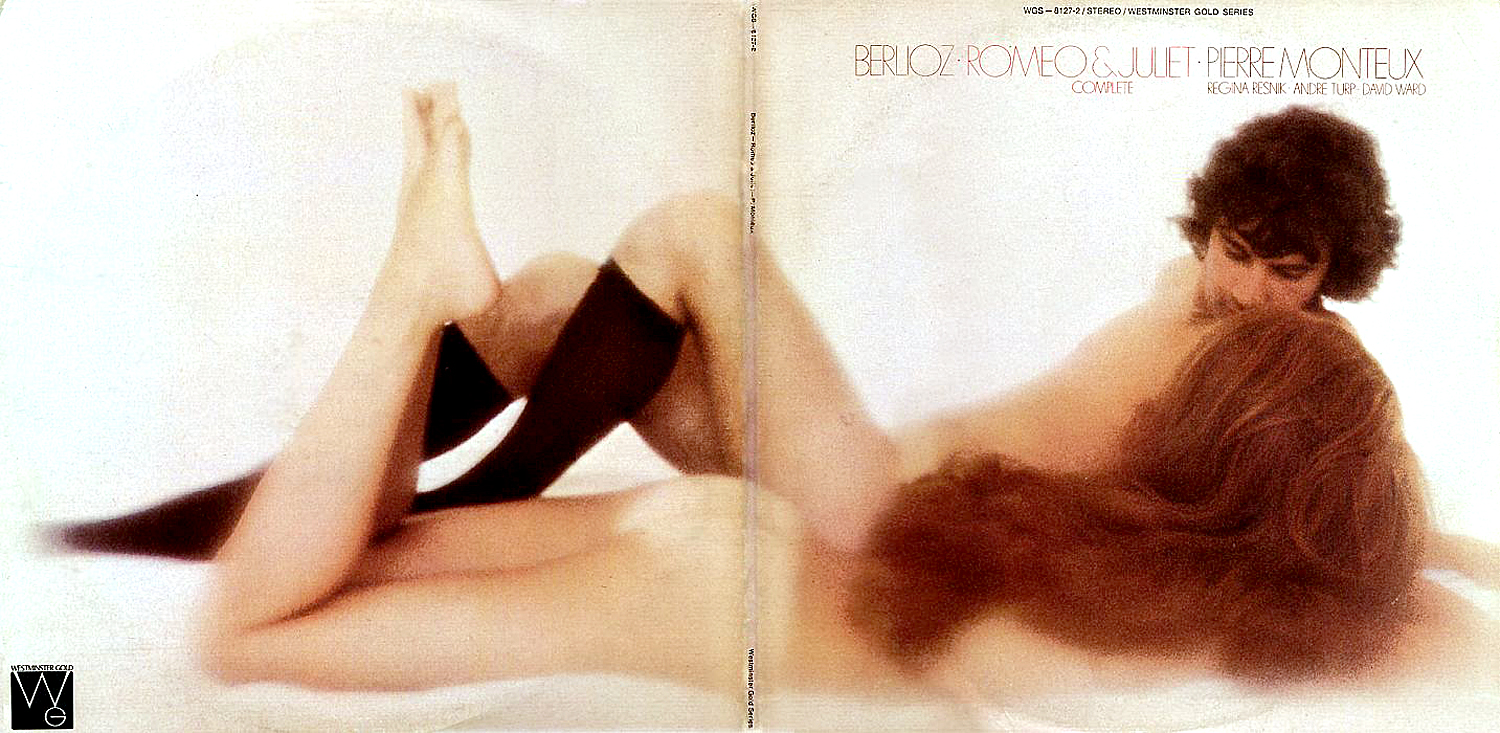
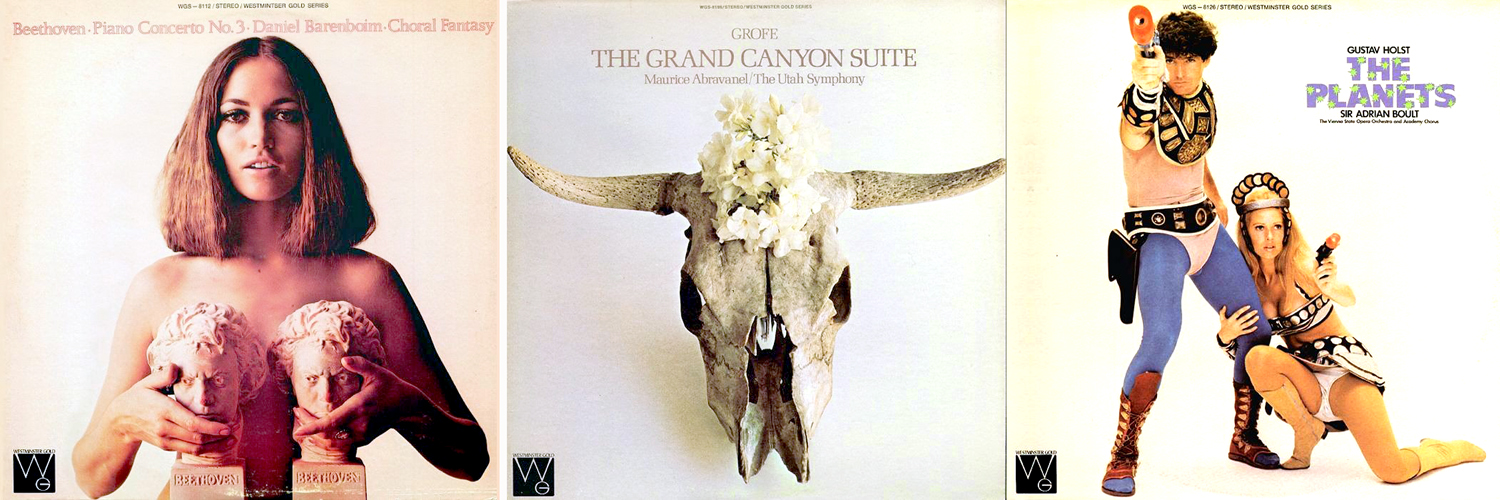
They included a Beethoven concerto with a busty brunette, whose busts were those of the composer, strategically placed. Or Ferde Grofe’s Grand Canyon Suite with a faux Georgia O’Keeffe cow skull, or — my favorite — a Barbarella knock-off of cheap sci-fi for Gustav Holst’s Planets

(Click on any of these images for a clearer look)

These covers are now collector items for a memorable gallery of time-stamp art. I have gathered images of well over a hundred of these gems, and thought I should share a few of them.

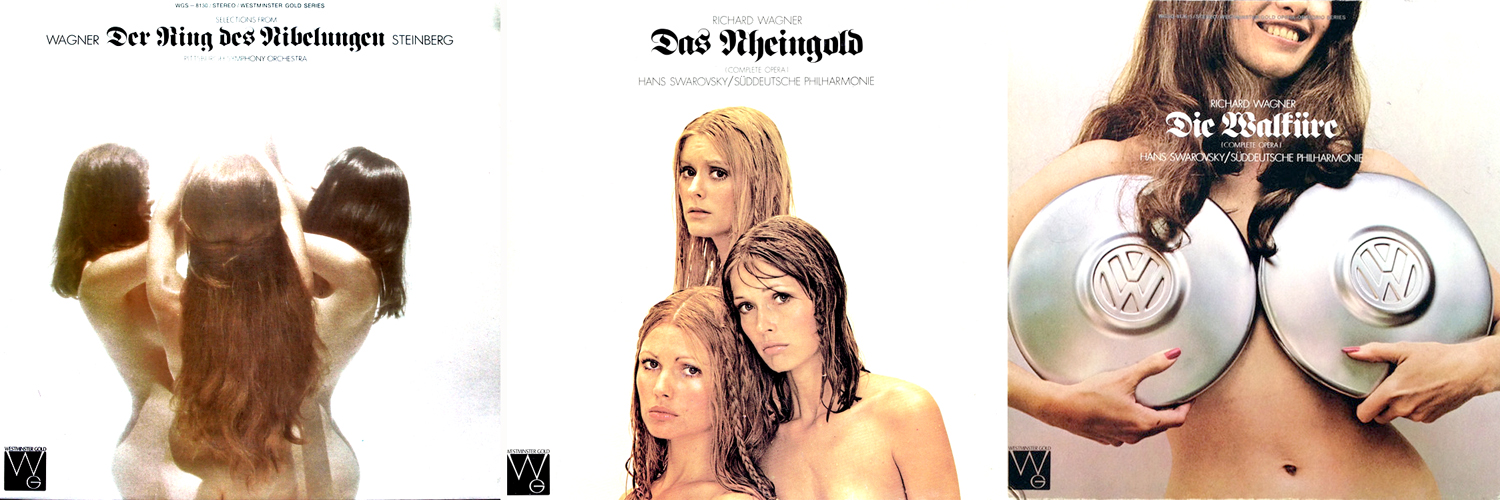
Westminster sold the 1968 Hans Swarowsky Nuremberg Ring Cycle with Carnaby Street Valkyries, Rhine Maidens and Norns. 

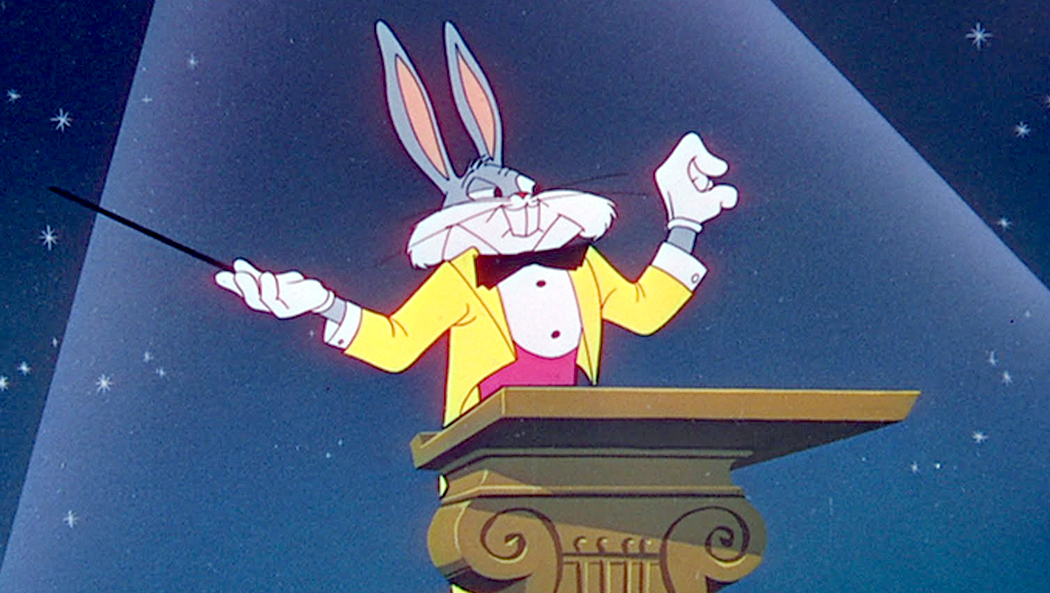
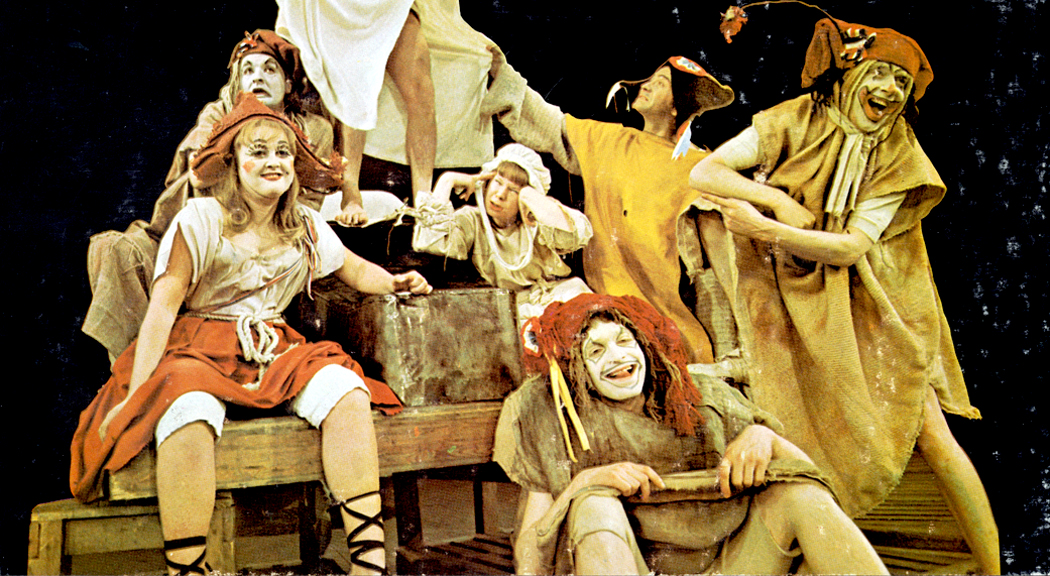
And there was the two-disk recording of Berlioz’s Romeo and Juliet, coming out hot on the heels of the Franco Zeffirelli film starring Olivia Hussey and Leonard Whiting. Could this cover be a coincidence? See the image at the top of this column. The album folds open to give us the whole picture (Love those socks). 

Then, there is organist Virgil Fox’s “Greatest Hits,” with the baseball player; traditional Italian songs with, of course, just the kind of mafiosi who regularly croon such tunes; and to round out the ethnic stereotypes, there is Albert Ketelby’s In a Chinese Temple Garden. Subtlety is no object. 

Then, there’s the sex and death contingent. Although what a cast-off bra has to do with Mozart is hard to tell. Tosca, though, surely liked to show off her décolleté, although I am unaware she ever had a tattoo. The obvious follow-up is a requiem. 

For some reason, the recording of Baroque flute and harpsichord sonatas shows us a bassoon and cello. And if you are going to have opera without words, you need a horned helmet and bandaged mouth. And there’s the merry widow drinking wine on a coffin. 

Haydn’s clock symphony, some Beethoven trios (apparently for teddy bears), and Bach cello sonatas. 

An American in Paris, selling risque pictures, a lipstick Bolero, and a gang of Russians selling us Rachmaninoff and Tchaikovsky. 

Judas Maccabaeus was known as the Jewish Hammer, so, OK. The William Tell Overture has its connotations, and the Skaters’ Waltz is obvious. 

Pictures at an Exhibition needs a camera; Porgy and Bess share a disk — and eyeglasses — with an American in Paris; and, if the composer is Matthew Locke, you clearly had no choice. 

There are many more, just as hokey, corny, and campy. As I said, I have about 130 of them in my files. 

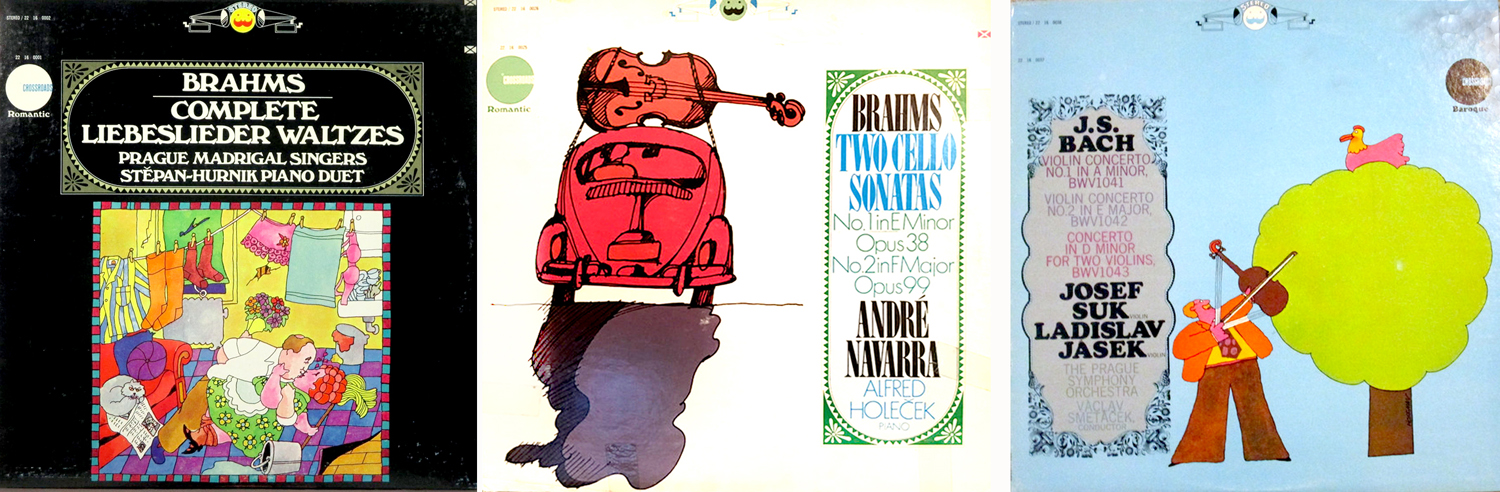
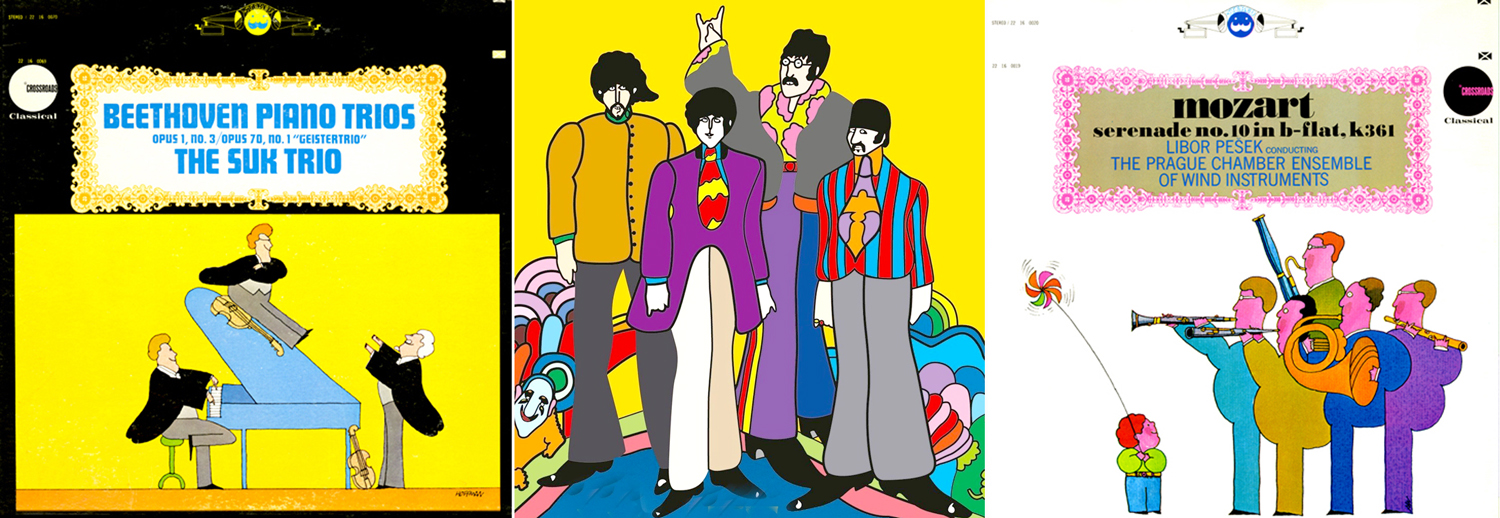
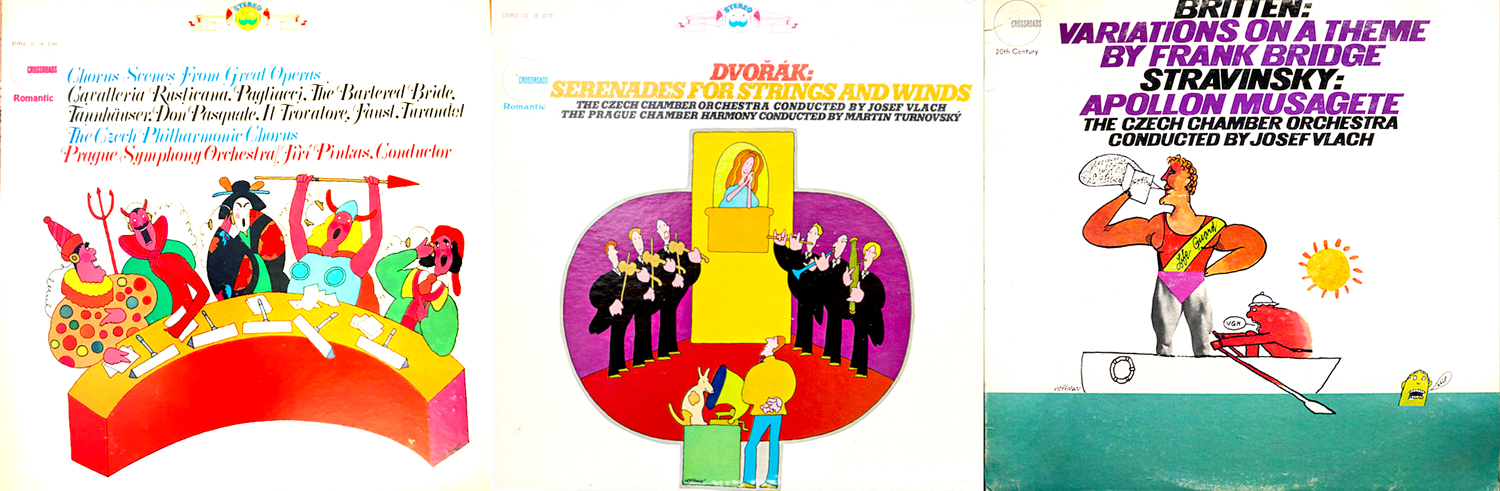
But, it is the other label I really like better. Crossroads was a subsidiary of Epic Records. Epic dealt mostly in popular music and jazz, but in the late 1960s, they licensed reams of Supraphon recordings, mostly recorded with Czech musicians, and sold them under the Crossroads label, with often quite witty cartoon album art. The level of performance was top-notch, with some of the world’s best soloists and orchestras. 

I have gathered about 70 Crossroads album cover images, and offer a few here.

The Prague Madrigal Singers recording of Brahms Liebeslieder Waltzes was the perfect performance, light, with a happy amateur feeling of a group of friends singing together. Other recordings I have owned were too operatic and artsy for Brahms’ gemütlich bourgeois lovesongs. And the cover art perfectly reflected the tone of the performance, and of the music Brahms wrote:

Unfortunately for me, this performance has never shown up on CD and I long ago got rid of all my LPs. 

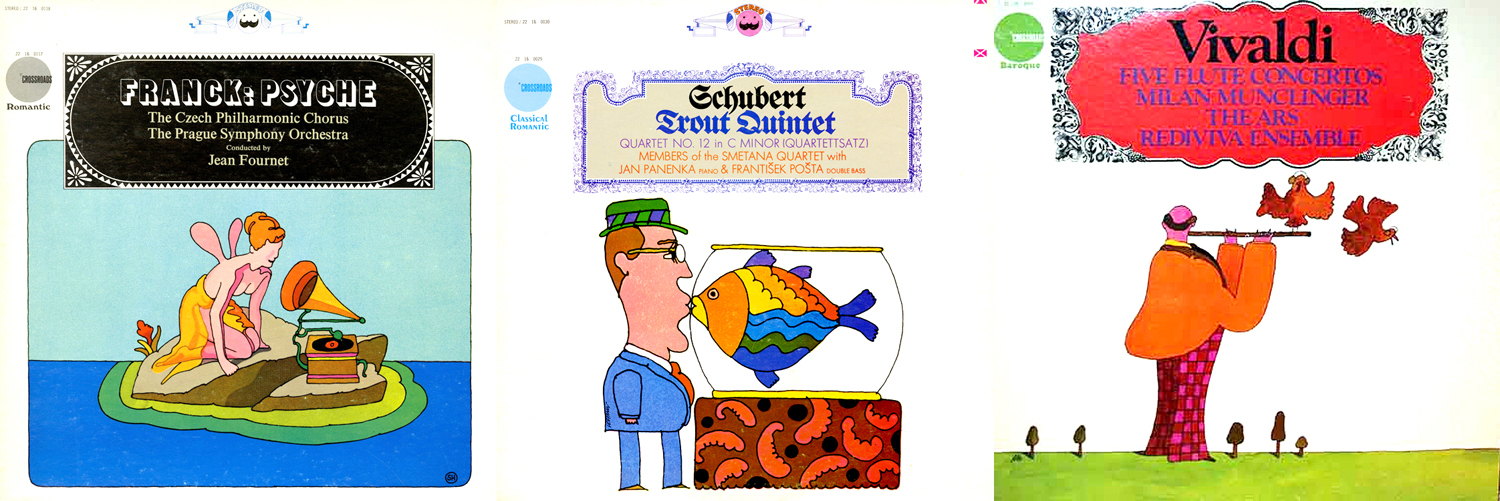
Many of the other Crossroads releases have subsequently been rereleased on other labels, including the original Supraphon recordings. But the album covers of the CDs never quite match the joie of these LP covers. It is also obvious that these came out about the same time as the animated Yellow Submarine movie. The style is unmistakeable. 

There’s a bit of Hokusai’s Great Wave in this Debussy. More Yellow Submarine for unknown classical-era composers and Someone has to vacuum up all the dropped notes.

There is, of course, a lot of Dvorak and Smetana in these Crossroads releases. 

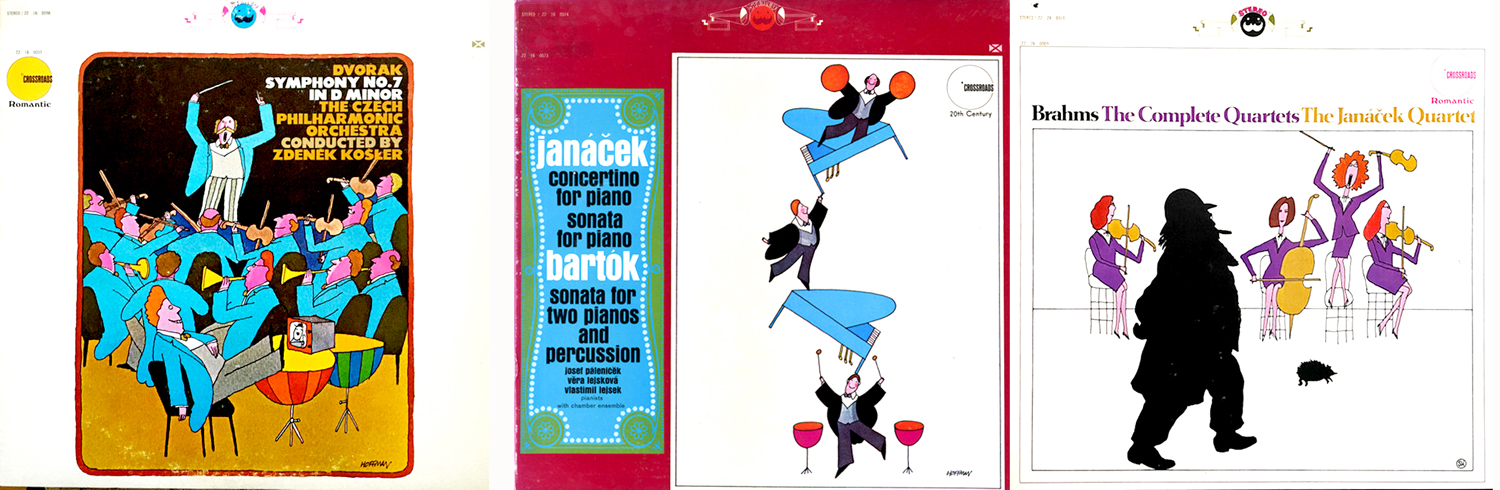
But it’s not all Czech. Here’s some Franck and a great Schubert “Trout” quintet. And even some of the musicians are not Czech. There are Germans, too.

The covers are a delight, even for heavier music: Dvorak’s most Germanic symphony, Bartok raucous Sonata for Two Pianos and Percussion and the deep slog of going through Brahms’ string quartets. 

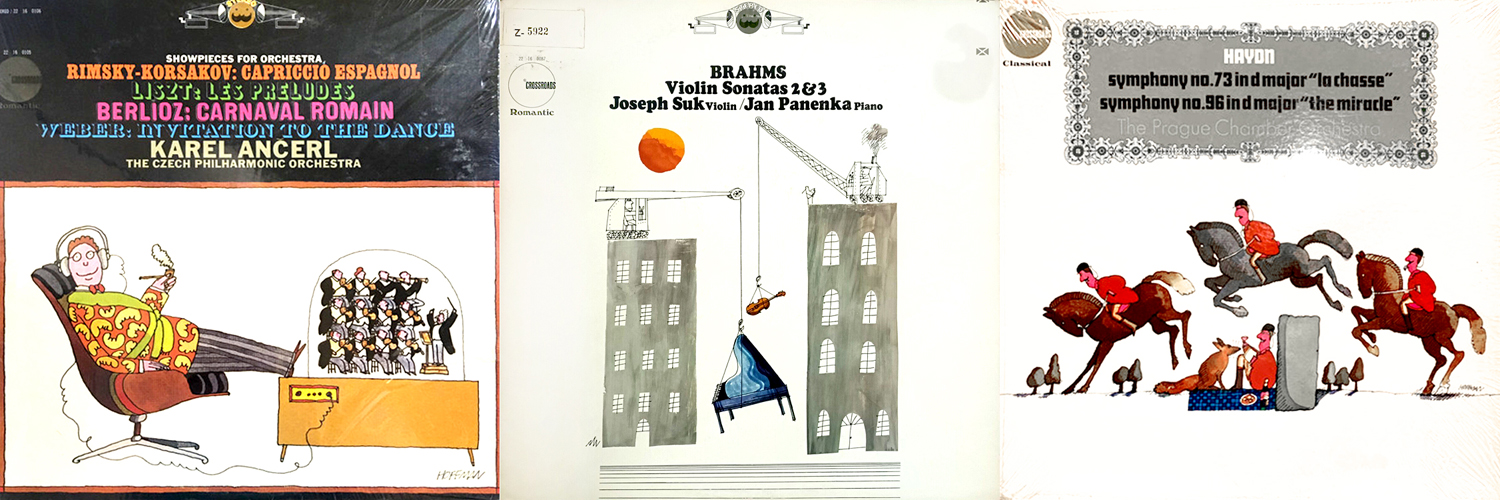
Villa-Lobos, Milhaud and others; Schubert’s giant op. 99 Trio; and 18th century Bohemian composer Jan Voríšek, apparently having his tooth pulled. 

Listening to the Loud Classics on earphones; two Brahms violin sonatas (you cannot find a better performance than the great Josef Suk and pianist Jan Panenka; I owned this LP for years — a delight); and Haydn’s “Chase” symphony.

The tradition of budget recordings continued into the CD era, with some super-cheapie labels, such as Pilz and Laserlight, and there was a deluge of rare repertoire items that came out on Naxos, before that label went upscale. And the classical music recording industry has just about collapsed with fewer new recordings, but a raft of back-catalog items being issued in budget boxes by Sony, Warner, and Brilliant, often for as little as a buck a disk. 

And now that I am retired, I find myself back in the same situation I was when I was newly graduated from college and making $50 a week at a retail store (well, not quite that bad off), and I find myself again stocking up on piles and piles of budget issues.

Click on any image to enlarge

No, classical music doesn’t all sound the same. In fact, sometimes it’s hard to find any relationship at all between the far corners of the field. What do Gregorian Chant and Karlheinz Stockhausen have in common? 

When someone complains that “it all sounds the same,” you can be pretty sure that the reason is simply lack of exposure. A sample group too small to generalize from. So, I thought, as a followup to my previous blog entry about classical music, I should try to stretch the boundaries of the subject, to stretch out the definition tightly from end to end to see how far it spreads. 

If you listen to the items on this catalog, you will find music so different as to be hard to assign a common category. 

In the previous blog entry, I attempted to move from one suggestion to the next in the most contrasting way, from, say, Renaissance polyphony to Stravinsky’s Rite of Spring — a clear jerk from one mode of hearing to the other. 

This time, I hope to provide some framework to see how what we call classical music, or art music, developed over time. You may object that about half of the music comes from the 20th- and 21st-centuries, but that is only being fair: You should remember that the Rite of Spring — which is the traditional mark for the beginning of Modernism in music — is actually closer in time to the death of Haydn than it is to us today. Twentieth Century music is no longer new — it is classical. 

(I’ve chosen a single piece from each of the large clumps of music history, varying both style and genre, including keyboard, chamber, vocal, choral and symphonic. From each period, I have supplemented the examples with two contrasting pieces for further listening.) Beginning with: 

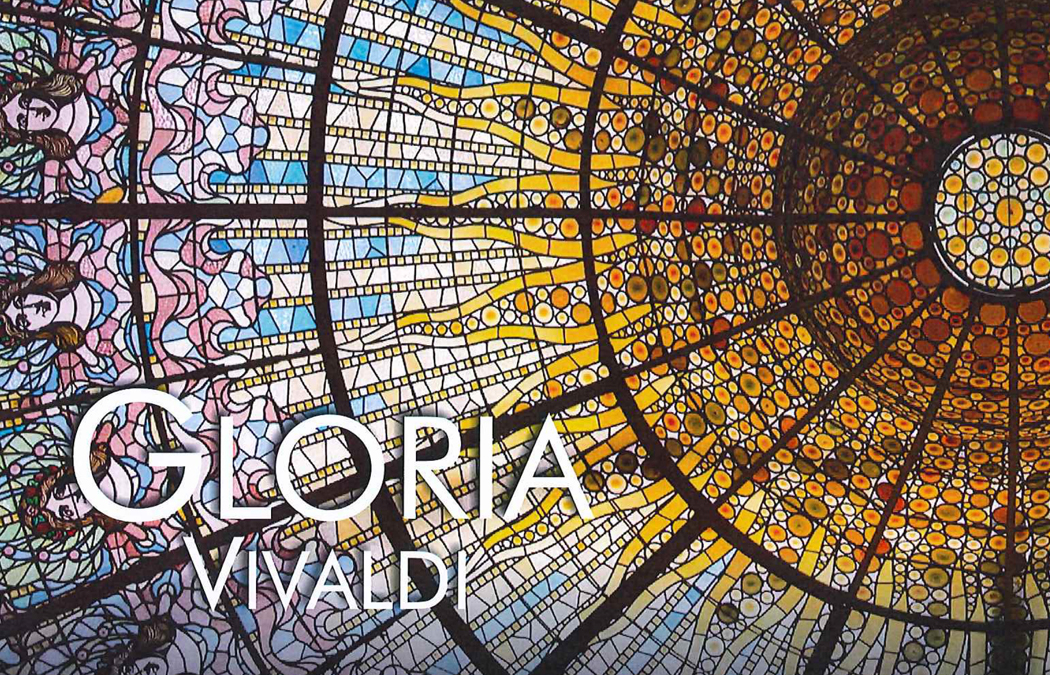
Vivaldi: Gloria in D Major, RV 589

Antonio Vivaldi (1678-1741) wrote at least three settings for the Gloria, but this one is the version everyone remembers, with its chugging motoric drive and its brassy fanfares. It is built from 12 short movements split between choral numbers, solos and a duet for soprano and contralto. 

Its catchy opening “one-TWO-three-four, one-TWO-three-four” with its octave leaps, returns later to unify the work. The Baroque era ran from roughly 1600 to 1750, although styles evolve slowly and overlap. It’s not like everyone stops writing one way and begins writing the new way. This piece, from 1715 lasts about 30 minutes and exemplifies the energetic forward motion of the Baroque. 

Alternates:

J.S. Bach (1685-1750), The Goldberg Variations (1714), a set of 30 variations on a repeating bass line, for keyboard; and George Friedrich Handel (1685-1759), Musick for the Royal Fireworks (1749), a suite for a large band of wind instruments, for outdoor performance during a famous fireworks display meant to celebrate the end of the War of Austrian Succession. The crowd loved the music, but the fireworks caused a building to burn down, blinded a soldier and injured several others. Later performances often added strings to the wind band, with no further reported injuries. 

Haydn: Quartet in D major, op. 64, no. 5 “The Lark”

It is often said that Joseph Haydn and Mozart wrote music in the classical style (roughly 1750-1828), but in fact, they created the classical style. If Haydn didn’t singlehandedly invent the symphony, he made it what we think of today; and he did the same for the string quartet — music for two violins, viola and cello. 

This is music generally less cluttered or fussy than the earlier Baroque, and seeks a kind of modest tastefulness, along with, in Haydn’s case, a witty sense of humor, as in the imitation bird calls at the start of this quartet, which was written in 1790 and has the usual four movements: an opening allegro, a dance movement, a slow movement and a jaunty finale. 

Alternates:

W.A. Mozart (1756-1791) Serenade No. 10 for 13 Winds in B-Flat, known as the Gran Partita (1781), which, in Peter Shaffer’s play, Amadeus, he has Antonio Salieri react by saying, “It seemed to me that I was hearing the voice of God.” Or Franz Schubert’s (1797-1828) Symphony No. 5 in B-Flat (1816), which is a really tuneful symphony built on Haydn’s model. 

Liszt: Piano Concerto No. 1 in E-Flat 

Franz Liszt (1811-1886) is the perfect Romantic composer, the greatest piano virtuoso of his time, and a matinee idol that all the ladies were in love with — something of which he took great advantage. His music, as in this 1855 concerto, is filled with all the wild emotion that the classical era avoided: over the top, loud, brash, and with a solo part for the triangle — it scandalized its first audiences. The jangle of the triangle was considered bad taste — but bad taste is the goal of much Romanticism. Audiences loved being scandalized. 

Alternates:

Robert Schumann (1810-1856) wrote a cycle of songs, telling a sad love story, called the Dichterliebe, or “A Poet’s Love,” in 1840, and includes a song claiming over and over, “I’m not angry,” to some of the angriest music ever. Clever. Or Bedrich Smetana’s (1824-1884) Moldau, an orchestral portrait of the Czech river (now usually called the Vlatva or Voltava), which is a perfect example of the Romantic Nationalism that swept over Europe. Great tunes. 

Debussy: Images for Piano, Book II

In the late 19th century and the 20th century before the First World War, music went through several changes. One of them is a rejection of Romantic excess, and the French composer Claude Debussy (1862-1918) came up with his own style — usually called Impressionism — of ambiguous tonality, exotic scales, and an approach to the piano that was soft and non-percussive. 

He wrote a great deal of piano music, including the famous Clair de Lune, but I’m offering the three pieces in his Images, second series (1907): Cloches à travers les feuilles (“Bells through the leaves”); Et la lune descend sur le temple qui fut (“And the moon descends on the temple that was”); and Poissons d’or (“Golden fish”).

Alternates:

Some composers went in the opposite direction, with larger orchestras, more chromatic harmonies of profound longing, in what is often called Late Romanticism, or Post-Romanticism. Gustav Mahler (1860-1911) often added voices to his orchestral music, or wrote orchestral song cycles, such as his Songs of a Wayfarer (1885). Richard Strauss (1864-1949) used huge orchestras and explodes out of the gate with Don Juan (1889), a musical version of a Don Juan more idealistic than lecherous. It is an avalanche of sound, with a huge six-horn signature that, in live performance, you feel through you fundament as much as hear with your ear. 

Janáček: Sinfonietta 

Now we are ripe in the 20th Century, and Leos Janáček’s Sinfonietta (1926), a five-movement piece for huge orchestra, including 25 brass instruments. The first movement has 10 trumpets alone, playing a hair-raising fanfare. 

All five movements are built from catchy tune-bits, extended and repeated. And although the music is clearly modernist, I’ve never come across anyone who didn’t instantly love the Sinfonietta

Alternates:

French composer Olivier Messiaen (1908-1992) was imprisoned by Nazis during World War II, and in prison camp, wrote his Quartet for the End of Time, for piano, clarinet, violin and cello (the instruments available in the camp). It is a hugely idiosyncratic piece, written to Messiaen’s own music theories, but can be overwhelmingly emotional in a good performance. And for the double-dip experience of atonal music, try Alban Berg’s (1885-1935) Three Pieces for Orchestra (1914), for something like what people used to call “modern music.” 

Penderecki: Threnody to the Victims of Hiroshima

Classical music, or art music, is still being written, and responds to life in the current world. We live in a post-Hiroshima age, and Polish composer Krzysztof Penderecki (1933-2020) summarized the feeling in his 1961 string-orchestra piece, Threnody to the Victims of Hiroshima, although you may have some difficulty recognizing it as string music made by violins, violas, cellos and double basses. It shrieks of the horror. 

It masses its 52 string players in tone clusters and dissonances, various vibratos and odd bowings, for 8 and a half minutes, that is not meant to be beautiful, but to evoke intense emotions. It is, nevertheless, beautiful. (Remembering Tom Robbins notion: “The ugly may be beautiful; the pretty, never.”)

Alternates:

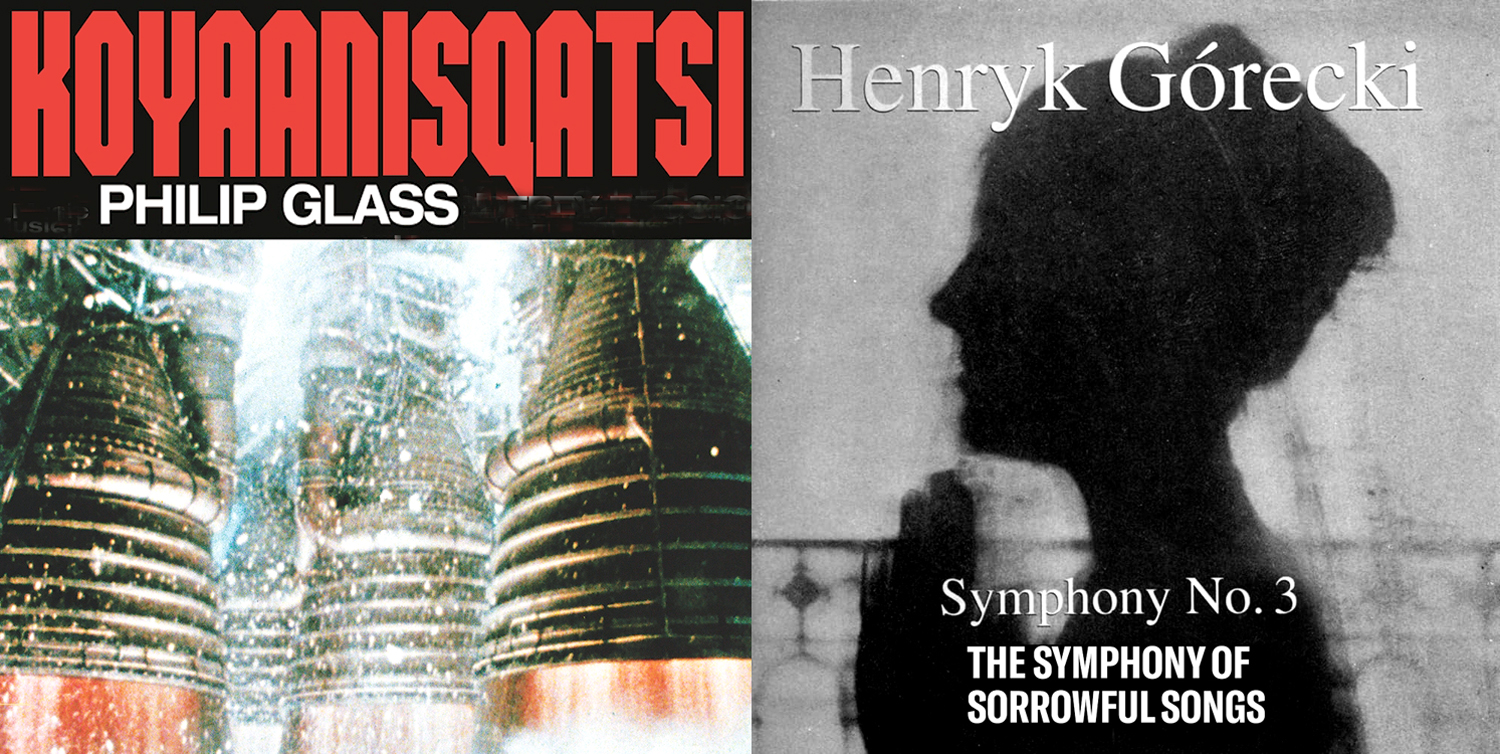
Minimalist composer Philip Glass (b. 1937) also reacts to the modern world in his film score for the Godfrey Reggio film, Koyaanisqatsi (1982). The modern world is a crazy world, as the film and music underline, but with quite a variety of minimalist techniques. The horrors of war fill Henryk Gorecki’s (1933-2010) Third Symphony (The Symphony of Sorrowful Songs) (1976), in which a soprano sings Catholic laments and words by victims of the Nazis, all to music so slow and so inexorable as to be almost a force of nature. Its 1991 recording by the London Sinfonietta sold more than a million copies. Gorecki, surprised at the popularity of such a sorrowful piece of music said, “perhaps people find something they need in this piece of music…. something they were missing. Something, somewhere had been lost to them.”

Epilogue

Of course, this diversity is among the European tradition of art or concert music. Most cultures have their own classical musics, such as the sitar or sarod music of India, the Chinese opera music, and Japanese flute music. Each is a tradition handed down from master to student and carried forth, with development and variation. That is what makes it classical. 

If I were to think of a purely American classical music, it would be jazz. It, likewise, has a wide range of styles and sounds, from Louis Armstrong through Duke Ellington and down through Ornette Coleman. 

But it is what we call classical music in the West that I am best familiar with and love. And writing this has given me the chance to listen once more to each of the pieces I’ve written about, and more joy me. 

Occasionally I get asked (OK, once) where should I start listening to classical music. Classical music is something that a few people as they age past Top 40 songs, come to believe they should begin to know, the way they should read Proust or watch foreign films. 

Philip Larkin mentions the drive in his poem Church Going: “Much never can be obsolete,/ Since someone will forever be surprising/ a hunger in himself to be more serious.” 

I have been listening to what is called classical music for 60 years, and my first thought is that classical music does not exist. Not really. 

What is called classical is a combination of old church music; popular music that has been around so long, it no longer sounds like the pop music we know; and music meant to entertain, first, a class of aristocrats who could afford to pay for it, and then an aspirational middle class that took up the buying of tickets. 

It wasn’t until late in the 19th century that anyone really considered such music “classical.” And only in the 20th century that most symphony orchestras were organized to play what in the past had just been music, but was now given this new label. 

Until then, most concerts consisted of new music mixed with a few old favorites (much like modern pop music — they wanted to hear the hits). And so, old standards became classics. 

Not all of the old standards were heavy and serious. Mozart wrote tons of divertimenti to be played as the count and countess ate lunch. It was only meant to sound nice, with catchy tunes. Yes, some classical music is meant to evoke deeper thoughts and emotions, some even meant to change lives. 

But there is pop music that is serious, too. Consider the Beatles’ A Day in the Life, or Queen’s Bohemian Rhapsody. They aren’t always short. 

And so, when you ask about classical music, you aren’t asking about a single thing. If you were to open up that can of worms and try to learn what classical music has to offer, you will have to recognize that no one thing can suffice. Nor any one style; nor any one century. 

If there is anything that marks music as classical, it is its length. Most tunes last three or four minutes, while a symphony can run anywhere from a half-hour to 90 minutes. The popular music is meant to put a tune in your head and you like it (or not) and may sing it to yourself as you wash the dishes. Such music is usually meant to be absorbed passively. 

What is called classical tends to be more like a story, even a novel, with multiple characters and changing moods, so where you start is not where you end up. It is music you pay active attention to. It goes somewhere and you have to pay attention to notice the plot. 

The story told in music, though, is not one that can be translated into words. It is one you listen to as it unfolds in musical terms: the melody changes, sometimes broken into pieces, the harmony turns grim or lilting, sometimes the melody might be played half-speed, or faster, or even upside down. These are all part of the musical story-telling. 

So, what do I say to my friend asking advice on how to start listening to classical music? 

The complaint I hear often is that classical music all sounds the same. It doesn’t. And so, I want to offer examples both of the stories and of the diversity. And I want to start off with a symphony with the clearest, most direct “story” to tell.

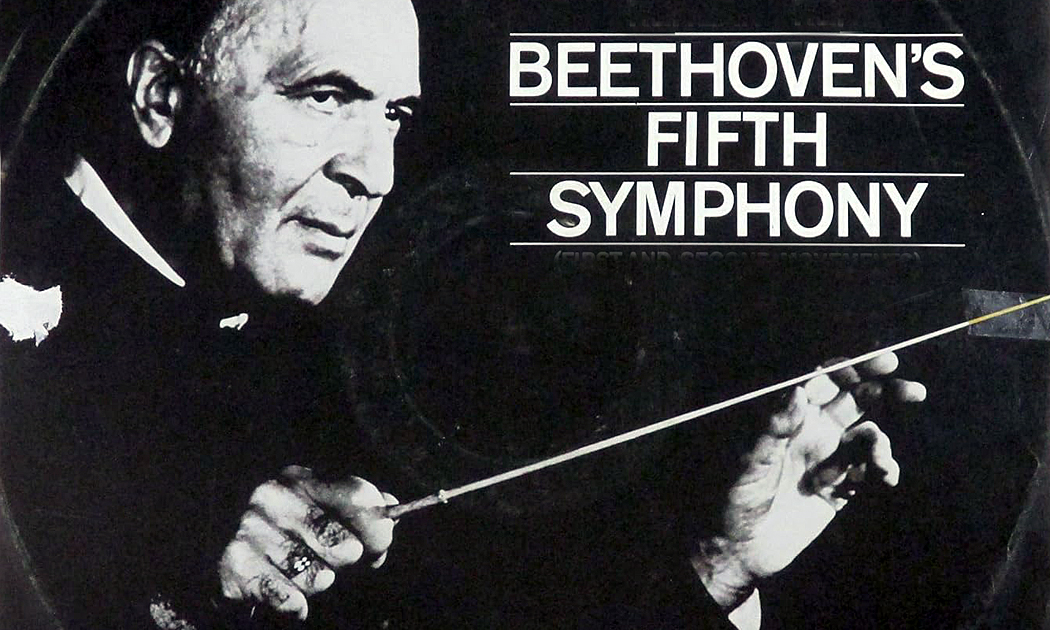
If there is any single place to begin, it is with Beethoven’s Fifth Symphony, or, more formally, Symphony in C-minor, op. 67, first performed in December, 1808, in a freezing cold concert hall in Vienna, along with a host of other new works by the composer, making for a concert lasting more than four hours. For all that music, the orchestra — a pickup ensemble paid for by Beethoven himself — had only a single rehearsal to work out the kinks. In one of the pieces played that evening, the orchestra got lost and had to stop and begin the whole piece all over again. 

But that Fifth Symphony eventually became iconic — the single stand-in for all of symphonic music. 

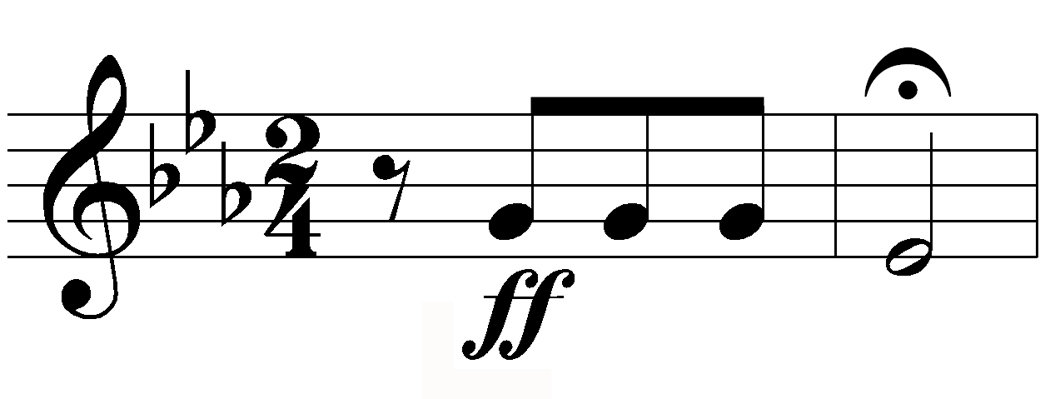
It begins, as almost everyone knows with the heavy tread of the dah-dah-dah-DUMM. Those four notes are played over and over through all four movements of the symphony, sometimes straight, sometimes altered, sometimes as a drumbeat underneath another tune. I once counted in the symphony score more than 700 repetitions of dah-dah-dah-dumm. That works out to once every three seconds of music from start to finish. It’s almost OCD. It’s no wonder the notes are often compared with hammer blows. 

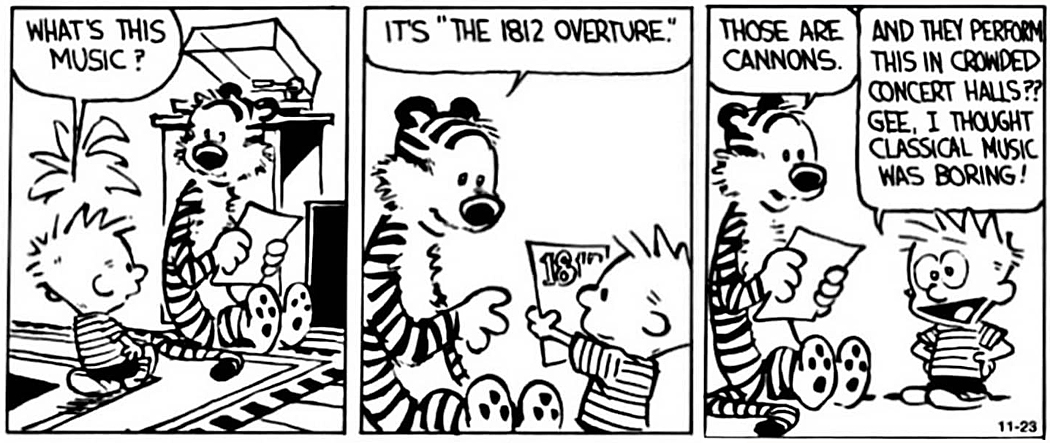
The symphony is in the minor key, a key of angst, anger, uncertainty, which Beethoven underlines by having the music stop outright several times after we hear the four-note motif. As Peter Schickele said, in his comic sportscast of the symphony, “I can’t tell if it’s fast or slow, because it keeps stopping.” 

But it picks up steam to an intense, driving rhythmic motor, all in that relentless C-minor. It blasts you over the head with it. The first movement (of four) lasts, in most performances, only about five minutes, but you may very well be worn out by all that hammering and minor-keying. 

The second movement is a relief from the drive of the first, but the dah-dah-dah-dumm is often there, heard beating away in the bass line. The third movement starts with an ambiguous arpeggiated melody in the basses, but then brings back dah-dah-dah-dumm as a main theme, with the drive of a forced march. The movement doesn’t really end, but rather morphs into a chaotic repeated note pattern that doesn’t seem to be going anywhere, until … until… it does — and it explodes into a big, brassy blast of C-major — the major key the entire symphony has been trudging toward for all its length. The feeling is absolutely triumphant. The spirit soars. 

And yet, if you listen carefully, you will recognize that those happy, brilliant tunes are actually a metamorphosis of the dah-dah-dah-dumm, buried in a longer, rising optimistic melody. And at the very end, Beethoven drives home that C-major with 25 bars of pounding C-major chords in the full orchestra. You know you have reached the finish line with the last long-held chord. Having won it, he’s not going to let go. 

The story the symphony tells is from anger and angst into triumph and joy. It is this long development of an idea that marks what is called classical music as different from popular music. 

And even in classical music that doesn’t have the symphony-long coherent story to tell, each movement has its own plot and narrative. The most common narrative in classical music is presenting a theme or two, or three, in order, then mixing it all up, taking them apart, replaying them in foreign keys and disruptive orchestration, and then, finally, bringing them back in something like their original form so that you have a satisfying feeling of having returned home after a journey. Roughly half of all classical music is built on this pattern — with infinite variations. 

It is the surprise variations from the standard pattern that often delights music listeners. But to get the variants, you have to have become familiar with the expectations. It is hardly different from knowing the general plan of a TV sitcom, and being delighted when the show gives you a turn on your expectations. In a modern sitcom, you almost always have a main plot, a secondary plot, and a third, smaller background action, and they alternate in your attention, but are all wrapped up by the end. Same with a symphony or sonata. 

Next, about classical music all sounding the same (I have my own ignorance, too: For me, all pop music sounds the same). I have come up with a list of five classical pieces to spread the parameters. Each of these pieces can be found on YouTube to be listened to for free. 

Orchestral music is what most people think of as classical music. But there is so much more. 

Let’s start with some choral music. Before the late 17th century, most art music was vocal, and most often for the church. What instrumental music there was was usually improvised, rather like jazz. 

So, first, listen to Spem in Alium by English composer Thomas Tallis (1505-1585). It is a 40-part motet setting the Latin text “I have never put my hope in any other but in thee, God of Israel.” (Spem in alium — “Hope in other”). It was written about 1570 for a combined eight choirs of five voices each. 

It starts with a single soprano voice, adding others until, about three minutes into the piece, the entire five choirs all burst forth in a glorious racket. It is quite sublime. 

Then, let’s go the other direction. In 1913, Igor Stravinsky’s Le Sacre du Printemps (“The Rite of Spring”) was premiered as the score to Vaslav Nijinsky’s choreography for the Ballets Russes in Paris. That premiere famously caused a riot. Stravinsky fled the theater in fear for his life. Or so he claimed — one never knows just what to believe in a self-mythologizing artist. 

The music is rhythm torn apart, pounded home as part of what Leonard Bernstein called “Uncle Igor’s Asymmetry Machine.” It tells the ballet story of primitive Russian society and its ritual sacrifice of a young woman who dances herself to death. With its riotous dissonance, pounding percussion, and extreme orchestration, it remains perpetually modern. 

But we should not forget chamber music — music for a small group of players, often just two, such as violin and piano. César Franck’s Violin Sonata in A-major is about the most tuneful sonata ever written. He wrote it in 1888 as a wedding present for the famous violinist Eugene Ysaye. 

Its four movements borrow tunes from each other, and so although the movements are quite distinct emotionally, they are all tied together by the memorable melodies. 

And I cannot forget song. Most of the great composers also wrote songs, though they are nowadays called lieder, which is just the German word for “song,” but gives a higher-toned, more prestigious ring to the name. But they are songs nonetheless. 

The greatest of these classical song-writers is undoubtedly Franz Schubert (1797-1828). Poor all his life, and hardly recognized as a great composer by any but his closest friends, he was a gushing fountain of melody. His song Erlkönig tells the story of a father and son riding through the night on a horse, stalked by the evil elf-king who wants to take the boy. The child screams in fear, the father tries to protect him, and the goblin tries to seduce the kid away. It is a frightening song, but full of tremendous melody. 

This should give you some sense of the incredible range of the art music of Western culture. And a start in classical music. 

Next: A look at the changing eras of classical music

Professor Peter Schickele has died, and there is one less star twinkling in the sky. 

Schickele, who was the creator of PDQ Bach, was 88 and had been ill. 

I have a long history with PDQ Bach, and I will miss his music and wit terribly. He came from a notable line of musical satirists and clowns, including Spike Jones, Anna Russell, Victor Borge and, of course, the Hoffnung Festival in Great Britain. But, at least initially, his target was Baroque music in particular. 

At the beginning of what was called the “Baroque revival” in the 1960s, Schickele devised PDQ as a way to parody some of the excesses, cliches, tropes, and habits of the newly popular historical style. His first concert was in April of 1965 at Town Hall in New York. I did not attend that one, but in December of that year, he brought the program to Philharmonic Hall, and I was there for the Concerto for Horn and Hardart, the cantata Iphigenia in Brooklyn, and the Pervertimento for Bagpipes, Bicycle and Balloons. Schickele was there as narrator and explicator; he arrived late at the hall, and swung onto the stage, Tarzan-style from the balcony. 

It was one of the funniest things I ever saw or heard. 

“In general, the dance music of PDQ Bach suggests that one of his legs was shorter than the other.”

The cantata — “Scholars are unaware Iphigenia ever was in Brooklyn” — has Orestes “being chased … by the Amenities” and he sings the sorrowful aria “Who knows what it is to be running? Only he who is running knows,” followed by “Run-running knows, run-running knows, ru-u-u-u-u-ning running knows.”

It was all a bit goofy, but made fun of things familiar from Baroque music. (Anyone familiar with actual Baroque opera will realize this “running knows” isn’t that much sillier than the real thing.)

The Hardart was a vast instrument made up of bells, whistles and gongs, each tuned to a different pitch, and with little windows on its front from which you could get pie. The second movement was a theme and variations, but “the variations have nothing whatever to do with the theme.” 

I was a teenager then, and attended the concert with my high-school girlfriend, who became a professional bassoonist, and, in fact, later played with Schickele in PDQ concerts, and even occasionally appeared with him on radio interviews promoting concerts. 

We came the next year to the second season of PDQ Bach, then at Carnegie Hall, to hear The Seasonings, The Echo Sonata for Two Unfriendly Groups of Instruments, and Eine Kleine Nichtmusik

In fact, through marriages, break-ups, divorces and remarriages, I attended a PDQ Bach concert every year for more than 20 years. Schickele took his act on the road, and wherever I was living, whether Greensboro, N.C., Seattle, Wash., Norfolk, Va., or Phoenix, Ariz., Schickele found his way and I found a ticket. 

In Norfolk, I caught up with him backstage after the concert and we talked about my bassoonist ex-girlfriend. Unfortunately, she wasn’t part of the Norfolk performance. I would have loved to catch up. 

PDQ Bach always functioned on two levels. Even those who knew little about classical music could enjoy the slapstick and the bad puns; but anyone with familiarity with music history could catch the often sophisticated in-jokes. 

Schickele in Phoenix

I, of course, bought all the albums, and later, CDs. The last time I got to hear a PDQ Bach concert was in Phoenix in March, 2001, when Schickele and the Phoenix Symphony performed Oedipus Tex with Michèle Eaton as Billie Jo Casta, and Schickele as Tex. The program also included Swing Sweet, Low Chariot.

As his career-shtick progressed, Schickele widened his target to include the Classical era, giving the treatment to Mozart and Rossini with such things as The Civilian Barber, and The Abduction of Figaro, and into the Romantic era, with a parody opera, Hansel and Gretel and Ted and Alice

Schickele and his sidekick Robert Dennis famously gave a sportscast of Beethoven’s Fifth Symphony. “I can’t tell if it’s fast or slow because it keeps stopping.” In one live performance of this, in the early 1970s, when the Vietnam War was still an issue, the “game” began with what started as the National Anthem. Half the audience stood up, hand over heart; the other half, self-righteously in protest, sat motionless. Except that the arpeggiated beginning of the anthem ended immediately with a descending arpeggio ending after a couple of bars. The whole thing took less than five seconds. Everyone in the audience, standing or sitting, was caught red faced. 

He took on contemporary music, also, with Philip Glass’s Einstein on the Beach turned into Einstein on the Fritz. and Koyaanisqatsi became Coy Hotsie-Totsie.

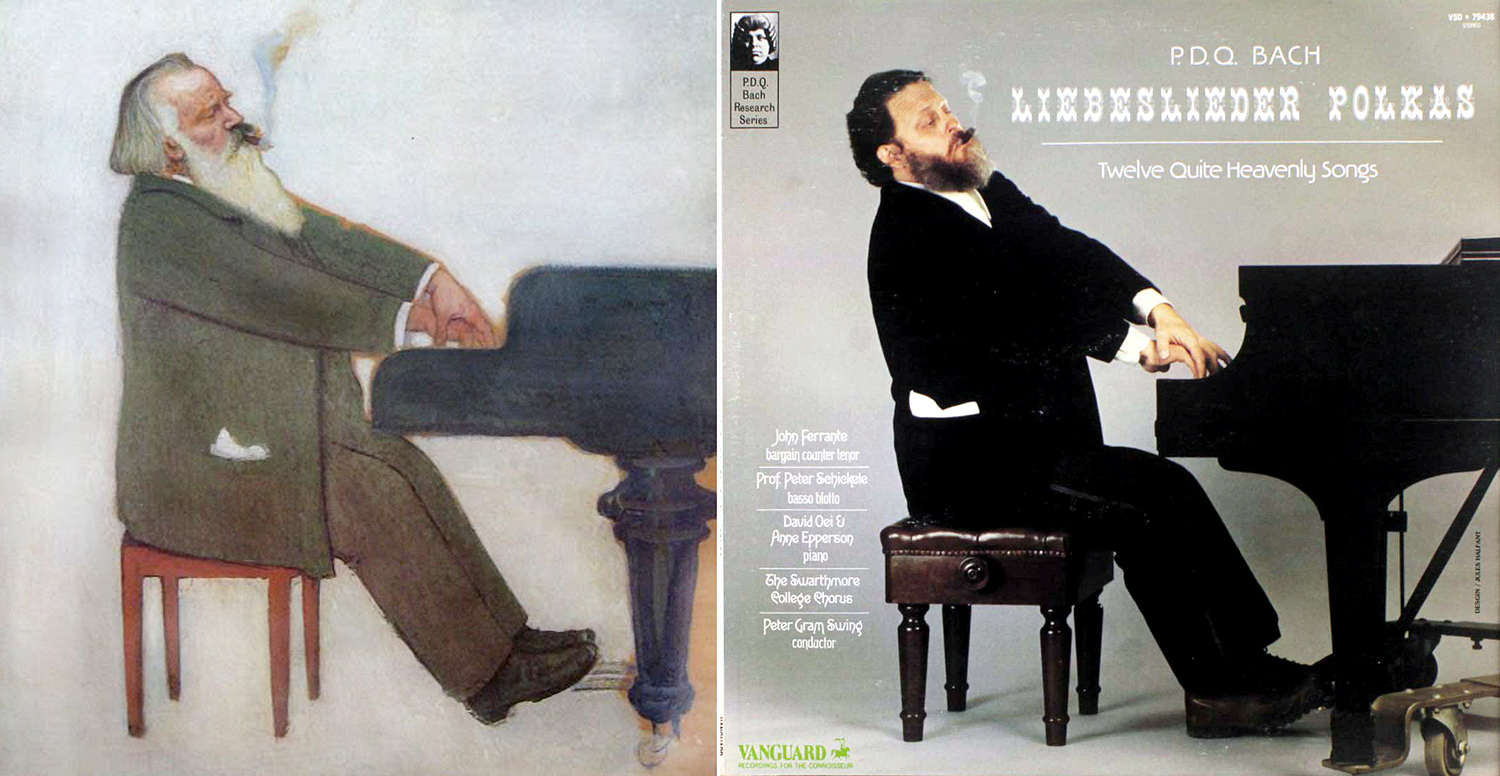
The titles of his schlamperei are enough to draw whoops, especially for anyone familiar with the originals. Among them: Concerto for Piano vs. Orchestra; Fanfare for the Common Cold; Goldbrick Variations; Hindenburg Concerto; Liebeslieder Polkas; No-no Nonette; Notebook for Betty-Sue Bach; Royal Firewater Musick; Safe Sextet; Schleptet in E-flat; The Short-Tempered Clavier; Traumarei for Unaccompanied Piano; The Triumphs of Thusnelda. Wikipedia lists more than a hundred titles. 

In fact, he had leftover titles, ready to attach to newly “discovered” works: Rosenkavalier and Guildenstern; The Passion According to Hoyle; the Half-Nelson Mass; and Famous Last Words of Christ.

The Hoffnung Music Festival in London lasted for only seven concerts. PDQ Bach lasted from 1965 through 2015 (with a break in the 1990s) and encompassed 20 albums, 2 video recordings (many more on YouTube), and the definitive biography of PDQ Bach, titled The Definitive Biography of PDQ Bach

I should mention that Schickele was also a serious composer, with many works published under his own name, and wrote the film score for the 1972 movie, Silent Running

So, it wasn’t all tomfoolery. But even his parodistic work is well crafted and full of memorable tunes. PDQ will likely last a very long time. 

I will miss hearing new works and weird concerts. 

French composer Camille Saint-Saens was smarting from a concert tour in Germany that didn’t go over well, and so, in 1886, he withdrew to small Austrian village and wrote a short piece about music critics, which he called Personnages à longue oreilles, or “Characters with long ears,” in which the critics bray in imitation of asses — “hee-haw.” It is barely 45 seconds long, but it seems to have given him a bigger idea. 

And so, he wrote thirteen accompanying short, mostly comic,  compositions, each describing another animal, and had them played privately as La Carnaval des Animaux, or “The Carnival of Animals.” He wrote his publisher in Paris that he knew he should be working seriously on his Third Symphony, but that instead, he was having “such fun.” 

Yet, fun wasn’t what he wanted to be remembered for. He was to be a serious and honored composer of five symphonies, many concertos and 12 operas. And so, he refused to allow the Carnival of Animals to be published until after his death. 

The irony is that, along with his Danse Macabre and the Bacchanale from his opera Samson et Dalila, what he is best remembered for, and most loved, is this 25-minute-long musical menagerie. In fact, his best-known piece is undoubtedly The Swan, for cello and piano, the second-to-last section of the Carnival

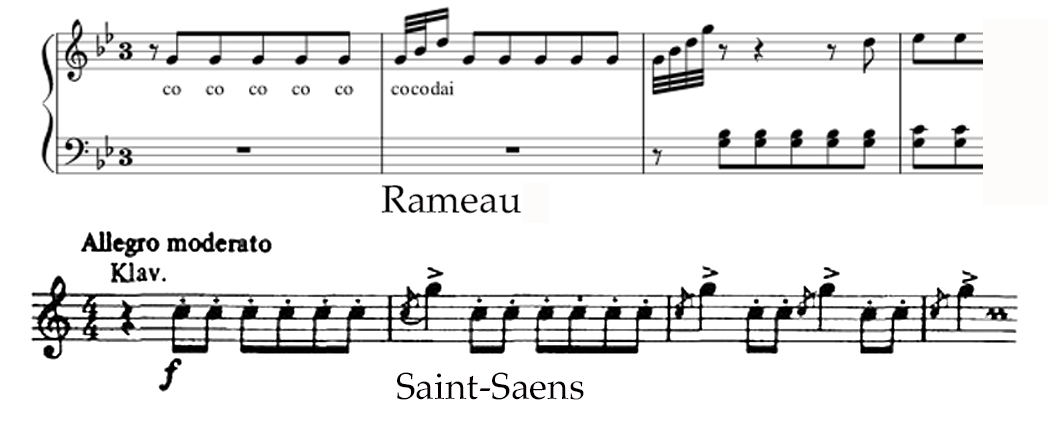
Many of the pieces parody famous music by other composers and popular songs, but I want to pick out, in particular, the second section, Poules et Coqs (“Hens and Roosters”), which gets its main theme from a 1726 piece for harpsichord by Jean-Philippe Rameau, called La Poule (“the Hen”), from his Suite in G from his Nouvelles Suites de Pièces de Clavecin

You can see the similarity, even in these few bars. 

But that set me off on a search for other music about or imitating animals. It’s not just “Old MacDonald” and his “oink, oink, here and an oink, oink there,” but in fact, a long history of musical animals. Some famous, some obscure. 

Of course, such animal imitations go back to prehistory, if we believe the musicologists, who tell us that they often feature in folk songs, from all around the world. “Old MacDonald” is only one of them in English. But there are Chinese songs, Turkish songs, Swahili songs, all with animal noises as part of their lyrics. 

But I was most interested in Western art music, after the invention of musical notation and printing, where the music could be tracked down and maybe even listened to (on YouTube when available). 

The earliest I found was from the middle of the 13th century, a ditty called Sumer is icumin in, with its lyrics “lhude sing cucu,” which have been set to various tunes, most of those I have heard include a melodic line that imitates the falling third of the cuckoo birdcall. 

No doubt because the cuckoo’s call is so distinct and so clearly a falling third, it is about the most frequently used birdsong in classical music, as we will see (followed by the trilling of the nightingale). 

Indeed, the next entry is Par Maintes Foy, by 14th century composer Jean Vaillant, which not only has the singers call out the cuckoo and the nightingale, but also the goldfinch, starling and quail. “Lire, lire, lirelon,” Toowee, toowee, toowee.” 

But it isn’t all birds. In 1505, Josquin de Prez, perhaps the most famous of all early composers, published his El Grillo, which has its singers imitate the sound of a cricket. 

Clement Jannequin (11485-1558) wrote Le Chant des Oiseaux (“Song of the Birds”) with a blackbird singing “Ti-ti, pi-ti;” the nightingale trilling on “Frian, frian;” and the cuckoo again doing his “Cu cu, cu cu.” 

Pierre Passereau (1503-1553) wrote Il est Belle et Bon, in which a wife praises her husband for being so compliant and even feeding the chickens, which she then imitates “co co co co da.” 

In his Book of Ayres with a Triplicitie of Musicke, from 1606, John Bartlett published a madrigal called Of All the Birds That I Do Know, in which words get repeated in a way that clearly evokes the chatter of birds. “Of all the birds that I do know, Philip my sparrow hath no peer … Philip will cry still, ‘yet, yet, yet, yet, yet, yet.’” 

As we leave the vocal Renaissance and enter the more instrumental Baroque age, we begin having fiddles and hautboys imitating various birds and beasts. 

Sonata Representativa (1669) by Heinrich Biber dedicates a movement each to imitations of nightingales, cuckoos, frogs, hens and roosters, quails and cats. Written for violin and continuo, it alternates short interludes with sections depicting animal sounds. After a Preludio, a Nightingale on the violin sings four eighth notes repeated and a long trill over a pedal; a Cuckoo hits repeated fast eighth notes making the usual cuckoo sound; then come Frogs with an appoggiatura of dissonant seconds, sounded together, and resolved upward, over and over to make croak; Hens cluck with upward portamento; quail have a repeated dotted rhythm “dah, da-dah;” a Cat comes mewing portamenti in nursery-rhyme-like tune; then all is rounded off with a march.

Georg Phillip Telemann wrote his Alster Overture, with a fourth movement imitating “Concertizing Frogs and Crows.” There is also a swan in another movement. 

Of course, the most famous and familiar sounds come from Antonio Vivaldi’s Four Seasons. In the opening movement of the four concertos, we hear the squawking of birds. In the second movement, he has dogs barking, and in Summer, the slow movement has the strings buzzing around as a swarm of flies. 

But it wasn’t only the Seasons: In his Flute Concerto, op. 10, no. 3, “Il Gardellino,” he has the flute imitate a goldfinch. 

The keyboard is well represented, too. In addition to Rameau’s La Poule, there is Louis-Claude Daquin’s The Cuckoo and Francois Couperin’s Le Moucheron (“The Gnats”), to say nothing of Domenico Scarlatti’s Sonata No. 30 in E-flat, known as the “Cat Fugue,” with a tune that imitates a cat walking distractedly up a harpsichord keyboard (an early version, I guess, of Zez Confrey’s Kitten on the Keys).

 Then, there’s Georg Friedrich Händel’s Organ Concerto No. 13, known as “The Cuckoo and the Nightingale,” from 1739, with birdsong in the second movement. 

There’s no counting the birds, beasts and bugs in the music of Franz Joseph Haydn. He loved a good joke, and among his 104 symphonies and 68 string quartets (to say nothing of his 41 piano trios, 52 piano sonatas, and 126 baryton trios — not counting the additional 36 baryton works for that obsolete instrument with other pairings) you can find Symphony No. 82, “The Bear;” Symphony No. 83, “The Hen;” String Quartet op. 33, no. 3, “The Bird;” Quartet op. 50, no. 6, “The Frog;” Quartet op. 64, no. 5, “The Lark.” 

And in his magnum opus, The Creation, in Part 2, describing Days 5 and 6 of the biblical creation, he has the orchestra imitate multiple birds and animals, including an eagle, a whale, a stag, lowing cattle, and even a worm.

As we move into the Romantic 19th century, the animals are truly fruitful and multiply, beginning with the slow movement of Beethoven’s Pastoral Symphony, which ends with a cadenza that quote quail, nightingale and cuckoo. 

So, let’s make a quick list — as quick as it can be with such a long zoo parade. There is Schubert’s song, The Trout; Robert Schumann’s Papillon and the Prophet Bird; the braying donkey in Mendelssohn’s Overture to A Midsummer Night’s Dream; Chopin’s Etude, op. 25, no. 9, known as “The Butterfly Etude.” Not forgetting that it was said that Chopin’s “Minute Waltz” was inspired by the composer watching his dog, named Marquis, chasing its tail.

Cats screech over and over in the Cat Duet, attributed to Gioacchino Rossini (jury’s out on the authorship). 

To continue: There are birdsongs in the woodwinds in Bedrich Smetana’s Bohemian Woods and Fields; The Flight of the Bumble Bee, from the opera Tsar Saltan by Rimsky-Korsakov; The Lark by Mikhail Glinka; the Ballad of the Unhatched Chicks from Mussorgsky’s Pictures at an Exhibition; the “Dying Swan” and the “Dance of the Cygnets” from Tchaikovsky’s Swan Lake; and The Swans of Tuonela by Jean Sibelius. 

In Scandanavia also, we have, but Edvard Grieg: The Butterly; Little Bird; The Pig; The Horsefly and the Fly; and Cow Call. And from his contemporary Norwegian composer The Hare and the Fox by Harald Saeverud. 

Serge Rachmaninoff’s Etude Tableau, op. 39, no. 2 for piano is called “The Sea and the Gulls.” Enrique Granados wrote The Maiden and the Nightingale. And Richard Strauss caused some grumpiness and consternation in his staid German audience when, in the middle of his tone poem Don Quixote, he has the orchestra imitate a herd of sheep. But Strauss was no stranger to vulgarity: It is one of his strong points. 

Which brings us up to date with Saint-Saens’ Carnival of the Animals, which gives us, in order: a lion; hens and roosters; wild asses; tortoises, the elephant, kangaroos, fish in an aquarium, personnages a longue oreilles; a cuckoo in the woods; birds in the air (aviary); pianists practicing scales; fossils; the swan; and a finale that brings back many of the menagerie. 

But it’s not over yet. As we move into the 20th century (and the winding-up of the 19th), there are some very beautiful evocations of nature and the animals in it. Such as: Delius’s On Hearing the First Cuckoo in Spring. Or the fourth movement of his North Country Sketches, called “The March of Spring: Woodlands, Meadows and Silent Moors.” 

Ralph Vaughn Williams gave us one of the most beautiful violin show-off pieces in his The Lark Ascending. He also put some swarm sounds in the overture to his ballet The Wasps. Edward Elgar wrote for voices a very peculiar piece called Owls: An Epitaph. Pianist Leopold Godowsky gave us, in his Java Suite, a movement called “Chattering Monkeys.” 

Claude Debussy wrote Poissons d’Or (“Goldfish”) in his Images, Book 2, no. 3; and his counter-Impressionist Maurice Ravel wrote Oiseaux Triste (“Sad Birds”) in his Miroirs. Paraguayan guitar virtuoso Agustin Barrios wrote Las Abejas (“The Bees”). 

Ottorino Respighi took music from early composers and reworked and orchestrated it in his Gli Ucelli (“the Birds”), with movements called “The Dove,” “The Hen,” “The Nightingale,” and “The Cuckoo.” But he goes one better in his Pines of Rome, by including an actual sound recording of a real nightingale. (Tape recorded animal sounds return later in the century.)

Whole chapters might be given over to Gustav Mahler, who began his very first symphony with cuckoo calls, and inserted all sorts of animals, birds, and natural sounds into his music, including cow bells in his Sixth Symphony and a donkey braying in his Third, so say nothing of the sleigh bells in the Fourth, fish in his song Saint Anthony of Padua Preaches to the Fishes. They show up again in his Second Symphony. Nature is never far from the surface in Mahler’s music. 

But more than in Mahler, bird song is everywhere in the music of Olivier Messiaen. The man was obsessed with bird sounds. He used them often as the source of his thematic material (I hesitate to call them tunes), not simply transcribed, but often lowered in pitch, slowed down radically, or even played upside down or backwards. 

His 1958 Catalogue d’Oiseaux (“Catalog of Birds”) is a collection of 13 pieces for piano, each of which is based on the call of a different bird, running from the Alpine chough, the Eurasian golden oriole, the blue rock thrush and the tawny owl, through the woodlark, Cetti’s warbler, the common buzzard and the Eurasian curlew. The whole catalog takes just short of three hours to perform. 

Then, there is the Petites Esquisses d’Oiseaux (“Small Sketches of Birds”) from 1985, six short piano pieces, about 2 minutes each, that picture blackbird, skylark, thrush and robin. The L’Abîme d’Oiseaux (“Abyss of Birds”) is one movement from the Quartet for the End of Time. Le Merele Noire (“Blackbird”) is from Le Reveil des Oiseaux (“Dawn Chorus”), La Fauvette des Jardins (“Garden Warbler”) — on and on through his works, the birds are the foundation of his music. A devout Catholic, Messiaen saw birds and their song as emblematic of the beauty of God’s creation. 

Although, to be honest, it is usually hard to hear the music as bird calls, since they are so transformed by the composer. You kind of have to take his word for it. 

It’s hard to keep up with Bela Bartok, also. He wrote many short piano pieces, some of which bear the names of animals. But there’s The Diary of a Fly (Mikrokosmos vol. 6, no. 42), and the famous Bear Dance from his Ten Easy Pieces

But he is best known for the several “Night Music” pieces, from his Out of Doors suite for piano; the slow movement of his Music for Strings, Percussion and Celesta; and the middle of his Piano Concerto No. 3. Wikipedia lists some 20 compositions where Bartok employs his Night Music, which imitates the sounds of a Hungarian summer evening, with insects chirping, birds singing and frogs croaking. The effect can be miraculous. 

(Duke Ellington wrote his own versions of night music in his Queen’s Suite, with movements called “Sunset and the Mockingbird,” “Lightning Bugs and Frogs,” and “Apes and Peacocks.” I mention it here because, really, Ellington is classical music.)

Igor Stravinsky has elephants dancing in his Circus Polka, and nightingales warbling in his Chant du Rossignol. It has been reported that his Rite of Spring contains quotations from Russian folk songs about animals. I’m taking the musicologists’ word for that. 

Sergei Prokofiev has his own menagerie in Peter and the Wolf, and Malcolm Arnold attempted to add animals to Saint-Saens’ zoo with his own Carnival of the Animals, written for the comic Hoffnung Festival in 1960. His additions are: The Giraffe; Sheep; Cows; Mice; Jumbo; and Chiroptera (Bats) — the last of which is a joke, since the musicians “play” so high in frequency that “only bats can hear it.” The audience hears silence until a final tinkling on a bell. 

Several 20th century animal-musics were created as humor or jokes, including The Monk and His Cat from Hermit Songs, op. 29, no. 8, by Samuel Barber; The Cat and the Mouse by Aaron Copland; the Promenade (Walking the Dog), written by George Gershwin for the Fred Astaire film, Shall We Dance, and The Procession of the Cats on Solstice Night by Bohuslav Martinu. 

Then, there’s Ferde Grofe’s On the Trail from the Grand Canyon Suite, with its clopping hooves and braying donkey. 

The Critics

Francis Poulenc took on the grasshopper, bear, lion and roosters for his Les Animaux Modèles, a ballet from 1942 based on the fables of La Fontaine. 

I mentioned earlier Respighi’s recorded nightingales in The Pines of Rome. Alan Hovaness famously used recordings of the humpback and bowhead whales in his And God Created Great Whales. (George Crumb’s Vox Balaenae does not include actual whale songs, but uses electric flute, electric cello and amplified piano to imitate both whale songs and seagulls.)

And in 1972, Finnish composer Einojuhani Rautavaara wrote his Cantus Arcticus, subtitled Concerto for Birds and Orchestra, which uses recorded sounds of birds from northern Finland against a symphony orchestra. 

This list does not exhaust the trove of animal-inspired concert music, but it is what I could dig up without spending two years on a doctoral dissertation. It is a tradition that continues, both in a simple vein, as with Sally Beamish’s Songs from Hafez, which reference the nightingale, the peacock and the hoopoe, and the more avant-garde work, such as Chris Hughes’ piece for cello and bird recording, Slow Motion Blackbird, which repeats the blackbird call for six minutes, slowing down each bar of music 5 percent (without changing pitch) until it is a slow, almost unfollowable adagio. 

Most of this music is easily available, either on commercial recordings or through a YouTube video. Chirp chirp. 

Ouroboros: Infinity

Classical music critic David Hurwitz recently posted a YouTube video on works that “reduce me to a quivering puddle of emotional resonance.” He cited 10 compositions that seem to work, no matter how they are performed (although, they can be ruined by a miserable performance). 

“The crying can be sadness; it can be happiness. Usually for me it’s a confrontation with something which is so beautiful … it just seems to get to the heart of the universe and makes me weep. What can I tell you? It happens.”

He then invited his viewers to submit their own lists of works that bring on the waters. A subsequent video addressed those lists. 

Such lists usually come in round numbers: “Top Ten,” or “The Hundred Best,” etc. But when I made my own list, I realized I could go on for quite some time. 

I begin my list with the sarabande in J.S. Bach’s Suite No. 5 for unaccompanied cello. It is a ridiculously simple composition, barely more than a hundred individual notes, almost all unrelieved slow eighth-notes, but notes that plumb the deepest depths of innigkeit — that profound sense of inner subjective experience, of aloneness from the world, contemplation of things beyond words. 

The tears come, not from sadness, but from a sense of being left to your own thoughts in the darkness, the knowledge that, no matter how much you love or engage, there is always an awareness of separation. An aloneness we share with everyone else on the planet. 

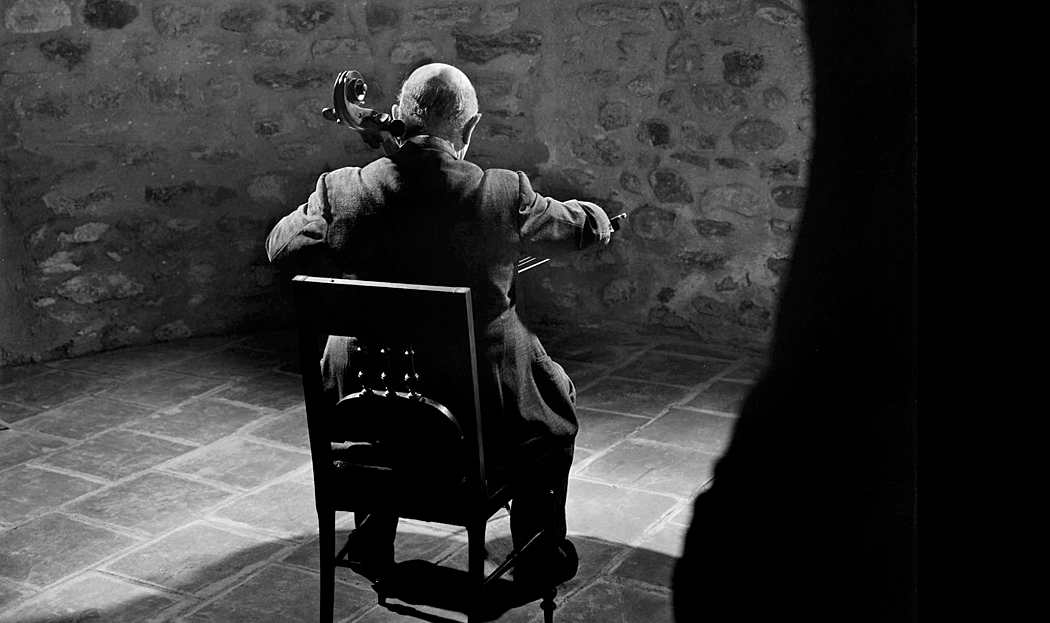
I’ve heard the sarabande, and the suite, countless times, both live and on recordings. The one that always does me in is the version played by Pablo Casals in 1939. Casals was the person most responsible for the resurrection of the score, after he found a forgotten copy in a used book store in 1889, when he was 13 years old. He waited until he was 60 before recording them. There is some fuzz and hiss to the old 78rpm recordings, but the depth of Casal’s playing speaks through it all. 

The sarabande has struck many as special, even among the whole of Bach’s works. Cellist Paul Tortelier called it an “extension of silence.” Yo-Yo Ma played it on Sept. 11, 2002, at the site of the World Trade Center, while the names of the dead were spoken, on the first anniversary of the attack. 

Second on my list is the final chorus of Bach’s Passion According to St. Matthew, Wir setzen uns mit Tränen nieder, which expresses grief over the death of Jesus on the cross. That chorus transcends religious doctrine so that I, as a non-believer, can internalize the sense of loss, of death, and grieve along with them. “We sit down in tears,” they sing, with a section that also asks for “peace, sweet peace.” 

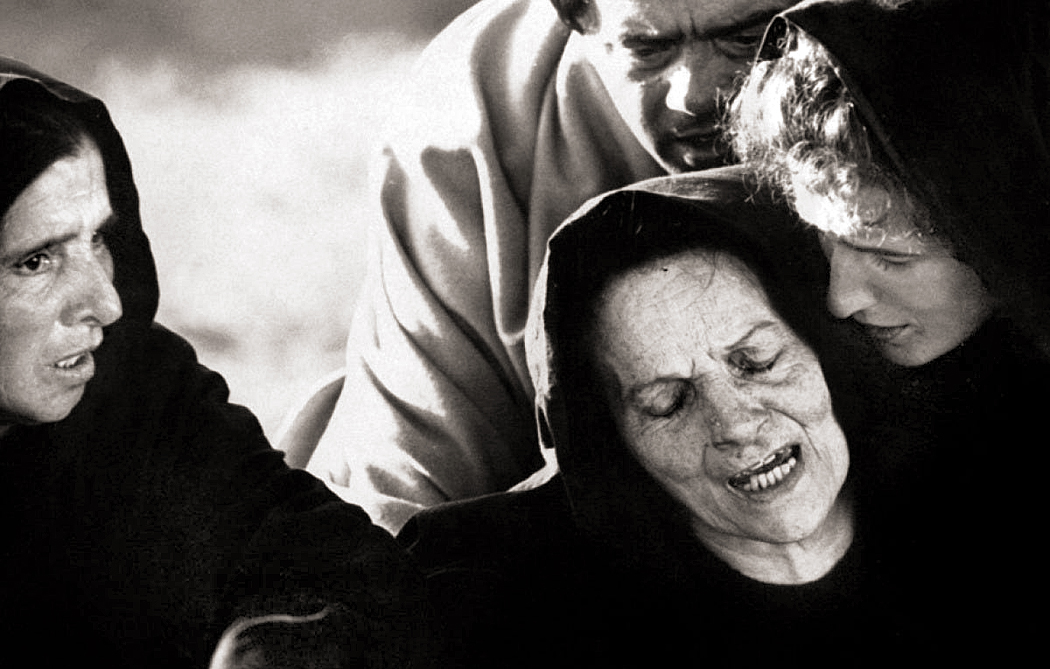
I first head the chorus as film-score music for Pier Paolo Pasolini’s Neorealist retelling of The Gospel According to St. Matthew, a dour black-and-white version, almost word for word from the Bible (and how peculiar that the most successful Christian film should come from a homosexual Communist atheist, but with reverence for the humanity of the story; no Cecil B. DeMille hokum and claptrap for this one). 

Grieving is one cause for the waterworks in listeners. How can you not feel the intense sadness of Dido as she faces her own death in Henry Purcell’s Dido and Aeneas, in the section known as Dido’s Lament, “When I am Laid to Rest.” It is a ground bass (repeated bass line), over which she sings “Remember me … remember me.” It is heartbreaking. 

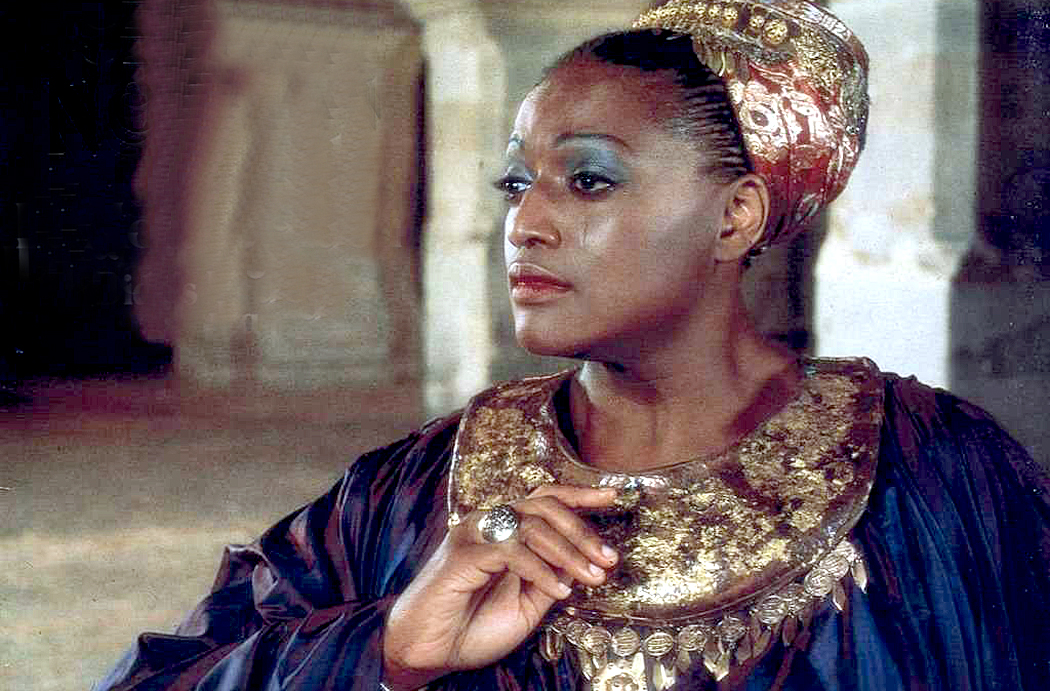
Alban Berg used his entire Violin Concerto to express mourning over the death of Manon Gropius, daughter of Walter Gropius and Alma Mahler, who died of polio in 1935 at the age of 18. Berg dedicated his concerto “To the memory of an angel.” 

It begins quietly on the violin’s open strings, builds to an angry climax, and reaches a point of cosmic acceptance with a quote of J.S. Bach’s chorale, “Es ist Genug” (“It is enough.”) 

After all the turbulence of the anger, the simple hymn, albeit harmonized in a very 20th-century way, seems like the peace of the angels, a calm in the universe. I, for one, cannot listen to the concerto without tears streaming down my cheeks. 

Although it is written in his idiosyncratic 12-tone style, the Berg Violin Concerto is never simply noise: Even those who hate modern serial music love this concerto. It is music, not theory. 

These several pieces work because, while they are expressing their grief over a specific death, they also subsume the rest of us. And there is music which expresses not individual grief, but Weltschmerz — “the sorrows of the world” — that sense that all lives have an end, that life is suffering, that “no one gets out alive.” 

The work that seems to hit everyone in the gut with this is Samuel Barber’s Adagio for Strings. Originally the slow movement of a string quartet, Barber orchestrated it to create the version known best. 

The music is simple, barely more complex than a Gregorian chant, but builds slowly to an overwhelming climax, then silence, then a short peroration of calmness and repose. Never a dry eye. 

The only problem with the Adagio for Strings is that it has become so popular, played at the funerals of Franklin Roosevelt, John F. Kennedy, Princess Grace of Monaco, Albert Einstein, and Barber himself. It has become de rigeur for public tragedies such as Sept. 11, The Charlie Hebdo attack, the 2016 Brussels bombing and the Orlando nightclub shooting, and the 2017 Manchester Arena bombing, and in 2020 for the victims of the Coronavirus. To say nothing of how many movies it provides a trigger for emotions, as in Platoon, The Elephant Man and Lorenzo’s Oil. So that, for some, it can no longer be heard innocently, but only with irony, as in its appearance in Seinfeld, The Simpsons, and South Park

But so far, the Adagio has proved bulletproof. It always works. Emotions pour out. The music is powerful.

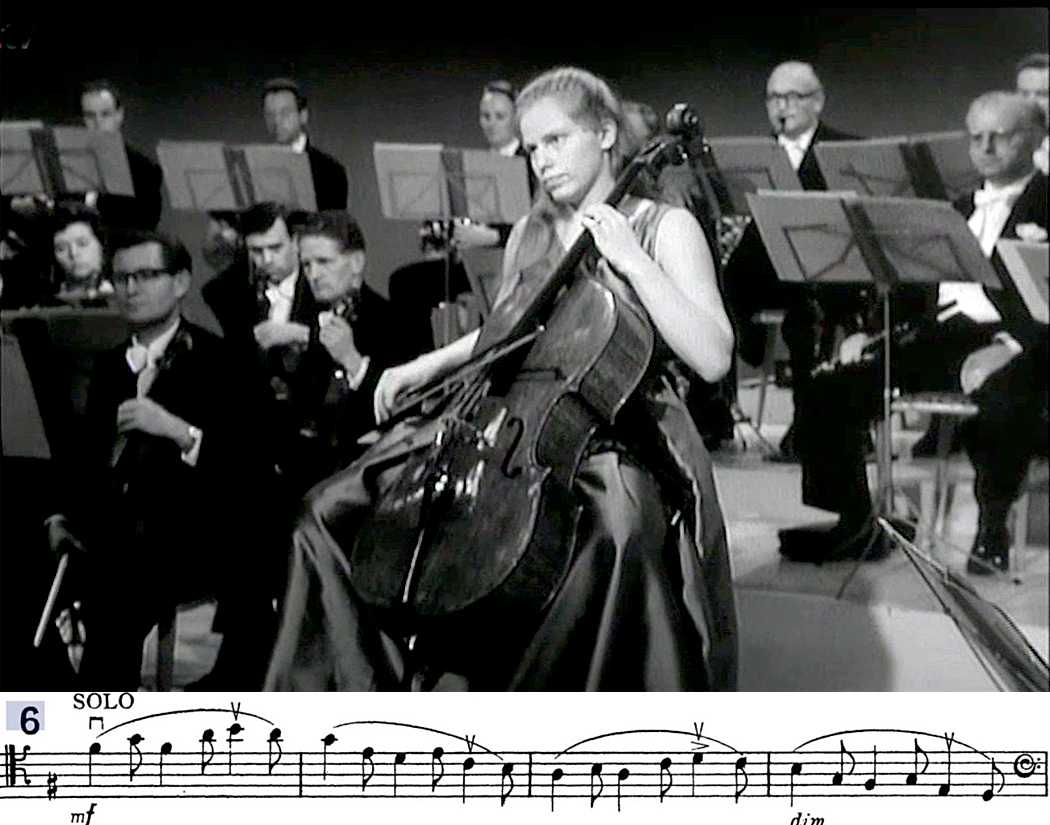
And talk about Weltschmerz: Another concerto brings out the emotions almost instantly, and that is Elgar’s Cello Concerto. Unlike most classical music concertos, it opens with the solo cello playing widely spaced E-minor chords, ringing sad and hollow, followed by a short cadenza before the orchestra ever plays a note. 

Elgar wrote it in 1919 in distress over the death and destruction of the First World War. It is a musical evocation of the famous lament of British Foreign Secretary Sir Edward Grey in 1914: “The lamps are going out all over Europe and we shall not see them lit again in our lifetime.” It is hard, with our distance from the events, and after the Second World War and the horrors of the Cold War, to fathom what a psychological wrench that first cataclysm was for the world, and how much it was clear that everything anyone knew had changed utterly and forever. So much was lost. Elgar’s concerto puts that sentiment into music. 

That sense of loss is personal as well as civic, and you sense it in the greatest of Richard Strauss’ Four Last Songs, “Im Abendrot.” It is a song for soprano and orchestra that conveys such a sense of longing and loss that even without the words, the orchestra alone can bring out the tears. 

In it an old couple stands on a hill looking at a sunset, a lark flies off into the twilight and the words by German poet Joseph von Eichendorff, say, “Wie sind wir wandermüde — Is dies etwa der Tod?” “How weary we are of wandering — Is this perhaps death?” 

There is something of the same feeling (and similar orchestral lushness) in Gustav Mahler’s Der Abschied, the final song of the cycle, Das Lied von der Erde, “The Song of the Earth.” The half-hour song tells of the beauty and permanence of nature and in the brevity of the human life. Even for a Mahler nut like me, who loves pretty much everything the man put on paper, Der Abschied is the single most beautiful and heartbreaking thing that composer ever wrote. 

O Schönheit! O ewigen Liebens – Lebens – trunk’ne Welt!” “O beauty! O eternal loving-and-life-drunk world!” And the voice finally shrinks down to near-silence repeating the word “Ewig,” “forever…” over and over until it and the orchestra dissolve in emptiness. 

Mahler himself asked whether the music should even be played. “Won’t people go home and shoot themselves?” he asked. The thing is that the highest art may tell the most dismal tale, yet the beauty of the telling is life-enriching and leaves us weeping but full of joy. 

Mahler gave us also a song of such inwardness and reflection in the Rückert Lieder, “Ich bin der Welt abhanden gekommen,” a setting of a poem by Friedrich Ruckert. “I am become lost to the world, with which I used to waste so much time. It has for known nothing of me for so long, it may well believe me dead.” The slow tread of the song, with its repeated incomplete upward motive, leaves you floating between earth and sky. 

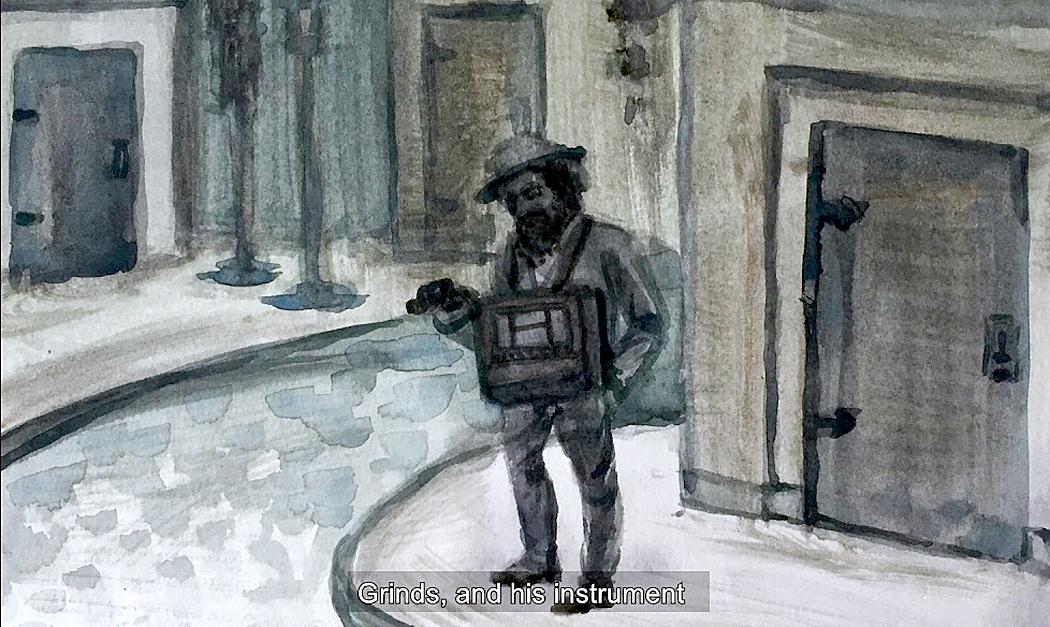
That Mahler song may not be the deepest expression of giving up on life. That honor has to fall to the final song in Franz Schubert’s song cycle Winterreise, “Winter Journey.” The cycle of 24 songs by German poet Wilhelm Müller collectively tell the story of a romantic young man spurned in love, who travels in suffering through a winter landscape, telling of loneliness, heartsickness, futility, fate, and finally, in Die Leiermann, “The hurdy-gurdy man,” finds an image of utter hopelessness. 

“Barefoot on the ice, he sways to and fro, and his little collection plate remains empty. No one wants to listen to him; no one looks at him. … He plays and his hurdy-gurdy never stops.” The piano accompaniment repeats the same figure over and over, with no sense of forward motion, and the singer sings his words over and over with little variation. This is psychological depression at its peak expression. “Strange old man, shall I go with you?” The implication is that the Leiermann is simply Death itself. 

 But I may be giving the wrong impression. While music of woe may bring on the deepest emotion, so, too, can music of joy and beauty. There is a reason people cry at weddings. When any emotion, from grief to ecstasy, fills the interior space, it can swell and overflow, and the overflow valves in the human being are the eyes. The emotional pressure in the body swells until it cannot be held in check. Tears of joy, tears in the face of beauty. 

I remember the words that playwright Peter Shaffer put in the mouth of Antonio Salieri in his play, Amadeus. Salieri overheard the adagio of Mozart’s Gran Partita for winds. 

“Extraordinary!,” he says. “On the page it looked nothing! The beginning simple, almost comic. Just a pulse. Bassoons, basset horns — like a rusty squeezebox. And then, suddenly, high above it, an oboe. A single note, hanging there, unwavering. Until a clarinet took it over, sweetened it into a phrase of such delight! This was no composition by a performing monkey! This was a music I had never heard. Filled with such longing, such unfulfillable longing. It seemed to me that I was hearing the voice of God.”

It is an astonishing thing about beauty, real beauty, that it can sit beside the horrors of the world, the miseries, the deaths, the wars, the hatreds and injustices, and make you pause, fill you with emotions and remind you that no matter how bad things are, you still cling to life. The beauty can not excuse the suffering, but in some inexplainable way can somehow balance it. Beauty can stop time and fill you up to overflowing. 

Shostakovich wrote his 13th symphony, setting the Yevtushenko poem, Babi Yar, about the 1941 massacre of more than 30,000 Jews by Nazis at Babi Yar, near Kiev. It is a powerful poem denouncing anti-Semitism and the horrors of war and hatred (and a warning about Soviet anti-Semitism). The following movements of this choral symphony take on bitter humor as antidote to bureaucracy and tyranny; the hunger of food shortage; the use of fear by totalitarians; and finally, the difference between amoral careerism and the need for artists to express truth. 

This finale is introduced by a flute duet of such sweet delight, such soothing calmness, that although it cannot gainsay the horrors, it somehow balances them. The music itself, while beautiful, is nothing special in itself, but coming as it does at the end of this explosion of the miseries of the world (and especially Stalin’s Soviet Union), is such an unexpected release, it seems a miracle, and with the pressure taken off, at least momentarily, it can only be felt and expressed by its audience in the immediate explosion of waterworks. 

Now, all I have to hear is the flute bit, and I instantly recall all that went before, and I weep uncontrollably. 

That sense of beauty as counterbalance is the overwhelming sense you can get from the slow movement of Beethoven’s Ninth Symphony, which gives us 15 to 20 minutes (depending on performance) of stillness in the universe, a slow pulse that seems more cosmic than corporeal. It comes after a terrifying first movement and a relentless scherzo. The world then, after flowing through turbulent rapids, empties out into the calm ocean of the adagio. The release is overwhelming. 

It is also the slow motion of the finale of Mahler’s Third Symphony, which, after earlier movements titled “What the flowers in the meadow tell me,” “What the animals in the forest tell me,” What Man tells me,” and “What the angels tell me,” ends his symphony with a half-hour movement, “What Love tells me.” 

It is marked “Langsam — Ruhevoll — Empfunden,” (Slowly — Peacefully — Deeply felt,” and moves at a slow tread, first in the strings and building, a half-hour later, with trombones and brass and a final chord that can last to eternity. Conductor Bruno Walter, who knew Mahler and conducted the premieres of both his Ninth Symphony and Das Lied von der Erde, said of this movement, “Words are stilled — for what language can utter heavenly love more powerfully and forcefully than music itself? The Adagio, with its broad, solemn melodic line, is, as a whole — and despite passages of burning pain — eloquent of comfort and grace.”

The Swiss critic William Ritter said it was, ”Perhaps the greatest Adagio written since Beethoven.” Another anonymous critic wrote about the Adagio: “It rises to heights which situate this movement among the most sublime in all symphonic literature.” At its premier in 1902, Mahler was called back to the podium 12 times, and the local newspaper reported that “the thunderous ovation lasted no less than 15 minutes.”

That sense of time standing still reaches a much quieter apotheosis in the slow movement of Maurice Ravel’s Piano Concerto in G. With subtle cross-rhythms and a melody that seldom rises above a mezzo-piano, it is entirely hypnotic. The beauty of it brings me to tears almost even just thinking of it. 

And there is the sublime beauty of Mozart’s Ave Verum Corpus, a choral work that lasts a mere four minutes in just 46 bars of sighing chromaticism and sotto voce music, and, as one critic put it, is “capable of leaving the listener just as moved as might an entire five-day long cycle of Wagner’s Ring.” 

Some of these may work their magic only on my ears, some seem to work for everyone. And there are times when the listener may be too tired, to caught up in other things, or a bad meal or just in a sour mood, when such music can pass by almost unnoticed. And there are times in a concert when I am so tuned in, that almost any music, played well, may bring on the waterworks. 

But for me, this music almost never fails. The music triggers some empathetic response, and the emotions shiver to life. I am human; these are human feelings; these emotions are what make us human. 

Music can do that better, and more immediately, than any other art. 

“What do humans sound like?” That was a question that my late wife, Carole, used to ask. She meant something quite specific by it. Carole was the smartest person I ever knew, but her intelligence was not contained within the usual structures of thought. Not so much that she thought “outside the box,” as that there was no box to begin with. 

She used to ask if it were possible to “fall into blue.” When she was a little girl, she used to bend over to see the world behind her, upside down, as she looked at it through her legs. “I wanted to see what it really looked like, and not just what I had grown to know it looked like,” she said. She wondered, as a girl, if the night’s darkness could leak into her bedroom from under the window sill. She was awake to all the input the world offered. 

When she asked about the sound of the human voice, she meant, what it sounds like aside from its meaning. We know what a dog sounds like, for instance, or a bird or a cat. But what is the pitch, rhythm, tempo and tune of a person speaking? We know a bird’s song in part because we don’t know what the song means, only its music — but not even music is the right comparison, since music comes with a syntax and structure of its own. We know the raw sound of the birdcall, but we cannot normally know the same for human speech because our brains process the language instantly into content. We bypass the awareness of the sound for the sense. 

I got some inkling of the sound this morning while sitting in my back yard. Normally, I hear birds and maybe the chatter of squirrels. But there is a house just beyond the trees that border my yard where the family runs a little day-care operation. And I can hear the children talking and yelling, but not well enough to hear what they are saying. I hear only the pitch and rhythm, the overlap, the space left between utterances, the rise in volume with excitement. I hear the adult voices, too, and their pitch and rhythm, all without knowing what they are saying. I am hearing the sound that humans make.

Yes, I know it is being filtered through the English language. I’m sure if I heard little Mexican children playing, their rhythm would be a variant, or French kids behind the walls of their school in Paris (which I once heard and listened to). French has a less percussive sound. Spanish has a rapid-fire rattle to it. And Chinese comes with a melody that imparts its own meaning. But the basic sound was there. 

And so, I hear, in my back yard, the combined sounds of distant dogs barking, the “kweet… kweet” of a towhee, the “shshsh” of the breeze rustling the tree leaves, and the vocalizations of those dozen or so children. And it is all of a piece. It is an experience of the world before knowing. 

One of the problems is that the human mind is a pattern-recognition machine. It seeks and spots them, even without our willing to do so. Understanding speech is an example. The sounds become words involuntarily and the words get in the way of hearing the sounds as sounds. Of course, the words are the point of speech and the desire to hear the sounds without the words is a peculiarity of mind that Carole had. For most of us, the actual sounds are irrelevant, as long as our brains recognize them as phonemes, morphemes, words, phrases, sentences and thoughts. 

Yet, the patterns we recognize — not just in speech, but throughout our lives and culture — are, in some sense, second hand, a gloss on the primary experience. They are a colored glass through which we see the world. The patterns, like so many mullions in a large window, force us to see, hear, taste, smell, the world in the patterns that our brains force on it. 

A frame separates the subject of a picture and points it out to us, but it also cuts away everything not in the picture — the wider context. 

You might laugh, because functioning in the world requires us to make sense of it and our brains do that. But that pattern-making and pattern-finding aspect of our consciousness can also prevent us from experiencing existence directly. Really, only artists, visionaries and crazy people get to lift that veil. Artists want to; visionaries get to; and the insane have no choice. 

Some of those patterns are the cultural baggage we carry. We have the expectation of a certain pattern for governments, for marriages, for friendships, for gender, for tribal affinities. These patterns may merely be inherited habits, but they are buried deeply in us. An attempt to escape them is one of the things that artists do. Entrenched interests often become agitated by the art and fight back. Eventually, the art becomes classic and everyone more or less agrees that the artists had it right in the first place. But by then, the art has become the pattern and is itself entrenched. 

Trying to escape not only the patterns, but the incessant pattern-finding and pattern-making of the brain is difficult. Sometimes that brain outweighs the rest of our bodies. Getting rid of the “middle man” and experiencing things directly can be a revelation. 

It is, I believe, what Walt Whitman was getting at in his Song of Myself: “The atmosphere is not a perfume, it has no taste of the distillation, it is odorless,/ It is for my mouth forever, I am in love with it,/ I will go to the bank by the wood and become undisguised and naked,/ I am mad for it to be in contact with me.” 

 To smell the new-mown grass without knowing it is new-mown grass; to feel the radiant heat on your skin and not know it is caused by the summer sun; to taste the sweetness of spring water without knowing what you are drinking; to hear the sound of children playing without hearing mere words; to feel the earth under your toes and the air against your skin and never parse their meanings. 

“You shall no longer take things at second or third hand, nor/ look through the eyes of the dead, nor feed on the spectres in books,/ You shall not look through my eyes either, nor take things from me,/ You shall listen to all sides and filter them from your self.”

I’m not recommending that we all turn into gibbering idiots; our minds’ ability to forge sense of it all makes life possible. We couldn’t give that up even if we wanted to. What I am trying to do is supplement its meaning-making drive with the ability to let that go for the sake of pure experience, non-judging, non-deciding experience. It would be a kind of return to roots, before all the layering of culture and idea, where we might discover some of those ideas have no foundation. 

Meaning is important, and we all want meaning in our lives. But perhaps we are missing something more primary, more direct. 

A wise person once said, “What we seek is not the meaning of life, but the experience of life.” The experience has precedence. We can hardly make meaning without it. 

Until relatively recently, 20th century concert music was a tough sell. It had the reputation of being dissonant, noisy, difficult, and unpleasant. It was a century that began with Arnold Schoenberg dispensing with harmony and Igor Stravinsky upending rhythm, followed by a World War that knocked the complaisance out of any rational being and told us that the coming century was going to be anything but calm and easy. 

A number of composers felt that music needed to reflect the mood of the angst-ridden age. 

But even Schoenberg admitted “There is still plenty of music left to be written in C-major.” He didn’t believe his 12-tone revolution would destroy all tunes to come, but was simply a logical conclusion to music history from Bach through Wagner, from tonality through chromaticism to atonality. And we shouldn’t blame poor Arnold for all the dreary ruckus that followed: His own music is quite emotional and beautiful, even if it often requires some serious commitment from his listeners. 

He was right about one thing certainly: There was plenty of music written in C-major, throughout the century. And F-major and D-minor. In fact, most of the music written in that century was based on familiar scales, albeit with plenty of playing around and trying new ways to use them. 

 It’s just that the music-industrial complex, so to speak, was hijacked around mid-century by a clutch of academically-minded composers — the “Darmstadt Mafia” — insisting that serialism was the only music to take seriously, and that the more unlistenable it was, the greater it must therefore be. (Some of these composers did write interesting music in that style — it wasn’t a complete loss — but they looked down their noses at anything that might stink of a tune.) 

And so, contemporary music turned its back on the concert audiences and those composers wrote only for other composers of their ilk, and audiences shrunk from any concert program that insisted they listen to the stuff. Modern music acquired a very bad reputation. 

But I find that after 60 years of concert-going and music absorption, I listen to 20th century music more than that of any other era. It is music that speaks directly to me. Oh, I listen to bunches of Haydn, Mozart, Beethoven, Brahms and Tchaikovsky, but the plurality of my music listening edges to the century in which I grew up. 

So, I wanted to create a list of representative compositions from the century in question and present them as a course in great music that anyone can listen to and enjoy. 

I went through my collection of thousands of CDs and chose 30 pieces to offer. I listened to each one, in order, to refresh my memory — and to flat out enjoy them all over again. 

The roughly chronological list begins with a surprising entry. Most people think of Ives’ music (if they think of it at all) as noisy, crashing, impish tomfoolery. But Ives was a well-trained musician, with a degree from Yale University. His Symphony No. 2 is pretty tame, except for his borrowing of familiar popular tunes, and a raspberry at the end. 

Here is my list:

1900-1920

Charles Ives (1874-1954) — Symphony No. 2 (1902; premiered in 1951) (42 minutes long). Performance listened to: Eugene Ormandy, Philadelphia Orchestra, recorded 1973.

Ives studied under the respectable, if stuffy Yale professor Horatio Parker, and after graduating in 1898, began working on his second symphony (the first was his senior thesis composition for Parker) and included bits from Camptown Races, Turkey in the Straw and Columbia the Gem of the Ocean run through a kitchen blender. He finished Symphony No. 2 in 1902, although, with Ives, he was never completely finished and continued tinkering until his death in 1952. The symphony wasn’t premiered until Leonard Bernstein and the New York Philharmonic played it in a radio performance in 1951. The house-bound but still cantankerous Ives heard it on his radio in Connecticut and his response was that he spit. 

I listened to Ormandy’s version from 1973. The recordings listed here are not my choices as “best” — although they are all good — but merely the ones I had to hand when I started this project. 

Frederick Delius (1862-1934) — On Hearing the First Cuckoo of Spring (1912) (7 minutes long). Performance: Thomas Beecham and Royal Philharmonic, recorded 1958.

Delius’ score instructs, “With easy flowing movement,” and the quiet, peaceful evocation of the countryside (presumably English) and its birdcalls, it is a calming balm for a tussled soul. Originally, it was one of Two Pieces for Small Orchestra, the other half being Summer Night on the River. Beecham championed the composer’s music and his performances of the music are definitive.

Manuel de Falla (1876-1946) — Nights in the Gardens of Spain (1916) (21 minutes long). Performance: Arthur Rubinstein, piano, Ormandy, Philadelphia Orch., recorded 1969.

Falla was an Andalusian composer and the quasi-Impressionist Nights in the Gardens of Spain functions as a kind of piano concerto, with three movements, each describing a different Andalusian garden. Rubinstein heard it first soon after its premiere in 1916 and performed it regularly after that.   

Serge Prokofiev (1891-1953) — Classical Symphony (1918) (13 minutes long) Performance: Ormandy, Philadelphia Orchestra, recorded 1961.

Prokofiev’s Symphony No. 1 is the Sara Lee of symphonies: No one doesn’t love it. It is a jaunty, energetic gloss on the Classical-era symphonies of Haydn, seen through the “wrong-note Romanticism” of the composer’s style.  

Gustav Holst (1874-1934) — The Planets (1918) (50 minutes long)

 Performance: Ormandy, Philadelphia, recorded 1975.

Marketed as “space-age music,” the intent of Holst’s seven-movement suite is astrological, not astronomical, and each movement is a musical description of a psychological type. It has become enormously popular, and it has been recorded more than 80 times, first in 1926 with the composer conducting.  

Igor Stravinsky (1882-1971) — Pulcinella (1920) (39 minutes long) Performance: Claudio Abbado, London Symphony Orchestra, recorded 1979.

Stravinsky took some old compositions by 18th century composers and reworked them into bright, colorful Stravinskian cogs in what Leonard Bernstein once called “Uncle Igor’s Asymmetry Machine,” giving them new life as a ballet score, complete with voices. 

1920s

Ralph Vaughan Williams (1872-1958) — The Lark Ascending (1921) (16 minutes long) Performance: Zina Schiff, violin, Dalia Atlas, Israel Philharmonic, recorded 1989.

Poet George Meredith wrote of the lark in his poem from 1881, “He rises and begins to round, He drops the silver chain of sound…” and Vaughan Williams gives us the violin and orchestra version, with the British pastoral, And whose primary intent seems to be the creation of simple beauty.

Darius Milhaud (1892-1974) — La Création du Monde (1923) (17 minutes long) Performance: Simon Rattle, London Sinfonietta, recorded 1986.

European composers began hearing jazz and they loved it. Milhaud even moved to Harlem for a while, to soak it all up. One of the best translations of jazz to the classical idiom is his Création du Monde, with its resonant  saxophone solo at the beginning. 

Arthur Honegger (1892-1955) — Pacific 231 (1923) (6 minutes long) Performance: Charles Dutoit, Bavarian Radio Symphony, recorded 1985.

A steam locomotive begins to move, gathers speed, churns along and comes slowly to a stop, in this propulsive tone poem to modernity. Trains have been a theme in 20th century music, from Duke Ellington’s Happy-Go-Lucky Local to Villa-Lobos’ Little Train of the Caipira. Chug-chug. 

Ottorino Respighi (1879-1936) — The Pines of Rome (1924) (20 minutes long) Performance: Ormandy, Philadelphia, recorded 1958.

There were no flying humpback whales in Respighi’s original score; blame Disney for that. But what you do get are rousing tunes and some spooky catacomb music, with a grand finish, the kind that gets you out of your chair cheering. 

Jean Sibelius (1865-1957) — Symphony No. 7 (1924) (22 minutes long) Performance: John Barbirolli, Halle Orchestra, recorded 1966.

Sibelius’ final symphony is also his shortest, being in one movement, but by some accounts his best. My old teacher said when he was young, he wanted to play the French horn, because it had all the great solos. But he wound up with the trombone, which “only plays supporting material,” he said. But in this symphony, the trombones get the big tune, the one you will most likely remember and hum after it’s over. 

George Gershwin (1898-1937) — Piano Concerto in F (1925) (32 minutes long) Performance: Andre Previn, piano and conductor, Pittsburgh Symphony, recorded 1998.

Who was Arnold Schoenberg’s favorite composer in America? His frequent tennis partner, George Gershwin, who was much more than a Tin-Pan Alley songster. At the time, there was a big rush to figure out how to incorporate jazz into concert music. Well, here’s how. 

Leos Janacek (1854-1928) — Sinfonietta (1926) (23 minutes long) Performance: Claudio Abbado, Berlin Philharmonic, recorded 1989

What grabs you at first are the 14 trumpets, four horns, trombones, tuba and euphoniums. But the rest of the music pops with chunks of memorable tunes, piled like crabs in a bucket, and the way Janacek uses musical “jump cuts” to go from one to the next. 

1930s

Howard Hanson (1896-1981) — Symphony No. 2 “Romantic” (1930) (29 minutes long) Performance: Gerard Schwarz, Seattle Symphony, recorded 1989.

All those American symphonies written in the 1930s and ’40s have been largely forgotten, despite their quality, but when Ridley Scott used Hanson’s music during the closing credits of his 1979 film Alien, it resurrected this “Romantic” symphony, which developed a second life. Scott did it without Hanson’s permission, which pissed off the composer, but Hanson never sued, probably because of the boost it gave his music with audiences. 

Maurice Ravel (1875-1937) — Piano Concerto in G (1932) (21 minutes long)

Performance: Samson François, piano, André Cluyten, Orchestre de la Société des Concerts du Conservatoire, recorded 1959.

The French were just as taken with jazz as Americans were, in the 1930s. Lots of composers attempted to weave the syncopations and blues notes into their work. Ravel did it twice, with each of his piano concertos. But this one has a slow movement of such hypnotic ethereal peaceful beauty that you feel in a trance, broken by the explosion of the finale. 

Alexander Glazunov (1865-1936) — Saxophone Concerto (1934) (14 minutes long) Performance: Marc Chisson, saxophone, José Serebrier, Russian National Orchestra, recorded 2010.

Glazunov was exiled to Paris when he wrote his own jazz-influenced concerto for alto saxophone, which is perhaps less jazzy than Russian, but is nevertheless probably the best concerto ever written for the instrument. 

Samuel Barber (1910-1981) — Adagio for Strings (1936) (8 minutes long) Performance: Ormandy, Philadelphia, recorded 1957.

Canadian filmmaker Guy Maddin made a movie in 2003 titled The Saddest Music in the World, about a contest to find such music. Well, he needn’t have worried: Hands down, the winner (ignored by the film) is Sam Barber’s orchestral transcription of the slow movement of his string quartet. Unbearably beautiful, it is near impossible to hear it without weeping. 

Colin McPhee (1900-1964) — Tabuh-Tabuhan: A Toccata for Orchestra (1936) (17 minutes long) Performance: Howard Hanson, Eastman-Rochester Orchestra, recorded 1956.

McPhee heard Javanese gamelan music on a visit to Bali and then moved there. He became an ethnomusicologist as well as composer and wrote his own gamelan-influenced music full of the percussive tintinnabulation that is so catchy. Tabuh-Tabuhan is his most popular work, meaning it’s pretty much the only piece most people know, McPhee having otherwise fallen into undeserved oblivion.

Heitor Villa-Lobos (1887-1959) — Bachianas Brasileiras No. 5 (1938) (7 minutes long) Performance: Bidú Sayão, soprano, orchestra of cellos, conducted by Leonard Rose, recorded 1949.

The composer was fascinated by the long-line melodies that Bach sometimes wrote and came up with his own. Originally a single movement for soprano and eight cellos, it was recorded that way in 1949 by Bidú Sayão in a recording of singular beauty and power. It is very difficult, as the final third of the movement is required to be hummed through the nose, with the mouth closed, and ending on a nearly impossible octave leap. He later wrote a second movement, but this recording of just the first is so exceptional, it has to be heard. 

1940s

Sergei Rachmaninoff (1873-1943) — Symphonic Dances (1940) (35 minutes long) Performance: Leonard Slatkin, Detroit Symphony, recorded 2002.

It is sometimes hard to realize that Rachmaninoff is essentially a 20th century composer. And all his later music (the Paganini Rhapsody, Third Symphony and this, the Symphonic Dances) is rife with irony and astringency. Heart no-longer on sleeve, but with unforgettable tunes and absolutely brilliant orchestration. These Dances were his final composition, and for my money, his best. 

Aram Khachaturian (1903-1978) — Violin Concerto (39 minutes long) Performance: Ruggiero Ricci, violin, Anatole Fistoulari, London Philharmonic Orch., recorded 1956.

Khachaturian doesn’t get much love. His music is catchy, tuneful, and never very deep. And so, the Music-Industrial Complex (i.e. German musicographers) turn their noses up. But what is music if not melody? And bright arresting orchestrations. At some point, the world will catch up with Khachaturian and realize there’s room for music that is simply enjoyable, with no philosophical baggage attached. 

Bela Bartok (1881-1945) — Concerto for Orchestra (1943) (47 minutes long) Performance: Fritz Reiner, Chicago Symphony Orchestra, recorded 1958.

Bartok was ill and in hospital when Serge Koussevitzky visited him in 1943 and presented him with the commission for this orchestral masterpiece. Bartok had fled Hungary because of the war and was dying of leukemia, but he got out of bed, left the hospital and wrote what became his most popular work, essentially his symphony, a five movement piece featuring brilliant solo work for pretty much everyone member of the orchestra. He died two years later. 

Paul Hindemith (1895-1963) — Symphonic Metamorphosis on a Theme by Weber (1943) (22 minutes long) Performance: Wolfgang Sawallisch, Philadelphia Orchestra, recorded 1994.

So much of the century’s music seems to have been written as gloss on music of the past: Stravinsky’s Pulcinella, Rachmaninoff’s Paganini Rhapsody; Prokofiev’s Classical Symphony — even Ives’ symphonies constantly quote old tunes. Hindemith’s most popular piece (popularity not having followed the composer into the 21st century) is his recasting of melodies written by Carl Maria von Weber. It is brilliant. Hindemith should be played more. 

Aaron Copland (1900-1990) — Appalachian Spring (1944) (24 minutes long) Performance: Leonard Bernstein, New York Phil, recorded 1961.

When the century’s music seemed to becoming more intellectualized and abstruse, Aaron Copland developed a simpler, more audience-friendly style, best captured in this hugely popular ballet score. Copland became the American composer. Originally for a chamber group, the orchestral version is now a standard concert piece. 

Erich Wolfgang Korngold (1897-1957) — Violin Concerto in D (1945) (24 minutes long) Performance: Jascha Heifetz, Alfred Wallenstein, LA Philharmonic, recorded 1953.

Korngold was a prodigy once compared to Mozart, came to America and became the Ur-film composer (three Oscar nominations). But after WWII, he tried to reestablish his bona fides as a serious composer, with this most beautiful of 20th century violin concertos, now in the standard repertoire. It begins with a startling two-octave run in just five notes. Championed by Jascha Heifetz, it is now in every serious violinists repertoire. 

Benjamin Britten (1913-1976) — Variations and Fugue on a Theme by Purcell (“Young People’s Guide to the Orchestra”) (1946) (17 minutes long) Performance: Ormandy, Philadelphia, recorded 1974-1978.

Another gloss on old music, Britten wrote his “Young People’s Guide to the Orchestra” as a means to teach about the instruments, along with narration.  But much better without the sometimes condescending talking, it is a brilliant showpiece for the orchestra. 

1950s

Joaquin Rodrigo (1901-1999) — Fantasia para un Gentilhombre (1954) ( 22 minutes long) Performance: Manuel Barrueco, guitar, Philharmonia Orchestra, Placido Domingo, conductor, recorded 1996. 

Rodrigo reworked the music of 17th-century Spanish composer Gaspar Sanz, in another retro work, mixing the old dance music with eminently listenable modern orchestra colors.  

Alan Hovhaness (1911-2000) — Mysterious Mountain (Symphony No. 2) (1955) (19 minutes long) Performance: Fritz Reiner, Chicago, recorded 1958. 

Hovhaness wrote 67 symphonies and sometimes it is hard to tell them apart: His style was his style and he stuck to it. But his second symphony, called Mysterious Mountain, is his most popular and a perfect introduction into what you get with this Armenian-American stalwart. 

Leonard Bernstein (1918-1990) — Candide Overture (1956) (4 minutes long)  Performance: Leonard Bernstein, London Symphony Orchestra, recorded 1989. 

The best overtures are bouncy, tuneful, catchy and bright. It is almost as if Bernstein had absorbed all of the best overtures of the past and wrapped them up in his ultra-brilliant Candide overture, certainly the composer’s most-often programmed work. 

Dimitri Shostakovich (1906-1975) — Piano Concerto No. 2 (1957) (20 minutes long) Performance: Christina Ortiz, piano, Royal Philharmonic Orchestra, Vladimir Ashkenazy, cond., recorded 1989.  

The composer write this late concerto for his son, Maxim, to perform. He didn’t have a very high opinion of the work, thinking it a throw-away piece, but it is his most accessible concerto, with a second movement nearly as hypnotic as the Ravel. It may be lightweight Shostie, but it is nothing to sneeze at. 

In going through these recordings, some of which had to be dug up out of the lower shelves of my collection, I have redoubled my admiration for the music of the previous century. 
“You’ve gone all mellow,” Annie said, teasing me. 

In the past, I have had some rather unforgiving opinions about the poetry I was force-fed as a youngster — you know, the Victorian stuff about the light brigade, or Barbara Frietchie. And now, I was reading it again. On purpose. 

At college, I foolishly took a Victorian Lit course and hated every second-hand tick of the classroom clock. Turgid, sentimental, maudlin, and unbearably prolix. (I had been primed to hate the stuff since the time I was  forced to read Oliver Twist in eighth grade and hated every word of that — I still can’t read Dickens. I know: My loss. But you shouldn’t be forced to read stuff before you are ready for it.) 

In that Vic Lit course, I found Browning asphyxiating, Tennyson hollow, Christina Rossetti cloying. I could see no difference in the verse of these hallowed poets from the mewlings of Ella Wheeler Wilcox or Edgar Guest. It was all a smear of treacle and oh-so-earnest goo. 

“I am the master of my fate, I am the captain of my soul.” Who came up with this stuff? 

Now, Anne is reminding me, I am waxing enthusiastic about the selfsame verse to her, quoting lines and rhymes with affection. I have gone mellow. But what has changed? 

I grew up in a time of ascending Modernism, an era of “less is more,” of irony sidelining sentiment and of skepticism in place of belief. When I was just on the cusp of turning adolescent, Modern art was still widely dismissed as something “my kid could do.” And in the eternal wheel of generations, I was signing on to the new version and leaving the old to such fuddy-duddies as my parents and teachers. 

(At least, I saw it that way. In reality, my parents were as much a product of Modernism as I was — my father was born the same year that the Bauhaus was founded and that Marcel Duchamp painted a mustache on the Mona Lisa. But the Modernism that affected his life was one of wars, electrification, washing machines and radio. Artistic matters mattered not at all to the solid, middle-class parental units.)

  And, like all such newly-awakened youths, I saw through the lies and hypocrisies of the elder generations while surpassingly blind to my own. My generation was going to fix all the botches those fools had made of the past. 

I read all the most current novels, ate up contemporary poetry (and all that written after Prufrock), regularly made my pilgrimage to the Museum of Modern Art in New York, and preached to all near and far the supremacy of the new.

In short, the modern was true; the old was a lie. A pretty lie, perhaps, but a lie nonetheless. As H.L. Mencken put it, “it’s essential character lies in its bold flouting of what every reflective adult knows to be the truth.” 

And all that verse: Mencken really had it in for poetry. He said, roundly including everything written from Chaucer to e.e. cummings, “Poetry represents imagination’s bold effort to escape from the cold and clammy facts that hedge us in — too soothe the wrinkled and fevered brow with beautiful balderdash.” 

That certainly summed up my take on Tennyson: “balderdash.” 

H.L. was not one to hedge his opinions. He went on to call poetry, “a series of ideas, false in themselves, that offer a means of emotional and imaginative escape from the harsh realities of everyday. In brief, poetry is a comforting piece of fiction set to more or less lascivious music.”

But it is that “lascivious music” that caught me short. No doubt Mencken rather misses the point, but it is the music of the old poetry, the poetry I so despised, that has brought me back to it. Let me explain — and apologize. 

It started when I recently came across a set of McGuffey’s Eclectic Readers, compiled beginning in the 1830s by William Holmes McGuffey. The books were the most common grade-school texts for nearly a century, and are still the preferred books for many current home-schoolers. 

They are popular now because of the unrelenting Victorian religiosity of them for Christian home-schoolers. Every lesson seems to have some biblical homily to teach, training youngsters to be pious, faithful, honest, loyal, earnest, frugal and industrious. McGuffey, himself, was a preacher, in addition to being an educator and college president. 

But what is often lost in the haze of piety, is just how progressive McGuffey was for his time. Most education was then mere rote memorization enforced with the rod; McGuffey thought that instead of just giving kids lists of words to master, it would work better if the words were embedded in stories, and that new words in one story would crop up again for reinforcement in later stories. He taught an early version of phonics, to parse out the sounds of written words, and followed each story-lesson with a short set of questions to test comprehension. 

Really, aside from the heavy Jesus-ness of it all, it was really very forward-looking. 

I valued the reprints I own for their classic typography, for the quaint illustrations that go with the stories, and for the insight the whole gives me into that formidable century. 
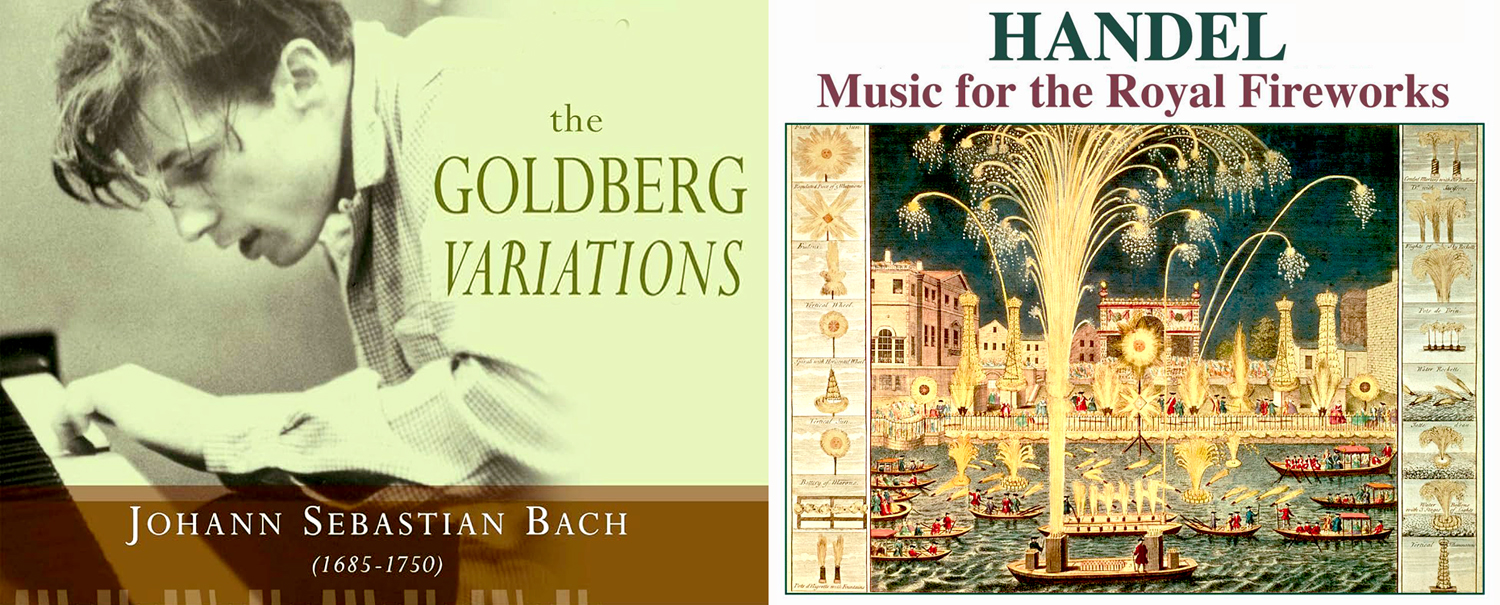
And in amongst the stories of boot-blacks making good, mothers dying, little orphans learning the virtues of truthfulness and the importance of being generous to the poor, McGuffey included many old poems. Some are just versifications of Bible passages, but others are the old standards that I once made fun of. 

For instance, in McGuffey’s Eclectic Third Reader, I came across an old chestnut I had not encountered since I was a boy: The Moss Covered Bucket, by Samuel Woodworth. It’s one of those that most people have some vague recollection of, but perhaps not where the lines come from or what they mean. 

“The old oaken bucket, the iron-bound bucket, the moss-covered bucket, which hung in the well.” 

But as I began reading it, I found two very surprising virtues. The first was how much sense-memory there was in the poem — the noticing of small physical things that connect us with the world and that readers can almost feel, taste, or smell as they read the lines. 

It is a poem about remembering the things of youth, and there is a scent of sentimentality to it, but the memories evoked feel genuine. Sometimes, reading a pile of “O thou art…” poetry you wonder if a poet has ever actually seen a nightingale, let alone a “knight with burning brand,” but have merely read about such things in other poems. But here, I believe Woodworth really knew “the orchard, the meadow, the deep tangled wild wood…  the wide spreading pond, and the mill which stood by it; the bridge and the rock where the cataract fell; the cot of my father, the dairy house nigh it, and even the rude bucket which hung in the well.”  

Noticing — as I have often repeated — is essential to art. To life. 

But the second thing I found in the poem was the “lascivious melody.” Woodworth’s prosody was finished and refined, the meter and rhyme made the lines sing. Maybe not quite the level of Milton, but a danged good ditty. 

He describes coming in from working in the field and dropping the bucket down into the well “to the white pebbled bottom it fell,” and then how “dripping with coolness,” it rose from the well. “How sweet from the green mossy brim to receive it, and posed on the curb it inclined to my  lips! Not a full blushing goblet could tempt me to leave it, though filled with the nectar that Jupiter sips.” 

It moves with a forward-thrusting momentum hied on by the meter. 

I’m not trying to make too great a case for the old oaken bucket. It is not earth-shaking poetry. But it does afford a moment of pleasure as you read it, the way you get pleasure from a memorable tune. 

There were other poems in the Reader that now sang to me in ways I had formerly ignored. Byron’s “The Assyrian came down like the wolf on the fold, and his cohorts were gleaming with purple and gold…” 

In the Eclectic Fifth Reader, compiled some years later by McGuffey’s brother, Alexander Hamilton McGuffey, you find the familiar, “Under the spreading chestnut tree the village smithy stands; the smith, a mighty man is he, with large and sinewy hands; and the muscles of his brawny arms are strong as iron bands.”  

There is through all of the Readers a level of maudlin sentimentality that cannot be overlooked, but if you can wade through that, there are some true gems to enjoy, if primarily for their lascivious music. 

This discovery led me to another old book, one I have owned since I was a boy, but had hardly looked at in 60 years: Francis Turner Palgrave’s Golden Treasury of English Verse. First published in 1861, the book was an anthology of “the best English songs and lyrics,” and included Palgrave’s selection of verse written by poets of the past — his past; Palgrave made the decision not to include any poetry written by living poets, so, no Tennyson, no Browning. 

The book was originally divided into four “books,” one each per century from the Elizabethan era to the 19th century. There is a good deal of Shakespeare and an equal measure of Wordsworth, but all the usual names are included, and some that have largely been forgotten. Thomas Grey, William Cowper, Thomas Wyatt, Josuah Sylvester (no, that’s not misspelled). 

Having put aside my McGuffeys, I took up my Palgrave and read it from cover to cover. I found myself enjoying page after page, for the music of it more than for the sense. A good deal of the early verse is highly conventional in sentiment. Everyone had a version of “carpe diem,” many birds are extolled — I haven’t counted the skylarks, but there be many — many women described with coral lips and alabaster skin. It all gets a bit thick.

But listen to the music instead. “Whenas in silks my Julia goes Then, then (methinks) how sweetly flows That liquifaction of her clothes.

“Next, when I cast mine eyes and see That brave vibration each way free; O how that glittering taketh me!”

There is a perfection in the meter, rhythm and rhyme to Herrick’s little stanzas. Felix Mendelssohn wrote “Songs Without Words,” but Herrick has turned that around and written a song without the sheet music. 

Throughout my Palgrave, I came across piece after piece like that, with a flow of words as natural in metrical expression as a stream rushing over its rocky bed. 

“The curfew tolls the knell of parting day, The lowing herd winds slowly o’er the lea, The plowman homeward plods his weary way, And leaves the world to darkness and to me.” 

“A chieftain to the Highlands bound Cries, ‘Boatman, do not tarry! And I’ll give thee a silver pound To row us o’er the ferry!’ ‘Now who be ye, would cross Lochgyle, This dark and stormy water?’ O I’m the chief of Ulva’s isle, And this, Lord Ullin’s daughter.” 

The marriage of word and rhythm, with the fulfilled expectation of rhyme make these verses trot along like a tune sung well in time. 

It is the pleasure of tennis being played with a net. 

One listens to music for the pleasure it brings. Yes, there are mighty symphonies and Wagnerian music dramas meant to express deep emotional and philosophical things, but most, like a Mozart serenade or a Cole Porter tune, are meant to delight, devoid of any extra-musical sense. And that is what I am finding in this old verse I once so roundly denounced. 

If you don’t need to have profound thoughts as you read the words, then you can find the melody for its own sake and revel in the ear and craftsmanship of the poet. 

Yes, I’ve gone mellow in my senescence, and there is a touch of sentimental remembrance for the poetry I was fed when a boy. I guess I share that with those horrible Victorians. That is my apology.
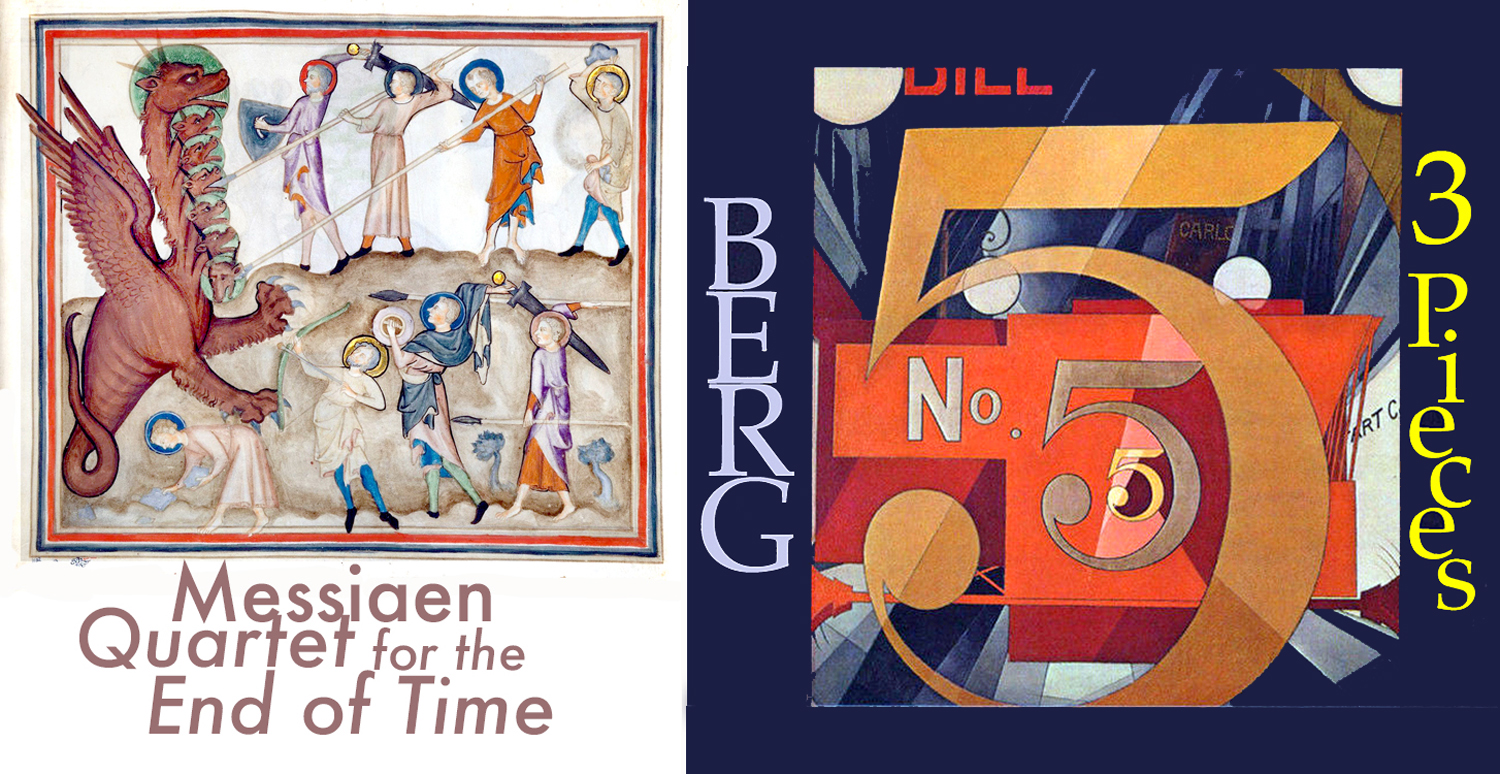
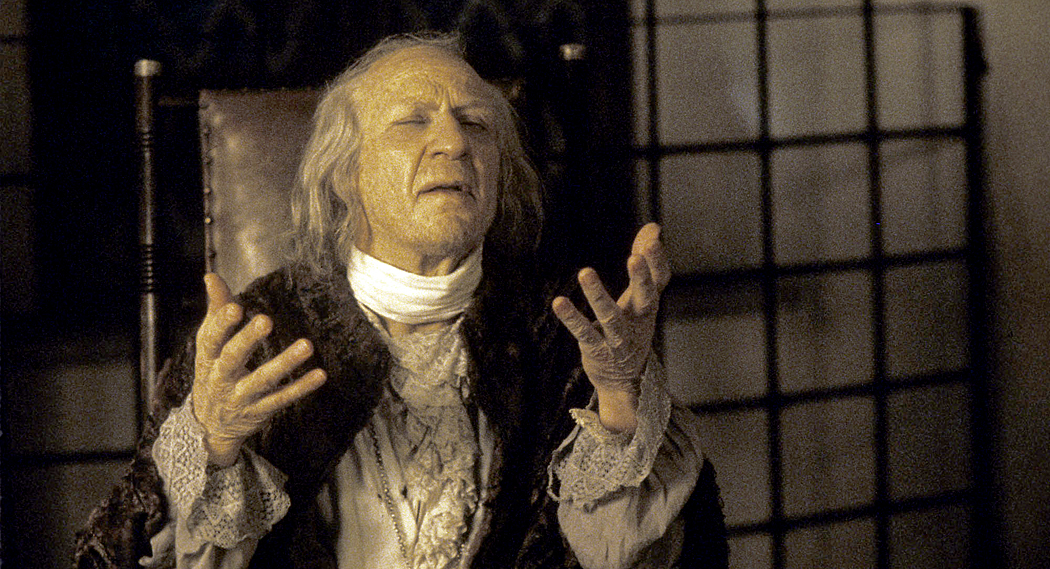
Click on any image to enlarge