Archive

Tag Archives: old tappan

I was born in the upper right corner of New Jersey, just to the west of the Hudson River and a few miles south of the New York state line and the Rockland State Hospital, an asylum famous for once housing Allen Ginsberg and Carl Solomon.

That corner of the map is Bergen County, the most populous county in the state and where I spent the first 17 years of my life, before I managed to escape. It is unrelentingly suburban and, to my young sensibility, numbingly banal. In my senescence, six decades later, I have moderated my disdain and now recognize it as my hatchery — and a part of my psyche that I cannot ever fully extirpate. Like Quentin Compson speaking about his native Mississippi, I can say of my own native state, “I don’t hate it. I don’t. I don’t hate it.” 

The Hackensack River

Bergen County is split by two rivers, the Hackensack and the Passaic. The later forms part of the western border of the county and the Hackensack ran through the town where I was raised and drained, finally, into Newark Bay to the south, between Newark and Jersey City, two old cities that show their age. 

To the east of the Hackensack, the land rises abruptly until it reaches an edge high above the Hudson River, called the Palisades, a 20-mile long series of basalt cliffs that rise to 500 feet above the water. This bit of America, from Paterson to Manhattan is the landscape of my Umwelt — etched into my psyche. 
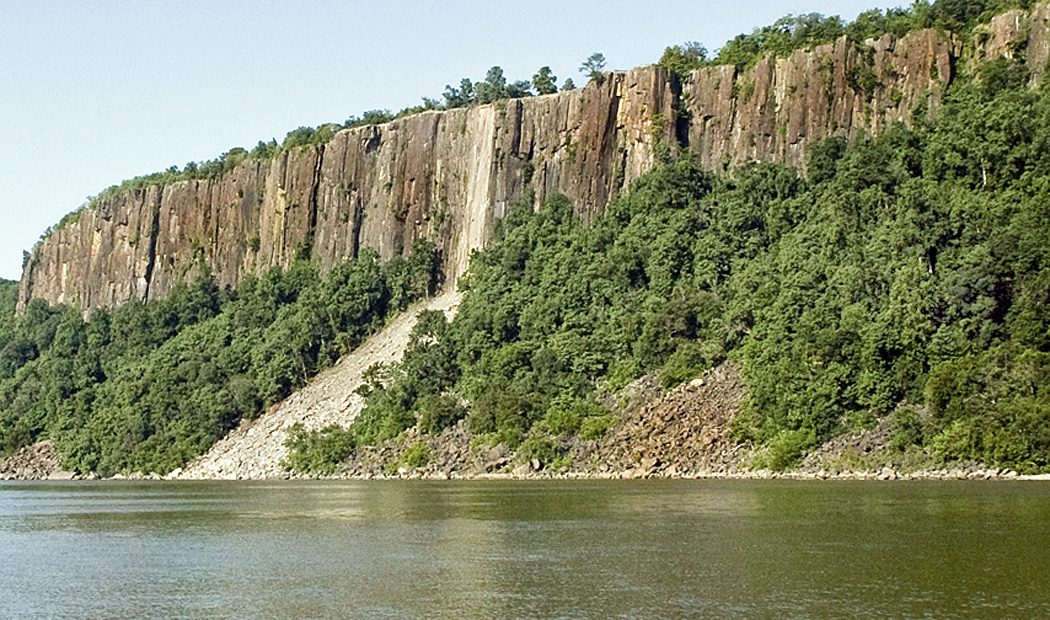
Since I grew up there and knew no better, I assumed that all rivers must be as wide as the Hudson, and when I first came South to go to college, was less than impressed with what passes for a river there. The Deep River, near my Guilford College, I could have jumped across. That’s not a river, that’s a brook (or, in Southern parlance, a creek). 


But the Hudson was noble, wide and impressive. Historically, it ran through the home land of the Lenape Indians and the county is filled with towns and rivers given versions of their Indian names, including my home town, Old Tappan, which was named for the Tappan tribe of Lenape people, which may mean “cold water.” All of New Jersey and parts of Pennsylvania, Delaware and New York were originally Lenape lands. 

Other Bergen County Native American names, however twisted by the ears of the early colonists, include: Hackensack; Ho-Ho-Kus; Mahwah Moonachie; Paramus; Teaneck; and Wyckoff. 
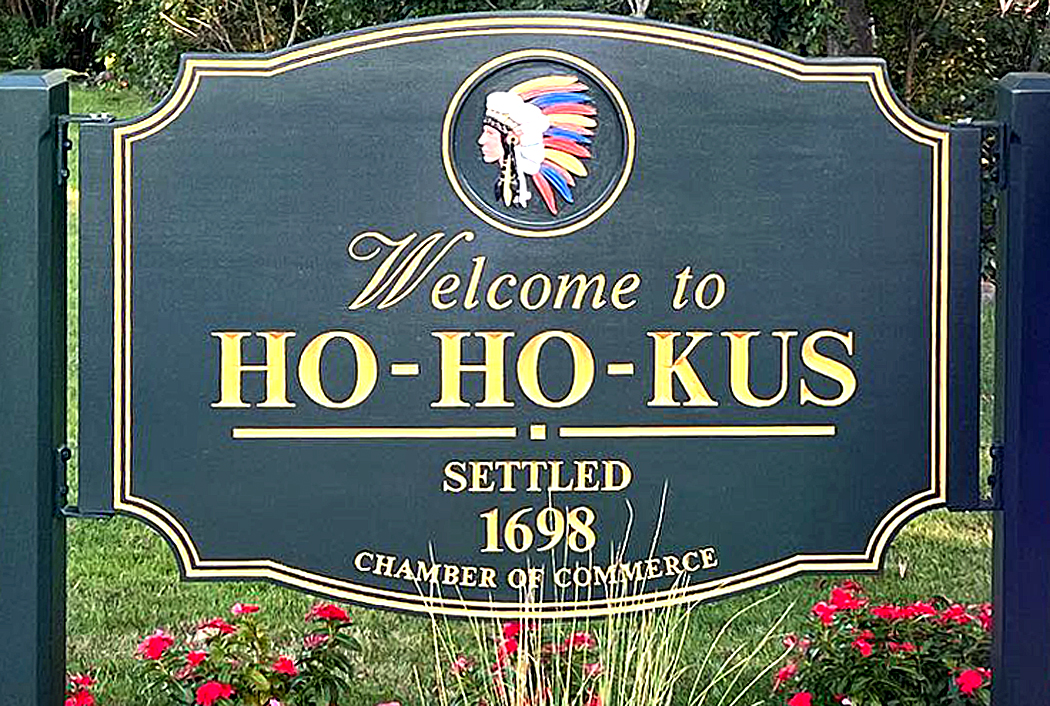
Names can get quite twisted. In central Jersey the name of Cheesequake was originally the Lenape name Chiskhakink, which meant “cleared land.” Other New Jersey names, some harder to pronounce than others, at least for non-native Jerseyites, include Hoboken, Hopatcong, Manahawkin, Mantoloking, Metuchen, Neshanic, Netcong, Pahaquarry, Parsippany, Pequannock, Piscataway, Ramapo, Secaucus, Squankum, Succasunna, Weehawken, Wickatunk. And that doesn’t count the lakes, rivers and creeks: Absecon; Assunpink; Assiscunk; Hakihokake; Hockhockson; Kittatinny; Luppatatong; Machesautauxen; Metedeconk; Muksukemuk; Musconetcong; Picatinny; Pohandusing; Rancocas; Shabakunk; Waackaack; Wawayanda; Wickecheoke — and that’s about 10 percent of the list. I believe I’ve heard my cat say “Waackaack” at times. 

If you’re from there, these names roll easily off the tongue, if not, well — I once heard a newscaster pronounce Parsippany as “par-suh-PAN-ee.” 

Then, there’s Kinderkamack Road, which sounds like it should be among the many Dutch names in the area, but is really a version of the Lenape for “Place of the Ceremonial Dance.” But you would be forgiven for mistaking it. After the Native Americans came the Dutch, with their own names for things, such as Kill van Kull, Polifly, Paulus Hook, Schraalenburgh, and Tenafly. 

There’s a lot of history in New Jersey, although most Jerseyites pay little attention to it. Not only Native American and Dutch history, but New Jersey was once a slave state. My county, Bergen, was the largest holder of enslaved people in New Jersey, with 20 percent of its population in bondage in 1800. New Jersey was the last of the Northern states to outlaw slavery. At the end of the Civil War, there were about a dozen slaves still owned in the state, eventually freed by the 13th Amendment. By the way, the state voted against Abraham Lincoln both in 1860 and in 1864. 

When my father was clearing land in our back yard in Old Tappan, he dug up an old brick foundation that a local historian identified as the remains of an 18th century slave quarters. 
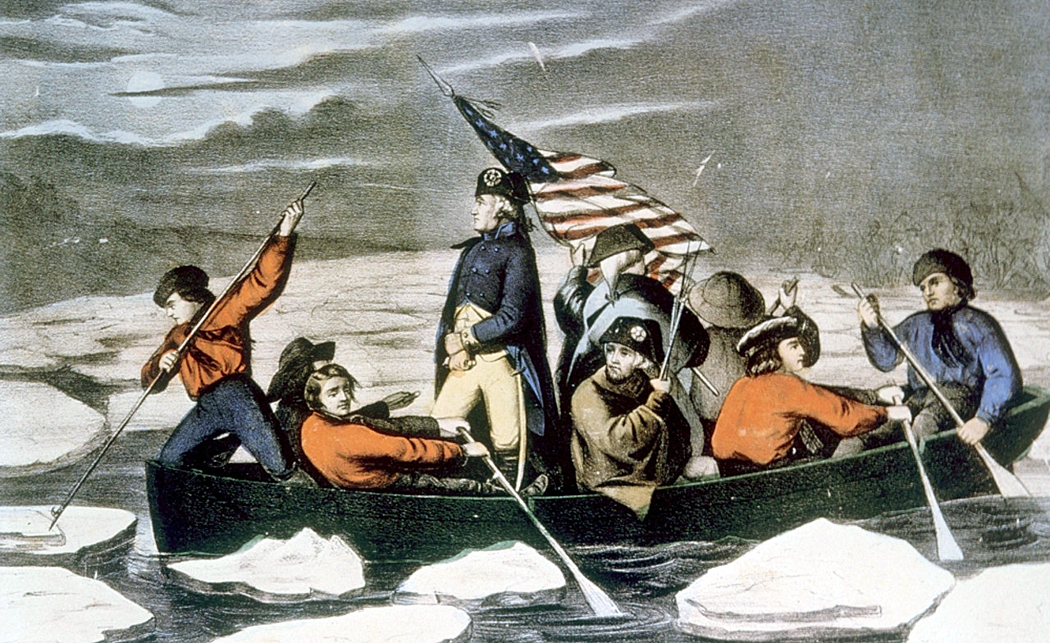
The stony ground of the state has seen a lot of history. One of the most famous and consequential battles of the Revolutionary War was fought in Jersey, as George Washington crossed the Delaware River in the winter of 1776 and surprised British forces at Trenton. He did it again a year later. 

During the Gilded Age, New Jersey was a comfortable home for corporate monopolies. Before being broken up by the Sherman Anti-Trust Act in 1911, Standard Oil of New Jersey had controlled nearly 90 percent of refined oil in the United States. 

Oh, New Jersey. Wikipedia lists more than 50 New Jersey politicians convicted of crimes and corruption, most famously in recent years, Sen. Bob Menendez, who was found guilty of taking bribes after investigators found Menendez had illegally received a Mercedes-Benz car, 13 gold bars, and $486,461 in cash.
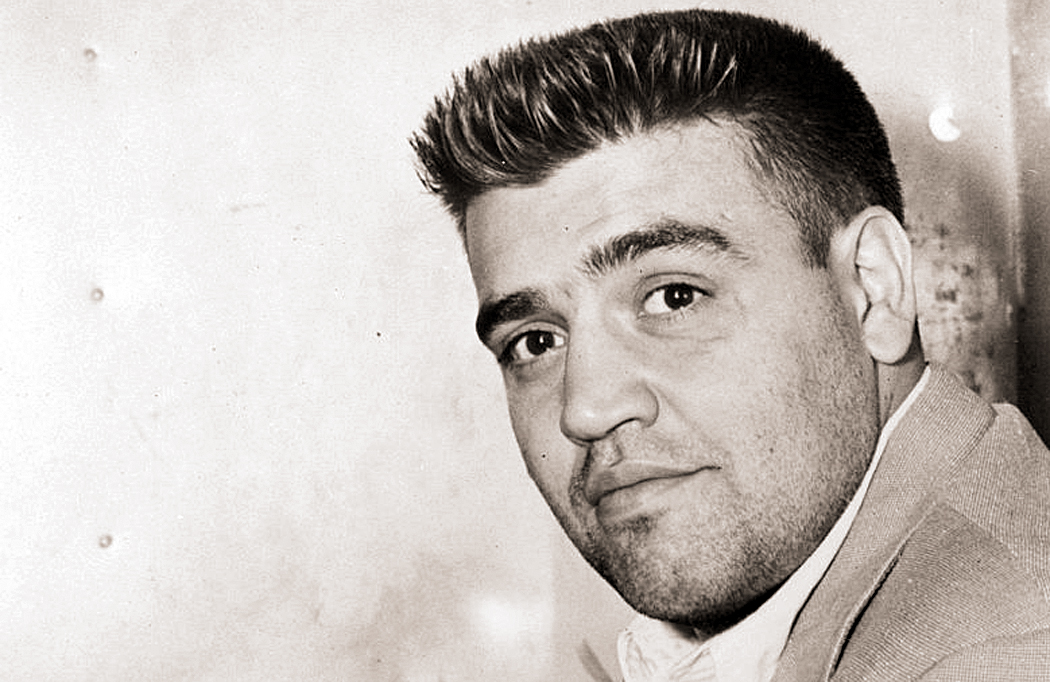
The Chin

In my own home town of Old Tappan, Mafia boss Vincent “The Chin” Gigante had a house a little more than a hundred yards from where I grew up. I didn’t know that at the time, but imagine my surprise when, at college in 1970, I turned on the radio one morning and heard the NPR announcer say that the entire police force of Old Tappan had been arrested for taking cash from Gigante’s wife, Olympia. 

Other high points in New Jersey history: 

It was the home, in Menlo Park, to Thomas Edison’s research laboratory, later moved to West Orange. 

New Jersey was the first state to ratify Prohibition.

In 1927, the Holland Tunnel connected NJ to Manhattan, followed by the George Washington Bridge in 1931 and the Lincoln Tunnel in 1937. 

In 1932, the baby of Charles Lindbergh and Anne Morrow was kidnapped from their home in Hopewell, NJ., and later found dead. A nation-wide manhunt eventually led to the arrest two years later of Bruno  Hauptmann, who was convicted of and executed for the crime. 

The dirigible airship Hindenburg, a German Zeppelin, exploded in flames upon landing at Lakehurst Naval Air Station in 1937, killing 13 passengers and 22 crewmen. “Oh, the humanity!” 

In the infamous Mercury Theatre War of the Worlds radio broadcast of 1938, Orson Welles claimed that Martians had landed in Grovers Mill, NJ. 

And on Sept. 23, 1949, Bruce Springsteen was born, in Long Branch, on the Jersey shore.

The state tends to get divided into three parts, Northern Jersey, Central and South Jerseys. The north is all suburbs of New York City; the south is oriented to Philadelphia and Central Jersey is orphaned between.
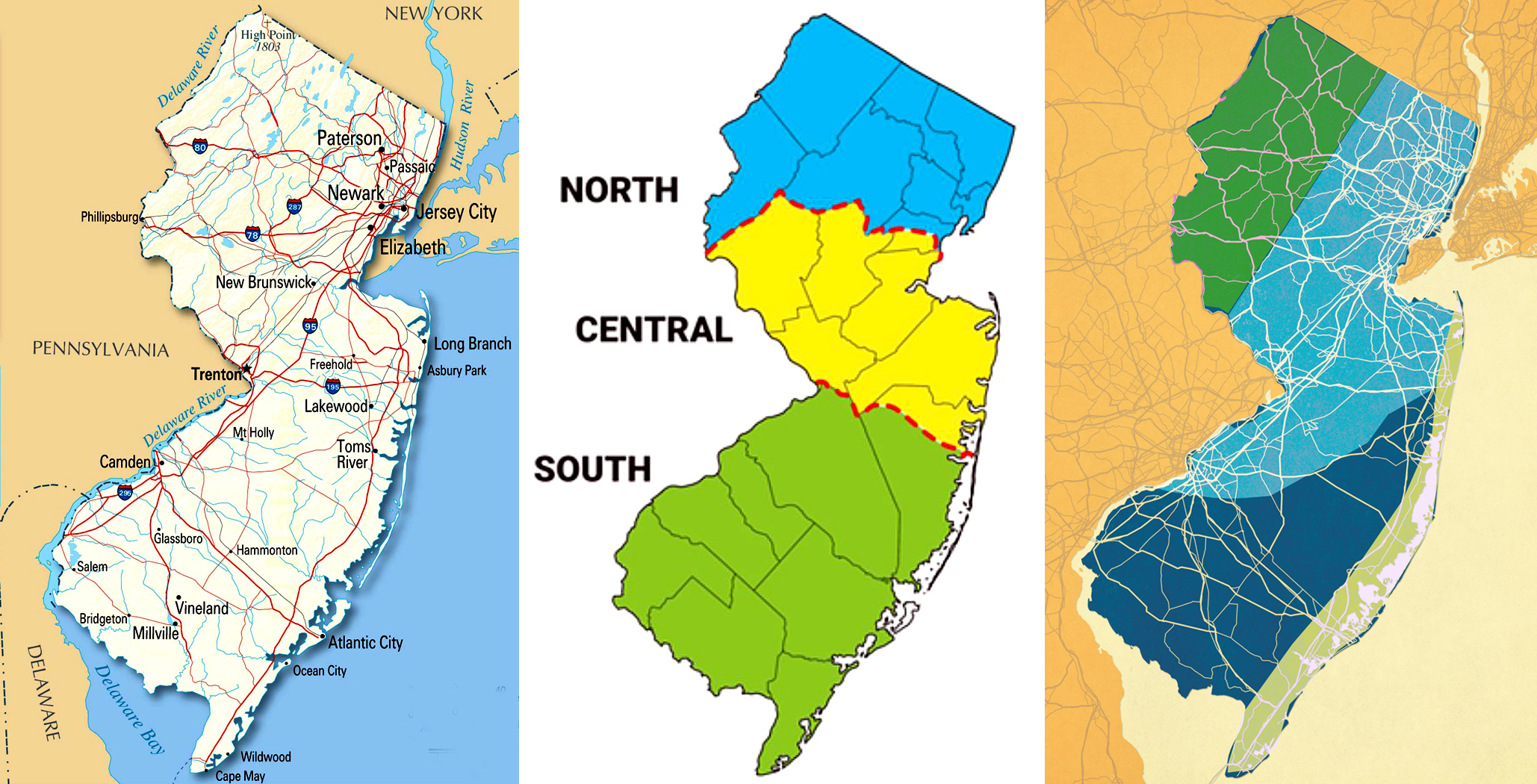
 But really, there is another way of splitting up the map that is more reflective of the cultural realities. There is suburban and industrial New Jersey, which is a ribbon running from the northeastern part of the state and cuts diagonally across to the southwest, near Philly. This includes not only my Bergen County, but also Newark, Trenton, Camden, and the Oranges — pronounced locally as Onch, East Onch, South Onch, and West Onch. There is no Nawt Onch. 
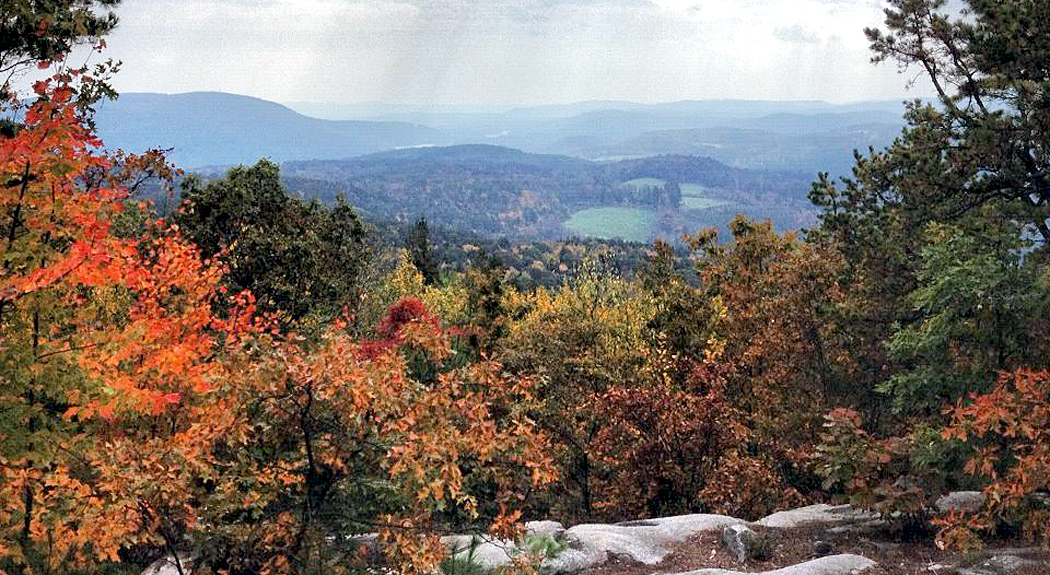
The second part might be considered Appalachian New Jersey and is in the northwest, largely rural and wooded, with the Kittatinny Mountains and the Delaware Water Gap. My summer Boy Scout camp was there, where I was first camper and later camp counselor. 

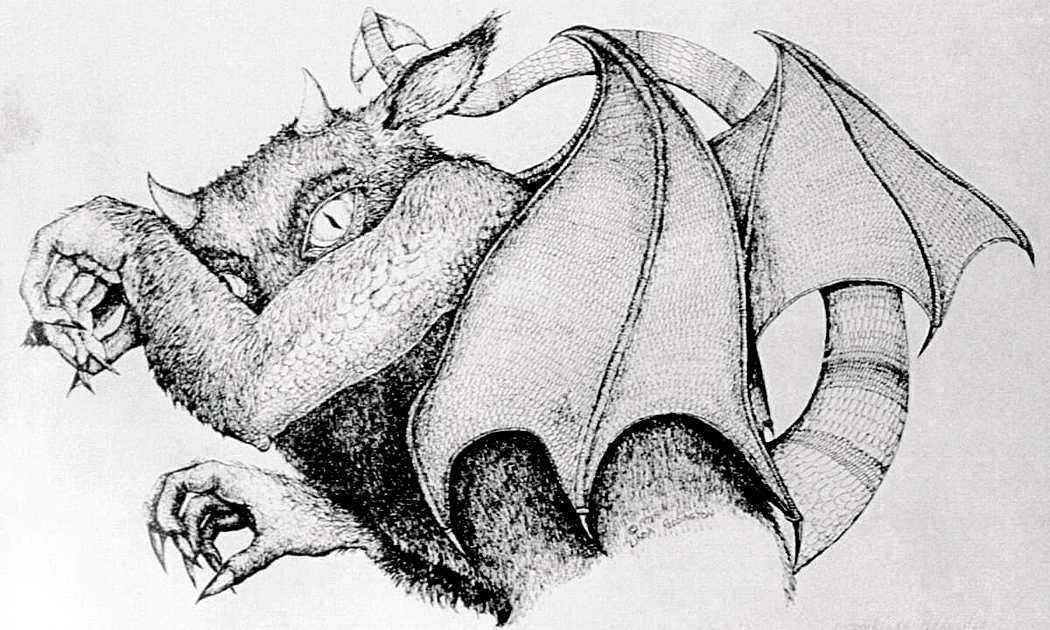
The third part of the state might be called Confederate New Jersey, technically below the Mason-Dixon Line and composed of farm land, swamps and the infamous Pine Barrens, supposed home to the Jersey Devil, a legendary flying demon, said to have been born in 1735 as the 13th child of local woman Deborah Leeds. The child, though born normally. immediately grew wings, tail, and claws and flew out to the Pine Barrens, where, like Big Foot, it is occasionally claimed to have been spotted. 
South Jerseyites can even speak with a drawl, separating them culturally from those farther north. The familiar Joisey accent has a pronounced rising “dawg” while in the south, they are closer to a descending “doag.” (The North Jersey accent is quite distinct. We once had a plumber come to fix our “terlet.”)
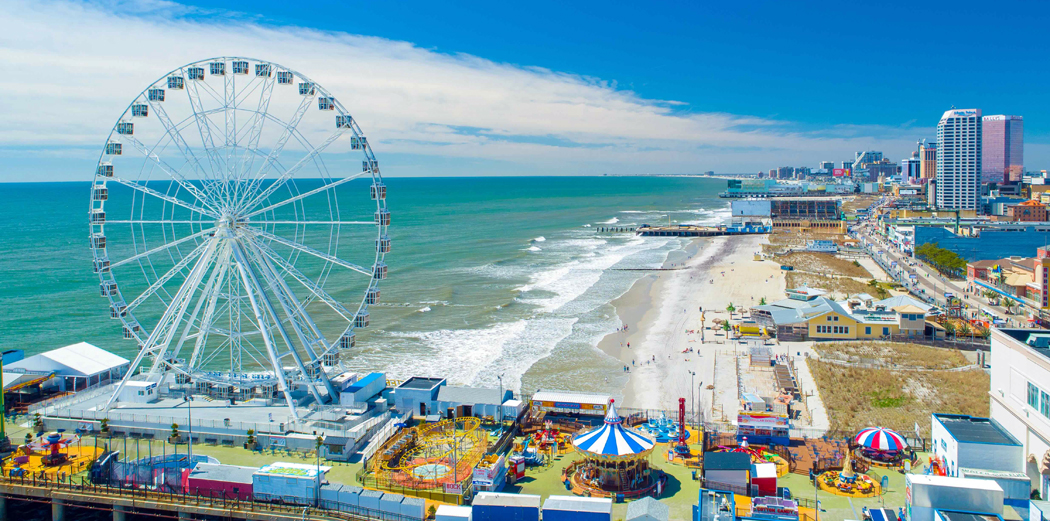
There is a fourth important component to the state. Some consider it part of South Jersey, but it is distinct enough — and famous enough — to warrant its own regional name. It runs down the eastern margin of the state, from Sandy Hook to Cape May and it is the Jersey Shore. It is not like any other section of the state and has gained notoriety for the empty-brained drunkenness and pointlessness of the MTV “reality” television program. The less said, the better. 

The broad stripe that runs diagonally down the center of the state is the heart of what people think of as being New Jersey. Bergen, Hudson, Essex, Union, Middlesex, Mercer, Burlington, Camden and Gloucester counties and parts of others, are both the suburban and industrial centers of the state, and the source of most of the enduring cliches. 
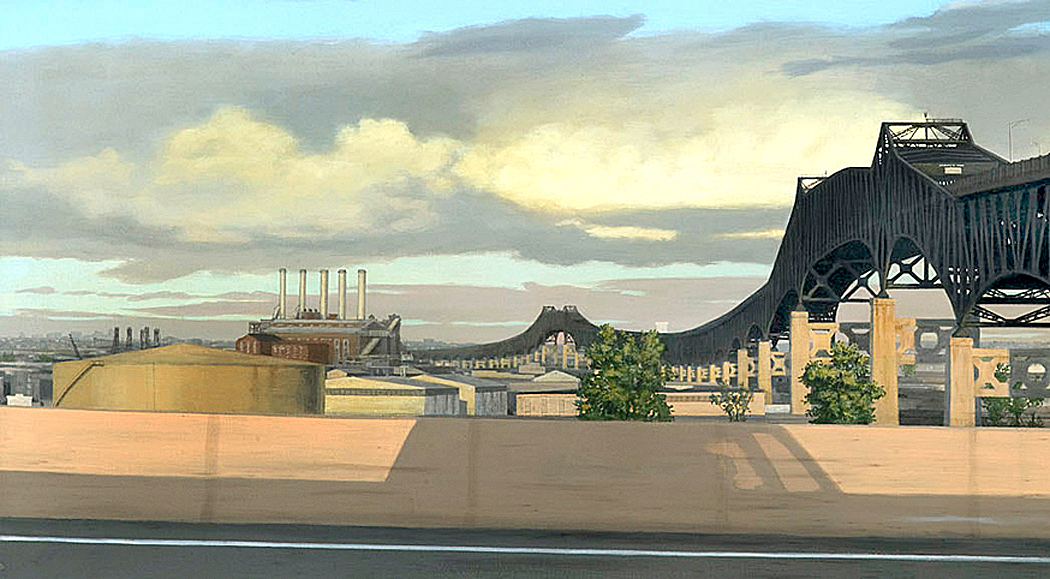
But it is the center filet that has all the housing developments, mcmansions, oil refineries and chemical plants — to say nothing of the Pulaski Skyway and the single most trenchant metaphor for the state: The NJ Turnpike. (“Where do you live?” “Exit Four.”)

   When I left New Jersey as a teenager headed off to college in North Carolina, I shook the dust off my sandals and said good riddance. I despised the bourgeois banality of it all and couldn’t wait to get to the “real” stuff that higher education would show me: art and poetry and music, and — well, beer and sex. But over the years I came to realize both that New Jersey was not exceptional in its inanity — that was everywhere — and also more importantly, I had to accept that New Jersey had built my insides.
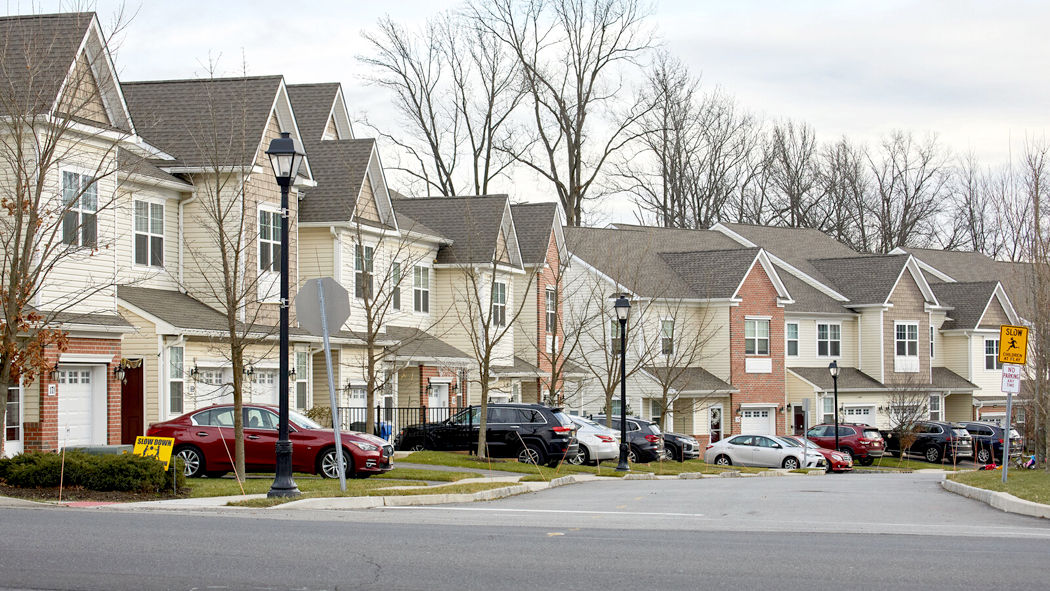
The pace, the smells, the population density, the architectural styles, the speech, the ethnic and religious diversity I had known had all become the universal norms by which I judged the world. 

It came as a shock, for instance, that there were so many churches and so few synagogues in the South. In Old Tappan, there was one Protestant church and one Catholic church and the nearest synagogue was in Closter. Here in my neighborhood in Asheville, there are three churches all in walking distance. Oy. 

The Trinity Reformed Church in Old Tappan was presided over by the soft-spoken Louis Springsteen whose basic message to the congregation was that good is better than evil because it’s nicer. No brimstone, no hellfire. My Catholic friends went to St. Pius X at the other end of Cripplebush Road. Some of them went to parochial school and were taught by nuns. It was all just normal, and built that normal into me. Religion made no more difference to me or my friends than hair color or freckles. 

I remember my father, raised in Cliffside Park, NJ, telling us that when he was drafted at the beginning of World War II and shipped off to Camp Wheeler in Georgia, he was shocked to find out the camp was segregated. The idea had never occurred to him. 

And when I was at college a group of us decided to crash a Ku Klux Klan meeting in Liberty, NC, where the main speaker was the sheriff of Forsyth County, and I was surprised to find out that among the enemies they despised were not just Black folk, but Catholics and Methodists as well. Huh? Humanity never seemed such a narrow concept where I came from. 

My Boy Scout troop was presided over by Paul Weinstein and his two assistants, Vern Riportella and Arch Curry. Basically, one of each. 

It all, good and bad, became the unexamined bedrock of my personality. I remain somehow in New Jersey, even though I haven’t lived there in 60 years. 
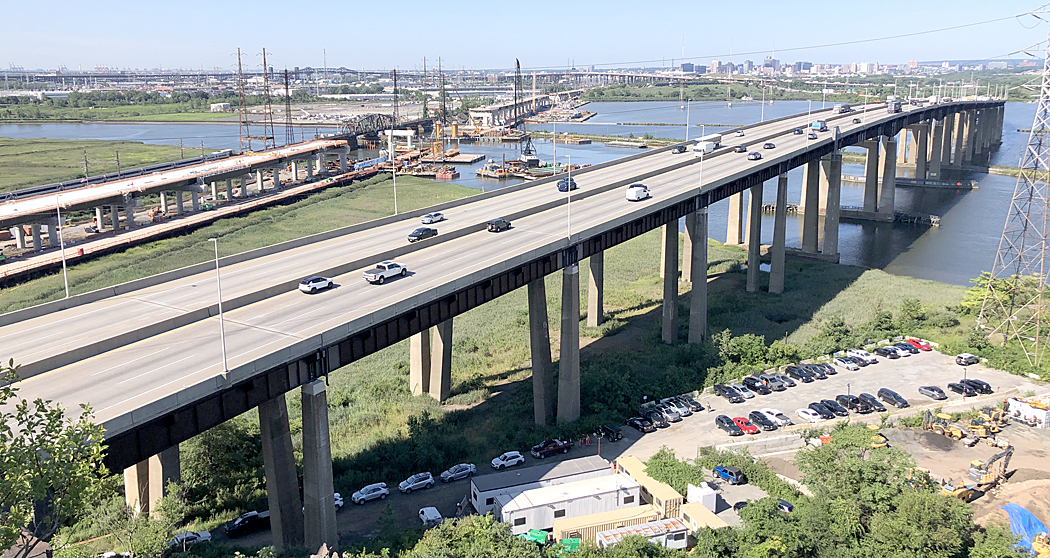
The highways I knew in Paramus seemed the normal highways; the shopping malls the size of Delaware were the norms; the traffic was normal; the oil refineries burning off their excess in the night sky was normal; the bus service, the delicatessens, the pizza, were all the baselines I took elsewhere with me. 

I mean, come on — you call that a pastrami sandwich? 

And New Jersey set the inner tick-tock of my sense of time, a quicker pace. As I’ve aged, the clock has slowed a bit, and living in the South for the majority of my life has moderated the tempo, but it still moves too fast for some. My Anne complains that I talk too fast, according to her North Carolina metronome. 

Perhaps it is because my New Jersey innards prompts me more to favor efficiency than courtliness. 

And while I grew up thinking of my home state as intellectually stultified, I have to grant that there are random points of light. I hesitate to include James Fenimore Cooper among them, after reading Mark Twain’s “Fenimore Cooper’s Literary Offenses” — “Cooper has scored 114 offenses against literary art out of a possible 115. It breaks the record.” — but New Jersey was also the adopted home of Walt Whitman and the very subject and marrow of the poems of William Carlos Williams. There were also Stephen Crane, John Ciardi, Joyce Kilmer, Philip Roth, Amira Baraka (aka LeRoi Jones), George R.R. Martin, to say nothing of the Ginsbergs, père et fils. The Jersey Shore town of Long Branch alone has given us Springsteen, Norman Mailer, Robert Pinsky, and Dorothy Parker. 

Springsteen, Pinsky, Mailer, Parker

New Jersey gave birth to, or was home to George Antheil, Gerard Schwarz, Astrid Varnay, Eileen Farrell, Dorothy Kirsten, Jerome Hines, Sherrill Milnes, Michael Tree, Stephen Paulus, Judith LeClair, and one-third of the Beaux Arts Trio. And that’s not even counting Count Basie or Frank Sinatra. 
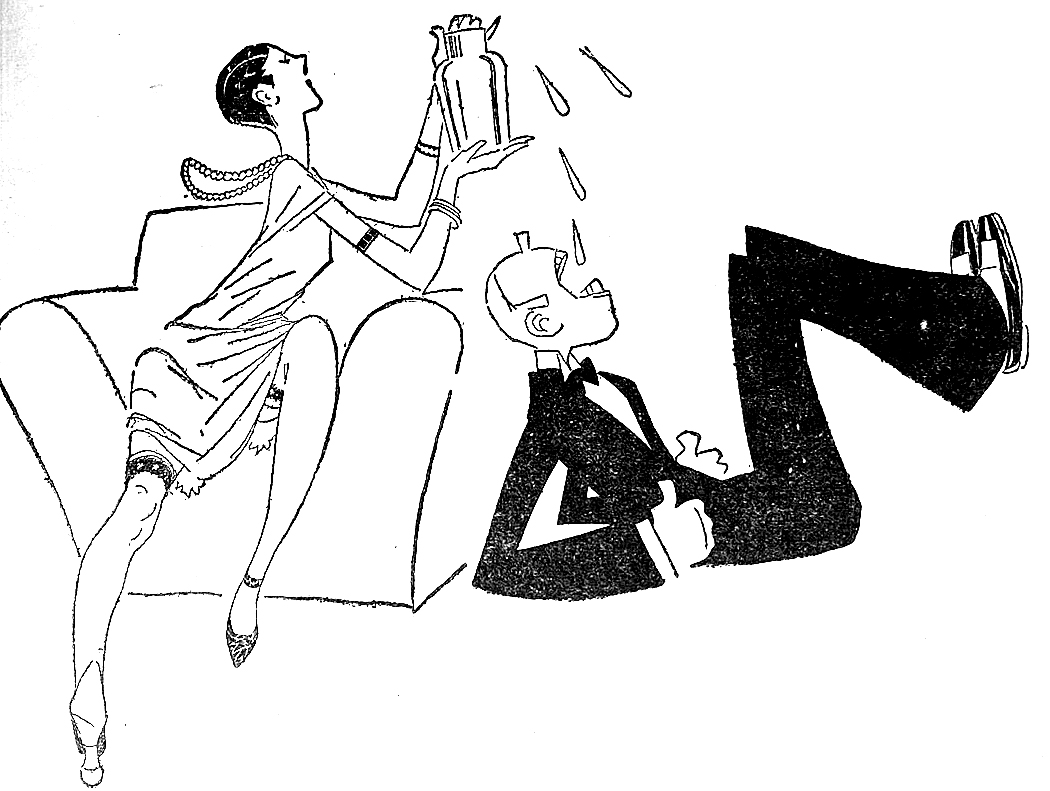
And visual artists: Charles Addams, John Held Jr., George Platt Lynes, Robert Smithson, Reginald Marsh, George Segal, Tony Smith, Irving Penn, Marion Post Walcott, Cindy Sherman, George Tice, and, most famously, Alfred Stieglitz.   
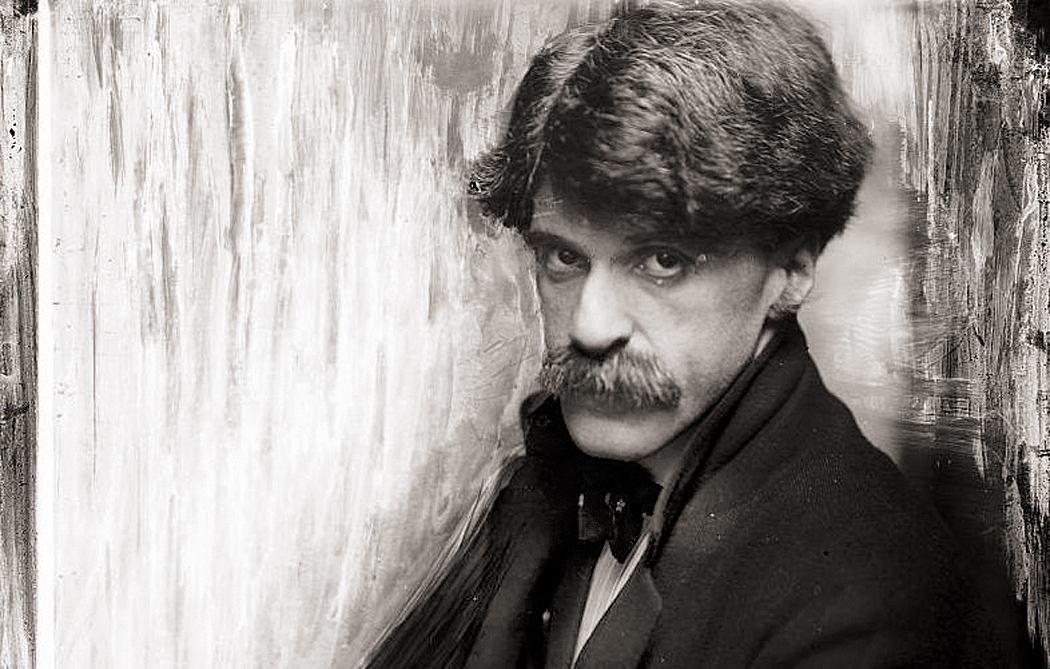
So, there is a serious element in the state, past the saltwater taffy, Miss America contests and Giants football in the Meadowlands. I’ve read work by all the authors, listened to music by all the singers and instrumentalists, either live or on recordings, and seen and often written about the visual artists. I hope that has also seeped in to the brainbox. 

After all, maybe I don’t despise New Jersey like I used to, and perhaps I am not alone in having ambivalent feelings about the places that gave us birth and nurtured us. After all, Henry Thoreau complained about the torpor of Concord farmers and townspeople at a time when that village was also home to Emerson, Hawthorne and the Alcotts. Hmm. Might make for a good sonata.
In a 1993 interview on the Charlie Rose show on PBS, author David Cornwell (aka John le Carré) talked about his childhood. “We are creatures of our background and environment,” he said. “We are very quickly made in life. The first few years seem to be determining who we are for years and years afterwards. You look for explanations for yourself and you go further and further back and wonder if you ever changed or ever developed.” 

When we look at a life as a story, with a single trajectory, and rather like a novel that we tell ourselves about ourselves, one way to organize the narrative is in chapters, and those chapters are the houses we have lived in. 

Each house has its particular memories, its particular emotional resonance and its beginning, middle and end, an end leading to the next chapter, the next home. Some chapters are short, some are long. There are even those among us whose lives are told in a single long chapter — a house they were born in, raised in, married in, inherited from parents and eventually died in. Such continuity is rare; most of us have many chapters. 

Until I was about three, I lived with my mother and father in a house in Ridgefield Park, New Jersey, about a block from the New York Central rail line. There were six tracks alongside each other back in 1948. The rails  are gone now, chewed up by langoliers but left in memory. 

The novel I have internalized begins there, with the sight of sunlight striping the walls in the room where I sat in my playpen. I then added to Chapter One the soot and roar of the steam engines that ran on the tracks a block away. Little else remains; I was two when we moved.

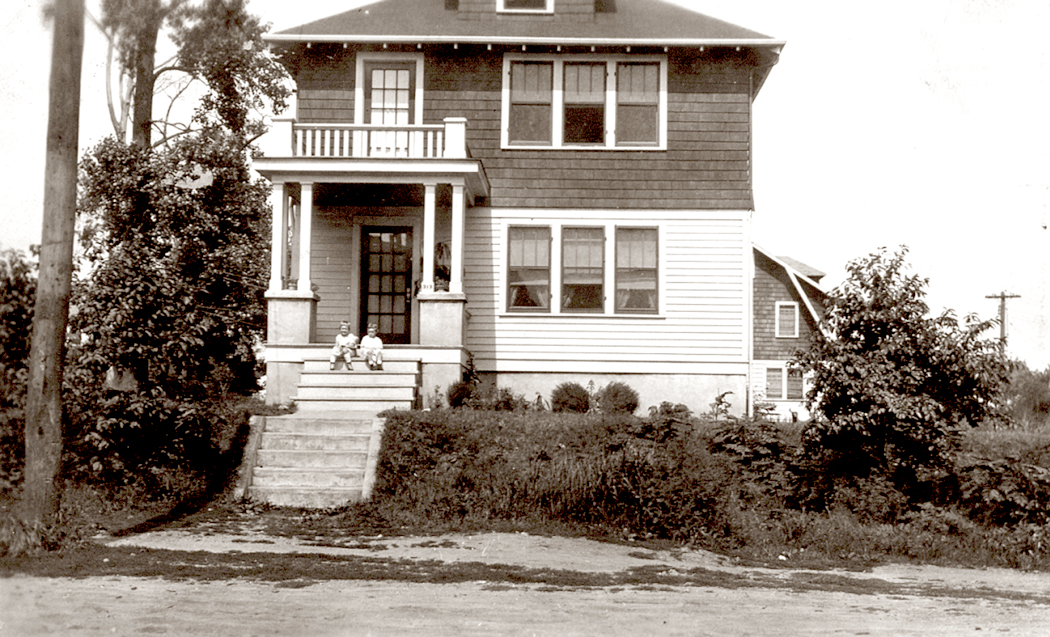
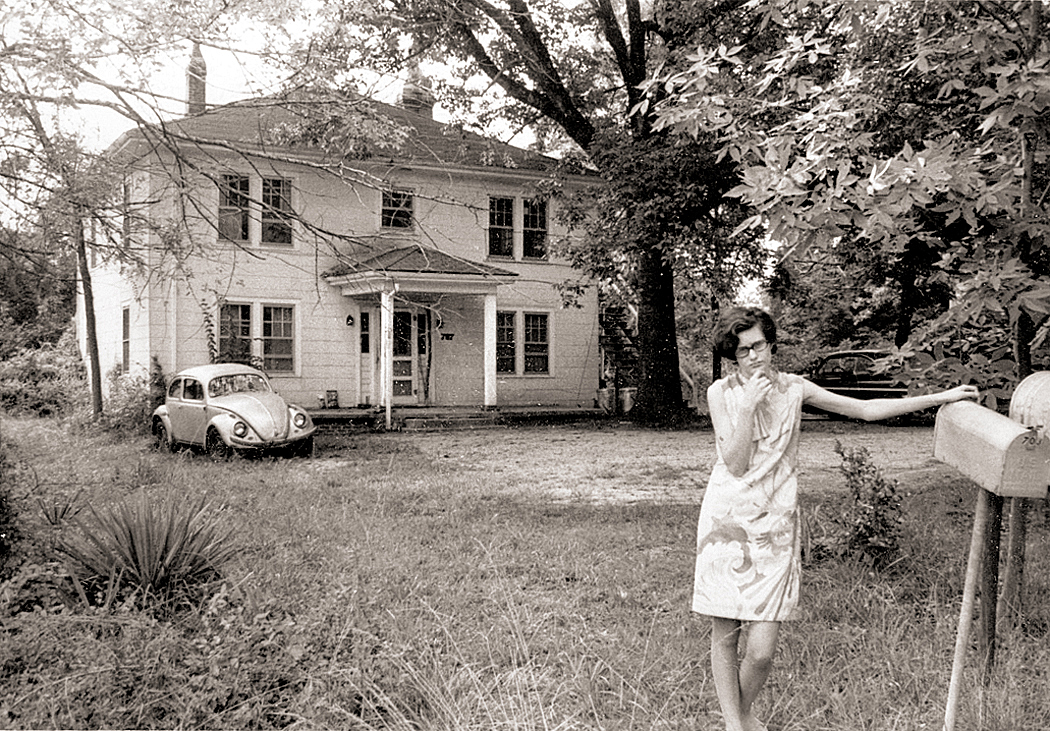
We moved then to the house my grandmother owned in Teaneck, N.J., only a few miles away. It was a tall, old house where we shared the lower floor and my grand-aunt and her husband shared the top floor. I have been back to see that house. It is much changed. The vacant lot next door is now an apartment building. The driveway is seeded over with grass. It’s been repainted many times. 

It was in that house that I watched my grandmother make applesauce from apples gathered from the tree in the back yard. It was here that my great-grandmother died in my bed, while I had to move temporarily to a bed in my Nana’s room. I remember my great-grandmother only vaguely, as a very shriveled old woman confined to my bed and then, one day, not there anymore. No one spoke about it much. She just wasn’t there anymore. 

I can piece out the floorplan of the house, with the living room stretched across the front of it, the dining room at right angles running back toward the kitchen — the kitchen in most houses almost always at the back — with two swinging doors, one on each side of the room, almost like the kitchen doors of a restaurant. Parallel to the dining room ran a hall that connected three bedrooms, and the bathroom, with a great animal-claw bathtub which fascinated me. The front bedroom was for my parents, the middle for my grandmother, and the back for me, and later also for my baby brother. 

Behind the kitchen was a pantry with the house’s back door and the stairs that ran down to the basement. 

Houses are said — by fantasists and psychologists — to be metaphors of our selves, and the dark basement, with its golem-like furnace and the thick, insulation-coated pipes and duct-work, was the animating presence in the house. I played with my toy rocket ships down there almost as much as I played outside in the vacant lot. 

There was another dark place in the house, an under-stairs closet left unfinished with lathe and plaster walls. The public rooms, that is, the living room, dining room and kitchen, were all light and airy, but I was drawn to the shadowy parts of my universe. 

I walked a mile to school to kindergarten and first grade, passing a friendly old policeman who stopped traffic on the main street so I could cross. 

Not all of the houses I’ve hunkered down in have left a psychological mark. Maybe only three of about twenty, but the Teaneck house was the first and gave me a profound sense of place, of what architecture means emotionally. Thus ends chapter two. 

The summer before entering second grade, we got ready to move to a new house my parents had built. It wasn’t quite finished yet, and so we spent the summer living with my mother’s sister and her husband in New Milford. Where Teaneck had an urban feel, this summer had that suburban, tract housing feel. Mostly what I remember from then is that the tap water smelled very strongly of chlorine. It was a brief residence, but I made close friends with the boys who lived next door and went to Catholic school — something that seemed absolutely exotic to me. “Glory, glory hallelujah, Sister hit me with a ruler.” 

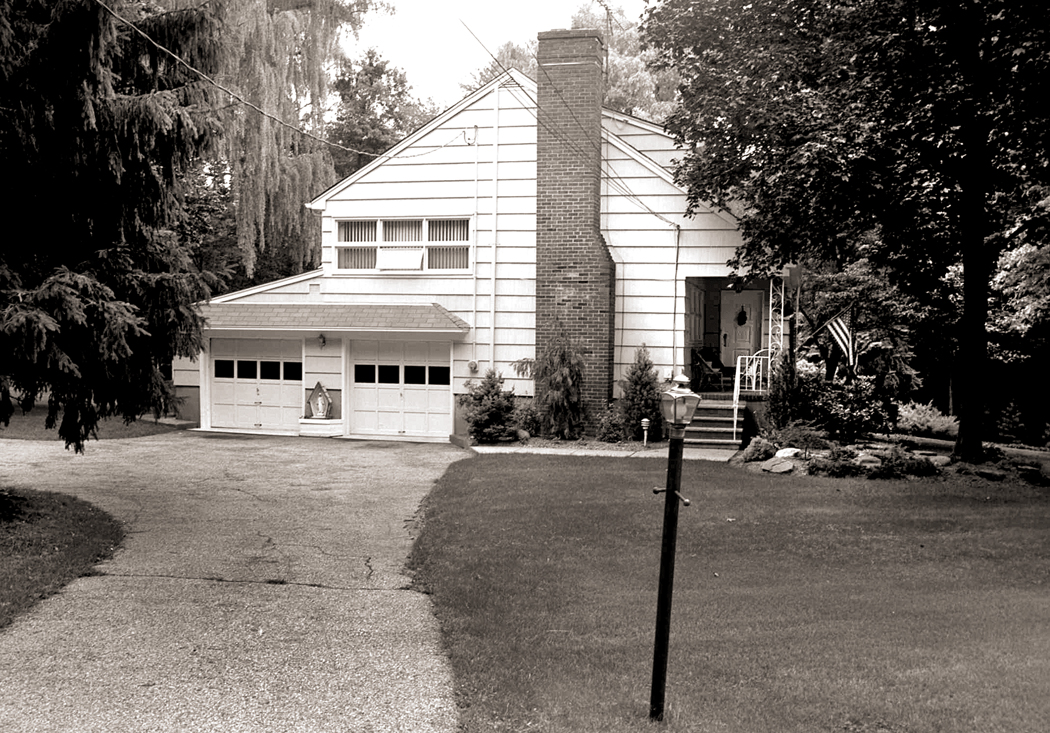
Chapter Four was a split level in the then-rural township of Old Tappan, on the border with New York’s Rockland County. It was a house my parents had built on a half-acre lot they bought with a stream running through it and woods on three sides. For a kid it was idyllic. In the years I lived there, I saw the town grow into a suburban bedroom community. Busses to New York City stopped by every hour on the street corner. Bits of woods everywhere were turned into housing developments, but the woods around our house remained wild. 

The house zigged and zagged from floor to floor, as if cut down the middle and half raised up between floors. On the bottom was a cellar, next up to the other side, the garage and laundry rooms, zag back to the other side and up the stairs and you get the living room, dining room and — at the back of the house — the kitchen. Back the other way and up a flight were the bedrooms and bathroom. By now I had two brothers and we all shared the same room. But up still another set of steps and you had my grandmother’s apartment, with its own living room, bedroom and bath. 

It’s a house plan not much favored today, but a split-level was the height of suburbanocity back then. From second grade through high school, I watched the town fill up, tract housing explode and farms and woodlands disappear. All that happened just as I was becoming rebellious and angry at my middle-class life. It was the Holden Caulfield syndrome, and I despised everything middle class, suburban and bourgeois. I couldn’t wait to get away to college. 

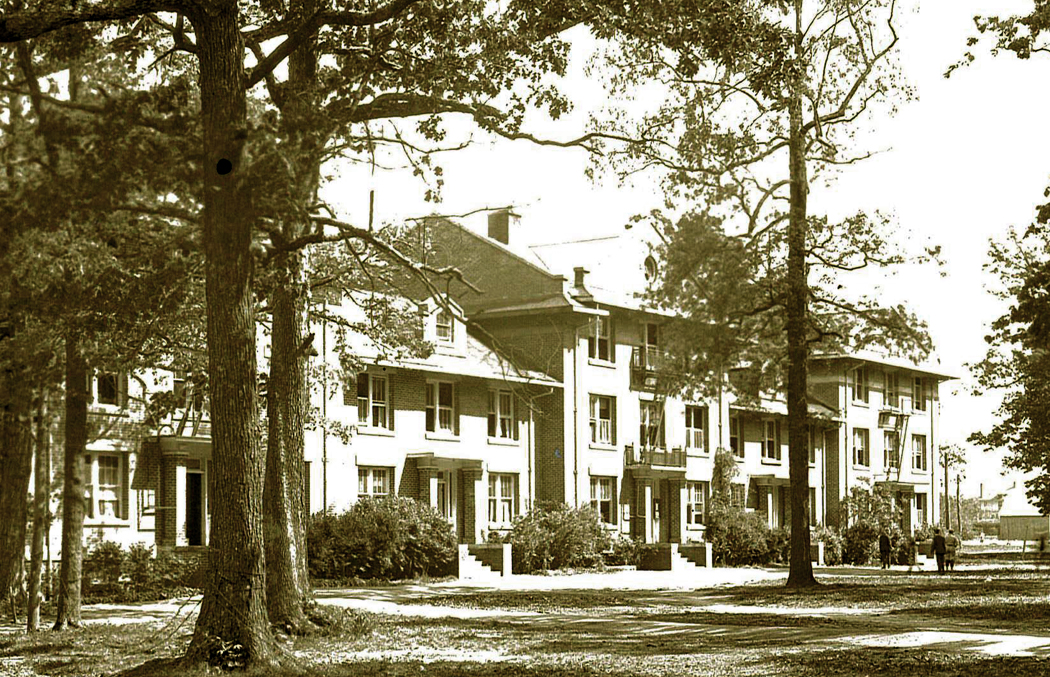
Next chapter was Cox Hall, a dorm at Guilford College in Greensboro, N.C. My rude introduction to the American South came on my first day, when I faced my dorm and saw a giant banner hanging from the third floor that said, in crude handwritten letters: “Forget? Hell!!” I didn’t know what those words meant, but I quickly came to understand. 

Cox Hall was built before World War I, and was quite seedy, with wobbly wooden floors and thick plaster walls. I was dumped into a room with a proudly redneck bully and an ineffectual milksop, neither of whom had any academic interest. Mostly they were after poontang and Everclear. (Everclear, for the uninitiated, is a brand of pure grain alcohol of especial toxicity. Wikipedia tells us that it “is also used as a household ‘food-grade’ cleaning, disinfecting, or stove fuel alcohol.”)  

I got moved to a two-person room, but my roommate quickly dropped out of school, and I had the room to myself. It was heaven, just me and my books and my Sears Silvertone phonograph on which to play my pile of classical music LPs. 

For my sophomore year, I was moved to the more modern and quite faceless Milner Hall, which might as well have been designed as a prison — all brick and tile and fluorescent lighting. There was a communal bathroom and showers arrangement that echoed like a cavern. 

I hated dorm life; it was riotous, noisy, crowded and cramped. I petitioned the dean to let me live off campus and eventually, because I was such a thorn in his side (over many a social issue, like women’s rights and integration), he let me go.

And I moved with my friend, Hank, into the home of a sociology professor and his wife. They had an addition at the back of the house with its own entrance and two bedrooms and a bath, and it was only a block from campus. It became a meeting place for all the other disaffected “hippie” students of 1969, and one night we threw a grand party when about 80 students showed up, most of them not invited, and the party lasted till dawn and left the back yard covered in beer cans. It did not ingratiate us with our landlords. 

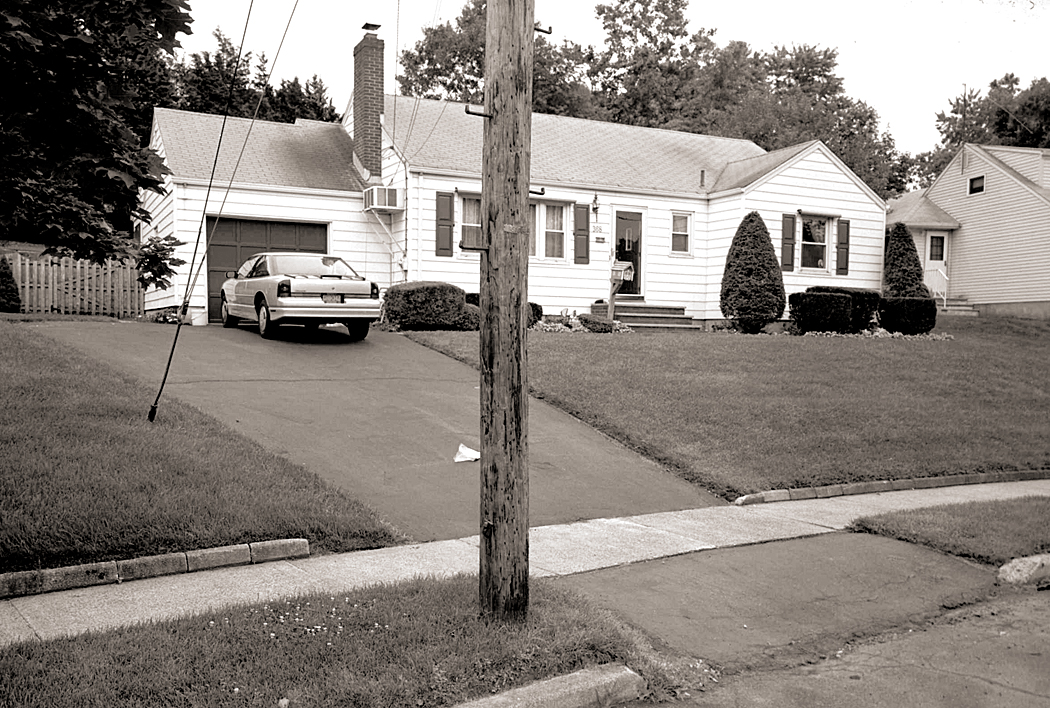
But by then, I had become engaged to be married, and my new wife and I moved to our own rental house. It was the second floor of a duplex and our entrance came with an outside staircase, which in winter was a treachery of ice. Rent was $50 a month. 

There are three times in life when a home becomes mythic. Obviously, first when you are a child and the entire world has that glow and the house is the axis of the universe. Every corner and cornice has meaning.

The second is when you first consider yourself an adult, have gotten married and must make a life for yourself. The world has a lesser glow, but it is renewed, a decent echo of the magic of your childhood home. And this old house, with its tiny kitchen with enameled metal cabinets, became the projection of my inner state. 

It was 1969, and I painted the living room burnt orange, with avocado green trim. It was a testament to the zeitgeist, but so was I. 

Like so many houses built in the nineteen-teens and -twenties, it had a central hallway with rooms off each side — what architect Frank Lloyd Wright excoriated as “boxes inside boxes.” When you entered the house from the outside steps, you reached the living room. At the back of the house was the kitchen. On the other side of the hall were two bedrooms and the bathroom. 

There was a vacant lot behind the house with a felled apple tree that continued to produce fruit, even while horizontal.  

The house had no heat except for a kerosene stove in the living room. In the winter, I would have to walk down the icy stairs to get a gallon of kerosene from a 50-gallon drum of fuel in the back yard, carry it up, pour it into the reservoir at the back of the stove, crumple up some paper, let it soak up some kerosene, throw a match in and slowly let the kerosene heat up and vaporize so it could catch fire. Sometimes the heat would be so intense as to turn the stovepipe cherry red and begin shaking violently, and I would have to swivel the damper to discourage the fire. This too, is a metaphor. 

We moved to a new house shortly before we broke up. It was about mile away and was another duplex. It would remain my home for the next seven years and the next “permanent” relationship. It was also an old house, and even more of a mythic Eden than the last. This was Chapter Eight. 

There was a front door, but we hardly ever used it. We entered the house from the back, through the kitchen and into living room beyond. There was also a back bedroom — a guest room — and the master bedroom at the front of the house. What made the house such an Eden was the grounds; a great black walnut tree in the front yard, a pecan tree in the back. A vacant lot to our side and a patch of woods behind us. All year long, new weeds would blossom — I called them wildflowers. I counted once and found 190 different species of plant in our yard and the lot next door, including a pear tree. We grew a vegetable garden in the front yard and there were a couple of fig trees that gave us fresh figs to eat. This counts as one of the high water marks of my life. I was happy.

At least until my partner told me one day that she was getting married — to someone else. Eden was gone and so was my Eve. I was in shock. I sold most of what I owned and took the train from North Carolina to Seattle, where I moved in with a friend on Phinney Ridge, sharing a house with two lesbian doctors and the world’s most obscene man. 

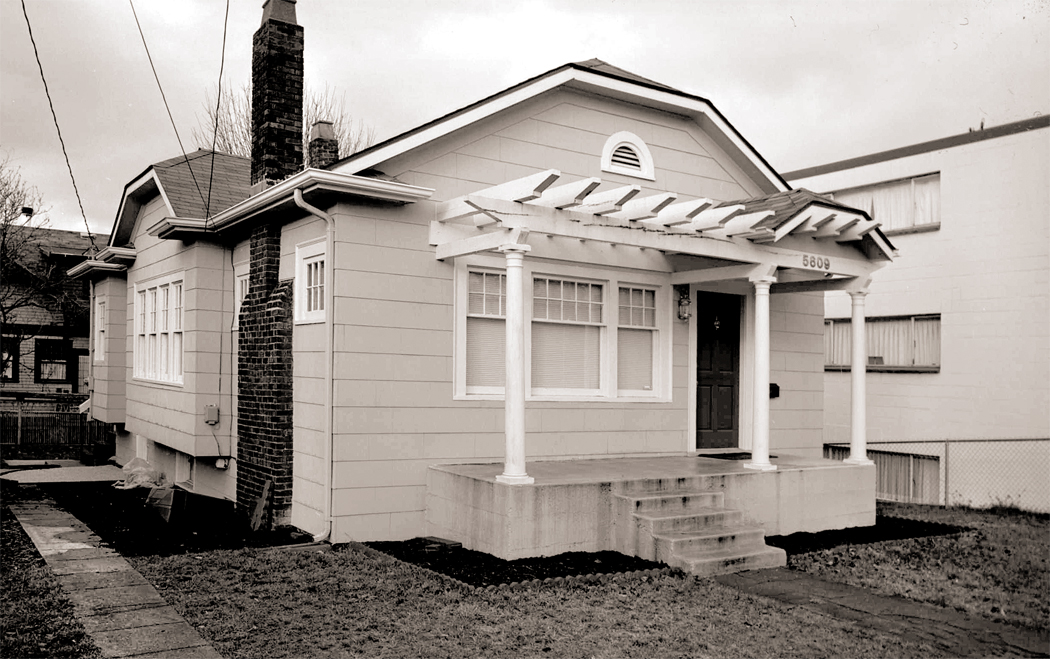
Chapter Nine was a small house and I made a room for myself in the coal bin in the basement. Upstairs, there was a living room, dining room, two bedrooms, bath, and a kitchen at the back, where we took turns cooking, almost always with hot peppers. I got work at the zoo and spent my days in an iron box selling popcorn, hot dogs and cokes. In the chill gray air of Seattle, the hot dog steamer filled the box with a Dante-esque steam-fog which condensed on every surface. The smell of those dogs and the chemical popcorn butter have put me off both for life. 

A short but ecstatic relationship came crashing down and I found myself moving back to North Carolina, where my best friends from college offered me a room in their house in Summerfield, just north of Greensboro. I was a mess; I was not over the heartbreak that had shattered my selfhood. I had no job, no money — if they hadn’t given me a place to stay, I would have been homeless. I spent the next year and a half there, doing the cooking and maintenance work and feeling the comfort of a surrogate family. 

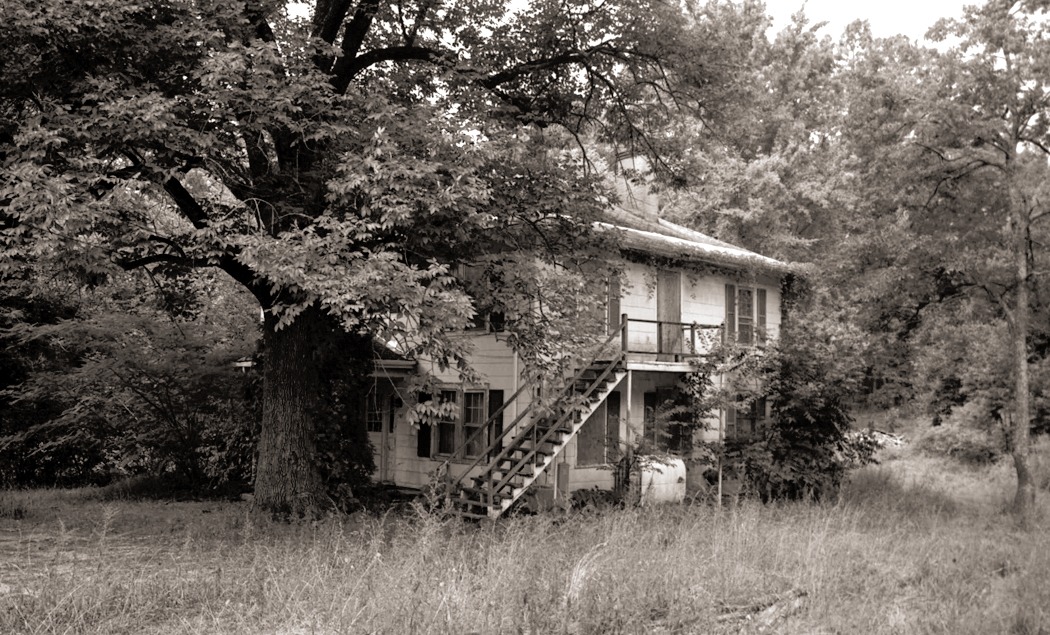
The house was an old farmhouse, with a barn, or shed in the back. My room was on the ground floor with the kitchen-dining area, which were combined in one space, with the wood stove, which was the only heat in the house. In the winter, the stove was kept going constantly, and we spent almost all our time in that room. When I woke up in the morning, a glass of water would be frozen solid next to my bed. I chopped a lot of wood during that year and a half. If you have never done so — a more modern life being what it is — you will not know the calming power of splitting logs. This is the third time when life became mythic: I was hyper-aware of being the protagonist in an epic that was my own life. The world had an inner glow and throb and I recognize now that I am old, that I was not quite in my right mind. 

It was while trying to regain my balance that I began writing. There was an old tree stump in the back under an ancient oak tree. I put my aqua green portable typewrite on the stump and typed away, writing letters to everyone I knew. One was 50 pages long. 

I was saved when the woman I would spend the next 35 years with wrote me and asked me to come and visit her in the mountains. I visited but never left. 

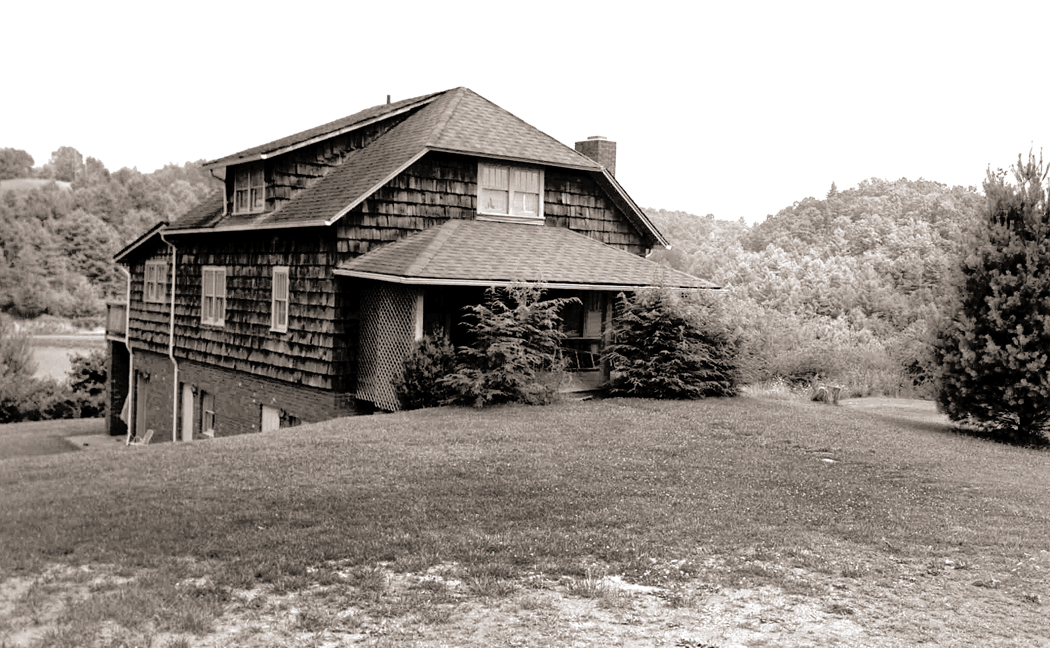
And so, Chapter 11 ended my psychic bankruptcy and I moved to a house on a bluff overlooking the New River in Ashe County, North Carolina. It was a new house, with a living-dining area, a bedroom and a kitchen at the back, with a basement and another bedroom for the teenage daughter that I acquired. Off the kitchen was a porch that hung out over the bluff looking down at the river, a hundred feet below us. From the kitchen window, I could watch the shifting weather on Mount Jefferson as I washed dishes. Mt. Jefferson was the central mountain in Ashe County and it changed constantly as the sun and weather shifted. 

It was a long drive on a snowy winter day to the schools where my new lady was teaching, and so we moved closer to Boone, in Watauga County and found a small house in the community of Meat Camp. The house sat on a creek just below the hill on which one the schools she taught in sat. 

The house had two floors, the first with a living room in front and a dining room and kitchen in the back. Upstairs there were two bedrooms, with angled ceilings under the roof. Both were small and the one we didn’t use became just storage. In the summer heat, I could lie in the creek in the icy water and cool down. 

Unfortunately, the Watauga school system shut down several programs, including the art program and we needed to find other jobs. I had taught a class part time at Tidewater Community College in Virginia Beach, Va., and Carole found a job teaching art in the Norfolk School system. And so, we moved everything down to an apartment building on a cul-de-sac about a half mile from the ocean. Our apartment was next door to my brother’s. He was a fulltime teacher at the school.

It was a building with 10 apartments, side-by-side, two stories each. In ours, the kitchen was at the front, with a window that looked out on the street. Behind it was the living-dining area. Upstairs were two bedrooms. The art faculty at the school all became great friends and we held great dinner parties together. We lived there for six years. 

Then my wife got a job offer from her old boss, who had moved to Phoenix, Ariz. and we decided it might be fun to live in the desert. We imagined a little adobe house with a white picket fence. Never did get that. 

Instead, we had four different houses over a period of 25 years. We had packed everything up into a Ryder truck and drove across the continent, towing our car behind us. We didn’t have a place to move to, but came completely unprepared. We pulled into the street where her new boss lived, and stayed there a few nights. It turned out the house next door was for rent and we moved in. 

It was a small place, with its kitchen rightfully in the back again, with two bedrooms and a combined living-dining area. It was on the corner of Seventh Street, which is probably the busiest street in all of Phoenix — probably all of Arizona. It was like living by the ocean, with the constant roar of the surf — i.e., traffic — and, while you sort of get used to it, it also wears on you long term. We had to get out. 

We found a flat-roofed faux adobe house on 13th Street, a quiet back street closer to downtown. It was owned by an artist who was covered in tattoos — we called her the “dragon lady,” and who had painted the stucco on the front of the house in a trompe l’oeil imitation of crumbling adobe, revealing its bricks. Across the front of the house was a living room, which led to a hallway kitchen, to another hallway with more than 20 built-in cabinets — more storage than I have ever had or seen in a house — and a glassed-in drop-down family room with a view of a lily pond. At the back of the house was the bedroom and bathroom. 

Both of our first homes had no air conditioning. In Phoenix, that is a problem. They had swamp coolers, which work beautifully in the spring and early summer, when the humidity is non-existant, but fail to cool anything in July when the monsoon humidity hits, leaving everything hot and sweaty. 

That’s when my wife’s best friend offered us her place. She was moving to Hawaii and needed a tenant for her house, on Cheery Lynn Road (which everyone mistook for “Cherry Lane”). For the first time since living in Greensboro, the yard was an Eden of trees, flowers, plants and roses. Ivy devoured the entire western half of the house and the front was covered by a great tree. 

Inside, the living room gave way to a kitchen behind, with a dining room jutting off it, which was actually a converted garage, tutted up with lots of added windows. Three bedrooms under the ivy half of the house, one of which became my office. We lived there for seven years. Then our landlady moved back to Arizona.

And so, we moved into the shadow of Camelback Mountain, the most familiar landmark in the city — a 2700-foot mountain on the border of Phoenix and Scottsdale in the double-hump shape of … 

It was the most suburban house I had lived in since my childhood and I felt almost as if I had sold out. It was a sprawling ranch house with a drop-down living room, a huge kitchen with a fireplace and three bedrooms. And there was a swimming pool in the back yard. In Phoenix, the swimming pool usually runs a constant temperature of about 95 degrees in the summer, but feels downright chilly compared with the 110-degree air. 

The house was exactly the time of one Haydn symphony to work, and so, I listened to all 104 of them, two a day going and coming, for 52 days. The commute was the highlight of my day. 

Ah, but there’s always a worm in the apple and my worm was named Gannett, the newspaper chain that bought The Arizona Republic, where I worked, and everything changed from “our responsibility to our readers” to “our responsibility to our shareholders,” and there were layoffs, management stupidities, a lowering of standards, and a general dumbing down of the paper. Many of the staff were horrified, and when, at age 65, I was offered a buyout, I knew I had to take it. I loved my job, but it was dissolving in front of me. Leaving was the only rational option. 

After 25 years in the desert, we moved back to North Carolina, where our daughter was living, in Asheville, up in the Blue Ridge Mountains. Asheville is a blue city in a red state, full of art, music, hippies, restaurants and craft breweries. 

We found a house in a quiet neighborhood with the best landlords we’ve ever had. The house sits on a hill, with a kitchen at the back, and three bedrooms, one of which is my office. I have now been here 10 years, which is longer than anywhere else I have lived. My wife of 35 years died five years ago and my daughter moved away. 

I am now approaching 75 years old and am writing Chapter 18, and through one of the oddest series of circumstances, I am now reconnected to my first wife, who I had not seen or spoken to in 50 years. She has moved in and we share this house. We are not planning to move anywhere else. Oddly, I am not at all the same person I was, but because through all the chapters, I was me, there is an equally odd continuity. 

Cornwell, on that TV show I mentioned at the top of this mountain of words I have written, called life a “dangerous journey of introspection.” I first became aware of that fact as a student in North Carolina. Over the course of that life I have lived in all four corners of this continent and have, in the end, returned to North Carolina. And I wonder at how much I’ve changed and developed. 

Mrs Semendinger's second grade 2
I recently came across a photograph of my second grade class and something odd happened.

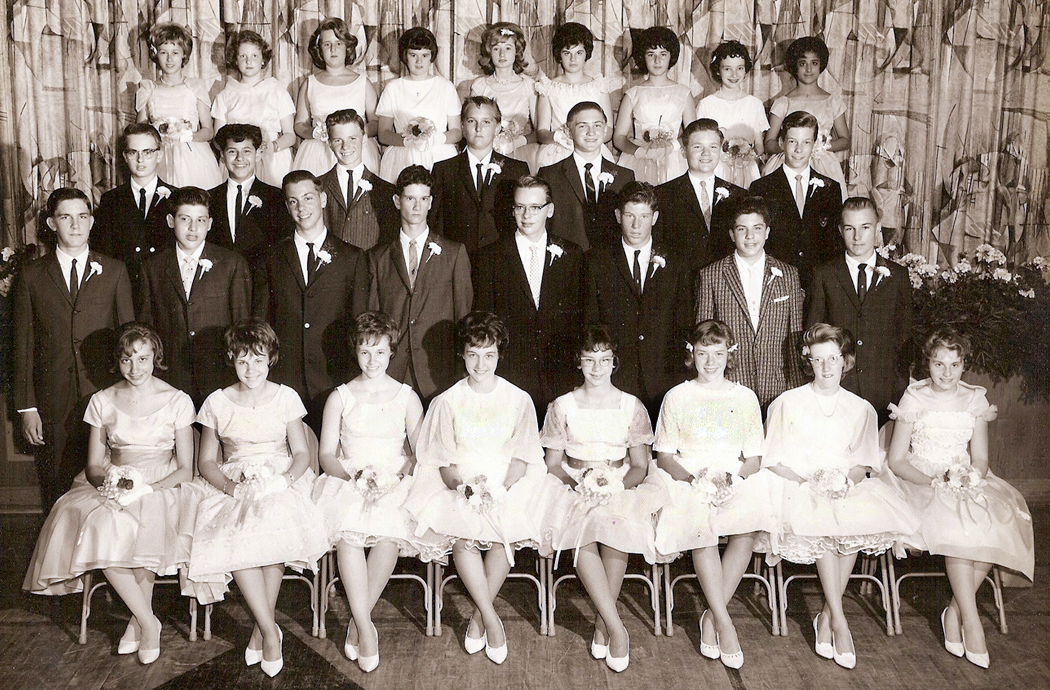
I hadn’t thought of these young faces in more than 50 years. Yet, as I looked into their faces, their names popped into my brain. Where those names and faces had been stored, I have no idea: some forgotten warehouse in my mind, like the scene at the end of “Lost Raiders.” These were faces from nearly 60 years ago, and in their fresh-faced innocence, they barely show the traces that would line them even in their eighth grade graduation photo. 8th grade class 1961

I left behind my life in New Jersey four years after that second photo, going off to college and what seemed to me to be “real life.” I wanted to forget New Jersey — more exactly the banality I saw in the suburban stultification of my home state — and dive into the deep end of art, music and poetry.

But now, a half-century later, I saw the faces in that picture and names I have not uttered in 50 years reappeared magically, jogged out of the synapses of my brain like dust between the floorboards.

What connects, ourobouros-like, our lives now with our lives then? The disconnect seems immense: There is so little of then that survives into my now; yet, the person — the sensibility I am — is a continuous existence, a line drawn without the pencil once being lifted off the page.

There is a danger, when looking back, to fall into the miasma of nostalgia. You see it all over the internet: “Share if you remember when the milkman delivered milk to your door?” and “Remember when cars had running boards?” Rotary phones? Party lines? As the American population has aged, PBS stations ask for money to a soundtrack no longer of septuagenarians playing Glenn Miller standards, but now to septuagenarians singing doo-wop music and recalling, with a wistful gaze on their faces “the music of our times,” as if this shared experience created an us-vs.-them world in which we remain the good guys, who really knew the score, and they are the johnny-come-latelies who have ruined it all. Patti Page

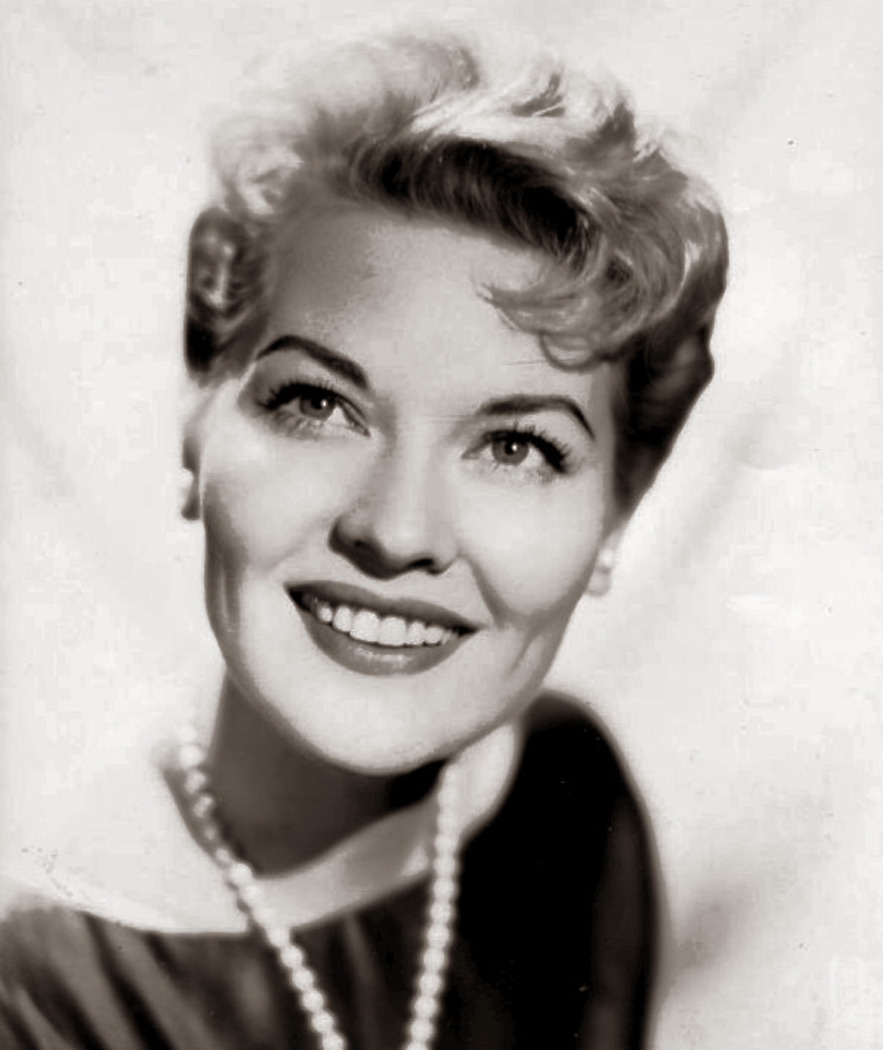
So, it is easy to make fun of the elderly, watching reruns of Lawrence Welk and wishing music still had melody, like the tunes of Patti Page and Perry Como. Or the Beatles and Barry Manilow. Or, sometime in the future, of Nirvana and Coldplay.

Nostalgia is a trap we should avoid. The past was not better than the present; it was different. I, for one, would not wish to retreat to a time when segregation was enforced by police, when women had to wear girdles, and when everyone, everywhere, at every hour of the day, sucked cigarettes.

What interests me in that second-grade photograph is not a warm, fuzzy nostalgia, but a hard, difficult and confusing problem: How much of that is me, is still me? How complete is the link between that little boy and this old, bearded senex? What is the mechanism of selfhood? How come a flash glance at an old picture can fire off a neuron after a half century and cough up the name of a Linda Muth or a Lenny D’Angelo. Why do those names persist in the neurobiology of a 67-year-old writer, who has left them all behind? And what else is buried under a lifetime of experience, ready to be excavated by a chance trigger?

A few years ago, my wife and I were visiting her hometown in North Carolina. We stopped at a gas station to refill the car and she got out to go into the quickie-mart. Inside, while standing at the cash register, a voice called out behind her, “Carole Steele, do you remember me?” She turned around and saw an old man, cue-ball hairless, nearly toothless, with a vast beer belly and dressed in denim overalls — clearly an old farmer. “Thomas Bullins,” she said, in instant recognition. “What happened to your red hair and your freckles? And how did you recognize me?” Carole was now 70 years old. “Your hair,” he said. When they were in the first grade, little Tommy Bullins used to steal the ribbons from Carole’s pigtails.

He smiled that toothless smile, and Carole reached up and kissed him on the mouth. Some vast and unnamed chasm had been spanned in an instant.

What traces of the six-year-old Tommy Bullins remained on the wrinkled, pudgy, puffy, weathered face that Carole could see so immediately? “There is an X on the faces of all the Bullinses,” she says, “that I saw in the gas station.” Not an actual X, but a lineup of features that suggested an X there, that signaled that this was Tom Bullins.

I don’t know the mechanism for memory. I’m not sure anyone does. But I know its persistence, and I know that somehow that persistence is necessary for the development of a self — that sense that the boy is truly father to the man, that the me in New Jersey 60 years ago is the same me in the mountains of North Carolina now, despite all the midden of experience that has piled on in the intervening years. Would my mother recognize the little boy in me now? I know that Carole recognizes the little girl in her 50-year-old daughter; in fact, she hardly recognizes that Susie is all grown up.

We push through time like snow plows, leaving a cleared path behind us. That wake is our selfhood. Longfellow School Teaneck back

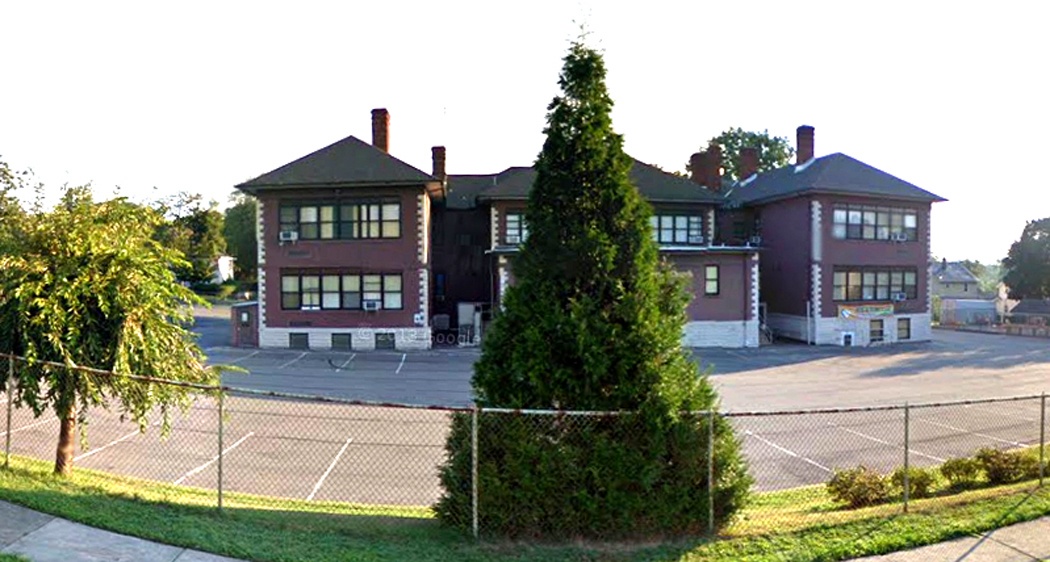
Through Facebook, I recently reconnected with a boy (now man) I first met in kindergarten at the Henry Wadsworth Longfellow Elementary School in Teaneck, N.J. He now lives on the other side of the continent. When my family moved from Teaneck to Old Tappan and I began the second grade at Charles De Wolf Elementary School in Old Tappan, he was there, too, his family having also moved. This makes him the person outside of family that I have known the longest.

The contact brought up a welter of memory, of playing in a rhythm band in kindergarten, of taking those daily naps on the classroom floor, of seeing him and other classmates singing “Sailing, sailing, over the bounding main,” and of walking every day — at five years old — the half mile from home to school, and later, walking back. The entire geography of my tiny life was back before me: the A&P I passed on the way, the firehouse on Morningside Drive, the ballfield outside Longfellow school, the deli, the stationery store, the old grocery with its sawdust floor, the Italian pushcart merchant that wandered up Farrant Terrace calling out his wares, the two collies that lived down the street that scared my younger brother, who thought they were lions — the inside of the closet in my home, with its lathe-and-plaster walls. A whole world wells up. Where has it been sitting? Why is it all buried in there?

A few years ago, I began an autobiography, not for publication, but to share with my brothers in a group project: They would write theirs, too, and we would get to know each other better — what they had done after leaving home for college, and we lost daily contact.

The thing that most astonished me about the writing was that every memory I retrieved was a room with three other doors, and behind each of those doors was another room with three more doors, on and on, like some Borges story. I was dumbfounded at the amount of information that was still there to be recovered. Many were not anecdotal stories, but rather, sense memories, bits of things and locations that fell back into place when recalled.

It must be the same for everyone. I know that when I ask my wife to tell me about her childhood, she can go on for an hour and we have to stop, but the next day, we can start again and there is an endless stream, an bottomless well of material. In her case, it sounds all like a Faulkner novel and I have tried to write it all down. A fool’s errand: There can be no “all,” because it never seems to end. I write it into my laptop as fast as she can speak it, but I’ll never have the time to go back and edit the notes, because the next time, there are all-new stories, and another cast of characters.

I want to save as much as possible, not for publication, but for the sake of our grandchildren, so they can have some sense of their grandmother. If her stories can become part of their memories, then their interior lives can retreat five generations, back to Carole’s grandparents, who were so central to her life.

In the end, this has given me a powerful sense of the onflow of life, of the piling on of detail, of the continuity, not merely of selfhood, but of family, of history: a line that Carole calls “the long man,” which reaches back past Eve and Adam, past Homo habilis, back to our reptilian life, back to our eukaryotid beginnings, all a wholeness. Ontogeny recapitulates phylogeny. The author, age 20 months

I see the scrubbed face of my old picture, holding my favorite ball, and I see myself now, aged and worn, and there is an odd reversal: The baby photograph is now six decades old and the ancient me is brand new. And in some inexplicable way, they are the same.


north bergen to meadowlands

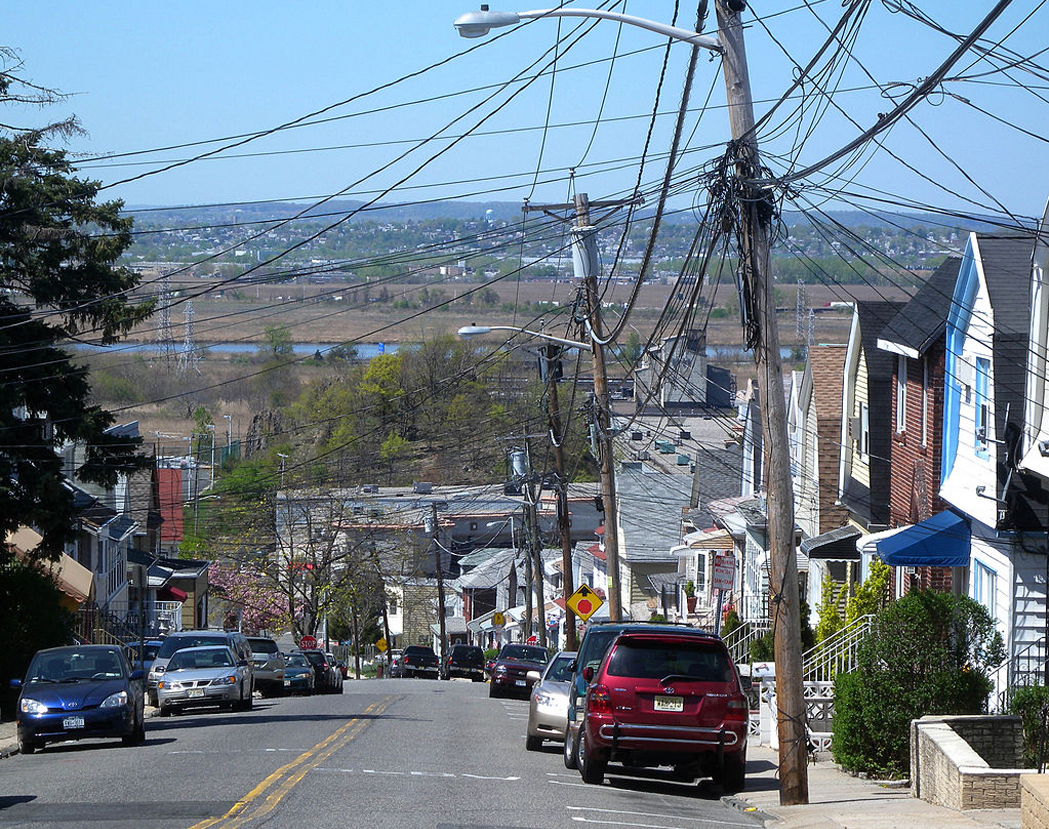
Northern New Jersey in the postwar years was a patchwork of suburban towns and rural farmland. The part just west of the Hudson River is hilly, with a long irregular slope dropping down from the crest of the Palisades and into the valley of the Hackensack River. The larger towns — Teaneck, Bergenfield, Hackensack — were urbanized with a bloom of soot covering everything. My town, Old Tappan, was changing from one of small farms and Dutch-colonial homes to one in which whole neighborhoods of sameness were erupting in tract housing. The population was a mix of old families that had lived there for generations and the bright-cheeked newcomers looking for their own homes and green lawns and an upwardly mobile place to raise their children.

OT bridgeOur house was a one-off — new, but not in a development. It sat on a gentle hill in what had been woods and included a brook. My father built a wooden bridge over the stream and enlarged a bend in it to become a small pool in which we could wade or recline in the water to cool off in the muggy summers.

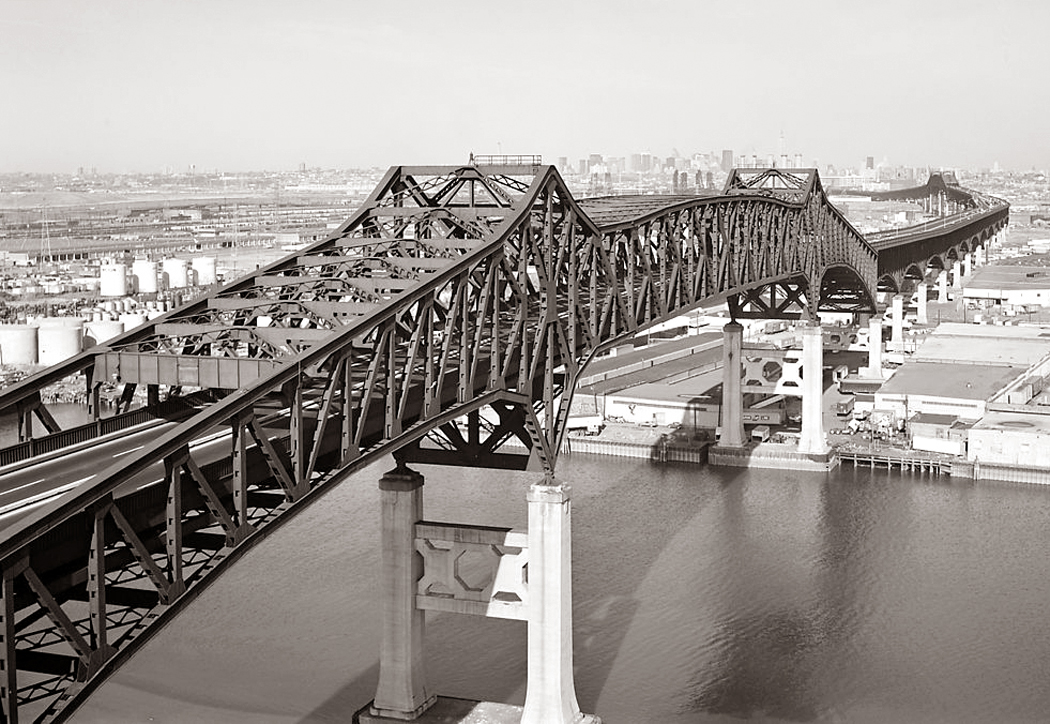
Because I grew up there, this patch of planet became for me my umwelt — my inner picture of what the world looks like — it was normative. The wider world I knew stretched from upstate New York along the Hudson and down to the Jersey Shore along the Shrewsbury River. The landscape included such landmarks as the accordioned oil-storage tanks along Route 36 in Keyport, the Pulaski Skyway that crossed over the New Jersey Turnpike, and the three-lane Route 9W that skirted Storm King Mountain along the Hudson. It included forests and streams, and it included heavy industry, a web of highways and the shopping malls of Paramus. pulaski skyway

The center and anchor of this landscape was Manhattan — the gravitational center on the other side of the George Washington Bridge. It was where, as a teenager, I wanted to spend all my time. Museums, bookstores, subways, Central Park, Chinatown restaurants and the great cheap ride on the Staten Island Ferry.

When the family went to the city for whatever reason, and we came home at night, driving up the brand-new Palisades Interstate Parkway, the lights of the city across the river were stars burning in the blackness, outlining the vertical thrust of the skyscrapers, while a thin line of burning beads moved continuously along the West Side Highway providing a baseline. When I was 7 years old, it was the most beautiful thing I knew. nyc night skyline

The landscape of our childhoods is embedded in our minds and memory the same as the language we learn without trying — it is absorbed whole. It shapes the mirror that reflects back everything we live through afterwards.

“The mind, that ocean where each kind/ Does straight its own resemblance find,” wrote Andrew Marvell in The Garden.

As an adult, I have lived in each of the four corners of the nation: the Southeast, the Southwest, the Northwest in addition to my green years in the Northeast. But no matter where I have gone, outside that comfortable nest of the Middle Atlantic, the landscape remains a novelty. I have enjoyed, even loved living elsewhere, but deep in the folds of my cortex, normal is New Jersey.

That same process works for wherever you grow up. It is Mississippi for Faulkner, Brooklyn for Henry Miller, Concord for Thoreau, Ohio for Sherwood Anderson, Missouri for Twain, Lowell, Mass., for Kerouac. You can find Paterson, N.J. in William Carlos Williams and Asheville, N.C. in Thomas Wolfe. The axis mundi.

Leonardo took northern Italy with him when he went to France. Durer took Germany with him to Italy as much as he brought the Renaissance back north. Beethoven never left Bonn even when he lived in Vienna, and the provincial towns of Czechoslovakia chime over and over through the symphonies of Mahler in the military marches and SchrammelmusikRiver Street, Madison NC.

My wife grew up in Madison, N.C., on the banks of the Dan River. “The river and the creek in the back yard are the back of my brain, the inner part I draw from. The front of my head looks out to the town.”

That is the crux: the part we draw on, waters of life from the inner well.

Childhood creates the fixed inner sense of the world, depending on where you grew up: the flatness of northern Indiana, the short-grass prairies of western Nebraska, the leaden skies and perpetual drizzle of Seattle in winter.

But it isn’t merely the look of the landscape — as if it were a painting — but an entire sense of the physical world and our place and size in it. That includes a paradigm of distance — how far is the horizon, how long is a street before it curves away from your vision, how tall are the trees. These measurements are as set in the forming brain as are our names.

So too are the seasons we live through. In New Jersey, there were four, with deep snow in winter and muggy heat in summer. The further north, the more winter and summer vary in length of daylight. In Arizona, there are two seasons: unbearable heat and relief from unbearable heat. In San Diego, there is barely more than one season. If you move from one place to another, you never quite get used to the missing or added seasons.

That umwelt includes the quality of light we know as normal, the feel of air and its humidity against our skin, the way sound carries or doesn’t carry as it is muffled by woods or snow. It also includes the food, the ethnicities that surround us, the accent we speak in and the population density. All create a “normal” in our minds that we never lose, even as we expand our horizons as we grow. bergen co to nyc

There are those who believe we try as adults to recapture our childhoods, but I say instead, we can never escape them. They are there engraved in our synapses.

I have traveled widely in North America, through all the states save Hawaii, and all the Canadian provinces save Prince Edward Island. And all those states many times. The landscape — not landscape as art, but landscape as the planet your drive or walk through — gives character to each location, as if each location were not just a tract of land, but an entire culture.

The land has meaning.

I am going to try to describe over the next series of blog entries a variety of distinct American landscapes and find in them meaning beyond the picturesque. I hope you’ll come with me.

moviola 1

We travel in time as much as in space.

And just as there are moments when you stand on the top of a rise and see grand vistas and the lay of the land suddenly becomes clear, there are moments when you climb up out of the hollow of local time and the years spread out in front of you as one vast temporal landscape.

I had such an experience this summer in New Jersey.

I was born and raised in the Garden State in several communities between the Hackensack and Hudson rivers. I left for college and have rarely been back in the intervening quarter century — family and friends had all died or moved away.Old Tappan 2

But on this trip my wife and I passed through Bergen County and managed to stop by some places I knew well as a boy.

Now I’m not about to wax nostalgic. I abhor nostalgia; it is a kind of morticians’ wax applied to the dead face of the past, distorting everything we once knew. Times were not better then and never were.

But things clearly have changed.lein's grove

The first change is purely psychological: Everything has shrunk. The landscape that was so sprawling to my boy’s eyes is now condensed to a few tight city blocks. What seemed like an expedition is now walking distance. Skyscrapers are now bungalows.

Many people have experienced a similar sensation.

But the second change is more profound: The snapshot of New Jersey in my brain has remained static while time has bounded forward, so that when I revisit Teaneck or Old Tappan, I’m seeing what is in effect time-lapse photography: All the changes are accelerated so that what has moved invisibly day to day is now telescoped into a rush.

It isn’t just that there is more development. Bergen County has for a long time been the very model of suburbia; there are tract homes everywhere and more spring up every day. But nature has somehow kept up with the construction: Housing developments that were raw muddy wounds 30 years ago are now green and shaded under sprawling trees. For all the decay of time, there is a matching fecundity.

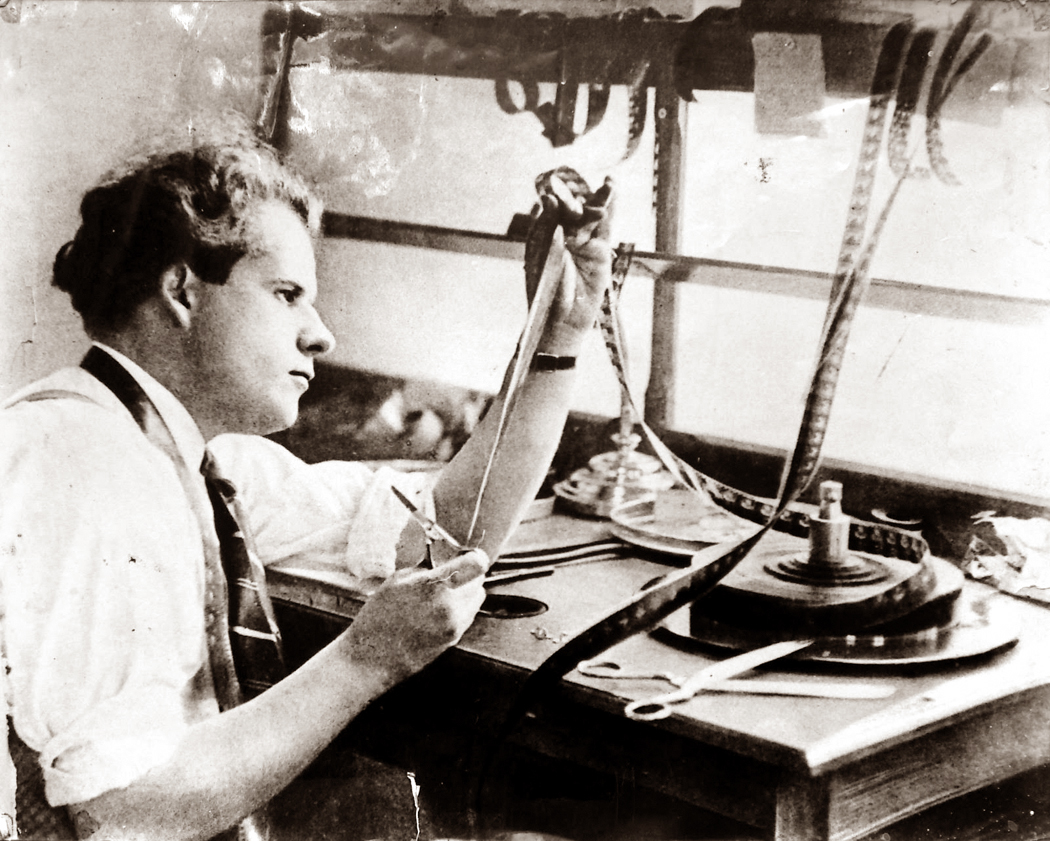
And when a quarter century exists between frames in your movie, it is a small step to move back yet another quarter century and then another, so that the history you learned in school no longer sits inkbound on the page of a book but begins to breathe as another scene in the movie you are a small part of.eisenstein

So you can slide the film back and forth in your mental Moviola only a dozen equal frames and you are in the era of Peter Stuyvesant and Dutch colonialization. It’s a blip from now to 1655 on the time line.

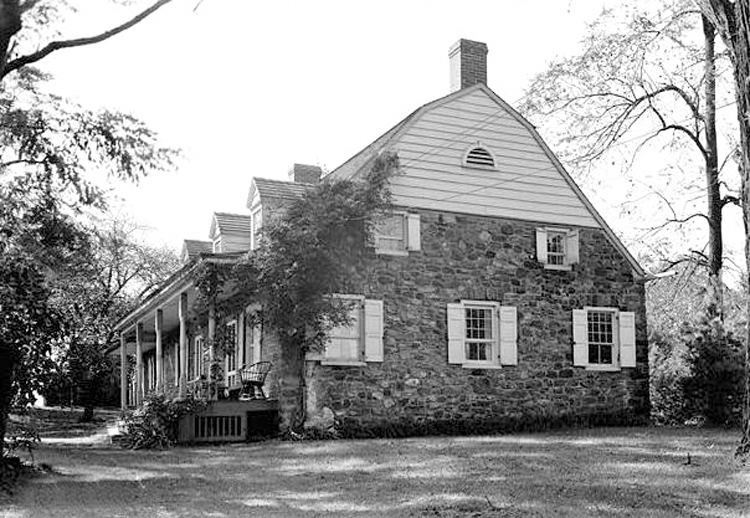
Frederick Haring HouseThe Old Tappan I grew up in was dotted with farms and old stone houses, built during the Dutch era. The houses are thick-walled and covered in lichen, moss and ivy; they are overarched by spreading oaks. They have, as it is said, settled.

Such houses were constructed of brown sandstone quarried by slaves.

It isn’t often remembered that slaves are a part of New Jersey’s history: In pre-Revolutionary times a settler was given 175 acres of land for every slave he imported. By 1737, slaves accounted for 8.4 percent of Jersey’s population.

Slave insurrections — in Hackensack, Raritan and Elizabeth, among other places — were a continual occurrence and citizens felt themselves stuck with the damnable institution. In 1772, a law was proposed ”obliging owners of the slaves to send them all back to Africa at their own expense.”

The law came to naught, but by that time free labor began to replace slavery and indenture.

I mention all this because when my boyhood home was built in 1956 in Old Tappan in northern New Jersey, the excavation turned up the stone foundation of slave quarters. It had been buried in woods for centuries and was now opened up to the sun for the first time.

It seemed little more than a curiosity then, and it was soon buried once more under the landscaping in our back yard. Its reawakening was brief.

Old Tappan 4The house has had two or three owners since I lived in it. I doubt that any of them knew what was buried under the Zoysia grass. But I thought of it again as I visited on vacation and saw how much the old house had changed: new paint, grown-up trees that were once bushes, a new bridge over the creek that cut through the property.

You play the film through the Moviola: The whole of northern New Jersey was once covered by a forest of oak and hickory. That was cut down for agriculture; the slave quarters behind my childhood home was evidence of that. But the fields grew once more into trees and were once more cut down to build the house.

The field next to the house was still pastureland when I was a boy. Now, it is dense with willows, birch and maple, on its way once more to growing oaks. If I look into its future, I can see more housing.

Time is fierce; it consumes the world.