Archive

Tag Archives: philosophy

Dog and cat battle dan kincaidDrawing by Dan Kincaid


“It’s Je-Ne-Vee-Ev, not Jeneveev,” said Stuart, introducing his live-in, Genevieve, the viola player. She is 50-ish, stylish and thin, with a shock of white in her hair, like Susan Sontag. She was born in Belgium and takes the same offense as Hercule Poirot for being assumed French. She has a throaty voice in the same register as her viola, although her instrument probably didn’t spend a lifetime smoking unfiltered cigarettes.

We were having dinner, the four of us: Stuart and Genevieve and my wife and me. Stuart did the cooking; Genevieve poured the wine. And oh, how a little Beaujolais can get Stuart talking.

“It has been said that there are two kinds of people in the world: those who divide the world into two kinds of people and those who do not. But I’ve never met any of those.”

And Stuart was off to the races.

“Everybody and his brother-in-law splits the world into two categories: male and female; conservative and liberal; Gene Autry fan and Roy Rogers fan; those who get it, and those who don’t.”yeats
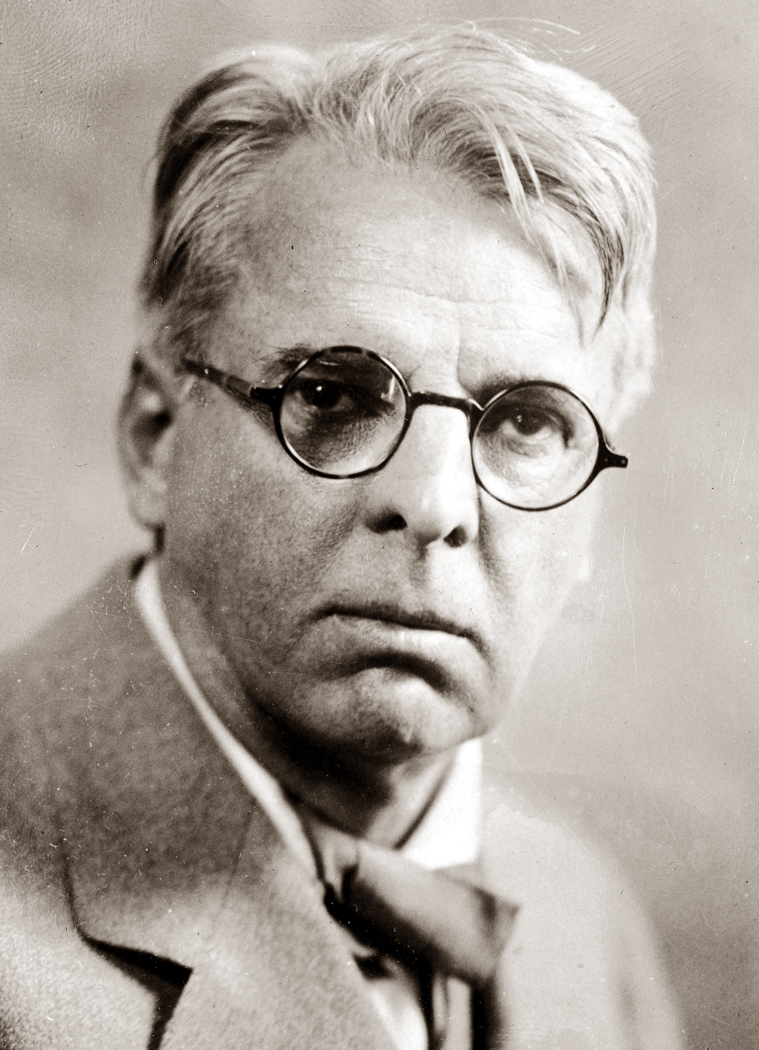
Stuart had just finished reading A Vision by William Butler Yeats. Stuart had an epiphany, he said.

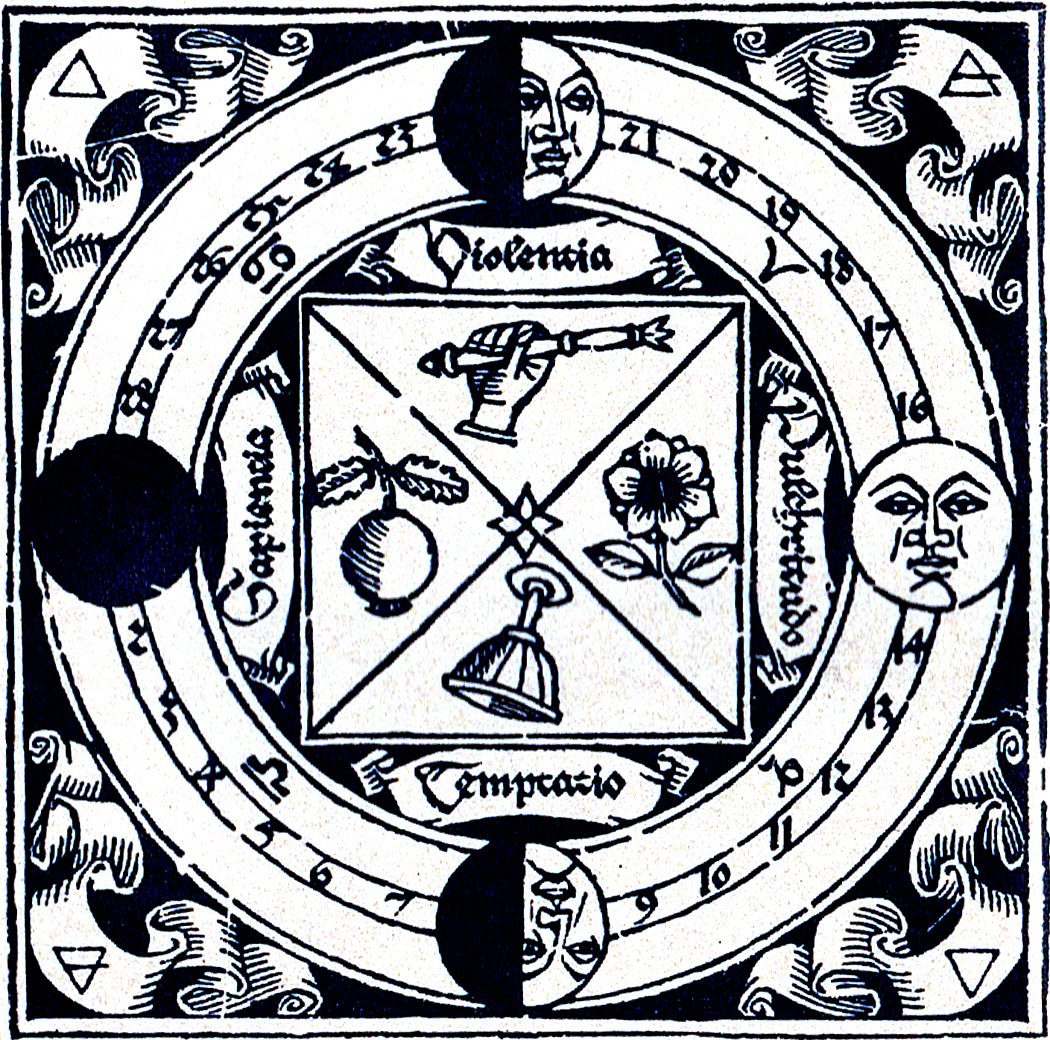
“Yeats divides human personalities up into 28 ‘phases,’ like the phases of the moon. It’s really brilliant, if a little loony. Ideally, there is no Phase 1 or Phase 15 — the first and middle phase of the moon’s monthly round of waxing and waning: The new and full moons; these are too pure and unmixed to exist in the real world. But all the phases are defined by their ‘tinctures’ of two essential personality engines, which Yeats calls the ‘primary’ and the ‘antithetical.’ Simply put, the lumpy and the poetic.

“He gets quite lawyerly in parsing the bits. And I had this vision of my own, although it is somewhat simpler to understand.vision phases
“It is that underlying every other distinction is this basic, fundamental one: between dog and cat. You can have your phases of the moon, but really, but all those personalities are either canine or feline.”

“You mean, like a dog-person or a cat-person?” my wife asked. “I’m a cat person; we gotta have cats around the house.”

“No,” said Stuart, “not a question of which animals you prefer as pets, but rather, which you are in your cor cordium, your self of selves. We are all one or the other. You can see it in the faces of everyone around you.

“But it goes beyond people. As I now see it, every animate being on the planet is one or the other.

“They are opposed personality types. They function in the world differently and see the world differently.

“For the dog, the world is essentially simple. Truth is truth, up is up and down is down. The dog has a direct relationship with the things of the world: They are what they are.

“A cat, on the other hand, sees the world metaphorically. Things may be what they seem, but are never only what they seem. They can mean one thing Monday, and something entirely different on Tuesday.

“When dogs read poetry, they like to read, ‘what oft was thought, but ne’er so well expressed.’ They can be scholars and critics, and they can be quite discerning and bastions of good taste, but their world view is essentially single-tracked. Their vision is clear, if not very imaginative. Their word is their honor and they have 30-year mortgages.woman in the dunes
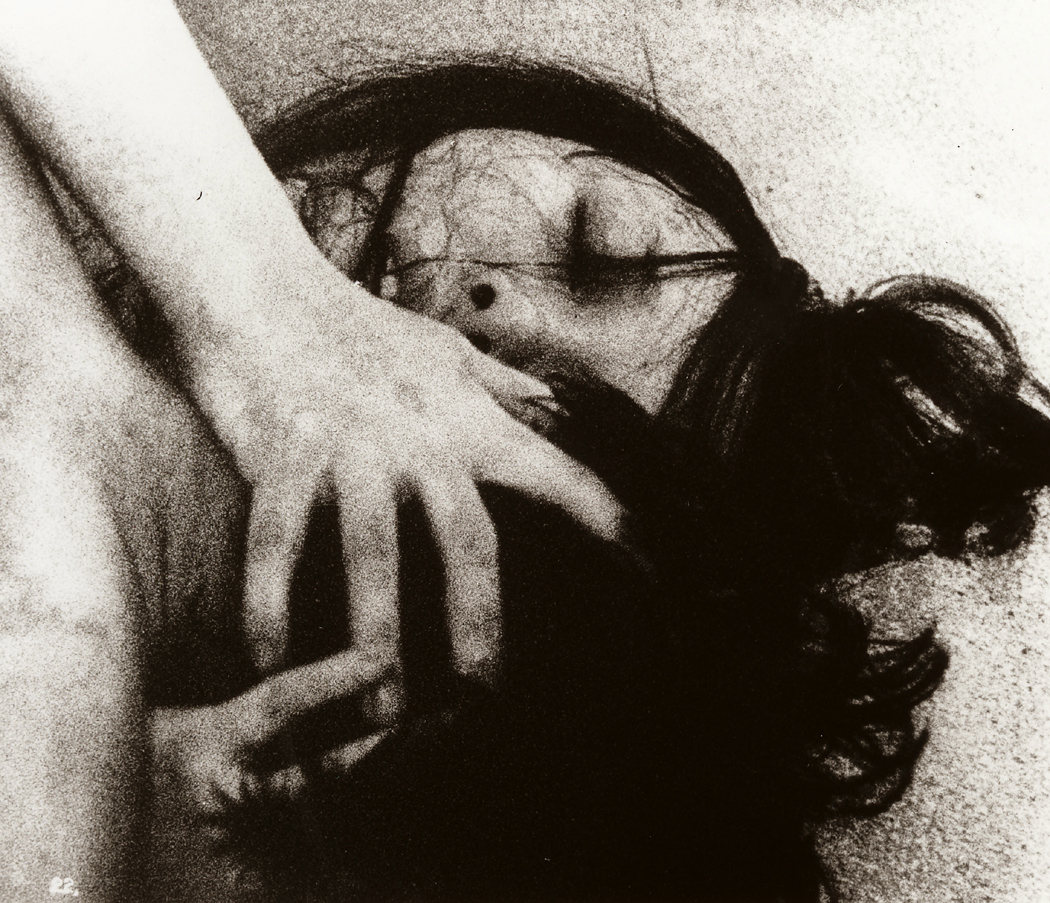
“Cats love Japanese movies with subtitles and long shots of shifting sands. Dogs like Adam Sandler and Kristin Stewart.

“Cats enjoy the jostle of ideas. Dogs talk about wines.

“You may think I’m tipping the scales in favor of cats, but that is only because I am one. There is downside to either class, and dogs really are important for the continued functioning of the society that makes cats’ lives possible.

“Cats never decide on a college major and fritter away their parents’ money taking courses in Incan pottery and creative writing. Dogs stick to their curriculum and go to Career Days.

“Dogs become Eagle Scouts and join the Rotary Club. Dogs dream of a house in Syosset and a Bill Jr. to take to the zoo. Cats dream of pirates, scoundrels, military heroes and Tamerlane.

“There are many kinds of dogs in the world. Some are bureaucrats and some, the more stylish, wear whatever is touted in Esquire. Hell, the Playboy Advisor was written for them. Some are noble and become doctors or missionaries; others bring my slippers at day’s end.

“It is plain, especially to dogs, that the world functions only because of them. And truly, we couldn’t do without them.

“But cats have eyes that change as the moon changes. They live by their own rules and amend them as their mood shifts. They are filled with prevarication and treachery. Their minds shuffle like a gambler’s deck of cards and we never know what face will show, or what suit. ‘Spades and Diamonds, Courage and Power; Clubs and Hearts, Knowledge and Pleasure.’

“When it comes to poetry, cats often prefer to write their own.”

Stuart noted that my wife writes poetry. He explained that cats don’t only write bad poetry, but rather, all poetry, no matter what the quality.

“Well, there are exceptions,” he admitted. “Edgar A. Guest and Ella Wheeler Wilcox are woof-woofs. But you get the gist.”rust sings

(My wife’s poetry has been published in a book, called Rust Sings. I recommend it.)

“There can be little meaningful dialog between the dog and the cat,” Stuart continued, “because they mean different things when they use the same words.

“This frustrates the dog no end; he cannot pin the cat down, while the cat delights in the ambiguity, and will even do what he can to amplify it.

“Dogs are trustworthy. A dog will be on time; a cat will be late, cancel or forget.

“A dog joins the Rotarians; a cat never does, unless he can use his membership toward the end of world domination, or something else he thinks might be fun.

“Among women, cats can wear too much eye makeup; dogs put too much mousse in their hair, like a TV news anchor. The difference is total and complete.

“For instance, a dog can certainly be selfish, but it takes a cat to be egocentric. A telling difference.

“Dogs have faith in the basic goodness of the world, and although they make a place for evil, they nevertheless believe it is something that can be overcome. A cat may or may not believe in evil, but whatever else, he believes in the relativity of goodness and truth.

“This isn’t just people: All animals are also dogs or cats. Think of a sea otter. Cat or dog? There can be no question. Anything that can sleep floating on the ocean surface so curled up that its head rests comfortably on its own belly, is a cat. Sturgeon are dogs. So are bears, horses, elephants and cows — ungulates as a class are dogs.fox cheetah dyad

“It is interesting to see this play out in nature. Don’t be confused by taxonomy. It is not names that define dogness and catness. Foxes, for instance, are classified as canines by the doggy scientists, but they are nevertheless cats. And cheetahs — you only have to look at those stiff, tensioned legs to recognize their essential dogginess.

“The main physical difference is in their bendability. Pick up a dog by his middle and what do you feel? The beast is stiff as a two-by-four. He is uncomfortable off the ground. He whimpers. Put him back down and his tail wags.

“Pick up a cat, and it drapes over you, form-fitting and at ease. I know a man who used to wear his big orange cat as a kind of living Davy Crockett hat. The cat sagged over his skull and down his neck and never wavered. The cat just purred.

“You can tell the relative caninicity or felinicity of a person when you dance some old-fashioned thing like a waltz. If your partner’s spine is rigid, he or she is a dog. A cat-partner will swing and sway with the rhythm like an willow in a gust.

“Does anyone remember seeing archival TV film of Richard Nixon attempting the Twist? The very definition of a dog.

“That is because a dog is all of a piece; he is one thing, head to tail. A cat is a loose concatenation of impulses, a pile of multiple personalities. When a dog dances, every part of him has to move in the same direction at the same time. A cat is syncopated.

“This pervades their world views. A dog is regimented and feels most comfortable when most conventional. A cat is individual, and often takes little notice of what is expected of him.

“Cats and dogs have been eternally at war. The dogs think the cats are kooks, hippies or commie sympathizers (although most communists are as doggie as the board of directors at General Motors). They have difficulty conceiving of anything not established by precedent. Community standards actually mean something to a dog.

“And when it gets down to battle, the dogs, like the redcoats of the American revolution, fight according to the book, in lines standing and kneeling, firing volley after volley on command.

“The cats, rather than being organized soldiers, find the dogs a nuisance and, like American Minutemen, take potshots from various convenient hiding places.

“Groucho Marx, taking his potshots, is the quintessential cat. If a canine becomes too officious, a cat is always there to flick his cigar and wiggle his eyebrows. Although dogs do not understand cats, cats understand dogs all too well.

“Interestingly, although almost all politicians are dogs, the most effective religious evangelists are cats. They don’t actually believe the piffle they spout, but get a great deal of pleasure from persuading listeners to line up behind them, cheering (and sending money).

“Or rather, the cat believes what he is saying as he says it. It is just that tomorrow, he can say something else. I’m thinking of Marjoe Gortner, for instance, or Lyndon Larouche. ‘A foolish consistency,’ they rejoinder.

“A true cat will really enjoy making one argument now, then switching hats or podiums, proving himself wrong in the next breath. The pleasure is in the arguing, not the results. Strife is the natural order of things.

“This makes dogs very, very uncomfortable. For the dog, arguments are proof that the world is out of balance. Equilibrium must be restored: The two sides in a dispute must work it out, so the truth will prevail and peace — the dog’s natural order of things — will reemerge.

“The dichotomy is at the bottom of some of the most familiar cultural pairings we know. Benjamin Franklin, with his “early to bed, early to rise,” was a dog; Thomas Jefferson, with his house filled with maps and stuffed elk, inventive contraptions and lack of heat, was a cat. It takes a cat to say ‘All men are created equal,’ while owning slaves and fathering children with them.hemingway faulkner dyad

“Tolstoy was a dog; Dostoevsky was a cat. Hemingway went woof woof; Faulkner, meow.

“If you have ever wondered why some old sayings seem to contradict others — ‘Opposites attract’ vs. ‘Birds of a feather flock together’ — it’s because one is true for dogs, the other for cats.

“Even the proverbs that cats repeat, sitting around a cracker-barrel in an old Vermont store, bear this out.

–”The dog sees not the same tree the cat sees.

–”The hours of a dog are measured by the clock; but of a cat, no clock can measure.

–”If a cat would persist in his folly he would become wise; a persistent dog becomes the village idiot.

–”One law for the dog and the cat is oppression.

“Cats have a built-in sense of the ultimate void and how much fun it can be.

“The very earliest organized philosophies broke down along these lines. Plato was a cat. Even now, you can never know for sure when he actually believes some of the hogwash he comes up with. Aristotle, on the other hand was the very model of a dog. ‘Let’s make lecture notes.’

“Of course, just as with Yeats’ A Vision, there are wheels inside wheels, all spinning on their own doggie-cat axis. Yeats expands his vision to include not just personality types, but all of history. Well, my dogs and cats does the same.

“The ancient Greeks were cats, proving with logic, when it amused them, that it was impossible for anything to exist. Romans were dogs: They invented concrete and designed plumbing.

“The Renaissance was a quintessentially dog era, the Baroque that followed it was all cat. Modernism barked, Postmodernism meows. wayne-nicholson dyad
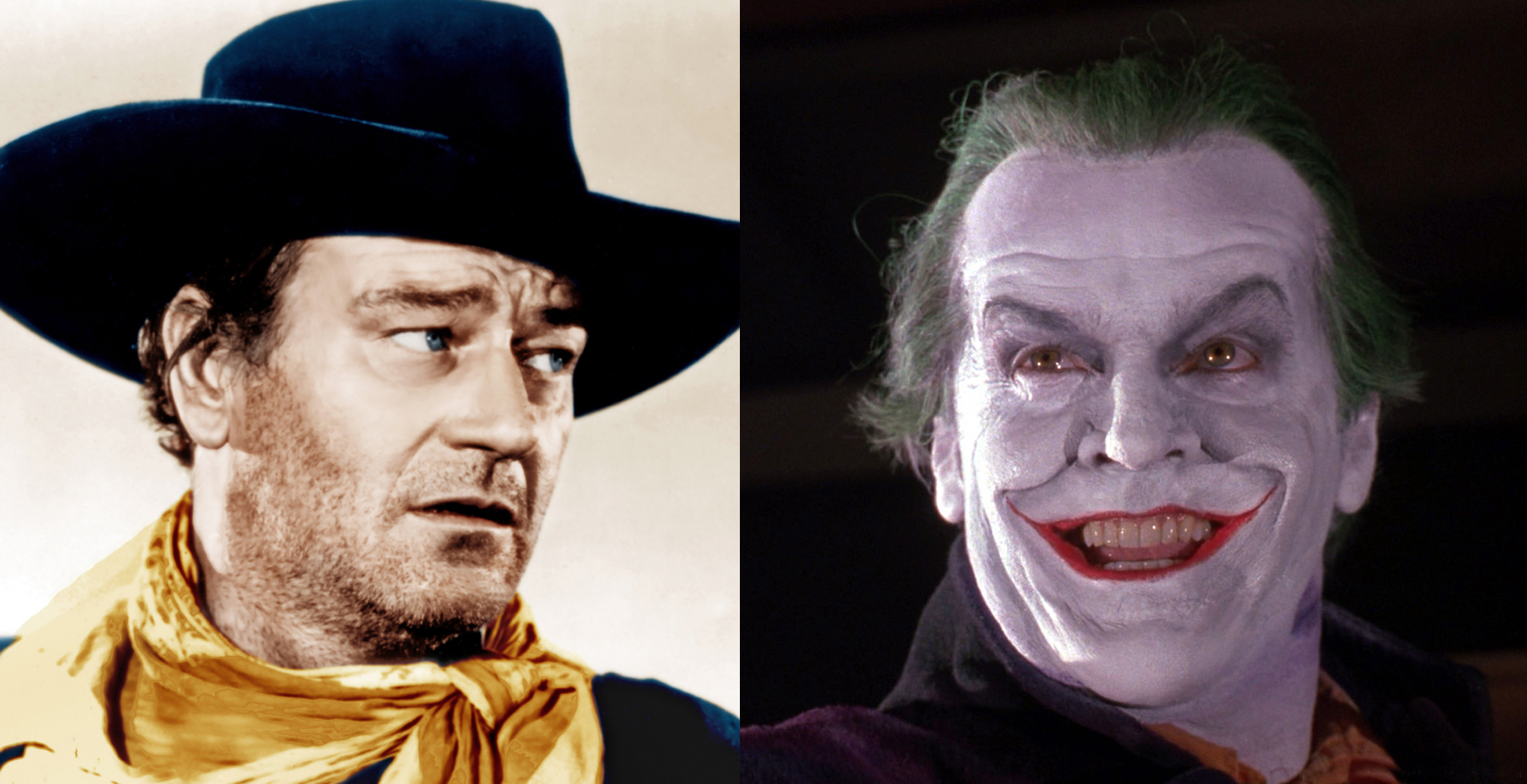
“Nothing makes my case better than concrete examples. Think John Wayne and Jack Nicholson. Both fine actors, each in his way — think of The Searchers — but I think there is little doubt who is the dog in this pair. Your reaction is instantaneous. You don’t need to explain: It just is.”

“Yes,” said Genevieve. “Like Barack Obama and Joe Biden.”

“Of course,” said Stuart, “That’s why Biden will never be president.”

“What do you mean?” asked my wife. “A cat can never be president? What about Bill Clinton?”

“You got me there,” Stuart said. “But that is a reversal of the pairing. Clinton was a cat and Al Gore was pure dog. These pairings make clear the dog-cat dyad, the paradigm.Martin Luther King
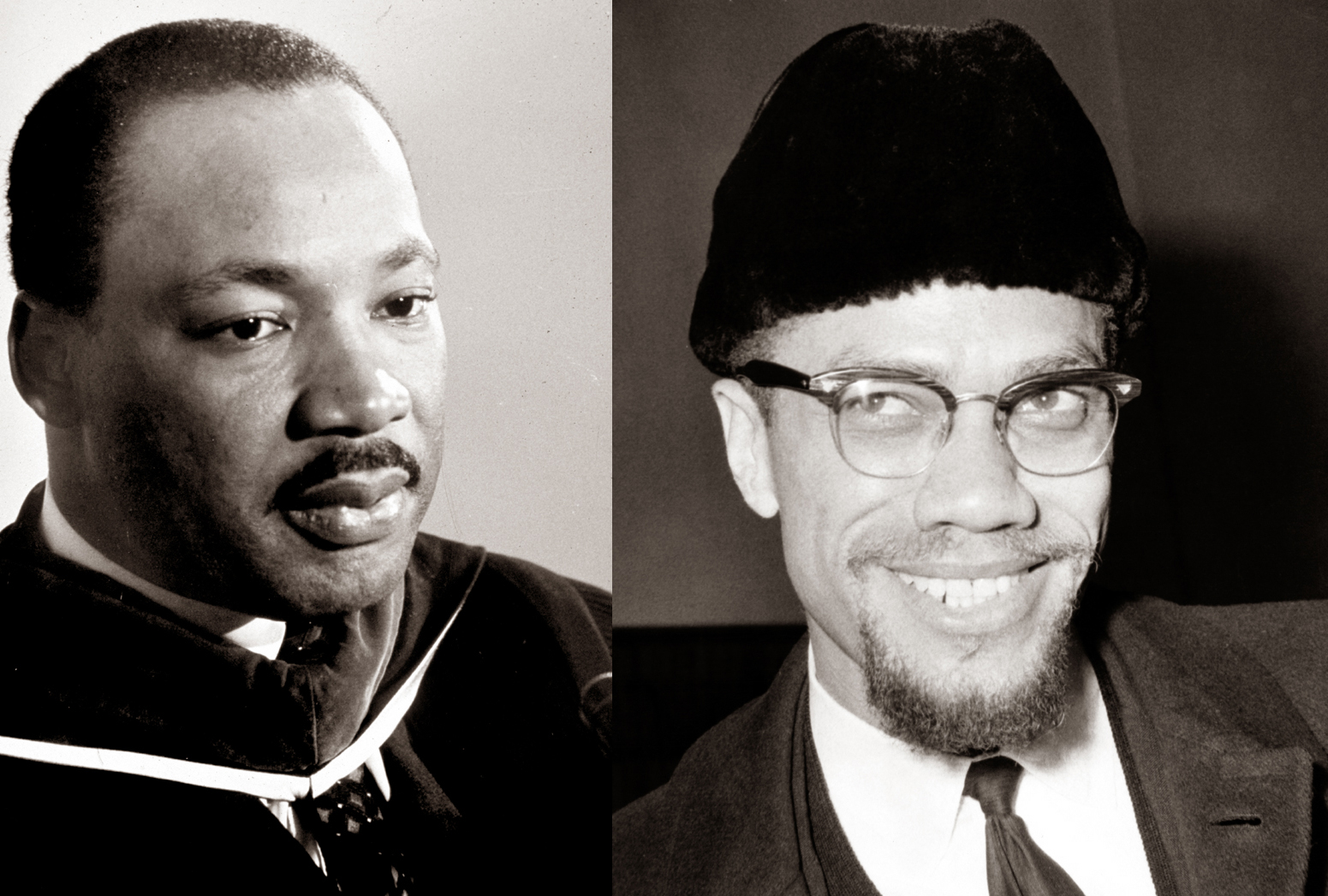
“Martin Luther King, Jr., and Malcolm X. Dog and cat,” I said.

“It can become a party game,” Stuart said. “Tom Hayden and Abbie Hoffman. Big Bird and Oscar the Grouch.”braque picasso dyad
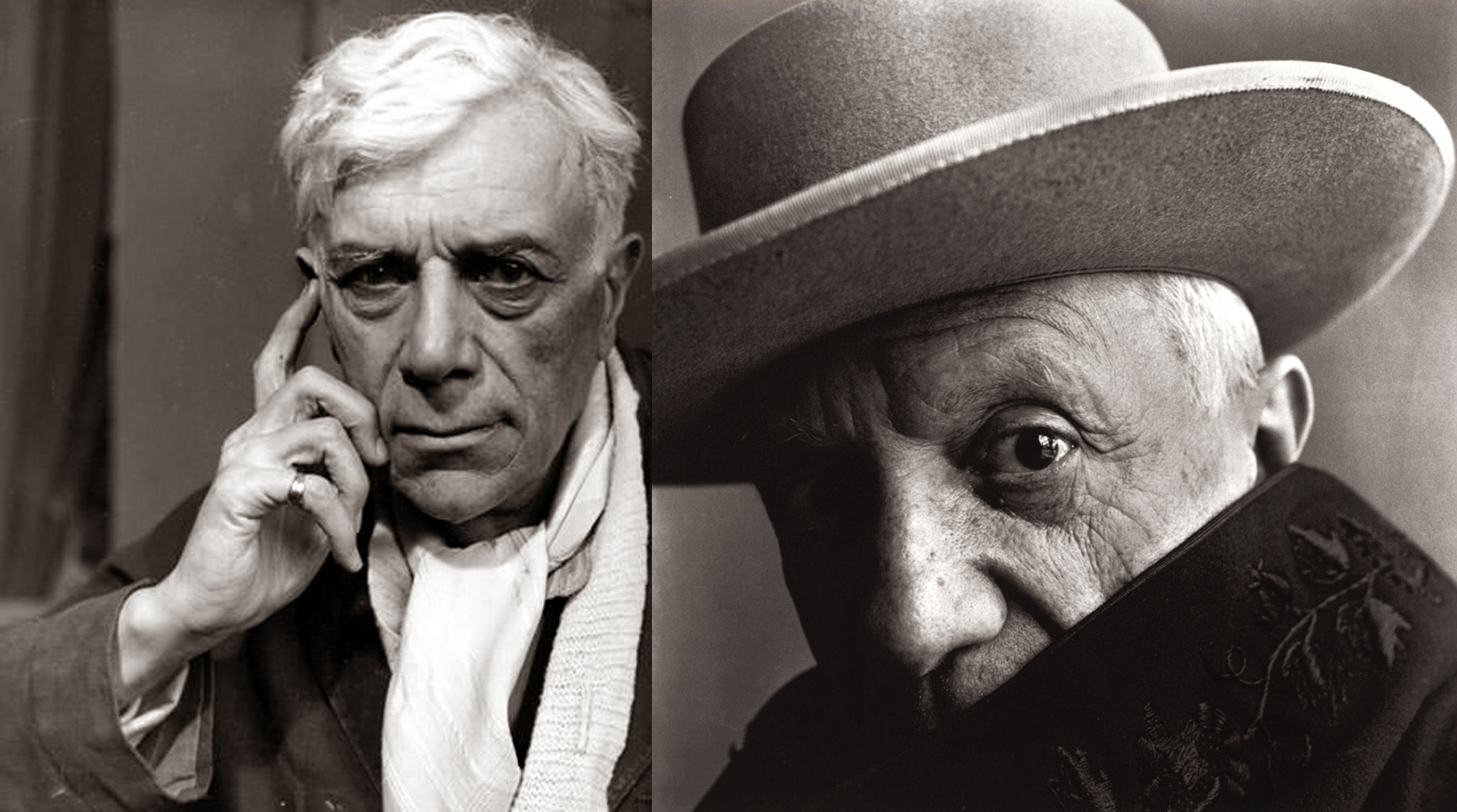
“Georges Braque and Pablo Picasso,” Genevieve said.

“Perfect.”

“Mahler and Bruckner,” she said.

“For years, the nation divided between doggie Jay Leno and cat-man David Letterman,” Stuart said.

“Well, until Letterman lost his cat license,” I said. “He’s gotten kind of doggie in his later years.”

“See, what a profitable lens this is for understanding the world?” Stuart said.

“It explains the difference between Obama and Putin,” Genevieve said.

“And between Andrew Wyeth and Andy Warhol; between George Burns and Gracie Allen…”

“And between Fidel Castro today and Castro 50 years ago,” Genevieve said.

“Between Jane Pauley and Garry Trudeau.”

“When it comes to marriage, a dog can be happy married to a dog,” Stuart said. “But a cat can be happy married to either a cat or a dog. There is fun either way. matalin carville dyadThink Mary Matalin and James Carville. But you see, there is a built-in paradox. How many marriages do you know where one party is happy and the other isn’t? The reason, I tell you, is always the same: One dog, one cat.

“Two cats mated can be happy briefly. But such marriages don’t tend to last. Think of a Hollywood marriage and you pretty much get the picture. Variety is not just an ideal for a cat, but a way of life.

“Of course, the arts are heavy with cats, just as the field of accounting is not. You don’t last long at H.&R. Block if you believe arithmetic is a matter of opinion.

“At bottom, we need both animals in the world. You need the dogs to make life possible; you need cats to make it worth living.”

Stuart brought out a flan and a well-used bottle of amontillado and asked if anyone wanted a cigar. Genevieve was the only taker, but then declined. She said she was giving up smoking again. Ninth time. One more and she got a free sandwich at Subway.

Dore chaos
My friend Stuart sent me a letter:

You can learn a great deal from a springer spaniel. For instance:

Total order and total chaos are the same thing. Identical. Not a dime’s worth of difference. And neither is very helpful.

Think of it in terms of the Linnean metaphor. I’ll get to the spaniel in a moment.

At one end of the spectrum is chaos, a totality that is unordered, a cosmic goo. This is not the current chaos of the eponymous theory, which is merely a complexity beyond calculation, but rather the mythic chaos out of which the gods either create the cosmos, or arrive unannounced from it like Aphrodite from the sea. It has no edges, no smell, no shape, no parts, no color, no anything. Inchoate muddle. john martin chaos

So, in the beginning was the word: Or rather, our ability to organize this chaos through language. The universe exists without form and void. Then we begin the naming of parts to help us understand the welter.

And so, god created the heaven and earth, dividing the parts. And this division of parts is in essence what the Creation is all about. Ouroboros

Of course, the incessant need to divide and name is only a metaphor, but it will help us understand the conundrum of order in the universe, and how the ouroboros of Creation begins and ends at the same place, no matter which direction we go in: The law of entropy and the law of increasing order both have the same final destination.

When we look at the world around us, we immediately split what we see into two camps: That which is living and that which isn’t. It helps us understand the world we live in and we make many of our biggest decisions on this basis: Ethics, for instance. We have no problem splitting a rock in half with a hammer, but would feel rather evil doing the same to a dog.

But the living things fall into two large camps, also: Animal and vegetable (again, I’m simplifying. I haven’t forgotten the bacteria, but we can ignore them for the sake of the metaphor).

Some of us have a problem eating animals but not eating vegetables. So, again, our ethical world depends on how we sort out the chaos.

Let’s take the animals and subdivide them, the way Carl von Linne did, into classes, orders, families, phyla, genera and species.

Each level makes our divisions less inclusive, more discriminatory.

Let’s take the dog, for instance. It is classified as a chordate, which means it has a central nervous system stretched out into a spinal chord. This is different from, say, a starfish or a nematode. But there are many chordates, so, if we want to differentiate a dog from a shark, we have to look to its class. It is a mammal. That makes it distinct from birds and fish.

But there are lots of mammals, too. Some of them eat other animals; we call them carnivores. A dog is a carnivore.

Notice how each level of nomenclature narrows our definition down to a smaller and smaller group of initiates. When we had only living and non-living, there were only two groups; with each level, we add dozens, hundreds and then thousands of other groups disincluded in our catalog.

The order carnivora is one of many orders in the class of mammalia, which is one of many in the phylum chordata, which in turn is one of many in the kingdom animalia.

The order separates our subject, but lets us see in relief that it is just one constellation in the heavens populated by many other constellations.

The same poor pup is in the family canidae, which includes all the dog-like animals, from fox to coyote to jackal. Among them, it is in the genus Canis, and species lupus, which makes it brother with the wolf.

But our wolf is a friendly one, as long as you aren’t the postman. So, now we call it Canis lupus familiaris, or the family dog. And our particularization of the beast means we are conversely aware of all of creation — each in its own genus and species — that makes up the non-dog, and each of them is like the billions and billions of stars that make up the many constellations in the night sky.

Yet, this isn’t far enough. For the dog I’m thinking of isn’t just a dog, but a spaniel, which is a type of dog which isn’t a poodle and isn’t a terrier. It is a dog with “a long silky coat and drooping ears.”
Sylvie

Each time we subclassify, we are adding to the order we impose on existence, and each classification adds to the proliferation of categories just as it reduces the members inside each class.

So, there are also different kinds of spaniels. The dog I’m thinking of is a springer spaniel, which come in two forms, with a brown-and-white coat and a black-and-white coat.

My brother’s dog is a brown-coated springer spaniel named Sylvie. She is getting old now, and her backside — very much like humans — is getting broader.

And now, by classifying things to the level of the individual, we have as many categories as there are things in the universe, which is effectively the same as nothing being categorized: It is all primordial goo and might as well not be cataloged: Total order and total chaos are the same thing. QED.

blake dante

I love language; I hate language. It is how I made my living, but it always feels like cheating. It feels heartfelt, but dishonest. Odi et amo.

Do you remember the first time you were in love, or thought you were, as a teenager? The longing, the rapture. There is an almost universal response that “Love” is not an adequate word to describe the emotion. You feel as if your love is special, better, more aware, alert and awake than everybody else’s, especially  your parents’. And you say, “I wish there were another word to describe how I feel.”

That is the first awareness most of us have of the difference between authentic and inauthentic existence. It is the first, and most universal — at least in our culture — awareness that our lives are divided into separate portions, one of them alive and burning and dangerous, and the other ordinary, safe and comforting.

Heidegger

Heidegger

German philosopher and godawful writer Martin Heidegger gave us the verbal formulation for this distinction when he named the “authentic” and “inauthentic” existence.

Authentic existence: An individual’s conscious response to his existence; i.e., his “being-in-the-world,” which inescapably associates life with death. Authentic existence is thus opposed to everyday (inauthentic) existence.

Heidegger is nearly impossible to read, in part because he invents words to express his ideas rather than relying on the old, well-understood words. He has more than 200 words alone created with the suffix that means “being.”

But it couldn’t have been any other way. Heidegger felt toward the ordinary vocabulary just as the teenager does toward the word “love,” that it is worn out and sounds trite and phony on the tongue that doesn’t truly understand, or rather live through, the experience — and specifically MY experience.

That is because language is by its essence inauthentic.

Language always takes us a step away from our “being-in-the-world.” It is a way of softening the experience, a way of taming it.

In this sense, I take as a central dichotomy the opposition of language and love.

An awareness of death, says Heidegger, is what wakes us up to the here-and-now, keeps us focused on the experience of being alive. And a desire to transcend death is the ultimate goal of both language and love.

The analogy of love and language is nothing new.

When Shakespeare wrote his sonnet, “Shall I Compare Thee to a Summer’s Day,” he ends it with the telling couplet, “So long as men can breathe, or eyes can see, So long lives this, and this gives life to thee.’’

In that, he is mixing the two: the words are immortal, and therefore, so is his love.

But the actual love is an experience and at its fullest transcends words more certainly than it transcends death. We love, have children and HOPE that the love will live past death. But there is no question that the experience of love can never be adequately expressed in words: They are too small, too conventional, too ordinary.

Richard Freiherr von Krafft-Ebing with his wife, Marie Luise

Richard Freiherr von Krafft-Ebing with his wife, Marie Luise

The sliver of experience in the condition of love IS the authenticity. It is the experience of life. The words are only ABOUT the experience of life. After all, would you rather make love or read Krafft-Ebing?

Now, certainly Heidegger wasn’t the first to recognize the distinction. He is merely the philosopher who fixes the meaning of the distinction like an entomologist pinning a butterfly. Heidegger gives us the vocabulary — now necessarily inauthentic — to describe the reality. We use his words, and as a consequence, fall (another of his words) into inauthencity.

The writer Henry Miller expresses it another way in his book Black Spring:

“What is not in the open street is false, derived, that is to say literature.”

Henry Thoreau’s whole book, Walden, is essentially about living an authentic life.

“To him whose elastic and vigorous thought keeps pace with the sun, the day is a perpetual morning. It matters not what the clocks say or the attitudes and labors of men. Morning is when I am awake and there is a dawn in me. Moral reform is the effort to throw off sleep. Why is it that men give so poor an account of their day if they have not been slumbering? They are not such poor calculators. If they had not been overcome with drowsiness they would have performed something. The millions are awake enough for physical labor; but only one in a million is awake enough for effective intellectual exertion, only one in a hundred millions to a poetic or divine life. To be awake is to be alive. I have never yet met a man who was quite awake. How could I have looked him in the face?”

“As if you could kill time without injuring eternity,” he writes in another place.

Yeats called inauthentic living “automatonism.”

For William Blake, what made Christ different from the rest of us was his ability to live authentically at every moment.

“Now hear how he has given his sanction to the law of ten commandments: Did he not mock at the sabbath, and so mock the sabbath’s God? Murder those who were murder’d because of him? Turn away the law from the woman taken in adultery? Steal the labor of others to support him? Bear false witness when he omitted making a defence before Pilate? Covet when he pray’d for his disciples, and when he bid them shake off the dust of their feet against such as refused to lodge them? I tell you, no virtue can exist without breaking these ten commandments. Jesus was all virtue, and acted from impulse, not from rules.”

And in another place: “Know that after Christ’s death, he became Jehovah.” Know that for Blake, Jehovah wasn’t a good thing. Jehovah is all rules: “One God, One Law, One King.”

Or perhaps we could go all the way back to Lao-Tse, who wrote the Tao-Te-Ching and said, “The way that can be named is not the constant way, the name that can be given is not the constant name.”

The best popular discussion of authenticity comes in Robert Pirsig’s book, Zen and the Art of Motorcycle Maintenance, which has absolutely nothing to do with zen, even in its pop forms, and only a little to do with motorcycle maintenance.

The book is an investigation of what Pirsig calls “quality,” which, it turns out, is much the same as Heidegger calls “authenticity.”

Pirsig writes:

“You can’t be aware that you’ve seen a tree until after  you’ve seen the tree, and between the instant of vision and instant of awareness, there must be a time lag.”

Any intellectually conceived object is always in the past and therefore, unreal. Reality is always the moment of vision before the intellectualization takes place. There is no other reality. This pre-intellectual reality is what [I] felt [I] had properly identified as Quality. Since all intellectually identifiable things must emerge from this pre-intellectual reality, Quality is the parent, the source of all subjects and objects.”

And authenticity, rather than being a result, is likewise a source. Authenticity is a relation you have with being alive that allows you to see, feel, and experience without the intervention of word or symbol.

All art, or all worthwhile art, exists to reawaken in us this often closed-off authenticity.

Art cannot itself embody authenticity: It is, after all, words or symbols — even music is an analog of the experience.

But the best art gives us an experience in itself and demonstrates, or forces us to become aware, of how to experience the rest of our lives — that portion we live with our mates, children, parents, that portion that is our careers, that portion that gives rise to spiritual awareness.

Of course, all art is, in this sense, inauthentic.

But just as a metaphor is never the thing, but points the way to the thing, so art points the way to the authentic.


It is a commonplace that America is materialistic, that it grasps after money and wealth and lacks the spiritual values it used to have.
Of course, that nostalgic view ignores that Americans have always chased wealth: It’s built into the Constitution.
But more importantly, it ignores the fact that America isn’t really materialistic at all, and in fact, is largely indifferent to the material world.
If we were really materialistic, we would never tolerate walnut-woodgrain plastic.
No, the physical composition of their existence is simply not a high priority for most Americans. Yes, they are after wealth, but wealth isn’t a material value, but a spiritual one.
When we say Americans “worship the almighty dollar,” we aren’t saying that they value material objects over spiritual ones, but rather that they place worth on one set of spiritual values instead of another, more worthy set.
Money, after all, isn’t a physical object. It isn’t material. It is no more physical than an inch or a pound. It is a measuring item, to measure wealth.
Real wealth is the possession of useful or meaningful things. To own land, or to grow 40 acres of artichokes is to possess wealth. You can eat artichokes; you can’t eat money.
Money cannot be worn, it cannot be used to build with. It must be translated back from its symbolic existence to a material existence by spending it.
I’m not saying that money isn’t nice to have around. But that it is a mental construct, not a physical reality. If we want money, it isn’t because sewn together, dollar bills make a nice quilt.
Even the things Americans spend their money on tend to be owned for spiritual rather than physical reasons. If we want to own a BMW or a Lexus, it isn’t because these are better cars than a Honda or an Ford — though they may be (I’m not convinced) — but because they are status symbols that let other Americans know where we rank on the totem pole. Armani suits and Gucci bags are not something most Americans really enjoy on a physical level. They are the civilized equivalent of the eagle feathers the chief wears, or the lion-ruff anklets worn by the Zulu leader: They confer prestige and denote status.
These are spiritual values.

As a matter of fact, America would be a whole lot better off if it were more materialistic. The planet is bursting with stuff: It all has a texture, a feel, a smell, a taste, a sound. If we were materialistic, we would be aware of how much richness the material existence affords, and we would revel in it. We would be mad — as Walt Whitman says — for us to be in contact with it.
And what is more, the deeper we involve ourselves in the physical world, the more spiritualized we will become — that worthy spirituality. It is because we are so unmaterialistic that our environment suffers so. We don’t value the physical world we live in. It doesn’t bother us that there are fewer birds singing in the morning, or that codfish are disappearing.
In part, this is a remnant of the contempus mundi that was fostered under Medieval Christianity. It is that suspicion of the physical world that the Old World monks felt would seduce them from the righteousness of prayer and ritual.
We have inherited the contempt, but without the prayer. It leaves us in a hollow place.
As an adult I have come not to trust anyone who doesn’t love the physical world.
I don’t trust him to make policy choices about oil drilling or lawn seeding. I cannot imagine how it is possible not to fall in love with the things of this world, but I see just that happening all the time.
I pick up the lump of spring earth and squeeze it in my fist to judge whether it is time to plant my potatoes. I listen for the birds globing and twisting as they rise from the trees in the morning. I look for the light caught in the cholla spines and the twill in my gabardine. There is velvet in heavy cream and scratchiness in wool blankets.
The physical sensations make us more aware, more awake. The love of the physical world keeps us from becoming dullards. Living in a world of symbol and status dulls us. At its worst, it leads to ideology.
Would that America really were a materialistic society.