Archive

Tag Archives: photography

goldin 4 black eye

Even when they stand before us stark naked, the only part of their anatomy that matters is their eyes, which hold us paralyzed in their gaze. They are mirrors of infinite sadness.

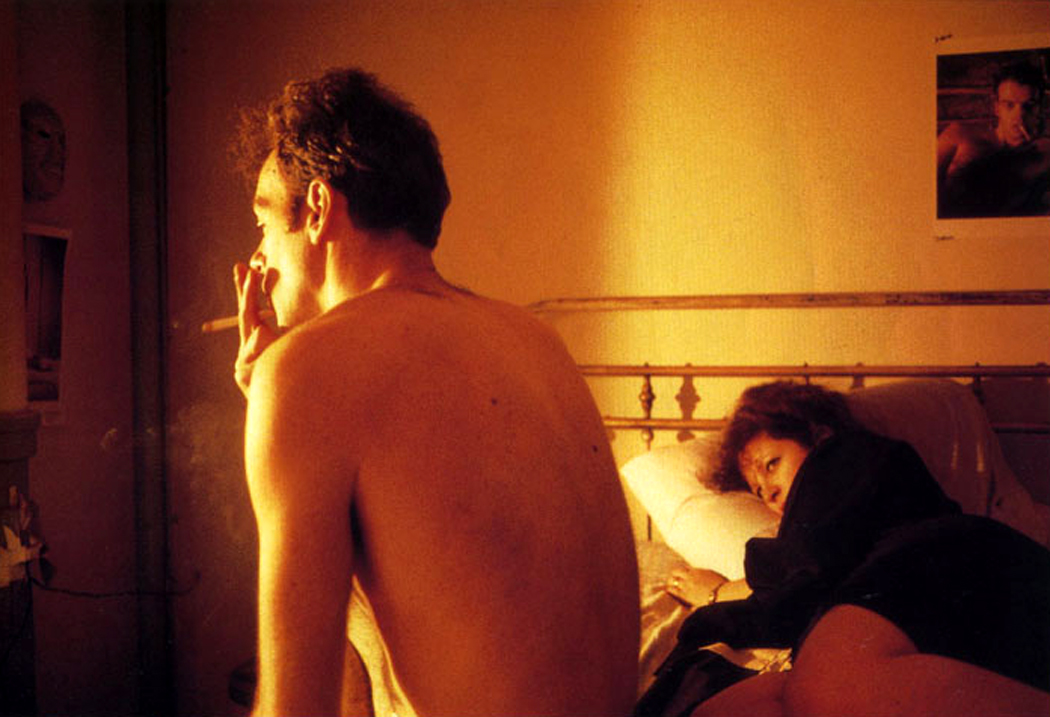
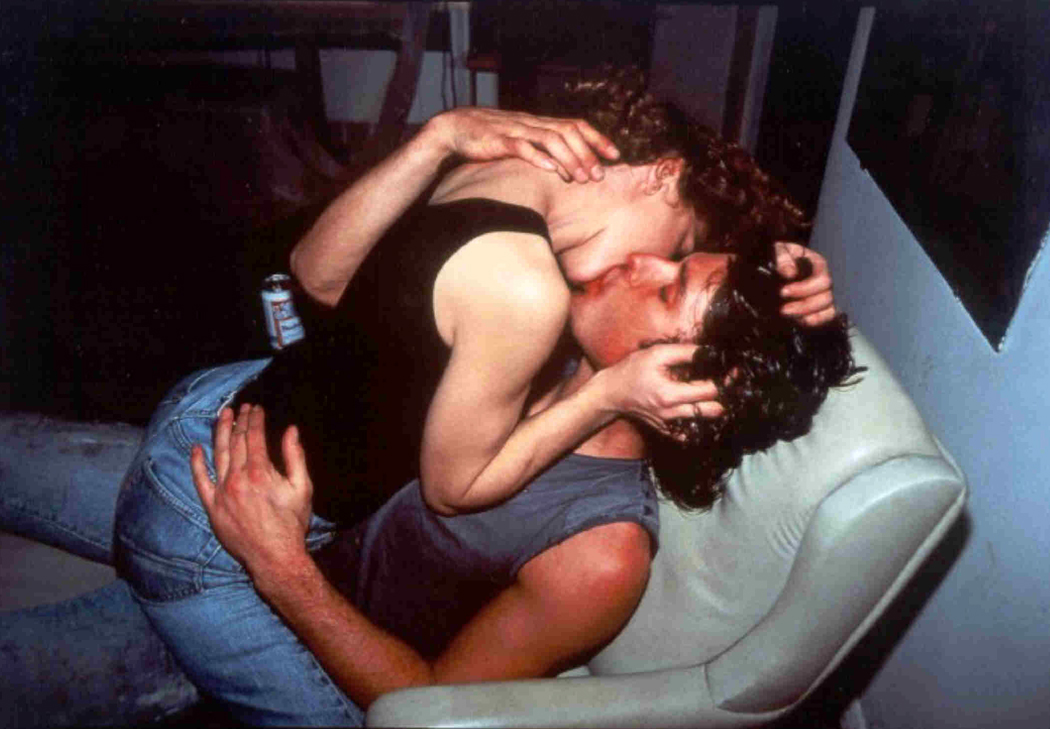
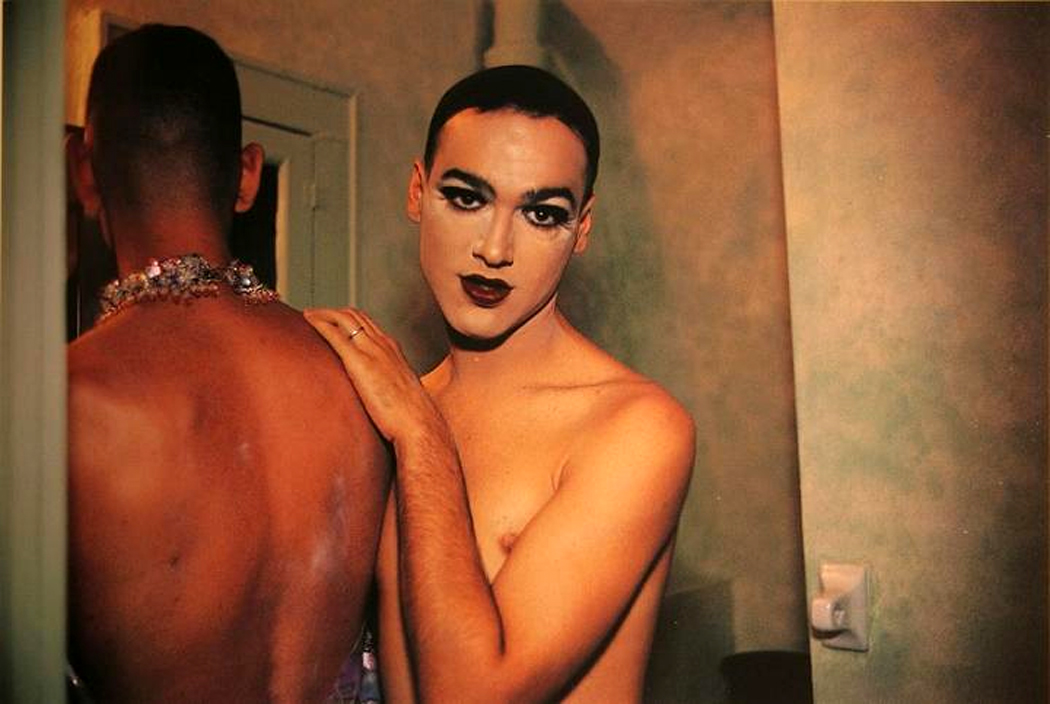
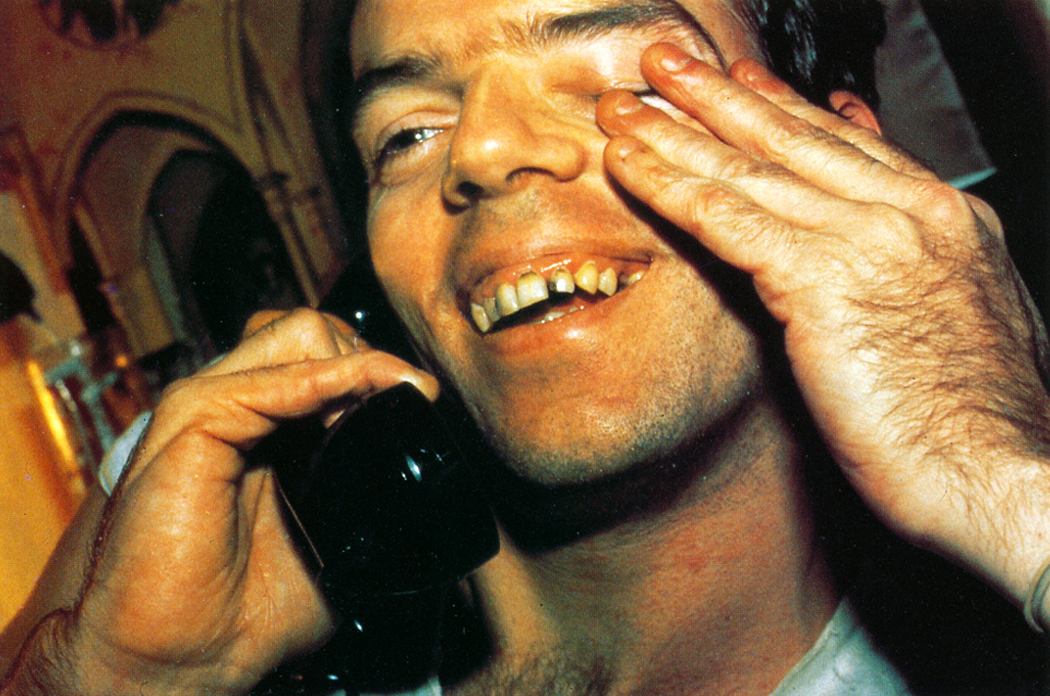
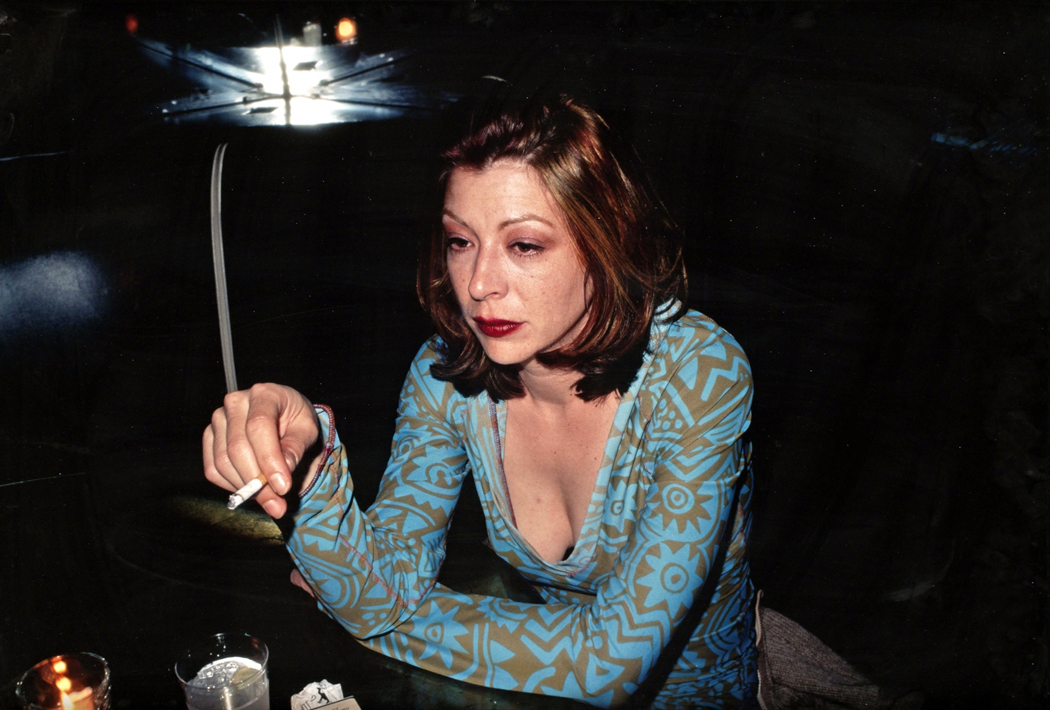
One of the perennial sellers among photographic books is Nan Goldin’s Ballad of Sexual Dependency, a woeful tale of the underbelly of the art world told in a series of primitive color photographs full of battered women, tattoos, transvestites, pimps, drugs and hangers on.

Ballad of Sexual Dependency

Ballad of Sexual Dependency

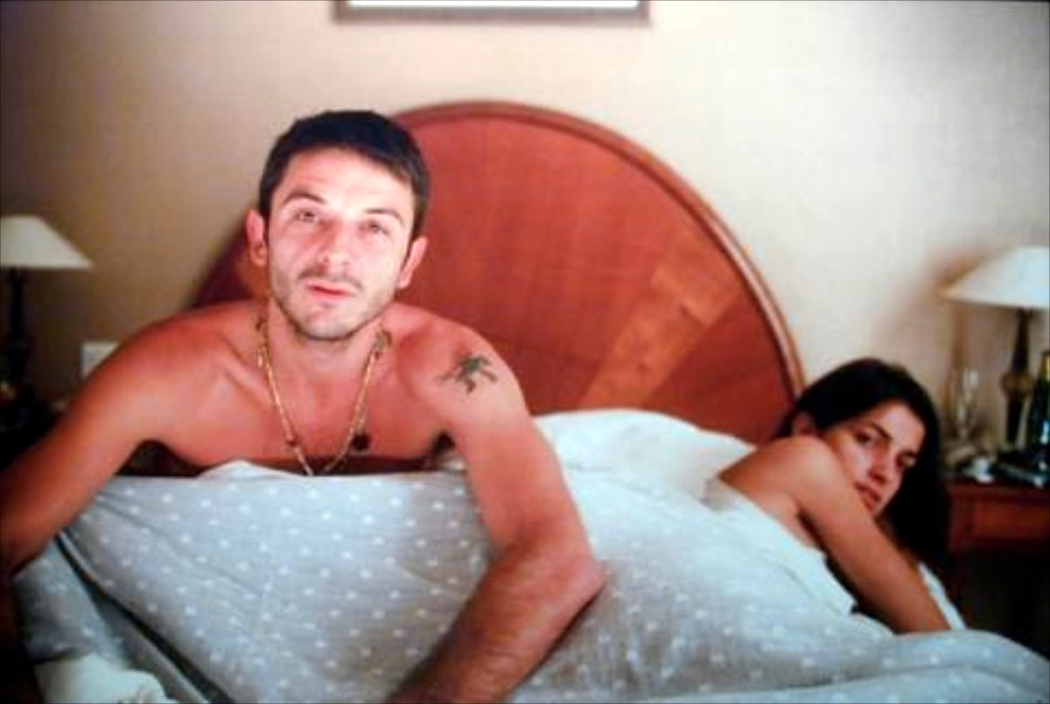
They look out at us, bruised and lost.

Over a period of 40 years, but primarily in the 1980s, Goldin has photographed the beaten underside of la vie de Boheme — the art world and the pretenders to the art world, the gay world, the broken and wounded, the young who have found what they are looking for in being lost.

And it is an impressive accomplishment. Some 700 photographs, each an intense shot of emotional cocaine, are accompanied by music, ranging from blues to heavy metal to opera.

Goldin has photographed this subculture from the inside. She bears no objectivity: These are her friends and lovers.

“I don’t choose people in order to photograph them,” she has said. “I take photos straight from my life. These photos come from relationships, not from observation.”goldin 1

The pictures are raw, like snapshots, and the life is even more raw: They love, shoot drugs, party, cry on each others’ shoulders, smoke Marlboros, dress up in costumes and search for — and intermittently find — meaning. More often, they find pain and suffering. And in the age of AIDS, they also find death.

These are people on the edge, their nerves raw from abrasion. For them, “unprotected sex” is spiritual as well as physical: Their souls are wide open and vulnerable.

The photographs at first appear nothing more than snapshots, but the cumulative effect of 700 of them proves that Goldin is instead a rare technician, able to create the effect of spontaneity and carelessness at will. The figures’ motion shows as blur in the pictures, usually lit with the garish glare of the flashbulb. The colors of the pictures are the brightest Kodachrome blues, greens, violets and golds. Goldin has created a style perfectly suited to the subject matter.goldin 6

The faces are both pathetic and heroic. The young bohemians, living in squalor, clearly see themselves heroically, participating in grand love affairs, where violence can easily be confused with passion and romantic dreams can comfortably ignore their rat-infested surroundings. It is cold water flats with concrete floors, soiled sheets and nose rings.

Which gives them a certain nobility: They know they are alive.

Most people have seen the photographs published in book form, but Goldin didn’t intend the series as a book. It was first a slide show that she dragged around the New York art world in the 1980s, showing in night clubs as well as galleries. It is meant to be accompanied by music, which is missing in the book. The music is as important as a score to a film. goldin 11

The show, which takes 45 minutes to sit through, is not endured by many museum goers when it has been shown at major museums, most of its watchers come and go after seeing a minute or so of the presentation.

And its intensity does make it hard to sit through.

But Goldin manages to keep it all coherent, scripting the show in smaller bursts of slides grouped thematically, or as an episode in a single love affair.

Because she makes you see the flow from one slide to the next, it never becomes the interminable horror of a neighbor’s travel pictures. Unless your neighbor is Dante.

Yet, it isn’t quite hell, either. It is relentlessly romantic. Goldin is never the outsider, seeing the pain and filth and commenting on it. She is instead an avid participant, able to play-pretend with all her other subjects that she is in the middle of some grand opera of love and passion. goldin 16

And while at some level she must recognize the ugliness, she is no moralist, presenting shocking scenes in hope we will pass laws or enforce a social code. Lewis Hine she is not.

No, she gives us a layered, complex vision of her world that alternately repels and attracts. She makes us want to give in to the romantic illusions, but the bruises on her face brutally contradict them.

Indeed, Goldin is a major participant in the story she tells. She appears in a large number of the photographs, including the climax series, wherein she sustains the abuse of a boyfriend and wears the black eye he gives her.

But this is never a tract about domestic abuse: Goldin clearly takes responsibility for her own actions. She is willing to trade being terrorized for the drug rush of romantic obsession.goldin 12

This is la vie boheme in the age of AIDS and crack cocaine, and Goldin is its Puccini.

And that is the key to the success of these photographs as art. We do not need to live in rat-infested cold-water flats like Goldin’s subjects, but we do need to know we are alive.

It is the primary duty of art to reacquaint us with the fact.

Daily living takes the edge off life for all of us. Habit and conformity dull our senses. We may feel more mature and less reckless than Goldin’s druggies and transvestites, but if we are honest, we also must admit that what we call maturity is too often composed of equal parts of cowardice and exhaustion.

Goldin’s people risk everything, even death, for the rush of feeling alive. goldin 13

In that, they are like the Medieval stories of Tristram and Iseult or Launcelot and Guinevere. Our notion of romantic love had its beginning in these stories of adultery. For the sake of their passion, the lovers accepted not only death, but the eternal damnation they believed would follow. The assumption of such stories was that transcendent experience could not be found in the routine, in the sanction of society; it must be found outside the rules. A life lived only by rules is a mechanical life; authenticity is found only by acting from the purest impulse.

It is a grand and romantic notion.

But we were not asked then to become adulterers and we are not asked now by Goldin’s work to go out and score a bag of heroin. Art must be understood metaphorically, not literally. The message we learn from both the Medieval and postmodern is that life requires risk, that any risk less than all doesn’t count.goldin 7

So Suzanne, Cookie, Siobhan, Claude and all the rest of the recurring denizens of this demimonde, including Nan herself, who is a principal in her own opera, throw themselves into relationships — into experience — with a foolhardy disregard for their own self-preservation.

When I call this impulse “romantic,” what I mean is that it attempts to connect with those things larger and more eternal than a smooth running society. It tests the limits rather than acceding to them.

They are a La Boheme for the current age. The violence is always mistaken for passion; the sex is always mistaken for love.

When you see something like Goldin’s pictures, you begin to understand some of the attraction of the life with its unmade beds, dirty drinking glasses and cigarettes extinguished on the rug. Perhaps you or I would not like to live that way, but there is an underlying romanticism to it: They are not living the quiet, safe world of their parents. It is a life taking chances, living on the edge, a desperate chance for transcendence.

So, the women risk beatings by their boyfriends and the men risk thrashing by their drug dealers, all in the name of feeling overpowering emotions and not giving in to what they see as the gradual death of conventional living. goldin 15

For the secret romanticism, whether it is Nan Goldin or Percy Shelley, is its aspiration to transcend life’s limits. Nothing should be forbidden and the only thing worth doing is what is impossible.

There is a wonderful scene in William Blake’s Marriage of Heaven and Hell. An angel brings the poet to a precipice and from their height, they look down on “the infinite abyss, fiery as the smoke of a burning city; beneath us, at an immense distance, was the sun, black, but shining; round it were fiery tracks on which revolv’d vast spiders, crawling after their prey, which flew, or rather swim, in the infinite deep, in the most terrific shapes of animals sprung from corruption.”

On being told of this vile place, the poet innocently suggests, “if you please, we will commit ourselves to this void, and see whether providence is here also.”

Much of what passes for art in any age merely keeps us lulled: Pretty pictures or numbing farces. People call for beauty, but what they really ask is for an anodyne: a buffer between themselves and the difficulties of being alive.goldin 8

But if we risk feeling alive, we must remember that to be alive is to suffer. Americans sometimes like to forget this fact; we live comfortable lives, insulated from the hard certainties. We kill to eat, although we never think of the slaughterhouse when we buy our burger; we grow old and die, although we spend billions on cosmetics and plastic surgery to deny the inevitable. Our love cannot protect our children and our best intentions cannot prevent us from hurting others.

But as Krishna taught Arjuna in the Bhagavad Gita, one must recognize the universal tragedy and still act.

And, like Nan Goldin’s art, manage in the face of suffering and death to say “yes.”

Back Bay, Virginia

Back Bay, Virginia

When you are young, it is easy to be in love with art. You may love its artifice, you may love the colors or the rhymes or the great blaring sounds of the music you listen to. Art is vibrant; it seems so alive. But most of all, you are in love with the sense of importance art brings: It seems to validate the belief we all have when we are young that our own lives matter, that we count in the larger scheme of things.

We are all Tristan or Holden Caulfield.

Perhaps that is why the young make so much art. They are not yet unhappy with it, not yet dissatisfied at the lies that art creates, not yet disgusted with the prettiness of it all.

Most of all, the art we make when we are young imitates the art we have come to love: Art most often imitates art, not life. There is so much bad imitation T.S. Eliot written in college, so much abstract painting of no consequence, so much herd-instinct.

I have been as guilty as anyone. In 45 years of photography, the bulk of my work has been imitation Ansel Adams or Edward Weston or Irving Penn. I make my confession: I have photographed a pepper. I was learning to make images that I could recognize as art, because it looked like the art I knew. Big mistake.

Go to any art gallery and you see the same process unfolding. Imitation Monet here, imitation Duchamp there, imitation Robert Longo there. Whatever the current trend in art is, there are acolytes and epigones.

At some point, as you age and if you are lucky, you let all this shed off you, and you no longer care about art. What takes its place is caring about the world, caring about the experience of being alive. It isn’t going to last long, so you begin paying attention: close attention to soak in as much as you can before you die.

And if you are inclined toward art, you give up caring whether you are making “great” art, or whether you are part of the great parade of art history, and you care only about what you see, hear, touch, smell and taste. The world becomes alive and art fades to pathetic simulacrum.

When you reach this point, then you can begin making art. And you make it for yourself, not for posterity. You make it to attempt to capture and hold the world you love, or to understand the world, or to transcend it, when it becomes too difficult to endure or accept.

Art becomes a response to the world, rather than a substitute for it.

Walnut Tree, Greensboro, NC

Walnut Tree, Greensboro, NC

 2.

The first garden I made was a vegetable garden in the front yard of the North Carolina house I was renting in the early 1970s. I grew the usual tomatoes and peppers, beans and spinach. I also ventured into eggplant, which turned into the most successful part of the garden, to my surprise.

But what I really learned from my garden is the difference between the neat, orderly photographs in the seed catalogs and the rampant, weedy, dirt-clod messiness of the real thing. Gardens, I discovered, were not military rows of uniform plants, but a vegetative chaos.

The stupid thing was that I should have known this going in. All around me trees, vines, shrubs, roadside flowers and Bermuda grass were telling me one single thing, over and over: Profusion is the order of nature. Variety, profligacy, energy, expediency, growth.

Whether it is a kudzu shell over a stand of trees, or the tangle of saplings that close over an abandoned farm field, or the knot of rhizomes that run under the turf, the rule of nature is clutter.

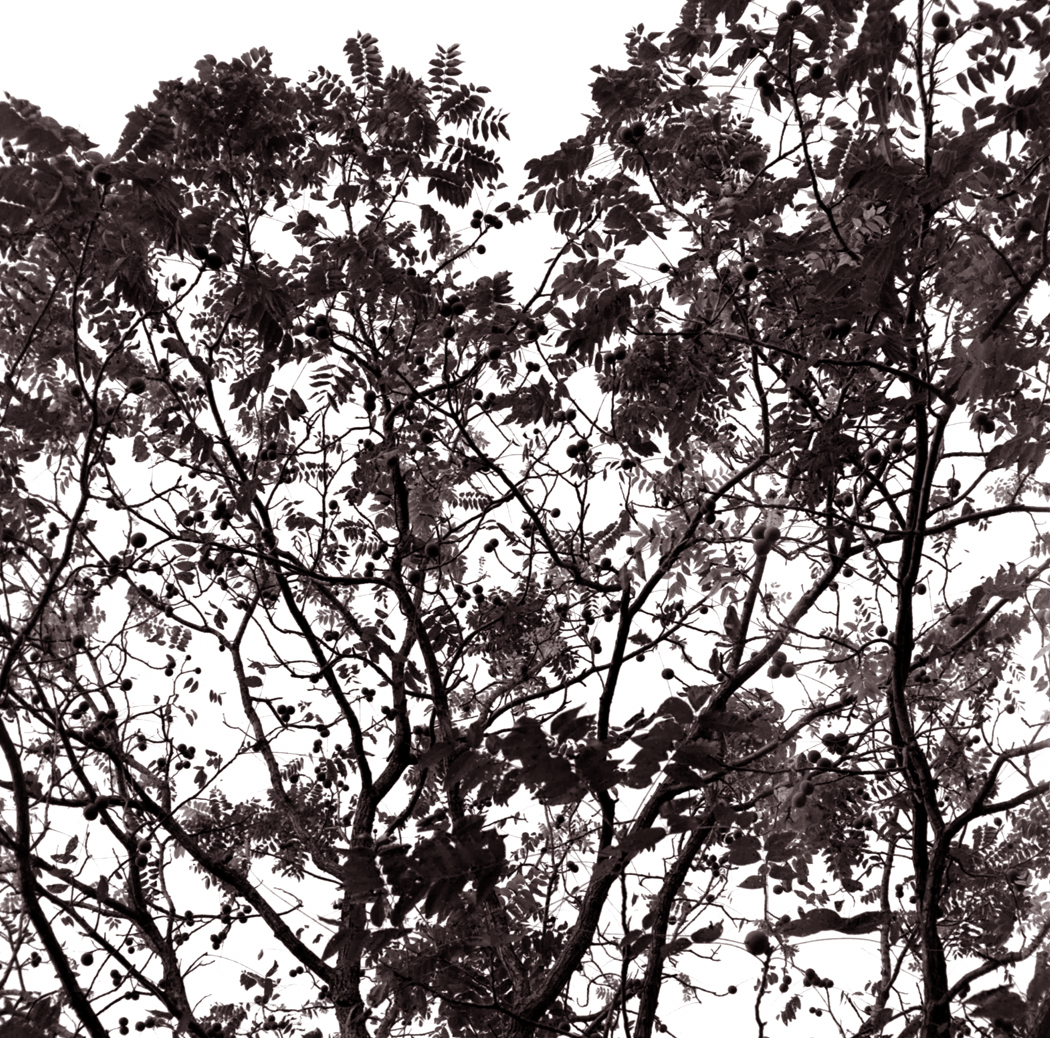
The walnut tree outside the front door was old, and its bark was stratified with moss, lichen, beads of sap, and a highway of ants running up and down. From a distance, it was just a tree, but up close, it was a city.

When I was a boy, there was an abandoned farm beside our property. An old, unpainted barn and farmhouse stood in the center of a field of grass and weeds. When I was maybe 8 years old, those buildings burnt down one night, in a glory of flame.

In the years that followed, the course of plant succession took over. I learned my lessons from the Boy Scout merit badges I earned, but even there, the story of succession seemed much more orderly than what I saw out my window. Plant succession wasn’t a clear progression from annuals to perennials to shrubs and through a clearly delineated march of one kind of tree into another till we reached climax growth. It was instead a tangle of saplings through which it was nearly impossible to walk. There was not a “baby forest” that we saw, but an overpopulated struggle for sunlight, every plant elbowing its neighbor for survival. In a forest, the trees stand a certain distance apart, their crowns touching to make a roof. But this young version was more like a thick head of hair; there was no distance between the shoots.

Everything in nature told me the same thing: busyness, struggle and chaos. It was all exhilarating, and I loved the tangle of it all, the textures, the smells, loam and rot, the mud and dew.

And yet, that isn’t what I saw when I looked at art about nature, whether it was glossy calendar photos or Arizona Highways’ covers on the low end, or whether it was Raphael and Delacroix on the high end.

The nature I saw in most art was tame as a housecat. And the art wasn’t really about nature at all, but about order. It wasn’t made to see the world we saunter through, but to see how our minds organize and codify it.

Whether it was 18th century paintings or Ansel Adams’ photographs, the art was all about order. In fact, you could say that the point of the art wasn’t to make us see nature, but to understand order.

I was unsatisfied with it and with my own art. I wanted to make an art that would look at the natural world and make images that spoke to me about what I was really seeing and feeling.

Notre Dame de Paris

Notre Dame de Paris

 3.

I recognized something of what I wanted in the arts of the Gothic, Baroque and Romantic periods, eras in art that glorified the energy and visual confusion of the world. They are arts that responded to the profuse variety of experience. They were also arts that were devalued by the mainstream art world of the 20th century. Eliot deprecated Milton; Stravinsky insulted Berlioz; Mies van der Rohe is the anti-Gothic architect.

Yet, I loved Shelley, Schumann, Chartres. And I wanted to find a way to make that art over in our new century, in a new way, and reattach art to the world around me. It had been untethered too long; too long it had been its own reason for being. Art for art’s sake? Not any more.

It can be hard — it is probably impossible — to make art completely divorced from one’s time. The visual universe is too persuasive. We cannot even know how deeply we are affected by the stylistic twitches of our own age, and I am not saying my own work is sui generis. It certainly is not.

The light that knocked me off my horse on my own way to Damascus was a single book of photographs — still a fairly obscure book — by Lee Friedlander, titled  Flowers and Trees, from 1981. It was spiral bound, printed in a matte finish, and had virtually no text. Inside, I found a mirror of the nature I knew and felt. Nothing was framed neatly, nothing was glorified by the light poured on it, nothing was reified into monumentality. Instead, there was the profusion, confusion and organicism that I recognized from my own experience.

And I realized that I had been working in that same direction for years, but had buried those photographs among the more conventional mountainscapes and detail photographs where I had imitated my betters. I had several series of images that were my own immediate response to nature and they were all photographs I had made in the gardens of friends. I gathered them together and looked. The conventional photographs seemed to have no value whatsoever and these others, almost random, usually confused, and always ad hoc, seemed to breathe the life I had been looking for.

Since that time, and with the advent of digital photography, I have been liberated. I take my camera with me, point it at something I want to feed it, and let it do the chewing. I never look through the viewfinder anymore, but instead look at the larger shapes, darks and lights, that show in the digital screen on the back of my camera. I see how I see, and click the shutter.

Over the years, I have made many of these sets of photographs, usually 15 to 35 pictures in a group, and printed together to be seen as a “book,” that is, a print cabinet, where my audience can spend as much or as little time as they wish and shuffle to the next.

And the unit of my work is the book, not the individual photo. You can’t see a forest by looking at a single tree.

Baldwin County, Alabama

Baldwin County, Alabama

4.

If I have succeeded, I have also failed.

For in the end, my attempt to wrestle with the world has turned into an art that is also about order, about how the mind engages with the things around it. I have wound up doing exactly what my predecessors have done.

It isn’t surprising. After all, when I turn on my elders and find their efforts insufficient, I am doing nothing different from what they did when they turned on their elders. It is how art grows. Wordsworth rebels against Pope, Eliot rebels against Wordsworth, Ginsburg rebels against Eliot. One generation finds its parents lacking and tries its on its own to finally express the truth.

And I can only be happy when a generation after mine points its own finger backward and wiggles it in reproach at me.

It seems we never get closer to what we are all after. Value is all in the trying.

Reno, Nevada

Reno, Nevada