Granted, it was only a nickel a day, but it was increasing. By the time the Library Police knocked on my door, that price was in the high single dollar range. Who knew the library had police? They came in pairs, like Mormon missionaries, and were nearly as polite; they wanted the money and they wanted their book back. I had forgotten I had even borrowed it from the Virginia Beach Public Library and now, I didn’t know where it was, in the welter of books in the house; I paid them the price of the book to be done with it. This was the most dire episode in my long relationship with libraries.
It was also a long time ago (you should have been tipped off by the fine of a nickel-a-day — library fines have grown with inflation), and it was at a time when I was suffering from student poverty, and so libraries were a godsend when I needed or wanted a certain book — and for those of us with the book affliction, the difference between want and need is very thinly sliced.
There is a word for this affliction. At first, I just thought of myself as a bibliophile, but the proprietor of a used bookstore in Norfolk, Va., recognizing the symptoms explained to me that what I was, in actuality, was a bibliopath. I kind of liked the name and have perpetuated the usage ever since. You know you are a bibliopath if you have ever feared for the life of your cat when the pile of books on the floor next to your bed reaches critical mass and you suffer what in our household we call a “bookslide.” Buried under there, like survivors of a third-world earthquake, is the unhappy cat you have to exhume.
Some of my earliest memories were of descending to the basement of my elementary school in New Jersey, where the town’s public library was hidden, and spending countless hours of joy poring over the shelves and finding the books that would explain the world to me.
In high school, I persuaded my Latin teacher to give me an entire pad of signed library passes so I could avoid the dreaded study hall — a place where tired students could place their weary heads in the crease of an open book and fall into a confused slumber — and go to the school library instead. Study hall proctors eyed me with suspicion every day, as if I were somehow avoiding the cruel and unusual punishment that my adolescent status deserved. They clearly thought I was getting away with something. Such was the pedagogical theory of 60 years ago.
In college, there was little more delicious than burying yourself deep in the stacks, seated at a tiny, poorly lit carrel with a tower of scholarly tomes and doing research late into the night. These lucubrations were almost as delightful as the traditional student discovery of sex and beer.
Even after graduation, I would go back to the university library and dive deep into its inventory — the stacks, called The Towers, were open only to students, but no one checked my ID — and I discovered many a quaint and curious volume of forgotten lore and managed to check out several rare books, including an 18th century printing of the sagas of Ossian — that famous fraud by James Macpherson. I was sorely tempted to pay the library fines and keep the book, but my conscience won out and I read the thing and returned it. (I have since bought a 19th century edition of the poems and it sits in my own stacks here in my tiny office — an office modeled on the site plan and measurements of the library carrel).
When I finally came to work for the newspaper, no assignment made me happier than one requiring a trip to the library, where instead of “reporting,” I engaged in “researching.” I was an indifferent reporter, but I was a great researcher.
And now that I am retired, I live in my library — my personal library — where the walls are made from bookshelves and each book is a door, and while I spend many a happy hour in Google-land or riding the Wikipedia bus, it is still the feel of paper, the sound of turning pages, the smell of the residue of dust from the spine of a book that makes my pulse quicken.
Alas, libraries are under attack, mostly by irate villagers with pitchforks and torches afraid their children will be exposed to unregulated thinking, but also because the very act of reading is dying out, like endangered species or network TV.
The newspaper where I worked had a library where I went to fact check what I was writing, but by the time I retired, it had been closed and the dear librarians who had helped me for 25 years had been offered buy-outs.
I had my own small library, several hundred reference books, at my desk, including a bookshelf jammed into the passageway behind my chair that had needed to be cleared by the fire marshal. But even that eventually became mostly decorative, since I could more quickly and efficiently find out birth- and death-dates of whoever I was writing about by Googling them on my computer.
I mourn the loss of libraries, and mostly the old-fashioned ones, with dark shelves piled high into corners of institutional basements, with their sequestered carrels lit by desk lamps, tucked into hallways.
The Library of Alexandria may have burned down, the Carnegie library buildings may have been rented out to non-profit foundations, the newspaper library has been thinned by a kind of bureaucratic deliquescence, and the public library has become a battery of computer screens, but I am here, behind the moat of my own books, vowing never to surrender.
“How could such sweet and wholesome hours/ Be reckon’d but with stacks and Tow’rs!”
I have been a reader for about three quarters of a century. It began so long ago, I don’t remember exactly when I started — probably in kindergarten when I discovered words. But once I began, I couldn’t get enough.
I read anything I could get my mitts on, from the backs of cereal boxes to the funny pages in the newspaper to road signs when the family was out driving. I’m sure I drove my parents nuts by pointing out stop signs and mileage markers.
This is not to claim any sort of prodigy. I believe most kids latch on to text as soon as they learned to decipher it.
But lately, I’ve been thinking about how my reading habits have changed over the years, and how those changes parallel life experience, and the needs I sought to satisfy as I grew up. Shakespeare wrote about the seven ages of life, and I think about the stages of reading.
My early reading is chronicled by years. In third grade, I was fascinated with dinosaurs and read all the books I could find in my elementary school library (which was also the town library). There was Roy Chapman Andrews and his All About Dinosaurs, part of a series of “All About” books written for kids.
By the fourth grade, I had moved on to whales, and spent the school year absorbing everything I could about cetaceans. And so it progressed through astronomy, airplanes, and, by the seventh grade, I was into World War II. By then I had left behind the books written for young readers and took on the history books and memoirs. Guadalcanal Diary by Richard Tregaskis; Day of Infamy by Walter Lord; Crusade in Europe by Dwight Eisenhower.
Other boys my age were reading Hardy Boys books and maybe Sherlock Holmes, but I was single-minded in reading non-fiction. I wanted to learn everything. I was a compendious fact basket. Dump it all in.
We were given a 1930s copy of the Compton’s Illustrated Encyclopedia and I read through it constantly. It might have been out of date, but it had lovely drawings of autogiros and streamlined trains and learned about everything from Angkor Wat to frog-egg fertilization and The Great War.
My parents, who had just high school educations and had lived through the Great Depression, were eager to educate their children to guarantee them good jobs in life. There was never any doubt they would send their three sons to college. And so, they encouraged this reading.
They thought they would help by buying books for me, including a copy of some young adult fiction. I sneered at it. Fiction? “I don’t want to read anything that isn’t true,” I said.
This first phase was the fact-gathering stage. I wanted to learn as much as possible and reading was the funnel that poured it all into my hungry brain. You have to fill the pepper grinder before you can grind pepper.
And so, it poured in and stuck: 44 B.C.; A.D. 1066; 1215; 1588; 1776; 1914 — and Aug. 6, 1945, a date that hangs over anyone my age like a threatening sky.
I stayed away from fiction until, I was, perhaps, 12 or 13 years old, when I discovered science fiction. I gobbled it up like candy. All the mid-level sci-fi writers that were popular in the late ’50s and early ’60s: Poul Anderson: Lester del Rey; Robert Heinlein; Frederick Pohl; and, of course, Ray Bradbury. I must have burned out on it, because I cannot read any fantasy or sci-fi anymore. Lord of the Rings? God help me. No, never.
But there were the Fu Manchu books of Sax Rohmer, with their Yellow Peril and archly Victorian prose. All pure pulp, but they opened the world of fiction to me and transitioned me into the second phase of readership, which is perhaps the most embarrassing phase.
By high school, I wanted to prove I was a grown-up, and what is more, an intellectual grown up. I subscribed to Evergreen Review and Paul Krassner’s Realist. I was hip, in my tight jeans, pointy shoes and hair slicked with Wildroot Cream Oil.
And I began reading important fiction of the time: Saul Bellow; John Updike; Norman Mailer; Thomas Pynchon. Of course, I didn’t understand any of them. I was a pimply-faced high-school kid. What did I know? But I looked oh, so sophisticated carrying around Herzog under my arm. It was only when I read it again a few years ago that I fully realized how funny the book is. I didn’t know it was a comedy when I first read it. There is nothing more earnest than a teenager.
I did manage to pick up and understand On the Road and other Kerouac books, and J.D. Salinger spoke directly to my adolescent soul. On the Road held up on re-reading years later; not Catcher in the Rye, which is now close to unreadable. I couldn’t even finish a re-read.
The problem with adolescence is you have almost no life experience. It’s all just literature to you. You get caught up in “symbolism,” and what a book “means.” As if it were written in code to be deciphered. A 16-year-old is in no position to know what was going on in those books. It wasn’t much different from when we were assigned The Scarlet Letter or The Great Gatsby in eighth grade. I could understand the words, but not understand what was said between the lines.
A teenager thinks the world is simple. It is the tragedy of youth.
The following stage was college reading. There was, of course, a lot of it. But I loved it, especially the Classics courses I took, reading Greek and Roman authors, the English Romantic poets, and Chaucer. I took to Chaucer immediately. I still read him for the pleasure of his language. There was a course on Milton and another on William Blake. I ate the stuff up. I still do.
And I was then old enough that I actually understood much of what I was reading. I was beginning to have a life and feel the complexity of the world.
College only lasted four years and after that came marriage and divorce and unemployment and — just as bad — employment. I still read, but mostly I just tried to keep it all together, and not always successfully. (Unemployment gave me a lot of reading time and for months, I managed a book a day.)
The fourth great phase of reading came after divorce and other traumatic events, when I had what might now be called a break down. It didn’t stop me reading, and actually it led to a fever of it. I read all of Henry Miller (or as much as was available, not counting his privately printed short works); all of Melville, or pretty near; piles of D.H. Lawrence; and basket-loads of Twain, Hemingway and Faulkner — and Lawrence Durrell’s Alexandria Quartet, which seemed to sum up my situation — and that marked a change in my relationship to books.
This was a turning point that not everyone seems to experience. Until this point, I measured my life against what I read. Was I like Nick Carraway or Sal Paradise? I wanted to be “important” like them and thought literature was there to show me the way.
After that point, instead of measuring my life against the books, I measured them against my life. Did they seem true to what I had experienced? When I was young, the books were real and my life a simulacrum; as I grew, it became clear my life was the real thing and the literature was only a reflection. Not “did I measure up,” but “did the books measure up?”
Books, as a percentage of time spent, varies quite a bit over the course of a life. I find the more I am engaged with doing something, like work or socializing, the less time I spend reading. And the fifth phase began when I started teaching in Virginia. It wasn’t that I stopped reading, but that I did less of it, and that the books I did read tended more toward histories, biographies, memoirs and essays.
I tore through Shelby Foote’s three-volume history of the Civil War; a one-volume selection from Edward Gibbon’s Decline and Fall of the Roman Empire; tons of H.L. Mencken, including all his Prejudices; Solzhenitsyn’s Gulag Archipelago; and as antidote, all the David Sedaris I could find.
This phase continued through 25 years working for The Arizona Republic, in Phoenix, where I was, among other things, the art critic. I read a lot for work — including background on things I was writing about.
The relationship with books had changed, but so had my relationship with words altogether. When I was young, I was eager for knowledge and read by the boatload in search of ways to fill my insides. But somewhere along the line the well was full and the words spent less time piling in and more gushing out: I became a professional writer and all that back-pressure of words, information and experience burst out. I wrote like a hose spraying water. I couldn’t fill the buckets fast enough.
Even on vacations, driving around this country or others, I spent part of every day writing down notes that later turned into stories for the paper.
So, there were those two major shifts in life: first when I began measuring the books against my life; and second when instead of just adding more words to the pile, all the millions of words dammed up behind my cranium began pouring out.
Through all of these phases, but increasingly over the years, I found myself re-reading as much as reading. My favorite books I tackled again and again. I cannot number the times I have read Moby Dick or Paradise Lost or James Joyce’s Ulysses — all dived into time after time for pure pleasure. There are others: Thoreau’s Walden; Hemingway’s Sun Also Rises; Gatsby, of course, now that I know what’s going on in it.
I try to re-read the Iliad once a year, usually with a different translation each time. I sometimes change pace and do the Odyssey. I tried Dante, and can gobble up Inferno any time, but admit I find Purgatorio and Paradiso quite a slog. I’ll stick with Hell, thank you.
The books I’ve mentioned so far indicate a fairly parochial taste for Western culture, and I have to admit to that. But I’ve soaked up a fair amount of early and non-Western writings to try to keep some balance. I’ve read and re-read the Epic of Gilgamesh, the Mahabharata, Lao-Tze, Beowulf, and Basho’s Narrow Road to the Deep North, among others. I’ve read large swaths of the Vedas and Upanishads, and even a bit of various versions of the Book of the Dead. There is Sufi poetry and the Popol Vuh. I have tried to soften the boundaries of my cultural walls.
There is a sixth phase, where I am now — retired. Although, as I’ve said many times, a writer never really retires. He just stops getting paid for it. I now write this blog, for which I’ve written more than 800 entries with another hundred more for other online venues, all of which total a million and a half words, all since 2012 when I left the madding crowd behind.
I have slowed down some, but I still read. Now, I read a good deal of poetry. I find it satisfies my love not just of meaning but of the words themselves, the taste and mouth-feel of them. It is a connection with the world, and with the netting of language that holds that world up before my mind.
It is said in some cultures, after a life of striving and ambition, that there comes a time of quiet and reflection, a time to spend on weighing the life and figuring out where it falls in the larger picture of time and the universe.
I certainly feel that. But it hasn’t reduced my need to recharge that well from which I draw my words. My Amazon account proves that. I keep getting new books and find that I simply don’t have any more space on my bookshelves, and so, they pile up on top of other books and in dangerous stacks on the floor.
Every once in a while, there is a book-avalanche and under the chaos I rediscover some book I had forgot and sit down and open it up again. I’ll deal with the mess later.
I have infinite respect for school teachers. My late wife was one. I was one myself, for six years earlier in my career. Teachers work harder and for less pay that pretty much anyone else I can think of. And more than anyone else, the best teachers I had made me what I became in life.
But.
There was something about the teachers I had in public schools — grade school and high school — that mystifies me to this day. It was “required reading.” Nothing against the idea of having students read, but the problem was the books they had us read.
They were “great books,” unquestionably, and among the best of literature in the English language. But what, I ask, what can a 13 year old possibly make out of The Scarlet Letter? It is written in a rather formal early 19th century style, about a culture long faded in America, and involving minute shades of thought and feeling, with, like an iceberg, more beneath the surface than above. I was required to read it in eighth grade and was bored silly by it, mostly because I could not possibly understand it.
I remember one of the test questions on the book. “What is the significance of Hester naming her daughter ‘Pearl?’” Uh — I dunno. I was 13 years old and I had a hard time telling the difference between Arthur Dimmesdale and Roger Chillingworth. Perhaps I wasn’t paying close enough attention. Most likely the book was way over my head. Way over the head of any 13 year old. Which is my point. Why was it assigned?
My teachers wanted to expose me to the best in literature, I’m sure. And Scarlet Letter is certainly a great novel. I’ve read it as an adult and was amazed at how different it was from the same book I read in eighth grade. Deep and true, and subtle. All of which was lost on a boy with not enough life experience to be able to absorb what I was reading.
For most kids at that age, a novel was its plot. If I could keep the story clear in my head, that was what I took from the book. So, there were a few assigned books that I read and enjoyed. Oddly, one of them was Ben-Hur: A Tale of the Christ, by Lew Wallace. It was assigned in seventh grade, and it was, at the time, the longest book I had ever read.
It was no doubt assigned because of the 1959 movie, but I had not yet seen the film, and so I never had to compare the book with Charlton Heston. It was fresh to my eyes.
But it was a story told without excessive subtlety. If I followed the plot, I got out of the book pretty much all that was put into it by its author. I was 12 and at the time, fascinated by history. Lots of that in Ben-Hur.
It should be pointed out that I had nothing against reading books. I read them all the time. I was an avid reader, but pretty much every book I picked up was non-fiction. (I once complained about novels, “Why would I want to read anything that wasn’t true?” Little did I understand.) I read tons of books about World War II. I was obsessed with the war my father had fought in.
And so, Ben-Hur was right up my alley. A story clearly told and with little hidden between the lines.
Another great choice for a young person was To Kill a Mockingbird. As a pubescent teen, I was deeply moved by the injustice and the countering righteousness of Atticus Finch. I read it at a time of the Civil Rights Movement in the U.S., and it seemed instantly relevant to my life. The fact that it was told through the eyes of 8-year-old Scout, and the moral issues seemed so clear only made it easier to digest at my tender age.
The novel is still taught in many schools, and is perhaps the perfect book for required reading, although at the age I was asked to read it, I had no clue as to the the fact that its author also addresses issues of class, courage, compassion, and gender roles in the Deep South.
All the subtleties and complexities in the book were irrelevant to my reading it at the perfect age to encounter it. But then, as Flannery O’Connor said, “It’s interesting that all the folks that are buying it don’t know they’re reading a child’s book. Somebody ought to say what it is.”
In contrast, we also were assigned The Great Gatsby. On the surface, it is not difficult to understand. The language, unlike that in Scarlet Letter, was reasonably modern. But the book relies almost entirely on what is between the lines, which is exactly the part that a 14-year-old cannot perceive. When I first read it, in eighth grade, I thought it was a story about Nick Carroway. After all, he narrates it. This Gatsby guy seemed entirely peripheral and I couldn’t understand why the book had his name on it. And what the heck were those giant eyeglasses about? And that green light? No clue.
Oh, I followed the plot well enough, I thought. But boy, I had not the first inkling of what the book was actually about.
And how could I have. One has to have a decent fill of life’s vicissitudes, disappointments, misunderstandings, loves, longings, sex, ulterior motives — to say nothing of complex, multiple motives — before one can take in all that is going on in Fitzgerald’s book.
Or any book written for grown-ups. We were assigned The Grapes of Wrath, and I enjoyed most of it, but on the test, we were asked why Chapter Three talks about a turtle crossing a highway. A chapter that fits what Steinbeck calls “hooptedoodle.” In Sweet Thursday, a character says, “Sometimes I want a book to break loose with a bunch of hooptedoodle. … Spin up some pretty words maybe or sing a little song with language. That’s nice. But I wish it was set aside so I don’t have to read it. I don’t want hooptedoodle to get mixed up with the story.”
And so, Chapter Three seems to have nothing to do with the story. Or does it? At an age before hair began growing in unfamiliar places, I had no clue.
Worse, the end of the book just seemed like a vaguely smutty joke to make a teen laugh like Beavis and Butthead. Now, as an adult, it makes me weep.
There were other books assigned that my yet-vacant mind could not get around: Emma, The Return of the Native, Oliver Twist. Why were such books put into the hands of a boy who had not yet outgrown Cocoa Puffs?
I could barely make it through Emma, and couldn’t for the life of me understand why such a self-involved cupcake should be worthy of my attention (I said to my utterly self-involved teen self). At that age, irony is an unfathomable concept. No one my age at the time should be forced to read Jane Austen. Way above my pay grade at the time.
And worse, Thomas Hardy. I had no notion of what a reddleman might be, nor furze, nor a heath. Reading the prose was like chewing dry straw. Why, why, O why was this book handed to a pre-teen American boy, who never cut a wisp of furze in his life?
Last year, I found a used copy of the paperback book I was given back then, so many decades ago, and I began reading it to see if it was as bad as I remembered it, and surprise: I found some of the most resonant, deeply felt writing I’ve ever read. As twilight settles, on the first page of the book: “Looking upwards, a furze-cutter would have been inclined to continue work; looking down, he would have decided to finish his faggot and go home.” That image rings so instantly true. I’ve been there. When I was a kid, not so much.
There were other books assigned that memory has happily wiped from my mind.
But worst of all, and for this I hold Miss Irene Scheider completely guilty, was my lifelong inability to read Charles Dickens. She was otherwise a fine teacher of my eighth grade class, but she decided she would assign each student his own book, chosen by her as the perfect match for his taste and personality. And for me, she chose Oliver Twist.
I cannot tell you how much I hated, hated, hated that book. I found it turgid, boring, endlessly prolix, and completely unrelatable. I trudged through it dutifully, But I found it the absolute opposite of anything my taste and personality would have fancied. “Please sir, I want less.”
No blame should be ascribed to Dickens for this failure. I believe the enthusiasm so many intelligent readers feel for his books. But my experience with Oliver Twist in the eighth grade has ruined Dickens for me for the rest of my life. I cannot even pick up another of his books. My muscles twitch and my eye develops a tick. “Oh keep the Dog far hence, that’s friend to men, Or with his nails he’ll dig it up again!”
I understand the impulse of grade school teachers to introduce great lit-rich-your to young minds. But forcing a teenager to read works they are not equipped to comprehend can only deter them from ever wanting to read books they haven’t been assigned.
I was lucky. I loved reading too much to be thrown off by boring books. I had my own direction. Before high school, most of what I read was non-fiction. I always had a book or two going. Some I read so avidly, I finished them in a day. You could not have stopped me from reading. But I only came to fiction and an appreciation for what it had to afford, after my brain had become fully formed, in my twenties. Then, I attacked all those classics I had dreaded when I was younger. Ulysses, yay! “Madame’s Ovaries,” whoopee! “Lady Loverly’s Chatter,” sign me up!
I am pretty sure that if you want to instill a love of reading into young minds, you have to let them read what they choose for themselves. Don’t worry if it’s not great literature. Don’t worry even if it’s trash. Or even if it’s comic books. If they enjoy it, they will keep reading. And if they keep reading, they will grow out of the junk and seek the real deal.
There are books that speak directly to eager minds. The Catcher in the Rye is only possible to read when you are young. Believe me, I tried to re-read it a few years ago and nearly upchucked. It’s not for adults. And there is a huge market for YAF (an acronym that makes me hiccup: Young Adult Fiction) that is surprisingly well written and tackles subject meaningful to their audience. Encourage that. Don’t, my god, hand them Brothers Karamazov.
So, let them soak up Harry Potter if they want. It’s OK. Better than never being able to read Charles Dickens again.
My Uncle Stanley had an ambition in life to own a Weimaraner hound. I was only a boy at the time and didn’t quite understand the appeal of such a dog, but for the IBM typewriter technician he was, living in New Jersey in the 1960s, I imagine it had something of the attraction a solid gold toilet had for Elvis Presley. The rest of us had dogs that we lucked into, finding a stray, or getting a mutt from the dog pound. But the Weimaraner was a pricey breed and my uncle wanted one. He finally got one. It was a nice dog, but for me, that’s just what it was — a dog.
Many, I think, have some similar focus in their lives, some object that signifies arrival, or a sense of completeness in life. Most items hold that position only for as long as they are unachieved. Yet there remains a pride in the achievement, even if the reward is rather less than anticipated.
I think of those who have yearned to own a Cadillac. They may live in a mobile home and work as janitor in the local factory, but if they can park a Caddy out front, it will show they aren’t complete failures.
As in the familiar song, St. James Infirmary: When I die, “Put a twenty-dollar gold piece on my watch chain,/ So the boys’ll know that I died standin’ pat.”
The idea of getting that bit you believe you want or need is common. Perhaps it is a $300 Wüsthof chef knife; or a Rolex watch; or a bespoke suit from Hong Kong. Whatever is your icon of either quality or status or style, it chases you through life until you can finally afford it. I certainly have felt it. When I was young, it was a Nikon camera, then a Leica and then a Hasselblad. I finally got each and while I wasn’t disappointed — they are all as good as their reputations — they never quite made that great a difference in the photographs I made.
I imagine that if the People’s Republic of China ever finally get their hands on Taiwan, it will not prove to be quite so satisfying a triumph as they had imagined.
I never chased a particular car or watch, but there are books I longed for. I have managed to get some of them; others still elude me. But here are the big three I lusted after for years.
The Times Comprehensive Atlas of the World
Beginning in the third grade, I loved maps. And what I loved more than any were the big maps in the classroom that were pulled down like a windowshade, and were richly colored in thick inks — not halftone dots: The green was dark green ink, not a mix of yellow and cyan dots. Mountain regions were a rich chestnut brown. Those maps were beautiful. They may have been out of date even in my childhood, but I didn’t love them for their accuracy, but as art.
Years later, I found something very similar in older editions of the Goode’s School Atlas, where the maps were created using wood engravings, so there were straight-line cross-hatchings for shadings, and again, multi-colored inks for the printing. I saw them as art books. I found a few in old, musty used book stores and I still treasure them.
The very first puzzle pieces I remember, as far back as infancy, were map puzzles, where each U.S. state was a single piece. I took apart and redid that states puzzle hundreds of times, even as, in my infant-tongue the states were Uncle Homer and Miss Thompson.
Later, as a young man, newly empowered with a car and an income, I began traveling, and to aid that travel, I had a Rand McNally Road Atlas. I have updated them every other year or so, but I also acquired vintage versions from 1935 and 1942, which are things of beauty of their own, in two-color printing, with most roads in dark blue and highways in red. I treasure the old ones, while the newer, full-color maps are merely disposable useful tools.
But, out there on the horizon, was the Times Comprehensive Atlas of The World, published in constantly updated editions from 1895 through its 16th edition in 2023. By 1959, the Midcentury Edition of the atlas was a five-volume elephant folio edition measuring 12-by-19-inches. It was the Cadillac of world atlases and it was way out of my price range when I was young. I did manage to get the single volume 10th edition, picked up used.
It was a large, handsome volume. The maps were halftones, so, not as esthetically distinct as the Goode’s, but still, it was by all counts the best atlas on the market. Unfortunately, when I retired, I had to sell off about 75 percent of my library to make the move across the country from Phoenix to North Carolina, and the Times atlas was one of the casualties. Kept the Goode’s, though.
The Encyclopedia Brittanica
By the time I was in sixth grade, I wanted to learn everything. I was young enough still to think that possible. And where would I find all this knowledge? I’d read the encyclopedia.
My neighbors had an old Compton’s Picture Encyclopedia, from the 1930s, which they gave us, and I read it over and over, with its streamlined steam trains, autogyros and biplanes. But even as a kid, I knew the books were out of date. A wonderful long entry on “The Great War,” but, although I was reading it in 1953 or so, less than 10 years after WWII, there was no mention of any of it.
My mother wanted to help, and so, she began buying the promotional supermarket offering Funk and Wagnalls, one per week, for 99 cents each, until we had the full set, cheaply printed and bound. I used them for years to write theme papers for school. But I always knew that they weren’t the “real thing.” For that I needed the Britannica, which was way outside my family’s budget.
I continued lusting for my own Encyclopedia Britannica, all through college, the jobs that followed and into my years at the newspaper in Arizona, when I finally got a set at Bookman’s, a used book store in Mesa. But my enthusiasm was tempered by the fact that the set I got was not the traditional Britannica, but the combined “micropædia” and “macropædia,” in which the entries were divided into the more popular entries, in shorter, easier to read versions — the micropædia — and the more in-depth entries in the rest of the volumes. It felt like a dumbed-down, even trendy version of what I truly wanted. I wanted the Belmondo Breathless and got the Richard Gere Breathless.
Years later, I came across the revised 14th edition, in 24 volumes and its leathery maroon covers and thistle logo, and managed to buy it. This was the real thing, at last. The pride of my collection.
At Bookman’s, I later also found a facsimile version of the original three-volume Encyclopædia Britannica, from 1768. The replica was quite convincing, even including (imitation) foxing on some of the pages. More interesting was evidence that the 18th century project engaged the enthusiasm of its makers early on, and then rather petered out. The first volume covers the letters “A” and “B.” The second includes “C” through “L.” And the third and slimmest volume gets to cover everything else to the letter “Zed.” The facsimile edition was published in 1971.
Then, of course, the internet came along, with its Wikipedia. The Britannica sat on the shelf as a kind of trophy, but largely unused. And when we moved, it was one of the casualties. So long in the getting, so short in the forgetting.
The Oxford English Dictionary
But the real prize, the one thing that I lusted for more than any other, was the Oxford English Dictionary, the 20 volume final word on the English language.
I was a long-time reader of dictionaries. From second-grade on, I loved learning vocabulary. From 8th grade on, I loved learning the etymologies of words, and how they could change meaning over time. The OED contained all that information. Entries were long, involved and gave dozens, maybe scores, of citations, each dated and quoted. A simple word with multiple meanings, such as “set,” went on for pages, and required 60,000 words to describe some 580 senses. The whole of the dictionary was 21,730 pages and 59 million words covering more than 300,000 entries. It was heaven. It was also pricey. The set could sell from $1500 to $2000, depending on where you bought it.
The full OED is still my unicorn. I have never found an affordable used set. But, in the 1970s, the Oxford Press put out a 2-volume Compact Edition, with every four pages of the original OED shrunk photomechanically down to quarter-size and printed four original pages squeezed into each single page of the edition, which required the use of a magnifying glass (included) to be able to read it. The Compact Edition was offered at rock-bottom price as a promotion through a book club, and I signed on, and got my copy.
It is very hard to read, even with the magnifying glass, and the volumes were big and bulky and uncomfortable to use, but at least I owned a version of the OED. This was as close as I got to Nirvana.
I still have the Compact Edition, occupying the upper shelf of a coat closet. I haven’t dragged it out in years, but I still have it, a reminder of those things I once thought would change my life forever. Perhaps they did.
So, what did you always want and did or didn’t finally achieve?
If you’re reading this, and read blogs, it suggests you are a reader, and probably love books as much as I do. In fact, you may be a bookaholic, or have gone over the edge to become a bibliopath. Books are a central foundation of who I am, who I used to be and who I am still becaming. How can it be otherwise for anyone with a pennyweight of curiosity about people and about the world?
I’ve written about books in my life in many blog entries, and one of the most often-read is the piece I posted on Oct. 10, 2020, called “Shelf life,” in which I chose a single rung of a bookshelf in the house and discussed all the volumes resting on it. We are, at least in part, what we read: The books become internalized. And so, as I wrote then, I wanted: “to search for myself among my books.” I decided to take a single shelf from a single bookcase, “to see if they were in any way a mirror in which I could discover my own physiognomy.”
I didn’t want to pick a neatly organized shelf, but one where books were randomly scattered, left uncatalogued after casually unpacking after a move, or after re-reading, or just was too lazy to put back where it made sense. The bookcase next to the bed seemed the proper choice.
And so, I thought I might do so a second time. I looked at the shelf above the one I wrote about and it also seemed to be a mirror: That was me, there, in those pages, however jumbled it seemed to be.
What surprised me the most was how many of these books have been with me for most of my life — books I read when young that still take up space in my brain and on my shelf. And also how many were only recently bought and opened.
I should start with the three matched volumes at the right of the shelf: James Joyce’s Dubliners, Portrait of the Artist as a Young Man, and Ulysses. This handsome set replaced the many earlier versions I have owned in various editions. (I still have at least four other Ulysses on various shelves in the house, including a very special cheapie pirated paperback printed by Collectors Publications, a publisher most known for printing porn — which I suppose Ulysses was thought of when this version was published — ads at the back of the book offer The Incestual Triangle, Four Way Swappers, and All Male Nudes, among other things.)
I first read Portrait of the Artist when I was in eighth grade, in the dark green paperback Viking Compass Book edition. I’m not sure how much I could have comprehended reading it at the age of 13, but I knew I loved the way the words looked and sounded: “Once upon a time and a very good time it was there was a moocow coming down along the road and this moocow that was coming down along the road met a nicens little boy named baby tuckoo …” There was the mud of the rugby field, the great hellfire of the sermon, and the “forged in the smithy of my soul.”
I reread the book every four or five years, and every time, it hits the spot. In the habit readers always have, I soon jumped on all the other Joyce I could find. I bought a copy of Viking’s A Portable James Joyce, and have given up or lost several versions over the years, but still have one, a hardcover one, now in a library binding — in fact, it sits on a lower shelf of this selfsame bookcase I’m writing about. I tackled the play, the poetry, Stephen Hero, the essays — even Finnegan, although, at the age of 76, I am still defeated by the whirl of the whorl of the world of Finnegan. I will leave it to the next life.
Ulysses was a harder nut to crack after Dubliners, when I was a scrub-faced kid; Ulysses problems were verbal; Dubliners was harder to understand because of the complexity of the human emotions written about. You have to have some life pushing behind you to grasp the complexities of human experience and emotions written about in those short stories. As a teenager, I knew pimples better than I knew people. I re-read Dubliners last year and was blown away, especially by the final “The Dead.” It broke my heart.
Ulysses I did get into years later, and it is now my favorite novel of all, although, to be fair, I don’t always read it cover to cover, but rather, read again and again the bits that I most love. It astounds me: It is filled with some of the most beautiful prose I have ever encountered. No, I take that back: The most beautiful prose.
Next to Joyce on the shelf is James Michener: Tales of the South Pacific, and Return to Paradise. I remember, in my 30s and still something of a snob, looking down my nose at Michener as a best-selling author of doorstop bricks. But one day, in a book store, I picked up a copy of Tales and thought I would read a page, maybe two, to catch the flavor of Michener’s prose. It was 30 pages later I was standing there ready to flip the next page. This was a special kind of talent: to make you need to find out “what happens next.”
The prose was simply not the point. It was invisible; you read through the words as if looking through glass. This was story-telling, and Michener really has a value I had failed to understand. I’m not saying he didn’t eventually turn into an industrial manufactory, but in his first book, he made magic. It was also nothing like the South Pacific musical I had expected. Rather it gave me a real sense of what the war in the Pacific must have been like for those who experienced it.
A few years ago, after re-reading it, I found a copy of its sequel, Return to Paradise. I got through a few of the stories, maybe a third of the way in, but lost interest. The magic had gone. It was OK — it wasn’t just junk — but it didn’t grab me the way the first book did. It was more like a book of short stories that a short story writer might write. Something, perhaps, that a publisher might request after a best-seller. The two sit together on the shelf nonetheless.
I’m going out of sequence on the shelf to mention the other Michener book sitting there. In 1958, Michener published The Hokusai Sketch-Books: Selections from the Manga. Hokusai, of course, was the famous Japanese 18th-19th century artist. In 1814, he published a multi-volume sketchbook, called manga, in which he drew everything he saw in the world around him: people, plants, animals, ghosts, architecture. It was an encyclopedic venture. Michener selected enough of these drawings to fill out a thick book. I have owned it since college. It is one of my holy-of-holies.
From high-school days, I was fascinated with all things Asian; I read books on Zen Buddhism, listened to Noh Plays, took my girlfriend to restaurants with hibachis. There were Kurosawa movies and sumi ink paintings, which I attempted with my own shizuri and brush.
The non-Western way of looking at the world opened my world view and I have been looking beyond the horizon ever since.
Next on the shelf some The Great Gatsby and nothing proves how little youth knows, than what I made of the book — or didn’t make of it — when I was required to read it in eighth grade. I never then figured out who this Gatsby guy was; I thought the book was about Nick Carraway; and what the heck was all that about green light?
It’s not that I didn’t enjoy the book then, but that I had no clue about its depths. I bought an excellent edition three years ago and reread it for maybe the third or fourth time and loved every second of it. It is a deep, rich book, with prose that is delectable.
I believe for most young readers with a ripe curiosity, we tend to want to read beyond our abilities. We believe, as teenagers, we are grown-ups and want to partake of the adult world. And so we — and I — took to reading much that we had no business attempting. I read Saul Bellow, Henry Miller, John Updike, Jack Kerouac, Thomas Pynchon, James Purdy — a whole host of writers that I thought proved I was now in the company of the heavyweights.
And among those books was Jean Paul Sartre’s The Words, his autobiography. I knew he was an existentialist and that all the most intellectual people (this was the mid-1960s) were hot on existentialism. Not that I knew what that meant (I’m not sure anyone really does — it encompasses so many different things, but back then, it pretty much meant berets and espresso). But I read it, enjoyed it, thought I understood it, and flashed a few words around to let anyone know. I got a subscription to Les Temps Moderne, although I couldn’t read French (and also a subscription to The Evergreen Review — I was one hip 16-year-old). I re-read Les Mots last year and it’s a fine enough autobiography, but not exactly world-shaking.
Getting back on track along the bookshelf: In the 1970s, I was living with a redhead and we wanted to travel. We hiked a good portion of the Appalachian Trail, and drove, amongst other destinations, to Maine and New England. I was fascinated by geology and I had a book by Neil Jorgensen called A Guide to New England’s Landscape. I had by then, an interest in all things under the heading of “Nature.” I had a raft of Peterson Guides, could name dozens of plants and birds by their scientific names (“Know-atia Dudiflorum,” my wife teased me), collected rock samples, and could name dozens of constellations in the night sky.
The Jorgensen book accompanied us as we drove past monadnocks and till, varved clays and drumlins. I admit I haven’t read the book since then, but I still have it, as a memento of meaningful times.
I was by then active a photographer, and so I had another guidebook: Illustrated Guide to Yosemite, by Ansel Adams and his wife, Virginia Best Adams. I so wanted to visit Yosemite, but never had at those years the time or money for such a long trip. The book is loaded with Adams images, and so, it functioned more as a picture book than a useful guide. It was only many years later that my wife and I drove up the east slope of the Sierra Nevada along the Tioga Road and got to see the stunning Valley. The book is another that I’ve owned for 50 years and is a piece of me.
If I could choose to write like anyone, it would be James Joyce, but if I couldn’t have that, I would want to write like P.G. Wodehouse. He is magic with words, although of a more comic variety. I have bunches of Wodehouse lying around, but three years ago, I bought a new edition of A Pelican at Blandings, mostly because these new hardback versions, by Overlook Press, were so seductively handsome. If I had the money, I would buy all the volumes in this set, but this one will have to do.
All the Blandings books are a hoot. He may be most famous for his Jeeves stories, but I like Lord Emsworth and his pig and his sister Connie, just as much as Jeeves and Wooster. This is the kind of book I read when I just want to have fun.
The Complete Southern Cookbook, by Tammy Algood is not one I bought. It was a gift from my daughter. I seldom use cookbooks. And when I do want one to check on some Southern specialty, I head for the old standby, Henrietta Dull’s Southern Cooking, originally published in 1928.
I was born in New Jersey, but left there when I was 17. I’ve lived in four corners of the country, with 25 years in Arizona, and a year in Seattle, but the longest soujourn has been in the South, in North Carolina and Virginia, where my years add up to 33. I feel like an adopted Southerner.
And while I still miss the foods I grew up with, such as a good pastrami on rye, real pizza, or a kaiser roll, I have to admit that I’ve come to love those things a Yankee will never understand, like greens, pulled pork, or fried okra. I count on Mrs. Dull for those (although, to be honest, no one uses a recipe for such things).
The funniest book I have ever read is Laurence Sterne’s Life and Opinions of Tristram Shandy, Gentleman. It is one of the few I find myself actually laughing out loud at. So, thought I, perhaps his other book, A Sentimental Journey, must we worth looking into. It is much more straightforward, less surreal, and while it has its moments, doesn’t quite catch fire for me. The edition I have is however quite handsome to look at.
The next two books are by Jean Renoir. Renoir is probably my favorite filmmaker. His films are so genuinely humane and wise. Nick Carraway, from Gatsby, relays that his father gave him advice to live by: “Remember that not everyone has had the advantages you have had.” That’s all well and fine, but the words that most illuminate my life are from Renoir’s Rules of the Game, when Octave, played by Renoir himself, says “The awful thing about life is this: Everybody has their reasons.” It isn’t usually malice or conspiracy that mucks things up, but rather, “Everybody has their reasons.” You learn to be less judgmental from that.
He wrote about his work in My Life and My Films, from 1974. It is filled with anecdotes and pictures, and the quiet acceptance that is the core of his being. But even better is the biography he wrote about his father, Renoir. I was never a big fan of Pierre-Auguste Renoir. I find his paintings a little blowsy. He is the least of the major Impressionists. But, as his son writes about him, he comes off as one of the kindest, sweetest, most understanding and generous of men. I came to love old Pierre-Auguste not through his art, but through his biography.
I said we readers have a tendency to find authors we like and then plow through the whole corpus willy-nilly. About five years ago, I came across Clive James, the late Australian-English writer and critic. I tore through everything, including his poetry. And when I found his book Cultural Amnesia, I couldn’t stop myself. Subtitled Necessary Memories from History and the Arts, it makes the case that too much important history has been forgotten, ignored, or misrepresented, and that if we need an understanding of the past to navigate the future, then the men and women he writes about in this book, deserve to be remembered.
He writes about more than a hundred of them, in alphabetic order from Anna Akhmatova to Stephan Zweig. Some are hardly obscure, like Charlie Chaplin or Leo Tolstoy, but he brings to mind aspects that may have more cultural impact than you might remember, or other facets to their work.
I love the grim joy of Dimitri Shostakovich; his music speaks volumes about misery and dictatorship. His Seventh Symphony, the “Leningrad Symphony” was partly written and later first performed in that city during the 900-day siege by the German Wehrmacht during World War II. It is a sprawling work, lasting well over an hour, and its first movement has a grinding passacaglia representing the jackboots of oppression.
My wife gave me a copy of Leningrad: Siege and Symphony, subtitled “The Story of the Great City Terrorized by Stalin, Starved by Hitler, Immortalized by Shostakovich,” by Brian Moynahan. Its well-researched 500 pages cover everything one needs to know about the siege, the horrors, and its legacy. But, I confess, I have not read it. It sits there on the shelf, waiting. But I really feel I am told everything I need to by the music itself.
I went through a D.H. Lawrence period, where I read everything I could get my hands on. But not the novels or short stories. For some reason, they never much appealed to me. But his essays and travel writing, and his poetry, I adored. It’s the best travel writing I know, partly because it isn’t the usual version of the kind, but his personal, very idiosyncratic way of looking at the world.
Reflections on the Death of a Porcupine is an anthology of seven of his essays, including the title piece, which starts as thoughts on having to shoot a porcupine on his New Mexico ranch, and goes through the issue of all life dependent on devouring other life, and ends, in a disturbing turn that, for him, justifies “superior” existence having its way with “inferior.” Lawrence is capable of a good deal of piffle.
But it is the particularity of his observation that I love, the detail. Even crazy talk can be well written.
Next, the best writing, the most original use of word and sentence, since, at least Joyce, was penned by Vladimir Nabokov. Lolita is an absolute brilliance, despite is subject. And so I read Speak, Memory, his 1951 autobiography, which recounts his life in Russia, before leaving in 1940.
It begins, “The cradle rocks above an abyss, and common sense tells us that our existence is but a brief crack of light between two eternities of darkness.” So, you know you are not just getting a sequence of entertaining anecdotes. The book is a dialog, essentially, between existence and memory, the memory of a pre-Revolution Russia, as recalled by a child, and then a young man.
Finally, I have an omnibus edition of four Maigret novels by Georges Simenon. I have moments when I devour Simenon like chocolate-chip cookies, one after the other. But it can get expensive buying volume on volume, one at a time. This edition, once in the collection of the Ypsilanti District Library in Michigan, was bought used on Amazon, cost less than $5 and gave me four novels. I have read three. I am holding the fourth unread so far, in order to experience the delicious anticipation of reading it.
And so, with that shelf catalogued, I look at the books and think, do I see myself in their spines, lined up? I certainly see a bit, like seeing a face through partially opened Venetian blinds. It’s me, all right, but only a bit. I look at the book case from top to bottom and see more of the rest of me. I walk down the hall and into other rooms with other bookcases and the picture fills up. The oldest books among them all speak of the boy that remains in the core, the newest of the weary old man I am now that covers it all in wrinkles. It is that “brief crack of light between two eternities of darkness.”
We’re approaching a full year of pandemic lockdown, barely leaving the house except to restock the larder. But at least the house is full of books, music and DVDs. It would take more than a single year to run out.
But it puts me in mind of the old cliche: What book would you take to a desert island? It’s a silly question, really. If you are stranded on a desert island, a source of fresh water is a need infinitely more immediate than a good read. But even if we take it as simply a trope, the answers people give are seldom very satisfying. Most list a book they enjoy, which is fine, except that you can only read most of those books once, maybe twice, before they grow stale.
No, the trick is to find a book that can reward multiple re-readings. And the same for “desert island music” or “desert island movies” (ignoring the problem of finding a DVD player in the middle of the Pacific, or the electrical outlet to plug it into.) Just picking favorites is a sucker’s game. How long would it take before listening to Stairway to Heaven for the hundredth or thousandth time to reduce you to a gibbering idiot?
So, I set to make a list of things that could reward many traversals. This is, of course, a game and is utterly meaningless — but then most fun is. I task each of you to find a list of your own of things you could stand listening to, re-reading, or re-watching for endless times. I’m going to present my choices as they would an awards show: nominees and winners.
Desert Island book
The sign of any good book is its re-readability. But even some of the best have just so much to offer. Madame Bovary is a great book, but once you’ve unwrapped its meaning, you are finished — unless you can read it in French and can unpack its verbal brilliance. I’ve seen many desert-island lists that offer things like Harry Potter books or Diana Gabaldon’s Outlander. And no knock on them as good reads, they aren’t books you can marry for the long haul.
My nominees for Desert Island Book are:
—War and Peace, by Leo Tolstoy. This may be the best novel I have ever read, full of people who are so real they seem not to be characters in a book, but transcriptions of life. I am in awe of this book.
—Moby Dick, by Herman Melville. This counts as my favorite book, and I have indeed re-read it many times — at least I’ve re-read the opening chapter, “Loomings,” scores of times. It was my original problem with the book. I loved Melville’s way with words so much, that each time I picked up the book, I’d start from the beginning, which made it a very long time before I ever actually finished the thing. When I pick it up again, I’ll start with “Call me Ishmael.” Again.
—Tristram Shandy, by Laurence Sterne. This is the funniest book I’ve ever read (pace P.G. Wodehouse), but funny books tend not to outlive their punchlines. You can only tell a joke once to the same audience. But Tristram Shandy isn’t a joke book, and its inhabitants are so ridiculously human and its wordplay so trippingly choreographed, that it never wears out for me.
—À la recherche du temps perdu, by Marcel Proust. This seems like the perfect choice for the desert island. First, it is exceedingly long — seven volumes and more than 4,000 pages. Second, it is filled with memorable people and discursive episodes that never seem to come to a final conclusion. It goes on. And on. The biggest problem with it, in English, is to find a decent translation that isn’t too Victorian sounding and stuffy, or too modern and chatty.
—Ulysses, by James Joyce. This is a book that not only can stand a re-reading, it requires it. No one can get it all in one go-through. Joyce’s prose, in those chapters that aren’t purposely difficult, is the most perfect prose I know in the English language. Its cadence is musical, its word-choice precise, its flavor yummy. And the difficult chapters — you know who you are — take parsing like so many physics formulae and can keep you fully occupied while you wait for a passing steamship.
And the award goes to:
Ulysses. It wins because it is in English to begin with. You can never be sure with Tolstoy or Proust, that you are getting what is in the original. They are always at a remove. Ulysses is your own tongue, taken to its stretching point. I can’t imagine, say, reading it in a French translation, or in Mandarin. It is not transmutable. And it can stand a lifetime of re-reading without ever being sucked dry.
Desert Island Music
This is the category that most exposes the problem. For most people, music means song, and no three-minute ditty can wear long enough to keep you going under the coconut tree. This isn’t a place for your favorite tune. This then requires something like classical music. But even most classical music can’t take the over-and-over again requirements of the island isolation. The obvious choice would be Beethoven’s Ninth, but really, you can only listen on special occasions. Over and over would be torture.
My nominees for Desert Island Music are:
—Quartet in C-minor, op. 131, by Ludwig van Beethoven. Really, any of the late quartets. But this is music so profound and so emotional that any barrier between the highest thought and deepest emotion is erased. They are the same thing. The C-minor quartet has six movements and each is distinct and each is a pool to dive deeply into.
—The Goldberg Variations, BWV 988, by Johann Sebastian Bach. Thirty variations on a simple sarabande tune, arranged with a complex cleverness hard to credit. This is music to last a lifetime. Indeed, it was the first thing that pianist Glenn Gould ever recorded and the last thing. To paraphrase Sam Johnson, “To tire of the Goldbergs is to tire of the world.”
—Symphony No. 3 by Gustav Mahler. The composer said a symphony “should contain the world,” and no work more completely attempts this than Mahler’s Third, with a first movement that is longer than most full Haydn symphonies (“Pan Awakes: Summer Marches In”) and ends with an adagio just as long, which is built from a theme borrowed from Beethoven’s final string quartet and utters “What Love Tells Me.” I cannot hear the work without disintegrating into a puddle.
—The Passion According to St. Matthew, BWV 244, by Johann Sebastian Bach. This is the human condition in sound. All of it. No music I know of is more profound nor more emotionally direct. It lasts for nearly three hours and includes not only all the world, but heaven and hell, too. From the opening chorus, with three choirs and two orchestras, to the final “Wir setzen uns mit Tränen nieder,” which expresses infinite sorrow, this is music that shoots directly into the psyche and soul. It cannot be worn out.
—24 Preludes and Fugues, op. 87, by Dmitri Shostakovich. I considered Bach’s Well Tempered Clavier, but I already have Bach down twice. He is the obvious choice for desert island music, so rich is his music, but I also think of Shostakovich’s version, which is just as varied both technically and emotionally. I could live with this for a very long time.
And the winner is:
St. Matthew Passion. This is so all-encompassing, so complex technically, so disturbing emotionally, that I cannot bear to give it up. I am not religious and the doctrinal aspects of the story mean nothing to me, but the metaphorical import is overwhelming. This is what it means to be human. And what music!
Desert Island Film
Of course, the film you want on a desert island is a documentary about how to get off a desert island. And if you need a film you can watch over and over, I’ve proved already I can do that with the 1933 King Kong. I’ve watched it a thousand times since I was four years old. But that is not the kind of thing I mean, not what can sustain you through multiple dives into a film’s interior.
My nominees for Best Desert Island Film are:
—Rules of the Game, directed by Jean Renoir. La Règle du Jeu (1939), which many critics have called the best movie ever made, is certainly the most human, humane and forgiving film ever, while at the same time being satirical and biting about human foible and hypocrisy. Yes, it’s in French, with subtitles.
—La Dolce Vita, directed by Federico Fellini. The great 1960 Italian classic of the Roman “sweet life” in the postwar years shows us Marcello Rubini (Marcello Mastroianni) as he negotiates personal relationships, professional crises and spiritual doldrums. The meaning of the movie has been debated for 40 years. It has been seen as anti-Catholic and as a reactionary embrace of religion. It has been seen as an angry critique of modern life, but also a celebration of it. It has been called pornography, and also one of the most moral movies ever made. It’s rich enough to embrace many meanings. Fellini said he was not a judge, “but rather an accomplice.”
—Andrei Rublev, directed by Andrei Tarkovsky. If La Dolce Vita was ambiguous, Andrei Rublev is close to impenetrable. There is no slower film, outside Andy Warhol’s 8-hour-long Empire State Building. It is not so much a story as a dream, full of significance, but not explainable meaning. It is so unutterably beautiful it simply doesn’t matter what is happening on screen. I love this film. I don’t mean enjoy, I mean love.
—Fanny and Alexander, directed by Ingmar Bergman. Some films are art, some are great stories, some are deeply understanding. Fanny and Alexander is all three. It exists in multiple versions — a single one for movie houses at 188 minutes and a 312 minute version originally intended as a TV miniseries. I choose the longer version for my desert island. This is Bergman at his most human, least artsy and symbolic. It can engulf you.
—Dekalog, directed by Krzysztof Kieślowski. Polish director Kieślowski made this 10-part film on the Ten Commandments, although not in any literal way. Each film is directed in a different style, and none is religious. The two best concern “Thou shalt not kill” and “not commit adultery,” Your heart will be wrenched from your chest and stomped upon.
And my choice is:
Rules of the Game. I cannot count the number of times I have watched this film. Not as many as King Kong, I guess, but close. And I know from experience it can hold up under uncounted viewings. There is plenty to enjoy from a filmmaking point of view, just as there is in Citizen Kane, but it is also a profoundly forgiving film — the single most important quality in a human life.
Bonus
I have a few more categories, that I’ll suggest in abbreviated form. There you are on the desert island with a bookshelf and a DVD player. You can add a desert island opera, a desert island epic poem, a desert island play.
Opera
An art form that puts it all together in one package, opera would be an excellent way to spend your island time. But again, we have to consider which opera can stand multiple viewings, that has multiple meanings or interpretations. We all love La Boheme, but there is only so much there under the hood. And Wagner would just wear us out. We are down to Mozart. The Marriage of Figaro is a perfect choice, but I’m going with my favorite:
Don Giovanni, by W.A. Mozart and Lorenzo da Ponte. Is it a comedy? Is it a tragedy? Is it a dramedy? Whatever it is, it is filled with real people doing things real people do (aside from talking to statues and falling into hell, that is) and with some of the best music Mozart ever wrote. Fin ch’han dal vino…
Epic poem
There is not a wide field to choose from, and how can you pick among the Iliad, the Odyssey, Dante’s Commedia, or Milton’s Paradise Lost? (Notice, I did not include Vergil. Dull stuff). Nor can I pick an Icelandic saga or a Medieval droner, like Parzival or the Nibelungenlied. I’ve tried slogging my way through Tasso and Ariosto, but get dragged down in slow motion. There is just one for me, and I re-read it every year:
The Iliad, by Homer. How can the first entry in the Western canon still be the best? Nothing beats Homer. His imagination is immense, from the largest cosmic scene to the fingernail of a flea, it is all encompassing, and moves with the instantaneity of movie cutting from the one to the other. Actually, if I had to leave behind novel, music, film and everything else, and had only one companion with me, it would be the Iliad.
Live theater
What do you mean “live theater?” We’re on a desert island. But, if I can imagine a DVD player and an electric socket on the bare sand, I can imagine a stage play. This is all theoretical anyway, remember?
Angels in America, by Tony Kushner. Without doubt the greatest thing I’ve ever seen on the live stage is the original New York production of Angels in America — both parts. It is overwhelming, and will demonstrate to anyone who hasn’t had the experience yet, that live theater is unmatchable by seeing the same thing on PBS Live From Lincoln Center or even in Mike Nichols’ filmed version. Wow. And I’ve seen some great Shakespeare live, even by the Royal Shakespeare Company. Angels rules.
————————————
And so, we’ve turned an isolated desert island into a library, concert hall, movie house, opera house and legitimate stage. Far from being solitary, we’re crowded. Pandemic be damned.
If you are what you read, then I’m confused. A lawyer’s shelves are filled with law books; a doctor’s with medical journals. Tolkien’s shelves were chock with Old- and Middle-English. I look through mine and find no common theme.
To search for myself among my books, I ventured to take a single shelf and look at its contents to see if they were in any way a mirror in which I could discover my own physiognomy. I didn’t want to pick a shelf that was organized. I have cookbooks here, poetry there, a rack or three of Latin and Greek translations over there. There is one section of all of D.H. Lawrence, another of Henry Miller. Elsewhere, there are art books and Hindu literature. There are sections of history and others of Peterson guides. But in the bedroom, beside the bed, is a floor-to-ceiling bookshelf that collects the odds and ends that I have been gathering and not yet classified, or not returned, after reading, to their rightful homes. I picked a single layer of that literary cake and investigated what I found there. Make of them what you will.
Starting at one end of the shelf:
—The Diary of Samuel Pepys, Vol. VI – 1665, edited by Robert Latham and William Matthews, University of California Press, 1972
One of the great horndogs of all times, Samuel Pepys kept a diary, in a peculiar sort of shorthand, from 1660 to 1669 and records much of historical significance, including the Great Fire of London of 1666 and the Great Plague of 1665-66.
“But, Lord! how sad a sight it is to see the streets empty of people, and very few upon the ’Change. Jealous of every door that one sees shut up, lest it should be the plague; and about us two shops in three, if not more, generally shut up.”
— Diary, Aug. 16, 1665
A few days later, on Aug. 22: “I went away and walked to Greenwich, in my way seeing a coffin with a dead bodye therein, dead of the plague, lying in an open close belonging to Coome farme, which was carried out last night and the parish hath not appointed anybody to bury it — but only set a watch there day and night, that nobody should go thither or come thence, which is a most cruel thing — this disease making us more cruel to one another than we are to dogs.”
The volume on my shelf covers only 1665, but I have collections that cover the sense of it all. And the overriding sense you get of our Mr. Pepys is a man concerned with money and business, the conduct of government, dinners with fellow bureaucrats, the love he felt for his wife, and the frequent copulations he maintained with his maid, his friends’ maids, their wives, daughters, and the fishmonger’s wives and daughters. How he had time for business and government sometimes seems a marvel. How many times does he write about seeing his maid at the scullery, bent over the dishes, and he lifts her skirts and has his way while she wipes the platters.
One day, he was surprised by his wife as he sat with the maid on his lap. He writes that his wife “coming up suddenly, did find me embracing the girl with my hand under her coats; and indeed, I was with my hand in her cunny. I was at a wonderful loss upon it and the girl also…” They had to fire the poor maid, but that didn’t stop Pepys from continuing to see her.
—The Orange Fairy Book, edited by Andrew Lang, Dover Publications, 1968
I used to own all of Lang’s Fairy books, in all colors. But I gave most of them away to my granddaughters when they were still wee bairns. I don’t think they ever really took to them — the books had no touchscreens. The Orange Fairy Book is the only one I can find now. I loved them more for the line-drawing illustrations than the text by such artists as Howard Pyle and H.J. Ford. I didn’t discover these fairy tales until I was in my 20s. My childhood had no such fantasy — when I was maybe 10 years old, I remember telling my parents I didn’t like fiction because “I don’t want to read anything that isn’t true.” I wuz a idjut. But in my 20s, I came across Lang in used book stores and collected as many colors as I could. He published 12 books, with different colors. The Blue Fairy Book and the Red were my favorites, they were also the first published. They contain some of the more familiar Grimms’ tales, Arabian Nights stories and Norwegian folktales.
The Orange Fairy Book widens the scope to African tales and some from India, in addition to the European stories usually found. It was the third from the last entry into Lang’s series and was published in 1906. After it came Olive and Lilac. My original discovery of them came at a time when Bruno Bettelheim’s book, The Uses of Enchantment: The Meaning and Importance of Fairy Tales, was current — before he was found largely to be a fraud. But his central point, that fairy tales helped guide a child through the development of mind and personality, still seems accurate. I feel disadvantaged, at least a little, by not having them as a part of my childhood.
The series was published in beautifully designed paperbacks by Dover Publications, the golden treasury of lost books that became my source for so many of the books that guided my intellectual development, from Through the Alimentary Canal With Gun and Camera to Design of Active Site-Directed Irreversible Enzyme Inhibitors and Edwin Abbott’s Flatland. Dover now stays in business selling upper-grade coloring books, kiddie stickers and “thrift editions” of classics in the public domain. You can still purchase Lang’s Fairy Books from Dover.
—The Sun Also Rises, Ernest Hemingway, Scribner Classics, 1996
Other than the short stories, which are often marvelous, The Sun Also Rises is the only Hemingway I can abide. I reread it every few years and enjoy the hell out of it. I did read Death in the Afternoon a couple of years ago and enjoyed that, too, although in a sort of ironic way, as if it were a parody of the man.
“There are only two proper ways to kill bulls with the sword and muleta… A great killer must love to kill; unless he feels it is the best thing he can do, unless he is conscious of its dignity and feels that it is its own reward, he will be incapable of the abnegation that is necessary in real killing. The truly great killer must have a sense of honor and a sense of glory far beyond that of the ordinary bullfighter.”
I learned more about bullfighting than I ever hoped to. I remember as a kid when local TV in New York used to show Mexican bullfights — they didn’t kill the bulls in Mexico. Stations were really hurting for things to broadcast in those early years. They also ran a bunch of jai-alai. And the Saturday Night Fights, with Bill Stern. But I’m getting off point. I also have a fat book of his wartime journalism, Byline: Ernest Hemingway, which is “damn good reporting,” as he might have characterized it. And even in the books I can’t get through, I still find sentences and paragraphs of tremendous power and grace. He was a great writer who wrote bad books.
But Sun Also Rises has all the fizz and punch that Hemingway is famous for, but before he became Papa — or what I call “Ham-ingway.” The Sun’s excesses feel like a document of its post-war times. Later Hemingway feels like a document of his own almost comic and self-regarding toxic masculinity (perfectly skewered in Woody Allen’s film, Midnight in Paris). I have three copies of Sun in the house. I still have the old Scribner paperback that I first read some 40 years ago; then there is the one from this shelf. But I recently bought the new Hemingway Library Edition, with early drafts and deleted chapters and with a foreword by Patrick Hemingway. These last two are both beautiful book designs and immaculately printed.
—I Kid You Not, Jack Paar with John Reddy, Little, Brown and Co., 1960
Before there was Stephen Colbert, before there was David Letterman, before Johnny Carson, there was Jack Paar. He ran The Tonight Show on NBC from 1957 to 1962. He was a squirrelly man with a labile mind, but maybe a bit touchy. In his autobiography, named for his catchphrase, I Kid You Not, his co-author describes him: “Explaining Jack Paar is not easy. He is the world’s tallest elf. He is a paradox and meeting him can be like smoking a filter-tip firecracker … a man whose tranquilizer has been spiked … a tendency to make sudden U-turns in tunnels … broods over the fact that the Indians always lose in TV Westerns … as unrehearsed as a hiccup.”
I found the book recently in a library sales shelf and picked it up for a dollar, thinking I would weave nostalgia over my childhood television past. And let’s be honest, this is no Great Gatsby — it is a fairly standard celebrity book, full of potted anecdotes and famous names. Still, fairly entertaining for all that.
“I once asked Zsa Zsa if she thought love was important. ‘Yas, I theenk luff is the most imbortant theeng in a vooman’s life,’ she said throatily. ‘A vooman should keep on marrying and marrying until she finds luff.’”
Most of the book consists of a set-up paragraph, explaining a situation, followed by a punchline, either by Paar, or more often quoted from Charley Weaver, Alexander King, Genevieve or Oscar Levant. Paar had a stable of guest-star conversationalists and unlike today’s late night, which is an endless series of stars huckstering their latest project, Paar’s guests actually engaged in conversation.
Sometimes, a book just breezes by without a thought in its head — or mine.
—Black Is the Body: Stories from My Grandmother’s Time, My Mother’s Time, and Mine, Emily Bernard, Alfred A. Knopf, 2019
I heard Emily Bernard speaking on C-Span and found her mesmerizing. There are two main aspects to her book, both entirely engaging. The most obvious is her discussion of race. She grew up in the South, got her Ph.D. from Yale, married a white man from the North, adopted two babies from Ethiopia and teaches in New England, so, with all this input, there is not a single or blindered approach to her subject, but a willingness to see from all points of view. There is not a droplet of cant in her thinking or writing, but the honest thoughts of a sensitive individual.
The other is the story of her stabbing. She was attacked by a stranger, a white man, with a knife. He was a schizophrenic, acting on impulse and he attacked six other people in that coffee shop. “I was not stabbed because I was black, but I have always viewed the violence I survived as a metaphor for the violent encounter that has generally characterized American race relations. … There was no connection between us … yet we were suddenly and irreparably bound by a knife, an attachment that cost us both: him, his freedom; me, my wholeness.”
It is a book beautifully written. Its prose is both clean and evocative. I don’t believe I found a single cliche in its 223 pages.
—The Year of Magical Thinking, Joan Didion, Alfred A. Knopf, 2005
When my wife died, three years ago, I was buried in a paralyzing grief. We had been together 35 years and, as far as either of was concerned, we were a single entity. Didion’s book was recommended to me and I dived in.
It is, of course, well written — it is Didion, after all — and it is affecting. I felt a definite kinship with her. If you have lost someone that close, it is like a soldier having been through a war and knowing only those who have shared the experience can genuinely understand. You can appreciate the sympathy of friends, but you know they are outside the event. I got letters and e-mails from one dear friend who had lost a lifetime companion, and even when she didn’t address the loss directly, there was a tacit understanding. Those letters meant more to me than any other kind words.
But, having read Didion, I had to say that my experience was different from hers. The “magical thinking” she writes about is the feeling that, even though she knows consciously that her husband is dead, there was an autonomic expectation that he might suddenly come through the door: The space of the real world, and the inner space of the mind were out of synch.
But for me, when I witnessed the life cease being generated by my wife’s ailing body, she simply was no more. The instant she stopped breathing, her skin began to cool under my touch; the flame was extinguished, and I never had even the unconscious hope that it had all been a dream, and that maybe she was still alive. No. Gone. Ewig… Ewig… Ewig.
A Night at the Opera: An Irreverent Guide to the Plots, the Singers, the Composers, the Recordings, Sir Denis Forman, Random House, 1994
My brother- and sister-in-law are crazy about opera. When I visit them, we often watch DVDs of them, and usually the operas few others appreciate, such as Wozzeck, The Cunning Little Vixen, or The Love for Three Oranges. I used to be an opera critic for my newspaper (I was critic for a lot of things — born a critic, not made one). And they gave me this book, which is a comic look at all the repertoire operas. This is not a book you read cover to cover, but dip into for a good laugh and a bit of insight.
“Death is extremely common [in opera] and has an almost universal characteristic unknown in our world, namely… the doomed person suffers a compulsion to sing. There are few known cases in [opera] where death has occurred without an aria, or at least a cavatina, being delivered… The period [of death] can last for up to a whole act. Not even decapitation can ensure an aria-free death, since the victim is likely to seize any opportunity to break into song on the way to the block.”
I used to own Milton Cross’s Complete Stories of the Great Operas in a beat-up and yellow-paged copy that I used for reference when I was writing. Nowadays, all those reference books that crowded my carrel at the newspaper have been replaced with Wikipedia at my fingertips. And the sodden reverence that Cross brought to the genre has been happily exchanged for Sir Denis’s leavening.
The book is 955 pages long, so I can’t claim to have finished it, or that I ever will. But I have read all of my favorite operas and Gesamptkunstwerks and had a good yuk.
—And Then You’re Dead: What Really Happens If You Get Swallowed by a Whale, Are Shot from a Cannon, or Go Barreling Over Niagara…, Cody Cassidy and Paul Doherty, Ph.D., Penguin Books, 2017
There are so many ways to die, outside of mortal illness or gunshot wounds. And this book, with a chromed edge of irony, recounts some of the more notable. If you are ever curious about what would happen if you were swallowed by a whale, shot from a cannon or go barreling over Niagara Falls, then even the title of the book should pull you in.
Each of 45 chapters begins with “What would happen if…” If you were buried alive; if you were hit by a meteorite; if your elevator cable broke; if you were sacrificed in a volcano; if you ate as many cookies as Cookie Monster. (On that last, many things might kill you. “After 60-some cookies, the gaseous side effects of digestion might push the pressure of your stomach beyond its physical capacity. It could explode violently and distribute its fatal chocolate chip cookie content throughout your innards. In other words, death by burping.”}
This is clearly a great book for bathroom reading: short, punchy chapters. Like eating potato chips, reading just one will be a problem. Also: Comes with scientific footnotes to witness for the authors’ predictions.
—Latest Reading, Clive James, Yale University Press, 2015
Clive James knew he was dying when he compiled Latest Readings. He was diagnosed with terminal leukemia in 2010 and decided to spend his remaining time reading and rereading. “If you don’t know the exact moment when the lights will go out, you might as well read until they do.”
If that sounds like a downer, then you haven’t read Clive James. A more irrepressible mind and curiosity would be hard to come by. This book came out in 2015 and he died in 2019, which means he had a good nine years of reading to pursue. Having announced his impending demise in 2010, he admitted at the time of this book an embarrassment at still being alive. He described himself as “near to death but thankful for life.” And after his Latest Readings, he still had seven more books to publish, one called Sentenced to Life.
He was a major wit (he described the muscled-up Arnold Schwarzenegger as looking like a “brown condom filled with walnuts”) and could toss off the bon mot as flippantly as Oscar Levant or Dorothy Parker.
One essay is specifically “On Wit,” and discusses the ability of Abba Eban to say much with little. He quotes Eban on another politician, “He is a man of few words, but they were enough to express his range of ideas,” and “Yasser Arafat never misses an opportunity to miss an opportunity.”
In his essay on early Hemingway, he says of The Sun Also Rises, “In the book, scarcely anybody is old enough to have a past. They live in the present moment because they are young, and have to. So they pretend to be experienced.” There is a second essay, later on, called “Hemingway at the End,” which begins:
“Starting with Carlos Baker’s pioneering biography in 1969, called simply Hemingway, I have spent a good part of my adult life reading books about Ernest Hemingway and I don’t want to die among a heap of them, but they keep getting into the house.”
I miss James. He’s one of those writers who, even when I disagree with him violently, I still enjoy reading. Luckily, he’s all over YouTube.
—Selected Writing of Herman Melville: Complete Short Stories; Typee; Billy Budd, Foretopman, Herman Melville, Random House Modern Library, 1952
I have always been attracted to writers word by word and sentence by sentence. There are wonderful writers whose prose is clear as water and you never notice it flowing by with hardly a gurgle. They tell their stories and you turn the pages, delighted to find out what happens next. I remember being in a bookstore once and picking up James Michener’s Tales of the South Pacific. I had always avoided him, thinking he was a talented hack who pumped out books as thick as phonebooks. I thought I might read a page or two to get the flavor of his writing, but only a few moments later, I realized I was 30 pages in and had to stop because the store was closing. I was completely immersed in the story and unaware I was actually reading.
Melville is not like that. You chew on each tasty word and dine on his sentences. I fell in love with Moby Dick, but had the hardest time finishing it, not because I became bored, but because every time I picked up the book anew, I started from the beginning again. “Call me Ishmael.” I must have read “Loomings” more than a hundred times.
Before I ever finished Moby Dick, I read Israel Potter, Typee, Omoo and The Confidence Man. But what I kept coming back to, over and over, was this Modern Library edition of his selected writings: The Piazza Tales; Billy Budd and Typee. If given the chance, I will read I and My Chimney out loud at a dinner party. The Encantadas enchanted me; Benito Cereno moved me; Bartleby — Ah humanity.
Melville’s prose is thicker than Southern chicken gravy. It always had a spice of irony in it. It can be comic; it can be tragic. Often both. The sentences can be long as freight trains or short as shunting boxcars. There is always a slightly distracted sensibility behind them.
“When I removed into the country, it was to occupy an old-fashioned farm-house, which had no piazza — a deficiency the more regretted, because not only did I like piazzas, as somehow combining the coziness of in-doors with the freedom of out-doors, and it is so pleasant to inspect your thermometer there, but the country round about was such a picture that in berry time no boy climbs hill or crosses vale without coming upon easels planted in every nook, and sun-burnt painters painting there. A very paradise of painters.”
Melville breaks every one of Elmore Leonard’s 10 Rules of Writing, especially the part about avoiding “hooptedoodle.” Everything Leonard denounces is every reason I love reading. And Melville is the absolute emperor of hooptedoodle. Sometimes, we never ever get to the point.
—Classical Persian Literature, A.J. Arberry, George Allen & Unwin Ltd., 1967
Sometimes, you are moving through the used bookstore too fast. It is a vast buffet of things you want to grab and take home. And sometimes, you grab a title you don’t take enough time to read carefully. I was visiting brother- and sister-in-law and went to a used bookstore the size of a Safeway. I saw a book spine with “Classical Persian Literature” on it and scooped it up. It was only when I got home that I discovered there was precious little classical Persian literature in it, but was, instead, a dry history of Persian literature.
I’m sure it is a wonderful history, and will let me know the minute differences between 13th century and 14th century writings from Iran. But the prose has all the dust of scholarship about it. I have not been able to crack into it; it pushes me away. I wanted poetry and I got bricks. I’m sure, also, that Mr. Arthur John Arberry was quite knowledgable, probably one of the world leaders. But I keep this volume around purely as a non-chemical soporific.
—A Mencken Chrestomathy: His Own Selection of this Choicest Writings, H.L. Mencken, Vintage Books, 1982
Henry Louis Mencken was an often detestable human being, with gender and racial views bordering on the rabid. But he wrote like a dream. I envy his style like few others, and will gobble up anything I can find that he published.
I have all six volumes of his aptly titled Prejudices, and all three of his autobiographies, to say nothing of the hefty three volumes of The American Language and I have devoured them like peanut-butter cups. When I couldn’t get enough Mencken, having finished all these, I asked Amazon for a copy of his 1949 anthology, A Mencken Chrestomathy. Unfortunately, a good deal of it is reprinted from the Prejudices and memoirs, but enough is new that the book kept me amused for a week or more. And I can dip back in for a recharge at any time. They are all eminently re-readable.
“The suicide rate, so I am told by an intelligent mortician, is going up. It is good news to his profession, which has been badly used of late by the progress of medical science, and scarcely less so by the rise of cut-throat, go-getting competition within its own ranks. It is also good news to those romantic optimists who like to believe that the human race is capable of rational acts. What could be more logical than suicide? What could be more preposterous than keeping alive?”
And the next essay, he continues: “I see nothing mysterious about these suicides. The impulse to self-destruction is a natural accompaniment of the educational process. Every intelligent student, at some time of other during his college career, decides gloomily that it would be more sensible to die than to go on living. I was myself spared the intellectual humiliations of a college education, but during my late teens, with the enlightening gradually dawning within me, I more than once concluded that death was preferable to life. At that age the sense of humor is in a low state. Later on, by the mysterious working of God’s providence, it usually recovers.”
Reading Mencken is a mix of smiles and winces. A clever turn of phrase here, a rolling diatribe careening along like a freight train, a panegyric or philippic — then, you bump up against some gratuitous generalization about “the negroes” or “the Jews,” and you pull up short. These were common prejudices at the time, but they sour the tongue now.
You are forced to remember that Mencken also argued for the American acceptance of Jewish refugees in the years before WWII, and lashed out at lynchings and bigotry, apparently not noticing the beam in his own eye. In addition, he had close friendships with both African-Americans and Jews. It was only in the abstract he denigrated them, not that such makes it acceptable.
Mencken also disapproved of democracy. In this, he seems prescient. “As democracy is perfected, the office [of the presidency] represents, more and more closely, the inner soul of the people. We move toward a lofty ideal. On some great and glorious day the plain folks of the land will reach their heart’s desire at last, and the White House will be adorned by a downright moron.”
—High Tide in Tucson: Essays From Now or Never, Barbara Kingsolver, Harper Collins, 1995
The most recent book I’ve finished is Kingsolver’s collection of essays, mixing science and autobiography and more than anything, common sense written with aromatic and redolent words. My first ex-wife found it a few months ago in a used bookstore and bought it for me, thinking I might enjoy it. She was right.
I confess I have not read any of Kingsolver’s fiction. I’m a bit slow on keeping up with contemporary novels — I’m still too often stuck on Henry Fielding and Laurence Sterne — but these essays are infectiously written.
“I have been gone from Kentucky a long time. Twenty years have done to my hill accent what the washing machine does to my jeans: take out the color and starch, so gradually that I never marked the loss. Something like that has happened to my memories, too, particularly of the places and people I can’t go back and visit because they are gone. The ancient brick building that was my grade school, for example, and both my grandfathers. They’re snapshots of memory for me now, of equivocal focus, loaded with emotion, undisturbed by anyone else’s idea of the truth. The schoolhouse’s plaster ceilings are charted with craters like maps of the moon and likely to crash down without warning. The windows are watery, bubbly glass reinforced with chicken wire. The weary wooden staircases, worn shiny smooth in a path up their middles, wind up to an unknown place overhead where the heavy-footed eighth graders changing classes were called ‘the mules’ by my first-grade teacher, and believing her, I pictured their sharp hooves on the linoleum.”
Over and over Kingsolver metamorphoses physical objects into emotion — not overt, heart-on-sleeve, but recollection, affection, loss — and makes the persuasive case that emotion is more central to being human than paltry thought. Or rather, that when seen properly, thought and emotion are the very same thing.
—Paradise Lost: An Authoritative Text, Backgrounds and Sources, Criticism — A Norton Critical Edition, John Milton, edited by Scott Elledge, W.W. Norton, 1975
I’m afraid people look at me funny when I tell them how much I enjoy reading Milton. They scrunch their eyes and wonder if they should step back slowly. But Milton is wonderful; he is fun. And he tells a whopping good yarn.
I have four copies of Paradise Lost. The first is a compact blue Oxford Standard Authors edition from 1925. When my girlfriend-at-the-time and I decided to hike the Appalachian Trail in the early 1970s, it was this Milton I tossed into my knapsack for the trip. Yes, I took Milton to the woods. Then there is the larger paperback with the famous Gustave Doré illustrations. And a two-volume complete Milton in a presentation set from 1848, bound in leather, that was a birthday present from my late espoused saint. And then, there is this Norton Critical Edition paperback that I keep near my bed. Its advantage is the explanatory footnotes at the bottom of each page. Some pages have more note than text. I am a little put off that these notes are designed for students and that those students need to be told that “cherub” is singular of “cherubim” or that “pernicious” means “destructive.”
When I read Milton, I hear in my mind’s ear the same rich and thunderous diapason I hear in J.S. Bach’s organ music. Whole rolling chords and pedal tones. Politicians often attempt rhetorical speech in order to sound more impressive and authoritative, but they always sound phony and pompous, like Foghorn Leghorn. But Milton is the real thing: Language with the weight of 2000 years of background. Yes, he treats English as a baby brother to Latin and does damage to standard grammar to contort his sentence structure. But in return, he gets a language more powerful than any poet before or since.
“Him the Almighty Power/ Hurled headlong flaming from th’ ethereal sky/ With hideous ruin and combustion down/ To bottomless perdition, there to dwell/ In adamantine chains and penal fire,/ Who durst defy th’ Omnipotent to arms.”
How can you not love such language: “Round he throws his baleful eyes.”
Perhaps it actually helps that I have no dogs in this fight. I am not a Christian. I can read the Iliad with pleasure and not believe in the Olympians; I can read the Mahabharata without thinking that Krishna or Ganesh are real. The myth of Paradise Lost is compelling, even without being dogma.
—-The Mystery of Georges Simenon: A Biography, Fenton Bresler, Stein and Day, 1985
Georges Simenon was the creator of Inspector Maigret, but the real mystery is how he managed to write so many books, while also diddling so many women. He wrote nearly 500 novels, some whipped off in as short a time as a week. He could, when deadline pressed, write 60 pages a day. The women are not accurately counted.
Seventy-five of those novels and 28 short stories feature Inspector Jules Maigret, the pipe smoking and uxorious chief of the Paris Police Judiciaire. The books have been made into many movies and TV series, including 52 episodes for French television starring Bruno Cremer and a dozen in English starring Michael Gambon. I have seen them all; I am a Maigret addict. I have also read handfuls of the books, too. They read fast and rivetingly.
They aren’t really mysteries, though. In most, the reader learns fairly early who the culprits are and the books have their raison d’etre in the finely drawn character studies of their dramatis personae. They really are novels more than your standard mysteries. No suspects are gathered in the last chapter while the detective unmasks the villain. And, indeed, Simenon has written many non-Maigret novels, also with their catchy populations.
“They do not contain much spine-chilling suspense,” writes biographer Fenton Bresler. “They are dark, taut studies of human beings pushed to the limit of their characters, explored with such deep instinctive knowledge of human nature that they have become part of the syllabus of university examinations, and post-graduate students write learned theses devoted to them.”
“Yet, for all their sombre value and consummate craftsmanship, they have nearly all been written at breakneck speed in not much more than a week — with, at the end, a compulsive need to indulge in a veritable orgy of sexual activity as ‘a necessary hygienic measure,’ It is here, with sex, that we have our first inkling that the ‘phenomenon’ is also a mystery and the story of Simenon’s own life is as dark and compelling as any of his novels — if only we can get at the truth.”
—Look Homeward, Angel: A Story of the Buried Life, Thomas Wolfe, Random House Modern Library, 1929
Asheville, North Carolina, is in the Blue Ridge Mountains and about 10 miles to the east, the escarpment drops off to the flatlands. The way up the hill from Old Fort to Asheville is now Interstate 40, an artery which runs from Wilmington, N.C., to Barstow, Calif. In North Carolina it runs from the Atlantic Coastal Plain through the Piedmont, with Greensboro and Winston-Salem, and past Asheville to the Smoky Mountains before hitting Tennessee near Dollywood. But before the Interstate, the looping way up the hill was a gravel road that roughly parallels the old railroad line. In 1880, William Oliver Wolfe took a stage coach up the hill to Asheville to set up his stonecutting business.
His son, Thomas, fictionalized that trip in the opening chapter of his novel, Look Homeward, Angel, published in 1929. In the novel, Old Fort becomes Old Stockade and Asheville becomes Altamont. His fictionalized father, Oliver Gant, gets into a coach that climbs its way up the face of the Blue Ridge. “His destination was the little town of Altamont, 24 miles away beyond the rim of the great outer wall of the hills. As the horses strained slowly up the mountain road Oliver’s spirit lifted a little. It was a gray-golden day in late October, bright and windy. There was a sharp bite and sparkle in the mountain air; The range soared above him, close, immense, clean, and barren. The trees rose gaunt and stark: They were almost leafless. The sky was full of windy white rags of cloud; a thick blade of mist washed slowly around the rampart of a mountain.
“Below him a mountain stream foamed down its rocky bed, and he could see little dots of men laying the track that would coil across the hill toward Altamont. Then the sweating team lipped the gulch of the mountain and, among soaring and lordly ranges that melted away in purple mist, they began the slow descent toward the high plateau on which the town of Altamont was built.”
I have driven that same road many times, avoiding the interstate as less interesting. The railroad that was being constructed while Oliver rode the coach, is now finished and it loops up in switchbacks mostly parallel to the gravel road. You see it peeking through the trees here and there. And I have driven it in October when the season matches that of the book. There is something uncanny about seeing fiction turned palpable, about driving through the trees as if you were driving through prose.
—Persian and Chinese Letters, Charles Louis, Baron de Montesquieu, translated by John Davidson; and The Citizen of the World, Oliver Goldsmith, M Walter Dunne, 1901
I have always loved old books. The letterpress text is textural, embedded into the paper and you can run your finger over the words and feel the bumpiness. There is the smell of the old paper itself. And title pages often have border designs in colored ink, or engraved scrolls. In the older books, there are those long “S” figures that each looks like an “F.” The volumes are beautiful objects, well worthy beyond their content.
I own several books from before 1750 and more from the 19th century, including my trusty History of the Earth and Animated Nature, by Oliver Goldsmith (my copy is from 1825). And there is a History of Redemption on a Plan Entirely Original Exhibiting the Gradual Discovery and Accomplishment of the Divine Purposes in the Salvation of Man; Including a Comprehensive View of Church History and the Fulfilment of Scripture Prophecies by “the late reverend Jonathan Edwards” from 1793, with its stretched leather binding still intact. (They loved long titles back then; it’s part of their charm.) And there is a complete reprint of Addison and Steeles Spectator from around the time of the American Revolution (it is falling apart and missing its title page, but the latest date mentioned in it is 1776). I love them all.
Goldsmith also wrote a satire on English society and culture called The Citizen of the World, purportedly a series of letters written by a Chinese visitor, Lien Chi, who is mystified at some of the British habits and mores he found. Goldsmith’s book was inspired by a similar one by Baron de Montesquieu, called the Persian Letters, from 1721, in which two fictional Persians leave their seraglio to travel through France and send back letters describing what they found.
“Coffee is very much used in Paris; there are a great many public houses where it may be had. In some of these they meet to gossip, in others to play at chess. There is one where the coffee is prepared in such a way that it makes those who drink it witty: At least, there is not a single soul who on quitting the house does not believe himself four times wittier than when he entered it.”
My volume is a translation and reprint from 1901, and a so-called “de Luxe Edition, printed by M. Walter Dunne, Publisher, Washington & London. It isn’t the greatest reading, but it is a handsome volume.
—The Stories of Vladimir Nabokov, Vladimir Nabokov, Alfred A. Knopf, 1995
Some time ago, on a vacation trip, I came across a copy of Vladimir Nabokov’s Lolita. It was all there was to read where we were staying and I admit to being somewhat embarrassed to read a book about a pedophile, and worse, from his self-justifying point of view, but I also have to admit, it was the best-written book I had come across in ages. The writing was singular; verbal fireworks. I have never come across anything like it. The simple act of reading was fun. There is no other word for it. It was a delight to move from one word to the next, each brighter and crisper and more ironically charged than the last. Lolita is a great book. Not that I want anyone to catch me reading it.
I later picked up his autobiography, Speak, Memory, and loved it, too, although it didn’t have the crashing verbal tides of Lolita. Still, it was compelling.
And so, I found this giant, thick, heavy compilation of Nabokov’s short stories. At 660 pages, it contains 65 stories, some written in English, some translated from Russian. I have admired the spine of this book on my shelf for some time, but found it daunting to pull out and open up.
“The name of the planet, presuming it has already received one, is immaterial. At its most favorable opposition, it may very well be separated from the earth by only as many miles as there are years between last Friday and the rise of the Himalayas — a million times the reader’s average age. In the telescopic field of one’s fancy, through the prism of one’s tears, any particularities it presents should be no more striking than those of existing planets. A rosy globe, marbled with dusky blotches, it is one of the countless objects diligently revolving in the infinite and gratuitous awfulness of fluid space.”
How can any scrupulous writer not admit to being in awe of a phrase like, “the infinite and gratuitous awfulness of fluid space.”? Or, “the telescopic field of one’s fancy” and “the prism of one’s tears.”?
Perhaps one day, I will work up the gumption to tackle the whole book. After all, I made it through Solzhenitsyn’s Gulag Archipelago. This should be child’s play in comparison.
____________________________
And so, I think over what I have excavated from this layered wooden trove and wonder anew: Who is this who drew magnetically such a heterogeneous collection of mental filings. Spiegel im Spiegel.
This is the 600th blog entry I’ve written since retiring eight years ago from the writing job I held for 25 years. But as I’ve said many times, a real writer never retires, he just stops getting paid for it.
During my career, I wrote over 2.5 million words. Since then, I’ve added another million. If you are born a writer, you simply can’t help it.
(In addition, since 2015, I’ve written a monthly essay for the website of The Spirit of the Senses salon group in Phoenix, Ariz., a continuation of the many salon lectures I gave there for years.)
And even when I write an e-mail to friends or family — the kind of note that for most people contains a short sentence, a quick “LOL” and an emoji — I am more likely to write what looks like an old-fashioned missive, the kind that used to come in a stamped envelope and delivered by a paid government worker. An e-mail from me will take a while to read through.They are sent not merely to convey information, but to be read. They have been written, not just jotted down.
Over the eight years of blogifying, I’ve covered a great many topics. Many onart and art history — I was an art critic, after all — many on history and geography, a trove of travel pieces, a few frustrated political musings and a hesitant offering of oddball short stories (if you can call them by that name.)
People say, “Write what you know,” but most real writers, myself included, write to find out what I know. The writing is, itself, the thinking. Any mis-steps get fished out in the re-writing.
Ah, words. I love words. I love sentences, paragraphs, chapters. Although I wrote for a newspaper, where short, simple sentences are preferred, I often tested the patience of my editors as I proved my affection for words by using obscure and forgotten words and by using them often in long congregations.
“I love long sentences. I’m tired of all the short ones. Hemingway can keep them. Newspapers can urge them. Twitter can mandate them. To hell with them.
“My ideal can be found in the long serpentine railways of words shunted hither and thither over dependent clauses, parenthetical remarks, explanatory discursions and descriptive ambiguities; sentences such as those found in the word-rich 18th century publishing world of Fielding, Sterne, Addison, Steele, or Boswell, and perhaps most gratifyingly in the grand, gravid, orotund sentences of Edward Gibbon, whose work I turn to not so much for information about the grandeur that was Rome, but for the pure sensuous pleasure to be had from those accretive tunes built from the pile of ideas and imagery (to say nothing of ironic asides), and peppered liberally with the notations of colons, semicolons, dashes and inverted commas.”
The love of words fuels a fascination with paronomasia. I make up words, play with them, coin spoonerisms and mondegreens and pepper my everyday speech with them. As music critic, I reviewed sympathy orchestras. Sometimes I have trouble trying to mirimba a name. On my shopping list I may need dishlicking washwood.
I often give my culinary creations names such as Chicken Motocross, Mentil Soup, Ratatootattie, or— one I borrowed from my brother — Mock Hawaiian Chile.
When my wife came home from work, I usually asked “How did your Italian?” (“How did your day go?”)
When asked for my astrological sign, I say, “I’m a Copernicus.” My late wife was a Virago. And I’m pretty sure our Orange Bunker Boy was born under the sign of Feces. I call him a would-be Moose-a-loony.
I try to keep unfashionable words in currency. On long car trips with granddaughters, we didn’t count cows, we counted kine. I tend to refer to the girls as the wee bairns, or the kidlings.
I have no truck with simplifying the language; I will not brook dumbification. The more words we use, the better, and the better inflected those words will be. As we lose words, the slight difference in emphasis and meaning is lost, and a simple word then has to do extra duty to encompass ideas and things that are better understood as different.
Every word has a dictionary definition, but that definition is little but the skeleton on which the meat and muscle is hung onto. Each word has a nimbus of meaning and affect around it, which is learned by its speakers and readers through long acquaintance. You can always tell when someone has snuffled through a thesaurus, because the fancy word they choose has been stripped of its nimbus, or has an aura that is the wrong color for the spot in which it is placed. In other words, such a writer doesn’t really know the word that has been chosen. The Webster version is only a fuzzy black-and-white photo, not the real thing.
I have written before how sometimes, instead of doing a crossword puzzle or rearranging my sock drawer, I will make lists of words. Each has a flavor and reading such lists is like perusing a restaurant menu and imagining the aroma and flavor of each offering. It is a physical pleasure, like the major or minor chords of a symphony. Here is a brassy word, there the pungency of an oboe, and over there, the sweet melancholy of a solo cello.
I think all writers must have something of the same feel for the roundness, spikiness, warmth, dryness or wetness of words. And the way they connect to make new roundnesses, coolnesses, stinks or arousals in sentences.
Yes, there are some writers — and I can’t pooh-pooh them — who use words in a blandly utilitarian way. Stephen King, for instance, is a great storyteller. He can force you by a kind of sorcery to turn pages. But on a word-by-word level, his writing is flavorless, almost journalistic. I suspect this is a quality he actually aspires to — to make the language so transparent as to be unobservable. I have to admit there are virtues in this, also. But not for me.
I want a five-course meal of my words.
Language can take either of two paths: prose or poetry. The first invests its faith in language as a descriptor of systems. It reaches its nadir in philosophy. It makes little difference if it is Plato or Foucault; philosophy — especially the modern sort — is essentially a branch of philology. It seeks to deconstruct the language, as if understanding the words we use will tell us anything about the world we live in. It tells us only about the language we use. Language is a parallel universe to the one we inhabit, with its own rules and grammar, different from the rules and grammar of the real world.
This has been a constant theme in my own writing. When we say, “A whale is not a fish,” or “A tomato is a fruit, not a vegetable,” we are talking about language only, not about whales or tomatoes. But beyond the language we use to communicate our understanding of the world, no matter how vast our vocabulary, the world itself is infinitely larger, more complex, diverse, chaotic and unsystematic, not to be comprehensively understood by mere mortal.
And I should clarify, by language, I mean any organized system of thought or communication. Math is just language by other means. When I use the term “language” here, I mean what the Greeks called “logos” — not simply words, or grammar, syntax or semantics, but any humanly communicated sense of the order of the cosmos. Not one system can encompass it all.
Consider Zeno’s paradox: That in a race between Achilles and a tortoise, if you give the tortoise a headstart, no matter how little, Achilles can never catch up. Before he does, he has to go halfway, and so is still behind the tortoise, and before he goes the remaining distance he must go again halfway. Thus he can never catch up. The paradox is purely in the forms of logic, not in the reality. We all know Achilles will catch up in only a few strides. But the system — the logic, or the words — tells us he cannot. Do not trust the words, at least not by themselves, without empirical evidence to back them up.
All systems of thought, whether religious, political or scientific, ultimately break down when faced with the weedy complexity of existence.
And so, a good deal of what we all argue about is simply the words we choose to use, not the reality. We argue over terminology. Conservative, liberal? Is abortion murder? These depends entirely on your definitions.
Poetry, on the other hand — and I’m using the word in its broadest and metaphorical sense — is interested in the things of this world. Yes, it may use words, and use them quite inventively, but its goal is to reconnect us with our own lives. It lives, not in a world of isms, but in one of mud, tofu, children, bunions, clouds and red wheelbarrows. This is the nimbus of which I speak.
It is ultimately our connection with our own lives that matters, with the things of this world, with the people of our lives that should concern us. It is what provides that nimbus of inexactitude that gives resonance to the words.
I’ve spent my whole life soaking up Western culture, with a good dose from the East as well, and now that I am 72, I am wondering if it was all worth it.
To what end all this reading, all this music and art, all this delving into history, psychology, science — this collection I have amassed of Ovid, Livy, Homer, Hesiod and the rest, the reading of modern novels I began in high school, the vast commonplace book of my brain, the syncretization of all national arts and philosophies? I have only a decreasing fraction of my time on the planet remaining to me, and when it is reduced to zero, all this accumulation of cultural clutter will evaporate. Poof. Gone.
I see my granddaughters at the beginning of their accumulations, making all the same mistakes I made (well, not all of them, and some that are entirely original to them), and I know that if I have acquired any knowledge — I hesitate to call it wisdom, for really, it is only the giant ball of string I have collected through living — it can not save them an ounce or tittle of the troubles they will have to pass through.
There are people who I admire with infinite appreciation who have avoided all this “high culture” and have contributed meaningfully to our lives. The teachers, nurses, chaplains — to say nothing of the mothers and the uncles and aunts — who have, through compassion and the service they have given to the benefit of others, are so much more directly worthy of praise. Even so simple a job as waiter seems to me now a more meaningful metier than my own life of page-turning and thought-gathering.
William Yeats, in his A Vision, postulates two conflicting sensibilities for humans, which he names the “primary” and “antithetical.” All of us, he says, are composed of bits of each, in different ratios. The Primary sensibility understands the here and now, the useful, the social; the Antithetical comprehends the mythic, poetic, the psychological, the parts of our psyche that might be called the “hard wiring.” The ur-profession of the Primary is nurse; that of the Antithetical is the poet.
Yeats measures the ratios of these two urges in the symbol of the phases of the moon and counts 28 tinctures — and that’s the word he uses — with a growing proportion of Antithetical as the moon waxes, and a decreasing proportion with the waning. No one, he says, is either all Antithetical or all Primary, but always an intermixture.
He goes on to apply this metaphor not only to psychology, but to history and I’m afraid he has lost me there. Yeats can get a little wacky at times. But I am looking for a purpose to my own Antithetical inclinations. Can this lifetime of lucubration have any wider value? Can I justify the ways of me to humankind?
I am reading George Orwell’s “Inside the Whale,” in which he very thoughtfully takes to task Henry Miller, not for his obscenity or for his ability as a writer, which he admires, but for his quietism, Miller’s refusal to consider the political consequences of the times. Orwell, of course, was famously committed, having gone so far as to fight in the front lines of the Spanish civil war, and been shot in the throat for his efforts.
Miller, on the other hand, is, in Orwell’s words, “a completely negative, unconstructive, amoral writer, a mere Jonah, a passive accepter of evil, a sort of Whitman among the corpses.” He is, in another passage, a Nero fiddling while Rome burns, although unlike other such fiddlers, Miller does so while facing the flames, not denying them. Miller’s ultimate stance is “a sort of mystical acceptance of the thing-as-it-is.”
Orwell was writing in 1940, when “To say ‘I accept’ in an age like our own is to say that you accept concentration camps, rubber truncheons, Hitler, Stalin, bombs, aeroplanes, tinned food, machine guns, putches, purges, slogans, Badaux belts, gas masks, submarines, spies, provocateurs, press-censorship, secret prisons, aspirins, Hollywood films and political murders. Not only those things of course, but those things among others.”
Miller, he says, would hardly disagree with him.
And, while I do not share Miller’s anarchism, I, too, have come to feel the individual has almost no effect on the historical machinations of his age, and that the recognition that little can be done means that the best approach is to let the universe move on its way and to accept whatever is dished out, including the annihilation of the self, which is death. Not so much that whatever is is good, but rather, that whatever is, is. What Joseph Campbell calls “the willing participation in the sorrows of the world.”
It is what Krishna counsels Arjuna to do in the Bhagavad Gita section of the Mahabharata, before the battle of Kurukshetra. Arjuna is to signal the beginning of the fighting, but stops short, considering the bloodshed and the misery that will ensue, including the slaughter of his own relatives. Krishna, disguised as his charioteer then more or less stops time, like Joshua halting the sun, in order to give the warrior a lesson in Dharma. You must do what you must do, he says in essence; the world will continue anyway.
And so, I value those who with practical efficiency ameliorate the suffering. Surely, they are willingly participating in the sorrows of the world, and doing their best to lessen that suffering.
But there are those of us who have other functions in the world. Scientists, for instance, aim to understand the world. Their work may be useful latterly, but their primary aim is understanding what is not known. Pure science precedes applied science. We value the work of pure science for what it tells us about the universe; the knowledge gained may — or may not — lead to practical application.
There are, however, other paths of study that further the human endeavor, and these, too, may or may not ultimately be helpful.
Science is the test we give to the objective world; art is the test we give to everything else. If we want to understand what happens inside another’s brain, we look to a neuroscientist; if we want to understand what happens in another’s mind, we read a novel.
Each of us has a world inside us, TARDIS-like, bigger inside than outside, and that teeming interior world governs what we feel about the outer world, how we act in it, what we believe is true. It is in the arts, literary, visual, musical, physical such as dance, that we explore that interior and attempt to plumb its depths.
And, as a pure scientist’s work can lead to an applied use, so the work of an artist, philosopher, historian, can lead not only to a better understanding of our humanity, it can have practical effects in the world. One has only to think of Harriet Beecher Stowe or so simple or ephemeral thing as the way Jean-Claude Belmondo hangs a cigarette off his lip in Breathless.
The effects are normally less world-shaking than the shift in attitude toward race-slavery, but those effects are measured in each individual life, and how much a psyche is opened and bloomed in the world.
Delving into that interior, one finds its mirror in the books one reads. One studies them to study the self. Such is a lifelong process of discovery and whether it has real-world uses or not, must be attempted, just as pure science must be continued.
I began my adult career as a teacher, and after that, as a writer; but in either job, the goal was the same, to spread knowledge. I fervently hope that my efforts have been, in at least some tiny smidgeon of a way, a benefit to humanity.
As I write this, I am conscious that all this may very well be pure rationalization, making for myself an excuse for my life. But I will offer this apologia. When I was young, I was so much more self-absorbed — as young people tend to be — but a life of reading, listening, and looking have opened my emotions to much that was little more than words, words, words when I was beginning. I have been cracked open. I have become infinitely more compassionate and more sympathetic to others than I was. I see peoples’ emotions on their faces in ways that were invisible before. The pains and joys of others have become my own. Perhaps not to any great extent, but enough to make me aware of how others must navigate their lives.
And when my wife became ill, I became her caregiver until the end, and doing so was, with not a shred of doubt, the most meaningful thing I have done in my life. I believe I would not have been capable of such empathy, such caring and devotion, if it had not been for a life opened to all that was outside of myself, and opened by art, literature, music, dance, reading of history, philosophy, biology, physics, chemistry, and all else that would otherwise have been blank to me.
As I watched her decline, I saw all of suffering humankind in her, and all of aspirational humankind in myself, and they were the same thing. And so, when she died, I did, too, with the exception that I am still here. But then, so is she.
There is the echo of this in all of the books that I have ingested, all the music, with its sonic analog of emotion, all of the perennial philosophy. “Alle menschen werden brüder.”
For most scholars, as with most scientists, a career is built specializing, knowing more and more about a smaller and smaller angle of the whole. They become tenured professors and further the knowledge of the world in meaningful particulars. I have, in contrast, attempted to know more about a wider range of things, in effect seeking a unified field theory of the humanities. The endeavor has been so far as fruitless as that of physicists, but it has been why I read Dante and Saul Bellow, study Raphael and Francis Bacon, listen to Bach and Glass, feel in my own muscles Petipa and Pina Bausch.
Someone has to put it all together. Our outer lives are vital; we need to aid the suffering, feed the hungry, still the wars, cool the fevers. But we also have inner lives, and they need attending, also. Human beings “shall not live by bread alone.”
If all I have said here is nothing but rationalization, a kind of weaseling out of my responsibilities in the practical world, that does negate the truth. Motives are one thing; truth is another.
And finally, if none of this counts, if none of this weighs on the good side of the scales, I can only say: It is my nature. Learning ever more is the satisfaction of an insatiable hunger. May those I love and those who love me forgive what I have made of it.
How did I ever become such a sobersides? An old fogey? So donnish?
My late wife used to call me “the man who can’t have fun.” But I do have fun. I have lots of it; it’s just that I get pleasure out of things most people find impenetrably dull. I find them incredibly fascinating. I watch C-Span Book TV on weekends, for instance. I read Homer and Dante, and listen to Paul Hindemith. I pine for ballet. And little makes me happier than digging into some arcane research.
It goes way back to when I’m this kid, see. When my classmates were listening to Cousin Brucie on the AM radio and loving the Drifters or “Splish-splash, I was takin’ a bath,” I was spinning Stravinsky’s Rite of Spring on the Sears Silvertone.
In third grade, I enjoyed diagramming sentences. Why?
These things come to mind because I recently came across an essay written by Artsy editor Casey Lesser about how seeing Guernica when she was 15 years old changed her life and set it on its course. I had an instant reaction to her piece because when I was about the same age, I also came across the painting.
It was in the early 1960s and I was a high-school student in New Jersey. I took the bus to Manhattan as often as I could and practically lived in the city’s museums, including the Museum of Modern Art, where I became lifelong friends with Van Gogh’s Starry Night, Jackson Pollock’s Number 1A and, of course, the wall-spanning expanse of Picasso’s Guernica.
Back then, when I would exit the elevator on the third floor of MoMA, the painting — more than 11 feet high and 25 feet wide — dominated the view to the right, on the far wall through two other galleries. It was on “permanent exhibition,” and I was confident it would always be there for me to see. Nothing is permanent in this life, and in 1981, the painting absconded to Spain.
With its powerful and painful imagery, the painting was proof to my adolescent mind that there was a world more real and more meaningful than the suburban life I was stuck in. And like countless young “sensitive souls,” from Wilhelm Meister to Holden Caulfield, I urgently and earnestly yearned for something that cast a larger shadow on the screen. I was a little too conscious of being the hero of my own Bildungsroman.
That early exposure to the art at MoMA, and especially Guernica, aimed me at my eventual career as an art critic. Parvis e glandibus quercus. Or, as Pope had it, “As the twig is bent, so the tree inclines.”
But this recognition also set me off to consider what other early exposures bent that twig. Of course, some of the most transformative influences were people: teachers, friends, and eventually, wives. But I am concerned here primarily with arts and books that yanked the steering wheel from my hand and sent me in new directions.
I was in high school and my new exposure to history, poetry, foreign languages, both Latin and Spanish, all kindled a growing sense that there was more to life than sitting in the living room watching Bonanza and eating Oreos.
Many of us rebel as adolescents against the banality of our lives, and that of our parents’. Most of that rebellion is inchoate and poorly aimed, leading to teen drinking, minor car theft or simple sullenness. But in some few cases, such as mine, there was a clear alternative: For me, the life of the mind.
Art and literature spoke of an existence that was not banal, but intense and meaningful. I began eating it up.
For instance, theater. I had little experience of live theater until my freshman year in high school, when the class was bussed down to Princeton, N.J., to see Shakespeare’s Julius Caesar at the McCarter Theatre. It was the perfect introduction to the Bard; the story was clear and simple, so, while the language was baroque, we could still follow the play easily enough.
McCarter Theatre Center
Then, the following fall, we went back to the McCarter to see O’Neill’s Long Day’s Journey into Night. What crazed educator thought that a three-and-a-half hour play about a screwed up family in 1912 was a good one for high school sophomores, I don’t know. But it struck just the right note of high seriousness for my nascent psyche. I loved it. I wanted more.
I’ve already written about my high school girlfriend, who became a professional musician, and how we used to make out on her couch while listening to Stravinsky on the phonograph. We went to countless concerts and recitals in New York and I came to love classical music. I bypassed the doo-wop: My Four Seasons were Vivaldi’s, not Frankie Valli’s.
I took up reading contemporary literary fiction: Updike, Bellow, Pynchon. Two books especially hit the mark. I was bowled over by Joyce’s Portrait of the Artist as a Young Man. I sought epiphanies. It’s a book I still read again every few years.
Then, I discovered Kazantzakis after watching the movie of Zorba the Greek, where I read the book and found in the novel a deeper level of Buddhist thinking, which sent me on to discover Zen via Alan Watts and poetry via Matsuo Basho.
Each taste made me seek out more. Haiku eventually expanded into Paradise Lost — an inflation equivalent to the early seconds of the universe after the Big Bang.
All this was heady stuff for a pimply-faced teenager, but even if only dimly understood at the time what I was reading and experiencing, I knew it was bigger and more important than my paper route or the Reader’s Digest. The desire for a richer, deeper, more profound life has been the driving force behind my inclination toward what used to be called high-brow culture.
There has been an ersatz distinction between high-brow and low-brow. But that distinction is characteristically middle-brow. There is a snobbery of the middle classes that seeks to distinguish itself from the uneducated tastes, and an aspirational striving for the status (and wealth) that seem to mark the upper classes. In this dynamic, there is an inherent self-loathing to the middle class, at least when it is self-aware.
And no doubt my allegiance to fine art was originally spawned by this loathing of what seemed a mundane and insipid upbringing. Art told me there were more serious concerns in life, and bigger adventures. If I didn’t want to be squelched by the 9-to-5 life, hanged by the necktie and imprisoned by my own front lawn, then I would have to take on Bach, Joyce, Hokusai, Zora Neale Hurston, Laurence Sterne, Miles Davis, Correggio, Xenophon, and Philip Glass. Gobble them all up and look for even more with an incessant appetite.
That was all a half-century ago. I have sucked up every bit of knowledge and wisdom I could find, only to discover that I knew less and less, and was more foolish than I ever knew possible. Now at 72, I no longer feel intolerant of the middle class that gave birth to me, but find it is the foundation of a society that allows me space to be an outlier. Only with the solid support of a functioning culture could I have found a means to leave it behind. Its tolerance allows me my eccentricity. I know I would have found none in Stalin’s Moscow nor Pol Pot’s Phnom Penh.
So, I have been allowed to read what I want, see and hear what I want, and if that has led me away from the class that a-borned me, it has led me to a place where I find it hard to judge anyone. Not impossible, but difficult, knowing how little all my education and cultural exposure has taught me. Much information; little wisdom.
But it has informed my life, made it richer, provided endless pleasure, occupied a mind that hated inactivity, and, as all great art and literature does, nurtured compassion and forgiveness, an awareness of others both locally and globally. It has been the key to let me step out of the prison of myself.
I once wanted to change the world. Most of us did in the 1960s. We knew we could make it a better place. That has all collapsed. Now, my idealism is drained from me, my expectation for the future and future generations is quelled. I expect no better than life can serve up. There is no end, only perpetual churn and change. I cannot fix the world; it needs no fixing, it only needs accepting, faults and all. And my need for improvement turns in on myself.
Someone once said in defense of our youthful enthusiasms that what is called maturity is made up of equal parts of cowardice and exhaustion. I once would have agreed. Exhaustion, maybe, but cowardice, no. Maturity is acceptance. “The wrastling for the world axeth a fal.”
I still find myself bored by the simple and simple-minded, and find myself excited by the complex and the beautiful. And so, I read Tolstoy, listen to Bartok, examine the canvases of Titian and Francis Bacon, weep over the dance of Pina Bausch, and soak in the films of Tarkovsky. These may not be plebeian tastes, but they are my tastes. They satisfy.
It is is not just the life of the mind, it is life to the mind.
“Do not move. Let the wind speak.”
May those I love try to forgive what I have made of it.


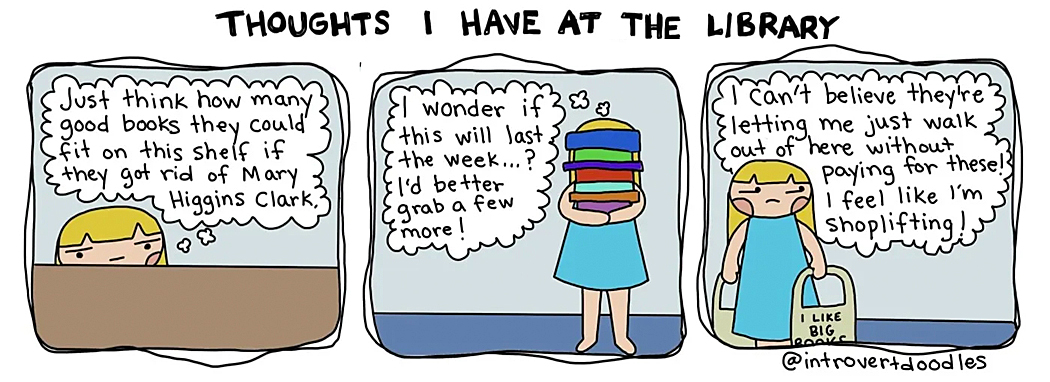
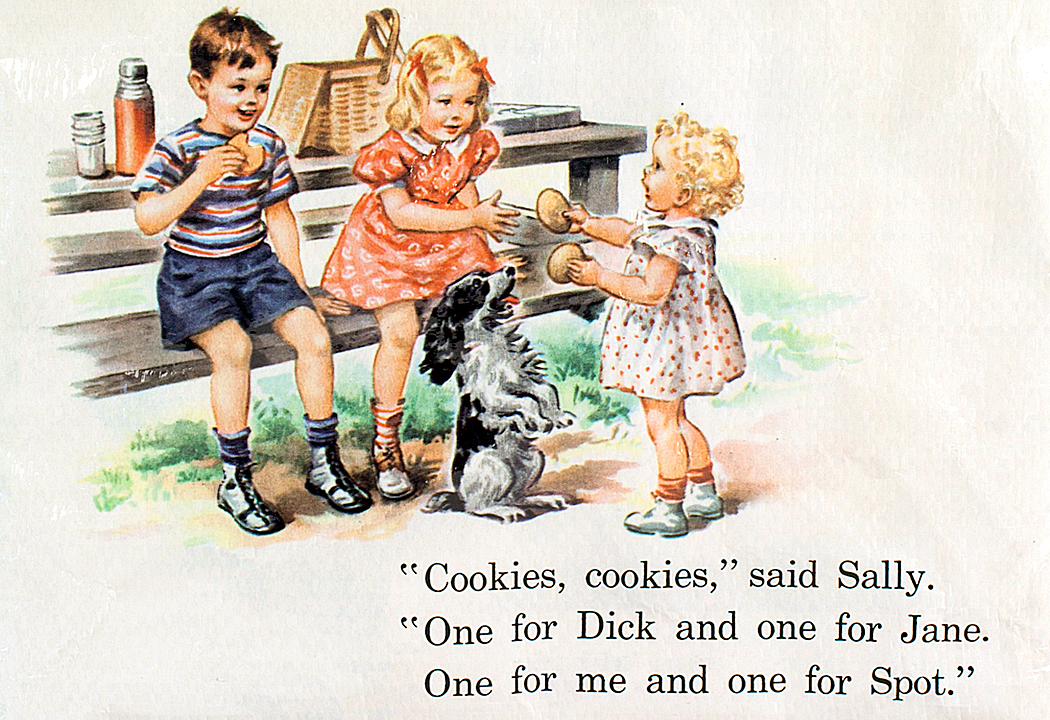
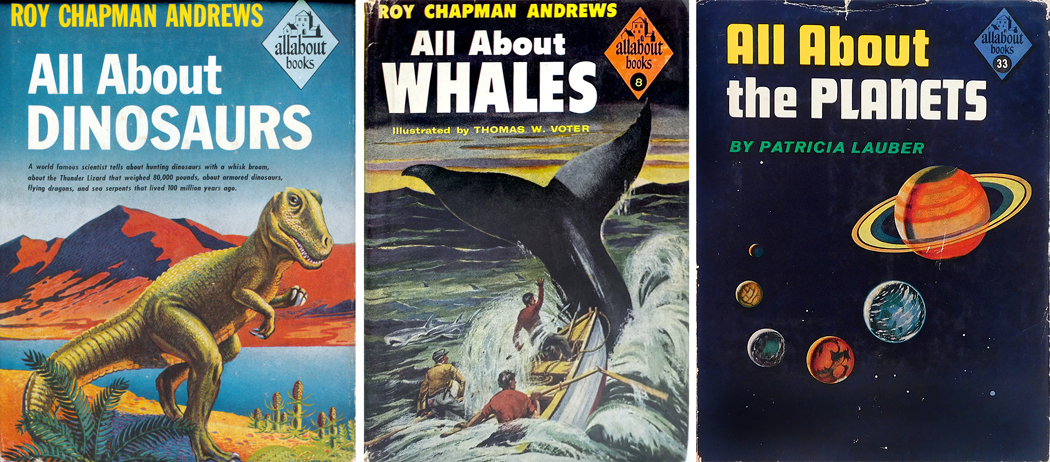
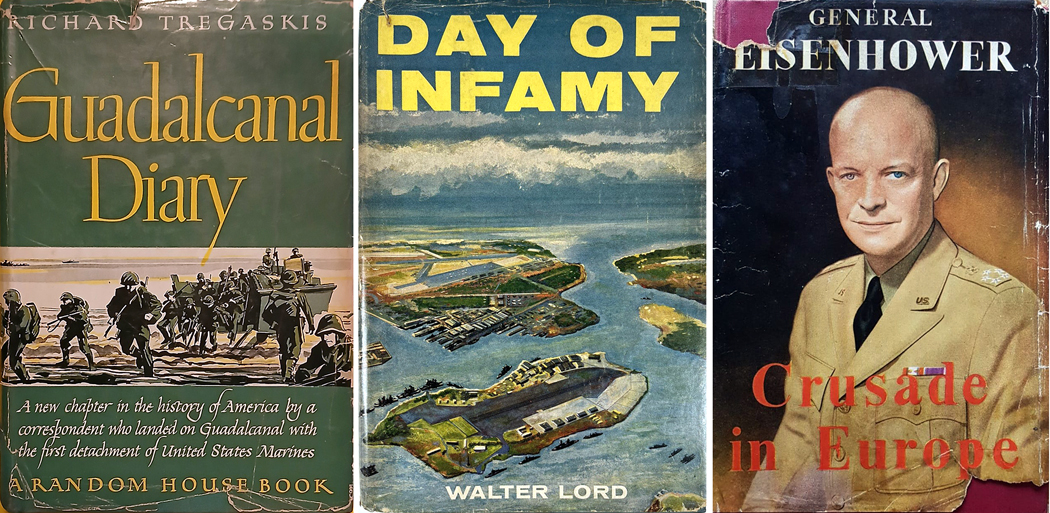
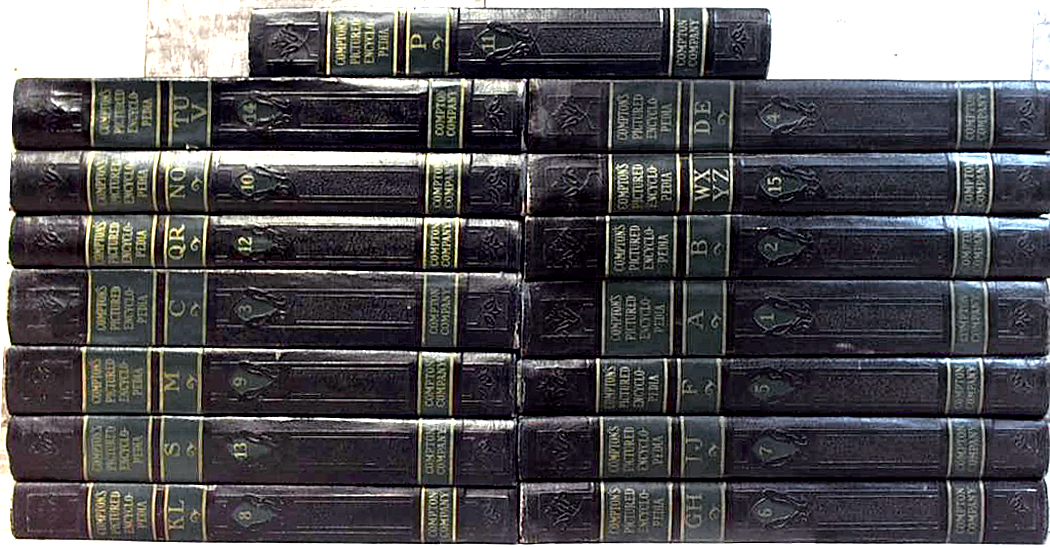
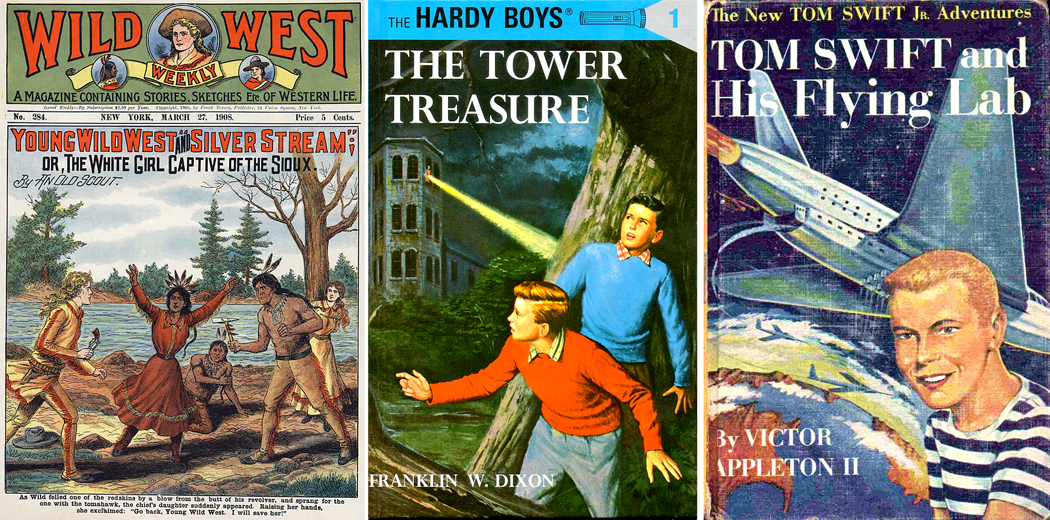
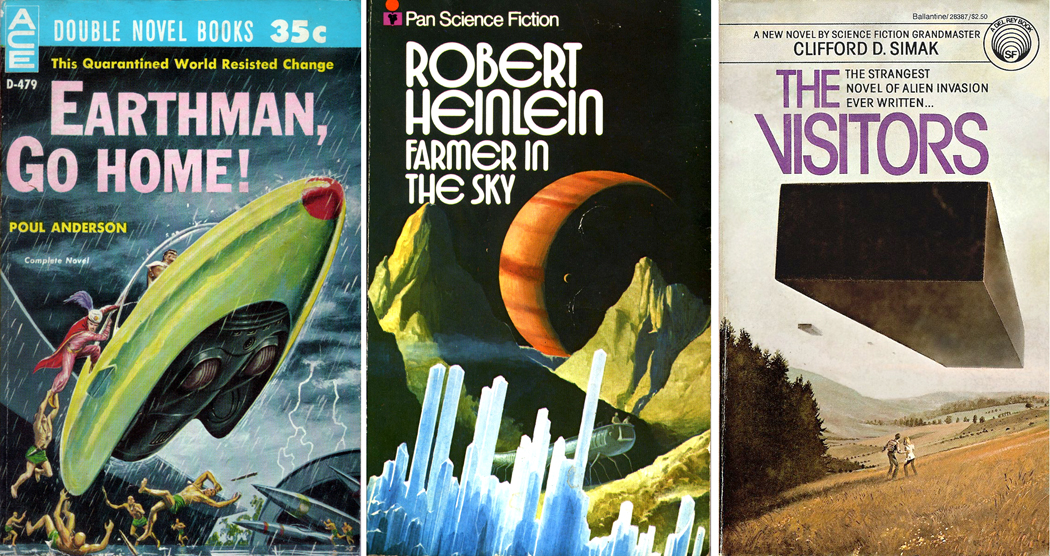
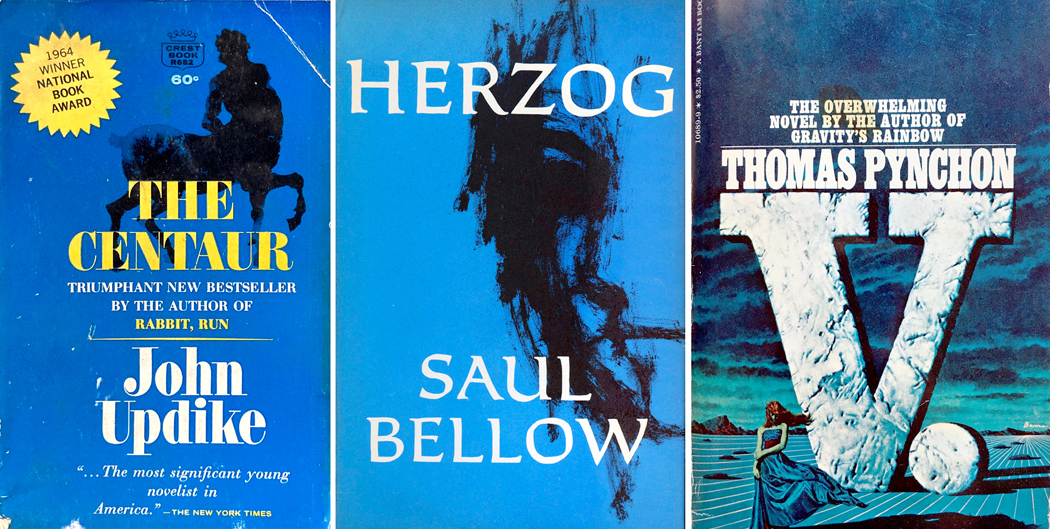
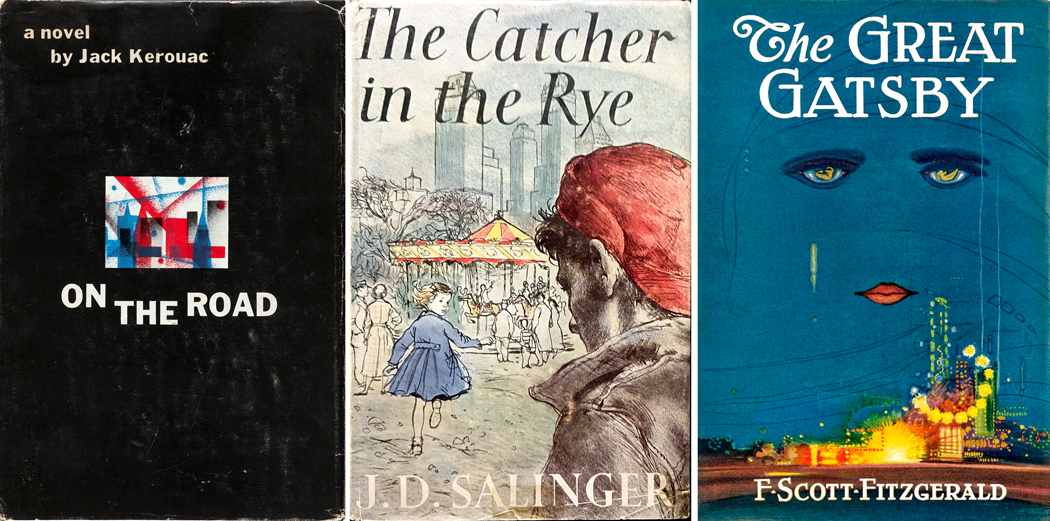
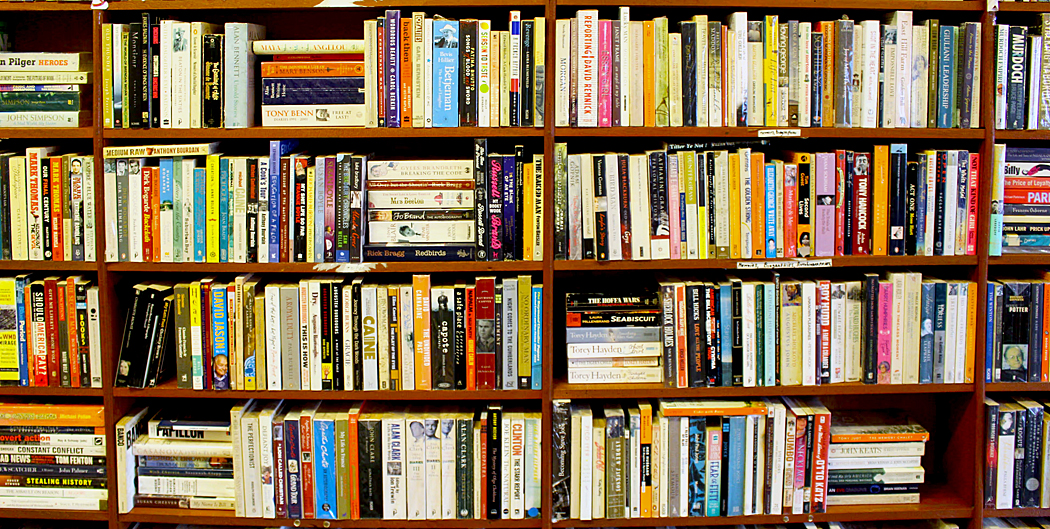
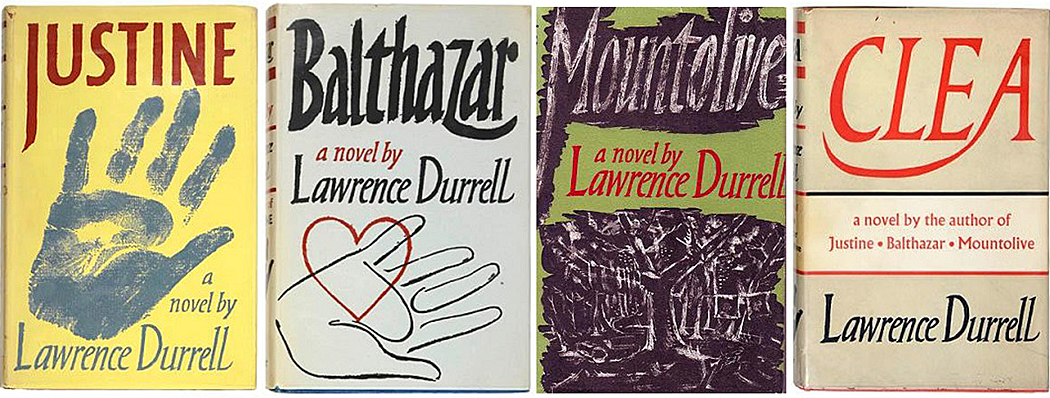
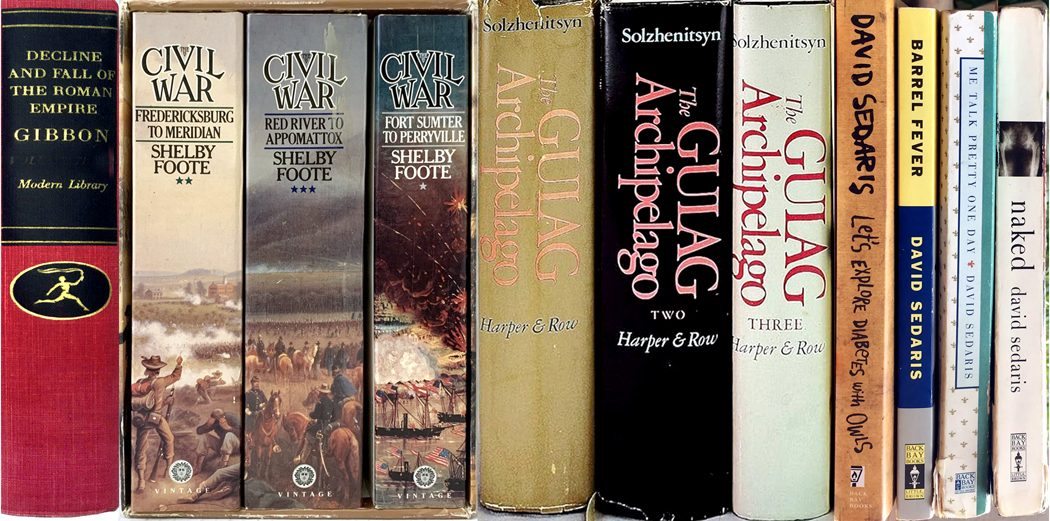
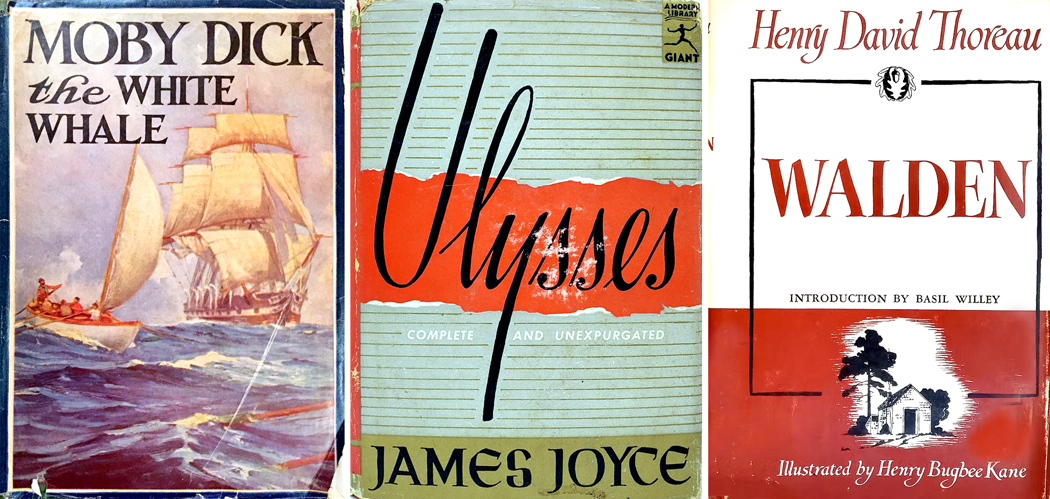
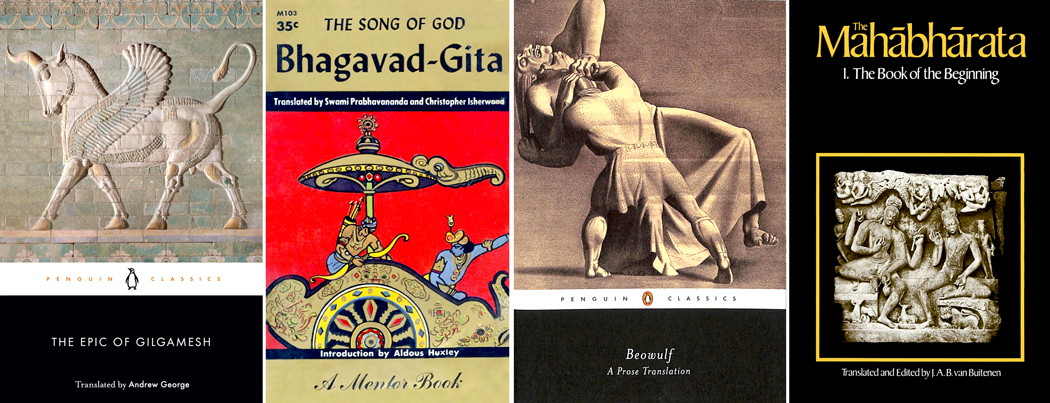
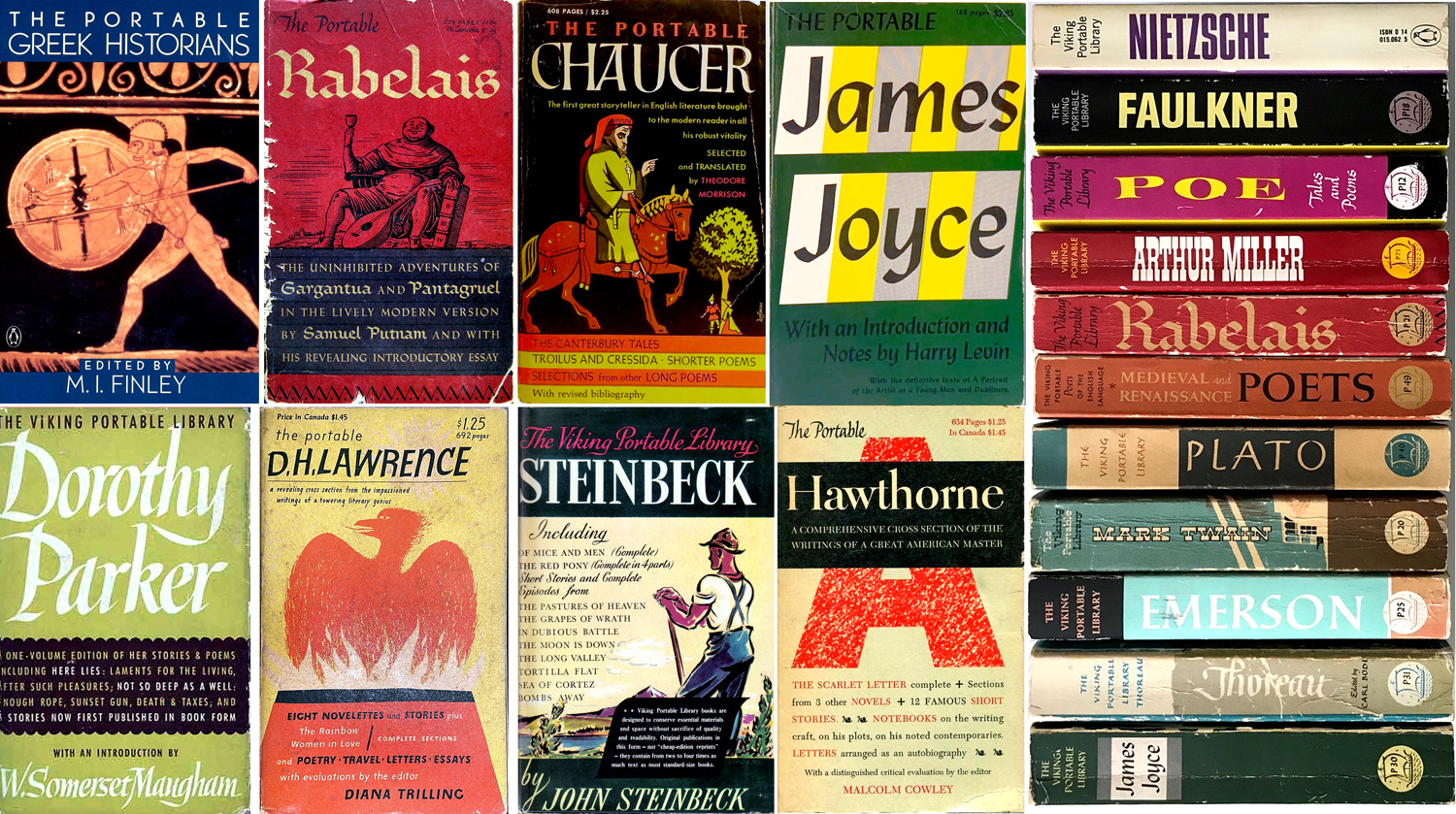


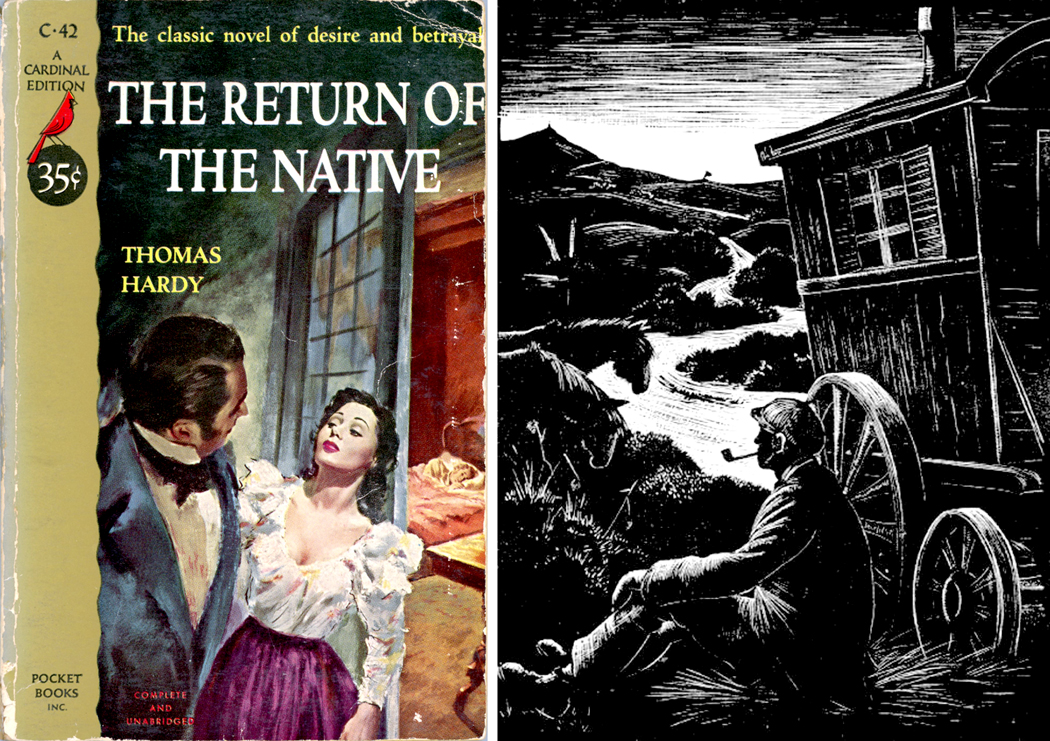




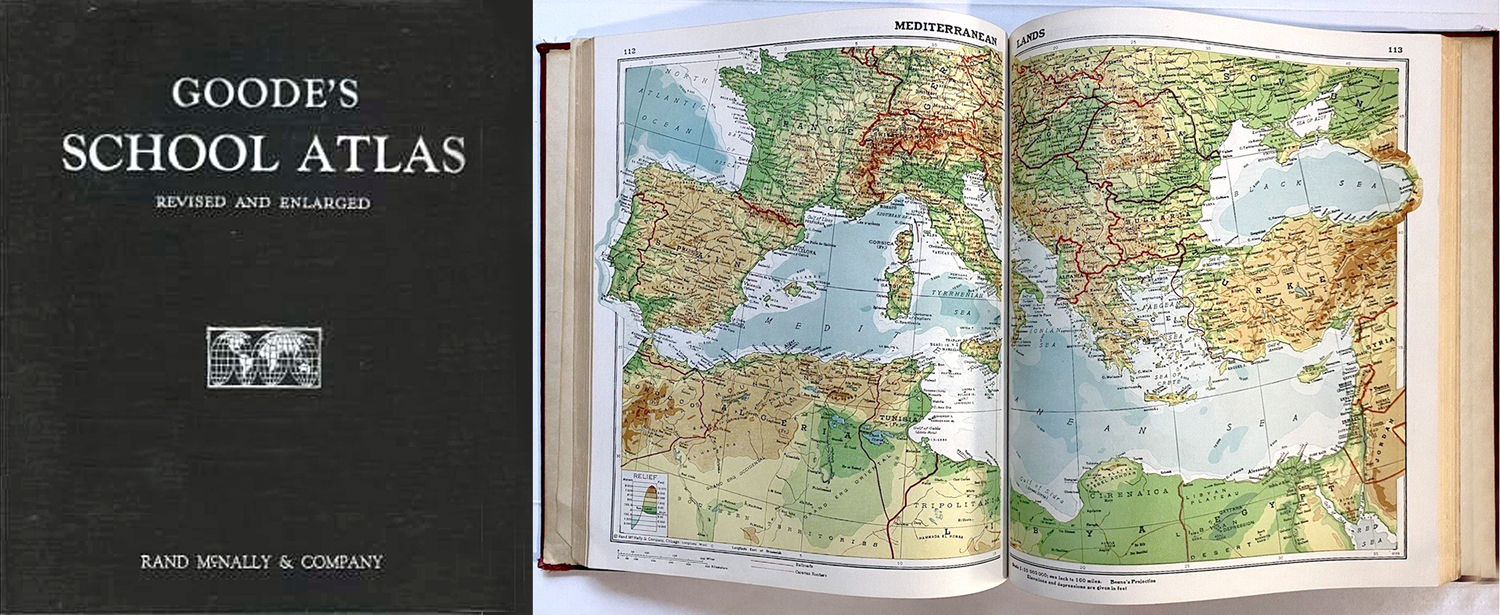


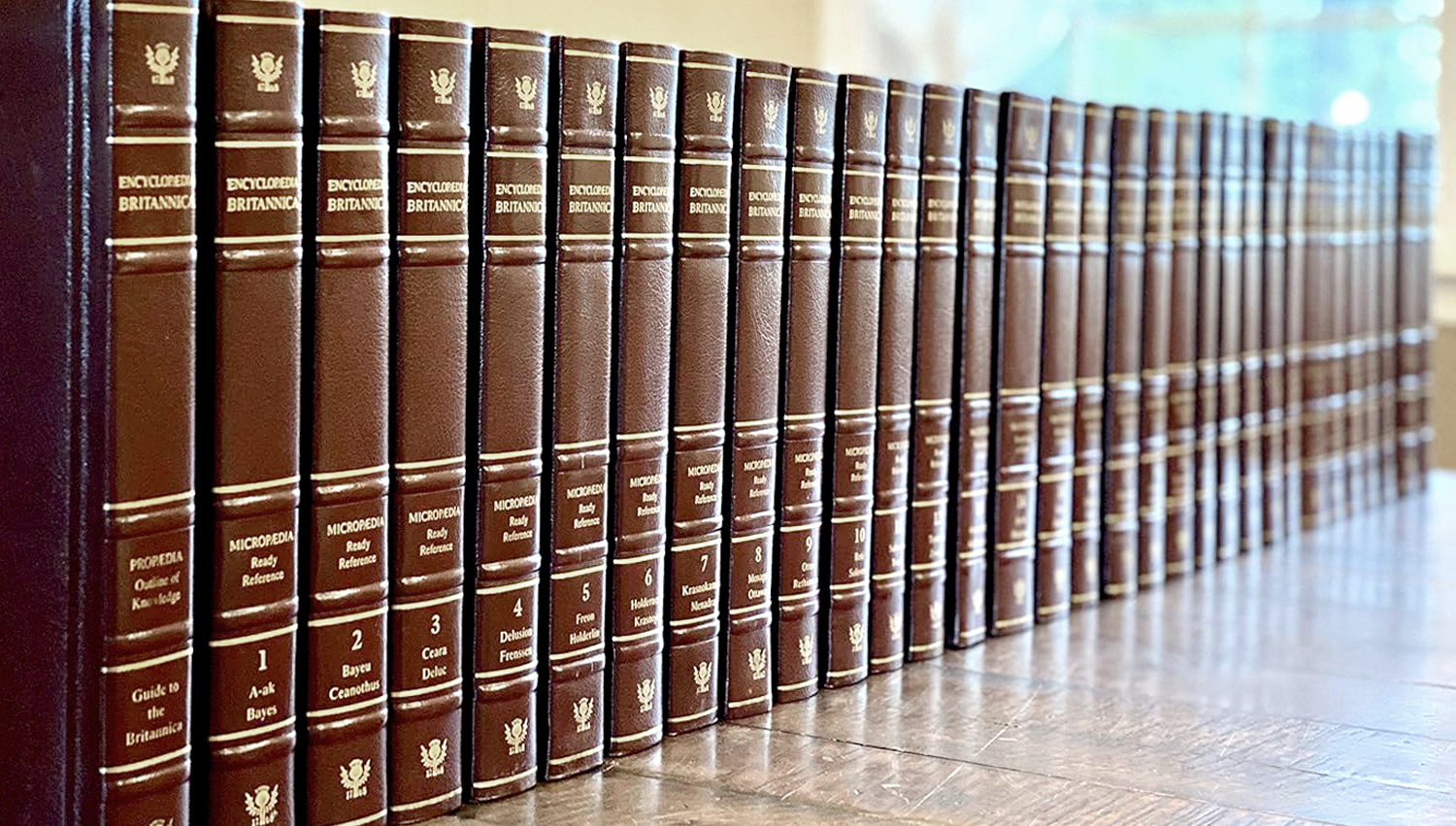
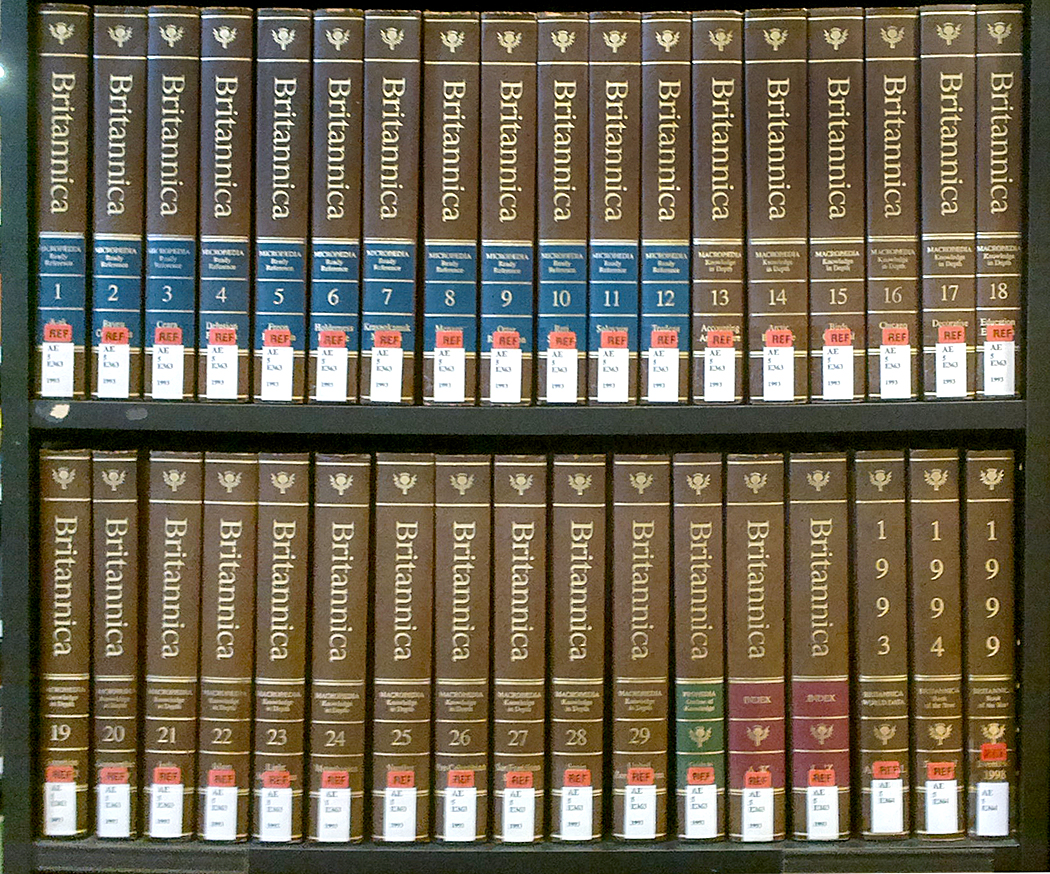
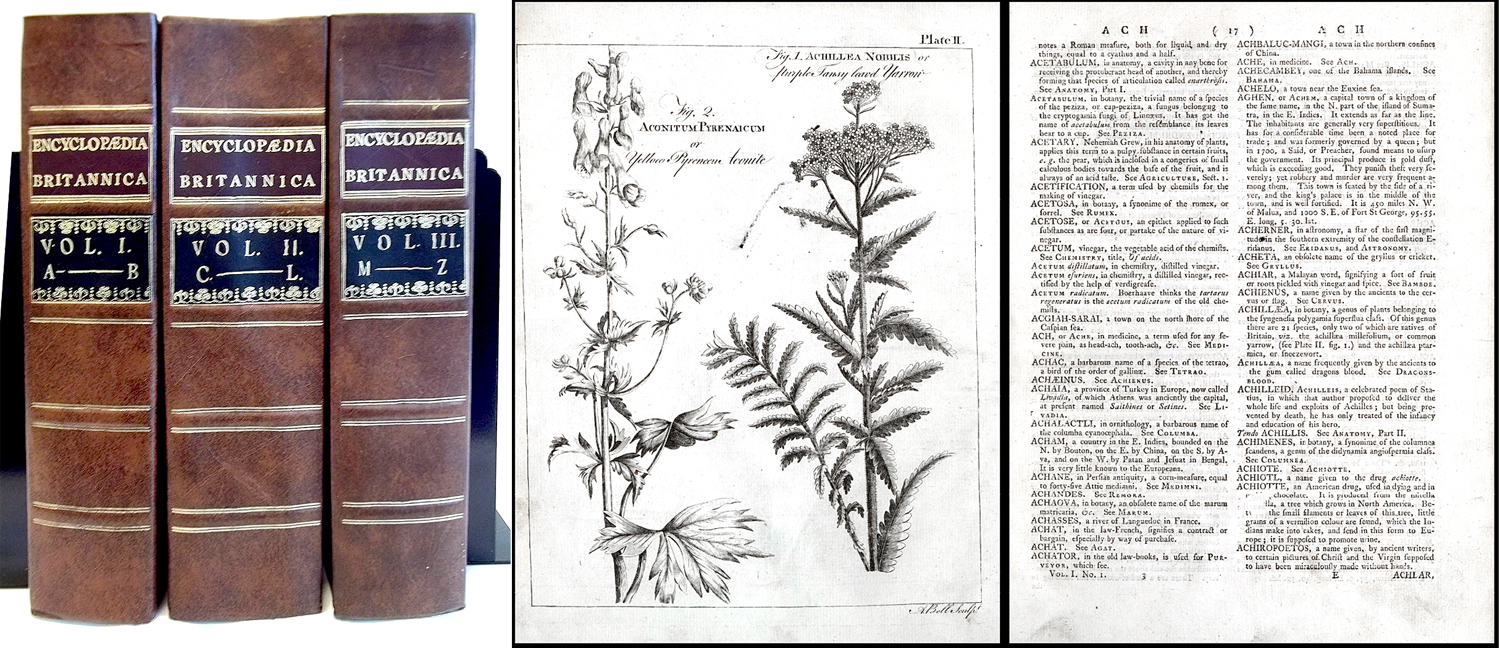
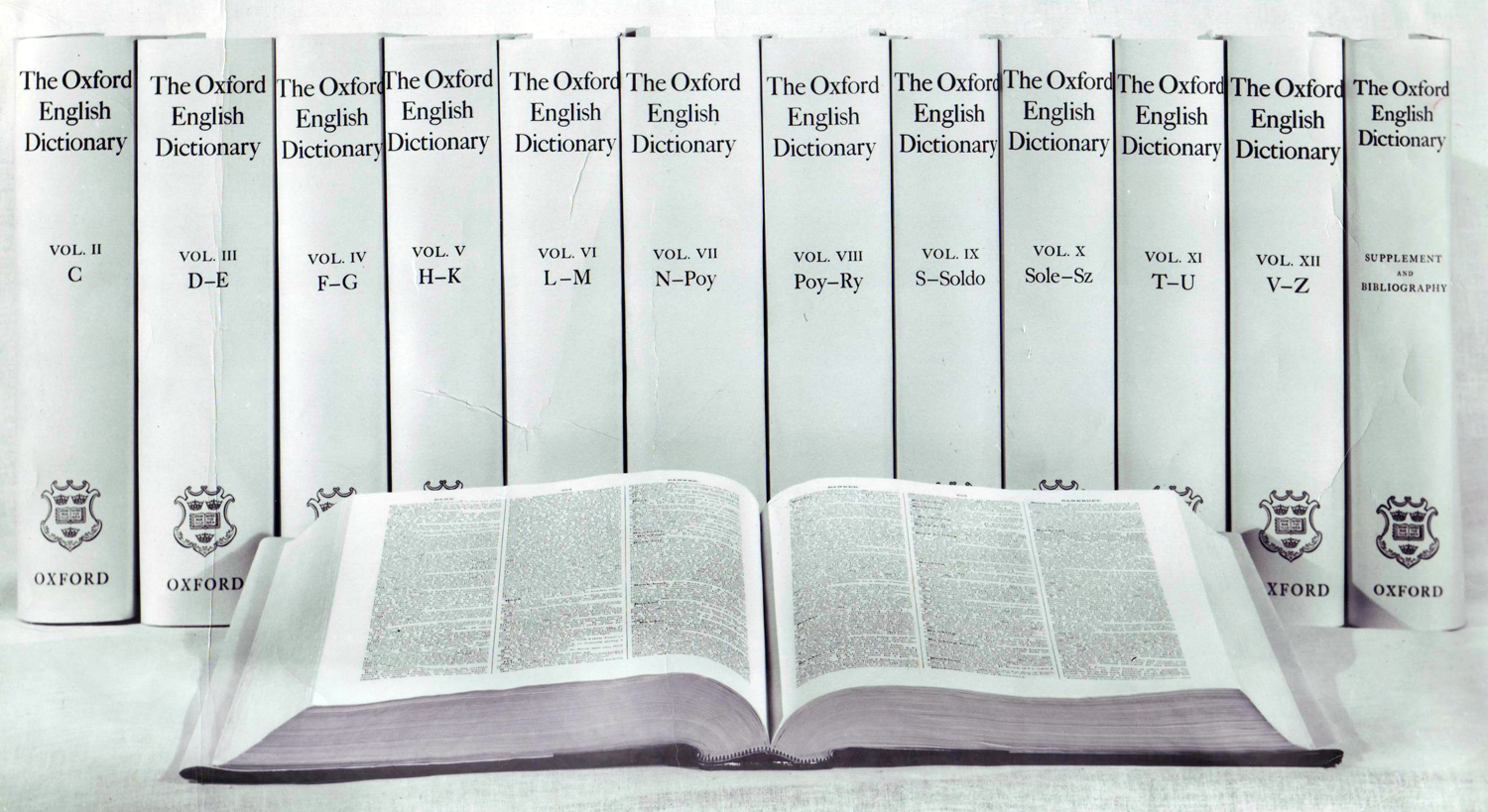

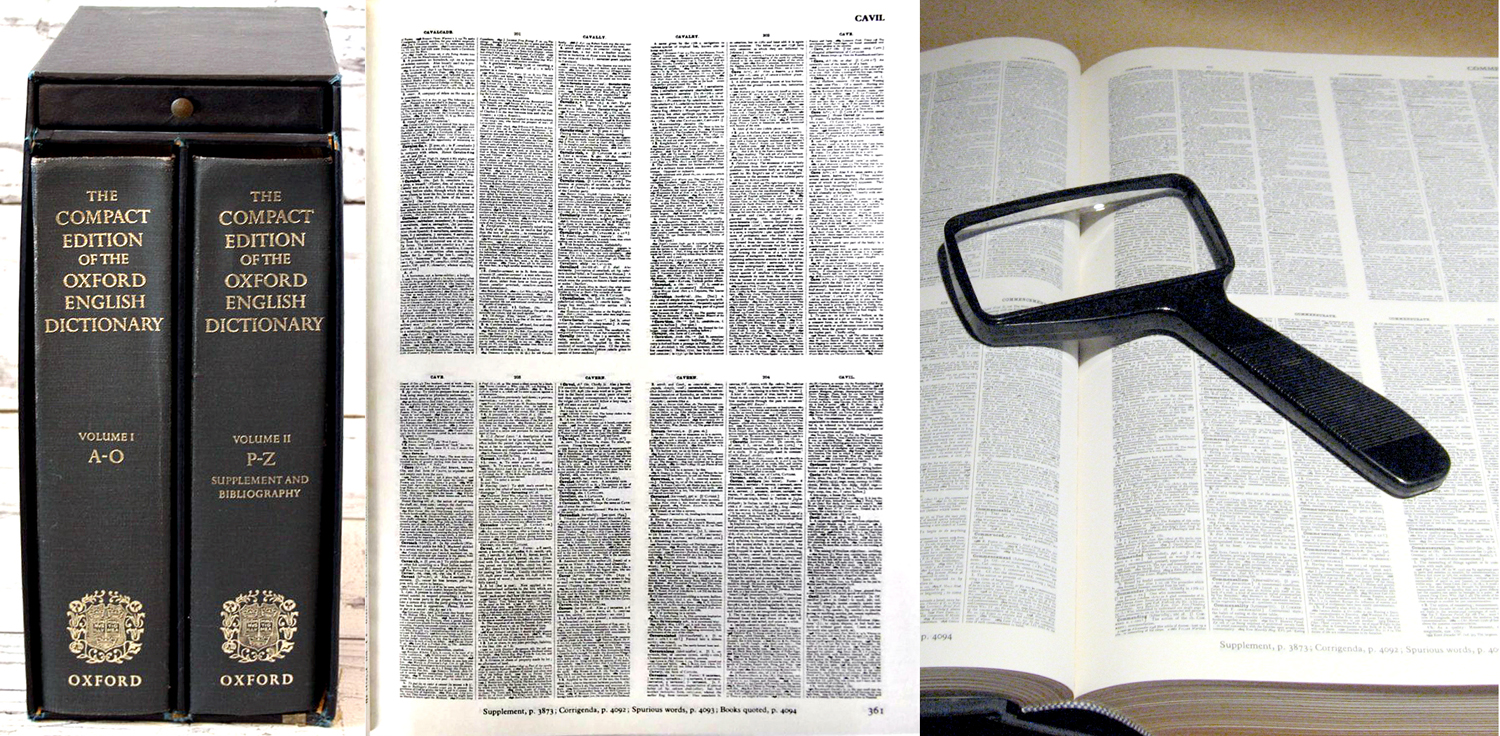


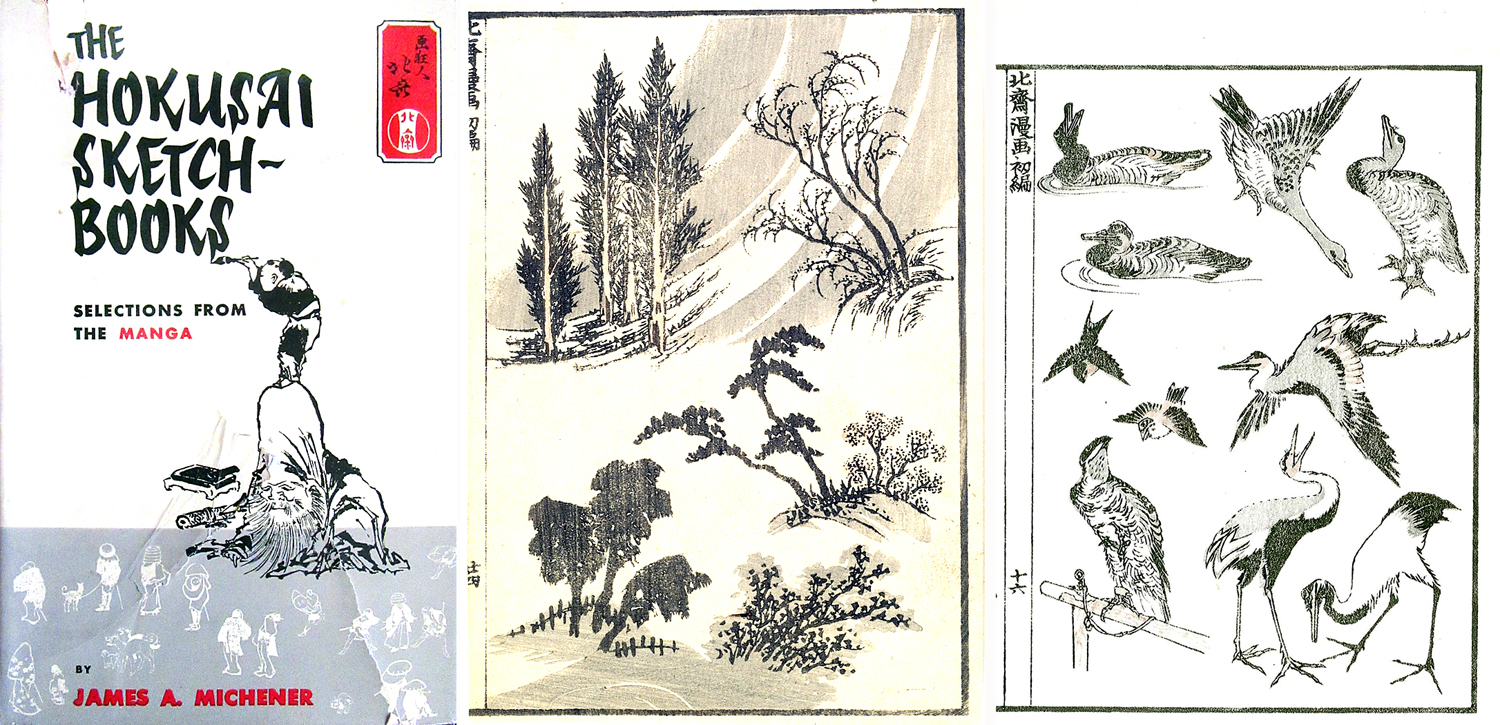

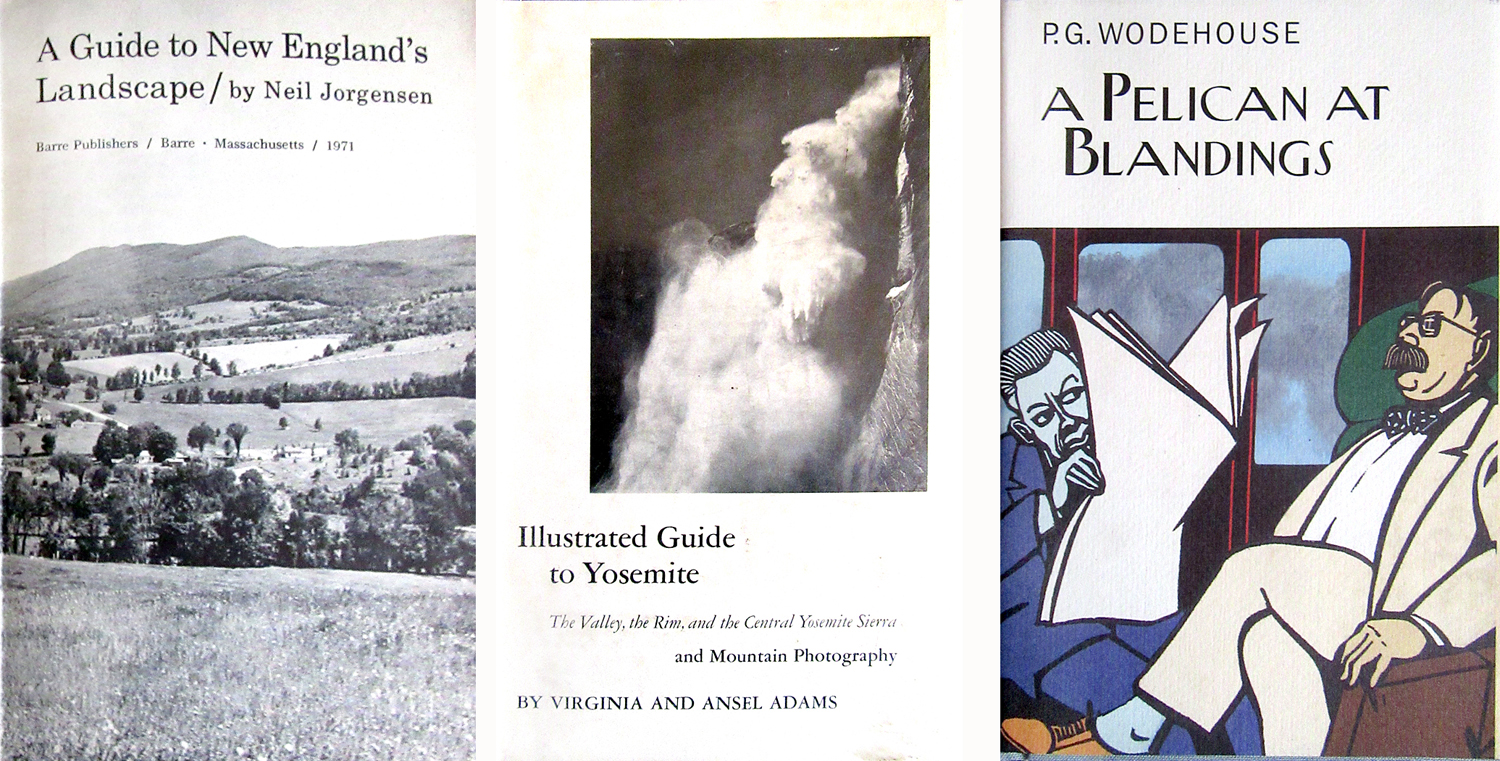
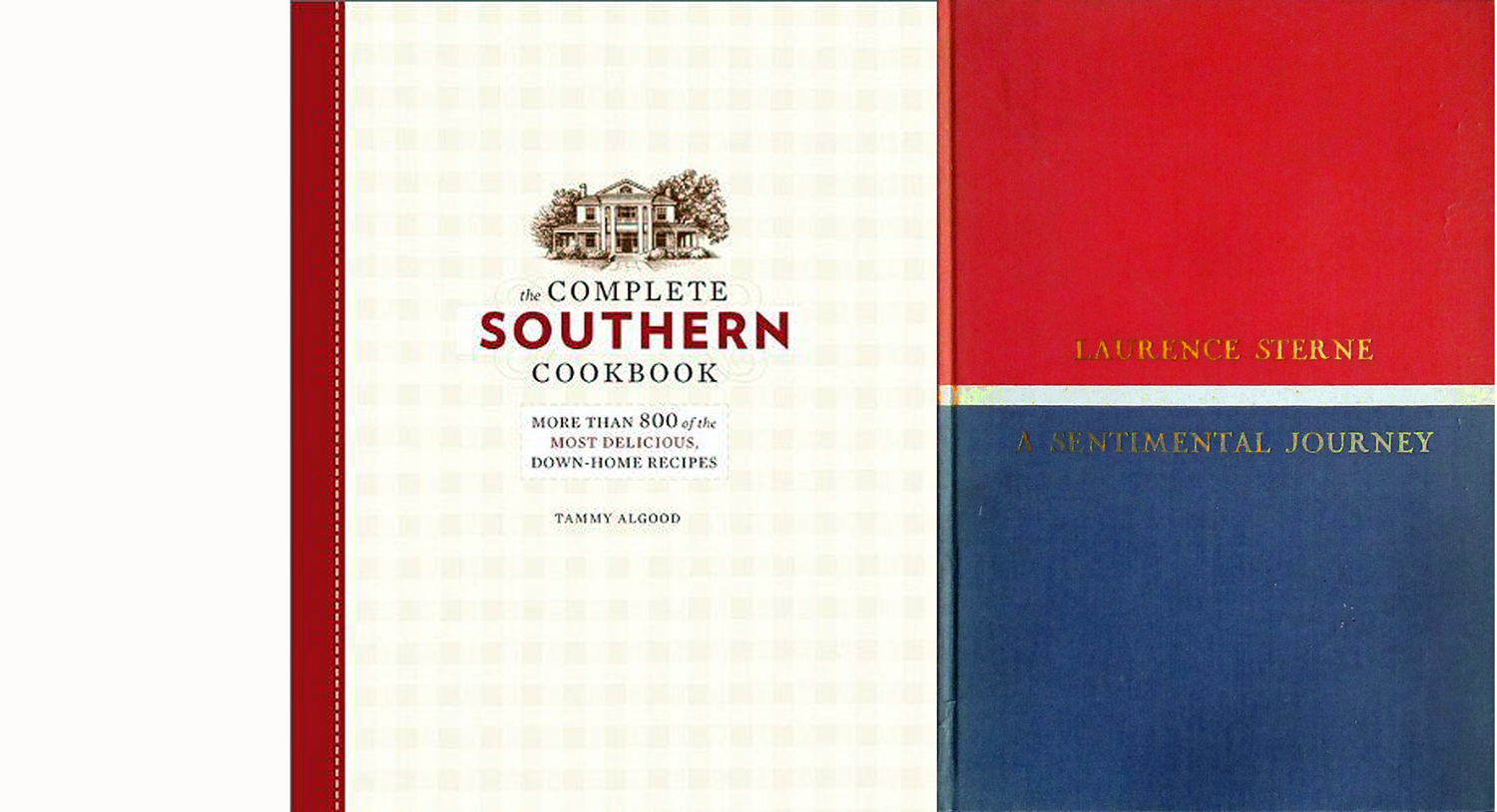

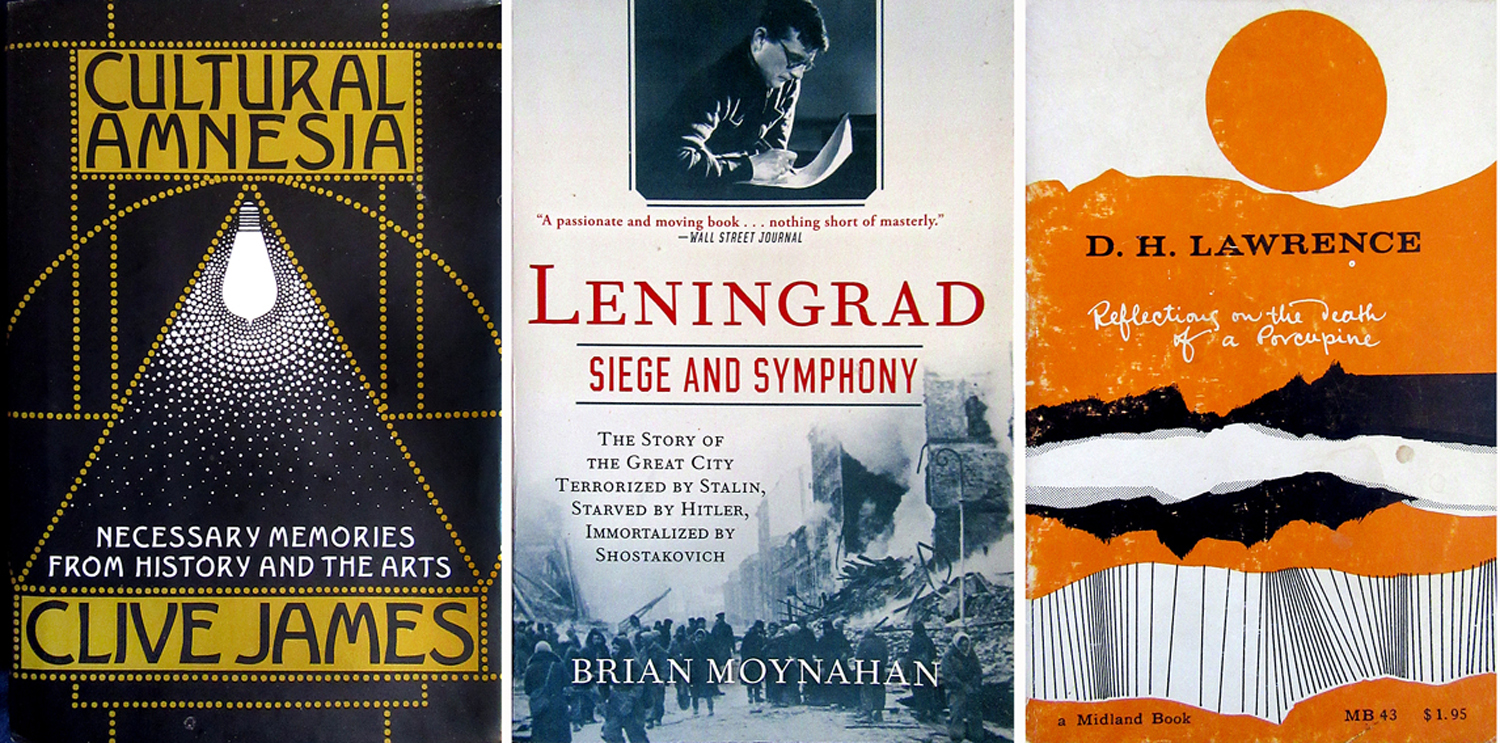
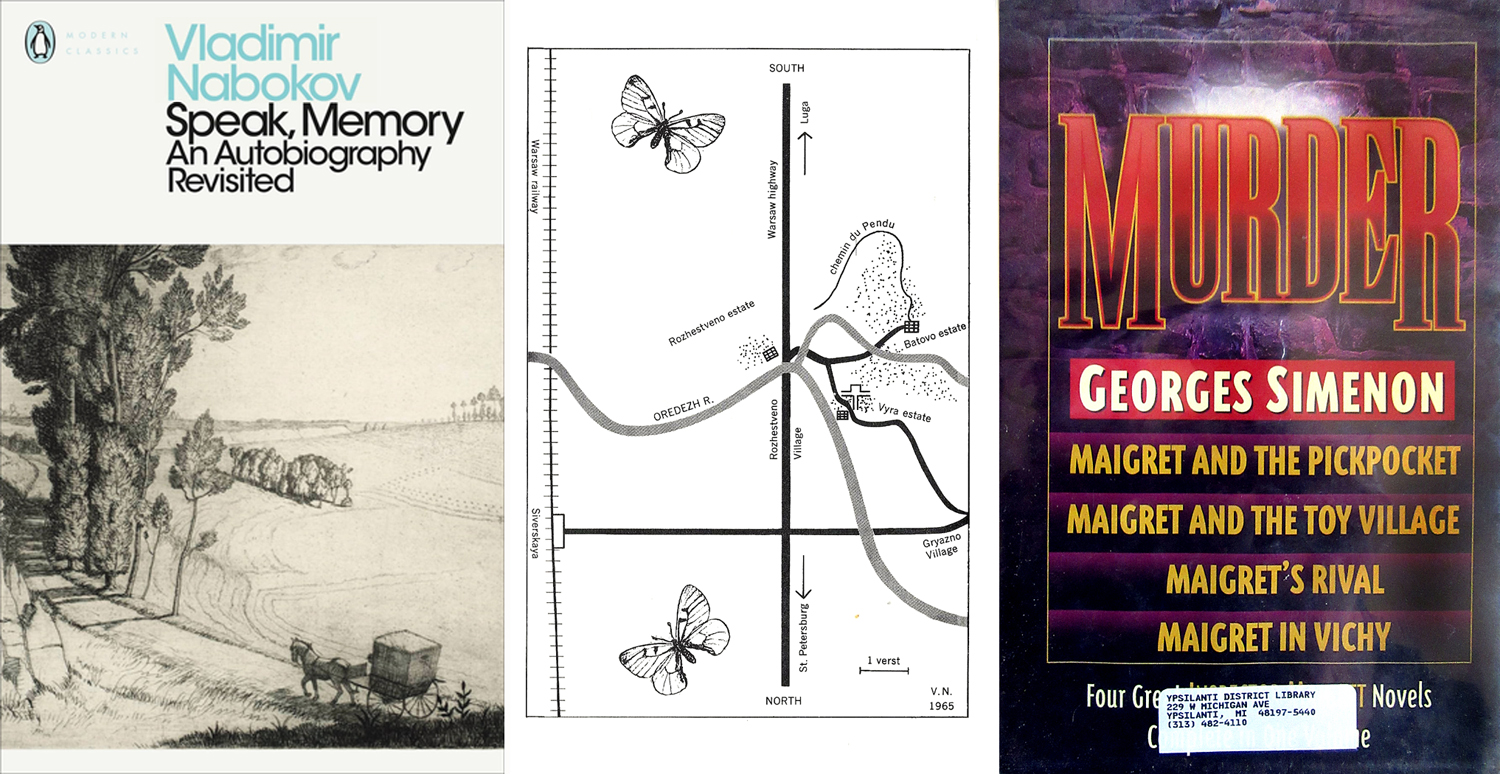




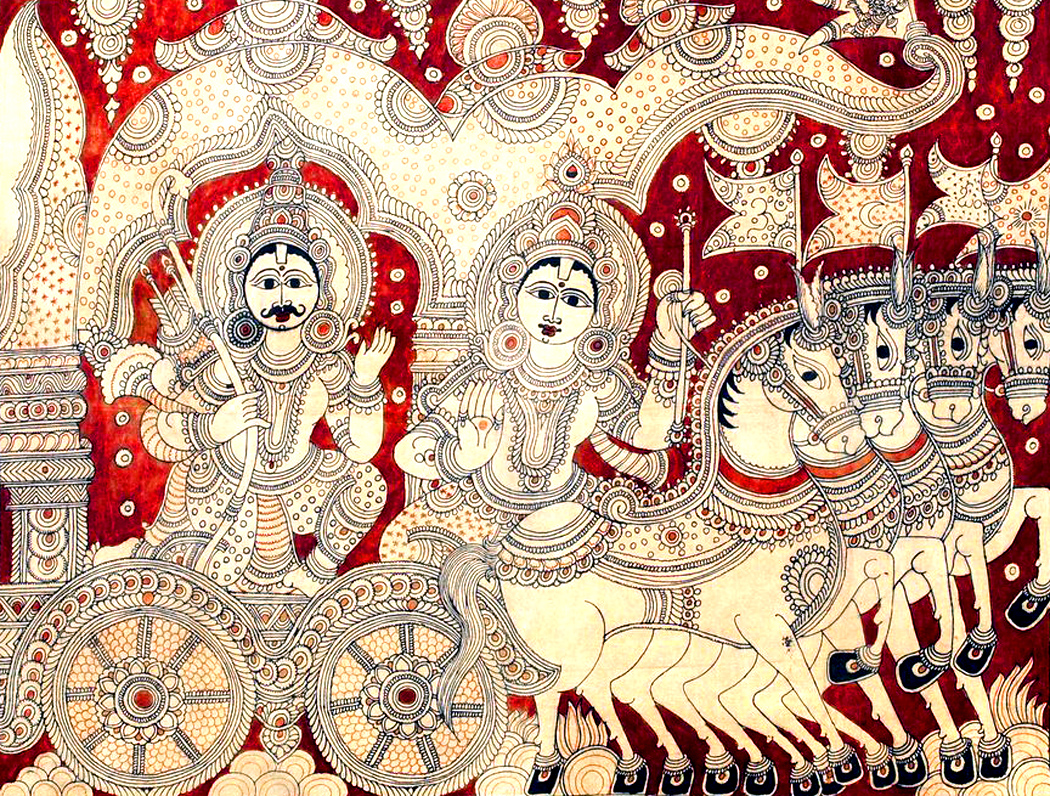


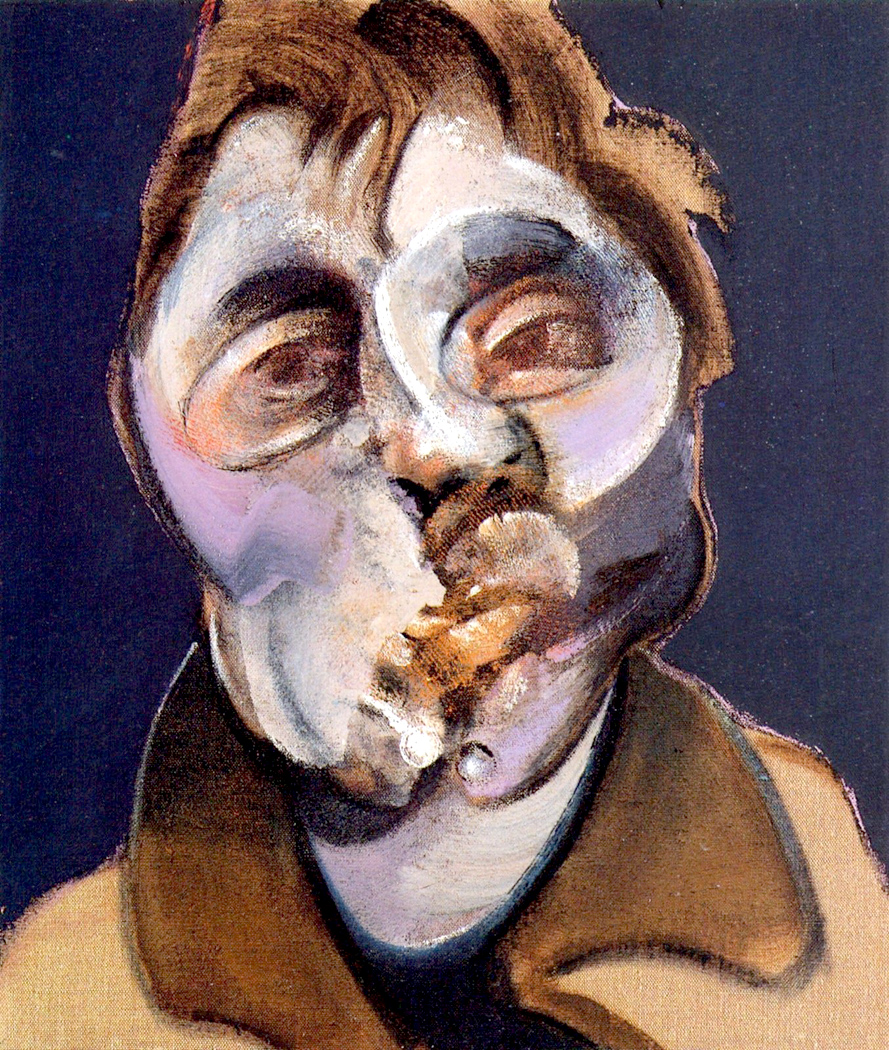
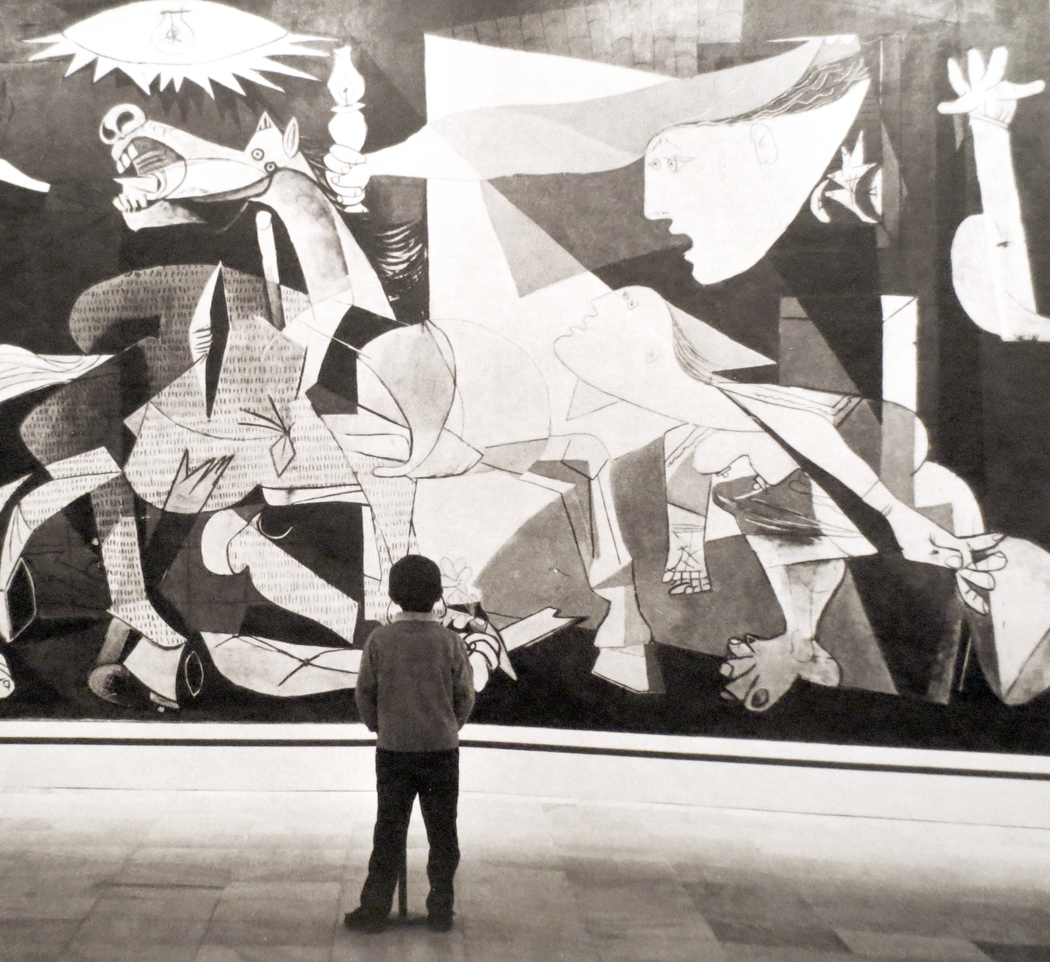


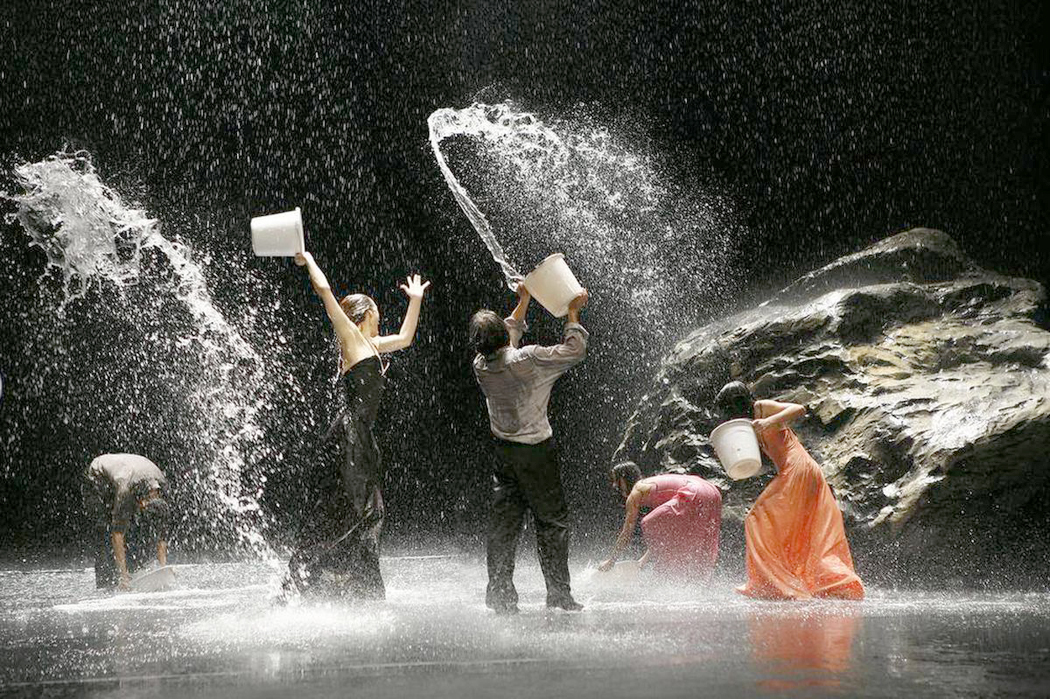
 Richard Nilsen