Archive

Tag Archives: regionalism

I have lived in four quarters of the continental United States. Born in New Jersey; left for college in North Carolina; moved to Seattle; returned to tidewater Virginia; spent 25 years in the desert Southwest; retiring in the mountains of N.C. In that time, I came across the fact of regional cultural differences. 
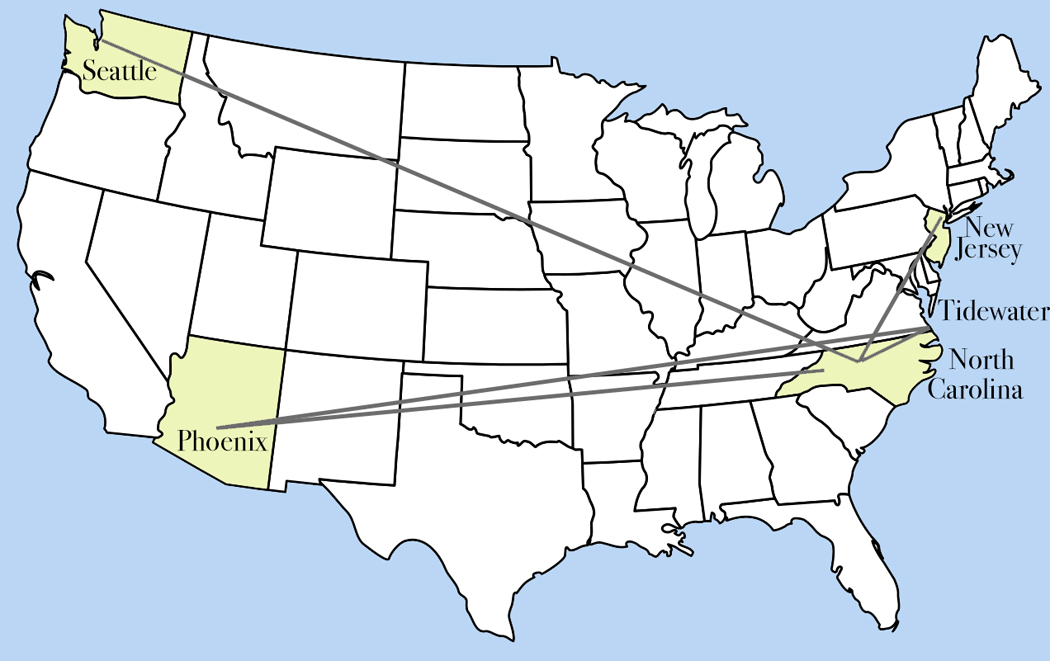
Over my seven decades, though, I have seen those differences thin out. The Southern accent I heard in 1966 can still be found, but not so thickly, nor so prevalent as the one greeting me when I went to North Carolina for college. 

Moving to the South when I was 17 years old was a shock. It was a completely different culture. In fact, the first thing I saw arriving at Guilford College was a huge homemade sign hanging from my dorm that read, “FORGET? HELL!” The Civil War was something in history books for Yankee me; in the South, it was in the soil. 

The first time I was blindsided by these cultural differences was when my family took a summer vacation trip to Washington D.C., and on the way, in Maryland, we stopped for lunch and when I ordered a hamburger, my 8-year-old self was shocked, even horrified, that it came with mustard. At that age, you are pretty certain that what is familiar to you is what is normal, and that what is normal is “right.” Mustard did not belong on a burger. Ketchup did. Mustard was for hot dogs.

Food is a major part of the differences, especially the ones that persist. No one ate pickled herring in the South, and I couldn’t find a decent kaiser roll, to say nothing of pastrami or a real pizza. Cabbage was turned from a hot vegetable into slaw; instead of spinach, there were collards. (I later became quite fond of Eastern Carolina barbecue, hush puppies, and fried okra. In New Jersey, okra, if it ever appeared, was boiled and slimy. I now order me some “fried okree” whenever it’s on the menu.)

The regional differences have been sanded smooth over the years, as national chains supplant local businesses, nationally watched TV has blanded out the accents, and population migration has averaged out some of the distinctions. But vestiges of the flavor remains. 

While the shock of easing from the North to the South is likely the greatest between regions, each section of the country had its idiosyncrasies. 

When I moved to Seattle, there were salmon and giant geoduck clams (say, “gooey-duck.”) The design influence of Northwest coast Indians was common. And over the city, seen on a rare clear day, was a looming Mt. Rainier, somehow indistinguishable from the clouds. There were Rainier Beer commercials on TV. The populace was divided between Rainier drinkers and Olympia drinkers (locally known as “Oly.”)

In Arizona, there was great Mexican food everywhere, food so good that I miss it now, when eating at the ubiquitous Mexican restaurants outside the Southwest, the same way I miss New Jersey pizza. Yes, it’s still good, but nothing like the real thing. What they call “too hot” in North Carolina doesn’t even register on the tongue trained in Arizona. I’ve never had a green corn tamal anywhere that came close to those at the El Bravo restaurant in Phoenix. 

But it isn’t just food that I wanted to write about. When I first came South in 1967, in my innocence, it hadn’t occurred to me that along with the change in accent from “dese” and “doze” to “y’all,” I would also confront a very different set of courtesies, different gender expectations, along with a different diet. 

The most obvious was the awareness of race. In New Jersey, skin color wasn’t of much concern. By eighth grade, I habitually took the bus from the street in front of my house to Manhattan, where I spent many happy hours in the museums and book stores. The city was a vast mixture of ethnicities and the ferment was heady. It was also “normal.” 

When I got to college, I learned that such a mixture was not considered normal. It wasn’t so much hatred, as it was a completely different attitude toward race. Everyone seemed aware of it at every turn. The east side of Lee Street in Greensboro, was where the “coloreds” lived. The barber near the college refused to cut the hair of our Sikh history professor because, he said, “We aren’t trained to cut black hair,” despite the fact that Dr. Suri, being Indian, was not black and the hair under his turban was notably straight. His skin was dusky. 

There was obvious antagonism in some quarters. When the future NBA star M.L. Carr played on our college team (I went to a Quaker school, where segregation was not practiced, at least not overtly) and went to the local hash house with his white teammates, someone taking exception cut the brake line on their car while they were inside, causing them to crash on their way back to school.

And it could be downright ignorant and ugly. In 1968, a group of us liberal-minded Guilford students decided to visit a Ku Klux Klan rally in Liberty, N.C., to see what it was like. It was as vile as we had feared, including a cross burning and a main speaker who was also county sheriff. The smell of alcohol was in the air, along with the kerosene used to douse the rag-clad cross. I found out that they hated Catholics almost as much as they hated Jews and … you get the picture. 

But most of the time, it wasn’t that obvious, just that the city bus through the upscale Starmount development left the main road to carry Black housemaids in the morning to their jobs, and in the afternoons back home. The infrastructure was designed to advantage racial expectations. 

So, it wasn’t just race. Where I grew up in northern New Jersey, the populace was heavily Roman Catholic. My Boy Scout leader was Mr. Weinstein. Half the school spelled their surnames with a vowel at the end. I was best buds with Aurelio Orlandini. Some of my friends went to parochial school and had tales of nuns with rulers. Protestants went to church, Catholics went to Mass, and Jews went to temple. Just variant religious beliefs. Again, the mix seemed natural and we hardly gave a thought to it. At the Klan rally, however, even Methodists were suspect. 

It was also manners. When I later married a Southern woman, she scolded me if I didn’t walk on the traffic side of the sidewalk. I wasn’t being discourteous; I had never been trained. Calling women “ma’am” or men “sir” wasn’t a thing, either. I had a lot to learn. I was used to, “Hey, Bud…”

In Jersey, the only marker of driving from one town to the next was a roadsign that said, “Entering Bogota” or “Entering New Milford.” The population was spread evenly over Bergen County, with no breaks between towns. When I got to the South, there was farmland or woods between settlements. How quaint, I thought. 

People talked slower, moved slower, and while I grew up prioritizing efficiency, I learned that efficiency was considered merely rude below the Mason-Dixon line. Wait for that old lady on the corner to cross the street, even if the car can get out of her way much faster than she could get out of my way. I have lived in the South, now, longer than anywhere else, and I am now slower, too, and not just because I am old. Just yesterday, in the grocery store parking lot, I stopped the car to let a man pass in front of me. It hit me then that I have become acculturated. And it made me think again about all of this. 

The plunge into the South as a callow youth may have been the biggest cultural shock, but each major move in my life gave me new surprises.

I knew snow in New Jersey, and humidity in North Carolina, but in Seattle, I learned that a constant drizzle wasn’t even considered rain. It took a downpour for anyone to consider an umbrella. Grey skies was the norm, and a sunny day was a news event. In Seattle, everything was on a hill, and a the Cascade Mountains walled the east and the Olympic Mountains dominated the west, across Puget Sound. 

When my wife and I moved to Phoenix, where we lived for 25 years in the desert, instead of rain, we had endless days of sunlight, and eight months of unbearable heat. It may have been a dry heat, but when it hits 122 degrees, and the airport shuts down because of it, you aren’t much aware of the humidity index. And the so-called dry heat turns quite soggy in July and August with the advent of the monsoons, dragging humid air up from the Sea of Cortez. In most months, after taking a shower, you don’t need a towel; by the time you begin dressing, you are already dry. During monsoons, you stay indoors with AC or change shirts several times a day.

We thought nothing of driving an hour and a half to Tucson to watch an opera and then drive back when the curtain fell. Distance was felt differently from when I grew up, and the trip from Teaneck to Cliffside Park, where my grandparents lived, seemed expeditionary, although it was probably more like 7 miles. But then, I was a little kid back then and the world seemed immense to my novice brain. 

I came to love the desert, although I never warmed up to Phoenix, which I used to call “Cleveland in the Desert.” Phoenix offers little charm, but lots of traffic. Still, on weekends we could drive out of the city to beautiful desert, mountains, and canyons. I got to travel almost everywhere in the state, writing for my newspaper. I wrote hundreds of travel stories. 

But, I was, for the bulk of my career, an art critic. I grew up going to the Museum of Modern Art in New York, the Guggenheim, the Met, the Whitney. The city was attuned to international art. Other regions tended to feature regional myths and tastes, so, in the South, there were lots of paintings of tobacco barns and farmhouses. In Seattle, ravens and killer whales in the style of Northwest Coast Indians. Phoenix was awash in cactus and cowboy art. Of course, when I have traveled elsewhere in the U.S., those regional themes show up, too. 

But after decades of increasing cultural uniformity, I see the country breaking up again, region from region. Not only red states from blue states, but rural from urban, Anglo from Hispanic. Not just the former Confederacy rebuilding the Lost Cause mythology, aiming its ire at the formerly industrial North, which spends very little time thinking about them. The working-class Northerners deriding the college-educated expertise. Everyone eyeing everyone else with suspicion. 

I have come to think of the United States as comprising seven distinct regions, each with its own internal differences (i.e. barbecue vs. gumbo), but increasingly tribal allegiances. There’s the Northeast; the South; the Midwest north; the Plains states; Texas (yes, Texas is its own self-regarding region); the Southwest; and the Pacific states. 

(My map has state lines as the borders of regionalism, but in reality, northern Virginia perhaps belongs now with the Northeast, and perhaps western Pennsylvania aligns better with the Midwest. My map is only a broad suggestion.) 

Each has its distinct culture and folkways. Each, like me when I was eight years old, believing its own way is normal, and therefore right. Perhaps this alternating increase and watering down of cultural self-alienation is just a normal pattern of history, like the longterm shift leftward and the retrenchment shift rightward, and then back again, the breathing rhythm of culture, but the current re-stamping of regional passports seems to be making us increasingly insular. Although I’ve always enjoyed the flavor of regional difference, the regions I grew up with were  largely unconcerned with other regions. The new regionalism seems to believe the others are somehow out to get them. I worry.
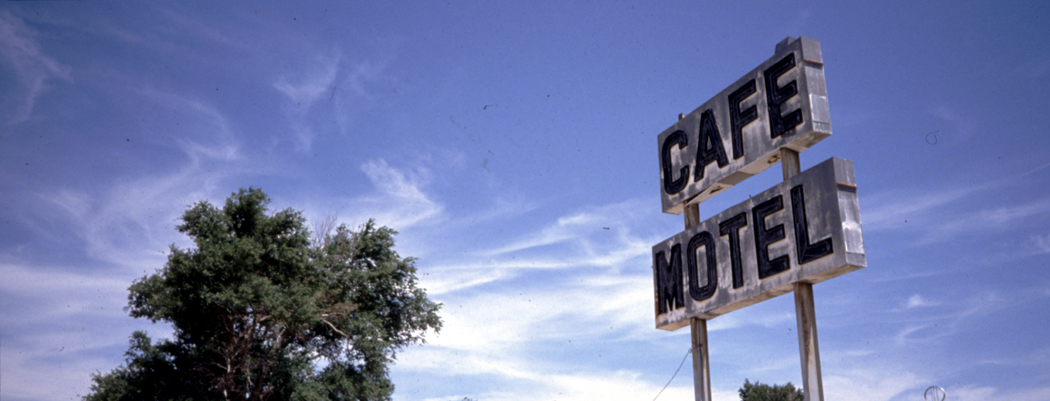
State Line tex-NMTo see the world, you fly around it; to learn about your neighborhood, you walk through it; but to appreciate something about the country you live in, there is nothing better than an automobile.Clouds from plane

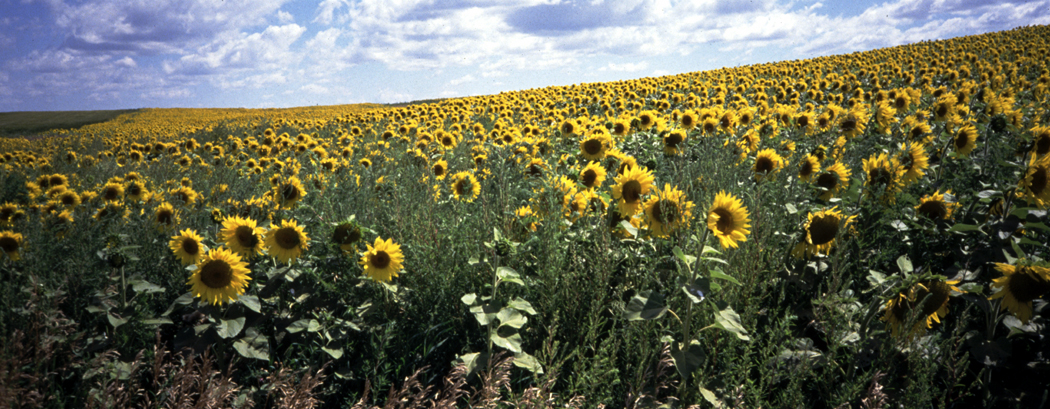
A jet flies too high and fast to take in any detail. The country is too big to slog through on foot. A car is the perfect compromise, letting you pass over a significant portion of the nation each day, but allowing you the leisure to stop and sniff the magnolias in Mississippi, the rank ecstatic yellow sunflowers in North Dakota — and the lingering odor of peanut butter at Graceland.

It’s summer again, and once more, I open up another brand-new Rand McNally road atlas and begin planning a drive around the North American continent.Sunflowers North Dakota

In the past 15 years, I’ve made the round-trip across the United States at least a dozen times. I feel like Magellan when I start once more on the circumvehiculation of America.

I’ve done it alone and with my wife. I’ve done it camping and in motels. I’ve done it in summer and in winter. I’ve done it in as long as two months and as short as two weeks. Last year, I made it from Phoenix to North Carolina over a weekend, but I’m not likely to repeat that butt-numbing feat.

Yet I am planning another road trip this spring.

Friends tell me I am nuts, a masochist torturing myself or a sadist torturing my wife, but I keep setting out.

There is always something new to see, or some old friend to revisit: I’ve been to North Carolina’s Outer Banks something like 40 times, and I’m beginning to develop the same relationship with Maine’s Down East. When I have lived in the East, I couldn’t wait to visit New Mexico again.Baldwin Co. Ala. sunset

There are soft-shelled crabs to be eaten in Virginia, salmon in Seattle. There are pirogis in Wisconsin and scrapple in Philadelphia. You can only get pizza in New Jersey, you can only get barbecue in eastern North Carolina, or a real Cuban sandwich in Miami.

Barns in Pennsylvania have stone foundations; in Georgia, they rest lumber right on the ground. In Wisconsin, the barns are red; in North Carolina, it’s the dirt that’s red; the gray, weathered barns aren’t painted at all.

I remember passing through Iowa and being astonished to see a farmfield filled with hogs and each animal had its private home, looking like a Levittown of doghouses.

In southern Arizona, I passed something very similar, but it was for fighting roosters.Bear Mtn Bridge

American regionalism is alive, despite network television and corporate advertising. America hasn’t yet been completely turned into one great food court of McDonald’s and Arby’s.

If you think you have only a choice between Pepsi and Coke, wait till you pop the top of a Double Cola in Reidsville, N.C.

Try one at the Sanitary Cafe, where calf’s brains are the breakfast special.Cadillac Ranch Amarillo Texas

I’ve been to most of those landmark places you’ve heard of: International Falls, Minn.; Walla-Walla, Wash.; Langtry, Texas; Cairo, Ill.; Appomattox, Va.; Intercourse, Pa.; West Point, N.Y.

There are some great old iron bridges across the Susquehanna River in Pennsylvania, some great concrete bridges in central New Jersey that speak of the the great age of American highway building in the 1930s.

I’ve been up Pikes Peak in Colorado and up Mt. Washington in New Hampshire.

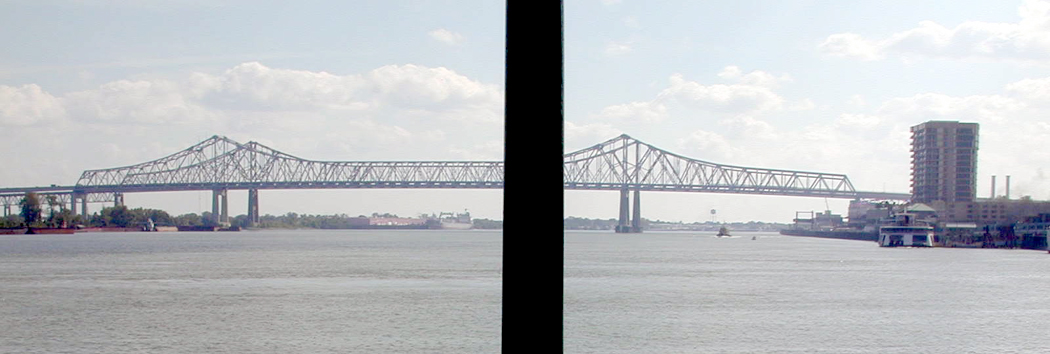
I’ve been over Lake Ponchartrain in Louisiana and across the floating bridge over the Hood Canal in Puget Sound north of Seattle.Columbia River Gorge Oregon-Washington

It helps if you love to drive, and I know not everyone has that passion. My brother hates driving, for instance. He views an automobile vacation like a two weeks stuck in an elevator. He can’t wait for his floor to arrive so he can get the heck out.

But most elevators don’t have windows.

As I watch the landscape pass across my windshield, like a travelog on a movie screen, I get a sense of the whole elephant, not just his trunk or tail.

Of course, we are talking here about a two-lane blacktop trip, not a bland rush down an interstate highway, where one stretch of concrete pavement can be distinguished from another only by the names on the exit signs.factory, trees, Lowell, Mass

It is a particular kind of travel and has nothing in common with the destination-vacation of the tourism industry. I have no interest in waiting on Disney World lines for thrill rides or Lake Winnibigoshish for a week of trout fishing. You can have your three days lounging on the sands of Bimini or your Love Boat cruise.

Instead, I get to travel an arc of the planet, get to feel in my bones the curvature of the earth and the roughness of its skin. It is through driving across its surface that I get some body-feel for the size of the globe: It is roughly 10 times the distance I drive to get from Phoenix to New York City. New OrleansThat’s not some numbers on some mileage chart, but a distance I know by the seat of my pants.

It’s also a lot smaller than the world seemed before I began driving.

In those years, my wife and I have been to each of the 48 contiguous state at least twice and most more frequently; we have been to all but one of the Canadian provinces; and even skirted into Mexico a little bit.

And each of those trips could have produced a Blue Highways, a book-length summation of what we saw and learned.Frosty dawn Wisconsin

Part 2

Over the past decade and a half, I’ve put enough vacation miles on the cars I’ve owned to equal driving around the world 2 1/2 times. You don’t drive that much without learning a few things.

The first is, of course, to stay off the interstates. You may get there faster, but not by much, and you’ll be bored the whole drowsy way. And in much of the country — and especially in the West — speed limits on smaller highways is not much lower than on the four-lanes, and with less traffic.Golden Gate Bridge SF Calif

Have a rough itinerary and plan how many miles per day you are willing to drive. This is more important for a passenger: Driving will keep you occupied, but your partner may go stir crazy sitting in a seat while going across some of the flatter places in Texas; Don’t overdo it. Marriages hang in the balance.

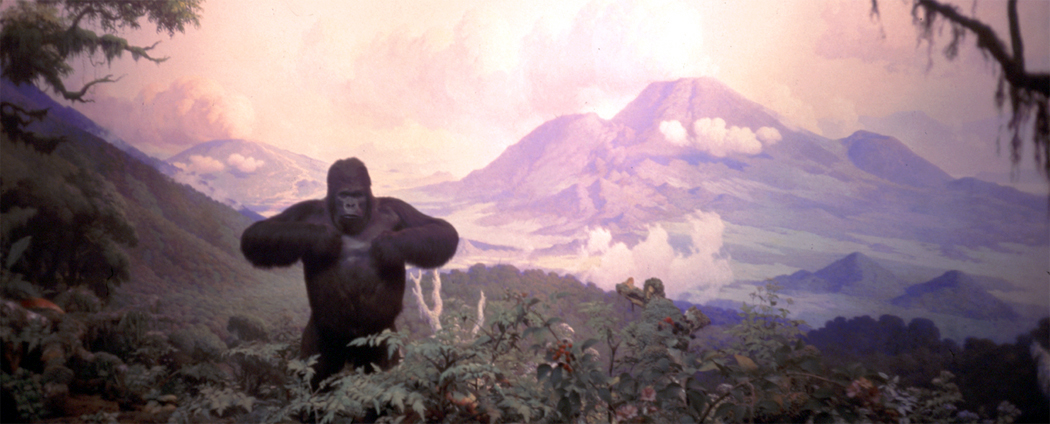
But never make your itinerary too rigid. You will discover unexpected things along the way; let yourself enjoy them.Gorilla, Am Mus Nat Hist04 copy

We never reserve motel rooms, so we never feel forced to get somewhere by nightfall. There are enough motels along the way. Even national parks, with their crowds, often have last minute cancellations. We’ve pulled into the Grand Canyon and into Yellowstone and gotten a room. But have a contingency plan.

One year, we hit South Dakota the week of the Sturgis Motorcycle Rally and there were no vacancies for 200 miles around. We had to drive into the next state to find a room. But that brings up the next lesson:

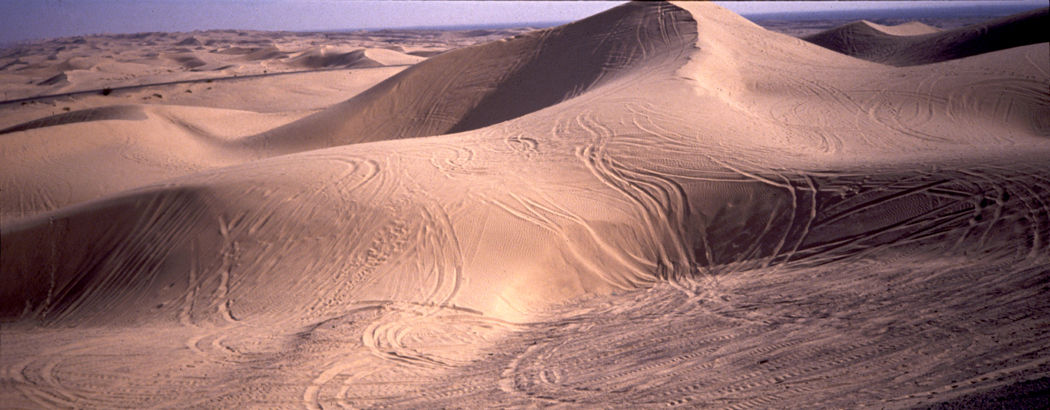
Don’t be afraid of mishaps and adventures. They may be uncomfortable during the trip, but they will be the best stories you tell your friends. No matter how bad it gets, it will provide the most vivid memory.Imperial Dunes California

Don’t drive every day; take some time to spend in a single spot. Three days we spent in a cabin on Daicey Pond in Maine’s Baxter State Park were three of the best days we ever spent — hiking, canoeing, watching moose and listening to loons at the base of Mount Katahdin. Not once did we start the car. When we finally left, we were ready for more miles.

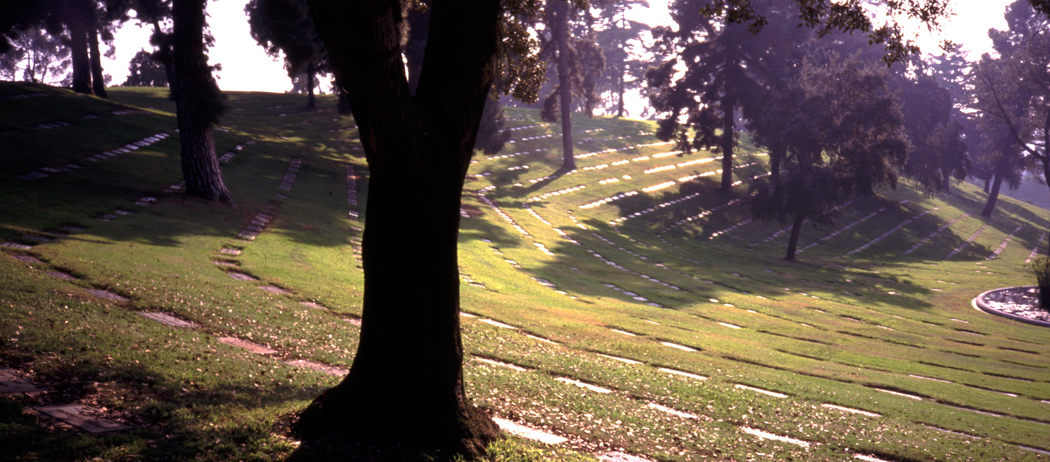
There are things you should always have in your car: water, a blanket, Fig Newtons, a road atlas, your address book with phone numbers. Forest Lawn cemetery LAI also carry an entrenching tool — one of those small folding shovels you can buy at army surplus stores — for digging out when I get the car stuck in sand or mud.

Don’t be afraid of dirt roads. There are some amazing rewards at the end of a bit of gravel.

We also always carry a small library of Peterson nature guides, two pairs of binoculars, camera equipment and twice the amount of film I think I can possibly shoot.

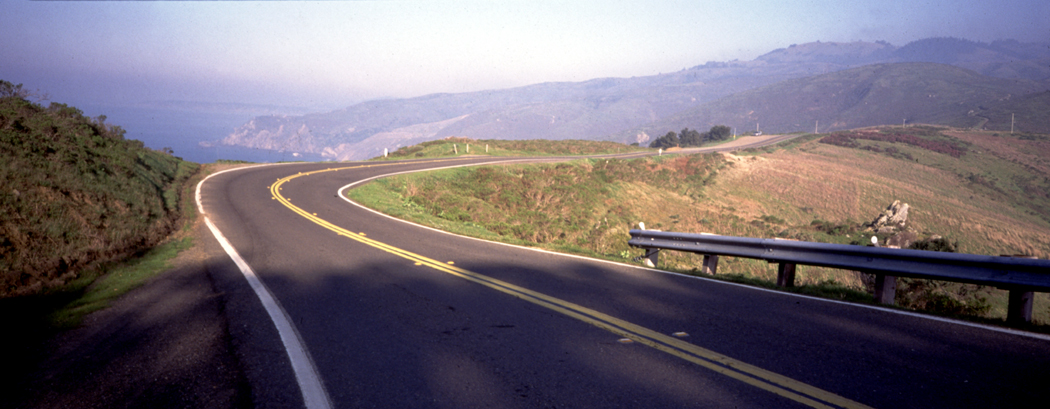
And finally, my nomination for the greatest invention of the 20th century: cruise control. It keeps your right foot from cramping up on the gas pedal. I was 45 before I ever tried it and I’ll never be that stupid again.pacific coast highway California

Part 3

What makes for good driving?

I don’t know about others, but for me, optimum driving conditions include:

–Little or no traffic for infinite miles ahead, with no stoplights.

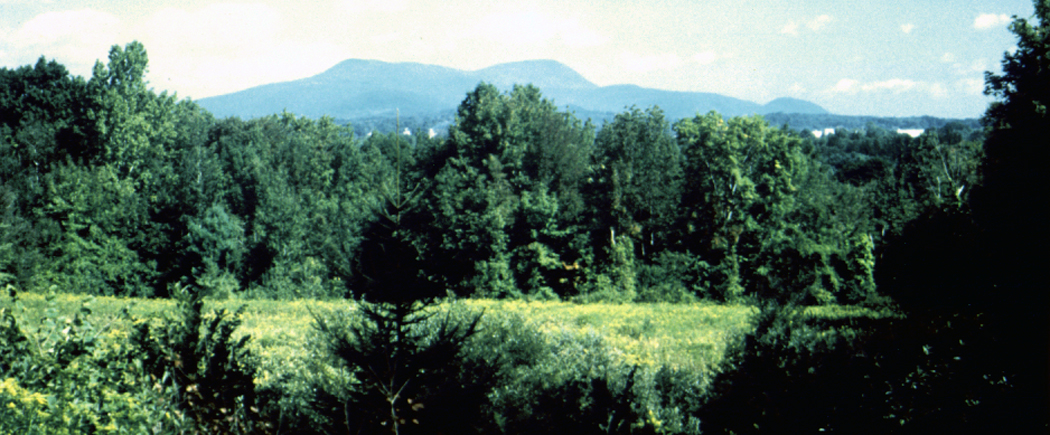
–Interesting and varied weather; I don’t want incessant sunshine any more than I want endless rain. A front moving through gives me a constantly changing cloud show.Greylock Mt from Melville home Mass

–An old road with a history. Route 66 is the most famous, but not the only one. I especially enjoy roads that follow geology: along a mountain range or river, so that the road seems to belong to the earth, rather than denying it.

–Occasional side roads, preferably gravel, for a change of pace.

–Periodic change of landscape, such as when you drive from the Plains to the Rocky Mountains, or from the white sands of the Atlantic Coastal Plain into the hilly interior of the Piedmont.

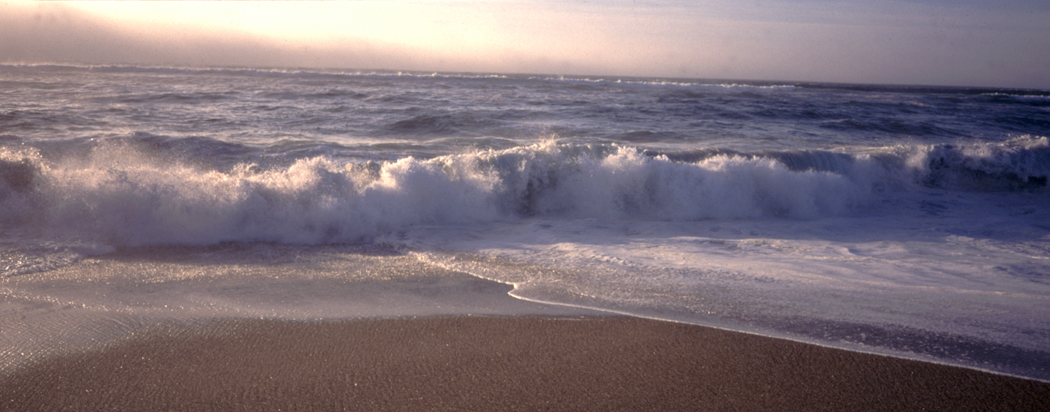
— A regional food specialty you haven’t tried yet and no chain restaurants.leo carillo st beach california

— A few museums and a few national parks. I gotta have both.

— A used book store in every town.

— A pile of Haydn symphonies on CD to run through the dashboard player.

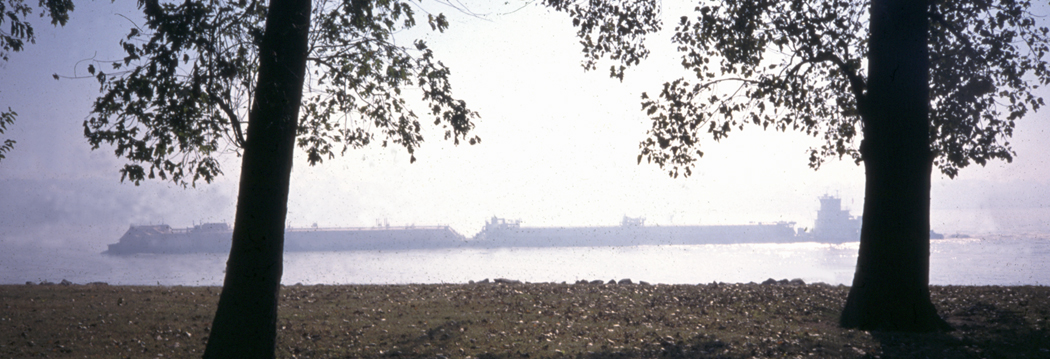
–A clean windshield. This last must be renewed frequently. Bugs bust on the glass.Mississippi barge

Part 4

The dozen most scenic drives in the 48 states:

1. Beartooth Highway, U.S. 212 from Red Lodge, Mont., to Yellowstone National Park.

2. The Pacific Coast Highway, Calif. 1, from San Luis Obispo to Leggett, Calif..

3. Blue Ridge Parkway, from Waynesboro, Va. to Smoky Mountains National Park, N.C.

4. N.C. 12 from Nags Head to Okracoke, N.C.

5. Ariz. 264 from Ganado to Tuba City, Ariz.

6. U.S. 1 from Miami to Key West, Fla.

7. La. 82 from Perry, La., to Port Arthur, Texas.

8. U.S. 1 from Ellsworth to Calais, Maine.

9. Kancamagus Highway, N.H. 112, from Conway to Lincoln, N.H.

10. Tex. 170 from Presidio, Texas, to Big Bend National Park.

11. Utah 12 from Red Canyon to Torrey, Utah.

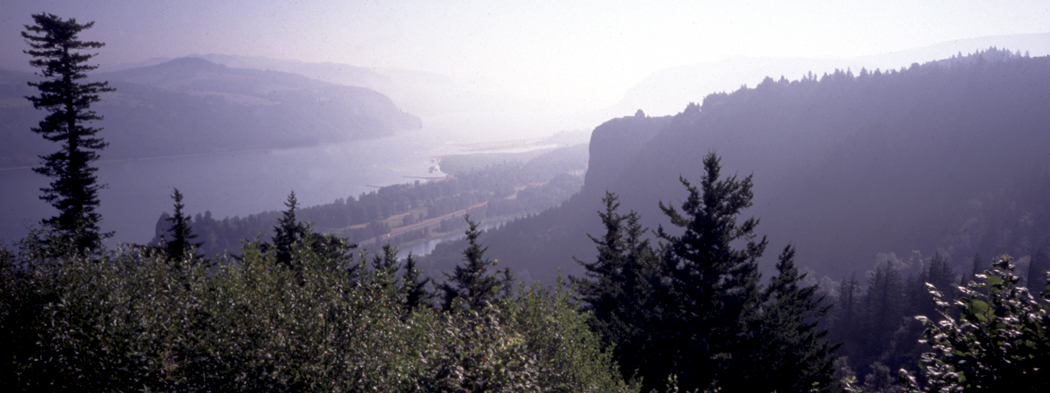
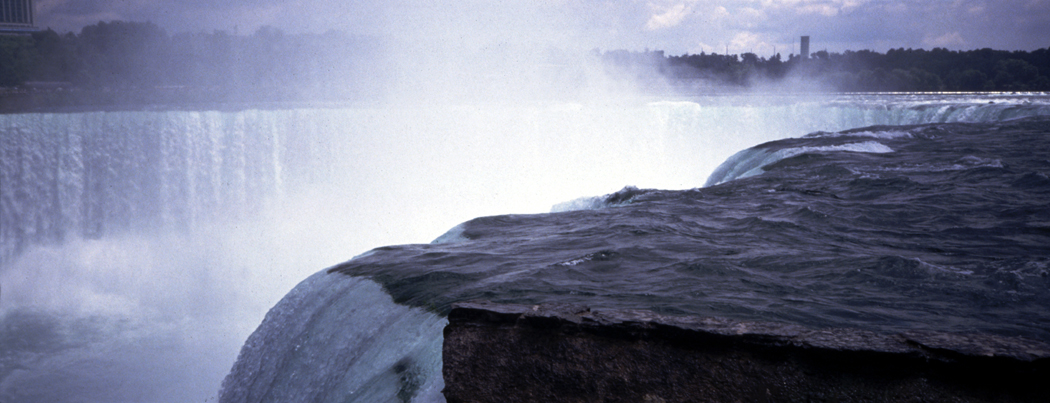
12. Wash. 14 though the Columbia River Gorge from Camas to Plymouth, Wash.Niagara Falls

Part 5

It isn’t just the flashy, famous places that draw the true driver. In fact, commercial destinations, such as Disney World or Las Vegas, are probably best gotten to by airplane and shuttle bus, so you can give over all your time to waiting in lines.

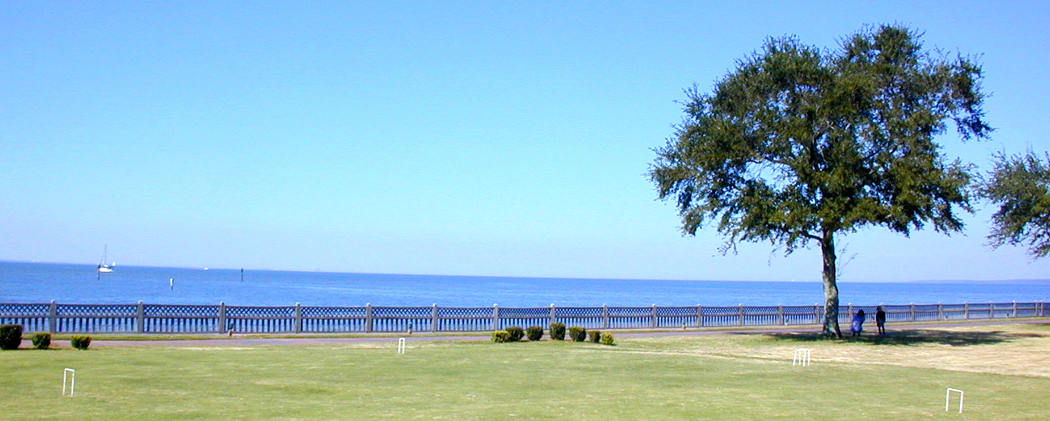
No, in a car, some of the best experiences come by rolling through the kind of places that fall through the cracks of marketing. Places “below the radar,” so to speak, of commercial development.mobile bay point clear

The small towns, endless farms, mountain ranges, Indian reservations — these are the places you have the opportunity to discover things for yourself. In the big theme parks, you get a uniform experience, developed through marketing research. The ride you take is the same ride millions of others take.

But when you talk to the harried but chummy waitress in Doumar’s, an original ’50s style drive-in on Monticello Ave. in Norfolk, Va., you are talking to a real person, a one-on-one experience that is particular and individual. You get a flavor of place, of culture, of people, of individuals.Page Dam Arizona

To say nothing of the flavor of ice cream, in a cone as close to identical as possible to the original waffled cone Abe Doumar is credited with inventing in 1904. They still make them on the same old wheezy portable machine. If your lucky, they’ll be making them while you eat.

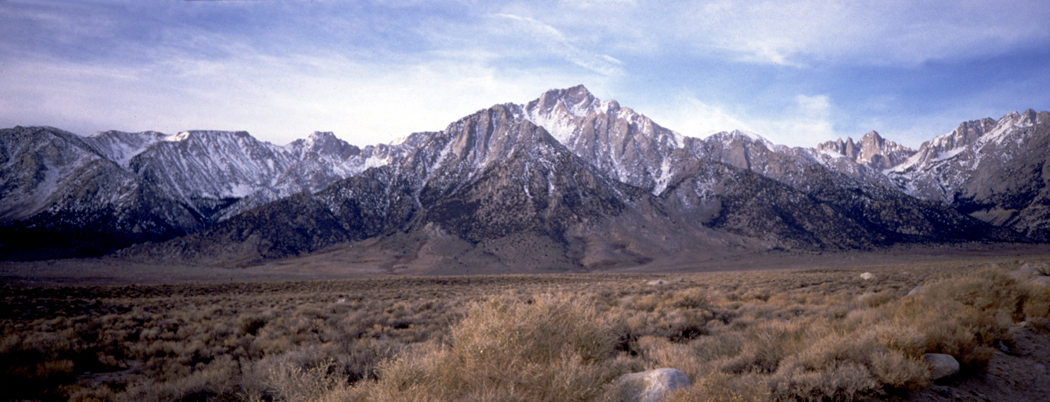
Likewise, there is nothing predictable about the starfish you find in an Oregon tidepool, or the bears in the Smoky Mountains. You get to experience the infinite variety of real life.Sierra Nevada Mts California

Of course, I have my favorites.

Among the 48 states, I can never find the end of either California or North Carolina. They are both richly varied.

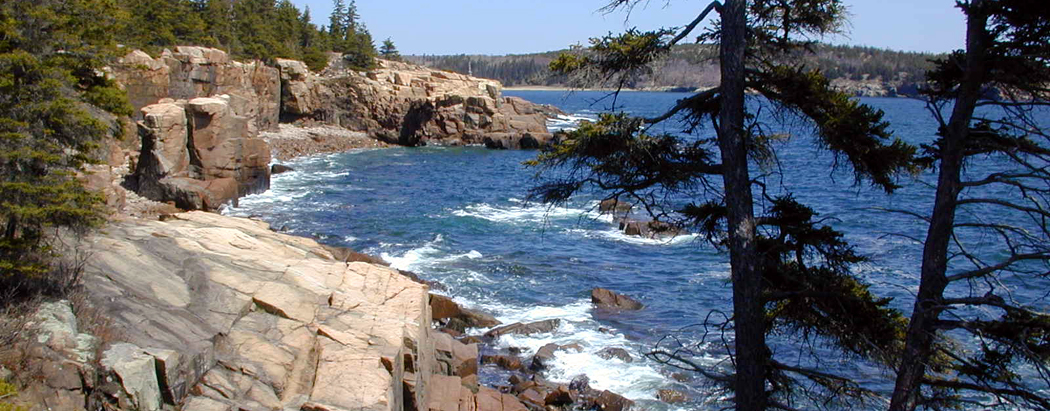
California seems to have everything from the world-navel of pop culture to the most remote wilderness. It has more than any other single state.Thunder hole Acadia NP Maine

But North Carolina is nearly as varied geographically, and it has B&G fried pies, the most soul-satisfying food in the world. North Carolina also has the Blue Ridge Mountains and the Outer Banks.

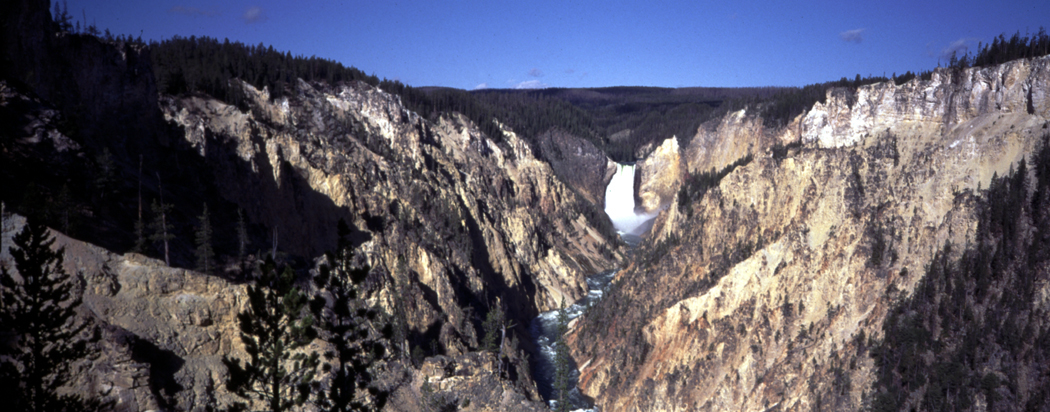
And I cannot get enough of the great, grassy, rolling middle of America. When I tell people I love driving through Nebraska, they look at me like I just said I was born on the Hale-Bopp Comet. But just pull into one of those one-street towns with the grain elevator towering over the single railroad track and have lunch in the cafe where the farmers eat.Yellowstone Nat Park Wyoming

Or imagine the wagonloads of immigrants trudging along the Platte River, with Scotts Bluff on the horizon.

The pace is slower, more humane in Nebraska.

Humankind developed on the grasslands of Africa, and Nebraska, especially, seems to call atavistically to me, reawakening my genetic love of savannas.Monument Valley Arizona

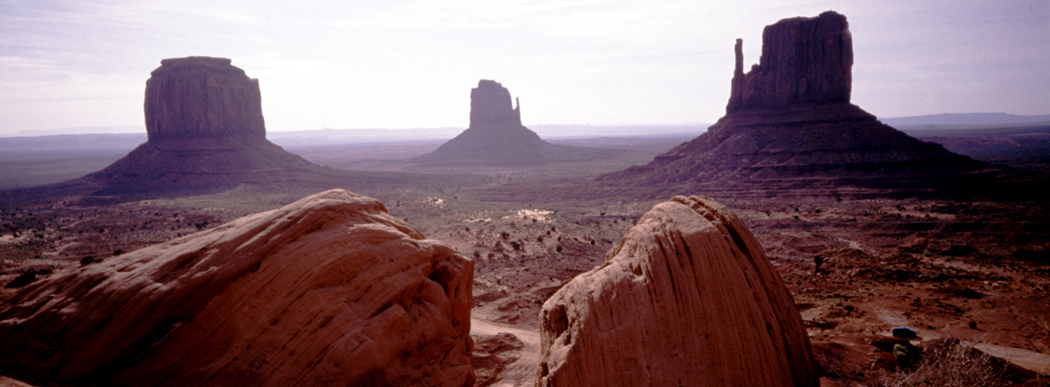
It’s easy to love the broad vistas of the West. Southern Utah doesn’t seem to have a square inch that isn’t photogenic, and the Grand Tetons of Wyoming are mountains right out of central casting: They are to other mountains what Cary Grant is to most men.

But I also love the Mid-Atlantic states. Sometimes, a Western forest is too much of the same thing. You can walk for miles in the Cascades of Washington and see only two kinds of trees: Douglas fir and Western redcedar.Zabriskie Point Death Valley Calif

It’s different in Pennsylvania or Tennessee. In the great Appalachian mountain chain of the East, there are more species of plant life than in all of Europe. The variety is blinding: Redbud in spring, Tulip tree in summer. White pine, pin oak, red maple, sweetgum, sycamore, witch hazel, horse chestnut — and hundreds more.

And there is something humanizing about the landscape. This is land which has been lived in for hundreds of years. It is still wild, but it has made peace with the humans who live there and send smoke up their stony winter chimneys.Zion National Park Utah

In the past, I avoided cities the way I avoid Justin Bieber songs. The noise, nuisance, dirt and traffic were everything I was trying to avoid by getting on the road.

But I have come to terms with them, also. After all, it is in Chicago, Philadelphia, New York and Boston that you find the symphony orchestras, natural history museums, ethnic foods and imposing architecture.Mississippi River Hannibal Missouri

The greatest city for driving is Los Angeles. It may be the home of the cultural antichrist, but it is also a great fermenting, creative pot, with lots of roads that take you past inventively loopy buildings: The Tail ’o the Pup hot dog stand, the downtown Coca-Cola bottling plant in the form of an ocean liner.

In LA, you can’t get anywhere without wheels. It is the perfect American city.mobile bay

There are two states that I have to admit I don’t particularly enjoy: New Jersey, probably because I grew up there and don’t feel much urge to go back; and Florida, which is supposed to be a Southern state, but it has been given over to graceless Yankees. But even in Florida, I have to admit I love the Cubano culture of Miami and the Everglades, proving that there is always something of worth.