Archive

Tag Archives: seventh seal

Like most critics, I’ve written my share of Top Ten lists over the years. Most of them, whether about music or movies or books, tend to be made from what I consider the best, deepest, or most meaningful entries — classics. Consensus choices made by informed critics who have read, seen and heard enough of their subjects to make their lists meaningful. The best on these lists can perhaps make you a better person, but not necessarily happier. 

So, there can be another list, not of the highest and best, but of those things we simply enjoy, for whatever reason. After all, what we simply enjoy isn’t always the most profound or most brilliantly written, acted, or edited. And sometimes we have to admit there are things we just like. And we will watch them over and over again. 

Yes, I know the idea of watching a movie over and over doesn’t make sense to some people. I have discussed this with someone who wondered, “I’ve seen it and know how it ends, so why would I watch it again?” As if the point of a film were its plot. 

And there are films that function only on a story level, and perhaps once you’ve learned the plot twist, or uncovered the killer, there is no further reason to return to the movie. I have movies like that: I enjoyed them well enough the first go-through, but have no overriding desire to take that ride a second time. 
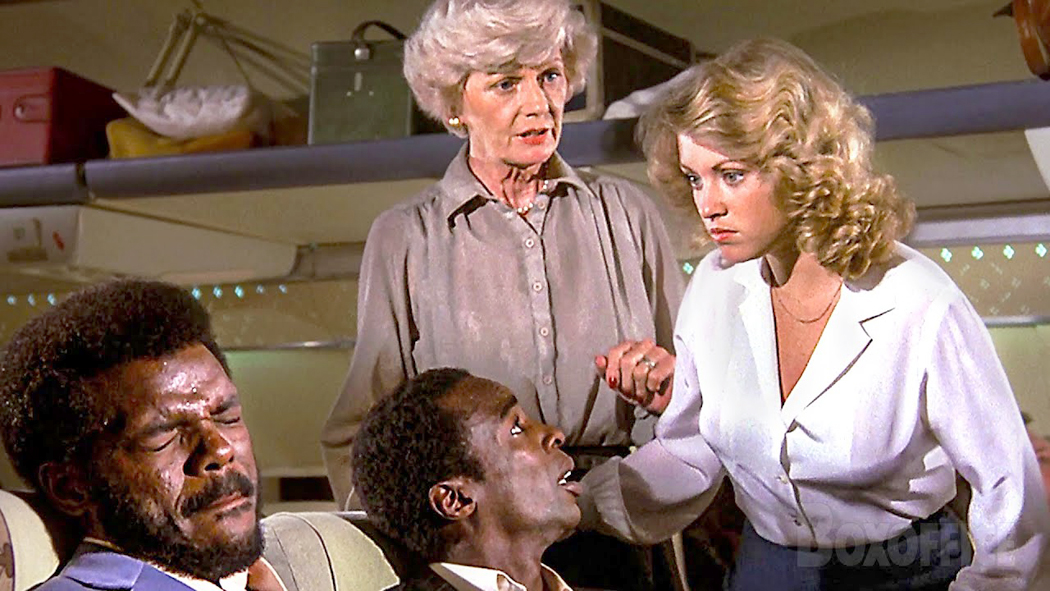
But there are movies I want to see over and over, the way you like hearing a favorite tune. You don’t say, “I’ve heard that song, so why would I listen to it again?” It’s a tune. It’s fun to hear again. And don’t call me Shirley. 

A list of such films will be personal. I don’t expect everyone to jump on the bandwagon. Such a list is almost a Rorschach test, explaining the personality of its maker. Make your own list and see it as a mirror. 

And so, here’s my list of top favorite movies that never stop satisfying. Some are movies I watch over and over and just enjoy every time; and others I don’t have to watch all the way through, but just love particular scenes and if I am channel surfing and come across them on Turner Classics, even if I catch them in the middle, I will watch through to the end, just to catch some of those scenes. Some of these are genuine classics, but others just tickle a certain place in my brain. They are fun. 

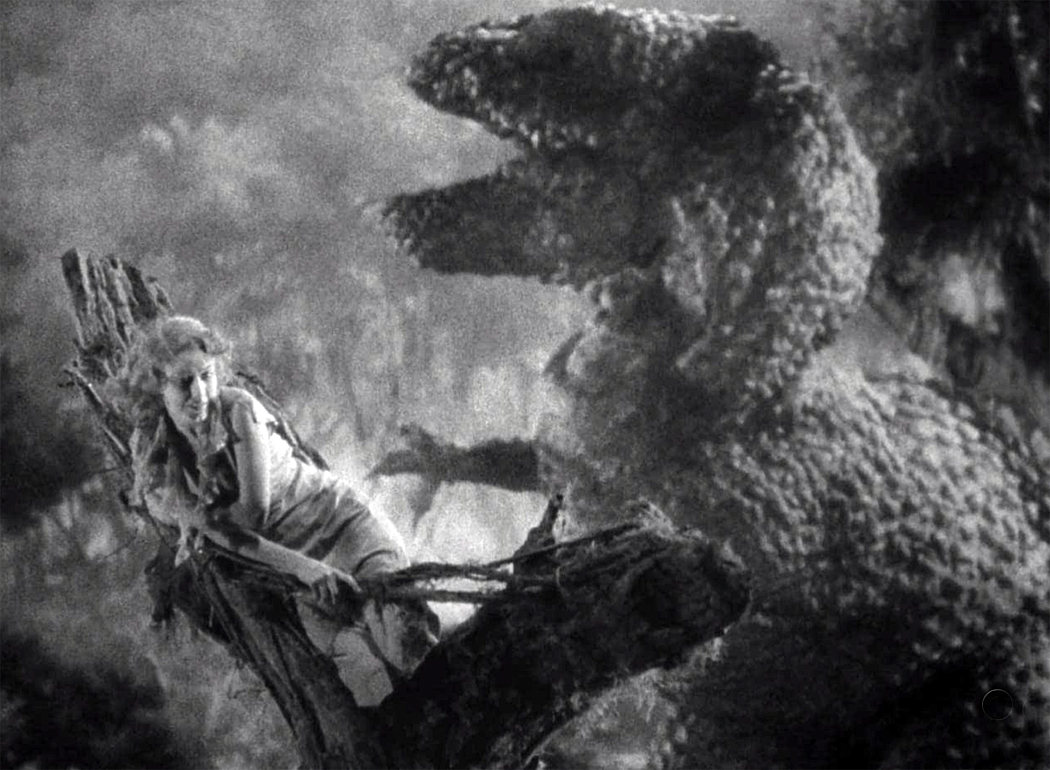
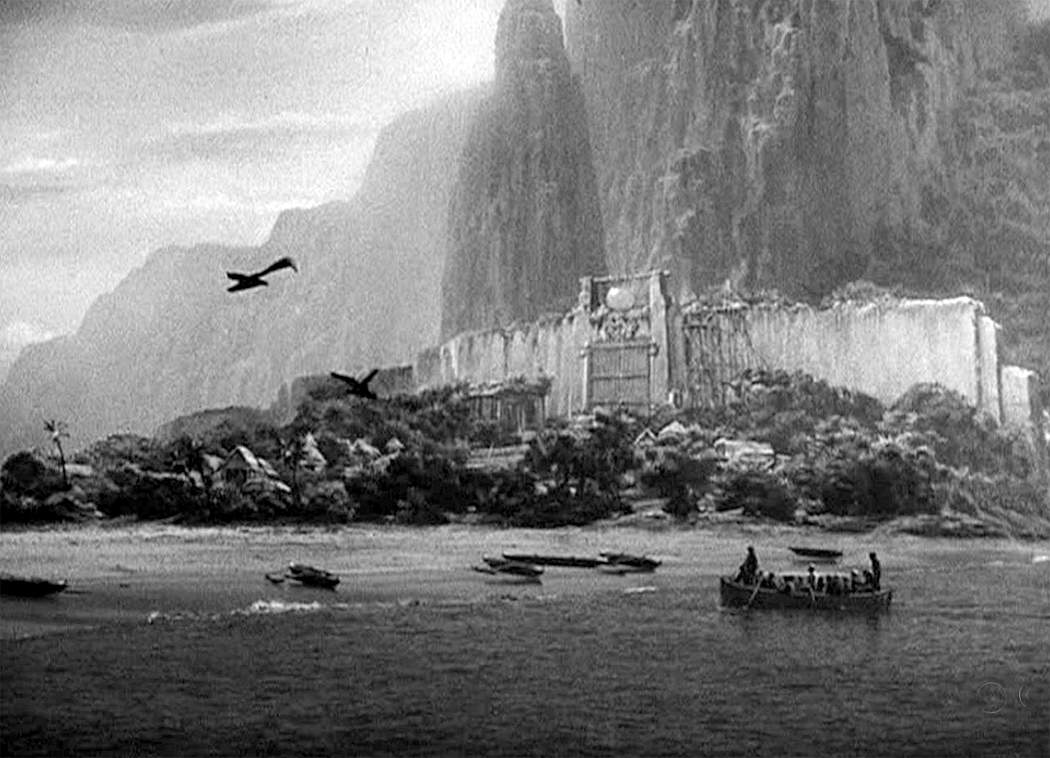
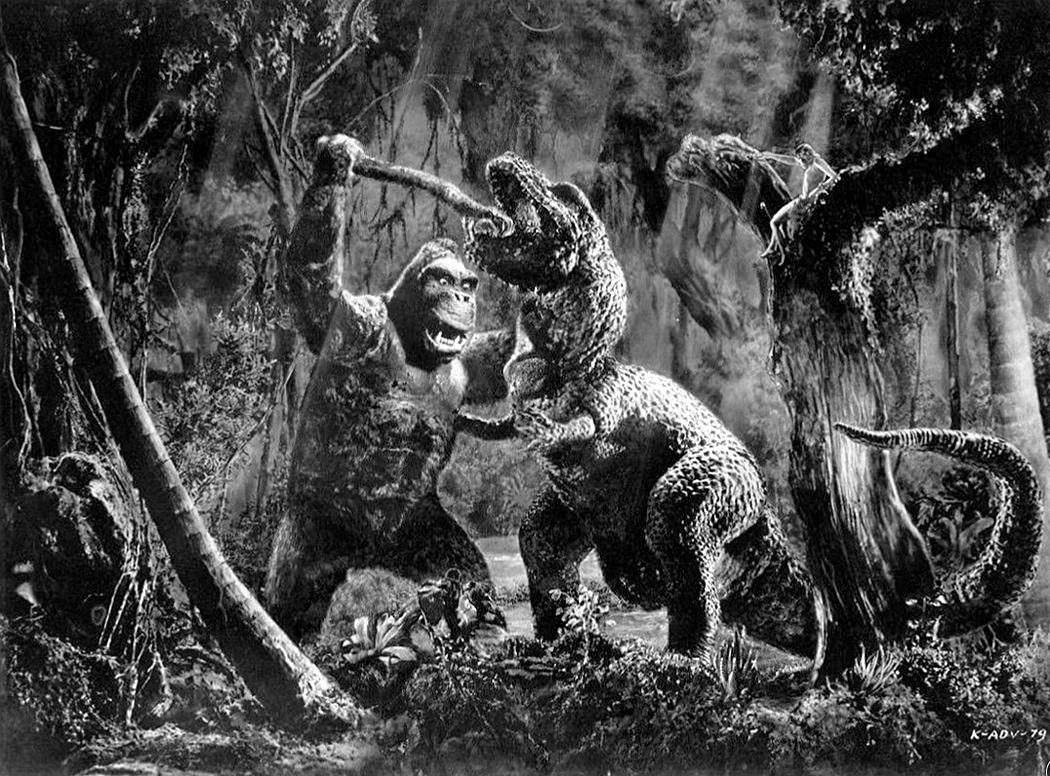
Number One on my list is a perfect example. No one would claim it has great acting or brilliant dialog. In fact, it is embarrassing on both counts. But it hits a sweet spot in the mythological nerve button in my psyche. I have seen the 1933 King Kong over a hundred times. 

Admittedly, this includes all the times I watched it as a 5-year-old from behind the couch to hide from the scary parts, when it was being shown a dozen times a week on WOR-TV’s “Million Dollar Movie” on New York television. I chalked up a boatload of views in the years before I even went to high school. 
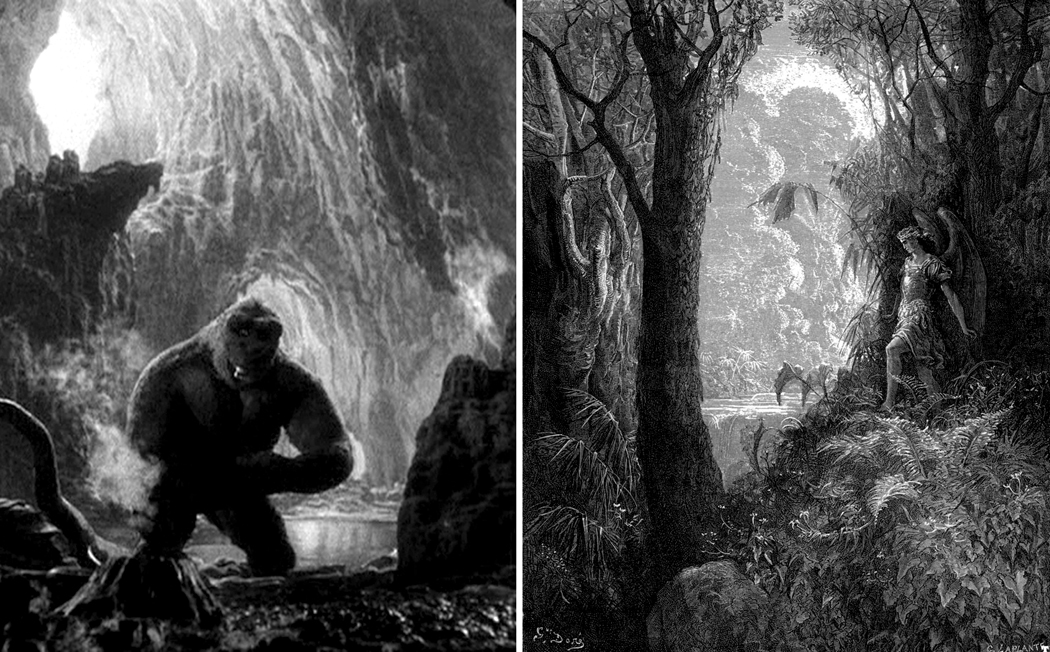
Even now, 70 years later, I will still tune in when it shows up on the TV listings. Its appeal is the same as those wonderful Gustav Doré wood engravings of dark forests and the light that shines through. 

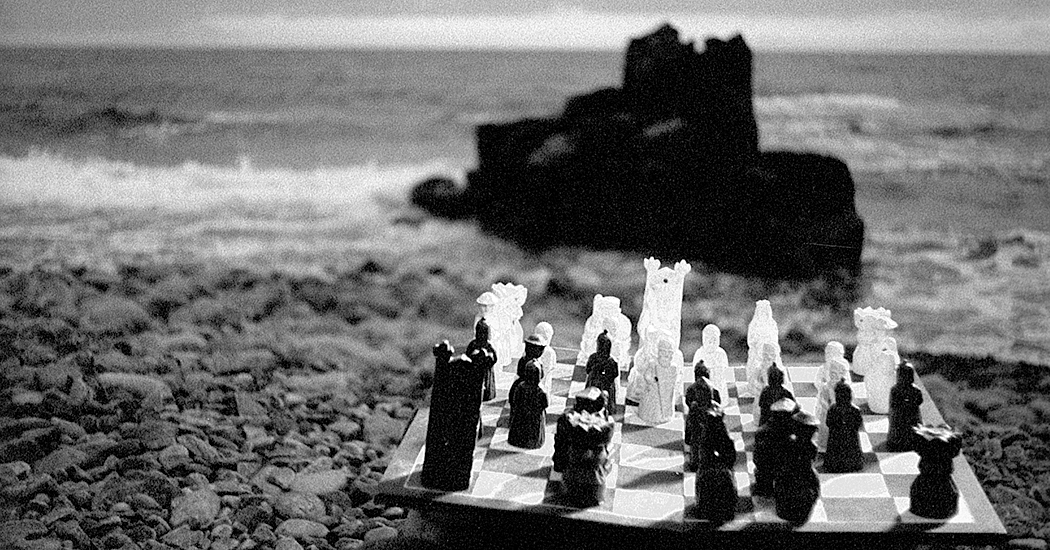
So, King Kong is first on my list. Second couldn’t be further from the spirit of the Big Monkey picture: The Seventh Seal by Ingmar Bergman. 
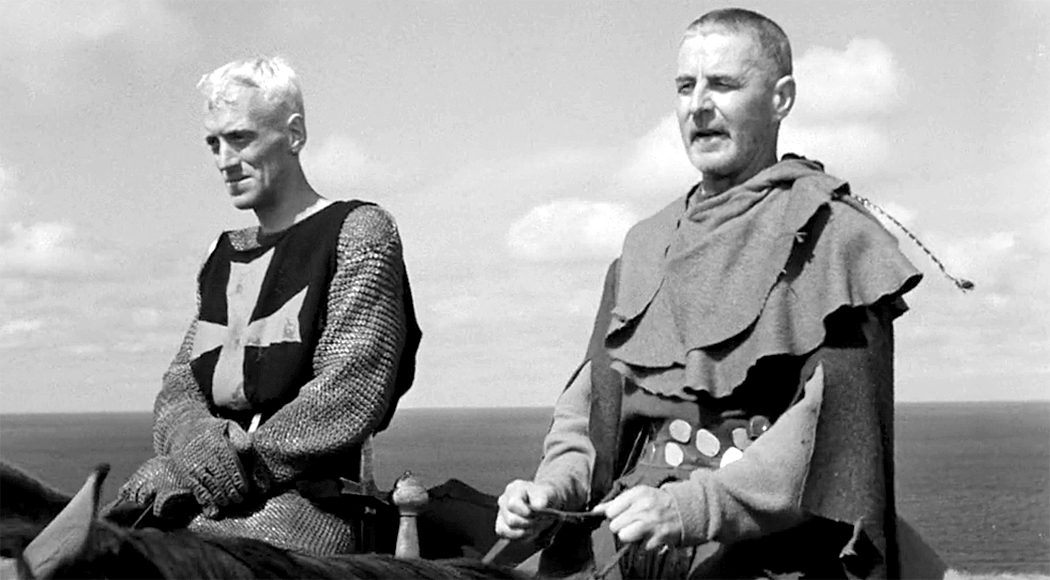
I first watched it, like Kong, as a boy when it was just a cool movie about Medieval knights. It was on TV, and since it was released in 1957, I had to be at least 9 years old before I saw it. Probably a few years after that. I next saw it as part of my college movie series, along with a raft of other art films. That’s when it hit home. 

The movie gets shown a lot, both on TV and in various film series, and so I have had the chance now to see it probably 30 times or so. It is pretty much the defining title of the “art film.” I became a foreign film junkie in college and most of my favorite films are either in French or Swedish, with Italian clocking in third. 
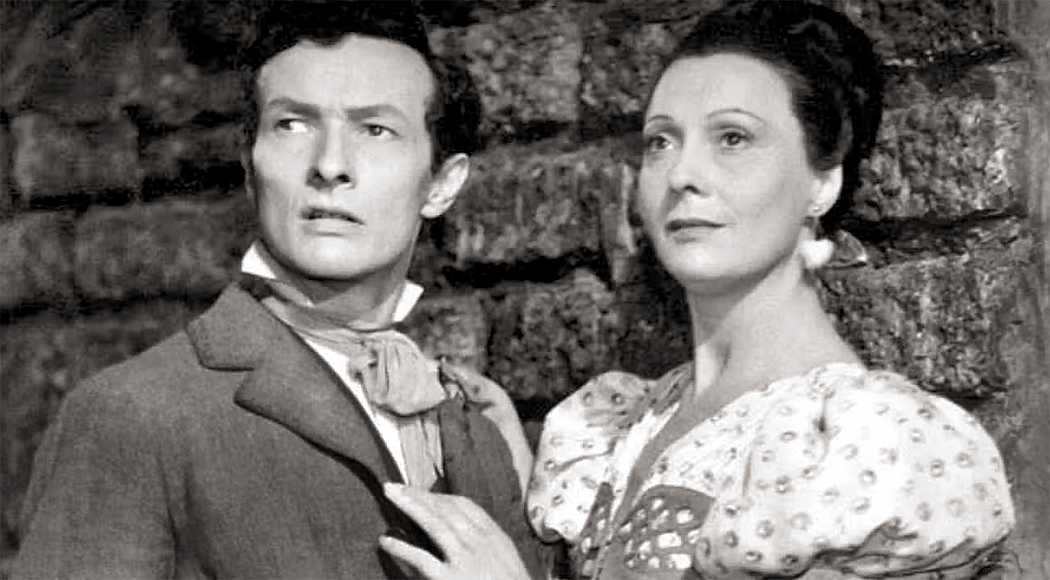
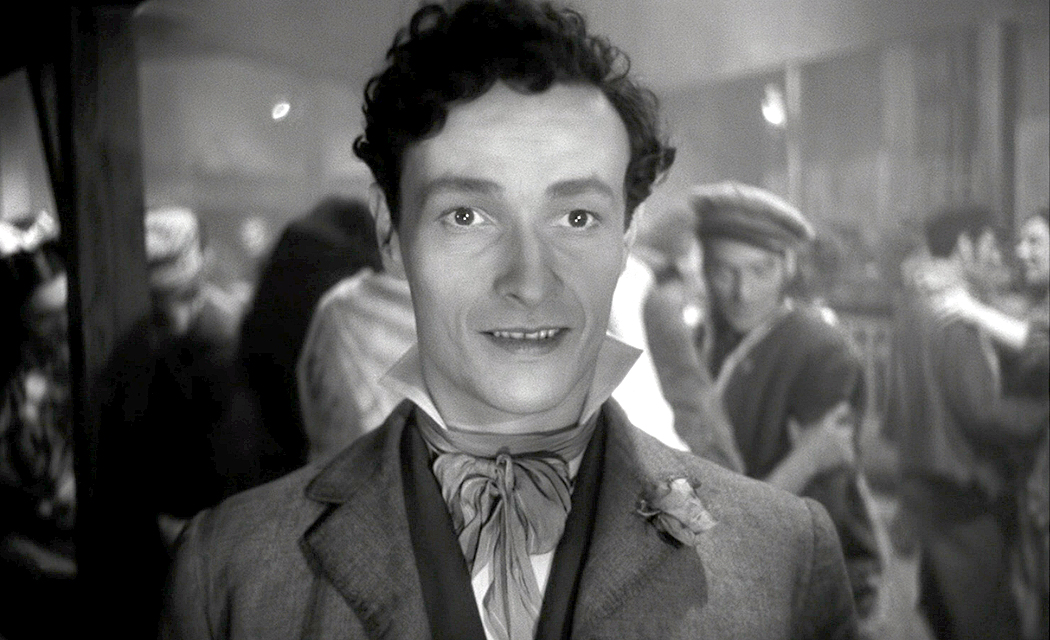
No. 3 on my list is French, and it is the film that I have both seen many times over the years and has changed drastically over multiple seeings. I first saw Children of Paradise in that college film series, and at that age, it was the yearning idealism of Baptiste Deburau that spoke most directly to me. I was Baptiste. Yes, I know that’s embarrassing now, but then, his earnestness seemed the very nugget of truth. And my heart went pitter-pat for Garance:  “Love is simple,” she said. And so it seemed to one of my tender years. We are all idiots at that age. 

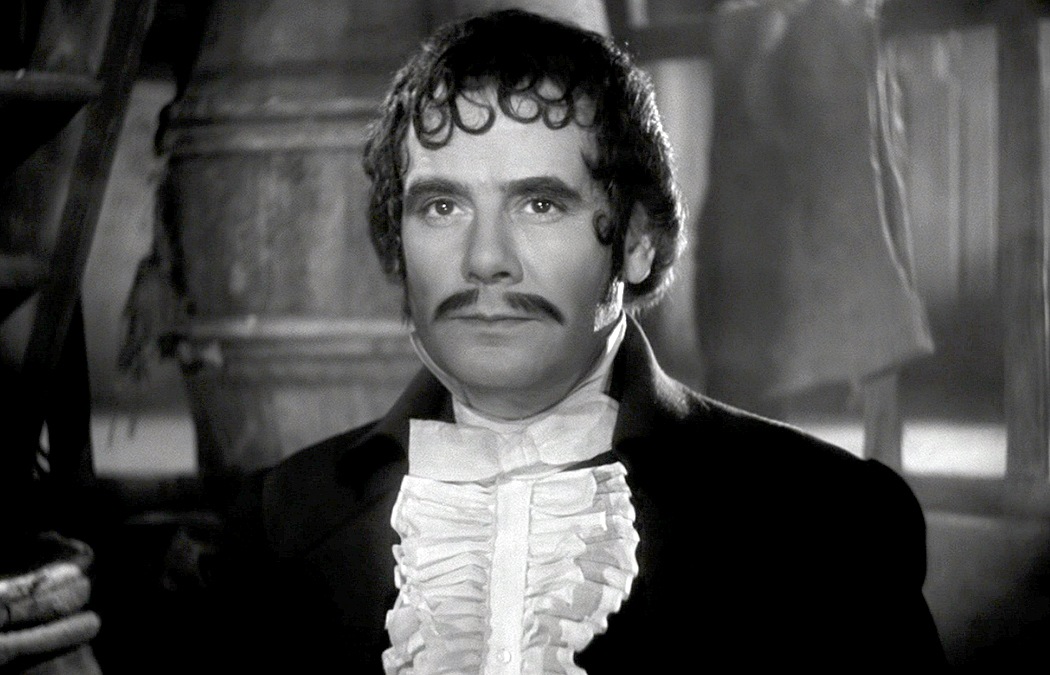
Later, I came to identify with the actor Frédérick Lemaître, accommodating and joyfully cynical. Of course, that, too, was just a costume to try on. The same, later on, with the antisocial Lacenaire. 

As I sped through the years, seeing the film differently each time, I finally came rather to see the characters as comprising a whole, and I identified with their shared humanness, each suffering and causing suffering in turn and trying to make a way through life. 
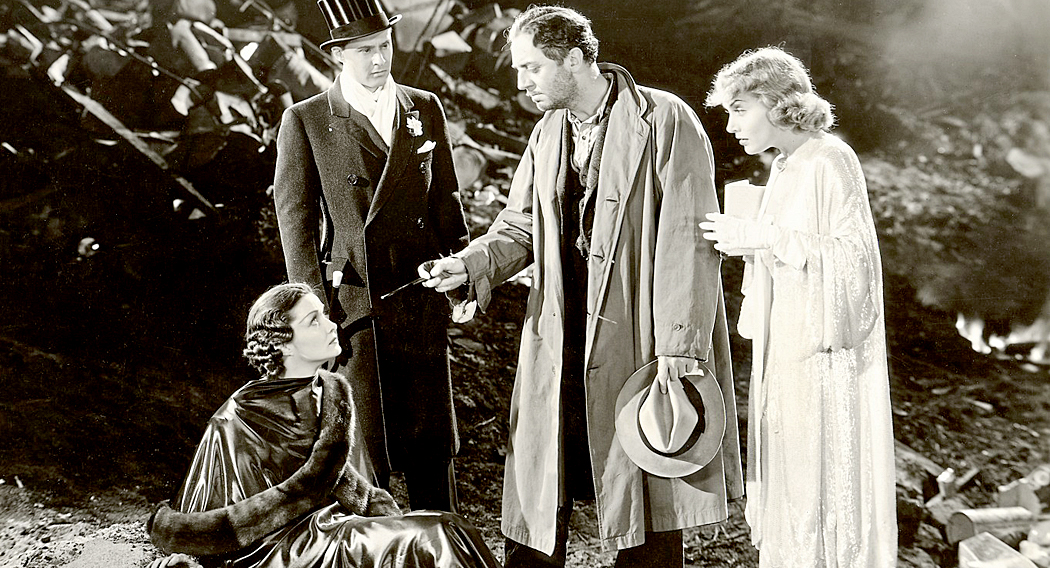
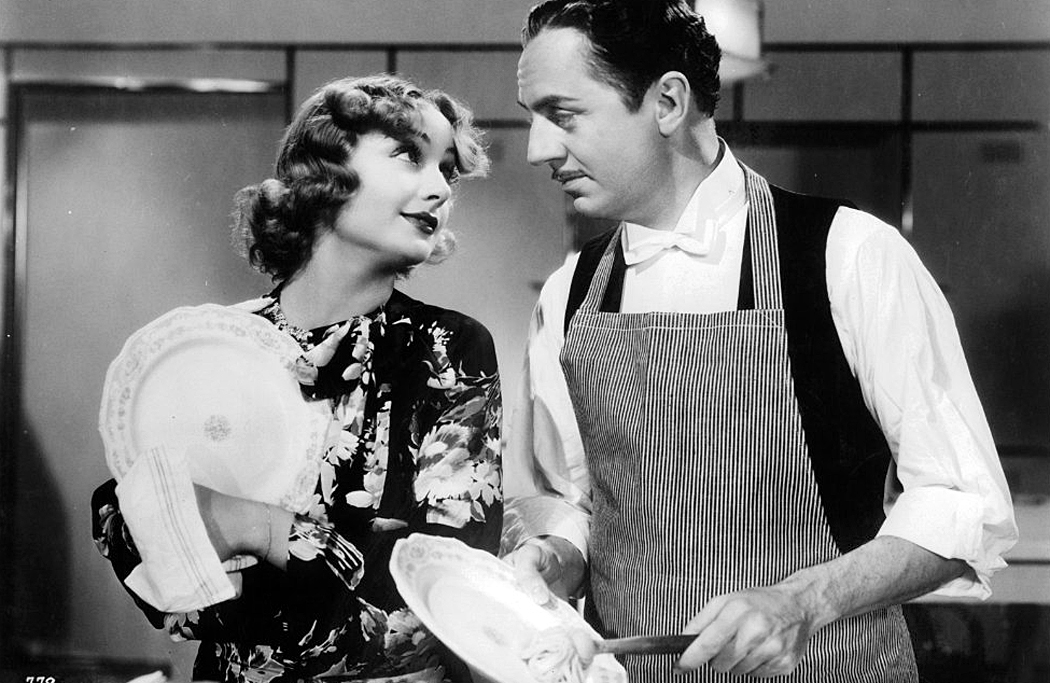
Next, a movie that never changes, but delivers the goods every time: My Man Godfrey, with William Powell and Carole Lombard. Of all the great screwball comedies from the 1930s, it is the most perfect. Perfect plot; perfect casting; perfect dialog; perfect direction. 

I do not know how many times I’ve watched Godfrey, but it never wears out its welcome. Of all the films on this list, Godfrey most approximates the comparison with the favorite tune where you perk up on hearing it and it just brightens your day. 
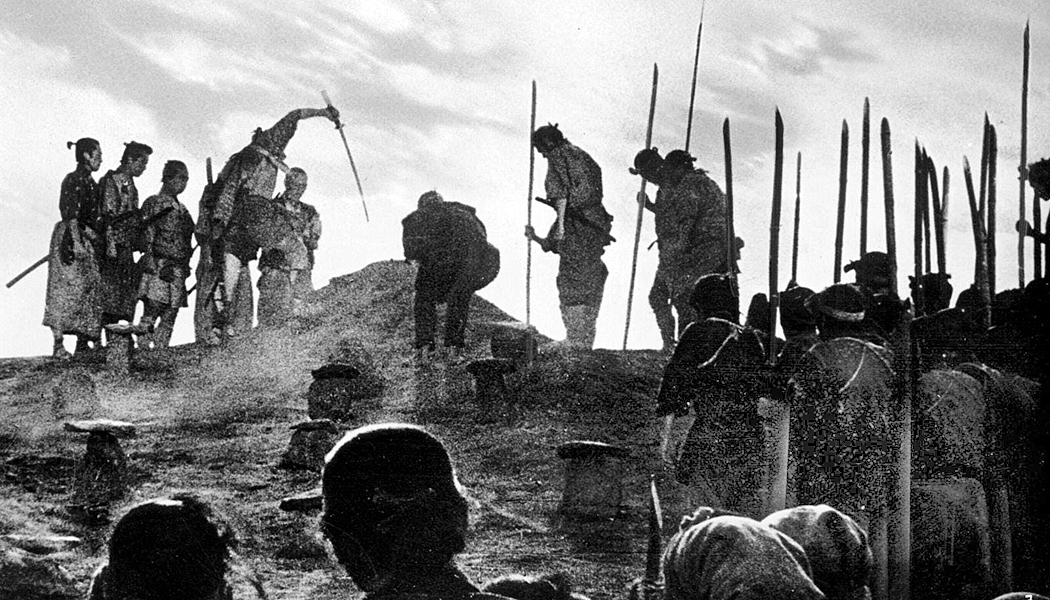
Rounding out No. 5 is Akira Kurosawa’s Seven Samurai, which I first saw in the common butchered 141-minute trim that first made the rounds of the U.S. Of course, the original 207-minute version has been restored and only a barbarian would choose the mutilated version. 

I have watched Seven Samurai too many times to count, and it was Takashi Shimura, as the samurai leader, rather than Toshiro Mifune who grabbed my attention. Shimura was Kurosawa’s mainstay actor, appearing in more of his movies than anyone else (and also in Godzilla). Mifune could sometimes be a bit buffoonish in his roles. Shimura had a much greater range.  
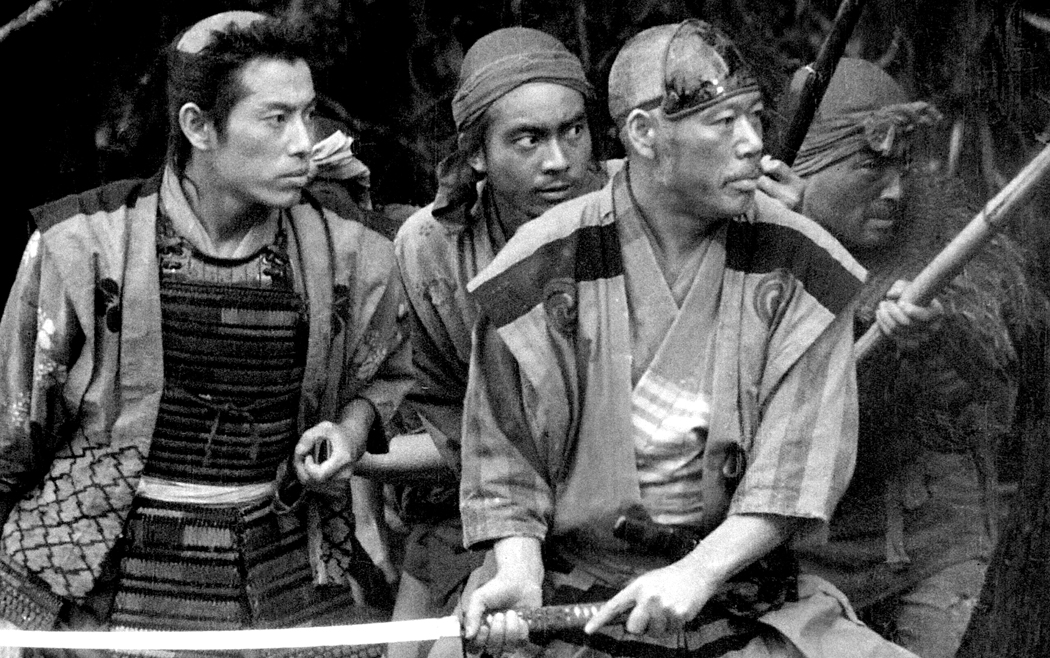
In 1978, when I was living in Seattle and unemployed, I went to a bar one night with my friend, Alice. Turns out, they were setting up a projector to show a 16mm print of Seven Samurai. We decided to watch at least the beginning of the film — Alice had never seen it, and we knew it would be more than three hours of movie — so we didn’t expect to stay. But neither of us could turn away and we watched till the end. There are no slack parts. 

Those are my top 5, but there are more. How can I have seen these movies so many times? Well, first there were VHS tapes and then DVDs. I have them all now on disc. (King Kong was initially a problem, unavailable on disc, apparently over a rights issue, but I managed a bootleg tape recorded off a TV showing. Now, I have the Warner box set, also with Son of Kong and Mighty Joe Young.) 

Then, there is Turner Classic Movies, the one great treasure of cable TV, which shows most of these movies periodically. Often when channel-surfing, I will come upon one of my faves and pick it up mid-stream and watch till the end. 

There are films on this list that I often come across this way, and don’t feel the need to watch beginning-to-end, but have such delightful scenes in them, that when I catch them, I watch for those moments. 
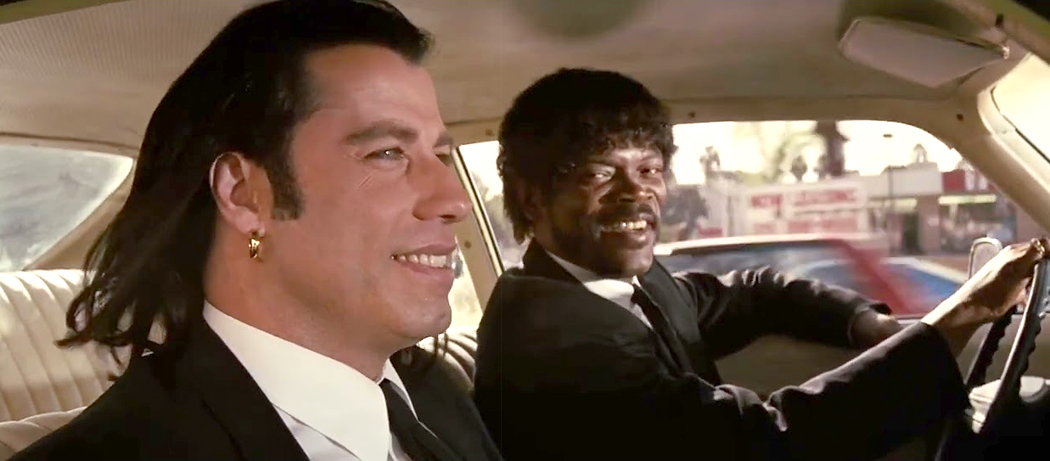
Pulp Fiction, for instance. A great film overall, but scene-by-scene even better. I can watch for certain set-pieces without feeling I need to do the whole thing. 
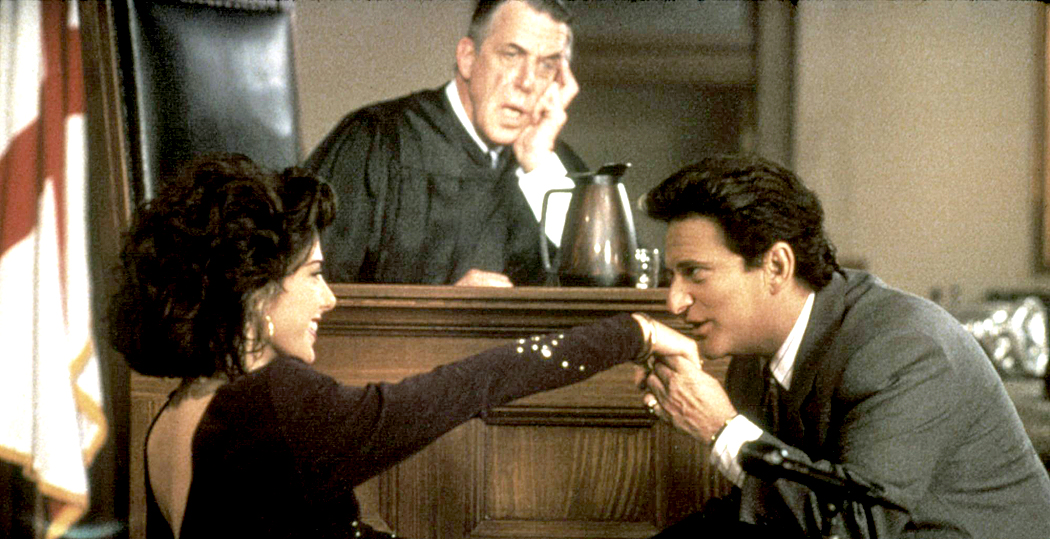
Same with My Cousin Vinny. The courtroom scenes are a great tune, but I don’t need the set-up. Just give me some Marisa Tomei attitude, some Joe Pesci and the best role that Fred Gwynne ever had. 

If we count those as Nos. 6 and 7 on this list, that takes us to:
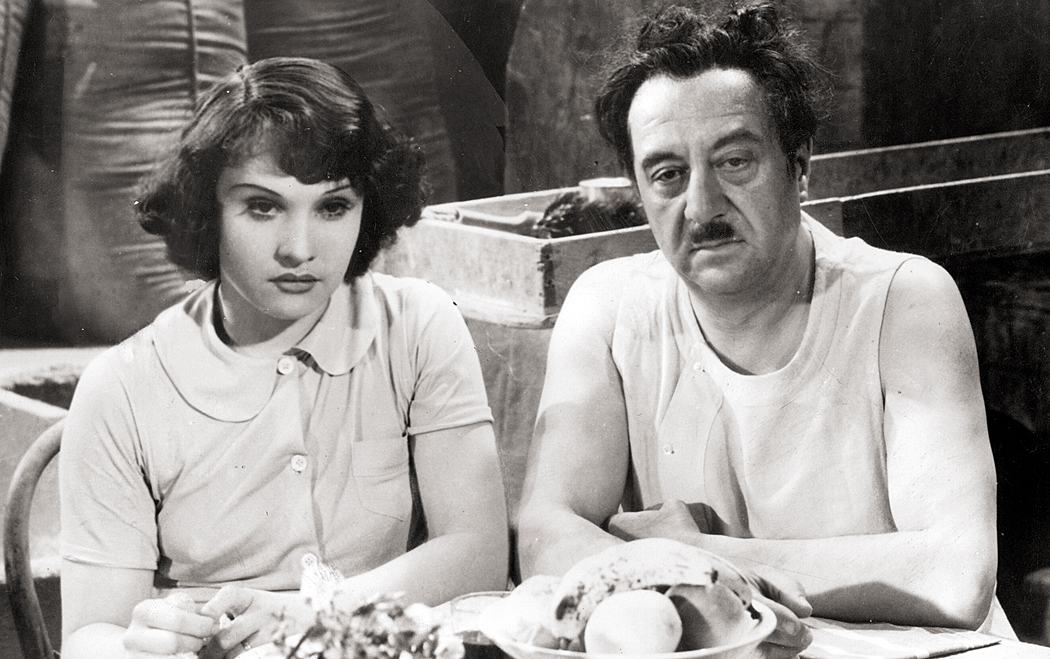
The Baker’s Wife, a film I saw years ago and then it disappeared. No DVD, no TCM. I scoured Amazon for a Region 2 disc, and eventually found a miserable, low-rez copy, the kind with subtitles whited out by the background. Eventually, years later, a restored version became available. This 1938 Marcel Pagnol comedy stars Raimu as a provincial French baker whose young wife has run off with a younger man. The baker is so dejected, he stops baking and the village tries everything to get the wife back so they can have their bread. It’s a great film. 
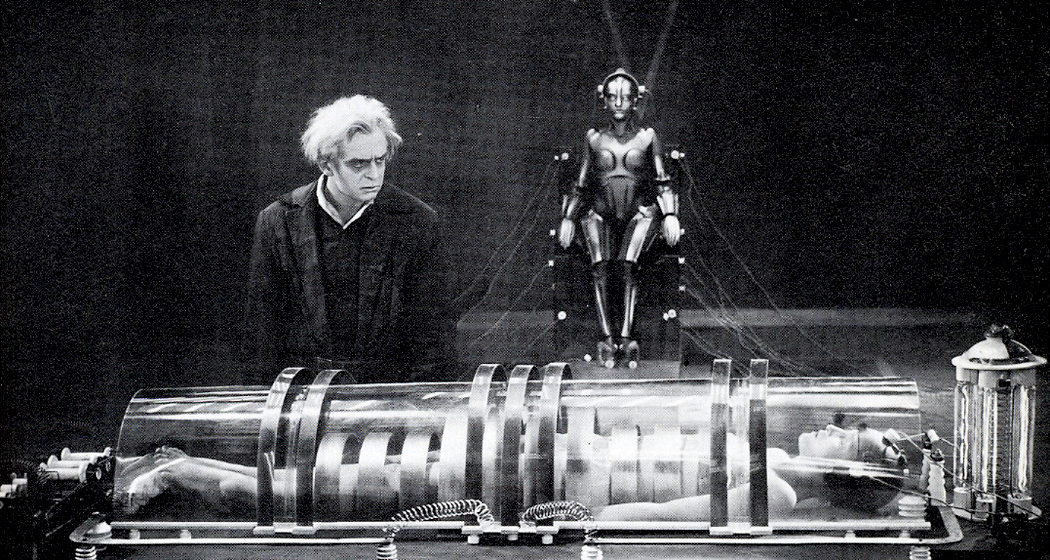
No. 9 would then be Metropolis. Several of these movies were among those I first saw as a boy, and so I have watched them repeatedly over six or seven decades. Many years ago, the local New York NET channel (pre-PBS) had a film series that included Fritz Lang’s Metropolis, albeit in a shortened 90-minute cut, but it hypnotized me. I later saw a version on TV with an electronic score that seemed utterly surreal matched with the images. 

I have sought out ever-more complete versions of the film, now clocking in at two-and-a-half hours, with a few stills edited in to account for missing footage. It is still mesmerizing. (I have written about it extensively; link here). 
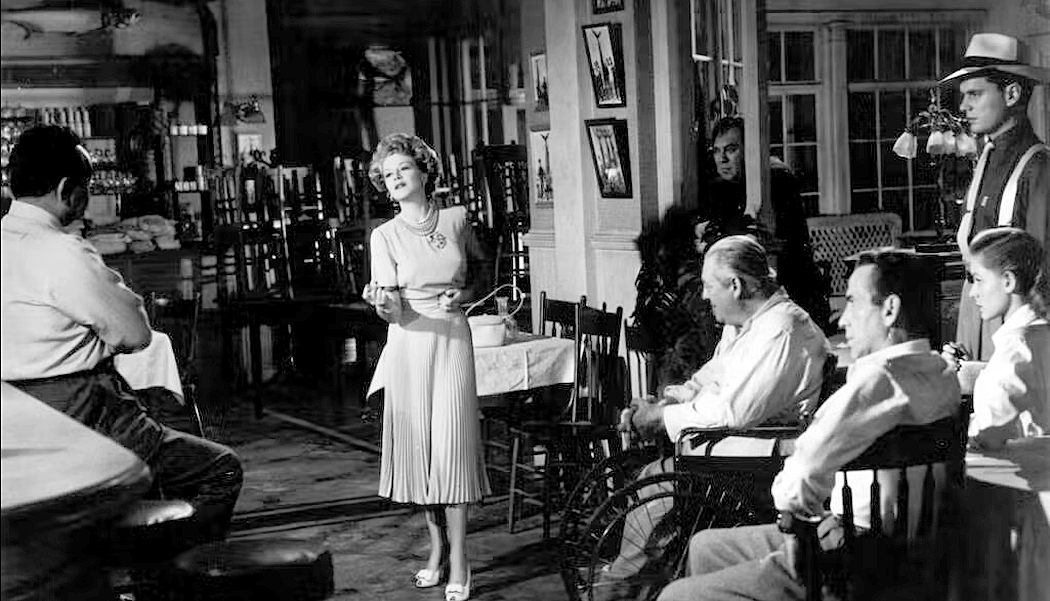
And bringing up the rear of this Top Ten list would be Key Largo, a picture made the same year I was born. It is certainly not the best Bogey-Bacall film, but one I first watched as a boy, before I know who Bogart was, or anything about his mythic persona. For some reason it clicked in my memory, and I found it seemed to show up on TV over and over, without my asking. 

Even now, I’ll watch it. It massages a familiar place in my brain. And it isn’t the stars who I watch for: Claire Trevor’s drunk moll is the best thing in the movie. She deserved the Oscar she won for a movie that normally would not even be mentioned by the Academy. 
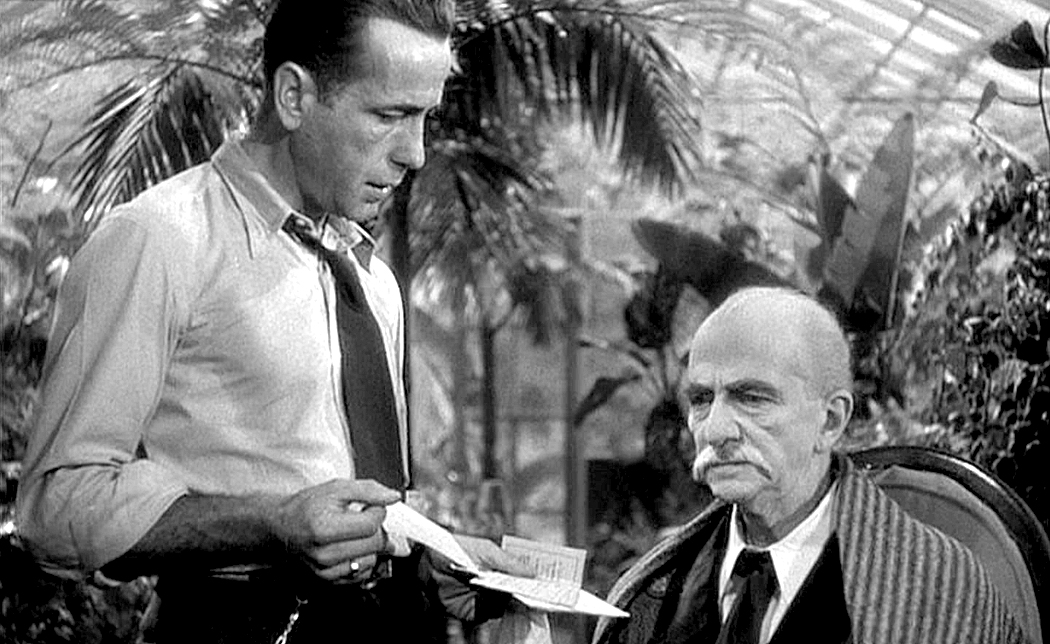
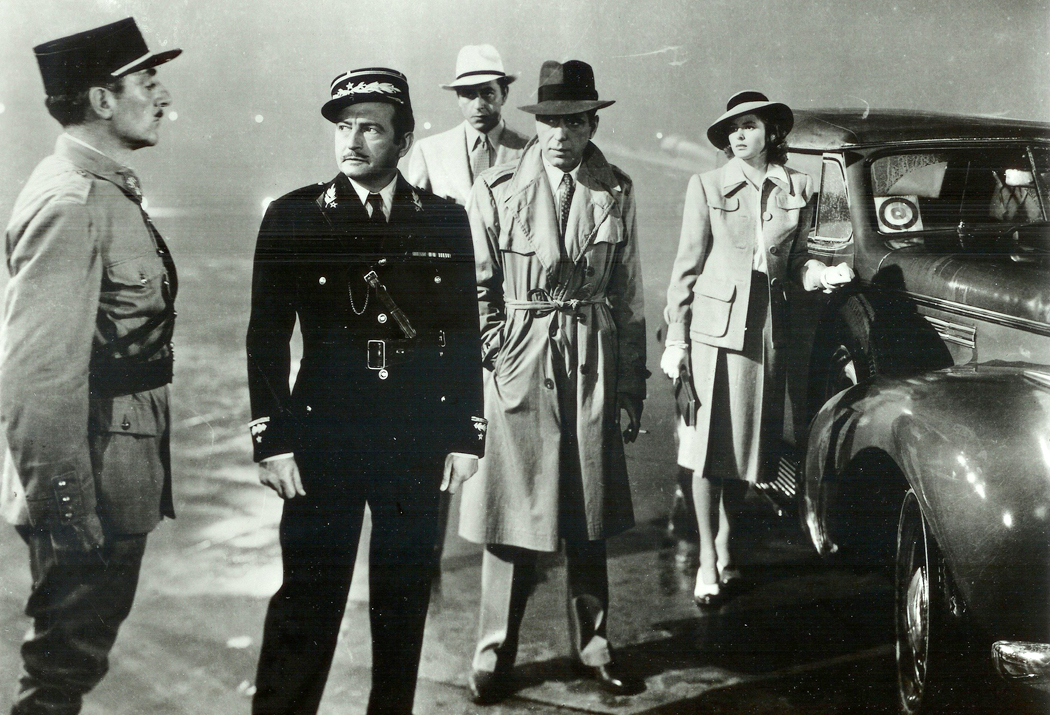
That rounds out the Top Ten, but in all honesty, I have to admit they really should not be ranked at all. Rather they are in a very large pool of films that I watch repeatedly. I can’t tell how many times I’ve watched The Big Sleep, or any of many parts of it (I have practically memorized the opening scene with General Sternwood). Or Casablanca. Or even To Have and Have Not. Or any of the William Powell films, including any of the Thin Man series. Or Roland Young’s Topper. Most any Buster Keaton film, short or feature. 
Or, to spread the love, I have watched uncounted times: Airplane!; Blazing Saddles; This Is Spinal Tap; O Brother, Where Art Thou? — that mostly for the tunes. 
Really, the list gets ridiculous. Any Almodovar, any Bergman, any Renoir. Any screwball comedy, any black-and-white Fred Astaire (he aged well, his later movies haven’t). I have a soft spot for any of the non-spaghetti Westerns of Clint Eastwood. Who’d a thunk it? Josey Wales, Hang ’Em High, High Plains Drifter, Pale Rider. Oddly, I still haven’t seen Unforgiven. I’ll get around to it, eventually, but first, TCM is showing Godfrey again. 
We were watching Turner Classic Movies, as we so often do during the Covid in-house stay-at-home and the next movie up was Casablanca

“I don’t want to watch it. I’ve seen it,” she said. She has this reaction frequently. Once she has seen a film, she says, she knows how it ends, and so why sit through it again? 

I, of course, was non-plussed. “Do you listen to a song only once and never again, because you know how it goes?,” I asked. No, you listen over and over and get pleasure from it each time. It’s a familiar tune. And so it is, for me, with something like Casablanca. Or The Seventh Seal, or — the tune I’ve heard most often in my life — King Kong. It’s a familiar and favorite song and I can watch over and over. 

Certainly, not every movie is worth multiple viewings. The vast majority of them come and go with the urgency of mud. In fact, for many, the first time is one too many. But there are classics and while I don’t necessarily wish to see them over and over in the space of a single week, when I’m channel surfing and one of my favorites pops up, I will usually stay to the end. 

Each of us has our own list of which movies hit that button, but a favorite film has the same appeal as a favorite song — the pleasure is in hearing yet again. It has nothing to do with plot, or “how it ends.” It’s not like a TV mystery and when we come to the end and find out who dun it, we don’t need to see it over again. The air has been let out of the reason for watching in the first place. 

But a movie such as The Rules of the Game or Seven Samurai bear repeated watchings. There is such pleasure in revisiting these old friends. 

Beyond that, however, there is the issue of getting older and accruing experience — understanding things you didn’t when you were a callow youth. 

This is most near to me in rewatching Marcel Carné’s 1945 classic Les Enfants du Paradis (“Children of Paradise”). It is a long film, at 3 hours and 10 minutes, and I don’t watch it all that often (just as I don’t listen to Beethoven’s Ninth too often, so as not to diminish its special potency), and I have found that the movie itself has changed dramatically over the 50 years since I first watched it. 

Set in Paris in the 1840s, it tells the complicated story of four main characters — 

Baptiste Deburau, a mime at the low-rent pantomime theater; 

Frédérick Le Maître, an aspiring tragedian of indifferent morals; 

a petty criminal, Pierre-François Lacenaire; 

and the ambiguous Garance, with whom they all become involved. As the movie progresses, Garance’s allegiance shifts with the winds. Her motto: “Love is simple.” 

The films is one of the most highly regarded in cinema history, making almost all top 100 lists, and many Top Tens. “I would give up all my films to have directed Les Enfants du Paradis,”said French New Wave film director François Truffaut. Marlon Brando called it “maybe the best movie ever made.” And a 1995 vote by 600 French critics and professionals lent it the plain tag “Best Film Ever.” It can be an overwhelming experience — if you are not simply watching for “what happens next.” 

Each of the characters embodies a distinct idea and world view. Baptiste is an idealist; Le Maître is a practical realist; Lacenaire is a cynic; Garance is a survivor. (There are other characters, too, and they each have distinct world-views that direct their actions. One thinks of Dostoevsky and his ability to embody ideas in distinct personalities.) 

And so, the first time I saw Les Enfants, I was in college and as naively idealistic as Baptiste, and so I saw the film through his eyes and the tragedy of the film as his. 

In my 30s, and disabused of the simple understanding, I was drawn instead to Le Maître as a realist, taking the world as it is and making the most of it. By then Baptiste seemed embarrassingly sentimental. The worldly and world-wise tragedian seemed the anchor for the swirl of relationships that fill the movie. 

It is very hard to avoid becoming cynical, however, by the events of the world, and of the vicissitudes of life, and so, later viewings of the film made me feel quite sympathetic with Lacenaire, who has no illusions about his chosen profession (although he is rife with illusions — and vanity — about himself). It is hard to view Lacenaire’s story as tragedy, but rather as farce. He says so himself. 

But now I am old. And my entree into the movie are the two main women. When Garance abandons Baptiste, he ends up marrying his childhood sweetheart, Nathalie. And the film seems now to me to hover between the twin poles of Garance and Nathalie, both of whom seem so much more real than any of the men, who are all caught up in their own ideas of themselves. The women are the true realists. And both disappointed as the movie closes. They both know love is not simple. 

And so, watching Les Enfants du Paradis over five decades has been the experience of watching several completely different movies. 

The fact that the film is rich enough to  offer such different readings is reason to continue to re-watch some of our favorite movies. 

The Seventh Seal has been different films at different times: Do you identify with the soul-searching knight, the cynical squire — or perhaps with the character of Death himself. Different viewings give you various reactions. On last viewing (only last month and perhaps the 30th time I’ve seen the film) it was the itinerant showpeople Joff and Mia that seemed the point of it all. 

In such a way, re-watching a movie is the same as rereading a book. The best books can take many re-readings. Both so that we may learn different lessons from them, but also so we can re-hear the words that make up the “tune” of the book. I re-read Moby Dick just for the language. 

Perhaps my inclination to rewatch movies came from my childhood, when the New York TV Channel Nine presented the “Million Dollar Movie” several times a day for a week, offering the same film perhaps a dozen times in a week. I saw many movies over and over. 

And the champion — the movie I have seen more than any other, and by a huge margin, is the 1933 King Kong. When I first saw it on TV, I was maybe five years old and am told I watched it from behind a chair, peeking out gingerly during the “scary” stuff. My brother, then age 2 or so, sat in the big chair just happily giggling at the moving images on the screen. 

Since then, I believe I have seen King Kong as many as a hundred times, either in full or in part, picking up another showing on Turner mid-film and holding on to the end. It is neither a well-written or well-acted movie. Indeed some of the acting is among the most leaden in film history. But it has a mythic hold on my imagination, with its Gustave Doré inspired landscapes and mist-shrouded jungle and its tooth-and-claw dinosaurs. 

If anything is a familiar and favorite “tune,” it is King Kong. I have no illusions about its quality, but I cannot gainsay its effect. And yes, I know how it ends, but that makes no difference at all. 

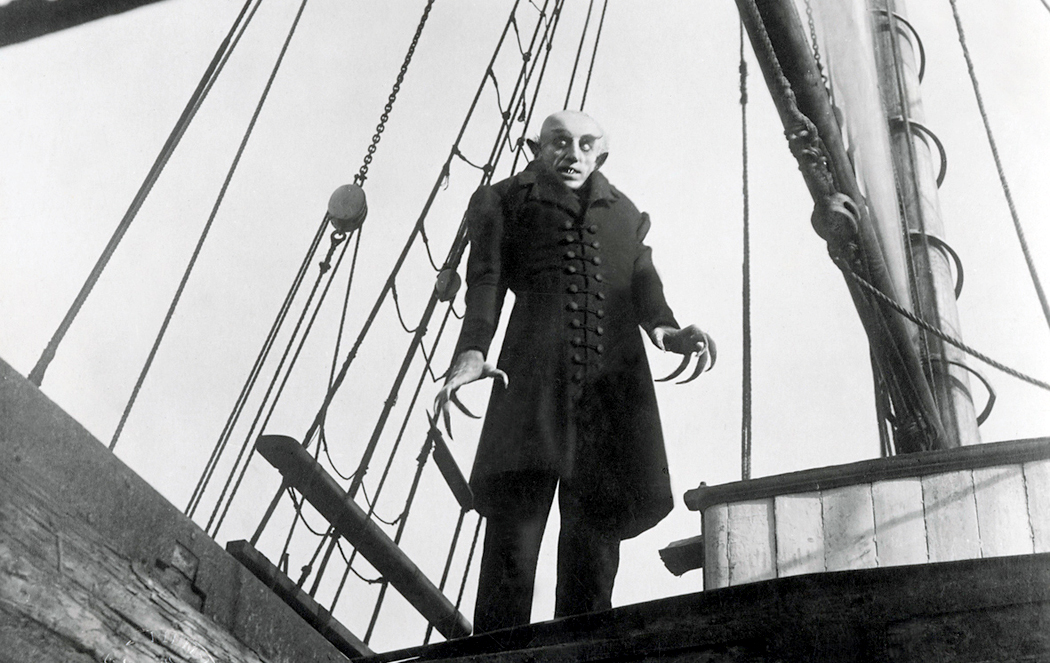
What other tunes rattle round my head? The Big Sleep; Jules and Jim; Nosferatu; Orphée; The Third Man. Many so-called “art films.” There are probably a score, maybe up to 50 movies I re-watch with pleasure and with most of them, I learn something new each time, usually something new about myself.

Buster Keaton "The General"

Buster Keaton “The General”

When it comes to movies, everyone has a Top Ten list, or a top 100, or top 500. Tastes differ, of course, and no two persons’ lists should be the same. But when you gaze through so many of these lists online, it is appalling to see just how many of these not only include so many mediocre films, but how many of them fail to include anything older than a decade or so, or anything from anywhere but Hollywood.

Here’s one such online list:

Avengers

Avengers

1. Star Wars Episode VI Return of the Jedi
2. Teenage Mutant Ninja Turtles: the Movie
3. Avengers (2012), just so no one thinks of that god-awful film with Sean Connery, Ralph Fiennes, and Uma Thurman
4. Courageous
5. Rudy
6. Dumb and Dumber
7. Independence Day
8. We Were Soldiers
9. Tomorrow Never Dies (Brosnan is my 3rd favorite Bond but this is my favorite Bond film)
10. Indiana Jones Raiders of the Lost Ark

If someone thinks Avengers is one of the greatest films ever created, someone doesn’t get out much.

Another, responding on the same website complains:

“These lists have a hole in them without Blade Runner on them. Also, R Scott’s original Alien.

“And no Peter Jackson LOTR (Lord of the Rings) flicks? That’s surprising. I felt they were a bit too long and I prefer the Tolkien books but Jackson’s The Two Towers is epic and on my list ( despite my ambivalence to hobbits lol.)

“And what about Donner’s first Superman?”

It’s easy to think Superman is a great movie if you have never been out of the house, but Sonny, there is a great big world out there, and in it, Superman isn’t even a blip.

This isn’t just about “movies I like,” in which it’s fine to enjoy anything. There are bad or indifferent films I love to watch, too. No, it’s about movies that, if you care about film, you should have seen. At least, should have seen if you want to express an opinion that has some authority to it, and not just the mewlings of an esthetic infant.

Just as there are books you should have read, if you want to consider yourself literate, and music you should be familiar with, and art that should be part of your inner life, there are movies you should have seen.

No one can have seen them all, of course. It is a lifetime’s work to expand one’s horizons and learning never ends.

It isn’t that the movies on these online lists are not good movies, even great movies. They mostly were all worth seeing. It is that the scope of the lists was so narrow, and most of the films mentioned were made in the past 10 or 15 years. One wonders what a modern moviegoer thinks constitutes a great film. It would seem: lots of action, clever dialog, color film, and a whipped cream topping of CGI. Car chases, things blowing up and wizards or werewolves.

Kill Bill

Kill Bill

If you think having seen Kill Bill parts 1 and 2 on a double bill has taught you anything about the potential of film, you are greatly mistaken. And this is not a slight on Tarantino, who is a wonderful filmmaker: It is a slight on your supposed erudition.

The films you should have seen are not necessarily the best films, either (although most are). They are the films that created the course of film development, and changed that course. They are the films that opened up the possibilities.

Some have done so through discovering new potential in the medium itself, like D.W. Griffith or Jean Cocteau. But others have discovered ways of giving the popular medium the depth of the greatest literature. If you think Batman Begins has depth, you are still wading in the shallow end of the swimming pool.

The Great Train Robbery

The Great Train Robbery

I am not talking simply about Postmodern referencing: that Martin Scorsese references The Great Train Robbery when Joe Pesci points his gun straight into the camera and fires. Such cleverness permeates current cinema, where you can hardly make a film without some witty reference to a famous film of the past. That’s nothing more than an in-joke.

Rather, I’m talking about the larger film culture that has grown and continues to grow as a living tradition — cinema as a single body of work, seen as a single, long-growing vine with thousands of leaves, stems, flowers and fruit, grown from the seeds planted by the Lumiere brothers, raised through silence, sound and Cinemascope and Technicolor.

I’m talking about movies as a humanistic art: One that can tell us about the experience of being alive. The lists I came across mostly concern film as a theme-park ride — fun, but of little consequence. As if a list of great novels were proposed starting with John Grisham, passing through Jackie Collins and ending with Dan Brown. Again, no slight on any of them: Their books can be fun to read, but they ain’t Proust.

So, Mr. Big-Shot Critic, what would your list be? What movies should anyone have seen before they can consider themselves cinematically literate?

Well, there isn’t anything so simple as a list. Rather, there is a constellation of films you should have sampled from. In other words, you can’t really say you know anything if you haven’t seen a film by Robert Bresson. Can I list Mouchette, or Diary of a Country Priest, or Au Hasard Balthasar as the one film you need to have seen? Not really, but you should have seen at least one Bresson film, and if you do, you will almost certainly then want to go on and see more of them, maybe all of them.

Au Hasard Balthasar

Au Hasard Balthasar

You will find a deeply moral core to all of them, and told in an odd, quiet, straightforward manner, usually with no professional actors, to keep the films from seeming too “theatrical.”

Or, you need to see a few screwball comedies from the 1930s. Is there one to put on a list? My Man Godfrey? It Happened One Night? Bringing Up Baby? If You Could Only Cook? Again, no, but if you watch a couple of them, you’ll want to see more of them, and you’ll never again think of American Pie as a witty movie.

My Man Godfrey

My Man Godfrey

You need to see great silent films, too. Not just old Charlie Chaplin shorts, but the movies that created the great lexicon of cinematic grammar and vocabulary. Murnau’s Sunrise or Stroheim’s Greed. Again, your interest will likely be piqued and you may become a convert to silent movies.

How can you be cinematically literate unless you’ve seen films by Godard, Tarkovsky, Bergman, Fellini, Ozu, Bunuel or Satyajit Ray? You can’t. Or German Expressionist films? Or American underground films? Or Busby Berkeley musicals? Ernst Lubitsch? Or The Big Trail — the first American widescreen film? Or Abel Gance’s Napoleon? Max Ophuls’ liquid camera?

Andrei Rublev

Andrei Rublev

Becoming literate doesn’t happen casually: You have to seek out and study. You have to pay attention. Some of these films, such as Tarkovsky’s Andrei Rublev, make serious demands on viewers; they don’t make it easy — it’s like doing homework. But you will feel exhilarated by the time you have ingested them.

So, I’m giving you homework: Here’s my list of a dozen films you need to have seen. Are they all of them? No. You need to see hundreds of them before you can have a meaningful opinion, but these are a good start. None is recent, and only two are American, because most of you have already seen Dr. Strangelove, Pulp Fiction and The Godfather, to say nothing of Apocalypse Now, which would be on my list of Top Ten (which, of course, has at least 40 films on it).

Let’s take a few chronologically:

Battleship Potemkin

Battleship Potemkin

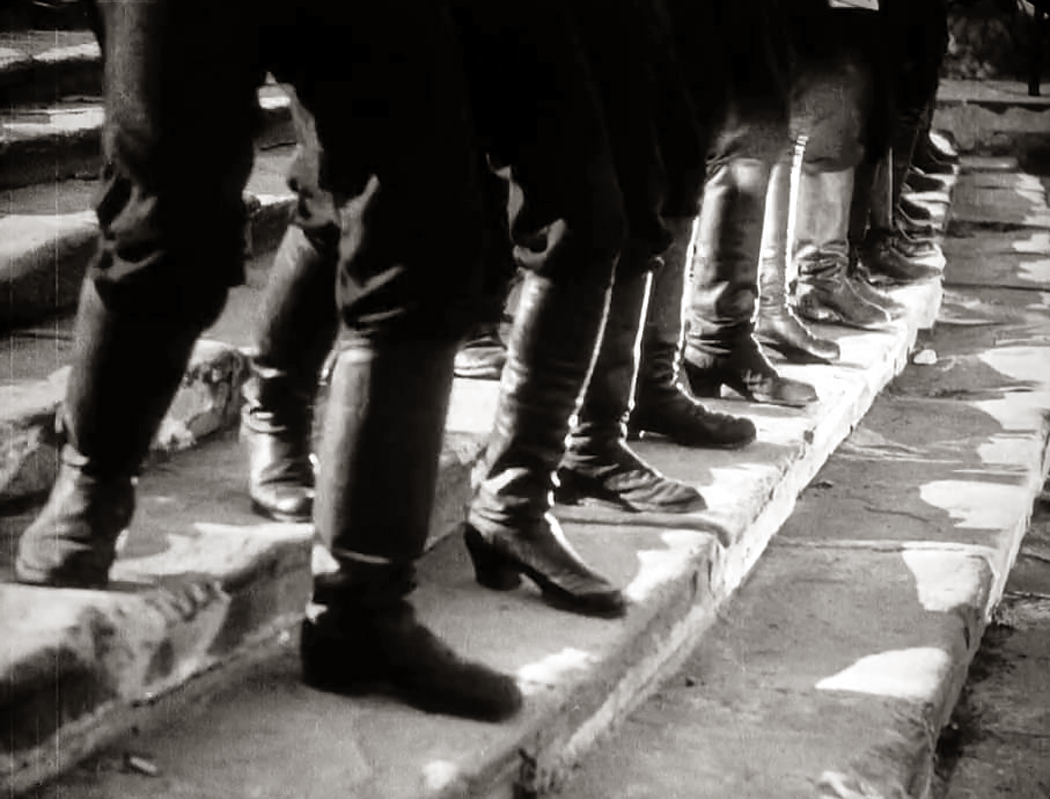
There is hardly a more influential film in history than Serge Eisenstein’s Battleship Potemkin (1925), in which the Russian director inventoried the power and magic of film editing to create meaning. It remains a powerful film, even when you recognize it for Soviet propaganda.

Metropolis

Metropolis

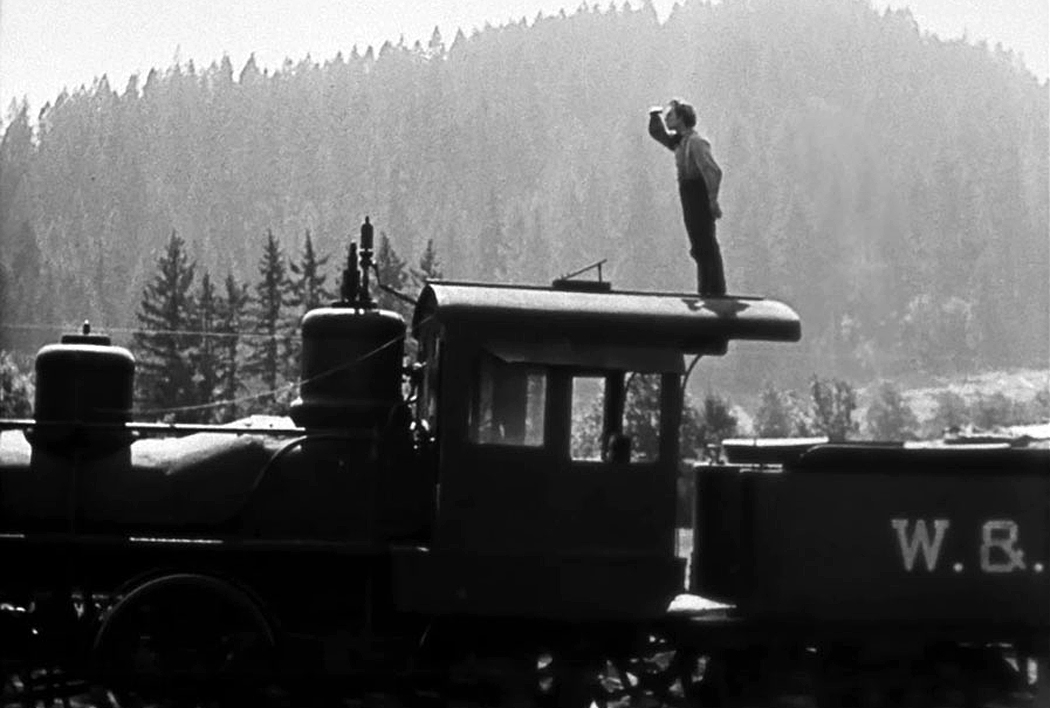
If Sunrise is too much to take at first, you could try Buster Keaton’s The General (1926) to see how silent film can tell a compelling story. It has several “special effects” in it, too. And as for special effects, you can only be amazed at the oneiric surrealism of Fritz Lang’s Metropolis (1927) — now available in something like its original version.

The studio system in Hollywood produced some of the most perfect craftsmanship during the 1930s. They had pros, who really knew how to light, edit, write dialog, and record sound. They produced many genre films, such as Westerns, gangster films, melodramas and musicals, but one thing they did that has never been matched is comedy, the so-called “screwball comedies.” If you have not seen My Man Godfrey (1936), then you don’t really know how sophisticated comedy can be. Or sexy: Try Ernst Lubitsch’s Trouble in Paradise (1932) and see how frank they could be about sex before the Production Code was enforced.

Rules of the Game

Rules of the Game

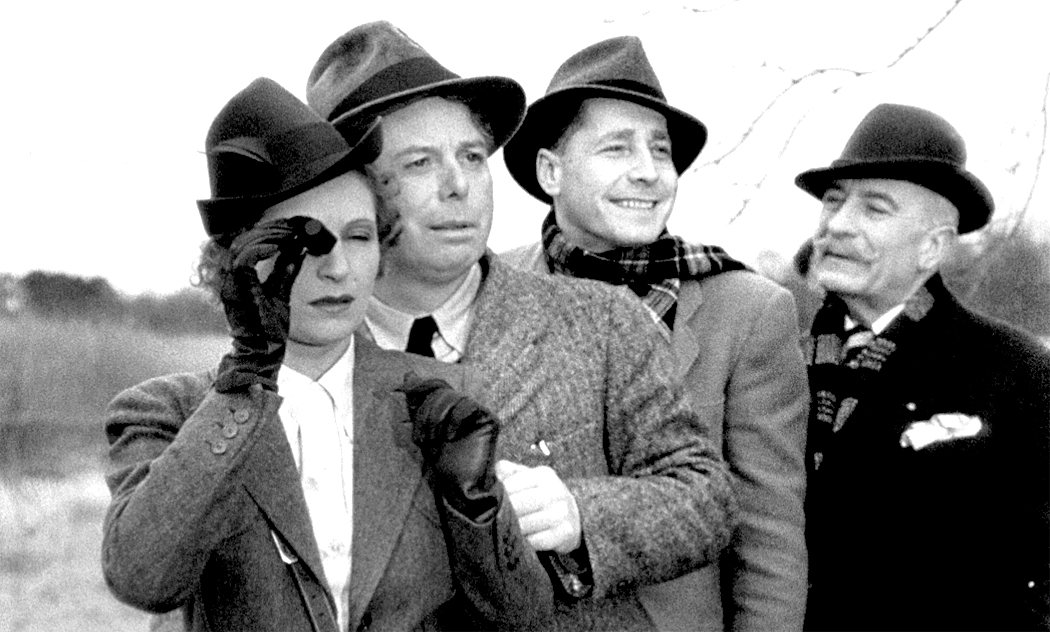
But this is still American film. The Thirties also gave us Jean Renoir’s Rules of the Game (1939), which many critics have called the best movie ever made. It is certainly the most human, humane and forgiving while at the same time satirical and biting about human foible and hypocrisy. Yes, it’s in French, with subtitles.

The Fifties and early Sixties gave us the Golden Age of foreign films, the age of the “art film,” and exposed Americans for the first time in any meaningful degree with movies from around the world.

Sweden gave us Ingmar Bergman, whose Seventh Seal (1957) is still the prototype of the Foreign Film, with its Medieval knight returning from the Crusades and playing chess with Death.

Seventh Seal

Seventh Seal

Italian Michelangelo Antonioni compressed angst, dissociation and anomie into a single intensely beautiful film in L’Avventura (1960), about a woman who disappears on a Mediterranean island and the vague search to find her. It is the apotheosis of existentialism in cinema.

Jules and Jim

Jules and Jim

The French gave us the New Wave, which rethought old American films with a fresh spontaneity. A whole busload of directors came to the fore in the Sixties. The warmest and most engaging is probably Francois Truffaut’s Jules and Jim (1962) about the Parisian demimonde just before and after World War I. It is the kind of movie that makes you not merely enjoy it, but fall headfirst in love with film.

Two gritty films present two poles of movie realism. Gillo Pontecorvo’s 1966 Battle of Algiers is so realistic that you swear you are watching newsreel footage from the front. It shows an anti-colonialist uprising that doesn’t demonize either side, but shows the miseries and sins of both. In contrast, Andrei Tarkovsky’s Andrei Rublev is so stylized you might as well be looking at a motion-picture version of a Russian religious ikon. And many of its fans feel as though they have had something like a cinematic religious experience after the “meditation” of seeing the slow-moving film.

The missing element of too many Hollywood films is any sense that they mirror real life, that they consider the moral and ethical questions of existence in favor of pumping adrenaline and presenting a black-and-white, good-and-evil, superhero and archenemy vision of existence. Great films, however, look at the complexities in ways that can be profoundly moving. Fantasy is fine for adolescents, but grown-ups demand something more.

Vagabond

Vagabond

Agnes Varda’s Vagabond (1984) follows a damaged, lost young woman as she wanders aimlessly toward a solitary death. We cannot just watch her decline as observers, but feel we share it, so deeply does Varda make us care about this woman.

A Short Film about Killing

A Short Film about Killing

And Polish director, Krzysztof Kieślowski, takes an unsparing look at a murder and its punishment in A Short Film about Killing (1988), an acrid look at Communist-era Poland and a young man’s pointless beating death of an unpleasant cab driver, and and equally cold-eyed look at the brutal and legal hanging of the young man after he is caught and convicted. Kieslowski expanded this film from an hour-long segment he made for Polish television for a 10-episode series called The Decalogue, in which each episode illustrates one of the Ten Commandments, although never in a simple or obvious way.

See these films, or their many brothers and sisters, and then talk to me about Avengers.

seventh seal knight

Can you choose to believe?

Some people seem to think so. You consider a menu of possible beliefs and choose which you like best. The American church scene certainly gives you a host of beliefs to sign up for: Not only Catholicism or Mormonism or Christian Science, but a hundred different versions of Protestantism, each with its heartfelt shibboleths. And there are thousands of varieties of Buddhism, Hinduism, Islam. And let’s not forget that Atheism is a belief, also.

So, you scan the menu and choose.

Blaise Pascal offered a bet: Believe and be saved. If there turns out not to be a God, then you have lost nothing. Fail to believe and maybe nothing happens, but if there is a God, then you lose your bet.

The problem is, of course, that the bet isn’t merely whether there is a god or not — putting your chips on the red or the black — but which god will save you and which will cast you to perdition: With so many choices, the odds are always against you: The house wins.

But you cannot merely choose. It sounds good until you try it. There is, after all, a difference between joining a church and believing what it teaches. seventh seal knight looks up

There are plenty of examples of people choosing one religion over another for political or survival reasons. Composers Gustav Mahler and Felix Mendelssohn each converted to Christianity to further their careers and escape the anti-Semitism of their time and place. It wasn’t at all uncommon in earlier centuries when one’s religion could disqualify one for certain jobs.

But did they believe in their adopted religions? That’s another question altogether.

For belief cannot be a matter of choice: You can believe only in what seems true. You don’t choose a religion and decide to believe its tenets; you decide what you believe is true, and look for a religion that offers those beliefs to you.

Believe simply isn’t volitional. You believe because you think certain things are true. Ineluctably true.

That doesn’t mean that what you believe is true — people can believe all kinds of odd piffle — but that those who believe do so because those ideas seem true to them. Whether it is religion or science, fiction or the ravings of a tin-foil-hat Tea Party Republican, you can only believe what rings true.

This is so even for those young academics who profess not to believe in any truth, that truth is all just relative. But of course, they believe it is true that there isn’t any truth. You cannot escape it: If you believe, you do so because you perceive it as true.

There are certainly people who wish they could choose to believe. There are those without faith who suffer from their inability to believe. They desperately want to believe, like the knight in Ingmar Bergman’s film The Seventh Seal.

What holds them back is that they cannot choose to believe something that doesn’t seem to be true, no matter how beneficial it would be if they could enforce that choice. Faith has, after all, many demonstrated benefits.

But if you don’t think there is a god or a savior, you cannot pretend there is.

Conversion happens when you accept that the religious tenets are true. It isn’t logic or reason that defines truth for us. We each have inclinations of genes and upbringing. seventh seal subtitle

Our emotions as surely as our syllogisms govern what seems true to us.

Some people are credulous and can accept as true any amount of silliness. I know a man who converted to a new religion every six months or so. He has been Baptist, Buddhist, Catholic, Methodist, Hindu and Evangelical.

One religion he joined actually worshipped triangles and explained the entire universe in terms of three-sided figures. There was not an ounce of hypocrisy in him: He believed each religion in turn was the true one.

Yet, if you cannot choose to believe, you can nevertheless choose to be open to possibilities, to allow yourself to learn about things you had previously been closed to. You can choose to look and listen.

Maybe you’ll be lucky.