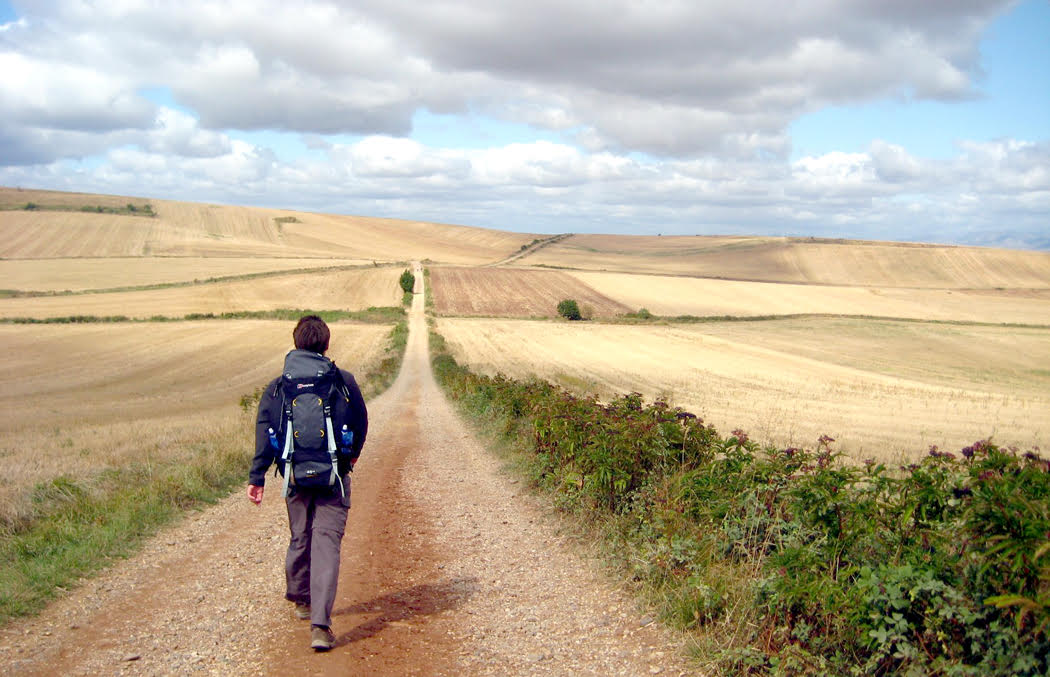
When that Aprille with its sweet showers has vanquished the roaring lion of March, then “longen folkes to goon on pilgrimages” — or at least on spring break. The ice has broken on the rivers and the trees are budding. You want to get out of the house again. Go somewhere.
I’ve been on many pilgrimages, although I had never really thought to call them that. The line between what constitutes pilgrimage and what can be called merely travel is impossible to draw in black ink. Each of us must decide where one endeavor shades into the other. There are many who walk to Santiago de Compostela merely for the adventure of it, while, on the other hand, there are those who may vacation in some spot that has developed, for them, the quality of a shrine.
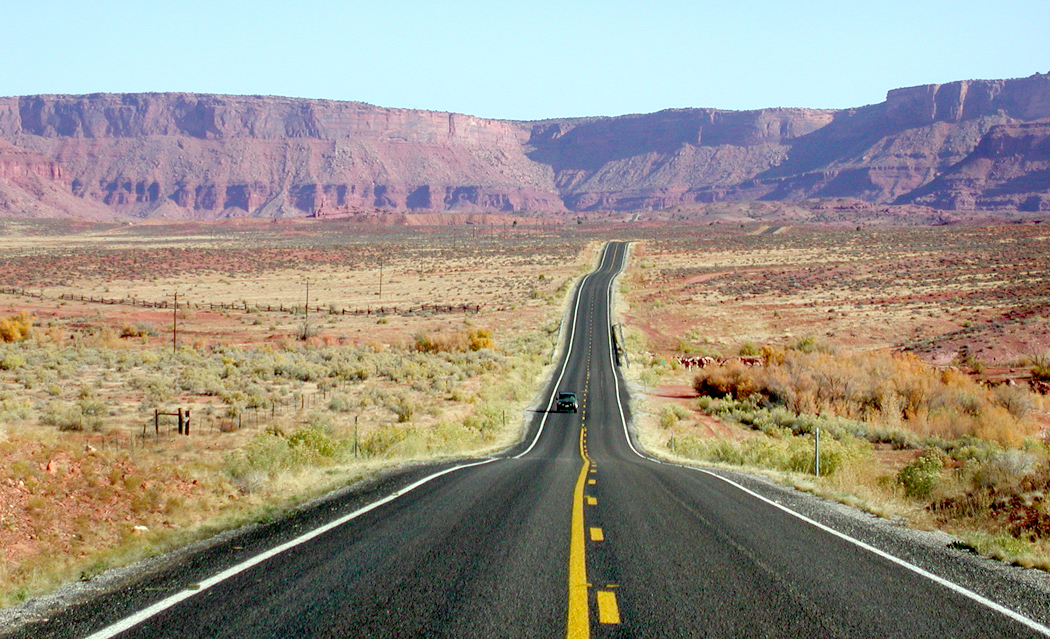
Utah
I am not religious and subscribe to no doctrine, but there is still something deeply satisfying about going somewhere, away from life’s everyday concerns, to discover something bigger, more important and more meaningful. That is how I define for myself the nature of a pilgrimage.
Some call this meaning “spiritual,” but the word, for me, has too much incense around it. I leave it to the New Age conjurors and the church-goers. But it hits something more than merely day-to-day in our consciousness.
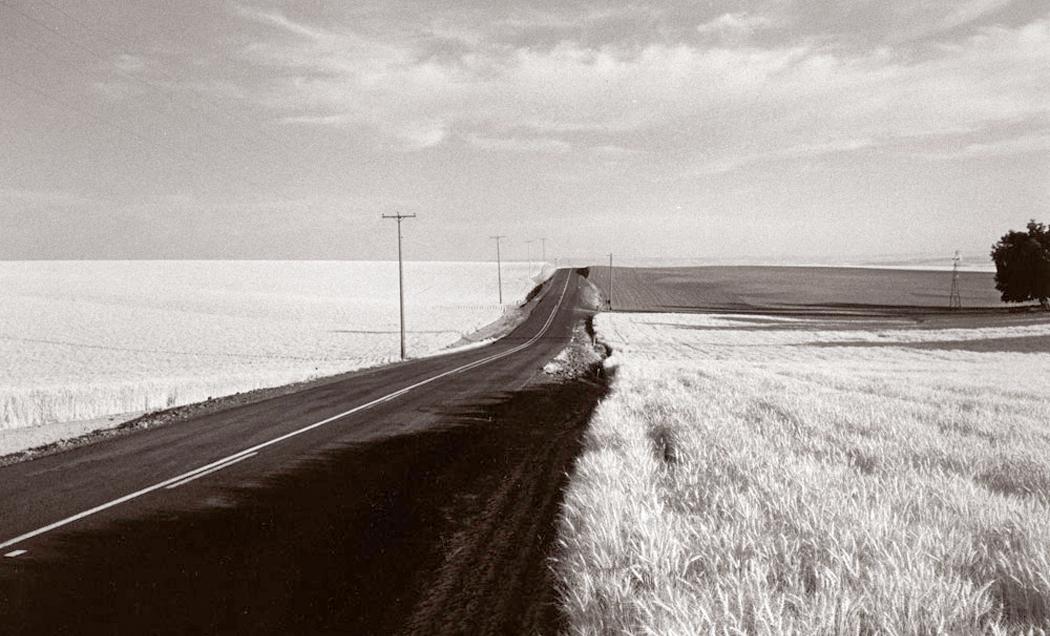
Oregon
In some sense, nearly all travel I have taken has functioned as pilgrimage. I go to see something, or I go to learn something, or just to be near something that has meaning. And there’s a crux. “Meaning” is a squishy term, difficult to define. It is not an equation: “This means that,” as if we were translating something, like “amigo” means “friend.” In the sense I use it here, meaning cannot be translated; you can’t always say what something “means;” it cannot be paraphrased, but it inheres in an experience. You feel that it has meaning or significance. Like a dream you cannot parse, but won’t leave you; you know it is meaningful. Meaning is not understood; it is recognized.
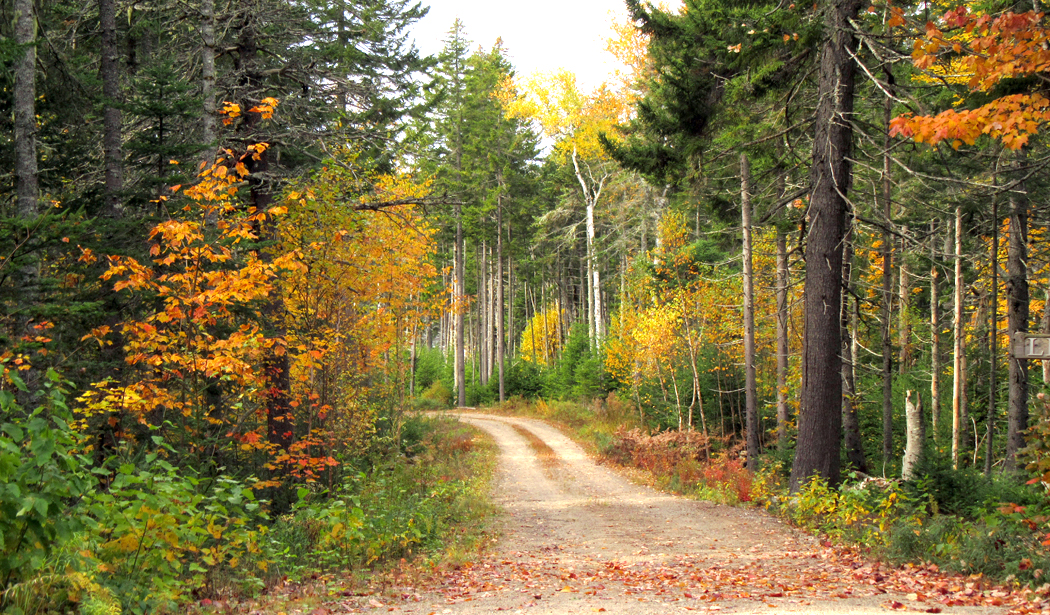
Maine
You will have your own meaningful travel; consider why some places seem important, perhaps because of something that happened earlier in your life; perhaps because of something you read and admired; perhaps because of religious belief. You want to visit the house where you grew up, or the farm your ancestors worked. Perhaps, even, because it matches some undefined longing deep in your chest.
It was such a longing, or empty space in my experience, that led me to Chartres cathedral. It was certainly more pilgrimage than tourism that led me to it first time. It overwhelmed me.
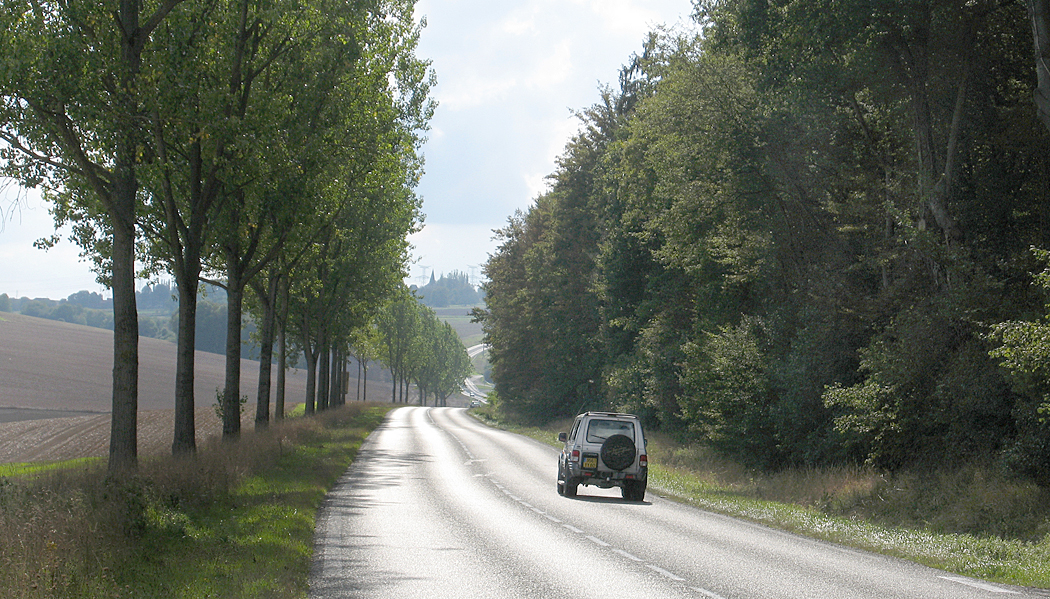
Northern France
It prompted, a few years later, a more traditional pilgrimage: an intentional voyage from shrine to shrine, as I traveled west to east across northern France seeing many of the notable churches and cathedrals: Rouen; Amiens; Beauvais; Laon; Reims; Noyon.
I’ve been back to Chartres several times; in Paris, to Notre Dame too many times to count. But also to Sainte-Chapelle, Saint Denis, and several smaller churches, such as Saint Séverin, Saint Germain l’Auxerrois, Saint Eustache. Each fed a hunger to experience that unexplainable sense of space and time.
And despite my utter lack of religious faith, there was no denying the power of this architecture and the meaningfulness of its vast interior space as metaphor for both the infinite exterior and our psychic interior — dome of heaven and dome of skull — both of them larger and more important than our puny day-to-day lives.
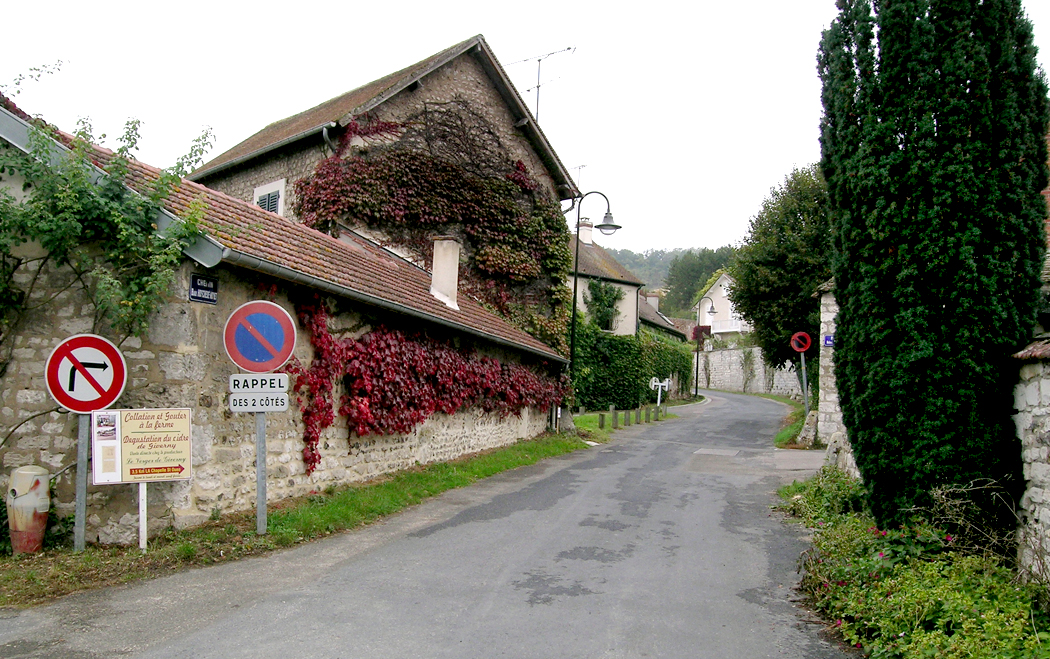
Giverny
I’ve also made the pilgrimage three times to Monet’s garden at Giverny — which is one of my holy-of-holies — first in the spring and then twice in the fall. My life is infinitely more alive for my having spent time there.
One important thing about pilgrimage is that there is a layer beyond the quotidian. There are many other gardens I have visited, from Butchart Gardens in British Columbia to Brookgreen Gardens in South Carolina, and however beautiful they are, they don’t have the added psychological punch of being conjoined with the historical, artistic or biographical significance of its founder.
Texas
Giverny has been memorialized in the paintings of Claude Monet, and are a monument to a moment and a movement in art history — and what is more, one that I particularly resonate to. And so, visiting Giverny has the significance of pilgrimage for me. The more deeply you become emotionally engaged with the things and places of the world, the more likely a site may become such a destination.
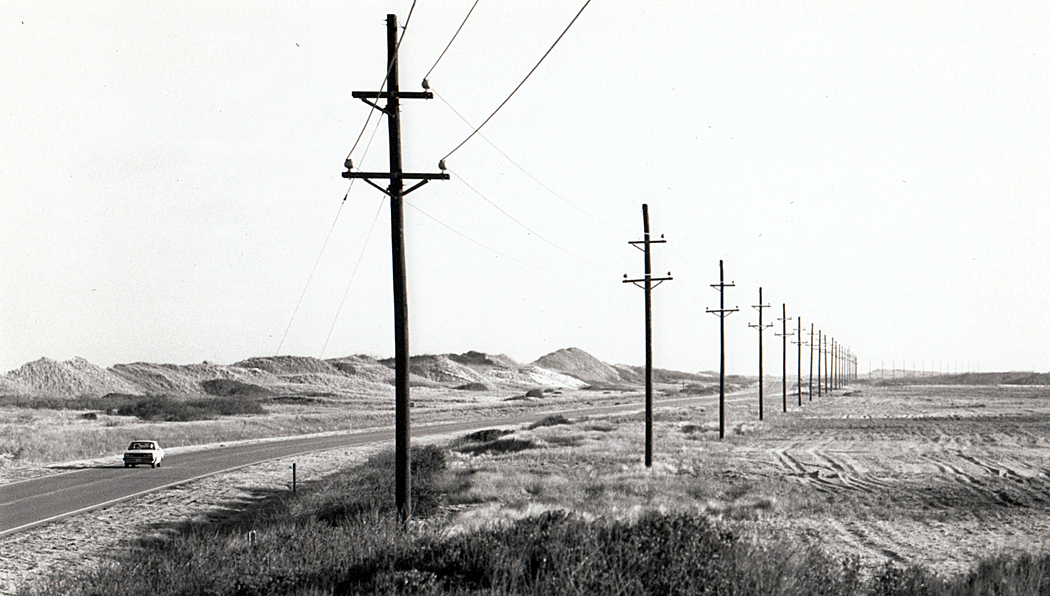
Hatteras Island, N.C.
Cape Hatteras has become such for me. In college, my friend and I visited several times. We camped in the dunes directly under the lighthouse and at night the surf misted the air with a salty haze. The nighttime sky with the roar of the ocean was another mirror turned simultaneously inward and outward. I return periodically, although when I first went, much of the barrier islands were empty; now, except for the protected National Seashore, it has become a Manhattan of the coast, with three- and four-story condos lining the single road that runs south along the island. Its magic is mainly now in the memory.
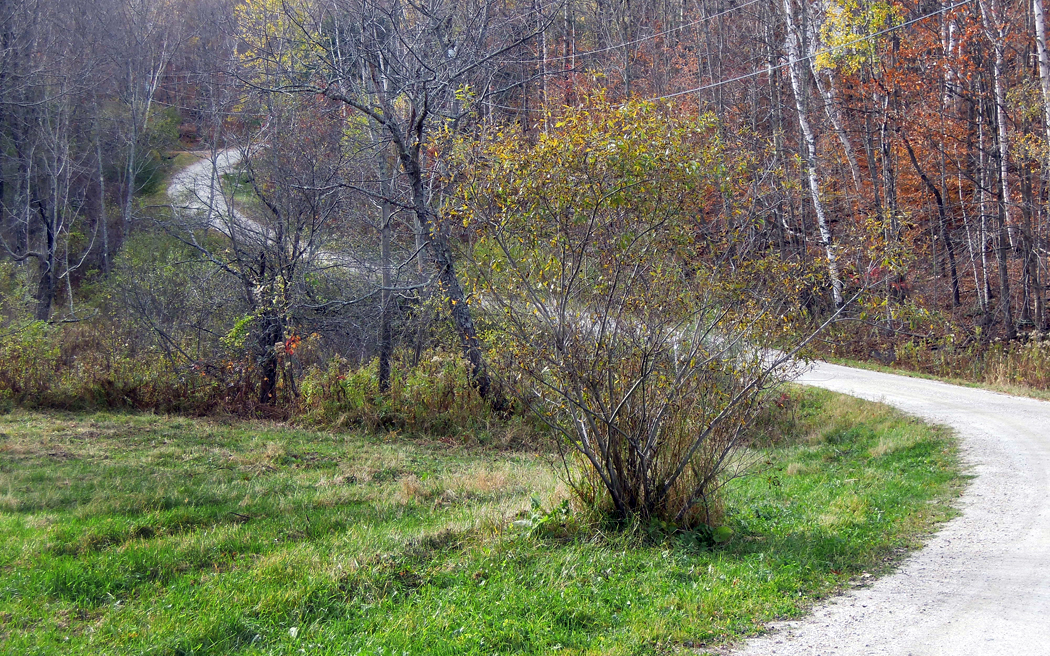
Vermont
One can make pilgrimage not only to claim something new, but to pay homage to what has become sacred. Every time I visit Maine, I go to Schoodic Point where the waves crash over rocks and wash back into the sea in torrents. It is pilgrimage in so far as each visit reassures me that the world I know survives — both the interior and the exterior. I reabsorb what it gives me and I am remade.
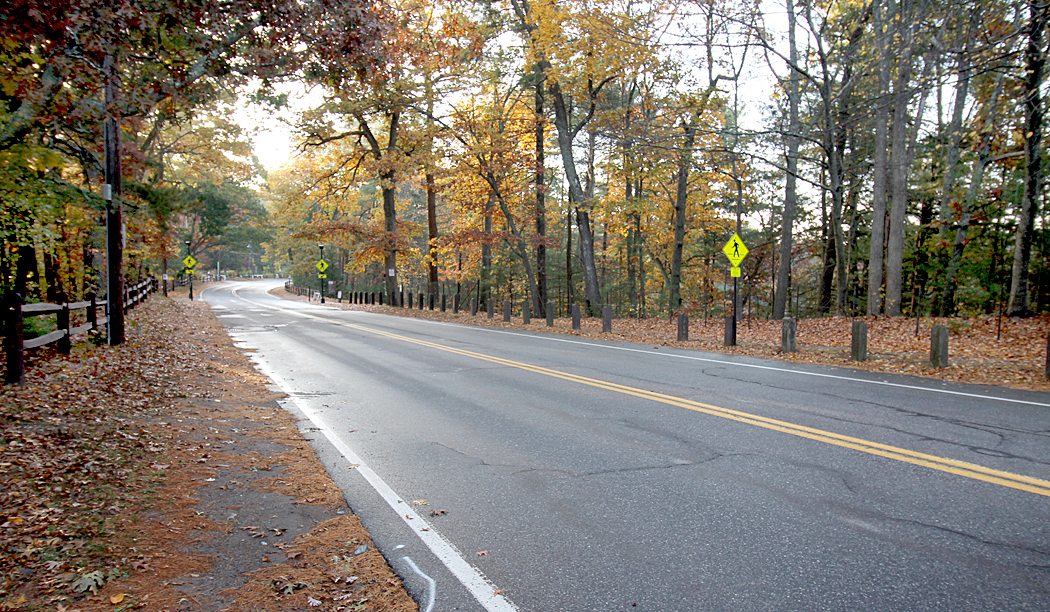
Road to Walden Pond
When I was a young man, I read through the writings of Henry Thoreau and made the pilgrimage to Walden Pond in Concord, Mass. I can not accurately recall the number of times I have made it to Walden Pond; they all blur together. I’ve been there in spring and in fall; I have had the place all to myself, and I have had visits I had to share with busloads of tourists; there were moments when I felt I was communing with the eternity that Thoreau found there, and moments that were bound by the clock — I had elsewhere to get to before dark.
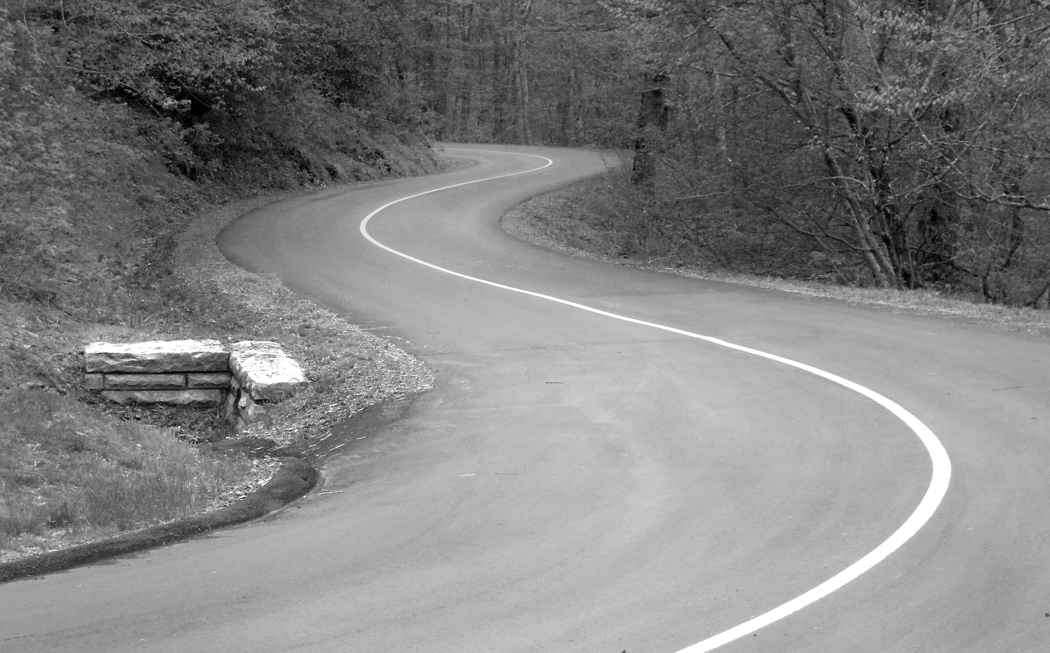
Blue Ridge Parkway, North Carolina
With my second unofficial wife, I hiked a good portion of the Appalachian Trail in the mid-1970s, in a more traditional pilgrimage on foot. We never finished that one, giving up because we discovered that unlike what we had imagined — leisurely enjoying the beauty of nature — the reality was driving ourselves to the next lean-to by nightfall and not losing track of the paint blazes that marked the trail. A trudge rather than a Thoreauvian saunter. Nevertheless, even incomplete the hike has informed who I have become in profound ways.
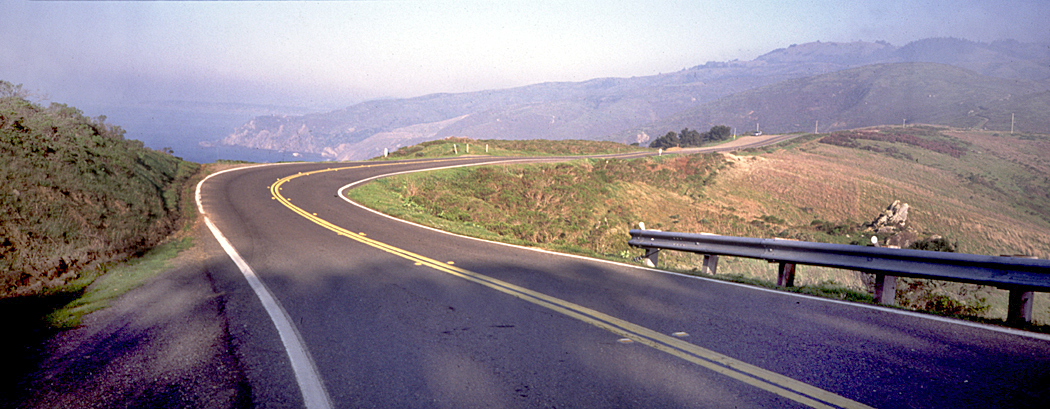
Pacific Coast Highway, California
Other pilgrimages I have made include driving the the length of the Mississippi River from its source at Lake Itasca to its mouth on the Gulf of Mexico. I have also traveled the length of the Appalachian mountain cordillera, from Alabama to Percé Rock at the tip of the Gaspé Peninsula in Quebec; and have driven from Mexico to Canada up the fold in the middle of the map of the 48 states — along the 100th Meridian.
Each of these, and several others, have been journeys of intent, that is, trips made with an end in mind, as opposed to a vacation trip, whose whole point it to avoid the work involved in achieving a goal.
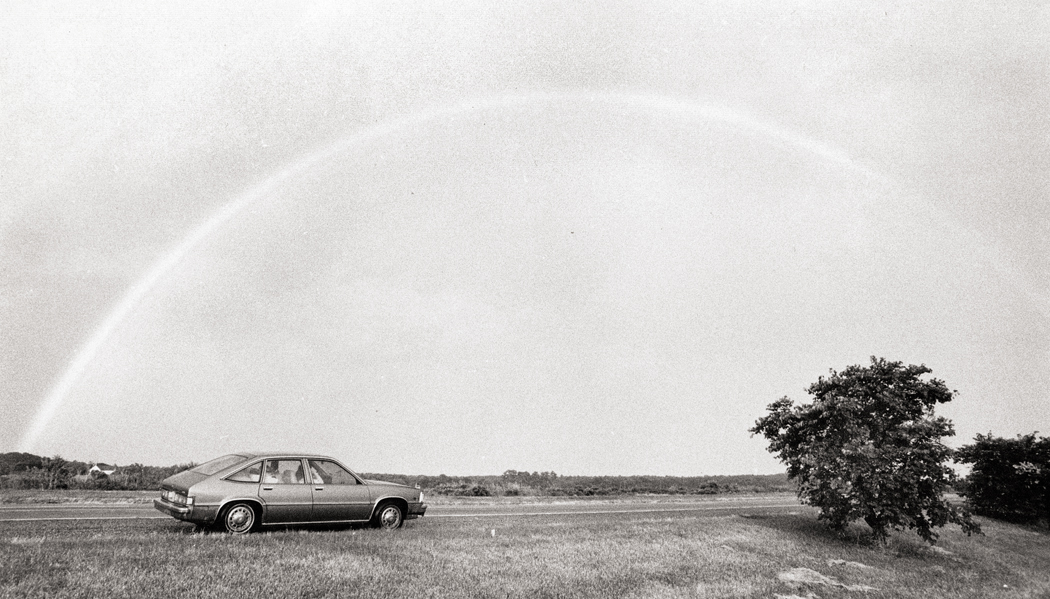
Rainbow, Delmarva Peninsula
Perhaps the most salient difference is the goal: For a pilgrim intends to change or be changed, while the vacationer usually purposes only to recharge the batteries and come home feeling more himself. But leaving home and passing through the unfamiliar will always change who you are.



 Richard Nilsen