Archive

Tag Archives: Stuart

word 4
“I’m confused by language,” said Stuart.

I wasn’t sure what he meant. His language confused me. I assumed he meant that he found certain sentences and paragraphs deliberately obfuscating.

“Many people are confused,” I said. “Politicians use language deliberately to confuse, and so do corporations. Mystify. Mystify. Vague it away.”

“That’s not what I mean,” said Stuart. “This is all true, and I am always scratching my head over what comes out of a politician’s mouth. But my confusion is much more basic: Language itself. Speaking. How does it work? How does it function?”

Stuart had the look of a bunny rabbit looking at a hatchet, with the concentration and intensity, but also the complete lack of comprehension.

“I mean, take the same sentence or phrase said by an Alabaman, a Brooklynite and a Calcuttan. The sounds they utter are utterly different, yet, we can understand each immediately. So, it cannot be the sounds alone that convey meaning. The Awe-stryl-yin ‘Good Die’ is never taken in New Jersey to be about death. We can parse it out just fine.

“The New Yorker who asks his friend, as Woody Allen had it, ‘Jeet jet?’ and answered, ‘No, jew?” It just means they’ll go to the deli and get a pastrami sandwich.

“So, of course, we don’t speak in words. How could we? Just try it. Speak the sentence out slowly and with clear articulation for each syllable: ‘Did you eat yet?’ and ‘No, did you?’ and you realize you sound like a synthetic recording, like Stephen Hawking or something.

“No, we speak in whole sentences, or at least in well-rehearsed phrases. ‘I’m going to go to the store’ is really ‘Ime gonna go tooda store,’ or, ‘tooda stow,’ if you are in a different region, or in another place, ‘staw.’

“In fact, the letter ‘R’ by itself is a summation of the problem. Howcum we can understand words with the letter ‘R’ even though it varies from the veddy veddy British ‘D’ version to the rolled burr of the Scottish, to the little flip of the tongue in Spanish and then to the back-of-the-throat gutteral French ‘ghghgh…’ the voiced uvular fricative.”

And here Stuart gargled something in his throat that sounded very much like a possum expiring on a kitchen floor.

“Merci,” he says, “Meghghgh-see.”mr yunioshi
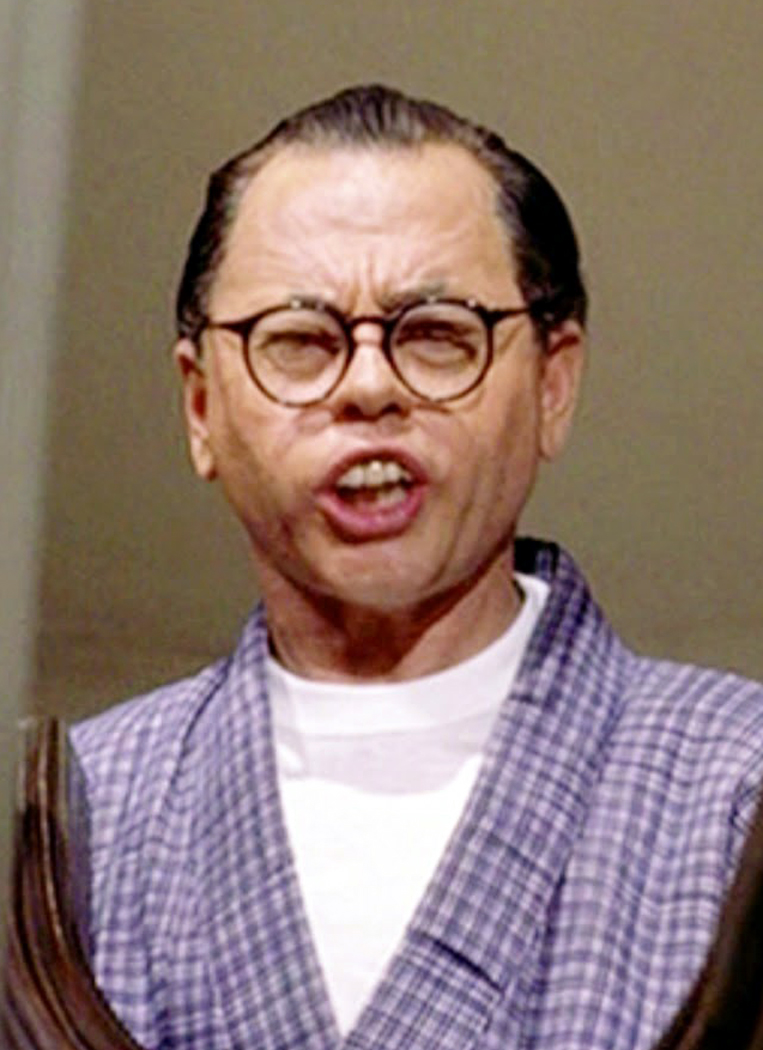
“And then there’s the undifferentiated liquid of Asian languages, which we make fun of, not understanding that ‘L’ and ‘R’ are such close relatives. ‘So solly,’ says the vaudeville Chinese stereotype. And ‘flied lice,’ and its opposite, ‘rotsa ruck.’ You cannot help but throw up a little in your mouth, thinking of Mickey Rooney in Breakfast at Tiffany’s.”

“Oh, yeah. That’s really embarrassing.”

“More than embarrassing; even more than offensive. It is tin-eared. That’s not what’s going on with the undifferentiated liquid.

“But then, there’s the American ‘R,’ which is probably the single most distinguishing giveaway to an American accent whenever an American attempts to speak another language. ‘Moochas grrrassee-aas.’ That rhotic  ‘R’ hangs in the mouth way too long. ‘RRRRRRRRR,’ like some dog growling when you get too close to his bone. ‘Murrrrr-see boe-cooo.’ Americans speak in such a rhythm that you almost have to stretch the ‘R.’

“But then, we stretch out our consonants, too. Listen to Mexican speaking and you hear the clipped, quick syllables rattle by. Then hear the American imitate him and you see a slow train entering the freight yard. I am grateful whenever one of our presidents attempts to say a few phrases in Spanish, but I also cringe at the wrong rhythm. It’s like a Republican playing jazz. The beat is all wrong, to say nothing of the nasality of the American voice, which — thanks to the prevalence of Valley-girl speak — is only becoming more and more unavoidable in American speech. At some point, American English will pass French for the ‘most-nasalicious’ trophy.

“I used to love English, the sound of it, the sense of vocal pleasure achieved by sounding out those luscious consonants. We conventionally say that French is such a beautiful sounding language, or Italian. And they are, in their own way. But usually we say such things to distinguish our own lack of appreciation for the language we were born into.”

“Yes, my wife likes to try to ‘hear’ human speech the way we hear bird calls or cattle lowing,” I finally get a word in edgwise. “She asks, ‘What is the sound of human speech,’ not meaning what is the content of the language, but what is its animal timbre. She tries very hard to filter out the semiotics and syntax and hear what is said the way we hear whale singing or coyotes howling. It’s nearly impossible, because we understand our mother language so instantaneously as it is spoken. There is almost no time lag there to climb down into and grasp the sound waves. The closest she gets, she tells me, is when she hears children playing in the schoolyard. A human flock of cackling birds. But it’s hard to hear it without being blocked by knowing what is said.”

“Yes,” said Stuart, “and if you do manage to do something of the sort, you realize now what an ugly direction American speech is taking, how whiny it has begun sounding, with all that torpor and nasality. I think of, say, John Gielgud speaking Shakespeare and I love the words that leap crisply from his lips, the deliciousness of them, lovingly shaped and tasted as they are spoken. And then you compare that with, say, Taylor Swift — and I’m not picking on her for any reason other than she is so typical of young American English — and you hear a slow, unconsidered whine. Valley-girl-ism. It’s everywhere. Even our best actors and actresses are now infected with it. In our own lifetime, we have seen the evolution of American English.

“And if it has changed so much in so short a time, I mean the sound of it, the way it is produced in the throat and mouth, imagine how much it has changed since the time of Chaucer. ‘Whan that Aprille with its shoures soote …’  How long before the language of, say, Franklin Roosevelt in an old newsreel, sounds as archaic as that? And I’m not referring primarily to the change in vocabulary, but merely the alteration in vocal production, the next great vowel shift.”

“Yet,” I said, “we can still, if we pay attention, hear Chaucer and understand it. At least for the most part.”

“That is precisely my original point,” Stuart said. “How can it be that when a New Yorker says, ‘youse guys’ or a Virginian says ‘y’all.’ The fact is, as I said, we don’t speak words, but sentences and phrases, all balled up into a little melodic jingle.

“Take a simple sentence, like ‘Please hand me the lamp, I want to plug it in.’ What we really say is something like, “Pleez/ hanmedalamp/ eye wanna plugidin.’ Words elide into tiny musical phrases, like ‘hanmedalamp.’ If there is a single linguistic unit there, ‘hanmeda,’ it is that tune. But the tune changes radically when you say it in another regional accent. In a Yiddish accent, you ask for the ‘lemp.’ In a Downton Abbey voice, you call it a ‘lahmp.’ In a Southern drawl, you ask for the ‘layump.’ These accents cannot even agree on the number of syllables in the word.

“Yet, we absorb the meaning of the sentence easily, no matter which version we hear.

“This tunefulness is that makes it so hard to learn a new language after a certain age. You want to hear the words a Frenchman speaks to you, but he isn’t speaking words, he’s speaking phrases. You are trying to parse out the sounds you have heard into discrete vocabulary, but you cannot do it in anything like real time. The lag is too long. You need to learn a new language not by reading it, where it is separated with little lacunas between type, but in the long swirl of phrase and sentence, as she is actually spoke.

“So, ‘Como esta Usted’ become ‘co-mwes-taoos-ted.’ And I’m not even taking into account the problem of hearing a Hispanic ‘D,’ which slides between the tongue and teeth like an Old English thorn.”

“You mean the ‘TH’ sound?”le monde
“Yes. You know, when I go to France, I have little trouble reading Le Monde or Le Figaro. But I have the hardest time understanding the concierge or waiter when he asks me a question. I can navigate the type fairly easily because it is all divided up into words, many of which are cognates in English. And it isn’t just that French is so differently pronounced from its spelling. I have the same situation in Mexico with Spanish. Easy to read, harder to hear. And the Spanish is not pronounced at variance with its orthography. But the problem is that the French waiter isn’t speaking in words, but in phrases, in melodies. And I am a toddler, having learned words built with my alphabet blocks.

“The point here is that I can hear my own language spoken in a variety of melodies or accents, even radically different from my familiar usage, and seem to have no difficulty accommodating the changed pronunciations, but have such a damnedly hard time wrapping me ears around even the most proper spoken French.

“I remember the character actor Luis van Rooten, who wrote a series of nursery rhymes in French, which, when spoken out loud, sound like English spoken with a comic French accent. ‘Un petit d’un petit s’etonne aux Halles,’ or ‘Humpty Dumpty sat on a wall.’

“I am certain that a Frenchman has the same situation hearing the Marseille accent or the Parisian one, and sails through the different melodies with no problem, but has the devil of the time hearing clarity in English spoken even by Gielgud.”

“You remind me of Lady Mondegreen,” I said. “Hearing language not in words, but in a smear of sound in a phrase. Our hearing is amazing, when you think about it, how we can absorb whole sentences, or chunks of them, without ever thinking of them broken into words. But we can also mishear them. Which only proves it is the melody we are listening to and not the words.”

“Lady Mondegreen? Who dat?”

“You know, a mondegreen, when you mishear something. Like in the folk song, ‘They hae slain the Earl O’Moray and Lady Mondegreen,’ which was originally ‘and laid him on the green.’ It’s now the official word, like a pun or Spoonerism or Malapropism, for misheard lyrics, or misheard language in general, like the famous ‘Excuse me while I kiss this guy’ in the Jimi Hendrix song.”

“Yes. Mondegreen. I’ll remember that. It’s my point exactly. When we speak in phrases, we often elide the sounds in them into other sounds, not always clearly related. I remember the story of the kid who drew the Nativity scene with all the usual figures and a fat man beside the manger. ‘Who’s that?’ she was asked. ‘That’s Round John Virgin.’ As we speak it, the ‘D’ of ‘round’ and the ‘Y’ of ‘yon’ scrunch our tongue into making a ‘J’ sound, not a simple ‘DY’ sound. And we hear it in ‘John.’ ”glodderbin toad 1

“An old friend of mine remembers when he was camping with his girlfriend and he was inside the tent trying to wrestle with the tent poles while she was outside giving moral support. Then she yelled with some joy and excitement, ‘Look, look, a Glodderbin toad! A Glodderbin toad!’ He poked his head out of the canvas looking at the ground all over. ‘No, up there, in the air — a glider being towed.’ You have to say it in a Southern accent.”

“Ah, the Bufo glodderbinensis. Perhaps one day, some scientist will give a newly discovered toad that name and your friend will be vindicated.”

Dog and cat battle dan kincaidDrawing by Dan Kincaid


“It’s Je-Ne-Vee-Ev, not Jeneveev,” said Stuart, introducing his live-in, Genevieve, the viola player. She is 50-ish, stylish and thin, with a shock of white in her hair, like Susan Sontag. She was born in Belgium and takes the same offense as Hercule Poirot for being assumed French. She has a throaty voice in the same register as her viola, although her instrument probably didn’t spend a lifetime smoking unfiltered cigarettes.

We were having dinner, the four of us: Stuart and Genevieve and my wife and me. Stuart did the cooking; Genevieve poured the wine. And oh, how a little Beaujolais can get Stuart talking.

“It has been said that there are two kinds of people in the world: those who divide the world into two kinds of people and those who do not. But I’ve never met any of those.”

And Stuart was off to the races.

“Everybody and his brother-in-law splits the world into two categories: male and female; conservative and liberal; Gene Autry fan and Roy Rogers fan; those who get it, and those who don’t.”yeats

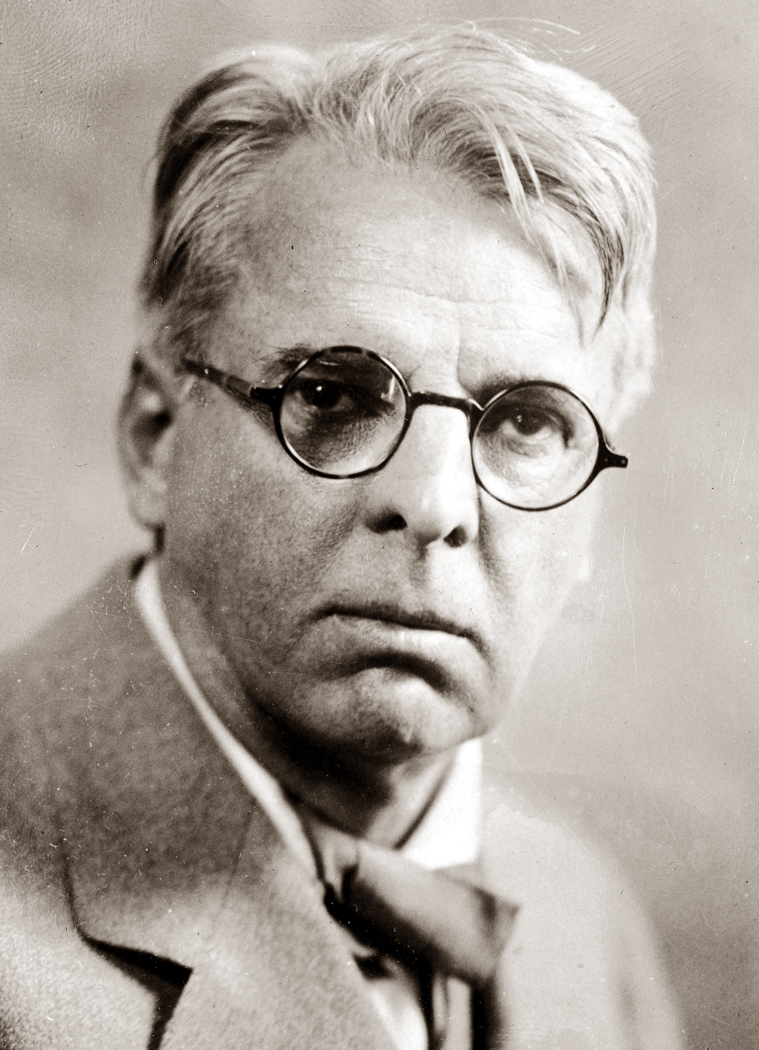
Stuart had just finished reading A Vision by William Butler Yeats. Stuart had an epiphany, he said.

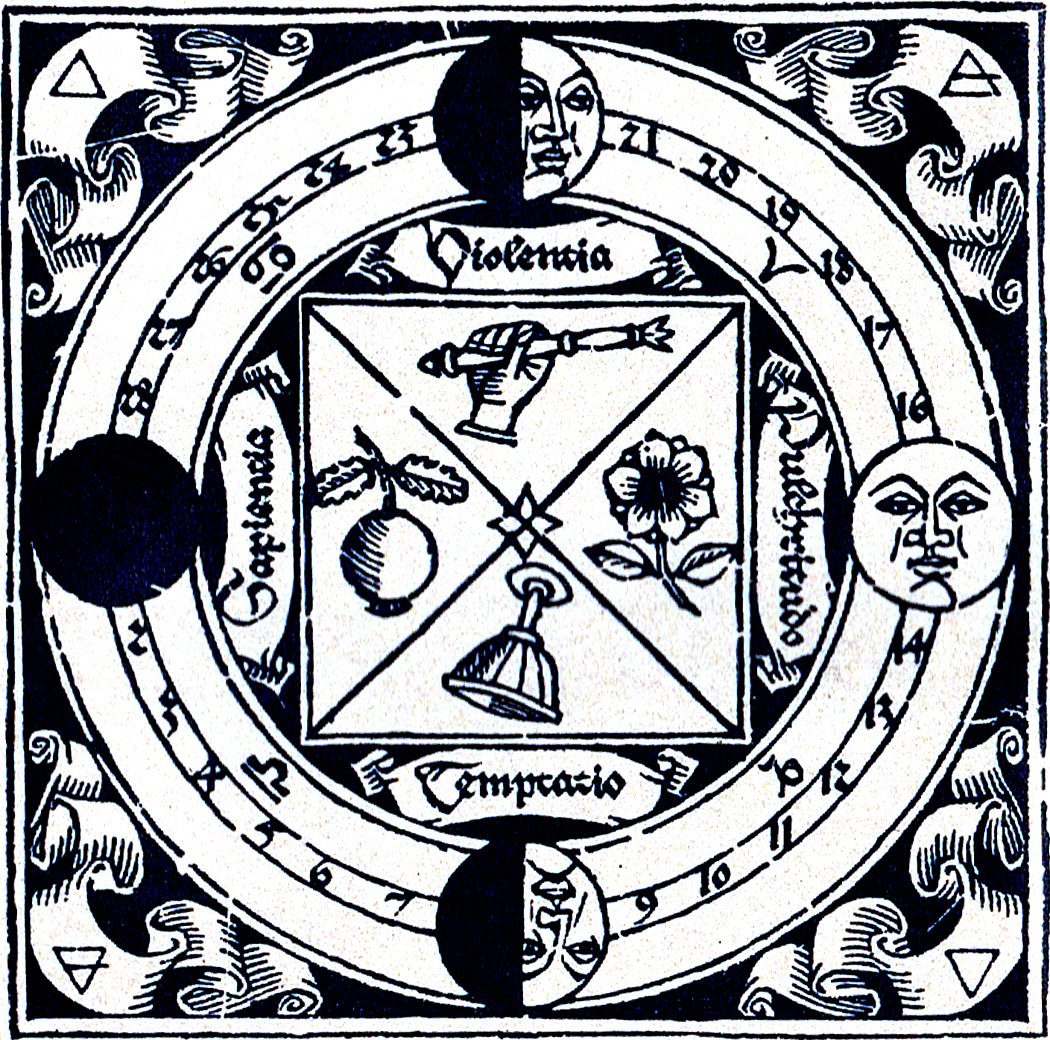
“Yeats divides human personalities up into 28 ‘phases,’ like the phases of the moon. It’s really brilliant, if a little loony. Ideally, there is no Phase 1 or Phase 15 — the first and middle phase of the moon’s monthly round of waxing and waning: The new and full moons; these are too pure and unmixed to exist in the real world. But all the phases are defined by their ‘tinctures’ of two essential personality engines, which Yeats calls the ‘primary’ and the ‘antithetical.’ Simply put, the lumpy and the poetic.

“He gets quite lawyerly in parsing the bits. And I had this vision of my own, although it is somewhat simpler to understand.vision phases

“It is that underlying every other distinction is this basic, fundamental one: between dog and cat. You can have your phases of the moon, but really, but all those personalities are either canine or feline.”

“You mean, like a dog-person or a cat-person?” my wife asked. “I’m a cat person; we gotta have cats around the house.”

“No,” said Stuart, “not a question of which animals you prefer as pets, but rather, which you are in your cor cordium, your self of selves. We are all one or the other. You can see it in the faces of everyone around you.

“But it goes beyond people. As I now see it, every animate being on the planet is one or the other.

“They are opposed personality types. They function in the world differently and see the world differently.

“For the dog, the world is essentially simple. Truth is truth, up is up and down is down. The dog has a direct relationship with the things of the world: They are what they are.

“A cat, on the other hand, sees the world metaphorically. Things may be what they seem, but are never only what they seem. They can mean one thing Monday, and something entirely different on Tuesday.

“When dogs read poetry, they like to read, ‘what oft was thought, but ne’er so well expressed.’ They can be scholars and critics, and they can be quite discerning and bastions of good taste, but their world view is essentially single-tracked. Their vision is clear, if not very imaginative. Their word is their honor and they have 30-year mortgages.woman in the dunes

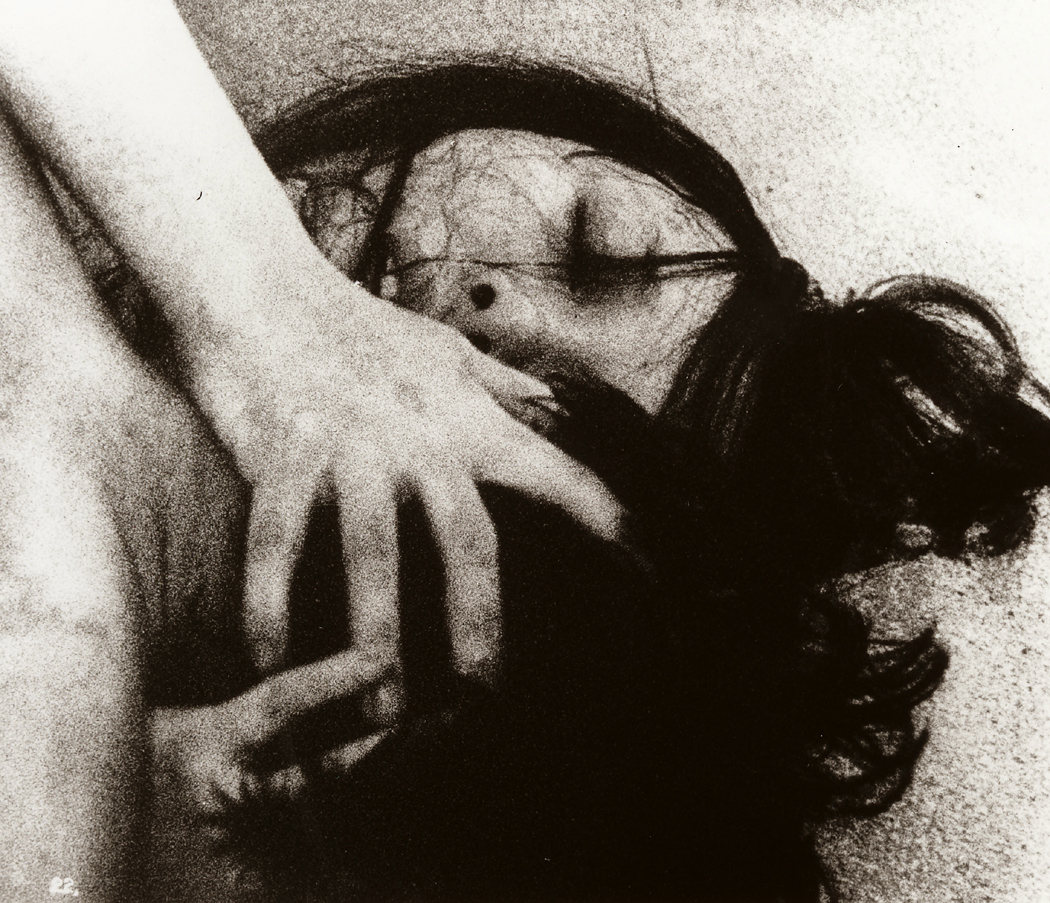
“Cats love Japanese movies with subtitles and long shots of shifting sands. Dogs like Adam Sandler and Kristin Stewart.

“Cats enjoy the jostle of ideas. Dogs talk about wines.

“You may think I’m tipping the scales in favor of cats, but that is only because I am one. There is downside to either class, and dogs really are important for the continued functioning of the society that makes cats’ lives possible.

“Cats never decide on a college major and fritter away their parents’ money taking courses in Incan pottery and creative writing. Dogs stick to their curriculum and go to Career Days.

“Dogs become Eagle Scouts and join the Rotary Club. Dogs dream of a house in Syosset and a Bill Jr. to take to the zoo. Cats dream of pirates, scoundrels, military heroes and Tamerlane.

“There are many kinds of dogs in the world. Some are bureaucrats and some, the more stylish, wear whatever is touted in Esquire. Hell, the Playboy Advisor was written for them. Some are noble and become doctors or missionaries; others bring my slippers at day’s end.

“It is plain, especially to dogs, that the world functions only because of them. And truly, we couldn’t do without them.

“But cats have eyes that change as the moon changes. They live by their own rules and amend them as their mood shifts. They are filled with prevarication and treachery. Their minds shuffle like a gambler’s deck of cards and we never know what face will show, or what suit. ‘Spades and Diamonds, Courage and Power; Clubs and Hearts, Knowledge and Pleasure.’

“When it comes to poetry, cats often prefer to write their own.”

Stuart noted that my wife writes poetry. He explained that cats don’t only write bad poetry, but rather, all poetry, no matter what the quality.

“Well, there are exceptions,” he admitted. “Edgar A. Guest and Ella Wheeler Wilcox are woof-woofs. But you get the gist.”rust sings

(My wife’s poetry has been published in a book, called Rust Sings. I recommend it.)

“There can be little meaningful dialog between the dog and the cat,” Stuart continued, “because they mean different things when they use the same words.

“This frustrates the dog no end; he cannot pin the cat down, while the cat delights in the ambiguity, and will even do what he can to amplify it.

“Dogs are trustworthy. A dog will be on time; a cat will be late, cancel or forget.

“A dog joins the Rotarians; a cat never does, unless he can use his membership toward the end of world domination, or something else he thinks might be fun.

“Among women, cats can wear too much eye makeup; dogs put too much mousse in their hair, like a TV news anchor. The difference is total and complete.

“For instance, a dog can certainly be selfish, but it takes a cat to be egocentric. A telling difference.

“Dogs have faith in the basic goodness of the world, and although they make a place for evil, they nevertheless believe it is something that can be overcome. A cat may or may not believe in evil, but whatever else, he believes in the relativity of goodness and truth.

“This isn’t just people: All animals are also dogs or cats. Think of a sea otter. Cat or dog? There can be no question. Anything that can sleep floating on the ocean surface so curled up that its head rests comfortably on its own belly, is a cat. Sturgeon are dogs. So are bears, horses, elephants and cows — ungulates as a class are dogs.fox cheetah dyad

“It is interesting to see this play out in nature. Don’t be confused by taxonomy. It is not names that define dogness and catness. Foxes, for instance, are classified as canines by the doggy scientists, but they are nevertheless cats. And cheetahs — you only have to look at those stiff, tensioned legs to recognize their essential dogginess.

“The main physical difference is in their bendability. Pick up a dog by his middle and what do you feel? The beast is stiff as a two-by-four. He is uncomfortable off the ground. He whimpers. Put him back down and his tail wags.

“Pick up a cat, and it drapes over you, form-fitting and at ease. I know a man who used to wear his big orange cat as a kind of living Davy Crockett hat. The cat sagged over his skull and down his neck and never wavered. The cat just purred.

“You can tell the relative caninicity or felinicity of a person when you dance some old-fashioned thing like a waltz. If your partner’s spine is rigid, he or she is a dog. A cat-partner will swing and sway with the rhythm like an willow in a gust.

“Does anyone remember seeing archival TV film of Richard Nixon attempting the Twist? The very definition of a dog.

“That is because a dog is all of a piece; he is one thing, head to tail. A cat is a loose concatenation of impulses, a pile of multiple personalities. When a dog dances, every part of him has to move in the same direction at the same time. A cat is syncopated.

“This pervades their world views. A dog is regimented and feels most comfortable when most conventional. A cat is individual, and often takes little notice of what is expected of him.

“Cats and dogs have been eternally at war. The dogs think the cats are kooks, hippies or commie sympathizers (although most communists are as doggie as the board of directors at General Motors). They have difficulty conceiving of anything not established by precedent. Community standards actually mean something to a dog.

“And when it gets down to battle, the dogs, like the redcoats of the American revolution, fight according to the book, in lines standing and kneeling, firing volley after volley on command.

“The cats, rather than being organized soldiers, find the dogs a nuisance and, like American Minutemen, take potshots from various convenient hiding places.

“Groucho Marx, taking his potshots, is the quintessential cat. If a canine becomes too officious, a cat is always there to flick his cigar and wiggle his eyebrows. Although dogs do not understand cats, cats understand dogs all too well.

“Interestingly, although almost all politicians are dogs, the most effective religious evangelists are cats. They don’t actually believe the piffle they spout, but get a great deal of pleasure from persuading listeners to line up behind them, cheering (and sending money).

“Or rather, the cat believes what he is saying as he says it. It is just that tomorrow, he can say something else. I’m thinking of Marjoe Gortner, for instance, or Lyndon Larouche. ‘A foolish consistency,’ they rejoinder.

“A true cat will really enjoy making one argument now, then switching hats or podiums, proving himself wrong in the next breath. The pleasure is in the arguing, not the results. Strife is the natural order of things.

“This makes dogs very, very uncomfortable. For the dog, arguments are proof that the world is out of balance. Equilibrium must be restored: The two sides in a dispute must work it out, so the truth will prevail and peace — the dog’s natural order of things — will reemerge.

“The dichotomy is at the bottom of some of the most familiar cultural pairings we know. Benjamin Franklin, with his “early to bed, early to rise,” was a dog; Thomas Jefferson, with his house filled with maps and stuffed elk, inventive contraptions and lack of heat, was a cat. It takes a cat to say ‘All men are created equal,’ while owning slaves and fathering children with them.hemingway faulkner dyad

“Tolstoy was a dog; Dostoevsky was a cat. Hemingway went woof woof; Faulkner, meow.

“If you have ever wondered why some old sayings seem to contradict others — ‘Opposites attract’ vs. ‘Birds of a feather flock together’ — it’s because one is true for dogs, the other for cats.

“Even the proverbs that cats repeat, sitting around a cracker-barrel in an old Vermont store, bear this out.

–”The dog sees not the same tree the cat sees.

–”The hours of a dog are measured by the clock; but of a cat, no clock can measure.

–”If a cat would persist in his folly he would become wise; a persistent dog becomes the village idiot.

–”One law for the dog and the cat is oppression.

“Cats have a built-in sense of the ultimate void and how much fun it can be.

“The very earliest organized philosophies broke down along these lines. Plato was a cat. Even now, you can never know for sure when he actually believes some of the hogwash he comes up with. Aristotle, on the other hand was the very model of a dog. ‘Let’s make lecture notes.’

“Of course, just as with Yeats’ A Vision, there are wheels inside wheels, all spinning on their own doggie-cat axis. Yeats expands his vision to include not just personality types, but all of history. Well, my dogs and cats does the same.

“The ancient Greeks were cats, proving with logic, when it amused them, that it was impossible for anything to exist. Romans were dogs: They invented concrete and designed plumbing.

“The Renaissance was a quintessentially dog era, the Baroque that followed it was all cat. Modernism barked, Postmodernism meows. wayne-nicholson dyad

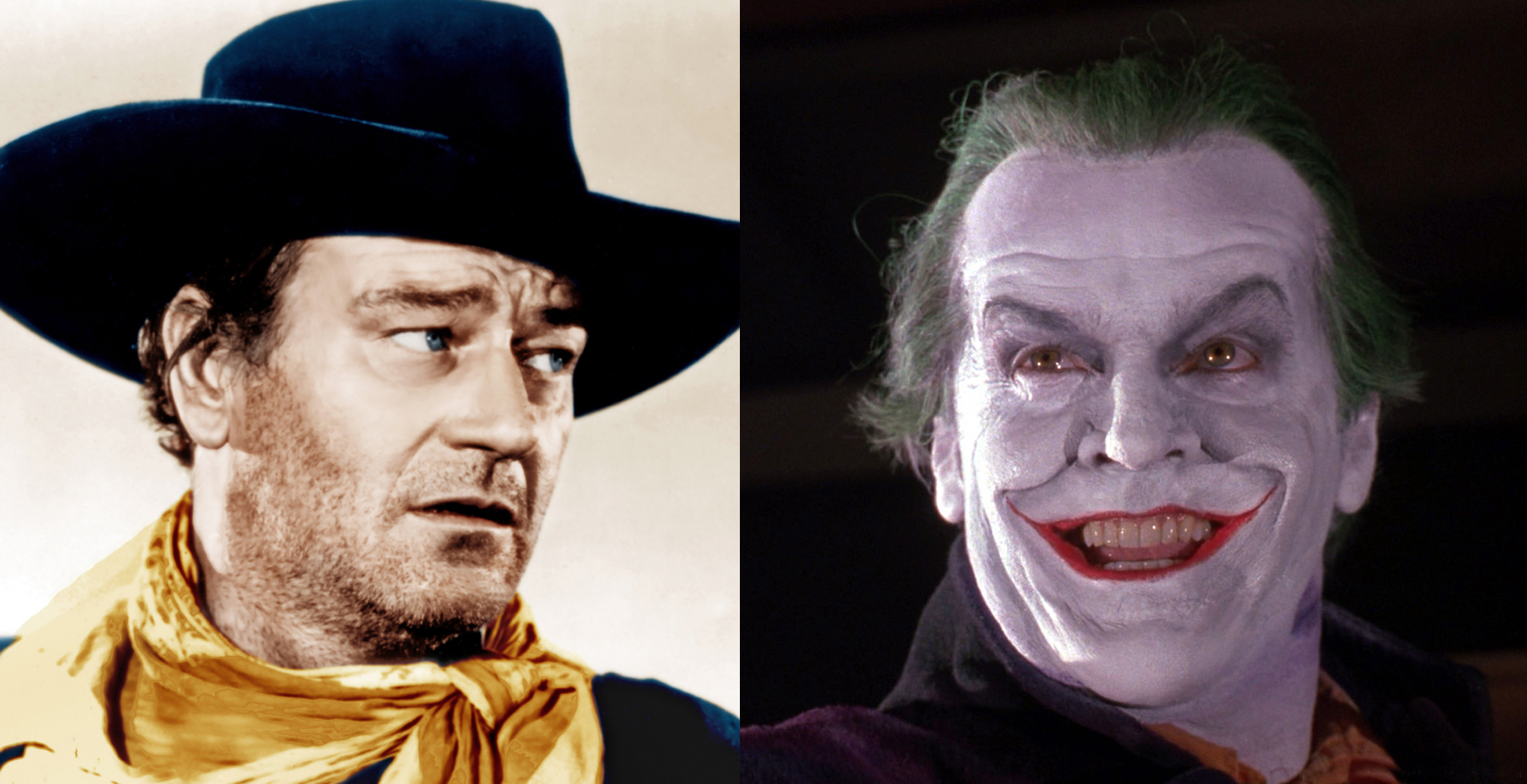
“Nothing makes my case better than concrete examples. Think John Wayne and Jack Nicholson. Both fine actors, each in his way — think of The Searchers — but I think there is little doubt who is the dog in this pair. Your reaction is instantaneous. You don’t need to explain: It just is.”

“Yes,” said Genevieve. “Like Barack Obama and Joe Biden.”

“Of course,” said Stuart, “That’s why Biden will never be president.”

“What do you mean?” asked my wife. “A cat can never be president? What about Bill Clinton?”

“You got me there,” Stuart said. “But that is a reversal of the pairing. Clinton was a cat and Al Gore was pure dog. These pairings make clear the dog-cat dyad, the paradigm.Martin Luther King

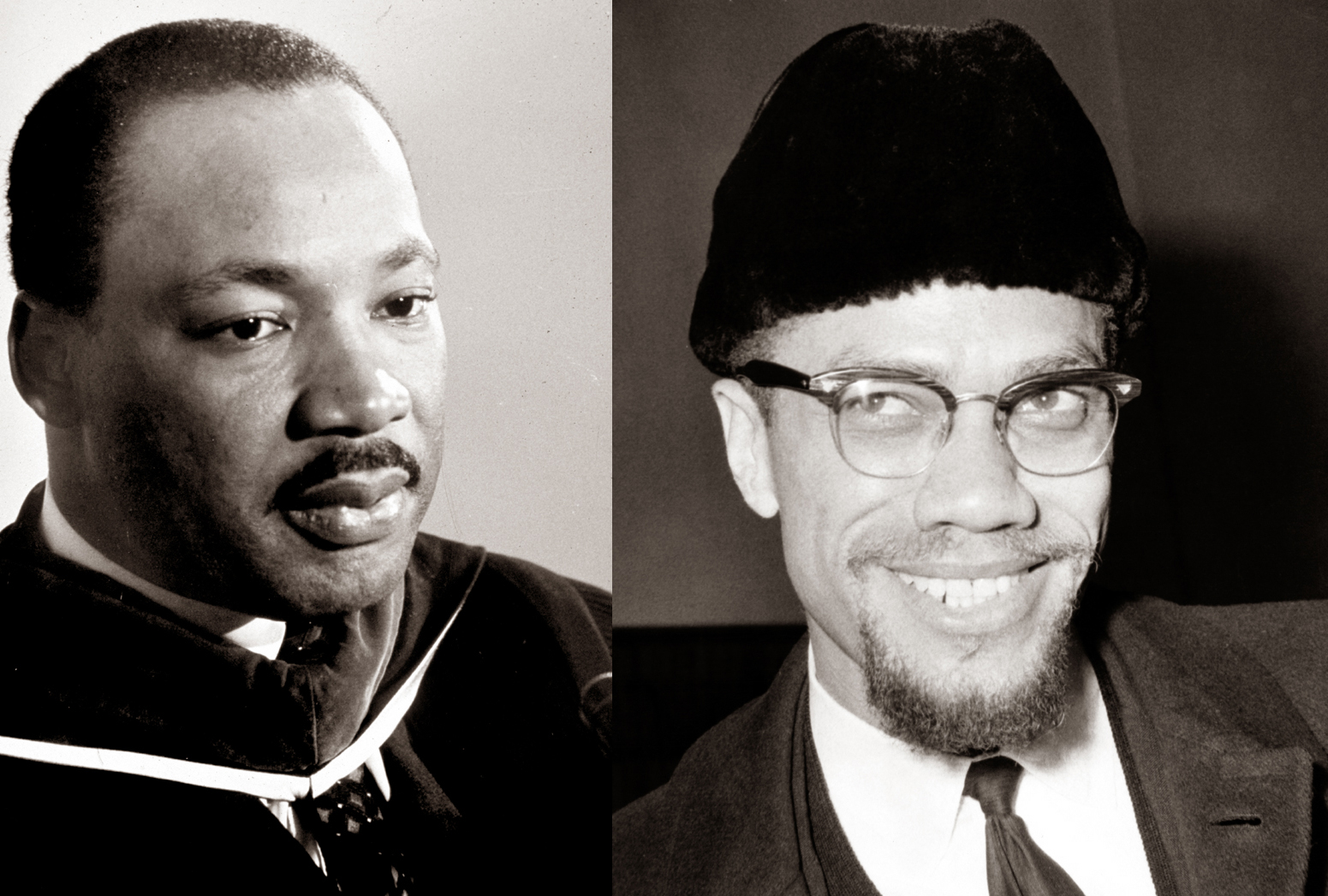
“Martin Luther King, Jr., and Malcolm X. Dog and cat,” I said.

“It can become a party game,” Stuart said. “Tom Hayden and Abbie Hoffman. Big Bird and Oscar the Grouch.”braque picasso dyad

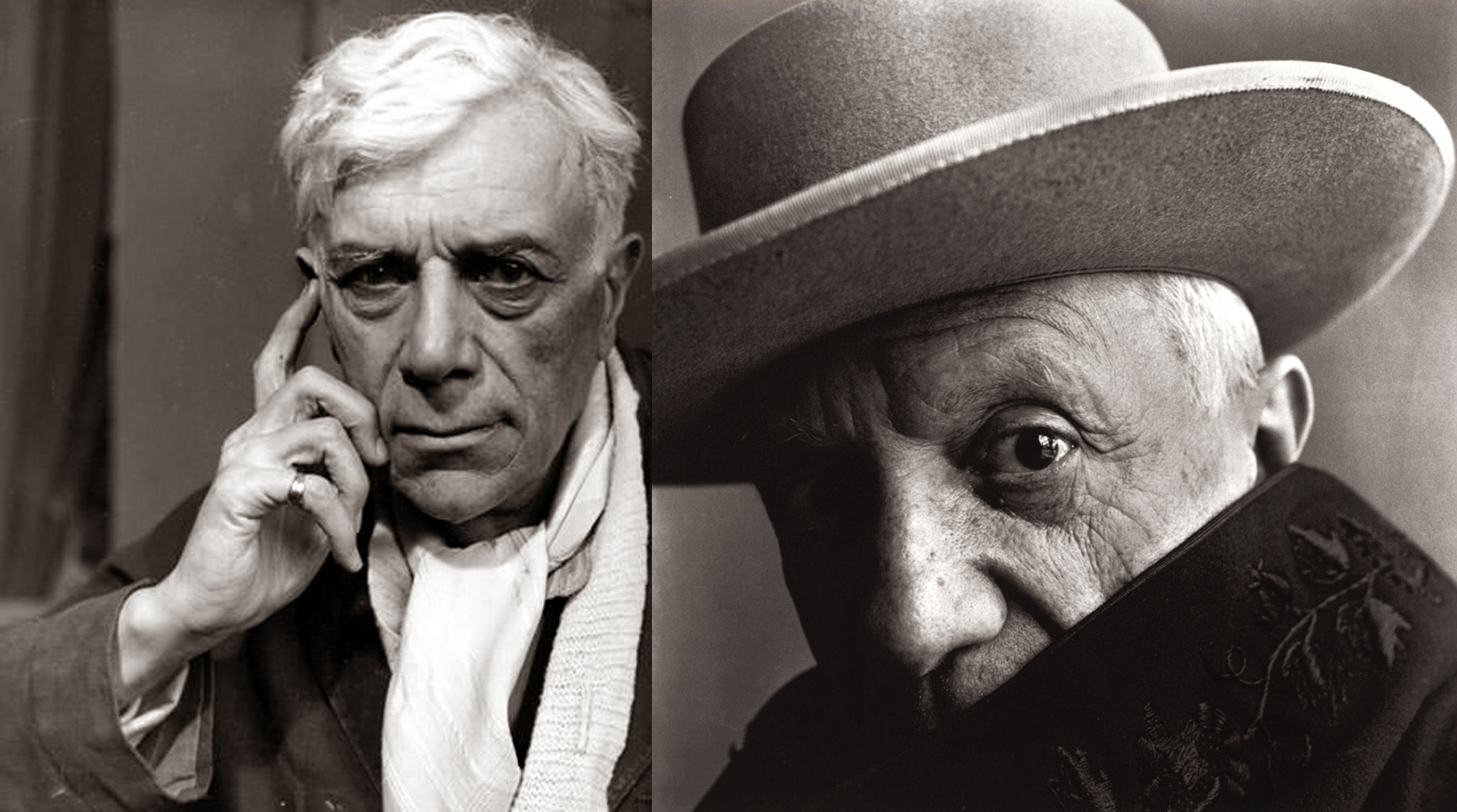
“Georges Braque and Pablo Picasso,” Genevieve said.

“Perfect.”

“Mahler and Bruckner,” she said.

“For years, the nation divided between doggie Jay Leno and cat-man David Letterman,” Stuart said.

“Well, until Letterman lost his cat license,” I said. “He’s gotten kind of doggie in his later years.”

“See, what a profitable lens this is for understanding the world?” Stuart said.

“It explains the difference between Obama and Putin,” Genevieve said.

“And between Andrew Wyeth and Andy Warhol; between George Burns and Gracie Allen…”

“And between Fidel Castro today and Castro 50 years ago,” Genevieve said.

“Between Jane Pauley and Garry Trudeau.”

“When it comes to marriage, a dog can be happy married to a dog,” Stuart said. “But a cat can be happy married to either a cat or a dog. There is fun either way. matalin carville dyadThink Mary Matalin and James Carville. But you see, there is a built-in paradox. How many marriages do you know where one party is happy and the other isn’t? The reason, I tell you, is always the same: One dog, one cat.

“Two cats mated can be happy briefly. But such marriages don’t tend to last. Think of a Hollywood marriage and you pretty much get the picture. Variety is not just an ideal for a cat, but a way of life.

“Of course, the arts are heavy with cats, just as the field of accounting is not. You don’t last long at H.&R. Block if you believe arithmetic is a matter of opinion.

“At bottom, we need both animals in the world. You need the dogs to make life possible; you need cats to make it worth living.”

Stuart brought out a flan and a well-used bottle of amontillado and asked if anyone wanted a cigar. Genevieve was the only taker, but then declined. She said she was giving up smoking again. Ninth time. One more and she got a free sandwich at Subway.

national gallery front 2
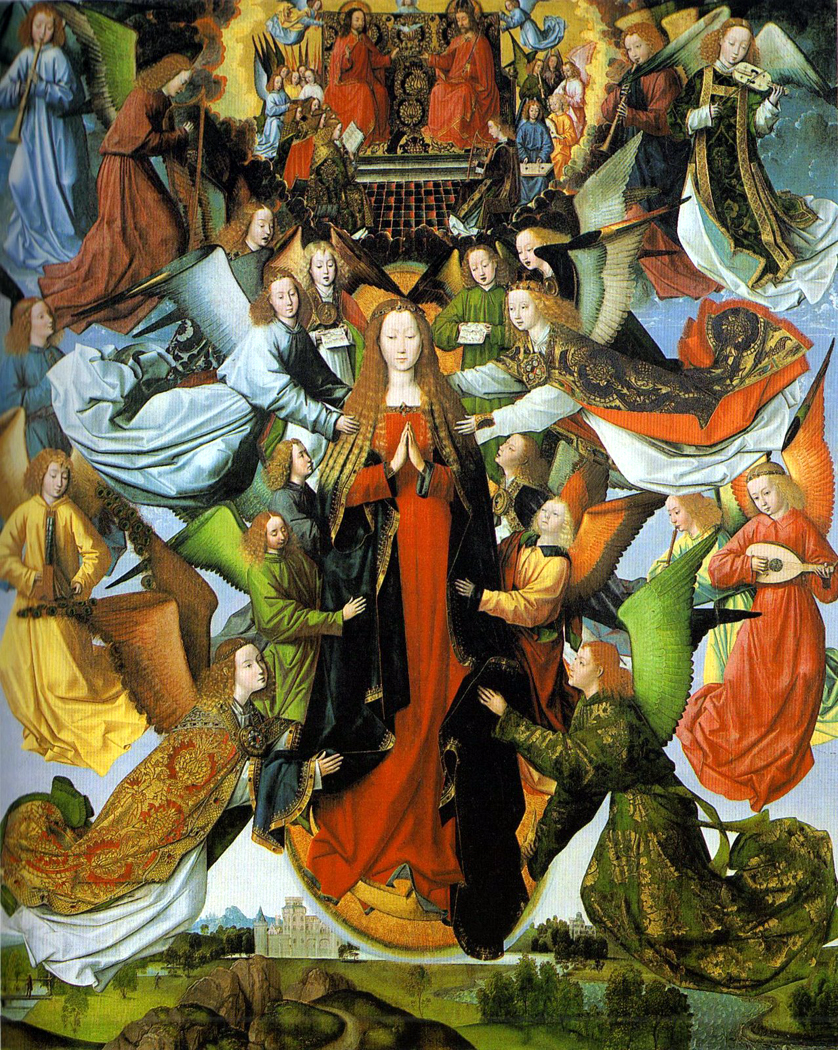
I was in the National Gallery in Washington, D.C., standing in front of one of my oldest friends, Mary, Queen of Heaven, by the Master of the Saint Lucy Legend, Mary Queen of Heaven National Gallerymelting in the presence of the colors and textures that that anonymous artist was able to pour like cake frosting over the surface, when who should show up but my old friend Stuart.

“What a coincidence,” I said, “to find you here today. I didn’t know you were here in D.C.”

“Been here for a few days,” he said. “I’m on my way back to Portland.”
Stuart currently lives in Maine, not Oregon.

“I may be an old hippie, but I’ve aged out of Portlandia,” he told me. “I’m more Whole Earth Catalog than I am fair-trade coffee.”

He said he is now living with a viola player who teaches and plays part-time with the Portland Symphony. “I’m learning to listen to the middle of the music,” he said. “I’m ignoring the tunes and the bass and hearing the filler. It’s hard. Have you ever tried to listen to a viola part in a symphony? It takes great ears.”

Stuart has a long history of serial monogamy, and the prognosis for this relationship is no better than 50-50.

“It’s strange how often you find yourself in a city and meet someone you know,” I said. “You’re the last person I would have thought to run across in the art museum.”

“It’s interesting you should notice the coincidence,” Stuart said. “I’ve been thinking a lot about coincidences lately. I don’t really believe in them.”

We took a moment to bask in the glory of the painting and decided to meet later for lunch.

That’s when Stuart unloaded his latest theory.

“I was reading Tom Jones and couldn’t help notice all the coincidences needed to keep the plot flowing. When I read several essays about the book — which I just loved, by the way — several people held up the coincidences as a flaw, that such coincidences just weren’t believable.

“Of course, several Postmodern critics mention the same coincidences as proof of the author’s knowingness, that he is tipping us off that he knows that we know that he knows, etc., that this is fiction, that this is a piece of art and not reportage. A wink and a nod.

“But I take issue with both groups. I’ve given a lot of thought to coincidences and realized that coincidences are not the rare thing we usually think they are, but rather the most common occurrences in life. Essentially, everything that happens is a coincidence. When I go to the doctor’s office and an old woman comes in the door behind me, that’s a coincidence. When I drive down the road and there is a red car in the next lane, that is a coincidence. After all, what are the chances that that car will be red, or that we both arrive at the same stoplight at the same time. The chances are astronomically against it. When I go the the deli and order a pastrami sandwich and the guy behind the counter tells me that the customer just in front of me got the last one and he is currently out of pastrami: Well, that’s a coincidence, too.

“So, I have no problem with Tom Jones being filled with coincidences. The difference between some coincidences and others — those we pay attention to and those that pass without our notice — is not the coincidence part, but the significance part. When we invest a coincidence with meaning, then it seems to rise to the level of notice, and to the level we give it some sort of magic significance. It is the significance and not the coincidence that is notable.

“And where does that significance come from? Not the event itself, but from our brains. We invest the thing with significance, but understand it as if the event itself possessed the significance we have tagged it with. We’ve got it all backwards.

“And it is the way we build a narrative structure, connecting some coincidences together into a net, that gives us a sense that the world has meaning — and when it’s a work of fiction and we notice the network of significance, we think, that could never happen in the real world, but it does, it happens every day, even every minute.

“It’s like you and me meeting today. My Brownian motion has set me on one course, yours on another; they cross and it seems as if fate has lent a hand, but it isn’t so. Purely accident. But because we know each other, the crossing seems almost miraculous.

“This first hit me, I think, after seeing the Kieslowski ‘Three Colors Trilogy.’ The three films — Red, White and Blue — are loaded with coincidences, too many to mention. But most notably, at the end of the third film, there has been a ship sinking and there are seven survivors, and they turn out to be the three couples, each from one of the three films, and a random seventh person. At first, it seems miraculous that just those three couples, which we have been watching over the three films, should coincidentally be the lone survivors of a disaster. Too much coincidence to be true, you say. Kieslowski is playing with us.

bridge at san luis rey cover“But look at it from the other end: A ship sinks, and Kieslowski takes six of the seven survivors and gives us their prequels. You can do this for any disaster. Take the survivors and write down their stories and miraculously, no matter how random the choice, the fact that they survive at the end seems unbelievable coincidence. But it isn’t: It’s the Bridge of San Luis Rey effect.”

Stuart had been talking so much, he’d barely touched his game hen, while I — providing the accepting ear — had managed to get on to dessert already.

“So, it’s all a question of significance,” he continued after a quick bite of chicken.

“The issue of coincidence is a red herring. They are everywhere all the time. But we cast a net of meaning out over the world and those coincidences we notice, and that fit our narrative, we decide mean something. The rest evaporate in unknowingness and oblivion.

“After all, what is the human mind if not a great machine for pattern recognition? If you take a bowl of marbles and drop them on the floor, when they stop rolling around, you will be able to discover in their distribution a pattern. It’s pure pareidolia, but it feels real.ursa major

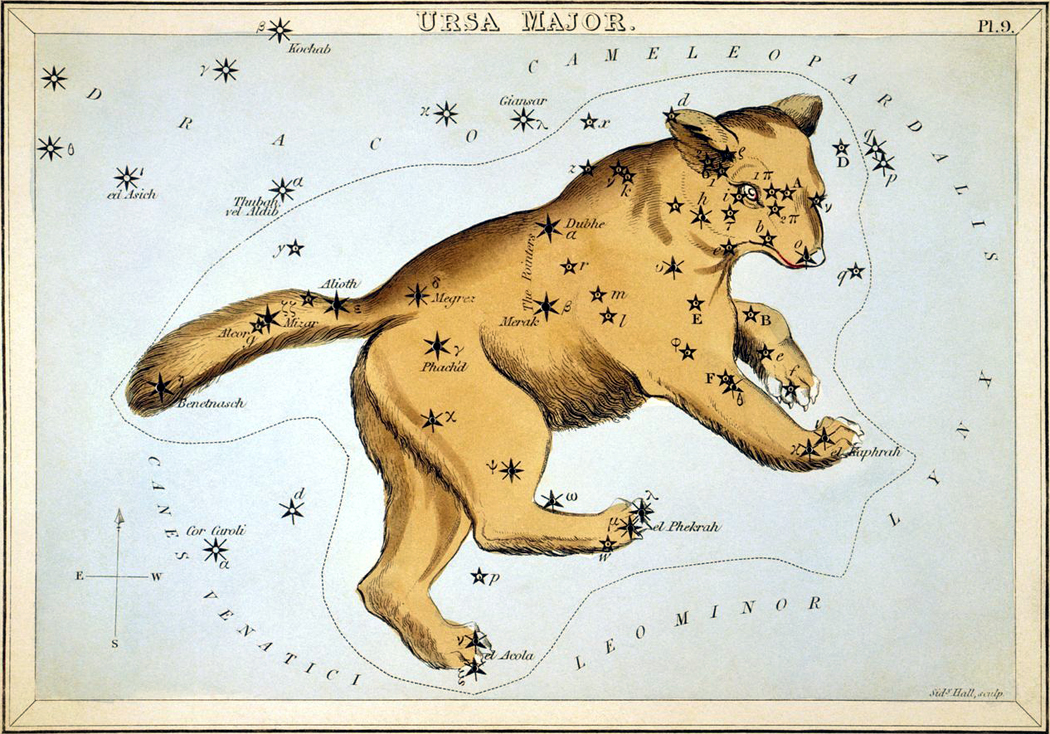
“It’s the Big Dipper over and over. The night sky is really just a bowl of marbles spilled into the empyrean, but we have found patterns there. Everyone recognizes the Big Dipper, even if they call it the Plough, or call it the Seven Sages, or the Great Bear — oddly, with a long tail — or Charlemagne’s Wagon, or in Finland, a salmon weir. Same stars, different asterisms.

“Or the Virgin Mary seen in a tortilla. Or the million conspiracy theories that people get arrested by.

“Really, it’s a Rorschach universe. Meaning is cast out upon the waters and it drags in what it will. Meaning is not found, it is generated.

“And that is how we view coincidence: It is something we notice and if it fits a pattern we are projecting out into the world, it seems important, meaningful, significant. But the coincidence itself couldn’t be more pedestrian, quotidian, bland and ordinary.”

At some point, Stuart usually empties the balloon of all its air and there is a sequent quietening of his enthusiasm, as if now that he’s made his point, there is no point left to existence. Enthusiasm is followed by passivity. He’s worn himself out.

We walked out of the Garden Cafe and back into the galleries. Stuart walked out the door, off to his violist, and I went back to my Mary, Queen of Heaven.

And it is no coincidence that I picked up the check. Again.

Dore chaos
My friend Stuart sent me a letter:

You can learn a great deal from a springer spaniel. For instance:

Total order and total chaos are the same thing. Identical. Not a dime’s worth of difference. And neither is very helpful.

Think of it in terms of the Linnean metaphor. I’ll get to the spaniel in a moment.

At one end of the spectrum is chaos, a totality that is unordered, a cosmic goo. This is not the current chaos of the eponymous theory, which is merely a complexity beyond calculation, but rather the mythic chaos out of which the gods either create the cosmos, or arrive unannounced from it like Aphrodite from the sea. It has no edges, no smell, no shape, no parts, no color, no anything. Inchoate muddle. john martin chaos

So, in the beginning was the word: Or rather, our ability to organize this chaos through language. The universe exists without form and void. Then we begin the naming of parts to help us understand the welter.

And so, god created the heaven and earth, dividing the parts. And this division of parts is in essence what the Creation is all about. Ouroboros

Of course, the incessant need to divide and name is only a metaphor, but it will help us understand the conundrum of order in the universe, and how the ouroboros of Creation begins and ends at the same place, no matter which direction we go in: The law of entropy and the law of increasing order both have the same final destination.

When we look at the world around us, we immediately split what we see into two camps: That which is living and that which isn’t. It helps us understand the world we live in and we make many of our biggest decisions on this basis: Ethics, for instance. We have no problem splitting a rock in half with a hammer, but would feel rather evil doing the same to a dog.

But the living things fall into two large camps, also: Animal and vegetable (again, I’m simplifying. I haven’t forgotten the bacteria, but we can ignore them for the sake of the metaphor).

Some of us have a problem eating animals but not eating vegetables. So, again, our ethical world depends on how we sort out the chaos.

Let’s take the animals and subdivide them, the way Carl von Linne did, into classes, orders, families, phyla, genera and species.

Each level makes our divisions less inclusive, more discriminatory.

Let’s take the dog, for instance. It is classified as a chordate, which means it has a central nervous system stretched out into a spinal chord. This is different from, say, a starfish or a nematode. But there are many chordates, so, if we want to differentiate a dog from a shark, we have to look to its class. It is a mammal. That makes it distinct from birds and fish.

But there are lots of mammals, too. Some of them eat other animals; we call them carnivores. A dog is a carnivore.

Notice how each level of nomenclature narrows our definition down to a smaller and smaller group of initiates. When we had only living and non-living, there were only two groups; with each level, we add dozens, hundreds and then thousands of other groups disincluded in our catalog.

The order carnivora is one of many orders in the class of mammalia, which is one of many in the phylum chordata, which in turn is one of many in the kingdom animalia.

The order separates our subject, but lets us see in relief that it is just one constellation in the heavens populated by many other constellations.

The same poor pup is in the family canidae, which includes all the dog-like animals, from fox to coyote to jackal. Among them, it is in the genus Canis, and species lupus, which makes it brother with the wolf.

But our wolf is a friendly one, as long as you aren’t the postman. So, now we call it Canis lupus familiaris, or the family dog. And our particularization of the beast means we are conversely aware of all of creation — each in its own genus and species — that makes up the non-dog, and each of them is like the billions and billions of stars that make up the many constellations in the night sky.

Yet, this isn’t far enough. For the dog I’m thinking of isn’t just a dog, but a spaniel, which is a type of dog which isn’t a poodle and isn’t a terrier. It is a dog with “a long silky coat and drooping ears.”
Sylvie

Each time we subclassify, we are adding to the order we impose on existence, and each classification adds to the proliferation of categories just as it reduces the members inside each class.

So, there are also different kinds of spaniels. The dog I’m thinking of is a springer spaniel, which come in two forms, with a brown-and-white coat and a black-and-white coat.

My brother’s dog is a brown-coated springer spaniel named Sylvie. She is getting old now, and her backside — very much like humans — is getting broader.

And now, by classifying things to the level of the individual, we have as many categories as there are things in the universe, which is effectively the same as nothing being categorized: It is all primordial goo and might as well not be cataloged: Total order and total chaos are the same thing. QED.

Charleston

Stuart came back through town again. This time, with his theory of “Three and One.”

My old friend has a job now, working in an office. He’s been there for almost a year now.

“I’m in a pod,” he explains. “The whole office is organized into pods of four desks, like lily pads in a pond spread out across the tenth floor.”

His three podmates are all women, he tells me. “One is married and has two kids, but the others are always talking about their dates. I ask them questions. We spend more time chatting than we do working. I’m told this is normal for the American business world.”

As I think back over Stuart’s worklife, I realize this may be the first time he’s ever had a regular job in an office. He’s been a teacher and a writer, and he’s had lots of odd jobs working on road crews or clerking in stores. Now, he’s in one of one of the taller buildings in downtown Charleston, West Virginia, looking out on the Kanawha River and the gold dome of the state capitol. I’m a little fuzzy about what he does there, but with Stuart, that’s not unusual. It may be advertising, it may be insurance. If I can get him to slow down, sometime, I’ll try to ask him.

“I listen to them talking about their love lives. That’s mostly what occupies them. And I ask them questions. To them, I’m just an old geezer. They don’t see me as a fount of experience and wisdom, for some reason. But I listen to them talk. And I’ve come to this conclusion, that for a relationship to develop, there must be three things that register. That is, out of 20 or so characteristics you might use to describe a guy on early acquaintance — or a woman, if you are looking for that — it works both ways — I’m sure it must be something of the same for gay men or lesbians — anyway, there must be a quotient of three to make a relationship click.

“I’m not talking about sex here, but about a relationship, a second or third date or more. A guy looks to a potential date and adds them up: She speaks well, she has a sense of humor … And … the third thing: She has a frontispiece that would make St. Anthony sing falsetto.”

Yes, Stuart means her chest.

“Or perhaps she has long legs, blue eyes, and can do double-entry bookkeeping. Or maybe it’s a she and she sees in him strong shoulders, the ability to listen and a sense of humor. Anyway, out of all the possible traits, there must be at least three that draw her in. More than that is better, but two isn’t enough. Two means only she looks at him across the bar and thinks, ‘Interesting,’ but not enough to go over there. Three, though, and we’re in.

Stuart always has some new theory when we talk.

“It’s funny,” he said, “but it would seem like you’d need more than three things to sustain a bond, but maybe that comes later, when you know each other better. But going in, I’ve discovered, there must be a list and three items need checks beside them. More than three and maybe the lights start flashing, but three is the threshold.grey eyes

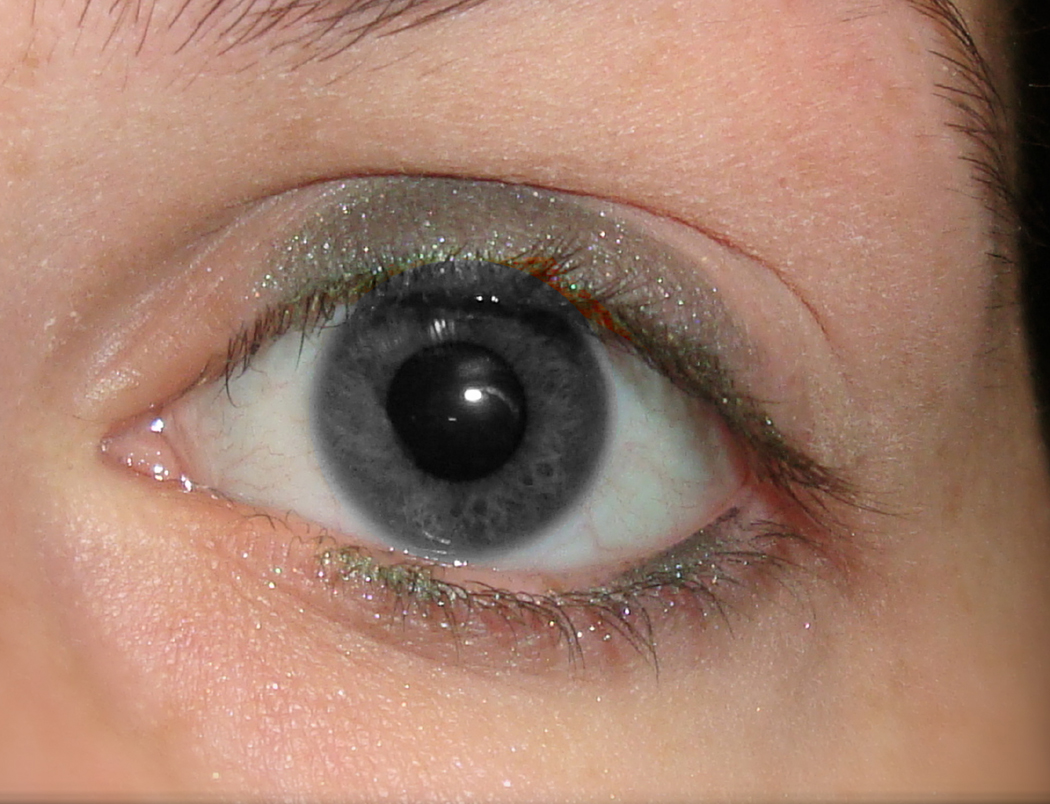
“I remember going out with Irma. God, she was gorgeous. The name was a little recherche, but she was funny — check number one — and she had grey eyes. Ever see grey eyes? Really grey, almost charcoal. Her irises were colorless and that provided a contrast to the warm skin of her eyelids and cheeks, almost like in the movies when the director has drained the color out of his filmstock, but left one item glowing with red or blue. The contrast raises a kind of ambiguity that I have always found sexy.”

“And the third thing?”mahabharata

“Yes, and she had read the Mahabharata. The whole thing. And she could talk about the Hindu mythology without ever sounding like one of those guys at the airports asking for money in their shaved heads and yellow sheets. She didn’t use it as a religious text, but as literature. We talked for hours about Yudhisthira and Duryodhana. Taking sides. It was great. Three check marks. Oh, there were more, but I’m a gentleman.”

“What did she see in you?”

“Unfair question. Ruled out of bounds.”

“OK,” I tell him, “That’s the Three part of the theory, but what’s the One?”

“That’s the converse. Although it takes three things to make the magnet stick to the metal, it only takes one to break the connection permanently. And if that one thing is present, it doesn’t matter about the Three or however many more items you might ink into the credit column. One debit entry puts the kibosh on the deal.”

Double-entry bookkeeping? Credit and debit? I’m wondering what kind of job has Stuart gotten himself into? Are these clues?princess bride

“I mean,” he continued, “suppose you’re on a date with a guy who adds up just fine. Shined shoes, steady job, strong hands. You think you’ve got the requisite three things, but then, while you’re together on the couch in his living room and he’s willing to watch your favorite movie without complaining, even seeming to enjoy it. And then… And then, he picks his nose. The buzzer goes off; contestant number one has just disqualified himself.

“This actually happened. It’s one of the things Julie told us about. She admitted that surreptitious nose-picking is only human, but that on an early round of dates he digs in with an index finger, or worse, a pinky, that is the kiss of death, as far as she is concerned.

“Anne had another one — she’s the other single woman on the pod. She went out with a guy and they were at a restaurant and he got soup on his mustache, a bisque she said it was, and it hung there like wallpaper paste on a brush.

“You know how when someone has spinach on his teeth and you point to your own teeth to sort of indicate to the other one that there is something and the other person will naturally suck his teeth or use a finger to rub the spinach off? Well if she doesn’t have a mustache, how can she politely tell him that he’s wearing a badge of schmutz?

“That killed it for her, she said.

“What’s interesting is that Penny laughed and said that her husband had a habit while watching TV of leaning just a few degrees off plumb and letting loose the gas pressure, and while once she might have ruled him out over it, she now just ignored it.

“‘But you’re married,’ Anne said. ‘That’s different.’ And I take her point. When you’re married, you put up with a lot, because by then, you’ve already put in your commitment papers, you’ve decided there are enough on the Three side — and hopefully a good deal more than just three things — and you’ve besides agreed for better or for worse, and after all, a little atmospheric disturbance while watching the telly isn’t such a great sin.

“The thing is, that it is that first circling around each other when it counts. If Penny’s husband had leaned and dealt while they were dating, she might well have called it all off right then. But he had the decency to keep it bottled up till after the wedding. No doubt, Penny had her own secrets kept until the vows were stated.

“I knew a woman once who had lived with a man for several months, but when he finally popped the question, she realized she could never marry him because his legs were too skinny. It was the One thing.

“Another woman, divorced for several years, found a guy with a tool belt. He was tall, handsome and considerate and could fix anything around the house. He could change the oil in his car. Hell, he could rewire the rec room if he’d wanted. He actually did hook up her surround sound. And he adored her, loved her to distraction, and he was a great listener, truly interested in her. But then…”

“Yes, what?”

“But then, he turned out to be a Christian. There she was, torn. He was the perfect mate except for the fact that he said evolution was just a theory, homosexuals caused Hurricane Katrina, abortionists should be bombed and infidels were going to suffer eternity in Hell. Now, there are lots of kinds of Christians and not all of them are bad, but he was the kind who believed that Methodists were really just communists and that even Baptists were too liberal. Turned the poor girl off any Christians of any stripe forever.”

“That seems like more than just one thing,” I said. “It seems like a whole slew of attitudes that could well give one pause.”

“Well, she saw it as one thing. She summed it up with a kind of sneer: ‘He turned out to be (shudder) Christian.’ And it meant the end.

“These are not things universal,” Stuart said. “They are all idiosyncratic. In other words, someone else might find snorting when you laugh to be cute, or a wandering eye attractive, or even bigotry to be a harmless little tic. Surely many bigots find bigettes to marry. I went to a Ku Klux Klan meeting once, did I ever tell you? Plenty of bigettes there. They even had a bake sale. I wonder what were the three check marks they had found. Being Christian was probably one of them — as long as they weren’t Catholic.”offisa pup

“What about you?” I asked. “Who are you seeing now? What are her three positive checks?”

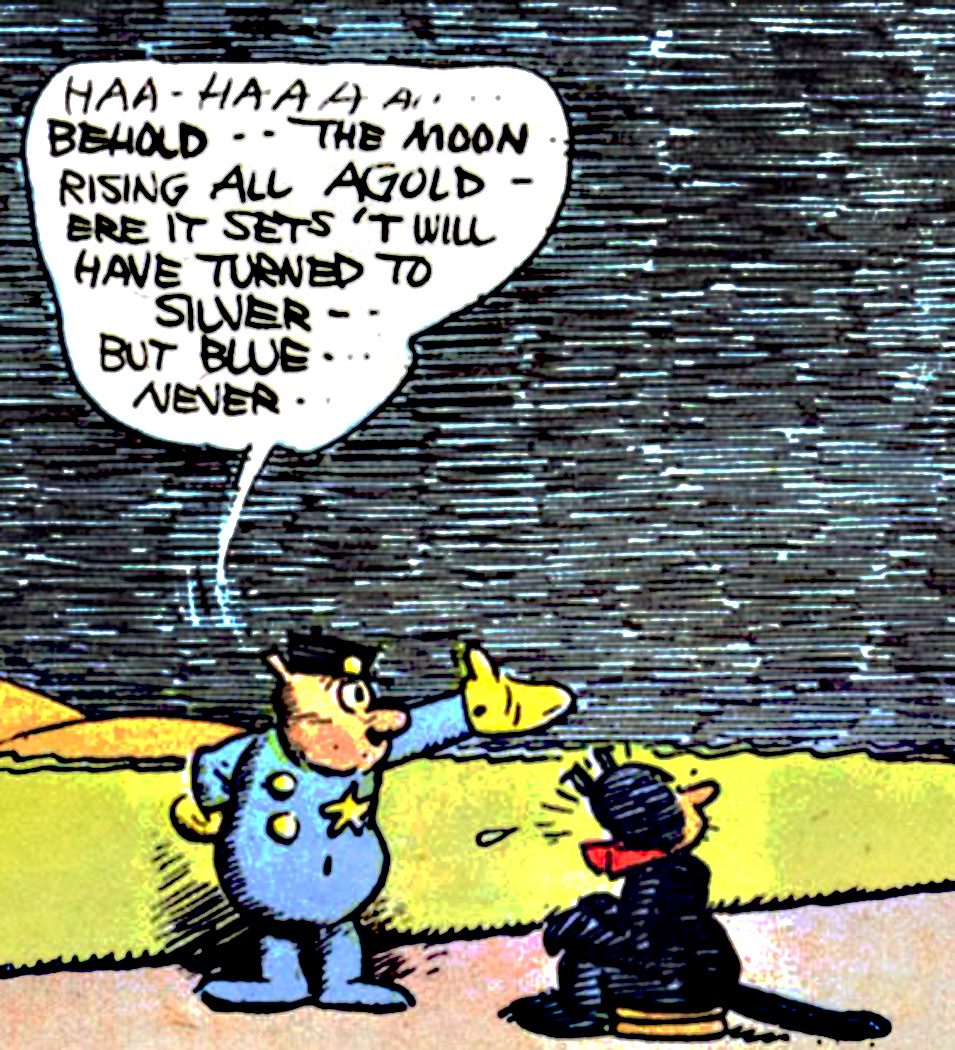
“I’m unattached at the moment,” he said. “I was going out with a little filly who was doing graduate work in anthropology. She had a lot of check marks, but the first three were her long, frizzy hair, her long fingers and a tendency to quote George Herriman. She called me Offisa Pup; I called her Krazy. We were together for all of last winter. Stayed warm together.”

“What happened?”

“She said I talked too much.”

walrus and carpenter

“I read your blog about Surrealism,” said Stuart. He had come back through town on his way home.

“It reminded me of the garage band I was in.”

“You were in a band? I didn’t know you played music,” I said.

“I never played an instrument,” he said. “I was the roadie.”

“Roadie for a garage band? Did you tour?

“Heck no. It was high school. My job was to bring the Cokes.”

“No beer?”

“I said it was high school. Drinking age was 21 back then, besides, when you’re high on weed, you want something sweet.”

It turns out, they played not in a garage, but in the basement of the home where the lead guitarist lived with his parents.

“We played very low volume, sometimes without even plugging in,” he said. “We didn’t want to disturb Sal’s folks. But that’s not why I brought it up. It’s because of our name.procol harem cover

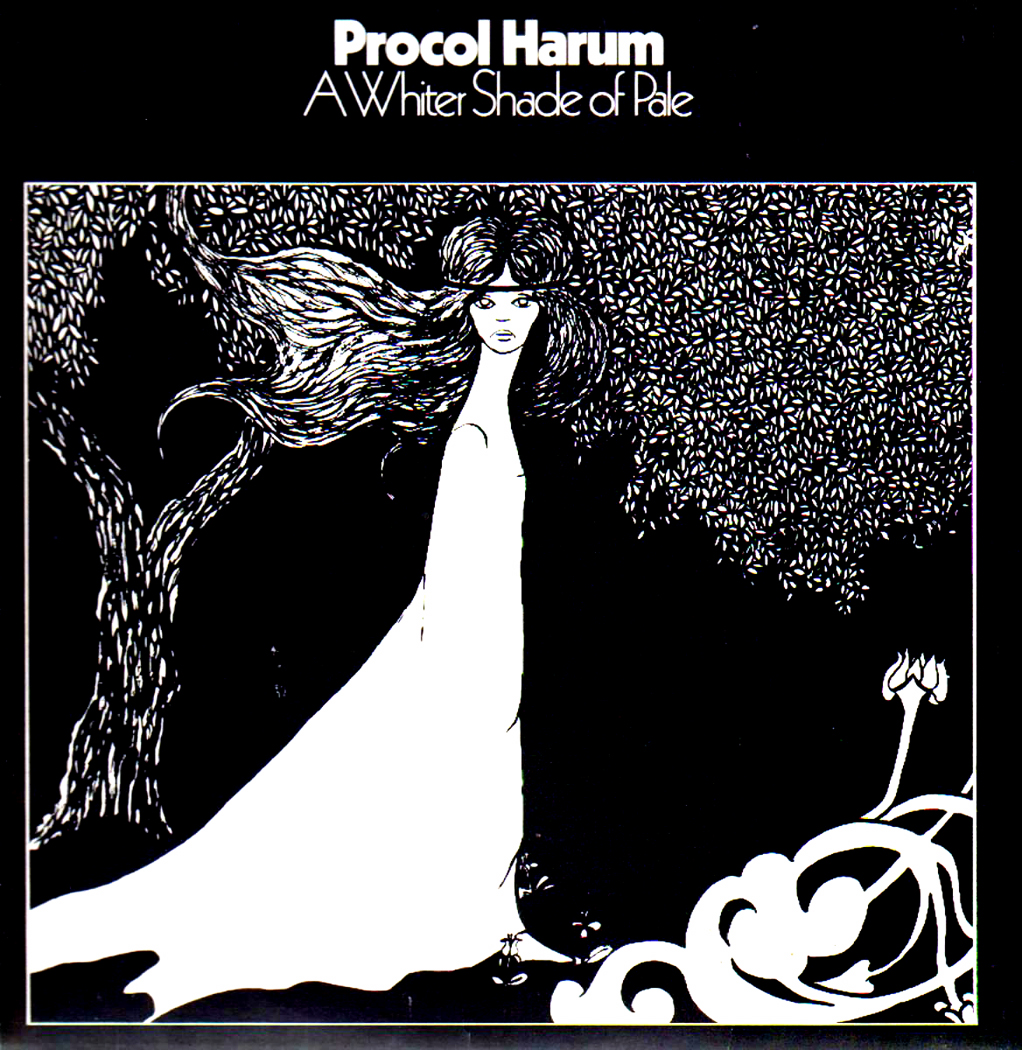
“You wrote about rock bands using Surrealism. This was 1967 and we listened to Jefferson Airplane, the Grateful Dead, Country Joe and the Fish, Procol Harem, the Velvet Underground — it was a whole list of Surrealist wordplay.

“I remember a whole subcategory of culinary surrealism,” I said. “Moby Grape, The Electric Prune, Strawberry Alarmclock.”

“And those were just the big ones. Don’t forget the Chocolate Watchband, the Peanutbutter Conspiracy and Ultimate Spinach. And I guess we could put Captain Beefheart on that list, too.

“There was the Bonzo Dog Doo-Dah Band — bet you don’t remember them — Blossom Toes, Bubble Puppy, Pearls Before Swine, 13th Floor Elevators, the Lovin’ Spoonful, the Stone Poneys and the Monkees — not that we listened the them. Nobody did; they were too popular.”

“And your band? What did you call yourselves?”

“Well, at first we were the Buddha Fumes, but later that year, we decided that was too simple, so we changed to Unlit Booth/Breakfast Out of Context. We thought it was a great name.”

“Maybe a little unwieldy.”

“Yeah, but we really got on a kick with the slash. We made up albums we were going to record, all with great two-part names, like ‘Sudden Eyes/Velcro Sunrise’ and ‘Burlap Lapels/Unexpected Lady.’ Inagaddadavida single

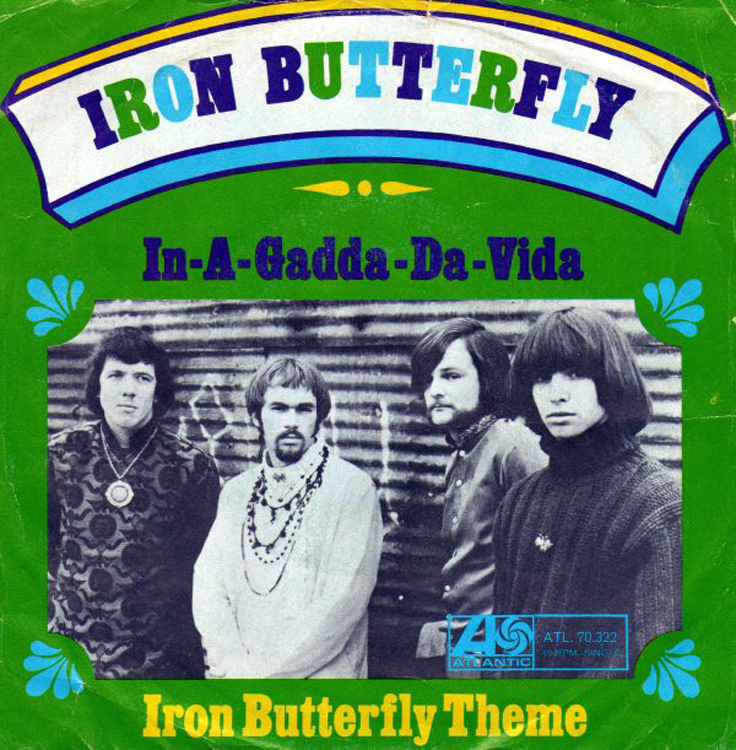
“I became more involved in the band our senior year and wrote lyrics for our songs. Mostly they were covers of our favorite bands, but with my new words. It’s how I became a writer, I think. I wrote a song about my dog based on Iron Butterfly’s In-A-Gadda-Da-Vida with the words, ‘Ah, we gotta go feed her.’ And we did. Feed her, that is.

“We broke up after graduation. We all went to different schools, except Sal, that is. He got a job.

“But this is all prelude to this list.”

“What list is that?”

“Well, back then, we made up a list of possible names for the band, and it follows exactly what you said in the piece about Surrealism. We had all these great concepts built out of wild juxtapositions, like taking a dictionary and running it through a blender. Of course, we never heard of Surrealism then. We just knew this stuff was cool.silvertone guitars

“I found this list in an old folder from that time.”

And he pulled out a folded sheet of lined yellow legal paper, brittle at the edges, with about 20 or 25 names on it, written in faded violet ink, obviously from a fountain pen (“really, a cartridge pen,” Stuart said). The ink was illegible in a couple of places where spills had made the color spread into a bright blot. I recognized the handwriting as Stuart’s from the many letters he has written me over the years. His high-school cursive was much neater, though, than the scrawl that has evolved.

“Wax Monkeys,” it began.

“Xenon Aftertaste”

Buddha Fumes, Sudden Monkey, Jalapeno Fistula, Orlando Death Car, Sequined Monotreme. The list continued: Fog Hammer.

“There was a fraudulent PR company called ‘Frog Hammer’ in Slings and Arrows,” I said. “You know, the Canadian miniseries about actors.”

“Don’t know it,” Stuart said. “But frog hammer just makes me think of a squashed schoolroom dissection. Fog Hammer is more genuinely surreal. Soft and hard at the same time, dense and vaporous.”poster 1967

He’s probably right. The list went on:

Spit Wax

Able-bodied Saints

Red Suits and Whispers

Sound Midden

Ear Stubble

Leatherette Wilderness

Snarling Confessor

Audible Hernia

Slice of Breath

Waking the Badger

Fraternal Animism

Painted Snakes

Money Under the Hood

Ashcan libertine

Pineapple Fuqua

Gruntbunnies

“Wait,” I said. “Isn’t Pineapple Fuqua a real person? Didn’t we know him when we were kids?”

“Yeah, ‘Few-Kway.’ Ran the service station. Good name, though.

“Any of them you wanna use, go ahead,” Stuart said. “I don’t mind.”

phone pole forest bw

“What makes human beings different from animals,” Stuart asked.

“They have names,” I said.

“Animals have names, too,” Stuart said.

I could see that there would be no stopping the next Stuart verbal avalanche.

“So, what does separate us from the beasts?” I bit.

“When I was young, I learned that what separated us from the monkeys was that we made tools.”

“Tools?”

“Yeah, Homo habilis. But some years later, Jane Goodall ruined that theory when she discovered chimpanzees poked sticks down termite nests to pull out a tasty gob of bugs to eat.”

“Yum.”streetlights at night

“When I was in college, a stuffed-shirt teacher told me that humans were the only animals that used language.

“But now, not only are some gorillas using sign language — and  more articulately than many politicians — but scientists are  striving to learn the languages of dolphins and whales.”

“Whales can talk?”

“Uh-huh.”

“What do they say?”

“I don’t know. Maybe, ‘Here I am, come get me,’ or ‘Haven’t I seen you here before?’

“And honeybees dance to talk.”

I considered this bit of information while Stuart circled in for a landing at his main point.

“But there is something that humans do that nothing else in the universe, so far as we know, can duplicate.phone poles

“Human beings are crazy to poke sticks into the ground.”

“Sticks?”north dakota snow fence

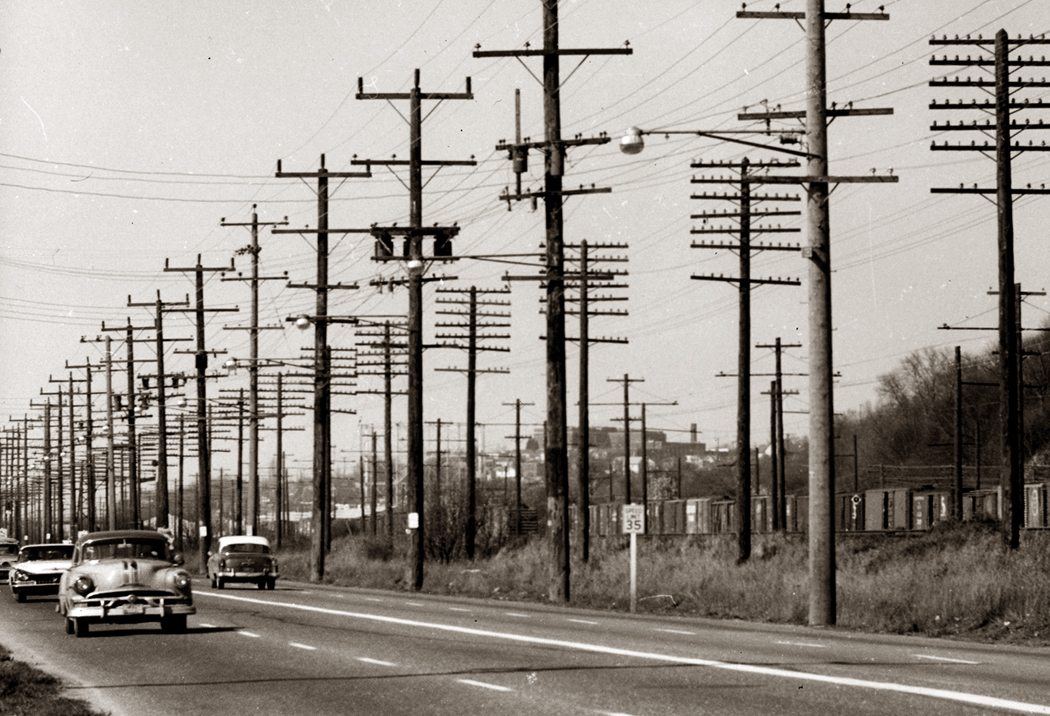
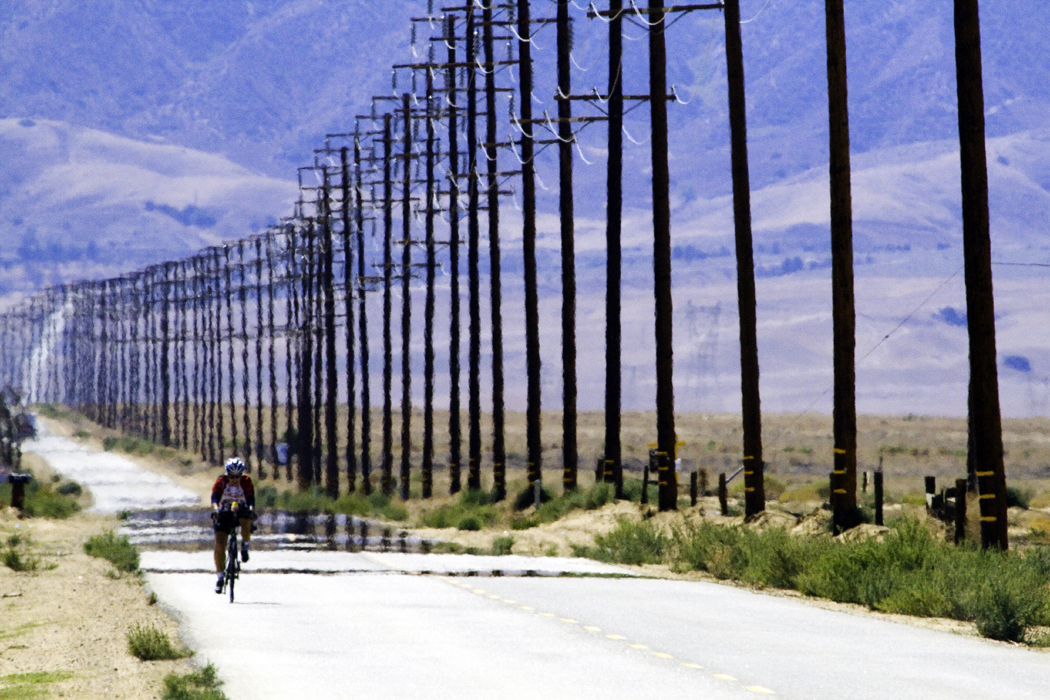
“Look around you. There are sticks everywhere. Streetlights. Traffic signs. Mile markers.

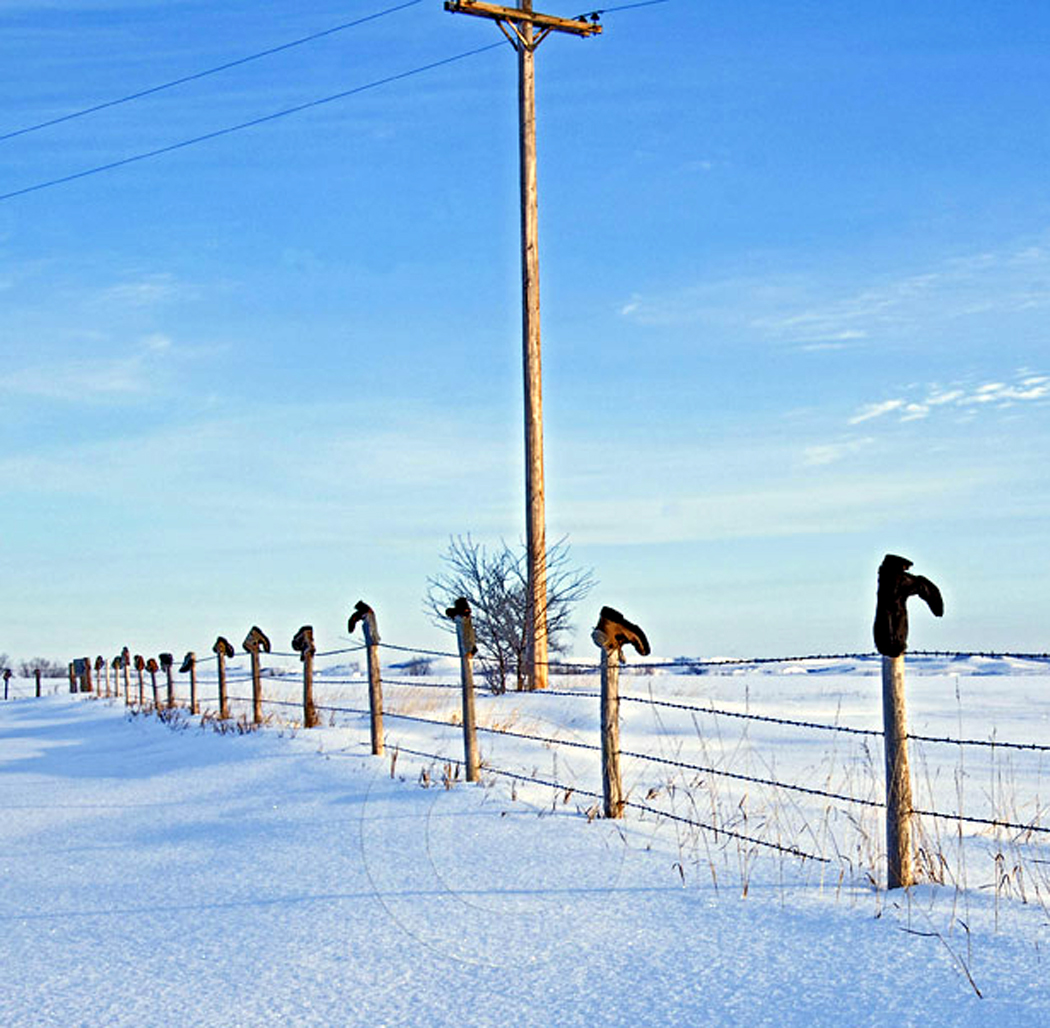
“Go to the most godforsaken plain in North Dakota and you will see lines of fence poles stretching out to the horizons.

“We are a species mad about sticks.

“Flags on golf greens. Citronella poles in back yards. Surveyors’ stakes. Bean poles and tomato stakes. Crosses in front of churches. Maypoles.

“We can hardly play a game without plunging a pole into the ground: goal posts, foul poles, supports for basketball  hoops and tennis nets. You can’t even play croquet without sticks in the ground.TV and radio towers on Mt Wilsonmultiples

“And it’s not just now I’m talking about. In the Bible, Aaron’s rod was stuck into the ground and sprouted. Sioux Indians had to place a pole in the ground for their Sun Dance. Hey, and digging sticks. Totem Poles. Prayer sticks…moonflag

“We travel 169,000 miles to the moon and what do we do? Plop down a flagpole and take our photo beside it.

“You can’t walk 30 yards in this town and not see some pole drilled into the dirt: street signs; business signs.

“We have turned our planet into a porcupine.”

I laughed. “But didn’t you say chimpanzees stick sticks in the ground for termites?”

“Oh, yeah. I guess I’m wrong, then. Never mind.”

But I had my own theory.

“Human beings are the only animals who use toilet paper,” I said.

That seemed to make Stuart happy. He would steal that line. The Road poles