Archive

Tag Archives: tastes

I was sitting on the backyard patio this morning, soaking up sunlight, when a squirrel skittered across the lawn, back and forth like a pinball. Eventually, he came to within 10 feet of me. I sat stock still, and he stared, twitching his nose, standing on hind legs like a deacon. After about a minute — which can feel like quite a long time — I must have blinked, because he jumped, startled, and took off running away. 

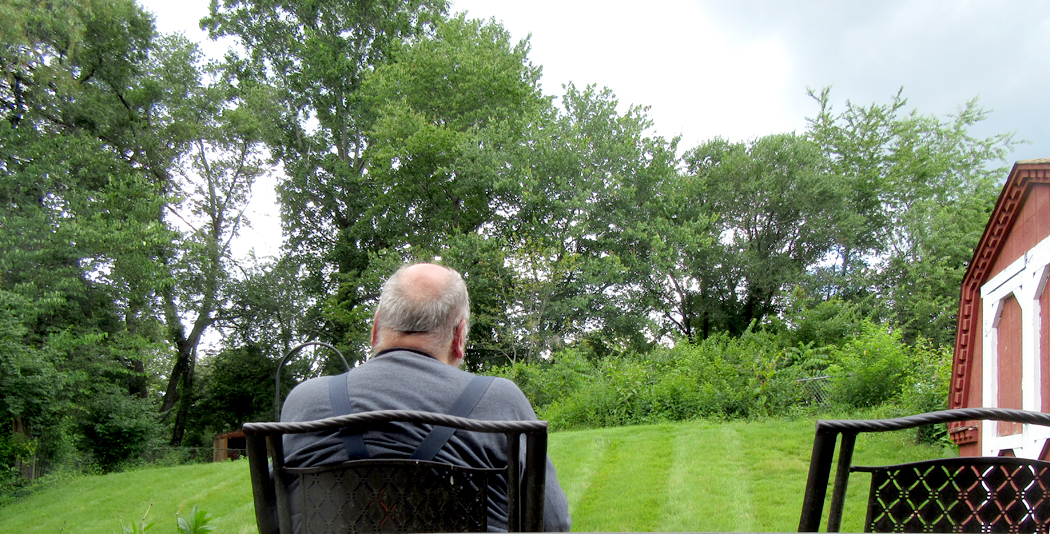
I often sit in the back yard, to hear the birds and watch the clouds. It feels like an unmediated soak in existence. I sit trying to notice everything, the birds singing, the clouds moving, the wind making the trees wiggle in random motion, and until recently, the incessant noise of the cicadas, sounding like the A Train rushing through the 81st Street subway station. I felt the breeze in my hair, saw the bluish greens of the iris plants and the yellower green of the grass, I enjoyed the warm concrete on the soles of my bare feet and the incipient sunburn on the backs of my hands.

Bill Moyers once asked Joseph Campbell about the search for meaning, but Campbell switched focus: “People say that what we’re all seeking is a meaning for life. I don’t think that’s what we’re really seeking. I think that what we’re seeking is an experience of being alive, so that our life experiences on the purely physical plane will have resonances with our own innermost being and reality, so that we actually feel the rapture of being alive.”

And so, I sit watching my back yard, the trees that line it and the sky above it. I can feel myself breathing, wiggling my toes and being alive, and what is more, recognizing the world being alive around me. For a moment, there is no boundary between my existence and the sea of being in which I swim. 

A wren flits down and sits on the steps to the shed and moves from one position to another with no apparent intervening motion, as if it were a jump-cut in a movie. A really bossy mockingbird runs through his repertoire of bird calls, claiming this patch as his own. A cardinal flies from my left to land on a bush to the right. A white butterfly bounces on the air waves to disappear behind the bushes. 

I’ve seen so much life in this tiny patch of ground, it sometimes astounds me. I cannot count the birds. Crows, even a raven. Way up in the sky, I’ve seen up to a dozen buzzards at a time circle as they catch the updraft coming from the river and up the bluff to this house. 

There have been cottontails and many squirrels. Two years ago, coming home from a trip to Maine, as I pulled into the driveway, two bear cubs were climbing up a tree at the back of the property. We watched them having their fun, and then mama bear climbed up behind them to encourage them to come back down. A dog barked aggressively from somewhere down the neighborhood and the bears all dropped to the ground and ran off. I’ve seen bears waddling through the streets here, and long ago learned not to put the trash out until garbage delivery day. 

A groundhog has crossed the back yard so often, he has left a permanent trace in the lawn. I have seen him multiple times harrumphing his way along. If he spots me sitting, he will take a moment to stare and consider his next move, but then run faster than you think he can move, back where he came from. 
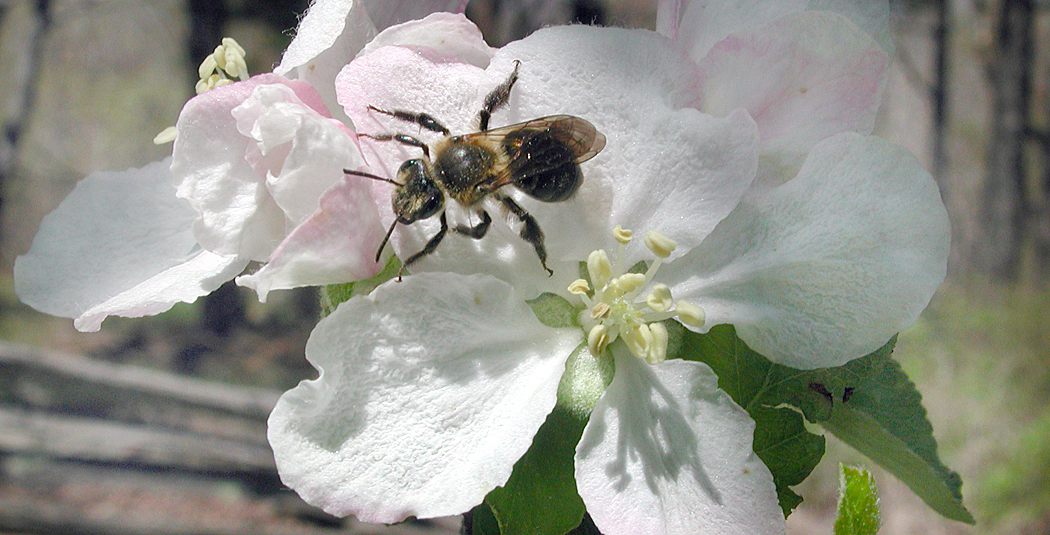
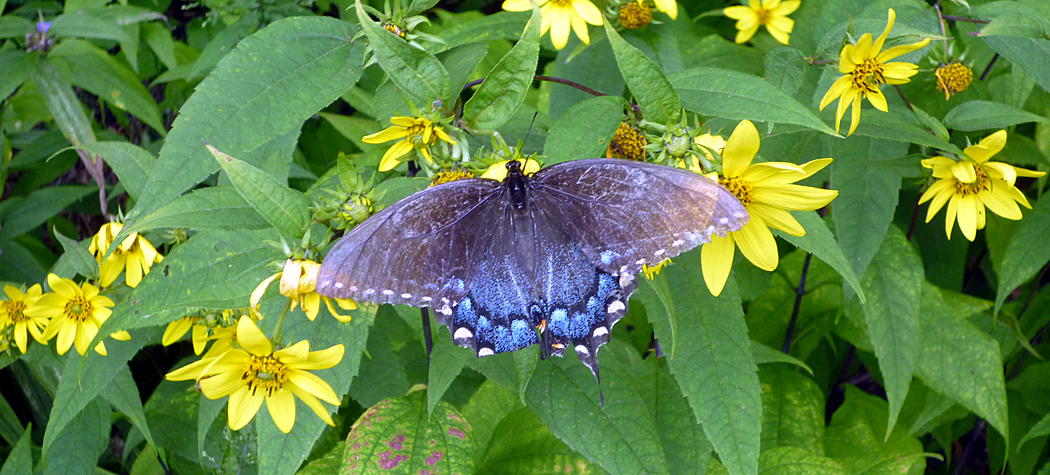
Then, there are the bumble bees, the honey bees, the wasps and the ant lions — their little sandy funnels in the dirt of the front garden. Big black butterflies, and their yellow and orange doubles light on the hedges and weeds. Ants build their nests in the cracks of the driveway, leaving tiny ridges of dirt where they have dug down. 
Yesterday, as I was headed out the back door to have my daily sit-down on the patio, before opening the door, I saw the groundhog plopped down right by my chair, butt-flat on the concrete and motionless as a garden gnome, while an angry mockingbird jumped in a half-circle around him aiming “Cht-Cht — Cht Cht” at him. They continued this performance for a good two minutes until I must have made a noise and the great, heaving woodchuck became disturbed, turned its head my way and waddled off to hide under the shed and the bird, having had its way, flew up to a tree and quieted down. 

When I was little and visited the Bronx Zoo, I was impatient to see the animals, who sometimes hid in the shade at the back of their enclosure, or sat behind some rocks, and if I did not have my interest piqued in the first five seconds, I moved on to the next animal. But my father told me to wait. Just watch. Eventually something would happen. I didn’t understand that then; I do now. I find myself in my yard patiently waiting for the next miracle. 

(Many years later, I worked at the Woodland Park Zoo in Seattle, and saw crowds of impatient kids moving from exhibit to exhibit. And it is only worse now, in an era of cell phones and digital immediacy.) 

Writing in the Fourth Century, the Christian poet Prudentius identified in his Psychomachia (“Battle of the Souls”) his version of the Seven Deadly Sins, and the corresponding Seven Virtues, at war with those sins, and among the virtues was Patience. 
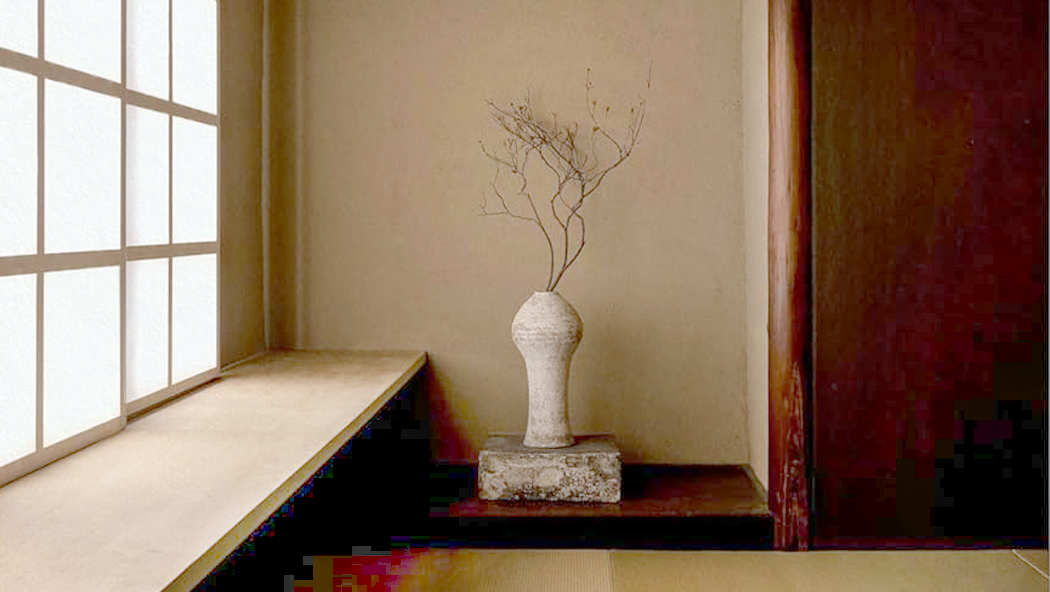
I don’t know if I learned it from my father, or inherited it from his DNA, but, like him, I have become rather patient. Or maybe I’m just sluggish. But, I believe it served both of us well. The old man was slow to judge, slow to anger, and would never think to get outraged at traffic. Being raised that way, I, too, am willing to wait, when waiting seems either inevitable or purposeful. In fact, I can sit quietly in a chair neither talking or thinking for ages at a time. When I’m being philosophical about it, I call it meditation.
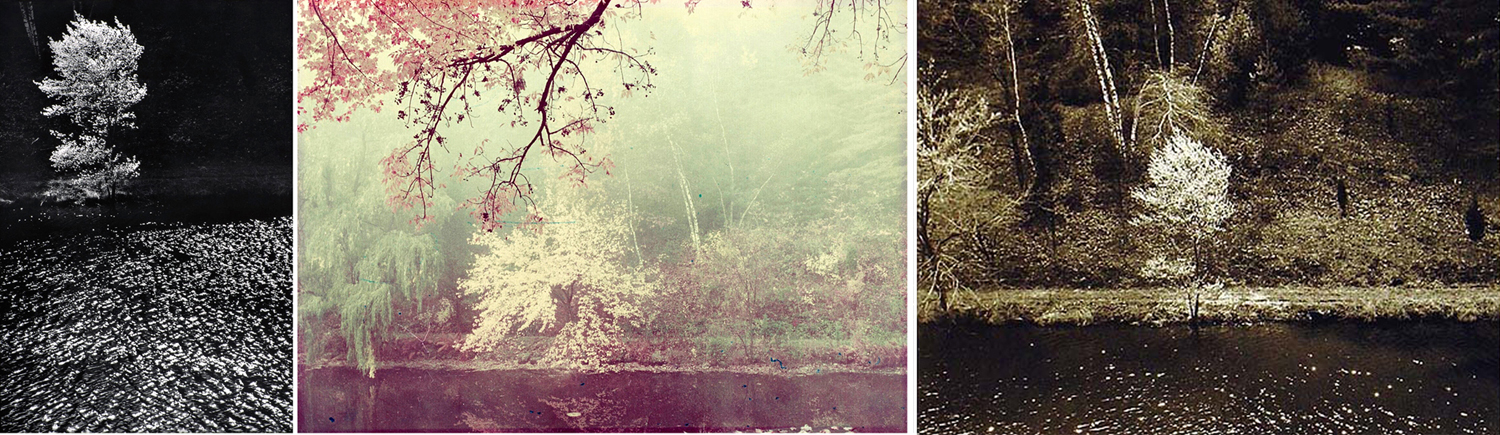
In the 1950s, the aging photographer Edward Steichen rarely left his home in West Redding, Connecticut, and began photographing a serviceberry tree (he called it a shadblow tree) through his window. He watched the seasons shift across the face of the pond and the tree and pictured them in all seasons and hours of the day, under varied weather, and made a case you could spend an infinite amount of time in a single place with a single subject and discover everything. As Yogi Berra once famously said, “You can observe a lot by just watching.” 

And it is the little things, carefully watched, that won’t happen again. The flow of the world is that it won’t happen again, all in constant forward motion and I sit to watch it move past me, and take me with it. 

 I just want to sit and soak, to sense the universe around me without thinking. We tend to glorify rationality, and the power of our brains to think meaningful thoughts, and we diminish the value of pure sensation, the sensuous awareness of colors, shapes, earthforms, clouds, birds, song, rhythm, touch, smells, and tastes. But these things are primal and exist before thought. Sensation is primary; making sense is an afterthought. 

And so I sit, trying to lose myself in the larger pattern.  

But, damn it, I can’t help being a writer and so I need to belittle what I enjoy, turning it all into words, into capsules of meaning that when read by others will be turned into ideas about sensations. Words not experience. And so, I can’t stop myself from writing this, hoping you share some of that delight when you step outdoors on the right day, with the right breeze, and the right mockingbird and crow squawking, and can see the trees dancing and the sun moving slowly across the sky blotted with whatever variety of cloud you have that moment.

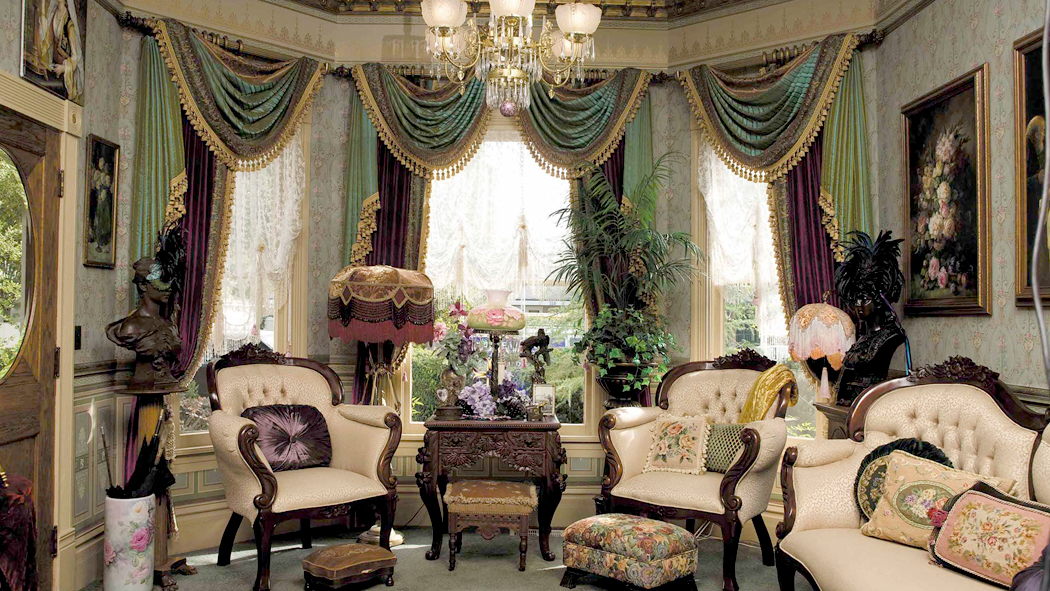
As a little boy in the 1950s, I remember visiting my great-grandmother in Jersey City. She had a darkened living room, with great stuffy chairs, a mantel clock surrounded by tchotchkes, floor-length curtains over the windows, and the back of every chair featured a lacy antimacassar. There were cut-glass bowls on the animal-claw end-tables, one of which was filled with hard candy, from which we children were offered “one.” 

It was for my tiny little brain, simply what old people lived in, so unlike the split-level suburban home where I grew up. There was the smell of oldness, the wool of oldness, the dark mahogany of oldness. Above all, everything seemed upholstered and dark. Later, when I was an adult, I recognized the style as Victorian. 

As in Norse mythology, there were three separate worlds — the world I knew, with my schoolmates; the world of my parents, with its privileges and authorities; and the distant and rarefied world of the ancients. These were not simply different houses, but completely different universes. 

Each of these reflected the “taste” of its generation. Victorian; Mid-Century Modern; now Postmodern. 

They were three different “tastes.” And taste rules so much of what we like, what we choose, and who we think we are. It is the way we groom our hair, the clothes we wear, the car we drive — we don’t choose a BMW over a Honda because it gets us to our destination any faster, but because it presents to the world the person we think we are — or want to be. The same with a Volvo or a Ford truck. Taste is a powerful driving force in our lives, whether we are aware of it or not. But sometimes, it must be transcended. 

When I made my living as an art critic, I had to put aside my individual tastes and attempt to judge art by more impersonal standards. For instance, I have never responded to what are called the Mexican muralists — the Diego Rivera, David Siqueiros, José Orozco paintings and their peasant-proletarian mythologizing. It shared too much with socialist realism and was, to me, rather drab in its muddy earth colors. Nevertheless, I had to acknowledge the importance, art historically, of their work, and to be able to distinguish between the best of Mexican muralism and the lesser, more humdrum examples. To be able to distinguish and understand was more important than my “taste.” 

This problem has cropped up again recently when a friend and former colleague posted a series of videos on YouTube cataloguing the biblical paintings of Marc Chagall, accompanied by ironic and meaningful music by Tori Amos, John Lennon, Mix Master Mike and others. He asked for my opinion. I watched all nine short videos (watch the first one here) and was impressed by his graphic and editing skills, but had a hard time otherwise. I simply don’t much like Chagall’s painting. Never have. 

I recognize his significance in art history, and there are things of his I respond to — a few paintings, such as 

I and the Village (1911); View of Paris from My Window (1913); Cubist Landscape (1919)

his stained glass at Reims Cathedral; 

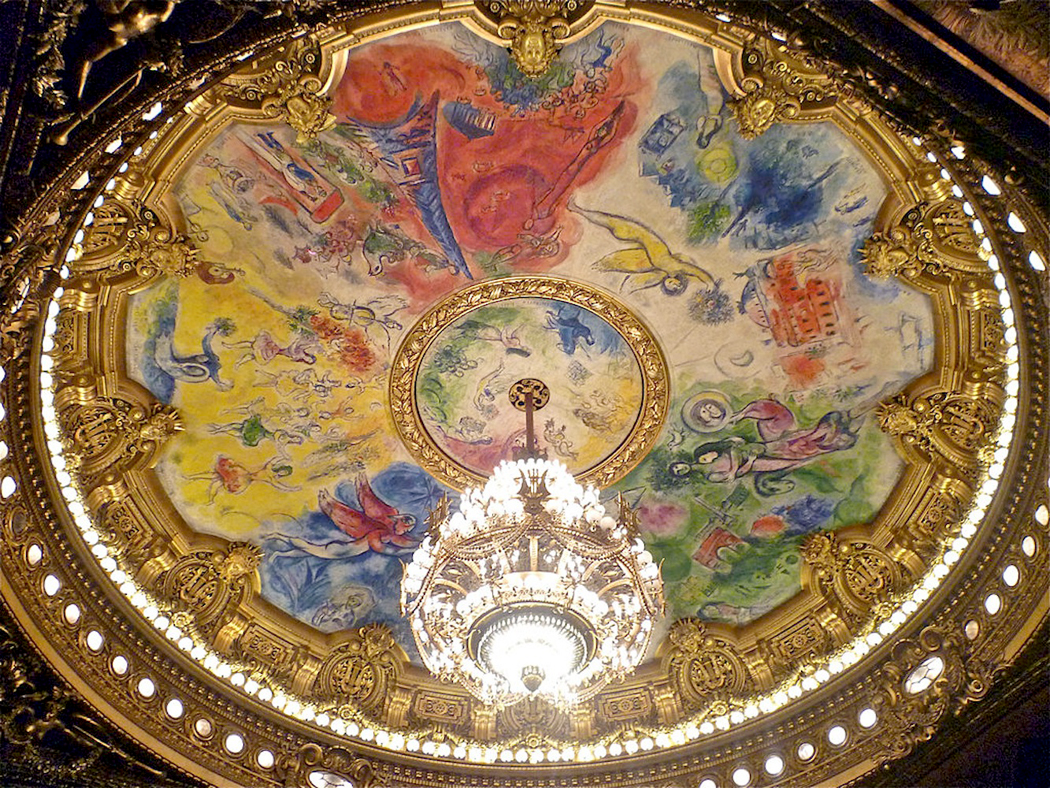
and the ceiling of the Palais Garnier in Paris. But the general run of Chagall has always struck me not as childlike, but childish. And he produced way too much with too little editing, leaving dozens and dozens of images virtually identical except for their finish — a blue coat here, turned red coat there, or left as a scribble. This was especially true of the biblical images, of which there seemed to be hundreds. 

My friend had collected them all and divided them into the familiar episodes or stories of the Bible, adding the music and sometimes his own commentary to them. I dutifully sat through all nine chapters of the video, but in the end did not come away with any higher opinion of the artist — indeed, the need for editing seemed all the more imperative. 

I don’t fault anyone for their taste. I recognize it as an individual thing. My taste is not better than anyone else’s, it is just mine. If I respond to Mahler more than I do to Max Reger, well, then, that’s me. If I would rather re-read Milton than James Dickey, so be it. Would travel across the country to see a Pollock retrospective but wouldn’t cross the street for Frank Stella, that’s just the way it is. (This may have something to do with a sense that the world is not tidy and organized, but chaotic and spontaneous. I share Pollock’s sense and not Stella’s). 

Yet…

Yet, there is that passage in Coleridge’s Biographia Literaria where he makes the distinction between gustibus and gustus. Plural and singular. We all know the Latin phrase, “de gustibus non est desputandum,” but, Coleridge says, “gustibus” is what I have been talking about so far — personal preference. We like some things more than others. Any argument is silly: “I like pickles.” “No, you’re wrong, I don’t like pickles.” 

But “gustus,” he says is different. It is the ability to differentiate between value and trash. Tastes are personal, but taste is about discernment. It is what allows us to know that Marc Chagall — no matter what I personally think about him — has value that, say, Thomas Kinkade does not. That James Dickey wrote poetry and that Rod McKuen wrote whatever you want to call it, but not really poetry. 

Gustibus allows us to enjoy even trash. It is OK to like Kinkade’s brand of nostalgic goo, but it should never confuse it with quality. 

John Waters is the master of bad taste, but he has taste. The interior of Elvis Presley’s Graceland is also in bad taste, but there is no evidence of actual taste involved. Hence the word “tasteless.” 

The distinction to be made is one of awareness. Taste comes from engagement, from paying attention. Lack of taste comes from acceptance of the conventional, of the expression of sentimentality, or the dependence on what someone else says is good. 

Much has been made of taste as a class distinction. But that is not what I am talking about here. Artist Jenny Holzer has famously said that “Money creates taste,” but it doesn’t. Money creates fashion and fashions change. Taste is a way of experiencing the world; it is not a hemline or this year’s color pairing. British aristocracy includes some of the world’s most tasteless people. 

Here in Asheville, N.C., there is a mansion called the Biltmore House, which is one of the most tasteless, garish pieces of architecture I know. Money creates smugness, not taste. Think of all the money Donald Trump has. 

Taste in the sense I mean it is at its foundation an engagement with the world, with all of it. It is the attempt to see things as they are and appreciate them for their worth.  

There is a problem. It is so easy for gustibus to blind us to gustus. We easily take our tastes as taste and assume that things we like are therefore universally good. It takes some doing to divorce one from the other. We assume we like something because it is good and therefore, everyone should agree with us. I like pickles and if you don’t, you must be a Communist. 

It’s a trap we all fall into at times. Myself certainly included. But I’ve seen many things I initially didn’t appreciate later come to be favorites. Did Bruckner suddenly become better than he used to be? I wrote a whole piece about how my mind changed on the paintings of Joseph (not Frank) Stella (here). The acquisition of taste is an ongoing process and requires constant engagement and re-engagement. Make up your mind too soon and you miss a lot. 

In short, our tastes close us off, while fostering your taste opens you up. Tastes are our hidey-hole, where we burrow in and stave off the parts of the world that make us uncomfortable. Tastes are lazy; taste is adventurous. 

The cultivation of taste is a question of experience. The more we become familiar with, the better our choices will be. 

I remember when the film critic at The Arizona Republic was brand new. Bill Muller had been a political reporter, and when the previous critic left the paper, the feeling was he had been too “arty.” And so, they wanted an “ordinary Joe” to speak for the ordinary moviegoer. Muller seemed the perfect choice. He knew nothing about film (which he readily admitted to. Muller was a very smart guy and honest). 

And so, for his first year as a critic, he loved movies where things “blowed up real good.” He was the demotic critic the company hoped for. The problem was, once you’ve seen 20 or 30 movies where “things blowed up real good,” you begin to be able to distinguish between those films done well and those done poorly. And so, Muller began to give negative reviews to sloppy and cliched movies. His taste grew. 

When he was first hired, Muller often shuffled off art and foreign films to me to review. It was a great gift to me. I loved those films. But as Muller’s taste grew, he began to appreciate the finer points of filmmaking and — as I said, he was a hugely intelligent man — he began to keep the art films for himself. He became a cultured critic. He never lost his common touch and became an Andrew Sarris, for instance, but I watched him with great interest as his taste level rose with his exposure. 

I don’t mean that Muller became a stodgy old pedant like me. He still loved popular movies — if they were good — but popular wasn’t enough. It had to be popular and good. His tastes were always different from mine, but his taste became more and more discerning. 

Taste requires exposure and it grows unbidden. There are no rules for it, as Susan Sontag wrote, “Taste has no system and no proofs.” But you miss it when it’s absent.