Archive

Tag Archives: walt whitman

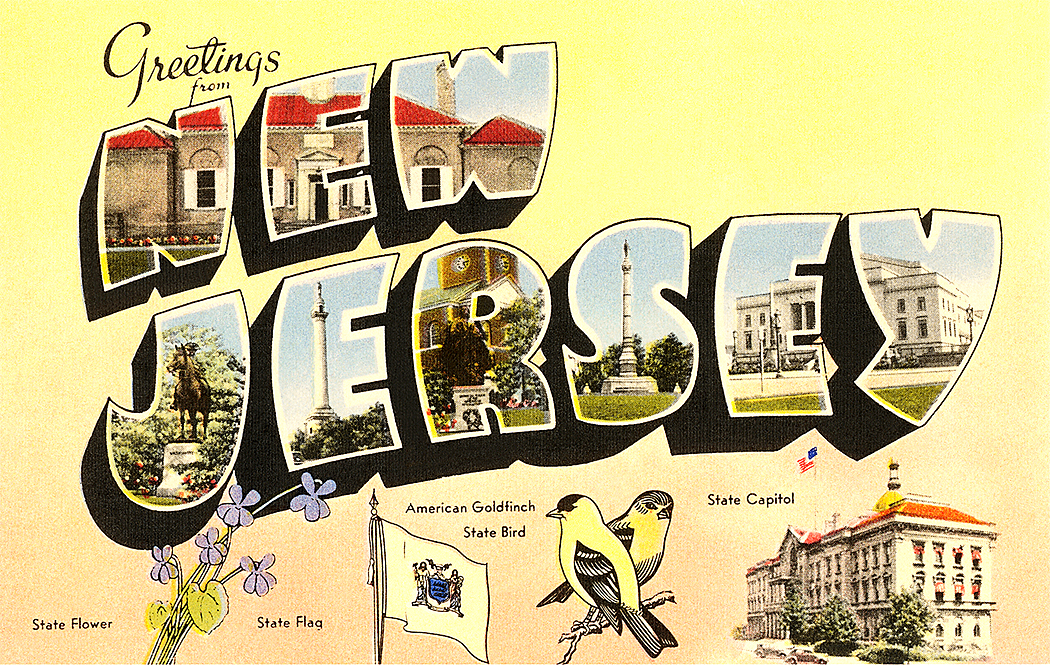
I was born in the upper right corner of New Jersey, just to the west of the Hudson River and a few miles south of the New York state line and the Rockland State Hospital, an asylum famous for once housing Allen Ginsberg and Carl Solomon.

That corner of the map is Bergen County, the most populous county in the state and where I spent the first 17 years of my life, before I managed to escape. It is unrelentingly suburban and, to my young sensibility, numbingly banal. In my senescence, six decades later, I have moderated my disdain and now recognize it as my hatchery — and a part of my psyche that I cannot ever fully extirpate. Like Quentin Compson speaking about his native Mississippi, I can say of my own native state, “I don’t hate it. I don’t. I don’t hate it.” 

The Hackensack River

Bergen County is split by two rivers, the Hackensack and the Passaic. The later forms part of the western border of the county and the Hackensack ran through the town where I was raised and drained, finally, into Newark Bay to the south, between Newark and Jersey City, two old cities that show their age. 

To the east of the Hackensack, the land rises abruptly until it reaches an edge high above the Hudson River, called the Palisades, a 20-mile long series of basalt cliffs that rise to 500 feet above the water. This bit of America, from Paterson to Manhattan is the landscape of my Umwelt — etched into my psyche. 
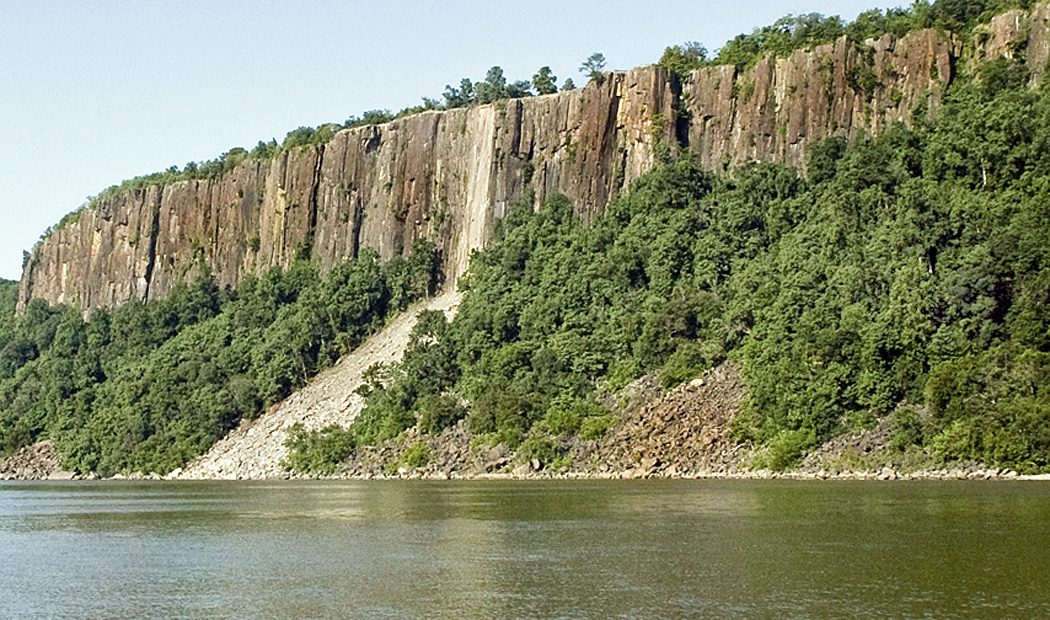
Since I grew up there and knew no better, I assumed that all rivers must be as wide as the Hudson, and when I first came South to go to college, was less than impressed with what passes for a river there. The Deep River, near my Guilford College, I could have jumped across. That’s not a river, that’s a brook (or, in Southern parlance, a creek). 


But the Hudson was noble, wide and impressive. Historically, it ran through the home land of the Lenape Indians and the county is filled with towns and rivers given versions of their Indian names, including my home town, Old Tappan, which was named for the Tappan tribe of Lenape people, which may mean “cold water.” All of New Jersey and parts of Pennsylvania, Delaware and New York were originally Lenape lands. 

Other Bergen County Native American names, however twisted by the ears of the early colonists, include: Hackensack; Ho-Ho-Kus; Mahwah Moonachie; Paramus; Teaneck; and Wyckoff. 
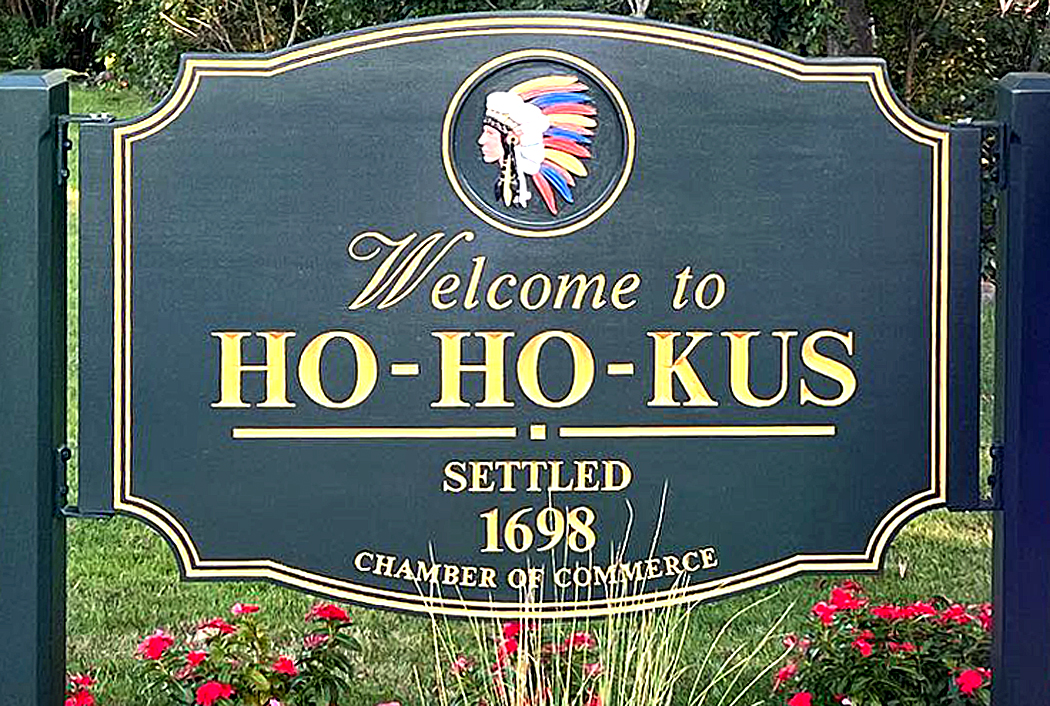
Names can get quite twisted. In central Jersey the name of Cheesequake was originally the Lenape name Chiskhakink, which meant “cleared land.” Other New Jersey names, some harder to pronounce than others, at least for non-native Jerseyites, include Hoboken, Hopatcong, Manahawkin, Mantoloking, Metuchen, Neshanic, Netcong, Pahaquarry, Parsippany, Pequannock, Piscataway, Ramapo, Secaucus, Squankum, Succasunna, Weehawken, Wickatunk. And that doesn’t count the lakes, rivers and creeks: Absecon; Assunpink; Assiscunk; Hakihokake; Hockhockson; Kittatinny; Luppatatong; Machesautauxen; Metedeconk; Muksukemuk; Musconetcong; Picatinny; Pohandusing; Rancocas; Shabakunk; Waackaack; Wawayanda; Wickecheoke — and that’s about 10 percent of the list. I believe I’ve heard my cat say “Waackaack” at times. 

If you’re from there, these names roll easily off the tongue, if not, well — I once heard a newscaster pronounce Parsippany as “par-suh-PAN-ee.” 

Then, there’s Kinderkamack Road, which sounds like it should be among the many Dutch names in the area, but is really a version of the Lenape for “Place of the Ceremonial Dance.” But you would be forgiven for mistaking it. After the Native Americans came the Dutch, with their own names for things, such as Kill van Kull, Polifly, Paulus Hook, Schraalenburgh, and Tenafly. 

There’s a lot of history in New Jersey, although most Jerseyites pay little attention to it. Not only Native American and Dutch history, but New Jersey was once a slave state. My county, Bergen, was the largest holder of enslaved people in New Jersey, with 20 percent of its population in bondage in 1800. New Jersey was the last of the Northern states to outlaw slavery. At the end of the Civil War, there were about a dozen slaves still owned in the state, eventually freed by the 13th Amendment. By the way, the state voted against Abraham Lincoln both in 1860 and in 1864. 

When my father was clearing land in our back yard in Old Tappan, he dug up an old brick foundation that a local historian identified as the remains of an 18th century slave quarters. 
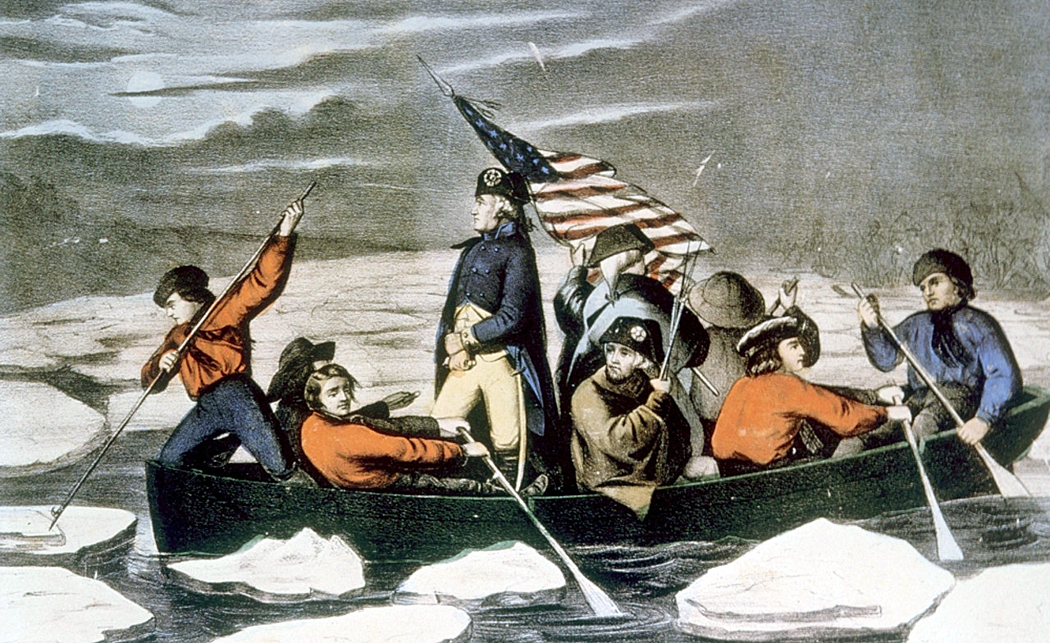
The stony ground of the state has seen a lot of history. One of the most famous and consequential battles of the Revolutionary War was fought in Jersey, as George Washington crossed the Delaware River in the winter of 1776 and surprised British forces at Trenton. He did it again a year later. 

During the Gilded Age, New Jersey was a comfortable home for corporate monopolies. Before being broken up by the Sherman Anti-Trust Act in 1911, Standard Oil of New Jersey had controlled nearly 90 percent of refined oil in the United States. 

Oh, New Jersey. Wikipedia lists more than 50 New Jersey politicians convicted of crimes and corruption, most famously in recent years, Sen. Bob Menendez, who was found guilty of taking bribes after investigators found Menendez had illegally received a Mercedes-Benz car, 13 gold bars, and $486,461 in cash.
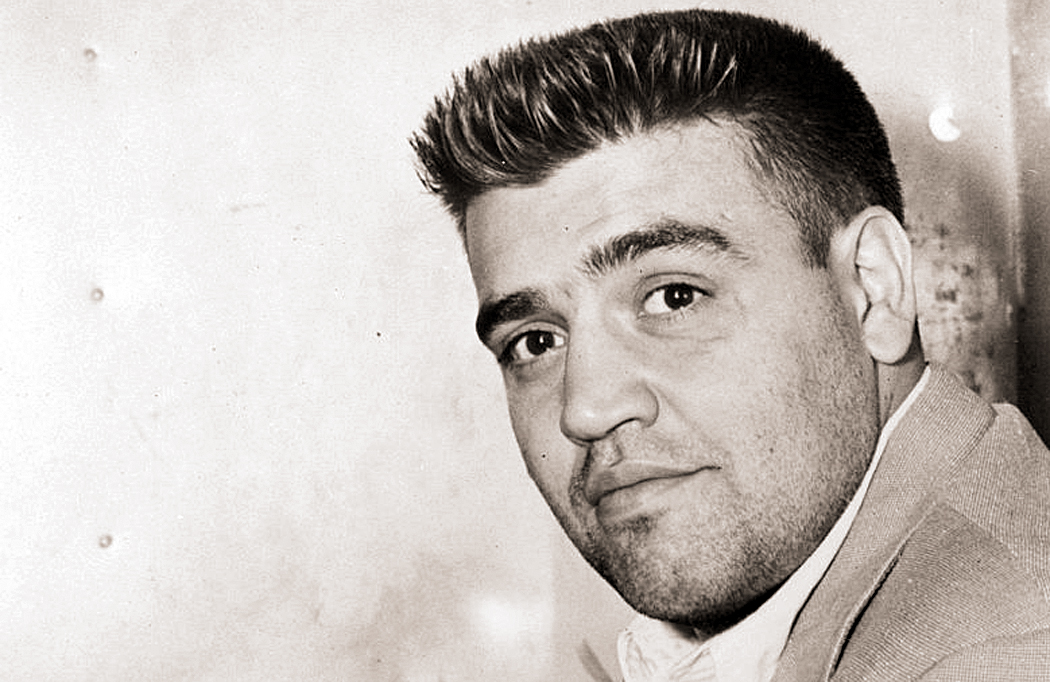
The Chin

In my own home town of Old Tappan, Mafia boss Vincent “The Chin” Gigante had a house a little more than a hundred yards from where I grew up. I didn’t know that at the time, but imagine my surprise when, at college in 1970, I turned on the radio one morning and heard the NPR announcer say that the entire police force of Old Tappan had been arrested for taking cash from Gigante’s wife, Olympia. 

Other high points in New Jersey history: 

It was the home, in Menlo Park, to Thomas Edison’s research laboratory, later moved to West Orange. 

New Jersey was the first state to ratify Prohibition.

In 1927, the Holland Tunnel connected NJ to Manhattan, followed by the George Washington Bridge in 1931 and the Lincoln Tunnel in 1937. 

In 1932, the baby of Charles Lindbergh and Anne Morrow was kidnapped from their home in Hopewell, NJ., and later found dead. A nation-wide manhunt eventually led to the arrest two years later of Bruno  Hauptmann, who was convicted of and executed for the crime. 

The dirigible airship Hindenburg, a German Zeppelin, exploded in flames upon landing at Lakehurst Naval Air Station in 1937, killing 13 passengers and 22 crewmen. “Oh, the humanity!” 

In the infamous Mercury Theatre War of the Worlds radio broadcast of 1938, Orson Welles claimed that Martians had landed in Grovers Mill, NJ. 

And on Sept. 23, 1949, Bruce Springsteen was born, in Long Branch, on the Jersey shore.

The state tends to get divided into three parts, Northern Jersey, Central and South Jerseys. The north is all suburbs of New York City; the south is oriented to Philadelphia and Central Jersey is orphaned between.
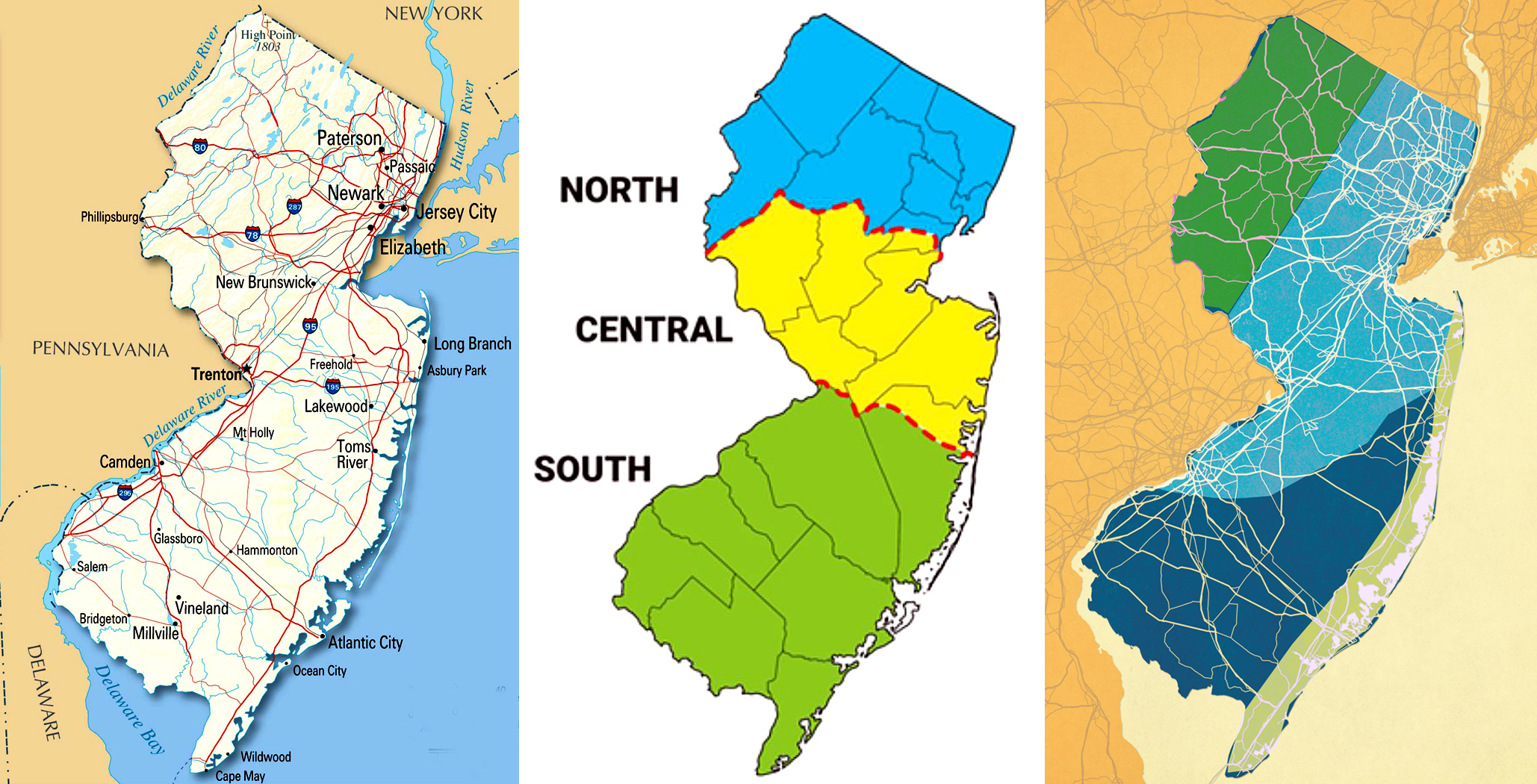
 But really, there is another way of splitting up the map that is more reflective of the cultural realities. There is suburban and industrial New Jersey, which is a ribbon running from the northeastern part of the state and cuts diagonally across to the southwest, near Philly. This includes not only my Bergen County, but also Newark, Trenton, Camden, and the Oranges — pronounced locally as Onch, East Onch, South Onch, and West Onch. There is no Nawt Onch. 
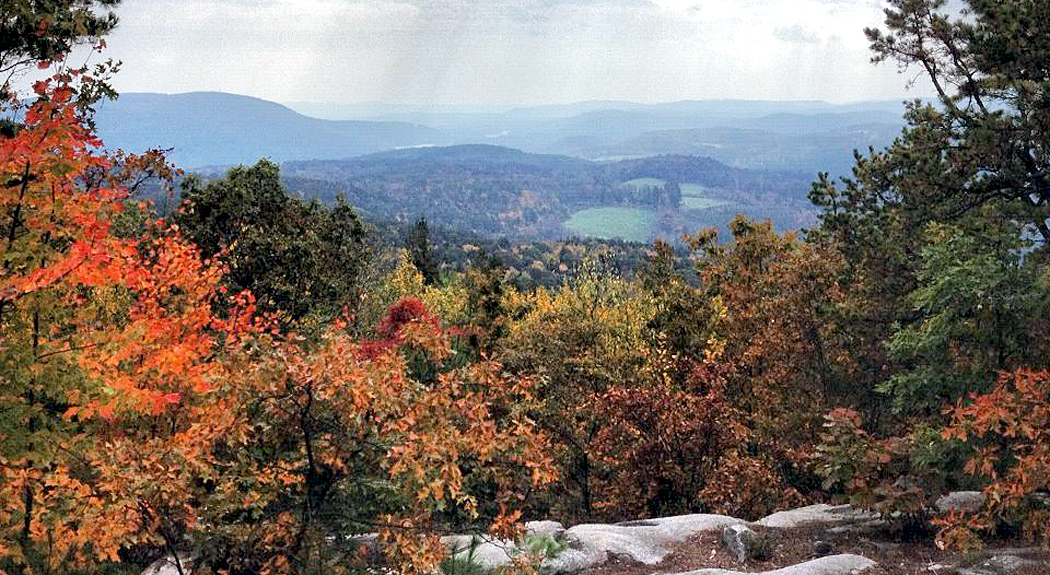
The second part might be considered Appalachian New Jersey and is in the northwest, largely rural and wooded, with the Kittatinny Mountains and the Delaware Water Gap. My summer Boy Scout camp was there, where I was first camper and later camp counselor. 

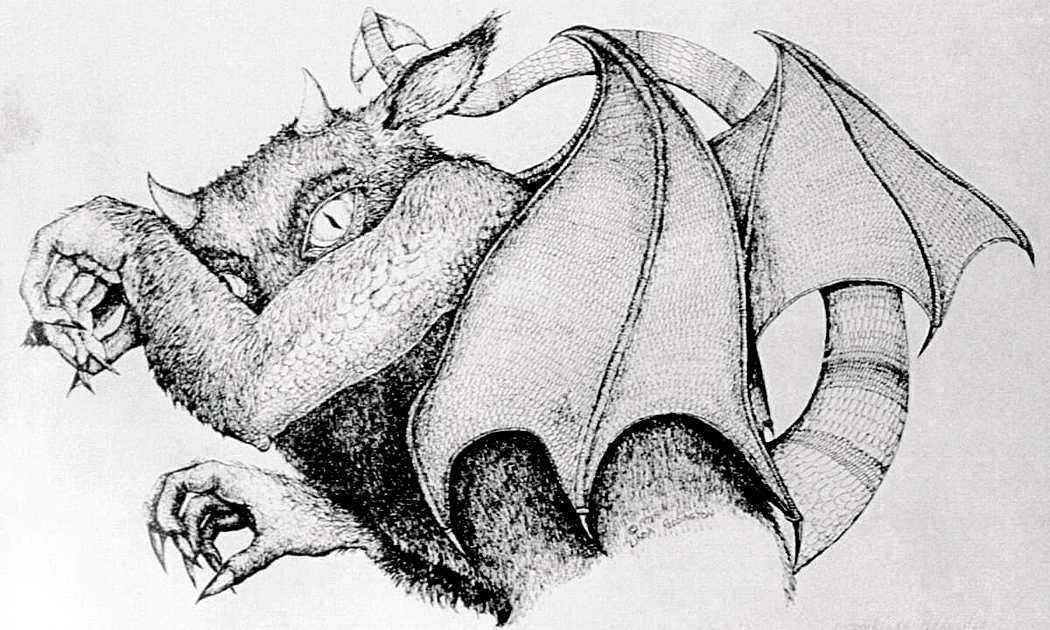
The third part of the state might be called Confederate New Jersey, technically below the Mason-Dixon Line and composed of farm land, swamps and the infamous Pine Barrens, supposed home to the Jersey Devil, a legendary flying demon, said to have been born in 1735 as the 13th child of local woman Deborah Leeds. The child, though born normally. immediately grew wings, tail, and claws and flew out to the Pine Barrens, where, like Big Foot, it is occasionally claimed to have been spotted. 
South Jerseyites can even speak with a drawl, separating them culturally from those farther north. The familiar Joisey accent has a pronounced rising “dawg” while in the south, they are closer to a descending “doag.” (The North Jersey accent is quite distinct. We once had a plumber come to fix our “terlet.”)
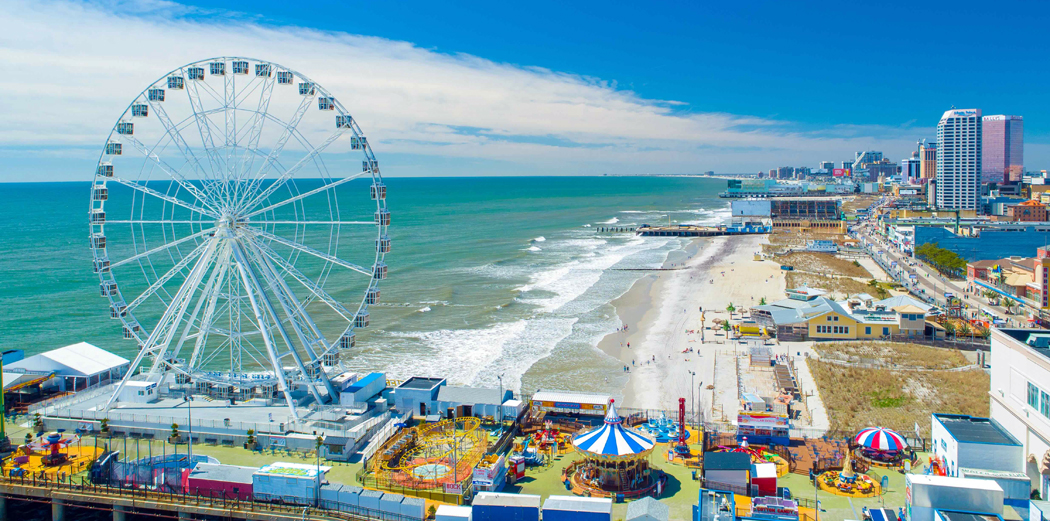
There is a fourth important component to the state. Some consider it part of South Jersey, but it is distinct enough — and famous enough — to warrant its own regional name. It runs down the eastern margin of the state, from Sandy Hook to Cape May and it is the Jersey Shore. It is not like any other section of the state and has gained notoriety for the empty-brained drunkenness and pointlessness of the MTV “reality” television program. The less said, the better. 

The broad stripe that runs diagonally down the center of the state is the heart of what people think of as being New Jersey. Bergen, Hudson, Essex, Union, Middlesex, Mercer, Burlington, Camden and Gloucester counties and parts of others, are both the suburban and industrial centers of the state, and the source of most of the enduring cliches. 
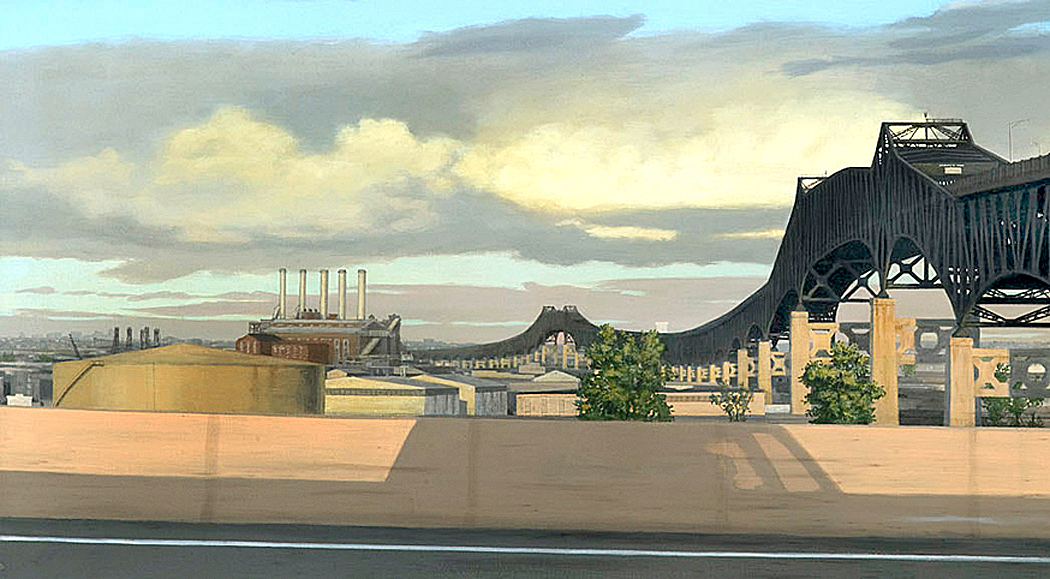
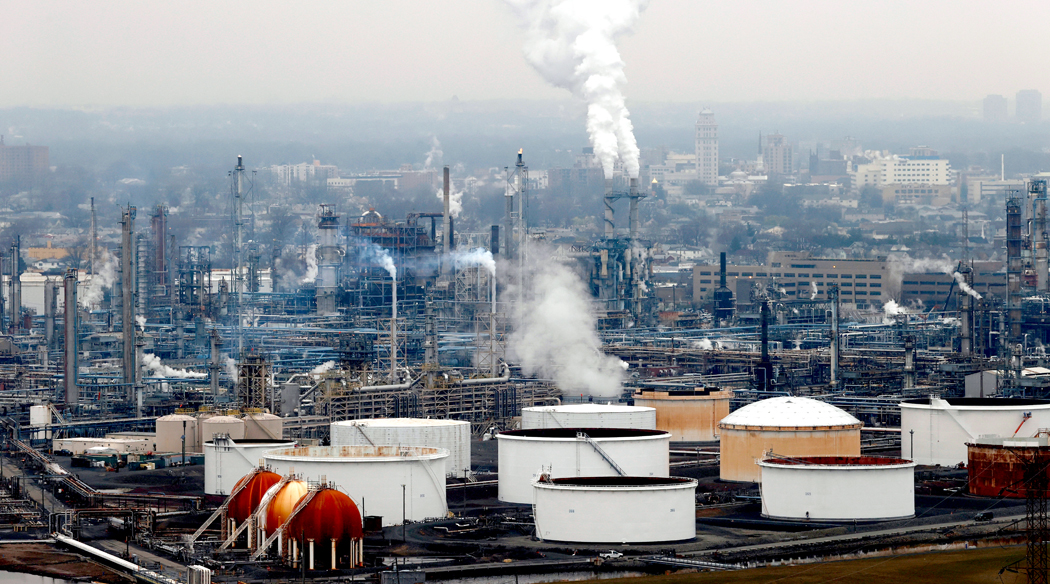
But it is the center filet that has all the housing developments, mcmansions, oil refineries and chemical plants — to say nothing of the Pulaski Skyway and the single most trenchant metaphor for the state: The NJ Turnpike. (“Where do you live?” “Exit Four.”)

   When I left New Jersey as a teenager headed off to college in North Carolina, I shook the dust off my sandals and said good riddance. I despised the bourgeois banality of it all and couldn’t wait to get to the “real” stuff that higher education would show me: art and poetry and music, and — well, beer and sex. But over the years I came to realize both that New Jersey was not exceptional in its inanity — that was everywhere — and also more importantly, I had to accept that New Jersey had built my insides.
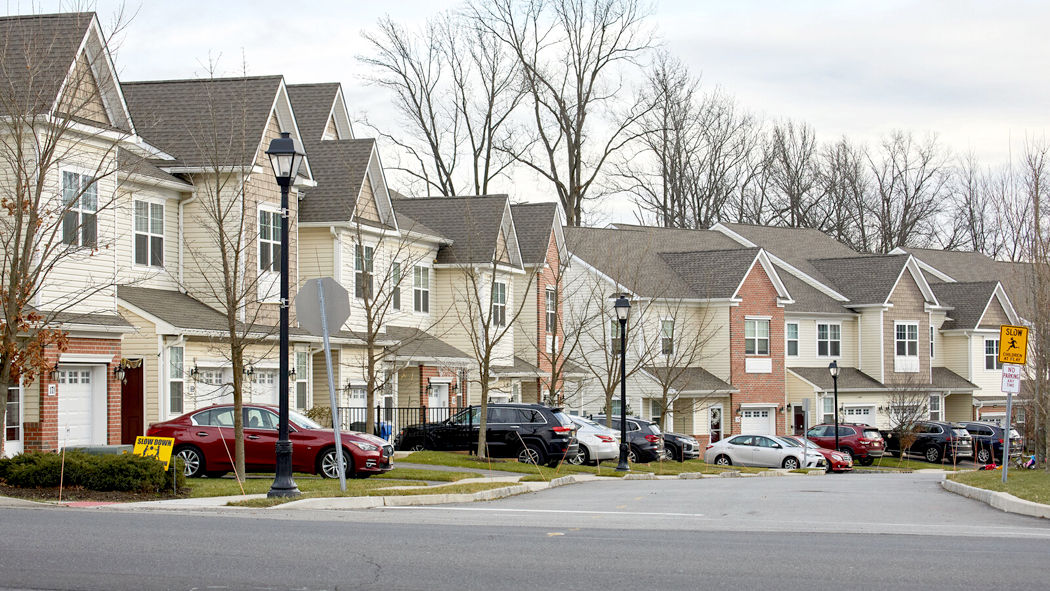
The pace, the smells, the population density, the architectural styles, the speech, the ethnic and religious diversity I had known had all become the universal norms by which I judged the world. 
It came as a shock, for instance, that there were so many churches and so few synagogues in the South. In Old Tappan, there was one Protestant church and one Catholic church and the nearest synagogue was in Closter. Here in my neighborhood in Asheville, there are three churches all in walking distance. Oy. 

The Trinity Reformed Church in Old Tappan was presided over by the soft-spoken Louis Springsteen whose basic message to the congregation was that good is better than evil because it’s nicer. No brimstone, no hellfire. My Catholic friends went to St. Pius X at the other end of Cripplebush Road. Some of them went to parochial school and were taught by nuns. It was all just normal, and built that normal into me. Religion made no more difference to me or my friends than hair color or freckles. 

I remember my father, raised in Cliffside Park, NJ, telling us that when he was drafted at the beginning of World War II and shipped off to Camp Wheeler in Georgia, he was shocked to find out the camp was segregated. The idea had never occurred to him. 

And when I was at college a group of us decided to crash a Ku Klux Klan meeting in Liberty, NC, where the main speaker was the sheriff of Forsyth County, and I was surprised to find out that among the enemies they despised were not just Black folk, but Catholics and Methodists as well. Huh? Humanity never seemed such a narrow concept where I came from. 

My Boy Scout troop was presided over by Paul Weinstein and his two assistants, Vern Riportella and Arch Curry. Basically, one of each. 

It all, good and bad, became the unexamined bedrock of my personality. I remain somehow in New Jersey, even though I haven’t lived there in 60 years. 
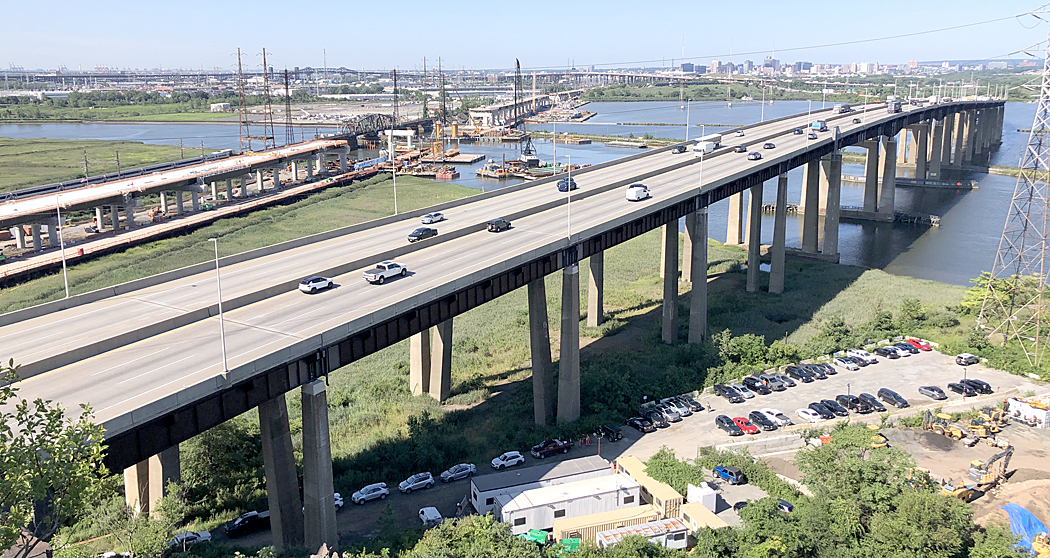
The highways I knew in Paramus seemed the normal highways; the shopping malls the size of Delaware were the norms; the traffic was normal; the oil refineries burning off their excess in the night sky was normal; the bus service, the delicatessens, the pizza, were all the baselines I took elsewhere with me. 

I mean, come on — you call that a pastrami sandwich? 

And New Jersey set the inner tick-tock of my sense of time, a quicker pace. As I’ve aged, the clock has slowed a bit, and living in the South for the majority of my life has moderated the tempo, but it still moves too fast for some. My Anne complains that I talk too fast, according to her North Carolina metronome. 

Perhaps it is because my New Jersey innards prompts me more to favor efficiency than courtliness. 

And while I grew up thinking of my home state as intellectually stultified, I have to grant that there are random points of light. I hesitate to include James Fenimore Cooper among them, after reading Mark Twain’s “Fenimore Cooper’s Literary Offenses” — “Cooper has scored 114 offenses against literary art out of a possible 115. It breaks the record.” — but New Jersey was also the adopted home of Walt Whitman and the very subject and marrow of the poems of William Carlos Williams. There were also Stephen Crane, John Ciardi, Joyce Kilmer, Philip Roth, Amira Baraka (aka LeRoi Jones), George R.R. Martin, to say nothing of the Ginsbergs, père et fils. The Jersey Shore town of Long Branch alone has given us Springsteen, Norman Mailer, Robert Pinsky, and Dorothy Parker. 

Springsteen, Pinsky, Mailer, Parker

New Jersey gave birth to, or was home to George Antheil, Gerard Schwarz, Astrid Varnay, Eileen Farrell, Dorothy Kirsten, Jerome Hines, Sherrill Milnes, Michael Tree, Stephen Paulus, Judith LeClair, and one-third of the Beaux Arts Trio. And that’s not even counting Count Basie or Frank Sinatra. 
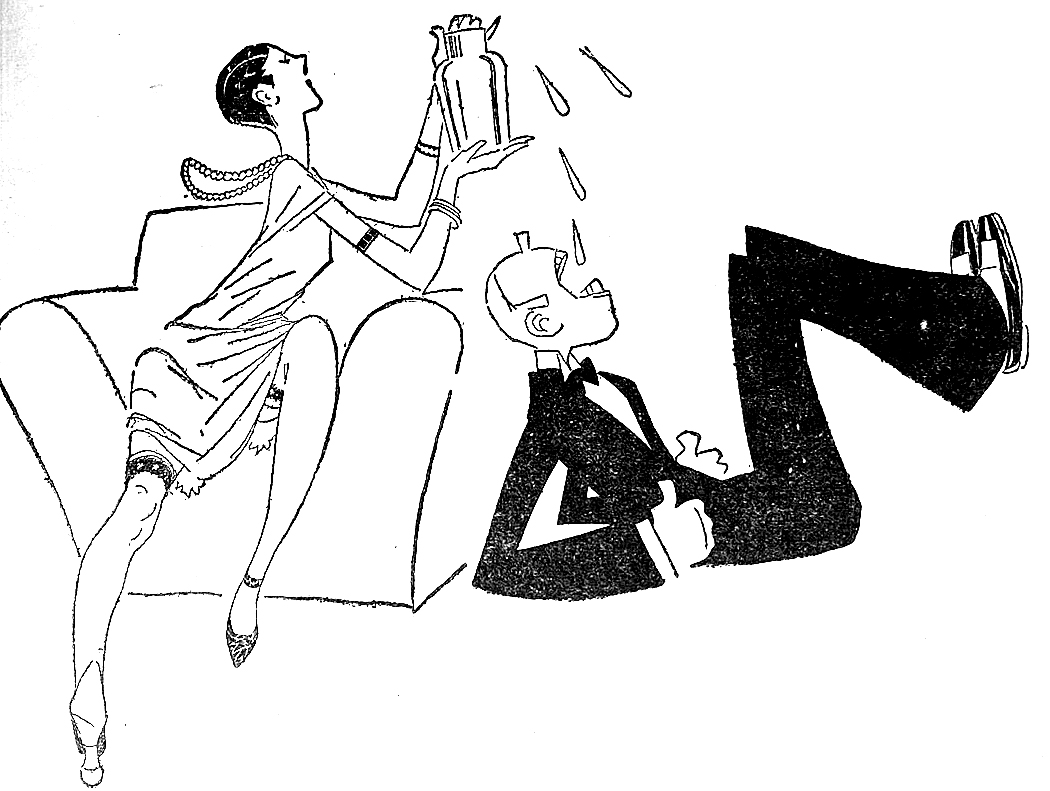
And visual artists: Charles Addams, John Held Jr., George Platt Lynes, Robert Smithson, Reginald Marsh, George Segal, Tony Smith, Irving Penn, Marion Post Walcott, Cindy Sherman, George Tice, and, most famously, Alfred Stieglitz.   
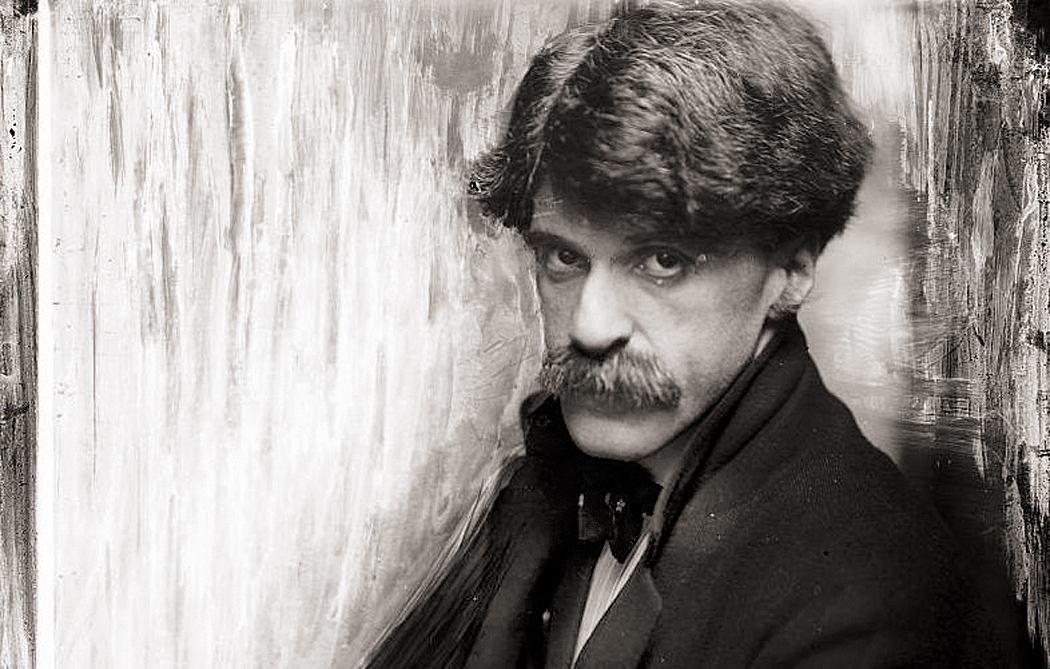
So, there is a serious element in the state, past the saltwater taffy, Miss America contests and Giants football in the Meadowlands. I’ve read work by all the authors, listened to music by all the singers and instrumentalists, either live or on recordings, and seen and often written about the visual artists. I hope that has also seeped in to the brainbox. 

After all, maybe I don’t despise New Jersey like I used to, and perhaps I am not alone in having ambivalent feelings about the places that gave us birth and nurtured us. After all, Henry Thoreau complained about the torpor of Concord farmers and townspeople at a time when that village was also home to Emerson, Hawthorne and the Alcotts. Hmm. Might make for a good sonata.

Poetry is as much about not saying something as it is about having something to say. There are words that come too easily to us, words that, once we have uttered them, we realize are either meaningless cliche, or simply do not say what we mean with any exactitude. They are commonplaces, or shorthands meant to avoid the truly difficult. 

Reams of bad poetry rhyme the thoughts we believe we share, or worse, believe we ought to share: emotions that are expected rather than actually experienced; ideas that were once current that have outworn their truths; expressions we overheard rather than discovered. 

And so, we struggle to find the real, the exact, the fresh, and instead, out on paper appears the tired, the familiar, the trite, and we scratch out the lines and try again. It is what we don’t want to write that drives us.

As T.S. Eliot write it in “Burnt Norton,” “Because one has only learnt to get the better of words/ For the thing one no longer has to say, or the way in which/ One is no longer disposed to say it.”

Each attempt at a poem is, in Eliot’s words, “a raid on the inarticulate.”

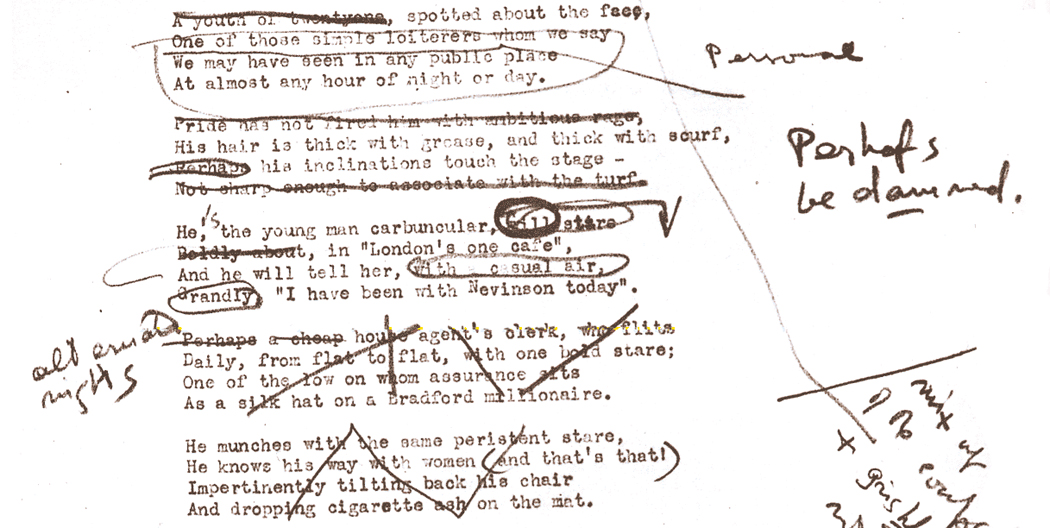
You can see it in a page of his draft for “The Wasteland:” Lines penciled through, sharp comments scribbled in the margins, even a heckling at himself — “Perhaps be damned.” 

Allen Ginsberg liked to preach the wisdom of the first draft. “First thought, best thought,” he repeated, like a mantra. Yet the published draft of his best poem, “Howl” is a mass of rewriting and crossing-outs. One tries very hard not to waste our time by saying something that is boilerplate, that is obvious, that is inelegant or imprecise. 
Which makes a successful poem all the more powerful. 

There are two ways in which poems can be essential. The first and easiest is that it delights us. These are poems we carry with us for life the way we remember a lovely tune. They are fun to recite and we very likely have memorized at least a few lines. 

“Thirteen Ways of Looking at a Blackbird,” by Wallace Stevens. “Kublai Khan” by Coleridge. “This Be the Verse,” by Philip Larkin. A whole Palgrave’s Treasury of poetry that over and over, we come back to. 

They can be light, but they can be serious also, take us along with them past everyday concerns. Some are longer, some are just ditties. Robert Herrick’s “Whenas in silks my Julia goes,/ Then, then (methinks) how sweetly flows/ That liquefaction of her clothes.” 

The bulk of poems that give us pleasure fit into this category. 

But there are other lines that more than delight, hit deep into the most central part of our selves and smack us with a kind of revelation. The first group — that delight us — are poems that we date, but these others are the poems we are married to. They speak to us with the clarity of a gong and hammer our nerves flat, and leave us moved and our our bodies full with emotion, ready to burst like an overfull water balloon. 

You will have your own candidates, poems that whisper in your ear something that can make you weep. They are poems that feel not simply true, but personal. Those that crash into me won’t likely be the same ones that hit you. But if you love poetry you must certainly have your own list of “holy of holies.” Here are a few of mine:

There is no poem I reread more than William Wordsworth’s “Ode: Intimations of Immortality from Recollections of Early Childhood.” I know; I know. Wordsworth can be tedious. One thinks of Rossini’s smackdown of Richard Wagner: “He has beautiful moments, but godawful quarter-hours.” But those bits. It is like taking the red-eye to New York and you are bored and sleepy most of the way, but just as the sun rises over the eastern horizon, the plane banks and the blast of light through the window blinds you with brilliance. 

There is a reason he has the fourth most quotes in Bartletts after Shakespeare, the King James Bible and John Milton. 

The “Intimations Ode,” as it is usually known, is his poem that speaks to me most heartbreakingly. I don’t share his strained Platonism about life before birth, but the central description of how childhood comes “trailing clouds of glory.” The world is lit from within when we are young. Now that I am 71, that transparency of light is clouded over as by emotional cataracts. But I can clearly remember the brilliance. And Wordsworth’s poem is not only about the “splendor in the grass,” but also about the comfort of that remembering.

No poem speaks to me more personally, more directly, more heartbreakingly. Unless that poem is…  

Three things are central to human life: Love, loss and death. One poem has them all and tears me to shreds each time I read it. Walt Whitman’s “Out of the Cradle Endlessly Rocking.” 

Yes, we need food, shelter and air to live, but life gives back always those three pillars: love, loss and death. In Whitman’s poem, the speaker remembers childhood when he came to know two sea birds, a mating pair. They came back to Long Island each spring from migration, until one year, only one came back. The sense of loss is palpable, and painfully familiar. The recognition of the loss, and of the death that caused the loss, drives the speaker to poetry. 

This poem has always moved me deeply, but now that my wife of 35 years has died and left me alone, the poem is nearly unbearable. This is what I mean about a poem speaking personally. It is no theory I feel on rereading it, but the recognition of truth. 

Then, there is Matthew Arnold’s “Dover Beach.” It is perhaps the most pessimistic poem in the canon. It recognizes the abject aloneness of life, and the slim but necessary comfort of sharing that aloneness. 

The speaker calls to his share-mate to look out the window at the English Channel and consider the “eternal note of sadness,” and the “ebb and flow of human misery.” He muses on the loss of any sense of divine order or providence and posits the only help is that they “be true to one another.” For the world offers nothing permanent or positive beyond that.

It is such a beautifully written thing, that the misery in it almost comes across as transcendent. The receding waves of the Channel on the beach shingle makes a hissing sound that makes the whole thing utterly palpable.

Conrad Aiken is usually thought of as a minor poet, and most of his work is known only to scholars nowadays. But one of his poems speaks to me as much alive as Wordsworth or Whitman, and that is his poem about death, “Tetelestai.” 

The title is the Greek word that the Christ spoke as his last on the cross: “It is finished.” In Aiken’s poem, he parodies the grand trumpets that blast at the death of heroes and the triumphal cortege that celebrates the heroic life, but then pleads that even a profoundly ordinary man — meaning himself — deserves the same ceremony, the same sense of importance. 

Say, he says, “two great gods, in a vault of starlight/ Play ponderingly at chess, and at the game’s end/ One of the pieces, shaken, falls to the floor/ And runs to the darkest corner; and that piece/ Forgotten there, left motionless, is I.”

Yet, he pleads, he has had the same emotions, the same drives, the same failures, as the trumpet-hailed hero. Does he not deserve to be remembered for these things? Of course he is being ironic on one level, but underneath, he is certainly sincere — Each of us, after all, is the hero of his or her own life, the center of the subjective universe. 

It is a poem of sadness, of frustration, of recollection of a life too insignificant to be grieved, yet, deserving of grief. 

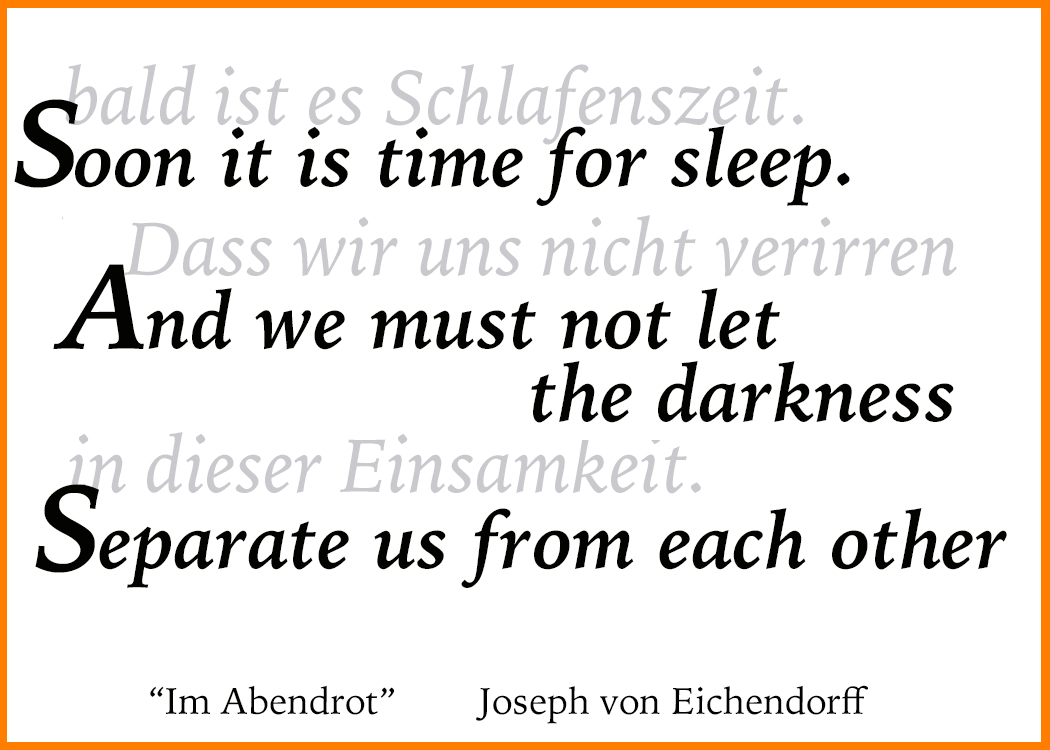
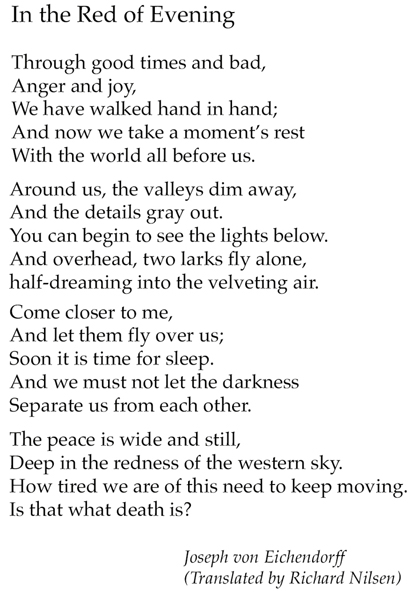
The last poem I will mention here in detail was written in German by Joseph von Eichendorff in 1841. It is a poem I would not have come across in my normal reading, but it is the text set by composer Richard Strauss as the finale of his “Four Last Songs,” one of the most intensely beautiful and heart-piercing cycles of music ever written, lush, shadowed, personal. Strauss wrote it at the very end of his own life and his text choices — the Eichendorff and three poems by Herman Hesse — are each as full as a cup  brimming over. 

There are many translations — at least as many as there are recordings of the Strauss songs and printed on the CD insert — but for me, most fail be either being too literal or too conventionally “poetical.” So, I made my own translation, which for me carries the weight of the poem as I feel it in the music. I give it here:

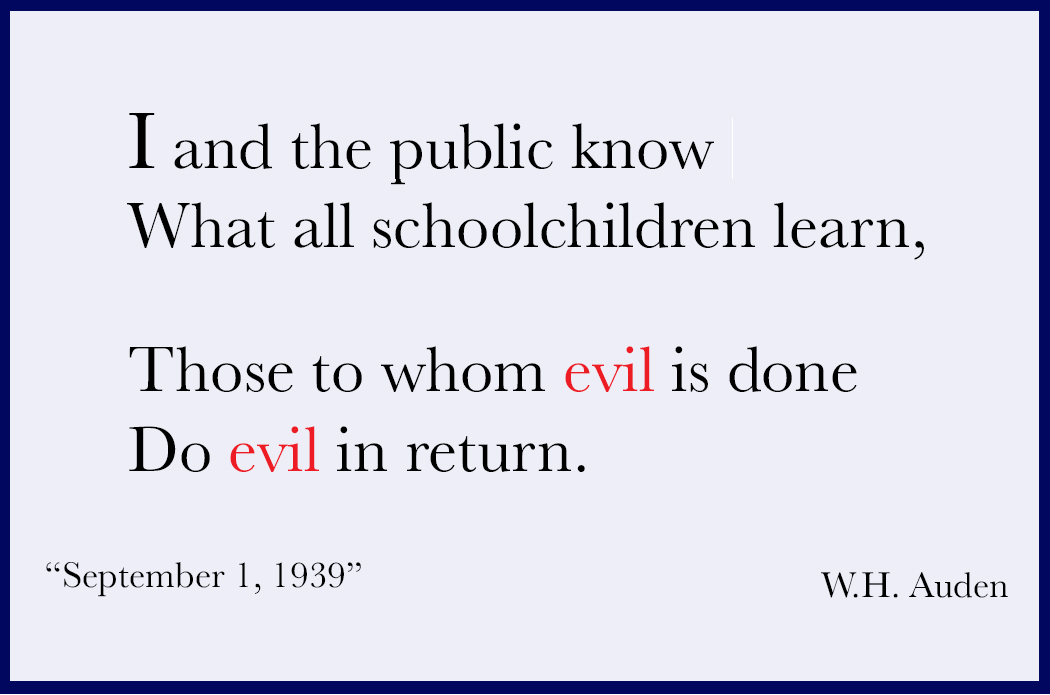
There are other poems I could mention that move me as these five do. I love the Prologue to the Canterbury Tales; Andrew Marvell’s “The Garden;” Auden’s “September 1, 1939;” Yeats’ “Lapis Lazuli;” “Fern Hill” by Dylan Thomas. There are others. And I continually find new ones to add to the list. 

Poetry can say with precision what we mean to say but our words fail us. Yes, it can also camouflage our fuzzy thought with pretty words, but those are the words I said a good poet fights to shake loose from. Poetry is not vague clouds of unclarified smoosh. The best is made by intense thought and concentration, and a fear of uttering cant, the commonplace, the banal. 

When the useless marble is chiseled away, the David is left for us to marvel at, and recognize as ourselves. 

weeds lede photoI love gardens. My three most recent gallery shows have been of photographs taken in gardens. I photograph the gardens of most of my friends to make “books,” or series of images. Flowers are about growth, change, diversity, fecundity — and beauty. choke cherry 2

Yet, there is something in what I love about growing plants that is found in even more condensed form in the rankness of weeds. Gardens are wonderful, but weeds satisfy something philosophical deep in my soul. My own gardens have always been unkempt, and I tend not to weed out those plants that others fear will suffocate their more prized plantings. Weeds have a strength, if not a refinement, that I find almost heartbreaking. Right now, beside the roses and gladiolas that my wife planted, there is a great purple stalk of pokeweed, its berries still green against the fuschia of its stems. I prize it above the more formal and familiar plantings. weeds 09

Nothing lifts my heart up more than a clump of goldenrod beside the road, a spray of chickory, the tall swaying stalks of Joe Pye weed. It doesn’t even take the flowers: Even before they bloom, I like the sprawling weediness of their greens. chickory

And now is weed season. Yes, they grow year round, but the end of summer and the incipient autumn are when the weeds glory. Driving down the country roads of the Blue Ridge, you pass oceans of them, all colors and sizes, all rank and fertile.

I’m calling them weeds because their other name — wildflowers — makes them sound too pretty, and makes them sound like something you look up in a Peterson guide. Not all of the weeds I respond to even have the color dots you would call flowers. Sometimes their flowers are tiny and unnoticed; sometimes they stink instead of filling the nostrils with perfumes. grass in driveway

It isn’t just their appearance that moves me, although I revel in their varied shapes and forms, their repetitions of leaflets and their snaky tendrils; it is the very idea of weeds — the sense that life will force its way into the least cracks of concrete, will fill any emptiness and break through any barrier. I love to see some abandoned factory with vines covering its brick facade, and through its windows you may see ailanthus cracking up the interior floors. Others may rue the kudzu spreading over the trees, but I love the new forms we have, almost as if the trees were pulling sheets over their heads to play ghost. weeds 08

My love came early: When I was a boy, there was an empty farm field next to our house in northern New Jersey. In a few years, plant succession had covered it with stickers and grasses, later, saplings, and even before I moved away to college, there was such a dense thicket of young trees, it looked like a magnified view of the hairs on the back of a dog; you could hardly walk through the density. I have gone back to see the forest that it became; it has since been cleared and now someone is building tract housing there. Sometime in the future, it will be taken back by the vegetative maw that eventually devours everything. weeds 07

Some of my favorite places in a city are those that are forgotten, mostly, places that simply don’t have a use, being either too small, or not geometric enough to easily create deeds of title — spaces between properties left ambiguous of ownership, or little triangles next to on-ramps or beside old railroad sidings.composite Here the intention of humankind plays no part and weeds are left to themselves. There you find the yarrow and the cow itch, the Duchesnia indica and the knotweed. There what you find, and which I find so precious, is profusion. When humans become involved, you too often find monoculture, organization, rows and aisles, sameness, monotony and worse — usefulness.

The problem with usefulness is that it causes us to value something for how it might benefit us, turning it into a single descriptor, a one-dimensional entity, rather than a rich, multiple, various thing. An it rather than a thou. It ceases to be a part of the physical world and becomes instead a word — a concept instead of a living thing. Fie!weeds 04

There are things that are pretty — and some weeds count, too — but what I find beautiful, a concept so much larger than prettiness, as the universe is larger than the solar system, is profusion, fertility, irrepressibility — life.

Variety is not so much the spice of life, as life itself. Nature tries everything. It has no plan, motive or goal; it simply keeps putting stuff out there, like Blake’s mythical creative deity, Los.

“Exuberance is beauty.”weeds 10

This carries over into other areas of life. I enjoy all art, but I love the confusions of the Baroque, the exudations of the Romantic 19th century. If you compare Racine or Dryden with Shakespeare, you see the difference. Those 18th century unities are boring, while the uncontrolled profusion of metaphors in the Bard, and his shaggy plots and contradictory personae are the very stuff of life. The one rich and luscious, the other dry and didactic.

Victorian literature shares that didacticism, but even among the tidy moral lessons of Whittier and Longfellow, you have the weedy, rank profusion of language and thought and feeling that is Walt Whitman. How those of propriety hated the Good Gray Poet. Certainly, lots of Whitman is awful, repetitive and oracular, but then there is “Out of the Cradle Endlessly Rocking.” Emily Dickinson wrote some of the worst gobbledy-gook every published, but among her profusion of cryptic word-knots,  fruited with a million hyphens or dashes — certainly one of my favorite punctuations — there are such perfections that you are grateful for the weeds that give us such bounty. weeds 03

Simplicity is the enemy of life. When I hear a politician propound a dogmatic solution to an intractable problem, I sigh. When anyone has a simple answer, applied liberally (or conservatively), I know he is either a charlatan or a dunce. Probably both.

Such politics posits a final stasis, when all problems are solved by the simple prescription of an unchanging mantra: reduce taxes, reduce regulation, shrink government and Eden will be rebuilt. The political left is just as guilty, although we hear about it rather less. Communism equally anticipated an “end of history.” Problem solved.

Both sides fail to recognize that politics is ever shifting and cannot be otherwise. Interests contend, compromises are reached, grow out of date and so new compromises are found, no more permanent than the last. It is all weeds. We should value those weeds.

huck finn modern book cover

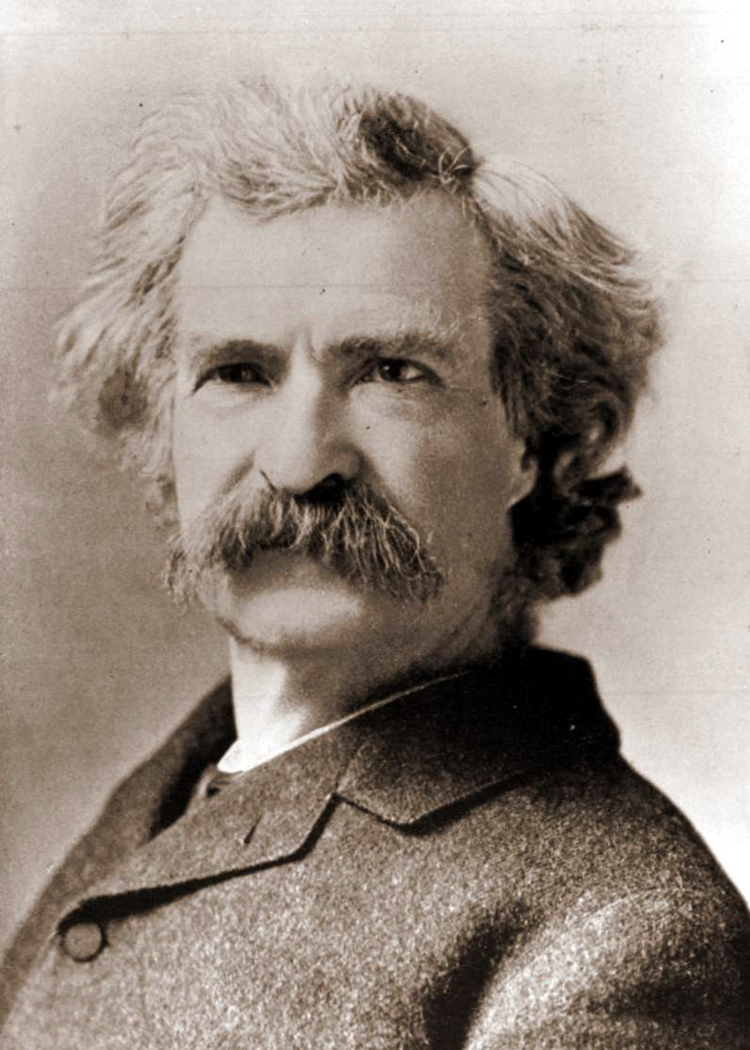
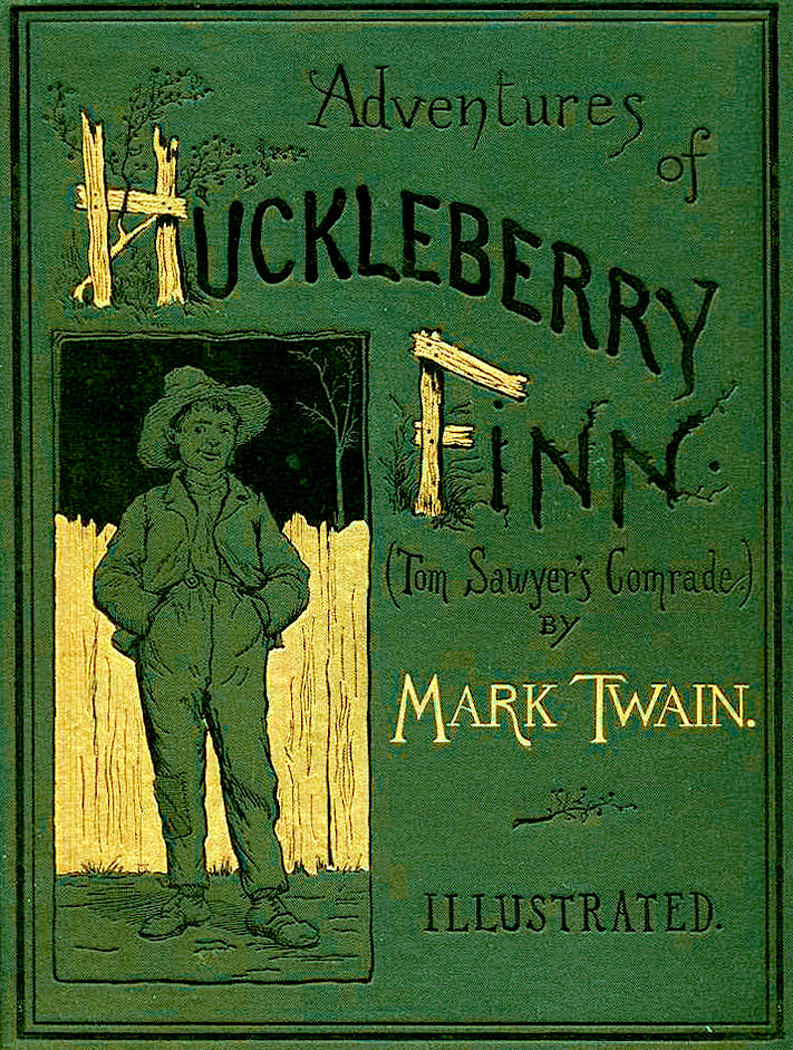
“All modern American literature comes from one book by Mark Twain called Huckleberry Finn,” Ernest Hemingway wrote. mark twain

In that book, nearly every theme that identifies our art as American is established and explored: migration, race, individualism, anti-intellectualism, optimism, religion, social climbing, moneygrubbing and the comfortable informality that marks us as a people.

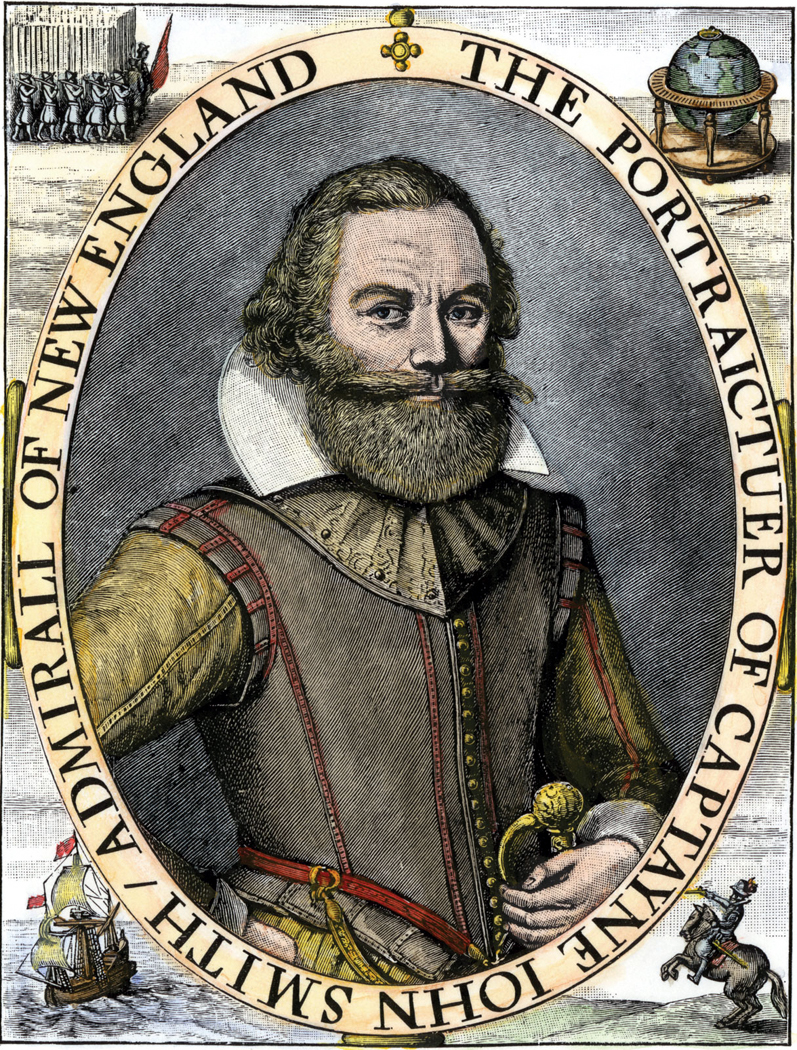
It’s as if Huck Finn were the instruction manual for how to be American. In that, Twain is just as clearly American as Debussy is French or Basho is Japanese. john smith We often look to our art for clues to national identity. But although Twain gives us Americanness in concentrated form, most of the arts made on this continent, from Capt. John Smith’s General History of Virginia (1624) and Anne Bradstreet’s poetry, all the way up to this week’s latest rap song, partake in certain common traits.

What are they? First, we need to eliminate some of the things we like to think are particularly American, such as patriotism or respect for family. Every culture feels these qualities are particularly their own, but in fact, they are universal.

Even such negatives as bigotry and racism have their American coloration, but they are evils found in every culture.

It needs to be noted, too, that what we admire in ourselves is not necessarily admired elsewhere. Americans are direct, which others often see as rude. We are informal, which others translate as slobbishness. We are optimistic, which can be taken as arrogance. We believe in individualism, which others see as selfishness. But there are six things that we can see as particularly American: migration, individualism, optimism, religiosity, informality and expansiveness. source_28

Migration

The one thing all Americans share is that we are immigrants.

Even Native Americans, although they hate to think so, came here from somewhere else, whether it is across an Arctic land bridge or up through a sipapu.

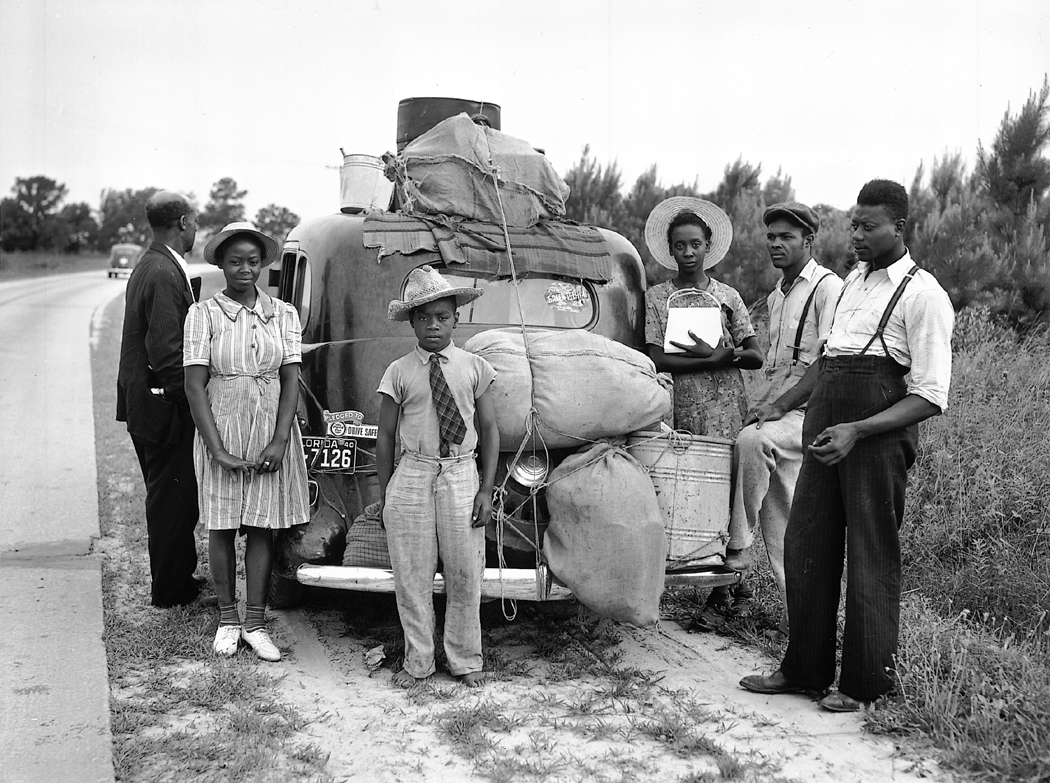
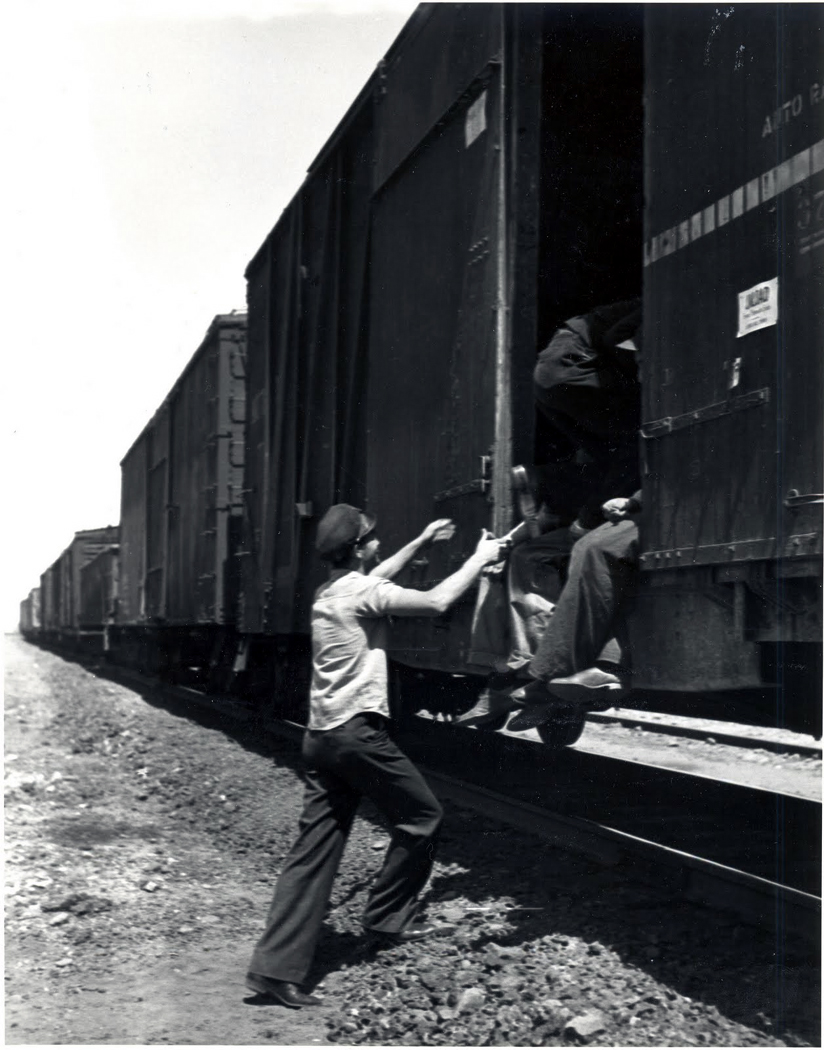
It is the parent fact that gives birth to all our other traits. jumping a freight Even after our ancestors came here from far shores, we have never ceased from peregrinating. First we moved West, populating the great wilderness.

Now, we move away from home to college or career, and find our parents retired to Florida and our siblings spread across four time zones.

To Europeans or Asians whose families have lived in the same villages for centuries, we must seem utterly rootless.

So it can hardly be surprising that the central metaphor of Huck Finn is a journey: The book is many things, from its hero’s double negatives and “ain’ts” to his climactic choice to follow his instinct instead of his schooling about runaway slave Jim, but first and foremost, it’s a “road book,” marking the peripatetic nature of American life.

Much of our art reflects this continuous travel. From the moment we arrived on the Atlantic Coast we began moving west. As art, The Godfather speaks of the immigrant experience, but so does every B Western ever filmed.

All the other traits we think of as American ultimately owe their birth to this constant moving: It gives birth to our self-reliance, our willingness to risk tomorrow on faith, and our freedom from many of the cultural straitjackets found back in the Old Country. It’s all there in the art. All either necessary for immigration or fostered by it. high noon

Individualism

Make that “rugged individualism.”

We trust our own instincts, like Huck Finn, rather then the wisdom of the group. We are Mr. Smith in Washington, Gary Cooper at high noon, Ellen Ripley blasting aliens.

The single most potent distillation of this individualism can be found in John Wayne, love him or despise him. But Wayne didn’t spring up ex nihilo; rather, he grew from the soil: He was originally Natty Bumppo, or Hawkeye, from James Fenimore Cooper’s Leatherstocking Tales: self-reliant, unschooled but wise and practical, with an unshaken faith in his own code of behavior. He’s Walt Disney’s Davey Crockett saying, “Make sure you’re right, then go ahead,” which is just a pop culture simplification of Henry Thoreau’s Civil Disobedience.

Sometimes it’s shocking to realize how of a piece our cultural heritage is. davy crockett march

The flip side of individualism is our tendency to isolationism: “Good fences make good neighbors,” as Robert Frost ironically wrote. Going it alone is usually seen as a virtue.

The downside of this self-reliance is our anti-intellectualism. We trust our own ignorance more than someone else’s knowledge. This is nothing new: It’s why Andrew Jackson was elected president. It’s Huck Finn fearing to be “sivilized” by his Aunt Sally. It’s why one of the most powerful political factions of the 19th century was called the “Know-Nothings.”

It’s a trait of national identity that we should never misunderestimate. oklahoma!

Optimism

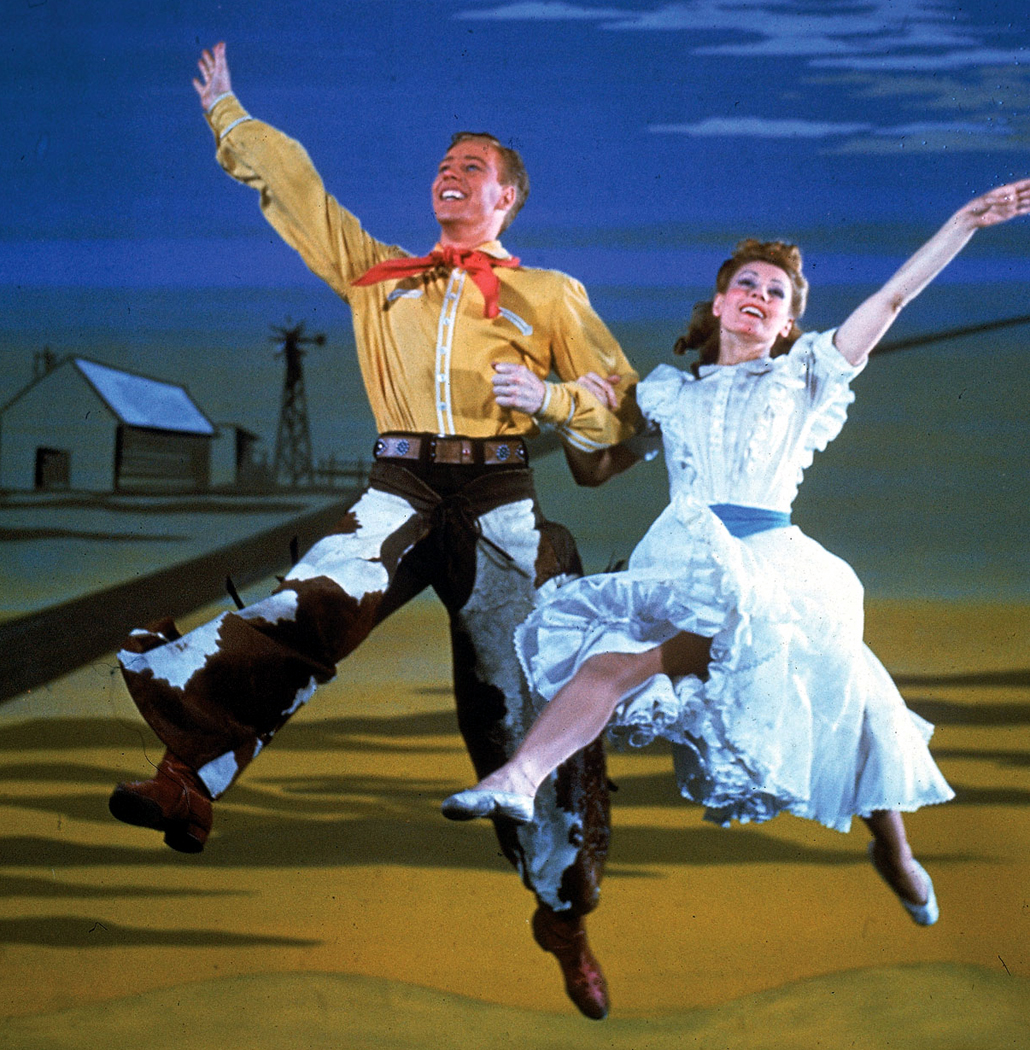
Against all reason and the evidence of history, Americans believe they can do anything. It is our “can-do” attitude, and you find it in the barking joy of Walt Whitman’s poetry and the songs of Oklahoma!Doris Day

To others in the world, this makes us look naive and foolish; fatalism is not part of our makeup.

Which is why America is home to pop psychology and Doris Day. As a corollary, for Americans, the future only holds a better world. “Tomorrow, tomorrow,” Annie sings. “Make it new,” said poet Ezra Pound, and although he was speaking of literature, he could just as well have been speaking of Thomas Edison, the Chrysler Building or Elvis Presley.

Take what you’re given and do something new with it. Never accept the past as the final word. billy sunday preaching

Religion

Many peoples are religious, but in America, religion is something else.

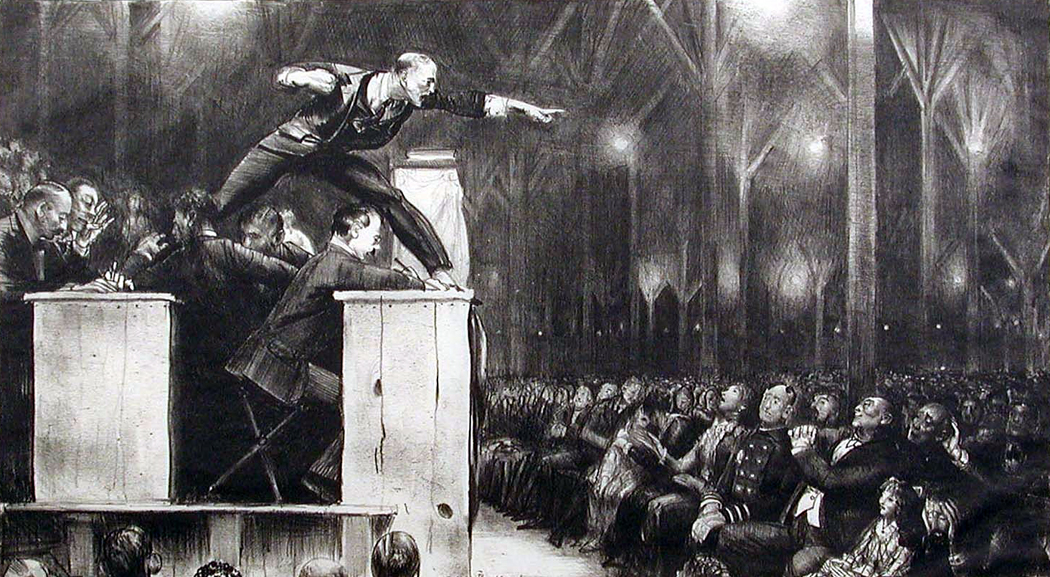
From the utopian religious communities of the 19th century to today’s fundamentalism, there is a glint of zealotry in American spirituality. Elmer Gantry would not be thinkable in France.

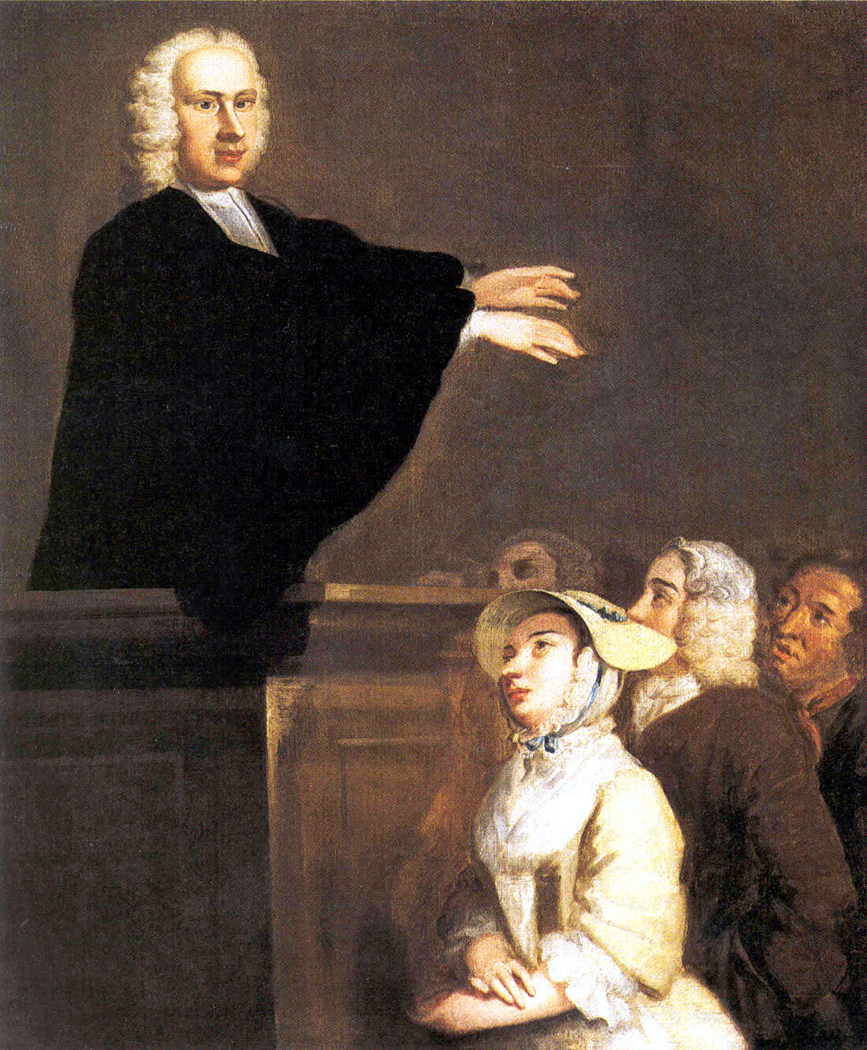
We have gone through at least four “Great Awakenings,” in which we rediscover the old-time religion and the narrow virtues of belief. rev whitefield

It was, after all, religion that founded this country, whether it is Congregationalists in New England, Quakers in Pennsylvania, Roman Catholics in Maryland. Each of them came here for religious freedom, although they were perfectly willing to oppress any religion not their own.

The separation of church and state in our Constitution is there not because we were an agnostic nation, but because everyone was so nuts on the subject and we wanted to keep from each others’ throats.

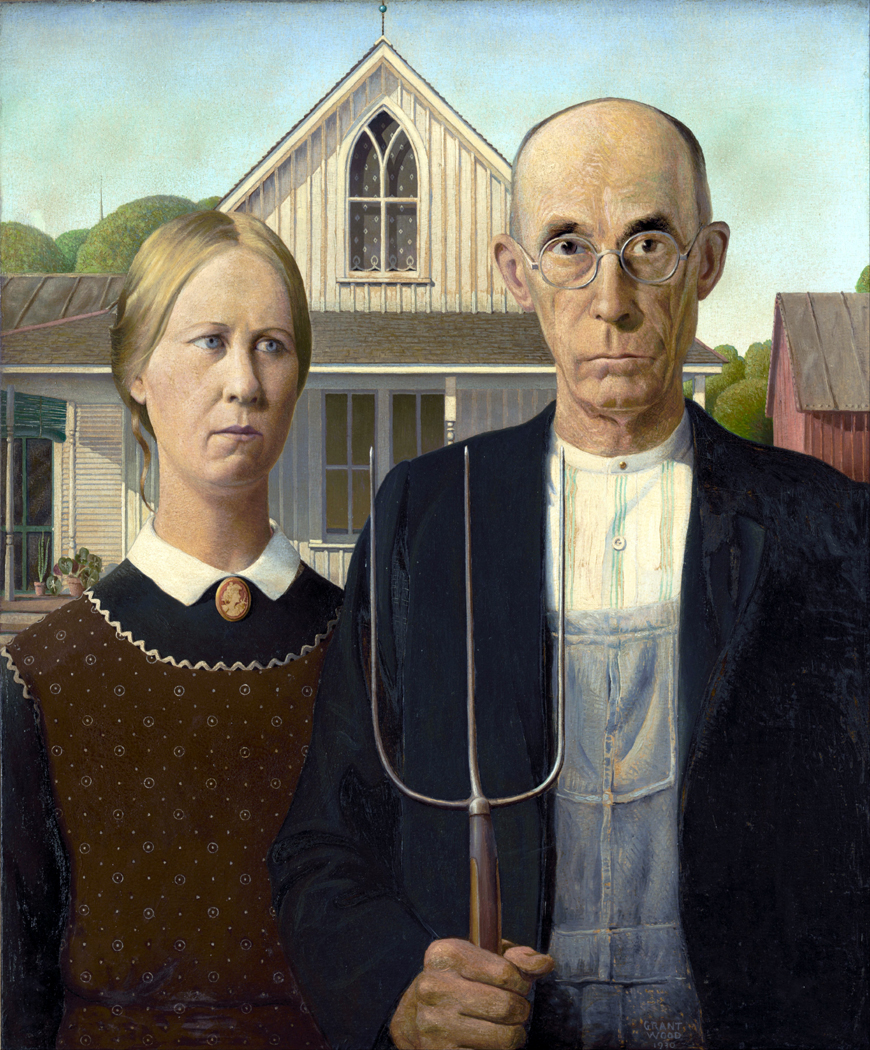
You hear the religion in the symphonic music of Charles Ives and in Negro spirituals. It echoes in Moby-Dick, and even the window behind the dour couple in Grant Wood’s American Gothic. leaves of grass frontispiece

Informality

“I lean and loaf at my ease, observing a spear of summer grass,” Whitman writes in a poem of expansive informality, turning his back on the formal expression of European art: No villanelles for Americans, no Rime Royal.

In Europe, you have Oedipus, in America, Stanley Kowalski.stanley kowalski Mark Twain wrote Huckleberry Finn in colloquial American English and even put a note about it at the beginning of the book. Take that, Henry James!

“Whatever is not of the street,” wrote novelist Henry Miller, “is false, derived, that is to say, literature.” And he wasn’t using the word as a compliment.

You can see it in the portrait of Whitman at the front of his book, Leaves of Grass: There he is, sleeves rolled back, collar unbuttoned, hips shifted comfortably, hat at a rakish angle. You could never imagine Tennyson like that. manifest destiny gast

Expansiveness

Everything in America is supersized, whether it’s fast food or our landscape.

In America, bigger is better: We drive SUVs and watch blockbuster movies. It’s a Texas mentality. Star Wars isn’t big enough; we need a director’s cut, added scenes, a DVD packed with extras. A movie isn’t a success unless it makes $200 million. And the TVs on which we watch those DVDs continue to grow; soon they’ll cover our living room walls. larry hagman with cash

One Marilyn Monroe isn’t enough; Warhol must print her by the dozens, just as Babe Ruth must eat hot dogs by the score.

The tall tale is our national mythology, from Paul Bunyan to Jim Carrey’s face.

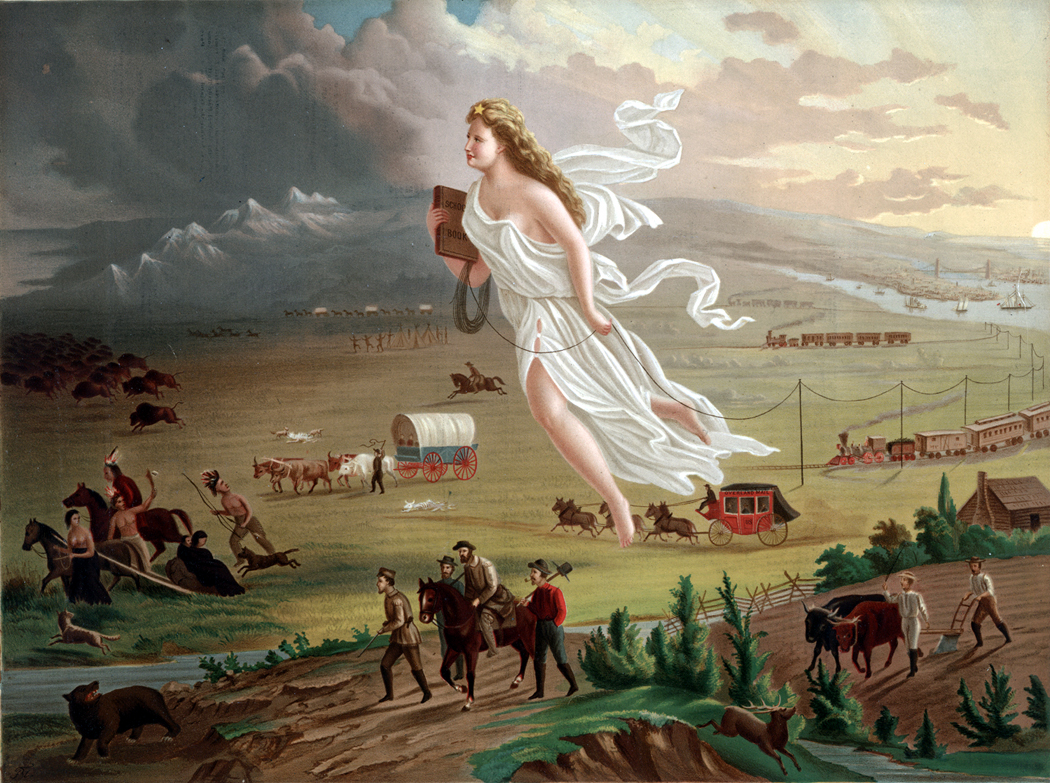
Of course, how could it be otherwise with the Rocky Mountains, the Grand Canyon and the Great Plains? Our very landscape calls out for grandiosity and grandiloquence. Over the top is America’s starting line, and the next frontier is our constant goal.

OH, AND AMERICANS LOVE LISTS:

Most-American Americans

John_Wayne - overland stage raidersJohn Wayne: Love him or hate him, we can’t think of him as merely an actor. He has become an icon, the movie roles and the man bound into one, indivisible: the lone, laconic hero, man of action rather than words, graceful and bullying in turns.

4 more:

Louis Armstrong: American as soul.

Eleanor Roosevelt: American as do-gooder.

Babe Ruth: American as appetite.

Thomas Edison: American as inventor.

Most American Movies godfather

The Godfather Saga, Francis Ford Coppola, 1977: The conflated version of the first two Godfather films tells the immigrant experience writ large: family, business, love, loyalty, betrayal and the move west, told with the force and mythology of opera.

4 more:

The Man Who Shot Liberty Valance, John Ford, 1962: “When the legend becomes fact, print the legend.”

Star Wars, George Lucas, 1977: Good vs. evil supersized.

Gone With the Wind, David O. Selznick, 1939: History whitewashed.

Do the Right Thing, Spike Lee, 1989: Race will not go away.

American Contributions to global culture constitution go

The Constitution: Our “governmental instruction manual” has become a model for the world, and its first 10 amendments have become the guiding principles of many an emerging nation. It’s more than merely political, it’s at the center of our culture, and the one thing the world really does want from us.

4 more:

Jazz: From which all popular music ultimately derives.

Hollywood: America’s secret plan for world domination.

Technology: The physical evidence of the can-do spirit.

Coca-Cola: Las aguas negras del imperialismo.

Most American Novels

huck finn book coverHuckleberry Finn, Mark Twain: The Great American Novel, filled with everything, good and bad, about ourselves: race, individualism, anti-intellectualism, optimism, religion, social climbing, moneygrubbing and our comfortable informality.

4 more:

On the Road, Jack Kerouac: An essential national theme takes center stage.

Beloved, Toni Morrison: The evils of slavery haunt even the freed.

The Leatherstocking Tales, James Fenimore Cooper: The invention of John Wayne.

The Great Gatsby, F. Scott Fitzgerald: Money, glamour, celebrity and loss.

Most American Plays angels in america

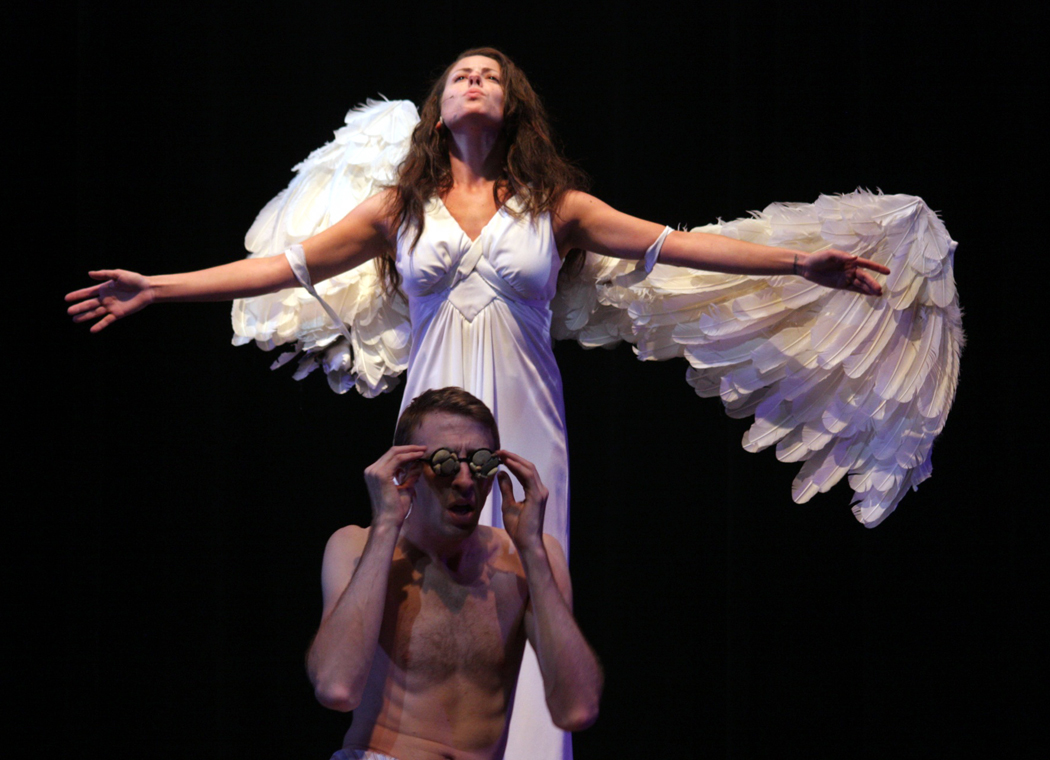
Angels in America, Tony Kushner: The hugely ambitious “Gay Fantasia on National Themes,” takes on more American themes than anything since Huck Finn: politics, sex, generations, religious revelation, Reaganism, bigotry and forgiveness; so expansive a single night can’t hold it.

4 more:

Death of a Salesman, Arthur Miller: The underside of the American dream.

Oklahoma!, Rodgers and Hammerstein: Gushy, American cornpone classic.

Streetcar Named Desire, Tennessee Williams: Torn T-shirts and sweaty thighs.

Fences, August Wilson: Black view from Pisgah.

American Classical-music compositions

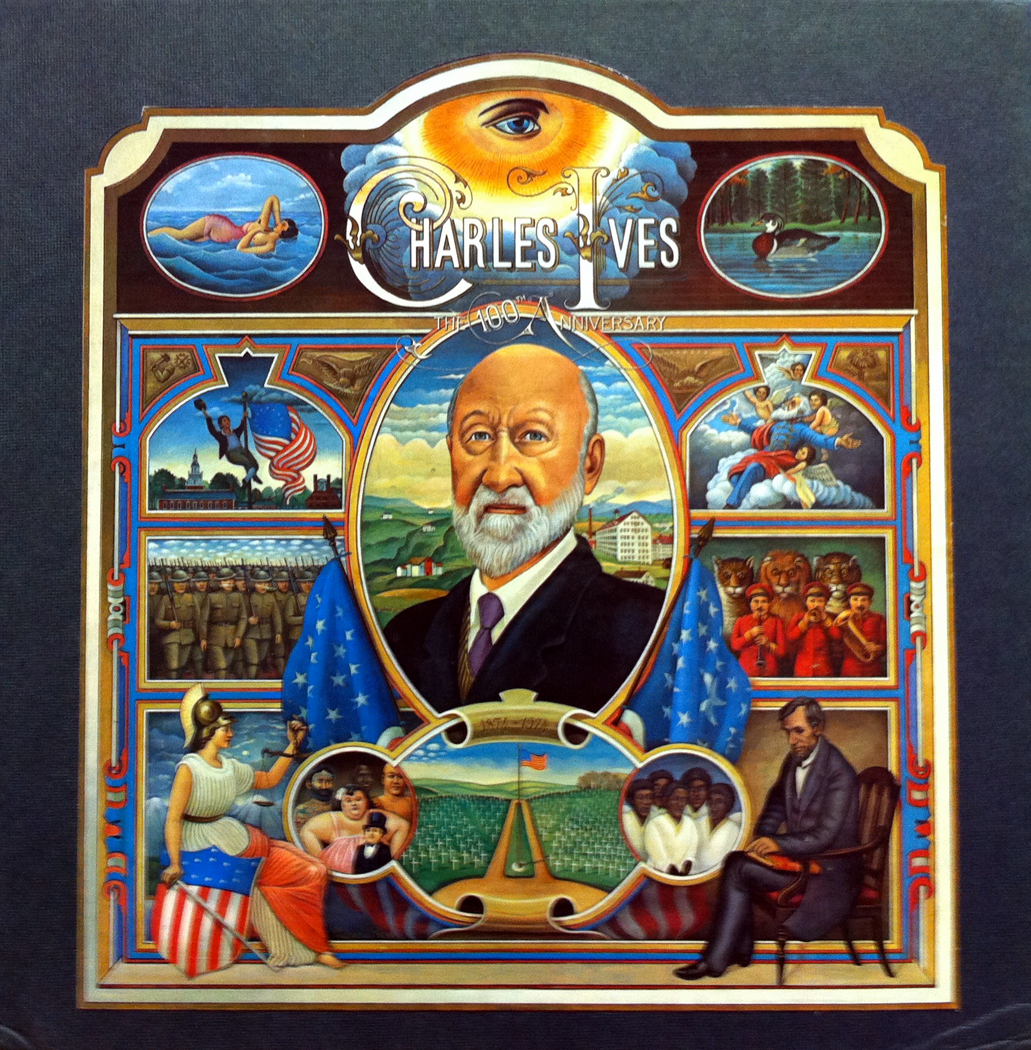
ives album coverThree Places in New England, Charles Ives: The crusty New England composer reinvents classical music to make it more American: loud, brash, nostalgic and patriotic at turns, and finds its subject in landscape and history.

4 more:

Rhapsody in Blue, George Gershwin: Jazz, Tin Pan Alley, Chopin and Carnegie Hall.

Appalachian Spring, Aaron Copland: Shaker hymn goes mainstream.

Symphony No. 3, Roy Harris: The type of the American symphony.

New World Symphony, Antonin Dvorak: Is the Most American Symphony written by a Czech?

American Architecture

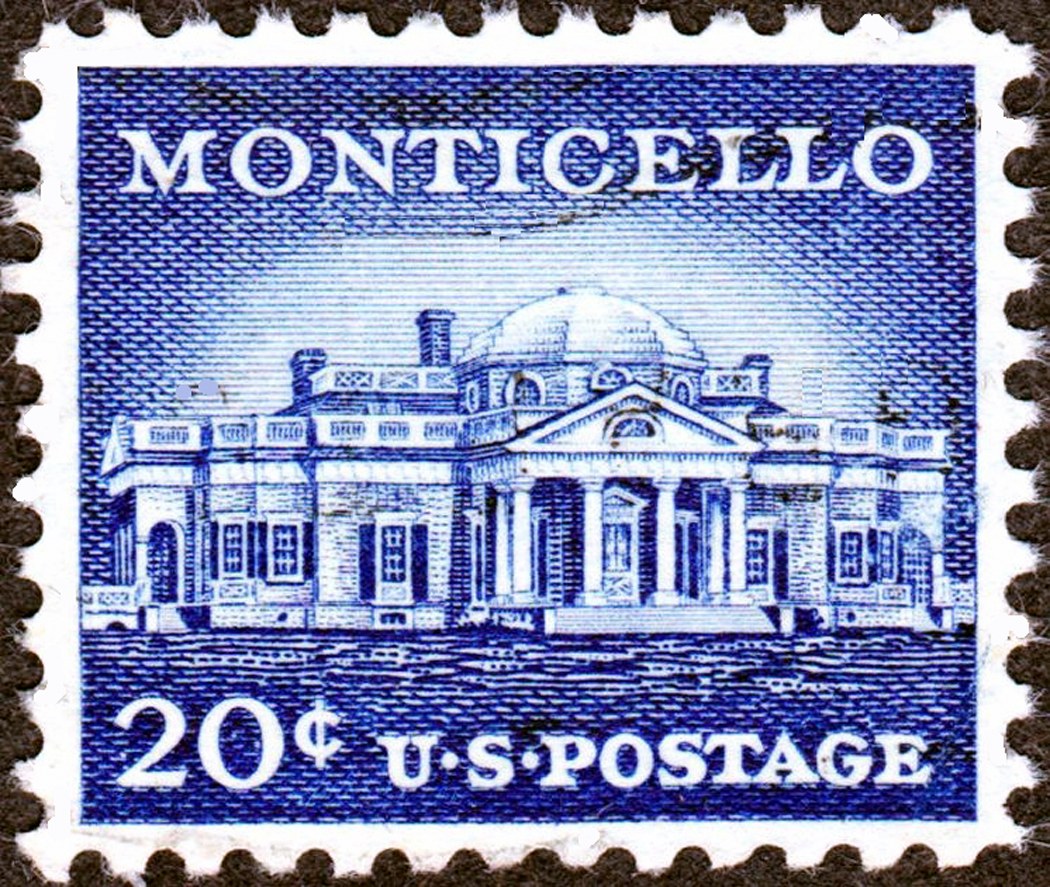
monticello stampMonticello, Thomas Jefferson: Just as equivocal as its owner and designer, this icon from the back of the common nickel is both paean to Europe’s classical past and the American’s love of invention, gimmickry and nature: Palladian windows and a moose head.

4 more:

Chrysler Building: American industrial dynamism with grace.

Sleeping Beauty Castle at Disneyland: Architecture as play-pretend.

Fenway Park: So cranky we actually love it.

Falling Water, Frank Lloyd Wright: Built over a waterfall like a diving board.

American Poems

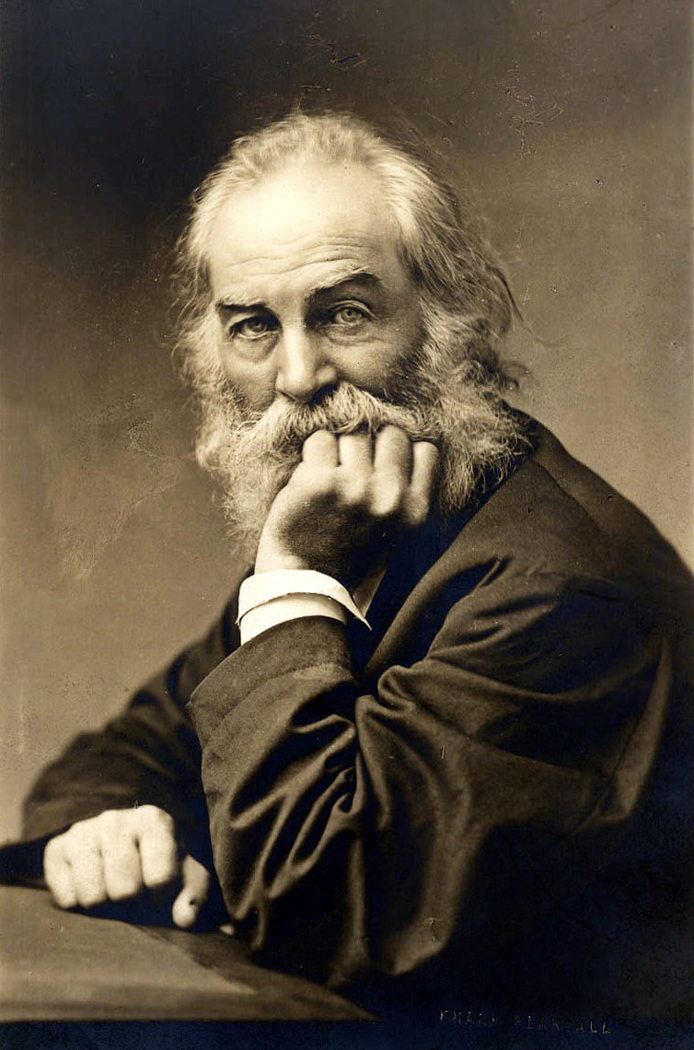
Whitman at 50Song of Myself, Walt Whitman: The “good gray poet” could not have arisen anywhere else; he is completely American, from his deification of democracy to his catalogs of diversity to his “I sound my barbaric yawp over the roofs of the world.”

4 more:

Song of Hiawatha, Henry Wadsworth Longfellow: Closest thing we have to a national epic poem.

Poems, Emily Dickenson: Nothing more American than her quirky New England eccentricity.

Howl, Allen Ginsberg: “Visions! omens! hallucinations! miracles! ecstasies! gone down the American river!”

Mending Wall, Robert Frost: “Good fences make good neighbors.”

American Visual arts

American gothicAmerican Gothic, Grant Wood: This iconic painting is more enigmatic than the Mona Lisa: encomium of hardcore American values or satire of Midwestern provincialism? Conservative or avant-garde? He’s not telling.

4 more:

Watson and the Shark, John Singleton Copley: Art ripped from the headlines, circa 1777.

Marilyn Monroe multiple, Andy Warhol: If one is good, a dozen must be better.

Dogs Playing Poker series, Cassius Marcellus Coolidge: Now, that’s OTT!

Freedom From Want, Norman Rockwell: Turkey, potatoes and lots of corn.

American Popular music

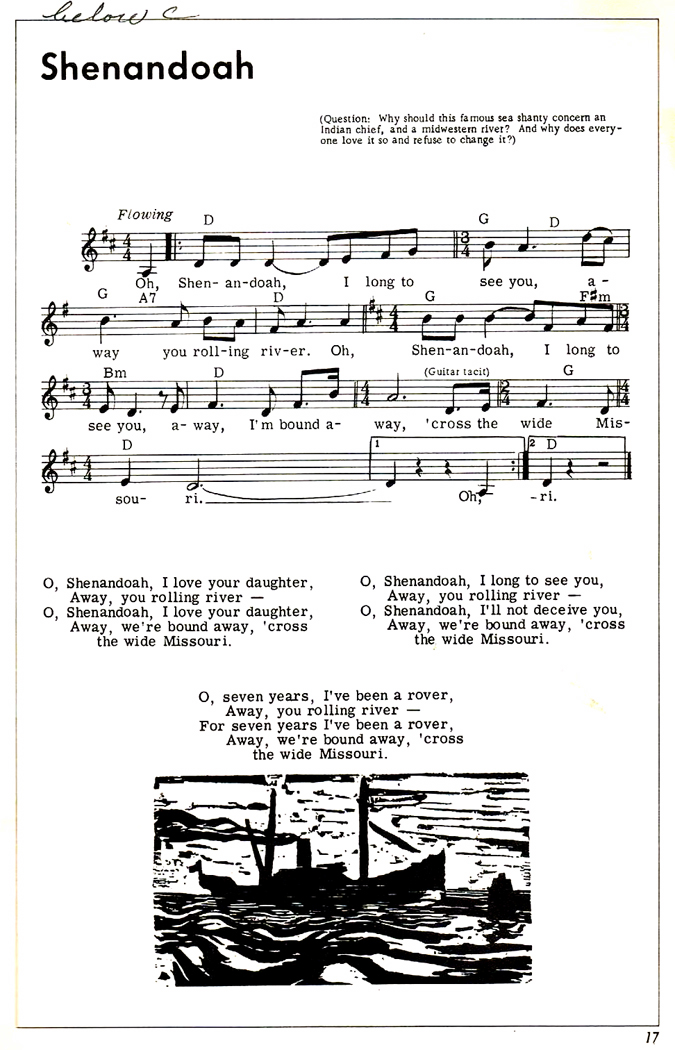
shenandoahShenandoah: A folk song of undetermined origin, this is the quintessential song about migration and loss; with its odd strophic form and 19th-century sentiment, it borrows elements from Irish shanties and African-American blues.

4 more:

One O’Clock Jump: Count Basie and swing.

Born to Run: Rebels on wheels, a la the Boss.

Hound Dog: Elvis frees America all over again.

Swing Low, Sweet Chariot: The suffering of a people, caught in the throat.