Archive

Tag Archives: words

I was an English major and I’m married to an English major and it’s hard being an English major and only getting harder. An English major feels genuine pain hearing the language abused, mal-used, corrupted and perverted. 

I’m not talking here about outdated grammar rules and a fussy sort of prisspot pedantry. As a matter for fact, one of the most persistent pains a true English major suffers is such misplaced censure, especially when interrupting a casual speaker to let them know that “them” is plural and “speaker” is singular. In my book, this is merely rude. A caboose preposition is nothing to lose sleep over. 

No, what I’m writing about here is are things that are genuinely ugly or purposely unclear, or overly trendy, to the point of losing all meaning. You know — politics. That and corporate language, or management speech — which I call “Manglish” — is a great corrupter of speech. 

“We have assessed the unprecedented market shifts and have decided to pivot this company’s new normal to a deep-dive into a robust holistic approach to our core competency, circling back to a recalibrated synergy amid human capital in solidarity with unprecedented times.”

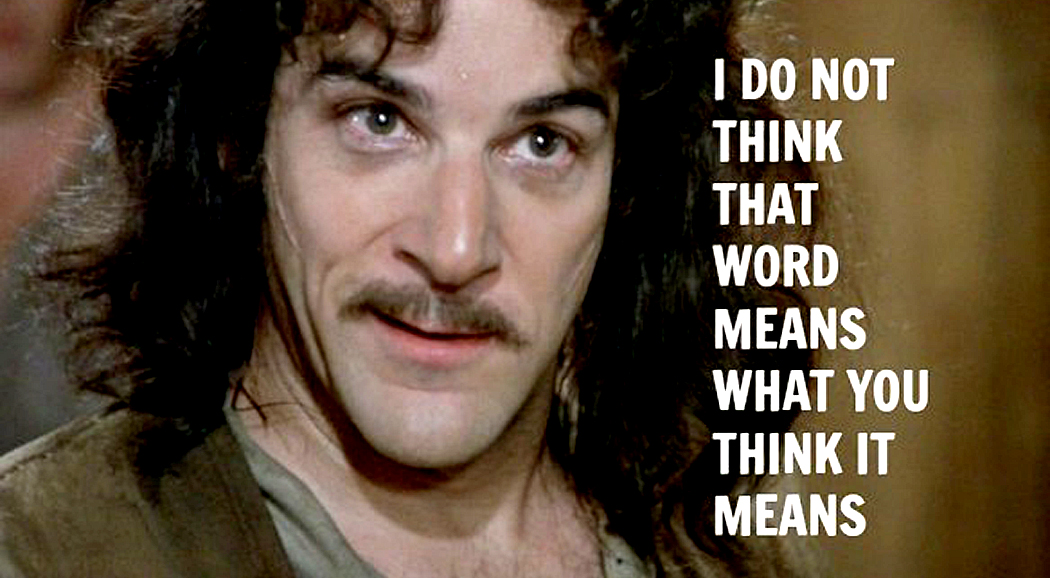
Committees try to make language sound profound and wind up writing piffle. I’m sure it was a committee that agreed in Iredell County, N.C., to make the county slogan, “Crossroads for the future.” I do not think that word means what you think it means. 
I wrote for a daily newspaper and language was my bread and butter, but the higher you go up the corporate ladder, the worse your words become. I remember the day they posted a new “mission statement” on every other column in the office, filled with buzz-word verbiage that didn’t actually mean anything. I looked at my colleague and said, “If I wrote like that, I’d be out of a job.”

But it isn’t just Manglish. Ordinary people are becoming quite lax about words and meanings. Too often, if it sounds vaguely right, it must be so. And you get “For all intensive purposes,” “It’s a doggy-dog world,” being on “tender hooks,” or “no need to get your dandruff up.”

“I’ve seen ‘viscous attack’ too many times recently,” my wife says. “It gives me an interior pain like a gall bladder attack.” 

And the online world is full of shortcuts, some of which are quite clever, but most of which are just barbarous. An essay about digital usage is a whole nother thing. Not room here to dive in. 

But, there is a world of alternative usage that is not standard English, that any real English major will welcome as adding richness to the mother tongue. Regionalisms, for instance. Appalachian dialect: “I’m fixin’ to go to the store;”— actually, that is “stoe,” rhymes with “toe” —  “I belong to have a duck;” “I have drank my share of Co-Cola.”

And Southern English has served to solve the historical problem of having lost the distinction between the singular “thee,” and the plural “you,” with the plural “you all,” or “y’all.” Although, more and more “y’all” is now being used also for the singular, and so is becoming replaced with “all y’all.” Keep up, folks. 

Then, there’s African-American English, which has enriched the American tongue immensely, as has Yiddish: “Shtick,” “chutzpah,” “klutz,” “schmooze,” “tchotchke.”

Regionalisms and borrowings are like idioms. Sometimes they don’t really make sense, but they fall comfortably on the tongue. “Who’s there?” “It’s me.” Grammatically, it would be proper to say “It is I,” but no one not a pedant would ever say such a thing. The ear is a better arbiter than a rulebook. 

George Orwell ended his list of rules for writing with the most important: “Break any of these rules sooner than say anything outright barbarous.”

English is a happily promiscuous tongue and so much of the richness of the language comes from borrowings. But there are still other problems: bad usage, misuse of homonyms, loss of distinctions. The English major’s ears sting with each onslaught. 

What causes our ears to burn falls into three broad categories. Things that are just wrong; things that are changing; and things that offend taste. Each is likely to set off an alarm ping in our sensitive English major brains. 
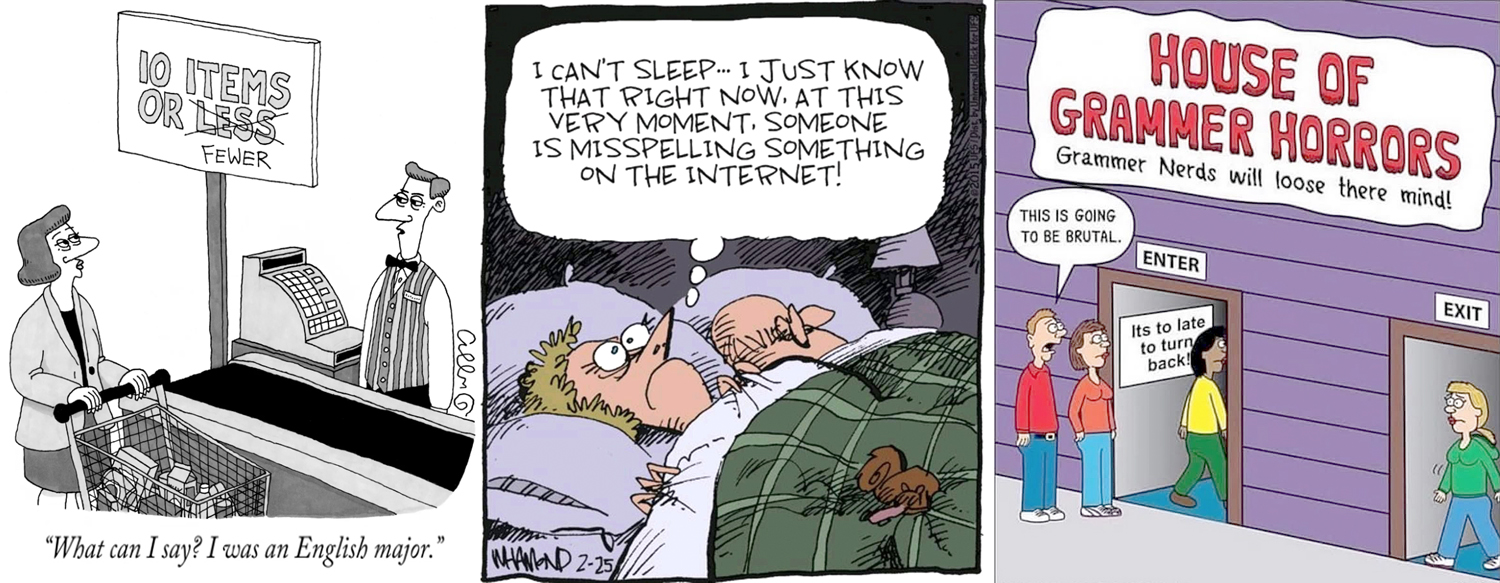
Every time I go to the grocery store I am hit with “10 items or less.” Few people even notice, but the English major notices; we don’t like it. “Comprised of” is a barbarism. “Comprises” includes all of a certain class, not some items in a list of choices. I feel slapped on the cheek every time I come across it mal-used. 

And homonyms: a king’s “rein,” or a book “sited” by an article, or a school “principle” being fired. It happens all the time. It is endemic online. “Their,” “they’re,” “there” — do you know the difference? “You’re,” “your?” Most young’uns IM-ing on their iPhones don’t seem to care. 

And fine distinctions of usage: I am always bothered when I see a murderer get “hung” in an old Western, when we know he was “hanged.” 

Again, most Americans hardly even notice such things. They all get by just fine not caring about the distinction between “e.g.” and “i.e.” In fact, they can get all sniffy about it. 

I know a former medical transcriptionist who typed up a doctor’s notes each day, and would correct his grammar and vocabulary. She corrected the man’s “We will keep you appraised of the outcome,” with “apprised,” and each time, he would “correct” that back to “appraised.” Eventually, she gave up on that one. 

English majors know the difference between “imply” and “infer,” and it causes a hiccup when they are mixed up. “Disinterested” mean having no stake in the outcome; “uninterested” means you cannot be arsed. They are not interchangeable. 

We EMs cringe when we hear “enormity” being used to mean “big,” when it actually means a “great evil.” And “unique” should remain unique, unqualifiable. Of course, “literally” is used figuratively literally all the time.  Something is not “ironic” simply because it is coincidental. 

I hear the phrase “begging the question” almost every day, and always misused. It refers to circular reasoning, not to “raising the question.” I hold my ears and yell “Nya-nya-nya” until it is over. 

Some things, which used to be wrong, are slowly being folded into the language quietly, and our EM ears may still jump at hearing them. “Can” and “may” used to mean distinct things, but that difference was lost at least 100 years ago. We can give that one up. And “hopefully” used to be a pariah word, but we have to admit, it serves a grammatical function and we have to let it in, however grudgingly. 

My wife is particularly sensitive to the non-word, “alot.” She absolutely hates it. I understand, although I recognize a need for it. “A lot” is a noun, and sometimes we use it as an adjective: “I like chocolate a lot.” Perhaps “alot” will eventually become an adjective. Not for Anne. 

People are different and have differing talents. We seem to be born with them. Some people grasp mathematics in a way a humanities student will never be able to match. Some have artistic or musical talent. We can all learn to play the piano, but only certain people can squeeze actual music out of the notes. 
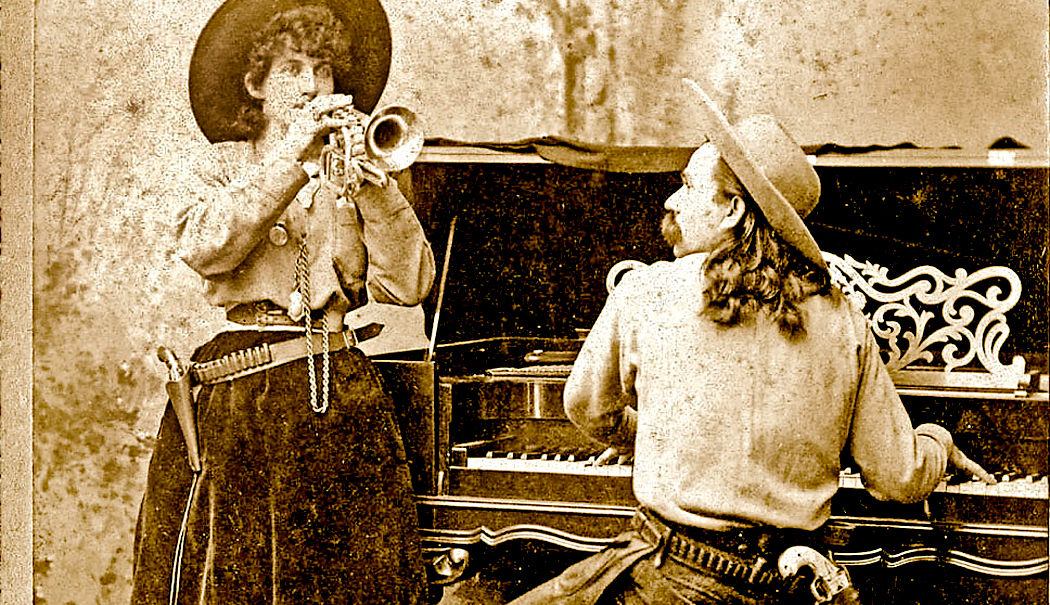
And each of us can learn our native tongue, but some of us were born with a part of our brains attuned to linguistic subtlety. We soaked up vocabulary in grade school; we won spelling bees; we wrote better essays; we cringe at the coarseness of political speech. Language for the born English major is a scintillating art, with nuance and emotion, shadings and flavors. We savor it: It is not merely functional. 

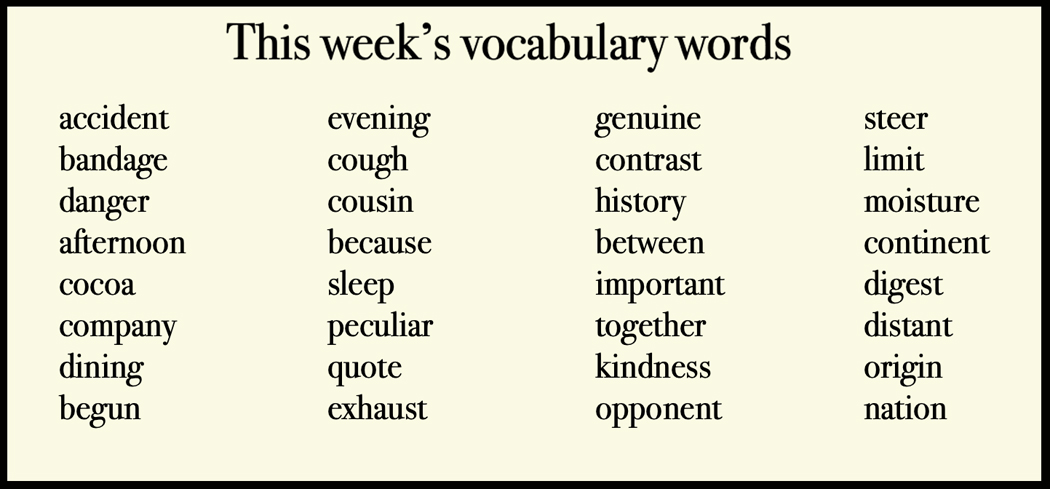
(I loved my vocabulary lessons in grade school, and when we were asked to write sentences using that week’s new words, I tried to use them all in a single sentence. People who show off like that often become writers.)
Just as my piano playing, even when I learned whole movements of Beethoven sonatas, was always the equivalent of speaking English as a second language, my best friend, Sandro, could sit at a piano and every key was fluent, natural, and expressive. It was a joy to hear him play; a trial for me just to hit the right notes. 

I am saying that those of us who gravitate to speech, writing, and language in general, have something akin to that sort of talent. It is inherent, and it can be a curse. Bad language has the same effect on our ear as a wrong note on a piano. 

We can feel the clunkiness of poorly expressed thoughts, even if they are grammatical. Graceful language is better. And so, we can rankle at awkward expressions.
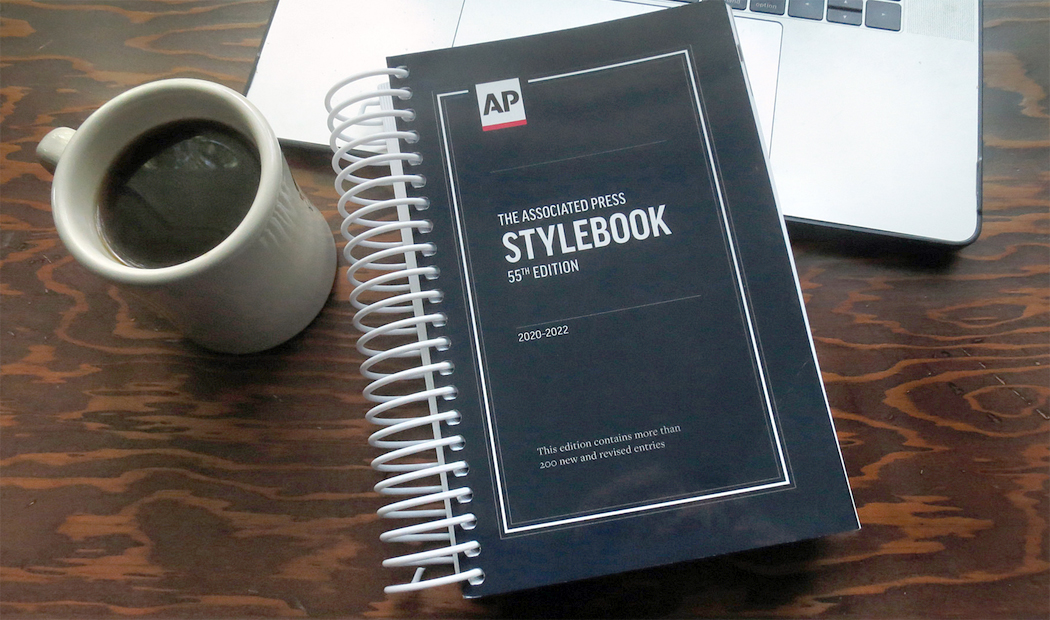
I have a particular issue, which I share with most aging journalists, which is that I had AP style drummed into me — that is, the dicta of the Associated Press Stylebook, that coil-bound dictator of spelling, grammar and usage. One understands that AP style was never meant to be an ultimate arbiter of language, but rather a means of maintaining consistency of style in a newspaper, so that, for instance, on Page 1 we didn’t have a “gray” car and on Page 3 one that was “grey.” 

And so, the rules I lived by meant that there was no such thing as 12 p.m. Is that noon or is that midnight? Noon was neither a.m. nor p.m. Same for midnight. They had their own descriptors. “Street” might be abbreviated in an address, but never “road.” Why? I never knew, but in my first week on the copy desk I had it beaten into me when I goofed. 

“Back yard” was two words, but one word as an adjective, “backyard patio.” Always. “Air bag,” two words; “moviegoer, one word. “Last” and “past” mean different things, so, not “last week,” unless Armageddon is nigh, but “this past week.” Picky, picky. 

I had to learn all the entries in the stylebook. The 55th edition of the AP Stylebook is 618 pages. And this current one differs from the one I had back in 1988; some things have changed. Back then, the hot pepper was a “chilli pepper,” and the Southwestern stew was “chili.” I lived and worked in Phoenix, Ariz., and we all understood this would get us laughed off the street, and so exceptions were made: yes, it’s a chile. 

Here I am, nearly 40 years later, and retired for the past 12 years, and I still tend to follow AP style in this blog, with some few exceptions I choose out of rebellion. But I still italicize formal titles of books, music and art, while not italicizing chapter names or symphony numbers, per AP style. I still spell out “r-o-a-d.” It’s a hard habit to break. 
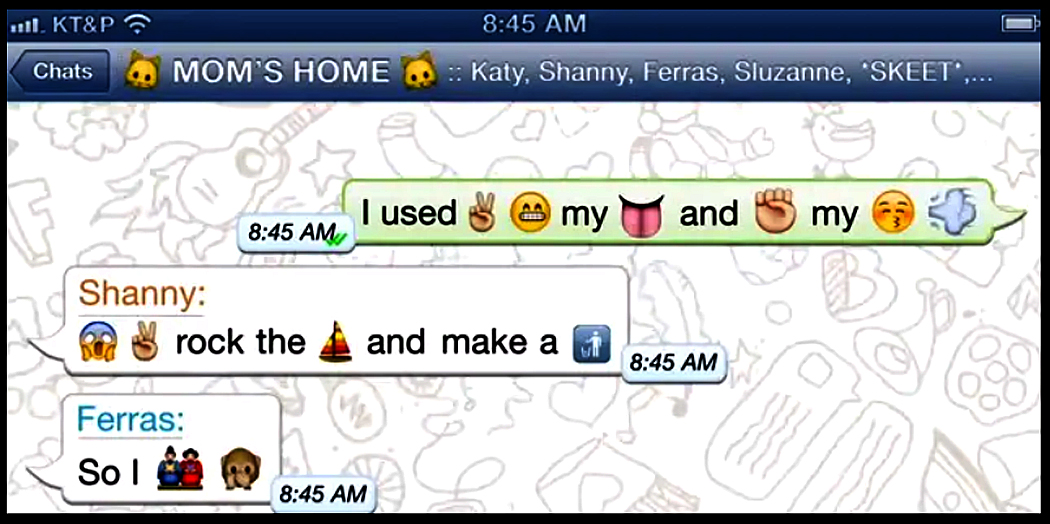
The online world seems to care little for the niceties of English. We are even tending back to hieroglyphs, where emojis or acronyms take the place of words and phrases. LMAO, and as a card-carrying alte kaker, I often have to Google these alphabet agglutinations just to know what my granddaughters are e-mailing me. Their seam to be new 1s each wk. 

And don’t get me started on punctuation.
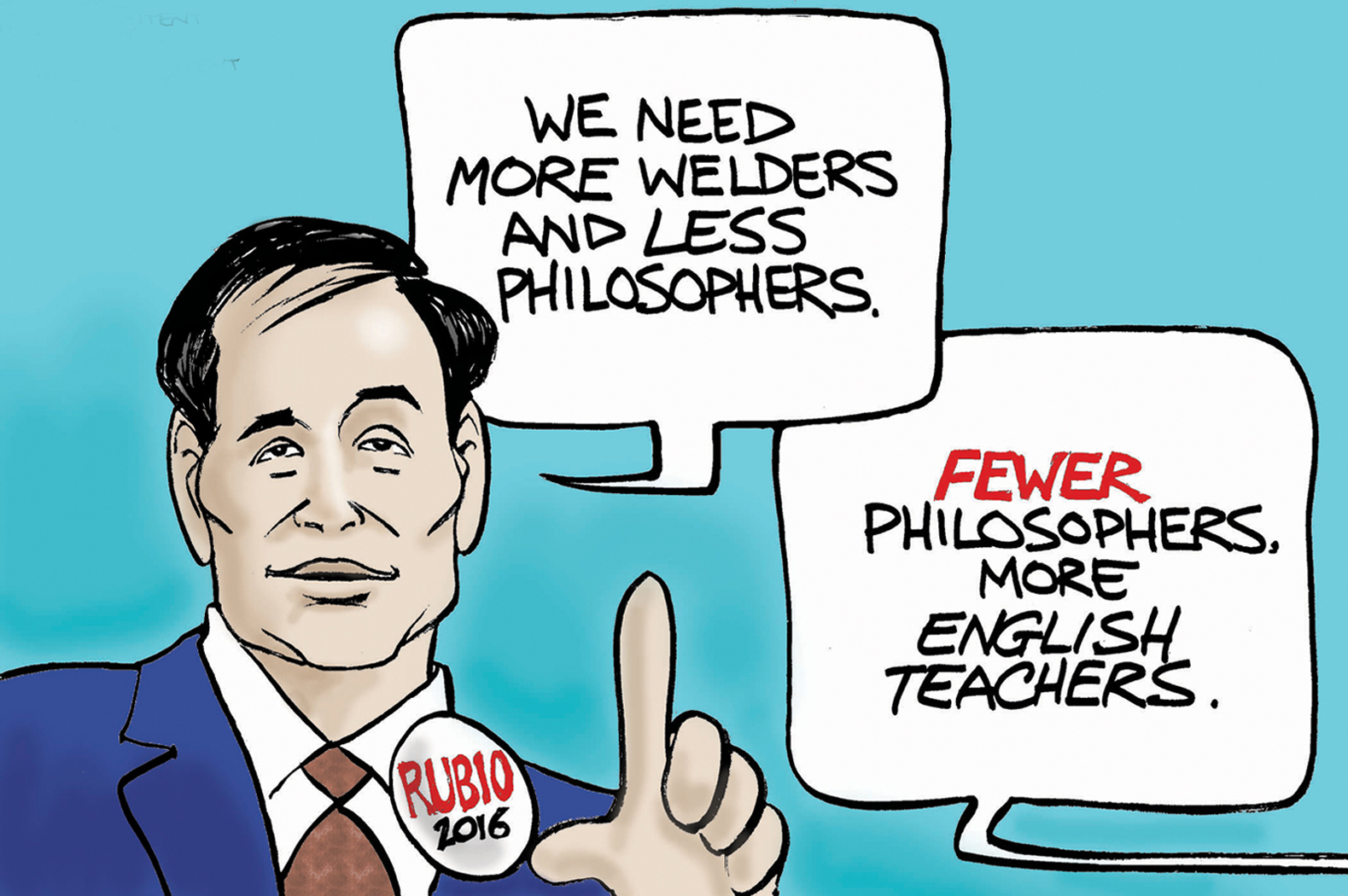
Over the past dozen years, since my retirement, I have written and posted some 730 blog entries. But I have started many more than that. Some just get forgotten when something more urgent appears; some end short because nothing longer needs to be said. Some just led nowhere. Others began as lists, but ended as lists, unfilled by full sentences. And still more still wait to be written. 

The odd thing, to me, is that there is always something new to write about. With 75 years of life packed into this aging piece of meat, there are endless stories, bits, adventures, ideas, experiences, disappointments and discoveries to draw upon. The well keeps refilling. 

But here are a few fragments that never filled out beyond their early inspiration. Maybe I will get around to it, sometime. 

What is it that women see in men? Because I am a man, I know what men see in women, but I have a hard time reversing the equation. 

I am not here talking of sex or the ardor of the loins — understanding is not required for that; it is simple, direct action — but the desire of women to share company with men. What is the reward for that? Women are so much more interesting, and interested in such a variety of vital issues. Men seem interested only in sports and politics, neither of which carry much import in the lives we live. As I used to say, “Politics answers no question worth asking.” 

____________

2. I was a writer for many years, making my living from putting words against words, hoping to find the best way to express something I hoped would be genuine. 

Recently, my old employer, Gannett, made a new hire, and announced it in such a clot of management-buzz that I got a bad case of hiccups. Newspapers used to have editors, now, with middle management bloated beyond belief, while laying off reporters, photographers and copy editors, what they have is a “Chief Content Officer.” 

The announcement came with a gnat-swarm of buzz words, which may mean something to other management types, but not anything penetrable by actual human beings:

“ ‘We are thrilled to welcome Kristin to Team Gannett to champion innovative storytelling opportunities and develop strategic content initiatives to expand our audience and drive growth,’ Reed said in a Monday news release.”

“Strategic content initiatives?” You would think that those people who run a newspaper would have some sensitivity to language. If I had written prose like that, I would have been out of a job. 

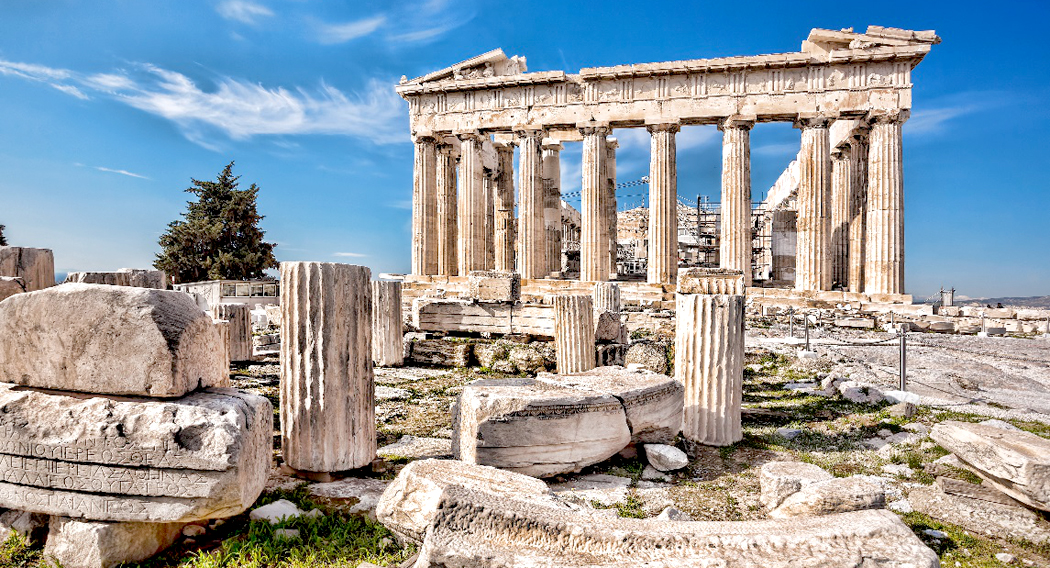
3. The glory that was Greece and the grandeur that was Rome. Or maybe not so much. 

We owe a great deal to ancient Greece. At least, we pay lip service to our debt of democracy, philosophy, literature, science and not least, saving European culture from being overrun by that of Persia. But there are a host of words that describe the part of ancient Greece we would rather forget: Misogyny, xenophobia, pedophilia — come to us dressed in Greek etymology, and descend to us from Greek ideas and practice. We need to address some of the less attractive legacies of that Golden Age. 

Such as patriarchy, idealism, imperialism, colonialism, religious intolerance, cults, ethnocentrism, slavery. To say nothing of understanding sex as an exercise in dominance. And while we may think of Plato as the source of all philosophy, remember that he despised democracy and was an ardent believer in totalitarianism. 

____________

4. Columbus Day is a month away. I expect more anti-Columbus newspaper columns, art, a few tracts and manifestoes and perhaps a new opera. Much current art that tries to be political is really just polemical. To espouse any ideology is to strip life of its complexity. Yes, Columbus was a bad man and the evils he brought with him are real. But instead of preaching to us self-righteously, there are real problems to be discussed, such questions as, “What is in the nature of humans that causes territorial expansion, that causes them to make invisible the people they subjugate, that causes them to divide the world into Them and Us? Why does the boundary of ‘us’ expand and shrink periodically? Why is a world once headed in the direction of one-world nationhood, where the ‘tribe’ is humanity — why is that world now constricting so that nationhood is more tightly defined by blood, so that Serb kills Croat, Azerbaijani kills Armenian? The ethnic separatism that is emerging worldwide is, I believe, a source of exactly the same intolerance that the European West has for so many centuries visited on the rest of the world. Will it devolve to the point that Chiricahua despises Mescalero, or Venetian rises to kill Neopolitan? At what point does a coalition of interests grow from our recognition of our shared humanity?”

Questions such as these are avoided by nearly all political diatribes, whose authors prefer to point fingers and whine like grade-school tattle-tales. If a short perusal of the history of the world teaches us anything, it teaches us that war, inhumanity, violence, intolerance are universal. It isn’t only the Hebrews with their God-ordained genocide of Moabites and Amonites; it isn’t only the Pol Pot regime in Cambodia; it isn’t only Hitler killing Jews and homosexuals; it isn’t only Japan subjugating Manchuria; it isn’t only Custer at Sand Creek; it isn’t only the Hopi at Awatovi.

No one gets off the hook. Native Americans are no more righteous in this than anyone else, from Inca to Aztec to Lakota. If artists and writers chose to look a little closer, they could use Columbus as a metaphor for something richer, profounder, truer. They could have seen that Columbus was not sui generis, but rather representative of the species.

As it is, they came off sounding self-righteous. And no one self-righteous ever has much self-knowledge.

____________

5. Stasis is the enemy. Or rather, because stasis is utterly impossible, the idea of stasis is the enemy. It is the fatal stumbling block of every religion, political philosophy and marriage that has ever existed. Over and over, hundreds, thousands, millions of people die because someone promised them that if we only do things my way, everything will be forever hunky peachy. 

It is the lie behind the “original intent” argument espoused by some Supreme Court justices, and behind the infantile promises of politicians — most on the right, these days — that their policies will “finally” fix things and make them good forever. (In the past, it was the left and Marxism that promised a final end of historical change. It is not the sides one takes, but the phantom of permanence). 

The problem is that stasis is always temporary, which makes it not stasis. I.e., stasis is a pipe dream. 

____________

6. In America, “no” has become a dirty word. Americans like the positive attitude, the gung-ho approach to things. We feel actual moral disapproval of the word “no.” 

It can make your life easier and simpler. It can shake a load of guilt off your back. Although people talk of simplifying their lives, you can never simplify by doing something, you can simplify only by not doing something.  Just say no. It is the yang to “yes’s” yin, and the universe cannot function without both. 

“Yes” is kind of namby-pamby. “Yes” doesn’t want to hurt anyone’s feelings. “Yes” is go-along to get along. 

“No” is emphatic, direct, take-no-prisoners. “No” means no. Every change and improvement in life, every revolution begins with a “no.” 

In some way, every important historical development starts with somebody or some group saying no. Dissatisfaction, after all, is the great inspirer of humanity. If we were all duck happy all the time, nothing would ever get done.

7. I am 75 and am near death (Oh, I’m generally fine, but old and weak) and I think about non-being quite a lot, but not with fear, but a kind of objective interest in the whole idea of no longer hearing birds or feeling the breeze on my skin. Death seems to me a natural “rounding off” of a life and not something that I need to hold in my mouth like a tough crust of bread. 

I saw Carole take her last breath. I felt her turn instantly cool to my touch, like I was touching unfired clay. She ceased being. It was uncanny. My grief was incalculable — and it still is, although worn down — but it felt as inevitable or as natural as the coming of winter. I know the same awaits me — “To die — to sleep no more.” No dreams. Nothing. 

I didn’t sense a spirit or soul leaving her body, just her body ceasing to produce her being, like a light bulb blown out. We don’t ask a burnt-out lightbulb “where did the light go?” It ceases being generated. 

____________

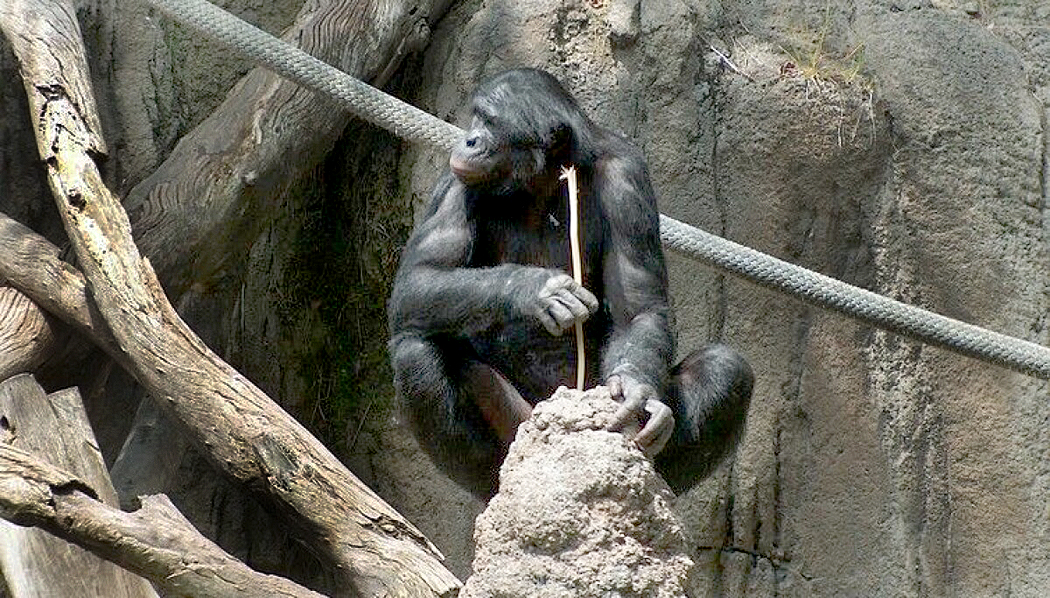
8. One of my problems with Rilke is that I have no use for categorizing angels and animals. Angels don’t exist — not even as metaphors for me — and I accept that I, as a human being, am an animal. I am not so fast to accept that no animals know they are going to die. We have no evidence for that assumption. Perhaps they do; perhaps they don’t. I suspect that some, such as porpoises or whales, may very well have some concept of death. I remember when we human beings were so sure that what separated us from the beasts was tool-making. Ah, but then we discovered how many other animals forge tools.

9. It has seemed to me that part of the German soul is to speak in general and categorical terms, in ideas, rather than in things. It leads to mistaking words for reality. Logic has its own logic, but it is not the logic of the world. (Whole rafts of philosophy, including my hated Plato, only seem to work in words. You can prove with logic that Achilles can never catch the tortoise, but that ain’t how it works in reality.)

But I fear that they are much more about language than about experience. And that is my problem in a nutshell. I made my living with language, and I love words to distraction, but the older I get the more I am convinced that language is merely a parallel universe, with an order and meaning of its own, roughly mirroring the world, but never actually connecting, never touching the pulse of reality. I know, it’s all we have, but I still counsel wariness. 

10. “These fragments I have shored against my ruins.” Why write at all? It is a question I have wrestled with all my life. Do I have anything worth saying to be value to anyone else? Dr. Johnson said that “nobody but a blockhead ever wrote except for money.” Well, I’m a blockhead: I no longer get paid to string words together. But it doesn’t seem to come as a choice. Some may choose to write; I write with the same volition as I breathe. 

Early in my life, words were thin and sparse; it seemed as if there were a lack of hydrostatic pressure from within: I needed to fill myself first. But after living a certain time, the inside pressure grew and it had to come out. It became a fountain I could not stop if I had wanted to. And the well was constantly recharged. 

Now I am old, and travel becomes difficult, habits become settled, reading more and more becomes re-reading. In retirement I can no longer afford to attend concerts, plays and dance the way I used to. The incoming has slowed, and I suppose the outflow has dwindled in response, but the backpressure is still there. Hoping to cease not till death.

Translation is a funky thing. You can try to be literal and lose all the flavor, or you can try to find equivalent idiomatic expressions, or you can recast the whole thing, as if you were writing an original from a similar inspiration — your own words for a similar thought. 

And unless you are brought up bilingual so that you are completely comfortable in both languages, you will always be working from a disadvantage. You can work from crib notes, or take a literal translation and recast it. Many writers these days do something of the sort. Ezra Pound did not read Chinese, but that didn’t stop him from translating Chinese poetry. Scholars may quibble with the results (or laugh outright), but the versions Pound printed are good poetry, whether or not they are good translations. 

Would I rather read a poet’s regeneration or a scholar’s word-for-word? The answer is both. When it comes to poetry in languages I do not read, I’d rather have multiple versions to absorb and take in all the angles to arrive at something triangulated. 

There are languages I have some familiarity with and so, I can usually read Pablo Neruda straight from the trough. And in French or German, I have some dealings with the originals, although I do not speak the languages with anything like fluency. I can read a French newspaper, but cannot always make out the spoken version. (Luckily, when in France, I have learned you don’t really need the fineries of grammar. You can speak French pretty usefully even with no verbs at all. You go to the patisserie and when it is your turn, you just say, “Deux croissants, s’il vous plait,” and you get what you want. No one before you on line has used a verb, either.)

And so, I have come to translate some poetry for myself, from German, from French or Spanish (even an occasional Latin poem), and mostly in self-defense. 

I say “self-defense” because most of the translations I’ve been subjected to sound like musty old Victorian twaddle. The translators seem to love archaic word forms and odd word orders — as if written by Yoda they were. 

Such things offend my ear. 

It’s not that I want them to be prose, but the secret of poetry is in the metaphor and the clever turn of phrase, not in the conventional language of old poetry forms. Take the first two lines of Nietzsche’s Zarathustra’s Rundgesang. In German:

O Mensch! Gib acht! Was spricht die tiefe Mitternacht?

Which could be translated, word for word, as:

“O men! Give attention! What says the deep midnight?”

Traditional translations usually go something like:

“O Man! Take heed! What saith deep midnight’s voice indeed?”

or:

“O Man! Attend! What does deep midnight’s voice contend?”

There is the problem with the original. “O Man!” is poetic cliche. It has to go. I suppose you could turn it into idiomatic English as “Hey, y’all, listen up,” but that would be a crime in a different direction. 

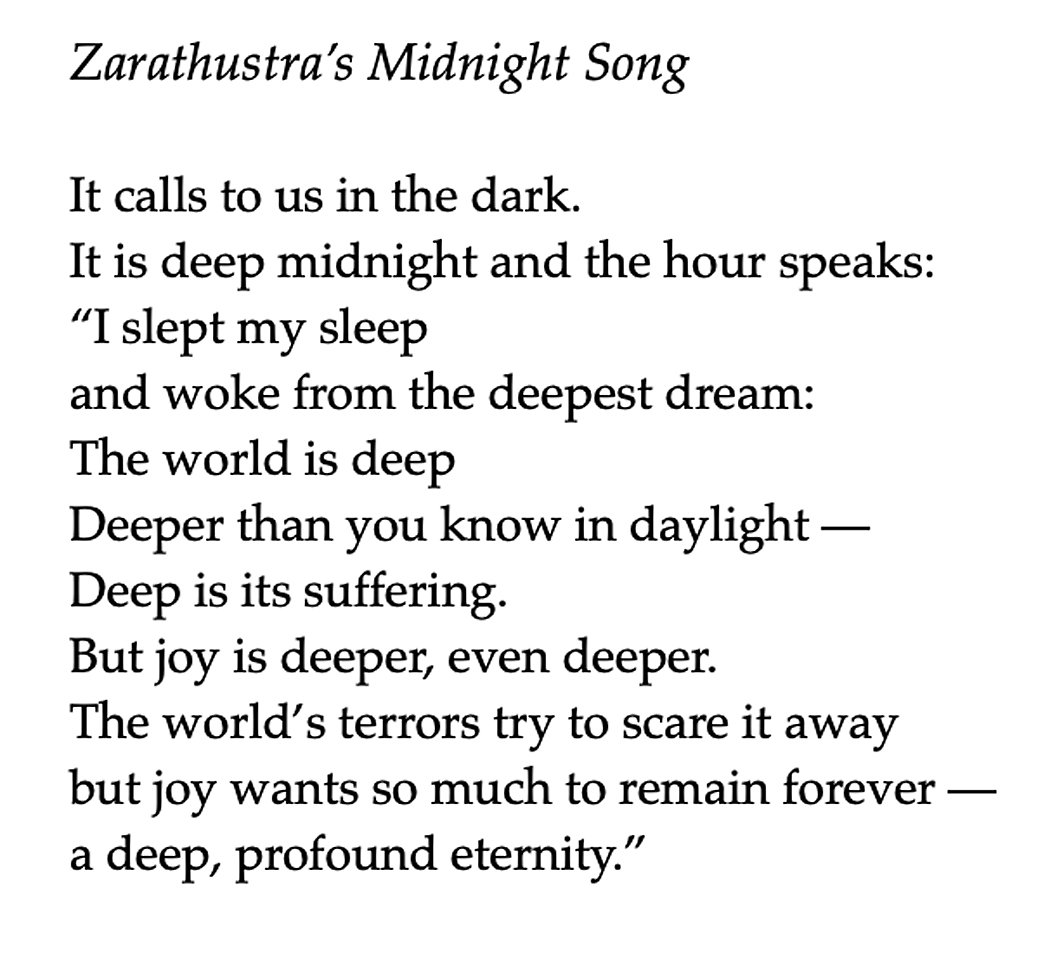
If I were to translate this bit, I would just leave off the unnecessary parts and rewrite it as: “It calls to us in the dark. It is deep midnight and the hour speaks:” This sets up a light/dark dichotomy that pays off later in the piece. 

Too many translations, especially of classic Greek or Latin literature are written in this fusty, worn out poeticized and conventional twaddle. It’s amazing anyone waded through the Iliad in the 19th century. Homer’s actual style was immediate and direct. 

Imagine if Robert Frost had written: “Two paths in twain divided were; traverse we may but one.” Who would now bother with it? It is Circe turning men into pigs. 

In other words, I have no issue with completely recasting the originals to make modern, idiomatic sense in a language that I hope remains poetic but without the equipage of outworn convention. 

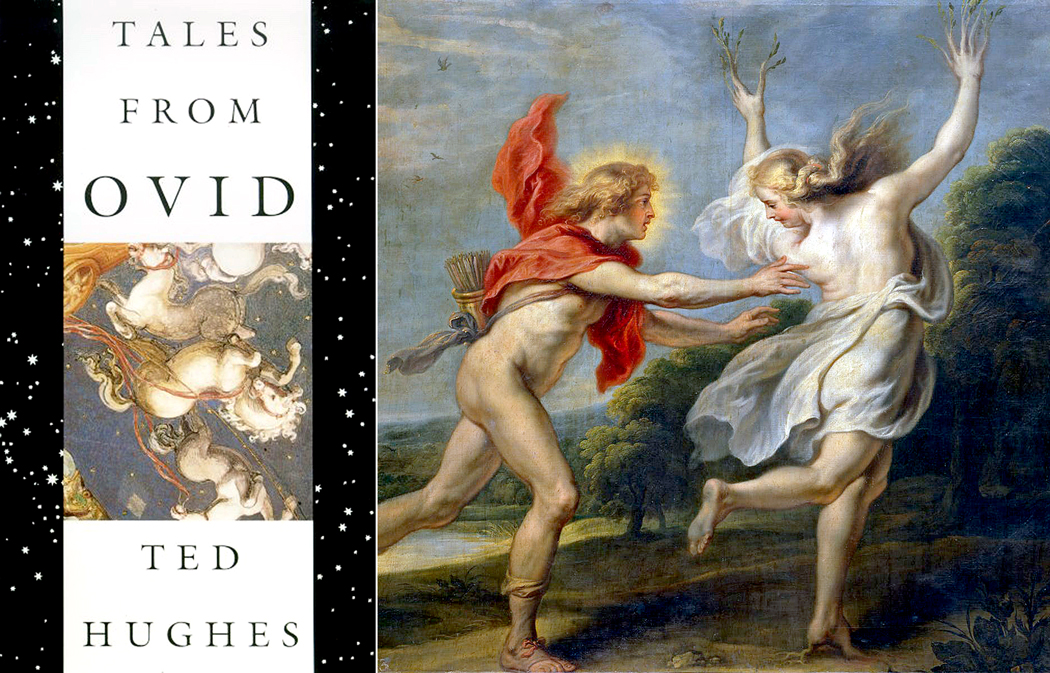
A stunning example of this approach is Ted Hughes’ Tales from Ovid, beautiful translations of several bits from The Metamorphoses. In Hughes’ style the stories move quickly and smartly and you turn the pages as in a best-seller. One only wishes Hughes had completed the whole thing, instead of mere sniglets. 

In this way, I have translated (or rewritten, if you hesitate) a good bit of German lieder. So much of it is hyperventilated Romantic sludge, which speaks to the early 19th Century of a generation that was weaned on Young Werther, and undoubtedly expressed the genuine feelings of those who lived through it, but now seem unrealistic and kitschy. 

Yet, there are real things being said and expressed in the poetry of Müller, Hölderlein or Eichendorff. It comes through like a buzz saw in the music of Schubert or Schumann, where the music has an authenticity that the verse sometimes lacks. 

I have tackled whole swaths of lieder verse, including a translation of all of the Winterreise. I found I could be a bit more faithful near the beginning of the cycle, but the deeper in, the more I had to rethink the verse. 

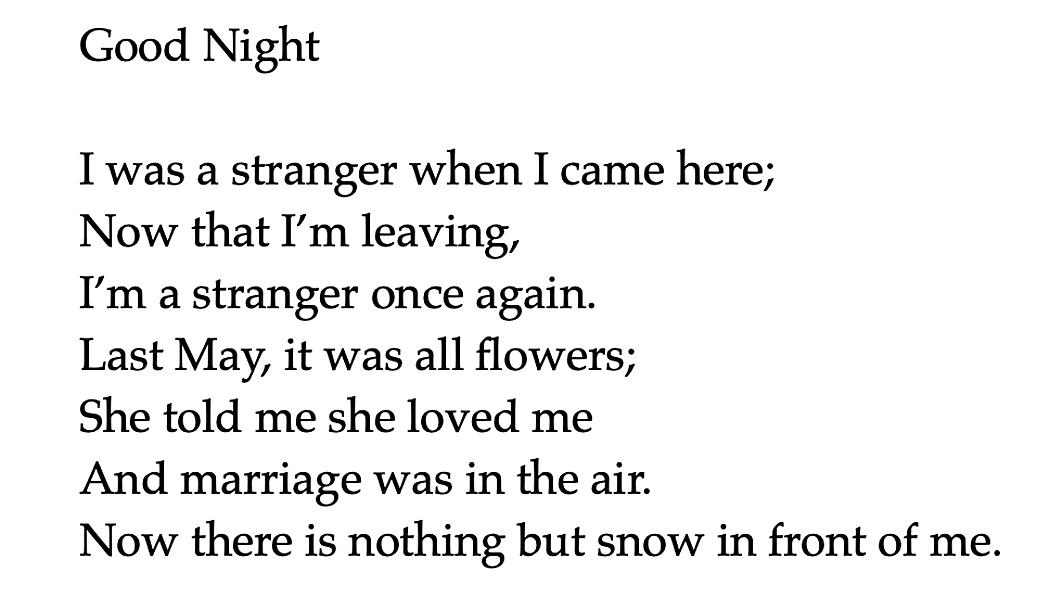
Take the first song, Gute Nacht. The text takes care of itself. A simple translation of the first stanza would be:

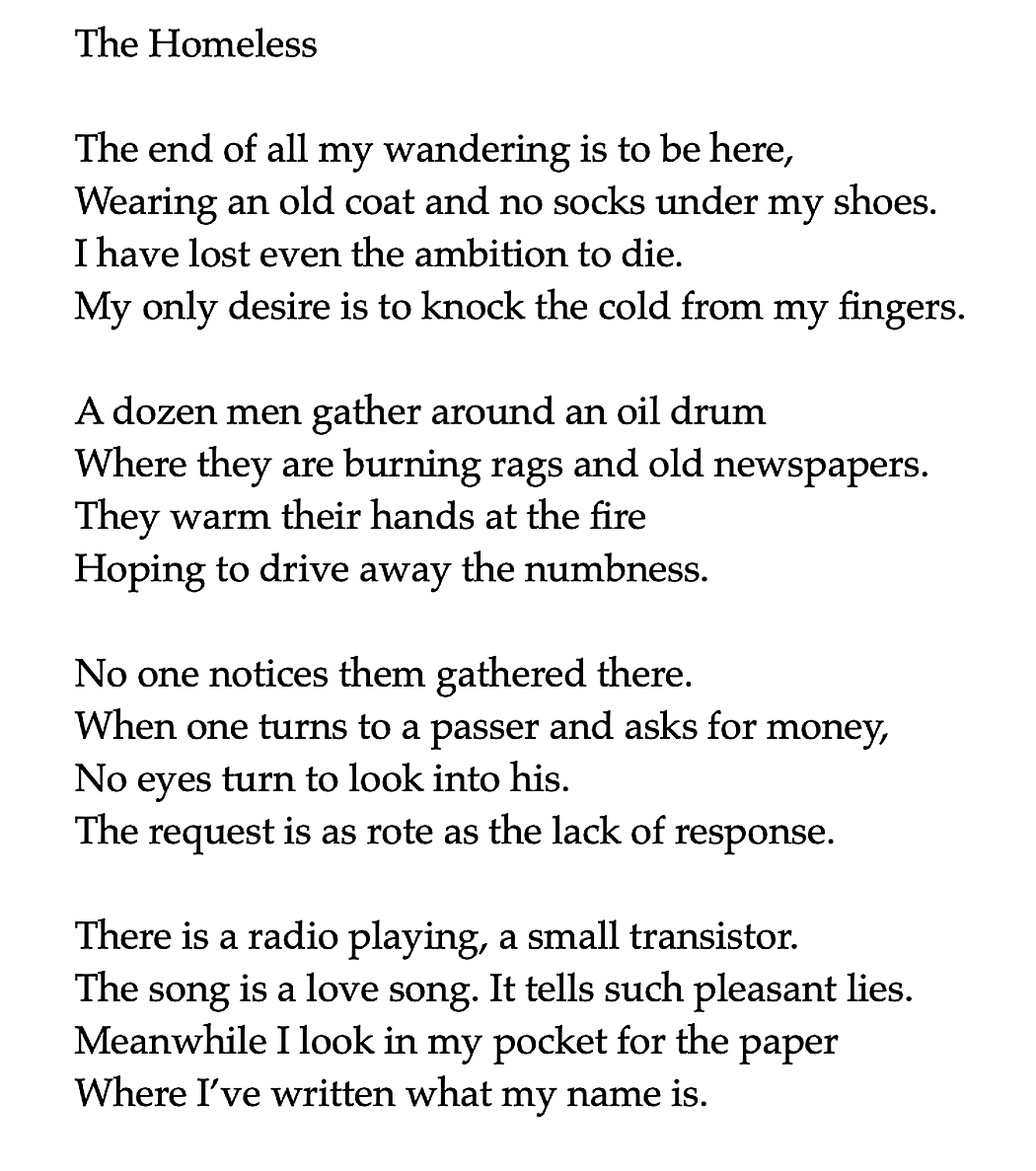
But, 24 songs later, the text of Der Leiermann, about a hurdy-gurdy man, is too bland without the devastating music Schubert provides (one of the most desolate and despairing bits of music ever penned), and so I’ve written my variation on it, to stand without the music:

Just this week, I started another project, translating four of the texts that Gustav Mahler set. I have arranged them into a set that belongs together, in four “movements,” rather like a symphony, meant to be taken as a single whole. 

I am offering them here as my apology for the type of translation I most appreciate — at least when others my better do it. 

The main benefit of doing such work (since I have no plans or hope ever to publish my translations — they are simply for the pleasure and knowledge I get from them — is that they force me to pay attention to the poetry and to the words. 

We can read through poetry much as we may distractedly hum a favorite tune. But good poetry offers much more, and forcing yourself to go through it word by word, can help you uncover much more. Translating forces concentration. 

And so, I read the German for its sound, parse individual words for their various meanings (for no word in any language has but one simple meaning), read various translations to compare how others have understood the words, reassemble them in my own English and then revise, over and over, until I get something that sounds good to me and — more importantly — makes sense. 

I have to admit that I generally like my own translations better than the ones packaged with the CD as the libretti or lyrics. But that is likely because they match my own particular esthetic — they are tailor made for my ear. Your ear may resonate to a different frequency. 

And so, the first “movement” of my Mahler word-symphony comes from the second of Mahler’s Songs of a Wayfarer, words originally written by the composer himself. The main melody of the song became the first theme of his Symphony No. 1. 

The second movement is Mahler’s own crib of Zarathustra’s Rundgesang, or “Zarathustra’s Midnight Song,” as the composer has it. All four of the texts I have translated focus on the twin but opposite facts that life is suffering but also it is joy. 

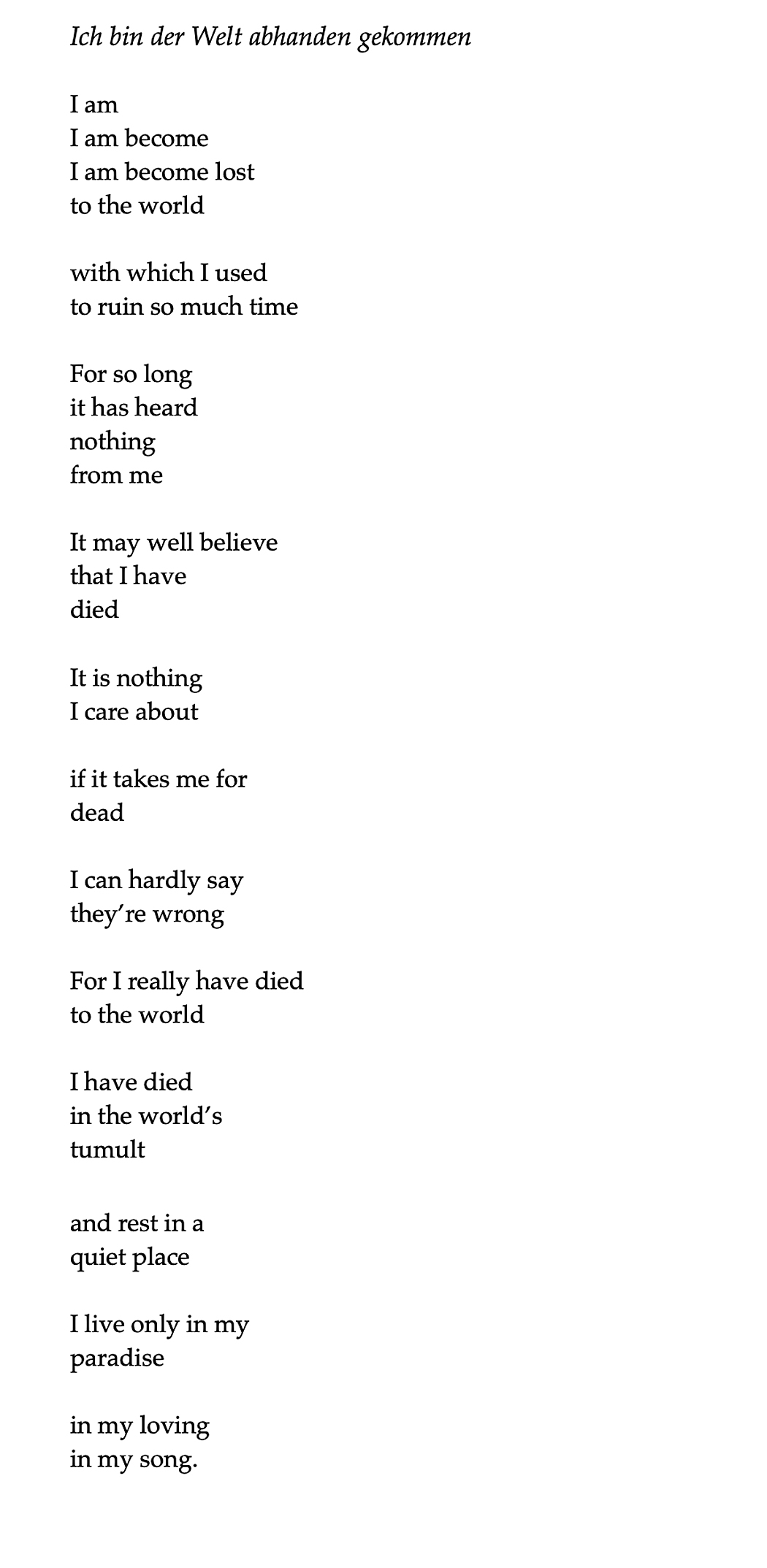
Third, there is heartbreaking and rueful song by Friedrich Rückert, Ich bin der Welt abhanden gekommen, set by Mahler first for voice and piano, but later orchestrated and part of his Sieben Lieder aus letzter Zeit (“Seven songs of Latter Days”). It is surely one of his greatest songs, and can hardly be heard or sung without feeling it was written directly with you in mind. 

Finally, there is Der Abschied (“The Farewell”), the final movement of Mahler’s Das Lied von der Erde (“Songs of the Earth”). In it, Mahler has pieced together two Chinese poems of dubious provenance (themselves translated or rewritten, or perhaps invented in French and German) purportedly by Tang Dynasty poets Meng Haoran and Wang Wei, with three lines added at the end, written by Mahler himself. Der Abschied is Mahler’s summa, and at 30 minutes, is as long as the previous five movements combined. And it ends with the quiet reiteration, over and over, in dying voice, “Ewig… ewig…” (“forever… forever…”) finally so in performance you can never quite tell when it ends, the final “Ewig” as quiet as the silence that follows. 

In the end, I recommend to everyone that they attempt to translate a poem from a different language. Take a Baudelaire, for instance, or a Neruda (avoid Rilke like the plague, unless you wish to end in an asylum), and parse it through, word by word. Read it out loud in the original language to hear the music of it (yes, your French may not be as liquid as the original) and read various translations to see how differently the words are construed. Then arrange a version of your own.

In the end, you will have internalized the poetry and it will never again be a stranger to you. 

The Seventeenth Century produced in Europe giants of science and philosophy and brought to birth the beginnings of Western Modernism. Their names are a pantheon of luminaries: Francis Bacon; Galileo Galilei; Thomas Hobbes; Rene Descartes; Blaise Pascal; Isaac Newton; Johannes Kepler; Gottfried Wilhelm Leibnitz; Baruch Spinoza; John Locke — names that mark the foundations of the culture we now live in. 

But during their lifetimes, their pioneering work remained the province of a rare sliver of humankind, those others of their intellectual gift who could understand and appreciate their thought. The mass of European population remained illiterate, and subject to centuries-old traditions and institutions of monarchy and religion. It wasn’t until the next century that the dam broke and the results of rationalism and empiricism made a wide splash in society, in a movement that self-congratulated itself as The Enlightenment.

And in the center of it all, in France, was Denis Diderot, one of the so-called “philosophes,” a group of writers and thinkers advocating secular thinking, free speech, the rights of humans, the progress of science and technology, and the general betterment of the human condition. 
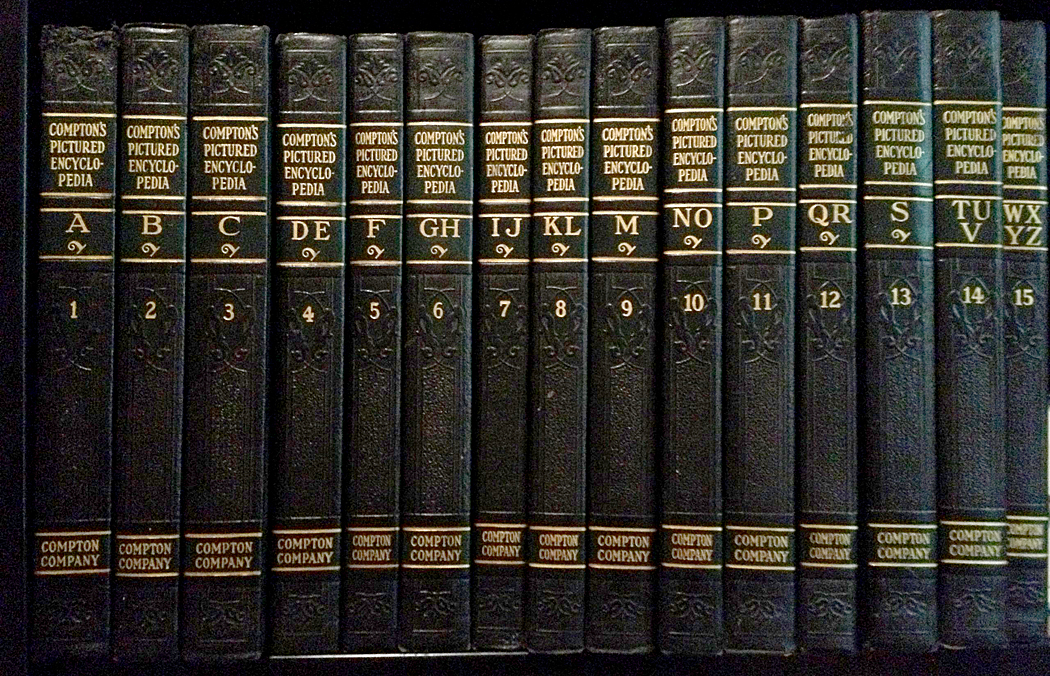
Among the philosophes were Voltaire, Montesquieu, Abbé de Mably, Jean-Jacques Rousseau, Claude Adrien Helvétius, Jean d’Alembert, the Marquis de Condorcet, Henri de Saint-Simon, and the Comte de Buffon. They wrote about science, government, morals, the rights of women, evolution, and above all, freedom of speech and freedom from dogma. They advocated the expansion of knowledge and inquiry. And they didn’t write merely for other intellectuals, but for a wider, middle-class literate readership. It was a blizzard of books, pamphlets and magazines.

Denis Diderot was born in 1713 in the Champagne region of France, the son of a knife-maker who specialized in surgical equipment. His father expected him to follow in the family business, but Diderot first considered joining the clergy before studying for the law and by the early 1740s, had dropped out to become a professional writer, a metier that paid little and brought him into conflict with the royal censors with notorious frequency. 

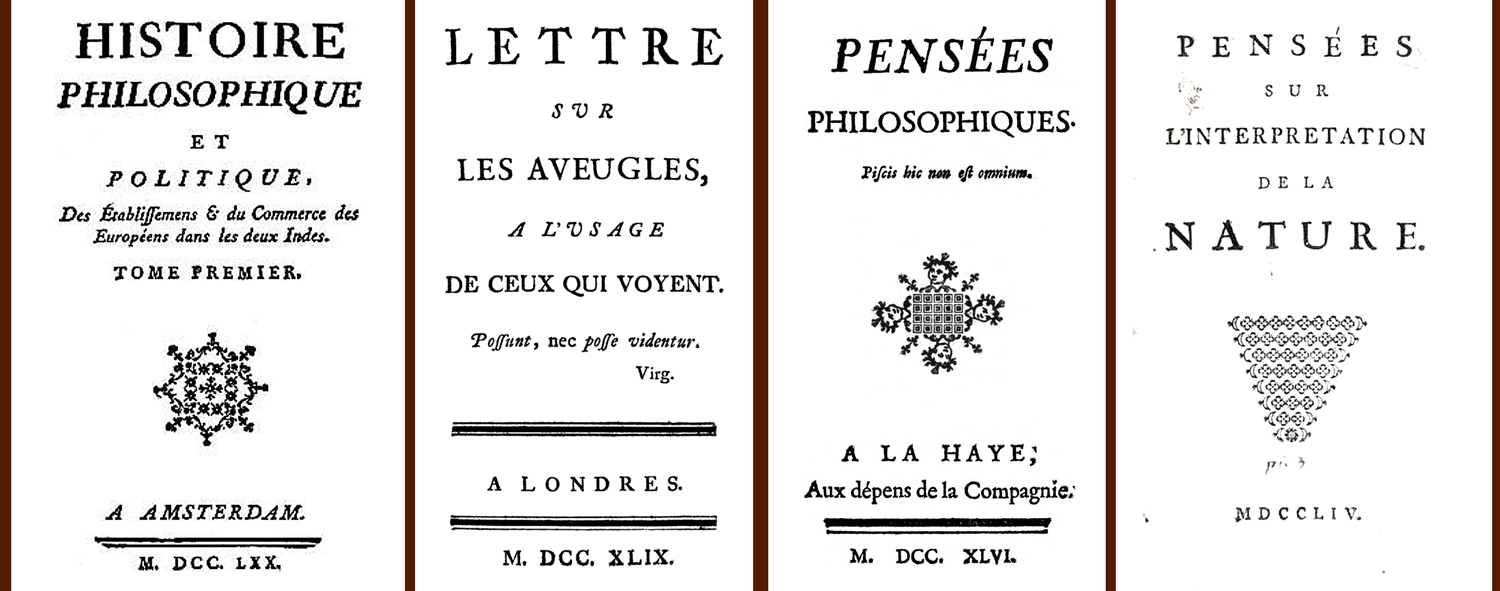
He translated several works, including a medical dictionary, and in 1746, he published his Pensées Philosophiques (“Philosophical Thoughts”), which attempted to reconcile thought and feeling, along with some ideas about religion and much criticism of Christianity. 

He wrote novels, too, including  in 1748, the scandalous Les Bijoux Indiscrets (“The Indiscreet Jewels,” where “jewels” is a euphemism for vaginas), in which the sex parts of various adulterous women confess their indiscretions to a sultan who has a magic ring that can make vaginas talk. 

His most famous and lasting novel is Jacques le Fataliste et son Maître (“Jacques the Fatalist and his Master”), from 1796, a picaresque comedy in which the servant Jacques relieves the tedium of a voyage by telling his boss about various amorous adventures. 

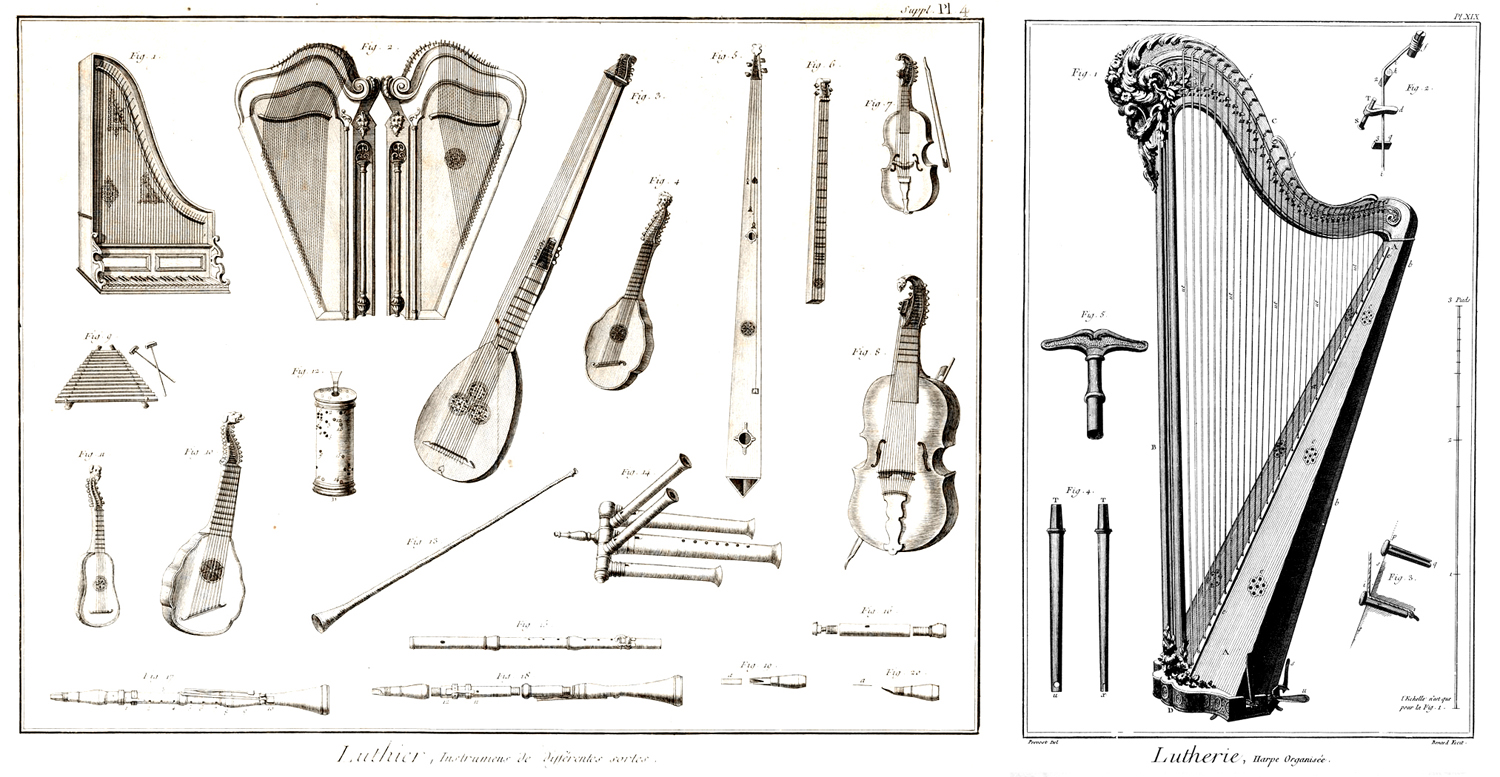
But Diderot is remembered primarily for his work on the Encyclopédie, which he edited along with Jean le Ronde d’Alembert, and for which he wrote some 7,000 entries. It was published serially and periodically revised from 1751 to 1772 and mostly published outside of France and imported back in — censorship was strict and many books were published in the Netherlands or Switzerland to avoid French government oversight. 

In fact, Diderot spent some months in prison for his work on the Encyclopédie

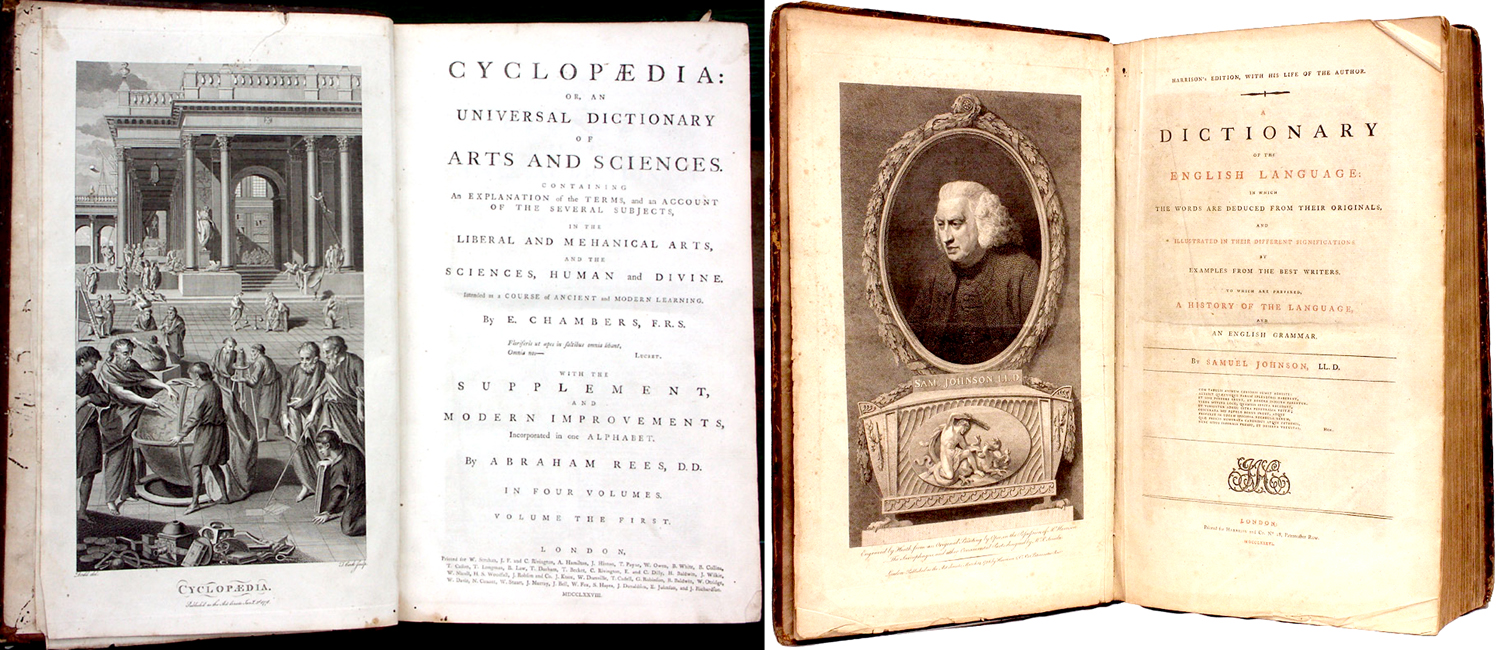
There had been earlier attempts at encyclopedias, including Ephraim Chamber’s Cyclopedia, or an Universal Dictionary of Arts and Sciences published in London in 1728, and John Harris’ 1704 Lexicon Technicum: Or, A Universal English Dictionary of Arts and Sciences: Explaining Not Only the Terms of Art, But the Arts Themselves. The 18th century wallowed in long book titles. 

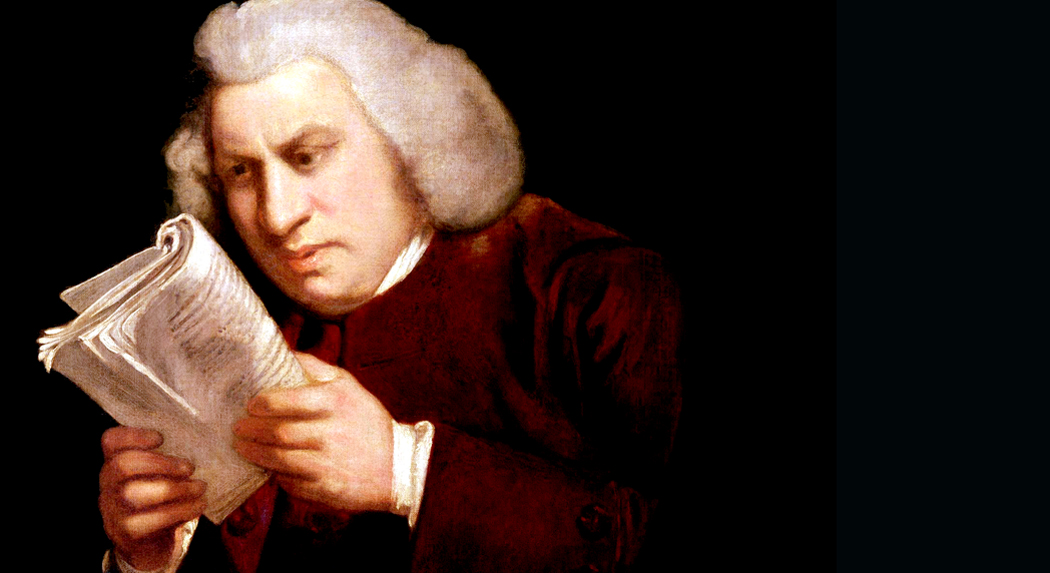
Among the projects of this age with an appetite for inclusiveness was Samuel Johnson’s Dictionary of the English Language of 1755. 

And the idea of binding all of human knowledge up in a single volume goes all the way back to the Naturalis Historia of Pliny the Elder in the First Century CE. 

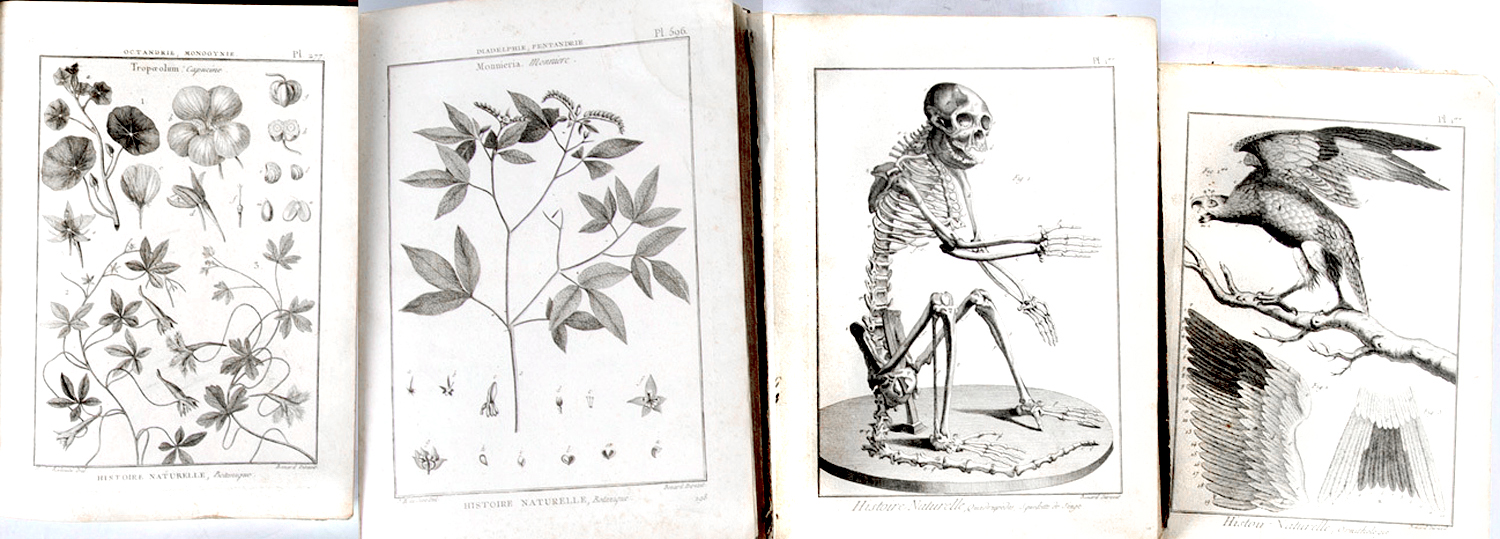
But none of these were as compendious in intent as the French Encyclopédie, which initially ran for 28 volumes and included 71, 818 articles and 3,129 illustrations. It comprised some 20 million words over 18,000 pages of text. It was a huge best-seller, earning a profit of 2 million livres for its investors. 

In his introduction, Diderot wrote of the giant work, “The goal of an Encyclopédie is to assemble all the knowledge scattered on the surface of the earth, to demonstrate the general system to the people with whom we live, & to transmit it to the people who will come after us, so that the works of centuries past is not useless to the centuries which follow, that our descendants, by becoming more learned, may become more virtuous & happier, & that we do not die without having merited being part of the human race.”

In the article defining “encyclopedia,” Diderot wrote that his aim was “to change the way people think.” 

Their goal was no mean or paltry one, but to encompass everything known to humankind. So that, according to Diderot himself, if humankind descended once again into a Dark Age, and if just one copy of his Encyclopédie survived, civilization could be reconstructed from reading its pages. 

A good deal of its content concerned technical issues, such as shoe-making or glass blowing. But other articles addressed political and religious ideas. These are what got the Encyclopédie contributors into legal trouble. The Catholic church and the monarchy were not happy about the generally deist and republican leanings of its authors. 

And there were a lot of authors. Most of the leading philosophes wrote one or another of the entries. Louis de Jaucort wrote some 17,000 of them — about a quarter of the total. Each of the contributors wrote about his specialties. D’Alembert, who was a mathematician, wrote most of the math entries. Louis-Jean-Marie Daubenton took on natural history. Jean-Jacques Rousseau wrote about music and political theory. Voltaire on history, literature and philosophy. 

All under the editorship of Diderot and d’Alembert, and, after 1759, by Diderot alone. 

Diderot divided all of human knowledge into three parts: memory; reason, and imagination. In his Preliminary Discourse to the Encyclopedia of Diderot, d’Alembert explained these as “memory, which corresponds with History; reflection or reason, which is the basis of Philosophy; and imagination, or imitation of Nature, which produces Fine Arts. From these divisions spring smaller subdivisions such as physics, poetry, music and many others.” 

In fact, d’Alembert asserts, all of human knowledge is really just one big thing: a unified “tree of knowledge,” which if we could grasp, would explain everything with a single simple principle, which rather prefigures the unified field theory of modern physics. 

It would be hard to overemphasize the influence of the Encyclopédie in the 18th century and in the political changes of France up to and through the Revolution. The Encyclopédie disparaged superstition, of which they counted religion as an example, and it saw the purpose of government to be the welfare of its people and the authority of government to be derived from the will of its citizens. The king existed, they said, for the benefit of the people, and not the people for the benefit of the monarchy. 

It’s no wonder, then, that the church and the aristocracy tried to suppress parts of the Encyclopédie, and that many of its authors spent time in prison. 
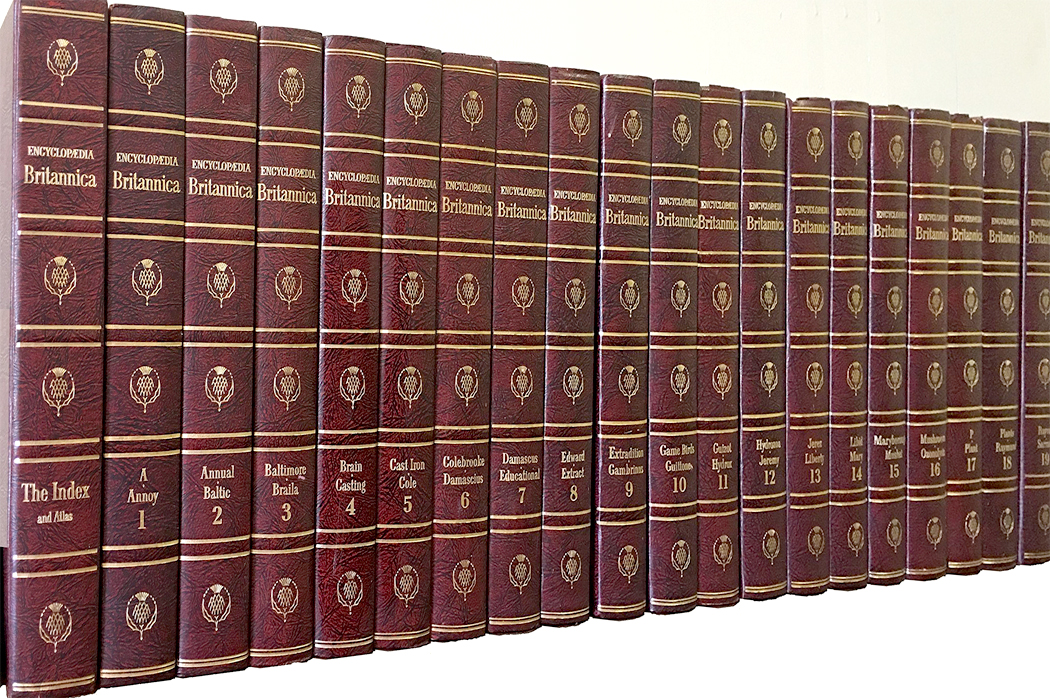
Its successor, the Enyclopedia Britannica, wrote of Diderot’s labors, “No encyclopedia perhaps has been of such political importance, or has occupied so conspicuous a place in the civil and literary history of its century.” 

Beyond the Encyclopédie, Diderot continued as a freelance writer, as an art and theater critic, a playwright, novelist, political tract writer and freethinker. 
But despite his fame and productivity, Diderot never made much money from his work, and when Russian empress — and groupie to the philosophes — Catherine the Great, heard of his poverty, she offered to buy his extensive library, paying him an enormous sum for the books and as salary for his employment as librarian to his own collection. 

In 1773, Diderot traveled to St. Petersburg to meet Catherine. Over the next five months, they talked almost daily, as Diderot wrote, “almost man-to-man,” rather than monarch to subject. 

Catherine paid for his trip in addition to his annuity and in 1784, when Diderot was in declining health, Catherine arranged for him to move into a luxurious suite in the rue de Richelieu, one of the most fashionable streets in Paris. He died there a year later at the age of 70. 

Despite her admiration for Diderot and his revolutionary ideas, Catherine ignored all of them in her own autocratic rule of Russia. But Diderot and his Encyclopédie pointed the way to the Declaration of the Rights of Man and of the Citizen, the triumph of democracies, and even the American Declaration of Independence and Constitution. 

According to philosopher Auguste Comte, Diderot was the foremost intellectual in an exciting age, and according to Goethe, “Diderot is Diderot, a unique individual; whoever carps at him and his affairs is a philistine.” 

 —————————————————————-

“On doit exiger de moi que je cherche la vérité, mais non que je la trouve.”

“I can be expected to look for truth but not that I should find it.”

—Denis Diderot, Pensées Philosophiques (1746)

 ————————————————————

When I was a young man, more than a half century ago, I had a simple ambition: To know everything. I suppose I was thinking mainly of facts; I would have no inkling of anything that couldn’t be named and catalogued. I wanted to read everything, name every bird and wildflower, every tree and understand every philosopher. I read all the poetry I could find, listened to all the symphonies and quartets and attempted to ingest all of astronomy and physics and history. Yes, I was an idiot. 

As early as the second grade, I believed that when I got to college, then I would finally have access to everything. And so, when I went to Guilford College in North Carolina, I couldn’t wait and in my first semester, I signed up for 24 credit hours of courses. I had to get permission from the dean for the extra hours above the normal 18 that for most students was a full course load. I grabbed Ancient Greek language, astronomy, Shakespeare, the history of India, esthetics, music theory — and over four years, everything I could think of. 

To my surprise and disappointment, not all of it was as edifying as I had hoped and not all the professors as brilliant as I had imagined. Still, it was a lot better than high school. 

What I sought was knowledge that was encyclopedic, encompassing all there was to know. Yes, I know now that all this was silly. I was young, naive and idealistic. Always a poor combination. 

The match that ignited this quest was probably the first actual encyclopedia I had. When I was in grade school, our next door neighbor, who worked for Doubleday publishing in New York, gave us boxes of books, mostly old, and that included a full set of Compton’s Pictured Encyclopedia — probably the set our neighbor had when he was a boy. It dated from the 1930s and had great imagination-burning articles on such things as “The Great War,” dirigibles, and steam locomotives. The endpapers of each volume included illustrations of such things as elevated roads, autogyros, and speedboats. 

It didn’t matter that much in the set was out of date. It was a multi-volume key to unlock a whole world.

Later, our parents bought a more up-to-date Funk and Wagnalls encyclopedia, purchasing a single volume each week through a promotional deal at the A&P supermarket. It was a much cheaper production, on cheaper paper, with blank endpapers, but at least it included the Second World War. 

All through my childhood and adolescence, I would grab a volume and randomly read entries. I would pore over its pages, reading it all for fun. When I had to write a term paper in high school, I did my research in our Funk and Wagnalls. 

I can’t say I read every article in the whole encyclopedia, but I may have come close. 

And as I grew, my ambition grew: I wanted, more than anything, to own the two great compendia of all human knowledge: The Oxford English Dictionary and the Encyclopedia Britannica. Both were well out of my price range, but I lusted, the way most boys my age lusted after Raquel Welch. 

Years later, after college, the OED was published in a two-volume compact form, with microscopic print and a magnifying glass to read it, and I managed to get a copy through signing up for a book-of-the-month club. I still have it, and I still browse through it to find random words, their histories and the curious way language changes over the years. 

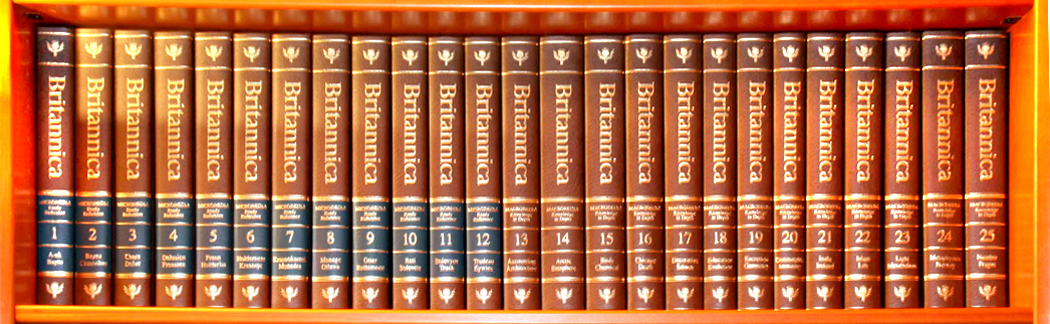
The Britannica took longer. The Encyclopædia Britannica, or, A Dictionary of Arts and Sciences, compiled upon a New Plan, was published in Edinburgh first in 1768, as an answer to Diderot’s Encyclopédie. At first, it was bound in three equally sized volumes covering: Aa–Bzo; Caaba–Lythrum; and Macao–Zyglophyllum. There have been 15 editions since, but each edition was continually updated, making the Britannica a constantly evolving entity. It was briefly owned by Sears and Roebuck, and eventually migrated to the University of Chicago. Currently it is privately owned and only available digitally. They stopped printing it in 2010. 

It wasn’t until I was in my 30s, when working as a teacher in Virginia, I found an old used set of Britannicas at a giant book sale held annually in the city’s convention center. It was an 11th Edition version — still the standard as most desirable edition. I felt like Kasper Gutman finally getting his hands on the Maltese Falcon. But when I unwrapped my prize, it was, in fact, the real thing. 

It sat, in pride of place, on my bookshelves, more as trophy than anything else. And when we moved to Arizona, I had to give it up in the great divestment of worldly goods necessary to truck our lives across a continent. I hated to give it up, but had to admit, I wasn’t using it as much as I had expected. I had an entire library of other books that I could consult. 

Then, in Arizona, I came across a more recent edition of the Britannica for sale at Bookman’s, a supermarket-size used book store in Mesa, Ariz. It was the version divided into a “macropedia” and “micropedia.” I bought it to replace the earlier version I had once coveted. 

I have never warmed to this version of the encyclopedia — a smaller set with simpler, introductory articles about a wider range of subjects, and a longer set with in-depth scholarly articles about a smaller range of more commonly referenced subjects. It felt dumbed down — and worse, confusing, because you could never quite tell if you should first consult the micro- or the macro- section of the series. 

But at least, I still owned a Britannica, and felt that somehow, I possessed, if not the actual knowledge of the universe, at least access to it.

The end of Britannica was also the end of my obsession with it. With the advent of Wikipedia, I no longer needed to shuffle through pages of multiple volumes, sort through indexes, or cross-reference material. In researching a story for my job as art critic with the newspaper, I could just go online and get the birth date of Picasso or the list of art at the Armory Exhibit of 1913. Wikipedia was easier to use, and for my purposes, just as accurate as my beloved Britannica. 

And so much easier to use. I cannot now imagine being a writer without Wikipedia. If I need a date or check spellings, it is instantly available. 

And just as I spent time as an adolescent swimming through my Compton’s or Funk and Wagnalls, reading random articles for the fun of it, I now spend some portion of my time sitting in front of my computer screen hitting the “random article” button on Wikipedia to read about things I wouldn’t have known to be interested in. Lake Baikal? Yes. Phospholipidosis? It is a “lysosomal storage disorder characterized by the excess accumulation of phospholipids in tissues.” De Monarchia? A book by Dante Alighieri from 1312 about the relationship of church and state, banned by the Roman Catholic Church. I know of some politicians who might profit by reading Dante. 

It’s fun picking up random bits of information like this. But it also demonstrates why my interest in owning all the world’s knowledge in book form has evaporated. 

First, the cosmos is infinite and packing 20 volumes of an encyclopedia with information about it is really like taking a teacup to the ocean. Second, knowledge keeps changing and growing. What we thought we knew a hundred years ago has been replaced by more complete data and theory — and so knowledge is not so much a teacup as a sieve. 

Then, there is the even more knotty problem, that knowledge isn’t even the most important part of understanding. Facts are good, and I wouldn’t want to be without them, but infinitely more essential is the interrelationship between them; the complexity of human mind as it interacts with what it knows, or thinks it knows; the moiling stew that is the mix of thought and emotion; the indistinct borders of learning and genetic inheritance; the atavistic tribalism that seems to overcome any logic; the persistence of superstition, magic and religion in how we understand our Umwelt; and ultimately, the limitations of human understanding — how much more is there that we not only don’t know, but cannot know, any more than a goldfish can understand nuclear fission. 

The reality of our existence is both infinite and unstable. Trapping it in print is an impossibility. It swirls and gusts, churns and explodes. Any grasping is grasping handfuls of air. We do our best, for the nonce, and must be satisfied with what we can discern in the welter. 

I think of Samuel Johnson’s heartbreaking preface to his 1755 Dictionary, which every thoughtful person should read and lock to mind. “To have attempted much is always laudable, even when the enterprise is above the strength that undertakes it: To rest below his own aim is incident to every one whose fancy is active, and whose views are comprehensive; nor is any man satisfied with himself because he has done much, but because he can conceive little. … When I had thus enquired into the original of words, I resolved to show likewise my attention to things; to pierce deep into every science, to enquire the nature of every substance of which I inserted the name, to limit every idea by a definition strictly logical, and exhibit every production of art or nature in an accurate description, that my book might be in place of all other dictionaries whether appellative or technical. But these were the dreams of a poet doomed at last to wake a lexicographer. … I saw that one enquiry only gave occasion to another, that book referred to book, that to search was not always to find, and to find was not always to be informed; and that thus to pursue perfection, was, like the first inhabitants of Arcadia, to chase the sun, which, when they had reached the hill where he seemed to rest, was still beheld at the same distance from them.”

Amen.

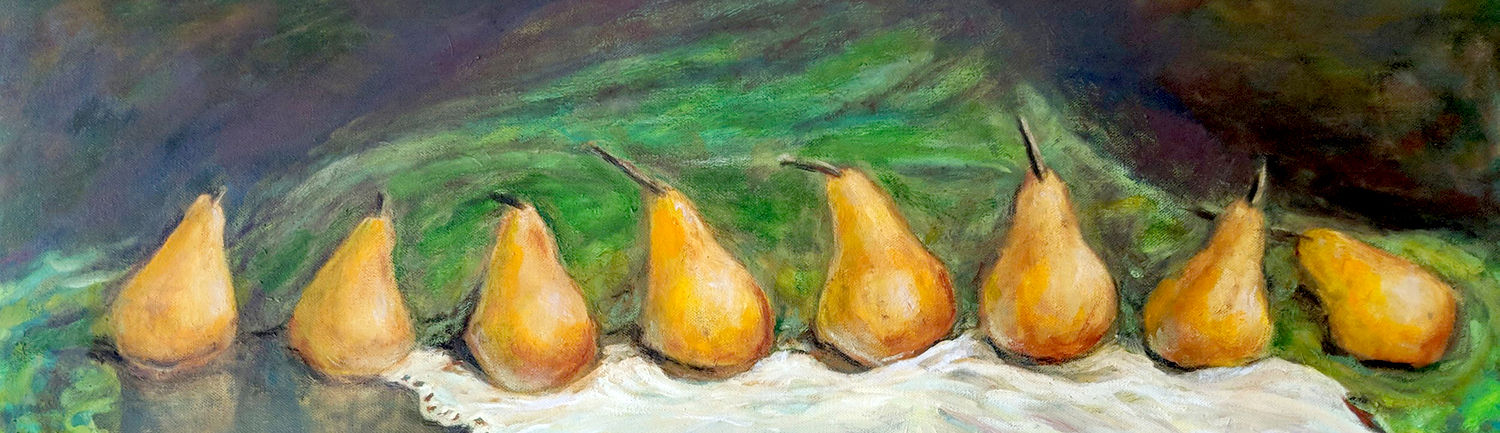
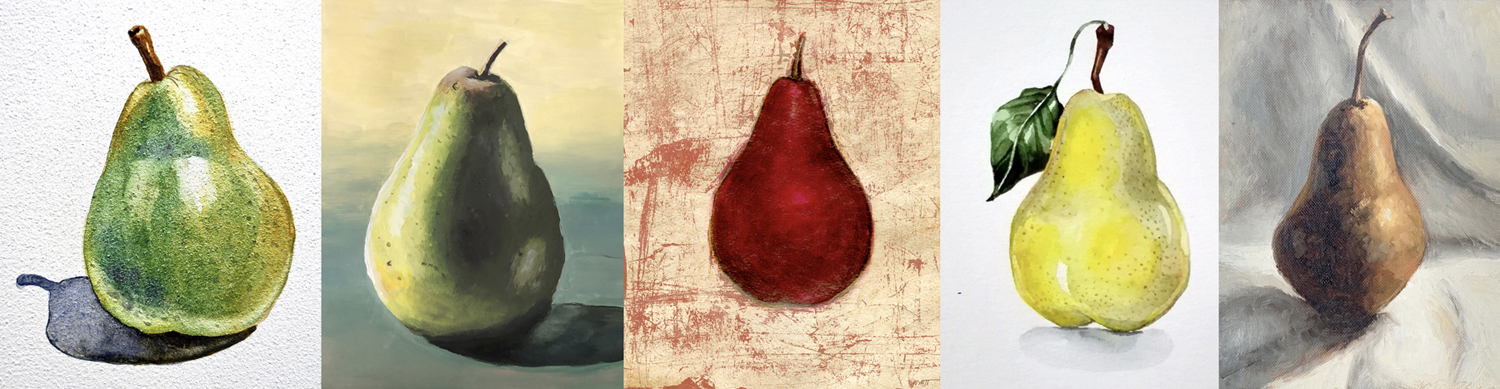
I started to write about philosophy, but realized I really wanted to talk about pears. Crisp, delicious succulent pears, the kind with small brown spots on the skin and a roly-poly bottom. Given a choice between reading Hegel (insert dry cough here) and slicing wedges off a Bartlett pear, the fruit wins hands down every time. 

I have been thinking about this because of philosophy. The intellectual world seems divided irrevocably between art and philosophy — image and word. One side deals with categories of thought, the other side deals with hubcaps, clouds, tight shoes and the sound of twigs snapping underfoot, to say nothing of pastrami sandwiches and corduroy trousers. 

I’m sorry if I value the one vastly over the other. I am a Dichter not a Denker. I have — this is my ideological burden — a congenital mistrust of language, particularly abstract language and language of categories. The world is too multifarious, indeed, infinite, and language by nature and requirement, simplifies and schematizes, ultimately to the point that language and reality split paths and go in separate directions. When one relies too much on  language, one misses the reality. 

The tragedy is, that language is all we have. We are stuck with it. We can try to write better, more clearly, use evocative metaphor when declarative words fail, use imagery rather than abstractions, and do our best — our absolute best — to avoid thinking categorically, and attempt to see freshly, with eye and mind unsullied by the words that have preceded us. It’s hard, but it is essential. To begin with the categories, and to attempt to wedge our experience into them, is to mangle and to mutilate the reality. 

The matter is only made worse by the impenetrable fustian written by so many philosophers — and especially the recent crop of Postmodern and Poststructuralist explainers. 

Take Hegel — please. Georg Wilhelm Friedrich Hegel (1770-1839) is just the kind of philosopher who thinks thoughtful thoughts and writes incomprehensible prose. 

“Knowledge of the Idea of the absolute ethical order depends entirely on the establishment of perfect adequacy between intuition and concept, because the Idea itself is nothing other than the identity of the two. But if this identity is to be actually known, it must be thought as a made adequacy.”

A made adequacy?” That’s from his System of Ethical Life (1803-4). I’m sure if you spent an hour or two going over it again and again, you might be able to parse something out of it. But, jeez. It’s the kind of prose you get from academia all over the place: 

“As histories of excluded bodies, the bodies that made national Englishness possible, this counterpastoral challenged the politics of visibility that made the very modern English models of nature, society, and the individual visible through the invisibility of bodies that did not matter.”

That’s from Kathleen Biddick’s The Shock of Medievalism (1998). She is also the author of The Typological Imaginary: Circumcision, Technology, History

In such writing, individual abstract words are made to stand in as shorthand for long complex ideas, not always adequately explained. And the words are then categories, and the categories allow blanket statements that cover the world like Sherwin-Williams paint. 

The basic problem is that words are always about words. When Plato talks about “the Good,” he is talking about how we define the word, “good.” Plato is about language. The linguistic grammar and language has its own rules, its own logic, and they soon supersede what the philosophers call “the case.” 

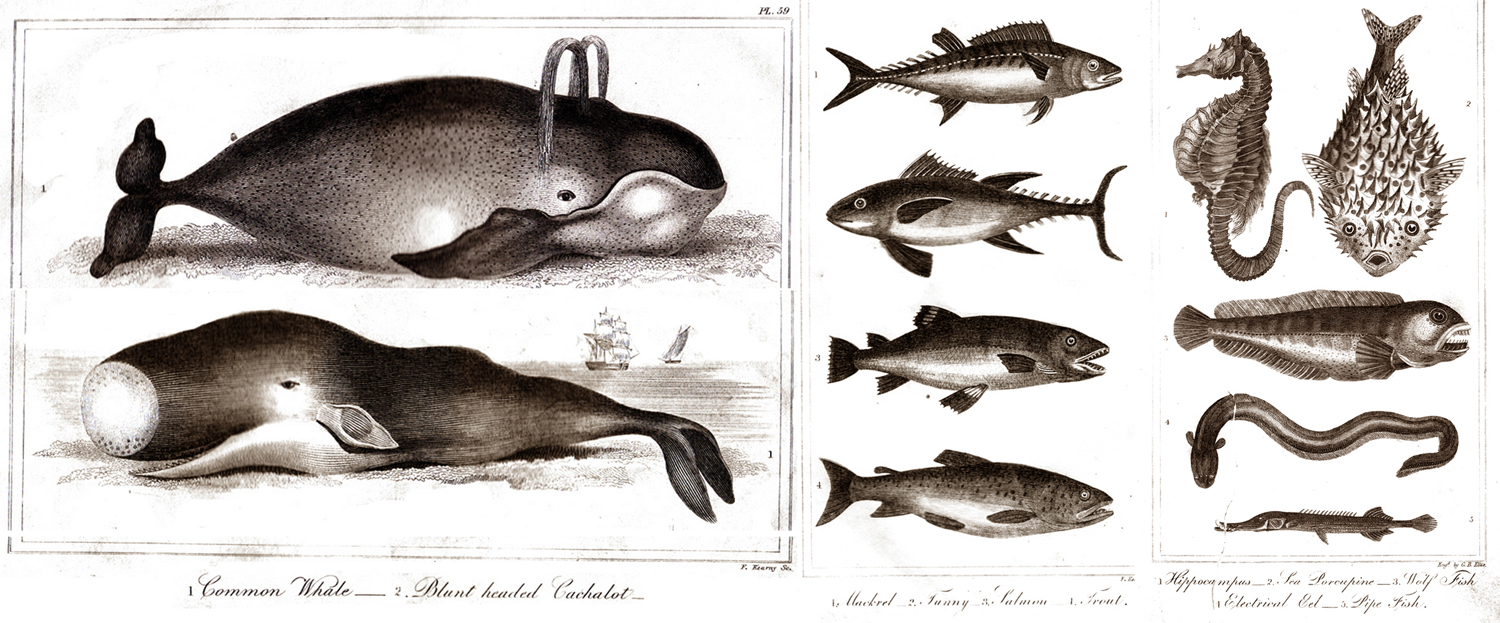
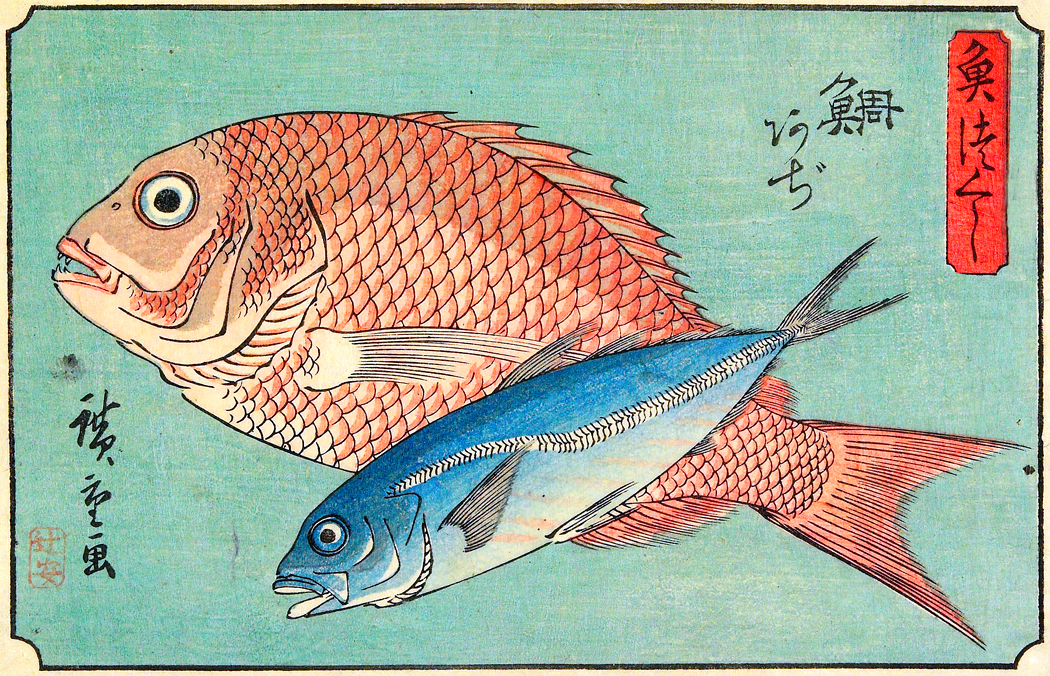
There is a book out there now titled Why Fish Don’t Exist, by Lulu Miller. And taxonomists now largely agree that what we used to call the class of animals Pisces (fish), are really a bunch of increasingly unrelated classes or clades, in fact at least 12 of them, not counting subclasses. For example, a salmon is more closely related to a camel than to a hagfish. 

But, back in the 18th century, both whales and sea urchins were also classified as “fish.” That we distinguish them separately now has made no difference to either whales or urchins, but only to dictionaries. That a whale is not a fish but a mammal is a shift in language, not biology. Fish still swim in the sea, even if we hesitate to call them fish. 

And in the same way, the parsing of philosophers is mostly a shift of wordplay. The philosopher Ludwig Wittgenstein made this the central issue of his later work. 

Meanwhile, as the philosophers mince language in their mental blenders, Gloucester fishermen keep pulling fish out of the oceans. When it comes to trust, I take the fishermen over the philosophers. The world is filled with sensible, seeable, feelable, hearable things. Things that give us pleasure and made the world we find ourselves cast into, like poached salmon. 
Our lives are filled with the things of this world and their shapes, colors, sounds, textures, smells and tastes. And so is our art, which makes images, poems, dances, music and theater from those shapes, colors, sounds, etc., is a direct connection with the things of this world — the “case” as it were. 

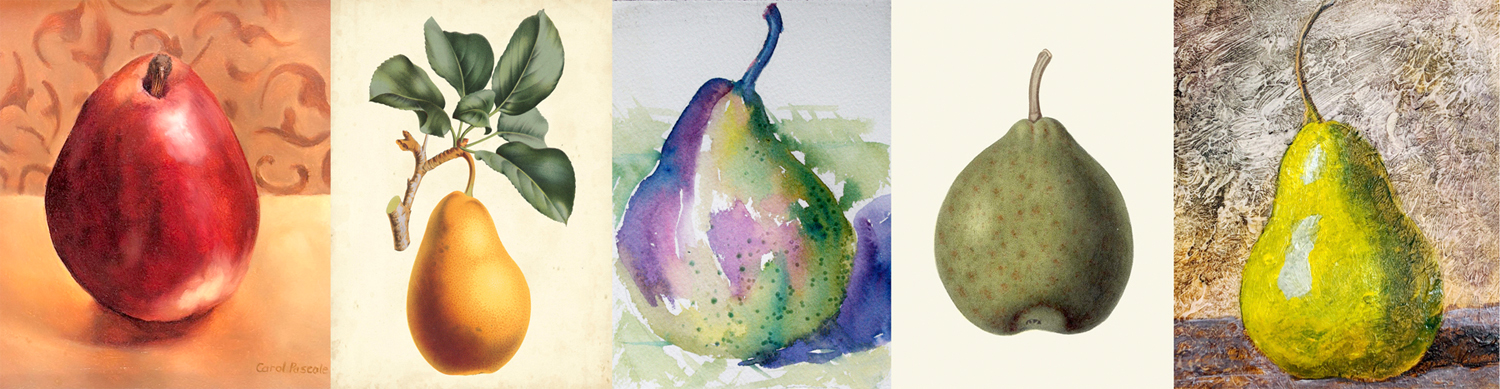
And I think of pears in art — those buttery layers of paint by Paul Cezanne — and the other still life art that singles out this bit or that of the physical presences of the world and shows them to us so we may notice them and appreciate them. 

Most of our art tends to be divided between people and things — “things” being mostly landscapes and still life. In our art, we privilege people over things and that is only fitting. I’m sure squirrels are most interested in other squirrels, too. 

But the non-human and non-living things things are so much a part of our lives, and a certain percentage of our art has been made about things. Like pears. 

I step outside into the sun and I hear distant traffic, the breeze hissing in the tree leaves, and, from several blocks away, the intermittent rattle of a chainsaw. In the morning, there are birds — mockingbirds and chickadees. There is the feel of the air and the sun on my skin. There is the smell of the grass, new mown, or maybe the oily resonance of diesel fumes. I stand and feel the temperature. I live in the welter of the world. 

And so, I am in love with the things of this world. I am mad for them to be in contact with me, to absorb them, to notice and appreciate them. To pay attention. To be alive. 

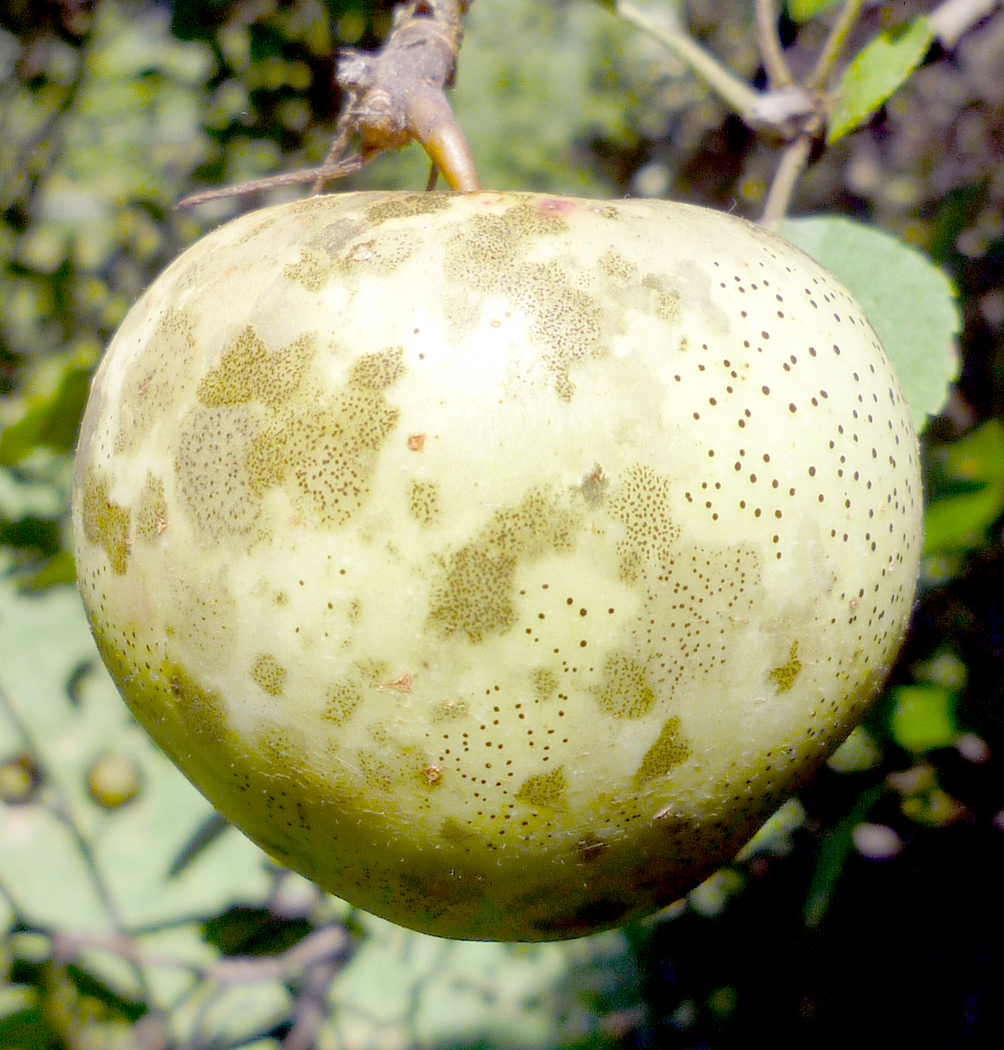
And I slice a pear. The insides are both pulpy and wet; the skin keeps the flesh from drying out. The stem at the top curves off. The nub at the bottom shows where the white flower had been. 

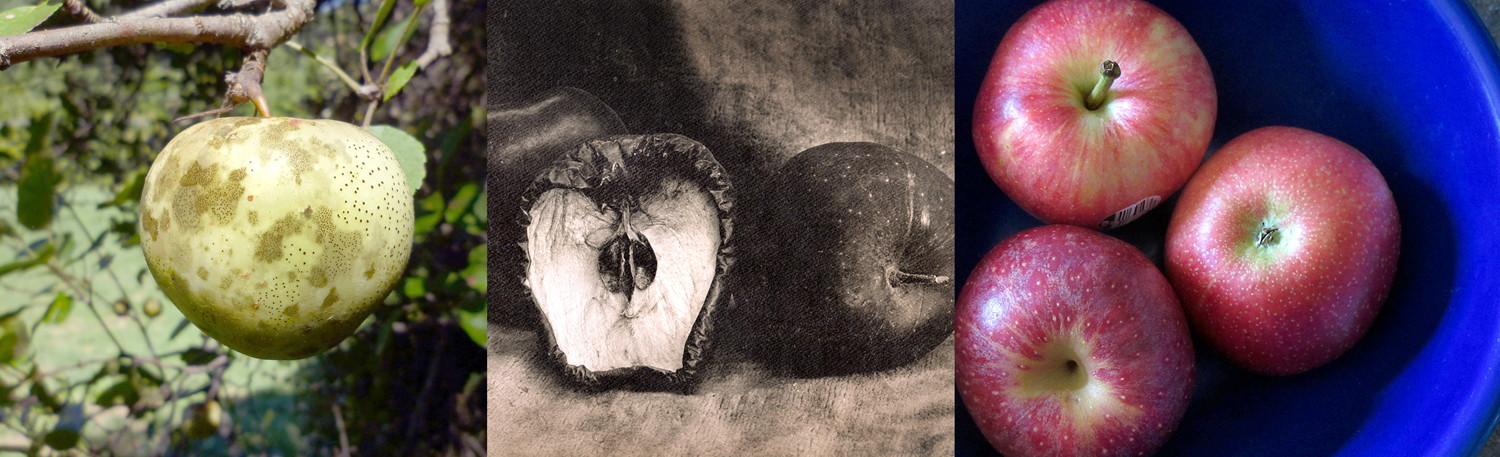
I take pears instead of apples here, because apples have too many words stuck to them, making them gummy with ideas, from Eve’s fruit of temptation to the computer on which I am writing these words. 

But a pear can be seen with less baggage. It bruises more easily than an apple, yet its pulp is firmer, stiffer, unless overripe, when it can go mushy. Nor is it as sweet as an apple, although we must point out that there are hundreds of different varieties of apple and that a red delicious is sweeter than a granny smith. (Yet the granny smith makes a better pie). 

There are varieties of pear, also, and they are perhaps more distinct than the apples. The lanky brown Bosc, the squat green Anjou, the nearly round Le Conte, the very sweet Seckel. In Japan, there is the ruddy, round Kosui, or russet apple pear. The Comice is great with ripe cheese. Yellow Huffcap for making perry — a cider made from pears. 

I believe the central fact of existence is variety, in infinite forms, which in contrast makes the categories of philosophers seem puerile and simplistic. And dry. Pears have juice. Derrida, none. 

These are smart people. I don’t begrudge them that. And perhaps we need people thinking such thoughts. But if we leave these words to the philosophers, I will have more time for myself with all the plants, rocks, fruit, animals, clouds, stars, cheeses and oceans. 

Ultimately, to experience things is more important — more rewarding — than explaining them. 

When it comes time to leave this planet and join oblivion, in those last moments left to my life, mostly, I will be thinking about the people I have loved and who have loved me. But beyond that, will I be thinking about Hegel or will I be remembering pears? My money is on the palpable. There is love there, too.

Click on any image to enlarge

Is there anything left to say? After 5,000 years of putting it all down on clay, stone, parchment and paper, is there anything that hasn’t been said? It is something every writer faces when putting pen to paper, or fingertip to keyboard. Or even thumbs to smartphone.

And it is something I face, after having written more than four million words in my professional lifetime. Where will the new words come from?

It is also something newlyweds often fear: Will they have anything to say to each other after 20 years of marriage? Forty years? Surely they will have talked each other out.

What we write comes from a deep well, a well of experience and emotion and sometimes we have drawn so much water so quickly, it dries, but give it time and it will recharge. If no new experience enters our lives, our wells remain dry.

One friend has offered this: “That each generation thinks they know more than anybody else who has ever lived.  In a way, that’s a good thing because it allows for new ideas.”

But how new are those ideas? “I guess we have to live with a certain amount of repetition under that system,” she says. “Relying on what previous generations wrote would be so boring. Our ego demands that we pick and choose from past works if we heed them at all.”

I have a different interpretation. We never quite hit the target of what we mean; words are imprecise, concepts are misunderstood. One generation values family, the next understands family in a different way and builds its family from scratch with friends.

As T.S. Eliot says in East Coker:

Every time I put word to word, I come up short, leave things out, use phrases sure to be misinterpreted, have my motives doubted, and — as I learned many times from my readers, they read what they think I wrote and not always what I actually wrote.

And so, there is the possibility of endless clarification, endless rewriting, endless apologizing. And new words to be written.

As someone once said, all philosophy is but a footnote to Plato (who, by the way, is a footnote to the pre-Socratics), and all writing is an attempt to get right what was inartfully expressed in the past. It is a great churn.

All writing is an attempt to express the wordless. The words are never sufficient; we are all wider, broader, deeper, fuzzier, more puzzling and more contradictory than any words, sentences or paragraphs can encompass.

Heck, even the words are fuzzier. Consider “dog.” It seems simple enough, but includes great Danes and chihuahuas, Scotties and dobermans.  As a genus, it includes wolves and foxes. It also describes our feet when we’ve walked too much; the iron rack that holds up fire logs; the woman that male chauvinist pigs consider unattractive; a worthless and contemptible person. You can “put on the dog,” and show off; you can “dog it,” by being half-assed; you can call a bad movie a “dog;” at the ballpark, you can buy a couple of “dogs” with mustard; if you only partly speak a language, you are said to speak “dog French,” or “dog German;” past failures can “dog” you; if you are suspicious, you can “dog” his every move. “Dog” can be an anagram of “God.”

Imagine, then, how loose are the bounds of “good” or “bad,” or “conservative,” or when someone tries to tar a candidate as a “socialist.” Sometimes, a word loses meaning altogether. What, exactly do we mean when we talk of morality or memory, or nationality or the cosmos?

And so, every time we pick up pen to write, we are trying our hardest to scrape up a liquid into a bundle.

And so we rework those words, from Gilgamesh through James Joyce and into Toni Morrison. We rework them on the New York Times editorial page and in the high school history textbook. We rehash them even in such mundane things as our shopping lists or our FaceBook entries.

We will never run out of things to write or say, because we have never yet gotten it quite right.

An earlier version of this essay originally appeared on the Spirit of the Senses webpage on  Aug. 2, 2020. 

In 1956, psychologist Benjamin Bloom published his Taxonomy of Educational Objectives, a hierarchical ranking of thought processes, often recast as “Bloom’s Taxonomy.” It has been often revised and recast, but most often, at the bottom were simple tasks such as memorizing, at the top came creativity. 

My late wife, who was at least as smart as Bloom, had her own version of this taxonomy, and for her, the lowest level was “naming.” She taught school for more than 30 years and saw brain-burn at the individual level. Being able to say, “Horsie” or “Duckie” is naming. This is simple rote. Learn the name and repeat it when appropriate. 

Naming also shades into the second level — the level most people get stuck in — that of sorting. Finding categories and shunting the names into silos to contain them. As if that explained anything. 

The greater part of what we do with our brains is to sort things out. To put cats over here and dogs over there. When we learn, most of what we mean by that is to understand that Claude Monet was an Impressionist and that Luis Buñuel was a Surrealist. These are mere sortings. Important for a file clerk, perhaps, but more a form of busy work than of actual thinking. 

We learn a whale is not a fish, and that a spider is not an insect. We have separate categories for them, and when we recognize the categories, we believe we have actually said something meaningful about our whale or spider, when really, all we have done is play with words. 

Categories, are, after all, quite fugitive, quite fungible — squishy. When zoologists first tried to classify lions, for instance, they placed them in the genus “Felis,” for they are some kind of cat. But later, it was decided they were big cats, not small ones, and so they became “Panthera.” Oh, but that wasn’t good enough, and so a new genus was established, dividing them from tigers and leopards, making them “Leo.” New category, new silo. 

For a brief time, I worked at a zoo, and had the opportunity to walk behind the cages and get up close to many of the animals and I can tell you that standing with his zookeeper two feet from a male lion to feed him,(separated from Leo by the cage bars), the lion’s head seemed to be the biggest thing I had ever seen, shaggy and furry, with a very particular smell, and a sense that this beast could swallow my head as if it were an M&M. And then it “purred.” A low, gutteral roar expressing satisfaction at the afternoon meal, that made the ground rumble under my feet. It was one of the most impressive things I have ever witnessed and it mattered not a whit whether I was seeing a Felis or a Panthera or a Leo. The name was rather beside the point. The experience had a physical existence and it didn’t need a name. 

Language is not reality. And the experience — the feel of it in the palm of your hand, or in your nostrils, or under your feet — is worth all the words in the world. Words can be a barrier keeping us from what is real. 

And yet, we spend so much of our time arguing over these categories, as if they mean anything. As if they were a reality. Is Joe Biden a Socialist? Did Elon Musk actually reach outer space? Is a tomato a fruit or a vegetable? So much thought and energy to such meaningless ends. Think of all the dark money spent in political campaigns to paint the opposition into a category-corner that makes the opponent a one-dimensional boogeyman. The world and its things are infinite. 

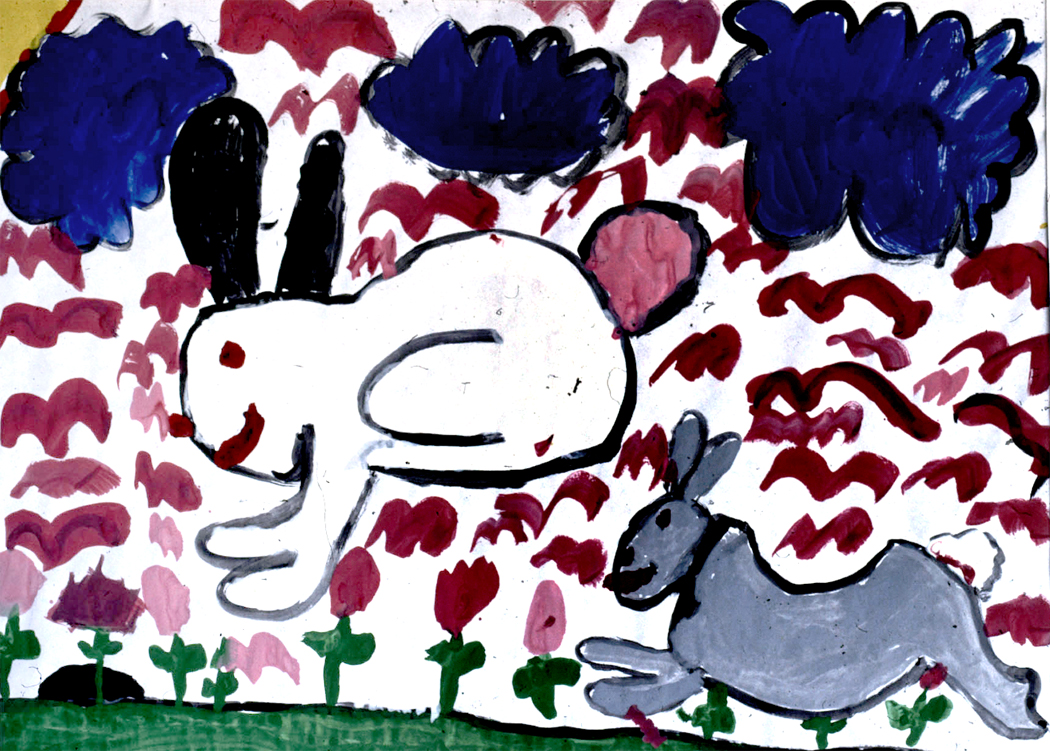
My late wife took animals to class with her so her pupils would have actual experiences — the twitching nose of a bunny, the blank stare of a hen, the brittle carapace of a hermit crab — and then gave the kids paper and paints and let them express what they had experienced. If names were mentioned, they were the names the kids gave the animals — a rabbit named Tiffany Evelyn or a crab named Eloise. What mattered was physical reality of the experience. Anything else is just language. Names. Categories. 

Historians like to take big chunks of time and give them names: Classical, Postclassical, Late Medieval, Romantic, and so on. Then they argue over it all, because these categories are misleading and constantly changing — being redefined. But, as they say, whatcha gonna do?

Take the Middle Ages. Middle of what? Homo sapiens developed something like — in a common low-end estimate — 300,000 years ago, putting the start of the Middle Ages somewhere approximately in the last 15/3000ths of human history. Not exactly the middle.

But the dates we give the Middle Ages vary widely. It came after the Roman Empire. When did the Roman Empire fall? Well, you can say that the final collapse came in 1453 with the fall of Constantinople. For some people, that is already the Renaissance, squeezing out the Middle Ages entirely. But no one really believes the Byzantine Empire was genuinely Roman. They spoke Greek, for god’s sake. They were Christian.

Usually, when we talk of the fall of Rome, we mean the Western Roman Empire and the sad reign of Romulus Augustulus, which came to an end in AD 476. But really, the Western Roman empire at the time consisted only of most of Italy and Dalmatia (later aka Yugoslavia) and a tiny bit of southern France.

And you could easily argue that Rome ceased to be Roman after Constantine converted to Christianity and legalized it in AD 313. After that, the slow slide from Roman imperialism into Medieval feudalism began its ambiguous transubstantiation.

It is the great paradox of scholarship: The more you read, the more your ignorance grows: The more you learn about something, the more you discover how little you know.

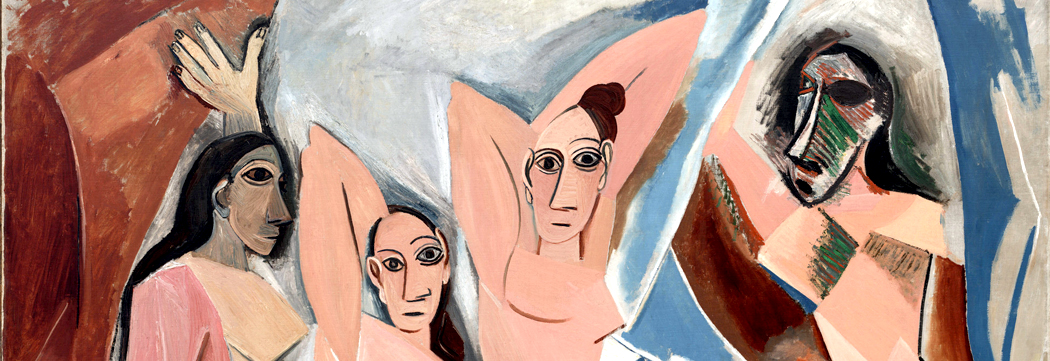
Are Picasso’s paintings Modern art? His first big Cubist painting, Les Damoiselles d’Avignon was painted in 1907. That is closer in time to the reign of Catherine the Great in Russia than it is to us. Closer to George Washington’s Farewell Address. To the Louisiana Purchase. 

So, what do we mean by “modern?” and when did modernity take over? It is a slippery question. And really it is simply an issue of definition — words, not experience. We let the words stand in for reality and then let the debates begin. Reality flows uninterrupted and continuous. Categories are discrete and they start and stop. 

The more you attempt to define the categories, the more they slip away. The history of academic scholarship is often the history of proving the categories wrong. It is historians who argue over the dates of the Renaissance. Or the fall of Rome, or the birth of Modernism. 

Categories are a convenience only. They are a name for the nameless.

I am reminded of the time, some 40 years ago, when I first drove west from North Carolina with my genius wife. We had never seen the great American West and eagerly anticipated finding it. It must be so different, we thought, so distinct. The West is a category. 

We were living in Boone, N.C., named for Daniel, who trod those mountains in the 1700s, when the Blue Ridge was the West. When George Washington surveyed the Northwest Territory in the late 1740s, he was measuring out what became Ohio.

So, when I was driving, I knew I had already pushed my own frontier past such things, and knew in my heart that the West began on the other side of the Mississippi River. But, when I crossed the river into Arkansas, it hardly seemed western. It didn’t look much different from Tennessee, in my rear view mirror. Yet, Arkansas was home to the “Hanging Judge” Isaac Parker and where Jesse James robbed trains. Surely that must be the West. But no, James looked more like a hillbilly than a cowboy. 

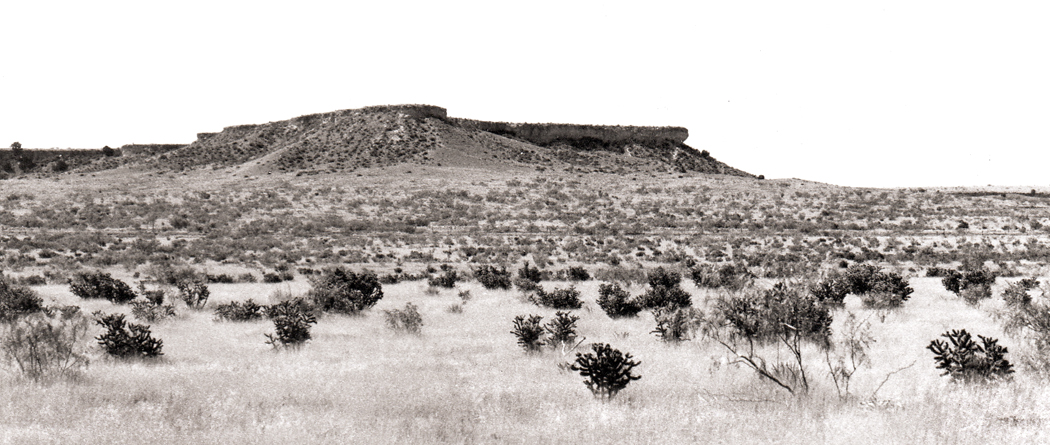
Then came Texas, which was the real West, but driving through flat, bland Amarillo on I-40 was as exciting as oatmeal. The first time we felt as if we had hit the West was at the New Mexico line, when we first saw a landscape of buttes and mesas. Surely this was the West.

Maybe, but we hadn’t yet crossed the Continental Divide. All the waters of all the rivers we crossed emptied into the Atlantic Ocean. Finally, crossing the Divide near Thoreau, N.M.,  we felt we had finally made it.

Yet, even when we made it to Arizona, we knew that for most of the pioneers who crossed this country a century and a half ago, the desert was just one more obstacle on the way to California. In some sense it still wasn’t the West.

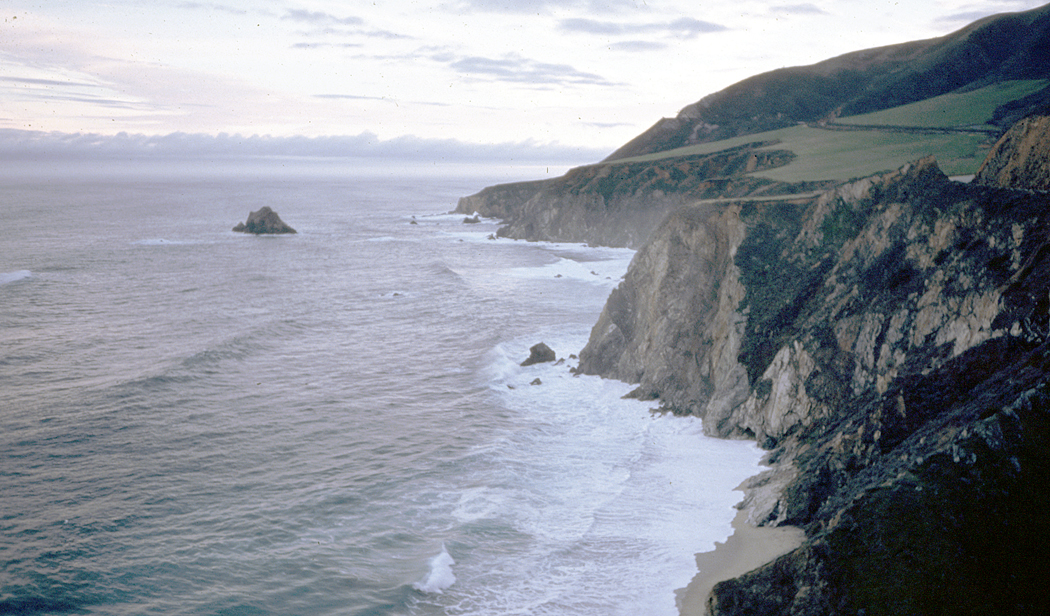
When we got as far as we could in a Chevy, and stared out at the Pacific Ocean, we knew that there was still something farther: Hawaii, Japan, China, India, Africa — and eventually back to North Carolina.

So, the West wasn’t a place you could ever really reach, but a destination beyond the horizon: Every point on the planet is the West to somewhere else.

When we look to find the beginnings of Modernity, the horizon recedes from us the same way. Perhaps it began with World War I, when we entered a non-heroic world and faced a more sober reality.

Modern Art began before that, however, perhaps with Stravinsky’s Rite of Spring in 1913, perhaps with Debussy’s Afternoon of a Faun in 1894. Some begin with the first Impressionist exhibition in 1874.

Politically, maybe it begins with Bismarck and the establishment of a new order of nations and the rise of the “balance of power.”

You can make a case that Modernism begins with the Enlightenment in the 18th century, when a rising Middle Class began to fill concert halls and Mozart became an entrepreneur instead of an employee of the aristocracy.

Or before that, in 1648, with the Treaty of Westphalia, and the first recognition of national boundaries as something more than real estate owned by the crown.

You can set your marker down with Luther, with Gutenberg, with Thomas Browne, Montaigne, Caravaggio — or Giotto.

For many, Modernism began with the Renaissance, but when did the Renaissance begin? 15th century? The Trecento? Or did it begin further north with the Gothic, which is really the first sparking of a modern way of thinking.

Perhaps, though, the Roman republic divides modern political organization from more tribal eras before. Or you could vote for the democracy and philosophy of ancient Greece. Surely the time before that and the the time after are distinctly different. We recognize the near side of each of these divides as more familiar than the distant side.

You might as well put the starting line with the discovery of agriculture in the steppes of Anatolia and the river plains of Iraq. An argument can be made for any of these points on the timeline — and arguments could be made for many I haven’t room to mention.

Perhaps the horizon should be recognized for what it is: an ever-moving phantasm. For those peasants digging in the manorial dirt in the Ninth Century, the times they were living in were modern. The first person recorded to use the term “modern” for his own age was the Roman writer Cassiodorus in the 6th Century. Each moment is the new modern.

These are all just categories, and spending our time sorting things into their file folders should not be mistaken for actual knowledge. It is words about the knowledge. 

Now, I will concede that the words help us discuss the real things, and that it is probably useful to know the difference between cats and dogs, or butterflies and moths. But categories and sorting are just a second level of thinking. After these baby steps, there is so much more that the human brain can begin working on, much more grist to be ground. And a good deal of thought that outreaches the ability of words to capture. 

The level I have been most thinking about recently is that of observing, of paying attention. Not deciding anything, or sorting anything, but just noticing. The world opens up like a day lily; so much that was invisible is made visible — things that the rush of daily life, moving things from in-box to out-box, have made too inconsequential to waste time with. There is a richness to the world that becomes a glowing glory when attention is paid. 

In the days before the transcontinental railroad, a Cheyenne father would take his 10- or 11-year-old son out into the prairie and have him lie down on his belly. “Just look,” he would say. “Don’t talk, don’t decide, don’t name, just look.” And he would leave his son there for the day, not moving a whit. And when he came back to retrieve the boy he would not ask, “What did you see.” He would say nothing. He would not need to. 

So much of value is beyond words, beyond category.

This is the 600th blog entry I’ve written since retiring eight years ago from the writing job I held for 25 years. But as I’ve said many times, a real writer never retires, he just stops getting paid for it. 

During my career, I wrote over 2.5 million words. Since then, I’ve added another million. If you are born a writer, you simply can’t help it. 

(In addition, since 2015, I’ve written a monthly essay for the website of The Spirit of the Senses salon group in Phoenix, Ariz., a continuation of the many salon lectures I gave there for years.)

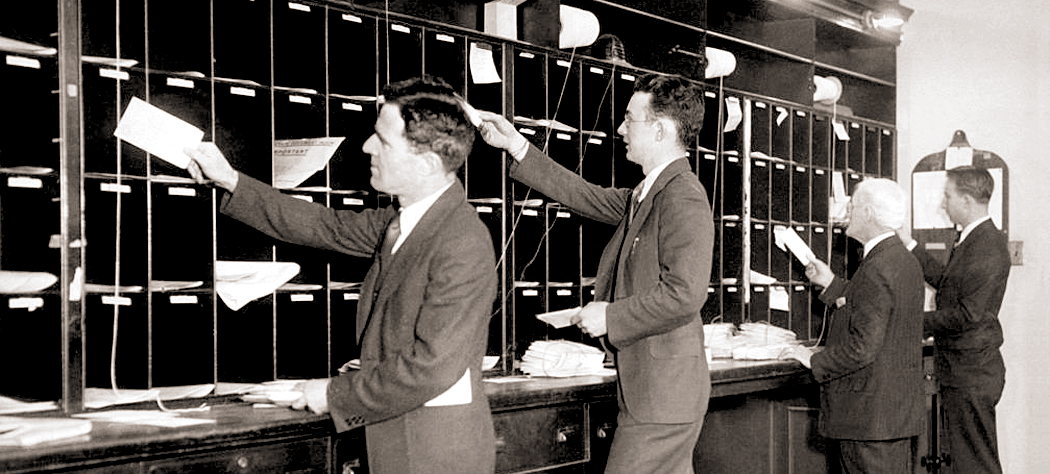
And even when I write an e-mail to friends or family — the kind of note that for most people contains a short sentence, a quick “LOL” and an emoji — I am more likely to write what looks like an old-fashioned missive, the kind that used to come in a stamped envelope and delivered by a paid government worker. An e-mail from me will take a while to read through.They are sent not merely to convey information, but to be read. They have been written, not just jotted down. 

Over the eight years of blogifying, I’ve covered a great many topics. Many on art and art history — I was an art critic, after all — many on history and geography, a trove of travel pieces, a few frustrated political musings and a hesitant offering of oddball short stories (if you can call them by that name.) 

People say, “Write what you know,” but most real writers, myself included, write to find out what I know. The writing is, itself, the thinking. Any mis-steps get fished out in the re-writing. 

Ah, words. I love words. I love sentences, paragraphs, chapters. Although I wrote for a newspaper, where short, simple sentences are preferred, I often tested the patience of my editors as I proved my affection for words by using obscure and forgotten words and by using them often in long congregations. 

“I love long sentences. I’m tired of all the short ones. Hemingway can keep them. Newspapers can urge them. Twitter can mandate them. To hell with them.

“My ideal can be found in the long serpentine railways of words shunted hither and thither over dependent clauses, parenthetical remarks, explanatory discursions and descriptive ambiguities; sentences such as those found in the word-rich 18th century publishing world of Fielding, Sterne, Addison, Steele, or Boswell, and perhaps most gratifyingly in the grand, gravid, orotund sentences of Edward Gibbon, whose work I turn to not so much for information about the grandeur that was Rome, but for the pure sensuous pleasure to be had from those accretive tunes built from the pile of ideas and imagery (to say nothing of ironic asides), and peppered liberally with the notations of colons, semicolons, dashes and inverted commas.”

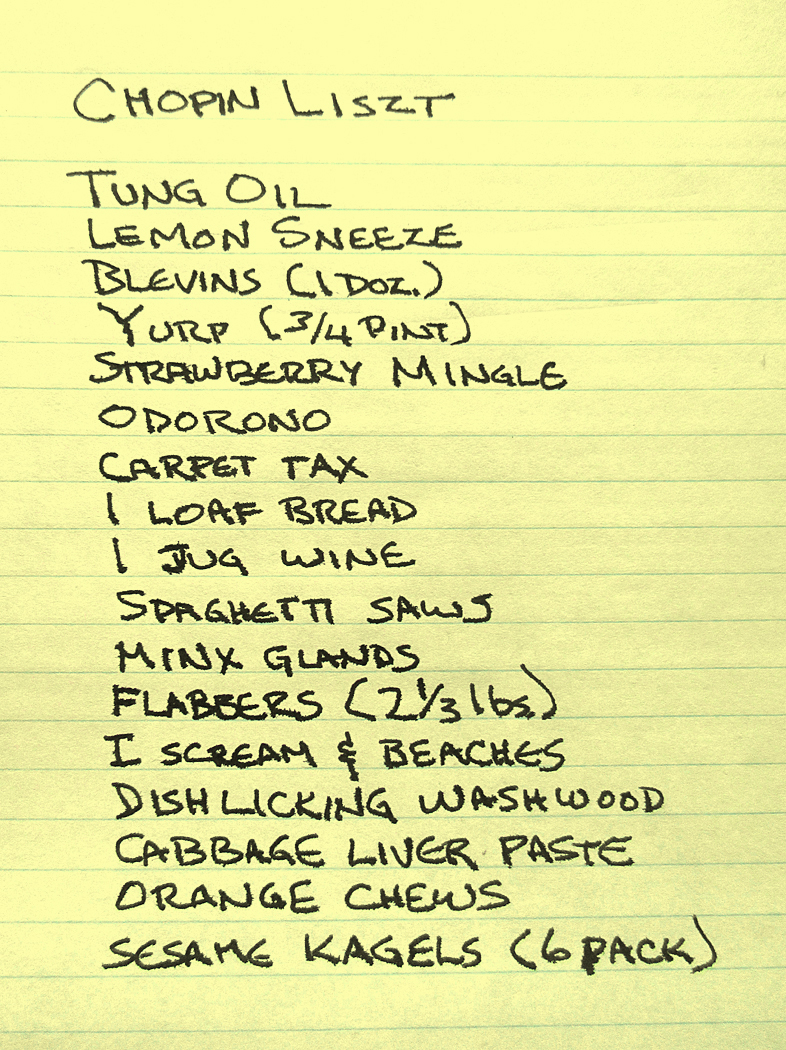
The love of words fuels a fascination with paronomasia. I make up words, play with them, coin spoonerisms and mondegreens and pepper my everyday speech with them. As music critic, I reviewed sympathy orchestras. Sometimes I have trouble trying to mirimba a name. On my shopping list I may need dishlicking washwood. 

I often give my culinary creations names such as Chicken Motocross, Mentil Soup, Ratatootattie, or  — one I borrowed from my brother — Mock Hawaiian Chile. 

When my wife came home from work, I usually asked “How did your Italian?” (“How did your day go?”)

When asked for my astrological sign, I say, “I’m a Copernicus.” My late wife was a Virago. And I’m pretty sure our Orange Bunker Boy was born under the sign of Feces. I call him a would-be Moose-a-loony.

I try to keep unfashionable words in currency. On long car trips with granddaughters, we didn’t count cows, we counted kine. I tend to refer to the girls as the wee bairns, or the kidlings. 

I have no truck with simplifying the language; I will not brook dumbification. The more words we use, the better, and the better inflected those words will be. As we lose words, the slight difference in emphasis and meaning is lost, and a simple word then has to do extra duty to encompass ideas and things that are better understood as different. 

Every word has a dictionary definition, but that definition is little but the skeleton on which the meat and muscle is hung onto. Each word has a nimbus of meaning and affect around it, which is learned by its speakers and readers through long acquaintance. You can always tell when someone has snuffled through a thesaurus, because the fancy word they choose has been stripped of its nimbus, or has an aura that is the wrong color for the spot in which it is placed. In other words, such a writer doesn’t really know the word that has been chosen. The Webster version is only a fuzzy black-and-white photo, not the real thing. 

I have written before how sometimes, instead of doing a crossword puzzle or rearranging my sock drawer, I will make lists of words. Each has a flavor and reading such lists is like perusing a restaurant menu and imagining the aroma and flavor of each offering. It is a physical pleasure, like the major or minor chords of a symphony. Here is a brassy word, there the pungency of an oboe, and over there, the sweet melancholy of a solo cello. 

I think all writers must have something of the same feel for the roundness, spikiness, warmth, dryness or wetness of words. And the way they connect to make new roundnesses, coolnesses, stinks or arousals in sentences. 

Yes, there are some writers — and I can’t pooh-pooh them — who use words in a blandly utilitarian way. Stephen King, for instance, is a great storyteller. He can force you by a kind of sorcery to turn pages. But on a word-by-word level, his writing is flavorless, almost journalistic. I suspect this is a quality he actually aspires to — to make the language so transparent as to be unobservable. I have to admit there are virtues in this, also. But not for me. 

I want a five-course meal of my words. 

Language can take either of two paths: prose or poetry. The first invests its faith in language as a descriptor of systems. It reaches its nadir in philosophy. It makes little difference if it is Plato or Foucault; philosophy — especially the modern sort — is essentially a branch of philology. It seeks to deconstruct the language, as if understanding the words we use will tell us anything about the world we live in. It tells us only about the language we use. Language is a parallel universe to the one we inhabit, with its own rules and grammar, different from the rules and grammar of the real world. 

This has been a constant theme in my own writing. When we say, “A whale is not a fish,” or “A tomato is a fruit, not a vegetable,” we are talking about language only, not about whales or tomatoes. But beyond the language we use to communicate our understanding of the world, no matter how vast our vocabulary, the world itself is infinitely larger, more complex, diverse, chaotic and unsystematic, not to be comprehensively understood by mere mortal. 

And I should clarify, by language, I mean any organized system of thought or communication. Math is just language by other means. When I use the term “language” here, I mean what the Greeks called “logos” — not simply words, or grammar, syntax or semantics, but any humanly communicated sense of the order of the cosmos. Not one system can encompass it all. 

Consider Zeno’s paradox: That in a race between Achilles and a tortoise, if you give the tortoise a headstart, no matter how little, Achilles can never catch up. Before he does, he has to go halfway, and so is still behind the tortoise, and before he goes the remaining distance he must go again halfway. Thus he can never catch up. The paradox is purely in the forms of logic, not in the reality. We all know Achilles will catch up in only a few strides. But the system — the logic, or the words — tells us he cannot. Do not trust the words, at least not by themselves, without empirical evidence to back them up. 

All systems of thought, whether religious, political or scientific, ultimately break down when faced with the weedy complexity of existence.

And so, a good deal of what we all argue about is simply the words we choose to use, not the reality. We argue over terminology. Conservative, liberal? Is abortion murder? These depends entirely on your definitions. 

Poetry, on the other hand — and I’m using the word in its broadest and metaphorical sense — is interested in the things of this world. Yes, it may use words, and use them quite inventively, but its goal is to reconnect us with our own lives. It lives, not in a world of isms, but in one of mud, tofu, children, bunions, clouds and red wheelbarrows. This is the nimbus of which I speak. 

It is ultimately our connection with our own lives that matters, with the things of this world, with the people of our lives that should concern us. It is what provides that nimbus of inexactitude that gives resonance to the words. 

At various times in my career as someone who got paid for writing, I have been asked to speak to groups of students or the curious about my craft. It hasn’t always gone well. 

I remember one time I managed to annoy a community college teacher no end by telling her students to ignore everything she had been hammering into their heads. I didn’t know I was doing that; I was just talking about what I knew through experience. But she had been filling their minds with ugly formulae and what to my mind are tired old saws: Make an outline; use a topic sentence; the rule of threes. As if you could interest readers by rote. 

Part of the problem is that I believe that writers are born, not made. Of course, you can improve anyone’s ability to put down comprehensible sentences, but good spelling and decent grammar do not make a writer. Just as anyone can be taught to draw and sketch, but that won’t make them an artist, anyone can be instructed how to fashion a paragraph or two without embarrassing themselves, but that don’t make’em into Roger Angell. 

One of the things that caused the teacher no end of bother was my insistence that the single most important and defining part of writing was “having something to say.” Without it, no rhetorical device, no repetition of authoritative quotations, no using active rather than passive voice, would suffice. And the truth is, few people have anything to say. 

Of course, everyone thinks they do, but what passes for thought is most often merely the forms of thought, the words that have previously been used to frame the ideas, and hence, someone else’s thoughts. Having something to say is genuinely a rare gift. 

This hardly serves to help the composition-class student or the teacher hoping to form them into perfect little Ciceros. Having something to say requires having had a living experience to draw upon, something original to the writer — a back yard with skunk cabbage, or a two-month deployment with a platoon, or the betrayal of a spouse — and an idiosyncratic reaction to it, something personal and distinct. Instead, most people are just not used to finding words to describe such things and fall back on words they have heard before. Easily understood words and phrases and therefore the mere ghosts of real expression. 

When you use someone else’s words, to that extent you don’t know what you are talking about. 

Being born a writer means being consciously or unconsciously unwilling to accept approximation, to be unsatisfied with the easily understood, to search for the word that more exactly matches the experience. 

One of the consequences is that to be a writer means to re-write. As you read back over what you have just put on paper — or on the computer screen — you slap your forehead over this bit or that. How could I have let that through? And you find something more exact, more telling, more memorable. It is only the third or fourth go-round that feels acceptable. (Each time I come back to a piece I’m working on, I begin again from the beginning and work my way through what I’ve already finished and change things as I go to make myself clearer or my expression more vivid. This means that the top of any piece is usually better written than the end. Sorry.) 

Having something to say and sweating over saying it in a way that doesn’t falsify it — this is what writing is all about. 

But is there anything I can say to those who just want to be a little bit better when turning in a school paper, or writing a letter to the editor, or publishing a novel about your life so far? Here are a few suggestions.

First and most important: Read. Read, read, read. Not so much to imitate what you have found, but to absorb what it is to use language. Just as one doesn’t “learn” English as a youngster, but rather you absorb it. When you are grown, you may have to learn a second language, but as an infant, you simply soak up what you hear and gradually figure it out. And likewise, reading lots of good writing isn’t to give you tricks to follow, but to immerse you in the medium so that it becomes your mother tongue. 

Second: Write. Write, write, write. In his book, Outliers, Malcolm Gladwell famously made the claim that it took 10,000 hours of practice to master a skill. He later explained he only meant that as an average, but the issue remains: You can’t become a writer without writing. Over and over, until it becomes second nature and all the amateur’s kinks are driven out. Write letters, journals, blogs — it doesn’t matter what, but writing and doing it constantly makes you a better writer. 

Third: Fill the well you draw from. Nothing will come of nothing. Everything you see, feel and do is who you are and is the substance of your writing. If you know nothing, feel nothing deeply, do nothing interesting, then you have nothing to bring to the sentences you write. Good writing is not about writing, despite all the reflexive gibberish of Postmodern philosophers. 

Even when you want to write about abstract ideas, you had better do it through touch, feeling, color, smell, sound. Nothing is worse than reading academic prose, because it is upholstered with “isms” and “ologies.” 

“The work of the text is to literalize the signifiers of the first encounter, dismantling the ideal as an idol. In this literalization, the idolatrous deception of the first moment becomes readable. The ideal will reveal itself to be an idol.”

Thank you. I no longer need to count sheep. 

Through the Middle Ages, all educated people communicated in Latin. In a strange way, that doesn’t seem to have changed. Words of Latin origin predominate in academic prose. Sometimes reading a peer-reviewed paper is like translating Virgil. 

Language and experience are parallel universes. We try to get language closer to the life we live, but it is always at least slightly apart. When we speak or write in abstractions, we are manipulating language without reference to the world of things we live in. Language about language. Good writing is the attempt to bring these two streams closer to each other, so that one may refresh the other. We do that primarily through image and metaphor. An idea is clearer if we can see it or feel it. Flushing it through Latin only obscures it. 

“Show, don’t tell” works best even when you are “telling,” i.e., writing. 

For those who don’t have to think about such things, a word is a fixed rock in the moving stream, set there by the dictionary. But for a writer, each idea and each word is a cloud of meaning, a network of inter-reference. To narrow down those possibilities, a picture helps — a metaphor. Not added on at the end, but born with the idea, co-nascent. 

Take almost any line of Shakespeare and you find image piled on image. “Our little life is rounded with a sleep,” says Prospero. Donalbain fears “the daggers in men’s smiles.” “If music be the food of love, play on.” “Now is the winter of our discontent made glorious summer by this son of York.” Shakespeare is nothing if not a cataract of sense imagery. 

How different if Prospero had simply said, “Life is short and then you die.” 

There are a whole host of injunctions and directives that are given to wanna-be writers, and all of them are worthy. Don’t use passive voice; always have antecedents to your pronouns; avoid pleonasm; edit and revise; dump adverbs and, damn it, learn how to use a semicolon. 

But none of them is as important as the primary directive: Have something to say. 

Oh, and yes, it’s always fun to annoy community college teachers. 

The New York Times runs a feature in its book section called “By the Book,” where famous authors are asked a set of questions. The Times will never get around to me, so I decided I needed to ask myself these standard questions.

Gulag 2

Question: What books are currently on your nightstand?

Aleksandr_Solzhenitsyn_1974Answer: I am about 70 pages into the second volume of Alexander Solzhenitsyn’s Gulag Archipelago. There are three volumes; I fear my nightstand may collapse. Not only for the weight of the books — they are real doorstops — but for the sagging heaviness of its content. For some reason, I have an unquenchable thirst for validation of my pessimism, for a dim view of humankind’s inhumanity to humankind, and likewise a depressing recognition of the tiny flame of idealism that refuses to be extinguished. I wish I could get rid of it. It always breaks my heart.

Q: That’s fine for your nightstand, but what book are you currently reading?

DublinersCaught me. Yes, I’m 70 pages in to Vol. 2 of the Solzhenitsyn, but it was so depressing, I needed to take a short break. So, I am now finishing up James Joyce’s Dubliners. Turns out it’s nearly as depressing. I’ll be getting back to the Russian as soon as I’m done with the Irishman.

Q: What was the last great book you read?

A: That’s a tough question to answer, because you have to decide where to set the bar. Does the Solzhenitsyn count, even though I’m not finished? Before that, Timothy Snyder’s Bloodlands. But that is for content, not for style (nothing wrong with his prose, but that’s not the reason for picking up that depressing book). Ted Hughes’ Tales from Ovid is one of the best translations I have ever read. I just finished rereading it (again). I read all three of John Updike’s Bech books and reread Saul Bellow’s Herzog, which I first read in high school when it first came out. But if you mean really great, like Moby Dick or Proust, then I will up the ante, if you want great, the greatest book I have ever read is Homer’s Iliad. How can it be that the first book in our culture is also the greatest? I reread it once a year.

Q: What book did you hate reading as a child?

A: Hands down: I was required in 8th grade to read Oliver Twist. I hated it. I hated, hated, hated it. The teacher had picked out a book she thought each student would most enjoy and I got saddled with Dickens. I don’t know what she saw in me that thought I would enjoy reading a Victorian novel, but it has ruined me for life, not just for Dickens, who I still cannot bear, but for all Victorian literature. The fault is not in the books, but in myself. I grant that. But I feel like I’m chewing an old mattress when I try once more.

Q: Disappointed, overrated, just not good: What book did you feel you were supposed to like but didn’t? Do you remember the last book you put down without finishing?

ogden nashA: We are all inclined to favor certain styles and epochs and to fail to appreciate others. I have never been able to stand Virgil’s Aeneid. It feels completely stiff and academic to me, too literary, too contrived, artificial. I have tried to read many different translations, hoping to find one I could stomach, but so far … no. As for not finishing, I came across a used set of the complete works of Ogden Nash. I so looked forward to wallowing in his wit. Lightweight, yes, but clever. At least, so I thought. Turns out, all the great bits he wrote are already anthologized to death and the stuff that you don’t already know — it turns out there’s a reason you don’t know it. Pedestrian, dull, dated, trying too hard, puerile, or contorted beyond enjoyment. I couldn’t finish it. I’ll keep to the good verses I already know.

Q: What do you read for fun?

brian lambA: My wife makes fun of me by calling me “the man who can’t have fun.” She means I’m always in some serious book of history, or the classics. She means that on weekends, I watch C-Span. (There are some very few beings in this world whose utter humanity and service to humankind recommends them for sainthood and among them I place the Dalai Lama, David Attenborough and Brian Lamb). My wife wants me to go see some popular movie or wear a funny hat for a costume party, and I just cannot get any pleasure from such things. I dread state fairs and Renaissance festivals. Shoot me if you ever see me at a karaoke bar. But that doesn’t mean I don’t have fun. It’s just that my definition of fun is different from hers. I get the greatest pleasure from listening to Bach or Schoenberg, reading John Milton, viewing films by Tarkovsky and rereading Ovid one more time. I can’t help it. I’m not pretending, or trying to make myself sound more brainy; these are the things I genuinely enjoy. I do them for pleasure. Utter pleasure.

Q: All the time? Really?

A: Well, my wife and I share an enjoyment watching British detective series on TV. American cop shows are too violent for our tastes, and the crimes are always by serial killers, drug kingpins or terrorists. The British series tend to focus on the more mundane crimes we are all more likely to encounter in life, crimes of jealousy, greed, anger. And the British series  often bypass the actual murder, joining the story as the body is found. We love them all, from the wimpiest to the grittiest. Unfortunately, between the two of us, we have defused too many of these mysteries by discovering the most successful trick in fingering the guilty party, and it has nothing to do with clues. It is a metalogic method: Just look for what we call “the unnecessary character,” the supererogatory person in the story — an extra sister not otherwise needed, a solicitor outside the main story, an ex-boyfriend or a retired cop, dragged into the story for reasons not otherwise clear. The unnecessary person rarely fails us.

Q: But this is about books. Do you read mysteries, too?

Bruno CremerA: Sort of. I’m addicted to Maigret books. Whenever I have to decompress from reading more about genocide in Eastern Europe, I pop open another Maigret. But properly speaking, they aren’t mysteries. We often know who the culprit is early in the book. Instead, they are novels about crime, and Georges Simenon fills the pages with vivid characters, drawn in three dimensions. There is little of the piling up of clues and gathering people together at the end to ferret out the killer. Instead, the same books could probably have been written without the crime at all, as perhaps love stories or travel books. I love Simenon as a writer. By the way, we have the DVDs of all the Bruno Cremer Maigret episodes and the British version with Michael Gambon. Watched them all multiple times.

Q: What books give you the most pleasure in the reading?

A: And the re-reading. There are a handful of books I can read over and over and always give me pleasure, not so much in the storytelling — since I already know how it comes out — but in the words. The words, words, words. Certain writers just make my mouth water with the words they use, the metaphorical and playful use they make of them. If I were to make a list of, say, the top five books that give me utter, ecstatic pleasure, they would be: 1. Tristram Shandy; 2. The Decline and Fall of the Roman Empire; 3. Paradise Lost; 4. Joyce’s Ulysses; and 5. The Iliad. I cannot get enough of all of them. Oh, and I have to add Chaucer; can’t leave him off. And Moby Dick. Jeez, I love that book. I cannot limit it to five. How could I leave off Ovid’s Metamorphoses?

Q: What books most influenced you as a writer?

Herman MelvilleA: So many people were influenced by Hemingway. I was not. Instead, I loved the long, baroque sentences and richly figurative language of Herman Melville and Henry David Thoreau, image piled on image with a profuse fertility, leaving me, as a reader, feeling like I was being pulled one way and then another by breakers at the beach. Oddly, I often read secondary works before moving on to the main course. I read all of Melville’s short stories, including Benito Cereno and Billy Budd, before I ever finished Moby Dick. Perhaps because I loved the opening chapter of Moby Dick so much, every time I put the book down and picked it up again, I started from the beginning. I must have read “Loomings” a hundred times before finally moving on to the rest. The other great influence was Henry Miller, not for the obscenity, but for the torrent of words, the forward motion of the narration in such books as Plexus, Tropic of Capricorn and Big Sur and the Oranges of Hieronymus Bosch. I’ve since left Miller behind, but he was a great ignition flame.

Q: Which writers writing today — novelists, poets, playwrights, journalists, critics — do you admire most?

A: I am not being disingenuous when I say my favorite living poet is my wife, Carole Steele, whose book, Rust Sings, is full of life and great lines. And I always open my New Yorker to its final pages looking for Anthony Lane.

Q:  What author, living or dead, would you most like to meet, and what would you like to know?

Laurence_Sterne_by_Sir_Joshua_ReynoldsA: First, it would have to be an author in English. I can’t speak ancient Greek. There are some that come to mind, but I’m not sure I really want to know them: Nabokov is too waspish; Faulkner too inebriated; Gibbon too erudite. I go through a list and realize most authors I would rather read than meet. But there is one I would love to spend a lazy afternoon with, talking and making jokes and maybe commiserating a bit — Laurence Sterne. We could share a beer easily. What would I want to know? Not a thing; let’s just talk.

Q: What is your favorite word?

A: We’ve made a pivot (Bernard) in this Q&A, haven’t we. What’s the loveliest word in the English language, officer? In the sound it makes in the mouth? In the shape it makes in the page? Not “elbow,” not for me, though it is a fine word. No, I like “smudge,” or perhaps “caliper,” which on the page has both an ascender and a descender, which makes it a good word to compare typefaces with. Really, I can’t pick one word. How does a mother choose among her children? Not possible.

Q: What is your favorite curse word?

A: I rarely curse, which makes it more effective when I do.

Q: If a movie were to be made from your life, who should play you?

michel simon 1A: Ideally, Jean Gabin, but more realistically, Michel Simon.

Q: What sound or noise do you love?

The squall of thousands of Canada geese in a pond and flying overhead. A noise most people find excruciating, but in me, it brings forth the swelling of my chest and the tears one sheds faced with ultimate beauty.

Q: If Heaven exists, what would you like to hear God say when you arrive at the Pearly Gates?

A: “Don’t unpack, we’re sending you back for another round.”