Archive

Uncategorized

In addition to this blog, which I have been writing since 2012, I have written a monthly essay for the Spirit of the Senses salon group in Phoenix, Ariz., since 2015. I was, at various times, a presenter for the salon, which arranges six to 10 or so lectures or performances each month for its subscribers. Among the other presenters are authors, Nobel Prize-winning scientists, musicians, lawyers and businessmen, each with a topic of interest to those with curious minds. I recently felt that perhaps some of those essays might find a wider audience if I republished them on my own blog. This is one, from Jan. 1, 2020, is now updated and slightly rewritten.

“Constantinople is not Constantinople anymore…”

That’s how the song goes. “Constantinople is now Istanbul…” etc. etc. for the rest of the tune. The change in name happened officially in 1926, although it took until the 1950s before the switch made it down to the level of a pop tune.

This is hardly the first time that the city on the Bosphorus has switched identities. If we look in the rearview mirror, the city has been named Stamboul, Istanbul, Constantinople, Islambol, Constantinople (again), Byzantium, Nova Roma, Augustina Antonina, Byzantium (again) and, according to Pliny the Elder, was first founded as the city of Lygos by Thracian immigrants in 13th or 11th century B.C.E.

Besides the official names, there are the names the city was known by in other languages and cultures. For instance, the Vikings called it Miklagarth or “Big Wall.” It is Tsargrad (or “Caesar City”)  in old Slavic languages (and remains so in Bulgarian). To the Persians, it was Takht-e Rum, or “Throne of the Romans.” In Medieval Spain, it was Kostandina. And in old Hebrew, it was Kushta.
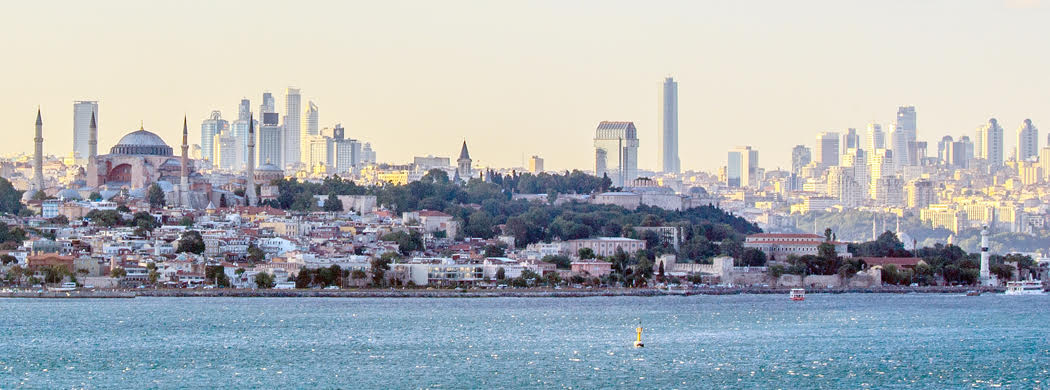
During the Ming Dynasty in China, the city was Lumi, but in the Qing Dynasty it was Wulumu, or alternately, Gongsidangdinebole. That’s a mouthful. In modern Pinyin Chinese, it is Yisitanbao, in which you can hear the echo of “Istanbul.”
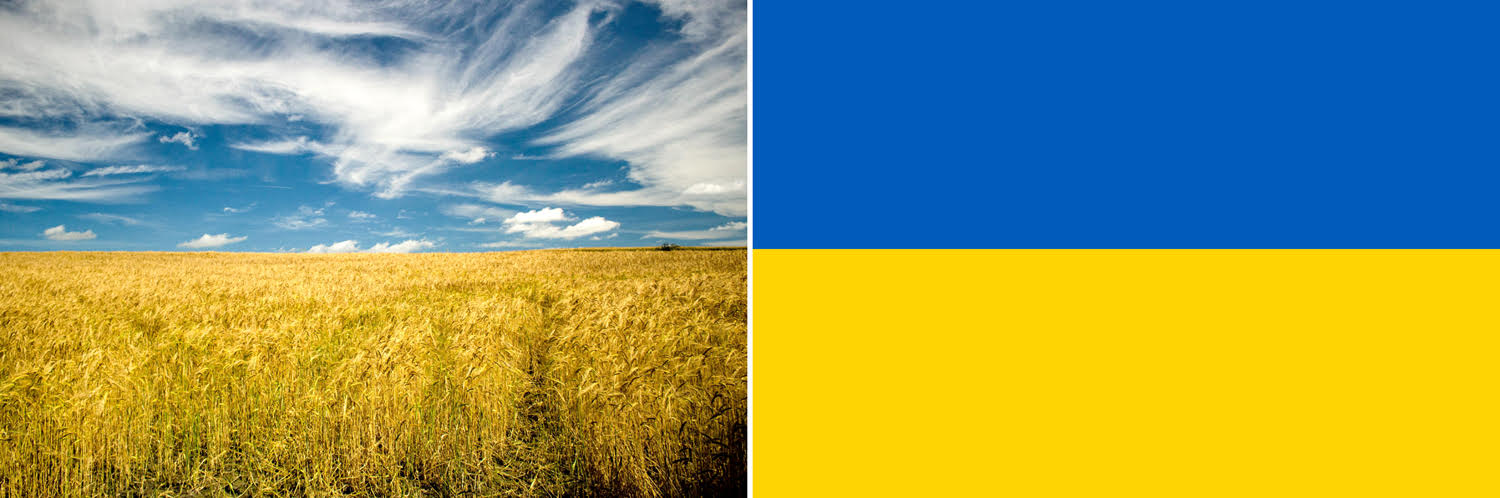
I bring this up, oddly, because Ukraine is so much in the news. When I was learning geography in grade school (another outdated name), it was “the Ukraine,” very much parallel to “the Argentine,” or “the Midwest.” A few years ago, the definite article was officially sent packing.

The issue was born of history. In the 12th century, the city of Kiev dominated the trade routes from northern Europe to Constantinople and the region developed into a quasi-nation called the Kievan Rus. Later, the city of Moscow, to the north, grew stronger and became dominant.

And so, there were two Russias and the larger, ruled by Moscow, acquired the name “Russia,” and the lesser became known as “Little Russia,” or Malaya Rossiya, or, for short, Mala Rus.

(Excuse this oversimplification of history. This is not even the Cliff Notes version of Russian and Ukrainian history and leaves out a whole lot, but I hope gives the gist of what goes on with the naming of the spot on the globe. I have not even begun to mention the Tatars.)

To continue: With Muscovite Russia taking over, what was called Little Russia was seen as a kind of borderland between Russia and Poland. A “buffer zone.” Russia has always been obsessed with buffer zones. By the most commonly accepted etymology, “Ukraine” means “borderland.” And hence, the definite article. The Ukraine: The Borderland.

As a digression — Piotr Illich Tchaikovsky wrote six symphonies. The three final ones are huge, grand statements and a bulwark of the symphonic repertoire. The first three are lesser works. His second symphony is known as the “Little Russian” symphony. Many people have assumed it was a smaller symphony that was somehow Russian. But it is named for the composer’s use of Ukrainian folk tunes in the music. Hence: “Little Russian.”

Back to the story. With the fall of the Soviet Union and the rise of Ukrainian nationalism, there was a backlash against any idea that their nation was the little brother and popular sentiment abhorred the older idea of Little Russia. They resented the popular image that they were the hicks and hillbillies of the Steppes. And they equally it hurt their national pride that they were merely a borderland between other, more important powers.

The country also has a more recent beef with their former overlords. Through the first half of the 20th century, Ukraine was devastated by Soviet  policy. In the 1930s, untold millions were starved to death by Stalin. Later, untold millions were killed by Hitler. This sorry story is recounted brilliantly in Timothy Snyder’s 2010 book, Bloodlands. Grim but important reading.

And so, once they were independent, in 1991, they asked the world to drop the article in their name, and on Dec. 3 of that year, the Associated Press officially changed the style and asked newspapers to use “Ukraine” and no longer “the Ukraine.”

I remember when that happened. I was working at The Arizona Republic; it was a small footnote to that year. The AP frequently updates its stylebook, but the loss of the “the” struck me at the time as kind of ugly. Linguistically, I liked the distinction the nation had as an outlier. I have always liked language anomalies.
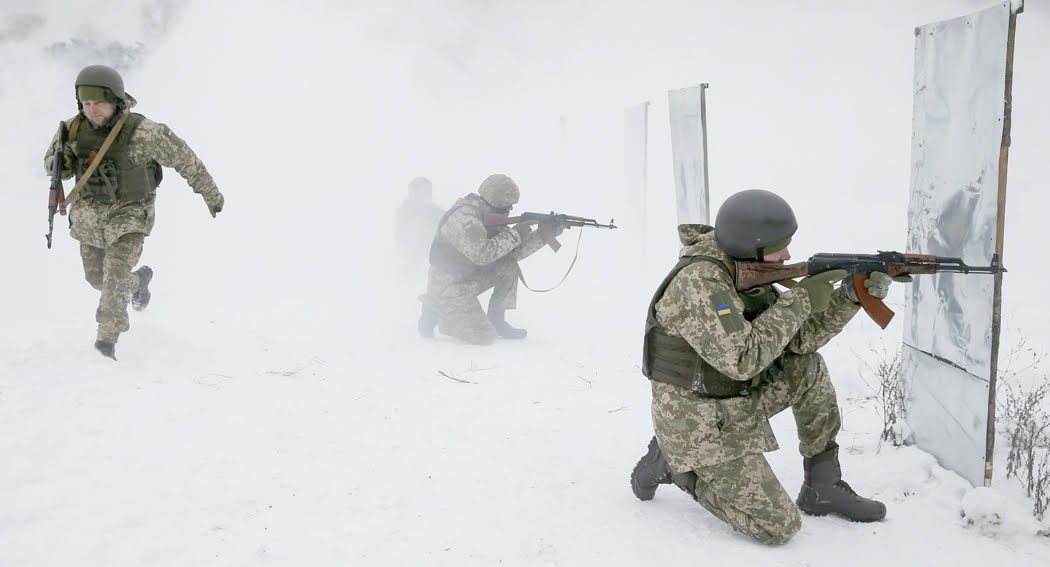
Sorry. I keep getting distracted. So, after the Russian annexation of Crimea and the invasion of Russian-ish troops into eastern Ukraine, the leader of the separatist movement and head of the self-proclaimed state of Donetsk People’s Republic, Alexander Sakharchenko, proposed renaming his portion of the Ukraine as Malarus, or “Little Russia,” to acknowledge his allegiance to the idea of a single grand Rus. The idea went nowhere; even the Russian-leaning populace wanted to distance themselves from the old idea of “little brother.”

We have a habit, probably hard-wired into our evolution, of thinking of the world as static, as a given. We may change, we may age, we may marry and divorce, but the land we live on is permanent. It is not.

Not only are nations and borders constantly shifting, but rivers change course, mountains lose half their height overnight (Mt. St. Helens or  Vesuvius). You can find on the internet several YouTube animations demonstrating the wiggling, shifting borders of nations over the past thousand years. Poland notoriously rolls around like mercury on a plate. Even after World War II, the whole of Poland lifted up its skirts and moved 200 miles to the west.
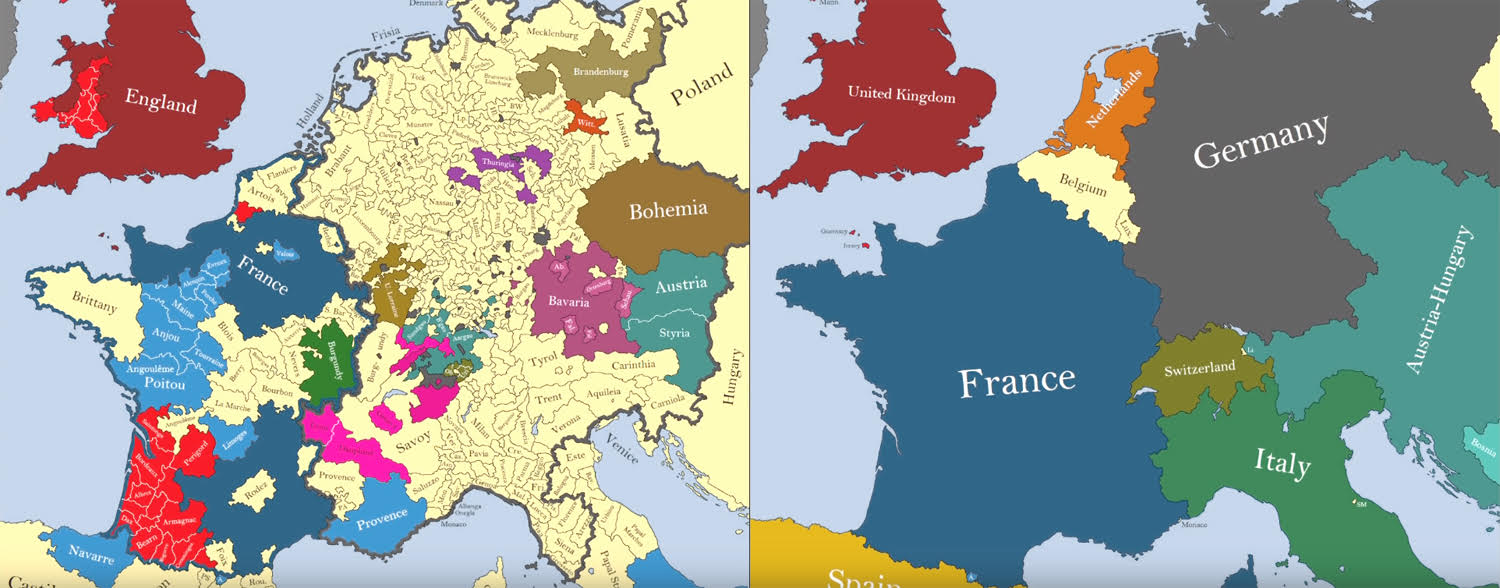
But for our purpose here, it is the names of places that I want to point out. They change constantly. Either because the old name has demeaning connotations, or because of political change, or the splitting up of ethnic portions of a once-single nation, or the rising linguistic influence of a powerful imperialist neighbor.

So, not only has the Ukraine become Ukraine, but Peking has become Beijing; Bombay is now Mumbai; Upper Volta became Burkina Faso. Cambodia turned to Kampuchea, but then went back. Burma tried on Myanmar and is now loosening up to be Burma again. But Rangoon is pretty secure as Yangon.

As political influence shifts, names come in and out of circulation. Where Germany and Poland contend, you sometimes have both names, such as Danzig and Gdansk, Stetin and Szczecin, or Auschwitz and Oswiecim.

Czechoslovakia is now the Czech Republic and Slovakia. Mapmakers must go crazy trying to keep up.

Even in Ukraine, Kiev is changing to Kyiv.

Persia became Iran in 1935; the Kingdom of Hejaz and Nejd became Saudi Arabia in 1932; Abyssinia turned into Ethiopia in 1941; Siam became Thailand in 1949.

One of my favorites — In 1384, the Duchy of Brabant became Burgundian Netherlands; a century later, it became Habsburg Netherlands. Give another hundred years and it became Spanish Netherlands. In 1713, it became Austrian Netherlands followed in 1815 as the United Kingdom of the Netherlands, only to turn a few years later into what we now know as Belgium. There is a bubbling separatist movement that may turn the whole thing back into two countries: Wallonia and Brabant, bringing full circle.
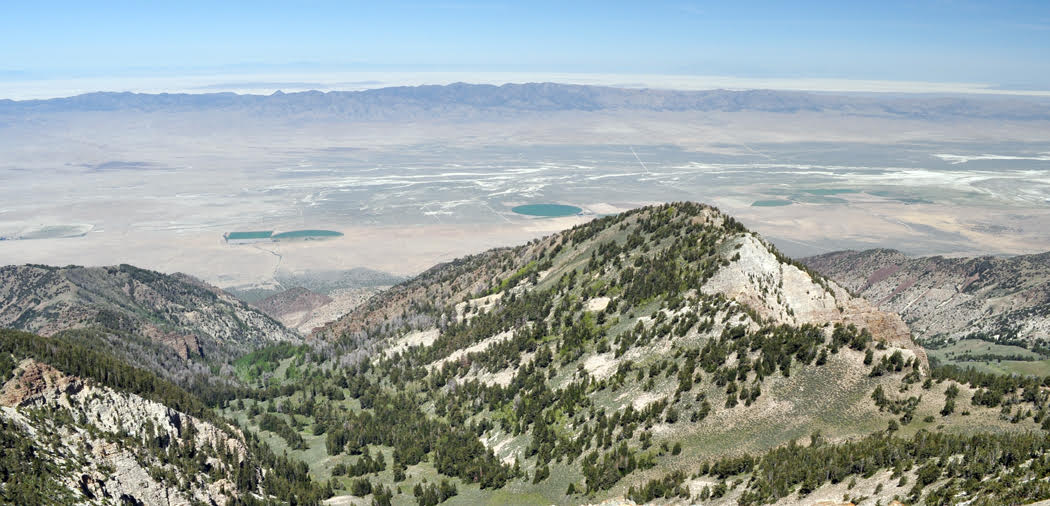
Utah was once called Deseret. Kolkata was once Calcutta. St. Petersburg became Petrograd became Leningrad became St. Petersburg once again.

I don’t think even Ovid could have kept up with all the shifting identities.

Bechuanaland is Botswana; Basutoland is Lesotho; Ceylon is Sri Lanka; British Honduras is Belize; Dahomey is Benin; Madras is Tamil Nadu; Londonderry is Derry. Russia itself went through a cataclysmic shirt to the Union of Soviet Socialist Republics to the Russian Federation and back to good ol’ Russia.

Joseph Stalin kept the commissars humming. The city of Tsaritsyn was renamed in his honor as Stalingrad. But genocidal dictators come and go, and now the city is Volgograd. Dushanbe in Tajikistan was changed to Stalinabad in 1929 to honor Uncle Joe, and was de-Stalinized later, returning it to Dushanbe. Of course, the man history knows as Stalin wasn’t born that way; he was originally Iosep Besarionis dze Jughashvili.

I could go on listing name changes. Illyricum in the Roman Empire was Yugoslavia during the Cold War and has since shattered into various entities, forming and reforming now into Slovenia, Croatia, North Macedonia, Bosnia and Herzegovina, Serbia and Montenegro. Give it time and the region will certainly transform again.

The point of all this is that the world is dynamic. Our sense of it is static, but the reality is constantly shifting. When I hear politicians rail on about national sovereignty or diplomatic recognition for rogue states, I turn my head and blush for them. It is all just snakes in a bucket, over time, wriggling and writhing. New York was once New Amsterdam; Oslo used to be Christiania; Guangdong was first known to us as Canton.

Nothing stays the same. It is always changing. Tempus fugit. Everything fugit.

Even Regina, Saskatchewan was once a town named Pile of Bones.

The best gift a writer can get is proof that his words are being read, and not just read, but understood. (When I was writing for the newspaper, too often I heard from readers who complained about what they thought I wrote and not what I actually wrote. Every writer has had this experience.)

The other day, I received such a gift, a small one, not meant to be anything important, but it was completely meaningful to me. This gift was from an old and dear friend who I only see once or twice a year, and to our lunchdate, she brought a 3-by-5 notecard on which she had scribbled with every color green she could extract from her colored pencil set. I doubt she knew how much that meant to me. 

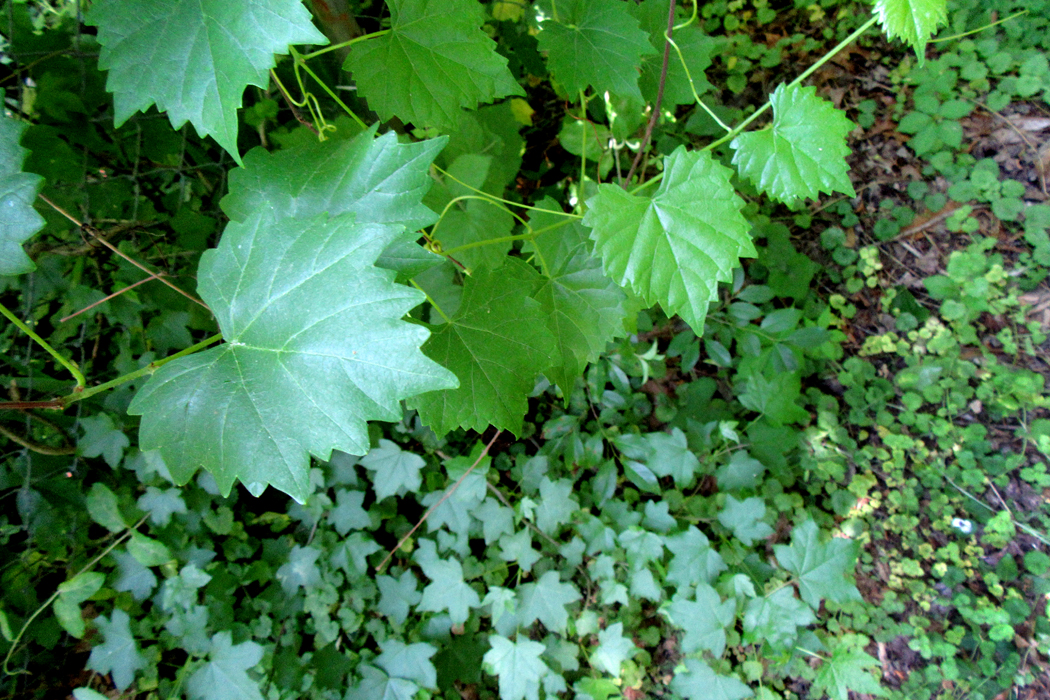
It was a gloss on my most recent blog essay, in which I had mentioned how many greens I saw in the foliage in the woods and garden I was visiting, and also how many greens Paul Cezanne had managed to generate in his paintings. The card she plopped down on the table was meant to be a casual joke, but to me, it was very much more than that. We don’t always know the significance of what we do. 

But it set me to thinking about those greens — blue-green, yellow-green, sea-green, leaf-green (not enough words for the varieties of hue) — and made me take my camera out to the garden again to gather my own set of greens. Nature gushes with them. 

There are three qualities that make an image: shape, color and texture. (Leaving aside the question of what you name the subject of a picture: “That’s a house;” “That’s a car;” “That’s my Aunt Philomela at the beach house in Boca.”) Shape can be defined by outline. Color and texture fill those outlines in and what is more, if you are making an image in black and white, texture (stippling, crosshatching, scribbling) can substitute for color. Each of these elements can be as much a delight to the eye as harmony is to the ear or flavor to the palate. 

And so, I walked through the yard drinking in the greens and pointing my camera to arrange the patterns of shape, color and texture to try to make a kind of visual mixed salad for the eye. 

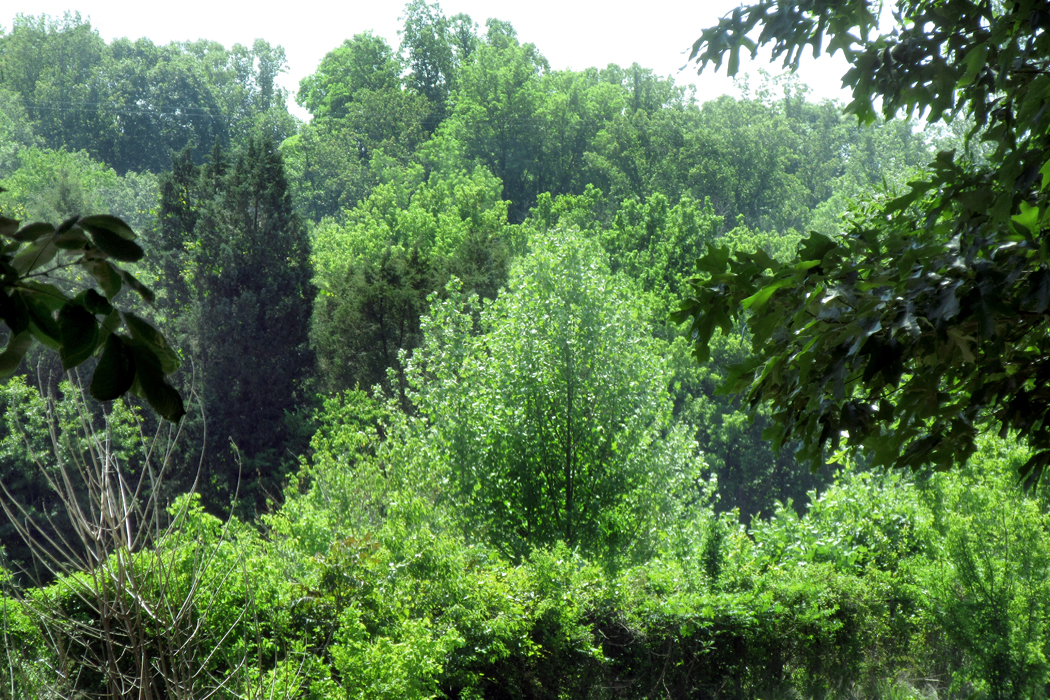
In the afternoon, I drove out into the countryside and stopped near the Mayo River — barely a river — that I had once canoed down maybe 50-plus years ago, hitting white water on the way (if the canoe had capsized, I doubt the water would have gotten higher than my knees). Along the banks were further salad greens. I gathered them all in my lens. 

The pleasure later that evening was editing the photographs, collating those shapes and textures and those luscious greens. “No white nor red was ever seen/ So am’rous as this lovely green.”

Many years ago, the professor I studied under commented offhandedly that nature never made a bad color combination. Any two colors found in nature, he said, could be placed side by side for a satisfying esthetic treat. Salmon red and pea green. The blue and yellow of a spiderwort flower. The orange and black of a monarch butterfly. 

Humans are quite capable of jarring our eyes with garish mismatches — gaze down any “Miracle Mile” for its signage — but nature, he said, is always right. Of course, our pleasure in the color-matches of nature should probably be laid at the feet of natural selection: We have evolved to love those colors and perhaps we shouldn’t be too glib about assuming that nature had us in mind when she plopped the buttercups next to the violets along the highways. 

 The riot of greens I saw and photographed played off against each other, making color combinations as rich in greens as the roadside flowers made of whites and yellows. 

And the various textures of leaf surface made their own contrasts. 

And the lights and darks, as shadow and light hit the foliage, gave them visual depth. 

Deep in one image, the bright green leaves nearer the surface hid the shadowed poison ivy, almost hidden in a cavern of green.

Leaves come in varieties of all of them. And when you layer one next to another, the contrast can keep the eye interested. 

In the process, I found myself drinking in not just the colors, but the varied shapes, creating patterns and textures that delighted my eye. 

Shape against shape, color against color, texture against texture: the analog of variety in the world, a variety that means we can never grasp it all — there is too much. 

One gets to know the plants in the woods near where you live, perhaps even name them: Duchesnia, Tradescantia, Helianthus, Ranunculus. They are part of what makes your home territory comfortable and familiar. Clovers, mosses, ferns, plantains, dandelions.  

And there is excitement when you enter a new biome and come across new greens, like the gray-green greasewood of the Sonoran Desert or the euphorbias of South Africa, each with its idiosyncratic shades and tints. 

Before the photographs from space showed us the dominant blue of our world, the Earth was traditionally called a “green planet.” It is green that makes life possible. Without it, the planet would be bare rock surrounded by the blue sea. 

Each time I visit this part of the state, I can’t help but set myself a task — a kind of art project, to try to organize a different way of seeing. A few days ago, my task was to look straight down at the ground to see what it looked like. I made more than a hundred photographs I could use. After I wrote that blog entry, and after my friend gave me her gift, I began a second project, to see how many greens I could find, how many leaf shapes and contrasts I could photograph.

These that I’m presenting here are just a small sample. But I hope they are worth looking at, at least as a tasting menu of delicious green.

Click any image to enlarge

According to European-Western tradition, there are four cardinal directions: north, south, east and west; and we mark them on a map by making the sign of a cross: north, south, east and west. Dominus Vobiscum. But Western culture tends to value a map rather more than the ground under your feet. If we take a larger view of it all, we should acknowledge two more cardinal directions: up and down. We live in three dimensions, not two. A map is only a diagram. Et cum spiritu tuo.

And when we make images — photographs, drawings, paintings — we tend to look along the flat plane of our cardinal directions, which means also, the plane of our standing vision. And if we photograph flowers, we tend to make our images like the identification photos in a nature guidebook. We look at them as if they were as tall as us, or we as ground-hugging as them. 

The bias is to ignore the sky above, the mud below. I spent some hours yesterday attempting to break my own tendencies and see if a shift in perspective might give me a fresher look at the garden. And so, I made a series of photographs pointing the camera straight down at the flowers from the top. 

The first image I made, when I put it up on my screen, reminded me of something. It took a moment, but then I had it: the Pleiades — the Seven Sisters in the night sky in the constellation Taurus. Here are the flowers:

Here are the Pleiades:

Looking down in the day was a mirror of looking up at night. Bunches of flowers, especially roadside wildflowers, often remind us of stars in the night sky. It’s why we name them cosmos, stellas and asters. 

Certainly the flower that has meant the most to me, emotionally, through my life is the aster, named for the stars. I remember a day, some 40 years ago, driving with my then-soulmate (is there a sadder hyphenated word in the language?) near Port Jervis, N.Y., and coming across an abandoned field, maybe a couple of football fields in extent, that was crammed with asters, thistles and ironweed, so thick on the ground there was barely any green showing through. It was hysterical with blue, and I thought it was the most beautiful sight I had ever seen. Since then, I have sought any semblance of that abundance. I’m not sure a single life affords more than one of those moments. 

And so, I am walking through my sister-in-law’s garden in North Carolina and holding my camera flat parallel to the ground to see what these flower-stars look like from an angle we don’t normally see — or at least, think of them. 

Over and over the star analogy shown through. Constellations of yellow or white against a sky of green. 

Even the leaves themselves can be stars:

Patterns made: line-ups, triangles, squares, quincunx, spatters and grids. 

There is a Medieval trope that everything in Heaven finds its analog in the sublunary world (much like the Renaissance idea that everything in the world is mirrored internally in the mind). And I certainly felt that correspondence strongly while finding my floral models to photograph. 

It was the looking down that made the connection, the opposite of the looking upwards at the night sky. But looking down — straight down, if I could avoid my own clumsy feet — gave me more than that. I found that I was photographing more than calyx and petal, but discovering just how many distinct greens nature blares forth. 

Historically, painters had a limited number of pigments to use when painting leaves and trees. They could modulate those hues with the admixture of others, but there was a limit. The trees of Claude or Titian are mostly monophonic rather than stereo. The artist who freed green from those confines was Paul Cezanne, whose paintings contain more greens and more blues than any artist before or since. His eye for tint and shade was phenomenal. I remember when I first came to appreciate the work of Cezanne. I had seen his paintings only in reproduction and always thought of them as rather dull, even muddy. But visiting the National Gallery in Washington, D.C., I found a wall of the still lifes and was knocked out by the glowing depth of color: color I had never experienced except under the influence of herbs. But those chemical-induced colors were vaporous compared with the earthiness of Cezanne’s greens, blues and yellows. 

And so, there I was, camera in hand, looking earthward and seeing the exuberance of May in Piedmont, North Carolina, and the blistering variety of green that sprouts from the ground.

I walked around the property, head held downward, and finding such a joyous variety under my feet, that I wound up, in the space of under an hour, taking at least 100 usable photographs — images I would be proud or eager to share with the enthusiasm of a convert. The greens made patterns; the blossoms made patterns; the leaves were shapes to pleasure in; the colors were delicious. 

The esthetic sense, however, awakens an awareness of yet a seventh cardinal direction, which we might call “center.” It is the inward direction that is privy to the other six and gives them meaning and purpose. North, south, east, west, up, down, and in. Each in some way a reflection of all the others.

I have traveled much in each of the cardinal directions, north to the Canadian arctic, south to the Cape of Good Hope, eastward to Europe and finally, the Pacific coast. I have gone up in aeroplanes  and cathedral bell towers, and down in chthonic mine shafts and vast caverns, but most of all, I have gone inside of myself. The experience of nature — but also the making and partaking of art — expand the inner world, adding continents to the mental globe, possibilities of understanding, and depths of compassion. 

Looking down at the humble soil and its profuse variety keeps one from becoming tired of life. Paying attention is, in some ways, coequal with life itself.

Next — perhaps in tomorrow’s rain — I will extend my interior travels by looking straight up to see what is there.

Click on any image to enlarge

In addition to this blog, which I have been writing since 2012, I have written a monthly essay for the Spirit of the Senses salon group in Phoenix, Ariz., since 2015. I was, at various times, a presenter for the salon, which arranges six to 10 or so lectures or performances each month for its subscribers. Among the other presenters are authors, Nobel Prize-winning scientists, musicians, lawyers and businessmen, each with a topic of interest to those with curious minds. I recently felt that perhaps some of those essays might find a wider audience if I republished them on my own blog. This is one, from May 2, 2019 is now updated and slightly rewritten.

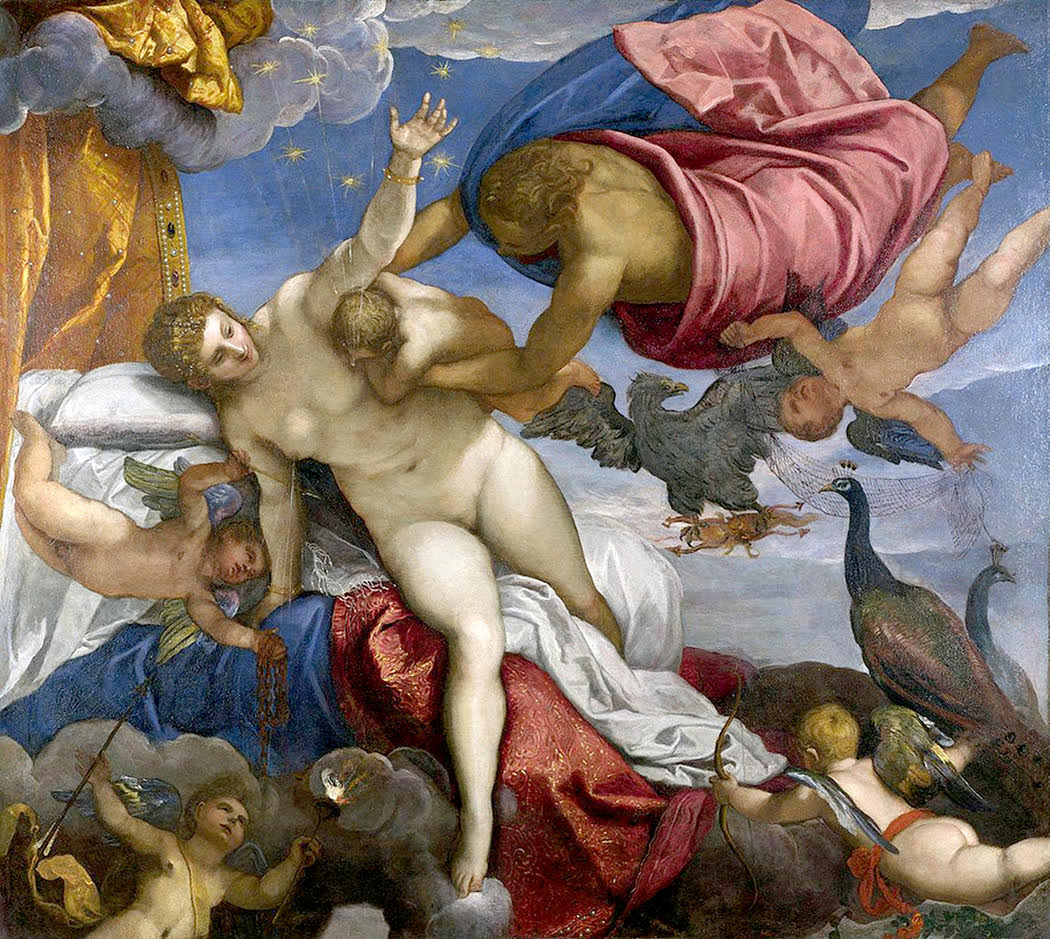
While Juno was asleep, the great god Jupiter brought Hercules, the illegitimate baby he sired on Alcmene, to suckle on the breast of his sister-wife and thus become immortal. But the baby bit down too hard on her nipple and Juno woke with a start and pushed the child away from her, leaving her milk to spew into the heavens, creating the Milky Way. The 16th-Century Venetian artist Tintoretto painted the scene in the 1570s.

At least, that’s one version the Romans told. In another, told by Eratosthenes, Juno woke to see the love-child of her husband at her teat and in anger and jealousy, threw him down: same result.

But there are many versions of the origin of the Milky Way, or galaxy, as it was known. In one, the sun, which circles the daytime sky from east to west, leaves behind a trail of sparks which are seen at night as the Milky Way.

Ovid, in his Metamorphoses, says it is a road lined with the homes of the gods, the way the Palatine Hill in Rome was home to the wealthy elite.

 The Roman word for the streak of light across the sky is Via Lactea, or the Milk Road, although they more commonly called it “Galactos,” or Galaxy, from the Greek Γαλαξίας κύκλος (Galaxias Kyklos) — “Milky Circle.”

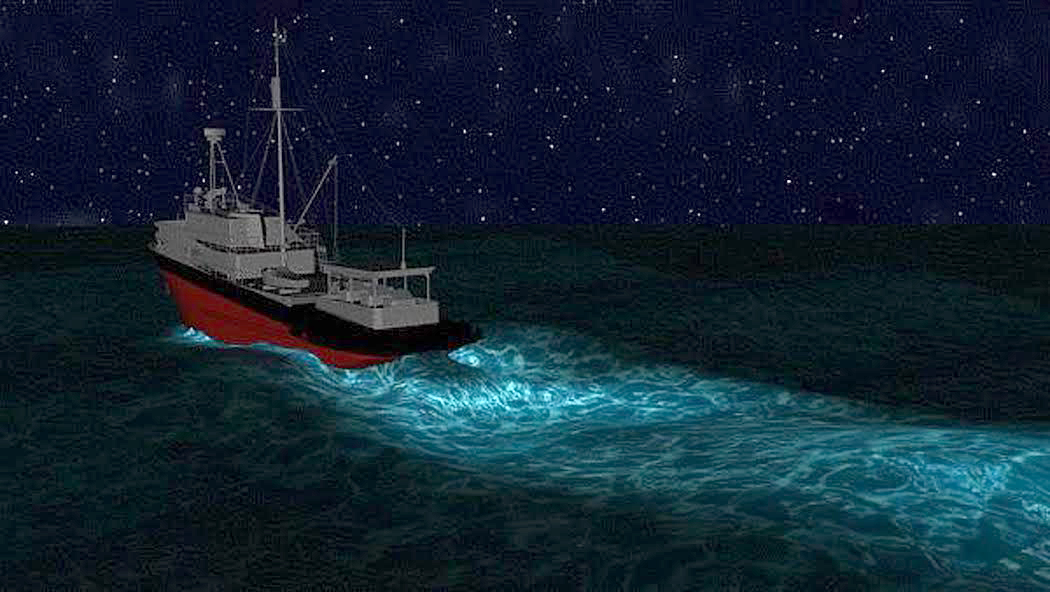
In his magnum opus, Astronomica, the Second Century Latin poet Manlius catalogs many versions. One suggests the Milky Way is the seam where the two half-globes of the heavens are welded. Or it might be the abode of the souls of heroes who have died. He noted the bioluminescent glow of a ship’s wake and surmised the bright path in the night sky might be the same.

Or, he cites Democritus from the Fifth Century BCE, that it might be the accumulation of myriad stars too faint to see individually. Which is surprisingly the way we know it now.

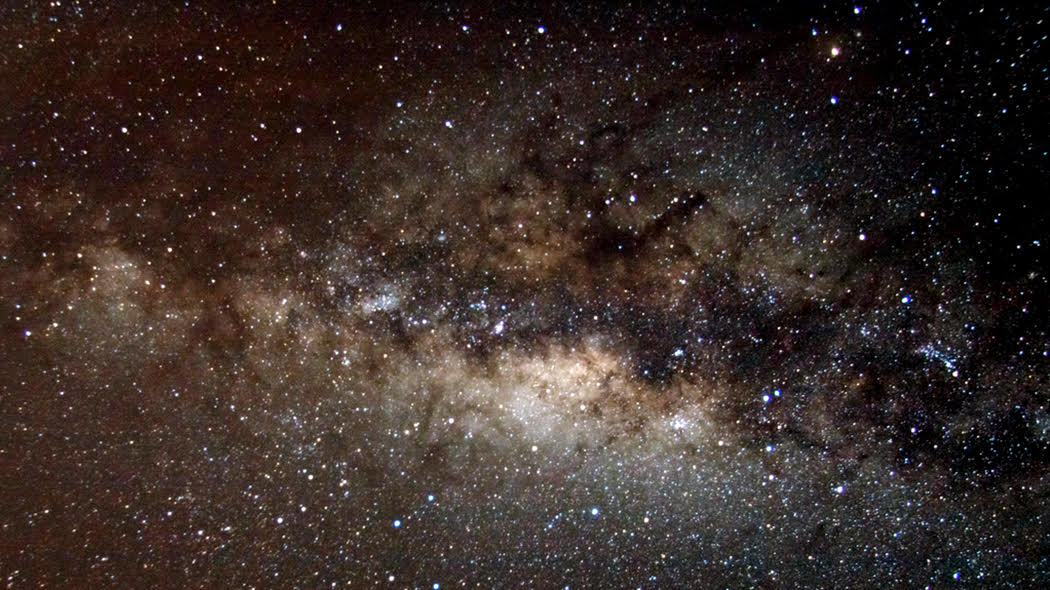
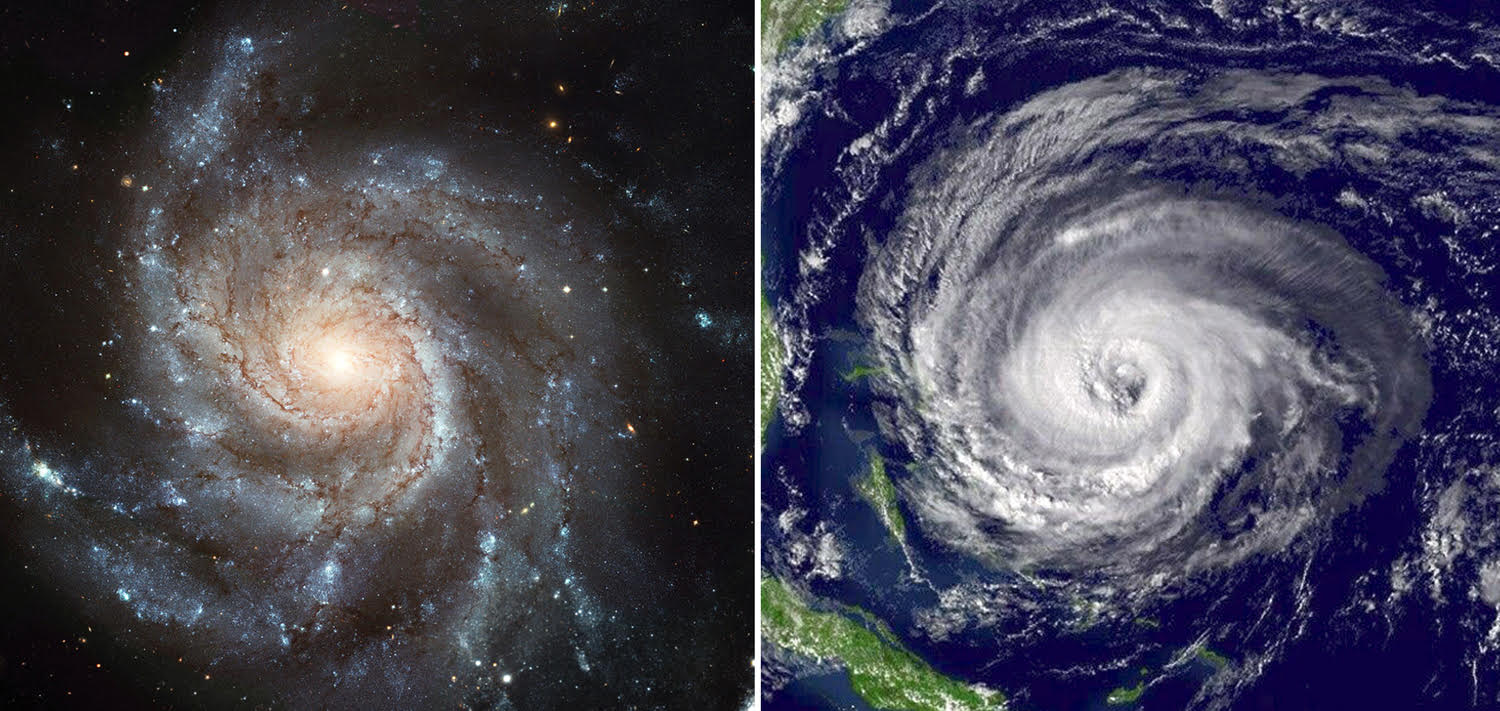
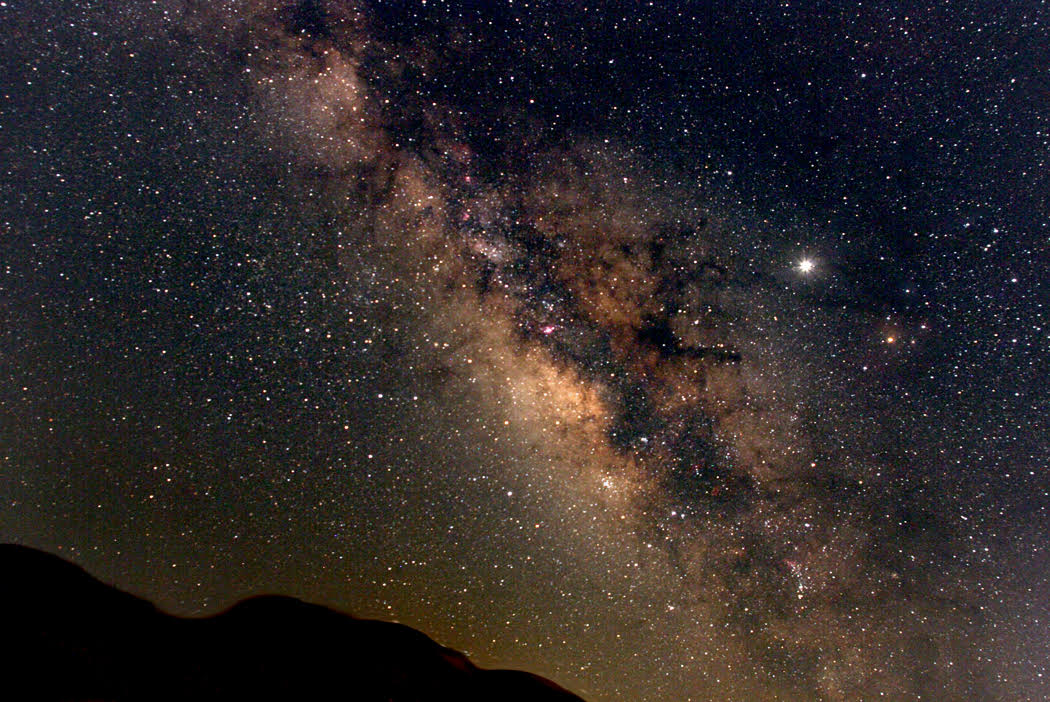
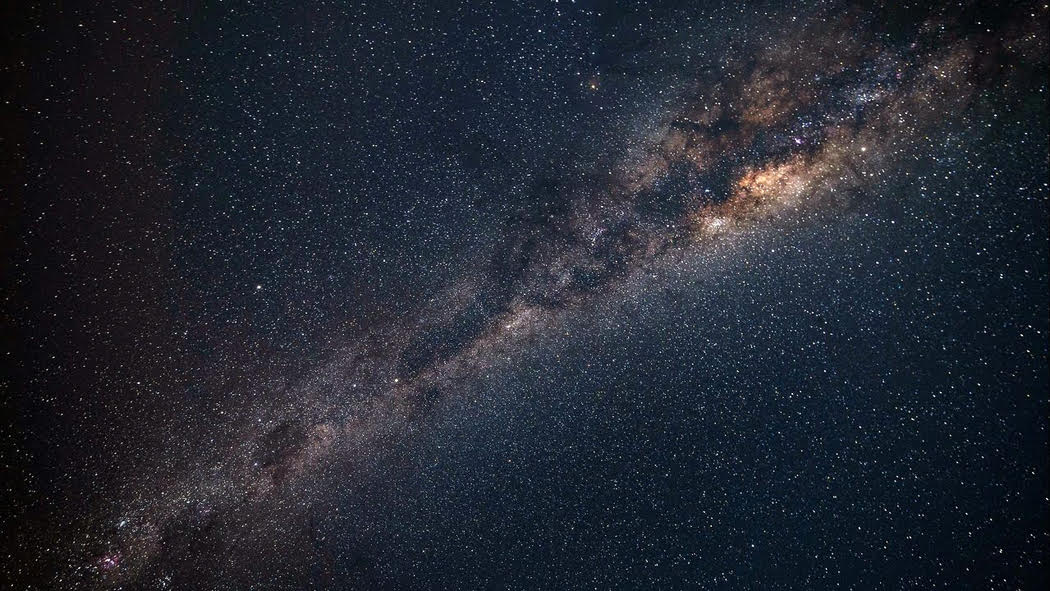
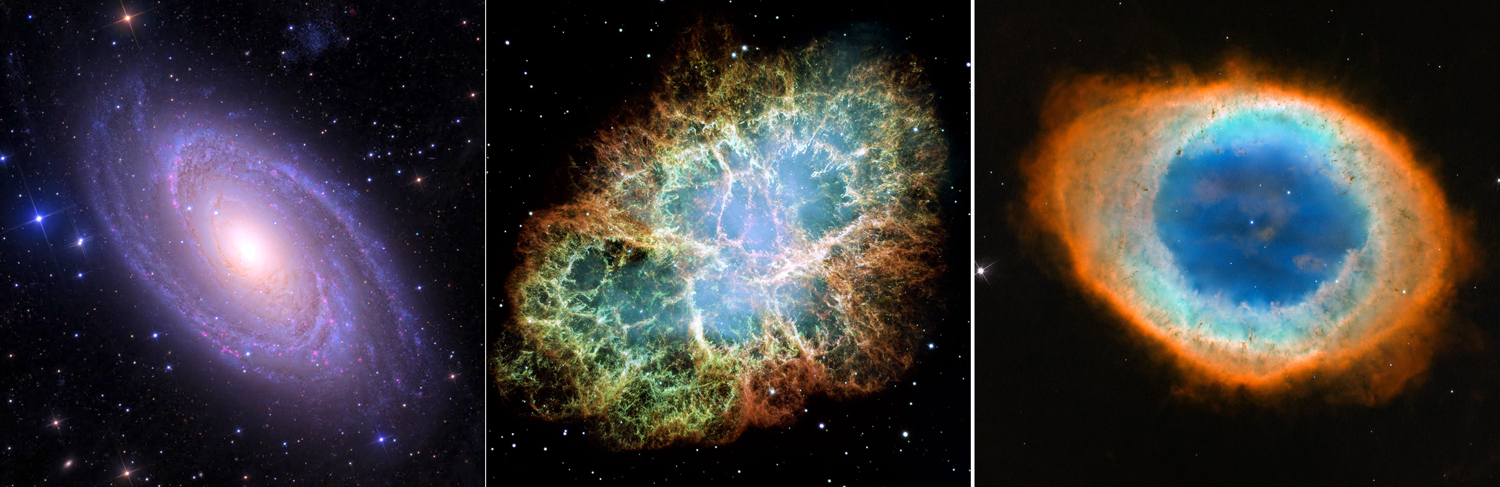
The Milky Way is a spiral collection of stars in a Frisbee disc about 180,000 light years across — that is more than a million trillion miles (yes, a million, one trillion times over). It contains between 100 billion and 400 billion stars (counting is hard because of dust obscuring parts, and also because counting that high is exhausting). And it is one of billions of similar collections of stars in the visible universe. Each is called a galaxy.

The sun and earth sit about halfway out from the center of the circle and spin around the galactic center about once every 240 million years, traveling at a speed of 140 miles per second.

That spiral shape is iconic, and found over and over in nature, like in the cloud spiral of a hurricane.

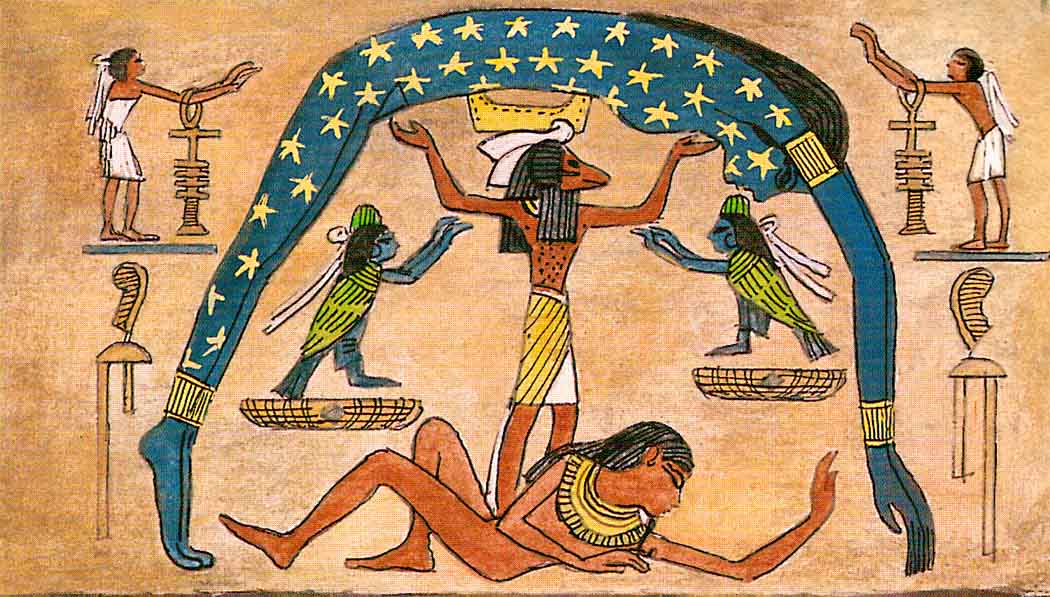
But as I was going to say when truth broke in with all her astonishing matter-of-fact, it is the mythology of the Milky Way that is found in religion and poetry. The spilled milk is common to many cultures, but it is not the only primordial explanation for the spew of light that courses the heavens.

In China, it is the Silver River; in Japan, the River of Heaven. The Sanskrit name is the Ganges of the Sky. In Scandinavia, it is called the Vintergatan or “Winter Street,” because it can be seen only in the winter, since the long summer days never darken black enough at night to make it visible. In Medieval Europe, it was known as “The Road to Santiago,” as it was used to guide pilgrims to the church of Santiago de Compostela in Spain. (Conversely, the actual road to Compostela the pilgrims walked was called La Voje Ladee, or “The Milky Way.” And Compostella itself bears a folk etymology from Latin: field of stars.)

In Australia, one Aboriginal peoples in Queensland consider the streak of light as a swarm of termites blown into the night by primordial hero Bur Buk Boon, through a hollowed log that became the first didgeridoo.

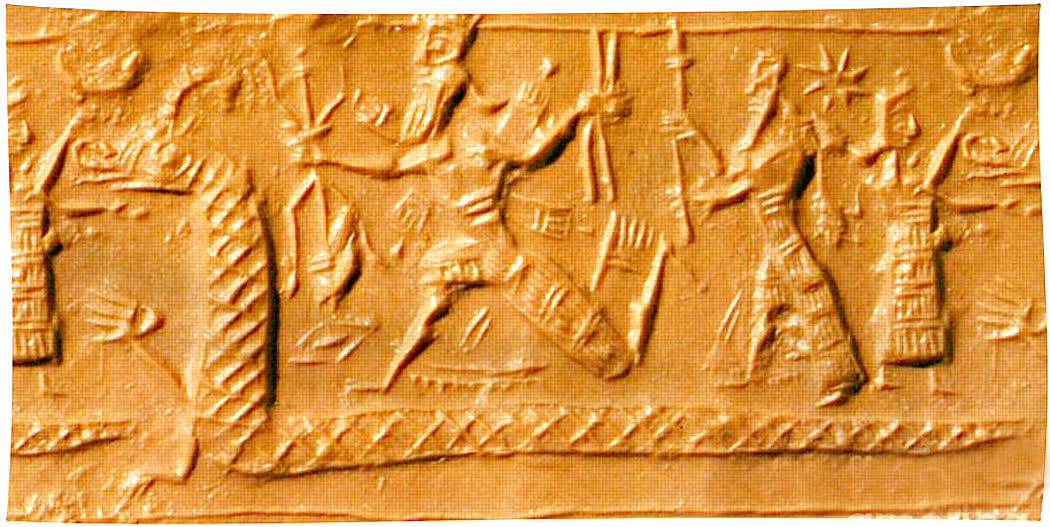
In ancient Babylonia, the god Marduk sliced off the tail of the evil dragon Tiamat and threw it into the sky, forming the Milky Way.

 After the Milky Way, the second most common name is “The Birds’ Path,” after a belief that migrating birds used the glow in the night sky to navigate. It is called that in Finland, Estonia, Latvia, Lithuania, Turkey, Kazakhstan, parts of Ukraine and Poland, and in variation in the Tatar language.

When you build a campfire at night and poke the logs, a cloud of sparks fly up with the smoke. In Spanish, these sparks are chispas, in French, étincelles, in Latin, scintillae. (In Vulgar Latin, this became ‘scintilia, into Medieval French as estancele and hence our word, “tinsel.” Who knew?) I imagine those flying sparks in my imagination continue upwards, blowing and whirling, to become the band of scintillae in the sky.

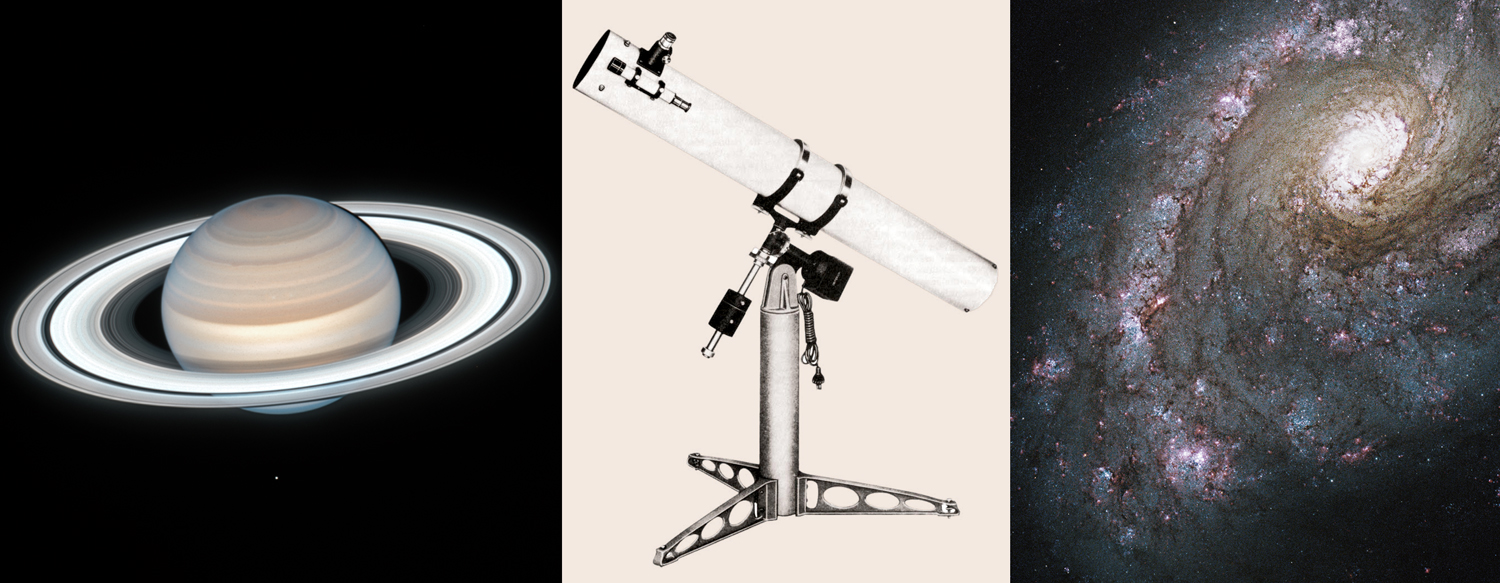
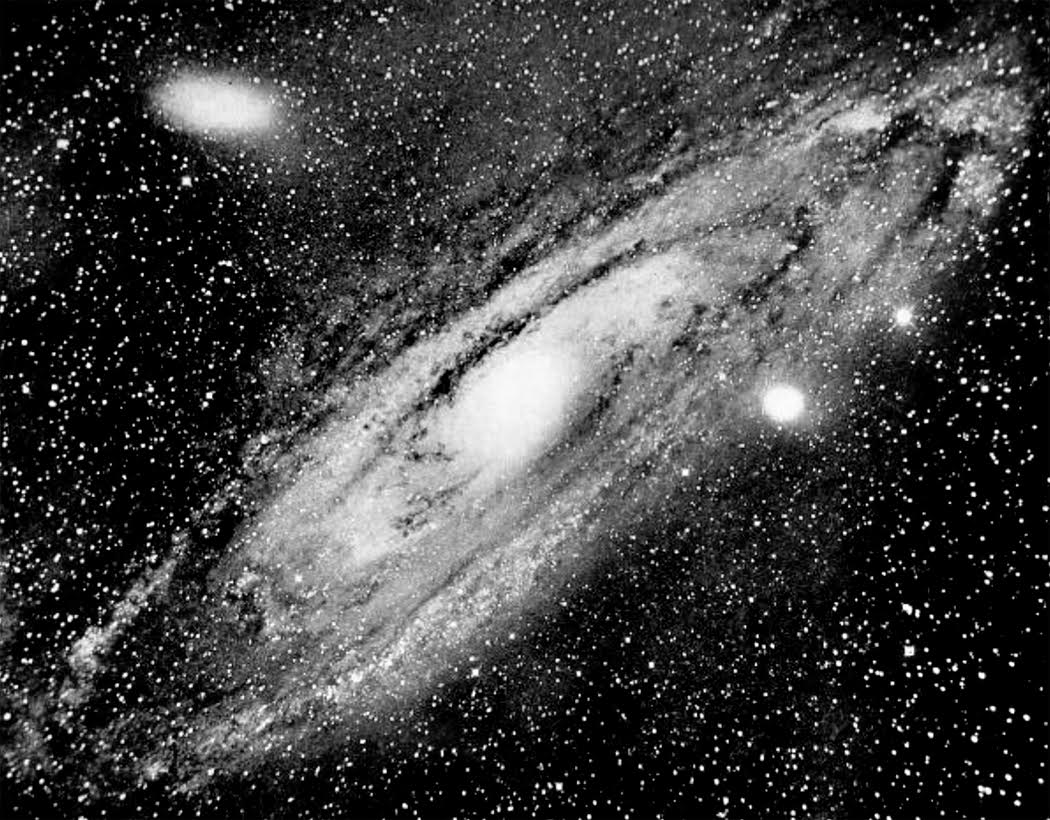
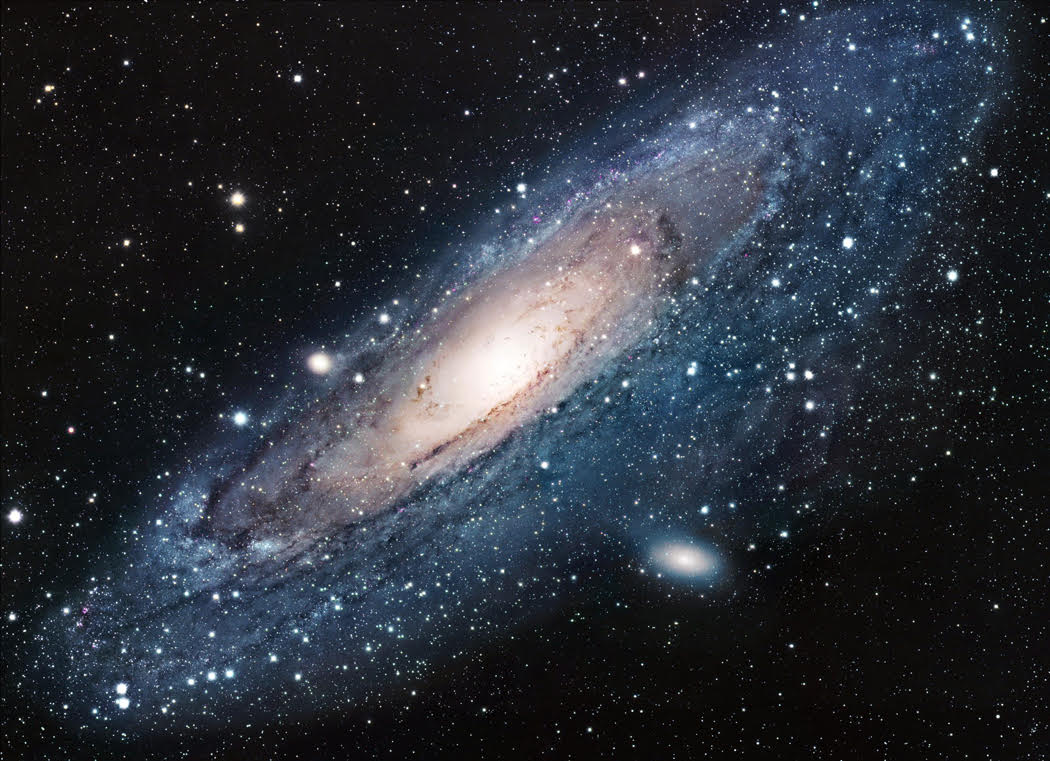
There are those of scientific mind, and those of esthetic. In school, my best friend was a math and science whiz — we called him “Gizmo.” We shared an interest in astronomy, although his was objective and filled with numbers, and mine was a delight in the vastness, the beauty and the cosmic. Giz had a Criterion Dynascope 6-inch reflecting telescope and we spent many nights pointing the thing at the sky, looking at the rings of Saturn or the craters of the moon. And the nebulae, including the fuzzy spot in the sky we call the Andromeda Galaxy. To this day, on a dark moonless night, I can still make out with my naked eye among the buckshot of stars, the sublime blur in the sky.

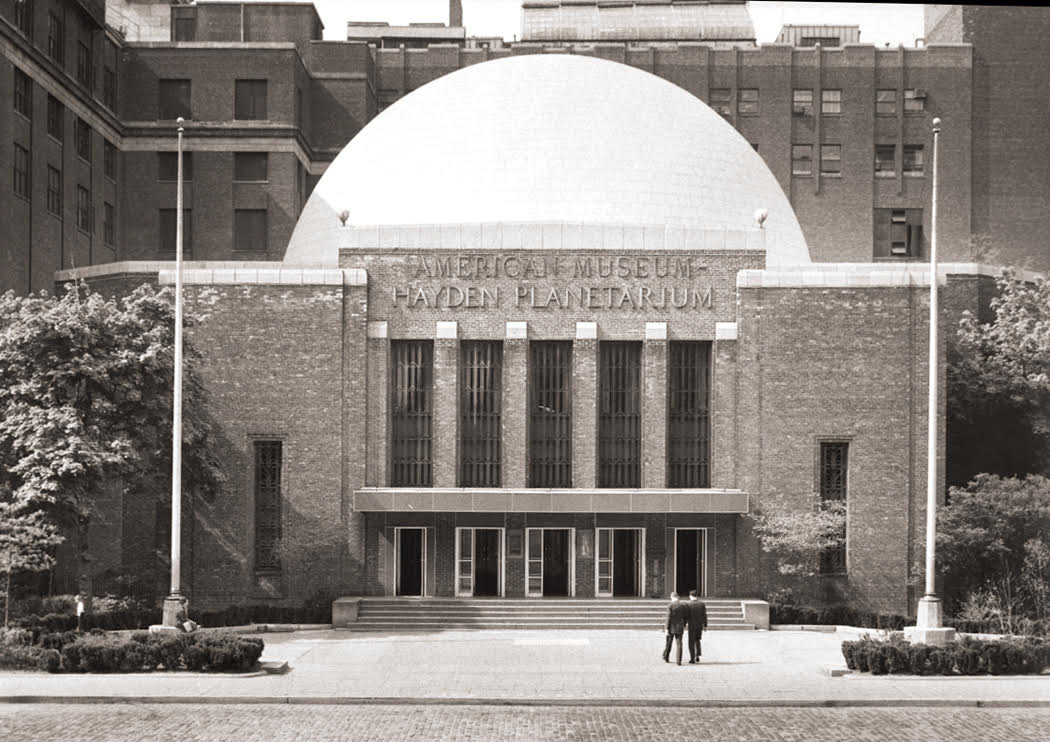
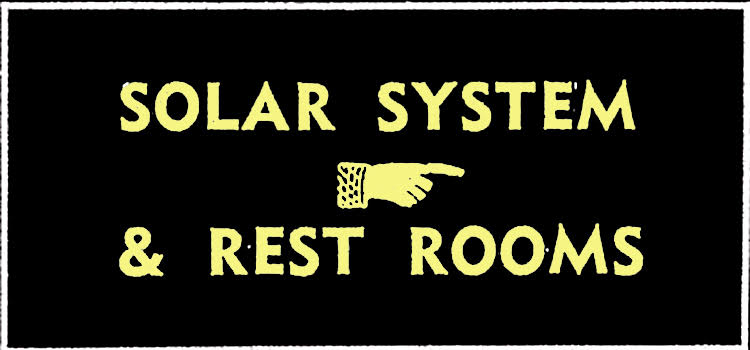
I would spend hours at the Hayden Planetarium in New York City, part of my spiritual home a the American Museum of Natural History. It is much changed now, rebuilt as the Rose Center. I loved the old halls, including the black-light murals, the orrery, the meteorites, the scales to compare your weights on other planets and the famous sign:

But most of all, I loved the photographs. Black and white images taken with the Wilson and Palomar observatories’ telescopes, framed and lit from behind to make them glow. The image of the Andromeda Galaxy was stunning.

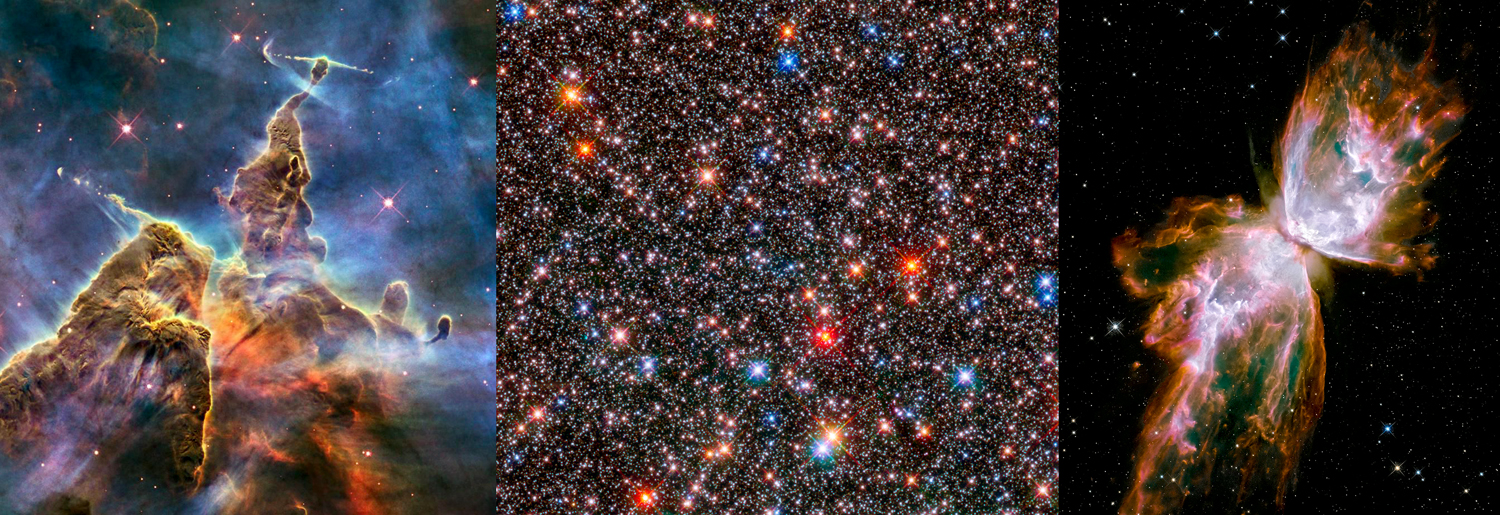
It may be hard to conceive the magic those old images had, now that we are so used to the full-color pictures sent down to us from the Hubble Telescope in orbit. Those images are also stunning, even though they are often presented to us in false color.

But the real thing can be even more awe inspiring than the pictures. I remember a night I spent north of the Grand Canyon in Arizona, in back country 60 miles from the nearest paved road, on the way to the Toroweap Overlook. 

The night sky was intense; I sensed stars numbered in Carl Sagan’s “billions and billions.”

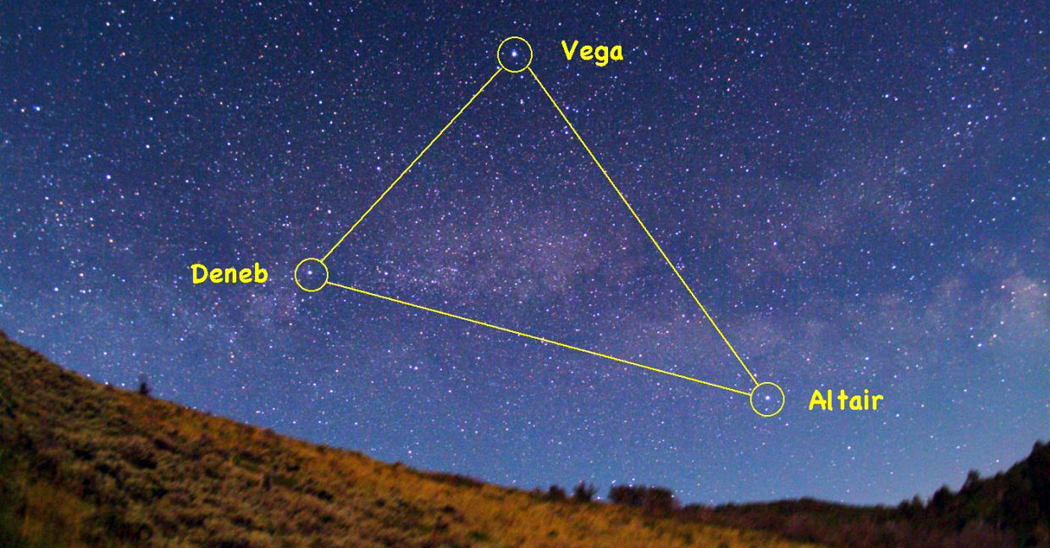
At 6:30 exactly, with the sun already below the planet’s edge, the first star came out, directly overhead. It was Vega, in the constellation Lyra. The rest of the sky is still a glowing cyan with an orange wedge in the west.

So far from civilization, the night sky is a revelation. As the night darkens, the stars pour out like sand from a beach pail. By 7:30 the sky is hysterical. I hadn’t seen so many stars since I was a child. 

The Milky Way ran from north to south like the river of incandescence it is, splitting like a tributary stream from Cygnus to Sagittarius.

I leaned back on the car hood, with my head against the windshield and stared straight up. For two-and-a-half hours I sat there, looking heavenward, trying to do nothing and think nothing. Just look.

What at first seemed to be a solid bowl overhead, with pinpricks punched in it for the light to shine through, later took on depth. It became a lake with fish-stars swimming in it at all depths. Then, as I reclined on the hood, I suddenly had the sensation of being a figurehead on a ship, or a hood ornament on a car, speeding into the three-dimensional emptiness defined by those stars.

And, of course, I was. It was true. I was having my spiritual vision, as it were, like some Lakota doing the Sun Dance, or a Sufi experiencing transcendence. But it is my particular stubborn sensibility that my vision turned out to be factual. This has happened to me before. Each time I enter the visionary world, it turns out that the transforming image I am given is grounded in simple fact.

I really am on a stony vehicle careening through stars. It is just that in everyday life, we never think of it that way. Given the solitude and the velvet sky, the obvious becomes apparent. The vision-experience may simply be a radical change in perspective. 

When my joints were finally too stiff from sitting in one position for so long, I decided it was time to sleep. I crawled in the tent and dozed off in the silence.

At 3:30 in the morning, awakened by coyotes and owls, I got out of the tent to look at the sky again. It was all turned around. Orion was now up and bright as searchlights. And the Milky Way went east and west, having revolved around the pole star. So, this bullet we’re riding on is rifled.

The night went on like that: One sense input after another, so busy through the nocturnal time-sluice that I hardly got any sleep at all. At 6 in the morning, the coyotes yowled again, and the east was whitening, although the sun was behind the mesa. It had rained briefly during the night and when I drew open the tent flap, I saw the blue sky patched with gray-brown clouds, and dangling from one of them was a rainbow. It was not much more than a yellowish bright spot against the angry cloud, but I saw its familiar arc and promise.

Astronomy has moved ahead, working with computer images now instead of photographic plates. Perhaps because I grew up and became a writer rather than a scientist, I miss the awe and beauty of those million-dotted pictures, glowing white hot, like Moses’ bush, and giving a visual, esthetic image of the majesty and immensity of the universe.

The great color images from the Hubble telescope have replaced the old Mt. Wilson pictures in the popular imagination of most younger students, giving a newer, more rainbowed sense of the awe of the universe. Like so much else, the images have become just more “media.” They are too pretty.

But for me, there is the reality of a night sky that city lights blot away, leaving us only with the snapshots. The spinning Milky Way traversing the inner dome of heaven and the spatter of stars, so far away they cannot be measured in any sense meaningful to our lives on this planet, are the very ground of reality.

In addition to this blog, which I have been writing since 2012, I have written a monthly essay for the Spirit of the Senses salon group in Phoenix, Ariz., since 2015. I was, at various times, a presenter for the salon, which arranges six to 10 or so lectures or performances each month for its subscribers. Among the other presenters are authors, Nobel Prize-winning scientists, musicians, lawyers and businessmen, each with a topic of interest to those with curious minds. I recently felt that perhaps some of those essays might find a wider audience if I republished them on my own blog. Here is one, from July 2, 2016 slightly updated and rewritten.

It is said we are in a golden age of television. Not so much because of what is available on broadcast TV, but what is available on cable and on live streaming video, such as Netflix and Hulu.

It’s hard to argue against this, what with so much out there to see, from Game of Thrones (at perhaps one extreme) and Book TV on C-Span (at the other end). For many, this new Golden Age was born with HBO’s series, The Sopranos. It certainly made a quantum leap in what was possible on the tube.

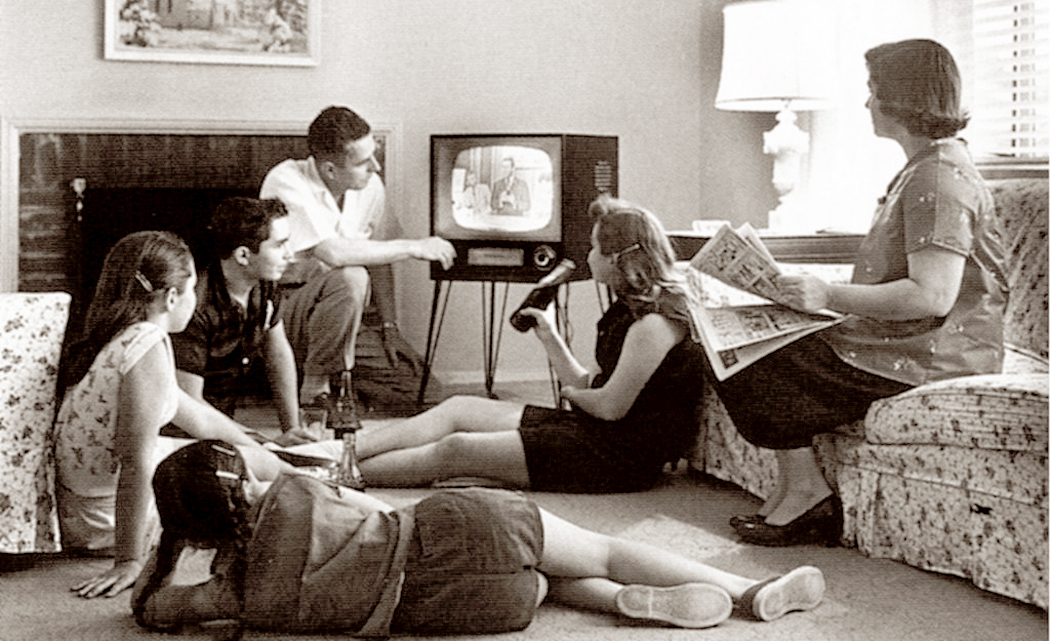
But, for an entire demographic segment, the term “Golden Age” is reserved for another time, another place. I grew up in the first Golden Age of Television, its earliest years just after the Second World War, making TV, just as much as myself, a baby boomer. There is little left of that first Golden Age that isn’t merely the buzzing of neurons in the memory of an aging generation. What survives beyond that are some gray, blurry kinescopes and whatever was shot on filmstock in those nascent years. Even that is hard to come by, outside a few remnants retrievable on You Tube.

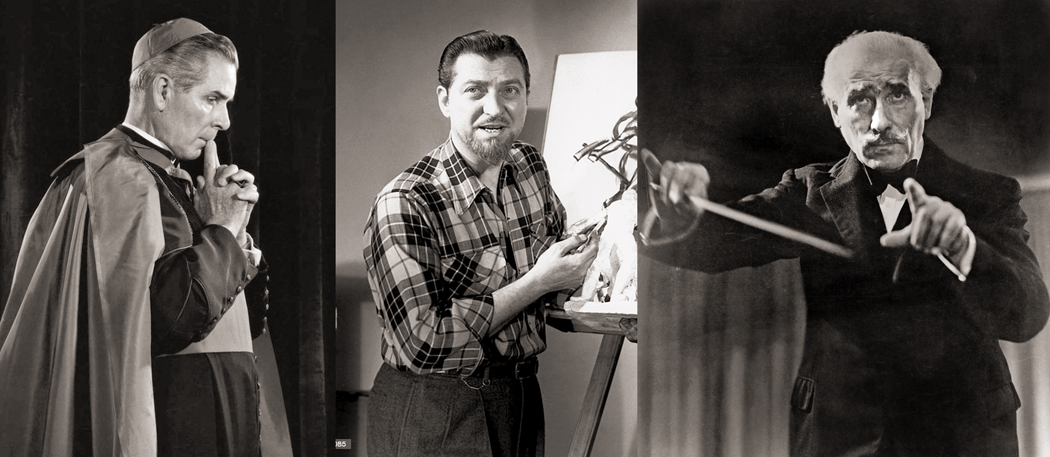
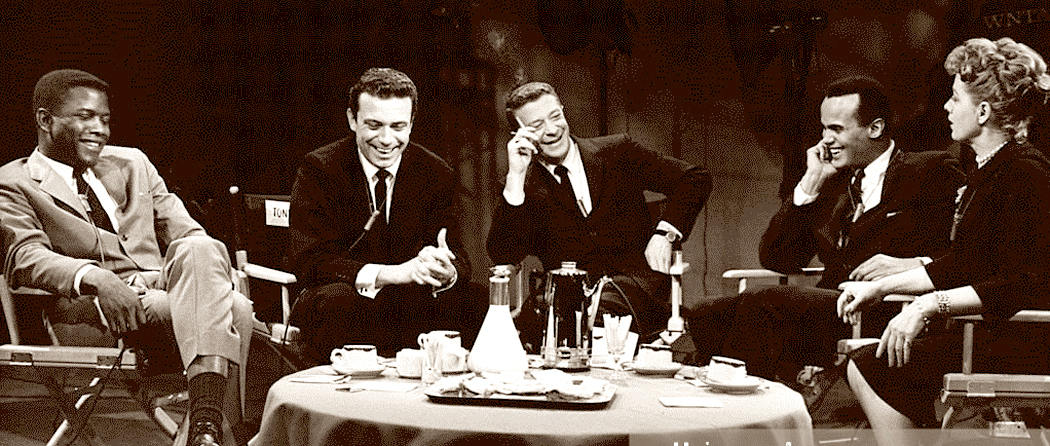
What was special about the first decade of broadcast, despite the technical and budgetary limitations, was the sense that anything was possible. Since it hadn’t existed before, no one knew exactly what TV should be, and so, they threw everything up against the wall to see what would stick. And the current generation would be astonished at what became popular, like Bishop Fulton J. Sheen in his purple vestments talking to us in his calming but authoritative Catholic voice on Life is Worth Living, or artist Jon Gnagy giving lessons on How to Draw, or Arturo Toscanini and the NBC Symphony from 1948 to 1952.

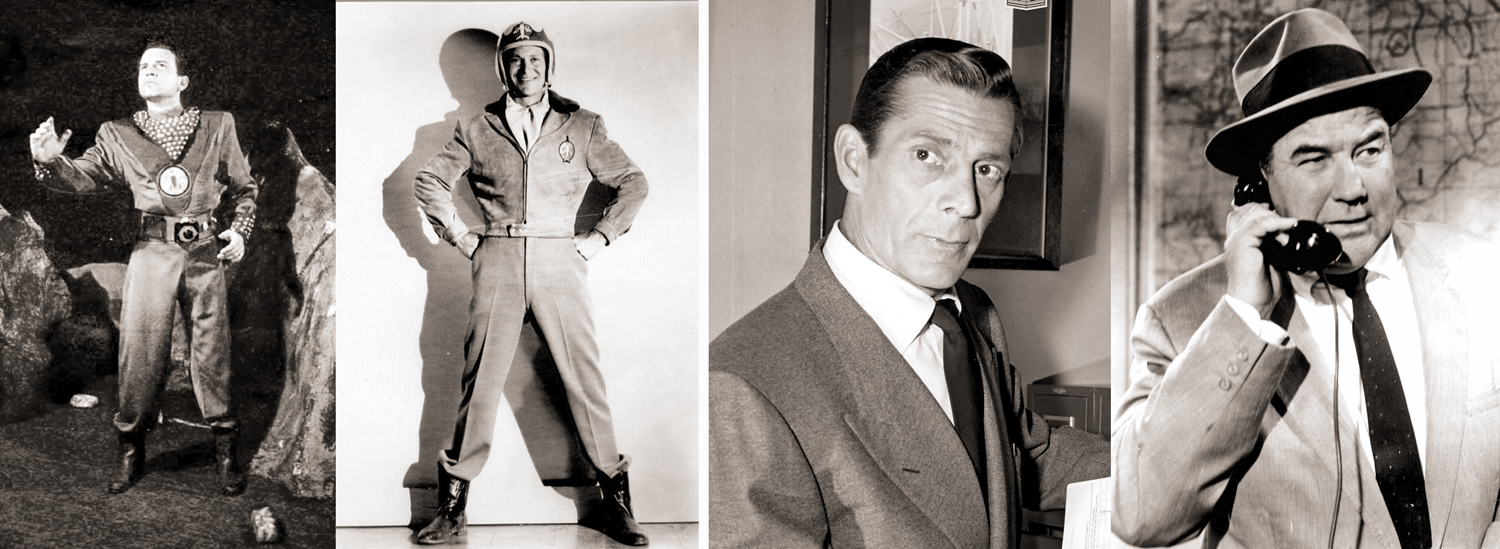
Their modern counterparts now find their home on obscure cable channels or PBS, but Bishop Sheen was on the Dumont Network and then ABC. Gnagy was originally on NBC. In its earliest years, television was willing to try anything. There were home travelogue movies on Bold Journey and I Search for Adventure (with Col. John D. Craig); there were African adventure series, Ramar of the Jungle and Jungle Jim; there were cop shows such as Highway Patrol and Racket Squad (it is surprising how many of these shows come in competing pairs); Captain Video and Captain Midnight; Mama and The Goldbergs; Ozzie and Harriet and George Burns and Gracie Allen.

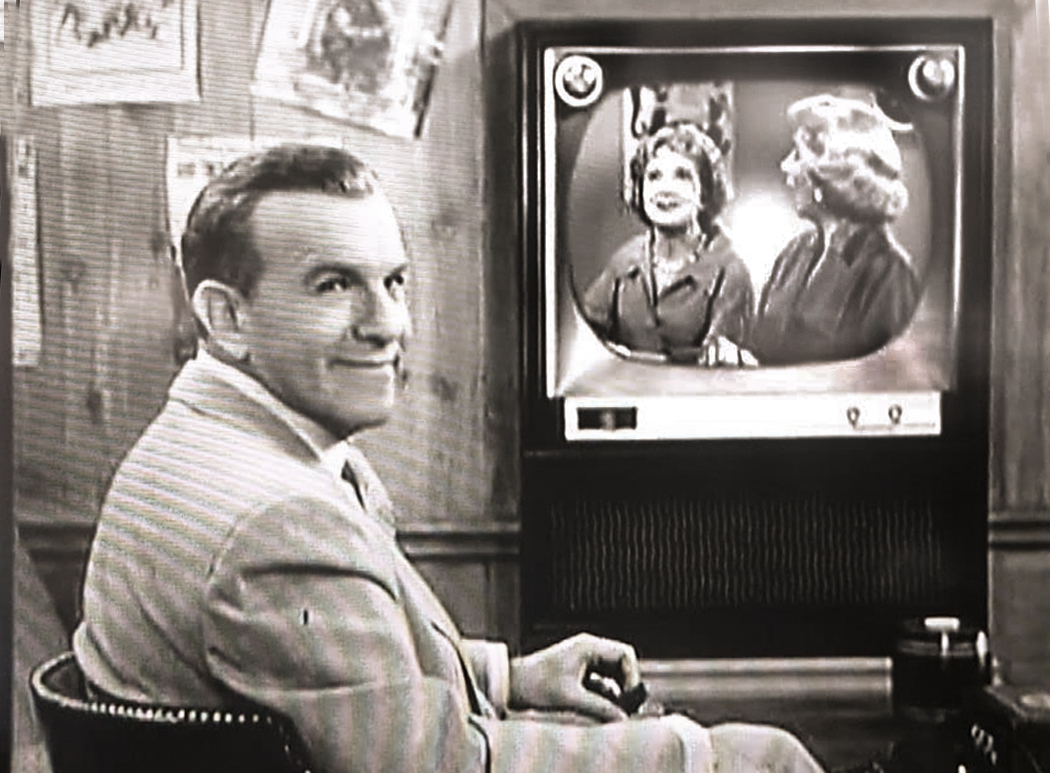
The last of these was surprisingly ante-post-modern, as George Burns would watch his own TV show to discover what was happening in the episode he was in. More than breaking the fourth wall, it was breaking the fifth.

By the end of the 1950s, television had begun to feel like the familiar boob-tube we all know and love. The programs were becoming settled and familiar. There were Westerns, cops shows, talk shows, game shows — all the usual furniture of the air waves.

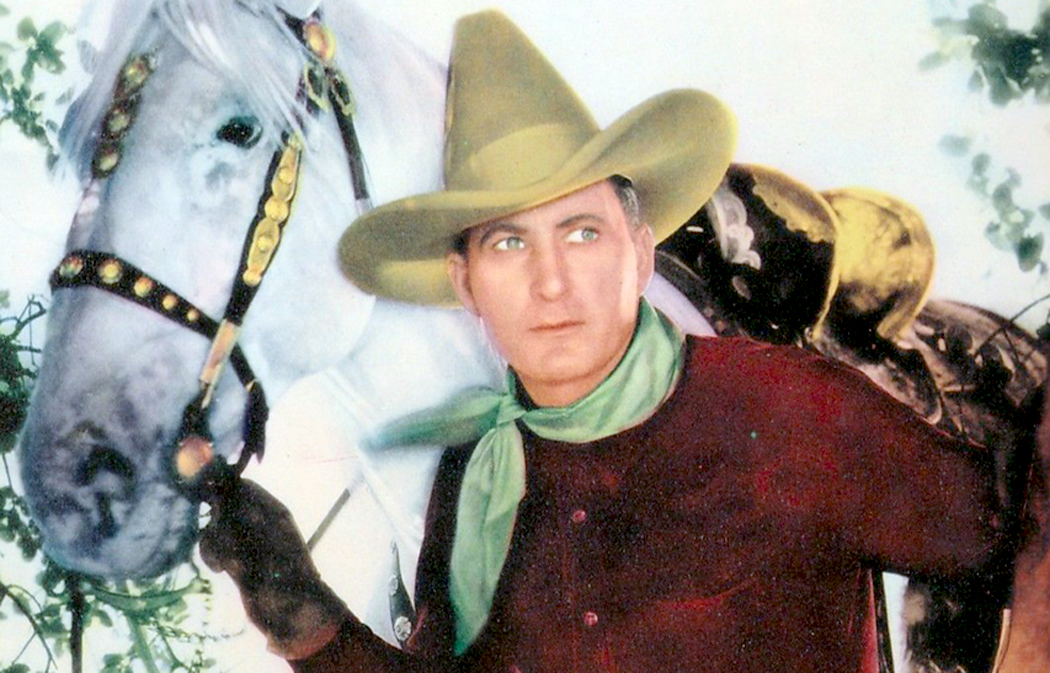
But when I was a wee bairn, it was all a bit wild and wooly. Because there wasn’t enough content available to fill all the time, television went blank in the middle of the night and didn’t light up again till well into the next morning. And because there was a shortage of content, a good deal of the detritus of Hollywood was repurposed for the tube, which means that I received a graduate-level exposure to the B-Westerns of the 1930s. I knew well such stars as Hoot Gibson, Tim McCoy, Bob Steele, Buck Jones and Johnny Mack Brown. I still know the difference between Fuzzy Knight and Fuzzy St. John.

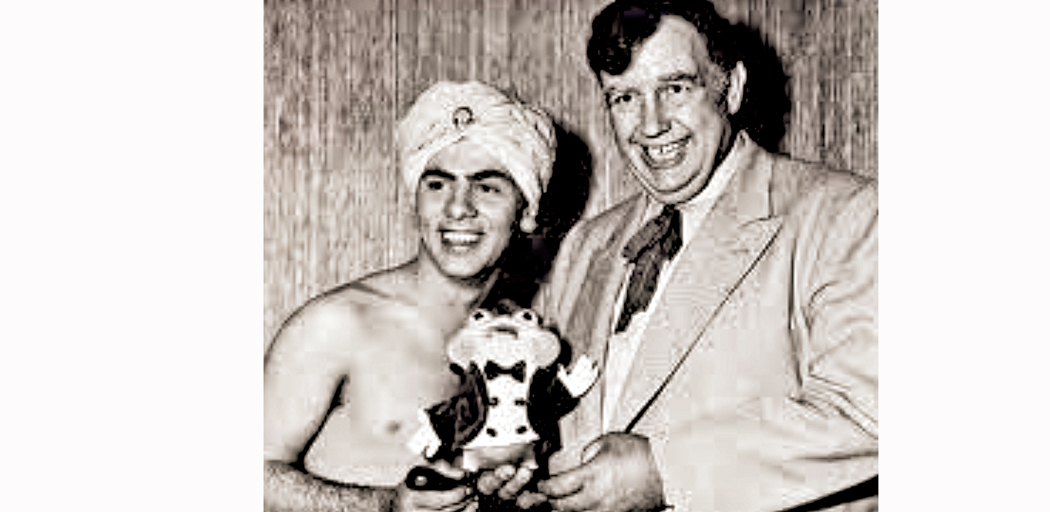
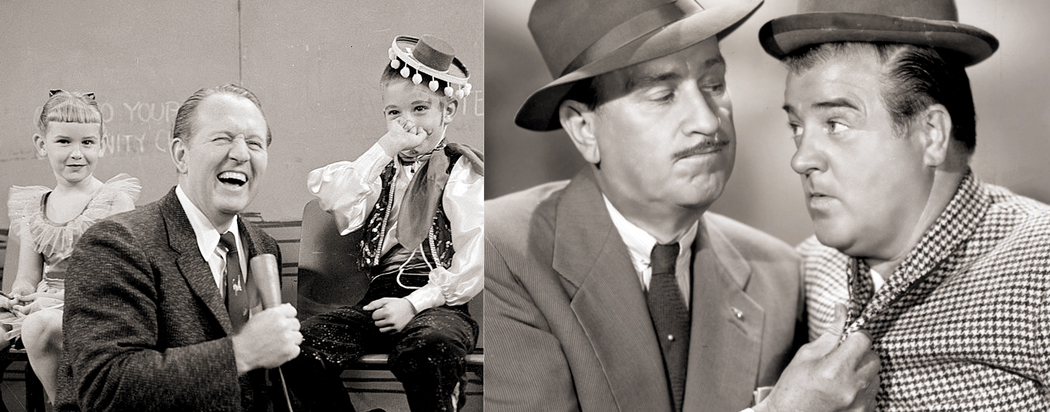
Some of the old actors found new work on the small screen. Western sidekick Andy Devine first worked as sidekick to Guy Madison in the Wild Bill Hickock series of half-hour oaters, but more memorably, as the host of Andy’s Gang, a children’s show featuring a serial of Gunga, the East Indian Boy, and a retinue of animal and puppet regulars, including Froggy the Gremlin, a classic trickster, and a phrase that re-emerged during the drug-hazed hippie era: “Pluck your magic twanger, Froggy!”

It would be easy — and tempting — to recall all that rubble that has collected in the mystic chords of memory from a childhood ill-spent in front of a glowing cathode-ray tube, but what I really mean to say is that what enters the consciousness at that tender age remains a touchstone for the rest of our lives. If our everyday childhood was one of front stoops and schoolyards, of family supper and the pinch of a new pair of shoes, what we watched through the glass bubble was the big world, the larger world that we knew we would eventually grow up to inhabit, and it was a world more interesting, more important, more everything than the ordinary one we woke up to each day, and that gave us a sense of the world that colored the rest of our lives. The actual matter of television was indeed a “vast wasteland,” but that hardly mattered. It seemed like magic to a six-year-old watching Art Linkletter in the afternoon or Abbott and Costello before dinner.

I know, for a generation earlier than mine, the same transcendent glow attached to radio — “Only the Shadow knows” — and that same sense of magic is what Woody Allen’s movie Radio Days is all about. But for anyone born after the war, it was television.

I am reminded of this by my youngers, who apparently feel the same “Golden Age” glow about their TV shows. How can one wax nostalgic about Gilligan’s Island or The Brady Bunch? They were such godawful shows. Or Scooby-Doo? Not my circus, not my monkeys. They are a grey cloud of mediocrity, but nevertheless the glowing childhood of those who came after me. Surely that is what any Golden Age is. Somewhere there is a class of novice businessmen whose sense of the world’s magic glow was a result of an infusion of Teletubbies.

When we are children — and I mean from the first memories until maybe second grade — everything is new, and because of that, it is radiant. It glows from inside and is what we aspire to throughout our lives, even when we go through divorces, failures, traffic tickets or bad clams. There is something ignited in us at that early time that is somehow a pilot light that remains. When we talk about a Golden Age of television — whichever age it is for us — it is primarily that inner light that we call gold.

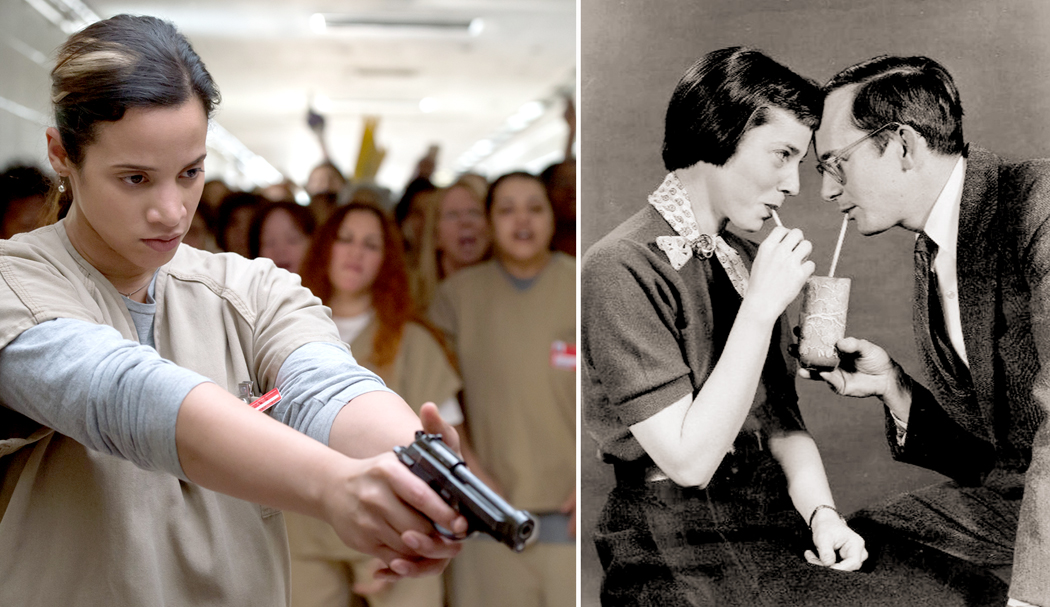
And so, it feels quite different when we talk about the current era as being the second Golden Age of television. TV, like us, has grown up, and the current crop of shows that garner critical acclaim tend to be full of “adult” content, sex, drugs and vaulting ambition, violence and treachery. It speaks to us of a world very different, where orange is the new black, Kimmy Schmidt escapes from a doomsday cult, and the kingdom of Westeros is not so much dog-eat-dog, as dog-rapes-and-beheads-dog. It is a world very hard to explain to Mr. Peepers or Gale Storm.


The new Golden Age is infinitely more sophisticated and better written. It takes on the real issues of the world, albeit in metaphorical form, and gives us some real meat to chew on. I am not denigrating the new Golden Age. At its best, it is as real an art form as Greek tragedy.

But the earlier Golden Age, where “Uncle Fultie” left us rapt with homilies, and Morey Amsterdam played the cello and told jokes on morning TV, where Victory at Sea replayed the previous decade’s war with narrator Leonard Graves’ booming “voice of doom,” and Miss Frances taught us right from wrong on Ding Dong School, it has left a residue in my psyche — fuzzy as a kinescope — that has infected me with this damned unexpungeable sense that the world may be — despite House of Cards and Game of Thrones — somehow and inexplicably redeemable.

In addition to this blog, which I have been writing since 2012, I have written a monthly essay for the Spirit of the Senses salon group in Phoenix, Ariz., since 2015. I was, at various times, a presenter for the salon, which arranges six to 10 or so lectures or performances each month for its subscribers. Among the other presenters are authors, Nobel Prize-winning scientists, musicians, lawyers and businessmen, each with a topic of interest to those with curious minds. I recently felt that perhaps some of those essays might find a wider audience if I republished them on my own blog. Here is one, from Dec 31, 2016 slightly updated and rewritten.

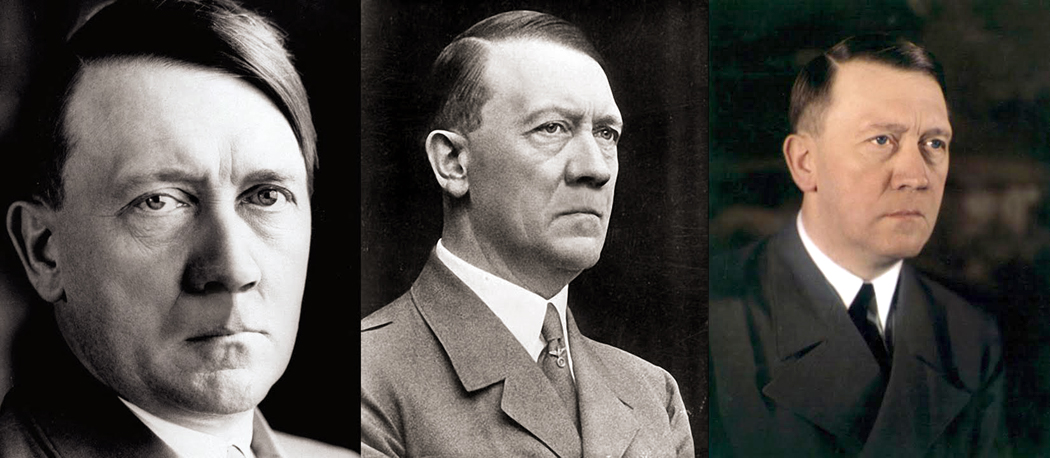
Who is this man?

This is arguably the most recognizable face of the 20th century; you may recognize him without his most iconic feature. But probably not. Without it, he looks like any anonymous businessman or bourgeois politician of his time. Yet, give him back that one little caterpillar curling under the shade of his nostrils and you can recognize him instantly.

In fact, you don’t really need the rest of the face. Even an abstract diagram can be given its name without much puzzling. That mustache defines the face of the single most evil person of the previous century (nominations are now open for the current era). Before the middle of the last century, there were many who bore a similar fungus on their lip, but since then the so-called “toothbrush mustache” has gone understandably out of fashion, save for a few copycat dictators and a comedian or two attempting irony.

Yet, before its demonization, the lip tonsure was famous for defining the Little Tramp of Charlie Chaplin. It was also worn by Oliver Hardy (“Here’s another nice mess you’ve gotten me into.”) One would be hard pressed to understand the thing in any way but comical, until it occupied the philtrum of the Great Dictator. It’s hard now to realize that it could grace the passport photo of Eric Blair on his way to Burma to shoot an elephant, later to write about it as George Orwell.

Then, there is precedent for the little fuzz as popular with strongman rulers. Generalissimo Francisco Franco, before he was still dead, bore the little bristle. So did pre-war Japanese Prime Minister Fumimaro Konoe. And, of course, Peter Parker’s boss in the Spider-Man comic books is J. Jonah Jameson. The scant inch-of-hair has a long pedigree.

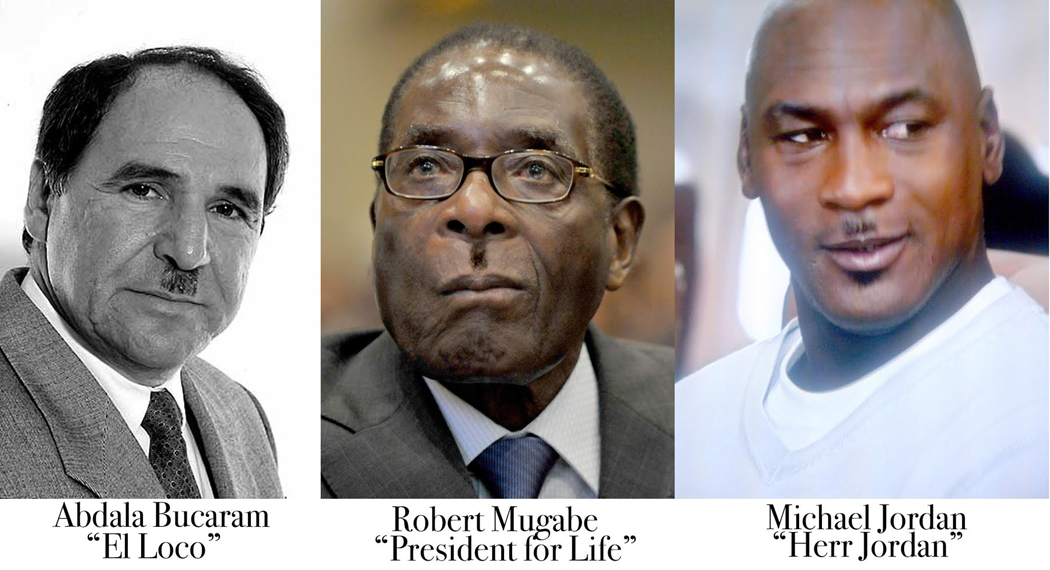
Even now, there are those willing to sport the growth. Former Ecuadoran president, Abdala Bucaram, known to his voters as “El Loco,” sported it before he was impeached. Zimbabwe “president for life,” (now deposed and buried) Robert Mugabe wears one so tight and slender, it barely fills the space between his two nostrils.

Michael Jordan tried one on for a series of ads he made for Hanes underwear. It won him the title of “Herr Jordan.” His friend, Charles Barkley admitted, “I don’t know what the hell he was thinking and I don’t know what Hanes was thinking. I mean, it is just stupid. It is just bad, plain and simple.”

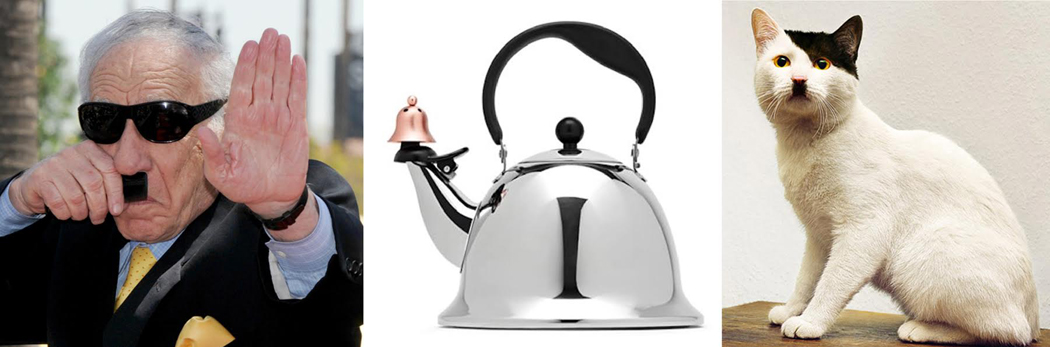
It has fallen on hard times, this innocent little bushlet. Irony is its constant companion. It is a meme on the internet; it is a joke in a Mel Brooks movie; it is even a phantom that bedevils Michael Grave’s teapot design for J.C. Penney (now off the market after too many people saw the evil one’s face in its handle and lid ball, with the spout as a Nazi salute).

But, where did this odd thing come from? And how did it make its way onto the facial undercarriage of der Führer?

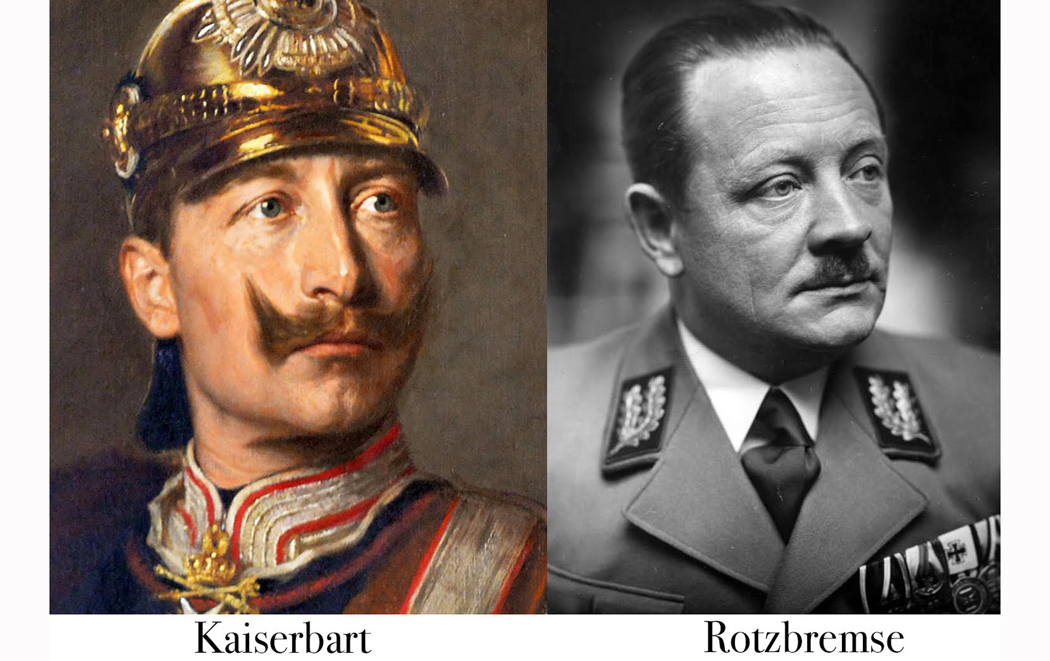
The first surprise is that early commentators tell us the style was originally American. It was American tourists who brought it with them to Germany, where, in the early years of the past century, it spoke of Modernism and efficiency. Back then, the style, especially among military officers was the broad, spreading eagle of the “Kaiserbart,” or Kaiser mustache. All the most Erich von Stroheim cavalry men sported them. It was described in a New York Times article on Oct. 10, 1907 as something like a handlebar mustache, with its tips “elevated upward and the rest fashioned something after the form of the wings of the Prussian eagle which one sees on National standards and postage stamps. It is more or less popular all over Europe, particularly in military circles.”

The piece goes on to say, “The ‘toothbrush’ mustache, which is  considered an American importation, is a bristling appendage claimed by its possessors to have the advantage of being hygienic and convenient — virtues which should make a particular appeal to the Germans.

“That it did make such an appeal is revealed by the fact that many German swells have of late applied the scissors to their ‘Kaiserbart’ and discarded the use of the ‘frixe mustache.’ The substitution, however has met with widespread resentment on the part of the fair sex. One German lady writes to the Berliner Tageblatt that she will no longer recognize her male acquaintances who wear ‘a toothbrush on their upper lips.’

“ ‘Man is naturally very ugly,’ writes another. ‘The only natural adornment he ever had was his mustache, and that he is now ruthlessly mutilating. Instead of the peaceful hirsute ornament of the past he is marring his face with a lot of bristles.’ ”

The fashion was certainly helped along by celebrity. A year before the New York Times story about the “American mustache” that had become all the rage, the newspaper chronicled the heroics of a young German military officer who won the “New York to Paris” round-the-world automobile race (he was later disqualified for cheating). Hans Koeppen was described as “31-years-old and unmarried. Six feet in height, slim and athletic, with a toothbrush mustache characteristic of his class, he looks the ideal type of the young Prussian guardsman.”

The ‘stache acquired nicknames. It was called the Rotzbremse, or “snot brake.” It was called the Fliege (fly),Zwiefinger (two-finger), and Chaplinbart, after its most famous wearer before it gained infamy on the lip of the Führer.

This was before the start of the War to End All Wars. When the war changed everything, it seemed to have changed the upper lip of a certain German corporal along with it.

It would be understatement to say that the nose-blot mustache has lost its appeal, except to would-be dictators, but the aversion can extend beyond the actual bush above the bouche. Amazon-dot-com had to change its phone app icon because some people read into the design a spectre from history. 

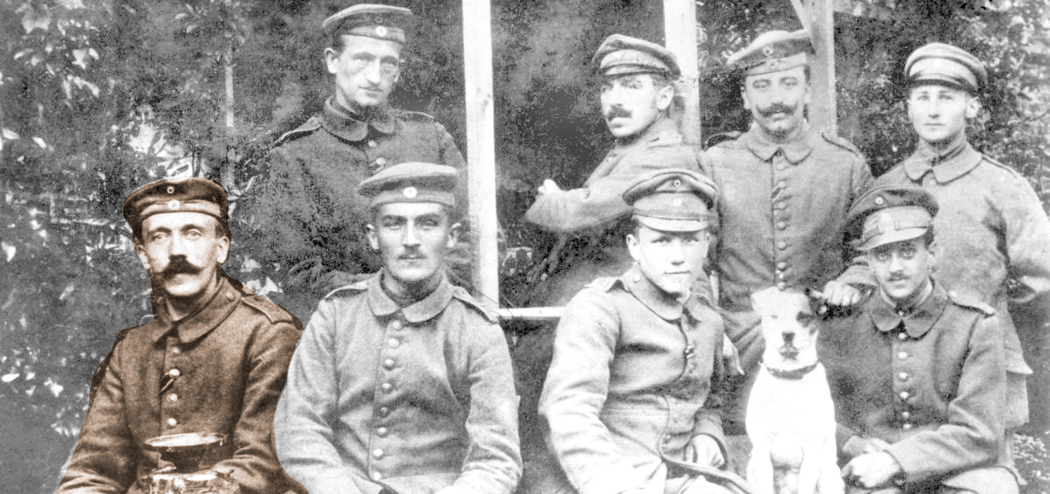
There is no certain documentation as to when Adolf Hitler first adopted the wooly-worm balanced above his lip. There are several stories, none of which is certain.  The most common is that his broad-winged Kaiserbart could not fit efficiently into the gas mask he was required to don in the trenches of the Western Front, and so he was forced to snip it down to something that could squeeze in. There are several photographs of the corporal with a wide snifflebuster across his face. Post-war, it is gone.

In her suspect autobiography, Hitler’s sister-in-law Bridget Hitler claimed that she couldn’t stand his spreading Kaiserbart whiskers and, in 1912, made him snip off its ends. But in doing so, she wrote, He went — as he did in most things — “too far.” The problem with this version is that photographs show him after 1912 with the handlebars on his cheeks.

In all likelihood, he just picked the mustache because it was fashionable. He, too, could look “the ideal type of the young Prussian guardsman.”

Not that everyone liked it. In 1923 fellow Nazi party member Ernst Hanfstaengl claimed “the ridiculous little smudge … made him look as if he had not cleaned his nose.” He attempted to persuade Hitler to change it, telling him the style was by then unfashionable. Hitler’s answer: “If it is not the fashion now, it will be later,” he said, “because I wear it.” Boy, did he get that wrong.

 In addition to this blog, which I have been writing since 2012, I have written a monthly essay for the Spirit of the Senses salon group in Phoenix, Ariz., since 2015. I was, at various times, a presenter for the salon, which arranges six to 10 or so lectures or performances each month for its subscribers. Among the other presenters are authors, Nobel Prize-winning scientists, musicians, lawyers and businessmen, each with a topic of interest to those with curious minds. I recently felt that perhaps some of those essays might find a wider audience if I republished them on my own blog. Here is one, from Sept. 30, 2015 slightly updated and rewritten.

Every few months or so, I look around the house and declare, “We have too many doo-dads.”

And there are many, on every flat surface in the house: dolls, teacups, teapots, candlesticks, perfumed candles, a Ganesh here, a Shiva there. Hopi posts and Chi-wara antelope carvings. I have a Zulu basket full to the brim with Zulu beadwork, collected on a trip to South Africa. We have collected so many little bear effigies, from Zuni fetishes to Bavarian drapery-rod supports, that you would think we’d set up business as an ursery. But crockery was my late wife’s real downfall: old plates collected from thrift stores, old-flow platters, flour-sugar-coffee-tea canisters — they overflow the cabinets and pile onto the counters in topple-prone stacks.

 “I’m going to go through them and pack them up,” she used to promise. But it never happened.

But it wasn’t just her. I collect too: books and music. Every room in the house, including the bathroom, has bookshelves. The walls of my study are lined, from floor to ceiling with shelves stuffed with CDs. At one point I had 17 complete sets of Beethoven piano sonatas. Even after our move to the Blue Ridge, when I culled the collection and eliminated two-thirds of my CDs, I have still managed to retain 12 sets of Beethoven symphonies, recorded from 1926 to last year. 

“It’s not fair,” my wife complained. “It’s not my fault that my collections are bulky, but yours are flat.” And therefore do not take up as much space: bunched together neatly on bookshelves. 

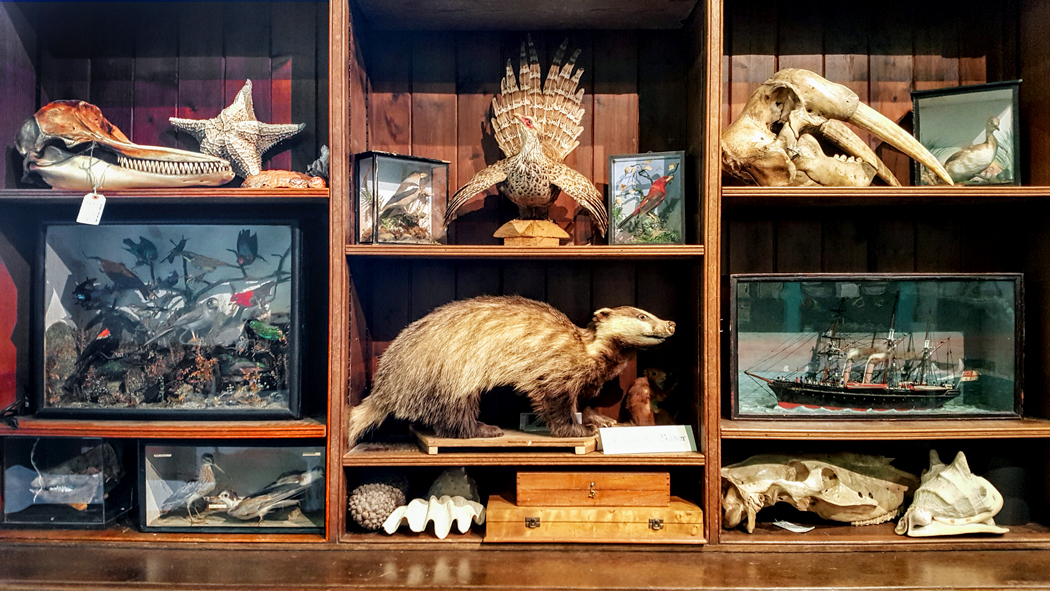
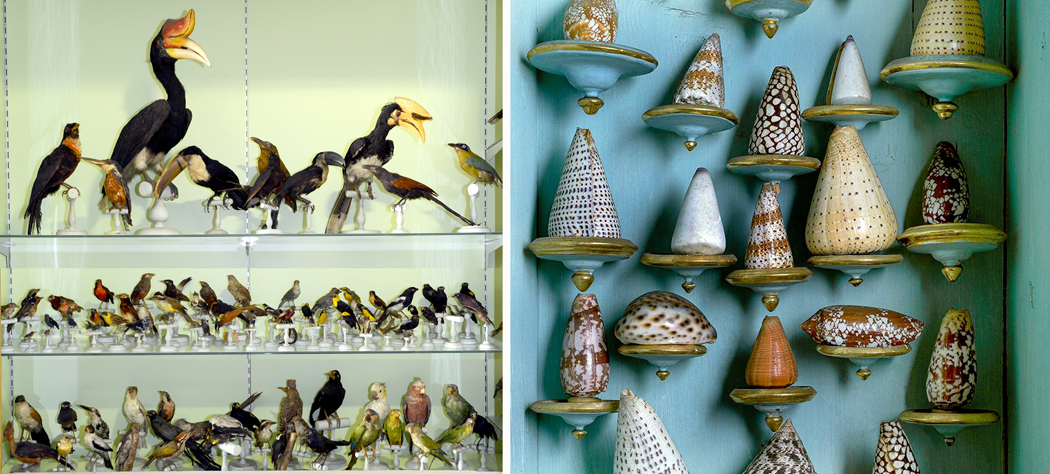
Ah, but we are all collectors. It seems to be one of the things that define us as a species: that is — us and packrats. And we place on racks these trifles we have gathered and show them, either the glass shelves of wall-mounted displays or behind glass in cabinets or in shadow boxes made from discarded printer’s type cases. They are souvenirs of travels or they are merely clever little stones we have picked up on beaches we have visited, or shells or pine cones or feathers. This will to gather is ancient; so is the desire to show off what we have collected.

The Roman historian and gossipmonger Suetonius wrote that Caesar Augustus “had his houses embellished, not only with statues and pictures but also with objects which were curious by reason of their age and rarity, like the huge remains of monstrous beasts which had been discovered on the Isle of Capri, called giants’ bones or heroes’ weapons.”

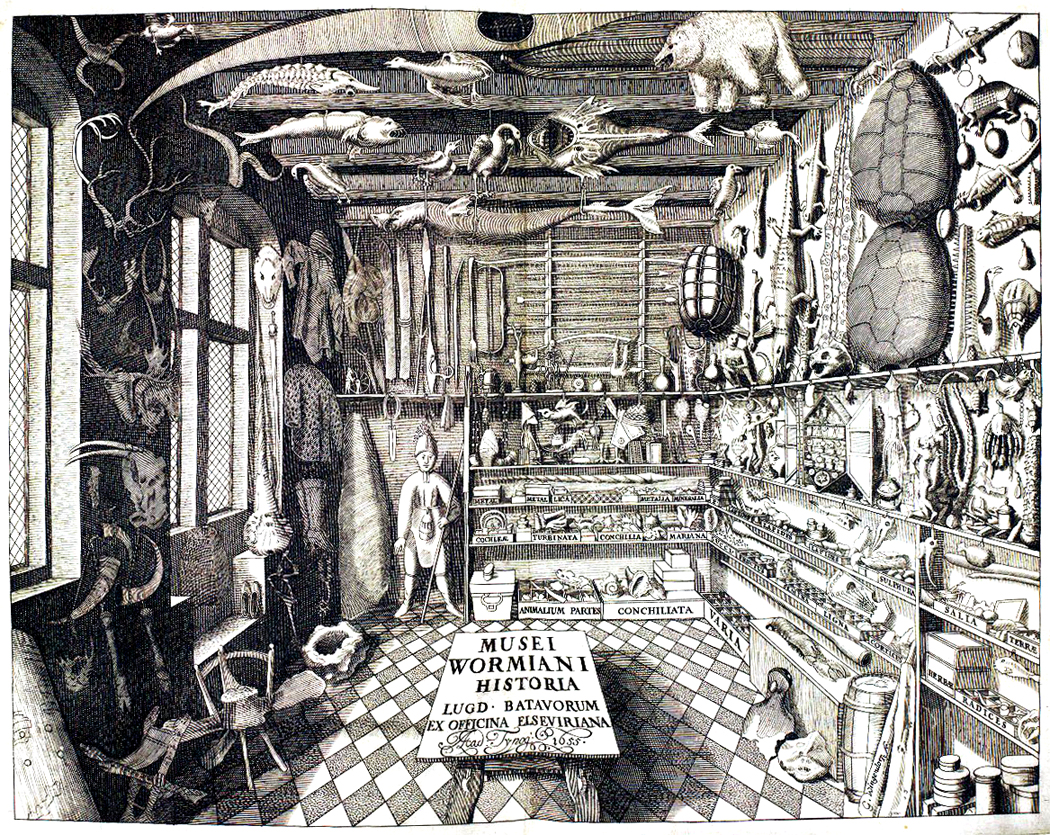
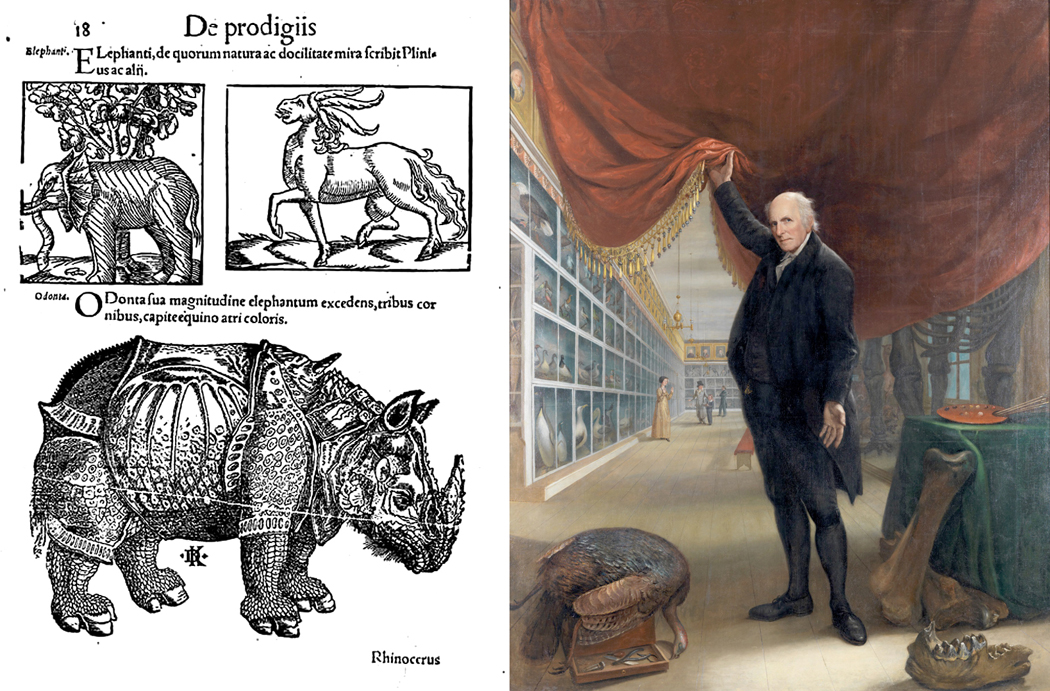
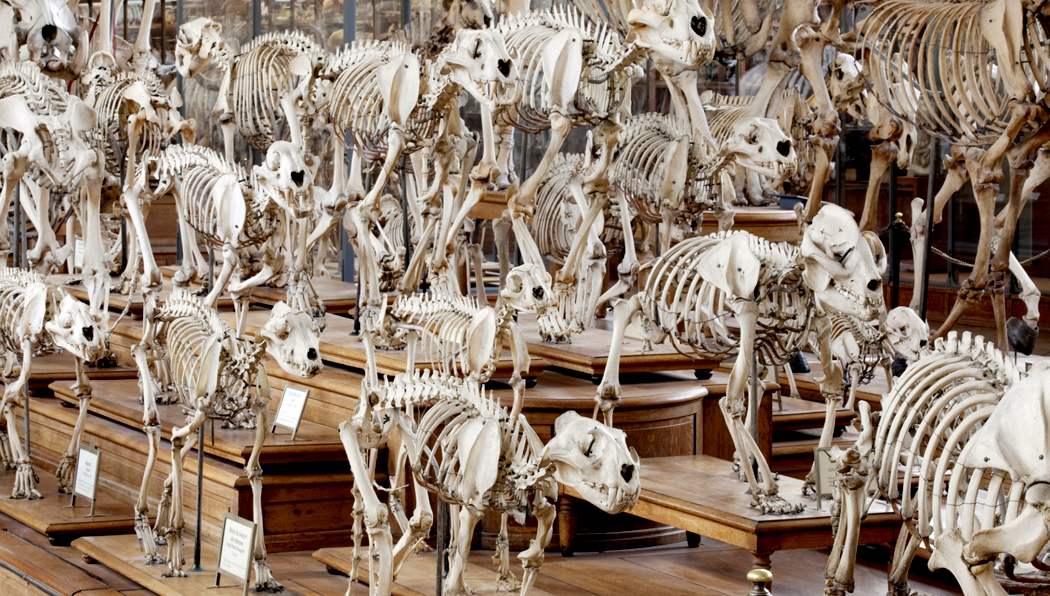
By the Renaissance, those who could afford it arranged their varied collections in “cabinets of curiosities” or, in German, “Wunderkammer.” There are paintings and engravings of some of these collections, full of mastodon teeth, stuffed crocodiles, two-headed calves and shark jaws. These aristocrats seemed just as proud to show off these side-show wonders as to show off their “Kunstkammer” art collections. The natural world seemed as diverse and prodigal as any lunatic’s fantasies. What, after all, could be more peculiar than an elephant? Or a narwhal? We all remember Albrecht Durer’s wood engraving of a rhinoceros: more curiosities from the natural world. 

In the early years of the American republic, the painter Charles Willson Peale assembled one of these curiosity cabinets. His self portrait shows him lifting back the curtain on a room filled with gee-gaws — including a mastodon skeleton — to astonish his visitors. It is notable that after his death, the collection devolved, half to P.T. Barnum and the rest, eventually, to reside at the Boston Museum of Barnum-wannabe Moses Kimball. 

In a newspaper ad run in 1843, he claimed, “This museum is the largest, most valuable, and best arranged in the United States. It comprises no less than Seven Different Museums, to which has been added the present year, besides the constant daily accumulation of articles, one half of the celebrated Peale’s Philadelphia Museum, swelling the already immense collection to upwards of Half a Million Articles, the greatest amount of objects of interest to be found together at any one place in America.”

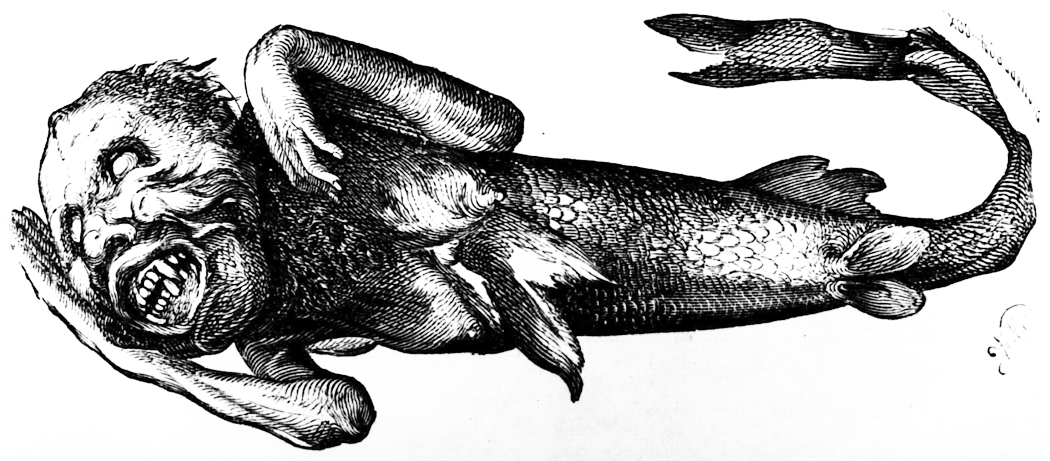
Such collections weren’t always as bogus as the so-called “Feegee Mermaid” (a famous fraud: half stuffed orang-utan, half taxodermied fish) that Kimball showed among his wax statuary and theatrical “entertainments.” 

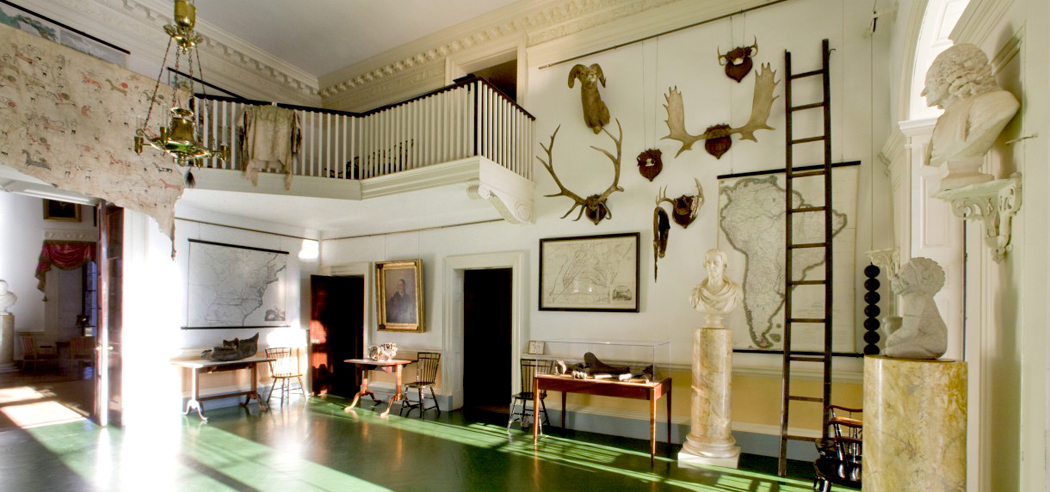
If you visit Thomas Jefferson’s home, Monticello, outside Charlottesville, Va., you will find the third president’s collection of moose heads and odd clocks — his very own cabinet of curiosities. This Barnum influence can be seen in more recent collections, such as The Museum of Questionable Medical Devices (now part of the Science Museum of Minnesota) in Saint Paul, and the Museum of Jurassic Technology in Los Angeles. 

But these collections spawned more serious progeny. Just 28 years after Kimball opened his Boston Museum, more sober men founded, in New York City, the American Museum of Natural History, which houses some 32 million specimens and is the largest such museum in the world. It is also my spiritual home.

I spent many hours, many days at the Museum of Natural History and the attached Hayden Planetarium. I still go there whenever I get to visit New York. At least a day must be planned for the museum. If I’m in Los Angeles, I visit the natural history museum there; if I’m in Chicago, I go to the Field Museum. And when in D.C., there is the Smithsonian Natural History Museum, second only to the New York version. These are the natural heirs to the cabinets of curiosity of the past.

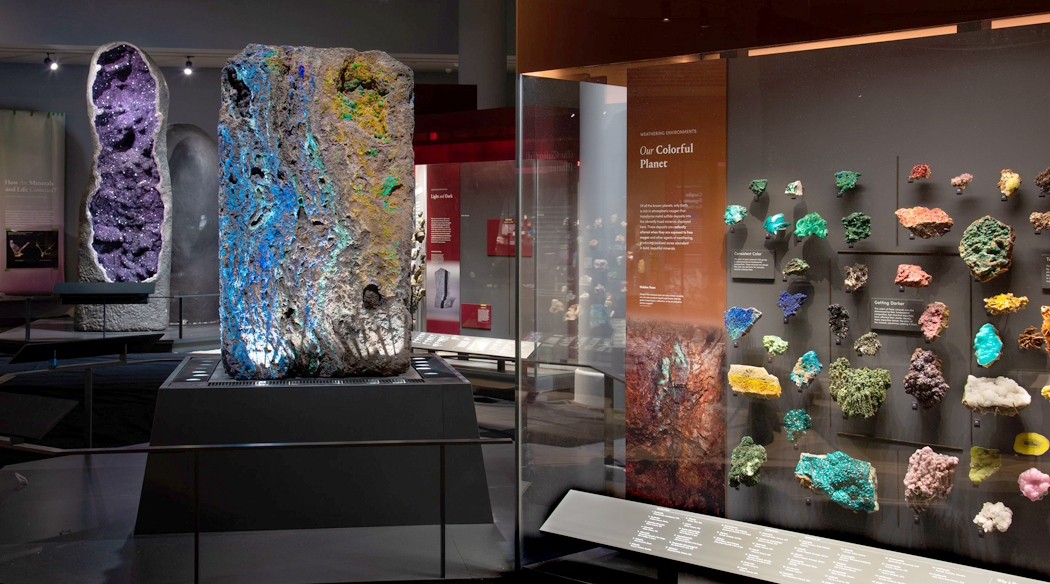
But there has been a change in such museums over the past 60 years, since I first started going. When I fell in love with these museums, they were vast warehouses of wonders: bones, stones and dioramas. I marveled at the vastness of the natural world, how there could be so many different examples of, say, feldspar, each with a tag telling us where it came from. “Haddonfield, N.J.,” “Thetford, England,” “Gobi Desert, Mongolia.” (As a young mind, this opened up my idealistic little heart to the sweep and scope of the planet, and that my little point on the globe was one of a million other points on the globe, and if those places seemed exotic and remote, well, my place was exotic to someone else; made New Jersey marginally more bearable). It was a romantic notion: The world is vast, varied, prolific, immense, incalculable and ultimately bigger than anyone’s schema. Any story we told, or were told, about the world, whether from Bible or textbook was bound to be insufficient. There was always more. There was always another way of looking at it. Always another way of organizing reality. 

The museum collection gave us the raw material. We were left to figure it out for ourselves. 

But that has changed. 

Museums have three primary purposes, and while all three continue to be important, their rank has switched over time. Originally, museums were collections. Little was done to catalog or organize the material. 

But the second job of the collections was scholarship. Specialists studied the fossils, the rocks, the birds. Doctoral dissertations were written, books were published. New bones were dug up somewhere and theories had to be altered: It was a constant process.

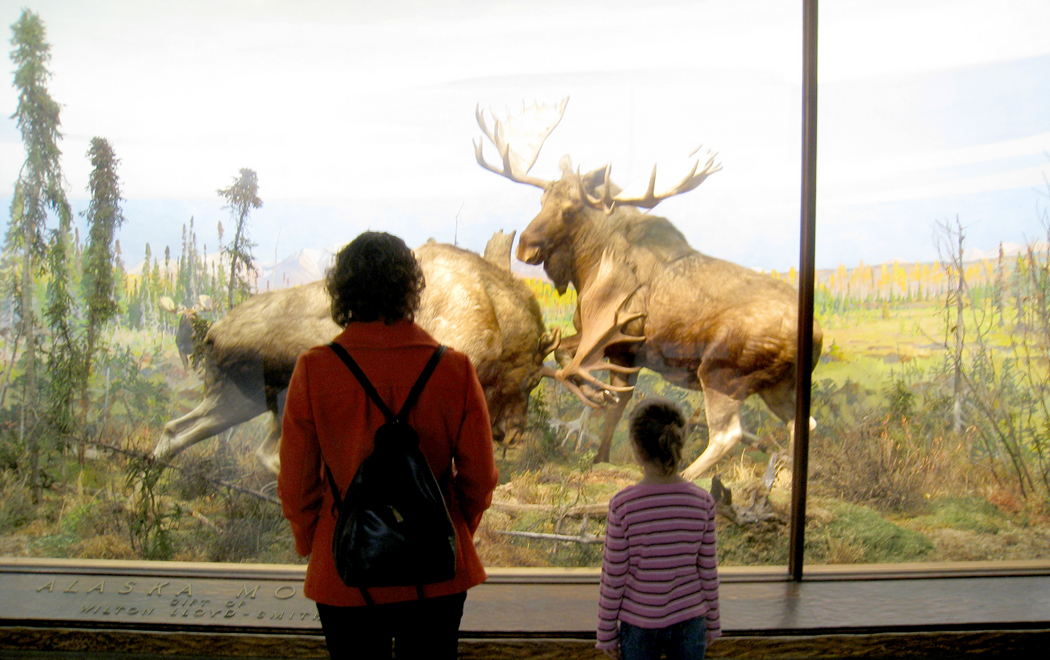
Thirdly, museums were educational. The public came in to see the dinosaurs, the reeboks posed in front of dioramas painted by artists of genuine talent. As this educational mission gained primacy, the collections were sorted, thinned and put into storage. Instead of a room full of vitrines showing all those feldspar samples, and now, a single example has been put on black velvet under a spotlight, and a little sign next to it explains what feldspar is and what its economic importance is.

There is nothing wrong with this educational component; if a kid nowadays even knows what feldspar is, all too the good. But I miss being overwhelmed by the variety and vastness of it all. 

And less benign, when it is all explained for us in a graphic, we are led to believe that we now know all there is to know about feldspar. It is a closed subject, and young minds no longer are challenged to engage with the material and discover for themselves what they can. Museums too often give us only the received wisdom. What I miss is the sense of “Here is a lot of stuff, there is mystery here, enter at your peril: You may spend the rest of your life trying to parse it all out.”

So, when I go to the American Museum of Natural History, I tend to find the old exhibits, not yet updated. The “Soil Profiles of New York State.” They have the mystery still, the sense they are doors to the universe. 

The difference is between passive and active learning. Too often, we think of education as filling young heads with the information they need to get and hold jobs. But real education is when the student seeks out and learns for himself what he finds interesting. Museums should be about curiosity, not about authority. 

Surely curiosity is what the mess cluttering the house is about. When we used to travel across the country in the car during summer vacations, we’d pick up interesting trinkets: seashells, pinecones, and once a full-size tumbleweed that blew across the road in front of us. We took it home and kept it for years. We specialized in pebbles and stones, with a bright color here, a streak of white across the blue-black there. There was sandstone from Alabama and gneiss from New Hampshire. It was our very own curiosity cabinet. I’m afraid that over the years, and household moves, the rocks have become unmoored: I no longer remember where each specimen hails from. They remain, however, unutterably beautiful. 

I have seen a boatload of movies over the span of my life, some more significant than others. Those few important ones are outweighed by those that are completely unmemorable, even when perfectly enjoyable while sitting through them. That describes most movies and that’s fine. Not every film needs to be Citizen Kane

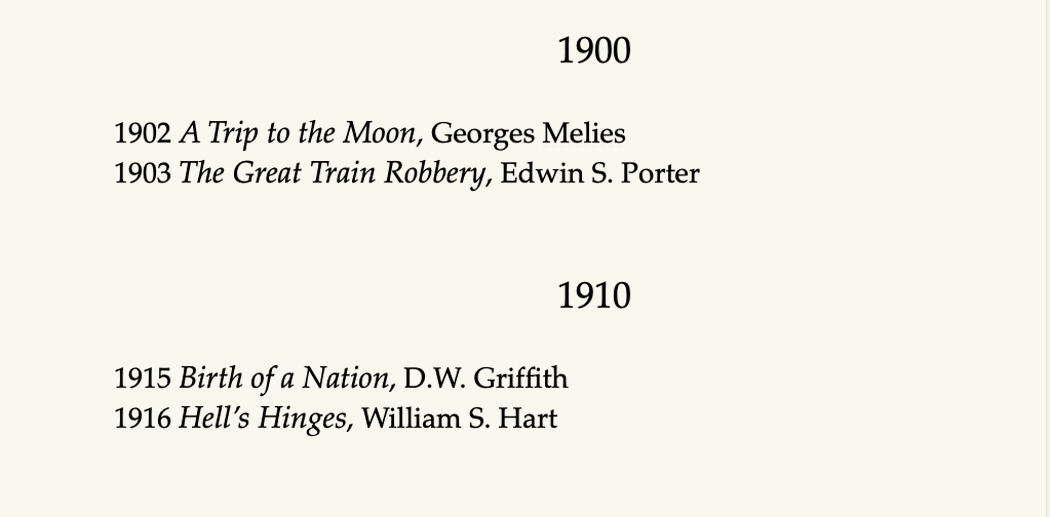
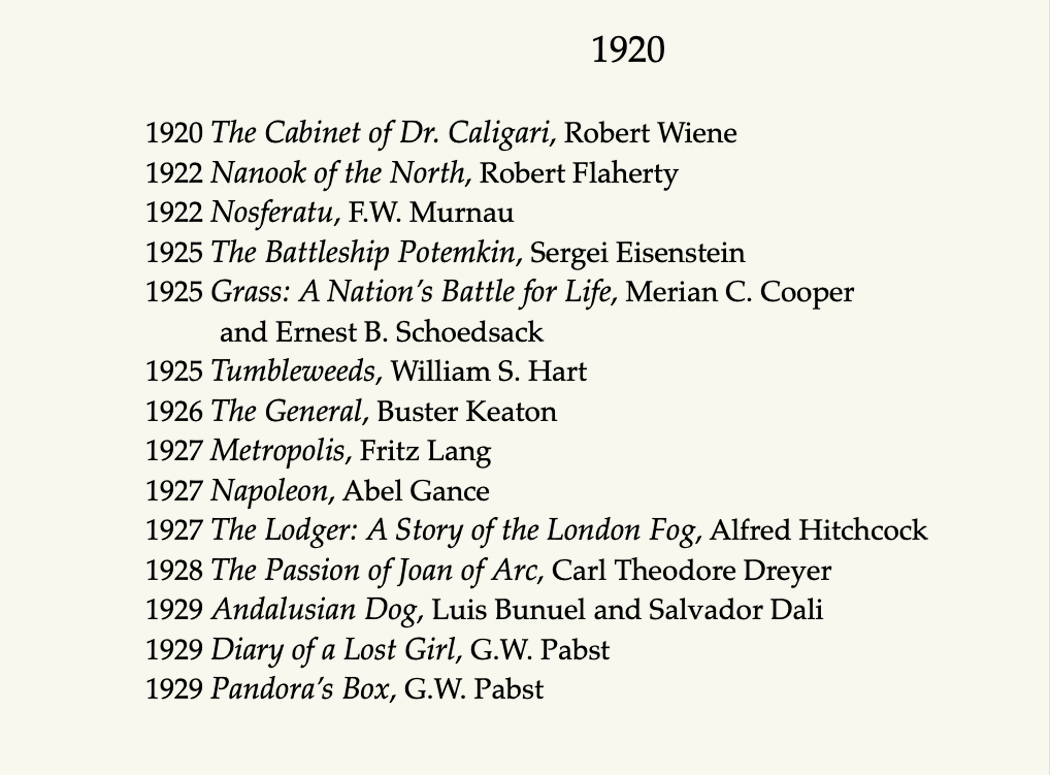
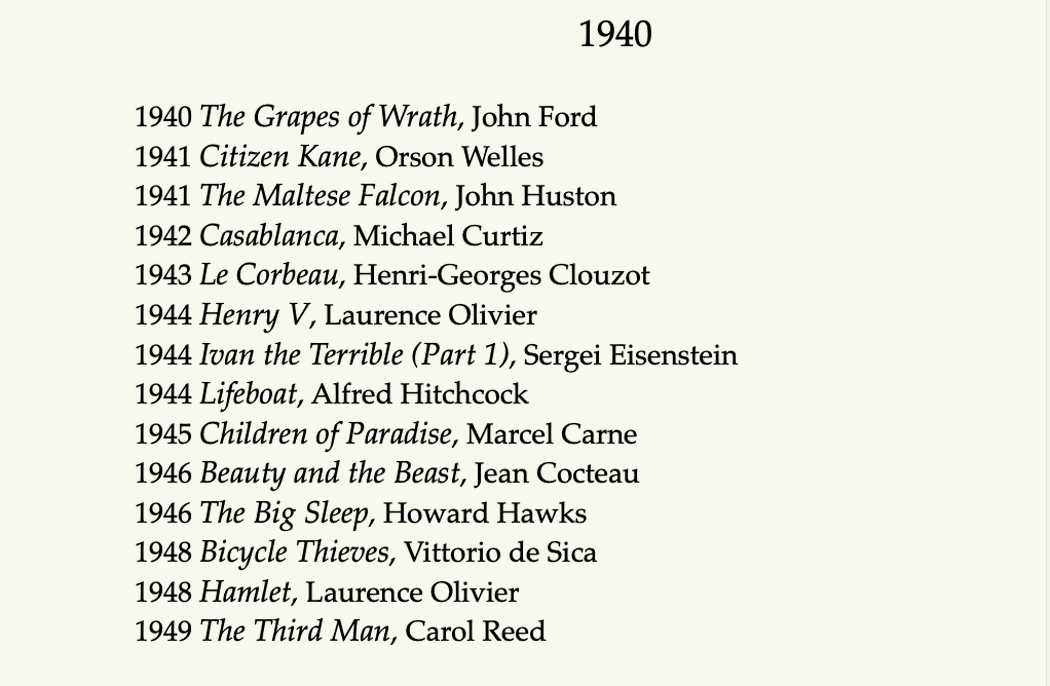
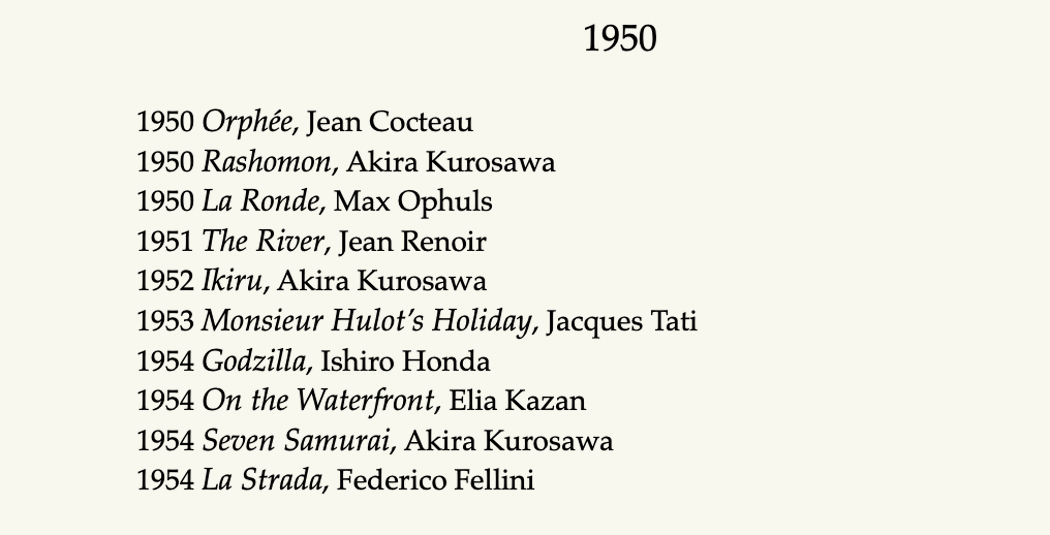
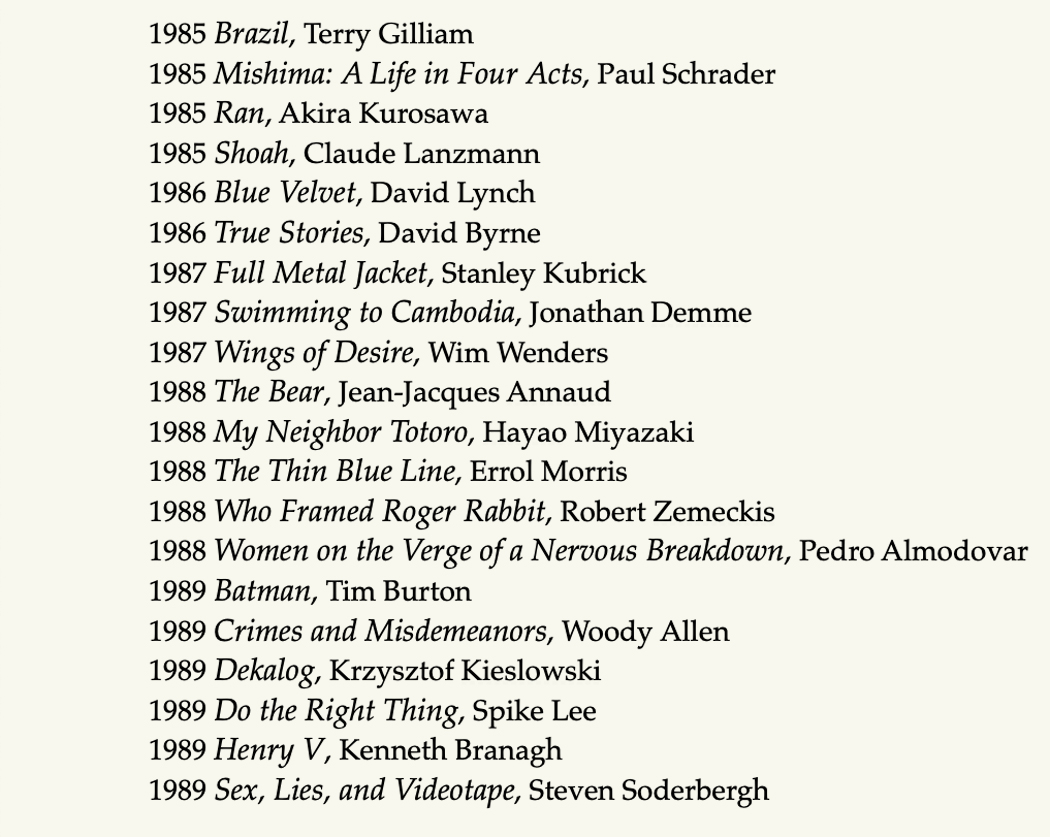
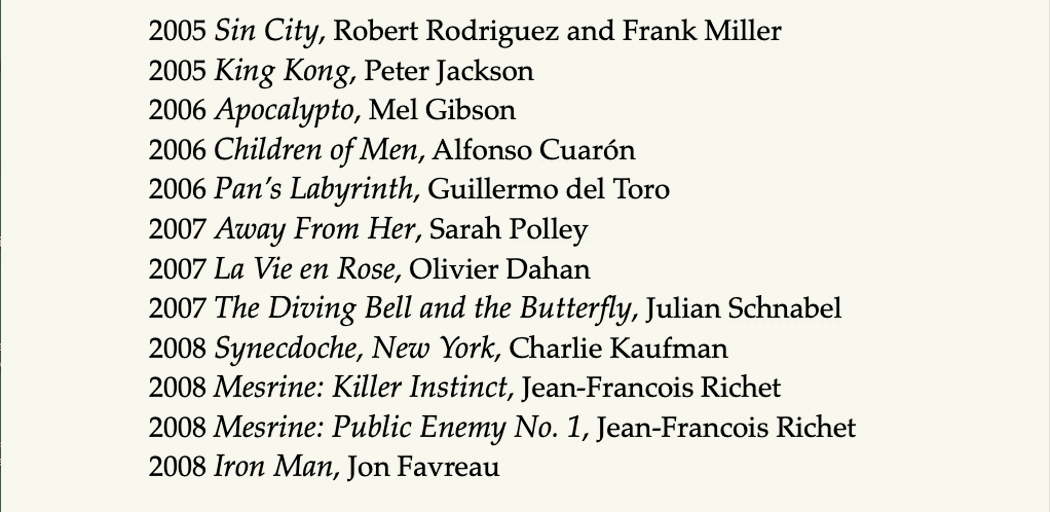
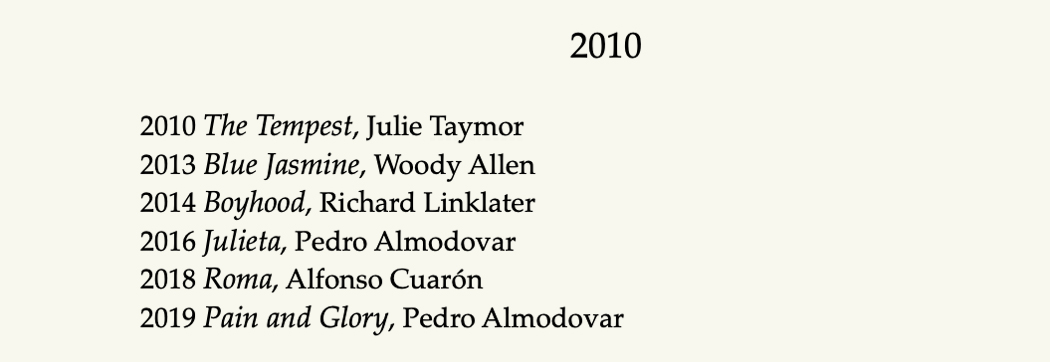
This is my list of significant films, listed decade by decade. It is a personal catalog and limited first by including only movies I have actually seen. There are significant films I have not yet been able to view. Further,  the list tends to reflect my own tastes, although it is not a list of my favorite films or of the “best” films, but of those that I believe have some significance in the history of cinema. You should make your own list. It would undoubtedly be different from mine. 


What makes them significant? Here are my criteria: In order to make my list a movie must hit one or more of these markers: 1. Be of historical importance; 2. Advance film grammar or technique; 3. Be influential on other films and filmmakers; 4. Have something profound to say about existence and humanity; or 5. Simply be so memorable as to be missed if not included. That’s a pretty wide and pretty loose range of qualities. Most films on this list hit more than one of them. And for my esthetic, No. 4 counts above all the others. 

Most movies, whether from Hollywood, Bollywood or Cinecittà, seek only to tell a good story and keep our attention. Many of these are truly enjoyable, but their making is merely efficient, using the tried-and-true techniques which remain invisible to the average moviegoer. The vast majority of films created never attempt to do more — nor should we ask them to. The old Hollywood studios were brilliant at this: perfect camera work, lighting, editing, sound recording, etc., but with never a thought to making us see these techniques. If we had noticed them, they would have felt that they had failed at their job. Others, like Citizen Kane, dance and sing their innovations. The significant filmmakers, for me, are those that do something above and beyond the call of duty. 

I make this apology: My taste tends toward the more arty. That’s why you should consider making your own list. I own hundreds of DVDs, perhaps more than a thousand. The way some readers read not books, but authors, so some filmgoers watch not individual films, but filmmakers: all of Bergman or all of Almodovar. I could not include all of their films in this list without it becoming more cumbersome than it already is, and so have whittled their works down to a few exemplars. So, for each of the big names, I have included mostly just the first important film they’ve made (a film that defined their style or themes), or when including more than one, when subsequent films meaningfully expanded their work. 

Some of these films might lead you to scratch your head. But I can justify any one of them. Or try to. 

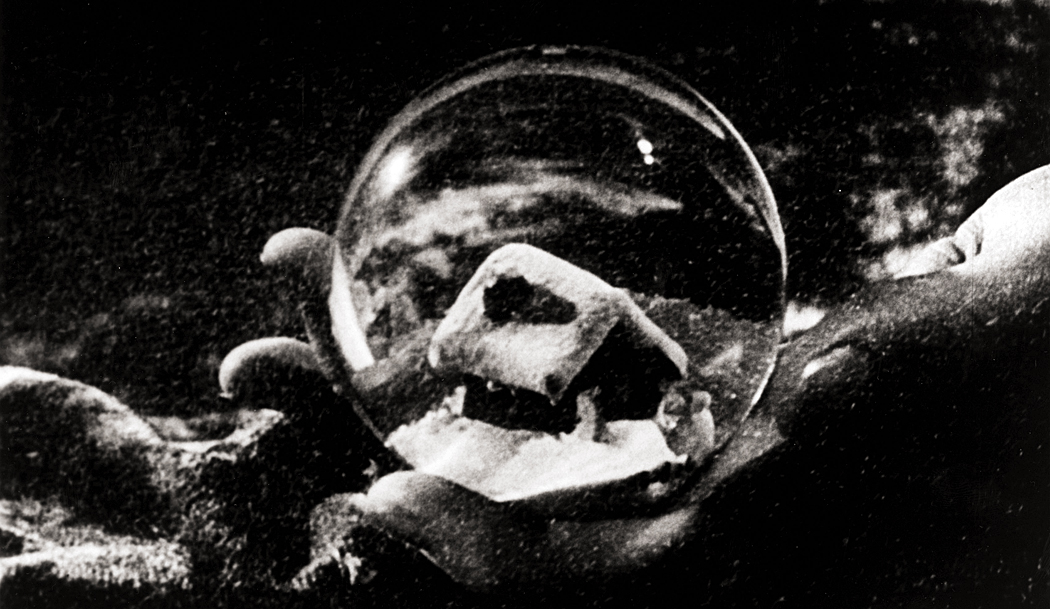
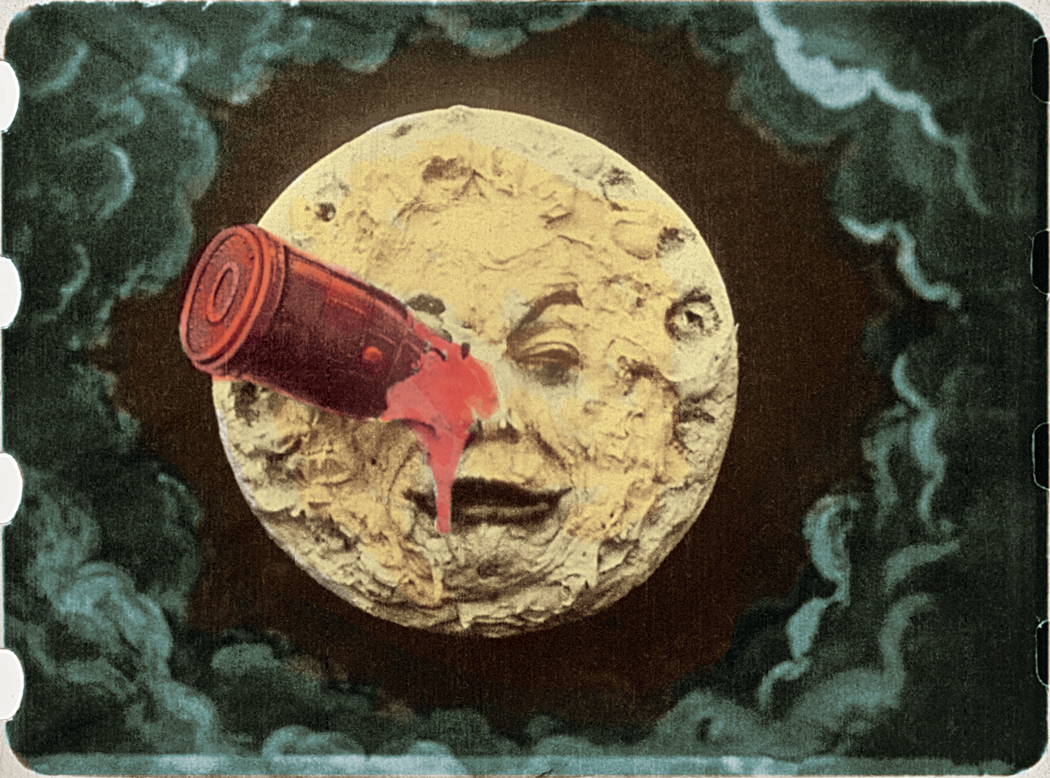
Among the earliest films are the shorts made by the Lumière brothers in France in the 1890s. They are each under a minute long and show everyday scenes. They astonished their original audiences, but are of mostly historical interest now. The first filmmaker to create something we might still want to see and enjoy was the P.T. Barnum of early filmmakers, Georges Méliès, who used trick photography and surreal plots to draw his ticket-buyers in. 

When we get to 1915, we have to take a deep breath and watch Birth of a Nation, which is so blatantly and obscenely racist, I feel dirty even listing it. But it is, apart from its story and acting, so important in the development of cinema and film language, you kinda have to hold your nose and see it. 

Film really took off in the 1920s — the first “golden age” of cinema. A language and grammar of filmmaking developed that could tell a story with a minimum of words in intertitles. So many films are lost now, but many of those that remain are classics, including the amazing five-hour Napoleon by French director Abel Gance. It has been difficult to find commercially for years (blame Francis Coppola), but now is available on Region 2 DVD and Region B Blu-ray from the British Film Institute in a magnificent restoration by Kevin Brownlow. It’s worth it to buy a region-free player just to see this film. (You can also find things on Amazon UK that are otherwise not available in the U.S., and Region 2 versions of some films that are cheaper than their American counterparts. A region-free player is a treasure.)


The 1930s were another “golden age,” when the studios ran things and did it right. Even the lowliest of studio B pictures was made with a professionalism that is hard to credit. Everyone was on top of his game. 

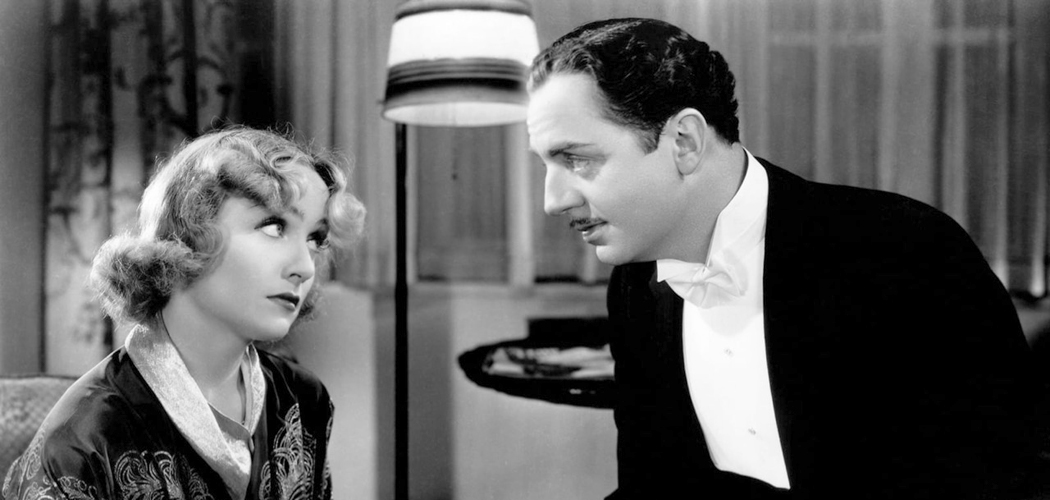
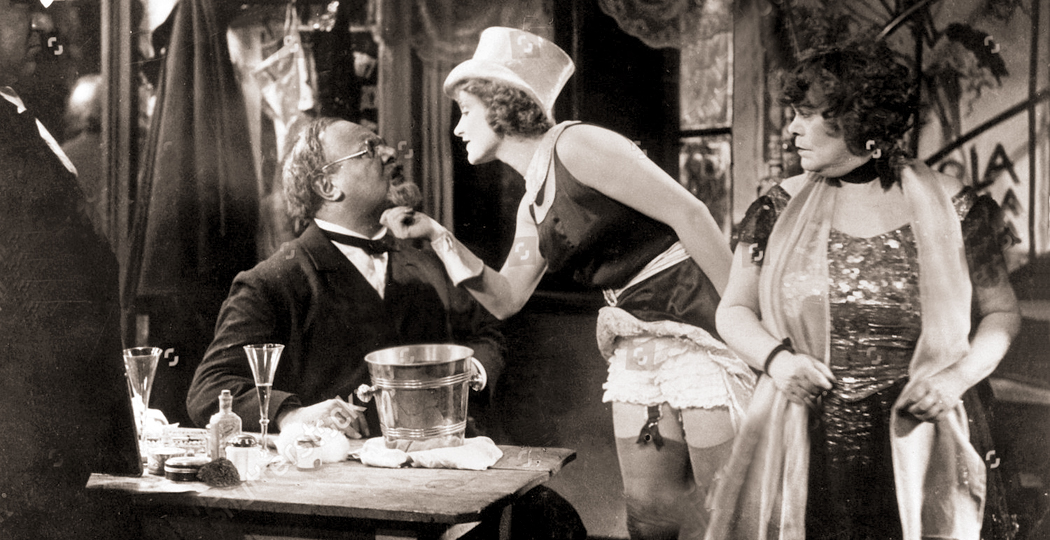
But Hollywood was interested more in melodrama and comedy than in searching explorations of the human condition. They were really, really good at it. But in Europe, the darker tides of history were leading to more textured work, as in the work of Fritz Lang, Jean Renoir and Marcel Pagnol. In the U.S., we had Ernst Lubitsch, who could be more sophisticated than the Hollywood norm, but then, he was born in Berlin. 

The one thing America had that no one else seemed able to copy was the “screwball comedy.” I have only one on my list, but there could be dozens. I have My Man Godfrey because I think it is the most perfect one. But I love ’em all. By the war, they couldn’t make them anymore without seeming to be too self-conscious about it. A genre no longer possible. 

The Adventures of Robin Hood is a film I have never cared for, but it is on my list for its score by Erich Wolfgang Korngold, as exemplifying the great movie music by European emigres. 

I have to apologize for Leni Riefenstahl being on this list. Like Birth of a Nation, there is a moral stink to her films, but one should see them anyway for their influential filmmaking. Yell at the screen while you watch if you want — I do — but see them at least once before washing your eyes with lye.   

Even the worst eras of filmmaking have their gems. After 1939, the high-water mark for Hollywood films, we hit a lull. The war is certainly one cause — so many actors, technicians and filmmakers joined up and spent the war in Europe or the Pacific. But John Wayne stayed home to fight the enemy on the screen. I watched tons of those films on TV when I was a kid. I can’t say how many times I watched Guadalcanal Diary on the Million Dollar Movie. 

I include Maltese Falcon as the closest a film has ever adhered to the book. If you read Hammett’s book, you will think you’re reading a novelization of the film. John Huston did a great job with it. Casablanca is there as proof that a committee can make a masterpiece. Grapes of Wrath is here for its cinematography, which so perfectly catches the tone of the FSA photographs of the Great Depression. 

Still, the majority of movies on my list are European. They deal with real things; they had to. 

The 1950s were the great age of European art film. When we think of an art film, we are likely to picture The Seventh Seal, Rashomon or Orphée. Hollywood could squeeze out an occasional great film, but mostly it was sinking into the doldrums with flat TV-style lighting, uninspired editing, and a dependence on big-name stars, often miscast. Yet, it managed to make On the Waterfront, Anatomy of a Murder and Some Like It Hot — the closest thing Hollywood ever made to a post-1930s screwball comedy. I wish I had room on the list for more Billy Wilder. 

Oh, and Godzilla is here, not as the kiddie monster movie that it was turned into with Raymond Burr added on, but as its original Japanese parable of the atomic bomb and Hiroshima. If properly seen, Godzilla is a heartbreaking film.

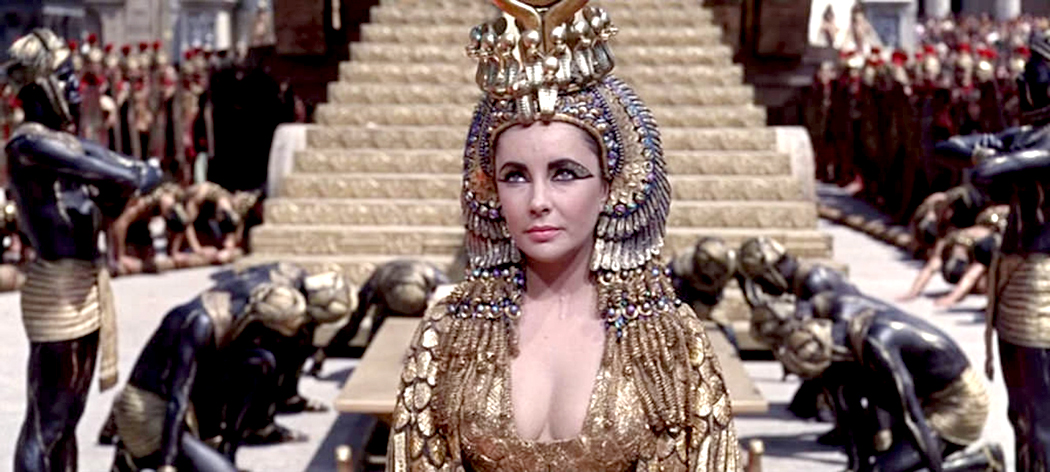
The French New Wave hits full force in the Sixties, taking up the slack  from Hollywood, which, in the first two-thirds of the decade was practically moribund, making dreck like Mad Mad Mad Mad World and Cleopatra. Oy veyzmir. 

Things brightened up in the last years of the decade as the studios threw up their hands and let the young turks in to update the artform. (Don’t feel sorry for the studios, they have come back with a vengeance with superheroes and CGI, but for the time being, they were playing dead. Never count out Capitalism, while there is still money to be made.)

The one great studio film of the era is Lawrence of Arabia. I had not counted it much until I saw it on the giant screen (the 70-foot screen of the old Cine Capri in Phoenix, Ariz., in a 70mm print in 1989.) It was a wonder. I weep for the kids watching movies on their iPhones.  

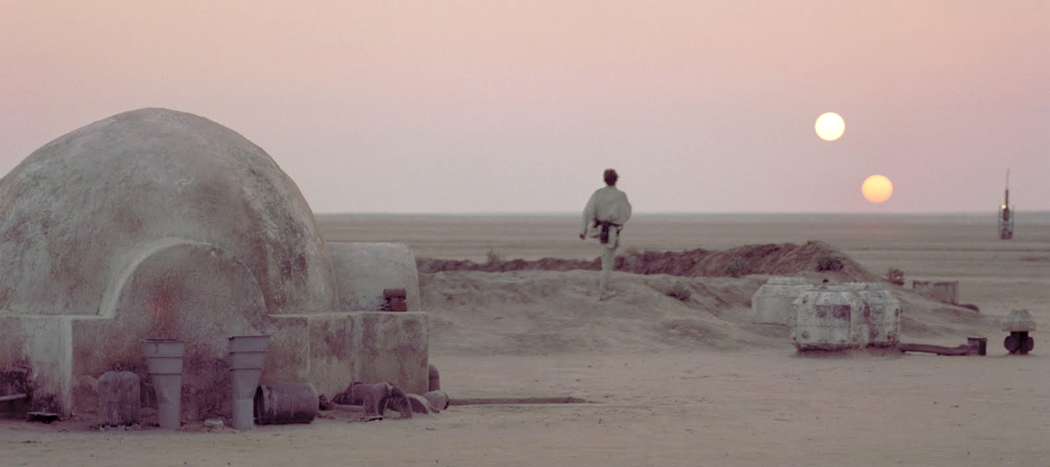
What started in the Sixties continued for the next decade, but the warnings were there to be seen. Young turks grew in style and technique, but the worm in the apple had jaws, then it had Star Wars. Filmmaking mega-corporations saw where the big bucks could be had. 


Before le déluge, though, a cadre of brilliant auteurs were given money to make Chinatown, Nashville and Taxi Driver. And the crazed, driven Werner Herzog broke through consciousness with Aguirre. And who else, really, was der Zorn gottes

Filmmakers who first popped their heads above ground in the 1970s went on to be the grandmasters of the next several decades. 

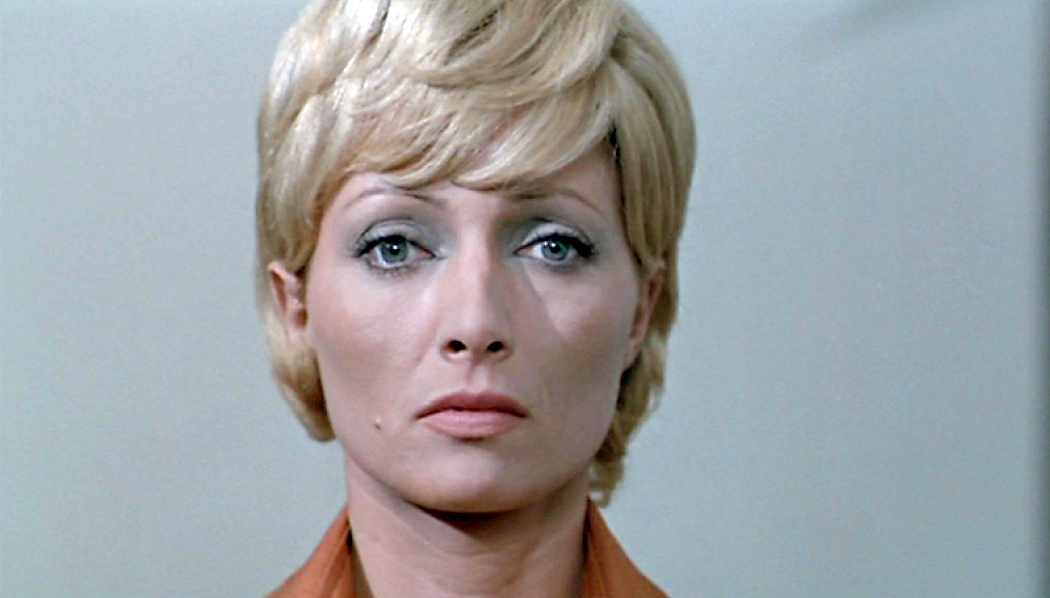
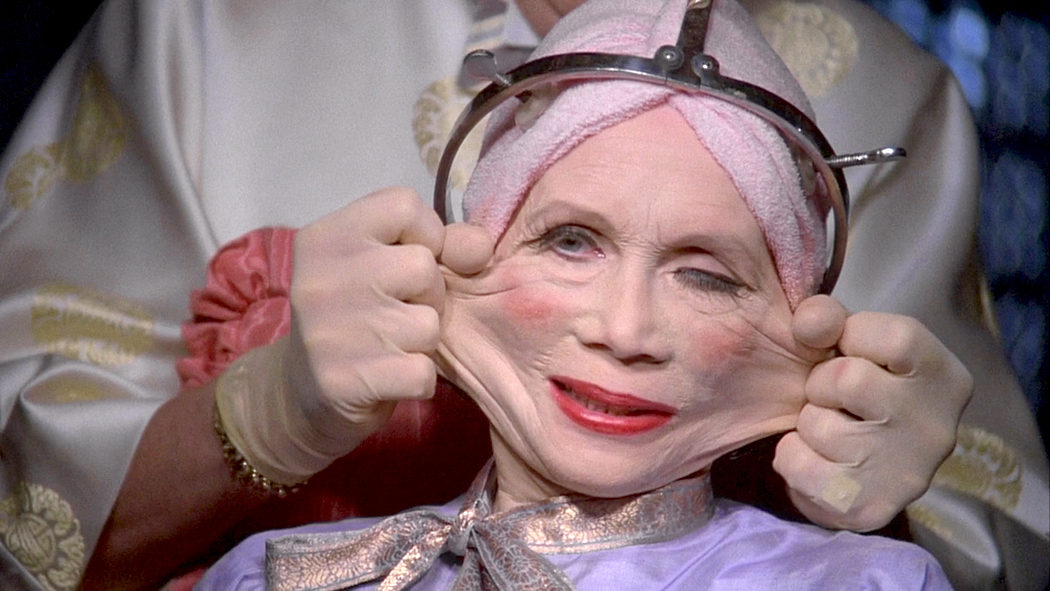
A new generation of auteurs arose in the 1980s to again refresh the cinematic cosmos. Some had made earlier films, but they all hit their stride in the Reagan years: Terry Gilliam, Brian De Palma, the Coen Brothers, David Lynch, Jonathan Demme, Spike Lee, Steven Soderbergh, John Sayles, Errol Morris. 

There was coming problem, though: film schools. In the old days, directors learned their craft on the job. Increasingly, they learned it all in school and became ever so glib at the three-act script and the POV, the Final Cut Pro. They knew their B roll and their axial cut, their Dutch angle, their key light and post production color timing. Result: filmmakers more interested in technique than in content. But the full misery of all that happens after the ’80s, when these well-trained technicians were given the reins of a $200 million CGI and green-screen superhero epic, where they functioned more as field generals than as artists. 

The film-school esthetic was also the natural result of the rising Postmodernism: the knowingness that made the process of filmmaking its own subject, along with the expectation that the audience knew what you were doing and could nod their heads knowingly. The story became its own MacGuffin. 

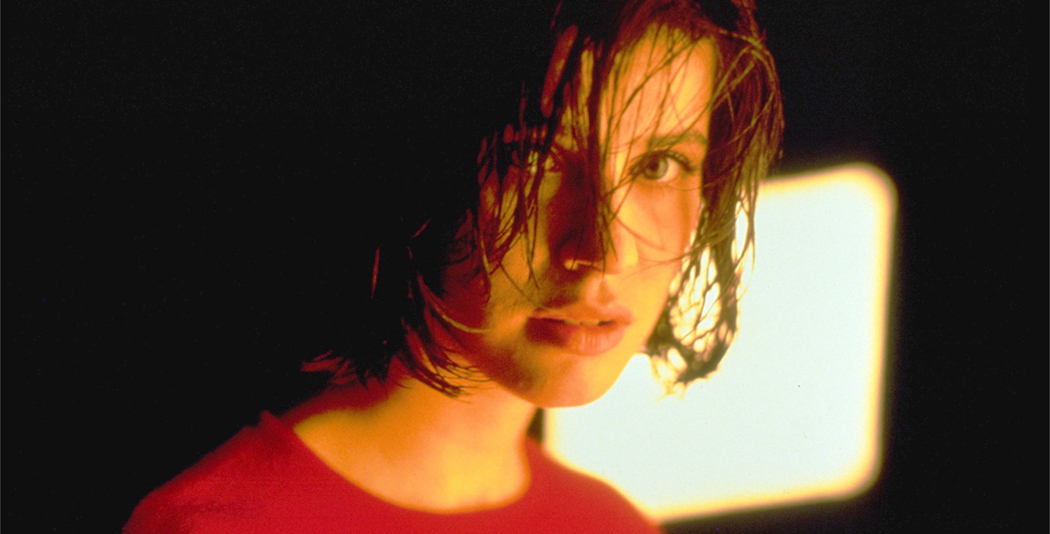
For me, the ’90s is the Kieslowski decade. The Polish filmmaker had been working since the ’60s, but didn’t break out into international note until The Double Life of Veronique in 1991, following that with his masterpiece trilogy, Colors (Blue, White, and Red). His 10 shorter TV films, Dekalog, had come out at the end of the previous decade, but together, all his later work makes a case for film as art in the same manner as the films of Bergman and Fellini in the 1950s. They are one of the high-water marks of film as literature. 

New names appeared and stuck: Jean-Pierre Jeunet, Richard Linklater, Baz Luhrmann, Darren Aronofsky, Wes Anderson, Spike Jonze, Paul Thomas Anderson, the Wachowskis. They all continued to make interesting films of lasting power. Pedro Almodovar finally won international fame after decades of making idiosyncratic films in Spain. And Martin Scorsese continued to up his game, becoming the de facto “greatest living film director.” (Not that there is such a thing, but if there has to be someone named, most agree Scorsese wears the badge.) 

 It’s hard to believe, but Peter Jackson made the first Lord of the Rings movie 20 years ago. With those films, and with King Kong, Jackson became the field general commanding the largest forces and a budget rivaling that of the invasion of Normandy. That the films were as good as they were proves Jackson could overcome the disadvantage of so much money. Not everyone given such a purse could. The major movies of the decade were also blockbusters, a form that took over the studios, leaving behind small budget indie films to the do-it-yourself crowd. Lucky for all, digital cameras and editing made it possible to make meaningful films with almost no budget at all. The bifurcation of the film industry was nearly complete. 

Outside Hollywood, however, worthwhile films continued to be made by directors who actually had something to say. Increasingly, they said it in Spanish. Since the shift in the millennium, four of the putative top 10 movie auteurs are either Mexican or Spanish (Cuarón, del Torro, Iñarritu and Almodovar). We’ve come a long way from those cheesy old El Santo movies. 
Among the others are two very peculiar directors: Lars von Trier and Guy Maddin, both acquired tastes that I have acquired. I had to narrow it down to a film apiece for this list, but I would love to have included Maddin’s My Winnipeg

I’m afraid that when I retired in 2012, my moviegoing dropped precipitously. So, my list for the past decade is incomplete. I leave it to younger eyes to see the future. 

So, that’s my list. If I had made it tomorrow or next week, it would likely be entirely different. I’m sure I’ve forgotten some I wish I had included, and I might change my mind about some of those I listed. If I had made the list when I was 20, or 30, or 40, it would have reflected a very different — and unfinished — sensibility. Now, at 73, I’ve pretty well rounded off my sense of taste and esthetic. 

The list is mine and no one else should be blamed for it. And your list would undoubtedly head off in some other direction. Vaya con los dioses.
I came late to film, but early to movies. Even before school age, I watched hundreds of movies on TV. At that age, there is no critical sense. They were just movies and I didn’t have any sense that one might be better than another. They wiggled on the screen and that was sufficient. I watched it all like drinking water from a tap. 
As I grew up, I decided I liked some kinds of movies better than others. First, from before I entered kindergarten, there were the Westerns from the 1930s and ’40s that ran in the afternoons. I loved Buck Jones and Hoot Gibson. When I became older, there were the science fiction movies from the 1950s. I gobbled them all up: The Crawling Eye, Gog, Rodan

And because so many of those I watched were on TV’s Million Dollar Movie, I also absorbed a surprising number of “kitchen sink” movies from England, made during the “Angry Young Man” phase of British cinema: The L-Shaped Room, The Loneliness of the Long Distance Runner. Did I know what they were about? No, they were just a fact of life. TV life. “A bit of a plodder, myself,” said Michael Redgrave. (“What’s a ‘plodder,’ ” I wondered, the word not yet in my vocabulary at the age of 7). Later, in my early awkward pubescent years, I became obsessed with classic monster movies, a period in my life that the less said, the better. But at one point, I could name you every actor who ever played the Frankenstein monster — including Glenn Strange.

Not that I understood these movies, mind you, but they were what was on. I may have been five or six and watching The Boy With Green Hair on the Million Dollar Movie, with neither an understanding of what the movie was about, nor the sense that I should understand what the movie was about. I was unaware of taste or choice; I just watched what was offered. 

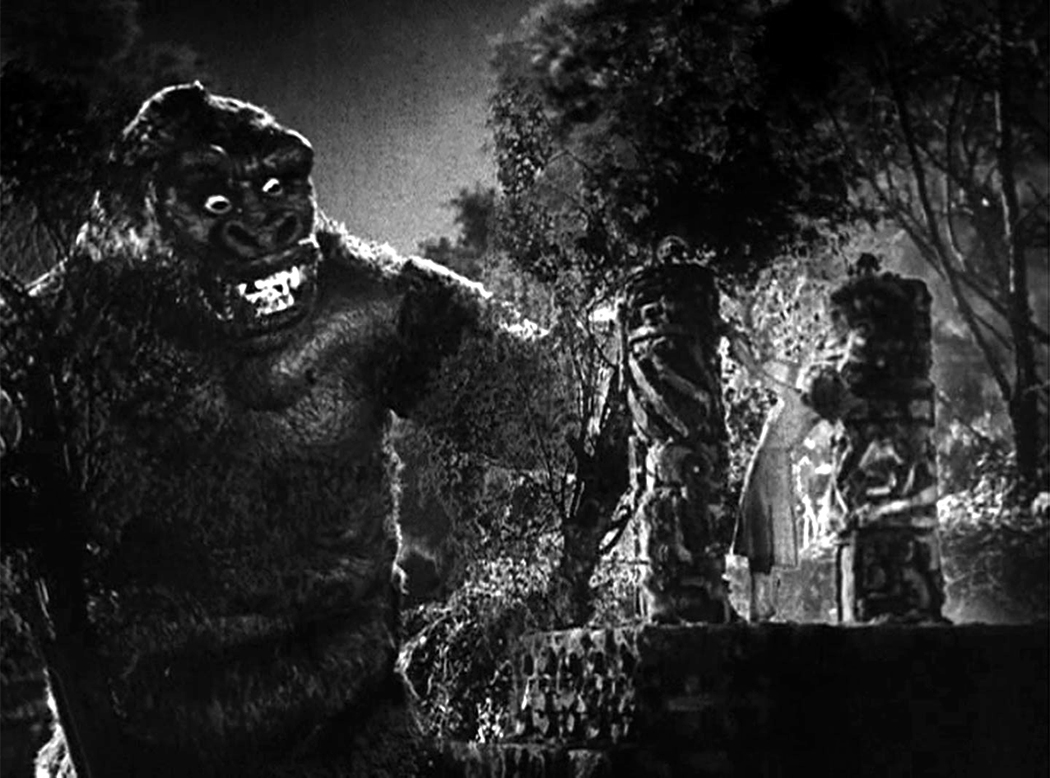
My earliest memory of a movie is of watching King Kong from behind a chair when I was perhaps in first grade; I was terrified. I would peek out to see what was happening when I dared. My baby brother watched, too, but he just sat there, three years younger than me and I’m sure just happy to see things wiggling on the screen. (He later made a career teaching animation and filmmaking.) 

Nothing like a film education came my way until I entered college. I was young; I was ignorant. 

British film critic Mark Kermode talked on YouTube about the moment he first became fascinated by movies. It was when he was a kid and saw Krakatoa: East of Java, a 1968 disaster film (the volcano Krakatoa is actually west of Java, but you know: the movies). It was shot in Cinerama and starred Maximilian Schell, Diane Baker, Brian Keith, Sal Mineo and Rossano Brazzi. 

It was 1968, a significant year in film, balanced uncomfortably between Cleopatra and M*A*S*H. It was the moment the big studios were dinosaurs and young Turks were meteors waiting to descend. Doris Day and Rock Hudson were leaving the building by the back exit while Dustin Hoffman and Gena Rowlands were breaking down the front door. The studios could still believe that making a Western with Sean Connery and Brigitte Bardot was a good idea, but in the wings were Francis Coppola, John Cassavetes, Brian De Palma, George Romero and Peter Bogdanovich. 

I’m grossly oversimplifying, or course. Hollywood continued to pump out high-budget pap in the following years — as it continues to do today in the age of Michael Bay and comic-book superheroes — but by the late ’60s, the studio apparatus was becoming increasingly irrelevant in an era of Easy Rider, Medium Cool, and Alice’s Restaurant (all just a year after Krakatoa). Although, to be fair, in the insurgent camp, there were plenty of well-meaning indie films that have been lost in the passing of their trendiness. Neither all good nor all bad. 

But in the midst of it, there, at age of five or six, was Kermode, blown away by the cheesy explosion of the volcano in Krakatoa. He says that it was then he knew he wanted to spend his life with movies. A single burst of “Eureka.” Kermode admits that he knows others, unlike him, came to movies more gradually. That was me he was talking about. 

(If you don’t know Kermode, he is movie critic for The Observer, the British Sunday newspaper, and counts as probably as close an English equivalent as you can find to Roger Ebert as “national movie critic.” Kermode is in print, on radio and on the tube. It was on the British TV’s The Culture Show in 2006, that filmmaker Werner Herzog was shot, while being interviewed by Kermode; Herzog continued the interview anyway, saying, “It was not a significant bullet.” Ah, Werner. The last time anyone did something like that was when in 1912 Teddy Roosevelt was shot in Milwaukee, only to shrug it off — “It takes more than that to kill a Bull Moose” and went on to give a campaign speech for 90 minutes.)

And so, although Kermode knew at an early age that movies would be his life, I only gradually come to an appreciation of the art form. The thought that there was a film grammar, or that there was a crew of professionals assembled to construct the movie, or that there was a financial aspect to the business — the thought never entered my tiny little head. 

Then I entered college and all that changed for me with the film series offered. Unlike nowadays, when college film programs are chosen by students, and tend toward things such as Caddyshack and Animal House (yes, classics of a sort), the series I was given was curated by school faculty and featured Kurosawa, Bergman, Fellini and Truffaut. It is where I first saw The Andalusian Dog with its eye-slice, and Birth of a Nation, with its unbearable racism. 

It slowly dawned on me that movies could be as serious an art as poetry, opera or architecture. I had been slapped awake. 

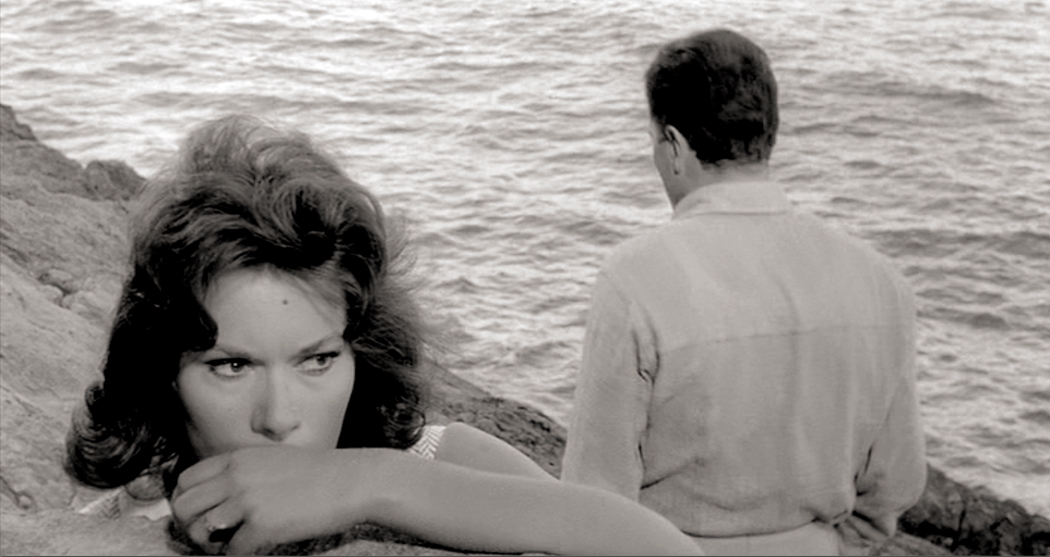
It was also the year (1967) that Antonioni’s Blow Up opened in town, which I watched with my crazy college girlfriend in the commercial theater. Now that was art cinema. We came out into the sunlight considerably more pompous and intellectual than when we went in. I spent years analyzing and decoding the symbolism — that being the defining vice of the young and clever. 

But from then on, film became a significant part of my intellectual life. I haunted the local Janus theater that specialized in art films, and I saw so many: Ikiru, Virgin Spring, La Strada, L’Avventura, Hiroshima Mon Amour, Last Year at Marienbad — I mean, can I get any artier? These were movies to be seen, yes, but then, more importantly, to be talked about. O the symbolism — O the humanity. O Woman in the Dunes

I developed an unhealthy snobbery about cinema and dismissed pretty much anything that came out of Hollywood. I wuz a idiot. But, hey, I was a college student, which is pretty much the same thing.

Years passed, and the veneer of imbecility wore off; I saw thousands of films, from the earliest silents to the most recent offerings at the multiplex. The TV was set by default to Turner Classic Movies. (Just last week, I watched King Kong again, for at least the hundredth time. “How can you watch a movie you’ve already seen?” asked a friend. “How can you listen to your favorite song over and over?” I responded.)

By the early 2000s, I was writing for the Phoenix newspaper and, among other duties, was a backup movie reviewer. The regular critic tended to avoid foreign films, and so he gave many of them to me. Later, in 2006 and 2007, when there was an interregnum between film critics, I served as a temp. I got to see many good films, and many godawful ones, which always gave me the most fun to write: “Earlier this week, the Israeli Supreme Court outlawed torture, so I know one place Love Stinks will not be opening.”

I took shots at art films, too. I really can’t stand the Masterpiece Theater genre of high-toned blather: “Mannequins in rich dresses moving about and pronouncing their words so distinctly that you’d think they were shelling pistachios with their tongues.”

You know, the 500-page classic Victorian novel brought to life (or not) on the screen: “If you’ve ever gotten a shirt back from the laundry with too much starch, you will have some sense of what is wrong with House of Mirth. It creases where it should drape.” 

I have over 200 entries in Rotten Tomatoes. When I look it up, I don’t remember seeing some of the films I reviewed. The were not all memorable. But the run as movie critic gave me a chance to become a juror at the Palm Springs Short Film Festival in 2000, and learned what it was like to be followed, like a magnet pulling iron filings, by publicists. 

It was fun, but there comes a point when you’ve seen too many movies in a week and they all blur into an Eastmancolor smudge. There is something lost with the deeper awareness of cinema. When I was a wee bairn, all that mattered was the story. With increased knowledge, as any honest movie critic will admit, you notice things like editing and foley work. You are paying double attention, on one hand to the story, and on the other, to how the story is told. You can never unknow how Hitchcock turns time to taffy, or how Godard jump-cuts, or how Marcel Ophuls uses camera motion like a ballet dancer. 

With the coming of Postmodernism, almost everyone is now wise to the process. You can’t watch a film by Christopher Nolan or Charlie Kaufman without commenting on it: They foreground the filmmaking and subordinate story. Is this a good thing? I’m not so sure but that films were more immediately pleasurable before we knew that Alejandro Iñárritu filmed Birdman to look like one long, single take. 

I remember when I learned that Stanley Kubrick used a special f/0.7 lens to film a scene by candlelight in Barry Lyndon. When the Steadicam was introduced in Hal Ashby’s Bound for Glory. When CGI bowed in on Flight of the Navigator (rather crudely by modern standards). When the crane shot was rendered obsolete by the invention of the aerial drone. Drone shots are everywhere now, and have become a visual cliche. In the old days, a movie ended with the hero riding off into the sunset; you can hardly end a movie, TV show or commercial now without the drone shot sweeping back away from the final scene into a wide landscape. (So now, establishing shots come at the end?)

By now, I’ve seen my thousand movies. I own hundreds of DVDs, perhaps more than a thousand (I haven’t counted recently). Among them are all the films of Andrei Tarkovsky, Pedro Amodovar, Werner Herzog and Woody Allen. (At least I think I have all of Herzog; it is impossible to keep accurate track). And nearly all the films of Ingmar Bergman, Jean Renoir, Erich Rohmer, Francois Truffaut, Federico Fellini, Akira Kurosawa and Agnes Varda. I’ve fallen behind with Quentin Tarantino. I wish I had more of Martin Scorsese, but my DVD purchases have lagged since my retirement (and shrinking of income). 

It’s been a lifetime of watching movies, learning from movies and about them, a lifetime learning to take them seriously. Even when they’re not serious. 

Next: The List

I opened the front door and stepped outside, where a choir of birds twittered and chirped. There must have been scores of them up in the still-bare trees of early spring, all blasting at once, and a kind of joy crept up in my chest at the sound, a sense that this was beautiful in a way that almost justified existence. 

It is another spring. I have seen 73 of them and the number I have left is dwindling. Now there is a sense, like Takashi Shimura at the end of Seven Samurai, talking to Daisuke Kato, saying: “Once more we have survived.” 

Another spring, another year. I see the bud tips on the maple tree spread and burst out in the million tiny sprays of maroon maple flowers. It is a moment I wait for each year. Another small moment of joy. Those moments are of immense importance. 

I want to avoid sounding like a Hallmark card here. For much of existence for much of the world is misery. People continue to bomb each other; children continue to die; famine spreads; refugees live by the thousands in makeshift tents; ethnic minorities are hounded and enslaved. Even in our so-called First World, otherwise comfortable people face death, betrayal, hate, disappointment and the hounding sense of their own meaninglessness. 

For much of history, we have lived through plagues, wars, superstitions and “continual fear, and danger of violent death; and the life of man, solitary, poor, nasty, brutish, and short.”

And yet, you see children in those refugee camps playing soccer in the dust. They are laughing. Mothers find great love in their children. Above the camps, birds still twitter and peep. I don’t mean to downplay the misery being suffered, but to point out that even in the midst of suffering, there are sprints of joy. It is so to be human. 

What affords those moments of joy — which come upon us unannounced always — is that they give us a glimpse of connectedness. To our kin and childers, to nature, even to the larger city in which we live. 

I was reading in Ezra Pound’s Cantos a few days ago, through the Pisan Cantos section of that monstrous, abstruse, inchoate mass of culture-shard, written when Pound, after World War II, was imprisoned in Italy for having given intemperate radio broadcasts lauding il Duce and fascism. He was a cranky, possibly insane old man and he was kept in an outdoor cage with a concrete floor for a bed. He wrote the bulk of his Pisan Cantos there, full of the usual blatherings about economics and world history, mixed with bits of incomparable poetry and the language gave even the most pathetic of imbecilities brief moments of majesty of utterance. But, like most of Pound’s verse, it is almost all literary, with little sense of the poet’s actual life, at least outside of books. 

But in the middle of Canto LXXIX, there appear, popping up in the jumble of classical allusion, several birds on the power lines strung above his cage. “With 8 birds on a wire/ or rather on 3 wires.” They make a melody on the music staff of those wires. And later, “4 birds on 3 wires, one bird on one.” Further on, “5 of them now on 2; on 3; 7 on 4.” The real birds keep breaking into his phantasmagoria of theory and the poet’s tirades about ancient China and Tallyrand seem vaporous in contrast with the physicality of those birds above his cage. Philomel and the Nachtigall give way to pigeons and starlings. 

And you sense, behind all the immense brickwork of culture and reference, that moment of real connection with an actual world. And in the misery of that cage, open to wind and rain, a brief moment of joy, left fleeting and unprocessed. 

Such moments are epiphany — the rending of a veil to see what is most essential. Joy is the ephemeral product of such an insight. 

Such moments come in a flicker; they cannot last long. No one is joyful all the time. We are not living in some Pepsodent commercial, skipping down the sidewalk with teeth so shiny they blind passersby. Indeed, we live the bulk of our lives in neutral, neither miserable nor happy, but plodding on. But then we have that glimpse, periodically, of a bliss that transports us from our own toad-like passivity. It is a seed waiting to sprout in our psyches. 

These moments don’t always stick, but sometimes they do, and inform the rest of our lives. I remember a visit to the National Gallery of Art in Washington DC in the 1970s. In the basement at the time, there was a small exhibit of Cezanne still lifes. I had never much valued Cezanne, but I had only seen his work in reproduction or on slides in art history class. But here was the real thing. Who knew there were that many greens in the world? Infinite seeming gradations of blues and greens that glowed almost like fire, “fire green as grass.” And it was, for that moment, the most beautiful thing I had ever seen. I’ve since been to the big retrospective of Cezanne at the Philadelphia Art Museum in 1996 and was bowled over. The color alone, glowing like neon, gave me intense pleasure.

Another time, I heard the Philadelphia Orchestra under Wolfgang Sawallisch play Strauss’ Don Juan and the palpability of the sound, especially from eight horns playing in unison and making the seat under me vibrate, let me feel the sound as a physical presence. Jericho would have shuddered. I know I did. 

Art has been at the root of much of my own experience of joy and epiphany. I could name dozens of concerts and hundreds of art exhibitions that have brought me to this afflatus — for that is what joy is. 

Other sources are family: my twin granddaughters when they were three, riding bouncy-horsey, each on one of my knees and laughing the way only three-year-olds can. Even such a trivial thing as one of them asking for seconds on the pot roast I have cooked for them. Seeing them enjoy what I have prepared is a constant source of joy. I imagine the same for some Syrian refugee in a tent making dinner for her children. These moments come to us as gifts. 

Nature is the third great source. I remember standing on the top of Roden Crater in Arizona, an extinct volcano being reshaped by artist James Turrell. It was dusk and the sun was setting. Turrell pointed out the now-obvious fact that night doesn’t “fall,” but rather, it rises. And you can see the edge of the shadow of the earth cast by the lowering sun against the sky forming a boundary between the light and the dark and as the sun drops, the line of demarkation rises until the night swallows all. It is an effect you don’t get to notice in the cities or suburbs, where the horizon is blocked by human busy-ness. 

I stood by the Rhine River in Dusseldorf at night, with the reflection of city lights flashing off the dark current like firesparks. The river flowed broad with a swiftness and power that felt almost as if it must be a god. This was the river Robert Schumann felt was worthy of writing a symphony about. 

On the plains of eastern Montana, at the Little Bighorn, I stood on a hill — one hill like a frozen wave peak in the ocean among many such peaks — and watched the wind curl the long grass in moving ripples across the landscape. The manifestation of Wakan Tanka, the great spirit that animates the cosmos. I had to stand very still among all the motion to absorb it as a moment of eternity. 

In the early ’70s, I visited Gaddys Pond, just east of Charlotte in North Carolina, which was home to tens of thousands of Canada geese, a midway stop in their annual migrations. And the sound of all of them honking over each other, the din of chaos, remains the single most joyful sound I have ever heard. Ever since I have sought to recapture that moment, my hound, bay horse and turtle-dove.

We talk about joy being an emotion, as if it were some abstract titillation of the neurons, but it is a physical effect: the chest swells to almost bursting. You can feel the inner pressure of the joy wanting to escape the confines of the meat that is your body. And you feel something rising in your throat and your eyes begin to tear and overflow. The experience surges inside you. It may last only a second, or even a fraction of a second, but in that moment, you know you are alive. You know that everything is alive, and that to be alive is everything.