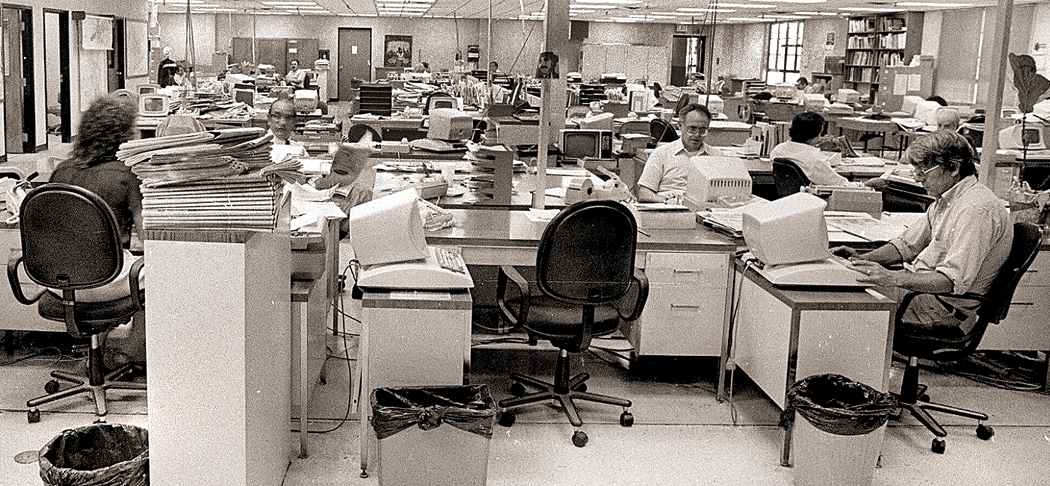
The Arizona Republic newsroom, ca. 1988 

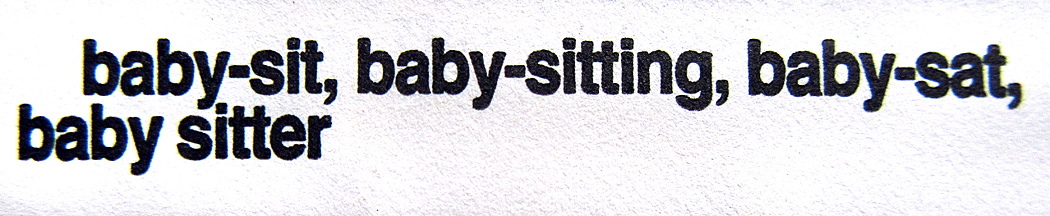
For 25 years, working at the newspaper, I had a holy scripture. It was  my bible. And it was just as strict and just as puzzling as Leviticus or Deuteronomy. It told me how to spell certain words, how to punctuate, how to think. It told me, for instance, that “baby sitter” is two words, but that “baby-sitting” requires a hyphen. It told me that third-graders were not students, but instead, they were “pupils.” And that in street addresses, it was required to abbreviate “Street” as “St.” but ordered me never to shorten “Road” to “Rd.” Never. 

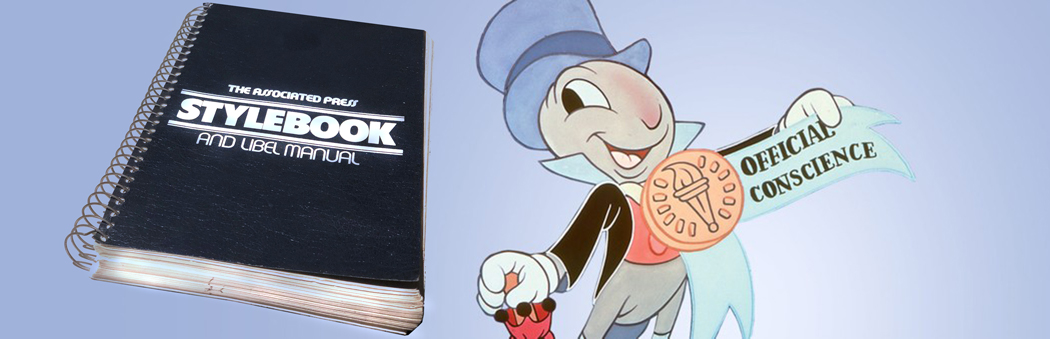
It was the Associated Press Stylebook, and the version that first guided my work was the 1988 edition. In it were many notable proscriptions and admonitions. I was not to spell “gray” as “grey.” Unless it was in “greyhound.” That the past tense of “dive” should be “dived” and not “dove.” That donuts didn’t exist; they were “doughnuts.” 
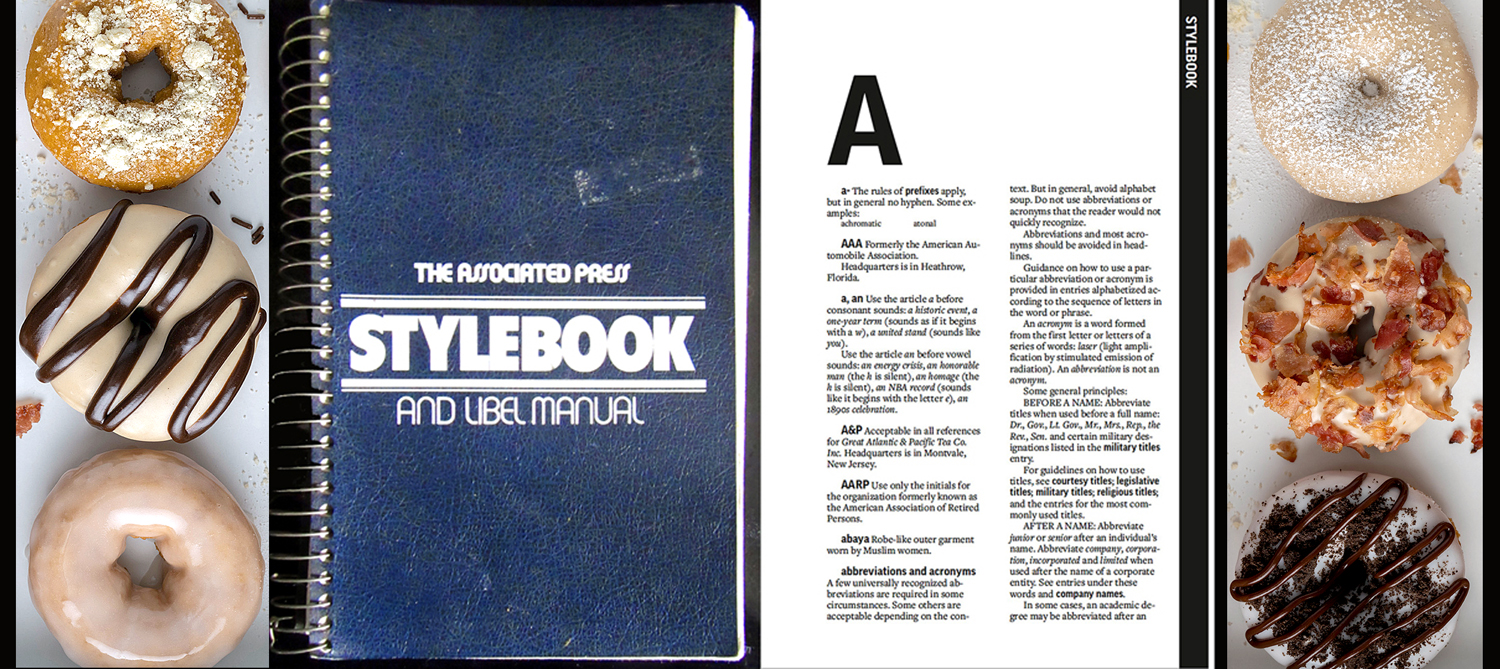
There could be no 12 a.m. or 12 p.m. They were “midnight” and “noon,” although which was which was entirely the problem with the “a.m.-p.m.” formulations. (Is 12 a.m. noon or midnight?) Noon is technically neither morning nor afternoon, but the non-existent mini-instant between the two. 

 “Last Tuesday” should be the “past Tuesday,” unless, of course, time ended and it really was the last one. 

These and many other formulations became second-nature to anyone working in journalism. Some of these may have changed since 1988 — usage changes and the AP takes that into account, even if ever so slowly: They are always playing catch-up. (“Ketchup,” by the way should never be “catchup” or “catsup.”)

Even a decade after retiring, I still have lodged in the noggin all these rules and prescriptions and when writing this blog, I tend naturally to notice whether I’ve put my period inside or outside the close-parenthesis, depending on whether the parenthetical remarks are inside a longer sentence, or in a separate sentence of its own. Anyone who has written for a newspaper will likely have the same grammatical Jiminy Cricket whispering in his ear to get it right. 
Yet, I grew up spelling “grey” with an “e.” And some of the rules in the stylebook seemed so arbitrary. With my Norwegian background and its Germanic language, I always favored butting words into each other rather than separating them as two words, or with a hyphen. What could be wrong with “babysitter?” It seemed natural. 

But I was disabused by my copy desk chief, who explained to me — the way a patient adult has to explain to a toddler having a tantrum — that the point of AP style was never to enforce a “correct” English style, but merely to make sure that we didn’t see on the same page one column with a “grey” and another with a “gray.” “It’s so we don’t look like idiots,” he said. It was not to choose the “right” style, but to choose a consistent one. And AP style was what newspapers everywhere agreed would be the version to provide that. 
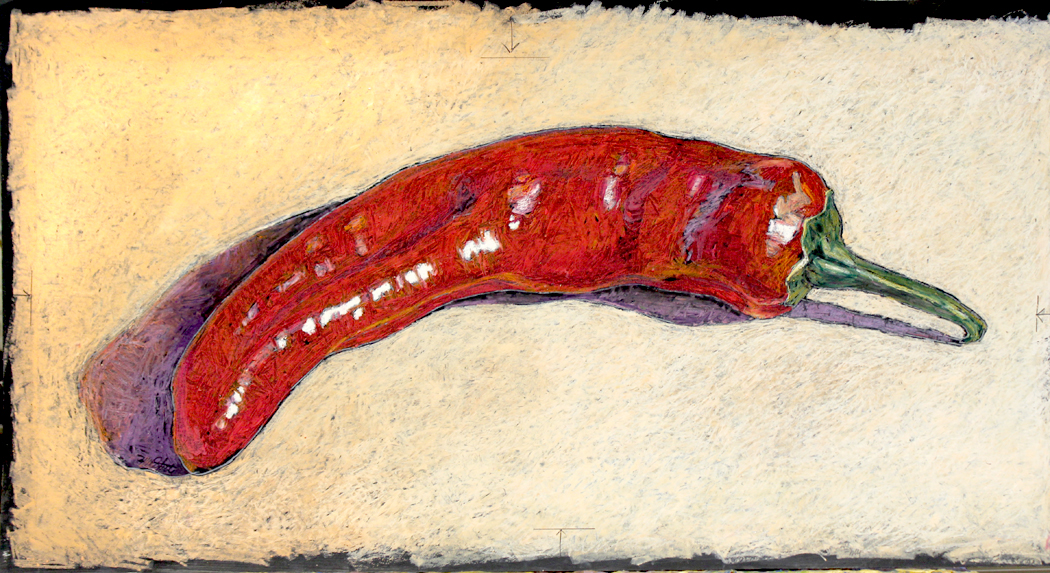
Still, there were times that the Stylebook asked us to do patently dumb things that would, indeed, make us look like idiots. In Arizona, where I was working, Mexican food was really good — and really Mexican (not just Taco Bell) — remember this was 1988 before Mexican supplanted Italian or Chinese as the foreign cuisine of choice — and we knew the differences among the many types of chile peppers — jalapeño, chipotle, anchos, etc. — but the Associated Press was telling us we should spell the word as “chili.” We would have looked like fools to our readers, who knew better. So, our management slyly gave us permission to overrule the stylebook and spell the word as it should be. “Chile.” The AP Stylebook eventually caught up with us, and now allows “chile” to describe the capsicum peppers. 

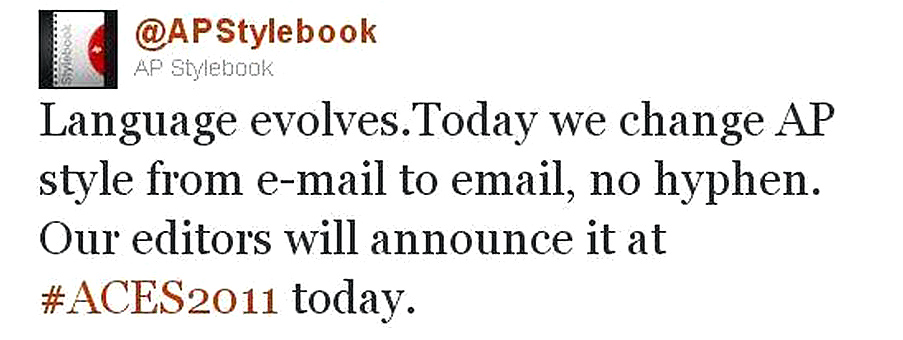
Most recently, AP relented on “pupil” and “student,” so first-graders are permitted to be students. It is a slow process. 
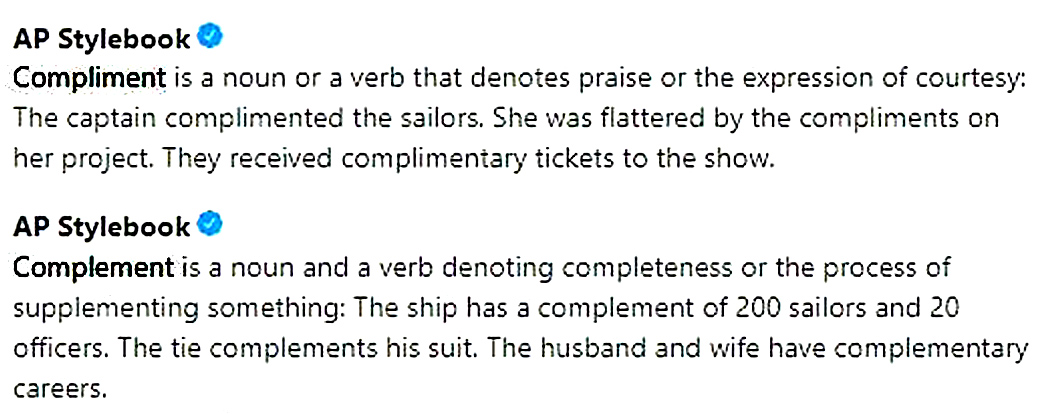
Much of the stylebook does concern itself with correct grammar and proper spelling, just to make sure we writers didn’t accidentally write “discrete” when we meant “discreet,” or forget how many double letters you have in “accommodate.” But most of the important issues concern just how our newspaper would deal with the fuzziness of certain locutions. Is a minister “Rev. So-and-So” or “the Rev. So-and-So?” Can we use “CIA” in a story without having to first explain it as the Central Intelligence Agency? 
I thought that non-journalist readers might enjoy a little peek into the old stylebook for a few of my favorite choice entries, starting with the letter “A.” These are all directly from the 1988 edition of the AP Stylebook. 

A

A.D. Acceptable in all references for anno Domini: in the year of the Lord. Because the full phrase would read in the year of the Lord 96, the abbreviation A.D. goes before the figure for the year: A.D. 96. Do not write: The fourth century A.D. The fourth century is sufficient. If A.D. is not specified with a year, the year is presumed to be A.D. 

From addresses Spell out and capitalize First through Ninth when used as street names; use figures with two letters for 10th and above 7 Fifth Ave., 100 21st St., 600 K St. N.W. Do not abbreviate if the number is omitted: East 42nd Street, K Street Northwest.

all right (adv.) Never alright. Hyphenate only if used colloquially as a compound modifier: He is an all-right guy

ampersand (&) Use the ampersand when it is part of a company’s formal name: Baltimore & Ohio Railroad, Newport News Shipbuilding & Dry Dock Co. The ampersand should not otherwise be used in place of and

ax Not axe. The verb forms: ax, axed, axing

B

baloney Foolish or exaggerated talk. The sausage or luncheon meat is bologna.

barbecue Not barbeque or Bar-B-Q.

brussels sprouts

C

collide, collision Two objects must be in motion before they can collide. An automobile cannot collide with a utility pole, for example. 

Comprise Comprise means to contain, to include all or embrace. It is best used only in the active voice, followed by a direct object: The United States comprises 50 states. The jury comprises five men and seven women. Never use comprised of

controversial An overused word; avoid it. 

crawfish Not crayfish. An exception to the Webster’s New World based on the dominant spelling in Louisiana, where it is a popular delicacy. 

cupful, cupfuls Not cupsful

D

decades Use Arabic figures to indicate decades of history. Use an apostrophe to indicate numerals that are left out; show plural by adding the letter s: the 1890s, the ’90s, the Gay ’90s, the 1920s, the mid-1930s

demolish, destroy Both mean to do away with something completely. Something cannot be partially demolished or destroyed. It is redundant to say totally demolished or totally destroyed

different Takes the preposition from, not than

doughnut Not donut.

E

engine, motor An engine develops its own power, usually through internal combustion or the pressure of air, steam or water passing over vanes attached to a wheel: an airplane engine, an automobile engine, a jet engine, a missile engine, a steam engine, a turbine engine. A motor receives power from an outside source: an electric motor, a hydraulic motor

en route Always two words. 

ensure, insure Use ensure to mean guarantee: Steps were taken to ensure accuracy. Use insure for references to insurance: The policy insures his life

even-steven Not even-stephen.

F

Fannie Mae See Federal National Mortgage Association.

Fannie May A trademark for a brand of candy. 

farther, further Farther refers to physical distance: He walked farther into the woods. Further refers to an extension of time or degree: She will look further into the mystery

fulsome It means disgustingly excessive. Do not use to mean lavish, profuse. 

[“F” is also home to a host of confused pairs and the stylebook makes sure we understand the usage difference between “fewer” and “less;” “figuratively” and “literally;” and “flaunt” and “flout;” and “flounder” and “founder;” and “forgo” and “forego.” It is a minefield of potential oopses.]
 

G

gamut, gantlet, gauntlet A gamut is a scale or notes of any complete range or extent. A gantlet is a flogging ordeal, literally or figuratively. A gauntlet is a glove. To throw down the gauntlet means to issue a challenge. To take up the gauntlet means to accept a challenge. 

ghetto, ghettos Do not use indiscriminately as a synonym for the sections of cities inhabited by minorities or the poor. Ghetto has a connotation that government decree has forced people to live in a certain area. In most cases, section, district, slum, area or quarter is the more accurate word. Sometimes a place name alone has connotations that make it best: Harlem, Watts.

girl Applicable until 18th birthday is reached. Use woman or young woman afterward. 

glamour One of the few our endings still used in American writing. But the adjective is glamorous.

go-go [This was the 1988 edition, after all.]

grisly, grizzly Grisly is horrifying, repugnant. Grizzly means grayish or is a short for for grizzly bear

gypsy, gypsies Capitalize references to the wandering Caucasoid people found throughout the world. Lowercase when used generically to mean one who is constantly on the move: I plan to become a gypsy. She hailed a gypsy cab.

H

half-mast, half-staff On ships and at naval stations ashore, flags are flown at half-mast. Elsewhere ashore, flags are flown at half-staff

hang, hanged, hung One hangs a picture, a criminal or oneself. For the past tense or the passive, use hanged when referring to executions or suicides, hung for other actions.

hangar, hanger A hangar is a building. A hanger is used for clothes. 

hurricane Capitalize hurricane when it is part of the name that weather forecasters assign to a storm: Hurricane Hazel. But use it and its — not she, her or hers — in pronoun references. And do not use the presence of a woman’s name as an excuse to attribute sexist images of women’s behavior to a storm, for example such sentences as: The fickle Hazel teased the Louisiana coast

I

imply, infer Writers or speakers imply in the words they use. A listener or reader infers something from the words. 

injuries They are suffered or sustained, not received

innocent Use innocent, rather than not guilty, in describing a defendant’s plea or a jury’s verdict, to guard against the word not being dropped inadvertently. 
J

jargon The special vocabulary and idioms of a particular class or occupational group. In general, avoid jargon. When it is appropriate in a special context, include an explanation of any words likely to be unfamiliar to most readers. See dialect

junior, senior Abbreviate as Jr. and Sr. only with full names of persons or animals. Do not precede by a comma: Joseph P. Kennedy Jr. The notation II or 2nd may be used if it is the individual’s preference. Note, however, that II and 2nd are not necessarily the equivalent of junior — they often are used by a grandson or nephew. If necessary to distinguish between father and son in second reference, use the elder Smith or the younger Smith

K

ketchup Not catchup or catsup

K mart No hyphen, lowercase m. Headquarters is in Troy, Mich.

L

lady Do not use as a synonym for woman. Lady may be used when it is a courtesy title or when a specific reference to fine manners is appropriate without patronizing overtones. 

late Do not use it to describe someone’s actions while alive. Wrong: Only the late senator opposed this bill. (He was not dead at that time.)

lectern, podium, pulpit, rostrum A speaker stands behind a lectern, on a podium or rostrum, or in the pulpit

M

malarkey Not malarky

May Day, mayday May Day is May 1, often observed as a festive or political holiday. Mayday is the international distress signal, from the French m’aidez, meaning “help me.”

milquetoast Not milk toast when referring to a shrinking, apologetic person. Derived from Caspar Milquetoast, a character in a comic strip by H.T. Webster. 

minus sign Use a hyphen not a dash, but use the word minus if there is any danger of confusion. Use a word, not a minus sign to indicate temperatures below zero: minus 10 or 5 below zero

mishap A minor misfortune. People are not killed in mishaps.

N

Negro Use black or Negro, as appropriate in the context, for both men and women. Do not use Negress

No. Use as the abbreviation for number in conjunction with a figure to indicate position or rank. No. 1 man, No. 3 choice. Do not use in street addresses, with this exception: No. 10 Downing St., the residence of Britain’s prime minister. Do not use in the names of schools: Public School 19.

non-controversial All issues are controversial. A non-controversial issue is impossible. A controversial issue is redundant. 
O

From obscenities, profanities, vulgarities Do not use them in stories unless they are part of direct quotations and there is a compelling reason for them. … In reporting profanity that normally would use the words damn or god, lowercase god and use the following forms: damn, damn it, goddamn it. No not, however, change the offending words to euphemisms. Do not, for example change damn it to darn it. … If a full quote that contains profanity, obscenity or vulgarity cannot be dropped but there is no compelling reason for the offensive language, replace letters of an offensive word with a hyphen. The word damn, for example, would become d – – – or – – – –

OK, OK’s, OK’ing, OKs Do not use okay

opossum The only North American marsupial. No apostrophe is needed to indicate missing letters in a phrase such as playing possum.

P

palate, palette, pallet Palate is the roof of the mouth. A palette is an artist’s paint board. A pallet is a bed. 

pantsuit Not pants suit

poetic license It is valid for poetry, not news or feature stories.

pom-pom, pompon Pom-pom is sometimes used to describe a rapid-firing automatic weapon. Define the word if it must be used. A pompon is a large ball of crepe paper or fluffed cloth, often waved by cheerleaders or used atop a hat. It is also a flower that appears on some varieties of chrysanthemums. 

 

From Prison, jail Do not use the two words interchangeably. … Prison is a generic term that may be applied to the maximum security institutions often known as penitentiaries and to the medium security facilities often called correctional institutions or reformatories. All such facilities confine people serving sentences for felonies. A jail is a facility normally used to confine people serving sentences for misdemeanors, people awaiting trial or sentencing on either felony or misdemeanor charges, and people confined for civil matters such as failure to pay alimony and other types of contempt of court. 

punctuation Think of it as a courtesy to your readers, designed to help them understand a story. Inevitably, a mandate of this scope involves gray areas. For this reason, the punctuation entries in this book refer to guidelines rather than rules. Guidelines should not be treated casually, however. 

R

raised, reared Only humans may be reared. Any living thing, including humans may be raised

ranges The form: $12 million to $14 million. Not: $12 to $14 million

ravage, ravish To ravage is to wreak great destruction or devastation: Union troops ravaged Atlanta. To ravish is to abduct, rape or carry away with emotion: Soldiers ravished the women. Although both words connote an element of violence, they are not interchangeable. Buildings and towns cannot be ravished

reluctant, reticent Reluctant means unwilling to act: He is reluctant to enter the primary. Reticent means unwilling to speak: The candidate’s husband is reticent

restaurateur No n. Not restauranteur

S

Saint John The spelling for the city in New Brunswick. To distinguish it from St. John’s, Newfoundland

San‘a It’s NOT an apostrophe in the Yemen capital’s name. It’s a reverse apostrophe, or a single opening quotation mark. 

Satan But lowercase devil and satanic

sex changes Follow these guidelines in using proper names or personal pronouns when referring to an individual who has had a sex-change operation: If the reference is to an action before the operation, use the proper name and gender of the individual at that time. If the reference is to an action after the operation, use the new proper name and gender. For example: Dr. Richard Raskind was a first-rate amateur tennis player. He won several tournaments. Ten years later, when Dr. Renee Richards applied to play in tournaments, many women players objected on the ground that she was the former Richard Raskind, who had undergone a sex-change operation. Miss Richards said she was entitled to compete as a woman

Solid South Those Southern states traditionally regarded as supporters of the Democratic Party. 

SOS The distress signal. S.O.S (no final period) is a trademark for a brand of soap pad. 

St. John’s The city in the Canadian province of Newfoundland. Not to be confused with Saint John, New Brunswick

straight-laced, strait-laced Use straight-laced for someone strict or severe in behavior or moral views. Reserve strait-laced for the notion of confinement, as in a corset. 

straitjacket Not straight-jacket.

T

teen, teen-ager (n.) teen-age (adj.) Do not use teen-aged

that, which, who, whom (pronouns) Use who and whom in referring to people and to animals with a  name. John Jones is the man who helped me. See the who, whom entry. Use that and which in referring to inanimate objects and to animals without a name. 

Truman, Harry S. With a period after the initial. Truman once said there was no need for the period because the S did not stand for a name. Asked in the early 1960s about his preference, he replied, “It makes no difference to me.” AP style has called for the period since that time. 

tsar Use czar

U

UFO, UFOs Acceptable in all references for unidentified flying object(s)

Uncle Tom A term of contempt applied to a black person, taken from the main character in Harriet Beecher Stowe’s novel “Uncle Tom’s Cabin.” It describes the practice of kowtowing to whites to curry favor. Do not apply it to an individual. It carries potentially libelous connotations of having sold one’s convictions for money, prestige or political influence.

unique It means one of a kind. Do not describe something as rather unique or most unique

United Rubber, Cork, Linoleum and Plastic Workers of America The shortened forms of United Rubber Workers and United Rubber Workers union are acceptable in all references. Capitalize Rubber Workers in references to the union or its members. Use rubber workers, lowercase, in generic references to workers in the rubber industry. Headquarters is in Akron, Ohio. 

United States Spell out when used as a noun. Use U.S. (no space) only as an adjective.

V

versus Abbreviate as vs. in all uses. 

Vietnam Not Viet Nam

volatile Something which evaporates rapidly. It may or may not be explosive. 

W

war horse, warhorse Two words for a horse used in battle. One word for a veteran of many battles: He is a political warhorse

whereabouts Takes a singular verb: His whereabouts is a mystery.

whiskey, whiskeys Use the spelling whisky only in conjunction with Scotch

X Y Z

X-ray (n., v. and adj.) Use for both the photographic process and the radiation particles themselves. 
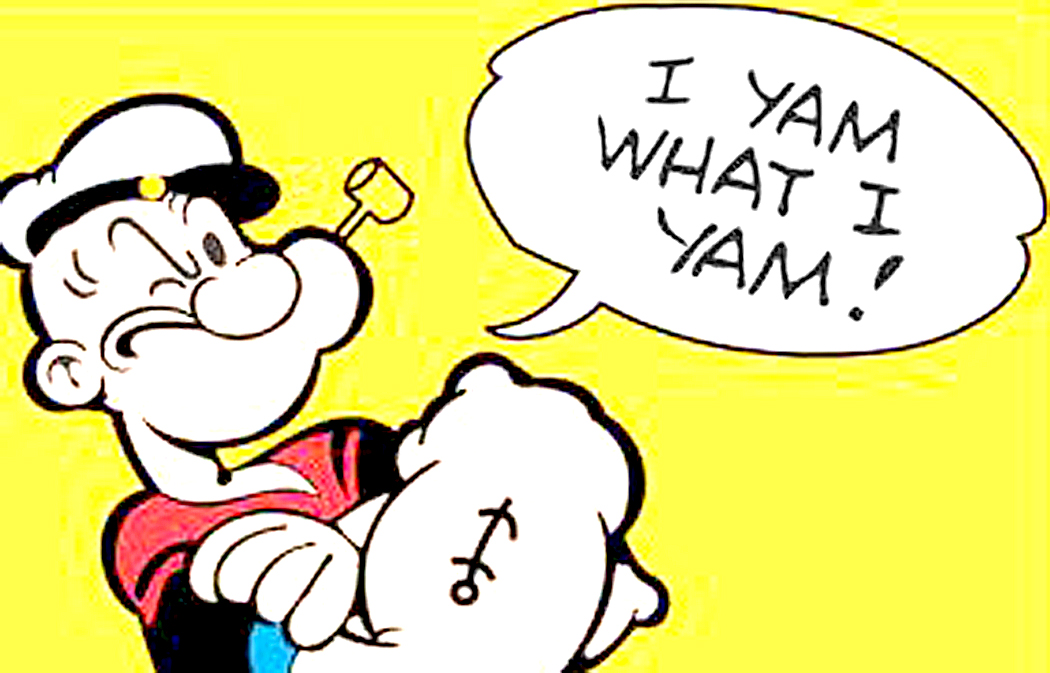
yam Botanically, yams and sweet potatoes are not related, although several varieties of moist-fleshed sweet potatoes are popularly called yams in some parts of the United States. 

youth Applicable to boys and girls from age 13 until 18th birthday. Use man or woman for individuals 18 and older. 

ZIP codes Use all-caps ZIP for Zone Improvement Program, but always lowercase the word code. Run the five digits together without a comma, and do not pt a comma between the state name and the ZIP code: New York, N.Y. 10020.

“Nature’s first green is gold, her hardest hue to hold.”

I am seeing my seventy-sixth spring. The first, I don’t remember, because I was only four months old. And most of the rest tend to blur into clumps — the springs of my New Jersey childhood; the springs of my adolescence; those from my college years; those from just after — each clump has its own resonance and emotion. 

Now that I am 75, the spring is more poignant for the fact I have so few left to experience. 

When I was a child, springs were so far separated from each other, they were wholly new each time. They augured the end of the school year and the beginning of an eternal summer vacation. Now, they come thrusting upon each other like jostling ticket-holders in a queue, pushing toward the head of the line. Through that door, though, is an end.

Through my twenties and into my thirties, I was living in North Carolina, and spring brought what was called “mud season,” when the ground thawed and turned into muck, which caught your shoes as you walked. The air was still crisp and the trees just budding, but it was clear winter was over and daffodils were already yellow. Next step, the redbuds and then the dogwoods. I’m afraid winters just aren’t as cold anymore, and the ground never really freezes. Climate change is obvious for anyone with enough years to remember. 

It is often said that spring is a rebirth, as the seasons circle around and the grey and brown of naked winter trees turn first yellow-green (nature’s “first gold”) and then leaf subsides to leaf, darkening to the deep forest green that augurs summer. Animals rise from burrows; bees begin circling gardens; birds squawk and chatter; the sun rises higher in the sky each day. 

But that is not spring for me. Instead, at my age, the changing seasons are like mile-markers on a highway, and each passing one means there are fewer in front of me. It is a straight line rather than a cycle. 

As the years are squeezed, so the pressure increases to take it all in, to pay attention to each small detail, to garner pleasure from the tiniest bits. What once was simple pleasure is now joy — an increase in appreciation for what I am going to have to leave behind. 

I sit on the deck behind the house I’m visiting in the North Carolina Piedmont, in the scant shade that the freshest, newest leafs make before fully fledging their trees, and listen to the wrens and nuthatch, the rattle of the woodpecker. I feel the warming air and look up to the clouds shifting against the blue. 

It is a sensuous recognition of the variety the planet holds. The many greens of the newest foliage. The varied textures of the leaves, smooth, dentate, glabrous or slick. 

The fullness in my chest as I take all this in, is a form of love. I watch the new spring. It is now Earth Day once again. The world is ticking on. This blue planet — this green planet — and the parent will outlive its child.

One of these springs, perhaps even this one, will be my last. My hand is always at my lips bidding adieu. 

When I was a young man, each loss, however devastating, was temporary, an emptied pool to be refilled by a gushing spring. But now that  has changed, and I know that the final loss will bring only oblivion. I hold on to what I love with tighter grasp. A bumble bee hovers; the cat yawns; a breeze teases the upper tree branches; a cardinal yawps. 

I want to hold it all tight in my arms.

If you want to see the mountains surrounding Houston, Texas, you can do no better than watch Irwin Allen’s 1978 disaster epic, The Swarm. You also get to see a train run over the cliffs into the Gulf of Mexico. 

Mountains of Houston? Cliffs on the Gulf of Mexico? That’s just a start. Let’s add ludicrous dialog and cheesy special effects and a plot that tries to pull every heartstring but only manages to milk ever cliche. 

Richard Velt in the Wilmington Morning Star stated “The Swarm may not be the worst movie ever made. I’d have to see them all to be sure. It’s certainly as bad as any I’ve seen.” Velt also stated “All the actors involved in this fiasco should be ashamed.” The film has a score of 9 percent on Rotten Tomatoes. 

The film is credited with killing off the whole genre of disaster movies. 

I had the occasion of seeing the film recently on cable and could hardly believe my ears at some of the tin dialog. 

“That’s a complicated story. It begins a year ago. But let’s skip that.”

And don’t call me Shirley. 

The plot involves an invasion of killer bees who, at the start of the movie have attacked a military base in Houston. 

“So, the occupation of Houston has begun — and I am the first general in history to get is butt kicked by a mess of bugs!”

These are not your ordinary honeybees, but the Africanized variety, dubbed “killer bees,” and they are swarming by the billions. The American Bee Association was considering legal action against the filmmakers, claiming defamation. The film then ran a disclaimer at the end credits that read: “The African killer bee portrayed in this film bears absolutely no relationship to the industrious, hardworking American honey bee to which we are indebted for pollinating vital crops that feed our nation.”

Or as Michael Caine’s character says, “We’ve been fighting a losing battle against the insects for fifteen years …  I never dreamed that it would turn out to be the bees. They’ve always  been our friend.”

Yes, Michael Caine, who signed onto the film without even reading the script, persuaded by the all-star cast that had already been corralled. You would think that a movie featuring Caine, Katharine Ross, Richard Widmark, Richard Chamberlain, Olivia de Havilland, Ben Johnson, Lee Grant, José Ferrer, Patty Duke, Slim Pickens, Bradford Dillman, Henry Fonda and Fred MacMurray (in his last screen appearance) and costing somewhere between $12 million and $22 million (in 1978 dollars) would show some class on the screen. But you forget Irwin Allen, who was to film in the ’70s what Michael Bay is now: The ultimate in fromage. Allen’s most famous and successful films included The Towering Inferno and The Poseidon Adventure. Disasters R Us. 

Commenting on this film being one of the worst films he had ever made in an interview, Michael Caine said, “It wasn’t just me, Henry Fonda was in it, too, but I got the blame for it!” The cast featured seven Oscar winners: Caine, Dame Olivia de Havilland, Ben Johnson, José Ferrer, Patty Duke, Lee Grant, and Fonda; and two Oscar nominees: Richard Widmark and Katharine Ross. Caine has claimed in interviews that he used his fee from this film to buy his mother a house in Los Angeles.

(Caine is famous for taking some roles just for the paycheck, and quite candid about doing so, for such films as Ashanti (1979), Beyond the Poseidon Adventure (1979), Jaws: The Revenge (1987), The Island (1980), The Hand (1981), and 1984’s Blame It on Rio. A working class boy takes whatever job he can get. Work is work.)


When the bees threaten a nuclear power plant, Jose Ferrer’s Dr. Andrews says, “Billions of dollars have been spent to make these nuclear plants safe. Fail-safe! The odds against anything going wrong are astronomical, Doctor!”

And Richard Chamberlain, as Dr. Hubbard asks, “I appreciate that, Doctor. But let me ask you. In all your fail-safe techniques, is there a provision for an attack by killer bees?”

Apparently not. 

One general (Richard Widmark) wants to blast them with insecticide, but our hero, Caine, warns him about the ecological disaster that would follow. “Can explain to me, how you air drop chemicals, without killing the native insect life! If your chemical will kill the African bee, it will also kill the American bee, right?”

Widmark: “Right! And better a few American bees than a lot of AMERICAN PEOPLE!”

Caine: “That is the point, General! The honey bee is vital to the environment! Every year in America, they pollinate six billion dollars worth of crops! If you kill the bee, you’re gonna kill the crops! If you kill the plants, you’ll kill the people! No! No, General! There will be no air drop, until we know exactly, what we are dropping, and where, and how! Excuse me!”

You will notice there are quite a few exclamation points in this script. You might call them a swarm of exclamation points. 

The bees attack not only the nuclear plant, a missile silo and the military base, they go after a small town in Texas named Maryville. There is a real Maryville in the state, up on the border with Oklahoma. According to Wikipedia, it has a population of 15 people. Yet, in the movie, they are planning a flower festival. One young man, attacked by the bees has escaped and hallucinates a giant bee. 

As the bees destroy Houston, Widmark, as General Slater, worries, “Houston on fire. Will history blame me … or the bees?” 

Then, there’s the business with the army helicopter. “We have visual contact. … A black mass, sir. A moving black mass. Zero altitude. Dead ahead. They’re hitting us! Oh my God! We’re out … we’re out of control! Ahhhhhh!”

The copter spins wildly and as it tumbles in circles on the movie screen, the horizon, seen through the windows, tumbles in synch, making it crystal clear that the spinning is done by the camera, not the copter. Cheesy special effects are an Irwin Allen hallmark, as when the actors on the ship in The Poseidon Adventure all lean to one side and back on cue as the boat rocks — or doesn’t — and the camera alone lurches back and forth. 

Then, there’s the issue of scenes that cannot make up their minds whether it’s daytime or night, as they switch in the editing. One cannot but remember the same issue in Ed Wood’s Plan 9 From Outer Space, which gets its own votes for “worst film of all time.” 

There are some oddly racist lines in the film, although probably through sloppiness and neglect rather than intent. The General repeatedly drops the words “Killer Bee” when referring to the African killer bees, so we get uncomfortable moments of him informing Caine they have been “Rounding up Africans“ and stating that, “By tomorrow there will be no more Africans … at least not in the Houston sector.”

Sloppiness seems to be the modus operandi for Allen and his crew. Henry Fonda plays a paraplegic doctor in a wheelchair who nevertheless manages to kick open a door when needed. 

Chamberlain to Fonda about the bees: “They’re brighter than we thought.” Fonda: “They always are.” 

Caine: “It’s damn hard to believe that insects have accomplished what nothing in the world could have done, except germ warfare or a neutron bomb: neutralize a ICBM site.”

Widmark, as General, to Chamberlain: “Well, you dropped your poison pellets and the Africans spit at it. Now they’re moving towards Houston faster than expected.” Chamberlain: “General, you should know that the enemy’s always expected to do the unexpected.”

It was claimed that something like 20 million bees were used in the making of the film. Managing them was a huge challenge. About 800,000 of them were individually “de-stung,” by having their stingers removed so they could be used interacting with the actors. The film’s production went through several beekeepers before finding one who hired people to remove the bees’ stingers. Cold weather incapacitates bees, so it was done in a refrigerated trailer. A few stingers were missed, and some lingering venom did get into the air on the sound stages, causing allergic reactions. 

The bees in the film were housed in various countryside enclosures, and were moved every night to give them new forage and prevent “bee rustling” (i.e., theft of the bees or their honey). The bees on the film’s set were controlled by releasing queen bees, which beekeepers kept inside their protective bee suits. In addition, everyone had little yellow dots on their clothing, which were actually bee feces. Caine stated in an interview that during filming he thought the little yellow spots left by the bees on his clothing was honey so he began to eat it, unaware he was eating bee poop.

Killer bees were a hot topic in the news in the 1970s, with a fear that the Africanized honeybees would take over and present a real danger to humans. Of course, that led to quite a few killer bee movies, including Invasion of the Bee Girls (1973), Killer Bees (1974), The Savage Bees (1976), The Bees (1978), and Terror Out of the Sky (1978). The last film on this list is the sequel to the third one on it. Lucky for all of us, The Swarm did so poorly at the box office, a planned sequel was never made

Of course, the final lines of any horror or disaster film ends with setting up the potential sequel, and The Swarm is no exception, as Katherine Ross says, “Did we finally beat them? Or is this just a temporary victory?”

And Michael Caine replies: “I — I don’t know. But we did gain time. If we use it wisely, and if we’re lucky, the world might just survive.”

Click any image to enlarge

Upon this wintry night it is so still, that listening to the intense silence is like looking at intense darkness.

—Charles Dickens, Bleak House, chapter 58, “A Wintry Day and Night”

When I was a boy, maybe eight or nine, I could wake up early on a winter morning and know instantly that there would be no school that day — it was quiet. Overnight snow had left the landscape eerily silent and I could hear that silence even before I looked out the window. It was a palpable silence. A silence that filled up the air. 

Later in the morning, there would be the scrape of the snowplow on the street pavement, the glee-screaming of kids on their sleds and, if a sunny day, perhaps the sound of dripping meltwater from the eaves. But for that first moment, a signal from the natural world that the day was different. 

We may think of silence as an absence of sound, but when paid attention to, silence is a presence. As “there” as the sunlight or the children. 

Silence is something we largely miss in the busy world. When I wake up now, normally I hear distant traffic noise or the sound of an industrious neighbor on her mower shaving her lawn. This morning I opened the front door to hear the rattle of a woodpecker and a crow’s caw-caw. The world is noisy. And that’s not even counting the TV that fills the air with its constant carnival barker reminding us of the world’s clattering presence. 

Silence lets us hear our own thoughts. It is the reason Jesus went into the wilderness for 40 days, and Moses and Elijah both sought solitude on Mt. Horeb, the Buddha spent five years alone in the forest, and Nietzsche’s Zarathustra shunned human contact in his cave. In several Native American cultures, a part of growing up was to leave the community and spend time quiet and alone until you had your vision. 

Silence is the midwife of spiritual or intellectual awakening. It needn’t be the desert or woods; it might be a library, that other source of quiet. 

The quietest I ever remember was a press tour to the Karchner Caverns in Arizona when they were first opened to the public. A group of a dozen or so journalists, both print and TV, were taken into the cave and shown the wonders. And at one point our guide asked us all to stand several feet apart and be quiet. She had all the lights turned off and we were a hundred feet underground with no light and no sound. 

Even in the nighttime, there is light from the moon and the stars. City lights, no matter how distant are reflected back off the clouds and make nighttime at least a dull glow. If I wake up at night, my eyes adjust to the darkness and I can still make out the shadowy shapes in the room. 

But in the cave, there was no light at all. Utter and complete blackness, so that you had to trust your vestibular system and proprioception just to remain standing upright. And in that blankness, no sound intruded. The black nothingness was the visual equivalent of the utter silence.  It was as if you could have a memory of your own death — or your existence before you were conceived.

The Buddha said the only response to the “14 unanswerable questions” is a “Noble Silence.” 

Twentieth Century philosopher Ludwig Wittgenstein famously said (breaking his own admonition): “Wovon man nicht sprechen kann, darüber muß man schweigen.” “Whereof one cannot speak, thereof one must be silent.”

And the Hindu sage, Ramana Maharshi, said, “The only language able to express the whole truth is silence.”

John Cage wrote in his book, Silence, “There is no such thing as an empty space or an empty time.” It is the thought behind his most famous or infamous composition, 4’33”, in which the pianist sits in front of a piano and doesn’t play anything for the designated amount of time.  

For the unthinking, this is a stunt, and further, proof that modern art is a fraud perpetrated on its audience by slick snake-oil salesmen. But for those who understand what is being offered — like the lotus the Buddha gives his student — it is an offer to hear the genuine music of the world — a direct connection with the now. No concert hall is completely silent, but we ignore the extraneous sounds while the piano is playing. If the piano remains tacet, we can — if we are aware — hear all the buzz of reality that is actually filling our ears. 

“Wherever we are, what we hear is mostly noise,” he wrote in Silence. “When we ignore it, it disturbs us. When we listen to it, we find it fascinating. The sound of a truck at fifty miles per hour. Static between the stations. Rain. We want to capture and control these sounds, to use them not as sound effects but as musical instruments.”

(Cage was not alone. Several serious composers have written silent music, including Georgy Ligeti and Irwin Schulhoff, although most of these were written at least a bit with tongue against the cheek. And in popular music, Wikipedia list more than 70 songs made of empty air, including by John Lennon and Yoko Ono, but also Wilco, Soundgarden, Brian Eno and John Denver. There have been whole albums, too, including the 10-track Sleepify by Wulfpeck and a 1980 “spoken word” album called The Wit and Wisdom of Ronald Reagan — Side 1 is “The Wit” and Side 2 is “The Wisdom;” both sides completely blank. But none of this has the serious and meaningful intent of Cage’s 4’33”.)

When we think of silence, it is usually of the soundless variety. But there is also a very noisy silence, made up of an unconsidered attempt to fill emptiness with meaninglessness. When I listen to most TV news, I hear very little news and a great deal of jabber about the news, a chewing of the cud, so to speak — this is noise to fill space and time and is, in essence, another manifestation of silence, or at least a filling of time and space with nothingness. 

I make a distinction between a silence of avoidance and a silence of engagement. Distracting noise — much of modern culture — is really an avoidance technique so we don’t have to deal with the often uncomfortable realities around us. But the silence of the monks and zen masters is a silence that engages directly with the most meaningful portions of existence. It is a silence to be sought after. 

Such silences are not identical. There is the silence of paying attention rather than speaking; the silence of the pause in the business of living; the silence of spiritual seeking; and silence of finding the center of one’s self. The idea comes up often enough: There’s the silence of God; the Silence of the Lambs; Omertà, or the silence of the made man; there’s the Blue Wall of Silence on the other side; the Silent Majority; the Sound of Silence; a deafening silence; an embarrassing silence; a moment of silence; the right to silence; radio silence; the silence of the grave. 

In some forms of meditation, the purpose is to quiet the mind so one isn’t thinking of anything: silence of thought. Our minds tend to idle at 2000 rpms, with ideas, images, tunes or emotions running random through the braincase, like so many maenads dancing in the woods. It can be hard to get them all to shut up. But the silence achieved is revelatory. 

Debussy said that music was the silence between the notes. And music is certainly what is found in the silence: It grows from out of the silence into what can express what words cannot. 

I remember a late-fall camping trip to the Kittatinny Mountain ridge near the Delaware Water Gap and waking up in the morning to find the tent sagging under the weight of the night’s heavy, wet snow, and the familiar silence of the woods. The snow makes an anechoic landscape very like an empty recording studio: The quiet muffles the ears. 

Now, in my senescence, silence is especially hard to come by, not only for societal reasons, but because there is always a slight tinnitus ringing in my ear, and even when that quiets down and it is otherwise silent, I can hear my own heartbeat. 

Silence is a great seasoner of thought. When it is quiet, you can hear yourself think, and the thoughts flow uninterrupted by extraneous disruption. Silence is worth a great deal, all the more for its scarcity.

____________________________________________________

This is an expanded and rewritten version of a posting that first appeared Nov. 1, 2021 on the Spirit of the Senses website. 

Happiness is the most innocuous of emotions; it is plain and uninflected. Compared with its brawny cousins, such as hatred, passion, grief or joy, it is rather simple and nondescript. It is to those as water is to wine. 

Happiness is what you see on the faces of children playing outdoors. It is for them, who don’t yet have the burdens of adulthood or the cares of life. They can innocently play with happy abandon. Heaven lies about us in our infancy! 

Yet, in those cares of life, who doesn’t wish for a few seconds freedom to experience once again the simple happiness of when we were young and didn’t know any better.

Most of our art and music concerns the bigger things. The emotions you get from Mahler are big, complex emotions, piled Pelion on Ossa, building overpowering climaxes that leave us hollowed and purged. 

Think about Bach’s B-minor mass, Wagner’s Tristan, Stravinsky’s Oedipus Rex and you find the complexity of life threaded around itself. Of the big emotions, none is uninflected, but includes a tincture of its opposite.   “Our sweetest songs are those that tell of saddest thought. Our sincerest laughter with some pain is fraught.” 

Happiness, as I’m using the term here, is unalloyed. And while most of the greater emotions are felt as “happening” to yourself, happiness takes you out of yourself. You are unaware of your self when experiencing it. It is a grace.

In that sense, there is ego invested in the transcendence of Mahler or the Ode to Joy of Beethoven, but when you are happy, you barely exist: Only the happiness exists. You are only really aware of it when you wake from it and realize what you have been gifted. 

Of course, such a state can only last a comparatively short time. When the philosopher asks if you have had a happy life, the only accurate answer is that life is not happy, but only moments are. 

Art can rouse in us a huge range of emotions, and classical music is designed to explore the subtleties of them, and we are overwhelmed by the passions in Mahler, the transcendence in Bruckner, the joy in Beethoven’s Ninth, the angst in Berg’s violin concerto. All huge, complex emotions. 

But surely, there must be some music completely devoid of such cares, and can arouse in us those feelings of abandon and freedom we had as little children. Is there music that is simply happy? This is music I put in the CD player when I just want to rock back and enjoy the simple tunes and unfettered sounds of being happy. Bouncy, tune-filled, catchy feel-good music. 

The place to start, where most of the habits of classical music start, is Joseph Haydn. He seems to have invented everything: the symphony, the string quartet, the sonata form — they all descend from Haydn. And Haydn was perhaps the sanest person ever to write music, burdened by no metaphysical agonies. But even his music expresses a variety of thoughts and emotions, movement by movement, from the depth of the Seven Last Words of Christ to the finale of Symphony No. 88, which bounces with unfettered happiness. (Link here). 

That kind of ebullience is hard to sustain, but here are five examples from classical music that bounce from beginning to end, along with some suggestions for recordings. (Not “the best” for I have not heard all of the recordings, but these are my favorites). 

Franz Schubert Piano Quintet in A “The Trout”

The Trout Quintet is unusual in that it includes a double bass, which provides a solid bottom for the music, which allows the tunes to float along like rafters down a river. It is a sunny quintet, with hardly the whisper of a shadow in its five bright movements. Even the minor-key variation in the fourth movement is dispelled with a major chord — “I was just playing,” its composer seems to be saying.

It was written in 1819, when Schubert was 22, for piano, violin, viola, cello and bass. Through most of his best music — the late piano sonatas, late quartets and the great C-major string quintet — there is a strain of despair that is heartbreaking. Even in his short piano pieces, beloved of amateurs for a century and a half, there runs a vein of deep melancholy that shades even his happiest moments.

But none of this in the Trout. It spreads sunshine from beginning to end.

Almost any performance of The Trout will leave you giddy, but the one essential element of any recording is that you can hear — even feel — the string bass at the bottom. It is the foundation for the edifice. 

I’ve always loved two performances. The first is Alexander Schneider with Peter Serkin on piano, Michael Tree on viola, David Soyer on cello and the indomitable Julius Levine on bass. It was on the Vanguard label. And Peter’s father, Rudolf Serkin anchors the Marlboro Festival musicians on Sony (then, Columbia). With Serkin is Jaime Laredo on fiddle, Philipp Naegele on viola, Leslie Parnas on cello and Levine, again, on bass. A classic performance, much loved by many, features Clifford Curzon on piano, with musicians from the Vienna Philharmonic. Originally on Decca (classical music labels are in constant flux, as mega-corporations gobble up older established labels; you never know where a classic performance will show up. Just check Amazon and you’ll find it.)

YouTube video at this link

Gioacchino Rossini String Sonata No. 1 in G

It shouldn’t be surprising that most of the music that expresses mere happiness should have been written by very young composers. The six sonatas for strings were written by Rossini when he was 12 years old, arranged for four string parts: two violin parts, one for cello and one for double bass — again providing that delightful solid bottom for the tunes. 

The bass is there because Rossini wrote them while visiting the home of bass player Agostini Triossi in Ravenna, Italy, in 1804, and tossed all six sonatas out in the space of three days to be played by members of the household, with Rossini himself on second violin. 

Although written for a quartet of players, they are usually performed by a full ensemble. Versions have been adapted for normal string quartet and for wind band, but the string ensemble has that fresh appeal that matches the music. 

I could have chosen any of the six sonatas. They are each in three movements, fast-slow-fast, and in major keys. But I mention the first because I particularly love its jaunty finale, with a tune I can’t get out of my head. 

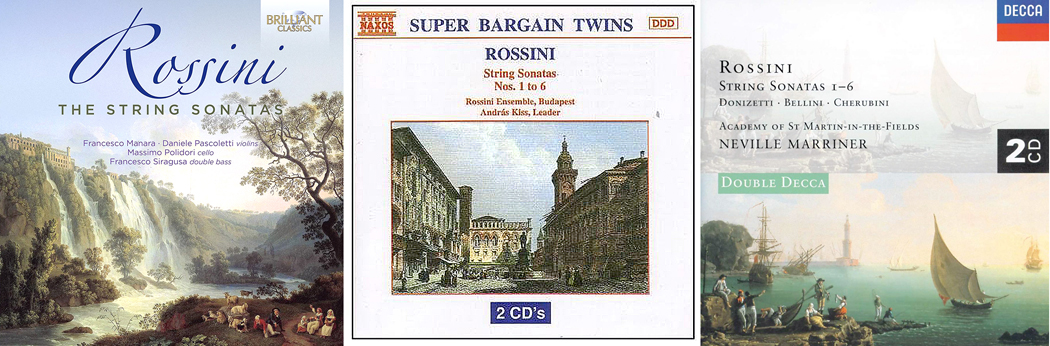
I’ve never heard a bad performance on disc, but mostly I listen to the Naxos recording of the Rossini Ensemble, Budapest. They almost always come in a pack of all six sonatas, so you are likely to love them all. Neville Marriner has a smooth set with the Academy of St. Martin’s in the Field, and Brilliant Classics has the version with four solo players. 

YouTube video at this link


 Georges Bizet Symphony in C

Another prodigy, Bizet wrote his symphony when he was 17 years old and a student at the Paris Conservatoire. It was never performed in the composer’s lifetime and indeed was lost and forgotten until 1933, when it was found in the composer’s papers, and was given a first performance by Felix Weingartner in 1935. Since then, its infectious tunes and untroubled elan have found it a place in the repertoire. 

I have always thought of it as a 19th century version of a Haydn symphony — perfectly proportioned, tuneful, and with no dead spots. Others may have stormed the heavens with Wagnerian thunder and Blitzen, but this symphony contents itself with pleasing its listener with melody, rhythm and smooth harmony. 

It has also been lucky on disc, when three of the most lively conductors have taken it on. Leonard Bernstein with the NY Phil, and Leopold Stokowski with the National Philharmonic (a pickup orchestra), and Thomas Beecham with the Royal Philharmonic. You can’t go wrong. 

YouTube video at this link

Serge Prokofiev Classical Symphony in D major, Op. 25

Another student work, in 1917 Serge Prokofiev wrote his first symphony in a kind of parodistic style of Haydn or Mozart, but with modern piquant dissonances — what has been derisively called “wrong-note romanticism.” 

But the four-movement symphony has proved enormously popular. It bounces from first to last, with memorable tunes and sharp wit. 

The composer Boris Asafyev, according to Prokofiev, “put into my mind an idea he was developing, that there is no true joyfulness to be found in Russian music. Thinking about this, I composed a new finale, lively and blithe enough for there to be a complete absence of minor triads in the whole movement, only major ones.” 

The energy in this music is propulsive. If anyone is feeling down, with the feeling of systematically knocking the hats off anyone you meet on the streets, a listen to the Classical Symphony will cure you and leave you with a goofy grin on your face. 

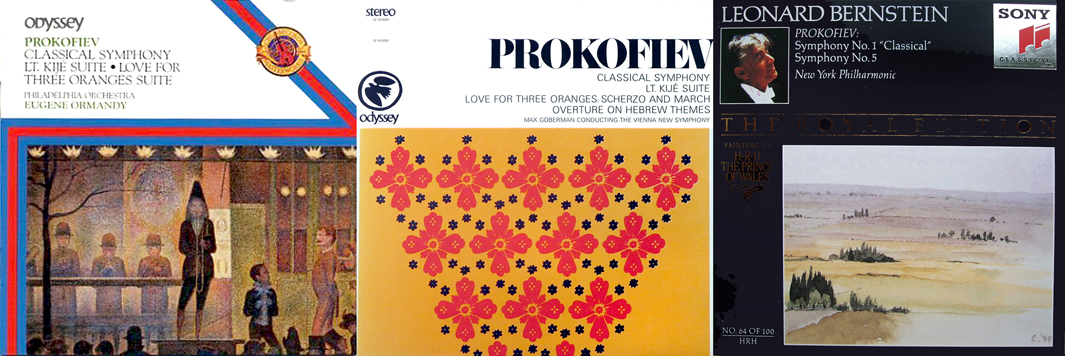
Many have recorded the symphony. The only failures are when the conductor takes the music too seriously or lacks any sense of humor. There are several dry versions. But I have three that I have loved. Leonard Bernstein and the NY Phil have all the elan and vigor you could ask for, if the ensemble is a tad scruffy. Eugene Ormandy and Philadelphia cannot be topped. It is a perfect recording of the music, bright and witty with gorgeous string playing. And I remember an old Odyssey LP I once owned with Max Goberman and the Vienna New Symphony. Perhaps one day a CD version will be offered. 

YouTube video at this link


Darius Milhaud Le Boeuf sur le Toit, Op. 58

Imagine you are in a Brazilian dance hall and the crowd, sloppy with  drink and dance, are bouncing to the music of an exuberant band — not all of whom are playing the the same key. And you cannot help but tap your toe, then jiggle your leg, and then get up and dance and sweat with the crowd. That is Milhaud’s Le Boeuf sur le Toit (“The Bull on the Roof”). 

It is a string of mostly Brazilian tunes, some borrowed, some invented by Milhaud, all of which are infectious and life-affirming. It is the most single-mindedly happy music I have ever encountered, completely unselfconscious and joyful. Milhaud himself called it, “15 minutes of music, rapid and gay, as a background to any Charlie Chaplin silent movie.” 

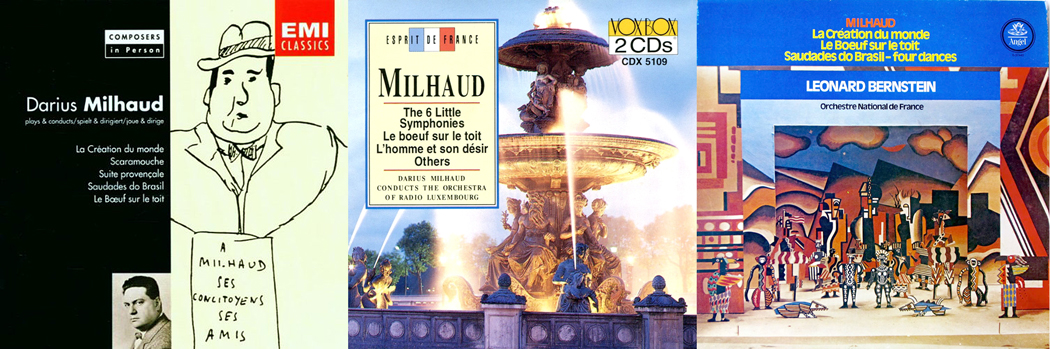
 You can get a recording of Milhaud himself conducting the Orchestre du Théâtre des Champs-Elysées from 1958, perhaps a bit ragged, but with all the spirit. A standard for decades has been Louis de Froment and the Orchestra of Radio Luxumbourg. But for me the perfect embodiment of this happy music is the Orchestra National de France under Leonard Bernstein; he is the perfect vehicle for the life-spirit of this music. 

YouTube video at this link

Those are my five suggestions. There are others: Benjamin Britten’s 1834 Simple Symphony, made up of tunes he wrote when he was 10 years old; or  perhaps Shostakovich’s Three Fantastic Dances from 1920, which he wrote between the ages of 14 and 16 — before the specter of Joseph Stalin darkened his art. Perhaps you have other suggestions to leave in the comments. 

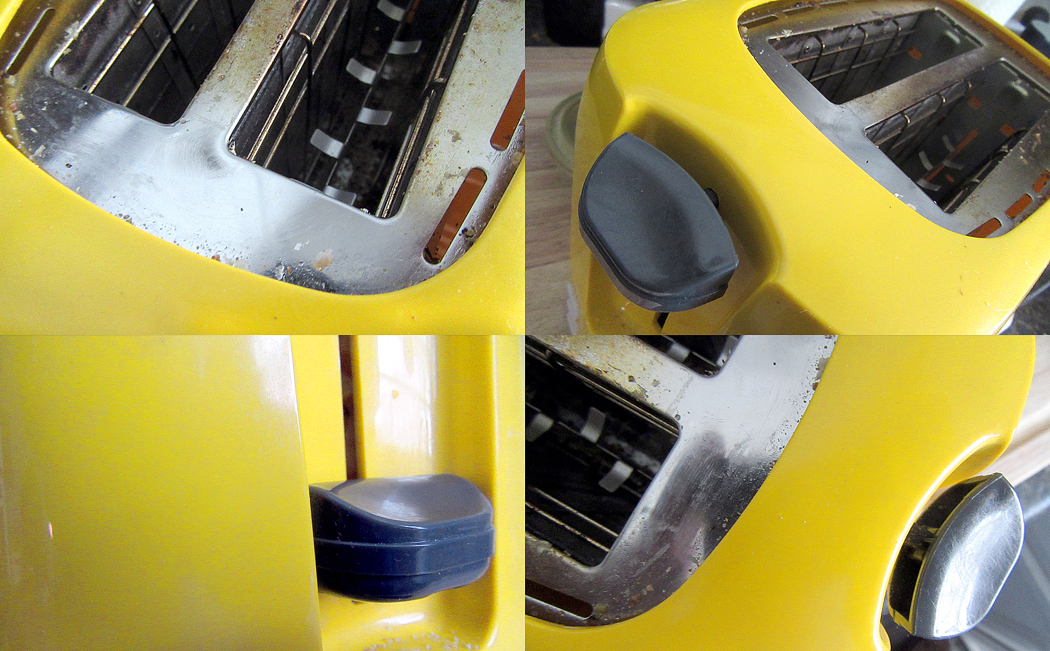
This is a toaster. Something so banal that in our ordinary lives, we hardly notice or look at it. Actually this is a picture of a toaster, which is a remove from the real thing. But then, so is the word “toaster,” which is also not the real thing, but a remove from the reality. 

For most of us, most of the time, seeing something — like the toaster — means being able to name it and move on to something more interesting or more immediately useful. The image in the picture functions as a pictogram, or a different “spelling” of the word. We read the image as if it were the word. 

Pictogram to “read” as teapot; teapot image as “seen”

It is how we respond to most images that bombard our daily lives. We name the item seen. It has been categorized, filed and forgotten. Our lives are too busy to spend any time remarking that the toaster is yellow, or made of plastic, or has rounded corners. These details are of no particular use when fixing our morning bagel, and so, they might as well be invisible. 

Of course, being able to recognize things quickly is a survival skill, and humans have survived these hundreds of thousands of years precisely because they could point quickly and yell, “Tiger!” So, I’m not pooh-poohing that ability categorically. 

But life is about more than just survival. The things of this world are bursting with sense data that gets ignored by reading rather than seeing the visible world. The toaster was designed to have an esthetic impact; the yellow was chosen to be pleasing to the eye; the curves were worked in to make the shape more inviting than it would be if it were all pointy edges. 

We are embedded in a universe of things — a material world — and all of those things have physical and sensuous properties. They have shape, color, heft, texture, volume, solidity or softness, shine or roughness. And all of these properties make up the elements of art, and one of the jobs art does  is to remind us of these delights we normally pay no attention to. Art reminds us we are alive. 

Any life can be enriched simply by paying attention. To notice the yellow, the curve, the size and shape. In fact, to those awake to the world, it is all art — and the emotional richness that the awareness brings. 

It is one of the things artists were doing at the beginning of the last century when they began making abstract art: art about the color, shape, texture, without a nameable subject. 

Of course, artists have always paid attention to these visual qualities. Just because a painting is of a still life, and we can name the objects, doesn’t mean that the artist wasn’t obsessed with the sensuous truth. 

And so, it is a worthwhile exercise to occasionally attempt to forget what you know and see the things of your life freshly, as if you didn’t know the names, but saw only the qualities. 

Humanity is varied in its ability to see beyond the names. It takes an imagination — a way of turning off your rational mind to see only the vital facts and not their meaning or use. Some people have the hardest time: I remember one woman who was asked to close her eyes and describe what she could see in her mind’s eye, and her answer was “With my eyes closed, I see only black.” 

But attempting to see past the names of things is deeply rewarding. The pleasure of colors, shapes, designs, apprehended primally enriches our lives immeasurably. 

Certainly the natural world invites us with color and beauty. But it isn’t just the flowers and trees, the birds and the clouds. Everyday items can be appreciated for their roundness, plumpness, hardness, color, shape, even the feel under your fingertips. 

Many eons ago, when I was teaching photography at a two-year college, one of the assignments I gave my students was to photograph something in such a way I could not tell what it was. I made sure they understood that I didn’t mean just out-of-focus, or so badly lit it was murk. But to see something from a different angle, or to find a meaningful detail and separate it out. 

The purpose was to help them see without depending on what they already knew things looked like. To see directly. 

For example, here’s something most people see almost every day. 

Did you spot what it is? It is a view of your driver’s side rear view mirror as you approach the door to open it. A great big globular shape. 

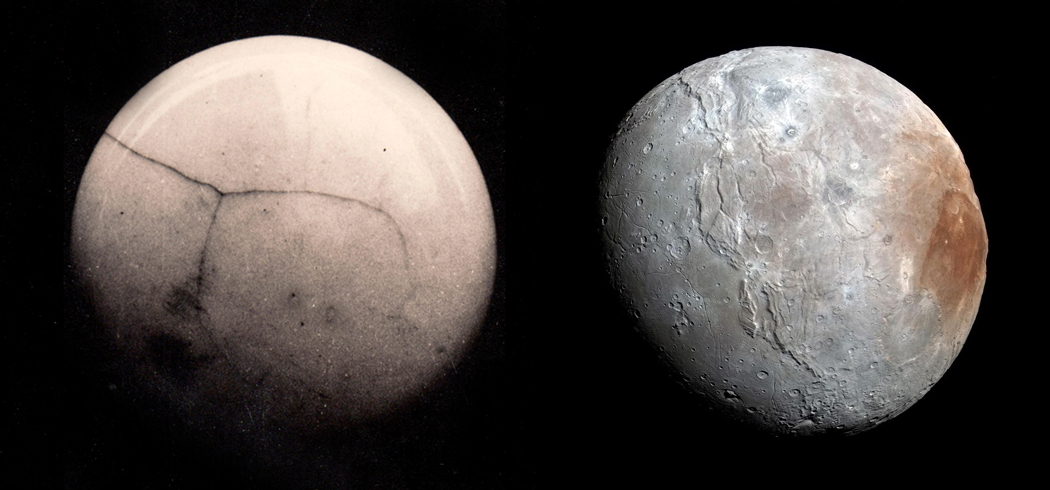
One of my favorite images is one taken by Voyager II in 1983 as it passed the (then) planet Pluto and snapped this image of its moon, Charon. And compare with the more recent, and clearer image taken by NASA’s New Horizons space probe on its flyby in 2015. 

Actually, that’s a lie. The image on the left is a doorknob. 

And so, here’s a little quiz. These photographs were taken to illustrate the shapes, colors and textures of ordinary objects, but seen in fresh ways. But they are still recognizable, if you can spot them. Can you tell what they are? The answers are at the end of the column. 

1

2

3

4

5

6

7

8


10

Even when you are not trying to be tricky, it is good to pay attention to the physical properties of the things of the world. Those shapes make images more memorable. And there are shapes all around.

A doorway turned into a check-mark

A paper tissue half out of a box

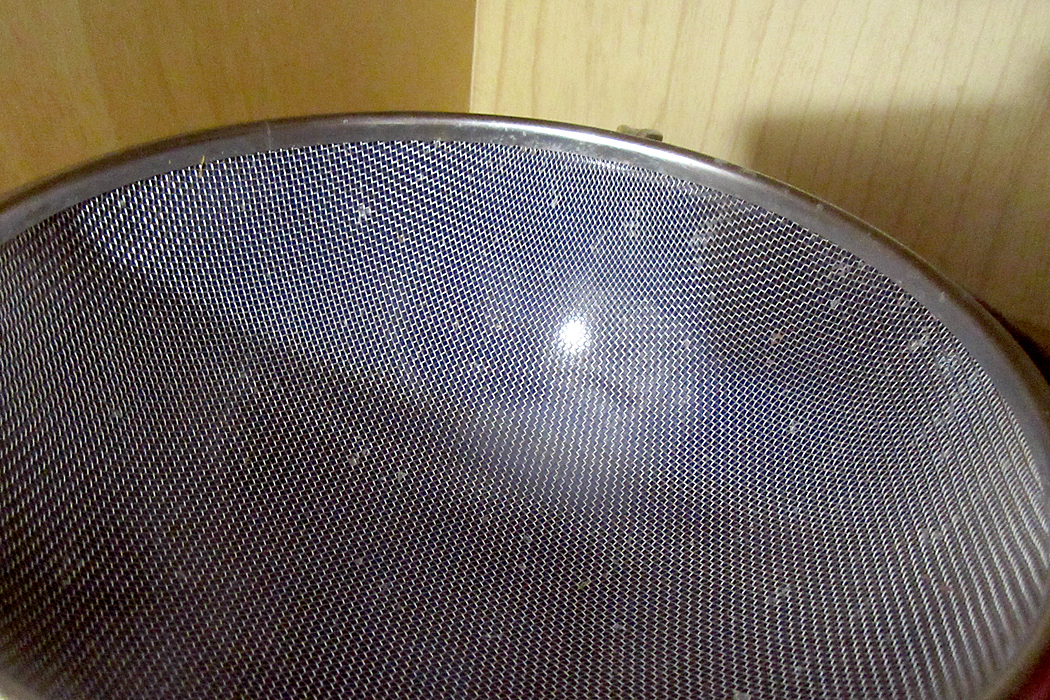
A kitchen strainer

We are alive on this planet for such a short time, and there is so much to take in. With our five senses we are privy to such delight and can never exhaust the riches around us. But we must be open to them, aware of them, awake to them. 

Learning to see is a part of art education. To see a picture of a giraffe and point, like a first-grader, and say, “Giraffe,” is not seeing. But take up a pencil and attempt to capture what you see on paper will teach you what things really look like. Paying attention is the great secret of life. 

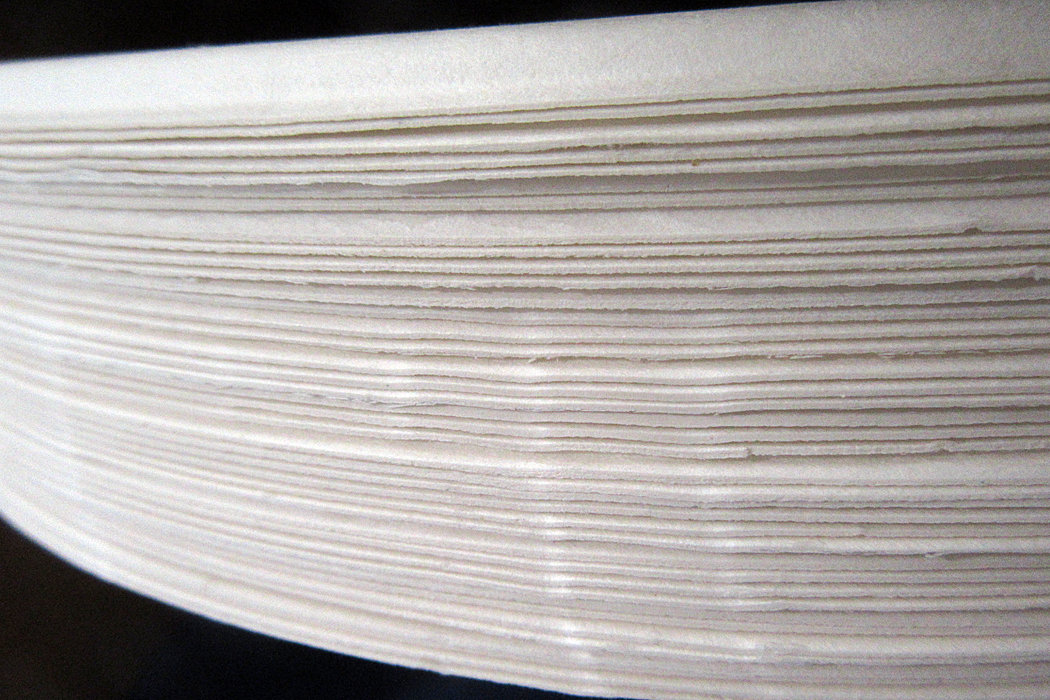
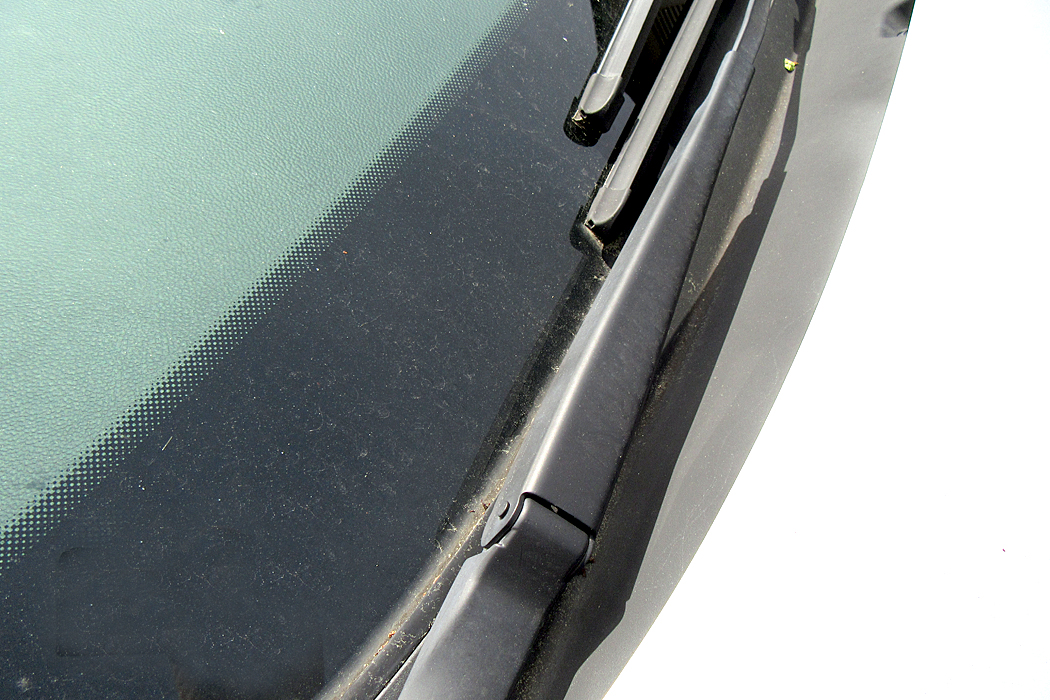
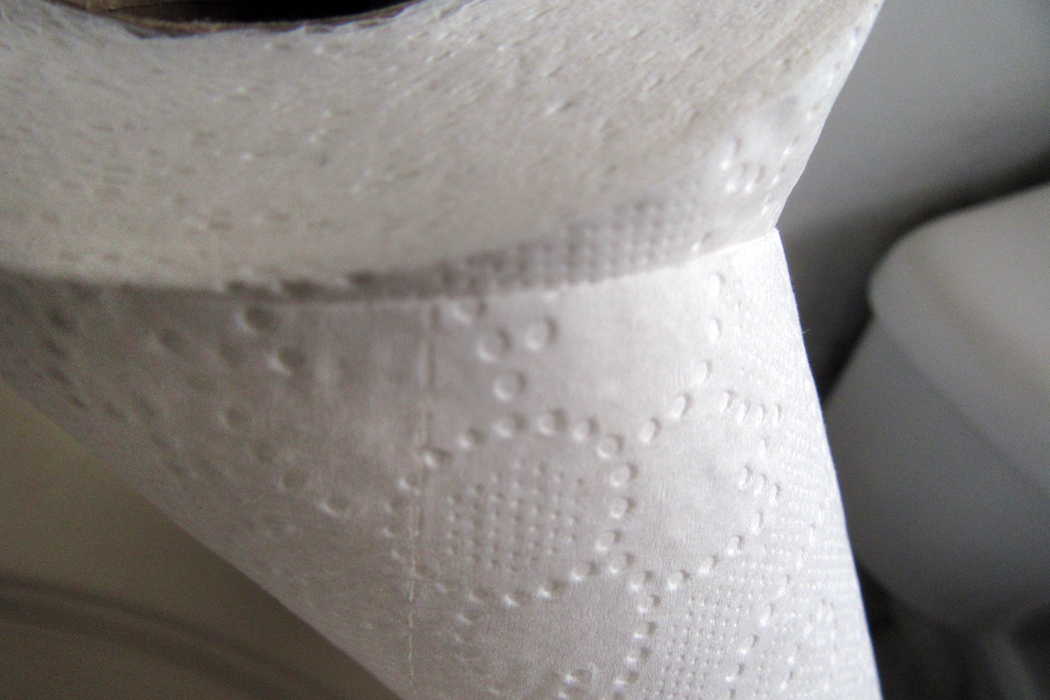
Quiz answers: 1. Paper plates; 2. Work glove; 3. Windshield wiper; 4. Measuring spoons and ceramic duck head towel hook; 5. Old Oxford cloth shirt; 6. Toilet paper; 7. Plastic mixing bowls; 8. Pop-open gas-cap cover for Buick; 9. Ceiling fan lamp fixture; 10. Assorted shopping bags. 

Click on any image to enlarge

This essay, now updated and rewritten, first appeared as my June, 2020 entry for the Spirit of the Senses website. 

When most of us think about our “selfness,” if we ever do, we most likely think of something interior — a psychic identity. That self is an accretion, a slow buildup of experience that memory binds into a continuous story. 

But we are not purely interior beings. We live in a physical world and our selves expand into every corner of our existence. My selfness is where and how I live, who I surround myself with, the items I buy at the grocery store, whether I wash and polish my car, or leave it to the elements. All me. 

I finished college 50 years ago, and I have changed a great deal in that half-century, and I don’t just mean the issue of losing hair on the top of my head and gaining it in my ears.

But much has remained the same. And what has remained is what I take as the essence of my self, who I am. For most writers who tackle the subject, the self is defined primarily by memory: The continuous thread of remembering from our earliest recollection to the moment an instant before this. This continuity is our self. It is what we have held onto. It remains separate from what others believe about us or their perception of our who-ness.

There is something very insubstantial about this thread of memory. After all, the past doesn’t exist; it is a reconstruction, not an actuality. And so, for many thinkers, the self is also a construction — a back-construction. We are reminded of this when we meet old friends and talk about “remember when,” and discover that our friend’s remembering is different from our own, or that they remember things we have long forgotten.

Surely the self is more than our own cogito ergo sum, recalled in memory. It is also our behavior, the sense we make of the world and how it is constructed and how it functions. It is not simply our past, but our expectations of a future. And there should be some outward manifestation of our selfness, not solely the interior rattling around of snippets of memory, strung together like a necklace of remembered events. Self is continuity. 

I began to think of such things when I woke one morning and sat on the side of the bed, facing the bookshelf on the wall in front of me. I happened to spot the slim volume of The Elizabethan World Picture by E.M.W. Tillyard, an ancient paperback that I had in college. It is a book I’ve owned for more than 50 years. It is where I first encountered the idea of the “Great Chain of Being.”

Then, I gazed over the shelves to discover if there were other books I’d owned that long, and saw Julia Child’s Mastering the Art of French Cooking, which I attempted to cook from during my first marriage, when I was still in college. Are those two books as much a part of my selfness as the memories of the old school or the failed marriage?

As I wandered through the house later that day, I pored over the many bookshelves to seek the books I’ve owned the longest, through divorces and break-ups, through four transcontinental relocations, through at least a dozen homes I have rented in five different cities. Nine cities, if you count homes from before college, which I didn’t rent, but lived with parents.

The oldest book I have owned continuously is my great-grandmother’s Bible, which was given to me when I was four years old. I also have my grandmother’s Bible, in Norwegian, and the Bible my parents gave to me when I was a boy, with my name embossed on the cover in gold. I am not religious and don’t believe any of the content scribed therein, but I also have to recognize that the culture that nurtured me is one founded on the stories and strictures bound in that book, and more particularly, in the King James version, which I grew up on and which has shaped the tone of the English language for 400 years.

Surely, completely divorced from doctrine, the KJV is a deeply embedded part of who I am. In this sense, my self extends well back beyond when I was born. Roots are deep. 

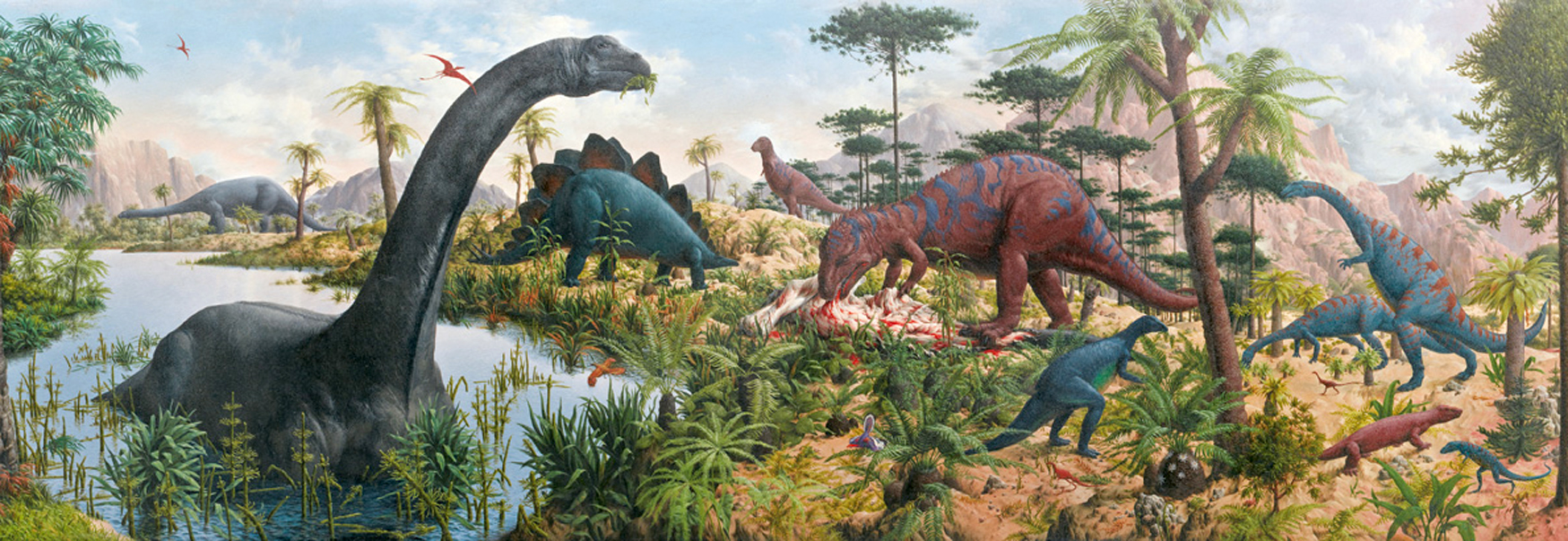
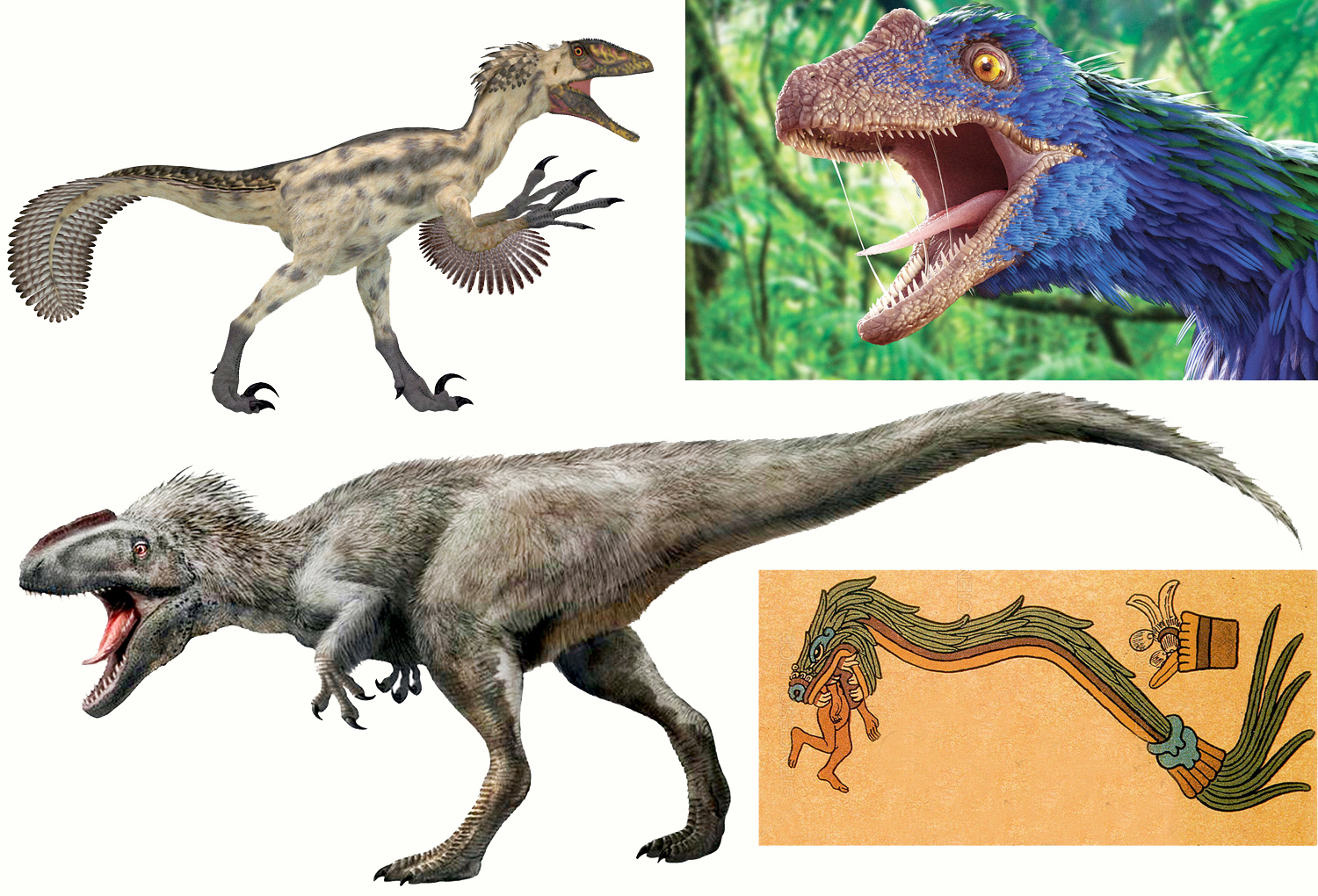
The second oldest book is one my grandmother gave me on my eighth birthday, a giant-format Life magazine book called The World We Live In. It was a counterbalance to the Holy Writ, in that it was a natural history of the world and gave me science. At that age, I was nuts about dinosaurs (as many young boys are in the third grade), and The World We Live In had lots of pictures of my Jurassic and Cretaceous favorites. It also explored the depths of the oceans, the mechanisms of the weather, the animals of the forest, the planets of the solar system, and a countering version of the creation of the world, full of volcanoes and bombarding meteorites. I loved that book. I still love it. It is on the shelf as a holy-of-holies (and yes, I get the irony).

Both the Bible and The World We Live In are solid, tangible bits of my selfness that I can touch and recognize myself in, as much as I recognize myself in the mirror.

I pulled down Tillyard from the shelf, and gathered up the several Bibles and began a pile by my desk, and went through the bookshelves finding the many books that have defined me and that I kept through all the disruption that life throws at us, with the growing realization that these books are me. They are internalized and now their physical existence is an extension of my selfness into the world.

The pile beside my desk slowly turned into a wall, one stack next to another, building up a brick-foundation of me-ness. They were cells of my psyche very like the cells of my body, making up a whole. And they began to show a pattern that I had not previously noticed. The books I’ve held on to for at least 50 years sketched a me that I knew in my bone.

I’ve kept books from 40 years ago, from 30, from 20. I’ve got books that define me as I am at 75 years old that I have bought in the past month. But the continuity of them is a metaphor for the continuity of my self.

When I was just out of college, a neighbor of my parents died and left my a pile of old books, printed in the 18th and early 19th century. There are three volumes of the poetry of William Cowper, a History of Redemption by Jonathan Edwards, a fat volume with tiny print collecting the Addison and Steele Spectators, and a single volume of Oliver Goldsmith’s History of the Earth and Animated Nature. I have Volume IV of five volumes, which contains descriptions and illustrations of birds, fishes and “Frogs, Lizards, and Serpents.”

And while my great-grandmother’s Bible gives me a sense of roots running four generations deep, these older books take those roots deeper into the culture that made me. I see myself not as a single mind born in 1948, but as part of a longer-running continuity back in time. A reminder that any single generation is simply a moment in a process: seed, sprout, plant, flower, fruit, seed. Over and over. My self grew from my mother’s womb and she from her mother’s and so on, back to a mythical primordial Eve. And my psyche grew from all the books I’ve read, and all the books that have shaped the culture that produced those books. It is a nurturance that disappears in the far distant past, like railroad tracks narrowing to a point on the horizon.

I am not here making an argument for nurture vs. nature. I am not simply the sum of the books I’ve read. Rather, the books I’ve read that have remained with me — and there are many times more that have not stuck with the same tenacity — have not only nurtured me, but are the mirror of who I was born, my inner psyche, who I AM. They are the outward manifestation of the inward being.

I have books left over from college, such as my Chaucer and my Shelley, my Coleridge and my Blake.

I have the poetry I was drawn to when first discovering its linguistic and cultural power, such as all the Pound I gobbled up.

There are the two volumes of Beethoven’s piano sonatas, edited by Artur Schnabel. I could never be without them. I read scores for pleasure just as I read words. I still have piles of Kalmus and Eulenburg miniature scores that I have used over the years to study music more minutely than ears alone can permit.

Books that have turned the twig to incline the tree stay with me, such as Alan Watts’ The Way of Zen, or the Daybooks of photographer Edward Weston, or The Graphic Art of the 18th Century, by Jean Adhémar.

I still have the Robert Graves two-volume Greek Myths that I had when taking a Classics course my freshman year, and the Oxford Standard Authors edition of Milton that I took with my in my backpack when I tried to hike all of the Appalachian Trail (“tried” is the operative word), and the photographic paperback version of the Sierra Club book, In Wildness Is the Preservation of the World.

My many Peterson Guides and wildflower books have only multiplied, but the basics have been with me for at least five decades.

The Thurber Carnival I still have was actually my mother’s book that I took from home when I went off to school. The catalog from the National Gallery of Art in Washington D.C. is now browned out and tattered and the Hokusai manga is another holy of holies.

All these have stuck to me like glue all through a life’s vicissitudes, many with ragged and torn covers, as I have myself in a body worn and torn by creeping age.

I could name many more, but you get the idea. And it is undoubtedly the same for all of us. For you, it many not be books; it might be a shirt or blouse you have kept, or maybe a blanket that comforted you when you were an infant, or your first car. These are the outward signs of an inner truth. The you who is not separate from the world, but embedded in it, connected to it, born from it and in some way, its singular manifestation.

Self is what you can’t get rid of. 

NB: The books illustrated are all some of them I’ve lugged with me for at least 50 years; anyone who knows me would recognize me in them. 

Click on any image to enlarge.

On Sept. 1, 1967, ABC Records released a recording of Louis Armstrong singing What a Wonderful World. That was the year of the Torrey Canyon oil spill off the coast of Britain; Charles Manson was released from prison in Los Angeles; military coups in Sierra Leone, and Greece; riots in Hong Kong kill and injure more than 800; guerrilla war begins in India; civil war in Biafra begins; 

“June Movement” terrorist group forms in West Germany; the “Six-Day War” between Israel and Arab states; 159 “race riots” explode across American cities; China tests its first hydrogen bomb; 70,000 protesters march on Washington calling to end Vietnam War; President Lyndon Johnson concludes that the American people should be given “more optimistic reports on the progress of the war” (i.e., lying).

What a Wonderful World stayed on top of the UK pop charts for most of 1968, during which year Martin Luther King and Robert Kennedy were assassinated. Also: deadly Army nerve gas leaked in Utah; American soldiers killed hundreds of Vietnamese civilians during the My Lai Massacre; one million students and protesters riot in Paris; 750,000 Warsaw Pact troops and 6,500 tanks with 800 aircraft invade Czechoslovakia to end the “Prague Spring” liberalizations; 

the Democratic National Convention in Chicago breaks out in chaos as police riot against protesters; Vietnam War expands into Laos and Cambodia; Chinese Cultural Revolution sends urban educated to the countryside as farmers. 

That, of course, is a very narrowed down list of the horrors of those two years. And Louis Armstrong sang, “I see trees of green, red roses too/ I see them bloom, for me and you/ And I think to myself, what a wonderful world.” So, it is hardly surprising that a number of critics responded badly to the tune as horribly sentimental and out of touch. 

But that is only if you pay attention to the words and not the music. Too often, we hear the lyrics of a song and assume that is what the song is about. Yet, sometimes, the music and words create a tension, and Armstrong’s version of What a Wonderful World is sung with a powerful undercurrent of sadness. It’s there in the constant shifting from major to minor harmonies, and most of all, it’s there in his worn, gravelly voice; it is a song that is having it both ways. 

Neil McCormick, chief rock music critic at The Telegraph in London, wrote in 2012, “What makes it so powerful is Armstrong’s vocal, which is not smug or avuncular, his voice is so old and cracked that it contains a sense of loss within it, the bittersweet tinge of a man looking back, who has already lived a long life and is acutely aware of how precious it is.  So, curiously, it seems to me there is an almost invisible shadow of melancholia in the song.” 

Armstrong was occasionally attacked during the Cold War years for acting as a cultural ambassador for the U.S. and called an Uncle Tom. And it can be hard to endure all those variety TV shows on which he sang yet one more version of Hello, Dolly. But one should never forget that he also recorded a powerful version of (What Did I Do to Be So) Black and Blue. “Cold empty bed, springs hard as lead/ Feel like old Ned, wished I was dead/ What did I do to be so black and blue?”

Armstrong turned it from its original comic purpose in a 1929 Broadway musical, Hot Chocolate, into a protest song. In 1965, on a tour of Europe, he reacted to police brutality against marchers in Selma, Ala., he told audiences in Denmark he became “physically ill” watching the beatings on television, and added, “They would beat Jesus if he was black and marched.” Later, singing in East Germany, he sang the song again, changing the lyrics to emphasize its civil rights message: “I’m right inside, but that don’t help my case/ ’cause I can’t hide what is on my face./ My only sin is in my skin/ What did I do to be so black and blue?”

“Some of you young folks been saying to me: ‘Hey, Pops — what do you mean, what a wonderful world? How about all them wars all over the place, you call them wonderful?’ ” For everybody knows or else should know that if nothing drastic is done, waves of anger and fear will again circulate over a low dishonest decade, and the unmentionable odor of death will darken the lands of the earth. 

And yet. And yet, I always remember the boys, underfed and cold in winter, with grinning smiles on their faces as they play soccer in the mud of the refugee camp. And I remember the mother smiling as she pulls back the cloth and shows her babies beaming face. Earth’s the right place for love, I don’t know where it’s likely to go better. 

And there are very few, even knowing that life is suffering, who would choose to leave it, and indeed, hold on to the very end, hoping always for one more breath. Life makes no sense and yet, it is beautiful. I don’t mean my life or your life, but life as it covers a planet in green and in fertile waters and even while evil despots send armies to smash home and body, the daffodils still open in spring. It makes no sense, but it is still beautiful. 

I look out my front door — always my measuring stick for a world taken for what it is — and I see the winter trees, bare wooden bones, and I see the birds dotting the crossing branches and I hear them, especially in the morning, and I cannot see and hear that as anything but intensely beautiful. And in a month or two, the twigs will bud and new leaves will fill out the armature. The trees will be green again, and red roses, too. 

You have to take it all, the grieving, the pain, the loss, the joy, the love, the radiance, and take it as a bundle. Yes, there is evil, and evil people. There always have been and always will be. There will also be contention between those who believe it is the others who are evil, as they perpetrate it themselves. It is enough to make grown men cry. 

In the Mahabharata, the archer Arjuna is standing in his chariot waiting to signal the beginning of a terrible war between the Pandavas and the Kauravas. And he foresees the horror, violence and death and he hesitates. The misery he sees makes him break down, drop his bow and decide to leave the battlefield. But then, his chariot driver, who is the disguised god Krishna explains to him why he must fight, and what is the nature of the world. There is much in the discussion that is explication of Hindu doctrine and requires much gloss to understand. But, in the middle of the catechism, Arjuna asks to see Krishna in his divine form, and Krishna grants him the vision.

What he sees is both terrible and frightening beyond telling, but also radiant and intensely beautiful. “If a thousand suns were to blaze forth together in the sky, they would not match the splendor of that great form,” it says. “There Arjuna could see the totality of the entire universe in one place.”

“Be neither afraid nor bewildered on seeing this terrible form of Mine,” says Krishna. “Be free from fear and with a cheerful heart.”

The universe is something well beyond the needs and understanding of humans. It is cold and heartless, but it is also unimaginably beautiful. You could say, both at once, but more to the point, not both, but rather, the same thing. It is. אֶהְיֶה אֲשֶׁר אֶהְיֶה  Eyeh asher eyeh

And it is this totality and its overwhelming terror and radiance that shine through those refugee boys playing soccer, that community digging through the rubble of a bombed building to find the survivor desperately breathing life, to discover in the murderer the glowing passion that led to the crime. 

The bright blessed day and the dark sacred night.

In addition to this blog, which I have been writing since 2012, I have written a monthly essay since 2015 for the Spirit of the Senses salon group in Phoenix, Ariz. The readership for each site seems to have little overlap, and so, I thought if I might repost some of the Spirit essays on my own blog, it might achieve a wider readership. This one, originally from May 1, 2021, is now updated and slightly rewritten. 

My house is filled with books, and so many that I will never live long enough to read them all. It is a personal version of a universal problem: So much has been written over the past 4500 years that no one can ingest more than a wee fraction of the total. That’s four and a half millennia of culture. So, what counts, these days, as being cultured, or well-read? 

No work of literature or art exists in a vacuum. Even the newest book has a past. Culture is an accumulation: Each new work builds on the past, and requires a shared understanding of that past with its audience. Just as you have to learn vocabulary in order to read, so you need some handle on the past to fully understand what is written now. But, there is too much for any one person to absorb, and no way for any author to assume his readers will recognize and vibrate to what is there, subliminally, in the works. That past is there even in best-sellers by Diana Gabaldon or Dean Koontz. 

There used to be an agreed upon canon of literature that any well-educated person was assumed to be familiar with. But, as the world shrank through communication advances and progress in transportation, the canon looked increasingly provincial. It was almost wholly white, male, and European. What of Asia and Africa? Why were there not more women included? Perhaps, too, that white European bias was the root evil of colonialism. 

I can’t answer all these questions, but it is important to raise them as we begin to lose the common cultural inheritance that the canon used to provide. Acres of writers over the past centuries have quoted or riffed upon the words of Shakespeare and the King James Bible. It was assumed that anyone with a decent education (even a decent high-school education) would understand the references. When Abraham Lincoln wrote “Fourscore and seven years ago…” his listeners would have tacitly resonated to the biblical “three score and ten” years allotted to a human life. He could have just said, “Eighty-seven years ago,” but he didn’t. The force of the Bible gave his words a tidal power that made his rhetoric memorable. 

Ernest Hemingway used the past, and expected his readers to know. Papa’s novels drip with the power of allusion. The Sun Also Rises comes from Ecclesiastes 1:5. For Whom The Bell Tolls rings from John Donne. A Farewell to Arms has Vergil’s Aeneid buried in it. 

T.S. Eliot’s Wasteland is a midden of such buried cultural memes. Some are explicated in the notes at the end of the poem (should poetry require footnotes?), but most are just there to be felt or be vaguely familiar. The poet expected his readers to share his erudition and quietly appreciate the roots that sprouted the verse. He explicated his position in the essay Tradition and the Individual Talent. In his Wasteland notes, he tells us that line 23 (“And the dead tree gives no shelter, the cricket no relief”) is a gloss on Ecclesiastes 12:5 (“the almond tree shall flourish, and the grasshopper shall be a burden”), which seems a bit of a stretch, but he doesn’t feel it necessary to point out that the opening line of the poem (“April is the cruelest month”) is an ironic reversal of Chaucer’s “Whan that Aprille with its shoures soute…”). He thought that too obvious to mention. What in today’s world can be considered too obvious to mention? 

Eliot’s poetry, itself, is now the cause of allusion (“I should have been a pair of ragged claws scuttling across the floors of silent seas…” Ask Woody Allen). 

There are at least two problems with such allusions. The first is epitomized by Ezra Pound, who so completely built his Cantos on fragments from obscure writers and historical figures that no one without the same erudition as himself could have any clear idea what he was talking about. If the main point of your reference is the reference, the main point is also pointless. And Pound’s reading was so idiosyncratic and esoteric that no reasonable human should be expected to share it. 

The second problem is best displayed in the work of John Milton. There is no doubt of Milton’s greatness as a poet: He is the second-most quoted author after Shakespeare. Bartlett’s is stuffed with him. But Milton was so casually familiar with the Bible and Classical writers that you often now need a gloss to know what he means when he writes of his muse that intends to ”soar Above th’ Aonian mount” which his educated readers would have known was Mount Helicon, where the Greek muses lived by the Hippocrene spring, a spring created by the hoof-stamp of Pegasus, the winged horse that symbolized poetic inspiration because he could fly to the top of Mount Olympus, home of the gods. Any self-respecting gentleman of the time, with any degree of education, could read Ovid in Latin and would be familiar with all the gods, godlets and nymphs and fauns mentioned in The Metamorphoses, a foundational work of Western literature and thus slide past them knowingly while reading Paradise Lost. Few of our contemporaries read Ovid and hence the need for footnotes. The Norton Critical Edition of the poem, often used in college courses, is as much gloss as verse. 

Now you can go through 12 years of public school and four years of university and never getting any closer to Ovid than a NASCAR fan to the ballet. 

When novelist William Styron wrote about his battle with depression, he named the book Darkness Visible, referencing Milton. Milton also shows up in Philip Pullman’s science-fiction classic, His Dark Materials. There was a Playstation video game named Pandemonium. For someone so seldom read, Milton gets around. 

We should expect that cultural reference comes and goes, it blossoms and then fades with time. Once, Milton was one everyone’s tongue, now he is for doctoral candidates. Once the Bible was lingua franca, now, it seems, those who know the book at all only know the parts they like and ignore the rest.  (“Who’s the greatest contortionist in the Bible?” “Balaam, because the Bible says he tied his ass to a tree and walked away.”) The best-known of Shakespeare is still recognizable, but I venture few would remember to context to “Put out the light, then, put out the light” or “All that glisters is not gold.” “To be or not to be” is too familiar, but even those who can quote the first six words of the soliloquy probably don’t know that the rest of it contemplates suicide, or where it comes in the Hamlet story — or why. 

It has always been the habit of the educated — the initiates in the cultural legacy — to lament the loss of that inheritance, and condemn the ignorance of the younger generations. I have been guilty of that myself, because I have spent so much time imbibing my cultural past and fear the loss of meaning that evaporates with the loss of memory of past culture. I, who know Gilgamesh and Beowulf, who reads the Iliad annually, who have ingested my Ovid and Livy, my Melville and Faulkner, weep for those bereft of such treasures. But I need to recognize the evanescence of such knowledge. One set of cultural touchstones is inevitably replaced by a new set, piece by piece, like the original wood of the Argo. 

I doubt we can do without a cultural gravity pulling us toward a center, but it needn’t be the one that worked in the past. Just watch a Quentin Tarantino film and see how the cinematic past enriches the Pulp Fiction present, how he uses the styles of Hong Kong in Kill Bill, or the tropes of Western movies in The Hateful Eight. Inglourious Basterds is built, not on a knowledge of history so much as on the digested habits of World War II movies — and in much the same way as Paradise Lost is rooted in Ovid and the Bible. Just as Milton expected his readers to be familiar with Ovid, so Tarantino expects his audience to be familiar with Johnnie To and William Wyler. 

I have recognized that my own cultural memory is mine and must let the younger generation have theirs. But I nevertheless worry about this difference: that mine subsumes four millennia of accumulation building on itself, while what I see in the coming cultural horizon barely extends back a hundred years. When I see an online list of “greatest films of all times,” I am appalled that almost no films listed are more than 30 years old. Have none of these movie fans seen Metropolis, Battle of Algiers, or Rules of the Game? Surely their lives would be richer if they had something to draw on psychically and emotionally other than American Pie or Fast and Furious

My twin granddaughters do stunningly well at school — now at university — but neither knows any Bible stories. This is not picking on them: No one who is secular in their generation does. How much of their cultural patrimony is blank? Nor does their generation soak up Sophocles, Dante, Hawthorne or Yeats. They have their touchstones, but I cannot but worry that their inner lives are undernourished for it, l’eau sans gaz

But I am also humbled by my own ignorance. Is my inner life starving because I cannot read Latin? French? Russian? Chinese? I think of all the books I haven’t read. The list seems nearly infinite. My own bookshelves shame me. I own the books that populate them, but I haven’t gotten around to reading everything waiting there, inviting me in. There isn’t time. 

On New Years Eve in 1853, the famous scientist Richard Owen and 21 invited guests, the cream of Victorian English science and letters, gathered for a dinner, laid out for them inside a giant dinosaur. 

Actually, only 11 of them fit into the half-finished sculpture of an iguanodon, the rest sat at tables around the monster. At the head of the interior table, inside the skull of the beast, sat Owen, presiding over the affair well into the early hours of 1854. 

The menu was astounding

It was all a publicity stunt, promoting both the creation of a series of dinosaur sculptures by Benjamin Waterhouse Hawkins, but even more importantly, promoting Owen, a notorious publicity hound. 

Richard Owen and Benjamin Waterhouse Hawkins

The iguanodon statue/dining hall was part of a huge project Hawkins was involved in, to create life-size models of 33 different dinosaurs, to be exhibited on the grounds of the newly relocated Crystal Palace Park just outside London. The Palace was taken apart and moved at the end of the Great Exhibition of the Works of Industry of All Nations held in the summer of 1851 in Hyde Park, London. The Exhibition was a kind of Worlds’ Fair, and the palace, made of glass and steel, was a wonder of architecture and although originally slated for demolition at the end of the exhibition, it was instead rebuilt in Sydenham Hill, south of the River Thames and made the centerpiece of a new park. (The Crystal Palace itself  burned down in 1936; the park is still there.) 

The creation of the new park was a hugely expensive operation, and with money always short, Hawkins’ plan for the 33 dinosaurs was cut back, but he still managed at least 25 of them — which are still there today, after having been restored several times in recent years. 

Hawkins’ sculpture, then and now

The iguanodon in which the banquet was given was a vast project itself. Hawkins wrote of it: 

“In the instance of the Iguanodon [it] is not less than building a house upon four columns, as the quantities of material of which the standing Iguanodon is composed, consist of 4 iron columns 9 feet long by 7 inches diameter, 600 bricks, 650 5-inch half-round drain tiles, 900 plain tiles, 38 casks of cement, 90 casks of broken stone, making a total of 640 bushels of artificial stone.

“These, with 100 feet of iron hooping and 20 feet of cube inch bar, constitute the bones, sinews, and muscles of this large model, the largest of which there is any record of a casting being made.”

The dinner kicked off a veritable Victorian dino-craze. and various scientists and amateurs went around the geology of England with pick and hammer trying to unearth new fossils. 

Actually, interest had already been going on for a few eager bone hunters. In 1824, bits of a Megalosaurus was found; in 1833, a Hylacosaurus; in 1836, the first dinosaur footprints. But after that, it was an explosion: in 1856, the Trachodon; in ensuing years, the Hadrosaur, Compsognathus, Archaeopteryx, Bronto- and Stegosauruses; and, by the end of the century, Triceratops and Diplodocus. Jackpot came in 1902 with the Tyrannosaurus Rex.

That branch of science we call paleontology hit its first stride in England beginning in the early 1800s, when the first dinosaur fossils were recognized and begun to be classified. It began in 1822, in Cuckfield, West Sussex, when a doctor from Lewes named Gideon Mantell — or his wife, Mary Ann (stories vary) — discovered a fossil tooth of a prehistoric beast they named “Iguanodon,” based on supposed similarities between the fossil tooth and the teeth of iguanas. It set off a fad for bone-hunting, and soon more fossils were excavated, and in 1834, a pile of bones were dug from a quarry in Maidstone, about 30 miles east of London. Mantell acquired the pile and attempted to reconstruct his iguanodon from the bits. His initial drawing looked something rather like a giant squirrel. 

Mantell’s bones and his drawing of recreation

In the bones was a horn, which Mantell assumed was like a rhinoceros horn or that of his iguana. And so he drew it on the nose. 

 In 1842, it was Owen who coined the word “dinosaur” for the recent finds. He attempted a more accurate reconstruction of the iguanodon and came up with a reptilian rhino, horn still on nose. It was Owen’s version that Hawkins attempted to replicate. 

The year after the dinner in the belly of the beast, Samuel Beckles found giant three-toed footprint fossils in the Isle of Wight. He later discovered the hind limb of an iguanodon and the foot matched the prints, and so it was decided that the iguanodon was not a four-legged rhino-reptile, but stood like a kangaroo, on its hind legs. This completely revamped thinking about the beast, and for the next hundred years, iguanodon rather mimicked Godzilla. 

Then, in 1878, a whole herd of iguanodon fossils were discovered in a coal mine in Bernissart, Belgium. These confirmed that Iggy’s back legs were longer than his front, and so confirmed (so they thought) the upright posture. More importantly, the horn no longer fit the nose, but turned out to be the thumbs of the dinosaur, held firmly in the perpetual position of the hitchhiker. In 1895, the British Museum of Natural History acquired an iguanodon skeleton and assembled the pieces into its kangaroo pose that held up for a century. 

This was, of course, the version most of us grew up with. Upright, tail-dragging like a Piper Cub, and with his spikes giving us the “Thumbs-up” gesture. But in the 1990s, closer study of the fossil skeletons, reexamined with newer methods and anatomical knowledge, changed things once again. The iguanodon was set back on four legs once more, although allowing him to rotate upwards on his back legs occasionally to reach food. And it turns out the the vertebrae and their attending tendons were stiff, and the iguanodon tail did not drag, but, more like the cat wagging its tail to announce its mood, held out stiffly backwards and in the air.

So, Owen had been right, although for the wrong reasons. 

So much of what we now surmise about the dinosaurs has changed in the past 40 years. Not only the cat-tails lashing about in the air, but the warm blood of at least some of them, and the possibility — even probability of feathers, and the realization that dinosaurs are closer to being birds than reptiles. 

You have to wonder what the future holds out for the iguanodon. The future constantly reinvents the past. It is the heart of science to do so. The sun used to revolve around the earth; then it didn’t. Atoms were the smallest particles of matter until protons, neutrons and electrons were found and then until quarks were posited, and now we wonder about string theory. Maybe no particles at all, just vibrations. 

When I was a boy in my astronomy phase, there was a viable argument between Fred Hoyle’s “Steady State” theory of the expanding cosmos, and the newer “Big Bang” theory. The expanding universe found by Edwin Hubble shouldered out any idea we could have had of the static cosmos that had held sway for millennia. New discoveries and reformulated conceptions have pushed science ahead, sometimes by inches, sometimes by light years. 

Hawkins’ dinosaurs under construction 1855

The continents were rock solid until they started floating around the world like barges. Plagues were caused by “bad air,” until bacteria and viruses were discovered. Phlogiston was the substance of fires before the role of oxygen was understood. 

The dino park today

Sometimes the changes circle back on themselves, like the once-again four-legged iguanodon. In the ancient and Medieval worlds, moods were controlled by the four humors. Psychology gave up on such things and went Freudian, and now, neuroscientists have rediscovered brain chemistry — really the humors updated and modernized. 

The people who created these theories and ideas were not stupid. We should not hold ourselves superior to them. They were working with the data available and were often quite ingenious. The math behind the Ptolemaic system is absolutely brilliant, and as complex as anything on a blackboard at the Princeton Institute for Advanced Study. 

“Despite the fact that later evidence proved these theories wrong, I don’t think we should say the scientists involved made mistakes,” wrote Peter Vickers, professor of the philosophy of science at England’s Durham University. “They followed the evidence and that is precisely what a good scientist should do.”

Dinosaurs when I grew up

It’s a constant plod, one foot in front of the other. Mantell knew this when he first tried to understand the iguanodon in the 1820s. 

He wrote: “Imperfect as are the materials at present, they will be found to possess sufficient interest to incite further and more successful investigation that may supply the deficiencies which exist in our knowledge.”

And so, dinosaurs now have feathers, like Quetzalcoatl.

This is one of the glories of science — the willingness to be wrong when a more complete idea is proved. The entire world progresses because of this humility. We must leave it to the flat-earth people and anti-vaxers to be so damn certain they are right. Every step in the history of science is provisional. That is why the safest bet is to cast our lot with those who practice it.