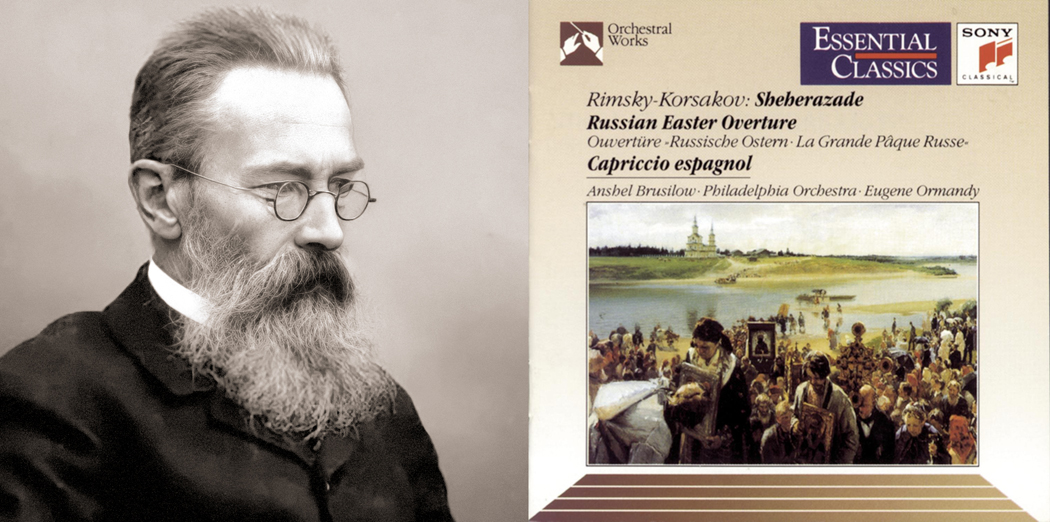
Hello, my name is Richard and I am a Tarkovsky addict. As usual, the first fix was free: I watched Andrei Rublev on Turner Classic Movies a number of years ago. 

Rublev (1966) is a three-hour black-and-white epic about a 15th century Russian icon painter, which isn’t quite the selling point that it may sound. But it is also complicated by the problem that there is no discernible plot, and that large chunks of the movie are not about Rublev at all. And also, what story there is moves at the pace of paint drying. I was hooked. 

As New Yorker writer Alex Ross said, “Some art works impress us so deeply on first encounter that they become events in our lives.” 

Andrei Rublev is one of the most visually stunning films I have ever seen, black and white, with more black than white, lots of murky weather and nighttime scenes. It is divided into eight tableau, with a prologue and an epilogue. 

It begins with a crowd of Russian peasants watching a man attempt an early hot-air balloon ascent. A lot of commotion, not a lot of clarity. He manages to get aloft and from his point of view, we watch the landscape beneath him as he screams with joy — until he crashes. Then a horse rolls over on his back and we move on to the first official scene. 

This prologue has nothing to do with the rest of the movie. 

Each of the next eight scenes documents episodes from the life of the painter, although we are not at first clear which of the characters we see actually might be Rublev. There are three of them taking off from a monastery. Tarkovsky doesn’t spend a lot of effort differentiating them. 

I can’t relay the plot, because there really isn’t one. And any attempt would be interminable. Suffice it to say that the film is hypnotic rather than active. It seems to make time stand still. 
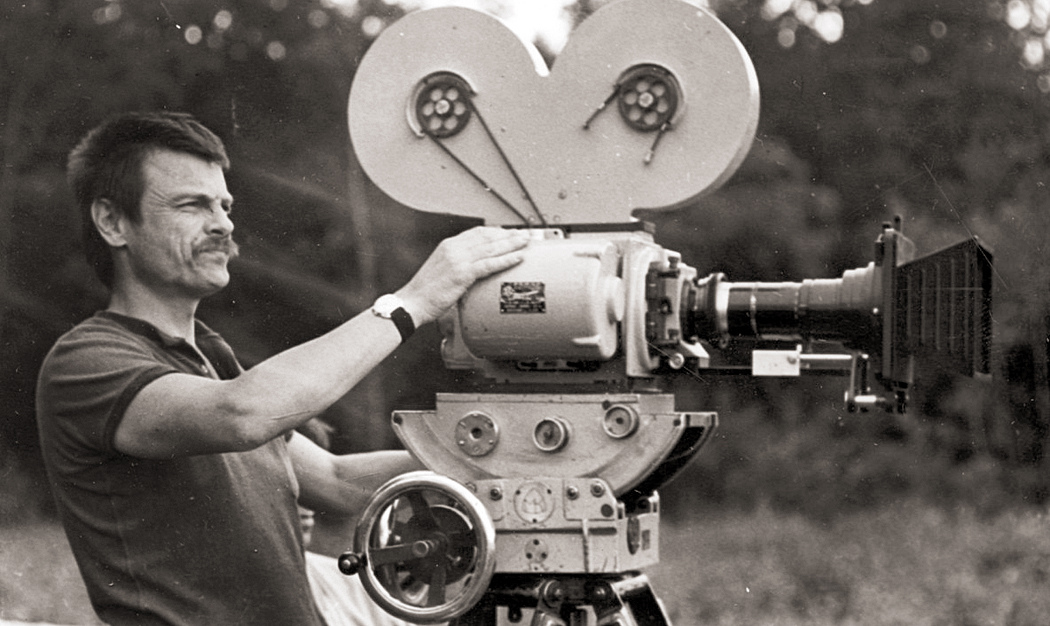
This is a virtue of all of the films of Russian director Andrei Tarkovsky, who made only seven feature films in his short life, each of them more enigmatic than the last. He was born in 1932 and died of cancer in 1986, a cancer he most likely acquired making his 1979 film, Stalker. (Two others from that film, including its star, also died of cancer). 

I saw my second Tarkovsky on Turner Classics also. It was also three hours long, but was a space epic. Sort of. Solaris (1972) was Tarkovsky’s response to Stanley Kubrick’s 2001: A Space Odyssey. It is about a Russian scientist visiting a space station around a planet names Solaris. While there, he encounters his dead wife, and she dies again. It turns out the planet can create mental reality for anyone nearby. 

A lot more happens, of course, but again, the plot is hardly the point of the film. Tarkovsky seems to view plot as an unpleasant necessity for filmmaking, which he is willing to put up with, but not if it requires too much of his thought and energy. He is more interested, like his planet, in creating a mental reality for anyone nearby. 

Solaris was remade in Hollywood in 2002 by Steven Soderbergh and starring George Clooney. The films was shortened, tightened and made sense, and therefore was a complete botch. 

The Tarkovsky original begins with a half-hour scene set on Earth, with some of the most stunningly beautiful photography I’ve ever seen in a film, outside a Terrence Malick movie. Watching it breaks my heart, it is so beautiful. I have often watched just this beginning, just for the sheer pleasure of it. 

Solaris is less successful than Rublev, and precisely to the extent that it tries to actually tell a story. But it is still a great film.

(In an almost comic bit, Tarkovsky seems to be making fun of Kubrick’s film by inserting a five-minute long, nearly unedited segment from the point of view of someone driving a car along streets into a city. It makes no plot sense, but does seem to mock the “star journey” from 2001). 

Then, these “free samples” began costing me money. I bought DVD versions of both films and watched Rublev many times. Each time, confusions became clearer; this is what happens with Tarkovsky. Other filmmakers lead you through their plots by the nose, so you don’t miss anything. You get a passive experience, sitting back and letting the story wash over you. Tarkovsky forces you to participate actively in the film, joining him in making meaning as you go. 
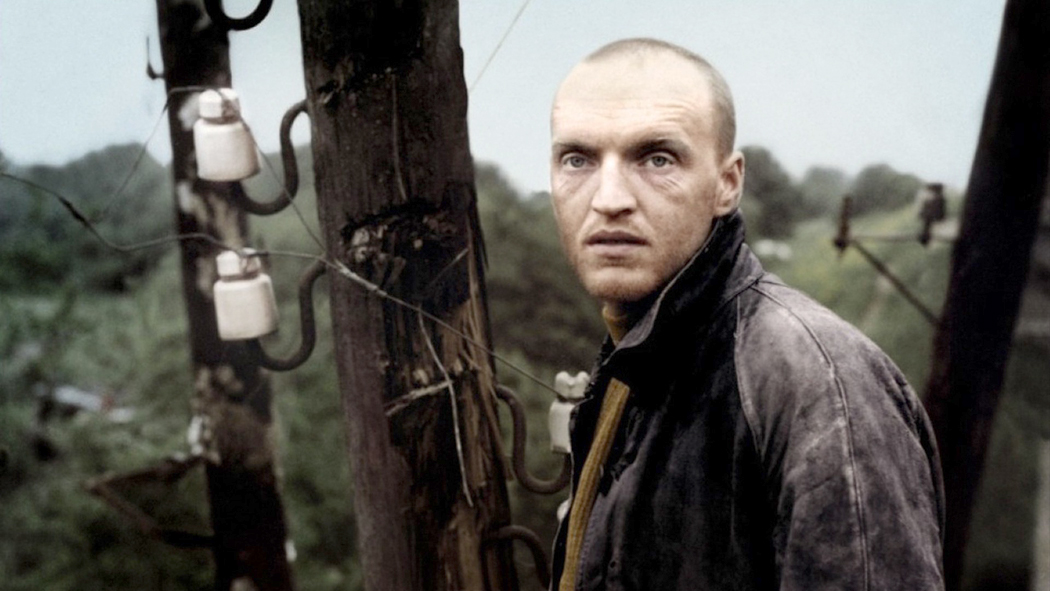
Several people had recommended Stalker as the Tarkovsky film I really had to see. And so, I hit Amazon for another DVD. 

In Stalker, a guide leads two other men on an illicit expedition to “The Zone,” where an unnamed disaster has rendered the land out-of-bounds. They have to elude the authorities and make their way through a kind of post-apocalyptic landscape, littered with trash, abandoned tanks, overgrown weeds and industrial waste. The destination is to reach a room where a person’s deepest wish will be fulfilled. 
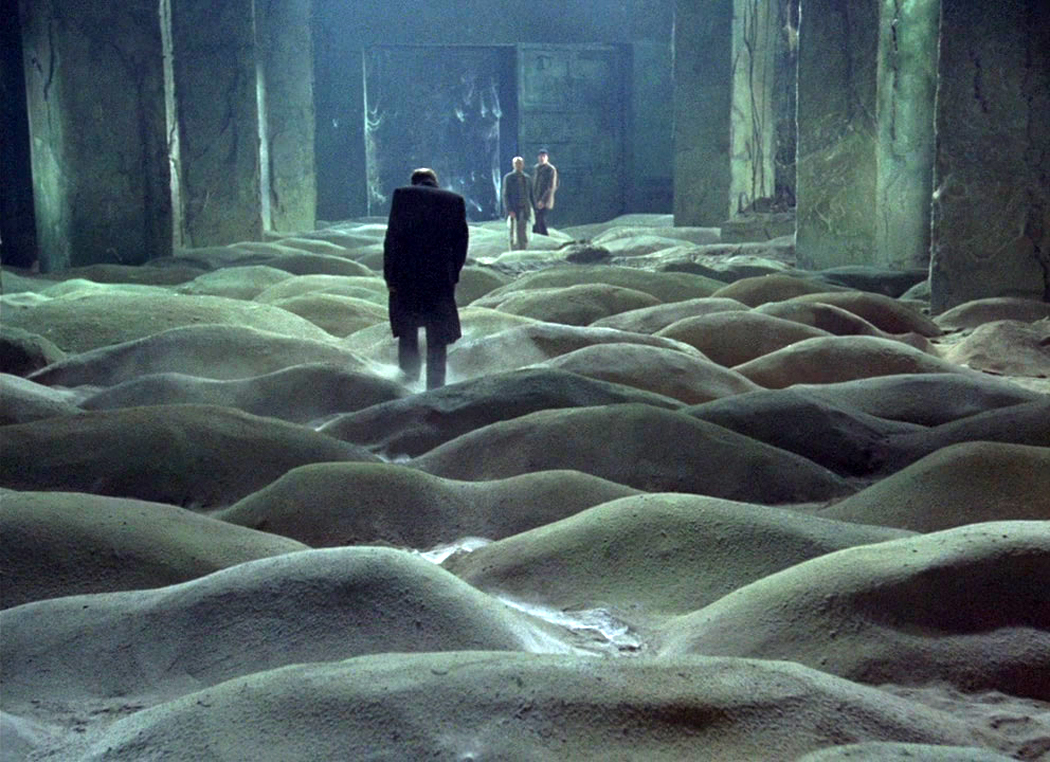
But this retelling of the storyline implies that the plot is the point, and it is not. The film is all atmosphere and poetry. It was seeing Stalker that first clued me in to the fact that Tarkovsky’s films are about a series of symbols very personal to the filmmaker and not explicable in ordinary terms. We just have to recognize their meaning, the way we recognize meaning in a dream. One thing does not “mean” another thing as in semiotics, but rather these are projected obsessions of the filmmaker. 

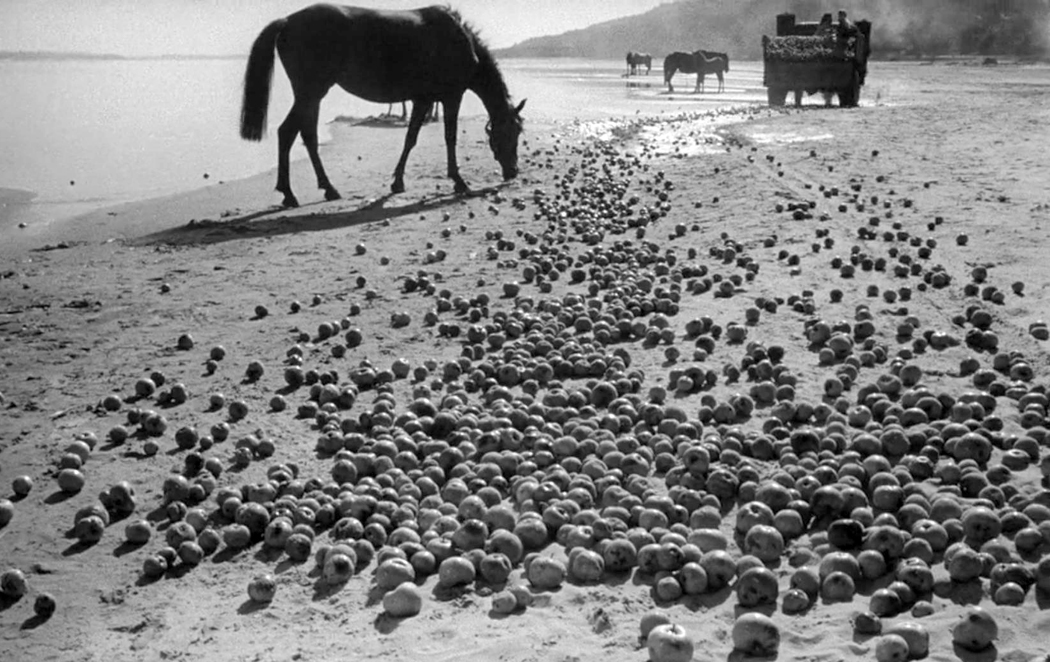
In almost every Tarkovsky film, you will find these obsessions repeated: horses; 
you will find ceilings dripping with water; 
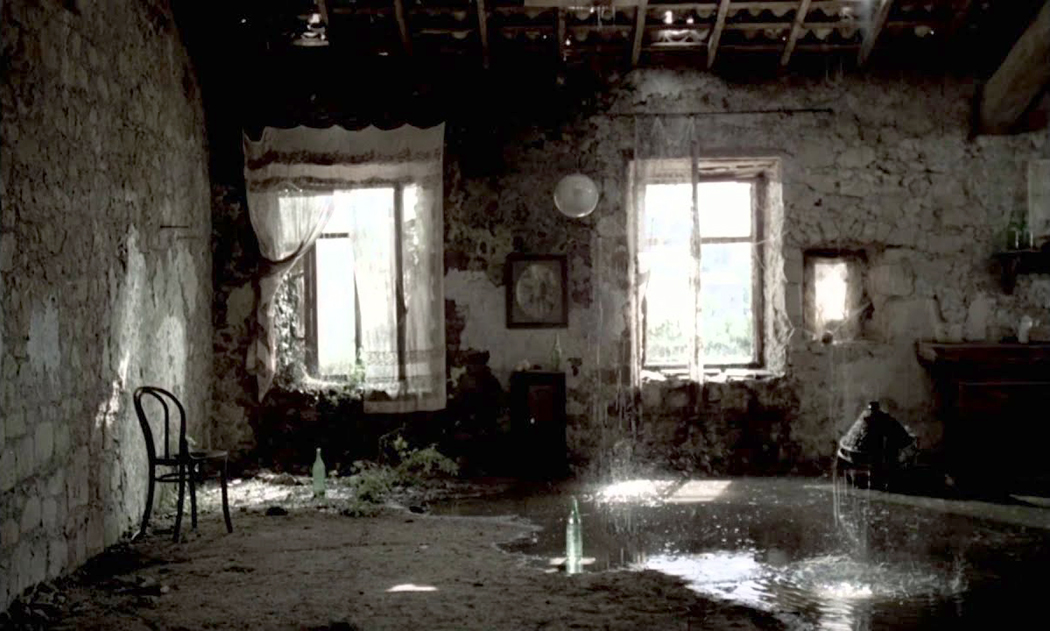
puddles of shallow water that actors have to trudge through; 

wind rippling through grass; houses burning; 

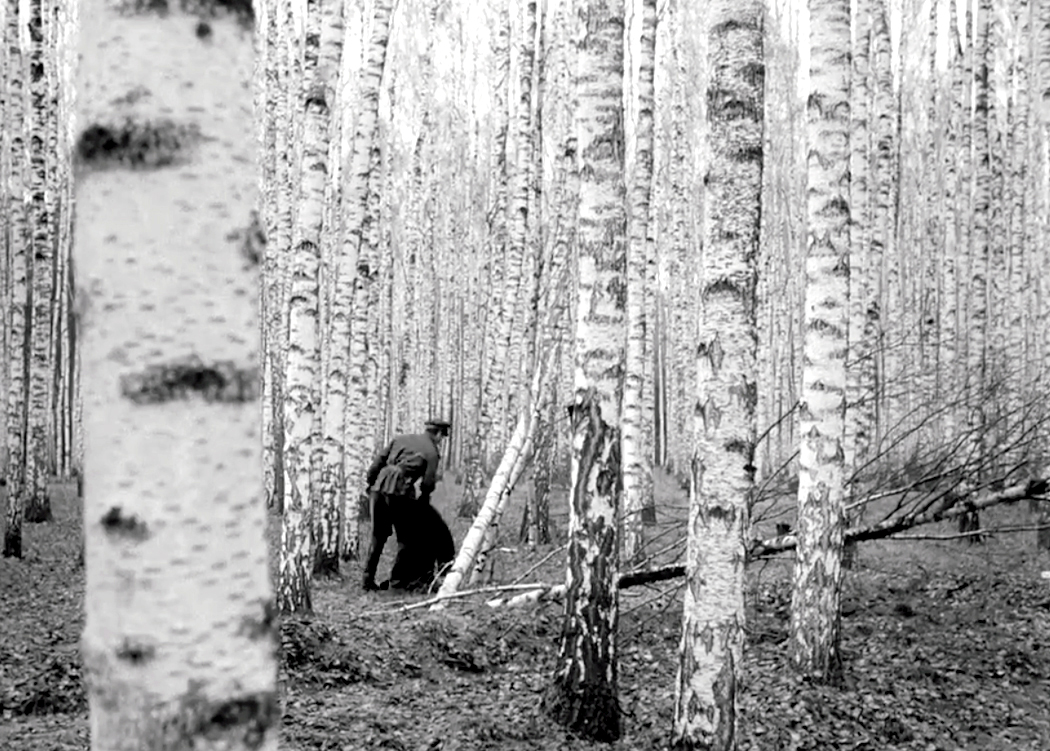
action seen through a screen of forest trees; 
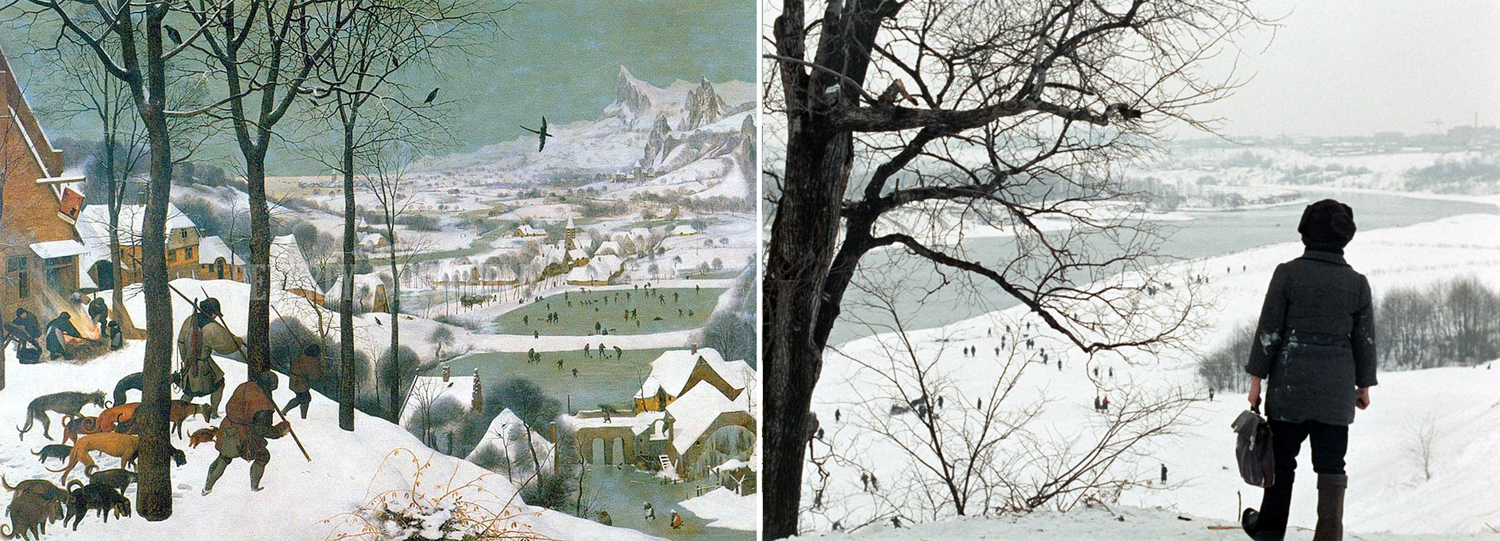
and over and over, someone looking at reproductions of art. 
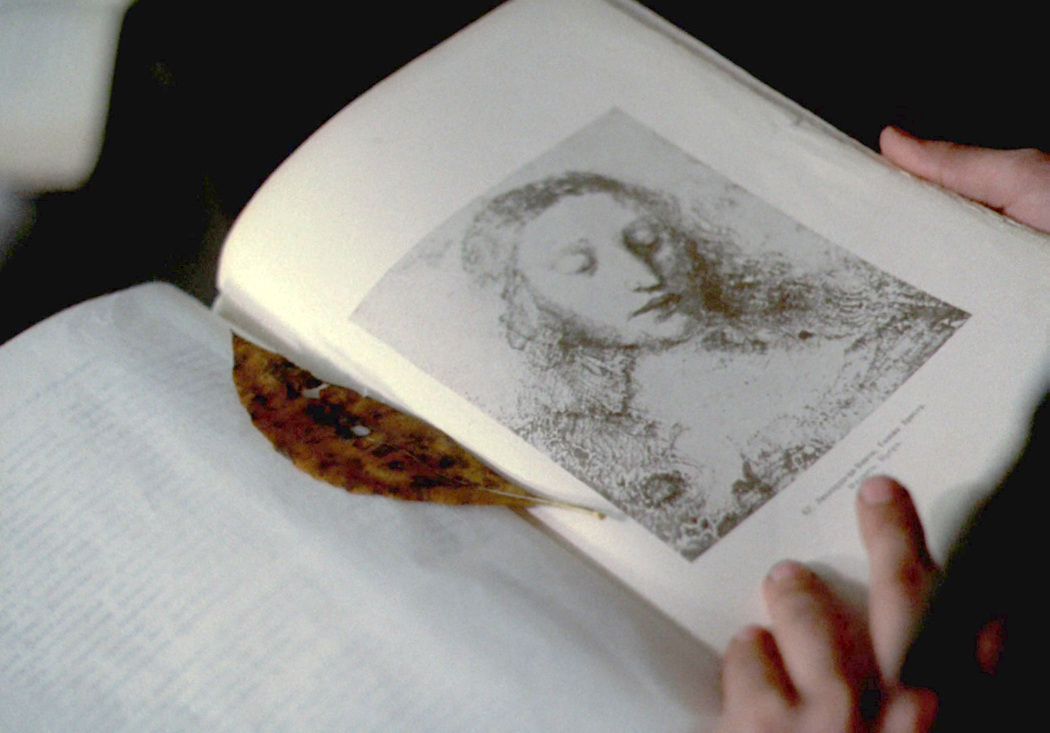
(The influence of art is obvious in many of Tarkovsky’s compositions, such as this one from Zerkalo):
There are also an extraordinary number of people viewed from behind their heads. 

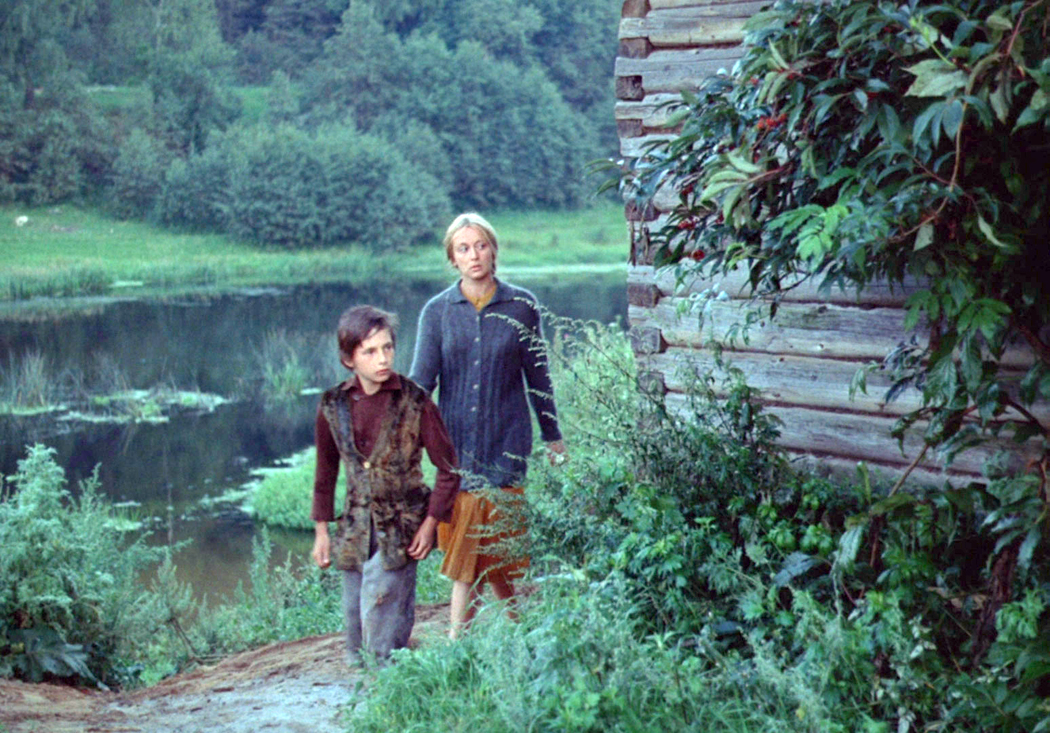
And mothers and children. 
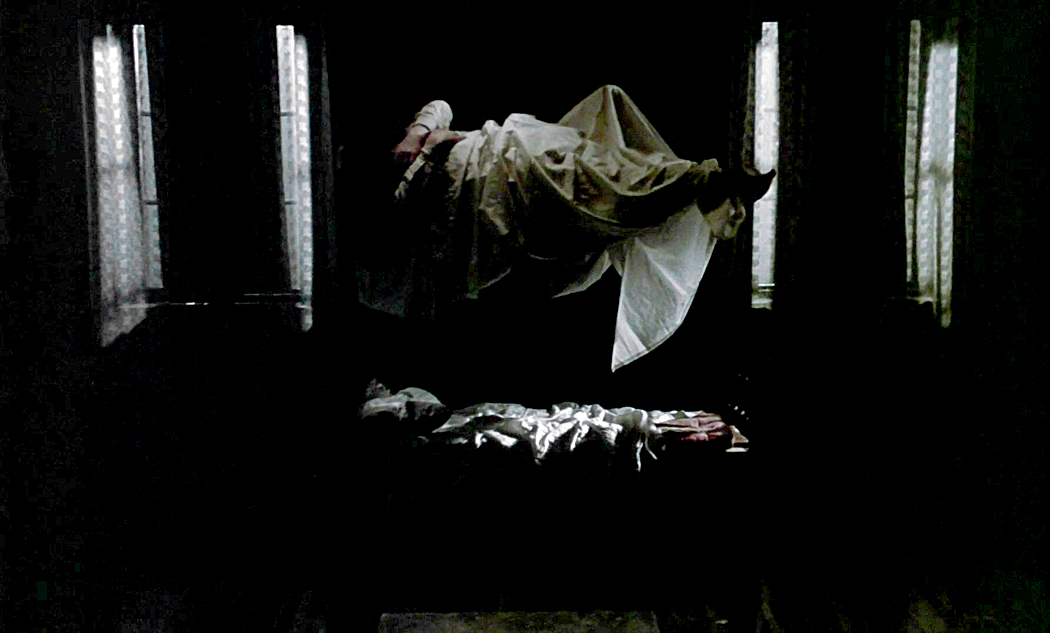
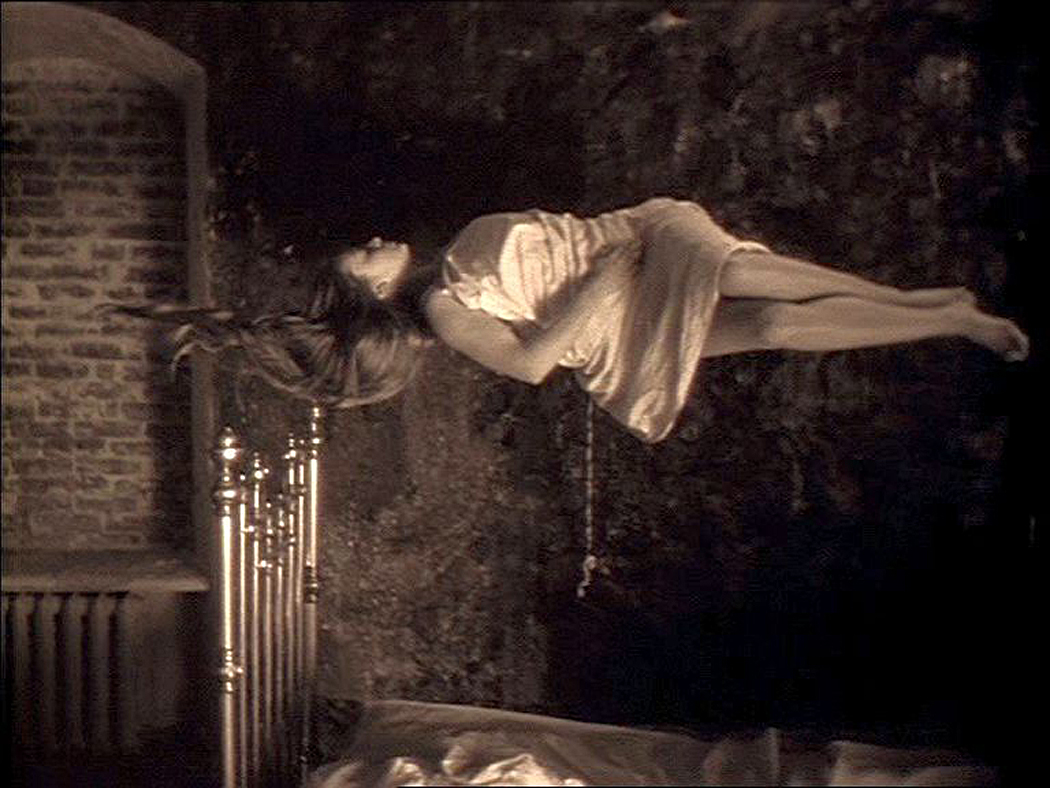
More than one levitation;
 and lots of symmetrical compositions. 

These pieces are assembled and reassembled through all seven films.
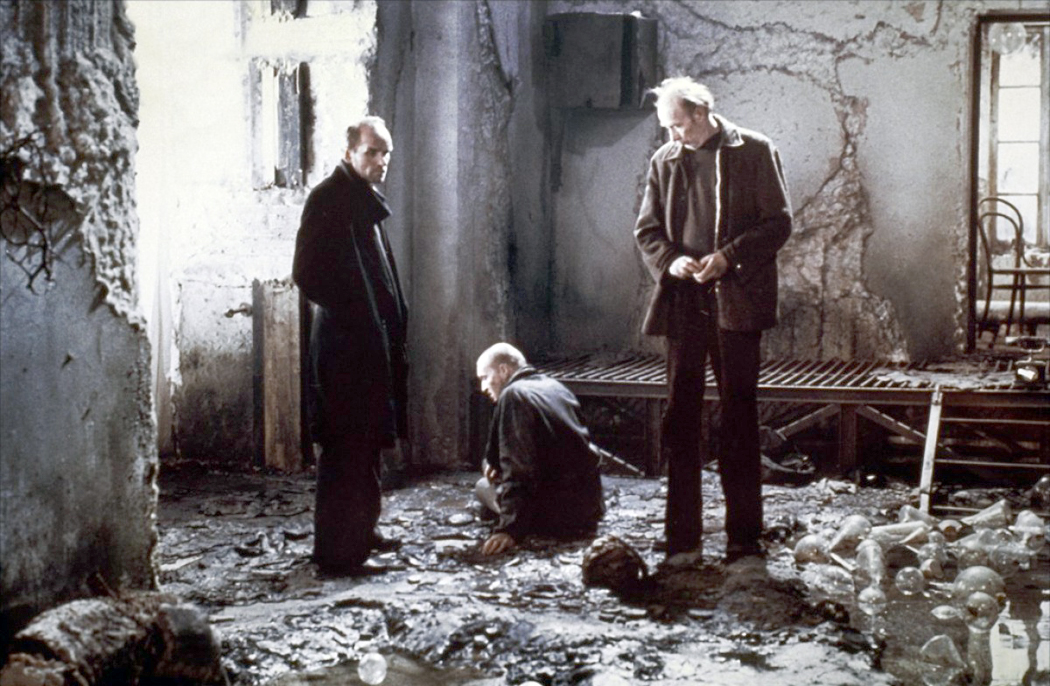
Stalker is now imprinted on my own imagination. It is unforgettable, even if you never have a clue what it is about. Forget “about.” It is not “about” anything. It is an experience. If you visit Niagara Falls and stand under its torrent, it isn’t “about” something; it is an experience. A Tarkovsky film is the same. It is something you absorb and it stays with you for the rest of your life. 
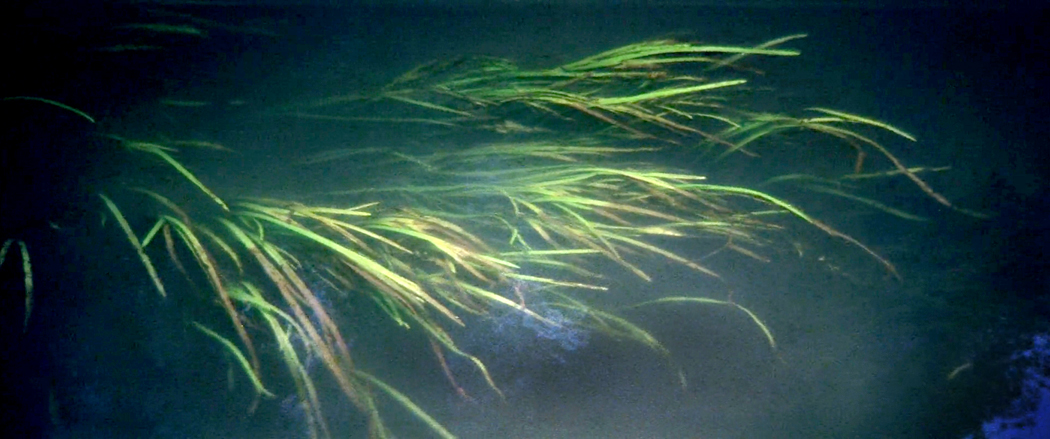
If you attempt to find meaning, you will be sidetracked, and you may very well decide the effort is not worth it. 

Susan Sontag wrote a book called Against Interpretation, and Tarkovsky is Exhibit A. He is providing you with the same kind of gift that you get from the changing of seasons, a great snowfall, the night sky, the loss of love. 

Earlier this year, I set myself a Tarkovsky marathon (not all in one day — I’m not a masochist) and watched all seven features in order, beginning with Tarkovsky’s first film, Ivan’s Childhood (1962), which is the most conventional film he made, coming in at just 95 minutes. 

It tells the story of 12-year-old Ivan during World War II, who serves as a spy for the Soviet army, and comes under the protection of a captain who wants to send him back to school. Ivan runs away to join partisans and eventually winds up leading a raiding party into the German occupied area. Flashbacks show us Ivan in happier times, before his mother and father were killed by the Nazis, and there are dream sequences and a wonderful interpolation of a flirtation between the captain and a beautiful nurse. 

That scene, set in a forest of white birch trees, is extraneous to the story, but the image of the captain holding the nurse over gulley, her feet dangling as they embrace, is unforgettable, even if you never know why. 

There is a horse, there are puddles, there is action in trees, mother and child — a host of images that will reoccur in subsequent films. 

Ivan’s Childhood is a good place to start with Tarkovsky. It is almost a normal film, and has a story that can be followed. It is also an indictment of war rather than the usual Soviet glorification of their victory. 

Next came Rublev and Solaris.
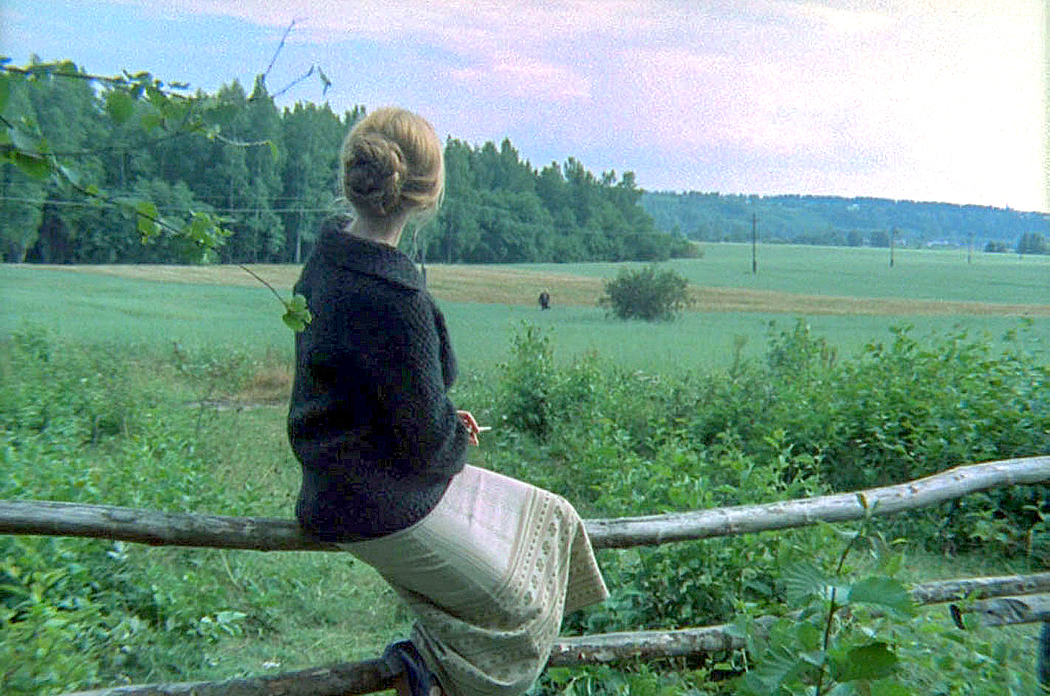
In 1975, he made Mirror (in Russian, Zerkalo), a semi-autobiographical film set in three time periods: pre-war, wartime, and the present. It shifts back and forth with no explanation, and also switches from color to black-and-white and to sepia. There are dream sequences, and it all seems to flow more like a stream of poetic images than like a story. 

It has been called the “most beautiful movie ever made” and is almost always included in lists of the “greatest movies.” 

But explaining it is as difficult as explaining a dream. 
Then comes Stalker, which is as gritty and filthy as Zerkalo is intensely beautiful. 

By this time, any viewer has come to realize that all these films are not only about an intense engagement with life, but the subjective life of the filmmaker himself. 

To paraphrase Anais Nin, Tarkovsky didn’t see things as they are, but as he was. 

His films are often called “spiritual,” but only in the sense that Tarkovsky seems to be trying to figure out what spirit really is. 

The films are often about faith, but not in advocacy, but in exploration. In Andrei Rublev, the crisis is that the painter has lost, not his faith in God, but his faith in humankind. 
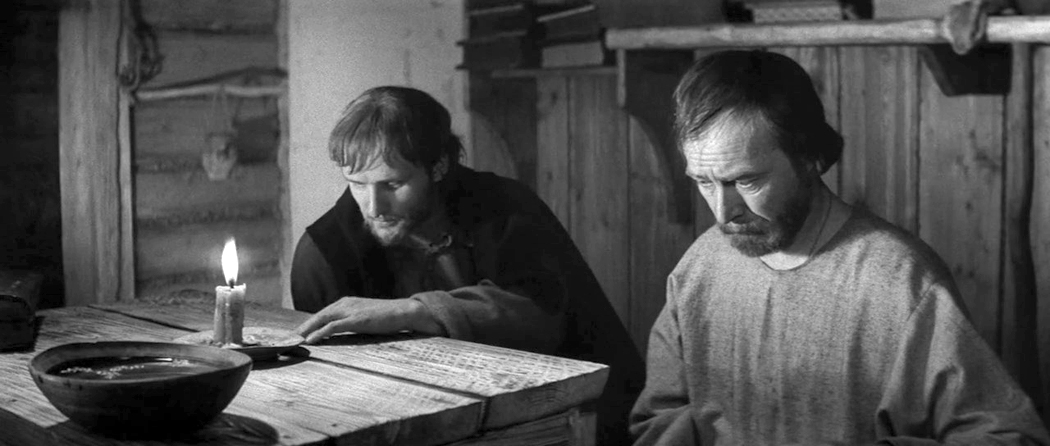
In other films, the faith is either formal, as with the Russian Orthodox Church, or pagan. 

The filmmaker’s belief that the Orthodox Church is central to the Russian soul made things squirmy for Tarkovsky during the officially atheist Soviet era. Many of his films were either censored or cut by censors to tone down the religion. The three-hour Rublev was first withheld and then shown in a 90-minute version, with all the offending parts excised. 

Eventually, Tarkovsky felt he could no longer work under the Soviet system and moved to the West. 

In Italy, he made Nostalghia (1983), about a Russian writer (named Andre) who visits Italy for research, fails to have a relationship with his beautiful guide, meets an unbalanced man who has kept his family indoors for seven years, becomes sick, remembers many things, and finally attempt to carry a lit candle across an empty pool, in order to save the world. 
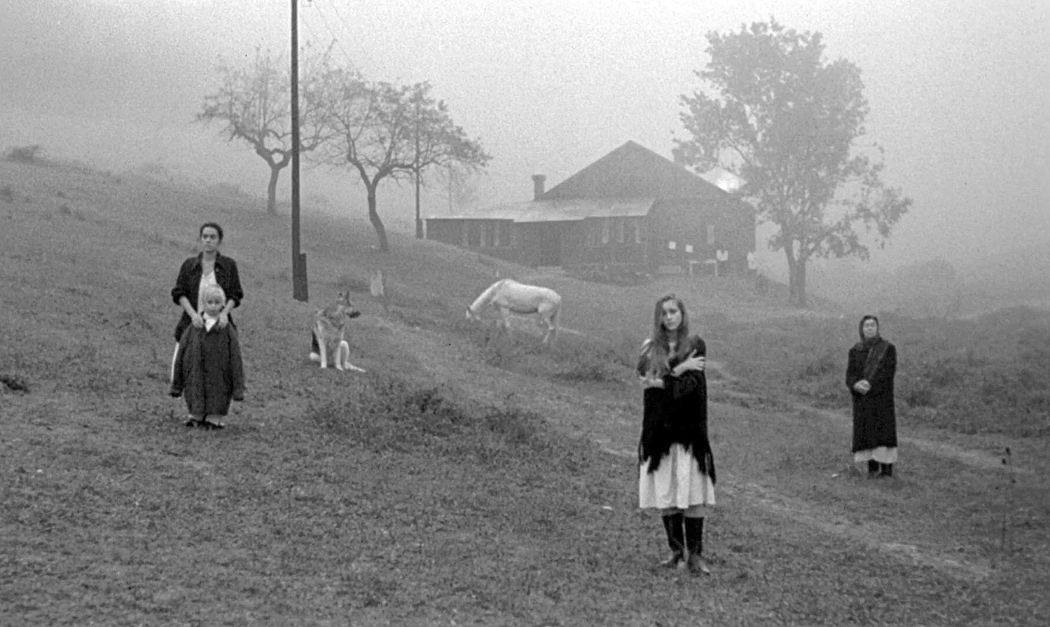
It is probably Tarkovsky’s least watched film, which is a shame, because it worms into your psyche and never leaves it. Again, its logic is not linear, but moves more like music. Scenes follow each other like themes in a sonata. 
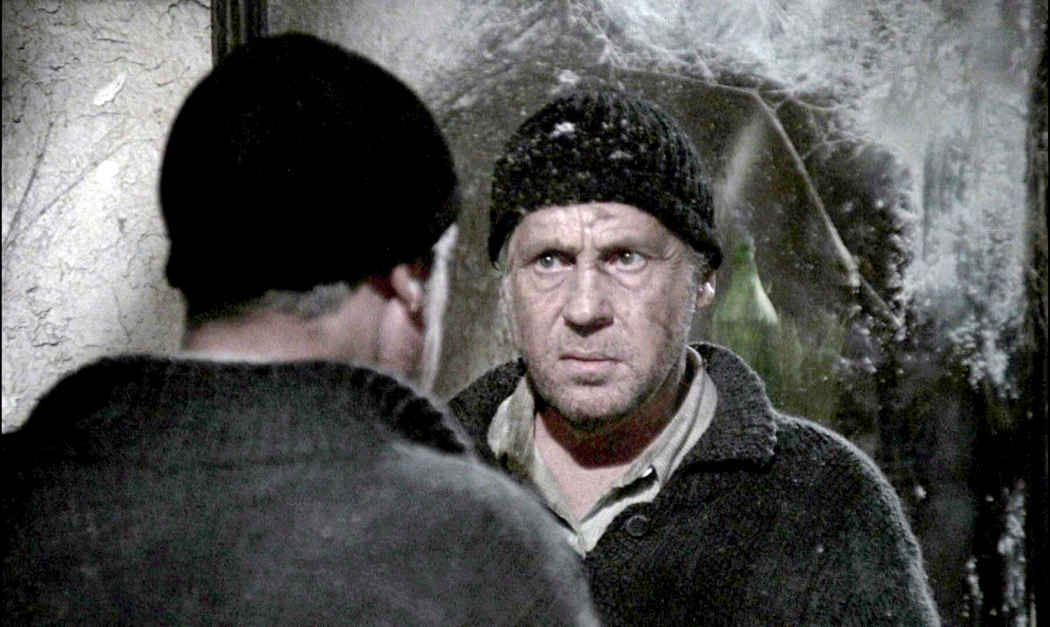
The film also features Bergman regular Erland Josephson as the crazy man. In the end, he mounts a statue in Rome and preaches a sermon about connecting with the real things of life, then sets himself on fire in protest. 

The film has its share of dripping ceilings and walking through puddles. 

It has many a symmetrical composition,

and it moves from time and place with no warning and ultimately ends by splicing together dual times and places in a single uncanny image. 

The film could be seen as an exploration of Tarkovsky’s nostalgia for his lost homeland, but it is more widely about the loss of the entirety of a life that has been lived through and lost to the irrecoverable past. 

It is also, again, about faith. Not a specific faith — indeed the belief that carrying a candle could “save the world” is on the surface an absurdity — but mere faith, separate from any belief. 
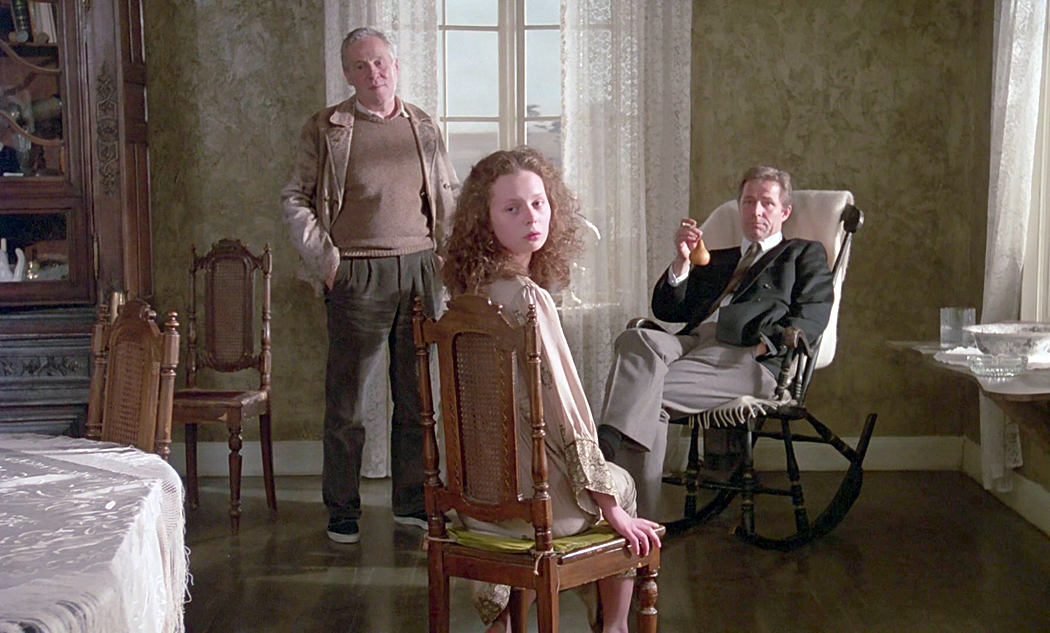
Tarkovsky’s final film, The Sacrifice (1986), also features Josephson, this time speaking his native Swedish. 

Set on a very Bergman-like Swedish island, Josephson plays a writer who, on his birthday, is faced with world-ending nuclear holocaust, makes a bargain with God: Take us back to yesterday and start over with no war and I will sacrifice my house and family. He also hedges his bet, by making a pact with a witch to do the same thing. When he wakes up, it is the previous morning. 

He then single-mindedly prepares to burn down his house while the family is out. 

We never know if it is God or the witch who changes things, or if it all takes place in the writer’s mind. (At the end of the film, we see him carted away in an ambulance, as if he is being taken to an asylum. This is never explained, and it is up to the viewer to make sense of a good deal that doesn’t make sense.)

Like all of Tarkovsky’s films, it moves very slowly, with very long single takes, uninterrupted by edits, and long moments where no one talks and we are forced to break past our own boredom by noticing every tiny detail of the scene. 
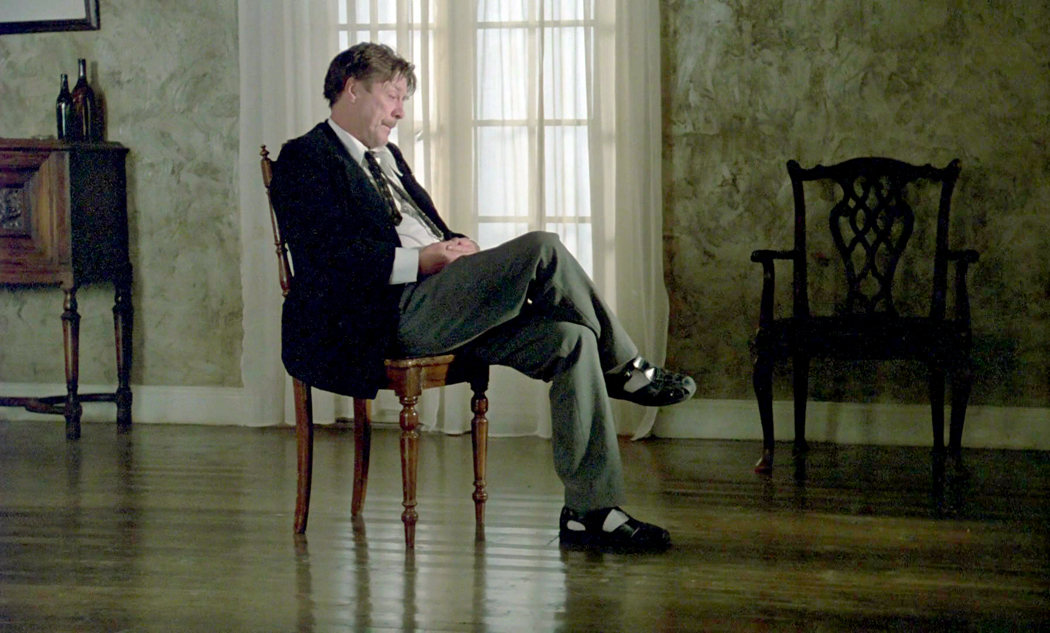
This technique makes us either dismiss the film as boring, or spend the effort to discover some of the richest material in any movie ever. I’m of the second school.

But I understand why anyone might not find Tarkovsky — and especially his last film — riveting. I do. I am never so awake as I am soaking in all the stimulus from a Tarkovsky film. I find them overwhelming. 

I sometimes visit my brother- and sister-in-law. He is an artist and they are both brilliant and intellectual. And I bring a bag of movies to watch together. When I showed them Andrei Rublev, I wasn’t sure how they would react, but they loved it. 

Some visits later, I showed them Stalker and he liked it even more. I was feeling confident. 

Two down and a third one this last visit: I showed The Sacrifice, and that was too much. They sat through it patiently, but it was uncomfortable watching them watch the movie. I could sense their boredom. The Sacrifice is a test of anyone’s patience. I don’t think I’ll venture Nostalghia

To be overwhelmed, though, you have to have patience. The films move at the pace of a glacier. Or rather, their stories do. As for visual information, you are being assaulted in a shower of imagery. 

In his book, Sculpting in Time, Tarkovsky quotes several letter writers with approval. “Accustomed to films as story-line, action, characters and the usual ‘happy ending,’ the audience looks for these things in Tarkovsky’s films, and often enough leaves disappointed.” Instead, you should watch “as one watches the stars, or the sea, as one admires a landscape. There is no mathematical logic here, for it cannot explain what man is or what is the meaning of life.”

In most of the world’s movies there is cause and effect moving the story ever forward. A woman is kidnapped causing the police to search for her, causing a rise in tension before the ultimate resolution. Cause and effect. Each part of the film explains the rest. In Tarkovsky, it begins with effect and what follows is the emotional. We don’t need to understand why, only that

Another writer comments, “How many words does a person know? … How many does he use in his everyday vocabulary? One hundred, two, three? We wrap our feelings up in words, try to express in words sorrow and joy and any sort of emotion, the very things that can’t in fact be expressed. … There’s another kind of language, another form of communication: by means of feeling, and images.”

When words fail, images, like music, can express. It is in this sense I mean Tarkovsky’s films are musical. He prefers to call it poetry. 

“When I speak of poetry,” he says, “I am not thinking of it as a genre. Poetry is an awareness of the world, a particular was of relating to reality.” 

In another place: “Art, like science, is a means of assimilating the world.” 

He quotes Nikolai Gogol from 1848: “It’s not my job to preach a sermon. Art is anyhow a homily. My job is to speak in living images, not in arguments. I must exhibit life full-face, not discuss life.’

Often, his characters look directly into the camera, making you, the viewer, a connected part of the filmic world Tarkovsky is giving us. 

And finally, “If not to explain, at least to pose the question.”

Andrei Tarkovsky made only seven features, but life only gives us so many years. 

Is there anything left to say? After 5,000 years of putting it all down on clay, stone, parchment and paper, is there anything that hasn’t been said? It is something every writer faces when putting pen to paper, or fingertip to keyboard. Or even thumbs to smartphone.

And it is something I face, after having written more than four million words in my professional lifetime. Where will the new words come from?

It is also something newlyweds often fear: Will they have anything to say to each other after 20 years of marriage? Forty years? Surely they will have talked each other out.

What we write comes from a deep well, a well of experience and emotion and sometimes we have drawn so much water so quickly, it dries, but give it time and it will recharge. If no new experience enters our lives, our wells remain dry.

One friend has offered this: “That each generation thinks they know more than anybody else who has ever lived.  In a way, that’s a good thing because it allows for new ideas.”

But how new are those ideas? “I guess we have to live with a certain amount of repetition under that system,” she says. “Relying on what previous generations wrote would be so boring. Our ego demands that we pick and choose from past works if we heed them at all.”

I have a different interpretation. We never quite hit the target of what we mean; words are imprecise, concepts are misunderstood. One generation values family, the next understands family in a different way and builds its family from scratch with friends.

As T.S. Eliot says in East Coker:

Every time I put word to word, I come up short, leave things out, use phrases sure to be misinterpreted, have my motives doubted, and — as I learned many times from my readers, they read what they think I wrote and not always what I actually wrote.

And so, there is the possibility of endless clarification, endless rewriting, endless apologizing. And new words to be written.

As someone once said, all philosophy is but a footnote to Plato (who, by the way, is a footnote to the pre-Socratics), and all writing is an attempt to get right what was inartfully expressed in the past. It is a great churn.

All writing is an attempt to express the wordless. The words are never sufficient; we are all wider, broader, deeper, fuzzier, more puzzling and more contradictory than any words, sentences or paragraphs can encompass.

Heck, even the words are fuzzier. Consider “dog.” It seems simple enough, but includes great Danes and chihuahuas, Scotties and dobermans.  As a genus, it includes wolves and foxes. It also describes our feet when we’ve walked too much; the iron rack that holds up fire logs; the woman that male chauvinist pigs consider unattractive; a worthless and contemptible person. You can “put on the dog,” and show off; you can “dog it,” by being half-assed; you can call a bad movie a “dog;” at the ballpark, you can buy a couple of “dogs” with mustard; if you only partly speak a language, you are said to speak “dog French,” or “dog German;” past failures can “dog” you; if you are suspicious, you can “dog” his every move. “Dog” can be an anagram of “God.”

Imagine, then, how loose are the bounds of “good” or “bad,” or “conservative,” or when someone tries to tar a candidate as a “socialist.” Sometimes, a word loses meaning altogether. What, exactly do we mean when we talk of morality or memory, or nationality or the cosmos?

And so, every time we pick up pen to write, we are trying our hardest to scrape up a liquid into a bundle.

And so we rework those words, from Gilgamesh through James Joyce and into Toni Morrison. We rework them on the New York Times editorial page and in the high school history textbook. We rehash them even in such mundane things as our shopping lists or our FaceBook entries.

We will never run out of things to write or say, because we have never yet gotten it quite right.

An earlier version of this essay originally appeared on the Spirit of the Senses webpage on  Aug. 2, 2020. 

I was once or twice asked to speak to a writing class at a local community college. When you write for the daily newspaper, you get such invitations. I always tried to oblige.

As I spoke to the students, who ranged in age from teens to retirees — that is the way it often is in two-year schools — it became clear that I wasn’t saying what the course teacher had wanted me to say. She was clearly tapping her nails on her desk and looking more an more consternated. 

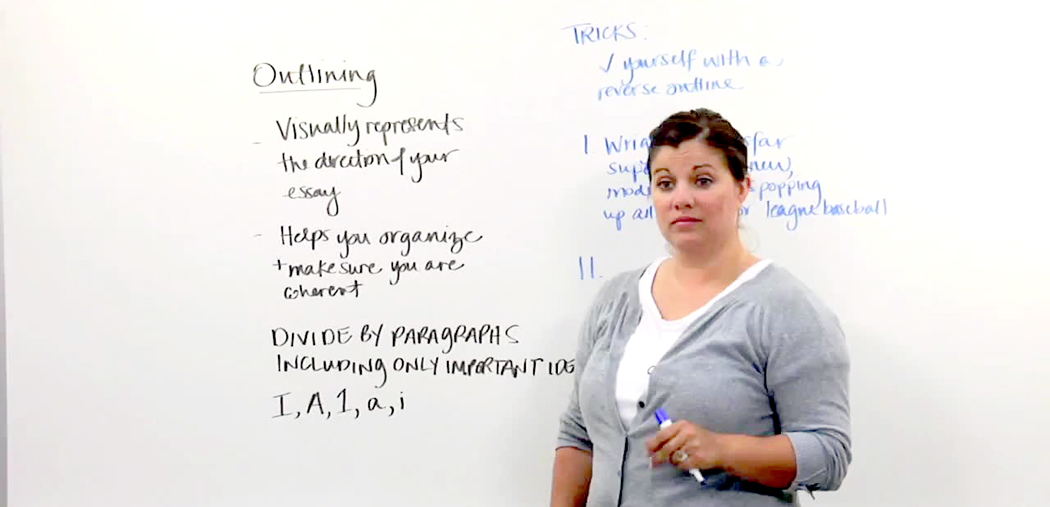
I wasn’t trying to undermine her curriculum, but it was obvious from her comments that she had hoped I would talk about writing outlines, topic sentences, supporting arguments and perorations, all the usual paraphernalia of learning how to put words in order so as not to embarrass yourself to your reader.

But, I’m afraid I had something different in mind. In fact, I started out by laying out only one rule for good writing. And it had nothing to do with not ending a sentence with a preposition; nothing to do with making notes and organizing your thought; nothing to do with spell-check or grammar.

“The most important requirement for good writing,” I told them, “is having something to say.”

It is surprising how many people sit down in front of their computer keyboard and assume that writing is somehow a substitute for having something to say, as if fancy words would bamboozle your readers with flash and mist. It is not hard to imagine where they might get this notion: So much public discourse, from political speech to blathering 24-hour news, is filled with verbiage meant to fill time and space without divulging anything meaningful. Rhetoric, which once meant effective speaking, now is an insult meant to expose empty speechifying. 

You can read online the two-hour speech that Edward Everett gave on Nov. 19, 1863 at the dedication of the soldiers’ cemetery at Gettysburg, Pa. It is a 13,000-word behemoth of rhetoric and panegyric. It was carefully wrought, organized in just such a way as to make impressive points at calculated intervals, rising to climaxes, falling back and rising even higher. It was a masterpiece of construction; unfortunately, all that great scaffolding rather hid the edifice behind.

“Standing beneath this serene sky, overlooking these broad fields now reposing from the labors of the waning year, the mighty Alleghenies  dimly towering before us, the graves of our brethren beneath our feet, it is with hesitation that I raise my poor voice to break the eloquent silence of God and Nature. But the duty to which you have called me must be performed; — grant me, I pray you, your indulgence and your sympathy.”

Two hours of this. Geez. 

There were references to Ancient Greece, the glory of war and the bravery of soldiers, and a good deal of mention of blue skies and rolling green fields.

It was a memorable performance — at least, that is what people thought at the time, although almost no one remembers it now, except in dim contrast with the words Abraham Lincoln then spoke, with a ratio of words, compared with Everett, of 1-to-50. Lincoln’s words barely fill half a page of typescript.

The difference: Lincoln has something to say.

What is surprising is how few people actually have anything to say. Oh, they jabber on endlessly, but it is mostly prattle. And it is mostly rehash of what others have already said. Original thought is a rare commodity.

What does it mean, having something to say? It can be the recounting of a meaningful experience, it can be a fresh insight, it can be an opinion.

There is a lie that is a cliche (how often they are twins), that opinions are like (I’ll use the word “noses” here to be polite, but you know the familiar wording) noses: everyone has one. But this simply glosses over the fact that almost no one has a true opinion, but rather restates some glib bromide that has been heard from someone else. These are not opinions, they are bumper stickers; they are T-shirt slogans.

A genuine opinion comes from deep experience, probing consideration and formulation of thought within a coherent world view. You can tell the difference easily: If you imagine a meme on Facebook printed in fancy text over a picture of a cat, it is not an opinion. If it a quote questionably ascribed to Mark Twain or Albert Einstein or Mahatma Gandhi, it is not an opinion. If it favors one political party or candidate over another, it is not an opinion. Sorry. 

But I am overplaying opinion. Having something to say is much greater than merely weighing options in a dilemma and reaching a conclusion. In many ways, having something to say is more compelling when it is not trying to persuade us of anything, but to convey to us the experience of something. Or telling us a story. Or discovering something you had not previously known and now feel compelled to share. The compulsion is the all.

Writing is a compulsion. You have something to say; it needs to get out, get down on paper (the legacy version — now we get it down in bits on a laptop screen). Good writing is an overflowing, like a fountain. Questions of creating an outline, or fretting over sentences with prepositions as the ending of, simply don’t come into play.

When you have something to say, the order with which it spills out onto the page will almost certainly be the most effective order. Yes, you can arrange ideas rhetorically, and certainly, if you are not a natural writer, you may be helped by a course in creative writing. But writers are born, not made. Some people have a talent for mathematics, some for music, some for sports. You can teach people the rote version of any of these, but those with the inbred talent will find the best expression for any of these fields. I know that no matter how much I study trigonometry, I will never be a mathematician. I may get the gist, but never the pith.

I suppose you can teach enough rudiments to non-writers so they will not humiliate themselves when they are required to write something down, but you cannot make them writers. And I suppose you can take a raw, unformed writer and make him or her aware of things they hadn’t considered and help them develop their natural ability, but you cannot take a lump and turn it into a gem.

But even talented writers have to have something to say, or they are just spinning their wheels. Think of Hemingway’s later books. 

Something to say requires a life paying attention, a life with an open chest, willing to soak things in. This is filling the well so it may be drawn on later. In the old days, writers like Thomas Wolfe or Hemingway sought out adventures, signing on to merchant ships; or taking cross-country road trips, like Jack Kerouac; or shooting lions; or stabbing a wife, like Norman Mailer (this is not recommended); or leaving America and living out of trash bins in Paris like Henry Miller; in order to gain material for books. Not so much for autobiography, as for the sheer volume of experience that could inform their prose.

The larger you are on the inside, the more pressure for the accumulated steam to escape in words, precious words, delicious words, excited words, needful words.

That is having something to say.

Like so much else, this is something I learned from my late wife, who taught art for so many years to first-, second-, and third-graders. Too many art teachers spent their classes with the color wheel, or with masterworks of art history, or — much, much worse — project art, such as outlining your hand to make Thanksgiving turkeys, or with golden-macaroni Parthenons.

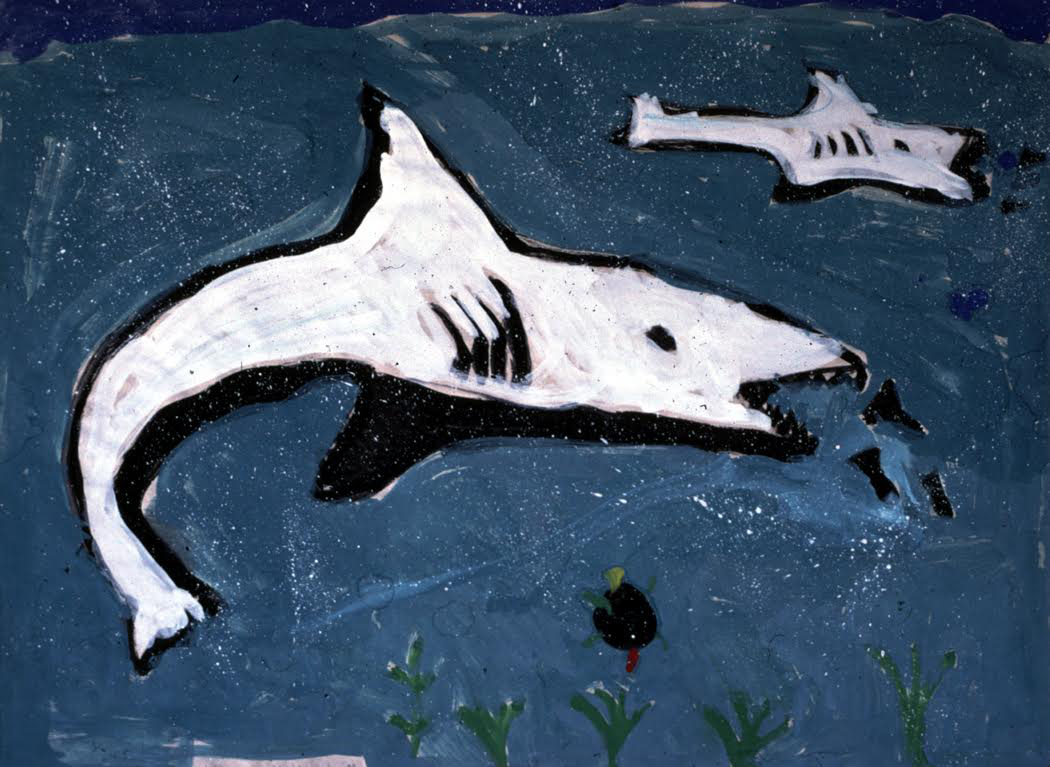
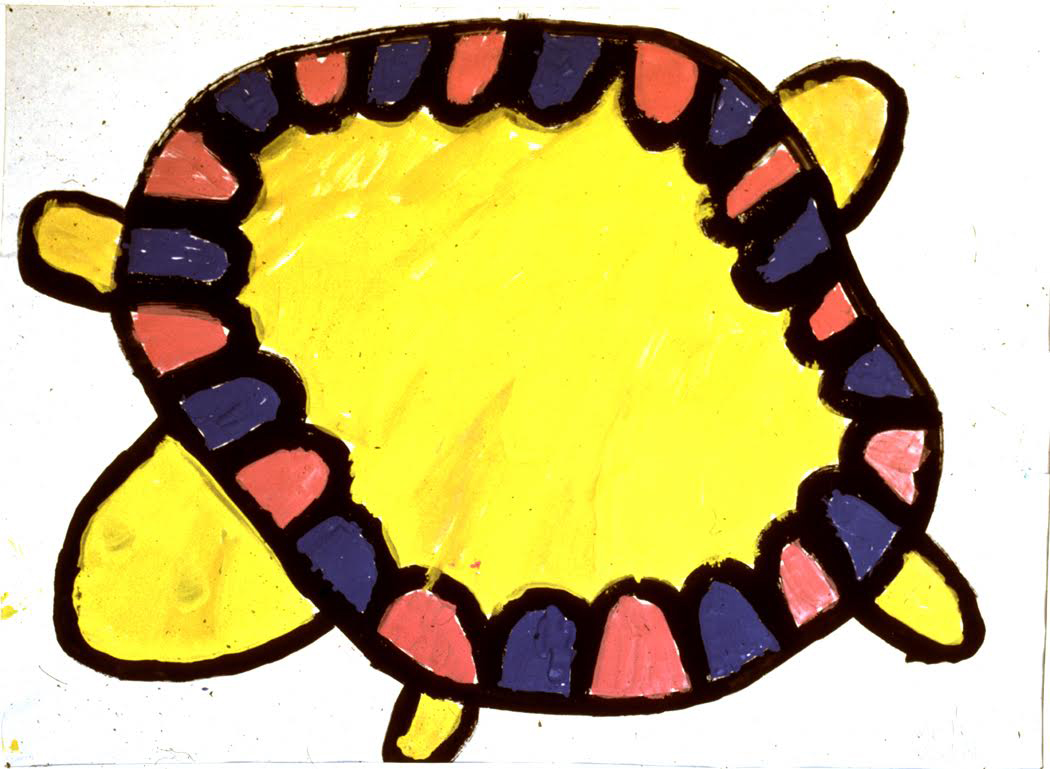
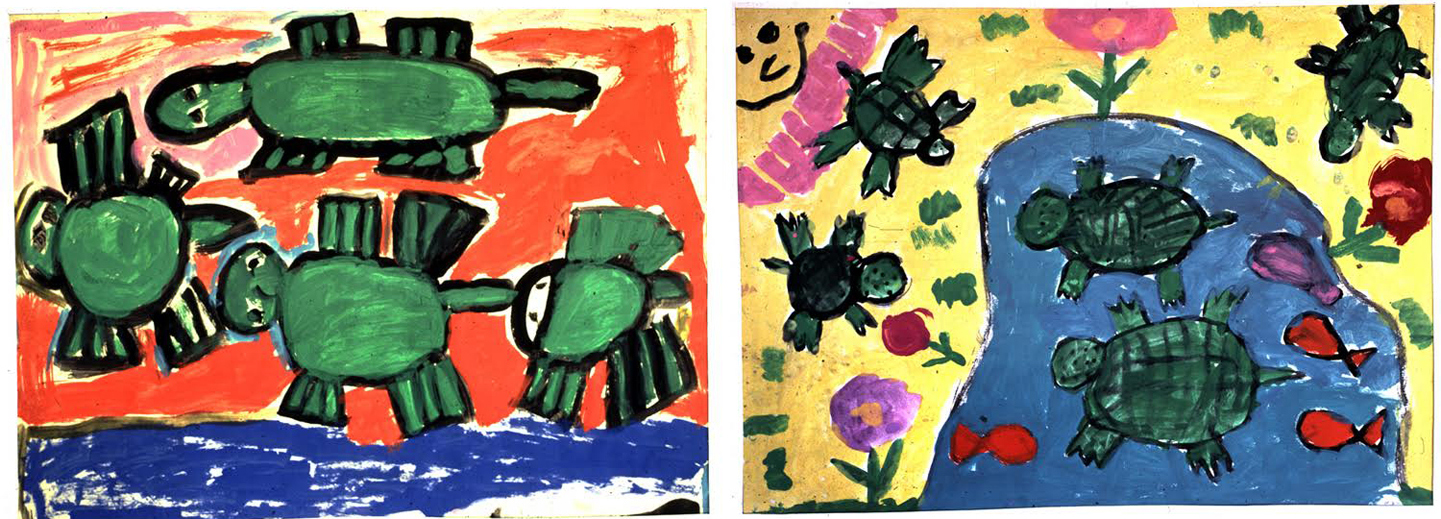
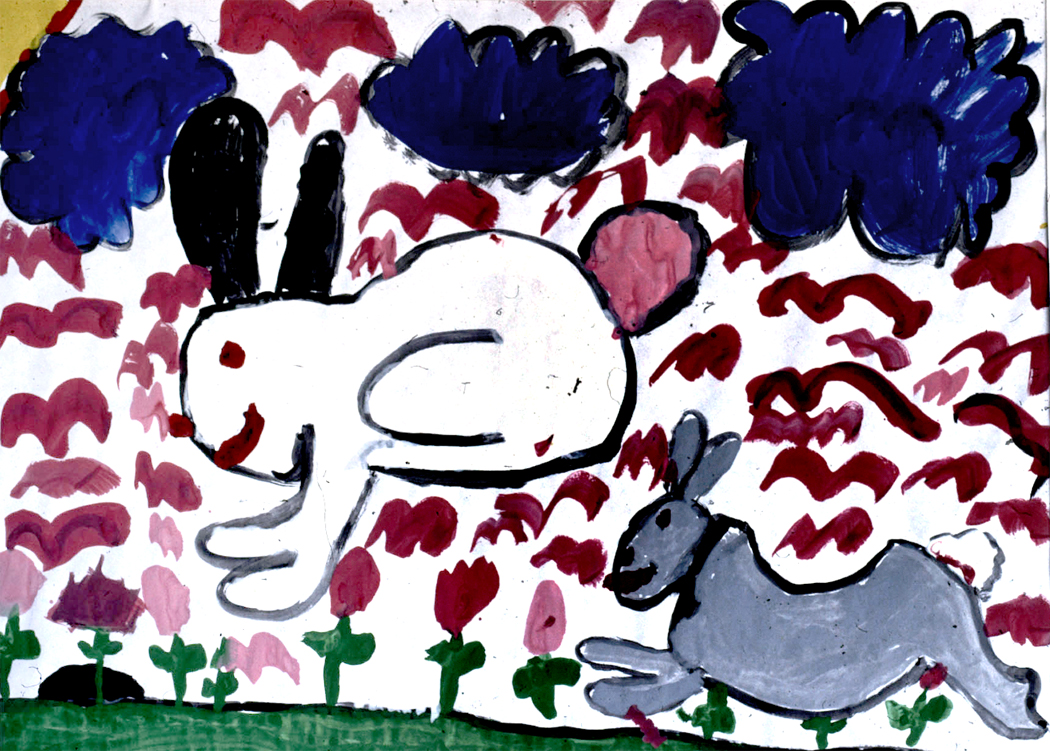
But what my wife did was bring live animals to class and let the children play with them for 20 minutes or a half hour, asking them to sit quiet and observe the bunny or the hermit crab or the turtle; to feel their fur or carapace; to look them in the eye; even to talk to them. She might have them sit in a circle on the floor and put the rabbit in the middle of them and ask them to sit still and try to draw the bunny to them.

Children respond to the animals so strongly that all you have to do is put a piece of paper in front of them after their exposure to the beasts, and give them some paint and brush, and they will be mad to paint their response to the experience. You cannot stop them from making masterpieces. You do not teach them technique, you fill their insides with something real, and they transmute it into utter expressivity. It is a miraculous thing to see.

Educator Viktor Lowenfeld said that given sufficient motivation by experience, the children will find their “adequate means of expression.”

It is the same with writing. You don’t need topic sentences (I snooze at the prospect), you need content. You need enough life in you that you become a conduit for it. It is written because it needs to be written.

An earlier version of this essay originally appeared on the Spirit of the Senses webpage on  Aug. 1, 2017. 

The more I learn the less I know; the more I know the less I learn.

I have existed on this planet for seven decades and if there’s anything I have had to discover for myself — despite so many others knowing it before me and telling me over and over — it is that the more I learn, the less I know and its corollary, the more I know, the less I learn. 

And I say that as someone who has always been prideful of how much I knew — or thought I knew. By the time I was four, I could ID any car on the road, including Kaisers and LaSalles. My uncle would parade me around as a curiosity, like Mozart before Maria Theresa. By third grade, I could name any dinosaur known to science. By 13, I could name everything my parents did wrong and by college I could tell the president how many kids he killed today and further, I instructed the dean on changes to the curriculum. God, I was a prat. 

In my 20s, my girlfriend took bets from coworkers that when I came to pick her up after her shift, I could answer any question. “Who was the first secretary general of the U.N.?” “Trygve Lie.” And she would collect her winnings and we’d go home. What a racket. 

At any rate, my ambition in life was to know everything. I can’t say I came even close. 

It is distressing how much we have to discover for ourselves. Libraries are filled with books overflowing with wisdom, but even if you were to read everyone of them, what you gather is only book-learning. Your parents and grandparents tried to tell you what they had learned, to try to save you from the pain, frustration and humiliation that is everyone’s birthright. But being told is the equivalent of book-learning — it cannot really teach you to swim or ride a bicycle; you have to learn by doing. And these two truths of knowing and learning have come hard and slow to me. Hard to acknowledge because I have spent so much of my life being smart and knowing stuff (ask anyone who has had to listen to me), and slow because I have spent so much of my life being dumb as a pumpkin. 

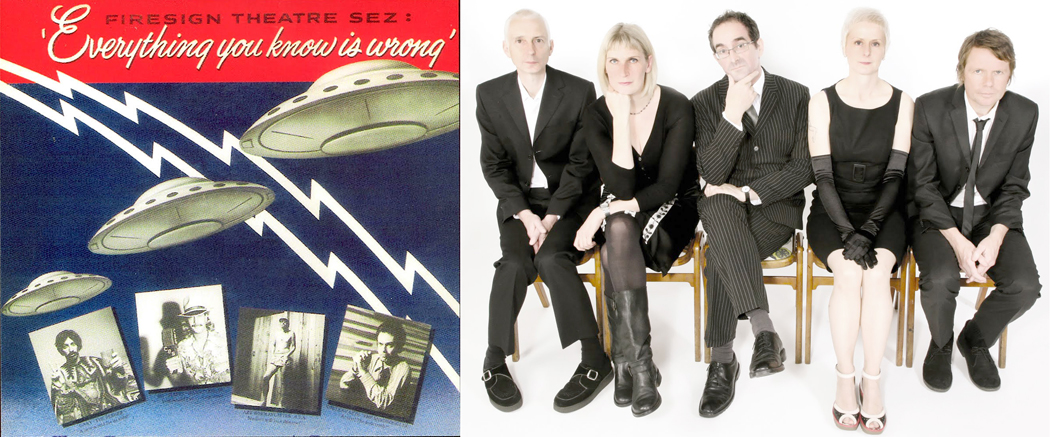
The Firesign Theatre produced an LP in 1974 titled Everything You Know is Wrong. (Weird Al Yankovic put out a song in 1996 with the same title, and more recently, in 2004, British band Chumbawamba released their song with the selfsame name.) How right they all are. 

Everyone knows that Socrates once claimed to be the wisest man of all, because, he said, he knew nothing. Except, of course, he never said that. In the Apology, Plato has him saying that Socrates queried a wise man  but came away disappointed. “Although I do not suppose that either of us knows anything really beautiful and good, I am better off than he is – for he knows nothing, and thinks that he knows. I neither know nor think that I know” (Benjamin Jowett translation). Close, maybe, but no cigar.

Life is full of things we all know but that ain’t so. Napoleon was not short. Abner Doubleday did not invent baseball. Mrs. O’Leary’s cow did not start the Chicago Fire. Einstein did not flunk math and John Kennedy never said he was a German pastry. Anti-war protesters never spat on returning Vietnam War vets. Sugar does not cause hyperactivity in children (that doesn’t make it OK, although my wife used to say eating cake is good for you because “sugar is a preservative.”) The Great Wall of China is not visible from the moon. All that right-brain, left-brain stuff is mostly hooey. And water does not circle the drain the other way in Australia. Everything you know is wrong.

Some is wrong because the common knowledge is just a story someone made up; some because we used to think so, but science has progressed and now we know better; and some is wrong because we misunderstood something. But most is wrong because things are just more complicated than that.

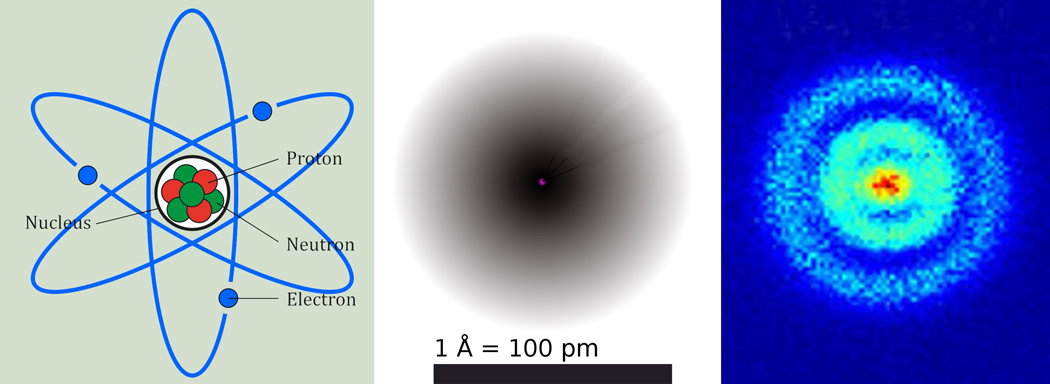
I grew up with an image of the atom being like a tiny solar system, with electrons spinning in orbit around the nucleus. Turns out that is a bad analogy. Maybe like a cloud of possible electrons, but can’t quite put your finger on them. It is only understood mathematically, the quantum physicists tell us. Too complicated to make a simple picture. 

We tend to fit our facts into a coherent whole that we take as our “Umwelt,” that picture of reality we manufacture from experience. But these things can become ossified. When we learn more, we discover we know less — we were mistaken, or only half right, or maybe just confused.

And now that I am old, I am confronted by the fact that learning only lets me know how much more there is I don’t know. As I say, my knowledge grows arithmetically but my ignorance grows exponentially. 

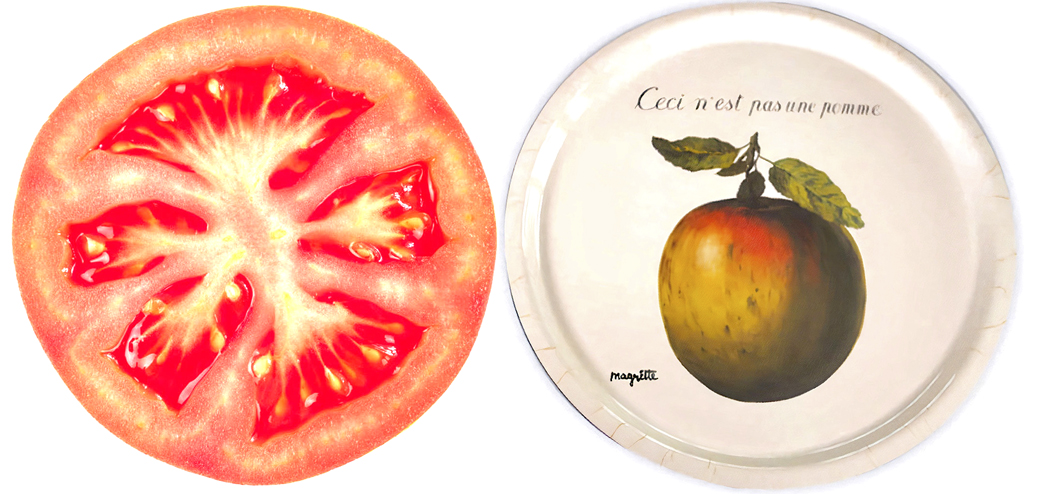
I like to take the example of the common tomato. When I was two or three, a tomato was just something we ate in a salad or on a burger; I gave it no more thought. But when a little older I learned to classify. A tomato was a vegetable. The world was divided into animal, mineral and vegetable and the tomato fit the third category. 

A little later I learned — was told, by some pedant — that a tomato is not a vegetable, but a fruit. I scratched my head, but then went about repeating this Cliff Clavinism. A little knowledge is a dangerous thing. 

Well, it isn’t animal and it isn’t mineral, so a tomato must be vegetable. Simply put, a fruit is a vegetable, isn’t it? This turned into a lesson in philology. The word “vegetable” has multiple meanings. Our definitions must be examined. I learned the difficulty of matching language and reality. This came as an uncomfortable truth to me as a writer, whose faith in words was, at one time, unshakeable. Now, I say, like Sergeant Schultz in Hogan’s Heroes, “I know nothing.” 

Of the things of this world, those that are vegetable can be divided into the edible and the inedible. The botanist can divide comestible plants into those with seeds and those without. One we call fruits and the other, vegetables. The cook divides the same into those sweet and those savory. There is no single “right” way to think of them. The knowledge changes as we learn more. It doesn’t matter how many facts I warehouse in the noggin, they are likely to be superseded or just plain wrong.

But those facts can be mulish, which explains my corollary: What you know prevents learning. That Umwelt is hard to nudge. If your sense has been for millennia that the sun revolves around the Earth, then you cannot accept what Copernicus tells us. If you know that continents are fixed and permanent, then Alfred Wegener comes across as an unmoored screwball. If you are used to bleeding ill patients, then Joseph Lister is a crackpot. 

Isaac Newton’s physics ruled the world until Albert Einstein gave us relativity, but even Einstein could not fully accept probabilistic quantum physics, saying God “does not play dice.” 

If we still think of all history in sequential steps, then progress makes sense. But experience proves that we don’t keep heading for a Utopia. Rather we lose just as much as we gain. Art historians used to think that they could predict where art would go next by analogizing what had gone before. Arnold Schoenberg knew that the line of musical harmony went from diatonic to chromatic to atonal. It had to: History teaches. He almost made it work, but no one still writes dodecaphonic music anymore; what was produced in academia through the 1960s was barely even music; no one wanted to listen. Karl Marx assumed history had a rightful completion in true Communism. Francis Fukuyama gave us a different “end of history.” 

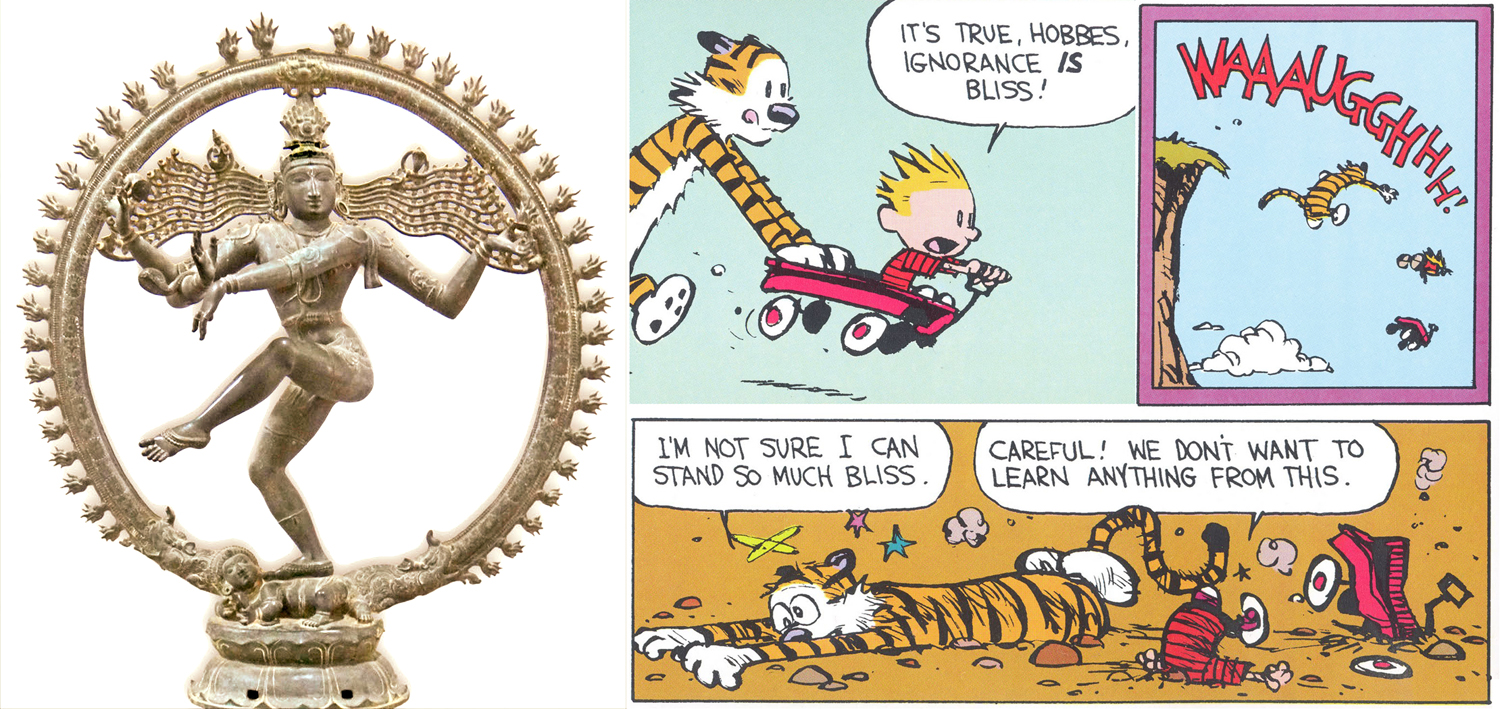
We are a stubborn people; we know what we know until we don’t. The only way to see what is in front of us is to forget what we already know about it. I call this “volitional ignorance” — trying to forget what I know — or believe I know — in order to see with fresh eyes, with baby eyes. Of course, I’m not in favor of actual ignorance: Let Shiva dance over its body. (According to Hindu mythology, Apasmara — Ignorance — must be subdued, not killed.) But you can attempt to forget temporarily what seems fixed and certain in order to see what doesn’t fit into the accepted schema — the odd bits that contradict your assumptions.

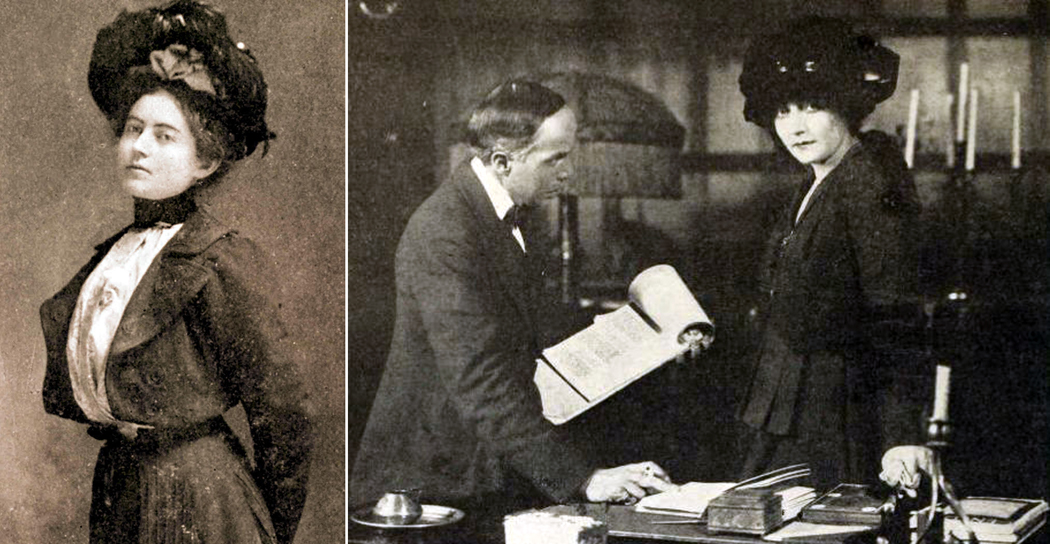
That’s how Einstein saw the holes in Newtonian physics. It’s how Mary MacLane broke the impenetrable “fourth wall” by speaking directly to her audience (in title cards) in her 1918 film Men Who Have Made Love to Me (now lost). It’s how Bobby Lee came to divide his army against all accepted principles of war and beat the pants off the Union forces. 

It’s the only decent way to overcome the sad premise that: “What you know prevents learning.” .And so my two assertions are mirror images. The more I learn the less I know; the more I know the less I learn. 

This essay originally appeared on the Spirit of the Senses webpage on  Oct. 5, 2020. 

What do we talk about when we talk about color? Too often we talk at cross purposes. The fact is, color isn’t a thing. It is several things, and we often stir them all up into a single confection — all of which leads to avoidable confusions. And arguments. 

One of the greatest arguments my late wife and I had was over the color blue. The fight lasted three days. We didn’t sleep the first night, but kept trying to persuade the other of our righteousness. 

“Isn’t that a blue you could fall into?” she asked.

“I know what you mean, but of course, you’re talking metaphorically, not literally.” 

“No, I mean it literally. You can fall into it.”

And we were off to the races. Of course, at the end of the third day, I capitulated. She was right. She was always right, and it was a lesson I finally learned, after years of not recognizing the fact of it. And now, I can fall into blue. 

But before I got sidetracked there, I meant to say that when we discuss color, we are really talking about at least three separate things, and the three don’t play well together. 

The three separate color discussions come from science, from art, and from language. 

SCIENCE

The first begins with Isaac Newton. He proved experimentally that white light is actually composed of a spectrum of colors, ranging from blue on the short end and red on the long end. Short and long wavelengths, that is. For, scientifically, color is a function of light’s electromagnetic wave construction. 

The problem is that there is no forest green in the spectrum. No magenta, either. The spectrum — which we see in a rainbow — contains only a single version of a wide range of hue, but none of the subtlety of actual color. 

And so, you can talk about blue being at a place on the electromagnetic band measured in wavelengths of 450 to 500 nanometers and red at the other end, at 700 nanometers. 

But these are numbers, not colors. 

Science also causes issues when it comes to color perception: How do we see the colors we do? 

Humans don’t see spectral color. That is, human color perception is not dictated by wavelength, but rather by the mechanisms of color vision. What the eye sees and the brain interprets is only marginally related to the color defined by wavelength. 

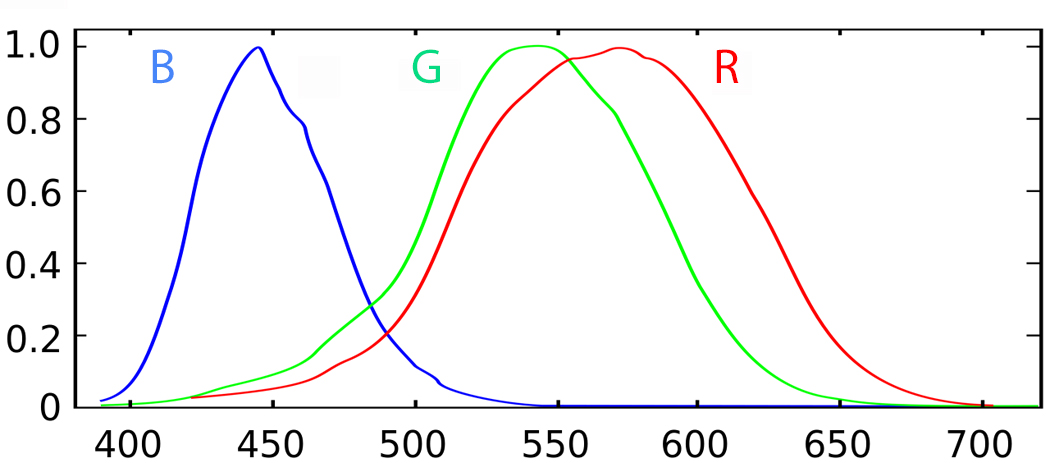
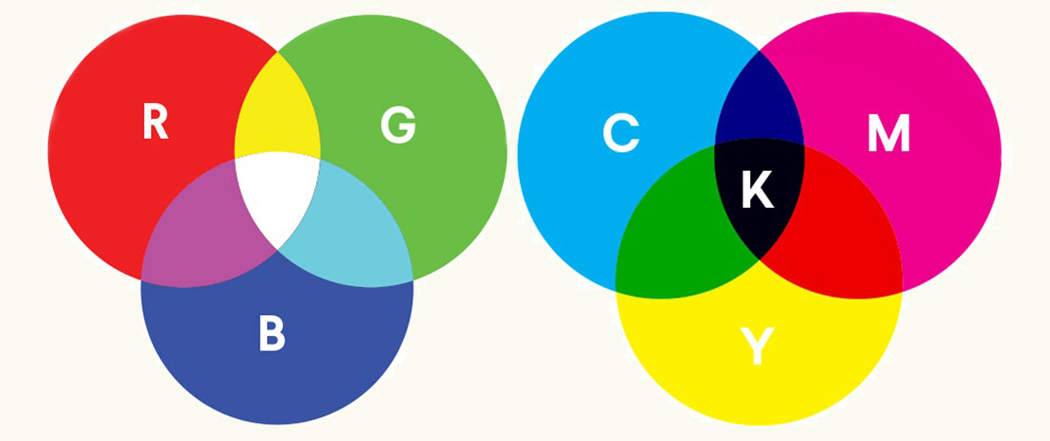
There are three color sensors in the eye, one tripped by red light, another tripped by green light, and a third by blue light. The ratios of how much each is stimulated governs what colors we see. (Yes, I know this is a grossly simplified version, but it is basically correct). 

When both blue and red are tickled, we see violet; when blue and green are set off together, we see blue-green or aqua; when green and red are stimulated, we see yellow. 

Yellow is particularly interesting. While there is a wavelength on the spectrum that is yellow, we almost never see that wavelength. It is rare in nature. 

What we call “white” light, or sunlight, contains all the hues, which can be separated by a prism into its component parts. But when this white light hits something red, the blues, yellows, greens, etc., are absorbed by the object and the red is reflected, and so it is only red that hits our eyes. The blues, yellows and greens are digested by the object and turned into heat, which is why the sun makes things hot. 

But if an object absorbs blue and reflects both red and green — this may seem bizarre, but it’s true — we see those colors combined and our brains interpret them as yellow.

The famous Kodak-yellow film box isn’t really yellow. It is red and green together, but our brains stir them together and see yellow. Indeed, most of the colors we see are impure mixes and what our brains see are the interpretations, not the wavelengths. 

Take purple, or violet, or magenta (the names for this section of the so-called “color wheel” are terribly imprecise; more on that later). It is a color that does not have a wavelength. That is, it doesn’t exist on the spectrum. It exists solely in our brains as the combination of blue and red. 

All color, or what we call color, is subjective. That is, it is a phenomenon created in our brain as a way to code the visual information of the world, very like the so-called “false color” of Hubble space photographs. It is an interpretive trick our brains play, useful for deciding which berries are ripe. The wavelengths may be real, but the redness is a figment. 

ART

For a painter, all the stuff about wavelengths and spectrums is dryly theoretical and idealized, which is to say, lies. Painters work with paint, not theory, and the pigments that make those paints are cantankerous. No blue is spectrum-blue, no green is pure green. The paints are made from dirt, or ground up stones, or plant dyes (or, nowadays, from alchemically manipulated petroleum), and all are amalgams of various ingredients. Probably 95 percent of the colors used by painters don’t occur in the spectrum. Real paint is impure. 

One yellow might mix with black to make a dun, another yellow that looks the same, might turn greenish when mixed. An artist has to know not merely color theory, but the individual nature of his paints. Some greens are bluer than others; some reds are more orangey, some more violet. A tomato is one red, a stop sign, another. Lighten tomato-red and you get an orange. Lighten stop-sign red and you get a pink.

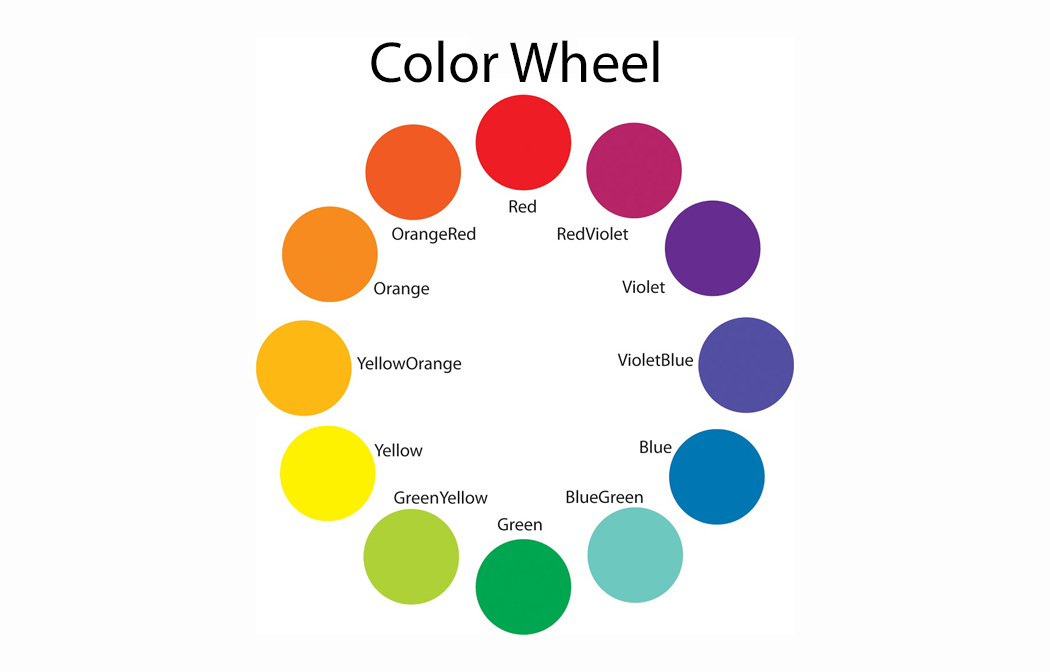
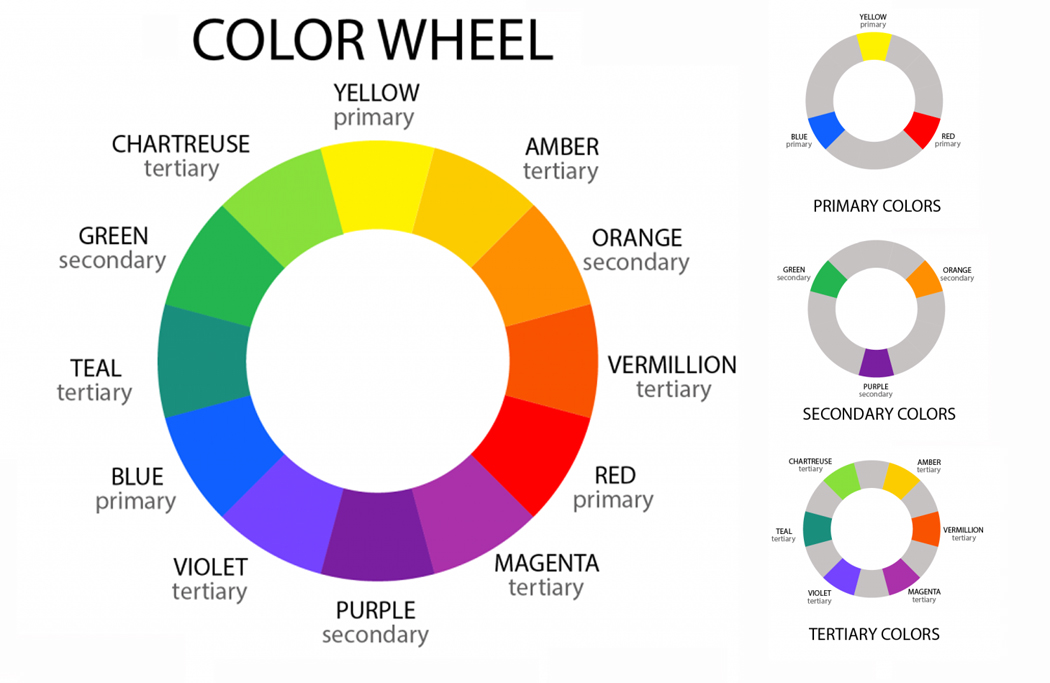
For artists, colors don’t come in a lineup, like a spectrum, but a wheel. And on that wheel, there are three “primary” colors — red, blue and yellow — from which all the other colors can be mixed. Theoretically, that is. 

There are painters who have used only four tubes of paint for their work, usually a blue, a red and a yellow and the ubiquitous titanium white. You can’t paint without a white: the colors themselves are too dark to make a bright sky or a tawny lion. 

But there are limitations to this. You can mix a blue and yellow to get a green, but it will never be quite as bright and pure as a dedicated green paint. If you want the deepest, richest greens, you will buy a tube of green paint. 

The problem is, that there are at least three sets of primary colors. There’s the painter’s set, of red, blue and yellow. But now that much art and design is made on a computer, another set of primary colors is common, called the “additive primaries” of red, blue and green. Then, there is the printer’s primaries, known as “subtractive, made of cyan, magenta and yellow (with black added in, making it often called “CYMK,” with the “K” standing for black.)

But there are other issues, too. The spectrum exists theoretically, but real-world color has a physical presence, and so the same hue will appear different whether glossy or matte. And there are metallic colors, with specular reflections. Some paints are opaque and others transparent. Then, too, colors on one wall, which gets sunlight, will appear different from colors on the opposite wall, in the shade. 

And there is something called “simultaneous contrast,” which means that colors are affected by the colors around them.

There’s a lot to keep track of, and the ability to do so is one of the things that marks a professional from an amateur. 

LANGUAGE

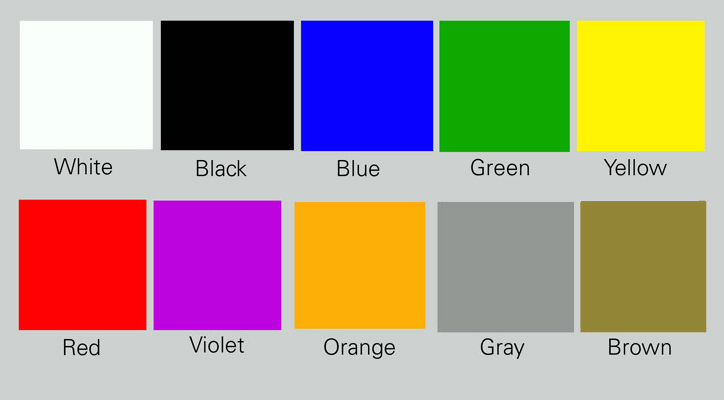
In the English language, there are really ten primary colors, that is, color names that are distinct and cover generic territories of color. They are: red, blue, green, yellow, violet, orange, brown, black, white and gray. All other color names are either shades or tints of these main color names (such as “tan” being a variety of “brown”) or metaphorical and named after some object of that color (such as “fuchsia” being named after the flower). 

There are hundreds, probably thousands of variations of the primary colors, and designers and marketers keep coming up with fresh, new names, usually for the same old colors. Marketers try to make their color names more appealing (would you rather buy a fabric that was a yellow called “morning haze,” or the same one, but called “piss yellow?”)

But beyond that, there is the problem of the squishiness of color names. The boundaries between colors is indistinct. Where, for instance, does blue become green? There is a greenish blue, and a bluish green. Where do you draw the line? We each have our judgement, but that changes with context. Against a red background, even a greenish blue will appear bluer. 

Where does red become magenta? Where does purple merge into a deep, dark blue? 

Even more problematic are all those tertiary colors. Is Turquoise green or blue? The stones for which the color is named comes in both forms, and also a version in between. One person’s “amber” is another’s “golden.” Vermilion is also cinnabar. What the Roman’s called “royal purple” is to our eyes closer to red. These names shift over time and by individual perception. It makes it very hard to talk about color between two people with different color palettes in their brains. 

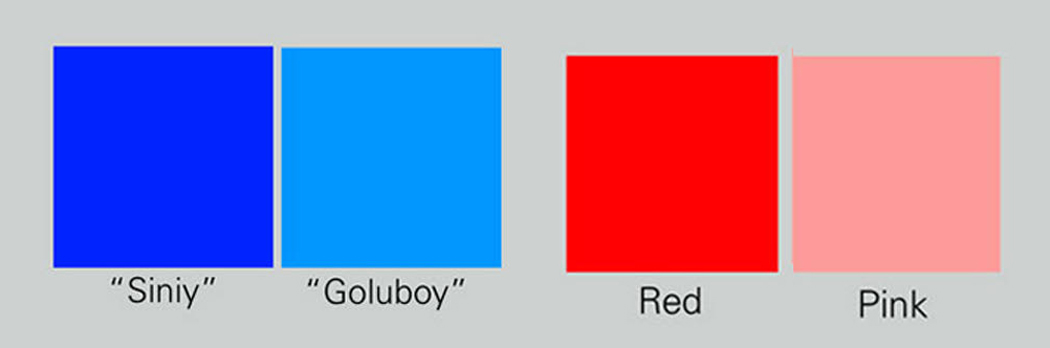
Of course, that hardly accounts for the various color organizations across different languages. Many languages had only words for black, white and red. Blue, for them, was a variety of black. The Ancient Greeks talked about the “wine-dark sea,” but the Mediterranean was never ruby colored. In traditional Japanese, the same word, “ao,” covered both green and blue (modern Japanese has, after WWII, added the word “gurin” as an English cognate). In Russian light blue (“goluboy”) is considered a separate color from dark blue (“siniy”), just as in English, we distinguish “pink” from “red.” 

Here’s an alphabet of English color names, and please feel free to argue over what they each mean: azure; burgundy; coral; dun; ecru; fulvous; gules; heather; ivory; jasper; lavender; mustard; navy; oxblood; periwinkle; quimper; rose; sapphire; topaz; umber; viridian, watchet; xylous; yapan; zaffre. 

So, you see, any discussion of color needs to take into account which sort of color system you mean. Pedants will complain that white isn’t a color, but the absence of color, but then, why do you need to buy a tube of white paint? And, of course, in the additive system, white is not the absence, but the combination of all the colors. So, which is it? Well, they are three distinct ways of talking about white. You need to be clear.

And even white isn’t just one thing: It comes in alabaster, in ivory, in cream, bone white, snow white, chalk white, Chinese white, eggshell white, vanilla and off-white. No doubt, interior designers and marketers could come up with a hundred new shades and names. There are warm whites and cool whites. You can paint with zinc white, titanium white and flake white, aka white lead or lead white. The range in any color is nearly infinite. 

All of which makes talking about color difficult and misunderstanding almost inevitable. 

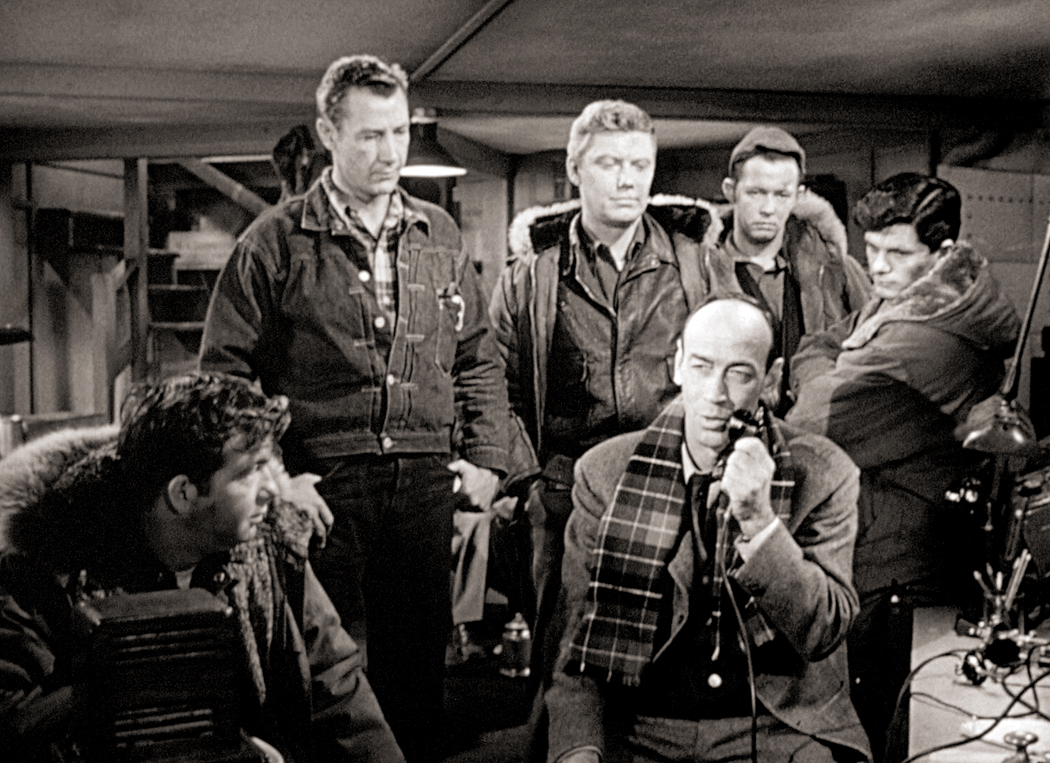
At the end of the 1951 classic sci-fi film, The Thing, the newspaperman, Scotty, warns the world, over the radio, to “Keep looking up. Keep watching the skies.” It was a fictional response to the “flying saucer” that brought the scary vegetable man to Earth. But it was also —- in retrospect — a kind of metaphorical reaction to the fear of Soviet bombers or missiles that might drop death out of the skies. A whole class of cheapie Hollywood science fiction film depended on mythologizing our Cold War fears. 

It’s one of the things Hollywood does. So the current fad for zombie movies, with the undead traipsing across the landscape, is an obvious metaphor for our xenophobia and fear of immigration. As for what the twinkly vegetarian vampires are about — your guess is as good as mine.

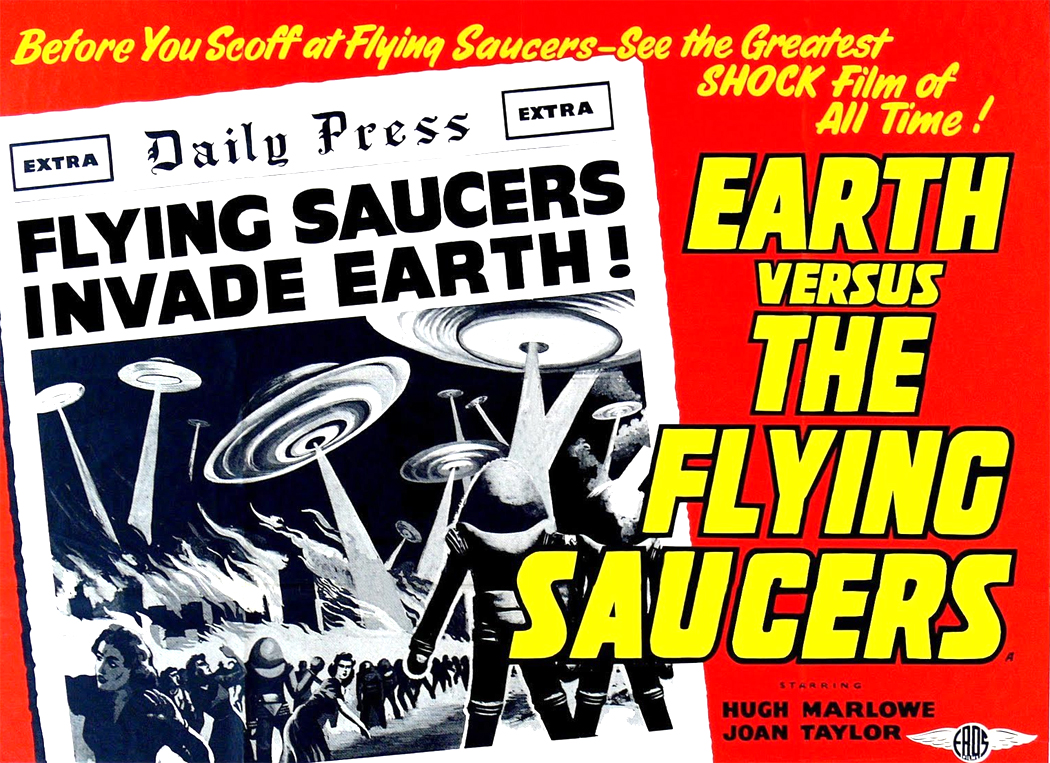
But that Cold War fear certainly that played into the rise, from 1947 on, when the first modern flying saucer sighting was reported, of extraterrestrial possibilities that became ever more numerous. Like the division of aliens into whites, grays and lizards, there developed three general camps in response to the sightings. 

The first are the true believers, those who think — yea, they know — that these sightings are visitations from alien species brought across the cosmos from outer space. For this group, there is no doubt. And further, they are sure the government — a generic term that may refer to the civilian authorities, the military, the CIA, or some trans-national shadow group — is hiding from us the “truth.” They may all have different versions of what this truth is, but they know it is being withheld. 

The second group are the scoffers, the unbelievers, the rationalists, who believe — yea, they know — that all the sightings can be dismissed as hoaxes, hallucinations, or the rantings of cranks. The number of cranks and charlatans that come out of the woodwork only provides evidence for the unbelievers. So many of the true-believers seem to be poorly educated and so many of the sightings and abductions seem to take place in back-woods Arkansas or Arizona. 

A friend has a nephew, a chubby adolescent whose mother worked in a massage parlor, and who was fascinated with the phenomenon, told us one day, with not a whit of irony, that something had been “positively identified as a UFO.” What can you do but laugh?

Then, of course, there is the namby-pamby middle group that says, these are probably not little green men in space ships, but surely there is something behind all the reports. Perhaps, they say, it is some secret military program, or perhaps it is Russian spy missions. 

Let me confess out the outset that I am pretty well ensconced in the non-believer faction, although I will certainly allow that UFOs exist. That is, that there may be things that are unexplained and even perhaps unexplainable. This, to me, is hardly surprising. There is a great deal that human beings don’t know. But space ships from Mars, or Venus, or Tralfamador, are so unlikely as to be dismissible out of hand. Yes, there is an infinitesimal possibility that they exist, but until we have better evidence, I’m happy to ignore them. 

And I say that despite having experienced UFOs, at least twice. At least for a while, each time. Once, in Phoenix (of course, it’s Arizona again), I was driving along Van Buren Avenue, west to east, on a Friday before a big basketball playoff game. And to the south, I saw a large glowing object, almost as large as the moon in the sky, but in the wrong place. And I continued to drive, it moved in ways that mystified me. It seemed to be a long way off, but was moving faster than I could have expected from anything hovering, say, over South Mountain or, further south, the Gila River Indian Reservation. 

I continued to keep an eye on the glowing sphere as it moved to the west. It left me with an eerie feeling. Perhaps I had been wrong about UFOs. I could feel a kind of electricity buzzing in my spine at the uncanny vision. But then, as I continued and the UFO began to drift behind me, I finally saw “Geico” blazoned on its side as the sphere elongated into the Goodyear blimp. It was illuminated from the inside as an aerial billboard. 

It moved faster than I had expected because it was closer than I had thought. Once I knew what it was, I laughed at myself for being taken so easily in. Surely a good deal of sightings must be simple misinterpretations. 

My second experience was also in Arizona. Please, no snide remarks. We were invited by some friends to their home in Coolidge, about 40 miles south of Phoenix. They had a house in the desert with almost nothing around them but greasewood, cactus and javalinas. It was a lovely evening with a cookout on an outdoor grill, and some pleasant conversation. 

But around 9 p.m., when it had become dark out, my host, a writer and photographer I knew, began to tell me about the mysterious lights in the desert just north of his home. He took me out back of the house and pointed them out. 

“They seem to be coming from the old General Motors test grounds,” he said. There is an abandoned facility about halfway between Phoenix and Coolidge, where the car company had a test track. “Notice,” he said, “how the lights move from right to left and left to right and then sometimes, they stop altogether and hover.” He wondered what kind of secret project the government was conducting on the old site. “Nothing moves like that,” he said. “Just stopping and starting.”

Indeed, the dots of light did move one way and then the other, and halting altogether. The mood of unworldliness settled in, and he began talking about how the government had supposedly captured an alien spacecraft — I believe he was talking about Roswell, N.M. — and that he believed the government (again a hazy generality) had reconstructed these craft and were testing them out secretly.

I had a grand laugh. “Those are airplanes landing and taking off from Sky Harbor,” I said. The Phoenix airport.

“No, they can’t be,” he said. They are right over the old proving ground.” 

I pointed out that Sky Harbor was in a straight line from where we were in Coolidge, over the proving ground. The planes moved from left to right taking off, right to left landing, and “hovered” motionless when they were flying directly toward us. He was not convinced. I didn’t want to press the issue, so I let it drop. But as we drove home later that night, my wife and I watched those fireflies moving in the air in front of us, and continue to remain in front as we passed the old GM facility and stayed in the north until we reached Phoenix and Sky Harbor, where, of course, they landed and took off. 

Belief is the kind of thing that doesn’t necessarily depend on evidence or on mere fact. Mysterious lights are a whole lot more satisfying than Southwest Flight 94 coming in from Toledo. 

Sight depends on at least two factors: what the eye sees; and what the brain interprets. Uncounted experiments have shown the unreliability of “eye-witness” accounts and the tricks our brains play on our eyes — as in the video of some jugglers tossing Indian clubs back and forth, during which a man in a gorilla suit passes behind them. Almost no viewers of the video ever notice the gorilla. Invisible, partly because it is too far out of context. 

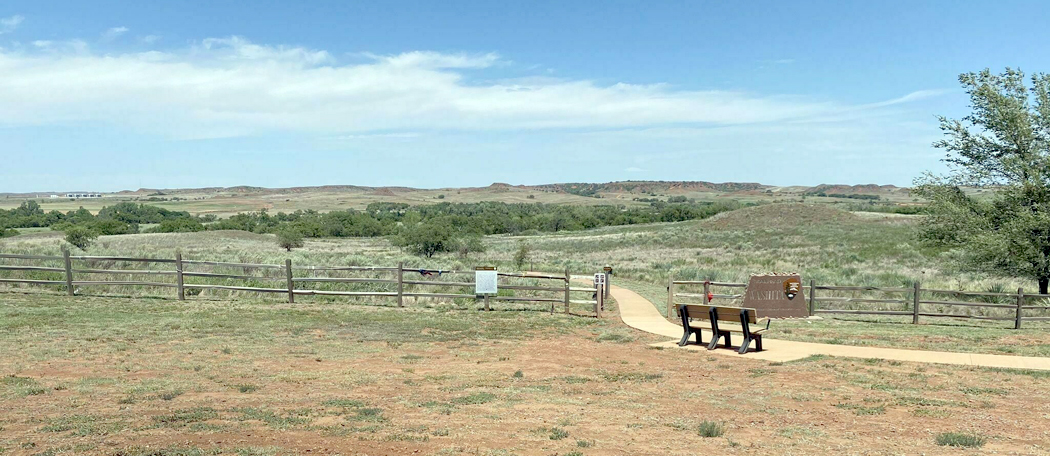
This happened to my wife and me while visiting the Washita massacre site in Oklahoma. It is an out-of-the-way site, visited by almost no one. We pulled into the gravel parking lot and saw in front of us, in the grassy dunes, something that looked like a dinosaur — a huge beast, maybe 20 feet tall, judging by the phone pole next to it. It was lurking there, moving slowly in front of us. We both asked each other what it might be, we both were frightened that it might spot us and head our way. When we turned back to look a second time, it shrunken down to be a cow. Ordinary cow. Ordinary size. How had we been so mistaken? Both of us? A mistake in our perception of the distance, the unusual cream color of the beast and its lumbering gait had tricked our brains into interpreting what our eyes saw as a monster.

Eyes and brains, working together. Seeing is believing? Don’t you believe it. 

Further, we believe what we want to believe. We can interpret ambiguous data in a way that reinforces what we expect. 

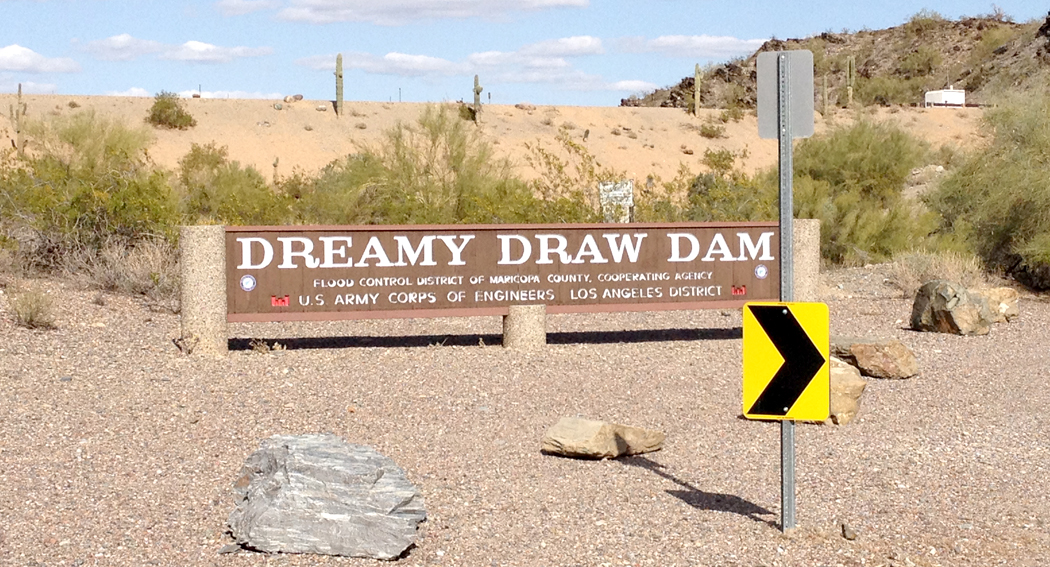
One early fall, when my granddaughters were visiting us in Phoenix, Tallulah Rose, then about 12 years old, was into her UFO phase and wanted me to take her to the Dreamy Draw, a spot near North Mountain that had been built up with a 455-foot long flood dam to keep storm wash from cascading down into the Sunny Slope region of town. There is a park there beneath the earthworks and a long slough where, according to urban legend, a spacecraft had crash landed in 1947. Two versions of the story: In one, it skipped like a stone on a pond and then came down a second time in Cave Creek, about 10 mile north of Phoenix; in the more common version, it was left wrecked at the Dreamy Draw and the government — that hazy nefarious entity, covered the site up with the dam to hide the evidence. Of course, the dam wasn’t built until 1973, but perhaps you put that down to government inefficiency.

To me, the draw, sitting beside the freeway over the mountain, was a fairly ordinary gash in the landscape. But to T-Rose, it held much greater significance. “You can see it,” she said. “That’s where it landed. It’s clear as can be.” 

Belief is what it is.

In 1956, psychologist Benjamin Bloom published his Taxonomy of Educational Objectives, a hierarchical ranking of thought processes, often recast as “Bloom’s Taxonomy.” It has been often revised and recast, but most often, at the bottom were simple tasks such as memorizing, at the top came creativity. 

My late wife, who was at least as smart as Bloom, had her own version of this taxonomy, and for her, the lowest level was “naming.” She taught school for more than 30 years and saw brain-burn at the individual level. Being able to say, “Horsie” or “Duckie” is naming. This is simple rote. Learn the name and repeat it when appropriate. 

Naming also shades into the second level — the level most people get stuck in — that of sorting. Finding categories and shunting the names into silos to contain them. As if that explained anything. 

The greater part of what we do with our brains is to sort things out. To put cats over here and dogs over there. When we learn, most of what we mean by that is to understand that Claude Monet was an Impressionist and that Luis Buñuel was a Surrealist. These are mere sortings. Important for a file clerk, perhaps, but more a form of busy work than of actual thinking. 

We learn a whale is not a fish, and that a spider is not an insect. We have separate categories for them, and when we recognize the categories, we believe we have actually said something meaningful about our whale or spider, when really, all we have done is play with words. 

Categories, are, after all, quite fugitive, quite fungible — squishy. When zoologists first tried to classify lions, for instance, they placed them in the genus “Felis,” for they are some kind of cat. But later, it was decided they were big cats, not small ones, and so they became “Panthera.” Oh, but that wasn’t good enough, and so a new genus was established, dividing them from tigers and leopards, making them “Leo.” New category, new silo. 

For a brief time, I worked at a zoo, and had the opportunity to walk behind the cages and get up close to many of the animals and I can tell you that standing with his zookeeper two feet from a male lion to feed him,(separated from Leo by the cage bars), the lion’s head seemed to be the biggest thing I had ever seen, shaggy and furry, with a very particular smell, and a sense that this beast could swallow my head as if it were an M&M. And then it “purred.” A low, gutteral roar expressing satisfaction at the afternoon meal, that made the ground rumble under my feet. It was one of the most impressive things I have ever witnessed and it mattered not a whit whether I was seeing a Felis or a Panthera or a Leo. The name was rather beside the point. The experience had a physical existence and it didn’t need a name. 

Language is not reality. And the experience — the feel of it in the palm of your hand, or in your nostrils, or under your feet — is worth all the words in the world. Words can be a barrier keeping us from what is real. 

And yet, we spend so much of our time arguing over these categories, as if they mean anything. As if they were a reality. Is Joe Biden a Socialist? Did Elon Musk actually reach outer space? Is a tomato a fruit or a vegetable? So much thought and energy to such meaningless ends. Think of all the dark money spent in political campaigns to paint the opposition into a category-corner that makes the opponent a one-dimensional boogeyman. The world and its things are infinite. 

My late wife took animals to class with her so her pupils would have actual experiences — the twitching nose of a bunny, the blank stare of a hen, the brittle carapace of a hermit crab — and then gave the kids paper and paints and let them express what they had experienced. If names were mentioned, they were the names the kids gave the animals — a rabbit named Tiffany Evelyn or a crab named Eloise. What mattered was physical reality of the experience. Anything else is just language. Names. Categories. 

Historians like to take big chunks of time and give them names: Classical, Postclassical, Late Medieval, Romantic, and so on. Then they argue over it all, because these categories are misleading and constantly changing — being redefined. But, as they say, whatcha gonna do?

Take the Middle Ages. Middle of what? Homo sapiens developed something like — in a common low-end estimate — 300,000 years ago, putting the start of the Middle Ages somewhere approximately in the last 15/3000ths of human history. Not exactly the middle.

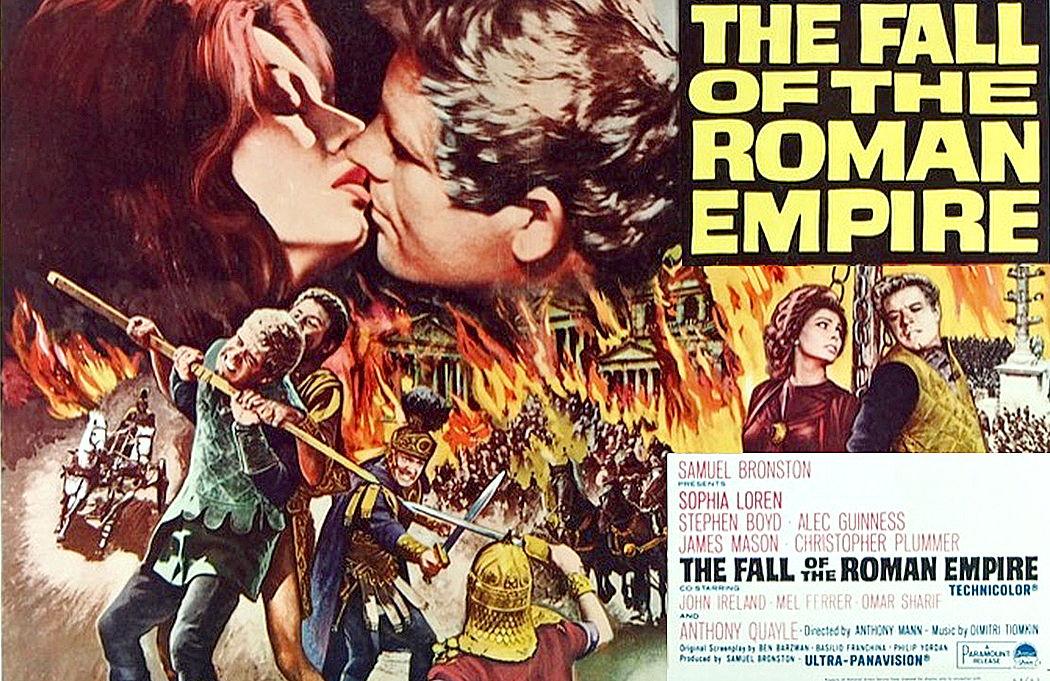
But the dates we give the Middle Ages vary widely. It came after the Roman Empire. When did the Roman Empire fall? Well, you can say that the final collapse came in 1453 with the fall of Constantinople. For some people, that is already the Renaissance, squeezing out the Middle Ages entirely. But no one really believes the Byzantine Empire was genuinely Roman. They spoke Greek, for god’s sake. They were Christian.

Usually, when we talk of the fall of Rome, we mean the Western Roman Empire and the sad reign of Romulus Augustulus, which came to an end in AD 476. But really, the Western Roman empire at the time consisted only of most of Italy and Dalmatia (later aka Yugoslavia) and a tiny bit of southern France.

And you could easily argue that Rome ceased to be Roman after Constantine converted to Christianity and legalized it in AD 313. After that, the slow slide from Roman imperialism into Medieval feudalism began its ambiguous transubstantiation.

It is the great paradox of scholarship: The more you read, the more your ignorance grows: The more you learn about something, the more you discover how little you know.

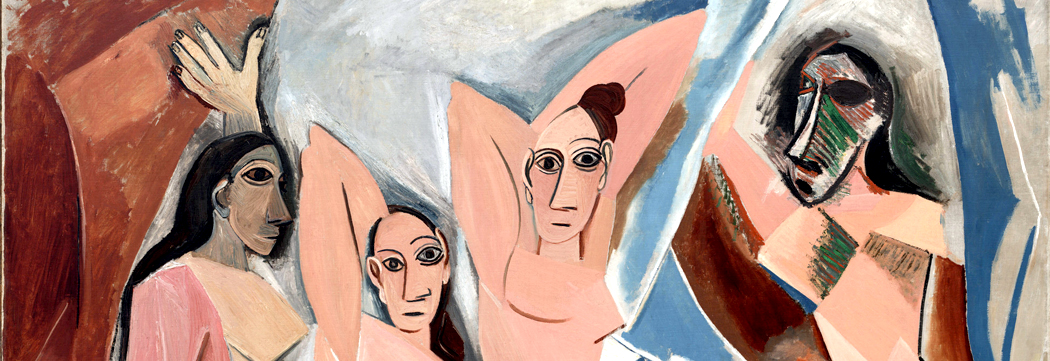
Are Picasso’s paintings Modern art? His first big Cubist painting, Les Damoiselles d’Avignon was painted in 1907. That is closer in time to the reign of Catherine the Great in Russia than it is to us. Closer to George Washington’s Farewell Address. To the Louisiana Purchase. 

So, what do we mean by “modern?” and when did modernity take over? It is a slippery question. And really it is simply an issue of definition — words, not experience. We let the words stand in for reality and then let the debates begin. Reality flows uninterrupted and continuous. Categories are discrete and they start and stop. 

The more you attempt to define the categories, the more they slip away. The history of academic scholarship is often the history of proving the categories wrong. It is historians who argue over the dates of the Renaissance. Or the fall of Rome, or the birth of Modernism. 

Categories are a convenience only. They are a name for the nameless.

I am reminded of the time, some 40 years ago, when I first drove west from North Carolina with my genius wife. We had never seen the great American West and eagerly anticipated finding it. It must be so different, we thought, so distinct. The West is a category. 

We were living in Boone, N.C., named for Daniel, who trod those mountains in the 1700s, when the Blue Ridge was the West. When George Washington surveyed the Northwest Territory in the late 1740s, he was measuring out what became Ohio.

So, when I was driving, I knew I had already pushed my own frontier past such things, and knew in my heart that the West began on the other side of the Mississippi River. But, when I crossed the river into Arkansas, it hardly seemed western. It didn’t look much different from Tennessee, in my rear view mirror. Yet, Arkansas was home to the “Hanging Judge” Isaac Parker and where Jesse James robbed trains. Surely that must be the West. But no, James looked more like a hillbilly than a cowboy. 

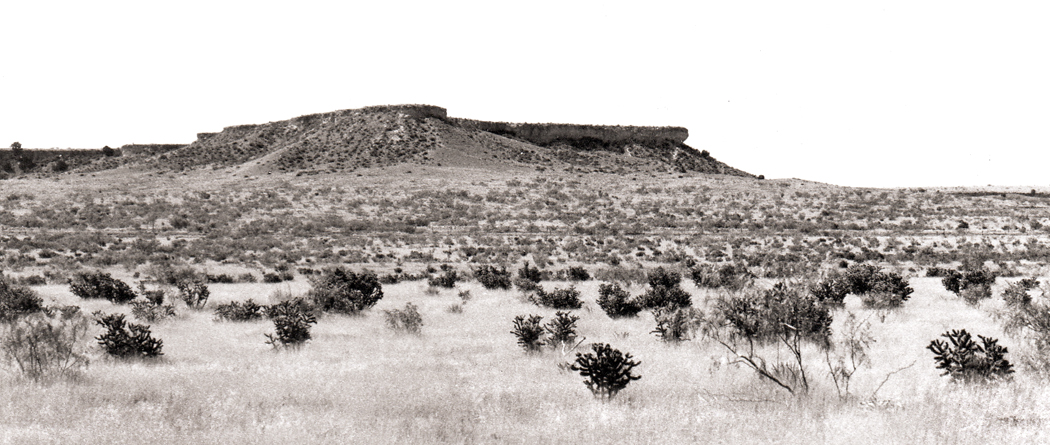
Then came Texas, which was the real West, but driving through flat, bland Amarillo on I-40 was as exciting as oatmeal. The first time we felt as if we had hit the West was at the New Mexico line, when we first saw a landscape of buttes and mesas. Surely this was the West.

Maybe, but we hadn’t yet crossed the Continental Divide. All the waters of all the rivers we crossed emptied into the Atlantic Ocean. Finally, crossing the Divide near Thoreau, N.M.,  we felt we had finally made it.

Yet, even when we made it to Arizona, we knew that for most of the pioneers who crossed this country a century and a half ago, the desert was just one more obstacle on the way to California. In some sense it still wasn’t the West.

When we got as far as we could in a Chevy, and stared out at the Pacific Ocean, we knew that there was still something farther: Hawaii, Japan, China, India, Africa — and eventually back to North Carolina.

So, the West wasn’t a place you could ever really reach, but a destination beyond the horizon: Every point on the planet is the West to somewhere else.

When we look to find the beginnings of Modernity, the horizon recedes from us the same way. Perhaps it began with World War I, when we entered a non-heroic world and faced a more sober reality.

Modern Art began before that, however, perhaps with Stravinsky’s Rite of Spring in 1913, perhaps with Debussy’s Afternoon of a Faun in 1894. Some begin with the first Impressionist exhibition in 1874.

Politically, maybe it begins with Bismarck and the establishment of a new order of nations and the rise of the “balance of power.”

You can make a case that Modernism begins with the Enlightenment in the 18th century, when a rising Middle Class began to fill concert halls and Mozart became an entrepreneur instead of an employee of the aristocracy.

Or before that, in 1648, with the Treaty of Westphalia, and the first recognition of national boundaries as something more than real estate owned by the crown.

You can set your marker down with Luther, with Gutenberg, with Thomas Browne, Montaigne, Caravaggio — or Giotto.

For many, Modernism began with the Renaissance, but when did the Renaissance begin? 15th century? The Trecento? Or did it begin further north with the Gothic, which is really the first sparking of a modern way of thinking.

Perhaps, though, the Roman republic divides modern political organization from more tribal eras before. Or you could vote for the democracy and philosophy of ancient Greece. Surely the time before that and the the time after are distinctly different. We recognize the near side of each of these divides as more familiar than the distant side.

You might as well put the starting line with the discovery of agriculture in the steppes of Anatolia and the river plains of Iraq. An argument can be made for any of these points on the timeline — and arguments could be made for many I haven’t room to mention.

Perhaps the horizon should be recognized for what it is: an ever-moving phantasm. For those peasants digging in the manorial dirt in the Ninth Century, the times they were living in were modern. The first person recorded to use the term “modern” for his own age was the Roman writer Cassiodorus in the 6th Century. Each moment is the new modern.

These are all just categories, and spending our time sorting things into their file folders should not be mistaken for actual knowledge. It is words about the knowledge. 

Now, I will concede that the words help us discuss the real things, and that it is probably useful to know the difference between cats and dogs, or butterflies and moths. But categories and sorting are just a second level of thinking. After these baby steps, there is so much more that the human brain can begin working on, much more grist to be ground. And a good deal of thought that outreaches the ability of words to capture. 

The level I have been most thinking about recently is that of observing, of paying attention. Not deciding anything, or sorting anything, but just noticing. The world opens up like a day lily; so much that was invisible is made visible — things that the rush of daily life, moving things from in-box to out-box, have made too inconsequential to waste time with. There is a richness to the world that becomes a glowing glory when attention is paid. 

In the days before the transcontinental railroad, a Cheyenne father would take his 10- or 11-year-old son out into the prairie and have him lie down on his belly. “Just look,” he would say. “Don’t talk, don’t decide, don’t name, just look.” And he would leave his son there for the day, not moving a whit. And when he came back to retrieve the boy he would not ask, “What did you see.” He would say nothing. He would not need to. 

So much of value is beyond words, beyond category.

I sit across the table from my brother at the seafood restaurant in Virginia and he doodles on a napkin with a Sharpie.

My brother is an artist — primarily a printmaker, but more recently a painter. And while he isn’t terribly prolific, he is constantly drawing. His mind is always coming up with visual ideas and he jots them down. Most never go anywhere, but he just cannot stop himself from playing. It is his way of processing experience: What he sees he transforms.

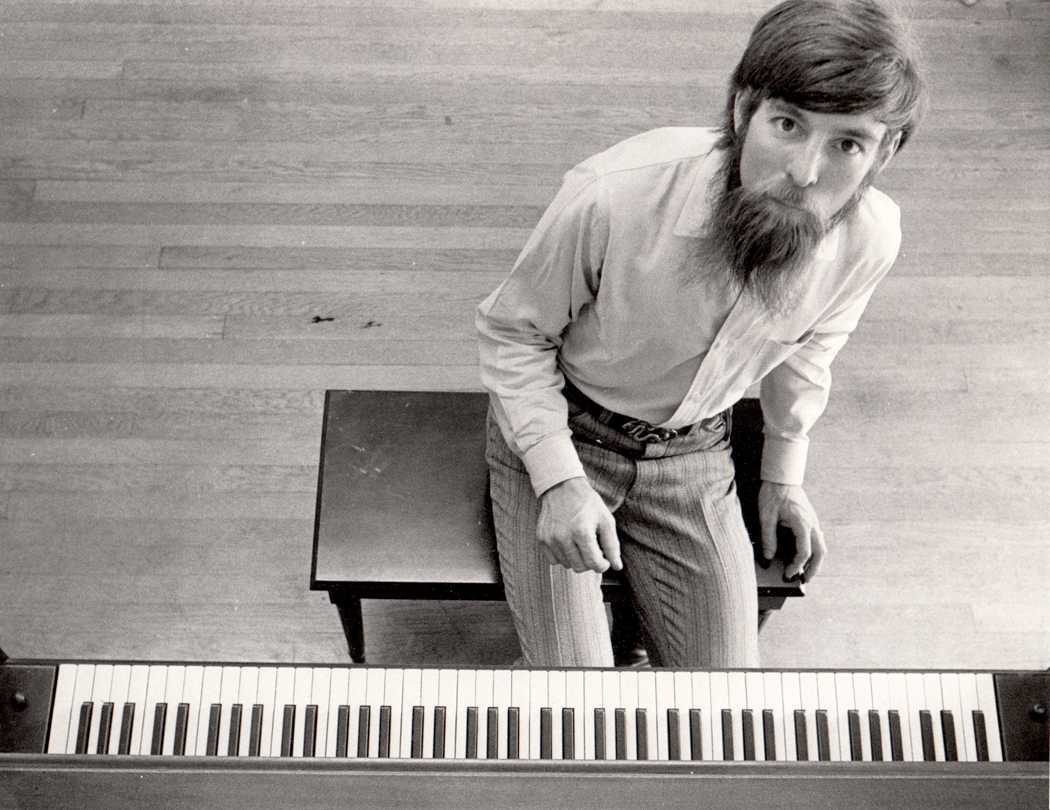
Lee Friedlander

It reminds me of the photographer Lee Friedlander, who describes his addiction to making photographs as “pecking.” Like a hen darting at cracked corn on the ground, he clicks his camera — peck, peck, peck. Some of the results of his pecking turn into finished photographs he displays in galleries and publishes in books. But there is an improvisatory quality to his work that comes — like a jazz musician woodshedding — from constantly working his instrument.

Among the images caught by pecking, Friedlander will periodically find something he hadn’t considered before, and thus his body of work takes a new direction, constantly refreshing his art.

In part, the importance of this kind of sketching is that it is not art — or rather, not meant as art. It is more the flexing of an esthetic muscle. One can become intellectually paralyzed if all you aim at is writing deathless prose, or painting the museum masterpiece, or composing the next Eroica. Not everything needs to be The Brothers Karamazov. There is great value in just pecking. It keeps your senses alive.

Mel Steele

I periodically visit my brother-in-law, Mel Steele, who is also an artist, a very accomplished artist who regularly sells his paintings to clients both private and corporate.

I often spend a portion of my time doodling — pecking — with my tiny point-and-shoot digital camera. We would sit on their patio talking about the things one yammers on about with one’s relations — old times, where former acquaintances have gone, the horror of recent politics, the joys of fishing — and I would distractedly point my camera around me at the things one seldom notices.

I wasn’t thinking of making art. I barely paid attention to what I was doing with the camera, but I pecked. The result is a kind of notebook of the things we lived among, seen in some different way, so as to lift them from their context, to suck them out of the everydayness they languish in.

 It reminded me of an assignment I used to give my photography students, some 35 years ago, when I taught the subject at the same school where my brother also taught. “Make a photograph of something so I cannot tell what it is.” I made sure they understood I didn’t mean to make it out of focus or poorly run through the darkroom, but to find something we see everyday, but pay so little attention to, that when faced with its presence, we might be baffled until that moment when, the proud student, having fooled us all, tells us what we’re looking at and we all let out a gasp of breath and say, “Of course, now I see it.”

Try it: 

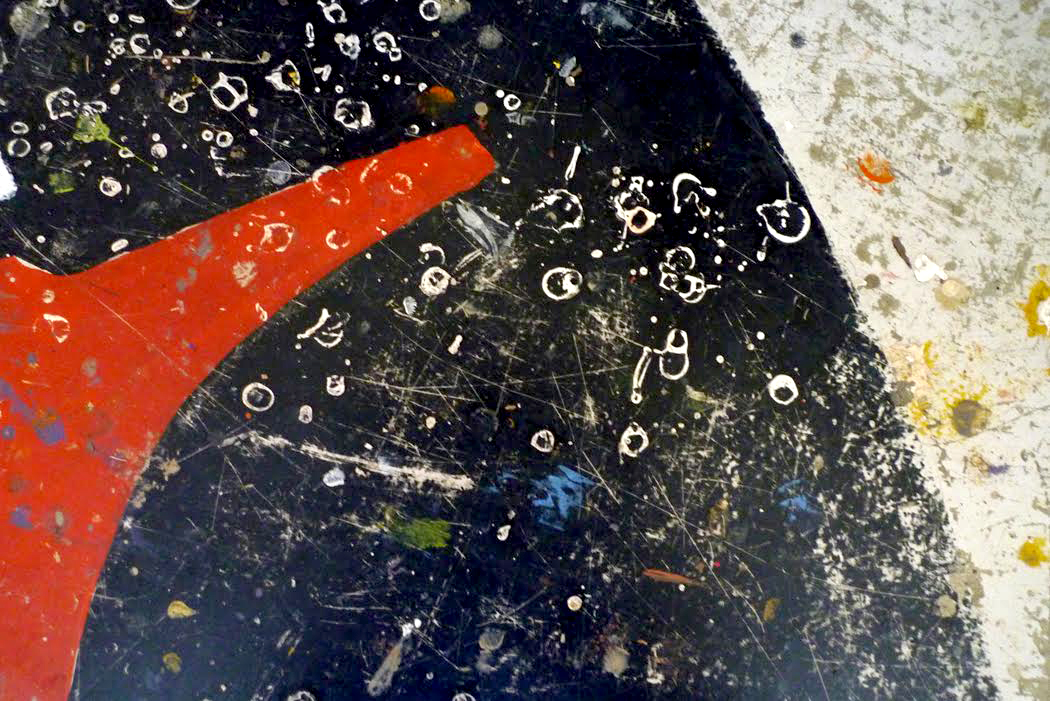
Quiz photo No. 1 (Answers at the end of story)

These pecked pictures are mostly details. 

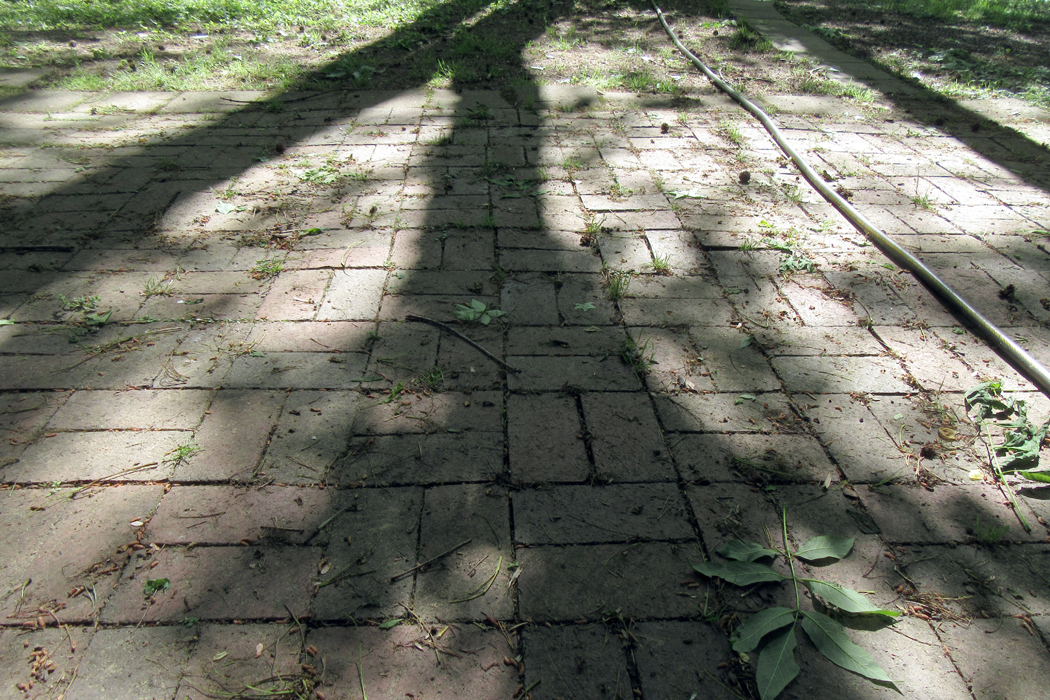
Quiz photo No. 2

They are not the grand view or the concatenated whole, but the tiny bits out of which the larger scene is built. 

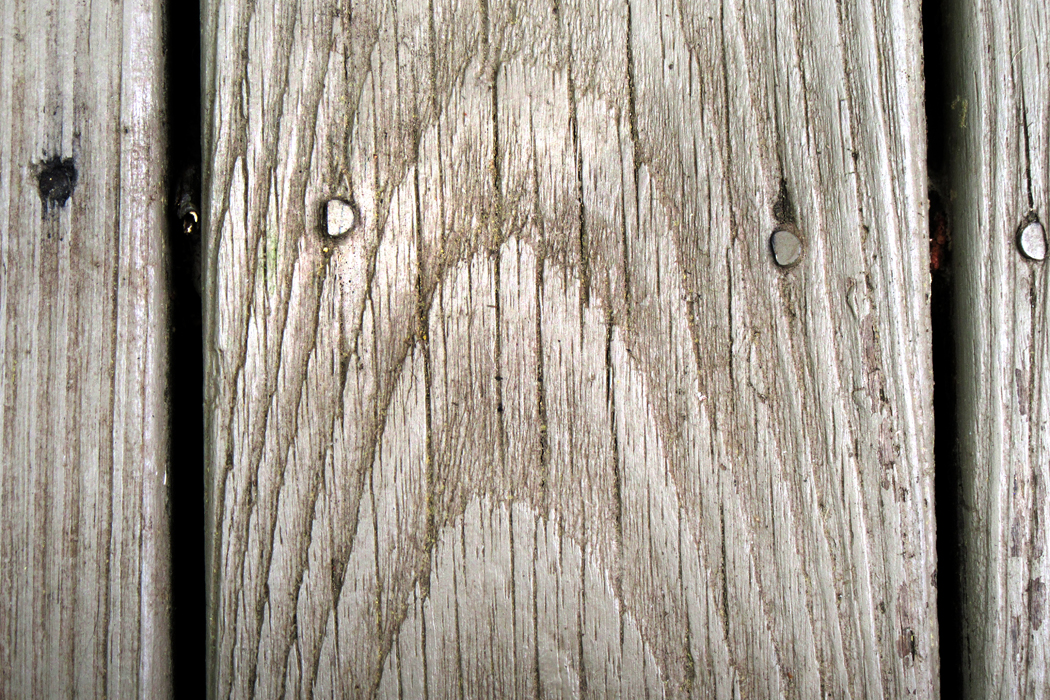
Quiz photo No. 3

Most of us pay attention only to the whole, when we pay attention at all; for most Americans — maybe most humans anywhere — only use their eyes for useful things. They see the road they drive on, the cloud that tells them it will rain, the house, the car, closet. But every house has a door, and every door a door-handle; every car has tires and every tire a tread and each tread is made up of an intricate series of rubber squiggles and dents. Attention must be paid.

Aime Groulx

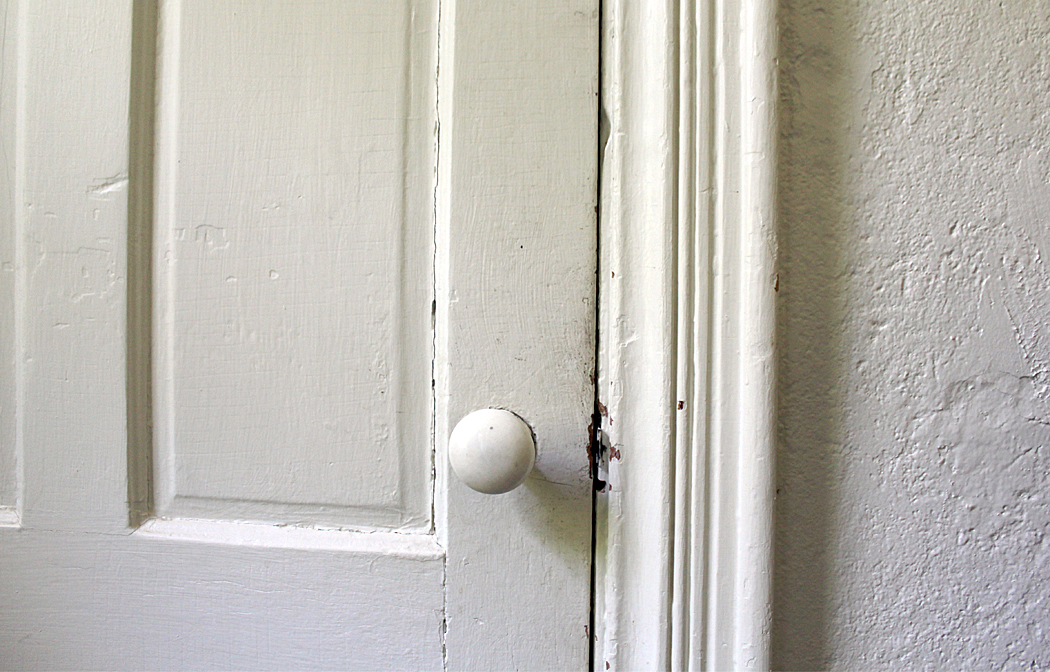
Many years before, when I taught photography at a private art school in Greensboro, N.C., the artist Aime Groulx, who ran the school, made a photograph he called Doorknob to the Doors of Perception. I still have my copy. It was his version of “pecking.” 

Doorknob to the Doors of Perception

Paying attention to the details means being able to see the whole more acutely, more vividly. The generalized view is the unconsidered view. When you see a house, you are seeing an “it.” When you notice the details, they provide the character of the house and it warms, has personality and becomes a Buberesque “thou.” The “thou” is a different way of addressing the world and one that makes not only the world more alive, but the seer also.

(It doesn’t hurt that isolating detail makes it more necessary to create a design. You can make a photo of a house and just plop it in the middle of the frame and we can all say, “Yes, that’s a house,” and let the naming of it be the end-all. But if you find the tiny bits, they have to organize them in the frame to make something interesting enough to warrant looking at.)

Side panels of a pickup truck

Sectioning out a detail not only makes you look more closely, but forces your viewer to look more closely, too. Puzzling out what he sees without the plethora of context makes him hone in on its shape, color, and texture. It is a forced look, not a casual one.

So, when I gave my students that assignment, it wasn’t just to be clever, but to make them pay attention to the minutiae that are the bricks of the visual world they inhabit. And paying attention is a form of reverence.

The mental view of the world is telescopic. It zooms from the blue watery globe in the blackness of space, down to the map of the U.S., to your state, to your city — each step focusing on closer detail — and then to your street, to your house, to the room you are sitting in to the armrest you are tapping your fingers on, to the hairs on your knuckles. Always more detail. 

Turn from the tapping hand to the floor and see the woodgrain in the flooring, or the ceiling and see the cobweb you had not noticed before. The clothes you are wearing has a texture and a color. The wrinkles in the shirt of blouse are replications of the drapery in Greek sculpture. 

Each of these details is a microcosm, worth looking at — it is your world, after all. What did William Blake write? “To see the world in a blade of grass. And heaven in a wild flower. To hold infinity in the palm of your hand. And eternity in an hour.” 

Or, as he scribbled in annotation to the pages of Joshua Reynolds’ Discourses, “To generalize is to be an idiot. To particularize is alone the distinction of merit.”  

The general is the world of politicians and businessmen, of carnival barkers and evangelists. Dogma, ideology, commercial advertisement, are founded on generalizations, while what genuinely matters in our lives is the particular. It is generalizations that permit the destruction of Bamiyan Buddha statues, the bombing of synagogues, mosques and Sikh temples. The stoning of homosexuals. It is generalizations that lurk behind the Shoah. It was generalization that justified the enslavement of a race of people. 

To know any individual is to know the stereotype is a lie. The world, and its peoples, are infinitely complex and varied. So much so, that no broad statement can ever be anything but a lie. And so, there is actually a moral level to this paying of attention to detail, to the minutiae, to the individual. 

And so, you peck. Finding this bit or that bit, that shape, that texture, that precise color. This is the context of your life. 

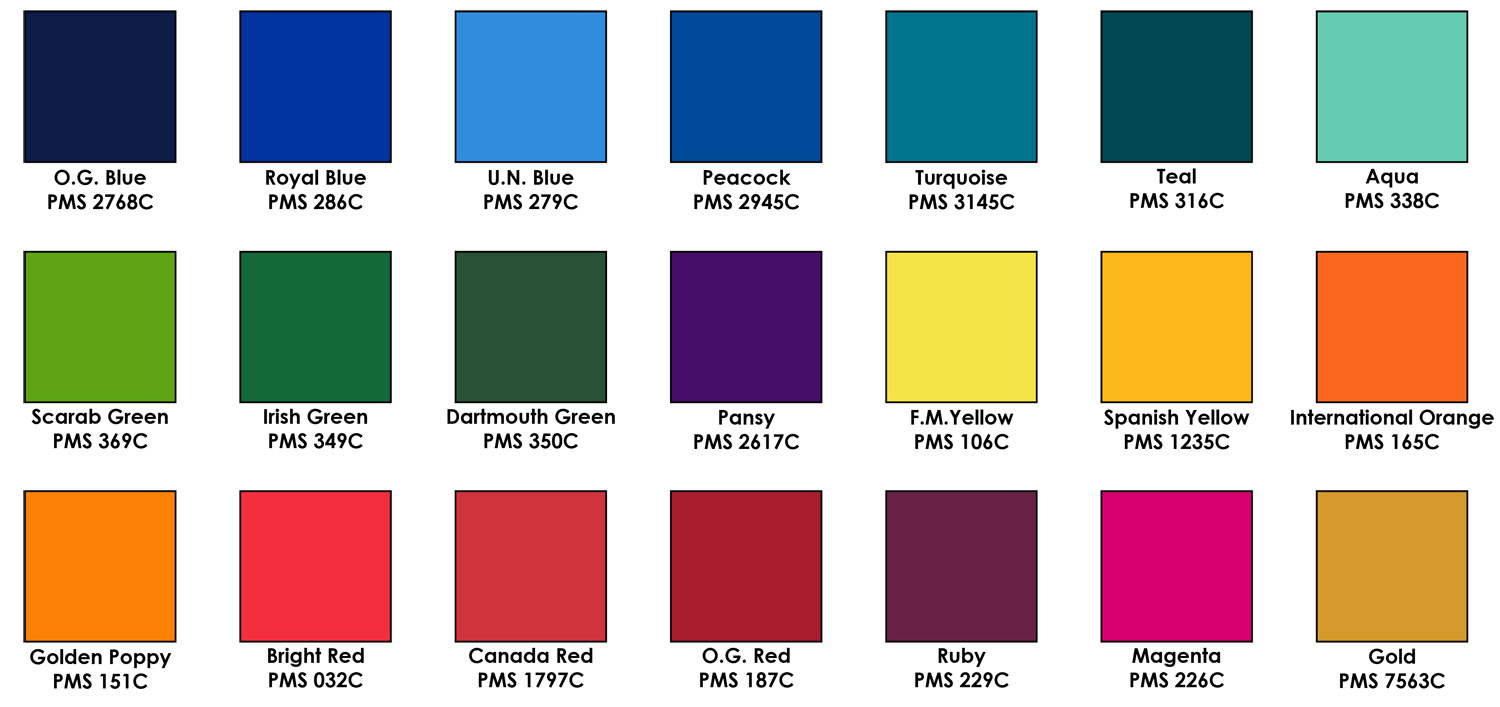
You can focus your attention on color. How much yellow is in your field of view at this moment. Look around. Single it out. Or blue. How many different blues can you spot right now? Paying attention is being alive; paying attention is reverence. Attention must be paid. 

Duck eggs

Your life is not made up of the broad swathes, but of the minute details, and when we pay too much attention to the big picture, we are likely to miss the particles that give that picture its character. 

And when you come to make your art, write your novel, dance your dance, that detail means there is a truth to what you do, a reality behind the fantasy that gives it depth and meaning. 

Exercise makes your muscles strong. Pecking keeps your senses alive and alert. Peck Peck Peck

Click on any image to enlarge

Answers to quiz: No. 1 — the twill of denim jeans; No. 2 — dried coffee stains on a white table top; No. 3 — garden hose on patio tiles. 

As I continue to contemplate the possibility of perhaps, maybe, decluttering my trove of Classical music CDs, I come to the 20th century. I have to admit, that I listen to music from that period more than any other. It was my century. And so, I have a ton of discs from composers who wrote, beginning in the 19th, but extending their careers into the 20th, and now, music from the 21st century. 

Sometimes, we forget that such lush music as that of Rachmaninoff or Richard Strauss continued to be written: Strauss’ Four Last Songs, perhaps the most high-calorie confection ever put to paper, was premiered in 1949, four years after the end of World War II, and 36 years after Stravinsky’s Rite of Spring. “There’s still plenty of good music to be written in C-major,” said Arnold Schoenberg.

So now, as I did last time, I am going to sort through the violent century and salvage what I think needs to be saved, making a pile of recordings and regretfully saying goodbye to too much great music, but, you know — I’m 73 years old and I’m not going to be able to listen to all of the thousands of CDs that currently clog my shelves. 

I’ve set the goal of picking a single work (or set of works) by significant composers to throw on the pile. I’m going by chronological order, according to birth dates. And we start by remembering that Edward Elgar was a 20th century composer. Yes. He was. 

Edward Elgar 1857-1934 — Initially I thought the work I could not do without was the doleful Cello Concerto, from 1919. The First World War speaks directly through that music. But, no, I have to go with the Violin Concerto of 1910, which is one of the few noble concertos that can stand with those of Beethoven, Brahms, Sibelius, Berg and Shostakovich — not merely tuneful, but an expression of the highest thoughts and emotions that humans are capable of. 

But, I’m in luck. Because I can save the Violin Concerto, played by Pinchas Zukerman on a disc package that includes the Cello Concerto, played by Jacqueline Du Pre, with the Enigma Variations thrown in.  A perfect summing up of the best of Elgar.

Gustav Mahler 1860-1911 — Choosing is too hard. I have double-decker shelves devoted to Mahler, the composer who moves me above all others. How can I clear it out? How can I consider any of it as “clutter?” I thought originally I would have to save Das Lied von der Erde, and I don’t know how I can say goodbye to it. But Mahler said famously, the symphony must contain the world, and the piece that does that more than any other is the Third Symphony, and so, I’m putting that on the pile.

I just counted, and I currently have 14 recordings of the Third (with another on the way from Amazon). The one I keep is Riccardo Chailly and the Concertgebouw Orchestra. Not only is it a great performance, but the 2-discs are magnificently engineered. The sound is stunning.

Claude Debussy 1862-1918 — While I love Debussy’s piano music (especially played by Paul Jacobs), the keeper is La Mer. I have not counted the versions on my shelf, but there are not a few. 

Pierre Boulez recorded it twice. The second is OK, but nothing special, but his first go-round, on Sony, is cut by diamond and the most exciting one I know. It may not be a sea-spray evocative as some, but it makes a compelling case for it as belonging to the 20th century. It comes in a package with a pile of other Debussy.

Richard Strauss 1864-1949 — Strauss can sometimes seem a bit reptilian. How much is show-biz with his show-off orchestration. But there is no doubt to the sincerity of his Four Last Songs. They are the most profoundly moving orchestral songs I know, outside Mahler’s Der Abschied

I wanted to save Jessye Norman’s version, with Kurt Masur, but I have to admit, my heart has always belonged to Leontyne Price in these songs, accompanied by Erich Leinsdorf. Both versions are gorgeous, but Price is now packaged with Fritz Reiner’s Also Sprach Zarathustra. On the pile. 

Jean Sibelius 1865-1957 — As tightly argued as Mahler is spacious, Sibelius packs a great deal into a well-cinched frame. Of his seven symphonies, the one that speaks to me loudest is the final one, which makes me feel in my bones the vast icy spaces of Scandanavia. 

Leonard Bernstein recorded it twice, once for Columbia (now Sony) and later for Deutsche Grammophon. The first is tighter, but the second comes with the Fifth Symphony, giving me the chance to save two symphonies for the price of one. Bernstein slowed his tempos as he got older, and some people don’t like the broadened Fifth, but I have no problem with it. And the Seventh takes me to other places. 

Serge Rachmaninoff 1873-1943 — My dearest friend, Alexander, refuses to listen to Rachmaninoff, saying he is too gooey and Romantic. But I have been trying to get him to recognize that his music — especially his later music — is oozing with Modernist irony. What is more sly than the Paganini Rhapsody? Yes, there’s the “big tune,” but even that is undermined by what surrounds it. But if I have to save just one piece, that would be the Symphonic Dances. I love them to death. 

But, like so many other things in this list, I can have cake and eat it at the same time, with the recording by Andre Previn and the London Symphony Orchestra, bundled with the gooey, Romantic Second Symphony under Mariss Jansons, and the tornado of the Third Piano Concerto, played by Leif Ove Andsness. 

Arnold Schoenberg 1874-1951 — Now we’re entering territory fully recognizable as Modernist. I wish I could save Pierrot Lunaire, but I have only one slot available, and it has to go to Verklaerte Nacht. While I admire Pierrot, I love Transfigured Night

Of the versions I have, both in its orchestral form and its original sextet form, I am surprised at how good the version is that was recorded by Herbert von Karajan and the Berlin Philharmonic. It goes onto the pile, and gives me the bonus of the Orchestral Variations

Charles Ives 1874-1954 — I have three or four versions of the Concord Sonata, and heard it live played by Jeremy Denk. It should be saved. But I am going, instead, with the Fourth Symphony, which is pure Ives, with all his usual tricks. Friends think I’m joshing when I claim that Ives’ music is beautiful. But it is. You just have to get used to the idiom. 

The best version (I have four of these, too) is the first recording, led by Leopold Stokowski. One word for it: Transcendental. 

Maurice Ravel 1875-1937 — Stravinsky dismissed him as a “Swiss watchmaker,” but I think that was only professional jealousy. Yes, we’re all tired of Bolero. But I want to save the Concerto for Left Hand, which is jazzy in parts, terrifying in parts, and always makes you wonder that anyone can play two-hand piano with only one hand. 

But there is also that ethereal slow movement of the G-major Piano Concerto. The disc with Martha Argerich playing the G-major and Michel Beroff playing the Left-Hander, with Claudio Abbado and the LSO, also gives us the orchestral version of Le Tombeau de Couperin. What a luscious disc. 

Bela Bartok 1881-1945 — There’s a lot to save with Bartok, also. But I can’t have the Contrasts, the piano concertos, the six quartets and the Concerto for Orchestra. No. One disc. And the piece I want to keep most is the Music for Strings, Percussion and Celesta

Luckily, one of the greatest performances of that music, by Fritz Reiner and the Chicago Symphony, also features one of the greatest performances of the Concerto for Orchestra. It is essential listening for any music lover.

Igor Stravinsky 1882-1971 — Much music, many styles. Part of me wants to save the Requiem Canticles and the Movements for Piano and Orchestra, just to tweak those who hate 12-tone music. But since the entire 20th century seems launched by The Rite of Spring, just as the 19th was launched by the Eroica, I have to save it.

There are lots of great performances, but none as feral and primal as the first of them recorded by Leonard Bernstein and the NY Phil. Even Stravinsky, who hated “interpretation” in performance agreed that it was like no other. The disc also includes Petrushka, so, what’s not to love?

Anton Webern 1883-1945 — Do we have to? I’m afraid so. Luckily, there isn’t much of it. No one can make blips and blurps like Webern. He was the godfather of all subsequent serial music, disconnected, alienated and difficult. Yet, he makes such interesting sounds. And few pieces last more than a few minutes, even seconds. Take at least one bit of the broccoli: Try a little Webern. 

Karajan put out a tight, condensed disc with the Passacaglia, the 5 Movements for String Orchestra, Op. 5, the 6 Pieces for Orchestra, Op. 6, and the Symphony, Op. 21. This is a fair sampling, really well played. And the entire symphony lasts only 10 minutes. 

Alban Berg 1885-1935 — The third wheel of the Second Vienna School is the easiest to love and enjoy. He is the most emotional, and found a way to cheat on his 12-tones, to suggest key areas. His Violin Concerto is the most powerful fiddle concerto of the whole century, the most personal, the most emotional, and the most beautiful. 

No one plays it who doesn’t give it his or her most serious efforts. It cannot be just tossed off. My favorite is by Anne-Sophie Mutter with the Chicago Symphony and James Levine. It also includes Wolfgang Rihm’s Time Chant, which, I’m afraid, I find utterly forgettable. I’m saving the disc, anyway, for Mutter and Berg and all the pain of loss in the world condensed to music. 

Serge Prokofiev 1891-1953 — Shouldn’t I save the Seventh Piano Sonata? Or the Third Piano Concerto? Or the Fifth or First symphonies? Yes, I should, but I’m going to save the full ballet score of Romeo and Juliet, which, I believe, is the greatest ballet score of all time. The whole thing, not just the suite. I might be swayed by having seen it danced many times, in some of the best productions ever. But the music stands on its own. 

There are three possibilities: Previn, Maazel and Gergiev. I’m going with Maazel and the Cleveland Orchestra. It just noses out the others. 

Paul Hindemith 1895-1963 — Hindemith used to be the third part of the triad of Stravinsky, Bartok and Hindemith as the top Modernists in music. But he has fallen on hard times. Stravinsky and Bartok have better tunes. But when Hindemith borrows tunes from Carl Maria von Weber, he is as good as any. I love a lot of Hindemith, but I admit, he is not overtly lovable. But the Symphonic Metamorphosis on Themes by Weber is jaunty, catchy and a ton of fun. 

A really good performance by the Philadelphia Orchestra under Wolfgang Sawallisch also gives us two of Hindemith’s best other scores, the Mathis der Maler symphony and Nobilissima Visione. This is Hindemith you could actually learn to love. 

Duke Ellington 1899-1974 — Yes, in my book, this is classical music. Ellington does for his group of instruments nothing less than what Ravel can do for the standard symphony orchestra, with all the colors and surprises. And harmonically, Ellington is ages ahead of many more traditional composers. I have about 50 discs of Ellington’s music, and I love him in each of his decades. But the height of his creativity and originality was with the band he had in the 1941-42, the so-called Blanton-Webster band, named for bassist Jimmy Blanton and tenor sax, Ben Webster. It’s a misnomer, because you can’t forget all the other luminaries in the band, from Harry Carney to Cootie Williams to Johnny Hodges. 

There is a three-disc release that has most of the work the band did in those two years, including Ko-Ko, Cotton Tail, Harlem Air Shaft, Take the A Train, Blue Serge, Sophisticated Lady, Perdido and the C-Jam Blues. Each a miniature tone-poem. This is music to take seriously. Seriously. 

Aaron Copland 1900-1990 — There are two Coplands, the earlier, knottier Modernist of the Piano Variations, and the later, popular composer of Rodeo, El Salon Mexico and Billy the Kid. But to my mind, his very best is Appalachian Spring, a ballet score he wrote for Martha Graham. It is usually heard as a truncated suite and enlarged for full orchestra.

But the version I love best, and the one going on my pile, is the original full-length chamber version. Copland recorded it himself, along with the suite from Billy the Kid. Unfortunately, you have to put up with the tedious and tendentious Lincoln Portrait, here narrated by Henry Fonda. 

Harry Partch 1901-1974 — England has its eccentrics, but America has its crackpots, and Partch is Exhibit A. Having decided that the tempered musical scale is a “mutilation” of true music, he invented and built a whole orchestra of new instruments, such as the chromelodion, the quadrangularis reversum, the zymo-xyl, the gourd tree and cloud-chamber bowls, in order to play music in his 43-note octave. I saw an exhibit of them at the Museum of Modern Art in New York in the 1960s. They were stunningly beautiful to look at. Hearing them, is something different. 

Partch wrote a lot of music for his instruments, some enchanting, like his songs on Hobo graffiti, Barstow. I am saving his full-length Delusions of the Fury, which is based on a Japanese Noh play and an African legend and a codification of Partch’s own delusions. Hooray for him. 

Dimitri Shostakovich 1906-1975 — Surely the major composer of the middle of the 20th century, Shostakovich labored hard under the yoke of Stalinism, and his music expresses his deep humanity (except when he is buckling under the pressure of the commissars and pumping out party-hack material; but we can ignore all that). His symphonies 1, 4, 5, 7, 9, 10, 13, 14 and 15 are among the greatest works of the century. But I’m saving his first Violin Concerto. It is, I believe, his ultimate masterwork. 

Its dedicatee, David Oistrakh, recorded it with Dimitri Mitropoulos and the the New York Philharmonic and anyone who cares about classical music should know this performance. It is coupled with Rostropovich playing the first Cello Concerto with Ormandy and the Philadelphia. Together this is a powerful pair. 

Olivier Messiaen 1908-1992 — Harry Partch wasn’t alone. French composer Olivier Messiaen had his own ideas about harmony and rhythm, and created an idiosyncratic body of music that is built on bird song and Eastern mysticism, combined with fervent Christianity. 

He wrote his Quartet for the End of Time in a Nazi prisoner camp and played it for the first time for its inmates and guards. His most popular work (if you can call anything so peculiar “popular”) must be the Turangalila Symphony, a rich, spicy, aromatic blend of orchestral colors, and you can get both works together in a set with conductor Myung-Whun Chung and the Orchestre de l’Opera Bastille. 

Henryk Gorecki 1933-2010 — Gorecki had the misfortune to have become popular. His Third Symphony topped the pop charts in England in 1992 and sold a million copies world-wide. Officially titled the Symphony of Sorrowful Songs, it speaks of war, love and loss. It is a slow piece, moving only by tiny steps from first to last. Its popularity has led some critics to pooh-pooh its depth and beauty, believing nothing that popular could be any good. They should listen more carefully. 

The version that sold so well was the premiere recording with Dawn Upshaw and David Zinman conducting the London Sinfonietta. I have several versions on my shelves, but this first one is still the best. Onto the pile. 

Morton Subotnick 1933- — The California-born composer of electronica had a brief moment of fame in the late 1960s when Nonesuch Records released his Silver Apples of the Moon, and followed it up with The Wild Bull. The first, with its synthesizer squeaks and blips was bright and energetic, the second with its groans and wheezes, was much darker. 

Both deserve to be remembered. They may be a relic of their times, but they really are worth listening to. And they are now both on a single Wergo CD. 

Arvo Pärt 1935- — The Estonian composer’s meditative music is what he calls “tintinnabuli,” and in 2018, Part was the most performed living composer in the world. His music appeals not only to the classical audience, but to the New Age one as well. It is spiritually-aimed music and is both beautiful, well-constructed, and easy to listen to. You can wash in it like a warm bath, or you can listen as intently as you might to Bach or Bartok. 

He has arranged his most popular piece, Fratres, for any number of instruments and combinations (there is even an entire CD of nothing but variations of the piece), and I could save pretty much any one of his discs. But I am going to put Te Deum on the pile, primarily for the Berlin Mass that is on the disc. 

Philip Glass 1937- — Glass is unavoidable, even in popular culture. He must be the most prolific composer since Vivaldi. He began as a strict Minimalist, but loosened up that style to become what can only be called a “Glassian.” At his best, he is hypnotic and powerful. At his worst, he can become tedious. His Einstein on the Beach was epochal and groundbreaking. I have an entire shelf devoted to his releases. His trilogy of movie scores for the Godfrey Reggio abstract-narrative films in the quatsi series are a perfect introduction to Glass. Koyaanisqatsi was the first and best known.

But I am going to save the third, Naqoyqatsi, mainly because it can be heard as an extended cello concerto played by Yo-Yo Ma. 

John Adams 1945- — Almost neck-and-neck with Glass is John Adams, another lapsed Minimalist who has created his own distinct voice. His opera, Nixon in China, is pretty well the only contemporary opera to join the mainstream repertoire. I’ve seen it live, and I’ve seen Adams’ Doctor Atomic live. They are both thrilling as Verdi or Puccini. 

But I’m going to save a particular favorite orchestral work, Harmonielehre, or “Harmony Lesson.” Its opening chords are even more startling than the two E-flat bangs at the start of Beethoven’s Eroica. And the disc I’m saving includes two of Adam’s most popular and gripping overture pieces, The Chairman Dances and A Short Ride in a Fast Machine

Osvaldo Golijov 1960- — The youngest composer on my pile is now 60. I first heard his music in a live performance of Ainadamar with Dawn Upshaw singing the lead. It blew me away. And I was going to put my recording on my pile, but then I heard his Passion of Saint Mark or La Pasión Según San Marco, and fell in love with it. 

It combines Latin and African rhythms and folk music with a huge percussion section and more than 50 singers. When it was premiered, it got a 15-minute standing ovation. It deserves its place on my pile. 

____________________

And so, my fantasy ends. I have now an imaginary pile of music to listen to, to the exclusion of a thousand other CDs. But it is just a fantasy; I could never actually declutter my shelves. I have, in the past, culled recordings to make space for new, but now those I culled are just stuffed into old dressers, cluttering up the drawers in both of them, hidden from view as if I had actually gotten rid of them. But I can’t. And with new recordings coming my way from Amazon, I may have to cull once more, just to make space. And I may need another old dresser in the storage room just to take care of my rejects. Marie Kondo can go jump in a lake. 

Where I sit at my desk, typing this piece, I am surrounded by shelves filled with CDs. There are thousands of them. Eleven complete Mahler cycles (and I just ordered another). I don’t know how many boxes of Beethoven symphonies I have. I have literally lost count. Some are filed with Beethoven, some under the name of the conductor, some in my historical bin. Too much. Too much.

Henry David Thoreau famously advised “Simplify. Simplify.” And so, I’ve been cogitating, Marie Kondo style, how to reduce this agglomeration into a fine sauce, into the absolute essentials. 

And so, I decided I would pick a single composition and recording from each of the major composers and stack them up in a neat, tiny pile, figuring they would do me for the remaining years of my declining life. 

I realized, too, that I had to limit my list. There are simply too many composers out there. Do I really need Hans Pfitzner? Can I do without Louis Spohr, Max Reger, David Diamond? Surely, there is a short list of the pillars of Western art music. If not, I would make one. 

If you don’t find Palestrina on this list, or Josquin de Prez, it is not because I don’t value their work. I don’t even include Antonio Vivaldi, although I love his music and probably should include at least the Four Seasons. But I have chosen to start with Bach. He really is the fountainhead of the 250-year project we now call “classical music.” At least, those composers who followed him considered him so. 

Each of these winnowed-down composers can enter only a single work on my list, and I have chosen for each of these, a single performance to put in my “keepers” pile. 

Here are my suggestions, in roughly chronological order.

Johann Sebastian Bach — Since I want as much of him as possible on my pile, I will add the St. Matthew Passion, one of the greatest works of art ever assembled. It goes on for as much as three hours, depending on whether you’re listening to Otto Klemperer or Riccardo Chailly, who can squeeze the whole thing onto two discs. 

For my pile, I’m going with Klemperer, who brings a majesty and awe that few can match. In fact, if I had to have only a single recording on my pile, it would be Klemperer’s Matthew Passion. 

(If you find the passion too dour and downbeat, you can substitute the Mass in B-minor. I won’t complain. Klemp is good in that, too.)

George Frederic Handel — If I can have three discs of Bach, I can do the same with Handel. I love the 12 concertos of Op. 6. They come in two forms: currently, the historically informed performance practice, bouncy, quick, staccato versions that dominate the market; and the old-fashioned warm Mitteleuropean version. No one does that anymore. 

I grew up hearing violinist Alexander Schneider in New York, and his brand of committed music making. And I have a set of his Op. 6 recordings, with a pick-up ensemble, that it horribly out of date, but glorious. Into the pile. 

Domenico Scarlatti — On the shelves are all 555 sonatas, played on harpsichord by Scott Ross. But I hate the clangy, monotonous sound of the harpsichord and prefer my Scarlatti translated to piano. Most pianists now attempt to imitate the harpsichord by using no pedal and dry staccato. I want someone not afraid of using what the piano offers. My favorite used to be Vladimir Horowitz. He is still great. But I have since discovered an even richer performer in Mikhail Pletnev. This is magnificent piano playing. 

Joseph Haydn — Papa is hard to narrow down for me. He is one of my absolute dearest composers. But how do you choose a symphony over a quartet? Or a single symphony or quartet over all the others. Haydn’s work is so consistently excellent, it makes it hard to pick one as more essential than another. But there is The Creation. It is unlike anything else, and has the greatest sonic description of chaos ever devised. In his lifetime, The Creation was recognized as his crowning achievement. 

I have something like half a dozen recordings of it, including two by Leonard Bernstein, who had a magic sympathy with Haydn always. I will choose his second recording, with Deutsche Grammophon although I think the earlier with the New York Philharmonic is just as good. 

Wolfgang Amadeus Mozart — The problem with Wolfie is similar to that with Haydn: consistency. But Mozart is best in opera. I would have chosen The Marriage of Figaro — his most nearly perfect work and the world’s most perfect opera — but instead I pick Don Giovanni, which, although it sags a bit in the second act, has more emotional power and heft. 

There are many great performances, and lots by the newer, faster, punchier conductors who follow historically informed performance practice (pardon me while I spit at their feet). And my choice is the recording with Cesare Siepi as the Don, with the Vienna Philharmonic conducted by Wilhelm Furtwangler. What a supporting cast! 

Ludwig von Beethoven — I hate to be caught out as predictable, but after considering one of the late quartets, or the Hammerklavier sonata, I realized that there is only one possible choice. I am sorry for it, but I have to pick the Ninth. If I had been really snobbish, I would have suggested the Missa Solemnis, but I don’t know anyone who really enjoys that music. Respects it, yes. Reveres it, even. But enjoys? No. But the Ninth. It was the sign over the door to the Nineteenth Century. Enter who dare. It cast a shade over the next hundred years. You wrote in emulation or reaction against. 
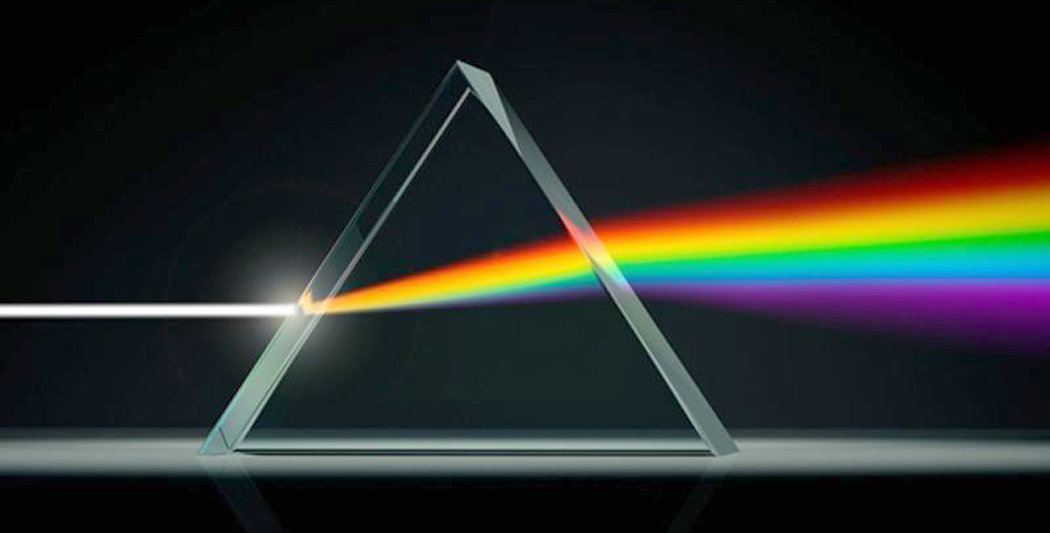
I’ve got to fess up to liking the first and third movements more than the second and fourth. The scherzo seems a little thin melodically speaking, and I always have to get through the first half of the finale before hitting the solid core of gold, which starts with the fugue after the Hogan’s Heroes’ march. The Adagio, though, is as sublime as music gets, and when it is done right, the first movement is a vision from Dante: If the conductor lets the tympani roar properly, the recapitulation can rouse the fight-or-flight in you. Too many conductors smooth that bit out, letting the kettle drums murmur underneath the themes. In 1942, Furtwangler unleashed his tympani in a recording that is both the greatest performance and one of the sloppiest and poorly recorded in history. You have to put up with a lot in that historical document (including knowing that Hitler was in the audience), but it is the version I put on my pile.
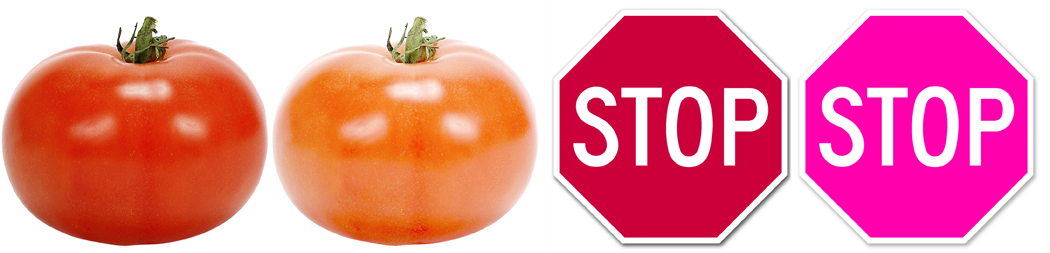
Franz Schubert — The riches are there: the Unfinished Symphony, the Trout Quintet, the B-flat Sonata, the Death and the Maiden quartet. Heck, the F-minor Fantasie for Two Pianos, the two piano trios, to say nothing of the songs, especially Winterreisse. But the most moving of all, deeply emotional and profound is the String Quintet in C, sometimes considered the greatest piece of chamber music ever — even topping Beethoven’s late quartets. That’s saying something. 
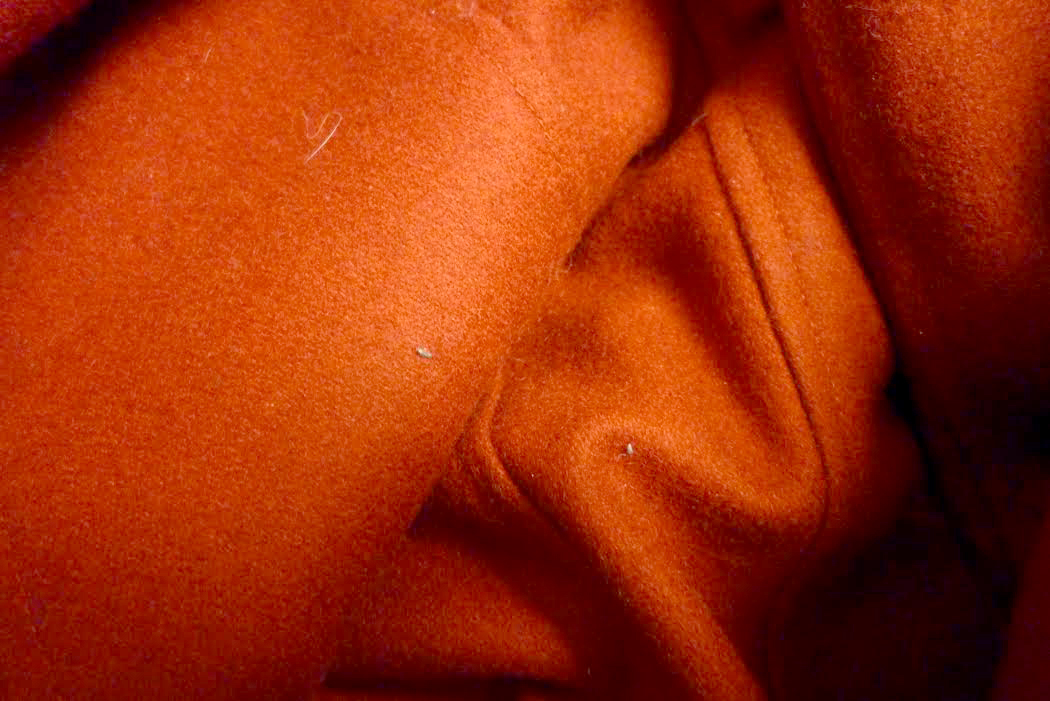
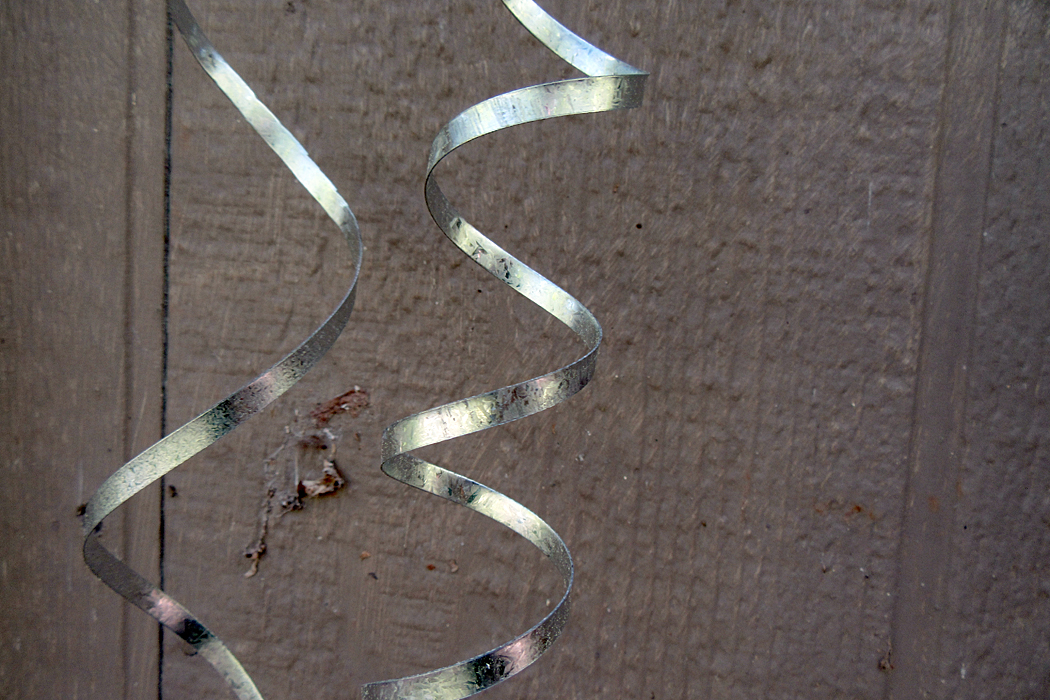
Lots of great performances, but my favorite and the one on my pile is by musicians from the Marlboro Festival. Some find it a bit over the top; I find the top cannot be gone over in this music. The disc also gives us The Shepherd on the Rock, sung by Benita Valente and so we have one of the songs, also. 

Robert Schumann — Bobbie doesn’t get a lot of props these days, and he can get repetitious. And as he aged, he became outright boring. But in his hot youth, he wrote a lot of the world’s most memorable tunes. For me, what goes on the pile is Carnaval, a series of sort-of variations, a necklace of character pieces for piano. 

There are two essential recordings of it: Artur Rubinstein and Sergei Rachmaninoff. When push comes to shove, I’m taking Rach with me. 

Felix Mendelssohn — My absolute favorite Mendelssohn is his Hebrides Overture, but it is too short for my pile, and so I pass by his symphonies and, god help us, his tedious oratorios, and pick the most elegant and refined of all the great violin concertos. 

I am in luck, though, because Pinchas Zukerman plays the bejeezus out of the concerto with Leonard Bernstein and the New York Phil and pairs it with the Hebrides and as a bonus, a rousing performance of the “Italian” Symphony. That’s hard to beat.

Hector Berlioz — This will probably be a controversial choice. How can you not choose the Symphonie Fantastique? It is his signature piece, and under the baton of Charles Munch, it can’t be beat. But my heart belongs to the Requiem. I love it without regard for its faults. It is ingenious, tuneful, and loud. (My college roommate’s brother used to love what he called “the loud classics,” by which he meant things like the 1812 Overture and Beethoven’s Fifth, but you can’t get much louder than the Dies Irae in the Berlioz “Wreck.” 

And there is one recording above all: Eugene Ormandy and the Philadelphia Orchestra. Too many other conductors (I’m looking at you, Colin Davis) attempt to make sense of this irrational music, to tame it and have it make sense. But Ormandy lets it all hang out, and his tenor, Cesare Valletti, is just cheesy enough. 

Frederic Chopin — This is a toughie. Chopin wrote mainly short pieces, and so picking just one would be giving him short shrift. I don’t particularly like his piano concertos, and his sonatas are fine, but what he really calls for is a program of mazurkas, scherzos, ballades, waltzes and the bunch. 

There are two contenders, almost opposite poles apart, interpretively, but they are the best at getting the spirit of Chopin. Most modern pianists are too dry and all seem to hate the pedal. The older Chopin tradition is closer to what the composer wanted. One could choose the 10-CD box of Artur Rubinstein Plays Chopin, which is a delight. But it is made of his later, stereo recordings, and his older mono ones were more idiosyncratic. Still, it is a great box. But on my pile goes Vladimir Horowitz: The Chopin Collection, with seven CDs. Volodya has all the snap and jump that sit in the music waiting to spring out. It’s a close call. The Rubinstein is more complete, but Horowitz is the only pianist who has ever taken the measure properly of the Polonaise-Fantasie, and so, I’m going with Horowitz. 

Franz Liszt — Like Chopin, Liszt is best in the shorter to medium size pieces. I’d want a compilation.

The best Liszt pianist going is Valentina Lesitsa, who understands that Liszt without the theatrics is not really Liszt. Those pianists who try to extract the “music” from the glitz only destroy the essence. The problem is that Lisitsa has not released a really good single Liszt disc; the best is spread out on several. No one does the second Hungarian Rhapsody with as much schmaltz as she does. She is great. But, I have to choose, and so, I’m going with a great 2-disc compilation on DG called Liszt: Wild and Crazy, with the works spread out among more than a dozen great pianists. 

Richard Wagner — Oy, Wagner. This is a kind of classical music Everest, not just because the music is great, but because it takes a mountain-climber’s stamina. To a true Wagnerite, the music is transcendental, mythic, epic. To the not-so-convinced, it can seem bombastic, never-ending, and pretentious. I’m with the first group. I’ve attended two full Ring Cycles live, and own six cycles on disc. So sue me. 

But I’m not going to take all that with me, and so, Kondo-style, I will divest and choose a single disc. Each of Wagner’s operas contain longueurs, segments of what can seem like filler, as the story is rehashed once again. But the first act of Walküre is a perfectly enclosed whole, musically. Arturo Toscanini recorded Act 1, scene 3 with Helen Traubel and Lauritz Melchior that is, for me, the perfect Wagner recording. The disc also includes the Siegfried Idyll and the Prelude and Liebestod from Tristan und Isolde

Anton Bruckner — Sometimes, it is hard to tell one Bruckner symphony from another. He had one tone, one message, one purpose in all his music. Symphonies Four and Seven are the easiest to love; Eight is the longest and most sublime; the unfinished Nine is profound. But if I choose just one, it will be Symphony No. 5 in B-flat. It has that fugal finale, and a first-movement ear-worm that you will carry with you for life.

And my recording of choice is with Hans Knappertsbusch and the Vienna Philharmonic. No one gets Bruckner quite like the quirky Kna. The disc also gives us Wagner’s Dawn and Rhine Journey, and so we get to cheat a little on our Wagner. 

Johannes Brahms — OK, this is painful. Old beard-face is very close to my heart. I’m going to want to add to my pile the DG box of “Complete Works,” but that would be cheating. Brahms is the greatest composer of chamber music since Beethoven and Schubert, and no one has equalled him since. His symphonies and concertos are top tier. But the music that moves me the most, that I could not live without, for it provides me with the deepest consolation is his German Requiem. “Denn alles Fleisch es ist wie Gras.” It is the most human, compassionate, loving music I have ever heard. I weep just remembering it. 

The greatest performance ever recorded, by general acclamation, is that of Otto Klemperer, with the Philharmonia and Elisabeth Schwarzkopf, Christa Ludwig, Dietrich Fischer-Dieskau, and Ralph Downes. I’m putting on top of my pile, so I can reach for it first. 

Giuseppe Verdi — I’m afraid am giving opera the short stick in this selection. I shouldn’t. And Joe Green is going to take a beating here. Because, although I would love to add Otello or La Traviata to my pile, I’m going to choose instead his Requiem. It is operatic, after all. 

Into the pile goes my Barenboim version, with the La Scala orchestra and chorus and Anja Hareros, Elīna Garanča, Jonas Kaufmann and Rene Pape. It is stunning. 

Antonin Dvorák — After Haydn, no composer has been more mentally and emotionally sound and hale than Dvorak. And that has translated, as with Haydn, into a remarkable consistency of quality across genres. You pretty much can’t go wrong with him. I’m going to go against the grain, here, though, and not choose the cello concerto or the New World Symphony, but an old Columbia box of the two piano quartets, the piano quintet and the lovely bagatelles for two violins and harmonium with the Juilliard Quartet and pianist Rudolf Firkusny. This recording is a delight.

Piotr Ilich Tchaikovsky — When I was younger, there was a prejudice against Tchaikovsky. My generation preferred irony and detachment. Tchike was all heart-on-sleeve. And besides, he wasn’t German, which meant he didn’t build his symphonies out of tiny germs of thematic material, like Brahms. We were too sophisticated for Tchaikovsky. We were, of course, stupid. Tchaikovsky was a great composer, a brilliant orchestrator, and put more of himself into his best music than almost anyone. For my pile, I’m going to pick his Sixth Symphony, the “Pathetique.” Everything about it is brilliant, emotionally deep and how can you not love the five-beat “waltz?” 

The performance I choose is Bernstein’s from 1987, with the New York Philharmonic, on DG. It is nearly an hour long (most performances run 40-45 minutes), and with anyone else, that slowness would dissipate all the forward motion of the music, but Lenny manages, even at the crawl, to keep the drive going, and the emotion he wrings from the performance is sui generis. Not to everyone’s taste, but it makes the music an experience, not just a pleasant listen. 

Nicolai Rimsky-Korsakov — I can’t live without Scheherazade. It is Rimsky-Korsakov’s greatest bit of tune-making and orchestrating. It is lush and washes over your ears like gentle surf. 

There are some great performances, including Beecham and Stokowski (I have both), but the one I’m gonna keep is Ormandy and the Philadelphia Orchestra, not only because it is a delicious recording, but it also includes the most joyous Capriccio Espagnol and the Russian Easter Overture, making it a Rimsky trifecta. 

_______________________

This takes us up to the end of the 19th Century. In the next piece, I’ll clean out my 20th and 21st century clutter.