Sometimes I forget just how stodgy I am. What an old pedant. Just how deeply embedded in a certain class of art and culture. 

And it is good to be given a peek at a different way of seeing things, a different esthetic judgment. 

It happens about once a year when my son, Lars, comes to visit his mother and me in Asheville, and brings along a trove of his favorite movies for us to watch. 

Lars is head programmer for the Austin Film Society in Texas, an organization founded by film director Richard Linklater (Slacker, Dazed and Confused, School of Rock, Bernie, Waking Life, Boyhood). Lars visits the big film festivals to view potential movies for the AFS theaters, but he got his start hosting the “Weird Wednesday” genre film series at Austin’s Alamo Draft House, that featured the kind of movies that used to run in drive-in theaters in the 1970s. Lars has seen more movies than anyone else I know, and I’ve known a number of professional film critics — at least one of whom burnt out watching too many movies per week. Not Lars, at least, not yet. 

That Weird Wednesday series spawned the American Genre Film Archive, which now collects neglected 35mm prints abandoned in old drive-ins and warehouses, restores them and digitizes them. It now owns some 6,000 movie prints, including such timeless masterpieces as Ninja Zombies, Bloodsuckers from Outer Space, and The Return of Superfly — to say nothing of Sometimes Aunt Martha Does Dreadful Things (1971, Thomas Casey, director). Lars is on AGFA’s board of directors, and he’s written a new book, Warped & Faded (Mondo Books, 415pp.), that chronicles the birth and growth of AGFA, and highlights many of the films in the archive. 

In the book, he makes it clear he is not writing about movies “so bad they’re good.” He hates that formulation. No, he finds something in each of these films he genuinely appreciates for its filmmaking, its storytelling, its mythic resonance or its acting. He finds what he believes are moments in them that deserve recognition. These films, he wrote in the book are “worthwhile and deserving of serious consideration.” 
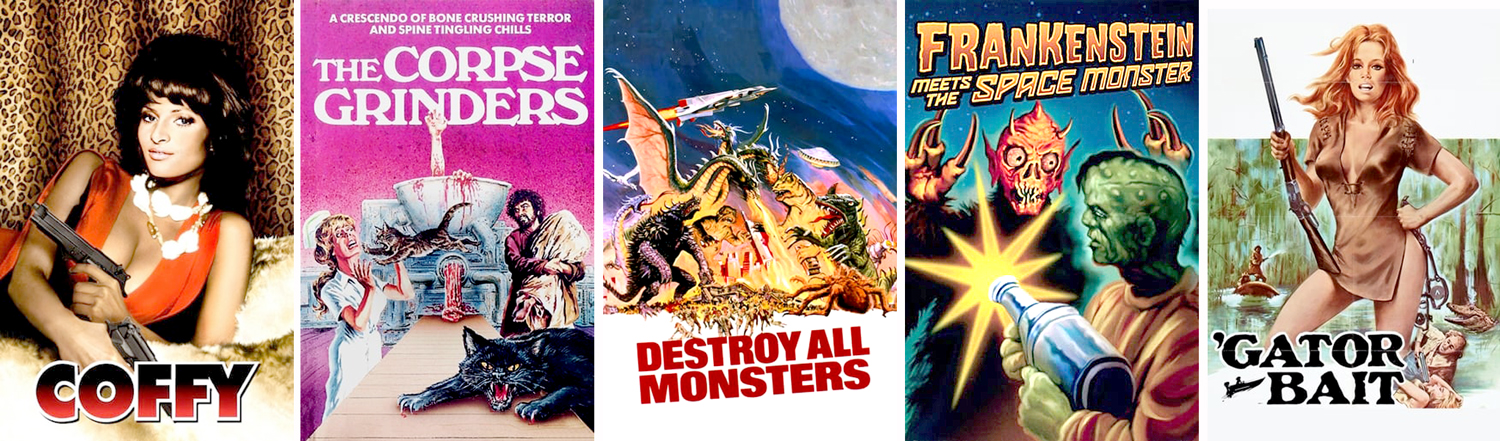
When he comes to visit ma and pa, he brings a trove of titles for us to see, and he seems to take great glee in finding things he knows dear old dad would never, on his own, choose to watch. (I should mention that Lars doesn’t only watch exploitation films — he has a great background in the classics of world cinema, also, and can discuss the films of Vittorio De Sica or Yasujiro Ozu as well as the giallo genre of lesbian vampire films. His erudition is both wide and deep.) 
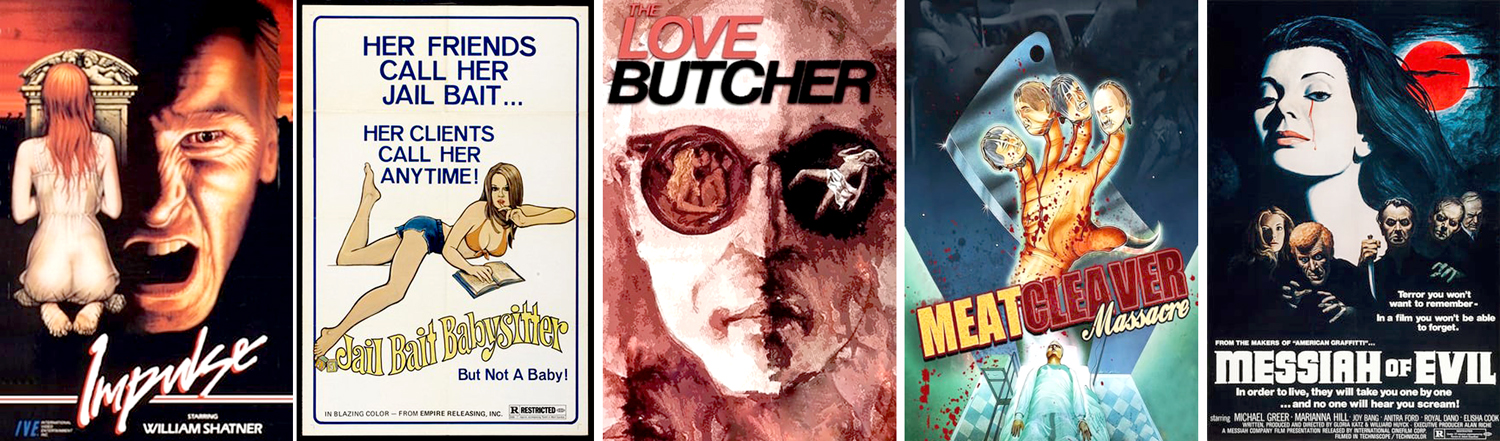
During this past visit, which lasted three days, we watched 10 movies. Lars’ enthusiasm for them was infectious and we talked about the films late into the early hours of the following day, with me scratching my head over some of them, and Lars making the case for them, as well as any lawyer arguing a case. He didn’t always persuade me, but I am glad I got to see all of them. 

In the end, I found several of these films to be real treasures, a few I still ponder over, and at least one that originally struck me as utter trash, I cannot now get out of my head and have to admit — long after Lars has gone home to Austin — that he was right and I was wrong. 
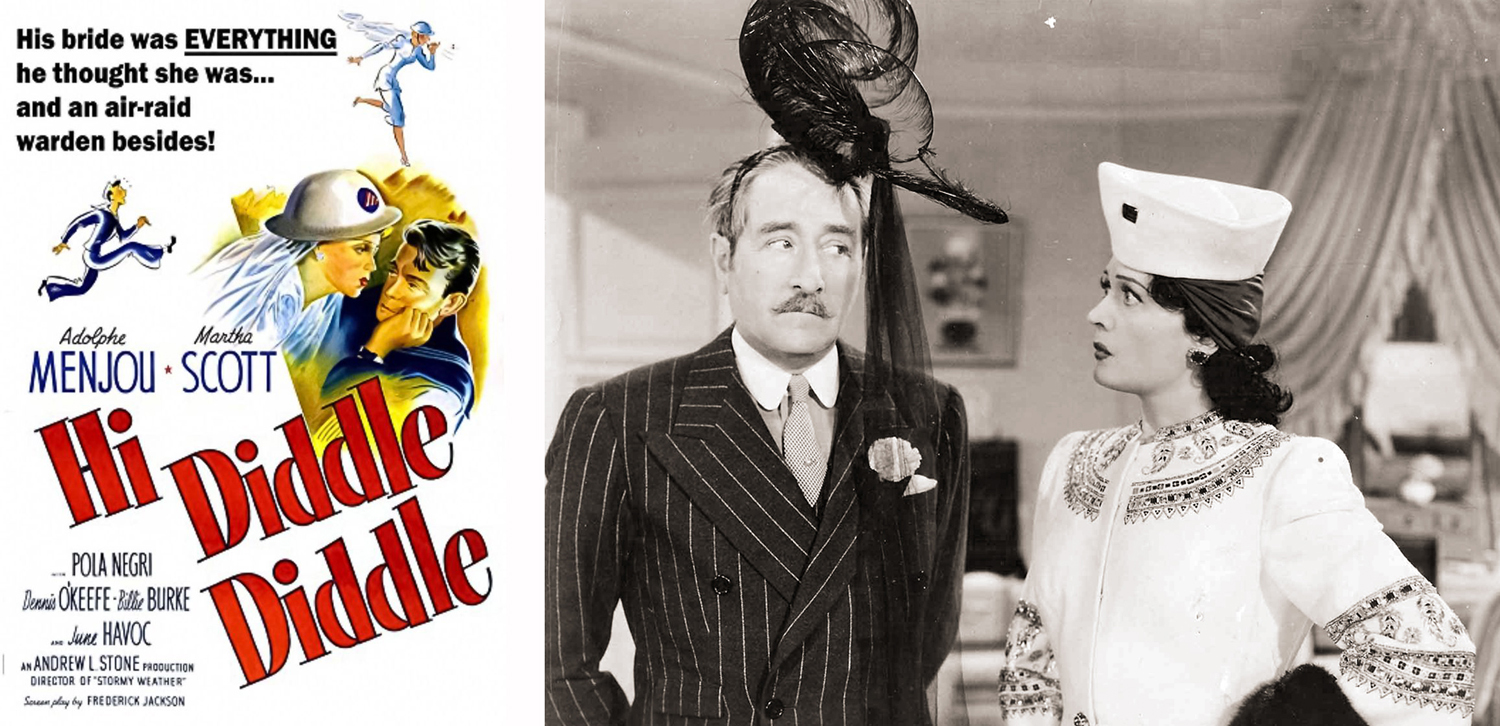
We started the first night with an easy one: Hi Diddle Diddle  (1941, Andrew Stone, director). Barely an hour long, and light as the foam on a latte, it starred Adolphe Menjou as an amiable con man married to an opera star (Pola Negri, in her last role). His son, home on leave from the military, has 48 hours in which to marry his fiancee (Martha Scott), but complications ensue. Also starring Billie Burke and June Havoc, there is not much more substance than a TV sitcom, but good actors can make a meal of even an undistinguished script, and my particular epiphany watching it was just how good an actor Menjou was — especially in those moments when he is not talking and only reacting. 

After that, we plunged into the deep end with Blood (1975, Andy Milligan). Milligan was an angry man, making his cheapie films on Staten Island in a home-made way, badly photographed with lots of scratches on the film. Sometimes he’d frame a shot so the top of the head was included, but the bottom half cut off. It was a kind of grand guignol horror flick, with a vampire and an lycanthrope and a mad scientist trying to save his dying wife — who, by the way, kills people. It was a complete mess. Sort of fun in its own way — a la Ed Wood — but I don’t think I’ve ever seen such a badly made movie. Perhaps the oddest thing about it is that Milligan also designed and sewed all the lavish period costumes. They were gorgeous. The film was set in the 1880s and the dresses the women wore in the film would have been not out of place if they had been made by Edith Head. 

Then came the first masterpiece: Election (2006, Johnnie To). In previous visits Lars had introduced me to the films of Hong Kong director To. I had always thought of Hong Kong movies like bad Kung Fu films, with garish colors, bad acting and stupid plots. But Lars first showed me To’s The Mission (1999) several visits back and I was blown away. It was incredibly beautifully photographed and intelligently plotted and acted. Who knew? Well, Lars knew. On a later visit, we watched A Hero Never Dies (1998), and it was also a revelation. 
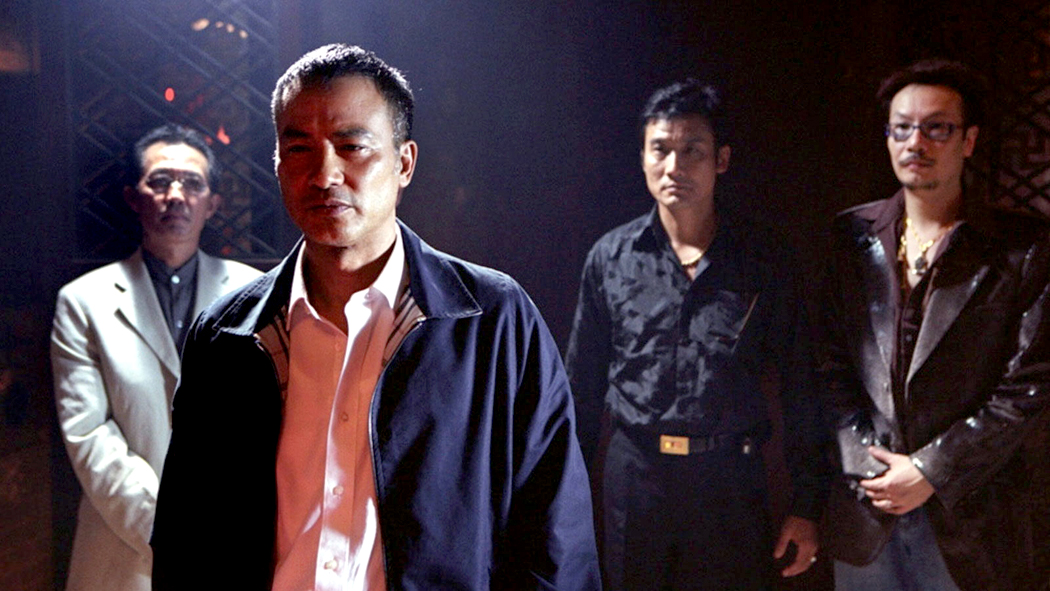
Election is about a disputed succession among Hong Kong crime bosses — one cold-blooded and strategic (like Michael in Godfather), and his rival hot-blooded and impulsive (like Sonny).  But the film is not simply about plot. To develops his characters and gives them extra dimensions. It was a gem of a movie. 
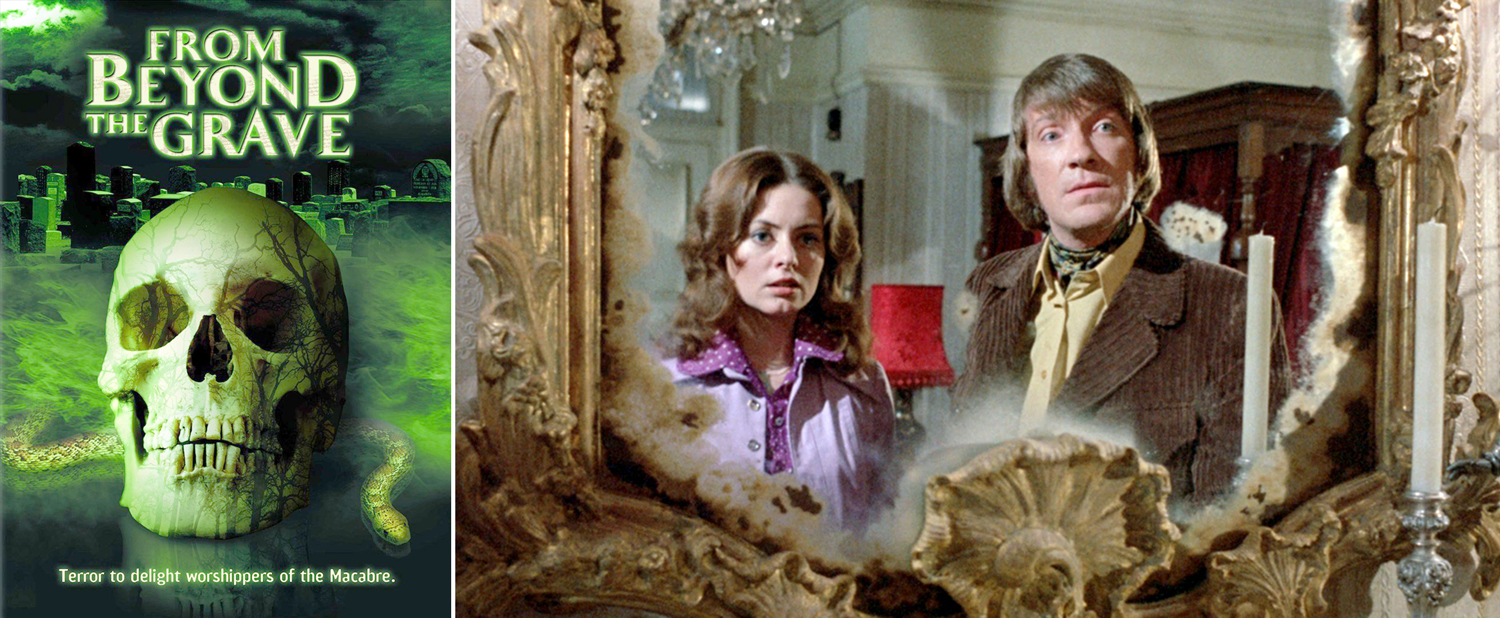
So much for the first night. On the second, we opened with From Beyond the Grave (1973, Kevin Connor), an anthology horror film from Amicus Productions — a rival British company to Hammer Films. It tells four separate tales with a bookend story enclosing them all — like Scheherazade or Chaucer’s pilgrims. It features a pile of popular English actors, each in for a few days work to add up to a 97-minute movie. Look for Peter Cushing, Donald Pleasence, Diana Dors, David Warner, Ian Carmichael, Ian Bannen, Lesley-Anne Down, Margaret Leighton and Nyree Dawn Porter (from the 1967 BBC and PBS series The Forsyte Saga).  
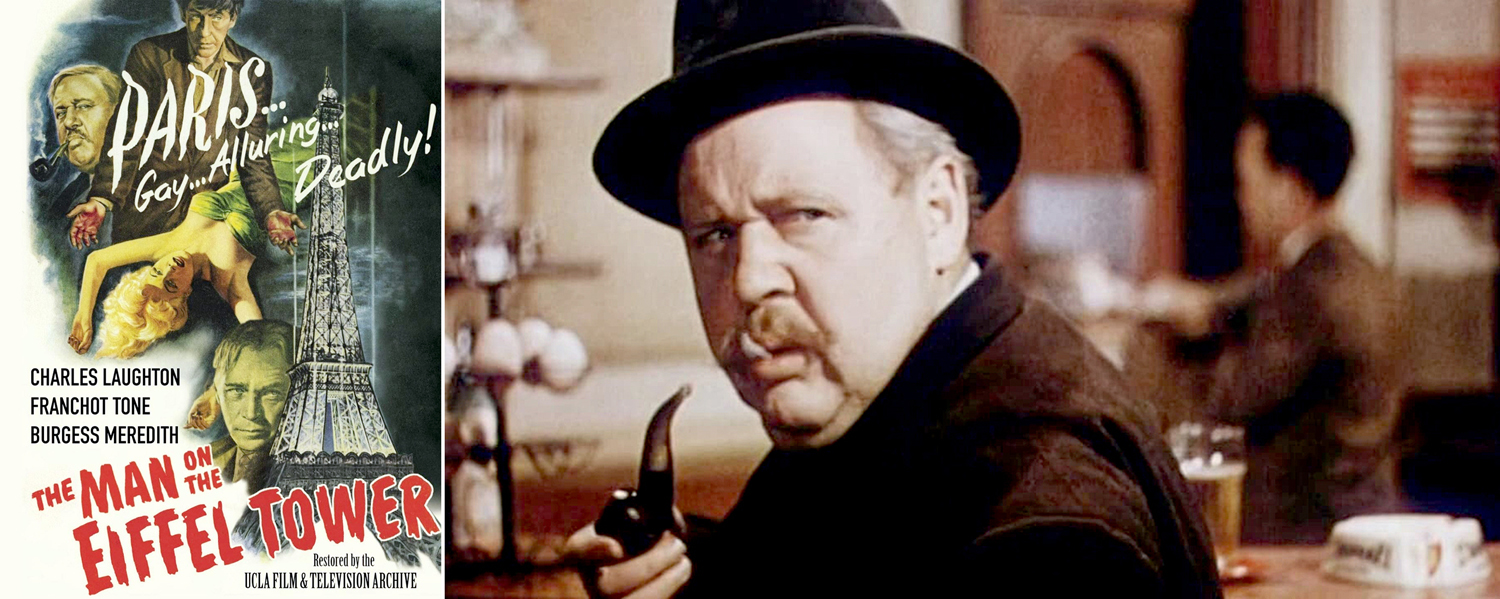
Then we did Man on the Eiffel Tower (1949, Burgess Meredith) from the Georges Simenon novel, with Charles Laughton as the famous detective Maigret. The film only exists in a poor-quality print on faded Ansco Color stock, which leaves the colors shifted to the reddish-orange, and somewhat bleached out. Simenon’s book, La Tête d’un homme, is not one of his most distinguished, and the plot boils along, with Franchot Tone playing a too-clever villain, teasing the detective to find the evidence for the crimes everyone knows he has committed. 

The four-film night ended with the first big revelation of the visit: Brian De Palma’s Phantom of the Paradise (1974). It is a film I had always meant to see, but hadn’t yet. It was brilliant, funny, spooky, clever and spectacularly cinematic. I’m not much into rock music, but it worked perfectly in this updated version of the Gaston Leroux classic, Phantom of the Opera.  

There are many films — and many more books — that one lifetime isn’t long enough to get to. I could name a dozen off the cuff that I haven’t yet managed to see — a bunch of Ozu, the later films of Satyajit Ray, just the tip of the iceberg — and I know that at 73, I don’t have enough time to see them all. I was grateful that Lars brought me Phantom. It was worth the wait. 
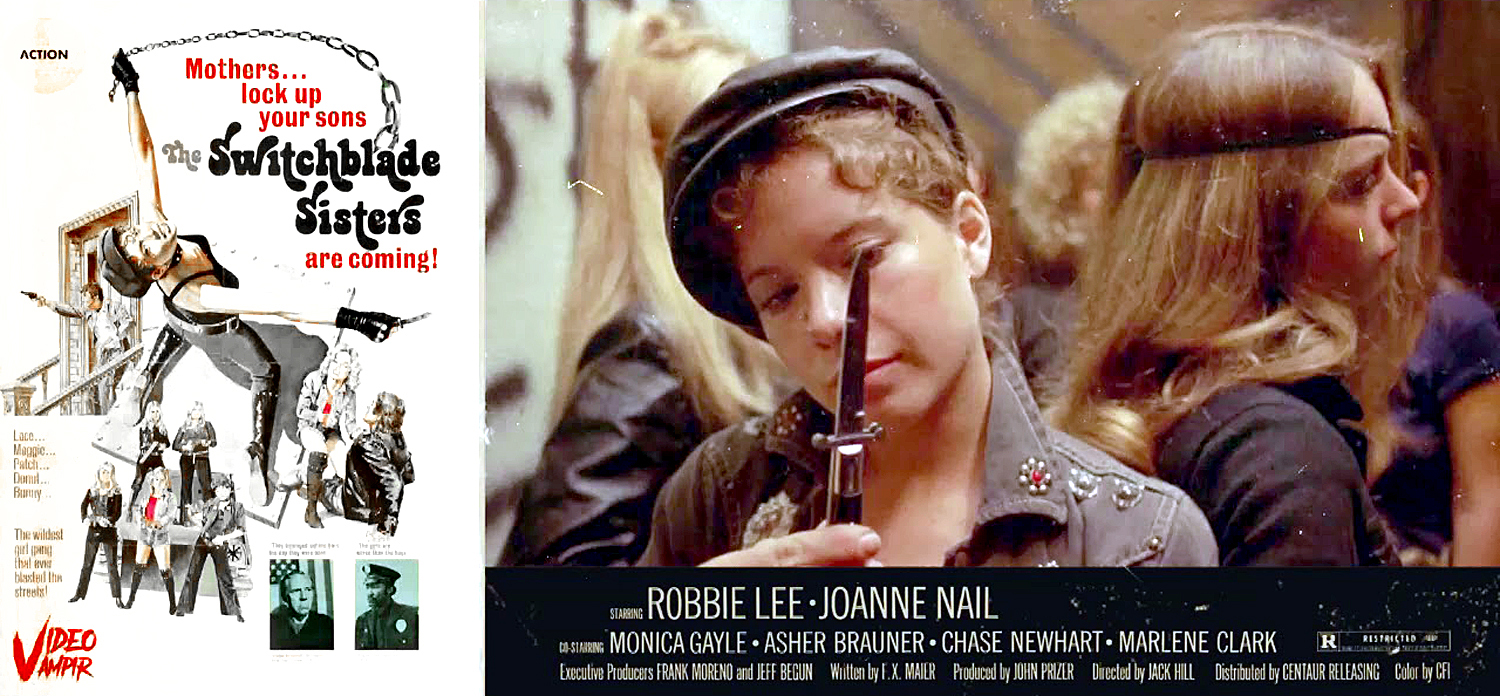
The fourth film from the second night was the crux, the fulcrum of the visit, and a tough go for me on first encounter. I could not, for the life of me, figure out why Switchblade Sisters (1975, Jack Hill) should figure on Lars’ list of his four favorite films of all time. It is a cheapie girl-gang film, and I have to admit that my prejudice kept me from appreciating it. To any standard criteria, it is an awful film, full of cliche fights and stilted dialog. I hated it. 
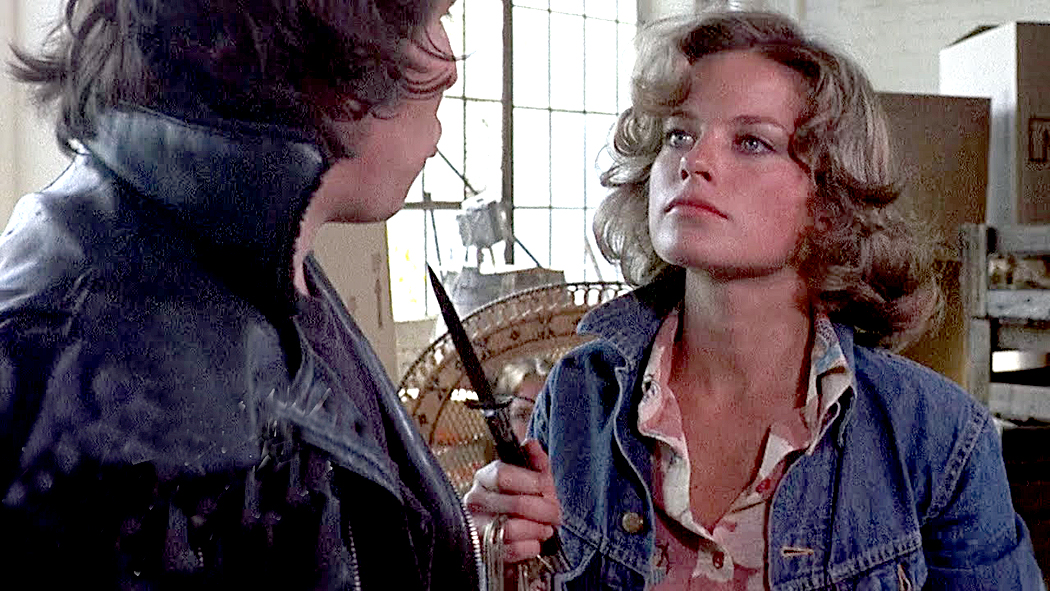
I was wrong. Lars made his best case for it, saying it was amazing considering the budget. “It is a film better than it needs to be,” Lars said. Hill does great work, he argued, considering the script and the merely-adequate actors, and the schedule he had to work with. I wasn’t sure that making something out of straw and sawdust elevates the film to more than drive-in fodder, but Lars persisted. 
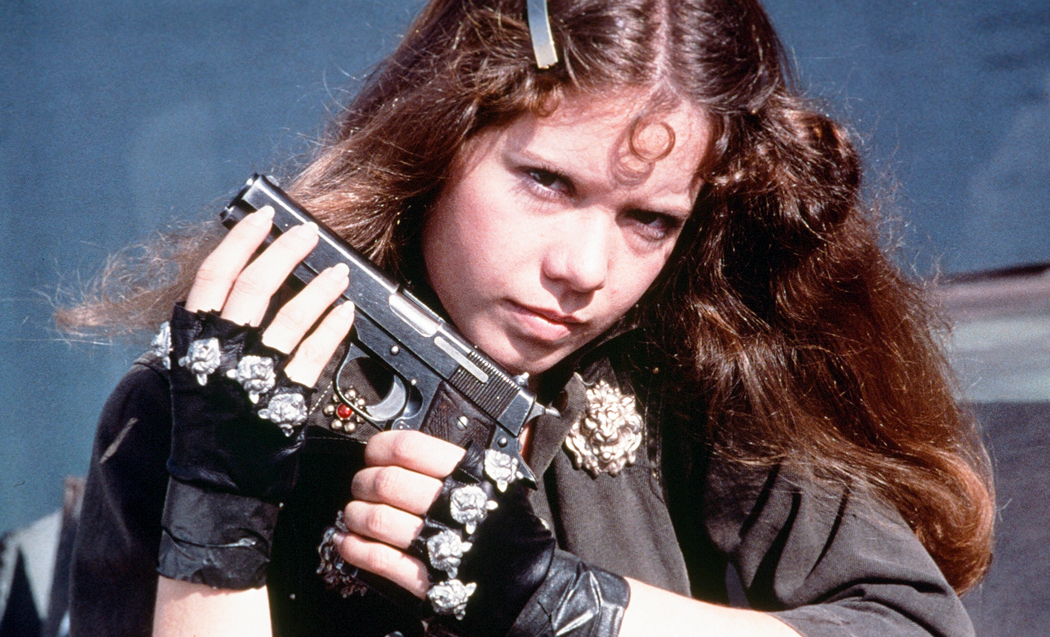
Here’s what Lars wrote about it in Warped & Faded: “It’s hard to imagine a more perfect girl-gang movie. All the elements — tone, pacing, performances — are dead-on. The revenge and betrayal-filled plot brings to mind the nastier Elizabethan dramas that were so popular with working-class audiences of 400 years ago, who crammed into disreputable theaters to watch the blood-drenched intrigues of kings and thieves. Some things never change. Hill combines the complicated plot effortlessly with the crisp, classical gangster movie tone of the old Warner Brothers James Cagney films and the directness and intensity of ’70s drive-in cinema. The result is a perfect storm of red-hot teenage bad girls, flashing knives, and social commentary.” 
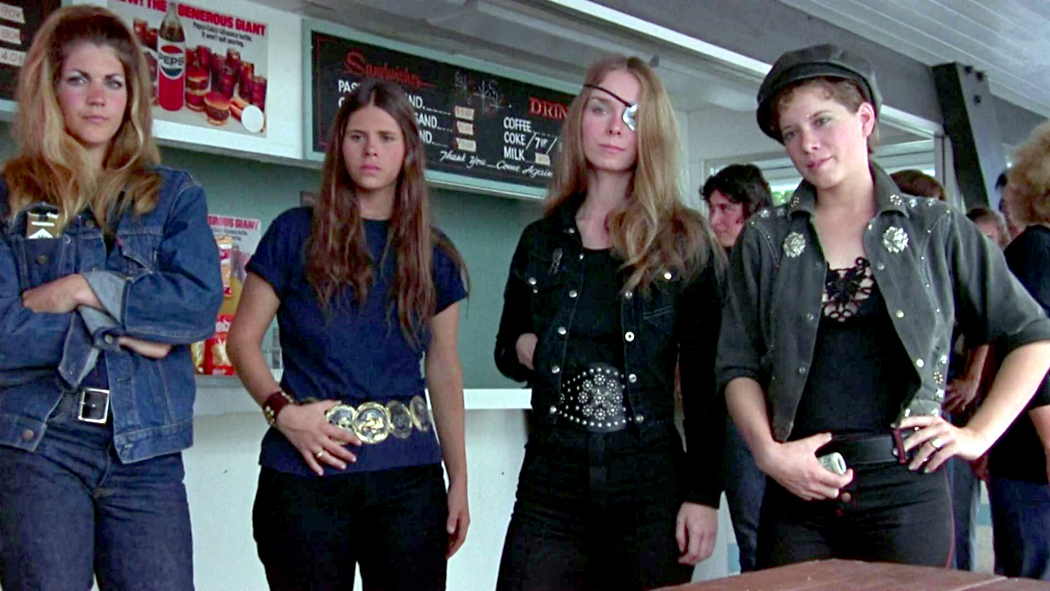
So, the film, for all its gore and vengeance, is really just a modern version of Elizabethan revenge plays. I could see that, but, beyond Shakespeare, most Elizabethan theater is dreadful. And even Shakespeare has a hard time salvaging Titus Andronicus. (It took Julie Taymor to do that). And it was clear, the bare bones of Othello run under the movie. But my reaction was extreme. I hated, hated, hated Switchblade Sisters. The problem was, I couldn’t get it out of my mind. One of my old definitions of great art is “what you might not understand but can’t get out of your mind.” And here I was faced with something very close to that. 

There are any number of things — books, music, theater — that on first encounter, I found difficult to appreciate, like Bruckner symphonies, which took me years to understand, but later, after time to digest, I came around to seeing their very estimable value. There is something in Switchblade Sisters that sticks to the ribs, and I cannot gainsay its effect. I’m not putting it on my four-favorites-of-all-times list, but I have to admit, a week or so after seeing it, that Lars was right and I was wrong. 

The third night’s viewing was a coda and conclusion. We opened with one of the strangest movies I’ve ever seen: Nothing Lasts Forever (1984, Tom Schiller) — A surrealist comedy with tons of names in the cast, including Bill Murray, Imogene Coca, Sam Jaffe, Eddie Fisher, Mort Sahl, Zach Gilligan and Dan Aykroyd. Shot in mock-studio style, like an old Joan Crawford film, it features a plot to get retirees to travel by bus to the moon to shop at an out-of-this-world mall. A film no studio or distribution company admits owning the rights to, and therefore never released commercially. Warner has the film, but won’t admit it. (Really.) Lars had to lobby two corporations and a half dozen lawyers to get his hands on a print to show in Austin. 
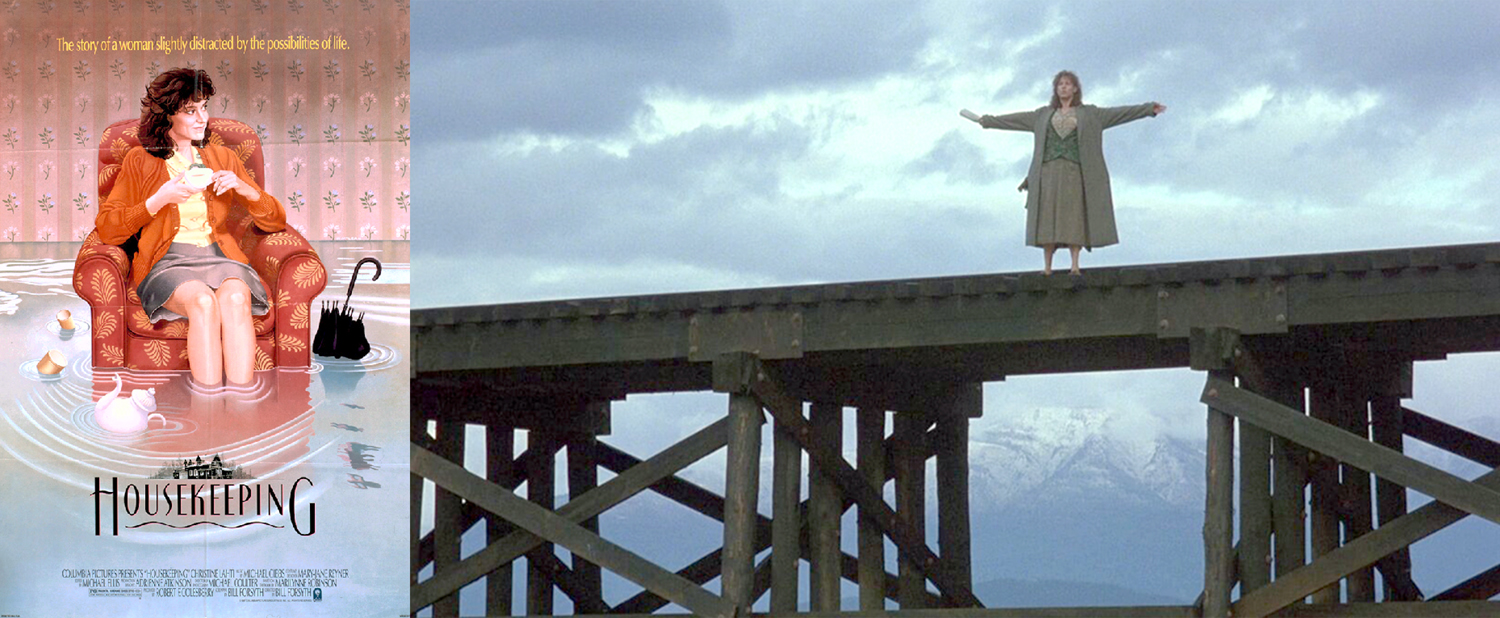
Then, we watched Housekeeping (1987, Bill Forsyth), a small, quiet coming-of-age film about two sisters living in the Northwest mountains. When their mother commits suicide, eventually their aunt (Christine Lahti) comes to take over. She is either a free spirit or not quite right in the head. The movie never makes up its mind about that. One sister rejects the aunt, the other embraces her, and her idiosyncratic ways. 
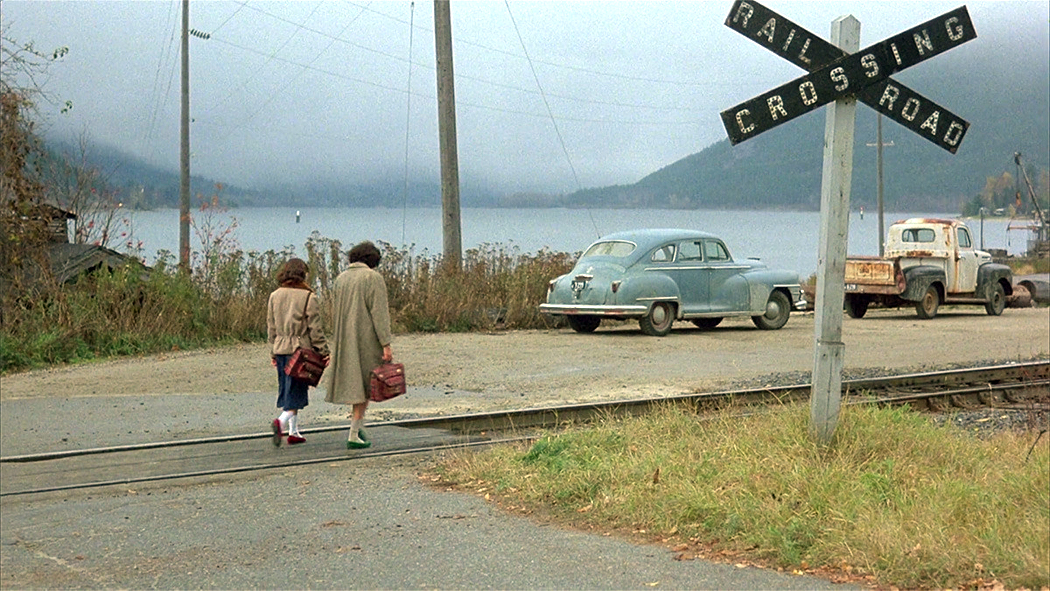
Forsyth made the earlier Local Hero (1983), which is also as deeply felt as Housekeeping. The visit with Lars underlined the different esthetics we have. He is much more interested in the filmmaking itself — as so many of his generation are. It is a meta world they inhabit. He likes genre films, with lesbian vampires, girl prisons, ninja warriors and car chases. (Again, I remind you that he also loves the great art films, he is not one-note). 

But, for me, art — including cinema — is a humanistic concern, and I am more focused on content than style (I have a healthy appreciation of style, also; it’s a matter of priorities). I most enjoy films that address human concerns, the inner feelings of people, the choices, moral and otherwise, that they make, the tragedy that the universe thrusts on us. 
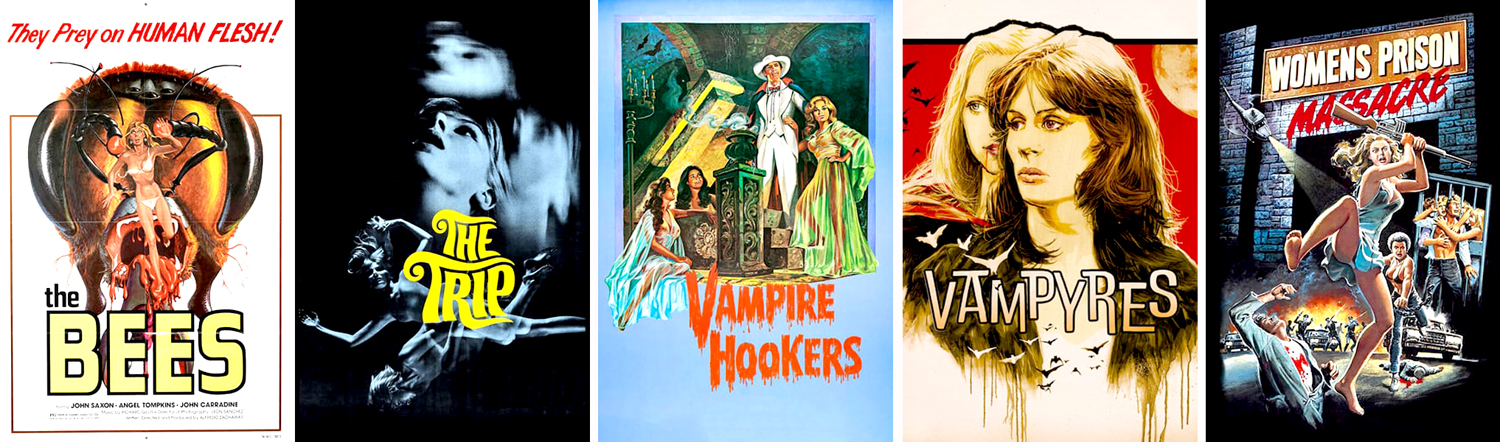
I understand the other argument, too. When I listen to a Haydn symphony or quartet, there is emotion and melody, yes, but most of his power is in establishing a formal expectation and then subverting it, giving the listener a pleasant surprise and pleasure in the recognition of it. It is the 18th century definition of “wit.” And Lars’ knowledge of film and filmmaking instills in him the norms that his favorite films play with and the best ones transcend. 
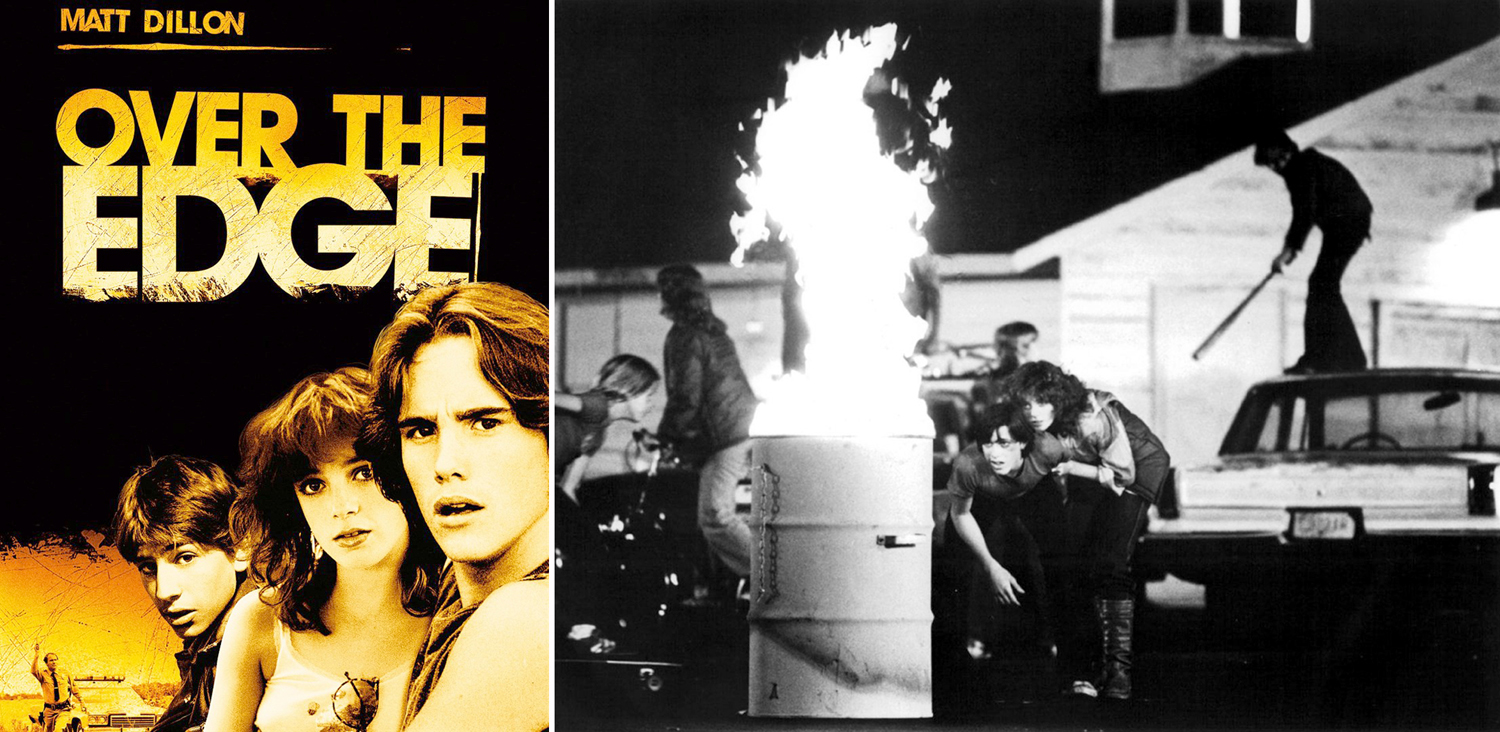
Still, I want my art to be more than clever. The final film we watched on his visit was Over the Edge (1979, Jonathan Kaplan), another teen gang movie, but one more sociological and realistic, with a nihilistic group of teens in the sterile Denver suburbs with nothing to fill their lives but boredom and mischief. Petty vandalism and low-grade burglary occupy their time, until one of them steals a gun. The emptiness of their lives is soul destroying. One thinks of the anomie of Larry Clark’s Tulsa

The fact that the parents of these kids have lives no more fulfilling only makes the movie more depressing. The apocalypse at the end feels like the only worthwhile thing in the lives of both parents and kids. 

And so, 10 movies in three days. My parameters have been stretched, which is only a good thing. When my head is buried too deeply in Ovid or Tolstoy, I need once in a while to look up, out of the page, and into the rest of the world, and Lars’ films at least briefly give me a glimpse into another way of aiming my sensibility. Whether it takes or not is up in the air. Ovid is awfully good. 

Click on any image to enlarge

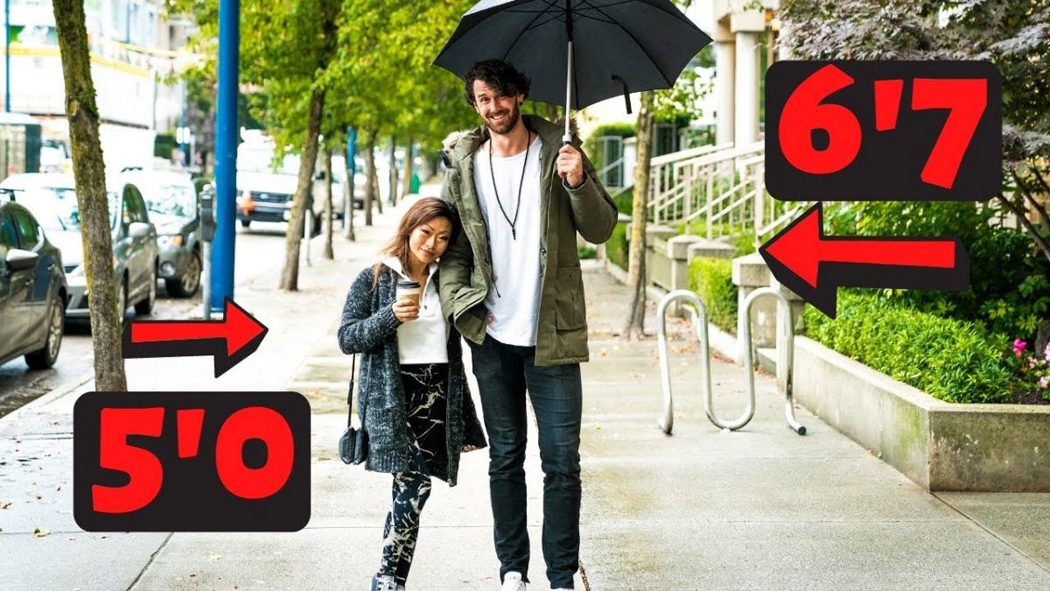
My daughter, Susie, is a scant five feet tall. She went to the University of North Carolina at the same time as six-foot-six-inch Michael Jordan. One day, they both got in an empty dorm elevator together. The door closed; one looked up, one looked down and they both spontaneously started laughing. 

Scale is important.

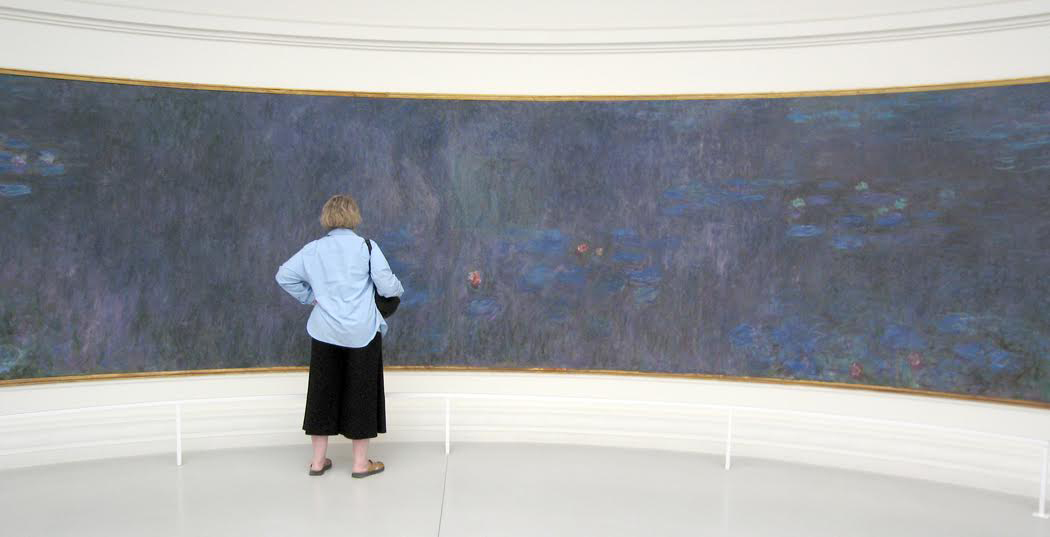
And no matter how many times you’ve seen Monet’s waterlilies in books, on computer screens or in slide shows, you are not prepared for the wallop they have in person at the Orangerie. They spread out across your vision from one peripheral side to the other.

Scale matters.

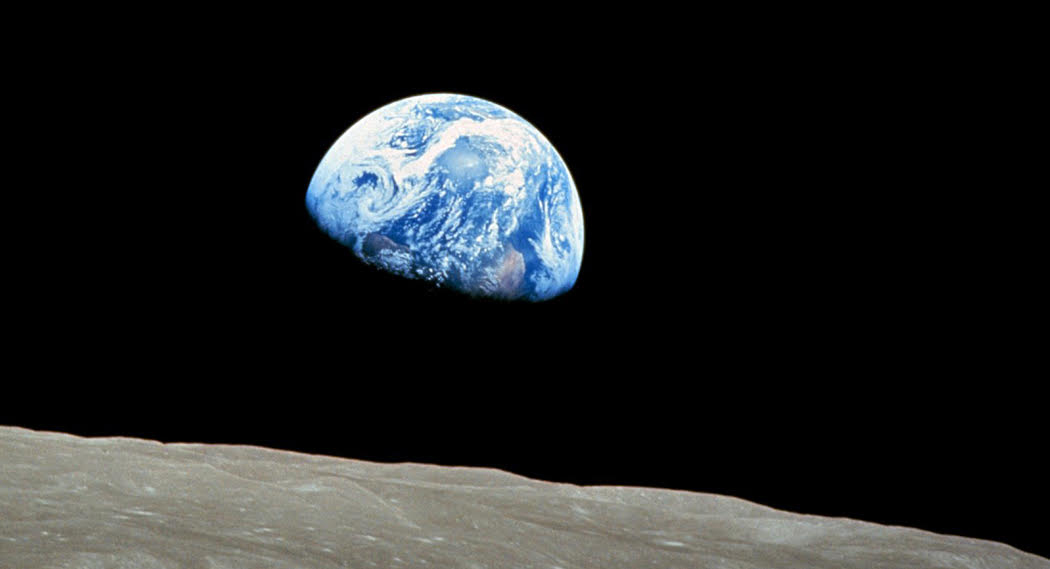
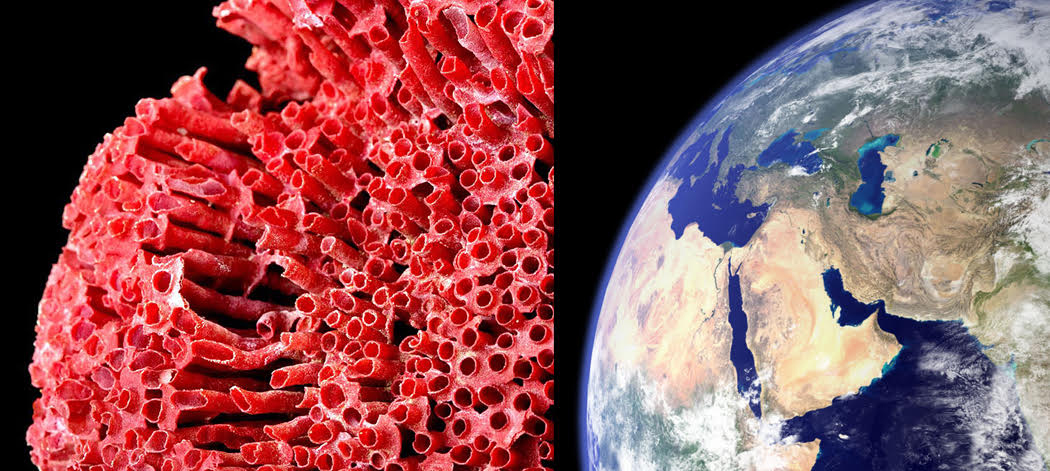
In 1972, Apollo 17 astronauts photographed the “Blue Marble” Earth from roughly 18,000 miles, giving us an image of the wet, watery ball we live on. It looks small and vulnerable — and it is, in the immensity of space. But it also gives a misleading impression of the scale of the planet.

Scientists may measure scale with numbers and exponents, but each of us, personally, can only conceptualize size and distance against our bodies and senses. Who of us can tell the immediate difference between 1011 and 1110? Which is the larger number? But between your fingers, you can tell which of two grains of sand is larger, merely by feel. 

In 2008, I drove from Phoenix, Ariz. to Reidsville, N.C., over a weekend, a trip of about 2,200 miles, or roughly 1/11th of the circumference of the globe. I left after work on a Friday and pulled in to Reidsville on Monday morning. I was hauling ass, as they say. On the Sunday, I drove 900 miles. The trip was exhausting, but gave me a palpable sense of the size of the world. I could feel it, because I drove over it.

(And, by the way, the world is not flat: I could see the great grain elevators of the Midwest rise from the curved horizon before me and, after I passed, watch them settle, like the setting sun, behind me.)

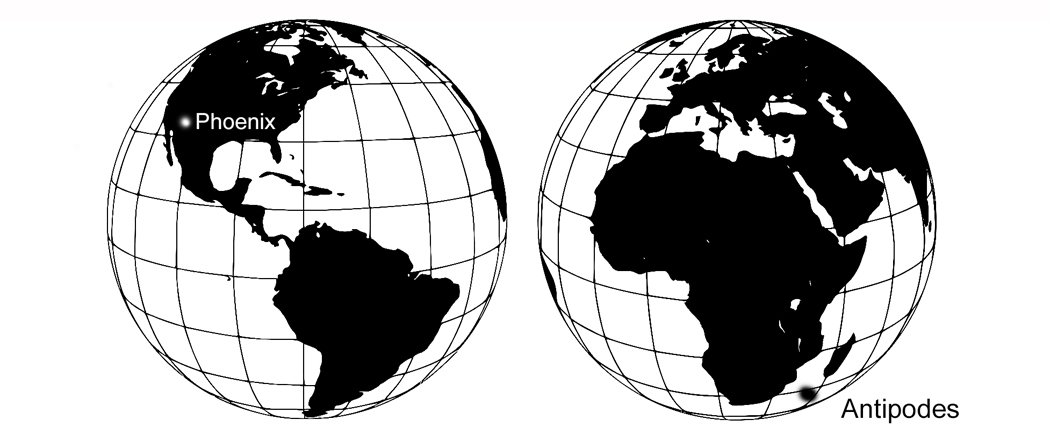
In 1989, I flew from Phoenix to South Africa, a flight that spent some 40 hours in the air. The popular image is that if you dig straight down in your back yard in America, you eventually hit China, but this isn’t so. Directly opposite Phoenix on the Great Blue Marble is a spot in the Indian Ocean just off the coast of South Africa. 

So my flight was literally to the antipodes. (It took so long because in that apartheid era, I had to take an especially roundabout route to my destination: Phoenix to Philadelphia, changing flights to Frankfurt, Germany, changing again to a South Africa Airlines flight that, because of opposition to apartheid, was not permitted to overfly most other nations in Africa, and so, had to fly out over the Atlantic, refuel in the Azores, and cruise over the water all the way to Namibia before finally landing in Johannesburg.) It took Lindbergh 33 hours to cross just the Atlantic.

Such a trip really gives you a sense of the scale of the planet.

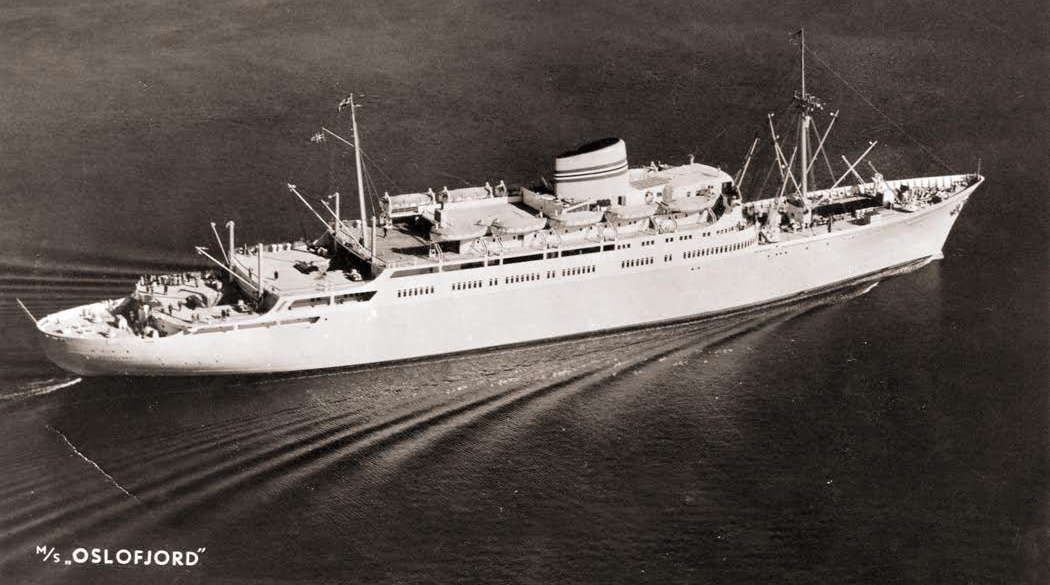
Before air travel, however, such a voyage would take months, not hours, providing an even more body-interior feel for the distance. In 1967, I took a trans-Atlantic ocean liner to Europe, and the monotony of the unchanging sea, day to day, made the earth seem even larger. My trip took four days and a bit. It took Columbus more than two months to cross the Atlantic.

The point I am making with all this travel tale, is that scale, whether looking at Picasso’s Guernica, or watching the odometer while driving from Bangor to Seattle, is that scale is felt in the body, it is measured by human proportions. As Protagoras recognized in the Fifth Century BC, “Man is the measure of all things.”

When we look out at the night sky and realize we are at the bottom of a seemingly infinite and dark well, we can be awed, but we cannot feel in our bodies the inestimable size of the cosmos.

Yes, we can speak of it in abstractions. We can point out that Voyager I, now in interstellar space, is traveling at a speed of 17,000 miles per second — which would take about a second and a half to circle the Earth — and will cover 325 million miles in a year. Yet, at that speed, it would take it  some 45 thousand years to reach the nearest star. There is no way you can process that scale in your paltry human skin. We can talk in big words, like billions and trillions, but outside of abstract mathematical numbers, can you actually feel the difference between a billion miles and a trillion? They are meaningless words. You might as accurately call it a “gazillion.”

Do not misunderstand me. Humans have been amazing at understanding the cosmos intellectually. We can calculate the orbit of a satellite within what seems like a few inches. But I am not talking here about abstract reasoning.

There is a limit to the human imagination. We can calculate overwhelming numbers, but in terms of body knowledge — being able to physically conceptualize — such numbers turn into little more than words. 

We can use the math for engineering and for science, but we must recognize that our puny minds cannot get their arms around such boggling numbers. We are limited by the evolution of our human brains, which grew to process the daily income of sense data. We can feel the road under us as we speed along the interstate; we cannot feel the gap between Earth and Alpha Centauri. We can name it, but we cannot feel it. 

All trans-human scales are metamorphosed into a single size: Infinite, or might-as-well-be. It is what we feel when we turn our eyes up toward Orion or the Milky Way.

An earlier version of this essay appeared on the Spirit of the Senses website Oct. 2, 2018

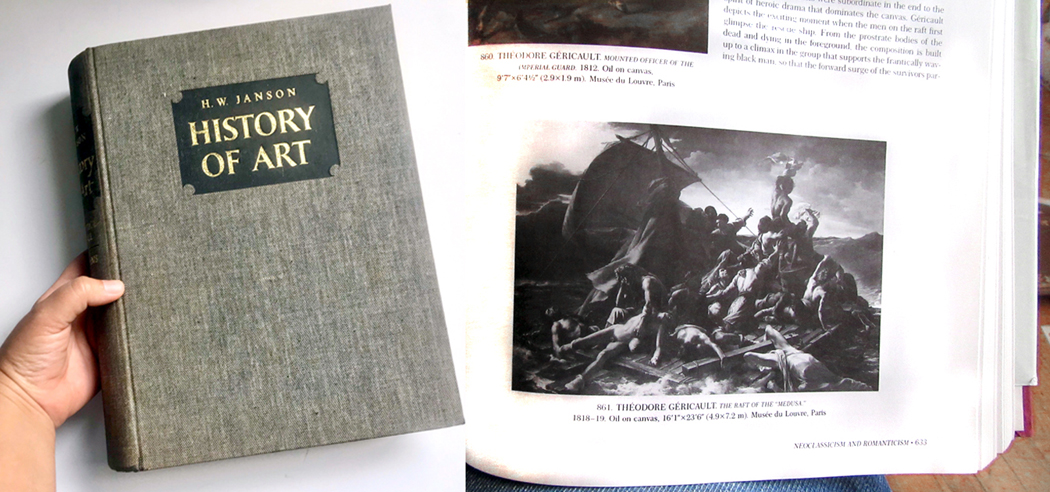
The first time I ever saw Théodore Géricault’s Raft of the Medusa, it was in my art history textbook — the infamous Janson. It was about 5 inches wide on the bottom of page 633. 

Most of the world’s most famous art I first contacted in reproduction; it is the same for most people. It would be hard to travel the world’s great museums to see all the Vermeers, Rembrandts, Titians or Chardins. Instead, we see reproductions in books, or on the computer screen. I’ve seen hundreds, probably thousands of paintings in reproductions before I ever saw the real things. 

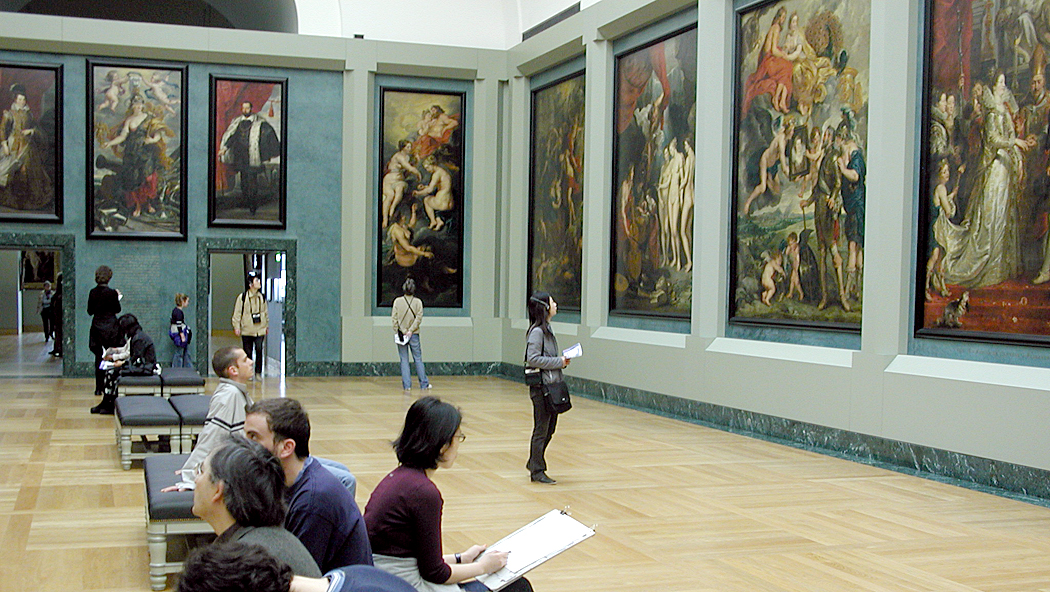
So, imagine my amazement when I encountered the real thing at the Louvre in Paris. There it was, the size of a barn. It was a lesson — if I really needed one — teaching me that a picture of a picture is not the same thing as a picture. But so much of what we imbibe of culture comes not in its original form, but as reproduction, whether it is Canaletto in art history class, or Beethoven on a disc. 

One of the things that divides the world I grew up in from the world I live in now is the unconsidered acceptance of a media experience for the live reality. We all have our noses in our screens. In many ways, what was once the secondary simulacrum of a genuine experience has become the end product itself. Since the days of Sgt. Pepper’s Lonely Hearts Club Band, a great deal of music simply cannot be performed live; the recording is the original. 

In our Postmodern world, suffused with media, many an artist and musician has taken the secondary product as the original. And so, images are designed to be seen on the computer screen. No one asks to see a TikTok video in a movie theater; that would be silly. Content viewed on an iPhone is not an imitation of something else. 

I, myself, now take photographs specifically to be viewed on screen rather than printed out. I edit them differently, I frame them differently. It is a different esthetic. But aside from work made for the virtual world, there is still the palpable object to take into account. 

But the fact is, that many more people listen to recordings than attend concerts; see paintings in book reproductions or on computer screens than visit galleries or museums; prefer audiobooks to sitting in a chair and quietly turning paper pages. It gives a false impression of the art. 

We keep stepping back from an original and choose a Xerox copy. 

I am not here arguing against digital devices — you are reading this blog on one, so where would I be without such devices? — but I am worried that the ubiquity of reproduced media makes us forget that there can be something more immediate, and that through most of history, that immediacy was the primary mode of experiencing art and music. 

My brother and I were once talking about theater. He stated that he didn’t much care for live theater but preferred movies as being so much more realistic — despite the obvious fact that live actors are very real and that celluloid images are only simulacra, and that movies are cut and edited all over the place, while live action must take place in real time. 

But I recognized his point, and when I was younger, I would have agreed with him. Most of us are only subject to live theater, if we are exposed to it at all, in uninspired productions with bad or mediocre acting — the community theater or dinner theater sort of thing. And undistinguished theater is admittedly tedious. 

Most of the theater I had been exposed to was just that sort of thing. Sometimes quite entertaining, but always so darned “theatrical,” i.e. phony. 

Then, in 1994, I got to see the original Broadway production of Tony Kushner’s Angels in America, both parts over two days. It was the most riveting, even mind-blowing thing I had ever seen. And what was so moving was that it was there, live in front of me. They were real people doing and saying those lines and feeling — or evoking — those very primal emotions. It is still the single greatest experience I ever had in an audience. 

I have now seen the two-play cycle four times and each time it has grabbed me by the lapels and yelled into my face in a way that has left me shaken. I’ve seen the Mike Nichols film version, with Al Pacino, and it is a wonderful production, but it cannot move me with quite the same seismic force that the live version had. If I had seen those same actors in the theater instead of on the TV screen, I’m certain it would have been earthshaking, but the remove of the screen gives the whole thing a distance that the live actors don’t suffer from. 

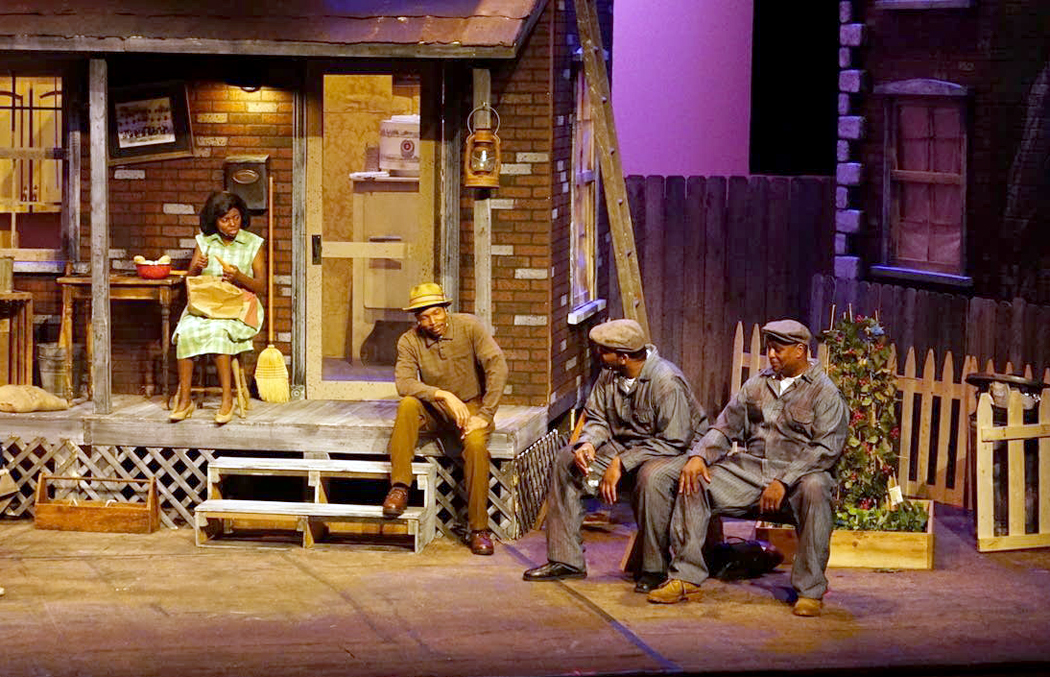
I since have become an advocate for live theater, though it is hard to convince anyone who has not had the experience of great live performances. I have seen really good professional performances since Angels, and they have something nothing else has. Whether it is Fences by August Wilson, or Amadeus by Peter Shaffer or Hamlet performed by the Royal Shakespeare Company, I am completely drawn in, with the same complete concentration one has when reading a great book — the day-to-day world disappears and the esthetic world takes over. 

(Amadeus, by the way, as a play is very different from Amadeus the movie. As wonderful as the film was, a good production of the play is so much more devastating.)

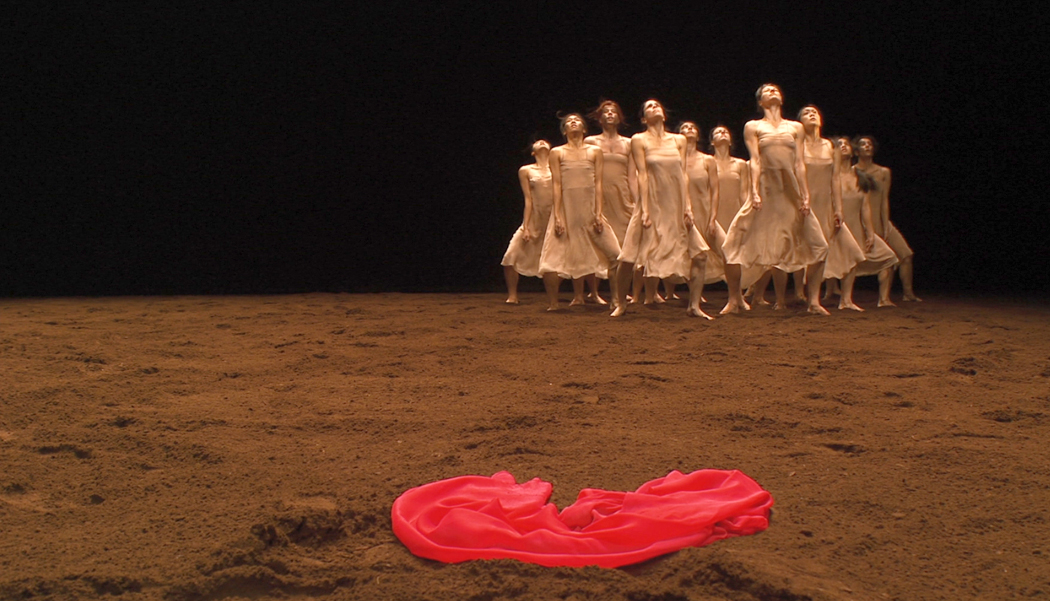
It isn’t only plays that have to be seen live. I have watched a good deal of dance on video or on PBS, and I am always disappointed at some deep level. Ballet and dance theater is the art form that speaks to my inner being the most directly and I love dance profoundly. But only live dance will do it. Balanchine knew this and attempted to re-choreograph a few of his masterpieces especially for video and however beautiful his video versions are, they pale beside seeing them live. You have to see the living, breathing (huffing and puffing), muscle-twisting movement in three dimensions for it to register fully. 

(Mediocre dance, like mediocre theater is the worst ambassador for the artform — how many people have been turned off by watching the local civic ballet company galumph through the annual Nutcracker? That is no more the real thing than little league pitching is like Bob Gibson or Sandy Koufax.)

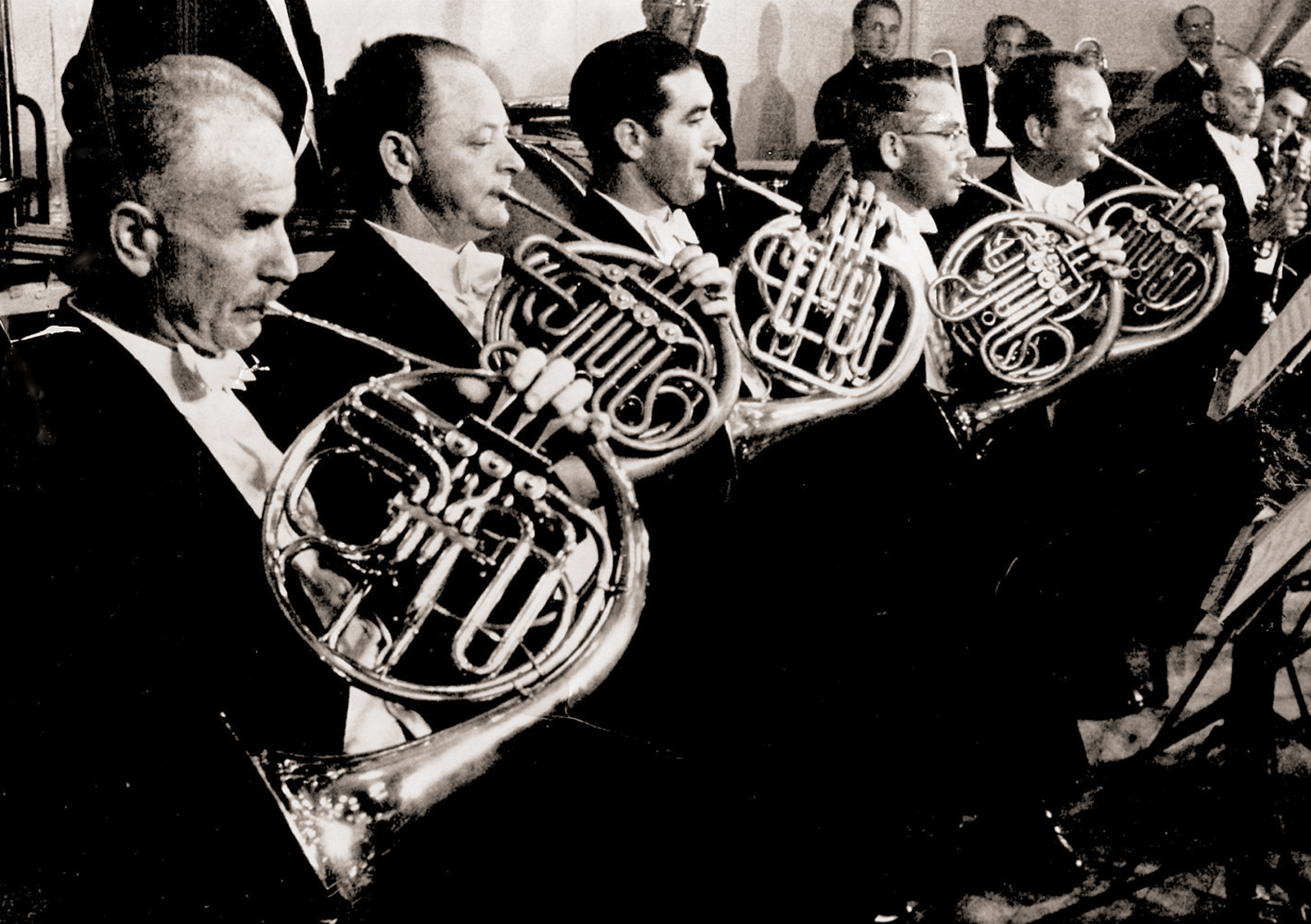
I have well over a thousand CDs on the shelves in my office and listen daily to recordings of Brahms, Bartok, Weill, Mahler and Glazunov. And I don’t know where I’d be without them. But I also know that the real thrills I have had with classical music have been in the concert or recital hall, listening to live music. It has a presence that the recording cannot duplicate. I’ve written before about hearing the eight horns in Strauss’s Don Juan peel off the great horn call and feeling the sound through my chest and my fundament as much as through my ears. 

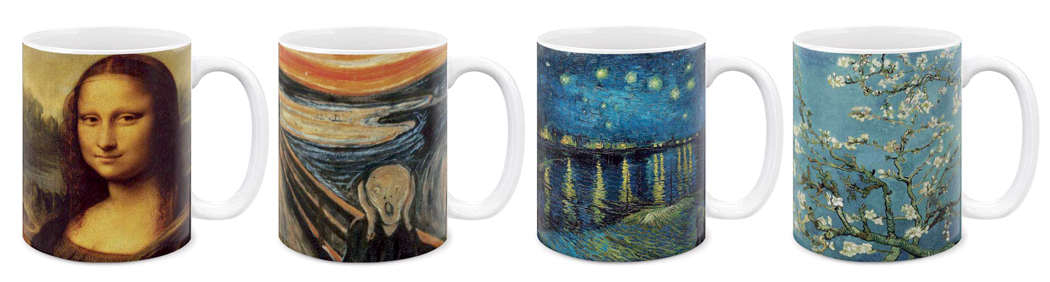
I want to make the same case for visual art. Everyone knows what the Mona Lisa looks like. Or do they? Almost to a person, those who have seen the original has remarked how small the painting is. It is a very different thing from the same image on a coffee mug or even in an art book. 

But it’s not merely size I mean. The colors cannot be precisely conveyed by printer’s ink or by a computer’s palette. The paint has a texture that isn’t conveyed, and varying levels of gloss or matte. This was brought home to me — very like the revelation of Angels — when I saw a collection of Cezanne still lifes at Washington’s National Gallery of Art. I had not imagined such an exquisite range of greens; way too many variants than can be named. The Cezannes in my Janson were dull and lifeless in comparison. Yes, I could name the subject in them — an apple here, a vase there — but apple and vase were not what the painting was about. This rich range of visual information was the real subject. Gone in the reproduction. The real paintings made me want to chew the colors like a great meal. 

We are led to accept imagery as the purpose of art, but it is only one portion of it. Alone, it is hardly more than the male or female silhouette on a restroom door. It also must include the scale, the finer shades of color and texture — and as with theater — the “presence.” The fact. Van Gogh’s Starry Night is everywhere from lampshades to mouse pads, but if you stand before it at the Museum of Modern Art in New York, you absorb how complex the painting is. Not just a swirl of blue night sky, but an object, a painting made of pigments and oils. 

The same with the huge paintings of Maria Medici by Rubens, or the meticulous brushstrokes of Robert Campin’s Mérode Alterpiece at the Cloisters in New York. 

But, I hear someone say, you should not let the best be the enemy of the good. As Chaucer said, “Muche wele stant in litel besynesse.” And many of us cannot visit the Louvre or the Prado, or get tickets to the New York City Ballet. Does everything have to be great?

I am not arguing that. I am saying that we should not be bamboozled into thinking that a reproduction can stand in for the genuine and that the real thing can be a life-changing experience, causing you to discover depths in yourself you hadn’t even suspected, whether it is the sympathetic feel of your muscles watching a dancer, or the empathy you extend to Salieri in Amadeus, or the hunger for color you get from Cezanne. 

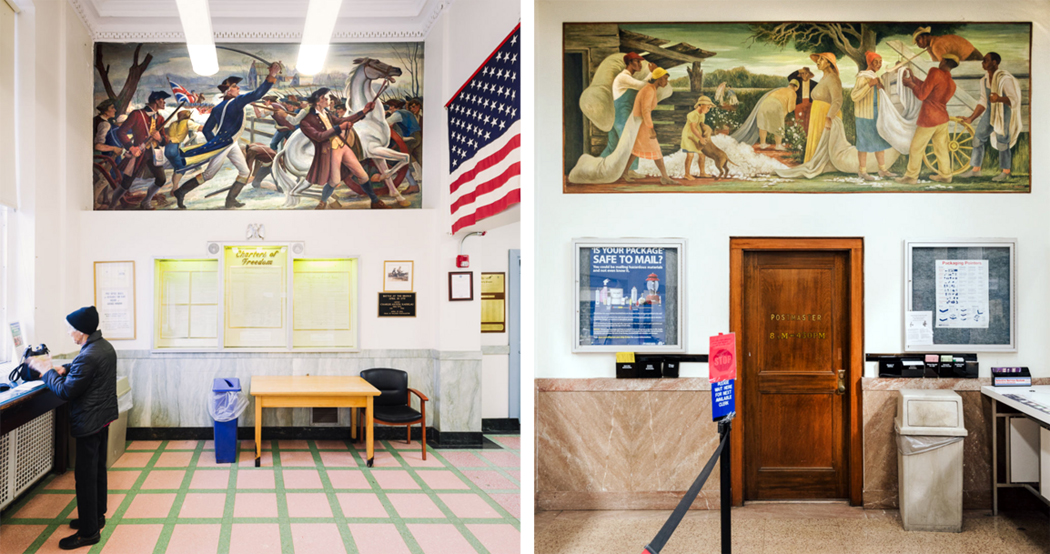
I am arguing that, in fact, you should look at real paintings and sculpture. Not all of it will be great, but it will be real. It will be present. There is plenty of local art in every town and city. If there is no museum, there may be some Depression-era murals in your post office, or a World War I soldier in your town square. There are local artists working in your neck of the woods, and what they do is real, not virtual. 

Every locale has artists working, and art worth experiencing isn’t only found in museums, or only found in New York or Berlin. 

I remember pulling into a supermarket in Boone, N.C. one fall afternoon and hearing three or four local musicians plucking guitar and banjo on the front steps, gathered informally to play some tunes. It was genuine and I sat and listened with the small crowd for 20 minutes or so before going in for my butter and eggs. 

You never know what you’re going to get. Even the best performer can have an off night, and sometimes an amateur can hit the spot. It isn’t frogs you have to kiss, but you do need to weed through a good deal of acceptable but unexceptional work to find those few that will stick with you for life. 

And then you will know the immediacy of the real. 

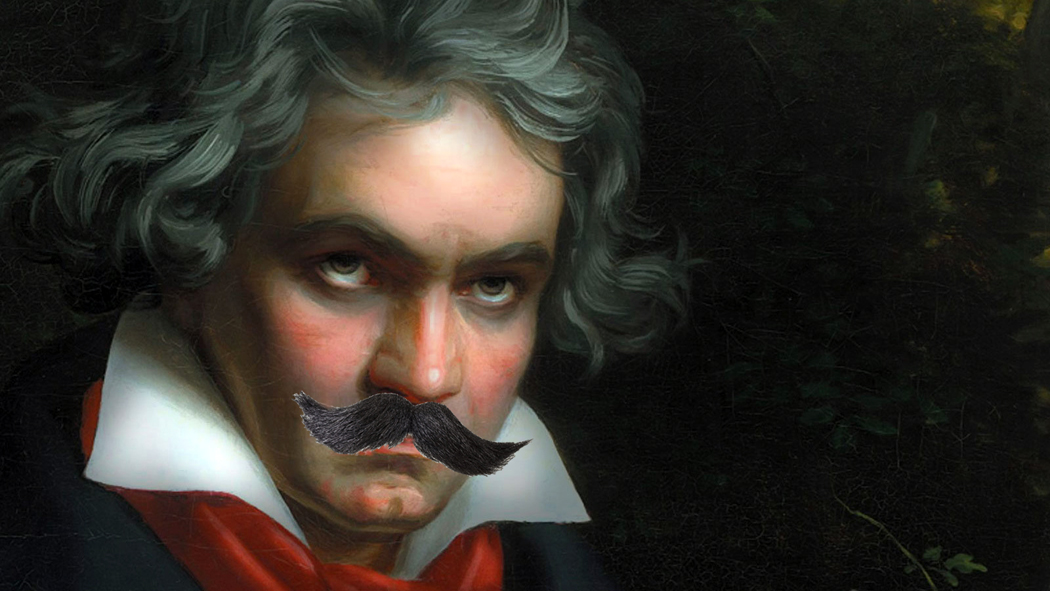
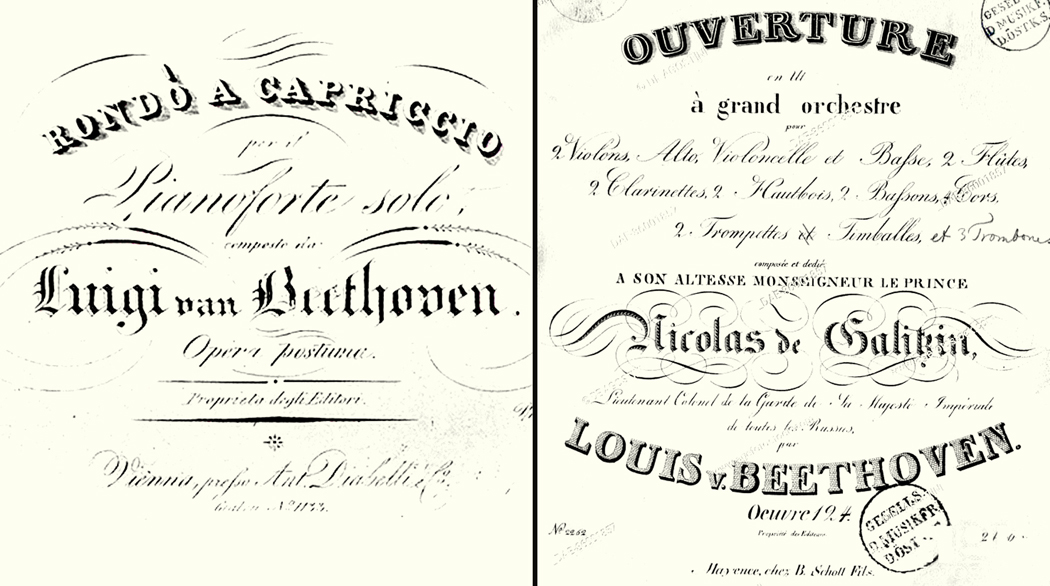
Do you enjoy the music of Luigi v. Beethoven? That’s how his name appears on the score of his symphonies when they were printed in Italy. In Paris, he was Louis; in England he was Lewis. 

I’m fascinated by the way names morph and squidge as they travel around the globe. In late Classical times, Ludwig was originally Chlodovech in Frankish, which then took two paths. In Latin, it was written as Clovis. Drop the “C” and remember that in Latin, there is no actual “V” but was written as a “U” and you get Louis — and that’s how the Frankish king Clovis became the perpetual King Louis that hit 16 times before the final head was dropped into the basket. 

But the other path is German, where Chlodovech become Ludwig. In Medieval Latin that become Ludovico. Drop the “D” in the middle to Luovico, turn the “C” to the softer “G” and get Luigi. And that is how our van Beethoven becomes all of the people who wrote the same symphony. 

The variants of Ludwig/Louis/Luigi are legion. Other languages favor different sounds and hammer the name into other shapes. And the name gets feminine versions, too. Nabokov’s Lolita is just another version of Beethoven’s name. 

Alphabetically, there are Alois, Aloysius, Lajos, Lew, Lodovico, Louie, Lucho, Luis, and the Portuguese Luiz. Women get Aloysia (Mozart’s first love was Aloysia Webber, but had to settle for marrying her sister, Constanze); Eloise, Heloise, Lois, Lola, Lou (as in Mary Lou), Lu, Louise, Luisa and Lulu. Many of all these names have other spelling variations. 

It is through many standard linguistic changes (the “D” and “T” switching back and forth, for instance, or “G” and “K” sounds) that these variants arise. Languages have their habits, and so, because Italian doesn’t like to end their words or names in consonants, Luigi has a vowel hanging on. Japanese is similar in that, and so Beethoven becomes pronounced  “Aludowiga” remembering that the “L” needs to be that weird undifferentiated liquid — somewhere between an “L” and an “R.” Perhaps loser to “Awudiwiga.” (The final “A” is really a schwa). 

Several Romance languages habitually change an initial “S” into an “E” and “S” (as in Spain and España) and so Steven becomes Esteban. (the “B” and the “V” are practically the same letter, linguistically speaking). 

The real champion among male names, though, must be John. The variants are endless. You wonder how can Ivan and Sean be the same word? 

The original is ancient Hebrew Iohannani, which derives from Yaweh (God) and Hanani, “Gracious.” — although I can’t say I find much gracious about Jehovah (a variant of Yaweh), who seems to like to smite whole populations in pique. In modern Arabic, that becomes Juhanna — as in Bob Dylan’s song, Visions of Johanna (the visions that form the hallucinatory and paranoid basis of the book of Revelations). 

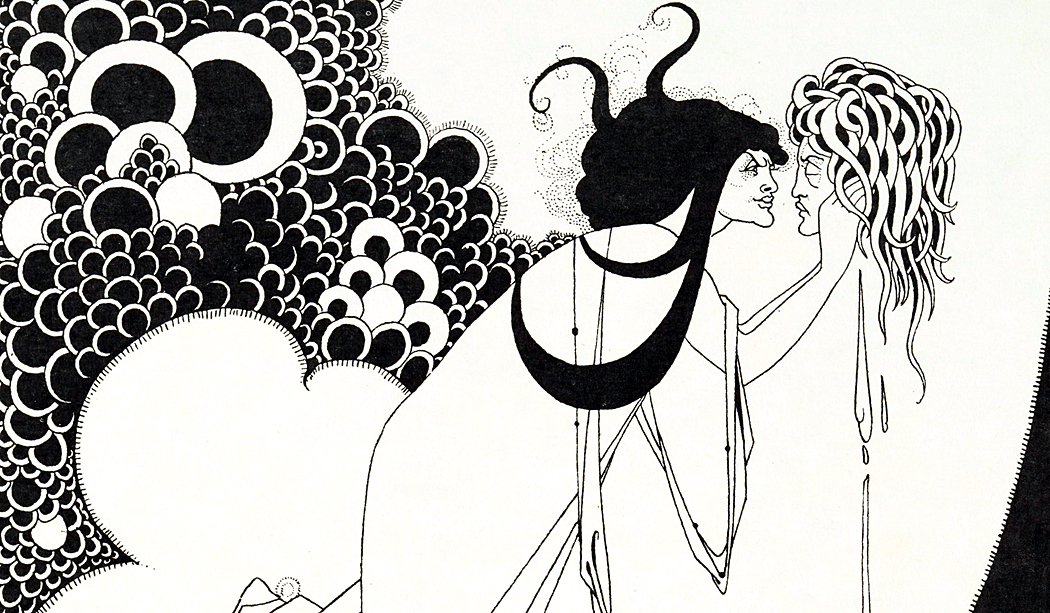
(When Oscar Wilde wrote his scandalous play, Salome, he called John the Baptist Jokanaan, which is closer to the original than our “John.”)

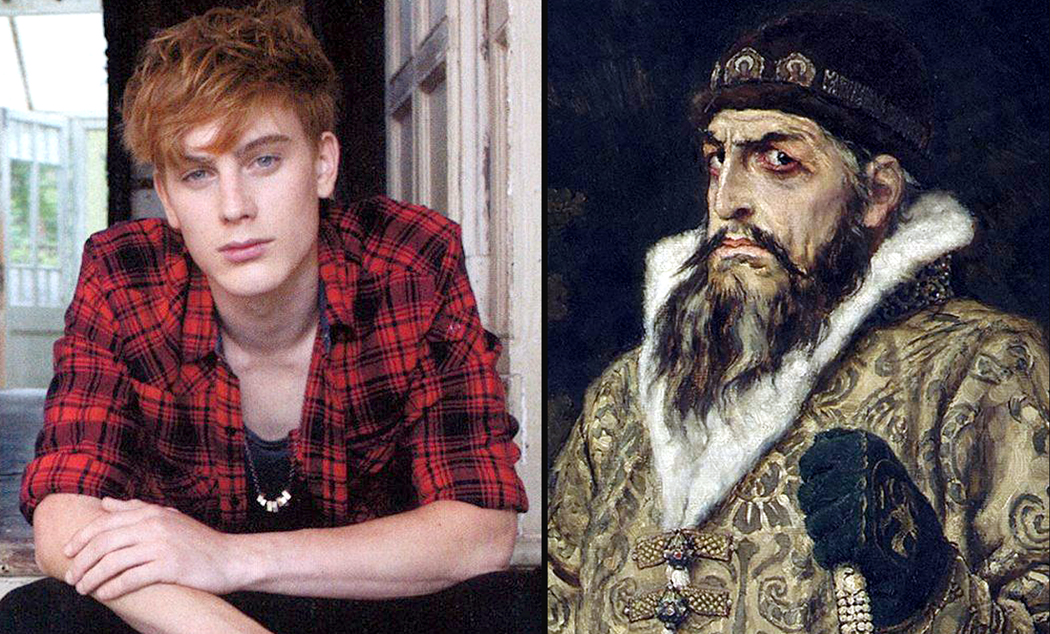
When the Bible was translated into Greek, the name became Ioannis and in Latin, Iohannes. As the name travels east into Slavic lands, it morphs into Iovanness and eventually into the Russian Ivan. (Pronounced “ee-von” in Russian, “eye-vin” in English). 

Because John is a biblical name, it spread through many European cultures. When Latin broke down into the various Romance languages, John rode along with it. Latin Iohannes shortened to Ioan, then, in Spanish to Juan, in French to Jean and in old Breton into Yann. In old Irish, it became Iohain, which evolved several ways — into Ewan, into Ian, and into Iain. Through the influence of French, which had a zh sound in its “J,” Jean also became Sean, or later, Shawn. 

Taking a more Germanic route, the Latin Iohannes became Johannes in German, and Iohannes in Old English, shortened to Johan in Middle English and then lopped to John in Modern English. (Interestingly, the nickname Johnny joined Spanish as Choni, which came from the Canary Islands version of Spanish as a name for any Englishman — “He’s a choni” — and devolved into a word in Spain for a trashy girl and “chonismo” as “trashiness” as a fashion choice.)

There’s a whole train of John variants: Evan, Giannis, Giovanni, Hans, Iban, Jan, Janos, João, Johann, Jovan, Juhani, Shane, Yahya, Yannis, Younan, Yonas. And for women: Hannah, Joan, Joanna, Joanne, Jeanne, Jane, Anna, Jo, Juana, Juanita, Sian — I could go on. 

Oddly, John and Jon are not closely related, but come from two different sources. David’s bosom buddy in the Old Testament was, in Hebrew, Yehonatan, from Yaweh (God) and Natan (“has given”), which, in English is Jonathan. Jon for short, leaving Nathan for another name. 

Most names have these variants. Susan was originally the Hebrew Shoshanna, which also gives us Susanna. The name probably goes back to ancient Egyptian, where the consonants SSN form the hieroglyph for lotus flower. In modern Hungarian, the name is spelled, delightfully, as Zsuzsanna. 

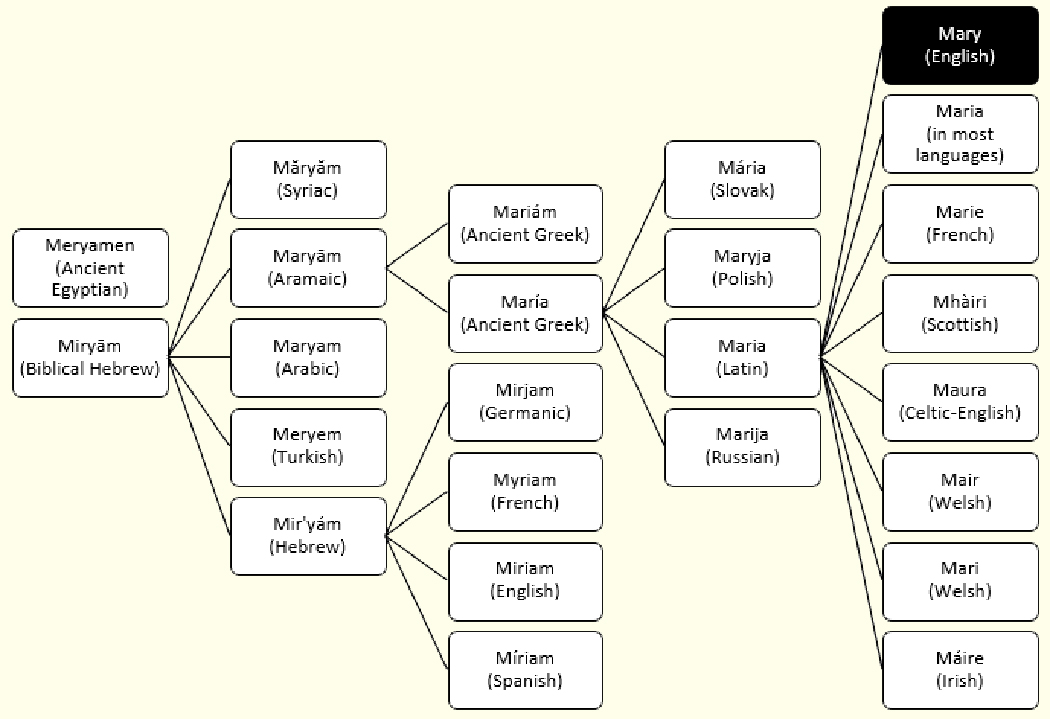
Mary was the Hebrew name Miryam, which may also go back to Egypt, where mry-t-ymn meant “Beloved of Amun.” (Moses’s sister is Miriam, and both her name and his are Egyptian in origin). In the Greek of the New Testament, this becomes Maria, which becomes French Marie, which becomes English Mary. Long ride from the Nile to the Thames. 

The Bible is the source of many names. We’ve already seen John. Considering the peregrinations of that name over the globe and centuries, the other Gospel authors have been comparatively stable. Mark has been remarkably little changed over the eons, having been merely Marco and Marcus, although it gives women both Marcia and Marsha. Luke was originally Lucius in Latin, but has become Lucas, Luca, and for women, Lucy and Lucinda. 

Matthew has more variants, but mostly just spelling changes. Originally Matityahu in Hebrew, meaning “Gift of God,” it became the Mattathias of New Testament Greek and Latinized to Matthaeus, or Matthew in English. In other languages, it is Mateo, Matthieu, Mathis, Matias, Matha, Madis, and Matko. 

The apostle Paul — originally Paulos in Greek — gives us Pal, Paulinus, Bulus, Pavlo, Pau, Paulo, Pablo, Pol, Pavel, Paavo, Podhi, Paolino, Baoro, Pavlis, and the female names Paula, Pauline, Paulette, etc. 

Jesus made a bilingual pun on the name of Peter, calling him “The rock upon which I build my church.” Jesus spoke Aramaic. The Aramaic word for rock is “kefa.” The Greek word is “petra,” turned masculine to name Peter as Petros. Who knew Jesus was a punster? 

Petros has morphed nearly as much as John, becoming Peter, Pierre, Pedro, Pjetros, Piers, Pyotr, Per, Peder, Peep, Pekka, Bitrus, Pathrus, Pesi, Piero, Pietru, Pita, Bierril, Pelle, Pedrush, Piotrek, Padraig, Pero, Pethuru, and a hundred others. 

The influence of Christianity (and Islam to a lesser degree) has meant that variants of biblical (and Quranic) names show up all over the map. Some, like Methuselah, have found little purchase. Others, the Johns, Pauls, Marys, and Peters, are almost universal, but each showing up in the regional costume of its adopting language. 

And so, one name can spawn many children. Perhaps the most prolific name is Elizabeth. Originally the biblical Elisheva, meaning “My God is Abundance,” it became Elizabeth in the King James translation into English. Elizabeth was the wife of Aaron in the Old Testament and the mother of John the Baptist in the New. 

It comes in various spellings, from Elisabeth to Elisabeta to Lisabek. It morphs into Isabelle and Isabella and all the variants of that. These, and the shortened and nicknamed forms make a list several hundred entries long. 

Among the progeny of Elizabeth are: Ella, Ellie, Elsie, Elisa, Alzbieta, Elixabete, Elsbeth, Yelizaveta, Yilishabai (in Chinese), Isabeau, Sibeal, Lettie, Liesbeth, Lisbet, Zabel, Alisa, Elise, Lisette, Lysa, Elka, Lizzy, Liz, Ilsa, Lisa, Yza, Izzy, Lela, Lila, Lili, Liliana, Lisanne, Liselotte, Babette, Libby, Liddy, Bess, Bessie, Bossie, Beth, Betsy, Betty, Bette, Bitsy, Buffy, Zabeth, Bekta and Bettina. That’s about a smidgeon of those I found. 

Each of these names has a branch on a linguistic family tree, a DNA map of sorts. I’ve mentioned only a few names here. There are many more, some with fewer branches, some with whole piles. My own name, Richard, is fairly sparse, with its variants mostly being variant spellings: Rikard, Ricardo, Rigard. Even in Azerbaijani, it’s Riçard. Its origins are in Proto-Germanic “Rik” for ruler or king, and “hardu” which means strong or hardy. So we see how much the name has declined since then. 

So, don’t place too much faith in the etymology of your name, but seeing its family line can be fascinating. Just remember that John and Jon are completely different. 

If I say we have entered a new Romantic era, you may lick your chops and anticipate the arrival of great poetry and music. But hold on. 

Nothing gets quite so romanticized as Romanticism. It all seems so — well — romantic. We get all fuzzy inside and think pretty thoughts. Romanticism means emotional music, beautiful paintings, expansive novels, and poetry of deep feeling.

Or so we think, forgetting that Johann Wolfgang von Goethe called Romanticism a “disease.” 

The surface of Romanticism may be attractive, but its larger implications are more complex. We should look deeper into what we mean by “Romanticism.”

Initially, it is a movement in art and literature from the end of the 18th century to the middle or latter years of the 19th century. It responded to the rationalism of the Age of Reason with a robust faith in emotion, intuition and all things natural. We now tend to think of Romanticism as a welcome relief from the artificiality of the aristocratic past and a plunge into the freedom of unbuttoned democracy. We read our Shelley and Keats, we listen to our Chopin and Berlioz and revel in the color of Turner and Delacroix. Romanticism was the ease of breathing after we have unlaced our corset or undone our necktie.

Yet, there is something adolescent about Romanticism, something not quite grown up. It is too concerned with the self and not enough with the community. There is at heart a great deal of wish fulfillment in it, and a soft pulpy core of nostalgia and worse, an unapologetic grandiosity. One cannot help think of Wagner and his Ring cycle explaining the world to his acolytes. Music of the Future, indeed.

I’m not writing to compose a philippic against a century of great art, but to consider the wider meanings of what we narrowly define as Romanticism.

Most importantly, one has to understand the pendulum swing from the various historical classicisms to the various historical romanticisms. Romanticism didn’t burst fully grown from the head of Beethoven’s Eroica, but rather recurs through history predictably. One age’s thoughtfulness is the next generation’s tired old pusillanimity. Then, that generation’s expansiveness is followed by the next and its judiciousness.

The classicism of Pericles’ Athens is followed by the energy of Hellenism. The dour stonework of the Romanesque is broken open by the lacy streams of light of the Gothic. The formality of Renaissance painting is blown away by the extravagance of the Baroque. Haydn is thrown overboard for Liszt, and later the tired sentimentality of the Victorians (the last gasping breaths of Romanticism) is replaced by the irony and classicism of Modernism. Back and forth. This is almost the respiration of cultural time; breathe in, breathe out. You could call it “cultural yoga.”

We tend to label the serene and balanced cultures as classical and the expansive and teetering ones as romantic. The labels are not important. Nietzsche called them Apollonian and Dionysian. William Blake personified them in his poems as reason and energy.

We are however misled if we simplify the two impulses as merely rationality vs. emotion. The twin poles of culture are much more than that.

Classicism tends to engage with society, the interactions of humans, the ascendency of laws instituted by men (and it is men who have instituted most of them and continue to do so — just look at Congress). AT its heart, it is a recognition of limits. 

Romanticism, of whatever era it reveals itself, engages with the cosmos, with history, with those things larger than mere human institutions, with Nature with a capital “N.” Romanticism distrusts anything invented by humans alone, and surrenders to those forces mortals cannot control. Romanticism has no truck with limits. 

These classical-romantic oppositions concern whether the artist is engaged with man as a social being, an individual set in a welter of humanity — or whether he is concerned with the individual against the background of nature or the cosmos.

Yet there is an egotism in the “me vs. the universe” formulation. It tends to glorify the individual as hero and disparage the community which makes life possible. 

In the 18th Century, for instance, Alexander Pope wrote that “The proper study of mankind is man.” The novel, which investigates human activity in its social setting, came from the same century. Fielding and Defoe come from that century.

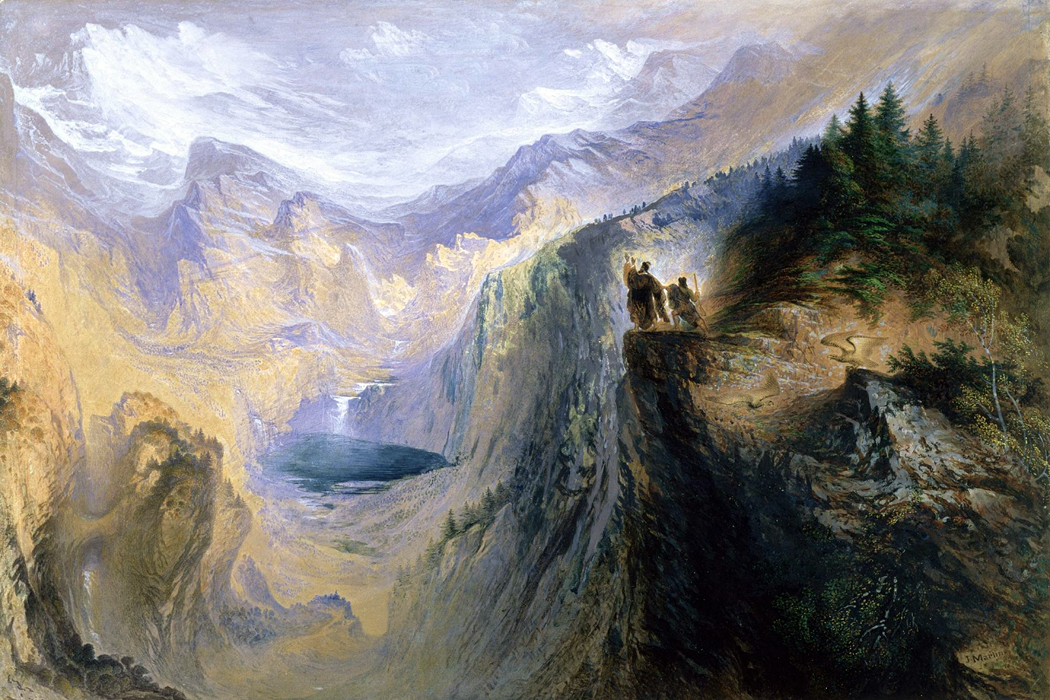
The succeeding century is concerned more with man in nature, or man in his loneliness, or fighting the gods and elements. One thinks of Shelley’s Prometheus Unbound or Byron’s Manfred.

There are many more polarities to these movements in art and culture. One side privileges clarity, the other complexity. Just compare a Renaissance painting with a Baroque one. The classical Renaissance tends to line its subjects up across the canvas in a line, while the Baroque wants to draw us in to the depth of the painting from near to far. Renaissance paintings like to light things up evenly, so all corners can be seen clearly. The romanticised Baroque loves the great patches of light and dark, obscuring outlines and generally muddying up the works.

Look at this Last Supper by Andrea del Castagno. See how clear it all is. 

But the Baroque painter Tintoretto had a different vision of the same biblical event. It is writhing, twisting out into deep space, with deep shadows and obscure happenings. The Renaissance liked stability and clarity; the Baroque, motion and confusion.

One side values unity, the other, diversity. One side values irony, the other sincerity. One side looks at the past with a skeptical eye, the other with nostalgia. One side sees the present as the happy result of progress, the other sees the present as a decline from a more natural and happier past. One side unabashedly embraces internationalism, the other, ethnic identity and nationalism. If this sounds familiar, think red and blue states.

One of the big shifts is between what I call “ethos” and “ego.”

That is, art that is meant to embody the beliefs of an age, thoughts and emotions that everyone is assumed to share — or art that is the personal expression of the individual making it.

We have so long taken it for granted that an artist is supposed to “express himself,” that we forget it has not always been so. Did Homer express his inner feelings in the Iliad? Or are those emotions he (or she) described the emotions he expected everyone would understand and share? He tells of what Achilles is feeling, or Ajax or Hector or Priam — and they are deep and profound emotions — but they give no clue to what Homer was feeling.

In music, Haydn’s symphonies were written about in his day as being powerfully emotional. Nowadays, we think of Haydn as a rather witty and cerebral composer. If we want emotion, we go to Beethoven or Schubert. You cannot listen to Schubert’s string quintet and not believe it expresses the deepest emotions that its composer was suffering at the time. It is his emotion. We may share it, but it is his.

The history of art pulsates with the shift from nationalistic to international styles, from that which is specific to an ethnic or identity group, and that which seeks to transcends those limitations.

In music, Bach imitated the national styles in his English and French suites and his Italian Concerto. The styles are distinct and identifiable.

But the Galant and Classical styles that replaced it vary little from country to country. Perhaps the Italian is a little lighter and the German a little more complex, but you can’t get simpler or more direct than Mozart.

Nationalism reasserted itself in the next century, so that you have whole schools of Czech music, French, Russian. In the early 20th Century, internationalism took charge once more and for a while, everybody was writing like Stravinsky.

The main architectural style of the first half of this century is even called “The International Style.” That style is now so passé as to be the butt of jokes.

The classical eras value rationality and clear thinking, while its mirror image values irrationality and chaos.

You’re ahead of me if you have recognized that much of what I am calling Romanticism is playing out in the world and in current politics as a new Romantic age.

Nationalism is reasserting its ugly head in Brexit, in Marine Le Pen, Vladimir Putin — and in Donald Trump and his followers.

The mistrust or outright disbelief in science is a recasting of Rousseau. Stephen Colbert invented the term “truthiness,” and nothing could be a better litmus test of Romanticism: The individual should be the arbiter of truth; if it feels true, we line up and salute. In a classical age, the judgments of society are taken as a prime value. Certainly, there are those who resist, but by and large, the consensus view is adopted.

The previous Romantic age had its Castle of Otranto and its Frankenstein. The current one has its Game of Thrones and its hobbits, and wizards and witches. The 19th Century looked to the Middle Ages with a nostalgia; the Postmodern 21st Century looks to a pre-civilized barbarian past (equally mythologized) with a vision for a post-apocalyptic future. 

(Right-wing nostalgia is for a pre-immigrant, pre-feminist, pre-integration utopia that never actually existed. The good old days — before penicillin.) 

This neo-barbarianism also shares with its 19th Century counterpart a glorification of violence, both criminal and battlefield — as the huge armies that contend in the Lord of the Rings films, to say nothing of the viciousness of Game of Thrones

As we enter a new Romantic age around the world, one of dissociation, confusion and realignment, we need to recognize the darker side of Romanticism and not merely its decorative accoutrements.

We will have to accept some of those adages propounded in William Blake’s Marriage of Heaven and Hell:  “Sooner murder an infant in its cradle than nurse unacted desires.” And, “The tigers of wrath are wiser than the horses of instruction.” Is this not the Taliban? The Brexiteers? The Republican Party? And those elements in academia who want cover their ears and yell “nyah-nyah-nyah” when faced with anything outside their orthodoxy? 

Because it isn’t only on the right. The Noble Savage has come back to us as a new privileging of indigenous cultures over Western culture. The disparagement of European science, art, culture and philosophy as “hegemonic” and corrupt is just Rousseau coming back to bite us on the butt. (The West has plenty to answer for, but clitoridectomies are not routine in New Jersey. There is shame and blame found everywhere.) 

And the political right has discovered “natural immunity” and fear of pharmaceuticals, while still thinking it OK to run Clorox up the kiester. 

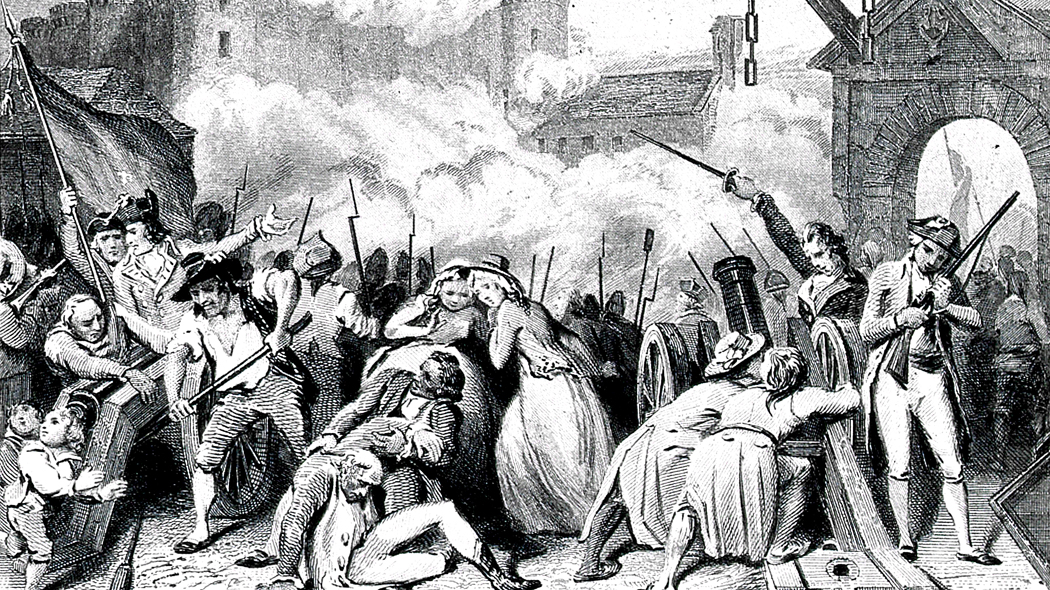
The last Age of Romanticism kicked off with the storming of the Bastille — a tactically meaningless act (only seven prisoners remained prison, four of them were forgers and another two were mentally ill) which inspired the French Revolution and all the bloodshed of Terror, but had enough symbolic significance to become the focus of France’s national holiday. We have our January 6, just as meaningless and perhaps just as symbolic. But perhaps that riot has more in common with a certain putsch in Munich. 

The first time America entered a Romantic age, in the 19th century, it elected Andrew Jackson, arguably the most divisive president (outside the Civil War) before Donald Trump, and certainly the most cock-sure of himself and the truthiness he felt in his gut. Facts be damned. For many of us, Trump feels like the reincarnation of Jackson, and this era feels like the reemergence of a Romantic temperament, and we may need to rethink just how warm and cuddly that truly is.

This piece is updated, expanded and rewritten from an April 2017 essay for the Spirit of the Senses

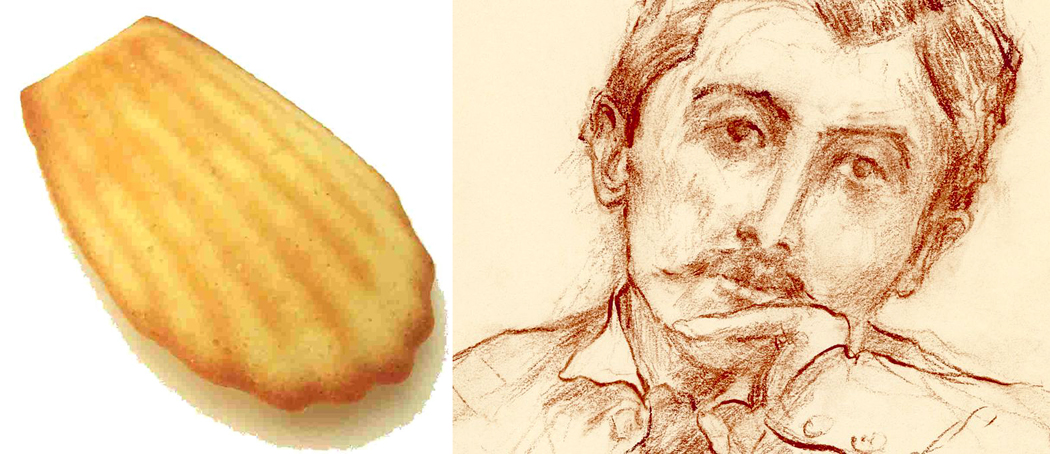
There is an experience that many well-read Americans have when they visit Paris. They head to the first patisserie and order up a small box of madeleines. The result of this purchase is universally the same: utter disappointment, because the madeleine of their imagination is rife with the magic of memory, the power invested in this tiny cookie by the words of Marcel Proust. In the most famous section of his seven-volume A la recherche du temps perdu, when Proust bit into one as an adult, the taste caused his childhood to flood back in an irrepressible wave of nostalgia.

The disappointment these readers feel is caused by the fact that a madeleine is such an unimpressive morsel, a sponge of little flavor or texture. It is primarily used for soaking in a cup of sweetened tea — the way we dunk a plain donut into our morning coffee.  The madeleine itself is insipid and boring.

Its magic for Proust was not in the eating, but in the association of the madeleine with his childhood. His, not yours. It was a door to who-he-used-to-be. But we have all had a similar, if not so profound experience concerning our own past. Often it is a tune. Perhaps you don’t immediately recognize why you react so emotionally to it, but then, you can recall exactly where you were when you heard it.

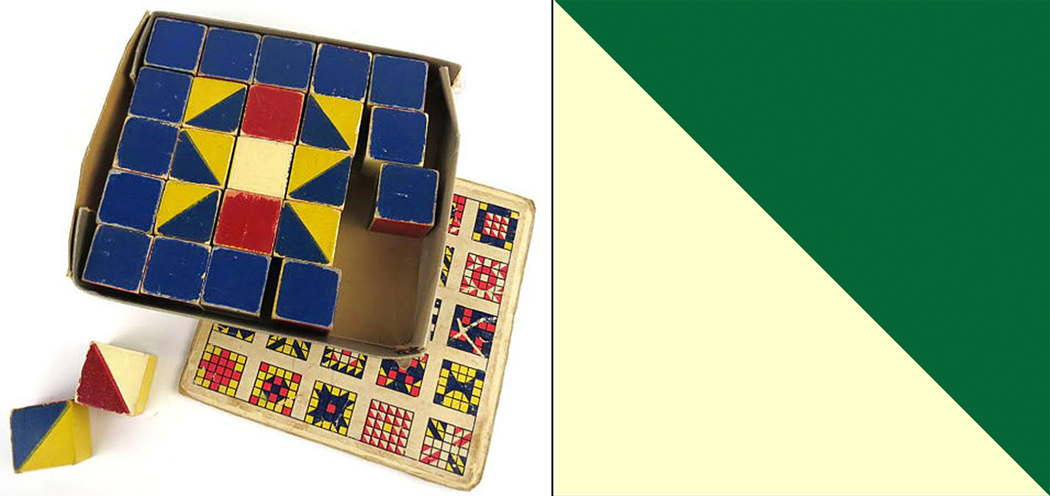
For me, it is often a color, a deep, dark blue, or the mix of green and cream white. That blue paired with yellow brings to mind a set of blocks I played with as a bairn. Not just any blue and yellow will trigger this rush, but only a very specific combination of colors.

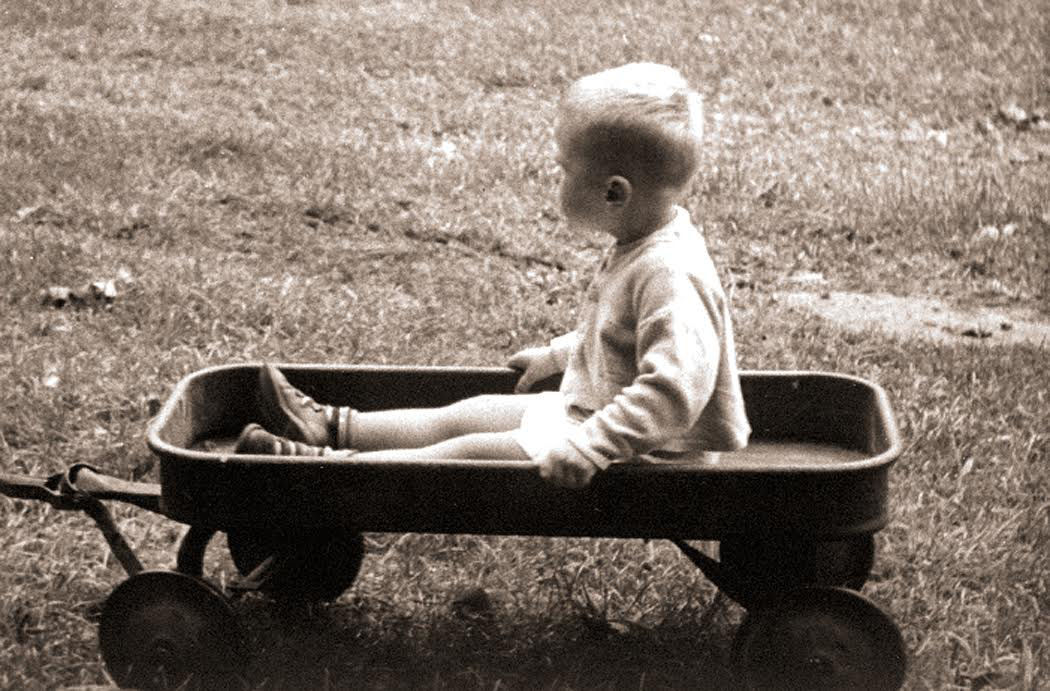
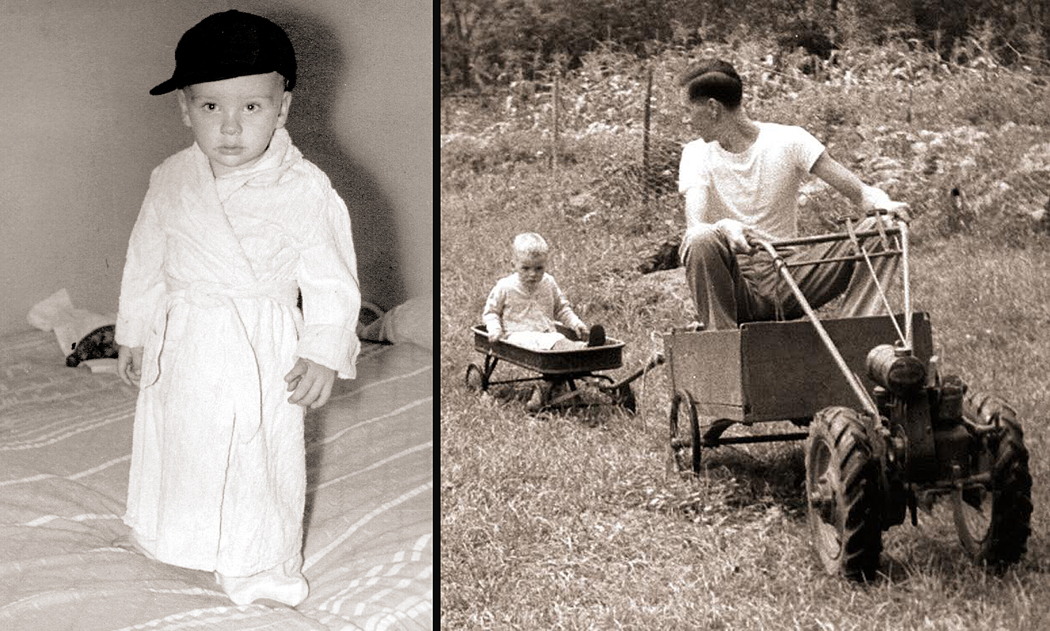
One puzzles over what, in fact, a memory is. It would seem to be a videotape filed away in the synapses that can be retrieved by pressing the right buttons. But science can tell us memories are encoded as electrical impulses, carried between neurons by chemicals known as neurotransmitters. How does that farm I visited when I was two become a little zap in the cells of my brain, and what magic mechanism retranslates that buzz into the pictures I see so clearly behind my eyelids?

For Proust, the madeleine brought an involuntary flood of memory. And that memory inevitably exists not as a discrete neutral image, but as a wooly complex of image, emotion and thought, a whole ball of inextricable who-you-used-to-be.

The easiest aides-de-memoire are old photographs. That box of family snapshots holds a passel of memories. But there is always the sneaking suspicion that what you remember are not the events, but the pictures themselves. But then, some research implies that each time we retrieve a memory, what we are remembering is the last time we remembered that event, and so the memory degrades, like succeeding copies of a Xerox image — copying the copy multiple times. Details are lost, and what remains becomes murky and misremembered. You visit your brother or sister, now all grown up, perhaps retired, and you say, “Remember that day you fell into the creek?” and they reply, “That wasn’t me, that was your other brother, and it wasn’t the creek, it was the river upstate.”

Whose memory, then, do you trust? Your own feels so real, so re-lived in the recollection.

My late wife had a supernatural memory. She recalled events from her childhood in infinite detail. I asked her to write those stories down for her grandchildren, but she declined. “Then I will start remembering the remembering,” she complained, “and the original will be lost,” its authenticity diluted.

There is a difference, noted Proust, between the memory you search for voluntarily, and the involuntary memory summoned up, like a genie from a lamp, when you smell a smell; hear a sound, a song; see a color or a picture. The first, while not so spontaneous, is often more rewarding.

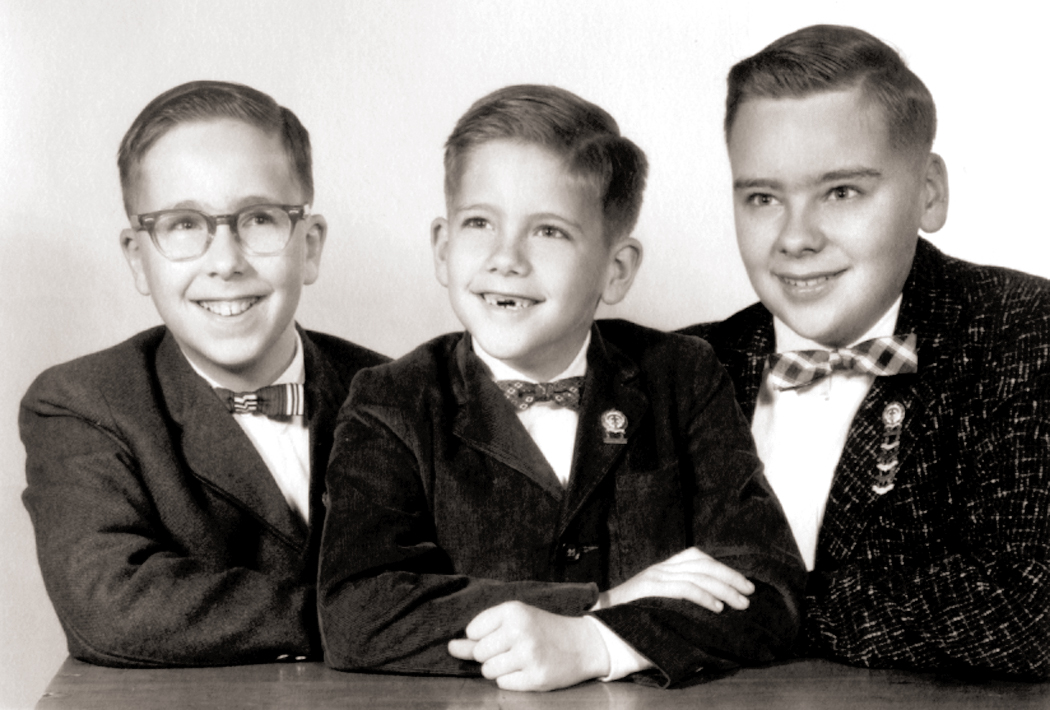
A number of years ago, I made a pact with my two brothers. We had all gone to college and moved away to our separate jobs, wives and lives. I wanted to know more about those missing years we had been apart. I suggested we each write a short autobiography for the other two brothers. I  began mine, which covered only the years from my birth to when I was about 30. Even though I thought of it as a summary, it grew to 250 typed pages. Even now, I could go back and between each paragraph add new detail.

Where does all this stuff come from? Each time I call up a memory, it is like opening a door into a forgotten room, and each room has three or four other doors, each of which opens into yet another room, each with its four doors, and on and on, like Borges’s fictional library. 

There seems no end, as one memory suggest two or three others. Colors come back, sounds, emotions, textures, smells, chronologies, acquaintances, pains both caused and suffered, moments of transcendence, moments of relief.

As I get older — I am already old — it becomes harder to retrieve simple things, such as words and names, but the older memories still burn underneath and can be accessed. I will sometimes, when I have trouble going to sleep, call up a scene of tranquility and walk through it like a movie or play and slowly drift off as the memory metamorphoses into a dream.

Originally posted Dec. 1, 2017 on the Spirit of the Senses website

In 1966, I invented the Gaia principle. Me. That the earth is a single living organism. But more on that later.

First, of course, I’m not the only one to figure this out. At about the same time, chemist James Lovelock and microbiologist Lynn Margulis gave the idea its name, after the primeval Greek goddess of the Earth and the primordial mother of all life. But I beat them out and claim my primacy.  But again, later.

It turns out, it is not unusual for ideas to pop up simultaneously and independently. Science and technology are littered with such examples. For instance, Isaac Newton and Gottfried Leibniz worked out the calculus at the same time, although Newton called the process fluxions — which I think is a much catchier name. They did not get on, and Newton always felt that Leibniz must have cadged the process from his notes. (Leibniz didn’t).

Charles Darwin and Alfred Russell Wallace came up with the concept of natural selection as the mechanism for evolution at the same time. In this case, the two worked it out between them amicably.

These are the most famous examples of ideas welling up separately, but there are many more.

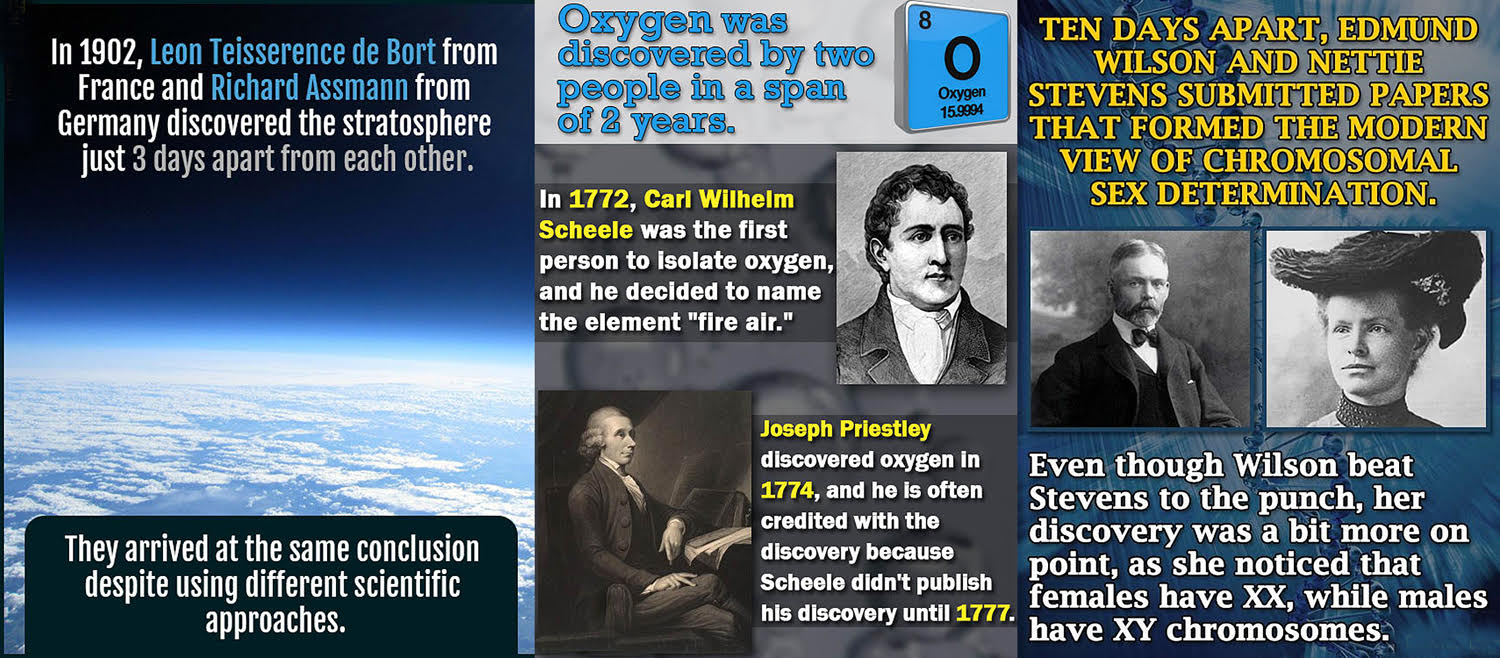
Joseph Priestly and Carl Wilhelm Scheele discovered oxygen both in the 1770s. Both Nettie Stevens and Edmund Wilson submitted papers that formed the modern view of genetic gender determination 10 days apart. Takaaki Kajita and Arthur B. McDonald independently proved neutrinos have mass. Lothar Meyer and Dmitri Mendeleev each created the periodic table of elements — a year apart. The British Frank Whittle and the German Hans von Ohain each came up with the first jet engine, during World War II, on opposite sides of the conflict.

I could go on: Within six months of each other, Jack Kilby and Robert Noyce each invented the microchip in the late 1950s. Benjamin Franklin invented the lightning rod in 1749 and Czech theologian Prokop Divis came up with the same idea in 1754, independently. In 1953, both Daniel Fox of General Electric and Hermann Schnell of the German company Bayer invented polycarbonate plastic. American Don Wetzel and British John Shepherd both invented the automated teller machine (ATM) in the late ’60s. In 1902, Leon Teisserence de Bort from France and German Richard Assmann discovered the stratosphere just three days apart.

At least five people came up with a mechanism for television in the 1920s.

Clearly, something was in the air, besides oxygen.

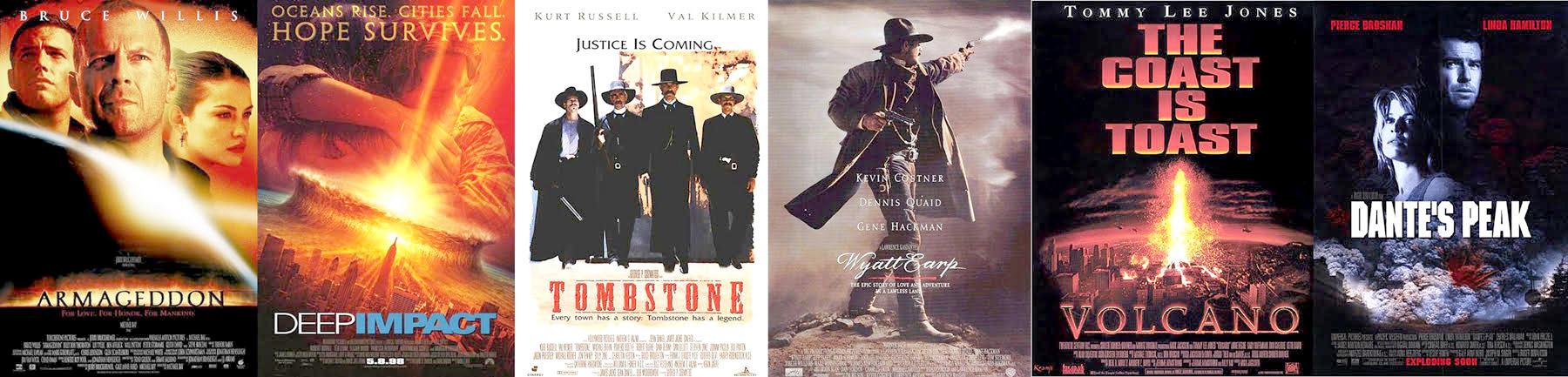
The same thing happens in movies. They are called “twin films,” and Wikipedia lists 173 pairs of them: movies that share the same plot made at the same time by different studios.

Among the most notable: Deep Impact and Armageddon in 1998; Tombstone and Wyatt Earp 1993 and ’94; Dangerous Liaisons and Valmont in 1988 and ’89; Volcano and Dante’s Peak in 1997. Sometimes the pairing is quite specific: drag queens on a road trip across a continent to discover themselves — The Adventures of Priscilla, Queen of the Desert in 1994 and To Wong Fu, Thanks for Everything! Julie Newmar a year later.

Just in 2018, there was Sink or Swim and Swimming With Men, both films about a man in midlife crisis joining an all-male synchronized swim team. And Skate Kitchen and Mid90s, both about skate boarders, both with non-actor skateboarders and young heroes dealing with difficult mothers.

It seems the zeitgeist is pregnant with something and then it all coalesces with the birth pangs around the world.

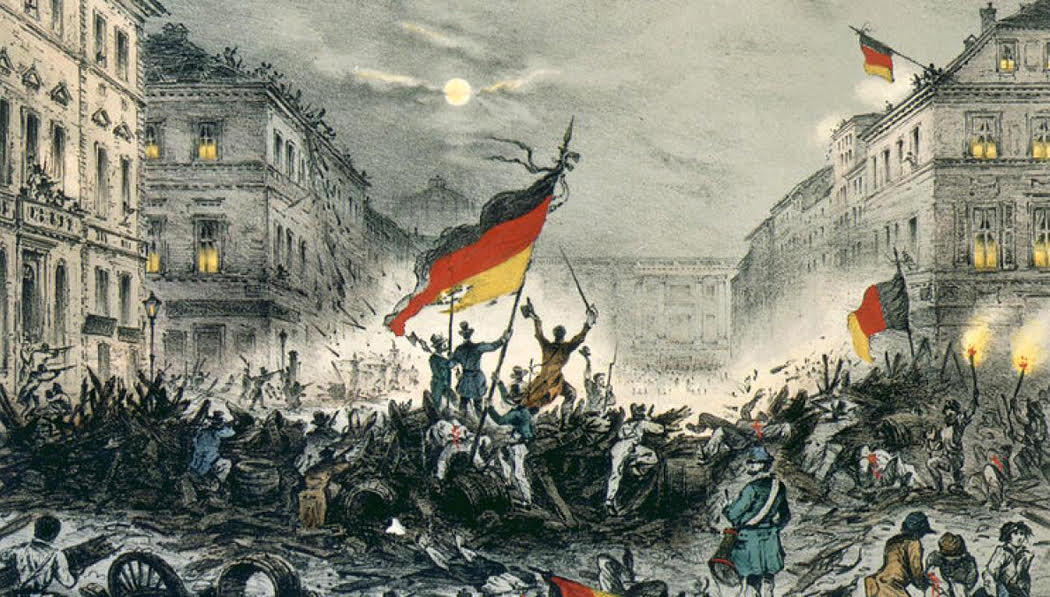
Of more import are those significant upwellings of political synchronicity. Probably the most famous is the year 1848, when revolutionary movements exploded in some 50 countries worldwide, from Ukraine to Brazil. It seemed to come from nowhere and suddenly, it was everywhere. Unfortunately for history, almost all of the revolutions failed.

A lesser confluence of revolution had occurred in 1830, in France, the Netherlands, Belgium, Poland, Portugal, Switzerland and Italy. In France, it brought the “citizen king,” Louis Philippe, that 1848 attempted to unseat.

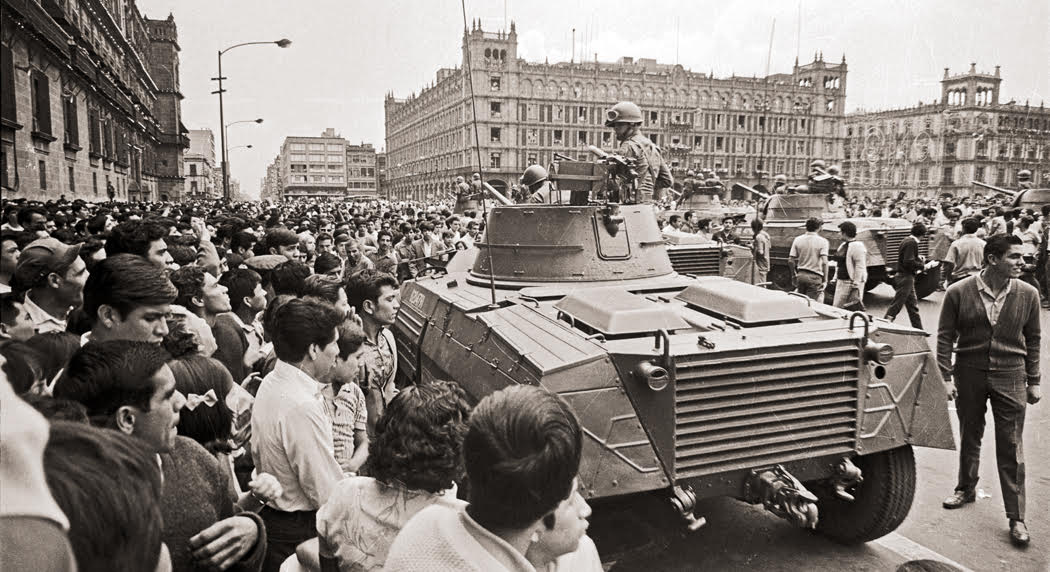
In our own time, 1968 was the focus of international disruption, protest and violence, not only with anti-war protests and civil rights unrest in the U.S., with the assassinations of Robert Kennedy and Martin Luther King Jr., and the riots at the Democratic National Convention in Chicago, but major strikes in France, crises all through Western Europe, the beginning of “The Troubles” in Northern Ireland, the Tlatelolco massacre in Mexico City, guerrilla war in Brazil, the Prague Spring and the Red Square Demonstration in Moscow protesting the Soviet invasion of Czechoslovakia. There were uprisings in Poland and Yugoslavia, student revolt in Pakistan, and the climax of the Cultural Revolution in China. The whole globe seemed to be in paroxysm: Gaia was having a heart attack.

 An aftershock hit in the years on both sides of 1989, with the fall of the Berlin Wall and the complete collapse of the Soviet Empire. There was a sense that it all seemed to happen at once.

And today, all across the planet, there is a simultaneous rise of populist authoritarianism. We could soon look back and see this moment as another one of those global seizures.

So, it can seem at times that the Earth is a single thing, that suffers global events, seemingly unconnected, yet simultaneous. A shadow, like an eclipse, sweeps across its lands.

Now, back to me and Gaia. It was 1966 and I was a freshman in college taking an intro to biology class with Richard Carleton Ward, a teacher of peculiar manners and prejudices. I could write a whole chapter on him, the way he spoke out of the side of his mouth in a gravelly grunt, the way he bought conspiracy theories, his suburban house blocked from view in a bourgeois neighborhood by a jungle of bamboo, vines and weeds.  He wrote an article for the underground newspaper I was publishing in which he complained ferociously about students’ inability to spell the word, “spaghetti.”

In his class, we were assigned to write a research paper on a living organism, animal or plant, complete with footnotes and citations, and following the Kate Turabian style manual. Points would be taken off for failing to properly spell, capitalize, indent, space margins, and italicize.

I am basically a very lazy person, and all this sounded like work. Doing research meant digging through the library for books, scouring the Readers Guide to Periodical Literature for articles, and — worst of all — cataloging the findings and writing the bibliography and footnotes.

So, I decided I would be “creative” instead. Please remember, this was 1966, and “creativity” was a buzzword more in evidence than “clickbait” is now.

To avoid all the tedious detail that research would entail, I hit upon the idea that I could invent a new organism — the Earth. Our textbook listed a series of five or six essential qualities that define life, and I applied them to the planet. I could easily make the argument that the planet respires, that it metabolizes — that all the inhabitants of the world could be seen as the same as the individual cells that make up our body: The macro rhymes the micro.

I hit the height of cleverness discussing reproduction. I wrote that at my age, I hadn’t yet reproduced (“as far as I know,” I threw in to be coy), but that didn’t mean I couldn’t, and just because the Earth had not yet reproduced didn’t mean it couldn’t. And I proceeded to hypothesize how the planet could bud like a hydra, planting new “cells” on another great, round, rocky skeleton or coral stone elsewhere in the solar system. Mars, for instance. And thus, the planet could duplicate itself.

And so, I proved, at least to the satisfaction of my crackpot teacher, that the planet we lived upon could be taken as a single giant hyper-organism. He gave me a B-plus and I managed to avoid all the serious work and pass the course. I therefore invented, out of abject laziness and sideways thinking, the Gaia Principle. Credit where credit is due. I will be happy to share the Nobel with Margulis and Lovelock.

Years later, my wife, Carole, had a different way of looking at it, which makes even more sense. She was bothered by a politician making a speech and talking about how we live on the planet and need to take care of it — a worthy idea, for sure — but her take was that we don’t live “on” the Earth, but rather, we are the Earth, along with, and no different from the birds and bees and rocks and trees.

And that is now my mantra: We don’t live on the planet; we are the planet.

Originally posted Jan. 30, 2019 on the Spirit of the Senses website

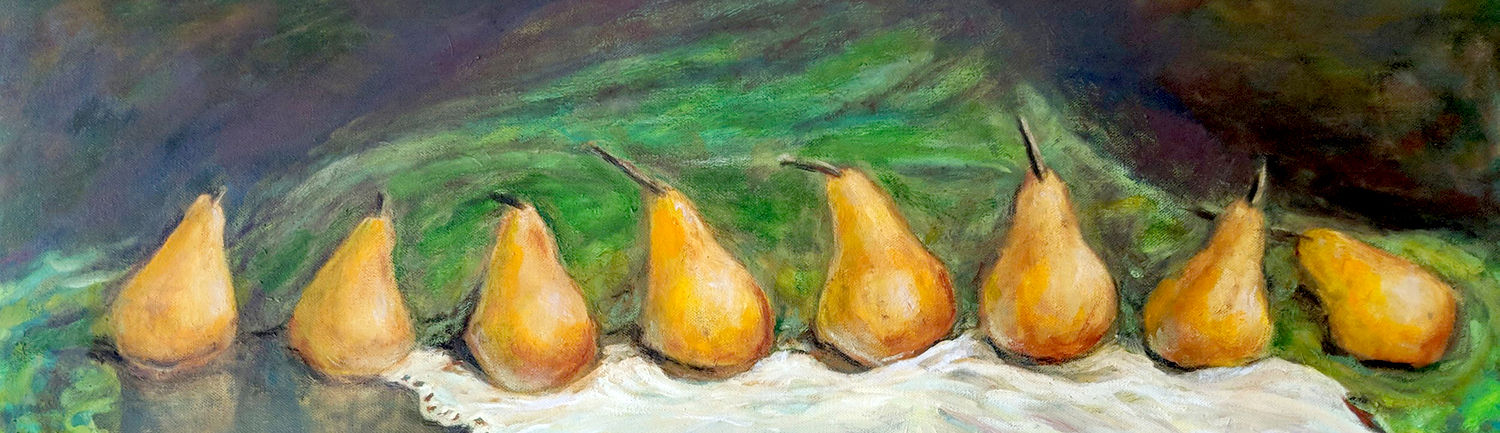
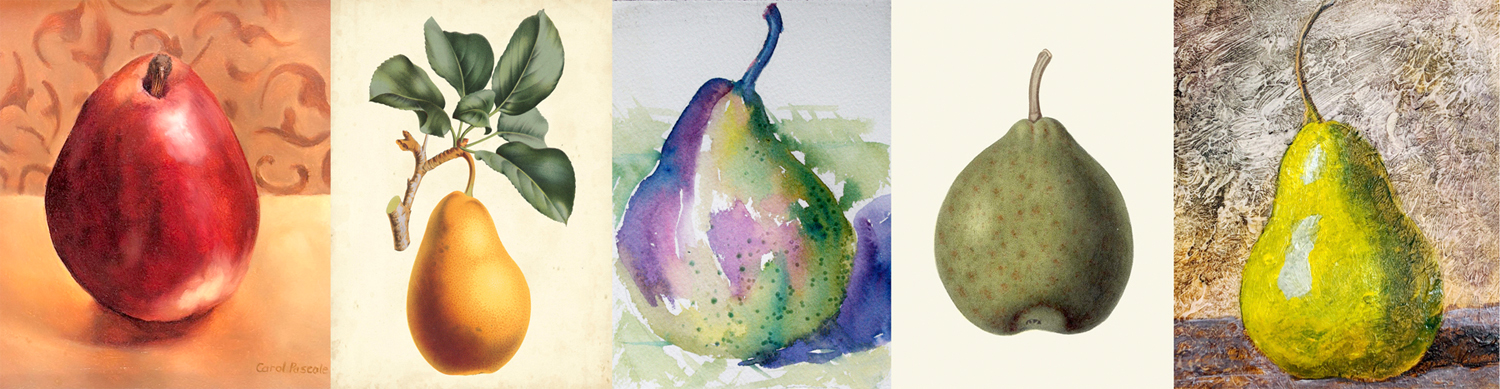
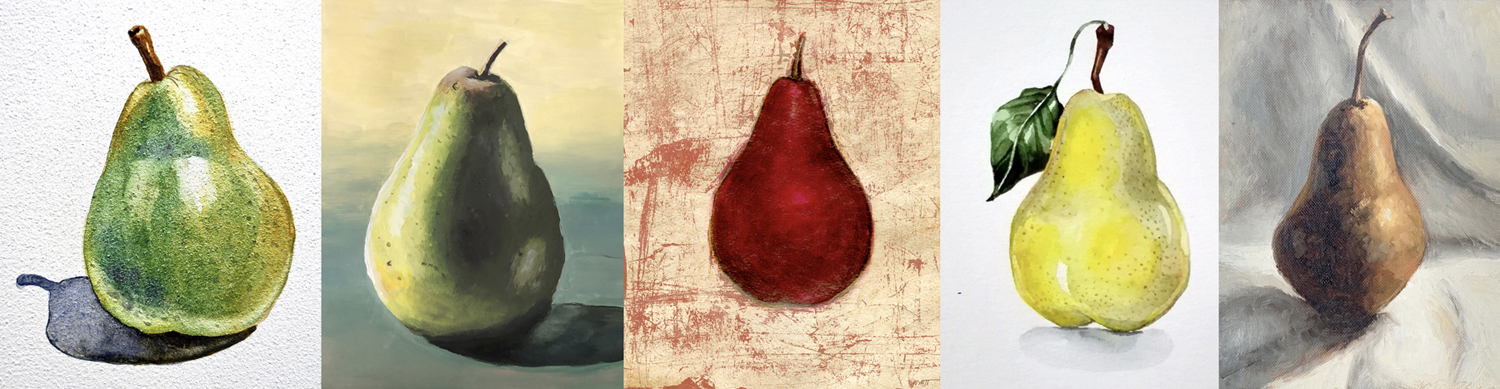
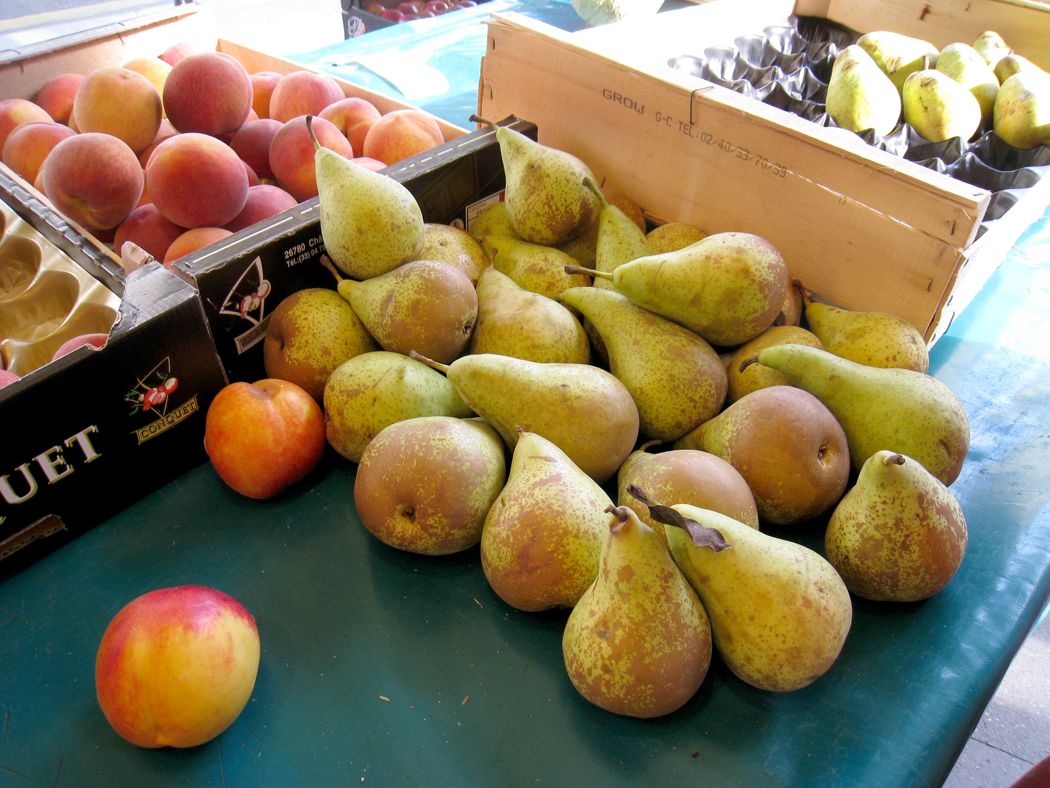
I started to write about philosophy, but realized I really wanted to talk about pears. Crisp, delicious succulent pears, the kind with small brown spots on the skin and a roly-poly bottom. Given a choice between reading Hegel (insert dry cough here) and slicing wedges off a Bartlett pear, the fruit wins hands down every time. 

I have been thinking about this because of philosophy. The intellectual world seems divided irrevocably between art and philosophy — image and word. One side deals with categories of thought, the other side deals with hubcaps, clouds, tight shoes and the sound of twigs snapping underfoot, to say nothing of pastrami sandwiches and corduroy trousers. 

I’m sorry if I value the one vastly over the other. I am a Dichter not a Denker. I have — this is my ideological burden — a congenital mistrust of language, particularly abstract language and language of categories. The world is too multifarious, indeed, infinite, and language by nature and requirement, simplifies and schematizes, ultimately to the point that language and reality split paths and go in separate directions. When one relies too much on  language, one misses the reality. 

The tragedy is, that language is all we have. We are stuck with it. We can try to write better, more clearly, use evocative metaphor when declarative words fail, use imagery rather than abstractions, and do our best — our absolute best — to avoid thinking categorically, and attempt to see freshly, with eye and mind unsullied by the words that have preceded us. It’s hard, but it is essential. To begin with the categories, and to attempt to wedge our experience into them, is to mangle and to mutilate the reality. 

The matter is only made worse by the impenetrable fustian written by so many philosophers — and especially the recent crop of Postmodern and Poststructuralist explainers. 

Take Hegel — please. Georg Wilhelm Friedrich Hegel (1770-1839) is just the kind of philosopher who thinks thoughtful thoughts and writes incomprehensible prose. 

“Knowledge of the Idea of the absolute ethical order depends entirely on the establishment of perfect adequacy between intuition and concept, because the Idea itself is nothing other than the identity of the two. But if this identity is to be actually known, it must be thought as a made adequacy.”

A made adequacy?” That’s from his System of Ethical Life (1803-4). I’m sure if you spent an hour or two going over it again and again, you might be able to parse something out of it. But, jeez. It’s the kind of prose you get from academia all over the place: 

“As histories of excluded bodies, the bodies that made national Englishness possible, this counterpastoral challenged the politics of visibility that made the very modern English models of nature, society, and the individual visible through the invisibility of bodies that did not matter.”

That’s from Kathleen Biddick’s The Shock of Medievalism (1998). She is also the author of The Typological Imaginary: Circumcision, Technology, History

In such writing, individual abstract words are made to stand in as shorthand for long complex ideas, not always adequately explained. And the words are then categories, and the categories allow blanket statements that cover the world like Sherwin-Williams paint. 

The basic problem is that words are always about words. When Plato talks about “the Good,” he is talking about how we define the word, “good.” Plato is about language. The linguistic grammar and language has its own rules, its own logic, and they soon supersede what the philosophers call “the case.” 

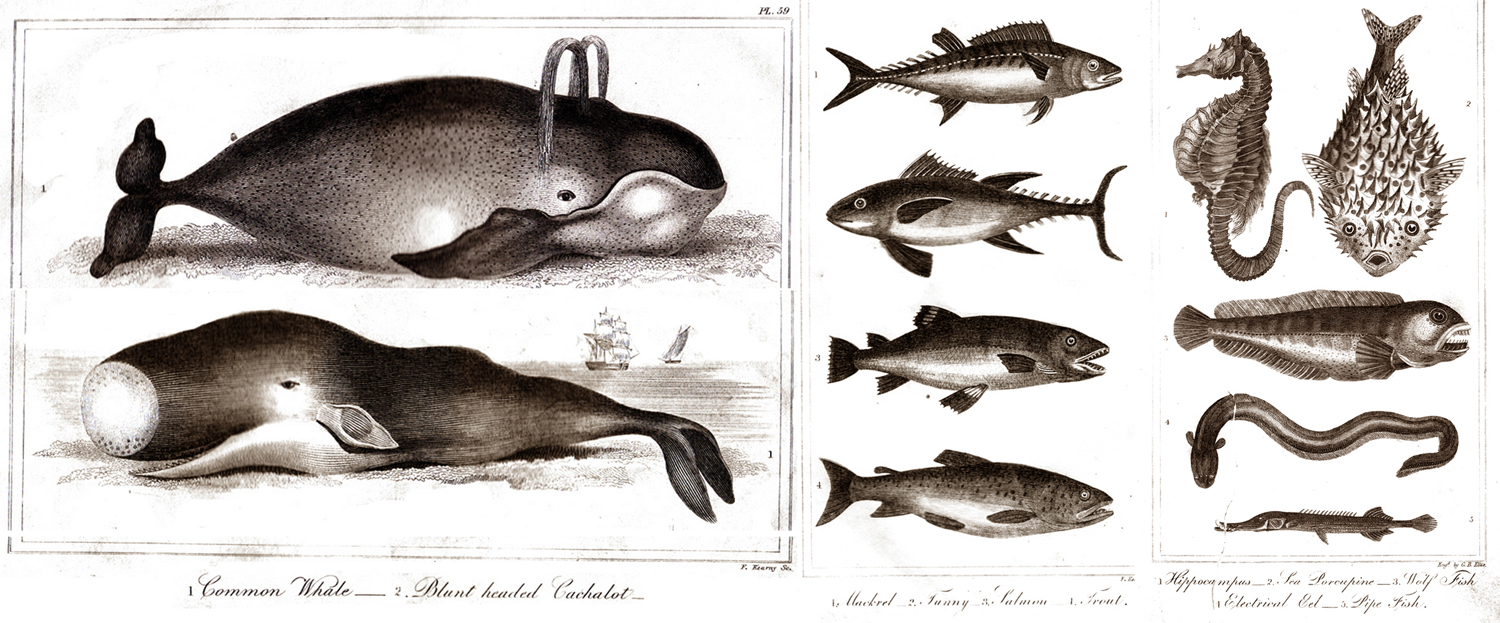
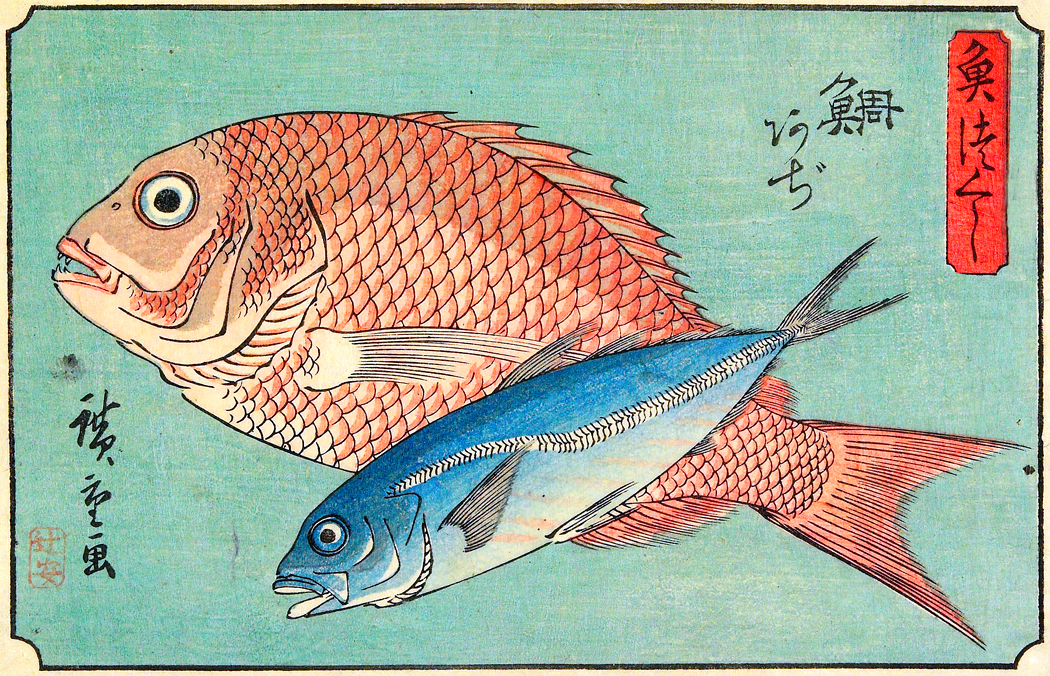
There is a book out there now titled Why Fish Don’t Exist, by Lulu Miller. And taxonomists now largely agree that what we used to call the class of animals Pisces (fish), are really a bunch of increasingly unrelated classes or clades, in fact at least 12 of them, not counting subclasses. For example, a salmon is more closely related to a camel than to a hagfish. 

But, back in the 18th century, both whales and sea urchins were also classified as “fish.” That we distinguish them separately now has made no difference to either whales or urchins, but only to dictionaries. That a whale is not a fish but a mammal is a shift in language, not biology. Fish still swim in the sea, even if we hesitate to call them fish. 

And in the same way, the parsing of philosophers is mostly a shift of wordplay. The philosopher Ludwig Wittgenstein made this the central issue of his later work. 

Meanwhile, as the philosophers mince language in their mental blenders, Gloucester fishermen keep pulling fish out of the oceans. When it comes to trust, I take the fishermen over the philosophers. The world is filled with sensible, seeable, feelable, hearable things. Things that give us pleasure and made the world we find ourselves cast into, like poached salmon. 

Our lives are filled with the things of this world and their shapes, colors, sounds, textures, smells and tastes. And so is our art, which makes images, poems, dances, music and theater from those shapes, colors, sounds, etc., is a direct connection with the things of this world — the “case” as it were. 

And I think of pears in art — those buttery layers of paint by Paul Cezanne — and the other still life art that singles out this bit or that of the physical presences of the world and shows them to us so we may notice them and appreciate them. 

Most of our art tends to be divided between people and things — “things” being mostly landscapes and still life. In our art, we privilege people over things and that is only fitting. I’m sure squirrels are most interested in other squirrels, too. 

But the non-human and non-living things things are so much a part of our lives, and a certain percentage of our art has been made about things. Like pears. 

I step outside into the sun and I hear distant traffic, the breeze hissing in the tree leaves, and, from several blocks away, the intermittent rattle of a chainsaw. In the morning, there are birds — mockingbirds and chickadees. There is the feel of the air and the sun on my skin. There is the smell of the grass, new mown, or maybe the oily resonance of diesel fumes. I stand and feel the temperature. I live in the welter of the world. 

And so, I am in love with the things of this world. I am mad for them to be in contact with me, to absorb them, to notice and appreciate them. To pay attention. To be alive. 

And I slice a pear. The insides are both pulpy and wet; the skin keeps the flesh from drying out. The stem at the top curves off. The nub at the bottom shows where the white flower had been. 

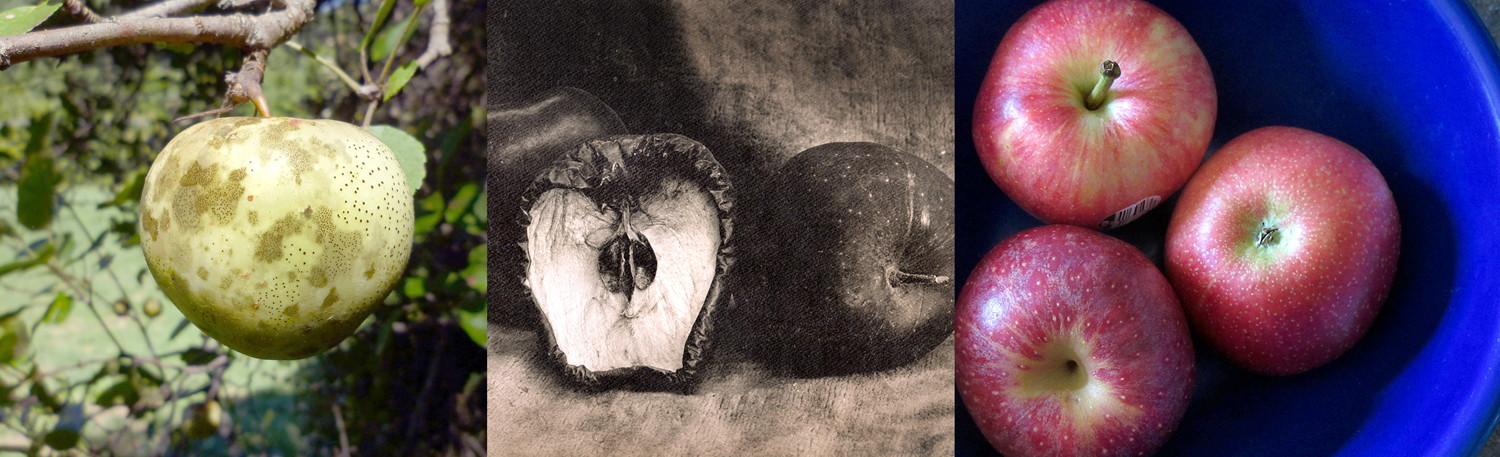
I take pears instead of apples here, because apples have too many words stuck to them, making them gummy with ideas, from Eve’s fruit of temptation to the computer on which I am writing these words. 

But a pear can be seen with less baggage. It bruises more easily than an apple, yet its pulp is firmer, stiffer, unless overripe, when it can go mushy. Nor is it as sweet as an apple, although we must point out that there are hundreds of different varieties of apple and that a red delicious is sweeter than a granny smith. (Yet the granny smith makes a better pie). 

There are varieties of pear, also, and they are perhaps more distinct than the apples. The lanky brown Bosc, the squat green Anjou, the nearly round Le Conte, the very sweet Seckel. In Japan, there is the ruddy, round Kosui, or russet apple pear. The Comice is great with ripe cheese. Yellow Huffcap for making perry — a cider made from pears. 

I believe the central fact of existence is variety, in infinite forms, which in contrast makes the categories of philosophers seem puerile and simplistic. And dry. Pears have juice. Derrida, none. 

These are smart people. I don’t begrudge them that. And perhaps we need people thinking such thoughts. But if we leave these words to the philosophers, I will have more time for myself with all the plants, rocks, fruit, animals, clouds, stars, cheeses and oceans. 

Ultimately, to experience things is more important — more rewarding — than explaining them. 

When it comes time to leave this planet and join oblivion, in those last moments left to my life, mostly, I will be thinking about the people I have loved and who have loved me. But beyond that, will I be thinking about Hegel or will I be remembering pears? My money is on the palpable. There is love there, too.

Click on any image to enlarge

I have been thinking of Paris a lot lately. It is the city I have felt most at home in, perhaps along with Manhattan. It has been a dozen years since I last went, and I will almost certainly never get back — I am too old to put up with the torture of airline travel. 

It is a great city, made up of many smaller neighborhoods, each with its individual character. You can walk almost anywhere, and if you need to go further than your feet feel comfortable, you can always grab the Metro. 

When Carole and I used to go, we would pick out a neighborhood (or arrondissement) and settle ourselves in it, as if we lived there. Each visit, we’d go to a different one. And we shopped in the local shops, ate in the local restaurants, and shared pleasantries with the people we came across. 

Parisians have a reputation for being rude, but we never found that. Everyone we came in contact with was unhesitatingly friendly and helpful. When I was sick one day, Carole went to the chocolatier at the end of the block, and when she told the sales person why she was buying some “get-well” candy, the bag was loaded with as much again, no charge. “Tell him we hope he gets better soon.” 

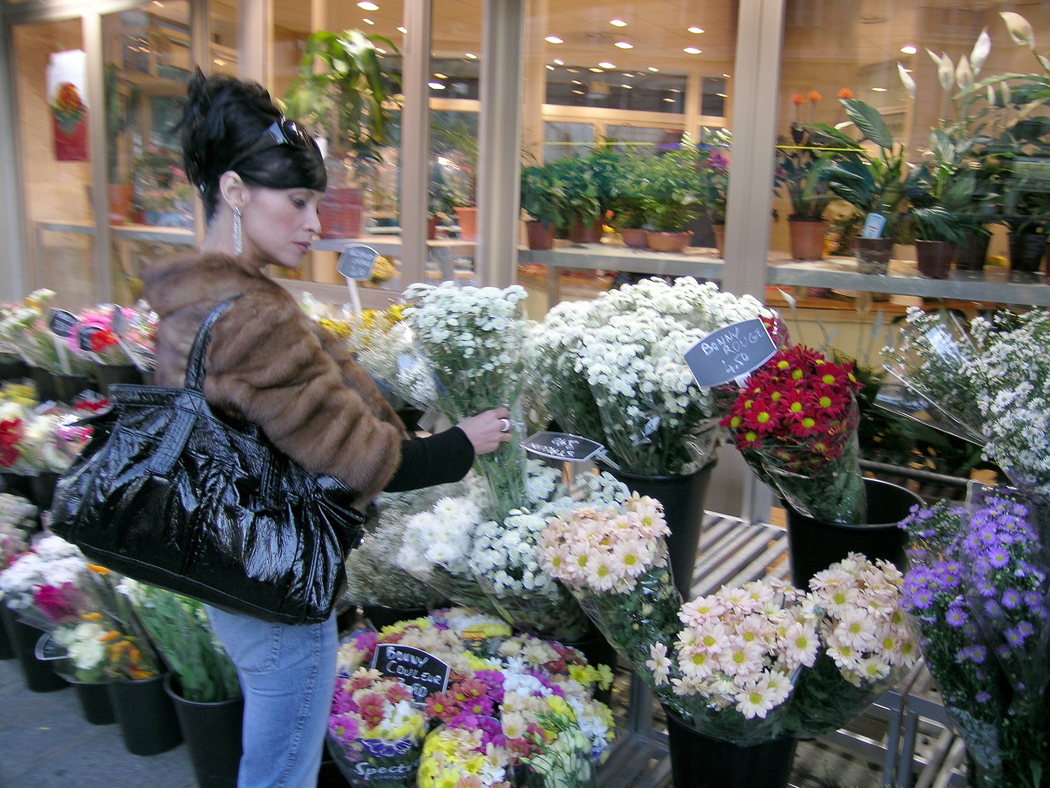
That was our constant experience in Paris. One day, I was walking by myself along rue Monge, near our hotel and the woman who ran the flower shop asked after Carole. “Is she not well?” “No, she’s just resting.” We had not talked with her before, but she had noticed we had been in the neighborhood and she worried about us. 

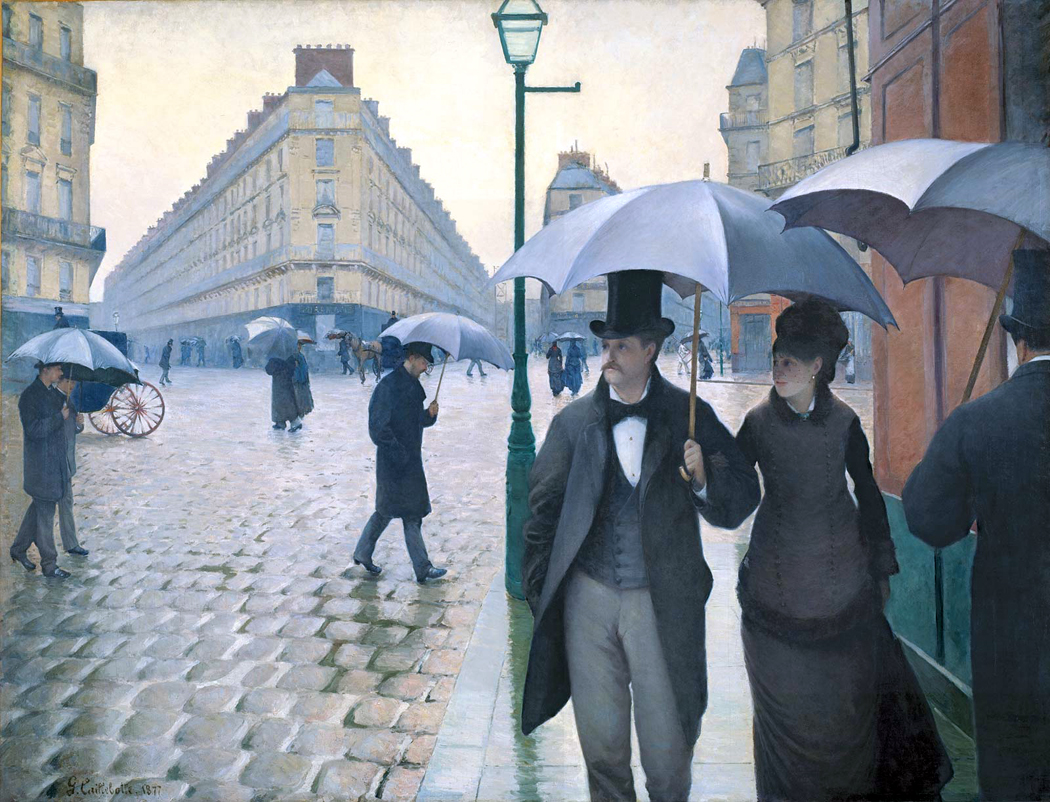
The city has been brought to mind in part because of a series of TV shows about Impressionist art, made by British art historian and TV presenter Waldemar Januszczac. (Yes, that’s seven consonants and only three vowels — a Scrabble nightmare). 

In the series, he makes the point that what defined the Impressionists was not all the flowers and flowery dresses, all the sunlight and paint daubs, but an interest in the daily lives of Parisians. The official painters of the day (second half of the 19th Century) were the academic painters and they painted elaborate historical, biblical or mythological paintings — subjects considered “important” enough for art.

But there was Renoir, Pissarro, Monet, Degas, Caillebotte, Sisley, Gauguin, or Marie Bracquemond — all painting what they saw on the streets, or the people they hung out with. The paintings captured the life of the bourgeoisie, the ordinary people of the city. 

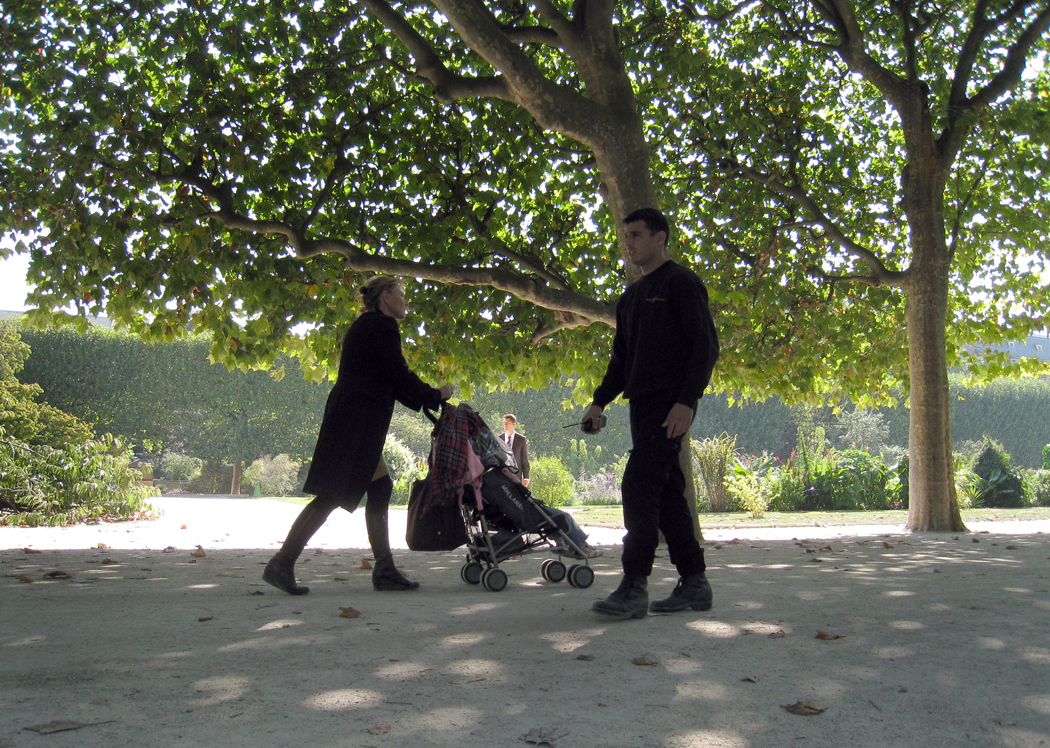
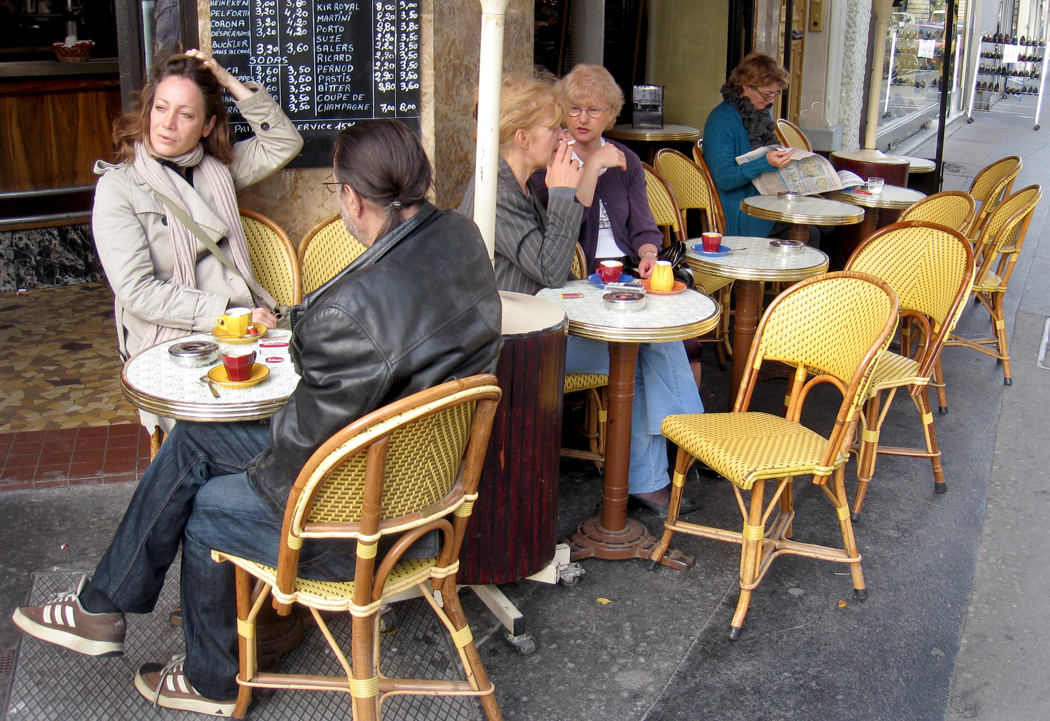
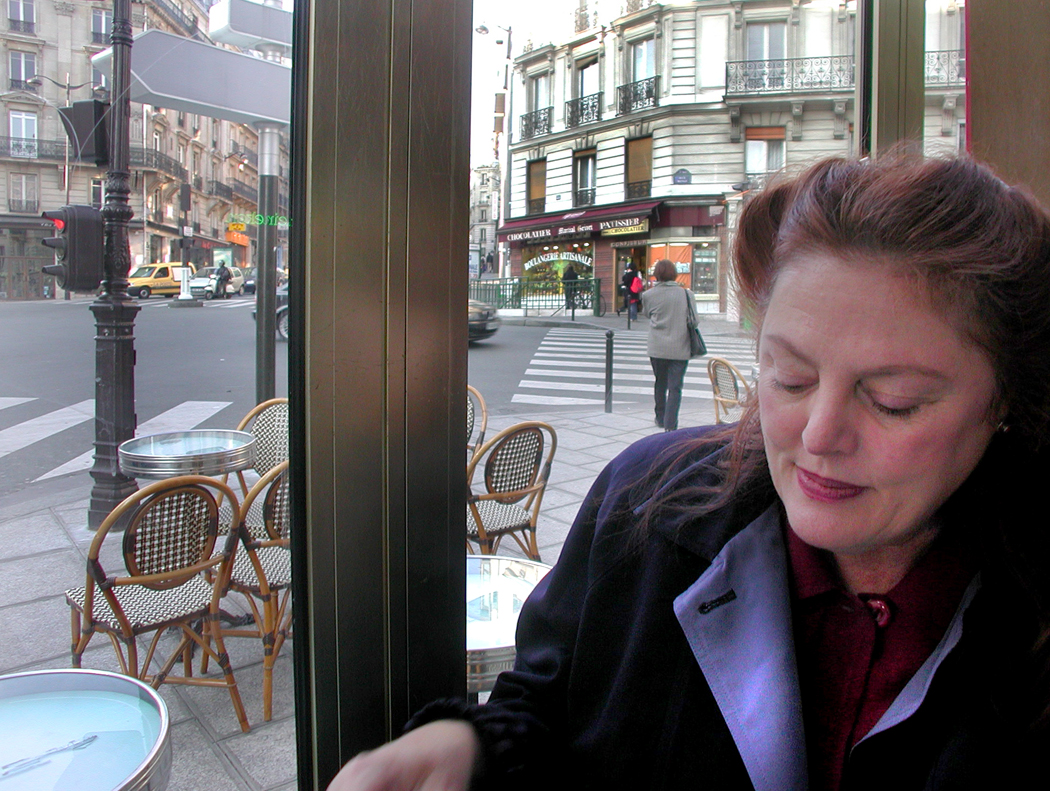
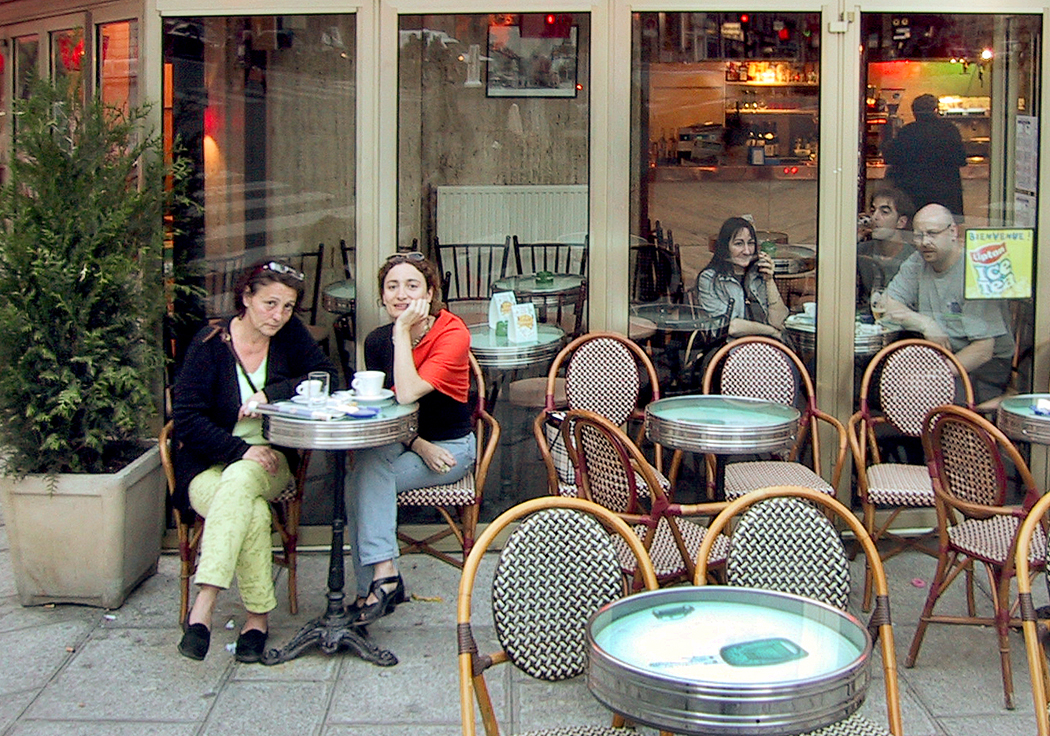
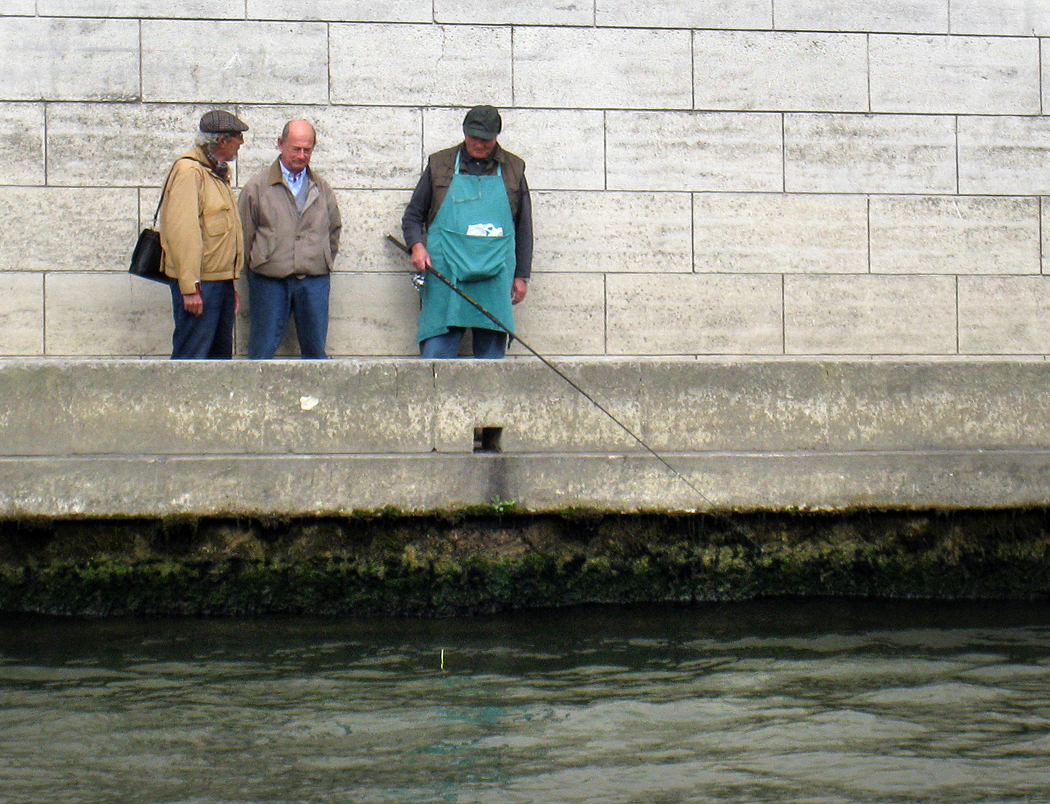
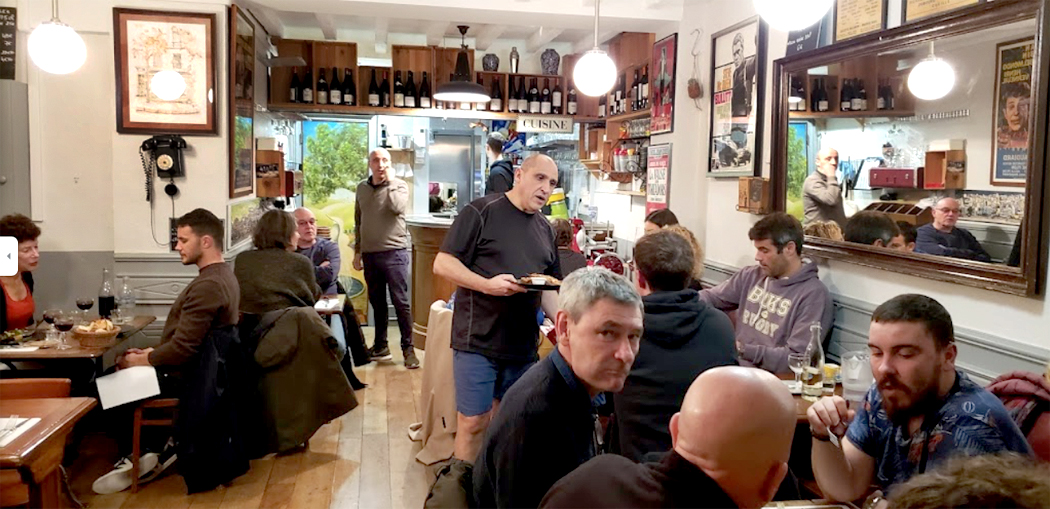
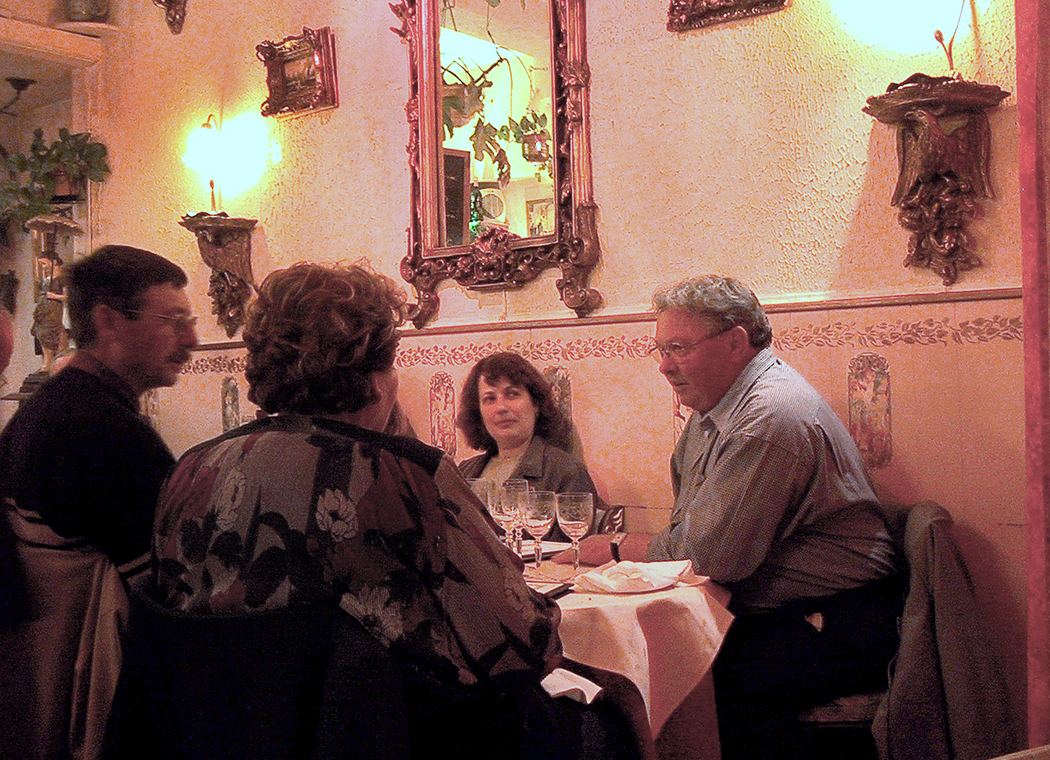
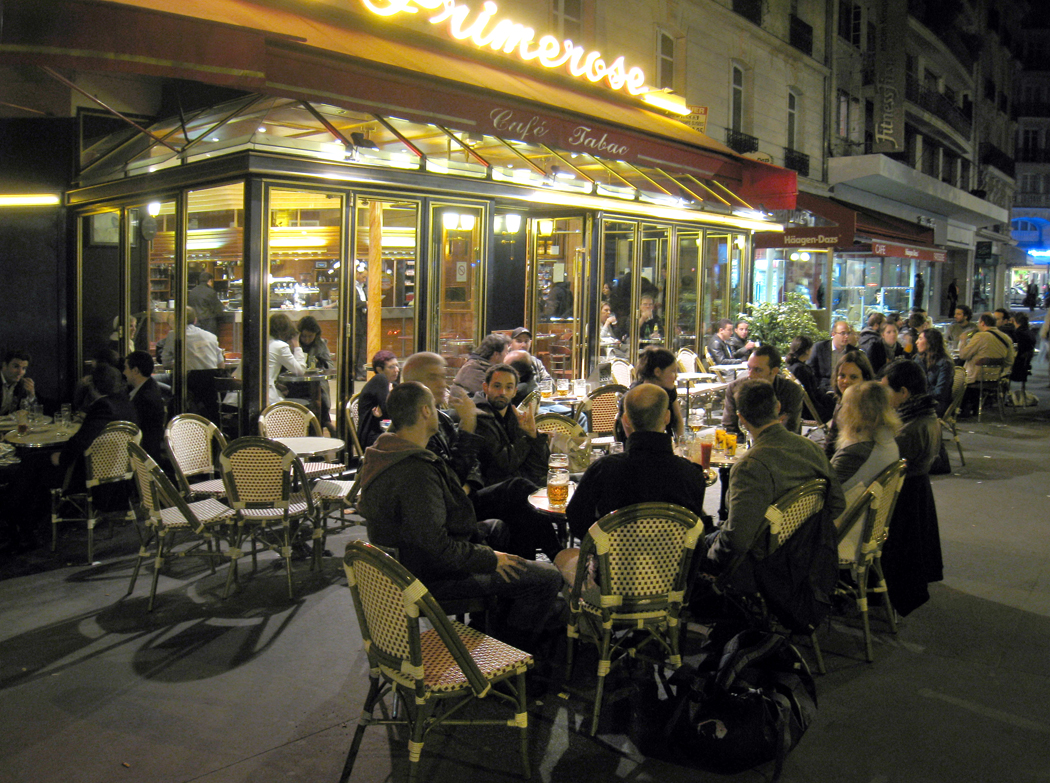
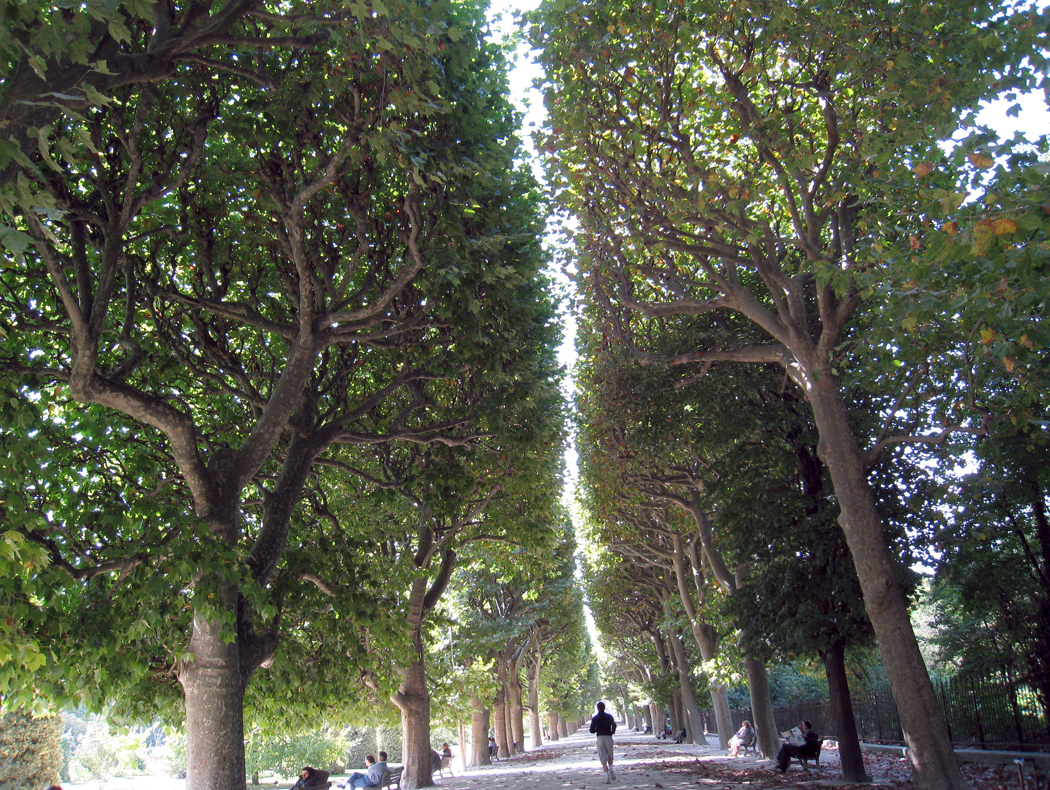
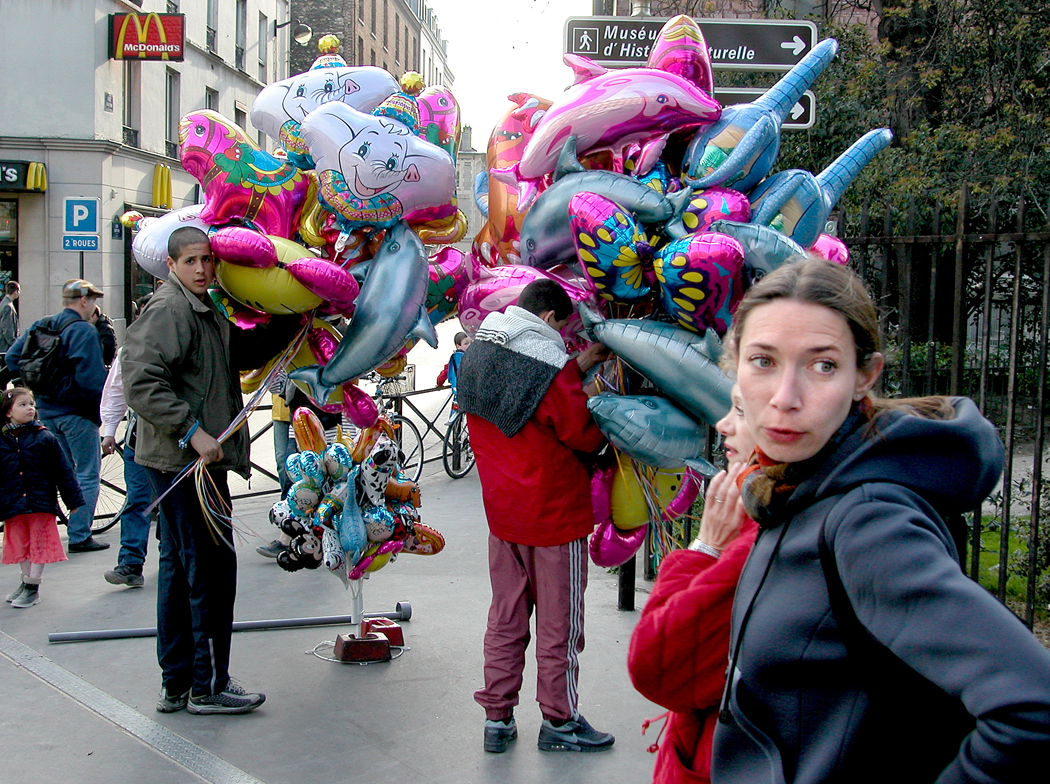
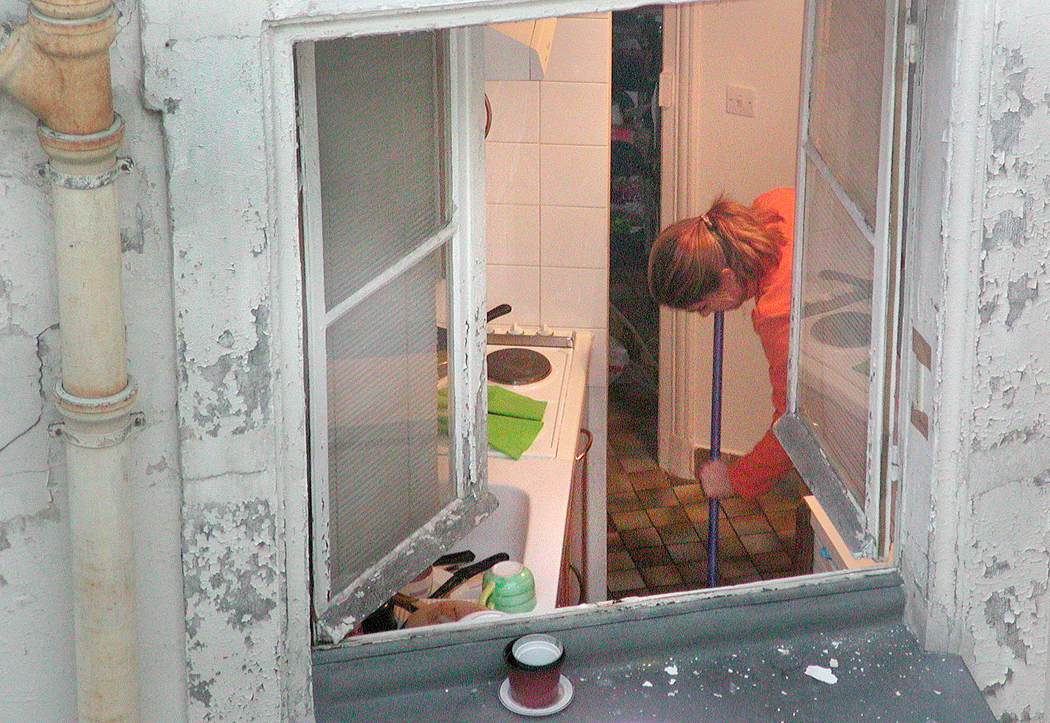
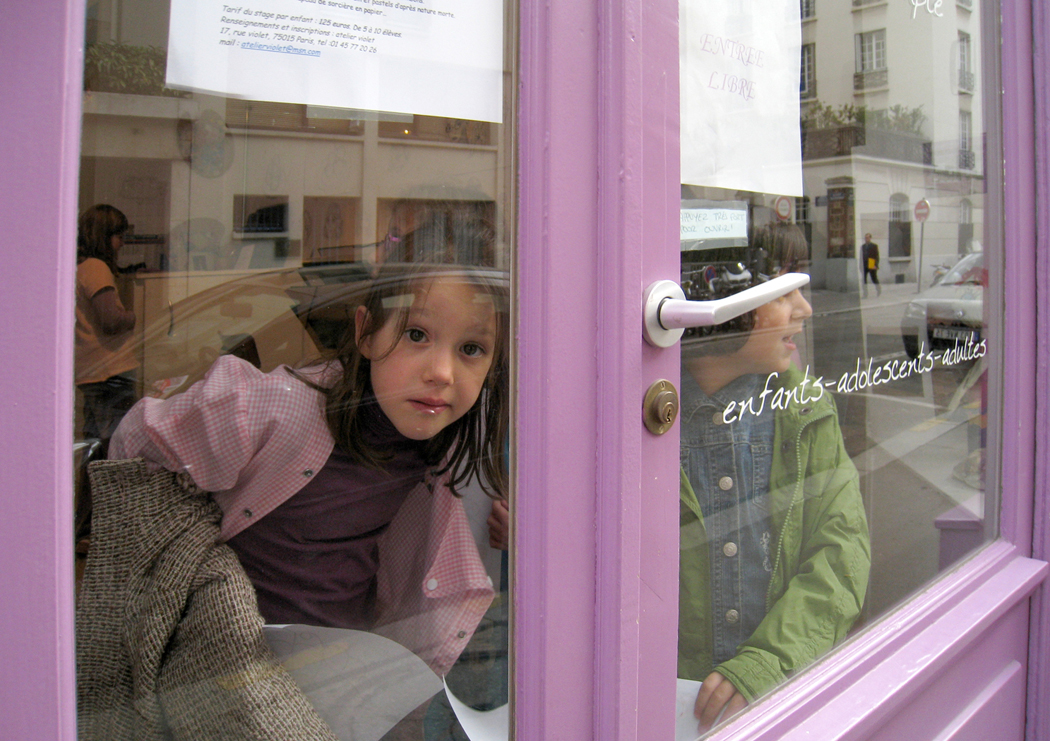
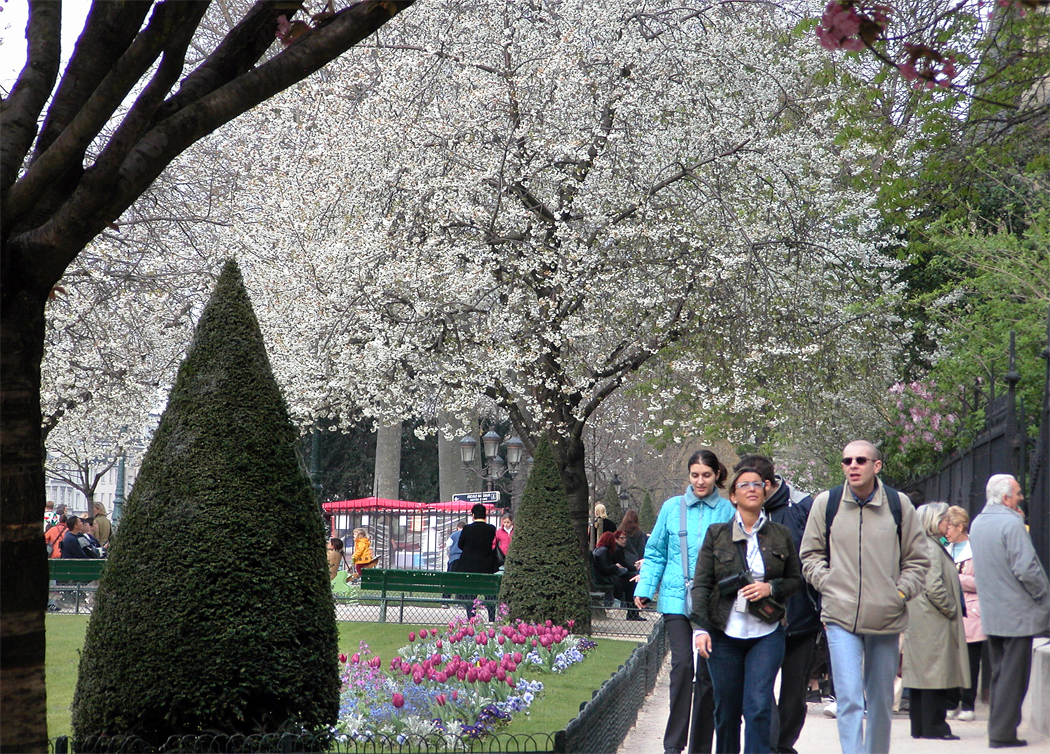
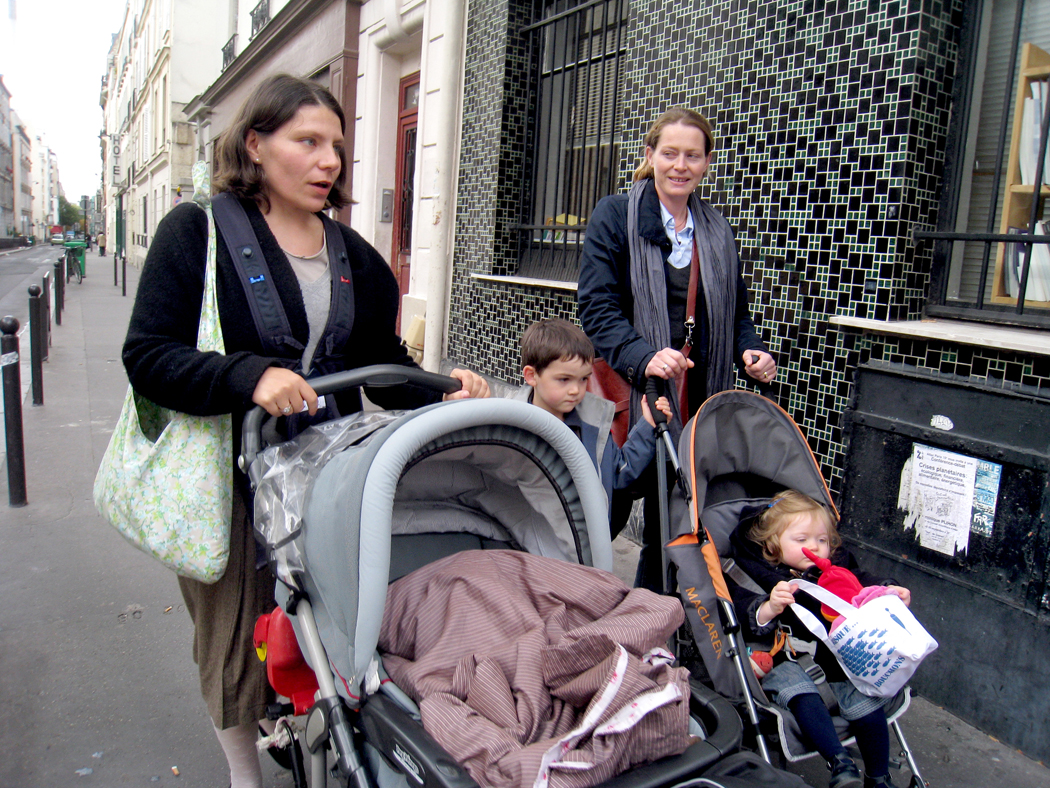
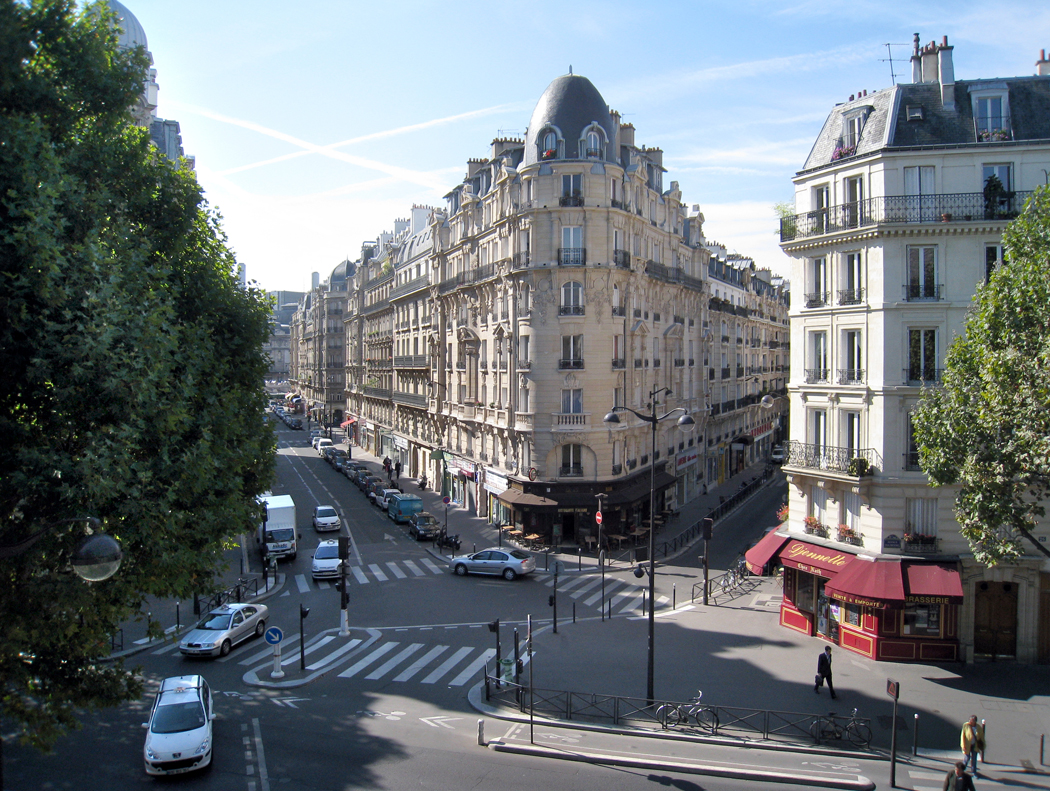
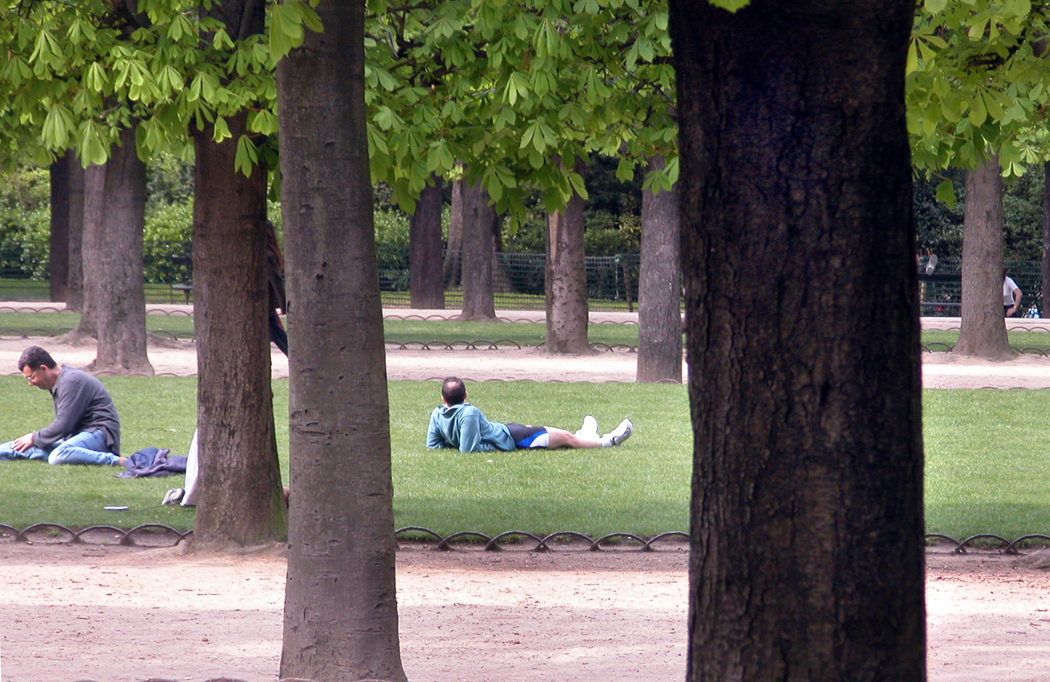
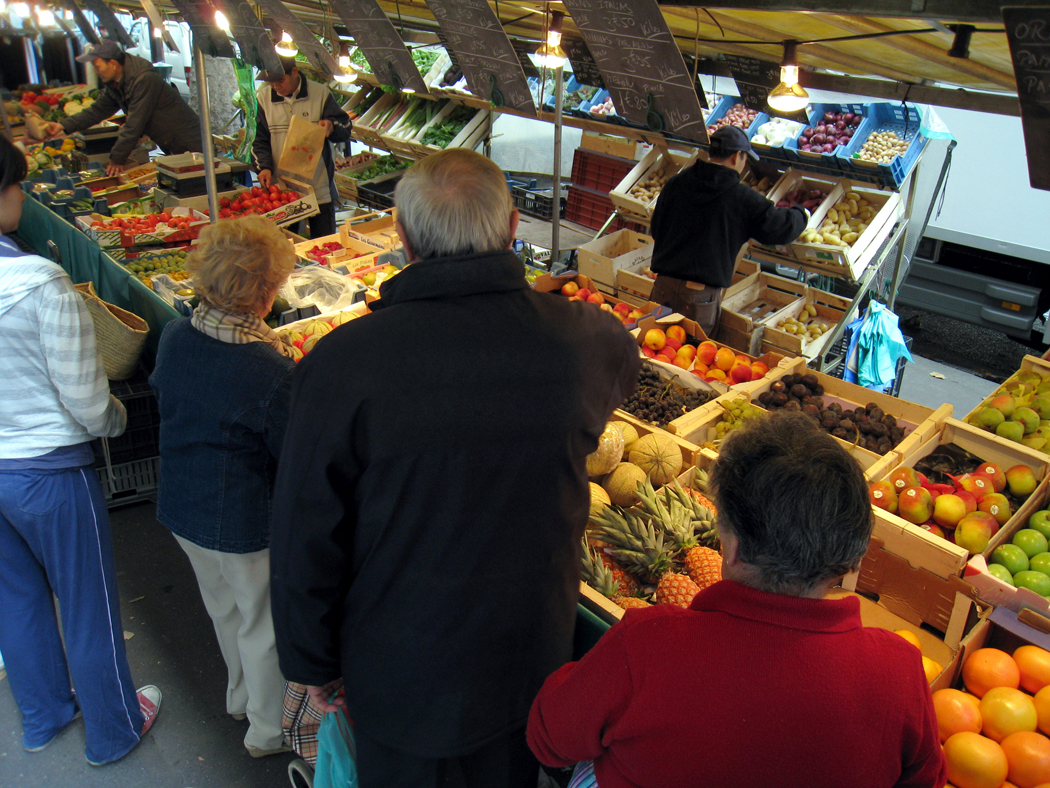
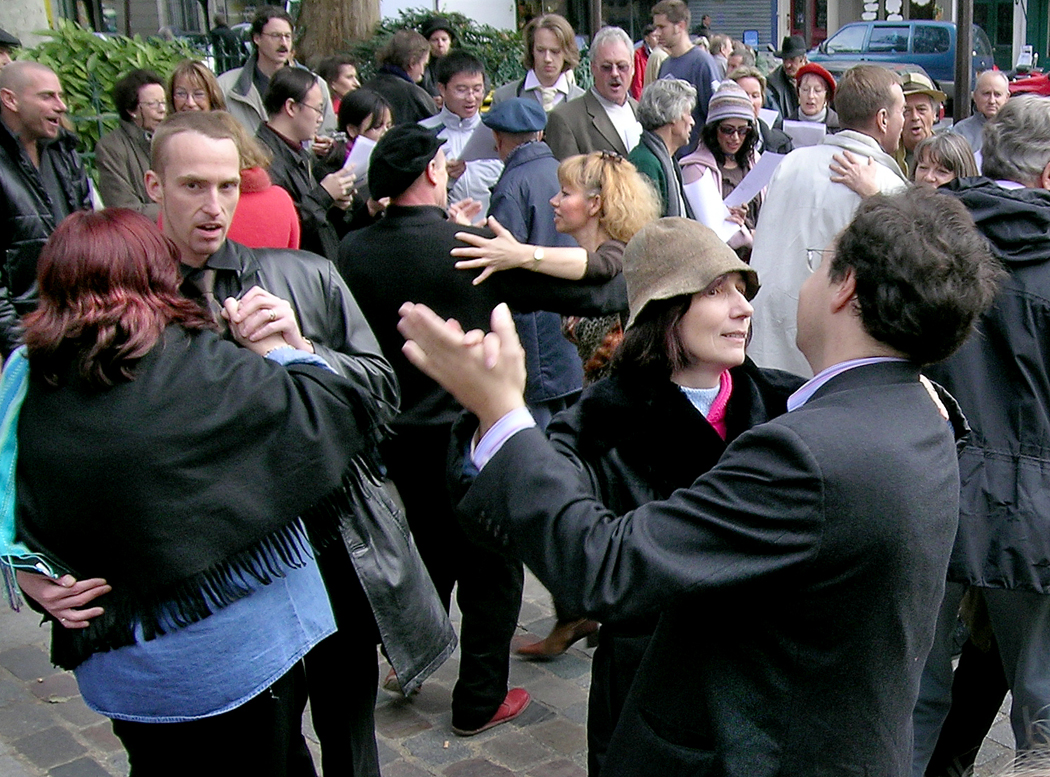
And when I went looking back at the photographs I made while in Paris, I realized that so many of them were contemporary versions of the same things that featured in those canvases. 

This was “my” Impressionist Paris. 

The other reason Paris has been on my mind is that I am re-reading Ernest Hemingway’s A Moveable Feast. I first read it when it first came out and I was in high school. I had just been forced to read The Great Gatsby for class, and Hemingway gave me a very sour take on Fitzgerald. (I don’t know why they assign Gatsby to teenagers; there is no way in hell they can have any clue as to what is going on in the book — I know I didn’t. I have just re-read it and been blown away by the beauty of its prose — all that lost on me when I was a snot-nosed adolescent). 

But now, as I’m re-reading the Hemingway, I am hit with my own past. I know so many of the streets he names. He and Hadley first lived on rue Cardinal Lemoine; our first visit put us right at the bottom of the hill off Lemoine. We ate breakfast each morning at Le Petit Cardinal bistro. Our regular waitress, Lauren, a sandy-blond woman in her 30s, would have our regular breakfast for us even before we ordered. (And one morning, when I had ordered a pain au chocolat and they were out, she went across the street to the patissier and brought back a sack of them, so I wouldn’t be deprived.)

The cafe culture Hemingway writes of is one we became intimate with, each time we went (and we attempted to stay for a month at a time, each visit). 

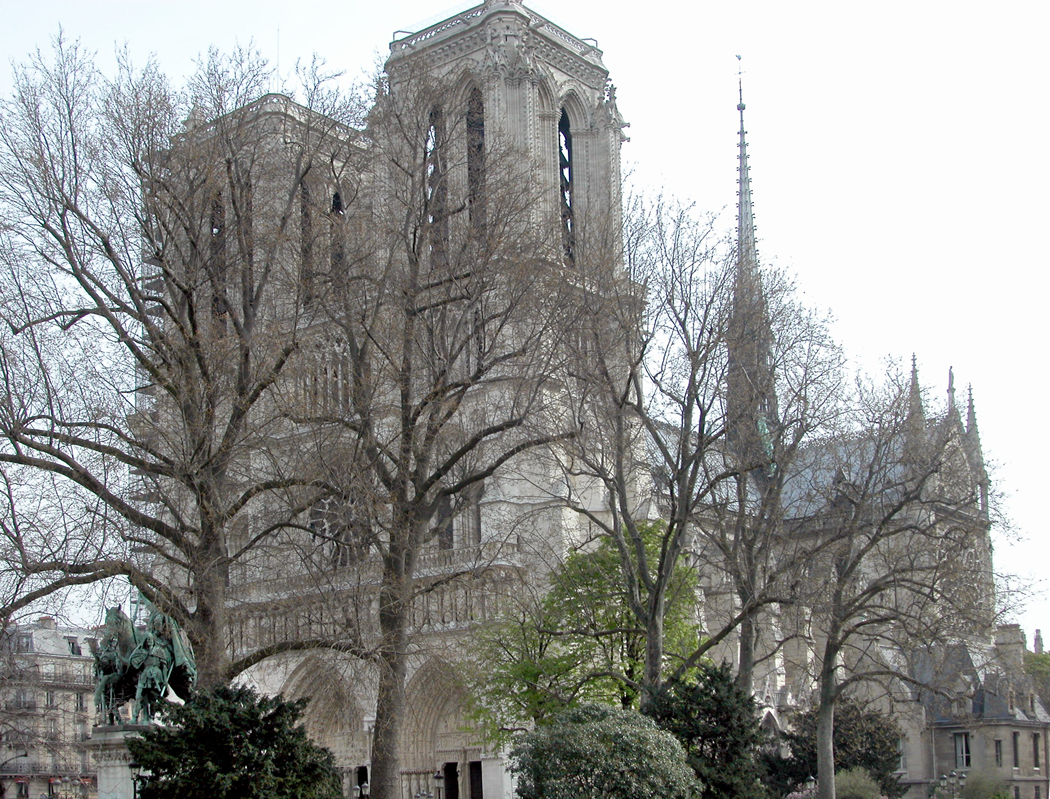
At the cafe Etoile d’Or, at the bottom of the hill, we came late one night after a concert to have a demitasse and a dessert. Carole ordered a crème brûlée and when it came, she lightly tapped the hardened caramel crust on top, a rich glaze that she said reminded her of the stained glass of Notre Dame. She told this to the waiter, with his apron wrapped around his waist, and he smiled. We heard him in the kitchen telling the cook, who answered simply, “C’est vrai.” 

I first went to Paris when I was in high school. I had accompanied my grandmother on the transatlantic boat trip to Norway so she could visit her birthplace in the south of the country. I was also given a Cook’s Tour bus trip, by myself, across northern Europe. 

When we stayed in Paris, one night when the rest of the tour went to the Folies Bergere, I was deemed too young to go. So, as evening descended, I walked up the street stopping about a half-block from the hotel, at a boulangerie and bought a baguette. Next door was a charcuterie, where I bought a paper boat of wurst salad. Another door down, I bought a bottle of dry white wine and I took the bundle back to my room, where I had a private dinner that I know I enjoyed more than the poor slobs who had gone to the nightclub. Sausage, bread and wine — I was 16 and I have never again felt so grown-up. 

Paris made the biggest impression on me at that tender age, of all the places we visited across five nations. It was Paris before the cathedral of Notre Dame was cleaned, and so its facade was sooty with grime. The church of Sainte Chapelle was brilliant with stained glass. The Metro impressed me — an afficionado of New York subways — by riding on rubber tires and making almost no noise. 

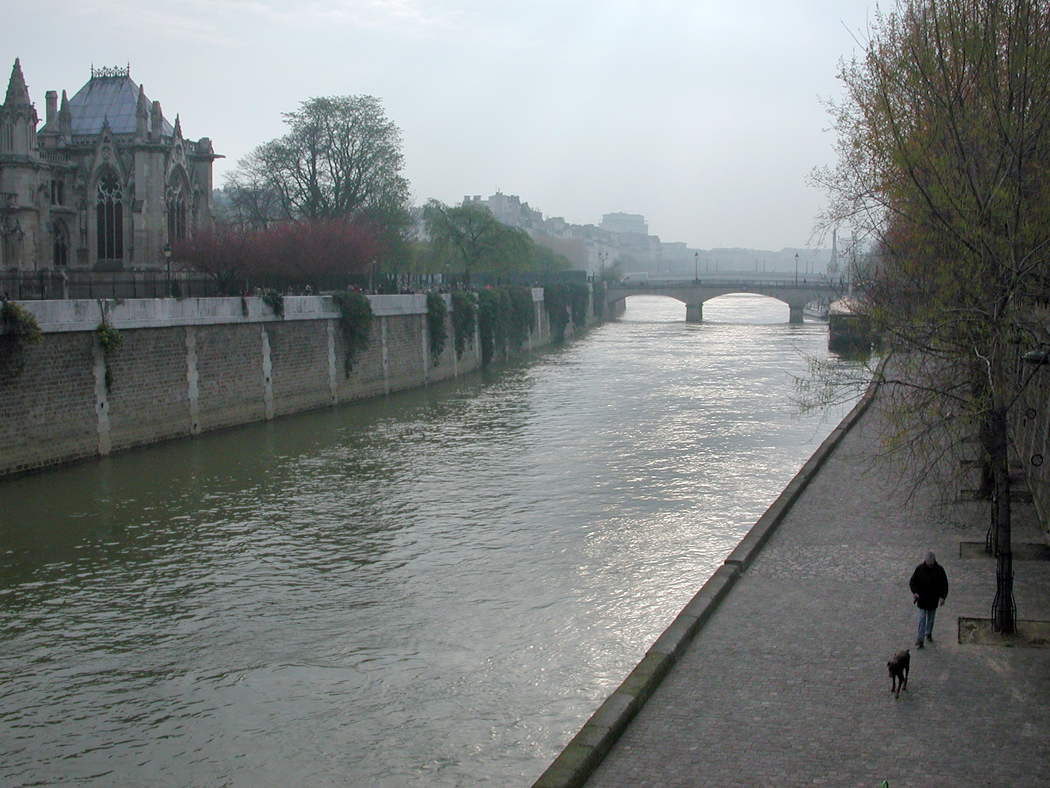
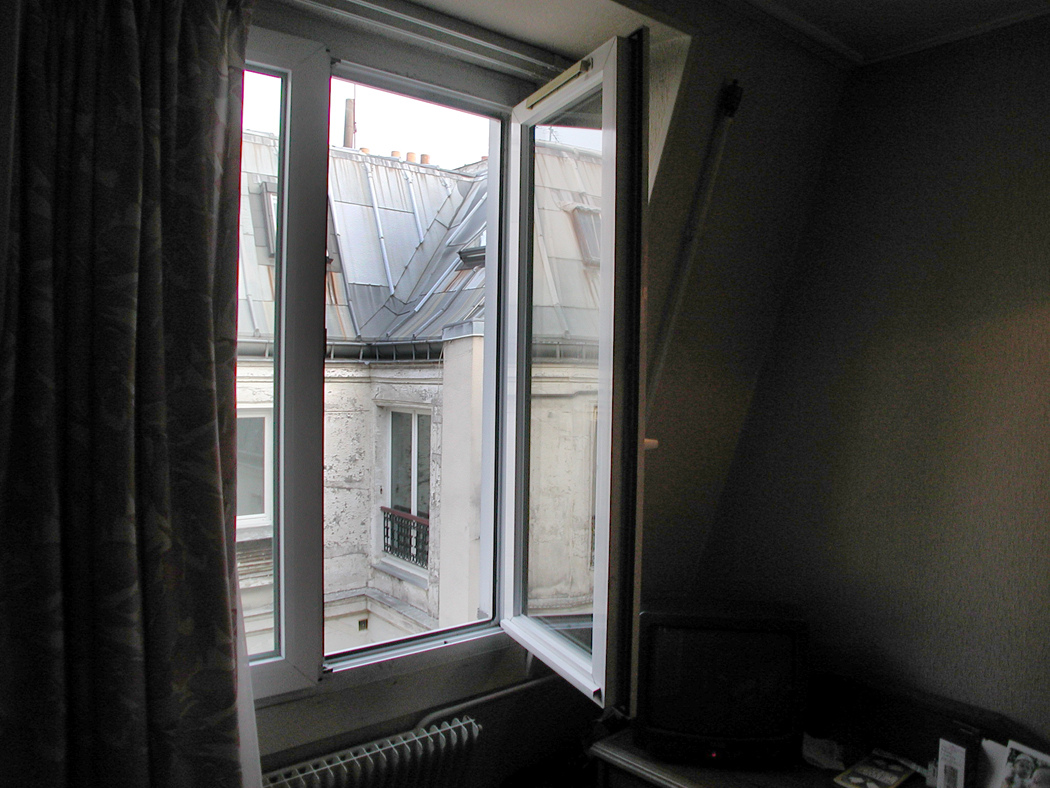
But I didn’t get back to Paris until 2002, when Carole and I decided it was time. We had a hotel in the Fifth Arrondissement, just off rue Monge. On our first full day, we walked down the hill toward the river. 

Hemingway begins his fourth chapter: “There were many ways of walking down to the river from the top of the rue Cardinal Lemoine where we lived.” It was the same route Carole and I took, although we didn’t know it at the time. We could see the spire of Notre Dame at the end of the road, less than a half-mile off. Along the way, we past a thousand cafes, bistros, tea bars and restaurants. In between were shops, fruit stands, book stores and churches.

The river divides the city in half, and along its banks you still can find the fishermen that Hemingway wrote of: “The good spots to fish changed with the height of the river and the fishermen used long, jointed, cane poles but fished with the very fine leaders and the light gear and quill floats and baited the piece of water that they fished expertly. They always caught some fish.” 

It’s a working river, still. 

When in A Moveable Feast he writes: “With the fishermen and the life on the river, the beautiful barges with their own life on board, the tugs with their smokestacks that folded back to pass under the bridges, pulling a tow of barges, the great plane trees on the stone banks of the river, the elms and sometimes the poplars, I could never be lonely along the river.” 

Paris is an oddly layered city, with the newest on the bottom and the oldest above. Almost every building houses some modern shop on the ground floor, with neon lights, plate glass and corporate logo. While from the second floor upwards, you see the old wrought-iron balconies to the small casement windows, peeling paint, rotting plaster or concrete, and surmounted by a gaggle of chimneys, each with a half dozen flues poking out the top.

How they got those modern shops underneath the old apartments, I don’t know. It looks like they jacked the buildings up and constructed a shopping mall underneath.

For dinner, we tried a little Italian restaurant and had a opening course of mortadella, which Carole called “the worlds best bologna.” Then we had the lasagne boulognese, and a chocolate mousse for dessert. My notes of our trip are filled with descriptions of our meals. I believe I cataloged every one of them in my notes. 

At La Aubergeade, on the rue de Chaligny, two men were sitting at a table across the room. One short and sandy haired who was making a point in the air with his hands. He was about 55 and wearing a wool suit. The other man was tall with a de Gaulle nose and mustache, bald with a crew cut. He was so gangly and angular that his knee, crossed over his other leg, poked high above the table level. He was skeptical and showed it with a raised eyebrow and a pursed lip. He also sawed the air with his right hand palm inward, fingers extended, in a slow and deliberate fashion, in total contrast to the energy of his friend. Momentarily, they stopped, cut their steak or potato, put it to mouth and then began their counterpoint gesticulation again.

It was like watching a Tati movie, live. In fact, the tall man might as well have been M. Hulot on one of the moments when he was dragged into the cafe by his friend, accordion music playing as soundtrack. Vielle France.

At the restaurant across the street from our hotel, we had one of the best meals of my life: A steak with grilled fois gras. A small dog wandered from table to table looking for scraps and a good pat on the head. Eventually, he climbed up into my lap and stayed there contentedly, while I finished my dessert. 

It feels silly writing about our food every day, but it is truly a highlight. Paris is a city where your lunchtime conversation is likely to be about where you will eat dinner. The promise of Christian salvation has little value compared with the presence of a good French meal.

“I’m not sure it does us honor, but if I had to admit it to myself, the real reason for coming back to Paris is the food,” I said.

On our first visit together, in 2002, we ate at Le Physicien, a Basque restaurant at the far end of rue Monge. It was group seating, and we were at a long table with a bunch of students. They had such a ball, it was infectious. They sang and drank and ate. Carole shared her braised kidneys with them. They shared shrimp with her. We had a piperade — a Basque specialty with garlic, onion, peppers and egg — that was the highlight. Daniel, the chef and owner, smiled on us all with his aged, whiskered smile. 

Two years later, we came back for more on a bright, sunny Tuesday afternoon at lunchtime. But when we entered, a woman there was trying to shoo us away. I wasn’t  sure why. I couldn’t understand her French.

But then the old man came in — the one we remember from last visit — and he immediately calmed the woman down and offered us seats.

Carole explained in French that we had been there two years ago and loved the piperade and that we wanted piperade again, with ham and egg and pepper and — well, garlic.

He was enthusiastic and hit the kitchen right off. 

We had ordered two glasses of wine, but the woman brought us a whole bottle and made an apology for trying to send us away.

The piperade was wonderful — along with the vin rouge and the basket full of baguette chunks. For dessert, we had the gatteau basquaise with crème anglais.

When we left, the woman took both of Carole’s hands in her hands, and then Daniel, took both my hands and put them inside of his hands and said thank you. So, they both understood what we had been trying to tell them in our pidgin French.

It was a perfect experience, but when we walked out the door, I noticed a sign I had missed on the way in: Fermé le mardi — “Closed Tuesdays.” 

That has always been our experience of Paris and Parisians. 

Yes, we went to the Louvre, and other must-sees, but we didn’t spend a lot of time on the usual things. We never, for instance, went to the Eiffel Tower. Why? You can see it from pretty much any point in the city, and if you spend your day climbing the tower, well, you cannot see the tower. 

On our second trip, in 2004, we stayed on the Boulevard St. Marcel and a couple of doors down from the hotel was the Pizza Lino, where we ate a couple of times. On the third time, our waiter greeted us as old friends. He wouldn’t let us order. He had made cous-cous. 

“I am from Algeria,” he said. “I made it myself.” 

He brought out a tagine and plates of white cous-cous and we covered them with a ladle or two of a rich red sauce filled with vegetables — potato, squash, tomato, chick peas, carrots — and a selection of meat, including meatballs, an anise flavored sausage and the best lump of lamb meat I’ve ever had. He brought it with wine and told us the wine was part of the deal. It was.

The food was wonderful, but it paled in comparison to the human interaction we had with our friend, Madjid. “I am not Arab,” he tells us, “I am Berber.” He has been in France for three years, he says. He and a friend own the restaurant. Madjid is married to a Brazilian woman and has a 14-year-old son. (the boy must now be in his 30s.)

Madjid expressed that he felt an instant sympatico with us, and we told him we felt it toward him, too. He brought us a free pichet of wine, which we felt compelled to drink.

“It is good,” he said, “when you have something to give” — like his food — “that someone truly knows how to enjoy and accept it. A gift is best when it works both ways.” I am paraphrasing his macaronic French and English. (He speaks French perfectly well, but tries to add enough English to help us understand. His English is imperfect, but better than our French.)

Two years later, we were walking up the Boulevard St. Marcel, late in the afternoon and I heard a voice: “Reeshard? Reeshard, No?” It was Madjid, in front of Pizza Lino.

“Yes, bon jour.”

“I have good memory,” he says, understating the case. 

And he pulled us in and told us he had cous-cous and hardly gave us a chance to assent, but sat us down at the same table we used to sit in. “Your place, yes?”

And he set before us a bowl of white fluffy cous-cous with white raisins swollen plump, and then a great big white Normandy bowl of vegetables and soup, with big chunks of carrots, onions and turnips. While we were spooning the veggies and soup over the couscous, he brought another plate full of braised lamb, meatballs and andouille sausage, bright red with white chunks of fat.

We added the meat to our bowls and chowed down. We couldn’t possibly finish everything he brought us, and he showed the same grinning pride in his cooking that he did last time.

Our bellies were bursting, our warm-spot in our hearts were glowing and we promised to come back the next day. And, of course, we did. 

At the Luxembourg Gardens, we walked among the statues and horse-chestnut trees and were in the middle of a living city. People all around were walking dogs, sitting under trees and reading, or cuddling or smoking. Teenagers rolled past on their inline skates and joggers puffed around corners. All I heard was French.

What never fails to give us pleasure is just walking around the streets. We walked along the quai, or even up the Rue Monge near our hotel, and look in the shop windows, drool at the patisserie, see what French vacuum cleaners look like, watch the people sitting at the round tables in the cafes sipping their cafe au laits. The cars are different; the way people walk or cross streets is different. It is all utterly and completely fascinating. 

Throughout the city, street markets pop up on their regular days. I found the Thursday street market, spread out along Avenue Lendru Rollin from the rue de Lyon all the way to the rue de Bercy. I started to walk along it, past fish and fowl.

The market sits under canvas tent-roofs along the sidewalk, with the territory divided up between vendors. One was a fishmonger, with heaps of silvery dace and mackeral, red-fleshed, skinned flatfish, piles of oysters, boxes of shrimp and langoustini. The next had meat, with freshly butchered shanks and steaks, and platters of livers, kidneys and other oddments. More than one stall was end to end vegetables and fruits, with cauliflowers, tomatoes, leeks, cabbages, peaches, apples, pears. 

A few meters down the road, the food gave way to junk jewelry and hairpins. Further, there were clothing stalls, shoes, jackets.

Then, more food. One great-smelling stall had whole chickens on rotisserie racks, about 6 skewers high, over a trough with golden roasted new potatoes. He called to us in English, “Take home a half chicken, only 3 Euro.” I shrugged my shoulder: We had nowhere to take such a succulent morsel.

At the end of the line, we kept walking for a bit, down to the river and halfway across the bridge to the Gare de Austerlitz. It was chilly that morning and the sun, barely a glare through the grey sky, broke into crystals on the sharp-edged little waves of the Seine.

A few years before that, we had been staying in a hotel off the rue Claude Bernard and one morning, we heard a crowd outside. It was market day on the rue Mouffetard. 

It was like something from a movie, or a travel poster, with hundreds of vendors selling vegetables, fruits, meats, fish and all kinds of viands. Up and down the narrow street, shops offered oysters, coffee, bread and beer. On shop had freshly-dead rabbits hanging in the window. “Lapin — 8 Euro, Lievre — 10 Euro.” The hare was about 20 percent larger than the rabbit. 

The street was mobbed. It was a hive of activity, and at the bottom of the hill, by the Saint-Médard Square, there was a small band, with accordion, playing music. The crowd sang along and gathered in a circle around the musicians and two or three couples would move to the center and begin dancing, all with great smiles on their faces. 

By about noon, the marché came to an end, and the band signaled the end of their performance with an elegiac La Vie en Rose — the whole thing could not have been more French. I’m sorry if it all sounds corny, but it also felt very real. 

We knew then that we had to come back, and we did so every other year, when we could afford it. 

Click on any image to enlarge
“Manfred on the Jungfrau” John Martin, 1837

From the last half of the Eighteenth Century through the last quarter of the Nineteenth, an idea permeated popular and intellectual culture and showed itself in literature, art and music, although no one could quite agree on its definition. Like wit in the seventeenth and early eighteenth centuries, which also defied simple definition, the sublime was something no one couldn’t quite pin down, but like Justice Potter Stewart said, you knew it when you saw it. 

The Sublime features representations of vast spaces, horrifying disasters and universal chaos. Anything dark, scary, awe inspiring or supernatural. 

“Alpine Avalanche,” Philip James de Loutherbourg, 1803

Of course, the idea isn’t limited to the Eighteenth and Nineteenth centuries. It has been around as long as there has been art and literature. There is The Sublime in the epic of Gilgamesh and it is all over the Bible. 

There had always been a subspecies of The Sublime in art. It is in Shakespeare, in Titian, in Rubens. It runs throughout John Milton’s Paradise Lost, especially in those parts describing Satan and his acts. 

But The Sublime steps into the spotlight with the advent of Romanticism. It is in the poetry of Byron, the novels of Victor Hugo, the paintings of Caspar David Friedrich. It is behind the fad for Gothic novels and the nature poetry of Wordsworth and Coleridge. 

The first clear enunciation of The Sublime in literature was set down in the First Century by an anonymous author, usually called Longinus. His treatise, usually called On the Sublime, is primarily a guidebook to rhetoric, with all the usual tropes, but he also discusses how great writing — as opposed to the merely good — overwhelms us, and it is great subjects that lend themselves to great writing. 

In the climactic 35th chapter, he writes: “What was it they saw, those godlike writers who in their work aim at what is greatest and overlook precision in every detail? … (W)e are by nature led to marvel, not, indeed, at little streams, clear and useful though they be, but at the Nile, the Danube, or the Rhine, and still more at the Ocean.  … nor do we consider out little hearthfire more worthy of admiration than the craters of Etna whose eruptions throw up rocks and boulders or at times pour forth rivers of lava from that single fire within the earth.

“Vesuvius Erupting,” Pierre-Jacques Volaire, 1877

“We might say of all such matters that man can easily understand what is useful or necessary, but he admires what passes his understanding.”

What happened between the century of Voltaire and that of Shelley is the cultural shift from Neo-classicism to Romanticism. It is a shift from a concern for society and relations of humans to humans to a different frame of reference — to the relation of the individual to the cosmos. 

Relations between people are between roughly equal, similar size entities; relations with the cosmos pit the infinitesimal human being against the infinite. There is no satisfactory reaction but awe, terror, and admiration: That is The Sublime. 


“The Deluge” William Westall, 1848

Coleridge describes a Sublime experience in his 1818 lecture on “European Literature” by recalling: “My whole being expands into the infinite; earth and air, nature and art, all swell up into eternity, and the only sensible expression left is, ‘that I am nothing!’ which concludes that his ultimate realization of The Sublime was of his own human insignificance.” 

In 1757, a young Edmund Burke wrote an influential treatise, A Philosophical Enquiry into the Origin of our Ideas of the Sublime and Beautiful. He wrote: “Whatever is fitted in any sort to excite the ideas of pain, and danger, that is to say, whatever is in any sort terrible, or is conversant about terrible objects, or operates in a manner analogous to terror, is a source of the sublime; that is, it is productive of the strongest emotion which the mind is capable of feeling.”

He sorted The Sublime into seven constituents: darkness; obscurity; deprivation; vastness; magnificence; loudness; and suddenness. When used in art or literature, The Sublime reminds us of things we find frightening in the world, but by being framed in art, lets us contemplate it in safety, and thus we find pleasure in it. 

“Chamounix, Mont Blanc and the Arve Valley” JMW Turner 1803

The next generation sought out The Sublime in reality as well as in literature. When Mary and Percy Shelley visited the valley of the Arve River in the Alps, they noted in their History of a Six Weeks Tour through a Part of France, Switzerland, Germany, and Holland: “Mont Blanc was before us, but it was covered with cloud; its base, furrowed with dreadful gaps, was seen above. Pinnacles of snow intolerably bright, part of the chain connected with Mont Blanc, shone through the clouds at intervals on high. I never knew — I never imagined what mountains were before. The immensity of these aerial summits excited, when they suddenly burst upon the sight, a sentiment of ecstatic wonder, not unallied to madness.”

Shelley transformed this into his poem, Mont Blanc: Lines Written in the Vale of Chamouni:

In her 1794 gothic novel The Mysteries of Udolpho, Ann Radcliffe has her heroine face the Alps: 

“They quitted their carriages and began to ascend the Alps. And here such scenes of Sublimity opened upon them as no colors of language must dare to paint … Emily seemed to have arisen in another world, and to have left every trifling thought, every trifling sentiment, in that below: those only of grandeur and sublimity now dilated her mind and elevated the affections of her heart.”

“Hannibal Crossing the Alps in Snowstorm” JMW Turner 1812

And Byron is nothing without The Sublime. He takes his doomed hero to the Jungfrau in Manfred and used it in Childe Harold’s Pilgrimage over and over, as in the lines, “Roll on thou deep and dark blue Ocean — roll!”

In Canto 3 of Childe Harold, he takes his hero to the Alps: 

Coleridge’s Rime of the Ancyent Marinere (1798) is all about The Sublime and its terror — and ultimately, its beauty. 

Its hero, aboard a death ship is surrounded by a sea of monsters: “The very deep did rot: O Christ!/ That ever this should be!/ Yea slimy things did crawl with legs/ Upon a slimy sea.” But our mariner has a transformation of heart:

 Certain artists and painters became transfixed by The Sublime. First comes Joseph Wright of Derby (he is always referred to this way, apparently to distinguish him from other Joseph Wrights, including an American artist of the same time, who designed the Liberty Hat penny). 

In many of the English Wright’s paintings, a bright light glows in the darkness. He painted multiple canvasses of the eruption of Mt. Vesuvius in the 1770s. 

“Vesuvius in Eruption, With a View of the Bay of Naples,” Joseph Wright of Derby, 1776

Although he didn’t have to travel that far. Many of his landscapes feature brooding moonlight scenes, or images of fire in the darkness, such as

“Cottage on Fire,” Joseph Wright of Derby 1786

This fascination with The Sublime is primarily a northern European thing. You find it in British art, in German art and Scandinavian art, but less so in Italian or Spanish (Goya excepted). 

Germany produced Caspar David Friedrich, who specialized in images of the contemplation of vast nature.

The arctic inspired a good deal of Sublime art, as in Friederich’s Sea of Ice, with its barely noticeable shipwreck.

“Das Eismeer” Caspar David Friedrich, 1823

The ice of the arctic is where Mary Shelley had her Frankenstein creature float away on an ice raft to his death.

“We are still surrounded by mountains of ice, still in imminent danger of being crushed in their conflict. The cold is excessive, and many of my unfortunate comrades have already found a grave amidst this scene of desolation.”

And the final words of the novel:

“He sprang from the cabin-window as he said this, upon the ice raft which lay close to the vessel. He was soon borne away by the waves and lost in darkness and distance.”

Later in the century, American painter Frederick Edwin Church painted a dozen or so studies of icebergs. 

“Floating Iceberg,” Frederick Edwin Church 1859

Church also painted volcanoes, such as Cotopaxi in Ecuador.

“Cotopaxi,” Frederick Edwin Church 1862

Church’s most famous painting, now at the National Gallery in Washington DC, is his Niagara, a nearly 8-foot across panorama of the falls. It was shown in New York in 1857, where visitors could pay 25 cents to view the painting in a darkened art gallery (for best effect). The painting went on a cross-Atlantic tour, shown the same way. 

“Niagara,” Frederick Edwin Church 1857

Its effect was stunning for the time. Even a century later, writer David Harrington could say “Niagara is the American’s mythical Deluge which washes away the memory of an Old World so that man may live at home in a New World. The painting is an icon of psychic natural purgation and rebirth. Poetically a New World emerges as the waters of a flood subside. The rainbow, sign of the ‘God of Nature’s’ covenant with man, transfixes the beholder. … Niagara is a revelation of the cosmos to each and every man.”

The biblical reference is apposite. Much of the imagery of The Sublime in the 19th Century comes from the Bible. Painters loved to depict certain scenes from the Old Testament: the Deluge; the Destruction of Sodom and Gomorrah; Balshazzar’s Feast; Samson destroying the temple of the Philistines; the Plagues of Egypt — anything that would have delighted Cecil B. Demille.

In such paintings, you can see the difference between earlier ages and the rise of The Sublime. In Renaissance and Baroque paintings, the action centers on the people involved. Landscape is mere backdrop. But in the century and a half I’m writing about, the people shrink to insignificance and the landscape takes over, full of rocky climes, lightning bolts, hurtling boulders, spewing volcanoes and roiling stormclouds. You can almost make a stop-action movie, like watching a flower unfold in a nature film, showing the people getting smaller and smaller and the landscape becoming ever more menacing. 


“Gordale Scar, Yorkshire,” James Ward 1812

It is clear that as you go later into the 19th Century, The Sublime verges all too often at the edge of kitsch. The sense of cosmic overload funnels into a kind of religious sentimentality. Where you draw the line, personally, depends very much on your willingness to accept the underlying metaphor of the vastness and impenetrability of the universe. 

There are two British artists who straddle that line. John Martin and Joseph Mallord William Turner. Martin was very popular in the early years of the century, but is largely forgotten now. Turner was popular then and even more so today. Still, I have to admit a soft spot in my head for John Martin and his extravagance. 

“Pandemonium,” John Martin 1841

I first learned of him and his large painting (now in the St. Louis Art Museum) called Sadak in Search of the Waters of Oblivion. First painted in 1812, it exists in several forms, both in paint and as print. In it, the Persian prince, Sadak, must fulfill a quest for the legendary Waters of Oblivion, in order to save his kidnapped wife. It is based on one of the Tales of the Genii, by English author James Ridley and was a huge success when first exhibited. 
Martin turned to printmaking to make his work available to a wider audience and published, in 1824, an enormously popular series of illustrations to John Milton’s Paradise Lost. (These were, in part, the inspiration for the later Gustave Dore to make his own series for the epic poem). 

“The Bridge Over Chaos” from “Paradise Lost,” John Martin 1826

Biblical subjects became Martin’s bread and butter. The more grandiose the image, the more popular became his prints. They include The Fall of Babylon

The Destruction of Sodom and Gomorrah:

The Seventh Plague of Egypt:

And Joshua Commanding the Sun to Stand Still Upon Gideon:

And my favorite — The Great Day of His Wrath:

He ventured out of his biblical Fach for the historical:

“The Destruction of Pompeii,” John Martin 1822

And even the prehistorical — on of my favorite for its goofiness. It was the frontispiece illustration for Gideon Mantell’s book, The Wonders of Geology:

“The Country of the Iguanodon,” John Martin 1837

Martin’s appeal was to vastness and number. His Balshazzar’s Feast prompted Charles Lamb to deem it “vulgar and bombastic.” 

“Balshazzar’s Feast,” John Martin 1821

In contrast, JMW Turner also painted one of the plagues of Egypt, and it has its share of grandiosity, but Turner’s shtick was mist and fog, indistinct outlines — and uncertain scholarship (It is titled the Fifth Plague, but actually illustrates the biblical Seventh Plague). 

 “The Fifth Plague of Egypt,” JMW Turner 1800

In 1840, Turner exhibited a painting called Slavers Throwing Overboard the Dead and Dying — Typhoon Coming On. It depicts an event from 1781 when the captain of the slave ship Zong threw overboard 132 of his captives when drinking water was running low. Since insurance would not cover the cost of slaves dying of natural causes, he drowned them instead, so he could collect. Turner seems to have added the typhoon for effect.  

“Slave Ship,” JMW Turner 1840

The storm, the swirling air and sea, the lurid color and the loose brushwork all contribute to the sense of disaster. While the painting had an abolitionist intent, it is its forward-looking esthetics that appealed to critic John Ruskin. Turner is often seen as a precursor to the Impressionists. But while they tended to paint everyday scenes, Turner favored turmoil and disaster. 

“Disaster at Sea,” JMW Turner 1835

The circular swirl was a trademark of the later Turner. In 1842, he had himself lashed to the mast of a ship in a snowstorm in order to paint Snow Storm – Steam-Boat off a Harbour’s Mouth Making Signals in Shallow Water, and going by the Lead. The Author was in this Storm on the Night the “Ariel” left Harwich. Yes, that was its full title when first exhibited. 

“Snow Storm: Steam-Boat off a Harbour’s Mouth,” JMW Turner 1842

He also did a snow storm in the Alps. 

“Valley of Aosta: Snowstorm, Avalanche and Thunderstorm,” JMW Turner 1836

In the United States, The Sublime was a natural. The American West lent itself to large paintings of vast landscape, often in mist or early sunrise. An entire school of artists, usually called the Hudson River School, latched onto The Sublime, beginning with Thomas Cole.

“The Expulsion from Eden,” Thomas Cole 1828

Cole’s most famous protege was Frederic Edwin Church, whose paintings of South America brought the exotic landscape to the U.S.

“Rainy Season in the Tropics,” Frederic Edwin Church 1866

And Martin Johnson Heade verged on the surreal in many of his paintings.

“Approaching Storm — Beach Near Newport,” Martin Johnson Heade 1859

But it was the West that threw open the gates of heaven, with any number of painters, first among them, German-born Albert Bierstadt. 

“Among the Sierra Nevada, California,” Albert Bierstadt 1858

Latterly among them was Thomas Moran, whose huge and colorful canvases persuaded Congress to create our first national parks. 
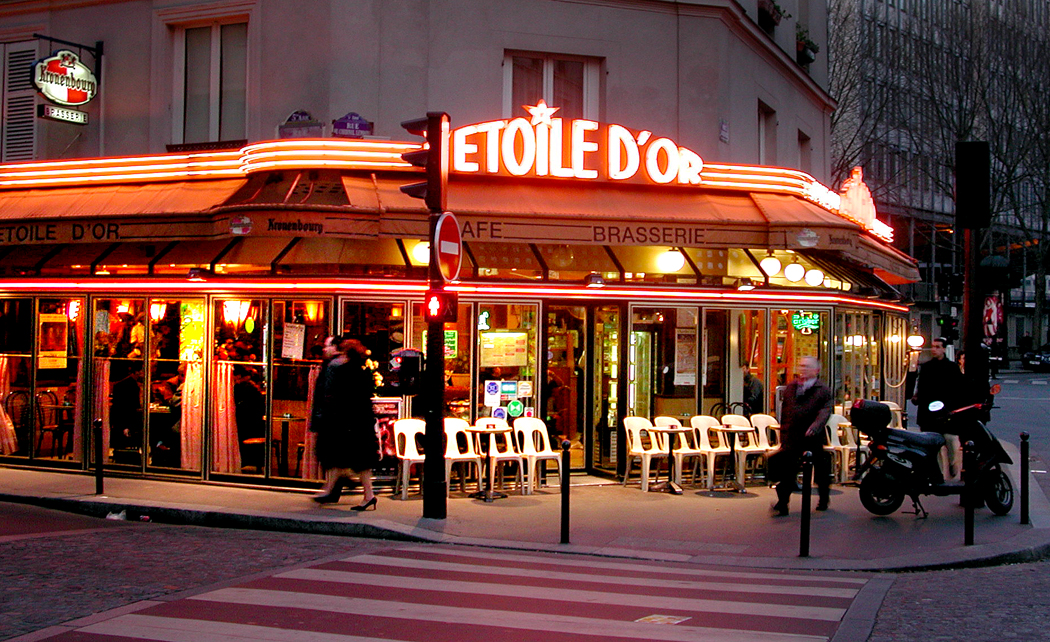
“Shoshone Falls,” Thomas Moran 1900

These painters are the clear progenitors of the landscape photographs of Ansel Adams. 

“Clearing Storm, Yosemite,” Ansel Adams 1944

But The Sublime had pretty well worked itself out by the end of the 19th Century. It was harder to believe in the awesome beauty of Providence after the First World War, to say nothing of the horrors that followed. Post-Traumatic Stress wasn’t quite the same thing. Still, The Sublime hung on in the paintings of Jackson Pollock, and especially Mark Rothko, whose mysterious canvases of hovering colors evoke the same sort of awe among those willing to be seduced by them. 

“Black on Maroon,” Mark Rothko 1958

I’ve covered literature and painting, but The Sublime appears in music, also. The first sound depiction of it occurred when Franz Joseph Haydn depicted biblical Chaos as the prelude to his oratorio The Creation, which premiered in 1803. 

Hector Berlioz assayed The Sublime in several of his works, but none more grippingly than in the Tuba Mirum section of the Dies Irae of his Requiem Mass of 1837, which requires, in addition to a huge orchestra and chorus, four extra brass bands, set into the four corners of the concert hall, and 20 tympani, which roll doom out in the Dies Irae. 

Another Dies Irae with the power to blow you away is Giuseppe Verdi’s, from his Requiem Mass, which whacks the bass drum in alternation of staccato blasts from the strings and brass. 

Perhaps the cake is taken by Gustav Mahler’s Symphony of a Thousand — his Symphony No. 8, which in an ideal performance has an orchestra of about 200 and a chorus of 800. It is gargantuan, and the opening Veni Creator Spiritus is as close to manic insanity as music can probably sustain. 

There are moments in Wagner, in Liszt, Bruckner and many in Mahler’s other symphonies. 

Then, there’s The Ninth. I don’t need to mention whose. The Sublime makes itself present in each of the four movements, but rises to a climax in the choral finale, where voices and instruments poise at the limits of their abilities and hold those notes as they sing, “Seid umschlungen, Millionen!” — “Be embraced, you millions” and then “Ahnest du den Schopfer… — hold it, and then belt out — “Welt?” There follows a coda of ecstasy bringing home the central message of the symphony: “Freude, schöner Götterfunken” — “Joy, beautiful spark of divinity.” 

But perhaps the greatest moment of The Sublime, as terror and grandeur, comes with the recapitulation section of the first movement. The theme that began the symphony in uncertainty and mist — we don’t even know originally what key it is in — comes back forte underlined by two solid minutes of rolling tympani thunder. Some conductors downplay this moment, letting the tympani merely enforce the bass line, but done right, the drums are an earthquake of apocalyptic rumble. 

Perhaps I have been fascinated by The Sublime in art and poetry so much because I have experienced in life — probably a dozen times or so, maybe a score if I catalogued them — a moment when you don’t merely feel the joy of beauty found in nature, but experience a cosmic tingle, a sense of life magnified, intensified, made mythic. A body-sense of the vastness of existence and my minuscule place in it. 

It tends to come, as it does in art, in mountains or deserts or at sea. I recall the sense while crossing the Atlantic on a ship and walking the deck after midnight and seeing in the vast emptiness of the ocean a twinkle of a light on a ship many miles off, heading in the opposite direction. The sea swells were rocking the boat and I could make out the shifting facets of waves in the dark, where some starlight was caught in the reflection of the water.  

Or the Grand Canyon at five in the morning just before the sun broke the horizon. 

Once, driving east in North Carolina on my way to Cape Hatteras, it was near sunset and in front of me in the windshield was a sooty-dark thunderhead and rain on the road perhaps a mile in front of me, obscuring the road and any horizon. It was a canyon of charcoal cloud climbing up to the stratosphere, with spikes of lightning, while in the rear window, the sun was brilliant and red in a clear sky. It was the definition of The Sublime. 

Click any image to enlarge