The committee of gods met once again. They decided to make something.

“It’s been a long time,” they said.

It’s something they do every once in a while, or every once in an aeon. Sometimes it works, sometimes it doesn’t. They began again.

They made a person, two arms, two legs, hands and feet, and as an afterthought, a head.

But something wasn’t satisfying about this new thing they made. Or rather, the new thing wasn’t satisfied. It sat in the middle of nothing, nowhere to put its feet. Nowhere to look, nothing to hear. Nothing to eat.

Then they decided this thing was not enough, so teased the creation into two, pulling here and there until there were separate beings. The pulling distorted their bodies here and there, making one with wider hips, and leaving something pulled long and dangly between the other’s legs.
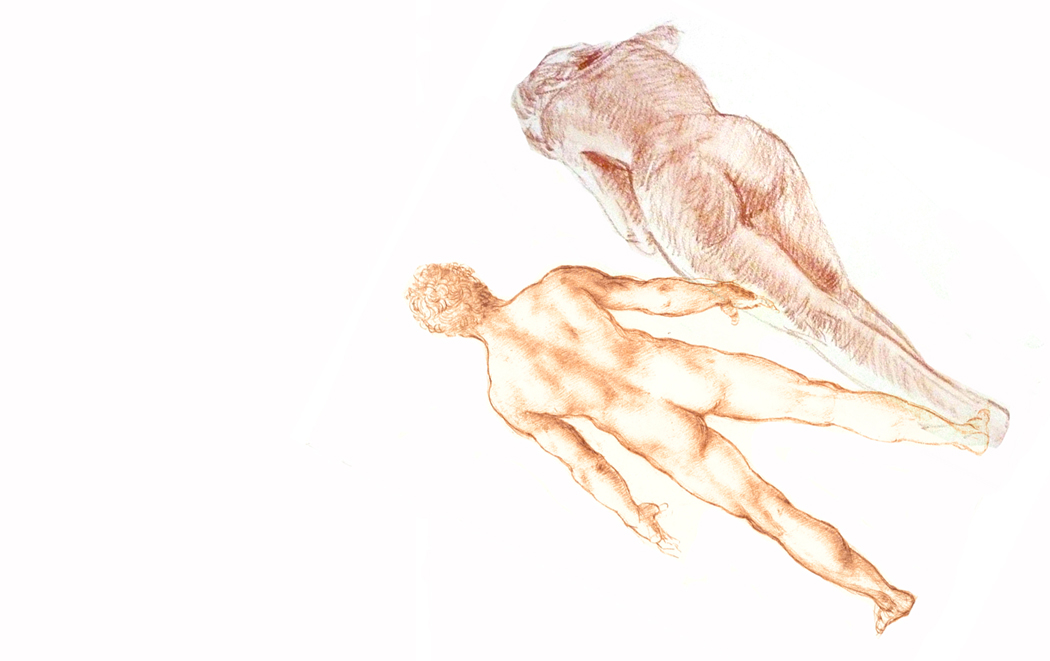
Half of them thought this was just fine; the other half recognized that even that now there were two things, they had no context. They just sort of floated there.

So, the committee decided they would have to work harder. They built a cube for the beings, with four walls, ceiling and floor, so they had somewhere to put their feet, and something to look at. There was a window in one wall, and a door in the wall opposite.

But, still, there was nothing outside the window to see, and nothing to eat. The room just floated in space, no up, no down, no sideways.

The gods hardly noticed this detail, but they did decide to provide something to look at out the window, So, the committee approved a motion to make some animals and some plants. This seemed to work well, so they made more and more of both.
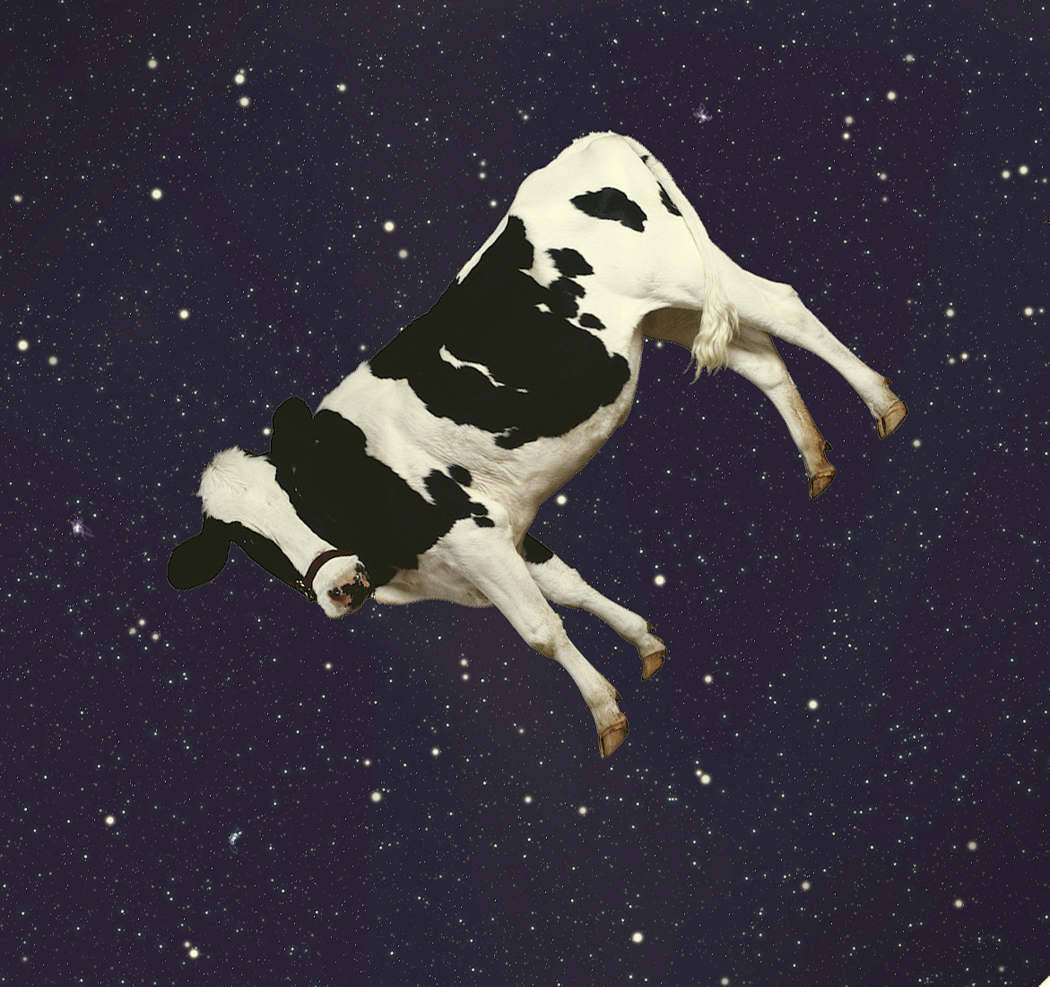
The problem seemed to be that although the plants and beasts gave the people something outside the window to look at, and, if they had figured out how, something to eat, there was still something inchoate about this new creation.

“The last one didn’t work out quite right,” the committee agreed, “so we need to think this one out more thoroughly.” A motion for further study was passed and a subcommittee formed.

Having the beasts float aimlessly through nothingness gave them nothing to stand on, and while a floating cow might pass some floating grass and grab a bite, it was hardly working out efficiently.

“I think they need somewhere to stand,” said the chairman.

“I second the motion,” said the CEO (actually, in heavenly terms, the DEO), who was the first goddess hired for the post.
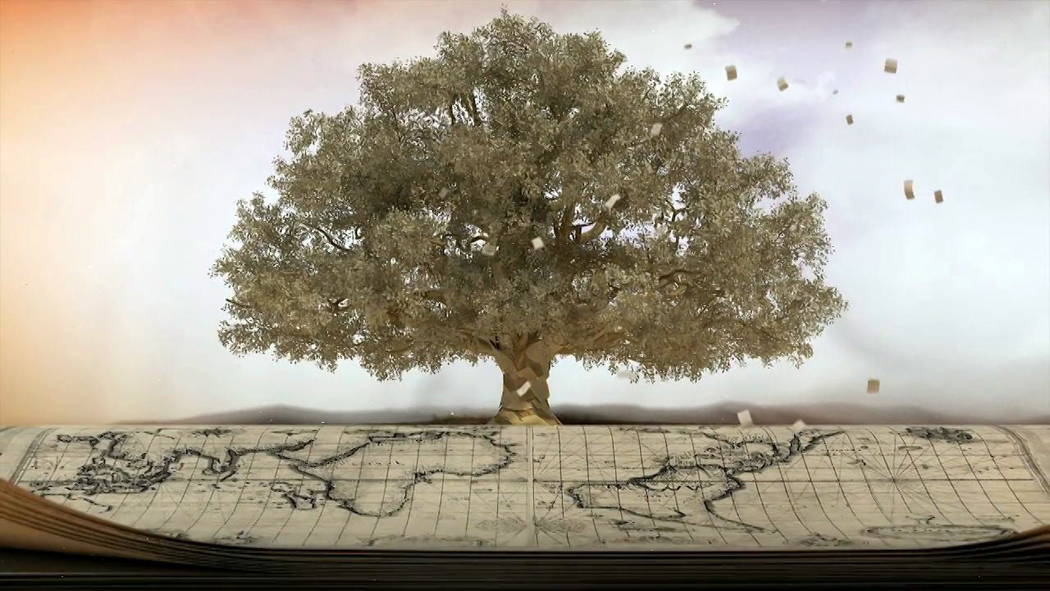
And so, they decided to make a world. It seems obvious to us, but when it’s all brand new, you don’t always spot the simplest things. So, they made a world.

There were problems, however. The first world was flat, which made a large plain for the animals to graze upon, but also meant that, without something to support the flat earth, it could easily tilt and dump its cargo back into the emptiness. So, they rested the disc of the earth on the back of an elephant. But with only one as a pivot in the center, the world still wobbled. So, they made four elephants, one at each 90 degrees of the clock-circle of the disc. Oh, the problems — the elephants were then given a very large turtle to stand upon. You know the metaphysical problem here, and yes, it was turtles all the way down.

Next, the committee decided to separate the dry land from the waters. This led to a cock-up, because with the earth being flat and all, the water just poured off the edges, leaving the earth with nothing to drink.

“Perhaps if we put a ring around the edge,” said one.

“Like a dike or a dam,” said the CEO.

So they took some of the dry earth and built a circular berm around the perimeter of the thing they had made. They refilled the seas and took a long look at what they had made. It looked good, so far. Good for a day’s work.

“We’ll convene again tomorrow.”

The next day, they looked at what they had made.

“But, it is all rather dark, isn’t it?” So they put a light up above the earth. They didn’t quite think this one through, though. The center of the earth was closer to the light than the edges, like a chandelier over a table, and so, the center began to whither and burn up.

“We’ve got the geometry all wrong,” said the DEO.

“Wait, I know,” said the gruff head of the Board, shifting a cigar in his mouth, “We’ve got the geometry all wrong.”

“That’s what I said. Oh, never mind.”

So, they took the earth and balled it up like a tablecloth headed for the laundry, and created a globe. To keep everything from falling off, they put a great graviton at its center, and made everything cling to the surface of the ball.

“That seems to be working,” they said. “But what do we do with this lamp? And how do we keep it from burning the part of the earth closest to it?”

“I know. Let’s make the ball spin, so no part is always facing the light.”

“Brilliant!”

But someone accidentally bumped the ball and sent it rolling away.

“Put some of that gravity in the light, too.” And so the rolling, spinning ball started to revolve around the light. It made a pretty sort of machine that delighted the board members.

The problem now was, that the man and woman, in the room on the planet buzzing around the sun sat in the middle of nowhere, a simple toy for the gods, like the giant pecking bird that dipped its beak into the water they made some aeons ago, or the hanging steel balls that knocked each other back and forth. That was Vulcan’s idea, and they ultimately decided it was utterly useless.

So, they began to pack the emptiness. If one ball was good, a handful of others must be better. Toss in some smaller rocks, like chocolate sprinkles, and let them wander around the big light.

They saw it was good and knocked off for the day. The next two days were the weekend, so the office was dark.

But come Monday, they began to dot the emptiness with more lights, enough to make a galaxy. That was fun, so they made more galaxies, making sure to load them all up with the magic gravity. This was exhausting, so they took the next day off, too.

Come Wednesday, it began to dawn on them that the operational manual for this new cosmos they had built was getting rather long, like a Congressional budget bill. There were rather a lot of rules governing how everything functioned. While it seemed to be running like a top, they worried that if anything went wrong, they might not be able to fix it.

“I remember when I had a VW,” said Phaethon. “I could fix anything wrong with a hammer and a screwdriver. This is all getting out of hand. I miss the good old days.”

Well, things did start going wrong. The first man developed an enlarged prostate; the woman eventually had to have a hysterectomy. The gods had to admit, they had rather botched the design of the human nether parts.

One of the planets they made sideswiped the earth and ripped off a chunk.

“Hey, we’ve got a moon. Why didn’t we think of that ourselves?”

Gravity got out of hand, too. Chunks began falling into each other, sometimes so much detritus that it all collapsed into a dark hole.

“Hey, we’ve created black,” said one of the gods.

“We had that before we started,” reminded the DEO.

“Oh, yeah.”

The whole thing began wobbling, like an elephant on a beach ball that had lost its balance and next thing you know, it seized up. No amount of grease could get it unstuck. Then, it began collapsing, faster and faster, until it shrunk into a singularity — an infinitesimal dot, like the one you used to see when you turned off the TV. Then, boink, it was gone.

“Damn it,” said the god at the far end of the conference table. “Why can’t we ever get this right?”

“I blame the Titans,” said Jupiter. “The previous administration should have addressed these issues more forthrightly.”

“The shareholders will not be happy,” said Neptune. “I believe we need a change at the top. I move that the DEO resign.”

She resisted this suggestion, saying it was all a design flaw.

“We started at the wrong end,” she said. “We went about it all backwards.”

“I have an idea,” offered a nervous intern, afraid to speak up in such august company. “Perhaps next time, in the beginning, we should start by creating the heavens and the earth. The rest should fall into place.”

The gods looked at each other, gave a passing thought and in one voice responded, “Nah.”

Many years ago, when I was still a student at Guilford College in North Carolina, my Classics professor was one of those friendly, inviting pedagogues who invited students to their homes for dinner or conversation. And one of the things she said at the time that has stuck with me is the idea that we all have some “ideal” age we always remain.

It might be an age we have not yet attained, or one we left behind long ago. She said that although she was then in her late 30s, that she had always felt 25. It was her internal age, the age at which she thought of herself. She said back then that even when she was in high school, she thought of herself as 25.

She is now 88. I met her again recently, but I forgot to ask if she still feels the same. From other things she mentioned, I take it she does.

My wife always said she thought of herself as her nine-year-old self. She always maintained that openness to the world that she had at nine.

I have had a different experience. I cannot find an “ideal” age. That is because I can’t think of my mind as having any age at all. I am not philosophically a dualist. I don’t believe my brain is separate from my body; I believe my body generates my mind. But while my body bumps through time, my mind sails on frictionless.

I recently wrote about this concept of “self” for my other gig, a monthly essay I write for The Spirit of the Senses, in Phoenix, Ariz. (link here).

Last month, I turned 70, but my brain doesn’t feel any older. It isn’t that my brain feels young, but rather that mind exists in a consciousness that takes no note of age: It simply exists. My mind feels no different now from when I was young, except perhaps a bit more full (sometimes I feel like I need a metaphysical Bromo), but it is aware that it occupies a body that is losing its vitality, whose knees hurt, whose eyes are rheumy and whose hams are weak.

Several people have asked if 70 feels any different than other bookending birthdays.

Oddly, yes, 70 does feel different from 69. I don’t know why. The only two odometer clicks that have had any meaning are first, when I turned 21 and believed against all evidence that I was genuinely a “grown-up” — I could drink, vote, sign contracts, and brag — and second, a month ago, when I turned 70.

When a car’s odometer flips from 69,999 to 70,000, it can happen on a trip to the grocery store. It is that meaningless. The car knows no difference. On Jan. 11, I was a mere 69; a day later, I was Methuselah. The flow of time is steady, but our clocking of it comes in ticks. That most recent tick was loud.

The fraction through which I see my lifespan has flipped upside down: The numerator is now the denominator. In other words when I was 20, I was one-fourth of my allotted life expectancy — a 1 to 3 ratio — and now seven-eighths of that time — a ratio flipped to 7 to 1. The numbers are hard against me.

I can count a number of people my age who aren’t my age anymore because they stopped aging. Others are in the process of winding down to the final broken watchspring. It’s one of the universal experiences of getting old: reading the obituaries of those you have known, those you have cared about. I keep losing context.

All this is psycho-mological,  because, except for the weakness of hams, I’m in relatively good health, and I was handed decently good genes. But 7 to 1. The math is solid.

So, pace Professor Deagon, pace dear Carole, I do not feel mentally 25 or mentally 9. I feel physically 70: the same a-chronological mind in an unquestioningly aging heap of meat.

As Stephen Colbert says, “I don’t know if these are actually sins, but I do feel bad about them.”

I have a seven-decade long reputation to maintain as a dour, serious-minded  stick-in-the-mud, with no time for trivialities. My theme song is Party Pooper. My favorite color is gray. My wife used to call me, “The man who can’t have fun.”

I argued back that I have lots of fun, but for me fun is reading Gilgamesh or Xenophon, listening to Beethoven piano sonatas while following along with the Schnabel edition of the score (including reading all the footnotes), listening to lectures on the Indus Valley Civilization or the Black Death from the Great Courses Plus, watching C-Span Booknotes and waiting with great anticipation for the C-Span bus to visit Sheboygan or Wilkes-Barre. These things give me great pleasure and fill my life with great joy.

Yet, that doesn’t mean I don’t have my guilty pleasures — bits of pop culture that I partake of on odd occasions. There are times I switch away from the PBS Newshour or online lectures from M.I.T. and let my hair down. You won’t tell anyone, will you?

Here, then, are five guilty pleasures that I recommend to you. (There are more, but my quotient for mortification is limited).

Drunk History — It would be hard to find anything sillier than Comedy Central’s Drunk History. Created by comic Derek Waters and Jeremy Konner, it asks various, mostly D-list entertainers to drink themselves goofy and attempt to tell the story of some historical figure, while various, mostly A-list actors and comedians lip-synch costumed re-enactments of the events.

The camera switches back and forth between the drunkard, in a home with an equally plastered Waters, and the beautifully photographed recreations, in which the actors perfectly mime the words of the storyteller, right down to the hiccups and incoherence. A fair number of the drinkers wind up finishing their tales while driving the porcelain bus; others pass out on the couch.

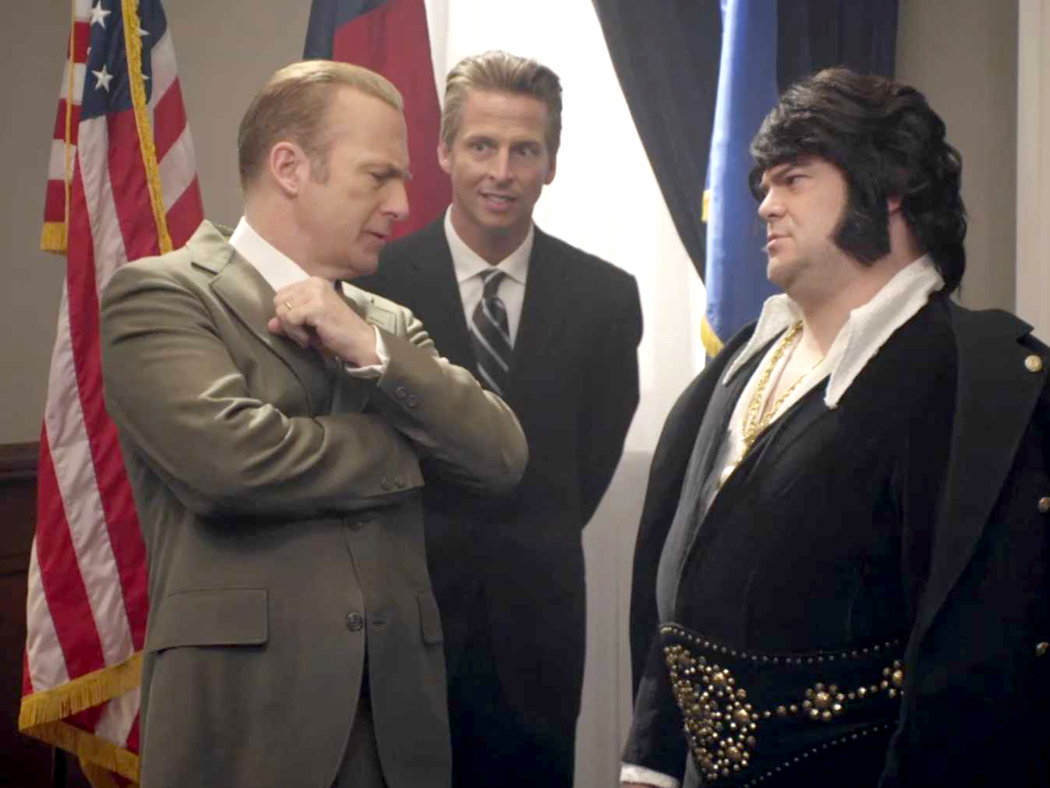
A few for-instances: Actor Eric Edelstein tells the story of Elvis and Nixon, while we see the re-enactment with Jack Black playing Elvis, Bob Odenkirk as Nixon and Jack McBrayer as H.R. Haldeman.

In another, Tiffany Haddish (they’re not all D-list) tells us about French Resistance fighter Rose Valland, who saved and helped retrieve hundreds of art treasures threatened or stolen by the Nazis, with Busy Philipps playing Valland in the dramatization.

For most of the half-hour shows, three stories are told, with the first two taking up 5 to seven minutes each, separated by annoying commercials, and the third filling two segments, with annoying commercials in between. (As usual, the best solution is to Tivo the show so you can fast-forward through the muck).

One of the best shows recently was when Lin-Manuel Miranda got himself pie-eyed and tried to summarize the life of Alexander Hamilton. He got the whole half-hour. Blind-casting adds extra confusion to the show: Hamilton was played by Alia Shawkat; Aaron Burr was Aubrey Plaza; Bokeem Woodbine was George Washington; and Tony Hale was James Monroe. I am astonished that Miranda would risk reputation, alcohol poisoning and brain damage to take part, but it was a scream.

And one can actually learn things from this show, although you will want to verify what you find out by actual reading and research. Sometimes the drunks get confused.

Climbing Mount Washington, N.H., in Stanley Steamers

Jay Leno’s Garage — I’m old enough to remember when Jay Leno was funny. Before the Tonight Show de-clawed him and turned him into a toothless shill for Hollywood celebrity backslapping, Leno was edgy, took chances and snookered the very thing he later became mouthpiece for. Now retired from the daily grind of pleasing his corporate masters, Leno, now 67, is still a workaholic, but it seems now he can put his energy into something he actually cares about: cars.

With Gabriel Iglesias and his 1966 VW bus

Reportedly, he owns 286 vehicles, both cars and motorcycles, and has a garage that could double as a museum. In his current show, on CNBC — a network that as far as I can tell, is watched by no one — Leno gets to play with his toys and his enthusiasm is infectious.

As someone who does not care about cars — I think of them as being appliances, like washing machines on wheels — I am surprised myself at how much I enjoy watching Leno enjoy driving Maseratis, Bugattis, Abrams tanks, fire engines, monster trucks, drag racers, and a 1939 Ford pickup truck loaded with the radial engine of a Cessna airplane.

He often has Hollywood friends show up with their own favorite autos and bikes. Keanu Reeves manufactures high-end motorbikes. Comic Adam Corolla has been collecting race cars once owned and driven by actor Paul Newman. Tim Allen plays “Stump the Car Nerd.” Arnold Schwarzenegger shows off his electric Mercedes-Benz G-Wagen conversion.

It is less the high-end muscle cars that interest me and more the peculiar vehicles he encounters, like the Mars Rover, the Ripsaw EV-2 civilian tank that can reach 60 mph, the two-story tall dump truck that carries borax from the mines, the wienermobile, a convertible filled with water and turned into a mobile hot tub. There are a lot of these.

But mostly, it is the obvious pleasure Leno takes in his toys that makes this series a joy to watch.

Young Sheldon — This never sounded like a good idea. A spin-off from The Big Bang Theory, this show follows the 9-year-old genius, Sheldon Cooper, as he negotiates life, neuroses and high school.

The parent show has long jumped the shark (although I continue to watch it because, even worn out, it has more energy — and more smarts — than most things on TV).

Many years ago, when the Colbert Report first broadcast, it was sharp and funny, but I was sure — and most people I knew were sure — there was no way to keep this up. But it kept up for nearly 10 years. In the same way, I don’t see how Young Sheldon can keep it up. But I was wrong once; maybe again.

Young Sheldon is quite different in tone from its predecessor. Big Bang is a three-camera, live-audience show and written to showcase gags and caricatures. (This is not a complaint: It has done that very well for many years). But Young Sheldon is a one-camera show, with no laugh track, which allows it to be more real.

Zoe Perry and Laurie Metcalf

And, while it is hard to actually care for the Big Bang characters — they are all there to be laughed at — Young Sheldon has so far given us warm, three-dimensional human characters. None more warm or more human than Sheldon’s mother, Mary Cooper, played by Zoe Perry, who happens to be the daughter of Laurie Metcalf, who has long played Sheldon’s mother on Big Bang Theory. The physical resemblance is striking, but more so, the personalities. There is a harried, confused wisdom in her character.

Just as good, 10-year-old Iain Armitage plays the 9-year-old Sheldon without ever being cute, without downplaying his atheism or his neuroses. Or his innocent bafflement at the complexities of the human condition.

The core of the show is Mary’s relationship with the gifted Sheldon and with her mother, the cantankerous Meemaw (Annie Potts). If there is a flaw, it is that the rest of the family, father George, sister Missy and older brother George Jr., are rather less developed, although Lance Barber brings warmth to a blustery father George, who we know from Big Bang, will die of a heart attack. That gives added resonance to the show.

Please excuse me if I sound like a critic writing a review. It’s what I am; I cannot shake it.

But, I recommend Young Sheldon. It really surprised me.

The Late Late Show with Craig Ferguson — Ferguson left the Late Late Show in 2014, after nine years behind the desk. But segments of the show are all over YouTube, uploaded by several perseverant chroniclers.

When the show was live, I often watched (via Tivo the next day, so I could fast-forward through those damned Shamwow and boner pill commercials) but even I have to admit there were bits of the show that proved tedious. I could never enjoy the e-mail and tweet segments, and the monolog was often rather shaggy. And when there was a musical guest, I just turned the thing off.

Sarah Paulson and Craigyferg

But Ferguson must be the best late night interviewer there has ever been. The purpose of late night TV is for celebrities to come on, pretend to be regular people and plug their latest project with the assiduity of a used-car salesman. The whole set-up is unashamedly artificial.

Ferguson, in contrast, didn’t interview his guests so much as have a conversation with them. It was not unusual for them never to get around to the current “project.” Oh, there were guests who were duds, who wanted to coerce the talk back to their sales pitch, guests who did not seem to understand the nature of Ferguson’s self-described deconstruction of the late night talk show.

But there were many guests who got it, and they often came back over and over. Kristen Bell appeared 28 times. William Shatner 25, Regis Philbin 25, Betty White 22.

Ariel Tweto, one of his regulars

I am old enough to remember Jack Paar. Paar had a stable of regulars who came back over and over and took part in witty conversation. Peter Ustinov, Robert Morley, Oscar Levant, Hermione Gingold, Genevieve, Jonathan Winters, Dick Gregory.

Ferguson had his crew, too. They were those who obviously adored Ferguson, and understood the subversive nature of the broadcast. They often showed up with nothing to promote. Just to be there and talk. Bell was prime among them, but so, too, were Rashida Jones, Michael Clark Duncan, Paula Poundstone, Larry King, Kathy Griffin, Carrie Fisher, Mila Kunis, Lauren Graham, Jeff Goldblum, Morgan Freeman, Marion Cotillard.

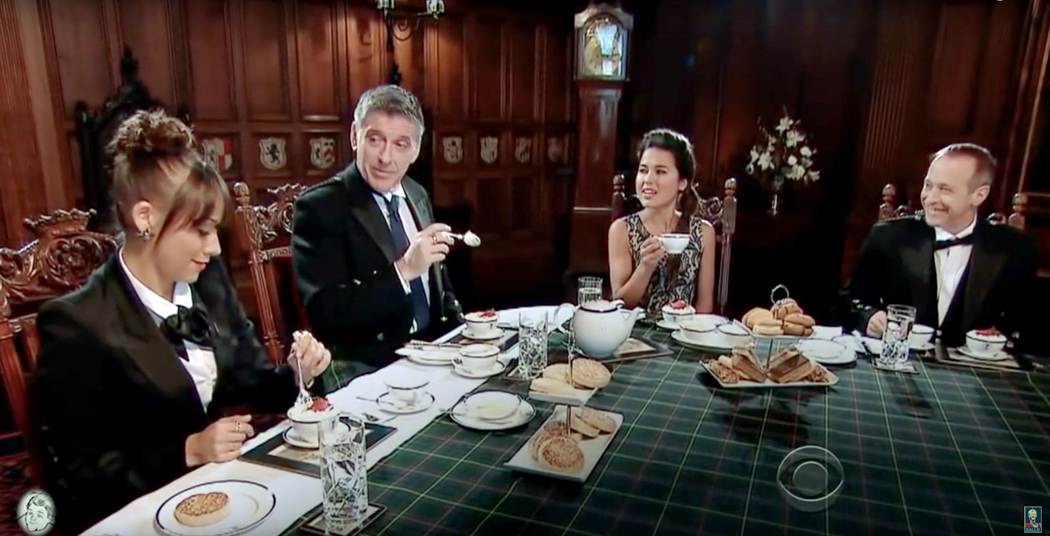
Ferguson in Scotland with Rashida Jones, Ariel Tweto and David Sederis

This was a fabulous stable of personalities, including several that had obviously been previous amours of the host, and they hinted furiously at it.

The advantage of the YouTube videos is that you can see the interviews, often strung together (the set of Kristen Bell interviews lasts 4 hours, 41 minutes). Among the most infectious: Rosie Perez’s 8 visits;

Ferguson is also obviously intelligent, although he did his best to downplay that. But he has had many authors on, spent an entire hour with Archbishop Desmond Tutu (for which he won a Peabody Award), and another hour with Stephen Fry — and once had as a guest a professor of moral philosophy (who happened to be Claire Danes’ father-in-law).

Bob Steele

Cowboy movies — I use this term instead of “Westerns” because I mean a specific type of film: the cheaply made series films from the late silent era through the 1930s with stars such as Buck Jones, Col. Tim McCoy, Hoot Gibson, Bob Steele, Ken Maynard, William Boyd and, of course John Wayne.

Buck Jones

I was born at roughly the same time as television, and in those early years, stations scrambled to find content to fill those broadcast hours, and reams of old cowboy films were re-released cheaply to the stations and ran constantly, especially on the independent channels. I saw a ton of them through my pre-school years and into grade school. I loved them.

So, it is with some nostalgia that I watch them again as a grown-up.

I am not talking here about the legitimate Westerns by John Ford or Howard Hawkes, but of those films pumped out week-by-week from tiny studios such as Monogram and Republic. They were “programmers,” with repetitive plots, recognizable landscapes and often acting just this side of organic when compared with a dead tree.

Hoot Gibson

Not that there weren’t some good actors. Boyd, as Hopalong Cassidy, had a natural screen presence and a comfortable way with dialog. And John Wayne was magic on the screen, even in those early films when he was saddled with playing Singing Sandy, the singing cowboy.

And the secondary actors and the villains were played by what was almost a stock company of real pros such as Earl Dwyer, Charles Middleton, Harry Woods, Charles King, and Roy Barcroft. Dependable, every one. It was mostly the heroes who were stiffs.

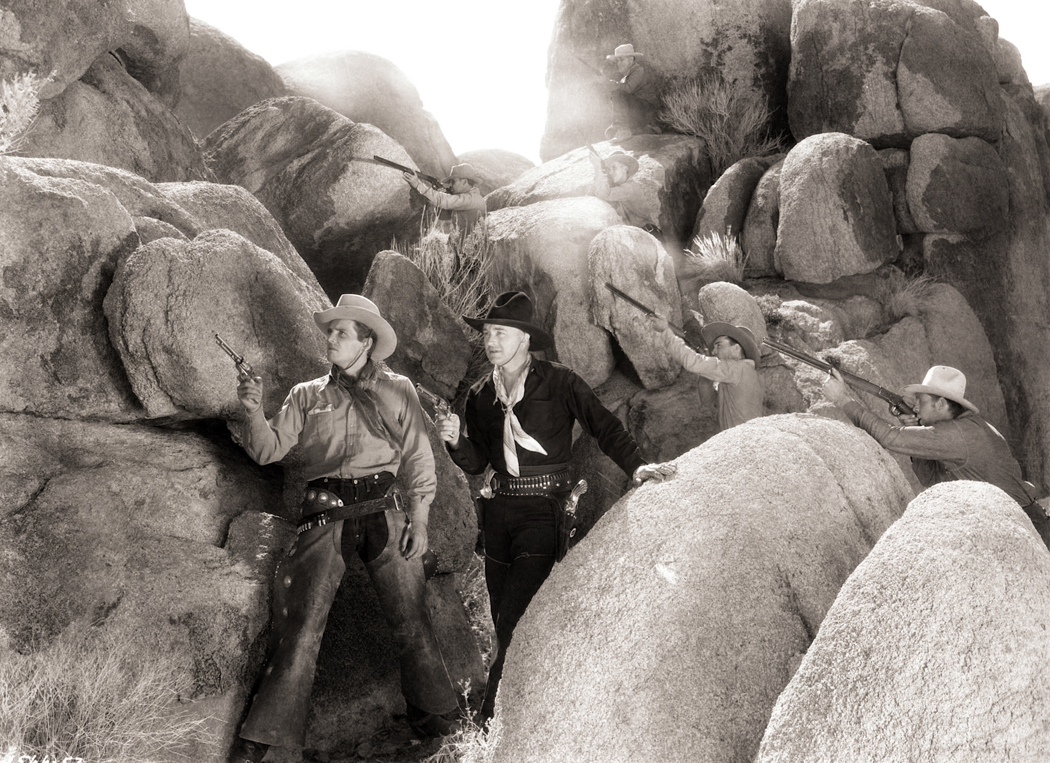
But what most impressed me in these movies was their settings, the imaginary West of the cowboy, kicking up dust galloping through the Alabama Hills of California, with the glorious Sierra Nevadas in the distance, or the Santa Clarita Valley. Those backgrounds show up over and over again. I almost memorized them.

In the Alabama Hills of California

Alas, such a golden age couldn’t continue. Singing cowboys invaded the screens, such as Gene Autry and Roy Rogers, in movies much slicker and emptier than the earlier ones. And worse, the rising need to include a boy sidekick. Cowboy movies gave up on adults and became pabulum for children. In the ’30s, even grown-ups watched Hoot Gibson. He was my late father-in-law’s favorite actor.

Some good B-Westerns continued to be made in the early 1940s, but by the time Eisenhower became president, we had descended to Lash LaRue and Whip Wilson and the most stolidly oaken of all of them, Tim Holt. The lighting flattened out, as it tended to do in the TV-influenced ’50s, and no one really seemed to believe in what they were doing.

The quality of many cable channel Westerns is atrocious, all grainy and contrasty, and at least one S.O.B. has added synthesized music to the originals. But a good print is as beautiful and professional as anything else the studios pumped out in that wonderful era of film. Luckily, one can still occasionally find a good print on Turner Classics, and the Hoppy movies are usually in good shape, thanks to the foresight of Boyd, who bought them all up in the late ’40s and curated them carefully.

So, there you have it, the pleasures I am embarrassed to admit to. I have no defense. But I know I share some of these sins with some of you.  

This absolutely astounded me.

I was surprised enough, when researching the art history of images of Adam and Eve, to find so many — I found at least a hundred, although I couldn’t use them all in my blog entry (link here), and amazed at how many Cleopatras there have been (link here). But nothing prepared me for the contemporary onslaught of actors and supermodels coiled up with pythons, boa constrictors and other serpens photogenica.

I believe the current flood of these images began June 14, 1981, when, after Vogue editor Polly Mellen asked model and actress Nastassja Kinski what she liked and she said, “Snakes,” a Burmese python was corralled for the scheduled photoshoot with Richard Avedon.

Avedon took to the idea, and asked if Kinski would consider posing nude with the beast. She said yes.

In a PBS interview, Avedon said, “Nastassja spent two hours on a cement floor naked.”

“They anchored the snake around her ankles,” and waited to see what would happen. Shot after shot did not work, he said. Then finally, after many takes, the (snake) undulated across Kinski’s hip and slowly made its way toward her head.

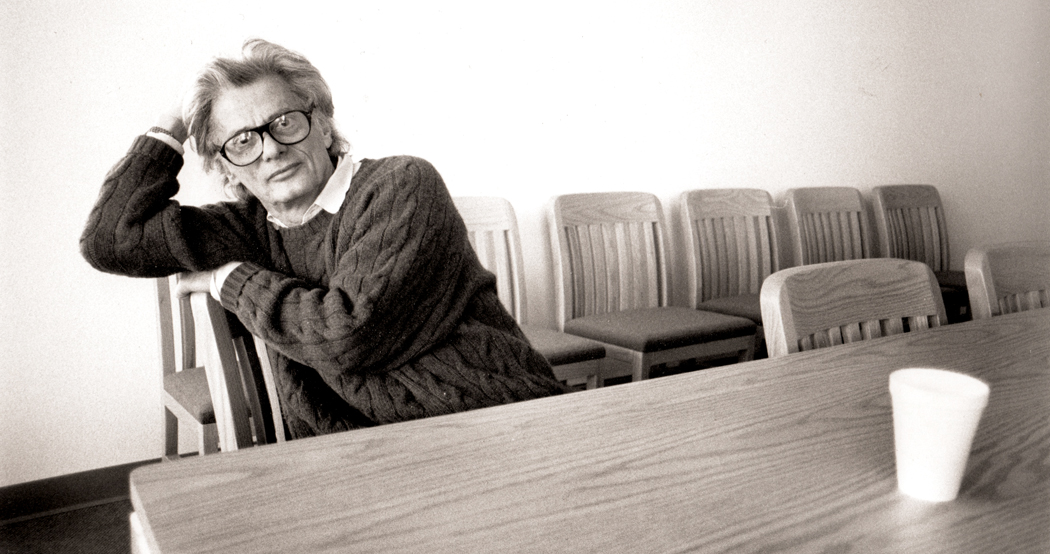
Richard Avedon

In a Washington Post interview about the shoot, the story continues:

“ ‘Natassja, this is it,’ Avedon said in a hoarse whisper, ‘Just try to relax!’

“Seconds later the snake came to within inches of the actress’ ear, then almost languorously extended its tongue, as if in a kiss.

“Snap.

“Another classic; another Avedon moment.

“ ‘She [Kinski] rose to the occasion,’ Avedon exulted, grinning, ‘the snake rose to the occasion. I rose to the occasion’ – all in a moment that would have been impossible to plan.”

Mellen said she did regret one thing. “I wish I hadn’t put that bracelet on her.” The Patricia von Musulin bracelet reminded us that this was, after all, a fashion shoot. Mellen said she had wished for it to transcend that.

The photo, first published in  the October Vogue that year and in a second incarnation became one of the most popular dorm-room posters of all time.

But like the face of Helen and the thousand ships, the photo launched a thousand imitations.

Perhaps the most notable came 20 years later, when Kinski’s daughter, Sonja — not yet born when her mothers’s iconic photo was taken — posed with an albino Burmese python for photographer Michel Comte. The photo was commissioned for the 400th edition of the European magazine, Photo. It was published in June, 2003.

But that was just one of a flood of similar photographs. Most notably was the set-up by French fashion photographer Patrick Demarchelier on July 29, 2014 of actor Jennifer Lawrence. It was published in the Feb., 2015, issue of Vogue.

They are hardly alone. Among other actors and models photographed with giant snakes are Elizabeth Hurley, Jenifer Bartoli, Irina Shayk and Rocia Guirao Diaz. You will notice in the picture of Bartoli, she is wrapped with an albino Burmese python.

Clockwise from upper left: Elizabeth Hurley; Irina Shayk; Jenifer Bartoli; Rocia Guirao Diaz

The yellow snake is striking, and has become the go-to snake for such photographs. (Perhaps too much: The mutant yellow python is one of those now terrorizing the Florida Everglades, having been set loose by exotic-animal collectors who kept them as pets until they got too big and unwieldy to keep around the family cat.)

The history of art is full of tropes, or memes, that get reused and developed over the centuries. I wrote about several of them in a 2014 blog entry (link here) in which you can see one pose progress from a fresco on the walls of Pompeii through the millennia to Manet’s notorious Olympia.

Tatjana Patizt; Devon Aoki

Supermodel and Playboy’s Miss November 2016, Ashley Smith upped the ante, with six shots by Giampolo Sgura in the fall/winter 2011 edition of Antidote magazine. She is selling snakeskin shoes and handbags.

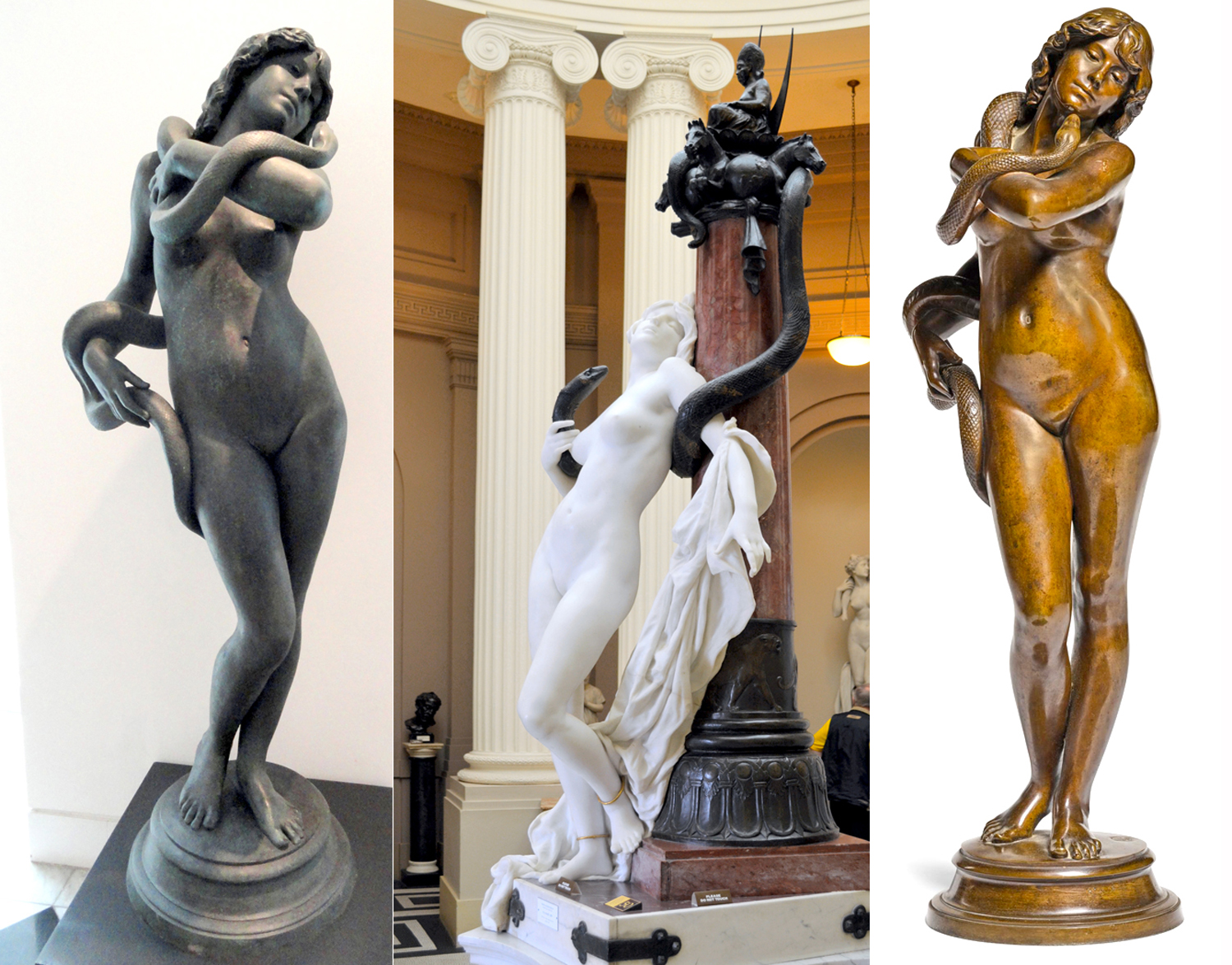
Snakes and naked ladies have a long history. It began with classical images of goddesses, through countless paintings of Eve and the serpent, into Baroque paintings of Cleopatra and her asp and down to Victorian Orientalist fantasies feeding the prurient interests of its respectable bourgeoise audience. It reawakens with the artistic ideas of Avedon and flows down to advertising snakeskin handbags. For pop stars like Britney Spears, it becomes a stage accessory.

Could it go any lower? Well, how about pornstar Kristina Rose, star of 2009’s immortal Gluteus Maximass, and her own snake photo.

One could go on. Naomi Campbell got into the act (another yellow python), and so did Czech supermodel Karolina Kurkova (upper right), best known as a former Victoria’s Secret “angel.” And transgender model Andreja Pejic sidled up to the snake when still known as Andrej (lower right).

The horizontal pose isn’t the only one to become overused. There are plenty of vertical snake ladies. Sonja Kinski did one of those as well, along with Kate Moss — both yellow snakes — and Rachel Weisz.

Rihanna gets her photoshoot, mixing metaphors as both Eve and the Medusa. International models seem to love the pose, too.

Rihanna; Carla Ossa; Ellie Gonsalves; Petra Cubonova

There are really just too many to keep up with.

Then, there are the portrait heads.

They usually use smaller snakes, but many so beautifully colored, they are practically jewels.

You think that’s all? Well, it goes on.

And on.

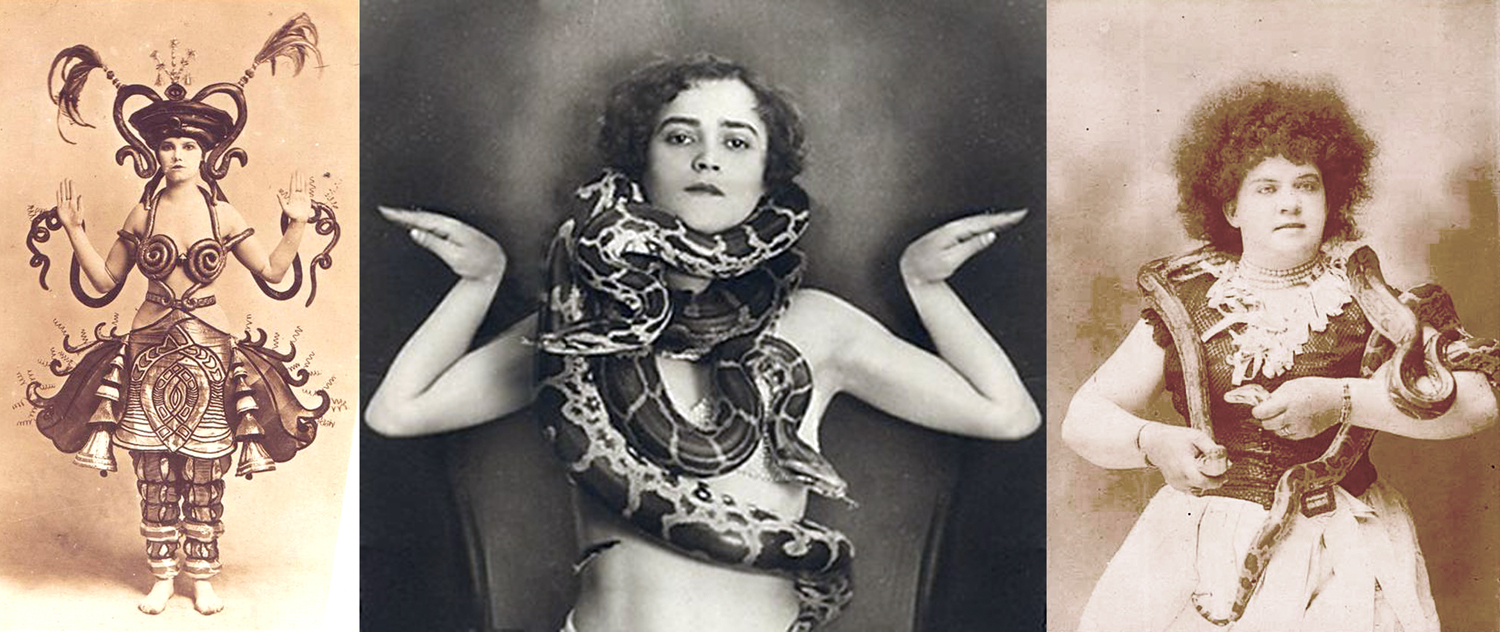
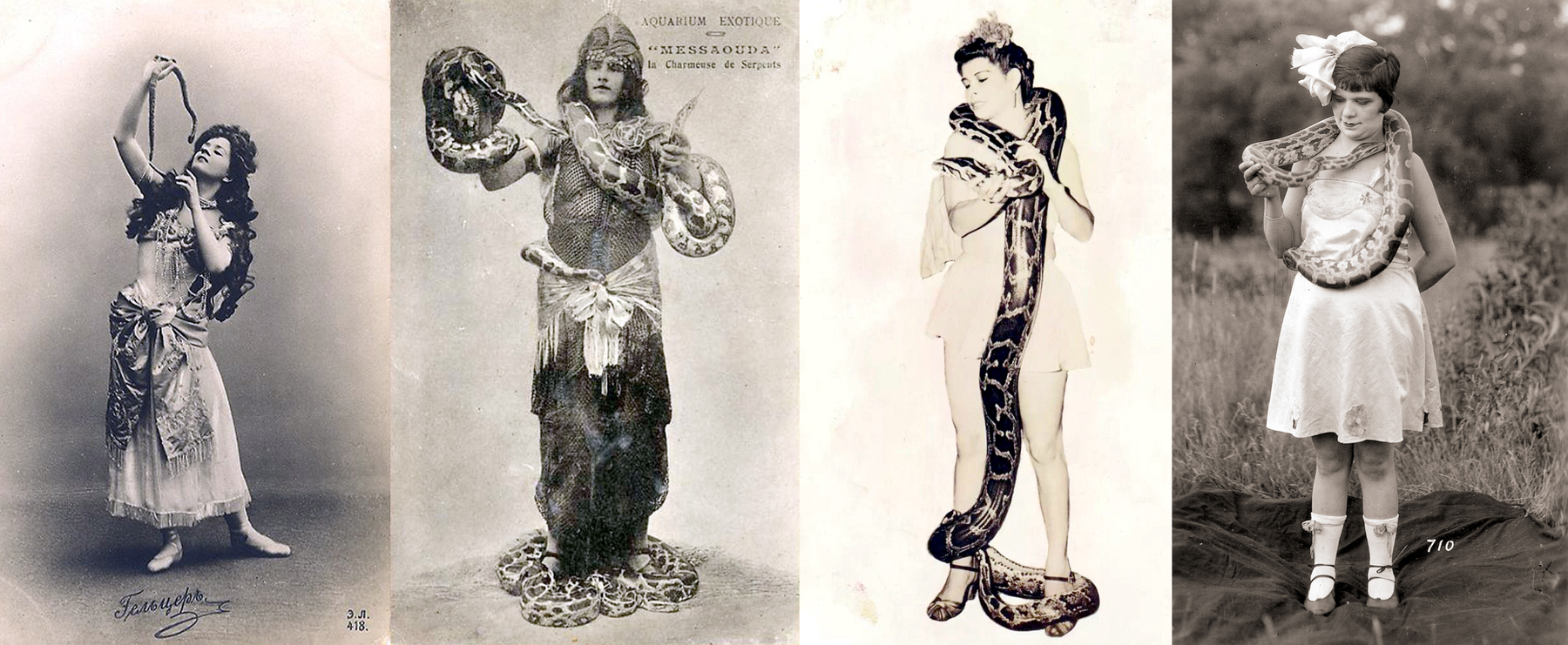
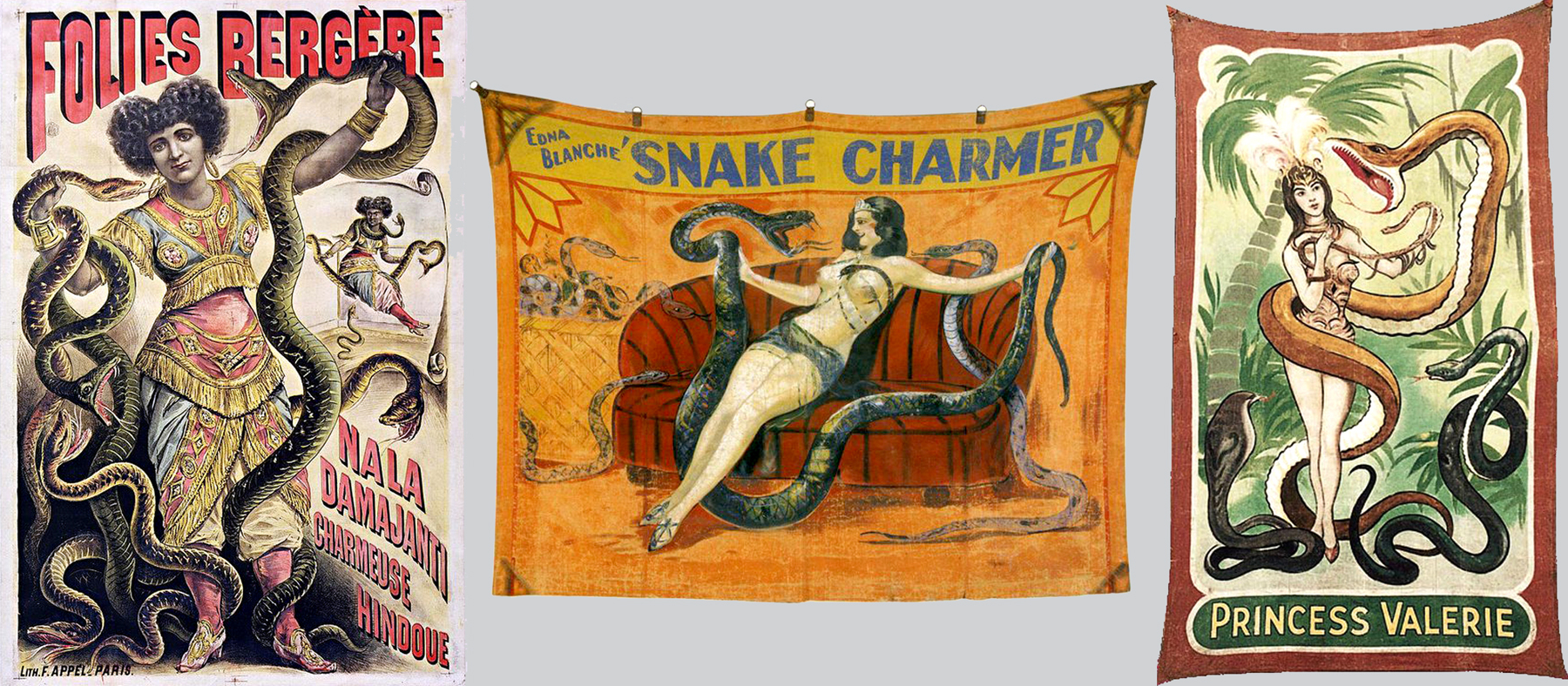
Yet, all this is really not so new. This spate of snake ladies is only a more modern and glitzier version of the familiar snake lady of the carnie and freak show.

The snake charmers and

the tawdry end of the entertainment business that used to travel from town to town hoping to gather a few bored gawkers into their tents.

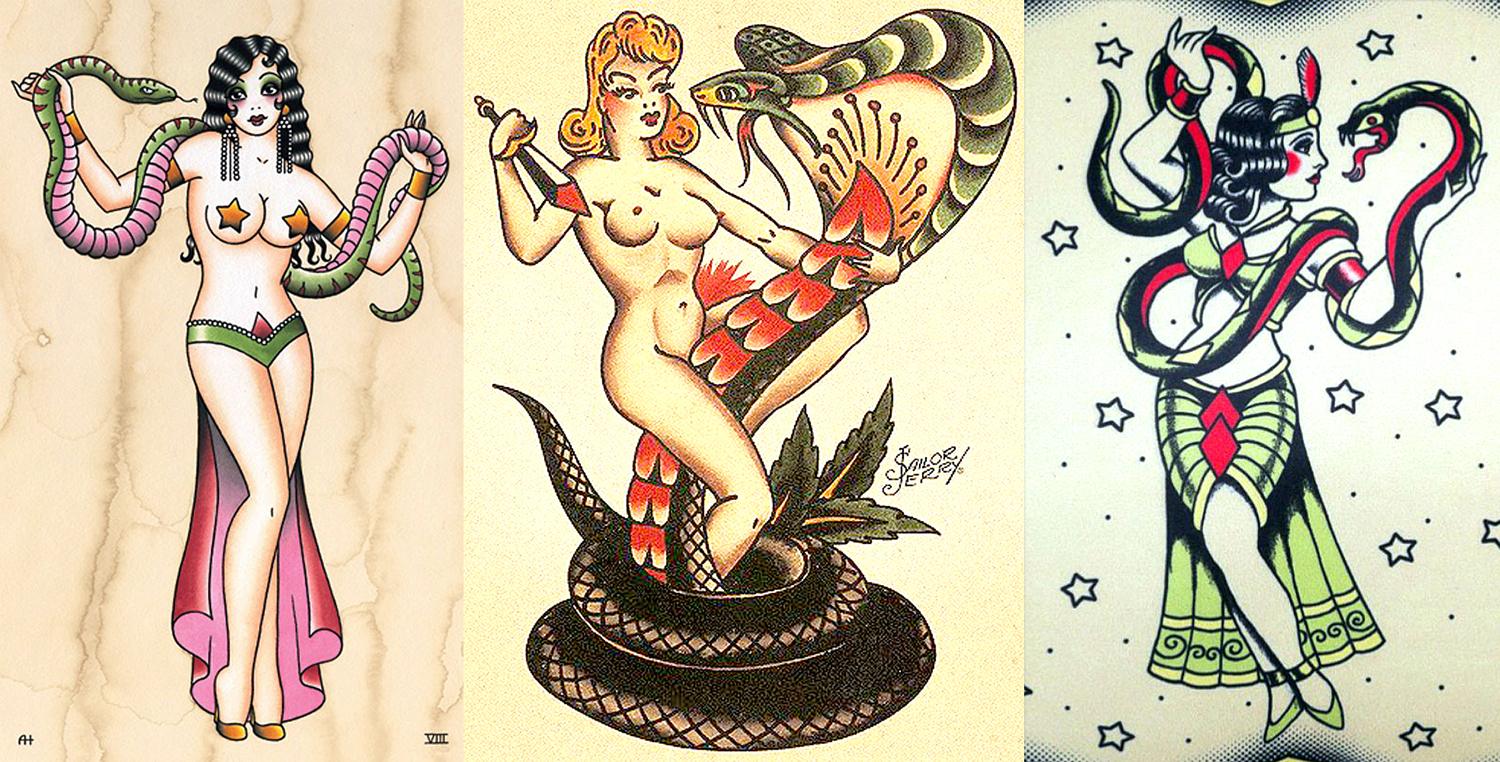
Then, there a million tattoos with the trope. One sees a long, slow descent from goddesses to dockside ink parlors.

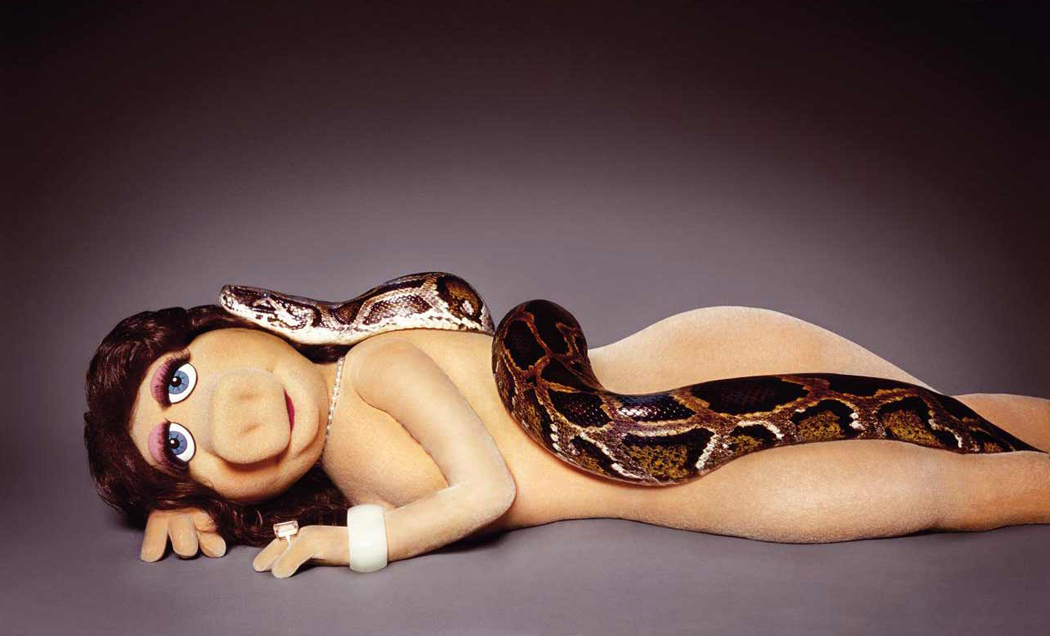
But I don’t want to leave you with a sour taste in your mouths, so I will end with a flourish, from the camera of photographer Mike Ruiz and Zink magazine, in which Miss Piggy harks back to the immortal Nastassja.

Click any image to enlarge

It is 14 years after the assassination of Julius Caesar and three decades before the birth of Christ and the Greek queen of Egypt is about to die. The 39-year-old Cleopatra VII is the mother of four children by two fathers, both now dead. This much everyone seems to agree on. What happens next is romantic fairy tale, or conjecture, or cynical posturing — or all three.

The most widely believed version, used by Shakespeare in his tragedy, Antony and Cleopatra, has the queen, fearing to be taken captive to Rome by the conquering Octavian, has a basket of figs delivered to her, with a smuggled asp hidden under the fruit. She takes the venomous snake and applies it to her tender bosom and expires from the poison.

The problem is that there are conflicting stories told by the ancient writers.

The best known version, and the one Shakespeare cribbed from is that of Plutarch in his essay on Mark Antony.

The two rebellious lovers, having  been conquered by the young Octavian were at odds over what to do. Cleopatra had a false message sent to Antony that she is dead. Antony ran himself into his sword, but botched his suicide and was brought to Cleopatra, where he then expired. Cleopatra mourned and locked herself in her mausoleum. And then, according to Plutarch:

“Having made these lamentations, crowning the tomb with garlands and kissing it, she gave orders to prepare her a bath, and, coming out of the bath, she lay down and made a sumptuous meal.”

An old man came with a basket. The guards Octavian had sent to keep Cleopatra in check stopped him to examine the contents.

“The fellow put the leaves which lay uppermost aside, and showed them it was full of figs; and on their admiring the largeness and beauty of the figs, he laughed, and invited them to take some, which they refused, and, suspecting nothing, bade him carry them in.”

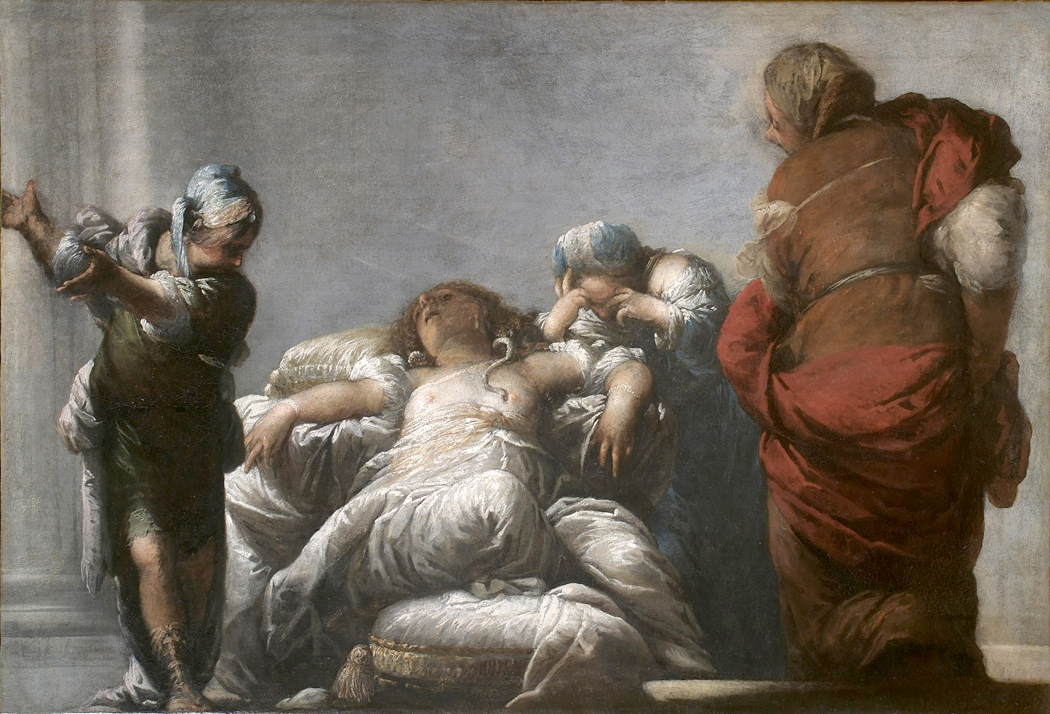
The queen then sent a letter to Octavian describing her intent to kill herself and locked herself in the monument with her two servants, Charmion and Eras. When Octavian got the note, which asked that she be buried next to Antony, he sent messengers to stop her from killing herself. But they found her already dead, “lying upon a bed of gold, set out in all her royal ornaments.”

Eras lay dying at her feet and Charmion, just ready to fall, barely able to hold up her head, was adjusting her mistress’s crown. And when the soldier that came in said angrily, “Was this well done of your lady, Charmion?”

“Extremely well,” she answered, “and as became the descendant of so many kings”; and as she said this, she fell down dead by the bedside.

“Some relate that an asp was brought in amongst those figs and covered with the leaves, and that Cleopatra had arranged that it might settle on her before she knew, but, when she took away some of the figs and saw it, she said, ‘So here it is,’ and held out her bare arm to be bitten. Others say that it was kept in a vase, and that she vexed and pricked it with a golden spindle till it seized her arm. But what really took place is known to no one.

“Since it was also said that she carried poison in a hollow hairpin, about which she wound her hair; yet there was not so much as a spot found, or any symptom of poison upon her body, nor was the asp seen within the monument; only something like the trail of it was said to have been noticed on the sand by the sea, on the part towards which the building faced and where the windows were. Some relate that two faint puncture-marks were found on Cleopatra’s arm, and to this account Caesar seems to have given credit; for in his triumph there was carried a figure of Cleopatra, with an asp clinging to her.

“Such are the various accounts. But Caesar, though much disappointed by her death, yet could not but admire the greatness of her spirit, and gave order that her body should he buried by Antony with royal splendor and magnificence. Her women, also, received honorable burial by his directions.

“Cleopatra had lived nine and thirty years, during twenty-two of which she had reigned as queen, and for fourteen had been Antony’s partner in his empire. Antony, according to some authorities, was fifty-three, according to others, fifty-six years old. His statues were all thrown down, but those of Cleopatra were left untouched.”

European asp

While Plutarch’s story has been repeated many times, it must be remembered that it was written 120 years after the events. Other historians and poets also told stories of Cleopatra’s death: Strabo, Velleius, Florus, Suetonius, Dio Cassius and Galen, Virgil, Horace and Propertius.

Of the historians, the only one who was alive at the time of Cleopatra’s death was Strabo, who wrote: “(Octavian) took the city at the first onset, and compelled Antony to put himself to death, but Cleopatra to surrender herself alive. A short time afterwards, however, she also put an end to her life secretly, in prison, by the bite of an asp, or (for there are two accounts) by the application of a poisonous ointment.”

Strabo was about 34 years old when Cleopatra died, but his account was written at least 10 years after that. It is thought he might have been in Alexandria at the time of the queen’s death.

The poet Horace wrote his ode, “Nunc est bibendum,” within a year or two of the queen’s death and mentioned it near the end of the poem: “Caesar came back to put the deadly monster in chains, but she, wanting to die more nobly had no feminine dread of the sword, and finding no way out of the situation, went to her palace lying in ruins and with a tranquil face was brave enough to handle vicious serpents and drink their black venom into her body. Having chosen death, she was fiercer still, unwilling to be taken back to Rome and led in a humiliating victory parade.”

The physician Galen (AD 130-200) wrote in De Theriaca ad Pisonem that “The queen had bit her arm and then rubbed the wound with poison.”

Virgil in the Aeneid says she died of “two fatal asps.”

Modern commentators tend to suspect that all the stories of Cleopatra’s suicide may very well be spin concocted by Octavian (by then Augustus Caesar) to cover up her murder at his orders. We know he had Cleopatra’s oldest son killed. Caesarion was the natural son of Julius Caesar and was 17 when Caesar’s adopted son had him quietly eliminated. “Too many Caesars is not a good idea,” he supposedly said.

So, Cleopatra either killed herself by taking poison, or by rubbing herself with poison ointment, or by stabbing herself with a sharp comb laced with poison, or held an asp to her arm to bite her, or scratched her arm up and rubbed it with venom from the smuggled asp, or — and the list goes on — it probably wasn’t an asp, since there are no actual asps in Egypt and if there were, their venom causes a very slow and painful death, and would more likely have been an Egyptian cobra, which is the sacred snake of the Egyptian pharaohs. Or she was killed by Caesar.

As Plutarch admits: “What really took place is known to no one.”

Among other accounts, Cleopatra tested various poisons on her slaves before picking the one that would cause her the least suffering. A good deal of the gloss on Cleo comes from the Romans, who had a vested interest in presenting her in the least flattering light. She was, after all, an enemy of Rome — at least after the disputed empire fell from the likely rule of Antony into the sure hand of Octavian.

Denouement: In addition to Caesarion, born to Julius Caesar, she had three children by Mark Antony. A son named for the sun and a daughter named for the moon survived her. Ptolemy Philadelphus was the youngest. Octavius spared them but gave them to his sister, the legal wife of Antony, to raise. The daughter, Cleopatra Selene, eventually married King Juba II of Numidia in north Africa. The son, Alexander Helios, is lost to history along with his brother.

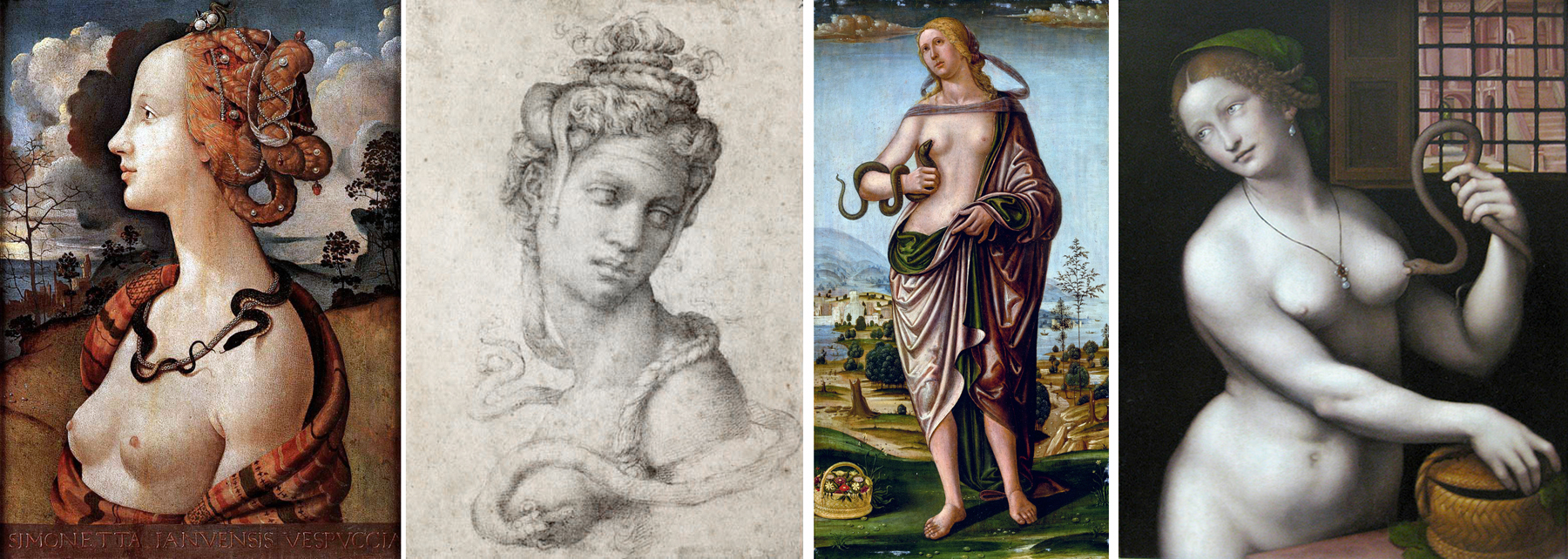
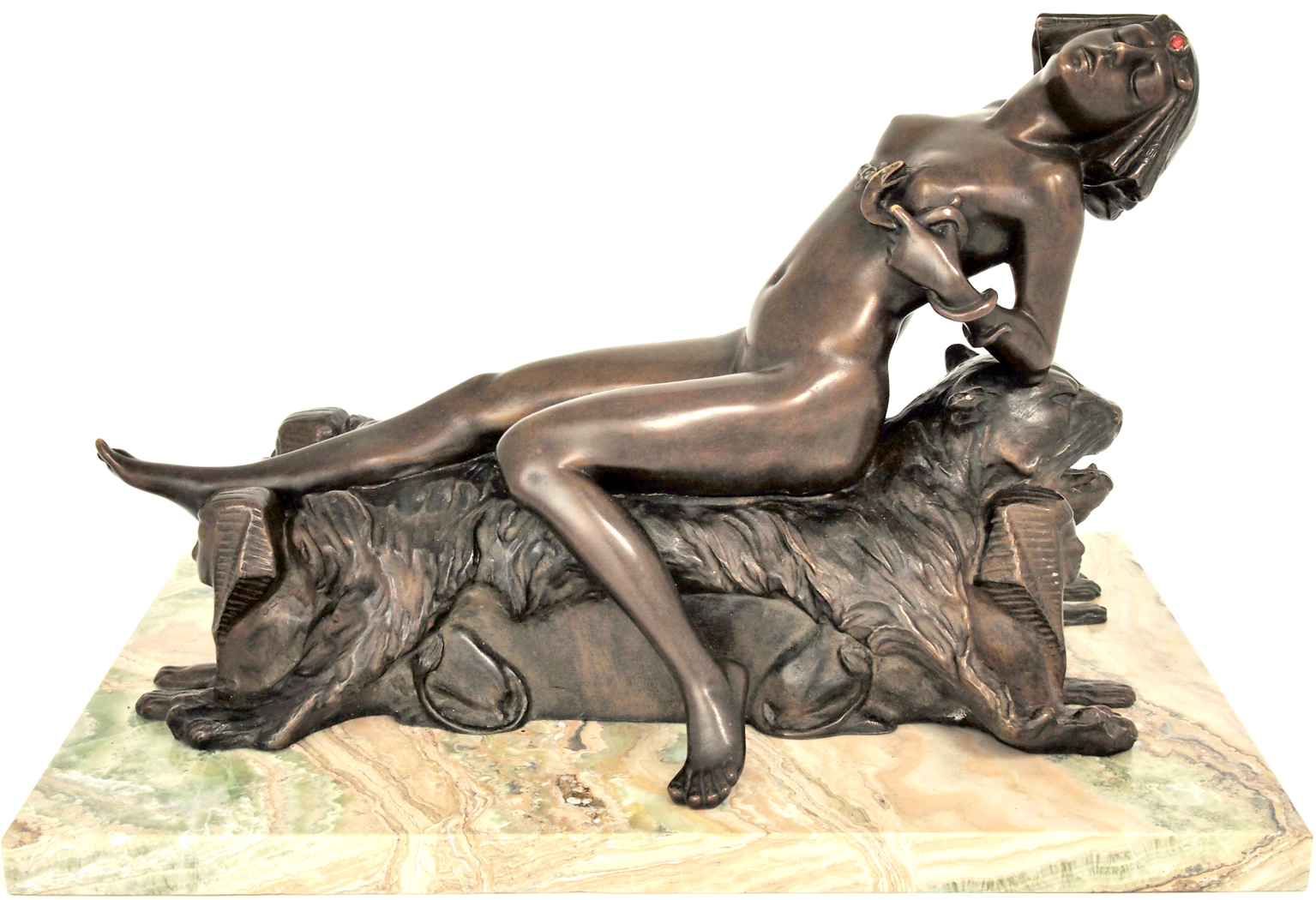
Of course, you will have noticed that in none of the ancient stories of her death does Cleopatra apply the serpent to her firm but supple breast. That version comes later, especially as painters attempted to give us the version not so much of Plutarch as of Joseph L. Mankiewicz. There is a Cecil B. DeMille quality to most of the historical paintings of Cleopatra, who ranks second only to Eve as a ripe subject for images of naked women with snakes.

Not that they are the only two: There are paintings and sculptures of the Roman goddess Hygea, goddess of health, which show her feeding a snake — the snake being the sacred animal of Asclepius, the god of medicine.

Lord Leighton, the English painter, gave us a grand tondo of the Hesperides, the home of the golden apples Hercules was to gather, which was protected by a serpent.

And there is the story of Harmonia and Cadmus. Cadmus, king of Illyria, had killed a serpent and the gods then turned Cadmus into a snake. His wife, Harmonia, stripped herself naked and begged Cadmus to come to her. As she embraced the snake the gods turned her also into a snake.

There is an obviously salacious element in these stories, especially as they are told, painted and sculpted by artists in the Victorian age, where they could be hypocritically sanctimonious about expressing the moral uplift of the glory that was Rome and the grandeur that was Greece while at the same time thinking “Look at the boobies on that one,” and, as the French say, “L.H.O.O.Q.”

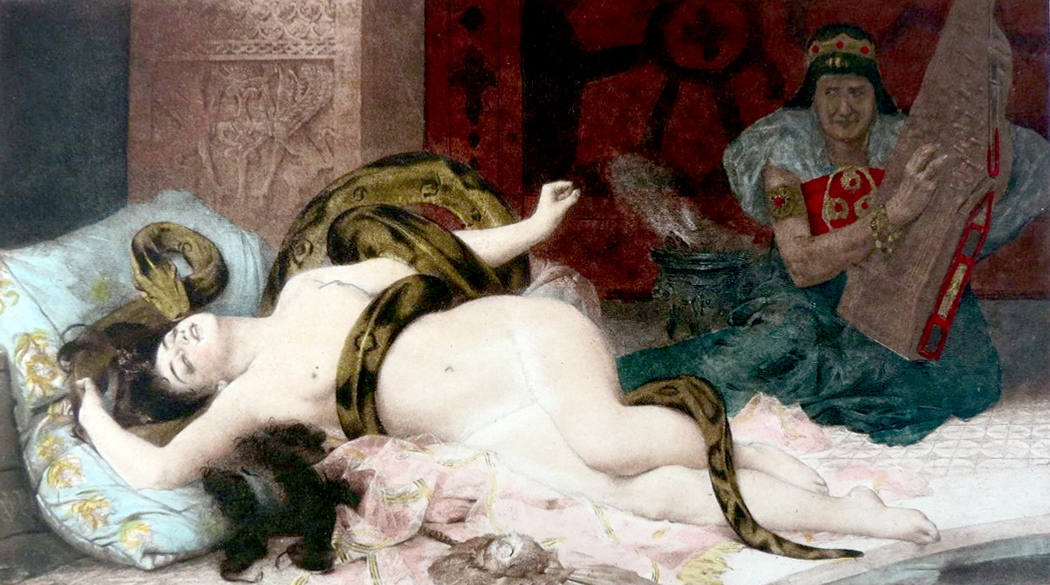
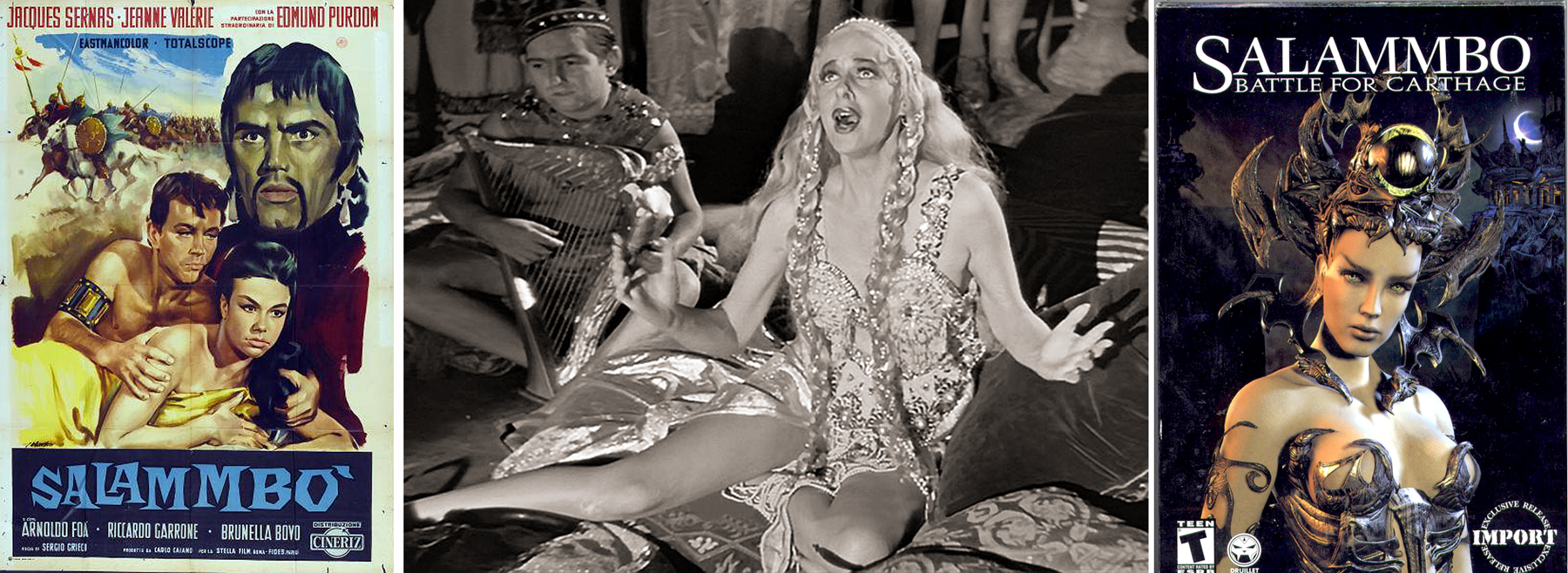
But the crown of this Orientalizing prurience must be in Gustave Flaubert’s novel, Salammbo — his followup to the scandalous Madame Bovary. It is the tale of the daughter of a Carthaginian general, set shortly after the first Punic War (264-241 BC). The plot is silly enough for an opera or a Hollywood epic. But there are scenes of sex and lasciviousness, not the least when the priestess Salammbo enters the enemy camp to retrieve the MacGuffin and encounters a prophetic snake. It is hard to avoid the Freudian undertones. They can hardly be called undertones.

“The moon rose; then the cithara and the flute began to play together.

“Salammbo unfastened her earrings, her necklace, her bracelets, and her long white simar; she unknotted the band in her hair, shaking the latter for a few minutes softly over her shoulders to cool herself by thus scattering it. The music went on outside; it consisted of three notes ever the same, hurried and frenzied; the strings grated, the flute blew; Taanach kept time by striking her hands; Salammbo, with a swaying of her whole body, chanted prayers, and her garments fell one after another around her.

“The heavy tapestry trembled, and the python’s head appeared above the cord that supported it. The serpent descended slowly like a drop of water flowing along a wall, crawled among the scattered stuffs, and then, gluing its tail to the ground, rose perfectly erect; and his eyes, more brilliant than carbuncles, darted upon Salammbo.

“A horror of cold, or perhaps a feeling of shame, at first made her hesitate. But she recalled Schahabarim’s orders and advanced; the python turned downwards, and resting the centre of its body upon the nape of her neck, allowed its head and tail to hang like a broken necklace with both ends trailing to the ground. Salammbo rolled it around her sides, under her arms and between her knees; then taking it by the jaw she brought the little triangular mouth to the edge of her teeth, and half shutting her eyes, threw herself back beneath the rays of the moon. The white light seemed to envelop her in a silver mist, the prints of her humid steps shone upon the flag-stones, stars quivered in the depth of the water; it tightened upon her its black rings that were spotted with scales of gold.

“Salammbo panted beneath the excessive weight, her loins yielded, she felt herself dying, and with the tip of its tail the serpent gently beat her thigh; then the music becoming still it fell off again.”

Yes, Flaubert; Mr. Mot Juste. More like Mot Jeaux, i.e. mojo.

We’re not done yet with naked women and snakes. More anon.

Click on any image to enlarge

What’s with all these women and snakes? Or more precisely, what’s with all these artists painting pictures of women with snakes?

Yes, there’s a pat, comic answer, but put your inner sophomore away for a few minutes.

In Western culture, the woman most often depicted in significant art must be the Virgin Mary. Most of those paintings do not portray any specific act or episode in her life, but are devotional Madonnas — mother and child. There are episodes painted — the nativity, the flight into Egypt or the lamentation at the cross — but mostly they are icons, static and symbolic.

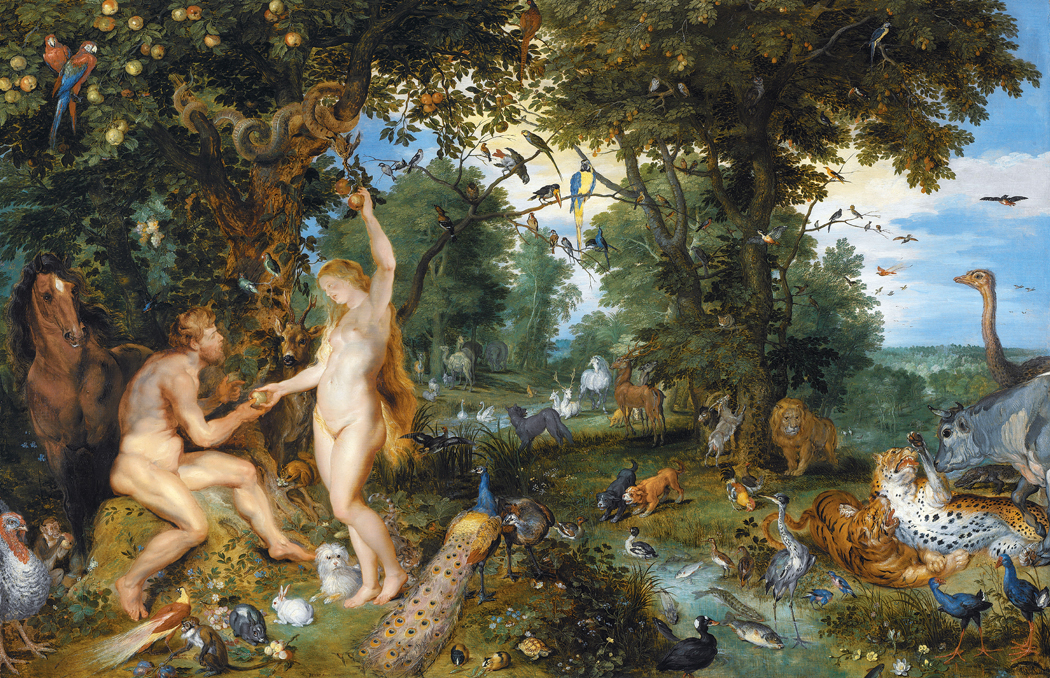
If we were to search for the second most painted woman, it would have to be a tossup between Venus (or Aphrodite) and Eve. I’m not going to examine the goddess here, but I want to consider Adam’s consort.

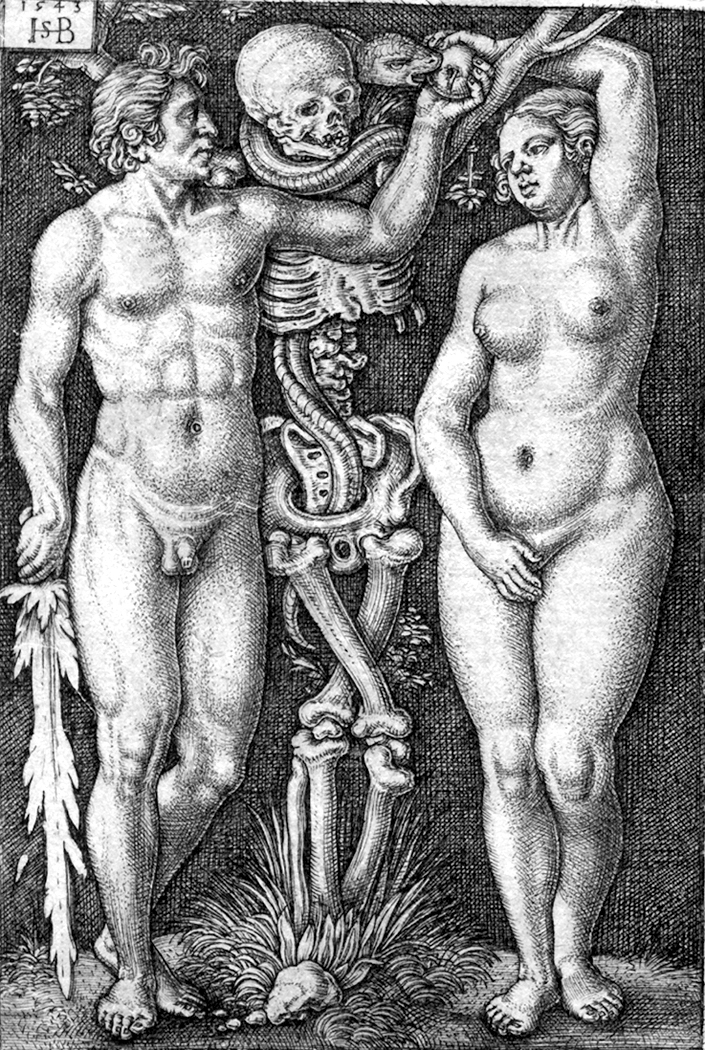
She is painted over and over, with and without Adam, but almost always with the “apple,” and usually with the serpent, although the serpent takes many forms.

I became interested in this as I began to discover many paintings. I now have images of several hundred historical paintings of the Temptation of Eve (I can only share a handful).

It interested me to watch the change in the iconography over the centuries, and the shift from one compositional pattern to a second.

The source of the imagery in the paintings begins in Genesis, but quickly adds bits from other places, none authorized by the actual words in the Bible. The Bible, for instance, does not say the serpent is Satan; it does not name the fruit as an apple; does not say that Eve “seduced” Adam into tasting the fruit.

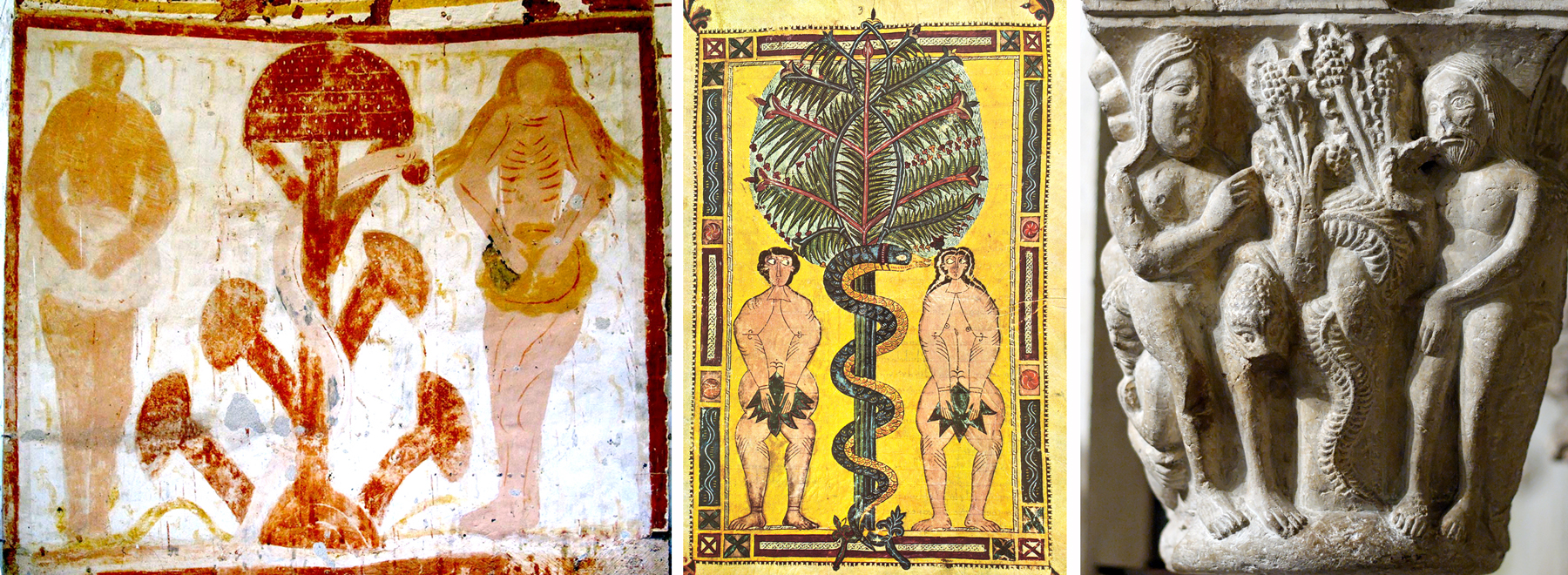
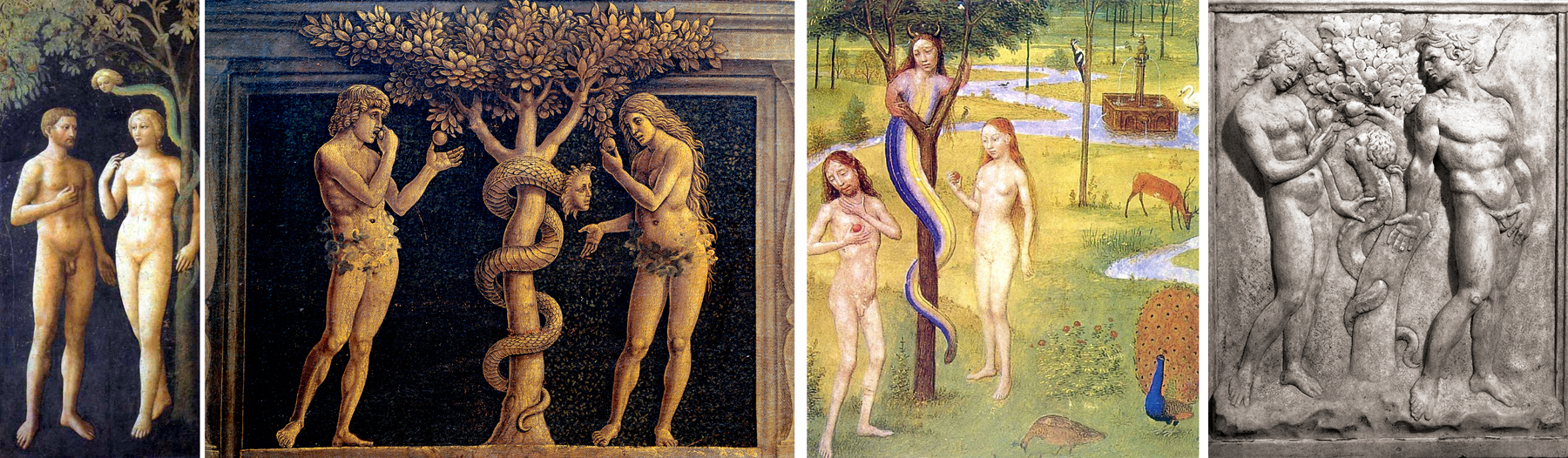
The earliest visual representations of the Temptation are Late Roman, or early Romanesque. In these the first design is firmly established: a symmetrical disposition of the man and woman to either side of the central tree, usually with a snake coiled around its trunk.

One of the most interesting early images is from a fresco in the Plaincourault Chapel, a 12th-century chapel of the Knights Hospitaller in Merigny — at nearly the perfect center of France. In it, the Tree of the Knowledge of Good and Evil is depicted in a very primitive way that could easily be interpreted as a giant mushroom. Indeed, there is a vein of scholarly thought that takes the forbidden fruit to be psychedelic mushrooms. Having eaten of them, Adam and Eve are able to see the deeper reality behind the surface one.

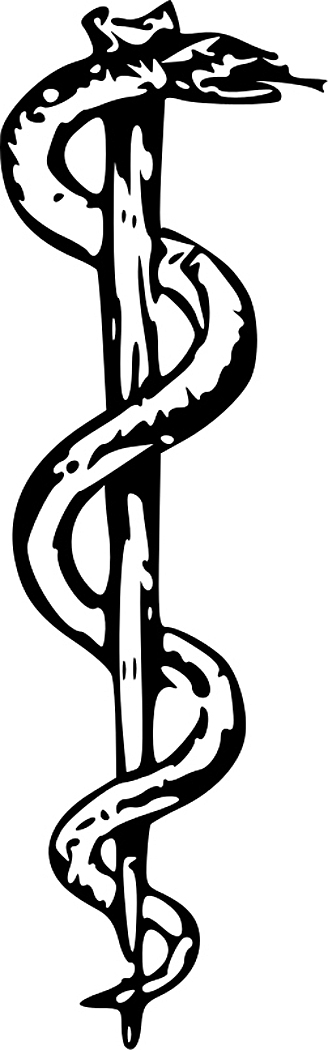
In this fresco, you see the familiar items. Adam, Eve, the tree and the serpent wound around the trunk very like the caduceus carried by the messenger god, Mercury, or the Rod of Asclepius, an insignia of healing. The symmetry of the design serves it well to becoming a kind of icon.

You see the pattern repeated over and over in Medieval prints, carrying over into the early Renaissance.

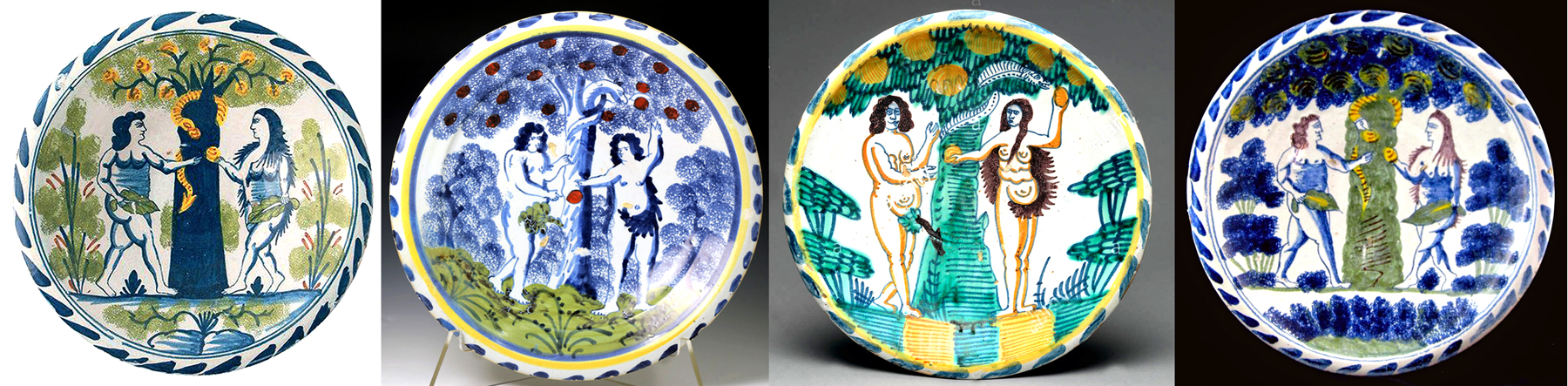
The design continues in popular arts for centuries. You find it even in plates.

But, at some point an insidious misogyny infects the standard imagery. In some paintings, starting in the Renaissance, the serpent takes on a female’s head, either Eve’s own likeness, as if the serpent were a mirror, or the head of the mythical non-Biblical figure of Lilith, styled to be Adam’s first wife.

The problem of Lilith originally arose because there are actually two stories of the creation of the first woman. In the first (Genesis 1:26 and 27), after having created all the animals, God “created humankind in his own image, in the image of God did he create it, male and female he created them.”

In the second story (Genesis 2:18-25), Jehovah, having already created Adam, creates all the animals to give him company, and when that isn’t sufficient, puts Adam to sleep and takes from his side a woman, making the bad pun in Hebrew, translatable to English as “We will call her ‘woman’ because from ‘man’ is she taken.” (In Hebrew “Ish” and “Isha.”)

Later commentators puzzled by these two different creations of Woman, decided that the first must be different from the second, and came to give the first one the name Lilith. The name may derive from ancient Semitic demons, known as “Lilitu.”

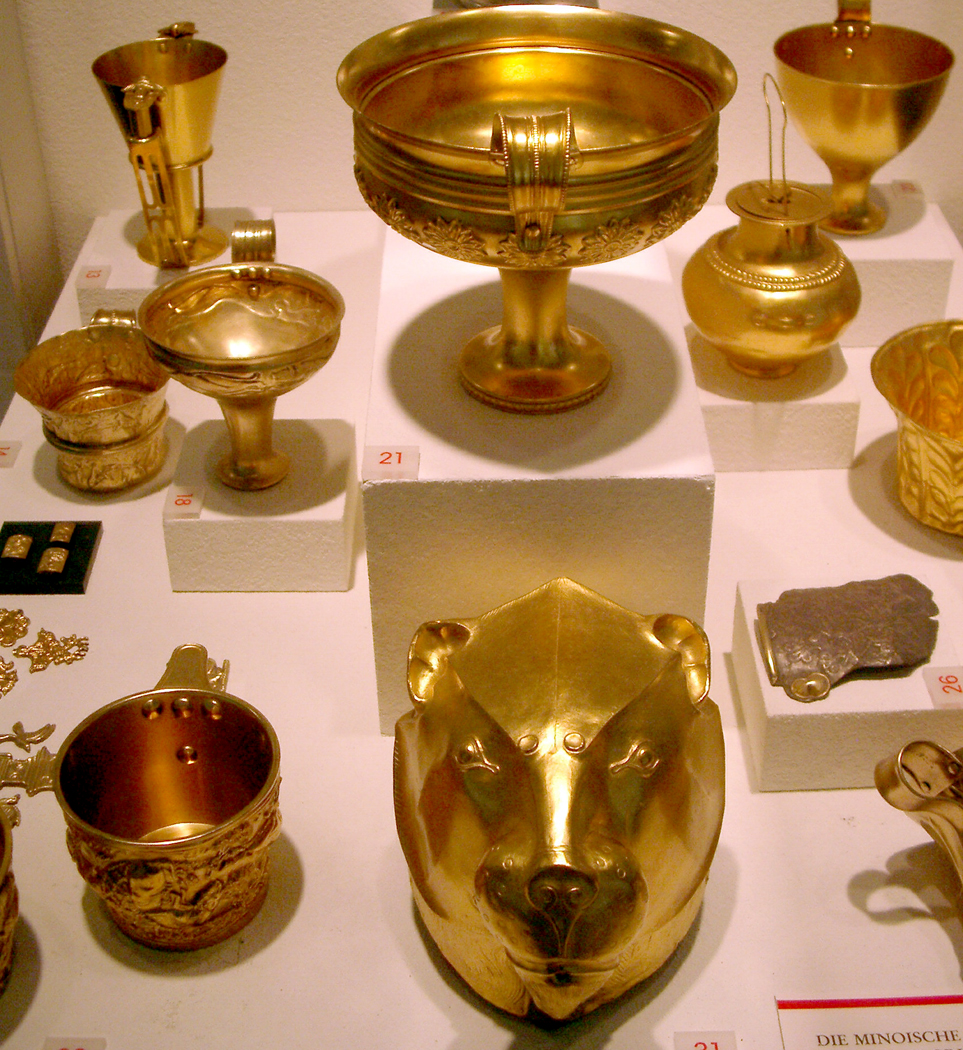
There are several examples of Mediterranean goddesses with special commerce with snakes. There is the Snake Goddess of Minoan culture, the Canaanite Astarte and even the Egyptian Isis. So, there is precedent for commingling the first woman and the serpent.

At any rate, in later Talmud, Midrash and Kabbalah texts, this first woman created is identified as Lilith and various stories get told about her, in all of which, she is evil, and a kidnapper and killer of children, and later, as a seducer and destroyer of men.

Obviously, then — at least to the Medieval minds of the interpreters of the sacred texts — this must be the woman God created first. She disappears from Eden through various versions of myth, but returns to cause havoc.

Most notably, as the serpent in the Garden. And so, many of the snakes wrapped around the Tree have a woman’s head or face. Most notable, perhaps, is the Sistine fresco by Michelangelo.

In the 15th and 16th centuries, you can hardly get away from this trope.

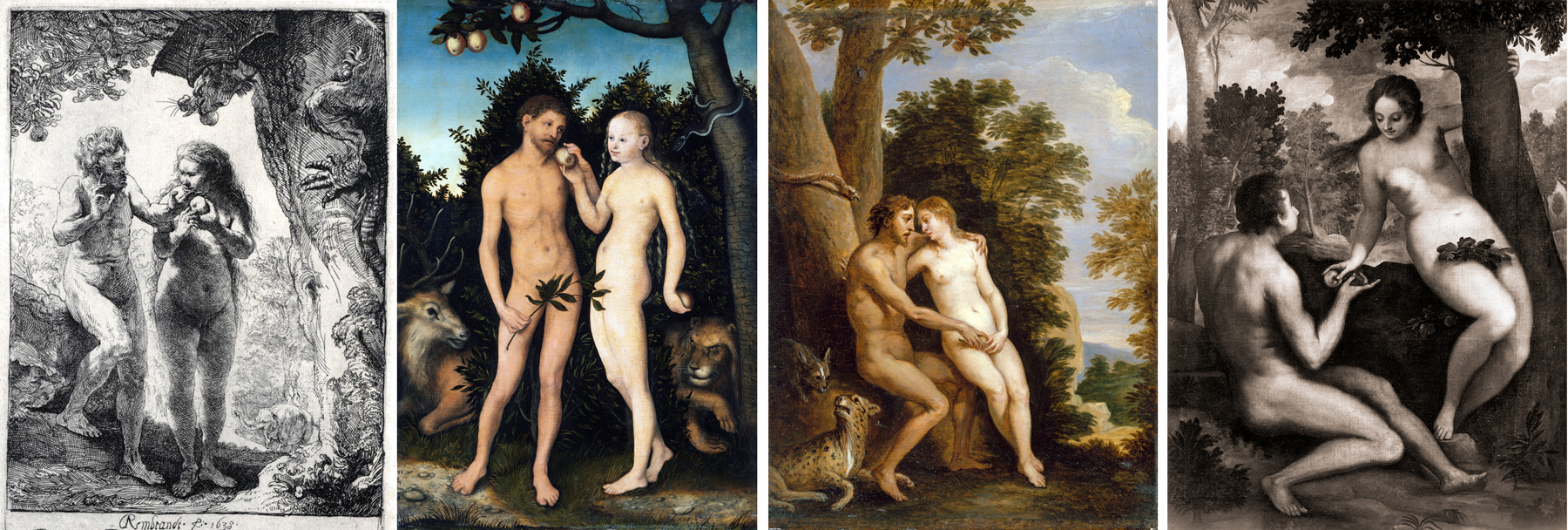
But as art history progresses into the Baroque, the static symmetry of the classic tree and couple gives way to moving both Adam and Eve to the same side and putting tree and snake in its own half of the frame.

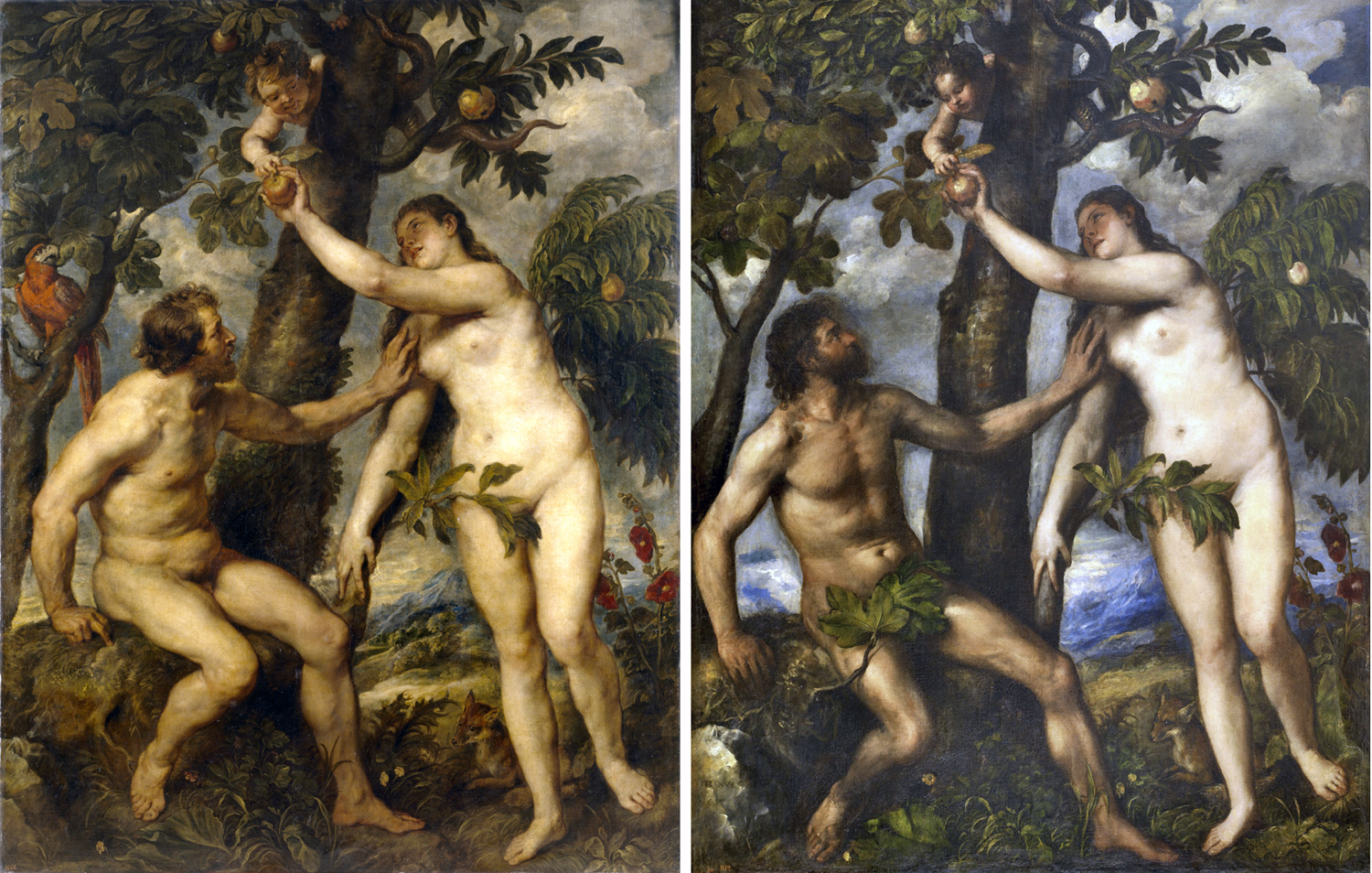
The old design doesn’t disappear. You can see it in the grand paintings of Rubens, who clearly copied from Titian.

What does happen, however, is that the biblical stories are no longer able to be taken as literal fact. You find the Scripture being used as pretext for allegory or even for an excuse for painting naked women. You see the light of faith dimming and the approach of the Enlightenment.


When Eugène Viollet-le-Duc renovated the cathedral of Notre Dame in Paris in the mid- to late 19th century, he replaced weathered Medieval sculpture with modern replicas of his own design, imitating the Gothic style. The central trumeau of the central portal of the cathedral sports this wonderful take on the Temptation of Eve. It follows the old formula, and has some vigor, but you know that Viollet-le-Duc could never believe in the Fall of Man in quite the same way as the original builders of the cathedral.

Into the 19th century, the whole issue of the Fall, of the snake — for now the ambiguity of the “serpent” has been changed out for the Freudian certainty of the phallic snake — and the naked Eve have given way increasingly to kitsch.

There are some Modernist attempts at reviving the mythology, but they are few and lack the persuasiveness of the older images, perhaps because the 20th-century artists cannot actually believe in what they are painting. It is not only God that is dead.

This has been a very short overview. There is so much more I would like to share, but there is limited space. They come in all styles and media.

In the next blog entry, we will look at some other permutations of the naked lady and the snake.

Click on any image to enlarge.

It is going to be 6 degrees  tonight. Even in the day, it won’t get over freezing until Wednesday. It is winter.

I have not been out of the house for three days.

I may climb into the refrigerator for warmth.

Now that I am old, winter gets into my bones. But when I was younger, I loved the bracing cold, the breath congealed on my beard. I made myself warm by chopping wood. A good walk in the woods, with snow crunching under my boots left my cheeks ruddy and numb. I felt like I was skin to skin with nature. It was a glorious feeling.

Many years before that, I remember building an igloo on the front lawn in New Jersey. I must have been 8 or 9 years old. Inside, it was dark and if you stayed there long enough, it began to get a little warmer. The neighbor’s yard was a hill, and my brothers and I would sled down it when it snowed.

In New Jersey, the snow only stayed white a short, glorious period before turning soot gray as the snowplows piled up moraines of the stuff along the roadsides.

So, I am not so fond of winter now as I was then. The cold makes my knees ache. Yet, there are still elements of the season I cherish. In North Carolina, there is always a midwinter spring, often in February, when the temperature rises for a week before dropping back into the bin-bottom of the thermometer to remind us winter is not so kind, nor so short.

In February, the red maples earn their name, with spreading leaf buds uncovering the red beneath. You can see, even as the winter grips hard, that spring is working its way to the surface.

In March, as winter recedes, the frozen ground melts and mud season descends. Boots get stuck in the mire; you have to watch out not to step completely out of them.

But it is January First, and a cold snap has bottled up Asheville. The trees seem brittle with the freeze. It is a perfect day to listen to Sibelius and stare out the window.

For some reason, although most other people seem to most appreciate trees in the spring, when they come back to sap-life or fall, when they turn gaudy colors, I have always responded to the empty trees of winter. Looking over the Blue Ridge in winter, the leafless trees, from a distance, become a gray fur on the backs of the mountains. The hills look almost soft.

I think of the winter trees as nudes. They have dropped their clothes to show their real form, the trunk, branch and stem.

If you remember your Wölfflin from art history, there are eras — and people — who prefer painting and those who prefer drawing. I have always been a drawing-guy. I appreciate the linear, the ink-on-paper scratches of tree limbs, the crosshatching of twigs. There is something dour in my soul that enjoys gray more than party colors. Not a flat, simple gray, but a complex gray built from dusty blues mixed with tawny beiges. A good gray has as much depth as a river.

In winter, the air is clearer, except when a cold mist obscures the trees. The cold keeps you awake. The floors are icy underfoot, even if the room temperature inside is kept a comfortable 68. One sleeps well at night, with cool air in the nostrils.

A steaming stew or vegetable soup with a crusty bread and the evening seems just right.

Winter light, low and dim; early dusk, late dawn; the sun not strong enough to reach zenith, but arcing across the sky barely above the trees.

I remember one winter day, 40 years ago, walking across the railway bridge the cuts over Lake Brandt. It was probably 20 degrees and the air dead still. The surface of the water was not yet frozen, but it was mirror-smooth. The remains of snow covered the lake’s banks and no one seemed stirring in the landscape except me, walking tie by tie over the water beneath. It was silent; so quiet I could hear my breathing. It was one of those moments of epiphany, when suddenly the world becomes clear. It is almost a religious experience. You recognize that fact of the planet beneath your boot sole, and the atmosphere above your watch cap, bleeding into infinite dark space.

Such moments are delicious, and more valuable for their rarity. If we are lucky, we have perhaps a dozen or so such instants in our lives. For me, most of them have happened in freezing cold.

But now, my joints ache. What glimpses of eternity I get are less optimistic. Winter has a different meaning as you turn 70.

In 1873, an amateur German archeologist working in western Anatolia, claimed to have dug up a trove of gold he called “Priam’s Treasure” and ascribed to the king of Ilium during the Trojan War of Homer’s Iliad.

Whether any of his claim was true remains contentious; Heinrich Schliemann fibbed about many of his claims. But what is not under question is the public attention roused by the gold. Nothing dug from the earth quite hypnotizes the layman so much as gold. Treasure. Pirate’s booty. Roman coins.

The fascination seems unquenchable. Museum blockbuster shows are predicated on that fascination. “The Treasures of Tutankhamun;” “Treasure Houses of Britain;” “Catherine the Great: Treasures of Imperial Russia;” “Splendors of the Ottoman Sultans;” “Treasures of the Czars.” The list is long. And so are the lines to get in.

But while traveling blockbusters are tarted out with gold, the permanent collections of major museums also offer more humble relics of antiquity. Visit the Metropolitan Museum in New York, the Boston Fine Arts Museum, even a smaller one, such as the Chrysler Museum in Norfolk, Va., and you find vitrines highlighting the pottery dug up from the historic layers of soil. While the gold glitters, the simple ceramics — more common than the jewelry — yield up more useful information about the people who lived before our ancestors knew they were our ancestors.

Shards of Egyptian pottery have turned up in Afghanistan, evidencing the far-flung trade network from before the 12th century BCE, Greek red-figure ceramics show up from Spain to Iran. When archeologists want to find out about the lives of the earliest European settlers in the New World, they search out the middens of refuse from those early outposts and it is the broken dishes, cooking vessels, drinking cups and flatware that tell us perhaps the most. We learn where those dishes were made, how they were used, about the trade networks that brought Delftware from the Low Countries to southern England and to Massachusetts, where the village burgermaster showed off his status, while the laborer ate off tin plates.

But such clayware isn’t shown in museums only for its historical importance. You can find great esthetic value in archaic Greek ceramics, in red-figure and black-figure pottery, in the designs of pre-Columbian figurines, in Egyptian clay palettes, in ancient Chinese vases. They are shown in museums for their beauty. They are works of art.

On a visit to Colmar in eastern France, to see the Isenheim Altarpiece, that huge symbol of the sorrows of life on earth, the museum also had a whole wing of domestic arts, including some fabulous dinnerplates, hand painted with flowers, abstract floral patterns and the occasional family crest. There was no question that those beautiful plates deserved their spotlight behind the glass.

Which brings me to my own kitchen. I have way too many dinner plates. The cause is esthetic, not practical. In fact, it is anti-practical.

My interest in what I ate off of was nil until my second unofficial marriage. I have no recollection at all of what plates we had during my first official marriage. Anything that held victuals was sufficient.

I know we had a few blue-speckled enamel tin plates. As humble as our incomes at the time. (I still feel a nostalgia for tin plates). Years later, between relationships, I lived with friends whose plates were a traditional Pfaltzgraff design. I came to feel a comfortable homeyness about them. Who knew you could have emotional feelings about baked mud?

But with my second unofficial pairing, the two of us sought out dinnerware that expressed who we were, or who we thought we were. Something vaguely arty.

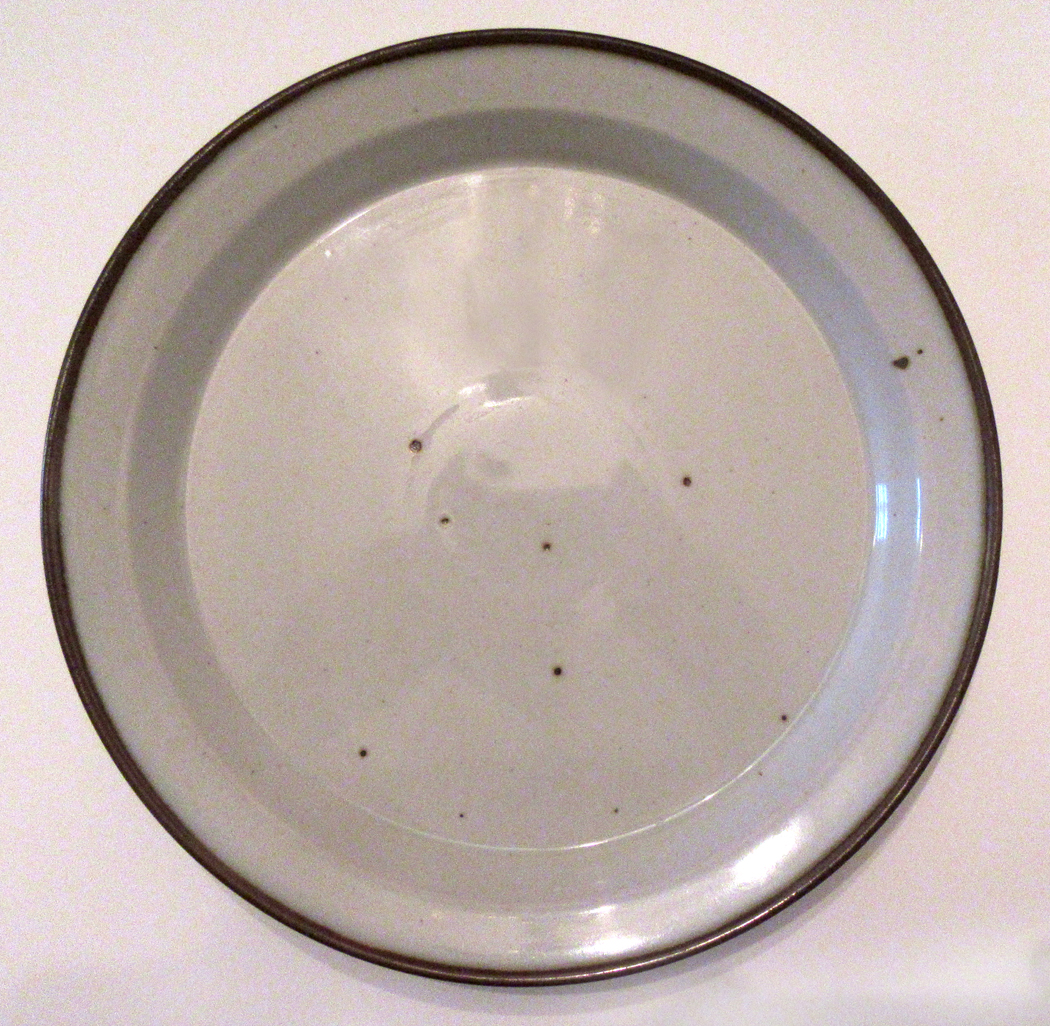
We found the perfect answer in the stripped-down esthetic of Dansk breakfastware. The large plate was as plain as could be, with a mildly speckled blue ironstone, about 10 inches in diameter, with a half-inch lip around the edge, almost as if it were a pie tin. We had the bowls and mugs to go with them, and for years, they served as a signal of the kind of Modernist esthetic we cared for. Others might choose more flowery plates, or something elegant with gold rims, but we liked the showy simplicity of our Dansk dishes.

Where those dishes went, I have no idea. Through divorce and  break-up, they have vanished. But many years — many decades — later, I came across a pair of Dansk plates in a thrift store. These were brown rather than blue, but they were the same design. I snarfled them up and use them to this day, still enjoying that heavy crockery feel, that masculine, stripped-down directness.

Pfaltzgraff pattern

But when it came to my second official marriage — the one that took — there was a problem. Although Carole and I were perfectly matched in so many ways, there was a significant rupture in our esthetic senses. Where we were the same was that neither of us tolerated bad design. We both wanted something well thought-out and pleasing to our senses. But Carole tilted toward the traditional, the more feminine, the more what I called “doilied-up.” While I, of course, favored the blunt, direct and undecorated and modern look. This could be a problem.

So, over 35 years of living together, we tried many ways of satisfying both of us. She usually won in this struggle. She came with an heirloom set of Haviland settings, well over a hundred years old. But they were too valuable to actually use. So, they sat in a cupboard looking elegant. Elegant if that is the sort of thing you value.

She also had a thing for Blue Willow ware, and collected platters and plates, bowls and tureens in the pattern. Some so old their whites had begun to turn brown. They came from Goodwills and Salvation Army stores, and while they didn’t cost us a whole lot, took up way more pantry space than their use warranted.

Blue Willow was perhaps the sweet spot for Carole, but it wasn’t enough. She brought home random dinner plates from her sallies into various thrift stores. We collected quite a few floral plates. Then, there was a mismatched set of autumnal plates that she meant to use for Thanksgiving dinners. Those plates featured grouse or hunting scenes.

There was a new set she bought without telling me. One day, it showed up: A bright red and white set of Christmas dishes, bordered with reindeer and sleighs. The whole disaster — plates, salad plates, bowls, cups, saucers. Hardly room in the cabinet to hold them. And they were used, maybe, once a year. The crowded shelves hardly left room for the wine and water glasses.

Fiesta ware

My Modernist taste was clearly being drowned under a welter of semi-kitsch. Meanwhile, the growth of Blue Willow continued.

Clearly, there had to be some kind of compromise. Weighted to her side, of course, but at least a little give.

The clue came in France, while we were visiting the gardens painter Claude Monet had established for himself in Giverny, some 40 miles northwest of Paris. We have been to Giverny three or four times, in different seasons. It is powerfully beautiful, restored to its original glory.

And in the inevitable gift shop, there were offered for sale reproductions of the tableware that the painter used for his guests. In 1898, Monet designed a porcelain dinner service by painting a simple white plate with a blue edge and a yellow rim. It was executed by the company of Godin and Arhendfeld and perfectly set off the bright yellow dining room the painter fitted out in the old farm house that he refurbished.

In 1978, the Foundation Claude Monet commissioned the Robert Haviland and C. Parlon company of Limoges to recreate that original set of crockery. We gawked at it in the Giverny gift shop, salivated over it, distressed by its price. If you wanted to buy such a dinner plate now, it would cost you $155. Yes, per plate. A single five-piece place setting was $570. Standard setting for six, nearly $3500. Clearly this was out of our price range.

Yet, we knew we had found that compromise. Both traditional and Modernist, with the imprimatur of a great artist we both loved, it would have been the perfect set for our kitchen. We pined; we sighed; we longed.

In the meantime, every few years, we would see some place settings we liked, and if it was in our price range, we might buy it. We did both love the joy of the hunt for dinnerware we both could live with. There were compromises, mostly by me.

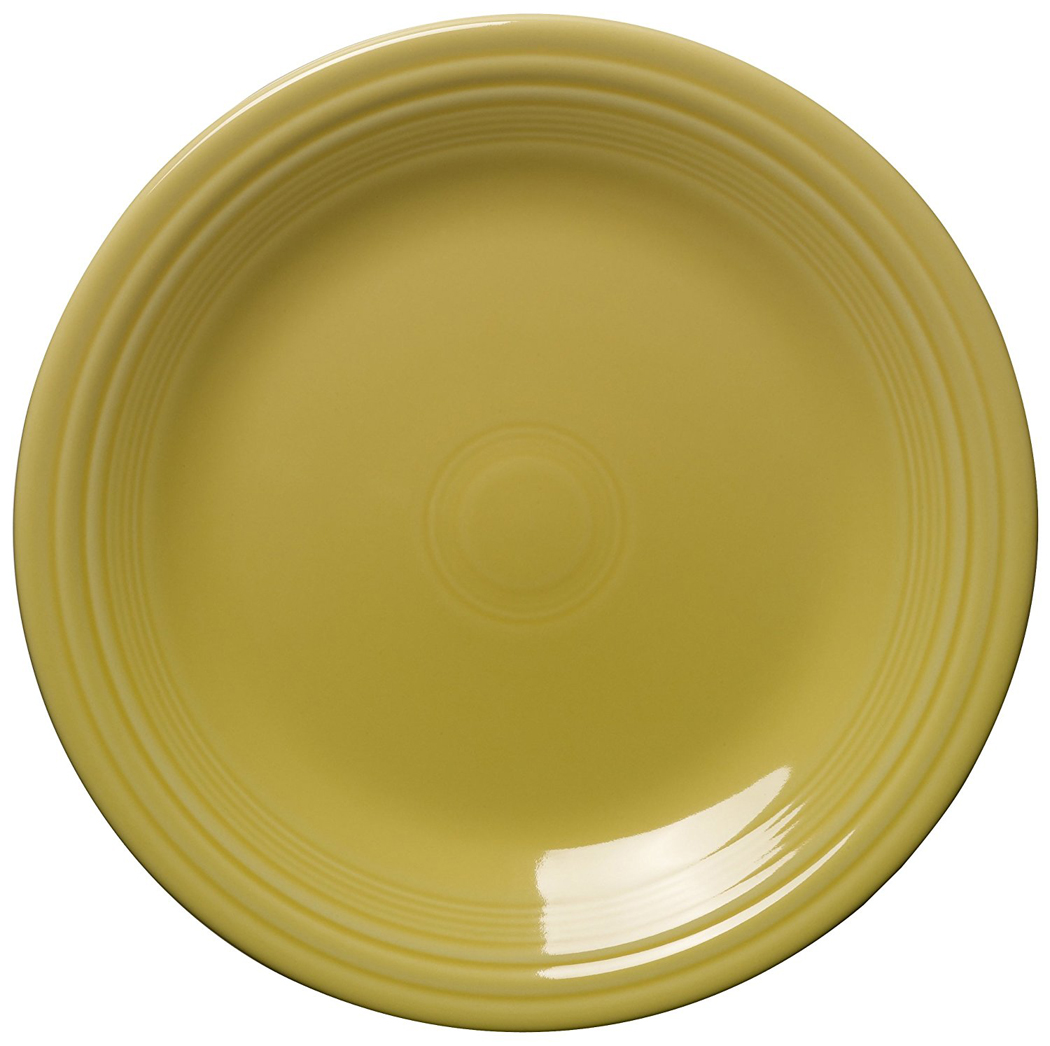
But then, we found a perfect knock-off. The Italian firm of Pagnossin had a set of blue-edged, yellow-rimmed plates. They were on sale. They weren’t exactly the same as the Monet plates. Monet’s had a light, powdery blue edge. These had a navy edge. But the yellow was identical. They were elegant, traditional and modern. We fell in love with them. I still have them and use them whenever company comes over.

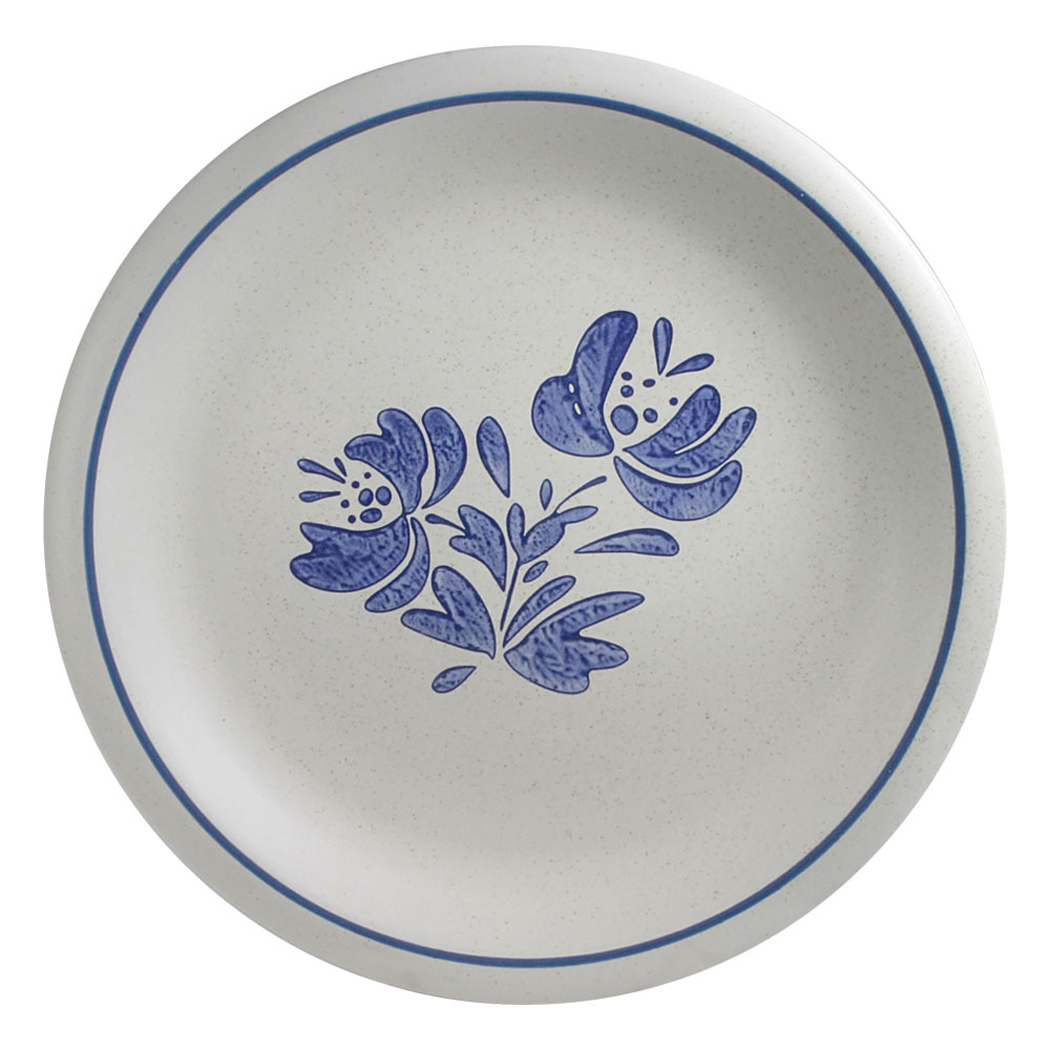
Now that Carole is gone, the Blue Willow is gone, too. So are the red Christmas dishes. Alone, I find myself eating off of paper plates more than I care to admit. But I still have the faux-Monet plates and the replacement Dansk plates. And I keep several of Carole’s additions. There are two beautiful, simple plates with blue flowers drawn, not painted, on them. And there is a set of four Rita Monti hand-painted dishes, with floral and Renaissance patterns on them, very Mediterranean, which are perfect for pasta or fish. It seems I have mellowed; my need for masculine simplicity has softened into an absorption of some of Carole’s personality into my own, where it persists, even as she no longer does.

“Do you know where you come from?”

“New Jersey,” I said.

“No, I mean where your people come from.”

“Yeah, New Jersey.”

But that’s not what Stuart meant.

“I mean originally,” he said.

“Then, I guess, the Rift Valley in Africa.”

“But after that. What ethnicity do you identify as.”

“Well, everyone in my family is Norwegian. But the Nordic people migrated there from elsewhere before that.”

“And how far back does your family tree go?”

“I’ve never really thought about it much,” I said. “My grandmother’s old family Bible — in Norwegian — has people listed back as far as my great-great-grandparents. Or at least some of them. Not all 16 of them.”

“And none of the 32 who gave birth to them, or the 64 who gave birth to the 32,” he said. “I’ve been thinking about this.”

Stuart thinks about a lot of things. And when he starts off, there’s usually no stopping him. We turned a corner onto his street. The air was turning into winter.

“It began because Genevieve has been watching these genealogy programs on TV. They seem to be enormously popular. They take a celebrity guest and trace their family history to answer questions that the guest has about his or her past — things that perhaps their parents never talked about. Where did Grandma get that tattoo? Why did our family leave Serbia? They sometimes find out that their great-great-great-great-great grandfather was thrown in debtors’ prison during the Glorious Revolution, or some such thing that amazes them.”

“Yes, I’ve seen those. Henry Louis Gates does one on PBS and I’ve seen a British one on YouTube. They can be fascinating.”

“But I’ve noticed a problem that is never addressed, although, maybe it can’t be. Genevieve accidentally pointed it out once. The family trees they come up with are always piecemeal, and they tend to follow the family name, which means the father’s father’s father, on and on. Sometimes they do the mother, too. But then if it continues, it’s the mother’s father and his father. They get hung up in the family name.

“It makes it seem as if a family tree has a certain neatness to it,” Stuart said. “And if they find something notable in the past, it seems as if there is a direct line, say, from Charlemagne to them. As if a family line were a simple thing.”

Stuart had worked a good deal of this out, he said, and when we got to his house, Genevieve had dinner ready.

“She sure can cook, for a violist,” he said. Genevieve did not seem amused.

Later, he brought out his paperwork. He laid it on the cleaned off table. There was a good deal of scribbling on it, and a lot of numbers.

“You have to do the math,” he said. “You start of with 1 — that’s you. You have two parents. They each have two parents, making four grandparents. The numbers pile up. You have eight great-grandparents. Keep doubling the number for each generation. By the time you get to five ‘greats’ you have 128 people dumping their DNA into your birth cauldron.”

That makes doing a full family tree rather busy with names — even if you could track the names down. You don’t really know the names, Stuart said, but the math remains certain.

“One thinks in terms of great old Pop-Pop, or Nana, and maybe you have in mind their parents or grandparents, but it is always a manageable number of people. A number you might know — they are people you can know the names of.

“I thought of how many years this might encompass,” he said. “And as an average — and average only, because, of course, there’s a lot of variation, but as an average, I think this works. You take a generation to be 25 years — it makes the math easier and we’re only doing this for illustration. But if your parents were 25 when you were born, and your grandparents were 50, that makes your great-grandparents 75 at your birth. Again, this is only for illustration. My great-grandmother was actually 82 when I was born.

“That means there is 100 years to your great-great-grandparents.”

“OK, I’m buying it so far. But,” I said, looking down at the papers he had spread out, “that leaves us with 16 people to keep track of. Sixteen in a century seems doable.”

“The problem is that the numbers keep doubling. By the time you go back 200 years, you have 256 ancestors. By 300 years, you have 4,096 ‘9-G’ grandparents. That’s great-great-great-great-great —“ he held up his fingers and started on the next hand — “great-great-great-great-grandparents. That’s a lot of DNA dumping into your cells. If you go back 500 years — and this doesn’t yet get you anywhere near Charlemagne — you now have to send greeting cards to one-million forty-eight-thousand five-hundred and seventy-six geezers.

“Let’s go back to the 1260s, when Chartres Cathedral was dedicated and Kublai Khan was emperor of China. That’s when you now count a billion people as your ancestors. With a ‘B’ — actually, 1,073,741,824 people, all of whom were necessary for the production of the zygote that became you, sitting here, eating Genevieve’s lasagne.”

Stuart was starting to get a little excited. His eyes were taking on that glow I recognized all to well.

“You only have to go back 33 generations to a point that you have more grandparents than there are currently people on earth. Here it is, 400 years after Charlemagne and you have 8,589,934,592 ancestors. Seven more generations — that takes us only to about the turn of the first millennium and you have already needed a trillion ancestors. It starts to get really ridiculous.”

He pointed to his calculations on the paper again.

“This means that it is mathematically certain that you share an ancestor within the past thousand years with everybody now living on the planet. There’s no escaping that fact. So, you may not be a direct descendant of Charlemagne, but you are related. Since there needs to be more people than are available in order to sire you — more people required than exist or have existed on earth — it necessarily means there has to be a great deal of cross-breeding, making everyone cousins of a sort. Alle Menschen werden Brüder, as Beethoven said.”

“Maybe we should say, ‘alle Menschen sind Brüder.’ Make it present tense,” I said. “But when you mentioned ‘cross-breeding,’ it brings to mind what happened when Carole wanted to track the origins of her family.”

My late wife adored her father and loved everything about the Steele family. To discover the origin of the family, her brother, Mel, took one of those Y-chromosome tests. The Y-chromosome is passed down from father to son across the generations. When the results came back in the mail, there was at least one anomaly.

“We learned that surname and DNA are only tangentially related,” I said. “The DNA descends from father to son, but maybe not the surname. The Steele family always said it was originally Irish. But it is an English name, possibly Scottish, and everyone was Protestant. In the U.S., they lived in the Appalachians and so we assumed they were Scots-Irish. Along with the complicated information about haplogroup, there was a list of other men who had taken the test who matched up with the Steele DNA. The most recent names were indeed Steele. But going back in history, the Steele name disappears and is replaced with the name Driscoll. The oldest Driscolls on the list came from County Cork, in southern Ireland.

“What we figured out is that at some point — maybe in Ireland, maybe after they emigrated to America — a Steele woman either had a baby out of wedlock to a Driscoll, or a Steele wife had an adulterous affair with a Driscoll. So, the Driscoll DNA settled, cuckoo-egg style in the Steele family line.

“It taught us not to be too cocky about the nominal lineage you work out through genealogy. Just because someone is married, doesn’t mean the husband is father to the child. There must be a lot of this kind of misdirection over the centuries.”

“And also,” said Stuart, “You should be as aware of the many other contributors to your genetic make-up, and not so focused on the genes stumbling down through your father’s line. It’s only one of two parts, or of four parts, or of eight, or, well, you get the picture.”

How long ago was history?

When I was in grade school, whatever history I was taught seemed as distant as fairy tales, a never-never of such ancientness as to be inconceivable. It was certain that there was an unbridgeable divide between the now I lived in and a history that resided only in books, and pained us with dates and names we were required to memorize. There was no continuity; past and present were as immiscible as diesel fuel and salt water.

These things change as you get older and what is taught as history is what you lived through when you were younger. When I was born, Harry Truman hadn’t yet campaigned for president. For my grandchildren, Truman is a fuzzy black-and-white halftone in their textbook. For me, however, he was my first president. Eisenhower, the Vietnam War, the Kennedy assassination, the moon landing — these were things I can remember a time that was before.

Now that I’m about to turn 70, a century doesn’t seem like such a long time, or such a meaningful slice of eternity. My grandmother was born in the 19th century and I’m now alive in the 21st. She used to muse occasionally on the fact that she was born before the Wright brothers flew at Kitty Hawk and lived to see Neil Armstrong walk on the moon.

It’s really just a flash before you connect with what seemed so alien in that history textbook. Six degrees of separation.

Literally.

From me to my wife takes the first step. Her great-grandmother, Nancy Jane Steele, was alive until my wife was 8 years old. She was 98 when she died, in my wife’s childhood bed. She could remember eating sandwiches made from the cambium layer of tree bark because there was nothing else to eat during the Civil War. She had been married to Civil War veteran Rowan Steele, who had been messenger and courier for Col. Robert E. Lee, Jr., who was the youngest son of the legendary general, Bobby Lee. And that’s only five degrees of separation. Who knew a Yankee boy from New Jersey would be this close to the biggest name in the Confederacy?

We think of a century as being the measurement of a considerable piece of time — it is long enough to tick off entire ages in the history books: The 19th Century was distinct from the 18th Century; the 14th Century was so different from the 10th Century: the revolution between the Romanesque and the Gothic. But a century is really just the space from grandparent to grandchild. Not long at all.

In Ancient Rome, that is exactly how they counted eras. The Latin word we translate as “century” is “saeculum,” but saeculum doesn’t actually mean a hundred years. It is the time from the birth of a grandparent that you outlive to the death of the child who outlives you. They calculated it to be anywhere from 112 to 117 years.

How we can skip across these centuries. Let’s take something from the history books, say, the accession of James II of England in 1685. Unutterably distant, no?

Well, I can trace a person-to-person connection to that year in only nine degrees of separation. And without Kevin Bacon entering the equation at all.

That same year, Johann Sebastian Bach was born in Eisenach in Thuringia, now part of Germany. One of his sons was Johann Christian Bach, also a composer. J.C. Bach was friend and mentor to Wolfgang Amadeus Mozart, who once heard the young Beethoven play the piano. He was impressed. Beethoven had a few paying students to help him afford his daily vin de pays. One of those students was Carl Czerny, who wrote an infernal and deeply hated series of piano finger-exercises that young pianists still suffer through. One of Czerny’s students became probably the greatest piano teacher of all time, Theodor Leschetizky (among his students are Jan Paderewski, Alexander Brailowsky, Ignaz Friedman, Ossip Gabrilowitsch, Benno Moiseiwitsch, Artur Schnabel, and Fannie Bloomfield Zeisler — all of them among the most famous pianists of the first half of the 20th century). And Mieczyslaw Horszowski — who died in 1993 at the age of 101, playing and recording well into his 90s.

Well, Horszowski had a piano student named Eugene Istomin, who made a series of legendary piano-trio recordings with Isaac Stern and cellist Leonard Rose. And when I was a volunteer photographer for the Eastern Music Festival, in Greensboro, N.C., in the early 1970s, I was tasked with picking Rose up from the airport, cello and all. I was his chauffeur.

There it is, from Bach to me in nine easy steps. So, the 17th Century isn’t all that far away. Another nine and we could be building Chartres. History is not that long ago.