madison lede pix
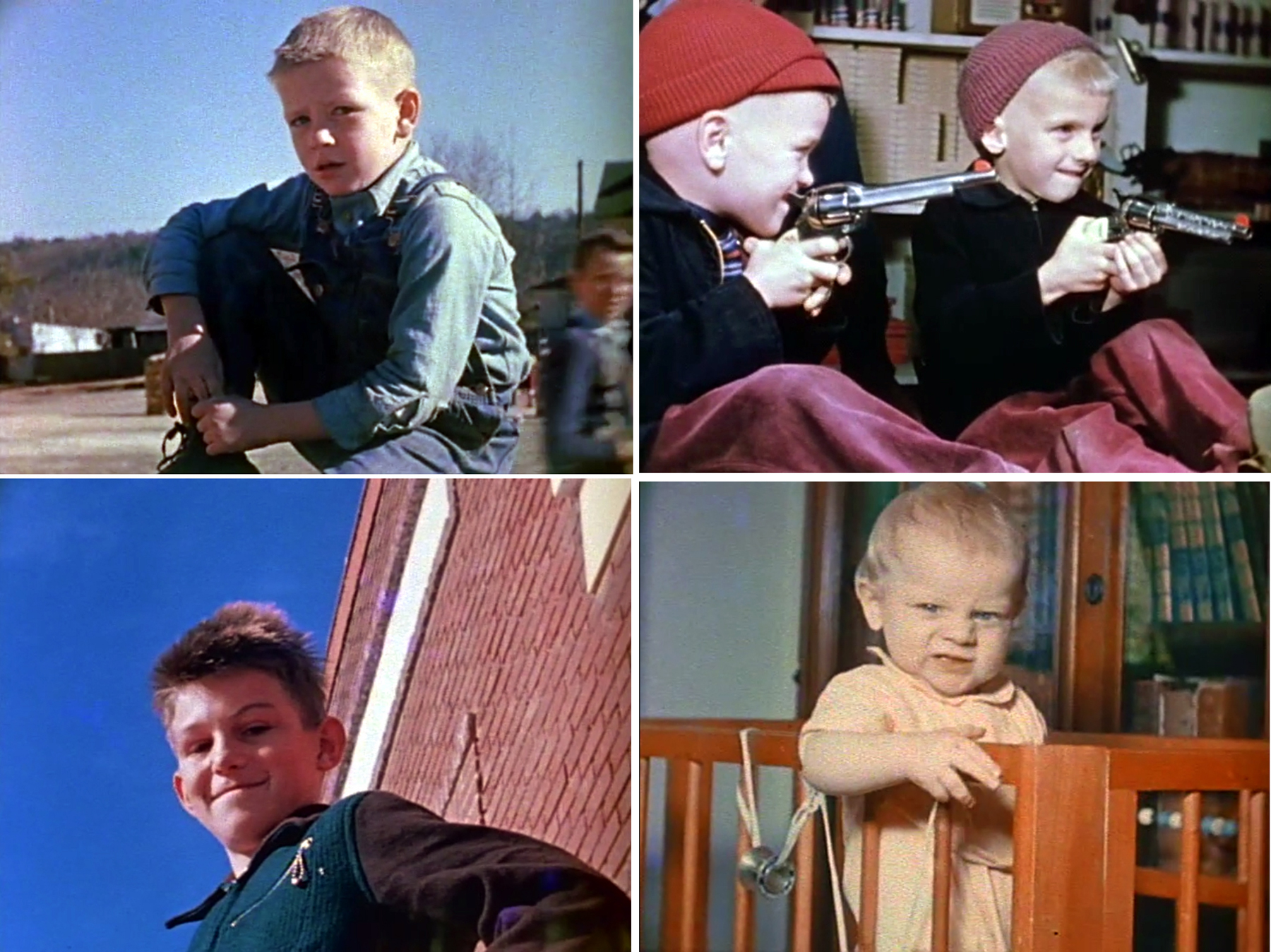
The 1930s remain in our visual imagination with a vividness that hardly exists from other eras — at least eras we didn’t actually live through. And it is through the photography of the period that this happens: It is hard to recognize how many of the canonized photographers from that era gave us documentary and quasi-documentary images of the times. Elsewhen, artists — and the photographers — often sought something more universal, or general, or eternal, but the quota of work from the 1930s screams out the time of its birth. madison color quad

Think of them: Brassai, Bill Brandt, Walker Evans, Cartier-Bresson, the whole army of photographers working for the Works Project Administration under Roy Stryker — our image trove from the 1930s is a stuffed portfolio. Madison bw quad 1

Click to enlarge

If we tend to distinguish between photography as journalism and photography as art — art with its formal concerns — then the work of Life magazine photographers falls into the first camp and the more elevated work of photographers such as Edward Weston, Imogen Cunningham or Frederick Sommer would seem to be of another genus. But especially in the prewar decade, the photographers we honor as artists often were the ones who left us with a chronicle of their times. It is hard to picture America during the Depression without the black and white images of breadlines, dustbowl farms, iron workers and iron-willed matriarchs reigning over raw wood kitchen tables in unelectrified Appalachian cabins.madison bw quad 2

(I am not forgetting later movements of “street photography,” and certainly not forgetting Robert Frank, William Klein or Garry Winogrand, but their work on one hand also seems like a throwback to an earlier era, and on the other, is more consciously concerned with formal problems, like composition, lighting and contrast — and often with even more Postmodern concerns, such as how photography makes the world look. In the ’30s, the primary concern was sociological: These people we have been privileged to look at.)madison bw quad 3

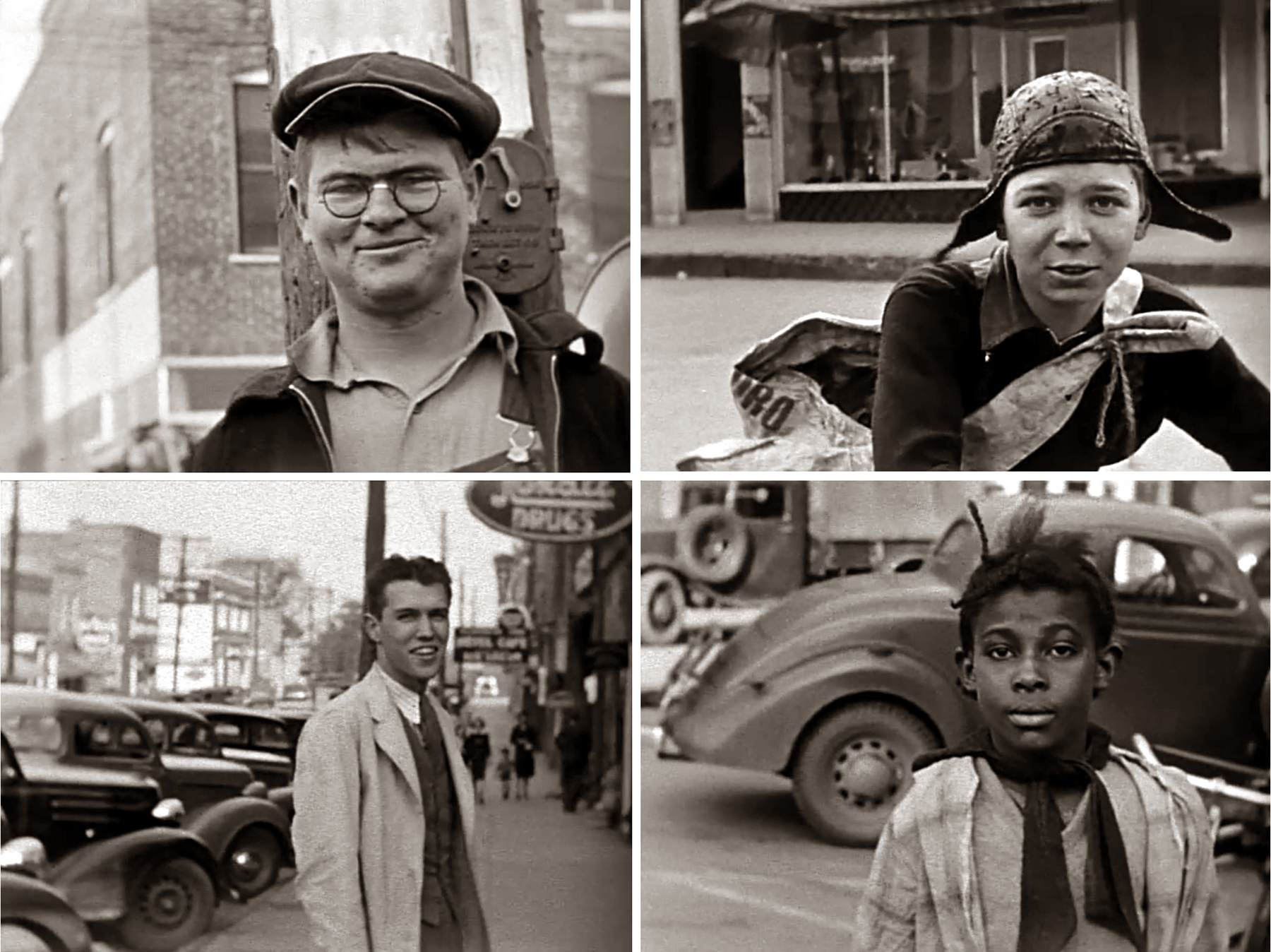
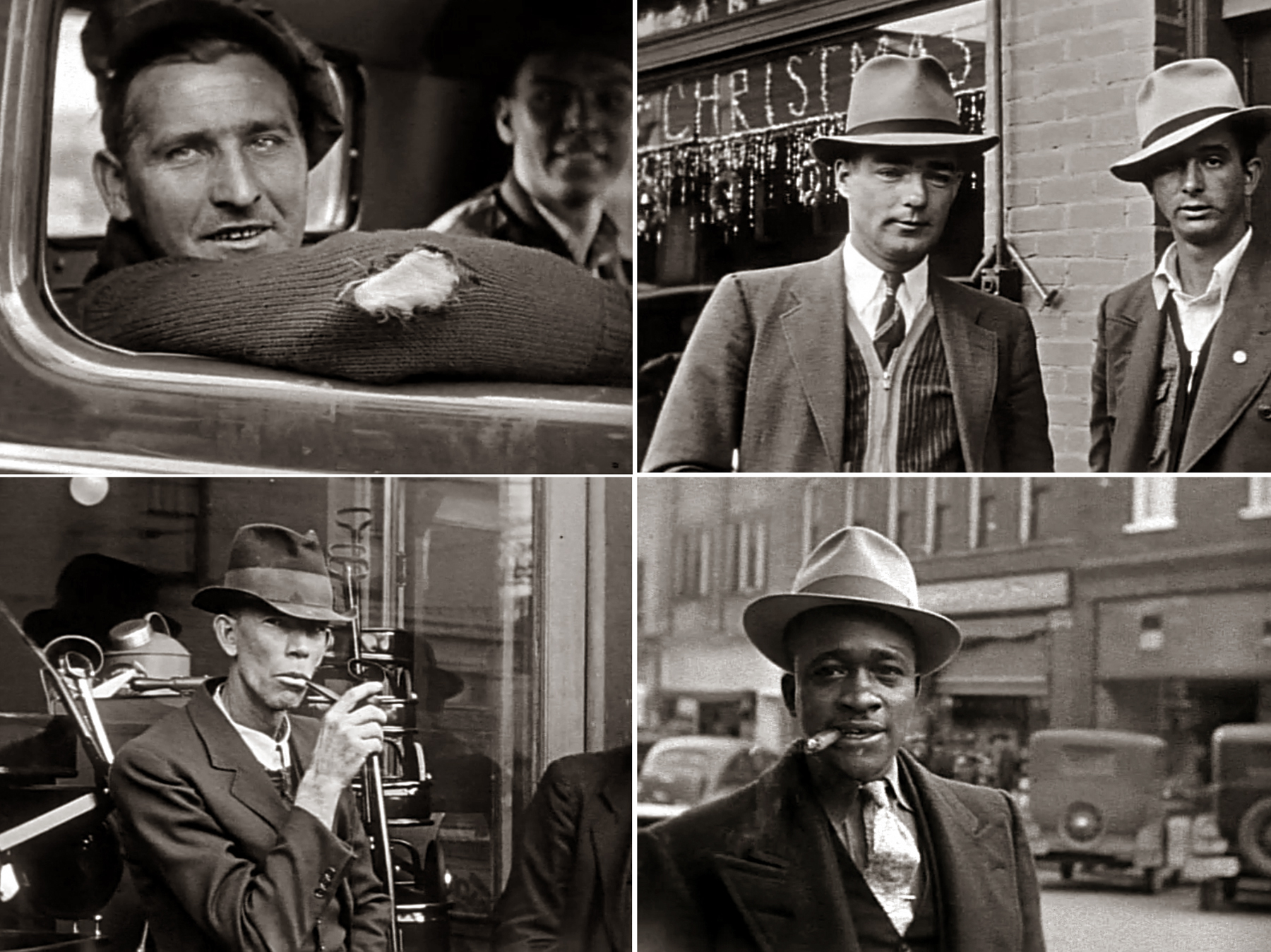
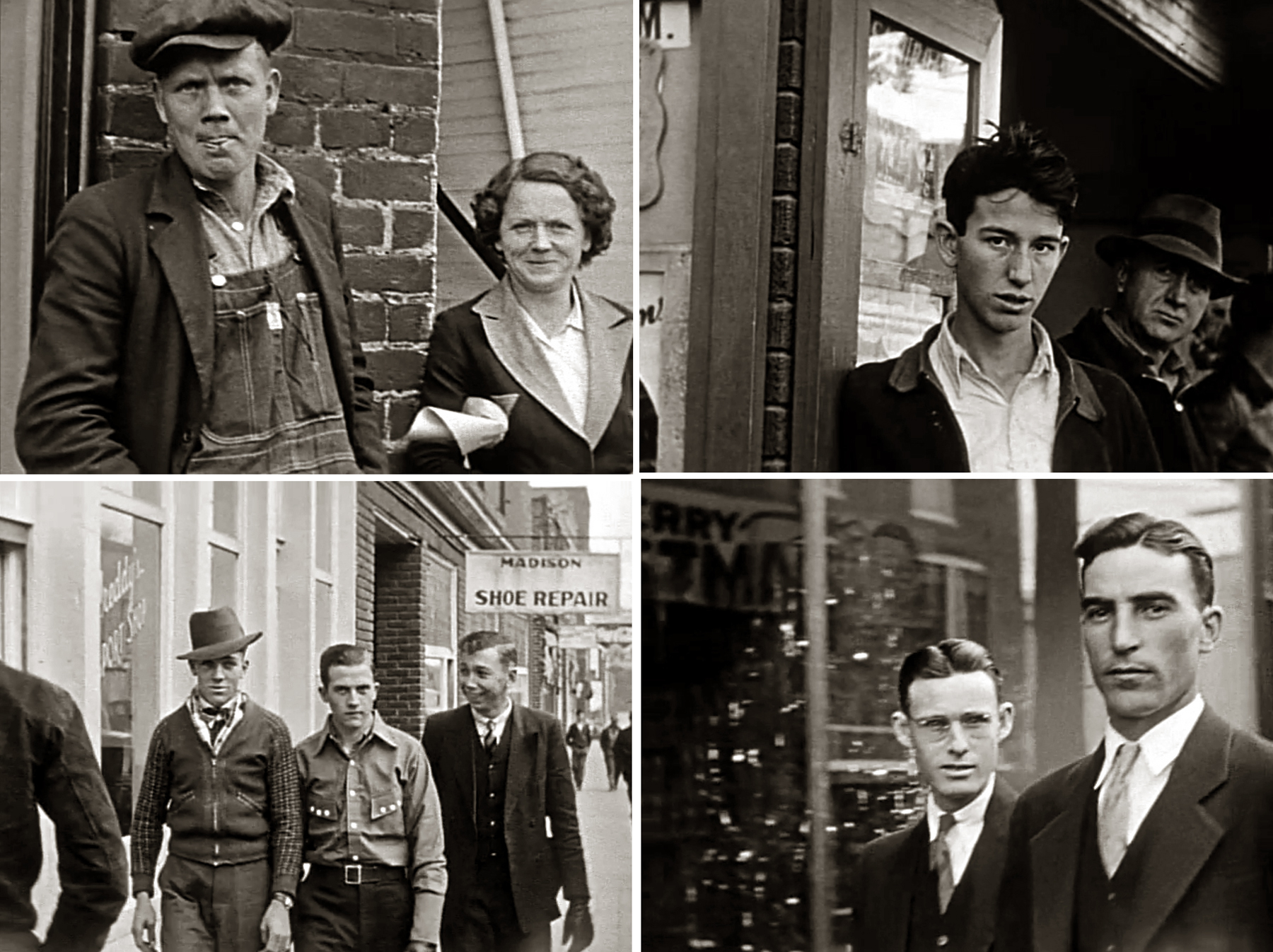
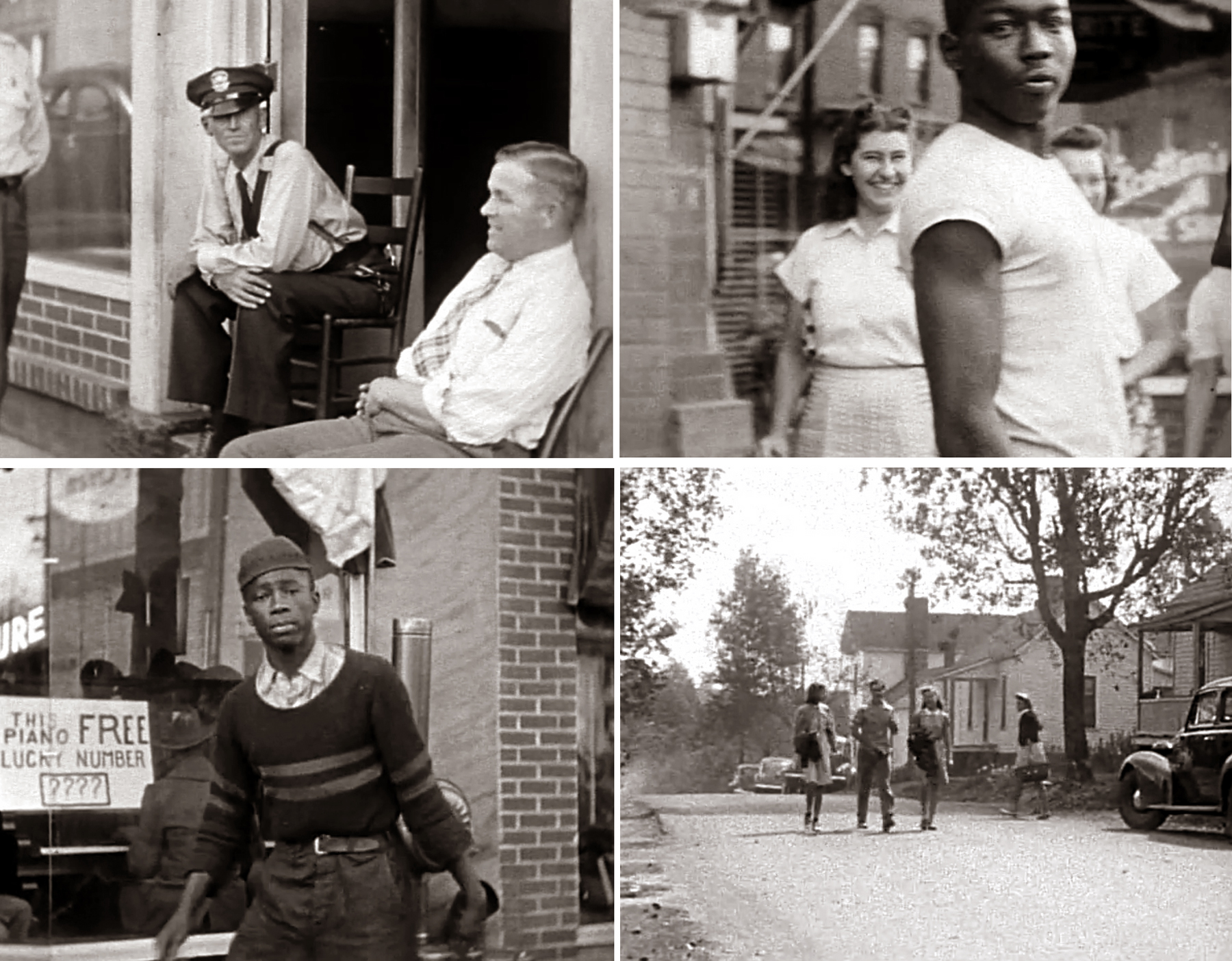
I bring all this up because a friend sent me a link to an unusual archive at Duke University of old documents, photographs and films, primarily from North Carolina. In it, there is a set of three films, or rather three reels of randomly edited home movies, from Madison, N.C., taken between 1939 and 1941 and available for download. You can find them at:

http://library.duke.edu/digitalcollections/hleewaters/Spatial_Coverage/Madison%20%28N.C.%29

madison bw quad 4These films appear to have been taken by a single person, who filmed schoolkids, class by class, streaming out of the schoolhouse, workers leaving the factory and pedestrians walking down the streets of Madison and neighboring Mayodan. At times, he attempts trick photography, and they are not always in perfect focus. The first reel is in color, the remaining two reels are black and white. It is clear he (or she) favors framing with the subject in the right half of the picture, but it seems less like a formal concern and more like a idiosyncratic tic.

madison bw quad 5Madison particularly interests me because it is where my wife grew up. She was born in 1941 and so, the images in these movies pretty closely approximates the town she knew as a little girl. A few of the teachers shown in them are teachers she knew in school. madison bw quad 6

But I also found that if I excised individual frames from the motion, I could see them almost as a new source of FSA photos, or undiscovered images of Walker Evans. I have included a bunch of them with this blog post. madison bw quad 7

One has to forgive the lower quality of focus or color, taken as they are from what must be a 16mm original, but what strikes me most in them is the quality of individual human beings, the person behind the eyes that stares out at us from the pictures. It is the same face — or the same kind of face — that we see in Dorothea Lange’s California agriculture photos. There is joy, suspicion, hope, hopelessness, anger, privilege, satisfaction and shyness in these faces (sometimes as the film progresses, the same suspicious face turns friendly).

madison bw quad 8And I come to see them not so much as impersonal esthetic constructs, but as a doorway into each of them as people. Individuals, shining lights of the cosmos bound in skin. madison bw quad 9

And then, by way of looking back at the old, familiar pictures of Jack Delano, Russell Lee, Marion Post Wolcott, John Vachon, Ben Shahn and others, you come to the realization that what makes them special — what, indeed, makes them important — is not their photographic quality, not their compositional innovations or formal intent, but that through those rectangular frames burn the lives of actual beings. What brings them alive for us esthetically is exactly the quotient of compassion, of empathy, we bring to them. Do we see them as esthetic exercises? Certainly that aspect exists in them, but such aspect exists in abstract torn-paper collages, too. No, what gives them power is that connection they enable between us in our age, and those people in the pictures, in their age and we see they are us. madison color quad 2


Sunset
Stuart and I were sitting on the roof, outside the dormer window, and sipping a little Drambuie. Cigars were for later.

“A beautiful evening, isn’t it?” he said.

“Yeah, the sunset is so orange.”

“You call it orange, but really, how many different colors are there in that sky — even a band of green in it.”

“Where?”

“There, see, above that reddish cloud. Perhaps it’s only a trick of simultaneous contrast, but that green has always fascinated me.”

“I see it now, rather a pale green, almost opal, but green.”

“How much better to see the whole thing, instead of just the calendar version. You know, I always wonder why pretty magazine pictures look so cliched, while the sky in front of us doesn’t. I guess there is a difference between pretty and beautiful.”

“Or, maybe beauty is in the eye of the beholder.”

“Yeah, well, I used to think that.”

I could see Stuart had something on his mind. He usually did.

“Used to?” I asked. “OK, so what is beauty? Personally, I tend to think of Scarlett Johansson.”scarlett and hedy

“Really? I kind of favor Hedy Lamarr, but then, I’m always a little behind the times. But really, first we have to agree on what kind of beauty we’re talking about. Erotic attractiveness is a completely different thing from esthetic beauty. You could even say they are opposites.”

“How’s that?”

“Because erotic beauty draws us to possess it, while esthetic beauty doesn’t — it fascinates us, but leaves us disinterested, involved but motionless.

“This is the essential difference between art and pornography. If you look at a picture and say, ‘I want that,’ or ‘I wish I were there, seeing that sunset,’ you’re reacting as if to pornography, whether it’s a picture of a naked human or a brazen sunset. Erotic beauty impels you forward into time and history, while esthetic beauty draws you upward and out of the mad stream of time.”

“So you’re saying beauty comes in two categories?”

“Oh, there are lots of other divisions to make. For instance, there’s that ‘eye of the beholder’ question.

“Well, that’s what they say.”

“But it’s an easy way out. It doesn’t really answer anything. Actually, it seems to me that beauty is either internal or external. That is, either it is in the eye of the beholder, or it exists objectively, outside the accident of perception.”

“What do you mean, ‘objective’ beauty? How can that be?”

“Look at it historically. Centuries ago, it was mostly thought that beauty was an objective quality. You had it or you didn’t. Those who say beauty is external to human perception fall into two camps: the transcendent and the inherent. The second camp says that something is beautiful because elements of the physical world are by nature so. The first camp looks beyond the physical world to something metaphysical.

“You mean God?”

“Right. It could be a god or the gods. On the other hand, it could be an unnameable, ineffable mystery at the center of the universe. If a god has made something beautiful, it is then our recognition of that divine intention that is external to our psychologies. It really is beautiful, whether we recognize or not.”

“But what if you don’t believe in any of that supernatural stuff? Where does beauty come from then?”

“Again, two ways. It might simply exist as mathematics does, in its proportions and harmonies; some things may be beautiful the way a triangle has three sides. Such qualities are inherent in the objects we recognize as beautiful. Or, as another possibility, it might be biological, or based on evolution: Certain things may have emerged as ‘beautiful’ in the development of the universe because their beauty promotes evolutionary goals. Thus, a bright, beautiful flower attracts bees — which ensure the survival of the flower species through pollination.

“That’s all fine. But what if beauty really is internal — only the eye of the beholder?”

“Then again we face two choices: If beauty is only found inside us, it is either cultural or acultural.”

“Wait. I thought it was all cultural.”

“You hear that a lot on university campuses nowadays. It’s a popular point of view currently. But it is not the only way of understanding it. A good portion of the academic community has jumped on the bandwagon of cultural identity. Art, for instance, is seen as a way of establishing ethnic pride. It certainly may do this, but it is not the only thing art can or should do. Deconstructionists, for instance, like to look under the rock and find the bugs — what we really mean when we write or talk — and they show us that race, ethnicity, class or power is often at the bottom of things. Powerful White European men, for instance, have tended historically to value powerful White European male art.

“These people have a point, but it isn’t the totality. Beauty isn’t just that powerful White European men, for instance, have tended historically to value powerful White European male art.

“Right. The famous dead White men.”

“The trend is to say that beauty is culturally determined. But I would argue that culture doesn’t define what is beautiful, but what is not beautiful.”

“What is not beautiful?”

“Yeah. For example, the ‘dominant culture’ told a lot of White Americans for a very long time that ‘nappy hair’ wasn’t beautiful. The culture excluded what it wanted to exclude. What was left was deemed beautiful. Various ethnic groups are now turning that same exclusion around on those who formerly excluded them.”

“Oh, White men walk like this, but Black men walk like this, that sort of thing. But you’re saying there’s another way to look at it?”violon d'ingres

“Yes, there may be factors at work that range across cultures. Scientists have discovered that there are some things that seem to be universally recognized as beautiful — certain color combinations, or even aspect ratios. In physical beauty — if we want to get back to Scarlett and Hedy — for example, a certain mathematical proportion between hip and waist size seems to transcend culture. Some cultures may value thin women while others like the Rubenesque, but the hip-waist ratio remains constant. Some underlying principles seem to be at work.

“Their work is still new, and their results are fragmentary, but it may be that evolution has hardwired certain esthetic receptors into the human mind.”

“Like a bee before a flower?”

“Right: Does the flower become beautiful to attract the bee? Or does the bee develop a love of beauty to discover the flower? It blurs the distinction between the perceived and the perceiver.”

“Still, I’m not getting it. What sorts of things do we see as beautiful?”

Sometimes, I forget that Stuart is really highly educated. He’s lived his life as some kind of bohemian, shifting cities, or jobs, or lady friends, never settling, and never — this is always discouraging — never writing anything down. But every once in a while, he dredges out some bit of arcana that I might once have studied, but never kept up with.aquinas in glass

“Thomas Aquinas,” he started, “the famous 13th Century Christian scholar, said the beautiful has ‘integritas, consonantia and claritas.’ James Joyce’s translation of that from the Latin gives us ‘wholeness, harmony and radiance.’ ”

“Hey — I remember reading Joyce’s comments about a butcher’s basket: To see it apart from its surroundings, as a separate thing, is to see its integritas, its wholeness. As something distinct and not a part of something else.”

“Exactly.”

“Then you look at its parts — the handle, the weave of the reeds, the roundness of the bottom — and you see how those parts interact in the design.

“That is the harmony, or consonantia. But, you know, I’ve never quite accepted his definition of claritas.”

“It’s the tricky one. Joyce claims that once you’ve seen the whole and the parts, both together may join to excite your esthetic appreciation. They become larger, brighter, more meaningful than their simple existence as a basket. They have radiance. But the Latin of Aquinas is less clear.”

“I remember looking it up. My Latin dictionary translates claritas as ‘clearness or brightness’ — words less charged than Joyce’s ‘radiance.’ It also implies a clearness of mind, a plainness and directness of argument.”

“Yes. Meanwhile, there are other qualities we expect from beauty. It should surprise us, but once past the surprise it should feel inevitable.”

“Say, maybe that’s like a good murder mystery: The end should be a surprise, but it shouldn’t be arbitrary. We want to be satisfied, after our astonishment, that this solution to the mystery is the only possible one.”

“As when a Haydn symphony veers off into a strange key, or when the Beatles back a song with a string quartet. You are taken aback at first. Then you realize the perfection of it.”

“But wait,” said. “We still haven’t said what exactly is beauty. Is it a noun? Is it an adjective? — a quality that other nouns possess?”

“Or is it a verb?” Stuart was getting to the crux of the matter, as he saw it. “I’ve worried about the question for years, and I finally decided that if you want to know what beauty is, you must look at it as an event, not a thing. It is an occurrence, a transaction.”

“Hmmm. Sounds like you’re combining the external definition of beauty with the ‘eye of the beholder’ thing?”

“Right. You have the two blades of a scissors. The scissors itself is neither the one blade nor the other, but the two working together: Beauty is your active participation in the perception of the things of the world.”

“So it’s like this: The world is capable of being seen as beautiful — that’s the objective part — and we’re capable of perceiving that beauty — that’s the subjective.

“And where the two things come together, that is beauty.”

“That would make beauty an active thing,” Stuart said, “not a passive observation. You have to pay attention.

“To become part of the event, you must be awake, aware, alive. You must see or hear or feel more intensely than you do in the ordinary world of driving your car or cooking your burger.”

“So that’s why a photo of the sunset is a cliché.”sunset cliche 2

“The photo becomes a commonly accepted image of beauty, a shorthand for doing the actual work. It becomes a ‘word’ or symbol for the beauty, rather than the event of the beauty itself.”

“That reminds me of what James Agee was writing about in And Let Us Now Praise Famous Men: ‘For in the immediate world, everything is to be discerned, for him who can discern it, and centrally and simply, without either dissection into science, or digestion into art, but with the whole of consciousness, seeking to perceive it as it stands: so that the aspect of a street in sunlight can roar in the heart of itself as a symphony, perhaps as no symphony can: and all of consciousness is shifted from the imagined, the revisive, to the effort to perceive simply the cruel radiance of what is.’ ”

“Or as Blake has it, ‘If the doors of perception were cleansed, everything would appear to man as it is …”

“Infinite.”

“Yes. In a way, beauty is the act of paying attention, deeply and committedly.

“When the commitment isn’t there, the beauty isn’t.”

“So, you’re saying the world is full of things that we habitually think of as beautiful — certain categories of nature or certain subject matter in art — but that our acceptance of them short circuits our actual involvement?”

“The ‘warm bath’ school of beauty. They keep us from participating in the beauty.”

“Someone at the newspaper once wrote about it as ‘paying attention as if you were defusing a bomb.’ ”

chardin 3“Bingo. Beauty is not for the faint of heart. When you pay attention, the music of Arnold Schoenberg becomes ineffably beautiful. It’s the point of John Cage’s 4’33″ where the ambient sounds you hear while the pianist is not playing are presented to you as beautiful. And they are, if you engage with it properly. Paying attention. What is beauty? Beauty is paying attention. It’s the simplest definition there is.

“And this finally gives us the key to the claritas of Aquinas and Joyce. When seen, truly seen van gogh cypress— or by analogy, felt, or ‘apprehended’ in that Joycean locution — your object takes on a mythic significance, as if it glows from within. It is indeed ‘bright.’ It is the crockery of Chardin and the cypresses of Van Gogh. A clarity that glows from within.”

“As you’ve said many times, ‘Every bush is the burning bush.'”

“Wholeness, harmony and radiance,” Stuart said, paraphrasing St. Paul, “and the greatest of these is radiance.”

Claritas charitas est,” I said, making a lame play on words, in Latin, no less.

“Put that on your T-shirt and see who salutes.”


worth livingWhat is politics and why do so many people think that it matters?

After all, if I make a list of things that make life worth living, politics is not on it.

It can be a very long list, with love, marriage, music, literature on it. It could include winter, red maples, crisp apples and oak floors. Neon signs. Travel. Work, and the sense that you are creating something worthwhile.

Louis Armstrong playing “Potato Head Blues.”

Even beer, Letterman and The New York Times crossword puzzle. I could make a list of a hundred items, even 200, but politics doesn’t even make the cut.

That is because politics is a means to an end and not an end itself.

But tell that to Ted Cruz on one hand, or on the other, any committed member of the Communist Workers Party.

These are people who do to politics what the miser does to money.

After all, money has no value whatsoever. It is paper, metal and plastic. You can’t eat money, you can’t wear it, you can’t sleep in it. I suppose if you taped enough bills together, you could wrap fish.

Money is only worthwhile because it can be traded to gullible people for some things that are worth having, like food, clothing, shelter or cable TV.

But all around the world, there are people who would rather have money. And there are people who are committed to politics as if it mattered.

But really, politics answers no question worth asking.

‘Platypus’ law

By “politics” I mean two different things. On one hand, there is the practical side, which is the interrelationship of people and the friction of their conflicting desires. It is a constantly shifting game board of power, image, manipulation, blackmail and compromise.

Politics on this level is the jostle of competing self-interests. It is why legislation that enters committee looking like a lion always leaves looking like a platypus.

Politicians would have us believe that they work for the public good, but the reality is much messier, the results of their professed altruism much more equivocal.

For the politicians themselves, it is power, money, the fun of trading favors, gaining approval, trouncing opponents that may make life worth living. The politics involved is again only a means to that end.

The other version of politics is much more scary. Practical politics may be sloppy as mud-wrestling, but it is frequently benign. Fanatically held ideas, on the other hand, can be positively malignant.

These are the people who ruined Russia in 1917 and are ruining the Republican Party now. Idealogues are what fueled the Chinese cultural revolution under Mao, what ignited the McCarthy era, what reduced Pol Pot’s Cambodia to human cinders and what threw gasoline on the book piles in Hitler’s Germany.

Ideology always has a human cost. In my 67 years on this planet, the one thing I have come to be certain of: Certainty is the very devil.

Answers aren’t solution

What unites both camps is their interest in answers rather than questions. Questions muddy the waters and make action more difficult. It is much easier to do something when you are convinced you are right.

The irony is that answers always create more problems than they solve.

The interstate highway system was a wonderful transportation solution that contributed to the dissolution of small-town America and the attendant family structure. Civil-rights laws addressed a very real evil — discrimination on the basis of race, gender, national origin — and have left us with regulations that require us to discriminate on the basis of race, gender and national origin.

So we enter the fray once more and come up with new legislation to fix the mess we made last time. It’s like cutting the grass: There is no end to it.

Meanwhile, we live our lives despite politics. It is true some political systems allow us more freedom to do as we wish, some are more just and equitable, some are more benign. But, in the end, it is how we comport ourselves as individuals that counts, not how we vote en masse.

And it is the things of the inner life that make the top of our list and provide a satisfying reason to live and grow. You must look deeper than the politics to find the humanity.

vegas pyramidI know my idea of hell: eternity in Las Vegas. Heck, even a weekend.

Now, I am aware that many people love Vegas, and I’m not here to quarrel with them: De gustibus non est disputandum, as they say. You can’t argue about tastes.

However, I have been to Vegas once too often and my skin shrivels at the thought of the place.

There once was a certain Sodom-and-Gomorrah charm to it when it seemed to be run by the Mob, back when Frank Sinatra, Dean Martin and Sammy Davis Jr. turned the city into a glamorous, empty metaphor of high-hat cymbals, scotch on the rocks and gleaming silk tuxedos. Back then, gambling wasn’t something that retirees wearing plaid pants with white belts and matching brogans did on organized bus tours. It actually had the edge of transgression. It was bookies, hookers, cigarette smoke and more incandescent light and neon than in all of France.

However, the city no longer has the Mob feel. It’s much worse: Now it’s run by corporations.

This isn’t just a question of good and bad taste. Bad taste has its appeal, and the old Vegas was a monument to bad taste. Bad taste can be fun.

Certainly, there is a great deal of bad taste in Tijuana, for instance. But it is a wonderful place to visit. In Tijuana, the bad taste is — excuse the term — life affirming. The bad taste comes from poverty and its attempt to enrich life with gaudy colors and garish extravagance.

In Vegas, the bad taste comes not from poverty, but from excess of money, which is deadening. Its spectacle does not enrich life, but gluts our senses so we no longer see, no longer hear. Vegas makes zombies.

On the hotel-room TV, there is a channel that promotes the hotel’s attractions. It features pictures of bubbly families enjoying themselves with the reckless grins of a chewing gum commercial. But when I go down to the casinos, I don’t see those people.

Instead, I see aging women in teardrop eyeglasses and stretched-to-the-limit polyester sitting in front of the electronic slot machines with not a muscle flexed in their flaccid faces and their eyes turned to pig iron, hypnotized by the whirring of the dials.

A constant, mechanical drop of coin, pull of lever, spin of wheel, clang of bells, drop of coin, pull of lever, etc., for hours on end. No expression on the faces and an ash-tipped cigarette hanging on their dry, creased lips. It is just such scenes that make me think of Dante.

Children, of course, are not permitted in the casinos. They have their own computer screens to stare into in the video-game arcades that are hardly more than training wheels for the real thing downstairs.

Adult or offspring, they have put their lives on hold in order to partake of a droning synthetic reality that has no meaningful connection to them.

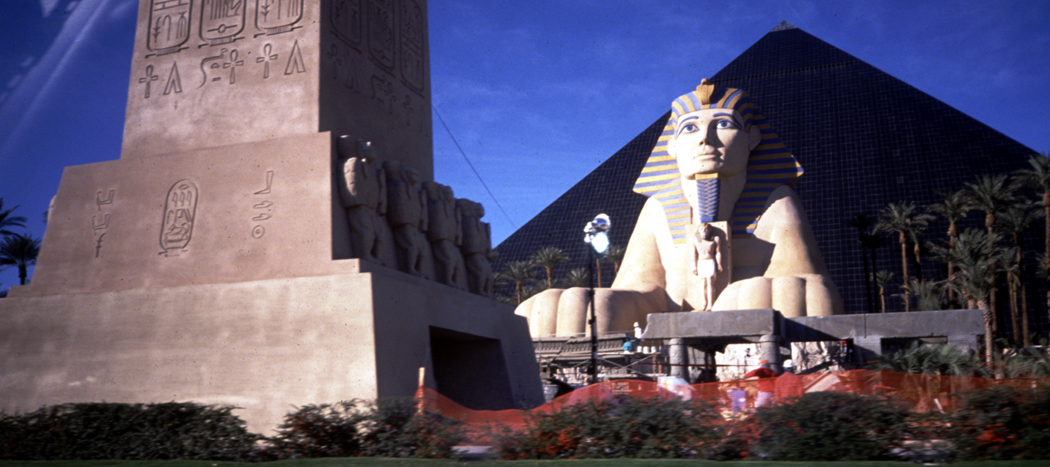
Everything in that town is synthetic, from the phony castles in Excalibur, to the “hologram” of Celine Dion, singing a duet with herself, to the surgically enhanced hood ornaments of the chorus girls. There is not a genuine experience to be had, with the possible exception of the pleasure one gets at seeing just how seedy and run-down the old parts of town have become. In their dusty storefronts and cheesy wedding chapels, there is a patina of reality that invades the fantasy.

The new Vegas of phony pyramids, skyscrapers and medieval castles has no reality. It lets you kill time without enriching your life. It is to life what Twinkies are to fresh, homemade bread.

In that, it is a concentrated dose of what America is becoming.

And that is why I hate Las Vegas all the more: The real experiences of life are being supplanted by the plastic-fruit version — the difference between going fishing and playing computer fishing games — and we aren’t complaining about it loudly enough. Quite the contrary, we are flocking to this city in the desert to experience ersatz New York and theme-park reality, simplified, repeatable, soulless — dulled down and tarted up at the same time.

You can see the same thing happening in our political campaigns, our publishing industry, our corporate-slogan clothes.

We are presented with a kind of corporate parallel universe, where everything has a brand name and a price. We are seduced into forgetting the messier, chaotic and infinitely more rewarding world we were born into.

It’s the modern version of the Faustian bargain, and we’re losing more than our money.

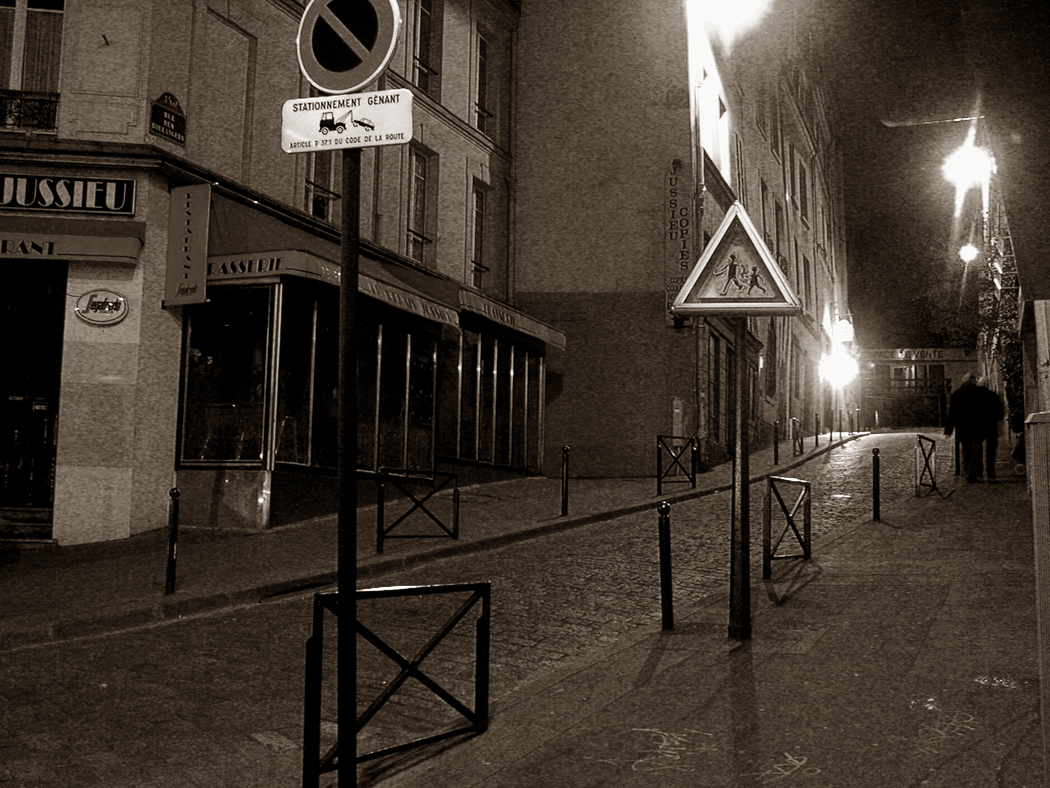
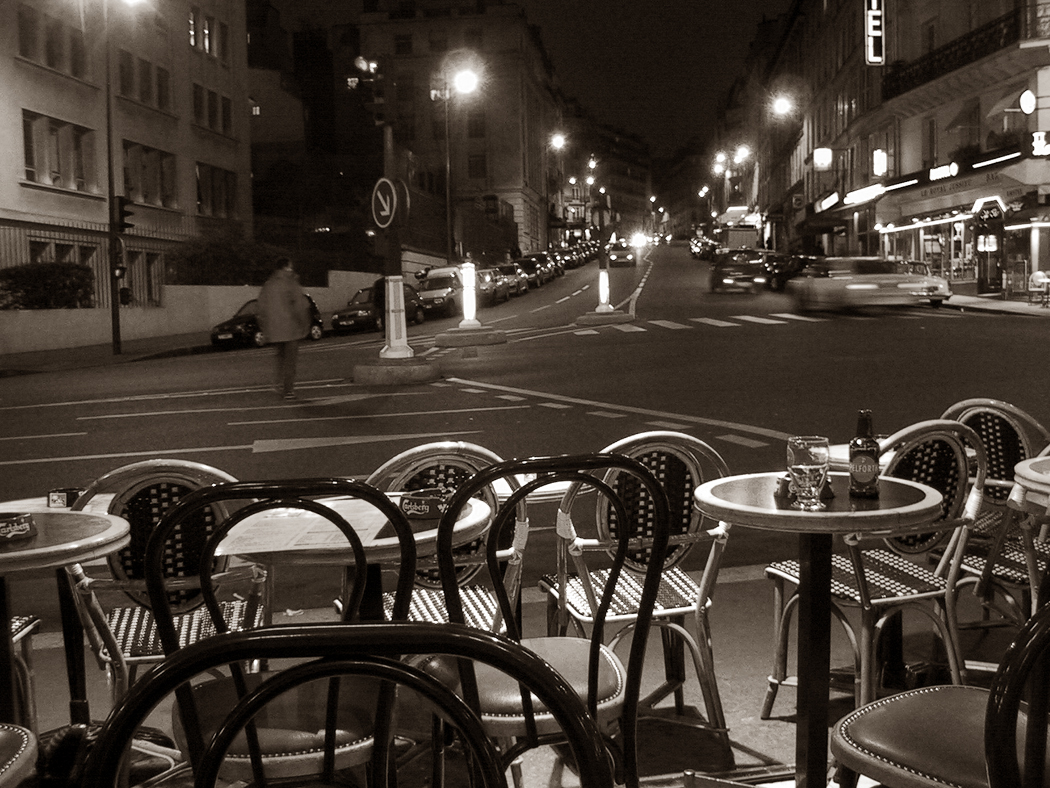
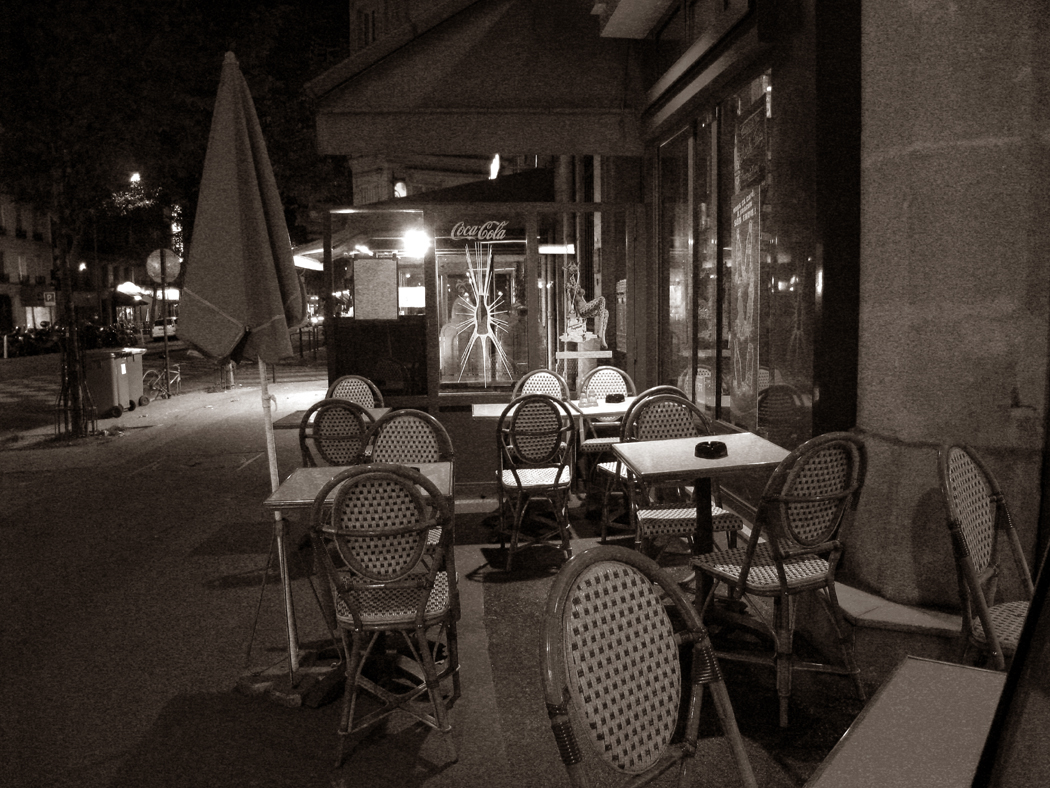
paris night 01jpgThe first time my wife remembers being aware of the night was when she was a little girl and thought the darkness was a liquid, a flood tide overtaking the world.

“I was afraid I would drown in it,” she says.

If she wasn’t careful, it might seep under the window sash and fill her bedroom while she slept.paris night 02x

My experience was different. I grew up outside New York City, and for me, night was an empty container to fill with light. It wasn’t night that flowed, but rather the lights that were like opened faucets draining into the darkness, to be diluted by it. The view of the Manhattan skyline at night, seen from the New Jersey Palisades, was the most beautiful thing I knew. It glowed like embers. paris night 03x

Either way, night was something poetic, although we would never have used the term. When you are a kid, when everything is new, and everything is poetic, there is no humdrum, no banality, against which the poetic, the beautiful, can be offset. It is just the way things are.

Now, as a grown up, chastened and wary, night is the black velvet on which we place the emerald ring, to show off its brilliance. And night is the time that gives the day its mythic resonance. We do our work during the day, so that night can work on us. paris night 04x

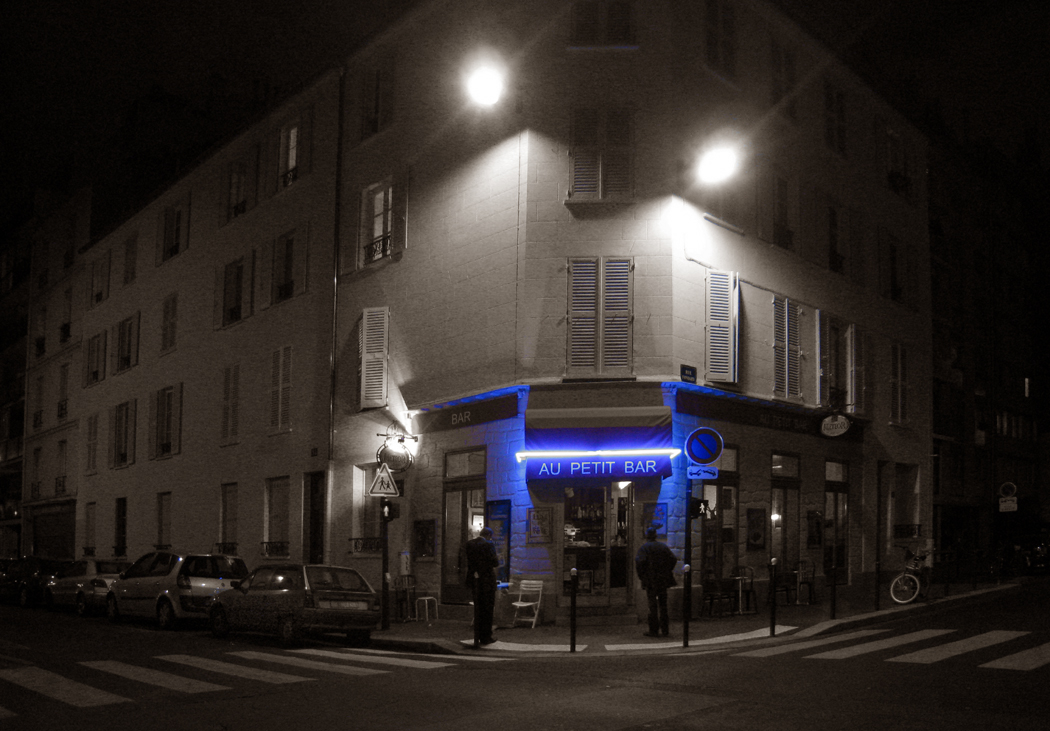
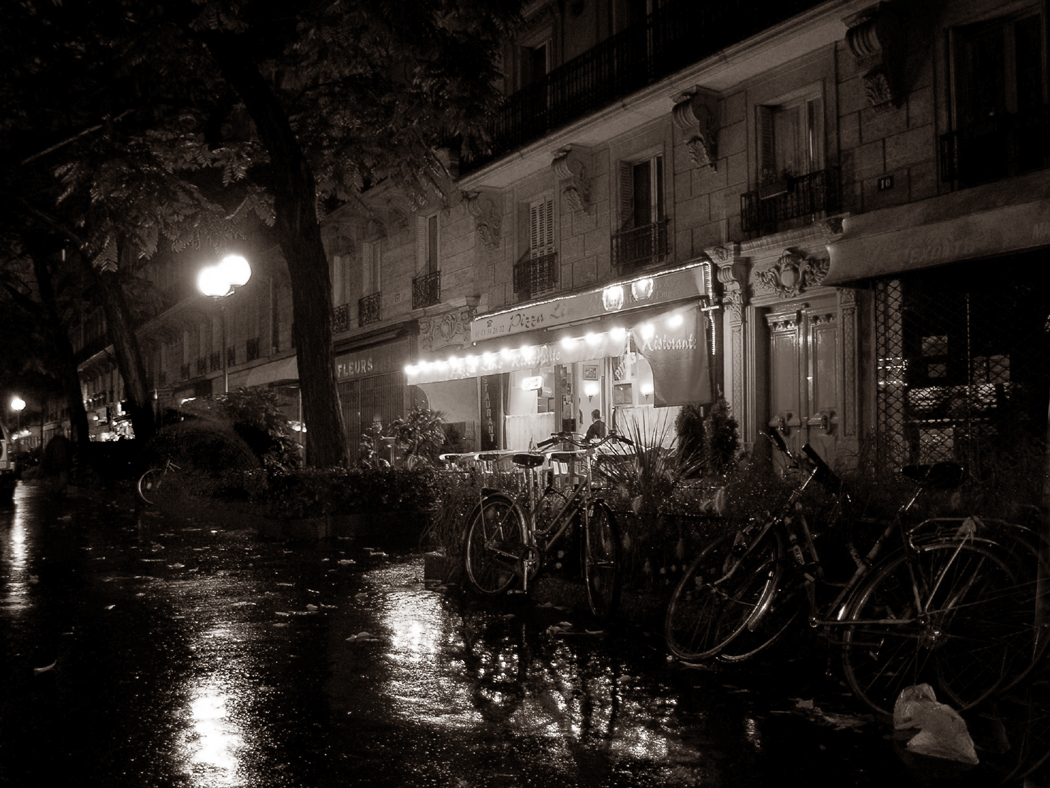
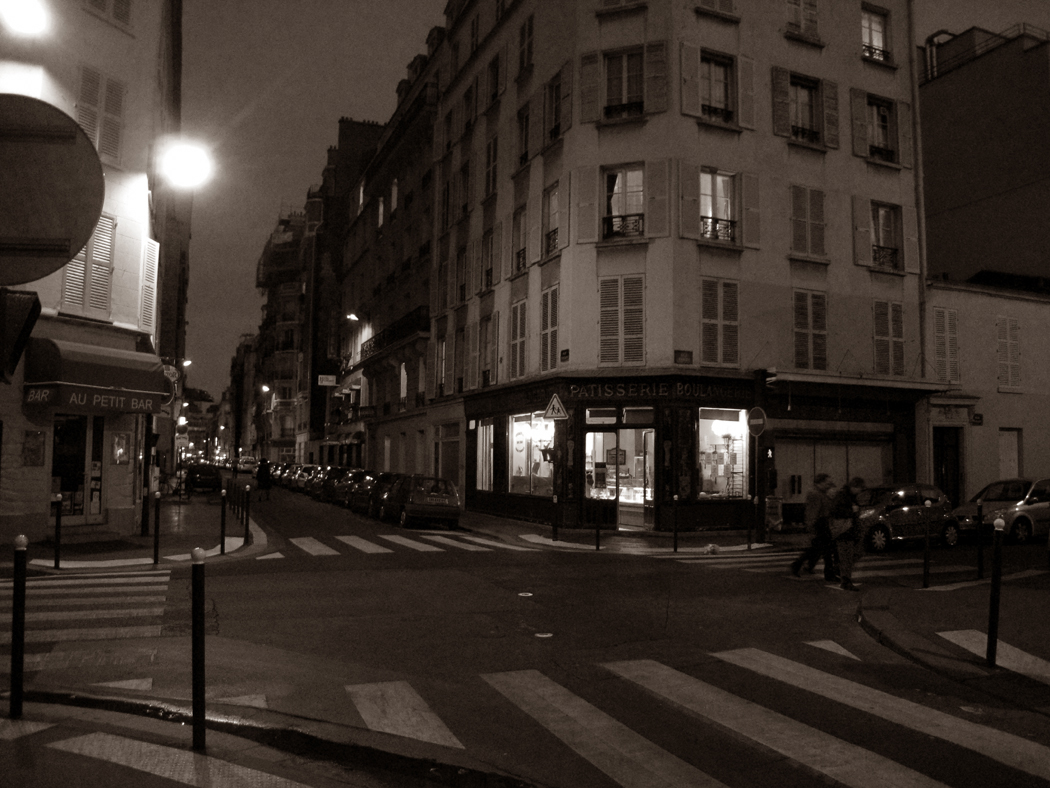
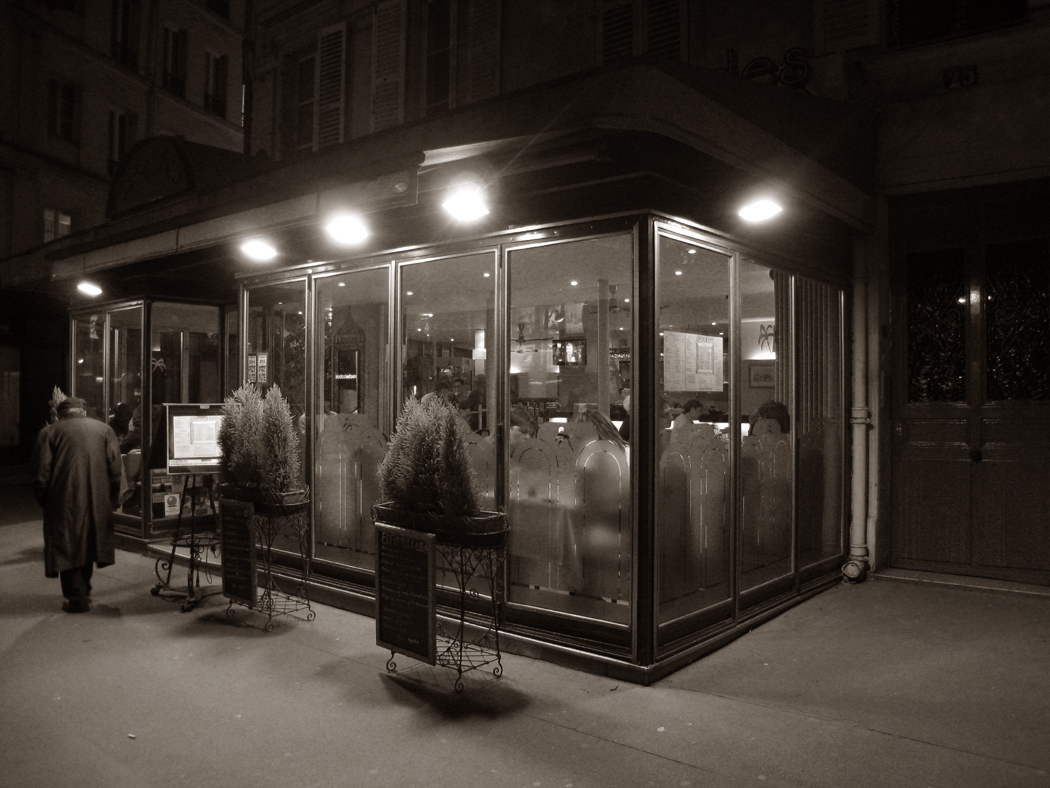
I go walking in Paris at night, because that is when I feel most completely there. Paris becomes itself when the streets are dark, with storefront windows and the streetlamps pour forth their fluid light, diluted on the curbs and parked cars. I am washed in that thin light. paris night 05x

One feels most deeply the difference between Paris and New York. At night, Manhattan seems just as busy as it was earlier. Traffic is dense, pedestrians fill the streets. You can ride the subway at 2 in the morning and still see a car full of faces.paris night 06x

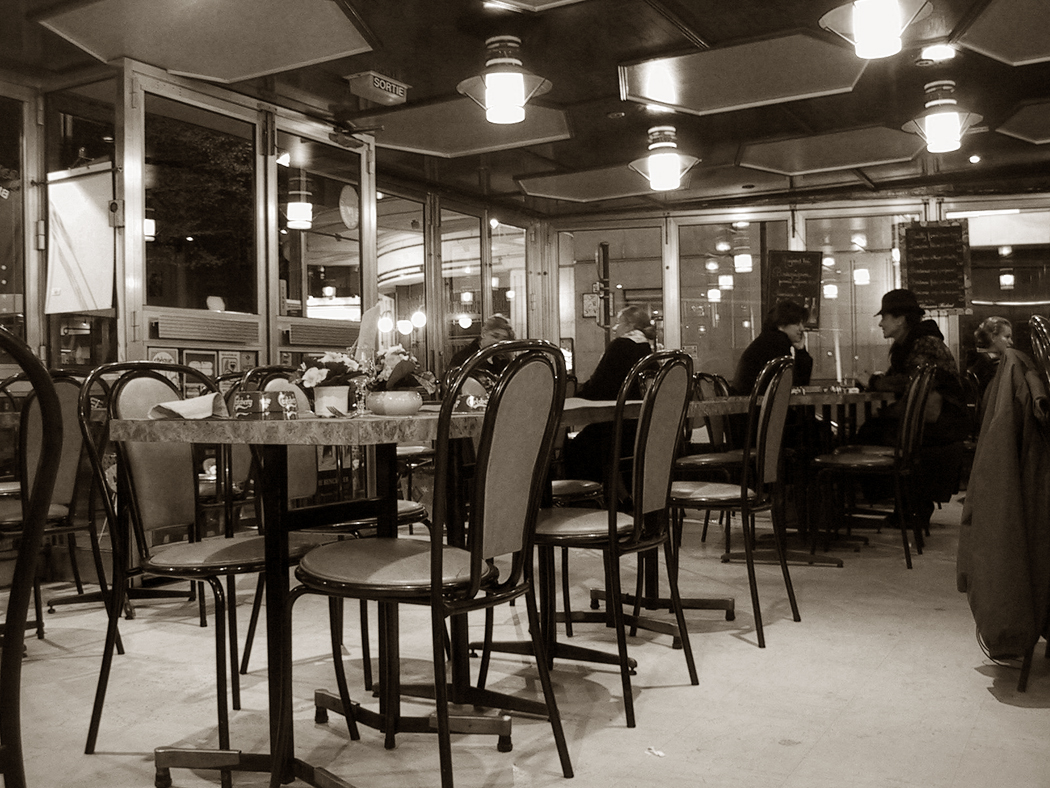
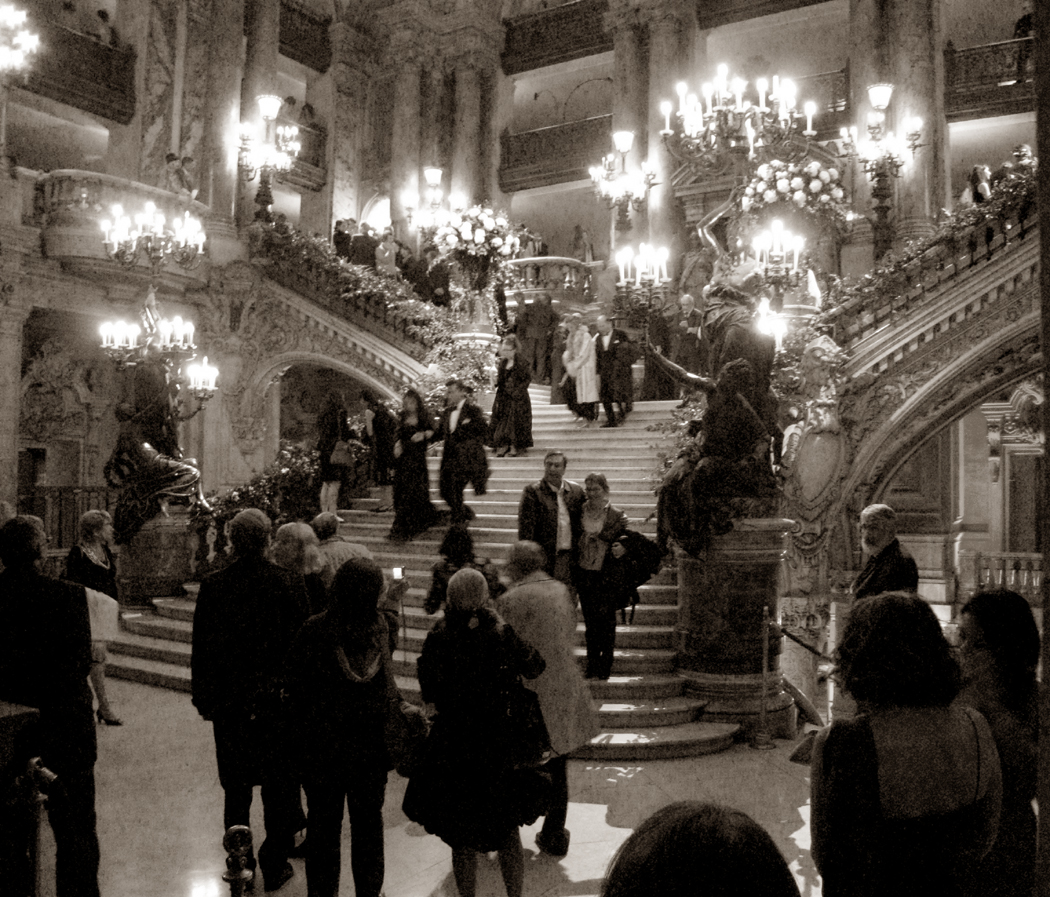
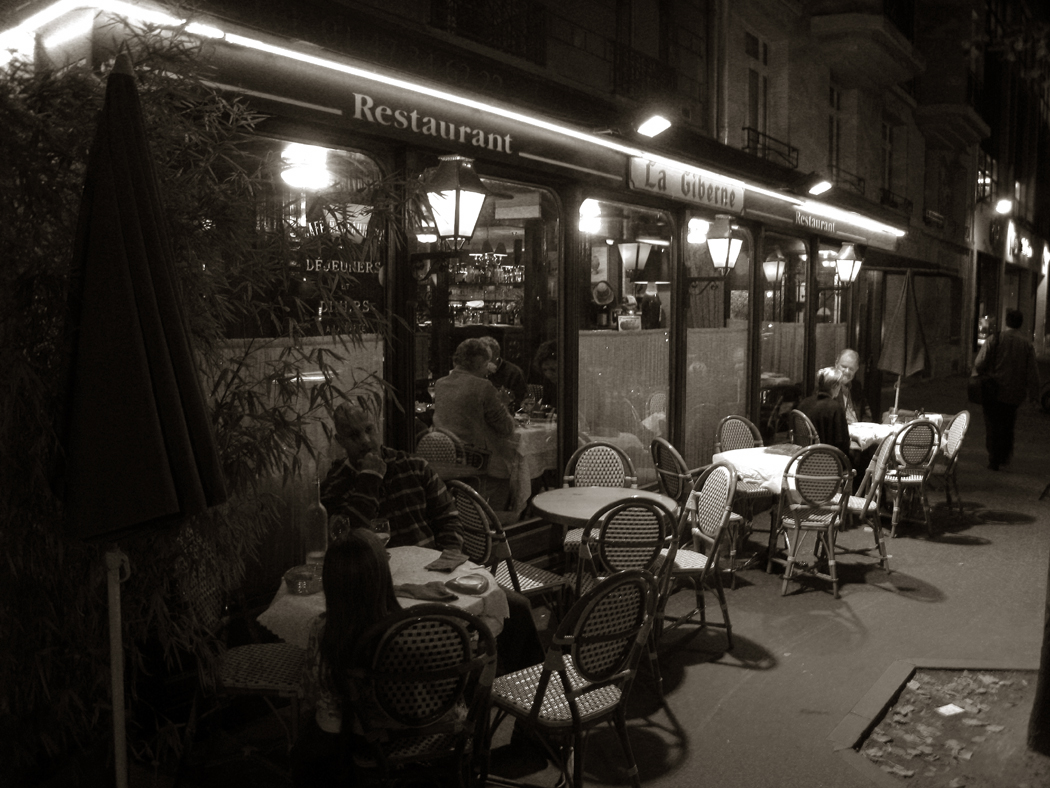
But, Paris at night is oddly empty, and what people you see are clustered around the steamed windows of cafes and bistros, or on the front steps of the opera house as it lets out, or waiting to get into the disco. It is almost as if these were the campfires that draw the bodies turned from the darkness. paris night 07x

You can walk down the streets and peer into the shop windows, with their wares lit and forgotten, as if the Rapture had occurred last week, and left behind the kitchen furnishings, or the bicycles, or books, and behind the glass, there is a humanless simulacrum of the world we know. paris night 08x

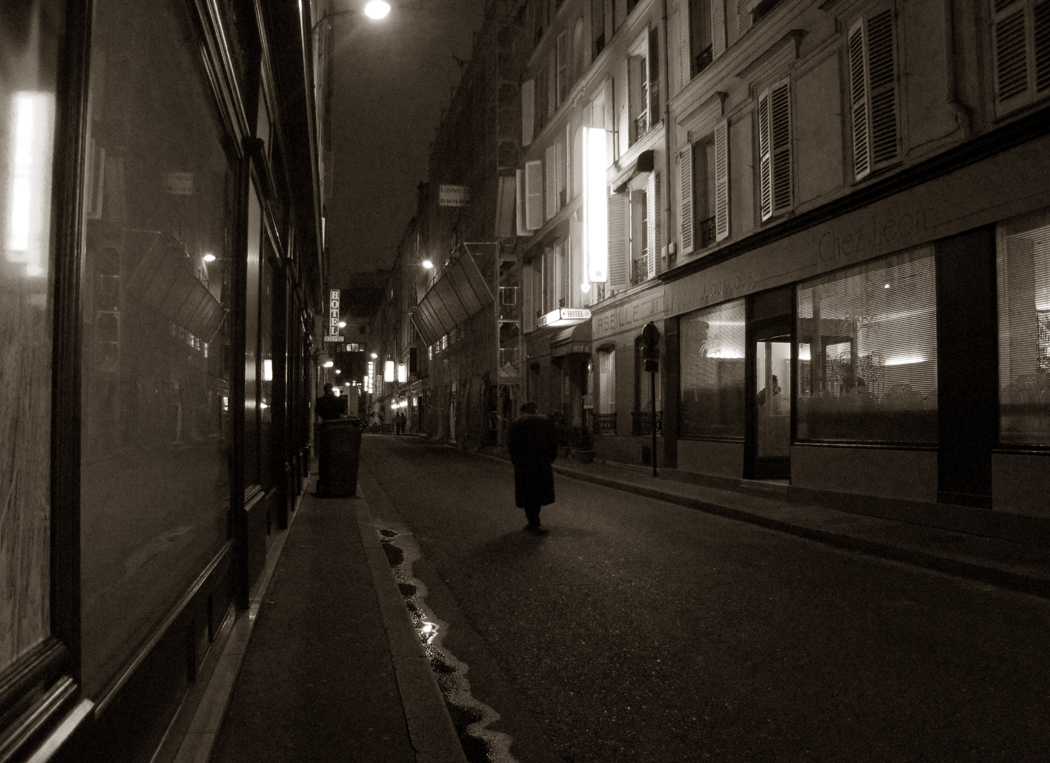
Or you follow some old man in a long coat as he turns the corner and walks down a dark street toward the next streetlight.

Paris is made more magical by the night. In October there is the slight bite to the air, and the rain makes pointillist mirrors of the pavement, redoubling all that dissipating light.paris night 09x

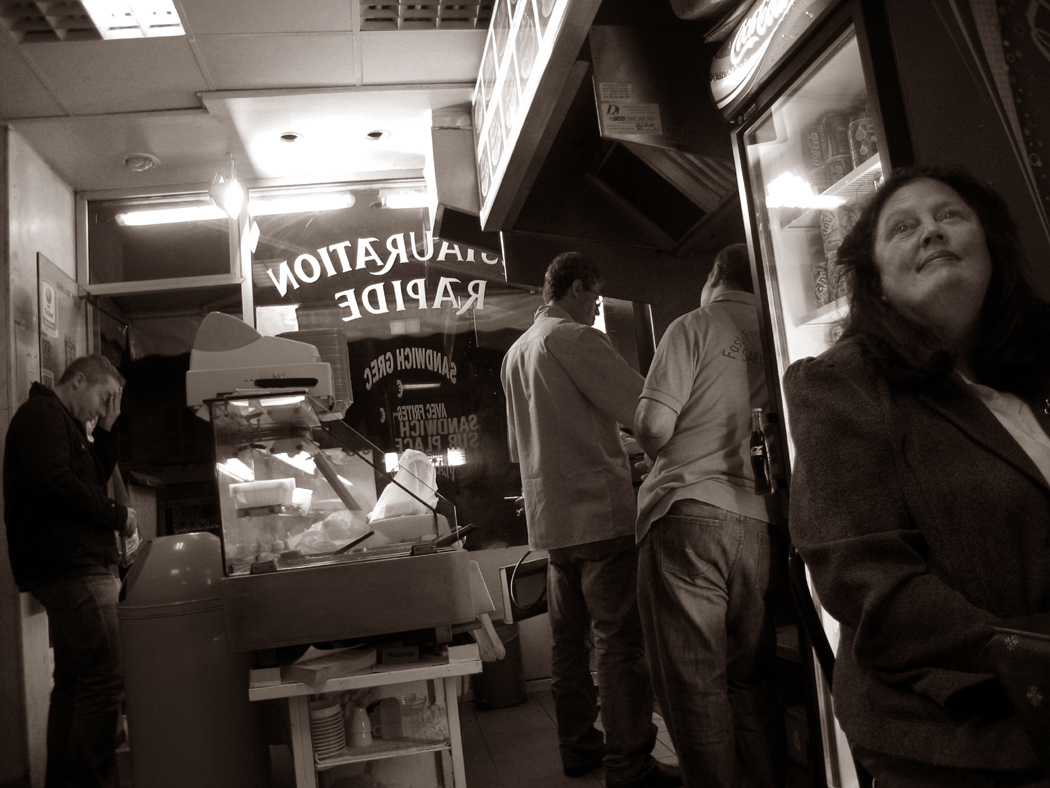
You wander into a Turkish souvlaki restaurant, a cheap storefront halfway down the street, and the man behind the counter is on the phone speaking some language you don’t know — it isn’t French — and he smiles at you as you sit on the molded plastic chair with the rocking table between you and your wife. The wall is bright yellow behind the glass counter, with garish purple writing offering the usual fare, lit with a glare. Gyros, souvlaki, pilaf. It is warm inside, and humid and the food is comforting.paris night 10x

Even the sound is different at night. Like the campfire, the sound is huddled, localized. In this restaurant, the sound is held in by the walls and front window. Outside it is silent once again.paris night 11x

There is cheer in the contact, and when you leave, there is an alive aloneness in the night street. paris night 12x

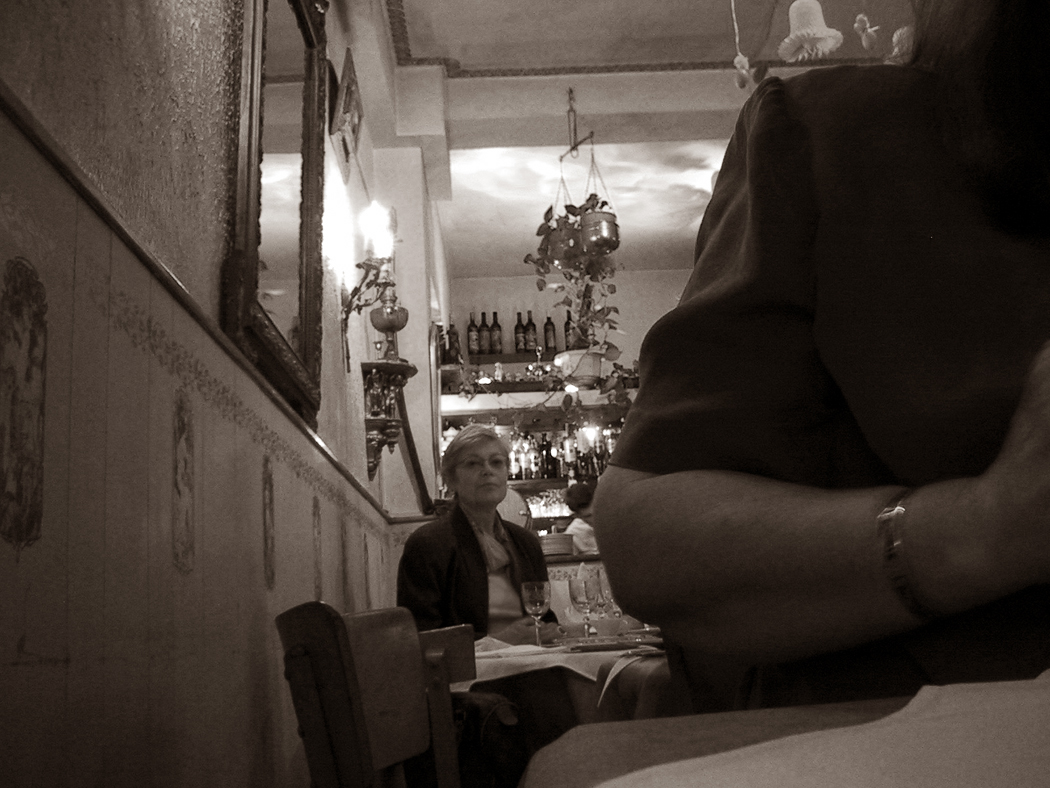
When I think of Paris, I think of it at night. I hear the voices and see the maitre pulling the Stella Artois from the tap. Most of the seat are empty and those filled are on the way home after a night at the cinema or theater. They may stop at the 8 a Huit for a pack of cigarettes. (Say it like “wee-a-wee,” it is the French equivalent of a 7-Eleven, only tighter packed and with one wall covered with wine bottles. The man sitting by the cash register is Algerian and tired after spending 12 hours in his shop.)paris night 13x

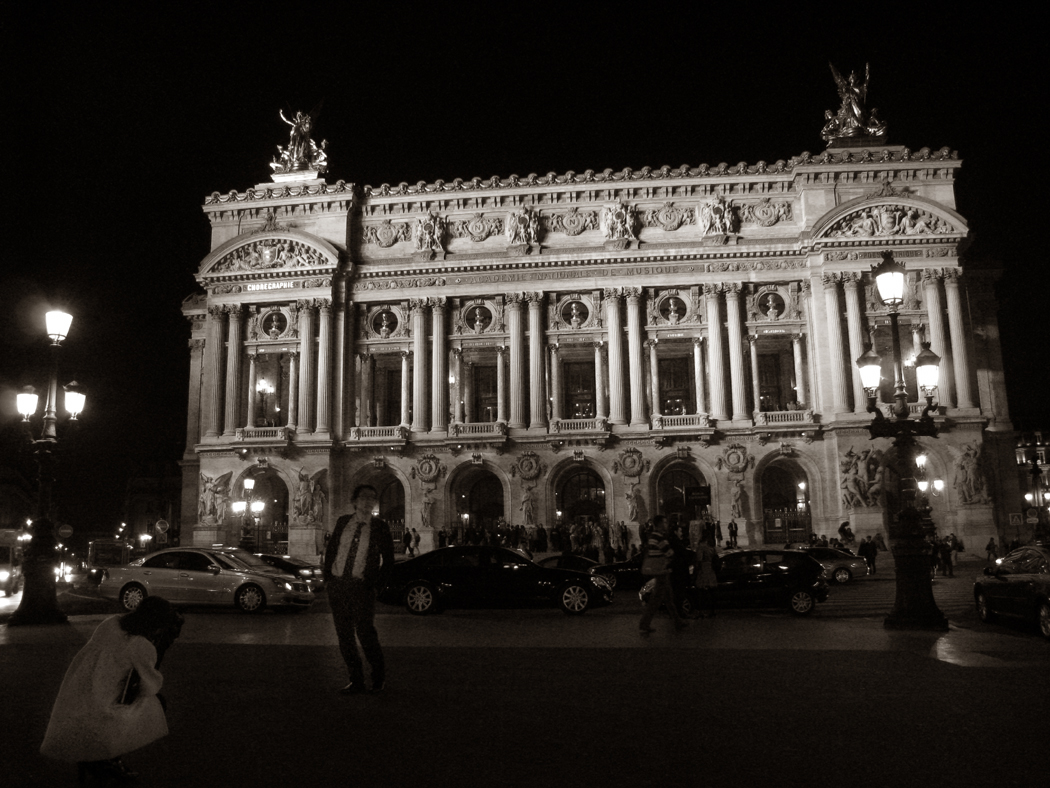
Compared to anything American, Paris is small. You can walk almost anywhere inside the Peripherique, and all the familiar signposts of the city are visible — Montmartre lit by floodlights on the hill, the Eiffel Tower turned into a fireworks display, the Palais Garnier pinned down by its own lights in the darkened city. paris night 14x

I love to get out into that night, and walk those streets, nodding to the proprietor of the flower shop as he stands by the door, stopping by the patisserie for the last pain au chocolate of the day, and finally passing the concierge of my hotel as he sits behind the desk, reading an Arab newspaper and drinking a small glass of Kirsch, not noticing me as I go through the lobby. Up the elevator, hardly bigger than a phone booth, and flipping on the timed hall light that busts open the darkness on my way to my room. paris night 17x

Out the window when I draw back the curtain, the city street is black, with highlights drawn by the lamps and the trees beneath my room shimmer in the light. paris night 18x


paris night 20x
paris night 21x
paris night 22x
paris night 23x
paris night 24x
paris night 25x
paris night 27x
paris night 28x
paris night 29x
paris night 30x
paris night 31x
paris night 32x
paris night 33x
paris night 34x

paris night 35x


paris night 36x


paris night 26x

paris night 37x
paris night 38x


paris night 39x

bonesFor the centuries between the conversion of Constantine and the advent of the Enlightenment, the world and the cosmos was held to maintain a strict hierarchical order, which Alexander Pope once called “the great chain of being.”

At the top sat the Deity and all things below him hung pendant in creation. And along this chain, each link had something above it and something below it. It made for a neat organization: plants were higher than stones, but lower than animals. Human beings were above animals, but below angels.

The chain could be divided and subdivided, very like a fractal, and always there was something above and below. So, among humans, a king was above a duke, who was above a yeoman. Below the yeoman was a serf. Each category had its primate: The king in political order, the lion among animals, the rose among plants and incorruptible gold among minerals.

Of course, there was always some disagreement among scholars. For some, the elephant was the head animal. But no one disagreed there was a “king of the beasts.”

Above humans were angels, and they had their own hierarchy: nine ranks from lowest to highest as set down by (Pseudo-) Dionysius the Areopagite — angels, archangels, principalities, powers, virtues, dominations, thrones, cherubim, and seraphim. It was all rather like the army, with first and second lieutenants, majors and colonels.

This hierarchy governed much of the Medieval and Renaissance world in Europe, and gave a sense of divine order to the social happenstance.

And oh, they loved arguing. Arguing whether moss was higher than fungus, or whether an earl or a marquis had priority — different nations shuffled the suits of cards into different patterns, so a French marquis might outrank an English baron. Or vice versa.

And so, a silver fox outranks a red fox. Or a wine merchant with a royal contract outranks one without such a seal. Lawsuits might teeter on such issues.

It was a surprisingly durable schema. We still hold on to bits of it. Whenever you hear someone talk about something being higher on the evolutionary ladder, he is grasping a vestige of the great chain of being. In evolution nothing is “higher” or “lower.” That is the old vocabulary used for the new science. There are no higher life forms, only more complex forms adapted to more complex environments.

Yet, it seems we cannot ever completely give up our sense of hierarchy, even despite our lip service to democracy in America.

Of course, such a micromanaged structure could not possibly avoid ironies and disconnects. The biggest was between church and state. Each had its hierarchy: king, prince, duke, earl on one hand; pope, cardinal, bishop on the other. But the problem of whether a cardinal outranked a prince, or a king outranked the pontiff was never satisfactorily worked out. Wars were fought; people were killed.

I mention all this because one of the cogs in this philosophical machine implied that there was a ranking at mealtime, too. Higher in the chain gave license to ingest lower in the chain. Plants digest the dirt they grow in, cattle eat the plants, and men eat steak. When the order is reversed, it denotes the system in failure — as when a bear eats a man or worms eat corpses. Eating up the chain instead of down is “unnatural,” or was seen that way, despite the naturalness of death.

And the final implication of the system is that angels eat human beings. You cannot get around it: Angels survive on the life form below them in the hierarchy the same way we survive on meat. Obviously, it would be held that angels, whatever their rank, do not dine on the corporality of humankind, but as angels are spiritual beings, they gobble up our souls. It is the best explanation for Alzheimers and for the general and increasing debility of age.

2.

We’ve talked about the death of God for a century, but I don’t think anyone ever expected to find the grave site, least of all E. B. Fischer.

Fischer was a petroleum geologist who had made remarkable discoveries in the Himalayas. he had found petroleum in an area thought, geologically, to be incapable of producing it. Indeed, it was really only a low grade tar he had found: It was nothing to get too excited about. But a number of corporate and governmental powers had found the discoveries interesting enough to put money down on.

And it was in the course of his research on the world’s highest mountain range that he began to turn up unusual patterns in microcrystal structure and magnetic orientation. At first, the information made only an interesting checkering on his geological map, but the more complete his survey became, the more obvious it was that not only a pattern, but a recognizable pattern was emerging.

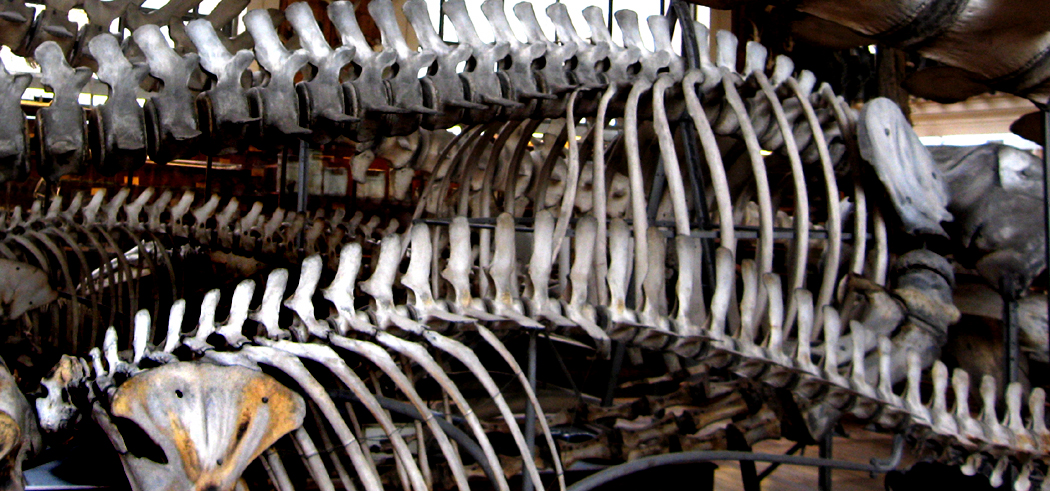
What appeared was a skeleton, or rather, the evidence of a skeleton, for it existed only as a magnetic pattern. And the skeleton was 800 miles long.

It wasn’t exactly a human skeleton that appeared on the map; there were too many ribs by a score, and the fingers seemed branched at the tips and the head was missing. But the overall shape was so distinct as to make the map look like an X-ray.

The missing head caused Fischer not nearly so much consternation as the fact that he wondered where it had gone. He couldn’t, as a scientist, believe there really was an 800-mile skeleton, but he couldn’t, as a human, believe such a shape would occur by coincidence. His instincts demanded a head.

He went back over the area in Nepal where he could expect to find the head, but there were no magnetic anomalies, no crystal changes, not even in unfamiliar patterns.

But even without a skull, this skeleton was a monumental discovery and the publication of its existence caused all the row you might expect. Initial surmise was that it might have been ancient earth art, similar to the effigy mounds in Ohio, where one is a snake a quarter of a mile long, whose substance can only be seen from the air. Of course, objection was immediately made to this theory, since no human technology was known that could recrystalize 800 miles of rock and alter its magnetic structure. The difference in size alone, between a quarter of a mile and 800 miles could eliminate the effigy theory.

Another was that it was a buried prehistoric animal. Such frivolous theories were shot down at once by biologists, who countered that nothing that large would need or could use knees.

Yet a third popular belief was that Fischer had found the remains of an alien life form. Popular though this theory proved, no self-respecting scientist would believe that evolution, anywhere else in the universe, would mimic that on earth in such trivial particulars as the number of fingers or the existence of a patella.

Scientists were no more prepared to accept the fourth theory, though neither were they able to discount it, falling as it did outside their area of expertise. And that was that they had discovered the burial plot of the Almighty.

Fischer himself was quoted as saying, “Ask the theologians, don’t ask me.”

The theologians, of course, were stuck in a dilemma. If God were dead, they had no reason to persist in their jobs, so they unanimously denied the proposition.

“The very thought is ludicrous,” they said. “God made the universe: He preexists it. It is completely illogical to imagine a God that preexists creation but does not survive it.”

That argument didn’t sit too well with many women, who pointed out that for millennia, women have preexisted their children, and usually don’t survive them.

Perhaps, thought Fischer, after all, it really is just a coincidence.

Statisticians worked out the probability at 1 to 47 to the three trillionth power, making it so unlikely as to be less likely than the chance of finding Captain Kidd on Mars in a hot tub with the Queen of Sheba.

For the moment, they were all stumped. The only thing they all agreed on was that it was a mystery.  A Great Mystery.

The discovery led to foundation money being given to further research in other locations on the planet. Corporate money dried up as the petroleum deposits were both too small and too remote to be commercially viable. So, nonprofit money took over. Either looking for a mate for the anomaly, or for the missing head.

Some felt that if God had fallen from the sky, perhaps his head had been the asteroid that killed off the dinosaurs. Fischer had a good laugh over that, but came up short when he realized that the vast mountain range had begun its life at just about the same time the dinosaurs ended theirs.

No, it couldn’t be, he thought. But again, he was surprised he was even taking the question seriously.

3.

One of the joys of writing fiction is that you can know unknowable things in this made-up world. As author of it, I can actually give you the answer to E.B. Fischer’s conundrum. I made him up; I made up the world in which he lives; I made up even the Himalaya Mountains where the giant skeleton was found. It is a mountain range identical to the real one, except for the fact that it does not exist. Identical down to the last prayer flag and Tibetan village.

Since at least the middle of the 19th century, we have been talking about the death of God. But hardly anyone asks the question, how did He die? Old age? an assassination by German positivists? Perhaps it was the salmon mousse?

The fact is, history is often misremembered as it is passed down, especially in pre-literate societies. Things get changed, chronologies alter, insignificant events take on mythic importance. The story of Satan’s rebellion in Heaven is one of those things. The version that has come down to us says that a battalion of angels rebelled against the deity; a war was fought; Satan and his conspirators were thrown down into hell. John Milton tells a ripping version of this story, but you can forget it.

Remember, if you will, that we said that when the great chain of being goes into reverse, bad things happen. Like reverse peristalsis. In this case the bear ate the camper: The angels, wondering if there were any comestibles more delectable than the spiritual effulgencies of humankind, turned their attention to the head of the table and wondered if the radiance of God might not be better eating than the standard diet of cor hominis. In fact, compared with this new idea of eating upwards on the chain, the mere spiritual gristle of the human was as about as appealing as cold haggis.

And so, like a corp of flesh-eating zombies, a band of principalities, supported by a platoon of thrones and a single archangel, walked slowly toward the Lord and began tearing Him to pieces. Others soon joined in and like a turkey after a great Thanksgiving dinner, nothing was left of the carcass but the bones, which the angels soon threw over the gunnels of Heaven, when they drifted down and landed athwart the cordillera we call the Himalayas. Being what they call “subtle substance” — or at least what the Hindus call subtle substance — rather than the gross concrete substance of this sublunary world, they became fossilized not as actual bone or stone, but as a magnetic anomaly in the rock. This is what Fischer had discovered.

But the head, you ask. What about the head? Where did it wind up?

It ended up where such things usually wind up after the barbarians have taken the city: Outside the gate on a pike.

And even now, if you were to approach Heaven, beside the Pearly entrance you will see the grizzly bearded head of Providence, a warning to all who chance to enter.

Goldsmith whales 1horizontal
“What do we believe?”

Stuart said that with an emphasis on the “we.”

“Yes, I don’t mean ‘What do we believe?’ the way so many people question what our nation or society stands for, or if we anymore stand for anything. I’m not asking what we as a culture believe in, or if we have a common spine of belief to stiffen our civic polity. I leave that to the punditocracy.

“No, what I’m wondering about these days is what do we take so for granted we never even think about it, the way ancient people believed the earth was flat, or that the daytime sun moved in procession across the sky and ducked under it at night. goldsmith fish 1What we believe to be true without question, indeed, we don’t even recognize it as a question, or a possible question. What is the water we swim in?”

“You mean like the Medievals believed in a Christian god, or the 18th century believed in a rational order to the universe?”

“Yes, that sort of thing. I’ve been wondering because it is such a tough question. It is asking to see the invisible, to step out of the zeitgeist and look at it from above, like we were watching rats in a psychology lab wander in a maze. Can we even begin to see what we don’t recognize as the ether of our universe?”

“Maybe what we’re talking about is a slow dawning,” I said. “I mean like slavery. At one point in history — actually, in most points in history — slavery was seen as right and proper, the order of the universe, even sanctioned by God. In Greece and Rome, slavery was as much a part of everyday life as bread and wine. In America when they made the Constitution, slavery was accepted by a large segment of the population as being the natural order. But there were those who saw it differently. Slowly, the majority began to see slavery as an evil and nowadays, we unquestioningly assume slavery to be indefensible.”goldsmith fish 2

“Of course, that hasn’t stopped slavery, but only changed its face: Slavery is still accepted in parts of Muslim Africa and the sex trade is hardly anything but slavery.”

“Yes, but the issue you have raised is whether slavery was at one time the water we swam in — that for most people, there was no issue at all. The sky was above, the earth below, kings ruled the domain and slaves had their eternal link in the Great Chain of Being. It was only the exceptional person who asked if the scheme were moral or just.”

“This is true, but it is also such a hot-button item that we may fail to grasp what I’m really asking. In the case of slavery, we can now feel superior and look back on our forefathers and judge them for their failure to see the obvious. But I’m certain we are no less blind today than they were, but in other areas. What are we going to be judged for a hundred years from now?”

“Animal rights, perhaps?”goldsmith fish 3

“Maybe. Certainly, there will be those who wonder why we didn’t do anything about carbon dioxide or overfishing or nuclear proliferation. But in part, these are political failings rather than what I’m asking about.

“I’m asking rather, what do we not even question. The issue came up when I started rereading Plato. God, I hate that man. But it was the Greeks in general I’m talking about. They had a peculiar relation to their language. They had what we now take as a naive belief that language and existence were one: If there was something in creation, there was a word for it, and likewise, if there was a word, it described something real in the world. There was no disjunction, no sense that language had its own structure and limits, and they were different from the structure and limits of existence. No sense that if there were a word, it might describe something false, something that doesn’t really exist, or really happen. The fact that there was a word was proof that the thing existed. They could not see outside their language. This led to some kinds of absurdities, like Zeno’s paradox. The language describes a problem: Achilles and a tortoise are in a race, but with the latter given a head start, Achilles can never catch up to it, and hence can never win the race.”goldsmith fish 4

“Yes, I remember: Before Achilles can catch up to the tortoise, he has to go halfway to catching up with the tortoise, and then before he can close the gap, he has to cover half the remaining gap, and then half that, and half that, onto infinity, and therefore, never catch up.”

“An obvious absurdity if you set the experiment up and see what happens. The problem is only in the language, not in the reality. ‘Half’ and ‘half,’ and ‘half’ are merely concepts, not observable, not physical.

“There are many versions of this problem: It is the essential problem of Plato, who sees his ideals in terms of language, in terms, more specifically, of nouns. His ideal forms are ideal verbal forms. Being Greek, he cannot transcend that constraint. Language is reality, reality language. That is all they know and all they needed to know.”

“Sometimes, I think we’re not much better,” I said. “We still seem to believe words more than experience. Politics is rife with such things: Welfare mothers, for instance, or trickle-down economics. Make the verbal classification and you have proved that such a thing actually exists. Maybe you can’t really find any out there, but you’ve set up the idea with the word.”goldsmith fish 5

“My favorite has always been the international conspiracy of Communist Jewish bankers. Communist bankers — have they thought this one through?”

“Of course, philosophy these days — especially in America — is practically nothing but philology, a study of in how many ways language obscures reality or is at least in serious disjunction with it.

“So, what is our equivalent of Greek language blindness?

“I can think of a few things that might count, but I despair of being able to escape my own swimming water.”

“We still have the language problem,” I said. “We cannot always separate the language from the experience.”

“Certainly. But what do you mean?”goldsmith whales 2 horizontal

“Take a sentence like ‘Whales are mammals, not fish.’ It seems to most of us that this says something about cetaceans, but in fact it is a statement about language, not biology. It says ‘We have created a language class — a noun — that we apply to some sea creatures and not others. ‘Whales are mammals not fish,’ is a statement about language.”goldsmith crustaceous fish

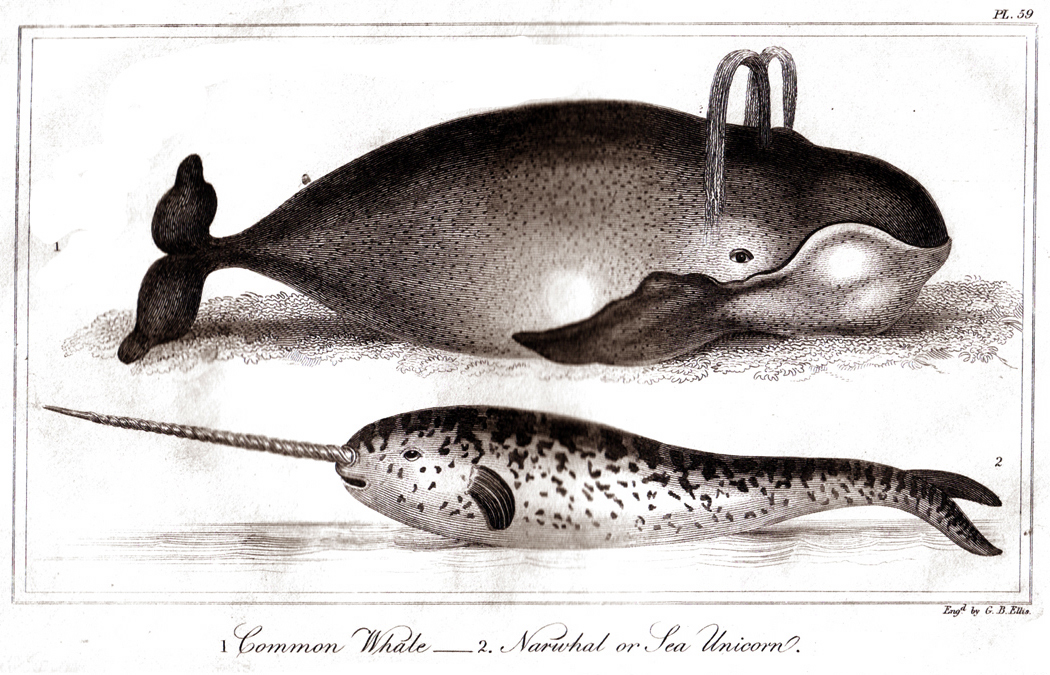
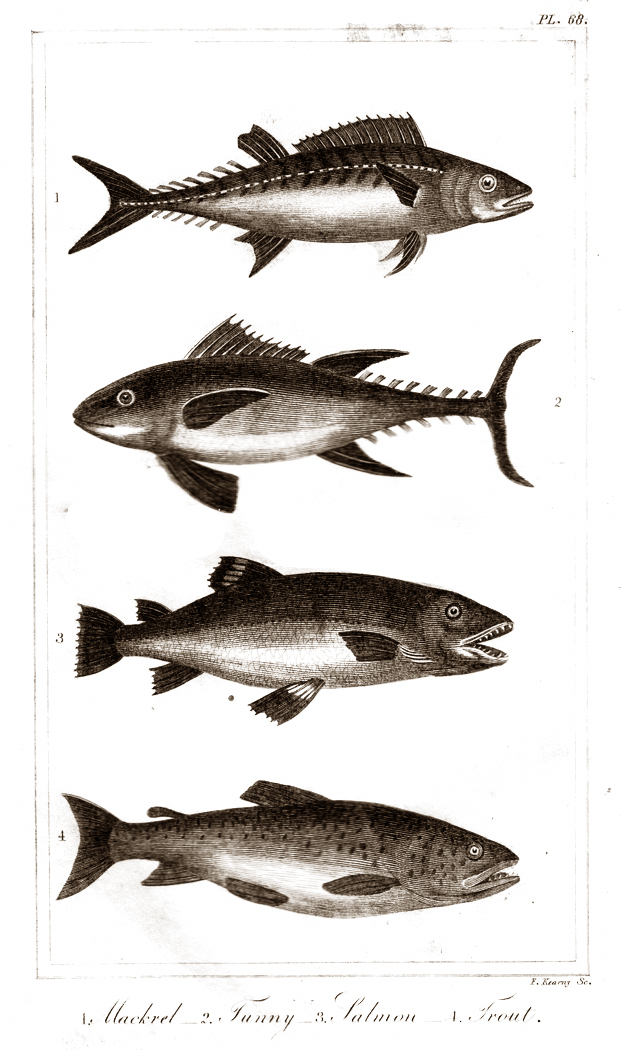
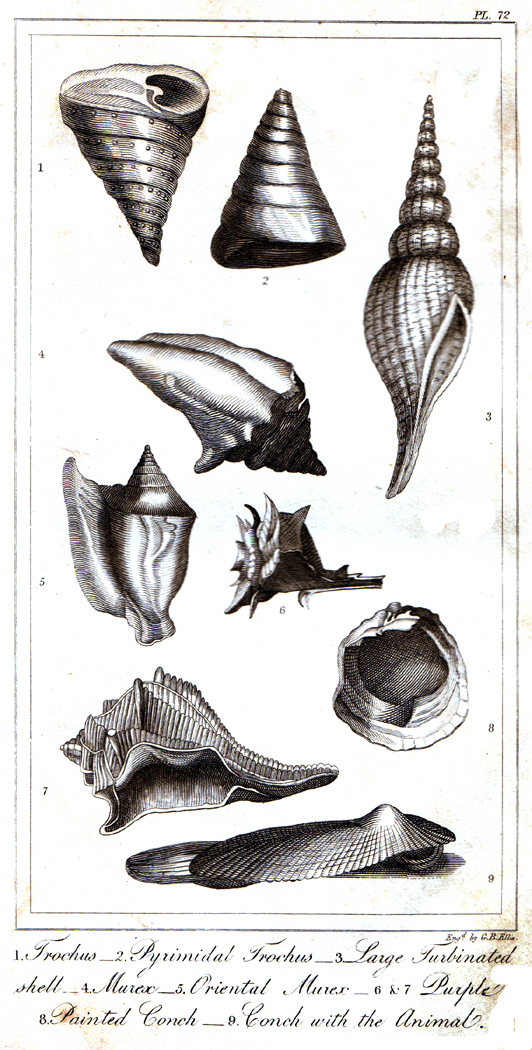
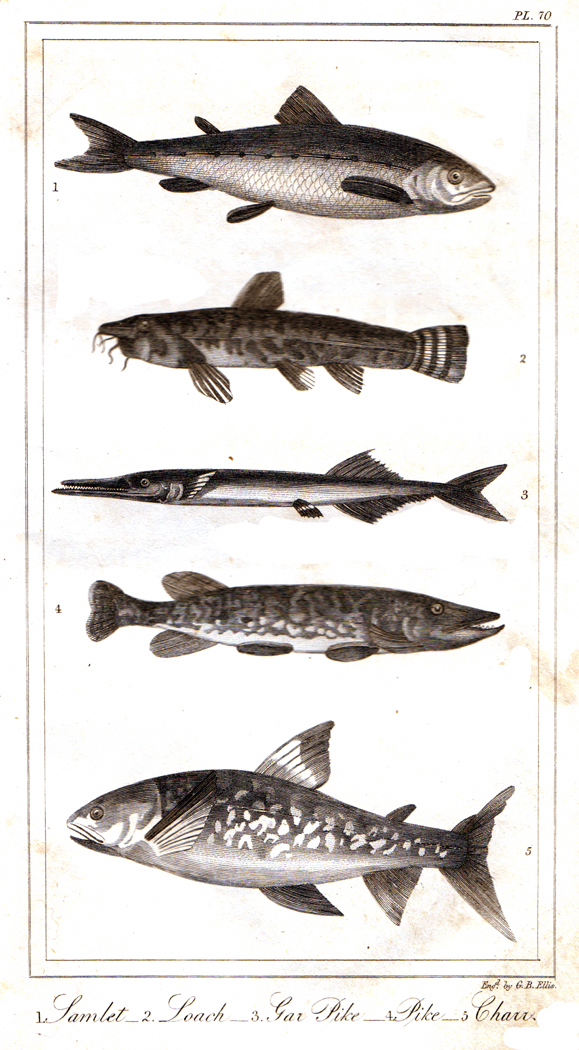
“God, yes. I have a copy of Oliver Goldsmith’s History of the Earth and Animated Nature, from 1825, and he divides fish up into ‘spinous fishes,’ ‘cartilaginous fishes,’ ‘testacious fishes’ — that is, shellfish — ‘crustaceous fishes’ and ‘cetaceous fishes.’ A whale, after all, is shaped like a fish, swims like a fish, has fins like a fish and lives in the ocean. Like the old saying, ‘If is looks like a duck and quacks like a duck…’ goldsmith shells 1But nowadays, we accept the Linnean classification system as describing reality, while in fact, it is merely one way — one very useful way in a scientific and technological society, I might add — but only one way or organizing reality. The Bible doesn’t say Jonah was swallowed by a whale, but by a ‘great fish.’ We naturally make the leap, because a whale is, in some manner, a big fish. Just one that breathes air and gives birth to live young. There are many ways of organizing experience, but we assume the primacy of only one.

“Genius is being able to shift from one to the other seamlessly.”

Stuart got up and left the room, looking for his copy of the book. He came back with it and opened up to the chapter on fish.goldsmith fish 6

“This is one of my favorite passages,” he said. “ ‘Our philosophers hitherto, instead of studying their nature, have been employed in increasing their catalogues; and the reader, instead of observations of facts, is presented with a long list of names, that disgust him with their barren superfluity. It must displease him to see the language of a science increasing, while the science itself has nothing to repay the increasing tax laid upon his memory.’ ”

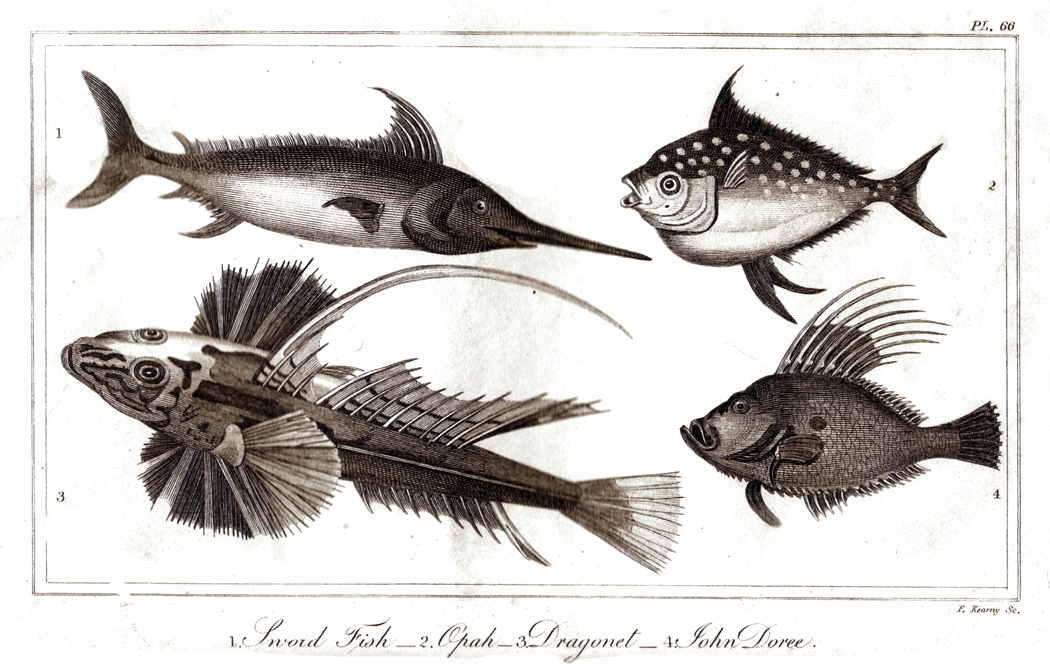
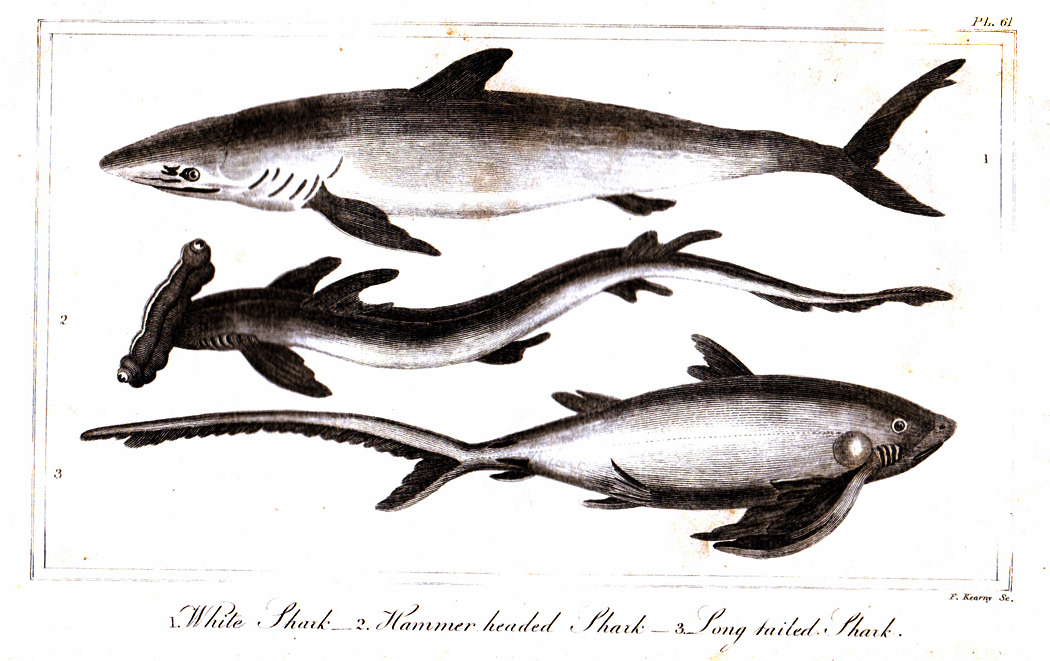
I took up the book and leafed through it. The illustrations were exceptional. I thought they might be worth showing off in borders of this discussion.

“I have another good example,” I said. “Anti-abortionists say that abortion is murder. But murder isn’t a fact, it is a legal class. And we change laws all the time. Taking of life comes in many forms, some which we justify and others we criminalize, and different people draw the line at different points. Would it have been justifiable to kill Hitler in 1933 to prevent the millions of deaths in World War II? Would it have been justifiable to suffocate the infant Hitler in his crib? There is homicide, manslaughter, justifiable homicide, and, of course, war. Eichmann maintained that the Holocaust was merely the justifiable death of war, but we have chosen to draw the line differently. And what now of those we kill by drones in the Middle East. So, is abortion murder? It is killing, but for some it is justifiable, even necessary. Many on the anti-abortion side nevertheless justify executions for some crimes, but for that, they don’t use the word, ‘murder.’ For some it isn’t. But ‘murder’ is a verbal classification, not a fact.”goldsmith fish 7

“It is hard to recognize what is mere language and what is genuinely out there, existent in the world, divorced from the language we use to describe things.

“Perhaps one thing — and this is related to the Greek problem — is our belief, unexamined, in the permanence of certain things.” Stuart went on.  “We have a tendency, not only to believe, but to actually create wars to defend the idea that national borders are something other than temporary lines drawn by powers that be. Just look at Poland: It moves around the map like a ball of mercury in a dish. First it’s here, then it’s there. It grows, shrinks and sometimes disappears altogether. There’s an idea that national borders depend on ethnicity, but that clearly isn’t the case. Poland, when it has existed, included Polish speakers, German speakers, Ukranian speakers, Lithuanian speakers, Yiddish speakers and Czechs, among others. Yes, most French speakers live in France, but some live in Quebec, and others in Belgium, where half the population doesn’t speak French at all, but Flemish …”

“‘In France they speak French; in Belgium, they speak Belch.’”

“… and just look at the shifting borders of the United States through the 19th century. Nationhood is always a momentary thing. Yet we think of it as heaven-ordained.”goldsmith fish 9

Stuart considered this a moment and then brought up his own.

“I would offer the belief in opposites and pairs. We think opposites exist, but it is really just a trick of language, enforced by habit. There is the lit end of the cigar and the end we draw smoke from, but there is really only one cigar. Hot and cold are thought of as opposites, but they are really only sliding marks on a single thermometer: Sunspots are ‘cold spots’ on the sun, but they are hotter than anything normally found on earth. Hot and cold, rather than being opposites, are relative.

“The corollary is that we think of many things that are not really opposites at all as fitting into the brain-slot we save for opposites.”

“Like salt and pepper,” I said. “Like chocolate and vanilla.”

“Exactamente. It is habit alone that gives us these pairs. We swim in an ocean of conceptual habits that we seldom give any thought to. Like our expectation of a beginning, middle and end. We want that in a play we watch or a song we sing. But there is no beginning, middle and end in our existence: It is all just flow. ‘Panta horein,’ Heraclitus has. ‘Everything flows.’ But the idea of beginning, middle and end is how we think of our own lives, not just that we are born and die and have a few years in between, but that each step in our life is a story that follows, episode on episode, in a coherent pattern that we recognize as our ‘self.’ We tell stories about our lives as though we were writing novels or short stories. The connection we make — the through-line — is something we cast over events, not something inherent in them.”

“Experience, like the stars in the heavens, is a welter, a chaos of instances, but we make constellations out of them to be able to make sense, but if we take the constellations as something ‘real’ — like astrology does — then we mistake the pattern for the substance.”goldsmith fish 8 horizonntal

“The other example I can think of is hierarchy. This is perhaps beginning to be exploded, but we reflexively think of things in hierarchy. The real world of experience doesn’t provide immutable hierarchies, but in our thoughts, we make them line up in marching order and pretend there is this rank and file. Where once we had kings, knights, yeomen, vassals and serfs, we still have this idea that some organisms are “higher” on the evolutionary scale than others. The vestigial concept of the ‘great chain of being’ remains in our culture, even when the full-blown version has disintegrated into a confetti of vestiges.

“We decry the ‘patriarchy,’ or at least some of us do, while a good part of the population unthinkingly assumes as the default that the husband is head of the household. Real families are no longer like that.”

“And the internet is stuffed with ‘top 10’ lists. As if one movie were provably better than the number two choice. ‘Ten worst dressed politicians.’ ‘5 most influential bloggers.’ The scalar nature of these is another mental figment, a meme, that gets reproduced like DNA.”

“Don’t get me started,” Stuart said, but the horse was out of that barn. goldsmith shark horizontal

“The number of things we accept without thought is probably infinitely more than those things we do think about. Seven day weeks? Any real reason for that? Weekends are such a part of our experience, yet, I doubt cavemen ever thought about constantly recycling work weeks. And the decimal system. A duodecimal system would work just as well, or even a system based on 8 or 15. The 10 is just a convention.”

“Well, we have 10 fingers…”

“And 10 toes, so why not base it all on 20? In fact, I’ve seen this — in some cultures the counting is based on 12 because if we use our thumb as a counter, we can reel off a fast dozen, by first counting the fingertips of the remaining four fingers, then the second joint and then the third, adding up to 12. And with the other hand, we can keep track of the groupings of 12, and count quite efficiently on our fingers up to 144. You can see the foremen doing this on South American rivers as they load bales onto the boats. Inventory is kept on the knuckles.

“I’m sure there are so many more things we accept without thought. But my original point is that it is so hard — nearly impossible to discover what you don’t know to be mere convention.”

Genevieve called from the other room. “Dinner is ready, if I can cut through the chatter.”

What awaited us was a pork roast, crispy with a rind of fat across the top, Brussels sprouts in butter and a rice pilaf and salad.

“This is the real stuff,” she said. “It’s not words.”

State Line tex-NMTo see the world, you fly around it; to learn about your neighborhood, you walk through it; but to appreciate something about the country you live in, there is nothing better than an automobile.Clouds from plane

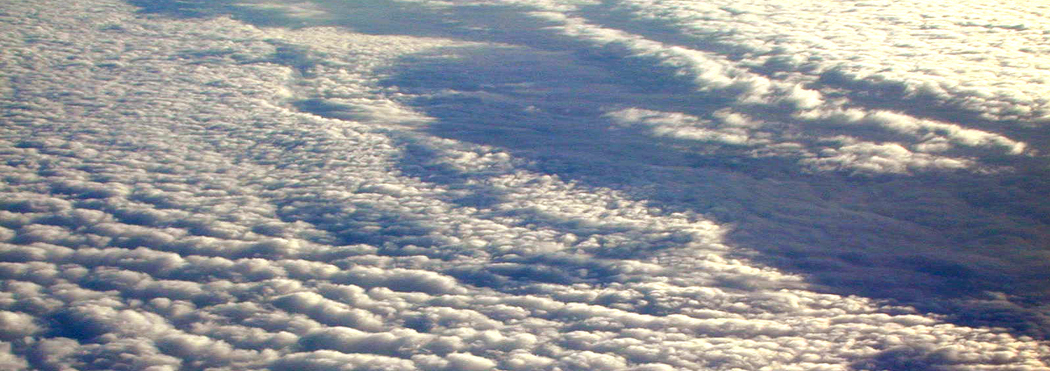
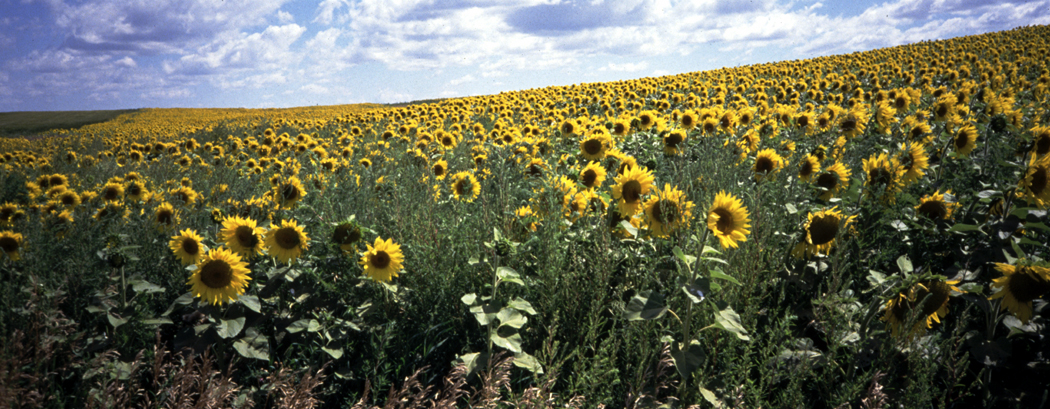
A jet flies too high and fast to take in any detail. The country is too big to slog through on foot. A car is the perfect compromise, letting you pass over a significant portion of the nation each day, but allowing you the leisure to stop and sniff the magnolias in Mississippi, the rank ecstatic yellow sunflowers in North Dakota — and the lingering odor of peanut butter at Graceland.

It’s summer again, and once more, I open up another brand-new Rand McNally road atlas and begin planning a drive around the North American continent.Sunflowers North Dakota

In the past 15 years, I’ve made the round-trip across the United States at least a dozen times. I feel like Magellan when I start once more on the circumvehiculation of America.

I’ve done it alone and with my wife. I’ve done it camping and in motels. I’ve done it in summer and in winter. I’ve done it in as long as two months and as short as two weeks. Last year, I made it from Phoenix to North Carolina over a weekend, but I’m not likely to repeat that butt-numbing feat.

Yet I am planning another road trip this spring.

Friends tell me I am nuts, a masochist torturing myself or a sadist torturing my wife, but I keep setting out.

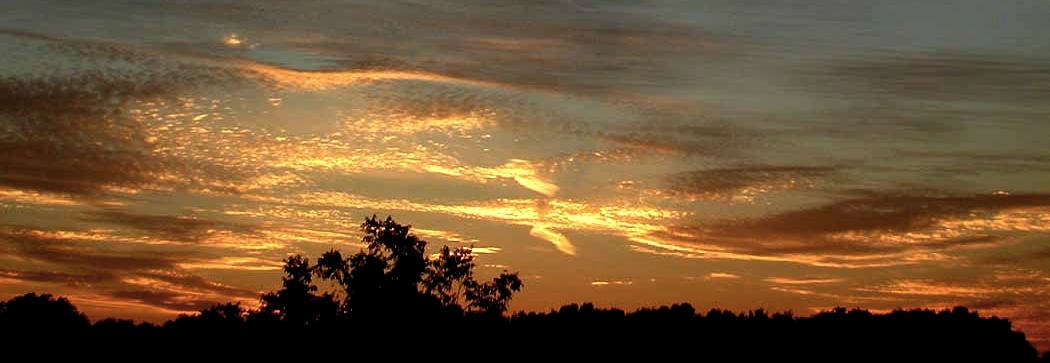
There is always something new to see, or some old friend to revisit: I’ve been to North Carolina’s Outer Banks something like 40 times, and I’m beginning to develop the same relationship with Maine’s Down East. When I have lived in the East, I couldn’t wait to visit New Mexico again.Baldwin Co. Ala. sunset

There are soft-shelled crabs to be eaten in Virginia, salmon in Seattle. There are pirogis in Wisconsin and scrapple in Philadelphia. You can only get pizza in New Jersey, you can only get barbecue in eastern North Carolina, or a real Cuban sandwich in Miami.

Barns in Pennsylvania have stone foundations; in Georgia, they rest lumber right on the ground. In Wisconsin, the barns are red; in North Carolina, it’s the dirt that’s red; the gray, weathered barns aren’t painted at all.

I remember passing through Iowa and being astonished to see a farmfield filled with hogs and each animal had its private home, looking like a Levittown of doghouses.

In southern Arizona, I passed something very similar, but it was for fighting roosters.Bear Mtn Bridge

American regionalism is alive, despite network television and corporate advertising. America hasn’t yet been completely turned into one great food court of McDonald’s and Arby’s.

If you think you have only a choice between Pepsi and Coke, wait till you pop the top of a Double Cola in Reidsville, N.C.

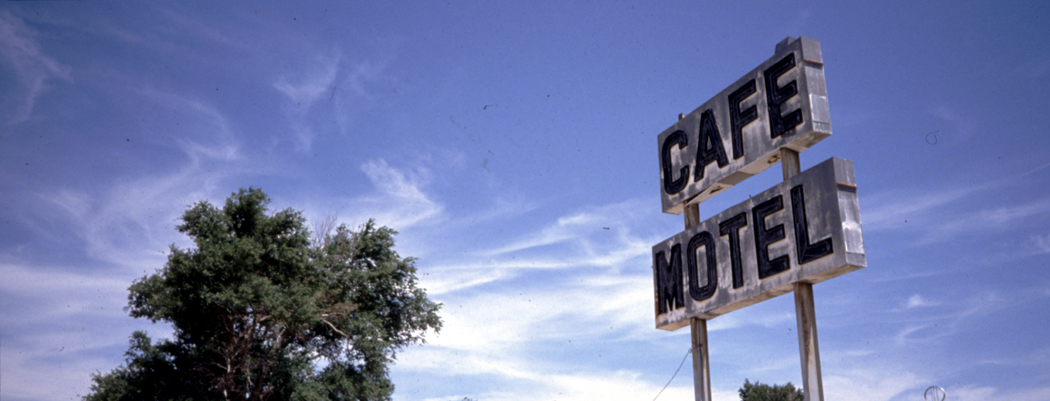
Try one at the Sanitary Cafe, where calf’s brains are the breakfast special.Cadillac Ranch Amarillo Texas

I’ve been to most of those landmark places you’ve heard of: International Falls, Minn.; Walla-Walla, Wash.; Langtry, Texas; Cairo, Ill.; Appomattox, Va.; Intercourse, Pa.; West Point, N.Y.

There are some great old iron bridges across the Susquehanna River in Pennsylvania, some great concrete bridges in central New Jersey that speak of the the great age of American highway building in the 1930s.

I’ve been up Pikes Peak in Colorado and up Mt. Washington in New Hampshire.

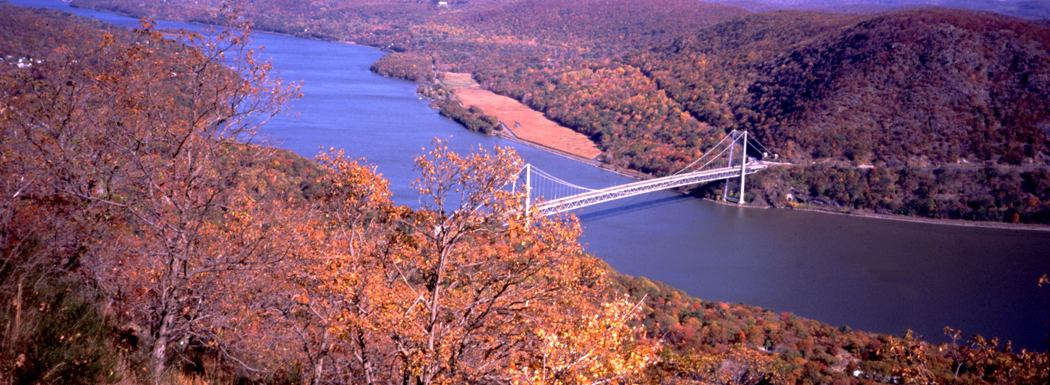
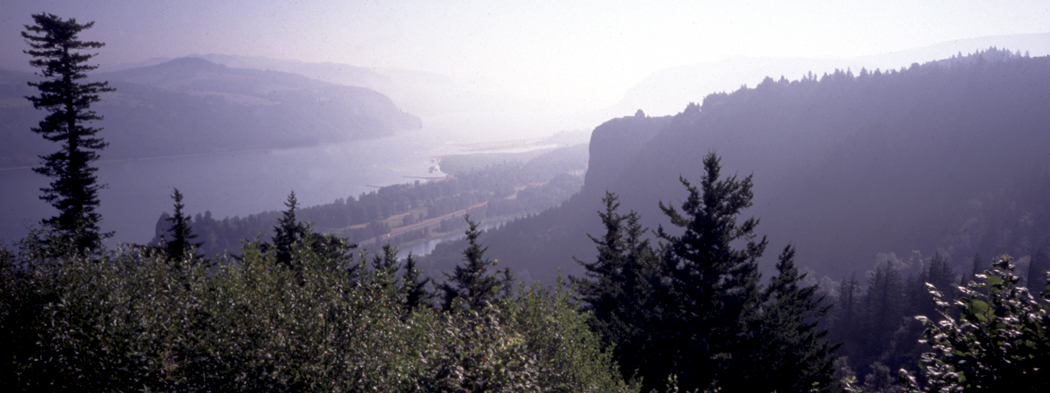
I’ve been over Lake Ponchartrain in Louisiana and across the floating bridge over the Hood Canal in Puget Sound north of Seattle.Columbia River Gorge Oregon-Washington

It helps if you love to drive, and I know not everyone has that passion. My brother hates driving, for instance. He views an automobile vacation like a two weeks stuck in an elevator. He can’t wait for his floor to arrive so he can get the heck out.

But most elevators don’t have windows.

As I watch the landscape pass across my windshield, like a travelog on a movie screen, I get a sense of the whole elephant, not just his trunk or tail.

Of course, we are talking here about a two-lane blacktop trip, not a bland rush down an interstate highway, where one stretch of concrete pavement can be distinguished from another only by the names on the exit signs.factory, trees, Lowell, Mass

It is a particular kind of travel and has nothing in common with the destination-vacation of the tourism industry. I have no interest in waiting on Disney World lines for thrill rides or Lake Winnibigoshish for a week of trout fishing. You can have your three days lounging on the sands of Bimini or your Love Boat cruise.

Instead, I get to travel an arc of the planet, get to feel in my bones the curvature of the earth and the roughness of its skin. It is through driving across its surface that I get some body-feel for the size of the globe: It is roughly 10 times the distance I drive to get from Phoenix to New York City. New OrleansThat’s not some numbers on some mileage chart, but a distance I know by the seat of my pants.

It’s also a lot smaller than the world seemed before I began driving.

In those years, my wife and I have been to each of the 48 contiguous state at least twice and most more frequently; we have been to all but one of the Canadian provinces; and even skirted into Mexico a little bit.

And each of those trips could have produced a Blue Highways, a book-length summation of what we saw and learned.Frosty dawn Wisconsin

Part 2

Over the past decade and a half, I’ve put enough vacation miles on the cars I’ve owned to equal driving around the world 2 1/2 times. You don’t drive that much without learning a few things.

The first is, of course, to stay off the interstates. You may get there faster, but not by much, and you’ll be bored the whole drowsy way. And in much of the country — and especially in the West — speed limits on smaller highways is not much lower than on the four-lanes, and with less traffic.Golden Gate Bridge SF Calif

Have a rough itinerary and plan how many miles per day you are willing to drive. This is more important for a passenger: Driving will keep you occupied, but your partner may go stir crazy sitting in a seat while going across some of the flatter places in Texas; Don’t overdo it. Marriages hang in the balance.

But never make your itinerary too rigid. You will discover unexpected things along the way; let yourself enjoy them.Gorilla, Am Mus Nat Hist04 copy

We never reserve motel rooms, so we never feel forced to get somewhere by nightfall. There are enough motels along the way. Even national parks, with their crowds, often have last minute cancellations. We’ve pulled into the Grand Canyon and into Yellowstone and gotten a room. But have a contingency plan.

One year, we hit South Dakota the week of the Sturgis Motorcycle Rally and there were no vacancies for 200 miles around. We had to drive into the next state to find a room. But that brings up the next lesson:

Don’t be afraid of mishaps and adventures. They may be uncomfortable during the trip, but they will be the best stories you tell your friends. No matter how bad it gets, it will provide the most vivid memory.Imperial Dunes California
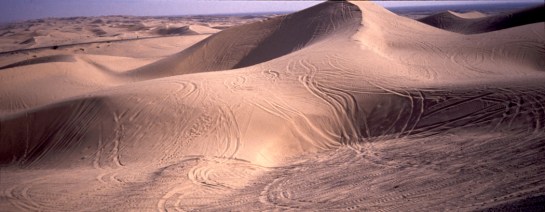
Don’t drive every day; take some time to spend in a single spot. Three days we spent in a cabin on Daicey Pond in Maine’s Baxter State Park were three of the best days we ever spent — hiking, canoeing, watching moose and listening to loons at the base of Mount Katahdin. Not once did we start the car. When we finally left, we were ready for more miles.

There are things you should always have in your car: water, a blanket, Fig Newtons, a road atlas, your address book with phone numbers. Forest Lawn cemetery LAI also carry an entrenching tool — one of those small folding shovels you can buy at army surplus stores — for digging out when I get the car stuck in sand or mud.

Don’t be afraid of dirt roads. There are some amazing rewards at the end of a bit of gravel.

We also always carry a small library of Peterson nature guides, two pairs of binoculars, camera equipment and twice the amount of film I think I can possibly shoot.

And finally, my nomination for the greatest invention of the 20th century: cruise control. It keeps your right foot from cramping up on the gas pedal. I was 45 before I ever tried it and I’ll never be that stupid again.pacific coast highway California

Part 3

What makes for good driving?

I don’t know about others, but for me, optimum driving conditions include:

–Little or no traffic for infinite miles ahead, with no stoplights.

–Interesting and varied weather; I don’t want incessant sunshine any more than I want endless rain. A front moving through gives me a constantly changing cloud show.Greylock Mt from Melville home Mass

–An old road with a history. Route 66 is the most famous, but not the only one. I especially enjoy roads that follow geology: along a mountain range or river, so that the road seems to belong to the earth, rather than denying it.

–Occasional side roads, preferably gravel, for a change of pace.

–Periodic change of landscape, such as when you drive from the Plains to the Rocky Mountains, or from the white sands of the Atlantic Coastal Plain into the hilly interior of the Piedmont.

— A regional food specialty you haven’t tried yet and no chain restaurants.leo carillo st beach california

— A few museums and a few national parks. I gotta have both.

— A used book store in every town.

— A pile of Haydn symphonies on CD to run through the dashboard player.

–A clean windshield. This last must be renewed frequently. Bugs bust on the glass.Mississippi barge

Part 4

The dozen most scenic drives in the 48 states:

1. Beartooth Highway, U.S. 212 from Red Lodge, Mont., to Yellowstone National Park.

2. The Pacific Coast Highway, Calif. 1, from San Luis Obispo to Leggett, Calif..

3. Blue Ridge Parkway, from Waynesboro, Va. to Smoky Mountains National Park, N.C.

4. N.C. 12 from Nags Head to Okracoke, N.C.

5. Ariz. 264 from Ganado to Tuba City, Ariz.

6. U.S. 1 from Miami to Key West, Fla.

7. La. 82 from Perry, La., to Port Arthur, Texas.

8. U.S. 1 from Ellsworth to Calais, Maine.

9. Kancamagus Highway, N.H. 112, from Conway to Lincoln, N.H.

10. Tex. 170 from Presidio, Texas, to Big Bend National Park.

11. Utah 12 from Red Canyon to Torrey, Utah.

12. Wash. 14 though the Columbia River Gorge from Camas to Plymouth, Wash.Niagara Falls

Part 5

It isn’t just the flashy, famous places that draw the true driver. In fact, commercial destinations, such as Disney World or Las Vegas, are probably best gotten to by airplane and shuttle bus, so you can give over all your time to waiting in lines.

No, in a car, some of the best experiences come by rolling through the kind of places that fall through the cracks of marketing. Places “below the radar,” so to speak, of commercial development.mobile bay point clear

The small towns, endless farms, mountain ranges, Indian reservations — these are the places you have the opportunity to discover things for yourself. In the big theme parks, you get a uniform experience, developed through marketing research. The ride you take is the same ride millions of others take.

But when you talk to the harried but chummy waitress in Doumar’s, an original ’50s style drive-in on Monticello Ave. in Norfolk, Va., you are talking to a real person, a one-on-one experience that is particular and individual. You get a flavor of place, of culture, of people, of individuals.Page Dam Arizona

To say nothing of the flavor of ice cream, in a cone as close to identical as possible to the original waffled cone Abe Doumar is credited with inventing in 1904. They still make them on the same old wheezy portable machine. If your lucky, they’ll be making them while you eat.

Likewise, there is nothing predictable about the starfish you find in an Oregon tidepool, or the bears in the Smoky Mountains. You get to experience the infinite variety of real life.Sierra Nevada Mts California

Of course, I have my favorites.

Among the 48 states, I can never find the end of either California or North Carolina. They are both richly varied.

California seems to have everything from the world-navel of pop culture to the most remote wilderness. It has more than any other single state.Thunder hole Acadia NP Maine

But North Carolina is nearly as varied geographically, and it has B&G fried pies, the most soul-satisfying food in the world. North Carolina also has the Blue Ridge Mountains and the Outer Banks.

And I cannot get enough of the great, grassy, rolling middle of America. When I tell people I love driving through Nebraska, they look at me like I just said I was born on the Hale-Bopp Comet. But just pull into one of those one-street towns with the grain elevator towering over the single railroad track and have lunch in the cafe where the farmers eat.Yellowstone Nat Park Wyoming

Or imagine the wagonloads of immigrants trudging along the Platte River, with Scotts Bluff on the horizon.

The pace is slower, more humane in Nebraska.

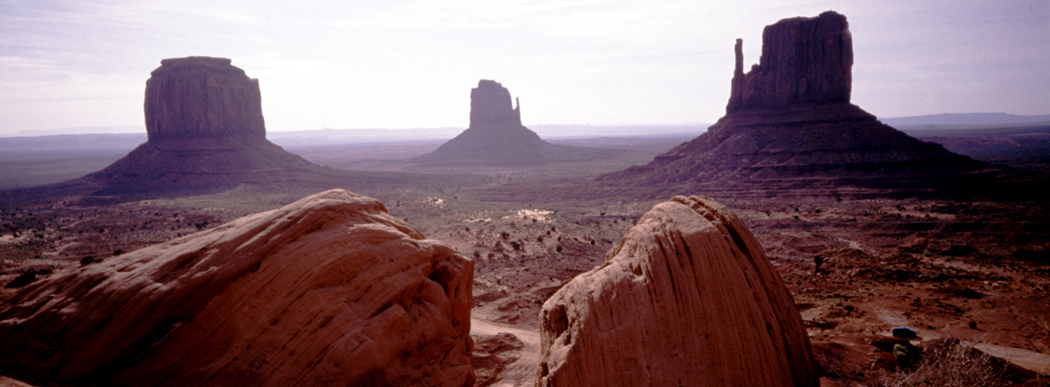
Humankind developed on the grasslands of Africa, and Nebraska, especially, seems to call atavistically to me, reawakening my genetic love of savannas.Monument Valley Arizona

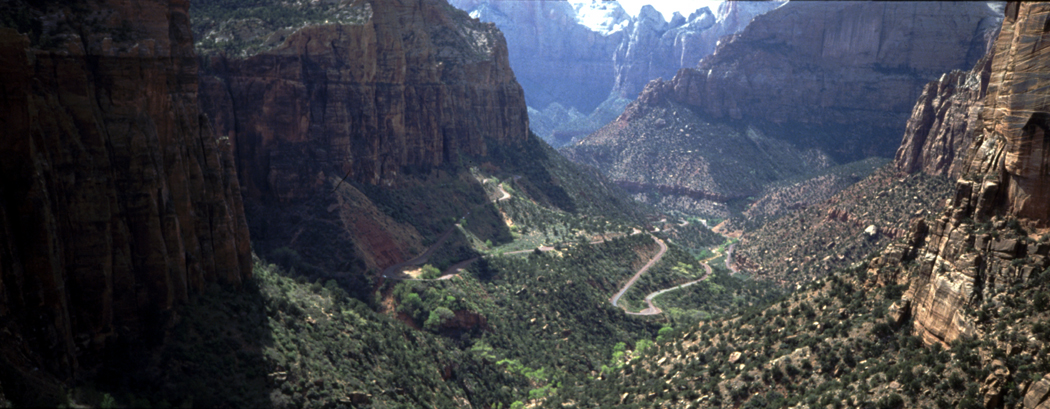
It’s easy to love the broad vistas of the West. Southern Utah doesn’t seem to have a square inch that isn’t photogenic, and the Grand Tetons of Wyoming are mountains right out of central casting: They are to other mountains what Cary Grant is to most men.

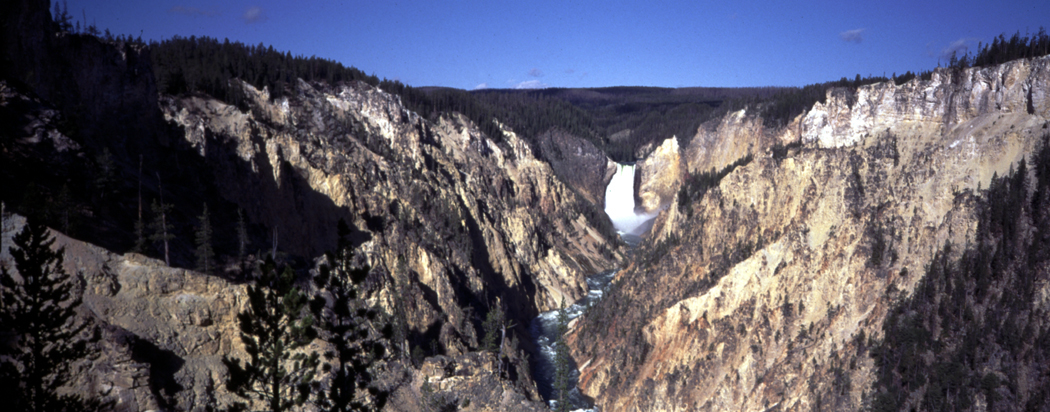
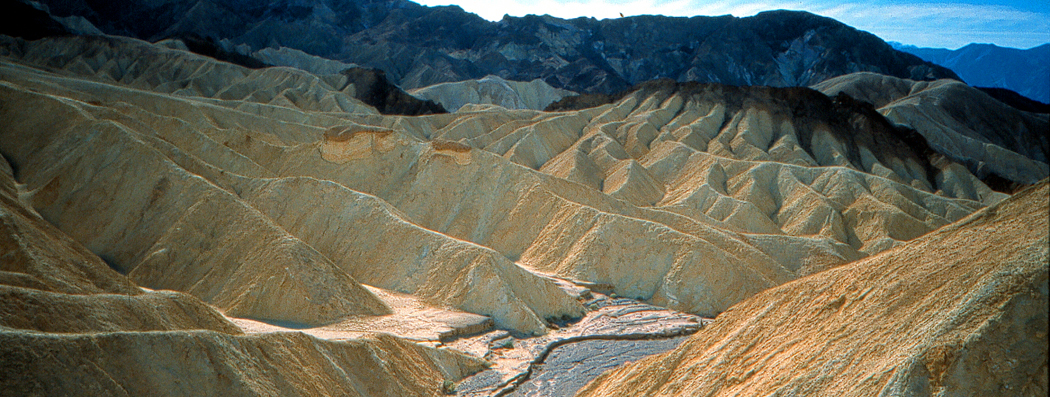
But I also love the Mid-Atlantic states. Sometimes, a Western forest is too much of the same thing. You can walk for miles in the Cascades of Washington and see only two kinds of trees: Douglas fir and Western redcedar.Zabriskie Point Death Valley Calif

It’s different in Pennsylvania or Tennessee. In the great Appalachian mountain chain of the East, there are more species of plant life than in all of Europe. The variety is blinding: Redbud in spring, Tulip tree in summer. White pine, pin oak, red maple, sweetgum, sycamore, witch hazel, horse chestnut — and hundreds more.

And there is something humanizing about the landscape. This is land which has been lived in for hundreds of years. It is still wild, but it has made peace with the humans who live there and send smoke up their stony winter chimneys.Zion National Park Utah

In the past, I avoided cities the way I avoid Justin Bieber songs. The noise, nuisance, dirt and traffic were everything I was trying to avoid by getting on the road.

But I have come to terms with them, also. After all, it is in Chicago, Philadelphia, New York and Boston that you find the symphony orchestras, natural history museums, ethnic foods and imposing architecture.Mississippi River Hannibal Missouri

The greatest city for driving is Los Angeles. It may be the home of the cultural antichrist, but it is also a great fermenting, creative pot, with lots of roads that take you past inventively loopy buildings: The Tail ’o the Pup hot dog stand, the downtown Coca-Cola bottling plant in the form of an ocean liner.

In LA, you can’t get anywhere without wheels. It is the perfect American city.mobile bay

There are two states that I have to admit I don’t particularly enjoy: New Jersey, probably because I grew up there and don’t feel much urge to go back; and Florida, which is supposed to be a Southern state, but it has been given over to graceless Yankees. But even in Florida, I have to admit I love the Cubano culture of Miami and the Everglades, proving that there is always something of worth.

west texas road
Two things about Texas: It’s big and it’s empty.

For most of us, crossing Texas along the interstate, it is two days of tedium, flatness and gravel, waiting to get from the desert West to the humid East.

But there is another way to eliminate the tedium of the unavoidable crossing of the world’s largest vacant lot: Slow down, take your time and enjoy it.

That is what I decided to do when faced with yet another transcontinental automobile trip. I stayed off the interstate and took the back roads from El Paso to Beaumont, passing great views, interesting topography, peculiar history and even more peculiar people.

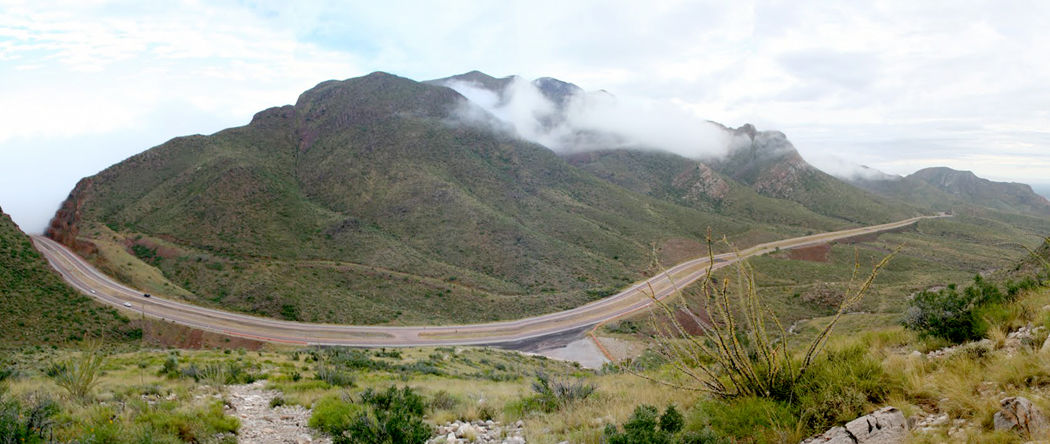
Mile 0 is the boundary between New Mexico and Texas, entering the state at Anthony. I drove through in the early morning, with the sun just sitting on the horizon, the Franklin Mountains to the east looking the color and texture of gray suede. The dew had raised the smell of the creosote bush.trans mountain expressway franklin mts

The first real chance to get off I-10 comes with the Trans-Mountain Expressway, that lifts you up and over the mountains and into Fort Bliss, just north of El Paso. As you descend, you pass the U.S. Border Patrol Museum and the streets of the military Bomarc missilereservation named for out of date missiles: Minuteman and Bomarc.

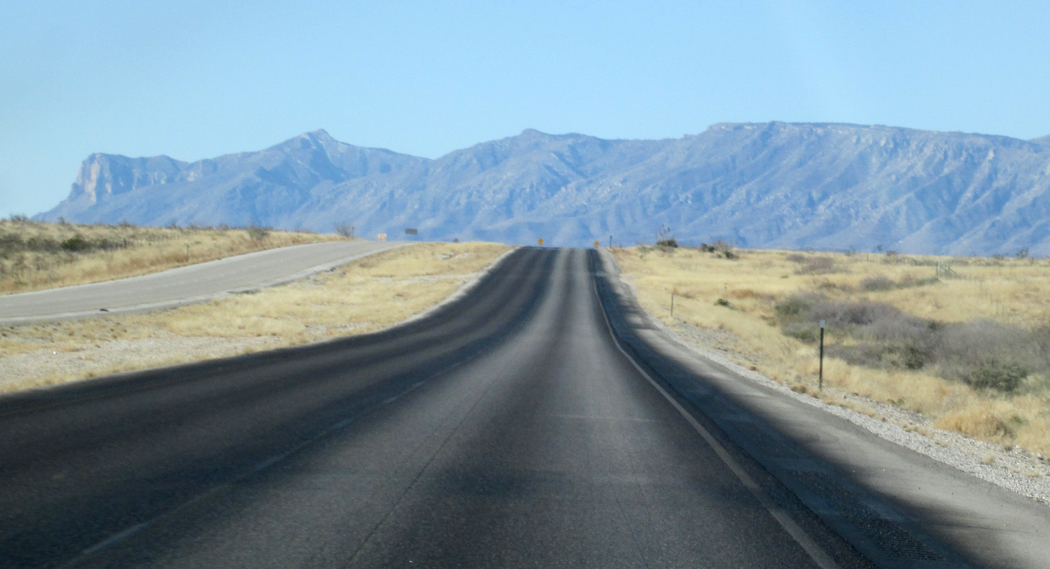
The next goal is the Hueco Mountains along U.S. 62. As you get to the top, at mile 56, you can spot the Guadalupe Mountains, highest point in the state, some 75 miles in the future.

The road passes along the dry regions of western Texas, with few people and even fewer gas stations. The first is at Cornudas, a one-time Butterfield State stop, now a dilapidated gas station and cafe, with souvenirs.cornudas texas

The sign outside reads, “Welcome to beautiful downtown Cornudas, pop. 5 or 6.”

Inside, the cafe is covered from head to foot in collectibles: old hubcaps, old postcards, things written on old napkins, old license plates, old photos and newspaper clippings. The ceiling is hung with things, including souvenir ballcaps, each individually wrapped in clear plastic.

The tables, too, are loaded down with writings, some printed, some hand-written, then covered with plastic. The table legs are wrapped in blue-jeans legs and bottomed with cowboy boots.

And on every table, along with menu and salt and pepper shakers, are copies of Lyndon LaRoushe’s wack-o New Federalist newsletters. This is a cafe with a political point of view.

And one table, near the cash register, sit two or three aging, potbellied “cowboys,” dressed in overalls and scratchy with whiskers. They look up at me as I enter, as if I were a spy come to undo their righteous cabal.

Nevertheless, I have a wonderful breakfast, which I recommend to all, a good Spanish omelet, toast and sliced fried potatoes.

When I finish, I ask if I can get gas.

“Sorry, we’re all out,” the waitress tells me. “But you can get some up about 15 miles at Route 1111.”

Paying the bill, I say to the nice woman behind the counter, “You sure are a far piece from civilization,” and she said with a smile that was only slightly ominous, “That just the way we want to keep it.”salt flat texas

Unfortunately, the gas station at the crossroads is closed. But another 15 miles down the way, at Salt Flat, there is another. Actually, it is a pile of corrugated tin and stucco buildings surrounded with cyclone fence. I pull in, amble up to the office and find it is locked, despite the “Open” sign in the window.

A dog barks, then another, then a few more. Behind the fence they are howling. A house sits across the dirt lot from the pump. Its door is closed. No one stirs. The sun is beating down. I honk my horn. I ring the doorbell. Nothing. Silence, except for the dry, angry barking of junkyard dogs.

West Texas is a very empty place. The air is desiccated, the ground is sandy, the mountains are heated stones, even in October.

It is not surprising that this group of shanties in Salt Flat seems like a set for one of those cheap made-for-TV stalker films. The area was also the site of the 1877 El Paso Salt Wars, when private industry bought the land and began charging for the salt that had previously been collected free by Indians and Mexicans. Many lives were lost.road to guadalupe mts

The road curls just south of El Capitan, the prominent peak at the head of the Guadalupe Mountains and one of Texas’ national parks.

To the east at mile 105, the Delaware Mountains are lined with some 65 electricity-generating windmills.

el capitan guadalupe mountains

But it is the Guadalupes that dominate. In their wrinkled canyons are trees and streams. There is birdlife and butterflies. At the visitor center little yellow butterflies wink in the butterfly weed.

“We had fall color here last week,” the ranger tells me. “But we had a 90-mile-an-hour wind come through and we don’t have any fall color anymore.”

They also don’t have any gas. The nearest is in the next state, 35 miles to the north at White City, N.M., near Carlsbad Caverns.

But I take the turn southeast to Orla. At mile 145, I enter the Central Time Zone, but time is certainly meaningless here among the cows and chaparral.Orla Texas

At the Orla Grocery, mile 185, the sign says, “It’s a long way to anywhere from Orla Grocery.”

The town is made up of a few sagging shacks, some tilted all the way over. There is also a yard filled with oil-drilling machinery, marking a change in geography. From here to the Hill Country, there is oil.

Reeves County, which includes both Orla and Pecos, is a flat, arid grassy land. In Pecos, the historical marker tells about the Pecos cantaloupe:

“Nationally famed melon, originated in this city. Residents from 1880s grew melons in gardens, noting sun and soil imparted a distinctive flavor.”

It goes on to say, “Famed lecturer Helen Keller, Presidents Eisenhower and Johnson, and many other distinguished persons have ordered and appreciated Pecos cantaloupes.”iraan roadcut

But it is oil that is most apparent, especially as you enter the rocky hill country near Iraan.

The town is named for Ira G. Yates and his wife, Ann. It was under his ranch that the Marathon Oil Company — then Ohio Oil — discovered the biggest oil field in Texas and one of the biggest in the world.iraan 1Previously, oil experts had agreed, “You won’t find oil west of the Pecos River.” But they did. Within a year of the first well, struck in 1926, the Yates field had 100 wells dug. It now has more than 600.Alley Oop

Iraan is also the birthplace of the comic strip, “Alley Oop.” It was created by V.T. Hamlin while he lived here. Giant statues at the town playground immortalize Oop, his girl friend Ooola and his dinosaur, a 65-foot-long Dinny.

In the middle of town, the school sports a sign that says, “Iraan Braves, 1996 Double-A State Football Champs. 16-0.”

It is a long draw — some 90 miles — to the next town, Eldorado. The road, U.S. 190, passes some of the most beautiful scenery in Texas, with mesas and buttes, trees and scrub.

But at the halfway point through the state, at Brady and mile 507, is the geographical center of Texas. Or so the town claims.Brady texas sign

As the crow flies, it is 437 miles to the state’s westernmost point, 341miles from the most easterly point, 401 miles from the most southerly point and 412 miles from the most northerly.

“Enclosed within the 4,137-mile perimeter of the state are 267,339 square miles or 7.4 percent of the nation’s total area,” says the historical marker. “Fifteen of the 50 states could be readily accommodated within Texas’ borders — with more than 1,000 square miles left over.”Brady texas

It isn’t only the land that changes as I head into the eastern half of the state. The humidity rises, so that when I wake up the next morning after a night in the motel at Brady, the streets are so wet with dew, it looks as if it had rained in the night.

The heavy dew also brings out the smell of the grass and the dirt.

South of Brady, U.S. 87 enters the Texas Hill Country, an bubble of limestone that rises in the center of the state and continues north from the Balcones Escarpment. It is an oasis in the monotony of Texas landscape, with streams, forests, lakes and the former home of former President Lyndon Johnson.lbj state park entry sign

It comes as a shock to me how incredibly beautiful the LBJ Ranch actually is. And it is also a shock to hear Johnson, in old TV footage shown at the visitor center, talk about his love of the land.

I grew up at a time when Johnson was demonized for his policy on the Vietnam War. I never thought of him as anything but a power-mad monomaniac. But the LBJ Ranch, mile 592, humanizes him considerably.lbj ranch house 2

On the TV footage, he talks about watching deer jump the fence on the farm, about watching a yearling fawn, about raising the cattle and sheep. He speaks with genuine affection and without any of the boilerplate rhetoric that was his signature.

And I realized how Southern he must have been, how much the land meant to him, despite anything he did in the “halls of power.”lbj ranch pedernales river

I walk around the property on the edges of the Pedernales River, along Williams Creek that empties into the river.

There is the tannic smell of autumn leaves on the ground; there is hackberry and post oak and Virginia creeper along the fenceposts.

The creek is filled with bluegill sunfish, Texas softshell turtle, minnows, yellow mudturtles, bullfrogs, Rocky Mountain toads, crayfish, Rio Grande leopard frogs and the blotched water snake.

It is nature full of its variety. The river itself has kingfishers, mallards, Texas sliders, coots, largemouth bass, red sunfish and catfish.Pedernales River

As I stand on the bank of the river, under a pecan tree, hundreds of years old, a black anhinga flies up over the small dam that creates a cascade in the river, and four white geese try to cross the dam from the opposite shore. No, it’s five.

A nature trail winds around a fenced in deer enclosure and one of them comes up to nibble some grass I hold out for it.lbj ranch farmstead1

The trail continues into a small demonstration farm, typical of those in the area when Johnson was young. Five sheep and two little lambs are resting and sleeping. One of the lambs is curled up in a ball next to the woodpile. lbj ranch farmstead2Uncounted chickens run around the yard under the shade of post oaks and sumac and one big old live oak.

A few feet on, I spot a newborn lamb, just a few months old, his ears sticking straight out, catching the sun from behind. He is looking right at me.

Over my head, I can’t quite see him in the sunlight, but I hear him tapping: It is a flicker.

And over the very top, there is a hawk flying, soaring over the top of the farm. The little lamb shakes his head and flaps his ears.

The ranch is a paradise, an Eden, and I want to stay here.

From the ranch to the Louisiana boundary, Texas becomes increasingly Southern rather than Western. The landscape becomes more forested, the towns closer together and the traffic thicker. And the humidity becomes intense.dripping springs texas

I pass Dripping Springs at mile 629, Ledbetter at mile 728. At mile 766, I cross the Brazos River. It is still full from last summer’s heavy rains.

At mile 803, I see my first mention of the word “Cajun,” and I know I am near the end of the state.dixie's cajun seafood

At mile 823, I enter Cut and Shoot, a town more memorable in name than substance. It is just another junked up Southern town, filled with pickup trucks and Carol Sue’s Country Kitchen: “Dine in, Carry out, We deliver, Barbecue and fixin’s.”

After the dryness of western Texas, it is frightening to see the Trinity River in flood, swollen way over the woods on each side of its banks. The adjoining farm fields are lakes, with a few old cornstalks sticking up through the surface. The river water is still moving with a swiftness that looks as if it could wash away a town.20120106-OC-AMW-0698

And north of Sour Lake, the many sections of Big Thicket National Preserve looks as if it might as well be Louisiana, with its cypress sloughs and dense forests of beech, magnolia and loblolly pine.sabine river 2

I join I-10 once again in Beaumont, mile 905, and it will be interstate from here on. And I cross the Sabine River into Louisiana at mile 933. The interstate mile marker reads 881, which means I have only added 52 miles by taking the back roads.

But I have seen, heard, smelled and tasted so much more.

arrow earth
“Beauty is truth, truth beauty,” wrote John Keats. He may have intended that ironically, although it has been taken literally by many. Truth is beauty — well, at least in this: that artists have always sought to express the truth, at least as they have known it.John Keats

Art is, in large part, an attempt to discover truth in the welter of the chaos and confusion that is our lives. We write a play and test whether the ideas our characters believe can hold up under scrutiny. We paint canvasses in an attempt to discover what the world looks like. We write music to explore our emotional coherence.

In short, science is the test we give to hard fact; art is the test we give to everything else.

If you look at the broad expanse of cultural history (including art, literature, music, architecture — even politics and religion), you find each generation attempting to ameliorate the fallacies, misconceptions and naivete of their parents’. It is an ongoing march.

(The 20th century was deluded into thinking that there was a directional arrow to this process, and that they were the conclusion of the historical process, the end result of all that dialectic. That was their naivete.)

But the process continues: Our children see right through us. Their children will see through them.

The real “truth” is that our experience is too multifarious, to contradictory, ever to be summarized by a single cultural moment. This does nothing to minimize the efforts of all those generations before us to attempt to understand their lives. Each attempt is heroic in its own way. And each is truthful in its own way.

This constant shifting can be seen in the back-and-forth of certain cultural constants, which I call the pendulums. They swing back and forth. In gross outline, they are the classic and romantic ideas, the Apollonian and Dionysian impulses. But the pendulums are more complex than that simplicity implies. There are dozens, scores, hundreds of competing and repeating ideas that jostle each other out of the way temporarily, only to reappear in their turn and push back.

In the previous blog post, I discussed one of these ideas — the primacy in their turns of the generalized, universalized image, versus the individualized and particularized.

But there are many more oppositions, many more pendulums, swinging back and forth over our shared history.

(My survey encompasses primarily Western art tradition, because it is the one I know best, the one I swim in, but other cultures share the dynamic, albeit with differing permutations. Just consider the Chinese art that swings from the formality of Chen Honshou to the spontaneity of Mu-Ch’i or Pa-ta-shan-jen).chen hongshou and bada sharen

Society or Cosmos

I wanted to look at just a few of these other oppositions in Western culture.

A second large group of oppositions concerns the subject matter, and whether the artist is concerned with man as a social being, an individual set in a welter of humanity — or whether he is concerned with the individual against the background of nature or the cosmos.

In the 18th Century, for instance, Alexander Pope wrote that “The proper study of mankind is man.”

The novel, which investigates human activity in its social setting, came from the same century. Fielding and Defoe come from that century.Prometheus

The succeeding century is concerned more with man in nature, or man in his loneliness, or fighting the gods and elements. One thinks of Shelley’s Prometheus Unbound or Byron’s Manfred.

Such poetry would have been considered utter nonsense 50 years earlier. One hundred years later, and they were taken for nonsense once again.
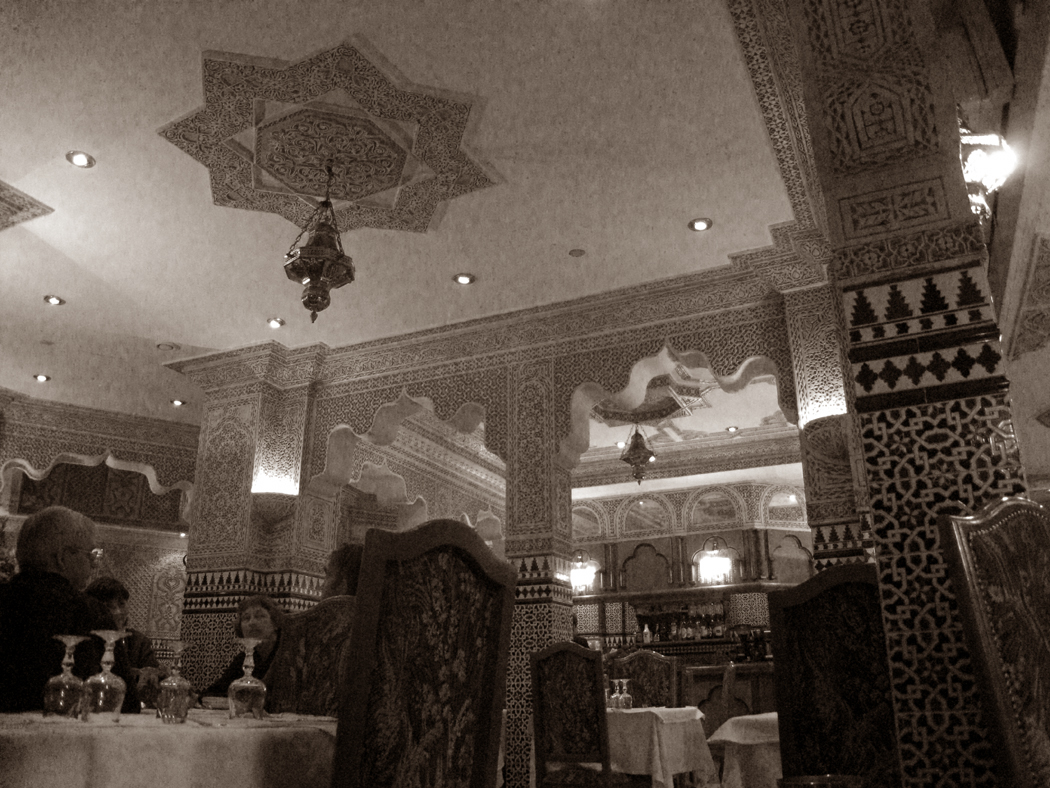
One only has to look at Pope and Wordsworth to see the difference.

I said these pendulums swing at different rates: After Romanticism in writing, we swing back to the social nature of Flaubert or Thackery or Dickens. The pendulum tends to remain social through the early part of this century. Eliot, despite his religious conversion, is eminently concerned with man and man, and sees religious conviction as a social good.

But when we hit the mid-century, the pent-up spirituality bursts out with the Beat writers, with the Abstract Expressionists, with Existential philosophy

The social-cosmic pendulum does not swing in synch with the general-particular pendulum.

Social — Cosmic

Limits — No limits

This world — The next world

Political — Apolitical

Regional — International

Active participation — Retreat from world

Rational — Magical

Emblem — Myth

Incarnation — Transcendence

Society — Nature

Nature as desert — Nature as cathedral

Dramatic — Lyric

Irony — Sincerity

Clarity and Ambiguity

The third large category is the fight between clarity and ambiguity. One age likes its art simple and direct; the next likes it textured, complex and busy.

The classic example, of course, is the shift from Renaissance classicism to Baroque emotionalism.

In a Renaissance painting, the artist made sure everything could be seen clearly. He lined everything up with the picture frame, lit it with a general illumination so that confusing shadows would be minimized.

Look at this Last Supper by Andrea del Castagno.

castagno

See how clear it all is. But the Baroque painter Tintoretto had a different vision of the same biblical event. It is writhing, twisting out into deep space, with deep shadows and obscure happenings.

tintoretto

The Renaissance liked stability and clarity, the Baroque, motion and confusion.
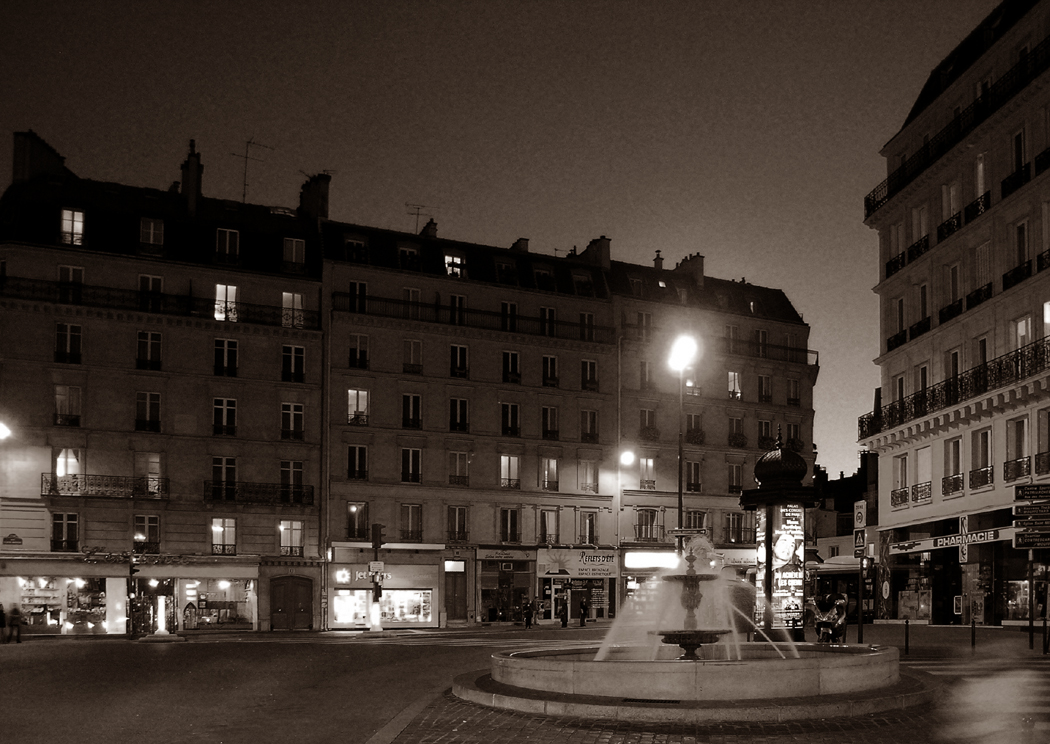
Like the David of Michelangelo and the Bernini statue of Apollo and Daphne.

david and apollo and daphne

Or the Birth of Venus of Botticelli

botticelli

and the Calling of St. Matthew by Caravaggio.

caravaggio

In buildings, you can see the shift from the Gothic, with its infinite variety and crenelated detail, obscuring the larger structural designs to the clarity of ornament and design in Christopher Wren’s  St. Paul’s Cathedral in London.st pauls milan cathedrals

You can hardly see the actual walls of the Gothic cathedral, so overwhelmed are they by buttresses and sculptures.

But St. Paul’s is a monument to line and form, clearly seen and designed.

Clarity — Ambiguity

Limits — Freedom

Simplicity — Complexity

Unity — Diversity

Drawing — Painting

Stasis — Energy

Regulation — Impulse

Overall — Detail

Formal — Organic

Codify — Explore

Stability — Change

Rules — Anything goes

Clarity — Obscurity

Old form — New form

Discrete disciplines — Mix and match

Relevant or Isolated

Another shift concerns whether art should serve some wider function, like moral instruction or a search for scientific truth, or whether art has no purpose but to stimulate our esthetic tastes. Art for art’s sake.

Should the art hang on the wall to be looked at, or should it decorate the handle of the shovel or spoon? Should it remain outside the mores of its time, or should it be used as propaganda for a righteous cause? Is it merely to look at, or should a Madonna teach you something about your religion?

This is a concern that has become important in the art of our time. A whole herd of artists arose in the 1960s who saw art as divorced from life. Color Field painters preached the gospel: “Art can make nothing happen.”

noland kruger pair

But Postmodernism is largely about inserting political thought into the paintings. Art for art’s sake is declared “elitist” and “irrelevant” and the new art must be judged on its political truth.


Art as Art — Art for Function

Entertainment — Edification

Style — Content

Apolitical — Political

Ignore past — Embrace past

Retreat from world — Active participation

Art on wall — Art on implement

Technical — Visionary

Vocation — Inspiration

Contemplation — Propaganda

Ideal — Practical

Tribal or Cosmopolitan

The history of art also pulsates with the shift from nationalistic to international styles, from that which is specific to an ethnic or identity group, and that which seeks to transcends those limitations. The Gothic style as an international style, but the Renaissance is either Italian or Northern. The Baroque breaks up further into French, Dutch, Italian, Flemish.
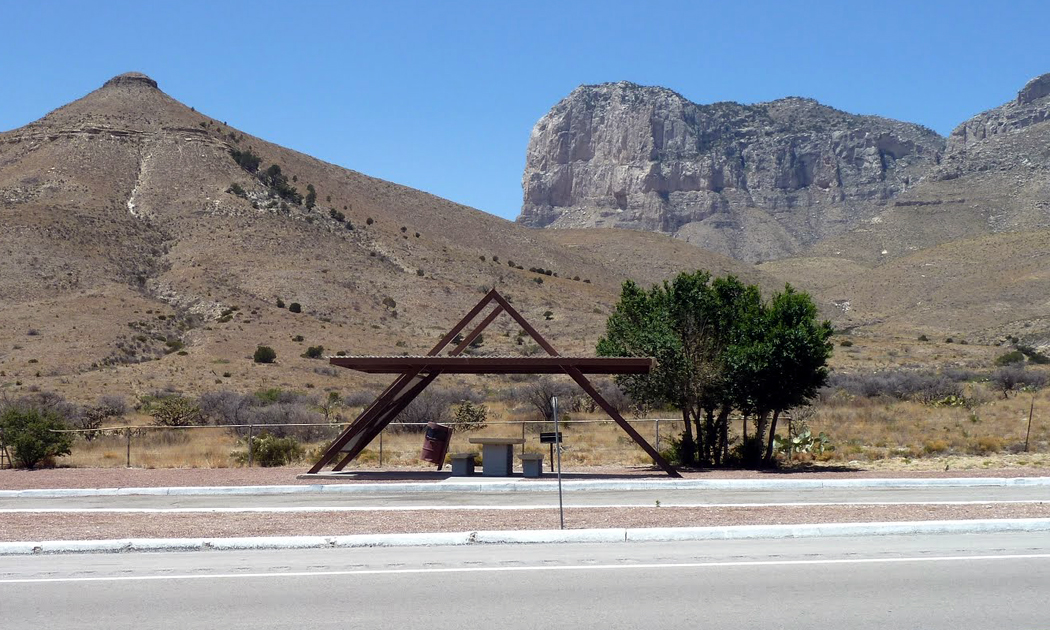
In music, Bach imitated the national styles in his English and French suites and his Italian Concerto.

But the Galant and Classical styles that replaced it vary little from country to country. Perhaps the Italian is a little lighter and the German a little more complex, but you can’t get simpler or more direct than Mozart.

Nationalism reasserted itself in the next century, so that you have whole schools of Czech music, French, Russian.

In the early 20th Century, internationalism took charge once more and for a while, everybody was writing like Stravinsky.

The main architectural style of the first half of this century is even called “The International Style.”

But ethnic identity is back, and art is once again seen as a key to identity.

Exclusionary — Syncretic

Limits — No limits

Theocratic — Humanistic

Reinforce ethos — Challenge ethos

Regional — International

Nationalism — Cosmopolitanism

Discrete disciplines — Mix media

Ajax Defending Greek Ships Against Trojans

All of us or just me

One of the big shifts is between what I call “ethos” and “ego.”

That is, art that is meant to embody the beliefs of an age, thoughts and emotions that everyone is believed to share — or art that is the personal expression of the individual making it.

We have so long taken it for granted that an artist is supposed to “express himself,” that we forget it has not always been so. Did Homer express his inner feelings in the Iliad? Or are those emotions described the emotions he expected everyone would understand and share? He tells of what Achilles is feeling, or Ajax or Hector or Priam — and they are deep and profound emotions — but they give no clue to what Homer was feeling.

In music, Haydn’s symphonies were written about as being powerfully emotional. Nowadays, we think of Haydn as a rather cerebral composer. If we want emotion, we go to Beethoven or Schubert. You cannot listen to Schubert’s string quintet and not believe it expresses the deepest emotions that its composer was suffering at the time. It is his emotion. We may share it, but it is his.

Ethos — Ego

General — Particular

Investigate world — Investigate self

Chorus — Individual

Rectitude — Bohemianism

Anonymous creator — Signed art

Vocation — Inspiration

Atelier — Single creator

Talent — Genius

Depiction of emotion — Expression of emotion

Head or Heart

baudelaireThen, there is the fight between wit and sentiment.

To some generations, art needs to take a cool, ironic view of the world. Cervantes in his Quixote, or Pope in his Rape of the Lock.

To other generations, art is about human emotion. The more a person feels, the better the art.

Wit was the hallmark of the 18th century. Sentiment of the 19th. It was a common issue of discussion. Everyone knew just what you meant when you used the terms.

Did you wish to write “what oft was thought, but ne’er so well expressed”? or did you want to release pent up emotions, creating something new, never felt before? That’s what Baudelaire did.

Wit — Sentiment

Irony — Sincerity

Universal — Particular

Intellect — Emotion

External — Internal

Reinforce ethos — Challenge ethos

Artifice — Naturalism

Social — Cosmic

Verbal — Sensuous

Society — Nature

Emblem or Myth

Penultimately, there is the swing from art which uses its symbols emblematically and that which uses it mythologically.

That is, if you use a symbol, does it stand “for” something else — as cupid stands easily for love in so much pastoral poetry — or does it partake of that which it expresses — that is, in photographer Minor White’s wonderful formulation: “what it is and what ELSE it is.”faerie queene

Cupid is an emblem. The Cross on the Knight’s shield in The Faerie Queene is an emblem. Moby Dick is a myth. One is easily translatable, the other is not and opens itself to investigating that which cannot be put in mere words or images.

A Classic age tends to be emblematic, a Baroque or Romantic age tends to be mythic. The one uses symbols as shorthand, the other as incredibly convoluted mental images that point at, but don’t touch, what it means. It is the opposite of shorthand.

Ovid is the acme of the emblematic. Homer of the mythic. Homer’s gods — for all their occasional silliness — are actual divinities. Ovid’s are puppets playacting for our amusement.

Emblem — Myth

Universal — Particular

Intellectual — Emotional0 R

Simplicity — Complexity

Unity — Diversity

Stasis — Energy

Regulation — Impulse

External — Internal

Secular — Religious

Style — Content

Synthetic — Organic

Miniature — Epic

Ironic — Sincere

Mimesis or Poiesis

And finally, there is the issue of whether art should imitate the appearance of nature, or should imitate the processes of nature. That is, whether art is mimetic or poetic. Should it copy or create from whole cloth?

We have seen in our century the change from abstract art to images. Abstraction once seemed unassailable. It was the serious art; anything else was trivial.

kandinsky mondrian pair

lichtenstein 2Well, we got over that. From the time of Pop Art, art has increasingly attempted to look, in some form or other, like the world.

It hasn’t done this in imitation of the look of paintings from earlier centuries. That look cannot come back, or cannot be used without irony.

But artists today paint images of people and things. They are identifiable. Some are almost like the old paintings.

Richard Diebenkorn was hailed as an abstract artist in the 60s.

When he began returning to the figure, he was at first castigated.

diebenkorn before and afterNow he is seen as a prophet.

Abstraction wasn’t only in painting. Waiting for Godot is an abstract play. Gertrude Stein wrote abstract prose. Carl Andre wrote abstract poetry.

Mimesis — Poiesis

Imitation — Abstraction

Particular — General

Individual — Universal

Observed –Stylized

Detail — Overall

Edification — Entertainment

Content — Style

Naturalism — Artifice

Investigate world — Investigate self

Scientific realism — Emotional realism

Stretching the frame

Before we leave the subject, we should point out that oppositions are entirely dependent on context. Baptists and Lutherans are opposites until we pair them as Protestants against Catholics, and we pair those against, say, Islam as the opposite of Christianity, or those paired as religions of the book against, let’s pick, Hinduism, but then we can pair those as religions against atheism, and pair them as belief systems against thoughtlessness, and pair them as philosophies against — well, whatever is the opposite of philosophy.

There are an uncounted number of oppositions; I have listed a few I have considered. I could elaborate blogs about each of pair them.

But you get the picture.