kids art 11

As a professional art critic for more than 25 years, I saw a lot of art — everything from cowboys in leather to nude men dressing themselves in raw meat. But none gives me such consistent pleasure as children’s art.

Mostly, I’m thinking of art made by first-, second-, and third-graders using humble tempera paint and large skeins of paper on which to flow their ideas.

You only have to watch a first-grader in the process of painting to know how deeply committed an artist he is. Every muscle is involved — his very toes are poised in relation to how the tip of his brush moves. He is not distracted by questions of style, of whether the painting will be marketable, of whether his is better or worse than those around him. There is only the fundamental necessity of getting down on paper whatever it is that needs expression.kids art 15

Curiosity and joy are inseparable. Which is more than you can say for many adults out there trying to make a living.

I used to be one of those people who condescended to children’s art. Charming, I thought, but not really art. I have learned better. A child artist is in no respects any different from an adult one; he does the same things, goes through the same processes and creates something as worthy.kids art 08

Some artists and critics with open minds have recognized just such. Alfred Stieglitz hung children’s art in his New York art gallery in the 1920s. The Chrysler Museum in Norfolk, Va., has also done so, without any belittling labels. When the art is properly framed and presented, no one could suspect that the works were not by a respected artist with a New York name.

Picasso has said, ”Every child is an artist. The problem is how to remain an artist once he grows up.”kids art 19

A direct link

Children pursue the creation of art with a purity of heart, and a courage that fails many as they grow older. It is a rare artist who recognizes that his duty to art is the duty that the child accepts without question.
I am not talking here about that god-awful ”project art” that some kids are forced into making — like tracing your hand and making a turkey out of it, or building a golden macaroni Parthenon. When all the children in a class are forced to make the same art, or are shown the accepted method of solving an art problem, all the joy — all the genuine art — is sucked out of it.kids art 02

I am talking about that direct link between experience and expression that comes when a child is given a bunny to hold and then given a paintbrush. The child cannot but attempt to express the experience in the most truthful and direct way. He does not need to be taught about design, theory, or worse, art history, to paint the rabbit. He finds his own “adequate means of expression.”

Consider what happens when the teacher takes a turtle to class, lets the children handle it and play with it, give it a name and study its anatomy and its habits. Here are some of the results. Notice how varied their approaches, and how beautiful the designs and the color harmonies.turtles 01

kids art 04 -- turtleBad children’s art — just like bad adult art — is most often made using formulas; good art is made when artists discover their own solutions. No good tree was ever painted using a sponge; all good art is reinventing the wheel.kids art 24

Creating a well to draw from

Using art to understand experience is what it is all about. It is how art comes to enrich, inform and deepen the child’s inner life. And that inner life is important because it is a sanctuary and a source for the rest of his life — a place he can draw strength and resources from.kids art 12

Formulaic art informs that inner life no more than television — it is busy work.

Solving the art problems, learning to see and to express experience, are all a part of the process of growing. Art is no different from reading or arithmetic in this. Children do it enthusiastically. We should take a lesson from them.

After all, we are not supposed to stop growing simply because we’ve reached adulthood.

The bottom line is that children are the heroes of their own lives. So should we all be.

PETA 1

It’s been called our next big moral challenge. Over the next century, activists say, we will come to see animals in a different way and recognize that we can no longer use them for our own ends.

Just as no one would now argue in favor of slavery, in the future no one will argue for using animals to test medicine, killing them to provide food or burdening them to do our work.

“Animal rights means that animals, like humans, have interests that cannot be sacrificed or traded away just because it might benefit others,” says PETA, or People for the Ethical Treatment of Animals.

In their quest for better treatment for animals, such groups make the case that animals have — or should have — legal rights. In opposition are those — many with an economic interest in the status quo — who think of PETA as a bunch of spit-gargling extremists bent on disrupting our way of life.

But no matter which side you land on, there is a problem at the heart of the issue that has not been solved.

Man and Beast

At the core of the animal rights issue is the question of exactly what, if anything, separates human beings from animals — or from other animals.

All the remaining issues, from the biblical verse giving “man” dominion over the beasts to whether Sharon Stone should wear fur, pivot on this single question. And it is a question with many gray areas and no satisfactory answer.

Animal rights activists, such as members of PETA, emphasize the similarities between animals and humans. They point out that the chimpanzee, for instance, shares more than 98 percent of its DNA with the human. Not enough of a difference, they say, to warrant treating these apes as property.

The Judeo-Christian tradition emphasizes the distinction in Genesis, when Jehovah creates Adam in his divine image and grants Adam dominion “over the fish of the sea, and over the fowl of the air, and over every living thing that moveth upon the Earth.”peasant and oxen

This has been considered as theological permission to use the animals for food, for transportation and for medical research.

Since then, however, science has had trouble with the border between human and animal. It’s been forced constantly to retreat from its definition of what distinguishes the two. Once, we were the toolmaking animal, until we learned that chimpanzees can make a primitive form of chopsticks to pluck termites out of their nests. Then we were the linguistic animal, until gorillas started learning sign language.

By now, science can only fall back on DNA: Humans are genetically distinct. That’s not much of a mandate to reign over Creation: After all, each species is genetically distinct.

This gradual blurring of the human-animal border would seem to benefit PETA. However, it could end in confounding their own argument.

Great chain of being

Traditionally, we have thought of life on Earth as a hierarchical “great chain of being,” in which certain species are “higher” or more advanced than others. PETA’s argument tacitly accepts this principle, even when others are finding it outdated or even paternalistic. PETA wants to “raise” animals to a human level by including them in our laws.

If you approach equality from the top down, as PETA does, and you see the question as raising the animals up to a human level, you get one set of answers. But you can also blur the line between humans and animals without recourse to the hierarchical principle. If you do, you get an entirely different result.

PETA’s argument, essentially, is that animals are people, too. But you make the same argument with different results if you state it in reverse: That people are animals, too.PETA collage

Another problem with PETA’s paternalism is that it treats intelligence as a shibboleth. If, for instance, science can show us that whales and dolphins are intelligent, or that gorillas or chimpanzees can learn to use sign language, does that mean those animals should receive special recognition under the law, and that dumber animals should not?

After all, we don’t give more legal rights to smart people over dumb ones. Why should animals be different?

Is intelligence the determining factor in deciding what animals have near-human legal rights? And if we decide that is not the case, then why are humans accorded special distinction among the animals, unless by divine fiat?

Animals are people and people are animals

More important, if you erase the line between human and non-human, you may end by making the case for the opponents of legal rights for animals.

For since the case can be made that human beings are also animals, one species among many, we have no reason for assuming our laws — the recorded customs of our species — can work for animals but not the other way around. Turnabout is fair play: If we start applying our laws to animals, why is that preferable to applying animal laws to humans?

Why should humans not be asked to conform to the moon-baying, alpha-male pack organization of wild dogs?lions eating

In fact, the chief reason humans exercise dominion over other animals has less to do with Scripture or law than it does with sheer power: Humans dominate other animals because we can. No rational person doubts that, say, mastodons or sabertooth cats would dominate the Earth — including humans — by force, if they could.

Further, animal rights activists talk about “species-ist” behavior — parallel to racist behavior — in which we favor our own species over others.

“I care about animals,” the late former Surgeon General C. Everett Koop once said, “but I care about people more.” It’s a common sentiment.

Species-ist dominance

Yet, in the animal world, each species favors its own over other species. Our own species-ist behavior is something we share with other animals, and if our behavior underlines the distinction we draw between ourselves and the beasts, it weakens the argument that animals should be treated like people.

Call it the animal rights Catch 22.

In other words, if there is no distinction between animal and human behavior in species-ist behavior, then there is a valid line between humans and animals and no logical reason to grant animals the legal rights we grant ourselves. To do so is to deny our animal natures and pretend that human beings are different from animals. And if we do pretend that humans are substantively different from animals, we again make the case against smudging the legal line between animal and human.

“Alle Menschen werden Brueder”

Of course, all this reflects only on the legal question — and underscores the point that the treatment of animals is properly a moral, not a legal, issue. PETA may be barking up the wrong tree.

Still, PETA may be on the right side historically.

One must remain humble about the possibility. Before the Civil War, there were intelligent, moral-minded people who defended slavery on logical, historical, religious and ethical grounds. And in the 1850s, abolition often seemed championed by crazy-eyed radicals and fringe elements in society. If you were a moderate then, you would probably have considered abolition “crazy,” or at least, precipitate, even as you recognized the need to treat slaves humanely.

Now the question of humane treatment of slaves seems entirely beside the point. Slavery itself seems patently inhumane and indefensible.

So instead of merely condemning animal rights apologists out of hand, we might consider that we, ourselves, could be in the same moral position: That in 100 years, animal rights may seem as obvious as emancipation seems to us now.

Obviously, we cannot know if this will occur, but whether we worry about the historical argument or not, we can still do our best to function ethically and morally on all fronts in the present.Buber

One does not need to make the legal case that animals are humans to recognize the fraternity of Creation. We need only see all that is not ourself as equal to ourself. In other words, recognizing the aliveness, existence and independence of the teeming individuals on the planet, we see in them the mirror of ourselves.

This is the basis of human morality: To see, as theologian Martin Buber has put it, the other as a “thou” rather than an “it.” It has always been easier to see family, or clan, or tribe, or nation as “thou,” and easier to see strangers or foreigners or different races as “it.” But that argument is just as compelling when you look into the eyes of a dog, or a horse or a canary.

We easily see our pets as “thou.” But just as moral action requires we see other people as “thou,” we shall have to begin considering animals other than our pets as “thou,” also.

Life feeds on life

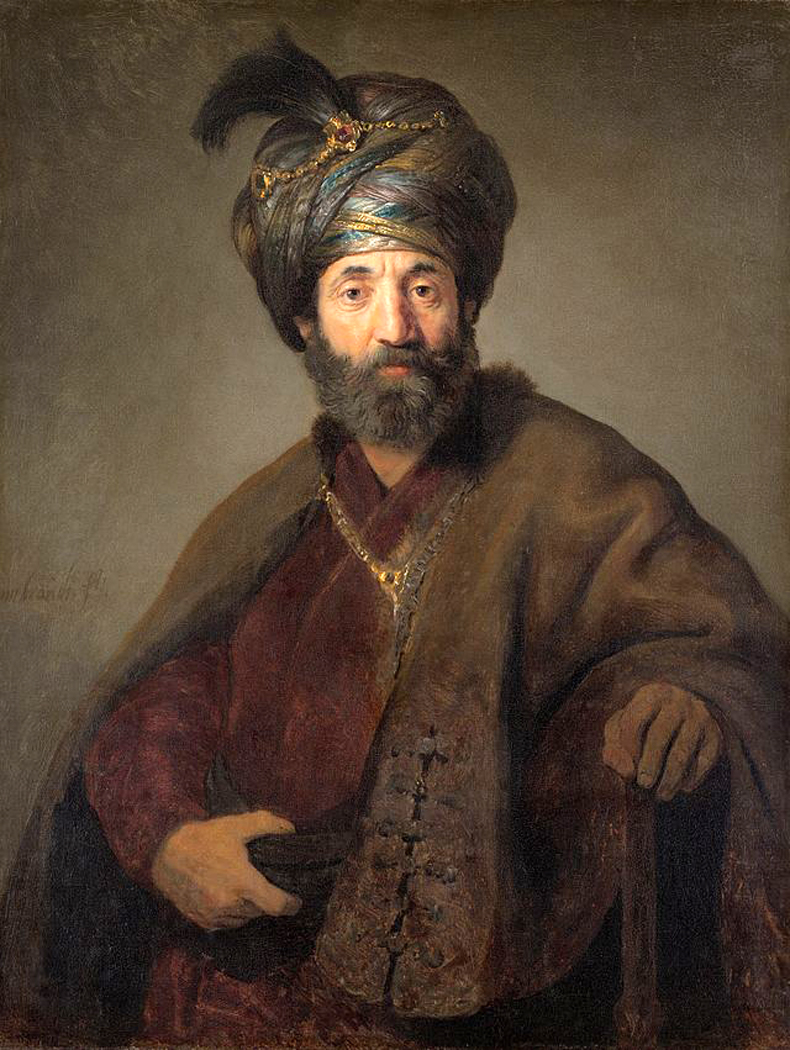
rembrandt oxThis may not make PETA entirely happy, because even when we recognize other people as “thou,” we may still find just cause to end their lives. And even when we take animals as “thou,” we may find it acceptable to eat them.

Many tribal cultures have done just that, revering the animals they kill and eat. All life is a smorgasbord, with one species eating another. Even if we become vegetarians, we kill plants. Life feeds on life; life is not gentle. There is a certain sentimentalism to the PETA point of view.

The moral action is not necessarily to refrain from causing injury, but to take responsibility for it, and never to cause injury blindly and blandly. Making a law to enforce action — such as proper treatment of animals — tends to take away our personal responsibility and lets us obey blindly and blandly. This might be just as bad.

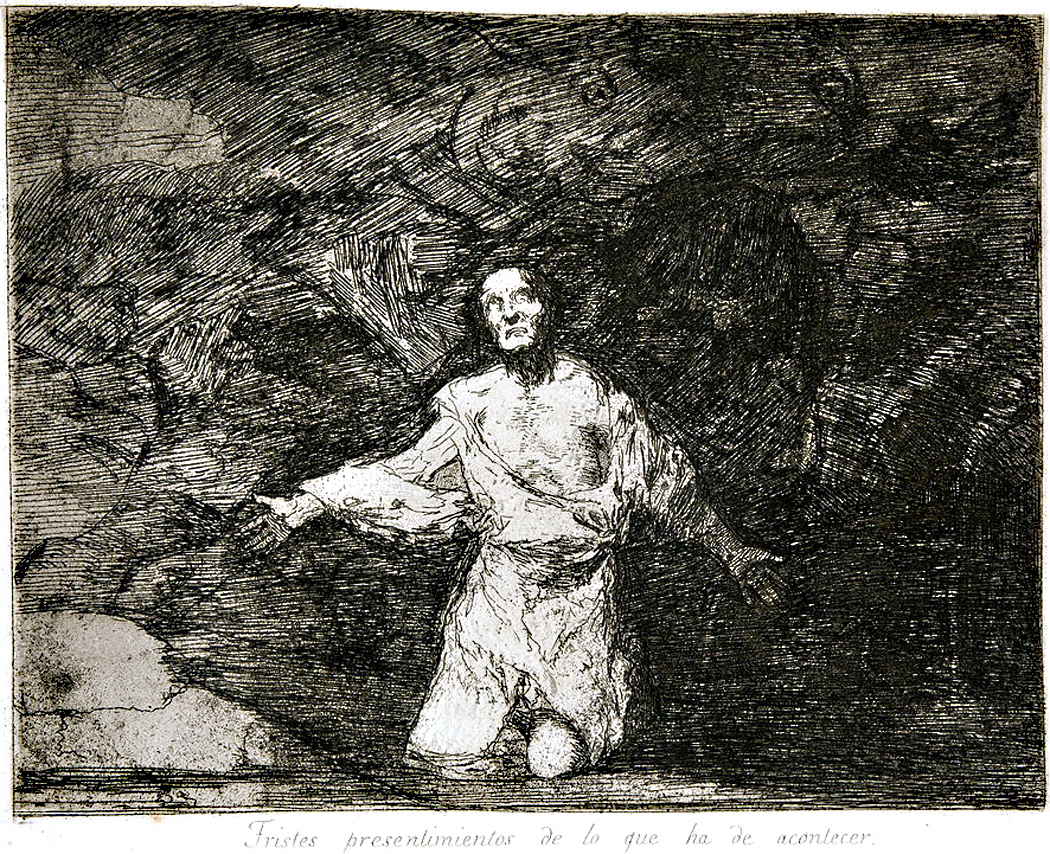
Selva Oscura

WHEN you are young, it is easy to be in love with art. You may love its artifice, you may love the colors or the rhymes or the great blaring sounds of the music you listen to. Art is vibrant; it seems so alive. But most of all, you are in love with the sense of importance iart brings: It seems to validate the belief we all have when we are young that our own lives matter, that we count in the larger scheme of things.

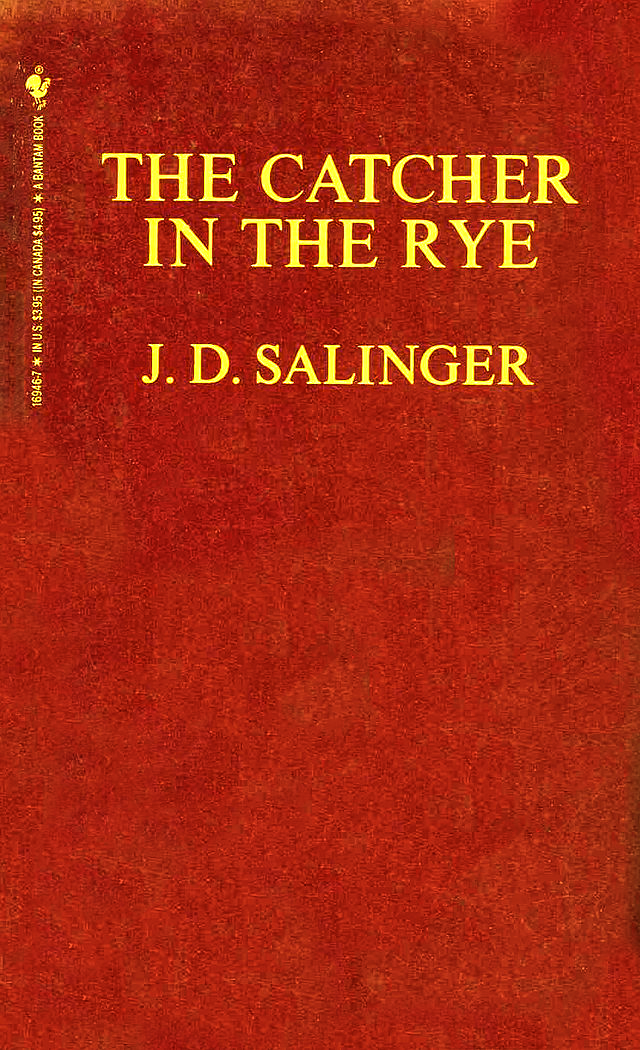
We are all Tristan, Achilles or Holden Caulfield.

Perhaps that is why the young make so much art. They are not yet unhappy with it, not yet dissatisfied at the lies that art creates, not yet disgusted with the prettiness of it all.

Most of all, the art we make when we are young imitates the art we have come to love: Art most often imitates art, not life. There is so much bad imitation T.S. Eliot written in college, so much abstract painting of no consequence, so much herd-instinct.

I have been as guilty as anyone. In my 50 years of photography, the bulk of my work has been imitation Ansel Adams or Edward Weston or Irving Penn. I was learning to make images that I could recognize as art, because it looked like the art I knew.Old photos

Big mistake.

Go to any art gallery and you see the same process unfolding. Imitation Monet here, imitation Duchamp there, imitation Robert Longo there. Whatever the current trend is in art, there are acolytes and epigones.

At some point, as you age and if you are lucky, you let all this shed off you, and you no longer care about art. What takes its place is caring about the world, caring about the experience of being alive. It isn’t going to last long, so you begin paying attention: close attention to soak in as much as you can before you die.

In a sense, when you are young, you test your life against the art you know and love, to see whether you measure up to it; when you are older, this turns around, and you test the art against your life, to see whether the art measures up.

And if you are inclined toward art, you give up caring whether you are making “great” art, or whether you are part of the great parade of art history, and you care only about what you see, hear, touch, smell and taste. The world becomes alive and art faces to pathetic simulacrum.

When you reach this point, then you can begin making art. And you make it for yourself, not for posterity. You make it to attempt to capture and hold the world you love, or to understand the world, or to transcend it, when it becomes too difficult to endure or accept.

Week's Bay Bog Alabama

2

The first garden I made was a vegetable garden in the front yard of the North Carolina house I was renting in the early 1970s. I grew the usual tomatoes and peppers, beans and spinach. I also ventured into eggplant, which turned into the most successful part of the garden, to my surprise.

But what I really learned from my garden is the difference between the neat, orderly photographs in the seed catalogs and the rampant, weedy, dirt-clod messiness of the real thing. Gardens, I discovered, were not military rows of uniform plants, but a vegetative chaos.

The stupid thing was that I should have known this going in. All around me, trees, vines, shrubs, roadside flowers and Bermuda grass were telling me one single thing, over and over: Profusion is the order of nature. Variety, profligacy, energy, expediency, growth.

Whether it is a kudzu shell over a stand of trees, or the tangle of saplings that close over an abandoned farm field, or the know of rhizomes that run under the turf, the rule of nature is clutter.Crab Apples Sullivan Maine

The walnut tree outside the front door was old, and its bark was stratified with moss, lichen, beds of sap, and a highway of ants running up and down. From a distance it was just a tree, but up close, it was a city.

When I was a boy, there was an abandoned farm beside our property. An old, unpainted barn and farmhouse stood in the center of a field of grass and weeds. When I was maybe 8 years old, those buildings burnt down one night in a glory of flame.

In the years that followed, the course of plant succession took over. I learned my lessons from Boy Scout merit badges I earned, but even there, the story of succession seemed much more orderly than what I saw out my window. Plant succession wasn’t a clear progression from annuals to perennials to shrubs and through a clearly delineated march of one kind of tree into another till we reached climax growth. It was instead a tangle of saplings through which it was nearly impossible to walk. There was not a “baby forest” that we saw, but an overpopulated struggle for sunlight, every plant elbowing its neighbor for survival. In a forest, the trees stand a certain distance apart, their crowns touching to make a roof. But this young version was more like a thick head of hair; there was no distance between the shoots.Buxton Sedge, Hatteras NC

Everything in nature told me the same thing: busy-ness, struggle and chaos. It was all exhilarating, and I loved the tangle of it all, the textures, the smells, loam and rot, the mud and dew.

And yet, that isn’t what I saw when I looked at art about nature, whether it was glossy calendar photos or Arizona Highways’ covers on the low end, or whether it was Raphael and Delacroix on the high end.

The nature I saw in most art was tame as a housecat. And the art wasn’t really about nature at all, but about order. I wasn’t made to see the world we saunter through, but to see how our minds organize and codify it.

Whether it was 18th-century paintings or Ansel Adams’ photographs, the art was all about order. In fact, you could say that the point of the art wasn’t to make us see nature, but to understand order.

I was unsatisfied with it, and with my own art. I wanted to make an art that would look at the natural world and make images that spoke to me about what I was really seeing and feeling.

3

NDP60I recognized something of what I wanted in the arts of the Gothic, Baroque and Romantic periods, eras in art that glorified the energy and visual confusion of the world. They are arts that responded to the profuse variety of the experience. They were also arts that were devalued by the mainstream art world of the 20th century. Eliot deprecated Milton; Stravinsky insulted Berlioz; Mies van der Rohe is the anti-Gothic architect.

Yet, I loved Shelley, Schumann, Chartres. And I wanted to find a way to make that over in our new century, in a new way, and reattach art to the world around me. It had been untethered too long; too long it had been its own reason for being. Art for art’s sake? Not any more.

It can be hard — it is probably impossible — to make art completely divorced from one’s time. The visual universe is too persuasive. We cannot even know how deeply we are affected by the stylistic twitches of our own age. And I am not saying my own work is sui generis. It certainly is not.friedlander montreal

The light that knocked me off my horse on my own way to Damascus was a single book of photographs — still a fairly obscure book — by Lee Friedlander, titled Flowers and Trees, from 1981. It was spiral bound, printed in a matte finish, and had virtually no text. Inside I found a mirror of the nature I knew and felt. Nothing was framed neatly, nothing was glorified by the light poured on it, nothing we reified into monumentality. Instead there was the profusion, confusion and organicism that I recognized from my own experience.

And I realized that I had been working in that same direction for years, but had buried the photographs among the more conventional mountainscapes and detail photographs. I had several series of images that were my own immediate response to nature and they were all photographs I had made in the gardens of friends. I gathered them together and looked. The conventional photographs seemed to have no value whatsoever and these others, almost random, usually confused, and always ad hoc, seemed to breathe the life I had been looking for.

Since that time, and with the advent of digital photography, I have been liberated. I take my camera with me, point it at something I want to feed it, and let it do the chewing. I never look through the viewfinder anymore, but instead look at the larger shapes, darks and lights, that showing the digital screen on the back of my camera. I see how I see and click the shutter.Back Bay, Virginia Beach, Va

Over the years, I have made many of these sets of photographs, usually 15 to 35 pictures in a group, and printed together to be seen as a “book,” that is, a print cabinet, where my audience can spend as much or as little time as they wish and shuffle to the next.book cover

And the unit of my work is the book, not the individual photo. When I visit a garden, I vacuum it all into my lens and after processing them, spread the images out in a series. You can see the results in a book preview for Gardens/Paradisi, a book I created on Blurb.com. The whole thing is there to see via “preview.” You can find it (and buy it, if you have that much excess money) at: http://www.blurb.com/b/607398-gardens-paradisi.

For the pictures in that book, selected from those loose leaves, I have had to edit them down to a manageable few. Most of these “books” have been turned into chapters of either 9 or 15 images. I hope they still give a flavor of what I have attempted. You can find more in the other books I have made and available at Blurb.com.Giverny 3

4

If I have succeeded, I have also failed.

For in the end, my attempt to wrestle with the world has turned into an art that is also about order, about how the mind engages with the things around it. I have wound up doing exactly what my predecessors have done.

It isn’t surprising. After all, when I turn on my elders and find their efforts insufficient, I am doing nothing different from what they did when they turned on their elders. It is how art grows. Wordsworth rebels against Pope, Eliot rebels against Wordsworth, Ginsburg rebels against Eliot. One generation finds its parents lacking and tries on its own to finally express the truth.

And I can only be happy when a generation after mine points its own finger backward and wiggles it in reproach at me.

It seems we never get closer to what we are all after. Value is all in the trying.Doug's Garden

egyptian geese 2

You enter the cave, walk through tight spots, crawl on hands and knees and come out, 100 yards later, into a dark room, a widening in the cavern walls, and see, if you point your lamp at them, some of the most beautiful animals ever drawn by human hand.chauvet

The very first art — some 30,000 years old — is some of the best, and what you have are pictures of animals. On the walls at Lascaux, Chauvet and Altamira in Europe, you find bison and elk, aurochs and rhinoceroses. When you find people drawn on the cave walls, they are hardly more than stick figures, but the animals are often so realistic you can identify them by genus and species.

You can see it in the Egyptian tomb paintings, too. Human figures are stiff, in the artificial “King Tut” poses so familiar from the hieroglyphs. The humans are stylized and symbolic rather than naturalistic. But the animals don’t share that fate: They are seen with a grace and directness at odds with all the machinery of symbolic hieroglyphs — a real duck, a real hippopotamus, a real ibis.knossos

You can see it too at the Palace of Minos in Knossos, where the mural is filled with graceful dolphins and mackerel.pompeii fish

Or in the mosaics at Pompeii, with its seafood menu of crustaceans, eels, octopuses and seabass. Animals have a special place in art.leonardo

They speak to us in a special language, even when they exist as a smaller part of another painting: the dog in Van Eyck’s Arnolfini Wedding, or the mink in Leonardo’s Lady With an Ermine.

It is an element that reflects us and we can’t seem to do without. But what is that element?

“They connect us to something larger or greater than ourselves, or with a past we’ve forgotten,” says painter Anne Coe, whose work is well known for its sometimes satiric use of animal imagery.

And, in fact, the animals in paintings almost always have an ulterior reason for being there. They are doors to something. “Something larger,” as Coe says.

But it’s a two-way door, and what the animals mean depends on your direction as you pass the portal.

Almost like choosing which end of the binoculars to look through, you get very different takes on what animals are and what they mean.

Going one way, the animals are symbols. They stand for all kinds of things: sometimes totemic, sometimes archetypal, sometimes they are as simple as elephants for Republicans and donkeys for Democrats. But they stand for something other than themselves. Perhaps the Democrats would be better symbolized by a platypus or the GOP by a warthog, but there you go: We are stuck with the symbols. Everyone understands them; they’re shorthand.medieval animals copy

Medieval and Renaissance art is filled with this kind of symbology. The dog stood for faithfulness, the goat for lust, the lion for nobility. Of course, for the medieval mind, everything was a symbol.egyyptian bee

We still have some of this emblematic symbolism with us: busy as a bee; crazy as a loon; the industrious ant vs. the lazy grasshopper. We tell Aesop fables to our children to warn them about bad behavior.

But going through the door in the other direction, the animals are steadfastly not symbolic, and force us to see them for themselves as separate entities in the universe. They force us to recognize them as “thou” in theologian Martin Buber’s formulation of “I-thou,” as distinguished from “I-it.”

You look at the eyes in a painting by animal portraitist May Cheney and you see the “there” there. There is no mistaking the cat or dog or goat for an insensible beast.

“An animal’s eyes have the power to speak a great language,” Buber himself said.may cheney dog

Cheney says, “The animal is present and looking back at you.”

And you are forced into the awareness that symbols are already several removes from reality, and that sometimes it is good to re-experience the world as it actually is.

When animals are symbolic, they are in some sense projections of ourselves. When they are not, they are reminders of all the rest of the universe. In either case, they kick-start us into the recognition of the larger connection we have with the world. And that is their function in art. After all, art itself is there to slap us into awareness, the way a doctor slaps a newborn into breath.

But whether the animals are symbolic or not, they also make us see them — as we come in the door or go out — either as kindred spirits, beings like us but in different form, or the opposite: beings that make us face the ineffable otherness of the world.

But there are more dichotomies, and more art to express them. Even if we see them as ourselves in fur or feathers, we have to ask: Are they similar to us because they are like us, or because we are like them? Are they people, too, or are we also animals?

“There is not an animal on the earth, nor a flying creature on two wings, but they are people like unto you,” it says in the Quran.

Western civilization has a long history of making a distinction between human and animal. The Bible gives us “dominion” over the beasts. We come up with all kinds of distinction to prove we are not animals. We have language, tools, laws, poetry. But looked at from the other side of the door, animals are no less distinct, no less deserving, no less intelligent than we are: Bees can make honey; humans don’t know how.

Mark Twain made fun of our presumed superiority to the animals: “I have been studying the traits and dispositions of the ‘lower animals’ (so called) and contrasting them with the traits and dispositions of man. I find the result humiliating to me.”hiroshige fish

You can see these choices played out in art, and not only in European art. It is there in the manga drawings of Hokusai and book illustrations of Hiroshige, the temple carvings in India, the Mayan glyphs and in the Chi Wara antelope headdresses of Africa.chi wara

Animals mean something to all cultures. You can see it most directly in the paintings of children.

When they are introduced to animals in the classroom by a teacher who brings a bunny or a turtle, the children respond intensely. You don’t have to teach them anything about art: They burn to make paintings of the animals. You can’t stop them.

And their paintings in the first or third grades parallel the adult art, although in childhood terms: Sometimes they see themselves as the animal, playing baseball or caring for the animal babies, and sometimes they see the animals as something foreign, exotic and emotionally powerful. Boys, especially, love to paint sharks or dinosaurs.kid shark

The untutored and spontaneous identification with the animals is so deep that you can’t prevent it from happening. This may or may not be animals’ primary virtue, but it is one too often overlooked when we consider their value as pet, draft animal or cutlet.

They are there in all our art: The animals are either mirrors or windows. We look into the animals’ face and see.

Ultimately, the animals are a connection with the world: They allow us to deflate our species’ solipsism and recognize that connection.pompeii fish 2

corot avray

Each of us has certain works of art that we return to over and over. We might call it a “favorite song” or poem, but it is more than mere favor that makes these works perennial comforts. There is a core in them we find identity with, a sense that the piece was created especially for or about oneself. It is art we take personally.

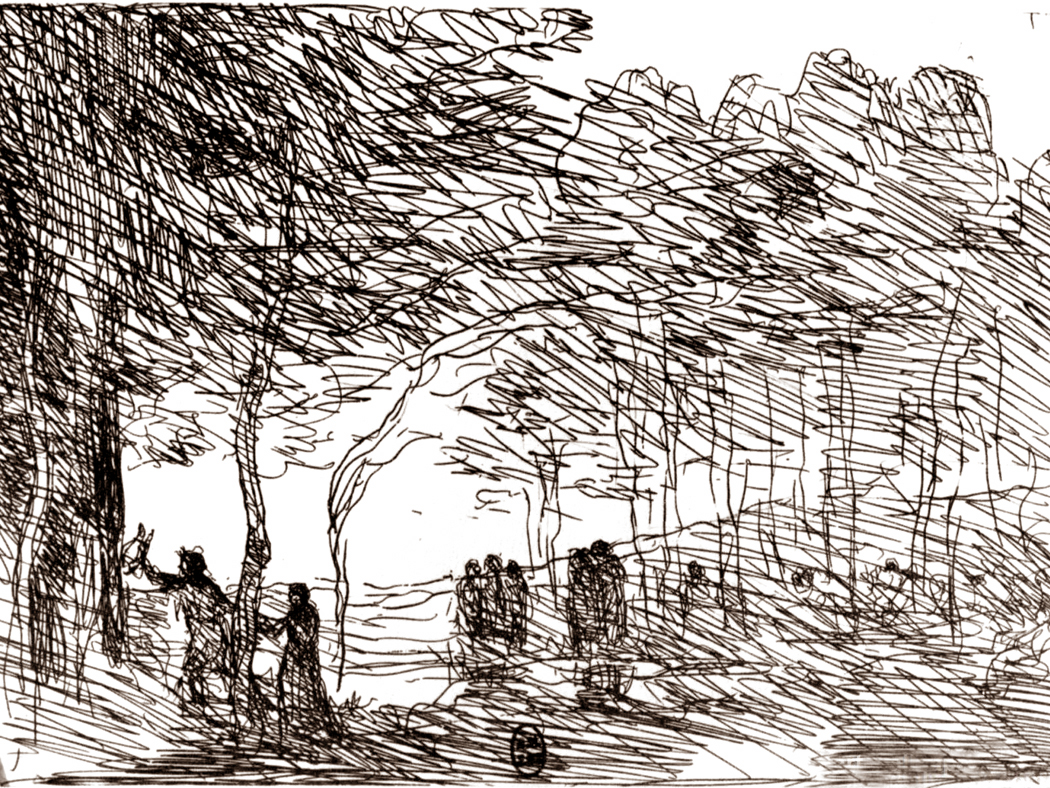
There is a slight Corot painting at the Phoenix Art Museum that I have returned to for 15 years. Most people probably pass by without noticing it: It is just a tiny landscape with a few gray-green trees, a river or lake, and a couple of unrelated people mixed with a few cows.

Called Memory of Ville d’Avray, it is typical of many paintings produced by Jean-Baptiste Camille Corot in the late 1860s and early 1870s.

Yet, there are many things that make this painting special.

Corot lived at a time of transition. Born in Paris in 1796, he lived through several revolutions, both political and aesthetic. Despite the tendency in many of his contemporaries, there is never a polemical word from Corot. He just did what he did — at some moments seeming conservative, at others radical. To him it was all the same. He was only interested in painting.

His art looks back to the great French painters of the Baroque, Claude and Poussin, yet at the same time, by painting outdoors and studying the ephemeral effects of weather and time, he became a precursor to the Impressionists. He seems perfectly comfortable, nestled in the cusp.

Before his time, a painting was a metaphorical window to look through at appropriate subject matter. After his time, the subject matter was not all that important, but its style was.

With the Impressionists and those who followed, style was meaning.

In Corot, and in this small painting, there is a perfect balance, with the perfect pitch, between its manner and its subject.

There are three central Corots: In his early landscapes, often of Italy, the sunlight is intense and the colors bright. The plein-air paintings inspired his Impressionist progeny. His portraits, mostly of young peasant women, foreshadow the heavy classicism of Picasso’s large-boned women, and in style imply the kind of planar vision that Cezanne made his own.

But in his later years, the third Corot appeared, more poetic, softer edged, with colors more subdued. The Memory of Ville d’Avray is one of these. In the 20th century, critics tend to praise Corot for the first two and ignore the third.

But Corot wasn’t wonderful because he pointed the way for Cezanne and Picasso, but because he was a great painter. In the Memory, he paints the landscape of his youth. He lived in Ville d’Avray, between Paris and Versailles. And the painting is full of the “emotions recollected in tranquillity” we know from Wordsworth. And it is full of Wordsworthian nature, too — a man waits in a skiff on the water and a woman kneels by a birch tree, presumably picking mushrooms.

But the painting itself is so smooth, so sensuous, in colors subtle and rich, in a light that is not the light of day, but of memory. You can almost hear the crickets, feel the humidity.

It is this nexus of outer and inner worlds that I find so satisfying. Corot isn’t making a point, either about the world or about the art of painting. But he is filtering his experience through his sensibility to the point the two can no longer be separated. The outer world seen literally is bland and naked. The mental world by itself is autobiography and trivial.

But the two alloyed make meaning.

apolcalypse 1

The date is Jan. 15, 1941. Snow blankets the ground of a Nazi prisoner of war camp near Gorlitz, Germany, and the temperature is below zero. But in unheated Barracks 27, several hundred prisoners have gathered to hear a new piece of music. German officers occupy the front row.

“The cold was excruciating, the stalag was buried under snow,” wrote the composer of the music heard that night. “But never have I had an audience who listened with such rapt attention and comprehension.”

The prisoners and officers heard the quartet begin with a clarinet playing the same notes a blackbird sings. The answer came from a violin imitating a nightingale. Meanwhile a piano and cello created the harmonic nimbus that sits as still as the surface of a windless pond.

apolcalypse 2

It was the “Liturgy of Crystal” and the opening movement of French composer Olivier Messiaen’s Quartet for the End of Time, one of the most miraculous pieces of music ever written.

Messiaen wrote of that opening, “Between three and four in the morning, the awakening of birds: a solo blackbird or nightingale improvises surrounded by a shimmer of sound, by a halo of trills lost very high in the trees. Transpose this onto a religious plane and you have the harmonious silence of heaven.”

The composer, a devout Roman Catholic, had been the organist at Sainte-Trinite Church in Paris. But his religion was less concerned with dogma than with revelation: He was a religious mystic.

olivier messiaen

Messiaen, an odd little man, had joined the French army as a medic and was captured by the Germans in 1940. Herded into cattle cars, he had no food and little clothing but filled his knapsack with musical scores. When he was transferred to Stalag 8A near Gorlitz he found a violinist, a cellist and a clarinet player and — more important — he found Karl-Albert Brull, a German guard who loved music.

Brull bought manuscript paper for Messiaen, found him an empty barracks to work in, posted a guard to keep the composer from interruptions and encouraged him to write music. He also counseled the captured Jews not to escape, arguing that their life in Vichy France would be more dangerous than life inside the stalag.

Soon after the now-famous concert, Brull arranged to have Messiaen repatriated to France.

“As musicians, you had no guns,” an officer said.

The Quartet for the End of Time spun out from its prison birth and became one of the celebrated musical compositions of the 20th century, but it always maintains its ability to astonish and shock.

yehuda hanani

“When I first played it, 30 years ago,” says cellist Yehuda Hanani, “it was as if someone took me to the moon and said, ‘This is what they write here.’ It was so different.

“It was written in the early ’40s, but it is still considered contemporary music. It transcends time.”

It was so avant-garde that it wasn’t performed in New York until the 1970s. Hanani was cellist at the 92nd Street Y in New York when Quartet premiered there. During that New York performance, Messiaen was in the wings, listening, “with tears streaming down his cheeks,” Hanani recalled.

During the war, Messiaen, who died in 1992, saw civilization crumbling around him and thought of it as the end of the world. “And he gave it a religious spin,” Hanani said. “For him this was the end of time, and you can see him experiencing it, but rather than being destroyed by it, or portraying the cruelty and savagery of war, like Picasso did in Guernica or Shostakovich in his symphonies, which are so devastating, he transcends this whole thing and goes somewhere else.”

quartet CD cover

But the quartet’s end of time also is musical: Messiaen was interested in non-Western music and the songs of birds, and he attempted in the quartet to make music without the normal rhythm of bars and meter. He manages to slow time to the point that, musically, it almost stops.

“Like the pulse of animals that hibernate,” Hanani said. And when it moves forward, it does so with the violence of apocalypse, irregular and fitful.”

Apocalypse contains not only monsters and cataclysms,” Messiaen wrote, “but also moments of silent adoration and marvelous visions of peace.”

There are many recordings out there, but one of the best, still available, is by the long-disbanded group Tashi, with Peter Serkin, Ida Kavafian, Fred Sherry and Richard Stoltzman. It was recorded in 1975.

crimestoppers

“The nation that controls gravity will control the universe,” wrote Dick Tracy creator Chester Gould.

moon maidThere was a period in the mid-’60s when Tracy got weird. Or weirder, I should say. Junior Tracy married Moon Maid and the first interplanetary child was born: Honey Moon. Tracy and the police force floated around the city in anti-gravity trash cans. There were the Stop-Action Laser Gun, the atomic light and Diet Smith’s Space Coupe. And the two-way wrist radio gave way to the two-way wrist TV. The quintessential cops-and-robbers comic strip was going sci-fi.

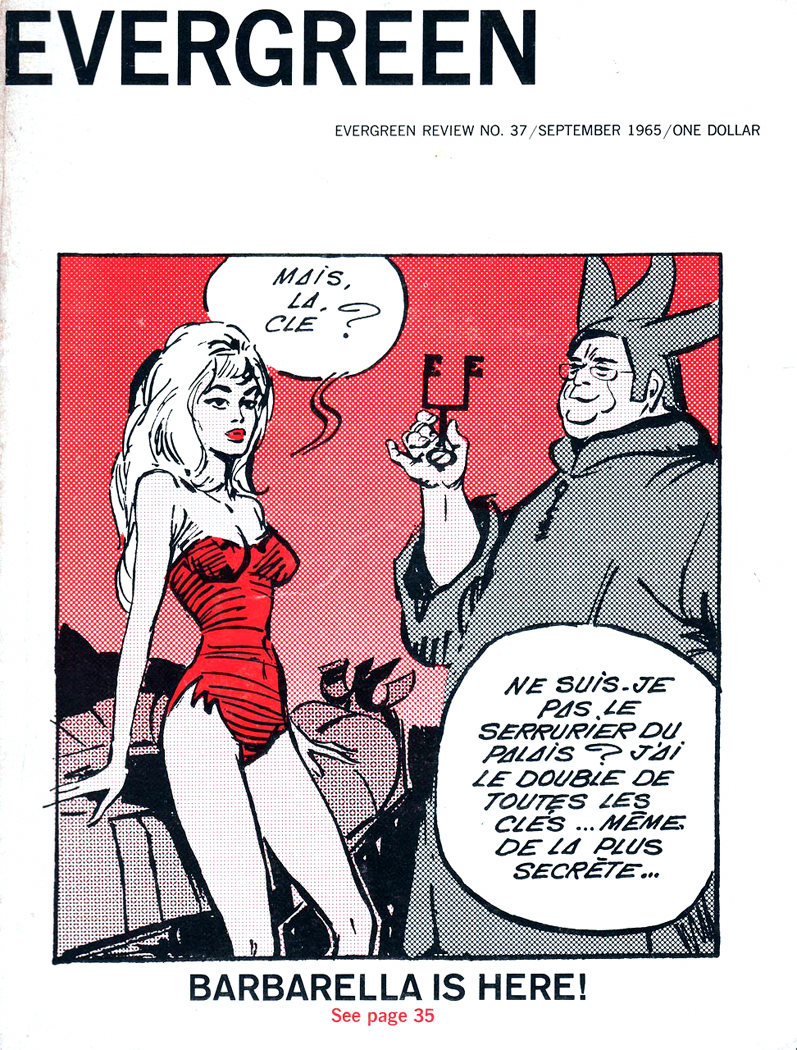
It was the age of Barbarella, and Dick Tracy signed on to go where no man had gone before.

A predilection for prophecy had always been a part of Tracy. Some predictions were conscious, such as Gould’s early enthusiasm for a kind of James Bond forensic science: He made the easy jump from fingerprints to voice prints.Crewy Lou

But others were unintentional: In the ’50s, Gould created the punk look with his villain Crewy Lou, who wore her hair in a crew cut on top and long down the back. She had a punk attitude, too.

Gould had Tracy on the moon five years before Neil Armstrong. And while there are no anti-gravity vehicles such as Gould predicted, the police do hover over the city in helicopters. The match isn’t perfect, but it is uncanny.

honey moon

But in that mid-’60s mania, Gould also predicted the future of newspaper comic strips. And the future he predicted was dismal.

That prediction came in the form of a comic strip within the comic strip.

A group of four characters in the Tracy strip began drawing a thing called “Sawdust.” “Sawdust” was always the same: four identical panels that showed a crudely drawn pile of sawdust — a pyramid of dots — above which ran a dialogue of heavy-handed puns and wheezy Joe Miller jokes. Gould’s sense of humor was as subtle as a cinder block.

Gould was ostensibly satirizing Peanuts, which seemed at the time to him to be an incompetently drawn strip. Gould wasn’t alone. There were many then who didn’t see Peanuts as revolutionary, but as badly drawn and childish.

Gould is lucky he didn’t live to see the funny pages of today. He would have found an entire page of “Sawdusts.”

The art portion of the comic strip has become expendable; the jokes read just the same without the drawings.

From a Wizard of Id:

A — “The safety engineer requests permission to put a warning label on the guillotine.”

B — “What does it say?”

A — “Avoid contact with skin.”

Didn’t need pictures for that, did you?

You could plug that gag into almost any comic strip, and have almost any characters speak the lines. Worse, they read like Bazooka Joe.

The problem is that the nation has become increasingly apathetic to visual things. Even images no longer function so much as pictures, but as icons, like the stick figures that serve to keep men out of the ladies’ room and vice versa.

From Foxtrot to Blondie to B.C., the strips have lost their visual punch. The joke is verbal, pictures are superfluous. The comics have become talking heads.

Dilbert can be a tremendously insightful comic about corporate inanity and office shenanigans, but a strip might well be panels of identical drawings of the character with words unfolding a punchline.

Dilbert strip

Compare that with an even middle-quality strip from the 1950s, like Brenda Starr and see the difference. There are establishing shots, like in the movies, there is the splendid perspective shot looking down the skyscraper. Many panels include two or three points of interest, causing your eye to move, say, from the telephone in the foreground to our heroine behind it and finally, her pal, Hank O’Hair, coming in the door in the back.

brenda starr

Space is three dimensional. There is variety, and there are visual rewards to following the strip.

Older strips — at least in the Sunday “Funny Papers” — spent time and space on purely decorative visual geegaws. There was a febrile joy in the very act of drawing. You will look long and hard to find anything like that in today’s newspapers.

katzenjammer kids

The Sunday comic section for most papers have shrunk both in page size and in page numbers. I miss those glorious Sundays waiting for my father to bring home the New York Journal-American and the New York Daily News. The primary reason for getting those papers was the comics. I’m not sure anyone actually read the news or looked at the ads, but we jumped on the funnies. There was Bringing Up Father, Katzenjammer Kids, Smokey Stover, Little Iodine, Terry and the Pirates, The Phantom, Prince Valiant, Moon Mullins, Gasoline Alley, and even that sappy, godawful soapy strip Dondi, which despite it’s mawkishness, was elaborately and cinematically drawn.

dondi

It’s all gone.

Or not quite gone. While it has left our daily newspapers, there is a fan base which latches on to the visual glories. They can be found poring over two related developments.

The first is called the “graphic novel,” and falls to the Frank Millers and the Art Spiegelmans.

miller 2

They especially play off the noirish aspects of the older comic books, with shadows and streetlamps, gun-barrel flashes and knuckle-crunching thuds.

The readership is limited rather than the mass audience of the old Sunday Funnies, and for all its stylishness, the graphic novel is more a playing out of well-worn tropes than an original visual language. It exaggerates the tropes; it is a Mannerist artform.

The second development comes to us from Japan, and the wild popularity of the manga. It, too, is Mannerist.

manga 1

Both these developments tend to feature adolescent fantasy stories and superheroes and their alter-ego arch-enemies. It’s a very narrow psychic space they fill, and, like heavy-metal music, tend to cultivate an audience much more in touch with the alternate world than the real one the rest of us inhabit.

At least, they are visual, with frame after frame stripped of unnecessary dialog. Like silent film, they tell their stories visually.

Unfortunately, that leaves us grown-ups without a common source of visually imaginative popular culture. We settle for talking diagrams.

burne hogarth tarzan

Stephenie Meyer banned

The call to ban something — books, movies, art — has quieted down since its boiling point in the mid-1990s.

You still hear it locally and libraries are always a good target. But the fervor has gone. Perhaps the Republicans, who always led the charge, came to realize that if they banned too many things, they would soon lack for the bugaboos that are their bread and butter. If there is nothing left to complain about, what would be their purpose in life?

Outrage is the conservative raison d’etre.

So, I wish to rejoin the fray, and crank up the temperature.

I have more than a few likely candidates: If Mark Twain were alive today, he wouldn’t bother writing Fenimore Cooper’s Literary Offences. He would instead produce something more like “Stephenie Meyer’s Violent Crimes Against Her Mother Tongue.” There is no popular writer working now who more consistently fluffs banal mediocrity. I would ban her for that.

I would ban any book with an “as-told-to” byline and any book by a retired politician or adviser. Also, all books whose authors have received a $1 million advance and any book where the author’s name is printed bigger than the title. Gone would be all “Twelve Steps to Dysfunctional Hysteria” self-help books, pop psychologies and celebrity bios. In a special decree, Kitty Kelley would face a firing squad, and Jonathan Franzen and James Patterson would be locked in a room together for life. I would rather listen to a team of life insurance salesmen.

All poetry with warm, fuzzy thoughts will be consigned to shredders, and all humorists who write about their own families will be forced to read Anna Karenina in a really bad translation.

Also gone: gift books never really meant to be read, novelizations and anything post-Ann Rice with vampires or zombies in it.

While we’re at it, let’s disqualify Tennyson and Browning for being the literary equivalent of tile grout.

As a special favor to several women I know, I would ban Brett Easton Ellis. Not his books, just him.

While we’re at it

We needn’t stop with books; let’s get rid of some non-literary irritants.

Let’s ban waiters who call you by your first name the first (and maybe only) time they meet you (faux friendliness).

Let’s ban all Kardashians hairy or smooth, tent-pole movie franchises, sickening orange sodium-vapor lights, and, perhaps most of all, smiling “good-morning” TV shows.

Away with those who use “quality” as an adherent adjective (such as “quality cooking”), Kennedy conspiracy theorists, any fast food with a Scottish surname, bras for cars. May Tom Clancy and all writers of techno-military thrillers follow him into a bottomless pit. Strike down that annoying woman who sells car insurance on TV. Strike down all paranormal crime fighters.

Banned for life: Clothes with brand names on the outside.

Housewives claiming to be shamans.

Paintings of bald-headed naked women (you’d be surprised how many there are).

Music when you’re put on hold. Phone solicitations at dinner time. Festival seating. Celebrity sex tapes. Celebrities you’ve never heard of. Celebrities.

People who talk during symphony concerts and movies. Artificial turf, domed stadiums, designated hitters. Oy veyzmir! Designated hitters. I’ll never accept them, although second-guessing umpires with TV replay may be the final indignity.

Any so-called “reality TV” without Mike Rowe narrating. Especially those populated with regressive alpha-males who talk tough and boss people around. Gordon Ramsay and “Old Man” Richard Harrison: Both repulsive.

TV news happy talk. TV talk shows, TV evangelists. Well, we’d better not get into TV, or better yet, let’s just ban television.

Velveeta.

Everybody could pick an issue

Before I get another head of steam, let me apologize to anyone I have failed to offend. I’m sure there is something that you enjoy that I would blast from the face of the planet, I just couldn’t think of it at the moment.

Playing Dante is fun, consigning everything to its rightful circle of hell.

But as I reread this proscription list, one thought springs to mind: Boy, I’m glad I’m not in charge. I could become one bossy dictator.

And boy, I’m glad no one else is in charge. We would all be dictators if we could. Some would ban testosterone, others would ban feminists.

Pick an issue.

Maybe it’s time to tone down the righteousness. Maybe what we need is not more sensitivity, but less. Maybe we should just let the other guy be.


shiloh peach blossoms

It is April 2014 and the dogwoods bleach the woods of a Civil War battlefield in southern Tennessee.

shiloh dogwoodsTheir whiteness remembers a signature episode from the fighting: On April 6, 1862, the peach blossoms near Shiloh Church, shocked from their branches by bullets and cannons, fell like a snow on the dead bodies of the Northern and Southern soldier alike.

It is best to see a historic battlefield at the same time of year as the soldiers who died there knew it. You get a better sense of it. At Shiloh, you can feel the spring humidity thickening the air. Nights are cool; they cloud up with April showers. Days are warm with sun. A million crane flies have awakened to the season and float over the unplowed fields. The redbuds wear their flowers like coral beads along their branches, and the dirt beneath our feet, still damp from the thaw, is beginning to dry enough to cultivate.

And 152 years ago, the Battle of Shiloh was the first major battle in the western theater of the Civil War. It was also the battle that first taught the Union and Confederate armies that the war was going to be long and vicious. It put a violent end to thoughts of quick and easy victory. It also nearly cost Gen. Ulysses S. Grant his job.

You drive along the narrow macadam in Shiloh National Military Park, 110 miles east of Memphis, looking at the monuments in the woods, wondering why such an obscure patch of wood and field should have the importance it has.

It is miles from anywhere; why would anyone fight over it?

With our cars and interstates, sometimes it is hard to remember that America’s past is one of rivers and railroads. When the Union Army invaded the South in Tennessee, it did so along the rivers. Military objectives often were railroads rather than cities.

And so it was in 1862, when Grant, a field general under commanding Gen. Henry Halleck, attacked forts Henry and Donelson in northern Tennessee. Grant’s victories opened up the Tennessee and Cumberland rivers, forcing the Confederate Army to abandon the entire state.

And in March of that year, Gen. Albert Sidney Johnston marshaled his Southern army in Corinth, Miss., a few miles south of the Tennessee border, where he could guard the crossing of two vital railroads.

Grant had Johnston on the run, and Grant felt confident.

In following up on the battles, Grant bivouacked most of his Union soldiers at Pittsburg Landing, about 20 miles north of Corinth. He planned to attack Corinth, but was waiting for reinforcements from Gen. Don Carlos Buell, and while he waited, his troops camped leisurely near the Tennessee River.

Pittsburg Landing

When asked if they shouldn’t fortify the camp, Grant and his assistant, Gen. William Tecumseh Sherman dismissed the thought that the Confederates would attack.

”I have scarcely the faintest idea of an attack being made upon us,” Grant wrote Halleck, his superior back in St. Louis.

Grant had miscalculated, and Johnston with his assistant, Gen. P.G.T. Beauregard was already advancing on him, hoping to win a battle before Buell could arrive with Northern reinforcements.

Unfortunately for Johnston, things didn’t go well. The trip from Corinth to Pittsburg Landing, which should have taken a day, took three days. Bad roads and worse weather slowed the troops.

”As we stood there, troops tramped by mud and rain and darkness,” wrote one Confederate soldier. ”To us who were simply standing in line in the rain, it was bad enough, but those men who were going by were wading, stumbling and plunging through mud and water a foot deep.”

The delay might have lost the element of surprise for the Southerners — if the Yankees had been paying attention. And in the Rebel camp, Beauregard argued for canceling the attack.

”There is not chance for surprise,” he told Johnston. ”Now, they will be entrenched to the eyes.”

Johnston didn’t care. He wanted a fight and wanted it immediately.

”I would fight them if they were a million,” he said.

The actual battle began at 5 a.m. April 6 and it began by accident, when forward units of the Graycoats bumped into outlying remnants of Yankees. The shooting began and it hardly stopped for two days.

thulstrup

Although Johnston had a good battle plan, it quickly fell apart, and the fighting became widely scattered and disorganized.

One thinks of battlegrounds as fields — rolling grass dotted with statues and cenotaphs. But the reality was quite different. Southern Tennessee is thickly wooded and the Shiloh battlefield was mostly woods. Interspersed among the trees were farm fields, square patches of clarity in the obscurity of trees and underbrush. Sherman and his units fought in the woods around a small Methodist church, a log cabin called Shiloh Meeting House. The battle takes its name from the cabin, which is no longer there. A modern church stands near the spot.

The height of fighting that day took place on a field owned by farmer Joseph Duncan. A Union force of about 5,000 men under Gen. Benjamin Prentiss had dug themselves in along a worn wagon path, called the ”Sunken Road,” at one edge of the field. A couple of hundred yards away, Confederates lined the other edge of the clearing.

For most of the day, Confederate infantrymen charged Prentiss and were pushed back by withering gunfire.

”The enemy reserved their fire until we were within about 20 yards of them,” wrote one Confederate soldier. Then the Yankees opened fire, ”mowing us down at every volley.” The whiz and buzz of Minie balls flying through the air was so loud and constant that the position was called the ”Hornets’ Nest.”

shiloh engraving

Twelve times the Rebels attacked and were repulsed.

Then Confederate Gen. Daniel Ruggles tried something different. He assembled 62 cannons and bombarded Union positions. The line to the left and right of Prentiss retreated, but Prentiss held on until 5:30 in the afternoon, when Confederates surrounded him, and Prentiss and about 2,100 Union soldiers were forced to surrender.

On the whole, the Confederates did well on April 6. They forced the Union men back toward Pittsburg Landing and the Tennessee River. But Grant, never panicking as his army was decimated, arranged his troops in a final defensive line that held as night came on.

Beauregard was so elated by the Graycoats’ success that he wired his superiors in Richmond, Va., that he had won a ”complete victory.”

It wasn’t all good news for the Confederacy that day, though. Johnston had been shot in the leg, severing an artery, and bled his life away into his boot. No one recognized the severity of his wound until it was too late. Johnston died on the field and command fell to Beauregard. Johnston’s is still the highest-ranking battlefield death in American history.

Night may have brought thoughts of victory to Beauregard, but it also brought rain. Troops, in wet wool uniforms and soggy leather boots, slept in the open. They shivered terribly in the cold of the night. Confederate soldier George Jones wrote in his diary, ”I have the shakes badly. Well, I am not alone in fact we all look like shaking Quakers.”

Grant himself slept in the open under a tree.

The next morning, Beauregard assumed all he had to do was mop up. But during the rainy night, Grant got his reinforcements, as Buell crossed the river and shored up Grant’s defenses. And when the battle resumed on April 7, the tide of battle turned. One Rebel remembered, ”The Yankees appeared to me like ants in their nest, for the more we fired upon them, the more they swarmed about; one would have said that they sprouted from the ground like mushrooms.”

The Rebel army was pushed back to its original lines, and by midafternoon, it was clear to Beauregard that he would have to retreat. The entire battle had been a fiasco.

The Yankees had been caught off guard and nearly lost the fight. The Confederates lost their best general in the days before Robert E. Lee took command in Virginia. Both sides lost huge numbers of men, and in the end, both sides were where they were before the battle began: Grant at Pittsburg Landing and Beauregard back in Corinth.

The bloodiness of the fighting came as a shock to the public on both sides of the war. Of the South’s 44,000 men in the fight, nearly a quarter were casualties, with 1,700 killed. Grant’s force, joined with Buell’s, came to 65,000, of which 13,000 were casualties, with 1,700 killed.

In fact, more casualties were inflicted at Shiloh than in all the wars America had fought before then put together.

The battle changed the nation’s attitude toward the war. Before Shiloh, one Union soldier wrote, ”My opinion is that this war will be closed in less than six months.” Shortly after Shiloh, the same soldier thought it might take 10 years.

What didn’t take long was for Northern editorial writers and politicians to call for Grant’s scalp. He was an incompetent officer, it was claimed, who hadn’t prepared for the unexpected battle.

But President Lincoln — recognizing something in Grant that he couldn’t find in a general in the East, as he went through one incompetent general after another — refused to remove Grant.

”I can’t spare this man; he fights,” Lincoln said.

shiloh peachblossoms 2

Now, when you stand at the edge of the Hornets’ Nest looking back over the field toward Ruggles’ cannons, or walk in Sarah Bell’s field, where her peach orchard used to be, near where Johnston was killed, you can see something of the confusion that must have reigned in 1862. The woods are still there, with those few fields in between. It is impossible to conceive of anyone at any part of the battle knowing what was happening at any other part. The maps show where troops moved, and where the cannons were assembled, but they give you a false sense of clarity.

That’s why you have to visit the place.

You cannot get a real feel for the battle without standing on the ground and seeing the landscape.

And if you are very lucky, when you are there in April, it will rain.


wordsworth

In the early 1800s, the population of England was roughly 8 million, and they produced Wordsworth, Coleridge, Blake, Byron, Keats and Shelley — not to mention Robert Southey, Leigh Hunt, Walter Savage Landor, Thomas Campbell, Thomas Moore, John Clare and Thomas Lovell Beddoes.

It is an astonishing flowering of poetry in a single era. Six major poets and a handful of others still read with pleasure by millions of people.

One might average them out very inaccurately as one great poet per 1 million in population.

Even in the 17th century, when the population of England was half that of the early 19th century, we have Thomas Carew, George Chapman, Richard Crashaw, John Donne, Michael Drayton, William Drummond, John Dryden, George Herbert, Robert Herrick, Ben Jonson, Richard Lovelace, Andrew Marvell, John Milton and John Wilmot (Earl of Rochester).

Of these, we can easily confer “major poet” status on Milton, Donne, Marvell and Dryden, making our ratio again 1-in-a-million.

By these numbers, we should easily expect, living in the United States at this moment, roughly 300 major poets. One scratches one’s head, because these numbers obviously are not true.

Just one state, North Carolina, is roughly equivalent in land area and in population to England in 1800. There should be at least six poets writing between Asheville and the Outer Banks of equivalent worth to Keats and Shelley, Wordsworth and Coleridge.

(Obviously, there are eras in which poetry features more importantly in a nation’s culture, and other times when the palm, the oak or bay goes to the novel or the stage, and times — and places — where emphasis is given to painting, sculpture, music or even philosophy. This equation is only meant in general terms — in any art, there should be more well-known and influential practitioners than one might generally count among the population at present).

I reckon that the problem should be understood much as a bicameral legislature. If we count a poetic house of representatives, there should, indeed, be 300 major poets writing at this moment. But instead, we have a senate, and we have a limited number of spots per nation reserved for “major” status. Perhaps we should never expect more than four at any given moment in any given nation.

That means we must look to the reading public (or art-going audience) as a conferring body that says there is only so much room in our culture model for the role of major poet, like only so many slots for general in an army.

It may be part of our cultural umwelt. We have a fixed and number-limited idea of what it means to rise to the top. Perhaps there really are 300 people writing poetry in American now that, if they had been published 200 years ago, would have been considered important, but now are merely the residue of a niche publishing market.

But I mean to present my case in much wider terms: the many arts as they manifest in the culture.

There is a top tier, and we treat these artists — currently the Damien Hirsts, the Jeff Koonses, the Richard Serras — as if they are the “major” artists, whose work is our answer to the Raphaels, Rembrandts and Monets of the past. Their work is deemed somehow more important than the work of thousands of other artists working away, often outside the beehives of New York and LA.

Of course, any critic with an ounce of humility will grant that these are only our “guesses.” That history has a way of choosing different names for the art history textbooks of the future. But as the art world is currently constituted, there is a great divide between art that is considered important and influential — art at the cutting edge of a presumed history — and all the lesser lights, the wannabes. And this doesn’t even make marginal room for all the weekend painters and watercolor society members and their pretty irises and tablecloths.

But who is art for? This is the crucial question. Is art made for the critic, curator, collector and gallery owner? Is the measure of its worth that it fulfill the expectations of narrow and self-specified interest group? If that were so, the rest of us might as well give up and turn on the TV.

This is not to disparage those critics (of which I am one), curators, collectors and gallery owners, many of whom I know and admire, and whose gifts are considerable. But it is like saying that a book is best judged by a librarian: There may be some insight there, but we choose our books by our own lights, our own interests and tastes. To the librarian, we entrust the Dewey Decimal System.

So, who is the art for? The poetry? The dance, the theater, the opera, the string quartet? They are all for all of us who love them.

The search for the “historically significant” artist is a question of history, not of art. We should all be free to enjoy whatever art speaks to us. And as artists, free to make the art that speaks for us.

The “big-boys” (and girls) of art are not disincluded: They really are making wonderful things. But so are the lesser lights, the regional artists, the undiscovered, the shy. The names you see over and over in the art magazines are there on their merit, for sure, but they are also there because of their naked ambition to climb the art-world hierarchy and because of luck. Some were just lucky enough to be spotted by some curator making the rounds for another museum biennial, or to work in a university program noted for graduating elite artists.

I worked in the fields for 25 years in Arizona, which is not usually thought of as a fertile ground for the world’s great art. And it does have its unfortunate share of blue coyote paintings and noble Indian chief portraits.

But I knew a dozen, maybe a score of artists whose work, given the proper exposure to the right people with open minds and open eyes, might stand equally before the impasto of Lucien Freud or the imposture of Jeff Koons.

kratzThe work was forceful, imaginative, idiosyncratic and intellectually rigorous. There should be no shame in being thought an “Arizona artist” if the state could produce a Marie Navarre, a Jim Waid, a Mayme Kratz, a Bailey Doogan, an Anne Coe, a Matthew Moore, an Annie Lopez. I could name a dozen more that you’ve likely never heard of, but that you could well have, if things had gone differently.

Each of these artists had given me great pleasure and spurred my intellectual growth and widened my world for me.

And every state in the union — indeed, every nation on the globe — can put forth its own slate of names of the artists, poets, dramatists, filmmakers, architects, authors, musicians and composers whose value is underrated or ignored, whose work has made a local difference, even if not a national ripple. Who’s to say they are not important? Who’s to say their work is not the equal of the headline artists at the Whitney Biennial?

If we include these excellent but unheralded artists and poets, we probably begin to match the ratio of poets to population of 17th- or 19th-century England.

But I don’t want to stop there, either. It isn’t merely regional art I am defending. I would make a case even for such maligned art as the academic art of university teachers, the irises and tablecloths of the watercolorists — even the paint-by-numbers amateurs and the selfie-posters of Instagram.

Every person who makes an image — and especially those rare and brave people who take up a pencil and attempt to draw something on paper — makes a contribution. They learn something about the world, and about art, even if they don’t have that name for it.

Art is not merely what hangs on gallery walls. Its primary purpose is an interaction with the world, and when anyone makes that connection, with pen, brush, camera, clay or word processor, filtering through their sensibility their ideas, feelings and reactions to the world around them, they have made art.

And ultimately, it is the making of art, not its consumption that has value. Everyone should try it, everyone would benefit from it.