marriage of figaro 1

I hate that we sentimentalize art.

We call it “immortal,” we call it a “masterpiece.” We call it “timeless.” But art is not timeless. All art comes with a shelf life. It’s just that some has a longer use-by date.

A few things, like Homer or Bach, seem to last for centuries, even millennia. But other art defuses after only a few decades. How many people still read Pearl Buck? Despite the Nobel Prize? Does that mean that Buck wasn’t really any good? What about John Dos Passos?

Some art speaks so directly to a certain time and place that we later forget how vital it is. It has moved from the “in” box to the “out” box.

Some creations last centuries, some just years. Some art lasts only a few weeks. Pop tunes are the mayflies of art.

That is no reason to discount them. Not everything has to be Shakespeare — and even the Bard, at some point, will cease to have currency, although it may be when the human race has either evolved into something else, or has obliterated itself.
The fact is, art is a response to the world around us, and sometimes the things we respond to are short-lived or even frivolous. The art gets made, the books get written, the songs get sung.

Too often in the past, audiences for classical music and opera have had the notion that only the old music is any good, that contemporary music is not worth wasting your time on, at least until its composer has been dead for 50 years. But that misses the very essence of what art is. That attitude turns something vital into a warm bath. Art is not a warm bath.

Whether it is dance, opera, music, poetry, fiction, painting, theater or filmmaking, art is the way we grapple with the experience of being alive, of turning the inchoate and complex into something comprehensible: an image or a metaphor.

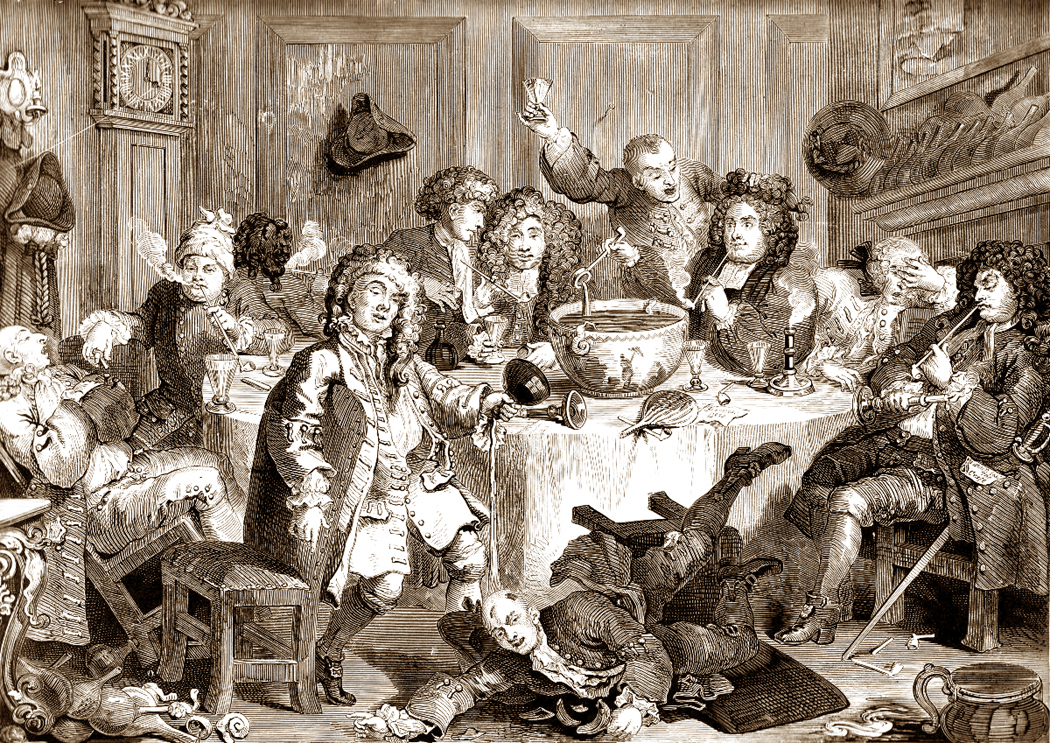
All art is modern art. At least at the time it is made, it is always brand new. Leonardo was modern when he painted; Mozart was au courant when the curtain rose on “Figaro.”

Today, we think of “Figaro” as a masterpiece, but when it was written, it had a cultural and political import we know only from reading the program notes. Does that mean Mozart’s satiric take on aristocracy was irrelevant? When it was new, “The Marriage of Figaro” electrified its audiences for its bravado. The Figaro we have now is tamed. It’s been praised into submission, so we don’t have to think about it anymore: It has become a warm bath.

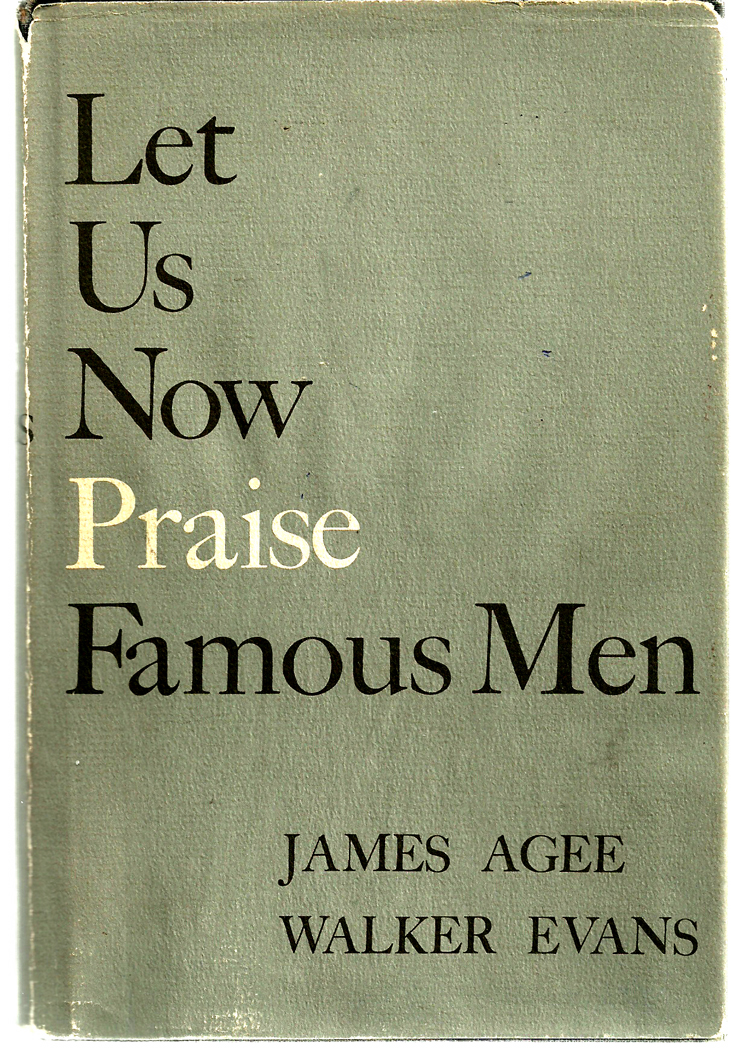
There is nothing worse you can do to art than to praise it: Praise is the lion tamer’s whip and chair. Whether it is music, poetry, theater, painting or architecture, the art needs to be refreshed. It needs new blood or it becomes irrelevant. If we let Beethoven sit there inert, he loses his charge. He becomes a warm bath. I want my Beethoven to be revolutionary. It is new music that keeps him so.

If our ears aren’t refreshed, we suffer ear fatigue — like retinal fatigue from something stared at too long — and we no longer hear. If we go to Symphony Hall merely to massage our ears with the familiar fuzzy teddy bear of Rachmaninoff, we have misunderstood even what Rachmaninoff intended.

Jorge Luis Borges understood this: The past didn’t create us, he pointed out; we created the past. It is through the lens of new art that we see the old art, through the ears accustomed to Philip Glass that we now hear Mozart. (It is the fallacy behind the supposed logic of the “historic performance practice” movement. Playing Haydn with instruments of his time cannot give us the music as Haydn heard it because we no longer have 18th-century ears.)

We need to keep our ears alive: Dead ears murder Mozart. Wake up! is the perennial message of all art. Become engaged. Notice what is around you. Some art does this through reacting to transitive stimuli — the current political situation, for instance, or the latest fashion. Some art looks underneath the surface.

But your engagement with the now in art doesn’t keep only Mozart and Beethoven alive, it keeps you alive.


Three graces Louvre

The Renaissance is finally ending.

That great rebirth of Classical learning sparked the greatest growth of art, science and technology, but it seems to have run its course: Science is now suspect; pseudoscience gains enthusiastic converts every day. Democracy, misunderstanding the dictum that no one is better than anyone else, has come to believe that the lowest common denominator is also the highest possible intellectual achievement and that the idea of learning from our betters is somehow ”elitist” — or at any rate will depreciate our self-esteem.

Listen to the illiterate sentences of bystanders interviewed on the evening news — heck, listen to the local news anchors themselves — and you wonder whether anyone still knows that sentences require both nouns and verbs, and that together they make for articulate thought.

What has changed, more than anything else, is that we have begun losing touch with that Classical learning that undergirded those 500 years of human glory. Another Dark Age is setting in.

The real problem is the loss of the influence of Classics on the general population. For 500 years, art, culture, even technology, were based on a general acceptance of Greek thought. When we lose that, we lose our connection to our culture — and not merely European culture, but the widening world culture. If Asia or Africa once had cultures without roots in Greece, it is no longer true. Sony could not make electronics equipment without the rational, scientific turn of mind made possible by Greek ideals; budding African democracies owe their politics to the same ideals. Not solely, certainly. And we gain from them as they gain from us. But the world culture is at bottom Classical.

It is not merely, or primarily, a body of knowledge that is important, although that has its place. What is more important, and what is most Greek, is a method of approaching knowledge rather than the mere facts of it. It is the Greek skeptical approach that demands rigorous proof. We owe our medicines and our TVs to such an approach.

SONY DSC

Multiculturalists — and I usually count myself among them — sometimes denigrate the Greeks, blaming them for racism, sexism and a host of other ”isms.” And the Greeks are guilty. They were not perfect.

But that misses the point. All human endeavor is imperfect.

We should not be so quick to condemn the failings of our ancestors; better to try to learn from those failings.

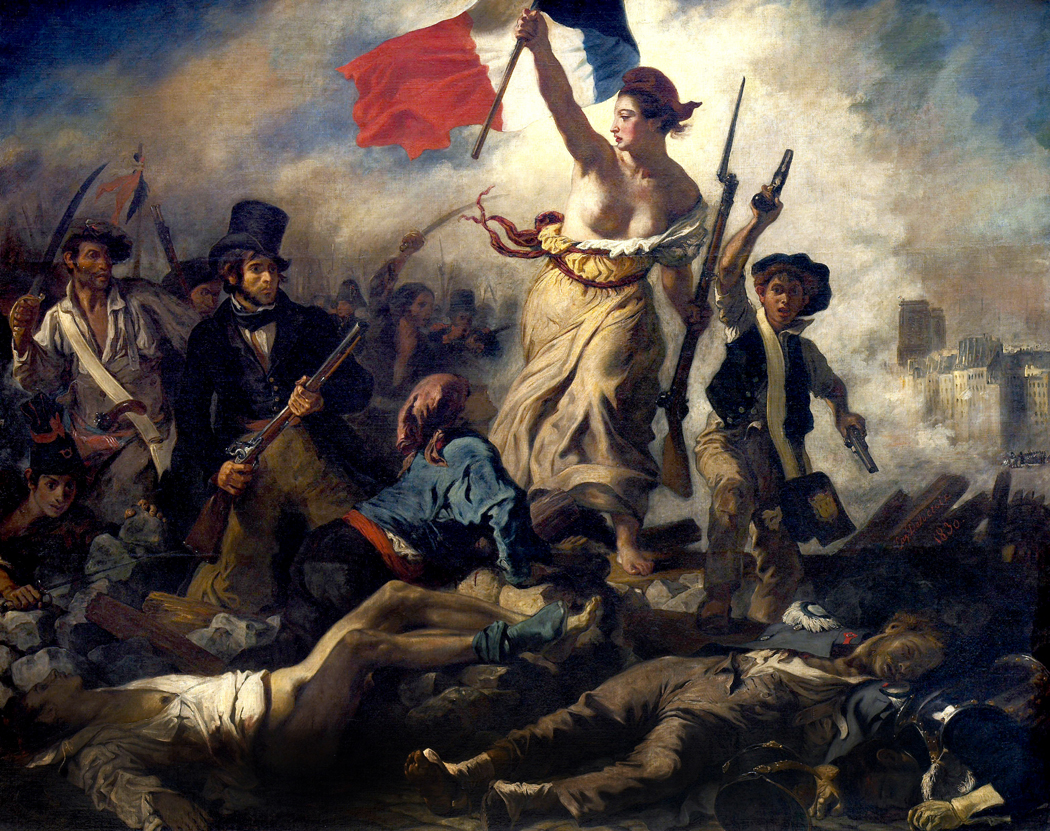
The critics are themselves guilty of an ”ism,” which is the moral arrogance of ”presentism,” the belief that the current state of morals and intellect is somehow the ”correct” one and that they may judge the failings of the past from their own certainties. The radical feminist argument is not fundamentally different from that of the Spanish priests who burned the Pre-Columbian codices on the grounds that those writings were harmful to ”their” present.

A little humility, please.

What’s more, even the critics use the dialectics of Classical thought to deconstruct what they object to. It is always ironic to hear a feminist use Greek argument to berate the Greeks. Feminists disparage the Classics as being misogynist — and make no mistake about it, the Greeks valued what they considered ”masculine” virtues and often made little place for women in their theory.

Yet, one only has to open Homer’s Odyssey to see a wealth of women — strong women — and feminist virtues. Other plays, such as the Antigone, present strong, thoughtful women. Greek actuality is much less coercive than is sometimes thought. And that aside, even if we take account of some of the cultural peculiarities of the ancient Greeks, inherent in their thought — and more importantly, in their thinking processes — are the seeds of all current thought, including multiculturalism. It isn’t Eastern thought or Third World thought that values diversity: It is the Greeks who gave us that.

There are at least four important reasons for maintaining our connection with Classical learning.

From least to most important, they are:Derek Walcott

-› Knowledge of Classical myth and literature. Losing the Classical references means that our literature will become increasingly undecipherable, and in consequence, we will lose tradition, our connection with our past — all our pasts — and we will be in danger of repeating old mistakes. It isn’t only Milton: We cannot read Derek Walcott’s Omeros without understanding Homer.

–› Clarity and precision in discourse. Greek thought is about clarity of language, if nothing else. Greek (and Latin) language does not easily permit sloppiness. We would be better writers and speakers if we were exposed regularly in grammar school to the Classics and Classical languages. The anti-Classical cabal is led by the trendily popular deconstructionists. The postmodernists and deconstructionists: Why read them, since, by their own argument, what they write is meaningless?

–› Acquaintance with the tragic view of life, which is the true view. Americans are becoming a nation of slack-jawed optimists who seem to think life is perfectible, whether they are liberals and think government can perfect it, or conservatives and think that private enterprise can perfect it. Both are wrong. Life is made up of impossible choices. We can only make the best choices in the future if we acknowledge the worst choices of the past. Choices made from ignorance or denial breed more bad choices.

The tragic view is that life causes pain, that there is no alternative, that you must do your best to make moral choices, knowing that whatever choice you make will turn out in the end to be immoral. People will die, suffer or at least be disenfranchised. You cannot act without injuring someone, yet act you must. The Greeks can toughen our hides.

The Mahabharata

–› Finally, the Classics can provide us with the deep, satisfying enjoyment that makes life worth living. If we open ourselves up to the Classics, we will find a deep well of pleasure, the powerful aesthetic experience that illuminates our lives. The Iliad, for instance, is the best book I have ever read, and I have read some good ones, including the Mahabharata of India and the Old Testament of the Levant, both of which have their own power.

Still, compared to them, the Iliad is more aesthetically complete. It makes a world from the greatest panorama down to the smallest detail, all filled in by Homer in just the right proportions to convince us of its reality.

In the end, it has nothing to do with dead white males: The Classics include Sappho, to say nothing of the Odyssey, which convincing arguments say was written by a woman. It matters nothing to me. Sappho and the Odyssey have given me some of the greatest pleasure of my life.

Perhaps we must give up the Classics: It is happening de facto if not by choice. But I dread what will replace it: superstition, intolerance, confusion and chaos.

It is a lesson of history: Clarity breeds uncertainty, which in turn leads to humility and therefore tolerance. On the other hand, confusion and chaos tend to invite political takeover by arrogant tyranny: Inclarity in discourse, public and private, masks the sloppy thinking of the self-righteous.

The Classics are not irrelevant.

myron diskobolos


Monticello reflected

There are few homes in the world that more exactly describe the minds and personalities of their owners than Thomas Jefferson’s Monticello.

The most contradictory personality of America’s early years created for himself a building of contradictions. It is a tiny mansion; it is Spartanly Baroque; and it is a slave-run plantation that verily sings of the dignity of the free man. Jefferson, himself, recognized much of the tumult of his mind.

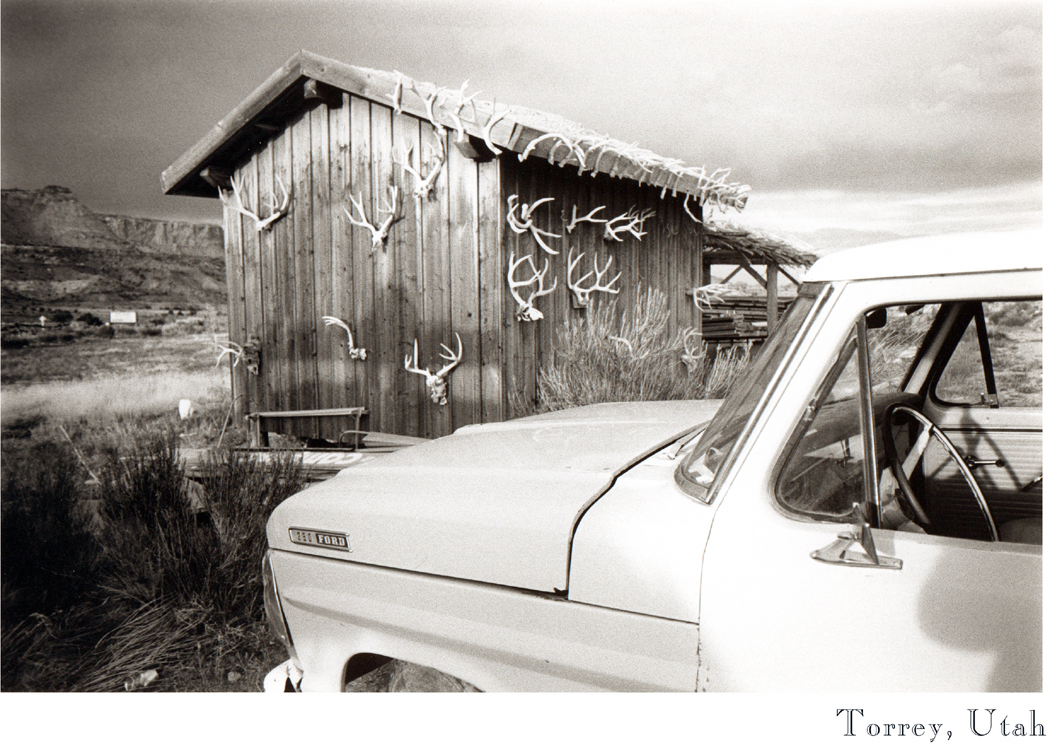
He was an uncomfortable cross between the 18th-century man of the enlightenment and the emerging 19th-century man of sentiment. So he built a measured, proportioned Palladian home and filled it with moose antlers.

There was in Jefferson both the love of order and reason and the love of wild nature. It is perhaps these warring sentiments that give his home such a special place in the American imagination.

US_Nickel_2013

His home, of course, is Monticello, a 5,000-acre estate near Charlottesville, Va. You probably have a picture of it in your pocket right now — on the back of a nickel. Take a look at it: a classic Greek portico, complete with Doric columns, under a Roman dome and extended on both sides by Renaissance windows. It has a refined symmetry as you see it from the front, or rather from its more familiar west front, for Jefferson gave it two fronts, one in the west, facing his lawn and flower garden, and a second in the east facing its carriage road. It was the east front that visitors first saw on arriving.

Either front is perfectly ordered.

But seen from either of its intervening sides, Monticello loses that symmetry and becomes oddly unbalanced. The famous dome is no longer in the center of the building but lopped over to the one side.

And it becomes apparent that the house, divided into thirds, has its middle third slipped like a rock fault, to the West. Like its owner, you look at it one way and you see one thing, but look at it another way and a second aspect, less easily understood, appears.

monticello side viewJefferson built his home on a mountaintop so he could see the Blue Ridge in the distance. He designed it combining his love of geometry and gadgetry with the French details he had seen as an emissary to France in the 1780s. In its combination of influences and the idiosyncratic overlay of Jefferson’s mind, Monticello may lay claim to being the first truly American house of any importance built in the newly created nation. It is part classical, part crackpot.

The classical side can be found in the columns and friezes; the crackpot in the way he used each of the classical orders in different rooms, here a Corinthian column, here an Ionic, so that you get an uplifting art-history education as you take the house tour.

There are other oddities. There are only two closets in the whole house: one in the guest bedroom and a second hidden in a second-story loft above his bedroom, where he stored his out-of-season clothes. That closet is open to three oblong ”portholes” that hang in the air above Jefferson’s bed. The bed, too, is odd. It is built into the wall between his bedroom and study, or ”cabinet,” as he called it.

Monticello Entrance HallHe loved gadgetry and built dumbwaiters into the molding of one of his fireplaces. He has a revolving-door Lazy Susan for delivering food to the dining room quietly and efficiently. There is a weather vane with an arrow that rotates on the ceiling of his porch and a seven-day clock that doesn’t quite fit into the space he wanted, so he had to cut holes in the floor to make room for the clock weights.

There are no windows in the third floor; all its illumination comes through skylights. And Jefferson hated to waste space with stairs, so he had them shunted off to the recesses of the house, and further saved space by making the stairways barely wide enough for one person to climb at a time. One has to wonder how he ever managed to get the mattresses up to the second-floor bedrooms. The narrow treads and high risers mean that modern-day visitors cannot visit the upstairs; they don’t meet code.

On the third floor, there are a few unheated bedrooms and the great octagonal Dome Room, which was a favorite inspiration to Jefferson but which proved so inconvenient it was relegated to storage.

One shouldn’t make too much of the bedrooms being unheated. Jefferson, in the Franklinesque practical half of his personality, rarely heated any room until the temperature was officially below the freezing point. ”Waste not, want not” — you can hear the line from Poor Richard’s Almanac.

But neither should one make too much of the oddity of the building. As with its creator, the building’s overwhelming impression is one of nobility, of something made with a higher purpose in mind. It is as if the house is the embodiment of the Spartan virtues necessary to create a new nation, a new political system, a new national sensibility out of whole cloth.

Jefferson wrote intensely if ambiguously of his own bifurcated personality in a famous love letter that he penned as a widower to the married Maria Cosway. It is a fierce debate, written in dialogue between his head and heart in 4,000 words and in which neither side can achieve victory.

But in that letter, written in France to the Italian wife of an English painter, he finds time to talk of his beloved American home. It is not head but heart that speaks:

”Dear Monticello, where has nature spread so rich a mantle under the eye? Mountains, forests, rocks, rivers. With what majesty do we ride above the storms. How sublime snow, rain, thunder, all fabricated at our feet. And the glorious sun, when rising as if out of a distant water, just gilding the tops of the mountains and giving life to all nature.”

hypocrite2

I want to put in a good word for hypocrisy.

Hypocrisy is so universally denounced — and no more so than by the hypocrites themselves — that we can forget that hypocrisy serves a useful function in the civilized world. Indeed, without it, civilization would hardly be possible.

To say one thing when you believe another is the lubrication of civilized life. It is, in another set of clothes, diplomacy. It is the avoidance of the unpleasant truth when the unpleasant truth will produce no results. A substituted fiction — hypocrisy — will allow action to proceed.

While the crassest forms of hypocrisy only solicit groans and outrage — when the televangelist is caught with his pants down or the anti-pornography crusader is discovered to be a swindler — more subtle forms serve several important purposes.

First, they produce a kind of national mythology, a set of beliefs, both high-minded and vague, that we can all buy into, even when individually we hold specific and opposing views. Everyone wants justice, for instance, but everyone defines it differently. The hypocrite invokes justice, knowing that more people will rally round the word than will rally round his particular policy direction.

Both opponents and proponents of affirmative action call on justice. Both pro- and anti-abortion activists call on it too.

Without the idealistic words to rally around, everyone dashes off in a hundred different directions.

The politician uses his hypocrisy to achieve ends. It works as a kind of legal fiction. Hypocrisy also helps us define what we truly believe in as a people. It doesn’t matter that George W. Bush executed more people than any other governor or that his state is near the bottom educationally: He ran as the compassionate conservative and touted education reform. His words, in this case, are more important than his actions.

Former Labor Secretary Robert Reich acknowledged the same in a column in American Prospect magazine when he compared the exorbitant hypocrisy of both sides in the 2000 presidential campaign and recognized the good that might come of it.

“If George W. wants to base his campaign on compassion, tolerance and educational opportunities for poor kids, let him. This is the best stuff I’ve heard coming out of the Republican Party since before Nelson Rockefeller was hooted down. If Al Gore wants to run on getting money out of politics and reining in powerful corporations, let’s cheer him on.”

And what is more, he said, their exhortations will produce voter expectations that they will have to satisfy in office. Their hypocrisy has pushed them into corners, and we will benefit.

At least, that was the theory. We’ll never really know, because Sept. 11, 2001 changed everything.

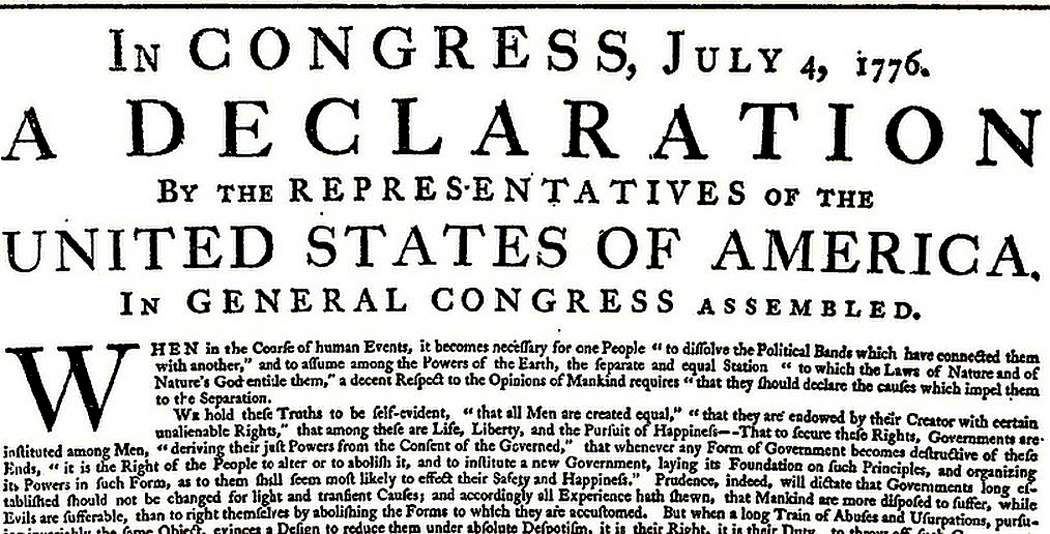
Slave-holding Thomas Jefferson was necessarily hypocritical when he wrote “all men are created equal” in the Declaration of Independence. But that phrase has come to be a goal, and we have tried for more than 200 years to rise above our national hypocrisy. Can we say the nation would have been better off without that hypocrisy?

In other words, as Rochefoucauld said, “Hypocrisy is the homage vice pays to virtue.”

Hypocrisy has other roles in our civic life. We also want to present our side with the best appearance, which is why we hire lawyers. We are paying them money to be hypocrites, to argue passionately for a cause that we may be passionate about but likely the lawyer isn’t. Yet, we would still happy to have that lawyer — and his hypocrisy — on our side if we were in the dock.

Yes, it is galling when a public figure gets elected on a pro-family platform and then is discovered in a love nest with his tootsie. Yes, it is irritating when with one hand a politician proposes election-funding reform and with the other hand accepts huge donations from corporations. And it is no pleasant thing to see both candidates hypocritically claim the high motives of democracy when all they really want is the advantage in the election — and are willing to change sides on the issues when the outcome seems in jeopardy.

But it isn’t hypocrisy itself on trial. Hypocrisy is neither good nor bad. It is just a tool, to be used for good or ill.

cigarette butts

There is a creeping locution that turns my teeth inside out: When one says ”Thank you,” and the answer comes back, ”Uh-huh.”

I first began noticing this a few years ago when a local TV reporter habitually responded ”Uh-huh” when the anchor thanked her at the end of a report. Every time. ”Uh-huh.” All I could think was, ”You slack-jawed cow.”

”Uh-huh” is a dismissive response, one that says, ”I don’t think enough of you to take the time and effort to form actual words in answer.”

I understand that etiquette is a fluid thing, that it changes over time and that Americans by nature tend to be somewhat informal. There is a sort of casual affability that marks us as a people; this is especially true since the end of World War II.

We are Joe and Willie in the trenches, Pogo in the swamp. We are Hemingway and Fitzgerald, not Trollope and Thackeray.

And our sense of manners is rooted not in superannuated ritual but in the democratic ease we feel with one another. So I am comfortable with the easy swagger of American speech, with its energy and its drive to the short, concise, pithy and colloquial. In a sense, American etiquette is an attempt to share that ease, to make others feel as comfortable as we do.

Manners, whether formal or casual, are a cultural means of granting the other person respect, of recognizing his existence. As such, they lubricate the engine of social intercourse.

But ”uh-huh” does no such a thing. It is a barnyard snort, an insulting spit from the back of the throat.

Certainly there are times when a formal ”you’re welcome” seems artificial. You hold a door for someone and he says ”Thanks.” ”You’re welcome” makes too big a deal out of it.

But any number of other responses can acknowledge the word and the person who spoke it. Comment on the weather or ask after his health. The exchange isn’t a real conversation, but it is recognition of someone’s right to exist on the planet.

”Uh-huh” is the verbal equivalent of crushing the person out like a cigarette butt in a grimy ashtray.


pop diva troika

Listen to any pop-music diva these days, and you hear melodies spinning every which way, like the hand-held shots in an action movie, wiggling and jiggling in a way that can give you a kind of aural queasiness, seasickness for the ear, unable to find the still point of gravity.

This style of singing has become the lingua franca for such popular music venues as American Idol and The Voice. The singer hovers around the expected note without ever having to land on it any more than an Apache helicopter touches down to disgorge the troops from its inside before soaring off into the ether once again.

This was not an issue in the past, when listening to Ella Fitzgerald, Peggy Lee or Dinah Shore. Whatever vocal calisthenics they indulged in were anchored to a harmonic rock that led the music to a distinct place — usually the final perfect-authentic cadence, the great dominant-tonic resolution.

But this is gone from most contemporary pop music. I don’t want to sound like an old fogey lamenting nostalgically about a golden-age past, for after all, there were good and bad singers then as there are now. But I do want to express something genuine about the progress of popular music. And to point out that in this, it follows the same pattern as that of classical music.

In his great Harvard lectures, Leonard Bernstein talked about how the history of music is the history of seeking “newer and better ambiguities.” And these ambiguities are often (though not exclusively) harmonic.

Consider the opening of Wagner’s Tristan und Isolde, with its famous “Tristan chord.” What key is that in? You can hardly tell, it wavers so ambiguously. But a look at it over the longer stretch of the score and you can discover an overriding structure of A-minor. The music stretches the meaning of tonality, but doesn’t leave it.

Debussy and Schoenberg, in different ways, undercut the pull and power of harmonic direction, softening up the basic tonics or dominants with extra harmonics: sixths, ninths, elevenths. The reason Debussy sounds so vague is that his harmonies are vague. His melodies remain clear as a bell, but they are built on shifting sand.

In jazz, the course of things went much the same way. Listen to Louis Armstrong, or — especially — Duke Ellington, and you hear the steam locomotive drive of the harmonic motion. Ellington built some of his most powerful music on the blues changes. They are hidden under a rich palette of tone color, but they are still there, providing a solid skeleton for the music.

But, beginning with the bop musicians, the extra partials have been once again added, to build harmonies more ambiguous and malleable. Sure, underneath it all, you can still find the basic harmonies of I Got Rhythm, but over the top, Charlie Parker and Dizzy Gillespie are playing those ninths and elevenths, letting the air out of the pneumatic drill of harmonic progression. So that, nowadays, harmonies have become mere ornament for elaborate melodies. You can ornament the tunes various ways without changing the basic tune — much like you can decorate a Christmas tree in many fashions.

When Schubert wrote a song, the melodies are unforgettable in part because they are constructed on persuasive harmonies. You cannot imagine Die Fiorelle or Erlkoenig reharmonized without also losing the melody: They are no more separable than height and width in a drawing. But take any tune from Andrew Lloyd Webber and not only can it be reharmonized with no loss to the music — whatever music there is — but it is absolutely expected that an arranger will change the harmonies. They are no more than ornament to a fixed melody. What was once the structural underpinnings of song have become merely the “changes” that we deck the song out with. The powerhouse dominant-tonic motion has been gutted.

You can hardly hear them anymore. In pop music, you hear a stepwise bass motion that plays more as a simple counterpoint to the melody, rather than a solid drill sergeant bouncing the heavy tread of root position tonics and dominants.

It isn’t that the heavy tread of Schenker analysis is the only way to organize music.

But all art exists in the play between expectation and surprise. If we expect a G7 dominant to resolve into a C-major chord, then the composer can play with that expectation and withhold the resolution, to draw out our longing for the satisfaction we will get when the final C-major is achieved. You can organize a whole symphony like this: As Bruckner’s Fifth heads slowly to a solid B-flat or — most famously — Beethoven takes us from an unsettling C-minor to a triumphant C-major in his Fifth Symphony.

But if you take away that rock on which most Western music has been built, you still need something to stretch out our longing and expectation.

It must be admitted that harmony is only one way to organize music.

Pop music has left behind the principle of its birth and begun to find new — and largely non-Western ways. Western ears have not heard so much Oriental melisma since the Arabs conquered Spain. Mariah Carey is closer to a muezzin than to a big-band singer. “Just hit the damn note,” you want to scream, but, of course, her artistry is to make us wait in anticipation of the final pitch of a note. That pitch anticipation has replaced the dissonance and resolution of harmonic tune-writing.

One style is not better than another. And I don’t mean to sound like I’m prescribing a return to the past.

But it is important to know what we have lost. The glory of 250 years of Western music is its unique experiment with harmony. We have tossed it away like a used candy wrapper.

tres riches heures seasons

When it’s summer in Vivaldi, is it winter in Piazzolla?

The Venetian composer Antonio Vivaldi wrote perhaps the most popular classical music ever with his “Four Seasons,” describing the progression of the year in his home country. A popular website lists over 200 recordings.Piazzolla cuatro estaciones

Argentine tango-master Astor Piazzolla responded with his Four Seasons of Buenos Aires, a Southern Hemisphere version, at antipodes with the Mediterranean.

And when Philip Glass wrote his second violin concerto, he called it his “American Four Seasons.”

And Japanese composer Toru Takemitsu has his own Seasons, subtitled “Red and blue graphic score for live improvised percussion with tape.”

Everyone and everywhere seems to have its own “Seasons.”

But it is astonishing just how much classical music is inspired by not only seasons, but climate and weather.

There are grand oratorios, such as Haydn’s The Seasons, that take on all four quarters of the year, and there are symphonies, such as Schumann’s “Spring” Symphony, that take on a single season.

And there are depictions of thunderstorms – the overture to Rossini’s William Tell – and a host of other meteorological phoenomena: sunrise at the start of Richard Strauss’s Thus Spake Zarathustra; moonlight in Beethoven’s “Moonlight” sonata; shifting, amorphous clouds in Debussy’s Nuages; even an earthquake at the end of Haydn’s Four Last Words of Christ.

There are so many nocturnes in the repertoire, that no one could list them all.

Yet, the best and most effective tone painting remains Vivaldi’s four concertos, first published in 1725 as part of the composer’s “Contest between Harmony and Invention,” 12 violin concertos that also include evocations of a storm at sea, a hunt, and even one celebrating simple pleasure.

Yet, the first four concertos of the group, popularly called “The Four Seasons” stand out for their descriptiveness.

You can hear how icy and slippery it is – arpeggiated runs make you feel like you’ve lost your step and are slipping on ice. The short trills in the bass create the constant “brrr” or shivering feel.

Vivaldi printed four sonnets, one with each season, in the score to the music, describing the scenes he painted in sound.

“Shivering, frozen in the frosty snow and biting, stinging winds,” starts the one about winter. “Running back and forth to stamp your icy feet, with your teeth chattering in the bitter chill.”

It’s hard not to picture it, hearing the shivering repeated chords at the concerto’s opening, edged with the dissonance of serial suspensions – notes held from one harmony into another.

Then, there are the barking dogs, imitated by the violas in the slow movement of the “Spring” concerto.

The “Summer” sonnet begins, “Beneath the blazing sun’s relentless heat, men and flocks are sweltering, pines are scorched. We hear the cuckoo’s voice; then the sweet songs of the turtle dove. … soft breezes stir the air.”

You can hear it all in the music: There are dancing peasants, a hail storm, the pizzicato raindrops of a cold winter rain, the swarms of gnats in the hot summer sun – Vivaldi’s pictures are as vivid as music gets.

And that can be a problem for other composers, who want to essay the same subject matter.

Among some musicians and audiences, there is a prejudice against what used to be called “program music,” that is, music meant to express extra-musical associations. But music can certainly express more than notes. Too many composers have made it explicit, from the bird calls in Beethoven’s “Pastoral” symphony to the wind machine used to Richard Strauss’ Alpine Symphony.

You can’t argue about program music when a composer gives you instructions in the score. Or in the title.

Debussy’s piano prelude Des pas sur la neige (“Footsteps in the snow”) uses its harmonies to suggest the white blanketing of snow. The ostinato rhythm creates a sense of emptiness and desolation, a cold beauty through which weaves a fragmented melody that may represent the human presence of the footsteps in the snow.

It can make you shiver.

Debussy is the most meteorological of composers: You find wind, rain, snow, mist, moonlight, all in his music.

But of all the music about weather and seasons, spring predominates. There are 10 pieces of music about spring for every one about summer, fall or winter. Yet, for many, winter music holds the biggest emotional punch.

Death finds its metaphor in winter. For some, the ultimate winter music is Schubert’s song cycle, Winterreise (“Winter Journey”) about a young man, jilted in love, who slowly loses his mind, ending in the 19th century version of homelessness.

The German song repertoire provides an abundance of songs on the seasons, on stormy and calm weather, outside and inside our hearts.

So, blow, winds, and crack your cheeks! Rage! Blow! You cataracts and hurricanoes. You give power to our  music and our music gives power to you.

Picking your Vivaldi

vivaldi stokowski-There are many mainstream accounts of Vivaldi’s “Four Seasons,” and most of them are pretty good. It’s hard to go wrong with the music.

-Take your pick from Isaac Stern, to Anne-Sophie Mutter to Nigel Kennedy and Sarah Chang. All good.

-But there are two extreme versions that bookend the spectrum of possibility, both excellent, and as different as can be.

-In 1967, violinist Hugh Bean recorded the concertos with Leopold Stokowski and the new Philharmonia Orchestra.

-It is the very model of historical incorrectness: an old-fashioned large symphony orchestra playing Vivaldi as if it were Mahler, thick, syrupy and lush. You simply have to hear it to believe it. Yet, it is also a beautiful recording.vivaldi alessandrini

-At the other extreme is Rinaldo Alessandrini and the Concerto Italiano, playing in historically-informed style in their 2002 CD, but with an emphasis on the music’s rhetoric rather than its beauty: Every moment described in the Vivaldi’s sonnets is separated and performed in a distinct tempo and touch, making this recording the most pictorial ever. The violas really bark, the wind cuts through your sweater.

-So, smooth and lush, or edgy and driven, two versions, both among the best available.


WEATHER in MUSIC

Seasons

Antonio Vivaldi – “The Four Seasons”

Astor Piazzolla – Cuatro Estaciones Porteñas or “Four Seasons of Buenos Aires”

Philip Glass — Violin Concerto No. 2 “The American Four Seasons”

Toru Takemitsu — Seasons for Percussion and Tape

Joseph Haydn – The Seasons

Alexander Glazunov – The Seasons Op. 67

Piotr Tchaikovsky – The Seasons Op. 37b

Jean-Baptiste Lully – Les Saisons

John Cage – The Seasons (1947 ballet score for Merce Cunningham)

James DeMars – Piano Concerto, “The Seasons”

Charles-Valentin Alkan – Les Mois

By individual seasons

Spring

Robert Schumann – Symphony No. 1, “Spring”

Johann Strauss II – “Voices of Spring” waltz

Christian Sinding – Rustle of Spring

Edvard Grieg – To Spring

Igor Stravinsky – The Rite of Spring

Ludwig van Beethoven – Violin Sonata No. 5, Op. 24, “Spring”

Richard Strauss – “Fruhling” from “Four Last Songs”

Benjamin Britten – Spring Symphony

John Knowles Paine – In Spring, symphony

Claude Debussy – “Rondes de Printemps” for orchestra, from Images

Aaron Copland – Appalachian Spring

Richard Wagner – “Du bist der Lenz” from Valkyrie

William Bolcom – Spring Concertino for oboe and small orchestra

Summer

Felix Mendelssohn – Midsummer Night’s Dream overture and incidental music

Hector Berlioz – Les Nuits d’Ete, song cycle

Autumn

R. Strauss – “September” from Four Last Songs

Grieg – In Autumn, overture

Debussy – Feuilles Mortes or “Dead Leaves” from Preludes, Book II

Winter

Tchaikovsky – Symphony No. 1, Op. 13, “Winter Dreams”

Franz Schubert – Die Winterreise, song cycle

Wagner – “Wintersturme” aria from Valkyrie

Weather

 Thunderstorms

Beethoven – Symphony No. 6, Op. 68, “Pastoral”

Gioacchino Rossini – Overture to William Tell

Wagner – Prelude to Valkyrie

Beethoven – Piano Sonata No. 17, Op. 31, No. 2, “Tempest”

Wagner – Opening of Flying Dutchman

Giuseppe Verdi – Storm in Otello

Vivaldi – Concerto “La Tempesta di Mare”

Berlioz – “Royal Hunt and Storm” from Les Troyens, Act IV

Earthquake

Haydn – Four Last Words of Christ

Avalanche

Alfredo Catalani – La Wally ends with an avalanche

Sunrises

R. Strauss – opening of Thus Spake Zarathustra

Maurice Ravel – Daphnis et Chloe

Haydn – Symphony No. 6, “Morning”

Ferde Grofe – “Sunrise” from Grand Canyon Suite

Moonlight

Debussy – La Terrasse des audiences du clair de lune, from Preludes, Book II

Debussy – “Clair de Lune” for piano, from Suite Bergamasque

Beethoven – Piano Sonata No. 14, Op. 27, No. 2, “Moonlight”

Rain

Frederic Chopin – Prelude, Op. 28, No. 10, “Raindrop”

Debussy – “Jardins sous le pluie” from Estampes for piano

Grofe – “Cloudburst” from Grand Canyon Suite

Johannes Brahms – Violin Sonata No. 1, Op. 78, “Regenlied,” or “Rain Song”

Wind

Debussy – West Wind from Preludes, Book I

R. Strauss – Alpine Symphony

Alkan – “Le Vent,” from op. 39 Etudes, Comme Le Vent

Clouds

Debussy – Nuages

Franz Liszt – Nuages Gris

Snow

Leopold Mozart – Musical Sleighride

Debussy – Footsteps in the Snow from Preludes, Book I

Debussy – “The Snow is Dancing” from Children’s Corner for piano

Mist

Debussy – Brouillards from Preludes, Book II

walrus and carpenter

“I read your blog about Surrealism,” said Stuart. He had come back through town on his way home.

“It reminded me of the garage band I was in.”

“You were in a band? I didn’t know you played music,” I said.

“I never played an instrument,” he said. “I was the roadie.”

“Roadie for a garage band? Did you tour?

“Heck no. It was high school. My job was to bring the Cokes.”

“No beer?”

“I said it was high school. Drinking age was 21 back then, besides, when you’re high on weed, you want something sweet.”

It turns out, they played not in a garage, but in the basement of the home where the lead guitarist lived with his parents.

“We played very low volume, sometimes without even plugging in,” he said. “We didn’t want to disturb Sal’s folks. But that’s not why I brought it up. It’s because of our name.procol harem cover

“You wrote about rock bands using Surrealism. This was 1967 and we listened to Jefferson Airplane, the Grateful Dead, Country Joe and the Fish, Procol Harem, the Velvet Underground — it was a whole list of Surrealist wordplay.

“I remember a whole subcategory of culinary surrealism,” I said. “Moby Grape, The Electric Prune, Strawberry Alarmclock.”

“And those were just the big ones. Don’t forget the Chocolate Watchband, the Peanutbutter Conspiracy and Ultimate Spinach. And I guess we could put Captain Beefheart on that list, too.

“There was the Bonzo Dog Doo-Dah Band — bet you don’t remember them — Blossom Toes, Bubble Puppy, Pearls Before Swine, 13th Floor Elevators, the Lovin’ Spoonful, the Stone Poneys and the Monkees — not that we listened the them. Nobody did; they were too popular.”

“And your band? What did you call yourselves?”

“Well, at first we were the Buddha Fumes, but later that year, we decided that was too simple, so we changed to Unlit Booth/Breakfast Out of Context. We thought it was a great name.”

“Maybe a little unwieldy.”

“Yeah, but we really got on a kick with the slash. We made up albums we were going to record, all with great two-part names, like ‘Sudden Eyes/Velcro Sunrise’ and ‘Burlap Lapels/Unexpected Lady.’ Inagaddadavida single

“I became more involved in the band our senior year and wrote lyrics for our songs. Mostly they were covers of our favorite bands, but with my new words. It’s how I became a writer, I think. I wrote a song about my dog based on Iron Butterfly’s In-A-Gadda-Da-Vida with the words, ‘Ah, we gotta go feed her.’ And we did. Feed her, that is.

“We broke up after graduation. We all went to different schools, except Sal, that is. He got a job.

“But this is all prelude to this list.”

“What list is that?”

“Well, back then, we made up a list of possible names for the band, and it follows exactly what you said in the piece about Surrealism. We had all these great concepts built out of wild juxtapositions, like taking a dictionary and running it through a blender. Of course, we never heard of Surrealism then. We just knew this stuff was cool.silvertone guitars

“I found this list in an old folder from that time.”

And he pulled out a folded sheet of lined yellow legal paper, brittle at the edges, with about 20 or 25 names on it, written in faded violet ink, obviously from a fountain pen (“really, a cartridge pen,” Stuart said). The ink was illegible in a couple of places where spills had made the color spread into a bright blot. I recognized the handwriting as Stuart’s from the many letters he has written me over the years. His high-school cursive was much neater, though, than the scrawl that has evolved.

“Wax Monkeys,” it began.

“Xenon Aftertaste”

Buddha Fumes, Sudden Monkey, Jalapeno Fistula, Orlando Death Car, Sequined Monotreme. The list continued: Fog Hammer.

“There was a fraudulent PR company called ‘Frog Hammer’ in Slings and Arrows,” I said. “You know, the Canadian miniseries about actors.”

“Don’t know it,” Stuart said. “But frog hammer just makes me think of a squashed schoolroom dissection. Fog Hammer is more genuinely surreal. Soft and hard at the same time, dense and vaporous.”poster 1967

He’s probably right. The list went on:

Spit Wax

Able-bodied Saints

Red Suits and Whispers

Sound Midden

Ear Stubble

Leatherette Wilderness

Snarling Confessor

Audible Hernia

Slice of Breath

Waking the Badger

Fraternal Animism

Painted Snakes

Money Under the Hood

Ashcan libertine

Pineapple Fuqua

Gruntbunnies

“Wait,” I said. “Isn’t Pineapple Fuqua a real person? Didn’t we know him when we were kids?”

“Yeah, ‘Few-Kway.’ Ran the service station. Good name, though.

“Any of them you wanna use, go ahead,” Stuart said. “I don’t mind.”

"Object" by Meret Oppenheim, 1936

“Object” by Meret Oppenheim, 1936

Most art movements come and go. Surrealism came and stayed.

spongebobThat may be unfortunate: After all, Surrealism is not everyone’s cup of fur. But if you look around, you will see that Surrealism has become an entrenched part of American culture. It’s everywhere from pop music to TV sitcoms. It’s so pervasive, sometimes you may not even recognize it as it passes by.

SpongeBob SquarePants, for instance. Salvador Dali would have loved it.

Surrealism’s love of the weird, the incongruent and the unspeakable fuels a good deal of our popular culture. Consider such band names as Flaming Lips, Insane Clown Posse, Def Leppard, Nine Inch Nails, Guns n’ Roses.herb alpert

But it’s not just music: Only a culture that thrives on a constant diet of Surrealism could line up to buy Thai pizza or Mock Hawaiian Chile. Or be able to follow Robin Williams’ unconnected segues, or recognize the world of Bill Griffith’s Zippy the Pinhead.

It’s everywhere: Michael Jackson was a walking frappe of the surreal.

Sometimes it even happens by accident: In the old Hayden Planetarium in New York, before it was torn down to make way for the new Rose Center, there was a lit sign by the staircase that read: “Solar System and Rest Rooms.”solar system and rest rooms

Of course, Surrealism didn’t enter this country on a pop-culture visa; it got here as an ambassador of French high culture.

Surrealism began in Paris in 1924 with Andre Breton’s Surrealist Manifesto, an unreadable piece of bureaucratic writing that set forth the principles of the school. It was yet one more attempt at epater le bourgeois. But it was also a utopian art-and-political movement meant to liberate all humanity, to free civilization from its deadening habits.

Andre Breton death mask

Andre Breton death mask

Primarily, Breton wanted to free the mind from the shackles of logic, to use the imagination as freely as children or madmen, with no constraints of taste or taboo.

He believed that the unconscious mind was somehow more honest than the conscious mind, and to tap into that lower, darker level of the psyche, he prescribed dream imagery, Freudian symbolism, automatic writing and random juxtaposition.

The Surrealists took as their motto a phrase from the 19th century French poet Lautreamont, “As beautiful as the chance encounter, on an operating table, of a sewing machine and an umbrella.”

Thus was ushered in the era of droopy watches and steam locomotives chugging out of the fireplace.

The number of artists who signed on was impressive — even Picasso himself, at least tangentially.

By Australian artist Manfred Olsen, detail

By Australian artist Manfred Olsen, detail

But one can’t talk about Surrealism as a single thing, because it was not. There were as many types of Surrealism as there were Surrealist artists. And there were an army of them. Their general was Breton, who attempted to maintain control of his theory but was, in truth, herding cats. Everyone had his own version of Surrealism. Dali leapt into sexual fetishism; Ernst into automatism. Joan Miro imitated children’s art; Man Ray made clever and useless objects.

And just as French couture shows up in New York department-store knock-offs, Surrealism crossed the Atlantic, so in the 1930s and ’40s, American artists who wished to remain au courant picked up the mantra.

"Oedipus Rex" by Max Ernst, 1922

“Oedipus Rex” by Max Ernst, 1922

The ’40s also saw many of the European Surrealists cross the Atlantic to escape the war. Dali came over. Tanguy came over. Ernst even settled in Arizona. Dali became a celebrity; he starred in Life magazine.

Salvador Dali

Salvador Dali

Surrealism began its metamorphosis into mass culture.

Dali’s particular style of Surrealism became the public model for the movement and was imitated by some artists, including Federico Castellon, Reuben Kadish, Harold Lehman, Helen Lundeberg.

Flat horizons, empty spaces, body parts, puppets, shadows, eggs, skeletons — a whole retinue of increasingly tired Surrealist iconography. In America, that iconography persists aggressively in the form of tattoo and prison art, and the work of untold high school students.

But this wasn’t the end: Two more generations of Surrealism in America followed.

"Monogram" by Robert Rauschenberg

“Monogram” by Robert Rauschenberg

First came Pop Art, which often had a Surreal component — Robert Rauschenberg’s Monogram, for instance, with its stuffed goat wearing a rubber tire cummerbund, or Claes Oldenburg’s soft sculpture. Even Andy Warhol’s color-quilt celebrity portraits have a Surrealist edge.

And then came psychedelia. It is through the drug-and-rock culture of the late 1960s that modern pop culture gets its Surreal DNA. Grateful Dead, Iron Butterfly, psychedelic posters, LSD and flower power.psychedelic poster

“I don’t take drugs,” Dali said. “I am drugs.” That was the difference.

But to truly understand what the excitement was all about, you must understand something about art in general: One of its main duties is to refresh our perceptions. We live lives of deadening habit — driving the same commuter route daily, watching the same TV shows, ritualizing our political life so that it becomes no more thought through than a slogan on a T-shirt. Habit is the great deadener of life. Art always needs to show us something that wakes us up, makes us see the world again as if for the first time. This is what Breton meant by Surrealism. He means to grab us by the lapels and make us see the world as miraculous.

“The marvelous is always beautiful, anything marvelous is beautiful,” he said, “in fact, only the marvelous is beautiful.”

cosmos logo

The new science series, Cosmos: A Spacetime Odyssey, has been a huge disappointment.

Rife with cliches, cheap-looking animation and lack of coherent structure, after its first two episodes, it is proven a shallow and glib sequel to Carl Sagan’s 1980 original, Cosmos: A Personal Voyage.

The problems are myriad. The animated sequences are just embarrassing; they remind one of Sunday-school Bible story videos. Graphic ideas that were original 30 years ago now seem tired and worn; if I never see another green-screen calendar standing in for the 13.8 billion years of the universe and an actor standing on Dec. 31, pointing to the last 16 seconds as all of recorded history — well, let’s just say I will survive if I never see that again. There has to be a fresher way of presenting the material. giordano bruno animation

I don’t have a problem, per se, with Neil deGrasse Tyson as presenter, except that he is given such a lame script to read. He has been a persuasive and entertaining host on many another appearance, but here, he is reduced to being a hired-gun presenter, reading someone else’s words. One of the primary strengths of the original series was that it was Sagan’s words, his ideas and his idiosyncrasies that gave the series such strength and authority. tyson 2

You have to look long and hard deep into the credits to even discover who wrote this new series. The surprise is that the script is by Sagan’s widow, Ann Druyan and astrophysicist Steven Soter, both of whom collaborated with Sagan on the first series. It is astonishing that the original was so personal and this sequel so deadeningly impersonal.

The second episode of the sequel was marginally better than the first, so maybe the series will get better as it goes along, although I doubt it. There is a serious flaw in its conception.

Television has a marvelous history of documentary series, beginning — by most people’s reckoning — with Kenneth Clark’s Civilisation: A Personal View, from 1969. That series set the parameters for those that followed: Jacob Bronowski’s The Ascent of Man (1973), Alistair Cooke’s America: A Personal History of the United States (1972), Robert Hughes’ The Shock of the New (1980),  and, of course, Sagan’s Cosmos (1980).

There were others, too. Jonathan Miller’s The Body in Question (1978), Phillip Morrison’s The Ring of Truth: An Inquiry into How We Know What We Know (1987), David Attenborough’s Life on Earth (1979). What makes each of these series memorable is that they are told through a presenter who has personal knowledge of what he is talking about, and more than that, has a point of view.

Whether it is Hughes, looking like a pugnacious longshoreman, or Cooke looking exactly not like a longshoreman, they each ooze personality from every pore. Neil deGrasse Tyson has personality, too. But the earlier presenters had more than personality: They had something to say.

Many documentaries — and most so-called contemporary documentary series on cable TV channels — present either a dumbed-down version of the accepted wisdom, the handed-down story, or else an “objective” and impersonal “encyclopedia-entry” regurgitation of factoids.

There are different ways of being objective. Frederick Wiseman gives us long documentary films with no narration at all — just immediate immersion into his subject, leaving us to figure it all out. Or, like the PBS series, Frontline, give us a clear narrative, read in the Voice of Doom timbre of Will Lyman — the most distinctive and recognizable faceless voice since John Facenda telling us of the frozen tundra of Lambeau Field.

And at least one great television documentary series has come from this objective school: The World at War, the 1973 Thames Television series created by Jeremy Isaacs and narrated by Laurence Olivier. For that, the enormity of its subject seemed to require a certain distance.

But most of the great and memorable educational series have come through the sensibility of a single presenter — Clark’s take on European art, Bronowski on science or Martin Scorsese on film.

It is important to recognize that it is not the personality of the presenter so much as it is that important word: sensibility. It is not the knowledge that the host conveys as his relationship to the knowledge, the connections between things, the understanding. As Albert Einstein said, “When I need a fact, I can look it up.” It isn’t facts we need but the appreciation of our ineluctable relation to those facts. Sensibility is fact filtered through the human mind. It is where poetry comes from and it is poetry that is missing in the new series. sagan with dandelion

Just one example: In the original Cosmos series, the “spaceship of the imagination” that Sagan offers us comes in the form of a starburst, or, as it later turns out, the fluffy starburst achene of a dandelion. In the final episode, Sagan speaks to us directly on a rocky seashore and picks up a tiny white seedhead and lets it fly with the breeze, and we are shocked into the recognition that the spaceship of the imagination is a metaphor — the small achene and the immense starburst are micro and macro version of the same thing — that the earthly weed from our front lawns and the burning starry dynamo in the machinery of night are one and the same substance.

As William Blake put it: “Infinity in a grain of sand and eternity in an hour.”spaceship tyson

In contrast, the new Cosmos has us riding in what looks like a giant letter opener, shiny as chromium steel and just as hard and impersonal — it is a symbol of technology, not science. Sagan would never confuse the two.

It tells us how advanced have become the tools of computer graphics and their ability to create the illusion of reflections on a moving surface. We may admire the software that produced the visuals, but we are hardly edified by them.

One other comparison: Tyson in the new series tries to inject a bit of himself in the opening episode, telling us how when he was 17, he met Carl Sagan and how much it meant to him as a young man interested in astronomy. It is the one moment of authenticity in the otherwise stumbling artificiality of the show.

The injection of the personal has often been a tactic used in documentaries. But compare Tyson’s moment of authenticity with Jacob Bronowski in the episode of The Ascent of Man in which he discusses the impossibility of certainty in science. At the end, he stand at the edge of a pond in the Auschwitz death camp and defends science as the best we can know in our own fallibility, and the evils visited upon us by certainty.

“This is the concentration camp and crematorium at Auschwitz. This is where people were turned into numbers. Into this pond were flushed the ashes of some four million people. And that was not done by gas. It was done by arrogance. It was done by dogma. It was done by ignorance. When people believe that they have absolute knowledge, with no test in reality, this is how they behave.”

He bends down and puts his fist in the muck, drawing up a handful.

“I owe it as a human being to the many members of my family who died here, to stand here as a survivor and a witness. We have to cure ourselves of the itch for absolute knowledge and power. We have to close the distance between the push-button order and the human act. We have to touch people.”

It is the difference between the trivial and the profound.

So, in response to the banality of the new, lesser Cosmos, we should look back at some of the best that television has given us, and the people who have something to say who have stood in front of the cameras to express their connection to the world they live in, to share their sense of attachment and their fresh words, so lacking in glibness and cant.

These are my nominees for the five best television documentary series ever produced.The five best

Civilisation: A Personal View (1969) — Sir Kenneth Clark provides a heartbreaking overview of European art and civilization in a series that is a much better, more nuanced view of its subject than you probably remember. If you recall it as Clark, with the British public-school back-palate drawl, talking about the “great masterpieces” as if he were an Oxfordian tour bus guide, you will be in for a surprise: His view is much more subtle than that. He makes a serious attempt to discover just what civilization might be, and uses the past 500 years of European history to make his discovery.

The Ascent of Man (1973) — Mathematician Jacob Bronowski reacted to Clark’s view of civilization, deciding it placed too much emphasis in art and not enough on science, so he attempted to do the job. With his unfortunate 1970’s fashion sense and a slight lisp, he could sometimes sound a bit pompous, but the content of his cosmopolitan mind was a tremendous gift to anyone willing to listen.

The Shock of the New (1980) — Art critic Robert Hughes tried to make sense of Modernism in art, and gave us many profound insights, including the uncomfortable relationship of Surrealism and Fascism. Hughes can be confrontational and pugilistic, but unlike most art critics, whose prose is often no more digestible than an old mattress, he wrote with grace, wit and memorability.

Cosmos: A Personal Voyage (1980) — Astronomer Carl Sagan made the universe personal, gave us a way in to a subject usually obscured in the jungle foliage of higher mathematics. What is surprising, more than 30 years on, is just how much he got right. Yes, you can make fun of “billions and billions,” but the truth is, there are billions of billions out there.

The World at War (1973) — The exception that proves the rule, this 26-episode series combines archival film footage with meaningful interviews with surviving participants from all sides. Written and produced by Jeremy Isaacs, it comes with the voice-over of Sir Laurence Olivier, using his most serious and least thespianic narrative powers. This is a triumph of direct and unmannered documentation.

It should be a hallmark of television literacy to have seen all of these series.

The BEST of the REST

Can you name these presenters? Answers below

Can you name these presenters? Answers below

Since it is the presenter (a very British term, but more accurate than “narrator,” “host” or “emcee”) that makes the series, one should look for any programs by

Michael Wood, whose boyish enthusiasm brought us In Search of the Trojan War, In Search of the Dark Ages, The Story of India and many more. He is best when the material is his own; when he is just a hired gun, as in the Art of the Western World, he is entertaining, but less engaging.

Michael Palin, the former Monty Python stalwart, who has become the best travel presenter ever. He began doing shows on railroad trains, but hit his stride with Around the World in 80 Days, in which he met the challenge of Phileas Fogg. He followed that series with Pole to Pole, Full Circle with Michael Palin, Sahara, Himalaya and Michael Palin’s Hemingway Adventure.

Ian Wright, a cherubic and outgoing Englishman with a Suffolk born glottal stop, he is a frequent presenter of Lonely Planet travelogs. No one joins in with whatever local population, or with less self-consciousness than Wright. You want him to be your permanent travel partner.

Martin Scorsese, the current reigning king of movie directors, has to be the best informed historian of film ever, with an encyclopedic knowledge of all things cinematic and always and engaged and engaging way of speaking about his passion. He has made two series about films that are a must: A Personal Journey with Martin Scorsese Through American Movies, and My Voyage to Italy, in which he does the same thing for the classic Italian films he grew up with.

Leonard Bernstein, who can be more annoying than anyone else on my list, with his stentorian voice and oracular pronouncements, is nevertheless a great teacher who can disclose the secrets of classical music even to the uninitiated, as long as they are willing to pay attention. His series of Harvard lectures, The Unanswered Question, is one of the best discussions of the changing history of classical music out there, even if you have to put up with a dose of Chomskian linguistics.

Sister Wendy Beckett, who can also be annoying, is nevertheless one of the most patient and thorough observers of the narrative content of Renaissance and Baroque paintings. If Modernism has made us condescending to subject matter in art, this English nun reawakens us to the subtlety and power of that content.

Simon Schama, the polymath, has given us series on The History of Britain and The Power of Art, which looks with some detail at eight artists and eight paintings. He can be snide and sometimes sounds like an English public school don, but he has a good sense of humor. His newest series, The Story of the Jews, begins this week on PBS.

There are others, too. James Burke, Bettany Hughes, Niall Ferguson. The BBC especially, is ripe with presenters.

Can you name these presenters? Answers below

Can you name these presenters? Answers below

But the king of all of them, largely unmentioned until now, but only because he deserves the Big Finish, is the greatest presenter of all, David Attenborough. For more than 60 years, he has been presenting nature programs for the BBC and has written and presented some of the best documentary series ever made. In fact, of the Top 20 TV documentary series listed on IMDb, Attenborough created 10 of them.

David Attenborough

David Attenborough

No one is more genuine on screen, nor more cosmopolitan in approach, or more knowledgeable about his subject or more personable than Attenborough. A list of his accomplishments takes up 16 pages on Wikipedia. He has made the definitive series of programs about life on the planet five times, each one better than the last, beginning with Life on Earth in 1979, The Living Planet in 1984, The Trials of Life in 1990, Planet Earth in 2006, and Life in 2009. That doesn’t count Blue Planet (2001), The Life of Birds (1998), The Life of Mammals (2002). In 2013, at the age of 86, he gave us Africa.planet earth cover

The quality of these series, the many others, and the scores of one-offs — not to mention that as head of programing at the BBC, he greenlighted such classics as Civilisation, Ascent of Man and Alistair Cooke’s America —  makes Attenborough not just a hero, but a god. At least a divi filius.

He is a paragon of humanistic awareness, curiosity and fairness, and has not, to my knowledge, ever in his life uttered a cliche. I’ve never seen anyone more present in the world. If he is not awarded some sort of Nobel Prize for his life work, the universe will have to be declared deficient.

Presenter mugs: Top photo, top row (L-R): Alistair Cooke, Bettany Hughes, Jacob Bronowski, David Attenborough, Clive James. Middle row: Edward Herrmann, James Burke, Ian Wright, David Suzuki, Kate Humble. Bottom row: Ludovic Kennedy, Martin Scorsese, Jonathan Miller, Kenneth Clark, Fiona Bruce.

Bottom photo, top row: Michael Palin, Michio Kaku, Niall Ferguson, Morgan Freeman, Michael Wood. Middle row: Simon Schama, Peter Coyote, Robert Hughes, Carl Sagan, Sigourney Weaver. Bottom row: Sister Wendy Beckett, Trevor McMillan, Neil deGrasse Tyson, Will Lyman, Terry Jones.