Appalachians Part 2: In which the author eats a persimmon

OLYMPUS DIGITAL CAMERA

On a late October morning, after a solid frost, you can find a bushel of brownish mottled balls scattered on the ground in the rime under the persimmon tree. They look spoiled and perhaps their thin skin has cracked.

You pick one up and tear its skin wide, forcing the orange flesh through, against your teeth. You push the soft, puddinglike flesh against the roof of your mouth with your tongue, separating it from the hard, grasshopper-size pits that you suck on for a few minutes before spitting out.

There are few wild foods sweeter and more delicious than the ‘simmon you find for yourself on an old, deserted farm in the mountains of North Carolina.

The farmhouse has lost most of its paint, there are spider webs on the dusty windows, and a few boards have fallen through on the front porch. The house sits at the bottom of a hill, where hay still is mown in the summer. At the top, there is the edge line of a hardwood forest. At this time of year, along the creek at the bottom of the slope, the red maples are scarlet and the sweet gums are yellow.

And the ubiquitous zigzag rail fence will seem to outlast everything in the decaying farmhouse but its chimney. ashe county back road

It is the Blue Ridge, the first range of the Southern Appalachian Mountains. It rises as low hills in northern Alabama and continues north, growing higher through Georgia, South and North Carolina and Tennessee, then thinning out and shrinking again in Virginia, only to sink below the soil once more in Maryland.

The Blue Ridge is what we think of first when we consider the Southern mountains. Its people, its wildlife and its landscape are distinct: black bears, porcupines and possums play in thickly forested hills interspersed with valleys, or ”coves,” where leather-skin farmers grow feed corn and burley tobacco and pasture their cattle.

These Eastern mountains are very different from the higher, wilder, but simpler ranges of the West. They are lower for one thing — the highest is Mount Mitchell, at a mere 6,684 feet. They are round, soft, fuzzy with trees. road up Mt. Mitchell copy

And they are inhabited.

There are wildernesses in the Blue Ridge, accessible only by serious hikers, but you can’t really think of the Appalachians without thinking of the people who live there. Every creek-filled crease in the folded rock has its two-story clapboard house, its barn, springhouse and root cellar.

In the cool fall days, you can see the blue smoke rising from stone chimneys and hear the distant sound of chain saws bucking another cord of wood.

Times have changed some: You also might find a satellite dish in the yard. Because these old houses — some a century and a half old — are so hard to heat, the descendants of their builders sometimes have moved into a mobile home parked right next to the noble old house.

However, you will always find the woodpile, the kitchen garden and the pickup truck on the dirt driveway.

The people of the mountains, however, are not mere stereotypes.

By and large, they are comfortably in the 21st century. There are fast foods, hardware stores and Kia dealerships. High-school kids wear Nikes and everyone waiting for the schoolbus seems to have an iPhone.

However, there is something different about them, their clipped dialect, wary sense of humor, flat-pitch singing, white-clapboard religion and, above all else, an unbreakable attachment to the land. Those who leave spend the rest of their lives pining for it, dreaming of going back.

”I lied to my God when I left the mountains and kem to these devilish cotton mills,” said one old mountaineer, quoted by Appalachian historian Horace Kephart. ”Ef only he’d turn me into a varmint I’d run back tonight. Boys, I dream I’m in torment; and when I wake up, I lay thar an’ think o’ the spring branch runnin’ over the root o’ that thar poplar; and I say, could I git me one drink o’ that water I’d be content to lay me down and die.” snow

For nature is so insistent, both for the brutality of its winter and the beauty of its summer, that the mountain population grows right into the rocks and soil of the hillsides. Pull one out and his roots remain in the ground.

I know. I have become one of them.

Everything about the Southern Appalachians sticks in one’s innards.

So that when the midwinter snows close the schools for weeks at a time and the white tufts gather in the pine needles, deadening all the sound of the landscape, you might hear in the distance the county plow scraping the pavement and the clatter of tire chains. catawba rhododendron

The hillsides are scratchy with gray branches and beech trees with smooth aluminum bark, and last year’s dry papery copper leaves rattle in the breeze.

Then the spring: It is spring when the Appalachians are most themselves.

The cool humid air hangs as fog in the river bottoms and the dew hangs on the stamens of the rhododendron, which snake out of the flowers like a lizard tongue.

Witch hazels spread over the ice-water stream.

The area’s waterfalls are at their peak, spreading water like a coat of varnish over the gray, lichened and mossy granite. Trilium

There is color under your feet and over your head. The redbud tree spatters the forest with a spray of reddish purple; the wake-robin grows pinker by the day. There are buttercups, columbine, maypops, geraniums, trilliums, mayflowers, fire pinks and yellow lady’s slipper.

Everywhere, low under your ankle, there are the leaf-whorl and drooping antenna-flower of the common humble violet.

The mountain winters are frozen solid, so when the spring thaw comes, the whole landscape pops open.

And no matter where I was living, when spring came, I thought of it in these mountains.

Next: Cades Cove, Great Smoky Mountains National Park

View from Craggy Gardens

The East Coast of North America varies more widely than any other region of the continent. Westerners are Westerners, but no one could confuse a Manhattanite with a Cajun, a Down Easter with Virginia gentry.

There are drawls in the South, missing R’s in New England, even French in Quebec.

But there is one thing that ties the East together, a kind of central nervous system that defines both its history and emotional core: the Appalachian Mountains.

Running from southwest to northeast for 2,000 miles from Alabama to the Gulf of St. Lawrence, the Appalachians are a true cordillera, not a single mountain range of peaks but a chain of ranges that span a continent.

There are the Unakas, the Blue Ridge, the Alleghenies, the Green, White, Black, Blue and Brown mountains, the Berkshires and Catskills, the Notre Dames and Shickshocks.

They were this nation’s first frontier, a physical barrier to continental expansion in the 18th century that helped define the original 13 colonies.

It took an unusual sort of pioneer to settle the green stony hills, and their inhabitants to this day maintain much of their independent nature. It is one of the strengths of the Appalachians.

They are among the oldest mountains — parts are more than a billion years old — and they are also structurally complex. Appalachian map

They can be divided into three very different sections from east to west. This structure is clearest in Virginia.

There in the front range of the Appalachians are the old, volcanic Blue Ridge, rising abruptly from the Piedmont. Behind it lies the broad, fertile Great Valley — a kind of cordillera of valleys — best-known in northern Virginia as the Shenandoah Valley. The Ridge and Valley Province comes next, fronted by the Alleghenies. It is a long series of low sedimentary ridges, like a line of breakers at the shore. In these loaf mountains are some of the nation’s early iron and copper mines.

Behind that is the Appalachian, or Cumberland Plateau, the wide belt of rocky bumps of almost equal height extending through most of West Virginia and into Kentucky. In these hills, miners still dig out the soft, bituminous coal that is the nation’s greatest single natural resource.

But the Appalachians are also partitioned from north to south. It is traditionally divided into the southern, central and northern sections: The first, from Alabama to Maryland, includes the highest peaks in the East. The second, running through Pennsylvania, New Jersey and New York, are mostly long ridges. And in the north, encompassing New England and Atlantic Canada, the mountains grow once more in height and ruggedness.

For the several blog entries, we will look at the Appalachians and the people who live in them, taking them section by section.

NEXT: The Southern Appalachians

washington and d day

”For one million dollars, how do you spell IQ?”

If you asked America that question, America would not win a million dollars.

What can I say? When Who Wants to Be a Millionaire was popular on network TV, a study by the Annenberg Public Policy Center found that most Americans thought it counted as educational television.

Some 70 percent of those asked also identified the Oprah Winfrey Show as ”serving their children’s educational needs.”

It has only gotten worse since then.

As a nation, we are dumbing down. We have decided, like one third-grader told my wife when she was teaching, that ”my mama says there’s only so much the brain can hold or it will explode.” And we’re playing it safe. monte cristo

So we think the questions Regis Philbin asked were actually tough.

”Who is buried in Grant’s Tomb?”

Although, actually, most of the questions on that show involved celebrities rather than past presidents. The only Grant who counted was Hugh.

Another study found that 80 percent of seniors at 55 top universities flunked or nearly flunked a basic high school history test. ludden and princeton

So that, nowadays, it is rare to find an actual quiz show on TV, outside Jeopardy, which keeps up a decent and atavistic standard. Instead of watching smart people answer questions, we now prefer to watch people being stupid and doing stupid things on “reality TV.” Perhaps this gives us the illusion that if we are not as idiotic as the contestants, perhaps we are now the “smart” ones. cedric the entertainer

Nothing says as much about the course of empire than the slow dumbing down of quiz shows, from the really arcane questions that Allen Ludden asked on the G.E. College Bowl to the pap that passes for knowledge on Millionaire. It is no surprise that in its current syndicated incarnation Millionaire is hosted by Cedric the Entertainer.

Nowadays, we are amazed when a contestant remembers the name of the cute little girl on Family Affair.

It tells us what we, as a culture, value. And we don’t value learning. We value entertainment.

In the past, even people who didn’t have much education valued it and made sure their children received its benefits. Older schools often have the names of great thinkers or artists carved into friezes around their sides: Aristotle, Mozart, Pasteur, Newton. They stood for high goals we should set and aim our efforts at.

That all has changed.

It isn’t merely that schools being built now might scribe the names of Katy Perry, Justin Bieber or Beyonce, but that we think there should be no names at all.

For in our warped sense of democracy, we have decided that ”all men are created equal” means that no one should be better than anyone else.

I never have understood this: We somehow maintain the belief that there are basketball players who are more talented than everyone else, and we reward them richly. We keep the belief that there are more successful CEOs and reward them richly too. But somehow we are not to believe — or at least applaud the fact — that there are some people who are smarter or more talented academically or artistically. We reward such people only with suspicion.

And we make our education system inane to the point that everyone can earn a ”B” and keep their wonderful sense of self-esteem.

Then we wonder why our kids don’t know where Chicago is on a map, can’t balance a checkbook, or believe George Washington was the general on D-Day.

Obviously, we decide, our school standards are set too high, and we lower them yet further.

For it isn’t just the students who don’t know anything of history, geography or spelling but also their parents and teachers who don’t know and don’t think it important.

Another study, by the non-profit Foundation for Academic Standards and Tradition, found that half of all current education majors in college — those who will become the teachers of our children — don’t read books other than what is required for class. And 60 percent think there is too much emphasis placed on books.

What do they want instead? If they are like most Americans, they want to be entertained. They want wall-to-wall television. And they’re getting it.

It is the democratization of culture, so that if you have the Encyclopedia Britannica on one side and Project Runway on the other, we decide they have equal weight.

Learning gives us the context to understand events. It prevents us from making egregious choices. It gives us skepticism.

Learning turns us into individuals rather than demographic statistics, rather than mere consumers. It gives us the confidence to make difficult choices and makes us the free agents for political choice that democracy was originally meant to nurture.

But we have become instead a nation of intellectual and emotional infants, swayed by commercial advertising, hoodwinked by ”alternative” science, led by politicians who can utter no thought longer than a sound bite.

We have the world’s largest and most sophisticated military yet are left defenseless by our own embrace of ignorance. Read your Gibbon.

"The Road To Utopia" Film Still

Bing Crosby: If you kill me, how are you going get the bird? And if I know you can’t afford to kill me, how are you going to scare me into giving it to you?

Bob Hope: Well, sir, there are other means of persuasion besides killing and threatening to kill.

Crosby: Yes, that’s … That’s true. But, there’re none of them any good unless the threat of death is behind them. You see what I mean? If you start something, I’ll make it a matter of your having to kill me or call it off.

Hope: That’s an attitude, sir, that calls for the most delicate judgment on both sides. Because, as you know, sir, in the heat of action men are likely to forget where their best interests lie and let their emotions carry them away.

Crosby: Then the trick from my angle is to make my play strong enough to tie you up, but not make you mad enough to bump me off against your better judgment.

Hope: By gad, sir, you are a character.

Crosby: Buh, buh, buh, boooo.

Read those lines and in your head, hear them in the familiar voices of Bing Crosby and Bob Hope, and instead of a detective story, you are on the road in a comedy. “Road to Malta”? Dorothy Lamour as Brigid O’Shaughnessy?

This is a new game you can play, entirely in your head and using your auditory imagination. My brother explained it to me last week, saying he sometimes has trouble going to sleep at night, and instead of counting sheep, he recasts classic films in his mind. It’s a neat idea, and needn’t serve solely as a soporific for the insomniac — any more than the Goldberg Variations.

There are two contending variants of this game. The first, like above, is to cast wildly inappropriate actors. Imagine these famous lines spoken by Tony Randall:

“You don’t understand! I coulda had class. I coulda been a contender. I could’ve been somebody, instead of a bum, which is what I am.”

Perhaps he was talking to Oscar Madison when he speaks those lines.

“Okay, you know you don’t have act with me, Steve. You don’t have to say anything, and you don’t have to do anything. Not with me. Oh, maybe just whistle. You remember how to whistle, don’t you? Just put your lips together … and blow.”

I am imagining that spoken by Lily Tomlin’s bag lady character.

gielgudIt can go the other way round, too. In Slingblade, the main character begins: “I reckon what you guys want to know is what I’m a-doing in here. I reckon the reason I’m in here is ’cause I’ve killed somebody. But I reckon what you guys are wantin’ to know is how come I killed somebody, so I reckon I’ll start at the front and tell you.”

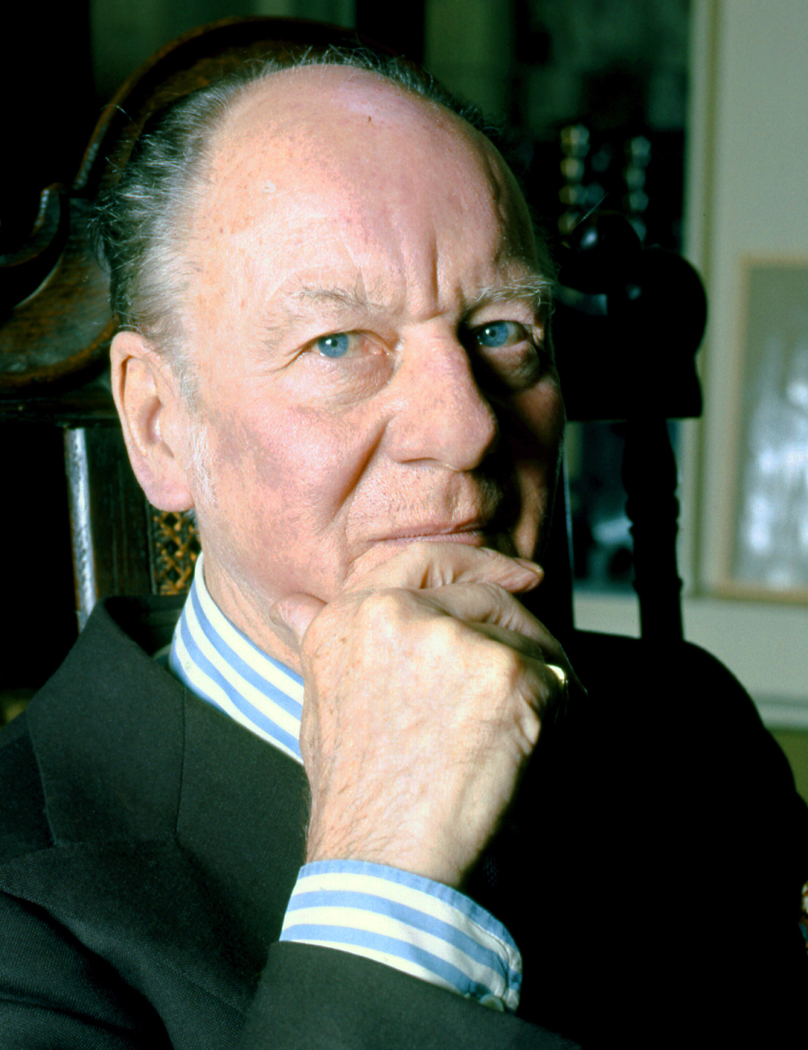
Now imagine that said, not by Billy Bob Thornton, but in the round, dulcet, veddy British tones of Sir John Gielgud.

The second variant isn’t about finding the absurd, but considering what could have been real casting choices. Imagine, say, George Raft saying “You dirty rat,” or James Cagney saying, “You’re going out a youngster, but you’ve got to come back a star!”jack

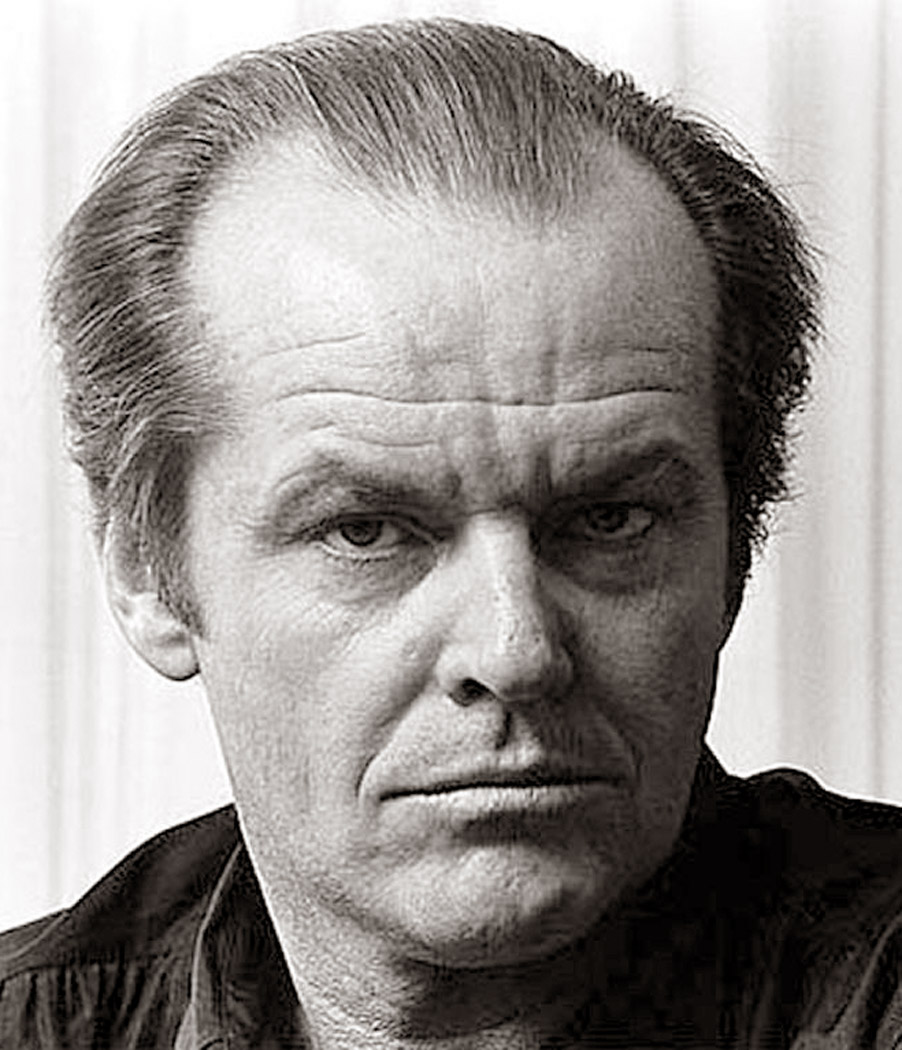
Or imagine Jack Nicholson saying, “I know what you’re thinking. Did he fire six shots or only five? Well, to tell you the truth, in all this excitement, I’ve kinda lost track myself. But being as this is a .44 Magnum, the most powerful handgun in the world, and would blow your head clean off, you’ve got to ask yourself one question: ‘Do I feel lucky?’ Well, do ya punk?”

Nicholson has such a distinctive voice, it’s possible to imagine quite easily the sound of him saying, “A census taker once tried to test me. I ate his liver with some fava beans and a nice Chi-an-ti.” No, it wouldn’t be better than Anthony Hopkins, but you can hear it in Nicholson’s voice, can’t you.

You can recast whole movies in your head. Imagine Casablanca, like an the earlier versions of The Maltese Falcon, with Ricardo Cortez as Rick, Bette Davis as Ilsa, and the cast filled out with Pat O’Brien as Victor Laszlo (almost anyone would be less wooden than Paul Henreid), Eric Blore as Captain Renault, Sig Ruman as Major Strasser and Arnold Stang as Ugarte. I really don’t think we want to see Mantan Moreland as Sam. blore

The varieties are endless. Drift off to sleep one night considering Charlie Sheen saying, “I know everything hasn’t been quite right with me … but I can assure you now … very confidently … that it’s going to be all right again. I feel much better now. I really do. Look, Dave … I can see you’re really upset about this … I honestly think you should sit down calmly … take a stress pill and think things over … Dave … stop. Stop, will you? Stop, Dave. Will you stop, Dave? Stop, Dave. I’m afraid. I’m afraid, Dave ……  Dave, my mind is going. I can feel it. I can feel it. My mind is going.”

Or imagine Leslie Nielsen in Airplane! saying, “Sometime when the team is up against it, and the breaks are beating the boys, tell ’em to go out there with all they got and win just one for the Gipper. I don’t know where I’ll be then, Rock, he said, but I’ll know about it and I’ll be happy.”

Oh wait, he’s already done it. And he didn’t smell too good.

Maxim Gun

Nobody writes epigrams anymore, and we are the worse for it. Instead, they are too busy writing Tweets. The difference? A Tweet says in 140 characters what no one needs to say. An epigram says in a few short words what can be unfolded and stretched out into a book: It is a seed waiting to sprout in the mind of the hearer. A Tweet goes everywhere in the world, but goes nowhere.

A Tweet is flaccid and generally pointless; an epigram, or maxim, is a gun that fires rapidly.

La Rochefoucauld

La Rochefoucauld

I love rambling through such terse cynics as La Rochefoucauld, and I eat up the ”eternity in a phrase of glass” of Ralph Waldo Emerson and the punchy paragraph perorations Henry Thoreau.

I don’t claim to be any Martial, but over the years, I’ve squeezed out a few. Here are some, strung together and pretending to be pearls:

–› Curiosity is the libido of art.

–› Art doesn’t come from the brain; it comes from the base of the spine.

–› I don’t want to know an artist is clever; I want to know he is more alive than me.

–› We need to know that the moments of time are connected to one another and are not merely adjacent.

–› Meaning depends on ambiguity. The more precise a word is, the less it describes.

–› You can forget knowledge; understanding changes your life.

–› It is the conservative’s impotence that he can only react, never create.

–› Ultimately, what counts is not the wisdom of Solomon, but stories of that wisdom.

–› Design is your awareness of everything in the frame.

–› Western art is really a branch of physics.

–› Art history is fine for the historians, but the rest of us must watch not to be hit by the flying debris.

–› Reality is no excuse.

–› What you know prevents learning.

–› There can be no great beauty that doesn’t know tragedy.

–› There are those for whom the world is rote. For whom knowledge is an orderly collection of facts, not the experience of understanding. For whom a set of rules prescribes behavior and describes art, music, politics, commerce. They are the managers, the commissars, the education reformers — for them, the planet turns on a dry axle.

–› To the degree that you use someone else’s words to express yourself, to that degree you don’t understand what you are saying.

–› The difference between a commercial artist and a fine artist is that a commercial artist knows what he is doing.

–› Art is the discovery or creation of meaning and order from the chaos of perception and experience.

–› The artist knows that 1 plus 1 equal 3. There is the one apple, the other apple and the two together.

–› Art is not a product; it is a byproduct.

–› A fact is a fragment, a truth is a wholeness.

–› Science is the test we give to hard facts, art is the test we give to everything else.

–› Art makes you aware that you are alive. That is not always very pleasant.

–› Art worth remembering is art that tackles knotty problems. Everything else is wallpaper.

–› Entertainment diverts us from the cares of life; art makes us feel alive. The two things are opposites.

–› Design is not a set of rules, it is a level of awareness.

–› All the questions that matter are insoluble.

–› Civilization is an irrational fear of the irrational.

–› Art creates civilization, not the other way around.

–› Everyone asks questions; intellectuals ask questions about the questions.

–› Opposites do not exist in the world separate from the language that describes them.

–› One end of the cigar is lit, the other is where we draw smoke. We call the two ends opposites, but there is only one cigar.

–› You can teach knowledge, but understanding has to be learned.

–› Aesthetics is the use of large words to describe what you can feel in your fingertips without any words at all.

–› Everything changes, said Heraclitus. Nature is a verb; a noun is only a parking space.

–› All art is regional art; New York City is a region, too.

–› A Truth is never probable.

–› A Truth satisfies an inner need for order.

–› It’s not what you know, but what you are willing to be aware of.

–› Words are the smoke screen art attempts to penetrate.

–› You must look at art longer than you can stand.

–› Boredom is an essential part of the art process, for artist and viewer alike.

–› Art starts out with only one belief: that the intuitions and emotions of the artist are valid. Period.

seventh seal knight

Can you choose to believe?

Some people seem to think so. You consider a menu of possible beliefs and choose which you like best. The American church scene certainly gives you a host of beliefs to sign up for: Not only Catholicism or Mormonism or Christian Science, but a hundred different versions of Protestantism, each with its heartfelt shibboleths. And there are thousands of varieties of Buddhism, Hinduism, Islam. And let’s not forget that Atheism is a belief, also.

So, you scan the menu and choose.

Blaise Pascal offered a bet: Believe and be saved. If there turns out not to be a God, then you have lost nothing. Fail to believe and maybe nothing happens, but if there is a God, then you lose your bet.

The problem is, of course, that the bet isn’t merely whether there is a god or not — putting your chips on the red or the black — but which god will save you and which will cast you to perdition: With so many choices, the odds are always against you: The house wins.

But you cannot merely choose. It sounds good until you try it. There is, after all, a difference between joining a church and believing what it teaches. seventh seal knight looks up

There are plenty of examples of people choosing one religion over another for political or survival reasons. Composers Gustav Mahler and Felix Mendelssohn each converted to Christianity to further their careers and escape the anti-Semitism of their time and place. It wasn’t at all uncommon in earlier centuries when one’s religion could disqualify one for certain jobs.

But did they believe in their adopted religions? That’s another question altogether.

For belief cannot be a matter of choice: You can believe only in what seems true. You don’t choose a religion and decide to believe its tenets; you decide what you believe is true, and look for a religion that offers those beliefs to you.

Believe simply isn’t volitional. You believe because you think certain things are true. Ineluctably true.

That doesn’t mean that what you believe is true — people can believe all kinds of odd piffle — but that those who believe do so because those ideas seem true to them. Whether it is religion or science, fiction or the ravings of a tin-foil-hat Tea Party Republican, you can only believe what rings true.

This is so even for those young academics who profess not to believe in any truth, that truth is all just relative. But of course, they believe it is true that there isn’t any truth. You cannot escape it: If you believe, you do so because you perceive it as true.

There are certainly people who wish they could choose to believe. There are those without faith who suffer from their inability to believe. They desperately want to believe, like the knight in Ingmar Bergman’s film The Seventh Seal.

What holds them back is that they cannot choose to believe something that doesn’t seem to be true, no matter how beneficial it would be if they could enforce that choice. Faith has, after all, many demonstrated benefits.

But if you don’t think there is a god or a savior, you cannot pretend there is.

Conversion happens when you accept that the religious tenets are true. It isn’t logic or reason that defines truth for us. We each have inclinations of genes and upbringing. seventh seal subtitle

Our emotions as surely as our syllogisms govern what seems true to us.

Some people are credulous and can accept as true any amount of silliness. I know a man who converted to a new religion every six months or so. He has been Baptist, Buddhist, Catholic, Methodist, Hindu and Evangelical.

One religion he joined actually worshipped triangles and explained the entire universe in terms of three-sided figures. There was not an ounce of hypocrisy in him: He believed each religion in turn was the true one.

Yet, if you cannot choose to believe, you can nevertheless choose to be open to possibilities, to allow yourself to learn about things you had previously been closed to. You can choose to look and listen.

Maybe you’ll be lucky.

copter jesus

Film critic Pauline Kael famously called Citizen Kane “more fun than any other great movie.”

Classic film, like classic literature, sometimes has the reputation of being more “good for you” than it is fun.

Well, Fellini’s La Dolce Vita gives Kane a run for his money.

The great 1960 Italian classic of the Roman “sweet life” in the postwar years shows us nine days and eight nights in the life of tabloid celebrity journalist Marcello Rubini (Marcello Mastroianni) as he negotiates personal relationships, professional crises and spiritual doldrums.

“Rarely, if ever, has a picture reflected decadence, immorality and sophistication with such depth,” Box Office magazine said when the film was released. La Dolce Vita shows up on most all-time 10-best lists, and Fellini is unquestionably one of the four greatest directors ever.

Take its famous opening scene: A helicopter carries a giant statue of Jesus over the landscape of Rome.

The scene is ambiguous. We don’t know whether Fellini is satirizing religion or if Jesus, with his arms extended, is blessing the city beneath him.

What isn’t in question is that the scene is as memorable as a catchy tune: Once you’ve seen it, you can’t get it out of your head. That’s one of the secrets of Fellini’s greatness. There’s even a word for it: Fellini-esque.

La Dolce Vita is filled with such catchy tunes. trevi fountain

There is the industrially cantilevered Anita Ekberg dancing in the Trevi Fountain. There is the amoral Maddelena (Anouk Aimee) whispering words of love to Marcello, three rooms away in an old castle, while another man makes love to her.

The orgy scene, with Marcello riding a starlet like a donkey. marcello riding

They all stick to the roof of your brain like peanut butter.

Or the final scene with the giant monster fish netted by fishermen, and the closing shot of the young blond girl waving with the innocence of an angel at the lost Marcello.

Fellini structured the film in a series of climactic nights each followed by a dissolving dawn. In each of the nighttime episodes, Marcello faces one of his demons — although he doesn’t recognize them as such.

In the first night, he meets his wealthy lover Maddelena at a night club. anouk

“Your problem is you have too much money,” he tells her.

“Yours is that you don’t have enough,” she responds.

They pick up a streetwalker, take her to her home and proceed to have sex on her bed while the hooker makes coffee in the kitchen.

Each night rises to a crux, a point that might waken Marcello to the aimlessness of his life, and at each sunrise, there comes not a culmination, but a dissipation of the situation — all its air is let out.

Just when Marcello is about to kiss Ekberg, standing in the water, under the spray, the water stops flowing, sunrise arrives, and the dream evaporates.

Considering that it is now one of the immortal classics, its making was less than tidy.

Fellini’s first producer, Dino de Laurentiis, found the story “incoherent, false and pessimistic” and told the director, “The public desires at least a little hope and some entertainment.”

When he was persuaded to put up some money, de Laurentiis demanded that they hire a big star, like Paul Newman, to play Marcello. They also looked at hiring Henry Fonda and Maurice Chevalier.

Fellini stuck to his guns.

The costs soared, as Fellini added and rewrote.

The real Via Veneto, where much of the story takes place, was too busy to film on, so Fellini built a studio replica. That boosted his already huge budget by 50 percent. His new producers (de Laurentiis finally backed out) consented only if Fellini gave up his percentage of the profits — a move he later regretted when La Dolce Vita turned out to be a huge international hit.

To get the performance he wanted for the sex-crazy Maddelena, he made faces and danced behind the camera as Aimee played her most serious scenes, so that her effort to keep from laughing gave him the quality he was seeking in the role.

In addition, there were 800 extras to contend with.

And Fellini added to and changed his script so often that, by the end of shooting, the copy kept by his secretary was said to be larger than Rome’s telephone book.

Fellini claimed he had enough footage filmed to make a 10-hour movie. It’s now just less than three hours.

La Dolce Vita occupies a pivotal point in the career of Fellini, between the early Neo-Realist films, such as I Vitelloni and La Strada, and his later, sometimes visionary films. In La Dolce Vita, there is a balance between the sense of external reality — Italy’s boom economy in the decade after World War II, and its forgotten underclass — and the purely subjective sense of individual psychological crisis. In some of his later films, such as Roma or Fellini Satyricon, the grotesque predominates. But at the midpoint of his career, in his two best films, La Dolce Vita and 8 1/2, he balances the real and the freakish like a saint balancing heaven and hell.

“I am not a man who dashes off messages,” he told an interviewer when the film opened. “I don’t have a very precise ideology. When you describe your epoch, no matter how impartially, you notice that there are emergencies, events, attitudes that strike you more than certain others and that are more important. … So you unconsciously become a moralist. If La Dolce Vita has a meaning, it came all by itself. I did not go after it.”

The meaning of the movie has been debated for 40 years. It has been seen as anti-Catholic and as a reactionary embrace of religion. It has been seen as an angry critique of modern life, but also a celebration of it. It has been called pornography, and also one of the most moral movies ever made. It’s rich enough to embrace many meanings. striptease

The film ends on an ambiguous note: Marcello has given up any hope of becoming a writer and has become a publicity agent. He has lost all pride and become uncharacteristically vicious. After a night of debauchery and humiliation, a party breaks up at dawn and heads for the beach, where a giant fish has been caught by local fishermen. big fish

It is a symbol of Christianity at the end of the film, like the statue of Jesus was at the beginning. angel girl

Marcello sees, on a far part of the beach, a young girl he had met once when working on his forgotten book, a girl he once said reminded him of “one of those little angels in the churches of Umbria.” She waves to him and tries to yell something to him above the surf. He cannot hear, shrugs his shoulder and walks off. marcello gives up

The film ends with a close up of the girl, waving.

And we never know if Marcello simply cannot hear her, or instead does not want to hear her. The film — and Fellini — are equivocal.

Perhaps that is because, in the end, Fellini said he was not a judge, “but rather an accomplice.”

cletus spuckler and wife

There is little science on the Science Channel, almost no history on the History Channel, nothing to discover on Discover, and you will look long and hard to find any art on the Arts and Entertainment network.

And if you learn anything from The Learning Channel, it is that America’s intellectual level has dropped from the sky like a disabled alien spacecraft, to crash and burn in a desert of mindlessness.

The History Channel, for instance, now specializes in (as explained on Wikipedia): “mythical creatures, monsters, UFOs, aliens, truck drivers, alligator hunters, pawn stores, antique and collectible ‘pickers,’ car restoring, religions, disaster scenarios, and apocalyptic ‘after man’ scenarios,” to say nothing about credulous explorations of the writings of Nostradamus. ancient aliens

Each of these channels began with virtuous motives, and for their early years, created or acquired genuine documentaries for TV viewers, but as they have come to seek ratings over virtue, each has bitten the bait, and now gives us “reality” programming, sensationalist pseudoscience, and celebrities, celebrities, celebrities.

The prime offender of this last are the cooking and food channels, which at one time gave us instruction on cooking and food, but now concentrate on celebrity chefs, some even with studio audiences to applaud and ooh. Julia Child actually taught us something. david pogue

And it isn’t just that Bravo or A&E have given us the bait-and-switch, but that even once laudable programming on PBS has been dumbed down to provide more “entertainment” and less hard information. Their once-proud flagship program NOVA has become a showcase for the high-jinx of such “info-comics” as David Pogue, “Destroyer of Brain Cells.”

It is as if no one believes that actual history or science or art can hold its own in a world of Gypsy housewives of LA married to lumberjacks who look for gold in Alaska and find Nazi ghosts piloting flying saucers from the future, as predicted by Nostradamus.

(Note to Discovery: I now have a copyright on that idea, in case you decide to make such a series.)

I have no complaints with science writers who make complex and often mathematically dense material comprehensible for laymen, such as myself. That is what NOVA used to do: It was aimed at intelligent non-scientists, people with an interest but without the background and training; it now seems aimed at Cletus Spuckler and his family of slack-jawed yokels from The Simpsons.

Is it any wonder that American students fail so badly in math and science, or that a scary percentage of American voters don’t believe in basic scientific principles, and that a major political party carries on a non-too-disguised war on science? We believe in ghosts, UFOs, and ESP, but not in evolution, global warming or environmental degradation. One scratches one’s head.

At least PBS still maintains a veneer of science or history in their documentaries, the commercial cable channels have given up completely. It is all hokum shot through night-vision goggles looking for trumped up ghosts, or teams of competing slackers moaning and groaning about how hard it is to beat the deadline making spangles for their dresses or how to turn squid beaks into desserts for the panel of judges. TLC

How is America not embarrassed to show its face in the world for presenting Toddlers and Tiaras, Here Comes Honey Boo Boo, I Didn’t Know I Was Pregnant, I Eat 33,000 Calories A Day, Potty Power, Sarah Palin’s Alaska, Starter Wives Confidential, Trading Spouses, Wedding Dress Wars, or Big Hair Alaska? And those are just from Discovery.

The History Channel (now, of course, rebranded as History, keeping the only part of their name that doesn’t describe anything true about itself) has offered: Ancient Aliens, Ancients Behaving Badly, Angels and Demons: Decoded, Ax Men, The Bible Code: Predicting Armegeddon, Big Shrimpin’, Cajun Pawn Stars, Comic Book Superheroes Unmasked, God, Guns and Automobiles, Hairy Bikers, Ice Road Truckers, Shark Wranglers, Swamp People, and, of course, UFO HuntersPawn Stars photographed by Blair Bunting

Its highest-rated show, Pawn Stars, exemplifies one of the unpleasant trends in this new field of television.  So many “reality” shows (I can’t help but put quotes around the word “reality,” since the word is so horribly misused in this application) rely on having a bully at its center, whether it was Simon Cowell on American Idol or here, with “Old Man” Richard Harrison, a truly repulsive ignorant blusterer lording it over his clan like a cartoon patriarch, an uneducated know-it-all, with little sense of curiosity — there is no glow in his ball-bearing eyes, just the dull, yellowish glare of a sluggish dragon guarding its horde.

So much of TV is either aimed at or about the unwashed, uneducated and superstitious, as if all of America lived in a trailer park and had only half its teeth. It’s the Jerry-Springerization of America, and it cannot bode well for our future.

So, the rest of us find ourselves either leaving TV altogether, or braving the ridicule of our friends and family, tuning in to C-Span 2 on the weekends to watch Book TV. It’s the last bastion of a medium that used to bring us Omnibus, Young People’s Concerts and BBC nature programs.


Chihuly 2

I am of two minds about Dale Chihuly, and I cannot imagine any thoughtful person being otherwise.

The stunning array of gorgeous glass is certainly the most interesting work in the medium done in a long time. The Chihuly name on a piece of glass is blue-chip all the way.

Yet, one cannot get past the sense that the name on the glass is less a signature than a brand name.

There are those who call the Seattle artist the “Liberace of glass.” He is a huge crowd pleaser — perhaps his work is too pretty. Chihuly 6

In addition, he’s everywhere, doing scores of museum and gallery shows each year. His studio produces so much work that critics consider it an industrial production line rather than an artist’s studio.

And, detractors point out, he hasn’t made much of anything himself since 1979. Since then, almost everything that has been sold with his name on it has been created by his hundreds of staffers. Worse, Chihuly is a tireless self-promoter. His genius is as much in marketing as it is in aesthetics.

Several Web sites are dedicated to dissing Chihuly, including one that avers it’s “OK to hate Dale Chihuly.”

It isn’t just that his studio produces so much in his name; it’s a veritable factory. It isn’t just that the glass sometimes is too pretty.

Take a look at it as it is displayed at any museum. The installations makes them look more like a showroom than a gallery. All that dramatic lighting and black background sets off one’s instinct to look for price tags and bar codes. Chihuly 11

So, looking at a Seaform, it might come from the show window at Tiffany, with all that glistening light and black background. I look for a salesman sizing me — and my bank account — up.

It isn’t that the work isn’t stunning in its effect, but that the effect is a little too slick.

Although Chihuly calls the show “Installations,” these are not installations as the art world usually means the term. These are rather settings for jewels, meant to show them off.chihuly installation

In most art-world installations, the individual pieces are subordinated to the meaning of the larger assembly. In Chihuly’s installations, the individual pieces are glorified by the presentation. They are set off heroically, like a protagonist in Italian opera hogging the spotlight.

But for all that, the problem with dismissing Chihuly because of his marketing and production strategies is that the argument ignores the art itself, which is hard to dismiss.

Even if you’re skeptical, the work itself is dazzling, really dazzling. Chihuly 10

Eminent art writer Barbara Rose puts it directly: “Chihuly has literally changed the definition of glass.”

Chihuly was born in 1941 in Tacoma, Wash., and began working with glass 20 years later. After school at the University of Washington, he did graduate work at the Rhode Island School of Design and won a Fulbright Fellowship to study glass in Venice.

In 1976, he lost his left eye in an automobile accident in England — his eye patch is his trademark — and the following year, he became head of the sculpture department at the Rhode Island school. Chihuly portrait

With his shock of wild hair and his eye patch over a face that looks like a caricature, he could be the Quasimodo of art glass.

All along, he continued to win awards and place work in major museums. Today, there is hardly a museum, major or minor, that doesn’t own Chihuly’s work.

In 1983, Chihuly moved to Seattle, where his studio grew to the point that it is a major industry, nearly as well known as Boeing or Microsoft.

On the way, he raised glass from a craft to a fine art. Chihuly certainly has pretensions of fine art. This glass is not meant to be seen as merely craft.

The difference between fine art and craft is metaphor. Fine art functions because of its metaphor; craft survives happily without it. Chihuly has consciously developed the metaphorical side of the glass.

There are organic shapes, there are womblike baskets with “baby” baskets inside, there are anemones and jellyfish, all in bright colors with brilliant accents. Chihuly 8

At their best, the metaphor resonates, as with the odd squid tentacles and octopus arms of his chandeliers, or the beautiful crimson grass stalks of Red Reeds.chihuly painting

The least effective works are his paintings, which strike one as nothing more than abstract LeRoy Neimans in glitter paint.

Like I said, I’m of two minds about Chihuly, and I cannot imagine any thoughtful person being otherwise.

gould goldbergs

Periodically the publishing world throws out a book put together by a critic or writer listing the “best of” or “greatest” and then lists books, recordings, movies, DVDs, TV shows or places to visit. The lists are always a great way to start off a conversation, even if they are always flawed, biased and at best partial.

So it is with Tom Moon’s book, 1,000 Recordings to Hear Before You Die (Workman, $19.95).bookpix

I can’t comment on most of his selections, although it would be hard to quarrel with the idea that you should be familiar with Miles Davis’ Bitches Brew  or Jimi Hendrix’s  Are You Experienced.  To say nothing of Duke Ellington’s  Blanton-Webster Band  or Ray Charles’  Modern Sounds in Country and Western.

These are all recordings that anyone with a musical curiosity should know, and probably love. And Moon has a thousand of ’em.

But Moon chooses to include classical music in his selections, too, and there he really seems to miss the boat. It is clear that he is a part-timer when it comes to Bach, Bartok  and Boccherini.

It isn’t that the music he chooses is wrong: You can’t really argue that anyone who loves music should have listened to Beethoven’s symphonies or Bach’s keyboard music. But while his popular and jazz albums recognize truly great performances, his choices for the classical selections are      invariably bland and middle-of-the-road. Safe. Boring, even.

The title of the books is “recordings to hear before you die,” and should be recordings that you grab someone by the lapels over and say, with scary enthusiasm in your eyes, “You gotta hear this!”

That won’t always be the best performance, in classical music, but rather the most grabbing, the one that says something new or different, that makes you rethink the music, or just sit up and take notice.

And the classical catalog is full of such recordings: Not just for classical music snobs, but for anyone who cares deeply about music in general, whether their favorite is Led Zeppelin  or Public Enemy.  These are performances that have appeal outside their narrow intended audiences.

So here are 25 classical recordings you have to hear before you die.


gould1. Bach, Goldberg Variations, Glenn Gould, piano  – The 1955 performance by the strange Canadian pianist turned classical music world on its head, with playing faster and slower than anyone else, and with an extraterrestrial energy and clarity that has never been matched, even by Gould’s second recording, from 1981.


2. Tchaikovsky, Symphony No. 6 “Pathetique,” New York Philharmonic, Leonard Bernstein, cond.  – The hyper-emotional Pathetique normally takes 45 minutes to play. Bernstein’s later recording (on DG) takes an hour and wrings from the music the deepest tragedy, perfect accompaniment for a suicide.


3. Mozart, Piano Sonatas, Mikhail Pletnev, pianist – Wolfgang’s piano sonatas are normally thought of as his “B” material; not under the hands of crazy Russian genius Mikhail Pletnev. He plays them like his life depends on them – the greatest recording of these works ever.


celi4. Bruckner, Symphony No. 4, Munich Philharmonic, Sergiu Celibidache, cond. –  Playing something slowly doesn’t always add weight, but here Bruckner’s most accessible symphony is played with the slow, careful intensity you might expect from someone defusing a bomb.


5. Mahler, Symphony No. 4, Concertgebouw Orchestra, Willem Mengelberg, cond. – Mahler was always over the top, even though many modern conductors rein him in. Mengelberg knew Mahler, heard him conduct, and gives us echt-Mahler, full of its requisite retardandos and portamentos. This is how Mahler is supposed to be played.


6. Wagner, Tristan und Isolde, Philharmonia Orchestra and soloists, Wilhelm Furtwangler, cond.  – Don’t be afraid of Wagner. If you like Lord of the Rings,  Wagner is just the same thing with tunes. With Kirsten Flagstad and Ludwig Suthaus,  this is the Tristan for the ages.


casals7. Bach, Brandenburg Concertos, Marlboro Festival Orchestra, Pablo Casals, cond.  – Politically incorrect performances of Bach’s essential concertos, meaty, expressive, lush, vibrant – and a slap in the face to those who believe there is only one right way to perform Bach.


8. Bach, Suites for Unaccompanied Cello, Pablo Casals, cello  – Casals singlehandedly resurrected these profound works, where Bach made the single instrument as rich and varied as a full orchestra. He plays them as if he were alone in the universe. Only Casals could do that.


9. Beethoven, Diabelli Variations, Uri Caine, piano, with Concerto Koln  – Postmodern Beethoven, with the 33 variations Beethoven wrote turned into marches, show tunes and fireworks. Not for the faint of heart, but explains to a new generation why Beethoven is worth knowing about.


10. Schulz-Evler, Arabesques on Johann Strauss II’s “Blue Danube Waltz,” Josef Lhevinne, piano  – The great show-off piece played as no one else has ever managed: You swear on your grandmother’s babushka that there are at least two pianists working up a sweat, maybe three. This is what a virtuoso is.


shostie11. Shostakovich, Symphony No. 7, Chicago Symphony, Leonard Bernstein, cond.  – Lenny finds the core of this long, often-derided masterpiece, that can turn into shlock in lesser hands. This is one of the most glorious orchestral recordings ever made, blazing with brass and passion.


12. Vivaldi, The Four Seasons, Concentus Musicus Wien, Alice Harnoncourt, violin, Nikolaus Harnoncourt, cond.  – Unconventional approach to familiar music turns these little concertos into tone pictures: Vivaldi meant them to create sound images, and here, you hear the dogs barking and the rain falling.


13. Barber, Adagio for Strings, Los Angeles Philharmonic, Leonard Bernstein, cond.  – There are people who cannot listen to Samuel Barber’s mournful, tragic piece without breaking into uncontrollable sobs, and Bernstein seemed to feel a special connection to the music, which he plays for all he is worth.


kissin14. Chopin, Piano Concertos, Evgeny Kissin, piano, Moscow Philharmonic, Dmitri Katayenko, cond.  – Wunderkind Kissin was only 12  when he recorded these, but it would be hard to find anyone who has better captured the verve and spirit of these Chopin concertos. This is magic.


15. Chopin, Nocturnes, Maurizio Pollini, piano  – Pollini finds more pith and mettle in these nocturnes, usually played to bring out their dreaminess. For Pollini, one of the superstars of the piano, they have more shadow and threat, things lurking behind corners, and military bands playing in the distance.


gabrieli16. Gabrielli, The Antiphonal Music of Gabrieli, various performers  – The assembled brass sections of the Chicago, Philadelphia and Cleveland orchestras play the glorious music of the Gabrielis the way it must sound in Heaven. This is virtuoso brass playing from a legendary album. You gotta hear this!


17. Brahms, piano music, selections, Glenn Gould, piano  – Thought he could only play Bach? Gould was at heart a romantic, and his Brahms is subtler, more nuanced, more beautiful than anyone else’s. This playing comes as a complete surprise, and utter joy.


rachmaninoff18. Rachmaninoff, A Window in Time, piano music, selections, Serge Rachmaninoff, piano  – The dour Russian was one of the greatest pianists of the century, but his electric recordings are dulled by scratches and boom. These are digitally enhanced Duo-Art  piano rolls, played on a Yamaha Synclavier,  that brings back the luster to his piano.


19. Chopin, Sonata No.2 “Funeral March,” Serge Rachmaninoff, piano  – Or you could try the thing itself, un-reconstructed. Rachmaninoff’s take on the familiar sonata is so fresh, powerful and driven, you’ll be shocked to hear it again as if it were for the first time.


valentina20. Liszt, Virtuosa Valentina, piano selections, Valentina Lesitsa, piano – Franz Liszt  was a showman, who brought to piano the same sense of spectacle that Spielberg brings to the seashore; Valentina Lesitsa plays them that way, all out, thunder and cannon-shot, fireworks and passion.


21. Beethoven, Symphony No. 3, “Eroica,” Russian National Orchestra, Mikhail Pletnev, cond.  – Pletnev plays the Eroica like it means something, and replaces tunes and rhythms with the kind of persuasive rhetoric that starts nations marching.


22. Wagner, Liebestod, Vladimir Horowitz, piano  – Real virtuosity isn’t just lots of notes real fast, but rather total control of the piano and expression. In Horowitz’s final CD, The Last Recording,  made when the was 86,  the ol’ magician wrings thunder and tears out of the death of Isolde. It becomes our death, too.


tureck23. Bach, The Great Solo Works, Rosalyn Tureck, piano  – Too often we think of Bach as mathematical, but he was really a crazy Baroque composer, layering hysterical detail on detail. Tureck plays him that way with the Capriccio on the Departure of a Beloved Brother,  and the Italian Variations,  with notes sweeping in like a tidal surge.


24. Gershwin, Rhapsody in Blue, Los Angeles Philharmonic, Leonard Bernstein, piano and cond.  – Bernstein plays Gershwin’s familiar symphonic jazz almost as if it were Brahms, big, romantic, serious. This is not everyone’s cup of Gershwin, but you simply have to hear it.


25. Grieg, Peer Gynt Suite, Royal Philharmonic Orchestra, Thomas Beecham, cond.  – Peer Gynt? Seriously? Hall of the Mountain KingAnitra’s Dance? Beecham plays the music with such suave joy, and with not a single mote of condescension, and revivifies the old chestnut. You’ll tap your toes and sing in the shower.