Archive

Tag Archives: art history

marriage of figaro 1

I hate that we sentimentalize art.

We call it “immortal,” we call it a “masterpiece.” We call it “timeless.” But art is not timeless. All art comes with a shelf life. It’s just that some has a longer use-by date.

A few things, like Homer or Bach, seem to last for centuries, even millennia. But other art defuses after only a few decades. How many people still read Pearl Buck? Despite the Nobel Prize? Does that mean that Buck wasn’t really any good? What about John Dos Passos?

Some art speaks so directly to a certain time and place that we later forget how vital it is. It has moved from the “in” box to the “out” box.

Some creations last centuries, some just years. Some art lasts only a few weeks. Pop tunes are the mayflies of art.

That is no reason to discount them. Not everything has to be Shakespeare — and even the Bard, at some point, will cease to have currency, although it may be when the human race has either evolved into something else, or has obliterated itself.

The fact is, art is a response to the world around us, and sometimes the things we respond to are short-lived or even frivolous. The art gets made, the books get written, the songs get sung.

Too often in the past, audiences for classical music and opera have had the notion that only the old music is any good, that contemporary music is not worth wasting your time on, at least until its composer has been dead for 50 years. But that misses the very essence of what art is. That attitude turns something vital into a warm bath. Art is not a warm bath.

Whether it is dance, opera, music, poetry, fiction, painting, theater or filmmaking, art is the way we grapple with the experience of being alive, of turning the inchoate and complex into something comprehensible: an image or a metaphor.

All art is modern art. At least at the time it is made, it is always brand new. Leonardo was modern when he painted; Mozart was au courant when the curtain rose on “Figaro.”

Today, we think of “Figaro” as a masterpiece, but when it was written, it had a cultural and political import we know only from reading the program notes. Does that mean Mozart’s satiric take on aristocracy was irrelevant? When it was new, “The Marriage of Figaro” electrified its audiences for its bravado. The Figaro we have now is tamed. It’s been praised into submission, so we don’t have to think about it anymore: It has become a warm bath.

There is nothing worse you can do to art than to praise it: Praise is the lion tamer’s whip and chair. Whether it is music, poetry, theater, painting or architecture, the art needs to be refreshed. It needs new blood or it becomes irrelevant. If we let Beethoven sit there inert, he loses his charge. He becomes a warm bath. I want my Beethoven to be revolutionary. It is new music that keeps him so.

If our ears aren’t refreshed, we suffer ear fatigue — like retinal fatigue from something stared at too long — and we no longer hear. If we go to Symphony Hall merely to massage our ears with the familiar fuzzy teddy bear of Rachmaninoff, we have misunderstood even what Rachmaninoff intended.

Jorge Luis Borges understood this: The past didn’t create us, he pointed out; we created the past. It is through the lens of new art that we see the old art, through the ears accustomed to Philip Glass that we now hear Mozart. (It is the fallacy behind the supposed logic of the “historic performance practice” movement. Playing Haydn with instruments of his time cannot give us the music as Haydn heard it because we no longer have 18th-century ears.)

We need to keep our ears alive: Dead ears murder Mozart. Wake up! is the perennial message of all art. Become engaged. Notice what is around you. Some art does this through reacting to transitive stimuli — the current political situation, for instance, or the latest fashion. Some art looks underneath the surface.

But your engagement with the now in art doesn’t keep only Mozart and Beethoven alive, it keeps you alive.

walrus and carpenter

“I read your blog about Surrealism,” said Stuart. He had come back through town on his way home.

“It reminded me of the garage band I was in.”

“You were in a band? I didn’t know you played music,” I said.

“I never played an instrument,” he said. “I was the roadie.”

“Roadie for a garage band? Did you tour?

“Heck no. It was high school. My job was to bring the Cokes.”

“No beer?”

“I said it was high school. Drinking age was 21 back then, besides, when you’re high on weed, you want something sweet.”

It turns out, they played not in a garage, but in the basement of the home where the lead guitarist lived with his parents.

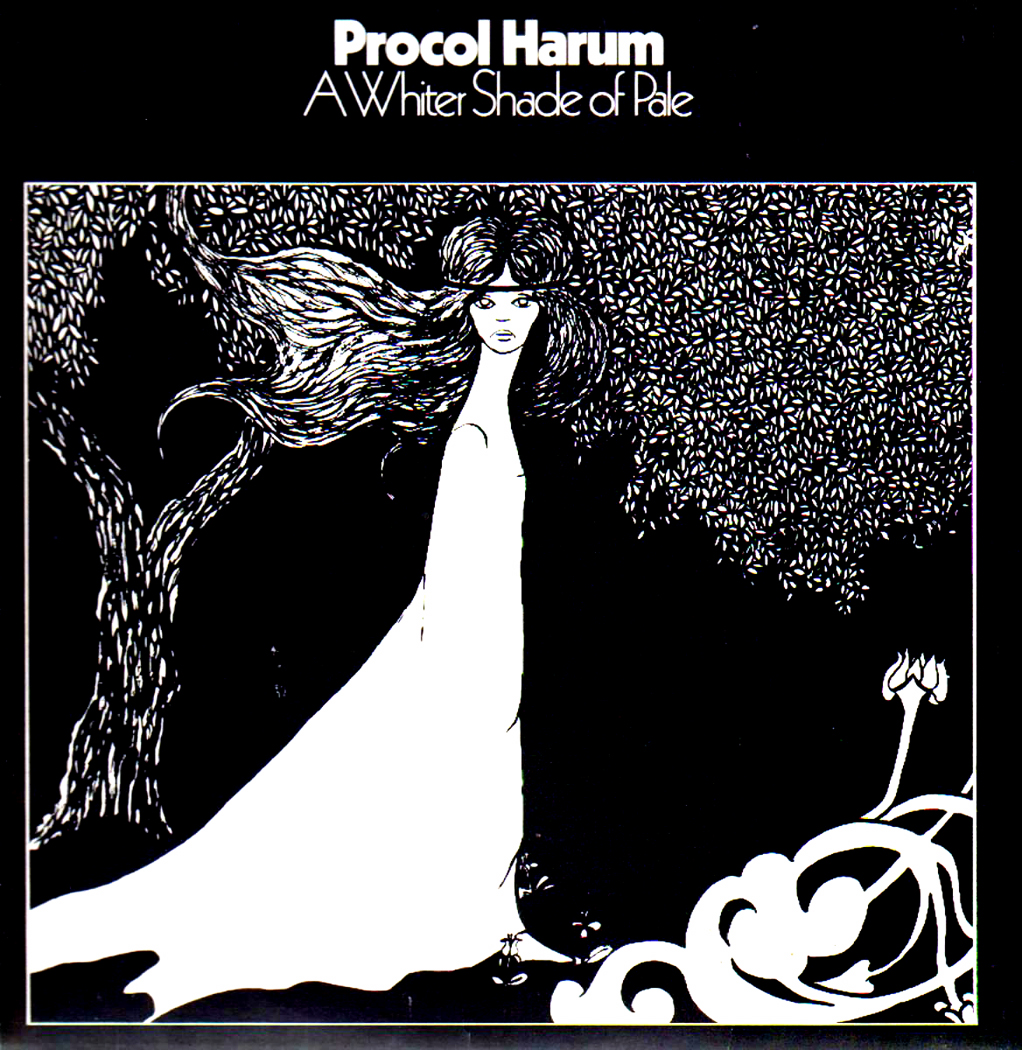
“We played very low volume, sometimes without even plugging in,” he said. “We didn’t want to disturb Sal’s folks. But that’s not why I brought it up. It’s because of our name.procol harem cover

“You wrote about rock bands using Surrealism. This was 1967 and we listened to Jefferson Airplane, the Grateful Dead, Country Joe and the Fish, Procol Harem, the Velvet Underground — it was a whole list of Surrealist wordplay.

“I remember a whole subcategory of culinary surrealism,” I said. “Moby Grape, The Electric Prune, Strawberry Alarmclock.”

“And those were just the big ones. Don’t forget the Chocolate Watchband, the Peanutbutter Conspiracy and Ultimate Spinach. And I guess we could put Captain Beefheart on that list, too.

“There was the Bonzo Dog Doo-Dah Band — bet you don’t remember them — Blossom Toes, Bubble Puppy, Pearls Before Swine, 13th Floor Elevators, the Lovin’ Spoonful, the Stone Poneys and the Monkees — not that we listened the them. Nobody did; they were too popular.”

“And your band? What did you call yourselves?”

“Well, at first we were the Buddha Fumes, but later that year, we decided that was too simple, so we changed to Unlit Booth/Breakfast Out of Context. We thought it was a great name.”

“Maybe a little unwieldy.”

“Yeah, but we really got on a kick with the slash. We made up albums we were going to record, all with great two-part names, like ‘Sudden Eyes/Velcro Sunrise’ and ‘Burlap Lapels/Unexpected Lady.’ Inagaddadavida single

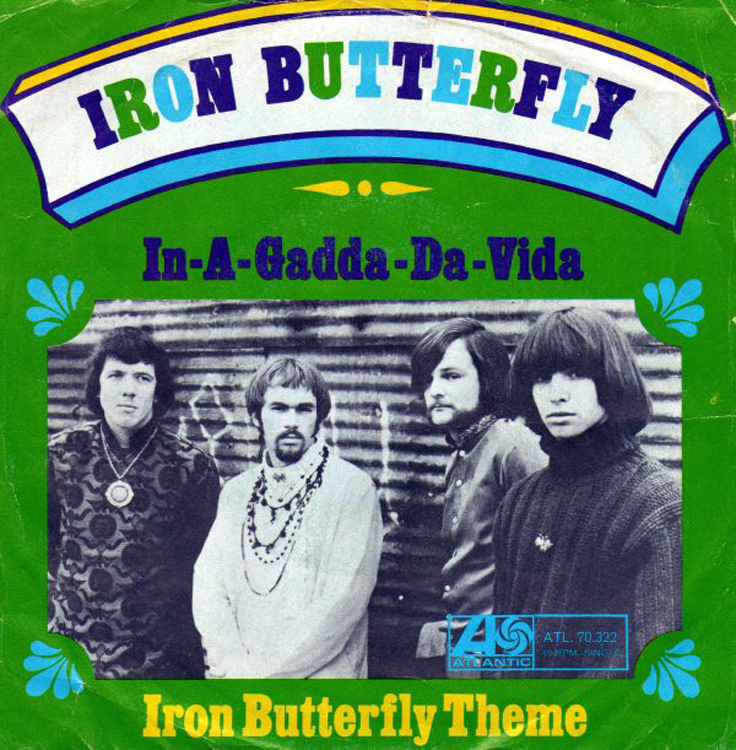
“I became more involved in the band our senior year and wrote lyrics for our songs. Mostly they were covers of our favorite bands, but with my new words. It’s how I became a writer, I think. I wrote a song about my dog based on Iron Butterfly’s In-A-Gadda-Da-Vida with the words, ‘Ah, we gotta go feed her.’ And we did. Feed her, that is.

“We broke up after graduation. We all went to different schools, except Sal, that is. He got a job.

“But this is all prelude to this list.”

“What list is that?”

“Well, back then, we made up a list of possible names for the band, and it follows exactly what you said in the piece about Surrealism. We had all these great concepts built out of wild juxtapositions, like taking a dictionary and running it through a blender. Of course, we never heard of Surrealism then. We just knew this stuff was cool.silvertone guitars

“I found this list in an old folder from that time.”

And he pulled out a folded sheet of lined yellow legal paper, brittle at the edges, with about 20 or 25 names on it, written in faded violet ink, obviously from a fountain pen (“really, a cartridge pen,” Stuart said). The ink was illegible in a couple of places where spills had made the color spread into a bright blot. I recognized the handwriting as Stuart’s from the many letters he has written me over the years. His high-school cursive was much neater, though, than the scrawl that has evolved.

“Wax Monkeys,” it began.

“Xenon Aftertaste”

Buddha Fumes, Sudden Monkey, Jalapeno Fistula, Orlando Death Car, Sequined Monotreme. The list continued: Fog Hammer.

“There was a fraudulent PR company called ‘Frog Hammer’ in Slings and Arrows,” I said. “You know, the Canadian miniseries about actors.”

“Don’t know it,” Stuart said. “But frog hammer just makes me think of a squashed schoolroom dissection. Fog Hammer is more genuinely surreal. Soft and hard at the same time, dense and vaporous.”poster 1967

He’s probably right. The list went on:

Spit Wax

Able-bodied Saints

Red Suits and Whispers

Sound Midden

Ear Stubble

Leatherette Wilderness

Snarling Confessor

Audible Hernia

Slice of Breath

Waking the Badger

Fraternal Animism

Painted Snakes

Money Under the Hood

Ashcan libertine

Pineapple Fuqua

Gruntbunnies

“Wait,” I said. “Isn’t Pineapple Fuqua a real person? Didn’t we know him when we were kids?”

“Yeah, ‘Few-Kway.’ Ran the service station. Good name, though.

“Any of them you wanna use, go ahead,” Stuart said. “I don’t mind.”

"Object" by Meret Oppenheim, 1936

“Object” by Meret Oppenheim, 1936

Most art movements come and go. Surrealism came and stayed.

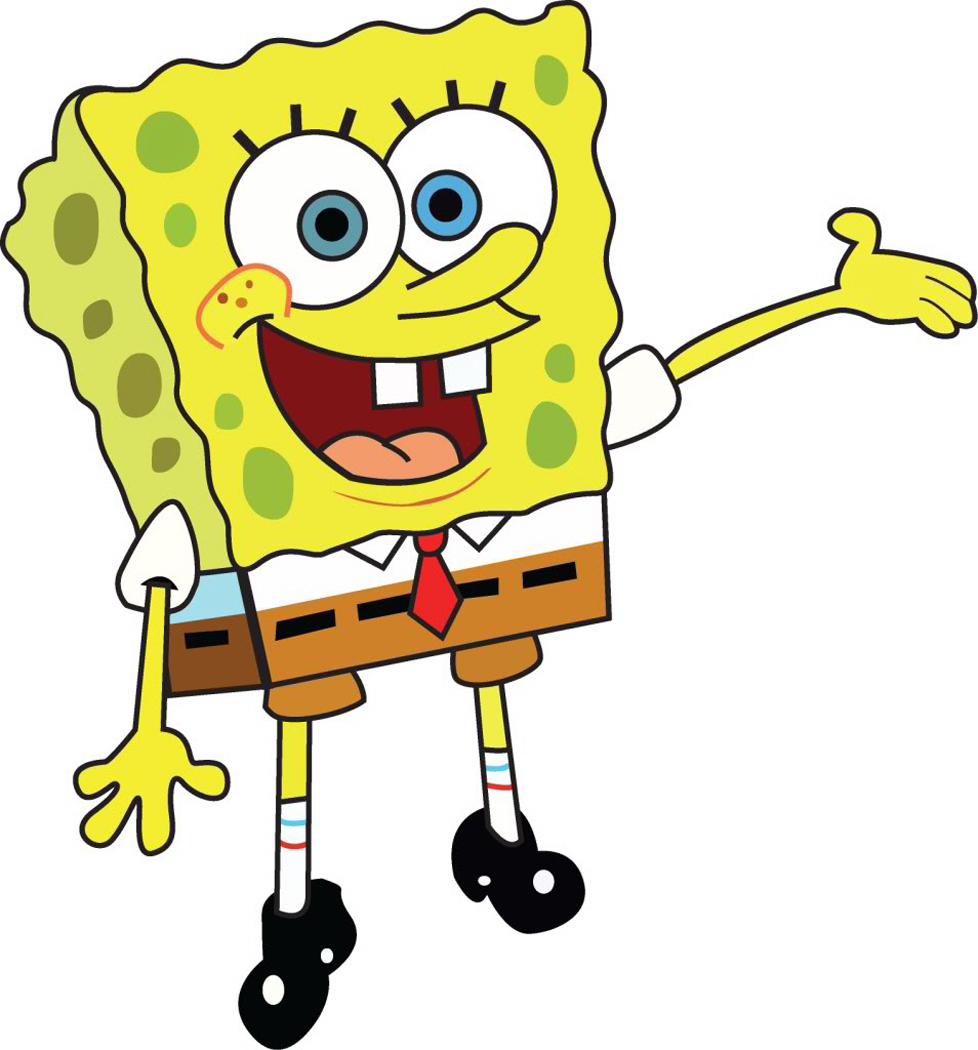
spongebobThat may be unfortunate: After all, Surrealism is not everyone’s cup of fur. But if you look around, you will see that Surrealism has become an entrenched part of American culture. It’s everywhere from pop music to TV sitcoms. It’s so pervasive, sometimes you may not even recognize it as it passes by.

SpongeBob SquarePants, for instance. Salvador Dali would have loved it.

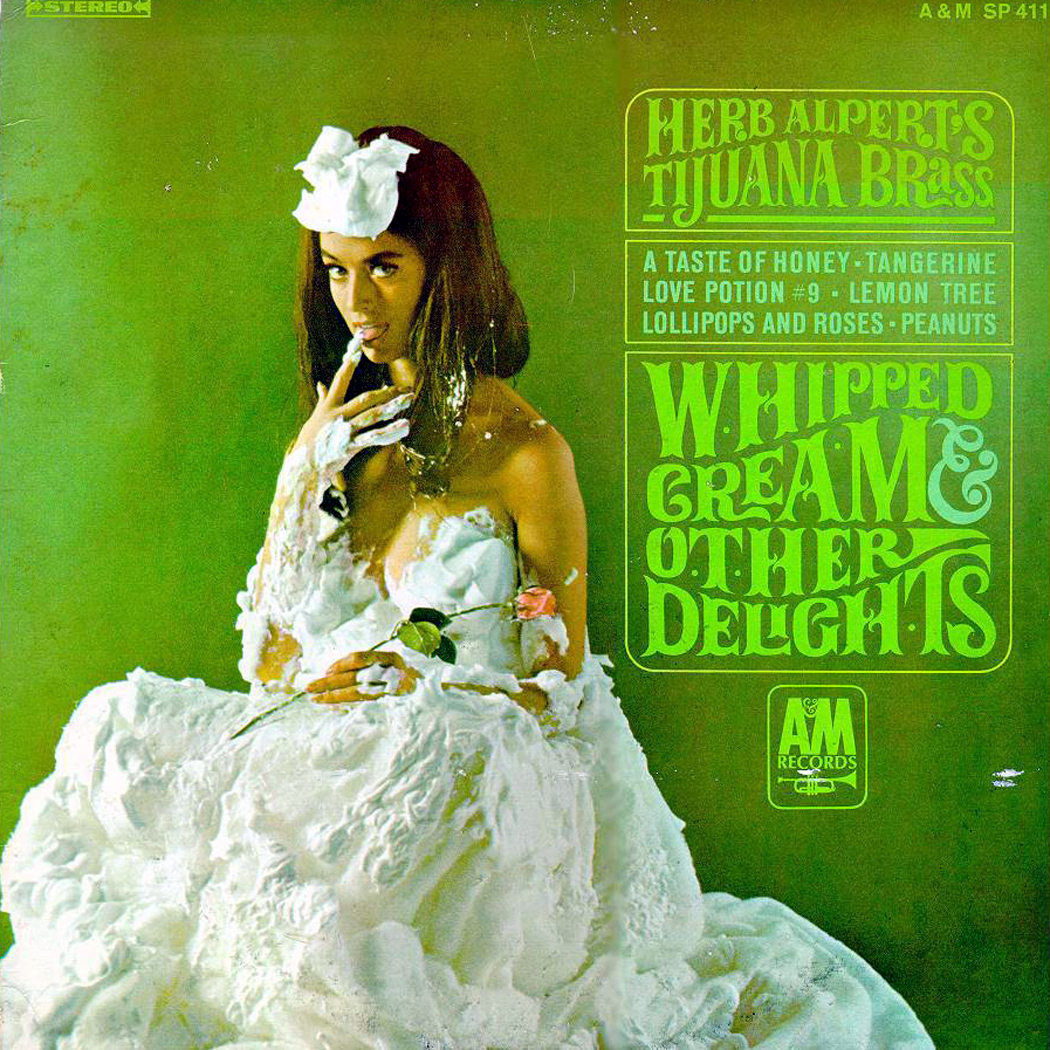
Surrealism’s love of the weird, the incongruent and the unspeakable fuels a good deal of our popular culture. Consider such band names as Flaming Lips, Insane Clown Posse, Def Leppard, Nine Inch Nails, Guns n’ Roses.herb alpert

But it’s not just music: Only a culture that thrives on a constant diet of Surrealism could line up to buy Thai pizza or Mock Hawaiian Chile. Or be able to follow Robin Williams’ unconnected segues, or recognize the world of Bill Griffith’s Zippy the Pinhead.

It’s everywhere: Michael Jackson was a walking frappe of the surreal.

Sometimes it even happens by accident: In the old Hayden Planetarium in New York, before it was torn down to make way for the new Rose Center, there was a lit sign by the staircase that read: “Solar System and Rest Rooms.”solar system and rest rooms

Of course, Surrealism didn’t enter this country on a pop-culture visa; it got here as an ambassador of French high culture.

Surrealism began in Paris in 1924 with Andre Breton’s Surrealist Manifesto, an unreadable piece of bureaucratic writing that set forth the principles of the school. It was yet one more attempt at epater le bourgeois. But it was also a utopian art-and-political movement meant to liberate all humanity, to free civilization from its deadening habits.

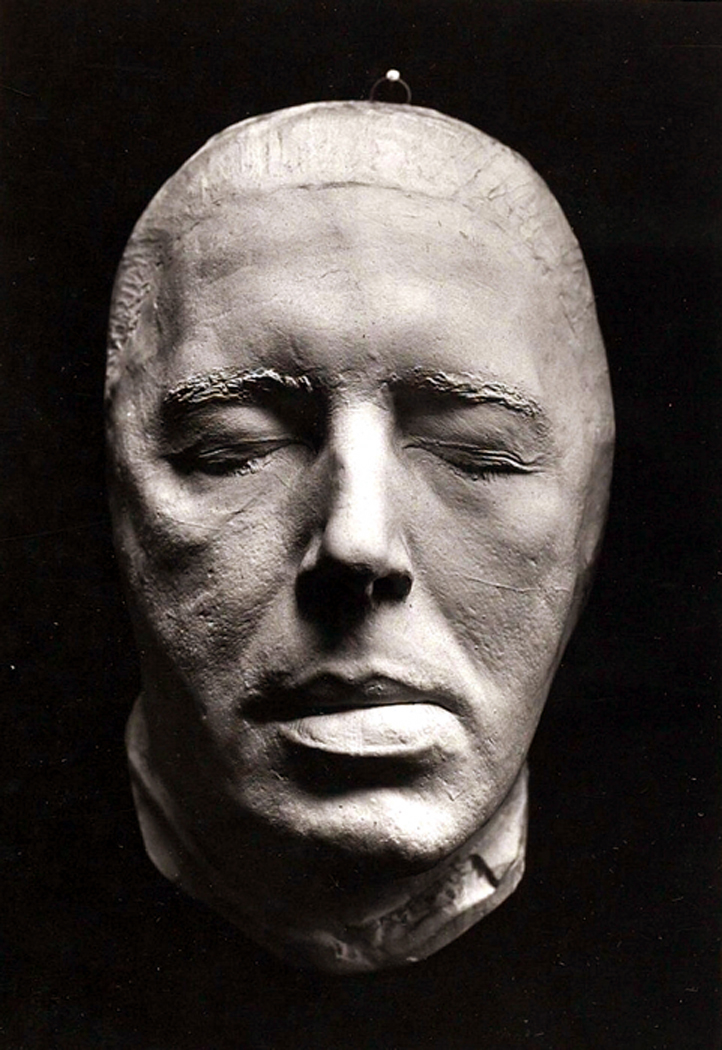
Andre Breton death mask

Andre Breton death mask

Primarily, Breton wanted to free the mind from the shackles of logic, to use the imagination as freely as children or madmen, with no constraints of taste or taboo.

He believed that the unconscious mind was somehow more honest than the conscious mind, and to tap into that lower, darker level of the psyche, he prescribed dream imagery, Freudian symbolism, automatic writing and random juxtaposition.

The Surrealists took as their motto a phrase from the 19th century French poet Lautreamont, “As beautiful as the chance encounter, on an operating table, of a sewing machine and an umbrella.”

Thus was ushered in the era of droopy watches and steam locomotives chugging out of the fireplace.

The number of artists who signed on was impressive — even Picasso himself, at least tangentially.

By Australian artist Manfred Olsen, detail

By Australian artist Manfred Olsen, detail

But one can’t talk about Surrealism as a single thing, because it was not. There were as many types of Surrealism as there were Surrealist artists. And there were an army of them. Their general was Breton, who attempted to maintain control of his theory but was, in truth, herding cats. Everyone had his own version of Surrealism. Dali leapt into sexual fetishism; Ernst into automatism. Joan Miro imitated children’s art; Man Ray made clever and useless objects.

And just as French couture shows up in New York department-store knock-offs, Surrealism crossed the Atlantic, so in the 1930s and ’40s, American artists who wished to remain au courant picked up the mantra.

"Oedipus Rex" by Max Ernst, 1922

“Oedipus Rex” by Max Ernst, 1922

The ’40s also saw many of the European Surrealists cross the Atlantic to escape the war. Dali came over. Tanguy came over. Ernst even settled in Arizona. Dali became a celebrity; he starred in Life magazine.

Salvador Dali

Salvador Dali

Surrealism began its metamorphosis into mass culture.

Dali’s particular style of Surrealism became the public model for the movement and was imitated by some artists, including Federico Castellon, Reuben Kadish, Harold Lehman, Helen Lundeberg.

Flat horizons, empty spaces, body parts, puppets, shadows, eggs, skeletons — a whole retinue of increasingly tired Surrealist iconography. In America, that iconography persists aggressively in the form of tattoo and prison art, and the work of untold high school students.

But this wasn’t the end: Two more generations of Surrealism in America followed.

"Monogram" by Robert Rauschenberg

“Monogram” by Robert Rauschenberg

First came Pop Art, which often had a Surreal component — Robert Rauschenberg’s Monogram, for instance, with its stuffed goat wearing a rubber tire cummerbund, or Claes Oldenburg’s soft sculpture. Even Andy Warhol’s color-quilt celebrity portraits have a Surrealist edge.

And then came psychedelia. It is through the drug-and-rock culture of the late 1960s that modern pop culture gets its Surreal DNA. Grateful Dead, Iron Butterfly, psychedelic posters, LSD and flower power.psychedelic poster

“I don’t take drugs,” Dali said. “I am drugs.” That was the difference.

But to truly understand what the excitement was all about, you must understand something about art in general: One of its main duties is to refresh our perceptions. We live lives of deadening habit — driving the same commuter route daily, watching the same TV shows, ritualizing our political life so that it becomes no more thought through than a slogan on a T-shirt. Habit is the great deadener of life. Art always needs to show us something that wakes us up, makes us see the world again as if for the first time. This is what Breton meant by Surrealism. He means to grab us by the lapels and make us see the world as miraculous.

“The marvelous is always beautiful, anything marvelous is beautiful,” he said, “in fact, only the marvelous is beautiful.”

warhol

Andy Warhol was a sphinx. His public pronouncements were often so bland as to be dumbfounding. Yet he is one of the most influential artists of the second half of the 20th century.

Because his public persona was so passive, we cast our ideas upon his blank slate: There are as many Warhols as there are viewers of his work.

To some, he was the great democratizer; his prints were — originally — affordable to all. To some, the great charlatan; he admitted his favorite thing was money.

To others, he was the harbinger of celebrity culture while to still more, he was a mocker of celebrity.

He either knocked off commercial imagery, or he allowed us to see that imagery for the first time as art. marilyn

Was he ironic or sincere?

We each have our own Warhol.

My Warhol is the best artist of the past 50 years, not only influential but unlike some other influential artists such as Joseph Beuys, Warhol also provides us with beauty. Like Picasso or Matisse, his work isn’t just about theory, but about pleasure.

The academicians and theorists point out that Warhol’s art is about repetition and multiple versions of the same thing: a dozen Maos or Marilyns. And although that is tangentially true, what is truly astounding in Warhol’s work is the variation. Each repetition is brand new. The artist’s inventiveness is magical. 1972 mao 1

You can look at a dozen Maos and see repetition, or you can see a dozen variations on a theme, ranging from Mao in blackface to Mao in green, each version with its own particular scribbles. Not repeated, but varied. jagger

1964 soup canThen, there’s the Mick Jagger series from 1975, in which the images are partly photographs, partly abstract shapes and partly line drawings — and make no mistake, Warhol’s line was as distinct and fluent as Picasso’s.

There are Campbell’s soup cans here, too. Warhol made his reputation with these.

It is the job of artists to direct our attention to what is going on around us, whether that is the grand landscape of 19th-century America or the commercial landscape of Pop Art. In this sense, Warhol is no different from Thomas Moran.

Once we’ve seen Warhol’s soup cans, we cannot be blind to the originals in the store: Instead of their disappearing into the background noise of our lives, we pay attention.

Paying attention is the sine qua non of art. car wreck five deaths

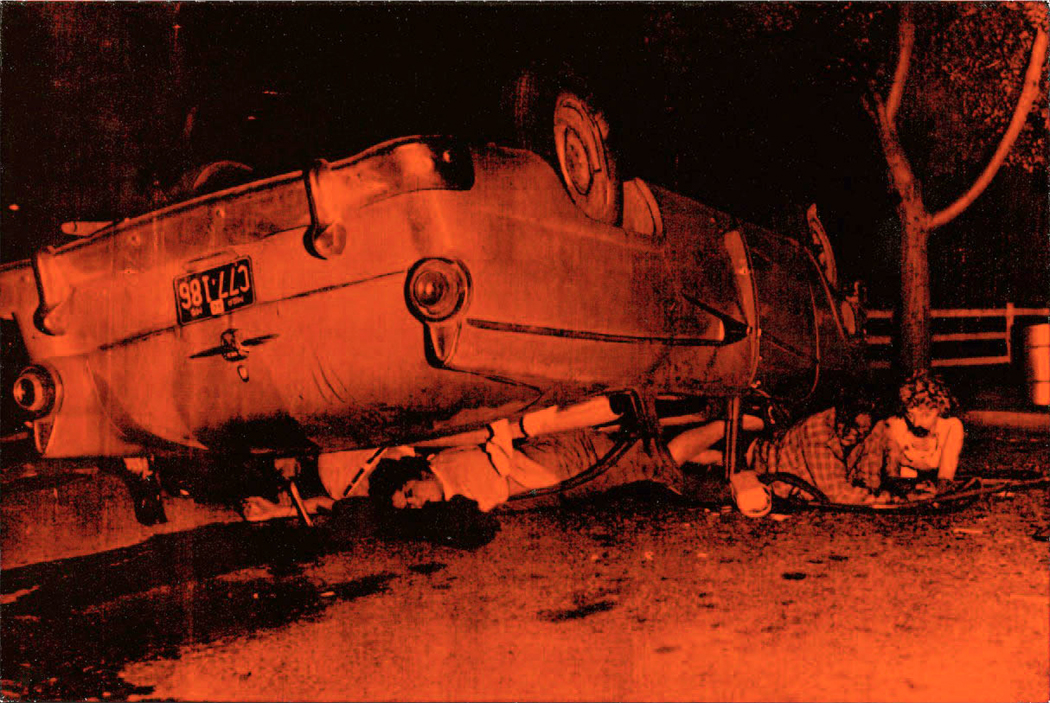
And though we think of Warhol as being the abettor of celebrity (and at his crassest, he provides “Warhol” portraits of anyone rich enough to commission one), the celebrities he chose for his uncommissioned work tended to be those with the aura of tragedy about them, like Marilyn Monroe. His early work often included car wrecks or disasters from the news. One of the sets is about the Kennedy assassination. geronimo

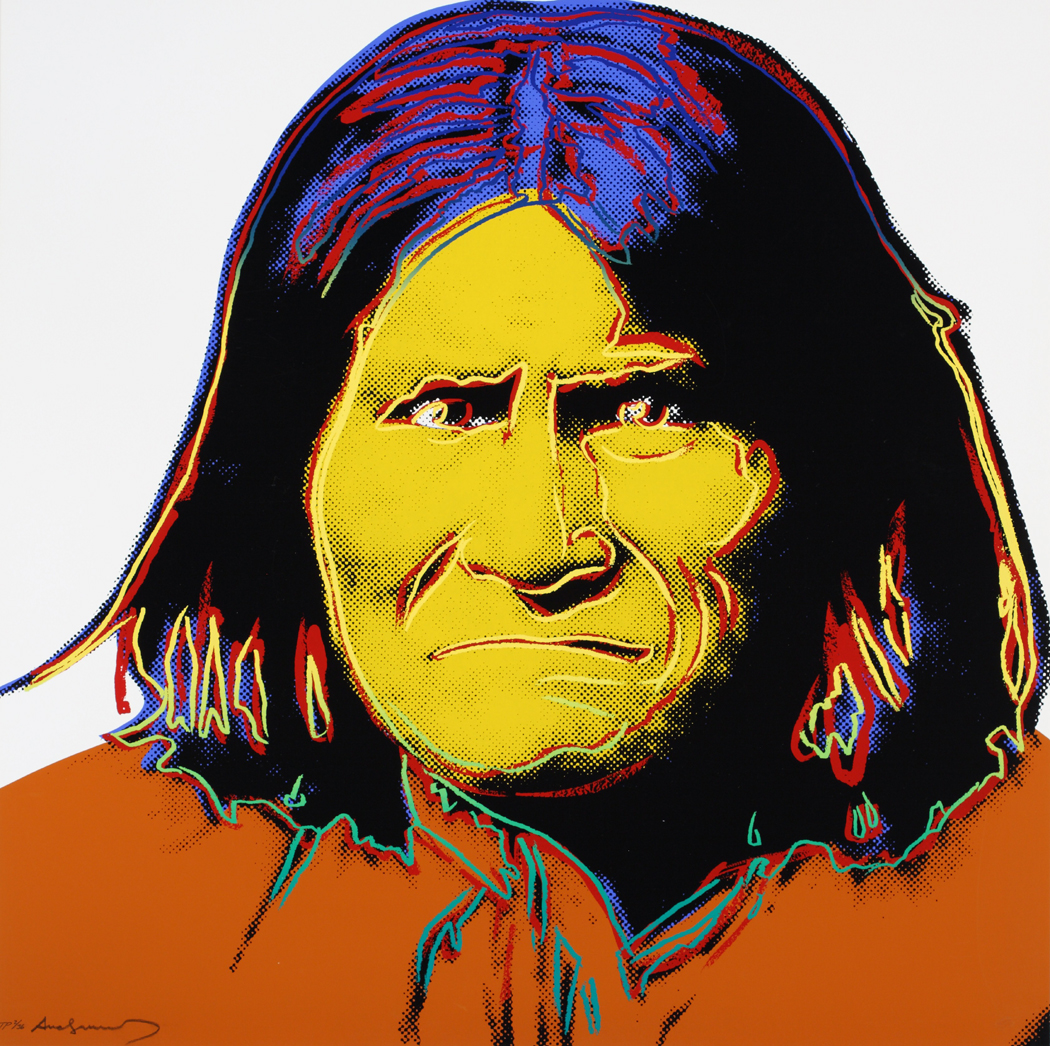
Warhol is more committed to the real world than he often is given credit for: Even the seemingly simple Pop images of cowboys and Indians remind us of the tragedy of Native America. There is Geronimo; there is John Wayne.

Or the series of “Jews in the 20th Century,” which may show us the Marx Brothers and George Gershwin as well as Martin Buber and Albert Einstein, but behind them all is our awareness of the tragedy of Jews in the century past.

As Percy Shelley said, “Our sincerest laughter with some pain is fraught.”

Warhol the celebrity was a bright blot, a blank face of banal utterance, but it was a mask he was forced into in order not to have to trivialize his work by talking about it. His famously obtuse interviews were a defense mechanism: When you have torn the veil, as Warhol had, how can you come back to this side?

Andy preferred to let his work speak for itself, and that is why everyone can have his own Warhol.

Do you think you know the title of this painting?

Do you think you know the title of this painting?

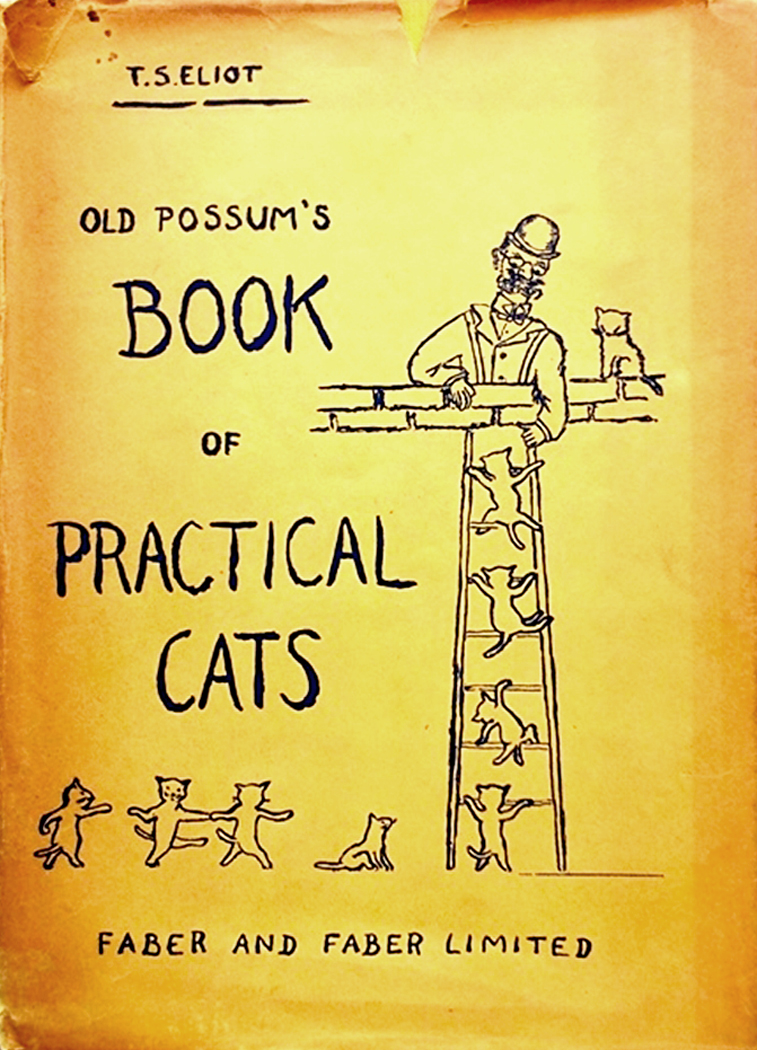
In T.S. Eliot’s Old Possum’s Book of Practical Cats, he writes, “The naming of cats is a difficult matter,/ it isn’t just one of your holiday games.old possum

“You may think at first that I’m mad as a hatter/ when I tell you a cat must have three different names.”

Of course, that book of poems went on to become the beloved and behated Broadway musical Cats, with people who should know better running around onstage dressed up in Halloween costumes as felines. The high-church Eliot probably rolled over in his grave.

But in the real world, it isn’t just cats. It’s a problem that comes up in the art world all the time: What’s the real and true name of a painting, a symphony or a poem?

When I was a working journalist, this would sometimes present a problem: Copy editors would demand the precise title of a work mentioned in a story, and they could be quite the sticklers. The Beatles’ “White Album” (by which name the entire world recognizes the double-disc album put out in 1968) is not “really” the title. So, we would have to call it The Beatles, which for most people is unhelpfully indistinct.

The world of the arts is filled with such issues over titles. It makes it sometimes quite chaotic. Of course, to live in the world of the arts requires a significant ability to endure the vague, but many people, especially engineers and editors, are as uncomfortable with the vague as Indiana Jones is uncomfortable with a snakepit.

And if engineers or biologists lived with such a level of unclarity, bridges would fall and the contents of petri dishes would infect the world.

But it is true. Titles are a frustratingly messy bogeyman.

We think of titles as being a simple issue: The painter or writer or composer gives his or her work a title, and it somehow gets registered somewhere — maybe the Library of Congress — and that’s that.

But that’s not the reality.

Consider Antonin Dvorak’s New World Symphony. Or is it the Symphony No. 9 in E-minor, op. 95, or is it Symphony No. 9, “From the New World.” Must a symphony have three different names?

Your grandparents knew it as Dvorak’s Symphony No. 5. So, where is reality?

(Before recent scholarship and a fetish for completism, Dvorak’s first four symphonies were not much played, being considered “student work”; therefore, his final symphony was his fifth. We now count the early ones and have bumped the “New World” up to No. 9.)

The problem, in part, is caused by history. History causes many problems.mona lisa

What we take today to be a hard-and-fast category — titles — turns out to be a fluid concept. When Leonardo da Vinci and Rembrandt were working, they never titled their works.

Da Vinci’s The Mona Lisa also is called La Gioconda. One of Rembrandt’s most famous paintings, The Night Watch, also is called The Shooting Company of Franz Banning Cocq and The Company of Frans Banning Cocq and Willem van Ruytenburch. So, what are their “real” titles?

Well, there aren’t any.

Such titles originally were descriptions of the paintings written for sales catalogs, most often for estate sales after the artists’ deaths. The widow pulls together all the unsold work, and someone writes down “Summer Evening” or “Young Woman With a Milk Pail.” Not titles, just short descriptions to help potential buyers tell one painting from another.

And they often have multiple titles, from subsequent sales.

It wasn’t until the 19th century that paintings or sculptures were given anything like what we now would call an official title. And even then, the artists tended to make their titles descriptive, to help gallery-goers explain to gallery representatives which paintings they were interested in buying.

The music world is even more byzantine, because there is no consensus at all on what to call a given work.

Take Beethoven’s Eroica.

When we call it that, pretty much everyone knows what we’re referring to: the symphony in E-flat, or the Third Symphony, or the Symphony No. 3 in E-flat, “Eroica.” There are a dozen other names in common usage.

What did Beethoven call it? Well, the title page of the manuscript, in Beethoven’s hand, calls it: Sinfonia eroica, composta per festeggiare il sovvenire d’un grand’uomo (“Heroic symphony, composed to celebrate the memory of a great man.” But then when it was first published, the cover page called it Symphony for Grand Orchestra in E-flat, op. 55, and the title page read something like: Symphony in E-flat for 2 flutes, 2 oboes, 2 clarinets in B flat, 2 bassoons, 3 horns in E flat, 2 trumpets in E flat and C, timpani in E flat and B flat and strings, op. 55.

It also is ascribed to “Luigi van Beethoven.” The French version calls him Louis van Beethoven.

So, what is its title?

As with the paintings, Beethoven’s original audience was comfortable with descriptions rather than titles. Any of the above sufficiently describes the symphony so it won’t be confused with anything else.

There are other problems.

Even in works that have real, official titles, we don’t always use the full version.

Brahms’ German Requiem is more properly A German Requiem, to Words of the Holy Scriptures.

This is pretty common. After all, Shakespeare’s Merchant of Venice was given the fuller title in the First Folio, The Most Excellent History of the Merchant of Venice. With the extreme cruelty of Shylock the Jew towards the said Merchant, in cutting a just pound of his flesh: and the obtaining of Portia by the choice of three chests.

Quite a mouthful.

Mozart’s Marriage of Figaro is actually titled The Marriage of Figaro, or One Crazy Day.

Which raises another problem: The title, really, is Le nozze di Figaro, ossia la folle giornata, but we commonly translate the title into English for the sake of being understood. So, Die Walkure becomes The Valkyrie, and Mondscheinsonate becomes the Moonlight Sonata, which, of course, is really the Sonata quasi una fantasia, in C-sharp minor, op. 27, No. 2, or, by another convention, Beethoven’s Sonata No. 14. Confusing enough?

Titles in translation are often changed if their original meaning might be misunderstood in the new language’s idiom, or if it comes across unidiomatically, so that Proust’s A la Recherche du temps perdu was known for years in America as “Remembrance of Things Past.” Presumably “About the Search for Lost Time” falls considerably flatter in English than in French.

Discussing such things with copy editors may or may not go anywhere: We are stuck with the whole idea that an art work or poem or piece of music could no more not have one final true title than a person could have no name on a birth certificate.

And one final thought: By far, the most popular title in art galleries is  “Untitled.”

Is that its title?

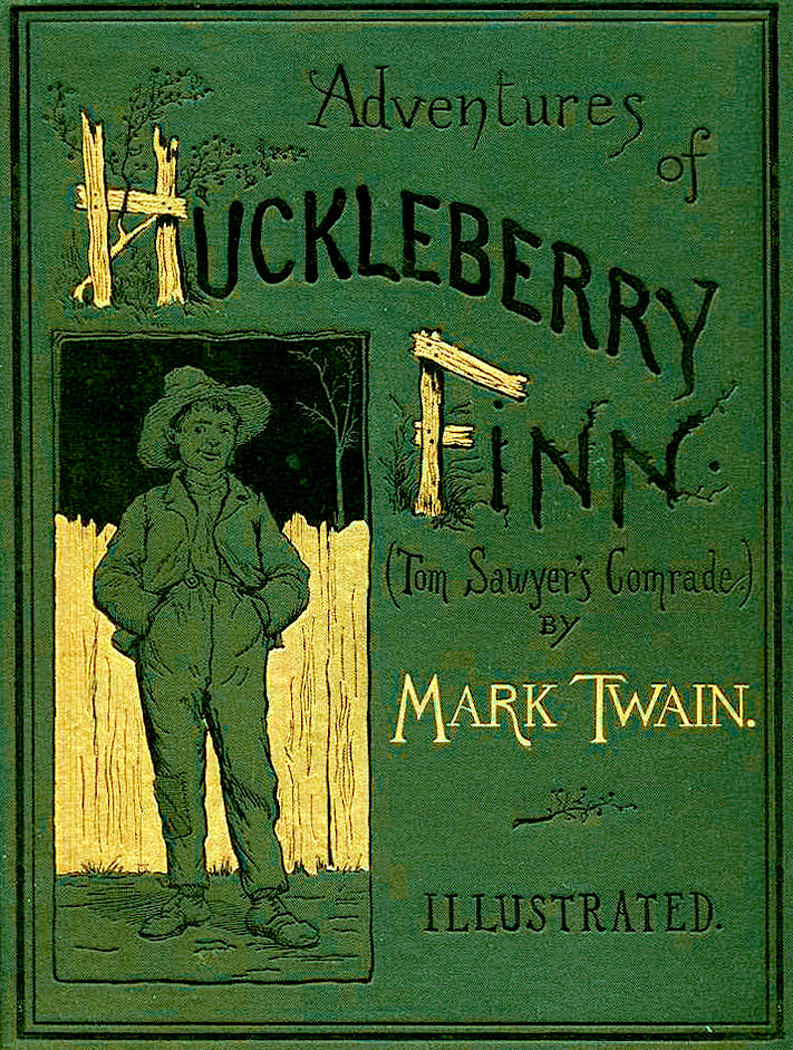
huck finn modern book cover

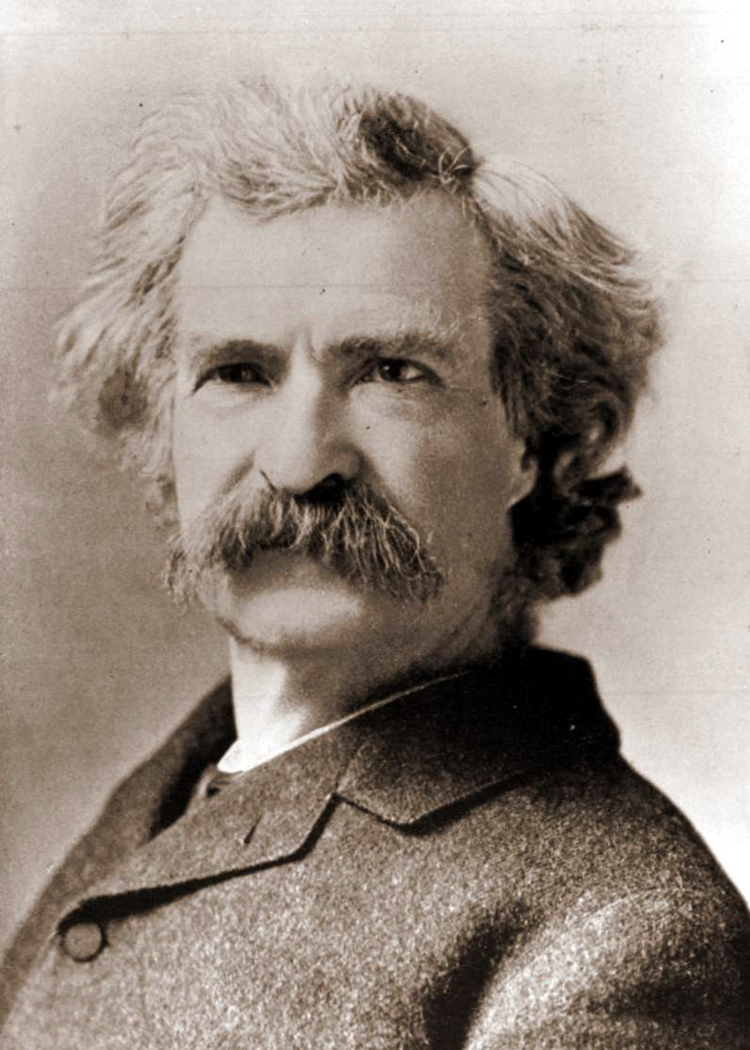
“All modern American literature comes from one book by Mark Twain called Huckleberry Finn,” Ernest Hemingway wrote. mark twain
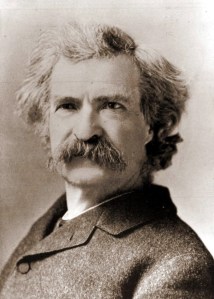
In that book, nearly every theme that identifies our art as American is established and explored: migration, race, individualism, anti-intellectualism, optimism, religion, social climbing, moneygrubbing and the comfortable informality that marks us as a people.

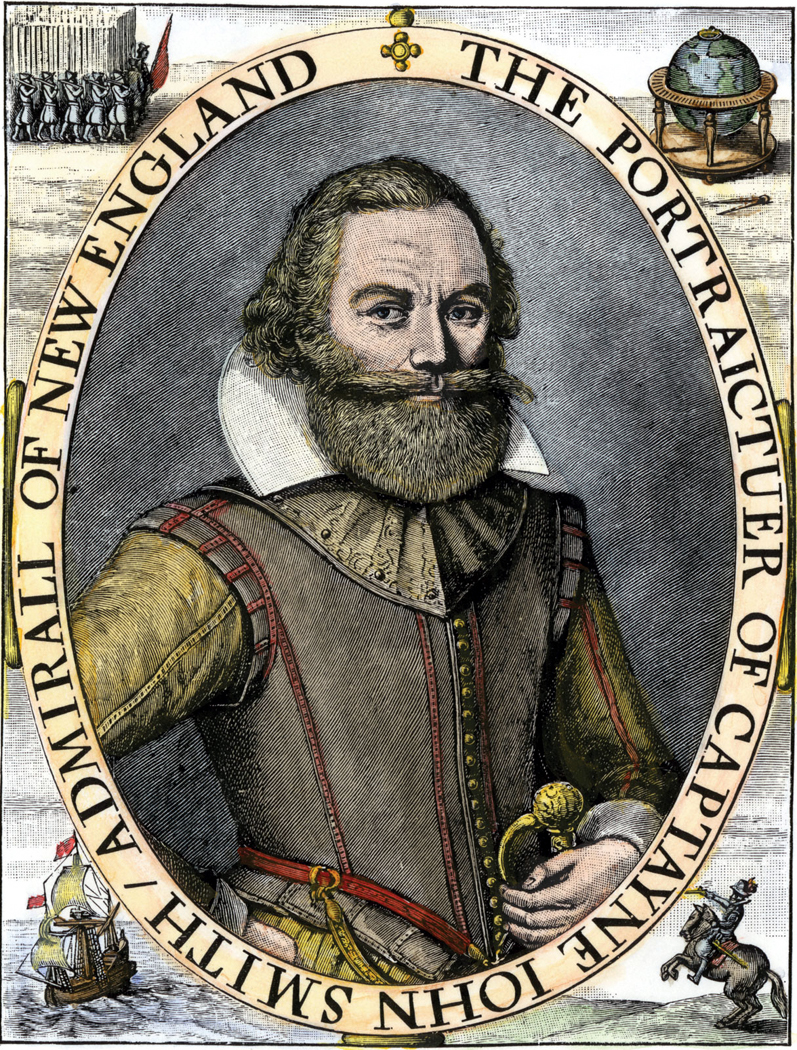
It’s as if Huck Finn were the instruction manual for how to be American. In that, Twain is just as clearly American as Debussy is French or Basho is Japanese. john smith We often look to our art for clues to national identity. But although Twain gives us Americanness in concentrated form, most of the arts made on this continent, from Capt. John Smith’s General History of Virginia (1624) and Anne Bradstreet’s poetry, all the way up to this week’s latest rap song, partake in certain common traits.

What are they? First, we need to eliminate some of the things we like to think are particularly American, such as patriotism or respect for family. Every culture feels these qualities are particularly their own, but in fact, they are universal.

Even such negatives as bigotry and racism have their American coloration, but they are evils found in every culture.

It needs to be noted, too, that what we admire in ourselves is not necessarily admired elsewhere. Americans are direct, which others often see as rude. We are informal, which others translate as slobbishness. We are optimistic, which can be taken as arrogance. We believe in individualism, which others see as selfishness. But there are six things that we can see as particularly American: migration, individualism, optimism, religiosity, informality and expansiveness. source_28

Migration

The one thing all Americans share is that we are immigrants.

Even Native Americans, although they hate to think so, came here from somewhere else, whether it is across an Arctic land bridge or up through a sipapu.

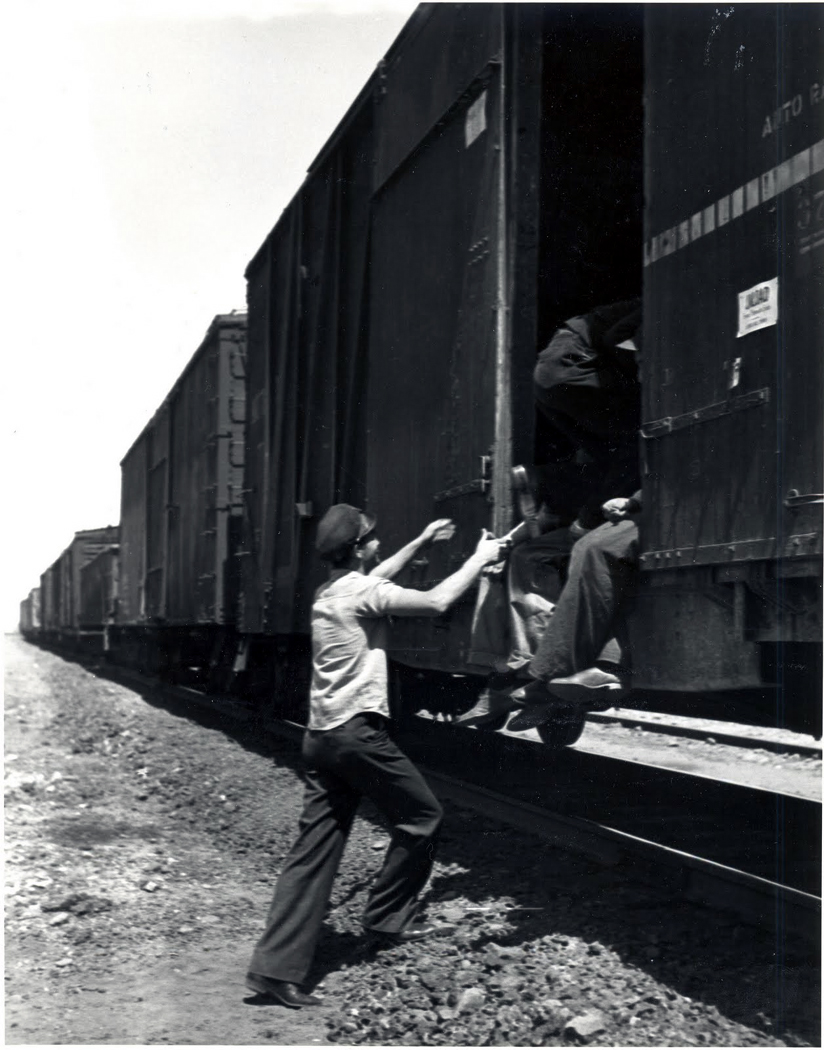
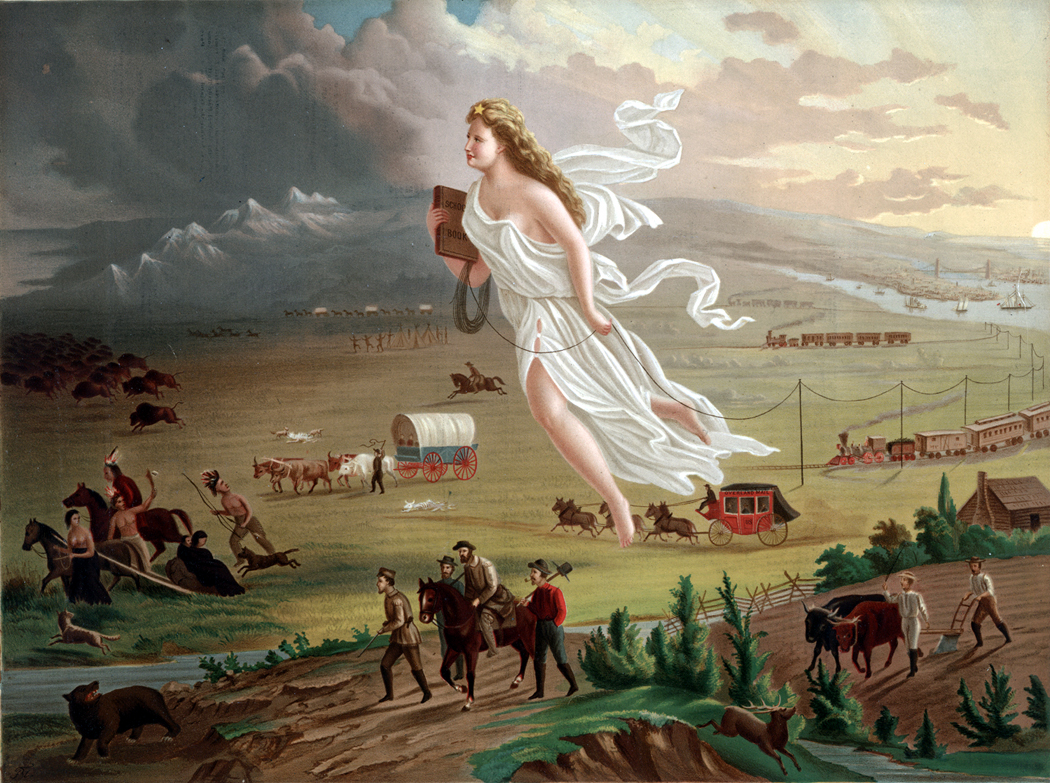
It is the parent fact that gives birth to all our other traits. jumping a freight Even after our ancestors came here from far shores, we have never ceased from peregrinating. First we moved West, populating the great wilderness.

Now, we move away from home to college or career, and find our parents retired to Florida and our siblings spread across four time zones.

To Europeans or Asians whose families have lived in the same villages for centuries, we must seem utterly rootless.

So it can hardly be surprising that the central metaphor of Huck Finn is a journey: The book is many things, from its hero’s double negatives and “ain’ts” to his climactic choice to follow his instinct instead of his schooling about runaway slave Jim, but first and foremost, it’s a “road book,” marking the peripatetic nature of American life.

Much of our art reflects this continuous travel. From the moment we arrived on the Atlantic Coast we began moving west. As art, The Godfather speaks of the immigrant experience, but so does every B Western ever filmed.

All the other traits we think of as American ultimately owe their birth to this constant moving: It gives birth to our self-reliance, our willingness to risk tomorrow on faith, and our freedom from many of the cultural straitjackets found back in the Old Country. It’s all there in the art. All either necessary for immigration or fostered by it. high noon

Individualism

Make that “rugged individualism.”

We trust our own instincts, like Huck Finn, rather then the wisdom of the group. We are Mr. Smith in Washington, Gary Cooper at high noon, Ellen Ripley blasting aliens.

The single most potent distillation of this individualism can be found in John Wayne, love him or despise him. But Wayne didn’t spring up ex nihilo; rather, he grew from the soil: He was originally Natty Bumppo, or Hawkeye, from James Fenimore Cooper’s Leatherstocking Tales: self-reliant, unschooled but wise and practical, with an unshaken faith in his own code of behavior. He’s Walt Disney’s Davey Crockett saying, “Make sure you’re right, then go ahead,” which is just a pop culture simplification of Henry Thoreau’s Civil Disobedience.

Sometimes it’s shocking to realize how of a piece our cultural heritage is. davy crockett march

The flip side of individualism is our tendency to isolationism: “Good fences make good neighbors,” as Robert Frost ironically wrote. Going it alone is usually seen as a virtue.

The downside of this self-reliance is our anti-intellectualism. We trust our own ignorance more than someone else’s knowledge. This is nothing new: It’s why Andrew Jackson was elected president. It’s Huck Finn fearing to be “sivilized” by his Aunt Sally. It’s why one of the most powerful political factions of the 19th century was called the “Know-Nothings.”

It’s a trait of national identity that we should never misunderestimate. oklahoma!

Optimism

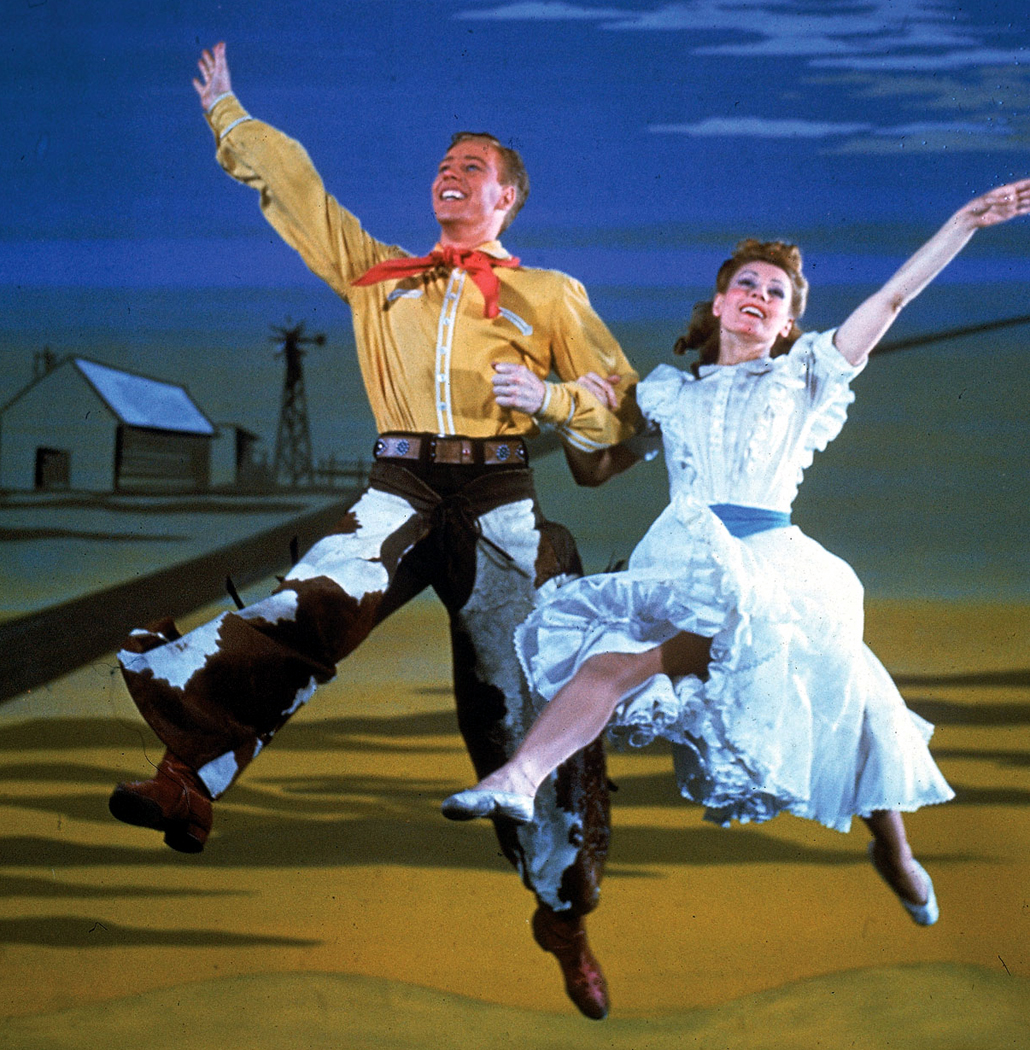
Against all reason and the evidence of history, Americans believe they can do anything. It is our “can-do” attitude, and you find it in the barking joy of Walt Whitman’s poetry and the songs of Oklahoma!Doris Day

To others in the world, this makes us look naive and foolish; fatalism is not part of our makeup.

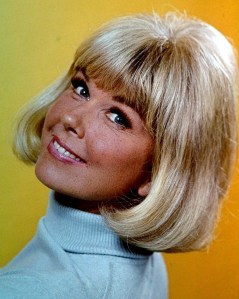
Which is why America is home to pop psychology and Doris Day. As a corollary, for Americans, the future only holds a better world. “Tomorrow, tomorrow,” Annie sings. “Make it new,” said poet Ezra Pound, and although he was speaking of literature, he could just as well have been speaking of Thomas Edison, the Chrysler Building or Elvis Presley.

Take what you’re given and do something new with it. Never accept the past as the final word. billy sunday preaching

Religion

Many peoples are religious, but in America, religion is something else.

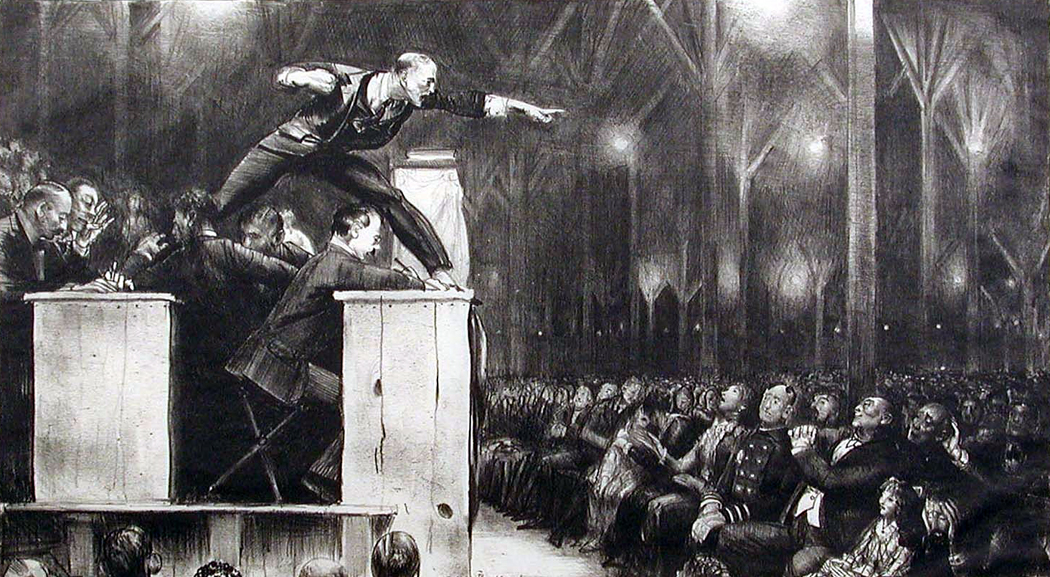
From the utopian religious communities of the 19th century to today’s fundamentalism, there is a glint of zealotry in American spirituality. Elmer Gantry would not be thinkable in France.

We have gone through at least four “Great Awakenings,” in which we rediscover the old-time religion and the narrow virtues of belief. rev whitefield
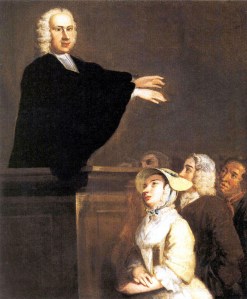
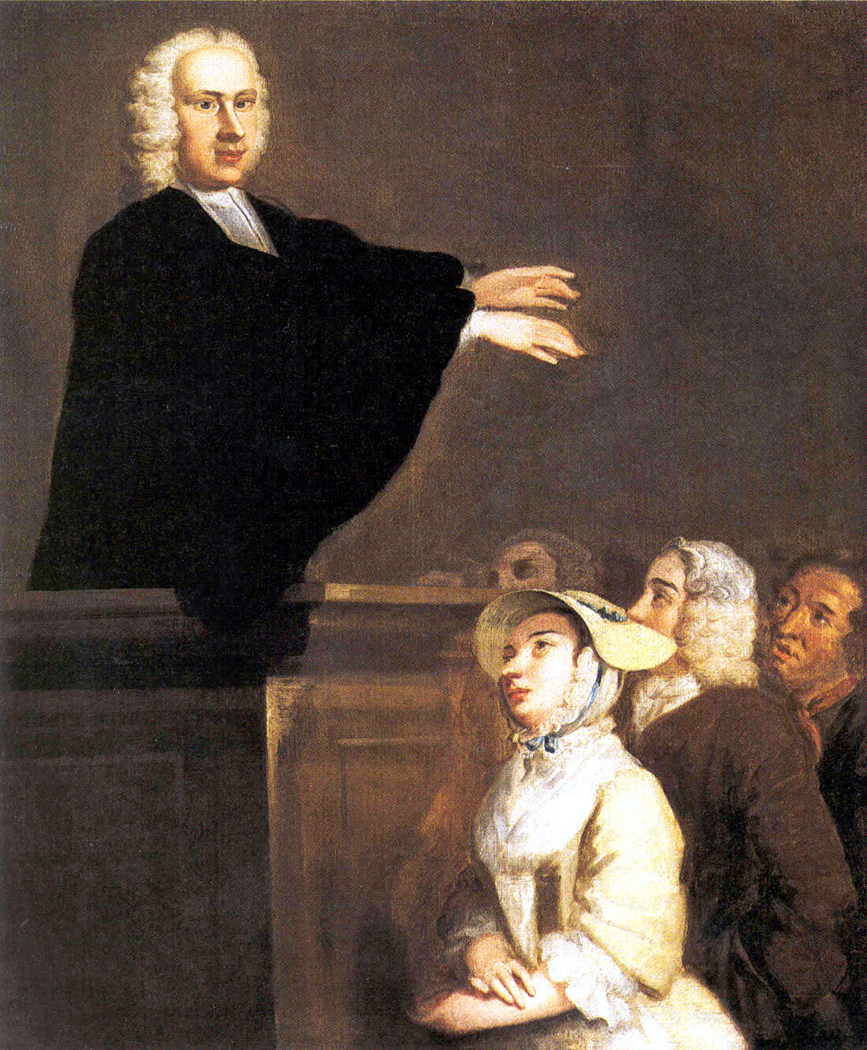
It was, after all, religion that founded this country, whether it is Congregationalists in New England, Quakers in Pennsylvania, Roman Catholics in Maryland. Each of them came here for religious freedom, although they were perfectly willing to oppress any religion not their own.

The separation of church and state in our Constitution is there not because we were an agnostic nation, but because everyone was so nuts on the subject and we wanted to keep from each others’ throats.

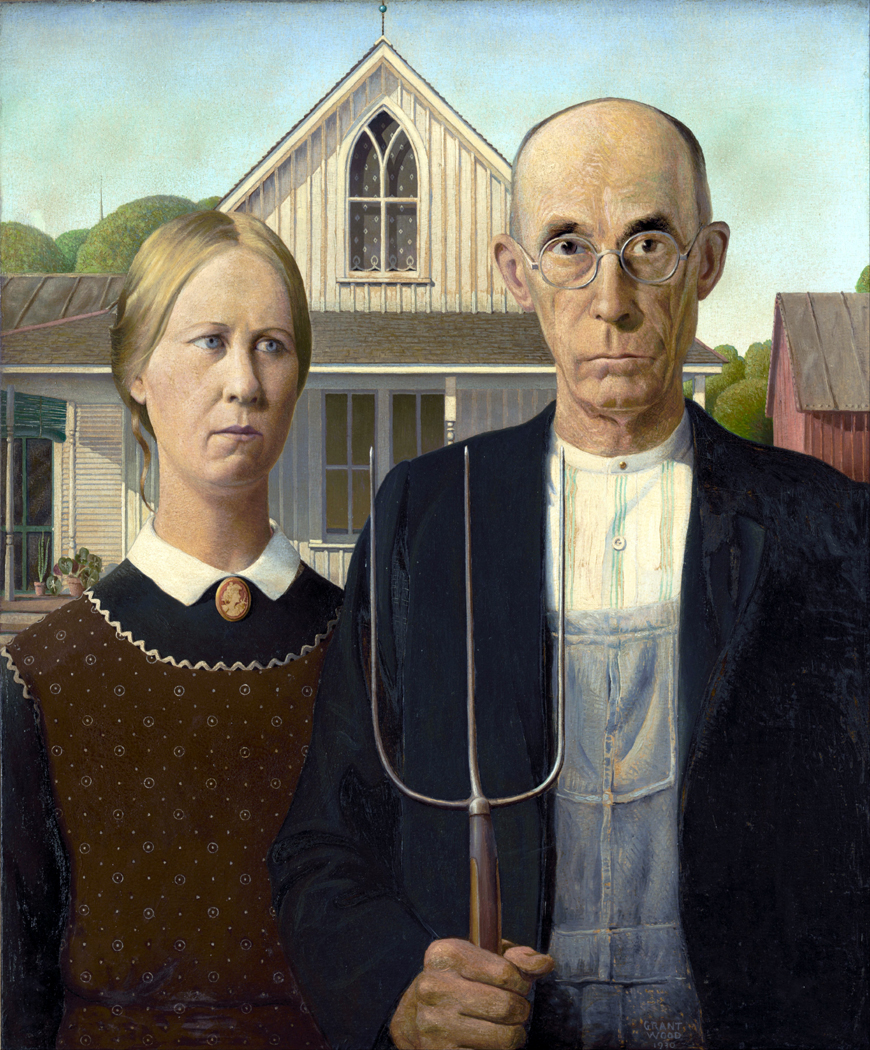
You hear the religion in the symphonic music of Charles Ives and in Negro spirituals. It echoes in Moby-Dick, and even the window behind the dour couple in Grant Wood’s American Gothic. leaves of grass frontispiece
Informality

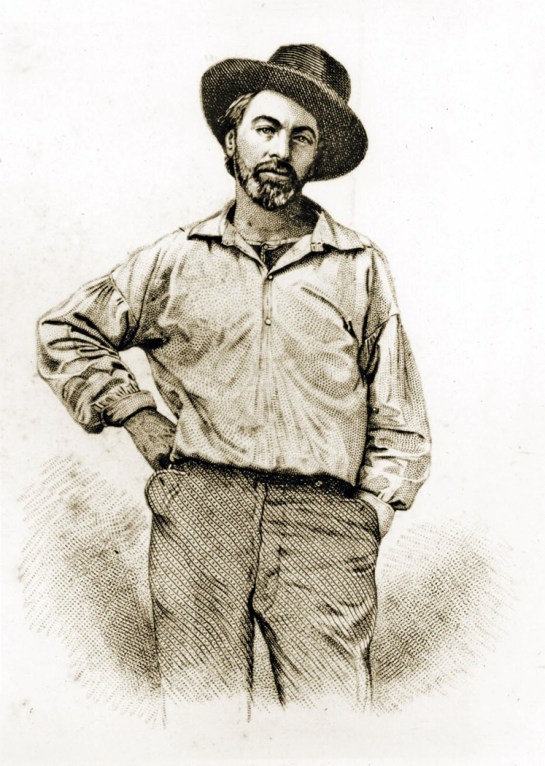
“I lean and loaf at my ease, observing a spear of summer grass,” Whitman writes in a poem of expansive informality, turning his back on the formal expression of European art: No villanelles for Americans, no Rime Royal.

In Europe, you have Oedipus, in America, Stanley Kowalski.stanley kowalski Mark Twain wrote Huckleberry Finn in colloquial American English and even put a note about it at the beginning of the book. Take that, Henry James!

“Whatever is not of the street,” wrote novelist Henry Miller, “is false, derived, that is to say, literature.” And he wasn’t using the word as a compliment.

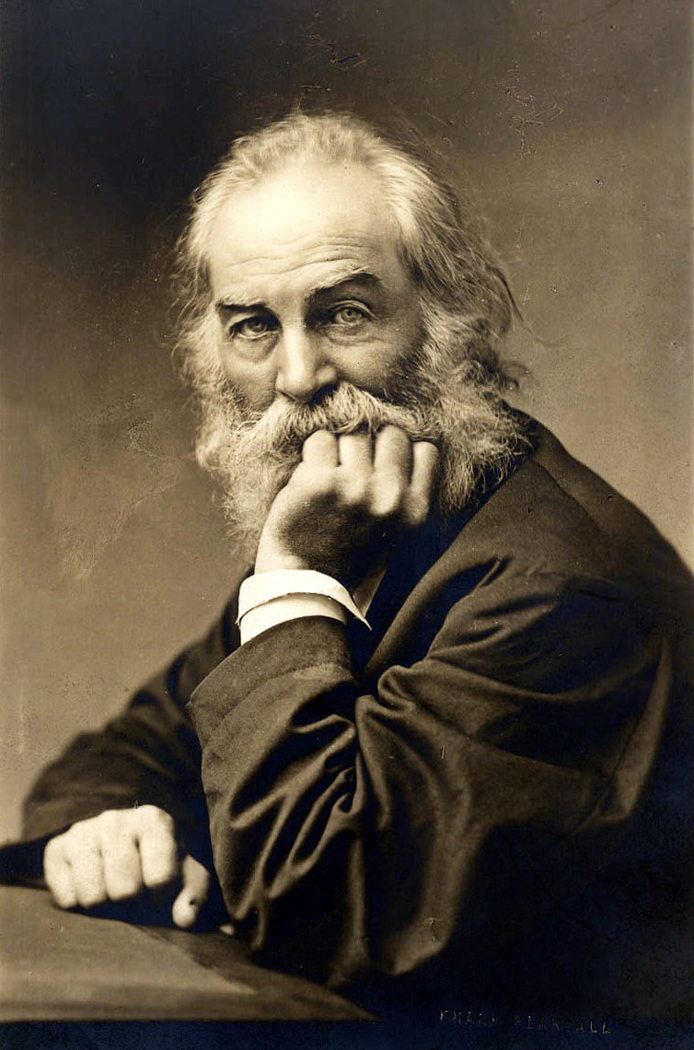
You can see it in the portrait of Whitman at the front of his book, Leaves of Grass: There he is, sleeves rolled back, collar unbuttoned, hips shifted comfortably, hat at a rakish angle. You could never imagine Tennyson like that. manifest destiny gast

Expansiveness

Everything in America is supersized, whether it’s fast food or our landscape.

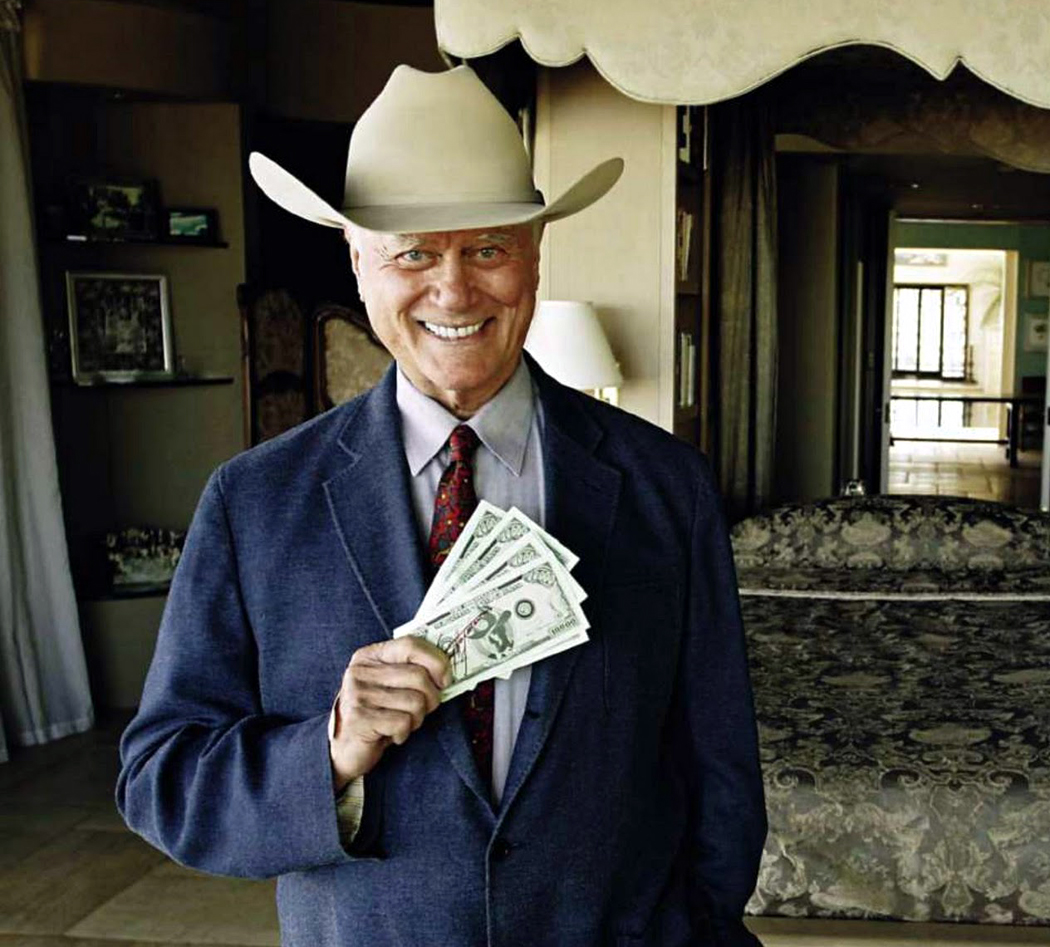
In America, bigger is better: We drive SUVs and watch blockbuster movies. It’s a Texas mentality. Star Wars isn’t big enough; we need a director’s cut, added scenes, a DVD packed with extras. A movie isn’t a success unless it makes $200 million. And the TVs on which we watch those DVDs continue to grow; soon they’ll cover our living room walls. larry hagman with cash

One Marilyn Monroe isn’t enough; Warhol must print her by the dozens, just as Babe Ruth must eat hot dogs by the score.

The tall tale is our national mythology, from Paul Bunyan to Jim Carrey’s face.

Of course, how could it be otherwise with the Rocky Mountains, the Grand Canyon and the Great Plains? Our very landscape calls out for grandiosity and grandiloquence. Over the top is America’s starting line, and the next frontier is our constant goal.

OH, AND AMERICANS LOVE LISTS:

Most-American Americans
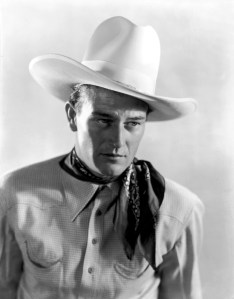
John_Wayne - overland stage raidersJohn Wayne: Love him or hate him, we can’t think of him as merely an actor. He has become an icon, the movie roles and the man bound into one, indivisible: the lone, laconic hero, man of action rather than words, graceful and bullying in turns.

4 more:

Louis Armstrong: American as soul.

Eleanor Roosevelt: American as do-gooder.

Babe Ruth: American as appetite.

Thomas Edison: American as inventor.

Most American Movies godfather

The Godfather Saga, Francis Ford Coppola, 1977: The conflated version of the first two Godfather films tells the immigrant experience writ large: family, business, love, loyalty, betrayal and the move west, told with the force and mythology of opera.

4 more:

The Man Who Shot Liberty Valance, John Ford, 1962: “When the legend becomes fact, print the legend.”

Star Wars, George Lucas, 1977: Good vs. evil supersized.

Gone With the Wind, David O. Selznick, 1939: History whitewashed.

Do the Right Thing, Spike Lee, 1989: Race will not go away.

American Contributions to global culture constitution go
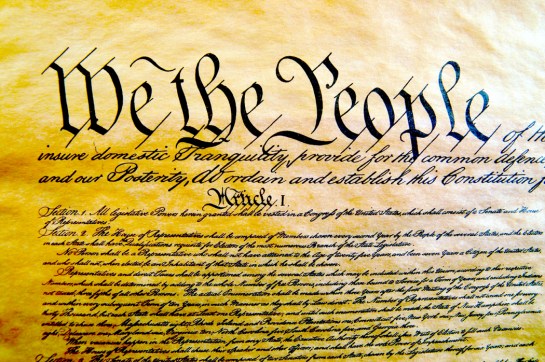
The Constitution: Our “governmental instruction manual” has become a model for the world, and its first 10 amendments have become the guiding principles of many an emerging nation. It’s more than merely political, it’s at the center of our culture, and the one thing the world really does want from us.

4 more:

Jazz: From which all popular music ultimately derives.

Hollywood: America’s secret plan for world domination.

Technology: The physical evidence of the can-do spirit.

Coca-Cola: Las aguas negras del imperialismo.

Most American Novels

huck finn book coverHuckleberry Finn, Mark Twain: The Great American Novel, filled with everything, good and bad, about ourselves: race, individualism, anti-intellectualism, optimism, religion, social climbing, moneygrubbing and our comfortable informality.

4 more:

On the Road, Jack Kerouac: An essential national theme takes center stage.

Beloved, Toni Morrison: The evils of slavery haunt even the freed.

The Leatherstocking Tales, James Fenimore Cooper: The invention of John Wayne.

The Great Gatsby, F. Scott Fitzgerald: Money, glamour, celebrity and loss.

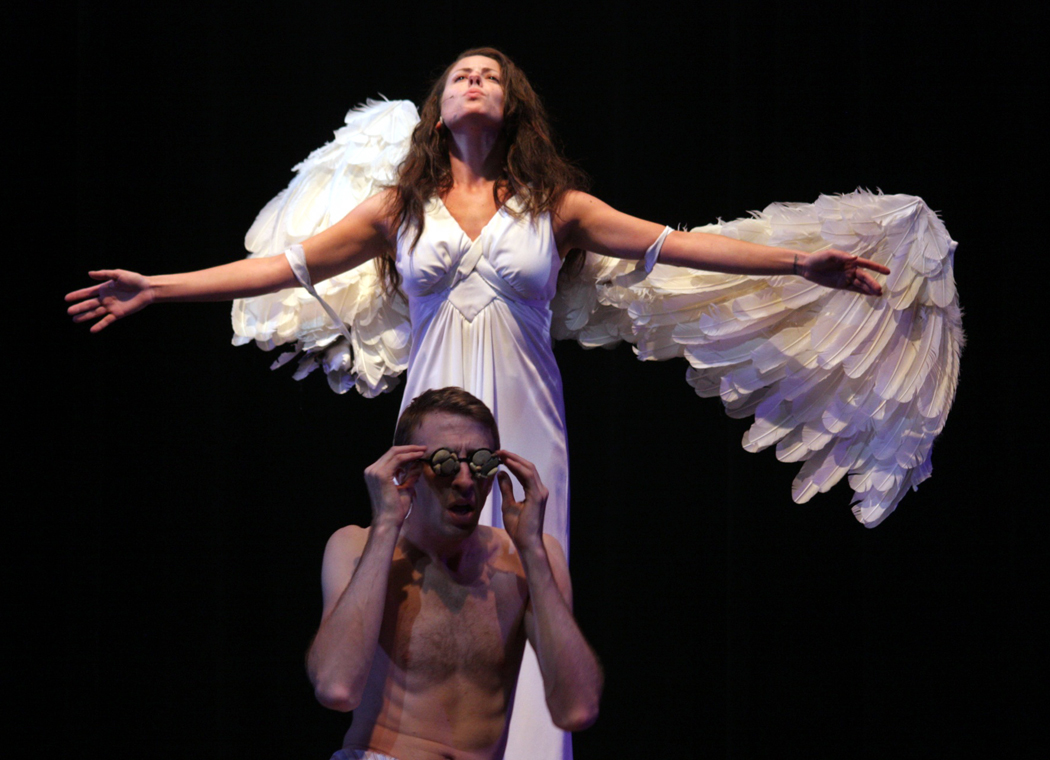
Most American Plays angels in america

Angels in America, Tony Kushner: The hugely ambitious “Gay Fantasia on National Themes,” takes on more American themes than anything since Huck Finn: politics, sex, generations, religious revelation, Reaganism, bigotry and forgiveness; so expansive a single night can’t hold it.

4 more:

Death of a Salesman, Arthur Miller: The underside of the American dream.

Oklahoma!, Rodgers and Hammerstein: Gushy, American cornpone classic.

Streetcar Named Desire, Tennessee Williams: Torn T-shirts and sweaty thighs.

Fences, August Wilson: Black view from Pisgah.

American Classical-music compositions

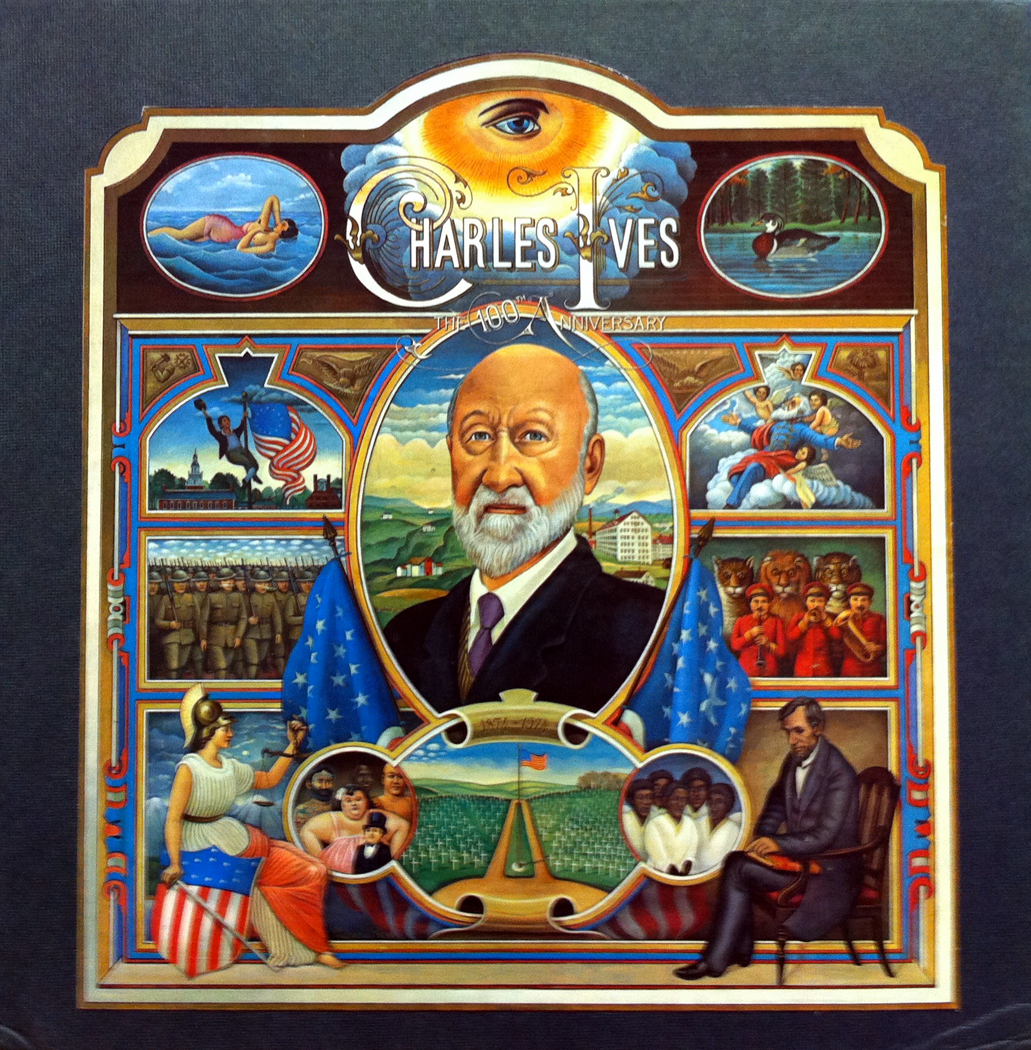
ives album coverThree Places in New England, Charles Ives: The crusty New England composer reinvents classical music to make it more American: loud, brash, nostalgic and patriotic at turns, and finds its subject in landscape and history.

4 more:

Rhapsody in Blue, George Gershwin: Jazz, Tin Pan Alley, Chopin and Carnegie Hall.

Appalachian Spring, Aaron Copland: Shaker hymn goes mainstream.

Symphony No. 3, Roy Harris: The type of the American symphony.

New World Symphony, Antonin Dvorak: Is the Most American Symphony written by a Czech?

American Architecture
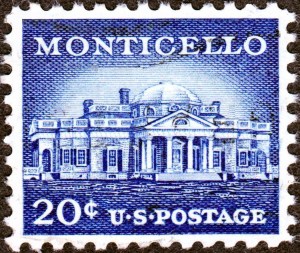
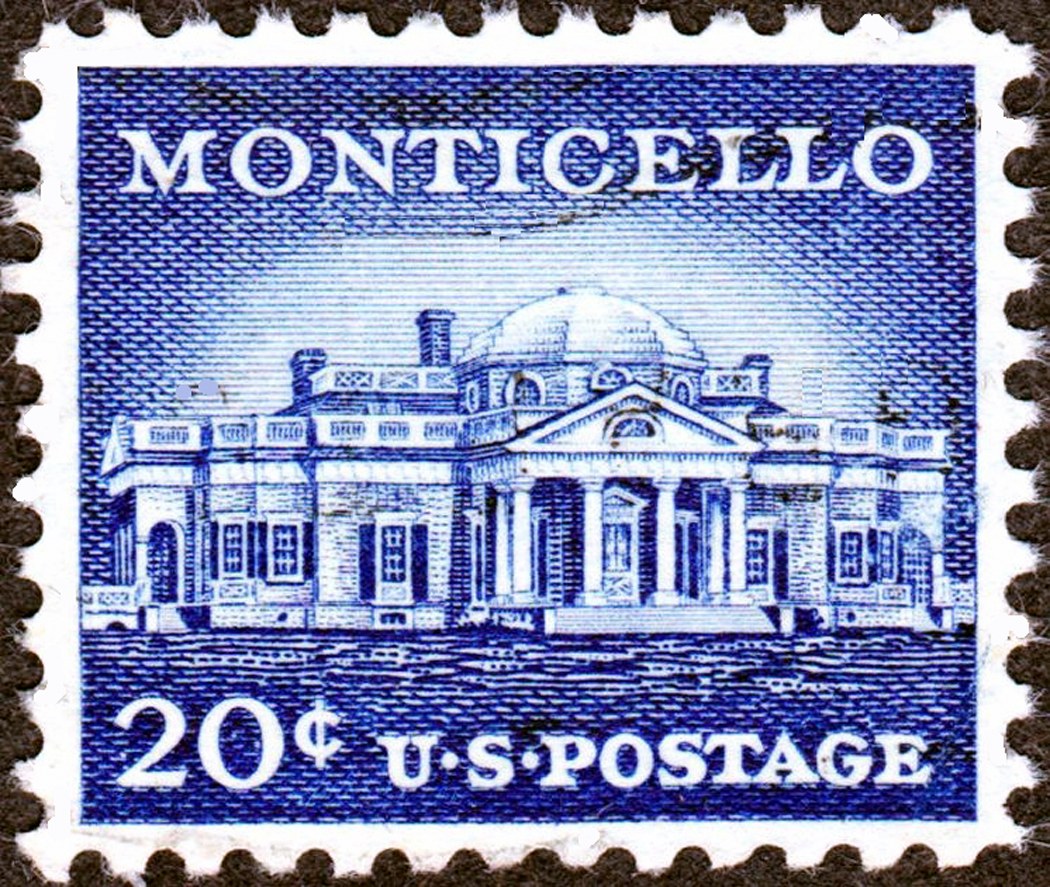
monticello stampMonticello, Thomas Jefferson: Just as equivocal as its owner and designer, this icon from the back of the common nickel is both paean to Europe’s classical past and the American’s love of invention, gimmickry and nature: Palladian windows and a moose head.

4 more:

Chrysler Building: American industrial dynamism with grace.

Sleeping Beauty Castle at Disneyland: Architecture as play-pretend.

Fenway Park: So cranky we actually love it.

Falling Water, Frank Lloyd Wright: Built over a waterfall like a diving board.

American Poems

Whitman at 50Song of Myself, Walt Whitman: The “good gray poet” could not have arisen anywhere else; he is completely American, from his deification of democracy to his catalogs of diversity to his “I sound my barbaric yawp over the roofs of the world.”

4 more:

Song of Hiawatha, Henry Wadsworth Longfellow: Closest thing we have to a national epic poem.

Poems, Emily Dickenson: Nothing more American than her quirky New England eccentricity.

Howl, Allen Ginsberg: “Visions! omens! hallucinations! miracles! ecstasies! gone down the American river!”

Mending Wall, Robert Frost: “Good fences make good neighbors.”

American Visual arts

American gothicAmerican Gothic, Grant Wood: This iconic painting is more enigmatic than the Mona Lisa: encomium of hardcore American values or satire of Midwestern provincialism? Conservative or avant-garde? He’s not telling.

4 more:

Watson and the Shark, John Singleton Copley: Art ripped from the headlines, circa 1777.

Marilyn Monroe multiple, Andy Warhol: If one is good, a dozen must be better.

Dogs Playing Poker series, Cassius Marcellus Coolidge: Now, that’s OTT!

Freedom From Want, Norman Rockwell: Turkey, potatoes and lots of corn.

American Popular music

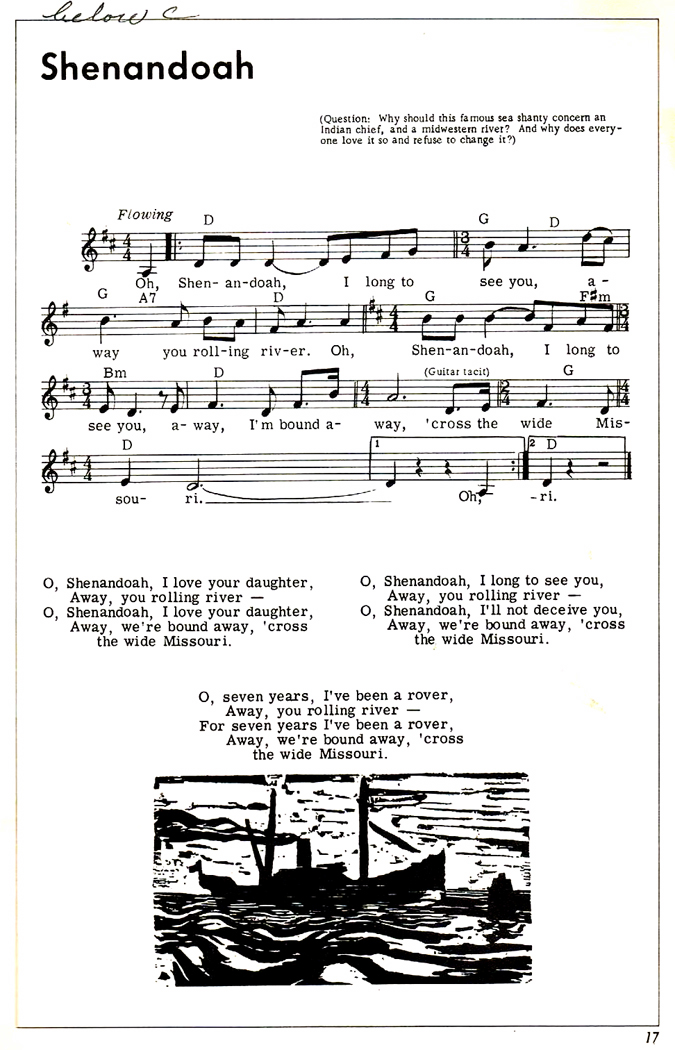
shenandoahShenandoah: A folk song of undetermined origin, this is the quintessential song about migration and loss; with its odd strophic form and 19th-century sentiment, it borrows elements from Irish shanties and African-American blues.

4 more:

One O’Clock Jump: Count Basie and swing.

Born to Run: Rebels on wheels, a la the Boss.

Hound Dog: Elvis frees America all over again.

Swing Low, Sweet Chariot: The suffering of a people, caught in the throat.

janissary 1

East is east and west is west. But the twain have met many times before the current unpleasantness.

The West and Islam go way back.

On the serious side, there were the Crusades, the Moorish conquest of Spain and Charlemagne. On the more trivial side, there was the Dutch craze for Asian tulips in the 17th century.

And one of the more interesting collisions between the West and Islam occurred in Europe in the 18th century with a craze for all things Turkish. It gave us coffee, croissants, Angora sweaters and Mozart’s Rondo “alla Turca.”

It also finally gave us Rossini’s Italian Girl in Algiers (L’Italiana in Algeri), and its sequel, The Turk in Italy (Il Turco in Italia).

Europe had been under the gun from the Ottoman Empire for centuries, but when the Treaty of Karlowitz was signed in 1699, it ushered in not only an era of peace but a fad in fashion. For the next century and a half, all things Turkish, Moorish and Islamic became the source of the culturally exotic in European minds.

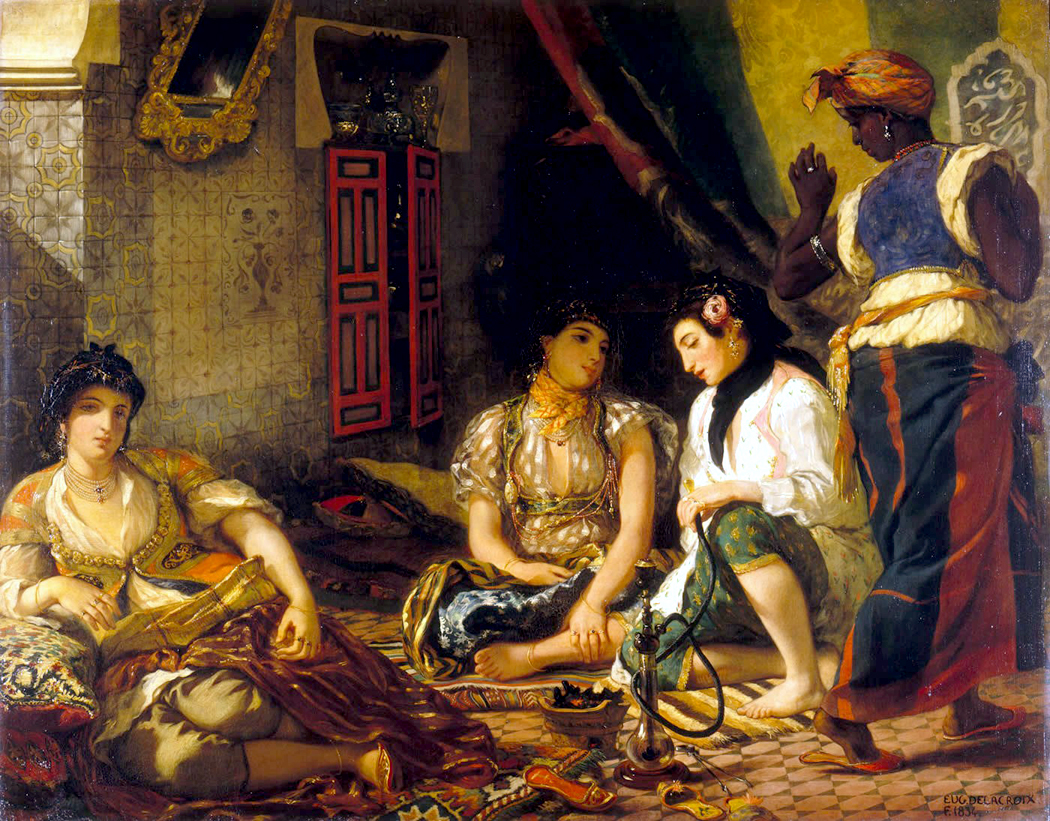
Eugene Delacroix "Women of Algiers" 1834

Eugene Delacroix “Women of Algiers” 1834

It’s really quite stunning to see it all: Turkish cigarettes, Turkish baths, Turkish carpets, harem pants, slippers with upturned toes. There were harem girls painted by Ingres and Delacroix. The turkey named for the color of its wattles, which matched a popular fabric dye of the time, called “Turkey red.”

And one of the most pervasive effects was the popularity of “Turkish music.” Haydn, Mozart and Beethoven all wrote versions of Turkish music.

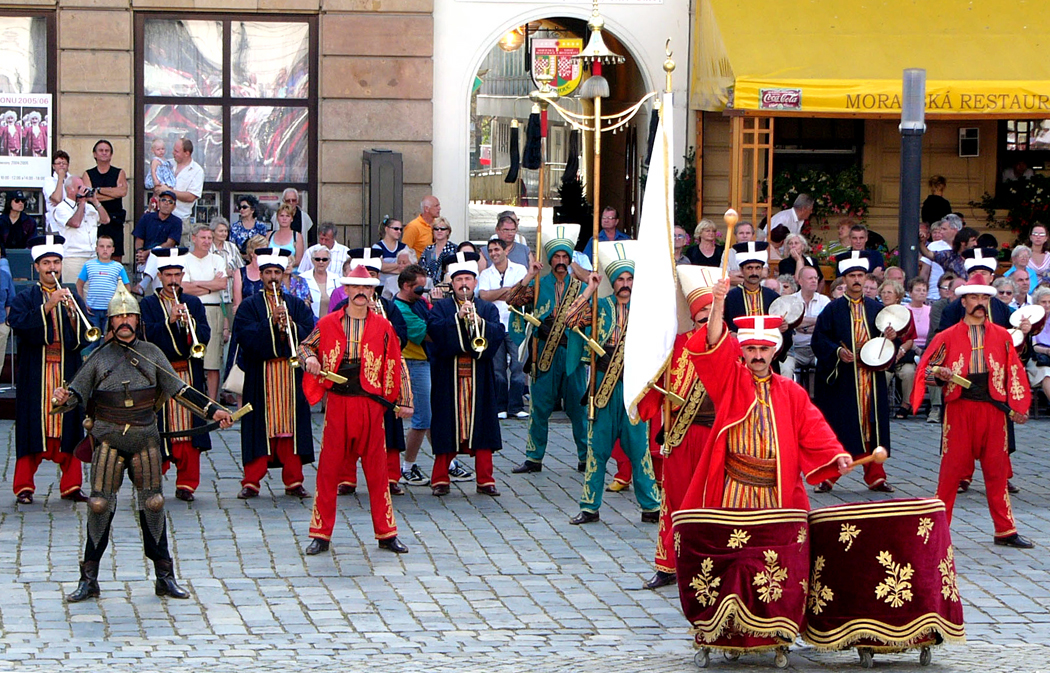
When the Ottoman Turks sent janissary bands — their military bands — to Vienna as a kind of cultural-exchange program, the European ears were perked by the exotic sounds of their drums, cymbals and chimes. It was a clattery music with an insistent rhythmic drive.

You hear the European orchestra expanded with new percussion instruments at just this time, when Haydn wrote his Military Symphony and Mozart his Turkish concerto for violin.

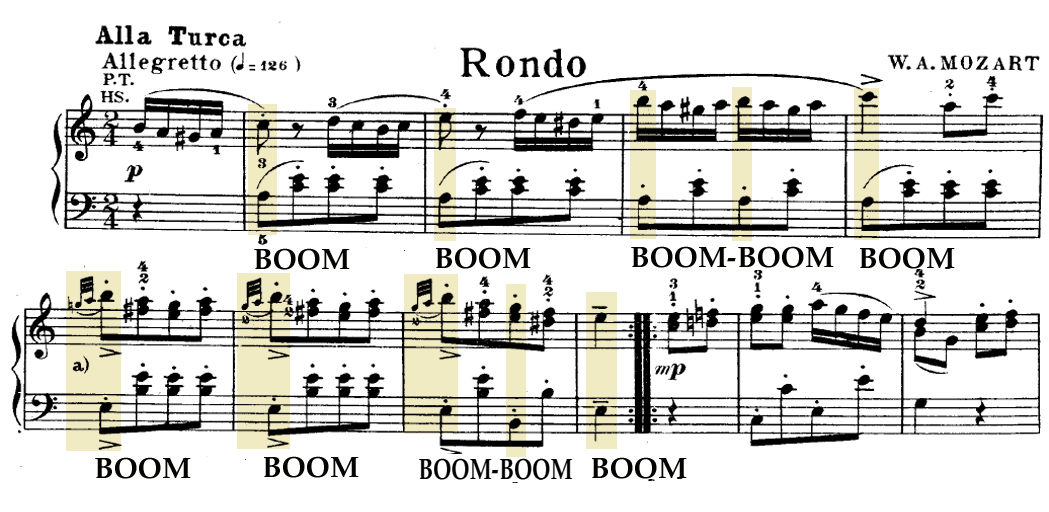
The characteristic rhythm of Turkish music was the march beat of “Left… left … left, right, left,” and you can hear it in Mozart’s Turkish rondo as well as in the concerto.

rondo boom

And Beethoven even included a segment of Turkish music in his sublime Ninth Symphony, the “Ode to Joy,” when the whole thing comes to a momentary halt, interrupted by the burps of a contrabassoon, followed by the Turkish marching music that sounds remarkably like the theme song to Hogan’s Heroes.

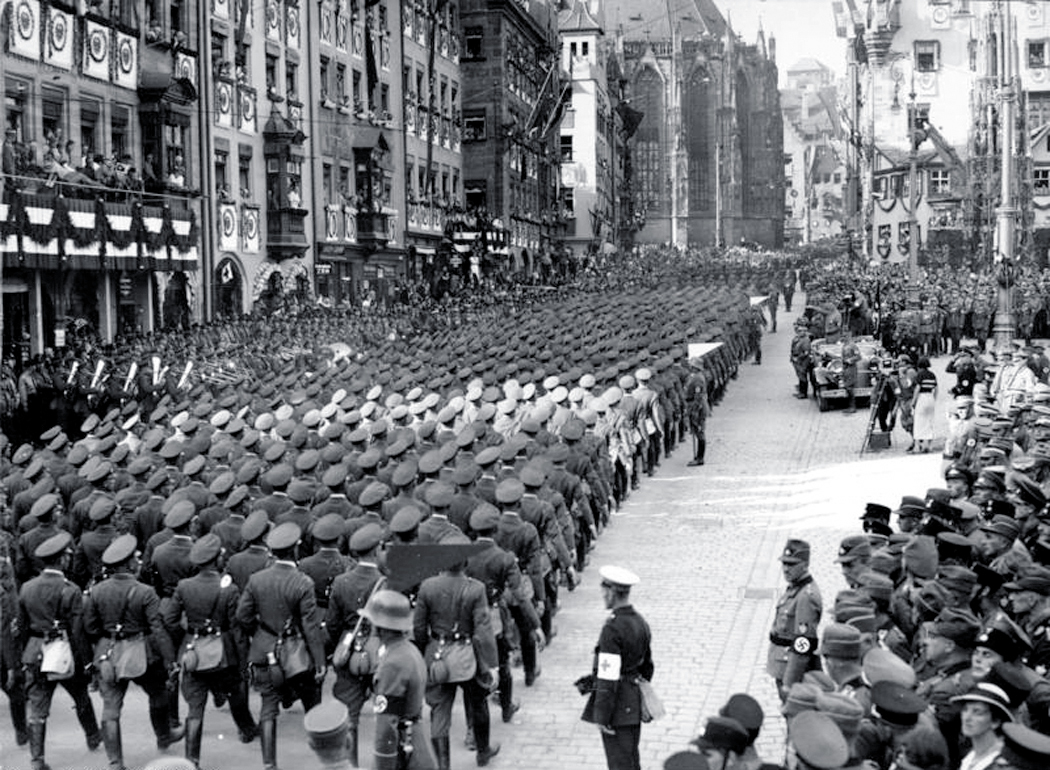
In fact, German military music made such pervasive use of the Turkish rhythm that it soon lost all sense of being exotic and became the drumbeat of Germanic militarism: If you watch the Leni Riefenstahl film, Triumph of the Will, about the Nazi Party rallies in Nuremberg before the war, you are nearly oppressed with that “boom … boom … boom-boom-boom” rhythm. Nürnberg, Reichsparteitag, Marsch der Wehrmacht

That is a baleful end to what began as pure fluff. Operas about Turkish pashas and European women were a regular occurrence.

Mozart wrote his Abduction From the Serail, filled with Turkish effects, and Rossini, decades later, imitated that sound — and pretty well stole the plot — from the Mozart, for his Italian Girl in Algiers. In it, a crafty Italian woman outwits a foolish Turkish bey and saves herself and her fiance from a fate worse than Wagner.

It’s a wonderful opera, full of Rossini’s best tunes and imbroglios.

"The Death of Marat," by Jean-Louis David, 1793

“The Death of Marat,” by Jacques-Louis David, 1793

It was called, simply, “the Terror.”

the last death no one leftIt was probably the closest Western Europe ever came to the horrors of Rwanda — not just in body count, but as mere anarchy loosed upon the world.

It was the French Revolution, and from September 1793 to July 1794, nearly 2,000 people a month were beheaded in Paris, many for nothing more than being too tepid in support of the Revolution.

And in the middle of this bloody storm was painter Jacques-Louis David, who created the most famous painting of the Revolution, The Death of Marat, in 1793. It was a masterpiece of political propaganda.

But that is not all David did for the Revolution: That is not red paint on the artist’s hands. The painter personally signed at least 300 death warrants as a member of the Jacobin government’s Committee for General Security.

The painting, originally called Marat at His Last Breath, created a martyr of the revolution from a man who is more properly a war criminal. And it again raises the question of art’s moral responsibility.

Marat

Marat

The dead man in the painting, Jean-Paul Marat, was a journalist who called for thousands of heads to roll. “No, hundreds of thousands,” he wrote.

And on July 13, 1793 — the day before what is now Bastille Day — this greatest, most bloodthirsty exponent of the Terror was stabbed to death by a young woman.

“I killed one man to save a hundred thousand others,” she said.

She miscalculated. She had killed Jean-Paul Marat, but his death unleashed the worst of the Terror.

Jean-Paul Marat was not the kind of person you would think of if you wanted to create a hero.

He was a peculiar man, formerly a physician — some called him a quack — and at turns vicious and paranoid. He cut an unpossessing figure: Ugly, short, he suffered from a skin disease, likely a psoriatic arthritis, that left his face scarred: He called it “leprous.” To salve his discomfort, he conducted his daily business from a bathtub filled with cool water. On his head he wore a towel soaked in vinegar for relief. A board across the tub provided a desk.

Marat published a newspaper called Friend of the People, which harangued and incited. He lauded what he considered republican virtue and selflessness, and called for the death of anyone he considered a traitor: that is, anyone who didn’t agree with him. Patriotism and selfless devotion to the cause drove Marat.
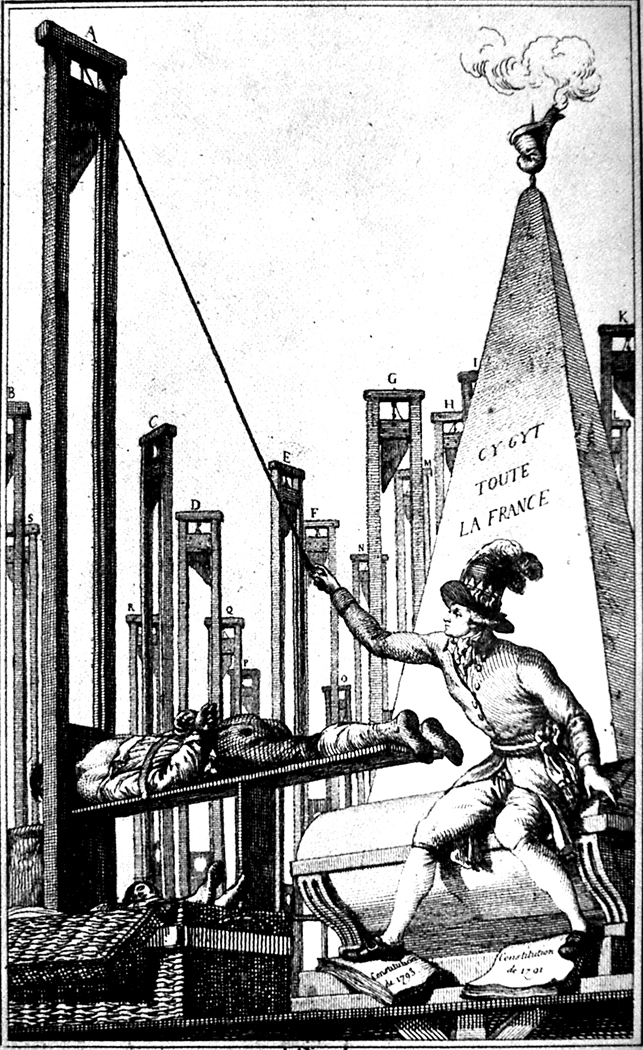
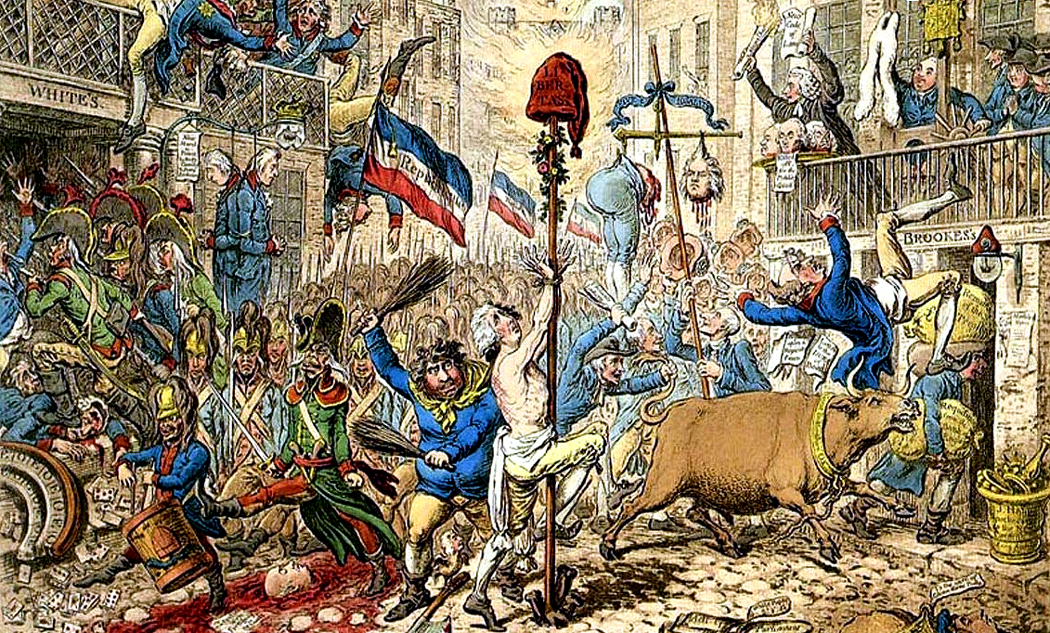
James Gilray on The Terror

James Gilray on The Terror

It went well beyond a call for the beheading of the aristocracy.

In fact, during the Terror, 70 percent of those killed were from the lower classes. People settled grudges by informing on their neighbors. An accusation was enough.

But for painter Jacques-Louis David, Marat became the perfect subject to deify when he was assassinated in the early months of the “Reign of Terror.”

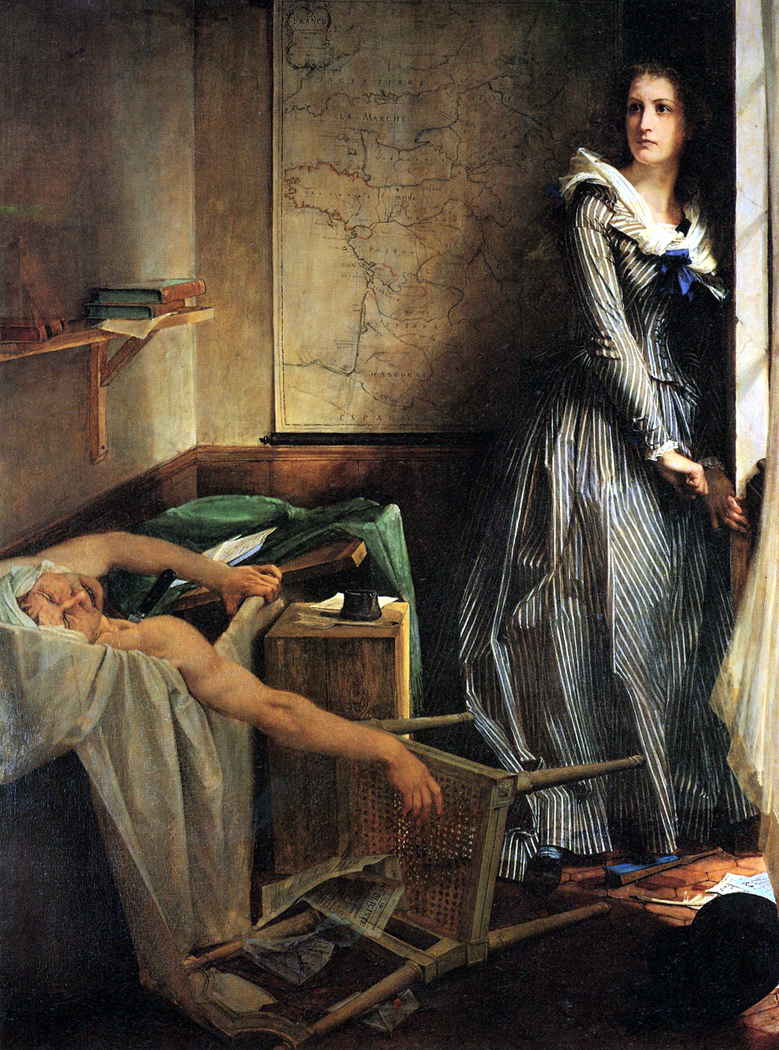
"Charlotte Corday" by Paul Jacques Aime Baudry, 1860

“Charlotte Corday” by Paul Jacques Aime Baudry, 1860

His assassin, Charlotte Corday, then just 23, felt just as keen a patriotism as Marat. But for her, patriotic duty meant she must kill “the monster, Marat,” even if it meant her own death.

She came to Paris, bought a 6-inch kitchen knife, wrote a note explaining her actions and pinned it to the inside of her dress. In it she called Marat “the savage beast fattened on the blood of Frenchmen.” She also bought a new hat, a green one.

On the morning of July 13, 1793, she went to Marat’s apartment, armed and determined. She couldn’t get past Marat’s bodyguards. But she came back in the evening, slipped in behind some delivery men, flashed a phony list of the names of “traitors.” Marat showed interest, calling her to his tub.

Marat looked the list over and told her, “Don’t worry, in a few days I will have them all guillotined at Paris.”

She then pulled out the knife and stabbed him in the chest once, severing his aorta and puncturing a lung. A jet of blood sprayed the room. He died calling for help from his friends.

Four days later Corday was beheaded for her crime, and Marat was transformed into a patriotic martyr.

And David was just the man to do it. He had been the artist of the Revolution, creating images of republican virtue and the glorious past.

When the news of Marat’s death reached the National Convention, one delegate yelled out, “David, where are you? Take up your brush — there is yet one more painting for you to make.”

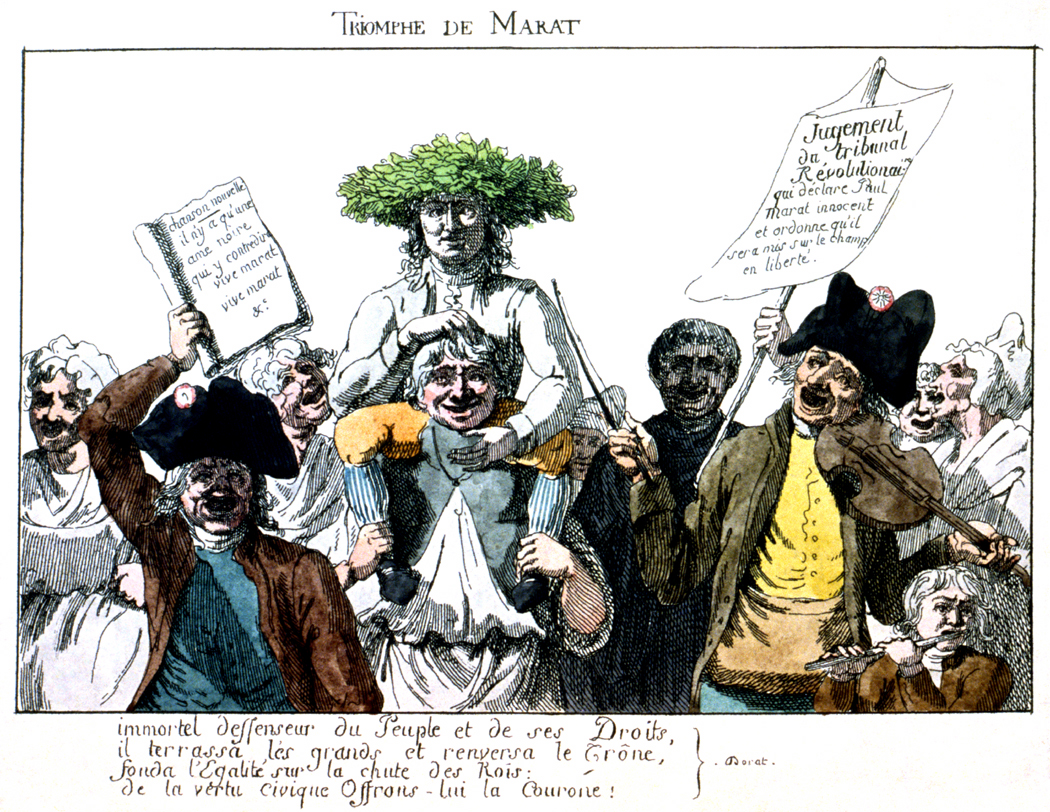
Cartoon of Marat as defender of the People and the Peoples' rights

Cartoon of Marat as defender of the People and the Peoples’ rights

The propaganda machine went into high gear. A great public funeral was held — organized by David — streets were renamed for Marat, poems and songs were written. At least one new restaurant opened in the rue Saint-Honore called the Grand Marat.

“Indeed, Marat dead was perhaps more useful to the Jacobins than the unpredictable, choleric live politician,” wrote Simon Schama in Citizens, his history of the French Revolution.

A commission for a painting was voted and David began three months’ work on what would be seen as his masterpiece.

When it was finished, it was paraded around Paris like a Mexican santo, rallying the people to redouble their republican ardor and sharpen the cleansing edge of the guillotine’s blade.

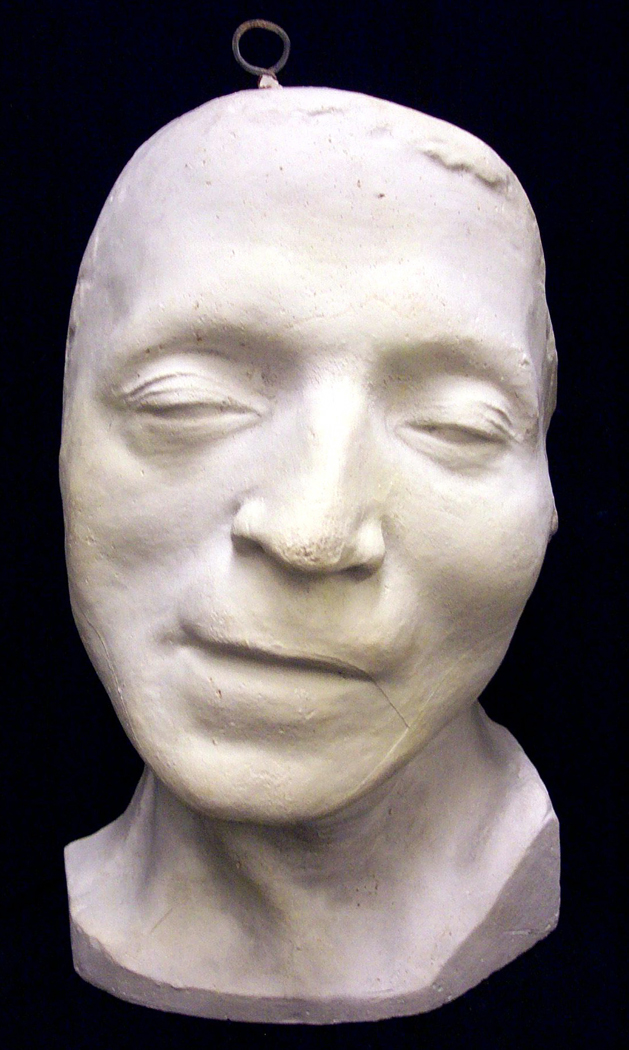
Marat's death mask

Marat’s death mask

Thousands of cheap engravings were distributed, made from a death-mask portrait drawn by David. Marat’s eyes closed, his head tilted in death.

Copies of the painting were ordered from David and his atelier, to be sent to the other cities of France.

Instead of stopping the violence, as Corday had hoped, her act only worsened the Terror. The assassination now became a cause.

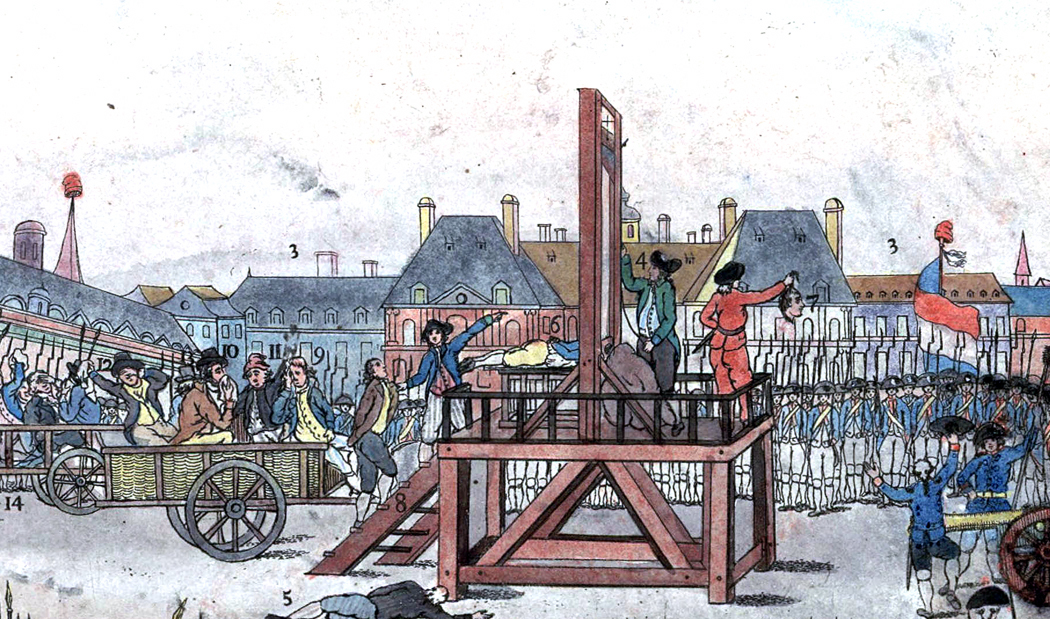
As for David, when the Terror ultimately collapsed and its architect, Maximilien Robespierre, was guillotined, the painter went to prison. At least he kept his head.

He was released after about a year in a general amnesty.

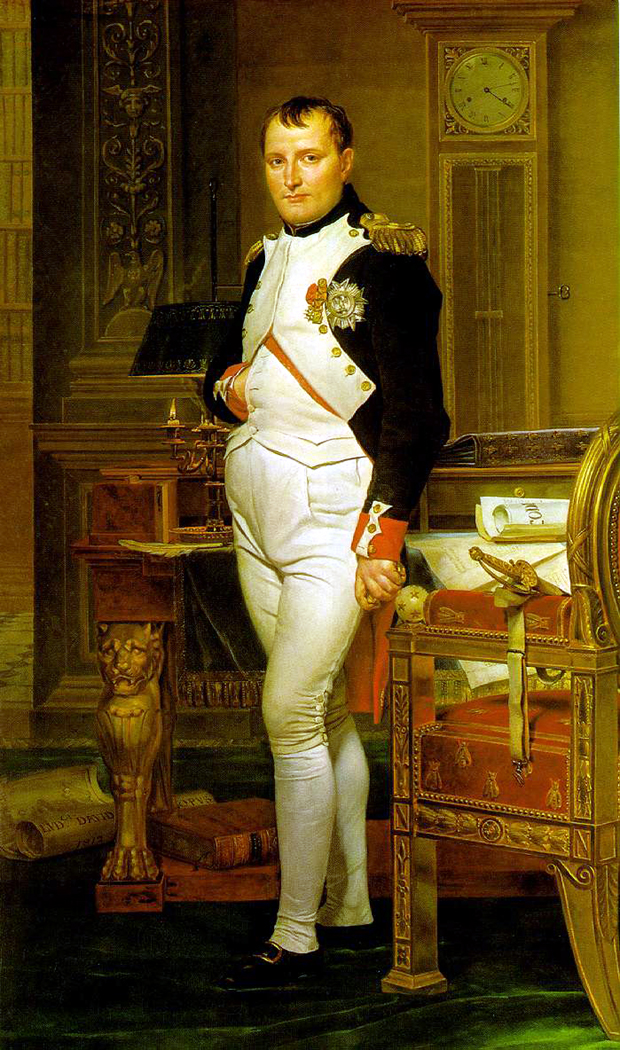
When Napoleon came to power, David became the imperial artist, glamorizing the First Consul as he had glamorized the Revolution. David was a political chameleon, a slippery eel. The artist was always looking for a “great man” to glorify, whether it was Marat or Napoleon.

"Napoleon in his study"

“Napoleon in his study”

When Napoleon fell, David went into exile in Belgium, where he died in 1825.

His great painting had a similar fate: It was withdrawn from the public shortly after the fall of Robespierre and sent back to the artist’s studio, where it remained, unexhibited till well after David’s death.

Finally, in 1848, republican sentiment arose once more in France and Marat came out of storage. The poet Charles Baudelaire saw it and wrote a famous encomium, which raised public awareness of the masterpiece once more. The painting became canonized.

Today, the most recognized souvenir of Marat’s life and death is the painting David made to immortalize the journalist.

It is powerful: “David weaponizes art,” said one museum curator.

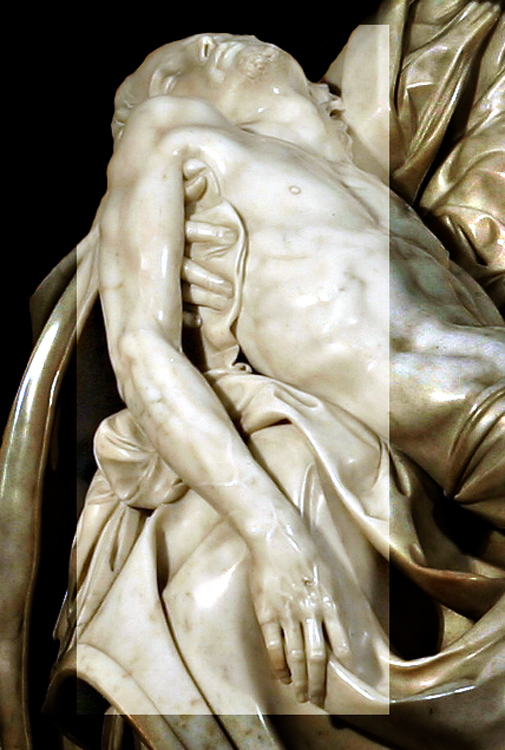
David’s painting is hugely original, mixing an almost journalistic sense of the here and now with familiar iconographic symbols, like the hanging arm of Michelangelo’s Pieta, turning the dying journalist into a Christ figure.pieta arm

That isn’t just a conceit: The subconscious reading of the painting can’t help seeing the echoes of earlier, religious paintings. David was able to mythologize current events and give them depth and power.

“If there’s ever a picture that would make you want to die for a cause, it is Jacques-Louis David’s Death of Marat,” historian Simon Schama says in his TV series The Power of Art. “That’s what makes it so dangerous — hidden from view for so many years. I’m not sure how I feel about this painting, except deeply conflicted. You can’t doubt that it’s a solid-gold masterpiece, but that’s to separate it from the appalling moment of its creation, the French Revolution.

“If ever a work of art says that beauty can be lethal, it’s Jacques-Louis David’s Marat.”

David has turned the paranoid fanatic into a saint of the revolution. He had also made what some have called the first “modern” painting: spare, direct, almost abstract in its design.

But the image raises a question: Can great art be made for evil reasons?

The question is not merely academic. These questions have come up many times in the past: Can Leni Riefenstahl be a great filmmaker if the films she made glorify Hitler? Can D.W. Griffith’s Birth of a Nation really be one of the most important films ever made if its heroes are the Ku Klux Klan?

And what about Westerns? Are our heroes cowboys? Or do we acknowledge our own genocide? What was once the patriotic foundation myth of our nation now embarrasses any thoughtful American. The once-famous Battle of Wounded Knee has now become the Massacre at Wounded Knee.

So, what do we make of art when we question the artist’s motives?

There are some who believe composer Aaron Copland’s music can’t be any good because of his lefty political leanings. And the take people have on Shostakovich often depends on whether they see him as a Soviet apologist or a secret dissident.

The art of Englishman Damien Hirst horrifies some people, because he may use dead animals, pickled in formaldehyde, as part of his art. His shows bring out the picketers.

Wagner cannot be played in Israel because of his anti-Semitism and because Wagner was Hitler’s favorite composer. Where can we draw the line on this?

Do we ban politically injurious art, the way many would ban the use of Nazi medical research?

"Execution of Robespierre" detail

“Execution of Robespierre” detail

“I can appreciate pure ‘art for art’s sake,’ ” says artist Anne Coe, whose paintings are never politically neutral.

Coe is an ardent environmentalist and lover of animals, and her paintings promote her views.

“But to me, the really knock-your-socks-off art has a little more,” she says. “It has ideas behind it. I think art is insipid without some sort of idea in it.”

And David’s art is all about ideas.

“David is the artiste engage par exellence,” says Mary Morton, associate curator of paintings at the J. Paul Getty Museum. “He gave himself completely to politics.”

The subject of the painting, she points out, is not so much Marat the man but the virtues of republican self-sacrifice.

“David’s art is very didactic,” Morton says. “It is about civic responsibility.”

And perhaps we are removed enough from the events of 1793 that we can see in David’s painting the idea rather than the man — the spirit of democracy instead of the call for blood.

“What is that line between propaganda posters, like ‘Uncle Sam Wants You,’ and the David painting, or the paintings of religious martyrs?” Coe asks.

“Does some art lead to evil things? That is the risk you take in a society that says everything is relative.”

There is no single answer to the question; you have to take each case individually and weigh it in your own conscience.

“I listen to Wagner. I love Wagner,” Coe says. “You can’t have an answer.”

Orangerie Paris

What is culture, and why should we care?

These are questions that don’t get asked often enough when we discuss such inflammatory issues as government funding of the arts and humanities.

To many people, culture simply means a lot of wealthy people going to the opera and sitting through a hare-brained story in a language they don’t understand while listening to a soprano shriek so loud their elbows go numb.

Or it means drinking bad white wine from a plastic champagne glass at an art gallery opening or long, dense scholarly papers deconstructing Little Red Riding Hood as a text about the patriarchal hegemony.

We too often talk about culture as if it meant only evenings in the theater and long Russian novels.

But what would happen if all these so-called ”high” arts suddenly disappeared? Do we actually need them?

To understand the answer, we need to understand what culture is. Culture is broader than just the arts.

It’s what you eat for breakfast and whether your trousers have cuffs. It is who you are allowed to marry and what happens to your body when you die.

Culture is the set of rules — mostly in the form of traditions — by which society runs.

It is the software for our social lives.

In fact, far from being a luxury, culture is something you cannot live without. It is religion, art, laws, ethics, history and even our clothing.

Culture is who we are.

And who we are at this moment: No culture is static. It is an evolving thing — to keep up with the computer metaphor, there are constant upgrades. Culture 2.7 gives way to Culture 3.0, as the circumstances of our lives and our cultural needs change. The culture of the clipper ship means little on a jumbo jet.

Yet, although culture changes, it is inherently conservative. It changes very slowly. Nobody wants to get caught with a beta version of untested software.

Patterns from our ancestors persist in our lives. We enter the jumbo jet from the left side because our great-grandfathers wore their swords on their left sides and consequently mounted their horses from the left, to avoid entangling their swords.

You can see the history of aviation change from the stirrup on the left side of a World War I biplane to the door on a 747.

And how many children today play with ”choo-choo trains,” although not even their parents ever lived in a world with steam locomotives?

The patterns stick with us even when they no longer make sense.

But culture does change. The three-minute song remains the cultural pattern, although Dinah Shore has given way to Taylor Swift.

Songs from our agricultural past, lauding springtime and the moon, make little sense to our urban present, where nocturnal lighting is more likely neon. So we change. Slowly.

And where does cultural change come from? More often than not, from the arts.

The arts try out possible ideas onstage to see if they might make sense. Sometimes they do, sometimes they don’t. But the best minds and imaginations give it their best.

That is why we think of theater as ”culture.” Or literature, or painting.

Yes, there are some people who want to keep their old software version, and some who want to return to earlier versions. But culture cannot stand still.

Therefore, we need to be on the lookout for meaningful directions to go in. Art is our investigation of our values, testing them and throwing out some and reinforcing others.

Without art, culture ossifies and the people become emotionally and spiritually dead. So, if we mean to maintain a vital culture, we must support the best in the arts.

There is another computer saying: GIGO — garbage in, garbage out. In other words, if we don’t care for the changes in our culture, we are likely to wind up with the lowest common denominator. We are likely to wind up with nothing more than Duck Dynasty and microwave pizza.

winogrand hollywood

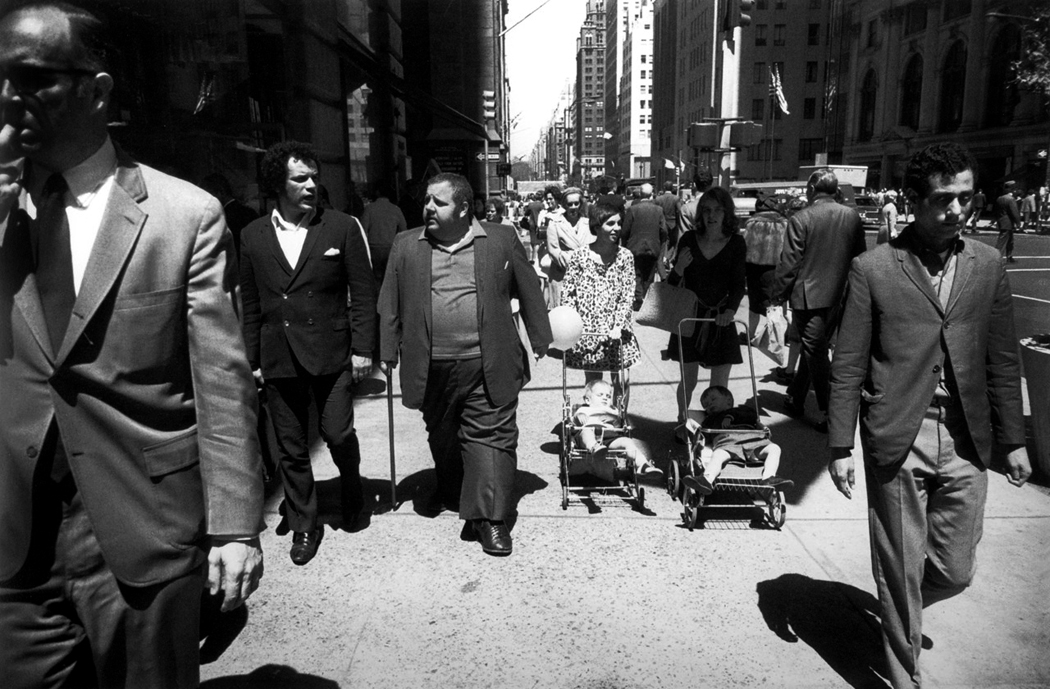
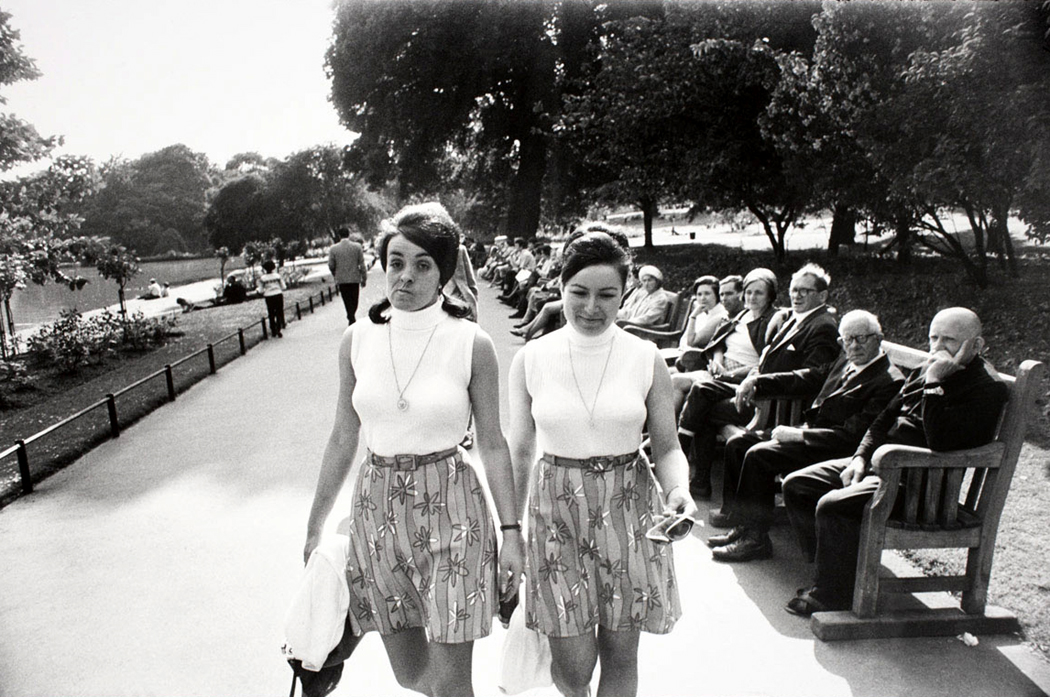
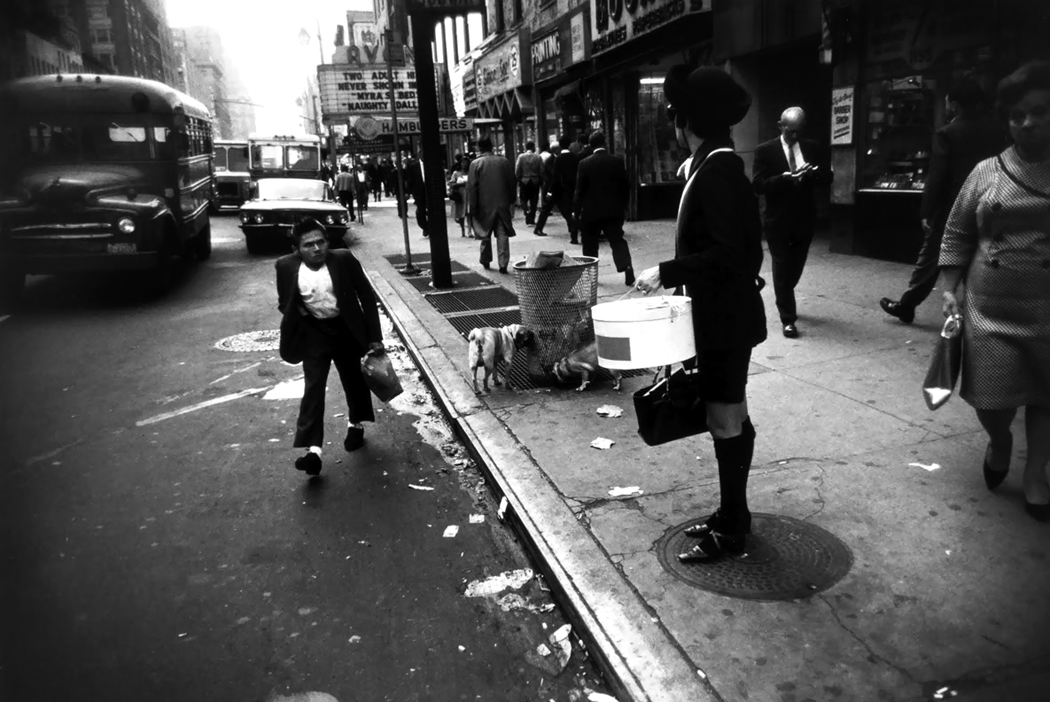
Curiosity is the libido of art, and photographer Garry Winogrand was its visual Don Juan.

Over a 40-year career, he photographed with prodigal fascination the cities, foibles and mores of America. He pointed his Leica, with its wide- angle lens, at a roiling chaos of visual information. Anything might tickle his curiosity.

So prolific was he, promiscuous some might say, that at his death in 1984 at age 52, he left behind a third of a million exposures either undeveloped or unedited. He could never catch up in the darkroom with the conquests of his shutter button.

To be more specific: He ran through film like an alcoholic runs through gin. He left behind 2,500 rolls of film undeveloped, 6,500 rolls developed but not edited or printed and about 300 contact sheets unedited.

The pictures he did print are often enigmatic: You can’t always tell why he took a particular picture, at least until you look long and hard, and look through an entire box of them. Then, Winogrand’s odd world view takes hold and his pictures become addictive. It is a Winogrand world.

Someone once said, “The world is not only stranger than you imagine, it is stranger than you can imagine.”

This is the truth Winogrand captures in his pictures. winogrand elephant 2

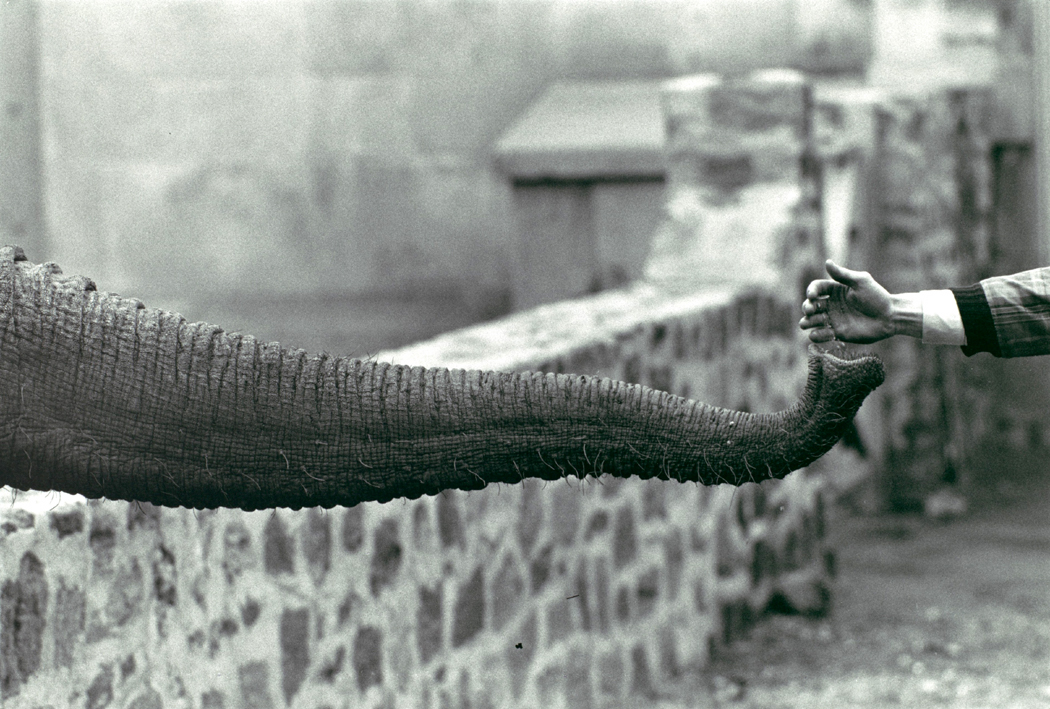
winogrand monkey in carIn many cases the photographs he left are jokes we can enjoy. An elephant’s trunk stretches across the frame to catch some peanuts dropped from a hand. No elephant in the picture; no person. Just hand and trunk.

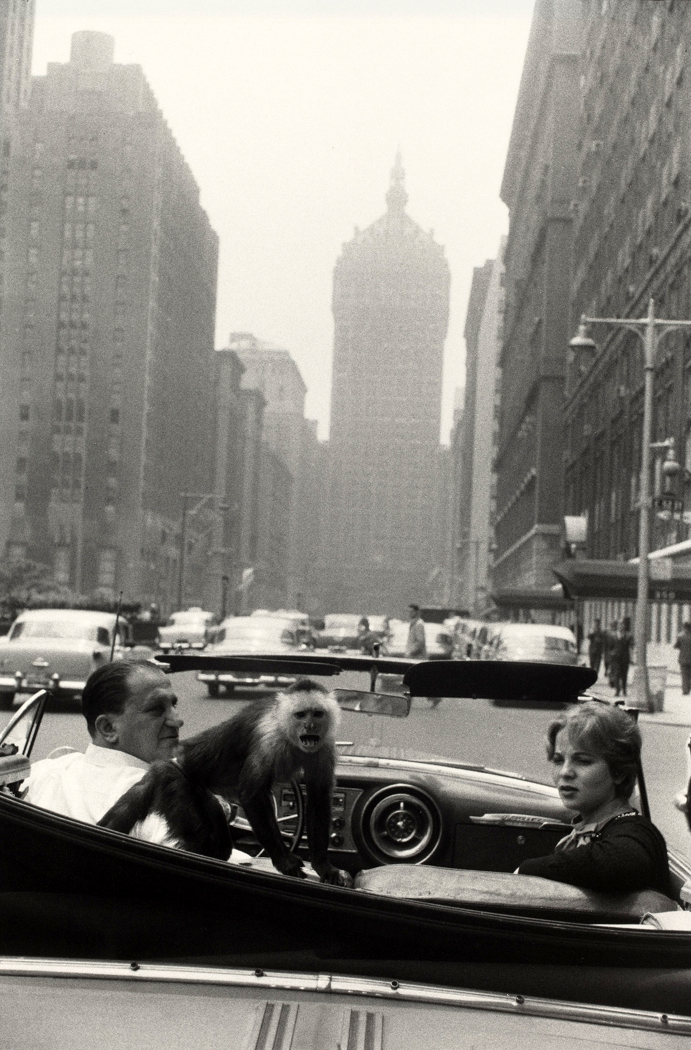
A middle-age couple sit in a convertible on Park Avenue in Manhattan; an angry monkey perches on the seat back. What does such a thing mean?

A bagpiper in full Scots drag plays a bagpipe in a men’s room in front of a rank of urinals.

Few of the pictures have titles, and for those that do, the titles tell us very little: Park Avenue, New York, for instance, for the scowling monkey, or Apollo 11 Moonshot, Cape Kennedy, Florida. That picture shows a crowd of people from the back watching — and photographing — a rocket launch, while one small woman in the foreground looks in the opposite direction and makes a picture — we can never know of what — with her Kodak Instamatic. winogrand cape canaveral

But more often than not, the punch line is equivocal; more often it looks as if there must be a joke we do not get. It is on this edge of comprehension, subtle and uncomfortable, that Winogrand’s most important photography creates its meaning. For pictures with punch lines, Elliott Erwitt is much more consistently funny. But Winogrand tells us something deeper and more disquieting. winogrand richardson 1977

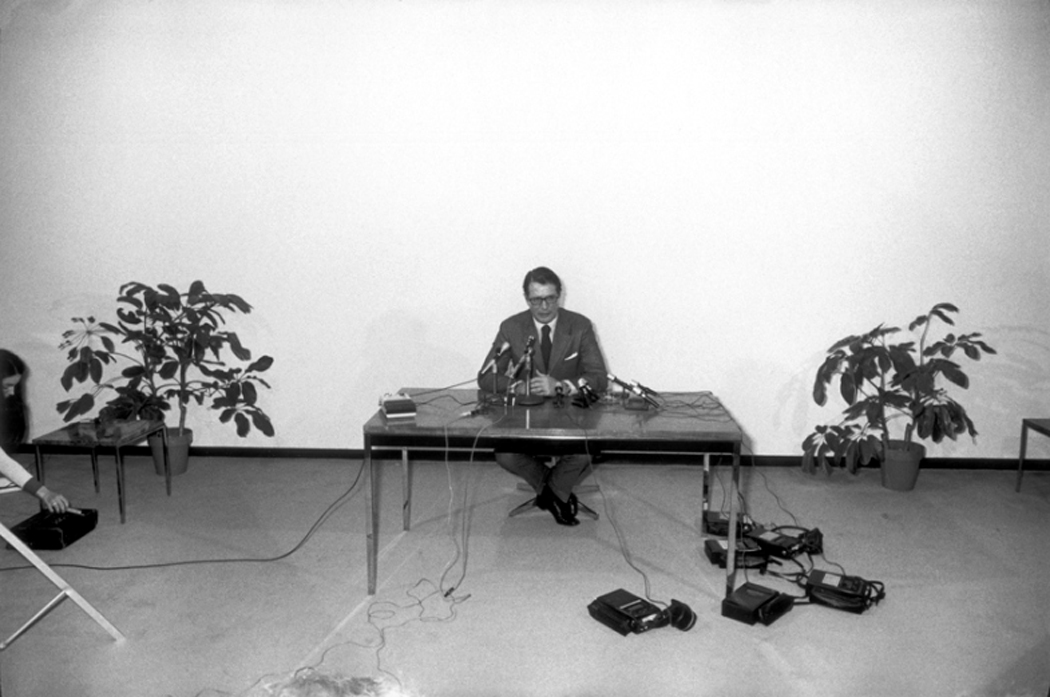
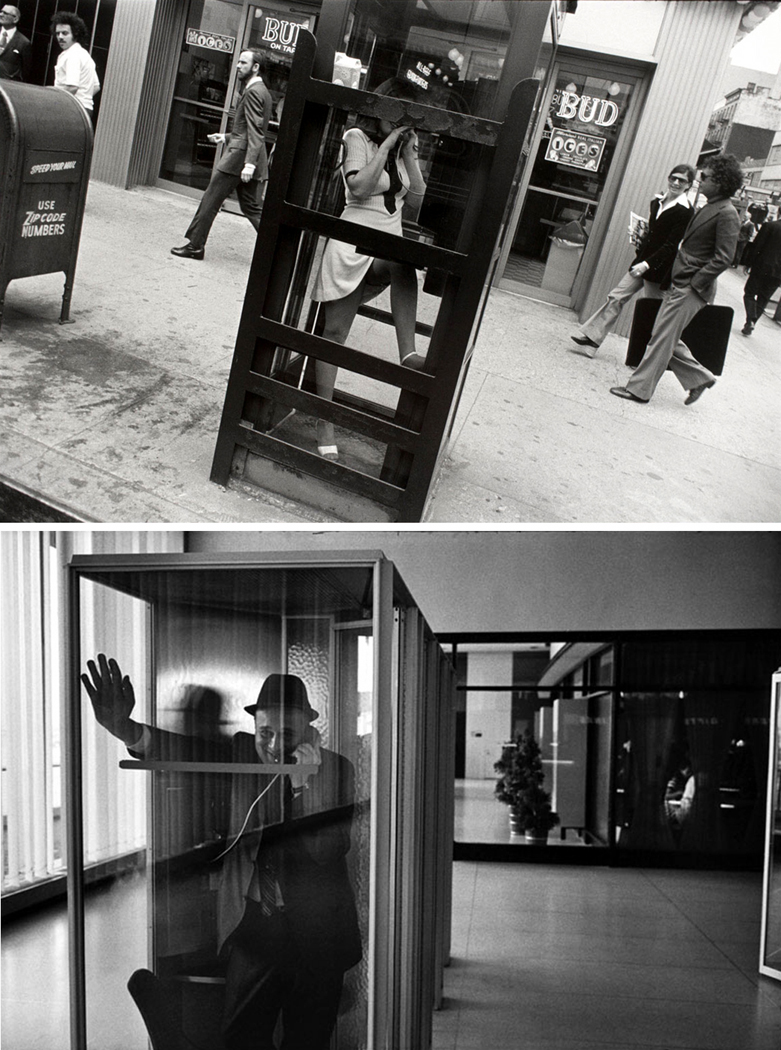
Most of us live in a world where things proceed largely as we expect them to. We hardly notice the anomalies. Winogrand was never so acculturated that he had conventional expectations; it freed him up to see what was really in front of him. Nixon Attorney General Elliot Richardson in a press conference alone and isolated — small — at a folding table and surrounded by tape recorders. A man and a woman — their backs to us — stare at a gorilla in a zoo; the gorilla stares back. winogrand phonebooth pair

Other photographers made consciously surreal pictures — Les Krims, for instance, who taped dozens of photos to his mother’s nude body, or Duane Michals, who used camera trickery to show a soul departing through an apartment window.

But Winogrand isn’t surreal. His world is the everyday one in front of us all the time, but which we do not see. Nothing is more bizarre than the ordinary. winogrand underwater pair

But it isn’t just the world by itself. As Winogrand insists, it is the world wrung through a camera lens. The act of making a picture changes the world.

He often said he made pictures to find out what the world looked like in photographs. And there is an awareness in Winogrand’s work that photographs rewrite reality. He makes us question our belief in the supposed truthfulness of photographs. winogrand nyc 1970

Winogrand knew that the four edges of a picture frame are a cookie cutter that slices out a bit of reality’s dough and separates it from its context and remakes the facts. No doubt there were a bevy of reporters listening to Richardson’s comments, but because they don’t appear inside the image frame, they cease to exist. This is what Winogrand means when he talks about seeing how something looks in a picture. It is changed. Utterly and inutterably. winogrand 1991 1

Winogrand was aware that a photograph has a grammar and syntax that we have learned to read. He makes us distrust that syntax.

He also plays God, making order out of chaos. Or at least, being aware that human perception will force meaning from chaos, he creates an artificial meaning from something that has none. In doing so, he forces us to consider the very existence and nature of meaning itself. Perhaps meaning is just a pattern we have gotten used to, a habit. Perhaps all it takes to create new meaning is a new pattern. Winogrand 1984 2

It is the artistic equivalent of naming constellations in the night sky. In that sky is a confused mass of stars, but we have grouped some together and named their configuration. The Big Dipper does not exist of itself, but only in that we have invented it. Orion, Scorpio, Gemini: The boundaries of any of these constellations could be redrawn and renamed. Put together the tail of the Big Dipper with the stars Spica and Arcturus and call it ”The Great Sky Scythe.”

Winogrand realized that we create such patterns; they are not inherent in reality. Winogrand understood that perception creates reality, or at least that we have no way of knowing reality except as it is ordered by our perception. winogrand nyc

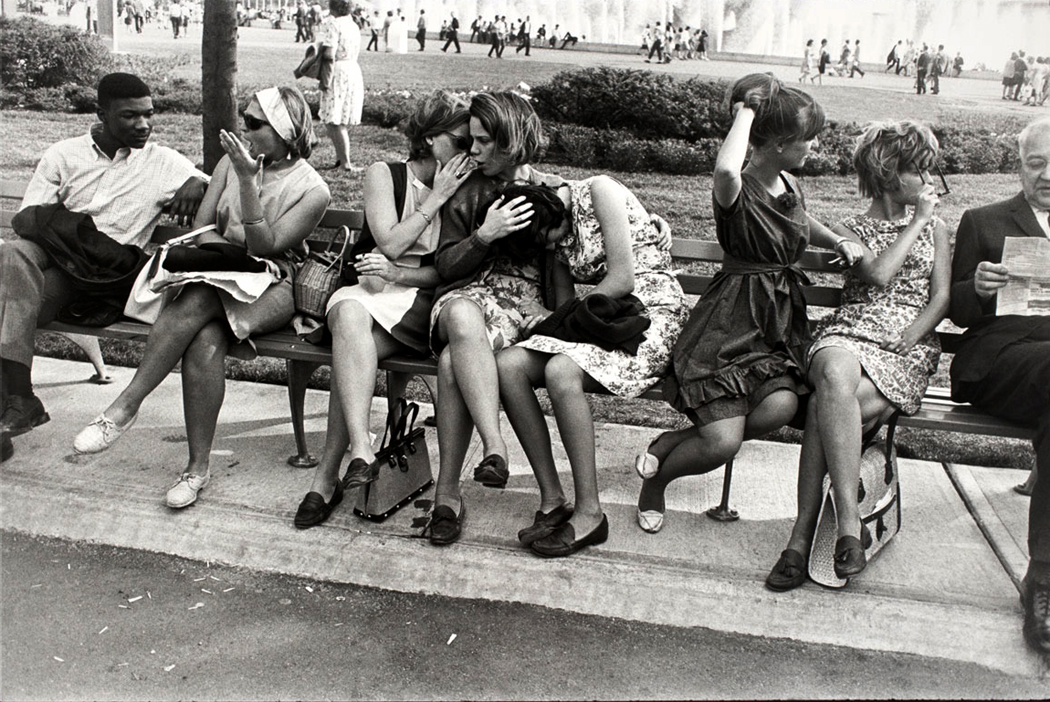
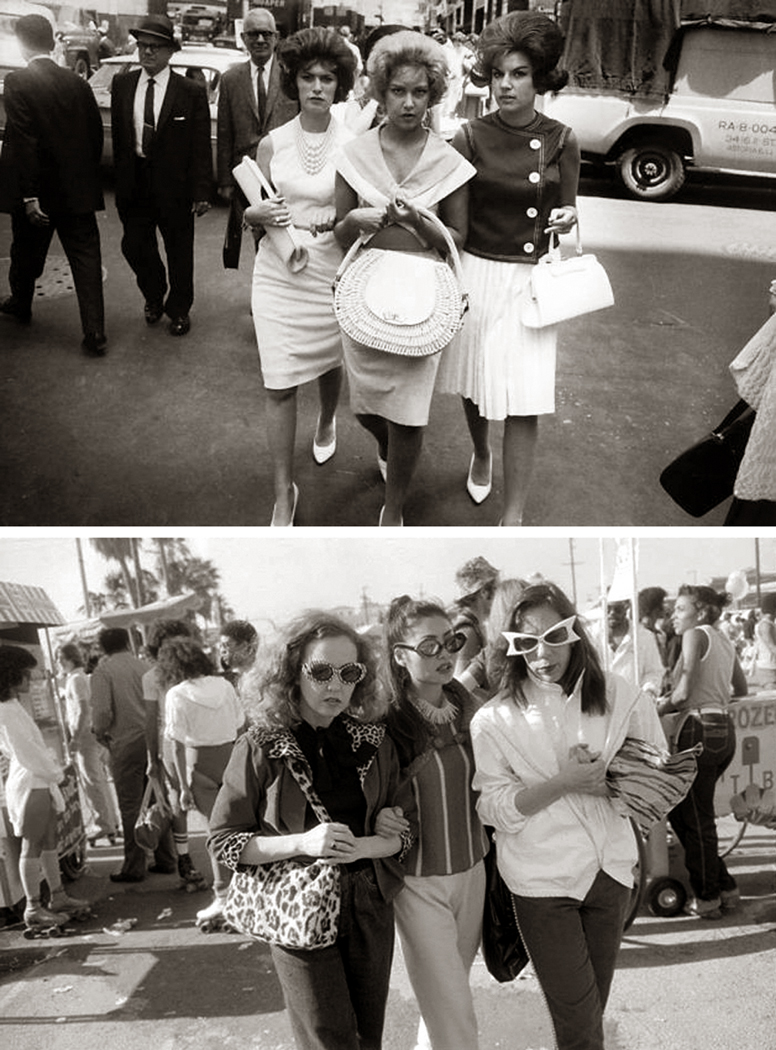
He will find four or five people walking down the street, or gathered at a party, and use the edge of his picture as that cookie cutter. He makes us see those people as a coherent group, just as we see the Big Dipper. A part of us knows we have been manipulated, but the instinctive part of us accepts the fiction. Photographs confer validity even to lies.

Yes, Winogrand presents a picture of America over the past 30 years; yes, the photographs often have a visual punch line; yes, they show sometimes grotesque people. But above all, they experiment with what the mere fact of pressing the shutter button does to reality. winogrand 1984 4

They don’t all work: That would be too much to ask of such a prolific seer. But even the boring photos play with what the camera does. An ordinary person standing with a drink in his hand at a party, someone else stands behind him. We are forced to stare at the photo until we satisfy ourselves that we understand why he took that photo.

At times no reason ever emerges. But the event, framed in the viewfinder, probably a meaningless juxtaposition of two partygoers, is forced to seem as if it were meaningful. The simple fact of its being taken creates that fiction.

The bottom line becomes not whether the picture has any meaning, but our understanding that we automatically assume it must. We see ourselves seeing. We become aware of the picture’s frame as an event in itself. winogrand street women pair

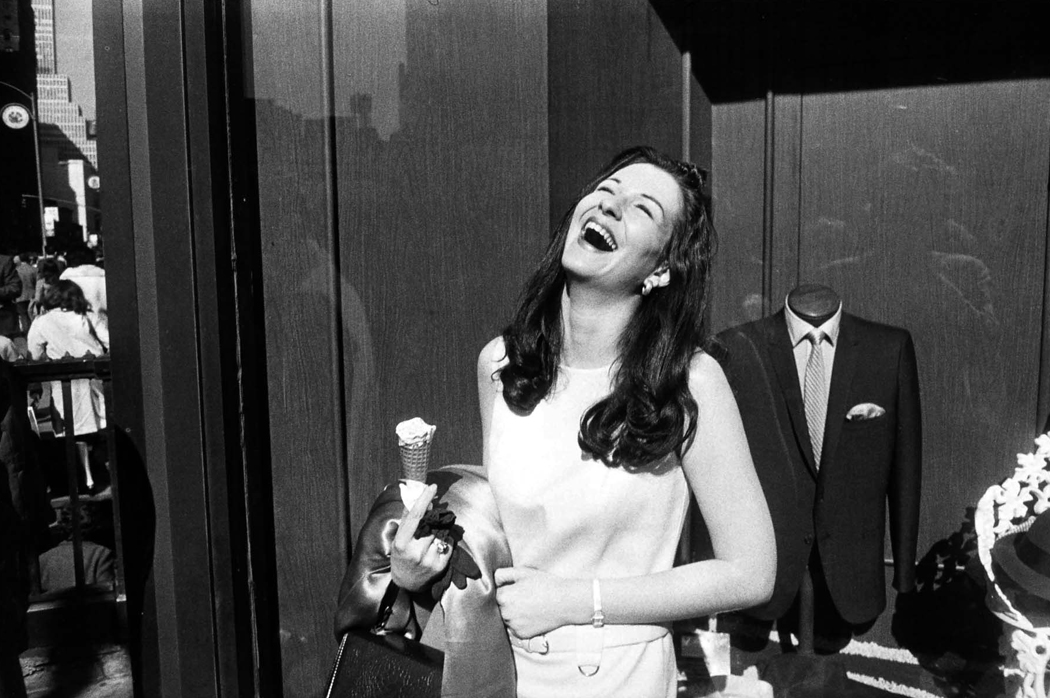
He was a peculiar man, neurotic and obsessive. His thousands of photographs of women, for instance. He took pictures over and over of women on the streets. He seems to have been sexually obsessed with them, but only as seen. They drown us in their banality, but Winogrand saw something different. Photography has made them worth ogling; it has made them into cover models, no matter how dreary the reality.

“Whenever I’ve seen an attractive woman, I’ve done my best to photograph her,” he said. “I don’t know if all the women in the photographs are beautiful, but I do know that the women are beautiful in the photographs.”winogrnd nyc 1982

Of course, everyone and his student is now playing with the ”medium as message.” But what is different with Winogrand — aside from the fact that he was doing it 30 years before the crowd — is that most of the facile youngsters doing so now almost seem to have no conscience about it. The tricks of the media hustler are used as if they were of themselves profound. winogrand nyc 1969

But Winogrand’s investigations are less glib, less pat. He is an intellectual intuiting a Postmodern truth. And there is an implied criticism of this packaged meaning. Winogrand is intuiting how images convey meaning and how they do so without any linear, verbal sense.

Others have used what he found, made theories about it. They turn what Winogrand found into sales pitches for Coke and Big Macs. But Winogrand was a discoverer, someone delighted and sometimes horrified by what he found.