Archive

Tag Archives: art

Sunset
Stuart and I were sitting on the roof, outside the dormer window, and sipping a little Drambuie. Cigars were for later.

“A beautiful evening, isn’t it?” he said.

“Yeah, the sunset is so orange.”

“You call it orange, but really, how many different colors are there in that sky — even a band of green in it.”

“Where?”

“There, see, above that reddish cloud. Perhaps it’s only a trick of simultaneous contrast, but that green has always fascinated me.”

“I see it now, rather a pale green, almost opal, but green.”

“How much better to see the whole thing, instead of just the calendar version. You know, I always wonder why pretty magazine pictures look so cliched, while the sky in front of us doesn’t. I guess there is a difference between pretty and beautiful.”

“Or, maybe beauty is in the eye of the beholder.”

“Yeah, well, I used to think that.”

I could see Stuart had something on his mind. He usually did.

“Used to?” I asked. “OK, so what is beauty? Personally, I tend to think of Scarlett Johansson.”scarlett and hedy

“Really? I kind of favor Hedy Lamarr, but then, I’m always a little behind the times. But really, first we have to agree on what kind of beauty we’re talking about. Erotic attractiveness is a completely different thing from esthetic beauty. You could even say they are opposites.”

“How’s that?”

“Because erotic beauty draws us to possess it, while esthetic beauty doesn’t — it fascinates us, but leaves us disinterested, involved but motionless.

“This is the essential difference between art and pornography. If you look at a picture and say, ‘I want that,’ or ‘I wish I were there, seeing that sunset,’ you’re reacting as if to pornography, whether it’s a picture of a naked human or a brazen sunset. Erotic beauty impels you forward into time and history, while esthetic beauty draws you upward and out of the mad stream of time.”

“So you’re saying beauty comes in two categories?”

“Oh, there are lots of other divisions to make. For instance, there’s that ‘eye of the beholder’ question.

“Well, that’s what they say.”

“But it’s an easy way out. It doesn’t really answer anything. Actually, it seems to me that beauty is either internal or external. That is, either it is in the eye of the beholder, or it exists objectively, outside the accident of perception.”

“What do you mean, ‘objective’ beauty? How can that be?”

“Look at it historically. Centuries ago, it was mostly thought that beauty was an objective quality. You had it or you didn’t. Those who say beauty is external to human perception fall into two camps: the transcendent and the inherent. The second camp says that something is beautiful because elements of the physical world are by nature so. The first camp looks beyond the physical world to something metaphysical.

“You mean God?”

“Right. It could be a god or the gods. On the other hand, it could be an unnameable, ineffable mystery at the center of the universe. If a god has made something beautiful, it is then our recognition of that divine intention that is external to our psychologies. It really is beautiful, whether we recognize or not.”

“But what if you don’t believe in any of that supernatural stuff? Where does beauty come from then?”

“Again, two ways. It might simply exist as mathematics does, in its proportions and harmonies; some things may be beautiful the way a triangle has three sides. Such qualities are inherent in the objects we recognize as beautiful. Or, as another possibility, it might be biological, or based on evolution: Certain things may have emerged as ‘beautiful’ in the development of the universe because their beauty promotes evolutionary goals. Thus, a bright, beautiful flower attracts bees — which ensure the survival of the flower species through pollination.

“That’s all fine. But what if beauty really is internal — only the eye of the beholder?”

“Then again we face two choices: If beauty is only found inside us, it is either cultural or acultural.”

“Wait. I thought it was all cultural.”

“You hear that a lot on university campuses nowadays. It’s a popular point of view currently. But it is not the only way of understanding it. A good portion of the academic community has jumped on the bandwagon of cultural identity. Art, for instance, is seen as a way of establishing ethnic pride. It certainly may do this, but it is not the only thing art can or should do. Deconstructionists, for instance, like to look under the rock and find the bugs — what we really mean when we write or talk — and they show us that race, ethnicity, class or power is often at the bottom of things. Powerful White European men, for instance, have tended historically to value powerful White European male art.

“These people have a point, but it isn’t the totality. Beauty isn’t just that powerful White European men, for instance, have tended historically to value powerful White European male art.

“Right. The famous dead White men.”

“The trend is to say that beauty is culturally determined. But I would argue that culture doesn’t define what is beautiful, but what is not beautiful.”

“What is not beautiful?”

“Yeah. For example, the ‘dominant culture’ told a lot of White Americans for a very long time that ‘nappy hair’ wasn’t beautiful. The culture excluded what it wanted to exclude. What was left was deemed beautiful. Various ethnic groups are now turning that same exclusion around on those who formerly excluded them.”

“Oh, White men walk like this, but Black men walk like this, that sort of thing. But you’re saying there’s another way to look at it?”violon d'ingres

“Yes, there may be factors at work that range across cultures. Scientists have discovered that there are some things that seem to be universally recognized as beautiful — certain color combinations, or even aspect ratios. In physical beauty — if we want to get back to Scarlett and Hedy — for example, a certain mathematical proportion between hip and waist size seems to transcend culture. Some cultures may value thin women while others like the Rubenesque, but the hip-waist ratio remains constant. Some underlying principles seem to be at work.

“Their work is still new, and their results are fragmentary, but it may be that evolution has hardwired certain esthetic receptors into the human mind.”

“Like a bee before a flower?”

“Right: Does the flower become beautiful to attract the bee? Or does the bee develop a love of beauty to discover the flower? It blurs the distinction between the perceived and the perceiver.”

“Still, I’m not getting it. What sorts of things do we see as beautiful?”

Sometimes, I forget that Stuart is really highly educated. He’s lived his life as some kind of bohemian, shifting cities, or jobs, or lady friends, never settling, and never — this is always discouraging — never writing anything down. But every once in a while, he dredges out some bit of arcana that I might once have studied, but never kept up with.aquinas in glass

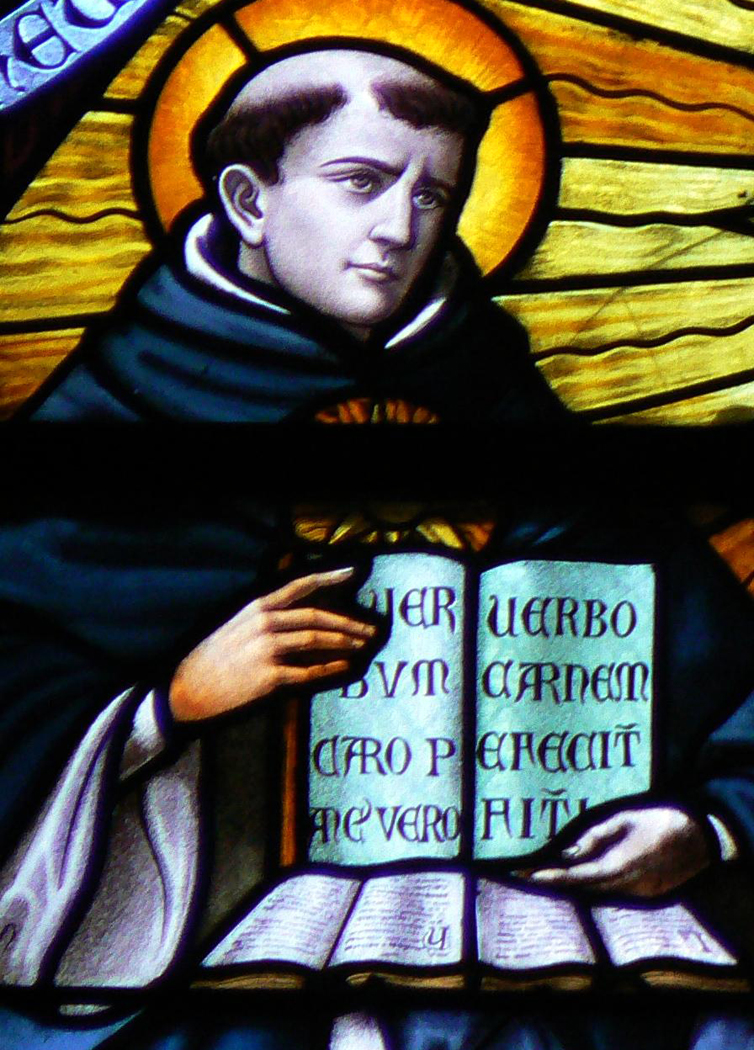
“Thomas Aquinas,” he started, “the famous 13th Century Christian scholar, said the beautiful has ‘integritas, consonantia and claritas.’ James Joyce’s translation of that from the Latin gives us ‘wholeness, harmony and radiance.’ ”

“Hey — I remember reading Joyce’s comments about a butcher’s basket: To see it apart from its surroundings, as a separate thing, is to see its integritas, its wholeness. As something distinct and not a part of something else.”

“Exactly.”

“Then you look at its parts — the handle, the weave of the reeds, the roundness of the bottom — and you see how those parts interact in the design.

“That is the harmony, or consonantia. But, you know, I’ve never quite accepted his definition of claritas.”

“It’s the tricky one. Joyce claims that once you’ve seen the whole and the parts, both together may join to excite your esthetic appreciation. They become larger, brighter, more meaningful than their simple existence as a basket. They have radiance. But the Latin of Aquinas is less clear.”

“I remember looking it up. My Latin dictionary translates claritas as ‘clearness or brightness’ — words less charged than Joyce’s ‘radiance.’ It also implies a clearness of mind, a plainness and directness of argument.”

“Yes. Meanwhile, there are other qualities we expect from beauty. It should surprise us, but once past the surprise it should feel inevitable.”

“Say, maybe that’s like a good murder mystery: The end should be a surprise, but it shouldn’t be arbitrary. We want to be satisfied, after our astonishment, that this solution to the mystery is the only possible one.”

“As when a Haydn symphony veers off into a strange key, or when the Beatles back a song with a string quartet. You are taken aback at first. Then you realize the perfection of it.”

“But wait,” said. “We still haven’t said what exactly is beauty. Is it a noun? Is it an adjective? — a quality that other nouns possess?”

“Or is it a verb?” Stuart was getting to the crux of the matter, as he saw it. “I’ve worried about the question for years, and I finally decided that if you want to know what beauty is, you must look at it as an event, not a thing. It is an occurrence, a transaction.”

“Hmmm. Sounds like you’re combining the external definition of beauty with the ‘eye of the beholder’ thing?”

“Right. You have the two blades of a scissors. The scissors itself is neither the one blade nor the other, but the two working together: Beauty is your active participation in the perception of the things of the world.”

“So it’s like this: The world is capable of being seen as beautiful — that’s the objective part — and we’re capable of perceiving that beauty — that’s the subjective.

“And where the two things come together, that is beauty.”

“That would make beauty an active thing,” Stuart said, “not a passive observation. You have to pay attention.

“To become part of the event, you must be awake, aware, alive. You must see or hear or feel more intensely than you do in the ordinary world of driving your car or cooking your burger.”

“So that’s why a photo of the sunset is a cliché.”sunset cliche 2

“The photo becomes a commonly accepted image of beauty, a shorthand for doing the actual work. It becomes a ‘word’ or symbol for the beauty, rather than the event of the beauty itself.”

“That reminds me of what James Agee was writing about in And Let Us Now Praise Famous Men: ‘For in the immediate world, everything is to be discerned, for him who can discern it, and centrally and simply, without either dissection into science, or digestion into art, but with the whole of consciousness, seeking to perceive it as it stands: so that the aspect of a street in sunlight can roar in the heart of itself as a symphony, perhaps as no symphony can: and all of consciousness is shifted from the imagined, the revisive, to the effort to perceive simply the cruel radiance of what is.’ ”

“Or as Blake has it, ‘If the doors of perception were cleansed, everything would appear to man as it is …”

“Infinite.”

“Yes. In a way, beauty is the act of paying attention, deeply and committedly.

“When the commitment isn’t there, the beauty isn’t.”

“So, you’re saying the world is full of things that we habitually think of as beautiful — certain categories of nature or certain subject matter in art — but that our acceptance of them short circuits our actual involvement?”

“The ‘warm bath’ school of beauty. They keep us from participating in the beauty.”

“Someone at the newspaper once wrote about it as ‘paying attention as if you were defusing a bomb.’ ”

chardin 3“Bingo. Beauty is not for the faint of heart. When you pay attention, the music of Arnold Schoenberg becomes ineffably beautiful. It’s the point of John Cage’s 4’33″ where the ambient sounds you hear while the pianist is not playing are presented to you as beautiful. And they are, if you engage with it properly. Paying attention. What is beauty? Beauty is paying attention. It’s the simplest definition there is.

“And this finally gives us the key to the claritas of Aquinas and Joyce. When seen, truly seen van gogh cypress— or by analogy, felt, or ‘apprehended’ in that Joycean locution — your object takes on a mythic significance, as if it glows from within. It is indeed ‘bright.’ It is the crockery of Chardin and the cypresses of Van Gogh. A clarity that glows from within.”

“As you’ve said many times, ‘Every bush is the burning bush.'”

“Wholeness, harmony and radiance,” Stuart said, paraphrasing St. Paul, “and the greatest of these is radiance.”

Claritas charitas est,” I said, making a lame play on words, in Latin, no less.

“Put that on your T-shirt and see who salutes.”


arrow earth
“Beauty is truth, truth beauty,” wrote John Keats. He may have intended that ironically, although it has been taken literally by many. Truth is beauty — well, at least in this: that artists have always sought to express the truth, at least as they have known it.John Keats

Art is, in large part, an attempt to discover truth in the welter of the chaos and confusion that is our lives. We write a play and test whether the ideas our characters believe can hold up under scrutiny. We paint canvasses in an attempt to discover what the world looks like. We write music to explore our emotional coherence.

In short, science is the test we give to hard fact; art is the test we give to everything else.

If you look at the broad expanse of cultural history (including art, literature, music, architecture — even politics and religion), you find each generation attempting to ameliorate the fallacies, misconceptions and naivete of their parents’. It is an ongoing march.

(The 20th century was deluded into thinking that there was a directional arrow to this process, and that they were the conclusion of the historical process, the end result of all that dialectic. That was their naivete.)

But the process continues: Our children see right through us. Their children will see through them.

The real “truth” is that our experience is too multifarious, to contradictory, ever to be summarized by a single cultural moment. This does nothing to minimize the efforts of all those generations before us to attempt to understand their lives. Each attempt is heroic in its own way. And each is truthful in its own way.

This constant shifting can be seen in the back-and-forth of certain cultural constants, which I call the pendulums. They swing back and forth. In gross outline, they are the classic and romantic ideas, the Apollonian and Dionysian impulses. But the pendulums are more complex than that simplicity implies. There are dozens, scores, hundreds of competing and repeating ideas that jostle each other out of the way temporarily, only to reappear in their turn and push back.

In the previous blog post, I discussed one of these ideas — the primacy in their turns of the generalized, universalized image, versus the individualized and particularized.

But there are many more oppositions, many more pendulums, swinging back and forth over our shared history.

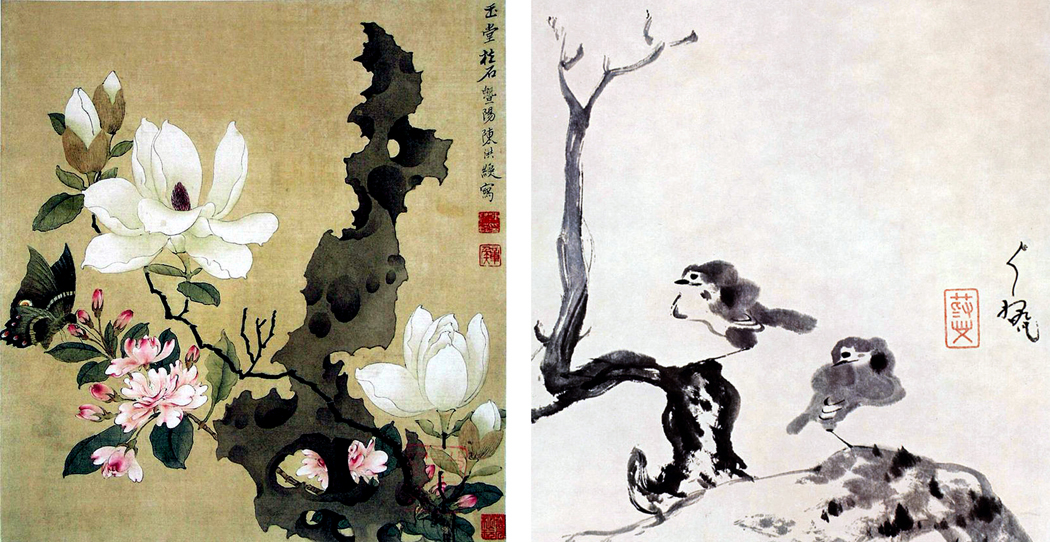
(My survey encompasses primarily Western art tradition, because it is the one I know best, the one I swim in, but other cultures share the dynamic, albeit with differing permutations. Just consider the Chinese art that swings from the formality of Chen Honshou to the spontaneity of Mu-Ch’i or Pa-ta-shan-jen).chen hongshou and bada sharen

Society or Cosmos

I wanted to look at just a few of these other oppositions in Western culture.

A second large group of oppositions concerns the subject matter, and whether the artist is concerned with man as a social being, an individual set in a welter of humanity — or whether he is concerned with the individual against the background of nature or the cosmos.

In the 18th Century, for instance, Alexander Pope wrote that “The proper study of mankind is man.”

The novel, which investigates human activity in its social setting, came from the same century. Fielding and Defoe come from that century.Prometheus

The succeeding century is concerned more with man in nature, or man in his loneliness, or fighting the gods and elements. One thinks of Shelley’s Prometheus Unbound or Byron’s Manfred.

Such poetry would have been considered utter nonsense 50 years earlier. One hundred years later, and they were taken for nonsense once again.

One only has to look at Pope and Wordsworth to see the difference.

I said these pendulums swing at different rates: After Romanticism in writing, we swing back to the social nature of Flaubert or Thackery or Dickens. The pendulum tends to remain social through the early part of this century. Eliot, despite his religious conversion, is eminently concerned with man and man, and sees religious conviction as a social good.

But when we hit the mid-century, the pent-up spirituality bursts out with the Beat writers, with the Abstract Expressionists, with Existential philosophy

The social-cosmic pendulum does not swing in synch with the general-particular pendulum.

Social — Cosmic

Limits — No limits

This world — The next world

Political — Apolitical

Regional — International

Active participation — Retreat from world

Rational — Magical

Emblem — Myth

Incarnation — Transcendence

Society — Nature

Nature as desert — Nature as cathedral

Dramatic — Lyric

Irony — Sincerity

Clarity and Ambiguity

The third large category is the fight between clarity and ambiguity. One age likes its art simple and direct; the next likes it textured, complex and busy.

The classic example, of course, is the shift from Renaissance classicism to Baroque emotionalism.

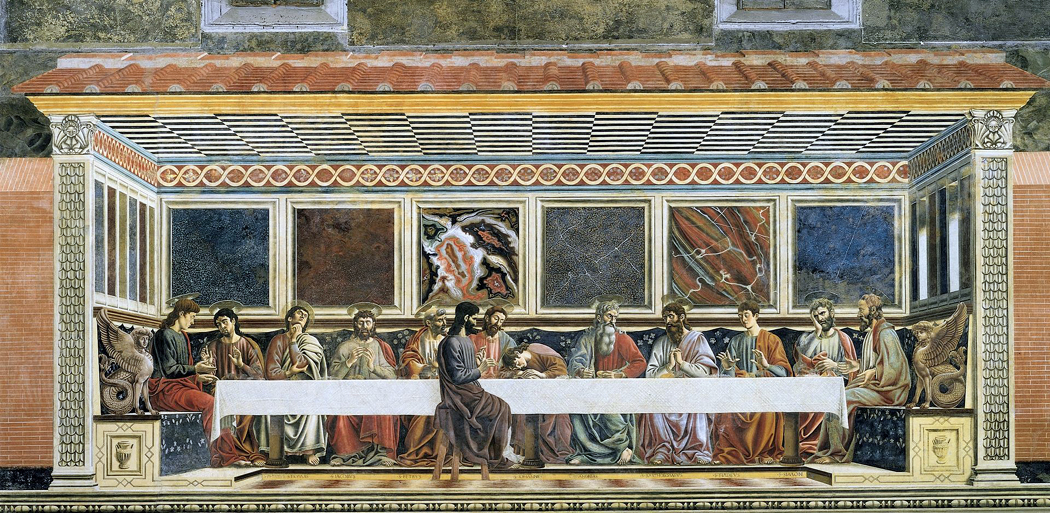
In a Renaissance painting, the artist made sure everything could be seen clearly. He lined everything up with the picture frame, lit it with a general illumination so that confusing shadows would be minimized.

Look at this Last Supper by Andrea del Castagno.

castagno

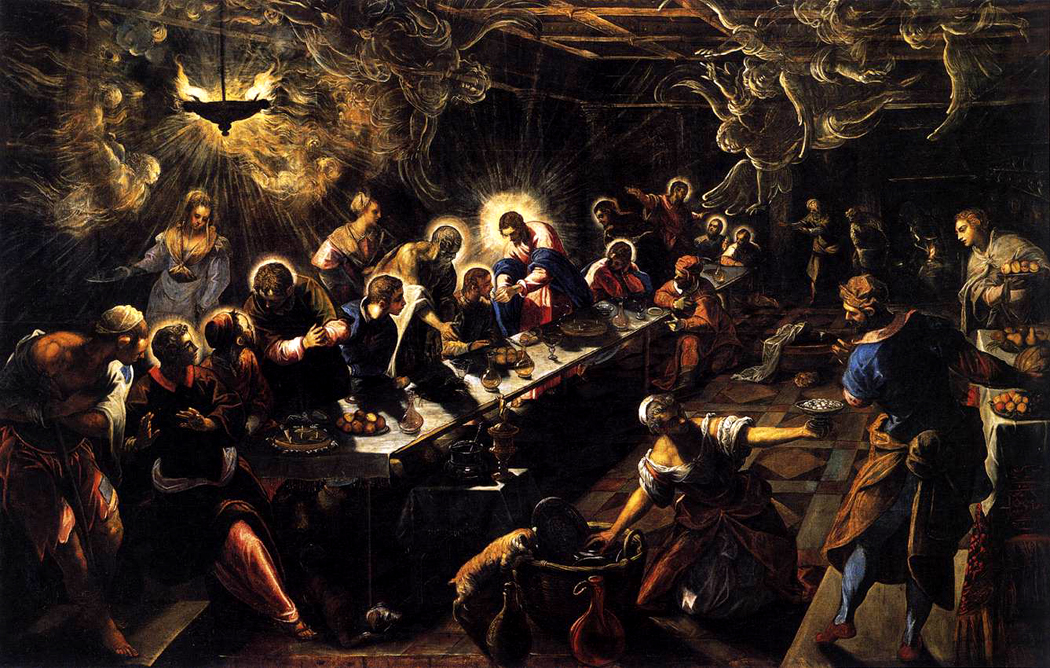
See how clear it all is. But the Baroque painter Tintoretto had a different vision of the same biblical event. It is writhing, twisting out into deep space, with deep shadows and obscure happenings.

tintoretto

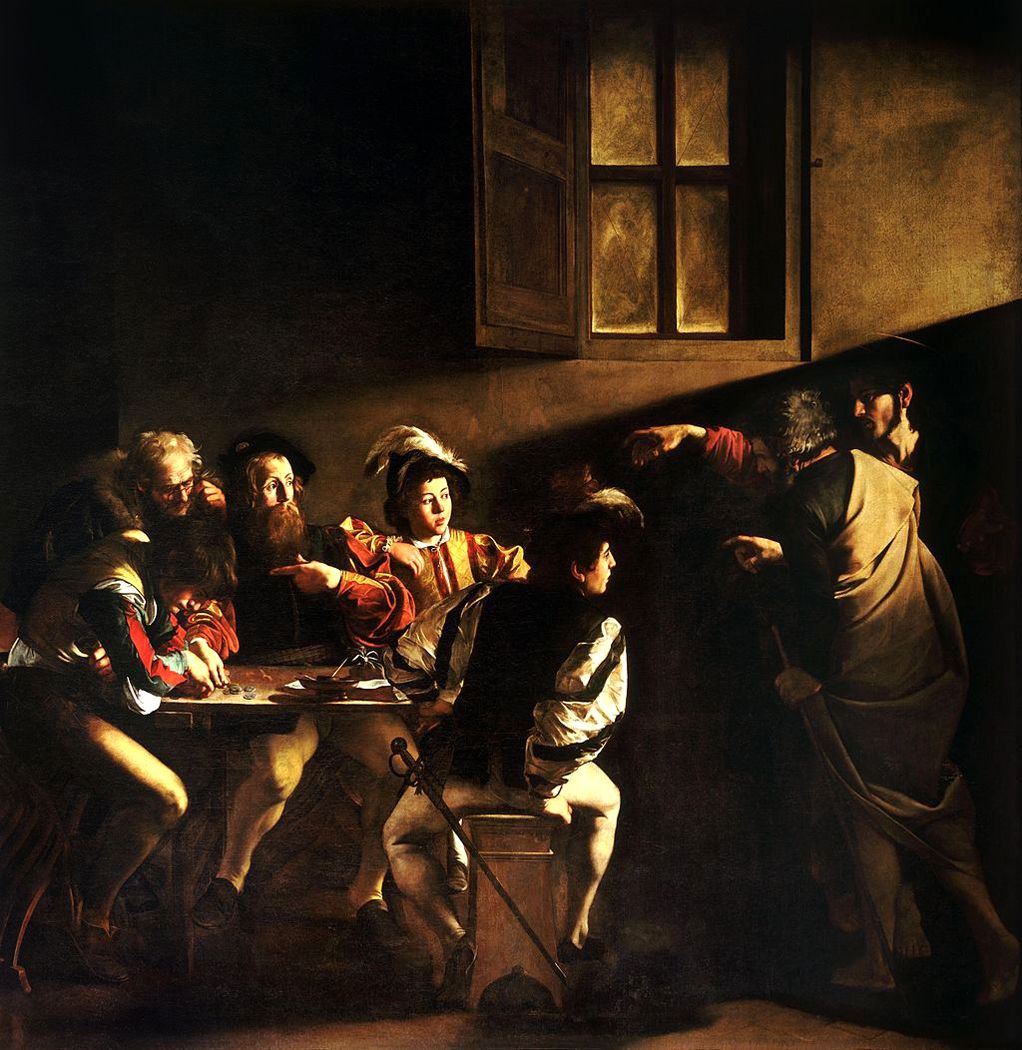
The Renaissance liked stability and clarity, the Baroque, motion and confusion.

Like the David of Michelangelo and the Bernini statue of Apollo and Daphne.

david and apollo and daphne

Or the Birth of Venus of Botticelli

botticelli

and the Calling of St. Matthew by Caravaggio.

caravaggio

In buildings, you can see the shift from the Gothic, with its infinite variety and crenelated detail, obscuring the larger structural designs to the clarity of ornament and design in Christopher Wren’s  St. Paul’s Cathedral in London.st pauls milan cathedrals

You can hardly see the actual walls of the Gothic cathedral, so overwhelmed are they by buttresses and sculptures.

But St. Paul’s is a monument to line and form, clearly seen and designed.

Clarity — Ambiguity

Limits — Freedom

Simplicity — Complexity

Unity — Diversity

Drawing — Painting

Stasis — Energy

Regulation — Impulse

Overall — Detail

Formal — Organic

Codify — Explore

Stability — Change

Rules — Anything goes

Clarity — Obscurity

Old form — New form

Discrete disciplines — Mix and match

Relevant or Isolated

Another shift concerns whether art should serve some wider function, like moral instruction or a search for scientific truth, or whether art has no purpose but to stimulate our esthetic tastes. Art for art’s sake.

Should the art hang on the wall to be looked at, or should it decorate the handle of the shovel or spoon? Should it remain outside the mores of its time, or should it be used as propaganda for a righteous cause? Is it merely to look at, or should a Madonna teach you something about your religion?

This is a concern that has become important in the art of our time. A whole herd of artists arose in the 1960s who saw art as divorced from life. Color Field painters preached the gospel: “Art can make nothing happen.”

noland kruger pair

But Postmodernism is largely about inserting political thought into the paintings. Art for art’s sake is declared “elitist” and “irrelevant” and the new art must be judged on its political truth.


Art as Art — Art for Function

Entertainment — Edification

Style — Content

Apolitical — Political

Ignore past — Embrace past

Retreat from world — Active participation

Art on wall — Art on implement

Technical — Visionary

Vocation — Inspiration

Contemplation — Propaganda

Ideal — Practical

Tribal or Cosmopolitan

The history of art also pulsates with the shift from nationalistic to international styles, from that which is specific to an ethnic or identity group, and that which seeks to transcends those limitations. The Gothic style as an international style, but the Renaissance is either Italian or Northern. The Baroque breaks up further into French, Dutch, Italian, Flemish.

In music, Bach imitated the national styles in his English and French suites and his Italian Concerto.

But the Galant and Classical styles that replaced it vary little from country to country. Perhaps the Italian is a little lighter and the German a little more complex, but you can’t get simpler or more direct than Mozart.

Nationalism reasserted itself in the next century, so that you have whole schools of Czech music, French, Russian.

In the early 20th Century, internationalism took charge once more and for a while, everybody was writing like Stravinsky.

The main architectural style of the first half of this century is even called “The International Style.”

But ethnic identity is back, and art is once again seen as a key to identity.

Exclusionary — Syncretic

Limits — No limits

Theocratic — Humanistic

Reinforce ethos — Challenge ethos

Regional — International

Nationalism — Cosmopolitanism

Discrete disciplines — Mix media

Ajax Defending Greek Ships Against Trojans

All of us or just me

One of the big shifts is between what I call “ethos” and “ego.”

That is, art that is meant to embody the beliefs of an age, thoughts and emotions that everyone is believed to share — or art that is the personal expression of the individual making it.

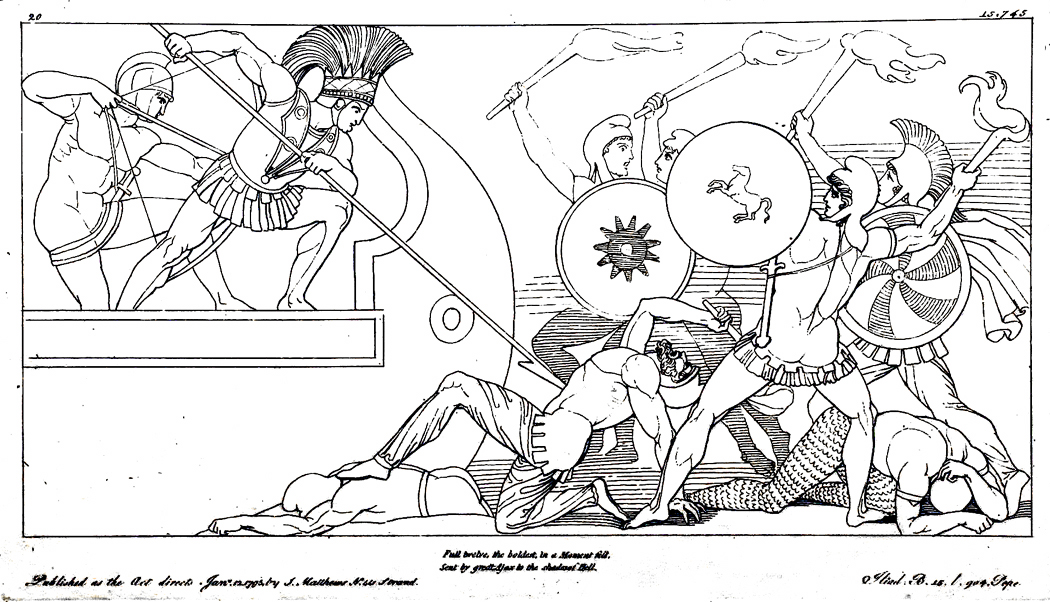
We have so long taken it for granted that an artist is supposed to “express himself,” that we forget it has not always been so. Did Homer express his inner feelings in the Iliad? Or are those emotions described the emotions he expected everyone would understand and share? He tells of what Achilles is feeling, or Ajax or Hector or Priam — and they are deep and profound emotions — but they give no clue to what Homer was feeling.

In music, Haydn’s symphonies were written about as being powerfully emotional. Nowadays, we think of Haydn as a rather cerebral composer. If we want emotion, we go to Beethoven or Schubert. You cannot listen to Schubert’s string quintet and not believe it expresses the deepest emotions that its composer was suffering at the time. It is his emotion. We may share it, but it is his.

Ethos — Ego

General — Particular

Investigate world — Investigate self

Chorus — Individual

Rectitude — Bohemianism

Anonymous creator — Signed art

Vocation — Inspiration

Atelier — Single creator

Talent — Genius

Depiction of emotion — Expression of emotion

Head or Heart

baudelaireThen, there is the fight between wit and sentiment.

To some generations, art needs to take a cool, ironic view of the world. Cervantes in his Quixote, or Pope in his Rape of the Lock.

To other generations, art is about human emotion. The more a person feels, the better the art.

Wit was the hallmark of the 18th century. Sentiment of the 19th. It was a common issue of discussion. Everyone knew just what you meant when you used the terms.

Did you wish to write “what oft was thought, but ne’er so well expressed”? or did you want to release pent up emotions, creating something new, never felt before? That’s what Baudelaire did.

Wit — Sentiment

Irony — Sincerity

Universal — Particular

Intellect — Emotion

External — Internal

Reinforce ethos — Challenge ethos

Artifice — Naturalism

Social — Cosmic

Verbal — Sensuous

Society — Nature

Emblem or Myth

Penultimately, there is the swing from art which uses its symbols emblematically and that which uses it mythologically.

That is, if you use a symbol, does it stand “for” something else — as cupid stands easily for love in so much pastoral poetry — or does it partake of that which it expresses — that is, in photographer Minor White’s wonderful formulation: “what it is and what ELSE it is.”faerie queene

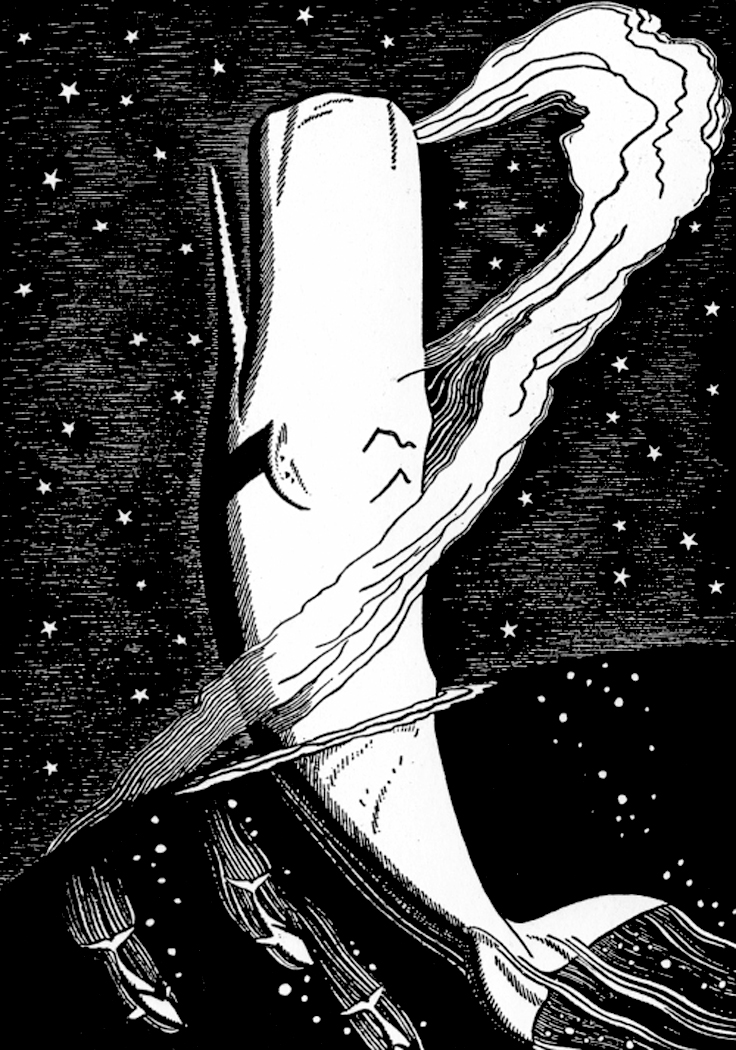
Cupid is an emblem. The Cross on the Knight’s shield in The Faerie Queene is an emblem. Moby Dick is a myth. One is easily translatable, the other is not and opens itself to investigating that which cannot be put in mere words or images.

A Classic age tends to be emblematic, a Baroque or Romantic age tends to be mythic. The one uses symbols as shorthand, the other as incredibly convoluted mental images that point at, but don’t touch, what it means. It is the opposite of shorthand.

Ovid is the acme of the emblematic. Homer of the mythic. Homer’s gods — for all their occasional silliness — are actual divinities. Ovid’s are puppets playacting for our amusement.

Emblem — Myth

Universal — Particular

Intellectual — Emotional0 R

Simplicity — Complexity

Unity — Diversity

Stasis — Energy

Regulation — Impulse

External — Internal

Secular — Religious

Style — Content

Synthetic — Organic

Miniature — Epic

Ironic — Sincere

Mimesis or Poiesis

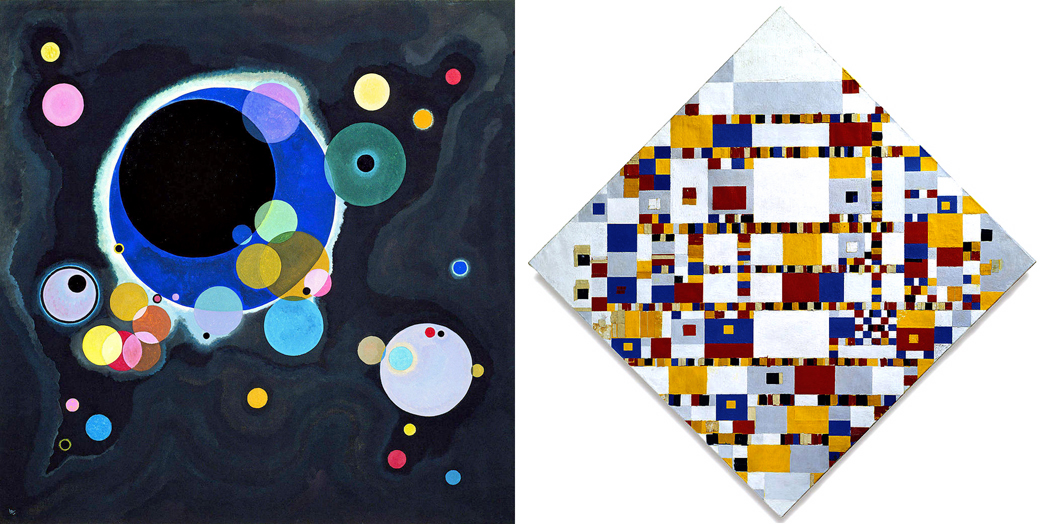
And finally, there is the issue of whether art should imitate the appearance of nature, or should imitate the processes of nature. That is, whether art is mimetic or poetic. Should it copy or create from whole cloth?

We have seen in our century the change from abstract art to images. Abstraction once seemed unassailable. It was the serious art; anything else was trivial.

kandinsky mondrian pair

lichtenstein 2Well, we got over that. From the time of Pop Art, art has increasingly attempted to look, in some form or other, like the world.

It hasn’t done this in imitation of the look of paintings from earlier centuries. That look cannot come back, or cannot be used without irony.

But artists today paint images of people and things. They are identifiable. Some are almost like the old paintings.

Richard Diebenkorn was hailed as an abstract artist in the 60s.

When he began returning to the figure, he was at first castigated.

diebenkorn before and afterNow he is seen as a prophet.

Abstraction wasn’t only in painting. Waiting for Godot is an abstract play. Gertrude Stein wrote abstract prose. Carl Andre wrote abstract poetry.

Mimesis — Poiesis

Imitation — Abstraction

Particular — General

Individual — Universal

Observed –Stylized

Detail — Overall

Edification — Entertainment

Content — Style

Naturalism — Artifice

Investigate world — Investigate self

Scientific realism — Emotional realism

Stretching the frame

Before we leave the subject, we should point out that oppositions are entirely dependent on context. Baptists and Lutherans are opposites until we pair them as Protestants against Catholics, and we pair those against, say, Islam as the opposite of Christianity, or those paired as religions of the book against, let’s pick, Hinduism, but then we can pair those as religions against atheism, and pair them as belief systems against thoughtlessness, and pair them as philosophies against — well, whatever is the opposite of philosophy.

There are an uncounted number of oppositions; I have listed a few I have considered. I could elaborate blogs about each of pair them.

But you get the picture.


pit and pendulum poster
INTRODUCTION

Art keeps changing. What is popular in one century is laughed at in the next. Victorians hated the undisciplined libidos of the Romantics; the 20th Century has found the Victorians cloying, sentimental and insincere.

But what causes these changes in taste? It is too often believed that styles change merely out of boredom, as if we got tired of one look and were attracted to the glittering novelty of the next.

And while there is certainly something to the idea of the bright, shiny and new, there is also something deeper and more meaningful.

For art history is not just a history of shifting styles, but of changing sensibilities. The transformation of one age into the next — of the Renaissance into the Baroque, of Neo-Classicism into Romanticism, of Modernism into Postmodernism — is a transformation of ideas.

cones and bullets

Making a point (or two)


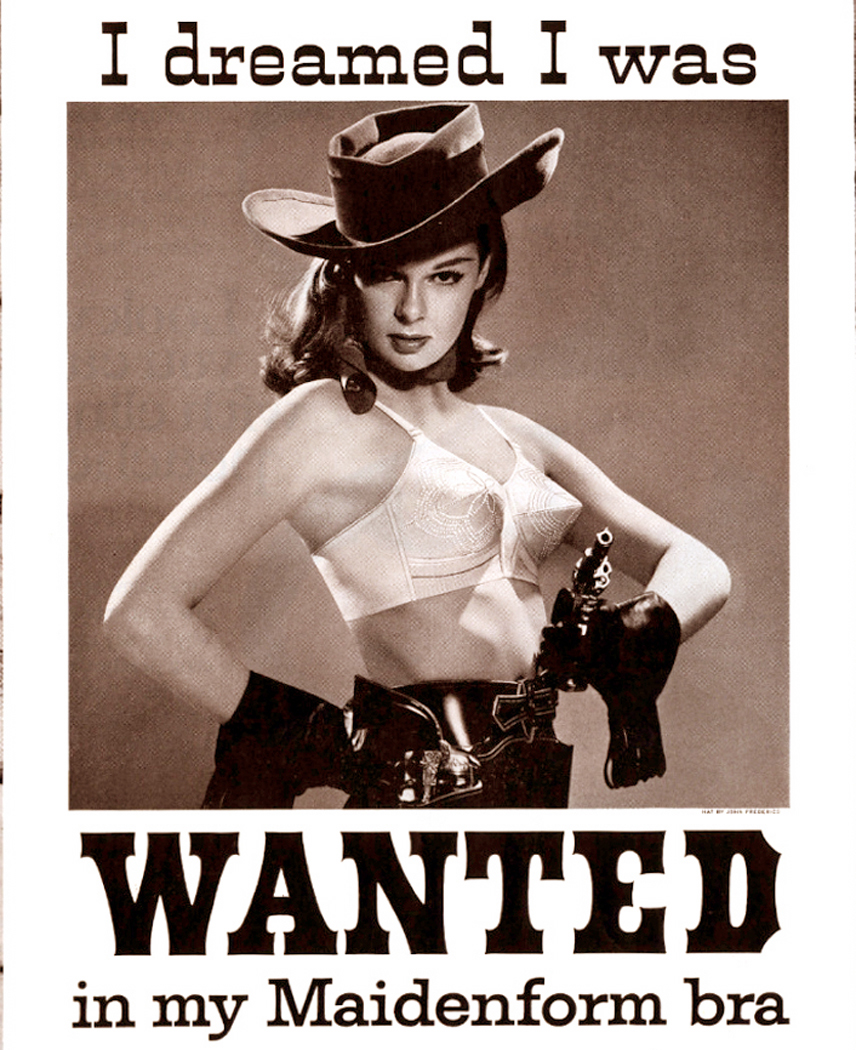
I say it isn’t merely fashion, but fashion isn’t either. Perhaps you get some idea of what I mean if we look at the Maidenform bra, for instance.
dreamed i was wanted

Here it is, as hard as cardboard and pointy as a dart. It molded the female form to a rigid contour. I remember when it used to be called the “nose cone” look.

But if you consider the time that gave  birth to the nose cone, you recognize it was the Eisenhower ’50s. It wasn’t merely the bra that was rigid. Men wore starched shirts then, too. Suits and ties were required attire at the office.

Wives wore highly structured dresses, with darts and sizing, and a mask-like make up, with red lipstick and black mascara. Their hair was held stiff, too.

And what was the political climate? It was also stiff. People were expected to conform. Those who didn’t were suspect. Investigated by the House Un-American Activities Committee. There was a conventional idea of what the ideal was. You can see it in the TV shows of the time.

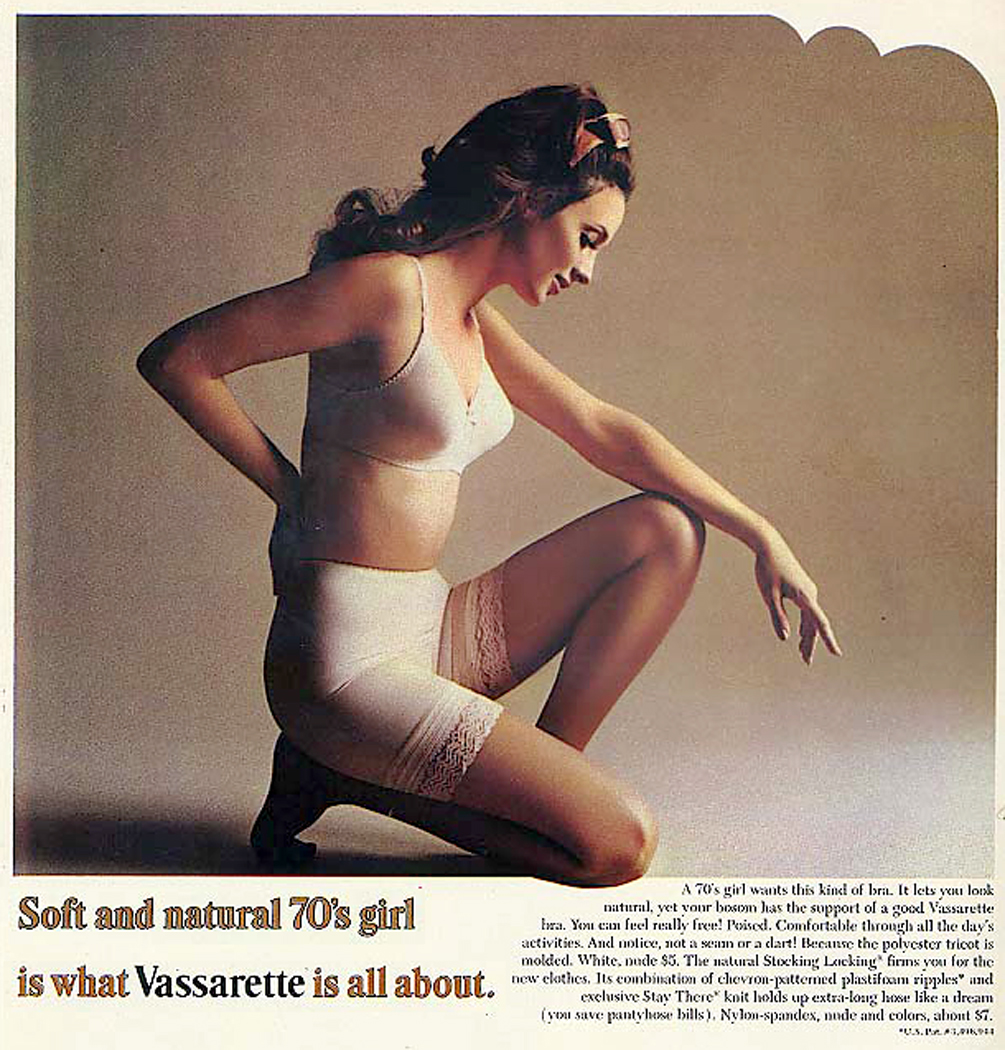
Leave It to Beaver? The Donna Reed Show? Dragnet.soft and natural

Interestingly, the ’50 lasted through the ’60s. But at the end of that decade, something happened. The rigid bra went out. So did the structured clothes. So did the stiff ideas.

These things are all connected.

The ’60s, by the way, lasted into the middle of the ’70s, when the ’80s began. Our idea of decades in this century is a little cockeyed. Still, we call the ’60s the ’60s and everyone knows what we mean, even though what we mean is the years between 1968 and 1974. That was the ’60s. All over in a flash. I remember — the flashing, that is.

It was a retreat from what seemed like inauthentic artifice into what seemed at the time to be authentic naturalness. “Natural” became the adjective of the decade. I remember one shampoo that advertised “100 percent all natural natural ingredients,” which, of course, promised only that whatever natural ingredients made it into the bottle, were actually natural.nipple bra

Black America began wearing a hairstyle they called the “Natural.”

And we had the “braless” look. Even bras offered the braless look.

If the ’60s seemed like a reaction to the stuffy ’50s, it was. But it was a wide shift in sensibility. The art changed; the music changed; the politics changed; the philosophy changed.

Artifice vs. artlessness

Before there was stiff underwear, in the 1920s, when things were looser mentally, emotionally and morally, underwear was looser, too.1920s lingerie 2

And we can see the reassertion of the artificial, parodied by Madonna in the 80s.

Like the change that occurred at the time of the Reformation, more emphasis was placed on individual freedom of thought and less on the authority of power. Martin Luther wanted everyone to be able to read the Bible, and not have the book only interpreted by a priestly class. Abbie Hoffman (admittedly a lesser intellect, although I don’t think that insults Hoffman) wanted to make up his own mind about the Vietnam War instead of taking Lyndon Johnson’s interpretation of it.Abbie Hoffman 1

I can recall hearing over and over from our elders at the time that “Johnson has facts we don’t know; we have to trust him.” Well, it turned out he was as clueless as anyone. We of my generation thought we’d never make that mistake again.

Over the centuries, each definable age is a reaction to the one that went before. The Renaissance reacted to the Middle Ages. The Romantic Age to the Neo Classical age before it. Victorianism to the Romanticism and Modernism in the 20th Century to the Victorianism which it hated.

But what underlies these changes is a curious series of pendulums.

“Meta-pendulums”

yinyang colorYou know how you keep hearing that the pendulum only swings so far before reversing direction — so that the Sexual Revolution is replaced by the New Chastity — or so we’re told. The swing to the political left is slowed and eventually we swing back to the right. Hello Mitch McConnell.

These swings are, in fact, the very stuff of cultural change and we can see them through the art that embodies them.flaxman 1

When we see the change from Winckelmann’s exulted Classicism to Delacroix’s exotic Moorish women, we are seeing a change in ideas.Women of Algiers

What is curious is that these same pendulum swings keep recurring.

There are a bunch of them, and their “swing cycle” is irregular, so that the same ideas don’t occur at the same time: Some ideas have a longer cycle, some a quick turnaround. They never all line up quite the same way twice, which is why the various “romantic” periods in art — the Gothic, the Baroque, the Romantic — are not at all identical.

What I want to do is to take a look at a few of these swinging pendulums to get a feel for the changes they bring. And perhaps narrow them down to a few “metapendulums.” Those larger ideas that hold the smaller ones like melon balls in a hollowed out melon half.

An endless list

I made a list of some of these oppositions. My notebook went on for three pages. I stopped at 63 pairs of recurring ideas when I realized I could really go on for days adding to the list.

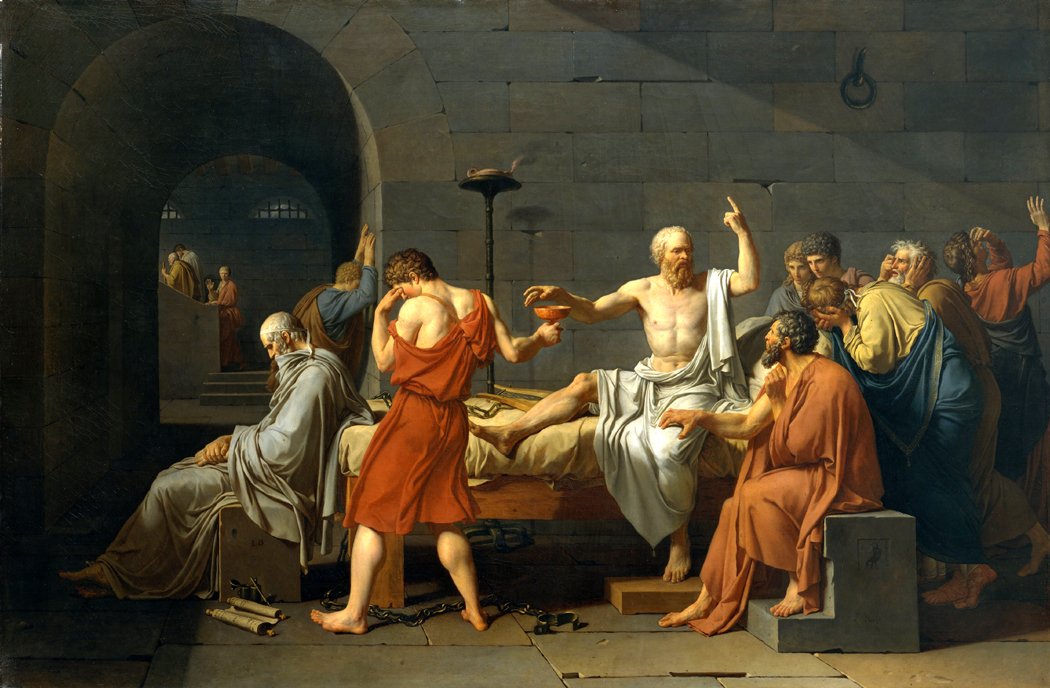
Here’s one example: How the middle of the 19th Century in France valued the historical (and religious and mythological) painting, like this David version of the death of Socrates. It was noble, formal, elevating. It taught the moral lessons that thoughtful people believed should be taught.death of socrates

But there was a reaction to it. That reaction gave us Impressionism, which gave up the past for the everyday present, like this barmaid in Manet’s painting.manet

I said these shifts recur. In the 1950s, for instance, the serious minded Abstract Expressionists, like Mark Rothko, expected their paintings to be morally and spiritually elevating.

What followed? The everyday present, like Warhol’s soup cans.rothko-warhol pair

The whole history of art keeps running back and forth through these issues, over and over, but never quite the same way — because other pendulums are also swinging back and forth at the same time, and their combined periods never quite in synch, so that the change from David to Manet is also a shift from a hard-edged style to a soft, fuzzy edged style, and between Rothko and Warhol comes the swing from abstract to realistic.

Among those 63 pairs of ideas — oppositions you might call them — are familiar ones. Here are a few of them:

Interest in the universal — Interest in the particular

Intellect primary — Emotion primary

Clarity — Complexity

Unity — Diversity

Religious — Secular

Edification — Entertainment

Reinforce ethos — Challenge ethos

Style — Content

Artificial — Natural

Social — Cosmic

Codification — Exploration

Stasis — Energy

Embrace past — Ignore Past

Internationalism — Nationalism

Emblematic (allegorical) — Mythic (symbolic)

Incarnation — Transcendence

Scientific realism — Emotional realism (“Truthiness”)

Nature as a desert — Nature as a cathedral

Vocation — Inspiration

Single creator — Atelier

Talent — Genius

Epic — Miniature

Dramatic — Lyric

Old form — New form

Irony — Sincerity

Discrete disciplines — Mix and match art forms

Depiction of emotion — Expression of emotion

There are many more. I’m sure you can come up with a bunch. But I don’t want to merely make a list.Dionysos pediment Parthenon

The general and the particular

 Because, as I was listing, I noticed that these ideas began to fall into larger patterns. They tend to group together, though some of the items in my list overlap, one category turning up as an item in another category.

But I want to look at the larger movements.sc000358.jpg

The first category is the rivalry between the universal and the particular. In some ages, we have wanted our art idealized. If we are going to paint a madonna, she should look like a woman, or better yet like all women, that is like Woman with a capital W. Especially if we harbor religious feelings about it, we don’t want our Madonna to look like Eleanor Roosevelt.

The 18th Century was one that believed in the importance of universalizing their art.

Samuel Johnson wrote in 1750 that “Poetry cannot dwell upon the minuter distinctions, by which one species differs from another, without departing from that simplicity of grandeur which fills the imagination.”

Or, in another place, “All the power of description is destroyed by a scrupulous enumeration; and the force of metaphors is lost, when the mind by the mention of particulars is turned more upon the original than the secondary sense, more upon that which the illustration is drawn than that to which it is applied.”

Nothing in real life is perfect, wrote painter Joshua Reynolds in his famous Discourses. The artist must never attempt to imitate real life too closely, he says, but rather, “he learns to design naturally by drawing his figures unlike to any one object. This idea of the perfect state of nature, which the artist calls the ideal beauty, is the great leading principle by which works of genius are conducted.”caravaggio madonna

Only 30 years later, English artist and poet William Blake wrote in the margins of his copy of Reynold’s Discourses

“To generalize is to be an idiot.”

He goes on to say: “To particularize is the alone distinction of merit. General knowledges are those knowledges that idiots possess.

“What is general nature? Is there such a thing? What is general knowledge? Is there such a thing? Strictly speaking, all knowledge is particular.

“Distinct general form cannot exist. Distinctness is particular, not general.”

Reynolds, if he painted a Madonna, would make sure she didn’t look like any live human being, but like the idea we have of the perfect form.

Blake, painting a Madonna, would certainly have made her look, if not like Eleanor Roosevelt, at least like some living, breathing woman he could see with his actual eyes.

And this is despite the fact that Reynolds is mainly a portraitist, making pictures of individuals — which he idealized in his paintings. And despite the fact that Blake makes mythological pictures of gods and spirits — which he meant to look like distinct personalities.

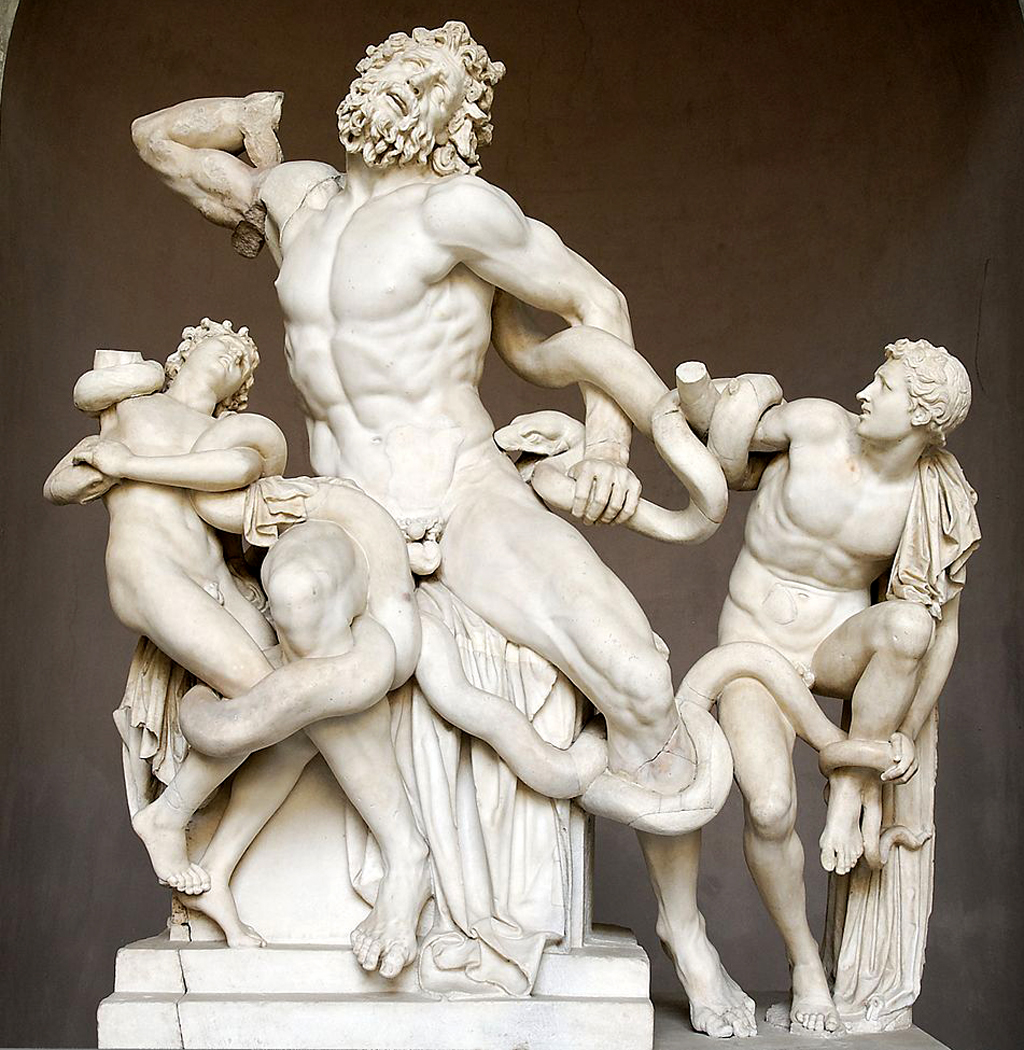
This issue between general and specific, universal and particular, recurs like all these ideas.laocoon

Hellenic and Hellenistic

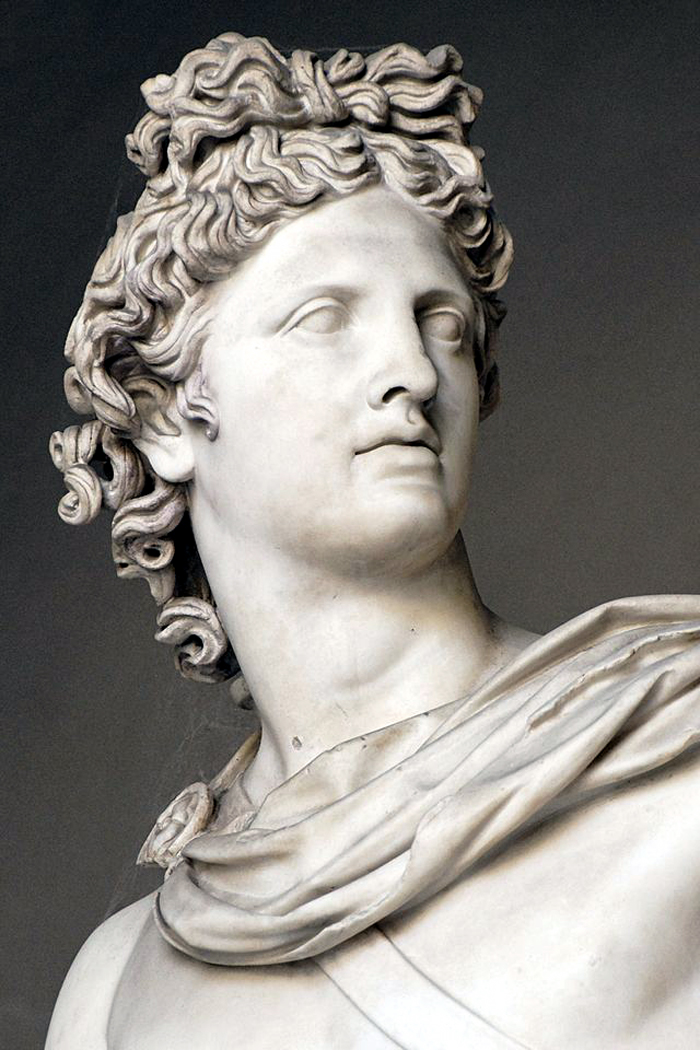
It is the first major shift in Western art one sees, not counting the prehistoric art (which also follow most of these patterns). But beginning with the art of ancient Greece, we can see it reaching its height in the 4th Century, with such sculptures as the Elgin marbles and the frieze carvings of various temples.Belvedere Apollo

The Classical Greeks believed in idealized beauty, in the general and universal, as you can see in these lithe, stripped down figures.

But after the Macedonian invasion, under the reign of Alexander the Great, in the period we call Hellenistic, the main shift is in the naturalness of the art. The statues take on a movement and individuality unheard of in earlier Athens.

You can see the distinct face of the wrestler with his broken nose or the boy pulling a thorn from his foot. (You can also see the shift, mentioned above, from the morally elevating tone of the Classical period, to the everyday activities depicted in the Hellenistic).laocoon head

But just look at the faces, the Classical impassiveness and idealization,

and the Hellenistic warts and all portrait.

You can see the pendulum go back and forth, with early Roman art tending to imitate the Classic Greek, and Imperial Roman art again embracing the particular. Once you have seen a Roman portrait bust, there is not doubt you could pick its model out of a police lineup of a crowd at a bus station. They are so distinct.Roman portraits

In the Middle ages, first in the declining Roman period and the Romanesque, individuality is downplayed and figures, especially in the growing Christian church, tend to be generalized. But in the great Gothic period that flowered in the 11th and 12th centuries, the figures again become individualized. So much so, that the hundreds of figures carved into the side of, say, Chartres Cathedral, are as distinctive as movie stars’ faces.

During the Renaissance, figures are once more idealized. In the Baroque, they are individualized. In the Rococco, generalized, in the Romantic era, individualized. In the Academic painting that followed, they were again generalized. Impressionism put back their individual character. Modern art simplified the figures and generalized them — all of Modigliani’s figures seem interchangeable, for instance, or Brancusi’s idealized women. But particularity and distinct figures reappear with Pop and the following Postmodernism.

Back and forth the pendulum goes.

I have dwelt on this one pair of opposites rather a long time, just to get the feel of what I mean.

But, I also want to point out the subset of ideas that follow the fight between the universal and particular.

NEXT: Part 2 — More pendulums


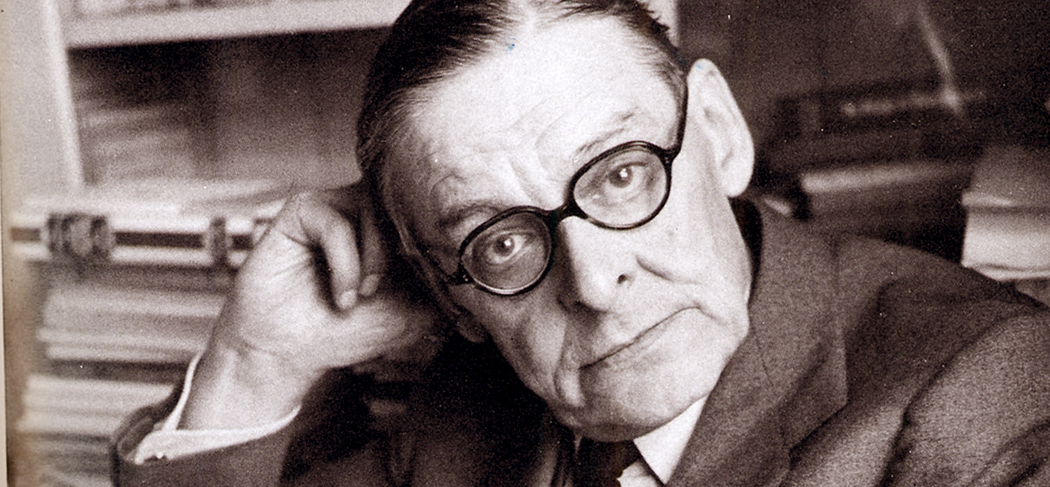
TS Eliot
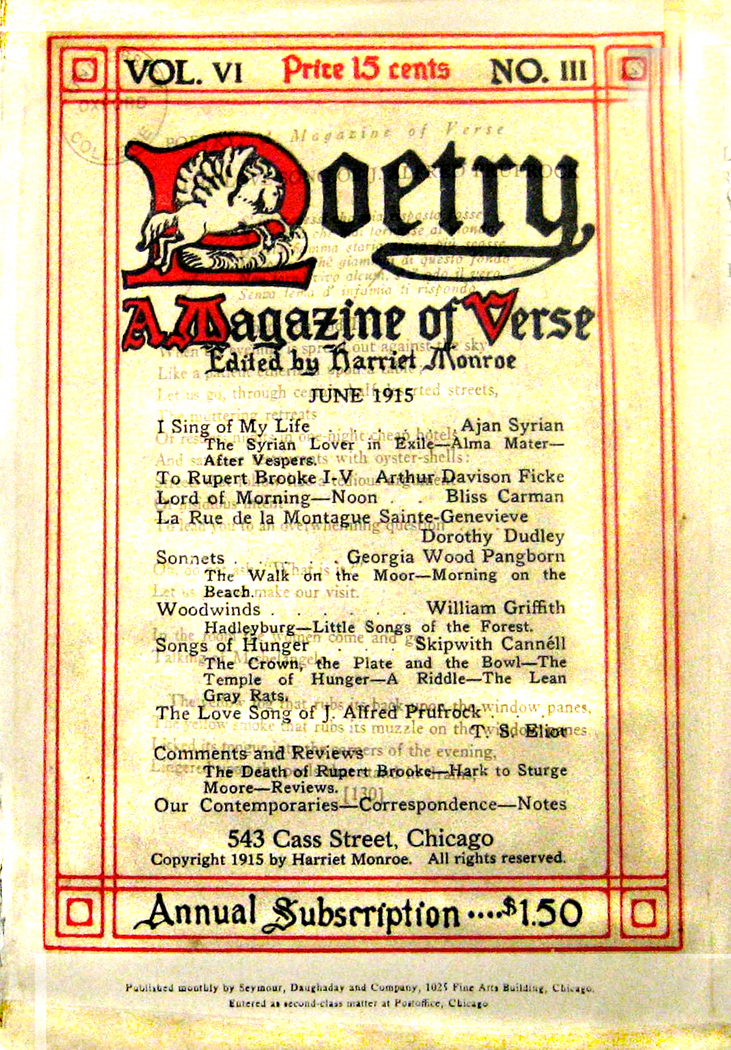
This year is the centennial of the publication of T.S. Eliot’s “Love Song of J. Alfred Prufrock.” And the long view is that Eliot was the greatest, most influential poet of the 20th century, at least, in the English language.poetry june 1915 2

But oddly, he seems to have written only seven poems.

Along with “Prufrock” and “The Wasteland,” there are the “Four Quartets” and “The Hollow Men” — the last surely one of his weakest poems, whose popularity appeals to the shallow cynicism of pimpled adolescence. Beyond that — and not counting the ubiquity of the “Old Pussum” poems, for which the posthumous Eliot must be sorely embarrassed — the rest of his oeuvre is something read by graduate students. How many, after all, have actually read “Ash Wednesday” or the Choruses from “The Rock?”

It isn’t that these poems aren’t good, or aren’t worth studying or reading, but they haven’t stuck with us, while everyone can quote or misquote, “not with a bang but a whimper” and “April is the cruelest month.”

This isn’t to denigrate Eliot or his importance. I love reading through “Burnt Norton” over and over, or “The Dry Salvages.” But rather to illustrate a common point of art and culture.

After all, we hold William Wordsworth up to be one of English literature’s most exulted poets, maybe the greatest since Milton, yet, beyond the “Intimations Ode” and “Tintern Abbey,” and a few sonnets and Lucy poems, and maybe some notable passages from the interminable “Prelude,” how much of the vast output of that poet ever gets read outside of class?

I have a special place in my heart for Coleridge. I read and reread with intense pleasure a handful of his poems. “This Lime Tree Bower My Prison,” “Kubla Khan,” “Frost at Midnight,” “Tale of the Ancient Mariner” — but beyond that, how much of his work comes off as fustian.

Even Shakespeare, who wrote some 40 plays, is known to most of us through the “Romeo and Juliet” and “Macbeth” we studied in high school, and the “Hamlet,” “Lear,” or “Henry IV, Part I” we read in college. And perhaps there was that “Twelfth Night” put on by the college drama department. The bulk of his output languisheth in obscurity.

It’s not just in poetry. How many of us have read Melville’s “White Jacket” or “Israel Potter?” Or Thoreau’s “Week on the Concord and Merrimac?” Vitruvian Man

And not just in literature. Leonardo drew and painted many things, but the “Mona Lisa” and the Vitruvian Man outweigh all the ladies in Ermine or Madonnas of the rock.

Beethoven has his Fifth Symphony and his “Ode to Joy.” Warhol has his soup cans and his Marilyns. Even Springsteen has his “Born to Run” and “Born in the USA.”

The life and work of almost everyone gets boiled down to a few most characteristic and often the few best works. The rest, like the Latin poems of John Milton, are left to specialists.

In the preface to his “Collected Poems,” Wystan Auden makes this point with some clarity and poignancy.

The work of every author falls into four classes, he wrote. In the first is “pure rubbish,” which he regrets ever having conceived. (Although, I would say from experience, he doesn’t always recognize this at the time). auden

Second, Auden says, are the good ideas that come to naught through incompetence or impatience.

Third, are “those pieces he has nothing against except their lack of importance: these must inevitably form the bulk of any collection.”

This is the journeyman work, competent, even pleasing, and certainly better than lesser talents could accomplish, but still, it is the “filler” portion of a life’s work.

Finally, there are “those poems for which he is honestly grateful,” which, if he were to limit his publication to these alone, “his volume would be too depressingly slim.”

And, I would add, an impoverishment to doctoral students everywhere.

There are higher and lower batting averages among artists and writers, but, even the best hitters fail seven out of 10 tries. It is humbling.

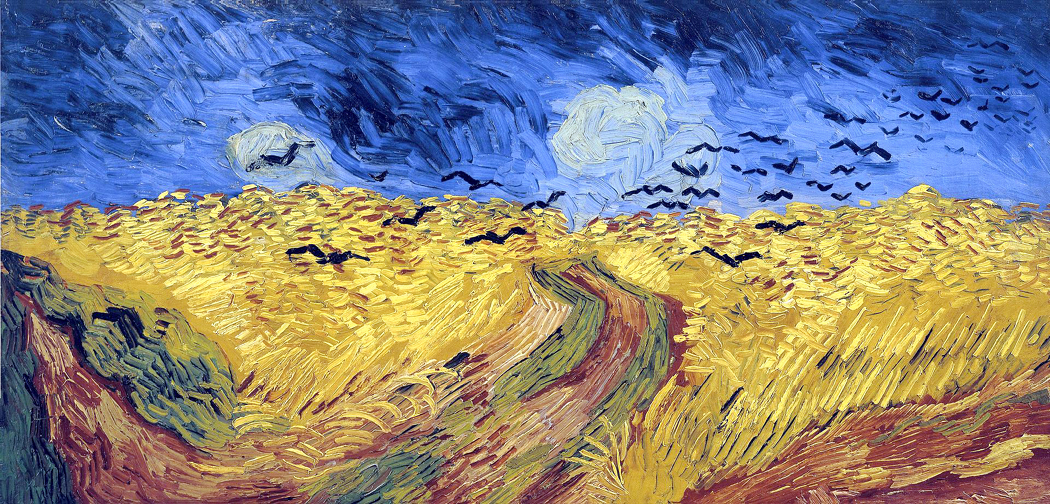
More to the point, it isn’t just the author who feels gratitude for the home runs of his or her production, but we readers, listeners, seers and participants. We are those who feel our inner lives buoyed by the “Intimations Ode” or Chaucer’s prologue, or Van Gogh’s wheatfields.van gogh wheatfield

beethovn lede photo
Ludwig van Beethoven would have turned 244 this week. belushi beethoven

Everyone knows Beethoven. He wrote “Da-da-da-dum” and “Ode to Joy.” He’s the scowling visage parodied by John Belushi on Saturday Night Live. He’s the plaster bust on Schroeder’s toy piano.

Ask anyone to name a classical music composer and nine out of 10 will utter his name. Even those with no familiarity with classical music know he’s the one who rolls over to tell Tchaikovsky the news.

So it’s not surprising that symphonies program his music more than anyone else’s, and often devote entire festivals to the music. schroeder 2
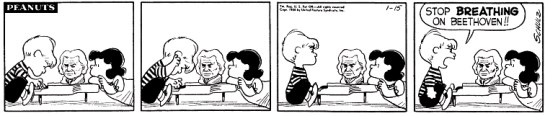
It would be silly to call anyone the “greatest” composer, but Beethoven — along with only Bach — is the one most often given that honor. Such is his power as a producer of human emotion through the ear canal, that his only real rivals in European art music are Bach and perhaps Mozart. That doesn’t mean he is everyone’s favorite composer. There are many who cannot stand his relentless pounding and drive. And surely among “great” composers, Beethoven probably has the third-most detractors, after Schoenberg and Wagner.

But it would be hard to find anyone who has altered Western music history more directly and obviously than the scowling master from Bonn. michael christie

“There are many reasons one could say Beethoven’s music is the greatest. His music speaks to the listener from the first note,” says conductor Michael Christie, music director of the Minnesota Opera.

It isn’t just that the music is familiar, it’s overpowering. It’s big, loud, sublime and of an intensity unheard before him.

“Just take the opening of the ‘Eroica’ symphony,” conductor Joel Revzen says. “The first two chords. Haydn or Mozart used a slow introduction to prepare us for what is to come. Beethoven takes a hammer and hits you over the head with it.”

Two crisp E-flat chords, and we’re off to the races.steve moeckel

“You can listen to one chord and know it’s Beethoven,” conductor James Sedares says. “He had a voice that was completely unique for his time and always.”

Violinist Steven Moeckel has given wonderfully insightful performances of Beethoven’s violin concerto.

“This may sound cheesy, but it feels, when you play it, Beethoven got a glimpse of heaven. Audiences are taken on this journey, so epic. Beethoven is on a heroic scale — and he means to be.”

Difficult to appreciate

But why does Moeckel qualify it? “It may sound cheesy … . ”

There are several things that stand between us and Beethoven, and make both the performance and appreciation of his music difficult.

Beethoven’s music is about big ideas, such as heroism, nobility, struggle, brotherhood. He believed in them; the question is, do we? Or have such ideas been rendered into toothless bromides and platitudes?

Can we still understand Beethoven’s music after the trenches of World War I, after Auschwitz, after all the dehumanizing misery of the 20th century?

Music historian Richard Taruskin has written about the difficulty of accepting the grand vision of Beethoven’s Ninth Symphony, with its paean to universal brotherhood.

“Why? Because it is at once incomprehensible and irresistible, and because it is at once awesome and naive,” he wrote.

“We have our problems with demagogues who preached to us about the brotherhood of man. We have been too badly burned by those who have promised Elysium and given us gulags and gas chambers.”

You can hear the problem in many modern performances of Beethoven. The conductor no longer believes in the grand ideas and falls back instead on the music’s obvious rhythm and drive. There’s a great divide between the conductors who performed before World War II and those who came after.james de preist
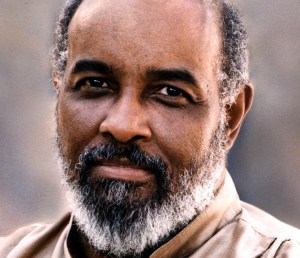
“I look for the old depth and breadth of expression that was there and can be retrieved if we listen to the right master,” the late conductor James DePreist said. “And most of the right masters are dead.”

You listen to recordings by Wilhelm Furtwangler or Willem Mengelberg and you hear a Beethoven different from that of Roger Norrington or David Zinman.

To many modern ears, the older performances seem melodramatic and overwrought. The modern performances seem cleaner and less fussy. The older conductors interpreted the music and massaged its rhythms. They conducted by phrase length, not by bar length, and they knew the rhetoric of performance and often spoke to their orchestras about the philosophy and meaning of the music. Modern conductors speak of the notes.

But Beethoven was clear about this. In the same way a great actor interprets Shakespeare when performing as Hamlet, and makes pauses and emphases, the musician was asked by Beethoven to do the same.

“The poet writes his monologue or dialogue in a certain continuous rhythm, but the elocutionist, in order to ensure an understanding of the sense of the lines, must make pauses and interruptions at places where the poet was not permitted to indicate it by punctuation,” Beethoven told his friend Anton Schindler. “The same manner of declamation must be applied to music.”

‘Writing for history’

But ours is an unheroic age. We reserve the word for firemen and soldiers, who certainly perform courageous acts. But a hero is more than that. Mythologically speaking, a hero is the individual who translates the will of the gods into history.

This is no small claim: A hero changes the world. Beethoven certainly did.

There is good reason to be suspicious of such things now. Too many have changed the world for the worse.lawrence golan

But Beethoven, born in Bonn, Germany, in 1770, clearly saw himself as a hero. He knew he was changing the world. He championed freedom and democracy in a restricted and aristocratic age.

“He changed the world of music,” conductor Lawrence Golan says. “Right off the bat, with the first chord of his first symphony. It was revolutionary at the time.”

He performed for the aristocracy and slummed with the nobility, but he told Schindler, “My nobility is here,” pointing to his heart, “and here,” pointing to his head.

“We’re clearly looking at big ideas in Beethoven’s music,” conductor Timothy Russell says. “Mozart wrote for an audience, but Beethoven knows he’s writing for history.”

History, however, has moved on.

Disposable music

For the 21st century, music has mostly become entertainment. Music written to be pondered and meditated upon does not fit into the jigsaw puzzle of a niche-market audience, where music is used and discarded in months.beethoven bust

“Beethoven wrote Velcro music and this is a Teflon Age,” DePreist says.

“We have deconstructed the 19th century and have an initial impulse to jettison so much of it. But the idea that the 20th century — or the 21st century — would simply supplant the 19th was absurd,” he says. “But we have much to learn from every century.”

The difficulty has been to separate the desire to be free from the past — which is an honest desire — from the tendency to ignore the past and refuse to look at what the past teaches us.

“It teaches us more than the notes of the stylistic things,” DePreist says.

Art has a responsibility to challenge people, says Moeckel.

“To broaden their horizons, and, so, if you don’t like it, that’s fine, but let’s talk.”

And what he confronts us with is the struggle of being alive.Joel Revzen 1

“Beethoven was a man who struggled every day of his life, a man shaking his fist at the heavens constantly,” says Revzen. “It is the human condition to struggle against adversity, whether socially, politically or one’s physical limitations. It is the struggle of the human condition through eternity.”

If you want to relate it to the contemporary world, he says, just think of what the people in in Syria or Afghanistan are going through just to survive, “or the people who struggle against oppression every day around the world, or the people who struggle in this recession.”

“How can I survive until tomorrow in hopes maybe my life will change?”

It is that engagement with the big things that drives Beethoven’s music and gives it such power to move us, even when we are suspicious of its meaning. The problem is ours, not Beethoven’s.

“There is still a message in the ‘Eroica’ or the ‘Ode to Joy,’ ” conductor Benjamin Rous says.

“Our time is broken in a way Beethoven’s music isn’t. Maybe a broken era needs an art that is whole.”

Three creative periods

Critics, biographers and historians divide Beethoven’s life and work into three periods: early, middle and late.

Since Beethoven, the tripartite division has come to fit the careers of many artists, but it began with the composer.beethoven young man

His Early Period features music that imitates the style of Haydn and Mozart, and although the music sometimes strains to escape the bonds of that style, it’s thoroughly Classical.

His Middle Period contains most of the music for which he’s best loved: the “Eroica” symphony, the “Emperor” concerto, the “Archduke” trio, the “Appassionata” sonata. It is big, brawny, heroic music that strains to escape not just the style but the very limits of the musical instruments of his time, the philosophical and religious conventions of his era, and sometimes the very heart in his breast. It is loud, pounding music.

“He grabs you by the collar and says, ‘I’m Beethoven, and I have something to say!’ ” says Revzen.

There are a lot of musical exclamation points in this very publicly aimed music.beethoven primary portrait

It is in the Middle Period that Beethoven staked his claim to being the first Romantic composer, emphasizing emotion over formal restraint. But, as conductor Benjamin Rous puts it, “He started out as Classical and ended up as Romantic, but in reality, he was Classical and Romantic at every moment in his life.”

Finally, Beethoven’s Late Period defines the term for all others: The music becomes more inward and searching, it has left behind the formal constraints of the time and experiments with new form, new meaning and expression. His late quartets bewildered not only the audiences of his time but the musicians who played them.schuppanzigh

“Do you imagine, when the spirit speaks to me, I have your wretched fiddle in mind?” he asked violinist Ignaz Schuppanzigh, whose string quartet premiered most of Beethoven’s late quartets.

Beethoven’s late music remains a challenge for many listeners. The “Grosse Fuge,” was his final movement to the string quartet op. 130, but was a movement so difficult for both listeners and performers that when Beethoven originally submitted it for publication, his publisher requested he substitute something easier. It is still work to listen to, albeit work with a tremendous payoff to those willing to dive in.

The rondo he wrote in its place as the quartet’s finale turned out to be the last piece of music Beethoven wrote before his death.

A gut reaction

Ludwig van Beethoven was probably history’s most famous sufferer of irritable-bowel syndrome. It made the composer’s life miserable and likely accounts for the scowl he wears in almost every portrait.

“The cause of this must be the condition of my belly which, as you know, has always been wretched and has been getting worse, since I am always troubled with diarrhea, which causes extraordinary weakness,” the composer wrote a friend in 1801.beethoven death mask
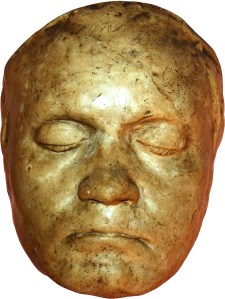
It was a problem that plagued him his entire life, and its likely cause is what killed him.

This may seem an undignified way to introduce “the greatest composer in history,” but you have to do something to clear away the idolatry that accumulates around a world-changing figure, to see him as a man rather than a demigod.

Otherwise, when we spin panegyrics about the man’s greatness, our eyes will glaze over, reading it as conventional boilerplate.

So, it must be said that this colossus who changed music and directed its course for more than a century was in reality a short, stocky German with a provincial accent, boorish manners, who wrote in bad grammar and frequently uttered banal platitudes as if they were earth-shaking profundities.

He was born in Bonn in 1770, and his drunken father tried to pass the child off as a prodigy, like Mozart. But Beethoven’s virtues were not Mozart’s: He had none of the grace and felicity of Mozart; his music grew from hard work and infinite rewriting.

Beethoven went to Vienna to make his fortune as a piano virtuoso and found many aristocratic patrons. He frequently insulted the hand that fed him.

He told one of his patrons, “Prince, what you are, you are by accident of birth; what I am, I am through my own efforts. There have been thousands of princes and will be thousands more; there is only one Beethoven!”beethoven ear trumpet

But just as he began to achieve fame, his hearing started to fail. In later years, he was completely deaf: At the premiere of his Ninth Symphony, a soprano had to turn him around onstage so he could see the applause he could not hear.

Each new piece found both acclaim and criticism: Conservatives disliked the profusion of ideas in the music, finding them confusing and the works too long and difficult; admirers recognized in his work overwhelming emotional power.

By the time of his death, in 1827 at the mere age of 56, he was generally acclaimed as the greatest composer in the world. More than 20,000 people attended his funeral.

It is only in recent years, after scientific analysis of a few strands of his hair, that we know how the composer died: It was lead poisoning, probably by drinking wine from a lead-lined cup, that slowly killed the composer and probably caused his lifetime of colic.

The ‘Mighty Nine’

Beethoven’s nine symphonies are the cornerstone of classical music. Every conductor cuts his teeth on them; every audience expects them.

Their monumentality influenced every composer who came after him for at least a century, and even now, it’s impossible to dip into classical music without addressing “The Nine,” as they’re known.

But the symphonies are very distinct; each has its own personality. Collectively, they are probably the best entry point for discovering the music of the titan, Beethoven.

There are many sets of them on CD, spanning nearly the entire history of recorded music. The first complete set of symphonies was recorded in 1920 and since then there have been at least 100 traversals. There have been 60 full sets sold since 1960. Herbert von Karajan recorded them all four times, Bernard Haitink and Eugen Jochum each did it three times. Any conductor worth his salt wants to prove his mettle by tackling the nine.

There is no one “best” set — pretty much everyone is agreed on that point — but if you want them all in one package, you could hardly to better than the set with Daniel Barenboim and the Staatskapelle Berlin recorded on Teldec. Both the performance and engineering are tops. Teldec makes the orchestra sound like it’s in your room with you. Barenboim has a unified and coherent view of the cycle which is intelligent and emotionally persuasive.

But for some, it will feel old-style. It is. If you want the modern huff-and-puff race to the finish, then you should look to John Eliot Gardiner and the Orchestre Revolutionnaire et Romantique on so-called original instruments.

You could hardly find two more different views of the music, but both are played with commitment and musicality. (Avoid the Norrington sets, which are dreadful and downright unmusical).

One-by-one

There are many who insist the best way to acquire the best of them is to get them individually and not in complete sets. Different orchestras and different conductors respond to certain symphonies better than others. David Zinman and the Tonhalle Orchestra Zurich, for instance, cannot be beat for discovering the wit and verve in Beethoven’s first symphony, but they don’t really believe in the nobility and heroism inherent in the bigger, odd-number symphonies, like the Fifth. For that, you have to go to an old-order conductor, such as Wilhelm Furtwangler and the Berlin Philharmonic, which recorded the most harrowing and emotionally wrought versions of the Fifth Symphony.

Any choices among the symphonies will be idiosyncratic: As listeners we are just a variable in our sympathies as the conductors themselves. You may want the bounce and beat of a modern performance, or you may be more moved by the old tradition.

These are a few of my suggestions, along with some information about each of the Nine.

Please note that modern critics aren’t the only ones who are idiots.

Symphony No. 1 in C

First performed: 1801.
david zinmanBeethoven’s first is his lightest, brightest and funniest, an obvious imitation of the spirit of his teacher, Joseph Haydn. Its jokes begin with the very first notes: a dissonance in the wrong key!

Initial critical response: One critic called it “a caricature of Haydn pushed to absurdity.”

Suggested recording: No one has captured the wit of this symphony better than David Zinman and the Tonhalle Orchestra Zurich.

Symphony No. 2 in D

First performed: 1803.

bernard haitinkNow considered one of Beethoven’s “shorter, lighter” symphonies, it was a large symphony by the standards of the time and a challenge for its first audience.

Initial critical response: The Leipzig critic called it “a gross enormity, an immense wounded snake, unwilling to die, but writhing in its last agonies, and (in the finale) bleeding to death.”

Suggested recording: Bernard Haitink and the London Symphony.

Symphony No. 3 in E-flat, “Eroica”

First performed: 1805.

bernstein youngThis immense symphony single-handedly changed the course of music history; twice as long as the standard Haydn symphony and built on ideas of heroism, with a great funeral march as a slow movement.

Initial critical response: The leading music journal of the day described it as “a daring wild fantasia of inordinate length and extreme difficulty of execution. … There is no lack of striking and beautiful passages in which the force and talent of the author are obvious; but, on the other hand, the work seems often to lose itself in utter confusion.”

Suggested recording: Many modern performances are too tame. For the needed heroism and grandeur, and the sheer visceral excitement, try Leonard Bernstein and the New York Philharmonic.

Symphony No. 4 in B-flat

First performed: 1807.

claudio abbado 2Robert Schumann called it a “graceful Grecian maiden between two Norse giants.” It seems like a retreat after the furious charge of the “Eroica,” but if it is less noisy, it is subtly subversive, with an introduction in the “wrong” key.

Initial critical response: Carl Maria von Weber wrote a review in which the orchestra instruments all bitterly complain about having to play this symphony and then are threatened with being forced to play the “Eroica” if they don’t shut up.

Suggested recording: Claudio Abbado and the Berlin Philharmonic are as elegant as it gets.

Symphony No. 5 in C-minor

First performed: 1808.

wilhelm furtwanglerFor two centuries, this has been Beethoven’s calling card, the primal symphony, restless, turbulent, an epic struggle to wrest a triumphant C-major out of an obsessive C-minor, and with more than 700 relentless iterations of the iconic rhythm: “Da-da-da-dum.”

Initial critical response: French critic Jean Lesueur said it was such exciting music that it shouldn’t even exist.

Suggested recording: The music is so familiar, and so emotional, it’s hard to play now without irony, but when attacked with conviction, it still packs a wallop. Wilhelm Furtwangler and the Vienna Philharmonic are still the champs in a pre-stereo recording, but in modern sound, Carlos Kleiber and the same orchestra come very close.

Symphony No. 6 in F, “Pastoral”

First performed: 1808.
bruno walter 2This is Beethoven’s musical picture of nature, complete with birdcalls and thunderstorm. But it’s also one of the composer’s most tightly argued pieces musically, with much of the symphony drawn from the first two bars: It’s a miracle of concision, even when most discursive.

Initial critical response: Berlioz agreed with critics, “as far as the nightingale is concerned: the imitation of its song is no more successful here than in M. Lebrun’s well-known flute solo, for the very simple reason that since the nightingale only emits indistinct sounds of indeterminate pitch it cannot be imitated by instruments with a fixed and precise pitch.”

Suggested recording: Every critic’s choice in this seems to be Bruno Walter and the pickup Columbia Symphony Orchestra.

Symphony No. 7 in A

First performed: 1813.
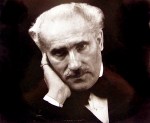
arturo toscanini 1Richard Wagner called this the “apotheosis of the dance,” and it is the most rhythmically driven of all symphonies; the second movement hardly contains anything but its rhythm. It all comes together in a Dionysian paean to the spirit of life.

Initial critical response: Weber expressed the opinion that Beethoven “was now ripe for the madhouse.”

Suggested recording: Even though it’s a pre-stereo recording, you have to hear Arturo Toscanini and the NBC Symphony in a driven performance that wrests every ounce of power out of the score.

Symphony No. 8 in F

First performed: 1814.

georg solti 1The composer looks backward with a smaller, almost Haydnish symphony, full of Haydnesque “jokes,” such as the metronome tick-tick of the second movement.

Initial critical response: One critic wrote that “the applause it received was not accompanied by that enthusiasm which distinguishes a work which gives universal delight; in short — as the Italians say — it did not create a furor.”

Suggested recording: Georg Solti and the Chicago Symphony give a brawny performance of this work and include a really fine Symphony No. 7 as well.

Symphony No. 9 in D-minor, “Choral”

First performed: 1824.

bernstein oldBeethoven’s magnum opus, which adds singers and chorus to the symphony and expresses the composer’s view of universal brotherhood and the joy of the cosmos. At more than an hour long, it is immense and usually performed for ceremonial occasions.

Initial critical response: “Beethoven is still a magician, and it has pleased him on this occasion to raise something supernatural, to which this critic does not consent.”

Suggested recording: Despite mangling the finale by changing Beethoven’s “Freude” (“joy”) to “Freiheit” (“freedom”), there is no more committed performance than the one given by Leonard Bernstein at the fall of the Berlin Wall in 1989 with an orchestra composed of musicians from many orchestras in both East and West Germany.

casals
What is classical music?

It can be hard to pin down. Many have tried to define it; certainly, they believe they can know it when they hear it. But the outlines of what we define as classical music are unhelpfully squishy.

Is it merely European aristocratic music from the 18th through the 20th centuries? Certainly the audience for Mozart’s Magic Flute wasn’t aristocratic. And Italy’s appetite for opera is wider than the upper crust.

Is it orchestral music? Not if we count Bach’s suites for unaccompanied cello. Is it instrumental? Not if we count the masses of Palestrina.

It is often called “art music,” as if music in other forms could not aspire to the condition of art. Tell that to Frank Zappa. And frankly, much of the music played in concert halls was never intended to be more than entertainment, albeit of a refined order. Not everything is the St. Matthew Passion; some of it is just Skater’s Waltz.

To look at what we call classical music, we should consider: What is the central question of classical music? That is, what question does classical music answer?

And by that, I mean not only European classical music, but all those around the world, from Indian ragas to Chinese opera.

The question is so banal as almost never to be asked. What is the central question to all classical musics?

It is this:

“How do you make a piece of music last more than three minutes?”

Popular music consists of songs, and, in our culture at least, that means a 32-bar song that you can repeat over and over. But imagine listening to Memories repeated for half an hour and imagine the tedium. It would be my substitute for pistol and ball.

Whether it’s folk songs or rock and roll, the idea is to get in and out quickly, establish a mood and then finish it off.

Yes, there are exceptions in popular music, from In-a-Gadda-Da-Vida to Duke Ellington’s Reminiscing in Tempo, but a case can be made that they are “classical musics,” also.

When we ask the first question, a second question arises immediately:

“Why should a piece of music last more than three minutes?”

And it is here that we come to the difference between popular and classical musics: the difference between simple mood and complex emotional developments. Between a New Yorker cartoon and a Tolstoy novel. cartoonA song gives us a passing mood, seldom offering any narrative complexity (it may offer psychological complexity and even complexities of melody or key structure, and a great song usually has something of this). But a symphony, like a play or a movie, starts in one place and takes us on a journey, leaving us someplace else at the end.

The time spent allows for not just complex emotions, but a sequence of emotions that interact.

You can think of it this way: Classical music is movies for the ear. There are characters, there is development, there is a plot and plot twists. Fight scenes and love scenes, perhaps a mystery, perhaps a road trip.

It presents ideas in time in a way that makes sense to an audience listening for them.cellar 1

Most young filmgoers know the habits of filmmakers so well, for instance, that their expectations become part of the appreciation of the film: They know what to expect when the teenager opens the cellar door and goes down to the dark to investigate that funny noise, and they are delighted if the filmmaker does something fresh and new and upsets their expectation with a surprise.

Classical audiences also know what to expect and are delighted when a composer takes a left turn and expresses a new way to think about it.

It is often thought there is special, arcane knowledge required to enjoy classical music. And, of course, there is a lot of specialized language. There is with films, too — key grip, D.P., fade, dissolve, two-shot — but you don’t need to know any of them to enjoy a film. It is the same with symphonies or sonatas.

It isn’t the words that matter, but the sounds. You don’t need to know the words to enjoy the music.

These are words about wordless things.?????????????????????????????????????????????????????????????????????????????????????

When you see a gun being put in a desk drawer in the first half of a movie, you know instinctively that it will be used in the second half.

When Beethoven’s audience heard C-major sneak into the first three movements of his C-minor symphony, they knew it would come out blazing in the finale: They waited in suspense to hear how he would do it.

This is the appeal of classical music for its audiences.

This isn’t something technical only a musician would know. “Major” and “minor” are simply words: It is the emotional shift that matters, from the tight, constricted, frustrating feel of the opening of the symphony to the ecstatic release of the ending. It is an emotional journey, and one that you could not accomplish in a simple song.

It’s also part of what distinguishes classical music from its popular cousin. Popular music is like a commercial: short, punchy, memorable; classical music is like a novel: long, involved and with many characters and a slowly achieved resolution.

None of this is meant to denigrate popular music or songs. I love a good tune as much as the next person. But popular and classical musics are attempting very different things.

You couldn’t pack all of Indiana Jones into a three-minute trailier.

Stephen Spender   The English poet Stephen Spender wrote a poem whose first line I can’t get out of my head: “I think continually of those who were truly great.”
Of course, Spender was writing about political issues, but I can’t help thinking how this line might apply to art.
Because, we use such words rather loosely in the art world. This is “great,” that is “great.” But this devalues the word. I think continually, not of the great writer, painters and musicians who have populated our world, our college curricula and our anthologies — there are many: so many, no one — not even Harold Bloom — can read, see and hear them all — but rather I am thinking of what Spender might call the “truly great.” There are so few of them.
These are those men (and I’ll qualify that soon if you give me a minute) whose works either changed the world significantly or at least changed the culture, or whose works are recognized by a preponderance of humankind to have the deepest insight into the human condition.
It is best understood if we start with science. Who was “truly great?” You could name hundreds of great thinkers, from Watson and Crick to Louis Pasteur to Edwin Hubble. Their contributions have been invaluable. But none of them so completely changed our thinking or ruled it for so long as my three nominees: Aristotle, Newton and Einstein. Each remade the world.three scientists
Who in the arts can have had such effect? These are the people whose works are the core of our culture, the central axis of our understanding of how the world looks, feels, acts, and responds.
The Big Boys.
You may have your own thoughts on the matter: That is not the issue.  We can haggle over the contents of the list. The issue is whether there are some creators whose works are so essential to culture that to be ignorant of their work, is to be ignorant. Period.
In literature, I would say the list begins with Homer and Shakespeare. They are the consensus leaders. If I would add Chaucer, Milton and Dante to the list, so be it. You can add your own. But Homer and Shakespeare are “truly great” in this sense.
What I am suggesting is that in each field, there are probably such consensus choices. In music, you have Johann Sebastian Bach, Wolfgang Amadeus Mozart and Ludwig van Beethoven. Surely others belong on the list. I would include Haydn, Wagner and Stravinsky. You can add your own, but again, if you are not familiar with Bach, Mozart and Beethoven, your education is incomplete.

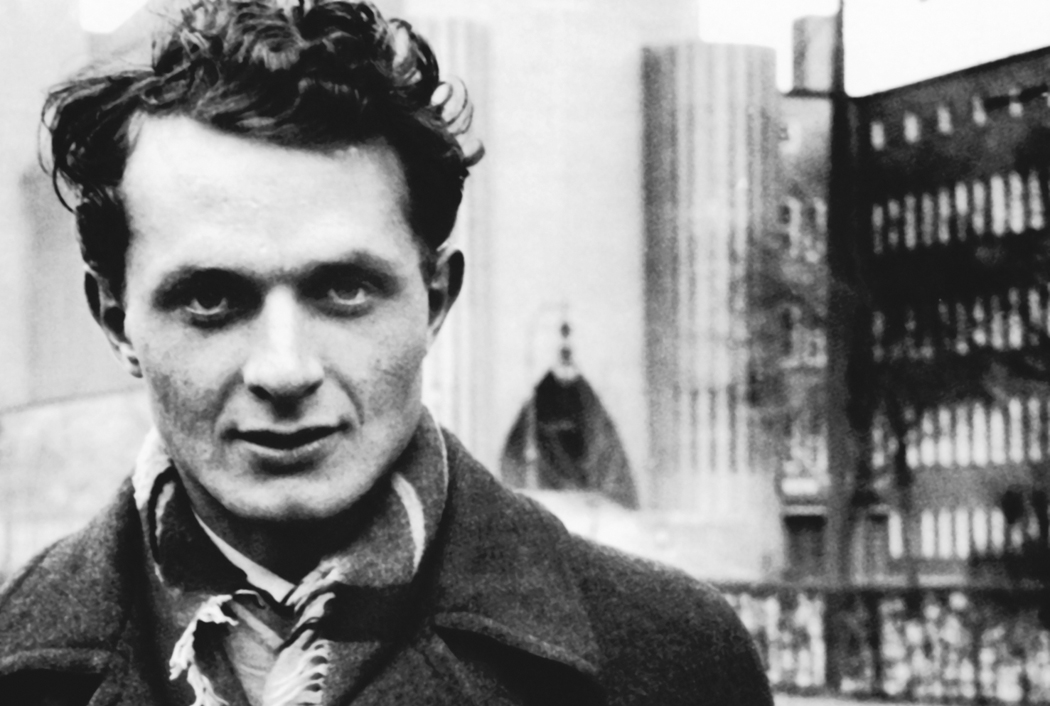
Among painters, you have Raphael, Rembrandt and Picasso. No one will argue against them. There are many painters that could be included: Titian, Michelangelo, Monet, Turner — the list is expandable depending on your taste, but who has had more influence than Raphael? More depth than Rembrandt? More expanse than Picasso?
(I am purposely narrowing my list to European culture, not because I think that is is the only one that counts, but because I swim in it rather than another, and because I have not enough exposure to everything in other cultures to claim even the slim authority I have discussing Western culture. If I had my way, I’d add Hokusai to this list, but he is ruled out by the operating principles of my system.)
Who are the sculptors? Michelangelo, surely; Bernini and Rodin. Others are great, but these are the standard-bearers.
Try it for yourself. Among novelists, who are our Newton and Einstein? Tolstoy, Dostoevsky and James Joyce.
Again, you may put forth your Fielding, your Trollope or Dickens and I won’t argue. This is only my list and it is surely provisional. It is merely my meager assay. It is my claim that there are the “truly great.” And that they offer something bigger, larger and more powerful than even the best of the rest. They have altered the course of the planet. Or at least the people upon it.
One final caveat: Where are the women? I am not so churlish that I don’t recognize the many great artists who are built with X chromosomes. My argument is with history, not with women: Historically, women have been blocked from the world of art. This is not so anymore, or at least not to the extent it has been true in the past. I was an art critic for a quarter of a century, and I saw the art world shift from a boy’s club to a much more open thing. Most of the best artists I came across were women. Many of our best and most honored writers are now women. In the future, I have no doubt there will be women who shake the world the way Michelangelo did. But I have to look backwards for my list, not guess at the future.
So, does Gertrude Stein belong here? Or Virginia Woolf? This is not to gainsay their genius or the quality of their work. Everyone should read them. But I am not writing about the great: I am comparing them to Shakespeare. The lack of women on this list is a historical artifact, not a prescriptive injunction.
The world is sorely lacking for heroes these days. We don’t even trust the idea of the hero. He surely must be in it for himself; there must be some ulterior motive. It’s all about power, say the deconstructionists. It is all reduced to a steaming pile of rubble and we shout with glee over taking down the idols and smashing them.
But I am suggesting that we actually read Homer, study Rembrandt, listen to Beethoven’s late quartets with the intensity and importance we otherwise give to defusing a bomb.
We should read or listen or look as if our lives depended on it. Because they do.

Victrola

From the “Preamble” to James Agee’s Let Us Now Praise Famous Men (1941).

Above all else: in God’s name don’t think of it as Art.

Every fury on earth has been absorbed in time, as art, or as religion, or as authority in one form or another. The deadliest blow the enemy of the human soul can strike is to do fury honor. Swift, Blake, Beethoven, Christ, Joyce, Kafka, name me a one who has not been thus castrated. Official acceptance is the one unmistakable symptom that salvation is beaten again, and is the one surest sign of fatal misunderstanding, and is the kiss of Judas.

Really it should be possible to hope that this be recognized as so, and as a mortal and inevitably recurrent danger. It is scientific fact. It is disease. It is avoidable. Let a start be made. And then exercise your perception of it on work that has more to tell you than mine has. See how respectable Beethoven is; and by what right any wall in museum, gallery or home presumes to wear a Cezanne; and by what idiocy Blake or work even of such intention as mine is ever published and sold. I will tell you a test. It is unfair. It is untrue. It stacks all the cards. It is out of line with what the composer intended. All so much the better.

Get a radio or a phonograph capable of the most extreme loudness possible, and sit down to listen to a performance of Beethoven’s Seventh Symphony, or of Schubert’s C-Major Symphony. But I don’t mean just sit down and listen. I mean this: Turn it on as loud as you can get it. Then get down on the floor and jam your ear as close into the loudspeaker as you can get it and stay there, breathing as lightly as possible, and not moving, and neither eating nor smoking nor drinking. Concentrate everything you can into your hearing and into your body. You won’t hear it nicely. If it hurts you, be glad of it. As near as you will ever get, you are inside the music; not only inside it, you are it; your body is no longer your shape and substance, it is the shape and substance of the music. 

Is what you hear pretty? or beautiful? or legal? or acceptable in polite or any other society? It is beyond any calculation savage and dangerous and murderous to all equilibrium in human life as human life is; and nothing can equal the rape it does on all that death; nothing except anything, anything in existence or dream, perceived anywhere remotely toward its true dimension.

Rheingold

Modern art is so ancient it’s practically a joke. It is older than my great grandmother, and I’m a geezer myself. cubist beethovenThe birth of Cubism, say, is actually closer in time to Beethoven’s Fifth Symphony than it is to us.

Modernism was a bender our culture went on; Postmodernism is the hangover we are just now getting over.

Of course, a lot of wonderful art was created in that century, but a lot of piffle was written, too, in support of the theories and ideologies that tried to argue the presumed supremacy of Modernism. Now, we look back at the wreckage and see it all as drunk-talk.

One of the arguments was over what was “appropriate” for any art form: the issue of “medium specificity,” as critic Clement Greenberg called it. Greenberg was one of the greatest pifflers at the bar, holding forth with a stein sloshing in his hand and willing to take on anyone in the bar, if they would just step outside. Here, hold my coat. clement greenburg

The idea was that each variety of art, whether painting, sculpture, theater or poetry, had its proper vocabulary and content. The lines between genres were defensive walls that should not be breached. Good walls make good neighbors, as it were.

All effects borrowed from any other medium should be proscribed, leaving the art form “pure.”  Purity becomes the sign of quality. All foreign effects must be exterminated. Esthetic cleansing, we might call it.

That means, painting must not tell a story; stories belong to literature. Sculpture must work in the round; sculpture that is meant to be seen from a single point of view is borrowing too much from painting and is therefore bad sculpture. Music that attempts to describe a scene is straying from the purity of musical expression and trying to be a picture. “Ut pictura poesis?: Not on my watch.

All this talk of purity makes us cringe now: If nothing else, the 20th century and its wars and pogroms have given the idea of purity some really bad karma.

It hadn’t always been that way: Purity didn’t used to be a shibboleth.

The issue of medium specificity is one of those generational pendulums that swings back and forth over time. nocturne in black and goldThe question is whether each art has a special message that can only be delivered in its language, or whether all the arts have the same message, only tell it in different languages.

The puritanism of the 20th century was a reaction to the promiscuous genre-mixing of the previous century, just as the pervasive tone of irony in the 20th century was an antidote to the cloying sincerity of Victorianism.

In the 19th century, it was clear that art — all art — had a single message, although there was not always agreement on what that message might be. Shelley wrote about this, Baudelaire wrote of the “perfume” of his poetry; Whistler painted “nocturnes,” as if he were Chopin on canvas; Franz Liszt gave concerts that were as much theater as music. (Nowadays, when we hear that a pianist has eliminated the hoopla and “found the music” in Liszt, we can be sure he has completely misunderstood Liszt.)bayreuth

And let’s not forget that it was the 19th century that brought us that greatest of artistic mash-ups, Richard Wagner’s Gesamtkunstwerk — the use of all the arts at a single blow in a grand design that ultimately included even architecture, in the Festspielhaus in Bayreuth. All set to a single purpose — albeit the purpose may have been the glorification of Wagner himself.

I said this was a pendulum. In the 18th century, a hundred years before Wagner, there was a sentiment, parallel to Greenberg’s, that the arts should not fraternize.

In his 1766 work, Laocoon: An Essay on the limits of poetry and painting, German critic Gotthold Lessing maintained, “that an artwork, in order to be successful, needs to adhere to the specific stylistic properties of its own medium.”Gotthold Ephraim Lessing

He was reacting to the classic line by the Roman poet, Horace, that “ut pictura poesis” — “as is painting, so is poetry” — arguing that these arts are inherently different, because while poetry unfolds in time, painting exists in space (forgetting that in a larger frame, both exist in the mind and imagination).

So, do we now use our scalpels and surgically separate music from poetry, painting from dance, and say unequivocally that what we get from Balanchine rubies balanchinebears no relation to what we get from Philip Roth? Or is there some quality they share that gives them value and worth?

As the pendulum swings back, we recognize that all art is about becoming more fully human, more aware of the world and our place in it. That awareness can be through compassion, through beauty, through politics, or through irony. It saves us from isolation, from ignorance, from emptiness. These are the big issues we face, in contrast, mutable public issues of politics or career are trivial: When we come to the end of our lives, what remains of the fustian of our existence has little to do with annual income or who got elected; it is how much we have loved and been loved, whether we have become larger in our hearts, or shrunken and dried up.

And it is art — in all its various plumage, each of its forms — that provides the imagery to do this. This is their common message.

And purity is a kind of puritanical and sanctimonious defense of the impotent notion of “good taste” that is anathema to the creation of vital art.

It is what Sir Kenneth Clark called the “fatal defect of purity.”

And as Pablo Neruda reminds us in his 1935 essay, Toward and Impure Poetry, “Those who shun the ‘bad taste’ of things will fall flat on the ice.”

pizza slice
People approach the arts generally in one of two ways: with taste and judgment or with curiosity.

critic

You can spot the first group by the arch of their eyebrow, the second group by the gleam in their eye.

The first group includes a good number of academics, critics and — worse — politicians. They all suck the life out of creation (with a lower-case “c”). I speak as a lifelong critic myself. In all three cases, they have criteria outside the issues of art by which they judge the art.
jacques derrida

The academic asks whether the art promotes his particular hobby horse, whether it is Marxism, Feminism or Post-structuralism. The politician looks to issues of biblical morality or economic theory or national pride. The critic, too, has his narrows and straits.

They all have ideals — or limitations — they ask the art to live up to and tend to filter out divergent opinions and make moral judgments, not merely aesthetic ones, against those who failed to live up to their standards.

They ran the gamut from the most enlightened connoisseurship to the most craven bigotry.

But each came to a final and immovable resting place, so to speak. They came to a certainty from a certainty. Not much of a voyage.Epimetheus opening Pandora's Box

Curiosity is the libido of art and it is always searching and always finding new pleasures, deeper enlightenment. It begins not with certainty and knowledge, but with openness and ignorance.

There is this one simple truth that we cannot escape: What you know prevents learning. It is only when we give up believing in our knowingness that we can grow. There is nothing so stunted as theory; it is the brain wearing a whalebone corset.

And curiosity is where all the greatest artists have begun. It is also where any art lover needs to start: Judgment is for the censorious; art aims for the unprogrammed curiosity.rembrandt

Obviously, I have stacked the deck in curiosity’s favor, but that is only as it should be.

The greatest artists have always been open to the world. Rembrandt had his Orientalism, Hokusai his Occidentalism. Leonardo had the most promiscuous curiosity in the history of our culture.

For me, these are the heroes of art.

And I think of them every time the issue of multiculturalism comes up. The concept seems simple and desirable to me, but it is a bugaboo for those who have wished to see culture ossified at a certain time and place, usually late 19th century and Europe.sesshu

I am not one to knock European art. I fall in rapture over Beethoven’s late quartets, Rembrandt’s self-portraits, Goethe’s Faust. But I also hunger to know as much as I can about the music of India, China, South America, Africa. I want to hear Ali Akhbar Khan on sarod, the clang of a Javanese gamelan. I want to see sumi paintings of Sesshu, the stonework of Macchu Picchu.

Shakespeare is a prodigy, but I also want to see Noh plays, Shakuntala and Chinese opera.

They all have something for me to experience and something to teach me.

picassoAnd they have something to teach the finest artists working today, a fact the finest artists are fully aware of. All the best artists borrow and steal from elsewhere, whether it’s Papa Haydn borrowing Alsatian folksongs or Pablo Picasso ripping off African masks.

But there are critics who decry Philip Glass for the Hindu in his minimalism or the Asiatic spectacle of Robert Wilson’s stagings.

But these are the people who are revivifying our high culture, just as Paul Simon and David Byrne, musical thieving magpies, are doing for our popular culture.

gauguinAnd artists have always been awake to these cultural borrowings, as Gauguin borrowed from the South Seas, Bartok borrowed from Hungarian folk music, as Shakespeare borrowed from anything he thought would be useful.

Everything, from top to bottom, is grist for fine art.

I know there is a politically correct aspect of multiculturalism that is ignorance incarnate: the enforced belief that anything from another culture is wonderful and we shouldn’t say anything bad about it. But that is a political consideration, not an aesthetic one.

I’m all for saying bad things about bad art, wherever it comes from, but let’s see and hear it first. Hold judgment in abeyance and just soak it all in.

There is not a culture anywhere on this planet that has nothing to teach us. We should never be so smug.

The critics and connoisseurs are concerned about being right. But much more important is maintaining a lively mind. What is correct and proper in any age is very likely to change over time. Such are not the “eternal verities” that their proponents like to think they are; they are mere fashion.

But a lively mind, whether it is in Third Century China, 18th Century France or 21st Century Brazil, will always be the medium of exchange for thinking, feeling people.

Remember when tomatoes were considered poison? If the reactionaries had had their way, we would not now have pizza. I rest my case.