Archive

Tag Archives: art

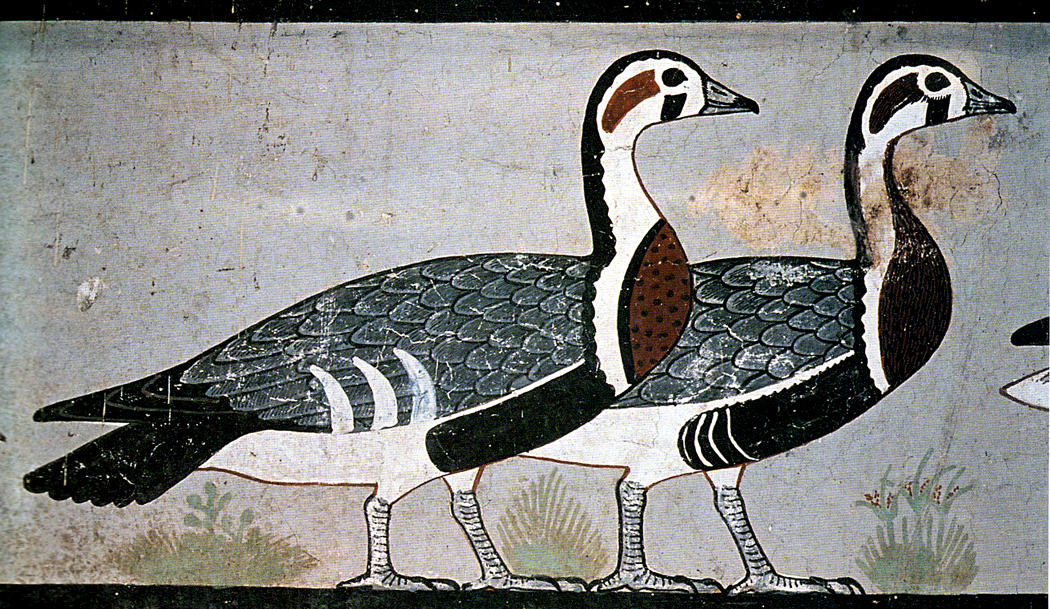
egyptian geese 2

You enter the cave, walk through tight spots, crawl on hands and knees and come out, 100 yards later, into a dark room, a widening in the cavern walls, and see, if you point your lamp at them, some of the most beautiful animals ever drawn by human hand.chauvet

The very first art — some 30,000 years old — is some of the best, and what you have are pictures of animals. On the walls at Lascaux, Chauvet and Altamira in Europe, you find bison and elk, aurochs and rhinoceroses. When you find people drawn on the cave walls, they are hardly more than stick figures, but the animals are often so realistic you can identify them by genus and species.

You can see it in the Egyptian tomb paintings, too. Human figures are stiff, in the artificial “King Tut” poses so familiar from the hieroglyphs. The humans are stylized and symbolic rather than naturalistic. But the animals don’t share that fate: They are seen with a grace and directness at odds with all the machinery of symbolic hieroglyphs — a real duck, a real hippopotamus, a real ibis.knossos

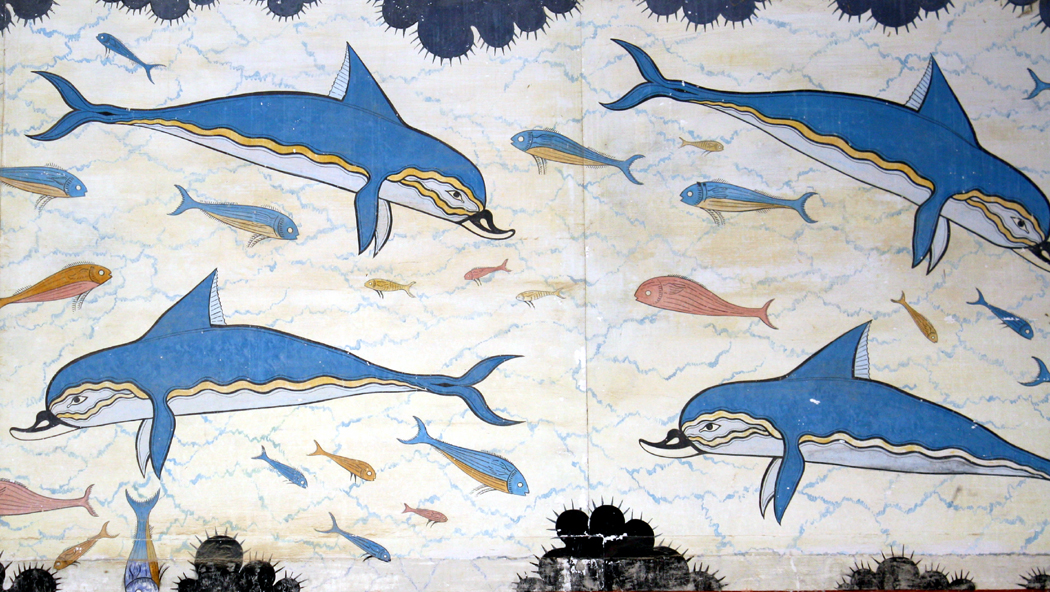
You can see it too at the Palace of Minos in Knossos, where the mural is filled with graceful dolphins and mackerel.pompeii fish

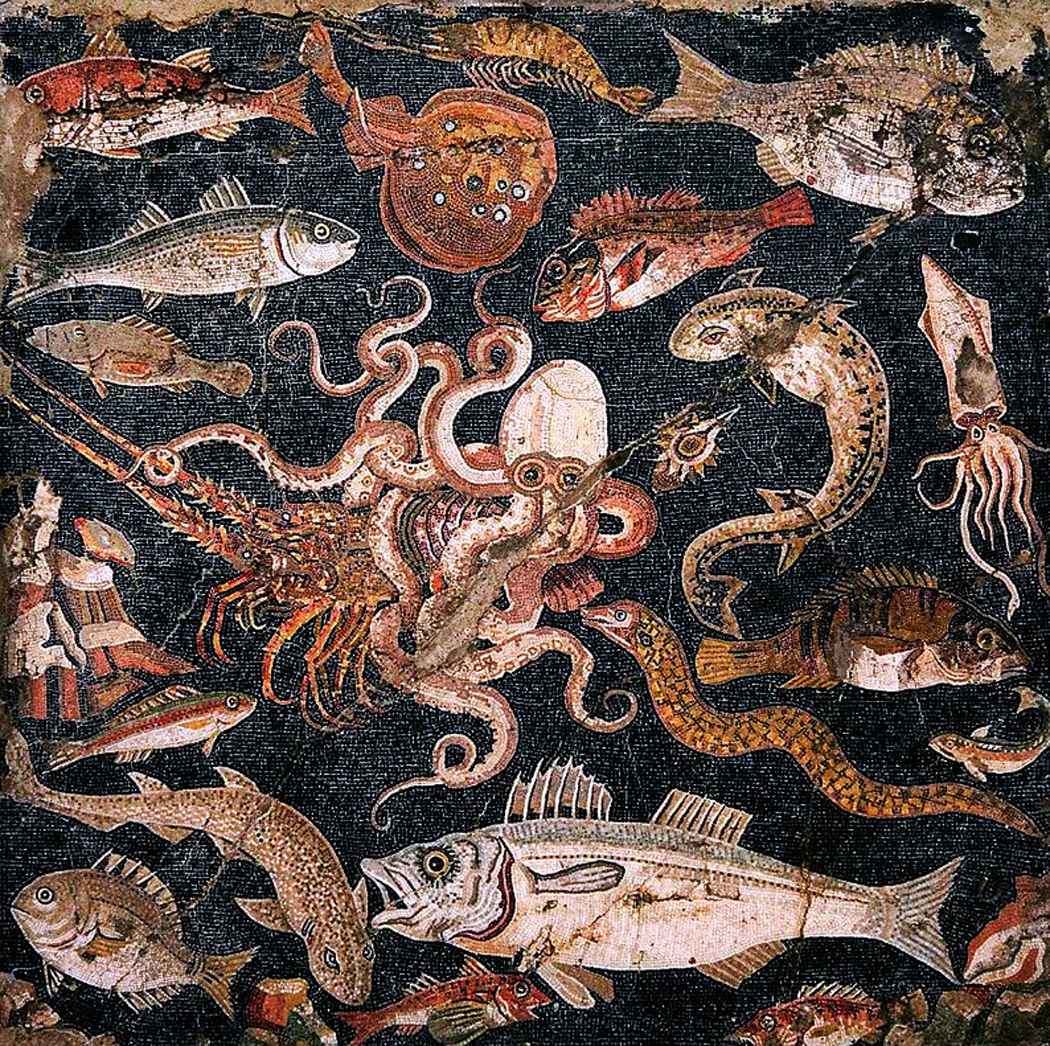
Or in the mosaics at Pompeii, with its seafood menu of crustaceans, eels, octopuses and seabass. Animals have a special place in art.leonardo

They speak to us in a special language, even when they exist as a smaller part of another painting: the dog in Van Eyck’s Arnolfini Wedding, or the mink in Leonardo’s Lady With an Ermine.

It is an element that reflects us and we can’t seem to do without. But what is that element?

“They connect us to something larger or greater than ourselves, or with a past we’ve forgotten,” says painter Anne Coe, whose work is well known for its sometimes satiric use of animal imagery.

And, in fact, the animals in paintings almost always have an ulterior reason for being there. They are doors to something. “Something larger,” as Coe says.

But it’s a two-way door, and what the animals mean depends on your direction as you pass the portal.
Almost like choosing which end of the binoculars to look through, you get very different takes on what animals are and what they mean.

Going one way, the animals are symbols. They stand for all kinds of things: sometimes totemic, sometimes archetypal, sometimes they are as simple as elephants for Republicans and donkeys for Democrats. But they stand for something other than themselves. Perhaps the Democrats would be better symbolized by a platypus or the GOP by a warthog, but there you go: We are stuck with the symbols. Everyone understands them; they’re shorthand.medieval animals copy

Medieval and Renaissance art is filled with this kind of symbology. The dog stood for faithfulness, the goat for lust, the lion for nobility. Of course, for the medieval mind, everything was a symbol.egyyptian bee

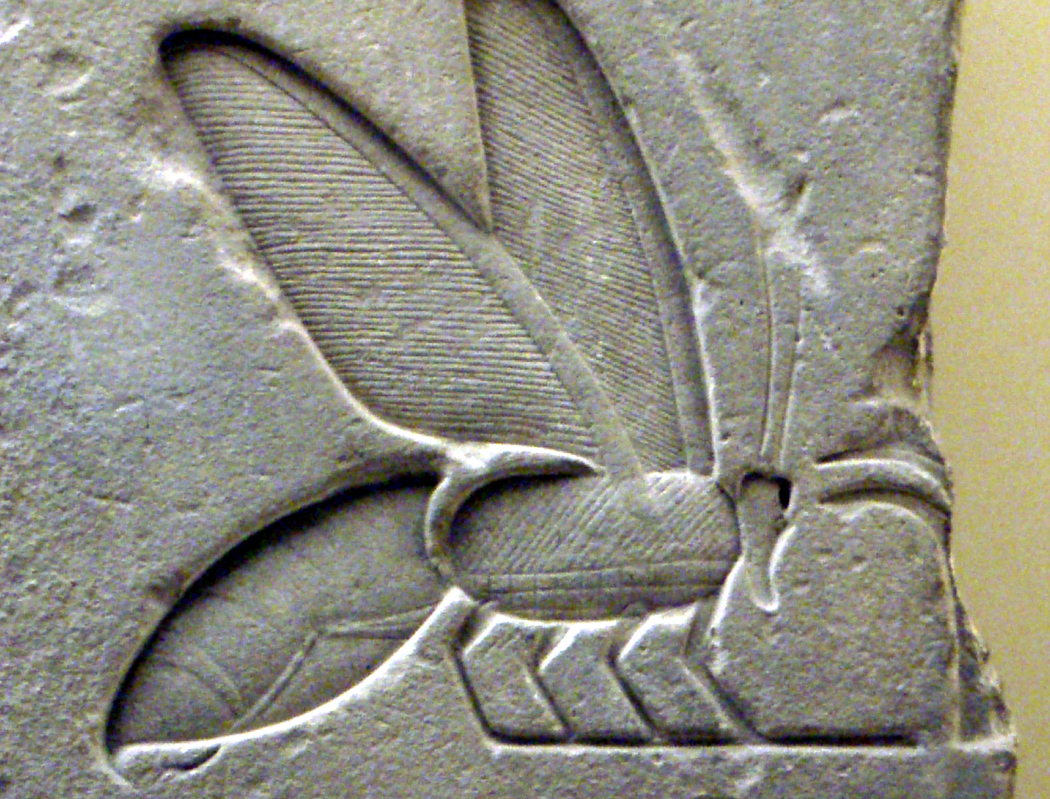
We still have some of this emblematic symbolism with us: busy as a bee; crazy as a loon; the industrious ant vs. the lazy grasshopper. We tell Aesop fables to our children to warn them about bad behavior.

But going through the door in the other direction, the animals are steadfastly not symbolic, and force us to see them for themselves as separate entities in the universe. They force us to recognize them as “thou” in theologian Martin Buber’s formulation of “I-thou,” as distinguished from “I-it.”

You look at the eyes in a painting by animal portraitist May Cheney and you see the “there” there. There is no mistaking the cat or dog or goat for an insensible beast.

“An animal’s eyes have the power to speak a great language,” Buber himself said.may cheney dog

Cheney says, “The animal is present and looking back at you.”

And you are forced into the awareness that symbols are already several removes from reality, and that sometimes it is good to re-experience the world as it actually is.

When animals are symbolic, they are in some sense projections of ourselves. When they are not, they are reminders of all the rest of the universe. In either case, they kick-start us into the recognition of the larger connection we have with the world. And that is their function in art. After all, art itself is there to slap us into awareness, the way a doctor slaps a newborn into breath.

But whether the animals are symbolic or not, they also make us see them — as we come in the door or go out — either as kindred spirits, beings like us but in different form, or the opposite: beings that make us face the ineffable otherness of the world.

But there are more dichotomies, and more art to express them. Even if we see them as ourselves in fur or feathers, we have to ask: Are they similar to us because they are like us, or because we are like them? Are they people, too, or are we also animals?

“There is not an animal on the earth, nor a flying creature on two wings, but they are people like unto you,” it says in the Quran.

Western civilization has a long history of making a distinction between human and animal. The Bible gives us “dominion” over the beasts. We come up with all kinds of distinction to prove we are not animals. We have language, tools, laws, poetry. But looked at from the other side of the door, animals are no less distinct, no less deserving, no less intelligent than we are: Bees can make honey; humans don’t know how.

Mark Twain made fun of our presumed superiority to the animals: “I have been studying the traits and dispositions of the ‘lower animals’ (so called) and contrasting them with the traits and dispositions of man. I find the result humiliating to me.”hiroshige fish

You can see these choices played out in art, and not only in European art. It is there in the manga drawings of Hokusai and book illustrations of Hiroshige, the temple carvings in India, the Mayan glyphs and in the Chi Wara antelope headdresses of Africa.chi wara

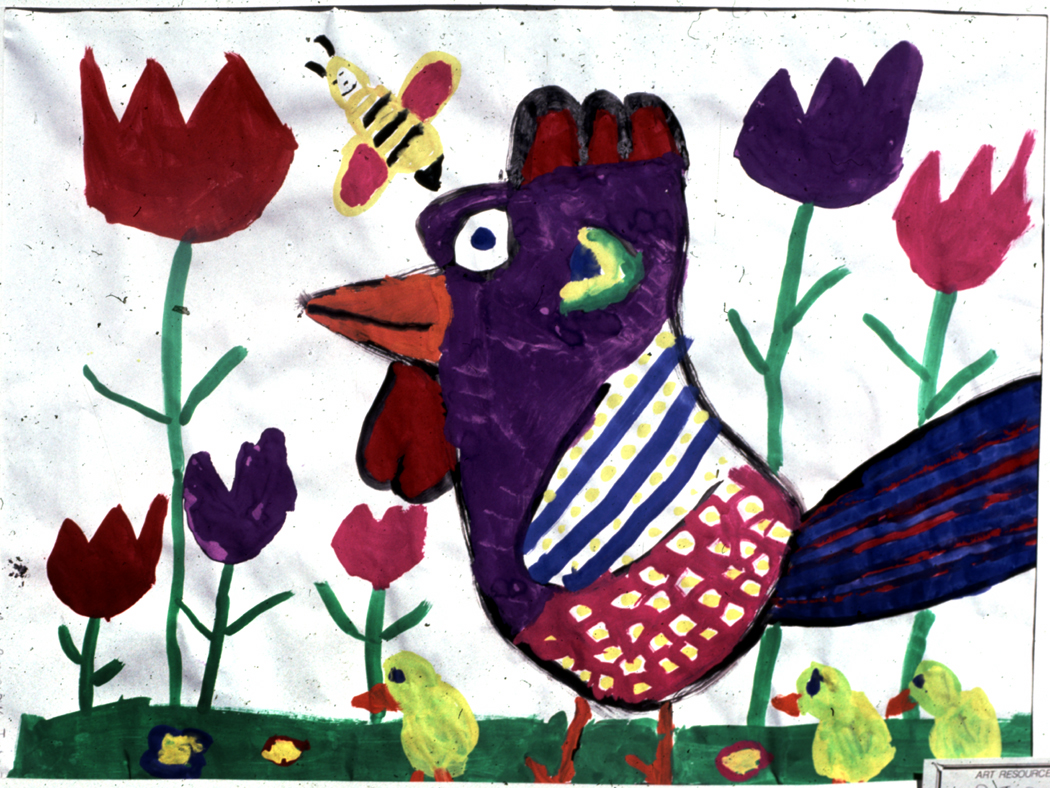
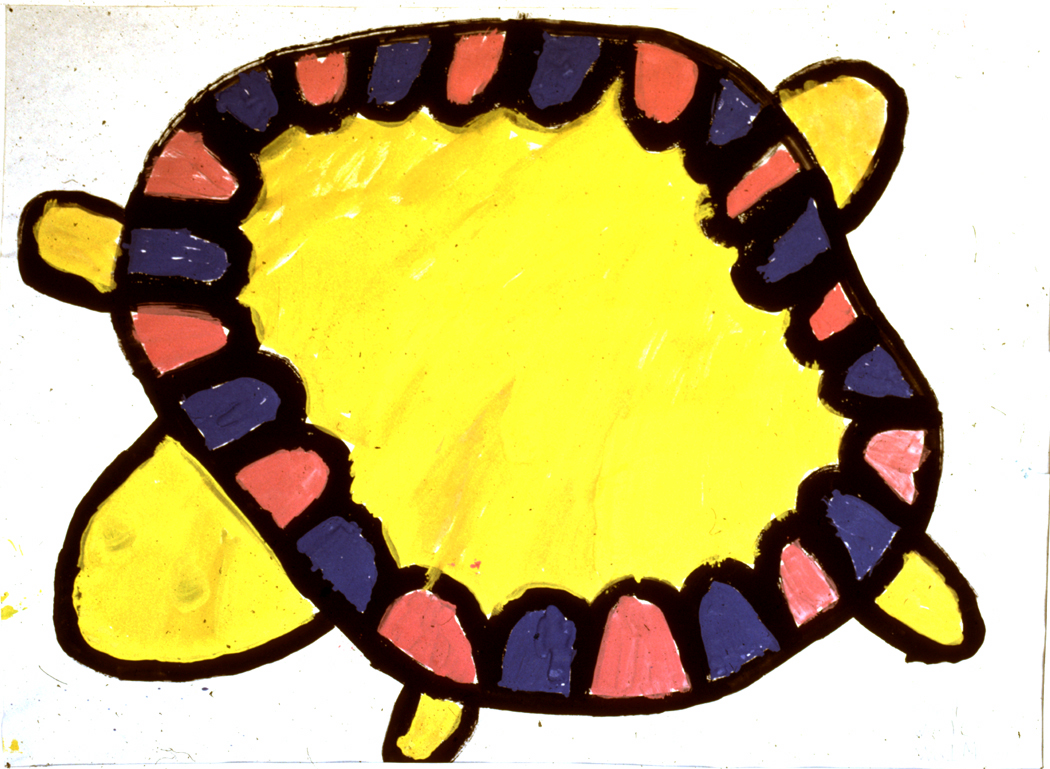
Animals mean something to all cultures. You can see it most directly in the paintings of children.

When they are introduced to animals in the classroom by a teacher who brings a bunny or a turtle, the children respond intensely. You don’t have to teach them anything about art: They burn to make paintings of the animals. You can’t stop them.

And their paintings in the first or third grades parallel the adult art, although in childhood terms: Sometimes they see themselves as the animal, playing baseball or caring for the animal babies, and sometimes they see the animals as something foreign, exotic and emotionally powerful. Boys, especially, love to paint sharks or dinosaurs.kid shark

The untutored and spontaneous identification with the animals is so deep that you can’t prevent it from happening. This may or may not be animals’ primary virtue, but it is one too often overlooked when we consider their value as pet, draft animal or cutlet.

They are there in all our art: The animals are either mirrors or windows. We look into the animals’ face and see.

Ultimately, the animals are a connection with the world: They allow us to deflate our species’ solipsism and recognize that connection.pompeii fish 2

corot avray

Each of us has certain works of art that we return to over and over. We might call it a “favorite song” or poem, but it is more than mere favor that makes these works perennial comforts. There is a core in them we find identity with, a sense that the piece was created especially for or about oneself. It is art we take personally.

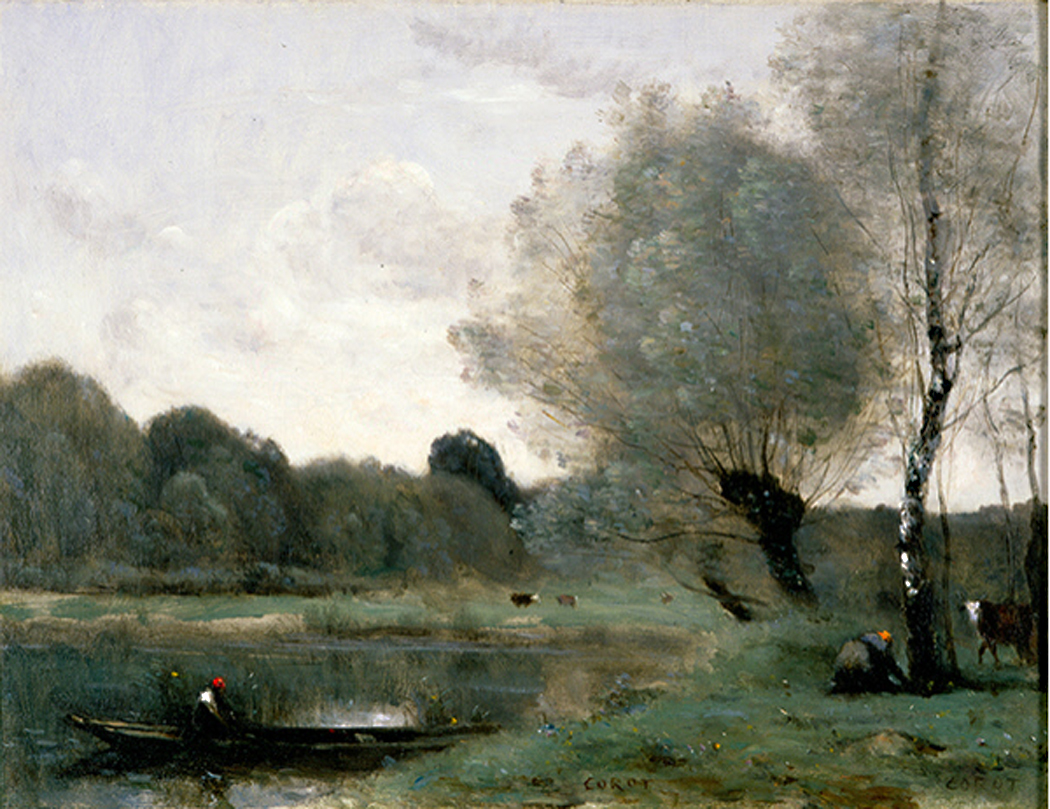
There is a slight Corot painting at the Phoenix Art Museum that I have returned to for 15 years. Most people probably pass by without noticing it: It is just a tiny landscape with a few gray-green trees, a river or lake, and a couple of unrelated people mixed with a few cows.

Called Memory of Ville d’Avray, it is typical of many paintings produced by Jean-Baptiste Camille Corot in the late 1860s and early 1870s.

Yet, there are many things that make this painting special.

Corot lived at a time of transition. Born in Paris in 1796, he lived through several revolutions, both political and aesthetic. Despite the tendency in many of his contemporaries, there is never a polemical word from Corot. He just did what he did — at some moments seeming conservative, at others radical. To him it was all the same. He was only interested in painting.

His art looks back to the great French painters of the Baroque, Claude and Poussin, yet at the same time, by painting outdoors and studying the ephemeral effects of weather and time, he became a precursor to the Impressionists. He seems perfectly comfortable, nestled in the cusp.

Before his time, a painting was a metaphorical window to look through at appropriate subject matter. After his time, the subject matter was not all that important, but its style was.

With the Impressionists and those who followed, style was meaning.

In Corot, and in this small painting, there is a perfect balance, with the perfect pitch, between its manner and its subject.

There are three central Corots: In his early landscapes, often of Italy, the sunlight is intense and the colors bright. The plein-air paintings inspired his Impressionist progeny. His portraits, mostly of young peasant women, foreshadow the heavy classicism of Picasso’s large-boned women, and in style imply the kind of planar vision that Cezanne made his own.

But in his later years, the third Corot appeared, more poetic, softer edged, with colors more subdued. The Memory of Ville d’Avray is one of these. In the 20th century, critics tend to praise Corot for the first two and ignore the third.

But Corot wasn’t wonderful because he pointed the way for Cezanne and Picasso, but because he was a great painter. In the Memory, he paints the landscape of his youth. He lived in Ville d’Avray, between Paris and Versailles. And the painting is full of the “emotions recollected in tranquillity” we know from Wordsworth. And it is full of Wordsworthian nature, too — a man waits in a skiff on the water and a woman kneels by a birch tree, presumably picking mushrooms.

But the painting itself is so smooth, so sensuous, in colors subtle and rich, in a light that is not the light of day, but of memory. You can almost hear the crickets, feel the humidity.

It is this nexus of outer and inner worlds that I find so satisfying. Corot isn’t making a point, either about the world or about the art of painting. But he is filtering his experience through his sensibility to the point the two can no longer be separated. The outer world seen literally is bland and naked. The mental world by itself is autobiography and trivial.

But the two alloyed make meaning.

crimestoppers

“The nation that controls gravity will control the universe,” wrote Dick Tracy creator Chester Gould.

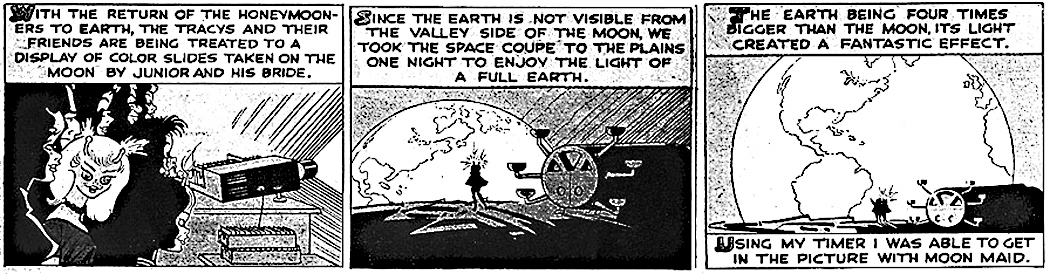
moon maidThere was a period in the mid-’60s when Tracy got weird. Or weirder, I should say. Junior Tracy married Moon Maid and the first interplanetary child was born: Honey Moon. Tracy and the police force floated around the city in anti-gravity trash cans. There were the Stop-Action Laser Gun, the atomic light and Diet Smith’s Space Coupe. And the two-way wrist radio gave way to the two-way wrist TV. The quintessential cops-and-robbers comic strip was going sci-fi.

It was the age of Barbarella, and Dick Tracy signed on to go where no man had gone before.

A predilection for prophecy had always been a part of Tracy. Some predictions were conscious, such as Gould’s early enthusiasm for a kind of James Bond forensic science: He made the easy jump from fingerprints to voice prints.Crewy Lou

But others were unintentional: In the ’50s, Gould created the punk look with his villain Crewy Lou, who wore her hair in a crew cut on top and long down the back. She had a punk attitude, too.

Gould had Tracy on the moon five years before Neil Armstrong. And while there are no anti-gravity vehicles such as Gould predicted, the police do hover over the city in helicopters. The match isn’t perfect, but it is uncanny.

honey moon

But in that mid-’60s mania, Gould also predicted the future of newspaper comic strips. And the future he predicted was dismal.

That prediction came in the form of a comic strip within the comic strip.

A group of four characters in the Tracy strip began drawing a thing called “Sawdust.” “Sawdust” was always the same: four identical panels that showed a crudely drawn pile of sawdust — a pyramid of dots — above which ran a dialogue of heavy-handed puns and wheezy Joe Miller jokes. Gould’s sense of humor was as subtle as a cinder block.

Gould was ostensibly satirizing Peanuts, which seemed at the time to him to be an incompetently drawn strip. Gould wasn’t alone. There were many then who didn’t see Peanuts as revolutionary, but as badly drawn and childish.

Gould is lucky he didn’t live to see the funny pages of today. He would have found an entire page of “Sawdusts.”

The art portion of the comic strip has become expendable; the jokes read just the same without the drawings.

From a Wizard of Id:

A — “The safety engineer requests permission to put a warning label on the guillotine.”

B — “What does it say?”

A — “Avoid contact with skin.”

Didn’t need pictures for that, did you?

You could plug that gag into almost any comic strip, and have almost any characters speak the lines. Worse, they read like Bazooka Joe.

The problem is that the nation has become increasingly apathetic to visual things. Even images no longer function so much as pictures, but as icons, like the stick figures that serve to keep men out of the ladies’ room and vice versa.

From Foxtrot to Blondie to B.C., the strips have lost their visual punch. The joke is verbal, pictures are superfluous. The comics have become talking heads.

Dilbert can be a tremendously insightful comic about corporate inanity and office shenanigans, but a strip might well be panels of identical drawings of the character with words unfolding a punchline.

Dilbert strip

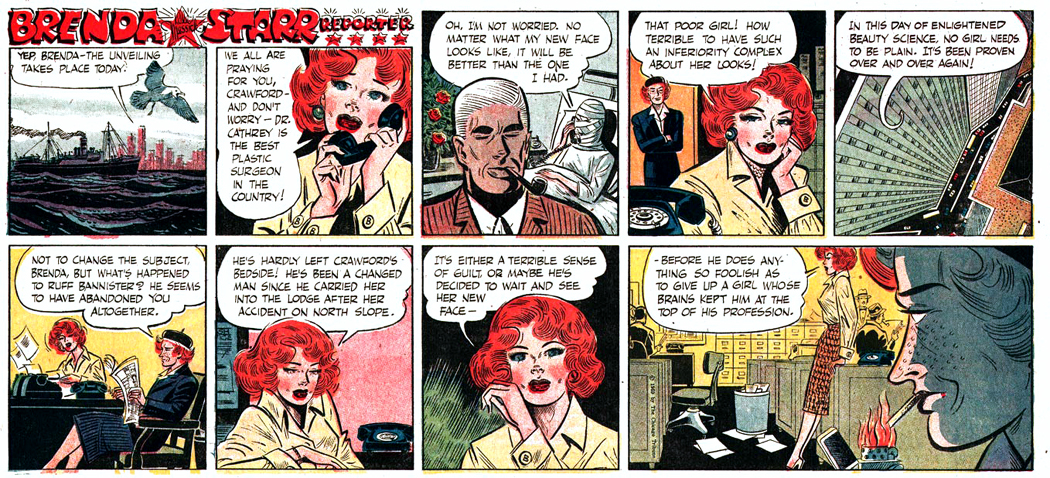
Compare that with an even middle-quality strip from the 1950s, like Brenda Starr and see the difference. There are establishing shots, like in the movies, there is the splendid perspective shot looking down the skyscraper. Many panels include two or three points of interest, causing your eye to move, say, from the telephone in the foreground to our heroine behind it and finally, her pal, Hank O’Hair, coming in the door in the back.

brenda starr

Space is three dimensional. There is variety, and there are visual rewards to following the strip.

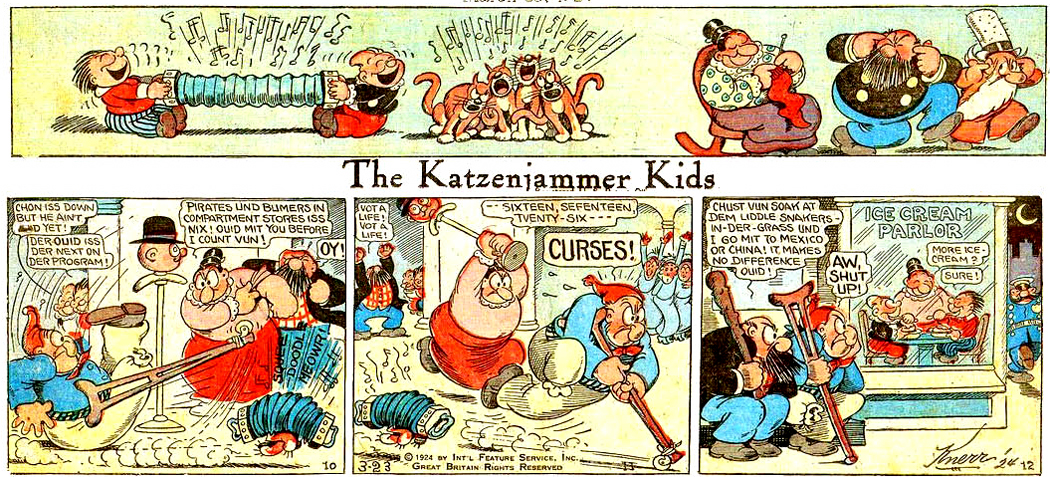
Older strips — at least in the Sunday “Funny Papers” — spent time and space on purely decorative visual geegaws. There was a febrile joy in the very act of drawing. You will look long and hard to find anything like that in today’s newspapers.

katzenjammer kids

The Sunday comic section for most papers have shrunk both in page size and in page numbers. I miss those glorious Sundays waiting for my father to bring home the New York Journal-American and the New York Daily News. The primary reason for getting those papers was the comics. I’m not sure anyone actually read the news or looked at the ads, but we jumped on the funnies. There was Bringing Up Father, Katzenjammer Kids, Smokey Stover, Little Iodine, Terry and the Pirates, The Phantom, Prince Valiant, Moon Mullins, Gasoline Alley, and even that sappy, godawful soapy strip Dondi, which despite it’s mawkishness, was elaborately and cinematically drawn.

dondi

It’s all gone.

Or not quite gone. While it has left our daily newspapers, there is a fan base which latches on to the visual glories. They can be found poring over two related developments.

The first is called the “graphic novel,” and falls to the Frank Millers and the Art Spiegelmans.

miller 2

They especially play off the noirish aspects of the older comic books, with shadows and streetlamps, gun-barrel flashes and knuckle-crunching thuds.

The readership is limited rather than the mass audience of the old Sunday Funnies, and for all its stylishness, the graphic novel is more a playing out of well-worn tropes than an original visual language. It exaggerates the tropes; it is a Mannerist artform.

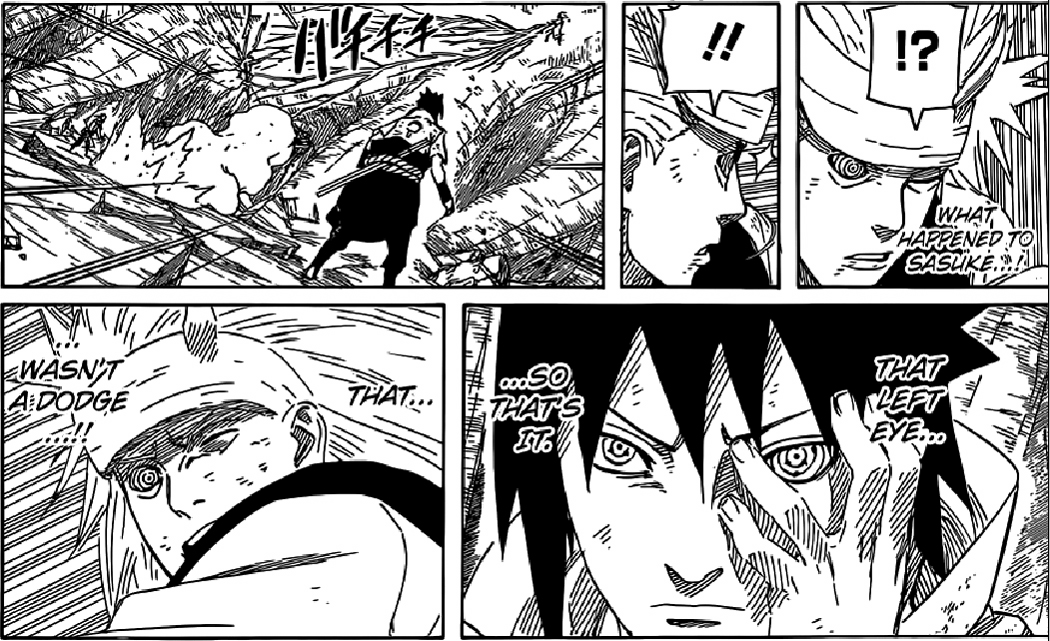
The second development comes to us from Japan, and the wild popularity of the manga. It, too, is Mannerist.

manga 1

Both these developments tend to feature adolescent fantasy stories and superheroes and their alter-ego arch-enemies. It’s a very narrow psychic space they fill, and, like heavy-metal music, tend to cultivate an audience much more in touch with the alternate world than the real one the rest of us inhabit.

At least, they are visual, with frame after frame stripped of unnecessary dialog. Like silent film, they tell their stories visually.

Unfortunately, that leaves us grown-ups without a common source of visually imaginative popular culture. We settle for talking diagrams.

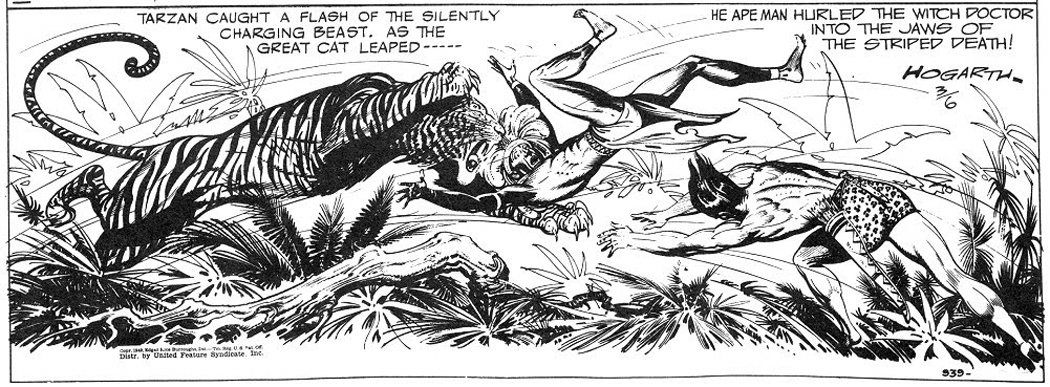
burne hogarth tarzan


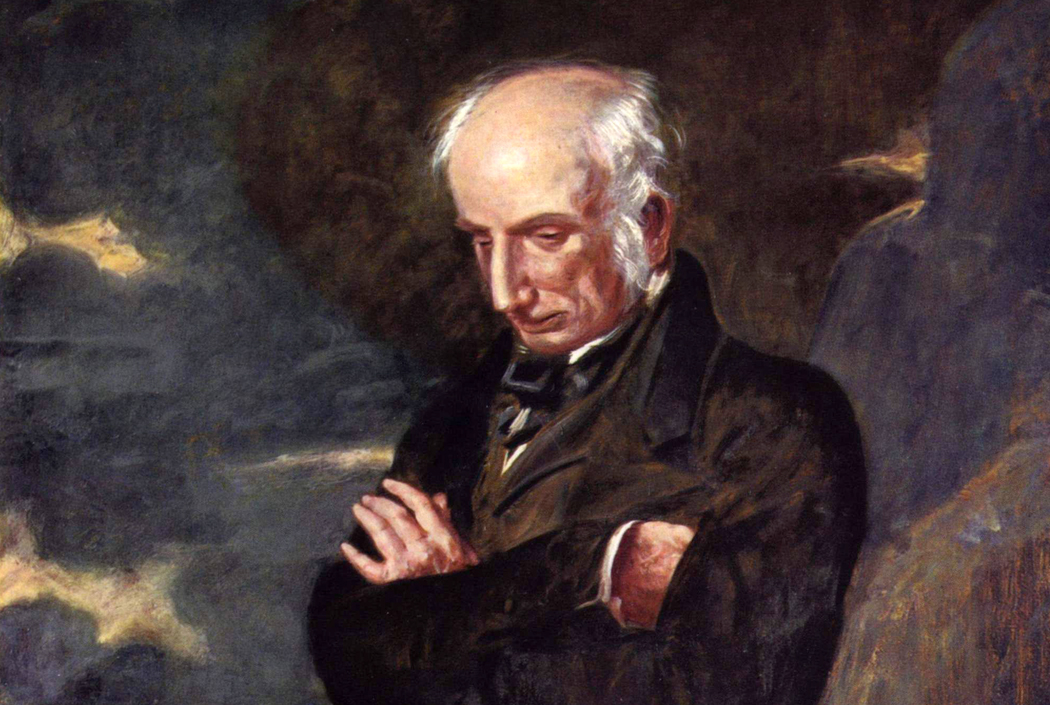
wordsworth

In the early 1800s, the population of England was roughly 8 million, and they produced Wordsworth, Coleridge, Blake, Byron, Keats and Shelley — not to mention Robert Southey, Leigh Hunt, Walter Savage Landor, Thomas Campbell, Thomas Moore, John Clare and Thomas Lovell Beddoes.

It is an astonishing flowering of poetry in a single era. Six major poets and a handful of others still read with pleasure by millions of people.

One might average them out very inaccurately as one great poet per 1 million in population.

Even in the 17th century, when the population of England was half that of the early 19th century, we have Thomas Carew, George Chapman, Richard Crashaw, John Donne, Michael Drayton, William Drummond, John Dryden, George Herbert, Robert Herrick, Ben Jonson, Richard Lovelace, Andrew Marvell, John Milton and John Wilmot (Earl of Rochester).

Of these, we can easily confer “major poet” status on Milton, Donne, Marvell and Dryden, making our ratio again 1-in-a-million.

By these numbers, we should easily expect, living in the United States at this moment, roughly 300 major poets. One scratches one’s head, because these numbers obviously are not true.

Just one state, North Carolina, is roughly equivalent in land area and in population to England in 1800. There should be at least six poets writing between Asheville and the Outer Banks of equivalent worth to Keats and Shelley, Wordsworth and Coleridge.

(Obviously, there are eras in which poetry features more importantly in a nation’s culture, and other times when the palm, the oak or bay goes to the novel or the stage, and times — and places — where emphasis is given to painting, sculpture, music or even philosophy. This equation is only meant in general terms — in any art, there should be more well-known and influential practitioners than one might generally count among the population at present).

I reckon that the problem should be understood much as a bicameral legislature. If we count a poetic house of representatives, there should, indeed, be 300 major poets writing at this moment. But instead, we have a senate, and we have a limited number of spots per nation reserved for “major” status. Perhaps we should never expect more than four at any given moment in any given nation.

That means we must look to the reading public (or art-going audience) as a conferring body that says there is only so much room in our culture model for the role of major poet, like only so many slots for general in an army.

It may be part of our cultural umwelt. We have a fixed and number-limited idea of what it means to rise to the top. Perhaps there really are 300 people writing poetry in American now that, if they had been published 200 years ago, would have been considered important, but now are merely the residue of a niche publishing market.

But I mean to present my case in much wider terms: the many arts as they manifest in the culture.

There is a top tier, and we treat these artists — currently the Damien Hirsts, the Jeff Koonses, the Richard Serras — as if they are the “major” artists, whose work is our answer to the Raphaels, Rembrandts and Monets of the past. Their work is deemed somehow more important than the work of thousands of other artists working away, often outside the beehives of New York and LA.

Of course, any critic with an ounce of humility will grant that these are only our “guesses.” That history has a way of choosing different names for the art history textbooks of the future. But as the art world is currently constituted, there is a great divide between art that is considered important and influential — art at the cutting edge of a presumed history — and all the lesser lights, the wannabes. And this doesn’t even make marginal room for all the weekend painters and watercolor society members and their pretty irises and tablecloths.

But who is art for? This is the crucial question. Is art made for the critic, curator, collector and gallery owner? Is the measure of its worth that it fulfill the expectations of narrow and self-specified interest group? If that were so, the rest of us might as well give up and turn on the TV.

This is not to disparage those critics (of which I am one), curators, collectors and gallery owners, many of whom I know and admire, and whose gifts are considerable. But it is like saying that a book is best judged by a librarian: There may be some insight there, but we choose our books by our own lights, our own interests and tastes. To the librarian, we entrust the Dewey Decimal System.

So, who is the art for? The poetry? The dance, the theater, the opera, the string quartet? They are all for all of us who love them.

The search for the “historically significant” artist is a question of history, not of art. We should all be free to enjoy whatever art speaks to us. And as artists, free to make the art that speaks for us.

The “big-boys” (and girls) of art are not disincluded: They really are making wonderful things. But so are the lesser lights, the regional artists, the undiscovered, the shy. The names you see over and over in the art magazines are there on their merit, for sure, but they are also there because of their naked ambition to climb the art-world hierarchy and because of luck. Some were just lucky enough to be spotted by some curator making the rounds for another museum biennial, or to work in a university program noted for graduating elite artists.

I worked in the fields for 25 years in Arizona, which is not usually thought of as a fertile ground for the world’s great art. And it does have its unfortunate share of blue coyote paintings and noble Indian chief portraits.

But I knew a dozen, maybe a score of artists whose work, given the proper exposure to the right people with open minds and open eyes, might stand equally before the impasto of Lucien Freud or the imposture of Jeff Koons.

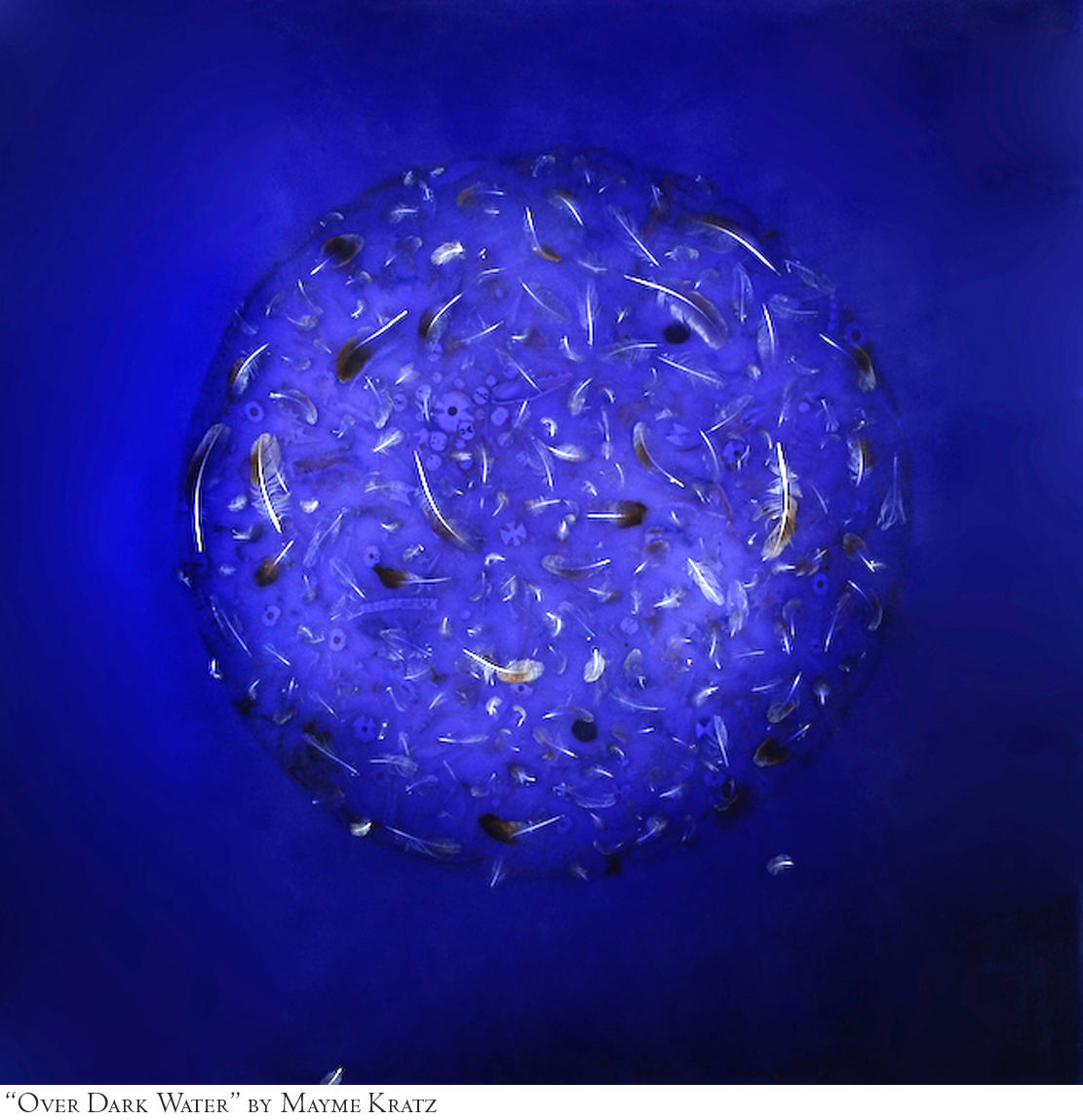
kratzThe work was forceful, imaginative, idiosyncratic and intellectually rigorous. There should be no shame in being thought an “Arizona artist” if the state could produce a Marie Navarre, a Jim Waid, a Mayme Kratz, a Bailey Doogan, an Anne Coe, a Matthew Moore, an Annie Lopez. I could name a dozen more that you’ve likely never heard of, but that you could well have, if things had gone differently.

Each of these artists had given me great pleasure and spurred my intellectual growth and widened my world for me.

And every state in the union — indeed, every nation on the globe — can put forth its own slate of names of the artists, poets, dramatists, filmmakers, architects, authors, musicians and composers whose value is underrated or ignored, whose work has made a local difference, even if not a national ripple. Who’s to say they are not important? Who’s to say their work is not the equal of the headline artists at the Whitney Biennial?

If we include these excellent but unheralded artists and poets, we probably begin to match the ratio of poets to population of 17th- or 19th-century England.

But I don’t want to stop there, either. It isn’t merely regional art I am defending. I would make a case even for such maligned art as the academic art of university teachers, the irises and tablecloths of the watercolorists — even the paint-by-numbers amateurs and the selfie-posters of Instagram.

Every person who makes an image — and especially those rare and brave people who take up a pencil and attempt to draw something on paper — makes a contribution. They learn something about the world, and about art, even if they don’t have that name for it.

Art is not merely what hangs on gallery walls. Its primary purpose is an interaction with the world, and when anyone makes that connection, with pen, brush, camera, clay or word processor, filtering through their sensibility their ideas, feelings and reactions to the world around them, they have made art.

And ultimately, it is the making of art, not its consumption that has value. Everyone should try it, everyone would benefit from it.

marriage of figaro 1

I hate that we sentimentalize art.

We call it “immortal,” we call it a “masterpiece.” We call it “timeless.” But art is not timeless. All art comes with a shelf life. It’s just that some has a longer use-by date.

A few things, like Homer or Bach, seem to last for centuries, even millennia. But other art defuses after only a few decades. How many people still read Pearl Buck? Despite the Nobel Prize? Does that mean that Buck wasn’t really any good? What about John Dos Passos?

Some art speaks so directly to a certain time and place that we later forget how vital it is. It has moved from the “in” box to the “out” box.

Some creations last centuries, some just years. Some art lasts only a few weeks. Pop tunes are the mayflies of art.

That is no reason to discount them. Not everything has to be Shakespeare — and even the Bard, at some point, will cease to have currency, although it may be when the human race has either evolved into something else, or has obliterated itself.

The fact is, art is a response to the world around us, and sometimes the things we respond to are short-lived or even frivolous. The art gets made, the books get written, the songs get sung.

Too often in the past, audiences for classical music and opera have had the notion that only the old music is any good, that contemporary music is not worth wasting your time on, at least until its composer has been dead for 50 years. But that misses the very essence of what art is. That attitude turns something vital into a warm bath. Art is not a warm bath.

Whether it is dance, opera, music, poetry, fiction, painting, theater or filmmaking, art is the way we grapple with the experience of being alive, of turning the inchoate and complex into something comprehensible: an image or a metaphor.

All art is modern art. At least at the time it is made, it is always brand new. Leonardo was modern when he painted; Mozart was au courant when the curtain rose on “Figaro.”

Today, we think of “Figaro” as a masterpiece, but when it was written, it had a cultural and political import we know only from reading the program notes. Does that mean Mozart’s satiric take on aristocracy was irrelevant? When it was new, “The Marriage of Figaro” electrified its audiences for its bravado. The Figaro we have now is tamed. It’s been praised into submission, so we don’t have to think about it anymore: It has become a warm bath.

There is nothing worse you can do to art than to praise it: Praise is the lion tamer’s whip and chair. Whether it is music, poetry, theater, painting or architecture, the art needs to be refreshed. It needs new blood or it becomes irrelevant. If we let Beethoven sit there inert, he loses his charge. He becomes a warm bath. I want my Beethoven to be revolutionary. It is new music that keeps him so.

If our ears aren’t refreshed, we suffer ear fatigue — like retinal fatigue from something stared at too long — and we no longer hear. If we go to Symphony Hall merely to massage our ears with the familiar fuzzy teddy bear of Rachmaninoff, we have misunderstood even what Rachmaninoff intended.

Jorge Luis Borges understood this: The past didn’t create us, he pointed out; we created the past. It is through the lens of new art that we see the old art, through the ears accustomed to Philip Glass that we now hear Mozart. (It is the fallacy behind the supposed logic of the “historic performance practice” movement. Playing Haydn with instruments of his time cannot give us the music as Haydn heard it because we no longer have 18th-century ears.)

We need to keep our ears alive: Dead ears murder Mozart. Wake up! is the perennial message of all art. Become engaged. Notice what is around you. Some art does this through reacting to transitive stimuli — the current political situation, for instance, or the latest fashion. Some art looks underneath the surface.

But your engagement with the now in art doesn’t keep only Mozart and Beethoven alive, it keeps you alive.

walrus and carpenter

“I read your blog about Surrealism,” said Stuart. He had come back through town on his way home.

“It reminded me of the garage band I was in.”

“You were in a band? I didn’t know you played music,” I said.

“I never played an instrument,” he said. “I was the roadie.”

“Roadie for a garage band? Did you tour?

“Heck no. It was high school. My job was to bring the Cokes.”

“No beer?”

“I said it was high school. Drinking age was 21 back then, besides, when you’re high on weed, you want something sweet.”

It turns out, they played not in a garage, but in the basement of the home where the lead guitarist lived with his parents.

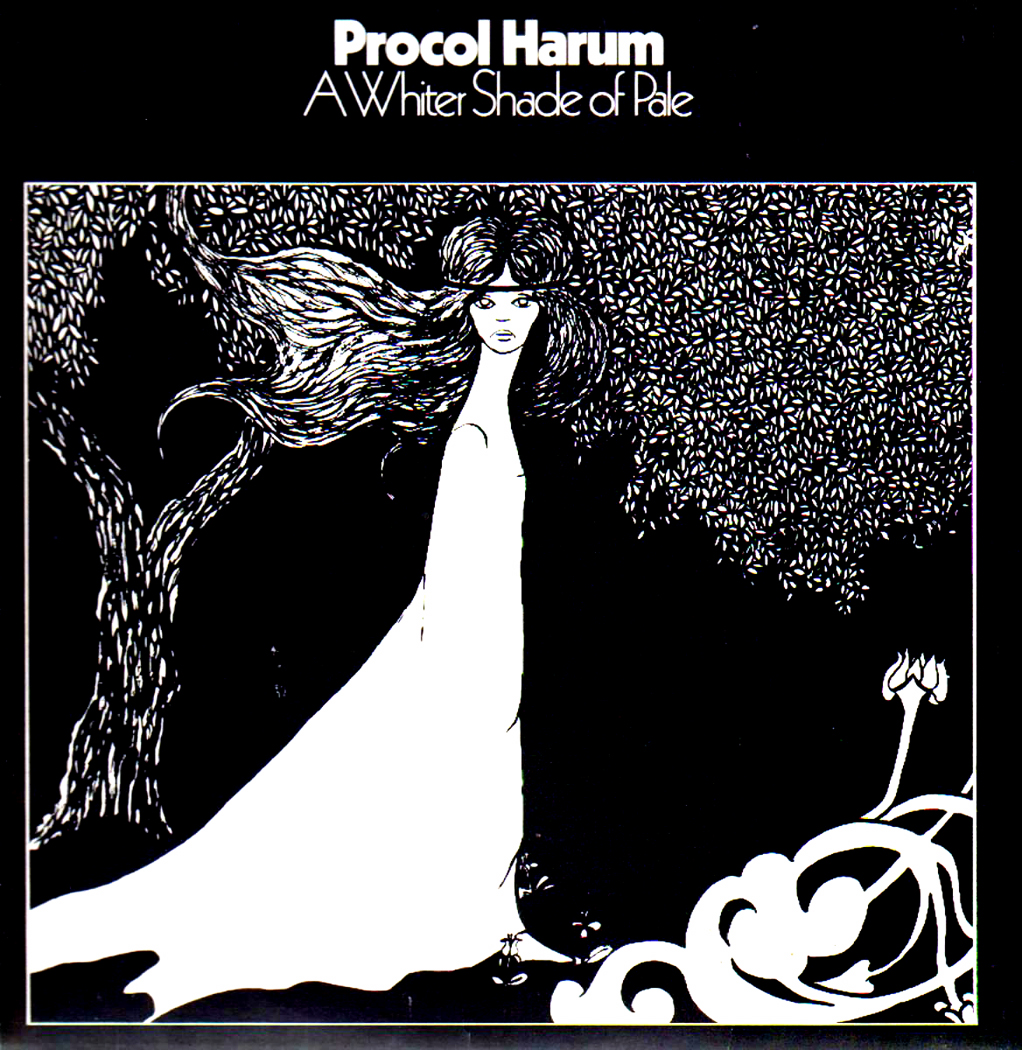
“We played very low volume, sometimes without even plugging in,” he said. “We didn’t want to disturb Sal’s folks. But that’s not why I brought it up. It’s because of our name.procol harem cover

“You wrote about rock bands using Surrealism. This was 1967 and we listened to Jefferson Airplane, the Grateful Dead, Country Joe and the Fish, Procol Harem, the Velvet Underground — it was a whole list of Surrealist wordplay.

“I remember a whole subcategory of culinary surrealism,” I said. “Moby Grape, The Electric Prune, Strawberry Alarmclock.”

“And those were just the big ones. Don’t forget the Chocolate Watchband, the Peanutbutter Conspiracy and Ultimate Spinach. And I guess we could put Captain Beefheart on that list, too.

“There was the Bonzo Dog Doo-Dah Band — bet you don’t remember them — Blossom Toes, Bubble Puppy, Pearls Before Swine, 13th Floor Elevators, the Lovin’ Spoonful, the Stone Poneys and the Monkees — not that we listened the them. Nobody did; they were too popular.”

“And your band? What did you call yourselves?”

“Well, at first we were the Buddha Fumes, but later that year, we decided that was too simple, so we changed to Unlit Booth/Breakfast Out of Context. We thought it was a great name.”

“Maybe a little unwieldy.”

“Yeah, but we really got on a kick with the slash. We made up albums we were going to record, all with great two-part names, like ‘Sudden Eyes/Velcro Sunrise’ and ‘Burlap Lapels/Unexpected Lady.’ Inagaddadavida single

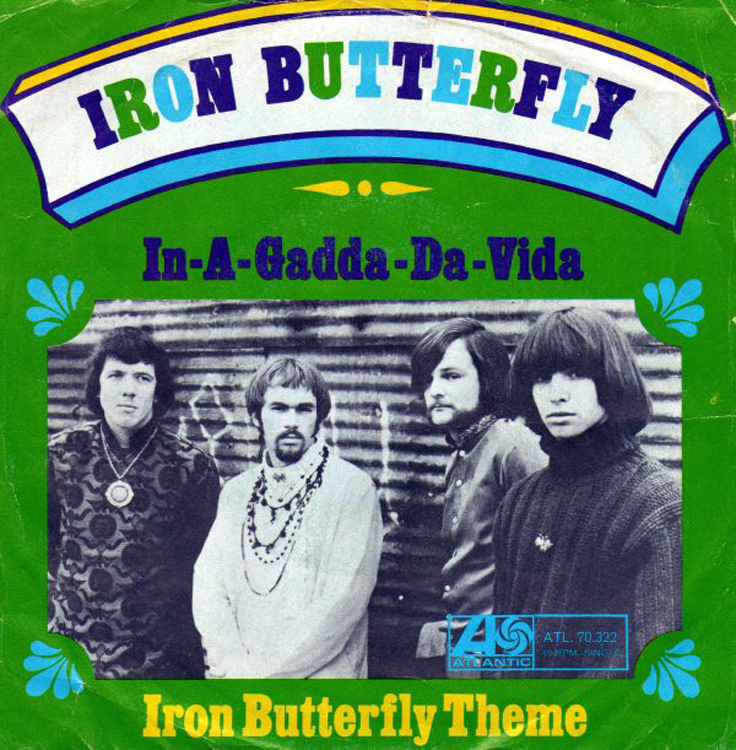
“I became more involved in the band our senior year and wrote lyrics for our songs. Mostly they were covers of our favorite bands, but with my new words. It’s how I became a writer, I think. I wrote a song about my dog based on Iron Butterfly’s In-A-Gadda-Da-Vida with the words, ‘Ah, we gotta go feed her.’ And we did. Feed her, that is.

“We broke up after graduation. We all went to different schools, except Sal, that is. He got a job.

“But this is all prelude to this list.”

“What list is that?”

“Well, back then, we made up a list of possible names for the band, and it follows exactly what you said in the piece about Surrealism. We had all these great concepts built out of wild juxtapositions, like taking a dictionary and running it through a blender. Of course, we never heard of Surrealism then. We just knew this stuff was cool.silvertone guitars

“I found this list in an old folder from that time.”

And he pulled out a folded sheet of lined yellow legal paper, brittle at the edges, with about 20 or 25 names on it, written in faded violet ink, obviously from a fountain pen (“really, a cartridge pen,” Stuart said). The ink was illegible in a couple of places where spills had made the color spread into a bright blot. I recognized the handwriting as Stuart’s from the many letters he has written me over the years. His high-school cursive was much neater, though, than the scrawl that has evolved.

“Wax Monkeys,” it began.

“Xenon Aftertaste”

Buddha Fumes, Sudden Monkey, Jalapeno Fistula, Orlando Death Car, Sequined Monotreme. The list continued: Fog Hammer.

“There was a fraudulent PR company called ‘Frog Hammer’ in Slings and Arrows,” I said. “You know, the Canadian miniseries about actors.”

“Don’t know it,” Stuart said. “But frog hammer just makes me think of a squashed schoolroom dissection. Fog Hammer is more genuinely surreal. Soft and hard at the same time, dense and vaporous.”poster 1967

He’s probably right. The list went on:

Spit Wax

Able-bodied Saints

Red Suits and Whispers

Sound Midden

Ear Stubble

Leatherette Wilderness

Snarling Confessor

Audible Hernia

Slice of Breath

Waking the Badger

Fraternal Animism

Painted Snakes

Money Under the Hood

Ashcan libertine

Pineapple Fuqua

Gruntbunnies

“Wait,” I said. “Isn’t Pineapple Fuqua a real person? Didn’t we know him when we were kids?”

“Yeah, ‘Few-Kway.’ Ran the service station. Good name, though.

“Any of them you wanna use, go ahead,” Stuart said. “I don’t mind.”

"Object" by Meret Oppenheim, 1936

“Object” by Meret Oppenheim, 1936

Most art movements come and go. Surrealism came and stayed.

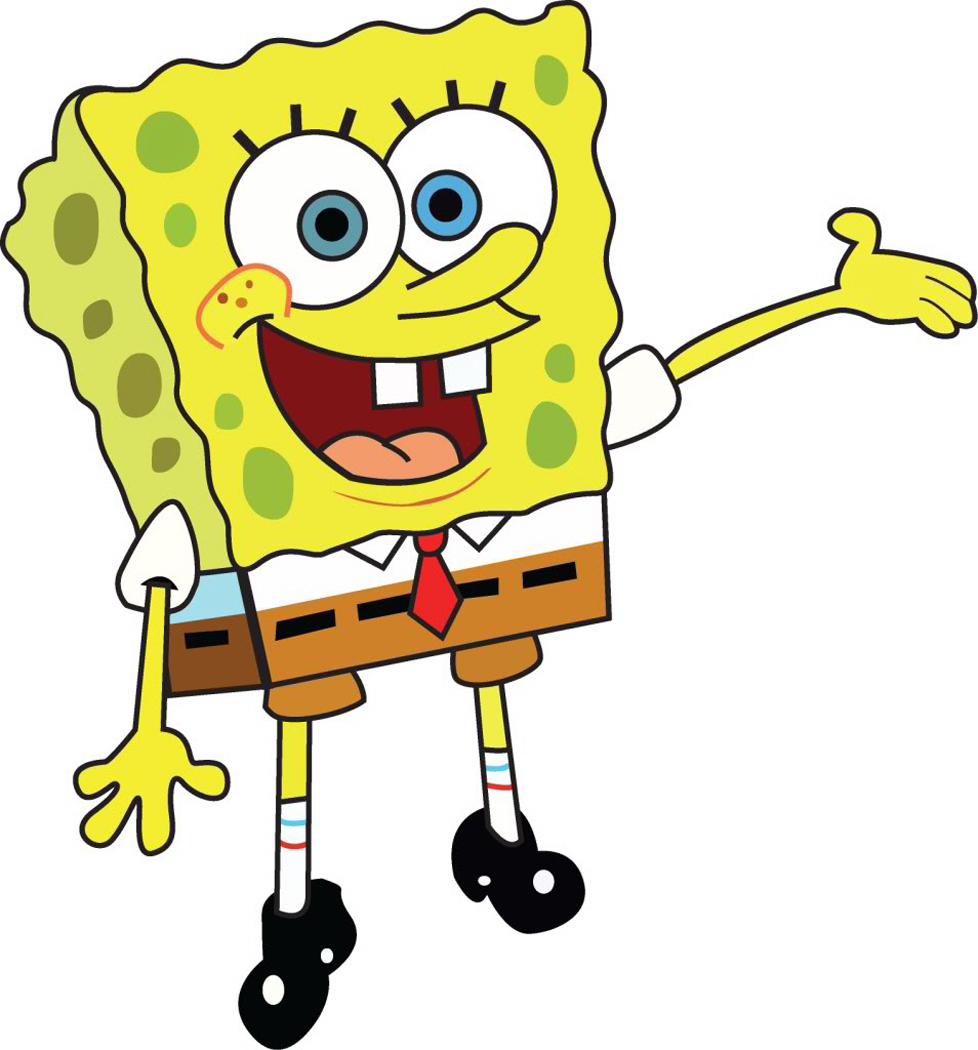
spongebobThat may be unfortunate: After all, Surrealism is not everyone’s cup of fur. But if you look around, you will see that Surrealism has become an entrenched part of American culture. It’s everywhere from pop music to TV sitcoms. It’s so pervasive, sometimes you may not even recognize it as it passes by.

SpongeBob SquarePants, for instance. Salvador Dali would have loved it.

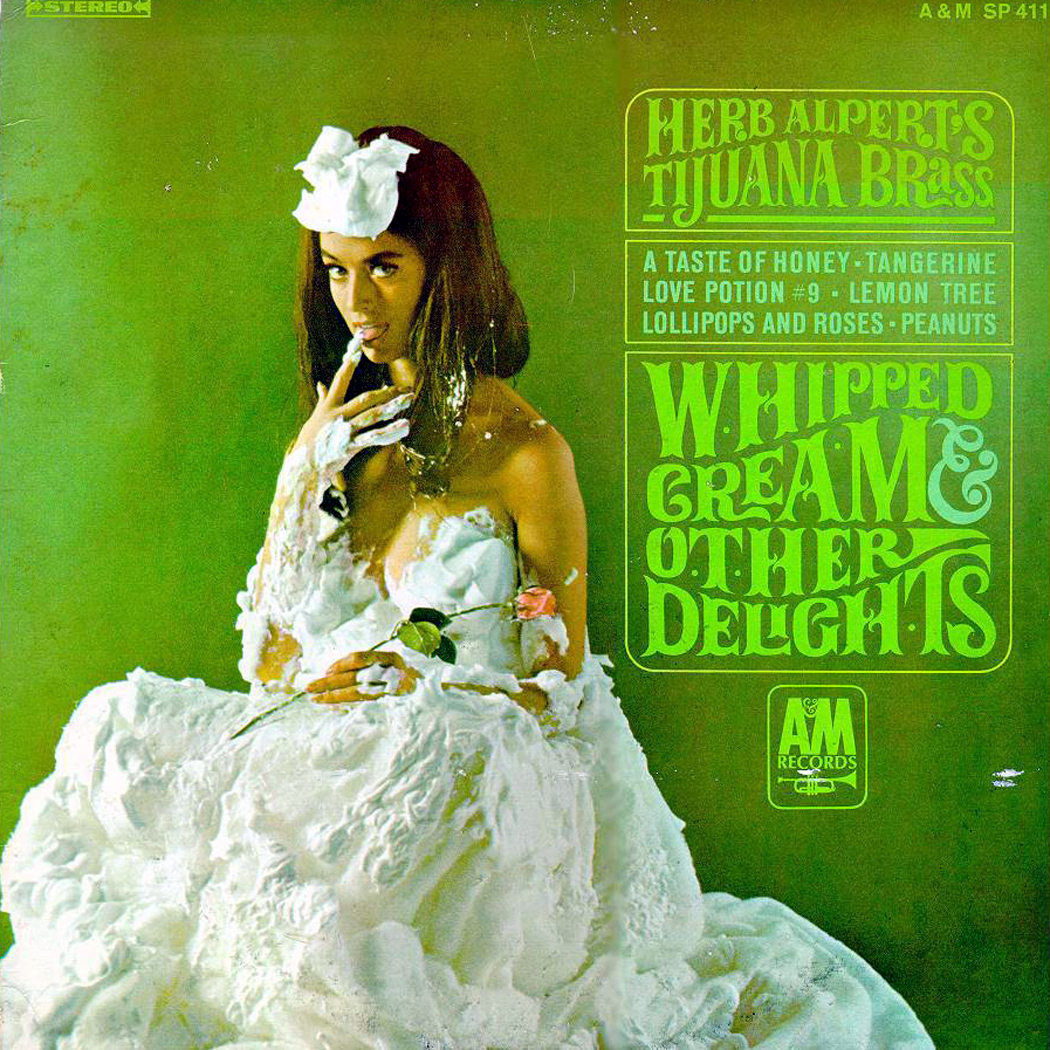
Surrealism’s love of the weird, the incongruent and the unspeakable fuels a good deal of our popular culture. Consider such band names as Flaming Lips, Insane Clown Posse, Def Leppard, Nine Inch Nails, Guns n’ Roses.herb alpert

But it’s not just music: Only a culture that thrives on a constant diet of Surrealism could line up to buy Thai pizza or Mock Hawaiian Chile. Or be able to follow Robin Williams’ unconnected segues, or recognize the world of Bill Griffith’s Zippy the Pinhead.

It’s everywhere: Michael Jackson was a walking frappe of the surreal.

Sometimes it even happens by accident: In the old Hayden Planetarium in New York, before it was torn down to make way for the new Rose Center, there was a lit sign by the staircase that read: “Solar System and Rest Rooms.”solar system and rest rooms

Of course, Surrealism didn’t enter this country on a pop-culture visa; it got here as an ambassador of French high culture.

Surrealism began in Paris in 1924 with Andre Breton’s Surrealist Manifesto, an unreadable piece of bureaucratic writing that set forth the principles of the school. It was yet one more attempt at epater le bourgeois. But it was also a utopian art-and-political movement meant to liberate all humanity, to free civilization from its deadening habits.

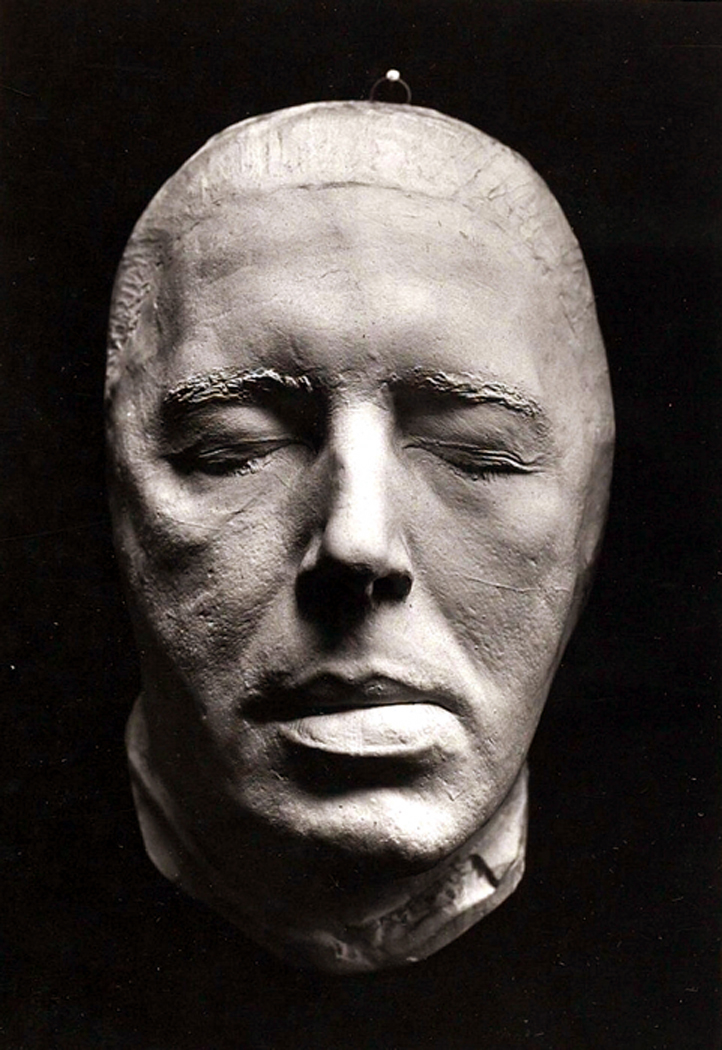
Andre Breton death mask

Andre Breton death mask

Primarily, Breton wanted to free the mind from the shackles of logic, to use the imagination as freely as children or madmen, with no constraints of taste or taboo.

He believed that the unconscious mind was somehow more honest than the conscious mind, and to tap into that lower, darker level of the psyche, he prescribed dream imagery, Freudian symbolism, automatic writing and random juxtaposition.

The Surrealists took as their motto a phrase from the 19th century French poet Lautreamont, “As beautiful as the chance encounter, on an operating table, of a sewing machine and an umbrella.”

Thus was ushered in the era of droopy watches and steam locomotives chugging out of the fireplace.

The number of artists who signed on was impressive — even Picasso himself, at least tangentially.

By Australian artist Manfred Olsen, detail

By Australian artist Manfred Olsen, detail

But one can’t talk about Surrealism as a single thing, because it was not. There were as many types of Surrealism as there were Surrealist artists. And there were an army of them. Their general was Breton, who attempted to maintain control of his theory but was, in truth, herding cats. Everyone had his own version of Surrealism. Dali leapt into sexual fetishism; Ernst into automatism. Joan Miro imitated children’s art; Man Ray made clever and useless objects.

And just as French couture shows up in New York department-store knock-offs, Surrealism crossed the Atlantic, so in the 1930s and ’40s, American artists who wished to remain au courant picked up the mantra.

"Oedipus Rex" by Max Ernst, 1922

“Oedipus Rex” by Max Ernst, 1922

The ’40s also saw many of the European Surrealists cross the Atlantic to escape the war. Dali came over. Tanguy came over. Ernst even settled in Arizona. Dali became a celebrity; he starred in Life magazine.

Salvador Dali

Salvador Dali

Surrealism began its metamorphosis into mass culture.

Dali’s particular style of Surrealism became the public model for the movement and was imitated by some artists, including Federico Castellon, Reuben Kadish, Harold Lehman, Helen Lundeberg.

Flat horizons, empty spaces, body parts, puppets, shadows, eggs, skeletons — a whole retinue of increasingly tired Surrealist iconography. In America, that iconography persists aggressively in the form of tattoo and prison art, and the work of untold high school students.

But this wasn’t the end: Two more generations of Surrealism in America followed.

"Monogram" by Robert Rauschenberg

“Monogram” by Robert Rauschenberg

First came Pop Art, which often had a Surreal component — Robert Rauschenberg’s Monogram, for instance, with its stuffed goat wearing a rubber tire cummerbund, or Claes Oldenburg’s soft sculpture. Even Andy Warhol’s color-quilt celebrity portraits have a Surrealist edge.

And then came psychedelia. It is through the drug-and-rock culture of the late 1960s that modern pop culture gets its Surreal DNA. Grateful Dead, Iron Butterfly, psychedelic posters, LSD and flower power.psychedelic poster

“I don’t take drugs,” Dali said. “I am drugs.” That was the difference.

But to truly understand what the excitement was all about, you must understand something about art in general: One of its main duties is to refresh our perceptions. We live lives of deadening habit — driving the same commuter route daily, watching the same TV shows, ritualizing our political life so that it becomes no more thought through than a slogan on a T-shirt. Habit is the great deadener of life. Art always needs to show us something that wakes us up, makes us see the world again as if for the first time. This is what Breton meant by Surrealism. He means to grab us by the lapels and make us see the world as miraculous.

“The marvelous is always beautiful, anything marvelous is beautiful,” he said, “in fact, only the marvelous is beautiful.”

warhol

Andy Warhol was a sphinx. His public pronouncements were often so bland as to be dumbfounding. Yet he is one of the most influential artists of the second half of the 20th century.

Because his public persona was so passive, we cast our ideas upon his blank slate: There are as many Warhols as there are viewers of his work.

To some, he was the great democratizer; his prints were — originally — affordable to all. To some, the great charlatan; he admitted his favorite thing was money.

To others, he was the harbinger of celebrity culture while to still more, he was a mocker of celebrity.

He either knocked off commercial imagery, or he allowed us to see that imagery for the first time as art. marilyn

Was he ironic or sincere?

We each have our own Warhol.

My Warhol is the best artist of the past 50 years, not only influential but unlike some other influential artists such as Joseph Beuys, Warhol also provides us with beauty. Like Picasso or Matisse, his work isn’t just about theory, but about pleasure.

The academicians and theorists point out that Warhol’s art is about repetition and multiple versions of the same thing: a dozen Maos or Marilyns. And although that is tangentially true, what is truly astounding in Warhol’s work is the variation. Each repetition is brand new. The artist’s inventiveness is magical. 1972 mao 1

You can look at a dozen Maos and see repetition, or you can see a dozen variations on a theme, ranging from Mao in blackface to Mao in green, each version with its own particular scribbles. Not repeated, but varied. jagger

1964 soup canThen, there’s the Mick Jagger series from 1975, in which the images are partly photographs, partly abstract shapes and partly line drawings — and make no mistake, Warhol’s line was as distinct and fluent as Picasso’s.

There are Campbell’s soup cans here, too. Warhol made his reputation with these.

It is the job of artists to direct our attention to what is going on around us, whether that is the grand landscape of 19th-century America or the commercial landscape of Pop Art. In this sense, Warhol is no different from Thomas Moran.

Once we’ve seen Warhol’s soup cans, we cannot be blind to the originals in the store: Instead of their disappearing into the background noise of our lives, we pay attention.

Paying attention is the sine qua non of art. car wreck five deaths

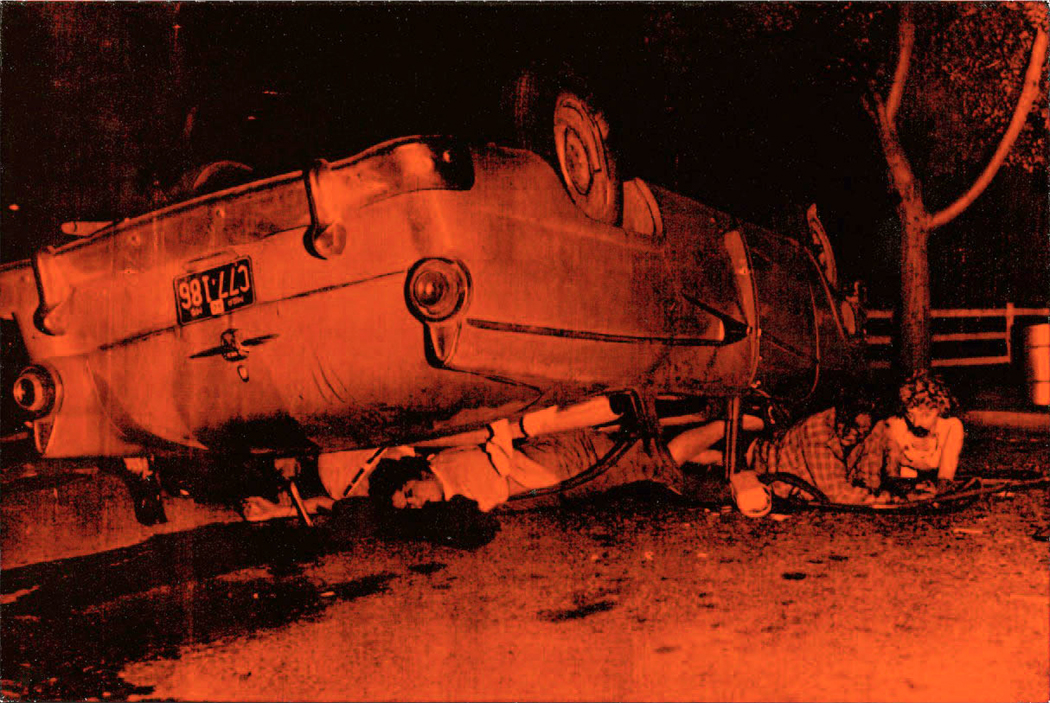
And though we think of Warhol as being the abettor of celebrity (and at his crassest, he provides “Warhol” portraits of anyone rich enough to commission one), the celebrities he chose for his uncommissioned work tended to be those with the aura of tragedy about them, like Marilyn Monroe. His early work often included car wrecks or disasters from the news. One of the sets is about the Kennedy assassination. geronimo

Warhol is more committed to the real world than he often is given credit for: Even the seemingly simple Pop images of cowboys and Indians remind us of the tragedy of Native America. There is Geronimo; there is John Wayne.

Or the series of “Jews in the 20th Century,” which may show us the Marx Brothers and George Gershwin as well as Martin Buber and Albert Einstein, but behind them all is our awareness of the tragedy of Jews in the century past.

As Percy Shelley said, “Our sincerest laughter with some pain is fraught.”

Warhol the celebrity was a bright blot, a blank face of banal utterance, but it was a mask he was forced into in order not to have to trivialize his work by talking about it. His famously obtuse interviews were a defense mechanism: When you have torn the veil, as Warhol had, how can you come back to this side?

Andy preferred to let his work speak for itself, and that is why everyone can have his own Warhol.

adam and eve

OK, so then what is the “canon,” with which we should all be familiar?

There are scores of lists, put forth by scores of people, ranging from insightful critics to close-minded boobs (Yes, Bill Bennett, I’m talking about you). Such lists usually share the usual suspects: Here’s Hamlet, there’s War and Peace, and over there is the Recherche of Marcel Proust. All of them worthy of your deepest attention and capable of inciting the most delightful pleasure.

But as I’ve written before, the purpose of engaging with the canon of Western culture is to understand who your grandparents were, whose cultural DNA you were born to — the common inheritance of all of us in the modern world, our Adams and Eves.

Through most of my youth and into my adult life, my version of the list has grown and grown. I have, after all, at least 50 films on my Top Ten list. I could not do without hundreds of books I have read, paintings I have seen in the flesh, music I know by heart.

But, as I have grown old, I have jettisoned more and more baggage. “Simplify, simplify,” Thoreau said. I’ve given away books, CDs, DVDs. I’m tempted to dump even more. Those that were important, I have internalized; those I want to keep are those I reread and reread.

Under even those, however, is a foundation level, the cultural footings on which I have built my intellectual life, and that the civilization I have inherited was founded upon, almost as its Constitution.

So, I am proposing a canon. A very short one, but an essential one.

First, there is Homer. Everyone should have read the Iliad, at least. The Odyssey is initially more fun — or at least the chapters that chronicle the wanderings of Odysseus — but the Iliad is one of the founding documents of Western civilization and provides a necessary backdrop for everything that has come since.

I reread the Iliad about once a year. I try different translations, because any bit of ancient Greek I used to study has evaporated. The newest translations are usually the best, not because they are more literary, but because they speak the language I use. Older translations sniff of their age, smelling of linsey-woolsey or gaberdeen. I can sense the antimacassar oil on the Lang-Leaf-Myers translation. I sense the Cold War in the Lattimore.

So, the Robert Fagles translation is my standard, although the most recent re-read was in the even newer Stephen Mitchell version.

In Homer, you find the myths that have been re-used and re-energized in all the books written since, that outline the archetypes, give us the parameters of story and narration. The scope of Homer is the widest: from the bee’s tongue to the planet’s motions among the stars.

This is all beside the wonderful enjoyment gotten from reading it, 2500 years after he (or she) set it down.

The second book in my canon is the Bible. Not for any religious reason; I’m completely an atheist and have no use for religion. But the Bible is, like Homer, one of the founding documents and underlies all that has followed. I may wish otherwise, and may often wonder if the Bible wasn’t really authored by a group of people who have spent too long out under the desert sun. It may have been written by white bearded patriarchs under the influence of sunstroke, but they are our grizzled patriarchs.

There are two important considerations when approaching the Bible.

The first is the translation. The King James version is the primary one, and it is the organ-pipe tones of the KJV that underpin our own ideas of language, of majesty, of ritual and solemnity. It is the KJV you hear behind the sentences of Melville and Thoreau, behind the speeches of Martin Luther King.

But the King James is also miserably out-of-date, with usages that are no longer current and oftentimes either misleading or downright incomprehensible. So, a more modern translation may make the stories of the Bible easier to assimilate.

Even so, I prefer mixing the King James and a modern translation with an interlinnear word-for-word translation that demonstrates how much any translation of the Bible is de facto an interpretation. I have valued greatly the Everett Fox version of The Five Books of Moses from the Schocken Bible. Any version of the Hebrew and Christian Bibles is a moving target.

The second thing is that you should read the whole Bible, not just the familiar parts. Some of it is heavy slogging, but you should have read the whole thing. It’s one of the best ways to counteract the baleful influence of all those fundamentalists that would have you believe only their way. You see how they pick and choose only the parts they want and that reinforce their prejudices. You will be astonished at how many things are held to be “an abomination.” You will scratch your head over most of them.

The Bible stories are the Semitic balance to the Hellenic myths and between the two, they are the parents of all that followed.

Finally, in my canon, are the plays and sonnets of William Shakespeare. Ideally, one should see them on stage, in an excellent production (since a mediocre production can be the kiss of death for someone whose language is a florid and baroque as Shakespeare’s), but the fact is that it is as text on a page that Shakespeare has most influenced the course of Western Civ. We read Hamlet, Lear, Othello, and their words continue to astonish the attentive reader with their fire, their brilliance, their wit, and their expansiveness. The “sirrahs” and “prithees” may certainly feel dated, but everything else is bursting with life.

It was after a long-ago divorce that I first decided that if I was going off into exile, I needed to pack only three books: The Iliad, the Bible and a complete Shakespeare, and that somehow, if the world were destroyed all around me, I could resurrect an entire civilization with just these three.

And we would see everything that followed.

"Michael Jackson and Bubbles" by Jeff Koons, and Elgin Marbles figure

“Michael Jackson and Bubbles” by Jeff Koons, and Elgin Marbles figure

In 1632, the young English poet John Milton, just out of college, took up residence at his father’s country estate at Horton, near Windsor. And for the next six years he managed to read everything that had ever been written and was extant, in all languages living and dead, that a European scholar of the time might have heard of. That included literature, history, biography, philosophy, science, mathematics — the whole throatful of it. milton cigar

Everything that had ever been written.

It boggles the mind. Today, we cannot even keep up with the magazines we subscribe to; most of human knowledge falls off the edge of the Earth, where the map of our erudition shows nothing but serpents. reading the oed

We can never achieve what Milton did; it’s foolish to even try. But shouldn’t we attempt at least some sketch of what was fully painted for the poet? There have been recent books by writers who have read every article in the Encyclopedia Britannica (The Know-It-All, One Man’s Humble Quest to Become the Smartest Person in the World, A.J. Jacobs, 2004), The Oxford English Dictionary (Reading the OED: One Man, One Year, 21,730 Pages, Ammon Shea, 2008), or the equivalent of the Harvard Five-Foot Shelf (Great Books, David Denby, 1996), but such ventures are little more than stunts.

To absorb 5,000 years of human culture requires more than memorizing almanacs or dictionaries. It means to have a grounding in the art, literature, theater, music and architecture of our ancestors.

Of course, most of human knowledge, at least in ordinary life, in mass or pop culture and in our individual autobiographies is utterly trivial, and it would be a crime to stuff our brains with it.

But not all knowledge in this information age is trivial. There is still a core of useful literature — and I use the word in the broadest possible sense — that it behooves us to be acquainted with.

It is unfortunate that there is an argument over this. In the imbecilic culture wars that currently ravage the intellectual countryside, the lines are drawn between ignorant armies.

On one side, you find right-wing reactionary fossils fighting to maintain the canon of mainly European classics. On the other side, there is a cadre of victimization that wants to eliminate anything written by dead white males.

A pox on both their houses.

Milton didn’t have to worry about the canon. For him, the canon encompassed everything he could possible encounter.

Since that time, though, we have had to become more selective. Those items we have, as a culture, thought worth perpetuating we have called ”classics” and added them to the list — the canon — of ”required reading.”

But we misunderstand the very idea of culture if we believe the world froze solid with the publication of the Harvard Five Foot Shelf.

Corneille

Corneille

The canon is a garden that must be weeded and tended, and each season may call forth a different harvest.

The problem with the conservative view is that it values a former ”golden age” that our own time never measures up to. It is a sentimental view of life and history, and deaf to the fact that we live now, not in the imaginary ”then.” It is the voice of Cato, of Corneille, of William Bennett — a man of whom it is said he cannot sleep a-nights if he suspects someone, somewhere is having fun.

It is a view of an idealized perfection that we have disastrously fallen short of. It is one form of imbecility.

The problem from the other side is an egalitarianism that is just as moronic. According to them, nothing is better than anything else. Either it is merely a question of personal taste, or it is one of cultural identity.

By their standards, it is elitist to prefer Pablo Neruda to Rod McKuen. Let them, I say, let them renew their subscriptions to Us magazine.

They can deconstruct its gossip to death and find the parallels with Plutarch — if they only knew who Plutarch was.

To consider one “text” more important than another, for them, is to promote colonialism and the subjugation of the downtrodden.

Hence, they judge not by esthetic considerations — it’s all just personal taste to them — but rather by politics.

For them, politics overwhelms aesthetics — overwhelms reason, emotion, common sense and experience. For them, everything has a party line. Ah, but they forget, politics answers no question worth asking.

It also worries me that behind the masks of intellectual argument, I sense a fascism on each side — at the very least a certain priggishness to both sides that any reasonable human finds dangerous.

At bottom, the problem is that both sides make the mistake of believing the canon immutable and fixed. They see the canon as an end, one side blindly despising it and the other defending it like Texans at the Alamo.

But the canon, properly seen, is a beginning, not an end; a foundation, not a roof.

It is the ABC of cultural literacy, the cardinal numbers of thought.

One used to hear the warning that when you have sex, you are having sex with everyone your partner has ever slept with. Well, when you read a book, you are also reading everything that the author read. When you hear music, you also hear everything that composer heard.

Culture is the slow accumulation of thoughts and habits. To read Melville is to hear the diapason of King James under the rich melody of the prose. Every author is the product of multiplier and multiplicand: the writer’s imagination and the long road of history leading to his standing on the curb with his thumb out.

The fact is, we cannot read everything, the way Milton did. We must be more selective. Suggestions for that selective offering is what we call the canon. But it changes constantly: It now includes James Baldwin and Toni Morrison; it includes Derek Wolcott and Yukio Mishima;  The Beatles and Duke Ellington.

The Laocoon

The Laocoon

How can you understand Jacques Derrida without standing firmly on the firm ground of Kant’s a priori? How can you read Isabel Allende without sensing the spirituality of Calderon behind her words?

How can you understand Jeff Koons’ Michael Jackson and Bubbles if you don’t already have the Elgin Marbles in your system? You can’t. How can you get the joke on the back of countless Yellow Pages if you don’t know the Laocoon?

Certainly, the old rationale for learnedness remains: These are great writers, profound thinkers and brilliant painters and sculptors and we cannot consider ourselves educated without their acquaintance. Knowing them is its own excuse. But even more important is that when you hear the echoes in a piece of art, see its ancestry, the piece resonates. Resonance is what gives art and literature is power. kane

Like the mirror scene in Citizen Kane, one man is multiplied into an army. Like Isaac Newton said, if we see further, it is because we stand on the shoulders of giants. It is a wise man who knows his parents.