Archive

Tag Archives: art

In my seven decades — half of them spent as an art critic — I have been to too many art galleries and museums to be able to count the shows I have seen. Nor can I count the concerts, recitals, theater productions I’ve seen or books I’ve read. Most of them I’ve enjoyed, but few were so memorable that I still have in my nostrils the aroma they gave off. 

This is not to disparage most of the others. I’ve eaten too many restaurant meals to count. Most of them I enjoyed. They did what was asked of them. But can I recount a ribeye I once had in Bakersfield? No. That would be silly. 

But there are meals and concerts that stick, art exhibits that did more than give an hour’s pleasure, concerts that changed my way of thinking about the world. 

And let’s be honest, one is willing to pay the ticket price for a lot of minor pleasure in the expectant hope that this next one will be a world-changer. The odds are against it, but we persist. Every once in a while, we are gobsmacked, and know why it has been worthwhile to sit through a hundred Beethoven Fifths to get to this one that goes beyond mere pleasure to transcendence. 

We live for those moments; they make life worth living. 

In a recent blog, I recounted my earliest such encounters, with Eugene O’Neill at the McCarter Theatre in Princeton, N.J., when I was in high school. With J.M.W. Turner at the Museum of Modern Art in New York a few years later. With Emil Gilels at the Brooklyn Academy of Music the same year. These all set my life on a course to spend it with art and music. These all proved to my adolescent heart and mind that there was something more real, more important, than the suburban life I was being brought up in. 

But the immersion didn’t end there. In subsequent years, there were many exhibits and concerts that stand out. That became such an engrained part of my life and world view, that it is as if I was still standing in front of those paintings, or sitting in the concert hall, hearing those notes. 

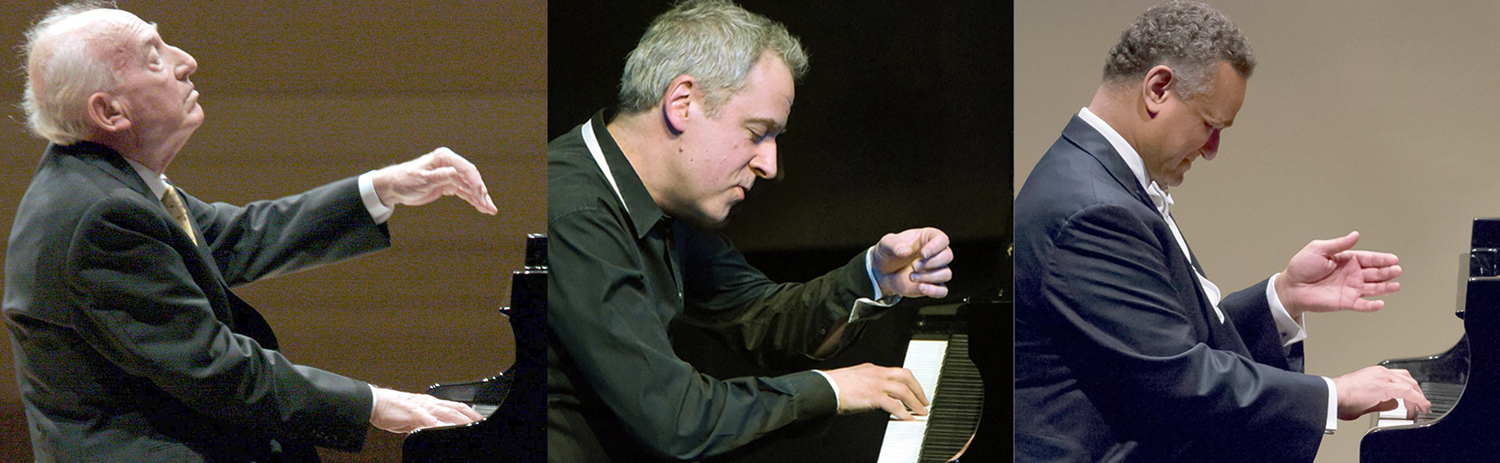
Let’s just take three piano recitals as examples. In 1991, I heard Maurizio Pollini at the Dorothy Chandler Pavilion in Los Angeles. In the first half of the recital, he played all of Chopin’s Preludes. In the second half, he played the Berg sonata and Schoenberg’s Six Little Pieces, Op. 19. All that was great. But he finished with the Stravinsky Three Scenes from Petrushka, one of the most difficult bravura piano pieces ever written. Pollini tore through it like a demon, but made every note musical. It blew me away. (The recital was notable for its intermission, too. The doors to the hall were locked and for nearly an hour, we could hear the piano being re-tuned behind those doors. Apparently Maestro Pollini was not satisfied with the instrument. We were kept waiting in the lobby until he gave his approval to the tuning). 

In 2008, I heard Jeremy Denk at Zankel Hall in New York, the recital hall that is part of Carnegie Hall, play the single most daunting program I could imagine, with Charles Ives knucklebusting Concord Sonata in the first half, and Beethoven’s mind-busting Hammerklavier Sonata in the second. I could only think of John Lennon’s immortal line “I got blisters on me fingers.” For an encore, he reprised the Hawthorne movement of the Concord. Very like running a 200-meter directly after running a marathon. 

I’ve heard Denk several times since then, and each time, his playing was, if not so Olympian, certainly significantly memorable. He proved to me, for instance, that the etudes of Gyorgy Ligeti are great music. And that Beethoven’s Eroica Variations are actually comic. 

Then, in 2011, I heard Andre Watts play the Liszt B-minor sonata in Scottsdale, Ariz., on an all-Liszt program. I had the perfect seat to see his fingers spin over the keys, and learned a great deal about the disposition of Liszt’s voicings by being able to see Watt’s fingers. His playing was ethereal. Liszt was a Watts specialty. 

But it wasn’t only music. After my initial infatuation with O’Neill in high school, I had seen too many mediocre live theater productions, and had come greatly to prefer movies. Theater seemed too artificial, too, well, “theatrical” for my tastes. But then, in 1993, I saw the original Broadway production of Tony Kushner’s Angels in America — both parts on successive days — and saw what live theater can do that nothing else can. It was one of the seminal experiences of my life. 

(It was also ruined for me most other theater, because so seldom is it ever this overwhelmingly powerful. But I have seen other great theater since then. Angels is not sui generis. I have seen Angels three more times, once in its road production —not all that good — once in a production by Actors Theatre in Phoenix, which was nearly as good as the New York production, and finally, in its Mike Nichols filmed version, which is very different from the stage version. It is a movie, not theater. Very good, but still, not the live experience on stage. The same difference between seeing the movie Amadeus and the stage version. Movie is good; live is great.)

I got to travel for my newspaper, and was able to review many major art shows around the country. They have been some of the most eye-opening and mind-expanding things I’ve done. 

In 1994, I saw John James Audubon: The Birds of America at the Art Institute in Chicago. It featured 90 of the original paintings used for the engravings published in his books. The originals persuaded me that Audubon might be considered America’s greatest artist. (You can read a version of my newspaper review here.)

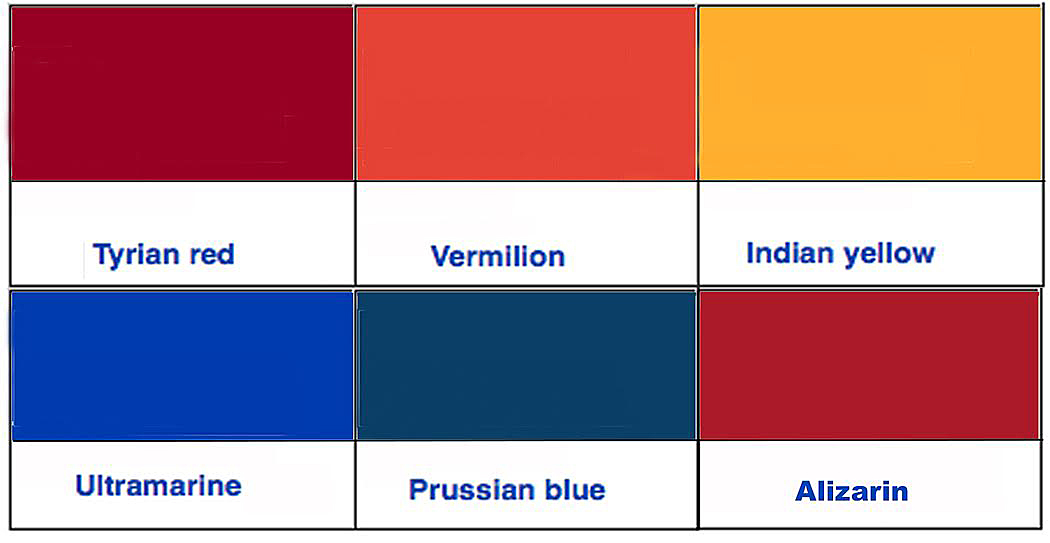
In 1996, I visited Philadelphia for the big Cezanne show at the Philadelphia Museum of Art. One hundred oil paintings, 35 watercolors and 35 drawings from public and private collections. It was an overwhelming experience. I never knew there were this many distinct greens, blues, blue-greens, and greenish blues. And when you swipe a bit of vermilion against them, the whole thing glows like neon. Seeing Cezannes live is a very different thing from seeing them reproduced in books. 

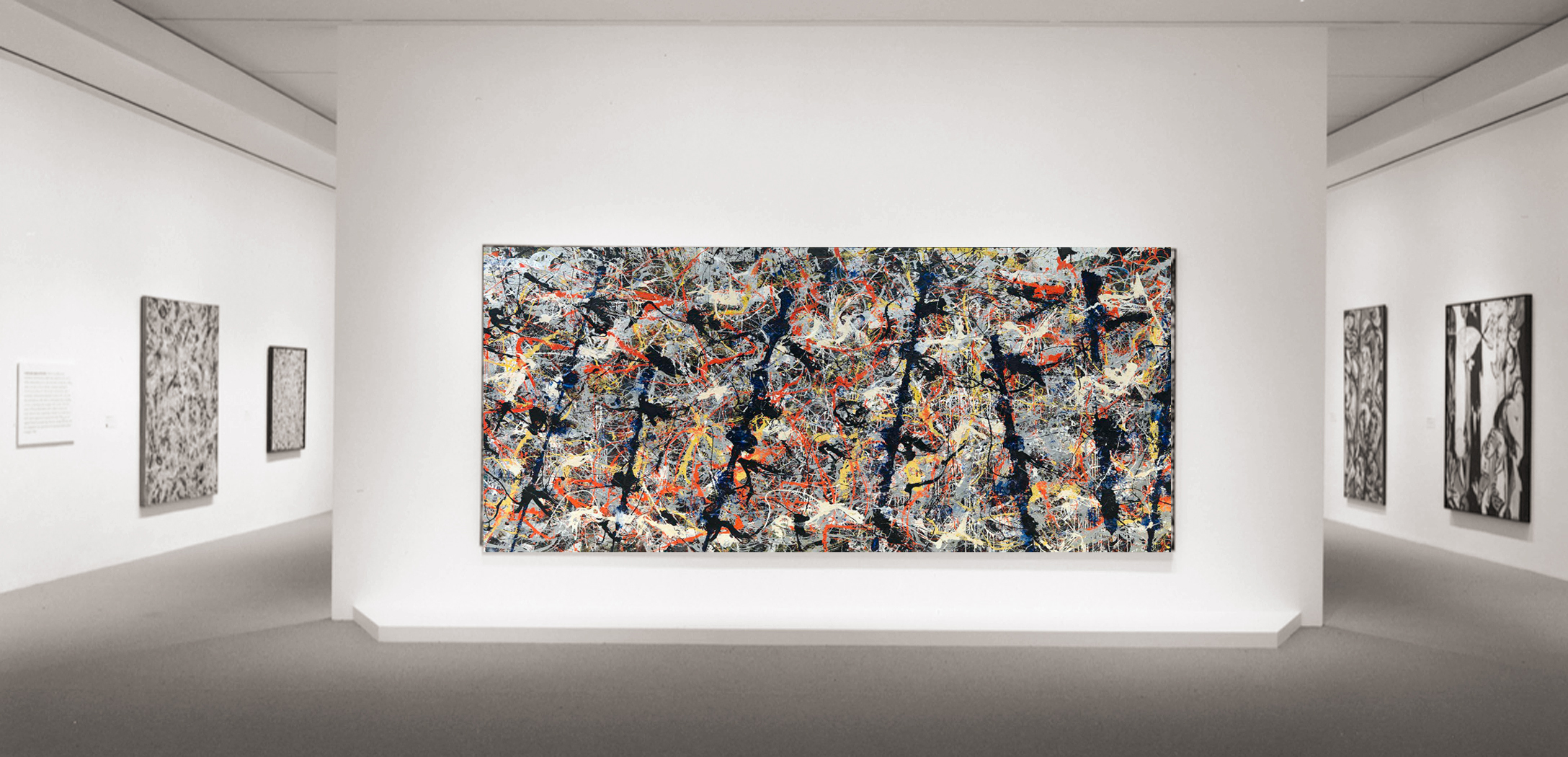
In 1999, I got to see the great Jackson Pollock retrospective at the Museum of Modern Art, which gave me the rare chance to see his Blue Poles, which is normally hidden away in the National Gallery of Australia in Canberra. 

That same year, there was a great Van Gogh show at the Los Angeles County Museum of Art from the Van Gogh Museum in Amsterdam. Like having the chance to see Pollock’s Blue Poles, I got to see Vincent’s iconic Wheatfield with Crows. The show as a whole was the best introduction to the artist’s growth from a clumsy, almost talentless neophyte to one of the world’s greatest painters. He wasn’t always Van Gogh, but when he became himself — the very definition of transcendence. 

I’ve been to Chartres Cathedral four times, and each time was overwhelming. I’ve now been to most of the great churches of northern France. The single most beautiful manmade thing I have ever seen is the north rose window at Chartres. I have sat transfixed in the south part of the crossing, staring back to the north, in total, for hours. It is a meditation or very like a prayer, if such can be said for a complete atheist. 

Overall, it is music that has most provided me with this feeling: Of taking me out of myself and letting my mind expand to a size larger than mere me-ness. Of course, most of the hundreds of concerts I have attended have only provided pleasure and entertainment. But there are those that do more. I thirst for those. 

In 1994, I heard the Philadelphia Orchestra under Wolfgang Sawallisch play the Strauss Don Juan and I felt music not just through my ears, but through my whole body and being. 

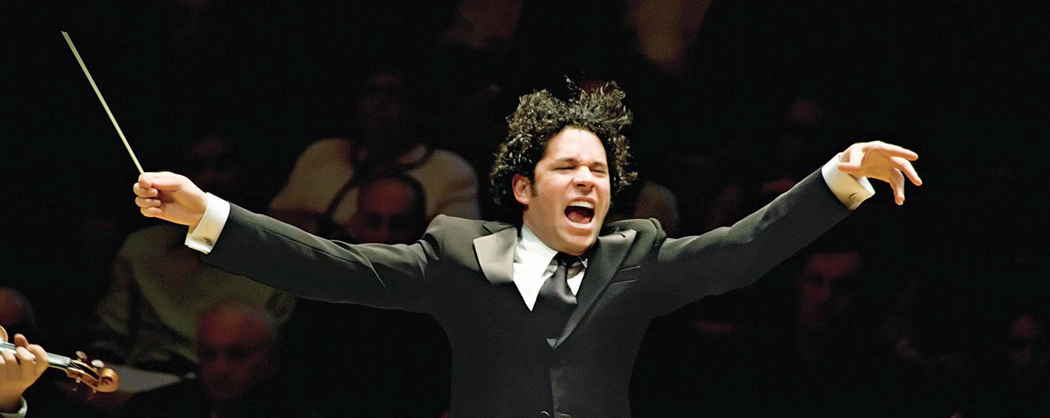
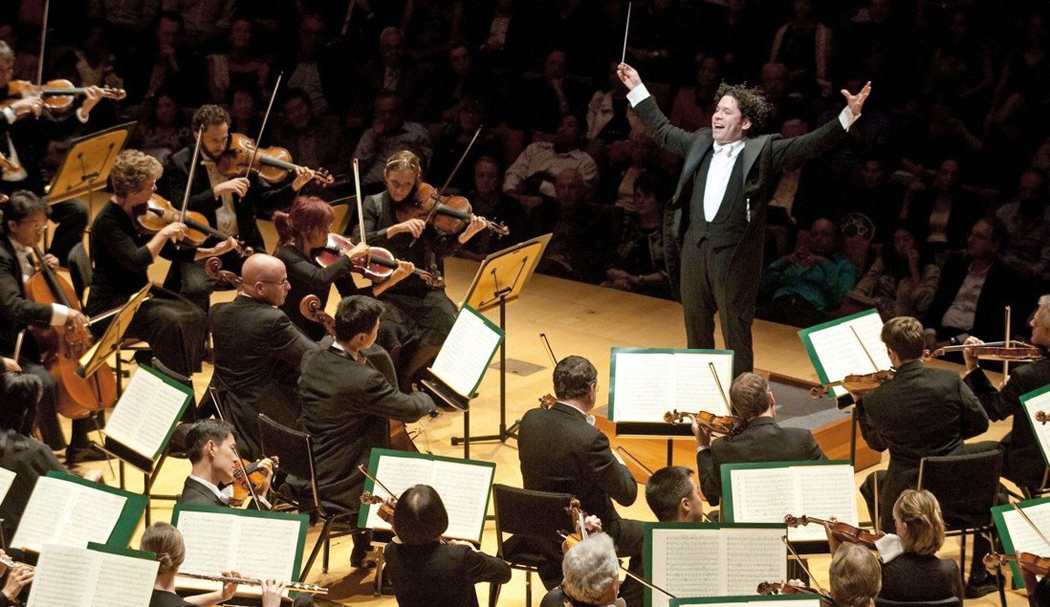
I’ve heard Gustavo Dudamel twice live. Once playing the Mahler First with the LA Phil, shortly after his appointment as music director. But before that, in New York with the Israel Philharmonic, playing the Tchaikovsky Fourth. That was in 2008; the Israel Phil was then an orchestra made up of older, formerly Eastern European men — bald-headed old pros who could give a polished performance under any conductor. But they played with the enthusiasm of little boys, even smiling at this bit or that as they produced the sound. After the performance, Dudamel, instead of turning and bowing to absorb the adulation of the audience, immediately danced up into the orchestra and jumped up and down with the musicians, shaking hands and pointing out soloists. I’ve never seen such a powerful effect a conductor has had on a group of musicians. They seemed to love him back. 

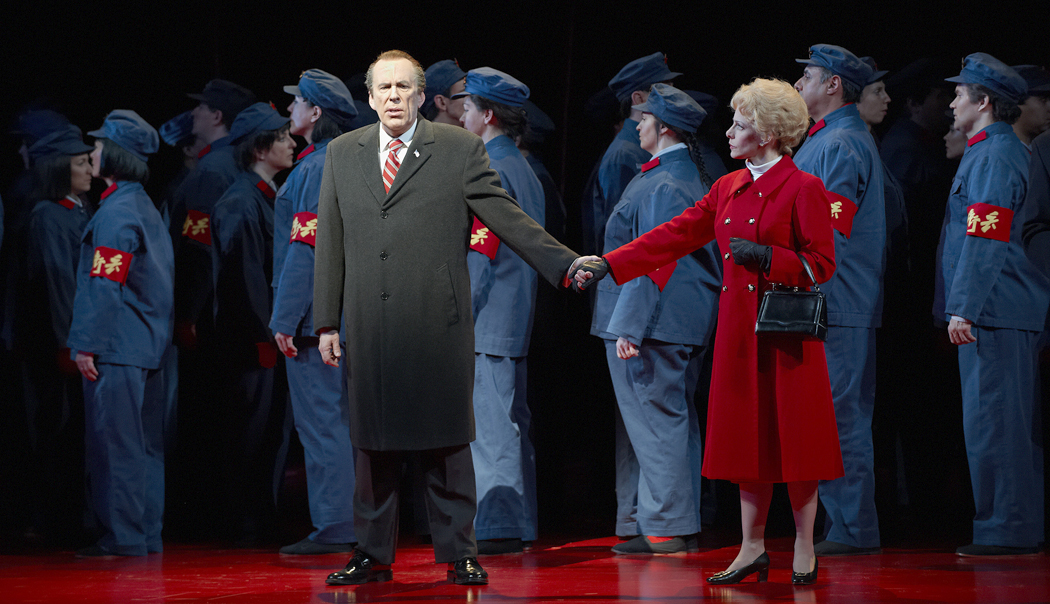
There have been other concerts: In 2008, there was Ozvaldo Golijov’s Ainadamar with Dawn Upshaw; in the same year, there was Doctor Atomic at the Metropolitan Opera in New York. In 2009, there was Nixon in China with Robert Orth in the title role. In 2010, Steven Moeckel played the Beethoven violin concerto with the Phoenix Symphony at the Scottsdale Center for the Arts. I have never heard a better, more moving and detailed performance of the concerto. At least not live. 

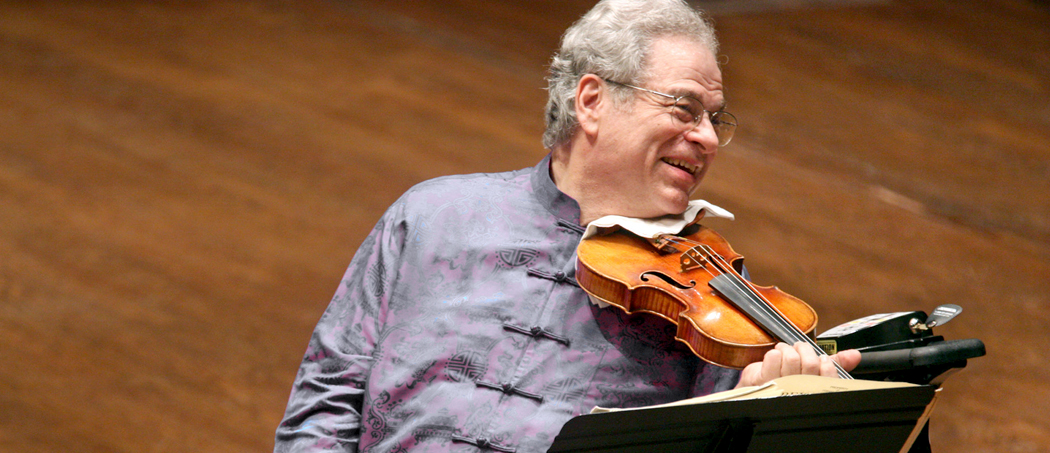
Sometimes, it is only a single work on a program. I’ve heard Itzhak Perlman I don’t know how many times. He’s a miracle; but he isn’t always completely engaged. He can give a creditable performance even half asleep — and he has been known to. But then he will redeem himself. In 2008, he gave a performance in Scottsdale. He ended the recital with his usual encore pieces and tired jokes. The same jokes over and over each concert. Perlman can be quite tiresome. And he opened with a Bach sonata, well played but nothing special. Then, as I wrote in my review:

“But then, with the Richard Strauss violin sonata, the sun shone through and the angels sang. It’s not for nothing that Perlman is a superstar. He gave us a version of the music no one else could give. Rich as butter, emotionally complex and powerful, he persuaded us that the Strauss sonata is a major piece of music, rather than B-list work by an A-list composer, which is how it’s usually ranked.

“From the opening notes the music dripped with personality, as Perlman pushed or dragged the notes just enough to create the kind of perfect phrasing that makes the music speak directly to your innards.”

It is for moments like that for which we will put up with so much less for so long. 

There are two other moments I would like to mention. 

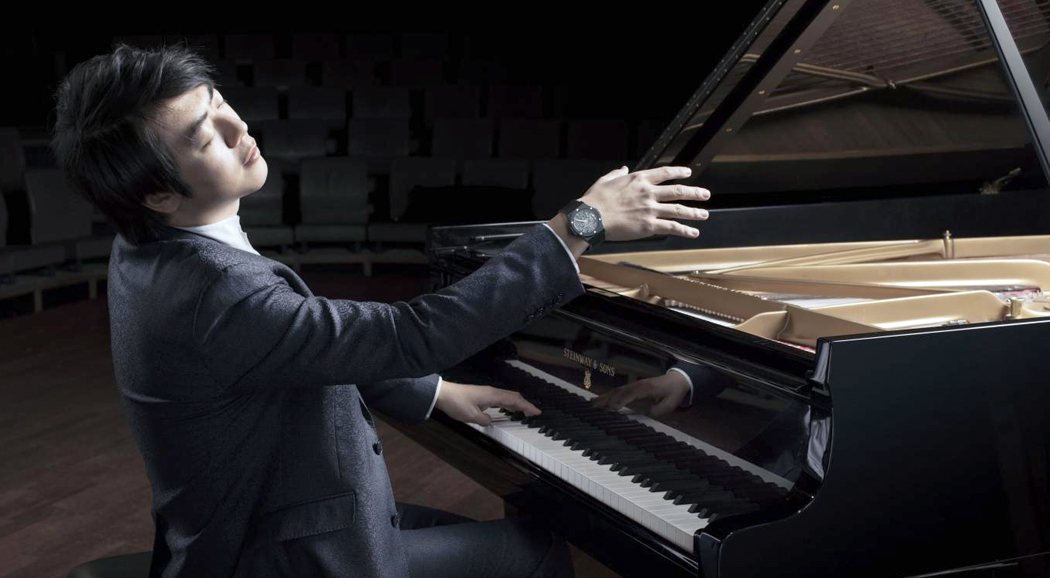
The first is a concert with pianist Lang Lang. He has a bad reputation with some critics for histrionics on stage — rocking and eye-rolling — and he has on occasions played loud and fast, but without much impact, for which he has gotten the nickname “Bang Bang.” But he can also play the way he did in the slow movement of the Chopin concerto, on Oct. 24, 2008 (2008 was a very good year for me). As I wrote in the review:

“At the conclusion of Goethe’s Faust, his aging hero looks out on the world with a note of satisfaction. ‘I could almost wish this moment to last forever, it is so beautiful.’

“That is exactly how pianist Lang Lang played the slow movement of the Chopin E-minor piano concerto Sunday with the Phoenix Symphony. He lingered over it, stretching its already vague rhythmic drive down to a near halt, and stopping the audience’s breath with it.

“Each phrase seemed to pour forth spontaneously from the pianist’s fingers, followed by another seemingly thought of on the spot. No two phrases were played at the same tempo, and each tempo seemed perfectly expressive.

“It is a rare performer who can risk such an arrhythmia, and who can use it to make the music express poetry and longing, dreaming and anticipation. It was one of the best performances ever given by a soloist at Symphony Hall.”

My best moments in the concert hall has been when time completely stops and I get a glimpse of eternity — not eternity as an infinite number of moments end-to-end, but a eternity as utter timelessness. Time ceases to exist. 

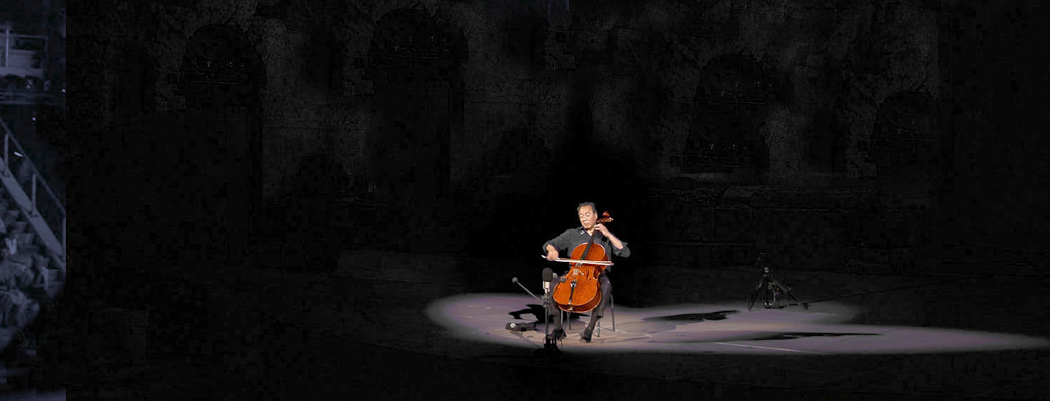
That has happened each time I’ve heard Yo-Yo Ma play the Bach cello suites. I’ve heard him several times, including doing all six in a single concert. 

“Ma concluded with the sixth suite, as intense as an Aeschylan tragedy, with climaxes at the slow allemande and the even slower, deeper, more intense sarabande. Blood almost ceased moving in my veins and only started pulsing once more with the gavotte that followed, as the relief from tragedy, and a reawakening to the life of the body.

“This kind of music is why we listen to classical music: It isn’t enjoyment we are after but solace, reflection, a reconnection with the more important parts of ourselves. It brings us to the place where the deepest thought and the most profound emotion cannot be told apart; they are the same thing. It is proof that art is not merely entertainment, but food for our deepest hunger.”

There are many more such moments over the years, but I can’t mention them all. This is already too long. But, my life has been nurtured by such moments and experiences. They have made me who I am. 

Gustav Flaubert was said to have expressed “contempt for the bourgeoisie.” It is a sentiment I shared when growing up, as a bookish kid in a bookless family. Flaubert was himself a member of the middle class, and, alas, so am I. As much as I despised the suburban, middle-class New Jersey milieu in which I grew up, as I have aged, I have come to realize that it is this same middle class that allowed me to pursue my own interests. There was a bland tolerance inherent in mid-century suburbia that, while it watched Donna Reed and Bonanza, thought that college might be a good idea for its offspring — not knowing just what a subversive venture that education would turn out to be. 

As for me, even when I was in seven years old, I couldn’t wait to leave New Jersey and head off to college. As I entered second grade, I am famously (in the family) reputed to have asked, “does that mean I can go to college next year?”

My brother and I often ponder where we came from. Craig is an artist and I am a writer. Nobody else in our extended family of aunts, uncles, cousins, grandparents, in-laws or anyone else, had the slightest interest in art, literature of other intellectual things. The closest my mother came was daubing a few paint-by-numbers canvases. The primary reading matter in the house was the Reader’s Digest nested on top of the toilet tank. When I mentioned classical music, my uncle asked if I meant, “like Montovani?” When my high-school buddies were listening to Chubby Checker and Bobby Vinton, I was listening to Stravinsky and Bach. Where this taste for the high-brow came from remains a mystery, but it is deeply buried. 

There was early on a hunger for things that seemed deeper, truer, more complex than what I saw on TV or heard on AM radio. And I found that hunger fed by art and literature. In eighth grade, we had been required to read Shakespeare’s Julius Caesar and to memorize a few lines (“you blocks, you stone, you worse than senseless things. Knew ye not Pompey? Many a time and oft…” etc.) But the mere reading seemed archaic and incomprehensible. But late in the year, 1962, we took a class trip to Princeton, N.J. to the McCarter Theatre, where we watched a performance of the play, and it all then made sense. I loved it. 

But Julius Caesar is, after all, a fairly easy play to get through. Even the less inclined in class found it entertaining. 

The next season, though, on another class trip to the McCarter, we watched Long Day’s Journey Into Night, a rather tougher nut to crack. And I felt I had found a home. Eugene O’Neill was the kind of thing that spoke to me: To a green teen, it felt grown up, like the real thing I longed for. 

Looking back, I can see I was just a kid and had a somewhat limited understanding of what it actually meant to be grown up. By high school, I had subscriptions to the Evergreen Review and Paul Krassner’s The Realist. I read Kerouac and Ginsberg, and was a member of the Literary Guild — an off-brand Book of the Month Club — where I bought and read things like Jean-Paul Sartre’s autobiography, The Words

I look back now and remember Last Exit to Brooklyn and The Hundred Dollar Misunderstanding, and boy oh boy, what I misunderstood as a pimply-faced adolescent. I reread Saul Bellow’s Herzog again last year and was surprised to discover how funny the book is. When I read it in high school, I only knew it was a book that adults read, and so I dove in. That it was a comedy complete passed me by.

Art, music and literature: I knew — or felt in my bones — that this was the real stuff. All the quotidian was mere distraction. I was truly lucky: I lived only a short bus ride from Manhattan and could easily get into the city to visit museums, bookstores and concert halls. New York was real; New Jersey was boring. And what I found in the city turned my life.

In 1966, I heard Russian pianist Emil Gilels at the Brooklyn Academy of Music. He played, among other things, the Liszt B-minor sonata. It is the first of many concerts and recitals that made in imprint on my life. I was there with my high-school girlfriend, who later became a professional bassoonist (played with both Philip Glass and PDQ Bach). We went to dozens of concerts, mostly in New York, and in Carnegie Hall. 

Speaking of Peter Schickele, my girlfriend and I were at the first PDQ Bach concert in Carnegie Hall, and after that, I was practically a PDQ groupie and managed to get to one of his concerts annually for at least 25 years, either in New York or when he took his circus on the road. 

I also had the Museum of Modern Art to go to, and the Metropolitan, the Guggenheim, the Whitney, the Frick Collection, and what was then the Huntington Hartford Gallery of Modern Art on Columbus Circle. 

The permanent collections in all these institutions became my dear friends. But there were changing exhibitions, too. The first serious art show I went to that altered the course of my life was also in 1966, at MoMA.   

It was a curated show, intended to make a case. It wasn’t just a collection of paintings, but a curatorial argument, intended to persuade and make us think of something in a new way. It attempted to prove that English painter Joseph Mallord William Turner was a precursor to the French Impressionists and Modernism, that his soft-focus paintings and, especially, his washy watercolor sketches, were somehow a step forward in the history of art, and led to the breakthrough we all know and love with Monet, Renoir and Pissarro. (It was an age that still believed in art history as a grand and natural procession from then to us, the enlightened). 

It was called “Turner: Imagination and Reality” and ran from March through May of that year. It made the claim that “During the last 20 years of his life, Turner developed a style of extraordinary originality. He evolved a new order of art, which was virtually unparalleled until the 20th century.” According to the curators, Turner was a harbinger of American Abstract Expressionists. Several of the images on view were so inchoate as to be purely abstract, like his Pink Sky, which might well be an early experiment by Mark Rothko, nothing more than strata of color spilled across the paper. 

In the catalog to the show, art historian and curator Lawrence Gowing wrote, “These pictures from the last 20 years of Turner’s life, reveal potentialities in painting that did not reappear until our time. They tell us something about the inner nature of a whole pictorial tradition, of which recent American painting is an integral part. Turner not only saw the world as light and color; he isolated an intrinsic quality of painting and revealed that it could be self-sufficient, an independent imaginative function.”

I was transfixed and went back to the exhibit a second time, convinced I was privy to a secret about art that few others knew; only those who had seen this show really understood what a revolutionary Turner had been. Please remember, again, I was a teenager at the time. 

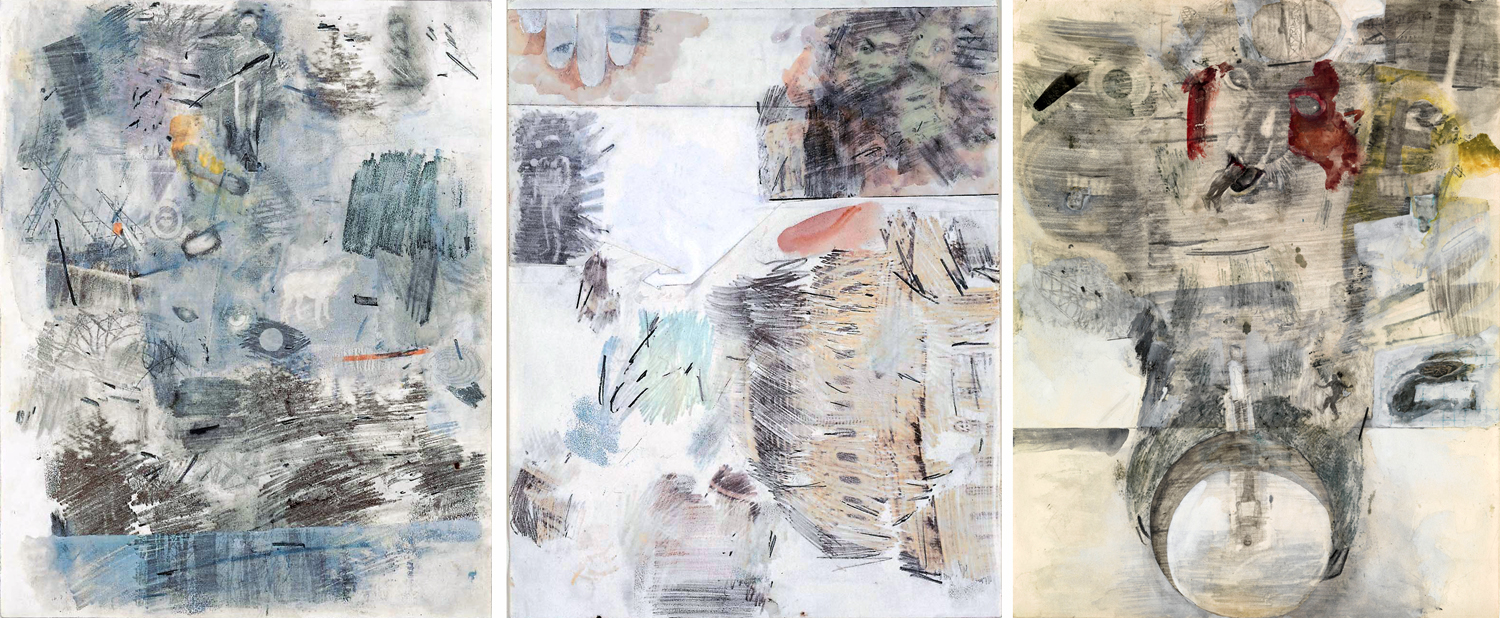
In tandem with the Turner show was a smaller exhibit of Robert Rauschenberg’s “Illustrations for Dante’s Inferno,” a set of 34 drawings and ink transfers, one drawing per canto in Dante’s poem. It is difficult to recover the sense of elation and immersion a teenager in love with art could feel in the presence of something so new and so exciting. 

When I did get to leave New Jersey and go to Guilford College in Greensboro, N.C., I was in a candy shop: I signed up for Greek, Shakespeare, esthetics, astronomy — I wanted it all. 

There was also a film series, carefully programmed to expose us to the best in cinema. We saw La Strada, Seven Samurai, Seventh Seal, Jules and Jim, Last Year at Marienbad, Hiroshima, Mon Amour, Andalusian Dog, and even Birth of a Nation, although the student projectionist ran it without the sound on, calculating that it was a “silent film,” and not considering their was a musical soundtrack to accompany it. The racism was hard to swallow, but it was even worse — with no music, it seemed to last forever. 

With my new college girlfriend, we went to the downtown theater to see Antonioni’s Blow Up. That sense of being on the edge of art made being young  

All those films, added on to the reading material, and the concerts we had in the college auditorium, felt like what I had waited my whole life to gain access to. I fell in love with Chaucer; I read tons of Shelley — even stuff no one but a doctoral candidate bothers with. There was Classical literature in translation. There were three semesters of Comparative Arts. I minored in music composition (although, our stodgy professor der musik, Carl Baumbach, really only taught us figured bass and to harmonize chorales — and avoid parallel fifths. He could barely get himself to listen to anything as modern as Debussy.) 

I was a well, down which you could toss everything and never fill it up.

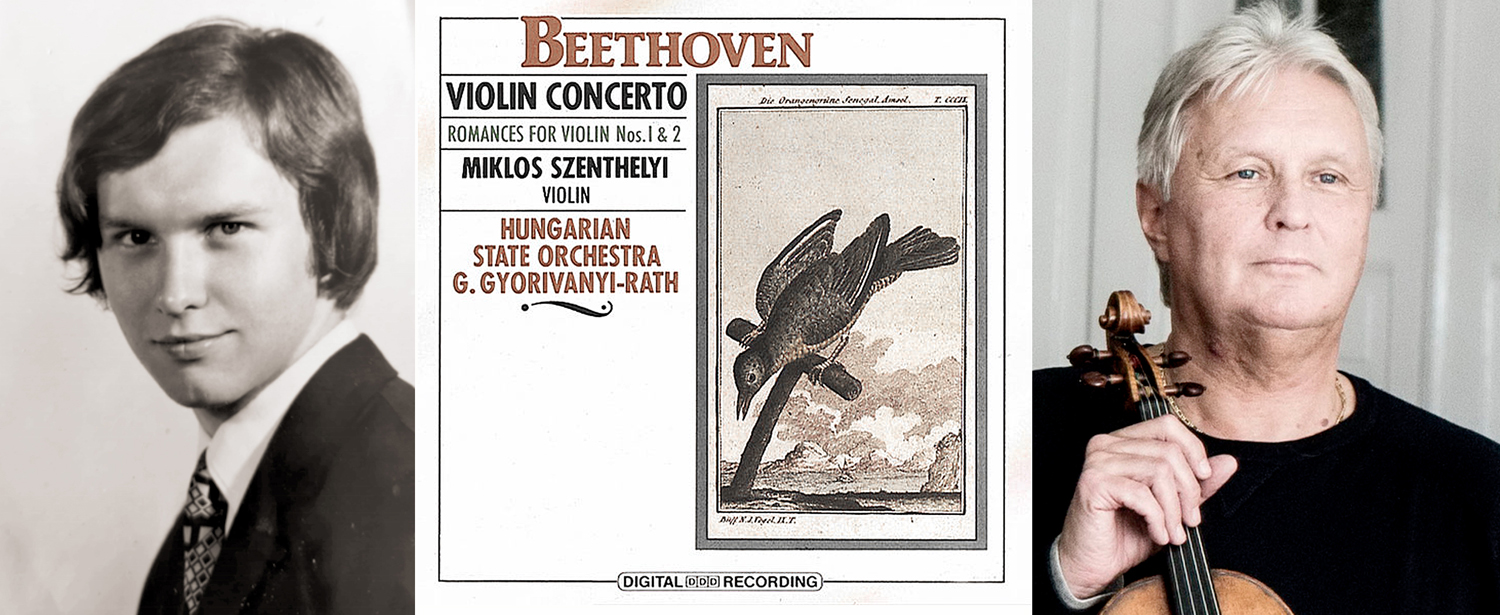
After graduation, I continued with it all, without the need to worry about grades or term papers. Every summer, there was the Eastern Music Festival, for which I acted as unofficial photographer. I sat in on master classes, went to concerts. A few were so memorable, I still keep them in my psychic storehouse: Walter Trampler giving a master class; Miklos Szenthelyi playing the Bartok First Violin Concerto — which seemed at the time the most beautiful thing I had ever heard. Szenthelyi was a young Hungarian, virtually the same age as me, and his posture on stage was almost Prussian, his tone penetrating and perfect. (I still own several of his recordings. He is now a white-haired Old Master in Budapest. A half century has intervened.)

I also first heard Yo-Yo Ma. He must still have been a teenager. He performed both Haydn cello concertos in High Point, N.C., one before intermission and one just after. Yo-Yo has been as much a constant in my life as Peter Schickele. What a pair.

I also photographed the Greensboro Civic Ballet. I wish I had paid more attention to the dance in the 1970s, but my plate was otherwise full. Many years later, I came to love dance more than any other artform. (After my late wife and I traveled to Alaska, she asked if I might want to live there. Without trying to be funny, I said reflexively, “No. Not enough dance.” It was the natural answer.)

There have been hundreds of concerts and recitals, scores of theater and dance performances, bookshelves still filled with thousands of books and CDs, and more museum and gallery shows than I can count. 

I want to write about a few of them next time. 

This is real. I need to emphasize that. It is a paper handed to me by an English major at Tidewater Community College, Virginia Beach, Va., in 1984. That’s right: an English major. The art-history assignment was to write a short research paper on an artist of the student’s choice, picking someone whose work they especially liked. 

I was sometimes astounded at what I received from students. On one test for an art history class, with sixteen students, I got the word “coliseum” spelled sixteen different ways — and none of them correct. And that despite there being two acceptable spellings: “Coliseum” and “Colosseum.” 

At any rate, this paper, on sculptor George Segal, was a particularly — what? — unusual — example. At many a faculty party, it was read aloud in full, with professors falling on the floor and holding their guts in laughter. If you have ever been a teacher, I’m sure you can understand. 

It is important, when reading it, to pronounce all the misspellings and nonsense words. This transcription has been thoroughly copy-edited and proofread. Every typo and solecism is original to the student. 

GEORGE SEGAL

It all started as a painter. George Segal, an artist fasinated by the relationships between form and space, especially with negative space. Most of Segals education was centered around painting, in fact, while persuading a life as a chicken farmer, Segal continued his education in art. In one of the xerxed photos youll notice a scene of an artists studio. In the background are some of George Segals paintings. His interest in space and form are obvious in these paintings, and are expressed vividly.

After twenty years of painting Segal felt the canvas was too confining and explored other options. However he wanted to maintain his interest in form and shape. He discovered sculppture and felt great satisfaction with this. He said Sculpture deals with basic forms. … All basic forms exists as volumes. … Volumes penetrate each other and in this way are no longer single formations. Through penetration, space is created in its entirety. Every portion of space results from it. Basic forms are positive space volumes; negative space is created through the opposition of these positiv space volumes. Positive space is life-fulfilled — negative space is force impelled. Both exist simultaneously — both conceivable with each other. Its only the simultaneous existence of positive and negative space that creates the plastic unity. Segal realized he could free the image from the canvas by emphasizing it, however he was restricted the use of color as he used in painting. He began his career in sculpture with chicken wire and wood, and is now using bandages soaked in plaster and molding it over the models. He realized that he felt dissatisfaction with the modes of painting, and that he couldnt express the quality of his own feelings and emotions.

Segals subjects for his sculpture are common, every day subjects. Life situations that tend to be ignored or forgotton. Hes sculpted a woman putting on her shoe to carpenters working an average day. He almost always have a messages or reasons behind his subject matters. The discovery of his powerful sculptures came about quite accidental. Segal was showing his last exhibits at the Hansa Gallery in 1959, and wanted to convey how painted figures aspired to a third dimension and the illusion of space was missing. He tried to acheive this idea by placing three dimensional figures stepping out of his paintings which were hung low. The rough, and loosely drawn paintings corresponded with his sculptures that were also very rough. This is when the impact of the sculptures hit the public. This became the basic principal for all of the rest of Segals sculptures. A scupture gains definition by its relationship to another consciously presenting itself. This is definitely a rule that Segal continues to use.

Segals sculptures didnt appeal to everyone. In fact it was art that some people found hard to swallow. Some criticism included that the figures only confirmed an impression of a knotty conflict between freedom and timitation that looks to physical means only for a solution. The sculptures were found to be grotesque and dull. This put Segal on shifting ground. Segal felt his sculptures had a certain realism to them, and it allowed for free expression. He proceeded with his creations in scupture. Continuing with plaster he explored the possiabilities with this media. He soon began to practice putting the wet plasrer bandages on live models to get his human forms. This was frowned upon by the public because it was not free-hand. In the nineteenth century Rodin experienced a similar dilemma with his sculpture of a ballerina wearing a real tu-tu. But the awesome perfection of this effect couldnt be ignored, aside with the originality involved. Segal took up for himself by replying that its impossiable to have a human model pose in any other way than realistically when sitting in wet plaster. He goes on to expain that people have attitudes locked up in their bidies and arent aware of this. A person may reveal nothing of himself and then, suddenly one movement is made in the wet bandages and that movement contains a whole biography. Segal tries to capture the slightest gesture in order to show the imperfection, which he considers to be beautiful. Therefore his sculptures take on more realism and more emotions than if he had molded them by hand.

Segal claims to count heavily on the human ability to spot a metaphor, the urge to read poetry into things is universal. he has a lot to say and his scuptures have a dramatic way of expressing it. He arranges his figures as if there actors on a stage. They are placed as if we were as the audience, looking in through a window. This allows for the on-looker to feel free expression as to what is going on through the window.

Abstract Expressionsim is considered hot, serious, committed and spiritually strong. Pop Art is considered to be cool, ironic , detached and materialistic. Pop Art artist were often concerned with subject matter and technique. With this in mind Segal considered himself to be a Pop artist, if he had to place himself in a category. he considered an attitude of honesty as top priority, and to him there is neither good nor bad subject mater for life is life whether your tying your shoes or working a daily job. He claims to be primarily interested in aesthetic statements and insist on the attainment of abstract forms to carry this message out. he says it opens doors of riches of everyday experiences.

Many critics agreed with Segals opinion of his art. However there were some who did not. Still others would place him in the Abstract Expressionist scene. His colorous sculptures were seen as being absrtact, and his paintings have a lot of expression to them, yet still maintaining an abstract form. The critics saw a dynamic message behind his work which is a characteristic of Abstract Expressionism.

I personally view Segals talent lying in the Environmental Happenings or Assemblages. His work has escaped the flat canvas and moved to a three dimensional scupture. Much importance is placed on the environment of his subjects. This sets a mood for the emotion. His work is a frozen happening that stimulates a feeling. Take a look at the Execution, found in the back. This is four basic figures done in basic white. Nothing extravagavt is used here, however theres a strong reaction to this scene that creates an emotion.

Its been said its impossiable to place Segal in a certain historical category on account fo the various perceptural opinions. Possiably its a mix of Pop Art, Abstract Expressionism, and Environmental Happenings or Assemblages. People are different and will see things different. This is why boundaries cannot be placed on what art is. If it strikes a feeling or emotion, I consider it art, however way it is done.

The best gift a writer can get is proof that his words are being read, and not just read, but understood. (When I was writing for the newspaper, too often I heard from readers who complained about what they thought I wrote and not what I actually wrote. Every writer has had this experience.)

The other day, I received such a gift, a small one, not meant to be anything important, but it was completely meaningful to me. This gift was from an old and dear friend who I only see once or twice a year, and to our lunchdate, she brought a 3-by-5 notecard on which she had scribbled with every color green she could extract from her colored pencil set. I doubt she knew how much that meant to me. 

It was a gloss on my most recent blog essay, in which I had mentioned how many greens I saw in the foliage in the woods and garden I was visiting, and also how many greens Paul Cezanne had managed to generate in his paintings. The card she plopped down on the table was meant to be a casual joke, but to me, it was very much more than that. We don’t always know the significance of what we do. 

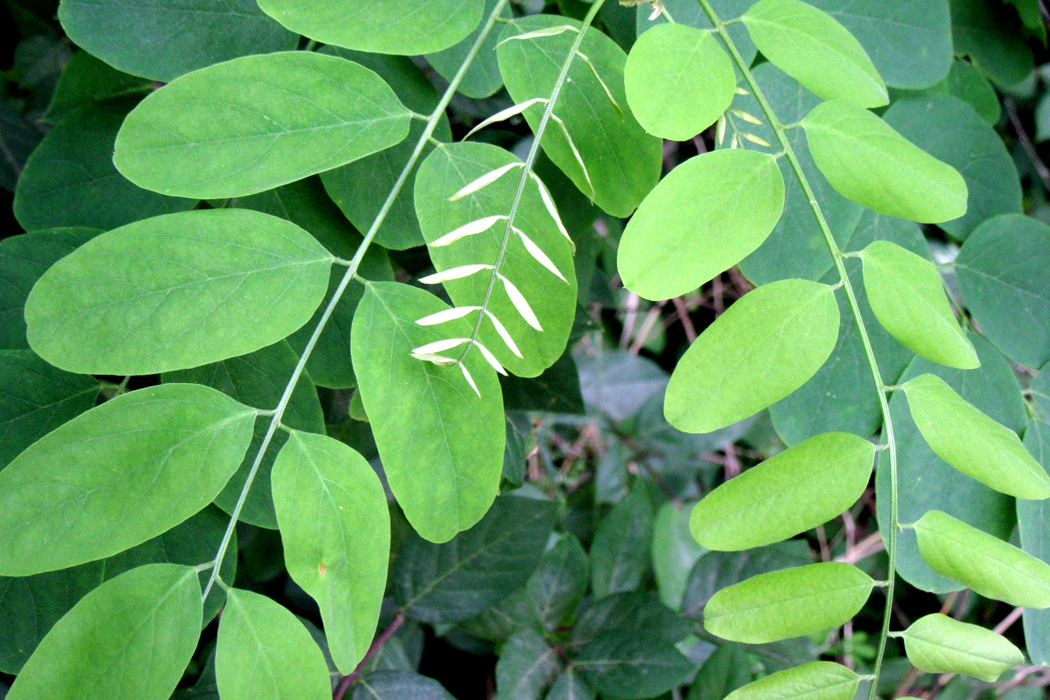
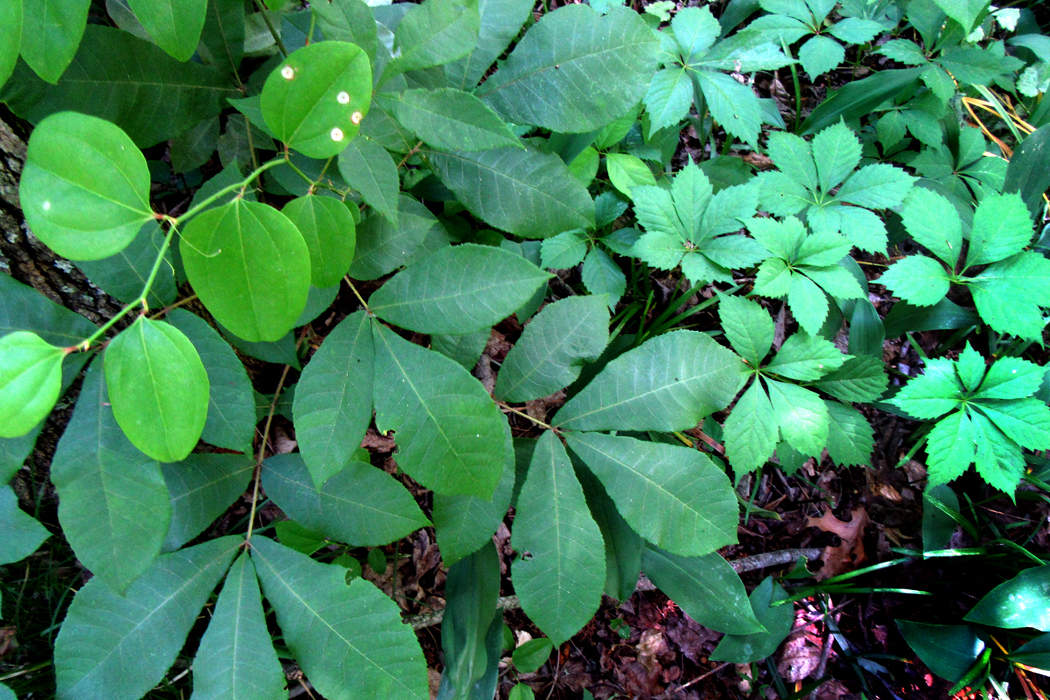
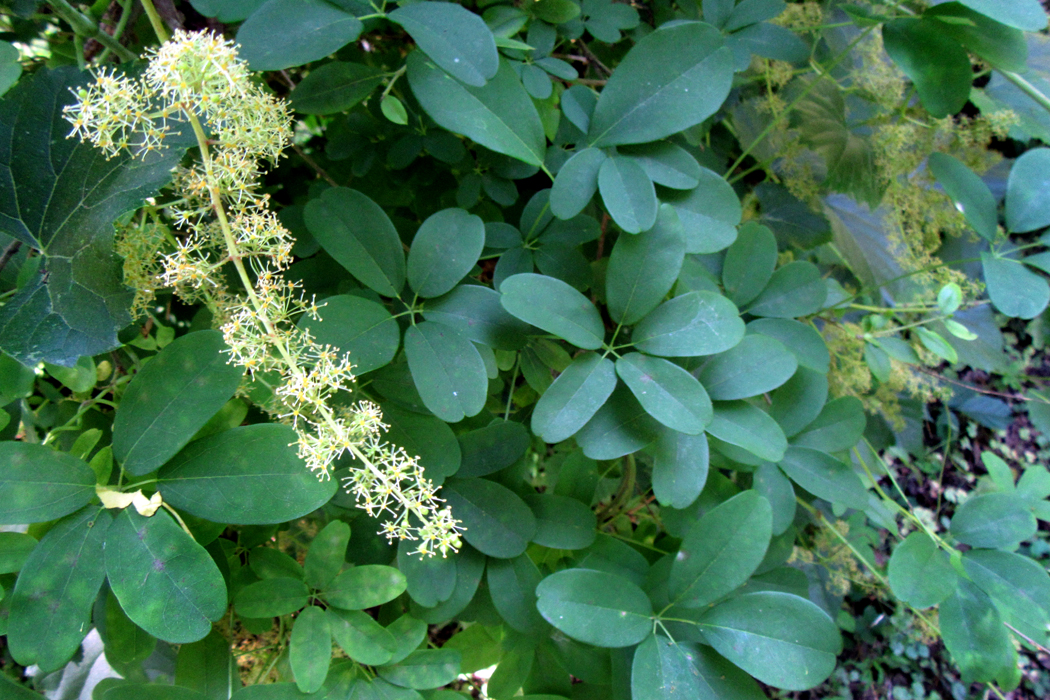
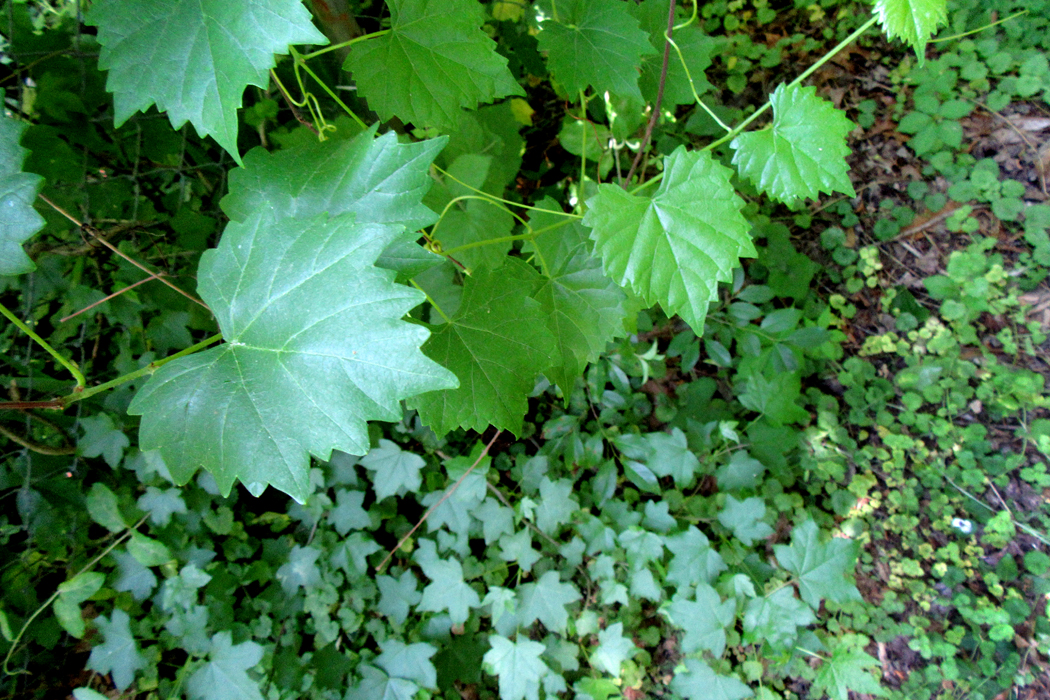
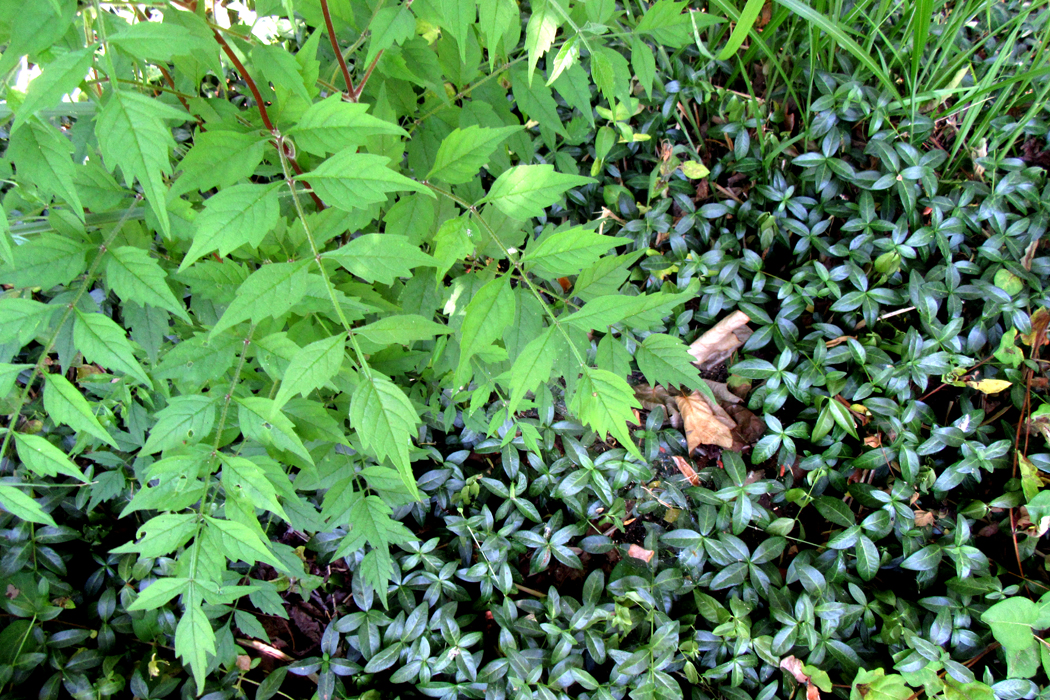
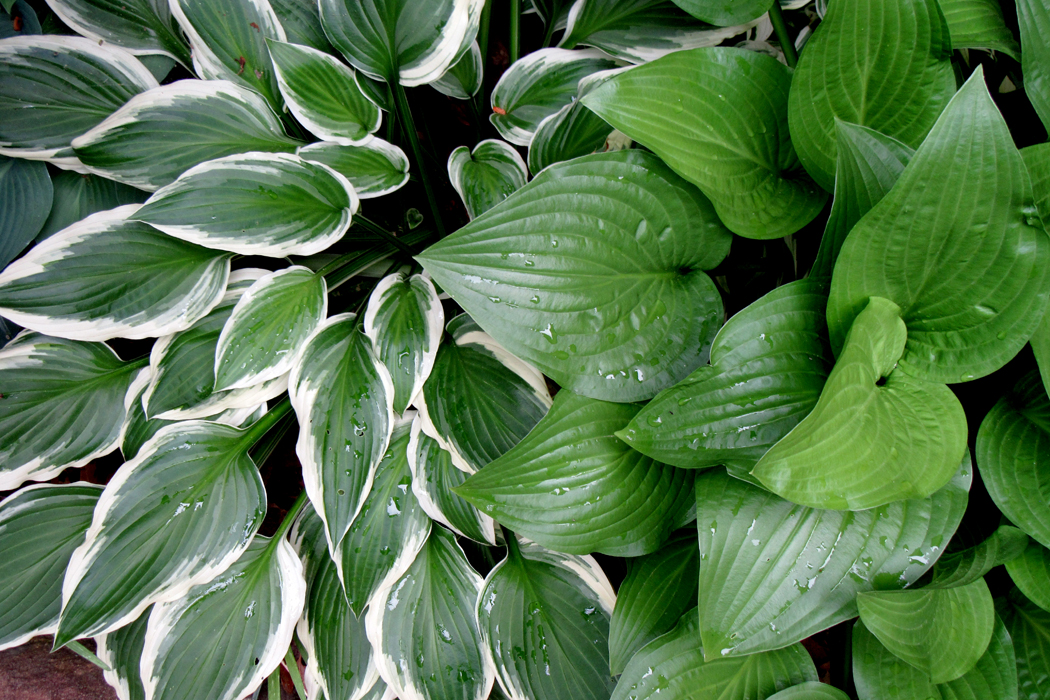
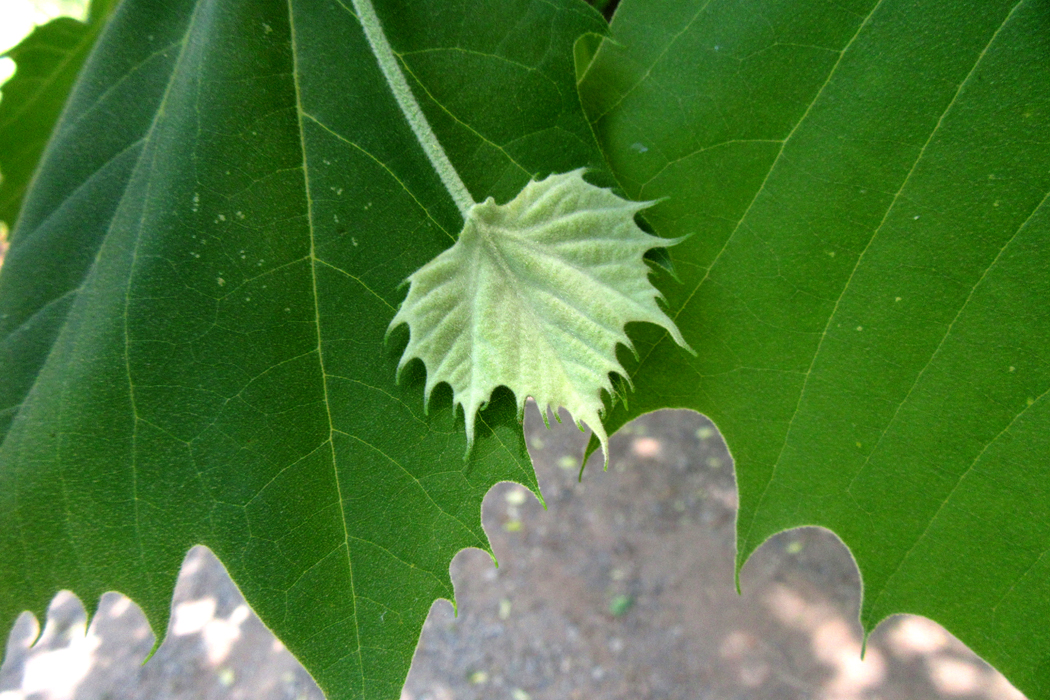
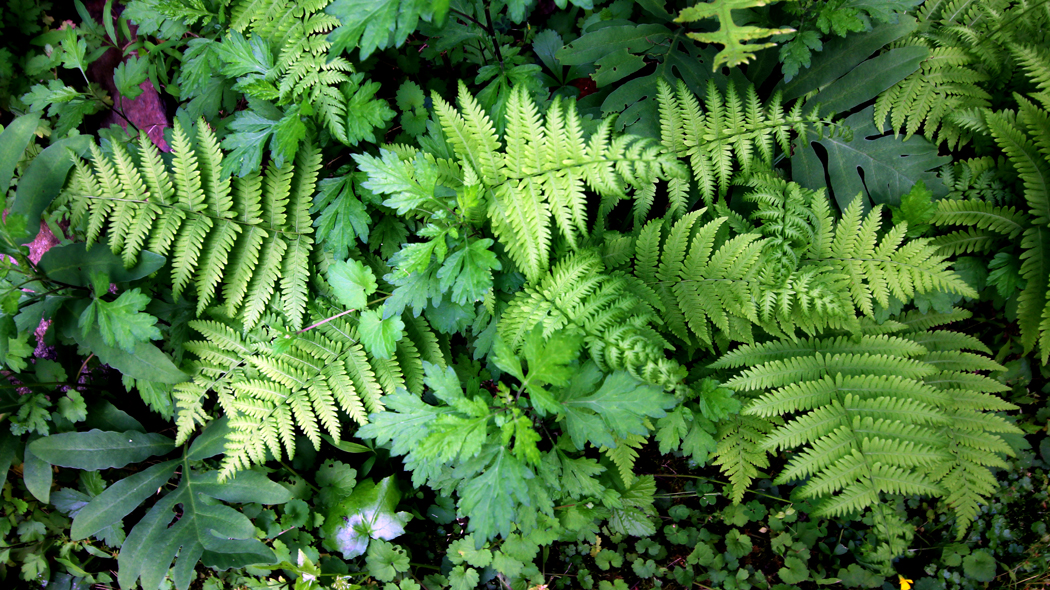
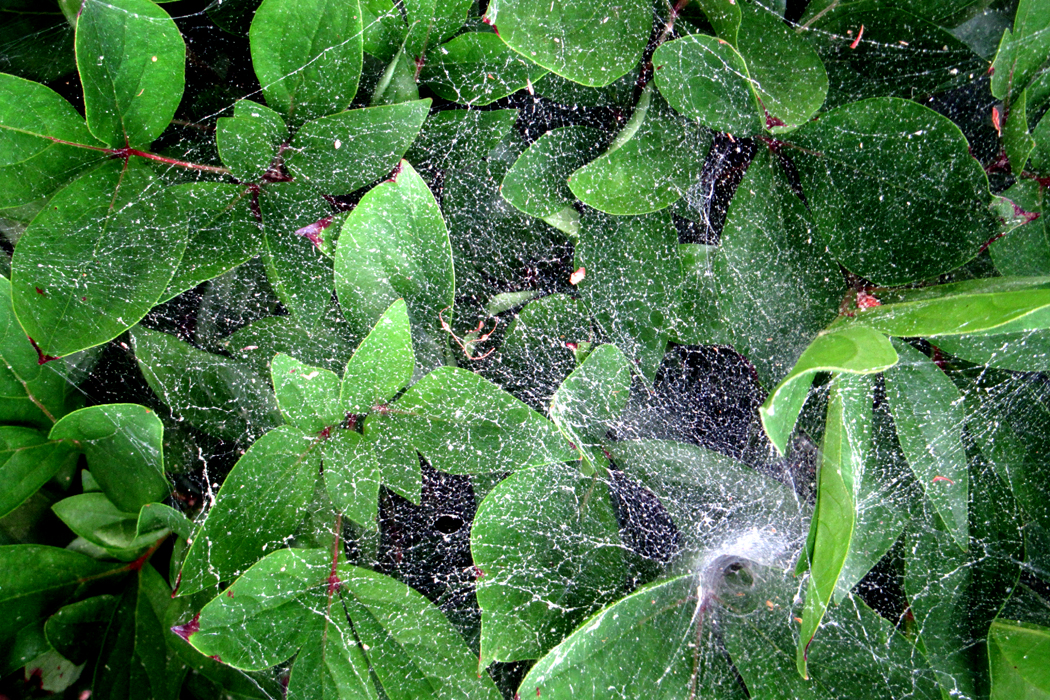
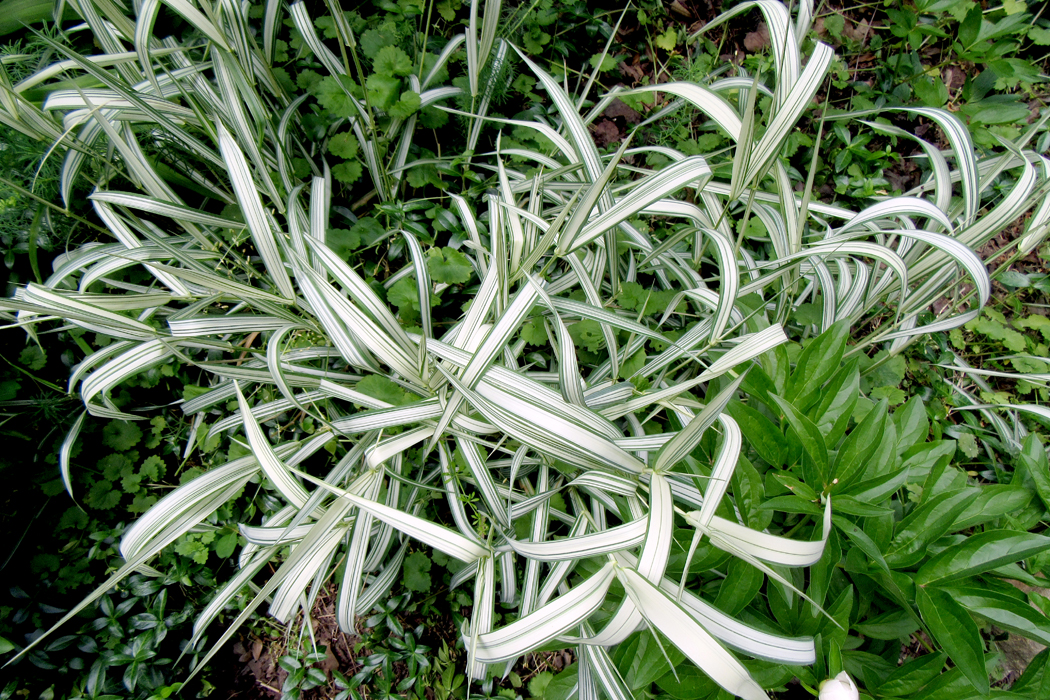
But it set me to thinking about those greens — blue-green, yellow-green, sea-green, leaf-green (not enough words for the varieties of hue) — and made me take my camera out to the garden again to gather my own set of greens. Nature gushes with them. 

There are three qualities that make an image: shape, color and texture. (Leaving aside the question of what you name the subject of a picture: “That’s a house;” “That’s a car;” “That’s my Aunt Philomela at the beach house in Boca.”) Shape can be defined by outline. Color and texture fill those outlines in and what is more, if you are making an image in black and white, texture (stippling, crosshatching, scribbling) can substitute for color. Each of these elements can be as much a delight to the eye as harmony is to the ear or flavor to the palate. 

And so, I walked through the yard drinking in the greens and pointing my camera to arrange the patterns of shape, color and texture to try to make a kind of visual mixed salad for the eye. 

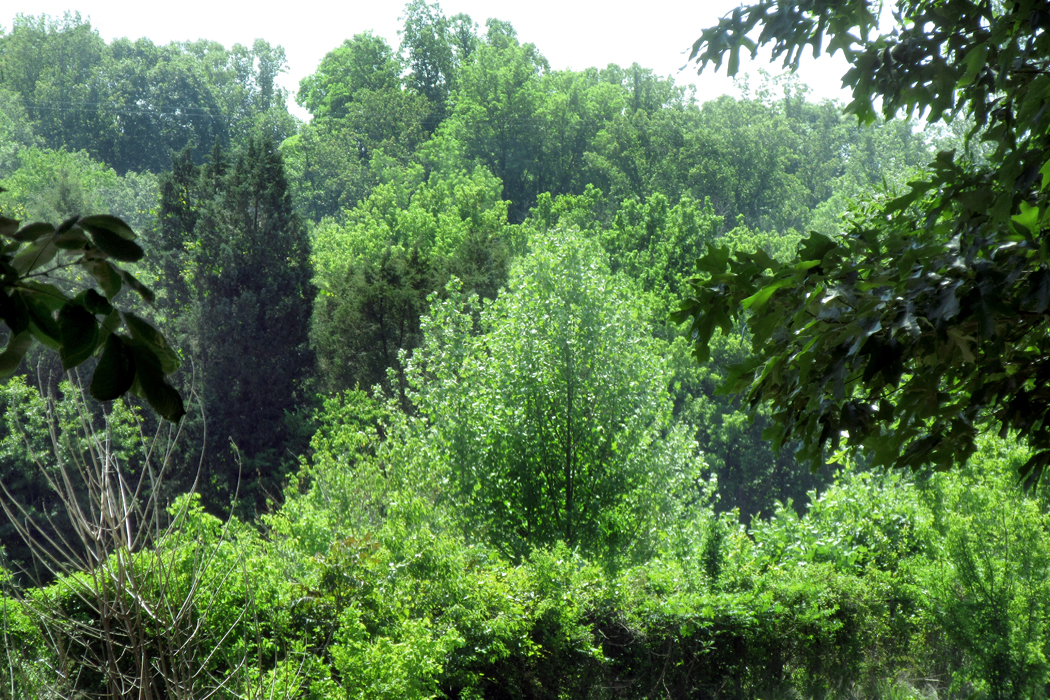
In the afternoon, I drove out into the countryside and stopped near the Mayo River — barely a river — that I had once canoed down maybe 50-plus years ago, hitting white water on the way (if the canoe had capsized, I doubt the water would have gotten higher than my knees). Along the banks were further salad greens. I gathered them all in my lens. 

The pleasure later that evening was editing the photographs, collating those shapes and textures and those luscious greens. “No white nor red was ever seen/ So am’rous as this lovely green.”

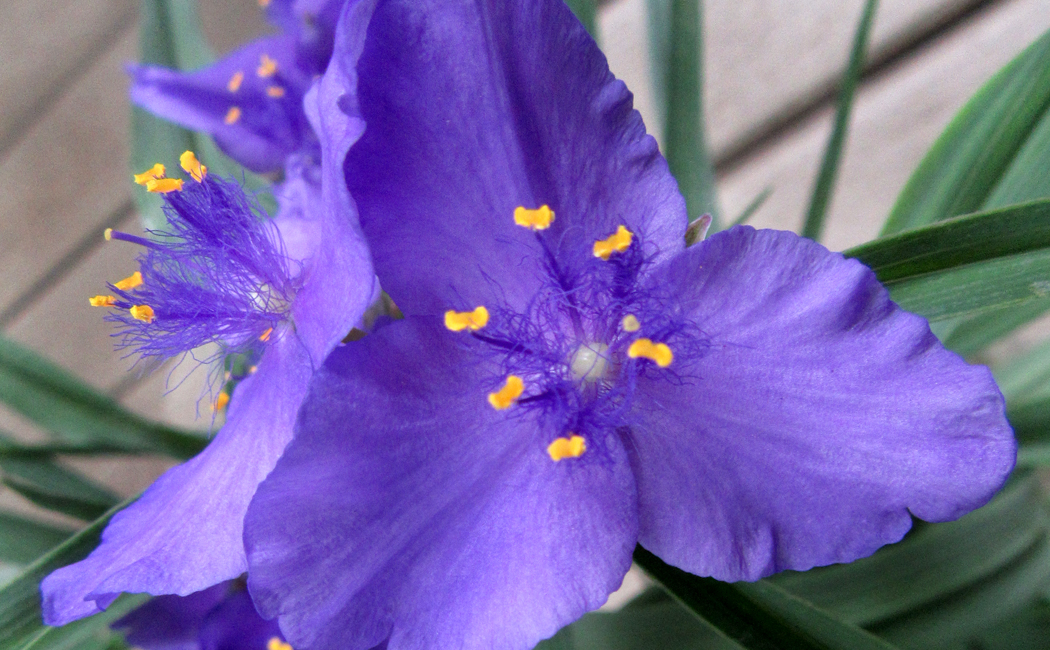
Many years ago, the professor I studied under commented offhandedly that nature never made a bad color combination. Any two colors found in nature, he said, could be placed side by side for a satisfying esthetic treat. Salmon red and pea green. The blue and yellow of a spiderwort flower. The orange and black of a monarch butterfly. 

Humans are quite capable of jarring our eyes with garish mismatches — gaze down any “Miracle Mile” for its signage — but nature, he said, is always right. Of course, our pleasure in the color-matches of nature should probably be laid at the feet of natural selection: We have evolved to love those colors and perhaps we shouldn’t be too glib about assuming that nature had us in mind when she plopped the buttercups next to the violets along the highways. 

 The riot of greens I saw and photographed played off against each other, making color combinations as rich in greens as the roadside flowers made of whites and yellows. 

And the various textures of leaf surface made their own contrasts. 

And the lights and darks, as shadow and light hit the foliage, gave them visual depth. 

Deep in one image, the bright green leaves nearer the surface hid the shadowed poison ivy, almost hidden in a cavern of green.

Leaves come in varieties of all of them. And when you layer one next to another, the contrast can keep the eye interested. 

In the process, I found myself drinking in not just the colors, but the varied shapes, creating patterns and textures that delighted my eye. 

Shape against shape, color against color, texture against texture: the analog of variety in the world, a variety that means we can never grasp it all — there is too much. 

One gets to know the plants in the woods near where you live, perhaps even name them: Duchesnia, Tradescantia, Helianthus, Ranunculus. They are part of what makes your home territory comfortable and familiar. Clovers, mosses, ferns, plantains, dandelions.  

And there is excitement when you enter a new biome and come across new greens, like the gray-green greasewood of the Sonoran Desert or the euphorbias of South Africa, each with its idiosyncratic shades and tints. 

Before the photographs from space showed us the dominant blue of our world, the Earth was traditionally called a “green planet.” It is green that makes life possible. Without it, the planet would be bare rock surrounded by the blue sea. 

Each time I visit this part of the state, I can’t help but set myself a task — a kind of art project, to try to organize a different way of seeing. A few days ago, my task was to look straight down at the ground to see what it looked like. I made more than a hundred photographs I could use. After I wrote that blog entry, and after my friend gave me her gift, I began a second project, to see how many greens I could find, how many leaf shapes and contrasts I could photograph.
These that I’m presenting here are just a small sample. But I hope they are worth looking at, at least as a tasting menu of delicious green.

Click any image to enlarge

According to European-Western tradition, there are four cardinal directions: north, south, east and west; and we mark them on a map by making the sign of a cross: north, south, east and west. Dominus Vobiscum. But Western culture tends to value a map rather more than the ground under your feet. If we take a larger view of it all, we should acknowledge two more cardinal directions: up and down. We live in three dimensions, not two. A map is only a diagram. Et cum spiritu tuo.

And when we make images — photographs, drawings, paintings — we tend to look along the flat plane of our cardinal directions, which means also, the plane of our standing vision. And if we photograph flowers, we tend to make our images like the identification photos in a nature guidebook. We look at them as if they were as tall as us, or we as ground-hugging as them. 

The bias is to ignore the sky above, the mud below. I spent some hours yesterday attempting to break my own tendencies and see if a shift in perspective might give me a fresher look at the garden. And so, I made a series of photographs pointing the camera straight down at the flowers from the top. 

The first image I made, when I put it up on my screen, reminded me of something. It took a moment, but then I had it: the Pleiades — the Seven Sisters in the night sky in the constellation Taurus. Here are the flowers:

Here are the Pleiades:

Looking down in the day was a mirror of looking up at night. Bunches of flowers, especially roadside wildflowers, often remind us of stars in the night sky. It’s why we name them cosmos, stellas and asters. 

Certainly the flower that has meant the most to me, emotionally, through my life is the aster, named for the stars. I remember a day, some 40 years ago, driving with my then-soulmate (is there a sadder hyphenated word in the language?) near Port Jervis, N.Y., and coming across an abandoned field, maybe a couple of football fields in extent, that was crammed with asters, thistles and ironweed, so thick on the ground there was barely any green showing through. It was hysterical with blue, and I thought it was the most beautiful sight I had ever seen. Since then, I have sought any semblance of that abundance. I’m not sure a single life affords more than one of those moments. 

And so, I am walking through my sister-in-law’s garden in North Carolina and holding my camera flat parallel to the ground to see what these flower-stars look like from an angle we don’t normally see — or at least, think of them. 

Over and over the star analogy shown through. Constellations of yellow or white against a sky of green. 

Even the leaves themselves can be stars:

Patterns made: line-ups, triangles, squares, quincunx, spatters and grids. 

There is a Medieval trope that everything in Heaven finds its analog in the sublunary world (much like the Renaissance idea that everything in the world is mirrored internally in the mind). And I certainly felt that correspondence strongly while finding my floral models to photograph. 

It was the looking down that made the connection, the opposite of the looking upwards at the night sky. But looking down — straight down, if I could avoid my own clumsy feet — gave me more than that. I found that I was photographing more than calyx and petal, but discovering just how many distinct greens nature blares forth. 

Historically, painters had a limited number of pigments to use when painting leaves and trees. They could modulate those hues with the admixture of others, but there was a limit. The trees of Claude or Titian are mostly monophonic rather than stereo. The artist who freed green from those confines was Paul Cezanne, whose paintings contain more greens and more blues than any artist before or since. His eye for tint and shade was phenomenal. I remember when I first came to appreciate the work of Cezanne. I had seen his paintings only in reproduction and always thought of them as rather dull, even muddy. But visiting the National Gallery in Washington, D.C., I found a wall of the still lifes and was knocked out by the glowing depth of color: color I had never experienced except under the influence of herbs. But those chemical-induced colors were vaporous compared with the earthiness of Cezanne’s greens, blues and yellows. 

And so, there I was, camera in hand, looking earthward and seeing the exuberance of May in Piedmont, North Carolina, and the blistering variety of green that sprouts from the ground.

I walked around the property, head held downward, and finding such a joyous variety under my feet, that I wound up, in the space of under an hour, taking at least 100 usable photographs — images I would be proud or eager to share with the enthusiasm of a convert. The greens made patterns; the blossoms made patterns; the leaves were shapes to pleasure in; the colors were delicious. 

The esthetic sense, however, awakens an awareness of yet a seventh cardinal direction, which we might call “center.” It is the inward direction that is privy to the other six and gives them meaning and purpose. North, south, east, west, up, down, and in. Each in some way a reflection of all the others.

I have traveled much in each of the cardinal directions, north to the Canadian arctic, south to the Cape of Good Hope, eastward to Europe and finally, the Pacific coast. I have gone up in aeroplanes  and cathedral bell towers, and down in chthonic mine shafts and vast caverns, but most of all, I have gone inside of myself. The experience of nature — but also the making and partaking of art — expand the inner world, adding continents to the mental globe, possibilities of understanding, and depths of compassion. 

Looking down at the humble soil and its profuse variety keeps one from becoming tired of life. Paying attention is, in some ways, coequal with life itself.

Next — perhaps in tomorrow’s rain — I will extend my interior travels by looking straight up to see what is there.

Click on any image to enlarge

We’re approaching a full year of pandemic lockdown, barely leaving the house except to restock the larder. But at least the house is full of books, music and DVDs. It would take more than a single year to run out. 

But it puts me in mind of the old cliche: What book would you take to a desert island? It’s a silly question, really. If you are stranded on a desert island, a source of fresh water is a need infinitely more immediate than a good read. But even if we take it as simply a trope, the answers people give are seldom very satisfying. Most list a book they enjoy, which is fine, except that you can only read most of those books once, maybe twice, before they grow stale. 

No, the trick is to find a book that can reward multiple re-readings. And the same for “desert island music” or “desert island movies” (ignoring the problem of finding a DVD player in the middle of the Pacific, or the electrical outlet to plug it into.) Just picking favorites is a sucker’s game. How long would it take before listening to Stairway to Heaven for the hundredth or thousandth time to reduce you to a gibbering idiot? 

So, I set to make a list of things that could reward many traversals. This is, of course, a game and is utterly meaningless — but then most fun is. I task each of you to find a list of your own of things you could stand listening to, re-reading, or re-watching for endless times. I’m going to present my choices as they would an awards show: nominees and winners. 

Desert Island book

The sign of any good book is its re-readability. But even some of the best have just so much to offer. Madame Bovary is a great book, but once you’ve unwrapped its meaning, you are finished — unless you can read it in French and can unpack its verbal brilliance. I’ve seen many desert-island lists that offer things like Harry Potter books or Diana Gabaldon’s Outlander. And no knock on them as good reads, they aren’t books you can marry for the long haul. 

My nominees for Desert Island Book are:

War and Peace, by Leo Tolstoy. This may be the best novel I have ever read, full of people who are so real they seem not to be characters in a book, but transcriptions of life. I am in awe of this book. 

Moby Dick, by Herman Melville. This counts as my favorite book, and I have indeed re-read it many times — at least I’ve re-read the opening chapter, “Loomings,” scores of times. It was my original problem with the book. I loved Melville’s way with words so much, that each time I picked up the book, I’d start from the beginning, which made it a very long time before I ever actually finished the thing. When I pick it up again, I’ll start with “Call me Ishmael.” Again. 

Tristram Shandy, by Laurence Sterne. This is the funniest book I’ve ever read (pace P.G. Wodehouse), but funny books tend not to outlive their punchlines. You can only tell a joke once to the same audience. But Tristram Shandy isn’t a joke book, and its inhabitants are so ridiculously human and its wordplay so trippingly choreographed, that it never wears out for me. 

À la recherche du temps perdu, by Marcel Proust. This seems like the perfect choice for the desert island. First, it is exceedingly long — seven volumes and more than 4,000 pages. Second, it is filled with memorable people and discursive episodes that never seem to come to a final conclusion. It goes on. And on. The biggest problem with it, in English, is to find a decent translation that isn’t too Victorian sounding and stuffy, or too modern and chatty. 

Ulysses, by James Joyce. This is a book that not only can stand a re-reading, it requires it. No one can get it all in one go-through. Joyce’s prose, in those chapters that aren’t purposely difficult, is the most perfect prose I know in the English language. Its cadence is musical, its word-choice precise, its flavor yummy. And the difficult chapters — you know who you are — take parsing like so many physics formulae and can keep you fully occupied while you wait for a passing steamship. 

And the award goes to:

Ulysses. It wins because it is in English to begin with. You can never be sure with Tolstoy or Proust, that you are getting what is in the original. They are always at a remove. Ulysses is your own tongue, taken to its stretching point. I can’t imagine, say, reading it in a French translation, or in Mandarin. It is not transmutable. And it can stand a lifetime of re-reading without ever being sucked dry. 

Desert Island Music

This is the category that most exposes the problem. For most people, music means song, and no three-minute ditty can wear long enough to keep you going under the coconut tree. This isn’t a place for your favorite tune. This then requires something like classical music. But even most classical music can’t take the over-and-over again requirements of the island isolation. The obvious choice would be Beethoven’s Ninth, but really, you can only listen on special occasions. Over and over would be torture. 

My nominees for Desert Island Music are:

 —Quartet in C-minor, op. 131, by Ludwig van Beethoven. Really, any of the late quartets. But this is music so profound and so emotional that any barrier between the highest thought and deepest emotion is erased. They are the same thing. The C-minor quartet has six movements and each is distinct and each is a pool to dive deeply into. 

—The Goldberg Variations, BWV 988, by Johann Sebastian Bach. Thirty variations on a simple sarabande tune, arranged with a complex cleverness hard to credit. This is music to last a lifetime. Indeed, it was the first thing that pianist Glenn Gould ever recorded and the last thing. To paraphrase Sam Johnson, “To tire of the Goldbergs is to tire of the world.” 

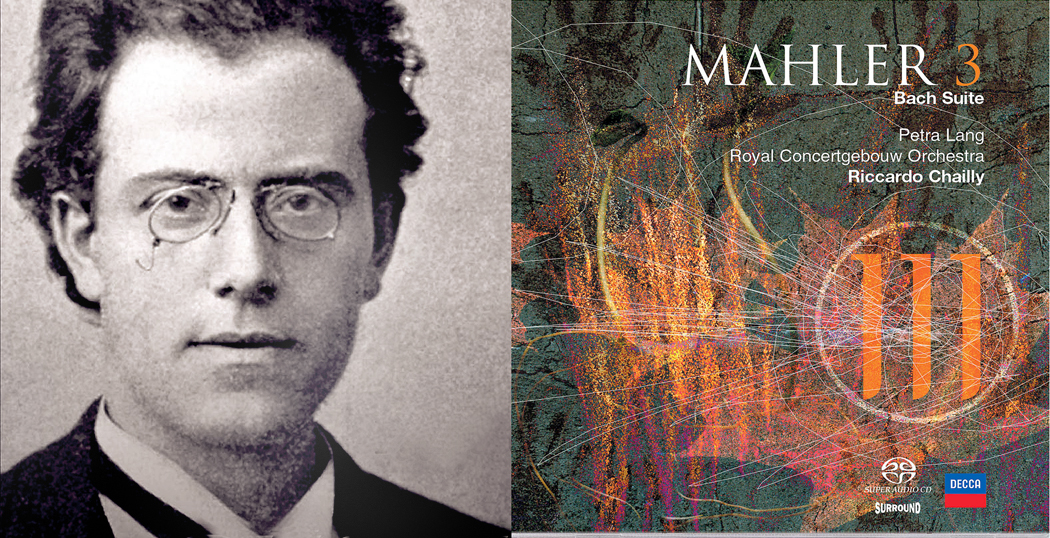
—Symphony No. 3 by Gustav Mahler. The composer said a symphony “should contain the world,” and no work more completely attempts this than Mahler’s Third, with a first movement that is longer than most full Haydn symphonies (“Pan Awakes: Summer Marches In”) and ends with an adagio just as long, which is built from a theme borrowed from Beethoven’s final string quartet and utters “What Love Tells Me.” I cannot hear the work without disintegrating into a puddle. 

—The Passion According to St. Matthew, BWV 244, by Johann Sebastian Bach. This is the human condition in sound. All of it. No music I know of is more profound nor more emotionally direct. It lasts for nearly three hours and includes not only all the world, but heaven and hell, too. From the opening chorus, with three choirs and two orchestras, to the final “Wir setzen uns mit Tränen nieder,” which expresses infinite sorrow, this is music that shoots directly into the psyche and soul. It cannot be worn out. 

—24 Preludes and Fugues, op. 87, by Dmitri Shostakovich. I considered Bach’s Well Tempered Clavier, but I already have Bach down twice. He is the obvious choice for desert island music, so rich is his music, but I also think of Shostakovich’s version, which is just as varied both technically and emotionally. I could live with this for a very long time. 

And the winner is: 

St. Matthew Passion. This is so all-encompassing, so complex technically, so disturbing emotionally, that I cannot bear to give it up. I am not religious and the doctrinal aspects of the story mean nothing to me, but the metaphorical import is overwhelming. This is what it means to be human. And what music!

Desert Island Film

Of course, the film you want on a desert island is a documentary about how to get off a desert island. And if you need a film you can watch over and over, I’ve proved already I can do that with the 1933 King Kong. I’ve watched it a thousand times since I was four years old. But that is not the kind of thing I mean, not what can sustain you through multiple dives into a film’s interior.

My nominees for Best Desert Island Film are: 

Rules of the Game, directed by Jean Renoir. La Règle du Jeu (1939), which many critics have called the best movie ever made, is certainly the most human, humane and forgiving film ever, while at the same time being satirical and biting about human foible and hypocrisy. Yes, it’s in French, with subtitles.

La Dolce Vita, directed by Federico Fellini. The great 1960 Italian classic of the Roman “sweet life” in the postwar years shows us Marcello Rubini (Marcello Mastroianni) as he negotiates personal relationships, professional crises and spiritual doldrums. The meaning of the movie has been debated for 40 years. It has been seen as anti-Catholic and as a reactionary embrace of religion. It has been seen as an angry critique of modern life, but also a celebration of it. It has been called pornography, and also one of the most moral movies ever made. It’s rich enough to embrace many meanings. Fellini said he was not a judge, “but rather an accomplice.”

Andrei Rublev, directed by Andrei Tarkovsky. If La Dolce Vita was ambiguous, Andrei Rublev is close to impenetrable. There is no slower film, outside Andy Warhol’s 8-hour-long Empire State Building. It is not so much a story as a dream, full of significance, but not explainable meaning. It is so unutterably beautiful it simply doesn’t matter what is happening on screen.  I love this film. I don’t mean enjoy, I mean love. 

Fanny and Alexander, directed by Ingmar Bergman. Some films are art, some are great stories, some are deeply understanding. Fanny and Alexander is all three. It exists in multiple versions — a single one for movie houses at 188 minutes and a 312 minute version originally intended as a TV miniseries. I choose the longer version for my desert island. This is Bergman at his most human, least artsy and symbolic. It can engulf you. 

Dekalog, directed by Krzysztof Kieślowski. Polish director Kieślowski made this 10-part film on the Ten Commandments, although not in any literal way. Each film is directed in a different style, and none is religious. The two best concern “Thou shalt not kill” and “not commit adultery,” Your heart will be wrenched from your chest and stomped upon. 

And my choice is:

Rules of the Game. I cannot count the number of times I have watched this film. Not as many as King Kong, I guess, but close. And I know from experience it can hold up under uncounted viewings. There is plenty to enjoy from a filmmaking point of view, just as there is in Citizen Kane, but it is also a profoundly forgiving film — the single most important quality in a human life. 

Bonus 

I have a few more categories, that I’ll suggest in abbreviated form. There you are on the desert island with a bookshelf and a DVD player. You can add a desert island opera, a desert island epic poem, a desert island play. 

Opera

An art form that puts it all together in one package, opera would be an excellent way to spend your island time. But again, we have to consider which opera can stand multiple viewings, that has multiple meanings or interpretations. We all love La Boheme, but there is only so much there under the hood. And Wagner would just wear us out. We are down to Mozart. The Marriage of Figaro is a perfect choice, but I’m going with my favorite: 

Don Giovanni, by W.A. Mozart and Lorenzo da Ponte. Is it a comedy? Is it a tragedy? Is it a dramedy? Whatever it is, it is filled with real people doing things real people do (aside from talking to statues and falling into hell, that is) and with some of the best music Mozart ever wrote. Fin ch’han dal vino

Epic poem

There is not a wide field to choose from, and how can you pick among the Iliad, the Odyssey, Dante’s Commedia, or Milton’s Paradise Lost? (Notice, I did not include Vergil. Dull stuff). Nor can I pick an Icelandic saga or a Medieval droner, like Parzival or the Nibelungenlied. I’ve tried slogging my way through Tasso and Ariosto, but get dragged down in slow motion. There is just one for me, and I re-read it every year: 

The Iliad, by Homer. How can the first entry in the Western canon still be the best? Nothing beats Homer. His imagination is immense, from the largest cosmic scene to the fingernail of a flea, it is all encompassing, and moves with the instantaneity of movie cutting from the one to the other. Actually, if I had to leave behind novel, music, film and everything else, and had only one companion with me, it would be the Iliad. 

Live theater

What do you mean “live theater?” We’re on a desert island. But, if I can imagine a DVD player and an electric socket on the bare sand, I can imagine a stage play. This is all theoretical anyway, remember? 

Angels in America, by Tony Kushner. Without doubt the greatest thing I’ve ever seen on the live stage is the original New York production of Angels in America — both parts. It is overwhelming, and will demonstrate to anyone who hasn’t had the experience yet, that live theater is unmatchable by seeing the same thing on PBS Live From Lincoln Center or even in Mike Nichols’ filmed version. Wow. And I’ve seen some great Shakespeare live, even by the Royal Shakespeare Company. Angels rules. 

————————————

And so, we’ve turned an isolated desert island into a library, concert hall, movie house, opera house and legitimate stage. Far from being solitary, we’re crowded. Pandemic be damned.

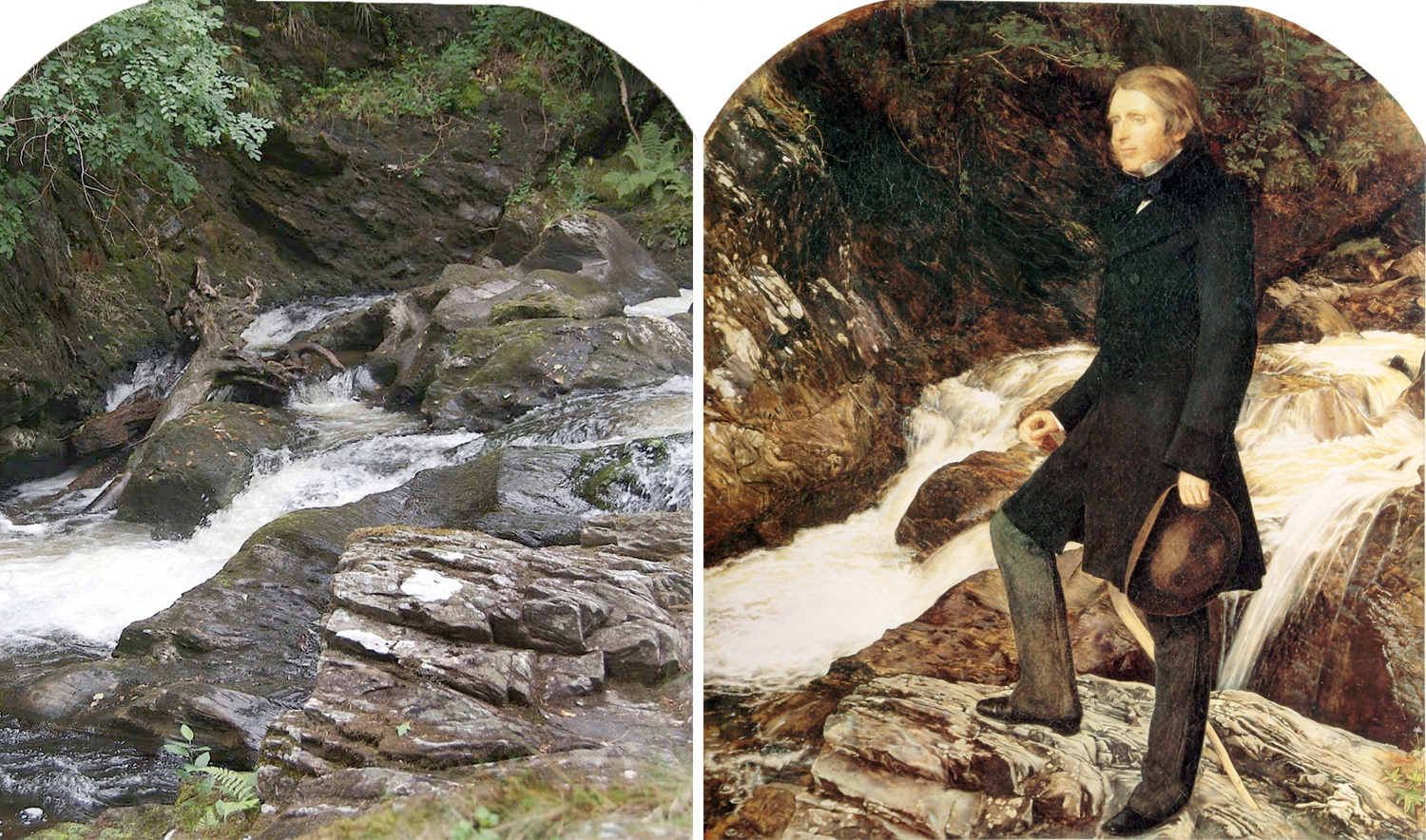
In the summer of 1853, painter John Everett Millais and writer John Ruskin traveled to Brig o’Turk, a tiny village in the Scottish Highlands, with their friend Sir Henry Acland and Ruskin’s wife, Effie. The purpose was for Millais to make a portrait of the writer in the rugged landscape. 

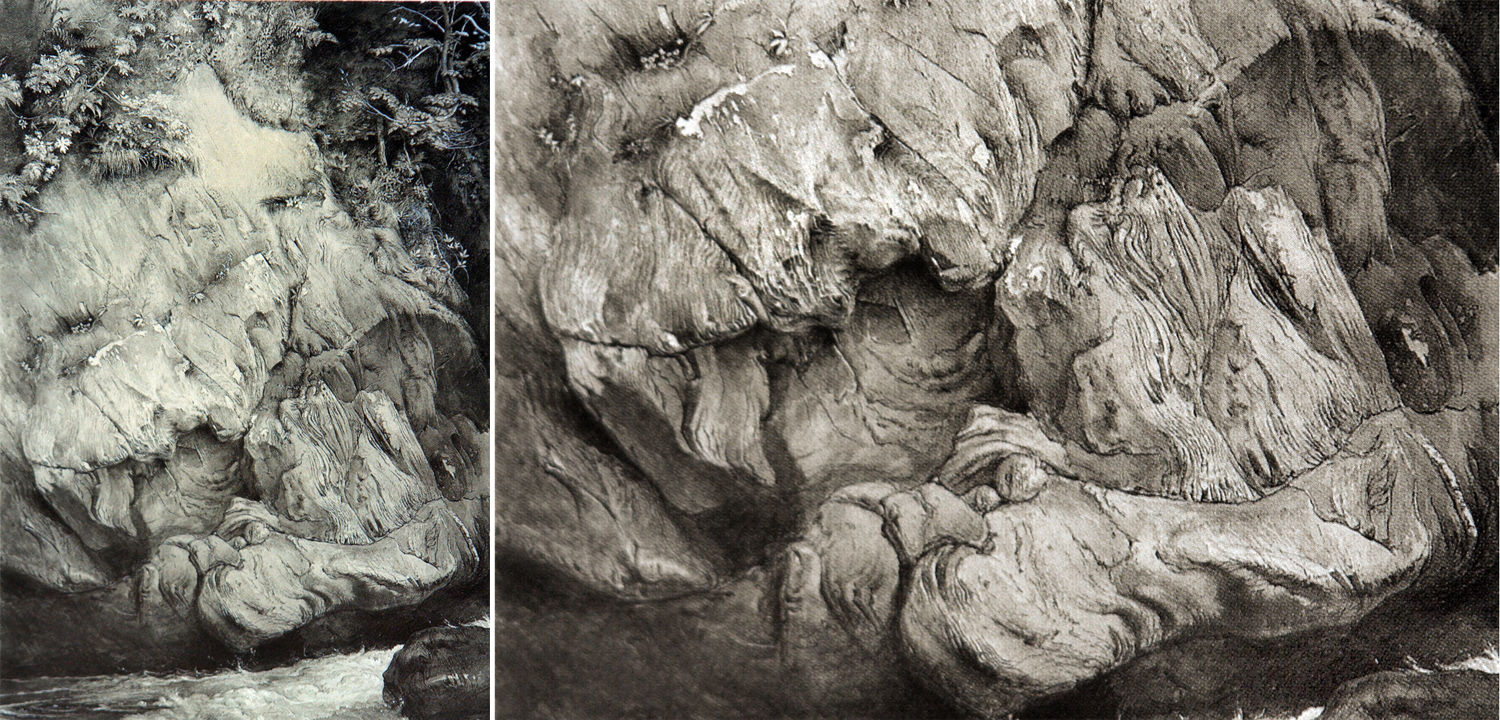
While Acland held the canvas steady on the rocks and swatted away midges, and Millais painted al fresco, Ruskin himself took to drawing rock formations along the freshet where the painter worked. The large drawing of Gneiss, With its Weeds was the poster art for a 1993 Phoenix Art Museum exhibit, “The Art of Seeing: John Ruskin and the Victorian Eye.” I fell in love with the drawing on sight. 

It had everything I respond to: texture, detail, close observation and an attention to the world as it is that is as close to love as is possible to hold for the inanimate world. Ruskin was an astonishing draftsman and many of his drawings and watercolors are part of the collection of the Ashmolean Museum in Oxford University. I much prefer his visual art to his writing. Ruskin was probably the most important and influential art critic of the 19th Century, and I find his writing truly insightful, but I would rather crack gravel in my teeth than have to read his prose, which is the heaviest most tedious sort of Victorian fustian possible. Sentence by sentence, lightning flashes; paragraph by paragraph, he is soporific; chapter by chapter, he makes you want to point a pistol at your uvula. 

Here is a chapter opening from his Stones of Venice:

You better rehydrate after reading a paragraph like that. Best to take Ruskin in wee small doses and think him a genius. His shorter sentences can be memorable — in a good way. 

“Remember that the most beautiful things in the world are the most useless: peacocks and lilies, for instance.” 

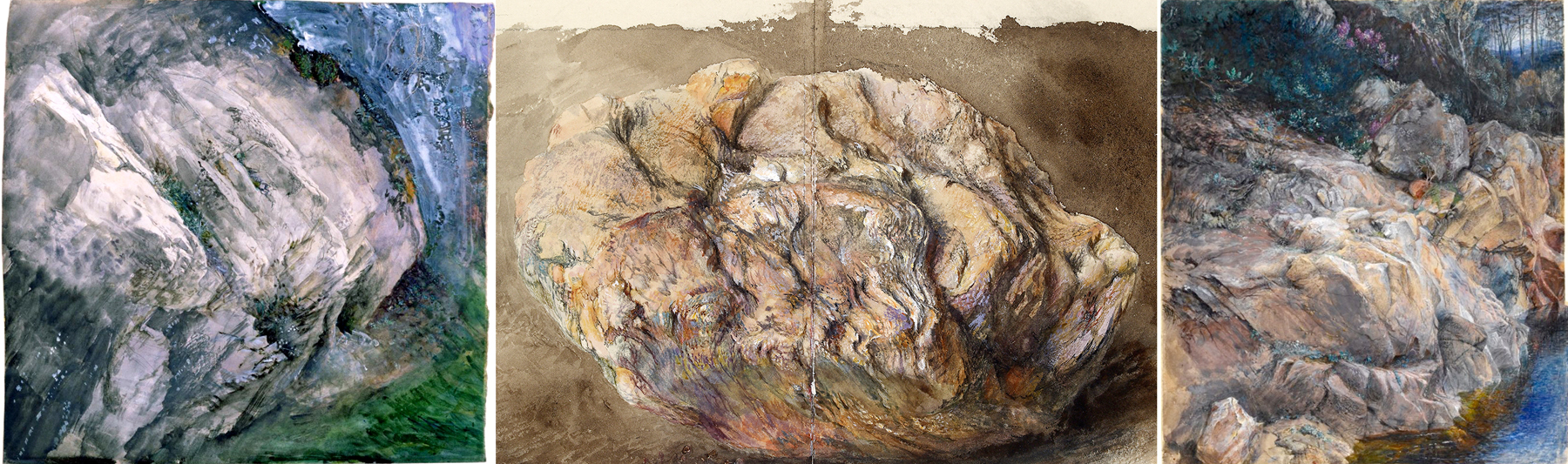
And rocks. Stone carved and molded, left striated and torn by time and weather. Many of Ruskin’s drawings are of stone, or rocky outcrops.

“It is not possible to find a landscape, which if painted precisely as it is, will not make an impressive picture,” he wrote in Modern Painters. “No one knows, till he has tried, what strange beauty and subtle composition is prepared for his hand by Nature.” 

Ruskin believed that close attention paid to the things of this world reaped benefits intellectual and spiritual. That a minute inspection of a piece of turf, such as Durer painted, contained all the seeds of a spreading universe. Indeed that questing after spiritual rewards through oneiromancy, divination, crystal ball or thumps under the table, would lead away from the genuine sense of transcendence available from simply paying close attention to the here and now. 

He wrote in Modern Painters: ”The greatest thing a human soul ever does in this world is to see something, and tell what it saw in a plain way. Hundreds of people can talk for one who can think, but thousands can think for one who can see. To see clearly is poetry, prophecy and religion, — all in one.” 

Hence his willingness to spend weeks on a simple drawing of an outcropping of gneiss in a watercourse clumped with weeds. 

(And weeks not paying attention to Effie, who received her attention from Millais, who also made numerous sketches of her. He painted her sitting beside a waterfall, or quietly sewing, with foxgloves tucked into her hair. He also helped Effie with her own drawings, took long walks with her in the evenings and sheltered with her under a shawl, waiting for the rain to stop. In turn, she read Dante to him. She eventually left Ruskin and, after an embarrassing annulment, married Millais. Embarrassing in that it turned out Ruskin had never consummated his marriage and was actually panicked, on his wedding night to discover that his bride had hair “down there.” His beloved Grecian marble goddesses did not. Ah, but they were stone. As for Effie and Millais: They had eight children.)

But back to that 24-by-28-inch drawing. It has stuck with me for all these years. There is something about that smooth-weathered gneiss that ticks a sympathetic spot in my psyche, purely sensuous. I can feel its surface in my imagination, its hardness and texture. The roundnesses of its protuberances. The very temperature of the stone under my fingers. 

And in my own work, I have often attempted to mimic its sense of texture and quiddity. I have photographed many a stone face. 

Actually, I have been photographing rocks for long before I saw the Ruskin drawing. Some of my earliest remaining images are of rocky landscapes, and the first show I had, almost 40 years ago, was titled, “Rock Water Green.” 

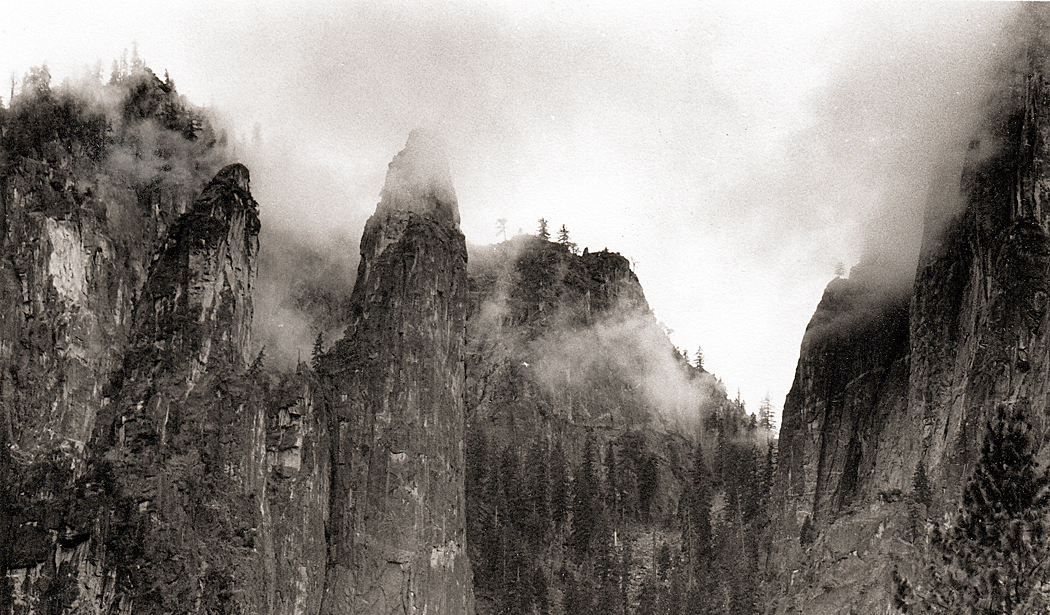
At first, when I was young and ignorant, I wanted to make stunning landscape photographs. Inspired by the work of Edward Weston, Ansel Adams and Paul Caponigro, I wanted to capture the sublime in black and white. 

But over time, I became much more interested in using the camera to focus, not the lens, but my attention, and more often, on details rather than grand compositions. That aspect had always been there, but now, it became predominant. 

But, because I was working in silver and chemicals, almost all of it was in black and white. The advent of digital gave me an opening to a different way of seeing — in color. Color and black-and-white are completely different things; monochrome emphasizes form and texture while color almost makes you forget the form. Shadows are the jewel of black-and-white and the bane of color — they can leave shapes impenetrably confused. It took a while to become comfortable with the added dimension and new way of seeing. (I haven’t given up black-and-white, but now use them for different purposes. I still love the range of grays from glare to inky black.)

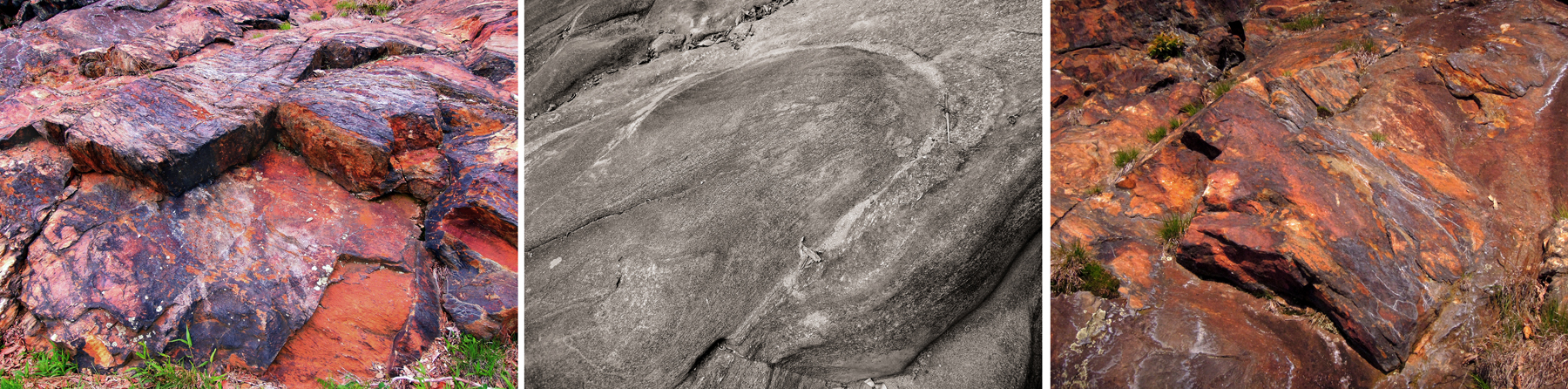
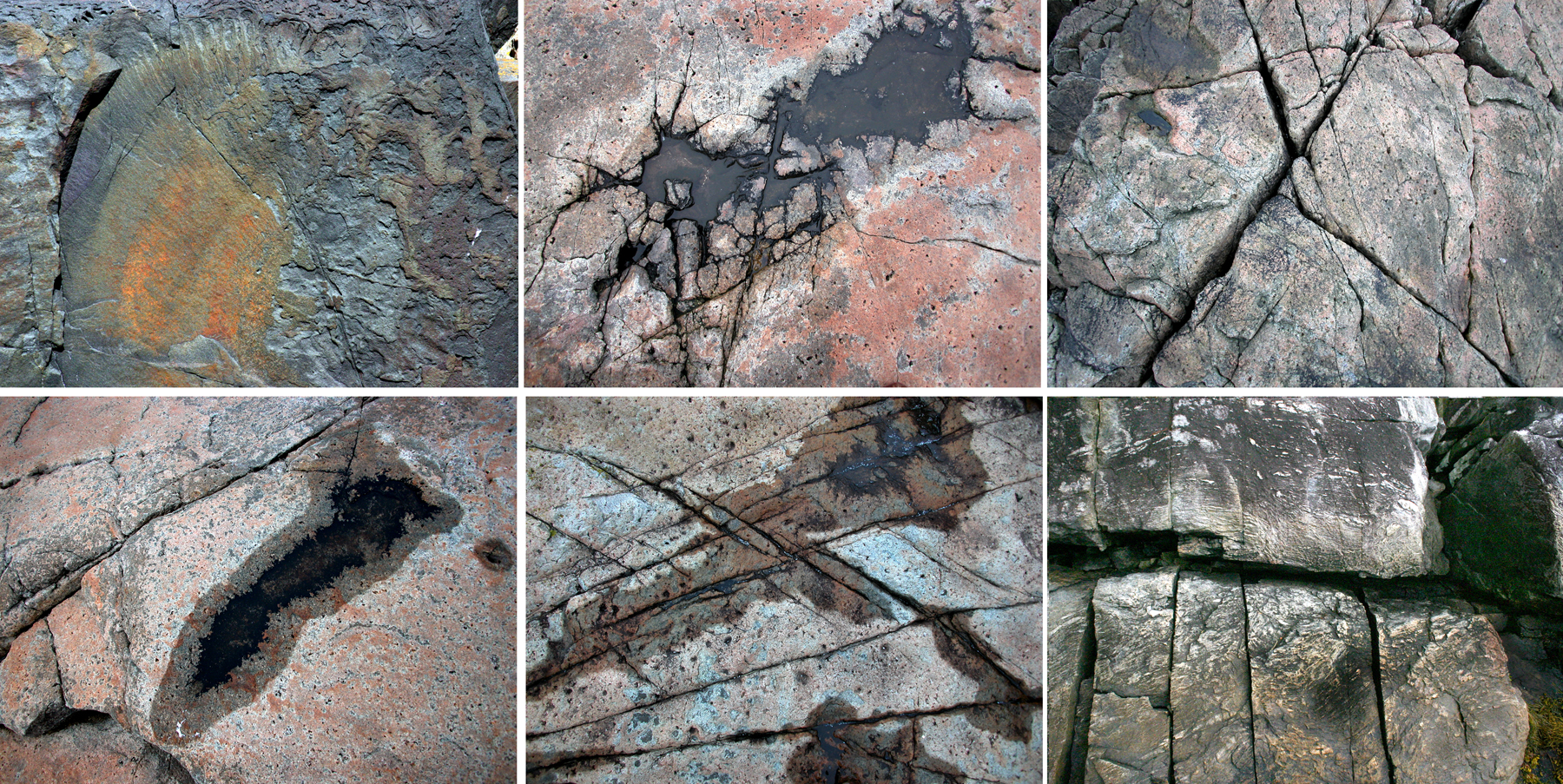
And the new dimension changed my approach to photographing stone. At first, I sought out the garish, like these rocks along the Blue Ridge Parkway, stained with iron rust.

And I had the 20th-Century prejudice towards lining things up parallel with my picture plane. I thought of the rock faces as if they were abstract paintings. 

These are from Schoodic Point in Maine. I have always been attracted to the textures of the rocks, even when thinking of them as if they were paint on a canvas. 

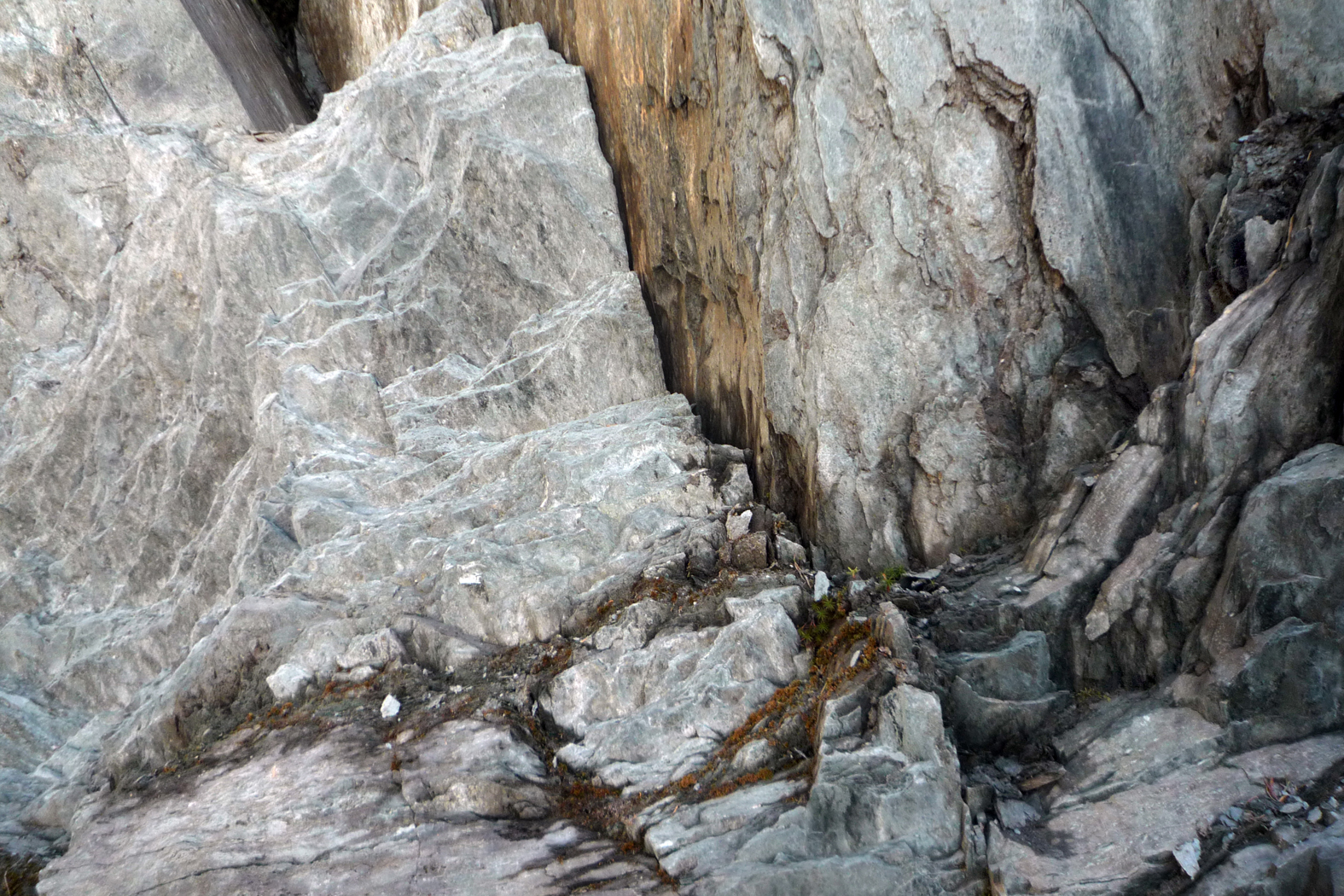
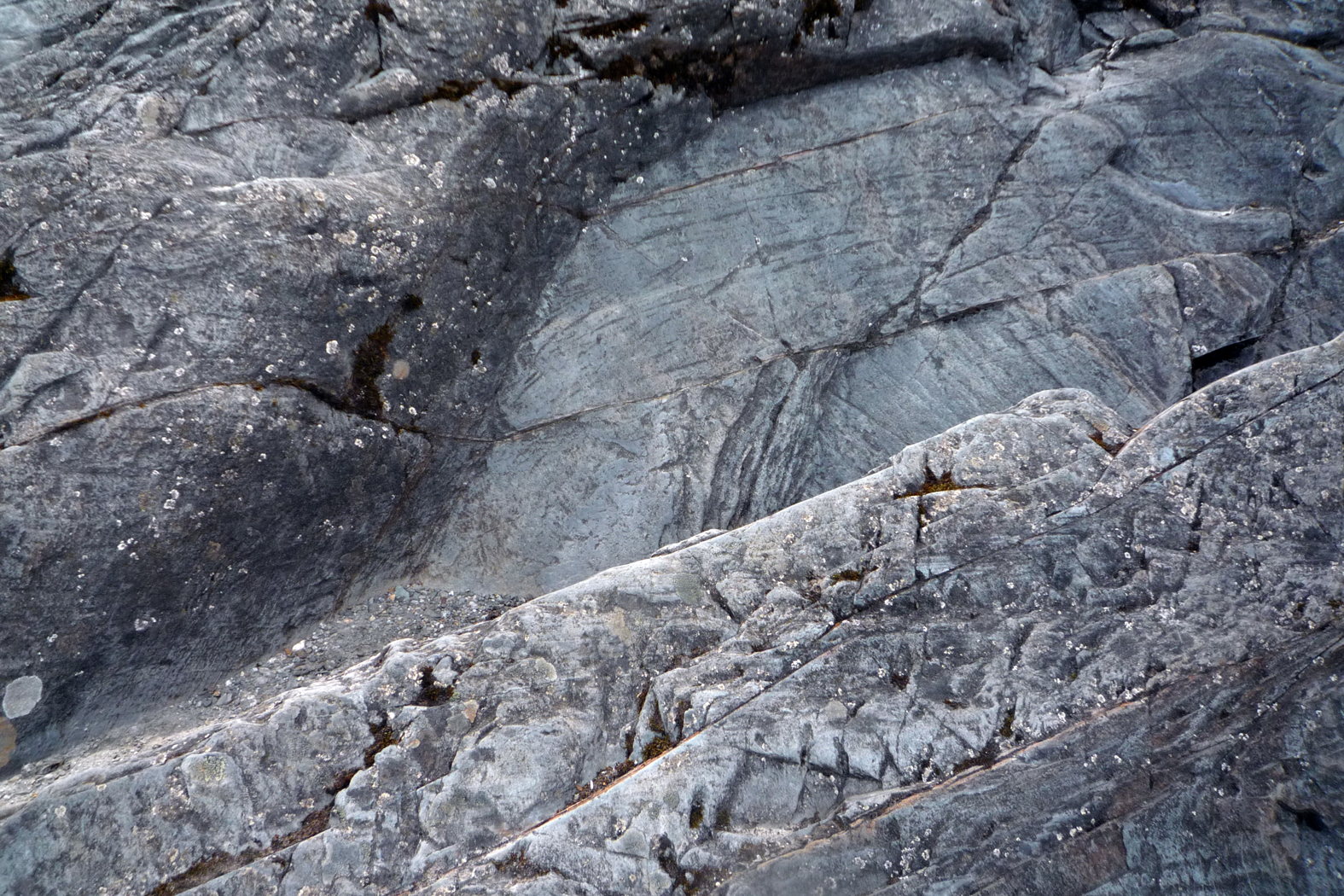
But visiting the Mendenhall Glacier north of Juneau, Alaska, I found the rocks to be, not paintings, but sculptures. The shapes advanced and receded, jutted and sunk, rounded and jagged. And I found myself spending the better part of a morning making a series of images emphasizing their three-dimensionality. 

And, instead of the garish color of the rust, I delighted in the subtle blues and grays of the stones, cooler and warmer shades of the stone. 

And the texture, wrinkled or scratchy, matte or glossy, is something I don’t only see, but feel, as if on the tips of my fingers. Shelley wrote: “The great secret of morals is a going out of ourselves,” and art, even so minor a one as my gleanings on the surfaces of stone, is a form of sympathy. When I watch dance, I feel in my muscles the twisting of the dancer’s legs. When I hear the swelling of strings in Brahms, I feel it in my chest. When I see the colors in a Monet waterlily, I recognize the world I inhabit. It is not enough to see or hear the art as something separate from oneself; one must not merely recognize oneself in the art, but rather one must feel the unity.  

This rock I photograph is me. I don’t mean that in any vague New-Age way, but in the real sense that the shapes and colors we share are the stuff of my own realization of myself as part of the cosmos. 

“The greatest thing a human soul ever does in this world is to see.”

Click on any image to enlarge

“What have you seen that was the most beautiful,” she asked. A distinction is often made between the “pretty” and the “beautiful.” The second is of a completely different order from the first. But, for me, there is a third order, as different from beautiful as beautiful is from pretty. That third order gives not just pleasure, but transcendence. Below is the last of three parts.

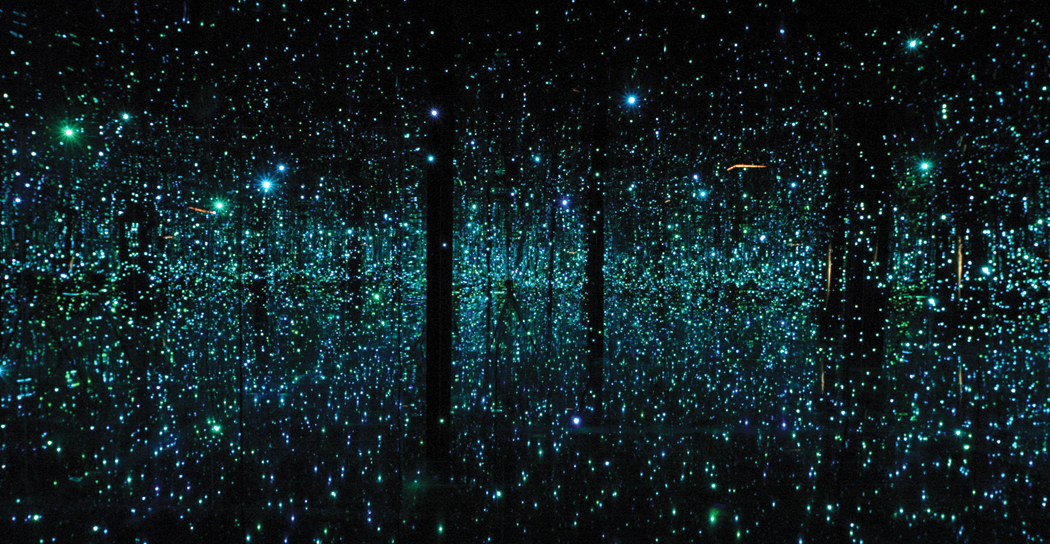
At the Phoenix Art Museum in Arizona, there is a free-standing room, a box, with two doors: an entrance and an exit. When you go through, you find yourself in a sealed black room filled with tiny LED lights suspended on wires from the ceiling, thousands, maybe tens of thousands of them. All the walls, the floor and ceiling are mirrors, and so the universe of lights is visually infinite. It is completely disorienting. You are meant to walk through and go out the exit, but the first time I went, I walked in a straight line from the entrance and came out — the entrance. You can not avoid getting lost. 

It is an art installation by Yayoi Kusama called You Who Are Getting Obliterated in the Dancing Swarm of Fireflies and is one of the most popular pieces in the museum. Kusama is a 91-year-old Japanese-born artist who has lived for the past 40 years by choice in a Tokyo mental institution. By one survey, from 2005, she was the most popular artist in the world. Her work is easy to enjoy. Perhaps too easy. 

It is always some manifestation of her obsessive-compulsive disorder, but it is also fun. In an otherwise dismissive review in The Guardian from 2018, Jonathan Jones complains of another one of Kusama’s “Infinity Mirrored  Rooms,” that it is on “about the same artistic level as a lava lamp – or an infinite number of lava lamps,” but nevertheless, says, “I was as blissed out as the next idiot.”

Where is the rule that says art, to be good, must be difficult to understand? Besides, it is more important to have an experience than to be told what something means. Kusama’s installation is an unforgettable experience. It is also a reminder of experience: the daily encounter with the infinite we live through but don’t see. Once in a while, we may look up at the night sky and admire its vastness, but most of the time, we just shut the door and turn on the TV. 

Giving in to the infinite — or the emotional experience of it — is the source of the third level of the beautiful. It can hit you whenever you are open to it. Not necessarily seeking it, but nevertheless open to it. Most often, we spend our lives closed, trying to make sense of the everyday things that take up most of our time. But there are moments when it all breaks in. These moments tend to stick in our psyches, to be brought back in memory to refresh our lives. 

In May of 1972, my second unofficial wife and I (seven years of living together must qualify as something), hiked up Rock Castle Creek near Woolwine, Va., to an abandoned farm, known as the Austin Place. 

It took about 40 minutes to climb the trail to the farm. The noise of the creek stayed with us as we went past fields of Virginia creeper and forests of fallen chestnut. We crossed the creek three times on hewn logs.

There is a rise at the end of the trail, and a field gone to seed. At the other end, at one corner of the field is a collapsing gray weathered barn with many chinks, fallen doors and cracked windows to let the sun ricochet in abstractions inside. Past the barn is the house, two stories and old, chipped and dirty paint, balusters that are no two quite the same — having been twisted or replaced or fallen — A second floor porch with crusty hammock hooks, a green tin roof and cherry trees garnishing the facade. We climbed the old concrete steps to the porch and sat our burdens down.

As we looked out over the front lawn, it was weeds, then the rapid stream with a bridge that looked like a fallen ladder over it, more weeds beyond that, then a sharp rise and embankment with an apple orchard above it, all going feral. A bit further than that, the trees started climbing nearly straight up. The mountain took off like a precipice and climbed 1,000 to 1,500 feet.

I found an unlocked window leading to the pantry and got myself into the farmhouse and opened the front door. The day was idled along contentedly. We wasted all of it with the productive waste of happiness. 

We brought out a hammock and lay in that for a while. We cooked a stew for dinner. Near the end of the day, we lay together in the hammock on the second floor porch, looking out at the beauty, listening to the stream and smelling green leaves and budding flowers, feeling the warmth of the sun. We dozed, then held each other some more. We watched the brilliant crowns of the trees as the sun narrowed to a shaft behind the ridge and illuminated only their tops. The incandescent crowns grew smaller and more precipitous on the head of the trees.

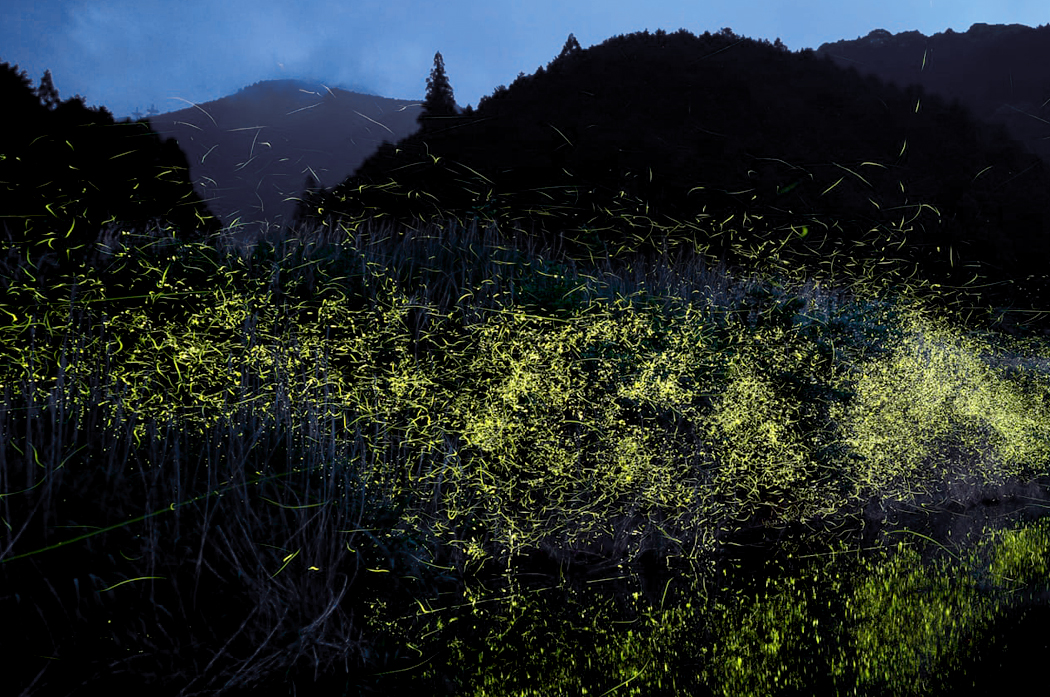
Against the dark of the trees and hillside a billion flickers burned thick as stars as lightning bugs made Fourth of July for us. I have never seen so many at once. And the moment stood still and I felt the old Faust plea: “I could almost wish this moment to last forever, it is so beautiful.”

Kusama’s installation brought back that day, the points of light in the dark, and the feeling of infinite awe. 

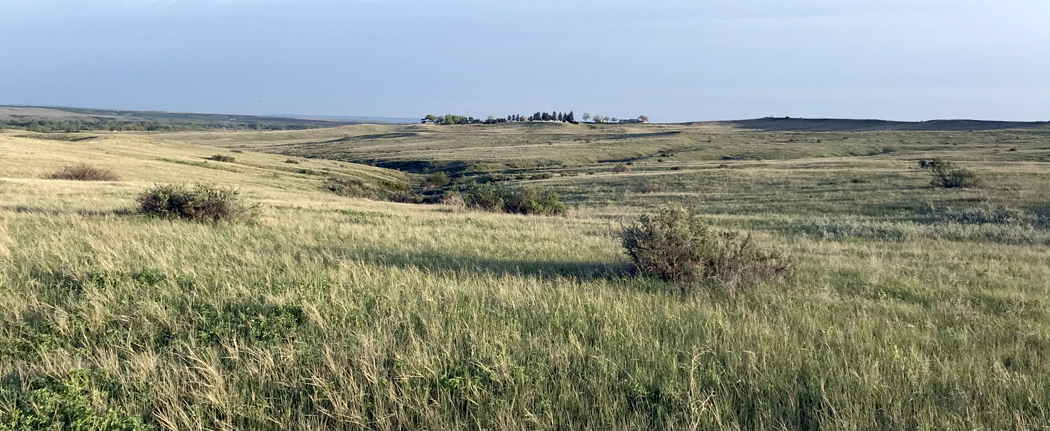
There is something about a crowd of points in an undifferentiated field that speaks of eternity: It is the stars in the black of midnight. The motion of the tall grass in the prairie curling in the wind, animated, as the Lakota say, by Taku Skanskan — the life-giving force of nature. The swaying tips of trees against the sky on a breezy day. The self is forgotten and I become a universal witness to a universal transcendence. 

The Little Bighorn National Battlefield in Montana is a quiet place, with the hiss of wind in the grass and the buzzing of grasshoppers. The road through the park continues for about five miles, past the congested visitor’s center and along the high ridge of bluffs and coulees over the river bottom to the location where Custer’s subordinates, Reno and Benteen, held off the Indian siege for two days.

Most people hang around the monument on Battle Ridge, where small white crosses mark the places where Custer and his men fell. But if you drive to the end of the pavement, you can walk out in the grass, which curls in the breeze like white horses on the sea swell, and hear the phoebe’s song among the seedheads, and watch the approach of an afternoon thunderstorm with its dark clouds and flickering glow of distant lightning.

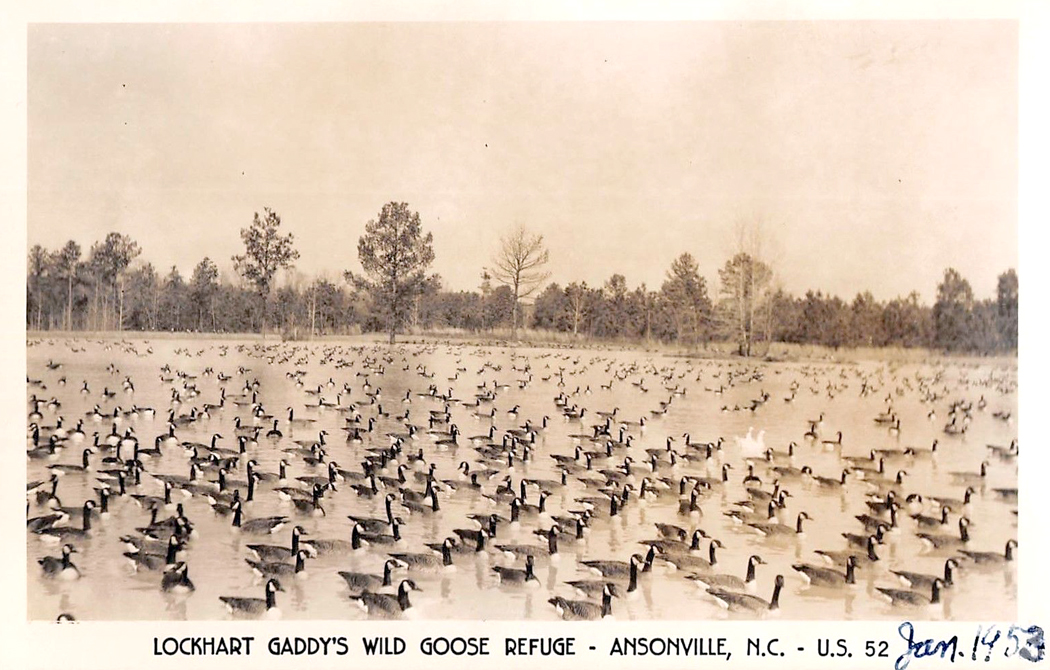
I had the experience thrust on me in the late 1960s at Gaddys Pond, near Charlotte, N.C., which was then a privately owned lake that was a stopping place for Canada geese on their migrations. The geese, the brants, the crows that hung around, all made an amazing din of squawks. You could barely make out any individual sound, because the buzzing was everywhere. It is one of the most beautiful sounds I have ever heard. There must have been a million birds on that pond. Points on a ground. 

Sometimes, I will take out my old Peterson cassettes of bird calls just to play the part of the geese — the million-geese squall of honks. It satisfies as much as a Bach fugue. 

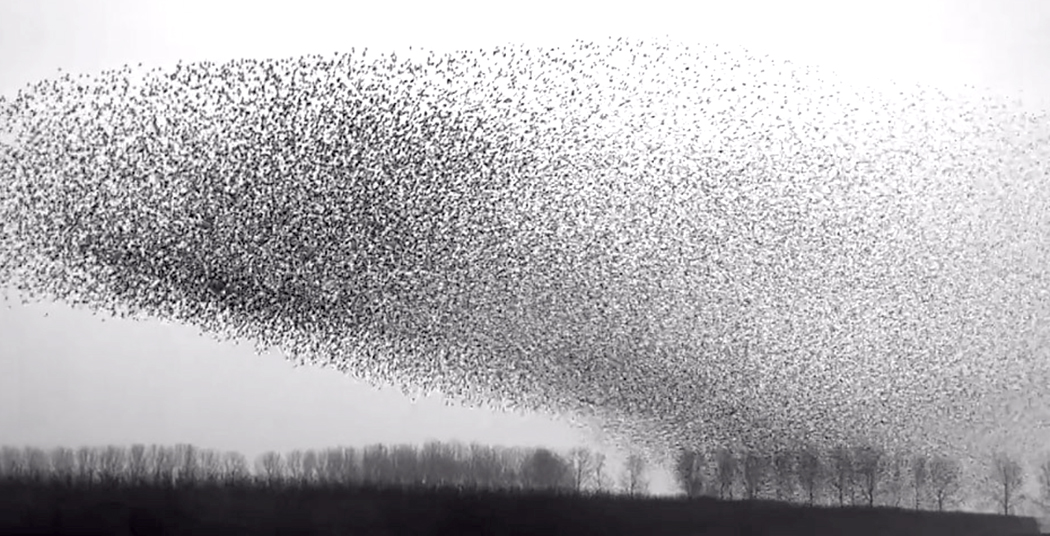
In eastern North Carolina one winter many years ago, millions of blackbirds descended on Scotland Neck. The bare trees were leafed out with them and periodically they would rise up the the tens of thousands and swirl in a great murmuration — a twisting cloud of tiny dots against the iron-gray winter sky. You had to involuntarily suck in a great breath of frozen air for the sheer admiration and beauty of it. 

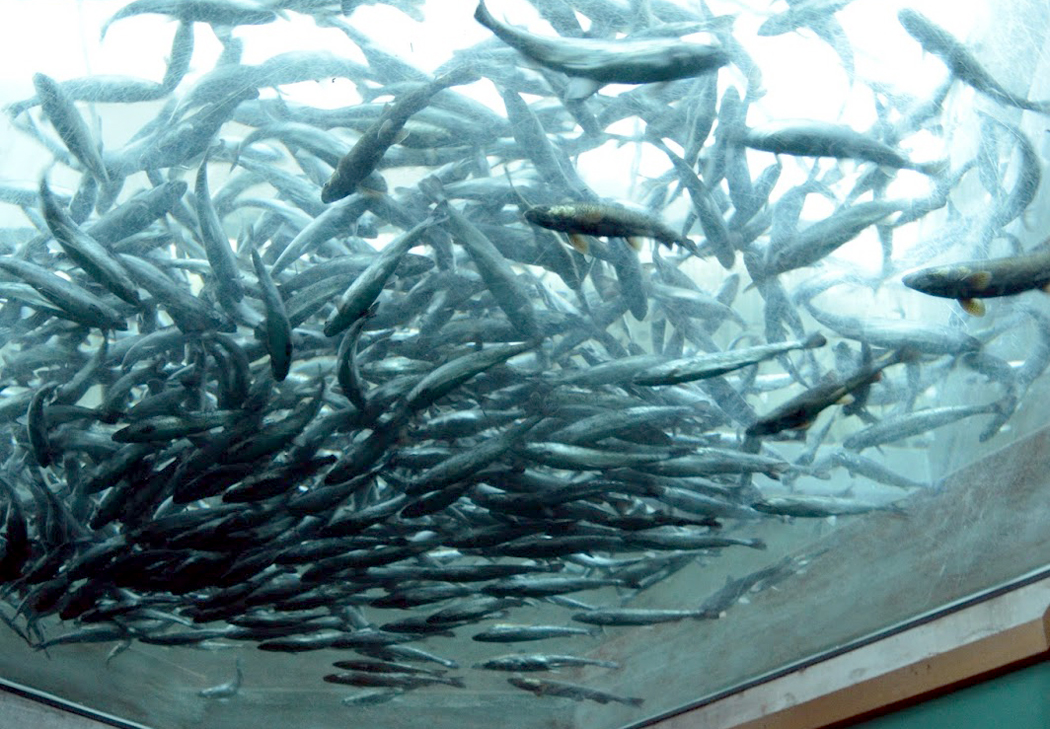
In the late 1970s, when I lived in Seattle, I spent many unemployed days at the aquarium. Watching fish in the window of the great tank was relaxing, but something more akin to the murmurations of birds was the salmon run. You could stand underneath it and look up through its glass bottom and watch the hundreds of fry twist in circles above you, and like the birds, seem to move as a single entity instead of a million commas or apostrophes darting through the fluid. 

There is something about these swarms, whether fireflies or salmon, that seems both utterly random, yet, carefully organized. Very like the night sky, governed by some relatively simple physics, but so immense as to be indistinguishable from the infinite. 

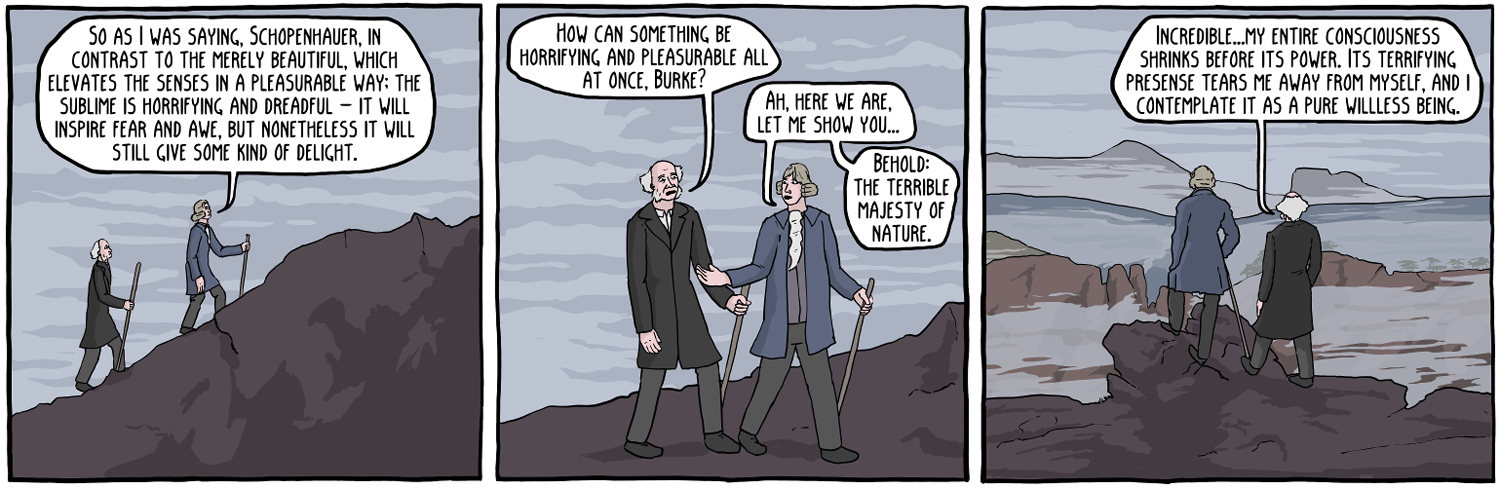
This sense has, in the English-speaking world, been labeled “the sublime.” It is not simply the beautiful, but the beautiful that is overwhelming. “It takes your breath away,” is too easily said, but seldom actually encountered. But when it does, you enter a different reality. Time stops, eternity begins. 

It was an anonymous author known as Longinus (we don’t actually know who he was, other than his name) who wrote the treatise, “Peri Hypsos,” or “On the Sublime.” 

“Nature prompts us to admire, not the clearness and usefulness of a little stream, but the Nile, the Danube, the Rhine, and far beyond all, the Ocean; not to turn our wandering eyes from the heavenly fires, though often darkened, to the little flame kindled by human hands, however pure and steady its light; not to think that tiny lamp more wondrous than the caverns of Aetna, from whose raging depths are hurled up stones and whole masses of rock, and torrents sometimes come pouring from earth’s center of pure and living fire. … “

“When we survey the whole circle of life, and see it abounding everywhere in what is elegant, grand, and beautiful, we learn at once what is the true end of a human’s existence. … Therefore even the whole world is not wide enough for the soaring range of human thought, but the mind often overleaps the very bounds of space.”

That may sound a bit hyperventilated, but if you have once experienced it and left your corporeal existence behind to join with the cosmos for that brief second and know that eternity is not simply a very long time, but something without time at all, then you will have experienced beauty in a new way that has nothing to do with something merely being pleasing. Yes, it is only a psychological experience — I’m not making any great anagogic argument here — but it is a glory. 

Click on any image to enlarge

A distinction is often made between the “pretty” and the “beautiful.” The second is of a completely different order from the first. But, for me, there is a third order, as different from beautiful as beautiful is from pretty. That third order gives not just pleasure, but transcendence. Below is the second of three parts.

At the conclusion of Goethe’s Faust, his aging hero looks out on the world with a note of satisfaction. “I could almost wish this moment to last forever, it is so beautiful.”

That is exactly how pianist Lang Lang played the slow movement of the Chopin E-minor piano concerto with the Phoenix Symphony when I heard him in the fall of 2008. He lingered over the larghetto, stretching its already vague rhythmic drive down to a near halt, and stopping the audience’s breath with it.

Each phrase seemed to pour forth spontaneously from the pianist’s fingers, followed by another seemingly thought of on the spot. No two phrases were played at the same tempo, and each tempo seemed perfectly expressive.

It is a rare performer who can risk such an arrhythmia, and who can use it to make the music express poetry and longing, dreaming and anticipation. It was one of the best performances ever given by a soloist at Symphony Hall.

That the pianist felt so expressively free comes as a surprise: His recording of the same concerto is rather dull and literal-minded. His Phoenix performance was a poetic night to his recording’s washed-out noonday glare.

Even Lang’s stage demeanor was less like the reputation that preceded him: While he certainly emoted while playing, there was less of the rocking and eye-rolling that he has engaged in in the past. His most obvious physical “dance” came during that slow-movement, when he leaned back as if he were in a recliner, with his arms stretched out straight in front of him barely reaching the keyboard, and his head aimed straight at the ceiling, where he seemed to find the notes he was playing. He found the right ones and time stopped for the duration. 

That sense of time standing still is, for me, the practical definition of “transcendence,” the sense of being pulled out of conventional reality and given a glimpse of something even more real. 

One goes through a lot of perfectly decent if unexceptional concerts waiting, hoping each time for such a performance — one that makes time stand still and matches the notes of the music to the interior needs of the listener — the music and the hearer become a single event and you feel to yourself, “This is me, this is the mirror of my soul.” 

Of course, when you have an experience like that concert, the cause is not simply the performance or the music. The listener must be receptive. It is a two-part event: the message and the addressee. Perhaps others in the audience did not dissolve in rapture; and I’m sure there have been concerts I sat through inert during which other audience members wept. Beauty is in the eye of the beholder. 

But not the way it is usually meant: For most, the cliche simply means de gustibus non est desputandum — all a matter of taste. But that is not it, at all. Beauty of the kind I’m writing of is not something solid and unchanging in the music or the artwork or poem — or in the green forest or towering thunderhead. Beauty is an event, not a thing. A verb, not a noun.   

Beauty is your active participation in the perception of the things of this world. The music is capable of being felt as beautiful and we are capable of perceiving that as beauty. But the two things are one and come together in the eye — or ear — of the beholder. Unless they arrive at the same moment, there is no beauty. To become part of the event, you must be awake, aware, alive. You must see or hear of feel more intensely than you do in the ordinary world of driving your car or tying your shoelaces. In such moments, the world becomes transfigured. 

I can picture the north rose window at Chartres cathedral in France. There are three such windows, but the one at the north corner of the building is the one that rivets my attention each time I visit.

It is the north window that moves me, in part because it moves, itself. This is an illusion, of course, but its designer was one of the geniuses of his age, able to create that illusion with static stone and glass. Each of these roses are built of circles of circles, building from a central core, and radiating out, like choirs of angels surrounding Providence. But in the north window, the panels dance.

It may be hard to see this in a reproduction, like the one here, but there is a ring of squares and diamond-shapes that form one of the rings, and it is nearly impossible to see these alternating squares and diamonds as anything but tumbling shapes, dancing around the center.

The north rose window of Chartres cathedral is — I have said many times — the single most beautiful human-created entity I have ever seen, and I’ve seen a gob-lot of iconic art works. It brings me to tears each time I am in its presence, and I feel the need to return to it, a feeling very kin to love.

I know a lot of hoo-haw gets ascribed to art. People make great claims for art, only some of which can be supported. But I believe, from my own experience, that art can make you more sensitive to the world around you, to prompt you to see again those things you have become inured to through over-exposure and turned to the ash of everyday-ness. As I have also said, every bush is the burning bush, we just can no longer see it. Seeing it is the epiphany, the moment the world shifts and you see the periphery become the center. When you open those gates in your chest, and let the world in, it becomes intensely beautiful and makes you understand, as William Blake wrote, “If the doors of perception were cleansed, everything would appear to man as it is, infinite.”

Each time I visit Chartres, I sit on the church chair in the south transept and look back at the north, for 20 minutes at a time, maybe a half-hour, staring, with tears streaming down my cheeks. This is visionary art, and you don’t have to believe in the dogma to understand the metaphor: This is the Great Mystery. The magnum misterium. You could be looking at photographs from the Hubble telescope. You could be looking at the visions of a peyote dream. You could be looking at the eye of god.

It is not only in art that these things happen. In 1974, my second unofficial wife and I took a trip to Port Jervis,  N.Y., where my aunt had a trailer on the Delaware River. We vacationed and lounged. There, I had one of those epiphanies — reached a state of grace, an esthetic perfection that has never left me.

In its northern parts, the Delaware is not much of a river; it is just a broad shallow stony-bottomed stream with a sandy bluff on one shore or the other, depending which way the riverbed turns. But along the roadsides, and in every abandoned field, the bobbing orange heads of black-eyed Susans mixed with the midnight blue of ironweed. Spikes of mullein drove upward and stands of Joe Pye weed grew to four feet high.

There is something different about the fall wildflowers, something weedier, something more insistent. Their vegetable smells and sticky white sap are less immediately pretty, but they have more character: They are grownup. Perhaps, too, it is the drier air of autumn, the mixed stands of plants, blending goldenrod with Queen Anne’s lace, bull thistle and hawkweed in a Pointillist stew of color.

Anyway, that’s how it seemed as we drove by the railroad yard in Port Jervis, at the point New Jersey, New York and Pennsylvania all meet. The old yard, anchored by an abandoned turntable and roundhouse, was completely grown over in asters. There were millions of them in the open acres of the yard, each with its yellow disk surrounded by blue ray flowers. Intermixed were all the other fall flowers: the yarrow, boneset, coneflowers and the chicory left over from midsummer.

And in the weedy field, even the spring flowers were represented, not by their blossoms, but by their fruits: the burrs; seedpods; milkweed down; and nightshade berries. For me, it was one of those moments when clocks stopped and the impression burned into my mind as if by aqua fortis on a copper etching plate. That eternal moment has never left me. At times when the day has been roiled and I have trouble getting to sleep, I can recall that scene and let the rancor drain away. 

Beauty of the third sort, of the kind I mean, is visionary. It penetrates like the angel’s arrow into Saint Teresa. It is not a matter of appreciation, as in “I like this painting,” but rather, of turning your mental innards inside-out. You see a vastness inside yourself that is the image of the vastness outside — the two become indistinguishable: the event and its image in the mirror. 

It doesn’t happen often, and it doesn’t happen to everyone. Those bound up in the bustle of the everyday, of the making of fortune, the vying for position, or those in fear of genocide or famine who cannot waste the time on such things, it is possible they are unable to open their chests up to the incoming. But even they, at times, will be dumbstruck by a bolt they didn’t expect and recognize the transcendent. 

Part 3 to follow

This is the 600th blog entry I’ve written since retiring eight years ago from the writing job I held for 25 years. But as I’ve said many times, a real writer never retires, he just stops getting paid for it. 

During my career, I wrote over 2.5 million words. Since then, I’ve added another million. If you are born a writer, you simply can’t help it. 

(In addition, since 2015, I’ve written a monthly essay for the website of The Spirit of the Senses salon group in Phoenix, Ariz., a continuation of the many salon lectures I gave there for years.)

And even when I write an e-mail to friends or family — the kind of note that for most people contains a short sentence, a quick “LOL” and an emoji — I am more likely to write what looks like an old-fashioned missive, the kind that used to come in a stamped envelope and delivered by a paid government worker. An e-mail from me will take a while to read through.They are sent not merely to convey information, but to be read. They have been written, not just jotted down. 

Over the eight years of blogifying, I’ve covered a great many topics. Many on art and art history — I was an art critic, after all — many on history and geography, a trove of travel pieces, a few frustrated political musings and a hesitant offering of oddball short stories (if you can call them by that name.) 

People say, “Write what you know,” but most real writers, myself included, write to find out what I know. The writing is, itself, the thinking. Any mis-steps get fished out in the re-writing. 

Ah, words. I love words. I love sentences, paragraphs, chapters. Although I wrote for a newspaper, where short, simple sentences are preferred, I often tested the patience of my editors as I proved my affection for words by using obscure and forgotten words and by using them often in long congregations. 

“I love long sentences. I’m tired of all the short ones. Hemingway can keep them. Newspapers can urge them. Twitter can mandate them. To hell with them.

“My ideal can be found in the long serpentine railways of words shunted hither and thither over dependent clauses, parenthetical remarks, explanatory discursions and descriptive ambiguities; sentences such as those found in the word-rich 18th century publishing world of Fielding, Sterne, Addison, Steele, or Boswell, and perhaps most gratifyingly in the grand, gravid, orotund sentences of Edward Gibbon, whose work I turn to not so much for information about the grandeur that was Rome, but for the pure sensuous pleasure to be had from those accretive tunes built from the pile of ideas and imagery (to say nothing of ironic asides), and peppered liberally with the notations of colons, semicolons, dashes and inverted commas.”

The love of words fuels a fascination with paronomasia. I make up words, play with them, coin spoonerisms and mondegreens and pepper my everyday speech with them. As music critic, I reviewed sympathy orchestras. Sometimes I have trouble trying to mirimba a name. On my shopping list I may need dishlicking washwood. 

I often give my culinary creations names such as Chicken Motocross, Mentil Soup, Ratatootattie, or  — one I borrowed from my brother — Mock Hawaiian Chile. 

When my wife came home from work, I usually asked “How did your Italian?” (“How did your day go?”)

When asked for my astrological sign, I say, “I’m a Copernicus.” My late wife was a Virago. And I’m pretty sure our Orange Bunker Boy was born under the sign of Feces. I call him a would-be Moose-a-loony.

I try to keep unfashionable words in currency. On long car trips with granddaughters, we didn’t count cows, we counted kine. I tend to refer to the girls as the wee bairns, or the kidlings. 

I have no truck with simplifying the language; I will not brook dumbification. The more words we use, the better, and the better inflected those words will be. As we lose words, the slight difference in emphasis and meaning is lost, and a simple word then has to do extra duty to encompass ideas and things that are better understood as different. 

Every word has a dictionary definition, but that definition is little but the skeleton on which the meat and muscle is hung onto. Each word has a nimbus of meaning and affect around it, which is learned by its speakers and readers through long acquaintance. You can always tell when someone has snuffled through a thesaurus, because the fancy word they choose has been stripped of its nimbus, or has an aura that is the wrong color for the spot in which it is placed. In other words, such a writer doesn’t really know the word that has been chosen. The Webster version is only a fuzzy black-and-white photo, not the real thing. 

I have written before how sometimes, instead of doing a crossword puzzle or rearranging my sock drawer, I will make lists of words. Each has a flavor and reading such lists is like perusing a restaurant menu and imagining the aroma and flavor of each offering. It is a physical pleasure, like the major or minor chords of a symphony. Here is a brassy word, there the pungency of an oboe, and over there, the sweet melancholy of a solo cello. 

I think all writers must have something of the same feel for the roundness, spikiness, warmth, dryness or wetness of words. And the way they connect to make new roundnesses, coolnesses, stinks or arousals in sentences. 

Yes, there are some writers — and I can’t pooh-pooh them — who use words in a blandly utilitarian way. Stephen King, for instance, is a great storyteller. He can force you by a kind of sorcery to turn pages. But on a word-by-word level, his writing is flavorless, almost journalistic. I suspect this is a quality he actually aspires to — to make the language so transparent as to be unobservable. I have to admit there are virtues in this, also. But not for me. 

I want a five-course meal of my words. 

Language can take either of two paths: prose or poetry. The first invests its faith in language as a descriptor of systems. It reaches its nadir in philosophy. It makes little difference if it is Plato or Foucault; philosophy — especially the modern sort — is essentially a branch of philology. It seeks to deconstruct the language, as if understanding the words we use will tell us anything about the world we live in. It tells us only about the language we use. Language is a parallel universe to the one we inhabit, with its own rules and grammar, different from the rules and grammar of the real world. 

This has been a constant theme in my own writing. When we say, “A whale is not a fish,” or “A tomato is a fruit, not a vegetable,” we are talking about language only, not about whales or tomatoes. But beyond the language we use to communicate our understanding of the world, no matter how vast our vocabulary, the world itself is infinitely larger, more complex, diverse, chaotic and unsystematic, not to be comprehensively understood by mere mortal. 

And I should clarify, by language, I mean any organized system of thought or communication. Math is just language by other means. When I use the term “language” here, I mean what the Greeks called “logos” — not simply words, or grammar, syntax or semantics, but any humanly communicated sense of the order of the cosmos. Not one system can encompass it all. 

Consider Zeno’s paradox: That in a race between Achilles and a tortoise, if you give the tortoise a headstart, no matter how little, Achilles can never catch up. Before he does, he has to go halfway, and so is still behind the tortoise, and before he goes the remaining distance he must go again halfway. Thus he can never catch up. The paradox is purely in the forms of logic, not in the reality. We all know Achilles will catch up in only a few strides. But the system — the logic, or the words — tells us he cannot. Do not trust the words, at least not by themselves, without empirical evidence to back them up. 

All systems of thought, whether religious, political or scientific, ultimately break down when faced with the weedy complexity of existence.

And so, a good deal of what we all argue about is simply the words we choose to use, not the reality. We argue over terminology. Conservative, liberal? Is abortion murder? These depends entirely on your definitions. 

Poetry, on the other hand — and I’m using the word in its broadest and metaphorical sense — is interested in the things of this world. Yes, it may use words, and use them quite inventively, but its goal is to reconnect us with our own lives. It lives, not in a world of isms, but in one of mud, tofu, children, bunions, clouds and red wheelbarrows. This is the nimbus of which I speak. 

It is ultimately our connection with our own lives that matters, with the things of this world, with the people of our lives that should concern us. It is what provides that nimbus of inexactitude that gives resonance to the words.