Archive

Tag Archives: atget

It is midwinter spring, those few days that habitually show up in February with sunshine and temperatures into the 70s that fool you into believing that spring is close at hand, only later to kick you with plummeting temperatures and perhaps another snow. The National Weather Service predicts that for this weekend. 

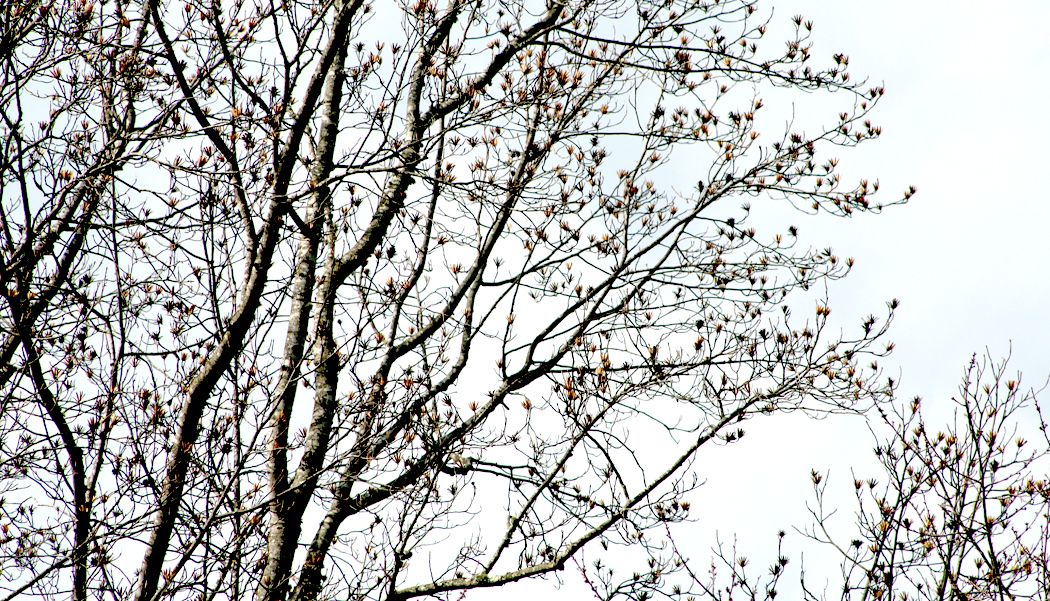
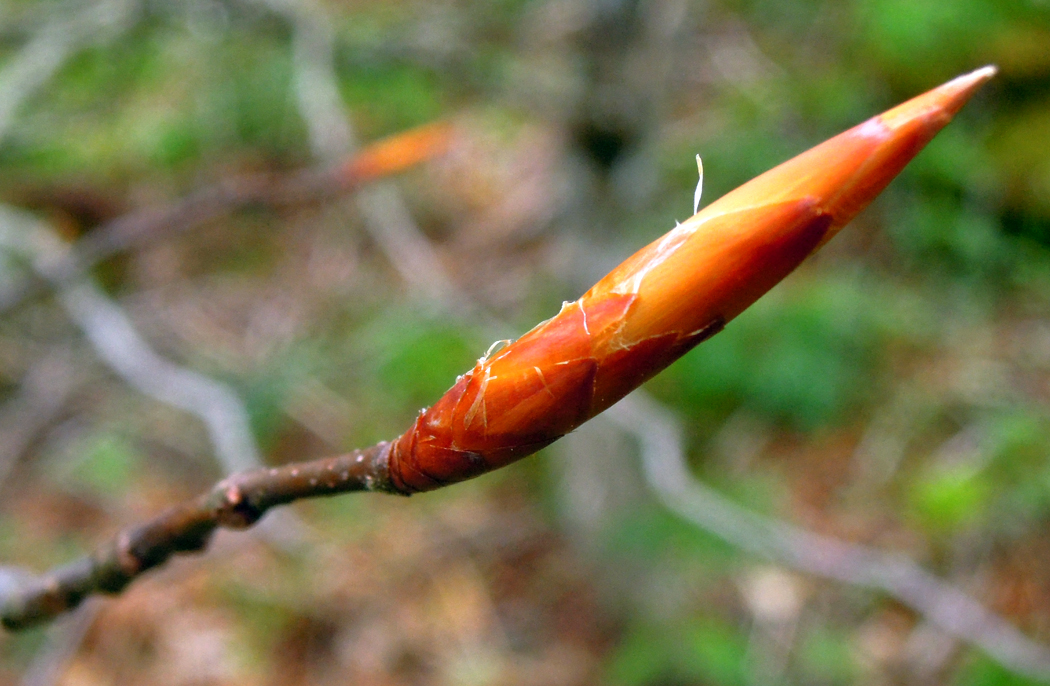
This is my favorite time of the year, when the bare trees begin budding at the twig tips. You can watch the trees change day by day, turning the dead sullen grey of December into something that clearly has a rising sap under the dull bark. When you watch the buds close up, their bud scales slowly separate, with thin lines of green beginning to spread at the edges. 
Fifty years ago, my friend Sandro and I would annually take this time to camp at the Outer Banks. Off-season meant we had the sand and sea to ourselves and could walk five miles along the strand without ever meeting another human. 
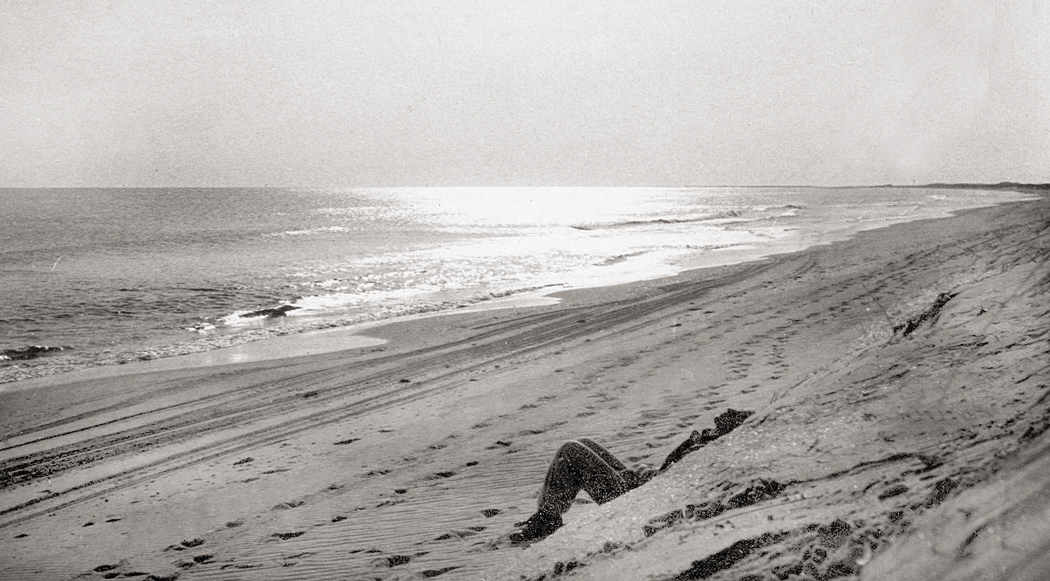
Sandro at Cape Hatteras, 1969

It was also Mud Season. You don’t read about it in literature, with its darling spring buds, its gold first green and its young sun half-run in the ram’s course. But there it is — early winter rains drained deep into soil and then turned hard as rock in the frozen air. November’s squishy footprint is turned to fossil, brittle as any sandstone, its edges wedged up in a tiny crater. But the February thaw, or later, when March brings those buds to stretch their scales, those footprints turn once more to watery goo, slippery under your shoe, sucking your heel right off your foot. It is what is wrong with pretty literature. Among all the pinking petals, among all the bright girls in spring dresses, among all the apple blossoms and greening grass to come, there is the mud, ripe, fertile, pliable in your squeezing fist, the one brown, crowning reality of the the coming spring, when there is mud again.

It is such elemental things that seem most real, most important. Culture changes, fashions change, but the cycle of seasons wears a constancy. 
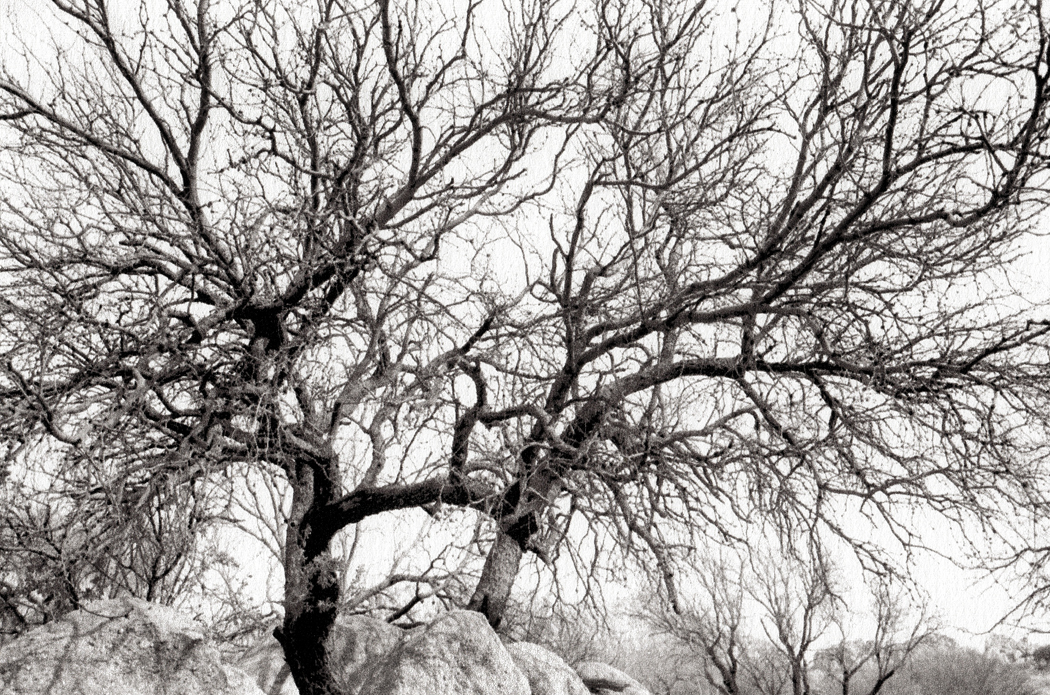
Texas Canyon, southern Arizona

For me, it is the trees, most of all. I love the spring trees well enough, but it is this time of year, when the trees are still bare and show their bones that I wait for each fall. Drop the leaves ecdysiastically and I can see the shape of the thing they cover. 
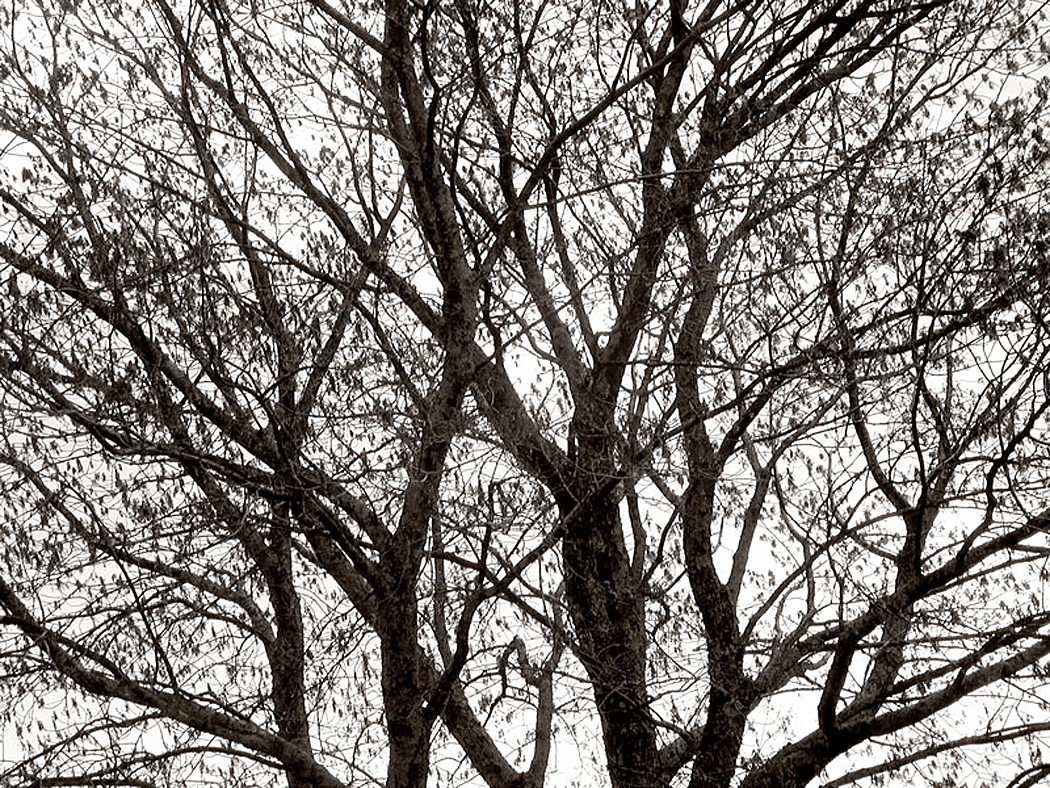
Spring oak, Blue Ridge

It is the lines they make against the sky. An etching more than a painting. Artists through history are generally assigned to one of two categories — they are either line people or color people. Line painters, like Botticelli, tend to draw their scenes, often in actual outlines, and then fill in the colors, while color guys, like Titian daub pigment onto the canvas and let the patterns of color define shapes. It’s one of the major distinctions made by Heinrich Wölfflin in his 1915 book, Principles of Art History. It doesn’t mean the line guy doesn’t appreciate color or the color guy doesn’t appreciate shapes and forms, but rather it defines what hits them first and most centrally. 

(There is a similar distinction in music. Composers — and performers, too — tend to be line guys or chord guys. Lots of counterpoint for the first, and washes of tonal color for the latter. Bach vs. Debussy.) 
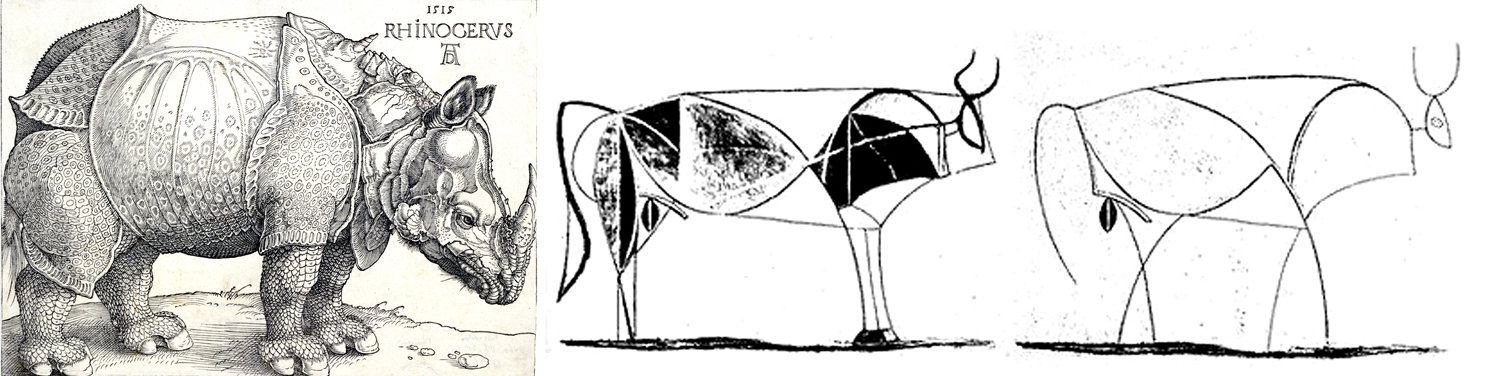
Albrecht Dürer rhino; Pablo Picasso bull

Albrecht Dürer was a line guy, most characteristically in his wood engravings. Picasso was a line guy and certainly an indifferent colorist. Most of his paintings could easily be given different fill-in colors. Matisse, though, a color guy to his teeth. Even more recent painters can be divided. Ellsworth Kelly a color guy; Lucian Freud a line guy. 

Well, I’ve always been a line guy. And the lines drawn by winter trees have hypnotized me since I was a wee bairn. One whole category of my photographs are what I called my “tree nudes.”
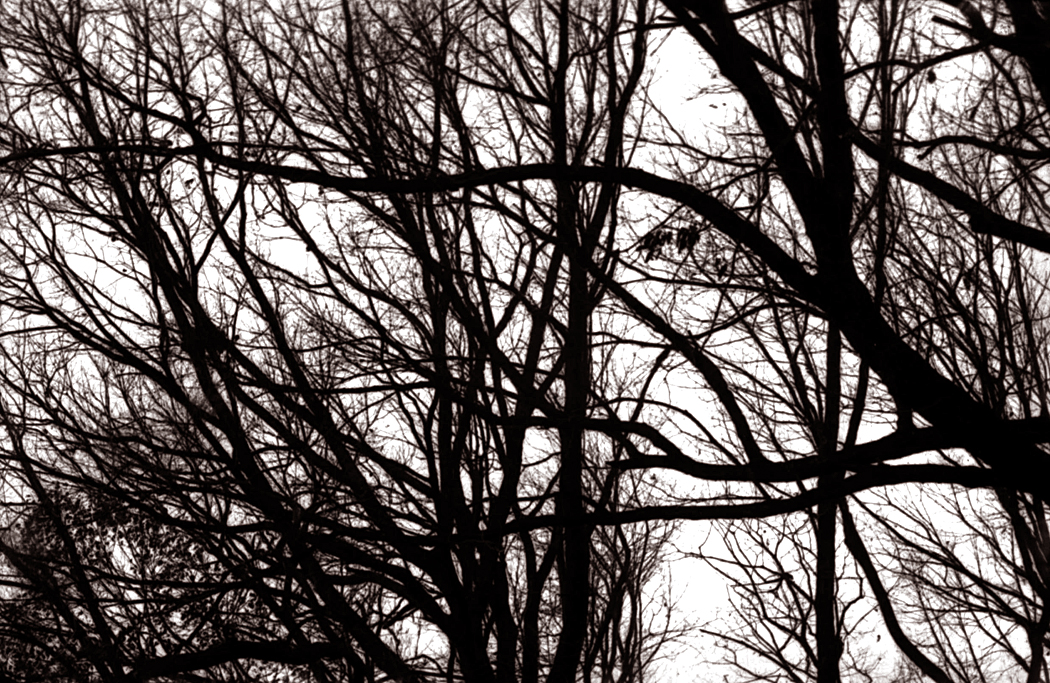
The nude has a specific purpose (outside the merely voyeuristic). Clothes drop their subjects into a very particular time and place. Eighteenth century breeches; flapper skirts; bell-bottom trousers; togas; saris; morning coats with a peeking handkerchief in the breast pocket. 

But the nude is — or can be — timeless (with the caveat that hairdos can be a giveaway). There is a universality to the nude in art, which is why so many Greek statues are naked. And we are meant to appreciate the form — shape, detail, muscularity — and not just a specific person with a name, family, opinions, and personality. 
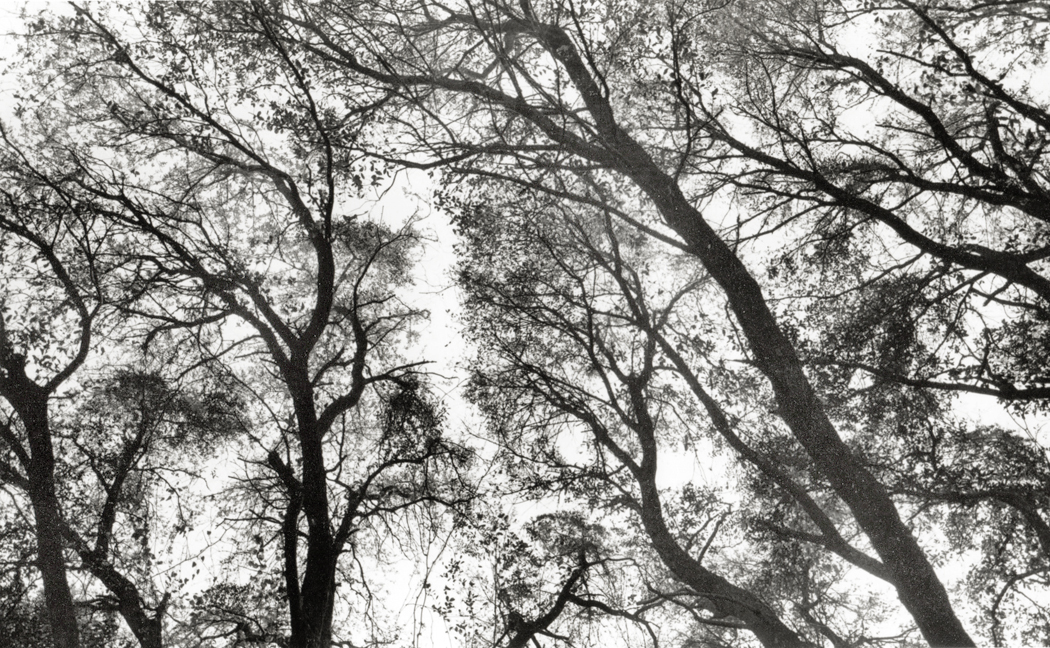
And I feel the same thing in the bare ruined quiers, where late the sweet birds sang. There is structure in the dark lines of the branches, and a systematic chaos in the way they all cross each other in a welter of visual information. 
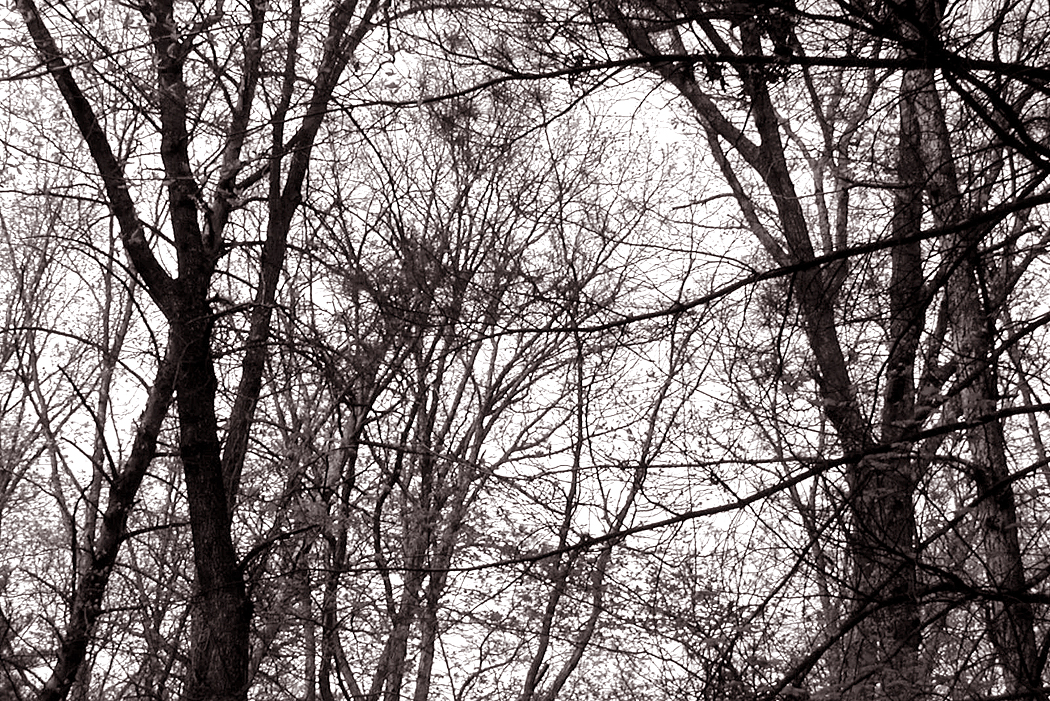
In this, I am reminded of the drip paintings of Jackson Pollock, which I came to love in the New York art museums I visited beginning as a teenager. A good nature-scribble of branches puts a buzz in my visual brain. I love it and have sought it for the past 60 years. Among the first photographs I ever made, 60 years ago with an ancient 35mm Praktica camera were of trees. 

Of course, while trees are beautiful, they can become an obsession. If I had chosen to make a career out of photography instead of writing, the trees pictures would have dwindled. As Fred Astaire says in the film  Funny Face, “You’d be amazed how small the demand is for pictures of trees.”

But I have followed trees through seasons
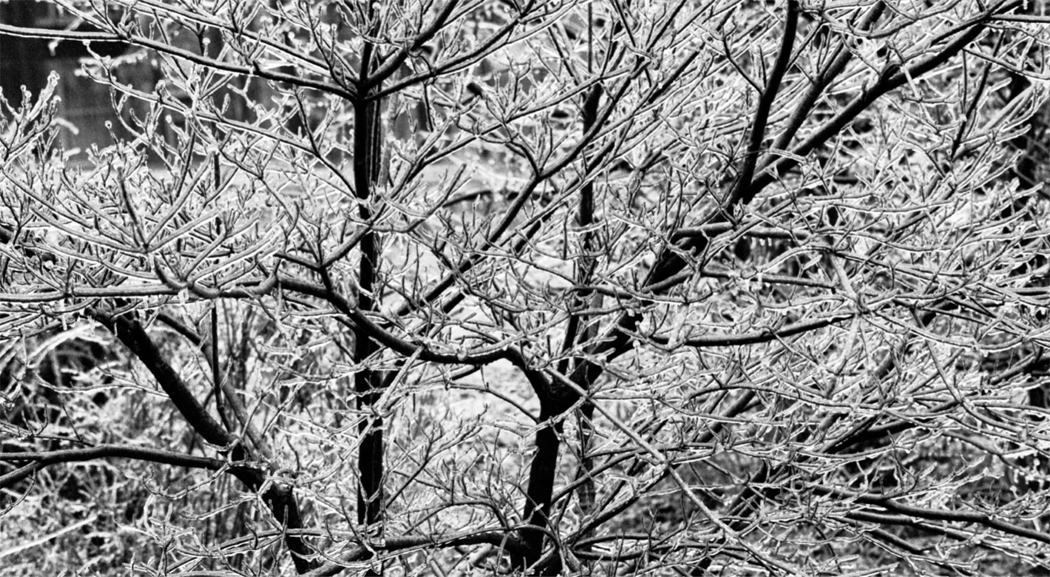
Ice storm, Greensboro, NC, 1969

and all their leafy-ness
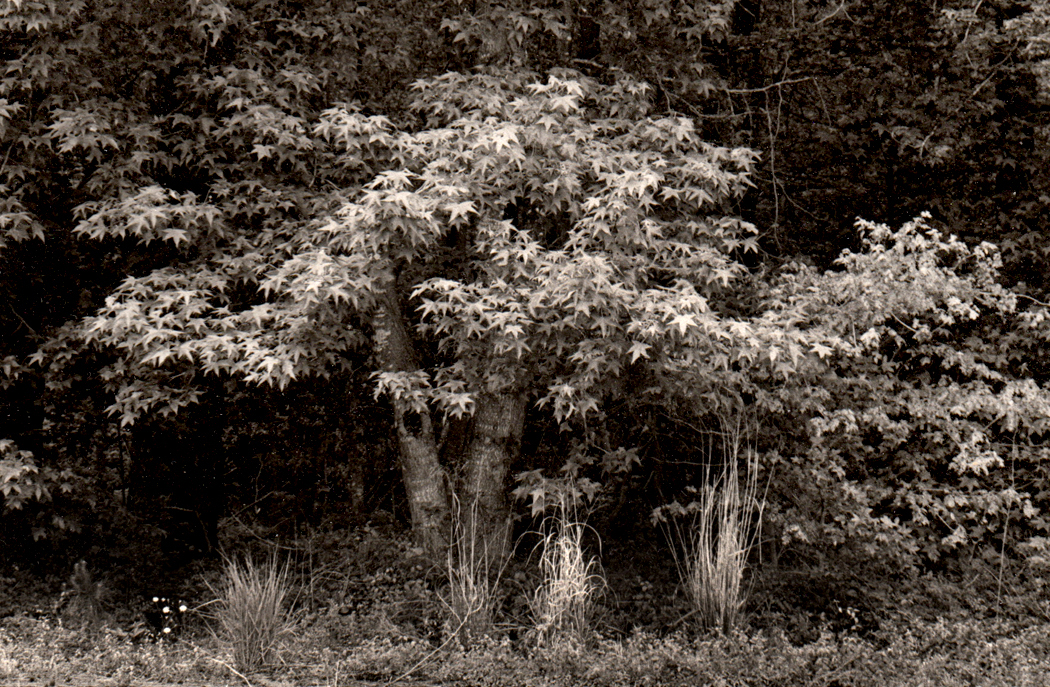
Sweetgum tree, Redwing Golf Course, Virginia Beach, Va., 1984

I have sought the best image of the jumble of buds, twigs, branches, trunks and bark that I feel as a signal for my emotions. 

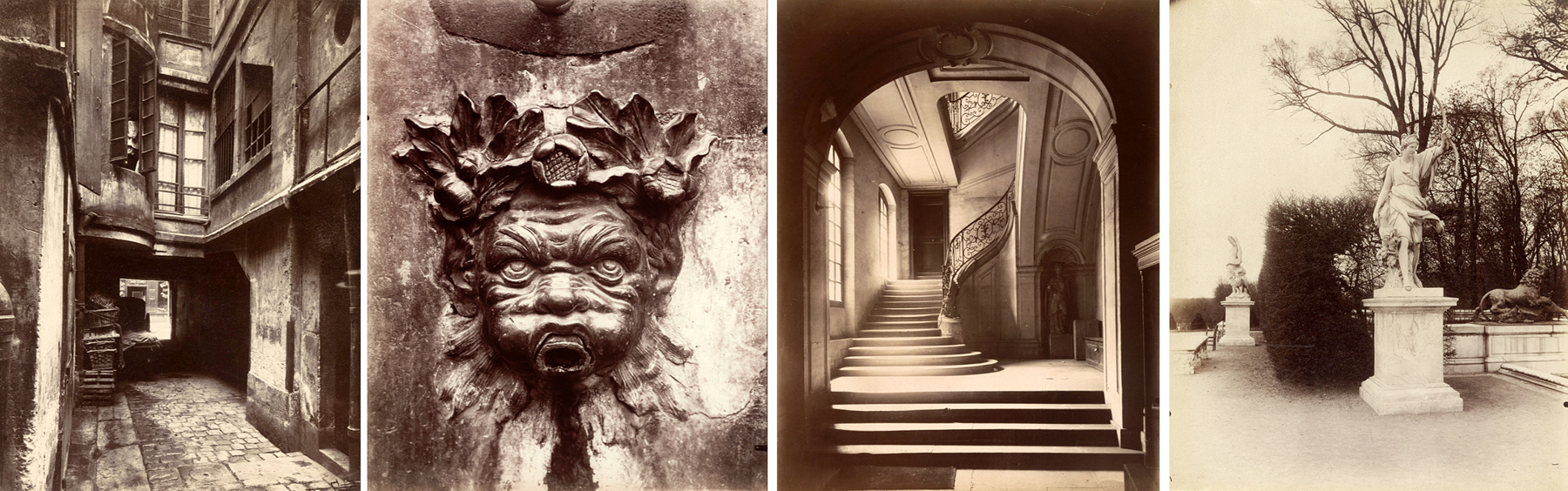
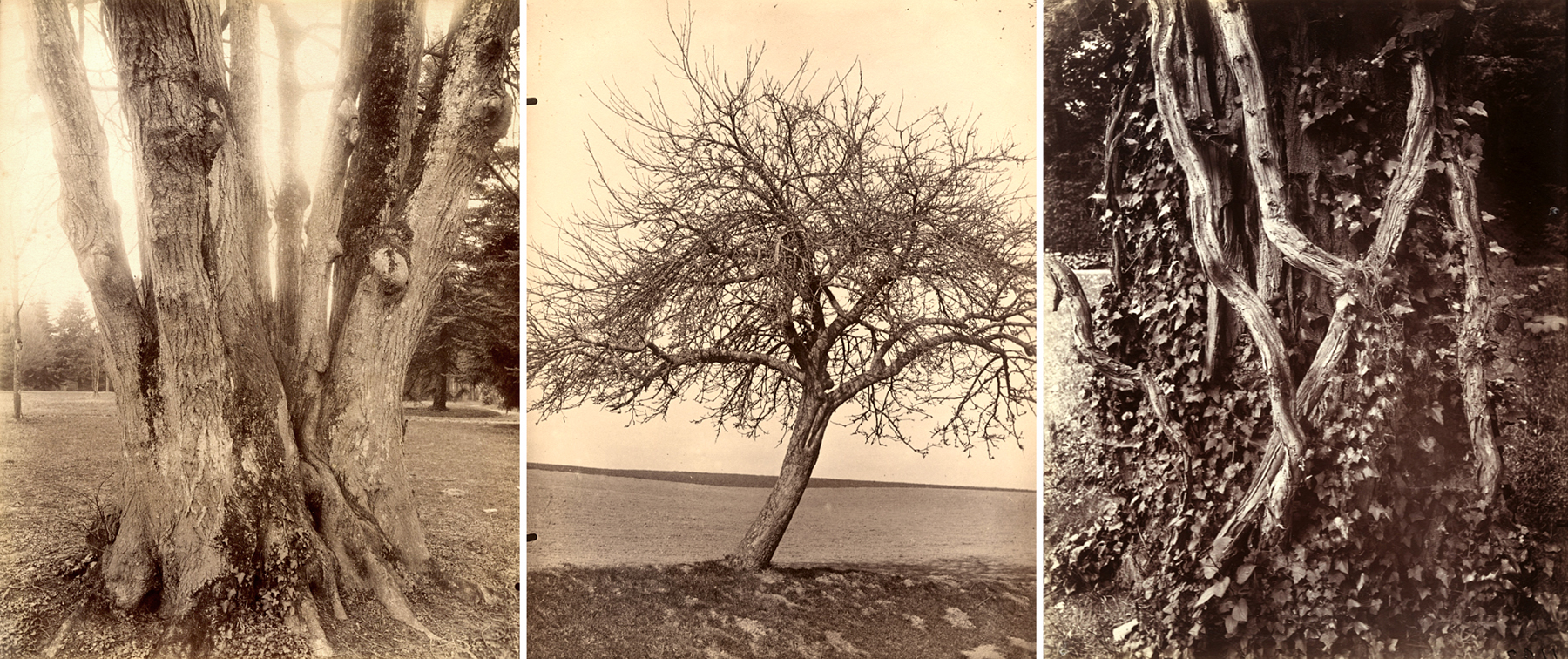
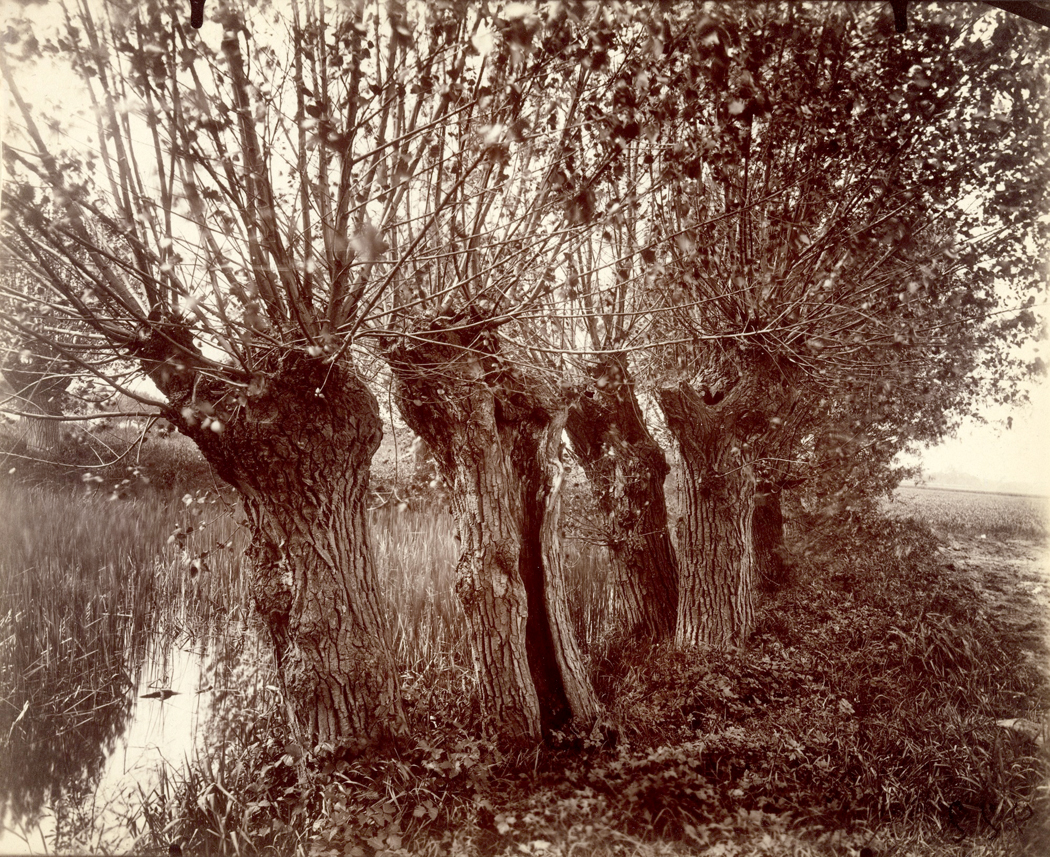
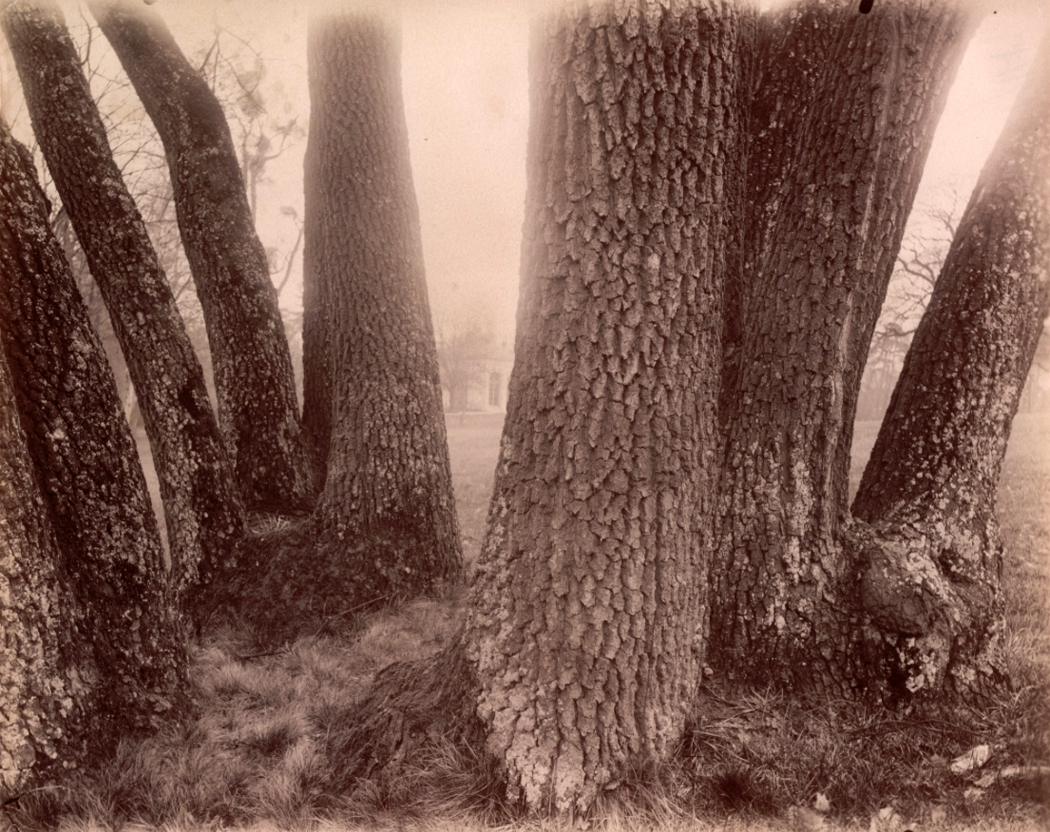
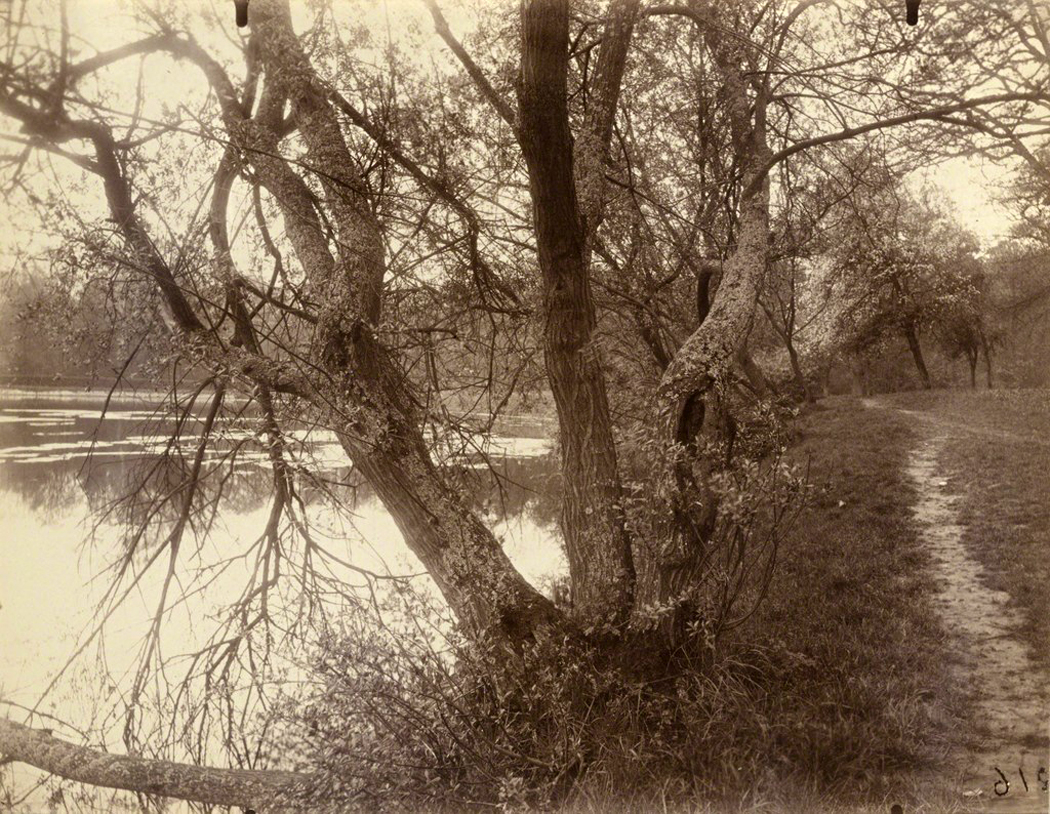
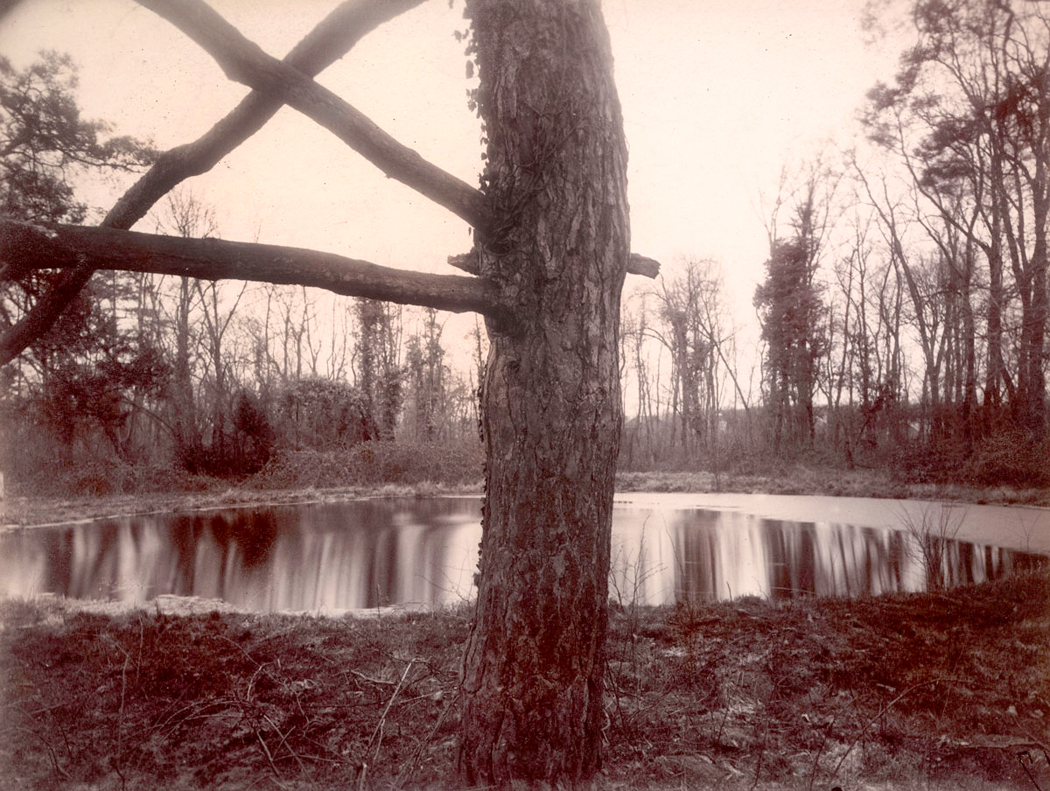
One of the first shows at the Museum of Modern Art that made a deep impression on me was in the summer of 1972, when they put together a group of 50 photographs of Paris trees by Eugene Atget (1857-1927).  

Lined up on the wall in a darkened space, with brilliant track lighting that made each photograph gleam like a jewel, the photographs made my heart jump and my eyes smile. Most of the trees were winter trees, with wiry roots dug into the ground, and ancient boughs twisted and weighed down with age. They were ungodly beautiful, but also, in Minor White’s expression, it wasn’t just what they were, but what else they were. 
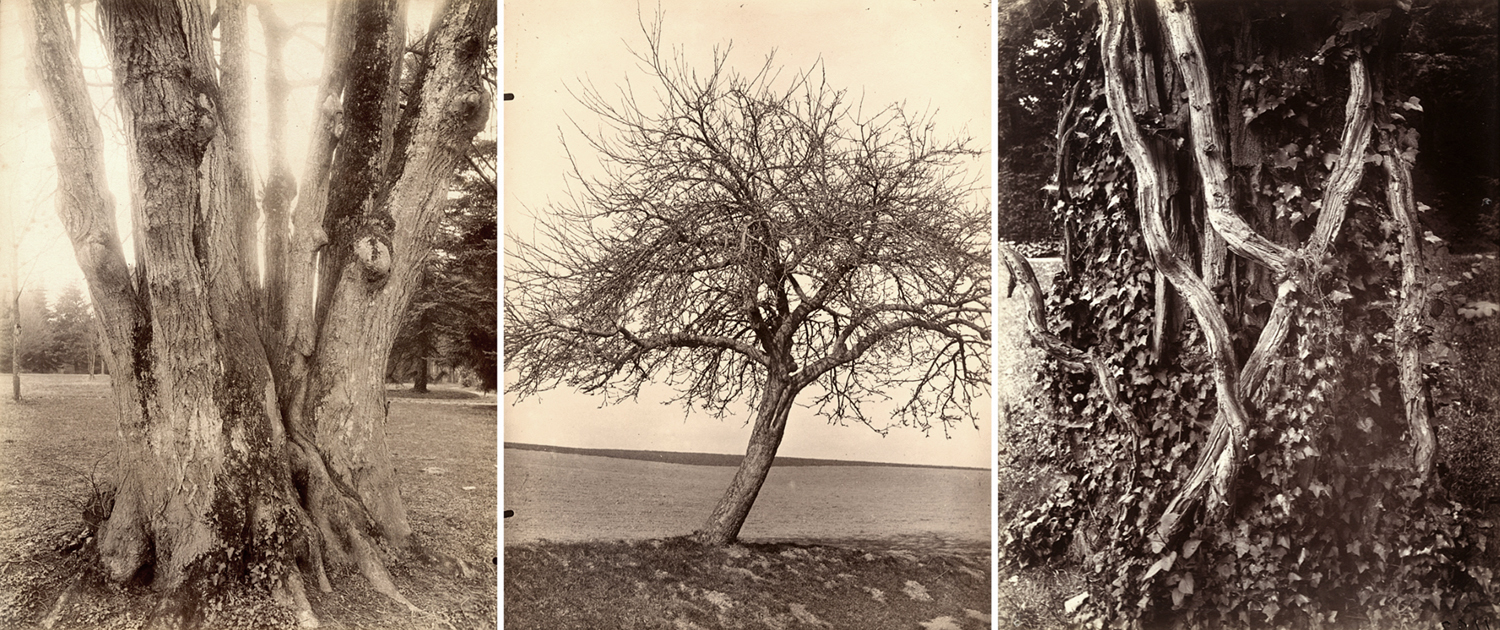
Three tree photographs by Atget

The way they were lit, the gnarled forms they took, their texture and even the gold-toned sepia surface of the silver images all functioned as metaphor. They evoked emotion the way art can. 

Usually, when most people see a picture, in a magazine or newspaper for instance, the image is just a kind of shorthand for language. You see a picture of a house or car and instantly the words “house” or “car” spring to mind. The journalistic photograph is a kind of pictogram or hieroglyph, like the stick figures on the doors of public restrooms. 

But images can also do more than that: When you abjure the naming phase and feel the color, line, shape, form and also the cultural resonance of an image, they evoke thoughts and emotions beyond the named subject. 
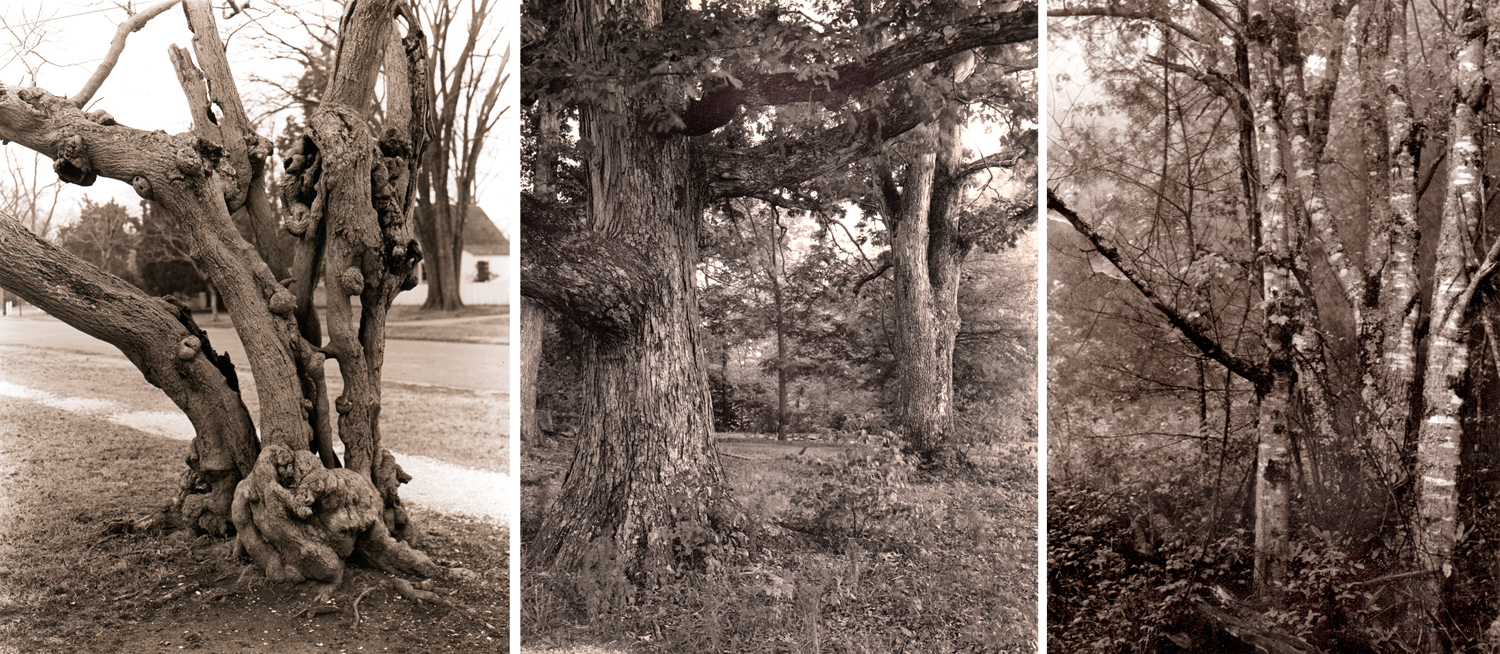
My imitations of Atget

And it was that that blew into my brain, seeing the Atget trees. 

And that is something I have been hunting all of my creative life. And attempting to find in my own photographs of trees. Or not just trees, but in all the photos I’ve tried, whether landscape or still life or nude or portrait or abstract. — What else it is. 
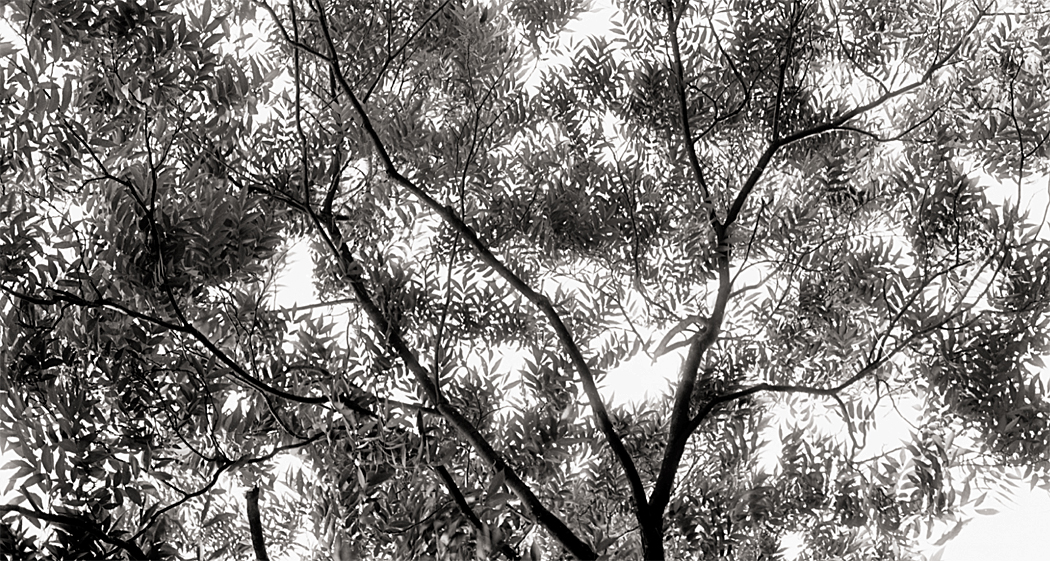
So, when I sit on my back patio and look up the hill at those mid-winter spring trees, with their augury of renewal, and their complex shapes and overlaps — those wonderful lines drawn against the sky’s paper — I want to catch something as it flickers by. 
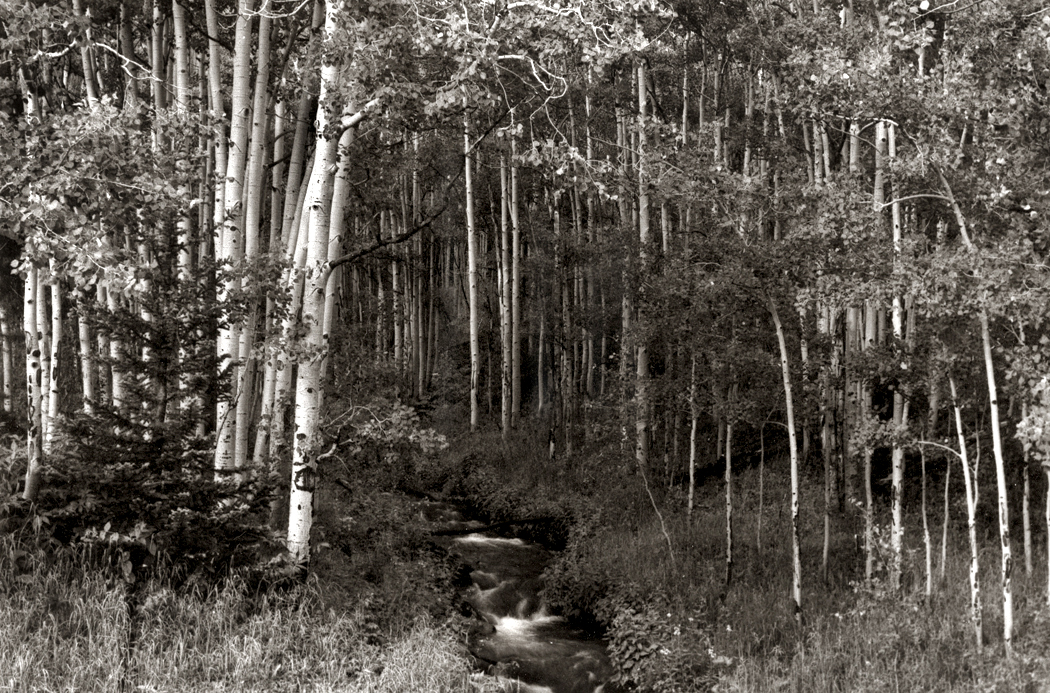
Aspens, Colorado

I’ve snapped a lot of them, although I’ve caught few. Many don’t have the magic and just sit there as noble attempts. It hasn’t just been bare trees. I’ve tried to find the emotion in all kinds of them.
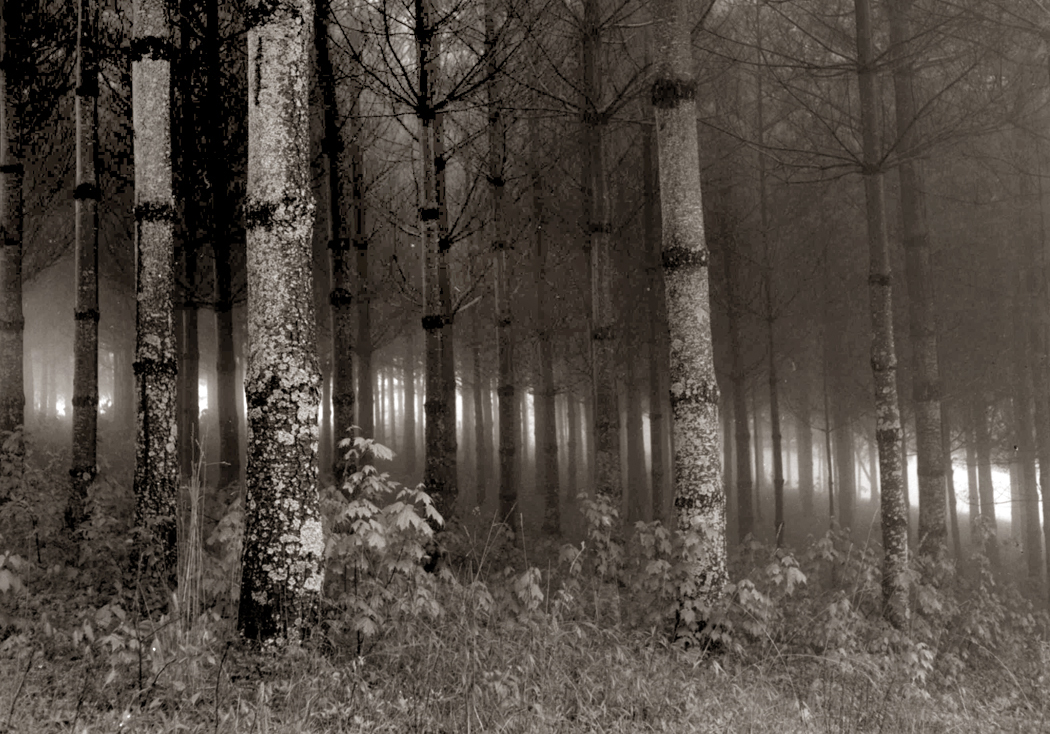
Morning, Obids, NC, Blue Ridge Mountains

The photographer Alfred Stieglitz called the equation between the subject of a picture and the emotions that are evoked “equivalents.” It’s part of the constant fight between the simple depiction of something you can name, and the attempt to make the image stand on its own as an esthetic entity. 
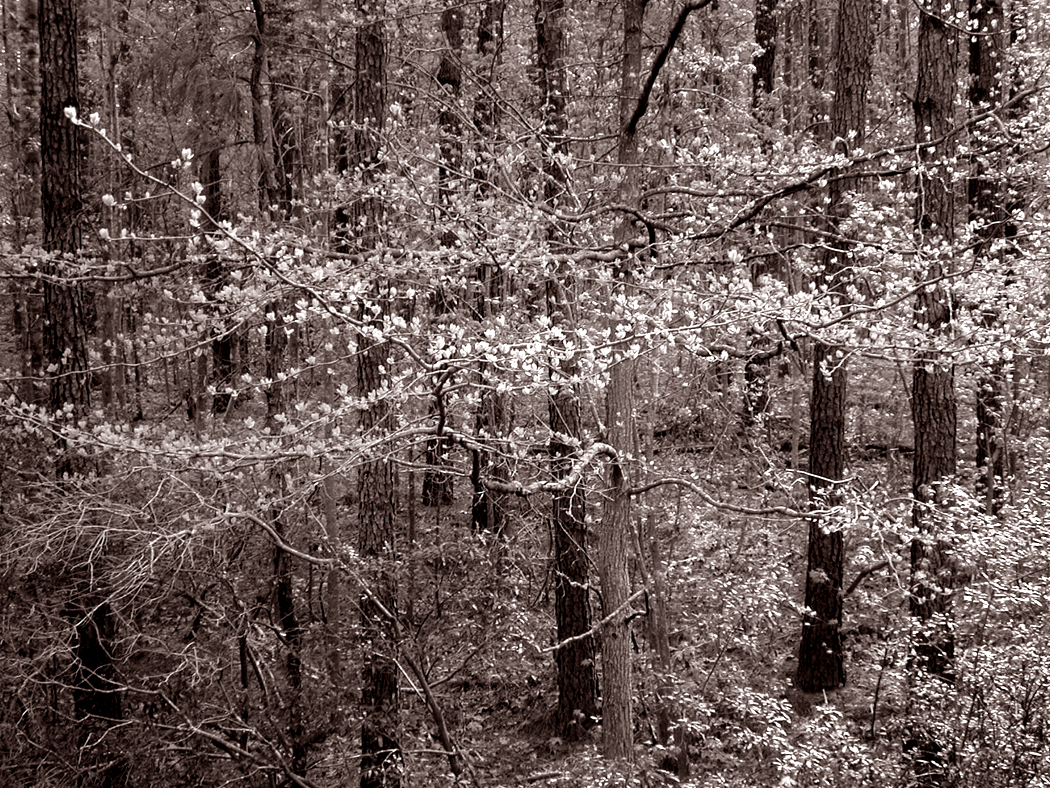
It’s what most visual art tries to do: create an equivalent in the limbic system to the shapes, colors, lines, and even the subject matter and its resonance with the personal. 
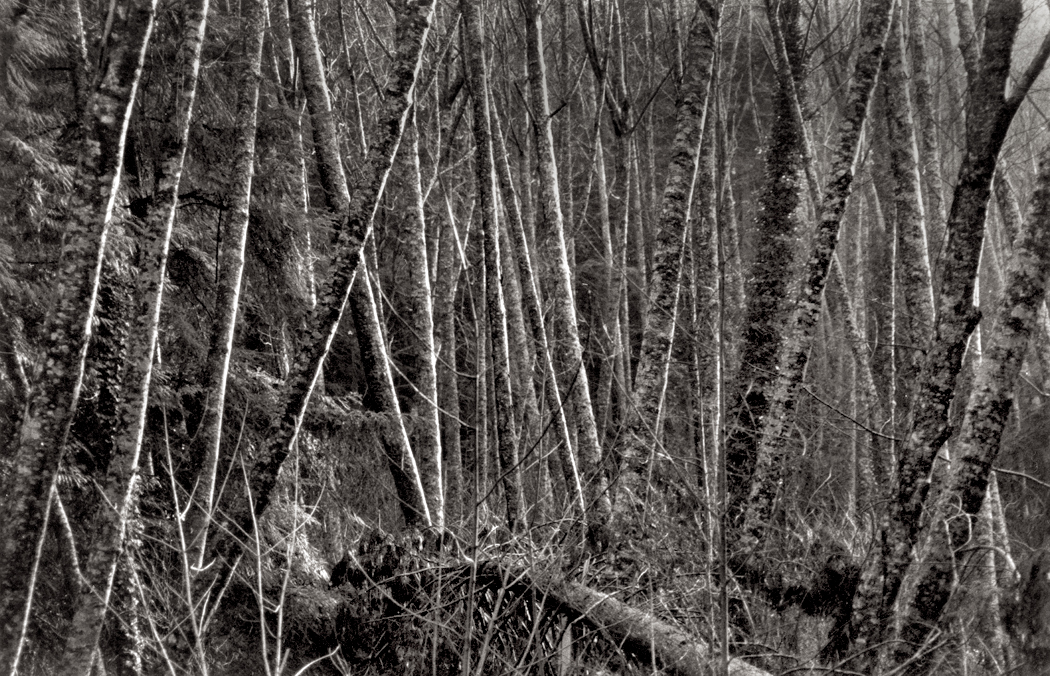
Bainbridge Island, Puget Sound, 1979

Most glossy travel photos are meant to make you wish to be there. But with the image made for display, or as art, you are there, in front of the thing itself. You don’t have to make travel plans. Not just pretty pictures, but objects of contemplation. 
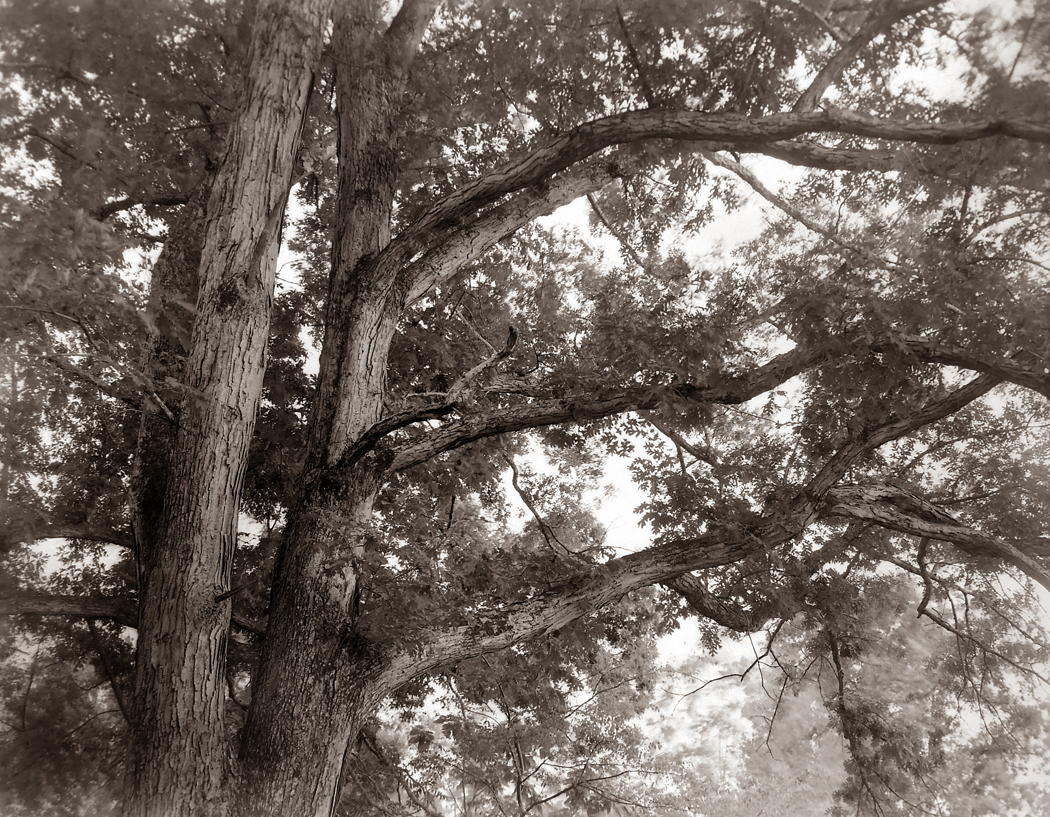
Sandro’s oaks, Summerfield, NC, 1980

The point is twofold. First, to make you pay attention to the world around you, to see with intention. And second, to allow you to connect with the emotions you have in potential.
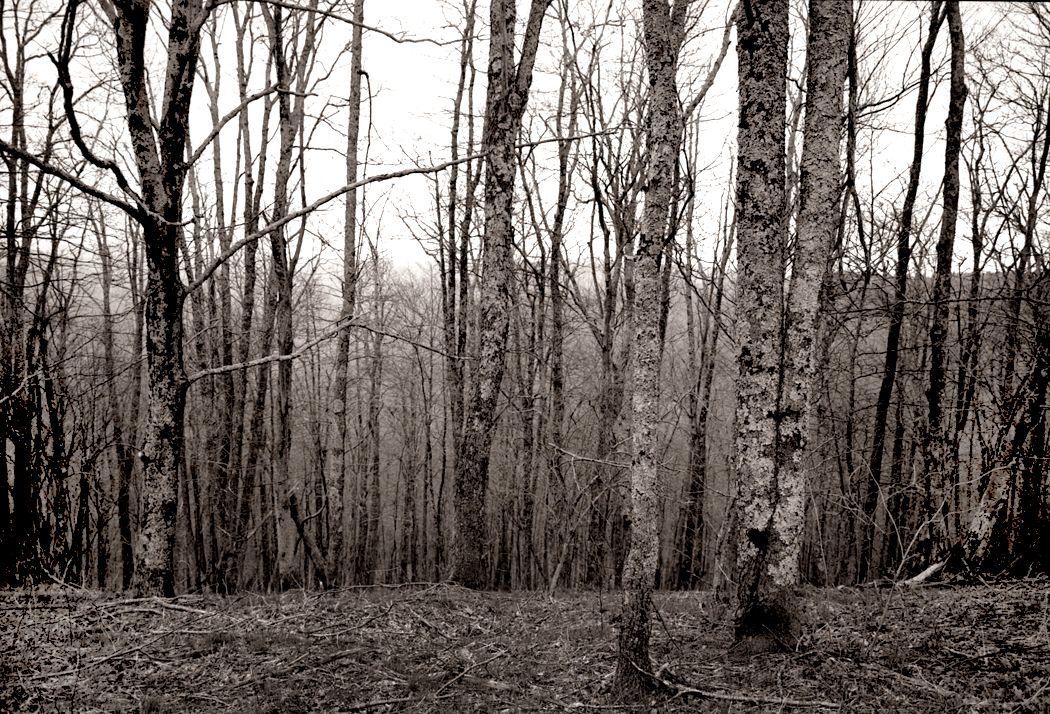
Wise, Va. 

Both together they make a single bond: interior and external; you and the world; individual and cosmos. No longer separate. 

Over the years, the images I make have become less public and more personal. I no longer pay much heed to the wide acceptance of the art I make. I don’t make it for others, but as a kind of personal meditation. 

I seek new ways of making this happen. One morning, while visiting my brother- and sister-in-law in Reidsville, N.C., I saw the shadows of winter branches projected onto the window blinds. It made for a kind of Japanese byōbu screen. 

And then, one day last week, in midwinter spring, sempiternally recurring, I was sitting out back, listening to birds and airplanes, the dogs down the street and watching the clouds move west to east and the branches waving in the moving air, and I managed to make an image that finally captures for me the complexity of the abstract, neuronal jumble, all the connections, the scribble and the energy. It is small on your computer screen, but it should be large as a mural. 
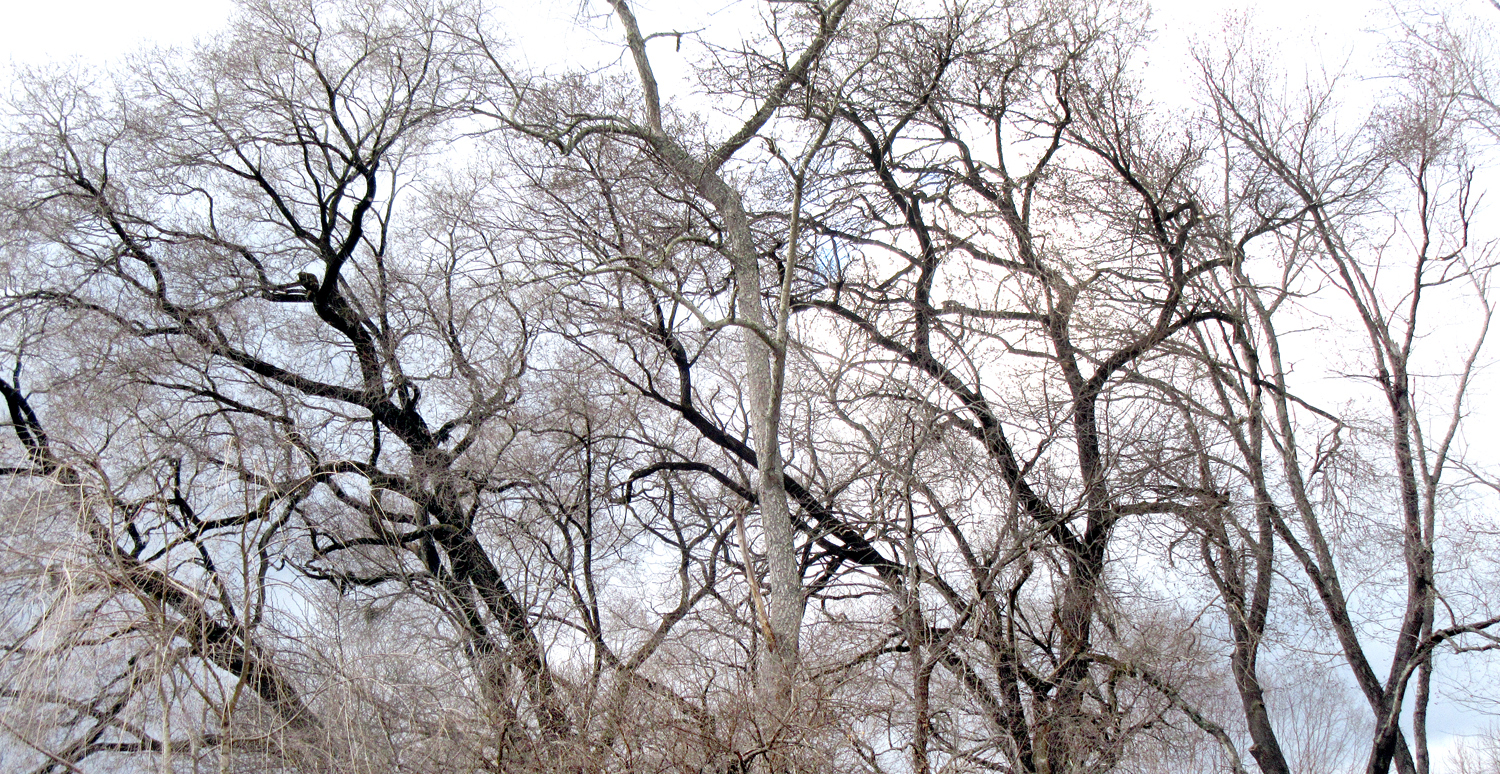
If I could, I would print it out mural size to cover a wall. Or split it up over several vertical panels, like a Japanese byōbu screen.

But I no longer have means to do that, and so, I just look at it and contemplate.
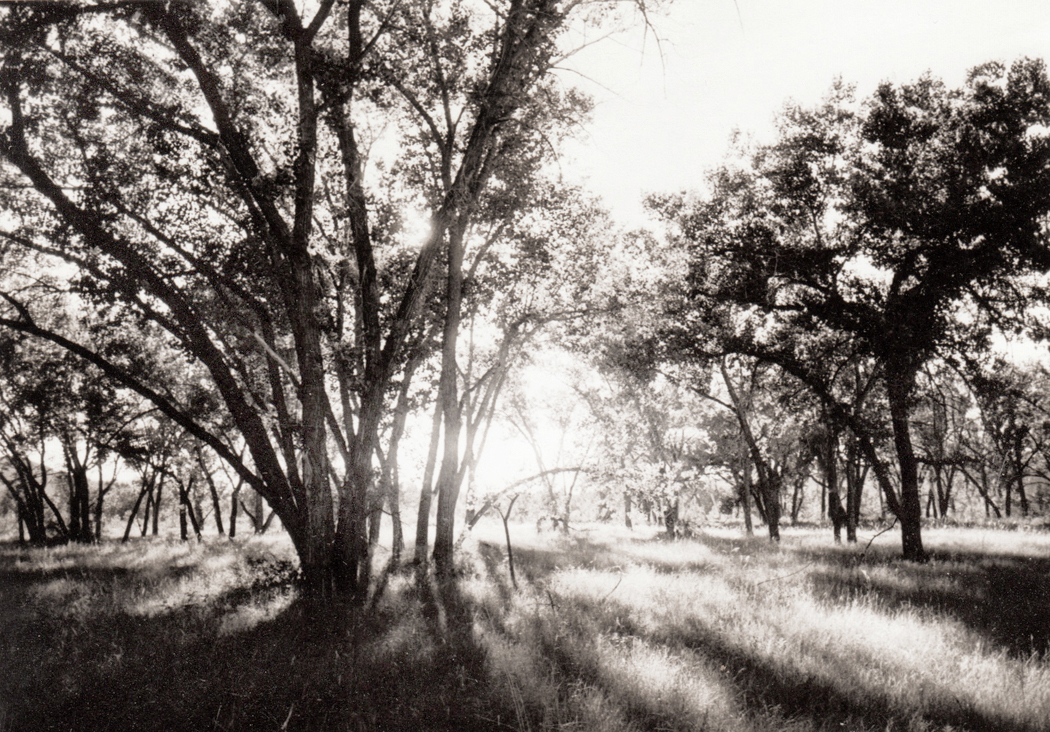
Roosevelt National Park, ND

Click on any image to enlarge

Boulevard de l’Hôpital

In the past post, I put together a group of pairings of the photographs of Eugène Atget and some of my own, noting the coincidental similarities (link here). I certainly didn’t want to make too much of it. It was just some fun.

Paris

But I had a surfeit of examples and I had to leave a bunch behind. So, I figure, why not post them, too. If I am taking up too much of your time by this surplus, you can always leave the page and find something more profitable. But even if you don’t care to enjoy the joke of this unintended mimicry, you might still enjoy the travelogue. 

Jardin des Plantes, Paris

My late espouséd saint and I spent weeks at at time driving around France, and exploring Paris. We never went to the Eiffel Tower or the Moulin Rouge, but instead found rooms in less frequented quarters of the city and tried to discover what it would be like to live there. We ate in local bistros and cafes and shopped in local stores. We got to know the people in our neighborhoods and enjoyed their friendliness (the celebrated French rudeness is something we have encountered no evidence of). 

Chartres

France is often called by the French the “Hexagon,” because roughly speaking, that is the shape of the nation on the map. We have been to all the corners and came to love them all, although, to be fair, Normandy and Brittany have stood out in our affection. 

Fontenay

These photos cover most of those corners. I could easily post a hundred, two hundred photographs, each distinct, but I have narrowed it all down to a mere 30 of them. 

Confessional, Rouen

As I said, you can look at them as a kind of travelogue — a black-and-white slide show of our vacations — or as a presumptuous comment on the work of Atget. 

Paris

I don’t present them as a serious labor of art, but as a kind of game: seeing parallels in my own visual record of la belle France to the city and countryside of a hundred years ago lodged on film by a man who also claimed no great esthetic achievement in the taking those photos. 

Vezelay

Atget was proved wrong; now his work is taken as art. I have no expectation that the same will happen for mine. It is enough that I had a good time making these images in the first place, and jiggering them around to mimic that of my progenitor. 

Notre Dame de Paris, Easter

Here they be. 

Montluçon

click any image to enlarge

WWI shell craters, Verdun


Musée national de la Moyen Âge, Paris


Concarneau


Apples, Hambye


Jardin des Plantes, Paris


Locmariaquer


Notre Dame de Paris


Paris


Angoulême


Noyon


The gods, Palais Garnier, Paris


Rue Mouffetard, Paris


Paris


Musee national de la Moyen Âge, Paris


Tuileries, Paris


5th Arrondissement, Paris


Les Eyzies


Rouen


Paris Opera


Bayeux


Paris


Tuileries, Paris


FIN


I didn’t do it on purpose. 

In my previous post, I wrote about the effect on me of an exhibit of the photographs of Eugene Atget I saw nearly 50 years ago. Looking at those images at the Museum of Modern Art in New York all those years ago eventually led me to loosen up my own approach to making pictures. 

Where I had been a disciple of Modernism in photography, from Stieglitz to Strand to Weston to Adams, I realized, looking at the Frenchman’s photos, that a looser, more direct approach to the art might be more productive. 

And, in fact, I gave up attempting to make precious jewel-like prints matted in perfect ivory mattes and framed in black aluminum section frames. 

But I had no intention of mimicking Atget’s pictures. Please believe me, I didn’t do this on purpose. 

As I look through the many images I have taken in Paris and in France, I find that there are so many parallels to the pictures of Atget. 

I found myself making records of so many curious and interesting corners of the city, so many details, so many textures and lines, so many storefronts and alleyways, that I could hardly help myself. 

Because I have come to find more interest in reacting to the world around me than in creating what receives the imprimatur of art. 

Being awake and aware of my milieu is what drives me, makes me happy, gives me esthetic fulfillment. 

So, here I have taken some of my photos and edited them, making them black and white and toning them sepia. 

I do not mean for you to believe I am trying to make art here, merely to play a little game, matching up images. 

Many others have taken their cameras around the city of light and consciously mimicked Atget’s work in an exercise of “rephotography,” a Postmodern trope. I am intending no such thing. 

I merely enjoy the little joke of finding in my work these unconscious rhymes with the work of a photographer I have loved for all these years, but haven’t given a whole lot of thought to in decades. 

Such is influence, I guess. You don’t always know it’s there. And you don’t consciously attempt to counterfeit your model. 

But somehow, it has worked its way into your bones, into the way you approach the world, the way you understand it. 

So, here are a group of parallel images. Those on the left are by Eugène Atget, those on the right are mine, albeit gussied up to amplify their similarity to my progenitor. 

I hope you find a twinkle of pleasure in this game. And it is just a game. 

Click to enlarge any image 


FIN


Not every life-changing event happens on the road to Damascus: a blinding light, knocked to the ground, twitching galvanically. The death, the religious conversion, the falling in love. But there are smaller turnings also, often dozens of them in a life, perhaps passed unnoticed at the time, but nudging our lives on a slightly new heading. “As the twig is bent, so is the tree inclined.” The butterfly in Brazil. These are also life-changing. 

In the summer of 1972, the Museum of Modern Art in New York mounted a small exhibition in its downstairs gallery, behind glass doors. “Atget’s Trees” put together 50 photographs by the French artist Jean-Eugène-Auguste Atget (1857-1927). Lined up on the wall in a darkened space, with brilliant track lighting that made each photograph gleam like a jewel, the photographs made my heart jump and my eyes happy. (That kind of lighting is now largely verboten in museums, as they adhere to a strict limit of only so much illumination to protect sensitive materials from light damage. Silver-image black and white photographs are largely immune to such light damage, so the restriction on lighting seems shortsighted and misguided; it dulls the brilliance.)

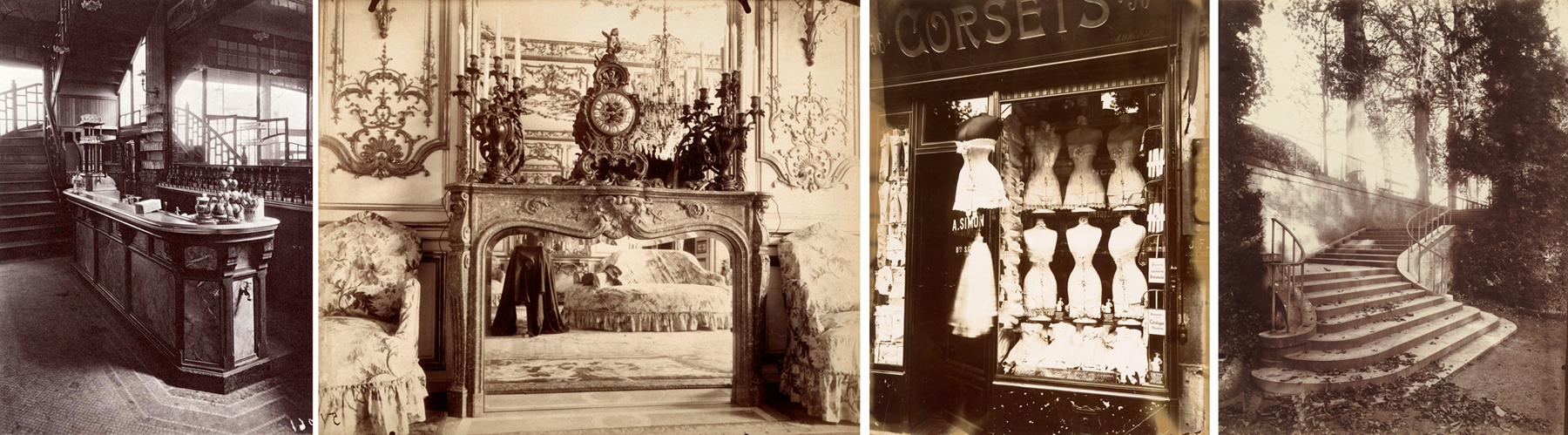
Atget (At-zhay) was an odd little man who taught himself photography in order to document art, architecture and decor that was disappearing as Paris and France entered the modern world. Originally, beginning in 1890, his work was meant for painters, architects and stage designers to provide models for their work, and he sold his pictures to them. But he seems to have become more and more interested in the details of his city for their own sake. He took thousands, maybe tens of thousands of negatives. Many were sold to various institutions interested in historic preservation, such as the Bibliothèque Historique de la Ville de Paris. 

In 1925, he met American photographer Berenice Abbott, who began buying his photographs and collecting negatives. In 1968, she sold her collection to MOMA, from which the “Atget: Trees” show was developed. 

The majority of Atget’s subjects were buildings, statues, door knockers, gardens and street scenes. No detail was too humble for his attention. There are photographs of doors, photos of stairways, photos of balconies and railings, of fireplaces, of courtyards and alleyways. His curiosity was omnivorous and ravenous. 

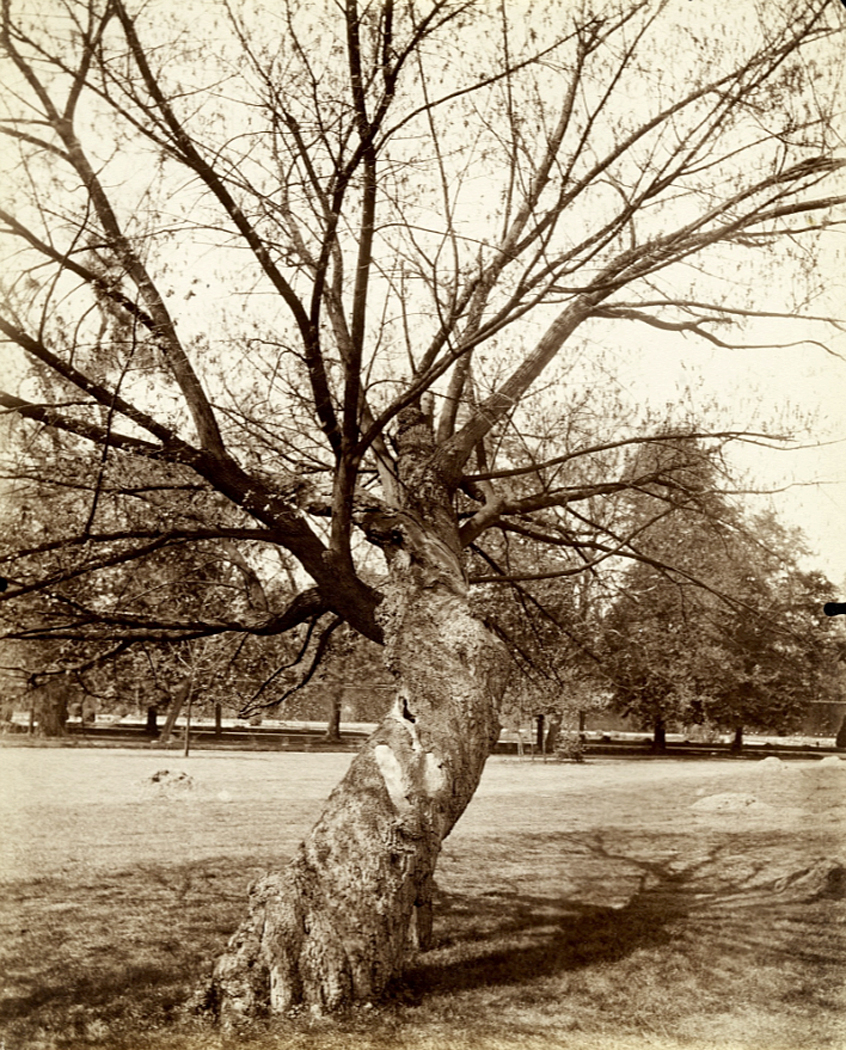
But through all, there was one subject he came back to over and over: trees. Most were in parks, like Saint-Cloud or Sceaux; some were at Versailles; others simply out in the countryside. He seems especially taken with ragged bark and gnarly roots. Often, he has photographed the same tree over and over, from very slightly different angles, or in different seasons. There is something sensuous in the growth and surface of trees that excited his artistic libido. 

Atget’s equipment and technique were already antique when he began, using an old bellows camera and large negatives, printing them on albumen paper and toning them with gold chloride. This gave his images a sheen (from the egg white) and rich, chocolatey tone (from the gold) that, in the right light, makes them jump from the frame with gem-like luster. 

And there I was, in 1972, ripe for the message they were giving me. 

You have to remember that 50 years ago, the art world — and especially the world of photography — was deeply buried in a type of snooty puritanism. We were taught you never “crop” your images, but framed them precisely in the viewfinder. Anything else was “sloppy” and perverted the natural uses of the camera. You must used archival paper and processing. Frames must be neutral, matting must be white or ivory.

And most of all, you were made aware that a photograph was all about photography. Art about art. Subject matter hardly mattered; it merely provided an armature on which to make your statement about the nature of photography and art. 

This was the art world the late Tom Wolfe railed against in his book, The Painted Word, where the deacons of art criticism slapped their hands down on a kind of outstretched bible of certainty: A painting must be flat, it must not mix genres, it must investigate the possibilities of paint and never, ever “illustrate” a story or event. Hellfire and brimstone of a different sect.  

This was the heyday of Ansel Adams and his Zone System of photographic exposure and development, to carefully control the results, which were by necessity “previsualized,” i.e., you were to know before you snapped the shutter, exactly what the end result would be, including its printed size and what sort of paper you would print it on. God, it was constricting. What a constipated way of approaching art. 

And here was Atget before my eyes, messy, uncoordinated, obsessive and obviously fascinated with the things of this world. 

Not that it made a dent in the attitude of exhibit curator John Szarkowski, one of the deacons of that puritan orthodoxy. Szarkowski was Director of Photography at MOMA from 1962 to 1991, and one of the most influential voices of the time. He performed many miracles for photography as an art at a time when the status of photos was still doubted in some corners of the art establishment. But he also issued some very dubious edicts. 

About the “Atget: Trees” exhibit, he wrote in a wall label for the show, “On the basis of a small and heterogeneous collection, the quality of effortless poise that identifies Atget’s work might easily be read as naivete. A study of his repeated investigation of the same or similar subjects, on the other hand, suggests a conscious and sophisticated concern with the ultimately formal problems of picture making. 

“Atget was acutely aware of the literally infinite number of images that are potential in a given ‘subject,’ and he knew also that none of them was true, in the sense that it shared a privileged identity with the object photographed. The subtle variations in framing included here among the six plates of the Beech Tree, St. Cloud, for example, make it clear that Atget did not confuse the subject with the object. He understood that the true subject is defined by (and is identical with) the picture.” 

That is art gobbledy-gook for, “Don’t think Atget was a bumpkin. No, he knew that the real subject of a photograph is the photograph itself, and the finished print, given to us, is the only actual goal of taking the thing in the first place.” (I especially note the condescending quotation marks around “subject.”)

And that, my friends, is a complete misreading of Atget and his art. 

What I came to realize, adoring those luscious trees on the wall of 53rd Street, was that what mattered was not the print, but the attention that Atget gave the world he loved. That, in fact, the subject does matter, and the photographer’s engagement with it was the photograph’s raison d’etre. The photo was merely a lasting and sharable byproduct of the artist’s attention. 

Atget was an indifferent craftsman. His photographs are often poorly exposed, a bit out of focus, show effects of lens flare from an uncoated lens; the prints are sometimes poorly processed and some are fading, or picking up spots and stains. In a Postmodern world, all these things might have been consciously introduced to make us aware of process in privilege over subject matter. But Atget was no such. The power of his work, and its attractiveness is in its naivete — or rather, its directness. Art theory cannot touch it, cannot sully it or soil it. 

Soaking in the MOMA show, I fell in love with Atget’s art, but even more, I learned to mistrust the vox auctoritate. Just because a respected and learned expert speaks ex cathedra does not mean he is right. After all, a scholar is shooting in the dark, just as we all are. Just as Atget engaged with the things he loved, I tried my best to engage with his photographs and not be led into believing orthodoxies that had little to do with what I actually saw. 

And this visit to 53rd Street also freed me to loosen my own approach to the camera and use it to engage with the things I love.

I have had many such life-changing encounters, small but meaningful. This was just one of them. 

Click any image to enlarge