Archive

Tag Archives: books

“It was six degrees last night,” I said. I was on the phone with Stuart. “A huge mass of cold has dropped down from the north. Tonight, it’s predicted to hit 5 degrees.”

“Sounds nasty,” Stuart said, although I know he was being diplomatic — He and Genevieve live in Portland, Maine. I’m pretty sure he’s seen his share of six-degree days. 

“But,” he went on, “I’m not sure cold actually exists.” I settled in for a Stuart session. He has these bouts of brain flurries. 

“It’s something I’ve been thinking about recently,” he said. “Cold is a judgment, not a thing. I mean, there’s no such entity as cold; it’s really just the absence of heat. Heat is real — the commotion of molecules. Cold is our perception of the lack of heat.” 

I don’t think he was being deliberately sophistical; it’s just that sometimes the gears in his brain spin rather fast. 

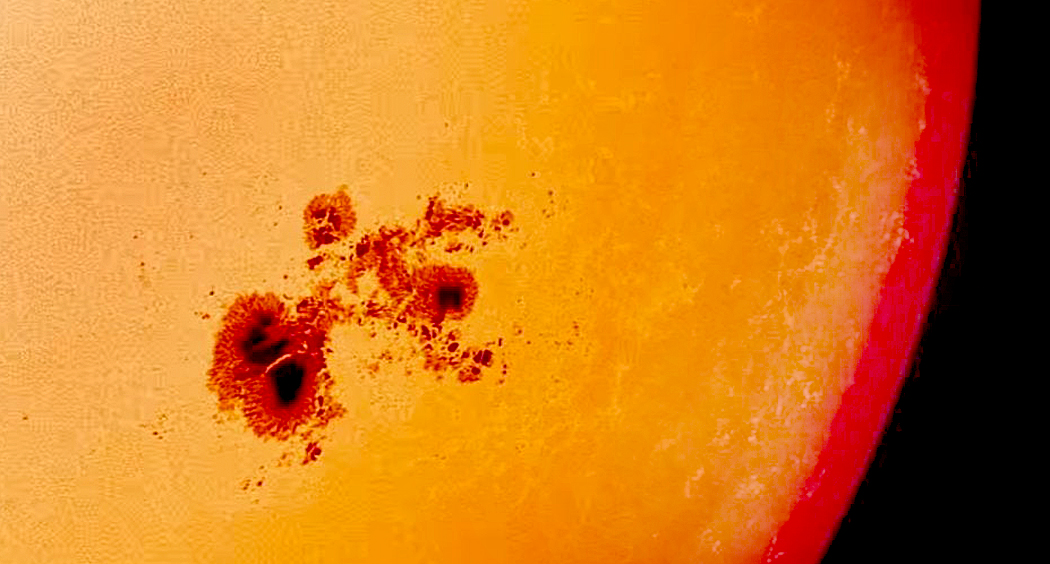
“We think of things being hot or cold,” he said. “But they are a single thing, which is an amount of heat. Sunspots, for instance, are ‘cold spots’ on the sun’s surface, even though they can measure 7000 degrees Fahrenheit, and frozen nitrogen can melt when heated above 346 degrees below zero.”

He knows this is a hobby-horse of my own: the gap between language and reality. I’ve written many times about how what we call opposites are usually just points on a single scale. A thermometer measures heat and we express it with words like “hot” and “cold.” We usually take words as reality, when they are merely a separate, parallel thing, with its own rules and forms. 

“There are things that we take for granted that only make sense in the language we use to describe them, but don’t really exist in any real way,” he said. “Real life isn’t so black-and-white.” 

Stuart went on: “Take black and white, for instance. You’ve heard it said that white is the combination of all the colors added together, cancelling each other out. That was what Newton demonstrated with his prism. But that’s if you are talking about light. If you are painting, the combination of all the colors is black. So which is it really? Well, we aren’t talking about color so much as about hue. There are millions of colors and we give them names, like ‘teal’ or ‘pink.’ They are the combination of hue, shade and tint. Hue is a specific spot on the spectrum, a basic ingredient, like an atom. From them we build molecules — specific colors. A blue can be light or dark and still be the same hue, although the colors are sky blue or ultramarine. 

“So, realistically, both black and white are the absence not of color, but of hue. In reality black and white are the same thing, just different shades of it, with all the grays in between. If you realize that black and white are simply variations of the same thing, then you realize that darkness, like cold, doesn’t exist: It is merely the absence of light.” 

OK, I thought. But does that really shed much light on our day-to-day lives? 

“We take these confusions of language as something real, when they are not,” he said. “When I hear terms like ‘left wing’ and ‘right wing,’ or ‘conservative’ and ‘liberal’ bandied about, as if they actually mean something, I develop a kind of psychic acid reflux. Beliefs shift with time and what was once considered conservative, is suddenly dangerously leftie. And vice versa. Is it conservative to believe in a strong central government or in a small government? Is it conservative to try to minimize change and keep things in place that have been there for ages? Or to radically transform government and shake things up? It changes over time, making the terms we use basically useless. Republicans call themselves conservative, but have complained for decades about an ‘imperial president,’ and yet have happily elected just that.”

It seems to me, this has immediate relevance to our lives today. Language matters. 

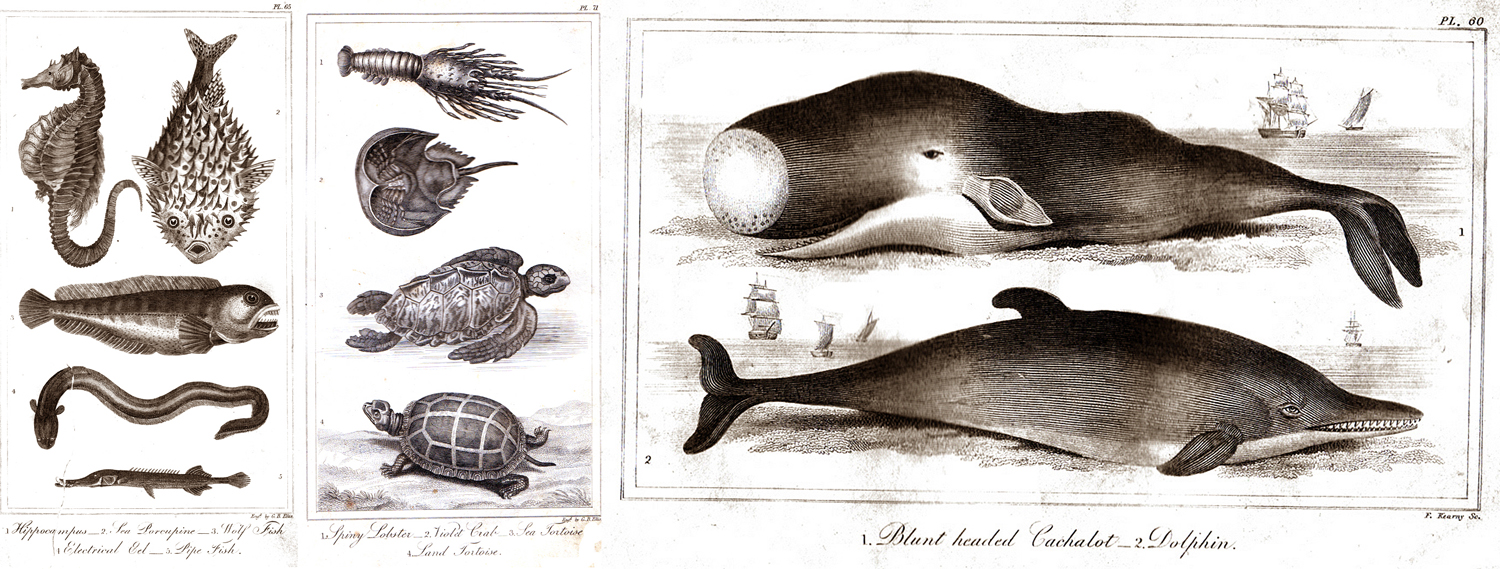
“You know, scientists have decided fish don’t exist,” I said. “Turns out a salmon is more closely related to a camel than it is to a hagfish. Just because it looks like a duck and quacks like a duck doesn’t mean it’s a duck. Just because something has fins and gills and swims in the water, doesn’t mean it’s in a common group called ‘fish.’ In the 17th century, a whale was a fish, too. And in earlier times, squids and mussels were also counted as fish. Jonah, after all, was swallowed by ‘a great fish,’ which tradition has it, was a whale.”

Once, these were all fish

“I have been thinking that language is really myth,” he said. “I don’t mean it doesn’t exist — that’s not the kind of myth I mean. 

“The world is itself. It was before there were humans to perceive it. We see it, however, through language. Take a car. We all know what a car is. That car is in a terrible crash and smashed up. Is it still a car? It gets taken to a junk yard and disassembled for parts. Are the parts still a car? Grind them up into bits of metal and ask the same question. Melt down the metal into a molten form. The same atoms every time, but at what point did it stop being a car? The thing was the thing; the word was just the word.”

“The ship of Theseus,” I said, “that Plutarch wrote about, that had each of its parts replaced as they rotted, leaving the identical ship but completely new. Is it the same ship?” 

“Our brains are hard-wired to see the world as things and those things have names,” Stuart said. “And we take the names seriously. It’s quite silly to worry if it’s the same ship: The question is entirely linguistic. All that piffle that Plato went on about, it’s all really just about language.

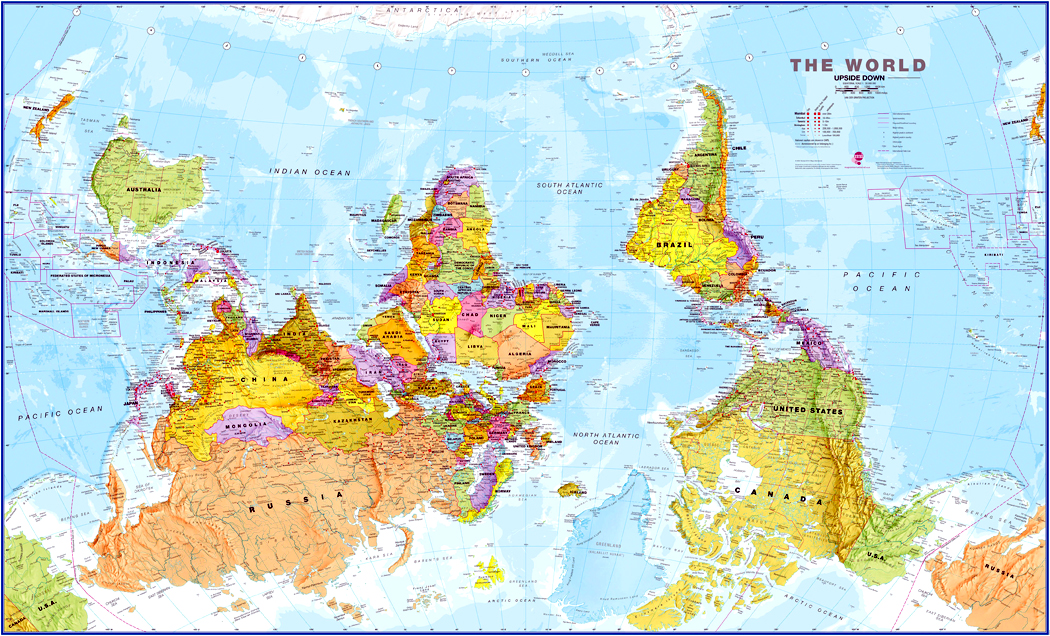
“It is our Umwelt,” he continued. “Which, as I’m using it, is a model of the world built into our psyches not only by experience, but by evolution, and through which we tend to filter our perception of the world, narrowing it down to what seem to be comprehensible limits. A pattern we impose on experience. In our Umwelt, the sky is up, the ground is down. Without thinking, we assume that north is up and south is down, although in a round world in a chaotic cosmos, up and down are meaningless terms. If we hang our world map on the world with Antarctica at the top, it looks wrong. Just wrong. It shouldn’t. 

“It’s why quantum physics is so hard to accept. Our Umwelt is built from human-size experience and the quantum theory makes no sense. In a world of things, we understand atoms as tiny pellets. How could they be vibrating strings? We attribute human emotions to animals, we assume other beasts see the same colors we see, we take anything larger than ourselves as big and anything smaller as little — but why should human size be the standard? 

“Weeks.” Stuart was on a roll. “We take weeks for granted, but they don’t exist except as a custom. We’d be rather upset if we didn’t have weekends punctuating our worktime. The metric system the world uses and believes is derived from nature, is all nowadays built on a measured second, which is an utterly arbitrary duration — no natural fraction of experience, but one counted by an arbitrary number of cesium vibrations. We think of the earth as flat, although we know it isn’t. I mean, we know the earth is a globe, but if I separate out North Carolina in my mind, spread out, it is as flat as a map. It’s how it feels. That we orbit around the sun, when in fact sun, earth, all the planets and moons spiral around in complex motions as the whole shebang skitters through space. 

“If we don’t simplify and schematize the world, we could never navigate it. That is what I mean when I claim that language is myth. It  explains what cannot be explained. It actually functions as myth, explaining the world to us. And so, we can personify nameless things by naming them.” 

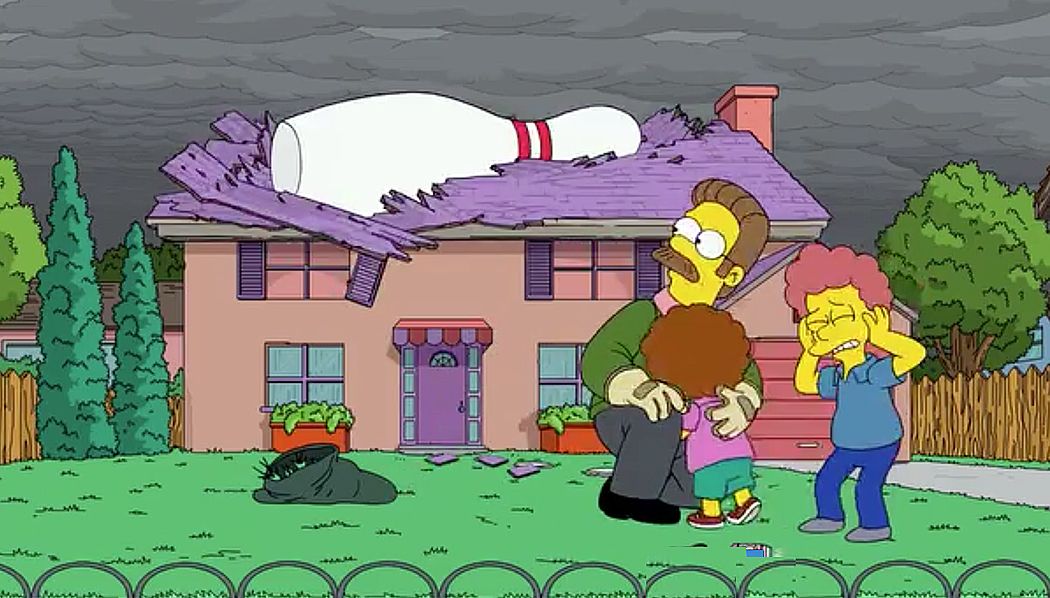
“We think of myth as being, like Zeus and Theseus, but if Ancient Greeks thought of Zeus as a deity, he becomes a folk story when no one worships him anymore. But myths are also ways of explaining the world when science has no good answer — or rather, when the reality exceeds our tiny brain’s ability to grasp it all. Like when we were children and when we were scared of thunder, our parents might tell us not to worry, the noise was just angels bowling in the sky. It was a story that made sense to our infantile brains. 

“Language is angel bowling for grown-ups. We use words to box up ideas, tidying them so our feeble brains can swallow them. We cannot begin to understand where the cosmos came from, so we use Genesis to explain it, or, nowadays, we use the Big Bang. Existence is something so far more complex and chaotic than our tiny minds can begin to understand. So, we make language, a 2-D version of a 3-D world.”  

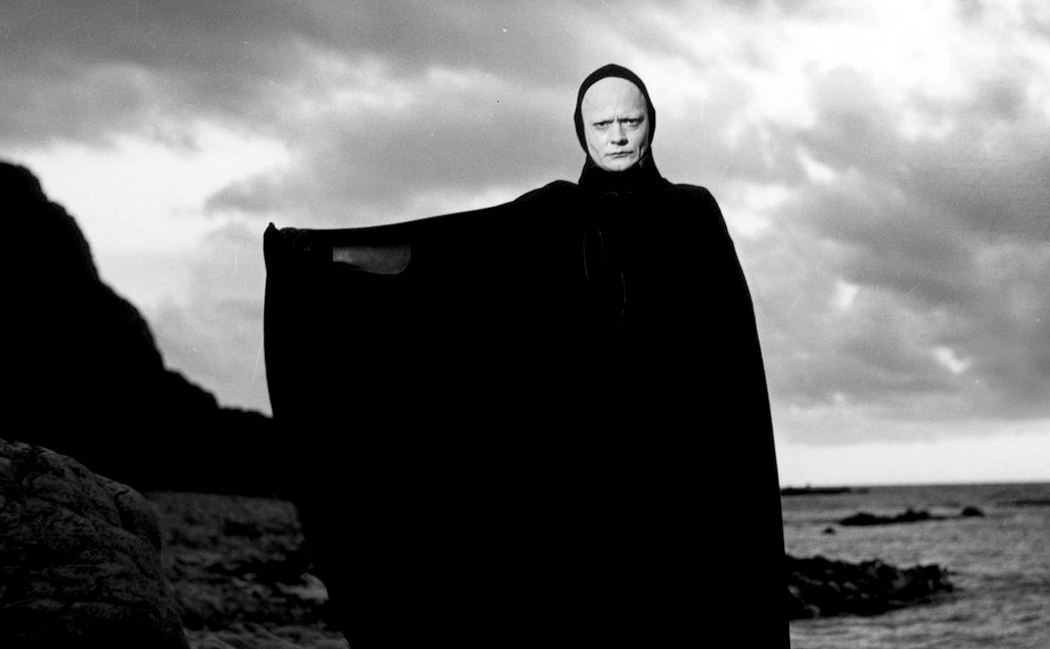
“Like death,” I said. “Death is a skeleton with a scythe in myth, or on a pale horse, or death hovers bedside over the terminally ill. But death doesn’t exist. Dying exists, but death is a myth. Death doesn’t take over our bodies, but the metabolism of our bodies ceases manufacturing life. The machine breaks down.”

“Yes,” Stuart said. “I remember someone pointing out that ‘life’ is not the opposite of ‘death,’ but that ‘birth’ is the opposite. They are verbs, not nouns.”

“I saw this with gut-tightening immediacy when Carole died,” I said. We watched her last inhalations, and then they stopped. She ceased being Carole. There were no 21 grams floating away, she just ceased manufacturing her own life. The light bulb burned out. Light didn’t go anywhere, it just stopped being generated. Almost instantly, her flesh began feeling like clay, cooling off. I’m sure it might soften the loss for those who believe in religion that her soul went somewhere else, but I just saw a factory close down, leaving an empty building.”

“Nice metaphor,” Stuart said. “All language is ultimately metaphor, and metaphor and myth are essentially the same thing. A way of talking about the unsayable.”

This was the moment I heard the faint voice of Stuart’s partner, Genevieve, somewhere in the other room say, simply, “Sophomore dorm room!” and we moved on. And I remembered that women know the real world a lot more than men. 

I have infinite respect for school teachers. My late wife was one. I was one myself, for six years earlier in my career. Teachers work harder and for less pay that pretty much anyone else I can think of. And more than anyone else, the best teachers I had made me what I became in life. 

But. 

There was something about the teachers I had in public schools — grade school and high school — that mystifies me to this day. It was “required reading.” Nothing against the idea of having students read, but the problem was the books they had us read. 

They were “great books,” unquestionably, and among the best of literature in the English language. But what, I ask, what can a 13 year old possibly make out of The Scarlet Letter? It is written in a rather formal  early 19th century style, about a culture long faded in America, and involving minute shades of thought and feeling, with, like an iceberg, more beneath the surface than above. I was required to read it in eighth grade and was bored silly by it, mostly because I could not possibly understand it. 

I remember one of the test questions on the book. “What is the significance of Hester naming her daughter ‘Pearl?’” Uh — I dunno. I was 13 years old and I had a hard time telling the difference between Arthur Dimmesdale and Roger Chillingworth. Perhaps I wasn’t paying close enough attention. Most likely the book was way over my head. Way over the head of any 13 year old. Which is my point. Why was it assigned? 

My teachers wanted to expose me to the best in literature, I’m sure. And Scarlet Letter is certainly a great novel. I’ve read it as an adult and was amazed at how different it was from the same book I read in eighth grade. Deep and true, and subtle. All of which was lost on a boy with not enough life experience to be able to absorb what I was reading. 

For most kids at that age, a novel was its plot. If I could keep the story clear in my head, that was what I took from the book. So, there were a few assigned books that I read and enjoyed. Oddly, one of them was Ben-Hur: A Tale of the Christ, by Lew Wallace. It was assigned in seventh grade, and it was, at the time, the longest book I had ever read. 

It was no doubt assigned because of the 1959 movie, but I had not yet seen the film, and so I never had to compare the book with Charlton Heston. It was fresh to my eyes. 

But it was a story told without excessive subtlety. If I followed the plot, I got out of the book pretty much all that was put into it by its author. I was 12 and at the time, fascinated by history. Lots of that in Ben-Hur.

It should be pointed out that I had nothing against reading books. I read them all the time. I was an avid reader, but pretty much every book I picked up was non-fiction. (I once complained about novels, “Why would I want to read anything that wasn’t true?” Little did I understand.) I read tons of books about World War II. I was obsessed with the war my father had fought in. 

And so, Ben-Hur was right up my alley. A story clearly told and with little hidden between the lines.  

Another great choice for a young person was To Kill a Mockingbird. As a pubescent teen, I was deeply moved by the injustice and the countering righteousness of Atticus Finch. I read it at a time of the Civil Rights Movement in the U.S., and it seemed instantly relevant to my life. The fact that it was told through the eyes of 8-year-old Scout, and the moral issues seemed so clear only made it easier to digest at my tender age. 

The novel is still taught in many schools, and is perhaps the perfect book for required reading, although at the age I was asked to read it, I had no clue as to the the fact that its author also addresses issues of class, courage, compassion, and gender roles in the Deep South.

All the subtleties and complexities in the book were irrelevant to my reading it at the perfect age to encounter it. But then, as Flannery O’Connor said, “It’s interesting that all the folks that are buying it don’t know they’re reading a child’s book. Somebody ought to say what it is.”

In contrast, we also were assigned The Great Gatsby. On the surface, it is not difficult to understand. The language, unlike that in Scarlet Letter, was reasonably modern. But the book relies almost entirely on what is between the lines, which is exactly the part that a 14-year-old cannot perceive. When I first read it, in eighth grade, I thought it was a story about Nick Carroway. After all, he narrates it. This Gatsby guy seemed entirely peripheral and I couldn’t understand why the book had his name on it. And what the heck were those giant eyeglasses about? And that green light? No clue. 

Oh, I followed the plot well enough, I thought. But boy, I had not the first inkling of what the book was actually about. 

And how could I have. One has to have a decent fill of life’s vicissitudes, disappointments, misunderstandings, loves, longings, sex, ulterior motives — to say nothing of complex, multiple motives — before one can take in all that is going on in Fitzgerald’s book. 

Or any book written for grown-ups. We were assigned The Grapes of Wrath, and I enjoyed most of it, but on the test, we were asked why Chapter Three talks about a turtle crossing a highway. A chapter that fits what Steinbeck calls “hooptedoodle.” In Sweet Thursday, a character says, “Sometimes I want a book to break loose with a bunch of hooptedoodle. … Spin up some pretty words maybe or sing a little song with language. That’s nice. But I wish it was set aside so I don’t have to read it. I don’t want hooptedoodle to get mixed up with the story.”

And so, Chapter Three seems to have nothing to do with the story. Or does it? At an age before hair began growing in unfamiliar places, I had no clue. 

Worse, the end of the book just seemed like a vaguely smutty joke to make a teen laugh like Beavis and Butthead. Now, as an adult, it makes me weep. 

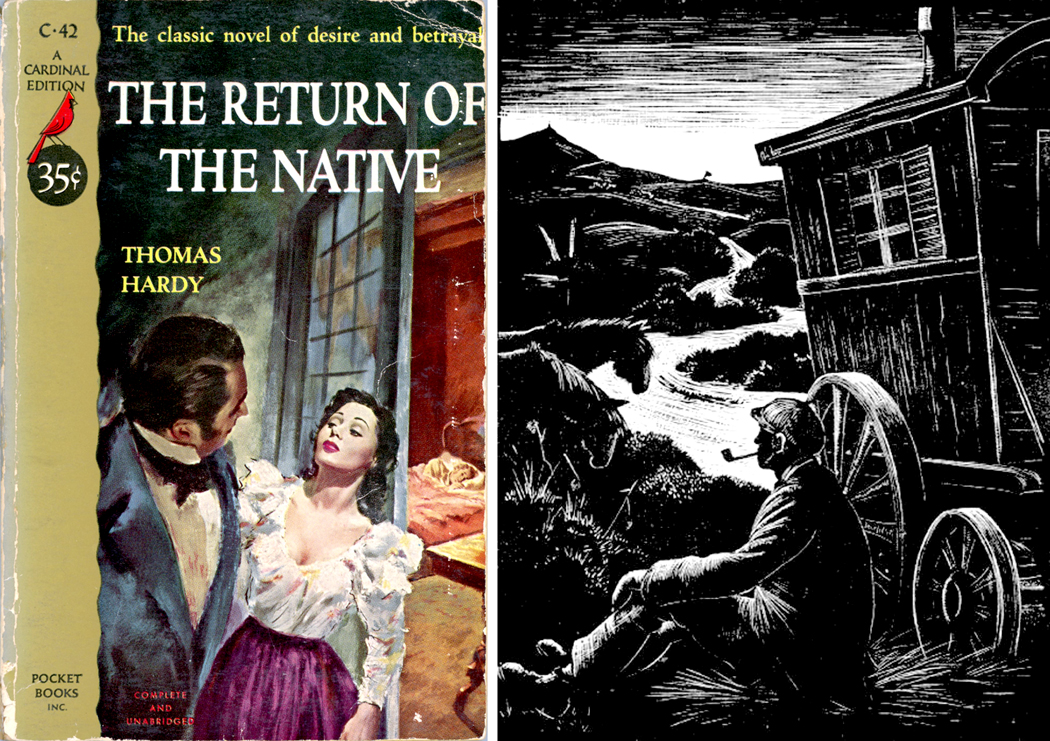
There were other books assigned that my yet-vacant mind could not get around: Emma, The Return of the Native, Oliver Twist. Why were such books put into the hands of a boy who had not yet outgrown Cocoa Puffs? 

I could barely make it through Emma, and couldn’t for the life of me understand why such a self-involved cupcake should be worthy of my attention (I said to my utterly self-involved teen self). At that age, irony is an unfathomable concept. No one my age at the time should be forced to read Jane Austen. Way above my pay grade at the time. 

And worse, Thomas Hardy. I had no notion of what a reddleman might be, nor furze, nor a heath. Reading the prose was like chewing dry straw. Why, why, O why was this book handed to a pre-teen American boy, who never cut a wisp of furze in his life? 

Last year, I found a used copy of the paperback book I was given back then, so many decades ago, and I began reading it to see if it was as bad as I remembered it, and surprise: I found some of the most resonant, deeply felt writing I’ve ever read. As twilight settles, on the first page of the book: “Looking upwards, a furze-cutter would have been inclined to continue work; looking down, he would have decided to finish his faggot and go home.” That image rings so instantly true. I’ve been there. When I was a kid, not so much. 

There were other books assigned that memory has happily wiped from my mind. 

But worst of all, and for this I hold Miss Irene Scheider completely guilty, was my lifelong inability to read Charles Dickens. She was otherwise a fine teacher of my eighth grade class, but she decided she would assign each student his own book, chosen by her as the perfect match for his taste and personality. And for me, she chose Oliver Twist

I cannot tell you how much I hated, hated, hated that book. I found it turgid, boring, endlessly prolix, and completely unrelatable. I trudged through it dutifully, But I found it the absolute opposite  of anything my taste and personality would have fancied. “Please sir, I want less.” 

No blame should be ascribed to Dickens for this failure. I believe the enthusiasm so many intelligent readers feel for his books. But my experience with Oliver Twist in the eighth grade has ruined Dickens for me for the rest of my life. I cannot even pick up another of his books. My muscles twitch and my eye develops a tick. “Oh keep the Dog far hence, that’s friend to men, Or with his nails he’ll dig it up again!”

I understand the impulse of grade school teachers to introduce great lit-rich-your to young minds. But forcing a teenager to read works they are not equipped to comprehend can only deter them from ever wanting to read books they haven’t been assigned. 

I was lucky. I loved reading too much to be thrown off by boring books. I had my own direction. Before high school, most of what I read was non-fiction. I always had a book or two going. Some I read so avidly, I finished them in a day. You could not have stopped me from reading. But I only came to fiction and an appreciation for what it had to afford, after my brain had become fully formed, in my twenties. Then, I attacked all those classics I had dreaded when I was younger. Ulysses, yay! “Madame’s Ovaries,” whoopee! “Lady Loverly’s Chatter,” sign me up! 

I am pretty sure that if you want to instill a love of reading into young minds, you have to let them read what they choose for themselves. Don’t worry if it’s not great literature. Don’t worry even if it’s trash. Or even if it’s comic books. If they enjoy it, they will keep reading. And if they keep reading, they will grow out of the junk and seek the real deal. 

There are books that speak directly to eager minds. The Catcher in the Rye is only possible to read when you are young. Believe me, I tried to re-read it a few years ago and nearly upchucked. It’s not for adults. And there is a huge market for YAF (an acronym that makes me hiccup: Young Adult Fiction) that is surprisingly well written and tackles subject meaningful to their audience. Encourage that. Don’t, my god, hand them Brothers Karamazov

So, let them soak up Harry Potter if they want. It’s OK. Better than never being able to read Charles Dickens again. 

My Uncle Stanley had an ambition in life to own a Weimaraner hound. I was only a boy at the time and didn’t quite understand the appeal of such a dog, but for the IBM typewriter technician he was, living in New Jersey in the 1960s, I imagine it had something of the attraction a solid gold toilet had for Elvis Presley. The rest of us had dogs that we lucked into, finding a stray, or getting a mutt from the dog pound. But the Weimaraner was a pricey breed and my uncle wanted one. He finally got one. It was a nice dog, but for me, that’s just what it was — a dog. 

Many, I think, have some similar focus in their lives, some object that signifies arrival, or a sense of completeness in life. Most items hold that position only for as long as they are unachieved. Yet there remains a pride in the achievement, even if the reward is rather less than anticipated. 

I think of those who have yearned to own a Cadillac. They may live in a mobile home and work as janitor in the local factory, but if they can park a Caddy out front, it will show they aren’t complete failures. 

As in the familiar song, St. James Infirmary: When I die, “Put a twenty-dollar gold piece on my watch chain,/ So the boys’ll know that I died standin’ pat.”

The idea of getting that bit you believe you want or need is common. Perhaps it is a $300 Wüsthof chef knife; or a Rolex watch; or a bespoke suit from Hong Kong. Whatever is your icon of either quality or status or style, it chases you through life until you can finally afford it. I certainly have felt it. When I was young, it was a Nikon camera, then a Leica and then a Hasselblad. I finally got each and while I wasn’t disappointed — they are all as good as their reputations — they never quite made that great a difference in the photographs I made. 

I imagine that if the People’s Republic of China ever finally get their hands on Taiwan, it will not prove to be quite so satisfying a triumph as they had imagined. 

I never chased a particular car or watch, but there are books I longed for. I have managed to get some of them; others still elude me. But here are the big three I lusted after for years.

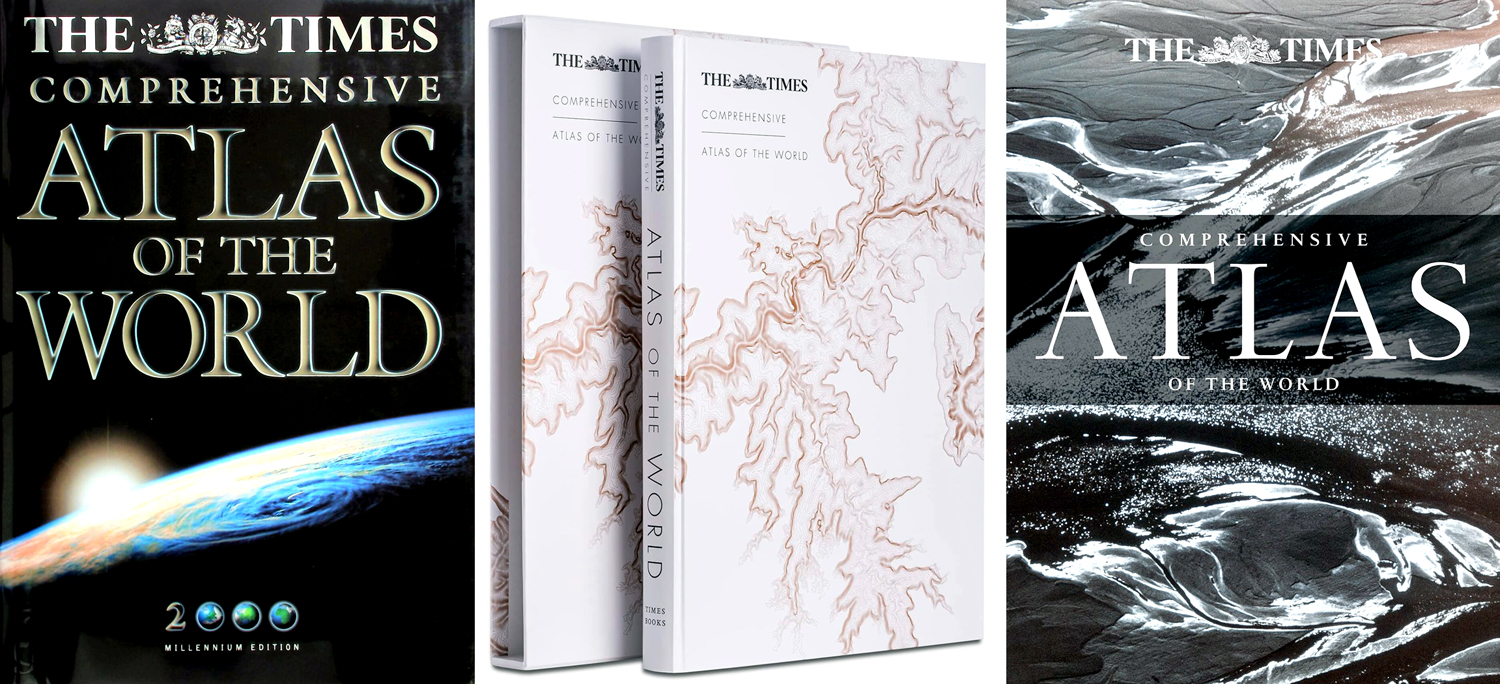
The Times Comprehensive Atlas of the World

Beginning in the third grade, I loved maps. And what I loved more than any were the big maps in the classroom that were pulled down like a windowshade, and were richly colored in thick inks — not halftone dots: The green was dark green ink, not a mix of yellow and cyan dots. Mountain regions were a rich chestnut brown. Those maps were beautiful. They may have been out of date even in my childhood, but I didn’t love them for their accuracy, but as art. 

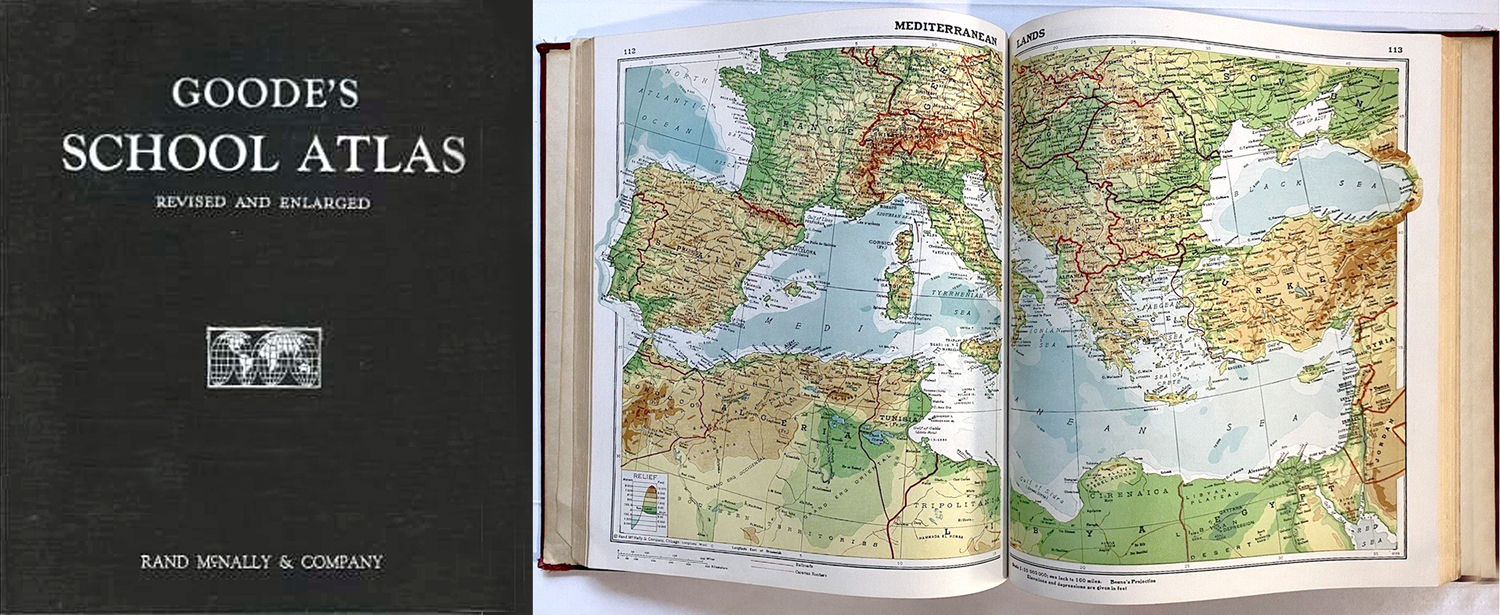
Years later, I found something very similar in older editions of the Goode’s School Atlas, where the maps were created using wood engravings, so there were straight-line cross-hatchings for shadings, and again, multi-colored inks for the printing. I saw them as art books. I found a few in old, musty used book stores and I still treasure them. 

The very first puzzle pieces I remember, as far back as infancy, were map puzzles, where each U.S. state was a single piece. I took apart and redid that states puzzle hundreds of times, even as, in my infant-tongue the states were Uncle Homer and Miss Thompson. 

Later, as a young man, newly empowered with a car and an income, I began traveling, and to aid that travel, I had a Rand McNally Road Atlas. I have updated them every other year or so, but I also acquired vintage versions from 1935 and 1942, which are things of beauty of their own, in two-color printing, with most roads in dark blue and highways in red. I treasure the old ones, while the newer, full-color maps are merely disposable useful tools. 

But, out there on the horizon, was the Times Comprehensive Atlas of The World, published in constantly updated editions from 1895 through its 16th edition in 2023. By 1959, the Midcentury Edition of the atlas was a five-volume elephant folio edition measuring 12-by-19-inches. It was the Cadillac of world atlases and it was way out of my price range when I was young. I did manage to get the single volume 10th edition, picked up used. 

It was a large, handsome volume. The maps were halftones, so, not as esthetically distinct as the Goode’s, but still, it was by all counts the best atlas on the market. Unfortunately, when I retired, I had to sell off about 75 percent of my library to make the move across the country from Phoenix to North Carolina, and the Times atlas was one of the casualties. Kept the Goode’s, though. 

The Encyclopedia Brittanica

By the time I was in sixth grade, I wanted to learn everything. I was young enough still to think that possible. And where would I find all this knowledge? I’d read the encyclopedia. 

My neighbors had an old Compton’s Picture Encyclopedia, from the 1930s, which they gave us, and I read it over and over, with its streamlined steam trains, autogyros and biplanes. But even as a kid, I knew the books were out of date. A wonderful long entry on “The Great War,” but, although I was reading it in 1953 or so, less than 10 years after WWII, there was no mention of any of it. 

My mother wanted to help, and so, she began buying the promotional supermarket offering Funk and Wagnalls, one per week, for 99 cents each, until we had the full set, cheaply printed and bound. I used them for years to write theme papers for school. But I always knew that they weren’t the “real thing.” For that I needed the Britannica, which was way outside my family’s budget. 

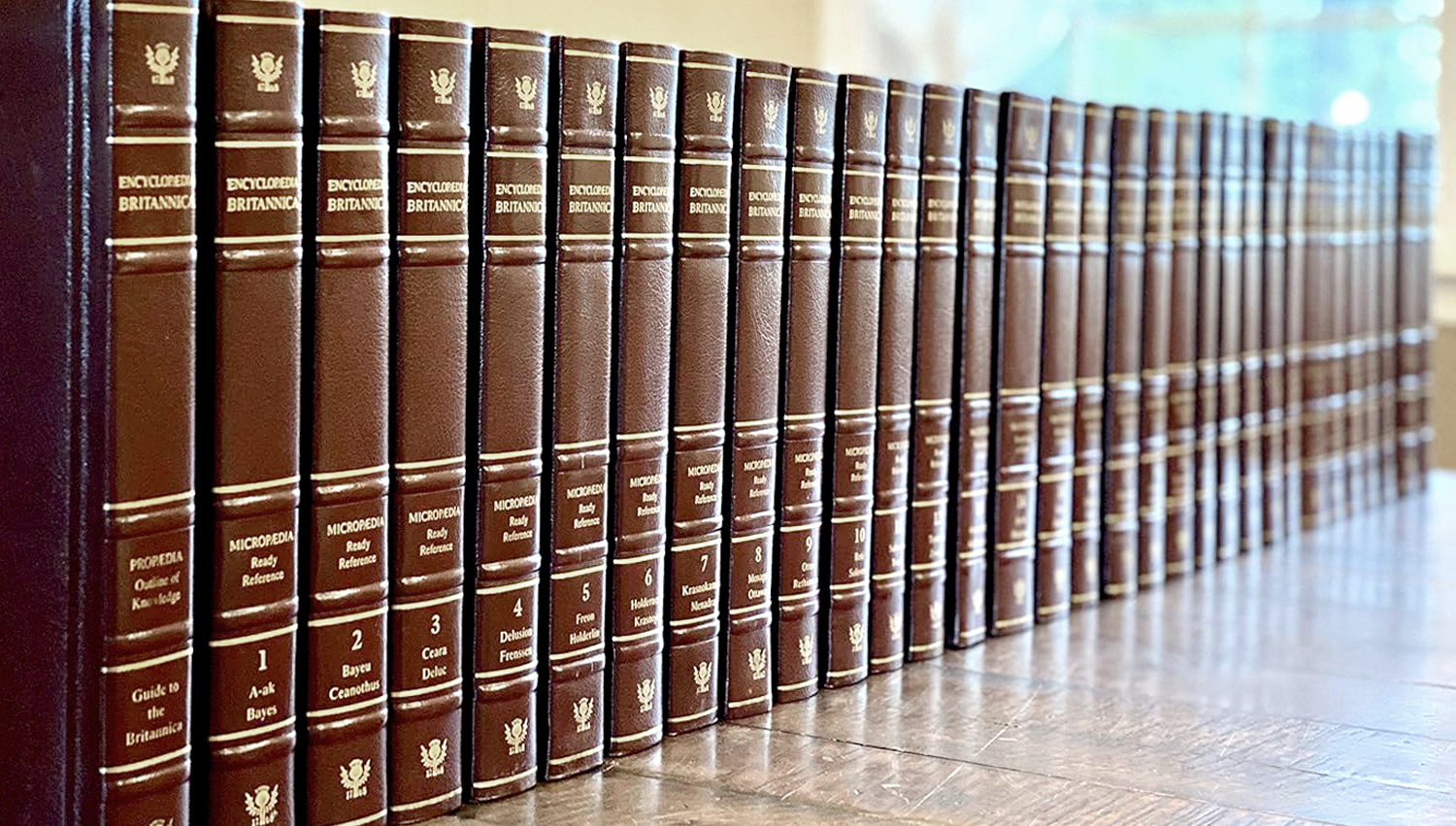
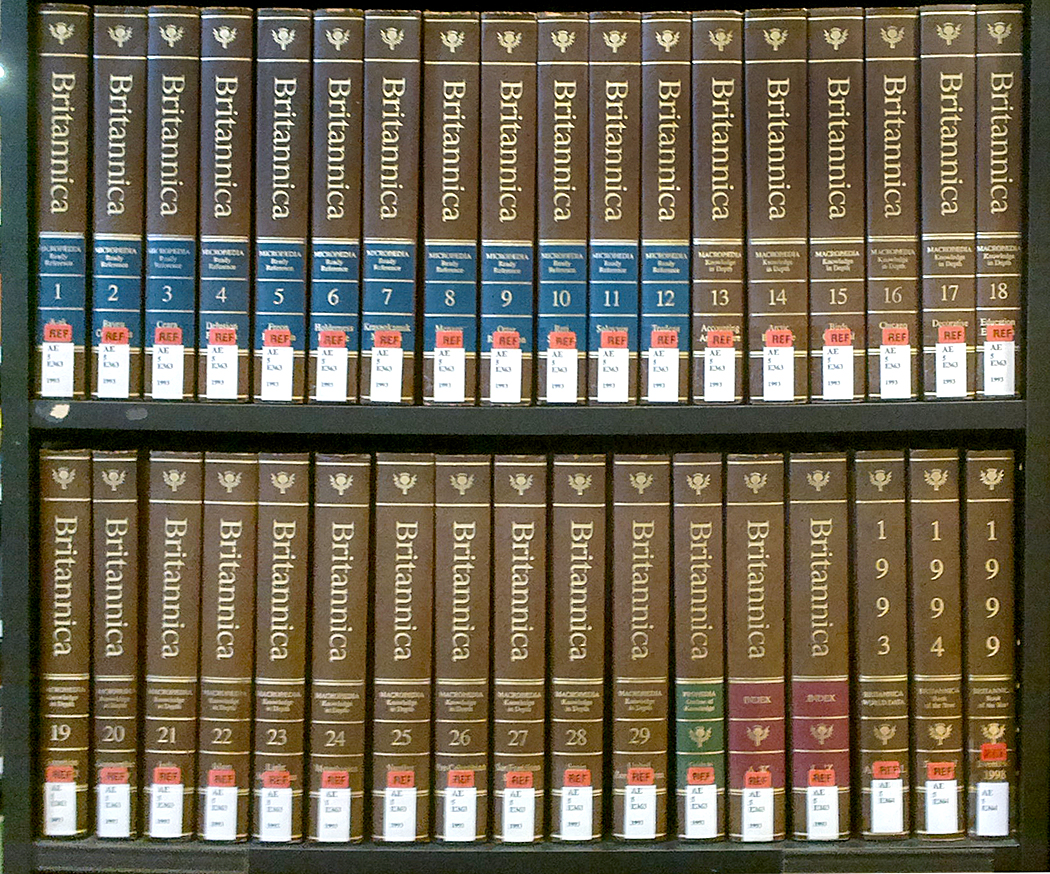
I continued lusting for my own Encyclopedia Britannica, all through college, the jobs that followed and into my years at the newspaper in Arizona, when I finally got a set at Bookman’s, a used book store in Mesa. But my enthusiasm was tempered by the fact that the set I got was not the traditional Britannica, but the combined “micropædia” and “macropædia,” in which the entries were divided into the more popular entries, in shorter, easier to read versions — the micropædia — and the more in-depth entries in the rest of the volumes. It felt like a dumbed-down, even trendy version of what I truly wanted. I wanted the Belmondo Breathless and got the Richard Gere Breathless

Years later, I came across the revised 14th edition, in 24 volumes and its leathery maroon covers and thistle logo, and managed to buy it. This was the real thing, at last. The pride of my collection. 

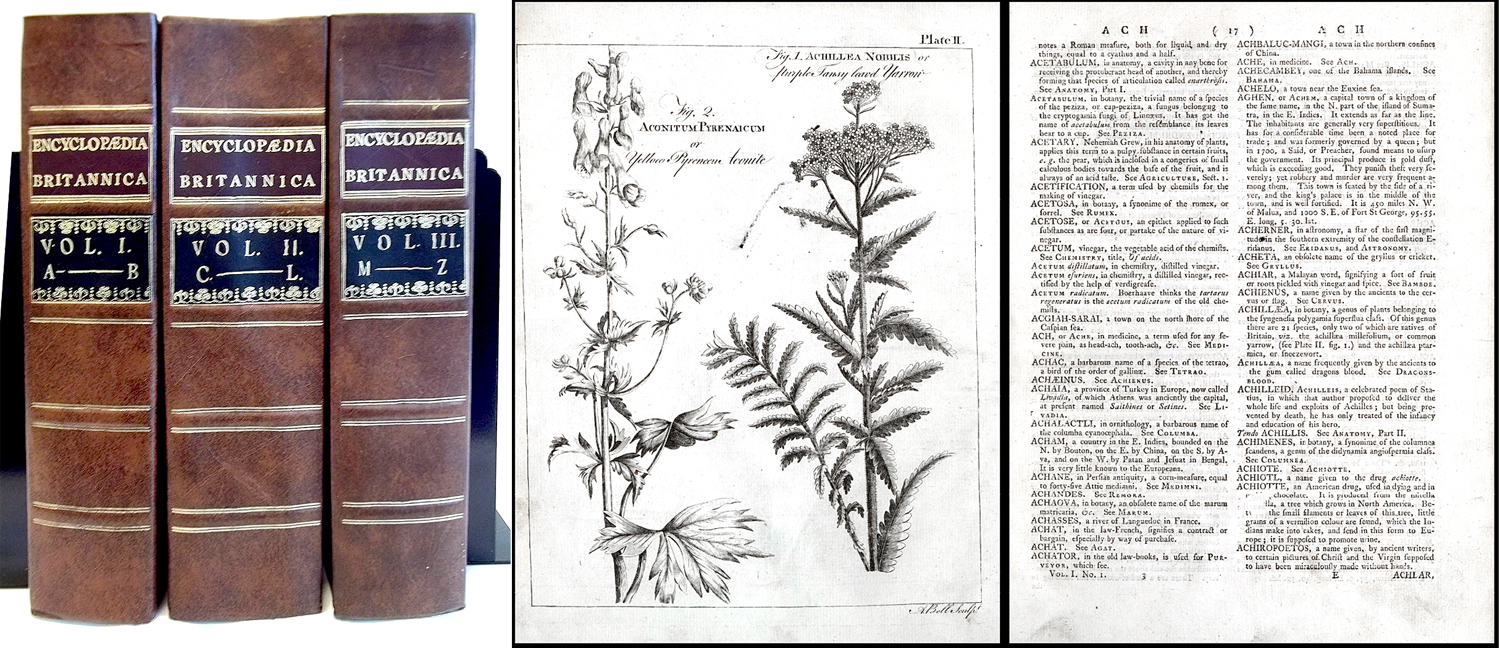
At Bookman’s, I later also found a facsimile version of the original three-volume Encyclopædia Britannica, from 1768. The replica was quite convincing, even including (imitation) foxing on some of the pages. More interesting was evidence that the 18th century project engaged the enthusiasm of its makers early on, and then rather petered out. The first volume covers the letters “A” and “B.” The second includes “C” through “L.” And the third and slimmest volume gets to cover everything else to the letter “Zed.” The facsimile edition was published in 1971. 

Then, of course, the internet came along, with its Wikipedia. The Britannica sat on the shelf as a kind of trophy, but largely unused. And when we moved, it was one of the casualties. So long in the getting, so short in the forgetting. 

The Oxford English Dictionary

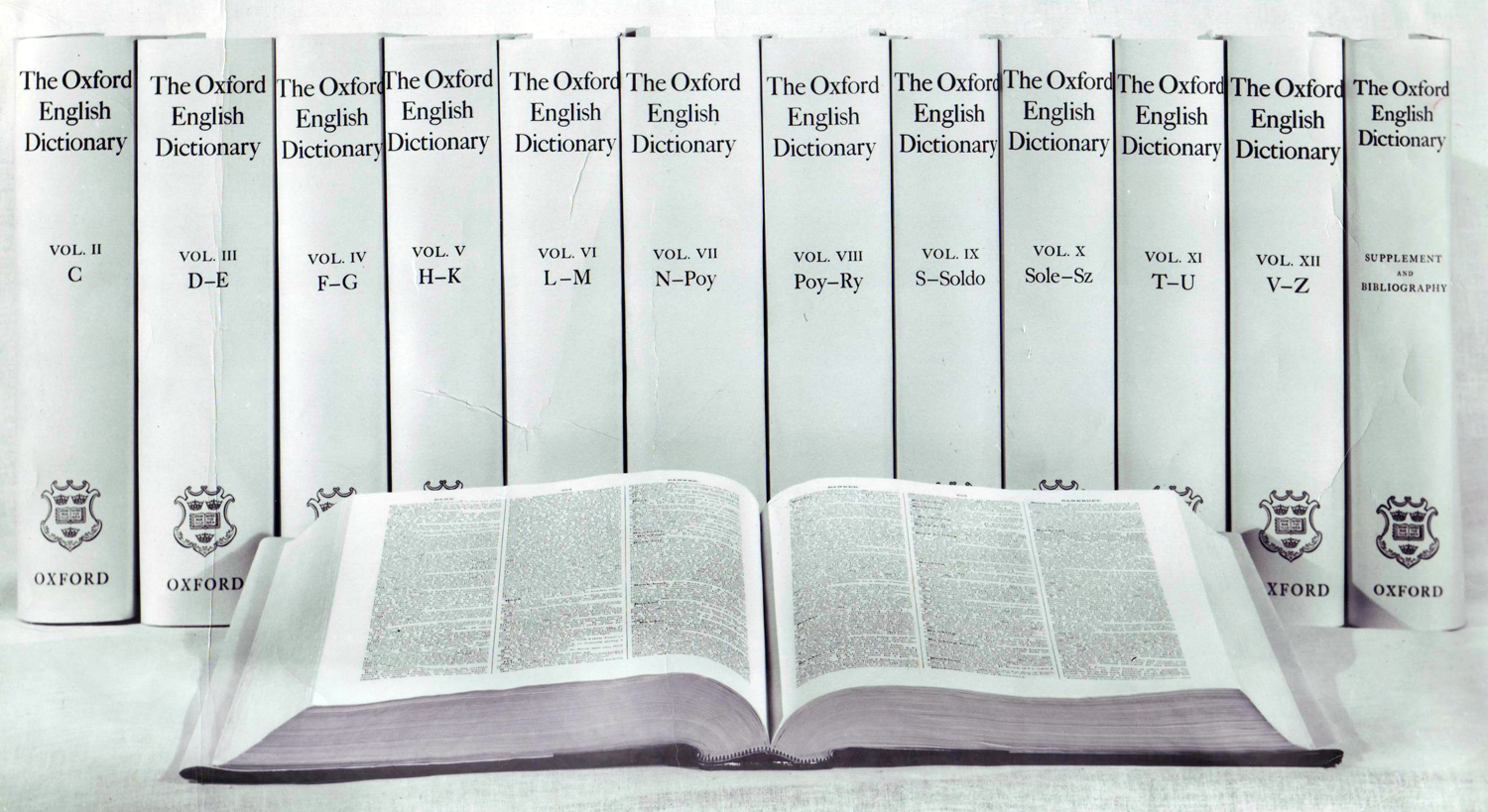
But the real prize, the one thing that I lusted for more than any other, was the Oxford English Dictionary, the 20 volume final word on the English language. 

I was a long-time reader of dictionaries. From second-grade on, I loved learning vocabulary. From 8th grade on, I loved learning the etymologies of words, and how they could change meaning over time. The OED contained all that information. Entries were long, involved and gave dozens, maybe scores, of citations, each dated and quoted. A simple word with multiple meanings, such as “set,” went on for pages, and required 60,000 words to describe some 580 senses. The whole of the dictionary was 21,730 pages and 59 million words covering more than 300,000 entries. It was heaven. It was also pricey. The set could sell from $1500 to $2000, depending on where you bought it. 

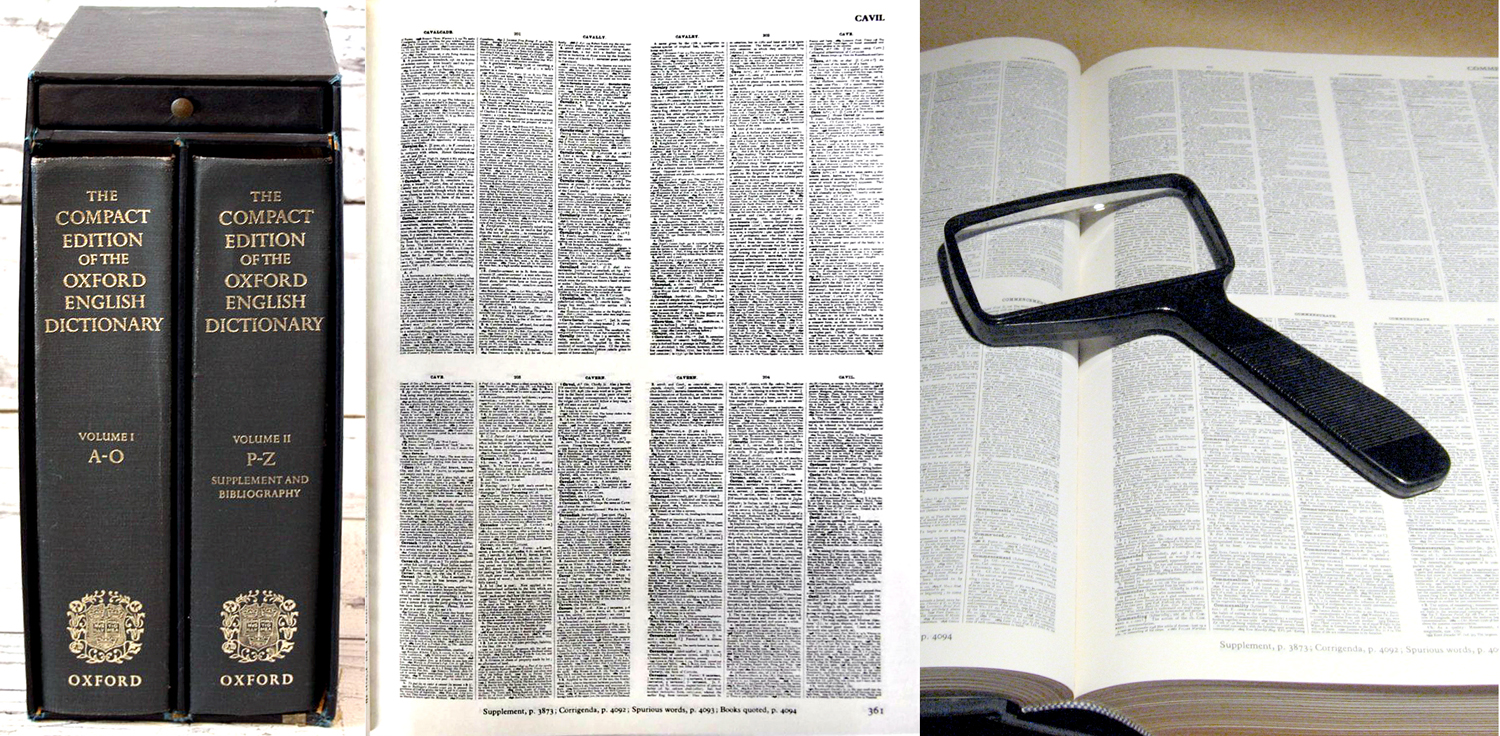
The full OED is still my unicorn. I have never found an affordable used set. But, in the 1970s, the Oxford Press put out a 2-volume Compact Edition, with every four pages of the original OED shrunk photomechanically down to quarter-size and printed four original pages squeezed into each single page of the edition, which required the use of a magnifying glass (included) to be able to read it. The Compact Edition was offered at rock-bottom price as a promotion through a book club, and I signed on, and got my copy.

It is very hard to read, even with the magnifying glass, and the volumes were big and bulky and uncomfortable to use, but at least I owned a version of the OED. This was as close as I got to Nirvana. 

I still have the Compact Edition, occupying the upper shelf of a coat closet. I haven’t dragged it out in years, but I still have it, a reminder of those things I once thought would change my life forever. Perhaps they did. 

So, what did you always want and did or didn’t finally achieve? 

Click on any image to enlarge

Of all the pop psychology detritus that litters our culture, none bothers me more than the fatuous idea of “closure.” People talk about it as if it were not only a real thing, but an obvious one. But “closure” is a purely literary concept, ill suited to describe the actual events of our lives. 

By “literary,” I mean that it fulfills the esthetic necessity we humans feel to round out a story. A story must have a beginning, a middle, and an end (“but not necessarily in that order,” said French filmmaker Jean-Luc Godard). For each of us, our “life story” is a kind of proto-fiction we create from the remembered episodes of our lives. We are, of course, the hero of our own life story, and the supporting characters all fit into a tidy plot. 

But, of course, actual life is not like that. Rather it is a bee-swarm of interconnecting and interacting prismatic moments seen from the billion points of view of a riotously populated planet. There is no story, only buzzing activity. Eight billion points of view — and that is only counting the human ones. One assumes animals and even plants have their own points of view and no narrative can begin to encompass it all. It is all simply churn. 

Of course, there are anecdotes, which are meant to be stories, and end, usually, with a punchline. Like a joke, they are self-contained. But our lives are not anecdotes, and tragedies, traumas, loss, are not self-contained. There is no punchline.

So, there is a smugness in the very idea that we can write “fin” at the completion of a story arc and pretend it means something real. It is just a structure imposed from outside. 

In his recent book, Knife: Meditations After an Attempted Murder, author Salman Rushdie notes the meaninglessness of the concept of “closure.” After he was attacked by a would-be assassin in 2022, he came desperately close to death, but ultimately survived. The thought that he might face his attacker in court might bring some sort of closure is dismissed. He went through medical procedures and therapy, and even the writing of the book. “These things did not give me ‘closure,’ whatever that was, if it was even possible to find such a thing.” The thought of confronting his attacker in court became less and less meaningful. 

Writers, in general, are put off by such lazy ideas as “closure.” Their job is to find words for actual experience, words that will convey something of the vivid actuality of events. Emily Bernard, author of Black is the Body was also the victim of a knife attack, and her book is a 218-page attempt to come to terms with her trauma: The book opens up a life in connection with the whole world. She never uses the word “closure.” 

Both Bernard and Rushdie to their utmost to describe their attacks with verbal precision and without common bromides. It is what all serious writers attempt, with greater or lesser success. It is easy to fall into patterns of thought, cultural assumption, cliches. It is much harder to express experience directly, unfiltered. 

The need to organize and structure experience is deeply embedded in the human experience. And art, whether literary, musical, cinematic or visual, requires structure. It is why we have sonnets and sonata-form, why we have frames around pictures, why we have three-act plays. 

The fundamental structure of art is the exposition, the development, and the denouement. Stasis; destablization; reestablishment of order. It is the rock on which literature and art is founded. When we read an autobiography, there is the same tripartite form: early life; the rise to success with its impediments and challenges; and finally, the look back at “what we have learned.” 

We read history books the same way, as if U.S. history ended with the signing of the Constitution, or with Appomattox, or the Civil Rights movement, or the election of Reagan. But history is a continuum, not a self-contained narrative. Books have to have a satisfying end, but life cannot. 

Most of us have suffered some trauma in our lives. It could be minor, or it could be life-changing. Most often it is the death of someone we love. It could be a medical issue, or a divorce. We are wrenched from the calm and dropped into a turmoil. It can leave us shattered. 

And the story-making gene kicks in and we see this disruption as the core of a story. We were in steady state, then we are torn apart, and finally we “find closure.” Or not. Really no, never. That is only for the story. The telling, not the experience. 

In truth, the trauma is really one more blow, one more scar on the skin added to the older ones, one more knot on the string. We will all have suffered before, although the sharpness may have faded; we will all suffer again. 

Closure is a lie. All there really is is endurance. As Rushdie put it, “Time might not heal all wounds, but it deadened the pain.” We carry all our wounds with us, adding the new on top of the old and partly obscuring what is buried. 

There are myriad pop psychology tropes. They are like gnats flying around our heads. Each is a simplifying lie, a fabricated story attempting to gather into a comprehensible and digestible knot the infinite threads of a life. 

I have written many times before about the conflation of language and experience, and how we tend to believe that language is a one-to-one mirror of reality, when the truth is that language is a parallel universe. It has its own structure and rules — the three-act play — while those of non-verbal life are quite other. And we will argue — even go to war — over differences that only matter in language (what is your name for the deity?)

Most of philosophy is now really just a branch of philology — it is about words and symbols. But while thoughtful people complain about the insular direction that philosophy has taken, it has really always been thus. Plato is never about reality: It is about language. His ideal bed is merely about the definition of the word, “bed.” As if existence were truly nouns and verbs — bits taken out of context and defined narrowly. Very like the question of whether something is a particle or a wave, when in truth, it is both. Only the observation (the definition) will harness it in one form or the other. It is all churn. πάντα χωρεῖ

A story attempts to make sense of the senseless. I’m not sure life would be possible without stories, from the earliest etiology of creation myth to the modern Big Bang. All those things that surpass understanding can only be comprehended in metaphorical form, i.e., the story. 

But stories also come in forms that are complex or simple, and are true or patently silly. My beef with “closure” is that it isn’t a story that reflects reality, but a lie. A complacent lie. 

Like most of popular psychology, it takes an idea that may have some germ of truth and husks away all the complex “but-ifs” and solidifies it into a commonly held bromide. It is psychobabble. 

That is a word, invented by writer Richard Dean Rosen in 1975, which he defines as “a set of repetitive verbal formalities that kills off the very spontaneity, candor, and understanding it pretends to promote. It’s an idiom that reduces psychological insight to a collection of standardized observations that provides a frozen lexicon to deal with an infinite variety of problems.”

And afternoon TV shows, self-help books and videos, and newspaper advice columns are loaded with it. It is so ubiquitous that the general populace assume it must be legitimate. We toss around words such as co-dependent, denial, dysfunctional, empowerment, holistic, synergy, mindfulness, as though they are actually more than buzz words and platitudes. Such words short-circuit more meaningful understanding. Or a recognition that there may be no understanding to be had. 

(In 1990, Canadian psychologist B.L. Beyerstein coined the word “neurobabble” as an extension of psychobabble, in which research in neuroscience enters the popular culture poorly understood, with such buzz words as neuroplasticity, Venus and Mars gender differences, the 10-percent-of-the-brain myth, and right- and left-brain oversimplifications.)

 As a writer (albeit with no great claim to importance), I know how often I struggle to find the right word, phrase or metaphor to reach a level of precision that I don’t find embarrassing, cheap, or an easy deflection. Trying to find the best expression for something distinct, complex and personal — to try to be honest — is work. 

This is true in all the arts: trying to find just the right brown by mixing pigments,; or the right note in a song that is surprising enough to be interesting, but still makes sense in the harmony you are writing in; or giving a character in a play an action that rings true. We are so mired in habits of thought, of culture, that finding that exactitude is flying through flak.

If you’re reading this, and read blogs, it suggests you are a reader, and probably love books as much as I do. In fact, you may be a bookaholic, or have gone over the edge to become a bibliopath. Books are a central foundation of who I am, who I used to be and who I am still becaming. How can it be otherwise for anyone with a pennyweight of curiosity about people and about the world? 

I’ve written about books in my life in many blog entries, and one of the most often-read is the piece I posted on Oct. 10, 2020, called “Shelf life,” in which I chose a single rung of a bookshelf in the house and discussed all the volumes resting on it. We are, at least in part, what we read: The books become internalized. And so, as I wrote then, I wanted: “to search for myself among my books.” I decided to take a single shelf from a single bookcase, “to see if they were in any way a mirror in which I could discover my own physiognomy.”

I didn’t want to pick a neatly organized shelf, but one where books were randomly scattered, left uncatalogued after casually unpacking after a move, or after re-reading, or just was too lazy to put back where it made sense. The bookcase next to the bed seemed the proper choice. 

And so, I thought I might do so a second time. I looked at the shelf above the one I wrote about and it also seemed to be a mirror: That was me, there, in those pages, however jumbled it seemed to be. 

What surprised me the most was how many of these books have been with me for most of my life — books I read when young that still take up space in my brain and on my shelf. And also how many were only recently bought and opened. 

I should start with the three matched volumes at the right of the shelf: James Joyce’s Dubliners, Portrait of the Artist as a Young Man, and Ulysses. This handsome set replaced the many earlier versions I have owned in various editions. (I still have at least four other Ulysses on various shelves in the house, including a very special cheapie pirated paperback printed by Collectors Publications, a publisher most known for printing porn — which I suppose Ulysses was thought of when this version was published — ads at the back of the book offer The Incestual Triangle, Four Way Swappers, and All Male Nudes, among other things.)

I first read Portrait of the Artist when I was in eighth grade, in the dark green paperback Viking Compass Book edition. I’m not sure how much I could have comprehended reading it at the age of 13, but I knew I loved the way the words looked and sounded: “Once upon a time and a very good time it was there was a moocow coming down along the road and this moocow that was coming down along the road met a nicens little boy named baby tuckoo …” There was the mud of the rugby field, the great hellfire of the sermon, and the “forged in the smithy of my soul.” 

I reread the book every four or five years, and every time, it hits the spot. In the habit readers always have, I soon jumped on all the other Joyce I could find. I bought a copy of Viking’s A Portable James Joyce, and have given up or lost several versions over the years, but still have one, a hardcover one, now in a library binding — in fact, it sits on a lower shelf of this selfsame bookcase I’m writing about. I tackled the play, the poetry, Stephen Hero, the essays — even Finnegan, although, at the age of 76, I am still defeated by the whirl of the whorl of the world of Finnegan. I will leave it to the next life. 

Ulysses was a harder nut to crack after Dubliners, when I was a scrub-faced kid; Ulysses problems were verbal; Dubliners was harder to understand because of the complexity of the human emotions written about. You have to have some life pushing behind you to grasp the complexities of human experience and emotions written about in those short stories. As a teenager, I knew pimples better than I knew people. I re-read Dubliners last year and was blown away, especially by the final “The Dead.” It broke my heart.

Ulysses I did get into years later, and it is now my favorite novel of all, although, to be fair, I don’t always read it cover to cover, but rather, read again and again the bits that I most love. It astounds me: It is filled with some of the most beautiful prose I have ever encountered. No, I take that back: The most beautiful prose. 

Next to Joyce on the shelf is James Michener: Tales of the South Pacific, and Return to Paradise. I remember, in my 30s and still something of a snob, looking down my nose at Michener as a best-selling author of doorstop bricks. But one day, in a book store, I picked up a copy of Tales and thought I would read a page, maybe two, to catch the flavor of Michener’s prose. It was 30 pages later I was standing there ready to flip the next page. This was a special kind of talent: to make you need to find out “what happens next.” 

The prose was simply not the point. It was invisible; you read through the words as if looking through glass. This was story-telling, and Michener really has a value I had failed to understand. I’m not saying he didn’t eventually turn into an industrial manufactory, but in his first book, he made magic. It was also nothing like the South Pacific musical I had expected. Rather it gave me a real sense of what the war in the Pacific must have been like for those who experienced it. 

A few years ago, after re-reading it, I found a copy of its sequel, Return to Paradise. I got through a few of the stories, maybe a third of the way in, but lost interest. The magic had gone. It was OK — it wasn’t just junk — but it didn’t grab me the way the first book did. It was more like a book of short stories that a short story writer might write. Something, perhaps, that a publisher might request after a best-seller. The two sit together on the shelf nonetheless. 

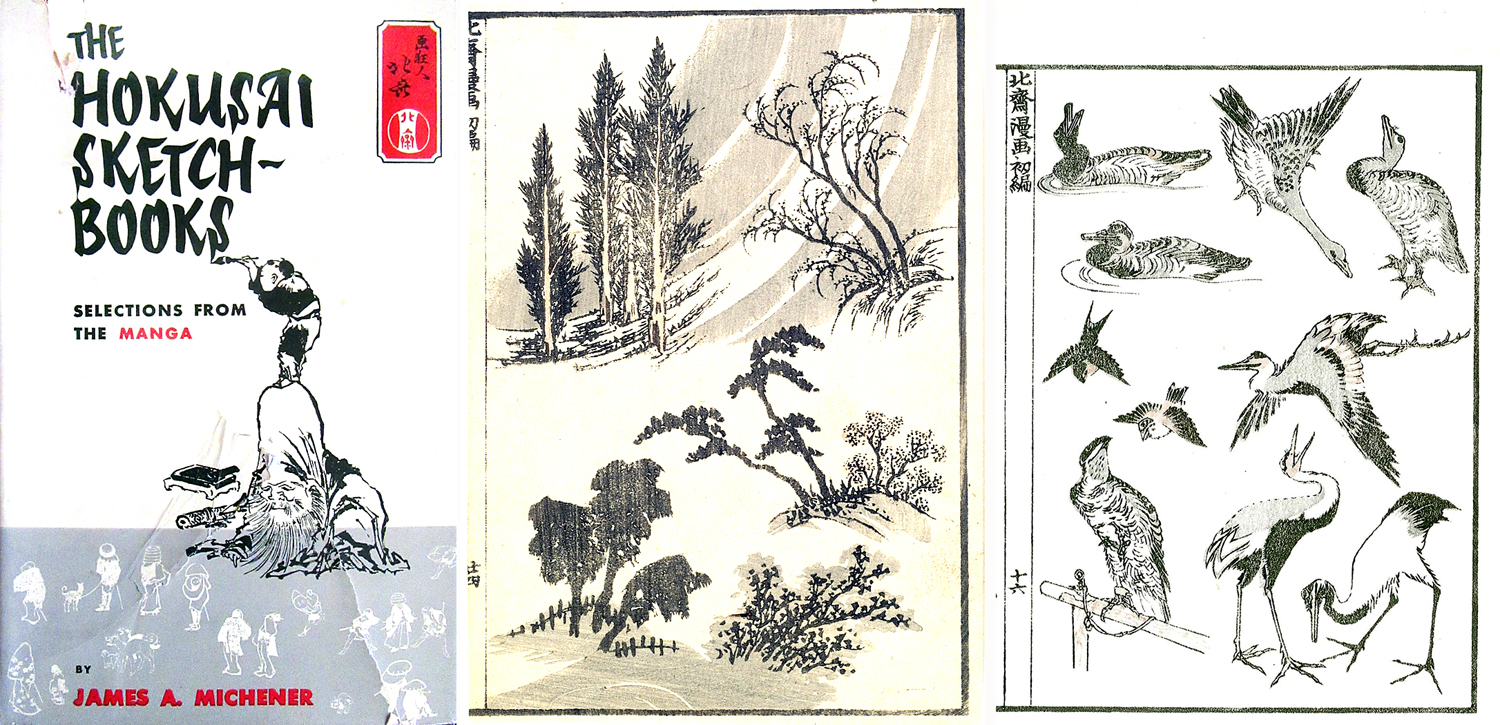
I’m going out of sequence on the shelf to mention the other Michener book sitting there. In 1958, Michener published The Hokusai Sketch-Books: Selections from the Manga. Hokusai, of course, was the famous Japanese 18th-19th century artist. In 1814, he published a multi-volume sketchbook, called manga, in which he drew everything he saw in the world around him: people, plants, animals, ghosts, architecture. It was an encyclopedic venture. Michener selected enough of these drawings to fill out a thick book. I have owned it since college. It is one of my holy-of-holies. 

From high-school days, I was fascinated with all things Asian; I read books on Zen Buddhism, listened to Noh Plays, took my girlfriend to restaurants with hibachis. There were Kurosawa movies and sumi ink paintings, which I attempted with my own shizuri and brush. 

The non-Western way of looking at the world opened my world view and I have been looking beyond the horizon ever since. 

Next on the shelf some The Great Gatsby and nothing proves how little youth knows, than what I made of the book — or didn’t make of it — when I was required to read it in eighth grade. I never then figured out who this Gatsby guy was; I thought the book was about Nick Carraway; and what the heck was all that about green light? 

It’s not that I didn’t enjoy the book then, but that I had no clue about its depths. I bought an excellent edition three years ago and reread it for maybe the third or fourth time and loved every second of it. It is a deep, rich book, with prose that is delectable. 

I believe for most young readers with a ripe curiosity, we tend to want to read beyond our abilities. We believe, as teenagers, we are grown-ups and want to partake of the adult world. And so we — and I — took to reading much that we had no business attempting. I read Saul Bellow, Henry Miller, John Updike, Jack Kerouac, Thomas Pynchon, James Purdy — a whole host of writers that I thought proved I was now in the company of the heavyweights. 

And among those books was Jean Paul Sartre’s The Words, his autobiography. I knew he was an existentialist and that all the most intellectual people (this was the mid-1960s) were hot on existentialism. Not that I knew what that meant (I’m not sure anyone really does — it encompasses so many different things, but back then, it pretty much meant berets and espresso). But I read it, enjoyed it, thought I understood it, and flashed a few words around to let anyone know. I got a subscription to Les Temps Moderne, although I couldn’t read French (and also a subscription to The Evergreen Review — I was one hip 16-year-old). I re-read Les Mots last year and it’s a fine enough autobiography, but not exactly world-shaking. 

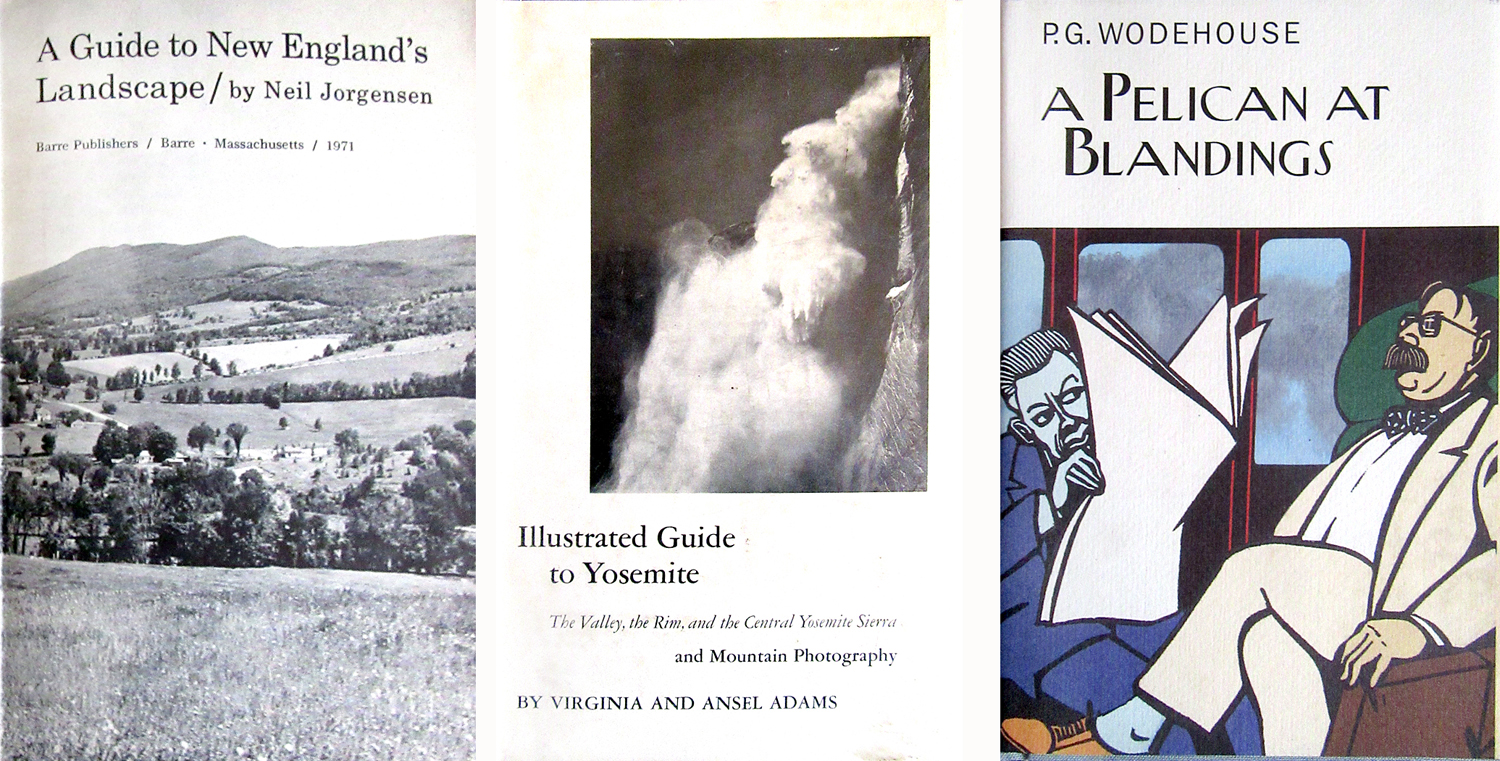
Getting back on track along the bookshelf: In the 1970s, I was living with a redhead and we wanted to travel. We hiked a good portion of the Appalachian Trail, and drove, amongst other destinations, to Maine and New England. I was fascinated by geology and I had a book by Neil Jorgensen called A Guide to New England’s Landscape. I had by then, an interest in all things under the heading of “Nature.” I had a raft of Peterson Guides, could name dozens of plants and birds by their scientific names (“Know-atia Dudiflorum,” my wife teased me), collected rock samples, and could name dozens of constellations in the night sky. 

The Jorgensen book accompanied us as we drove past monadnocks and till, varved clays and drumlins. I admit I haven’t read the book since then, but I still have it, as a memento of meaningful times.

I was by then active a photographer, and so I had another guidebook: Illustrated Guide to Yosemite, by Ansel Adams and his wife, Virginia Best Adams. I so wanted to visit Yosemite, but never had at those years the time or money for such a long trip. The book is loaded with Adams images, and so, it functioned more as a picture book than a useful guide. It was only many years later that my wife and I drove up the east slope of the Sierra Nevada along the Tioga Road and got to see the stunning Valley. The book is another that I’ve owned for 50 years and is a piece of me. 

If I could choose to write like anyone, it would be James Joyce, but if I couldn’t have that, I would want to write like P.G. Wodehouse. He is magic with words, although of a more comic variety. I have bunches of Wodehouse lying around, but three years ago, I bought a new edition of A Pelican at Blandings, mostly because these new hardback versions, by Overlook Press, were so seductively handsome. If I had the money, I would buy all the volumes in this set, but this one will have to do. 

All the Blandings books are a hoot. He may be most famous for his Jeeves stories, but I like Lord Emsworth and his pig and his sister Connie, just as much as Jeeves and Wooster. This is the kind of book I read when I just want to have fun. 

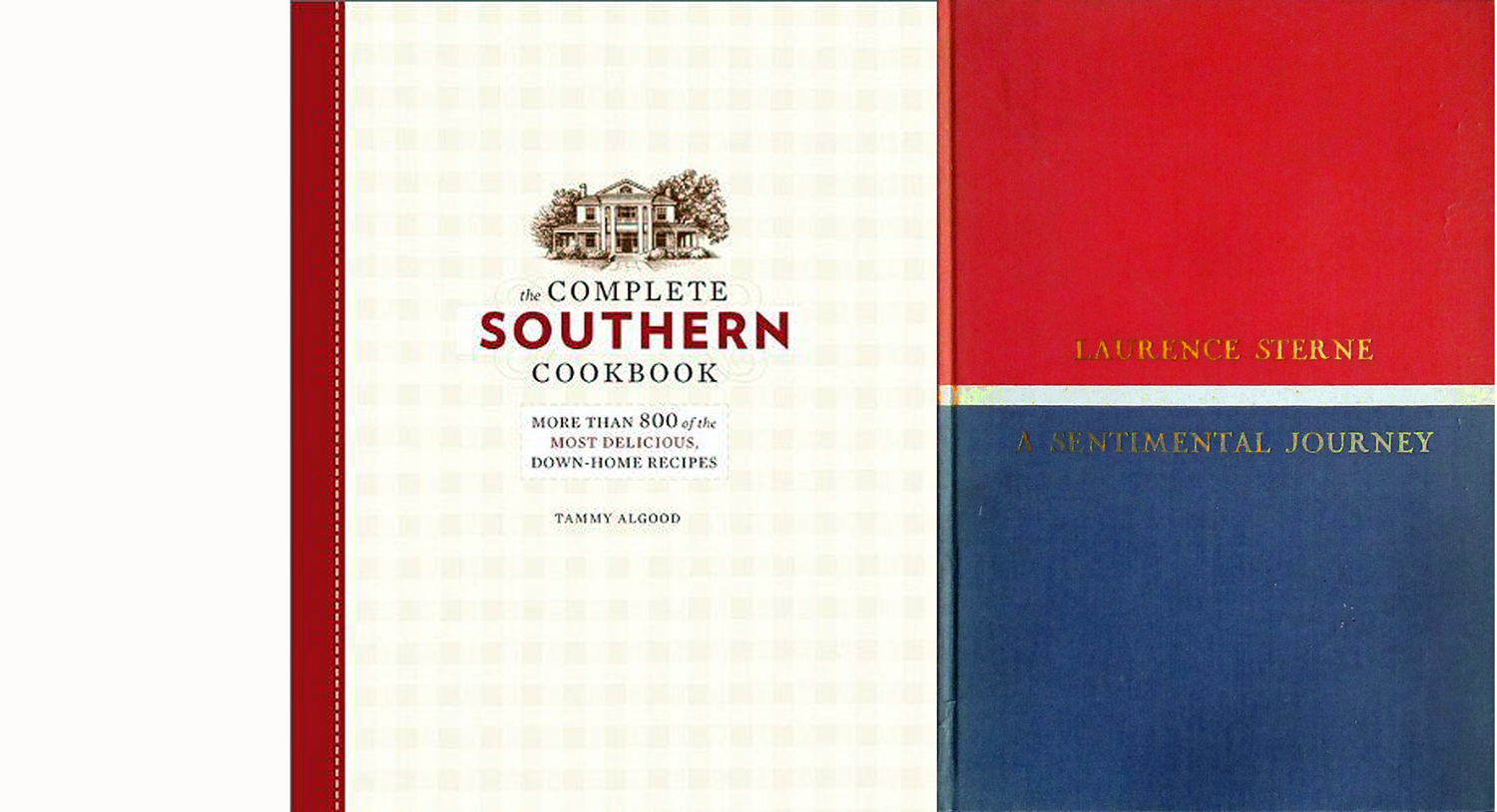
The Complete Southern Cookbook, by Tammy Algood is not one I bought. It was a gift from my daughter. I seldom use cookbooks. And when I do want one to check on some Southern specialty, I head for the old standby, Henrietta Dull’s Southern Cooking, originally published in 1928. 

I was born in New Jersey, but left there when I was 17. I’ve lived in four corners of the country, with 25 years in Arizona, and a year in Seattle, but the longest soujourn has been in the South, in North Carolina and Virginia, where my years add up to 33. I feel like an adopted Southerner. 

And while I still miss the foods I grew up with, such as a good pastrami on rye, real pizza, or a kaiser roll, I have to admit that I’ve come to love those things a Yankee will never understand, like greens, pulled pork, or fried okra. I count on Mrs. Dull for those (although, to be honest, no one uses a recipe for such things). 

The funniest book I have ever read is Laurence Sterne’s Life and Opinions of Tristram Shandy, Gentleman. It is one of the few I find myself actually laughing out loud at. So, thought I, perhaps his other book, A Sentimental Journey, must we worth looking into. It is much more straightforward, less surreal, and while it has its moments, doesn’t quite catch fire for me. The edition I have is however quite handsome to look at. 

The next two books are by Jean Renoir. Renoir is probably my favorite filmmaker. His films are so genuinely humane and wise. Nick Carraway, from Gatsby, relays that his father gave him advice to live by: “Remember that not everyone has had the advantages you have had.” That’s all well and fine, but the words that most illuminate my life are from Renoir’s Rules of the Game, when Octave, played by Renoir himself, says “The awful thing about life is this: Everybody has their reasons.” It isn’t usually malice or conspiracy that mucks things up, but rather, “Everybody has their reasons.” You learn to be less judgmental from that. 

He wrote about his work in My Life and My Films, from 1974. It is filled with anecdotes and pictures, and the quiet acceptance that is the core of his being. But even better is the biography he wrote about his father, Renoir. I was never a big fan of Pierre-Auguste Renoir. I find his paintings a little blowsy. He is the least of the major Impressionists. But, as his son writes about him, he comes off as one of the kindest, sweetest, most understanding and generous of men. I came to love old Pierre-Auguste not through his art, but through his biography. 

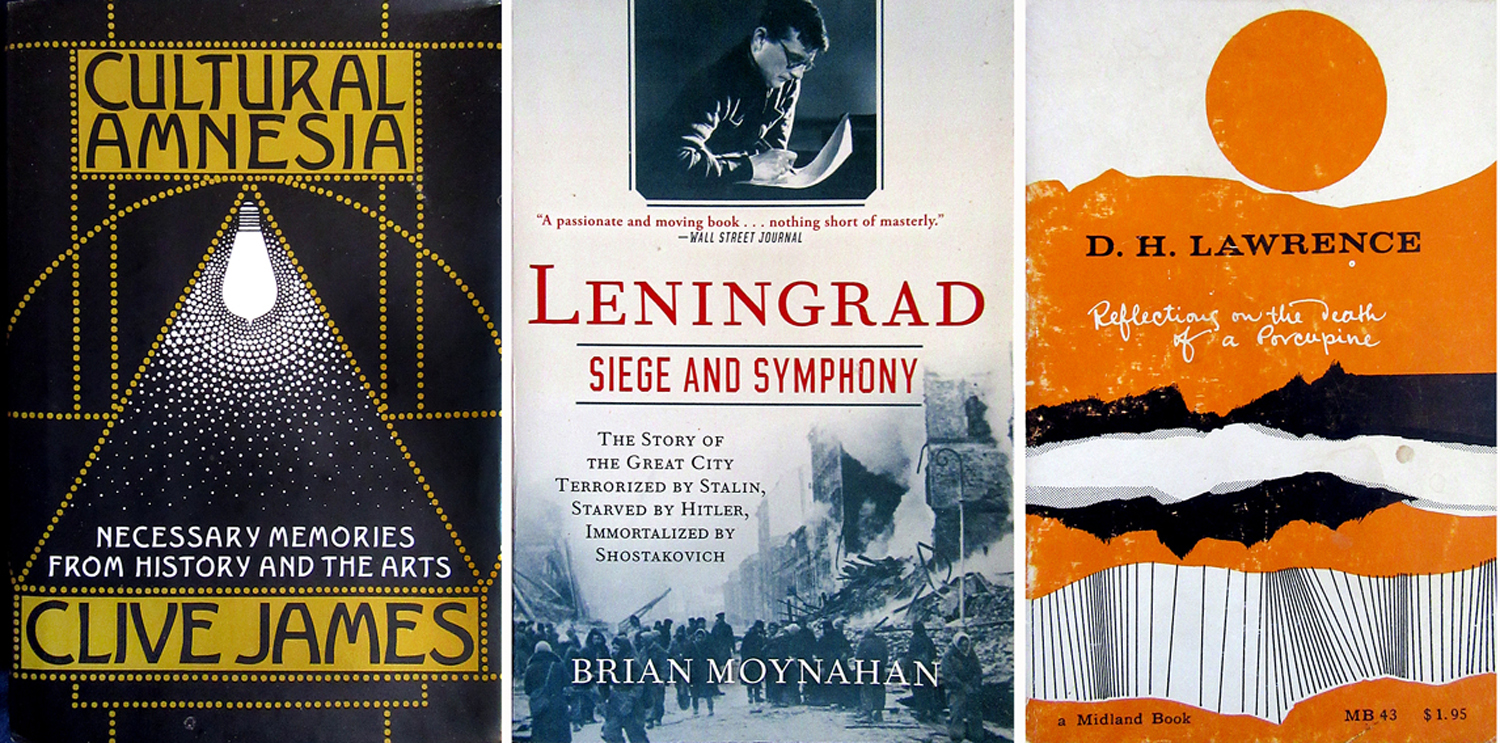
I said we readers have a tendency to find authors we like and then plow through the whole corpus willy-nilly. About five years ago, I came across Clive James, the late Australian-English writer and critic. I tore through everything, including his poetry. And when I found his book Cultural Amnesia, I couldn’t stop myself. Subtitled Necessary Memories from History and the Arts, it makes the case that too much important history has been forgotten, ignored, or misrepresented, and that if we need an understanding of the past to navigate the future, then the men and women he writes about in this book, deserve to be remembered. 

He writes about more than a hundred of them, in alphabetic order from Anna Akhmatova to Stephan Zweig. Some are hardly obscure, like Charlie Chaplin or Leo Tolstoy, but he brings to mind aspects that may have more cultural impact than you might remember, or other facets to their work. 

I love the grim joy of Dimitri Shostakovich; his music speaks volumes about misery and dictatorship. His Seventh Symphony, the “Leningrad Symphony” was partly written and later first performed in that city during the 900-day siege by the German Wehrmacht during World War II. It is a sprawling work, lasting well over an hour, and its first movement has a grinding passacaglia representing the jackboots of oppression. 

My wife gave me a copy of Leningrad: Siege and Symphony, subtitled “The Story of the Great City Terrorized by Stalin, Starved by Hitler, Immortalized by Shostakovich,” by Brian Moynahan. Its well-researched 500 pages cover everything one needs to know about the siege, the horrors, and its legacy. But, I confess, I have not read it. It sits there on the shelf, waiting. But I really feel I am told everything I need to by the music itself. 

I went through a D.H. Lawrence period, where I read everything I could get my hands on. But not the novels or short stories. For some reason, they never much appealed to me. But his essays and travel writing, and his poetry, I adored. It’s the best travel writing I know, partly because it isn’t the usual version of the kind, but his personal, very idiosyncratic way of looking at the world. 

Reflections on the Death of a Porcupine is an anthology of seven of his essays, including the title piece, which starts as thoughts on having to shoot a porcupine on his New Mexico ranch, and goes through the issue of all life dependent on devouring other life, and ends, in a disturbing turn that, for him, justifies “superior” existence having its way with “inferior.” Lawrence is capable of a good deal of piffle. 

But it is the particularity of his observation that I love, the detail. Even crazy talk can be well written. 

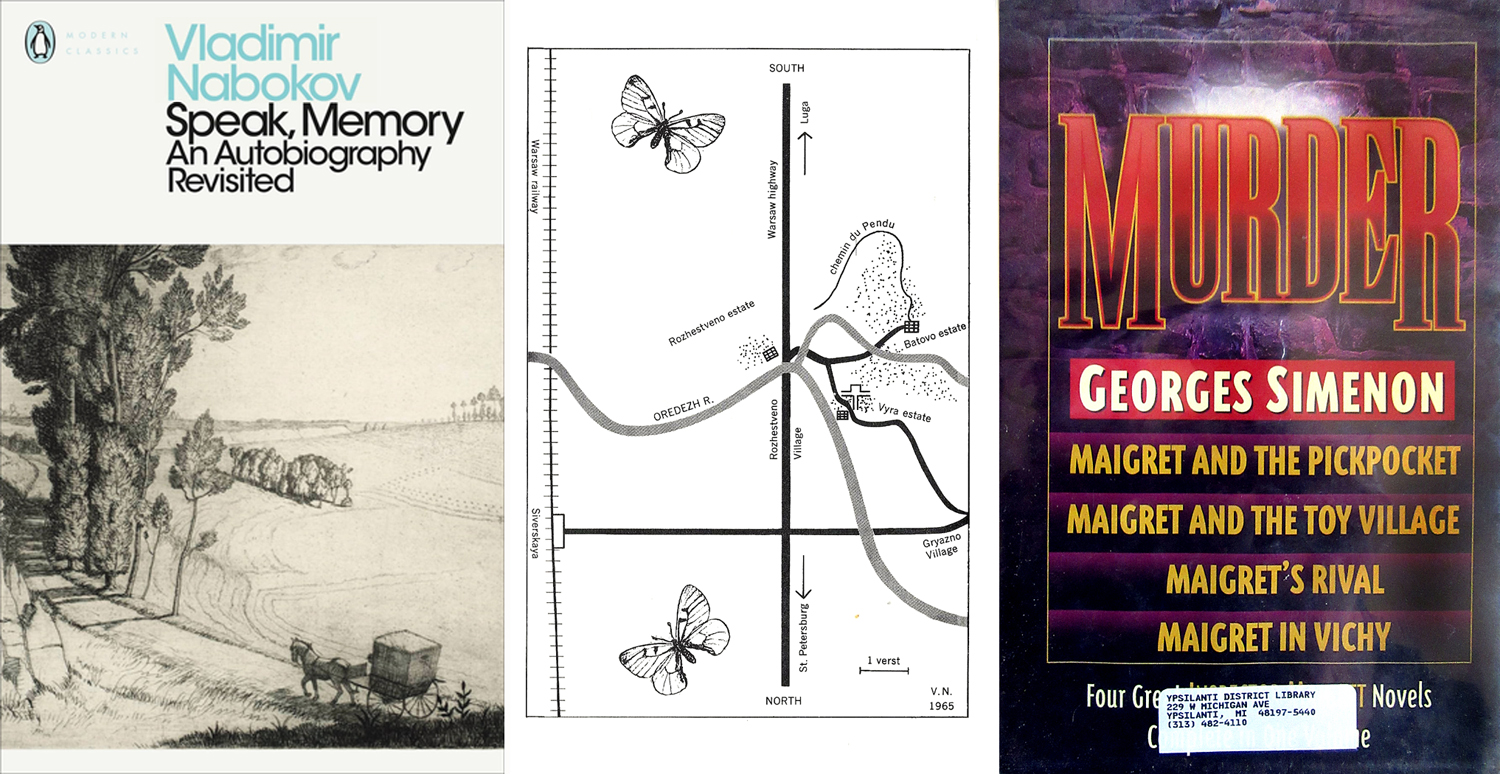
Next, the best writing, the most original use of word and sentence, since, at least Joyce, was penned by Vladimir Nabokov. Lolita is an absolute brilliance, despite is subject. And so I read Speak, Memory, his 1951 autobiography, which recounts his life in Russia, before leaving in 1940. 

It begins, “The cradle rocks above an abyss, and common sense tells us that our existence is but a brief crack of light between two eternities of darkness.” So, you know you are not just getting a sequence of entertaining anecdotes. The book is a dialog, essentially, between existence and memory, the memory of a pre-Revolution Russia, as recalled by a child, and then a young man. 

Finally, I have an omnibus edition of four Maigret novels by Georges Simenon. I have moments when I devour Simenon like chocolate-chip cookies, one after the other. But it can get expensive buying volume on volume, one at a time. This edition, once in the collection of the Ypsilanti District Library in Michigan, was bought used on Amazon, cost less than $5 and gave me four novels. I have read three. I am holding the fourth unread so far, in order to experience the delicious anticipation of reading it. 

And so, with that shelf catalogued, I look at the books and think, do I see myself in their spines, lined up? I certainly see a bit, like seeing a face through partially opened Venetian blinds. It’s me, all right, but only a bit. I look at the book case from top to bottom and see more of the rest of me. I walk down the hall and into other rooms with other bookcases and the picture fills up. The oldest books among them all speak of the boy that remains in the core, the newest of the weary old man I am now that covers it all in wrinkles. It is that “brief crack of light between two eternities of darkness.” 

This essay, now updated and rewritten, first appeared as my June, 2020 entry for the Spirit of the Senses website. 

When most of us think about our “selfness,” if we ever do, we most likely think of something interior — a psychic identity. That self is an accretion, a slow buildup of experience that memory binds into a continuous story. 

But we are not purely interior beings. We live in a physical world and our selves expand into every corner of our existence. My selfness is where and how I live, who I surround myself with, the items I buy at the grocery store, whether I wash and polish my car, or leave it to the elements. All me. 

I finished college 50 years ago, and I have changed a great deal in that half-century, and I don’t just mean the issue of losing hair on the top of my head and gaining it in my ears.

But much has remained the same. And what has remained is what I take as the essence of my self, who I am. For most writers who tackle the subject, the self is defined primarily by memory: The continuous thread of remembering from our earliest recollection to the moment an instant before this. This continuity is our self. It is what we have held onto. It remains separate from what others believe about us or their perception of our who-ness.

There is something very insubstantial about this thread of memory. After all, the past doesn’t exist; it is a reconstruction, not an actuality. And so, for many thinkers, the self is also a construction — a back-construction. We are reminded of this when we meet old friends and talk about “remember when,” and discover that our friend’s remembering is different from our own, or that they remember things we have long forgotten.

Surely the self is more than our own cogito ergo sum, recalled in memory. It is also our behavior, the sense we make of the world and how it is constructed and how it functions. It is not simply our past, but our expectations of a future. And there should be some outward manifestation of our selfness, not solely the interior rattling around of snippets of memory, strung together like a necklace of remembered events. Self is continuity. 

I began to think of such things when I woke one morning and sat on the side of the bed, facing the bookshelf on the wall in front of me. I happened to spot the slim volume of The Elizabethan World Picture by E.M.W. Tillyard, an ancient paperback that I had in college. It is a book I’ve owned for more than 50 years. It is where I first encountered the idea of the “Great Chain of Being.”

Then, I gazed over the shelves to discover if there were other books I’d owned that long, and saw Julia Child’s Mastering the Art of French Cooking, which I attempted to cook from during my first marriage, when I was still in college. Are those two books as much a part of my selfness as the memories of the old school or the failed marriage?

As I wandered through the house later that day, I pored over the many bookshelves to seek the books I’ve owned the longest, through divorces and break-ups, through four transcontinental relocations, through at least a dozen homes I have rented in five different cities. Nine cities, if you count homes from before college, which I didn’t rent, but lived with parents.

The oldest book I have owned continuously is my great-grandmother’s Bible, which was given to me when I was four years old. I also have my grandmother’s Bible, in Norwegian, and the Bible my parents gave to me when I was a boy, with my name embossed on the cover in gold. I am not religious and don’t believe any of the content scribed therein, but I also have to recognize that the culture that nurtured me is one founded on the stories and strictures bound in that book, and more particularly, in the King James version, which I grew up on and which has shaped the tone of the English language for 400 years.

Surely, completely divorced from doctrine, the KJV is a deeply embedded part of who I am. In this sense, my self extends well back beyond when I was born. Roots are deep. 

The second oldest book is one my grandmother gave me on my eighth birthday, a giant-format Life magazine book called The World We Live In. It was a counterbalance to the Holy Writ, in that it was a natural history of the world and gave me science. At that age, I was nuts about dinosaurs (as many young boys are in the third grade), and The World We Live In had lots of pictures of my Jurassic and Cretaceous favorites. It also explored the depths of the oceans, the mechanisms of the weather, the animals of the forest, the planets of the solar system, and a countering version of the creation of the world, full of volcanoes and bombarding meteorites. I loved that book. I still love it. It is on the shelf as a holy-of-holies (and yes, I get the irony).

Both the Bible and The World We Live In are solid, tangible bits of my selfness that I can touch and recognize myself in, as much as I recognize myself in the mirror.

I pulled down Tillyard from the shelf, and gathered up the several Bibles and began a pile by my desk, and went through the bookshelves finding the many books that have defined me and that I kept through all the disruption that life throws at us, with the growing realization that these books are me. They are internalized and now their physical existence is an extension of my selfness into the world.

The pile beside my desk slowly turned into a wall, one stack next to another, building up a brick-foundation of me-ness. They were cells of my psyche very like the cells of my body, making up a whole. And they began to show a pattern that I had not previously noticed. The books I’ve held on to for at least 50 years sketched a me that I knew in my bone.

I’ve kept books from 40 years ago, from 30, from 20. I’ve got books that define me as I am at 75 years old that I have bought in the past month. But the continuity of them is a metaphor for the continuity of my self.

When I was just out of college, a neighbor of my parents died and left my a pile of old books, printed in the 18th and early 19th century. There are three volumes of the poetry of William Cowper, a History of Redemption by Jonathan Edwards, a fat volume with tiny print collecting the Addison and Steele Spectators, and a single volume of Oliver Goldsmith’s History of the Earth and Animated Nature. I have Volume IV of five volumes, which contains descriptions and illustrations of birds, fishes and “Frogs, Lizards, and Serpents.”

And while my great-grandmother’s Bible gives me a sense of roots running four generations deep, these older books take those roots deeper into the culture that made me. I see myself not as a single mind born in 1948, but as part of a longer-running continuity back in time. A reminder that any single generation is simply a moment in a process: seed, sprout, plant, flower, fruit, seed. Over and over. My self grew from my mother’s womb and she from her mother’s and so on, back to a mythical primordial Eve. And my psyche grew from all the books I’ve read, and all the books that have shaped the culture that produced those books. It is a nurturance that disappears in the far distant past, like railroad tracks narrowing to a point on the horizon.

I am not here making an argument for nurture vs. nature. I am not simply the sum of the books I’ve read. Rather, the books I’ve read that have remained with me — and there are many times more that have not stuck with the same tenacity — have not only nurtured me, but are the mirror of who I was born, my inner psyche, who I AM. They are the outward manifestation of the inward being.

I have books left over from college, such as my Chaucer and my Shelley, my Coleridge and my Blake.

I have the poetry I was drawn to when first discovering its linguistic and cultural power, such as all the Pound I gobbled up.

There are the two volumes of Beethoven’s piano sonatas, edited by Artur Schnabel. I could never be without them. I read scores for pleasure just as I read words. I still have piles of Kalmus and Eulenburg miniature scores that I have used over the years to study music more minutely than ears alone can permit.

Books that have turned the twig to incline the tree stay with me, such as Alan Watts’ The Way of Zen, or the Daybooks of photographer Edward Weston, or The Graphic Art of the 18th Century, by Jean Adhémar.

I still have the Robert Graves two-volume Greek Myths that I had when taking a Classics course my freshman year, and the Oxford Standard Authors edition of Milton that I took with my in my backpack when I tried to hike all of the Appalachian Trail (“tried” is the operative word), and the photographic paperback version of the Sierra Club book, In Wildness Is the Preservation of the World.

My many Peterson Guides and wildflower books have only multiplied, but the basics have been with me for at least five decades.

The Thurber Carnival I still have was actually my mother’s book that I took from home when I went off to school. The catalog from the National Gallery of Art in Washington D.C. is now browned out and tattered and the Hokusai manga is another holy of holies.

All these have stuck to me like glue all through a life’s vicissitudes, many with ragged and torn covers, as I have myself in a body worn and torn by creeping age.

I could name many more, but you get the idea. And it is undoubtedly the same for all of us. For you, it many not be books; it might be a shirt or blouse you have kept, or maybe a blanket that comforted you when you were an infant, or your first car. These are the outward signs of an inner truth. The you who is not separate from the world, but embedded in it, connected to it, born from it and in some way, its singular manifestation.

Self is what you can’t get rid of. 

NB: The books illustrated are all some of them I’ve lugged with me for at least 50 years; anyone who knows me would recognize me in them. 

Click on any image to enlarge.

In addition to this blog, which I have been writing since 2012, I have written a monthly essay since 2015 for the Spirit of the Senses salon group in Phoenix, Ariz. The readership for each site seems to have little overlap, and so, I thought if I might repost some of the Spirit essays on my own blog, it might achieve a wider readership. This one, originally from May 1, 2021, is now updated and slightly rewritten. 

My house is filled with books, and so many that I will never live long enough to read them all. It is a personal version of a universal problem: So much has been written over the past 4500 years that no one can ingest more than a wee fraction of the total. That’s four and a half millennia of culture. So, what counts, these days, as being cultured, or well-read? 

No work of literature or art exists in a vacuum. Even the newest book has a past. Culture is an accumulation: Each new work builds on the past, and requires a shared understanding of that past with its audience. Just as you have to learn vocabulary in order to read, so you need some handle on the past to fully understand what is written now. But, there is too much for any one person to absorb, and no way for any author to assume his readers will recognize and vibrate to what is there, subliminally, in the works. That past is there even in best-sellers by Diana Gabaldon or Dean Koontz. 

There used to be an agreed upon canon of literature that any well-educated person was assumed to be familiar with. But, as the world shrank through communication advances and progress in transportation, the canon looked increasingly provincial. It was almost wholly white, male, and European. What of Asia and Africa? Why were there not more women included? Perhaps, too, that white European bias was the root evil of colonialism. 

I can’t answer all these questions, but it is important to raise them as we begin to lose the common cultural inheritance that the canon used to provide. Acres of writers over the past centuries have quoted or riffed upon the words of Shakespeare and the King James Bible. It was assumed that anyone with a decent education (even a decent high-school education) would understand the references. When Abraham Lincoln wrote “Fourscore and seven years ago…” his listeners would have tacitly resonated to the biblical “three score and ten” years allotted to a human life. He could have just said, “Eighty-seven years ago,” but he didn’t. The force of the Bible gave his words a tidal power that made his rhetoric memorable. 

Ernest Hemingway used the past, and expected his readers to know. Papa’s novels drip with the power of allusion. The Sun Also Rises comes from Ecclesiastes 1:5. For Whom The Bell Tolls rings from John Donne. A Farewell to Arms has Vergil’s Aeneid buried in it. 

T.S. Eliot’s Wasteland is a midden of such buried cultural memes. Some are explicated in the notes at the end of the poem (should poetry require footnotes?), but most are just there to be felt or be vaguely familiar. The poet expected his readers to share his erudition and quietly appreciate the roots that sprouted the verse. He explicated his position in the essay Tradition and the Individual Talent. In his Wasteland notes, he tells us that line 23 (“And the dead tree gives no shelter, the cricket no relief”) is a gloss on Ecclesiastes 12:5 (“the almond tree shall flourish, and the grasshopper shall be a burden”), which seems a bit of a stretch, but he doesn’t feel it necessary to point out that the opening line of the poem (“April is the cruelest month”) is an ironic reversal of Chaucer’s “Whan that Aprille with its shoures soute…”). He thought that too obvious to mention. What in today’s world can be considered too obvious to mention? 

Eliot’s poetry, itself, is now the cause of allusion (“I should have been a pair of ragged claws scuttling across the floors of silent seas…” Ask Woody Allen). 

There are at least two problems with such allusions. The first is epitomized by Ezra Pound, who so completely built his Cantos on fragments from obscure writers and historical figures that no one without the same erudition as himself could have any clear idea what he was talking about. If the main point of your reference is the reference, the main point is also pointless. And Pound’s reading was so idiosyncratic and esoteric that no reasonable human should be expected to share it. 

The second problem is best displayed in the work of John Milton. There is no doubt of Milton’s greatness as a poet: He is the second-most quoted author after Shakespeare. Bartlett’s is stuffed with him. But Milton was so casually familiar with the Bible and Classical writers that you often now need a gloss to know what he means when he writes of his muse that intends to ”soar Above th’ Aonian mount” which his educated readers would have known was Mount Helicon, where the Greek muses lived by the Hippocrene spring, a spring created by the hoof-stamp of Pegasus, the winged horse that symbolized poetic inspiration because he could fly to the top of Mount Olympus, home of the gods. Any self-respecting gentleman of the time, with any degree of education, could read Ovid in Latin and would be familiar with all the gods, godlets and nymphs and fauns mentioned in The Metamorphoses, a foundational work of Western literature and thus slide past them knowingly while reading Paradise Lost. Few of our contemporaries read Ovid and hence the need for footnotes. The Norton Critical Edition of the poem, often used in college courses, is as much gloss as verse. 

Now you can go through 12 years of public school and four years of university and never getting any closer to Ovid than a NASCAR fan to the ballet. 

When novelist William Styron wrote about his battle with depression, he named the book Darkness Visible, referencing Milton. Milton also shows up in Philip Pullman’s science-fiction classic, His Dark Materials. There was a Playstation video game named Pandemonium. For someone so seldom read, Milton gets around. 

We should expect that cultural reference comes and goes, it blossoms and then fades with time. Once, Milton was one everyone’s tongue, now he is for doctoral candidates. Once the Bible was lingua franca, now, it seems, those who know the book at all only know the parts they like and ignore the rest.  (“Who’s the greatest contortionist in the Bible?” “Balaam, because the Bible says he tied his ass to a tree and walked away.”) The best-known of Shakespeare is still recognizable, but I venture few would remember to context to “Put out the light, then, put out the light” or “All that glisters is not gold.” “To be or not to be” is too familiar, but even those who can quote the first six words of the soliloquy probably don’t know that the rest of it contemplates suicide, or where it comes in the Hamlet story — or why. 

It has always been the habit of the educated — the initiates in the cultural legacy — to lament the loss of that inheritance, and condemn the ignorance of the younger generations. I have been guilty of that myself, because I have spent so much time imbibing my cultural past and fear the loss of meaning that evaporates with the loss of memory of past culture. I, who know Gilgamesh and Beowulf, who reads the Iliad annually, who have ingested my Ovid and Livy, my Melville and Faulkner, weep for those bereft of such treasures. But I need to recognize the evanescence of such knowledge. One set of cultural touchstones is inevitably replaced by a new set, piece by piece, like the original wood of the Argo. 

I doubt we can do without a cultural gravity pulling us toward a center, but it needn’t be the one that worked in the past. Just watch a Quentin Tarantino film and see how the cinematic past enriches the Pulp Fiction present, how he uses the styles of Hong Kong in Kill Bill, or the tropes of Western movies in The Hateful Eight. Inglourious Basterds is built, not on a knowledge of history so much as on the digested habits of World War II movies — and in much the same way as Paradise Lost is rooted in Ovid and the Bible. Just as Milton expected his readers to be familiar with Ovid, so Tarantino expects his audience to be familiar with Johnnie To and William Wyler. 

I have recognized that my own cultural memory is mine and must let the younger generation have theirs. But I nevertheless worry about this difference: that mine subsumes four millennia of accumulation building on itself, while what I see in the coming cultural horizon barely extends back a hundred years. When I see an online list of “greatest films of all times,” I am appalled that almost no films listed are more than 30 years old. Have none of these movie fans seen Metropolis, Battle of Algiers, or Rules of the Game? Surely their lives would be richer if they had something to draw on psychically and emotionally other than American Pie or Fast and Furious

My twin granddaughters do stunningly well at school — now at university — but neither knows any Bible stories. This is not picking on them: No one who is secular in their generation does. How much of their cultural patrimony is blank? Nor does their generation soak up Sophocles, Dante, Hawthorne or Yeats. They have their touchstones, but I cannot but worry that their inner lives are undernourished for it, l’eau sans gaz

But I am also humbled by my own ignorance. Is my inner life starving because I cannot read Latin? French? Russian? Chinese? I think of all the books I haven’t read. The list seems nearly infinite. My own bookshelves shame me. I own the books that populate them, but I haven’t gotten around to reading everything waiting there, inviting me in. There isn’t time. 


In addition to this blog, which I have been writing since 2012, I have written a monthly essay since 2015 for the Spirit of the Senses salon group in Phoenix, Ariz. The readership for each site seems to have little overlap, and so, I thought if I might repost some of the Spirit essays on my own blog, it might achieve a wider readership. This one, originally from Dec. 7, 2021, is now updated and slightly rewritten. 

There are pleasures to be had in this world. And for a small group of particular people, one of the great pleasures is the used book store. Days can be spent wandering the aisles, like negotiating an English hedge maze. 

I confess that I am one of those people. An afternoon in a used bookstore is heaven. When traveling, my late wife and I would always stop for any used bookstore we came across, and even in the Midwest, where towns may be 20 miles apart, there was usually at least a little shop off Main Street filled with paperbacks. Others might seek out theme parks or historical monuments; we sought out-of-the-way and forgotten emporia of discarded books. 

But the days of the best used bookstores is gone, I’m afraid. 

It is used-book stores I mean, not used bookstores. Although, thanks to Amazon, bookstores are not as used as they used to be.

There are still lots of used-book stores, but their character has changed. Many are just storefronts in minimalls, stuffed with paperback mysteries and romance novels. Or, more recently, a spate of former grocery stores or automobile dealershops taken over by stores selling used books, records, CDs, DVDs and T-shirts with store logos on them. 

Bookmans in Phoenix and Mesa, Ariz., is one of them. I loved going there when I lived in Arizona. But it is in a shopping mall with acres of parking and the store itself is a refurbished supermarket. It is well organized and they make it easy to find what you want. But it is less fun to be lost in. 

I am old enough that I remember Manhattan’s Fourth Avenue, known in the 1950s and ’60s as Book Row, where there were, at one time, 48 used bookstores, many specializing in one type of book: cookbooks, or science books. In its heyday, Book Row spanned the stretch of Fourth Avenue between Union Square and Astor Place. They are all gone now, lost to exploding rents and the retirements and/or deaths of the stores’ original owners. The only vestige of Book Row is the Strand Bookstore, which isn’t even on Fourth Avenue anymore. In 1957, it moved to Broadway and East 12th Street. 

In many of those old dinosaurs, the books piled high on swayback shelves, with rolling ladders to get to the high-up books. There was must in the air, and any book you picked up tended to have a patina of dust along the top, which you blew off, like foam from a glass of beer. 

In such bookstores, you didn’t usually enter looking for a specific book, but rather, you were treasure hunting, seeking some wonderful volume you didn’t even know existed. Old books, from the 19th century, or the 1920s, with silver or gold titles on dark blue cloth binding. Their texts were letterpress, and each wonderful letter was embossed into the paper, leaving a texture on the surface. 

In one such bookstore in Virginia Beach, Va., — now long gone — the proprietor had a word for the die-hard book lover. She called us  “bibliopaths,” and she recognized us as soon as we entered the shop. A bibliopath is more than a book lover, but rather someone with an addiction that cannot be satisfied without a constant fix of more and more pages. 

In such stores, the books are not always well organized. They stuff the shelves, and rest in stacks on the floors. 

When I was in college in the 1960s in North Carolina, the Book Exchange in Durham was one of these troves. It finally closed in 2009 after 75 years in business, but back then, it had multiple stories of books, piled high and deep. I miss it like I miss my grandparents, long gone. 

One old customer remembered, “The Book Ex was enormous. It seemed to go on forever, up, down and sideways. It was a warren, a maze of narrow aisles between towering bookshelves and precarious piles. There were ladders propped everywhere, for reaching the shelves extending high overhead. As you wandered around, attempting to decode the organizational system and snuffling up the scents of old paper, new ink and dusty floorboards, you felt like an explorer about to make a life-changing discovery, and you felt right at home.”

It was never a “clean well-lighted place.” 

Another recalled, “When I walked in to this place, I noticed a sign up from the fire marshal, granting them some sort of exemption for having … gosh, I wish I could remember the exact phrase … something like ‘high stacks of flammable material.’ Anyway, that mental image might give you some idea of the inside of The Book Exchange — shelves and shelves of books going up the walls, everywhere you turn.”

Most current used bookstores of any size have cleaned up, added bright signage and clever display racks. Stores like McKay’s Books in Greensboro. It has a coffee bar attached and modern hanging lighting, making the interior bright and cheery. There is still a great deal of treasure to be found, but the store has a more corporate feel to it. 

Some of the old stores, like Powell’s City of Books in Portland, Ore., have kept up with the times. The first time I went there, it felt a bit like the Book Exchange. The store covers an entire city block and had multiple floors of books. The staff was astonishing. You could ask for some obscure title and — this was before computer cataloguing — the clerk would take you three aisles over, up to a shelf seven-feet in the air and pull out the book, as if he had just left it there earlier this morning. 

Powell’s is still the largest used bookstore in the world, but it has modernized and made itself user-friendly. Good lighting, modern display racks — and a coffee bar. 

In Ellsworth, Maine, (actually a few miles out of town), there is the Big Chicken Barn, which still has the old feel, with creaking wooden floors and sagging shelves. It is an antique shop on the bottom floor, but upstairs is all books and magazines (you can find pretty much any Life magazine or Saturday Evening Post you might want, all racked up). The old wood shingled building is as long as a football field. Perfect for getting lost in the books and finding something you didn’t know you belonged to have. 

The owners and proprietors of many a shop is as eccentric as their catalog system. Often, they have spent their whole lives with books, and are more comfortable with them than with the people who come looking for them. 

We went once to a now-defunct used bookstore in Tucson, Ariz., called The Mad Hatter. We found out why. There was a sign that said, “No Talking,” and the man behind the cash register sat reading, bearded and scruffy. We asked about a particular book we wanted and he flew into a rage. “No talking!” he yelled. When we tried to apologize, he told us we were scum, and said, “Get out, now! Leave or I’m calling the police.” I don’t think he really wanted to let go of any of his stock, but sat on it like a dragon on its hoard. 

There is a place just south of Asheville, where I now live, called Morrison’s Paperback Palace Guns & Ammo. One side of the store is a welcoming warren of shelves, by and large unsorted, covered with books so diverse they must have been bought by the dumptruck. The other side of the store was racks of rifles, shotguns and pistols, with display cases of cartridges and hunting gear. Most of his customers barely looked at the books; they were there for the ordnance. The man behind the counter tolerated our presence on the bookish side of the shop. 

In contrast the quiet and aged owner of Alcuin Books in Scottsdale would rather have a long discussion about early Christianity, or the Latin language than take your money. Richard Murian often helped me find something I needed, even if it took a week, and he’d phone me telling me he had gotten it. He is a gem of a human being. 

Or Sylvia Whitman, who currently runs Shakespeare & Co. in Paris. Famous for its original owner, Sylvia Beach, who kept the bookstore as a haven for expats in the 1920s, the store maintains its bohemian culture and will let writers down on their luck sleep there. And often, when someone could not afford a book, it was given or “lent” to them. 

It is on the Left Bank, near the rows of outdoor booksellers and their kiosks, where old books can be pored over and treasures found. 

So too was the owner of a fly-by-night used bookstore that operated out of an attic in Greensboro in the late ’60s. I can no longer remember the name of the store, or of the generous owner of it, who also loved to talk with his customers, offering them coffee from a hotplate pot. He saw, one time, that I was especially interested in a photography book by Edward Weston. He wouldn’t sell it to me; he gave it to me, saying he knew I was the right owner for it. 

I still have California and The West by Weston and Charis Wilson. I treasure it, as my benefactor knew I would. We bibliopaths recognize each other. 

That book is now worth something on the collectors’ market, which is a plague on those of us who love the books. We buy them to read, and a cheap price is essential. But books that used to be shelf fodder are now priced beyond our means. The old Modern Library volumes used to stuff the shelves and were priced at a buck fifty or two bucks and gave us a chance to load up on classics. Now, an old Modern Library book can go for $20 or more to someone who isn’t interested in what’s inside, but whether it has its original dust jacket. 

Luckily, whatever old, musty used-book stores still remain can harbor the old books — naked without jacket — and the price pencilled onto the flyleaf when it arrived at the store, maybe 20 years ago. 

It is the treasure we bibliopaths hunt. 

There are classics, there are best-sellers, there are reference books. There are, in fact, books of all sorts and they keep coming out. The best-sellers are on the charts for a few weeks or months and three years later, libraries begin deaccessioning them; they turn up on the lower shelves of thrift stores or in dollar-bins at used book stores. Classics keep getting published in ever newer editions and more up-to-date translations. (Reference books are being replaced by Wikipedia). 

But there is a class of books that often gets forgotten, and of which I am a particular aficionado: peculiar books. I realized this the other day when I picked up off my shelves — after many years of neglect — a volume of Voyage autour de ma chambre, or Voyage Around My Room by 18th Century author Xavier de Maistre. It is a travel book detailing the geography, geology, climate, economics and the art and culture of the author’s bedroom. It is written in the form and style of a standard travel book, and while its intentions may have been satiric or at least comic, de Maistre plays it straight all the way through. 

Its author was a military man who was placed under house arrest after illegally engaging in an “affair of honor,” or, in other words, a duel. He was cooped up in his room for 42 days and took the time to write his book, which he never really intended to be published. His older brother, Joseph de Maistre, however, got hold of it and had it printed in 1794 without Xavier’s knowledge. It became something of a minor literary sensation and was republished several times. 

“The walls of my room are hung with prints and paintings that greatly embellish it. I most sincerely wish I could let the reader examine them one by one, to amuse and distract him along the road that remains to be traveled before we reach my writing desk; but it is impossible to explain a painting clearly as it is to paint a faithful portrait on the basis of a description.” 

De Maistre goes off on many tangents. I love tangents; I always have. I remember once, when… well, maybe another time. 

My own library has its fair share of arcane and esoteric books. Contemporaneous with de Maistre is Denis Diderot’s Jacques the Fatalist, another sort of travel book, although where Jacques and his master are traveling is never quite made clear. Through the book, the servant Jacques passes the time by telling many stories, most of them interrupted before they conclude. 

Then, there is The Travels of Ibn Battutah, an Arabic book from the 14th century in which its author travels through all the lands of the Dar al-Islam. He put on more than 70,000 miles in his wanderings, more than three times the distance traveled by Marco Polo. The full title of his book is A Gift to Those Who Contemplate the Wonders of Cities and the Marvels of Traveling, but most just call it the “Travels.” 

Then there is The Narrow Road to the Deep North, by Japanese poet Matsuo Basho. Published in 1702, it is as much haiku as prose, as the author travels by foot across northern Honshu, visiting shrines and literary sites. “Every day is a journey, and the journey itself is home.”

More facetious is George Chappell’s Through the Alimentary Canal with Gun and Camera, published in 1930, with illustrations by Otto Soglow. 

One of the most overwritten books I know, purple as any prose ever penned, is John C. Van Dyke’s The Desert, from 1903, a paean to his visit to the great American Southwest. For those who like this sort of thing, this is an utter and complete delight. It is difficult to quote him briefly; his charms are in his expatiation. He begins by talking about a group of mountains in the Colorado desert: “For days I have been watching them change color at sunset — watching the canyons shift into great slashes of blue and purple shadow, and the ridges flame with the edgings of glittering fire. They are lonesome looking mountains lying off there by themselves on the plain, so still, so barren, so blazing hot under the sun. Forsaken of their kind, one might not inappropriately call them the ‘Lost Mountains’ — the surviving remnant no doubt of some noble range that long centuries ago was beaten by wind and rain into desert sand.” 

To find language more garish, you would need to go to A Book of Clouds by William A. Quayle, from 1925, a series of black-and-white photographs layered with encomia and reminiscence. Writing about clouds and trees, he goes on: “In cloudy summer days the whole sense of the summer personality of a tree becomes manifest. The observer is not blinded by the light and not misled by the empyrean distance and height and azure. The tree stands as a picture hung and framed upon a gallery wall. It intrudes on you there. It seems to feel its own dignity and stands to have itself observed, the very picture of modest yet unashamed loveliness.” 

They are not all travel and nature, these oddities of publication. I have a copy of 1933’s Hoofbeats by the great cowboy actor William S. Hart. When retired from making movies, he wrote in his introduction, “You can’t see me on the screen any more and I do so yearn to be remembered,” and so he wrote a series of Western novels. Hoofbeats begins: “How the wind did lash the rain into our faces! The flashes of lightning were so brief that where you were quite sure you had seen solid ground, your feet would slide into a deep puddle. Then, too, my captors had bound my arms with a stout rope, and it was not easy to make headway against the storm.” 

I bought this tome many years ago while visiting Hart’s home, Horseshoe Ranch, in Newhall, Calif. The property was bequeathed to the state and is now William S. Hart Park and Museum. 

There are Indians as well. My late wife was besotted from childhood with American Indian stories and lore. She had a collection of arrowheads and stone axes. We had, at one point, a library of books on Native America that would have been the pride of a minor research facility. Most of them, we sold as a unit when we moved from Arizona to North Carolina. Among those we kept is James Mooney’s Myths of the Cherokee and Sacred Formulas of the Cherokees, first published in 1900. She used several of the spells and curses against her ex-husband. 

There are piles more oddities on the shelves. I don’t want to list them all. I should probably mention Robert Burton’s Anatomy of Melancholy, an early exploration of depression and mental illness, wrapped up in Latin quotations and wild digressions, from 1621. Or the odd architectural book, framing memes and ideas in design and planning, called A Pattern Language. On a more risque side, there is Patrick Dennis’ Little Me, a fictional autobiography of a fictional dim-witted sex-bomb actress named Belle Poitrine. And Peter Fryer’s compendium of blue stockings, Mrs. Grundy: Studies in English Prudery

But it isn’t just arcane subject matter than interests me. Sometimes it is the titles alone that catch your interest. One of my favorite oddball books is George Leonard Herter’s Bull Cook and Authentic Historical Recipes and Practices, one of the looniest books ever to see ink. ((I’ve written about it elsewhere). He includes the Virgin Mary’s favorite recipe for spinach and the fact that she loved bagpipe music. Also, how to survive a nuclear bomb and the dangers of peppering your eggs. Herter wrote several other books, including How to Live with a Bitch

Titles can get quite involved. I learned music theory from Allen Irvine McHose’s The Contrapuntal Harmonic Technique of the 18th Century. I’ve collected books simply for their titles. Such as Phylogenetic and Morphological Problems of Taxonomy in Relation to Hominid Evolution and the immortal Design of Active-Site-Directed Irreversible Enzyme Inhibitors, by Bernard Baker. Everyone should have a copy, prominently placed in the living room bookshelf, just for the consternation of nosy houseguests digging through it. 

This interest in peculiar titles led me to search for others. I found dozens worthy of note. There is even an annual prize for the oddest book title, the “Bookseller/Diagram Prize,” which was first given out in 1978 and awarded to Proceedings of the Second International Workshop on Nude Mice. The following year, it went to The Madam as Entrepreneur: Career Management in House Prostitution

The organizers of the award soon realized a problem. Too many publishers were giving catchy and peculiar names to otherwise sane books to boost sales and, perhaps to get the coveted prize. One winning title was discovered to have been generated solely by algorithms: The 2009–2014 World Outlook for 60-milligram Containers of Fromage Frais. The question was, should that be allowed in competition? 

The odd titles fall into three broad categories. First are the self-help books that need the extra boost from a catchy title. 

And so we have Bombproof Your Horse, which is really just a manual for training your horse not to get skittish at surprises. Then, there’s Outwitting Squirrels and The Beginner’s Guide to Animal Autopsy, which is a pretty-picture book about animal anatomy aimed at young audiences. Living with Scarves is self explanatory. All About Pockets is subtitled: “Storytime Activities for Early Childhood.” The catchy title is amusing, but there are more serious books, such as:

Deodorizing the Skunk by Surgery or Anyone Can Build a Tub-Style Mechanical Chicken Plucker, subtitled “Plucks Turkeys Geese and Ducks Too!” Farming with Dynamite was published by the DuPont company as “A Few Hints to Farmers.” Good-bye, Testicles, by Anne Welsh Guy, is a book to explain animal neutering to your child. 

Then there is the category of histories and explanatory manuals. They cover a great deal. One of the more alarming is May Chushman Rice’s Electricity in Gynecology. Charles Dobson offers the electrifying History of the Concrete Roofing Tile. I did not even know there was a Social History of the Machine Gun. How about the History of Thimbles

There’s also Anne Wilson’s The Book of Marmalade: Its Antecedents, Its History, and Its Role in the World Today. And C.C. Stanley’s Highlights in the History of Concrete. Or Gregory Forth’s A Dog Pissing at the Edge of a Path: Animal Metaphors in Eastern Indonesian Society

A third category is titles from a bygone age, when the world was, well, different. Sometimes it is a change in language, which makes the old title mean something different now. Like Drummer Dick’s Discharge, a 1902 book by Beatrix M. De Burgh about a young soldier leaving the military. Which brings us to the 1713 book, The Symptoms, Nature, Cause and Cure of a Gonorrhoea, not funny in itself, except its author was William Cockburn.  

Among the older volumes is the Popular History of British Sea-Weeds. I would love to own a copy. Among outmoded ideas is J.W. Conway’s The Prevention and Correction of Left-Handedness in Children. Geoffrey Prout wrote a book called Scouts in Bondage. I have no idea. 

I want to throw out there a few other titles. In 1991, the U.K. published The Population of Great Britain Broken Down by Age and Sex. Ambiguity in action. In 1891, Captain John G. Bourke published Scatalogic Rites of All Nations. The title page warns “Not for general perusal.” 

In 1900, an episode in the Second Boer War was chronicled in Thrilling Experiences of the First British Woman Relieved by Lord Roberts. From 1856 comes Three Weeks in Wet Sheets: A Moist Visitor to Malvern

Lesbians get their own subsection, with Lesbian Sadomasochism Safety Manual by Pat Califia and The Big Book of Lesbian Horse Stories by Alisa Surkis and Monica Nolan.

And finally, a few last Bookseller/Diagram Prize winners. Unsolved Problems of Modern Theory of Lengthwise Rolling, by A.I Tselikov, S. Nikitin and E.S. Rokotyan — about rolling as a metalworking technique. 

Greek Rural Postmen and their Cancellation Numbers, by Derek Willan. Not a large audience for that one. Weeds in a Changing World by Charles H. Stirton. Designing High Performance Stiffened Structures. The Stray Shopping Carts of Eastern North America: A Guide to Field Identification. Strangers Have the Best Candy

Alan Stafford’s Too Naked for the Nazis is about the once-famous vaudeville act of Wilson, Keppel and Betty, which was denounced as “indecent” by Joseph Goebbels in 1936. 

There’s also Dentistry for the Deceased Annual 1974, Teach Your Wife to be a Widow, Help Lord — The Devil Wants Me Fat! and The Pop-Up Book of Phobias. Boo. 

The Bible says “Of making books there is no end.” The same for goofy books. If you have a favorite weird book or book title, please add them in the comment section. 

Click on any image to enlarge

In addition to this blog, which I have been writing since 2012, I have written a monthly essay for the Spirit of the Senses salon group in Phoenix, Ariz., since 2015. I was, at various times, a presenter for the salon, which arranges six to 10 or so lectures or performances each month for its subscribers. Among the other presenters are authors, Nobel Prize-winning scientists, musicians, lawyers and businessmen, each with a topic of interest to those with curious minds. I recently felt that perhaps some of those essays might find a wider audience if I republished them on my own blog. This is one, from May 31, 2020, is now updated and slightly rewritten.

The only thing physical we carry with us since since birth is our bodies. And while they stay with us through the decades, they change radically — and the older we get, the more radical. 

I finished college 50 years ago, and I’ve changed a great deal in that half-century, and I don’t just mean the issue of losing hair on the top of my head and gaining it in my ears.

We accumulate much over the years. Some of it we lose over time, divorces, moves, and job changes. Much we divest ourselves whenever we feel on the verge of being overcome by our possessions. And some few objects stay with us, year after year, either because they are meaningful, or, sometimes, through mere habit. 

My sense of myself is most directly the continuity of my memory. But memory is sometimes faulty. And we make up stories about ourselves — usually they flatter us, although sometimes they convict. But our physical possessions tell a harder-edge story. 

Surely the self is more than our own cogito ergo sum, recalled in memory. It is embodied in what we keep around us: more pointedly, we are what we can’t get rid of. Sure, it is also our behavior, the sense we make of the world and how it is constructed and how it functions. But much of that we learn through what we have owned. It is not simply our past, but our expectations of a future. And there should be some outward manifestation of our selfness, not solely the interior rattling around of snippets of memory, strung together like a necklace of remembered events.

I began to think of such things when I woke one morning and sat on the side of the bed, facing the bookshelf on the wall in front of me. I happened to spot the slim volume of The Elizabethan World Picture by E.M.W. Tillyard, an ancient paperback that I had in college. It is a book I’ve owned for more than 50 years. It is where I first encountered the idea of the “Great Chain of Being.”

Then, I gazed over the shelves to discover if there were other books I’d owned that long, and saw Julia Child’s Mastering the Art of French Cooking, which I attempted to cook from during my first marriage, when I was still in college. Are those two books as much a part of my selfness as the memories of the old school or the failed marriage?

As I wandered through the house later that day, I pored over the many bookshelves to seek the books I’ve owned the longest, through divorces and break-ups, through four transcontinental relocations, through at least a dozen homes I have rented in five different cities. Nine cities, if you count homes from before college, which I didn’t rent, but lived with parents.

The oldest book I still have is my great-grandmother’s Bible, which was given to me when I was four years old. I also have my grandmother’s Bible, in Norwegian, and the Bible my parents gave to me when I was a boy, with my name embossed on the cover in gold. I am not a religious man and don’t believe any of the content scribed therein, I also have to recognize that the culture that nurtured me is one founded on the stories and strictures bound in that book, and more particularly, in the King James version, which I grew up on and which has shaped the tone of the English language for 400 years.

Surely, completely divorced from doctrine, the KJV is a deeply embedded part of who I am.

The second oldest book is one my grandmother gave me on my eighth birthday, a giant-format Life magazine book called The World We Live In. It was a counterbalance to the Holy Writ, in that it was a natural history of the world and gave me science. At that age, I was nuts about dinosaurs (many young boys are in the Third Grade), and The World We Live In had lots of pictures of my Jurassic and Cretaceous favorites. It also explored the depths of the oceans, the mechanisms of the weather, the animals of the forest, the planets of the solar system, and a countering version of the creation of the world, full of volcanoes and bombarding meteorites. I loved that book. I still love it. It is on the shelf as a holy-of-holies (and yes, I get the irony).

Both the Bible and The World We Live In are solid, tangible bits of my selfness that I can touch and recognize myself in, as much as I recognize myself in the mirror.

I pulled down Tillyard from the shelf, and gathered up the several Bibles and began piling by my desk, and went through the bookshelves finding the many books that have defined me and that I kept through all the disruption that life throws at us, with the growing realization that these books are me. They are internalized and now their physical existence is an extension of my selfness into the world.

The pile beside my desk slowly turned into a wall, one stack next to another, building up a brick-foundation of me-ness. They were cells of my psyche very like the cells of my body, making up a whole. And they began to show a pattern that I had not previously noticed. The books I’ve held on to for at least 50 years sketched a me that I knew in my bone.

I’ve kept books from 40 years ago, from 30, from 20. I’ve got books that define me as I am at 73 years old that I have bought in the past month. But the continuity of them is a metaphor for the continuity of my self.

When I was just out of college, a neighbor of my parents died and left my a pile of old books, printed in the 18th and early 19th century. There are three volumes of the poetry of William Cowper, a History of Redemption by Jonathan Edwards, a fat volume with tiny print collecting the Addison and Steele Spectators, and a single volume of Oliver Goldsmith’s History of the Earth and Animated Nature. I have Volume IV of five volumes, which contains descriptions and illustrations of birds, fishes and “Frogs, Lizards, and Serpents.”

And while my great-grandmother’s Bible gives me a sense of roots running four generations deep, these older books take those roots deeper into the culture that made me. I see myself not as a single mind born in 1948, but as part of a longer-running continuity back in time. A reminder that any single generation is simply a moment in a process: seed, sprout, plant, flower, fruit, seed. Over and over. My self grew from my mother’s womb and she from her mother’s. And my psyche grew from all the books I’ve read, and all the books that have shaped the culture that produced those books. It is a nurturance that disappears in the far distant past, like railroad tracks narrowing to a point on the horizon.

I am not here making an argument for nurture vs. nature. I am not simply the sum of the books I’ve read. Rather, the books I’ve read that have remained with me — and there are many times more that haven’t stuck with the same tenacity — have not only nurtured me, but are the mirror of who I was born, my inner psyche, who I AM. They are the outward manifestation of the inward being.

I have books left over from college, such as my Chaucer and my Shelley, my Coleridge and my Blake.

I have the poetry I was drawn to when first discovering its linguistic and cultural power, such as all the Pound I gobbled up.

There are the two volumes of Beethoven’s piano sonatas, edited by Artur Schnabel. I could never be without them. I read scores for pleasure just as I read words. 

I still have piles of Kalmus and Eulenburg miniature scores that I have used over the years to study music more minutely than ears alone can permit.

Books that have turned the twig to incline the tree stay with me, such as Alan Watts’ The Way of Zen, or the Daybooks of photographer Edward Weston, or The Graphic Art of the 18th Century, by Jean Adhémar.

I still have the Robert Graves two-volume Greek Myths that I had when taking a Classics course my freshman year, and the Oxford Standard Authors edition of Milton that I took with my in my backpack when I tried to hike all of the Appalachian Trail (“tried” is the operative word), and the photographic paperback version of the Sierra Club book, In Wildness Is the Preservation of the World.

My many Peterson Guides and wildflower books have only multiplied, but the basics have been with me for at least five decades.

The Thurber Carnival I still have was actually my mother’s book that I took from home when I went off to school. The catalog from the National Gallery of Art in Washington D.C. is now browned out and tattered and the Hokusai manga is another holy of holies.

All these have stuck to me like glue all through a life’s vicissitudes, many with ragged and torn covers, as I have myself in a body worn and torn by creeping age.

I could name many more, but you get the idea. And it is undoubtedly the same for all of us. For you, it many not be books; it might be a shirt or blouse you have kept, or maybe a blanket that comforted you when you were an infant, or your first car. These are the outward signs of an inner truth. The you who is not separate from the world, but embedded in it, connected to it, born from it and in some way, its singular manifestation.

NB: The books illustrated are all some of them I’ve lugged with me for at least 50 years; anyone who knows me would recognize me in them. 

Click on any image to enlarge.