Archive

Tag Archives: books

hisitory mosaic

History is endlessly fascinating.

If I were restricted to one class of reading, history would be it. I am not alone. Whenever politicians are asked for their favorite books, they seem to be history and biography (even as you suspect that the list was actually compiled by an aide), and the busiest corners of used bookstores seem to be the history sections.

When I was a boy, devouring the school library, I avoided fiction. “I don’t want to read anything that isn’t true,” I told my parents — misunderstanding the nature of truth, as one is likely to do in the second grade.

History provides at least four important things for the growing brain. In order of ascending importance, they are:

Entertainment — A well-written history is fun to read. When you are reading Barbara Tuchman or Edward Gibbons, you are reading a page-turner. As one history lover has written on his Web page: “It’s not the facts or dates we want. We want, for a time, to be the person who rode out of Paris to go on a Crusade, and rode past serfs tilling the land, dressed in browns and blacks because they were forbidden to wear bright colors by law. We want to feel the pride of being French, thinking that we could defeat the German army because, we are French! But alas, the Germans crush us anyway. What did we feel then? Tuchman tells history as a story, and makes us feel the wonder of the connection we have with all the myriad, strange, and beautiful humans who have lived and died to bring us to where we are today.”

Guidance — Reading history shows you what other people have done when faced with situations similar to those you may find yourself facing. You can benefit by their mistakes as well as their successes. It is also useful to know history to recognize the prospects for current policy choices made for us by government. Should we get into this war?

Before entering Syria, we might want to re-read our Herodotus. We wish to god George W. Bush had read it before going into Iraq.

But you don’t have to go all the way back to the Persian Wars. You have a different view of it if you know the history of the division of the Mideast into mandates after World War I. If you want to really understand the recent presidential elections, you must know the organization of the Roman imperial and republican governments and the sway they held over this nation’s founding fathers. The roots are that deep.

The saddest truth of all — after Jean Renoir’s quote from Rules of the Game: “The awful thing about life is this: Everyone has his reasons” — is that, pace Santayana, it is not those who don’t learn from history who are condemned to repeat it; those who have learned their history are the ones who see it repeated endlessly. To those who know nothing of history, it’s brand spanking new each time it happens.

Humility — More important than reading popular histories, though, is attempting to do some actual history, yourself. Few people ever give much thought to what a historian does. I suppose if you asked the man on the street, he would say a historian reads a lot of books and then writes his own. But history is altogether more difficult and tenuous. For what is history? (I know Gibbon himself gives one answer: “little more than the register of the crimes, follies, and misfortunes of mankind.”) No, history is the tentative answer to the puzzle of missing parts. history tondo

A historian sifts through the extant records of a time long extinguished and attempts to piece them together in a way that makes convincing sense. He reads letters, court records, newspaper accounts, bank statements, weather records, church chronicles and royal edicts; he attempts to put them in chronological order and reconcile the inconsistencies; he has to weigh which records to trust and which to doubt; he has to be familiar with the biases of the times, to know what “code words” mean — and each age has its code words.

You can do some genuine history for yourself: Attempt to write the story of your grandparents, for instance, using your parents’ recollections, old family Bibles, family snapshots, birth and marriage certificates. You will be astonished at two things: how difficult it is to make it all coherent, and how fascinating it is to make the attempt. And that leads to the fourth and most important thing history can bring us.

Respect — If there is a single sin that is most widely committed by the public, it is that of presentism — the belief that people in the past thought and acted just as we would, only without the benefits of modern technology.

In fact, those in the past not only thought differently, they lived in a world differently defined: Things which were manifest to them are ignored by us; things we find self-evident, they never gave a thought to. What we learn is a different kind of humility. Not just the humility of the historian knowing what effort it takes to recreate the past, but the humility of knowing that there are other ways to organize and value the world than those we currently take for granted.

We wander into church in shorts and shirts; our grandparents wouldn’t have dared. They lived in a more formal world, in which the formality expressed respect. We live in a culture that values independence and individuality. Other cultures valued group cooperation more highly.

History shows us that we aren’t always “right” and the past isn’t always “wrong,” but that at all times, we are seeking to know and do what is real and just, but are blinded or frustrated by the biases of the day.

I’m not talking about excusing our slave-owning founding fathers but understanding how they believed the world to be organized by the divinity they believed in. Understanding is different from judging. If we recognize the sincerity of Thomas Jefferson, and not just the hypocrisy, we may allow the possibility that we, living now, may be just as guilty of another sin, which we ourselves cannot see clearly.

History makes us less self-righteous. And the less smug, the less likely we are to make evil on our fellow human beings. This is why the last aspect of reading history is the most important.
Books

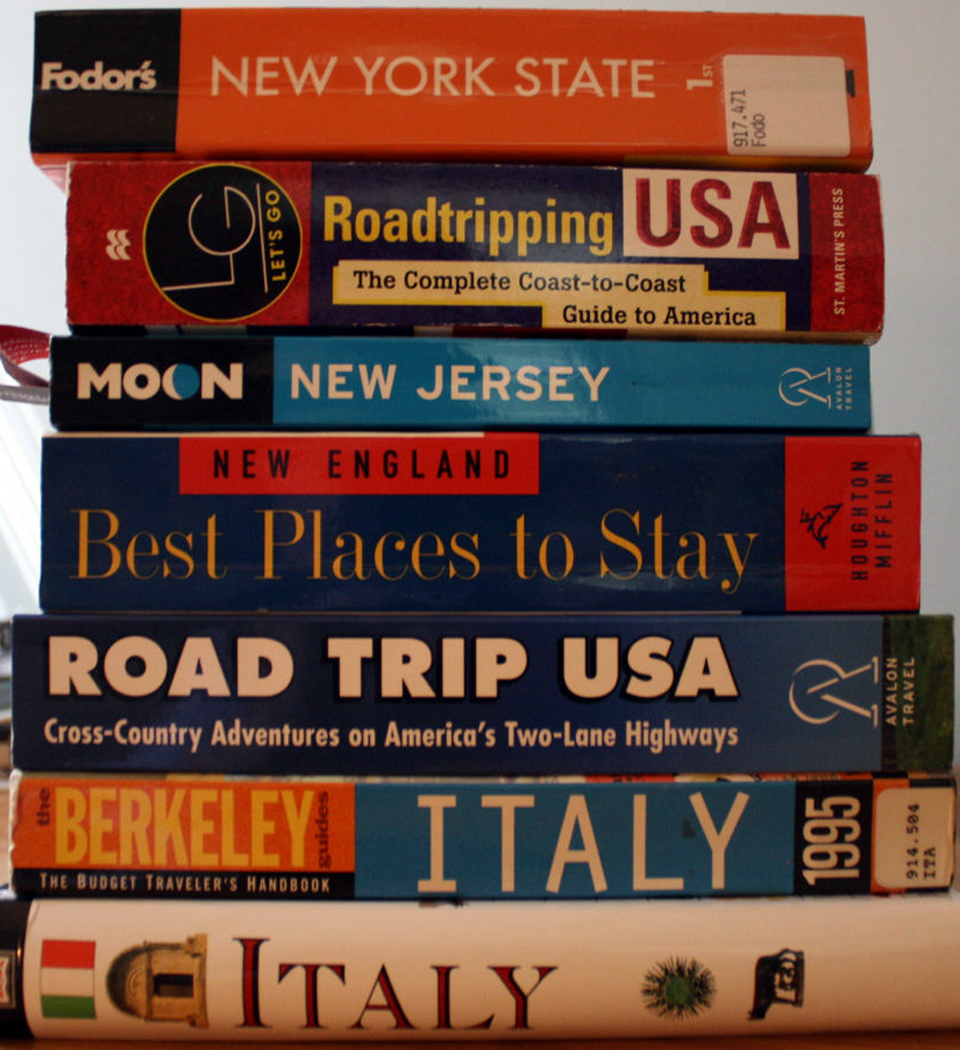
I love travel, and next to that, reading about it. But most of what I read leaves me flat; most travel writers upholster their pages with supposedly useful bits of information meant to lead me to a favorite hotel or a great nude beach where I can buy the killer margarita.

Most travel writing is in essence consumer news, and consumerism is both shallow and boring. That is not what I seek when I open up a book. I want to be transported to the place the author writes about; if I cannot afford the airfare, I want the words on the page to vanish, leaving me underneath the palm trees or on the mountain crest. I want to feel the moist tropical breeze on my cheek.

The best writing is not about four-star restaurants, but about the experience of the place, whether hotel or Irish bog. I have found that happens most often not in the works of so-called travel writers, but in the works of those who are writers first, travelers only by happenstance.

Lawrence

Lawrence

That is because, ultimately, the travel experience happens not on the ground, but in the head. It is the digestive sensibility of a great writer that can suck the marrow out of an experience and present it to us for our own understanding and enjoyment.

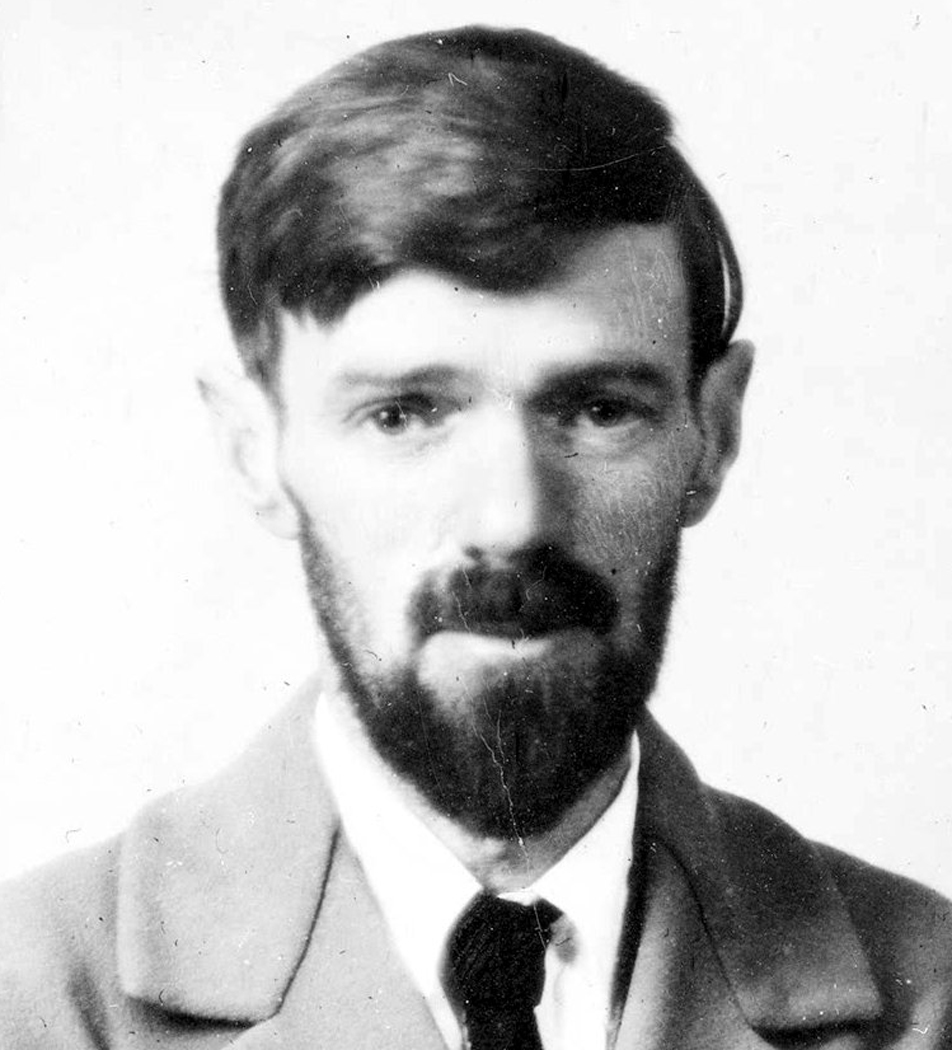
”One says Mexico: One means, after all, one little town away south in the Republic,” wrote D.H. Lawrence in Corasmin and the Parrots. ”And in this little town, one rather crumbly adobe house built round two sides of a garden patio; and of this house, one spot on the deep shady veranda facing inwards to the trees, where there are an onyx table and three rocking-chairs and one little wooden chair, a pot with carnations, and a person with a pen.”

Now that puts you in a place. And a very particular place, seen through very particular eyes.

Miller

Miller

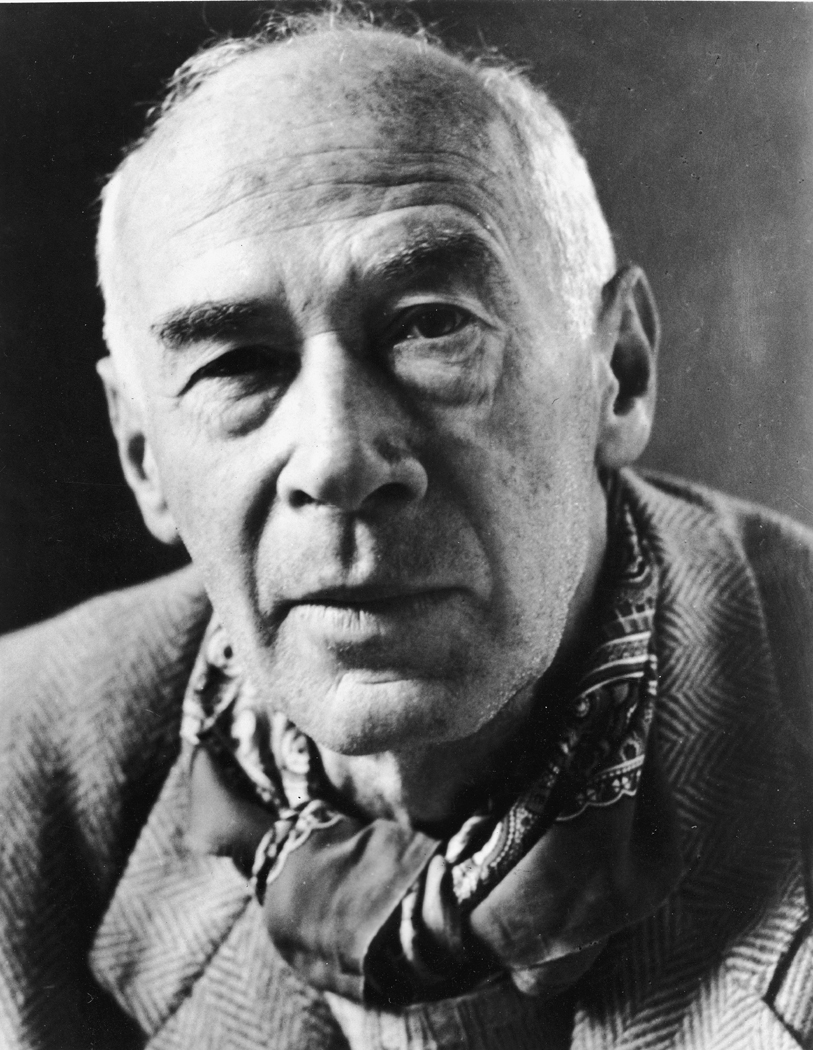
Henry Miller opens up his wonderful travel book, The Colossus of Maroussi, saying, ”I would never have gone to Greece had it not been for a girl named Betty Ryan who lived in the same house with me in Paris. One evening, over a glass of white wine, she began to talk of her experiences in roaming about the world. I always listened to her with great attention, not only because her experiences were strange, but because when she talked about her wanderings, she seemed to paint them: Everything she described remained in my head like finished canvases by a master. It was a peculiar conversation that evening: We began by talking about China and the Chinese language, which she had begun to study. Soon we were in North Africa, in the desert among people I had never heard of before. And then suddenly she was all alone, walking beside a river, and the light was intense and I was following her as best I could in the blinding sun, but she got lost and I found myself wandering about in a strange land listening to a language I had never heard before. She is not exactly a story teller, this girl, but she is an artist of some sort, because nobody has ever given me the ambience of a place so thoroughly as she did that of Greece.”

Miller then turns that favor over to us in his book. It is not just about a place, but about how a particular and intelligent sensibility interacts with a place.

Sometimes that happens in a novel, such as Jack Kerouac’s On the Road or Herman Melville’s Typee. These give us such a strong sense of being there that the plot sometimes seems little more than an excuse to travel to a new place to feel unfamiliar weather and sunlight.

But it is on their books specifically about travel that I mean to write. I’m sure you have your favorites, just as I have mine. Try some of these out next time you can’t afford two weeks in Tahiti:

1. Sea and Sardinia, by D.H. Lawrence. ”Comes over one an absolute necessity to move. And what is more, to move in some particular direction.” His other travel books are just as direct, just as full of the feeling of life and energy, populated with odd and compelling personalities. Mornings in Mexico, Twilight in Italy, Etruscan Places — if I were to name the single best travel writer, it would be Lawrence. colossus cover

2. The Colossus of Maroussi, by Henry Miller. Forget the four-letter Miller of the Paris gutter. His vision of Greece, uncorrupted by pious Classicism, is all about location, location, location. His American travel books, The Air-Conditioned Nightmare and Remember to Remember, are more episodic, but still among his best work.

3. The Encantadas, by Herman Melville. ”Take five-and-twenty heaps of cinders dumped here and there in an outside city lot; imagine some of them magnified into mountains, and the vacant lot the sea; and you will have a fit idea of the general aspect of the Encantadas, or Enchanted Isles.” Melville takes us to the Galapagos Islands and gives us all we know of them outside of Darwin.

4. The Narrow Road to the Deep North, by Matsuo Basho. The greatest writer of Japanese Haiku takes us on a walking tour of the northern portions of Edo-period Japan. ”Days and months are travelers of eternity. So are the years that pass by. Those who steer a boat across the sea, or drive a horse over the earth till they succumb to the weight of years, spend every minute of their lives traveling.”

5. The Desert, by John C. Van Dyke. One of the most peculiar books ever written, it is the love letter of an obsessed stalker to his beloved Southwest deserts. Written in 1901, it is full of the most effulgent language ever put to paper. And it would be pure breathless kitsch if every word weren’t the most truthful and accurate observation of the land.

”The reds are always salmon-colored, terra-cotta or Indian red; the greens are olive-hued, plum-colored, sage-green; the yellows are as pallid as the leaves of yellow roses. Fresh breaks in the wall of rock may show brighter colors that have not yet been weather-worn, or they may reveal the oxidation of various minerals. Often long strata and beds, and even whole mountain tops show blue and green with copper, or orange with iron, or purple with slates, or white with quartz. But the tones soon become subdued. A mountain wall may be dark red within, but it is weather-stained and lichen-covered without; long-reaching shafts of granite that loom upward from a peak may be yellow at heart but they are silver-gray on the surface. The colors have undergone years of ‘toning down’ until they blend and run together like the faded tints of an Eastern rug.”

Bartram

Bartram

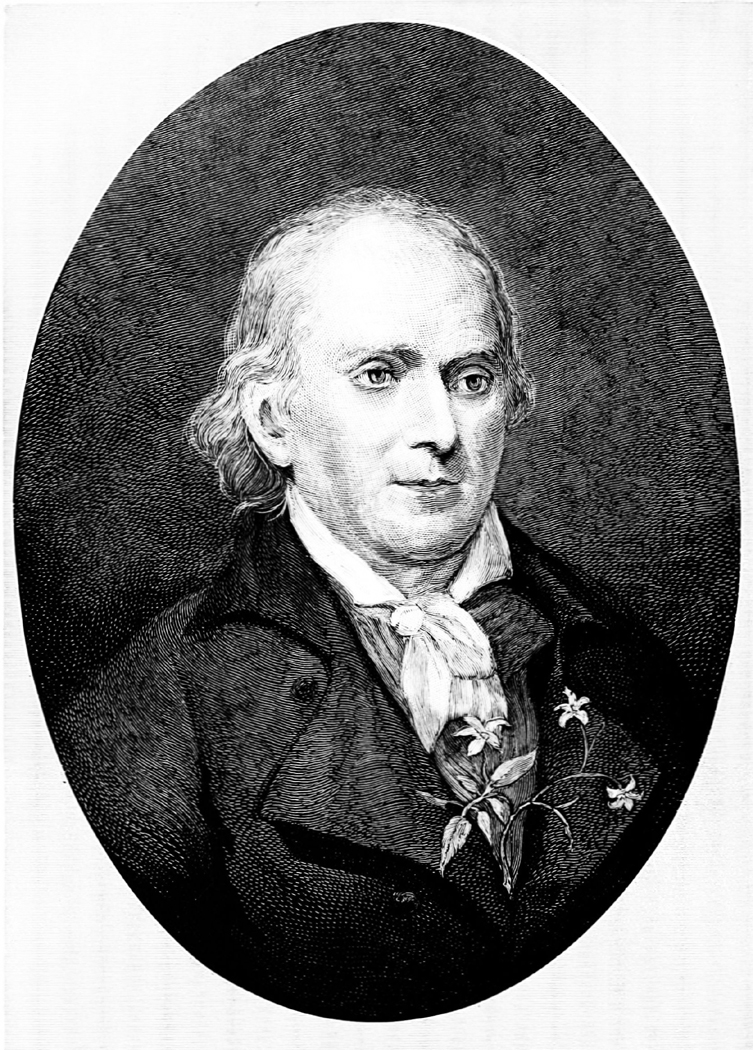
6. Travels, by William Bartram. The full title gives us the wonderful 18th-century flavor of the book: Travels through North and South Carolina, Georgia, East and West Florida, the Cherokee Country, the Extensive Territories of the Muscogulges, or the Creek Confederacy, and the Country of the Chactaws; Containing An Account of the Soil and Natural Productions of Those Regions, Together With Observations on the Manners of the Indians, Published in Philadelphia, 1791.

It is my favorite of any number of similar books that follow the author through what was at the time unknown and miraculous new territories. Jonathan Carver’s Travels through North America, from 1778, or William Dampier’s A New Voyage Around the World, from 1697, are full of ”travelers’ tales.”

Later, the journals of Lewis and Clark and of John James Audubon are full of the same sense of being there.

7. Life on the Mississippi, by Mark Twain. Such a classic, it hardly needs touting, but there is no more completely compelling vision of a river and the life that survives because of it.

8. California and the West, by Charis Wilson Weston. The reason most people pick up this book is for the historic photographs by Edward Weston. But the stories his wife, Charis, tells about their travels while making the photographs are a complete delight and present a picture of America between the wars with dusty roads, bad food and cheesy tourist traps.

9. Italian Journey, by Johann Wolfgang von Goethe. The great German writer and natural philosopher managed to get into the spirit of Europe’s sunny south by meeting a bunch of Germans in Rome and rhapsodizing about Classical civilization. It is a funny, moving and infectious memoir, and I can’t put it down.

Thoreau

Thoreau


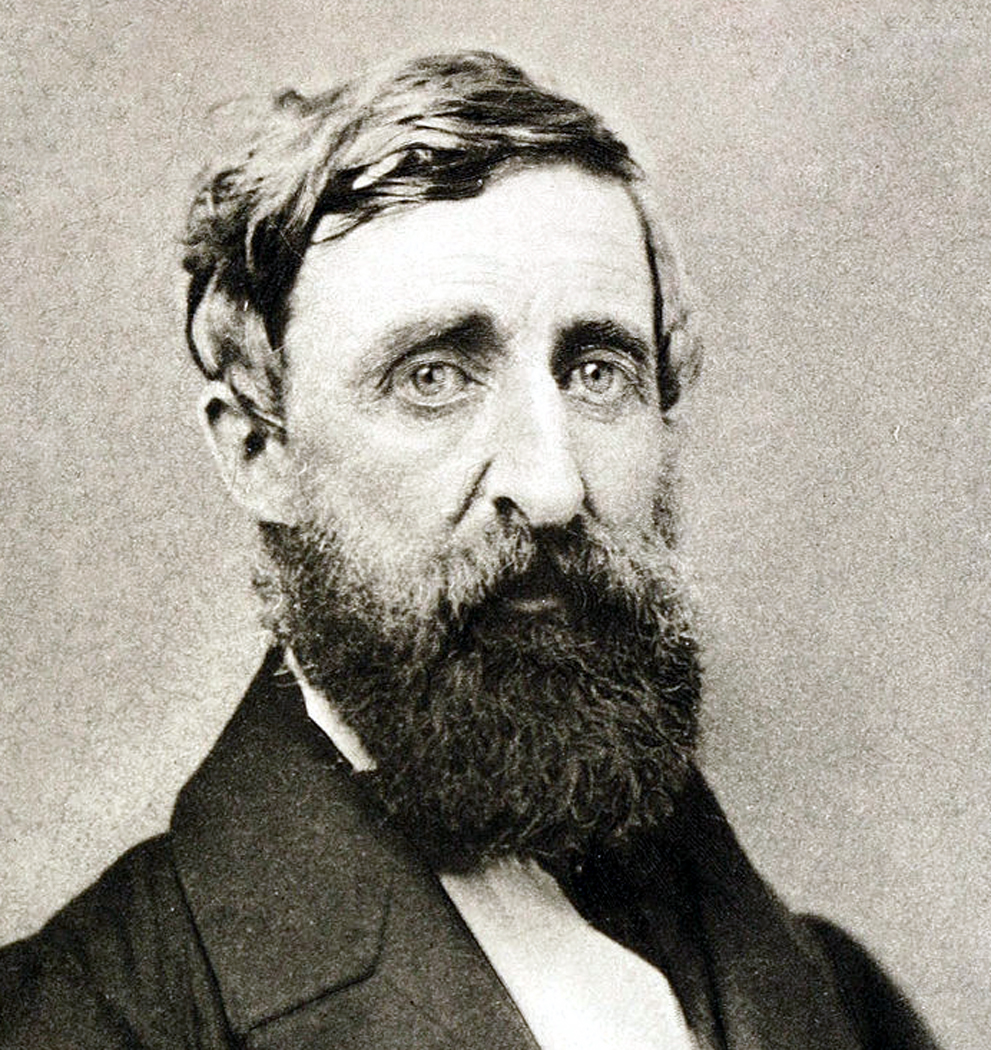
10. A Week on the Concord and Merrimack Rivers, by Henry David Thoreau. This is only one of several quirky and idiosyncratic travel books by the Transcendentalist author. You could as well choose The Maine Woods, Cape Cod or A Yankee in Canada. How idiosyncratic? ”I fear I have not got much to say about Canada, not having seen much; what I got by going to Canada was a cold,” he writes. He also lies. He has got much to write about Canada.

Apollo

Apollo

The older I get, the less reading I do, and the more re-reading. It’s a common symptom of age. There are many things that change as you leave behind the enthusiasms of youth.

I remember the complaints about conductor Arturo Toscanini that his repertoire was small and repetitive: How many times can you play the Beethoven and Brahms symphonies, and why don’t you play more contemporary music?

Toscanini 2First, you have to remember that when Toscanini was young, he gave world premiere performances of many new works, including Puccini’s La Boheme and Sam Barber’s Adagio for Strings. He gave world premieres of at least 25 operas. When he was young, the music of Richard Strauss and Claude Debussy were brand new, not the concert stalwarts they later became. He gave the American premiere of Shostakovich’s Seventh Symphony. He programmed all of George Gershwin’s major pieces, even if his Italian soul never quite beat to the jazz rhythm. 

But it is true that after he came to the NBC Symphony, he concentrated on the war horses. His repertoire did narrow as he got old. The problem is that we know Toscanini mainly these days for his RCA Victor recordings, made near the end of his life, and so we have a skewed vision of his career.

That narrowing is not uncommon in artists, who generally — if they get to live long enough — develop a streamlined “late style,” which eschews much of the complexity they favored as young Turks, and gets straight to the point, as if the knew they didn’t have time for all the hoopla and somersaults. 

And so, as his hair whitened, Toscanini focused on those works he knew he could never exhaust: things like the Beethoven symphonies. They provide endless riches, endless possibilities, and endless satisfactions. 

I say I recognize this because as I’ve aged, I, too, have narrowed my focus. As a young art critic, I kept up with all the newest trends in contemporary art. I loved the buzz and fizz: Who’s up, who’s out. What’s the latest and greatest. I even went so far as to disparage much of what is found in our art museums as “relics” of the art process, and therefore not really art — real art is what is coming out of the studios today. Or even better, tomorrow.

And, as a music critic, I felt the same way. Give me something to shock my ears and lord keep me from having to hear another Beethoven’s Fifth! 

But there is a great change in one’s approach to art as one matures. Maturity isn’t just a slowing down and tightening up: It is the weight of experience. When we are young, we know so little, yet we think we know so much. We have the answers, and why don’t the fogeys understand that?

Life, however, burdens you with the accumulation of experience and what was clear as an adolescent is infinitely muddy as a grandfather. 

When we are striplings and in love with art, we tend to idolize it, and its makers. We test ourselves against our heroes, and against the art they made. Are we up to it? Can we maintain in ourselves the vibrancy and aliveness of the art we adore? Aren’t we “special,” too? Of course, we are! The world in art seems so much more brilliant and colorful, so much more emotionally intense. 

But, after a few marriages, a few divorces, a few illnesses, a few disappointments and the deaths of too many of those we loved, after seeing the politics of our time repeat themselves endlessly and stupidly, after seeing more genocides in the world, and hearing the idiocies of dogma and doctrine, the evils of ideologies and the fears of unknowing engender the hatreds of tribes and nations, after all that and the heavy weight of more, we — if we have been lucky — have earned a portion of wisdom. What we once valued from books, we know know more directly from life. And now, instead of measuring ourselves against the art we love to see if we measure up, instead we measure the art against our lives and experience to see whether the art measures up. And very often, it doesn’t. 

So, in our dotage, we fall back on a few trusted worthies, those poems, books, paintings, symphonies, choreographies that we have tested against our experience and which hold up and continue to give pleasure, consolation, understanding and — I hesitate to use the word — what we have come to regard as truth. 

It is what I find in those books and in that music that I re-read and re-listen to — that give me sustenance, that feeds my inner life and tells me that I am not alone but share something with those writers, those composers, those painters and sculptors who have gone through enough life to have developed enough emotional complexity to make art that says something real, and doesn’t just tickle my need for novelty, or — as in my youth — my self-announced grandiosity. glenn gould

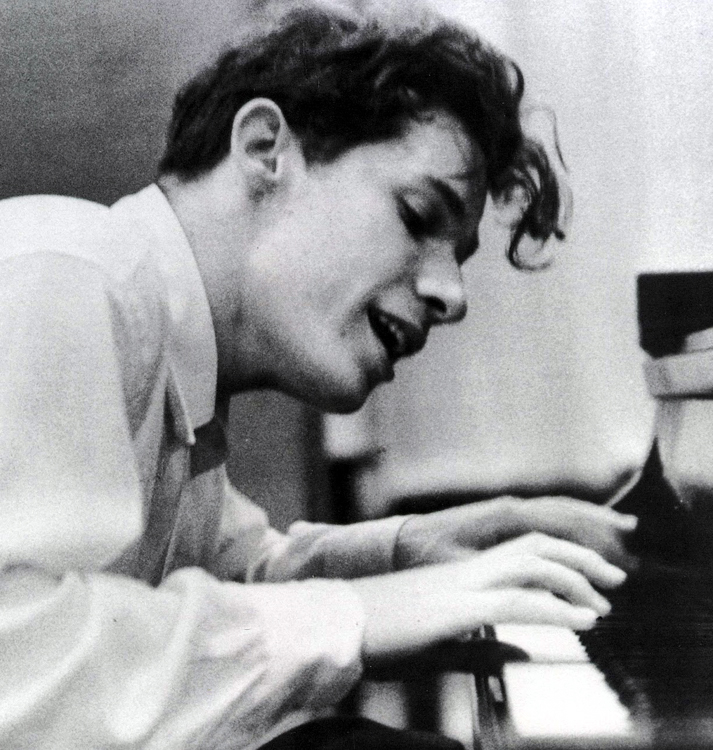
So, I re-read The Iliad at least once a year, and re-read Ovid’s Metamorphoses, Melville’s Moby Dick, Shakespeare’s Hamlet and Goethe’s Faust. I just finished again Dante’s Commedia, and expect to take on Chaucer next. I listen to Glenn Gould playing the Goldberg Variations, or to the Budapest Quartet and the late Beethovens. I weep every time I see Balanchine’s Apollo or his Prodigal Son. I cannot get all the way through Wordsworth’s Intimations Ode without sobbing quietly. 

And Toscanini doing Brahms’ Fourth. I don’t know how many times he conducted that piece, and I certainly cannot count how many times I’ve listened to that recording. I can hear it all the way through now purely in my mind; I don’t even need the score. 

These things — and many more — seem rock-solid and true. 

I expect you have or will have your own list of works that do it for you. They shouldn’t be the same ones; after all, you have lived your own life and collected your own list of wounds and sorenesses, giving you your own sense of what life must be, despite all our best efforts.