Archive

Tag Archives: canon

I recently misplaced my camera on a trip. I don’t know where; I’ve checked and rechecked several places. So, it’s gone. These things happen. 

Luckily, I have some older cameras stuck in a drawer and I pulled them out, went through an orgy of recharging all their batteries, and now have six working cameras, of various types and talents. Mostly, though, I was shocked to realize how many cameras I have bought and used over the years. Indeed, with all the newly recharged and working ones, the drawer also contained even older cameras that no longer can function at all — outdated technology. And all these were only the digital cameras. My history with the medium goes way back. 


I have gone through scores of cameras over the years, including a bunch I had simply for the sake of collecting, including an old Kodak Medalist, the Super Ikonta B, and the Exa 1. I have bought at least a half-dozen Argus C3s — a camera built like a brick with a lens plonked on — that I habitually gave out to friends so they could make pictures for themselves. 
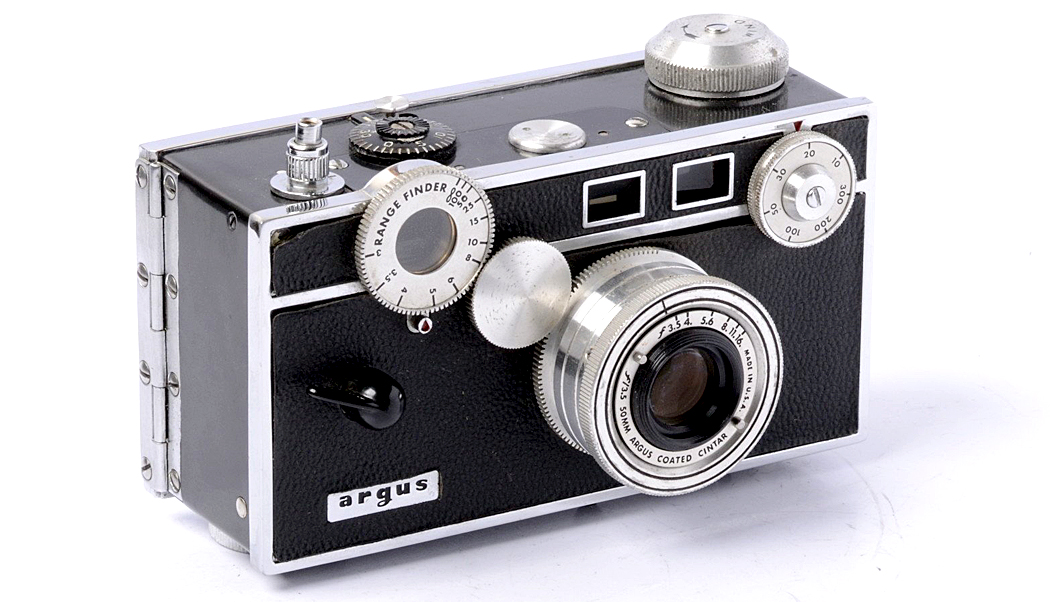
But all that is just akin to collecting antiques. More immediately, it set me to thinking about a chronic disease I have suffered from through most of my life — a psychological problem. I have been a lifelong collector of cameras. But not just for the sake of collecting. It has been a lifetime of trading in what I had been using for what I believed would be a better tool. Of course, on the rational level, one knows perfectly well that the tool is only as good as the workman, and that a fancier camera isn’t going to make better photographs for me. Still, I constantly drooled over whatever was higher up on the photographic food chain. 
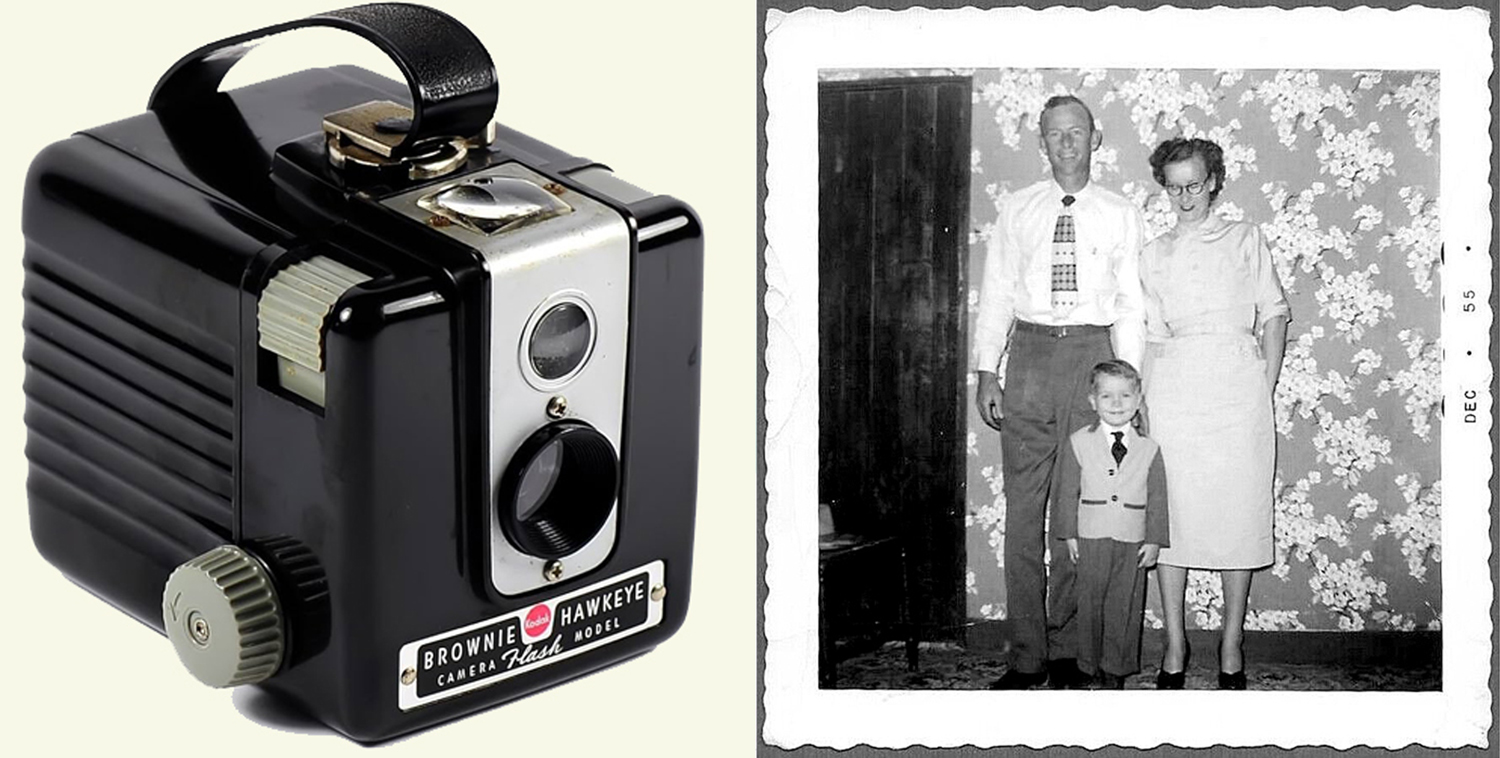
And I started pretty low: When I was 10, I got a Kodak Hawkeye Brownie camera, a little plastic box with a tiny fixed lens. It used roll film and when I had shot my 12 pictures, I took the roll to the drugstore to have it developed and printed. What I got back were three-and-a-half inch, deckle-edged prints of fuzzy images with a tiny date printed in the margin. These were the standard family snapshots of the era — the late ’50s and early ’60s. 


Then, over summer school vacation in 1965, I accompanied my grandmother on a trip across the Atlantic to visit her birth town in Norway, and I wanted a more “professional” kind of camera to take with me. This was truly the start of my neurosis. I visited the local camera store where the clerk — a doughy old smoker of smelly cigarettes — found me a used Praktica 35mm single lens reflex camera. This was the kind of camera with a flipping mirror behind the lens that popped up as you snapped the shutter button and exposed the film. Even then, most SLRs had a prism affixed so you could look through it to focus and frame. But my Praktica was of an older vintage. You had to hold the camera at chest level and look down into the ground glass viewfinder — a viewfinder exactly an inch by an inch-and-a-half, for a very tiny preview of what you were photographing. As you turned the knob to the next exposure, you also re-lowered your mirror. 
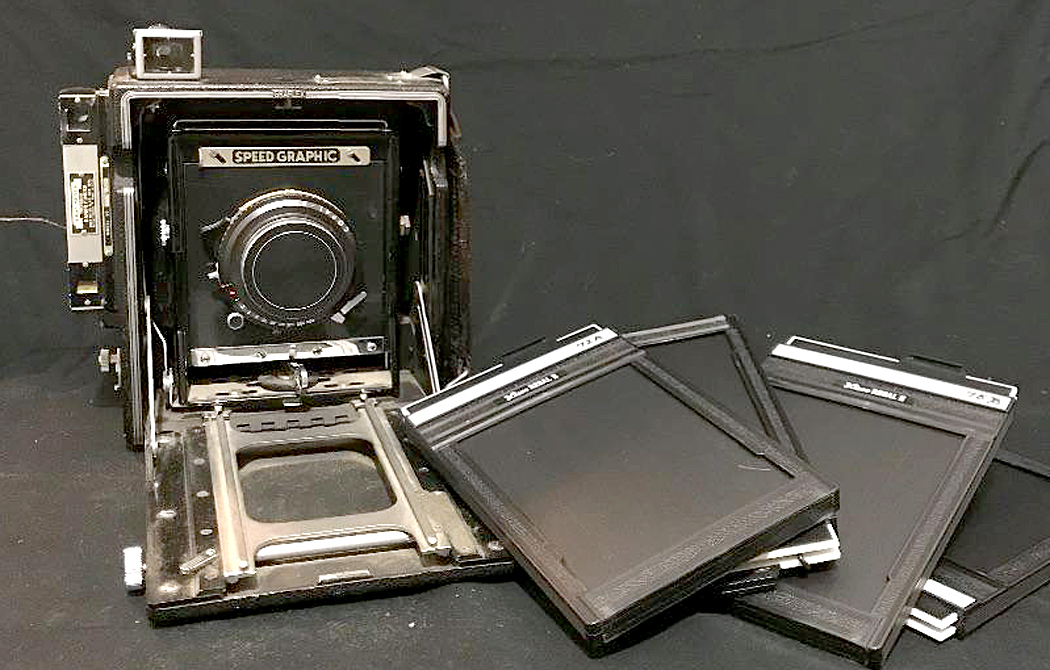
In high school, I was a nerdy sort, and one of the AV team that set up projectors in classrooms for the teachers, or operated the reel-to-reel tape recorders. And I had a special job as the photographer for the school newspaper, and for that I had the school’s Crown Graphic — an old Graflex camera with the 4- by-5-inch plate holders. And I had access to the school darkroom, where I processed the giant negatives and made prints for the paper. 

So, I knew I wanted a better camera for myself. My best friend had his own 35mm SLR, and it was a Miranda D. Oh, how I wanted one of my own, with its pentaprism on top, and a lever to advance the film instead of the windy-knob. I never got one. I couldn’t save up enough money. 

But, with a trade-in of the old Praktica and some saved allowance cash, I could get a used Pentax Spotmatic, of the old, screw-mount lens variety. It got me through college. But there was always in the back of my mind this nagging need to have the best — the Nikon F, the top of the line in Single Lens Reflex technology. But they cost so much. I pined. 

(I always seem to have had Pentaxes as a fallback. I’ve owned maybe a half dozen of them over the years and it was a Pentax that I took with me on our first trip through the West in 1981. A solid workmanlike camera.) 

After I graduated, I got a job as a clerk in a camera store, working alongside a wizened old pro, who smoked (more accurately, chewed on) truly nasty cigars. And with my earnings, I was able to trade my Pentax in for the Nikon (used). You’d think that was enough. The prize with the Nikon came with the 55mm macro lens and the gorgeous 85mm long focus lens. Had to have those. 

But I knew my photographic heroes worked with Leicas, and so, my heart was set on an ever-higher rung and I wanted, somehow to own a Leica. I magically came across an ancient Leica D, vintage 1937, being sold for a ridiculously cheap price (something like $50. The latest price for one on Ebay runs about $1500.) Mine came with the famed f/3.5 Elmar lens, and was an all-black model. I felt I had hit the jackpot. 

The problem was such an old camera was missing some regular amenities, like a flash connection. And then one of our customers, a wealthy businessman who was a collector of Leicas, offered me a more modern Leica IIIf (“red dial,” ca. 1956) in an even trade for my old thing. It was chrome, not black, and had more shutter speeds and a flash connection. I took the deal. 

The problem was that the then-current Leica was a bigger, better M3 Leica and I knew I had to have that. I also began collecting Leica accessories for my IIIf — telephoto and wide angle lenses, a light meter, a leather camera case — and I would have to give all them up for the upgrade. 
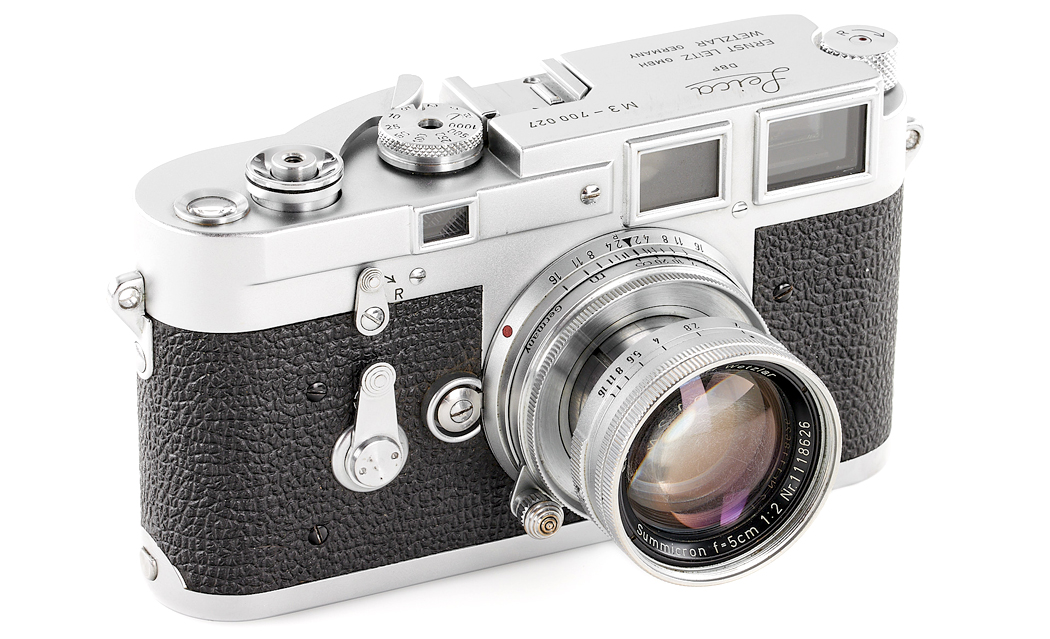
And so, I upgraded. Then there was the M4, which was even better. Imagine how good my photos would be if only I had the Leica M4. 

I had a new problem, however. The kind of photographs I wanted to make were highly detailed, sharply focused images, like those of Ansel Adams or Edward Weston, and the small, grainier 35 millimeter film I was using would never, ever achieve that look. I had to have a bigger negative. 
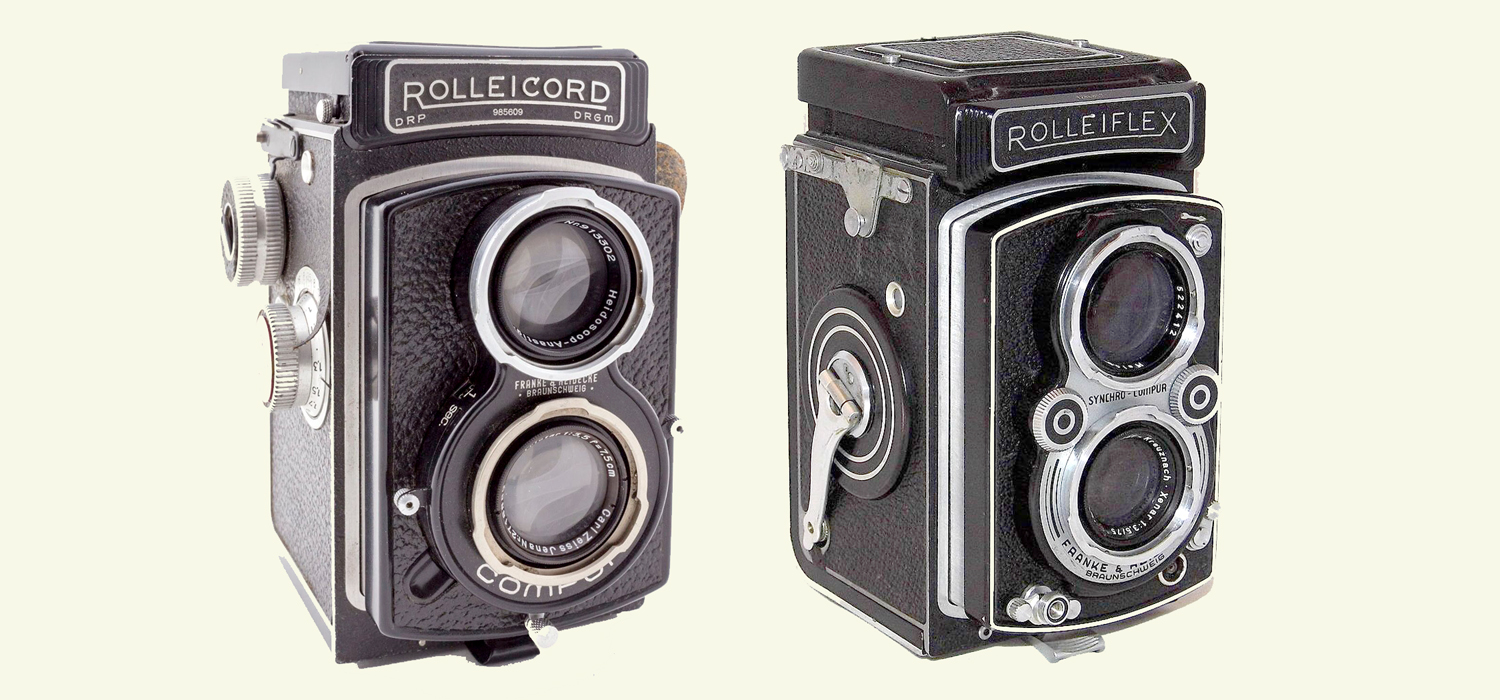
And so began the climb up to the 120 film size with its two-and-a-quarter-inch square negatives. I got a Rolleicord, which was a highly respected twin-lens reflex camera (one lens above the other; one to focus with, one to make the image on the film). But, of course, the Rolliecord was the lower-price version of the even-better Rolleiflex. Huff and puff. More trading and I got the Rolleiflex with the f/2.8 lens. But while I got the bigger negatives, I had regressed to looking down to my waist into the ground glass on the top of the camera, where the mirror sent the image. 

And so, the next insanity was to lust for the medium format SLR, and the top of the heap was the camera we all considered the BMW of cameras: The Hasselblad. This Swedish camera was what the Big Boys used. Avedon; Penn. 

But by this time, I was no longer working at the camera store, and the Hasselblad cost as much as a Volkswagen (or it seemed like it). Eventually, I found a used one and felt I had reached the pinnacle. I owned a Hasselblad. 

Unfortunately, just at that point, I went through the equivalent of a divorce, moved from North Carolina to Seattle, went unemployed for a bit and had to sell my Hasselblad. I went through some hard times, had to sell my darkroom equipment and was left with a series of Pentax cameras (newer vintage, with click-mounted lenses). My life was saved by meeting my second official wife (married for 35 years until her death seven years ago), moved to Phoenix and got my dream job writing for the daily newspaper and taking my own photos for my stories. 
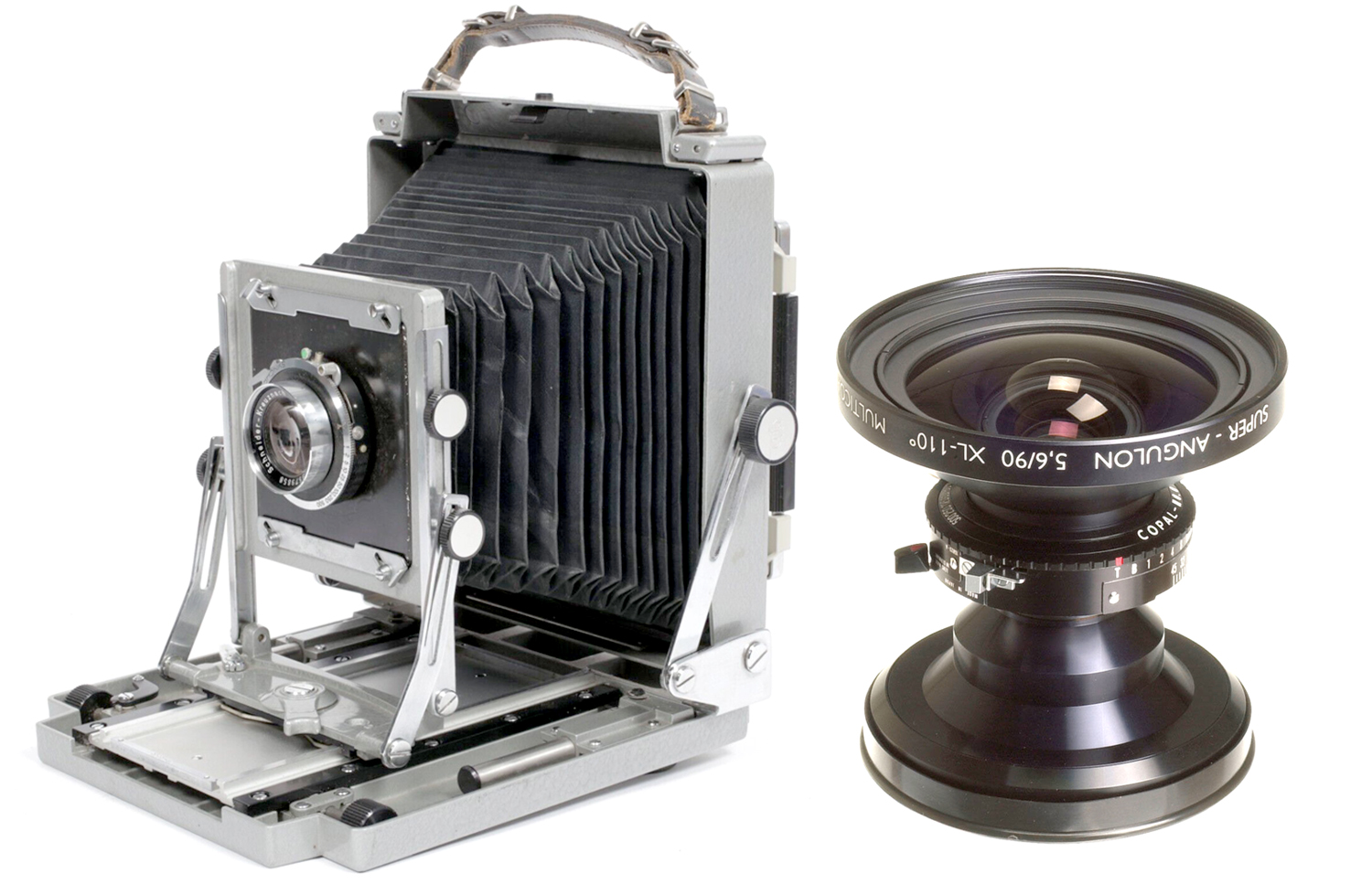
You would think that would be the end. But ye of little faith (or too much). The small 35mm camera was fine for my newspaper work, but for my personal photography, I began to think about large format cameras. Since using the 4X5 Graflex in high school, I had in mind to finally acquire a large-format field camera, and got a really nice Toyo, with the Super-Angulon lens that was my perfect idea of the perfect lens for the perfect camera. I dragged it around the desert to make landscapes. 
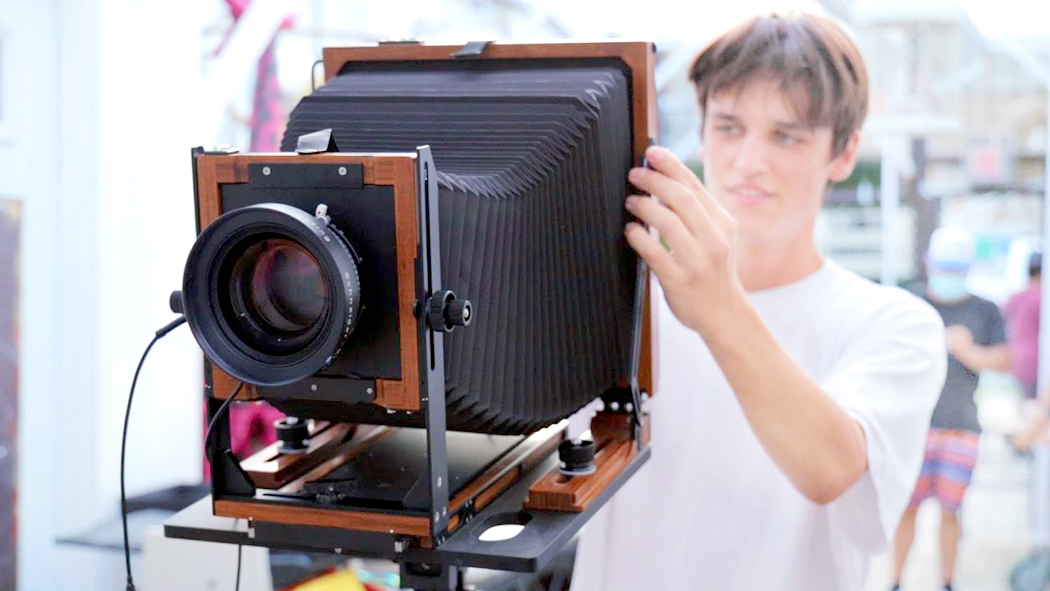
But — you knew this was inevitable — Edward Weston used an even bigger camera, one using 8-by-10 inch film. This was truly a camera the size of a Volvo. It weighed as much as a set of barbells. I found an old, beat-up Deardorff with an uncoated lens and three film holders. 
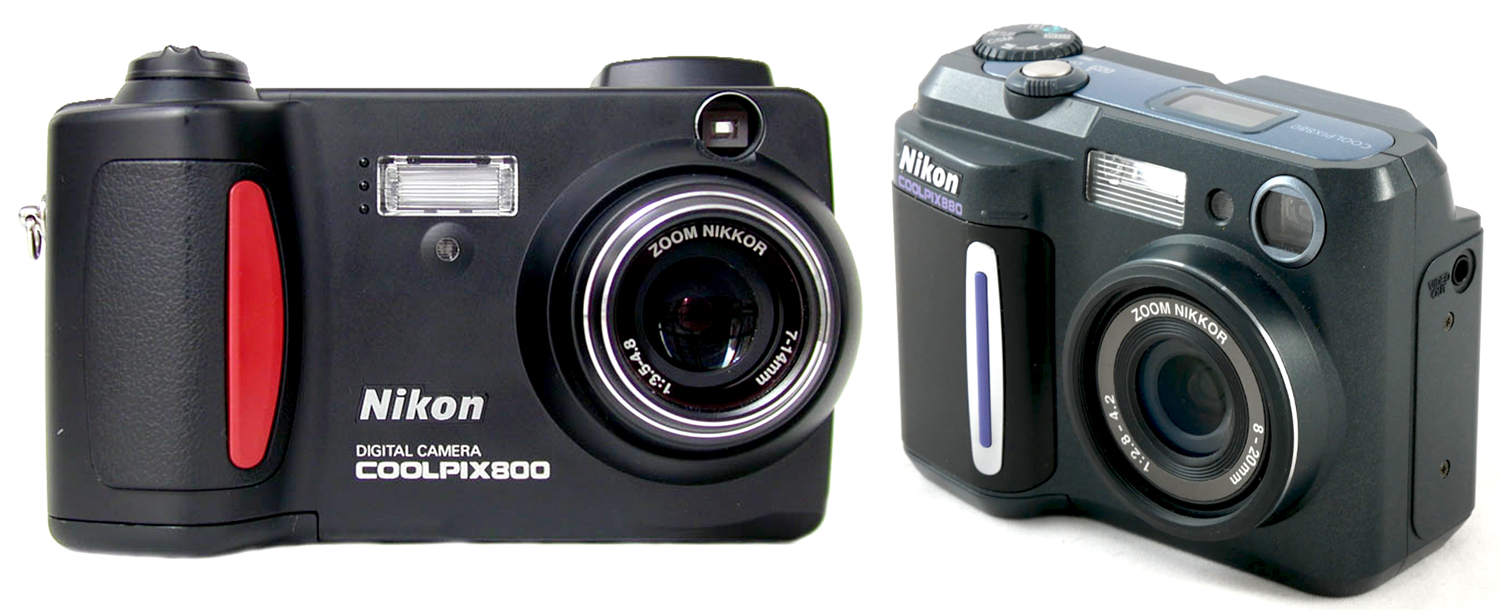
Of course, that is exactly when the photographic world went digital. And the whole stupid thing started all over again. I bought a 2-megapixel Nikon Coolpix 800. Which led to a 3.5-megapixel Coolpix 880, a Canon ELF (the size of a cigarette pack), and on it went. Manufacturers kept upping the megapixelage for sharper images at larger sizes, and I kept up with them. 
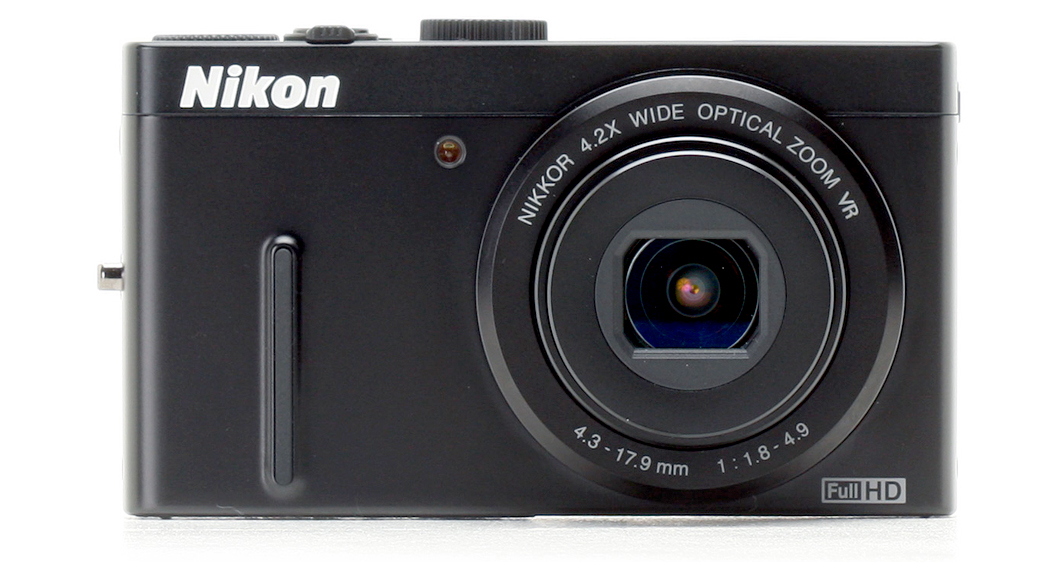
I found what felt was the perfect camera, the Nikon Coolpix P300, with its 12.2 megapixels and a high-contrast black-and-white mode available, along with the ability to make panoramic images. I thought it was my final camera. 

And it would have been, I believe, except that after several years, it stopped working. I needed to replace it but by then, it was no longer being made. I had to find something else. What I found was the Panasonic Lumix DMC-FV35 which was the smallest, flattest pocket-size camera I knew. It had an exceptionally wide lens and had a 10 megapixel sensor. I loved that camera. But then, for some reason, it developed a dark spot in the image, like a dust speck on the lens. But no matter how much I cleaned the lens, it wouldn’t go away. I bought the newer 12-megapixel Lumix DMC-FX 48, which was otherwise identical to its predecessor. It eventually got the spot, too. 

I was taken by the idea that a larger sensor might improve the image (larger physically, not just in number of pixels), and bought the Olympus Pen E-PL1, a 12.2 megapixel box with interchangeable lenses. I also bought an Olympus fe 5020 point-and-shoot for my wife (also 12 megapixels, but about one-fifth the size). 

I also needed a full-size SLR, and my old Canon EOS Rebel was quite outdated, and since my wife and I were taking a trip to Alaska, I decided to replace it with an improved model, with extra wide-angle and extra telephoto lenses to go along with it, and got the Canon T5, with its 18 megapixels. It is still my go-to camera for most important things. 

And there it would have ended but for the my need for something smaller than the T5 or the Olympus Pen, something I could slide into my pocket. And so, I ended up with the Canon PowerShot SX610 HS (The names for camera models is just as insane as those for proprietary drugs). It was 20 megapixels. I say “was,” because that is the camera I lost. I hope that it will turn up some day. 

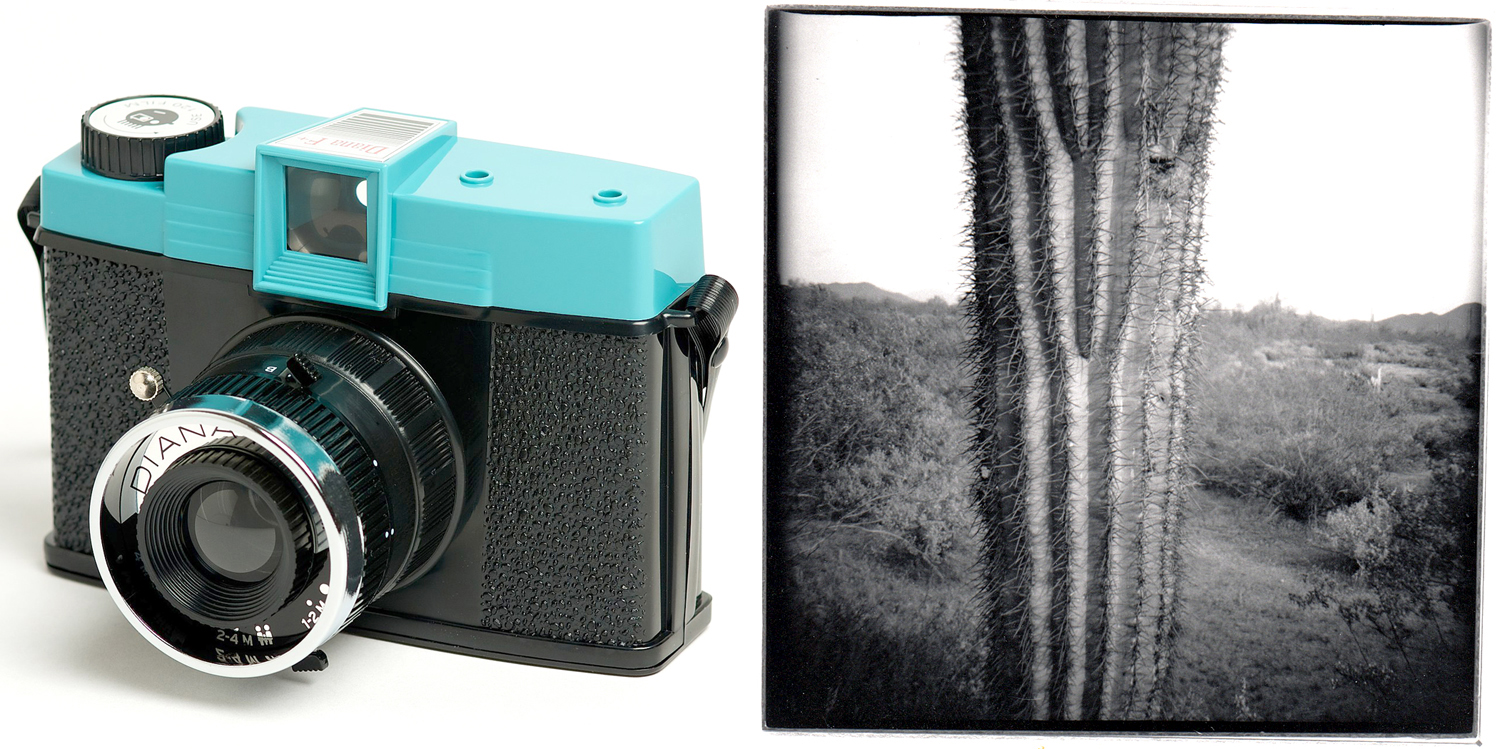
When I was young, I thought that each time I upgraded my camera, my pictures would get better. And, you know, over the years, from 1965 to 2024, it was true that my pictures got better. Strangely, though, I now recognize that any improvement wasn’t because I got better cameras, but because, after tens of thousands of images, I became a better photographer, merely through practice. It never was the camera. (I’ve made some of my favorite images with a $10 Diana toy camera). 
In fact, the fancier new model digital cameras get, the more bells and whistles, the less I want. If only I could find a point-and-shoot small enough for my pocket with a wide-angle lens (no zoom needed), and no extra “filters,” no face recognition, no video mode — just a very basic still camera — I would be very happy. I think. 

Addendum: I know at least a couple of retired newspaper photographers who may recognize this pattern in themselves. I believe it is largely a male thing and extends well beyond merely photographic equipment. I know of men who start out with a Schwinn, have graduated to a VW Beetle, eventually to get a Ford Falcon station wagon (with a mattress in the back), to a Chevy, to a Honda, and on to a BMW and finally to owning two Porsches (one in the back yard for parts to keep the other one running.) 

But it could be anything, from knives or guns, to audiophile stereo systems and expensive speakers. Since I do the cooking in the house, I have gone through something like it with cookware, finally owning top-of-the line skillets and mixing bowls. 

Women may show a similar climb as they move on from husband No. 1, each time getting a better, more mature, responsible and  thoughtful model, finally achieving what is usually called a “keeper.” 

Excelsior! Ever onward and upward. 

adam and eve

OK, so then what is the “canon,” with which we should all be familiar?

There are scores of lists, put forth by scores of people, ranging from insightful critics to close-minded boobs (Yes, Bill Bennett, I’m talking about you). Such lists usually share the usual suspects: Here’s Hamlet, there’s War and Peace, and over there is the Recherche of Marcel Proust. All of them worthy of your deepest attention and capable of inciting the most delightful pleasure.

But as I’ve written before, the purpose of engaging with the canon of Western culture is to understand who your grandparents were, whose cultural DNA you were born to — the common inheritance of all of us in the modern world, our Adams and Eves.

Through most of my youth and into my adult life, my version of the list has grown and grown. I have, after all, at least 50 films on my Top Ten list. I could not do without hundreds of books I have read, paintings I have seen in the flesh, music I know by heart.

But, as I have grown old, I have jettisoned more and more baggage. “Simplify, simplify,” Thoreau said. I’ve given away books, CDs, DVDs. I’m tempted to dump even more. Those that were important, I have internalized; those I want to keep are those I reread and reread.

Under even those, however, is a foundation level, the cultural footings on which I have built my intellectual life, and that the civilization I have inherited was founded upon, almost as its Constitution.

So, I am proposing a canon. A very short one, but an essential one.

First, there is Homer. Everyone should have read the Iliad, at least. The Odyssey is initially more fun — or at least the chapters that chronicle the wanderings of Odysseus — but the Iliad is one of the founding documents of Western civilization and provides a necessary backdrop for everything that has come since.

I reread the Iliad about once a year. I try different translations, because any bit of ancient Greek I used to study has evaporated. The newest translations are usually the best, not because they are more literary, but because they speak the language I use. Older translations sniff of their age, smelling of linsey-woolsey or gaberdeen. I can sense the antimacassar oil on the Lang-Leaf-Myers translation. I sense the Cold War in the Lattimore.

So, the Robert Fagles translation is my standard, although the most recent re-read was in the even newer Stephen Mitchell version.

In Homer, you find the myths that have been re-used and re-energized in all the books written since, that outline the archetypes, give us the parameters of story and narration. The scope of Homer is the widest: from the bee’s tongue to the planet’s motions among the stars.

This is all beside the wonderful enjoyment gotten from reading it, 2500 years after he (or she) set it down.

The second book in my canon is the Bible. Not for any religious reason; I’m completely an atheist and have no use for religion. But the Bible is, like Homer, one of the founding documents and underlies all that has followed. I may wish otherwise, and may often wonder if the Bible wasn’t really authored by a group of people who have spent too long out under the desert sun. It may have been written by white bearded patriarchs under the influence of sunstroke, but they are our grizzled patriarchs.

There are two important considerations when approaching the Bible.

The first is the translation. The King James version is the primary one, and it is the organ-pipe tones of the KJV that underpin our own ideas of language, of majesty, of ritual and solemnity. It is the KJV you hear behind the sentences of Melville and Thoreau, behind the speeches of Martin Luther King.

But the King James is also miserably out-of-date, with usages that are no longer current and oftentimes either misleading or downright incomprehensible. So, a more modern translation may make the stories of the Bible easier to assimilate.

Even so, I prefer mixing the King James and a modern translation with an interlinnear word-for-word translation that demonstrates how much any translation of the Bible is de facto an interpretation. I have valued greatly the Everett Fox version of The Five Books of Moses from the Schocken Bible. Any version of the Hebrew and Christian Bibles is a moving target.

The second thing is that you should read the whole Bible, not just the familiar parts. Some of it is heavy slogging, but you should have read the whole thing. It’s one of the best ways to counteract the baleful influence of all those fundamentalists that would have you believe only their way. You see how they pick and choose only the parts they want and that reinforce their prejudices. You will be astonished at how many things are held to be “an abomination.” You will scratch your head over most of them.

The Bible stories are the Semitic balance to the Hellenic myths and between the two, they are the parents of all that followed.

Finally, in my canon, are the plays and sonnets of William Shakespeare. Ideally, one should see them on stage, in an excellent production (since a mediocre production can be the kiss of death for someone whose language is a florid and baroque as Shakespeare’s), but the fact is that it is as text on a page that Shakespeare has most influenced the course of Western Civ. We read Hamlet, Lear, Othello, and their words continue to astonish the attentive reader with their fire, their brilliance, their wit, and their expansiveness. The “sirrahs” and “prithees” may certainly feel dated, but everything else is bursting with life.

It was after a long-ago divorce that I first decided that if I was going off into exile, I needed to pack only three books: The Iliad, the Bible and a complete Shakespeare, and that somehow, if the world were destroyed all around me, I could resurrect an entire civilization with just these three.

And we would see everything that followed.

"Michael Jackson and Bubbles" by Jeff Koons, and Elgin Marbles figure

“Michael Jackson and Bubbles” by Jeff Koons, and Elgin Marbles figure

In 1632, the young English poet John Milton, just out of college, took up residence at his father’s country estate at Horton, near Windsor. And for the next six years he managed to read everything that had ever been written and was extant, in all languages living and dead, that a European scholar of the time might have heard of. That included literature, history, biography, philosophy, science, mathematics — the whole throatful of it. milton cigar

Everything that had ever been written.

It boggles the mind. Today, we cannot even keep up with the magazines we subscribe to; most of human knowledge falls off the edge of the Earth, where the map of our erudition shows nothing but serpents. reading the oed

We can never achieve what Milton did; it’s foolish to even try. But shouldn’t we attempt at least some sketch of what was fully painted for the poet? There have been recent books by writers who have read every article in the Encyclopedia Britannica (The Know-It-All, One Man’s Humble Quest to Become the Smartest Person in the World, A.J. Jacobs, 2004), The Oxford English Dictionary (Reading the OED: One Man, One Year, 21,730 Pages, Ammon Shea, 2008), or the equivalent of the Harvard Five-Foot Shelf (Great Books, David Denby, 1996), but such ventures are little more than stunts.

To absorb 5,000 years of human culture requires more than memorizing almanacs or dictionaries. It means to have a grounding in the art, literature, theater, music and architecture of our ancestors.

Of course, most of human knowledge, at least in ordinary life, in mass or pop culture and in our individual autobiographies is utterly trivial, and it would be a crime to stuff our brains with it.

But not all knowledge in this information age is trivial. There is still a core of useful literature — and I use the word in the broadest possible sense — that it behooves us to be acquainted with.

It is unfortunate that there is an argument over this. In the imbecilic culture wars that currently ravage the intellectual countryside, the lines are drawn between ignorant armies.

On one side, you find right-wing reactionary fossils fighting to maintain the canon of mainly European classics. On the other side, there is a cadre of victimization that wants to eliminate anything written by dead white males.

A pox on both their houses.

Milton didn’t have to worry about the canon. For him, the canon encompassed everything he could possible encounter.

Since that time, though, we have had to become more selective. Those items we have, as a culture, thought worth perpetuating we have called ”classics” and added them to the list — the canon — of ”required reading.”

But we misunderstand the very idea of culture if we believe the world froze solid with the publication of the Harvard Five Foot Shelf.

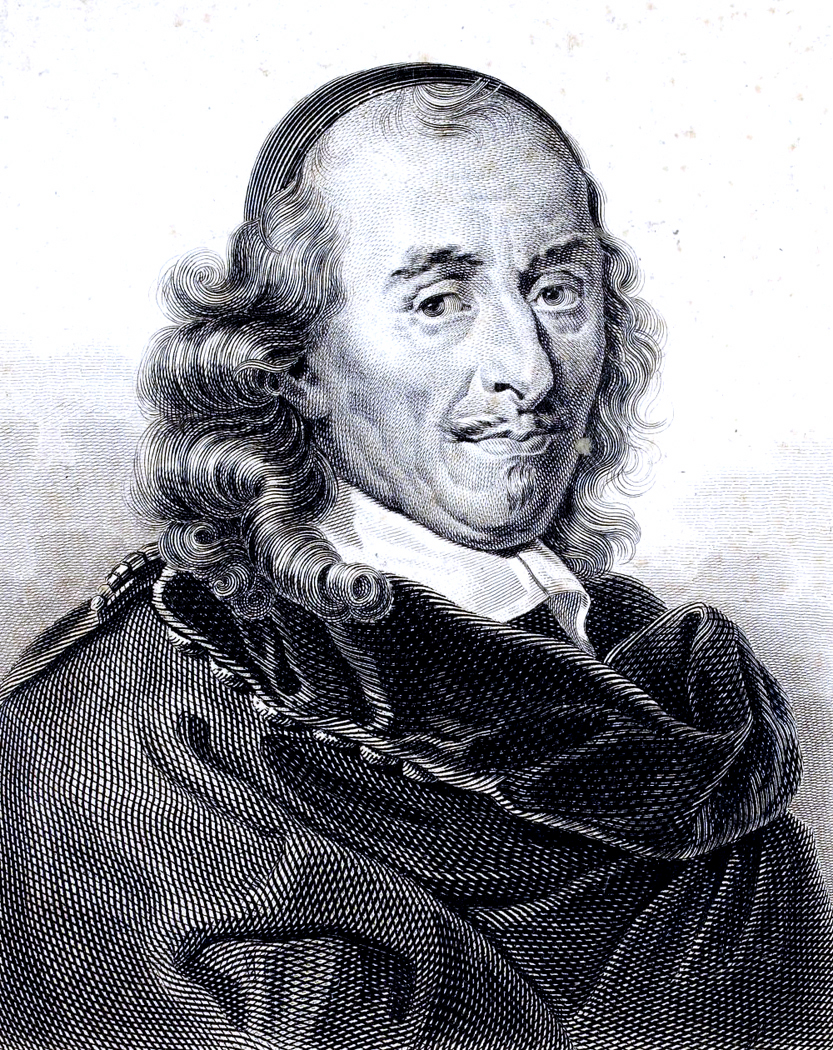
Corneille

Corneille

The canon is a garden that must be weeded and tended, and each season may call forth a different harvest.

The problem with the conservative view is that it values a former ”golden age” that our own time never measures up to. It is a sentimental view of life and history, and deaf to the fact that we live now, not in the imaginary ”then.” It is the voice of Cato, of Corneille, of William Bennett — a man of whom it is said he cannot sleep a-nights if he suspects someone, somewhere is having fun.

It is a view of an idealized perfection that we have disastrously fallen short of. It is one form of imbecility.

The problem from the other side is an egalitarianism that is just as moronic. According to them, nothing is better than anything else. Either it is merely a question of personal taste, or it is one of cultural identity.

By their standards, it is elitist to prefer Pablo Neruda to Rod McKuen. Let them, I say, let them renew their subscriptions to Us magazine.

They can deconstruct its gossip to death and find the parallels with Plutarch — if they only knew who Plutarch was.

To consider one “text” more important than another, for them, is to promote colonialism and the subjugation of the downtrodden.

Hence, they judge not by esthetic considerations — it’s all just personal taste to them — but rather by politics.

For them, politics overwhelms aesthetics — overwhelms reason, emotion, common sense and experience. For them, everything has a party line. Ah, but they forget, politics answers no question worth asking.

It also worries me that behind the masks of intellectual argument, I sense a fascism on each side — at the very least a certain priggishness to both sides that any reasonable human finds dangerous.

At bottom, the problem is that both sides make the mistake of believing the canon immutable and fixed. They see the canon as an end, one side blindly despising it and the other defending it like Texans at the Alamo.

But the canon, properly seen, is a beginning, not an end; a foundation, not a roof.

It is the ABC of cultural literacy, the cardinal numbers of thought.

One used to hear the warning that when you have sex, you are having sex with everyone your partner has ever slept with. Well, when you read a book, you are also reading everything that the author read. When you hear music, you also hear everything that composer heard.

Culture is the slow accumulation of thoughts and habits. To read Melville is to hear the diapason of King James under the rich melody of the prose. Every author is the product of multiplier and multiplicand: the writer’s imagination and the long road of history leading to his standing on the curb with his thumb out.

The fact is, we cannot read everything, the way Milton did. We must be more selective. Suggestions for that selective offering is what we call the canon. But it changes constantly: It now includes James Baldwin and Toni Morrison; it includes Derek Wolcott and Yukio Mishima;  The Beatles and Duke Ellington.

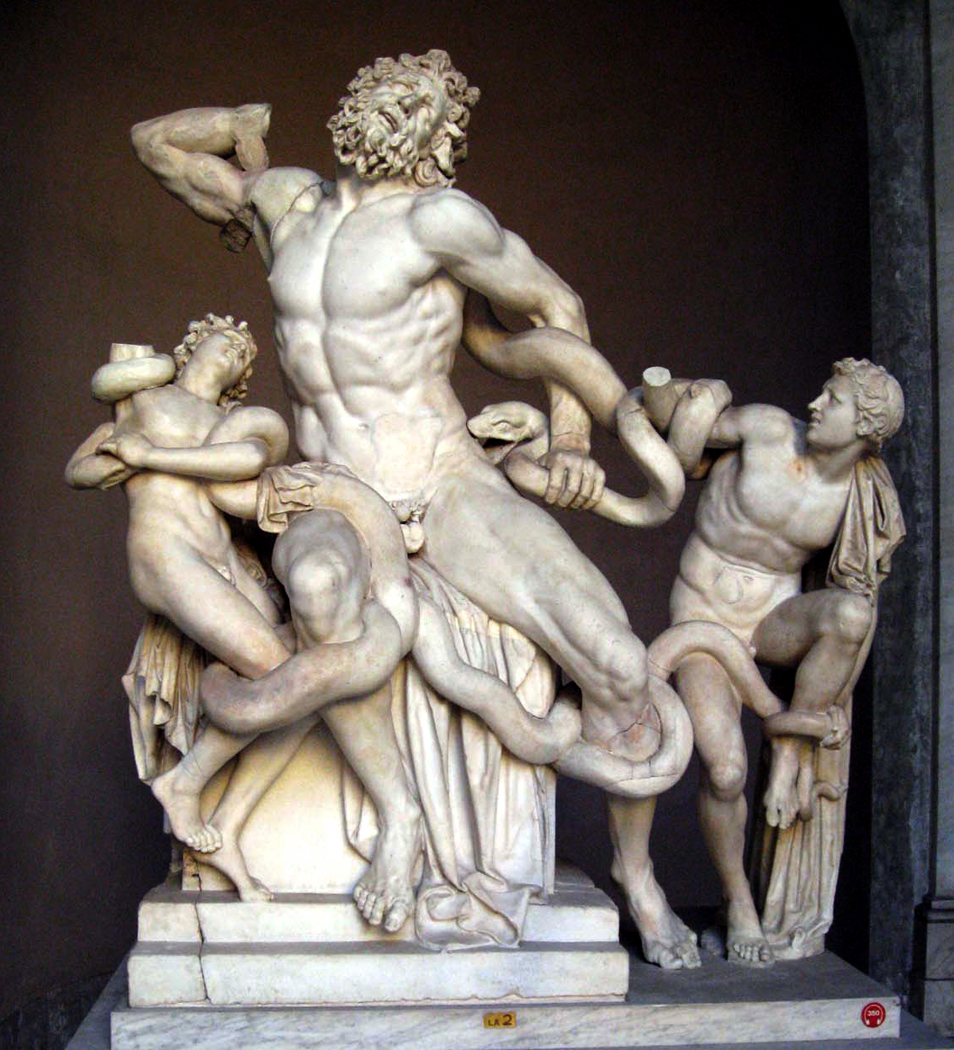
The Laocoon

The Laocoon

How can you understand Jacques Derrida without standing firmly on the firm ground of Kant’s a priori? How can you read Isabel Allende without sensing the spirituality of Calderon behind her words?

How can you understand Jeff Koons’ Michael Jackson and Bubbles if you don’t already have the Elgin Marbles in your system? You can’t. How can you get the joke on the back of countless Yellow Pages if you don’t know the Laocoon?

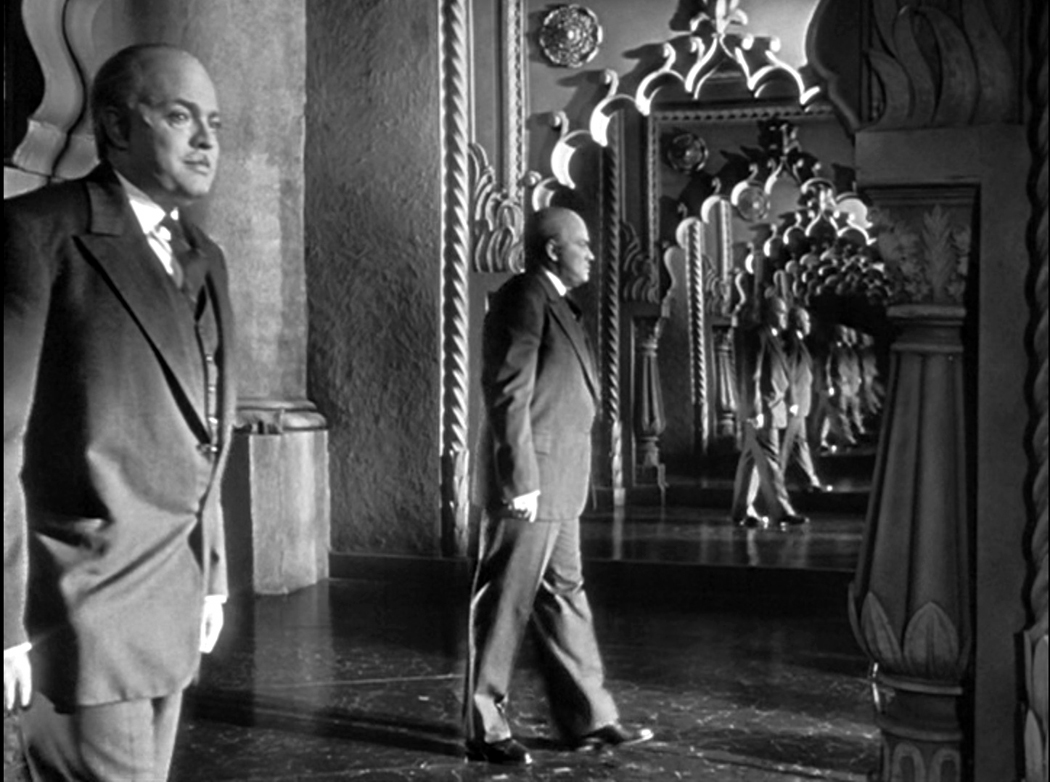
Certainly, the old rationale for learnedness remains: These are great writers, profound thinkers and brilliant painters and sculptors and we cannot consider ourselves educated without their acquaintance. Knowing them is its own excuse. But even more important is that when you hear the echoes in a piece of art, see its ancestry, the piece resonates. Resonance is what gives art and literature is power. kane

Like the mirror scene in Citizen Kane, one man is multiplied into an army. Like Isaac Newton said, if we see further, it is because we stand on the shoulders of giants. It is a wise man who knows his parents.

Apollo

Apollo

The older I get, the less reading I do, and the more re-reading. It’s a common symptom of age. There are many things that change as you leave behind the enthusiasms of youth.

I remember the complaints about conductor Arturo Toscanini that his repertoire was small and repetitive: How many times can you play the Beethoven and Brahms symphonies, and why don’t you play more contemporary music?

Toscanini 2First, you have to remember that when Toscanini was young, he gave world premiere performances of many new works, including Puccini’s La Boheme and Sam Barber’s Adagio for Strings. He gave world premieres of at least 25 operas. When he was young, the music of Richard Strauss and Claude Debussy were brand new, not the concert stalwarts they later became. He gave the American premiere of Shostakovich’s Seventh Symphony. He programmed all of George Gershwin’s major pieces, even if his Italian soul never quite beat to the jazz rhythm. 

But it is true that after he came to the NBC Symphony, he concentrated on the war horses. His repertoire did narrow as he got old. The problem is that we know Toscanini mainly these days for his RCA Victor recordings, made near the end of his life, and so we have a skewed vision of his career.

That narrowing is not uncommon in artists, who generally — if they get to live long enough — develop a streamlined “late style,” which eschews much of the complexity they favored as young Turks, and gets straight to the point, as if the knew they didn’t have time for all the hoopla and somersaults. 

And so, as his hair whitened, Toscanini focused on those works he knew he could never exhaust: things like the Beethoven symphonies. They provide endless riches, endless possibilities, and endless satisfactions. 

I say I recognize this because as I’ve aged, I, too, have narrowed my focus. As a young art critic, I kept up with all the newest trends in contemporary art. I loved the buzz and fizz: Who’s up, who’s out. What’s the latest and greatest. I even went so far as to disparage much of what is found in our art museums as “relics” of the art process, and therefore not really art — real art is what is coming out of the studios today. Or even better, tomorrow.

And, as a music critic, I felt the same way. Give me something to shock my ears and lord keep me from having to hear another Beethoven’s Fifth! 

But there is a great change in one’s approach to art as one matures. Maturity isn’t just a slowing down and tightening up: It is the weight of experience. When we are young, we know so little, yet we think we know so much. We have the answers, and why don’t the fogeys understand that?

Life, however, burdens you with the accumulation of experience and what was clear as an adolescent is infinitely muddy as a grandfather. 

When we are striplings and in love with art, we tend to idolize it, and its makers. We test ourselves against our heroes, and against the art they made. Are we up to it? Can we maintain in ourselves the vibrancy and aliveness of the art we adore? Aren’t we “special,” too? Of course, we are! The world in art seems so much more brilliant and colorful, so much more emotionally intense. 

But, after a few marriages, a few divorces, a few illnesses, a few disappointments and the deaths of too many of those we loved, after seeing the politics of our time repeat themselves endlessly and stupidly, after seeing more genocides in the world, and hearing the idiocies of dogma and doctrine, the evils of ideologies and the fears of unknowing engender the hatreds of tribes and nations, after all that and the heavy weight of more, we — if we have been lucky — have earned a portion of wisdom. What we once valued from books, we know know more directly from life. And now, instead of measuring ourselves against the art we love to see if we measure up, instead we measure the art against our lives and experience to see whether the art measures up. And very often, it doesn’t. 

So, in our dotage, we fall back on a few trusted worthies, those poems, books, paintings, symphonies, choreographies that we have tested against our experience and which hold up and continue to give pleasure, consolation, understanding and — I hesitate to use the word — what we have come to regard as truth. 

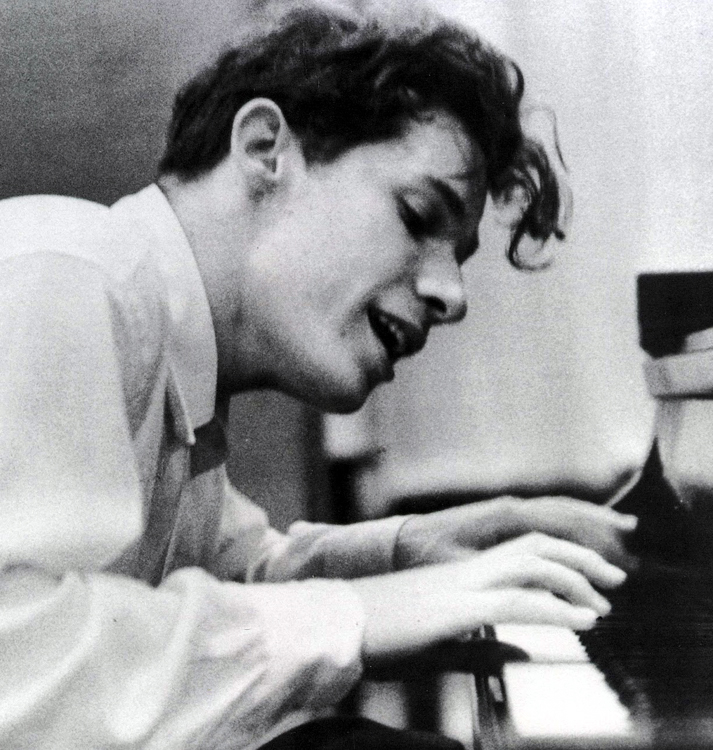
It is what I find in those books and in that music that I re-read and re-listen to — that give me sustenance, that feeds my inner life and tells me that I am not alone but share something with those writers, those composers, those painters and sculptors who have gone through enough life to have developed enough emotional complexity to make art that says something real, and doesn’t just tickle my need for novelty, or — as in my youth — my self-announced grandiosity. glenn gould

So, I re-read The Iliad at least once a year, and re-read Ovid’s Metamorphoses, Melville’s Moby Dick, Shakespeare’s Hamlet and Goethe’s Faust. I just finished again Dante’s Commedia, and expect to take on Chaucer next. I listen to Glenn Gould playing the Goldberg Variations, or to the Budapest Quartet and the late Beethovens. I weep every time I see Balanchine’s Apollo or his Prodigal Son. I cannot get all the way through Wordsworth’s Intimations Ode without sobbing quietly. 

And Toscanini doing Brahms’ Fourth. I don’t know how many times he conducted that piece, and I certainly cannot count how many times I’ve listened to that recording. I can hear it all the way through now purely in my mind; I don’t even need the score. 

These things — and many more — seem rock-solid and true. 

I expect you have or will have your own list of works that do it for you. They shouldn’t be the same ones; after all, you have lived your own life and collected your own list of wounds and sorenesses, giving you your own sense of what life must be, despite all our best efforts.