Archive

Tag Archives: caspar david friedrich

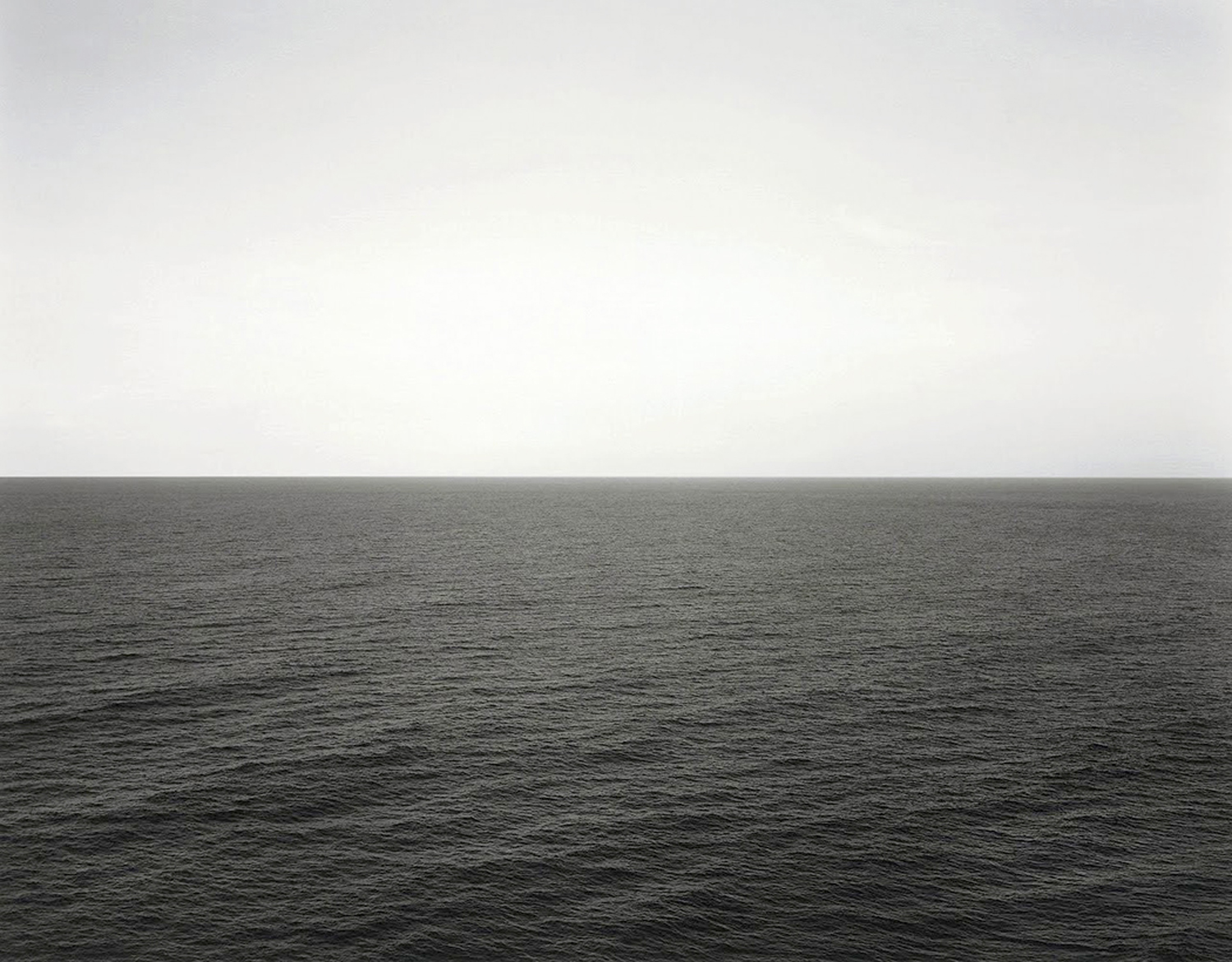
Many years ago, when I was still teaching photography in Virginia, I visited an art show that bothered me. In the gallery were a series of large black-and-white seascape photographs by Hiroshi Sugimoto. Each was about 3-feet square and each was divided exactly in half by the horizon line. 
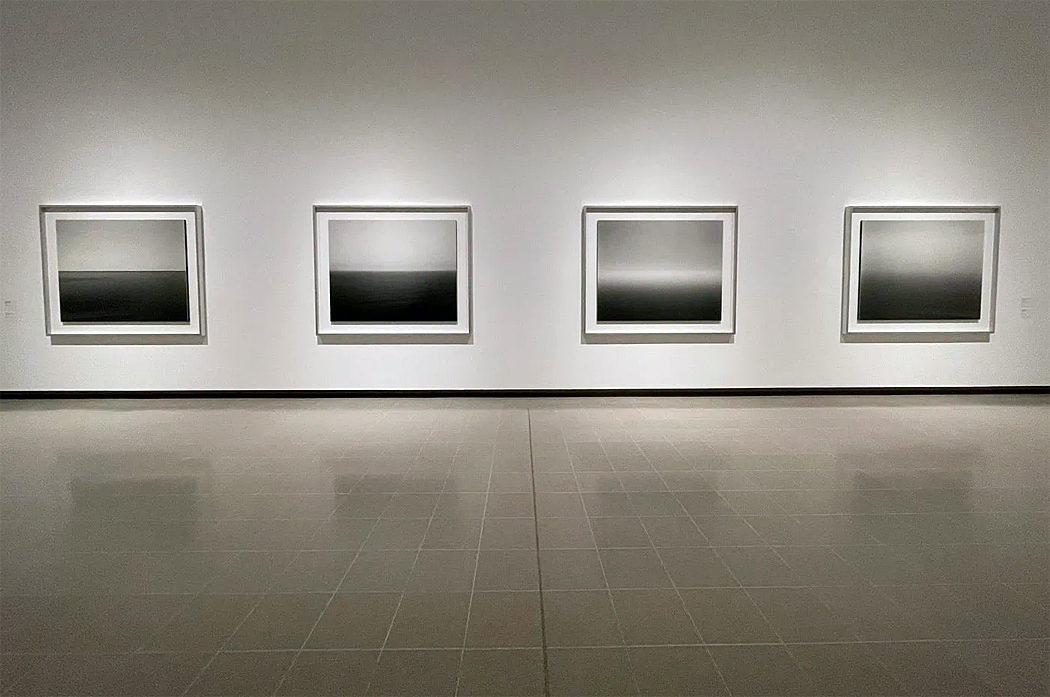
Sugimoto, who is exactly my age, is a Japanese architect and artist who created a project of making pictures of various seas, oceans and great lakes, at different times of year and different times of day and different weathers. But every one was the same size and with the top and bottom divided in half, sky and water. 
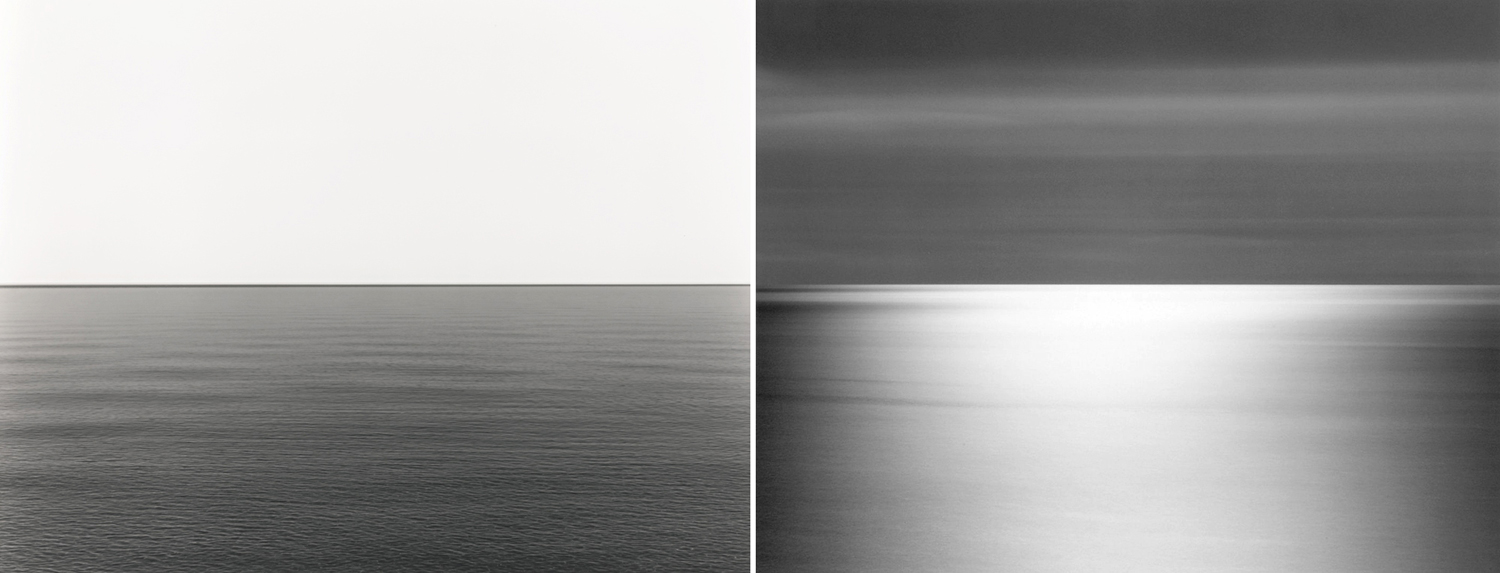
What bothered me, initially, was the featurelessness of the images. The seas were generally calm and the skies usually cloudless. 

At the time, in my class, I was trying to get ordinary students to make better pictures. Most of the students had no ambition to show in galleries, but rather had wanted to be able to make better family snapshots, or to improve as hobbyists and learn darkroom techniques. And so, I taught such normal things as making sure their images had a center of interest — a person or a dog, placed foreground against a background. If they wanted to make a landscape, to include some center of attention and not just make a dull grab-all of the scene. 

These were not “rules,” but ways to get beginners to improve. First steps, as it were.
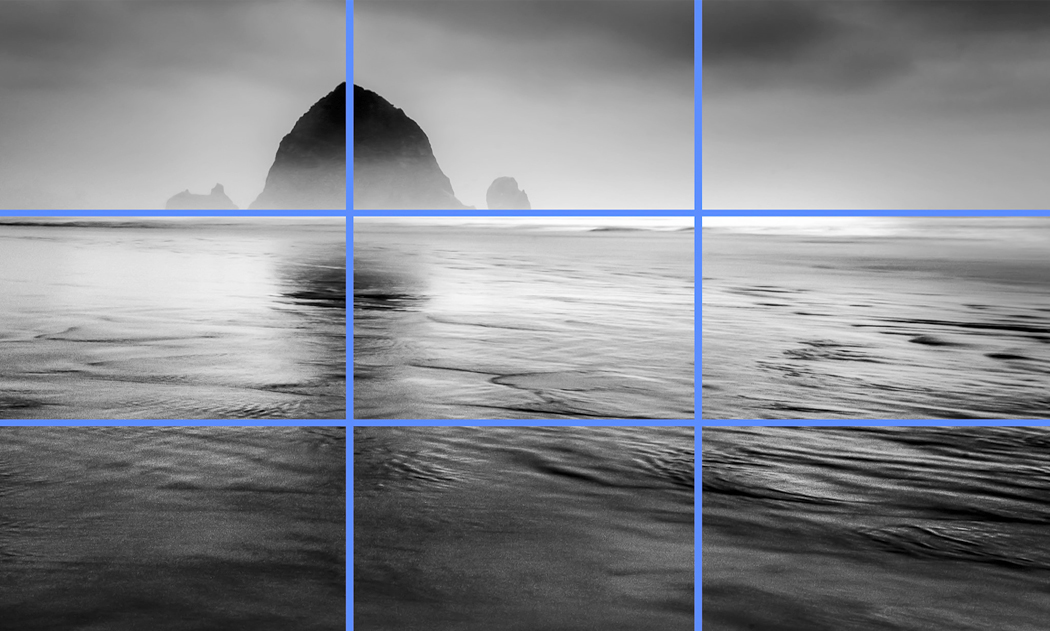
And I taught the ubiquitous “rule of thirds,” in which you help the design of a photograph by placing things a third of the way from the bottom or top, or a third of the way in from the sides of the picture. Or, also, to place your horizon line a third of the way from the bottom or two-thirds up from the bottom. And never, ever, put your horizon through the center of the image. The center is the most boring and static place in the frame. 

(Of course, no accomplished photographer pays any attention to these notions, but I was helping beginners up their games and making their pictures marginally more interesting.) 
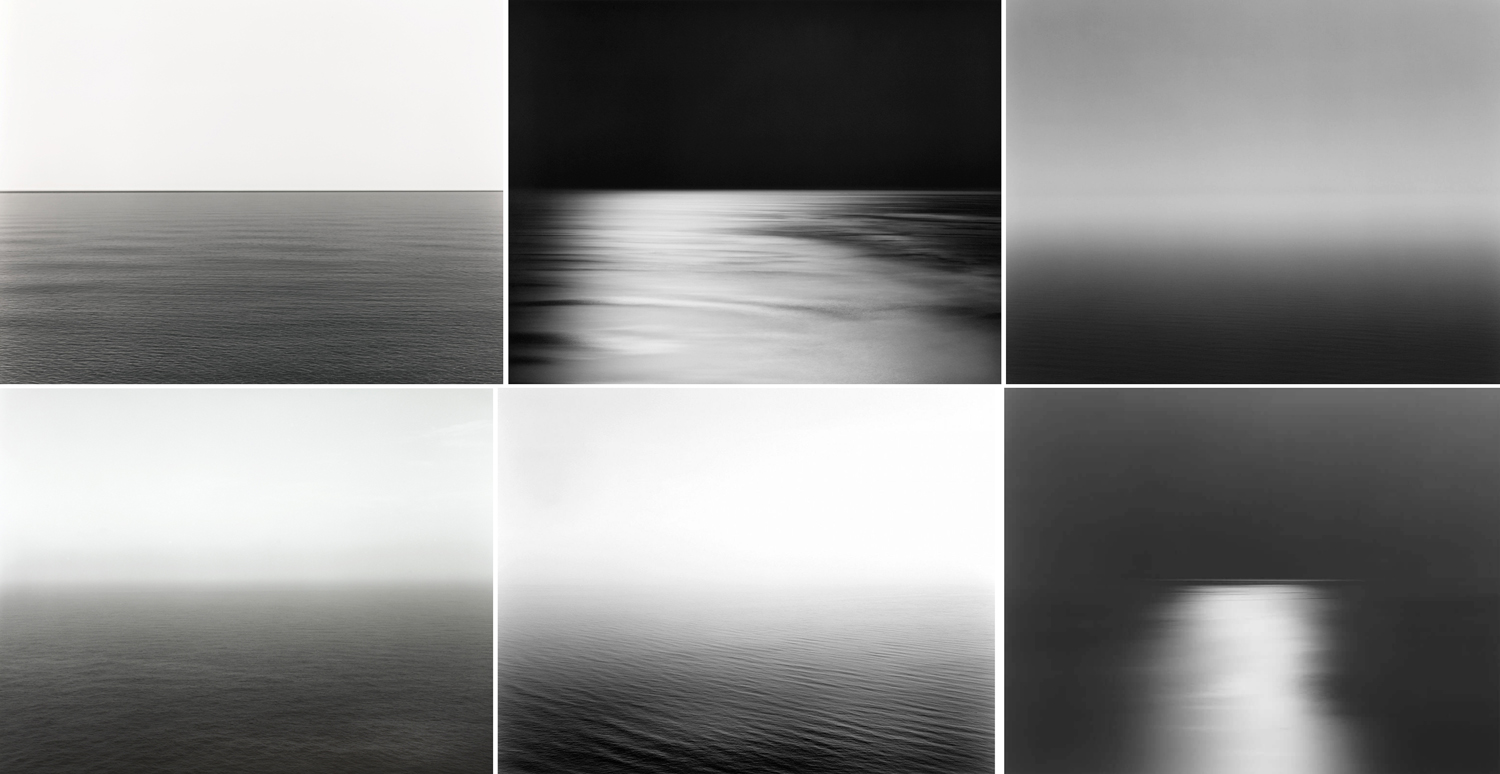
But here were Sugimoto’s seascapes, centered and otherwise featureless. It bothered me for a long time — enough so that decades later, I can remember that show, burned in my memory, when so many others that I went to in so many galleries, have faded into time and oblivion. 

I was aware that if the images stuck in my craw and couldn’t be dislodged, there must have been something to what Sugimoto was doing. I have thought long and hard on the subject. And I came to the conclusion that their very inexplicability, tied with the elemental themes of nature and the vast oceans, gave them their power. That, in fact, they were a projection of the sublime. 

The sublime is a subset of esthetics, a particular experience of the beautiful, set in distinction to what is attractive and pleasing, by showing what is immense, often frightening, and which gives the viewer a palpable sense of his own unimportance in a vast and radiant universe. 
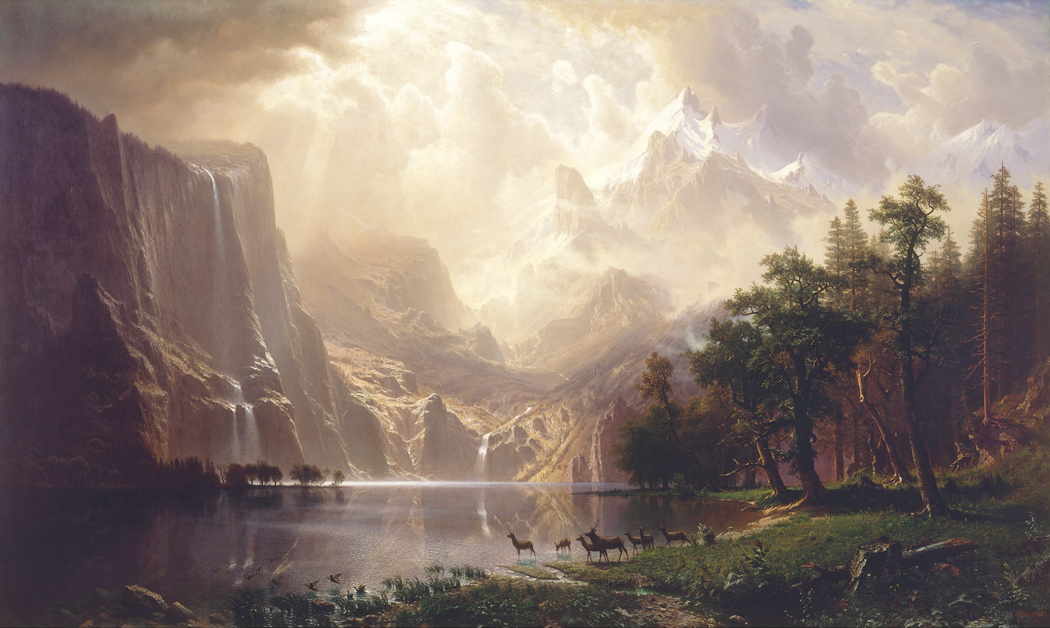
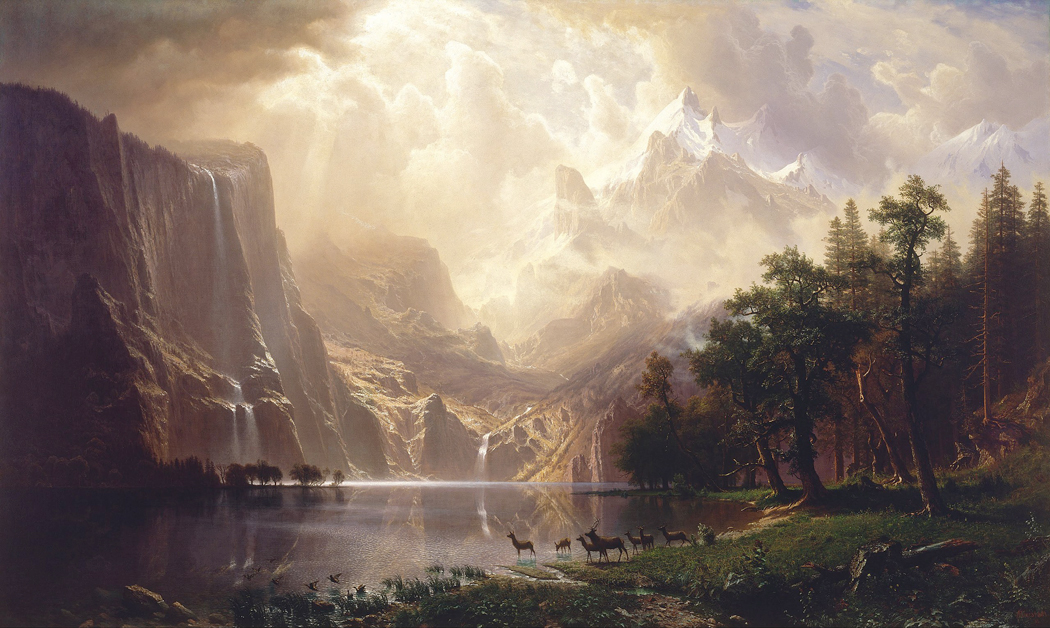
“Among the Sierra Nevadas” Albert Bierstadt 1868

It was a popular theme in 19th century art, with landscapes of the mountains of the American wilderness, or, in England, of vast biblical scenes, or or battles or storms. You have Jacob Mallord William Turner painting disasters at sea, John Martin showing the apocalypse in giant canvases, Gustave Dore engraving images of Dante’s hell and Satan’s flight through chaos.
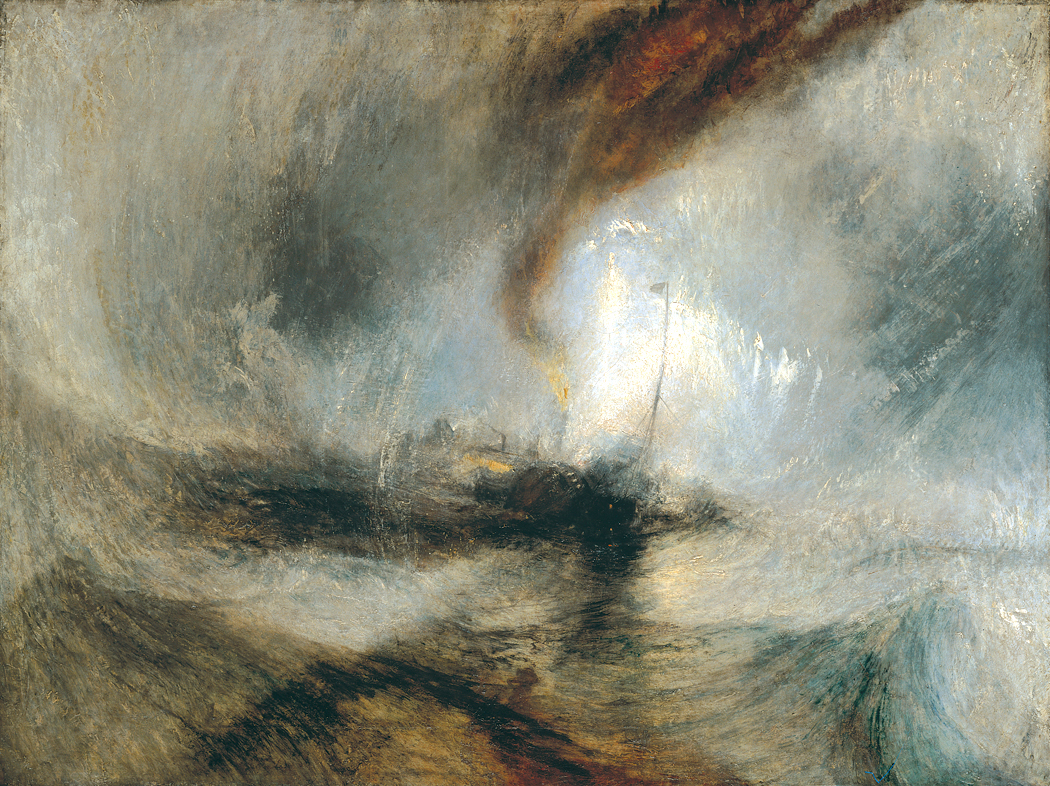
“Snow Storm at Sea” JMW Turner 1842

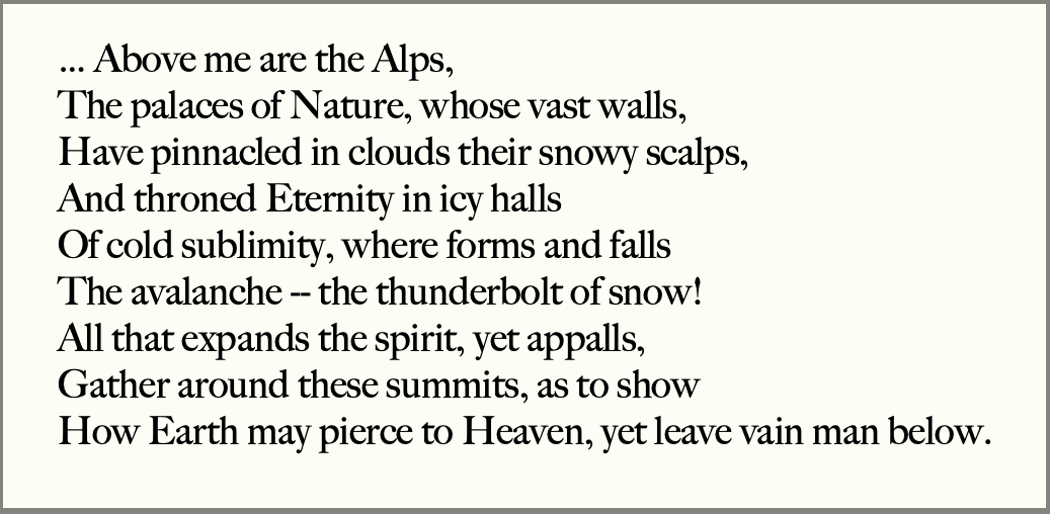
You have poets describing limitless scenes of the Alps or the Arctic. Mary Shelley’s Frankenstein ends in such a scene, with a ship stranded in the Arctic ice and the monster choosing white oblivion over life. The ship’s captain writes in his log: “We are still surrounded by mountains of ice, still in imminent danger of being crushed in their conflict. The cold is excessive, and many of my unfortunate comrades have already found a grave amidst this scene of desolation.”

Nature could be pretty. It could be daffodils. But it could be overpowering, desolate, dangerous. As in Percy Shelley’s Mont Blanc: “In the wild woods, among the mountains lone,/ Where waterfalls around it leap for ever,/ Where woods and winds contend, and a vast river/ Over its rocks ceaselessly bursts and raves.”
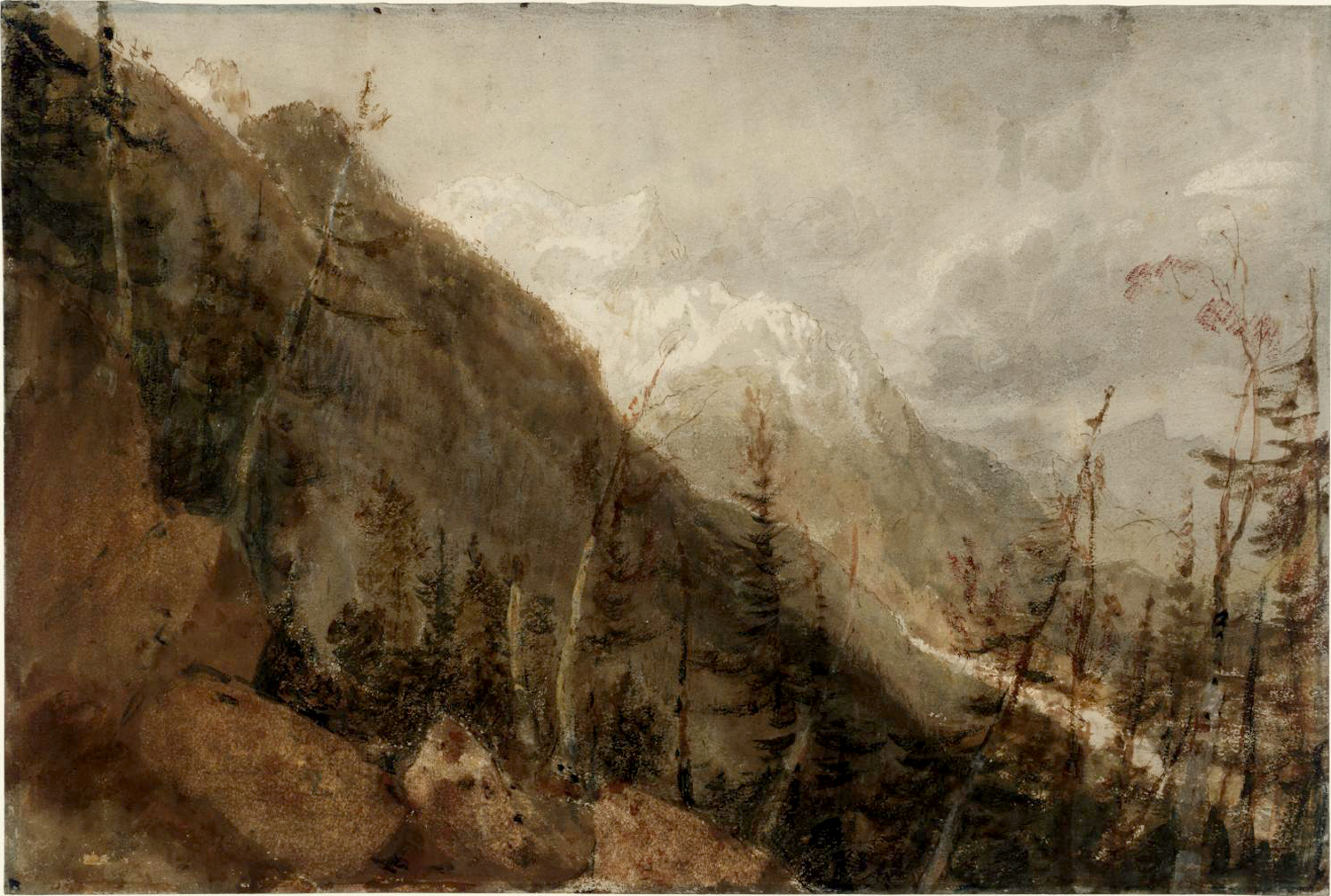
“Chamonix: Mont Blanc and the Arve Valley from the Path to the Montenvers” JMW Turner 1802

Hardly a better example could be found than Sam Coleridge’s Kublai Khan: “But oh! that deep romantic chasm which slanted/ Down the green hill athwart a cedarn cover!/ A savage place! as holy and enchanted/ As e’er beneath a waning moon was haunted/ By woman wailing for her demon-lover!”

In Byron’s Childe Harold’s Pilgrimage: “Roll on, thou deep and dark blue Ocean — roll!”

It’s all over the place in English Romantic poetry — “Tyger Tyger, burning bright,/ In the forests of the night” or later, in the works of Americans such as Walt Whitman (“Out of the cradle endlessly rocking”) or Emily Dickenson. 

British poet Samuel Taylor Coleridge describes the sublime in his 1818 lecture on “European Literature” by recalling: “My whole being expands into the infinite; earth and air, nature and art, all swell up into eternity, and the only sensible expression left is, ‘that I am nothing!’ which concludes that his ultimate realization of the sublime was of his own human insignificance.” 
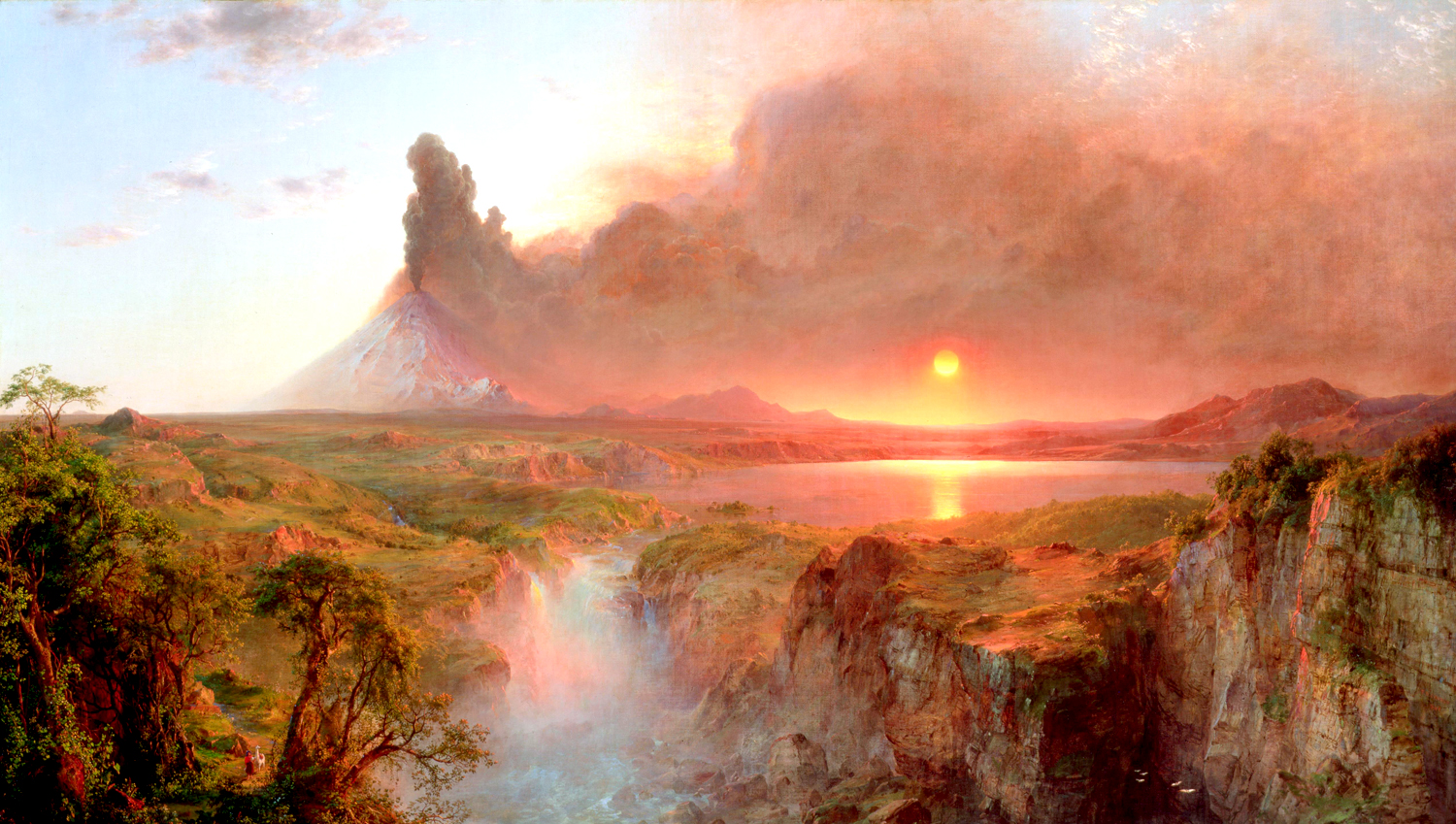
“Cotopaxi” Frederic Edwin Church 1862

Giving in to the infinite — or the emotional experience of it — can hit you whenever you are open to it. Not necessarily seeking it, but nevertheless open to it. Most often, we spend our lives closed, trying to make sense of the everyday things that take up most of our time. But there are moments when it all breaks in. These moments tend to stick in our psyches, to be brought back in memory to refresh our lives. 

In music, the sublime is found in Haydn’s depiction of Chaos at the beginning of his oratorio, The Creation. Or in the ecstatic chorus of Beethoven’s Ninth Symphony, the trumpets of apocalypse in Berlioz’s Requiem or the vastness of Mahler’s Symphony of a Thousand.
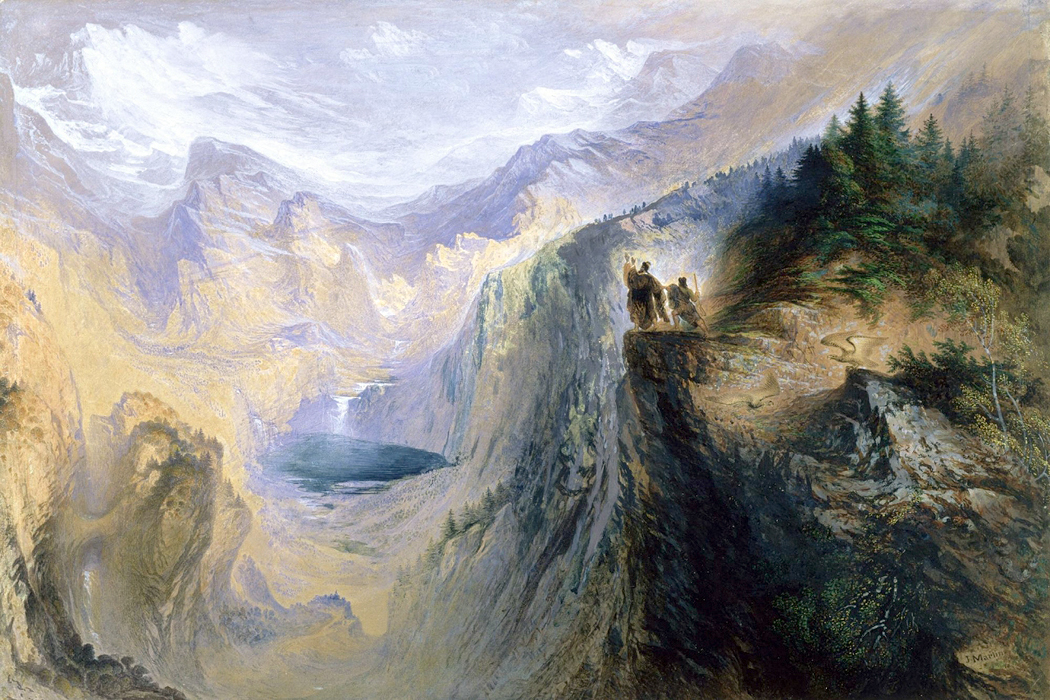
“Manfred on the Jungfrau” John Martin 1837

The problem with the Romantic vision of the sublime is that it can too easily devolve into kitsch. The sense of cosmic overload shrinks into a kind of religious sentimentality and you wind up with Charlton Heston and Cecil B. DeMille. Where you draw the line, personally, depends very much on your willingness to accept the underlying metaphor of the vastness and impenetrability of the universe. 

Any theme, including the sublime, can peter out in too-familiar tropes and cliches. And so, in the 20th century, artists and poets have needed to find new ways to explore the idea, without the hurling boulders and cataclysmic storms of the 19th century. The old ideas still persist, of course, in such things as the photographs of Ansel Adams. It came to a banal end in 1968 when Adams let his photos grace the cans of Hills Bros. coffee. 
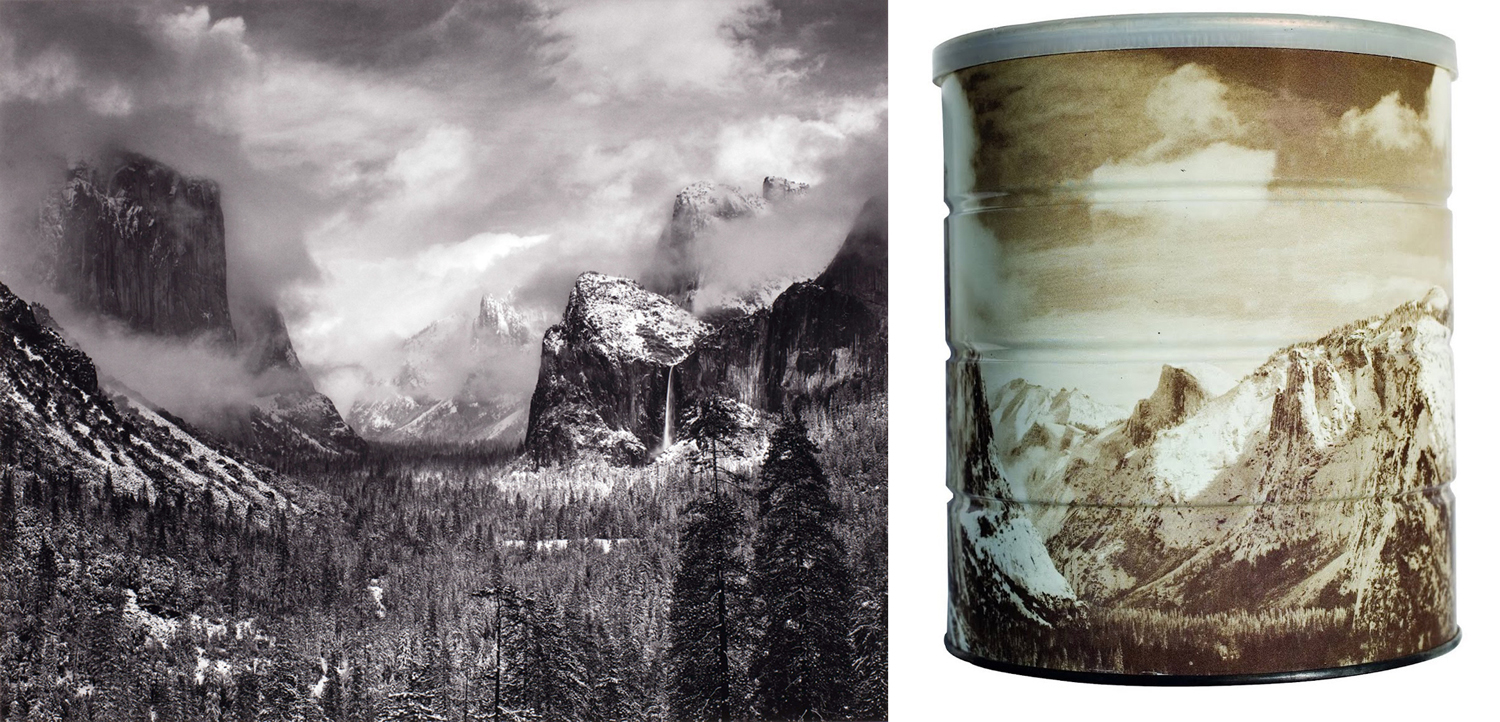
But, for the most part, the sublime has quieted down for the past hundred years or so, with priority given to social and political themes, from Brecht to Basquiat. We have a suspicion of grandiosity. Two world wars made us modest. 

Nevertheless, that cosmic power is still out there, seducing and threatening us. The night sky, the city-flattening hurricane, the ever-retreating horizon, the glimpse over the edge of the Grand Canyon precipice. And, always, our awareness of the inevitable extinction of our personal consciousness. 
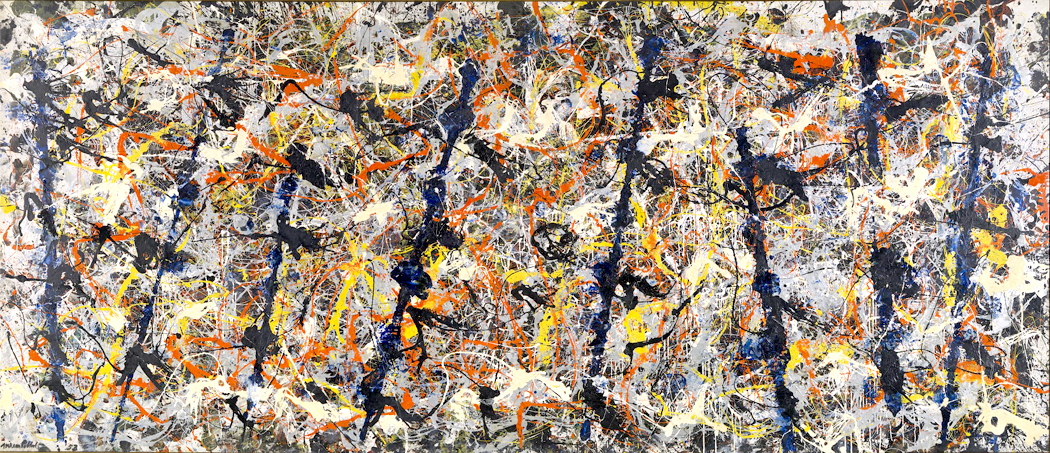
“Blue Poles” Jackson Pollock 1952

And some artists attempted to address this, but without the baggage of 19th century Romanticism. People like Barnett Newman with his huge blank colors, Jackson Pollock with his impenetrable scribbles, and Mark Rothko with his inscrutable floating squares. 

In fact, it was Rothko that first unlocked the Sugimoto seascapes for me. 

Rothko was another artist whose work initially I didn’t understand. Having only seen reproductions in books, I thought of his paintings as simply boxes of pleasing colors splashed on the canvas. 
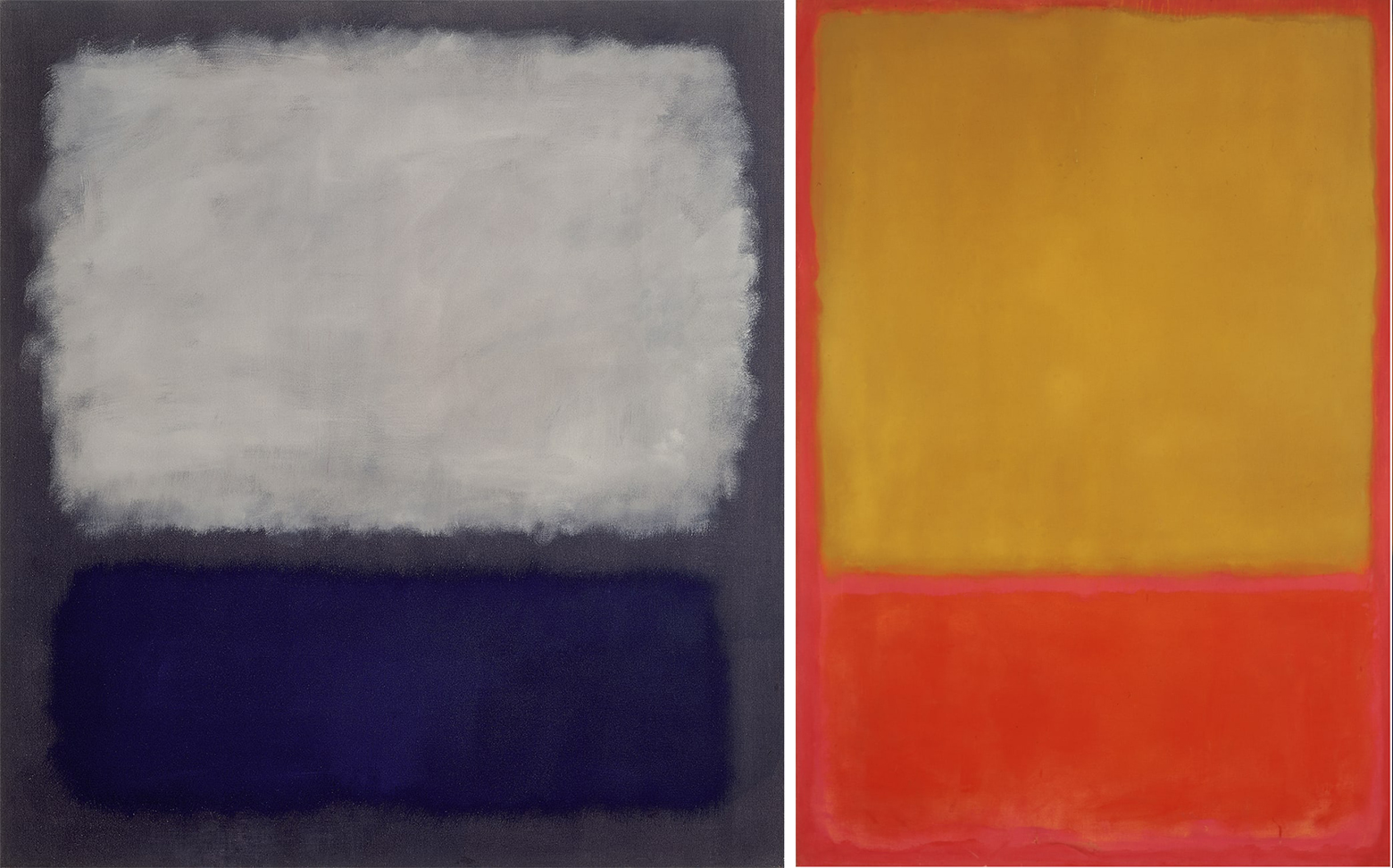
“Blue and Gray” 1962” and “Ochre and Red on Red” 1954 Mark Rothko

All that changed when I got to see the actual work, hanging on museum walls, and I realized those colors actually floated — visually — above the canvas. The colors of ink in a book illustration couldn’t do that the way actual pigment on canvas did. The difference between seeing a picture of an airplane and the actual flying at 30,000 feet. 

And so, it hit me, Rothko’s quiet illuminations were the 20th century version of the sublime. I couldn’t explain the emotions they roused in me, but they were the sense of seeing the primordial meanings of life, something no words could convey. 
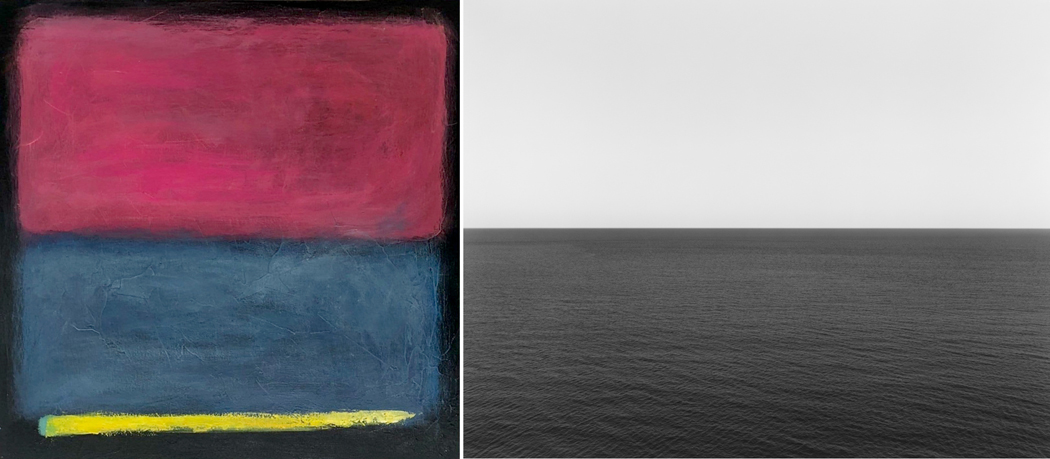
It was this same thing that nagged at me in Sugimoto’s photographs. The sky and sea were yin and yang, something primeval and immutable. 

“When you look up at outer space there’s the Moon and the Stars,” Sugimoto said. “But on the surface of the Earth, the farthest place people can see is an ocean horizon.”

Sugimoto also said that seascapes are pivotal in that they are a  scenery that we, in our modern world, still share with the ancients. Cities all look modern; even rural landscapes are crossed by interstates and power lines. But the ocean looks today the same as it did for Homer. 

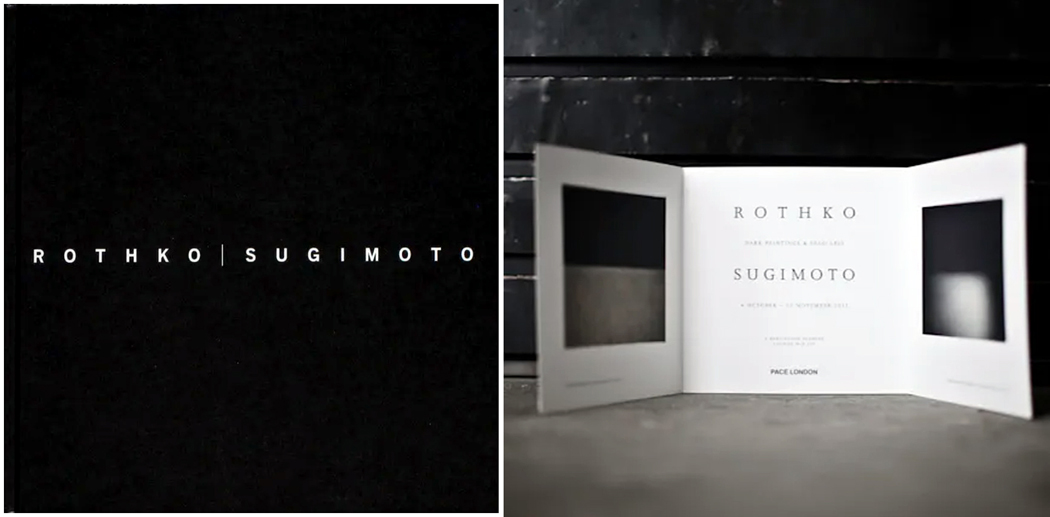
(Only recently, I discovered that the Pace Gallery in London had mounted a joint exhibit of Rothko and Sugimoto in 2012, and had even published a book about it.)
When I lived in Virginia, all those decades ago, it was on the ocean and I would almost daily have the opportunity to look out over the waves and into the horizon. I saw the seascape in sun and under the wind-blown scud of a nor’easter. It changed every day, even hourly. There were times when the sky color and sea color were so matched that the actual horizon line vanished and what I saw was a great blankness. A void. An infinity of sameness without edge. That blankness was a key to the modern sublime. 
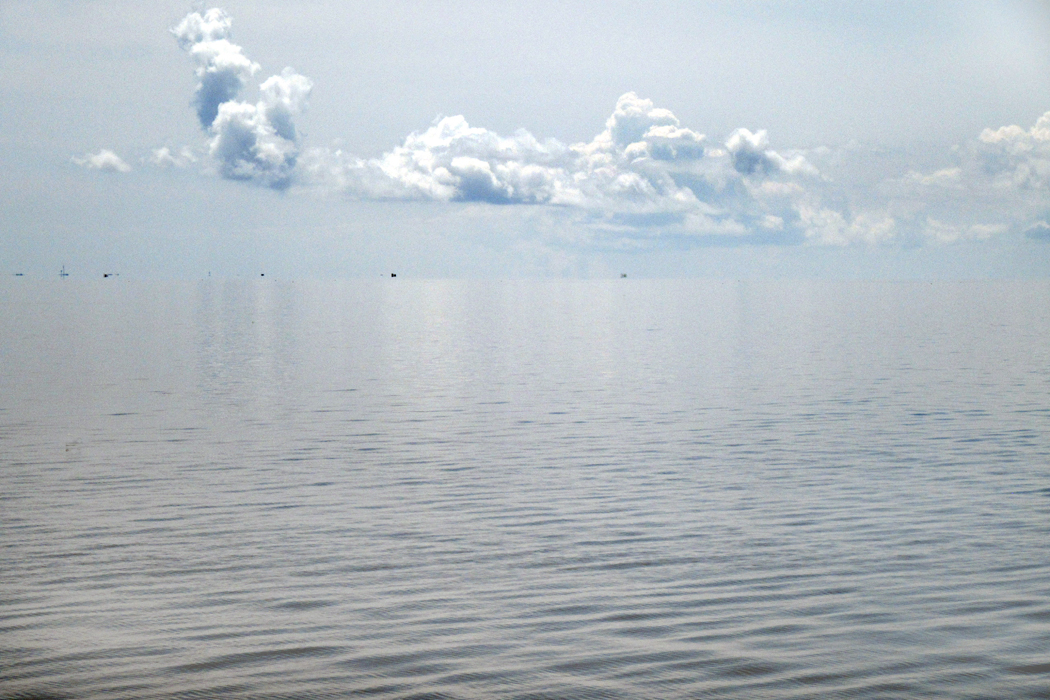
Currituck Sound, N.C.

Usually what I saw was just “the beach,” with its swimsuits and sunscreen. The everyday tends to crowd out — needs to crowd out — the eternal. After all, we have lives to live, jobs to get to, families to care for, and we cannot function if our adrenaline is always at the boil. But there were also times that I could look out at the water and air and realize that I was seeing the fundamental sense of existence. The quotidian keeps us functioning in society, but the sublime absorbs us into the universe. 

There is such a thing as an intense blankness. It is both frightening and beautiful. 
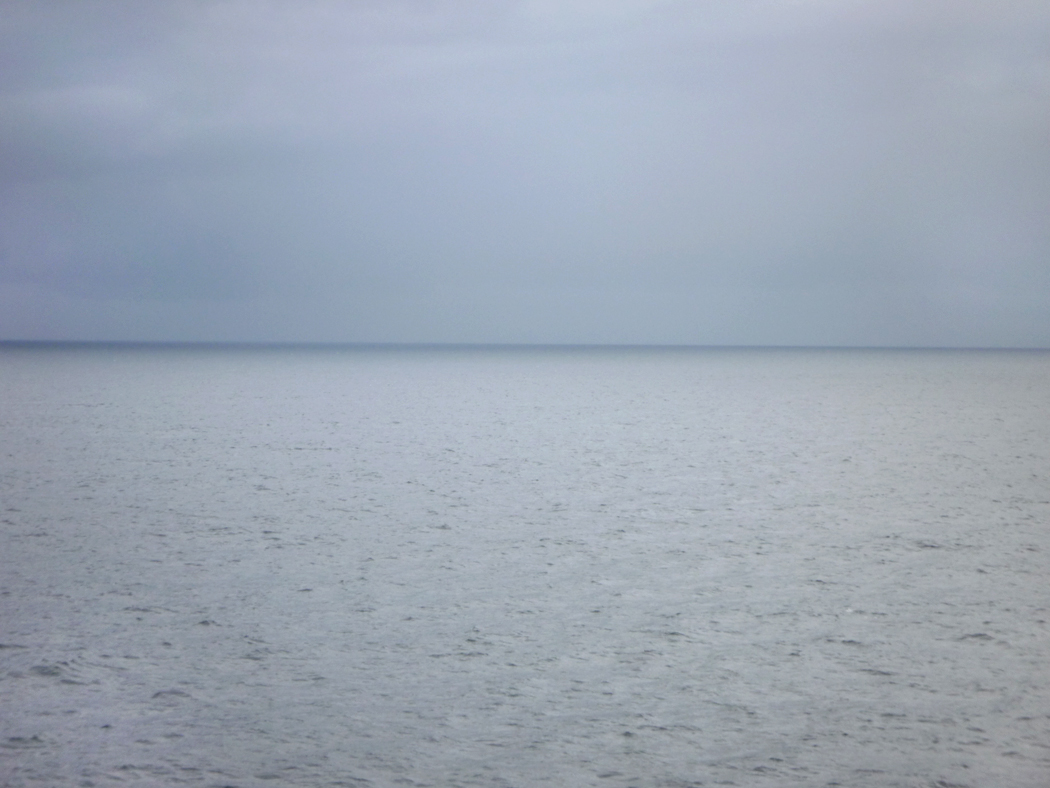
Alaska

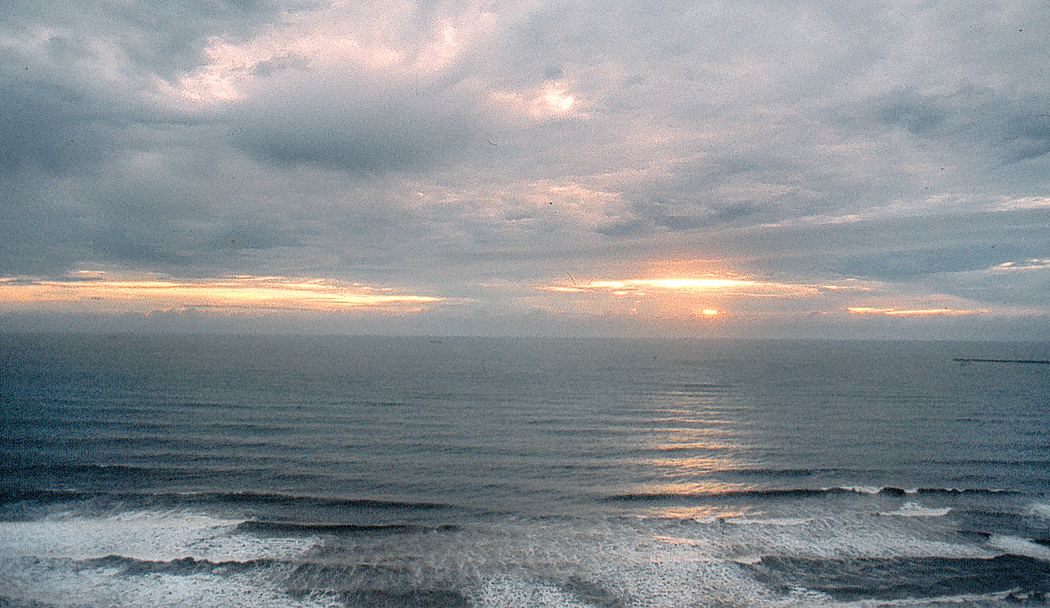
And without consciously realizing it, those Sugimoto photos had buried their way into my psyche, and without consciously imitating his work, I had begun making my own photographs of that phantom horizon. I did so all around the world, like this one of the Indian Ocean from South Africa:
Or these from Alaska:
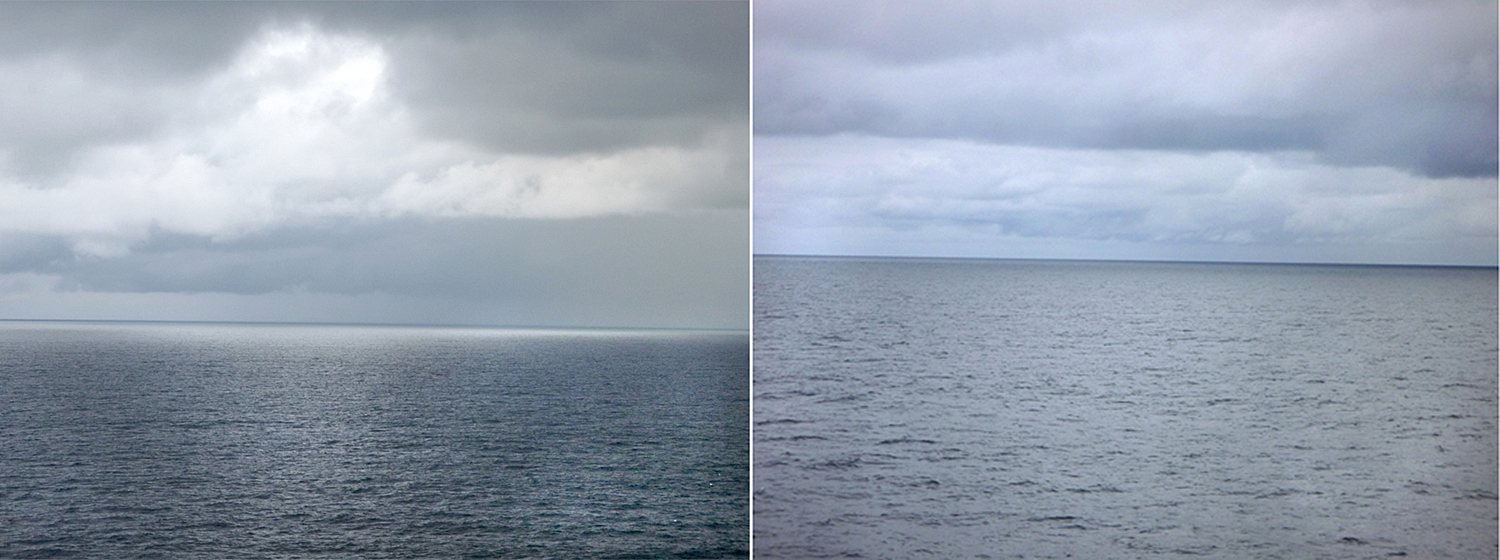
Or this coup de soleil on Puget Sound: 
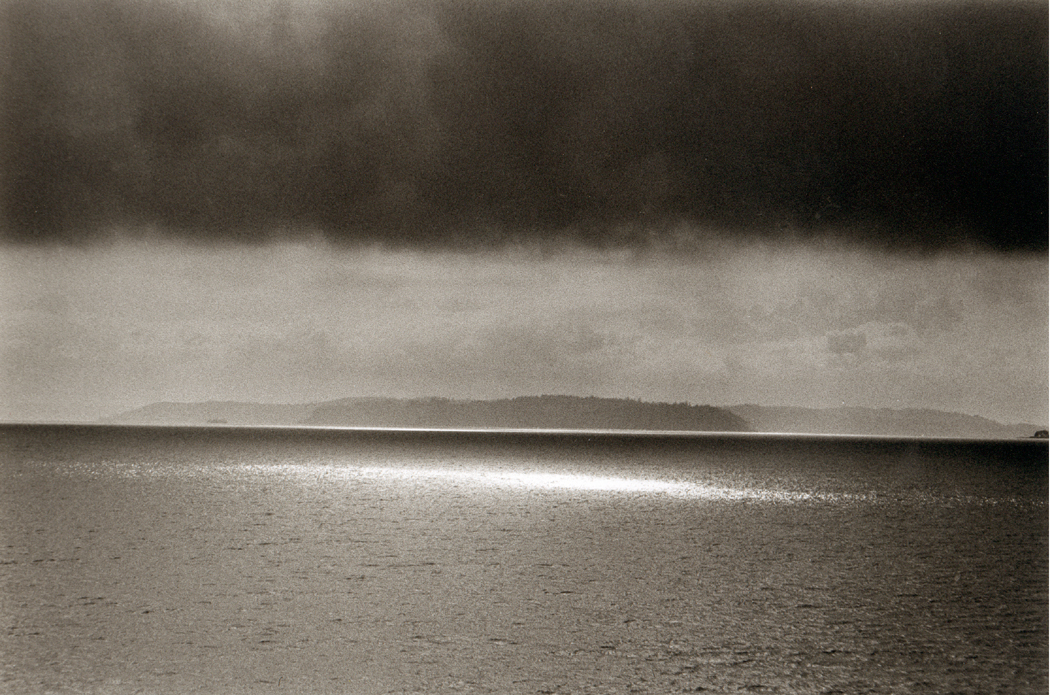
Although I was not aware, when making these images, that Sugimoto was buried in them, I was aware that they were informed by the sublime, and specifically, from a 20th- and now 21st-century version of the concept. 
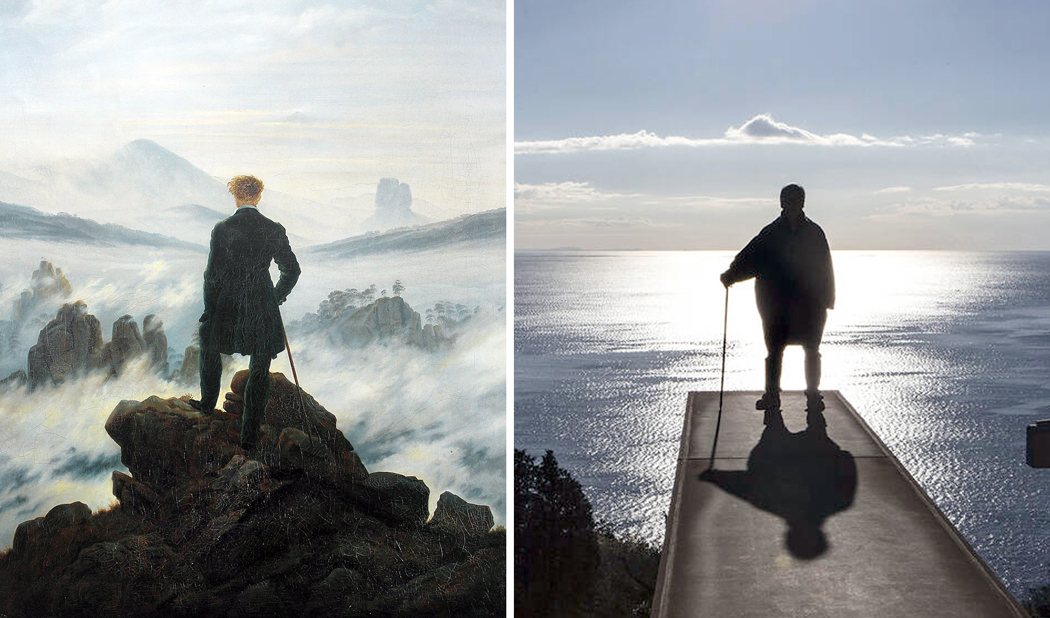
Finally, if I needed any confirmation that Sugimoto was striving for the sublime, I found it in this photo of the artist, posed to mimic the painter who was perhaps the poster-boy for 19th-century Romantic sublime, Caspar David Friedrich. 
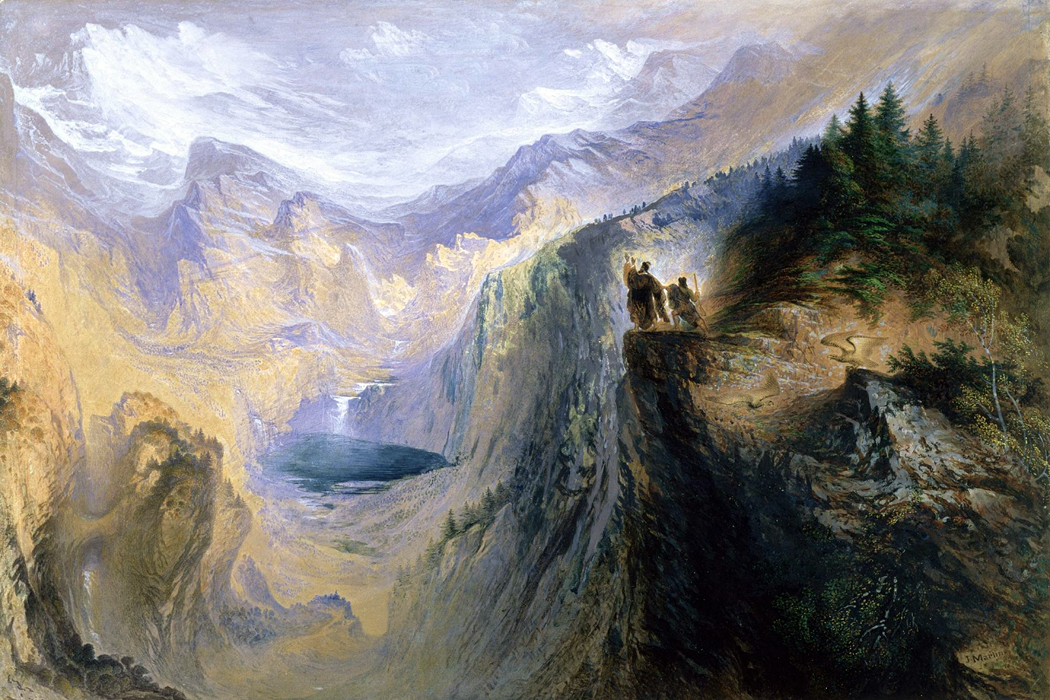
“Manfred on the Jungfrau” John Martin, 1837

From the last half of the Eighteenth Century through the last quarter of the Nineteenth, an idea permeated popular and intellectual culture and showed itself in literature, art and music, although no one could quite agree on its definition. Like wit in the seventeenth and early eighteenth centuries, which also defied simple definition, the sublime was something no one couldn’t quite pin down, but like Justice Potter Stewart said, you knew it when you saw it. 

The Sublime features representations of vast spaces, horrifying disasters and universal chaos. Anything dark, scary, awe inspiring or supernatural. 

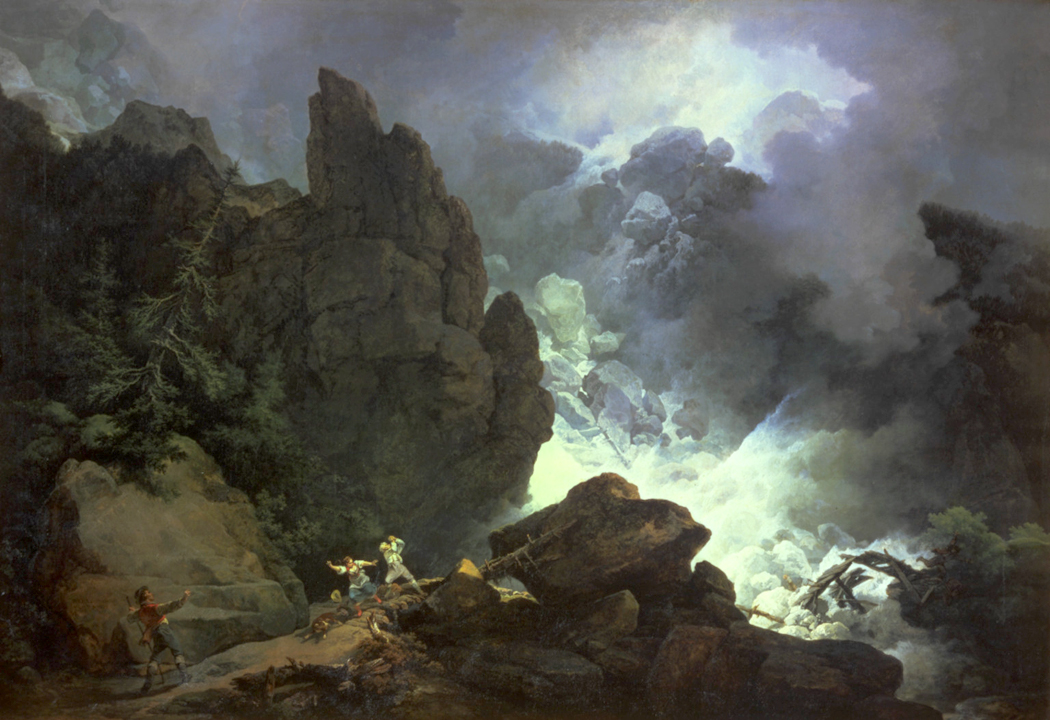
“Alpine Avalanche,” Philip James de Loutherbourg, 1803

Of course, the idea isn’t limited to the Eighteenth and Nineteenth centuries. It has been around as long as there has been art and literature. There is The Sublime in the epic of Gilgamesh and it is all over the Bible. 

There had always been a subspecies of The Sublime in art. It is in Shakespeare, in Titian, in Rubens. It runs throughout John Milton’s Paradise Lost, especially in those parts describing Satan and his acts. 

But The Sublime steps into the spotlight with the advent of Romanticism. It is in the poetry of Byron, the novels of Victor Hugo, the paintings of Caspar David Friedrich. It is behind the fad for Gothic novels and the nature poetry of Wordsworth and Coleridge. 

The first clear enunciation of The Sublime in literature was set down in the First Century by an anonymous author, usually called Longinus. His treatise, usually called On the Sublime, is primarily a guidebook to rhetoric, with all the usual tropes, but he also discusses how great writing — as opposed to the merely good — overwhelms us, and it is great subjects that lend themselves to great writing. 

In the climactic 35th chapter, he writes: “What was it they saw, those godlike writers who in their work aim at what is greatest and overlook precision in every detail? … (W)e are by nature led to marvel, not, indeed, at little streams, clear and useful though they be, but at the Nile, the Danube, or the Rhine, and still more at the Ocean.  … nor do we consider out little hearthfire more worthy of admiration than the craters of Etna whose eruptions throw up rocks and boulders or at times pour forth rivers of lava from that single fire within the earth.

“Vesuvius Erupting,” Pierre-Jacques Volaire, 1877

“We might say of all such matters that man can easily understand what is useful or necessary, but he admires what passes his understanding.”

What happened between the century of Voltaire and that of Shelley is the cultural shift from Neo-classicism to Romanticism. It is a shift from a concern for society and relations of humans to humans to a different frame of reference — to the relation of the individual to the cosmos. 

Relations between people are between roughly equal, similar size entities; relations with the cosmos pit the infinitesimal human being against the infinite. There is no satisfactory reaction but awe, terror, and admiration: That is The Sublime. 


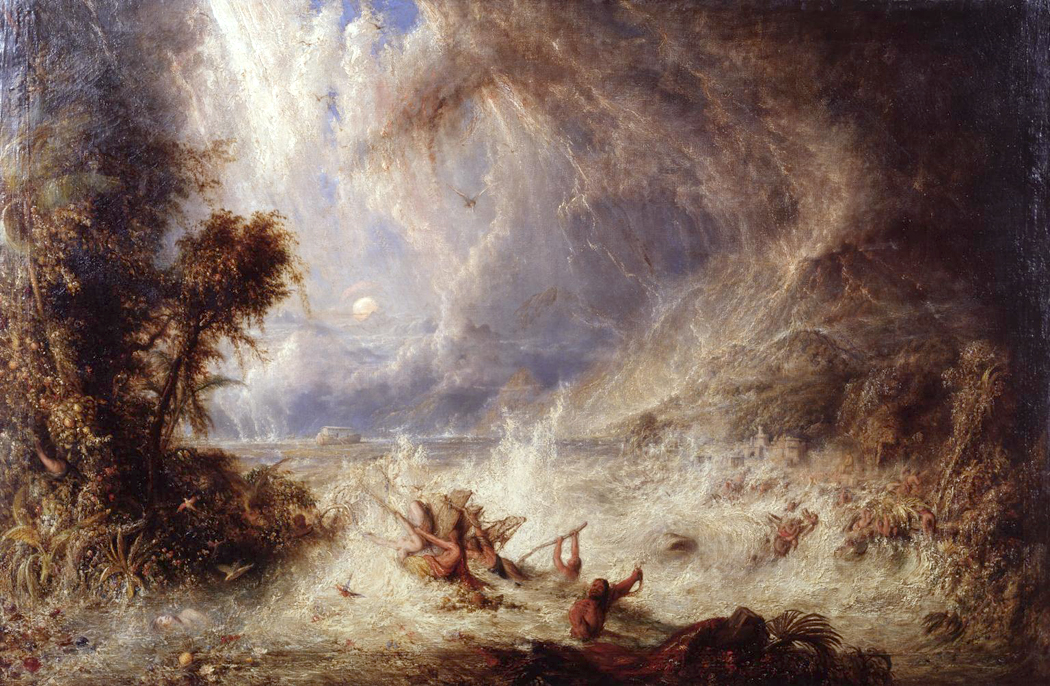
“The Deluge” William Westall, 1848

Coleridge describes a Sublime experience in his 1818 lecture on “European Literature” by recalling: “My whole being expands into the infinite; earth and air, nature and art, all swell up into eternity, and the only sensible expression left is, ‘that I am nothing!’ which concludes that his ultimate realization of The Sublime was of his own human insignificance.” 

In 1757, a young Edmund Burke wrote an influential treatise, A Philosophical Enquiry into the Origin of our Ideas of the Sublime and Beautiful. He wrote: “Whatever is fitted in any sort to excite the ideas of pain, and danger, that is to say, whatever is in any sort terrible, or is conversant about terrible objects, or operates in a manner analogous to terror, is a source of the sublime; that is, it is productive of the strongest emotion which the mind is capable of feeling.”

He sorted The Sublime into seven constituents: darkness; obscurity; deprivation; vastness; magnificence; loudness; and suddenness. When used in art or literature, The Sublime reminds us of things we find frightening in the world, but by being framed in art, lets us contemplate it in safety, and thus we find pleasure in it. 

“Chamounix, Mont Blanc and the Arve Valley” JMW Turner 1803

The next generation sought out The Sublime in reality as well as in literature. When Mary and Percy Shelley visited the valley of the Arve River in the Alps, they noted in their History of a Six Weeks Tour through a Part of France, Switzerland, Germany, and Holland: “Mont Blanc was before us, but it was covered with cloud; its base, furrowed with dreadful gaps, was seen above. Pinnacles of snow intolerably bright, part of the chain connected with Mont Blanc, shone through the clouds at intervals on high. I never knew — I never imagined what mountains were before. The immensity of these aerial summits excited, when they suddenly burst upon the sight, a sentiment of ecstatic wonder, not unallied to madness.”

Shelley transformed this into his poem, Mont Blanc: Lines Written in the Vale of Chamouni:

In her 1794 gothic novel The Mysteries of Udolpho, Ann Radcliffe has her heroine face the Alps: 

“They quitted their carriages and began to ascend the Alps. And here such scenes of Sublimity opened upon them as no colors of language must dare to paint … Emily seemed to have arisen in another world, and to have left every trifling thought, every trifling sentiment, in that below: those only of grandeur and sublimity now dilated her mind and elevated the affections of her heart.”

“Hannibal Crossing the Alps in Snowstorm” JMW Turner 1812

And Byron is nothing without The Sublime. He takes his doomed hero to the Jungfrau in Manfred and used it in Childe Harold’s Pilgrimage over and over, as in the lines, “Roll on thou deep and dark blue Ocean — roll!”

In Canto 3 of Childe Harold, he takes his hero to the Alps: 

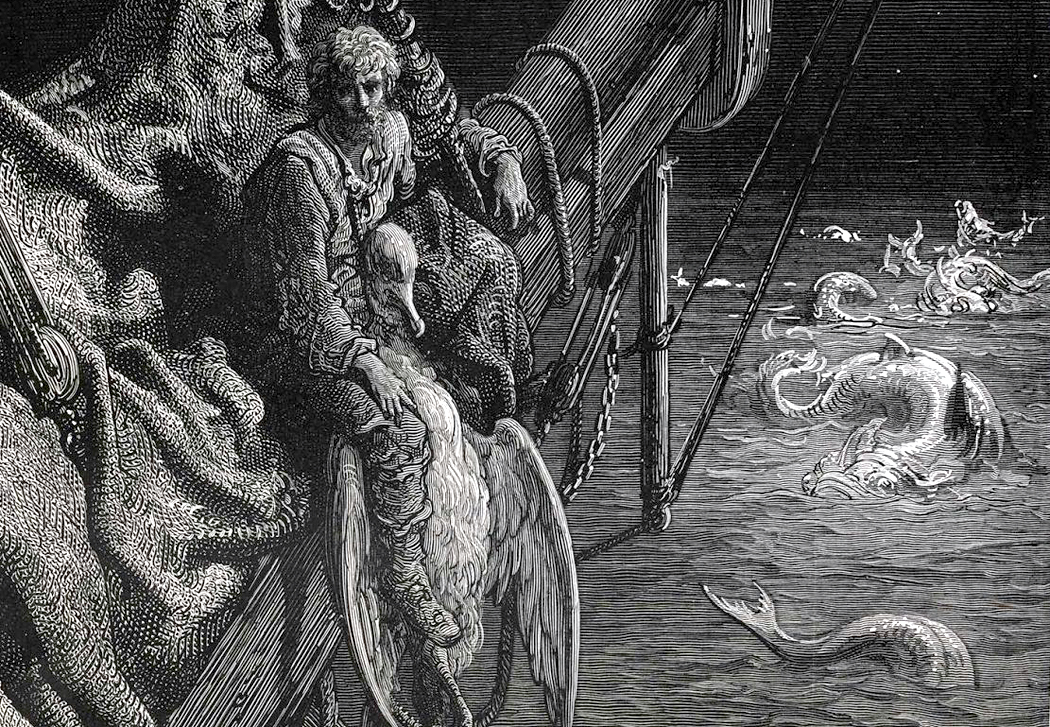
Coleridge’s Rime of the Ancyent Marinere (1798) is all about The Sublime and its terror — and ultimately, its beauty. 

Its hero, aboard a death ship is surrounded by a sea of monsters: “The very deep did rot: O Christ!/ That ever this should be!/ Yea slimy things did crawl with legs/ Upon a slimy sea.” But our mariner has a transformation of heart:

 Certain artists and painters became transfixed by The Sublime. First comes Joseph Wright of Derby (he is always referred to this way, apparently to distinguish him from other Joseph Wrights, including an American artist of the same time, who designed the Liberty Hat penny). 

In many of the English Wright’s paintings, a bright light glows in the darkness. He painted multiple canvasses of the eruption of Mt. Vesuvius in the 1770s. 

“Vesuvius in Eruption, With a View of the Bay of Naples,” Joseph Wright of Derby, 1776

Although he didn’t have to travel that far. Many of his landscapes feature brooding moonlight scenes, or images of fire in the darkness, such as

“Cottage on Fire,” Joseph Wright of Derby 1786

This fascination with The Sublime is primarily a northern European thing. You find it in British art, in German art and Scandinavian art, but less so in Italian or Spanish (Goya excepted). 

Germany produced Caspar David Friedrich, who specialized in images of the contemplation of vast nature.

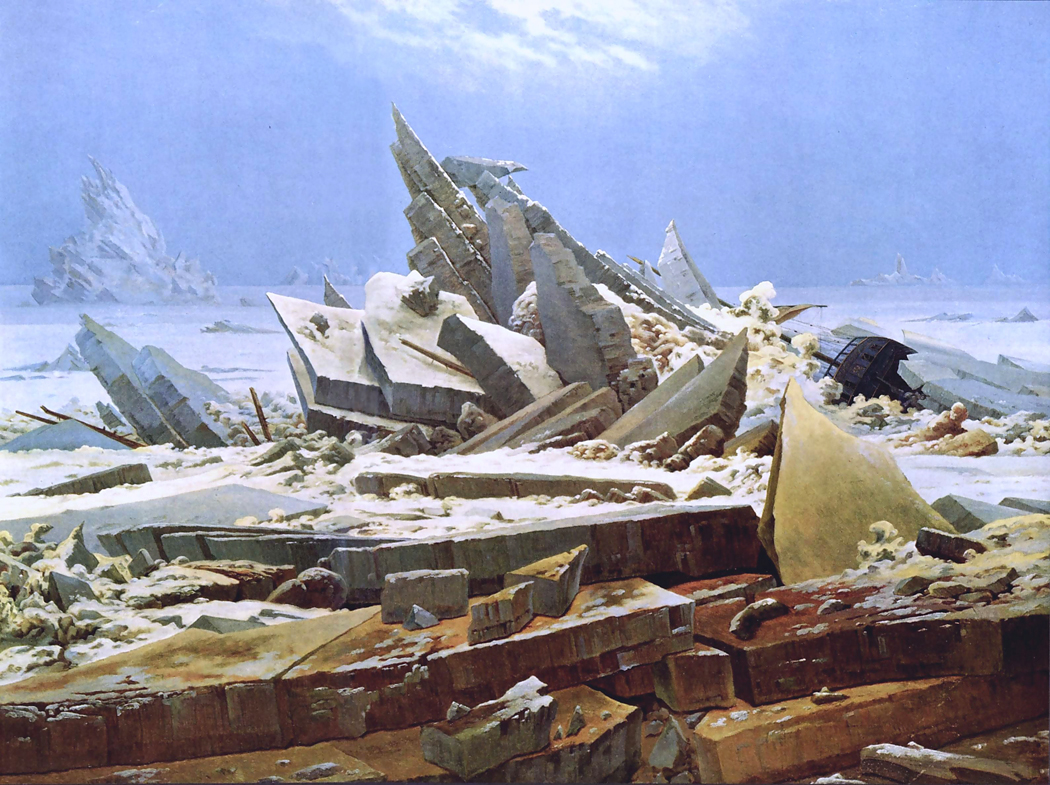
The arctic inspired a good deal of Sublime art, as in Friederich’s Sea of Ice, with its barely noticeable shipwreck.

“Das Eismeer” Caspar David Friedrich, 1823

The ice of the arctic is where Mary Shelley had her Frankenstein creature float away on an ice raft to his death.

“We are still surrounded by mountains of ice, still in imminent danger of being crushed in their conflict. The cold is excessive, and many of my unfortunate comrades have already found a grave amidst this scene of desolation.”

And the final words of the novel:

“He sprang from the cabin-window as he said this, upon the ice raft which lay close to the vessel. He was soon borne away by the waves and lost in darkness and distance.”

Later in the century, American painter Frederick Edwin Church painted a dozen or so studies of icebergs. 

“Floating Iceberg,” Frederick Edwin Church 1859

Church also painted volcanoes, such as Cotopaxi in Ecuador.

“Cotopaxi,” Frederick Edwin Church 1862

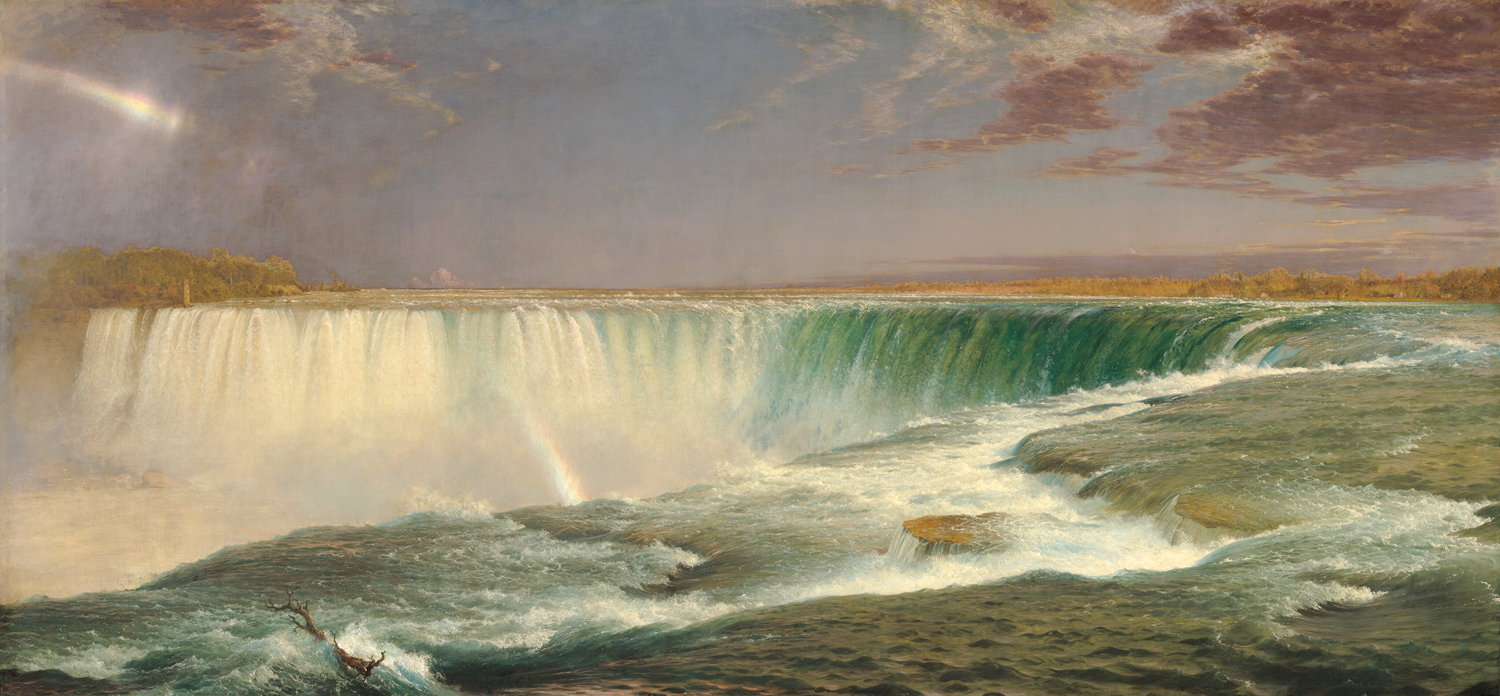
Church’s most famous painting, now at the National Gallery in Washington DC, is his Niagara, a nearly 8-foot across panorama of the falls. It was shown in New York in 1857, where visitors could pay 25 cents to view the painting in a darkened art gallery (for best effect). The painting went on a cross-Atlantic tour, shown the same way. 

“Niagara,” Frederick Edwin Church 1857

Its effect was stunning for the time. Even a century later, writer David Harrington could say “Niagara is the American’s mythical Deluge which washes away the memory of an Old World so that man may live at home in a New World. The painting is an icon of psychic natural purgation and rebirth. Poetically a New World emerges as the waters of a flood subside. The rainbow, sign of the ‘God of Nature’s’ covenant with man, transfixes the beholder. … Niagara is a revelation of the cosmos to each and every man.”

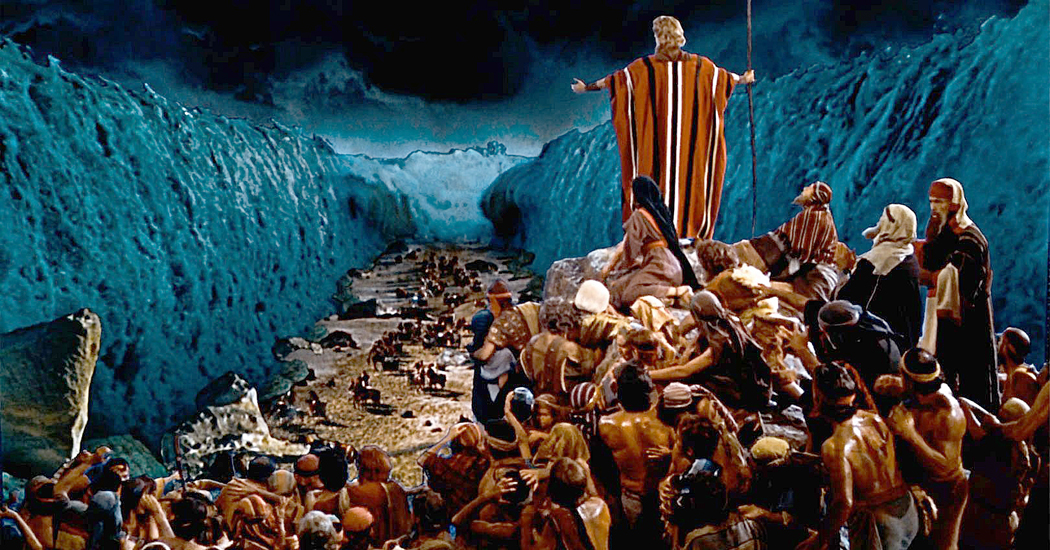
The biblical reference is apposite. Much of the imagery of The Sublime in the 19th Century comes from the Bible. Painters loved to depict certain scenes from the Old Testament: the Deluge; the Destruction of Sodom and Gomorrah; Balshazzar’s Feast; Samson destroying the temple of the Philistines; the Plagues of Egypt — anything that would have delighted Cecil B. Demille.

In such paintings, you can see the difference between earlier ages and the rise of The Sublime. In Renaissance and Baroque paintings, the action centers on the people involved. Landscape is mere backdrop. But in the century and a half I’m writing about, the people shrink to insignificance and the landscape takes over, full of rocky climes, lightning bolts, hurtling boulders, spewing volcanoes and roiling stormclouds. You can almost make a stop-action movie, like watching a flower unfold in a nature film, showing the people getting smaller and smaller and the landscape becoming ever more menacing. 


“Gordale Scar, Yorkshire,” James Ward 1812

It is clear that as you go later into the 19th Century, The Sublime verges all too often at the edge of kitsch. The sense of cosmic overload funnels into a kind of religious sentimentality. Where you draw the line, personally, depends very much on your willingness to accept the underlying metaphor of the vastness and impenetrability of the universe. 

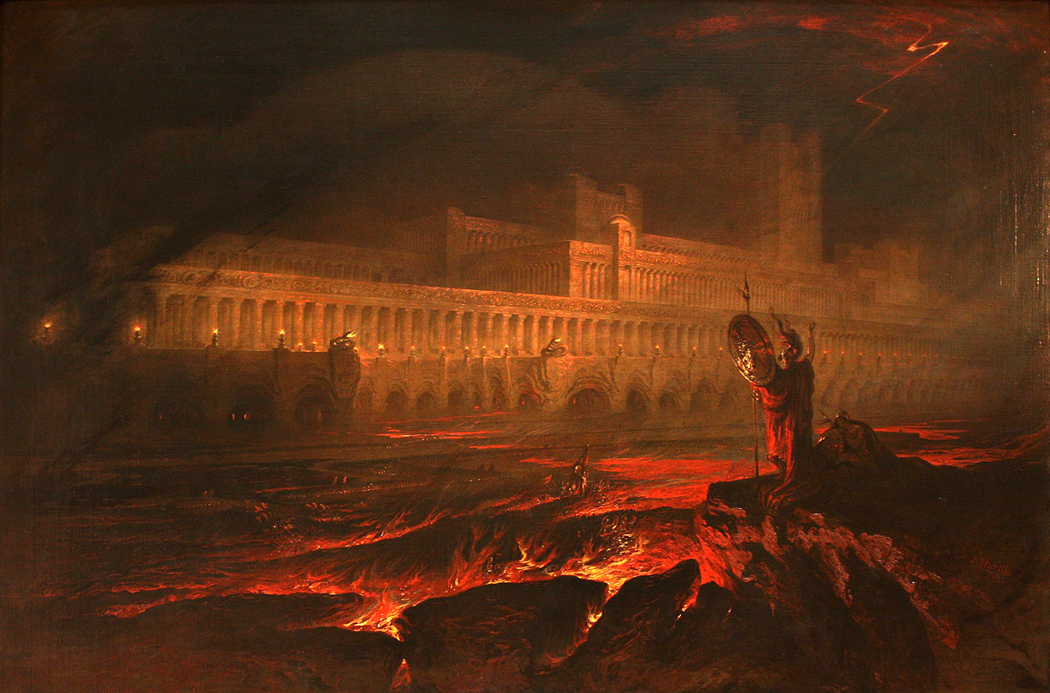
There are two British artists who straddle that line. John Martin and Joseph Mallord William Turner. Martin was very popular in the early years of the century, but is largely forgotten now. Turner was popular then and even more so today. Still, I have to admit a soft spot in my head for John Martin and his extravagance. 

“Pandemonium,” John Martin 1841

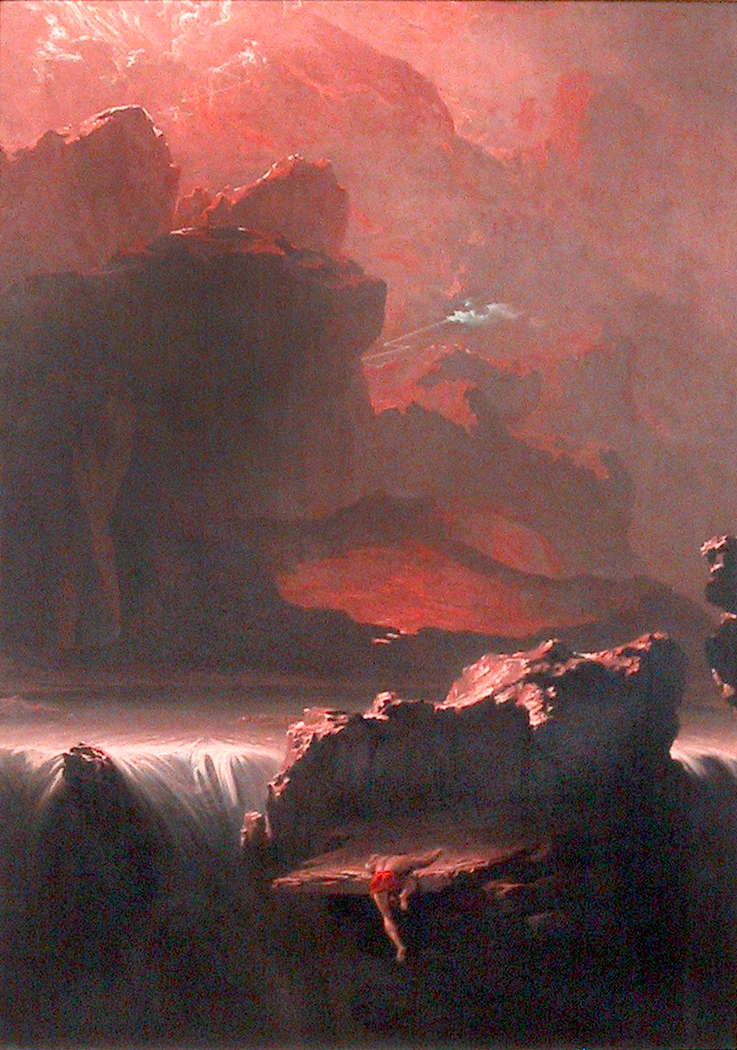
I first learned of him and his large painting (now in the St. Louis Art Museum) called Sadak in Search of the Waters of Oblivion. First painted in 1812, it exists in several forms, both in paint and as print. In it, the Persian prince, Sadak, must fulfill a quest for the legendary Waters of Oblivion, in order to save his kidnapped wife. It is based on one of the Tales of the Genii, by English author James Ridley and was a huge success when first exhibited. 

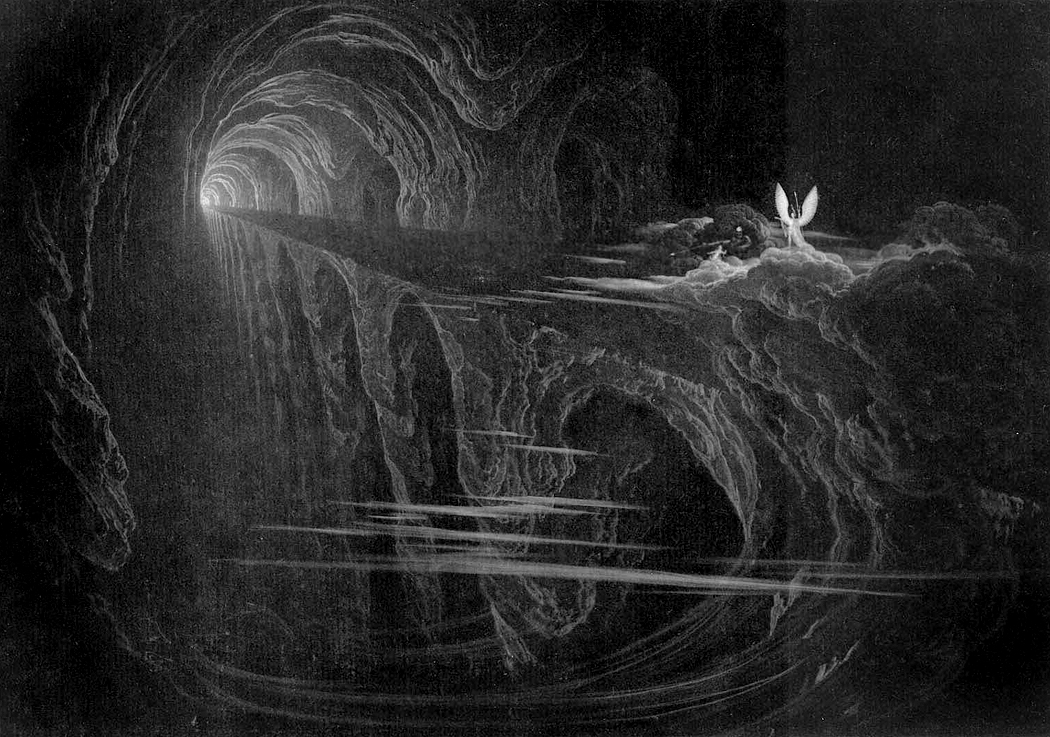
Martin turned to printmaking to make his work available to a wider audience and published, in 1824, an enormously popular series of illustrations to John Milton’s Paradise Lost. (These were, in part, the inspiration for the later Gustave Dore to make his own series for the epic poem). 

“The Bridge Over Chaos” from “Paradise Lost,” John Martin 1826

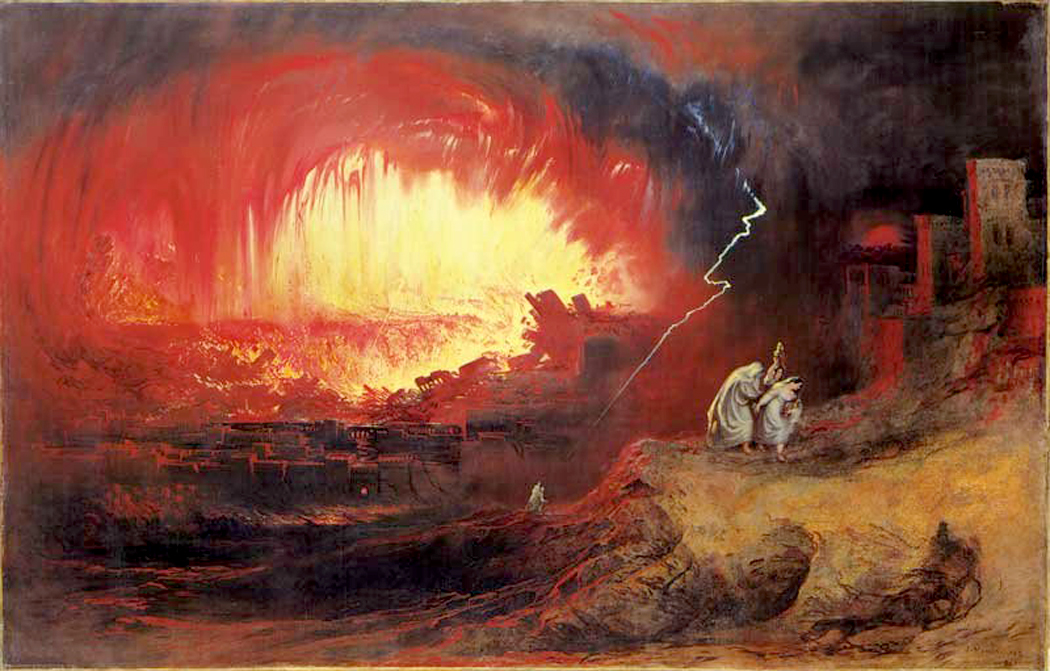
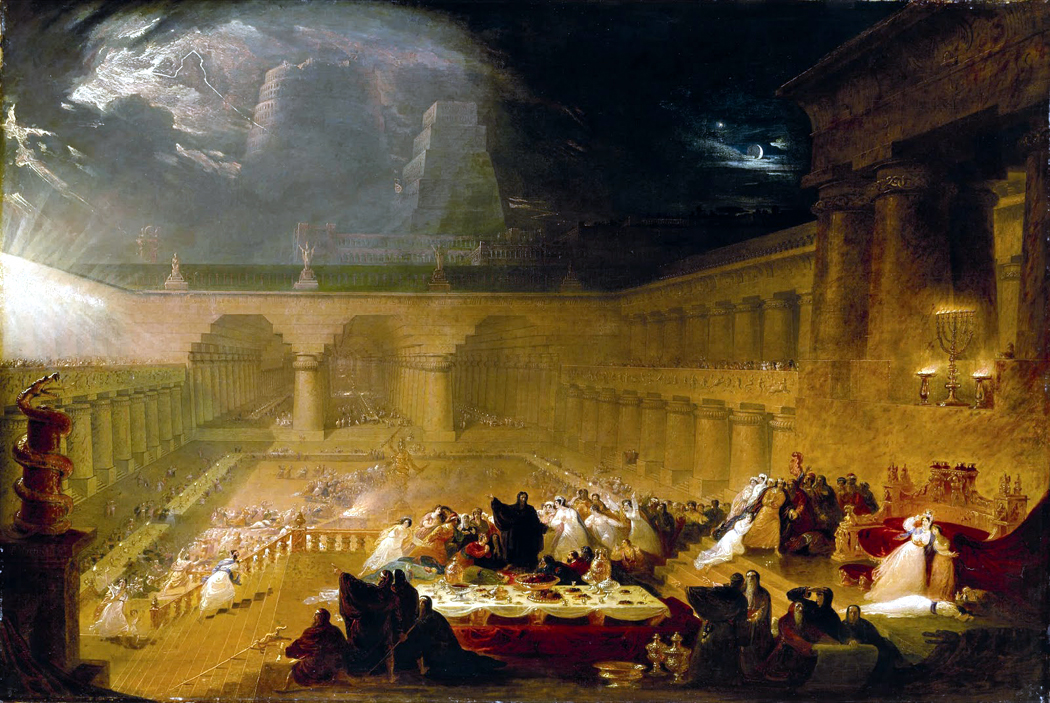
Biblical subjects became Martin’s bread and butter. The more grandiose the image, the more popular became his prints. They include The Fall of Babylon

The Destruction of Sodom and Gomorrah:

The Seventh Plague of Egypt:

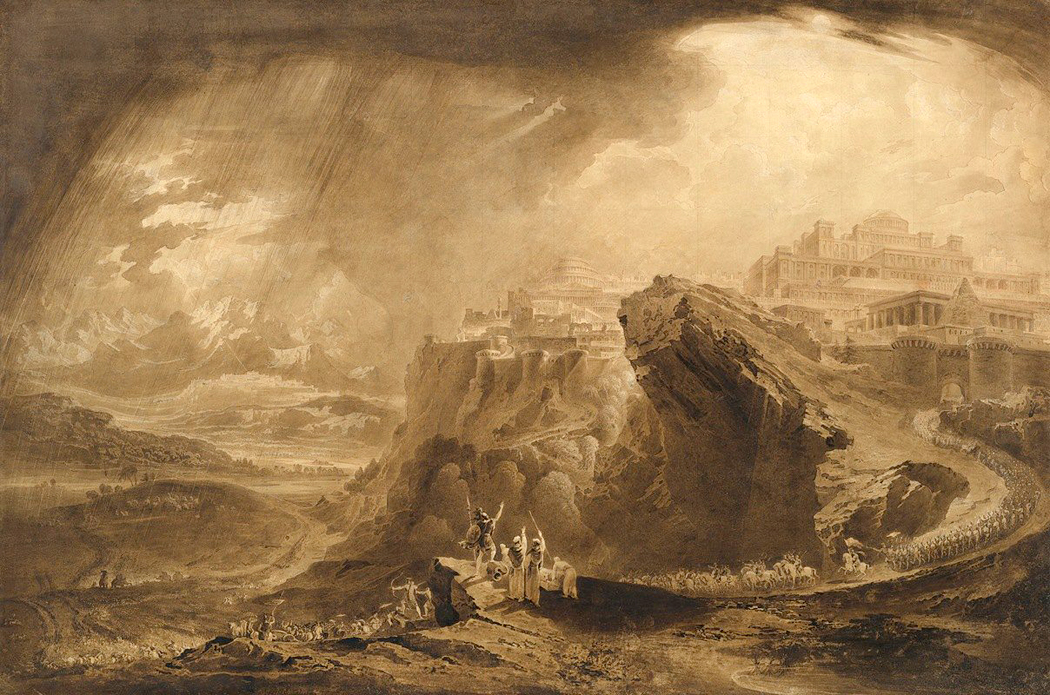
And Joshua Commanding the Sun to Stand Still Upon Gideon:

And my favorite — The Great Day of His Wrath:

He ventured out of his biblical Fach for the historical:

“The Destruction of Pompeii,” John Martin 1822

And even the prehistorical — on of my favorite for its goofiness. It was the frontispiece illustration for Gideon Mantell’s book, The Wonders of Geology:

“The Country of the Iguanodon,” John Martin 1837

Martin’s appeal was to vastness and number. His Balshazzar’s Feast prompted Charles Lamb to deem it “vulgar and bombastic.” 

“Balshazzar’s Feast,” John Martin 1821

In contrast, JMW Turner also painted one of the plagues of Egypt, and it has its share of grandiosity, but Turner’s shtick was mist and fog, indistinct outlines — and uncertain scholarship (It is titled the Fifth Plague, but actually illustrates the biblical Seventh Plague). 

 “The Fifth Plague of Egypt,” JMW Turner 1800

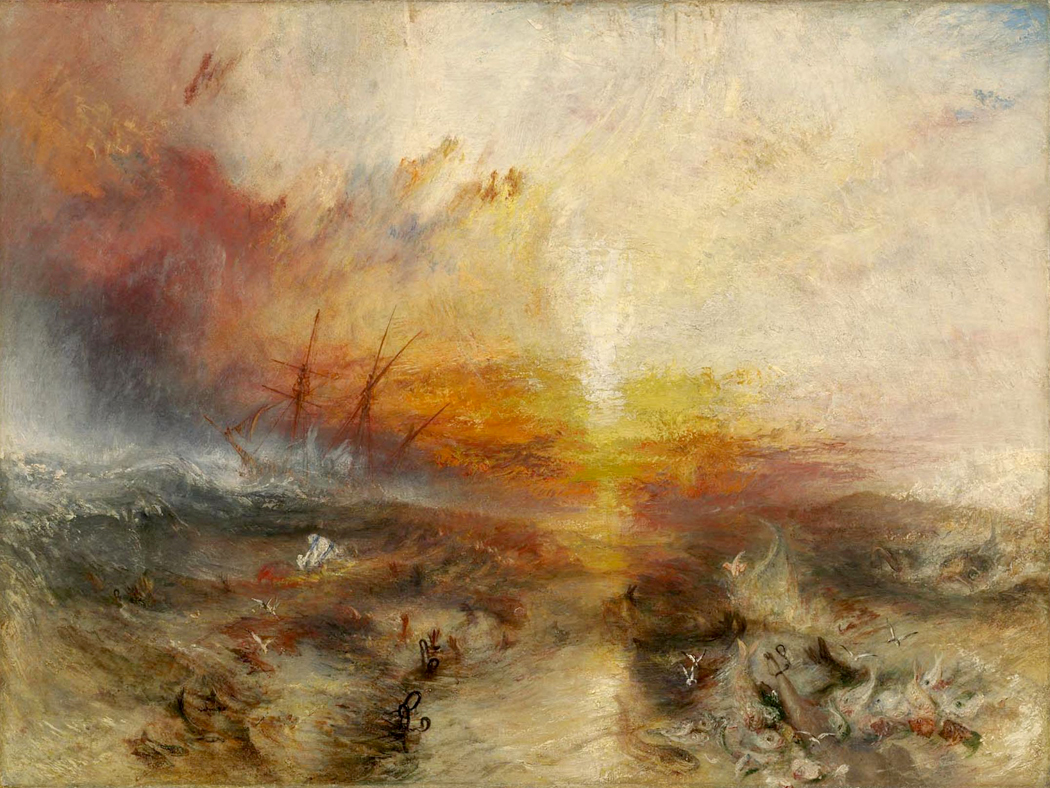
In 1840, Turner exhibited a painting called Slavers Throwing Overboard the Dead and Dying — Typhoon Coming On. It depicts an event from 1781 when the captain of the slave ship Zong threw overboard 132 of his captives when drinking water was running low. Since insurance would not cover the cost of slaves dying of natural causes, he drowned them instead, so he could collect. Turner seems to have added the typhoon for effect.  

“Slave Ship,” JMW Turner 1840

The storm, the swirling air and sea, the lurid color and the loose brushwork all contribute to the sense of disaster. While the painting had an abolitionist intent, it is its forward-looking esthetics that appealed to critic John Ruskin. Turner is often seen as a precursor to the Impressionists. But while they tended to paint everyday scenes, Turner favored turmoil and disaster. 

“Disaster at Sea,” JMW Turner 1835

The circular swirl was a trademark of the later Turner. In 1842, he had himself lashed to the mast of a ship in a snowstorm in order to paint Snow Storm – Steam-Boat off a Harbour’s Mouth Making Signals in Shallow Water, and going by the Lead. The Author was in this Storm on the Night the “Ariel” left Harwich. Yes, that was its full title when first exhibited. 

“Snow Storm: Steam-Boat off a Harbour’s Mouth,” JMW Turner 1842

He also did a snow storm in the Alps. 

“Valley of Aosta: Snowstorm, Avalanche and Thunderstorm,” JMW Turner 1836

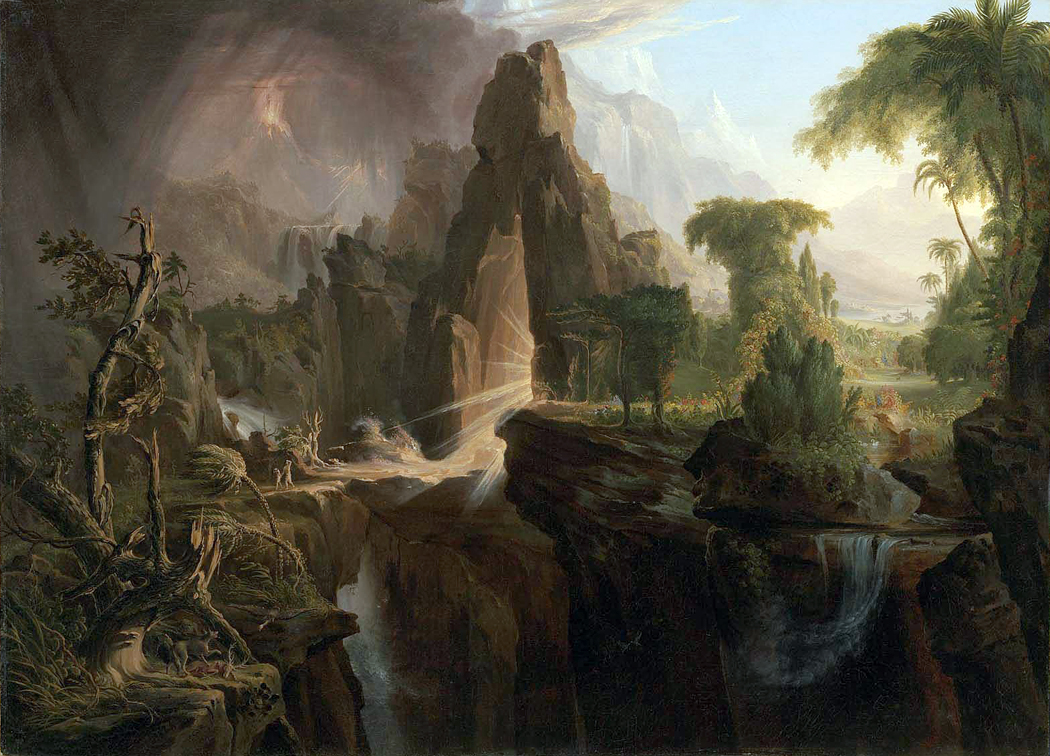
In the United States, The Sublime was a natural. The American West lent itself to large paintings of vast landscape, often in mist or early sunrise. An entire school of artists, usually called the Hudson River School, latched onto The Sublime, beginning with Thomas Cole.

“The Expulsion from Eden,” Thomas Cole 1828

Cole’s most famous protege was Frederic Edwin Church, whose paintings of South America brought the exotic landscape to the U.S.

“Rainy Season in the Tropics,” Frederic Edwin Church 1866

And Martin Johnson Heade verged on the surreal in many of his paintings.

“Approaching Storm — Beach Near Newport,” Martin Johnson Heade 1859

But it was the West that threw open the gates of heaven, with any number of painters, first among them, German-born Albert Bierstadt. 

“Among the Sierra Nevada, California,” Albert Bierstadt 1858

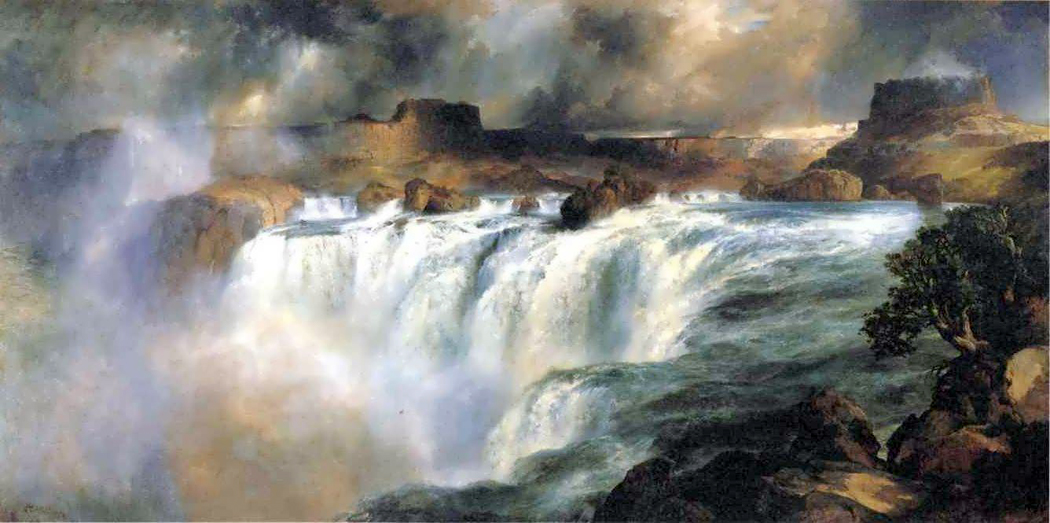
Latterly among them was Thomas Moran, whose huge and colorful canvases persuaded Congress to create our first national parks. 

“Shoshone Falls,” Thomas Moran 1900

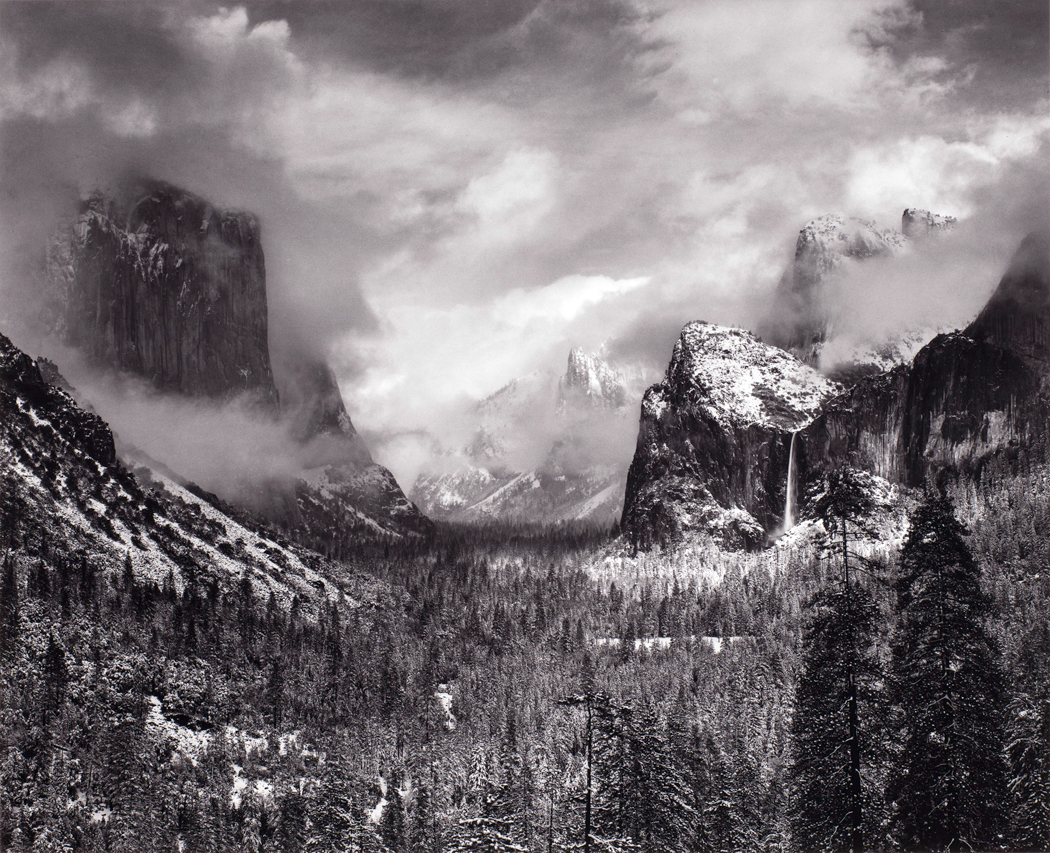
These painters are the clear progenitors of the landscape photographs of Ansel Adams. 

“Clearing Storm, Yosemite,” Ansel Adams 1944

But The Sublime had pretty well worked itself out by the end of the 19th Century. It was harder to believe in the awesome beauty of Providence after the First World War, to say nothing of the horrors that followed. Post-Traumatic Stress wasn’t quite the same thing. Still, The Sublime hung on in the paintings of Jackson Pollock, and especially Mark Rothko, whose mysterious canvases of hovering colors evoke the same sort of awe among those willing to be seduced by them. 

“Black on Maroon,” Mark Rothko 1958

I’ve covered literature and painting, but The Sublime appears in music, also. The first sound depiction of it occurred when Franz Joseph Haydn depicted biblical Chaos as the prelude to his oratorio The Creation, which premiered in 1803. 

Hector Berlioz assayed The Sublime in several of his works, but none more grippingly than in the Tuba Mirum section of the Dies Irae of his Requiem Mass of 1837, which requires, in addition to a huge orchestra and chorus, four extra brass bands, set into the four corners of the concert hall, and 20 tympani, which roll doom out in the Dies Irae. 

Another Dies Irae with the power to blow you away is Giuseppe Verdi’s, from his Requiem Mass, which whacks the bass drum in alternation of staccato blasts from the strings and brass. 

Perhaps the cake is taken by Gustav Mahler’s Symphony of a Thousand — his Symphony No. 8, which in an ideal performance has an orchestra of about 200 and a chorus of 800. It is gargantuan, and the opening Veni Creator Spiritus is as close to manic insanity as music can probably sustain. 

There are moments in Wagner, in Liszt, Bruckner and many in Mahler’s other symphonies. 

Then, there’s The Ninth. I don’t need to mention whose. The Sublime makes itself present in each of the four movements, but rises to a climax in the choral finale, where voices and instruments poise at the limits of their abilities and hold those notes as they sing, “Seid umschlungen, Millionen!” — “Be embraced, you millions” and then “Ahnest du den Schopfer… — hold it, and then belt out — “Welt?” There follows a coda of ecstasy bringing home the central message of the symphony: “Freude, schöner Götterfunken” — “Joy, beautiful spark of divinity.” 

But perhaps the greatest moment of The Sublime, as terror and grandeur, comes with the recapitulation section of the first movement. The theme that began the symphony in uncertainty and mist — we don’t even know originally what key it is in — comes back forte underlined by two solid minutes of rolling tympani thunder. Some conductors downplay this moment, letting the tympani merely enforce the bass line, but done right, the drums are an earthquake of apocalyptic rumble. 

Perhaps I have been fascinated by The Sublime in art and poetry so much because I have experienced in life — probably a dozen times or so, maybe a score if I catalogued them — a moment when you don’t merely feel the joy of beauty found in nature, but experience a cosmic tingle, a sense of life magnified, intensified, made mythic. A body-sense of the vastness of existence and my minuscule place in it. 

It tends to come, as it does in art, in mountains or deserts or at sea. I recall the sense while crossing the Atlantic on a ship and walking the deck after midnight and seeing in the vast emptiness of the ocean a twinkle of a light on a ship many miles off, heading in the opposite direction. The sea swells were rocking the boat and I could make out the shifting facets of waves in the dark, where some starlight was caught in the reflection of the water.  

Or the Grand Canyon at five in the morning just before the sun broke the horizon. 

Once, driving east in North Carolina on my way to Cape Hatteras, it was near sunset and in front of me in the windshield was a sooty-dark thunderhead and rain on the road perhaps a mile in front of me, obscuring the road and any horizon. It was a canyon of charcoal cloud climbing up to the stratosphere, with spikes of lightning, while in the rear window, the sun was brilliant and red in a clear sky. It was the definition of The Sublime. 

Click any image to enlarge

Caspar David Friedrich, Sea of Ice

Caspar David Friedrich, Sea of Ice

Werner Herzog can always give me a good chuckle.

Herzog's jokeThe dour German is more than a film director, he is a world treasure. If he did not exist, we would have to invent him. Just his voice, narrating a bit of documentary, or when filmed eating his own shoe, tells us that here is a man of substance, one who measures his gait against the cosmos. I will watch anything made by him, or in which he appears.

So, it made me laugh out loud when I was reading his book, Werner Herzog: A Guide for the Perplexed (conversations with journalist Paul Cronin), to see him disavow any romantic tendencies in his work.

“You can’t get a more contrary position towards the Romantic point of view than mine. Go back and listen to what I say in Burden of Dreams — the film Les Blank made on the set of Fitzcarraldo — about nature being vile and base, lacking in harmony, full of creatures constantly fighting for survival. Anyone who understands such things knows those could never be the words of a Romantic. If you’re interested in what I think about nature, take a look up into the night sky and consider it’s a complete mess, full of recalcitrant  chaos. …”

Does he know what Romanticism is? Here’s what he said in the film, talking about the Amazon jungle where he filmed Fitzcarraldo:

“The trees here are in misery and the birds are in misery. I don’t think they sing, they just screech in pain. … It’s a land that God, if he exists, has created in anger. It’s the only land where Creation is unfinished. Taking a close look at what’s around us, there is some sort of harmony. It is the harmony of overwhelming and collective murder. We in comparison to the articulate vileness and baseness and obscenity of all this jungle, we in comparison to that enormous articulation, we only sound and look like badly pronounced and half-finished sentences out of a stupid suburban novel, a cheap novel. And we have to become humble in front of this overwhelming misery and overwhelming fornication, overwhelming growth and overwhelming lack of order. Even the stars up here in the sky look like a mess. There is no harmony in the universe. We have to get acquainted to this idea that there is no real harmony as we have conceived it. But when I say this, I say this all full of  admiration for the jungle. It is not that I hate it. I love it very much. I love it against my better judgment.”

If that isn’t the very definition of Romanticism, I don’t know what is. It reminds me of the lines by Lord Byron in Manfred, when the hero is wandering the Alps in search of an escape from his suffering and guilt. He summons the spirits of nature, which are vast and impersonal. They describe nature much the same way Herzog does.

One says of nature, it is “ Where the slumbering earthquake/ Lies pillow’d on fire,/ And the lakes of bitumen/ Rise boilingly higher;/ Where the roots of the Andes/ Strike deep in the earth,/ As their summits to heaven/ Shoot soaringly forth …”

Another says, “ The star which rules thy destiny … became/ A wandering mass of shapeless flame,/ A pathless comet, and a curse,/ The menace of the universe;/ Still rolling on with innate force,/ Without a sphere, without a course,/ A bright deformity on high,/ The monster of the upper sky!”

Friedrich, The Monk at the Sea

Friedrich, The Monk at the Sea

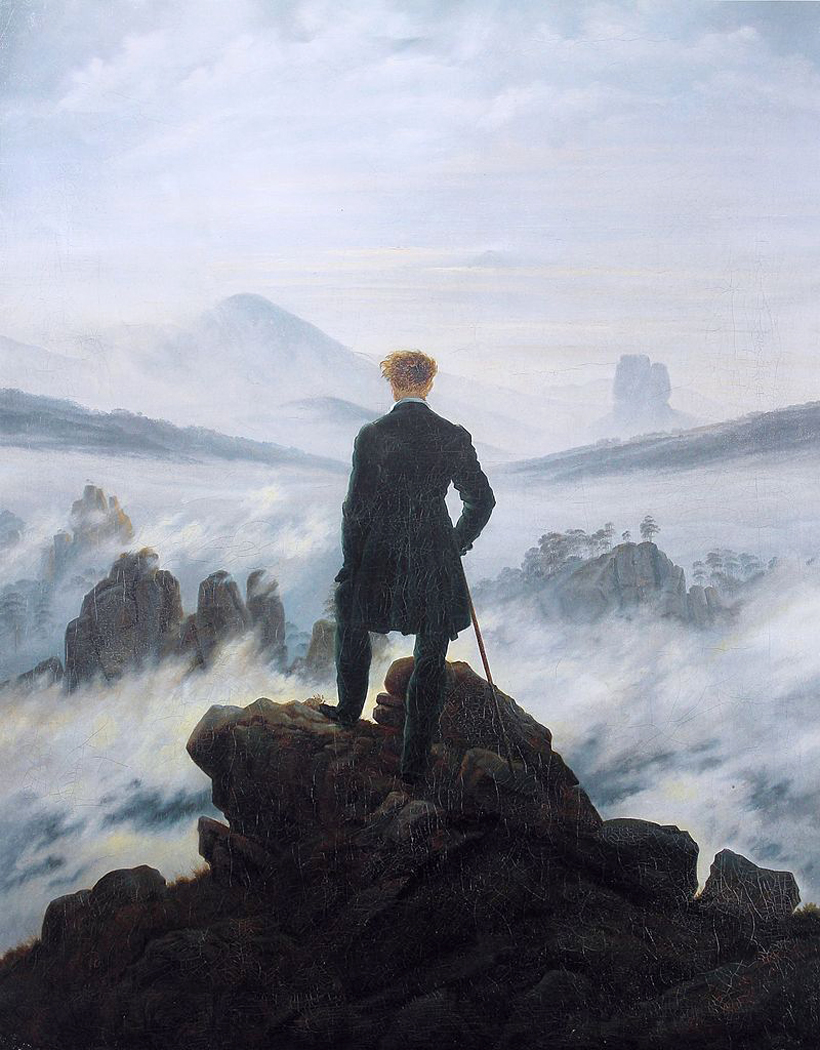
Wanderer Above the Sea of Fog

Wanderer Above the Sea of Fog

On the next page in Herzog’s book, even he seems to admit his basic romanticism, when he admires the German Romantic painter, Caspar David Friedrich. He is “someone I do have great affinity for. In his paintings Der Mönch am Meer [“The Monk by the Sea”] and Der Wanderer über dem Nebelmeer [“The Wanderer Before the Sea of Fog”] a man stands alone, looking out over the landscape. Compared to the grandeur of the environment surrounding him, he is small and insignificant. Friedrich didn’t paint landscapes per se, he revealed inner landscapes to us, ones that exist only in our dreams. It’s something I have always tried to do with my films.”
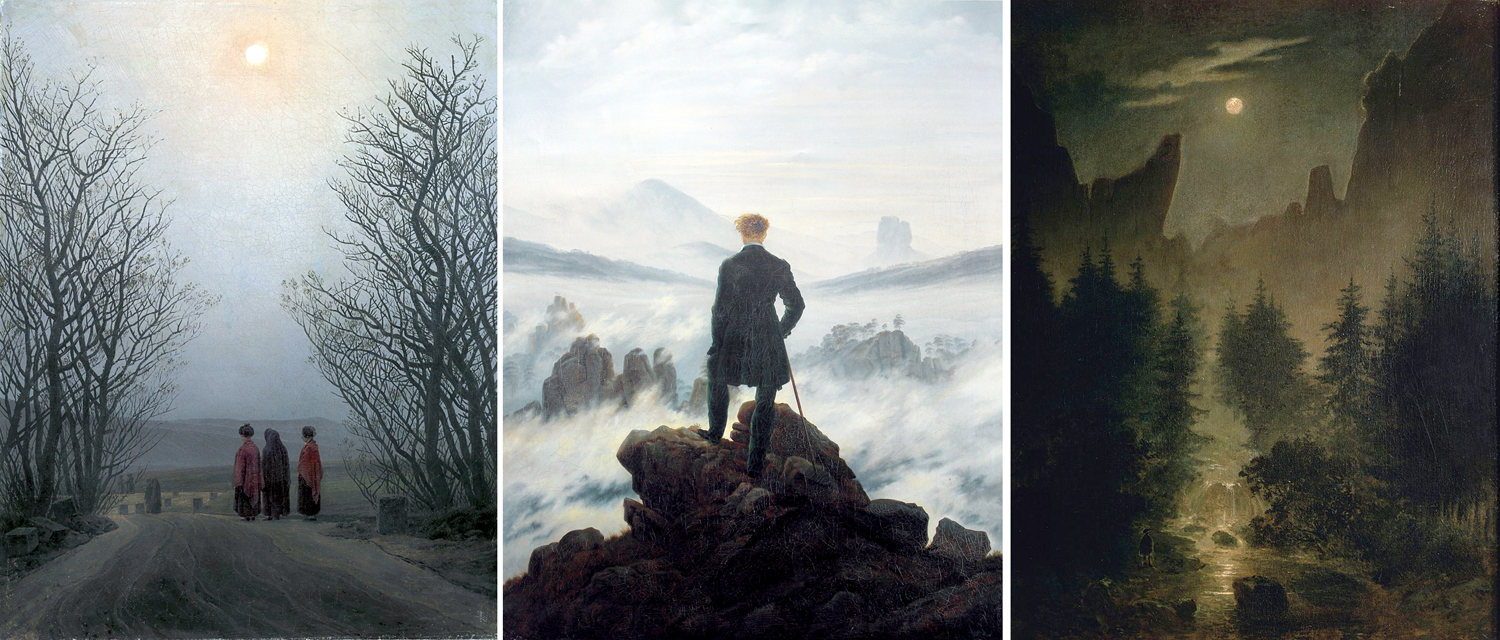
There is a common misunderstanding of Romanticism, that it is somehow warm and fuzzy, that it has something to do with being in love. But if you read the texts, look at the photos, listen to the music, you discover that Romanticism is something dark and mysterious, placing tiny humanity in the looming shadows of a vast, hard and roiling universe. You find it in Friedrich, with his ship crushed by

Sadak In Search of the Waters of Oblivion

Sadak In Search of the Waters of Oblivion

icebergs; or Shelley, with the depressing parade in Triumph of Life, or the spinning orbs  “intertranspicuous” grinding “the bright brook into an azure mist/ Of elemental subtlety, like light” in Prometheus Unbound; or William Blake staring down into the abyss in Marriage of Heaven and Hell, and seeing “beneath us at an immense distance was the sun, black but shining; round it were fiery tracks on which revolv’d vast spiders, crawling after their prey; which flew or rather swum in the infinite deep, in the most terrific shapes of animals sprung from corruption, & the air was full of them, & seem’d composed of them.”

Romanticism is John Martin’s Sadak in Search of the Waters of Oblivion, and Berlioz discovering his beloved is turned to a harpie at the Witches’ Sabbath at the end of the Symphonie Fantastique, and Ahab blaspheming on the quarter deck in Moby Dick.

So, Werner Herzog, you gave me a good laugh.
BW01
Call me Wordsworth.

When I was in my 20s, strapping and idealistic — i.e., an idiot — I lusted after this landscape. I knew it only in the photos in the Sierra Club coffeetable books, thinking how grand it would be to live in an alpine meadow in the Cascades, Sierras or in Alaska, with distant lightning-zag waterfalls dropping in a pencil-line a thousand feet down the face of a granite escarpment. I could feel the bracing air in my imagination. nuggetfallsb&w copy

The attraction was part a Longinian yearning for the sublime, for the vastness of the landscape; part of the attraction was its isolation, away from the ordinariness of daily life with all its people, some of whom might well be my boss. There was no TV in this idealized world; only bear and moose.

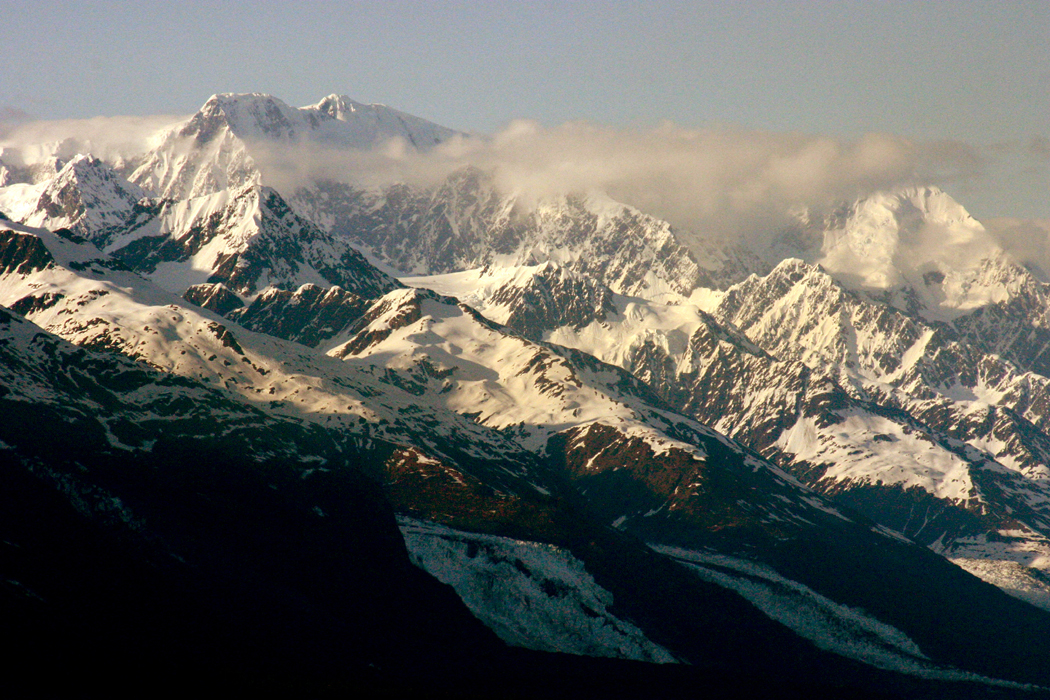
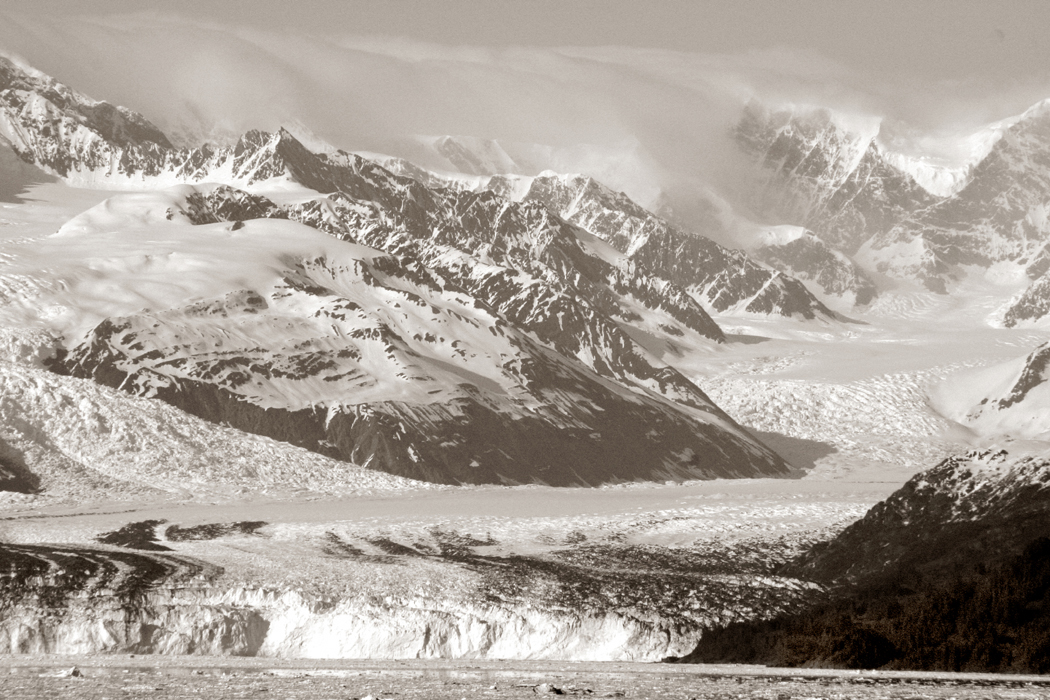
I am older now, still an idiot, and I can no longer feel that fervid longing, at least not directly, but I remembered it keenly visiting the mountains and glaciers of Alaska. They are vast, the air is ice on the skin and the vistas are the kind John Martin might paint.peaks2 copy

The pianist Glenn Gould once made a radio show for Canadian listeners called “The Idea of North.”

For those of us south of his border, the idea of north is Alaska. Endless forests, grizzly bears, rock-cobbled rivers, salmon, snow and rime.

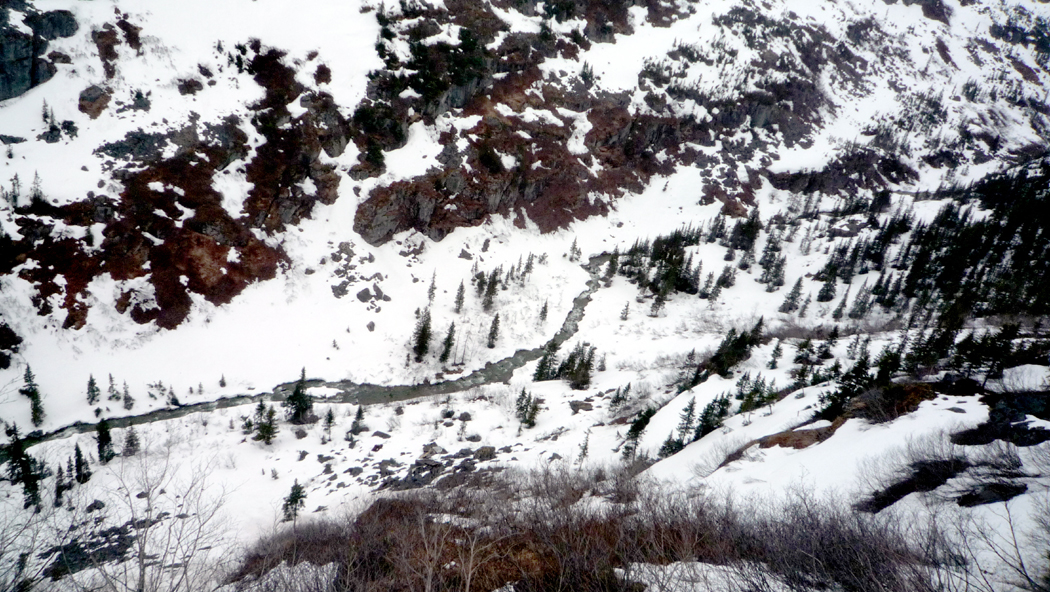
Alaska is an inaccessible place, where no interstates lead, and even its state capital cannot be reached except by air or sea. For most of us, Alaska is important precisely because we cannot get there; it is proof that there is still a moment on the planet that is not yet filled with highways, billboards, Nike ads and grinning tourists. For most of Alaska, to be seen is to be explored; it takes dedication, muscle and energy, just as it did for the Gold Rush prospectors who hiked over the Chilkoot Trail.snow and trees copy

We think of Robert Service poetry or Jack London novels. Perhaps our idea of the frozen north comes from Robert Flaherty’s “Nanook of the North,” or Mary Shelley’s “Frankenstein.” In any case, it is a north that is still dangerous. A landscape that carries with it the final sense of the sublime: beauty that can kill us. And even if we survive, it is beauty on such a scale that our human minuteness shrivels our ambitions and makes us harbor cosmic thoughts.creek copy

Two hundred years ago, European art and literature was chockablock with the frozen Arctic. From paintings by Caspar David Friedrich to “Frankenstein,” it was icebergs and glaciers that told of the vastness and sublimity of nature. Make that Nature, with a Capital N.

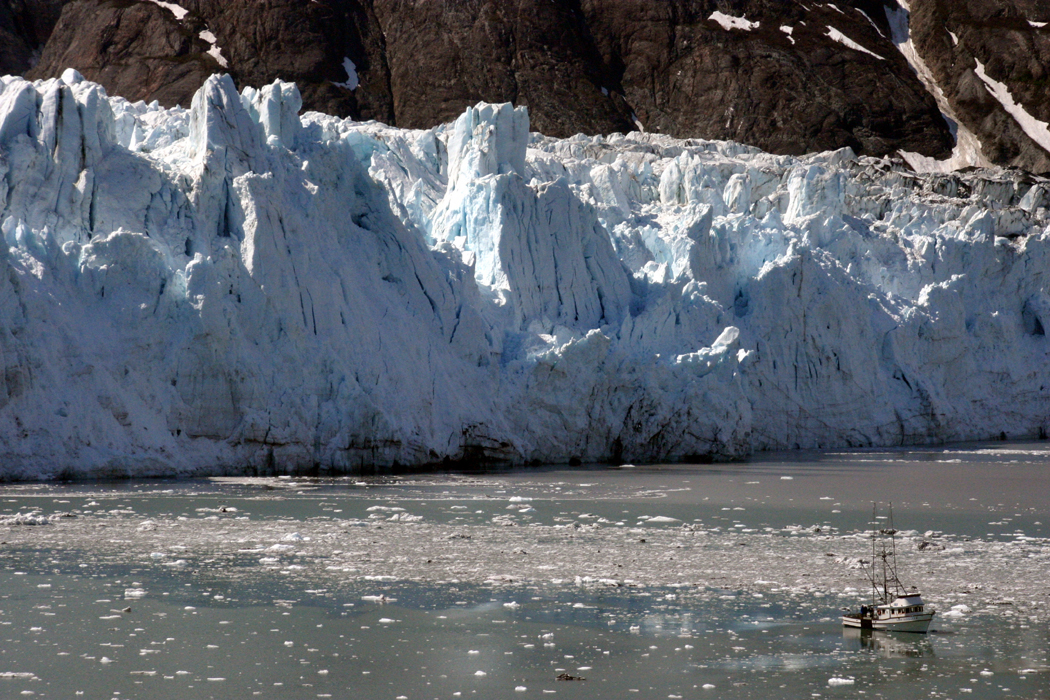
The dark, stormy North was inaccessible and remote; humans were pismires in its vastness; danger lurked everywhere. Ice froze on the ship’s rigging and mariners had to chop it away with axes. margerieboat copy

“We are still surrounded by mountains of ice, still in imminent danger of being crushed by their conflict.” — “Frankenstein”

Or, from “The Ricome of the Ancient Mariner”:

“And now there came both mist and snow,/ And it grew wondrous cold:/ And ice, mast-high, came floating by,/As green as emerald. … / It cracked and growled, and roared and howled,/ Like noises in a swound!”gullclose copy

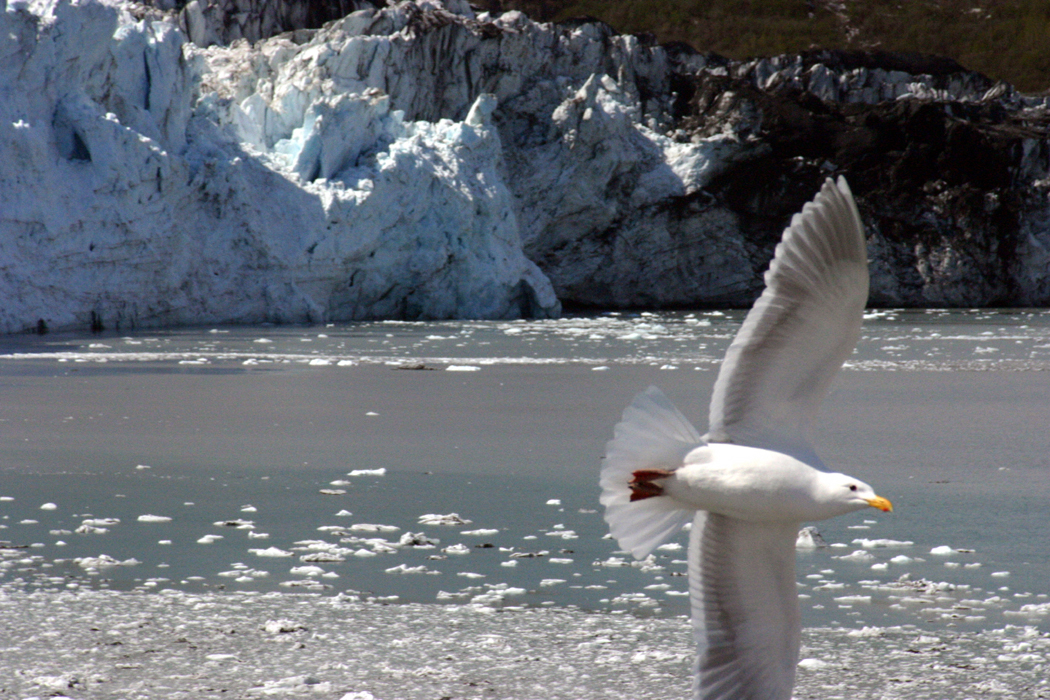
As green as emerald? Rather, as blue as sapphire.

In College Fjord, the glacial ice is blackened at the margins with sooty dirt and rocks, but the central part — the “filet,” as you might call it — is pure and clean. It is there, in places where deep fissures in the ice let you see into the glacier, that the ice shows bright, clear blue. The color is brighter when the sun briefly shines on it. It is Tarheel blue, as bright as a new paint block in a watercolor set. Blue ice

One of the vertical slices of the glacier has been worn through, leaving an icy natural bridge. In its donut hole, the blue is intense. Ice, it turns out is blue. It is not the mere reflection of the sky that makes it so — if proof be needed, there is no blue sky most of this day — but rather that the ice is not clear. Turns out, water is not clear, either. octopus fingers mask copyIt really is blue, although so thinly colored that a glass of it looks transparent. Put enough of it together and the blue is apparent enough. And the ice made in this giant Frigidaire is also blue where it is pure enough, although much of the surface is roughed up with layers of snow, to make them white and glistening.

Crack and boom, and some more ice falls off the front of the glacial wall. Most of the calving involves an avalanche of small ice cubes and snow balls rather than the giant heaving chunks we see on the nature TV shows. The center of the glacier’s face is where most of the action is happening; a certain section is concave and its upper surface, overhanging its lower, keeps dropping bits like plaster falling off a wet ceiling. It crashes into the water in big ice slides and sends up waves that circle off toward the boat. They peter out into wide ripples before they reach us, so we can hardly notice them as they pass.BW09

When a bigger chunk falls off, it drops below the surface and immediately pops back up, like a whale breeching. Sometimes, as it reappears, it also turns over on its back, like a restless sleeper, before settling back down into the water. Seabirds rush to the spot to seek food.ketchikan totem 2 copy

It was the north that attracted Amundsen, Nansen, Peary. Parkas of animal fur made their heads three times normal size and they walked about in a stiff-leg shuffle in the ice and snow. The sky was always gray and the air always frigid. Snow blew sideways.

It was the ice and isolation that drew Byron’s Manfred, Jack London’s White Fang, Robert Service’s Dan McGrew. In Finland, it is the snow and ice of Sibelius’s “Finlandia,” the thin, remote trombones of his Seventh Symphony.

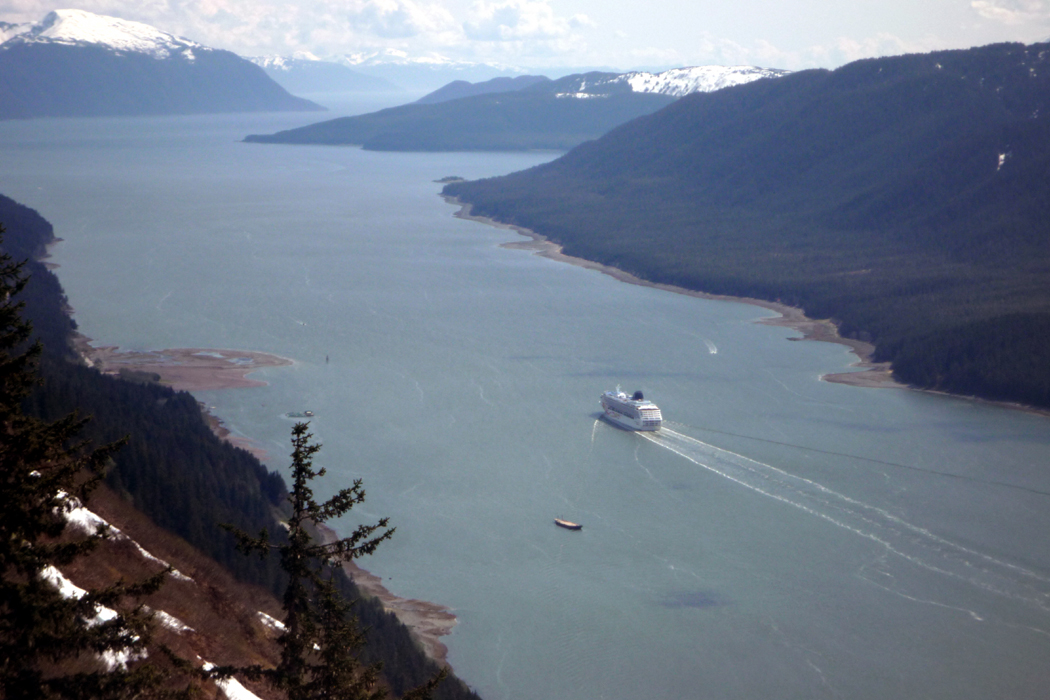
The problem is, that for most Americans who venture to Alaska now, they do so on a cruise ship, eating rib roasts and sherry triffle, looking off the taffrail for the spout of a friendly whale, or the antics of a sea otter. The cruise industry has turned the sublime into Disney ride. Whee!

It can take some concentrated effort, but for anyone who wants to invest the psychic and emotional energy to do so, the Alaska of vast spaces and endless emptiness is still there. But unlike the days when leathery men packed mules to go across the passes, we have to make that journey more in our heads than on our feet. It is an act of imaginative will to see the skull beneath the skin, the rocky sublimity under the coating of easy tourism.cruise ship in the fjord juneau copy

I went to Alaska to find the wilderness I fantasized about when I was 20. It was the allure of the Sierra Club coffeetable books, with their glossy photos of deep glacial valleys and snow-capped sierras. I imagined living on some Cascadian mountainside with mountain goats and bear grass.

Which brings us all back to Wordsworth and the “Intimations Ode.”peaksb&w copy

We gain a good deal as we accumulate experience like barnacles. We are stronger, less easily angered or driven to political excesses, and we certainly have learned something about love that we could never have guessed when our hearts merely wanted. But, we have lost a good deal, too.

“I know, where’er I go,/ That there hath pass’d away a glory from the earth.”lowsun copy

Now that I am past 60, it is no longer a life I want, but one can never cease wishing to be 20 and longing for the heart’s desire.

Olympic mountains precipice

Washington’s Olympic Mountains are wet. Their slopes are covered in rainforest, with broad ferns and tall redcedars with soggy, mossy bark. When it isn’t raining, it is drizzling and when it isn’t drizzling, the fog is so thick it soaks your clothes.

The western slopes of the mountains average 140 inches of rain per year; its highest point, Mount Olympus at 7,965 feet, receives the equivalent of 220 inches, most of it snow.

The Olympics are also steep. Everything in the Olympic National Park is vertical. Nearly every mountain is a towering cliff. Driving the 17-mile park road from Port Angeles to Hurricane Ridge, one side of the car views an uplift of rock only inches from the window while the other side looks out over cirques whose centers plummet thousands of feet straight down.

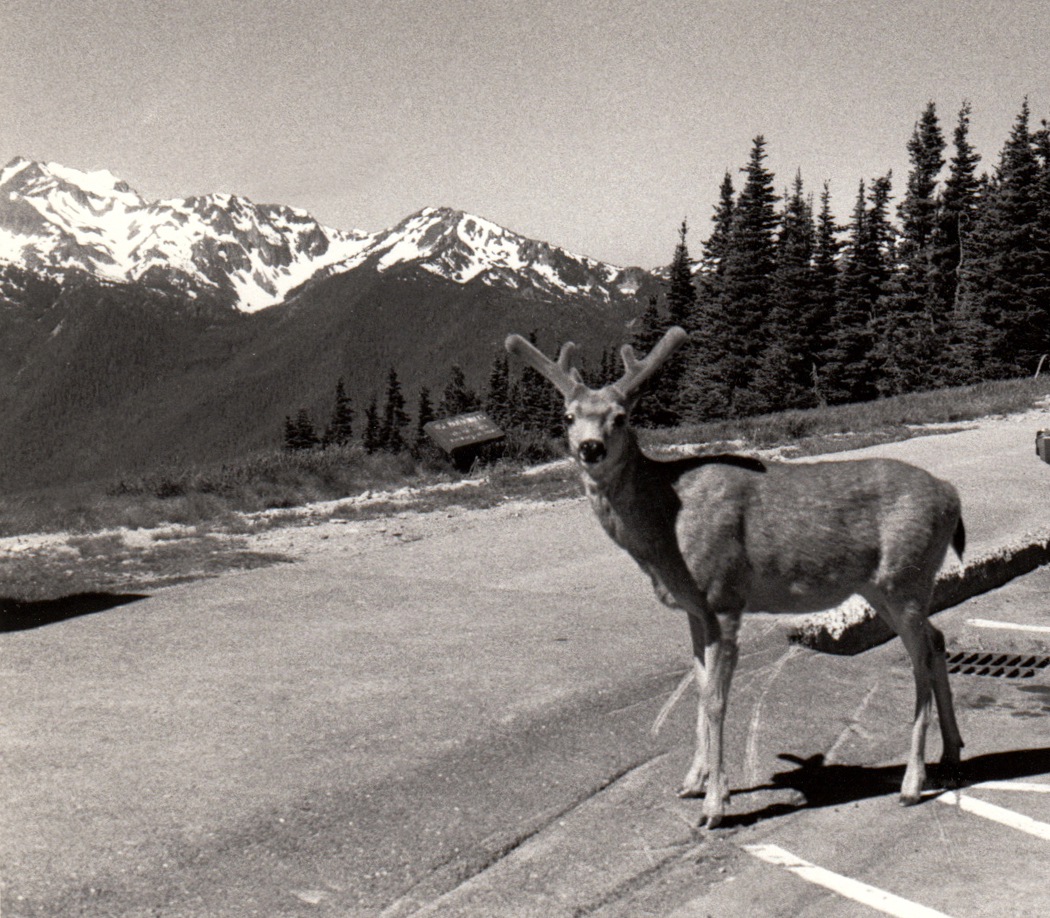
Mountain goats manage to dance up the sheer wall of rock as obliviously as dervishes.Deer at Hurricane Ridge Olympic NP

Hurricane Ridge is the place inside the park most accessible to the outer world, with a parking lot at the end of the road and a lodge and snack bar looking out over the Elwha Valley and the wall of peaks on the other side.

Even in June, the spring wildflowers are just beginning to poke through the snowbanks on Hurricane Ridge. Clouds blow over the mountaintop and sometimes in the middle of a white out, when you are inside a cloud and cannot see what your feet are stepping on, you are treated to the peculiar vision of a hole in the scud, a circular opening that will drift past through which you can see 15 miles to the sunlit peaks across the valley.Hurricane Ridge, Olympic NP, Wash

But my favorite spot in the Olympics is not Hurricane Ridge with its car exhaust and souvenirs, but the trail to Lake Angeles.

Beginning at Heart O’ the Hills, it climbs 2,379 feet in 3.7 miles, or an average loft of about one foot for every eight feet. That is a grade steeper than any freight train can manage.

And the first time I made that hike, I went with a friend who was a bicycle messenger in Seattle, with a stainless steel cardiovascular system. I made the first two or two and a half miles just fine, but the fatigue began to do me in, while my companion might as well have been riding an escalator.

I continued, walking ever more slowly and thinking of Sir Edmund Hillary making those last steps up Everest at a snail’s pace, stopping to breathe after each choppy step.Near Lake Angeles, Olympic NP, Wash

As the altitude changed, so did the weather. What was a pleasant 55 June degrees at the trailhead became sleety as we moved from the Hudsonian biozone, out of the Douglas fir and into the subalpine zone with its spruce and cedar.

When at last the path flattened out and we turned out of the last cove and over the last ridge, we saw Lake Angeles. We had climbed from 1,879 feet to the lake at 4,196 feet and still above us, at the opposite side of the lake, were the triple peaks of Mt. Angeles rising to 6,454 feet.lake angeles

A sheer rock wall, partially obscured by mist, rose straight up to the jagged tops of the peak, like something from a Bierstadt painting.

In the middle of the lake was an island covered with Caspar David Friedrich trees and the colors of the whole scene were Thomas Moran’s.

I was standing in the mizzle, my glasses blotted out with droplets and my clothes too wet to wipe them clear.

Across the face of the cliffs beyond the lake was a line of falling water like a John Martin lightning bolt zagging its way 400 feet down the rocks and silently roaring at its half mile distance into the gray waters of the lake.

“We shouldn’t look at angels too long,” I said and we turned to descend.