Archive

Tag Archives: conservatism

This is a repeat posting of a piece I wrote in 2017, during the first Trump administration. But I believe it may still be apposite, although the stakes are even higher this time around.
I avoid writing about current politics for several reasons. Firstly, because the situation so quickly changes, nothing you write today may hold for tomorrow. Secondly, because it is so touchy a subject, you risk alienating your reader for minor offenses that can be taken as index markers for major disagreements. Thirdly, because politics is such a minor part of what makes a difference in our individual lives; so many other things are more important and more interesting.

Nevertheless, the chaos of the current American situation calls for some small clarification. Arguments muddy when thinking is unclear.

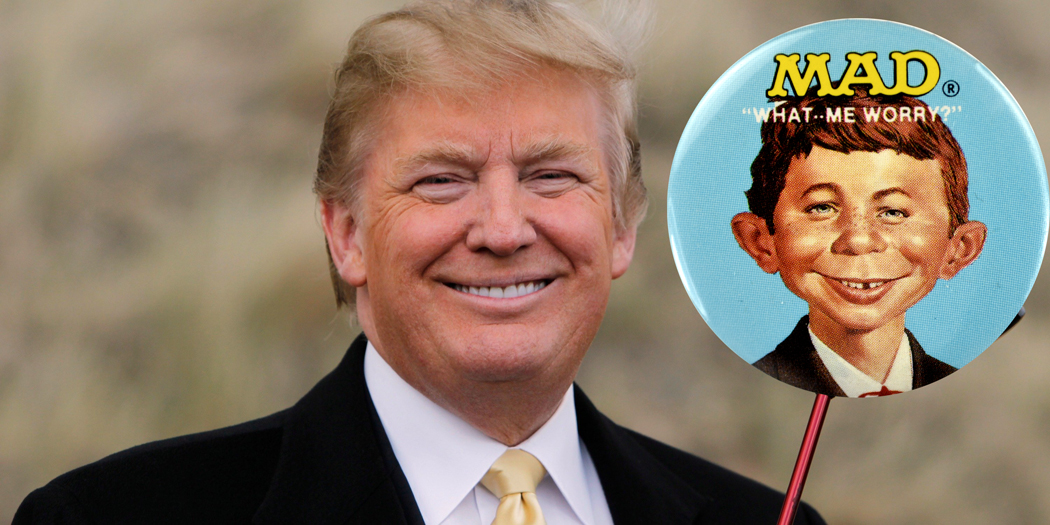
To begin, there is the issue of Donald Trump, which is a great squirt of squid juice, obscuring more lasting problems. It is easy to make fun of the Great Pumpkin, he practically satirizes himself. While he has fervent supporters, it is hard to know exactly what he stands for, because his words are so vague in application, no matter how blunt in expression. It is always possible to assume he is your ally, because you only listen to those words that honk your horn. Is he conservative? Conservatives value free trade. Is he pro-business? Business has told him they need an immigrant workforce. What does he stand for besides ignorance?

He is an obfuscation on the surface, a chaos beyond that because, of course, he has no ideology, other than Trumpism. It is not his supposed conservatism that I object to; there have been many thoughtful conservatives. Trump is not one of them; he isn’t even a conservative at all. What scares the bejeezus out of me about him is that he is so clearly unbalanced mentally. The word Andrew Sullivan has used is “bonkers,” and that can hardly be improved for accuracy. The constant wheezing about his vote count, poll numbers, inauguration crowd, all spouted against obvious and visual evidence, is a clear indication that he is unmoored from reality.

Then, there are the speeches, barely in English. They are really just sentence fragments thrown together with unattached adjectives. Yuge, sad, unbelievable, disgusting. They, as Philip Roth has counted them, are constructed from a vocabulary of a mere 77 words, reused and rearranged ad hoc. They jump around from topic to topic with little or no segue. And then, they are filled with things that are demonstrably untrue. One watches over an over when Trump says he never said this or that, followed by the videotape of him saying exactly what he now says he never said. Does he not know that his words have been recorded?

It cannot be easily said that Trump is a liar, because a liar knows what he is saying is untrue. Others manipulate statistics to make their arguments; Trump just pulls stuff out of his ass. Evidence is irrelevant.

Further, he uses these exanus pronouncements to support his chaotic policy pronouncements, which tend to be simple-minded in the extreme. Problems are usually complex and systemic; his solutions are simple-minded and blunt as a cudgel. He shows contempt for subtlety. If the problem is illegal immigration, his solution is not to consider the cause of the immigration, but to build a wall, despite the fact that the majority of the illegal immigration does not cross the desert border, but flies into our airports. My favorite joke about the wall: “Wall — cost: $12 billion; ladder — cost: $35.”

But this is not meant to be a jab at Trump, who is clearly unhinged, not very bright, not at all subtle, and basically a bully at heart. It is too easy to target him; he is a joke. A dangerous joke, who may very well destroy the world at the push of a button, but a joke nonetheless.

No, what I want to point out is that there is, beyond Trump, a basic misunderstanding of the political divisions in the country.

The divisions are very real. Between urban and rural, between liberal and conservative, between Republican and Democrat. But I want to point out that these may overlap, like Venn diagrams, the dipoles are not identical. We too often confuse conservative with Republican and liberal with Democrat. There may be overlap, but more important, their goals are different.

There is a clear difference between liberal and conservative. As they are defined nowadays (very different from when they originated and when conservatism favored a strong central government), the conservative now seeks a smaller central government and the liberal, an activist government working for the betterment of its citizens. The one favors the individual, the other, the community. The one is exclusionary, the other inclusive. And it is clear that as the political scene is currently deployed, Republicans tend to favor conservatism and Democrats tend to the liberal, although Republicans are more extremely weighted to the far-end of conservatism than the Democrats are to the left wing.

But, such thoughts of political philosophy are largely irrelevant to the actualities of politics. One should never conflate Republican with conservative, nor Democrat with liberal. The aims of ideology are to promote a world view and an action plan to enforce that world view. But that is not the aim of the Republican party. Certainly, it will use conservative ideas to further its ends when it can, but its primary driving aim is the accrual and preservation of power. This is central and should never be forgotten: Republicans will do whatever they need to to gain and keep power. Democrats have a similar, but weaker drive. Many Democrats join the party because they think they can make the world a better place. Some Republicans do that, too, but the aim of the party on the whole is not the improvement of society, but the exercise of power. It is King of the Hill on a hemispheric playing field.

This is not to say that most Republicans don’t believe, by and large, that conservative policies would help the nation, but that whether or not they do is secondary to the accretion of political power. Hence, the contorted, serpentine Congressional districts, gerrymandered into silliness in order to ensure Republican supremacy. (Yes, Democrats have done the same — in fact, they invented the procedure in the 19th century — but they were pikers compared to the modern attempt to engineer a “permanent Republican majority.”) Hence, the bald-faced hypocrisy of choosing sides on an issue solely on the basis of whether a Republican or Democrat is offering it for a vote (as with the Republican-designed Affordable Care Act, which became an unswallowable “disaster” when recycled by the Obama administration. Hence, the use of arcane Senate or House rules, or the threat of the “nuclear option,” when it favors them, and outrage when used against them.

And it is why Republicans were gulled into supporting Trump when it looked like he might win the White House back for the party, despite the problem of Trump espousing ideas contrary to longstanding Republican policies. Trump is, after all, not a Republican, except in name, and not a conservative, as it is usually defined. He is sui generis, a propounder of Trump now, Trump tomorrow, Trump forever.

One area in which Trump and Republican world views agree is that the primary lens through which to view policy is economic. Money is the gravity that holds that world together. Whether it’s tax cuts, deregulation or fear of unions and a raise in minimum wage, the heart and soul of the conservative world view is money. The very idea of “running government like a business” is a consequence of this Weltanschauung. But across the world, this idea is changing. Governments are not businesses.

There is a historical storyline here. In the feudal past, with the king at the top of the pile, government was essentially a protection racket, with each level of vassalage “wetting its beak” in the next level down, and everyone feeding on the peasants. The general welfare of the populace was not even an empty platitude. As nation states developed from the Medieval sense of monarchal real estate, the idea of decent governance took hold. Since the New Deal in the U.S., and post-war in the better part of the rest of the world, governments have assumed the duty of protecting the welfare of its populace. All through Europe, governments guarantee health care, safety, minimum living wages, shorter work weeks and longer vacations. The U.S. has resisted such things. For Republicans (distinct from conservatives, who also have many social issues) and Trump see the world through dollar-tinted glasses. It is a reversion to the Medieval model, where all wealth floats upward like a bubble in the champagne. And it is power that guarantees the income. The goal of the Republican party is not so much the institution of conservative ideas, rather it is the use of conservative ideas to protect and increase individual wealth.

The problem is, that while money can make life easier to navigate, money cannot make life worth living. For that, you need the other aspects of life that Democrats — and most of the rest of the world — embrace. Freedom from oppression, sufficient means for living, cooperative communities, aid for the less fortunate, an even playing field for all. Among the things that make life worth living are family, love, art, religion, good health, and shared interests and shared mythology.

For Trump and the Republican party both, the world they see is transactional. It is also a zero-sum game, and the winning is all. We need to recall that when we let ourselves be gulled into arguing over conservative and liberal. Those labels are merely the masks worn in the more brutal fight over who will be the alpha dog.

Originally published Feb. 17, 2017

In 2012, I posted a blog entry about the incoherence of the so-called conservative movement in America. A decade and more later, this disjunction in idea needs to be re-emphasized, and so I am reprinting it. There is very little that is conservative in current conservatism. Having devolved into a personality cult, conservatism is an immanent danger. 

I was unduly optimistic in my final paragraphs, as a large percentage of the population has been taken in by the charlatanism that leads the Republican party now. I do, however, still harbor a hope that the majority may shrink from the political mayhem that is on offer. A small hope, perhaps, but a hope nevertheless. 

Here, originally posted Dec. 13, 2012:

Contemporary American conservatism is a very strange duck. Maybe a platypus. 

To begin with, it espouses what has always previously been called liberalism: When our nation was founded, it was the conservative Hamilton who imagined a strong central government and the liberal Jefferson who feared it. 

Conservatism has traditionally been in favor of strong government. It is one of its hallmarks through history. Of course, behind that belief in central power was the heart of true conservatism: maintaining privilege for those who enjoyed it. That is why we could talk about Soviet hardline conservatives hanging on to Communism. It was their own privilege they were attempting to save. 

It was conservatives who supported the aristocracy in monarchist Europe; it was conservatives who fought reform in 19th century England and justified the subjugation of Ireland; it was conservatives who supported segregation in the American Jim Crow South. The record of conservatives on the progress of human liberation is a dismal one. 

There is a graspingness and miserliness at the heart of historical conservatism. All change threatens the status quo and that threatens those who hold the best cards.

But what remains the oddest thing about the current iteration of conservatism in America is the way it marries this retention of old social norms — even unjust ones — with a form of political radicalism that would have dumbfounded the founders. 

At the heart of the Tea Party movement is what can only be described as “soft” anarchism. One central tenet is the dictum that government is not the solution, government is the problem, and therefore, we need to eradicate government. This is not, in any way, shape or form, conservatism. It has no relation to conservatism historically, nor conservatism in ideal or theory. 

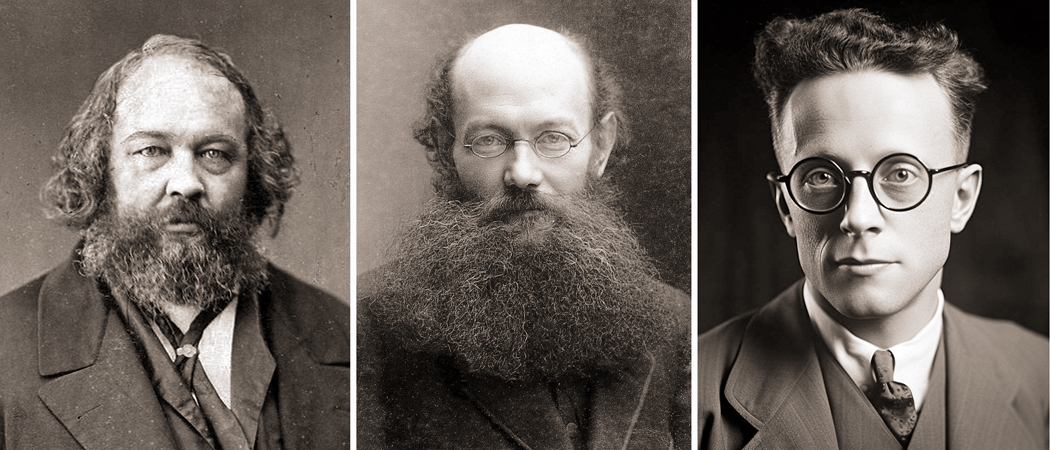
Mikhail Bakunin Peter Kropotkin Max Stirner

The philosophical grandfathers of the Tea Party, let’s face it, are Mikhail Bakunin, Peter Kropotkin and Max Stirner. Get the government out of the way and everything will be peachy-hunky.

Those who call themselves libertarians can sign on to this soft anarchism and feel their views are coherent. But so-called conservative Republicans have a hard time reconciling this anti-government sentiment with the converse idea that everyone should behave according to the Judeo-Christian norms they observe. On one hand, they extoll personal freedom, and on the other hand, they negate it to anyone who disagrees with them. 

Even more, those Republicans who have signed on to the Tea Party’s soft anarchism have a difficult time matching that up with their own drive for political power. And we must face the fact that our two-party system is just a bipolar grasping of power. Republicans can claim that government should be smaller, but a short gander at the record proves that after years of striving for the power, when they have it, Republicans use it just as much as Democrats. What’s the point of winning if you don’t get the perks? 

That’s why I call this a platypus. The parts don’t belong together.

I suppose one shouldn’t expect any political movement to be philosophically coherent. Politics remains sausage manufacturing and always will. But the part that causes thoughtful people profound disquiet comes with the reflection on history.

This marriage of one radical idea with reactionary social conservatism has a long history, and not a history that inspires much confidence or hope.

Every tyranny or reign of terror has its own version of a radical idea melded with a nostalgic longing for a past where everyone was good and righteous and behaved in the old-fashioned ways. Look at the incorruptible Robespierre; look at the agrarian virtues of Mao; look at xenophobic Stalin. 

Not to put too fine a point to it, and I don’t mean to equate one-to-one Republicans with Nazis, but the same principle is at work. No one extolled the virtues of family and marriage more than the National Socialists. Hitler loved children and dogs, as they say. The combination of reactionary social ideas with radical political ideas has fueled this kind of crackpotism since the days of Plato. 

During the last election [i.e. 2012], a healthy percentage of Americans turned away from the extremism of the Tea Party, and I don’t have a fear that this platypus will reconquer our politics. America has a long history of quietism, and has always in the past, so far, retreated from any radical departure from the comfort it finds in a stodgy middle class normality. It’s one of our country’s saving graces: We don’t go in, like the French, for theory. 

But nonetheless, this water-and-oil mixture of radicalism and reaction is something, as the doctors always say, we should keep an eye on. 

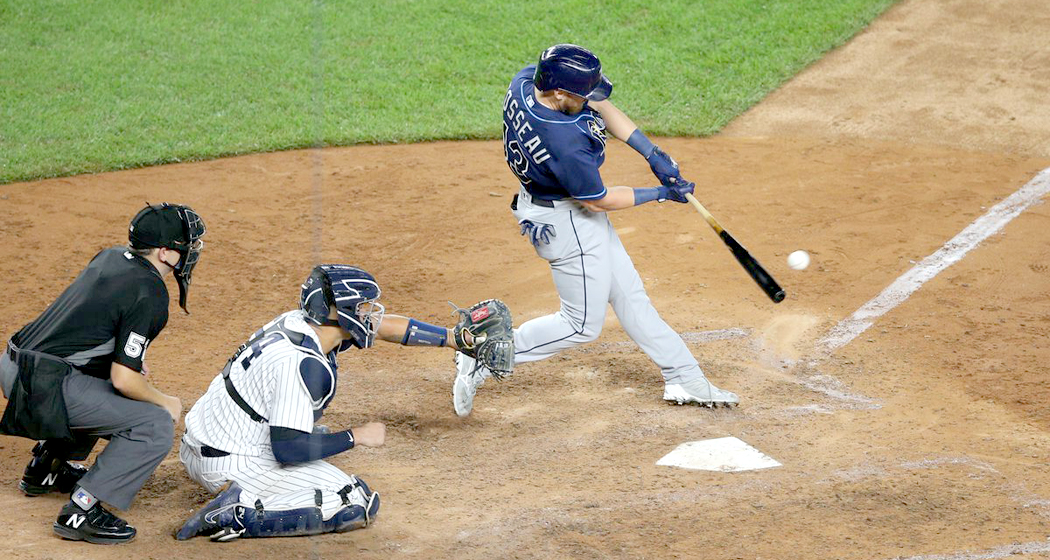
Some friends of mine are watching the baseball playoffs. But they only watch the games (in replay) when they know their team will win. More specifically, until now, only when the Yankees lose. They were cheering for Tampa Bay, not so much because they cared about the Rays, but because they wanted New York to go crashing down in fire and fury. 

I understand the animus against the Yanks. It is a longstanding prejudice in the South, for obvious reasons, but it is not just in Dixie that the Yankees are team non grata. Everyone loves to hate the pinstripes. Why this should be so is curious. 

Obviously, one reason is that for so many decades the Yankees were the bullies of the American League. They have more than twice as many World Series titles as any other team. Heck, they’ve lost more series than the second place team has won. (Twenty-Seven wins for New York, 13 losses; 11 wins for second-place St. Louis). And the Yankees have not been gracious about their hegemony. 

But more to the point is why people other than the players feel they have a stake in the won-loss record of a bunch of hyper-paid athletes. Yea for our team! But it is their team, not yours. You had nothing to do with their winning or losing. 

I wonder all this, not because I am so above this sort of silliness, but because I share it. There are teams I root against, too. I always pull for anyone to beat the Dallas Cowboys. Why I should despise the Cowboys is hard to explain. They are just another NFL team, and indeed the players on the field this season could just as well have been on a favorite team last year. It may have something to do with reviling the team’s owner — it’s easy to do — but it’s not as if other owners are less venal, greedy, and condescending.

The reasons for rooting are irrational. Yes, you may cheer the hometown team. But most people don’t live in a major-league city. When I lived in Virginia in the 1980s, the TV station broadcast Orioles games and I followed the team. When I lived in North Carolina, Braves games were all over the TV. I followed them as a kind of substitute home team. But there are so many other reasons people follow teams. Much has to do with history and trivial grievance, like the hatred of the Yanks. My old friend, Michael Johns, from Seattle, says: 

“At this writing (unless I jinx it), the Atlanta Braves are headed to a 2-0 lead in games against the Dodgers.  I approve.  In the American League, the Tampa Bay Rays are up 2-0 over the Houston Astros.  Again, I approve.”

“Unless it’s the Mariners, my loyalties shift from year to year,” he writes. The Dodgers “are like the Yankees of the National League. While not as clean-cut as the Bronx Bombers, they come close, and they have too many guys named Cody, Corey, and Justin for my taste.” And not enough Dizzies, Pugs and Catfishes, I might add. 

He’s rooting for Tampa Bay in the American League, because the Astros are “a powerhouse team that needs to be taken down a peg.” And besides, they were caught cheating. 

“Having been a fan for over 60 years, I have plenty of memories to share and grievances to air,” he says. 

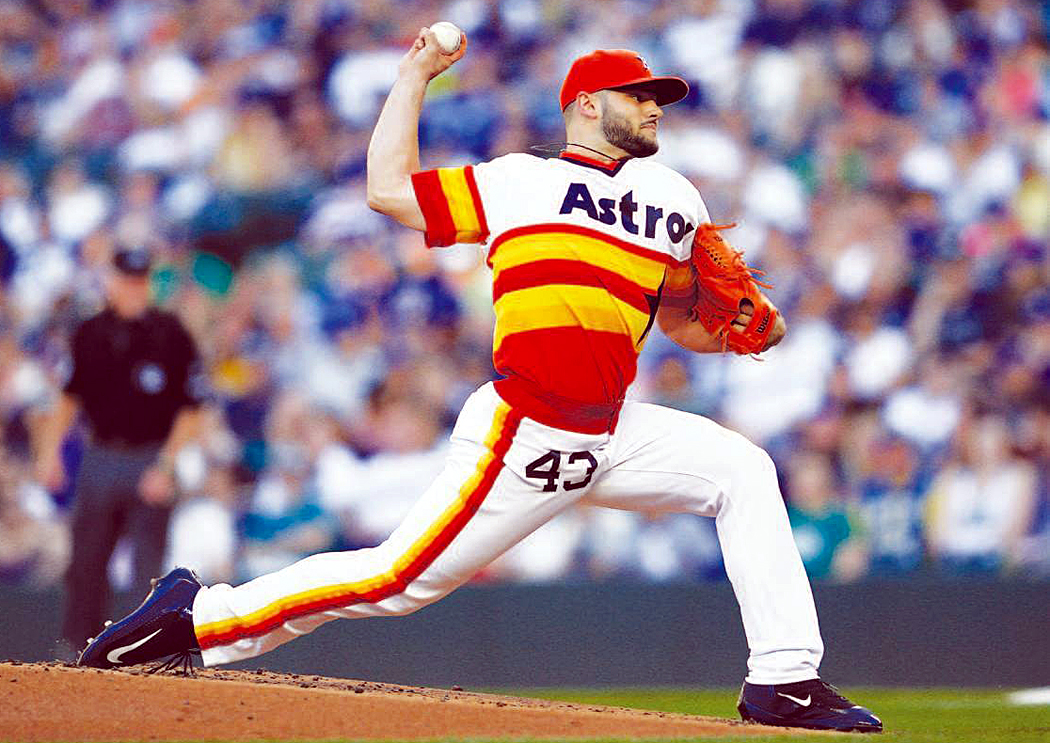
We all have those “grievances,” although they are ultimately pointless, and they drive much of our fandom. I, too, am rooting for the Rays. I have always despised the Astros — even back to their days as the Colt .45s — and for three very substantial reasons. First, the Astrodome was truly ugly, and besides, baseball was meant to be played outdoors. Second, because Astroturf is a crime against humanity and it spread, like a virus or the designated-hitter rule, across too many stadiums. But most important to me — and silliest — because they had the stupidest uniforms in baseball — the equivalent of tie-dye and bell bottoms. For these sins, they have captured my eternal enmity. Reasonable, right? 

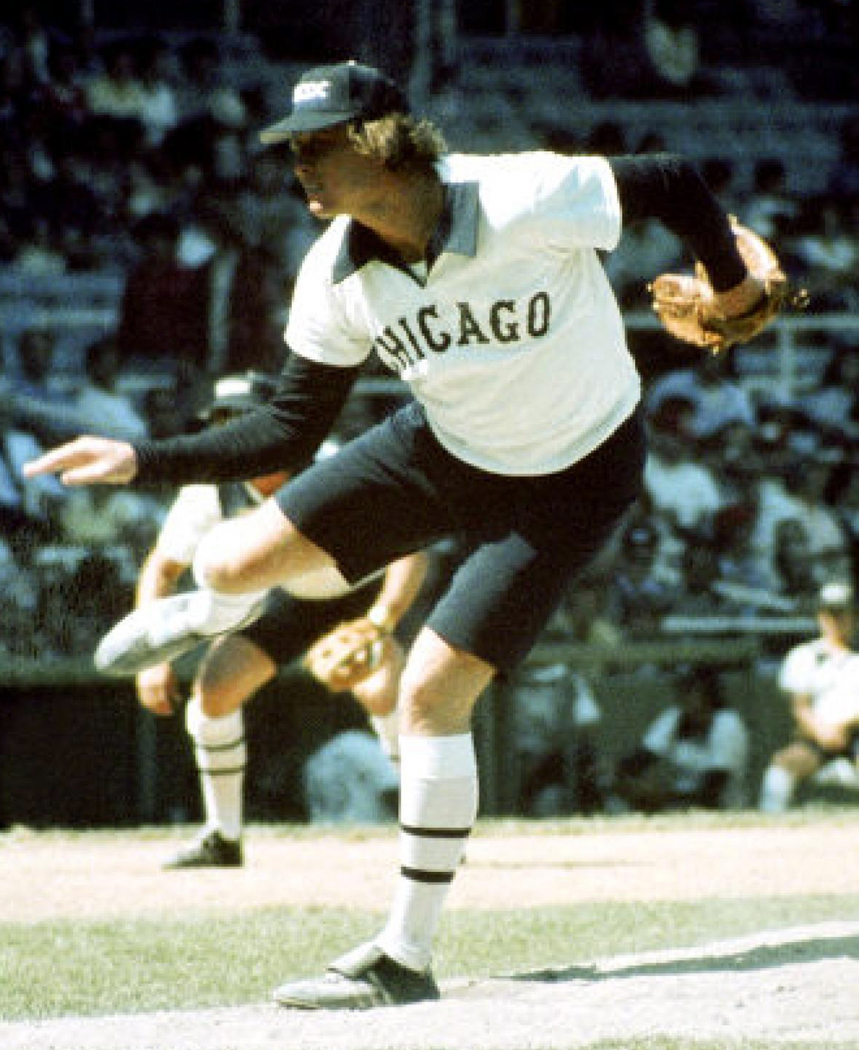
Those uniforms were substantially mooted by the later White Sox atrocities with short pants and collars. And then the San Diego Padres kept coming up with newer and worser ideas. Always a good reason to root against a team. 

I grew up watching hockey. I went to Ranger games at Madison Square Garden. There were six teams in the NHL. Maple Leafs, Canadiens, Red Wings, Bruins, Rangers, and Black Hawks. Then, the league expanded and because of my long-standing sports conservatism, none of the new teams ever seamed legitimate. I couldn’t root for any of them. To this day, I will pull for any of the originals to beat any of the newbies, even though the oldest of them has been in the league for more than half a century now. They are still interlopers and not “real” hockey teams. 

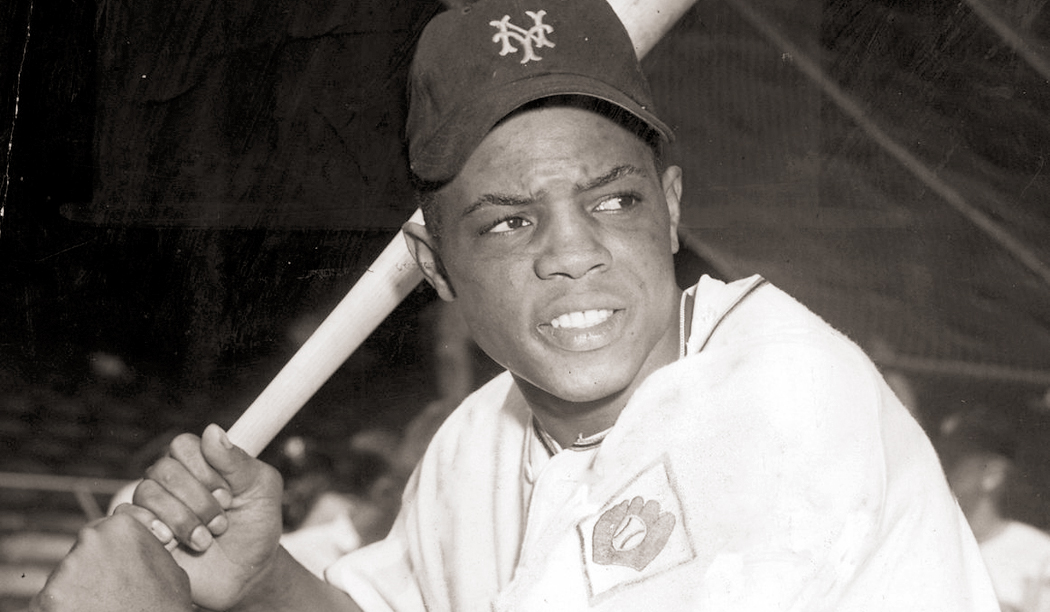
I have a similar prejudice against baseball expansion teams, although not quite as strong. It began with moving teams. My father — and I, as a little boy — rooted for the Brooklyn Dodgers. When they absconded and went to Los Angeles, it took a piece of my Dad and me with them that we never got back. Then the Giants took Willie Mays away from us. The world was suddenly not permanent. Anything could change. The Braves moved to Milwaukee; the Browns moved to Baltimore; the Athletics moved to Kansas City; the Senators moved to Minnesota. What could we count on?

My father later shifted his loyalty to the Mets, but I never could. And then, other new teams began popping up. The Angels, the Colt .45s, the Mets and a revised Senators. Then the Seattle Pilots and the Royals, the Expos and the Padres. Where would it end? The Marlins, the Rockies, the Diamondbacks, the Devil Rays. How could you take a team seriously from Florida? 

Of course, none of this actually matters. It’s just sports. Yet the loyalty so many feel towards such an irrational attachment can be overwhelming. Consider the rioting that breaks out every four years during the World Cup. Soccer hooligans are not much different from Crips and Bloods. 

The National Football League went from 12 teams in 1955, when I was 7 years old and first becoming sports-aware, to its current 32 teams, with many bouncing from city to city like caroming billiard balls (Las Vegas Raiders?) The league merged with the AFL in 1960, but my loyalty remains with the original teams, even when they have shifted from the National Conference to the American. History has shown the supremacy of those original teams. In 2011, I wrote a story for The Arizona Republic looking at the history of the Super Bowl and discovered that original NFL teams held a two-to-one edge in Super Bowl wins: 30 wins for the old NFL, 15 wins for the AFL and all other expansion teams. (The ratio has shrunk some since then.)

I realized that watching football on TV, I root for the team that is older — that I root for any team that was in the original NFL before it became the NFC. Even the original AFL teams, which joined the NFL in 1960 seem like interlopers to me. And expansion teams since then hardly deserve notice as teams at all. Tennessee Titans? Give me a break: Real teams are named Packers, Giants, Bears.

Is there any good reason for this. No, and I don’t pretend there is. Its just stubborn cussedness. An unwillingness to accept change. 

I don’t have a team I follow. When I watch a game, football, baseball or hockey, my rooting interest is always based on which team I judge more “legitimate,” i.e., original. So, if the 49ers are playing the Ravens, I root for the San Francisco. But if the Giants are playing the Niners, I root for New York, since San Francisco didn’t enter the league until 1950. They are the junior team. If the Giants are playing the Packers, I have to root for Green Bay; they are four years older (1921) than New York (1925 joining the league).

(I pull for the Rays against the Astros only because my animus toward the Astros is so overwhelming. Those uniforms, I can never forgive.)

This may seem silly, but what other method can one choose for rooting? Hometown teams make sense, but on “any given Sunday,” as they say, for most Americans, there is no home team. You choose between Tampa Bay and Tennessee? Toss a coin.

But I bring all this up not to badmouth football or sports, but to discuss the impulse towards conservatism. It is something I discover in my own makeup that confuses me — the ineradicable desire for stability and a disdain of change.

This is, of course, the heart of genuine conservatism (as opposed to the radical loony movement that has coopted the name in the service of what is really a kind of anarchism frosted over with religious intolerance).

Political conservatism — as it was once formulated — is the belief what worked for generations of citizens before you shouldn’t be changed lightly. All that now-gone population in aggregate had a kind of multiplied wisdom, and the institutions and laws that have been in place for perhaps centuries  have a kind of legitimacy in numbers: A group is wiser than an individual. If change is needed, we should be slow to believe we are smarter than our forebears en masse, and be slow to adopt the reform until it can be proven the better route. Such conservatism never forbade reform, but took a cautious approach to it. 

One of the things it held onto in England was the primacy of the monarch. Kingship had served us well for so many centuries, why should we give it up? But even there, a parliamentary system eventually became the real government. The Windsors hold on out of sheer habit.

The conservatism of Bill Buckley or Barry Goldwater was more or less of this sort. Let’s not move too quickly. But even such a conservative as Everett Dirksen signed on the the Civil Rights bills because the change was truly needed. 

Now, of course, to be a conservative is not so thoughtful, but rather the same sort of autonomic response we have when rooting for our favorite sports team. There is very little conservative about the Republican Party anymore. It is merely a team to root for against that other team from across town. Especially in the Trump era, even policies are not notably conservative, but radical. Rather than “Let’s keep what we have until we can prove better,” we have “Let’s uproot everything and see what happens.” Grievance is a driving force, and surprisingly like the grievance I still maintain against the Dodgers for moving to California. It has little to do with reality. 

1948-1949-1953

Who are you?

I don’t mean your name or your job or your nationality or ethnicity. But who and what are you? I should like you to think about that for a moment.

Many people believe in a heaven after death where they will meet their loved ones again. But what will they look like? For that matter, in heaven, what will you look like? If you have an internal sense of who you are, what does that person look like? This is not a random question, but a way of considering one of the fundamental issues of existence and of our way of understanding that existence. If you had an entry in the dictionary, what would the picture look like next to your name? Is there even a single image that captures the totality of your existence. When Alfred Stieglitz proposed to create a portrait of Georgia O’Keeffe, he took a bookload of photographs, since one could not ever be enough.

The problem is in thinking of existence as a noun.

For most of us, the cosmos is made up of things; indeed it is the sum total of things. This is a misunderstanding of the reality we live in. It is also a misunderstanding caused by our reliance on language as a way of dealing with that reality. Language leads us astray.

1956-1959-1962

When most people consider what the world is made of, they expect to encounter nouns — that is, things. When they consider themselves, they either think of how they look in the mirror now, but more often of an idealized version of them at the peak of their existence, perhaps when they were 25 or 30 years old. It’s how we will appear in heaven. We have this peculiar idea that nouns are a static identity, that a horse is a horse, a flower is a flower and a bed is a bed. Webster’s dictionary is a catalog of reality.

I bring up beds because of Plato and his damnable idealism. He posited that all earthly beds are but a misbegotten imitation of the “ideal” bed, which does not exist in this world, but in some idealized non-material realm. There is an ideal bed, he says, and an ideal chair, ideal tortoise, ideal apple pie, ideal human, compared to which the earthly item is a knock-off. These ideals are perfect and unchanging, whereas the world we know is sublunary and corrupt.

1966-1969-1977

I’ve written before about this blindness in the ancient Greeks, that they conflated language with reality, that they truly believed that the word they knew was a perfect and complete representation in language of the reality they lived in, and further, that the logic of language replicated identically the order of the universe. Language and reality had a one-to-one relationship. It was a naive belief, of course, but one that led them to believe that nouns were a real thing, not merely a linguistic marker. We still suffer from vestiges of this superstition.

(There was at least one Greek who demurred. Heraclitus recognized that all existence was movement. “Panta Horein,” he said. “Everything flows.” It is why, he said, you cannot ever put your foot into the same river twice. Heraclitus is my hero.)

1984-1996-2015

plant-life-cycleFor in the real world, there are no nouns, there are only verbs. It is all process. A noun is just a snapshot of a verb, freezing it in a particular time and place. But the one ineluctable thing is the verb — the process, the motion, the growth, the dissolution and re-formation. A flower is not a thing, but a motion. It begins as a seed, sprouts beneath the soil and breaks its surface, grows upward, pushing out leaves, swelling into a bud at its apex, popping open the bud to a blossom, which fertilized by a moving bee, dries and drops, leaving a fruit encapsulating a new seed, which falls into the soil once more. The whole is a process, not a thing.

It is the same for you or me. When we were conceived, we were a zygote turning into a fetus, into an infant, a toddler, a boy or girl, an adolescent, a young adult, a grown-up (when we set the seed once more for the next birth) and then accept middle age and senescence, old age and death. We are not any of the snapshots we have in our albums, but the motion forward in time, always pushing up and outward.

“I am inclined to speak of things changed into other things,” writes Ovid at the beginning of his Metamorphoses. Indeed, Plato’s bed began as a seed, a tree turned into lumber, the lumber into a bedframe. Eventually the bed will rot away into the soil once more. Just because the movement is slow doesn’t mean it isn’t happening and isn’t constant. Fie on Plato. (Plato that proto-fascist — I despise the man).

 
This brings us to the recent election. I never intended to write about it, but I cannot avoid it. Plato is a fascist not merely because of the deplorable blueprint for totalitarianism in his Republic, but because that very belief in a noun-world leads to a belief that there is a stasis, a final solution, a political order that will finally and forever settle all the problems we face. Current American conservatives have this sense that if we would only do things their way, we would finally solve the problem of crime, of a stable economy, a balanced budget, of creating a smooth-running order. Oddly they share this teleological view with Marxists. They do not see politics as the constant give-and-take of contending interests, but rather as a kind of machine that could remain static and ever-functioning. They see a noun, not a verb, but politics is a verb. Panta horein.

the-whole_edited-1Just as every flower leads to a seed, so every solution leads to a new problem. There is no ultimate order, no final stasis. It is perpetual churn. Contending interests constantly change, upsetting the received order, and anyone who believes that if we only did this, or did that, everything would be hunky-peachy — well, good luck with that. But there is no end to labor; we keep working, moving, changing until we are no longer aware of the changes that will take over when we die.

I see this clearly looking at the series of pictures of myself from when I was an infant to now, when I am an old man. In between come the student, the husband, the ex-, the career, the exhaustion, the grayed hairs, the grandfather. Which is me? Instead, what I see are frames from a continuous movie and the only reality that counts is the movement, the constant flux from one being into another, no boundaries, no scene changes, no new chapter headings, but one continuous wipe, from beginning to an end now approaching close enough almost to touch. copepod

Further, I can look backward to my parents and their parents, and forward to my daughter and her children and can easily imagine their offspring and those following — all one continuous sweep. My wife had her DNA tested and that allowed her to see her background past sweep from North Carolina back through Ireland, the Mediterranean, the Levant and into Africa, mutation by slow mutation. If there were tests sophisticated enough, I’m sure we could peer back through microscopes at that same DNA to lemurs, crocodiles, placoderm fish, hydrae, algae, and various spirochetes.

And then the planet back through the accretive dust, into the exploding novae, back to the plasmic hydrogen to the Big Bang. From then, it is always moving forward in a cosmic rush, skating through space-time — the long verb.

A noun is just a snapshot of a verb.

Maelstrom

“The center cannot hold.”

This is a common saying these days from political commentators on TV or in op-ed pages. The assumption is that there is such a thing as the political center. It is an assumption that needs to be challenged.

We tend to lionize the political center, as if it were the place where sanity is found, battered on left and right by zealots and ideologues. But, in fact, there is no codified political theory that can be tagged with the label. It is, in fact, the bin for dumping the leftovers.

Those who hold genuine political thought fall down the steep slopes of the bell curve on both sides, toward conservatism and reaction on one side, and toward socialism on the other. Marx vs. Ayn Rand. Both sides hold their opinions with passionate intensity. What we call the middle is really just the no-man’s land between them where they battle it out, and with no clear victor, they fall, exhausted, between the two poles, and we have a stalemate. That is what we call the center.

In practice, this has actually worked out quite well for the rest of us, who are not card-carrying members of either side. It is as if two out-of-phase sine waves have cancelled each other out, and we live in relative peace. Politics, when done right, is the clash of interests, where no one interest prevails all the time, and compromises are reached to keep each side, not happy exactly, yet equally miffed, but just under the boiling point.

“The trick from my angle is to make my play strong enough to tie you up, but not make you mad enough to bump me off against your better judgment.”

This, then, is the center, where most of us, unafflicted by theoretical strait-jackets, try to live our lives spending the least possible time on policy and government. Government is something up with which we must put. To paraphrase Willie Loman, “Taxes must be paid.”

This doesn’t mean we don’t recognize the importance of social order, or a ruling forum that functions efficiently and cleanly, but more important than making rules about who gets to use which bathroom, are such things as the welfare of our children, our careers, the availability of food, and whether the Cubbies will ever again win the World Series. That a well-run government is necessary for some of those things is acknowledged, but just how much energy we put into politics is the issue. In ancient Athens, you were judged in part by whether or not you were politically aware and active. But for most of us in middle-class America, being politically active is rather more a badge of how misguided you are, how obsessed, how geeky.

We have, since 1789, run on the well-oiled principle that if we let the two sides fight it out, we can comfortably nestle in the hammock left in between them. There have been a few times, like the years from 1861 to 1865, when the center did not hold and the country erupted. We came close again in 1968, as those of us who lived through it remember. The pressure has been building up again. Both political parties found their basic premises threatened this election cycle. Republicans have discovered that the dissension, obstructionism and bigotry they have sowed for the purpose of maintaining power in Congress has come back to bite them. What they hold as true conservative values are shredded by the buzz words and palaver of Donald Trump, who seemingly holds no values whatsoever, outside of Donald Trump. Democrats found that a socialist roused a significant sector of their membership, driving their conventional candidate further to the left and away from the coveted “middle.”

That middle has become a vacuum as the polar sides pull apart and we suffer the pain.

The central problem is that, because the middle is not a platform, not a policy, not an ideology, it cannot clearly enunciate its principles, outside of a basic, “Don’t go nuts.” The Right and Left have manifestoes and position papers, arguing with faultless logic the rightness of their causes — albeit within the confines of the definitions they use and the axioms they leave unexamined. We in the middle have only a defensive “please go away” and “leave us in peace.”

Once in a while, however, we are called upon to slough off our natural passivity and take a stand. In the 1960s, we had to decide whether segregation was morally defensible, as a hundred years before, we had to pick a side on slavery. When we didn’t step in, as with the Know-Nothings of the 1840s, or the McCarthy era in the 1950s, the country went off the rails and the looneys took over. We face something of the same now, with Donald Trump, whose unfinished sentences pile cliche on cliche, Ossa on Pelion, and we are buried under a mountain of verbal garbage, un-thought-through, indefensible, and outright dangerous.

My great friend, the late Dimitri Drobatschewsky, grew up in pre-war Berlin. His family was forced to flee the Nazis, and his father eventually died at Auschwitz. He remembers as an adolescent hearing Adolf Hitler speaking live. “Everything he said was a banal platitude,” Dimitri recalled. “It was meaningless cliche piled on meaningless cliche. But he was such a persuasive and hypnotic speaker that I found myself, a Jew in Germany, that it was all I could do to keep my arm from raising in the Nazi salute.” Dimitri eventually left Germany for France, and after the fall of that country, joined the Free French forces under De Gaulle.

But Dimitri reminded me that Hitler didn’t usually come right out and say specific things. He let his minions do that. Hitler spoke of vague ideas, such as “Germany for the Germans,” and “Make Germany great again,” which are hardly controversial on the surface, but underneath was an unspoken agenda, heard by his followers as clear as a gong. One after another the meaningless platitudes piled up until an entire nation found themselves committing atrocities their grandchildren are still ashamed of.

One doesn’t want to pull out the Nazi trump card too easily. One gets tired of calling any opponent a “Hitler.” It too often trivializes the insult. But there is the parallel, too easily overlooked, especially by his followers. If we don’t want to discover in four or five years that we were “good Germans,” we had better decide now that even if we are not enthusiastic about the choice we have to make in November, we had better not give in to apathy, we had better make the effort to go to the polls, else we could wind up somewhere very dark, very violent, very shameful.

Dwight D Eisenhower

I want to make an argument for conservatism. This goes against my nature, because I am not in sympathy with it. Especially now, when conservatism has come to mean unpleasant things like bigotry and nativism. It’s hard to turn on a news channel and not hear some congressman spout such utter rubbish as to make you slap your forehead  in disbelief at the ignorance and hatred displayed.

But I tuned in recently to my favorite TV channel — C-Span — and listened to Dwight Eisenhower in an old kinescope announce his candidacy for president in 1952. He made an argument for the two-party system. Not, “my party is right and the other guys are evil,” but that the parties need each other to prevent us from skidding too far off the road. They are checks and balances for each other. It was such a level-headed and fair speech that I was brought up short: No one today would speak like this.

Eisenhower’s argument was that Democrats had held the presidency for 20 years and it was time to let the pendulum swing back the other way. Not Karl Rove’s “permanent Republican majority,” but more like children taking turns. “It’s my turn now.”

Power corrupts and switching parties occasionally can sweep away some of the entrenched habits of power. Eisenhower’s plea was not that Republicans were better but that a periodic change is healthy.

But what I’m talking about isn’t a Republican vs. Democrat issue. In Eisenhower’s time, the parties were not so ideologically fractured.

Southern Democrats were hidebound conservatives, and there was a liberal wing of the Republicans. It is true that most Republicans were business friendly and — aside from race — the Democrats were more concerned with “the common man” and social justice. But these were tendencies, not definitions.

I’m concerned not so much with party affiliation but with the philosophies of conservatism and liberalism. Not as they are currently defined, which is a perversion of history; people who call themselves conservative now most often espouse ideas, like “small government” that are historically liberal.

edmund burkeNo, what I mean is a kind of Burkean conservatism. This is a skeptical conservatism that worries that if we dislodge long-established traditions, we may be doing more harm than good, that what we inherited from our forefathers generally worked pretty well, and so we would be foolish to jump on some trendy bandwagon before carefully examining the wheels and axles of that wagon.

Certainly many reform movements have improved the lives of citizens, but reforms may cause as much damage as they repair. Unintended consequences. And what is deemed proper in one age may be later seen as not so. Consider the reforms of Prohibition. How did that work out?

Liberalism may be seen as a foot on the accelerator and conservatism as a foot on the brake.

Ian_PaisleyThe reason I cannot call myself a conservative is the rather tawdry historical record of conservatism. The foot on the brake meant a perpetuation of slavery in the U.S., of Jim Crow laws, and in England the subjugation of Ireland and the survival of aristocratic privilege. It has been the ugliness of Jesse Helms, George Wallace, Ian Paisley or Father Coughlin.

We are currently seeing a resurrection of such ugliness with Donald Trump. But it should be noted that Trump is not a conservative. He is not anything — unless he is a Trumpist. (Has he ever even finished a sentence?) What policy he has espoused is neither consistently liberal or conservative, but uniformly nativist and bigoted. Such attitudes are not inherently conservative. In fact, the real conservative attitude is not “the government is rotten, throw out government,” but rather “we have established government for the stability of society, and we don’t want to change it too fast.” In this, Trump and his followers — understandably angry at the failure of Washington to act like grown-ups — are not conservative, but radical.Wrecking Ball

That is why, although I despise the political positions of House Speaker Paul Ryan, I nevertheless feel sympathy for him as a genuine conservative. How can a conservative look at the proposed dismantling of our institutions and cheer on the wrecking ball?

There is an uglier aspect of conservatism that believes that keeping what you have means keeping the wealth you have accumulated, and when defined in purely economic terms, conservatism looks like selfishness on steroids. But there is a less monetary shade to keeping what you have, when what you have is a system of laws, a set of customs that have lasted some centuries, a religion that you inherited from your grandparents and a set of morals that creates stability. There is value in such things. They have worked in the past.

Politics, when seen correctly, is the contending of disparate interests. It is not the imposition of an ideology on a populace. Two parties jostling back and forth (or in a parliamentary system, many parties) make opposing cases that at any given time speak to one need or another. Neither conservative nor liberal can reach a final answer to our political problems, because those problems keep changing.

What we have now are two parallel but distinct developments. On one hand, there is an increasing self-righteousness both on right and left. One one hand you have the Grover Norquists who believe that all taxation is theft; on the other, you have those who think that all corporations and banks are thieves. These are two contending camps, and when things work properly, they give and take and work things out, leaving no one completely happy.

the-long-gameBut the parallel development in politics is what Mitch McConnell calls in his new book, The Long Game. It is the political version of playing King of the Hill, where the goal is to be on top. Not to govern better or solve problems, but to beat the other guy in a sort of game. Hence McConnell can say his political goal was to make Obama a “one-term president.” It is hardly surprising, then, that voters are fed up with Washington as it now operates — each side trying their best to undo the other. It has meant a great deal of hypocrisy, of Republicans denouncing policies they have come up with if accepted by Democrats. Obamacare was a Republican program initially. If Republicans want smaller government and fewer regulations, that doesn’t seem to obtain to abortion or gay marriage.

This is, it needs to be noted, not a problem of liberal vs. conservative, but of Republican vs. Democrat and the game-playing is unseemly.

We want to scream to all of them: “It’s not a game!

I said I had a difficult time making a case for conservatism, because I don’t feel simpatico with most conservative thought. But I do think we need a counterweight to the sometimes giddy do-goodism of the liberal side of the equation.

The bottom line is we can never solve our problems. We can sometimes ameliorate immediate difficulties, but such solutions are always temporary, to be obviated by some future historical or social development. If we are not aware of that and believe we can fix the machine so it will run smoothly in perpetuity, we will, like the poorly worded Second Amendment, hamstring our progeny.

FootballOn tuning in to the Colbert show on Thursday, I became unavoidably aware that the new NFL season had begun. Each year, I swear I will not watch any football — It rots the mind. But it is inevitable: I end up watching anyway. There is something hypnotic about it. kursk battle 2

American football is a brutish game in which behemoths pound each other like the tank battle at Kursk, and, as my wife describes the game: “He runs with the ball, he throws the ball, he falls down with the ball.” It really is rather mindless.

And surprisingly dull. Most of the time is spent with nothing much happening on the field and while pickup trucks tell us they are tougher than the other guy’s, while beer tells us the way to a sexy woman’s heart (or pants) is through drinking swill, and through endless network promos for TV shows about terrorists, serial killers and clairvoyant crimesolvers.stopwatch

I once timed a football game with a stopwatch, starting it with the snap of the ball and clicking it off when the ref blew the play dead. In a three-plus hour game, there was, count’em, exactly 14 minutes and 49 seconds of actual playing time.

Why the American male has the patience for so much downtime, so much dead air, so much palaver by color commentators replaying minor points of how the quarterback is putting too much weight on his front foot — why this is taking up so much of our Sundays, Monday nights and now Thursday nights, is well beyond my ability to comprehend. But there you are, I wind up watching anyway. ebbets field

Perhaps my biggest complaint — aside from my own complicity — is that the beginning of the season steps on the feet of the retreating baseball season. Football is no Fred Astaire. Baseball is a game I can actually enjoy watching. I have been a baseball fan from the time before I even entered kindergarten. I would watch Brooklyn Dodgers games on TV when Vin Scully was the new kid, relegated to postgame interviews with the players.

Baseball is an aristocratic game, balanced, thoughtful, elegant. Football, in contrast is a bludgeon wielded by a mob enforcer. I have enjoyed boxing, even hockey, without finding the event as nasty, brutish and halting as an NFL game.

But I bring all this up not to badmouth football, but to discuss the impulse towards conservatism. It is something I discover in my own makeup that confuses me — the ineradicable desire for stability and a disdain of change.

This is, of course, the heart of genuine conservatism (as opposed to the radical loony movement that has coopted the name in the service of what is really a kind of anarchism tempered with religious intolerance).

It first came to me when I realized that watching football on TV, I inevitably root for the team that is older — that I root for any team that was in the original NFL before it became the NFC. Even the original AFL teams, which joined the NFL in 1960 seem like interlopers to me. And expansion teams since then hardly deserve notice as teams at all. Carolina Panthers? Give me a break: Real teams are named Packers, Giants, Bears.

Perhaps there is some rationale for this. In 2011, I wrote a story for The Arizona Republic looking at the history of the Super Bowl and discovered that original NFL teams held a two-to-one edge in Super Bowl wins: 30 wins for the old NFL, 15 wins for the AFL and all other expansion teams. (The ratio has shrunk some since then. In Super Bowls since 2011, only one old NFL team has won: The NY Giants in 2012. This still leaves the old guard with a 31 to 18 edge).

I don’t have a team I follow. When I watch a game, my rooting interest is always based on which team I judge more “legitimate,” i.e., original. So, if the 49ers are playing the Ravens, I root for the San Francisco. But if the Giants are playing the Niners, I root for New York, since San Francisco didn’t enter the league until 1950. They are the junior team. If the Giants are playing the Packers, I have to root for Green Bay; they are four years older (1921) than New York (1925 joining the league).

This may seem silly, but what other method can one choose for rooting? Hometown teams make sense, but on “any given Sunday,” as they say, for most Americans, there is no home team. You choose between Tampa Bay and Tennessee? Toss a coin?

This gets back to this unrooted conservatism. For me, there are only six hockey teams: the Rangers, Black Hawks, Bruins, Red Wings, Maple Leafs and Canadiens. I don’t know how San Jose ever qualified; it’s a joke.

In baseball, my first love, I always root for the older team, and if two old teams are playing, I root for the older league — yes, the American League is a parvenu, still. There are subtleties to this system; a franchise move bumps a team down several notches, so the Dodgers and Giants each have a penalty attached: They moved; if they were still playing in Ebbets Field or the Polo Grounds, they would still be at the top of my list, but they betrayed us (yes, I grew up in the New York area). But still, if the Giants are playing the Marlins, I root for the Giants.

This is a finely met system of game watching. One has to choose a team based not on current talent, but on history. It is a system prejudicial to Cincinnati, Boston, Chicago, Philadelphia, Pittsburgh, St. Louis, Cleveland and New York. And against upstarts such as Tampa, Denver, Anaheim and what? Arlington, Texas? Oy.

This all might be taken as ultimately frivolous. How seriously can you take sports teams? And rooting (quite apart from gambling on teams, which I never do) is completely irrational. Especially in these days of modern times when favorite players shuffle around the league in trades and free-agency, faithfulness to any one team no longer makes any sense.

Each year my team seems like the luck of the draw and any reason to favor them above any other team is quite unfounded. white sox 1976 Yet, there is this deeply imbedded need to root. One team over another, underdog against the bully, home team against the visitor, well-designed uniform against the cartoon version (how anyone can root for the brown camouflage of San Diego is beyond me, and remember the 1976 White Sox? — a travesty.)

And that is where this mysterious conservatism comes in. There is buried in me — as in many people — a desire to keep things as we have always known them. We are comfortable with the familiar, and what is more, they world as we came to know it when we were young seems to possess a legitimacy that novelty lacks.

This is despite the fact that change is often necessary and often makes things better for all of us.

A good deal of conservative backlash against things such as affirmative action have as much to do with the comfort of a familiar past than it has to do with overt racism.

I don’t deny the racism, but conservatism isn’t only racism; it is also a profound discomfort with change. Even change for the good.

And although no one takes precedence over me in my distaste for what I call “tin-foil-hat” Republicans, and the continued institutional racism of so many national traditions, I have to say that somewhere, deep down inside myself, I can have some inkling of understanding for the source of this disquiet.

I don’t condone it, but I share it.

weeds lede photoI love gardens. My three most recent gallery shows have been of photographs taken in gardens. I photograph the gardens of most of my friends to make “books,” or series of images. Flowers are about growth, change, diversity, fecundity — and beauty. choke cherry 2

Yet, there is something in what I love about growing plants that is found in even more condensed form in the rankness of weeds. Gardens are wonderful, but weeds satisfy something philosophical deep in my soul. My own gardens have always been unkempt, and I tend not to weed out those plants that others fear will suffocate their more prized plantings. Weeds have a strength, if not a refinement, that I find almost heartbreaking. Right now, beside the roses and gladiolas that my wife planted, there is a great purple stalk of pokeweed, its berries still green against the fuschia of its stems. I prize it above the more formal and familiar plantings. weeds 09

Nothing lifts my heart up more than a clump of goldenrod beside the road, a spray of chickory, the tall swaying stalks of Joe Pye weed. It doesn’t even take the flowers: Even before they bloom, I like the sprawling weediness of their greens. chickory

And now is weed season. Yes, they grow year round, but the end of summer and the incipient autumn are when the weeds glory. Driving down the country roads of the Blue Ridge, you pass oceans of them, all colors and sizes, all rank and fertile.

I’m calling them weeds because their other name — wildflowers — makes them sound too pretty, and makes them sound like something you look up in a Peterson guide. Not all of the weeds I respond to even have the color dots you would call flowers. Sometimes their flowers are tiny and unnoticed; sometimes they stink instead of filling the nostrils with perfumes. grass in driveway

It isn’t just their appearance that moves me, although I revel in their varied shapes and forms, their repetitions of leaflets and their snaky tendrils; it is the very idea of weeds — the sense that life will force its way into the least cracks of concrete, will fill any emptiness and break through any barrier. I love to see some abandoned factory with vines covering its brick facade, and through its windows you may see ailanthus cracking up the interior floors. Others may rue the kudzu spreading over the trees, but I love the new forms we have, almost as if the trees were pulling sheets over their heads to play ghost. weeds 08

My love came early: When I was a boy, there was an empty farm field next to our house in northern New Jersey. In a few years, plant succession had covered it with stickers and grasses, later, saplings, and even before I moved away to college, there was such a dense thicket of young trees, it looked like a magnified view of the hairs on the back of a dog; you could hardly walk through the density. I have gone back to see the forest that it became; it has since been cleared and now someone is building tract housing there. Sometime in the future, it will be taken back by the vegetative maw that eventually devours everything. weeds 07

Some of my favorite places in a city are those that are forgotten, mostly, places that simply don’t have a use, being either too small, or not geometric enough to easily create deeds of title — spaces between properties left ambiguous of ownership, or little triangles next to on-ramps or beside old railroad sidings.composite Here the intention of humankind plays no part and weeds are left to themselves. There you find the yarrow and the cow itch, the Duchesnia indica and the knotweed. There what you find, and which I find so precious, is profusion. When humans become involved, you too often find monoculture, organization, rows and aisles, sameness, monotony and worse — usefulness.

The problem with usefulness is that it causes us to value something for how it might benefit us, turning it into a single descriptor, a one-dimensional entity, rather than a rich, multiple, various thing. An it rather than a thou. It ceases to be a part of the physical world and becomes instead a word — a concept instead of a living thing. Fie!weeds 04

There are things that are pretty — and some weeds count, too — but what I find beautiful, a concept so much larger than prettiness, as the universe is larger than the solar system, is profusion, fertility, irrepressibility — life.

Variety is not so much the spice of life, as life itself. Nature tries everything. It has no plan, motive or goal; it simply keeps putting stuff out there, like Blake’s mythical creative deity, Los.

“Exuberance is beauty.”weeds 10

This carries over into other areas of life. I enjoy all art, but I love the confusions of the Baroque, the exudations of the Romantic 19th century. If you compare Racine or Dryden with Shakespeare, you see the difference. Those 18th century unities are boring, while the uncontrolled profusion of metaphors in the Bard, and his shaggy plots and contradictory personae are the very stuff of life. The one rich and luscious, the other dry and didactic.

Victorian literature shares that didacticism, but even among the tidy moral lessons of Whittier and Longfellow, you have the weedy, rank profusion of language and thought and feeling that is Walt Whitman. How those of propriety hated the Good Gray Poet. Certainly, lots of Whitman is awful, repetitive and oracular, but then there is “Out of the Cradle Endlessly Rocking.” Emily Dickinson wrote some of the worst gobbledy-gook every published, but among her profusion of cryptic word-knots,  fruited with a million hyphens or dashes — certainly one of my favorite punctuations — there are such perfections that you are grateful for the weeds that give us such bounty. weeds 03

Simplicity is the enemy of life. When I hear a politician propound a dogmatic solution to an intractable problem, I sigh. When anyone has a simple answer, applied liberally (or conservatively), I know he is either a charlatan or a dunce. Probably both.

Such politics posits a final stasis, when all problems are solved by the simple prescription of an unchanging mantra: reduce taxes, reduce regulation, shrink government and Eden will be rebuilt. The political left is just as guilty, although we hear about it rather less. Communism equally anticipated an “end of history.” Problem solved.

Both sides fail to recognize that politics is ever shifting and cannot be otherwise. Interests contend, compromises are reached, grow out of date and so new compromises are found, no more permanent than the last. It is all weeds. We should value those weeds.

Romeo and Juliet in frame
“All great love ends in death,” Stuart said.

“Maybe in literature, but not in real life,” I said.

“Yes. All love ends in death. On one hand, sometimes it’s love that dies and then you are stuck. But even if love doesn’t die, the lovers do.”

“You mean like Romeo and Juliet?” I asked.

“Yes, like Romeo and Juliet. Like Tristan and Isolde.”

“But can’t love end happily?” I put forward that possibility; I’ve been married 30 years.

“Yes, but even the most successful love ends in death,” Stuart said. “Either for one or the other and eventually, both. They may be 80 years old, but eventually, love ends in death.”

“Oh. I see what you mean. It’s a trick. Like a trick question.”

“No, it’s not a trick, except that it is a trick the universe plays on all of us. I don’t mean it as a trick.

“Romeo didn’t have to die the way he did,” Stuart went on, “but he had to die eventually. Even if they got married and lived long lives, he would have to die some time, and then, Juliet loses him anyway.”

It is the underlying metaphor of all tragic love stories, he thought. His own, for instance. Stuart had never seen a great gulf between literature and his own life. Others, well, they may be banal and ordinary, but his own life had all the electricity of a great book or epic myth.

The one thing that separated Stuart most from the accountants and dentists of the world was that he recognized in himself the hero of his own life — the sense that he was the main character in a story of infinite significance. When something happened to Stuart, it happened to the universe.

The joke was, of course, that this is true. But there was a stinger, too: Although it was true, the universe is so vast that no matter how big it was to Stuart, it added up to zilch in the big picture.

“That is truly depressing,” I made a sour face.

“But that is not the real issue,” Stuart said. “The real issue is the frame.”

“The frame?”

“Yes. This is something I’ve been wondering about for a while. Every comedy ends in a marriage, it is said. The curtain drops and the audience goes home enjoying the happy ending.

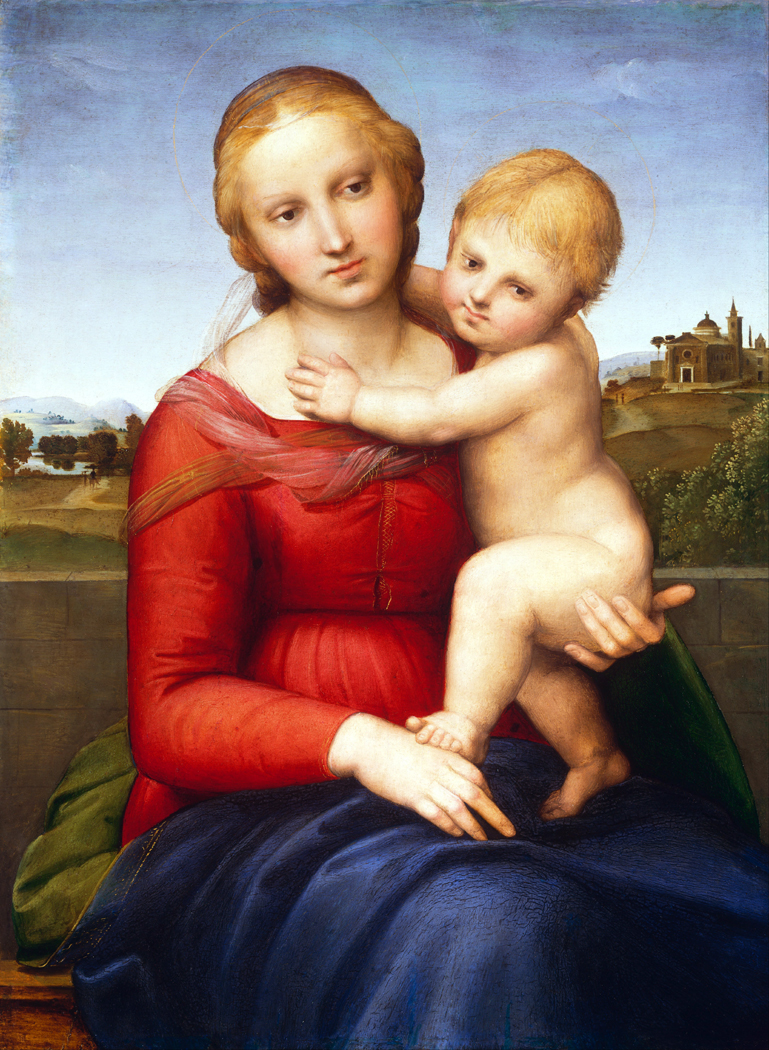
“But, if we followed Beatrice and Benedick after the end of the play, in a few years, at least, there would be divorce — or more likely, murder. Happy endings are always provisional. So, there is an artificiality to comedies that is ineradicable. The happiest comedy, if drawn out to the uttermost, ends in dissolution.”Raphael

“So, you’re saying that the frame — the curtain — reveals any art as an artifice.”

“Yes. And not just in theater. Take the photographs of Garry Winogrand. We are meant to see the frame — the edge of the photograph — as an arbitrary border drawn around some episode, but beyond the frame, there are other people doing other things. This has become something of a trope in photography.

“It used to be that we understood the frame in a painting — say a Renaissance crucifixion, or a Madonna — as merely the point at which our interest in the visual matter evaporates. It is the Christ or Virgin that sits in the middle that is meant as an object of contemplation. A frame could be larger or smaller and still contain the essential action.Tintoretto, La crocifissione, Sala dell'albergo, Scuola di San R

“In Baroque painting, there is often the growing sense that the frame cannot contain the action, but that there is something worth knowing just beyond the edge. That sense has become central in certain strains of contemporary photography. winograndA photograph may contain an image of someone looking back at the camera, over the photographer’s shoulder, at something behind him that we can never see.

“The first kind of frame serves as a kind of fence, or corral in which the important information is contained. The second is more like a cookie cutter, which sticks into the welter of existence and excises this small bit for us to consider.

“That is the frame, the ‘beginning, middle and end’ that gives us such satisfaction in a play or opera.”

My concern at this point is that I could see that Stuart was unwinding his own life from the bobbin, and holding it out in his fingers to examine, and what he was finding was deflating. What set Stuart apart from most people was about to be undone. siegfried

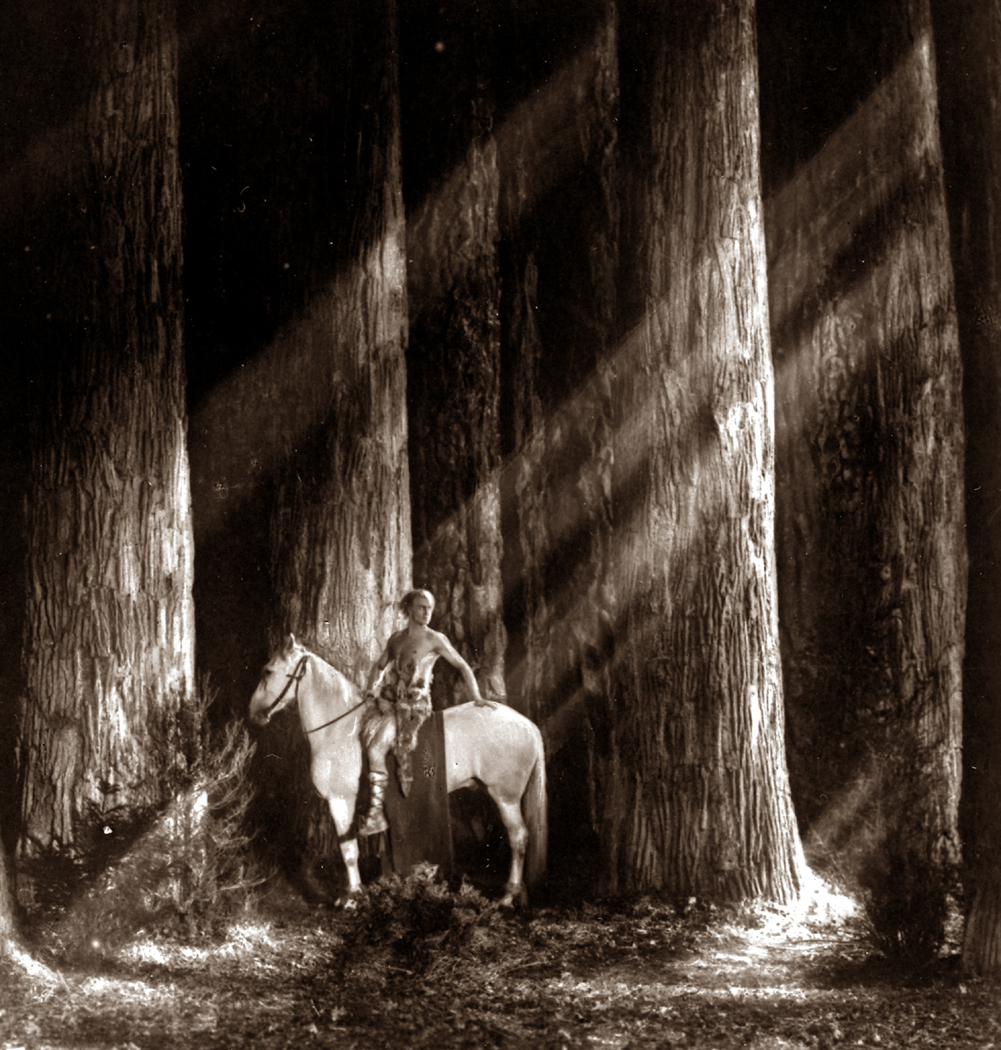
I had known Stuart since college, and what made him glow from the inside was not just his energy — or jittery intelligence — but his sense that he was the star in his own movie. Or rather, that he saw in himself a larger, mythological version of himself playing out among the chess pieces of the universe. He was Siegfried voyaging down the Rhine; he was Odysseus; he was stout Cortez.

Don’t misunderstand, please. He was never grandiose — in his exterior behavior, he was as normal as you or me. But inside, was something larger, bursting to get out. He saw the world swirling the way Van Gogh did. For Stuart, every bush was the burning bush. Take away that internal furnace, and what would be left of Stuart? He would have grown up. Not something that any of us who knew him would wish for.van gogh

“This is the fundamental fallacy of American conservatism,” he went on, making another 90-degree turn.

“They seek to enforce a static vision of society, of law, of human behavior. They keep telling us, that if only we would do things their way, everything would finally be peach-hunky, into eternity — the happy ending that we know (and they don’t admit) is always provisional. They see a — excuse me for the exaggeration — ‘final solution’ for something that has no finality to it.

“Politics — real politics — is always the flux of contending interests. You want this, I want that, and we wind up compromising. Conservatives see compromise as surrender, precisely because they see politics with a frame. Get the picture right, and then it is done. Deficits are erased; the wealthy get to keep what is rightfully theirs; order is established. It is the underlying metaphor of all Shakespeare’s plays: The establishment of lasting, legitimate order, final harmony. stew

“Only, we know that after Fortinbras takes over, there will be insurgencies, dynastic plots, other invasions, a claim by mainland Danes over island-dwelling Danes, or questions of where tax money is going. It is never ending. Fortinbras is only a temporary way-station.

“Existence is a seething, roiling cauldron and sometimes this bit of onion and carrot comes to the surface, and sometimes it is something else. It is never finished, there is no frame, no beginning, middle and end.”

“So, where does this leave poor Juliet?”

“Juliet?”

“Yes, where does this leave us all, we who are all bits of carrot. We who are married for 30 years, we who entered the field of contention, worked for our required decades and left the battlefield to become Nestors — or Poloniuses. All this washes over us and we see that, in fact, we have a frame. Existence may not have one, but I do. I am getting old. 67th birthdayI just turned 67 and I feel it. And I know that my Juliet will die, or I will go before her. We do have, in fact, a frame, a curtain that draws down and leaves us — as Homer says — in darkness.”

“Exactly,” Stuart said, “and this is my point. Every one of us lives two very different lives. You can call them the external and internal lives. The first is the life in which we share the planet with 7 billion others. We are a tiny, insignificant cog in the giant machine. The second is the mythic life, the life we see ourselves as central to, in which we are the heroes of our own novels or movies, and everyone we know is a supporting actor. If we live only in the first life, we are crushed and spit out. But if we live only in the second life, we are solipsists. Sane people manage to balance the two lives. A beautiful counterpoint.

“We are most engulfed by that second life when we fall in love. We are certain that we invented this condition. No one else has ever felt what we feel. It’s comic, of course, but it is also profound. Without this feeling, life is unbearable. We have to have meaning, and meaning is created by how we imagine ourselves.

“Politics hovers oddly in the intersection of these two worlds. We need to sober up and consider the other 7 billion people if we are to create useful policy, but we mythologize those who lead us, and those who lead do so most effectively when they mirror back some version of mythology. The most extreme example I can think of is Nazism in Germany. A whole nation bought into the fantasy. Disaster follows.

“But all ideology is ultimately built on mythology: on a version of the world with one or two simple dimensions, when existence is multi-dimensional. The political myth is always a myth of Utopia, whether right-wing or left-wing. And it is always a static myth: Racism ends and everything is great, or government spending is curtailed and everything is great. That simply isn’t the way existence is.”

“The world is always bigger and more varied than our understanding of it, and it will always come back to whack us upside the haid.”

“Right. The conservative sees the world only with his ego eyes, not from outside himself. That frame — his death — is something he cannot see beyond. There is something egoistic about conservatism. Often selfish, also, but the selfishness isn’t the problem, it is the egoism — the frame they put around the world, the static sense of what is finally right — the so-called end of history. In this, the conservative — or at least the tin-foil-hat variety — is no different from the dyed-in-the-wool Communist. Both see the establishment of their Utopia as the endgame of human existence.” hubert robert

“You’ve been reading Ovid again.”

“How did you know?”

“The Pythagoras chapter.”

“Right again. Panta Horein, as Heraclitus said: ‘Everything is flowing.’ As Ovid has it, even landscapes change over time, and Hercules’ brawn withers and Helen’s breasts sag. Cities grow and are demolished; Mycenae gives way to Athens, to Alexandria, to Rome, to Byzantium and Baghdad, then to London and now to Washington, with Beijing waiting in the hopper. ‘Mais ou sont les neiges d’antan?’ “

“How’s that?”

In saecula saeculorum: World without frame.”


Orangerie Paris

What is culture, and why should we care?

These are questions that don’t get asked often enough when we discuss such inflammatory issues as government funding of the arts and humanities.

To many people, culture simply means a lot of wealthy people going to the opera and sitting through a hare-brained story in a language they don’t understand while listening to a soprano shriek so loud their elbows go numb.

Or it means drinking bad white wine from a plastic champagne glass at an art gallery opening or long, dense scholarly papers deconstructing Little Red Riding Hood as a text about the patriarchal hegemony.

We too often talk about culture as if it meant only evenings in the theater and long Russian novels.

But what would happen if all these so-called ”high” arts suddenly disappeared? Do we actually need them?

To understand the answer, we need to understand what culture is. Culture is broader than just the arts.

It’s what you eat for breakfast and whether your trousers have cuffs. It is who you are allowed to marry and what happens to your body when you die.

Culture is the set of rules — mostly in the form of traditions — by which society runs.

It is the software for our social lives.

In fact, far from being a luxury, culture is something you cannot live without. It is religion, art, laws, ethics, history and even our clothing.

Culture is who we are.

And who we are at this moment: No culture is static. It is an evolving thing — to keep up with the computer metaphor, there are constant upgrades. Culture 2.7 gives way to Culture 3.0, as the circumstances of our lives and our cultural needs change. The culture of the clipper ship means little on a jumbo jet.

Yet, although culture changes, it is inherently conservative. It changes very slowly. Nobody wants to get caught with a beta version of untested software.

Patterns from our ancestors persist in our lives. We enter the jumbo jet from the left side because our great-grandfathers wore their swords on their left sides and consequently mounted their horses from the left, to avoid entangling their swords.

You can see the history of aviation change from the stirrup on the left side of a World War I biplane to the door on a 747.

And how many children today play with ”choo-choo trains,” although not even their parents ever lived in a world with steam locomotives?

The patterns stick with us even when they no longer make sense.

But culture does change. The three-minute song remains the cultural pattern, although Dinah Shore has given way to Taylor Swift.

Songs from our agricultural past, lauding springtime and the moon, make little sense to our urban present, where nocturnal lighting is more likely neon. So we change. Slowly.

And where does cultural change come from? More often than not, from the arts.

The arts try out possible ideas onstage to see if they might make sense. Sometimes they do, sometimes they don’t. But the best minds and imaginations give it their best.

That is why we think of theater as ”culture.” Or literature, or painting.

Yes, there are some people who want to keep their old software version, and some who want to return to earlier versions. But culture cannot stand still.

Therefore, we need to be on the lookout for meaningful directions to go in. Art is our investigation of our values, testing them and throwing out some and reinforcing others.

Without art, culture ossifies and the people become emotionally and spiritually dead. So, if we mean to maintain a vital culture, we must support the best in the arts.

There is another computer saying: GIGO — garbage in, garbage out. In other words, if we don’t care for the changes in our culture, we are likely to wind up with the lowest common denominator. We are likely to wind up with nothing more than Duck Dynasty and microwave pizza.