Archive

Tag Archives: life

We look at history all wrong. In school, history seems like a bunch of random dates we have to remember. You know: 1492; 1066; 1929; 1588. Just numbers. But history isn’t like that. History is continuous, all connected. 

It all needs to be looked at a different way. I think of history as a series of grandmas. It makes history more relatable, but also a good deal shorter than you might imagine. 

My grandmother was born in 1900. It is now 2025. That’s a 125 years. The way the Romans counted centuries — grandparents birth to grandchild’s death — was called a “saeculum,” which we tend to translate either as “era” or “century.” But I know my grandmother was born before the Wright brothers flew and didn’t die until after Neil Armstrong walked on the moon. An augenblick in time. 

And so, I try to line up these consecutive eyeblinks to imagine how distant, really, is the past. Now, I understand that not all grandma-to-grandkid timespans are the same. Some are considerably shorter. But I use my own as a milestone to count my way through the past I’ve learned about. In that way, the Declaration of Independence was from my grandmother’s grandmother’s time. Only two grandma’s ago, so to speak. 

The Roman Empire, in the east, fell in 1453, which is just 4.5 grandmas in time. My grandmother’s grandmother’s grandmother’s grandmother could have witnessed it. 

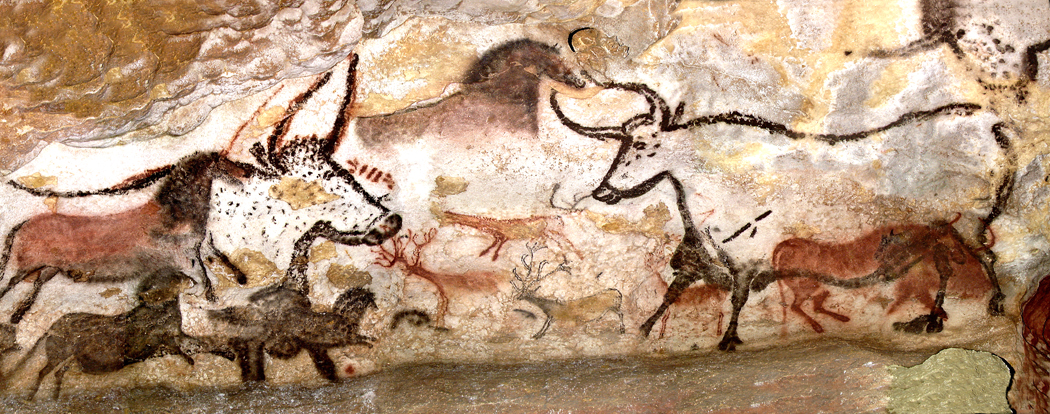
We think we have been on this planet so long, that prehistory seems interminable. But I attempted to calculate how long it has been since humans painted aurochs on the cave walls at Lascaux. The date for the original artwork is usually given as about 19,000 years ago. A long time, no? 

Well, in grandmas, that is just 152 grandmas ago. Your standard charter bus carries about 50 people, and so it would only take three busloads of grandmas and their grandmas to get us back to the cave paintings. It really isn’t all that long ago. 

In sum, I have long believed we should never teach history simply as dates, and shouldn’t teach it from back then to now, but rather from now, counting grandmas — or some other measure of time — backwards through time to see the continuous thread we are connected with. 

I was sitting on the backyard patio this morning, soaking up sunlight, when a squirrel skittered across the lawn, back and forth like a pinball. Eventually, he came to within 10 feet of me. I sat stock still, and he stared, twitching his nose, standing on hind legs like a deacon. After about a minute — which can feel like quite a long time — I must have blinked, because he jumped, startled, and took off running away. 

I often sit in the back yard, to hear the birds and watch the clouds. It feels like an unmediated soak in existence. I sit trying to notice everything, the birds singing, the clouds moving, the wind making the trees wiggle in random motion, and until recently, the incessant noise of the cicadas, sounding like the A Train rushing through the 81st Street subway station. I felt the breeze in my hair, saw the bluish greens of the iris plants and the yellower green of the grass, I enjoyed the warm concrete on the soles of my bare feet and the incipient sunburn on the backs of my hands.

Bill Moyers once asked Joseph Campbell about the search for meaning, but Campbell switched focus: “People say that what we’re all seeking is a meaning for life. I don’t think that’s what we’re really seeking. I think that what we’re seeking is an experience of being alive, so that our life experiences on the purely physical plane will have resonances with our own innermost being and reality, so that we actually feel the rapture of being alive.”

And so, I sit watching my back yard, the trees that line it and the sky above it. I can feel myself breathing, wiggling my toes and being alive, and what is more, recognizing the world being alive around me. For a moment, there is no boundary between my existence and the sea of being in which I swim. 

A wren flits down and sits on the steps to the shed and moves from one position to another with no apparent intervening motion, as if it were a jump-cut in a movie. A really bossy mockingbird runs through his repertoire of bird calls, claiming this patch as his own. A cardinal flies from my left to land on a bush to the right. A white butterfly bounces on the air waves to disappear behind the bushes. 

I’ve seen so much life in this tiny patch of ground, it sometimes astounds me. I cannot count the birds. Crows, even a raven. Way up in the sky, I’ve seen up to a dozen buzzards at a time circle as they catch the updraft coming from the river and up the bluff to this house. 

There have been cottontails and many squirrels. Two years ago, coming home from a trip to Maine, as I pulled into the driveway, two bear cubs were climbing up a tree at the back of the property. We watched them having their fun, and then mama bear climbed up behind them to encourage them to come back down. A dog barked aggressively from somewhere down the neighborhood and the bears all dropped to the ground and ran off. I’ve seen bears waddling through the streets here, and long ago learned not to put the trash out until garbage delivery day. 

A groundhog has crossed the back yard so often, he has left a permanent trace in the lawn. I have seen him multiple times harrumphing his way along. If he spots me sitting, he will take a moment to stare and consider his next move, but then run faster than you think he can move, back where he came from. 

Then, there are the bumble bees, the honey bees, the wasps and the ant lions — their little sandy funnels in the dirt of the front garden. Big black butterflies, and their yellow and orange doubles light on the hedges and weeds. Ants build their nests in the cracks of the driveway, leaving tiny ridges of dirt where they have dug down. 

Yesterday, as I was headed out the back door to have my daily sit-down on the patio, before opening the door, I saw the groundhog plopped down right by my chair, butt-flat on the concrete and motionless as a garden gnome, while an angry mockingbird jumped in a half-circle around him aiming “Cht-Cht — Cht Cht” at him. They continued this performance for a good two minutes until I must have made a noise and the great, heaving woodchuck became disturbed, turned its head my way and waddled off to hide under the shed and the bird, having had its way, flew up to a tree and quieted down. 

When I was little and visited the Bronx Zoo, I was impatient to see the animals, who sometimes hid in the shade at the back of their enclosure, or sat behind some rocks, and if I did not have my interest piqued in the first five seconds, I moved on to the next animal. But my father told me to wait. Just watch. Eventually something would happen. I didn’t understand that then; I do now. I find myself in my yard patiently waiting for the next miracle. 

(Many years later, I worked at the Woodland Park Zoo in Seattle, and saw crowds of impatient kids moving from exhibit to exhibit. And it is only worse now, in an era of cell phones and digital immediacy.) 

Writing in the Fourth Century, the Christian poet Prudentius identified in his Psychomachia (“Battle of the Souls”) his version of the Seven Deadly Sins, and the corresponding Seven Virtues, at war with those sins, and among the virtues was Patience. 

I don’t know if I learned it from my father, or inherited it from his DNA, but, like him, I have become rather patient. Or maybe I’m just sluggish. But, I believe it served both of us well. The old man was slow to judge, slow to anger, and would never think to get outraged at traffic. Being raised that way, I, too, am willing to wait, when waiting seems either inevitable or purposeful. In fact, I can sit quietly in a chair neither talking or thinking for ages at a time. When I’m being philosophical about it, I call it meditation.

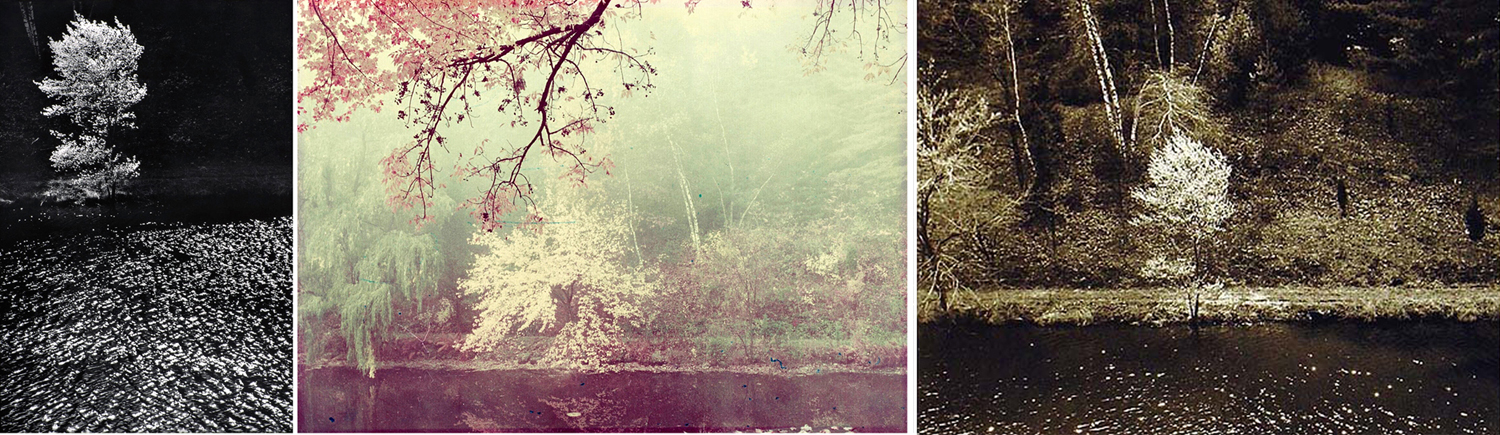
In the 1950s, the aging photographer Edward Steichen rarely left his home in West Redding, Connecticut, and began photographing a serviceberry tree (he called it a shadblow tree) through his window. He watched the seasons shift across the face of the pond and the tree and pictured them in all seasons and hours of the day, under varied weather, and made a case you could spend an infinite amount of time in a single place with a single subject and discover everything. As Yogi Berra once famously said, “You can observe a lot by just watching.” 

And it is the little things, carefully watched, that won’t happen again. The flow of the world is that it won’t happen again, all in constant forward motion and I sit to watch it move past me, and take me with it. 

 I just want to sit and soak, to sense the universe around me without thinking. We tend to glorify rationality, and the power of our brains to think meaningful thoughts, and we diminish the value of pure sensation, the sensuous awareness of colors, shapes, earthforms, clouds, birds, song, rhythm, touch, smells, and tastes. But these things are primal and exist before thought. Sensation is primary; making sense is an afterthought. 

And so I sit, trying to lose myself in the larger pattern.  

But, damn it, I can’t help being a writer and so I need to belittle what I enjoy, turning it all into words, into capsules of meaning that when read by others will be turned into ideas about sensations. Words not experience. And so, I can’t stop myself from writing this, hoping you share some of that delight when you step outdoors on the right day, with the right breeze, and the right mockingbird and crow squawking, and can see the trees dancing and the sun moving slowly across the sky blotted with whatever variety of cloud you have that moment.

Delmarva Peninsula

When I was a kid, most things in the world just were. Everything was normal, even if it wasn’t. People lived in houses, roads were paved, families had a mom and dad. And, for a kid, parents were just parents; I never gave much thought to why they did what they did. It wasn’t even that if they did something, they must have had a reason. They just did things. They were Mom and Dad, and as children, me and my brothers just followed along. As a child, the world is a given. 

It’s hard to recall that state of affairs, when things happened because they happened. That they might have done things for the abstract good of their children never dawned on me. Of course, now that I am old, I look back and realize how much they did for us, things they didn’t have to do, or things they probably would have preferred to do some other way, including some other things they might have wanted to do with their sparse vacation time. 

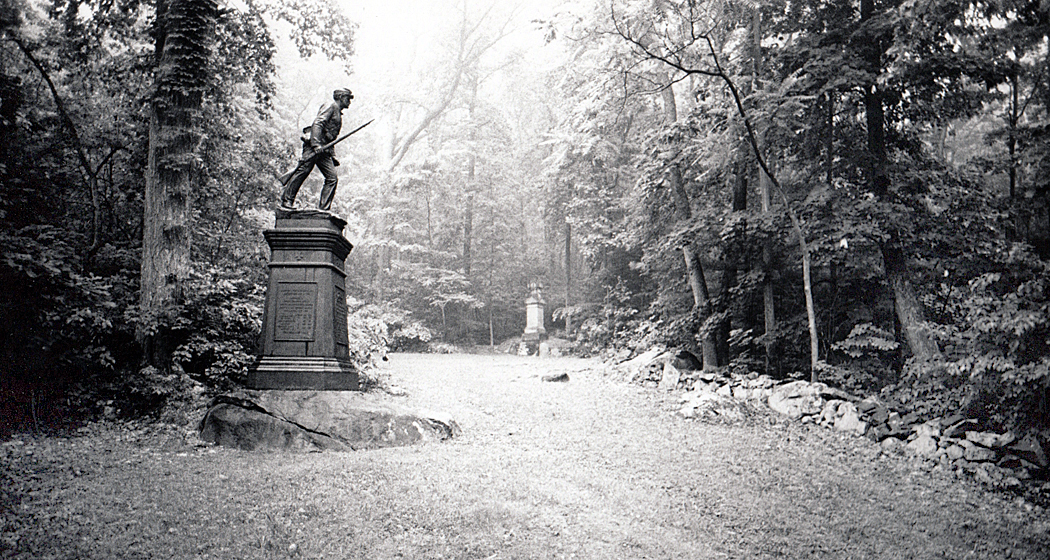
Gettysburg, Pennsylvania

But one of the things they did for us was travel. When we had our summer school vacations, Mom would pore over various brochures, magazine articles, and roadmaps and carefully plan routes to drive and sites to take in, and then, when it came time, we would load up the car and take off. We went to Washington D.C., to Niagara Falls, to Fort Ticonderoga, to Gettysburg — and many spots in between. Only later did I come to understand there was a purpose to these vacation trips. they chose these things to expose their children to history, geography, politics and to let us see what was possible outside suburban New Jersey. Travel was part of our education. 

Back when they were children, they didn’t get to travel. They both grew up in northern New Jersey and neither had more than a high school education. Dad’s family was heavily religious and didn’t approve of having fun, and Mom had to raise her two younger siblings after her father died when she was still in grade school and her mother had to find work in New York City. And so, the worlds they grew up in were limited.

German gun, Omaha Beach, Normandy, France

But when my father was drafted in 1940, he was sent to Camp Wheeler in segregated Georgia. He didn’t talk much about his army life, but he did express shock at discovering the pervasiveness of racial discrimination. And then he was sent overseas after D-Day to France, Czechoslovakia and Germany and found that other peoples had various ways of making a decent life. His horizons were involuntarily expanded. 

When they got married, shortly after the war, they felt it was important to broaden their children’s horizons, too, and to make sure we got the best educations. There was never any question that their kids would go to college. (I was told that when I entered second grade, I asked if that meant I could go to college “next year?”) Education was Priority One. Travel was a component of that. 

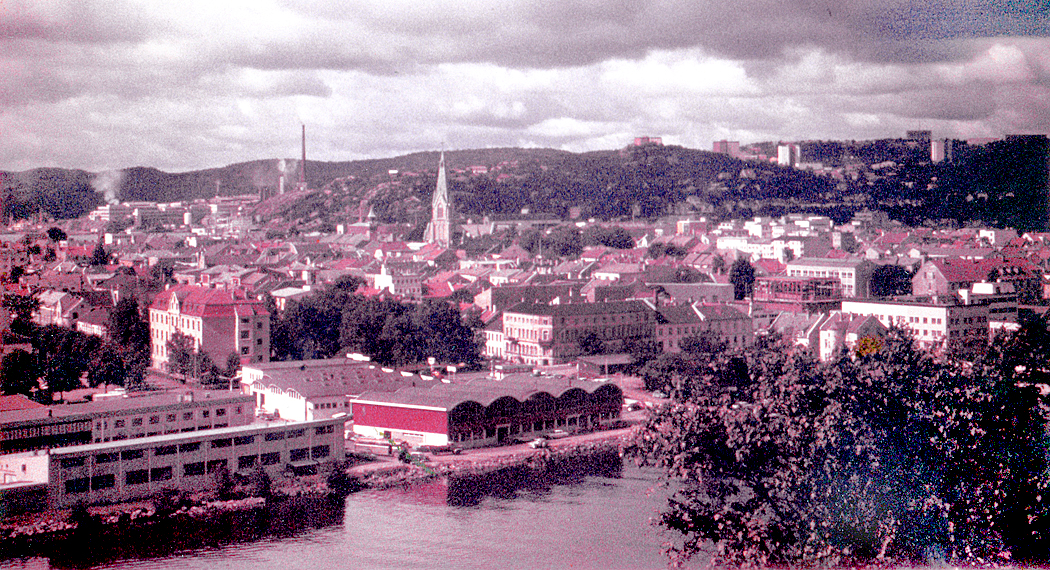
Kristiansand, Norway

Later, when I was in high school, they made it possible for me to go to Europe, accompanying my immigrant grandmother to her birthplace in Norway, and to take a bus tour through France, Germany, the Netherlands, Belgium and Luxembourg. A few years later, my younger brother, Craig, was sent off on a similar trip. 

Mark Twain famously said that “Travel is fatal to prejudice, bigotry, and narrow-mindedness, and many of our people need it sorely on these accounts. Broad, wholesome, charitable views of men and things cannot be acquired by vegetating in one little corner of the earth all one’s lifetime.” 

The vast bulk of the MAGA world, it seems to me, is made up of those who have never ventured far from their birthplace. If they had seen how others live, they would not accept the lies. 

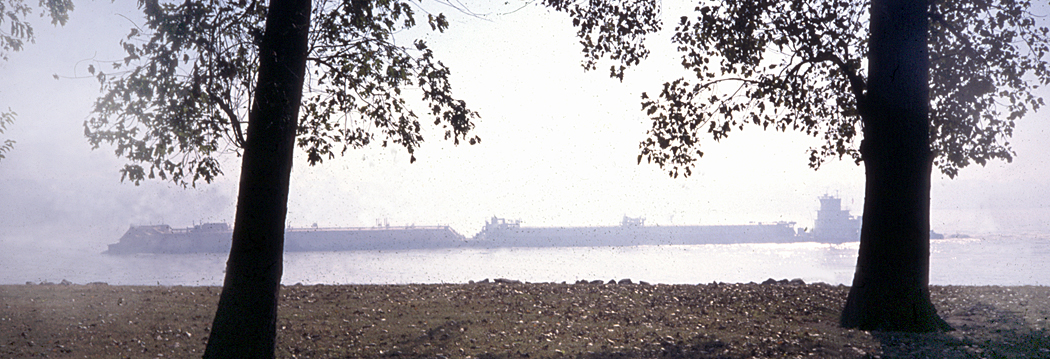
Cairo, Illinois

Travel, then, has pretty much always been an essential part of my life, and having become an adult — at least as quantified in years accrued on the planet — I have continued the habit instilled by my parents. Education wasn’t only in books; I read Huckleberry Finn, of course, but I’ve also been to Mark Twain’s childhood hometown of Hannibal, Mo., and to what remains of Cairo, Ill. I’ve driven along the entire length of the Mississippi River, from Lake Itasca, Minn., to the Venice Marina where the road ends in Louisiana. 

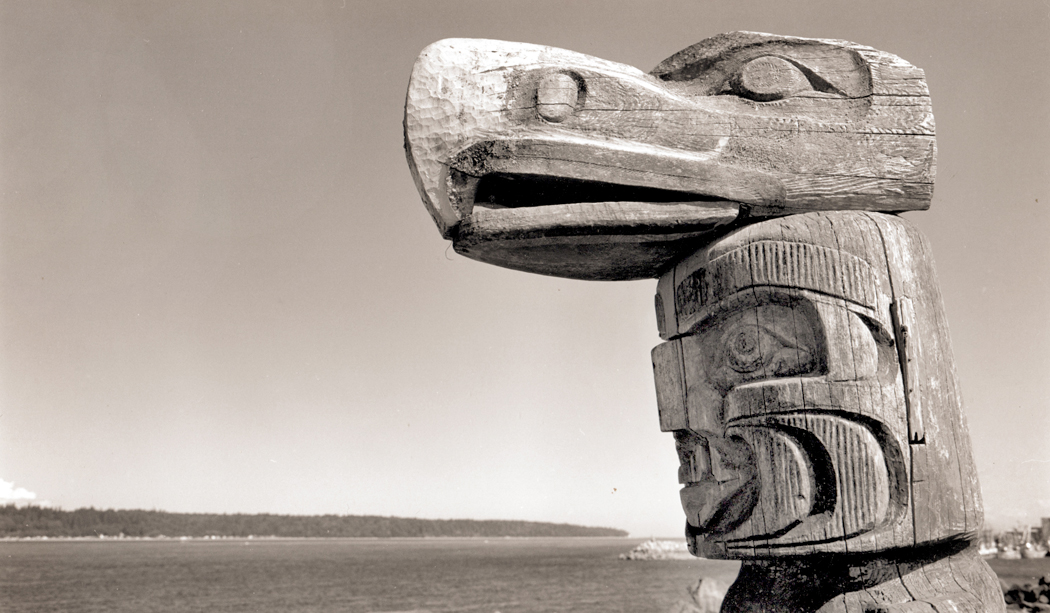
Vancouver Island, British Columbia

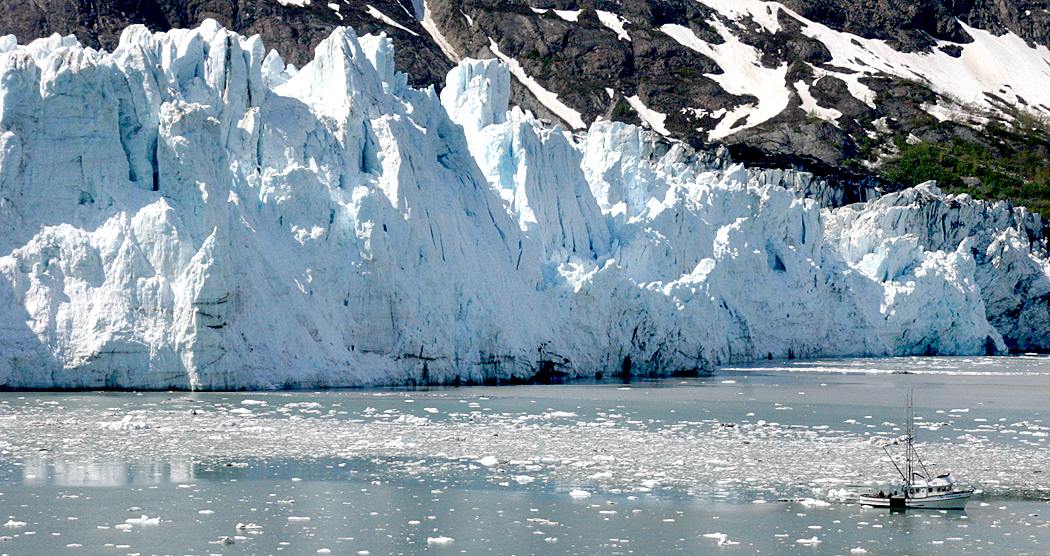
It is rare to mention a place I haven’t been in the continental United States or provincial Canada. Big Sur; Mt. Katahdin; the Everglades; El Paso;, the Union Pacific Bailey Train Yard in North Platte, Neb.; Hudson Bay; Halifax, Nova Scotia; the Tehachapi Loop in California; the Sturgis Rally in South Dakota; even Glacier Bay in Alaska.

Glacier Bay, Alaska

Believe me, I can be quite irritating, when someone mentions some far-off place and I chime in, “Oh, yeah, I’ve been there. Had a great Po Boy sandwich in a little shack along the road in Pecan Island.” Which is a tiny community along the southernmost road in Louisiana. Or “Abiquiú? Yes, we visited Georgia O’Keeffe’s place there.” I am slowly learning to keep my yap shut. 

Red Mesa, Navajo Reservation, Arizona

I’ve been to every state except Hawaii, and most of them many times, and every province in Canada, save only Prince Edward Island and Newfoundland. I’ve lived in four corners of the continental states, growing up in the Northeast, moving to the American South, then to Seattle in the Northwest, and spending 25 years as a writer in the Southwest. Each move gave me a chance to explore all the territory nearby, often in some detail (There’s hardly a square meter of Arizona that I haven’t been to. Go ahead, name something obscure: Ajo? Red Mesa? Tumacacori? Freedonia? Gadsden? Quartzsite? Check, check, check, check, check and check.)

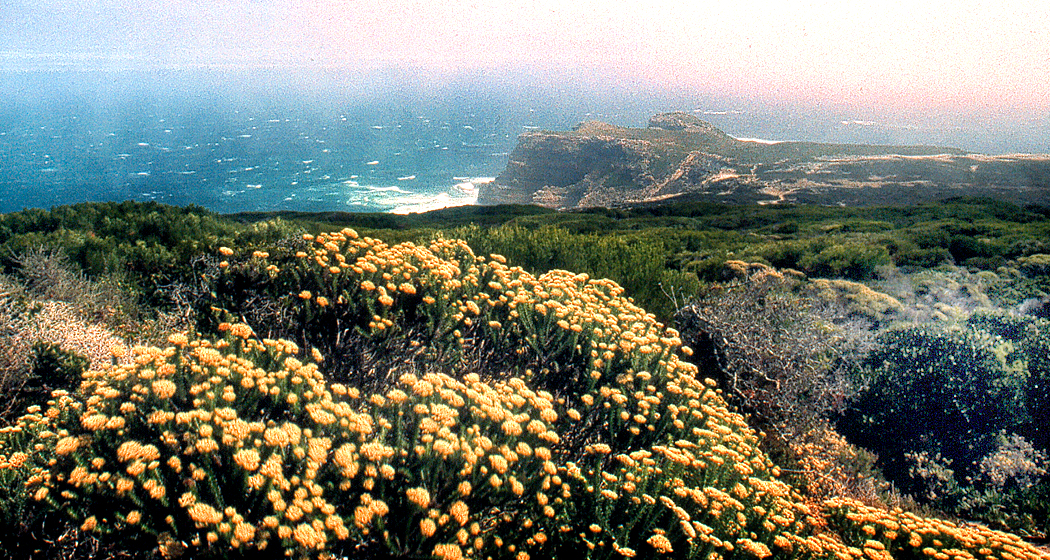
Cape of Good Hope, South Africa

I’ve been to the Cape of Good Hope in South Africa and to Marylebone Road in London; I’ve been to the Chartres Cathedral, and to the bull ring in Arles, in Provence. My late wife and I went back to France many times, and drove to all six corners of “The Hexagon.” 

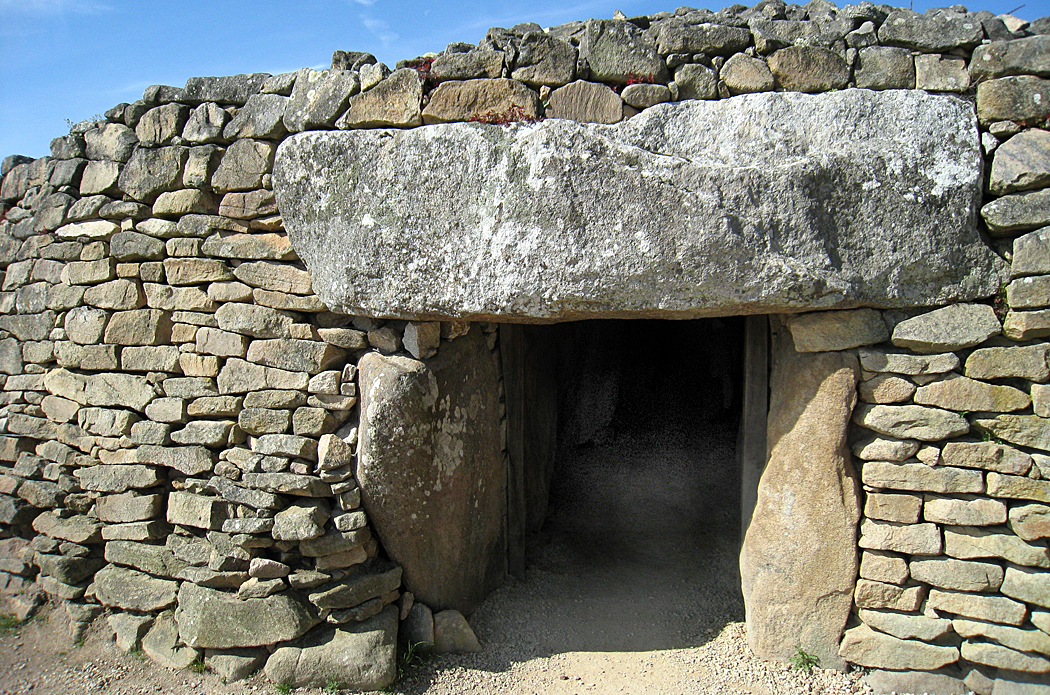
And so, yes, I’ve been to the D-Day beaches at Normandy and to the bomb craters still evident in Verdun, to the cave art along the Vézère Valley, to the paleolithic menhirs and dolmens near Locmariaquer. 

Dolmen, Locmariaquer, Brittany, France

I’ve visited the Museum of Questionable Medical Devices, the Museum of Jurassic Technology and the Hammer Museum of Haines, Alaska. 

And it has all been an education. I certainly learned that the omelet I get at Denny’s is a pale mutilation of the rich, creamy offering you can find at any neighborhood cafe in Paris. 

O’Keeffe Country, New Mexico

Of course, I’ve also learned how little of the world I’ve actually seen. I have so much of the non-European inflected planet yet to see, although, at my age, it’s almost certain I will never get to Japan or the Seychelles or Samoa. Just as, no matter how many books I’ve read, there is always a hundred times more books I will never get to read, and not enough time left even to put a dent in that list. I keep trying. 

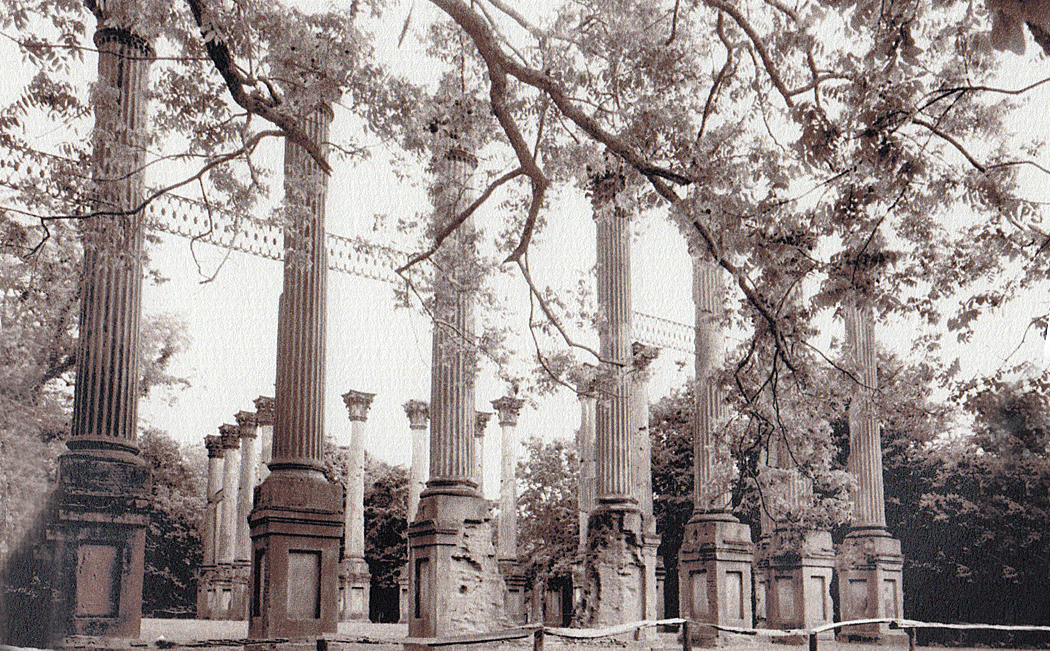
Windsor Ruins, Mississippi

And so, in addition to bragging about all the places I’ve been, I am shamed by all those places I have not gone to, just as all the art I haven’t seen, all the books I haven’t read, all the music I have never heard. But I think that it is only because of all I have read, seen, and heard, that I know enough to feel the gaping holes in my education.
I got a call from Stuart last night. We don’t see each other in person as much as we used to, partly because of the virus, but mostly because we are old and long drives or flights are really hard on the knees. 

“I read your piece on threes,” he said (link here), “and I had a realization. In the past, you’ve written a lot about how we are all really two people — the public person, who is just one of seven billion others and of no real significance in the big scheme of things; and the interior person, who is the hero of our own story, and therefore central in existence.”

“Yes,” I said.

“And so, that is one more binary system, like hot and cold, or tall and short, or inside and outside. Our brains seem to like to divide things into pairs of opposites. Even though, as you say, hot and cold or tall and short  are really just the same thing, relative to each other.”

“Yes, that old, who is the shortest giant or the tallest dwarf. The sunspot is a cold spot on the sun, but it is still thousands of degrees Fahrenheit.”

“I think what you said was there’s the burning end of a cigar, and the cold end, but there’s really only one cigar.”

“Yes,” I acknowledged that I once said something of the sort — my gloss on the Tao. 

“But, I realized the experience of being alive can equally be seen as  made up of three parts,” Stuart said. “The experience, I say — the way we experience our lives.

“In the old days,” he continued, “we would call those three things ‘Man,’ ‘Nature,’ and ‘Soul,’ but those terms are freighted with religion and gender bias. I don’t like them. So, instead, I call them ‘humankind,’ ‘the universe,’ and  ‘the psyche.’ These three elements encompass our experience.”

“And ‘Nature’ conjures up too much flowers and trees and birds and bees,” I said. “It’s a term too cuddly for what you mean here, right?”

“Absolutely. I mean something closer to what Werner Herzog says about nature — the indifferent violence and coldness of the cosmos. 

“Let me take them one at a time,” Stuart said. “What I’m labeling as ‘Humankind’ is the societal and political mix, the way we fit into the ordering of the welter of human population. It includes such things as relationships — father and son, husband and wife, pastor and congregation, lord and serf, American and foreigner, really all of them you can name. It is what is between people. 

“This is essentially the same as your ‘just one of seven billion’ and is the public part of our existence. We are taxpayers, we are Catholics (or atheists), we are Tarheels or Mainers, we are children or senior citizens, Tory or Labor — “

“You’re getting kind of binary on me,” I said. 

“Sorry, I didn’t mean to. But these are all those interpersonal roles we have to play out daily and throughout our lives. 

“And none of any of this does the universe care a fig about. The universe is vast and operates on its own schedule and according to its own rules, none of which consider our human needs or desires. It is the universe that throws the dice as to whether we are born male or female; it is the universe that makes us work in the day and sleep at night; the universe that ends our life when it will. We think we have so much control, but in reality, we are able to nudge the universe only infinitesimally this way or that. In the last degree, the universe will do whatever it does. We don’t count.”

“It is the universe that took my Carole away from me five years ago. I had no choice.”

“Exactly,” Stuart said. “It’s something we just have to live with. The universe is an essential part of our experience of being alive and we accommodate to it. It makes no accommodation to us. 

“Then, there is the inner life we lead, as important as the other two, perhaps more important. It is not only the sense of ourselves as ourselves, but also, all the unconscious trash that we have to deal with that’s buried in the braincase, like superstition, hard-wired evolutionary neuronal structuring, the forgotten traumas of childhood that govern our choices in ways we’ll never know about, even that drive to see the world in patterns, patterns which may or may not actually be there.”

“Like constellations in the night sky,” I said. 

“Our brains force us to find patterns, it’s all part of the psyche.”

“But isn’t there some overlap in your system?” I asked. “You say, for instance, that family relationships are part of the ‘humankind’ portion of experience, but isn’t family also an archetype, a part of the built-in wiring of the psyche?” 

“In the terms I’m speaking of, I’m considering these as two separate things: the public understanding of family as a civic unit on one side; and the archetype of family as a mythic unit on the other. They may share a name, but they are very different things. There are quite a few examples of ideas that are seen differently through one of these three different lenses. There are even those who believe ‘family’ is a universal truth, although we know historically, families are constituted differently at different times in different cultures. 

“I expect you could look at most things through one of these different lenses and find quite different results. Even the ‘individual’ has a political significance that is different from its psychic significance. To say nothing of its insignificance in the wider universe.”

“But there is a significance to the universal individual,” I said. “It is the ancient problem of the one and the many. The universe may be infinite, but it is still made up of individual parts, be they people, planets, muons or quarks. Each may be observed separated from the matrix.” 

“I’m seeing it all through the psychic lens,” Stuart said. “And not through the objective lens of science. I’m talking about our experience of being alive. And looking up at the starry night sky can be understood through each of these lenses. As a societal matter, you are an astronomer in your social role, or you are a dreamer wasting time. Through the universal lens, you are an utterly insignificant speck of organic dust …”

“Or, you are the universe looking at itself.”

“Perhaps. But through the psychic lens, you are the center of the universe, and it all revolves around you, certainly out of your reach, but the psychic center of the universe is yourself — each of us his or her own center.”

“And you are knocked out of your ego-centered reverie, when you get a jury summons, throwing you back into the social web,” I said. “Or getting a traffic ticket, or punching in at work.”

“And getting knocked from that reverie when the universe sends you the message that arthritis is chaining up your knuckles, or that your once-new car is rusting out in its undercarriage.

“None of these three lenses is sufficient. We need them all out in our full selfhood, but they are each there, nonetheless, and can be teased out and thought about separately. I think a healthy personality keeps them all in balance. A juggling act.”

We talked about many other things, we usually do. It went on for about an hour. But this was the gist of the phone call, what I thought might be interesting to share. I miss Stuart and Genevieve in person. We had such good times. Isolation is not good. A curse on the universe for making us get old and for giving us viruses. 

I make no claim of wisdom. In fact, the older I get, the less wise I feel. But I can claim, at the age of 70, to have amassed a life of experience. I have been through a lot, from the turmoil of the 1960s, divorce, near homelessness, the death both of a brother and of my late espoused saint. I have been both unemployed and had a successful career and traveled three continents. Finally, I have grandchildren and see with trepidation into the 21st century, beyond my time here. 

And it is that last that gives me pause. If there is one regret that haunts my senescence, it is that all the experience I have lived through can never be transmitted to the twin granddaughters that I love. Sure, I can tell them things, and perhaps some of what I tell them helps. More is surely ignored — I know I ignored the importunings of my elders when I was their age. It cannot be otherwise. When I was young, I knew so much; now that I am old, I know so little. They certainly see that in me, now that they are 18, headed off to college and know so very much. 

But it isn’t advice I am talking about. I am talking about the impossibility of transferring experience. From my brain, from my heart, to theirs, of for that matter, to anyone. A whole life of accrued sensation and false step, of battering and acceptance, of the shiftings of love and the devastation of failure, the afflatus of joy and the satisfaction of doing good work, remains bottled up inside me — and inside everyone. 

I am reminded in this of the soldier back from the war, with the thousand-yard stare, who can say in words what he has been through, but can never actually share the reality of it. The horror, the horror. So many, like my own father, a veteran of World War II in Europe, never talked about it. When he was old, I tried to tease it out of him. I asked questions about his war experience, but he always deflected. I know at one point near the end of the war, that 11 German soldiers walked out of the woods to surrender to him. But as far as he was concerned, he had no part in that. It was just something that happened while he was there. He avoided ever talking about the war and when pressed, made light of it, in a way that made it clear there was little lightness about it at all. 

Things of the magnitude of war and destruction cannot be adequately talked about. You had to be there. And having been there, you never wanted to be there again, even in recollection. 

I had a similar experience when my wife died. There is no way to express the enormity of the loss, or the singularity of the experience. There were many who expressed sympathy, and I greatly appreciated those words intended to comfort. But they cannot know what it was like. Is like. In no way. The only people I could truly commune with were those who had also lost a mate. They had been through it, too. They understood. It is a kind of brotherhood. 

The actual complexity and depth, the horror and devastation of it cannot be conveyed in mere words. The experience of it is different from language. It is the biggest event in my life, and remains so a year and half later. 

In the same way, all the years that have been poured into and out of my body and my psyche can not be expressed in words that begin to touch the heart of it. Language is a parallel universe, a train out of whose windows you may watch the world pass without having the need to experience it. The real thing is bigger, inexplicable, devastating, body-filling, rich, dense, multifarious and always connected, piece to piece in a larger and larger construction, which is me. Or you. 

It is the final frustration of life that all that history buried in my mind is stuck there, doomed to die when I do. In a way, all that learning I have amassed is ultimately pointless; poof, gone. 

I am aware of the irony: I made my living as a writer, and words are my only useful tools. But no matter, I have always felt the inadequacy of those ink squiggles on the paper. 

I am reminded again of those lines in Andrew Marvell’s poem, The Garden: “The mind, that ocean where each kind/ Does straight its own resemblance find,/ Yet it creates, transcending these,/ Far other worlds, and other seas…” 

The idea being that inside us is a world actually bigger than the outer one. It takes it all in and creates even further, making connections not obvious, building from imagination “far other worlds and other seas.”

“Annihilating all that’s made/ To a green thought in a green shade.”

And it’s the “annihilating” part that digs at me. I have no fear of death — after all, I was not afraid before I was born; non-existence is a neutral state (of course, like Woody Allen, I don’t want to be there when it happens). Like Herman Melville told Nathaniel Hawthorne, “I have pretty well made up my mind to be annihilated.” But all that life, all that experience of which my cup overfloweth, will ultimately count for nil. That is the part that vexes me. 

I want to make the twins’ lives easier, happier, with less of the pain and frustration that comes to all of us. I want to impart to them the equanimity that age confers, but I cannot. No one can. All that experience is ultimately wasted in me, moiling about inside with no escape. No purpose, no benefit. It is life’s greatest frustration. And I feel it intensely.

Apollo

Apollo

The older I get, the less reading I do, and the more re-reading. It’s a common symptom of age. There are many things that change as you leave behind the enthusiasms of youth.

I remember the complaints about conductor Arturo Toscanini that his repertoire was small and repetitive: How many times can you play the Beethoven and Brahms symphonies, and why don’t you play more contemporary music?

Toscanini 2First, you have to remember that when Toscanini was young, he gave world premiere performances of many new works, including Puccini’s La Boheme and Sam Barber’s Adagio for Strings. He gave world premieres of at least 25 operas. When he was young, the music of Richard Strauss and Claude Debussy were brand new, not the concert stalwarts they later became. He gave the American premiere of Shostakovich’s Seventh Symphony. He programmed all of George Gershwin’s major pieces, even if his Italian soul never quite beat to the jazz rhythm. 

But it is true that after he came to the NBC Symphony, he concentrated on the war horses. His repertoire did narrow as he got old. The problem is that we know Toscanini mainly these days for his RCA Victor recordings, made near the end of his life, and so we have a skewed vision of his career.

That narrowing is not uncommon in artists, who generally — if they get to live long enough — develop a streamlined “late style,” which eschews much of the complexity they favored as young Turks, and gets straight to the point, as if the knew they didn’t have time for all the hoopla and somersaults. 

And so, as his hair whitened, Toscanini focused on those works he knew he could never exhaust: things like the Beethoven symphonies. They provide endless riches, endless possibilities, and endless satisfactions. 

I say I recognize this because as I’ve aged, I, too, have narrowed my focus. As a young art critic, I kept up with all the newest trends in contemporary art. I loved the buzz and fizz: Who’s up, who’s out. What’s the latest and greatest. I even went so far as to disparage much of what is found in our art museums as “relics” of the art process, and therefore not really art — real art is what is coming out of the studios today. Or even better, tomorrow.

And, as a music critic, I felt the same way. Give me something to shock my ears and lord keep me from having to hear another Beethoven’s Fifth! 

But there is a great change in one’s approach to art as one matures. Maturity isn’t just a slowing down and tightening up: It is the weight of experience. When we are young, we know so little, yet we think we know so much. We have the answers, and why don’t the fogeys understand that?

Life, however, burdens you with the accumulation of experience and what was clear as an adolescent is infinitely muddy as a grandfather. 

When we are striplings and in love with art, we tend to idolize it, and its makers. We test ourselves against our heroes, and against the art they made. Are we up to it? Can we maintain in ourselves the vibrancy and aliveness of the art we adore? Aren’t we “special,” too? Of course, we are! The world in art seems so much more brilliant and colorful, so much more emotionally intense. 

But, after a few marriages, a few divorces, a few illnesses, a few disappointments and the deaths of too many of those we loved, after seeing the politics of our time repeat themselves endlessly and stupidly, after seeing more genocides in the world, and hearing the idiocies of dogma and doctrine, the evils of ideologies and the fears of unknowing engender the hatreds of tribes and nations, after all that and the heavy weight of more, we — if we have been lucky — have earned a portion of wisdom. What we once valued from books, we know know more directly from life. And now, instead of measuring ourselves against the art we love to see if we measure up, instead we measure the art against our lives and experience to see whether the art measures up. And very often, it doesn’t. 

So, in our dotage, we fall back on a few trusted worthies, those poems, books, paintings, symphonies, choreographies that we have tested against our experience and which hold up and continue to give pleasure, consolation, understanding and — I hesitate to use the word — what we have come to regard as truth. 

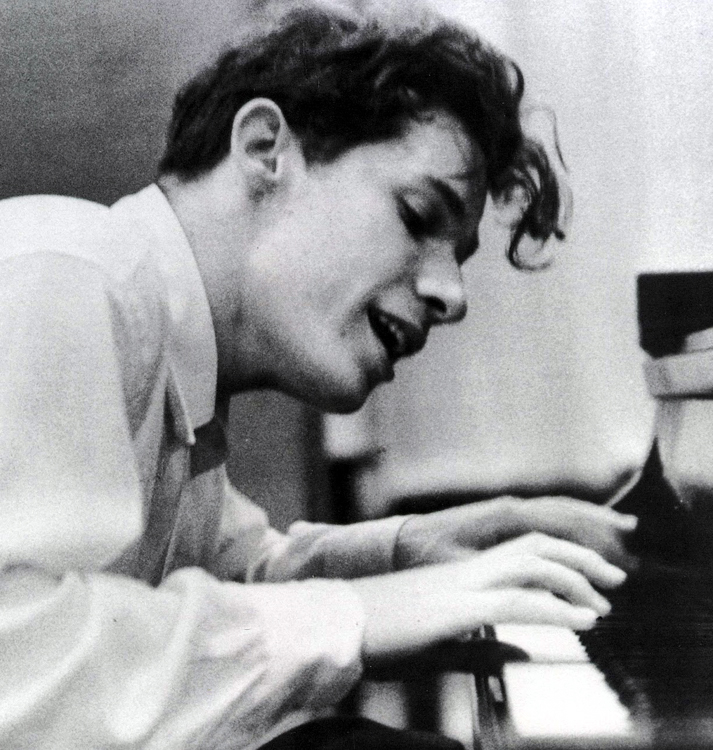
It is what I find in those books and in that music that I re-read and re-listen to — that give me sustenance, that feeds my inner life and tells me that I am not alone but share something with those writers, those composers, those painters and sculptors who have gone through enough life to have developed enough emotional complexity to make art that says something real, and doesn’t just tickle my need for novelty, or — as in my youth — my self-announced grandiosity. glenn gould

So, I re-read The Iliad at least once a year, and re-read Ovid’s Metamorphoses, Melville’s Moby Dick, Shakespeare’s Hamlet and Goethe’s Faust. I just finished again Dante’s Commedia, and expect to take on Chaucer next. I listen to Glenn Gould playing the Goldberg Variations, or to the Budapest Quartet and the late Beethovens. I weep every time I see Balanchine’s Apollo or his Prodigal Son. I cannot get all the way through Wordsworth’s Intimations Ode without sobbing quietly. 

And Toscanini doing Brahms’ Fourth. I don’t know how many times he conducted that piece, and I certainly cannot count how many times I’ve listened to that recording. I can hear it all the way through now purely in my mind; I don’t even need the score. 

These things — and many more — seem rock-solid and true. 

I expect you have or will have your own list of works that do it for you. They shouldn’t be the same ones; after all, you have lived your own life and collected your own list of wounds and sorenesses, giving you your own sense of what life must be, despite all our best efforts.