Archive

Tag Archives: music

walrus and carpenter

“I read your blog about Surrealism,” said Stuart. He had come back through town on his way home.

“It reminded me of the garage band I was in.”

“You were in a band? I didn’t know you played music,” I said.

“I never played an instrument,” he said. “I was the roadie.”

“Roadie for a garage band? Did you tour?

“Heck no. It was high school. My job was to bring the Cokes.”

“No beer?”

“I said it was high school. Drinking age was 21 back then, besides, when you’re high on weed, you want something sweet.”

It turns out, they played not in a garage, but in the basement of the home where the lead guitarist lived with his parents.

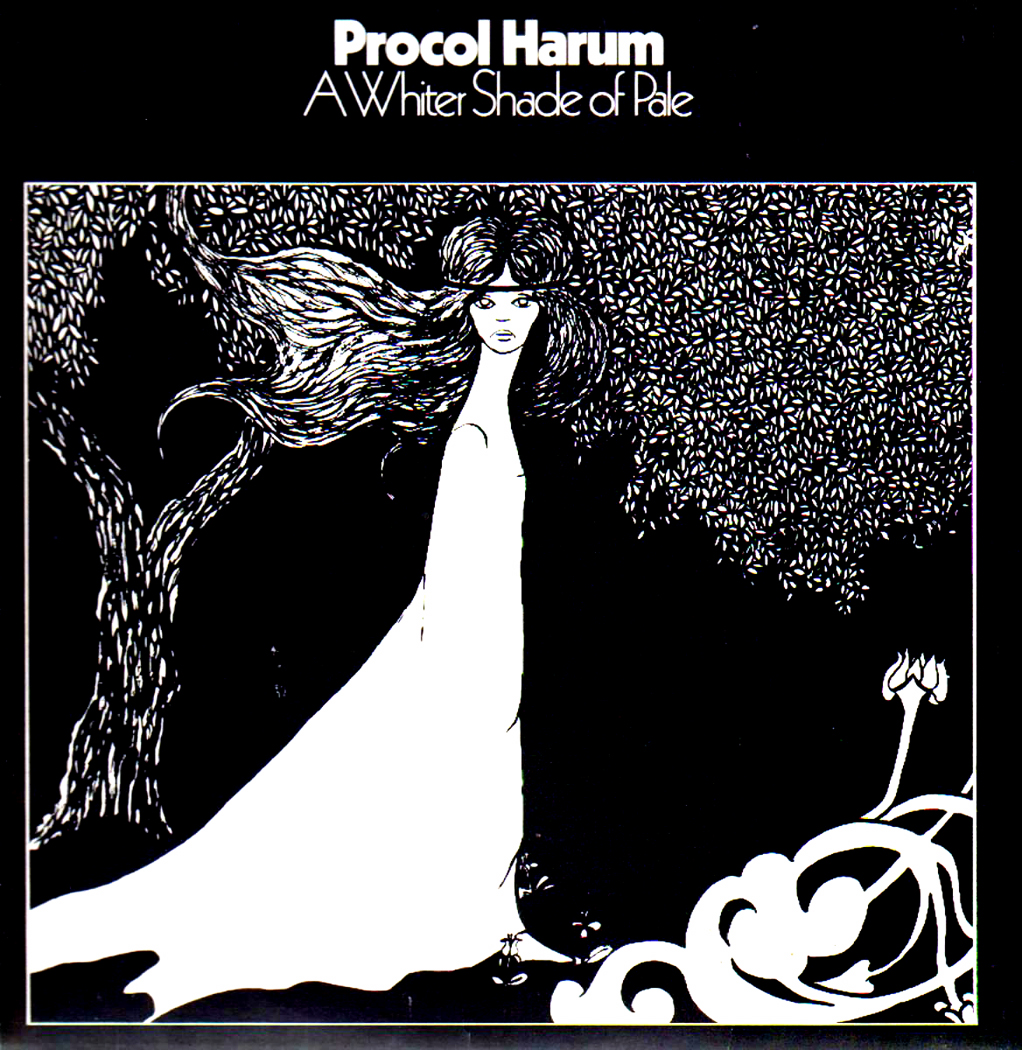
“We played very low volume, sometimes without even plugging in,” he said. “We didn’t want to disturb Sal’s folks. But that’s not why I brought it up. It’s because of our name.procol harem cover

“You wrote about rock bands using Surrealism. This was 1967 and we listened to Jefferson Airplane, the Grateful Dead, Country Joe and the Fish, Procol Harem, the Velvet Underground — it was a whole list of Surrealist wordplay.

“I remember a whole subcategory of culinary surrealism,” I said. “Moby Grape, The Electric Prune, Strawberry Alarmclock.”

“And those were just the big ones. Don’t forget the Chocolate Watchband, the Peanutbutter Conspiracy and Ultimate Spinach. And I guess we could put Captain Beefheart on that list, too.

“There was the Bonzo Dog Doo-Dah Band — bet you don’t remember them — Blossom Toes, Bubble Puppy, Pearls Before Swine, 13th Floor Elevators, the Lovin’ Spoonful, the Stone Poneys and the Monkees — not that we listened the them. Nobody did; they were too popular.”

“And your band? What did you call yourselves?”

“Well, at first we were the Buddha Fumes, but later that year, we decided that was too simple, so we changed to Unlit Booth/Breakfast Out of Context. We thought it was a great name.”

“Maybe a little unwieldy.”

“Yeah, but we really got on a kick with the slash. We made up albums we were going to record, all with great two-part names, like ‘Sudden Eyes/Velcro Sunrise’ and ‘Burlap Lapels/Unexpected Lady.’ Inagaddadavida single

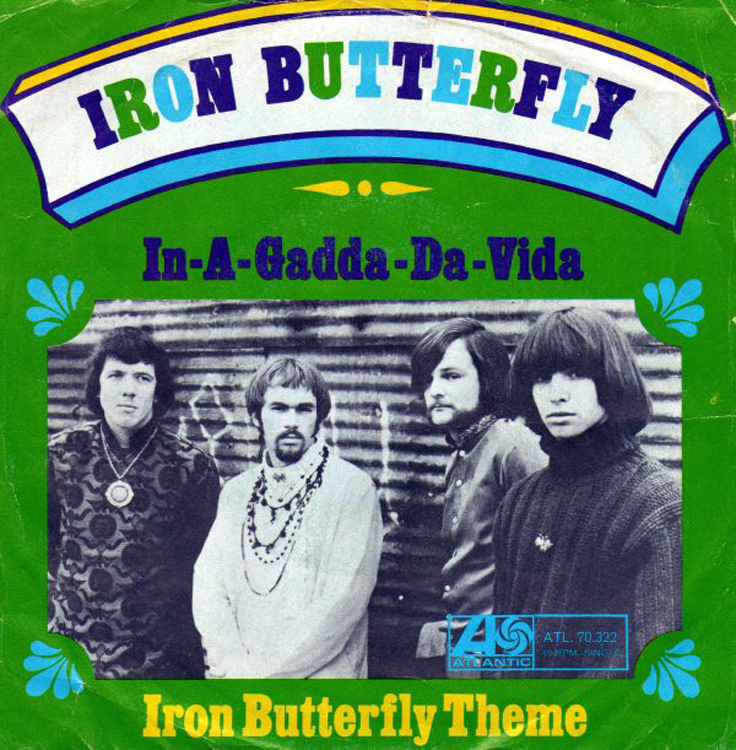
“I became more involved in the band our senior year and wrote lyrics for our songs. Mostly they were covers of our favorite bands, but with my new words. It’s how I became a writer, I think. I wrote a song about my dog based on Iron Butterfly’s In-A-Gadda-Da-Vida with the words, ‘Ah, we gotta go feed her.’ And we did. Feed her, that is.

“We broke up after graduation. We all went to different schools, except Sal, that is. He got a job.

“But this is all prelude to this list.”

“What list is that?”

“Well, back then, we made up a list of possible names for the band, and it follows exactly what you said in the piece about Surrealism. We had all these great concepts built out of wild juxtapositions, like taking a dictionary and running it through a blender. Of course, we never heard of Surrealism then. We just knew this stuff was cool.silvertone guitars

“I found this list in an old folder from that time.”

And he pulled out a folded sheet of lined yellow legal paper, brittle at the edges, with about 20 or 25 names on it, written in faded violet ink, obviously from a fountain pen (“really, a cartridge pen,” Stuart said). The ink was illegible in a couple of places where spills had made the color spread into a bright blot. I recognized the handwriting as Stuart’s from the many letters he has written me over the years. His high-school cursive was much neater, though, than the scrawl that has evolved.

“Wax Monkeys,” it began.

“Xenon Aftertaste”

Buddha Fumes, Sudden Monkey, Jalapeno Fistula, Orlando Death Car, Sequined Monotreme. The list continued: Fog Hammer.

“There was a fraudulent PR company called ‘Frog Hammer’ in Slings and Arrows,” I said. “You know, the Canadian miniseries about actors.”

“Don’t know it,” Stuart said. “But frog hammer just makes me think of a squashed schoolroom dissection. Fog Hammer is more genuinely surreal. Soft and hard at the same time, dense and vaporous.”poster 1967

He’s probably right. The list went on:

Spit Wax

Able-bodied Saints

Red Suits and Whispers

Sound Midden

Ear Stubble

Leatherette Wilderness

Snarling Confessor

Audible Hernia

Slice of Breath

Waking the Badger

Fraternal Animism

Painted Snakes

Money Under the Hood

Ashcan libertine

Pineapple Fuqua

Gruntbunnies

“Wait,” I said. “Isn’t Pineapple Fuqua a real person? Didn’t we know him when we were kids?”

“Yeah, ‘Few-Kway.’ Ran the service station. Good name, though.

“Any of them you wanna use, go ahead,” Stuart said. “I don’t mind.”

"Michael Jackson and Bubbles" by Jeff Koons, and Elgin Marbles figure

“Michael Jackson and Bubbles” by Jeff Koons, and Elgin Marbles figure

In 1632, the young English poet John Milton, just out of college, took up residence at his father’s country estate at Horton, near Windsor. And for the next six years he managed to read everything that had ever been written and was extant, in all languages living and dead, that a European scholar of the time might have heard of. That included literature, history, biography, philosophy, science, mathematics — the whole throatful of it. milton cigar

Everything that had ever been written.

It boggles the mind. Today, we cannot even keep up with the magazines we subscribe to; most of human knowledge falls off the edge of the Earth, where the map of our erudition shows nothing but serpents. reading the oed

We can never achieve what Milton did; it’s foolish to even try. But shouldn’t we attempt at least some sketch of what was fully painted for the poet? There have been recent books by writers who have read every article in the Encyclopedia Britannica (The Know-It-All, One Man’s Humble Quest to Become the Smartest Person in the World, A.J. Jacobs, 2004), The Oxford English Dictionary (Reading the OED: One Man, One Year, 21,730 Pages, Ammon Shea, 2008), or the equivalent of the Harvard Five-Foot Shelf (Great Books, David Denby, 1996), but such ventures are little more than stunts.

To absorb 5,000 years of human culture requires more than memorizing almanacs or dictionaries. It means to have a grounding in the art, literature, theater, music and architecture of our ancestors.

Of course, most of human knowledge, at least in ordinary life, in mass or pop culture and in our individual autobiographies is utterly trivial, and it would be a crime to stuff our brains with it.

But not all knowledge in this information age is trivial. There is still a core of useful literature — and I use the word in the broadest possible sense — that it behooves us to be acquainted with.

It is unfortunate that there is an argument over this. In the imbecilic culture wars that currently ravage the intellectual countryside, the lines are drawn between ignorant armies.

On one side, you find right-wing reactionary fossils fighting to maintain the canon of mainly European classics. On the other side, there is a cadre of victimization that wants to eliminate anything written by dead white males.

A pox on both their houses.

Milton didn’t have to worry about the canon. For him, the canon encompassed everything he could possible encounter.

Since that time, though, we have had to become more selective. Those items we have, as a culture, thought worth perpetuating we have called ”classics” and added them to the list — the canon — of ”required reading.”

But we misunderstand the very idea of culture if we believe the world froze solid with the publication of the Harvard Five Foot Shelf.

Corneille

Corneille

The canon is a garden that must be weeded and tended, and each season may call forth a different harvest.

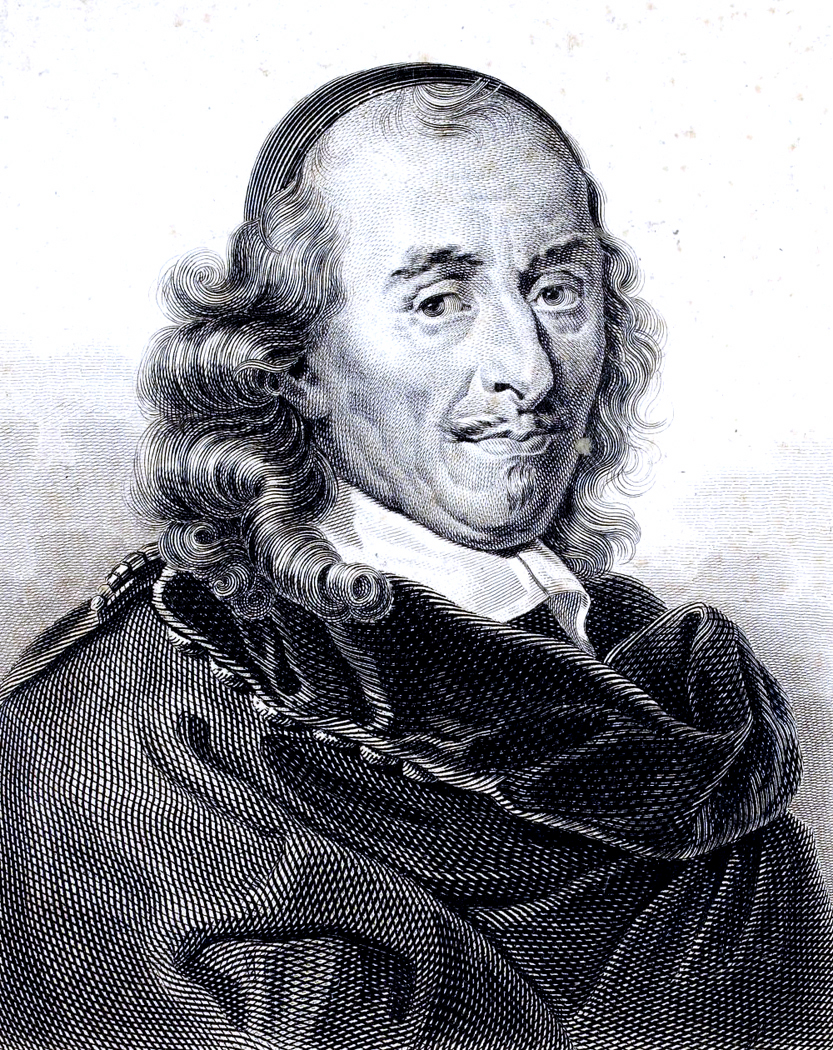
The problem with the conservative view is that it values a former ”golden age” that our own time never measures up to. It is a sentimental view of life and history, and deaf to the fact that we live now, not in the imaginary ”then.” It is the voice of Cato, of Corneille, of William Bennett — a man of whom it is said he cannot sleep a-nights if he suspects someone, somewhere is having fun.

It is a view of an idealized perfection that we have disastrously fallen short of. It is one form of imbecility.

The problem from the other side is an egalitarianism that is just as moronic. According to them, nothing is better than anything else. Either it is merely a question of personal taste, or it is one of cultural identity.

By their standards, it is elitist to prefer Pablo Neruda to Rod McKuen. Let them, I say, let them renew their subscriptions to Us magazine.

They can deconstruct its gossip to death and find the parallels with Plutarch — if they only knew who Plutarch was.

To consider one “text” more important than another, for them, is to promote colonialism and the subjugation of the downtrodden.

Hence, they judge not by esthetic considerations — it’s all just personal taste to them — but rather by politics.

For them, politics overwhelms aesthetics — overwhelms reason, emotion, common sense and experience. For them, everything has a party line. Ah, but they forget, politics answers no question worth asking.

It also worries me that behind the masks of intellectual argument, I sense a fascism on each side — at the very least a certain priggishness to both sides that any reasonable human finds dangerous.

At bottom, the problem is that both sides make the mistake of believing the canon immutable and fixed. They see the canon as an end, one side blindly despising it and the other defending it like Texans at the Alamo.

But the canon, properly seen, is a beginning, not an end; a foundation, not a roof.

It is the ABC of cultural literacy, the cardinal numbers of thought.

One used to hear the warning that when you have sex, you are having sex with everyone your partner has ever slept with. Well, when you read a book, you are also reading everything that the author read. When you hear music, you also hear everything that composer heard.

Culture is the slow accumulation of thoughts and habits. To read Melville is to hear the diapason of King James under the rich melody of the prose. Every author is the product of multiplier and multiplicand: the writer’s imagination and the long road of history leading to his standing on the curb with his thumb out.

The fact is, we cannot read everything, the way Milton did. We must be more selective. Suggestions for that selective offering is what we call the canon. But it changes constantly: It now includes James Baldwin and Toni Morrison; it includes Derek Wolcott and Yukio Mishima;  The Beatles and Duke Ellington.

The Laocoon

The Laocoon

How can you understand Jacques Derrida without standing firmly on the firm ground of Kant’s a priori? How can you read Isabel Allende without sensing the spirituality of Calderon behind her words?

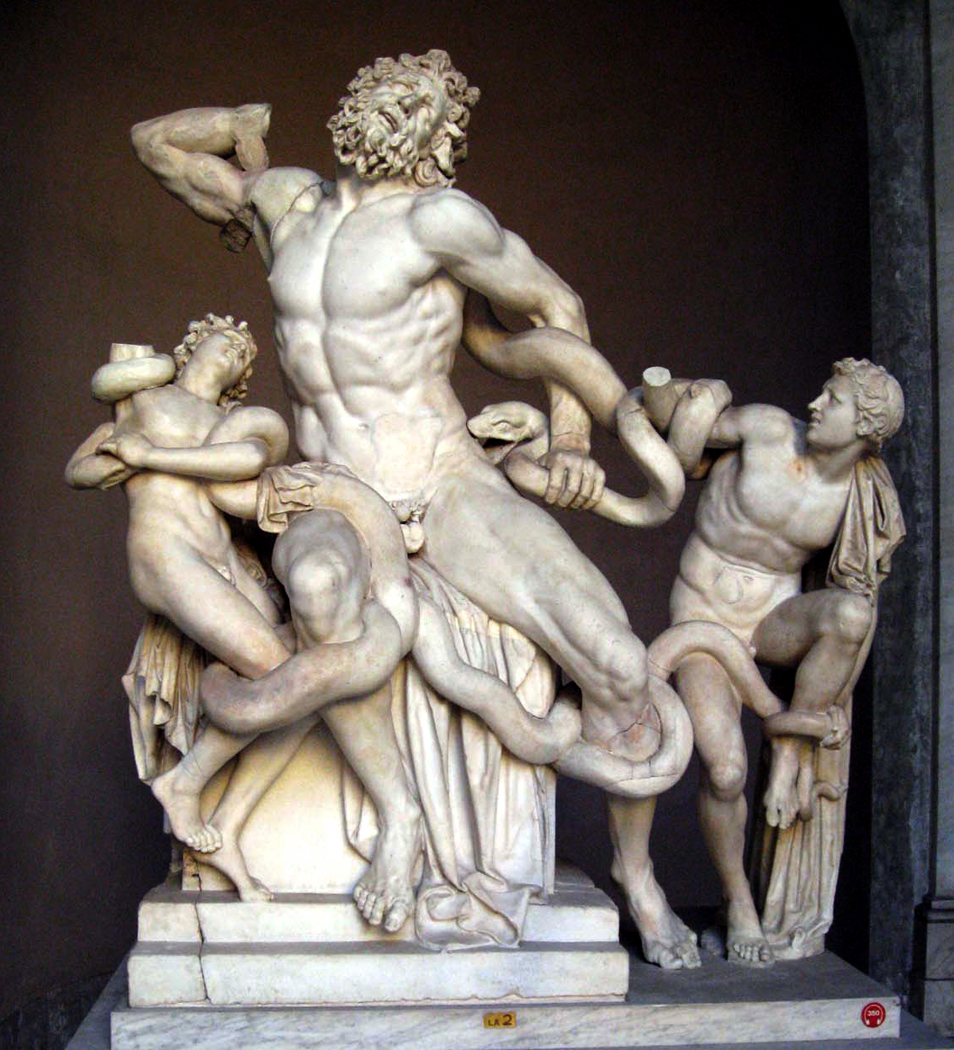
How can you understand Jeff Koons’ Michael Jackson and Bubbles if you don’t already have the Elgin Marbles in your system? You can’t. How can you get the joke on the back of countless Yellow Pages if you don’t know the Laocoon?

Certainly, the old rationale for learnedness remains: These are great writers, profound thinkers and brilliant painters and sculptors and we cannot consider ourselves educated without their acquaintance. Knowing them is its own excuse. But even more important is that when you hear the echoes in a piece of art, see its ancestry, the piece resonates. Resonance is what gives art and literature is power. kane

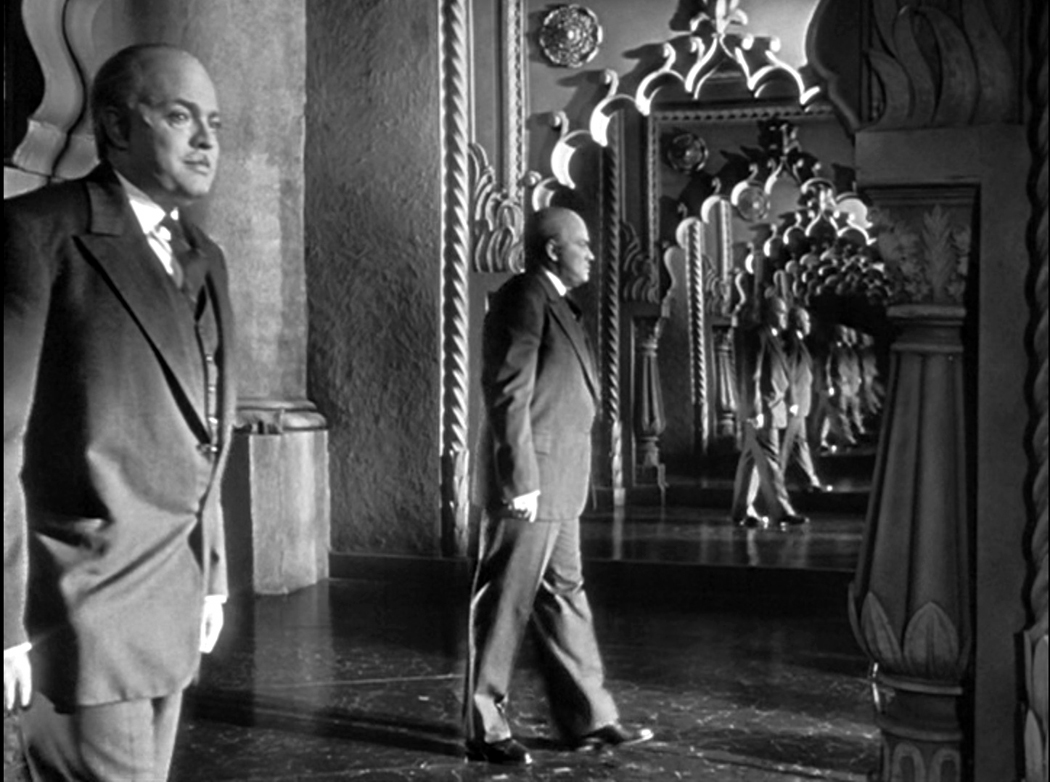
Like the mirror scene in Citizen Kane, one man is multiplied into an army. Like Isaac Newton said, if we see further, it is because we stand on the shoulders of giants. It is a wise man who knows his parents.

carmen death

Opera has an ABC. They are Aida, Boheme and Carmen. No regional opera company ever went broke programming these blockbusters. They are all extremely popular and well-known.

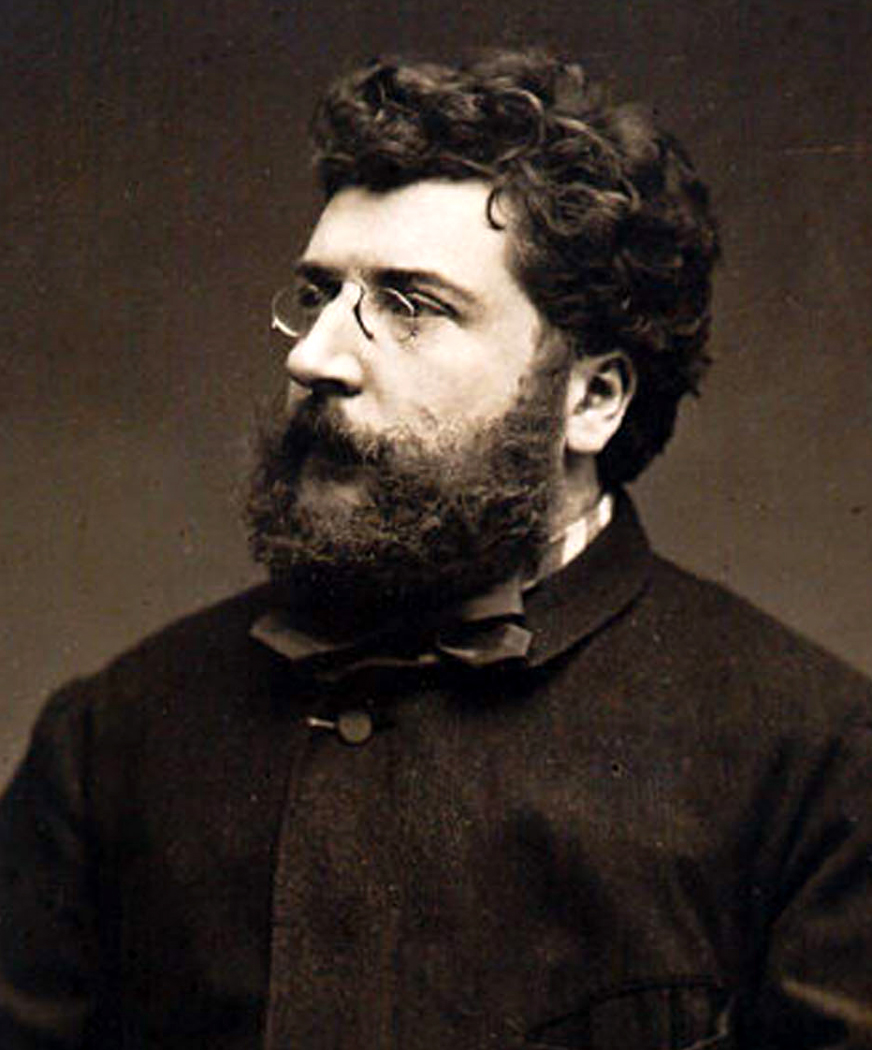
Georges Bizet

Georges Bizet

Carmen, especially. Perhaps too well known.

We all know that the gypsy Carmen seduces the not-too-bright army corporal, Don Jose, and then dumps him for the flashy matador Escamillo. Death ensues while crowds cheer in the bull ring.

We hum along with the tunes: the habanera, the toreador song, the boys mocking the soldiers and their tune. The suite from the score was once one of the most programmed pieces of light classical music, rivaling Tchaikovsky’s Nutcracker Suite and Grieg’s Peer Gynt. One of Sir Thomas Beecham’s “lollipops.”

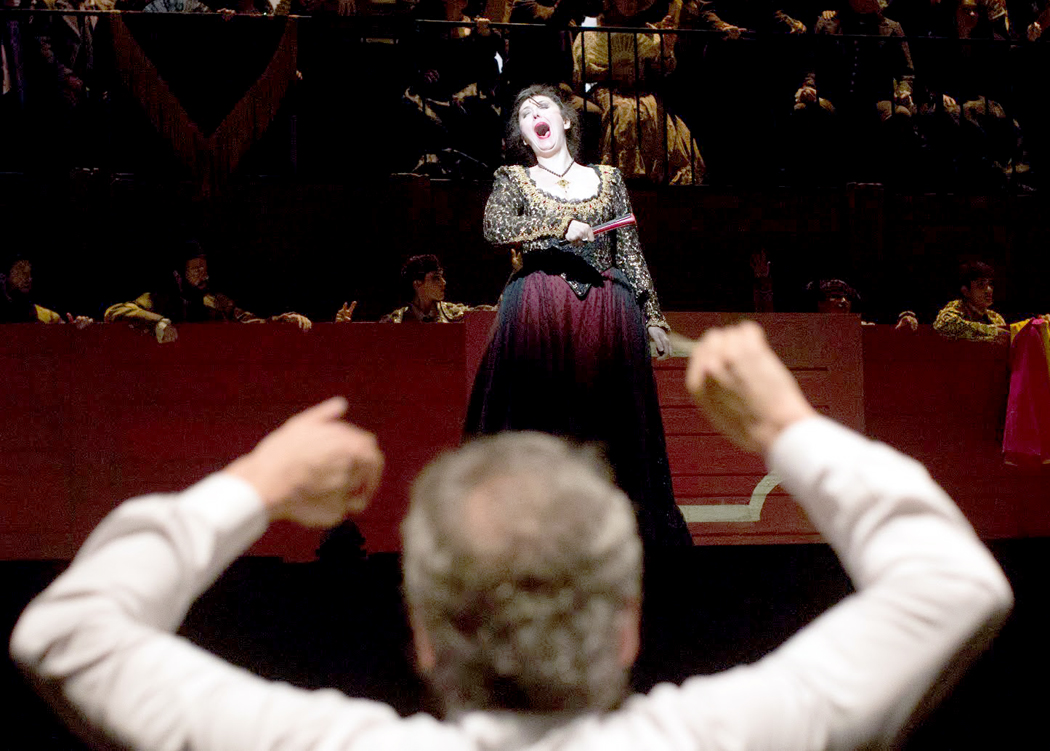
The opera comes from a novella written in 1845 by the French Romantic author Prosper Merimee. And like a movie made from a book, a few things are changed for the sake of drama.carmen conductor

Here are some things you probably don’t know about Georges Bizet’s Carmen:

1. Bizet’s librettists, Henri Meilhac and Ludovic Halevy, gave their bullfighter a major promotion. In Merimee’s book, he is not the noble matador, but a mere picador, a stripling named Lucas.habanera score

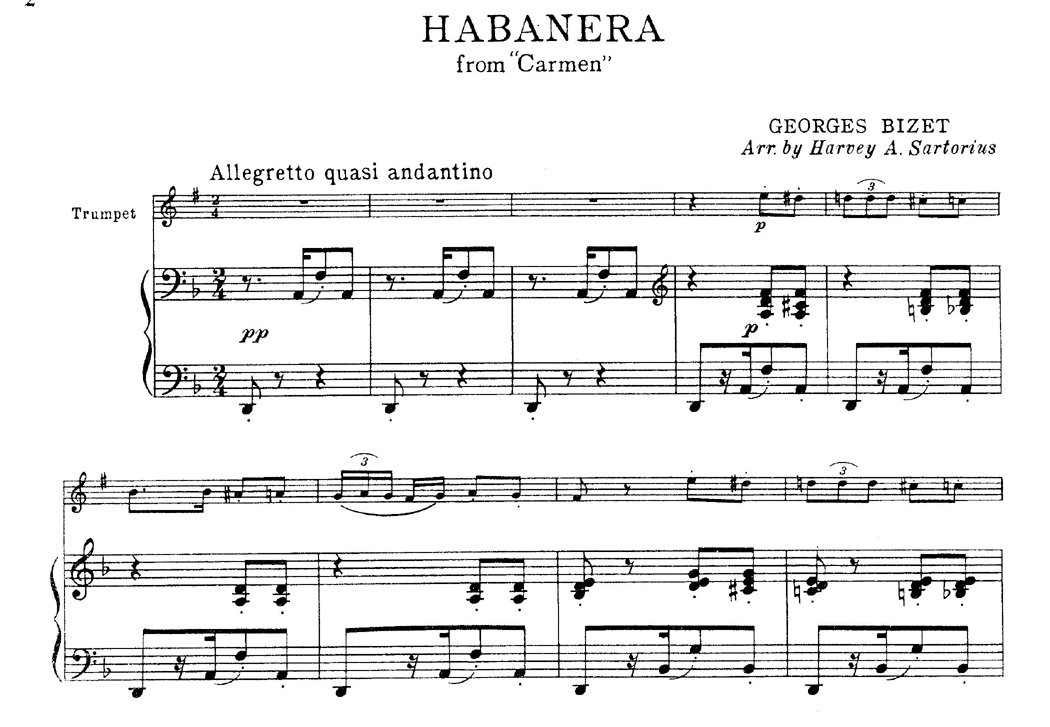
2. The famous Habanera (“L’amour est un oiseau rebelle“) was an afterthought.carmen painting

The mezzo hired to sing the part of Carmen didn’t like the aria Bizet had first written. He tried 10 times to come up with something, eventually writing the single most famous tune from the opera. Or did he? Turns out, he stole the melody from an earlier tune, called El Arreglito, by Sebastian Yradier who had only recently died. Yes, Bizet plagiarized the melody. When the score to Carmen was published, Bizet had to add a note acknowledging his source.

3. The first recording of Carmen (1908) was sung in German. “Liebe ist wie ein wilder Vogel.” Oy.

4. More than 60 films have been made of the story. Oddly, the first 17 were silent films. Silent opera is rather like dancing on the radio. That list of silent films includes one by Cecil B. DeMille, from 1915, which was based on the original novel because the producers didn’t want to pay the rights to the opera and chose the public-domain novel instead. They then changed the book’s plot to match the opera’s. Among the silent Carmens were Theda Bara (1915, directed by Raoul Walsh), Pola Negri (1918, directed by Ernst Lubitsch) and Delores Del Rio (1927, also directed by Walsh).carmen saura

5. Recent Carmens tend to stretch the story or the music. Like Beyonce in Carmen: A Hip Hopera (2001), or the 1983 Carlos Saura masterpiece, which turns it into a flamenco dance. Also on the list: Carmen on Ice (1990); Karmen Gei (2001), which sets the story in Senegal; Carmen Jones (1954), with Dorothy Dandridge and Harry Belafonte; and most recently the powerful South African township version, U-Carmen eKhayalitsha. Check it out on DVD.

Johannes and Piotr

“I have played over the music of that scoundrel Brahms,” wrote Tchaikovsky in his diary in 1886. “What a giftless bastard!”

Russian composer Pyotr Tchaikovsky had a lot to say about Brahms’ music — all bad.

Johannes Brahms, for his part, didn’t seem to much enjoy Tchaikovsky’s music, either. He attended a rehearsal for Tchaikovsky’s Fifth Symphony and fell asleep.

Although the two composers share a birthday — May 7, with Brahms, born in 1833, being seven years older — they illustrate opposite poles of the composing spectrum. Brahms was the great classicist, building vast symphonies and concertos with intricate musical logic; Tchaikovsky was the heart-on-sleeve emotionalist, as colorful as Brahms was sober.

“It angers me that this conceited mediocrity is regarded as a genius,” Tchaikovsky continued in his diary.

The quotes could fill a book. Some of his dislike seems to be envy of Brahms’ success.

“Brahms is a celebrity; I’m a nobody. And yet, without false modesty, I tell you that I consider myself superior to Brahms. So what would I say to him: If I’m an honest and truthful person, then I would have to tell him this: ‘Herr Brahms! I consider you to be a very untalented person, full of pretensions but utterly devoid of creative inspiration. I rate you very poorly and indeed I simply look down upon you.’ “

But it was really the Germanic music style he hated. About Wagner, the Russian wrote, “After the last notes of Gotterdammerung I felt as though I had been let out of prison.”

Tchaikovsky’s idea of music was simply different: color, melody, grace, direct, simple emotion. Brahms was interested in something else.

“Brahms, as a musical personality, is simply antipathetic to me — I can’t stand him. No matter how much he tries, I always remain cold and hostile. This is purely instinctive reaction,” Tchaikovsky wrote in a letter.

Of course, Tchaikovsky wasn’t the only one who failed to appreciate the charms of the German.

One writer said, “Art is long and life is short; here is evidently the explanation of a Brahms symphony.”

And composer Benjamin Britten complained, “It’s not bad Brahms I mind, it’s good Brahms I can’t stand.”

Needless to say, this is no longer the majority opinion, as Brahms and his music are almost universally loved by those who care about classical music.

One critic explained: “Tchaikovsky’s music sounds better than it is; Brahms’ music is better than it sounds.”

But Brahms’ violin concerto was a particular target for Tchaikovsky, perhaps because he had written his own concerto, which had been very poorly received (it is also now accepted as a masterpiece).

“Brahms’ concerto appealed to me as little as everything else he has written,” Tchaikovsky wrote in 1880 to his patron, Nadezhda von Meck. “Lots of preparations as it were for something, lots of hints that something is going to appear very soon and enchant you, but nothing does come out of it all, except for boredom.”

Later in the letter comes the most famous quote about Brahms.

“It is like a splendid pedestal for a column, but the actual column is missing, and instead, what comes immediately after one pedestal is simply another pedestal.”

So, it comes as a surprise that when the two composers actually met each other, they got along very well.

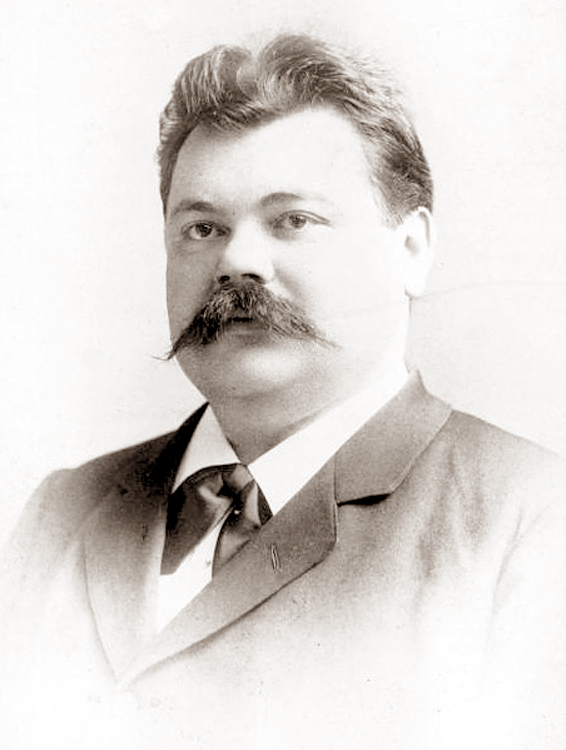
Adolph Brodsky

Adolph Brodsky

They met on New Year’s Day, 1888, when violinist Adolph Brodsky was rehearsing a Brahms trio. Brodsky had premiered Tchaikovsky’s Violin Concerto, and both composers were invited to dinner after the rehearsal.

Tchaikovsky entered the room while the music was still playing, and after dinner, they drank together and got along famously.

Brahms was doing his best to be friendly, Tchaikovsky noted, and the Russian composer found he actually liked the German, who was so different in character. Tchaikovsky was elegant and smoked fine cigarettes; Brahms was a German burger, smelled of old man and tweed, and smoked cigars, with the ash falling in his beard.

Brahms was known for his tart tongue. Once when he attended a rehearsal of one of his string quartets, he afterwards told the violist, “I liked the tempos, especially yours.”

But Brahms was genial that night at Brodsky’s home, and they drank rather a lot.

They met at least one more time and spent that night drinking as well.

“Brahms is quite a tippler,” Tchaikovsky wrote back to Russia.

Yet, the fact they could get on well together never changed his opinion of Brahms’ music.

As he left the house that night after the dinner with the Brodskys, Anna Brodsky asked him if he liked what he had heard during the rehearsal.

“Don’t be angry with me, my dear friend,” he answered, “but I did not like it.”

Do you think you know the title of this painting?

Do you think you know the title of this painting?

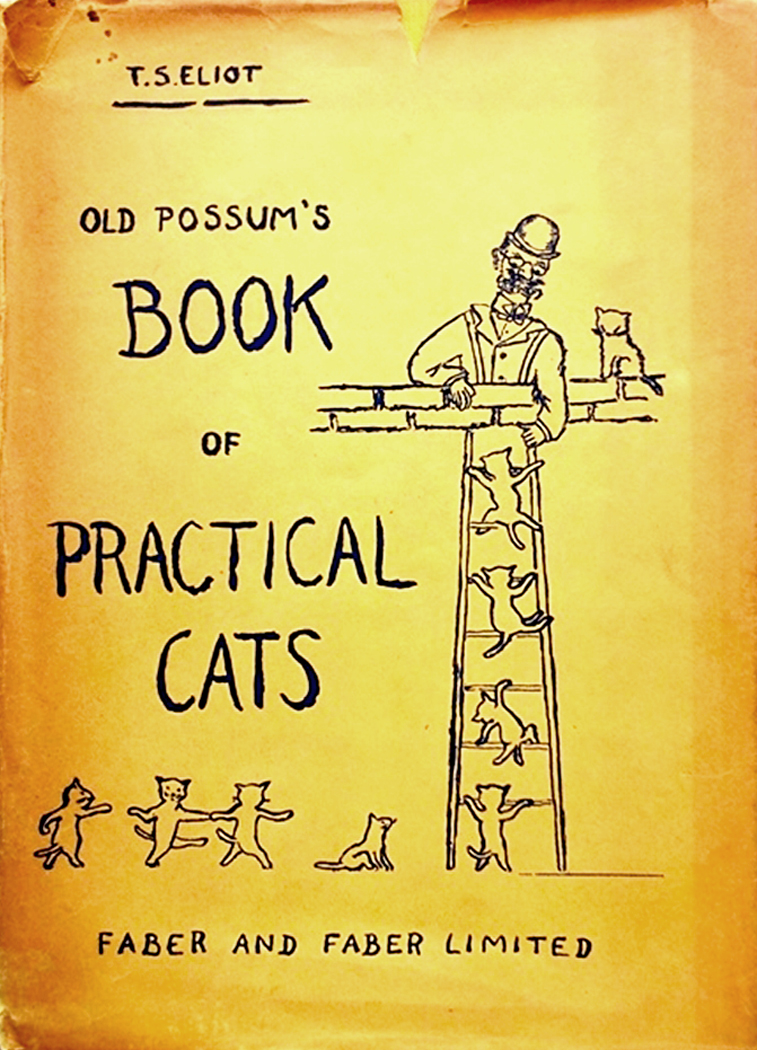
In T.S. Eliot’s Old Possum’s Book of Practical Cats, he writes, “The naming of cats is a difficult matter,/ it isn’t just one of your holiday games.old possum

“You may think at first that I’m mad as a hatter/ when I tell you a cat must have three different names.”

Of course, that book of poems went on to become the beloved and behated Broadway musical Cats, with people who should know better running around onstage dressed up in Halloween costumes as felines. The high-church Eliot probably rolled over in his grave.

But in the real world, it isn’t just cats. It’s a problem that comes up in the art world all the time: What’s the real and true name of a painting, a symphony or a poem?

When I was a working journalist, this would sometimes present a problem: Copy editors would demand the precise title of a work mentioned in a story, and they could be quite the sticklers. The Beatles’ “White Album” (by which name the entire world recognizes the double-disc album put out in 1968) is not “really” the title. So, we would have to call it The Beatles, which for most people is unhelpfully indistinct.

The world of the arts is filled with such issues over titles. It makes it sometimes quite chaotic. Of course, to live in the world of the arts requires a significant ability to endure the vague, but many people, especially engineers and editors, are as uncomfortable with the vague as Indiana Jones is uncomfortable with a snakepit.

And if engineers or biologists lived with such a level of unclarity, bridges would fall and the contents of petri dishes would infect the world.

But it is true. Titles are a frustratingly messy bogeyman.

We think of titles as being a simple issue: The painter or writer or composer gives his or her work a title, and it somehow gets registered somewhere — maybe the Library of Congress — and that’s that.

But that’s not the reality.

Consider Antonin Dvorak’s New World Symphony. Or is it the Symphony No. 9 in E-minor, op. 95, or is it Symphony No. 9, “From the New World.” Must a symphony have three different names?

Your grandparents knew it as Dvorak’s Symphony No. 5. So, where is reality?

(Before recent scholarship and a fetish for completism, Dvorak’s first four symphonies were not much played, being considered “student work”; therefore, his final symphony was his fifth. We now count the early ones and have bumped the “New World” up to No. 9.)

The problem, in part, is caused by history. History causes many problems.mona lisa

What we take today to be a hard-and-fast category — titles — turns out to be a fluid concept. When Leonardo da Vinci and Rembrandt were working, they never titled their works.

Da Vinci’s The Mona Lisa also is called La Gioconda. One of Rembrandt’s most famous paintings, The Night Watch, also is called The Shooting Company of Franz Banning Cocq and The Company of Frans Banning Cocq and Willem van Ruytenburch. So, what are their “real” titles?

Well, there aren’t any.

Such titles originally were descriptions of the paintings written for sales catalogs, most often for estate sales after the artists’ deaths. The widow pulls together all the unsold work, and someone writes down “Summer Evening” or “Young Woman With a Milk Pail.” Not titles, just short descriptions to help potential buyers tell one painting from another.

And they often have multiple titles, from subsequent sales.

It wasn’t until the 19th century that paintings or sculptures were given anything like what we now would call an official title. And even then, the artists tended to make their titles descriptive, to help gallery-goers explain to gallery representatives which paintings they were interested in buying.

The music world is even more byzantine, because there is no consensus at all on what to call a given work.

Take Beethoven’s Eroica.

When we call it that, pretty much everyone knows what we’re referring to: the symphony in E-flat, or the Third Symphony, or the Symphony No. 3 in E-flat, “Eroica.” There are a dozen other names in common usage.

What did Beethoven call it? Well, the title page of the manuscript, in Beethoven’s hand, calls it: Sinfonia eroica, composta per festeggiare il sovvenire d’un grand’uomo (“Heroic symphony, composed to celebrate the memory of a great man.” But then when it was first published, the cover page called it Symphony for Grand Orchestra in E-flat, op. 55, and the title page read something like: Symphony in E-flat for 2 flutes, 2 oboes, 2 clarinets in B flat, 2 bassoons, 3 horns in E flat, 2 trumpets in E flat and C, timpani in E flat and B flat and strings, op. 55.

It also is ascribed to “Luigi van Beethoven.” The French version calls him Louis van Beethoven.

So, what is its title?

As with the paintings, Beethoven’s original audience was comfortable with descriptions rather than titles. Any of the above sufficiently describes the symphony so it won’t be confused with anything else.

There are other problems.

Even in works that have real, official titles, we don’t always use the full version.

Brahms’ German Requiem is more properly A German Requiem, to Words of the Holy Scriptures.

This is pretty common. After all, Shakespeare’s Merchant of Venice was given the fuller title in the First Folio, The Most Excellent History of the Merchant of Venice. With the extreme cruelty of Shylock the Jew towards the said Merchant, in cutting a just pound of his flesh: and the obtaining of Portia by the choice of three chests.

Quite a mouthful.

Mozart’s Marriage of Figaro is actually titled The Marriage of Figaro, or One Crazy Day.

Which raises another problem: The title, really, is Le nozze di Figaro, ossia la folle giornata, but we commonly translate the title into English for the sake of being understood. So, Die Walkure becomes The Valkyrie, and Mondscheinsonate becomes the Moonlight Sonata, which, of course, is really the Sonata quasi una fantasia, in C-sharp minor, op. 27, No. 2, or, by another convention, Beethoven’s Sonata No. 14. Confusing enough?

Titles in translation are often changed if their original meaning might be misunderstood in the new language’s idiom, or if it comes across unidiomatically, so that Proust’s A la Recherche du temps perdu was known for years in America as “Remembrance of Things Past.” Presumably “About the Search for Lost Time” falls considerably flatter in English than in French.

Discussing such things with copy editors may or may not go anywhere: We are stuck with the whole idea that an art work or poem or piece of music could no more not have one final true title than a person could have no name on a birth certificate.

And one final thought: By far, the most popular title in art galleries is  “Untitled.”

Is that its title?

janissary 1

East is east and west is west. But the twain have met many times before the current unpleasantness.

The West and Islam go way back.

On the serious side, there were the Crusades, the Moorish conquest of Spain and Charlemagne. On the more trivial side, there was the Dutch craze for Asian tulips in the 17th century.

And one of the more interesting collisions between the West and Islam occurred in Europe in the 18th century with a craze for all things Turkish. It gave us coffee, croissants, Angora sweaters and Mozart’s Rondo “alla Turca.”

It also finally gave us Rossini’s Italian Girl in Algiers (L’Italiana in Algeri), and its sequel, The Turk in Italy (Il Turco in Italia).

Europe had been under the gun from the Ottoman Empire for centuries, but when the Treaty of Karlowitz was signed in 1699, it ushered in not only an era of peace but a fad in fashion. For the next century and a half, all things Turkish, Moorish and Islamic became the source of the culturally exotic in European minds.

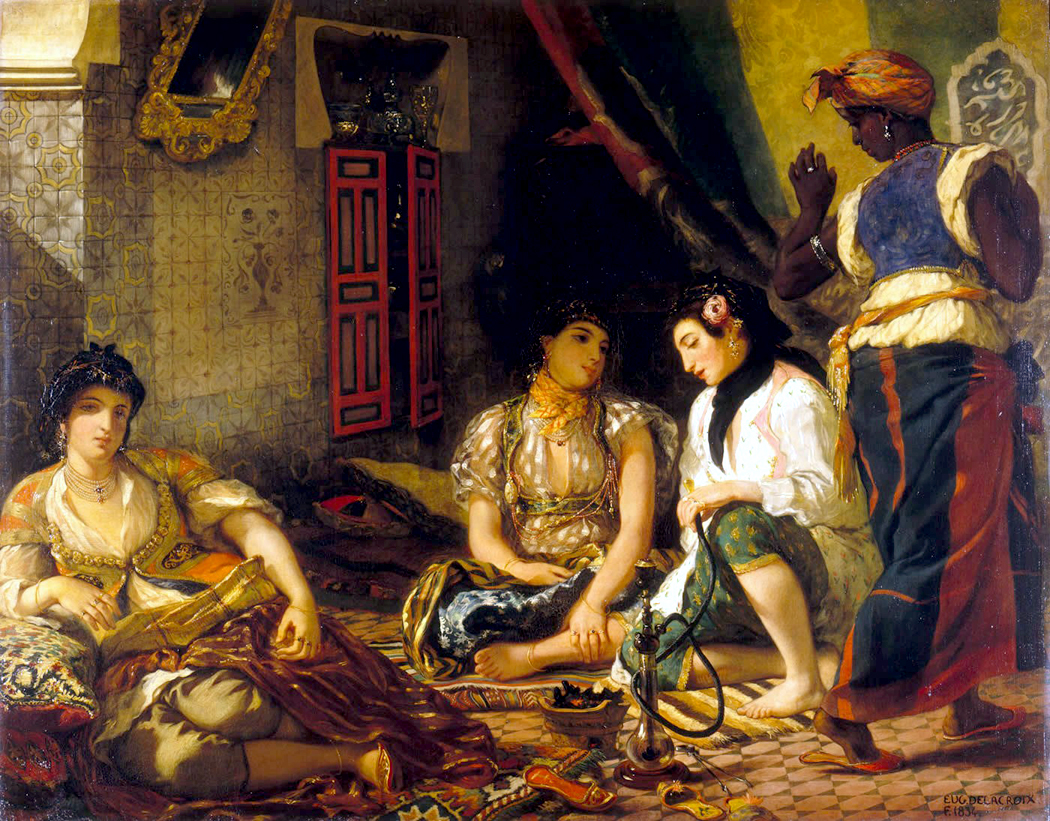
Eugene Delacroix "Women of Algiers" 1834

Eugene Delacroix “Women of Algiers” 1834

It’s really quite stunning to see it all: Turkish cigarettes, Turkish baths, Turkish carpets, harem pants, slippers with upturned toes. There were harem girls painted by Ingres and Delacroix. The turkey named for the color of its wattles, which matched a popular fabric dye of the time, called “Turkey red.”

And one of the most pervasive effects was the popularity of “Turkish music.” Haydn, Mozart and Beethoven all wrote versions of Turkish music.

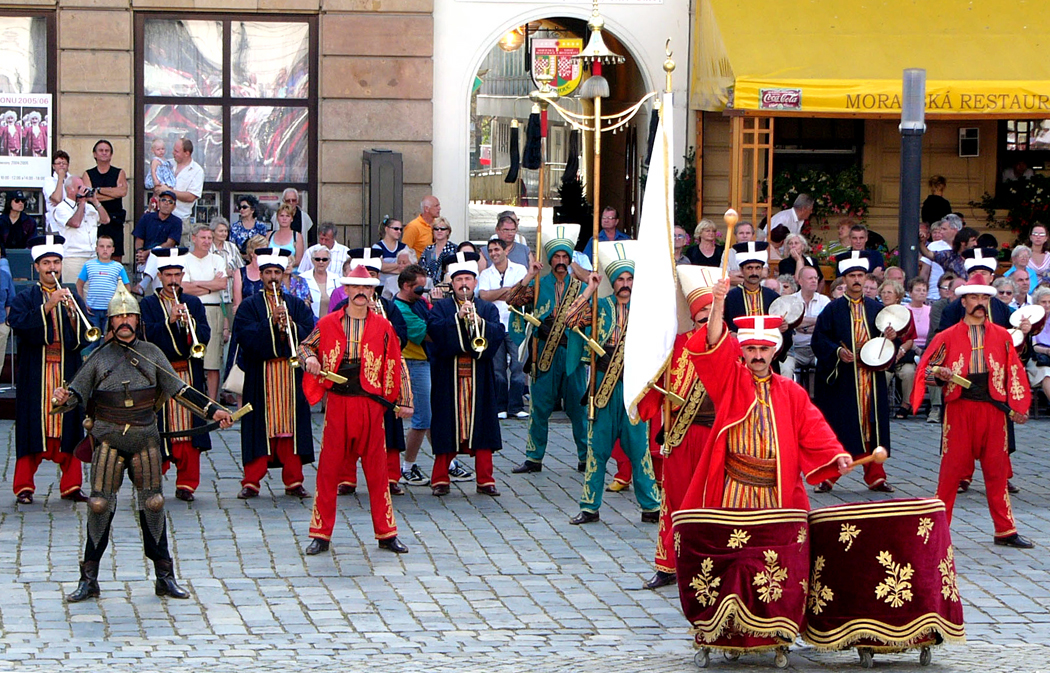
When the Ottoman Turks sent janissary bands — their military bands — to Vienna as a kind of cultural-exchange program, the European ears were perked by the exotic sounds of their drums, cymbals and chimes. It was a clattery music with an insistent rhythmic drive.

You hear the European orchestra expanded with new percussion instruments at just this time, when Haydn wrote his Military Symphony and Mozart his Turkish concerto for violin.

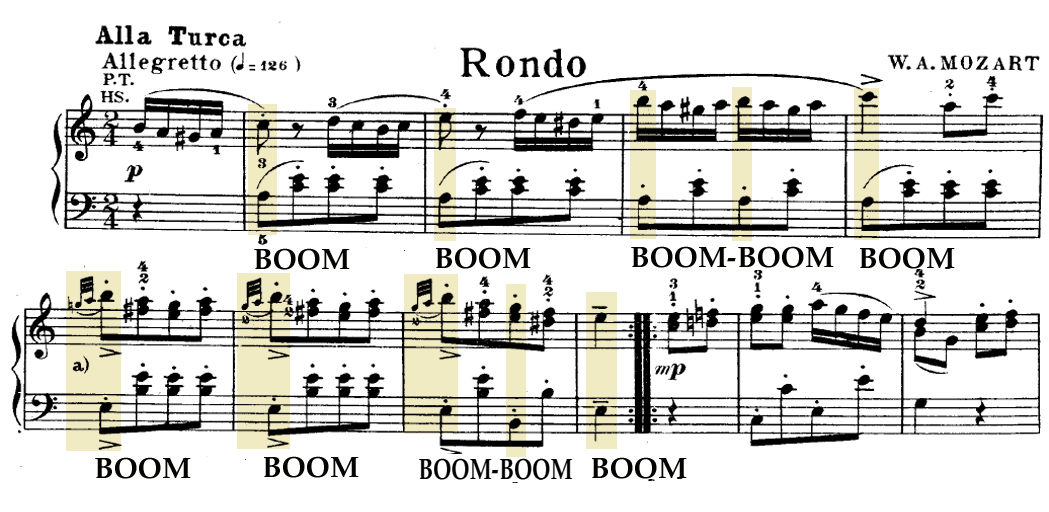
The characteristic rhythm of Turkish music was the march beat of “Left… left … left, right, left,” and you can hear it in Mozart’s Turkish rondo as well as in the concerto.

rondo boom

And Beethoven even included a segment of Turkish music in his sublime Ninth Symphony, the “Ode to Joy,” when the whole thing comes to a momentary halt, interrupted by the burps of a contrabassoon, followed by the Turkish marching music that sounds remarkably like the theme song to Hogan’s Heroes.

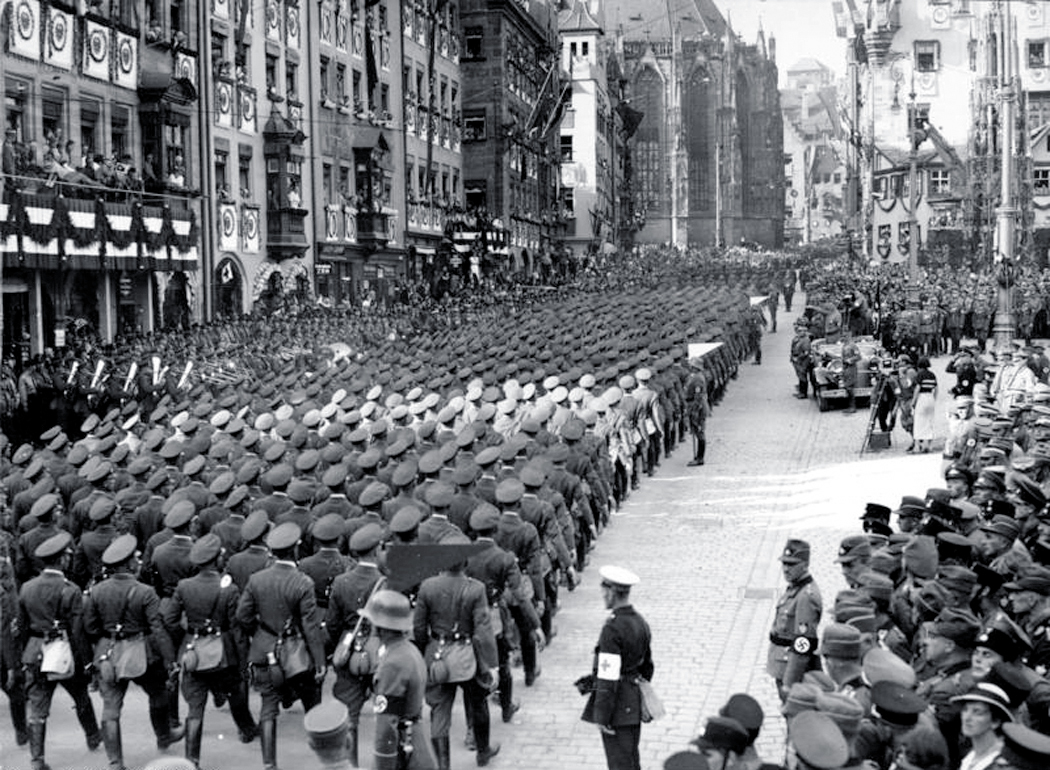
In fact, German military music made such pervasive use of the Turkish rhythm that it soon lost all sense of being exotic and became the drumbeat of Germanic militarism: If you watch the Leni Riefenstahl film, Triumph of the Will, about the Nazi Party rallies in Nuremberg before the war, you are nearly oppressed with that “boom … boom … boom-boom-boom” rhythm. Nürnberg, Reichsparteitag, Marsch der Wehrmacht

That is a baleful end to what began as pure fluff. Operas about Turkish pashas and European women were a regular occurrence.

Mozart wrote his Abduction From the Serail, filled with Turkish effects, and Rossini, decades later, imitated that sound — and pretty well stole the plot — from the Mozart, for his Italian Girl in Algiers. In it, a crafty Italian woman outwits a foolish Turkish bey and saves herself and her fiance from a fate worse than Wagner.

It’s a wonderful opera, full of Rossini’s best tunes and imbroglios.

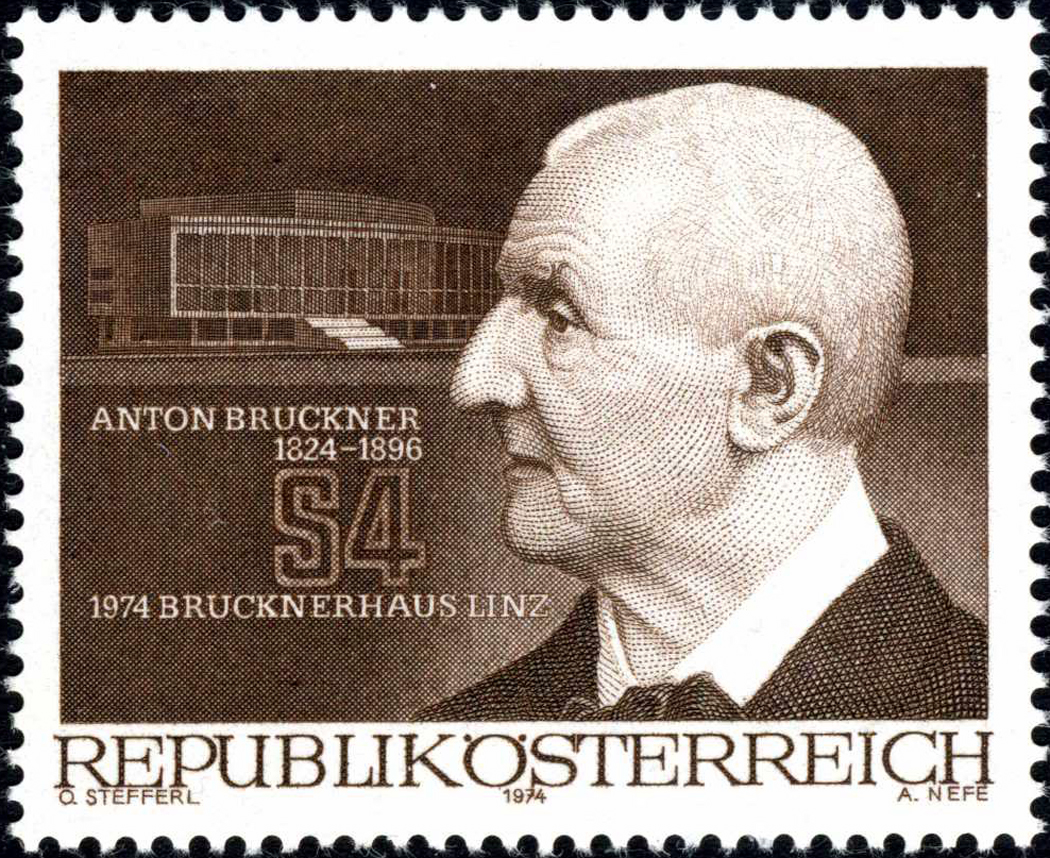
bruckner stamp austria

Are you old enough for Bruckner?

Poet Ezra Pound said there is no reason you should like the same book (or music or art) at 40 that you liked at 16. At 16, I liked Ezra Pound; now I’m 65.

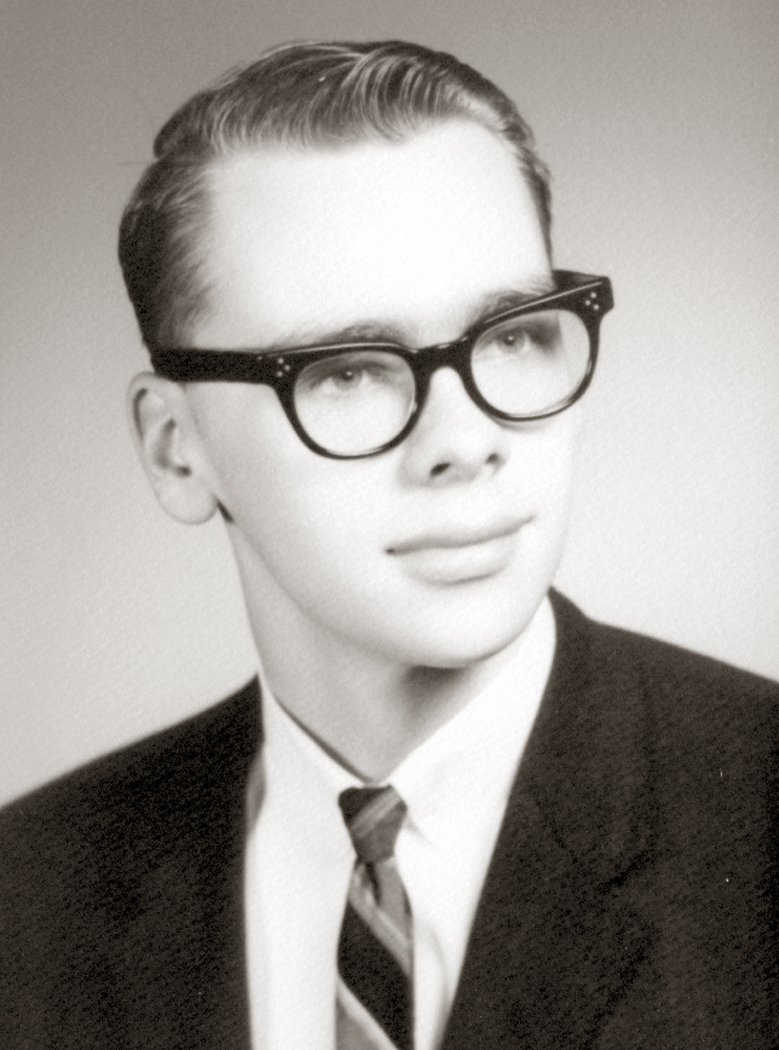
The author graduates high school in 1966

The author graduates high school in 1966

Our tastes change as we age, or they should. My introduction to classical music was Tchaikovsky. His symphonies and concertos pumped new-generated hormones through my arteries like adrenalin — when I was in high school.

It wasn’t long before I left him behind for Stravinsky, then Beethoven.

By the time that I was middle-aged, I had gone through Bach, Mozart, Berlioz, Debussy, Mahler, and most recently had added Bruckner and Haydn to the list. I get things from each of them I was deaf to earlier. Now that I am retired, I have finally come to appreciate Verdi. But, boy, it was hard to get past all the oom-pah-pah-pah, oom-pah-pah-pah.

The path won’t be the same for everyone, but there are some general patterns that seem to hold.

In painting, we all loved van Gogh at about the same time we loved Tchaikovsky. There is a bigger-than-life striving in van Gogh that appeals to the adolescent, striving himself for some sense of the heroic.

The author 1975

The author 1975

That same aspiration drove us to read Catcher in the Rye.

With a few more years under an increasingly large belt, we drop Tchaikovsky as hopelessly sentimental, Salinger as naive and simply move past van Gogh as we become aware of the Impressionists, who tickle our eyes all over again. Hormones calm, reality sets.

When we are in college or as grad students, we tend to gravitate to those things that are trendy, new, and exclusive, that set us off from the proles: We read Umberto Eco or — in my generation, Alberto Moravia and Robbe-Grillet. We jumped on Marina Abramowic  and Bruce Nauman and listened to Lutoslawski, Schnittke and Harry Partch. Yes to Pina Bausch, meh to Swan Lake.

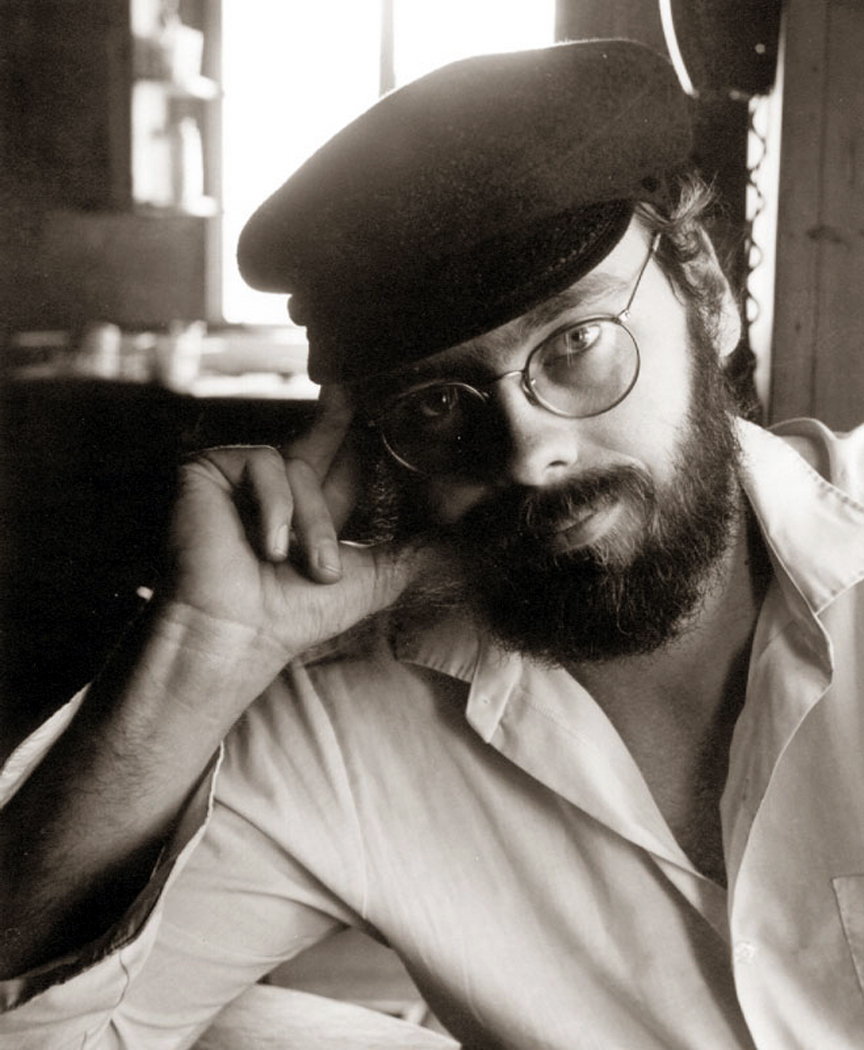
The author 1977

The author 1977

Yes, we were showing off. In many cases we admired more than enjoyed.

We then gave up the need to be au courant or exclusive as we came to distinguish between the gee-whiz and the substantial.

As adults, we craved the substantial. Adult tastes are acquired tastes: Poussin, Schoenberg, Milton, rutabagas, pickled herring.

Old age now brings something else: simplicity and inclusiveness. I am no longer quick to drop the critical meat-cleaver and sever away something I consider unworthy. They are all worthy. Tchaikovsky as much as Webern, Salinger as well as Joyce. We are enriched by each of them.

The author in his "Van Gogh" pose 1980

The author in his “Van Gogh” pose 1980

(No, I haven’t gone senile — I’m not ready to accept Andrew Lloyd Webber or Thomas Kinkade, although I see some value in Norman Rockwell that would have shocked me to hear anyone admit when I was 20. No, Rockwell is no Raphael, but there is room for an entire spectrum of abilities and accomplishments. What I ask isn’t so much undying masterpieces, as sincerity of attempt, and a willingness to put in the work.)

So, growth isn’t just a case of moving on from one thing to another, but adding more and more to our trove. By the time you are my age, you will have a heady backlog of esthetic experiences to draw on.

What is most interesting to me is that, if we continue to grow, we can return to art we left behind and find something new in it. From age 17 to about 40, I couldn’t bear Tchaikovsky — it seemed like treacle. But then I began noticing his bizarre harmonic sense and what I might call ”orchestration from Mars.” You only have to read the scores to see how peculiar is his voice leading. When I could get past the heart on the sleeve, I discovered an intelligence there that was hiding, or rather, that I was unwilling to discover, having made up my mind and moved on.

The author at Canyon de Chelly, 1989

The author at Canyon de Chelly, 1989

An now that I am bald, bearded and grey, I find that there is something even in the emotional immediacy that once embarrassed me.

As we grow, we not only grow into new experiences, we grow out of our old prejudices.

This all came back to me this week as I watched Lust for Life on cable. The 1956 biopic starred Kirk Douglas as van Gogh and Anthony Quinn as Gauguin. The film is an odd combination of excellence and awfulness, mixing insight with bromides, sanitizing the painter’s life while emphasizing the insanity.

More than anything, this is the van Gogh who appeals to adolescents, the van Gogh of idealism, identity crisis and suicide.

Alienated, misunderstood.

But there is one more aspect of him that is included: his commitment and perseverance. These quieter virtues, more than his insanity, give van Gogh his stature as an artist.

the author lecturing 2005

the author lecturing 2005

There was a time, in my 20s, that I dismissed van Gogh. The peculiar paint-busy canvasses, I was convinced, were just the evidence of a deranged mind. If you were schizophrenic, you could be a great artist, too.

But more careful study in recent years, especially of the many notebooks filled with drawings, told me something else again. Van Gogh paints the way he does because of his unwavering honesty to his eyes. He kept looking till he got it right.

And ”right” for him was to notice everything that his eyes saw, not merely what he had been trained to see.

If you stare long enough and with enough concentration, you can see something of the granular reality van Gogh saw. We no more pay attention to it in daily life than we pay attention to the grain in a movie’s film stock. It is not the information, but the medium of the information. We filter out so much. Van Gogh didn’t.

the author at Giverny 2008

the author at Giverny 2008

The other wonderful thing about van Gogh is that he had so little talent.

We tend to think of great artists being as fluent as Mozart or Raphael. Yet talent is a poor indicator of quality in art. For every Raphael, there are scores of Geromes and Bouguereaus: accomplished and pretty, but ultimately empty.

Van Gogh shared a lack of talent with several other great artists: Cezanne, for instance; or Jackson Pollock. One searches the drawings and oil sketches of Cezanne for even the slightest encouragement of talent. His drawing is hopelessly awkward.

Pollock searched for years for an adequate means of expressing what was inside him. To do it, he had to give up everything he had learned. If he had no talent for drawing, he would not draw. He found a talent for splashing instead.van gogh landscape

Van Gogh’s notebooks are full of erasures. He looked, drew, erased, looked again, drew again, erased again. Many drawings are never finished, but those that are, are right in a way the more facile Ingres never is.

Van Gogh was stubborn. I admire that in him more than I admire the talent of William Merritt Chase.

But give me another 10 years and we’ll see.

gould goldbergs

Periodically the publishing world throws out a book put together by a critic or writer listing the “best of” or “greatest” and then lists books, recordings, movies, DVDs, TV shows or places to visit. The lists are always a great way to start off a conversation, even if they are always flawed, biased and at best partial.

So it is with Tom Moon’s book, 1,000 Recordings to Hear Before You Die (Workman, $19.95).bookpix

I can’t comment on most of his selections, although it would be hard to quarrel with the idea that you should be familiar with Miles Davis’ Bitches Brew  or Jimi Hendrix’s  Are You Experienced.  To say nothing of Duke Ellington’s  Blanton-Webster Band  or Ray Charles’  Modern Sounds in Country and Western.

These are all recordings that anyone with a musical curiosity should know, and probably love. And Moon has a thousand of ’em.

But Moon chooses to include classical music in his selections, too, and there he really seems to miss the boat. It is clear that he is a part-timer when it comes to Bach, Bartok  and Boccherini.

It isn’t that the music he chooses is wrong: You can’t really argue that anyone who loves music should have listened to Beethoven’s symphonies or Bach’s keyboard music. But while his popular and jazz albums recognize truly great performances, his choices for the classical selections are      invariably bland and middle-of-the-road. Safe. Boring, even.

The title of the books is “recordings to hear before you die,” and should be recordings that you grab someone by the lapels over and say, with scary enthusiasm in your eyes, “You gotta hear this!”

That won’t always be the best performance, in classical music, but rather the most grabbing, the one that says something new or different, that makes you rethink the music, or just sit up and take notice.

And the classical catalog is full of such recordings: Not just for classical music snobs, but for anyone who cares deeply about music in general, whether their favorite is Led Zeppelin  or Public Enemy.  These are performances that have appeal outside their narrow intended audiences.

So here are 25 classical recordings you have to hear before you die.


gould1. Bach, Goldberg Variations, Glenn Gould, piano  – The 1955 performance by the strange Canadian pianist turned classical music world on its head, with playing faster and slower than anyone else, and with an extraterrestrial energy and clarity that has never been matched, even by Gould’s second recording, from 1981.


2. Tchaikovsky, Symphony No. 6 “Pathetique,” New York Philharmonic, Leonard Bernstein, cond.  – The hyper-emotional Pathetique normally takes 45 minutes to play. Bernstein’s later recording (on DG) takes an hour and wrings from the music the deepest tragedy, perfect accompaniment for a suicide.


3. Mozart, Piano Sonatas, Mikhail Pletnev, pianist – Wolfgang’s piano sonatas are normally thought of as his “B” material; not under the hands of crazy Russian genius Mikhail Pletnev. He plays them like his life depends on them – the greatest recording of these works ever.


celi4. Bruckner, Symphony No. 4, Munich Philharmonic, Sergiu Celibidache, cond. –  Playing something slowly doesn’t always add weight, but here Bruckner’s most accessible symphony is played with the slow, careful intensity you might expect from someone defusing a bomb.


5. Mahler, Symphony No. 4, Concertgebouw Orchestra, Willem Mengelberg, cond. – Mahler was always over the top, even though many modern conductors rein him in. Mengelberg knew Mahler, heard him conduct, and gives us echt-Mahler, full of its requisite retardandos and portamentos. This is how Mahler is supposed to be played.


6. Wagner, Tristan und Isolde, Philharmonia Orchestra and soloists, Wilhelm Furtwangler, cond.  – Don’t be afraid of Wagner. If you like Lord of the Rings,  Wagner is just the same thing with tunes. With Kirsten Flagstad and Ludwig Suthaus,  this is the Tristan for the ages.


casals7. Bach, Brandenburg Concertos, Marlboro Festival Orchestra, Pablo Casals, cond.  – Politically incorrect performances of Bach’s essential concertos, meaty, expressive, lush, vibrant – and a slap in the face to those who believe there is only one right way to perform Bach.


8. Bach, Suites for Unaccompanied Cello, Pablo Casals, cello  – Casals singlehandedly resurrected these profound works, where Bach made the single instrument as rich and varied as a full orchestra. He plays them as if he were alone in the universe. Only Casals could do that.


9. Beethoven, Diabelli Variations, Uri Caine, piano, with Concerto Koln  – Postmodern Beethoven, with the 33 variations Beethoven wrote turned into marches, show tunes and fireworks. Not for the faint of heart, but explains to a new generation why Beethoven is worth knowing about.


10. Schulz-Evler, Arabesques on Johann Strauss II’s “Blue Danube Waltz,” Josef Lhevinne, piano  – The great show-off piece played as no one else has ever managed: You swear on your grandmother’s babushka that there are at least two pianists working up a sweat, maybe three. This is what a virtuoso is.


shostie11. Shostakovich, Symphony No. 7, Chicago Symphony, Leonard Bernstein, cond.  – Lenny finds the core of this long, often-derided masterpiece, that can turn into shlock in lesser hands. This is one of the most glorious orchestral recordings ever made, blazing with brass and passion.


12. Vivaldi, The Four Seasons, Concentus Musicus Wien, Alice Harnoncourt, violin, Nikolaus Harnoncourt, cond.  – Unconventional approach to familiar music turns these little concertos into tone pictures: Vivaldi meant them to create sound images, and here, you hear the dogs barking and the rain falling.


13. Barber, Adagio for Strings, Los Angeles Philharmonic, Leonard Bernstein, cond.  – There are people who cannot listen to Samuel Barber’s mournful, tragic piece without breaking into uncontrollable sobs, and Bernstein seemed to feel a special connection to the music, which he plays for all he is worth.


kissin14. Chopin, Piano Concertos, Evgeny Kissin, piano, Moscow Philharmonic, Dmitri Katayenko, cond.  – Wunderkind Kissin was only 12  when he recorded these, but it would be hard to find anyone who has better captured the verve and spirit of these Chopin concertos. This is magic.


15. Chopin, Nocturnes, Maurizio Pollini, piano  – Pollini finds more pith and mettle in these nocturnes, usually played to bring out their dreaminess. For Pollini, one of the superstars of the piano, they have more shadow and threat, things lurking behind corners, and military bands playing in the distance.


gabrieli16. Gabrielli, The Antiphonal Music of Gabrieli, various performers  – The assembled brass sections of the Chicago, Philadelphia and Cleveland orchestras play the glorious music of the Gabrielis the way it must sound in Heaven. This is virtuoso brass playing from a legendary album. You gotta hear this!


17. Brahms, piano music, selections, Glenn Gould, piano  – Thought he could only play Bach? Gould was at heart a romantic, and his Brahms is subtler, more nuanced, more beautiful than anyone else’s. This playing comes as a complete surprise, and utter joy.


rachmaninoff18. Rachmaninoff, A Window in Time, piano music, selections, Serge Rachmaninoff, piano  – The dour Russian was one of the greatest pianists of the century, but his electric recordings are dulled by scratches and boom. These are digitally enhanced Duo-Art  piano rolls, played on a Yamaha Synclavier,  that brings back the luster to his piano.


19. Chopin, Sonata No.2 “Funeral March,” Serge Rachmaninoff, piano  – Or you could try the thing itself, un-reconstructed. Rachmaninoff’s take on the familiar sonata is so fresh, powerful and driven, you’ll be shocked to hear it again as if it were for the first time.


valentina20. Liszt, Virtuosa Valentina, piano selections, Valentina Lesitsa, piano – Franz Liszt  was a showman, who brought to piano the same sense of spectacle that Spielberg brings to the seashore; Valentina Lesitsa plays them that way, all out, thunder and cannon-shot, fireworks and passion.


21. Beethoven, Symphony No. 3, “Eroica,” Russian National Orchestra, Mikhail Pletnev, cond.  – Pletnev plays the Eroica like it means something, and replaces tunes and rhythms with the kind of persuasive rhetoric that starts nations marching.


22. Wagner, Liebestod, Vladimir Horowitz, piano  – Real virtuosity isn’t just lots of notes real fast, but rather total control of the piano and expression. In Horowitz’s final CD, The Last Recording,  made when the was 86,  the ol’ magician wrings thunder and tears out of the death of Isolde. It becomes our death, too.


tureck23. Bach, The Great Solo Works, Rosalyn Tureck, piano  – Too often we think of Bach as mathematical, but he was really a crazy Baroque composer, layering hysterical detail on detail. Tureck plays him that way with the Capriccio on the Departure of a Beloved Brother,  and the Italian Variations,  with notes sweeping in like a tidal surge.


24. Gershwin, Rhapsody in Blue, Los Angeles Philharmonic, Leonard Bernstein, piano and cond.  – Bernstein plays Gershwin’s familiar symphonic jazz almost as if it were Brahms, big, romantic, serious. This is not everyone’s cup of Gershwin, but you simply have to hear it.


25. Grieg, Peer Gynt Suite, Royal Philharmonic Orchestra, Thomas Beecham, cond.  – Peer Gynt? Seriously? Hall of the Mountain KingAnitra’s Dance? Beecham plays the music with such suave joy, and with not a single mote of condescension, and revivifies the old chestnut. You’ll tap your toes and sing in the shower.

Mahler conducting

There are rainstorms, and then there are hurricanes.

There are symphonies, and then there is Gustav Mahler.

The Austrian composer is like nothing else in classical music, and his unique brand of emotional fury inspires a cultish following. You may love Mozart or Chopin, but if you’re a Mahler fan, you are in love. Devoted. An acolyte; it’s akin to religious conversion.

“I love all composers,” said the late music critic Dimitri Drobatschewsky, “but the composer for whom I will make the greatest effort, or spend the most money, is Mahler. There is nothing in life that can replace what Mahler’s music does to and for me.”

It is almost an addiction.

The music hits closer to the experience of being alive than almost any other: deeper, more emotional, more direct. The Mahler addict measures a performance not so much by whether he leaves the hall whistling the tunes, as whether he has lost control of his lacrimal glands and has to hide his face as he leaves, so as not to show himself weeping in public. Mahler’s music is personal; it batters your heart. Zasche Theo Gustav Mahler 1906

He asks you the questions you think about only at the most extreme moments of your life: Why are we here? What is death? Love? How has the child become the man? It isn’t the intellectual answers he seeks, but the emotional landscape of the questions themselves.

There is nothing moderate in music or performance. Leonard Bernstein, often credited with starting the modern Mahler revival, was a particularly passionate exponent of the music.

“People are always saying that I exaggerate Mahler, which is so stupid,” he said, “because you cannot exaggerate Mahler enough! To play a Mahler symphony, you have to give it your whole heart and body and soul and everything.”

As William Blake said, “Enough or Too Much! Less than all cannot satisfy.”

‘3 times an outsider’

Gustav Mahler was born in 1860, one year before the American Civil War began, to a Jewish family in what now is the Czech Republic. He rose to prominence as a conductor in Vienna, where he was alternately lionized and vilified. By all accounts, he was one of the greatest conductors of his time, but a vicious element of anti-Semitism conspired against him, despite his careerist conversion to Roman Catholicism.Gustav Mahler Emil Orlik 1902

“I am three times an outsider,” he famously said, “as a Bohemian in Austria, as an Austrian among Germans and as a Jew throughout the world.”

He finished his first symphony in 1889, and he put into it much of his life up to that time. Every Mahler symphony is in some way autobiographical. It’s not just abstract music; the symphonies are his life.

Even in the First, the opening section depicts recollections of his childhood, of taking walks in the woods in Moravia with his father. So those high harmonics in the violins depict the wind blowing through the pine needles, and the clarinet depicts cuckoo calls, and then an offstage trumpet plays a fanfare because, in the woods they used to walk, there was a distant army barracks.

Mahler himself said, “A symphony must be like the world. It must embrace everything.”

It must be made the musical version of D.H. Lawrence’s “bright book of life.”

A challenge

Mahler presents an initial challenge to the newcomer, who is used to attending a concert for the purpose of hearing the great abstract artform left to us by Mozart, Beethoven, Brahms, Stravinsky, Copland, Prokofiev. But nothing in Mahler is merely abstract: It is all personal. All life. All extreme. The composer asks his audience not to enjoy his melodies, but to use the music to search their own lives for the return of serve he rockets into your court.

The Fourth Symphony is the best entry point for the neophyte: Mahler’s shortest symphony, filled with all the things that make the composer so compelling. There are great tunes, inspired orchestration, a vocal part and many of the deeper themes that pervade all his symphonies: Nature, nostalgia, tragedy, death and innocence.Mahlercartoon 1907

From there, you can move on to his more intense symphonies, where he feels compelled to throw at you everything he knows, everything he’s ever felt.

For him, that meant adding to his already huge orchestra such things as sleigh bells (which open the Fourth Symphony), cowbells, mandolins and — in his tragic Sixth Symphony, hammer blows that “fell a man like an ax cutting a tree.” The First Symphony has everything from klezmer bands to military marches.

He was trying to make a world, and that world is as much marching bands, elegant waltzes and earthy landlers as it is soaring, breathless melodies.

There is Mahler counterpoint, too: layers of tunes and snippets of tunes, less like the long line of a Bach fugue, and more like a Picasso collage, with torn fragments overlapped.

That mixture of high and low is both the hallmark of Mahler’s world view and our own Postmodern world. Perhaps that is why Mahler feels so contemporary to us. For Mahler’s contemporaries, his symphonies too often seemed to be infected by the worst sort of vulgarity. They had come to hear hochste deutsche Kunst — high German art — and got tin whistles and banjos thrown in in the bargain.

The “unmedicated” Mahler

If Mahler is about anything, it is about these extremes: sublimity and camp, aspiration and despair, irony and sentimentality.

In his famous essay about the composer, Bernstein wrote: “Think of it, Mahler the creator vs. Mahler the performer; the Jew vs. the Christian; the believer vs. the doubter; the naif vs. the sophisticate; the provincial Bohemian vs. the Viennese homme du monde; the Faustian philosopher vs. the Oriental mystic; the operatic symphonist who never wrote an opera.”mahler caricature 4

Mahler can whip you around these opposites, turning his music on a dime, snapping your emotions back and forth like a pennant in a Wrigley Field bluster. Not only between movements, but he can be ecstatic for three bars, and, suddenly, you’re in the deepest depression for six, only to snap to attention with 12 bars so alert that they seem electrified.

If he were alive today, he’d probably be on medication.

The slow movement of the Fourth Symphony is that way: It is a theme and variations on two themes, one elevated and serene, the other devilish and taunting. The two themes merge in variations, finally both stopping as the orchestra bellows a loud cry — for some, it is the gates of heaven opening. Time, and the music’s forward motion, stop dead in glory.

All that is followed in the finale by a song sung by a soprano, directed to sing in a childlike, innocent way, about the wonders of that heaven, imagined by a child, where “the angels bake the bread.” From the sublime to the ridiculous in one easy step.

Exhausting pinnacle of art

You can leave a concert humming Mozart’s tunes or inspired by Beethoven’s nobility, but after Mahler, you are simply spent. You’ve been “rode hard and put up wet.” He has dragged you from pillar to emotional post, pounded your deepest fears, pointed with your most fervent hopes. Mahler exhausts.mahler caricature 2

For those who are up to it, it is the pinnacle of art. For those who ask for something less exaggerated from their music, Mahler can be interminable and exasperating.

The symphonies are long — some single movements are longer than whole Beethoven symphonies. Mahler is an acquired taste.

Yet, while they are sonically splendorous, they are spiritually deep, and if music is an expression of the human spirit, Mahler is exploring its deepest depths.

For Drobatschewsky, it is summed up in the Mahler Ninth that he heard conducted by Claudio Abbado in Amsterdam.

“I am not a religious man, but what other people get out of religion, I get out of Mahler: solace, joy, every feeling that’s known to man.

“All out of Mahler’s music.”

NAG NAG NAG: An ADDENDUM

Gustav Mahler was a control freak.

Look at most music scores and you see not only notes but some basic instruction: tempo markings, how loud to play, whether to speed up or not.Mahler silhouette Otto Böhler

Look at a Mahler symphony score and you see enough writing to fill a book. He was a micromanager.

The Dover miniature score for his Fifth Symphony, for instance, has four pages of small-print glossary to translate Mahler’s German instructions. Hardly a bar goes by without some nudge by the composer.

In the first four bars alone of Mahler’s Fourth Symphony, he asks the orchestra to play “Moderately, not rushed,” and with “Grace notes very short,” “staccato” and “piano” (“quietly”), followed by “sempre piano” (“always quiet”), followed immediately by a diminuendo (“get quieter) — which would seem to contradict the sempre piano by asking the orchestra to change. Meanwhile, he asks that the music be played “grazioso” (gracefully), while also asking for a “poco ritardando” (“slow down a little”).

That’s in three bars. In the fourth, he asks for a return to the original tempo, but it should also now be “comfortable.” Meanwhile, he throws in a reminder: “Expressively.”

That’s only four bars out of an hourlong symphony.

You have to give yourself over to Mahler’s intentions, perhaps more than for any other composer, due to the sheer volume of specific instructions he has left us.

The markings can be difficult to interpret, however. The very first instruction Mahler gives for his “Songs of a Wayfarer,” before he says anything else, is “Faster.” Faster than what? That is followed by “Slower” and, two bars later, “Faster,” and back and forth until he gets to “Smoothly agitated.”

Most conductors mark up their scores with little notes to themselves to remember this or that detail in the music. Mahler was a conductor, too, and has given the performer the benefit of his own marking up.

Basically, Mahler was a backseat driver.

spilled glue

When you’ve heard a piece of late 18th century music on the radio and you don’t know who wrote it, how do you tell whether it was by Haydn or by Mozart?

A former teacher of mine had a simple answer: “If you can remember the tunes when it’s over, it’s by Mozart.”

They were both great composers, but Mozart — in his best music — had a quality that Haydn lacked: He could write “sticky” tunes.

I’ve lately been thinking about this quality, because while we instantly recognize “stickiness” (that recognition itself is practically the definition of “sticky”), it’s difficult to know why one tune is sticky and another isn’t.sticky bun

And it is important to recognize that stickiness is only one quality of good music. Some composers, like Haydn, still wrote great music without it. Heck, the composer most people name as the greatest ever — Beethoven — hardly ever wrote a memorable tune. I mean memorable in the way that even a Rodgers and Hammerstein tune can be memorable. Let’s face it, “Da-Da-Da-Dum” is not really even a tune: It’s a pattern repeated so many times in that damn symphony it is pile-driven into our memories. Anything we rehearse over and over can be memorized. Like multiplication tables.

In contrast, the first thing you hear in, say, the Mendelssohn violin concerto is so sticky, if heard once, it is instantly becomes part of your life.

It should be acknowledged that stickiness is not the be-all and end-all of music. Marvin Hamlisch had it and Stephen Sondheim lacks it, but who is generally held to be the better composer? Sometimes, a catchy tune just means a shallow tune. library paste

There are those composers we instantly recognize for the warmth and catchiness of their melody writing: Mozart, Rossini, Schubert, Dvorak, Tchaikovsky, Verdi, Mendelssohn, Schumann. And there are those whose music finds its strength in other qualities, such as Beethoven, Brahms, Stravinsky.

That stickiness is a distinct quality of music can be seen in the descending careers of both Mendelssohn and Schumann. After Schumann’s breakdown, his music lost its stickiness. It maintained all its craft, but none of its memorability. Mendelssohn wrote the Octet and the Overture to Midsummer Night’s Dream when he was a teenager, but by the time he became the pious paragon of English Victorian culture, he was pumping out some very dull music, indeed. The two composers simply lost their adhesiveness. rolling stones sticky fingers

In contrast, two later composers took the other route: Early music by Cesar Franck and by Leos Janacek chuff-chuffs by on sheer force of will, while when their hair turned gray, they were both touched by the sticky muse and gave us music we can’t get out of our heads.

One thing that seems to be true about sticky melodies is that they feel somehow complete in themselves. The secret of most great symphonic music is that it is built on patterns of notes that can be altered and developed, the tune can be taken apart and rearranged, turned upside down, slowed down or sped up, without losing its fly paperidentity — like Beethoven’s “Da-Da-Da-Dum.” But a sticky tune, like the Mendelssohn concerto, is so complete in itself that it doesn’t easily bear symphonic development: Change a note or rhythm and it loses its identity. This is the downfall of so much music from the Romantic era, where a tune is so good to start with, the composer has nowhere to go with it, so he just repeats it with different instruments or at a different register. It can make for monotony in a 40-minute symphony, a monotony that Haydn never courts, because he is always doing something fresh and new with his themes.

But stickiness isn’t just for music. Some paintings are sticky, even after they’ve dried. Some poetry is sticky, some architecture is sticky.

Just compare, say, Alexander Pope with John Dryden. Pope, sticky, Dryden, dry. All the craft is there in Dryden, and some very lovely turns of phrase, but nothing as memorable as “The proper study of mankind is man.” Pope ranks third as most quoted poet in Bartlett’s.

Keats: sticky. Shelley: not so much.

Wordsworth, like Schumann, lost his youthful stickiness.jam face

Again, stickiness is not the sole measure of worth. Joyce Kilmer’s “Trees” is as sticky as a caramel apple, but not exactly on a level with John Milton.

Claude Lorrain, sticky; Nicolas Poussin, not so sticky. Henri Toulouse-Lautrec is one of the stickiest artists ever. You can come up with your own list of sticky paintings, sculpture and photographs. The subject of stickiness is wide and deserves deeper critical attention.

Stickiness is what every “hook” is in a pop tune, it is the sine-qua-non of a magazine ad or a TV commercial. It may have something to do with simplicity and clarity, but even a complex tune can be sticky.

I would welcome some scientific study of stickiness.