Archive

Tag Archives: new jersey

State Line tex-NMTo see the world, you fly around it; to learn about your neighborhood, you walk through it; but to appreciate something about the country you live in, there is nothing better than an automobile.Clouds from plane
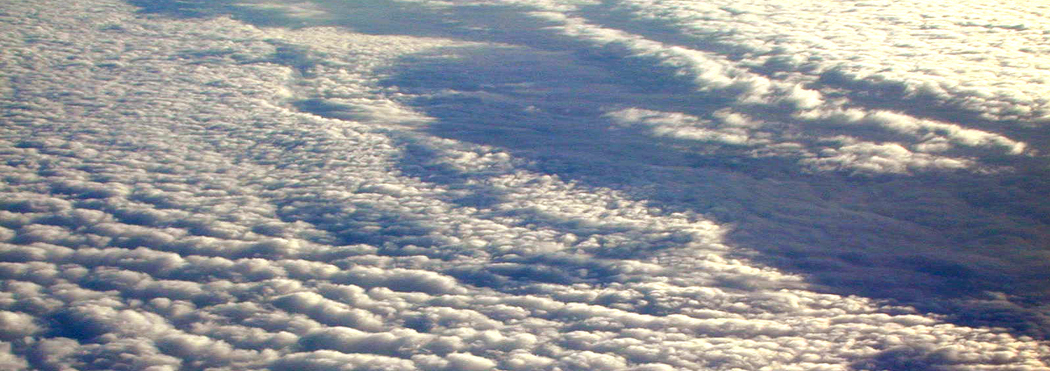
A jet flies too high and fast to take in any detail. The country is too big to slog through on foot. A car is the perfect compromise, letting you pass over a significant portion of the nation each day, but allowing you the leisure to stop and sniff the magnolias in Mississippi, the rank ecstatic yellow sunflowers in North Dakota — and the lingering odor of peanut butter at Graceland.

It’s summer again, and once more, I open up another brand-new Rand McNally road atlas and begin planning a drive around the North American continent.Sunflowers North Dakota
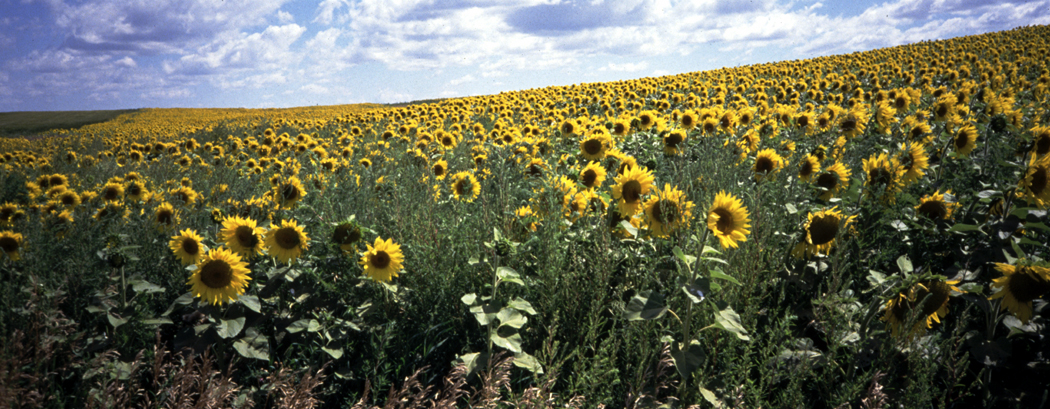
In the past 15 years, I’ve made the round-trip across the United States at least a dozen times. I feel like Magellan when I start once more on the circumvehiculation of America.

I’ve done it alone and with my wife. I’ve done it camping and in motels. I’ve done it in summer and in winter. I’ve done it in as long as two months and as short as two weeks. Last year, I made it from Phoenix to North Carolina over a weekend, but I’m not likely to repeat that butt-numbing feat.

Yet I am planning another road trip this spring.

Friends tell me I am nuts, a masochist torturing myself or a sadist torturing my wife, but I keep setting out.

There is always something new to see, or some old friend to revisit: I’ve been to North Carolina’s Outer Banks something like 40 times, and I’m beginning to develop the same relationship with Maine’s Down East. When I have lived in the East, I couldn’t wait to visit New Mexico again.Baldwin Co. Ala. sunset
There are soft-shelled crabs to be eaten in Virginia, salmon in Seattle. There are pirogis in Wisconsin and scrapple in Philadelphia. You can only get pizza in New Jersey, you can only get barbecue in eastern North Carolina, or a real Cuban sandwich in Miami.

Barns in Pennsylvania have stone foundations; in Georgia, they rest lumber right on the ground. In Wisconsin, the barns are red; in North Carolina, it’s the dirt that’s red; the gray, weathered barns aren’t painted at all.

I remember passing through Iowa and being astonished to see a farmfield filled with hogs and each animal had its private home, looking like a Levittown of doghouses.

In southern Arizona, I passed something very similar, but it was for fighting roosters.Bear Mtn Bridge
American regionalism is alive, despite network television and corporate advertising. America hasn’t yet been completely turned into one great food court of McDonald’s and Arby’s.

If you think you have only a choice between Pepsi and Coke, wait till you pop the top of a Double Cola in Reidsville, N.C.

Try one at the Sanitary Cafe, where calf’s brains are the breakfast special.Cadillac Ranch Amarillo Texas
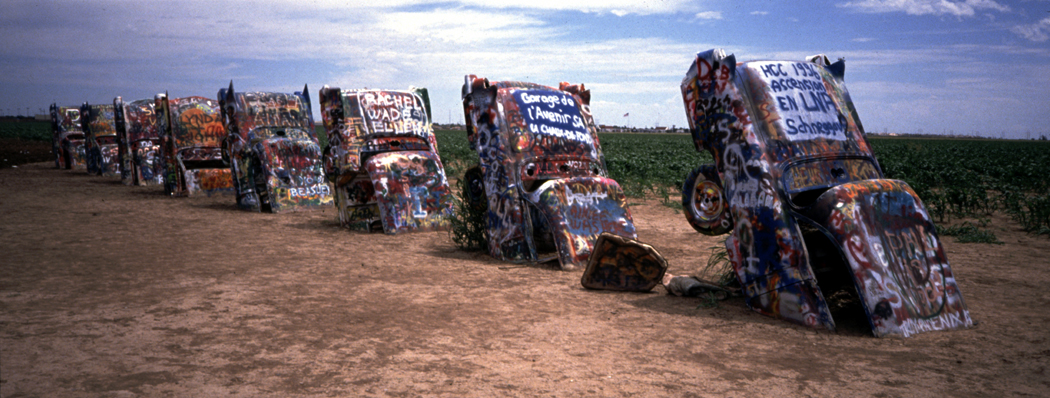
I’ve been to most of those landmark places you’ve heard of: International Falls, Minn.; Walla-Walla, Wash.; Langtry, Texas; Cairo, Ill.; Appomattox, Va.; Intercourse, Pa.; West Point, N.Y.

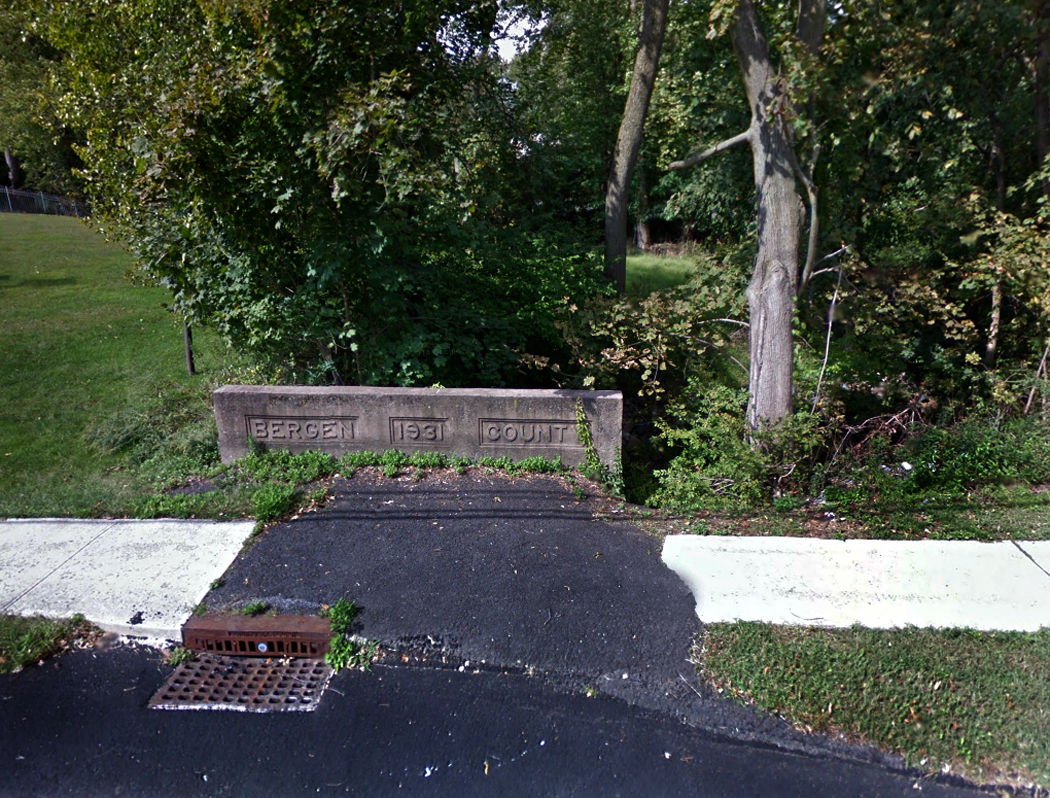
There are some great old iron bridges across the Susquehanna River in Pennsylvania, some great concrete bridges in central New Jersey that speak of the the great age of American highway building in the 1930s.

I’ve been up Pikes Peak in Colorado and up Mt. Washington in New Hampshire.

I’ve been over Lake Ponchartrain in Louisiana and across the floating bridge over the Hood Canal in Puget Sound north of Seattle.Columbia River Gorge Oregon-Washington
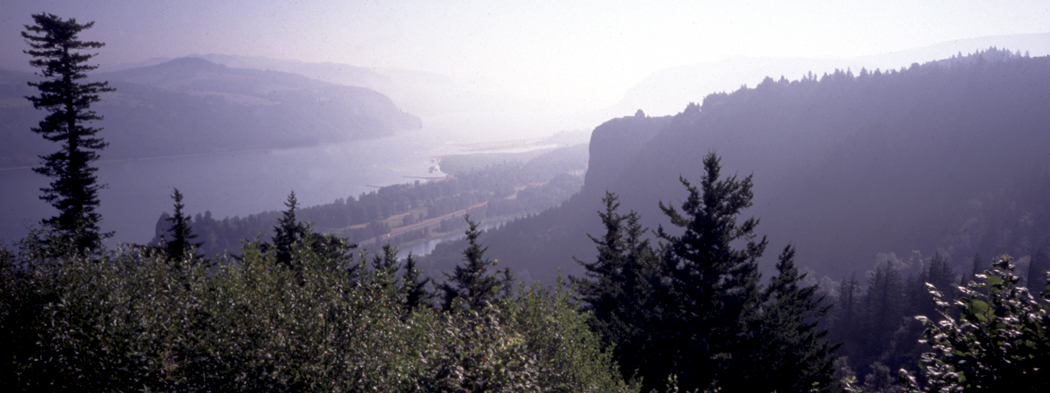
It helps if you love to drive, and I know not everyone has that passion. My brother hates driving, for instance. He views an automobile vacation like a two weeks stuck in an elevator. He can’t wait for his floor to arrive so he can get the heck out.

But most elevators don’t have windows.

As I watch the landscape pass across my windshield, like a travelog on a movie screen, I get a sense of the whole elephant, not just his trunk or tail.

Of course, we are talking here about a two-lane blacktop trip, not a bland rush down an interstate highway, where one stretch of concrete pavement can be distinguished from another only by the names on the exit signs.factory, trees, Lowell, Mass
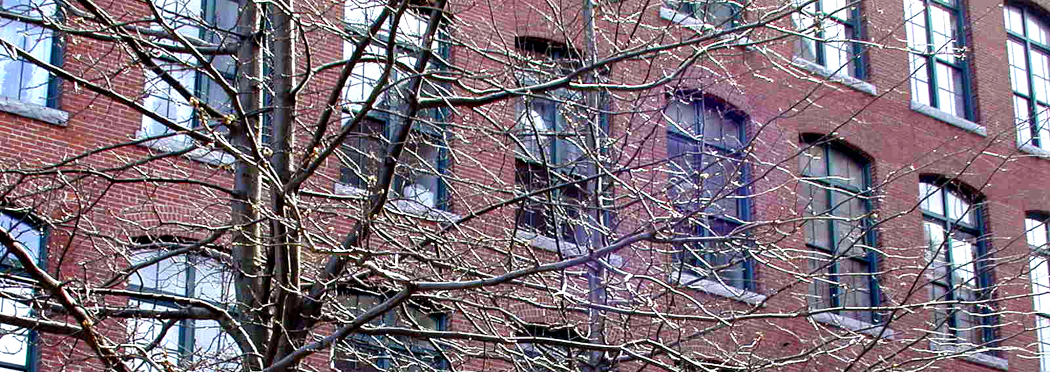
It is a particular kind of travel and has nothing in common with the destination-vacation of the tourism industry. I have no interest in waiting on Disney World lines for thrill rides or Lake Winnibigoshish for a week of trout fishing. You can have your three days lounging on the sands of Bimini or your Love Boat cruise.

Instead, I get to travel an arc of the planet, get to feel in my bones the curvature of the earth and the roughness of its skin. It is through driving across its surface that I get some body-feel for the size of the globe: It is roughly 10 times the distance I drive to get from Phoenix to New York City. New OrleansThat’s not some numbers on some mileage chart, but a distance I know by the seat of my pants.
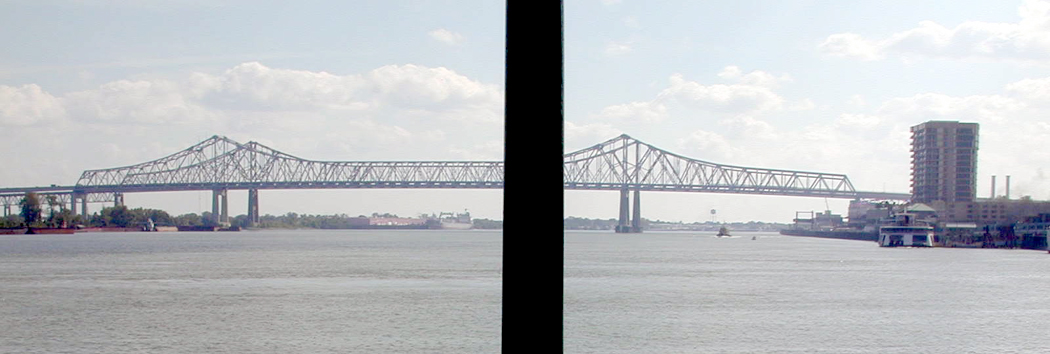
It’s also a lot smaller than the world seemed before I began driving.

In those years, my wife and I have been to each of the 48 contiguous state at least twice and most more frequently; we have been to all but one of the Canadian provinces; and even skirted into Mexico a little bit.

And each of those trips could have produced a Blue Highways, a book-length summation of what we saw and learned.Frosty dawn Wisconsin
Part 2

Over the past decade and a half, I’ve put enough vacation miles on the cars I’ve owned to equal driving around the world 2 1/2 times. You don’t drive that much without learning a few things.

The first is, of course, to stay off the interstates. You may get there faster, but not by much, and you’ll be bored the whole drowsy way. And in much of the country — and especially in the West — speed limits on smaller highways is not much lower than on the four-lanes, and with less traffic.Golden Gate Bridge SF Calif
Have a rough itinerary and plan how many miles per day you are willing to drive. This is more important for a passenger: Driving will keep you occupied, but your partner may go stir crazy sitting in a seat while going across some of the flatter places in Texas; Don’t overdo it. Marriages hang in the balance.

But never make your itinerary too rigid. You will discover unexpected things along the way; let yourself enjoy them.Gorilla, Am Mus Nat Hist04 copy
We never reserve motel rooms, so we never feel forced to get somewhere by nightfall. There are enough motels along the way. Even national parks, with their crowds, often have last minute cancellations. We’ve pulled into the Grand Canyon and into Yellowstone and gotten a room. But have a contingency plan.

One year, we hit South Dakota the week of the Sturgis Motorcycle Rally and there were no vacancies for 200 miles around. We had to drive into the next state to find a room. But that brings up the next lesson:

Don’t be afraid of mishaps and adventures. They may be uncomfortable during the trip, but they will be the best stories you tell your friends. No matter how bad it gets, it will provide the most vivid memory.Imperial Dunes California
Don’t drive every day; take some time to spend in a single spot. Three days we spent in a cabin on Daicey Pond in Maine’s Baxter State Park were three of the best days we ever spent — hiking, canoeing, watching moose and listening to loons at the base of Mount Katahdin. Not once did we start the car. When we finally left, we were ready for more miles.

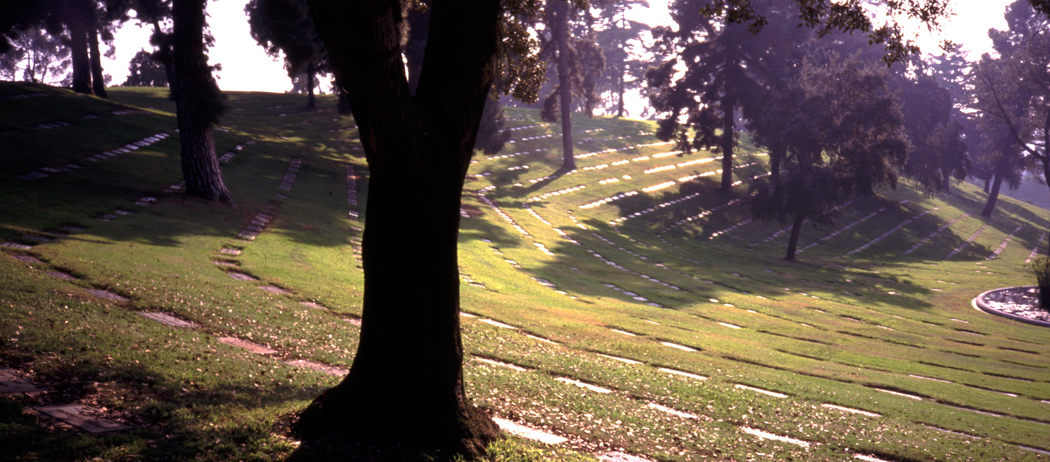
There are things you should always have in your car: water, a blanket, Fig Newtons, a road atlas, your address book with phone numbers. Forest Lawn cemetery LAI also carry an entrenching tool — one of those small folding shovels you can buy at army surplus stores — for digging out when I get the car stuck in sand or mud.
Don’t be afraid of dirt roads. There are some amazing rewards at the end of a bit of gravel.

We also always carry a small library of Peterson nature guides, two pairs of binoculars, camera equipment and twice the amount of film I think I can possibly shoot.

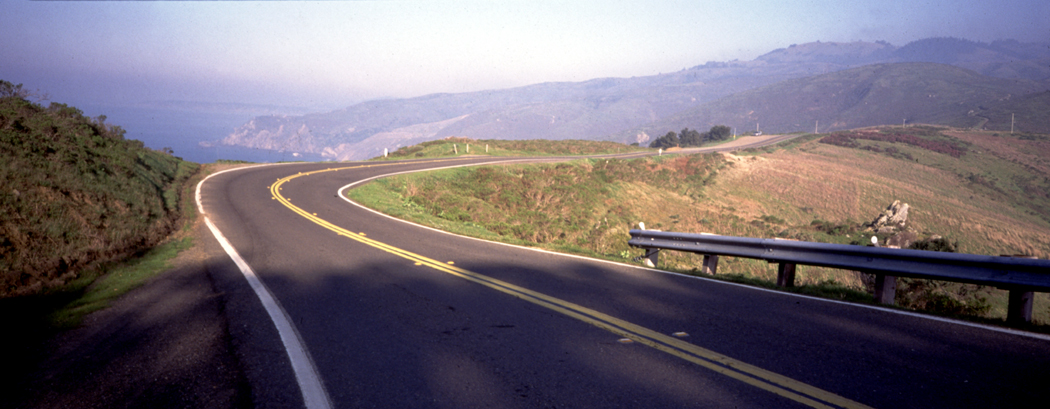
And finally, my nomination for the greatest invention of the 20th century: cruise control. It keeps your right foot from cramping up on the gas pedal. I was 45 before I ever tried it and I’ll never be that stupid again.pacific coast highway California
Part 3

What makes for good driving?

I don’t know about others, but for me, optimum driving conditions include:

–Little or no traffic for infinite miles ahead, with no stoplights.

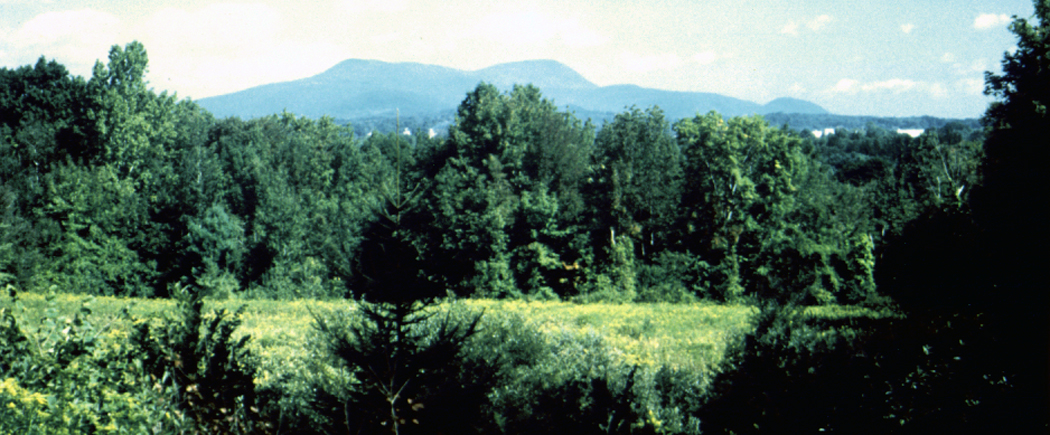
–Interesting and varied weather; I don’t want incessant sunshine any more than I want endless rain. A front moving through gives me a constantly changing cloud show.Greylock Mt from Melville home Mass
–An old road with a history. Route 66 is the most famous, but not the only one. I especially enjoy roads that follow geology: along a mountain range or river, so that the road seems to belong to the earth, rather than denying it.

–Occasional side roads, preferably gravel, for a change of pace.

–Periodic change of landscape, such as when you drive from the Plains to the Rocky Mountains, or from the white sands of the Atlantic Coastal Plain into the hilly interior of the Piedmont.

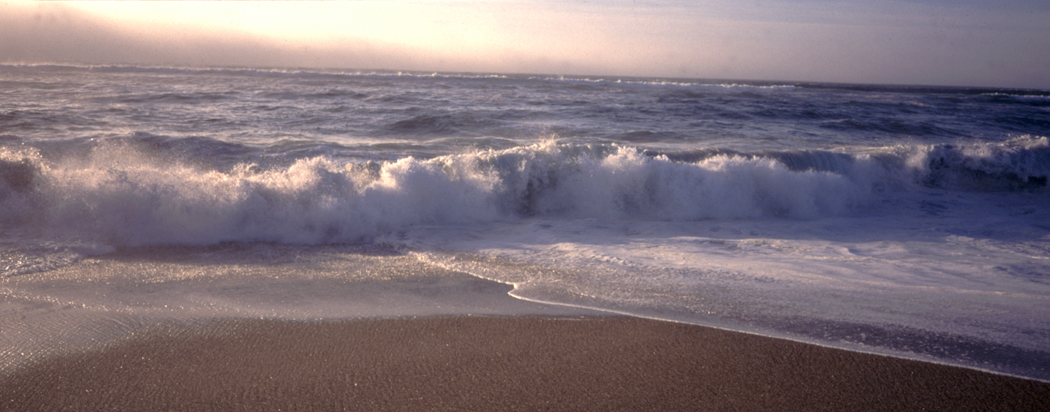
— A regional food specialty you haven’t tried yet and no chain restaurants.leo carillo st beach california
— A few museums and a few national parks. I gotta have both.

— A used book store in every town.

— A pile of Haydn symphonies on CD to run through the dashboard player.

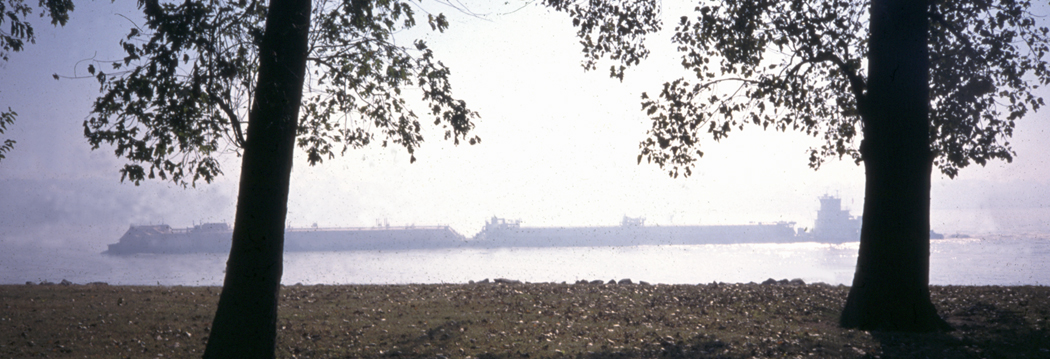
–A clean windshield. This last must be renewed frequently. Bugs bust on the glass.Mississippi barge
Part 4

The dozen most scenic drives in the 48 states:

1. Beartooth Highway, U.S. 212 from Red Lodge, Mont., to Yellowstone National Park.

2. The Pacific Coast Highway, Calif. 1, from San Luis Obispo to Leggett, Calif..

3. Blue Ridge Parkway, from Waynesboro, Va. to Smoky Mountains National Park, N.C.

4. N.C. 12 from Nags Head to Okracoke, N.C.

5. Ariz. 264 from Ganado to Tuba City, Ariz.

6. U.S. 1 from Miami to Key West, Fla.

7. La. 82 from Perry, La., to Port Arthur, Texas.

8. U.S. 1 from Ellsworth to Calais, Maine.

9. Kancamagus Highway, N.H. 112, from Conway to Lincoln, N.H.

10. Tex. 170 from Presidio, Texas, to Big Bend National Park.

11. Utah 12 from Red Canyon to Torrey, Utah.

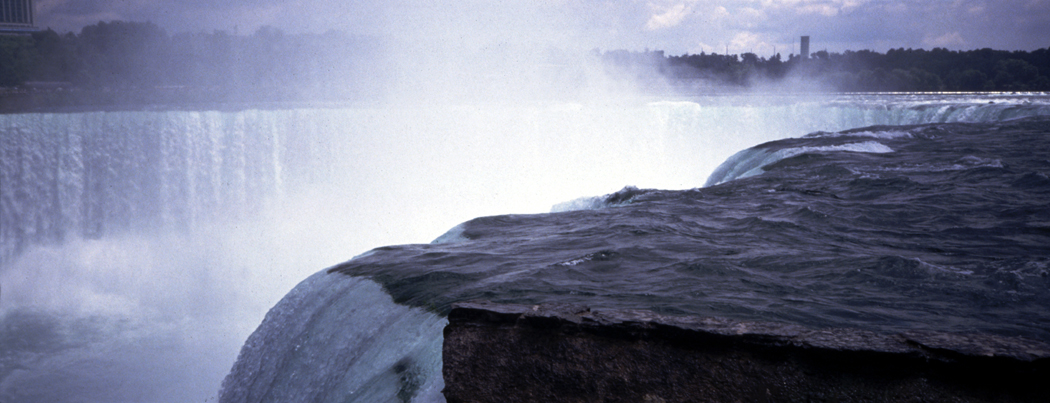
12. Wash. 14 though the Columbia River Gorge from Camas to Plymouth, Wash.Niagara Falls
Part 5

It isn’t just the flashy, famous places that draw the true driver. In fact, commercial destinations, such as Disney World or Las Vegas, are probably best gotten to by airplane and shuttle bus, so you can give over all your time to waiting in lines.

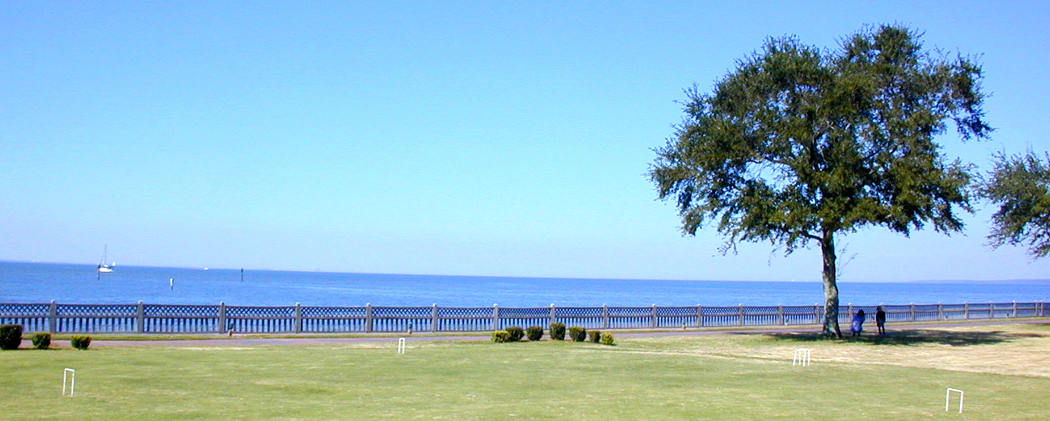
No, in a car, some of the best experiences come by rolling through the kind of places that fall through the cracks of marketing. Places “below the radar,” so to speak, of commercial development.mobile bay point clear
The small towns, endless farms, mountain ranges, Indian reservations — these are the places you have the opportunity to discover things for yourself. In the big theme parks, you get a uniform experience, developed through marketing research. The ride you take is the same ride millions of others take.

But when you talk to the harried but chummy waitress in Doumar’s, an original ’50s style drive-in on Monticello Ave. in Norfolk, Va., you are talking to a real person, a one-on-one experience that is particular and individual. You get a flavor of place, of culture, of people, of individuals.Page Dam Arizona

To say nothing of the flavor of ice cream, in a cone as close to identical as possible to the original waffled cone Abe Doumar is credited with inventing in 1904. They still make them on the same old wheezy portable machine. If your lucky, they’ll be making them while you eat.

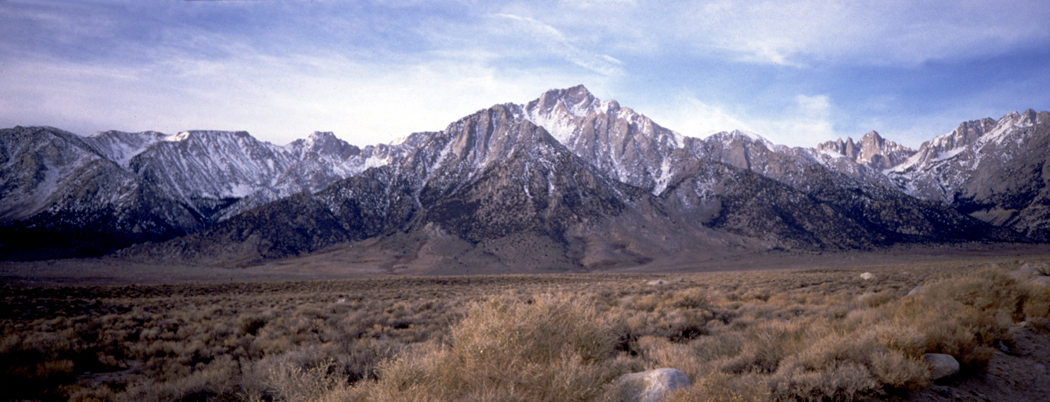
Likewise, there is nothing predictable about the starfish you find in an Oregon tidepool, or the bears in the Smoky Mountains. You get to experience the infinite variety of real life.Sierra Nevada Mts California
Of course, I have my favorites.

Among the 48 states, I can never find the end of either California or North Carolina. They are both richly varied.

California seems to have everything from the world-navel of pop culture to the most remote wilderness. It has more than any other single state.Thunder hole Acadia NP Maine
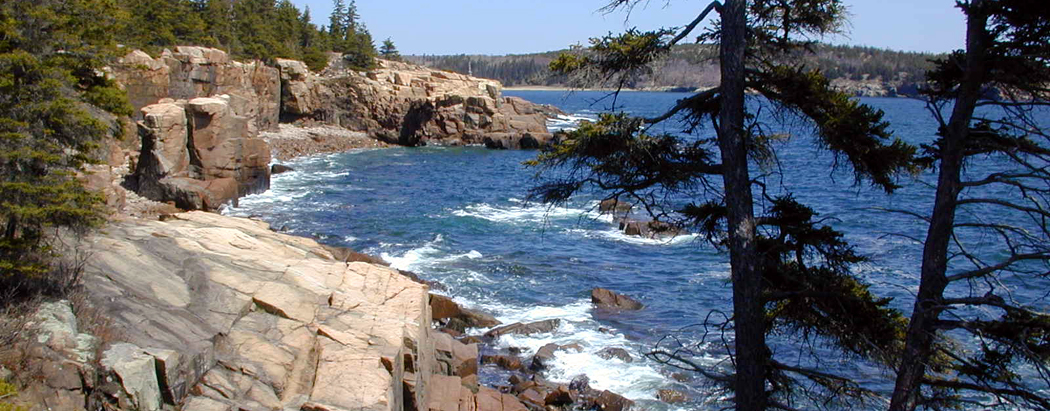
But North Carolina is nearly as varied geographically, and it has B&G fried pies, the most soul-satisfying food in the world. North Carolina also has the Blue Ridge Mountains and the Outer Banks.

And I cannot get enough of the great, grassy, rolling middle of America. When I tell people I love driving through Nebraska, they look at me like I just said I was born on the Hale-Bopp Comet. But just pull into one of those one-street towns with the grain elevator towering over the single railroad track and have lunch in the cafe where the farmers eat.Yellowstone Nat Park Wyoming
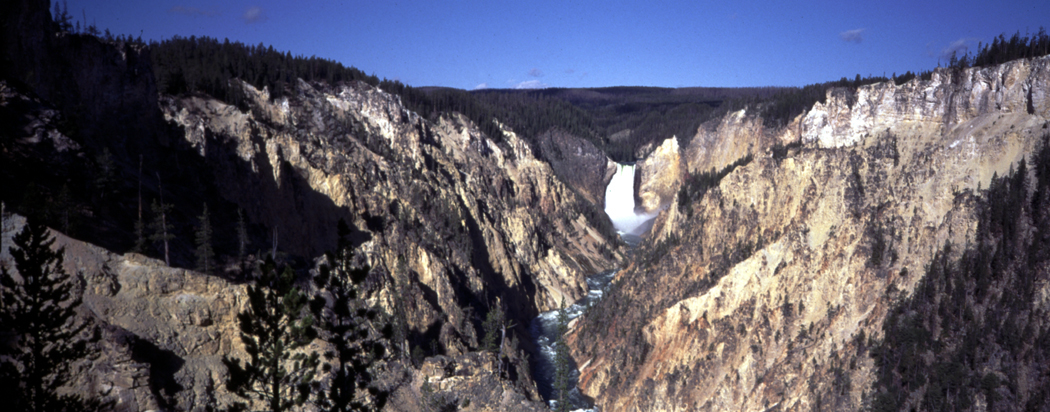
Or imagine the wagonloads of immigrants trudging along the Platte River, with Scotts Bluff on the horizon.

The pace is slower, more humane in Nebraska.

Humankind developed on the grasslands of Africa, and Nebraska, especially, seems to call atavistically to me, reawakening my genetic love of savannas.Monument Valley Arizona
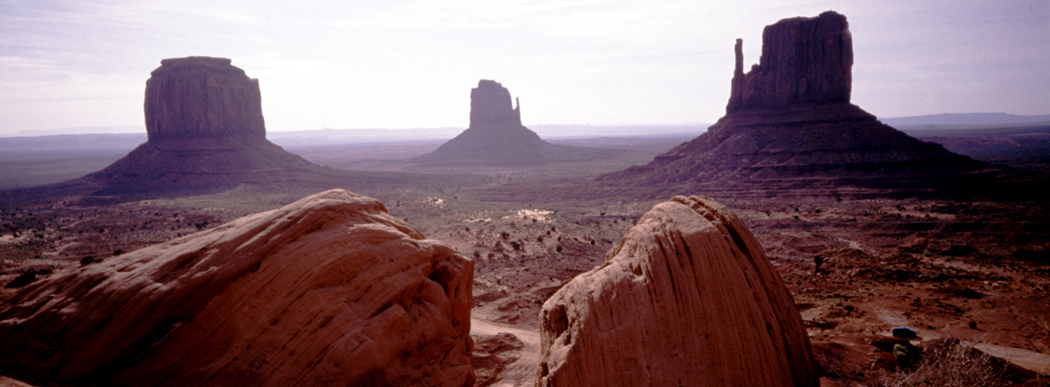
It’s easy to love the broad vistas of the West. Southern Utah doesn’t seem to have a square inch that isn’t photogenic, and the Grand Tetons of Wyoming are mountains right out of central casting: They are to other mountains what Cary Grant is to most men.

But I also love the Mid-Atlantic states. Sometimes, a Western forest is too much of the same thing. You can walk for miles in the Cascades of Washington and see only two kinds of trees: Douglas fir and Western redcedar.Zabriskie Point Death Valley Calif
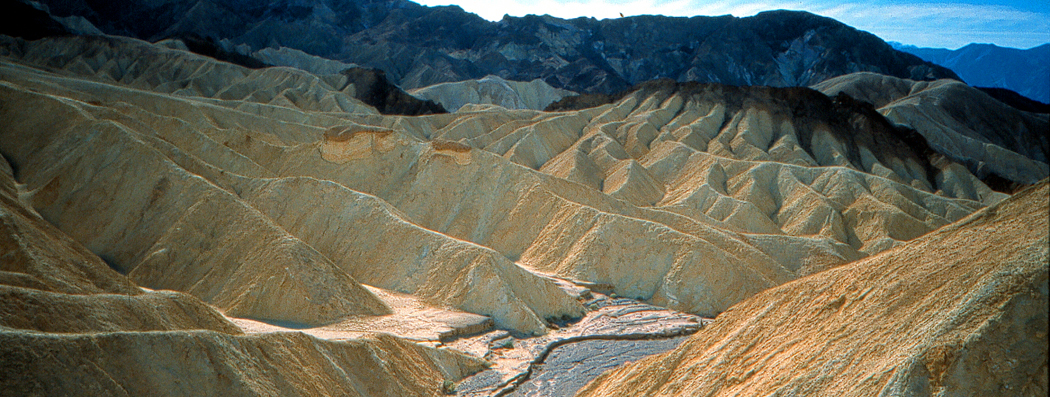
It’s different in Pennsylvania or Tennessee. In the great Appalachian mountain chain of the East, there are more species of plant life than in all of Europe. The variety is blinding: Redbud in spring, Tulip tree in summer. White pine, pin oak, red maple, sweetgum, sycamore, witch hazel, horse chestnut — and hundreds more.

And there is something humanizing about the landscape. This is land which has been lived in for hundreds of years. It is still wild, but it has made peace with the humans who live there and send smoke up their stony winter chimneys.Zion National Park Utah
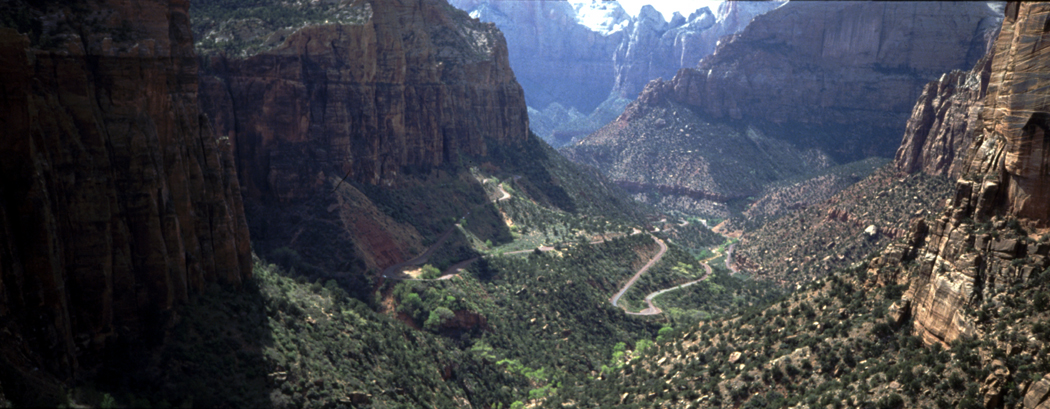
In the past, I avoided cities the way I avoid Justin Bieber songs. The noise, nuisance, dirt and traffic were everything I was trying to avoid by getting on the road.

But I have come to terms with them, also. After all, it is in Chicago, Philadelphia, New York and Boston that you find the symphony orchestras, natural history museums, ethnic foods and imposing architecture.Mississippi River Hannibal Missouri
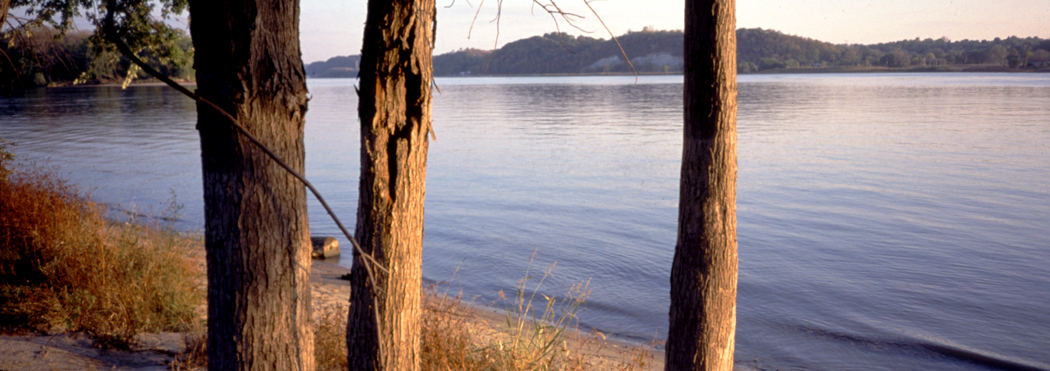
The greatest city for driving is Los Angeles. It may be the home of the cultural antichrist, but it is also a great fermenting, creative pot, with lots of roads that take you past inventively loopy buildings: The Tail ’o the Pup hot dog stand, the downtown Coca-Cola bottling plant in the form of an ocean liner.

In LA, you can’t get anywhere without wheels. It is the perfect American city.mobile bay

There are two states that I have to admit I don’t particularly enjoy: New Jersey, probably because I grew up there and don’t feel much urge to go back; and Florida, which is supposed to be a Southern state, but it has been given over to graceless Yankees. But even in Florida, I have to admit I love the Cubano culture of Miami and the Everglades, proving that there is always something of worth.
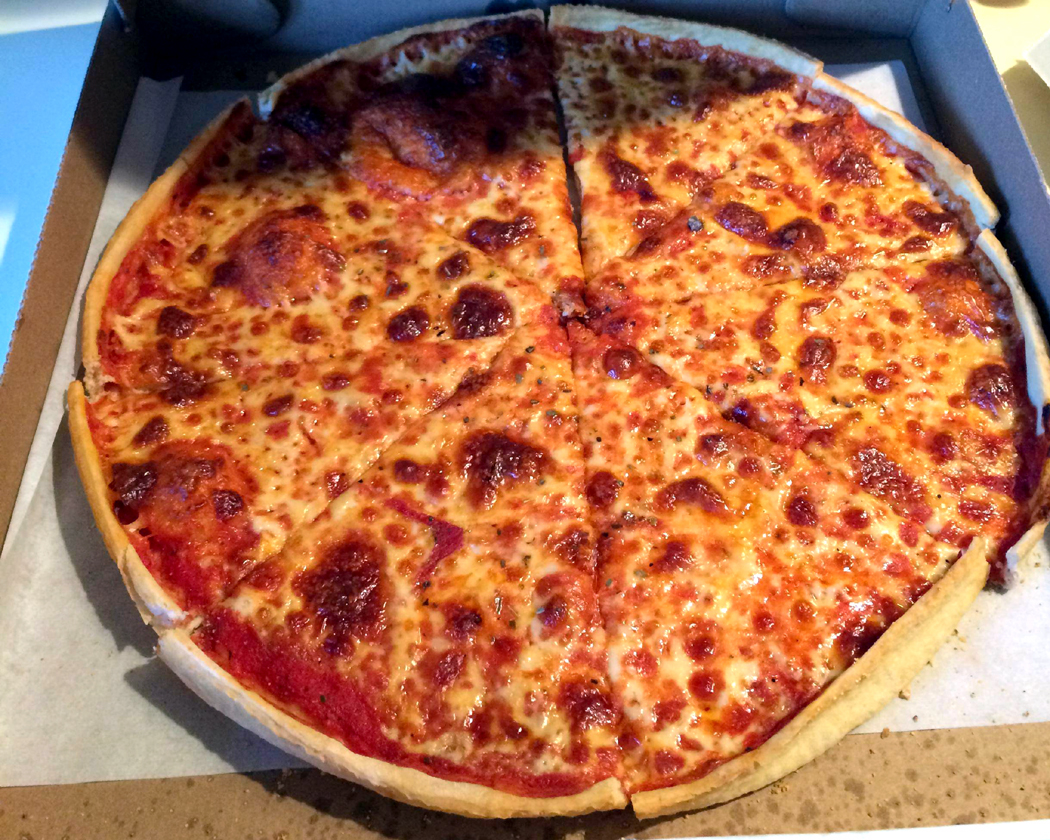
nj pizza
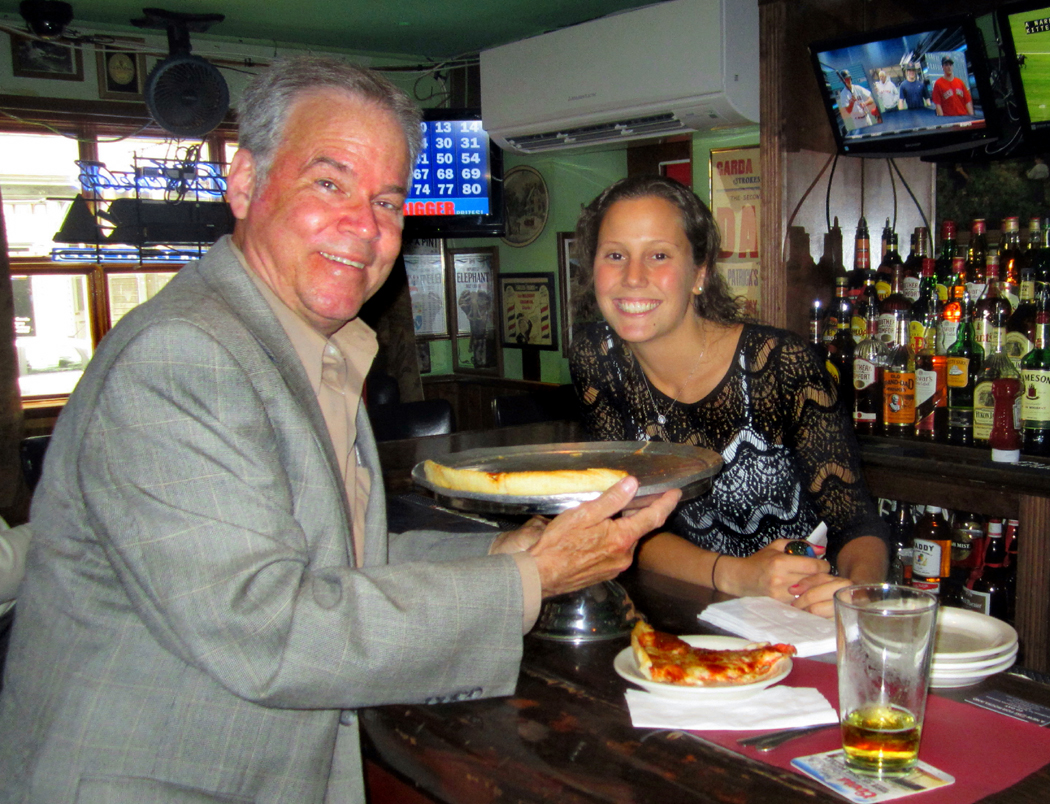
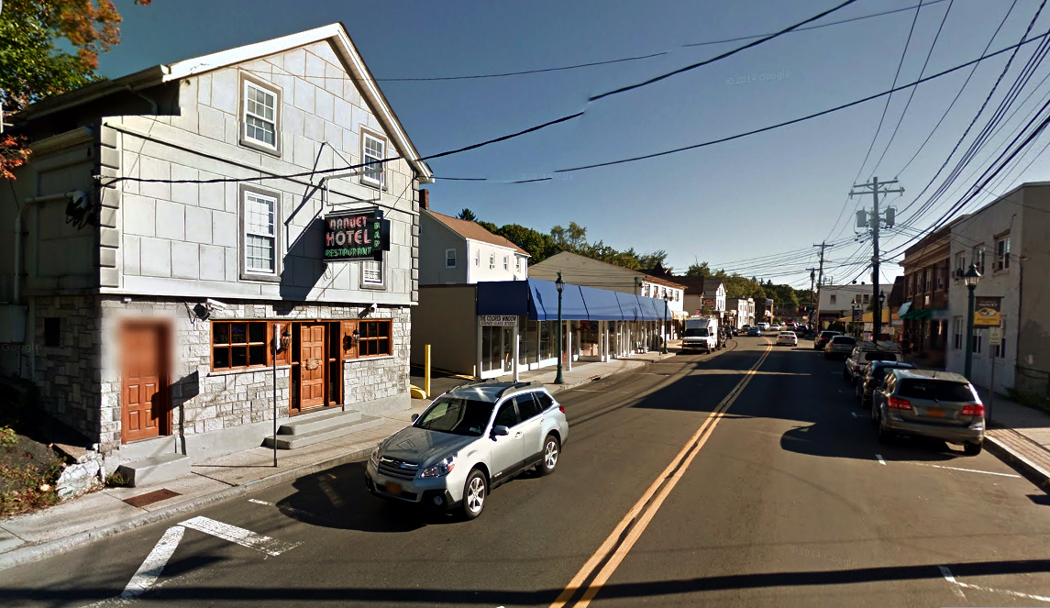
I stepped into the Nanuet Hotel in New York’s Rockland County because I hadn’t had a real pizza in 15 years.

I’m not un-American: I’ve eaten my share of Super Bowl delivery pizzas and to this day, when both my wife and I have had tiring days at work, we phone in pizza from one of the standard brands.

But they aren’t real pizza. Like most people, I grew up in a region of America with an identifiable cuisine. Philadelphia has its scrapple and cheese steaks; North Carolina has its barbecue; Texas has its chili. New Jersey’s cuisine is pizza.

I know there are Chicagoans who say they know what real pizza is, but they are misguided. I grant they know something about kielbasa, but real pizza can only be found in New Jersey and portions of New York. It is different from the populist menu item in that it is almost Calvinist. It has no frills. There is no such thing as a real pizza with ham and pineapple, for instance, to say nothing of the crime against nature advertised as a “taco pizza.”

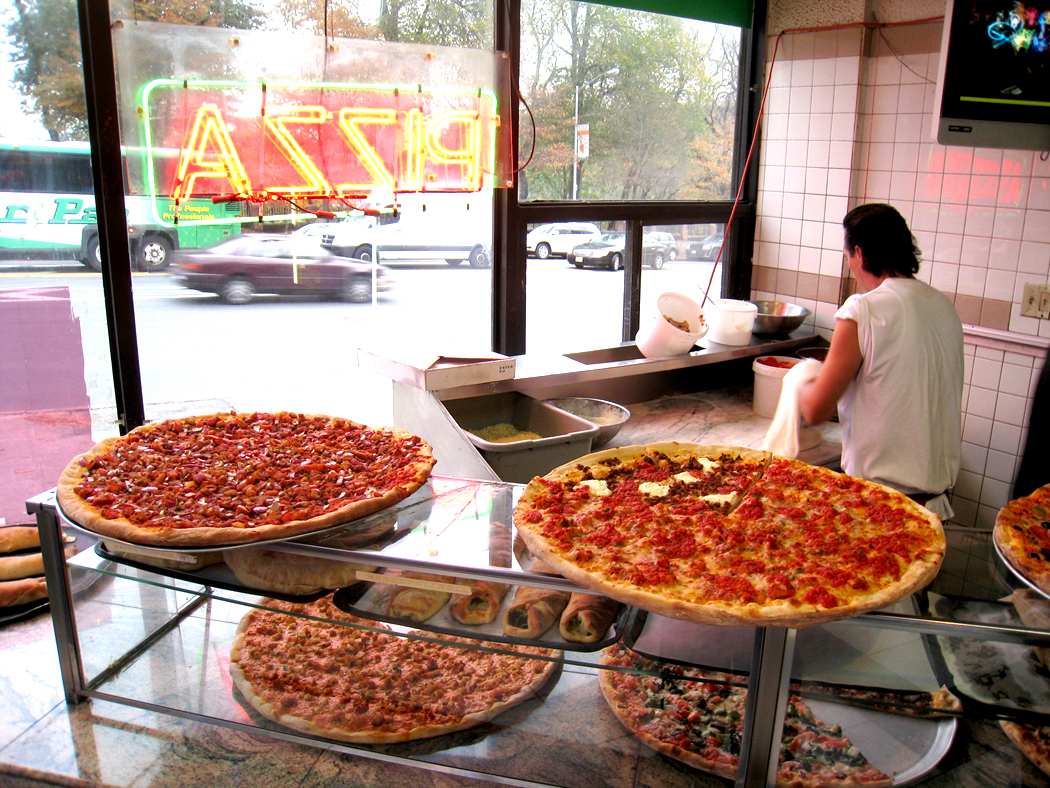
The real item has a thin, biscuity crust, lots of spicy, garlicky tomato sauce and a thin covering of mozzarella that bakes into a papery crust over a stretchy, palate-burning stratus. It can be dusted with some grated Parmesan and sprinkled with some ground hot pepper. And if you are in a daring mood, it can come with pepperoni. But that’s the limit.

It also takes 30 minutes from order to table — unless you are buying it by the slice, that is.Nanuet Hotel

Well, the Nanuet Hotel is a seedy bar and grill in a tiny, decaying town just north of the New York/New Jersey boundary. The narrow street is lined with cars along both curbs, some sit with two wheels up on the sidewalk. The storefronts are bars, laundromats, video stores and the occasional Korean grocery. There are no Starbucks on this street; no sushi bars; no upscale sandwich shops with outdoor tables under awnings.

The hotel has tilting white clapboard walls and a door whose sill is worn down to a hollow of splinters. Inside, it is dark and — unfortunately — smoky. Along one wall are shelves of Johnny Walker and Jim Beam; along the other are tables with paper place mats and paper napkins.

The man behind the counter is in his late 50s with a serviceable gut and balding head: He could be Peter Boyle’s brother.

There are two TVs playing with their sound down. One carries a soap opera, the other a Yankee game, but with a twist: it is a game the Yankees played against the Detroit Tigers in June of 1976. Ron LeFlore and Mark “The Bird”  Fydrich on one side, Oscar Gamble and Graig Nettles on the other.

“This is great,” Peter Boyle tells another aging customer. “I found this channel the other day and they were showing that Roberto Duran fight, you know, ‘No mas, no mas.’ ”

There is a Keno board with flashing numbers on one wall and a tumbler full of entry forms at each table: You pick numbers and give the card to the barkeep and wait for your numbers to show up and win big bucks. Your number never shows. Glasses clank and the spritz of beer bottles being twisted open gives the place the feel an old Jerseyite like me can call nostalgic.nanuet hotel customer

The pizza is thin, hot and scarifying and I drink a brew along with it. I tell the barkeep that I have come all the way from Arizona to taste the real pizza once again. He knows what I mean.

“It’s the water, I found out. My nephew tried to open a pizza place in Denver, but he couldn’t make a go of it. It wasn’t the sauce, you can import that from here if you need to. But the dough won’t come out right. It’s the crust.

“Now when he comes home, he buys a load of bread and rolls and packs them up with dry ice to take back with him. Bottom line is, it’s the water.”new york pizza

Everyone has a theory, but none of them has proved sufficient to export the Tri-State national pizza. You gotta go to New Jersey, New York, or southern Connecticut.

north bergen to meadowlands

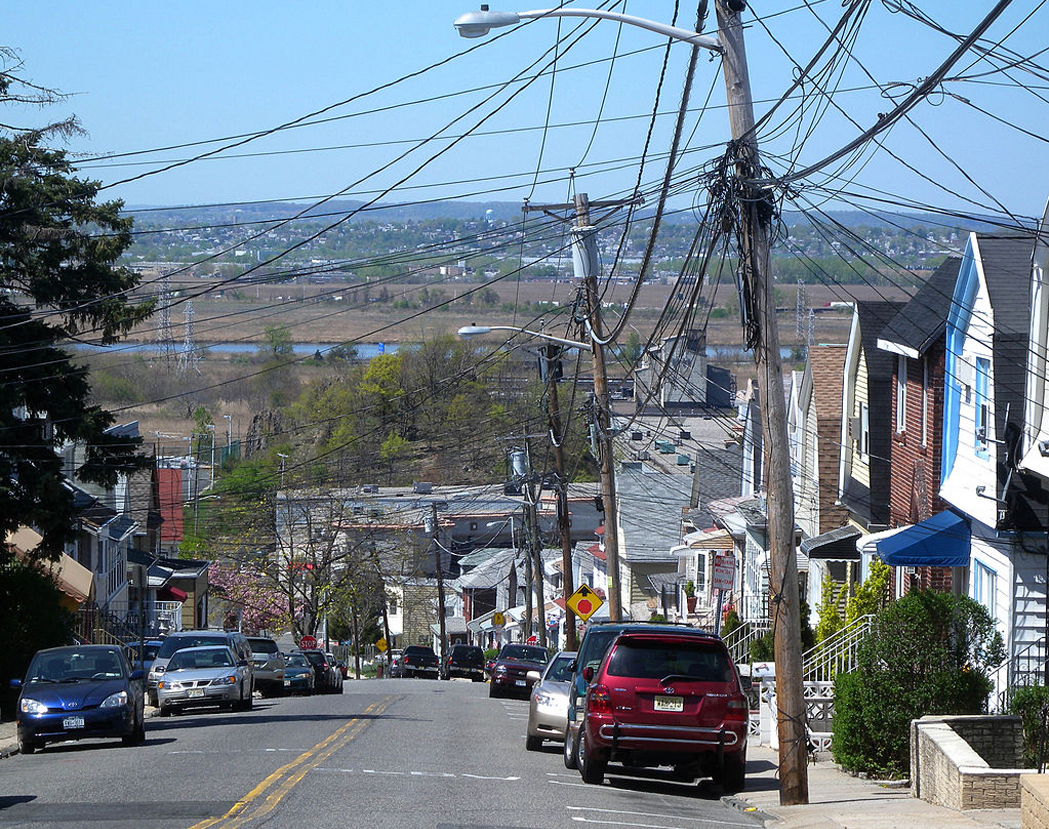
Northern New Jersey in the postwar years was a patchwork of suburban towns and rural farmland. The part just west of the Hudson River is hilly, with a long irregular slope dropping down from the crest of the Palisades and into the valley of the Hackensack River. The larger towns — Teaneck, Bergenfield, Hackensack — were urbanized with a bloom of soot covering everything. My town, Old Tappan, was changing from one of small farms and Dutch-colonial homes to one in which whole neighborhoods of sameness were erupting in tract housing. The population was a mix of old families that had lived there for generations and the bright-cheeked newcomers looking for their own homes and green lawns and an upwardly mobile place to raise their children.

OT bridgeOur house was a one-off — new, but not in a development. It sat on a gentle hill in what had been woods and included a brook. My father built a wooden bridge over the stream and enlarged a bend in it to become a small pool in which we could wade or recline in the water to cool off in the muggy summers.

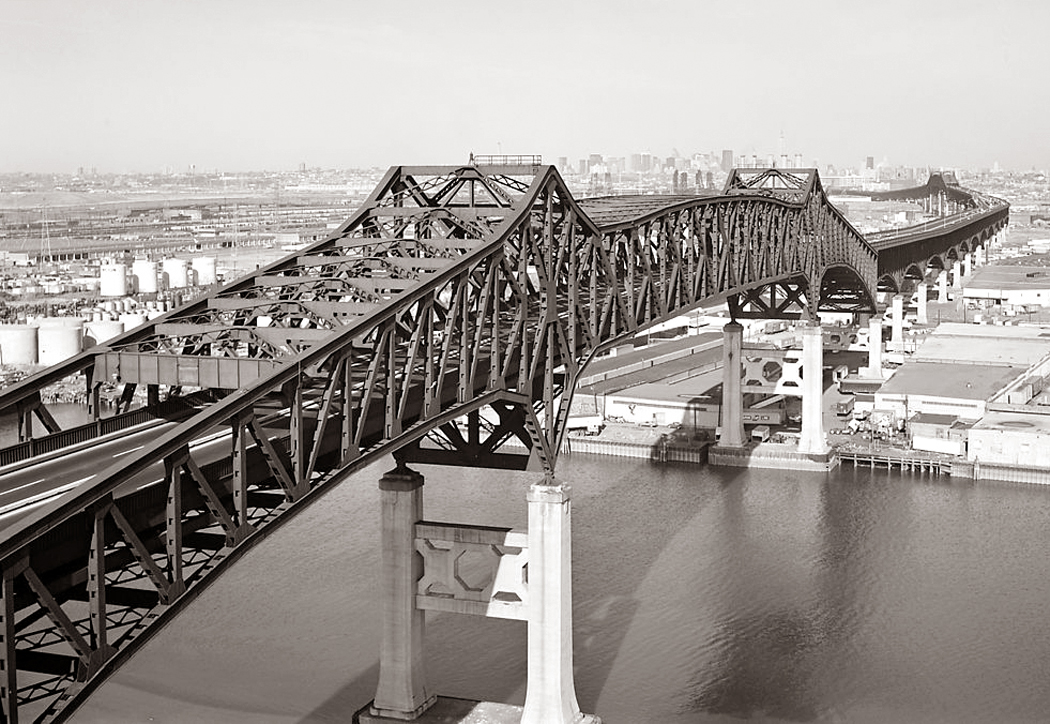
Because I grew up there, this patch of planet became for me my umwelt — my inner picture of what the world looks like — it was normative. The wider world I knew stretched from upstate New York along the Hudson and down to the Jersey Shore along the Shrewsbury River. The landscape included such landmarks as the accordioned oil-storage tanks along Route 36 in Keyport, the Pulaski Skyway that crossed over the New Jersey Turnpike, and the three-lane Route 9W that skirted Storm King Mountain along the Hudson. It included forests and streams, and it included heavy industry, a web of highways and the shopping malls of Paramus. pulaski skyway

The center and anchor of this landscape was Manhattan — the gravitational center on the other side of the George Washington Bridge. It was where, as a teenager, I wanted to spend all my time. Museums, bookstores, subways, Central Park, Chinatown restaurants and the great cheap ride on the Staten Island Ferry.

When the family went to the city for whatever reason, and we came home at night, driving up the brand-new Palisades Interstate Parkway, the lights of the city across the river were stars burning in the blackness, outlining the vertical thrust of the skyscrapers, while a thin line of burning beads moved continuously along the West Side Highway providing a baseline. When I was 7 years old, it was the most beautiful thing I knew. nyc night skyline

The landscape of our childhoods is embedded in our minds and memory the same as the language we learn without trying — it is absorbed whole. It shapes the mirror that reflects back everything we live through afterwards.

“The mind, that ocean where each kind/ Does straight its own resemblance find,” wrote Andrew Marvell in The Garden.

As an adult, I have lived in each of the four corners of the nation: the Southeast, the Southwest, the Northwest in addition to my green years in the Northeast. But no matter where I have gone, outside that comfortable nest of the Middle Atlantic, the landscape remains a novelty. I have enjoyed, even loved living elsewhere, but deep in the folds of my cortex, normal is New Jersey.

That same process works for wherever you grow up. It is Mississippi for Faulkner, Brooklyn for Henry Miller, Concord for Thoreau, Ohio for Sherwood Anderson, Missouri for Twain, Lowell, Mass., for Kerouac. You can find Paterson, N.J. in William Carlos Williams and Asheville, N.C. in Thomas Wolfe. The axis mundi.

Leonardo took northern Italy with him when he went to France. Durer took Germany with him to Italy as much as he brought the Renaissance back north. Beethoven never left Bonn even when he lived in Vienna, and the provincial towns of Czechoslovakia chime over and over through the symphonies of Mahler in the military marches and SchrammelmusikRiver Street, Madison NC.
My wife grew up in Madison, N.C., on the banks of the Dan River. “The river and the creek in the back yard are the back of my brain, the inner part I draw from. The front of my head looks out to the town.”

That is the crux: the part we draw on, waters of life from the inner well.

Childhood creates the fixed inner sense of the world, depending on where you grew up: the flatness of northern Indiana, the short-grass prairies of western Nebraska, the leaden skies and perpetual drizzle of Seattle in winter.

But it isn’t merely the look of the landscape — as if it were a painting — but an entire sense of the physical world and our place and size in it. That includes a paradigm of distance — how far is the horizon, how long is a street before it curves away from your vision, how tall are the trees. These measurements are as set in the forming brain as are our names.

So too are the seasons we live through. In New Jersey, there were four, with deep snow in winter and muggy heat in summer. The further north, the more winter and summer vary in length of daylight. In Arizona, there are two seasons: unbearable heat and relief from unbearable heat. In San Diego, there is barely more than one season. If you move from one place to another, you never quite get used to the missing or added seasons.

That umwelt includes the quality of light we know as normal, the feel of air and its humidity against our skin, the way sound carries or doesn’t carry as it is muffled by woods or snow. It also includes the food, the ethnicities that surround us, the accent we speak in and the population density. All create a “normal” in our minds that we never lose, even as we expand our horizons as we grow. bergen co to nyc

There are those who believe we try as adults to recapture our childhoods, but I say instead, we can never escape them. They are there engraved in our synapses.

I have traveled widely in North America, through all the states save Hawaii, and all the Canadian provinces save Prince Edward Island. And all those states many times. The landscape — not landscape as art, but landscape as the planet your drive or walk through — gives character to each location, as if each location were not just a tract of land, but an entire culture.

The land has meaning.

I am going to try to describe over the next series of blog entries a variety of distinct American landscapes and find in them meaning beyond the picturesque. I hope you’ll come with me.

moviola 1

We travel in time as much as in space.

And just as there are moments when you stand on the top of a rise and see grand vistas and the lay of the land suddenly becomes clear, there are moments when you climb up out of the hollow of local time and the years spread out in front of you as one vast temporal landscape.

I had such an experience this summer in New Jersey.

I was born and raised in the Garden State in several communities between the Hackensack and Hudson rivers. I left for college and have rarely been back in the intervening quarter century — family and friends had all died or moved away.Old Tappan 2

But on this trip my wife and I passed through Bergen County and managed to stop by some places I knew well as a boy.

Now I’m not about to wax nostalgic. I abhor nostalgia; it is a kind of morticians’ wax applied to the dead face of the past, distorting everything we once knew. Times were not better then and never were.

But things clearly have changed.lein's grove

The first change is purely psychological: Everything has shrunk. The landscape that was so sprawling to my boy’s eyes is now condensed to a few tight city blocks. What seemed like an expedition is now walking distance. Skyscrapers are now bungalows.

Many people have experienced a similar sensation.

But the second change is more profound: The snapshot of New Jersey in my brain has remained static while time has bounded forward, so that when I revisit Teaneck or Old Tappan, I’m seeing what is in effect time-lapse photography: All the changes are accelerated so that what has moved invisibly day to day is now telescoped into a rush.

It isn’t just that there is more development. Bergen County has for a long time been the very model of suburbia; there are tract homes everywhere and more spring up every day. But nature has somehow kept up with the construction: Housing developments that were raw muddy wounds 30 years ago are now green and shaded under sprawling trees. For all the decay of time, there is a matching fecundity.

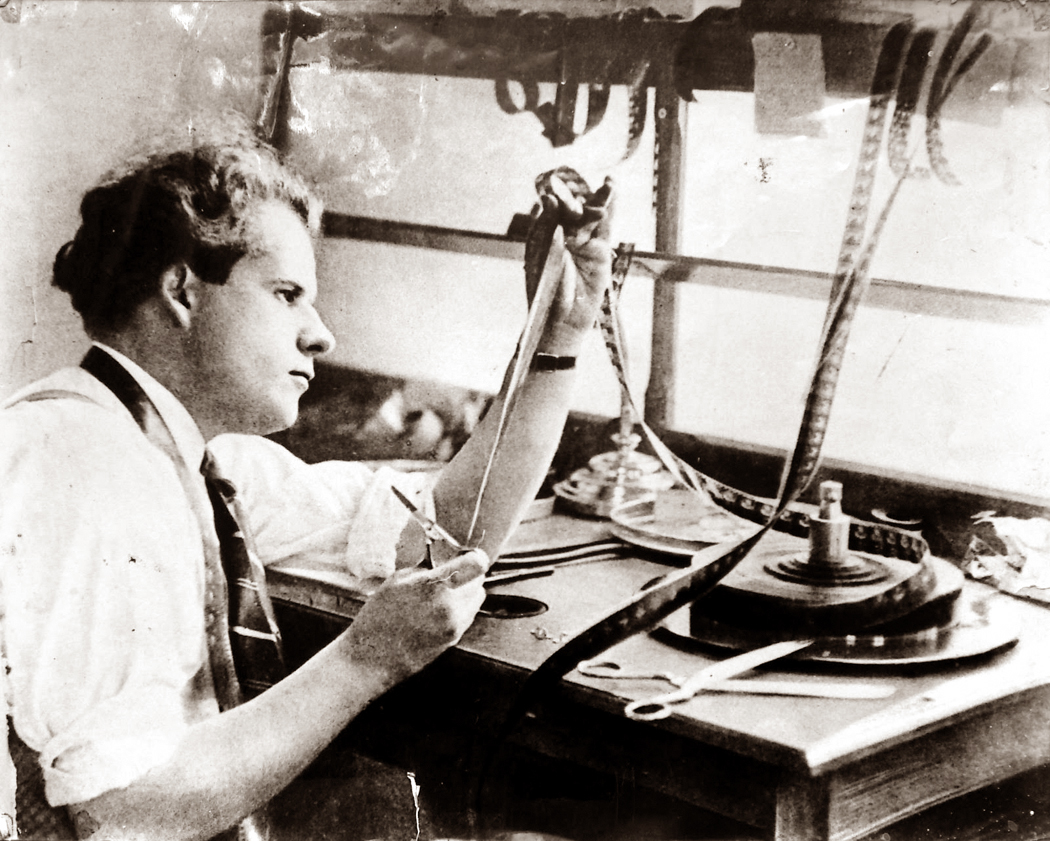
And when a quarter century exists between frames in your movie, it is a small step to move back yet another quarter century and then another, so that the history you learned in school no longer sits inkbound on the page of a book but begins to breathe as another scene in the movie you are a small part of.eisenstein

So you can slide the film back and forth in your mental Moviola only a dozen equal frames and you are in the era of Peter Stuyvesant and Dutch colonialization. It’s a blip from now to 1655 on the time line.

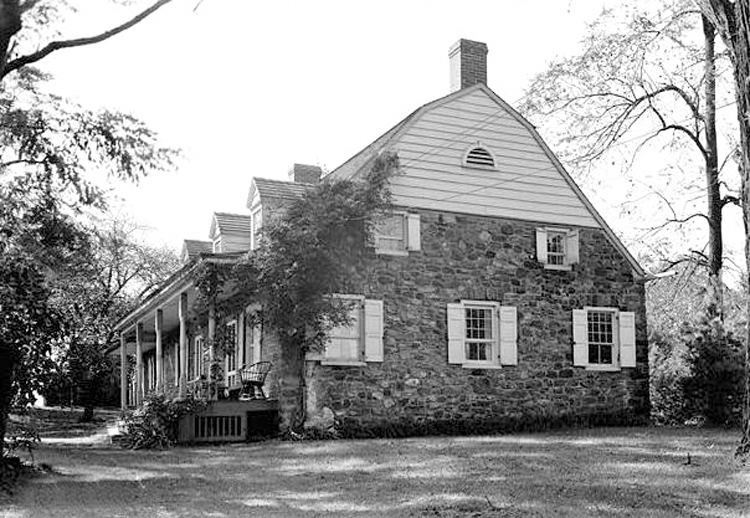
Frederick Haring HouseThe Old Tappan I grew up in was dotted with farms and old stone houses, built during the Dutch era. The houses are thick-walled and covered in lichen, moss and ivy; they are overarched by spreading oaks. They have, as it is said, settled.

Such houses were constructed of brown sandstone quarried by slaves.

It isn’t often remembered that slaves are a part of New Jersey’s history: In pre-Revolutionary times a settler was given 175 acres of land for every slave he imported. By 1737, slaves accounted for 8.4 percent of Jersey’s population.

Slave insurrections — in Hackensack, Raritan and Elizabeth, among other places — were a continual occurrence and citizens felt themselves stuck with the damnable institution. In 1772, a law was proposed ”obliging owners of the slaves to send them all back to Africa at their own expense.”

The law came to naught, but by that time free labor began to replace slavery and indenture.

I mention all this because when my boyhood home was built in 1956 in Old Tappan in northern New Jersey, the excavation turned up the stone foundation of slave quarters. It had been buried in woods for centuries and was now opened up to the sun for the first time.

It seemed little more than a curiosity then, and it was soon buried once more under the landscaping in our back yard. Its reawakening was brief.

Old Tappan 4The house has had two or three owners since I lived in it. I doubt that any of them knew what was buried under the Zoysia grass. But I thought of it again as I visited on vacation and saw how much the old house had changed: new paint, grown-up trees that were once bushes, a new bridge over the creek that cut through the property.

You play the film through the Moviola: The whole of northern New Jersey was once covered by a forest of oak and hickory. That was cut down for agriculture; the slave quarters behind my childhood home was evidence of that. But the fields grew once more into trees and were once more cut down to build the house.

The field next to the house was still pastureland when I was a boy. Now, it is dense with willows, birch and maple, on its way once more to growing oaks. If I look into its future, I can see more housing.

Time is fierce; it consumes the world.

 Part 3: A chance to pull overroadside america exterior


The central Appalachians — through Pennsylvania, New Jersey and New York — is the natal home of the cheesy roadside attraction. Many are now gone, but many also remain, often looking cheesier and more shopworn than ever. The Catskill Game Farm is no longer there, but Santa’s Workshop is still going strong.

They are also home to many early resorts and vacation hotels, pitched on mountain ranges not far outside the cities of Philadelphia or New York, where urban dwellers could spend a week or two breathing healthy mountain air — the Poconos or the Catskills.

And hikers can follow trails through the many state parks, or the long Appalachian Trail, which courses through the three states, weaving a path that avoids urbia and suburbia and finds the long, bent ridge lines of the breadloaf mountains.

Roadside America

Roadside America

This section of the Appalachians is the most highly populated, but there are still bits of woods and rock. But that population also meant it was economically feasible to build those legendary roadside attractions — Crystal Caves and Frontier Towns — that once punctuated the now-forlorn backroads and highways.

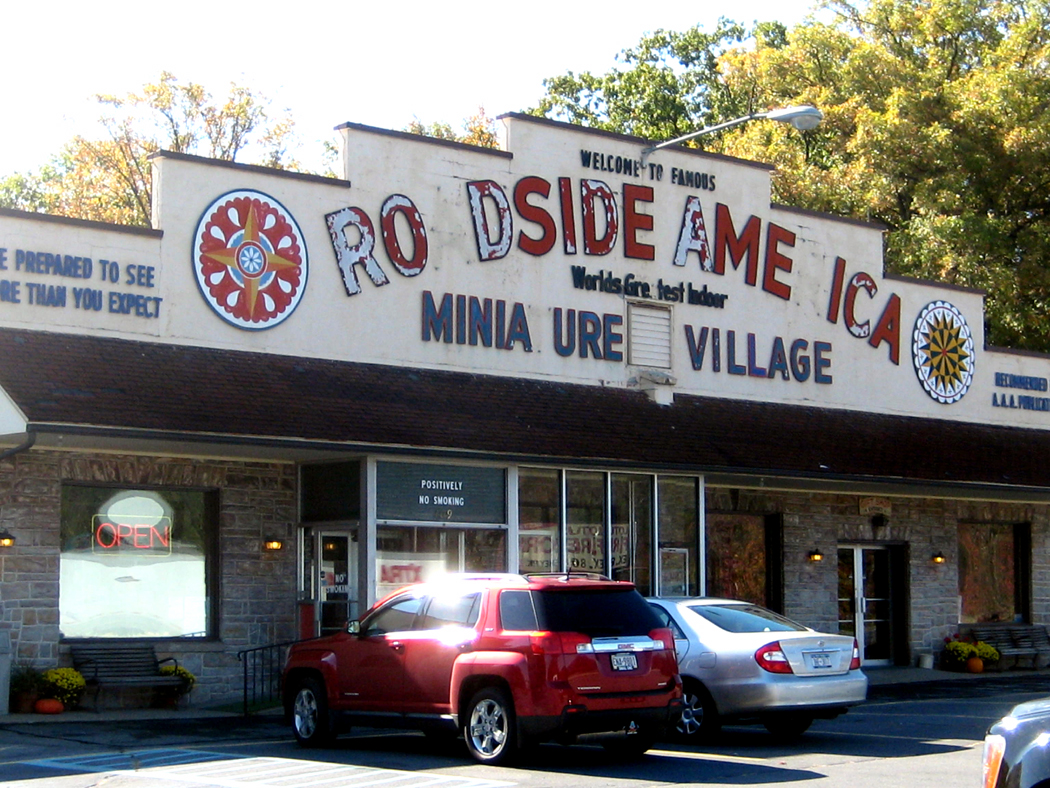
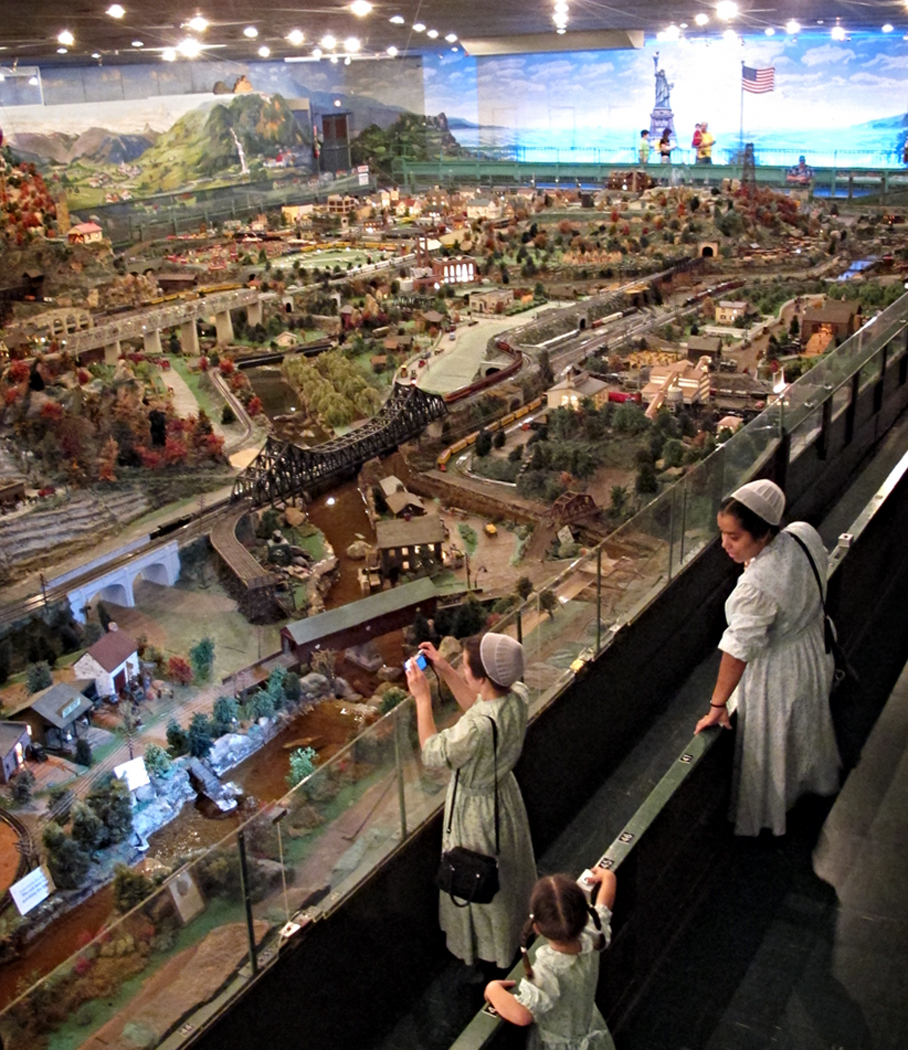
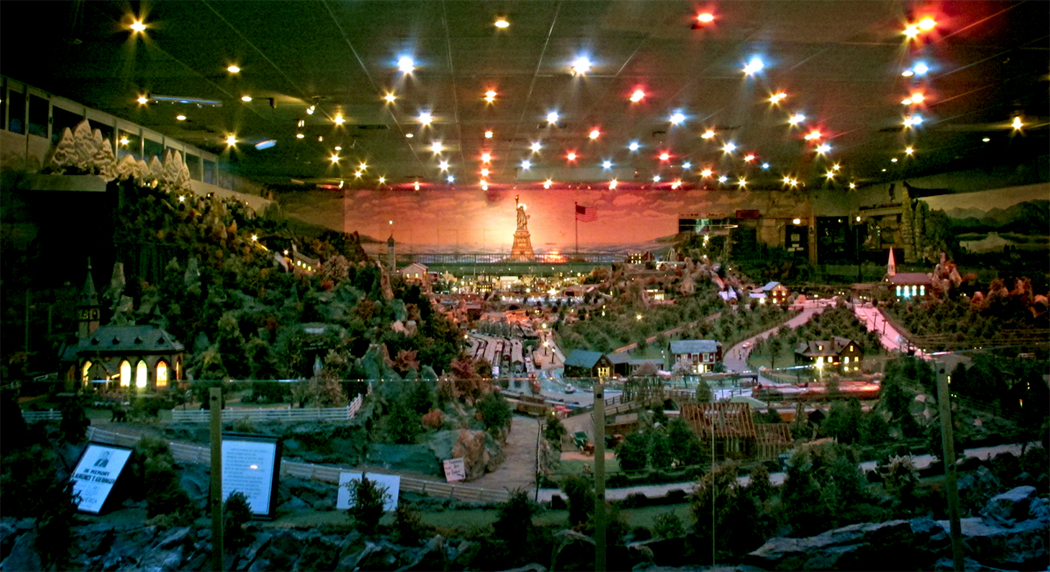
The quintessential tourist mecca is Roadside America in Shartlesville. It is a model-train layout the size of a department store. Opened in 1941, the exhibit is run by the descendants of its creator. Stay for the simulation of night, when all of the buildings light up and Kate Smith sings God Bless America while a spotlight shines on the Statue of Liberty. roadside america 4

Not much can live up to that. But there is the Sturgis Pretzel House in Lititz, which is the nation’s oldest operating pretzel factory, where you can learn the craft.

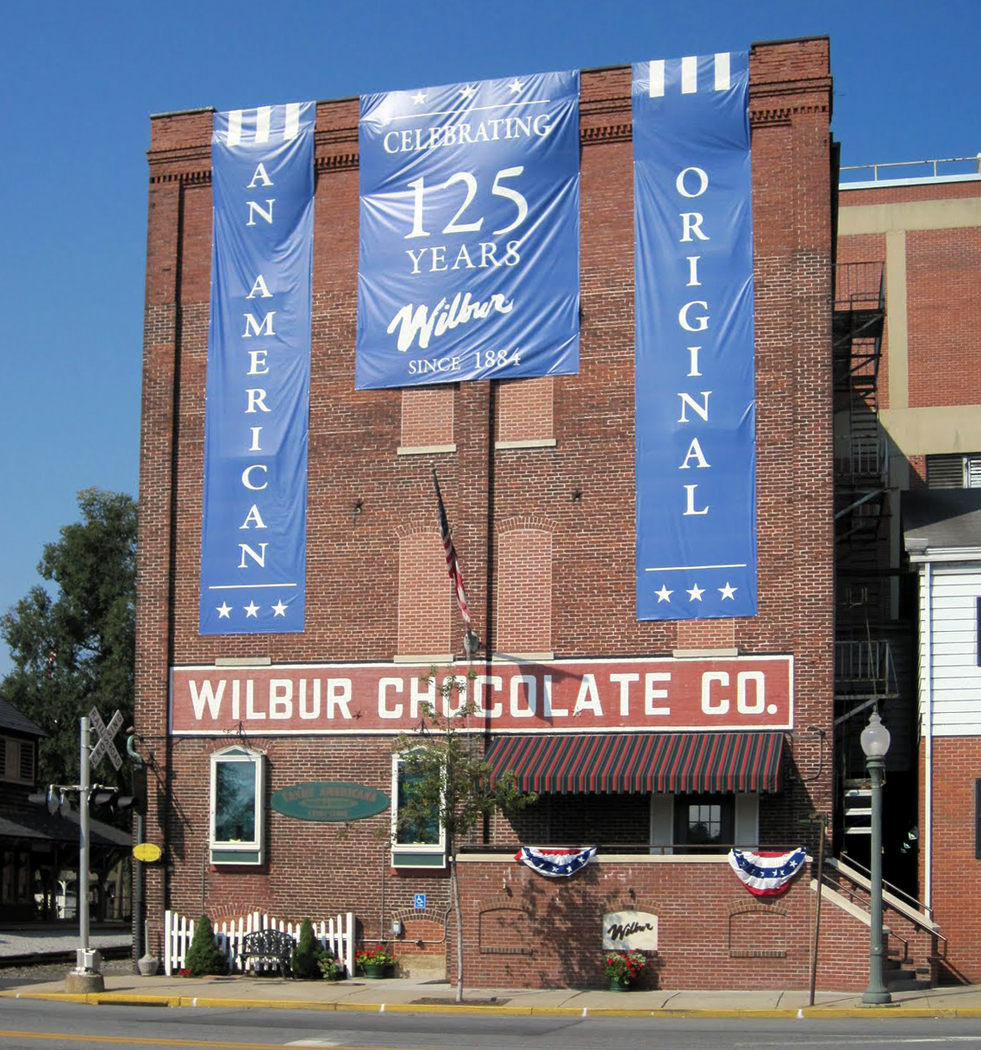
Also in Lititz are the Wilbur Chocolate factory and the Heritage Map Museum. wilbur chocolate facade

In nearby Ephrata is the Ephrata Cloister, which has a dozen well-preserved 250-year-old wooden buildings, including dormitories for the communal society of religiously celibate German Pietists.

In York, in the heart of Pennsylvania Dutch country, you can visit the Weightlifting and Softball Hall of Fame and the Harley-Davidson assembly plant and museum.

In Columbia, there is the Watch and Clock Museum, and Meadeville is the ”birthplace of the zipper.”

And near Harrisburg, Three Mile Island and its remaining nuclear power plant is on the Susquehanna River. Gettysburg, Pa copy

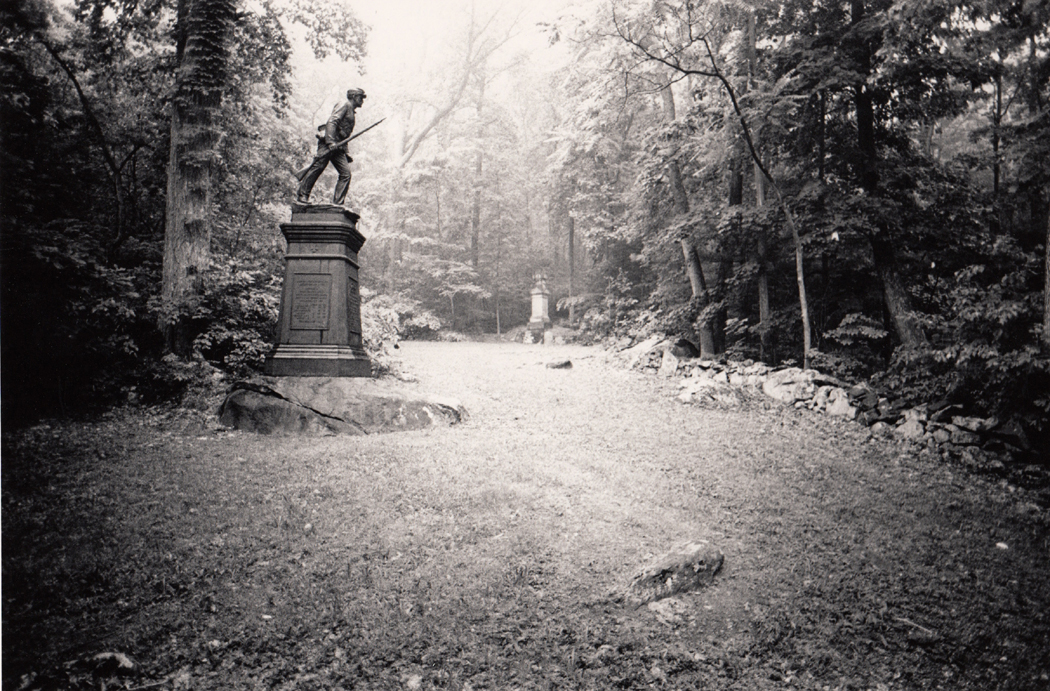
More serious sites include Gettysburg National Military Park in Gettysburg and the Johnstown Flood National Memorial near Johnstown, where the National Park Service is showing its version of an Imax-style film with stunning special effects re-creating the devastating 1889 flood that killed more than 2,000 people.

Only a slice of the Appalachians cuts through New Jersey. The most important stop is the Delaware Water Gap National Recreation Area along the Delaware River. There are some exhibits, 200 miles of roads through the mountain country and uncounted hiking paths. high point state park

High Point State Park is the highest point in the state. Both it and the Water Gap include portions of the Appalachian Trail, the 2,000-mile footpath that runs along the Appalachian crest from Georgia to Maine.

The rest of New Jersey’s mountains are kind of pathetic: The Watchung Mountains in the center of the state peak out at 879 feet above sea level.

Kaaterskill Falls

Kaaterskill Falls

But New York, home to the Catskills and the Adirondacks, is one of the champions of roadside kitsch. There are dinosaurs, giant lumberjacks, recreated 19th century villages and Niagara Falls — the granddaddy of all vacation (and honeymoon) hucksterism.

Santa’s Workshop in North Pole, N.Y., is called the oldest theme park in the U.S. It opened in 1949 and used to have a petting zoo. There are dozens of Santalands and Christmas villages around the country, but this one, in northern New York, was the first, and it still gives an idea of the old-fashioned roadside attraction that has been eaten up by the Disney Worlds and Five Flags of the world.

Washington Irving wrote about the Dutch settlers of the Hudson Valley in such stories as The Legend of Sleepy Hollow and Rip Van Winkle. His estate in Tarrytown is called Sunnyside and is a delightful look at life in the early part of the last century.

Sunnyside

Sunnyside

A little farther north and on the other side of the river are Harriman and Bear Mountain state parks. Seven Lakes Drive takes you through the crisp lake country of Harriman, and Perkins Drive takes you to the summit of Bear Mountain, where, on a clear day, you can see as far as Manhattan.

Just north of Bear Mountain Bridge is the National Military Academy at West Point, with its parade grounds, faux medieval architecture and stunning view of the Hudson River and Storm King Mountain.

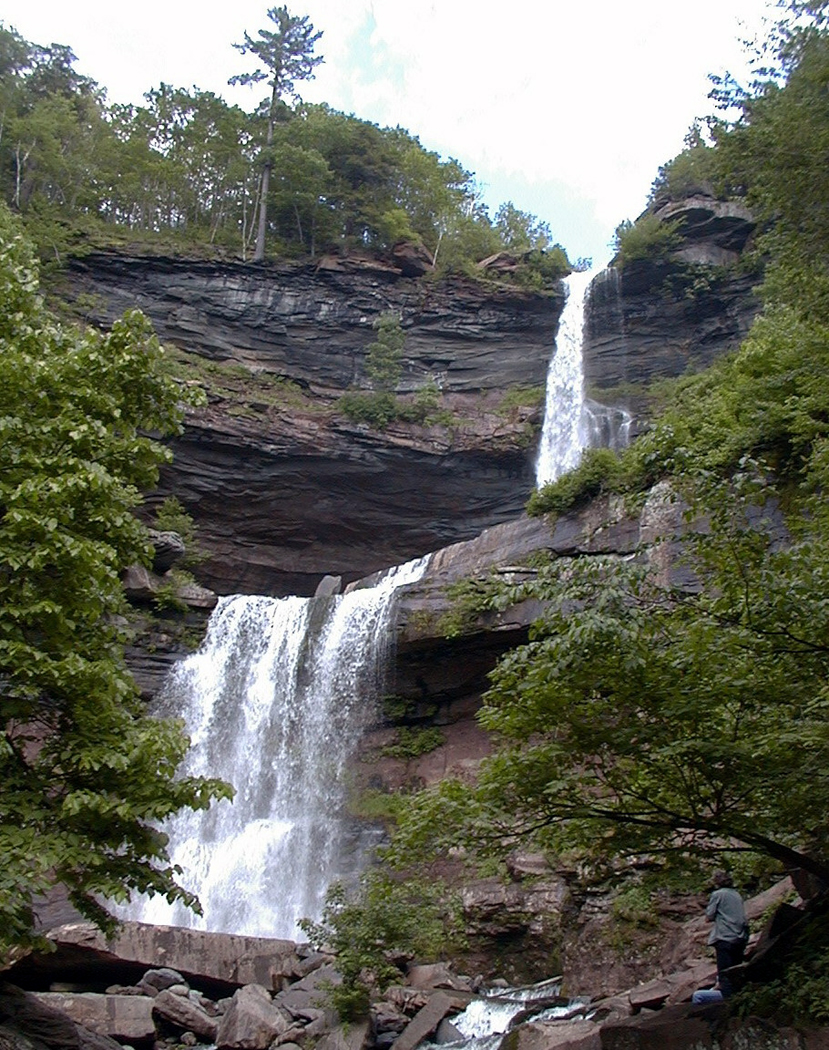
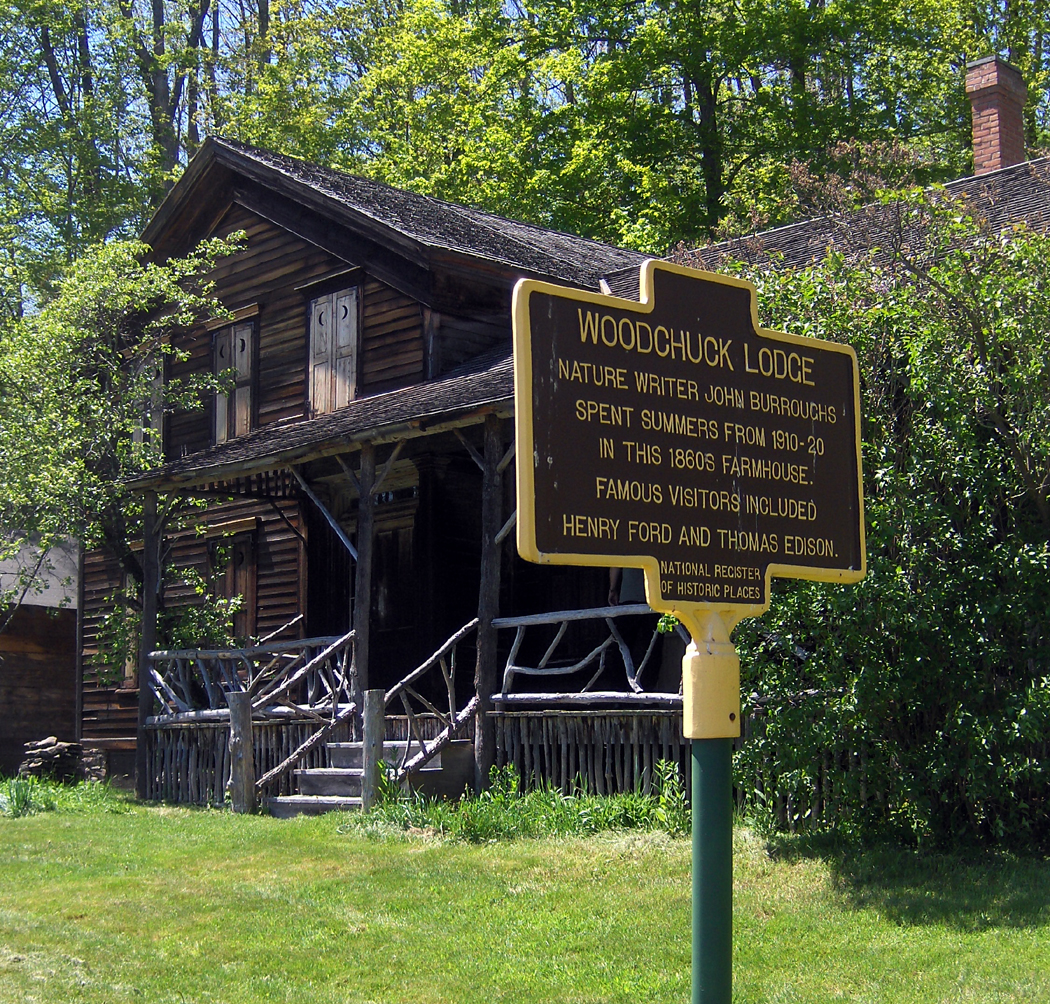
And naturalist John Burroughs’ birthplace and final home are commemorated in the John Burroughs Memorial Field, near Roxbury. On the way, don’t miss Kaaterskill Falls, one of the most famous and oft-painted waterfalls in the country.

John Burroughs' Woodchuck Lodge, Roxbury, NY

John Burroughs’ Woodchuck Lodge, Roxbury, NY

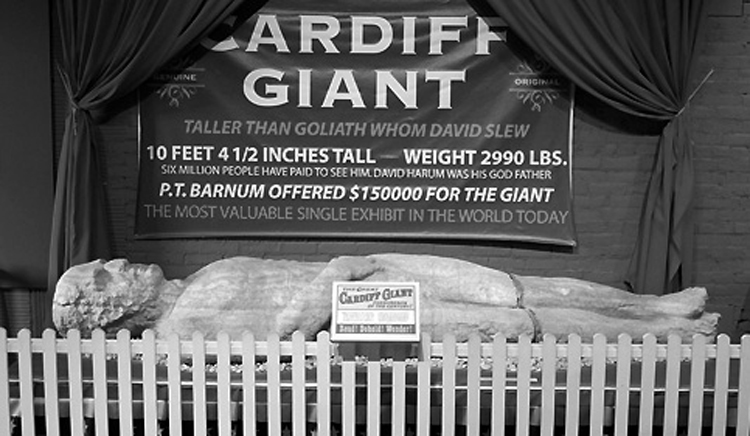
And in Cooperstown, there is not only the Baseball Hall of Fame, but Fenimore House, the home of James Fenimore Cooper, best known as the man who invented John Wayne — aka Leatherstocking, Hawkeye, the Pathfinder and Natty Bumppo — and the Farmer’s Museum and Village Crossroads, home to the Cardiff Giant, greatest archaeological hoax of all time. cardiff giant recumbent

NEXT: New England Appalachians

Part 2: In which the lucky reader gets to eat pie

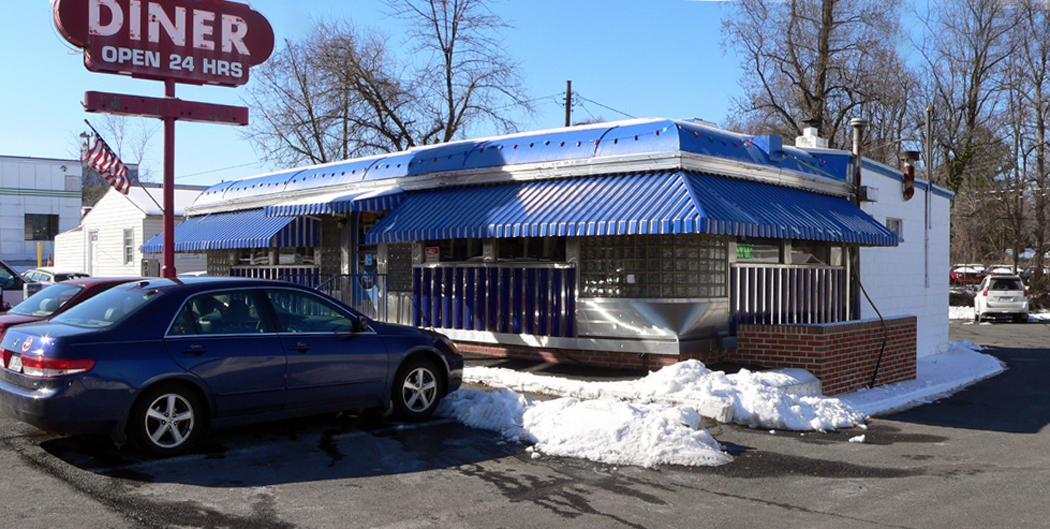
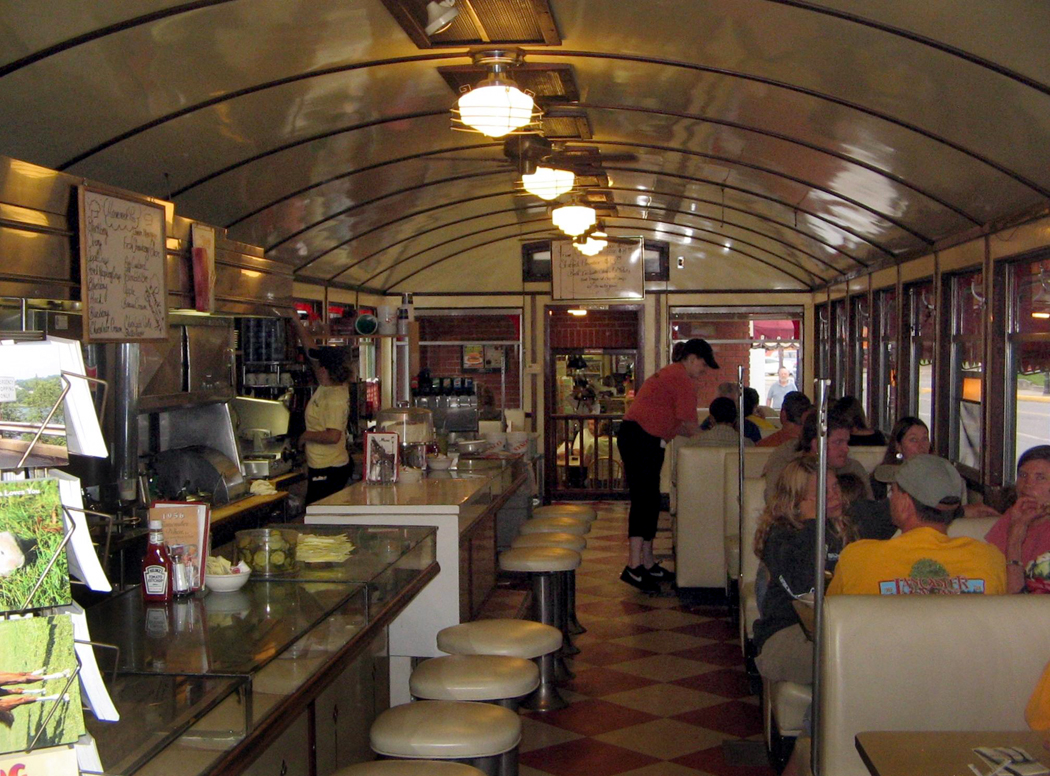
29 Diner

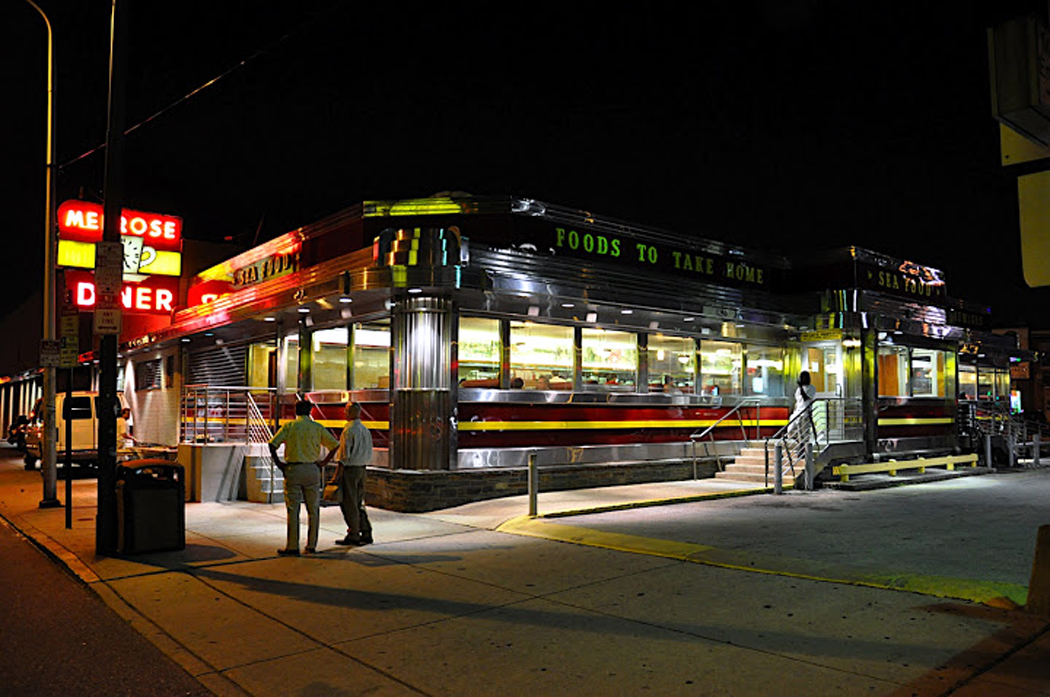
Central Appalachia is the home of the stainless-steel restaurant.

Built of sparkling glass, steel and neon, these old diners are beacons from America’s earlier decades, of a time when all highways had two lanes and to eat out meant a ”blue plate special.”

These days, there are a lot of ”Postmodern” diners around the country, with cute names such as the Five and Diner or the Road Kill Cafe, but they are not really diners. They play doo-wop music on the jukebox, often have young gum-chewing waitresses, menus written with cloying puns and lots of atmospherically campy Hollywood publicity photos on the wall.

But they are not really diners. They are theme parks. Those who eat there are more likely yuppies than truck drivers. bendix diner

The real thing is not nearly so self-conscious. Pennsylvania, New Jersey and southern New York are their natural environment. You find the real thing huddling along the sides of old U.S. highway routes.

The real things were establishments where you could get a ”regular” meal at an inexpensive price. Meatloaf, mashed potatoes and gravy were the norm, or ham with a ring of canned pineapple on top, or roast beef topped with the same brown gravy you found on the meatloaf. Ethnic food meant spaghetti.

Haute cuisine it was not, but it was filling. Wellsboro Diner interior

Or is — the diners still exist, although not as common as they once were, now replaced by burger and fried-chicken franchises.

The real diner doesn’t usually have young fresh-faced waitresses in pink skirts and cute white hats. Instead, you more likely will be served by a wrinkled, gravel-voiced waitress who has served meatloaf to truckers for 30 years.

There is no glamour in real diners. They are noisy, smoky and busy. The pie is good and is often baked on the premises. The coffee is good if you are lucky. If you are not, it will be able to etch glass, and in the bottom of the Syracuse stoneware cup, you will find a layer of sediment to chew on, that will keep you awake for three weeks into Tuesday.

The heyday of the diner stretched from the late 1930s into the ’60s. The earliest prefabricated diners were of porcelain enamel rather than steel. The smooth, pearly colors in panels along the side imitated the look of railway cars, leading many people to believe that diners were adapted railroad dining cars. They were not.

They were built in factories, such as the Jerry O. Mahoney Co. of Bayonne, N.J., or the Kullman Dining Car Co. of Harrison, N.J. Assembled in the factory, they were pulled into pieces and trucked to the site and reassembled by a factory team.

Their construction made them easy to move later on, if the owner thought a new location meant better business. serros diner vintage

Serro’s Diner, a famous old place in Irwin, Pa., cost $23,000 when it was built in the 1950s. The original building later was moved to Butler, Pa., where it was renamed Morgan’s Eastland Diner. The Serro family bought a new diner in Irwin. serros diner postcard

Such stories are common in the diner world.

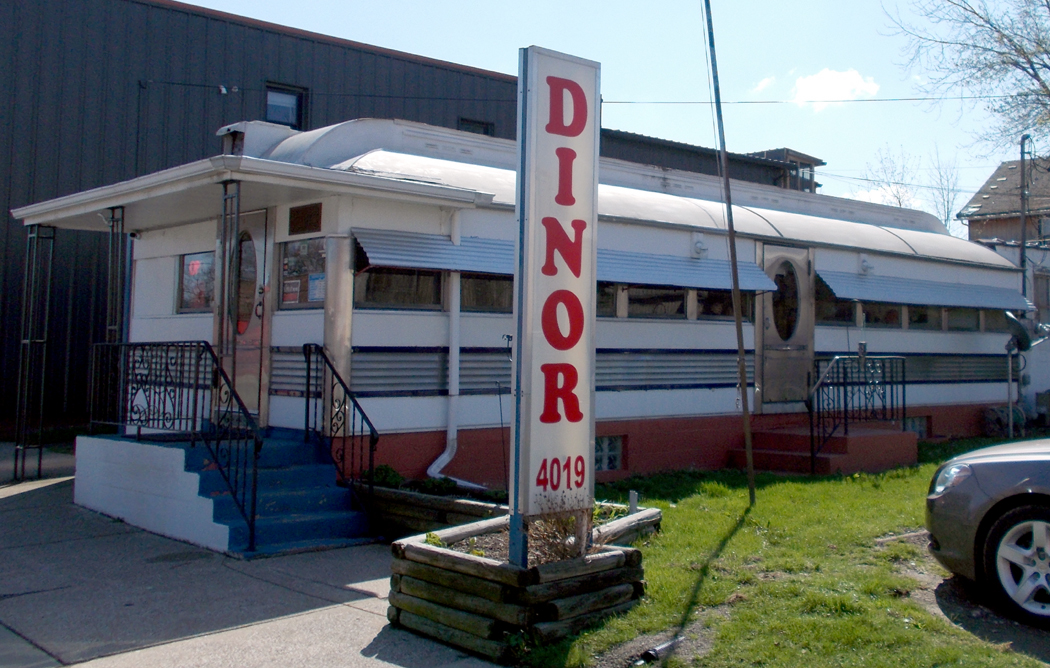
Less common is the alternate spelling of ”diner.” In northwestern Pennsylvania, with a spillover into Ohio and West Virginia, the word often is spelled ”dinor.” Park Dinor Lawrence Twp PA

The food is the same, however. Some diner specialties are not likely to win the American Heart Association seal of approval.

You can find fried krautcakes, scrapple and fried eggs, chicken and waffles, fried sticky buns and ”Texas Tommies,” which are hot dogs split longways, stuffed with American cheese and wrapped shut with bacon and then deep-fried. cherry pie

But the signature of most diners is their pie. Apple, lemon meringue, coconut cream, rhubarb, cherry, strawberry, shoofly, pecan, sweet potato, Key lime, lemon chess, mincemeat, banana cream, pumpkin — even grasshopper pie.

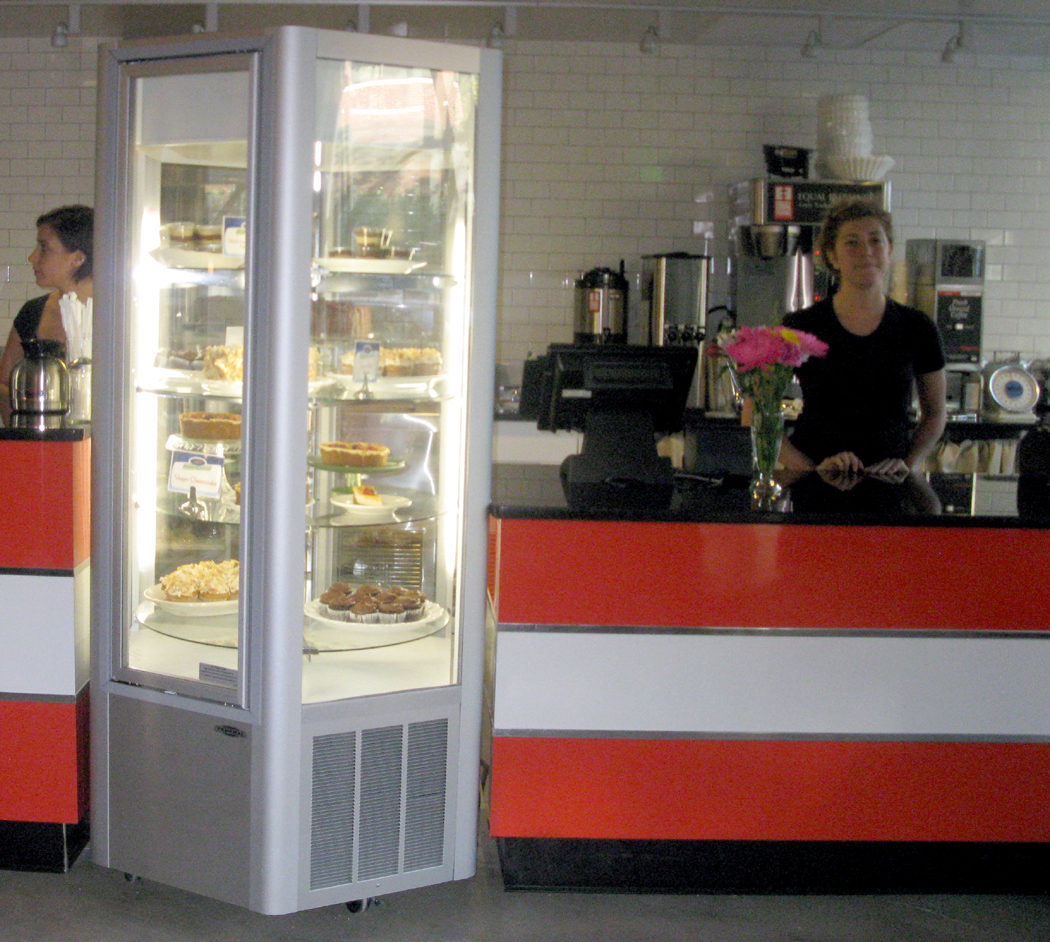
And they sit in glass cases, lighted like jewelry under the cash register, or in revolving plexiglass towers. pie tower

Some diners, such as the Melrose in Philadelphia, became so famous for their pies that they built full-scale bakeries on the back of the building. melrose diner, philly

So, after you’ve eaten your pot roast, stay and have a slice of pie with a cup of coffee before setting out on the highway again. It’ll put you in the mood.

NEXT: Roadside attractions

Part 1: In which the mountains change character

Bear Mountain Bridge, Hudson River

Bear Mountain Bridge, Hudson River

If you look at a map of Pennsylvania, you will notice that all roads through the central part of the state seem to travel in long parallel curves, sweeping like lines of marching soldiers taking a ”column right.” eastern pa map

In few places in the country do the road maps so accurately reflect the topography: Those highways follow the valleys between the Appalachian ridges that bend through the state. One ridge lies behind another, lined up like so many pleats in a curtain.

The high, wild Appalachians of the South give way to the rural hillsides of Pennsylvania, New Jersey and New York.

The central Appalachians are even pronounced differently. In the South, the middle syllable rhymes with the ”a” of ”apple;” in the North, the ”a” becomes long and rhymes with ”hey,” a word you will hear with increasing frequency the closer you draw to Philadelphia. harvestore silo and barn

So, as the ”Apple-LATCH-ins” give way to the ”Apple-LAY-chins,” the whole character of the land changes. Hardscrabble family farms give way to large dairies. Small gray weatherboard barns give way to large red barns with blue Harvestore silos. Tobacco gives way to coal mining and steel mills.

Finally, as you travel north and east near Philadelphia and New York, the land becomes suburban.

The roads do manage to cross the ridges occasionally, although something as big as the Pennsylvania Turnpike finds it easier to tunnel under Tuscarora and Blue mountains on its way to the flatter eastern portion of the state.

What is more surprising is that at least three major rivers cut through the mountains, too.

Susquehanna River

Susquehanna River

The Susquehanna and Delaware rivers in Pennsylvania slice through them in what are called water gaps. The most famous of these, the Delaware Water Gap, knifes through the Kittatinny Ridge and divides its Pennsylvania and New Jersey halves.

Old post card

Old post card

And in New York, the Hudson River cuts through the Ramapo and Catskill mountains as it drops south from Albany to Manhattan.

These rivers helped create the history of the area, providing routes for early settlers to cross the difficult mountains.

Most famous among the early settlers are the Pennsylvania Dutch peoples of Lancaster and York counties — although you will find them north well into the mountains. Among them are the Amish and Mennonite ”Plain People” of the popular imagination.

They were German immigrants who began coming to the religious-tolerant commonwealth in the 1600s. Others were Swiss, and French Huguenots.

The Pennsylvania Dutch, though, were not Dutch. They were mostly German, and the German word for themselves, ”Deutsch,” was mistranslated.

By 1790, they made up a third of the state’s population.

But there were many real Dutch immigrants up the Hudson River Valley. Their influence is found in such names as Yonkers, Peekskill, Staatsburg and the Catskills.

Catskill Mountains and Hudson River

Catskill Mountains and Hudson River

All through the region you can find the influence of ethnic groups unheard of in the more culturally uniform Southern mountains: There are Irish, Italian, Spanish and Jewish enclaves in the mountains. It is in the Catskills of New York that the famous ”Borscht Belt” of Jewish resorts gave rise to a whole generation of stand-up comics. Does the name Shecky Greene ring a bell?

Shecky Greene

Shecky Greene

What may be surprising, though, is how much nature there is surviving in the central Appalachians. So close to Pittsburgh, Philadelphia and New York City, there are still forest and wild lands.

You can find much of this along the Appalachian Trail as it curls through the region.

The footpath, which begins in Georgia and ends in Maine, enters Pennsylvania near Gettysburg, climbing through the Michaux State Forest and along the ridge of South Mountain. Geologically speaking, this is the northernmost tip of the Blue Ridge. Snowy Mountain, Mount Alto and Pleasant Peak are all just about 2,000 feet high.

Devil's Den, Gettysburg, Penn.

Devil’s Den, Gettysburg, Penn.

The trail crosses the Susquehanna just north of Harrisburg and climbs along Blue Mountain, the largest of the parallel ridges.

Big Mountain, Penn.

Big Mountain, Penn.

There it passes Hawk Mountain Sanctuary, where geology and prevailing winds create a perfect spot to view migrating birds, and especially a series of birds of prey, including Cooper’s, sharp-shinned, red-tailed and red-shouldered hawks and bald eagles.

On the ridge, at about 1,500 feet, you can see the quilt of farms and forests that spread out in the valleys below. The gray Tuscarora sandstone is tumbled about the peak, covered by patches of green lichen.

Past the resort-area Poconos, the trail follows the Kittatinny Ridge to the Delaware Water Gap and on into New Jersey, following the wooded northwestern edge of that state past long, clear lakes and Boy Scout summer camps to High Point State Park, at 1,800 feet the highest elevation in the state.

The trail loops to the southeast for a short bit before heading north into New York near Greenwood Lake.

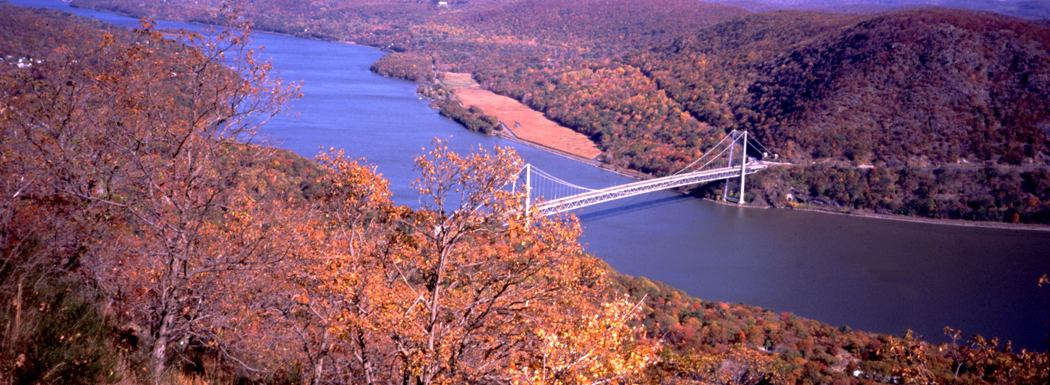
There, it follows the Ramapo Mountain into Harriman and Bear Mountain state parks, finally crossing the Hudson River on the Bear Mountain Bridge before heading north again, across the Taconic Mountains and into New England. Hudson panorama

At the bridge, the Appalachian Trail is only 35 miles north of Manhattan and only about 100 feet above sea level.

The woods along the trail are increasingly littered with boulders — chunks of granite or sandstone torn from the bedrock by the continental glaciers of 18,000 years ago. It makes for a beautiful woodland vista, but it is hell for farming.

Storm King Mountain, Hudson River

Storm King Mountain, Hudson River

And unlike the woodlands in the South, cluttered with undergrowth, the woods of Pennsylvania and New York are easy to traipse through. There are rocks underfoot, but not a lot of shrubbery. You step through a cushion of rotting leaves, brown and soft to the sole of your shoe.

It is true that the central Appalachians are less distinctively mountains than their brothers to north and south. They often feel more like hills. Yet the farther you manage to find yourself from the population centers, the more you will uncover the familiar Appalachian culture.

In the plateaus south and east of Pittsburgh, for instance, you still can be eyed suspiciously by a farmer who wonders why you are taking a photograph of his farm. If you hear him talk, you still will hear the short syllables and clipped speech of the mountaineer. You will find homesteads with kitchen gardens and men on autumn weekends walking the gravel back roads with their sons, shotguns slung middle-broke over their shoulders and the two in matching red plaid coats, out for a bit of hunting, hoping perhaps to scare up a turkey.

NEXT: Home of the diner