The Mona Lisa used to be a painting. Not any more. Now it’s a meme. Especially in the current climate of cellphones and online culture, the original has lost all relevance, and has been replaced by hundreds of refracted reflections.
For that matter, “meme” isn’t what it was, either. Now, a meme is pretty much anything that someone uploads — a picture with a clever caption; a funny picture; a political observation. If it gets noticed and reposted, either in its original form, or altered by the observer, it has become a meme. A meme is a cat hanging on to a clothesline or a quote from Mark Twain that he never actually said.
But that is not what I’m talking about here. A meme, as I’m using it, is its older meaning: a familiar image, saying, bit of music, or bit of art that has become so well known as to be instantly identifiable that it becomes a shorthand for whatever you wish it to be. The original needn’t be known for the meme to be understood. I’m sure there are people who believe the image of McCaulay Culkin holding the sides of his face in Home Alone is the original, not recognizing the reference to Edvard Munch’s The Scream. The original painting has receded and the pose itself is the referent.
Many of the most famous pieces of art have become memes: Grant Wood’s American Gothic; the Venus de Milo; Michelangelo’s Creation of Adam. You don’t need to explain the joke when you use them. If I made a parody of, say, Ingres’ Portrait of Monsieur Bertin, with Rupert Murdoch’s face replacing Bertin’s, I’m pretty sure I’d have to explain what I meant. But Liberty on the Barricades needs no such support. We know.
It isn’t just pictures that become memes. One of the oldest, going back to the Roman era, was a glyph sometimes called the Sator Square, an arrangement of letters (words) that reads the same top to bottom and side to side and even backwards. It has been found from ancient times into the Middle Ages. Its exact meaning and purpose are not clear. It sort of translates as “Farmer Arepo works with wheels.” Sort of. And during World War II, the little cartoon, “Kilroy was here” showed up all over the place. Memes come in all sorts of forms.
Literature can do it, too. You don’t have to know any Shakespeare at all to recognize “To be, or not to be.” It’s there in the atmosphere. Not that we need to know much, or even know correctly.
Getting it wrong is hardly a hindrance. How many people hear, “Romeo, Romeo, wherefore art thou Romeo,” and assume Juliet can’t find her beau? How many cartoons, comedy skits, movie bits are built from that misunderstanding? Where did Romeo go? “Wherefore” is simply too antique a term to be easily understood. And the following “Rose by any other name” is the sequent meme.
Even music can do this. “Da-da-da-DUMM” is known to those who have never, ever heard a symphony. It is a meme. The rest of Beethoven’s symphony might as well disappear.
And so it is with Leonardo’s Mona Lisa. It hardly matters who Lisa was, when it was painted, nor all that technical hoo-hah about the sfumato technique. The lady has transmigrated everywhere, known to everyone, pretty much around the world. Use her for whatever you wish. You can even mix memes.
In spending weeks immersed in the Mona Lisa, gathering what I needed for my previous blog entry on the painting, I found hundreds of memed parodies. Some too good to waste. And so, I wanted to post a followup with some of my favorite Mona Lisa knock-offs. (I just counted up the images I have collected, more than I could ever use, and discovered 443 jpegs. I get exhausted just thinking about it.)
The Mona Lisa is the subject of endless cartoons. Some make jokes about the famous smile
others to Leonardo himself…
The Mona Lisa can just be a stand-in for important art…
The New Yorker puts them on its cover…
In fact, lots of magazines have slapped our lady on their fronts.
Or made fun of her…
And she shows up on some magazines you might not expect…
That’s just a sampling. I got lots more, but we need to move on. Celebrities get the Mona Lisa treatment quite often.
Whoopie Goldberg, Marilyn Monroe, Taylor Swift
And that last one has had the treatment over and over. Whoda thunkit?
And you don’t have to be female…
Vin Diesel, Albert Einstein, Bill Murray
You can be a cartoon character…
Or a Disney character. They all run the the meme grinder…
And even more. Anyone remember Daria?
I found dozens of anime Mona Lisas…
Muppet Giocandas…
There are Mona Lisas with animals…
And with cats…
And Mona Lisas as animals…
And as cats…
She shows up frequently as graffiti…
And as Pop Art. How could she not?
Quite serious artists have used our lady as a model. The joke Mona Lisa by Marcel Duchamp, dating from 1919, gives her a mustache and the letters “LHOOQ,” which, pronounced in French sound the same as “Elle a chaud au cul,” or roughly, “She has a hot ass.”
By Robert Henri, Marcel Duchamp, and Fernando Botero
She comes in minimalist form, still easily identifiable…
And shows up on stamps, the side of a barn, and, of course, a port-a-potty…
And we’re just getting started with goofy. How about a balloon Mona Lisa, or reproduced on an Etch-a-Sketch or made out of Legos…
And if that isn’t enough, what about a Mona Lisa made from bacon; or a Mona Lisa Pizza; or one made from lentils…
Still further, one made from jelly beans. Or a pair of them in peanut butter and jelly.
Poet William Blake once wrote, “You never know what is enough until you know what is too much,” and you may very well feel we’ve long gone on too long with this. I get it. But even with all the images I’ve included, I have at least a hundred more that I’ve got left over, including Mona Lisa on coins…
And, suitable for a finale, a big pile of bones…
Originally, I planned to write a single blog entry about the Mona Lisa, but soon came to realize that if I were going to give any background information about the painting to explain all the memified hoopla, it would have to stretch into two halves. I’ve been going through and editing hundreds of images, and researching information about Leonardo and his art. I think I’m ready to give it a rest now for a while. I’m sure you are, too.
Is there a more over-hyped piece of art than the Mona Lisa? I don’t intend to demean Leonardo’s painting, but to question the PR. It’s an excellent painting, but I could name a hundred others as good or maybe better. Yet, this portrait of a middle-class Florentine woman is the most widely known painting in the world. At least, since 1911.
Leonardo da Vinci (1452-1519) was the prototype of the Renaissance Man. Initially a painter, he was also an inventor, scientist, sculptor and architect. But he was also a world-class procrastinator and leaver of unfinished works. His attention span could be intense, but often quite short.
He was born to an unmarried woman about 20 miles from Florence, Italy. His father was a local notary who married four times and sired at least 17 children, including our young Leo.
He studied painting as an assistant to Andrea del Verrocchio, but then made his living primarily as a military architect, working in turn for the Sforzas, the Medicis, and Borgias. In his spare time, he continued to take painting commissions (not all of which he ever finished) and working on various scientific and philosophic theories.
“Leonardo painting the Mona Lisa” by Cesare Maccari (1863) mistakenly has the left-handed artist painting right-handed
When he was 51, living back in Florence, he was commissioned to paint a portrait of Lisa Gherardini, who was married to Francesco di Bartolomeo del Giocondo. She married him in 1495, when she was 15 years old, which meant she was about 23 when Leonardo began painting her. (I say “began” because the painter never really finished the painting and never delivered it to its commissioner; he never received payment for the commission, either).
The painting has long been known, outside of the English-speaking world, as La Gioconda, or “the Cheerful Woman,” but was also just the feminine version of her married name, Lisa del Giocondo.
“Lady with an Ermine;” “Ginevra de’ Benci;” La Ferronnière”
Leonardo seemed to enjoy including puns in his portraits. La Gioconda comes from the Latin “jocundus,” which means agreeable or pleasant. Hence the mild smile. In his three other portraits of women, he does something similar. The Lady with an Ermine includes the beast because the ermine was a symbol of the Sforza family, and also because the sitter’s surname, Cecilia Gallerani — mistress of Ludovico Sforza — is a play on the ancient Greek name for an ermine, galê (γαλῆ). The portrait of Ginevra de’ Benci sets the sitter among Juniper plants. “Ginevra” is Italian for Juniper. And finally, La Belle Ferronnière, is an early portrait of Lucretia Crivelli, who was married to an ironmonger (“ferronnier”) and mistress of Francis I of France. In her portrait, she is also wearing a decorative headstrap known as a “ferronniere.”
The better known title, Mona Lisa, is her name, Lisa, and the honorific “Mona,” which is a contraction of “Ma Donna,” or “My Lady.” In Italian, it is there usually spelled “Monna,” and the painting as Monna Lisa. (Never “Mona,” because in various Italian dialects that is a slang word for a woman’s lady parts, and used as an insult for a stupid or obstructionist person, much as the C-word is used in British English, where it doesn’t bear quite the taboo status it has in the U.S.)
Leonardo seems to have worked on the portrait until 1506 and put it aside for a bigger commission, a mural commemorating the Battle of Anghieri — a mural he never finished, either. He kept the painting through several moves and took it to France with him in 1516, where he began working for King Francis I, primarily as a military engineer. The king bought the Mona Lisa, probably in 1518, and it wandered around various palaces after that, until after the Revolution when it found its way to Napoleon’s bedroom and then to the Louvre.
“Mona Lisa” and what it might look like under the darkened varnish
Or, at least, that’s the most likely story. There is an alternative version, in which the painting, of an unknown sitter, was commissioned by Giuliano de Medici in 1513 and was later confused for the Giocondo painting that was mentioned by historian Giorgio Vasari.
The problem is complicated by the fact there are two Mona Lisas, both generally accepted as by Leonardo — a second one that was in the possession of Leonardo’s assistant (and likely lover) Andrea Salai and catalogued after Leonardo’s death in 1519.
Making matters worse, there are at least three Mona Lisas that experts agree were made in Leonardo’s studio, at the same time, with the extras likely painted by either Leonardo himself or his assistant Salai.
Prado “Mona Lisa” before and after restoration
One of the supernumeraries is at the Prado in Madrid. It was discovered when a portrait of a lady, with a black background was cleaned in 2012 and the background of the famous Mona Lisa was uncovered. The previously ignored painting was then studied more closely and found to have been painted in Leonardo’s studio at the same time as the more famous painting.
“Isleworth Mona Lisa” and Louvre version compared
Another version, hidden in a Swiss bank vault until 2012, is the so-called Isleworth Mona Lisa, which was first discovered in 1913 and held in private hands since then. Originally brought to England from Italy in the 1780s by a Somerset nobleman named James Marwood and listed in his collection as “La Jaconde.”
Examined by hordes of connoisseurs, experts, scientists and historians, it has been confirmed as a Leonardo original, as an obvious copy, as the first true Mona Lisa, as a later copy by Leonardo himself, or by one of his assistants, and maybe with a few corrective brushstrokes by the master himself. In other words, it has been argued over constantly and no true consensus has been arrived at.
It differs from the Louvre painting by having a different background landscape, being painted on canvas and not on poplar board, showing an obviously younger subject, and having columns on each side of the image.
It does date from the right era, all are agreed, and may have come from Leonardo’s atelier. Since there is further confusion over the date of the initial painting — either begun in 1503, as per Vasari, or in 1513, as per Louis d’Aragon — perhaps the Isleworth Mona Lisa was painted first and years later, the Louvre painting was made; or perhaps the other way around. Not to dive too deep into the weeds here, but X-rays of the Louvre painting show considerable work, changes of pose and features, while the Isleworth painting seems to show very little, suggesting that the Louvre painting came first, with all the hedging and shifting, and the Isleworth version was a confident copy. Perhaps. Who knows?
It was not unusual, for Leonardo, or any other painter at the time, to make more than one version of a painting, so it is possible that both were made by our hero. Perhaps. Who knows?
Top row, L-R: two 16th c. copies; 2 18th c. copies, 1 19th c. copy; bottom row: copies with columns, various eras
We do know that the painting was copied many times over the centuries. Some copies have the columns, others do not. A sketch made by Raphael in about 1505 shows the columns, but perhaps Raphael painted it from memory, or from hearing a description. It is not a very faithful copy, either way.
There are also a series of nude Mona Lisas, seeming to emanate from Leonardo’s studio, perhaps by his students. There are at least six of them. Their grasp of female bodies seems somewhat sketchy, so they may have not been painted from life, but imagined by students less familiar with actual women. (Michelangelo had a similar problem with female nudes, often making them look like male body builders with odd lumps of fat on their chests). In fact, there is some speculation that the subject was not Lisa del Giocondo, but Leonardo’s assistant and gay lover Salai, painted as a woman. Mona Lisa in drag? Perhaps. Who knows? These paintings are usually titled Mona Vanna.
It is the Louvre Mona Lisa that has become the de facto true one, and has been copied, discussed, parodied and referenced endlessly. It is a fairly standard Renaissance-era portrait pose, three-quarter length. There are four aspects of the painting that stand out.
First, the eyes, which are said to “follow you around the room,” as if that were some magical power. Any face painted or photographed with its subject looking directly out will have eyes that seem to look at you, no matter what angle you stand in front of it. There is no trick to that. But in addition, our lady has no eyebrows and no eyelashes. Many of the copies do, and Vasari describes her eyebrows particularly, and so it is assumed they used to be there, but were accidentally wiped off during some previous cleaning of the painting.
Then, there is the mouth and its ambiguous smile. The Mona Lisa smile has been subject of innumerable New Yorker cartoons, popular songs and magazine ads. A slight upturn at the corners of the lips, described only by a tiny gradation in shading. This has also been lauded as a special and unique quality of Leonardo’s genius. Of course, many other paintings of the time display nuanced expressions also.
And there are the hands, gently overlapping in a demure pose meant to signify breeding and chastity. Although one critic, making an argument for the Isleworth Mona Lisa as the original, complained that the hands of the Louvre painting are “thick and bloated.” The eyes of the beholder, I guess.
Salient features of “La Gioconda”
Finally, there is the landscape behind the sitter. It has never been satisfactorily identified as a real location, and, of course, it doesn’t have to be. Fantasy landscapes abound in art history. But one theory, which I have long agreed with, is that it isn’t meant to be a real piece of geography at all, but is a tapestry on the wall behind La Gioconda.
When Leonardo painted the Mona Lisa, oil painting was still relatively new to Italy. It had been common in northern Europe for at least a century, but most Italian painters stuck with egg tempera. Leonardo was one of several who picked up the new technique, which allowed a more graceful shading of tones and colors.
You can see the difference if you compare Botticelli’s Venus with Leonardo’s Gioconda. Edges are clean and distinct with tempera, but less so with oil, and the particular technique Leonardo used, called “sfumato,” or as he described it: “without lines or borders, in the manner of smoke.”
It was shadows, he said, that build up volume and bring grace to faces. “The gracefulness of shadows, smoothly deprived of every sharp contour.”
In his studies of human perception, the scientist Leonardo had come to the conclusion that human vision is not the clear-edged thing that shows up in tempera, but something more soft-edged, and he sought to capture that in his work. There are few lines or edges in the Mona Lisa; it is mostly soft, in diffused light.
This is how important the Mona Lisa was at the Louvre in 1911
But back to 1911. I mentioned 1911 earlier. Before that year, the Mona Lisa was just one of a bunch of respected portraits of women in the Louvre. Most of them were Madonna and child paintings. Visitors to the museum were much more likely to line up to view the Venus de Milo or the barn-size expanse of Veronese’s Wedding at Cana (32 feet wide). Our Mona Lisa was just another frame among all others hanging on a gallery wall.
Then, on August 21, it wasn’t. Instead, there were four hooks where the painting had once been attached. The theft of the Mona Lisa became international news. Daring art theft!
The painter Louis Béroud had come to the museum that morning to paint a scene of the gallery, with its paintings, and reported to the guards that where the Mona Lisa should have been, there were only those hooks.
The guard assumed the painting had been removed by conservators to clean or photograph. But soon, when they went to check, it became apparent that the painting was gone. The museum was closed for a week while they searched high and low. No luck.
Vincenzo Peruggia mug shot
The painting was gone for more than two years. Turns out, it spent that time in the rented room of an Italian immigrant, hiding in a cupboard only two miles from the Louvre. Vincenzo Peruggia had been working as a glazier at the museum on and off, and felt, as an Italian patriot, he should return the patrimony of his native land. He grabbed the Mona Lisa primarily because his other targets were too large to smuggle out of the museum.
The police searched for the painting furiously, and many rumors abounded, leading to false leads.
Lloyd’s Weekly Newspaper reported how early interest was centered on Bordeaux, and indeed, Canadian newspaper the Ottawa Free Press on 26 August 1911 reported from Paris how “there appears to be no doubt here that Leonardo Da Vinci’s famous painting Mona Lisa, was taken to Bordeaux, whence it is feared it will be carried either to Spain or South America.” According to its account, a witness had seen a “stout man, carrying a large panel covered with a horse blanket, take the 7:47 express for Bordeaux on Monday morning,” soon after the Mona Lisa was taken.
Of course, that was fake news. But stories sold newspapers. One newspaper printed an “interview” with Mona Lisa. Another that fictional criminal Arsène Lupin must have done it. There were movies and popular songs about it. Over two years, hundreds of phony leads were sent to police.
Various people were arrested and released, including Pablo Picasso. Picasso, and his friend Guillaume Apollinaire had been dabbling in some minor fencing of stolen artwork. But they were soon cleared in the Mona Lisa heist.
French postcards: Where is she?
Actually, the painting didn’t leave Peruggia’s cupboard until he tried to sell it to the Uffizi Gallery in Florence, where he was arrested and served seven months in prison — a short term, since, in Italy, he was considered a patriot.
But the Mona Lisa was not one of the many “appropriated” artworks that have found their way into various museums around the world. It was sold quite legally to the French king 400 years previous. By 1914, it was returned to the Louvre.
Today, the painting is safely protected behind bullet-proof glass and a barrier, so that the closest anyone can get to it is some 10 feet away, and that only if they are lucky, seeing as how the painting attracts an average of 30,000 visitors a day — about the size of the crowd at an average major league baseball game. People are not there to see the painting, so much, as to be able to say they have seen it. There is little chance to study the vaunted brush work or sfumato.
The protection is certainly warranted. In 1956, it was attacked with acid and also with a rock thrown at it. In 1974, it was red paint. In 2009, a coffee cup. In 2022, a man in drag in a wheelchair threw a cake at it. And on January 28 this year, two members of the Riposte Alimentaire (foot retaliation) sprayed pumpkin soup at it, demanding sustainable farming. What the Mona Lisa has to do with farming is anyone’s guess.
This year it was decided to create a special gallery just for the Mona Lisa, in the museum basement, and to charge a special admission fee, and run controlled groups past the painting, in an attempt to systematize the current chaos. Whether this happens or not, we’ll have to wait to see.
The Mona Lisa is no longer just one painting in the Louvre. It has morphed from a painting into a meme.
I’ve been to the Louvre in Paris a number of times, but no matter how long I spend there, I never feel as if I’ve seen more than two percent of it. It is vast. It is the largest museum in the world, with 782,910 square feet of floor space (topping the No. 2 museum, St. Petersburg’s Hermitage, by more than 60,000 sq. feet) and a collection of more than 600,000 pieces.
It’s where you go to find the Mona Lisa, the Winged Victory of Samothrace and the Venus de Milo.
It’s one of the oldest museums around, but never seems quite finished. It began as a royal palace in the 12th century, and has been added on to, parts burned down, parts replaced, and even a glass pyramid added to the top.
When Louis XIV moved the court from the Louvre to Versailles in 1682, the building became a warehouse for kingly treasures and much of his art collection. in 1699, the first “open house,” or salon was held, and for a century, the royal academy of art was located there.
The French Revolution ended the monarchy, and all the art once owned by the king became public property, and in 1793, the new government decreed that the Louvre should be open to the citizens as a free art museum.
But soon after, the collection expanded exponentially, as Napoleon Bonaparte conquered half of the continent, and sent back to Paris a good deal of the art from conquered lands. He even had the museum renamed Musée Napoléon. That didn’t last, but neither did Napoleon.
Over the 19th century, the museum collection grew, from bequests, purchases and colonial expropriations. For a while, it included a whole section of Pre-Columbian art from the New World, but that spun out into its own museum, leaving the Louvre for the Musée d’Ethnographie du Trocadéro in 1887; in 1945, the Louvre’s extensive collections of Asian art were moved to the Guimet Museum; and by 1986, all the museum’s art made after 1848, including Impressionist and Modernist work, was transferred to the Musée d’Orsay, a refurbished railways station. It seemed the Louvre kept bursting its seams.
Then came François Mitterrand. Serving as French president from 1981-1995, Mitterrand conjured up the Grand Project to transform the cultural profile of Paris, with additional monuments, buildings, museums, and refurbishment of existing locations. Taxes were raised to accomplish this project, said to be on a scale that only Louis XIV had attempted.
Part of this plan was the Grand Louvre, to remodel and expand the museum, and to regularize (as much as possible) the maze and warren of galleries in the old accretion of palace rooms. The most visible of the changes was the addition of the glass pyramid in the center courtyard of the palace. It was designed by architect I.M. Pei and although it has long become part of the landscape of the museum, it still angers many of the country’s more conservative grouches. In 2017, The American Institute of Architects noted that the pyramid “now rivals the Eiffel Tower as one of France’s most recognizable architectural icons.”
The entire central underground of the courtyard was remodeled to create a new entrance, and to attempt to make sense of the confusion of corridors, rooms, staircases and doorways. It was completed in 1989.
Now, one cannot think of the Louvre without its pyramid, but speaking as a visitor, while the Hall Napoléon (the underground foyer) has made some sense of the confusion, I cannot honestly claim the chaos has been tamed. The museum remains a labyrinth and you can be easily lost.
And, unless you have budgeted a month or more to spelunk the entire museum, you will need to prioritize what you want to see in a visit — or two, or three.
Quick word: Forget the Mona Lisa. It’s a tiny little painting of little artistic note, buried under a Times Square-size crowd of tourists all wanting to see the “most famous painting in the world.” It is what good PR will get you. It may be a historically noteworthy piece as one of the very few paintings Leonardo completed, but there is much better to be seen in the museum. Don’t exhaust yourself in the mêlée.
Seek out the unusual, like Jan Provost’s Sacred Allegory, from about 1490, which I like to call “God’s Bowling Ball;” or The Ascension, by Hans Memling, from the same time, which shows Christ rising into heaven, but shows only his feet dangling from the clouds. There’s some quirky stuff on the walls of the Louvre.
One of the goals of the museum is to collect, preserve, and display the cultural history of the Western world. This is our art, the stuff we have made for more than 3,000 years, from Ancient Sumer and Egypt, through classical Greece and Rome, wizzing past the Middle Ages and brightening with the Renaissance and the centuries that followed. You get the whole panoply and see what tropes have persisted, the ideas that have evolved, the stuff of our psychic landscape.
(See how the fallen soldier in Jacques-Louis David’s Intervention of the Sabine Women echoes in Picasso’s Guernica. One way of looking at all cultural history is as an extended conversation between the present and the past. The reverberations are loud and clear.)
You can look at the paintings on the wall and see them for the beauty of their colors and brushwork, or the familiar (or not-so-familiar) stories they depict; or you can see them as the physical embodiment of the collective unconscious.
I have always been a museum-goer. From my earliest times as a boy going to the American Museum of Natural History in New York, through my days as an art critic, rambling through the art museums of the U.S. and abroad. There is little I get more pleasure from.
One soaks up the visual patterns, makes connections, recognizes the habits of humankind. Recognizes the shared humanity. The differences between me and Gilgamesh are merely surface tics. When I see the hand of the Roman emperor, it is my hand. I feel kinship with all those whose works and images appear in the galleries.
And so, if it is two percent of the Louvre I have managed to absorb, I know the rest is there, and that it is me, also.
I have been thinking of Paris a lot lately. It is the city I have felt most at home in, perhaps along with Manhattan. It has been a dozen years since I last went, and I will almost certainly never get back — I am too old to put up with the torture of airline travel.
It is a great city, made up of many smaller neighborhoods, each with its individual character. You can walk almost anywhere, and if you need to go further than your feet feel comfortable, you can always grab the Metro.
When Carole and I used to go, we would pick out a neighborhood (or arrondissement) and settle ourselves in it, as if we lived there. Each visit, we’d go to a different one. And we shopped in the local shops, ate in the local restaurants, and shared pleasantries with the people we came across.
Parisians have a reputation for being rude, but we never found that. Everyone we came in contact with was unhesitatingly friendly and helpful. When I was sick one day, Carole went to the chocolatier at the end of the block, and when she told the sales person why she was buying some “get-well” candy, the bag was loaded with as much again, no charge. “Tell him we hope he gets better soon.”
That was our constant experience in Paris. One day, I was walking by myself along rue Monge, near our hotel and the woman who ran the flower shop asked after Carole. “Is she not well?” “No, she’s just resting.” We had not talked with her before, but she had noticed we had been in the neighborhood and she worried about us.
The city has been brought to mind in part because of a series of TV shows about Impressionist art, made by British art historian and TV presenter Waldemar Januszczac. (Yes, that’s seven consonants and only three vowels — a Scrabble nightmare).
In the series, he makes the point that what defined the Impressionists was not all the flowers and flowery dresses, all the sunlight and paint daubs, but an interest in the daily lives of Parisians. The official painters of the day (second half of the 19th Century) were the academic painters and they painted elaborate historical, biblical or mythological paintings — subjects considered “important” enough for art.
But there was Renoir, Pissarro, Monet, Degas, Caillebotte, Sisley, Gauguin, or Marie Bracquemond — all painting what they saw on the streets, or the people they hung out with. The paintings captured the life of the bourgeoisie, the ordinary people of the city.
And when I went looking back at the photographs I made while in Paris, I realized that so many of them were contemporary versions of the same things that featured in those canvases.
This was “my” Impressionist Paris.
The other reason Paris has been on my mind is that I am re-reading Ernest Hemingway’s A Moveable Feast. I first read it when it first came out and I was in high school. I had just been forced to read The Great Gatsby for class, and Hemingway gave me a very sour take on Fitzgerald. (I don’t know why they assign Gatsby to teenagers; there is no way in hell they can have any clue as to what is going on in the book — I know I didn’t. I have just re-read it and been blown away by the beauty of its prose — all that lost on me when I was a snot-nosed adolescent).
But now, as I’m re-reading the Hemingway, I am hit with my own past. I know so many of the streets he names. He and Hadley first lived on rue Cardinal Lemoine; our first visit put us right at the bottom of the hill off Lemoine. We ate breakfast each morning at Le Petit Cardinal bistro. Our regular waitress, Lauren, a sandy-blond woman in her 30s, would have our regular breakfast for us even before we ordered. (And one morning, when I had ordered a pain au chocolat and they were out, she went across the street to the patissier and brought back a sack of them, so I wouldn’t be deprived.)
The cafe culture Hemingway writes of is one we became intimate with, each time we went (and we attempted to stay for a month at a time, each visit).
At the cafe Etoile d’Or, at the bottom of the hill, we came late one night after a concert to have a demitasse and a dessert. Carole ordered a crème brûlée and when it came, she lightly tapped the hardened caramel crust on top, a rich glaze that she said reminded her of the stained glass of Notre Dame. She told this to the waiter, with his apron wrapped around his waist, and he smiled. We heard him in the kitchen telling the cook, who answered simply, “C’est vrai.”
I first went to Paris when I was in high school. I had accompanied my grandmother on the transatlantic boat trip to Norway so she could visit her birthplace in the south of the country. I was also given a Cook’s Tour bus trip, by myself, across northern Europe.
When we stayed in Paris, one night when the rest of the tour went to the Folies Bergere, I was deemed too young to go. So, as evening descended, I walked up the street stopping about a half-block from the hotel, at a boulangerie and bought a baguette. Next door was a charcuterie, where I bought a paper boat of wurst salad. Another door down, I bought a bottle of dry white wine and I took the bundle back to my room, where I had a private dinner that I know I enjoyed more than the poor slobs who had gone to the nightclub. Sausage, bread and wine — I was 16 and I have never again felt so grown-up.
Paris made the biggest impression on me at that tender age, of all the places we visited across five nations. It was Paris before the cathedral of Notre Dame was cleaned, and so its facade was sooty with grime. The church of Sainte Chapelle was brilliant with stained glass. The Metro impressed me — an afficionado of New York subways — by riding on rubber tires and making almost no noise.
But I didn’t get back to Paris until 2002, when Carole and I decided it was time. We had a hotel in the Fifth Arrondissement, just off rue Monge. On our first full day, we walked down the hill toward the river.
Hemingway begins his fourth chapter: “There were many ways of walking down to the river from the top of the rue Cardinal Lemoine where we lived.” It was the same route Carole and I took, although we didn’t know it at the time. We could see the spire of Notre Dame at the end of the road, less than a half-mile off. Along the way, we past a thousand cafes, bistros, tea bars and restaurants. In between were shops, fruit stands, book stores and churches.
The river divides the city in half, and along its banks you still can find the fishermen that Hemingway wrote of: “The good spots to fish changed with the height of the river and the fishermen used long, jointed, cane poles but fished with the very fine leaders and the light gear and quill floats and baited the piece of water that they fished expertly. They always caught some fish.”
It’s a working river, still.
When in A Moveable Feast he writes: “With the fishermen and the life on the river, the beautiful barges with their own life on board, the tugs with their smokestacks that folded back to pass under the bridges, pulling a tow of barges, the great plane trees on the stone banks of the river, the elms and sometimes the poplars, I could never be lonely along the river.”
Paris is an oddly layered city, with the newest on the bottom and the oldest above. Almost every building houses some modern shop on the ground floor, with neon lights, plate glass and corporate logo. While from the second floor upwards, you see the old wrought-iron balconies to the small casement windows, peeling paint, rotting plaster or concrete, and surmounted by a gaggle of chimneys, each with a half dozen flues poking out the top.
How they got those modern shops underneath the old apartments, I don’t know. It looks like they jacked the buildings up and constructed a shopping mall underneath.
For dinner, we tried a little Italian restaurant and had a opening course of mortadella, which Carole called “the worlds best bologna.” Then we had the lasagne boulognese, and a chocolate mousse for dessert. My notes of our trip are filled with descriptions of our meals. I believe I cataloged every one of them in my notes.
At La Aubergeade, on the rue de Chaligny, two men were sitting at a table across the room. One short and sandy haired who was making a point in the air with his hands. He was about 55 and wearing a wool suit. The other man was tall with a de Gaulle nose and mustache, bald with a crew cut. He was so gangly and angular that his knee, crossed over his other leg, poked high above the table level. He was skeptical and showed it with a raised eyebrow and a pursed lip. He also sawed the air with his right hand palm inward, fingers extended, in a slow and deliberate fashion, in total contrast to the energy of his friend. Momentarily, they stopped, cut their steak or potato, put it to mouth and then began their counterpoint gesticulation again.
It was like watching a Tati movie, live. In fact, the tall man might as well have been M. Hulot on one of the moments when he was dragged into the cafe by his friend, accordion music playing as soundtrack. Vielle France.
At the restaurant across the street from our hotel, we had one of the best meals of my life: A steak with grilled fois gras. A small dog wandered from table to table looking for scraps and a good pat on the head. Eventually, he climbed up into my lap and stayed there contentedly, while I finished my dessert.
It feels silly writing about our food every day, but it is truly a highlight. Paris is a city where your lunchtime conversation is likely to be about where you will eat dinner. The promise of Christian salvation has little value compared with the presence of a good French meal.
“I’m not sure it does us honor, but if I had to admit it to myself, the real reason for coming back to Paris is the food,” I said.
On our first visit together, in 2002, we ate at Le Physicien, a Basque restaurant at the far end of rue Monge. It was group seating, and we were at a long table with a bunch of students. They had such a ball, it was infectious. They sang and drank and ate. Carole shared her braised kidneys with them. They shared shrimp with her. We had a piperade — a Basque specialty with garlic, onion, peppers and egg — that was the highlight. Daniel, the chef and owner, smiled on us all with his aged, whiskered smile.
Two years later, we came back for more on a bright, sunny Tuesday afternoon at lunchtime. But when we entered, a woman there was trying to shoo us away. I wasn’t sure why. I couldn’t understand her French.
But then the old man came in — the one we remember from last visit — and he immediately calmed the woman down and offered us seats.
Carole explained in French that we had been there two years ago and loved the piperade and that we wanted piperade again, with ham and egg and pepper and — well, garlic.
He was enthusiastic and hit the kitchen right off.
We had ordered two glasses of wine, but the woman brought us a whole bottle and made an apology for trying to send us away.
The piperade was wonderful — along with the vin rouge and the basket full of baguette chunks. For dessert, we had the gatteau basquaise with crème anglais.
When we left, the woman took both of Carole’s hands in her hands, and then Daniel, took both my hands and put them inside of his hands and said thank you. So, they both understood what we had been trying to tell them in our pidgin French.
It was a perfect experience, but when we walked out the door, I noticed a sign I had missed on the way in: Fermé le mardi — “Closed Tuesdays.”
That has always been our experience of Paris and Parisians.
Yes, we went to the Louvre, and other must-sees, but we didn’t spend a lot of time on the usual things. We never, for instance, went to the Eiffel Tower. Why? You can see it from pretty much any point in the city, and if you spend your day climbing the tower, well, you cannot see the tower.
On our second trip, in 2004, we stayed on the Boulevard St. Marcel and a couple of doors down from the hotel was the Pizza Lino, where we ate a couple of times. On the third time, our waiter greeted us as old friends. He wouldn’t let us order. He had made cous-cous.
“I am from Algeria,” he said. “I made it myself.”
He brought out a tagine and plates of white cous-cous and we covered them with a ladle or two of a rich red sauce filled with vegetables — potato, squash, tomato, chick peas, carrots — and a selection of meat, including meatballs, an anise flavored sausage and the best lump of lamb meat I’ve ever had. He brought it with wine and told us the wine was part of the deal. It was.
The food was wonderful, but it paled in comparison to the human interaction we had with our friend, Madjid. “I am not Arab,” he tells us, “I am Berber.” He has been in France for three years, he says. He and a friend own the restaurant. Madjid is married to a Brazilian woman and has a 14-year-old son. (the boy must now be in his 30s.)
Madjid expressed that he felt an instant sympatico with us, and we told him we felt it toward him, too. He brought us a free pichet of wine, which we felt compelled to drink.
“It is good,” he said, “when you have something to give” — like his food — “that someone truly knows how to enjoy and accept it. A gift is best when it works both ways.” I am paraphrasing his macaronic French and English. (He speaks French perfectly well, but tries to add enough English to help us understand. His English is imperfect, but better than our French.)
Two years later, we were walking up the Boulevard St. Marcel, late in the afternoon and I heard a voice: “Reeshard? Reeshard, No?” It was Madjid, in front of Pizza Lino.
“Yes, bon jour.”
“I have good memory,” he says, understating the case.
And he pulled us in and told us he had cous-cous and hardly gave us a chance to assent, but sat us down at the same table we used to sit in. “Your place, yes?”
And he set before us a bowl of white fluffy cous-cous with white raisins swollen plump, and then a great big white Normandy bowl of vegetables and soup, with big chunks of carrots, onions and turnips. While we were spooning the veggies and soup over the couscous, he brought another plate full of braised lamb, meatballs and andouille sausage, bright red with white chunks of fat.
We added the meat to our bowls and chowed down. We couldn’t possibly finish everything he brought us, and he showed the same grinning pride in his cooking that he did last time.
Our bellies were bursting, our warm-spot in our hearts were glowing and we promised to come back the next day. And, of course, we did.
At the Luxembourg Gardens, we walked among the statues and horse-chestnut trees and were in the middle of a living city. People all around were walking dogs, sitting under trees and reading, or cuddling or smoking. Teenagers rolled past on their inline skates and joggers puffed around corners. All I heard was French.
What never fails to give us pleasure is just walking around the streets. We walked along the quai, or even up the Rue Monge near our hotel, and look in the shop windows, drool at the patisserie, see what French vacuum cleaners look like, watch the people sitting at the round tables in the cafes sipping their cafe au laits. The cars are different; the way people walk or cross streets is different. It is all utterly and completely fascinating.
Throughout the city, street markets pop up on their regular days. I found the Thursday street market, spread out along Avenue Lendru Rollin from the rue de Lyon all the way to the rue de Bercy. I started to walk along it, past fish and fowl.
The market sits under canvas tent-roofs along the sidewalk, with the territory divided up between vendors. One was a fishmonger, with heaps of silvery dace and mackeral, red-fleshed, skinned flatfish, piles of oysters, boxes of shrimp and langoustini. The next had meat, with freshly butchered shanks and steaks, and platters of livers, kidneys and other oddments. More than one stall was end to end vegetables and fruits, with cauliflowers, tomatoes, leeks, cabbages, peaches, apples, pears.
A few meters down the road, the food gave way to junk jewelry and hairpins. Further, there were clothing stalls, shoes, jackets.
Then, more food. One great-smelling stall had whole chickens on rotisserie racks, about 6 skewers high, over a trough with golden roasted new potatoes. He called to us in English, “Take home a half chicken, only 3 Euro.” I shrugged my shoulder: We had nowhere to take such a succulent morsel.
At the end of the line, we kept walking for a bit, down to the river and halfway across the bridge to the Gare de Austerlitz. It was chilly that morning and the sun, barely a glare through the grey sky, broke into crystals on the sharp-edged little waves of the Seine.
A few years before that, we had been staying in a hotel off the rue Claude Bernard and one morning, we heard a crowd outside. It was market day on the rue Mouffetard.
It was like something from a movie, or a travel poster, with hundreds of vendors selling vegetables, fruits, meats, fish and all kinds of viands. Up and down the narrow street, shops offered oysters, coffee, bread and beer. On shop had freshly-dead rabbits hanging in the window. “Lapin — 8 Euro, Lievre — 10 Euro.” The hare was about 20 percent larger than the rabbit.
The street was mobbed. It was a hive of activity, and at the bottom of the hill, by the Saint-Médard Square, there was a small band, with accordion, playing music. The crowd sang along and gathered in a circle around the musicians and two or three couples would move to the center and begin dancing, all with great smiles on their faces.
By about noon, the marché came to an end, and the band signaled the end of their performance with an elegiac La Vie en Rose — the whole thing could not have been more French. I’m sorry if it all sounds corny, but it also felt very real.
We knew then that we had to come back, and we did so every other year, when we could afford it.
In the spring of 2002 my wife and I attended Easter Mass at the cathedral of Notre Dame de Paris. Since then we have returned to the church so many times, I’ve lost accurate count. It became a kind of landmark anchor for our visits to the city.
So, when I saw the video of the flames spewing out of the transept roof this evening, my heart sank. It was for me very like the feeling of watching the World Trade Center collapse 17 years ago.
There are other more beautiful churches in France, and at least one — Chartres — that has a more sacred place in my imagination. But the church in Paris was home. I say that even though I am not a Christian. I have no religion. But that doesn’t mean I was immune to the spiritual power of the architecture. On each visit to Paris, we would make time to spend long hours in the cathedral to soak up its metaphorical recreation of the vastness of the cosmos and our place in it.
Back during our first visit to the city, we went to the big Easter mass that was being celebrated. The church was packed. Most of the visitors were celebrants, but a good number around the edges were just tourists.
But at the altar, spotlighted like a good stage, there were priests and a choir, which was chanting plainsong that echoed through the building like surf.
A priest was swinging a censer around the altar, spreading smoke through the crossing of the transept.
It took a while to get past the “gee whiz, what did we stumble into?” But soon we recognized the beauty and theater of the ceremony. It was intoxicating to hear the chant, melismatically floating like the censer smoke, under the brilliant blues and reds of the Rose Window, high above.
One doesn’t have to be a believer to appreciate how the mass, spoken and sung in the space built for it, 700 years ago, addresses the magnum misterium. Both Carole and I were soon caught up in it.
The vaulting, the lights, the stained glass, the church, spread out in its cruciform, that is also the diagrammatic shape of my body and your body, with the vast ceiling which is metaphorical of the inner dome of the skull — we could see how the priest at the crossing of the transept — the place that counts as the heart of the cruciform homunculus — was casting us out into the cosmos, out into the mystery, out into an intense beauty we only rarely let ourselves be aware of.
I was shaken. I believe Carole was, too. One listened to the choir, now taking on a later music, a descant from the 15th or 16th century, with the soprano floating her melos out over an altos lower harmony, and looked up, and on raising eyes, one sees the axis of the rose window, with all the light pouring through the interstices in the tracery, very like the angels dancing around the divine center of Dante’s mystical rose.
The vastness of the cathedral interior became the vastness of the universe, the singing became the music of the spheres.
And I heard in that melisma something completely separate from an esthetic event. It became the closest thing I have ever heard to the human equivalent of a bird’s song, a sound beautiful beyond its need to be beautiful, uttered out of instinct and joy. Shelley’s skylark, perhaps.
I don’t want to trivialize the event with frivolous hyperbole. But I swelled inside, and tears broke onto my cheek.
It’s one thing to see pictures in books. It’s quite another to experience the flesh. The Rose Windows are huge, colorful, intricate. They serve as metaphors for the same thing as Dante’s mystic rose at the end of the Paradiso. Radiant, radiating, they speak — no they sing — of a divine order, a shape and meaning to the universe. You can practically hear a great C-major chord sung by a Mormon Tabernacle Choir, or more apt, like the great C-major chord in Haydn’s Creation at the moment they chorus sings, “And there was … LIGHT!!!!!”
As a well-known atheist, I don’t believe in anything like the theology of this masonry, yet, I cannot help being moved deeply by the spiritual metaphor. Ranks of angels, rotating as they sing, like some ethereal Busby Berkeley choreography, singing in 8-part polyphony to elaborate harmonies, sliding from suspension to suspension — dissonance, resolution, all headed for that great C-major.
The doctrine simply didn’t matter. The metaphor behind the doctrine — the metaphor truer than the sometimes unknowing doctrine — took over.
A machine is always more beautiful when it is running. A cathedral, as Carole said, is a machine to take you someplace.
That day, we saw that machine with all its gears rotating and its cylinders pumping. We were privileged to witness the building doing what it was designed to do, like driving a Maserati across the countryside, or seeing the dynamos at Hoover Dam spin out electrical power.
We stepped out of the church after about a half hour. The bells were pealing all over town. Easter morning bells, not only from Notre Dame de Paris, but from every small church and chapel.
Then, I reentered the cathedral through the West door. I thought I’d see what the service was like looking down the spine of the nave. The choir was silent, but the organ was playing some Messaien. I could hardly believe it: The French composer was being taken seriously enough to play at an event as important as this. And the music was transformed by the place and event, too.
It was no longer an esthetic construct. Messaien is a joy, rich as pastry, if you have the ears to stand it. But Messaien didn’t write music — especially his organ music — so his listeners could get their jollies. No, he wrote it out of religious devotion to serve a function.
And it, like the cathedral itself, became a machine to take you somewhere. It couldn’t have been designed to be more perfect for its job.
To see the mass, hear the choir and the organ, on an Easter morning, in a 13th Century cathedral, Gothic to the core, with those windows, that color, that light, that theater: It is one of the highlights, not of that trip, but of my life. I was overwhelmed, which is the only appropriate response to the Great Mystery.
So you can imagine the shock, the sinking in my heart, as I saw the flames, the falling spire, the smoke and soot spreading over the sky as the sun went down. It is a piece of me that is wounded. Commentators keep talking about the history that is lost in the fire, and I know it is my history, too.
I have written about the history of the cathedral, and its 19th century renovation (link here).
In the past post, I put together a group of pairings of the photographs of Eugène Atget and some of my own, noting the coincidental similarities (link here). I certainly didn’t want to make too much of it. It was just some fun.
Paris
But I had a surfeit of examples and I had to leave a bunch behind. So, I figure, why not post them, too. If I am taking up too much of your time by this surplus, you can always leave the page and find something more profitable. But even if you don’t care to enjoy the joke of this unintended mimicry, you might still enjoy the travelogue.
Jardin des Plantes, Paris
My late espouséd saint and I spent weeks at at time driving around France, and exploring Paris. We never went to the Eiffel Tower or the Moulin Rouge, but instead found rooms in less frequented quarters of the city and tried to discover what it would be like to live there. We ate in local bistros and cafes and shopped in local stores. We got to know the people in our neighborhoods and enjoyed their friendliness (the celebrated French rudeness is something we have encountered no evidence of).
Chartres
France is often called by the French the “Hexagon,” because roughly speaking, that is the shape of the nation on the map. We have been to all the corners and came to love them all, although, to be fair, Normandy and Brittany have stood out in our affection.
Fontenay
These photos cover most of those corners. I could easily post a hundred, two hundred photographs, each distinct, but I have narrowed it all down to a mere 30 of them.
Confessional, Rouen
As I said, you can look at them as a kind of travelogue — a black-and-white slide show of our vacations — or as a presumptuous comment on the work of Atget.
Paris
I don’t present them as a serious labor of art, but as a kind of game: seeing parallels in my own visual record of la belle France to the city and countryside of a hundred years ago lodged on film by a man who also claimed no great esthetic achievement in the taking those photos.
Vezelay
Atget was proved wrong; now his work is taken as art. I have no expectation that the same will happen for mine. It is enough that I had a good time making these images in the first place, and jiggering them around to mimic that of my progenitor.
In my previous post, I wrote about the effect on me of an exhibit of the photographs of Eugene Atget I saw nearly 50 years ago. Looking at those images at the Museum of Modern Art in New York all those years ago eventually led me to loosen up my own approach to making pictures.
Where I had been a disciple of Modernism in photography, from Stieglitz to Strand to Weston to Adams, I realized, looking at the Frenchman’s photos, that a looser, more direct approach to the art might be more productive.
And, in fact, I gave up attempting to make precious jewel-like prints matted in perfect ivory mattes and framed in black aluminum section frames.
But I had no intention of mimicking Atget’s pictures. Please believe me, I didn’t do this on purpose.
As I look through the many images I have taken in Paris and in France, I find that there are so many parallels to the pictures of Atget.
I found myself making records of so many curious and interesting corners of the city, so many details, so many textures and lines, so many storefronts and alleyways, that I could hardly help myself.
Because I have come to find more interest in reacting to the world around me than in creating what receives the imprimatur of art.
Being awake and aware of my milieu is what drives me, makes me happy, gives me esthetic fulfillment.
So, here I have taken some of my photos and edited them, making them black and white and toning them sepia.
I do not mean for you to believe I am trying to make art here, merely to play a little game, matching up images.
Many others have taken their cameras around the city of light and consciously mimicked Atget’s work in an exercise of “rephotography,” a Postmodern trope. I am intending no such thing.
I merely enjoy the little joke of finding in my work these unconscious rhymes with the work of a photographer I have loved for all these years, but haven’t given a whole lot of thought to in decades.
Such is influence, I guess. You don’t always know it’s there. And you don’t consciously attempt to counterfeit your model.
But somehow, it has worked its way into your bones, into the way you approach the world, the way you understand it.
So, here are a group of parallel images. Those on the left are by Eugène Atget, those on the right are mine, albeit gussied up to amplify their similarity to my progenitor.
I hope you find a twinkle of pleasure in this game. And it is just a game.
Seems like a simple question: Walls hold up a roof. And if your roof is heavy and two or three stories up? A stronger, thicker wall.
This is the problem faced by the builders of European churches in the 11th and 12th centuries. With those thicker, stronger walls, windows became a problem because they weakened the walls with holes, which meant that the churches had small windows and were rather dank and dark places to worship the Creator.
When we are taught about Romanesque and Gothic cathedrals in our art history classes, we are usually given a list of characteristics they have: round arches for Romanesque; pointed arches for Gothic: thick walls for Romanesque; flying buttresses for Gothic: barrel vaults for the Romanesque; rib vaults for the Gothic — as if the shift from one to the other were merely a catalog of stylistic tics and the change from one to the other nothing but a change in fashion, as if giving up pegged trousers and taking on bell bottoms.
Why would it be important for art history students to spend this much time on something so old and arcane? Our professors always seemed to think this was such a profound change and worth a week of class time. We couldn’t wait to move on to Impressionism.
It was never made clear in class why it would be important for us students to know these things: buttresses, rose windows, naves and aisles, apses and choirs. These cathedrals were in Europe, not America.
But the change from Romanesque to Gothic should not be seen as merely a change in styles, but as a major innovation in architecture whose results led to the glass and steel skyscrapers that populate all our cities. The Seagram Building in New York is merely an extension of the ideas behind Chartres cathedral.
What happened was (for reasons I will get into in my next blog post) someone figured out you didn’t really need walls to keep a roof up. You could, like a picnic pavilion, support the roof with posts, leaving the space between the posts open. And, if you build a church this way, you can glaze the open spaces with colorful glass and let inspiring light into the interior of the church. Wow. In an instant, churches became lighter, both by weight and by illumination. What had been dour and forbidding became bright and inviting.
Perhaps the most dramatic example of this is the small royal chapel built on the Ile de la Cite in Paris between 1238 and 1248. While it is tiny in comparison with the big cathedrals, such as Notre Dame or Reims, it is a glory of glass. Its walls are explosive with color and light.
If you were to stand in the middle of Ste.-Chapelle and gaze up at the ceiling, you would see that the ceiling and roof are supported by a cage of stone pillars, between which are cascading sheets of stained glass. When you realize that such roofs are made primarily of lead or slate, you realize how heavy it must be, and how brilliant was the engineer who figure out how to keep it up with only these spindly supports.
This is the genius of Gothic architecture. Follow its logic out to the 20th century and you understand that you can make a skyscraper with a cage, not of stone, but of steel, and glaze the open areas and let light into every one of the 40 or 50 stories of office space. In some sense, the International Style — all those glass-and-steel towers that define our urban architecture — are really just a further refinement of the Gothic breakthrough.
Ste.-Chapelle was built for King Louis IX, later known as St. Louis, as his private church on his palace grounds. It was meant to house a series of holy relics he had bought, including the supposed “crown of thorns” Jesus had worn upon his crucifixion, and a piece of the “one true cross,” of which there were a whole woodpile scattered across Europe. These relics were held in great esteem. Louis wanted a home for them that would honor their importance with great beauty and wealth, and Ste.-Chapelle is the result.
Louis spent 40,000 livres on the chapel, but nearly four times that in buying the relics from the cash-strapped Byzantine emperor, Baldwin II in 1239. The chapel was built to hold the relics and finished in record time.
Ste.-Chapelle is 118 feet long and 56 feet wide, but more importantly, 139 feet high. Above that a spire of cedar wood extends another 108 feet. (The current spire is a 19th century replica, designed after the 15th-century spire. It is unknown if the original chapel had a spire).
The church is a two-story affair, with the lower level once reserved for the royal staff and servants, while the upper level, with its grand windows, was for the king. He had an elevated walkway built between the palace and the chapel’s second floor so he never had to descend to ground level with the hoi-polloi. The palace is largely gone now, replaced with the bureaucratic buildings of the Paris metropolitan police force, but Ste.-Chapelle remains on the grounds, surrounded now by parking lot.
You can see how it once sat, in the illuminated manuscript of the Limbourg Brothers, made in 15th century and known as the Très Riches Heures du Duc de Berry.
Today, there are lines waiting to get in to see Ste.-Chapelle. You walk through security and through the parking lot and into the ground floor chapel, where the fleur-de-lys seems to be painted everywhere in gold. It is a stunning space, even if its ceilings are low. The paint is bright and colorful. The staff wasn’t cheated; the lower chapel is plush and beautiful.
But then, you walk up the stone staircase to the main floor and it is as if the heavens open up above you. The glass, the color, the light: They stun.
In 1323, the French writer Jean de Jandun wrote of Ste.-Chapelle in his Tractatus de Laudibus Parisius, “The most excellent colors of the pictures, the precious gilding of the images, the beautiful transparency of the ruddy windows on all sides, the most beautiful cloths of the altars, the wondrous merits of the sanctuary, the figures of the reliquaries externally adorned with dazzling gems, bestow such a hyperbolic beauty on that house of prayer, that, in going into it (from) below, one understandably believes oneself, as if rapt to heaven, to enter one of the best chambers of Paradise.”
While it is true that Ste.-Chapelle was restored in the 19th century, its restorers attempted to be exceptionally faithful to the original. And while most of the paint is more recent, a full two-thirds of the windows are original 13th century glass. The remaining panels replace glass removed when the chapel was used as a government records archive after the French Revolution.
The glass in the nave tell primarily Old Testament stories, in the apse the glass covers New Testament stories. The 15 stained glass windows, each more than four stories high, depict 1,113 scenes from the Bible in 6,458 square feet of glass.
The great Rose window is a replacement from 1390 when the original window, in Rayonnant style (as seen in the Très Riches Heures), was updated into the then-current Flamboyant style, with its curlicues and circles.
The tympanum painting above the king’s doorway is a recreation, but in the style of the original.
The designs in the floor are wonderfully graphic.
The columns and walls are brightly painted.
All this color, light and throat-grabbing beauty is understandable on esthetic terms, but its purpose was more than to be pretty, or even awesome. The philosophical momentum behind the architectural advance will be discussed more thoroughly in the next blog, about the basilica of St. Denis.
It seems obvious that the present moment is the product of all the time that went before; what is not so obvious is that the past is also a product of the present. That is, we always see the past through the eyes of the present; the present has need of a version of the past that validates the way we see ourselves now.
History is uncontrollably large and what we consider the history, which we consolidate in books and Ken Burns documentaries, is a tiny fraction of what actually occurred, and each generation gets to pick the bits it wants or needs to justify itself.
All of which makes history not a fixed and certain thing, but a constantly flowing eddy of revisions and reconsiderations. And each age sees itself reflected in the mirror of its historiography.
Notre Dame de Paris 1841
The Enlightenment, for instance, saw the so-called Middle Ages as a time of irrationality and superstition. That age saw its ideals in classical Rome. But the 19th century, given in to Romanticism, idealized the very things the previous century had dismissed. So, in the 19th century (yes, beginning in the late 18th century — these things are not governed by calendar dates), you had a Gothic revival, a raft of novels set in castles, the knights of Sir Walter Scott, the cornball folly of Strawberry Hill and Victor Hugo’s Hunchback of Notre Dame.
And you found, in France, a renewed interest in the monuments left over from those discarded days. And discarded is the proper word: The cathedral of Notre Dame de Paris, for instance, was a crumbling shambles, stripped of most of its sculpture and left to be a ruin on the island in the middle of the Seine River. In addition to the ravages of time and 500 years, there had been various “updates” to the building, and then, before, during and just after the French Revolution, the sculpture on the door jambs had been removed and the Gallery of Kings above the western portals had been junked in a frenzy of anti-monarchical and anti-clerical sentiment.
Before restoration and now
But in an ironic stroke of luck, the central government appropriated church property in 1789, and thus became responsible for the administration and upkeep of churches, including the cathedral (know then as the Métropole), which had for a time been turned from a Roman Catholic cathedral into a “temple of reason” and then into a food warehouse.
Under the auspices of the state, a few clumsy attempts were made to restore the cathedral, but those attempts did more damage than good.
Then, in 1831, Victor Hugo published his novel, Notre Dame de Paris (better known in English as “The Hunchback of Notre Dame”), and began a personal crusade to repair and renovate the crumbling monument. He and others worked for a decade persuading public opinion and so, in 1841, a committee was established in Paris to consider the matter, and a year later, architect Jean-Jacques Arveuf was asked to submit a plan for the refurbishment of the cathedral. Several others decided to submit plans, also, and eventually it was the team of Jean-Baptiste Lassus and Eugène Viollet-le-Duc who were chosen to mastermind the restoration. Lassus had already spearheaded the restoration of Sainte-Chapelle, and Viollet-le-Duc had been in charge of the work at Vezelay. They were the two most qualified restorers of the age (and although Lassus died in 1857 before the completion of the work in Paris, Viollet-le-Duc went on to work on several more of the cathedrals and basilicas of northern France).
During restoration, mid-1850s
The project began in 1845 and didn’t finish until 1864. It was a huge project. Walls needed rebuilding, statues were carved and put back on the door jambs, all the gargoyle waterspouts that had been replaced over the centuries by lead pipes were redesigned and recarved. (The hideous lead pipes had caused the cathedral in the previous century to be compared to a hedgehog, with all the points spiking out from its walls). The windows were reworked, the doors remade, a new spire added to the roof above the crossing, and perhaps most remarkable — a series of 54 grotesques — “chimères,” or “chimerae,” as Viollet-le-Duc called them — were added to the gallery along the roof line.
This is where history and its progeny enter the picture. For most people, little says Paris and the Middle Ages more than the monster animals that stare down from the summit of Notre Dame de Paris. The most famous chimera — Le Stryge, or “The Vampire” — is perhaps the second symbol of Paris (after the Eiffel Tower). It seems to tell us more about the Middle Ages than any number of scholarly tomes. It is hard to imagine Notre Dame without its guardian spirits, yet they are completely the invention of Viollet-le-Duc. They are the 19th century imagining the Middle Ages.
It is true that Viollet-le-Duc justified his invention of them by claiming he had noticed in some old engravings the remnants of what he took to be the original chimerae, the remains of some broken birds’ feet left carved on the balustrade of the upper stories.
“On every corner of the balustrade,” he wrote, “birds have come to perch, demons and monsters have come to squat. These picturesque figures have just been reestablished; the originals exist no more, but some of them, in falling, have left their claws attached to the stone.”
And there is recorded evidence that such things were once part of many Gothic churches. In the 12th century, St. Bernard of Clairvaux wrote a rant against them as being unsuitable for a Christian church:
“What are these fantastic monsters doing in the cloisters before the eyes of the brothers as they read? What is the meaning of these unclean monkeys, these strange savage lions, and monsters? To what purpose are here placed these creatures, half beast, half man, or these spotted tigers? I see several bodies with one head and several heads with one body. … Surely if we do not blush for such absurdities, we should at least regret what we have spent on them.”
But what these “savage lions” and “unclean monkeys” were looked like, and whether Notre Dame de Paris had ever featured them, are not known. But for Viollet-le-Duc, they were an essential part of what made the cathedral genuinely Gothic.
At any rate, Viollet-le-Duc designed and sculptor Victor Pyanet carved the 54 monsters. Each is of a piece with the portion of the balustrade atop which it sits, monster and fence a single piece of stone.
Viollet-le-Duc also designed the more-than-a-hundred actual gargoyles that stick out from the walls and buttresses of the cathedral, replacing the ugly lead that had defaced the architecture.
(We tend to use the term “gargoyle” for all the mythical beasts on a Gothic church, but a true gargoyle is a rainspout, the word coming for the Medieval French word for “gullet.” The other figures are usually called grotesques or chimerae.)
Viollet-le-Duc and his partners sat at the crux of a change in restoration theory — at midpoint between the older ideas of just replacing worn-out parts with modern equivalents and the more recent concept of saving everything original as best as can be done. Viollet-le-Duc’s idea was not to put Notre Dame back to any historically accurate version of the building, which had changed over the centuries with add-ons and updates, but rather to create a vision of the “perfect completed ideal” of what the building would have looked like, if it had ever been completed according to a single plan.
Viollet-le-Duc wrote that, for him, restoration should be a “means to re-establish [a building] to a finished state, which may in fact never have actually existed at any given time.”
So, Notre Dame as we see it today, is a fiction, a 19th century overlay upon the remains of a 13th century building in an attempt to recapture what the Romantic 19th century believed to be the soul of the Medieval era.
What we see now is the past through the lens of Viollet-le-Duc’s imagination, an imagination formed by the epoch of Victor Hugo, Honoré de Balzac, Prosper Mérimée, Hector Berlioz and Eugène Delacroix.
Now that lens is more than 150 years old itself, and we who are perpetually modern use our own lens to judge the motives and achievements of Lassus and Viollet-le-Duc and their colleagues.
Viollet-le-Duc
But we should not be too harsh on them. Viollet-le-Duc was an astonishing person, the best-informed restorer of his time, who published the standard encyclopedia of Medieval architecture and design. His energy and commitment were legendary, and although he had his critics, there was no one else in the central years of the 19th century better placed to give us the Middle Ages.
And without him, the cathedrals of northern France would today be more like the ruins of Ancient Greece than like the awe-inspiring churches in which the Mass has been celebrated for 800 years.
The fact is, there is no “original” and “authentic” Gothic building to which we can point. All such churches were constructed over centuries, with changing styles, and continuous updates and remodelings. The Gothic cathedral is less a thing than a process, and Viollet-le-Duc should be seen as simply part of that continuing process.
Some years ago, we knew we wanted to see Europe. But we weren’t sure where we wanted to go. This was at the beginning of our new century. Friends had just visited Rome and brought back exciting video, photographs, watercolors they had made, and most of all, stories. It whetted our appetite.
But once we made the decision to go to Europe, we stopped to wonder if Rome was our only option. Perhaps we should think carefully if there might be some other destination that might call us.
We thought of Prague, Paris, London, Florence, Budapest.
London we ruled out because we wanted the experience of being somewhere that doesn’t speak English. We agonized for some months, fantasizing this place or that. We finally narrowed it down to Paris or Rome.
Rome — Baroque palaces, Classical ruins. Paris — Gothic cathedrals. Do we want the classical experience, or the Medieval?
Yes, that’s what it came down to. Ultimately, the gray stone of the 11th century was more appealing to us than the sunnier marble of the Mediterranean.
We decided on Paris, with the plan to avoid all standard tourist fare and attempt to feel what it might be like to live in the city. We would eat in the neighborhood, shop in the neighborhood and walk up and down its streets. In addition, we would try to see as many Gothic churches as possible. In each subsequent visit to France, we managed to add to our life list of important architectural sites, and we developed a growing appreciation for both their beauty and their ability to inspire a profound inward-looking sense of the infinite.
I hope the reason for all this will be clear as I write about them. We kept a journal of our visits, over the years, and alternated portions written by me and often more personal portions written by my wife, Carole. There is an immediacy to these journals that cannot be recaptured in a more finished ready-for-print version and I hope you can enjoy them.
Over the years I have visited Notre Dame de Paris maybe a dozen times — multiple occasions each time we ventured to France. It was a lodestone that drew us back over and over for that glimpse into eternity that only an 800-year-old empty space can provide. The first time I went, was in 1964 and I was a teen ager, barely able to grasp what I had seen. It was before the cathedral was cleaned, and was a giant sooty briquette on the Île de la Cité. The second time was our first trip together in 2002, which was covered in an earlier series of blog entries (see: Paris 2002 Part 1). That included accidentally participating in an Easter Mass; we did not realize it was Easter. (See: Paris 2002 Part 5).
This new series of entries begins two years later when we went back. The photographs for each of these entries were taken at the time we wrote the journals.
Here is our return to Notre Dame in 2004, first my entry, then Carole’s (she puts me to shame).
Richard’s entry:
We walked to the river and down the quai to the cathedral.
“This is why we came here,” said Carole.
And we walked in and the building did not disappoint us: The space remains magic. The rose windows remain the most beautiful art I have ever seen.
“Most buildings are constructed to contain something,” she said. “Most contain furniture, or people, or warehouses that contain lumber or dry goods. This building is constructed to contain the space itself.”
She is certainly right about that. The space itself, the negative, if it were turned positive, is the shape of — what — infinity. The shape of the interior of our “souls.” The shape of the inner dome of our skulls projected out into space.
It was early in the morning and the rising sun poured directly in through the apse windows. A small mass was being said in the choir and the light shone down on them.
I went around making photographs, mostly of the sculpture at the west portals. Carole sat still inside and soaked up the ambiance.
We stayed most of the morning. We will go back.
Notre Dame is the reason we visit: There is nothing in the U.S. that gives quite this same spiritual sense. One begins to understand the appeal of Christianity to the Medieval mind. There is something mythological rather than ethical to the religion engendered by such a building, something theatrical rather than pious.
Carole’s entry:
Oh. Notre Dame was just the place, just the room, just the building.
This time, I spent most of my time looking at the windows from the center of the cathedral. And I especially loved the trees around Notre Dame, because they have grown in a special environment. They haven’t been treated like ordinary trees and they’re just a short distance from trees of their same species, but they’ve been treated like sacred statues because they’re part of Notre Dame.
Something else I loved, was the wood in Notre Dame. It reminded very much of the logs in Aunt Donie’s house in Wilkes County (North Carolina). Aunt Donie’s cabin was very old and there is something about the wood in both places that is the same.
This time, the part of Notre Dame that became very real for me is the empty space above my head and it was like the empty space around a still life that I drew a long time ago on the day I realized that the empty space was not empty.
Today I thought the most beautiful window was the one at floor level behind the altar because the sun was coming in and the leading in that window looked like a tree with branches and it gave me the very human feeling of sun behind trees in the evening.
Oh, the sculpture outside Notre Dame is a different color now and it is so smooth it looks like modeled clay.
I think maybe Notre Dame is the most important art that I’ve ever seen. I wanted to sit so I could line up the top of my head with the part of the ceiling that had a curve most like the top of my head.
I truly felt in a human attitude that I share with people who lived centuries ago, or maybe thousands of years ago. I was frustrated by knowing anything that I do know about architecture or art or history or Christianity and I kept trying to clear my mind so that I could put myself in the right relationship with the room that I was in and the same with the outside of the building.
I almost got to the point where the demons on the outside of the cathedral were comprehended by me on a completely visual level. I wanted very much to have the experience of an ordinary person who was seeing Notre Dame for the very first time centuries ago and would have been able to read the building visually. Today the cathedral worked on me profoundly in a visual and spacial way, but I regret that I am not one of those who participated with that architecture with innocence and terror and devotion.
And all of that is the part of today I don’t ever want to forget.
I feel like I don’t understand the windows yet, even though I did sit there and look, not at the side windows, but the three rose windows and they were beautiful, but I couldn’t make them work on me the way the window behind the altar began to work. I want that kind of thing to happen with the rose windows. But I do understand the rose windows at a level now that is not just intellectual and I think they’re very mysterious and that they must work but that I haven’t been able to get them turned on yet.
The sculptures of the actual humans and the idealized humans — the saints and the kings — and the symbolic humans suffering in hell, and the other worldly figures of angels and little grinning devils affect me in a way that is really beyond language except that if I try to describe it it would be like going on one of our trips out West and seeing really massive places of stone that nature had created naturally, and seeing how it was made completely by the mighty forces of time and weight and heat and wind and water, but especially time, and that those big outcroppings of rock, faces of rock, are completely indifferent to being perceived by any kind of intelligence, but are profound and affecting faces of rock and the statues affect me in almost the very same way, amazing and profound to me, and because they have been affected through time, they seem mighty to me.
Not just that they show the evidence of time, but most of all that they testify to the mystery that is inside our minds. I love the silence of Notre Dame, the silence of the architecture.
When we go to sleep at night here knowing that Notre Dame is there, it is a lot like going to sleep in the Blue Ridge knowing the mountains are there.



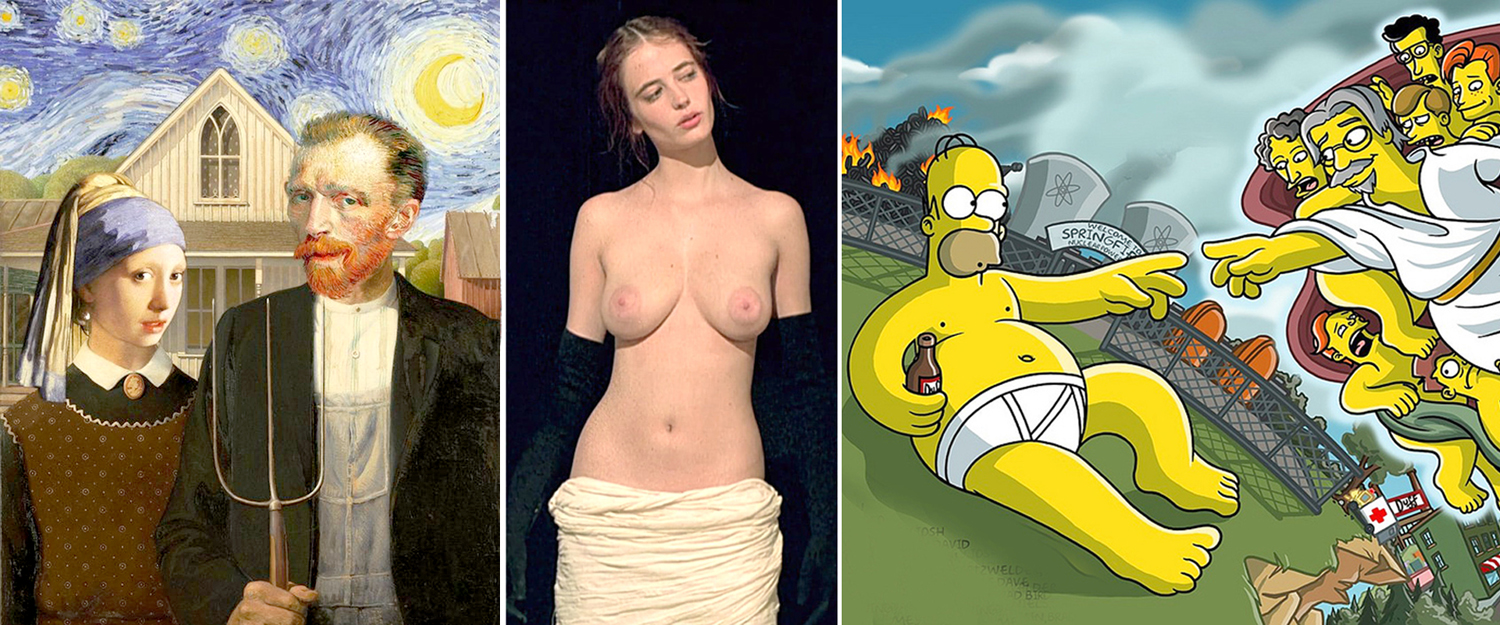
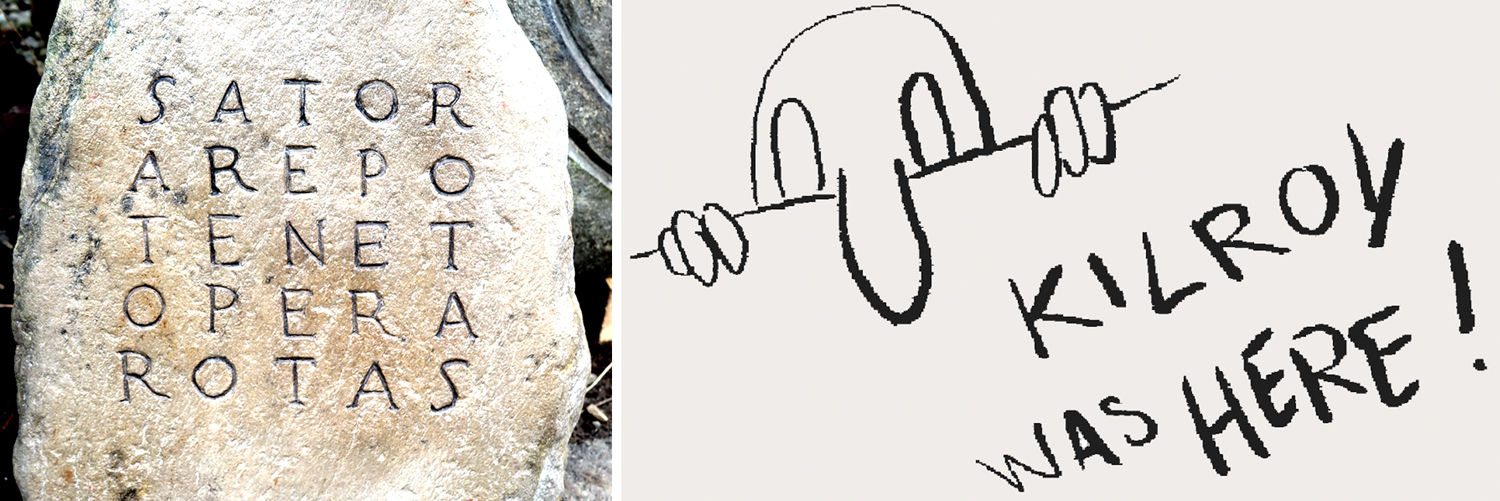
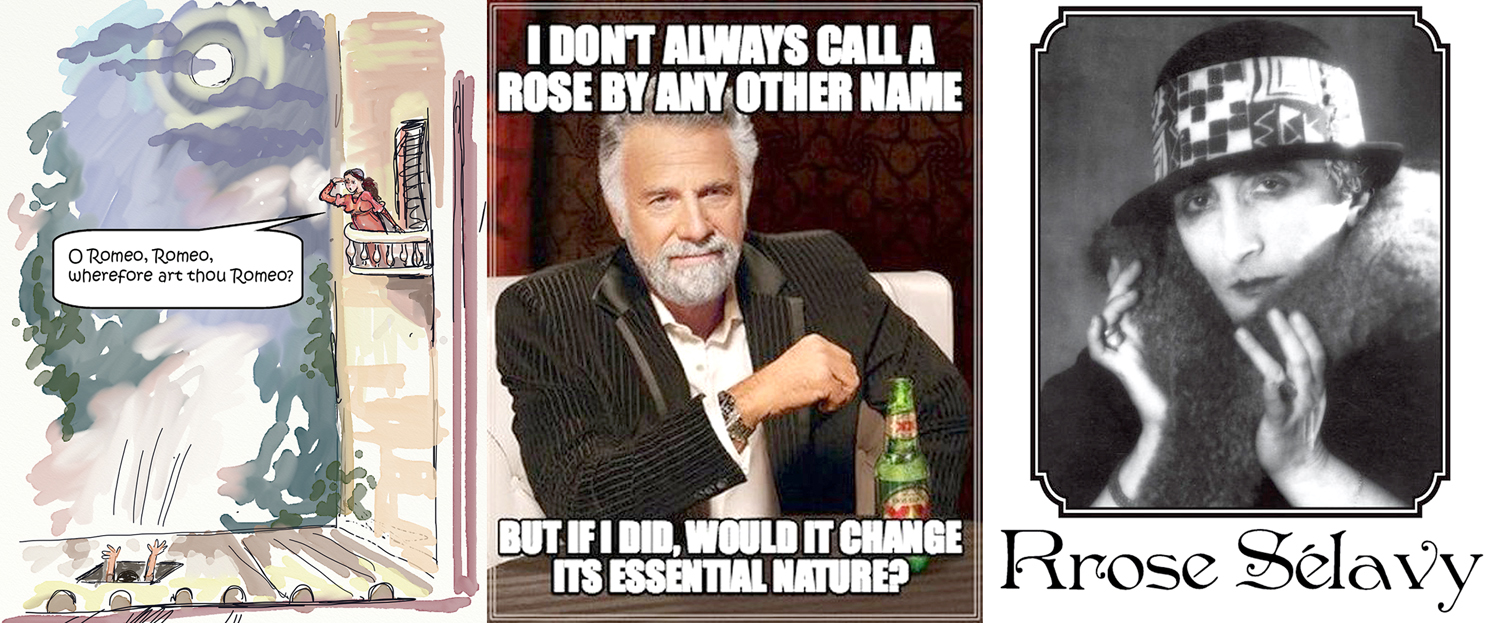


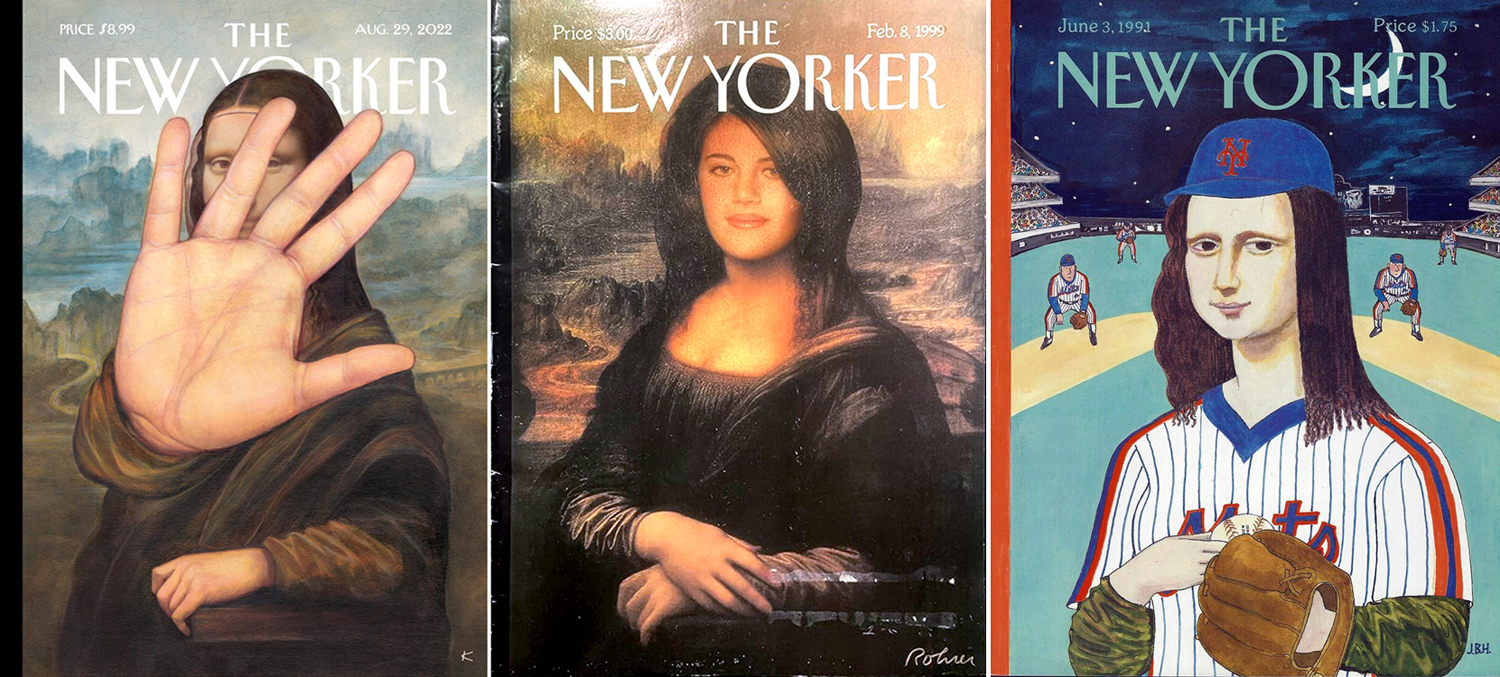
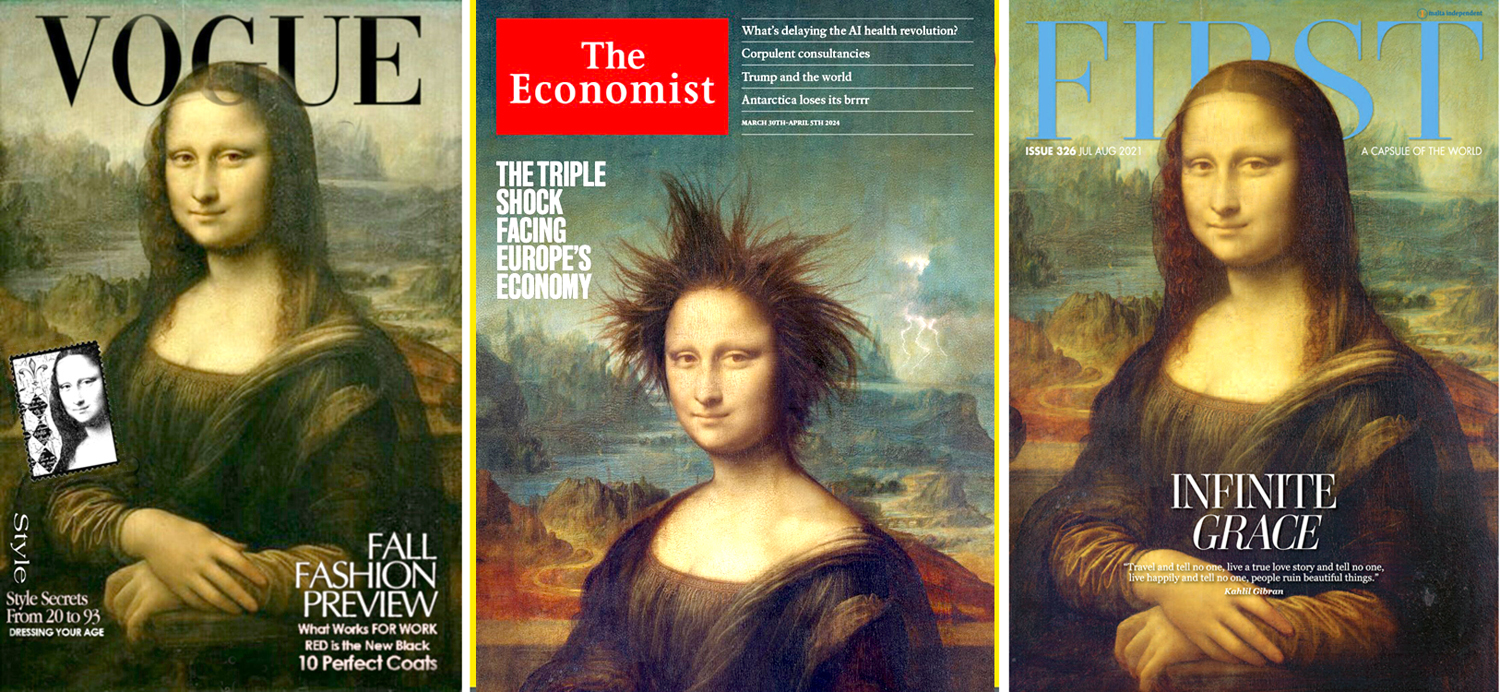


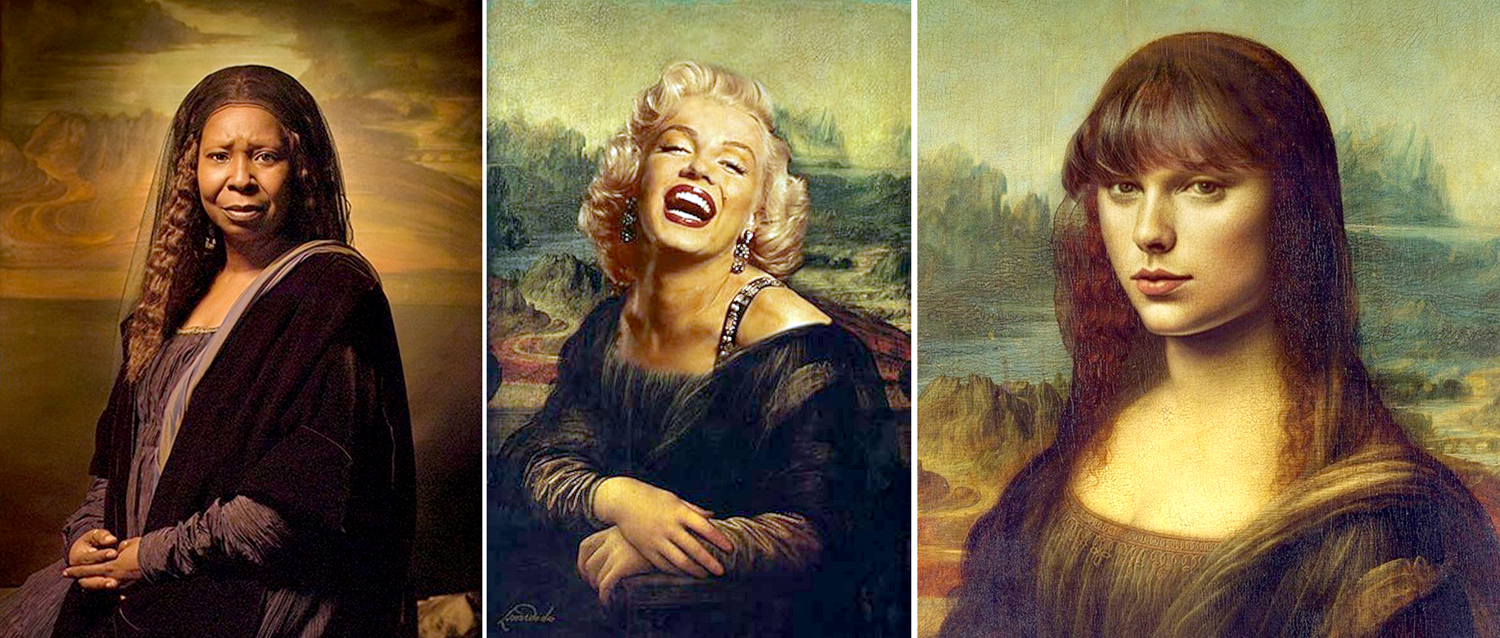
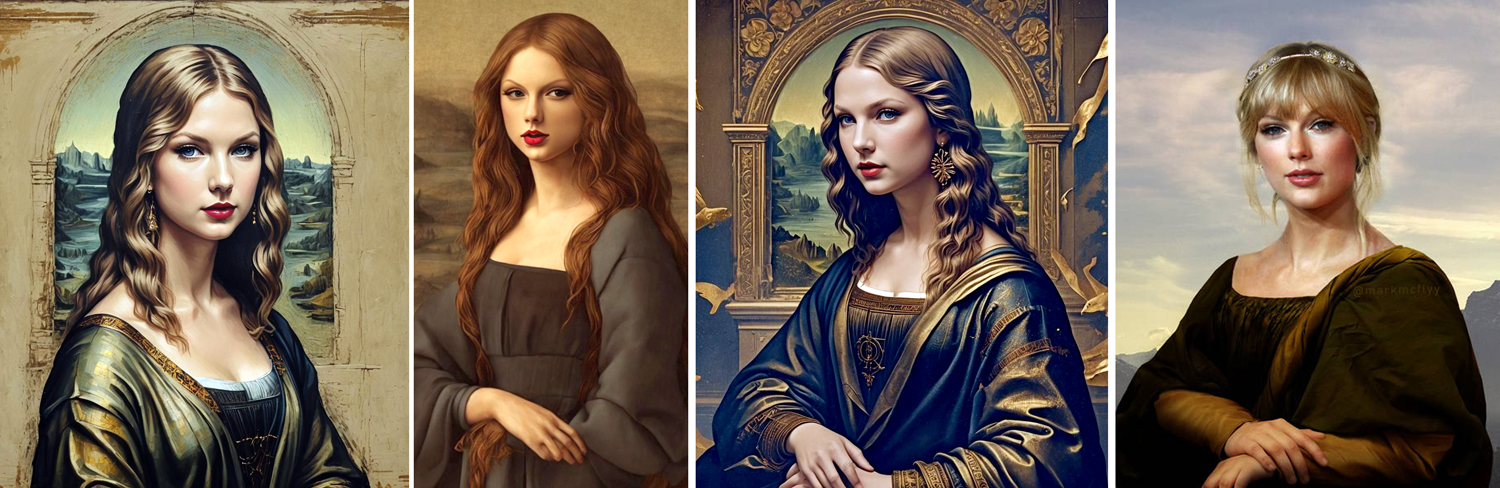
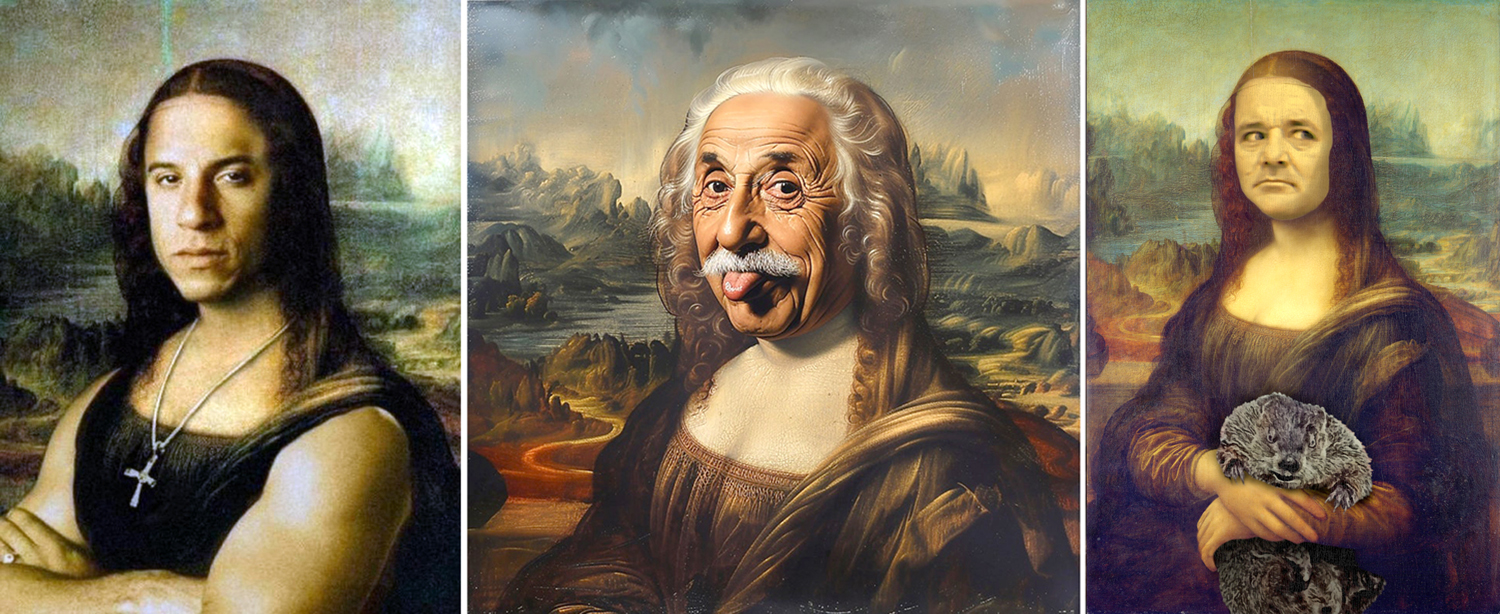
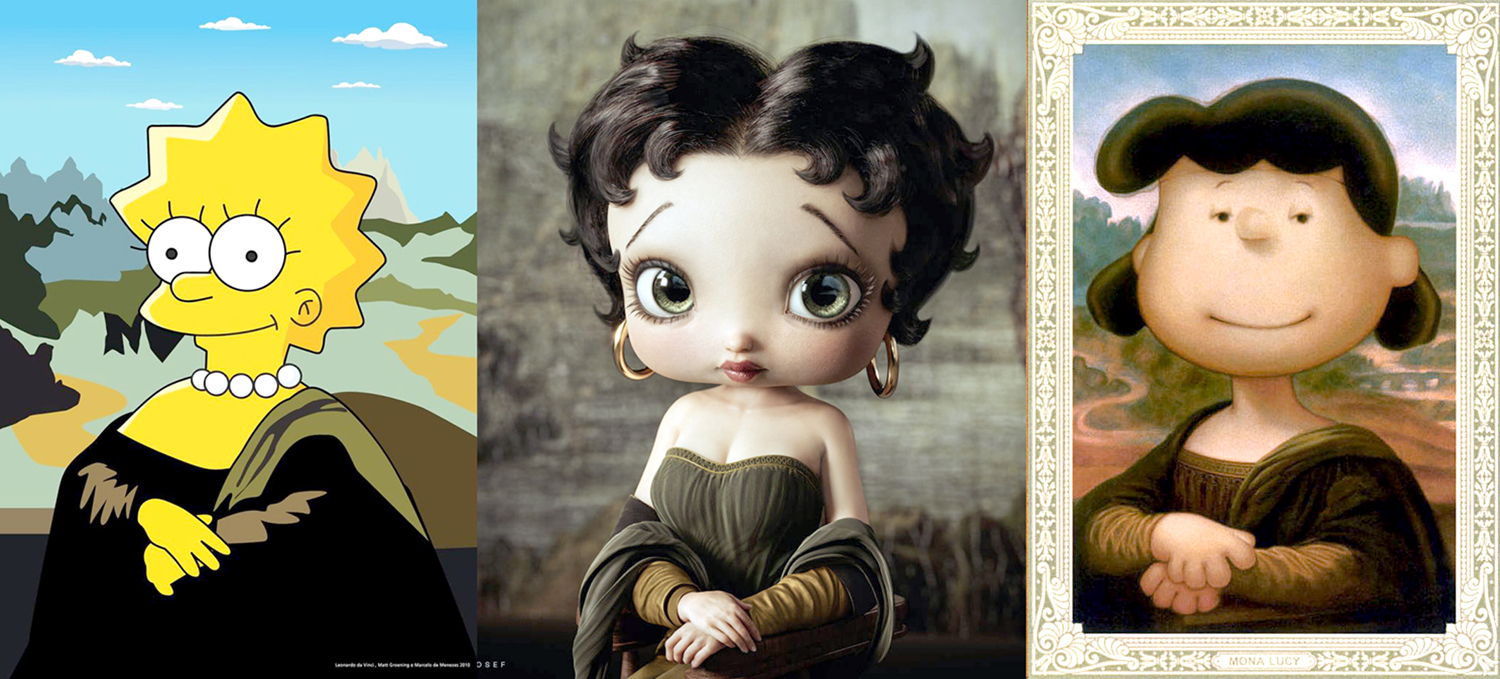
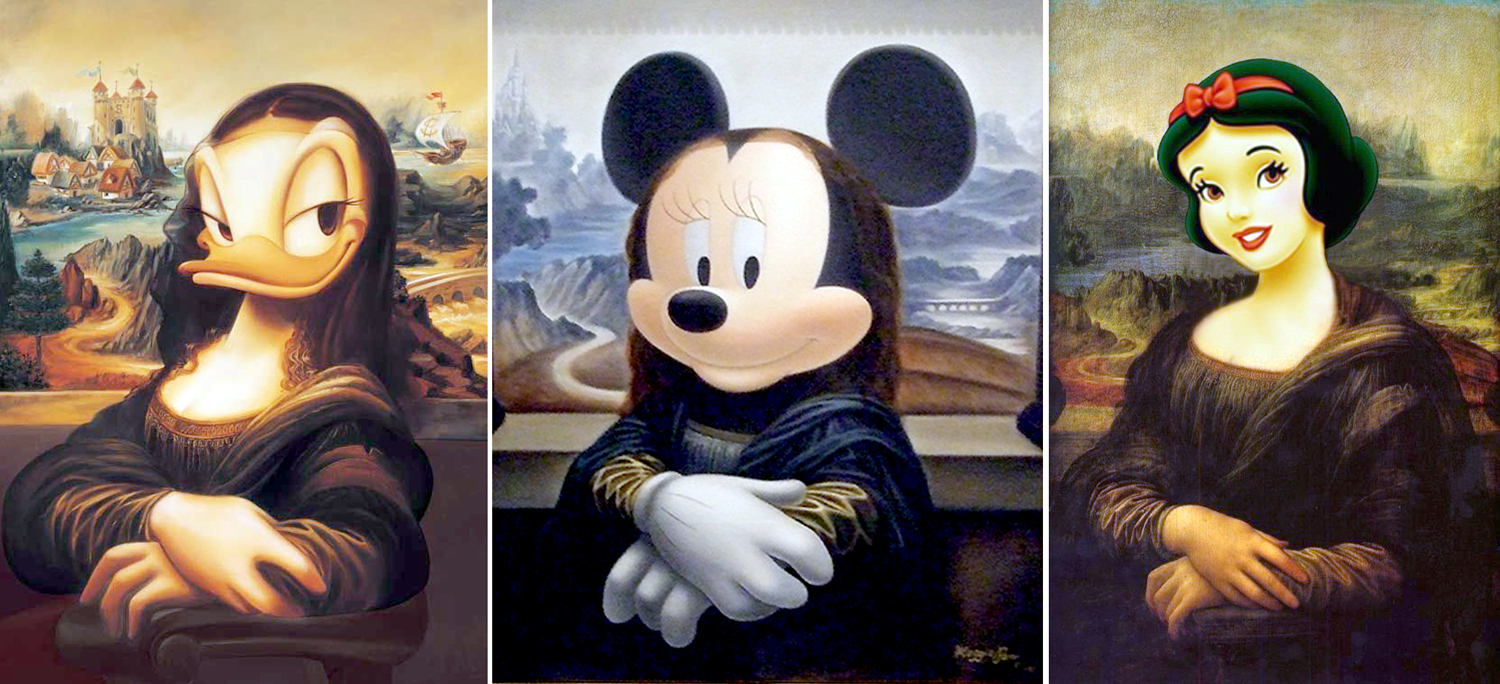

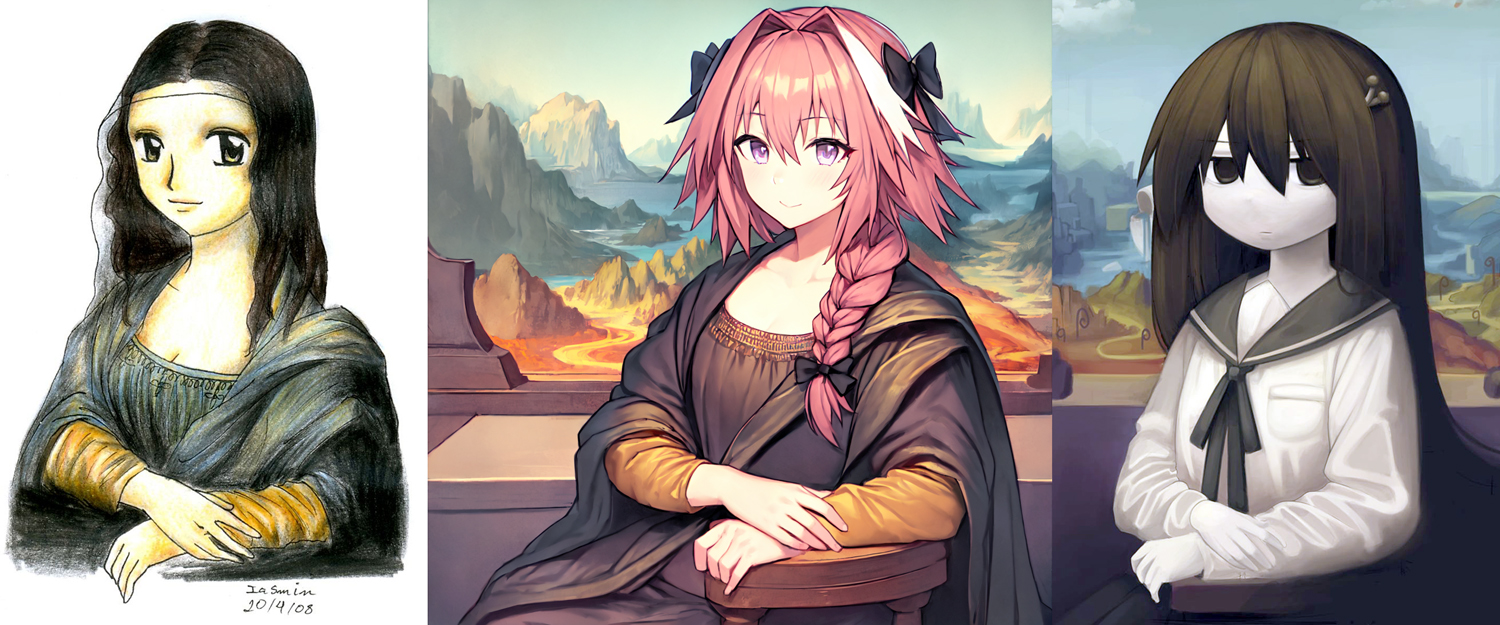
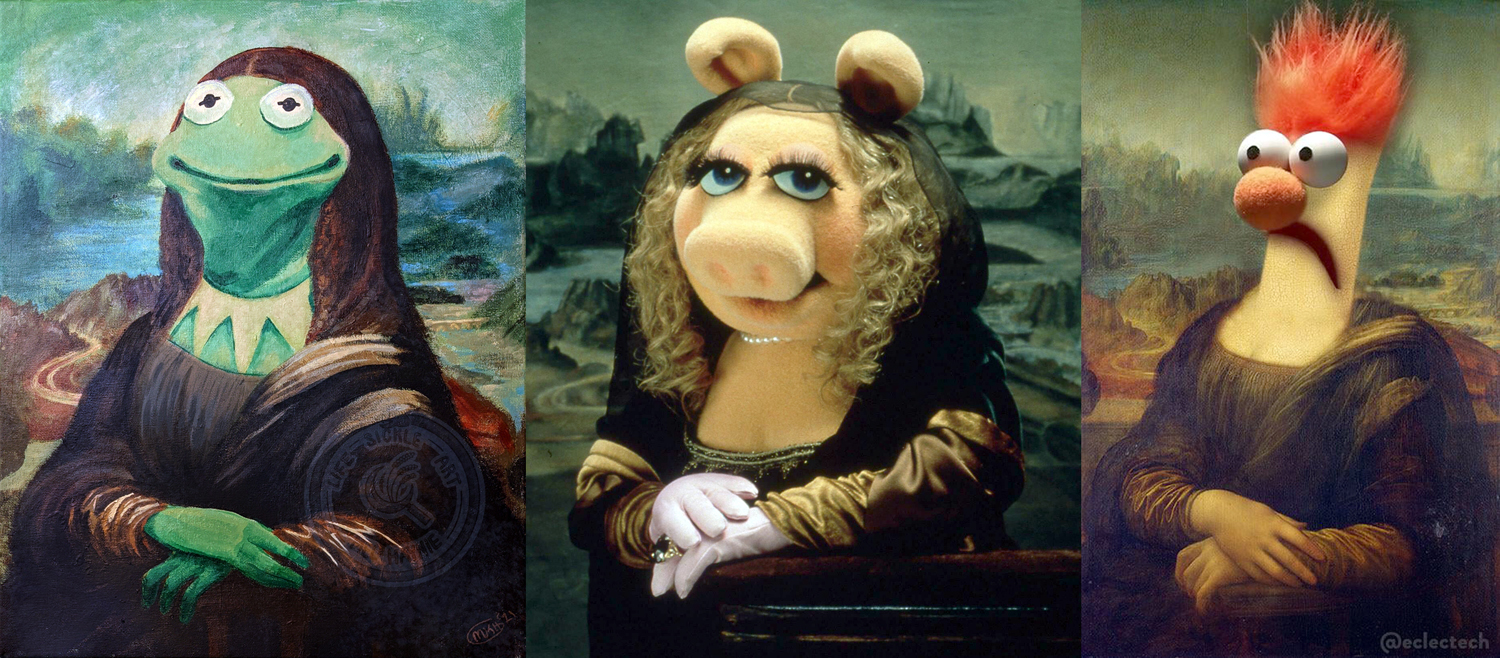
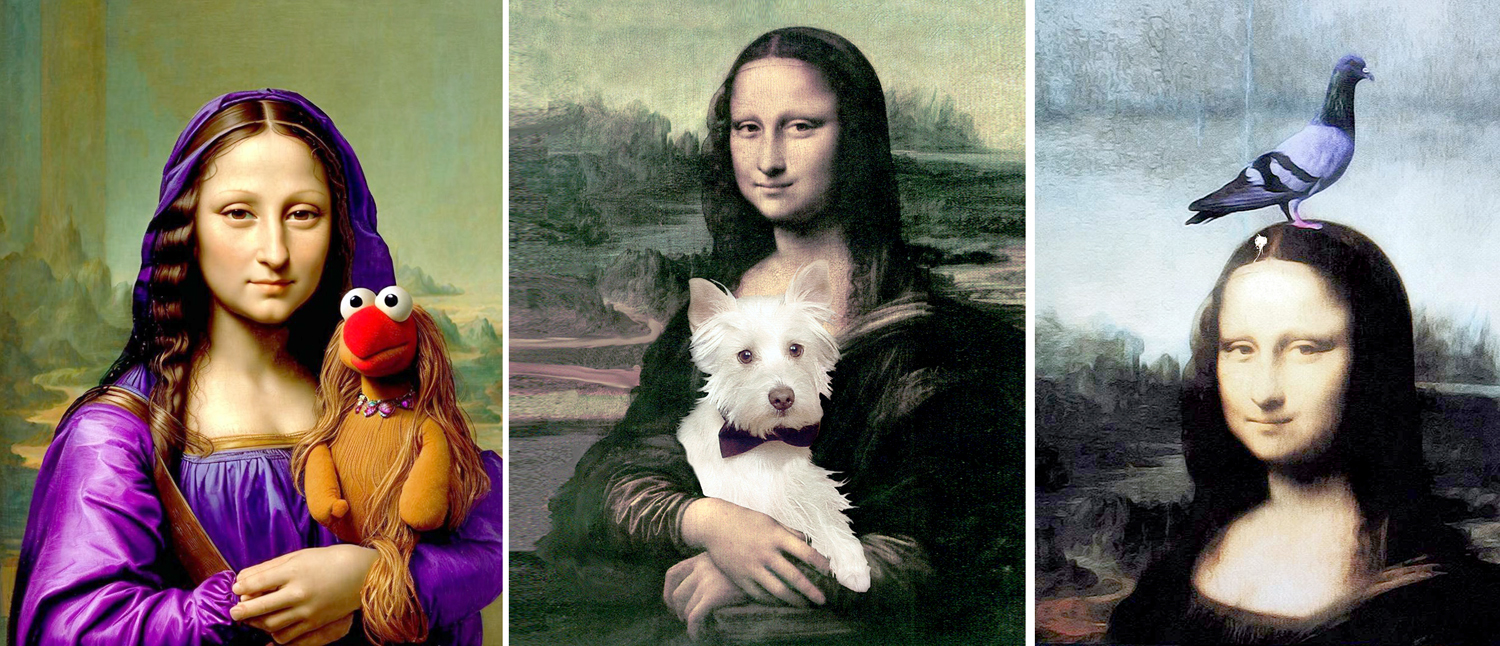
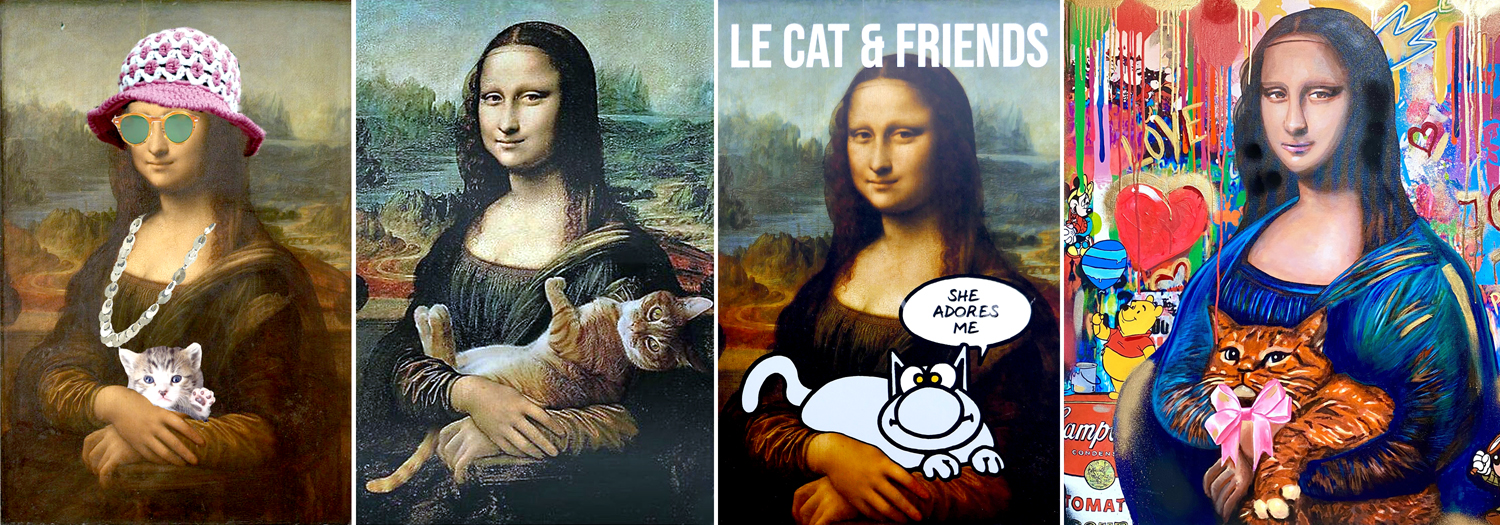

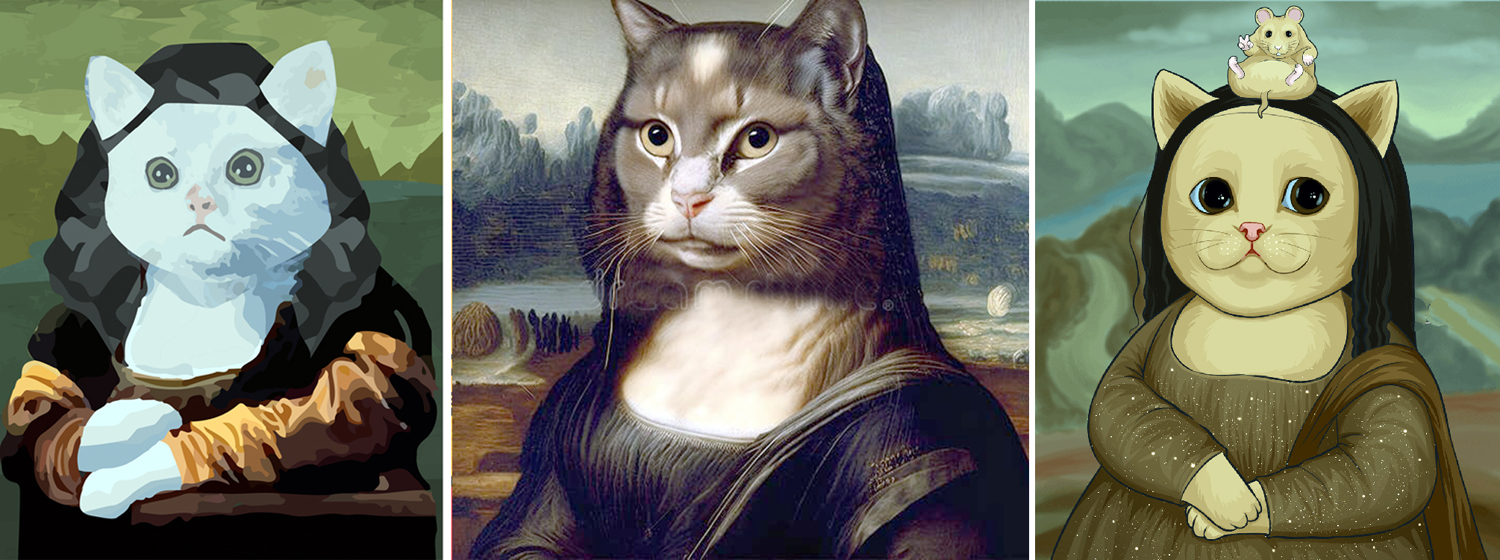


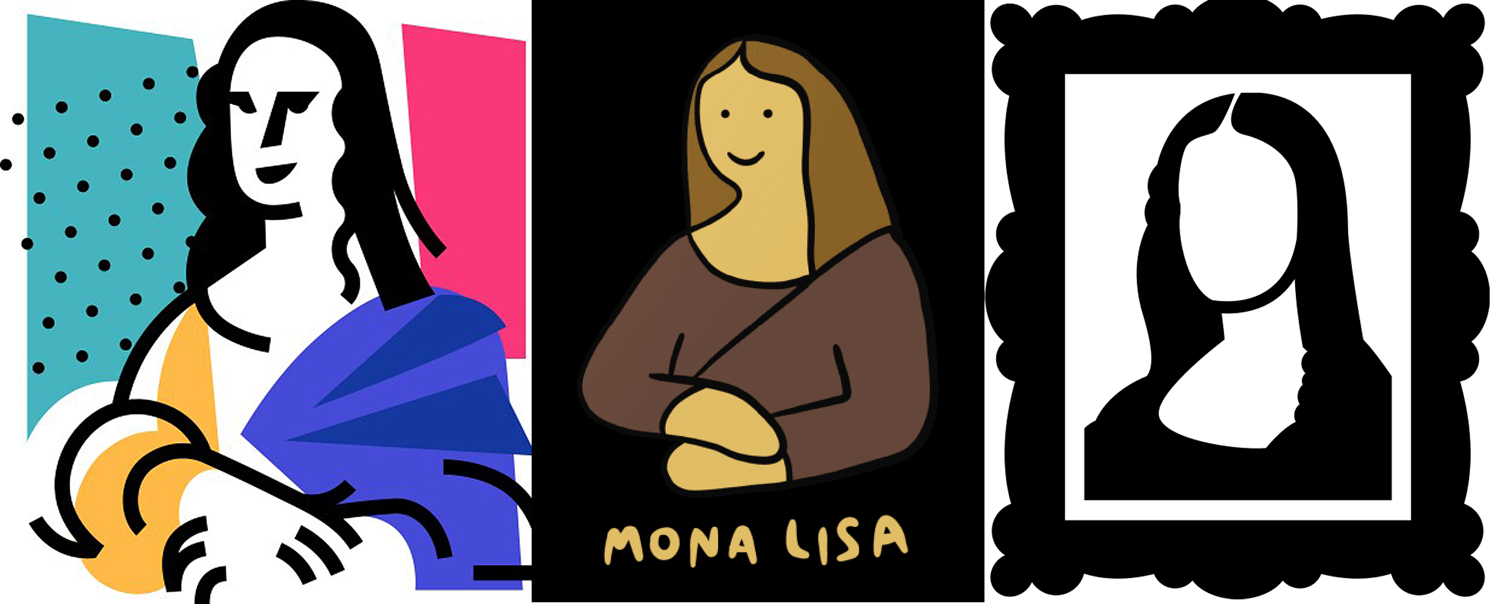
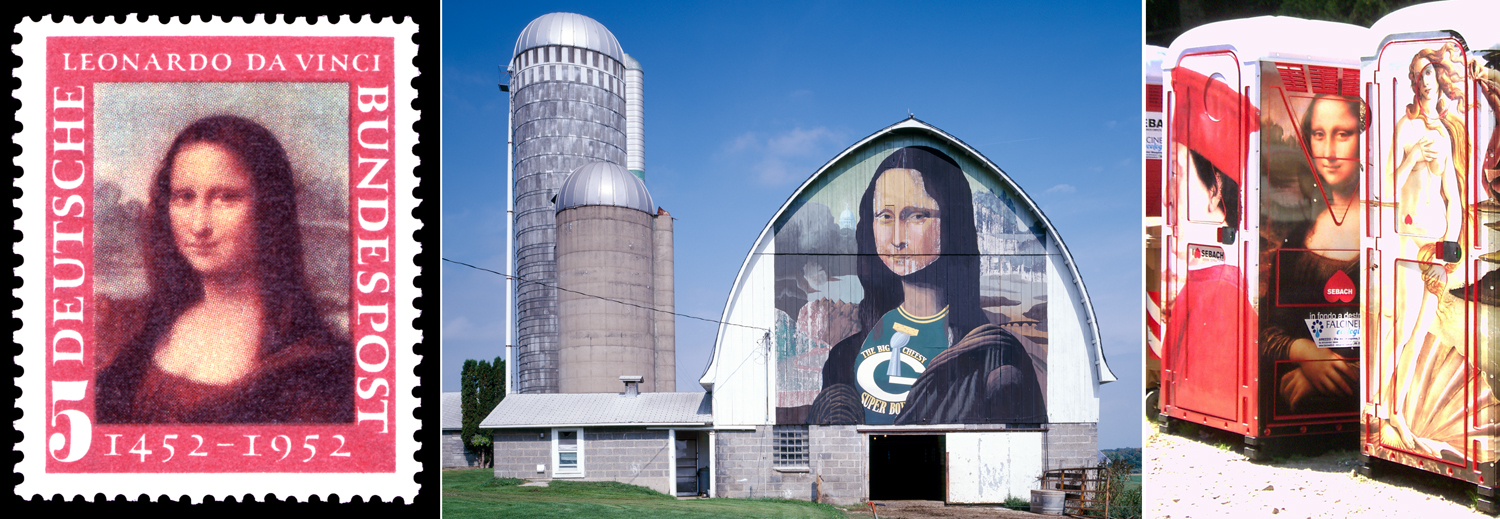
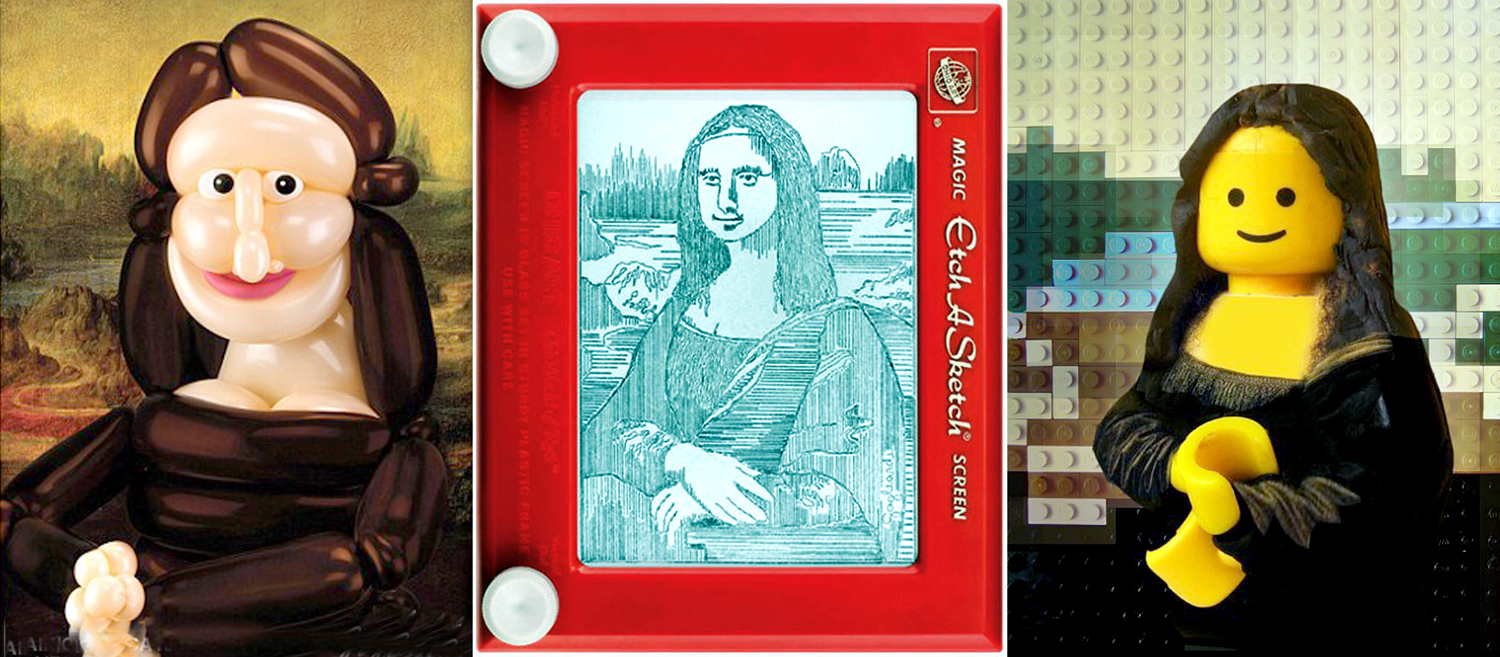


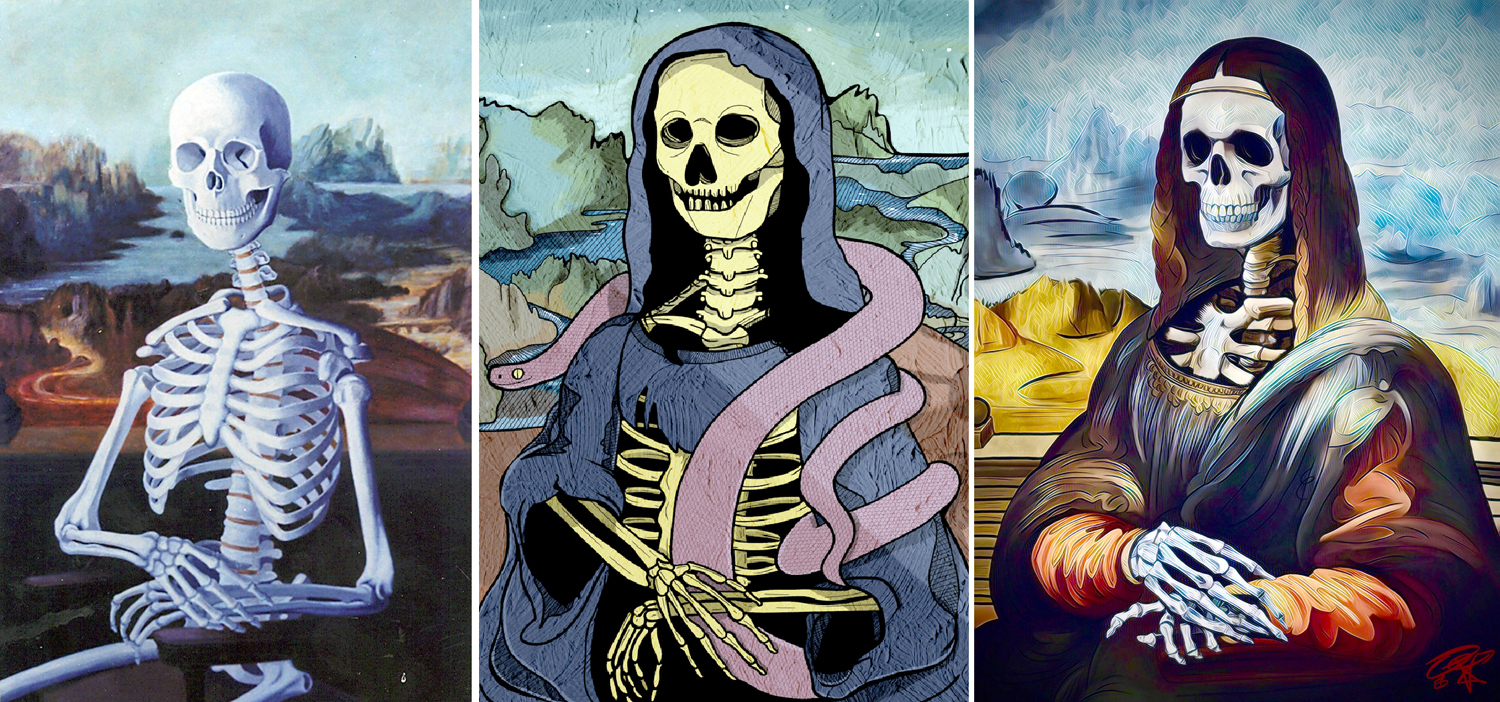


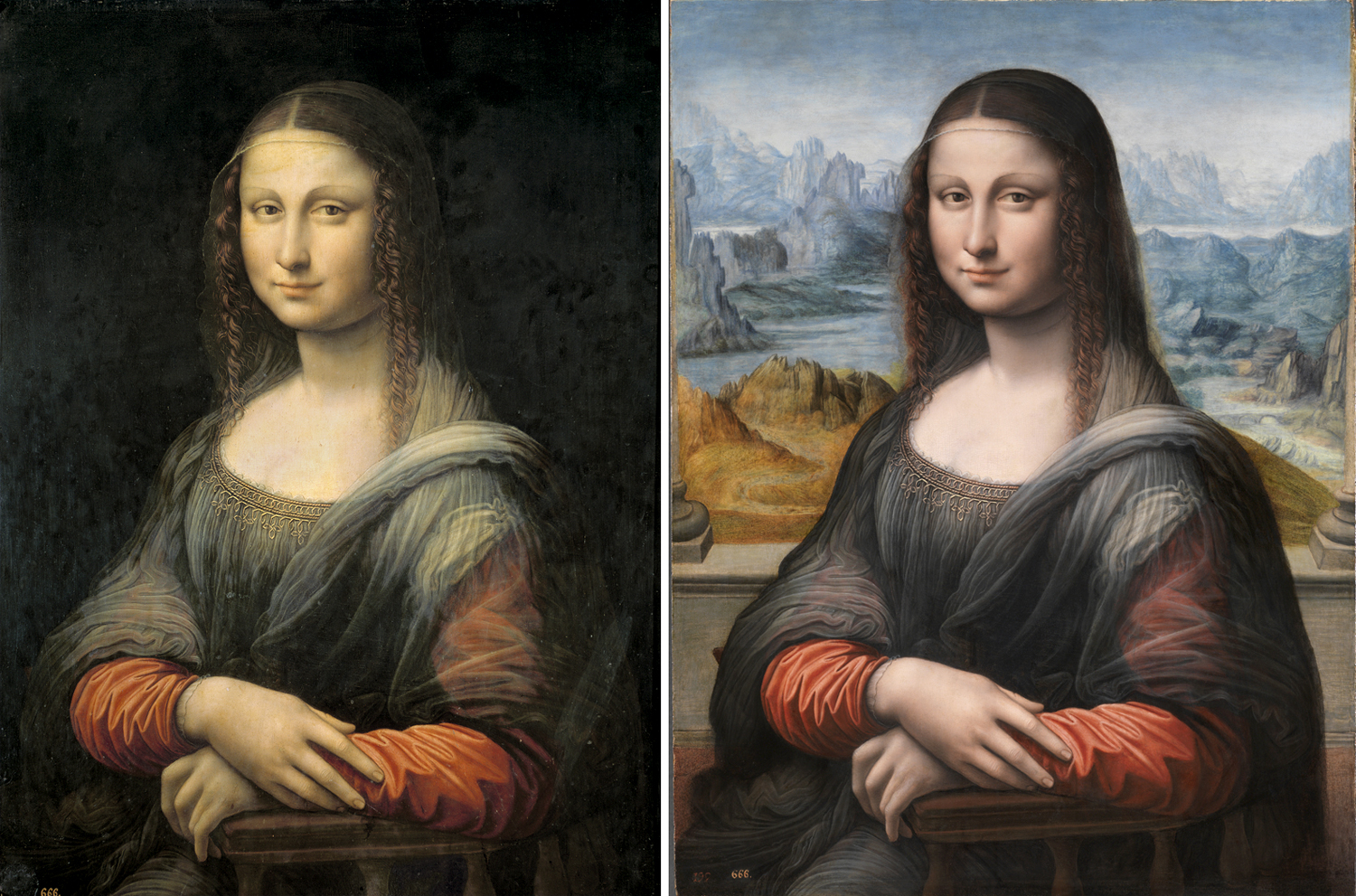


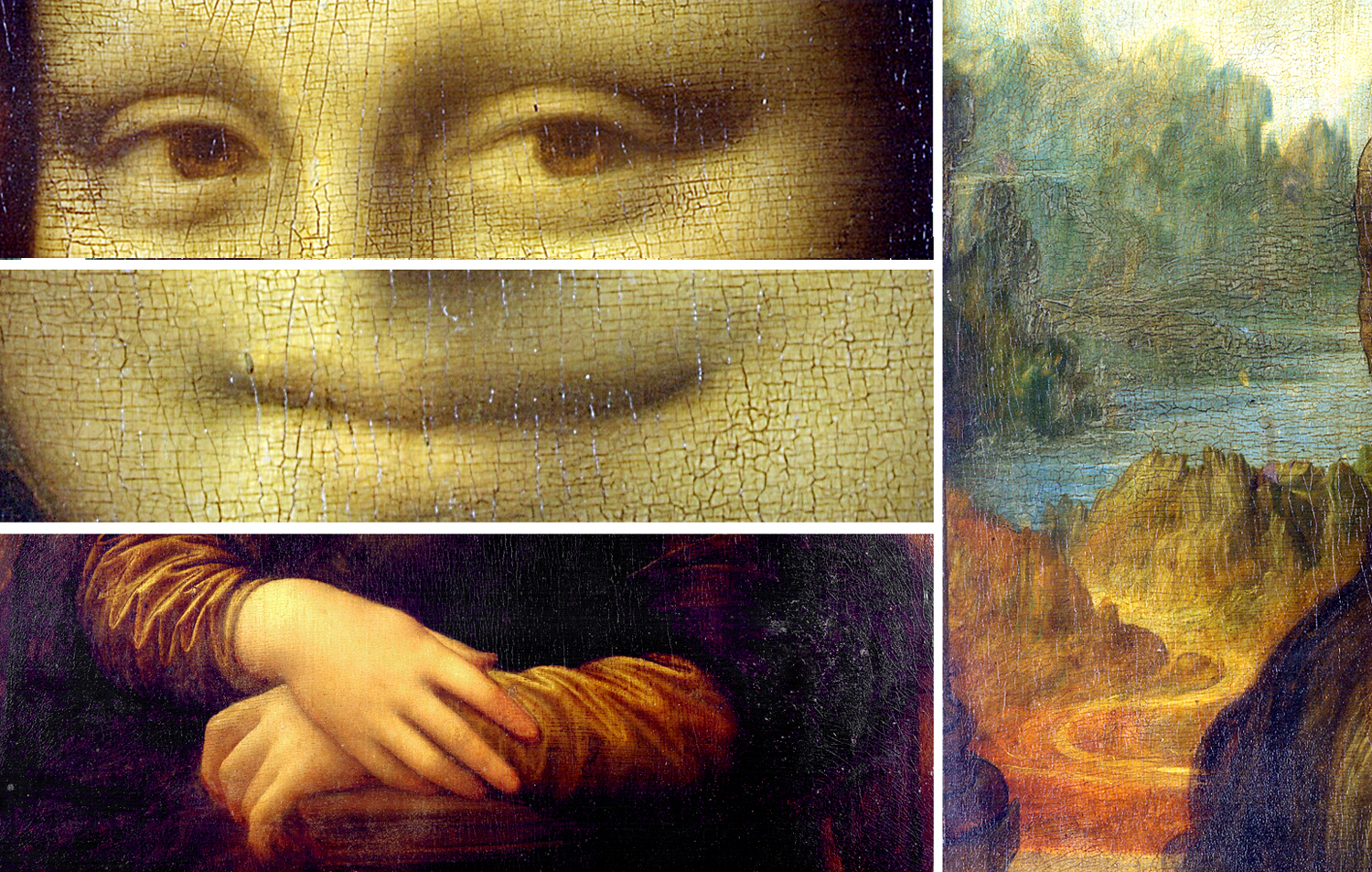
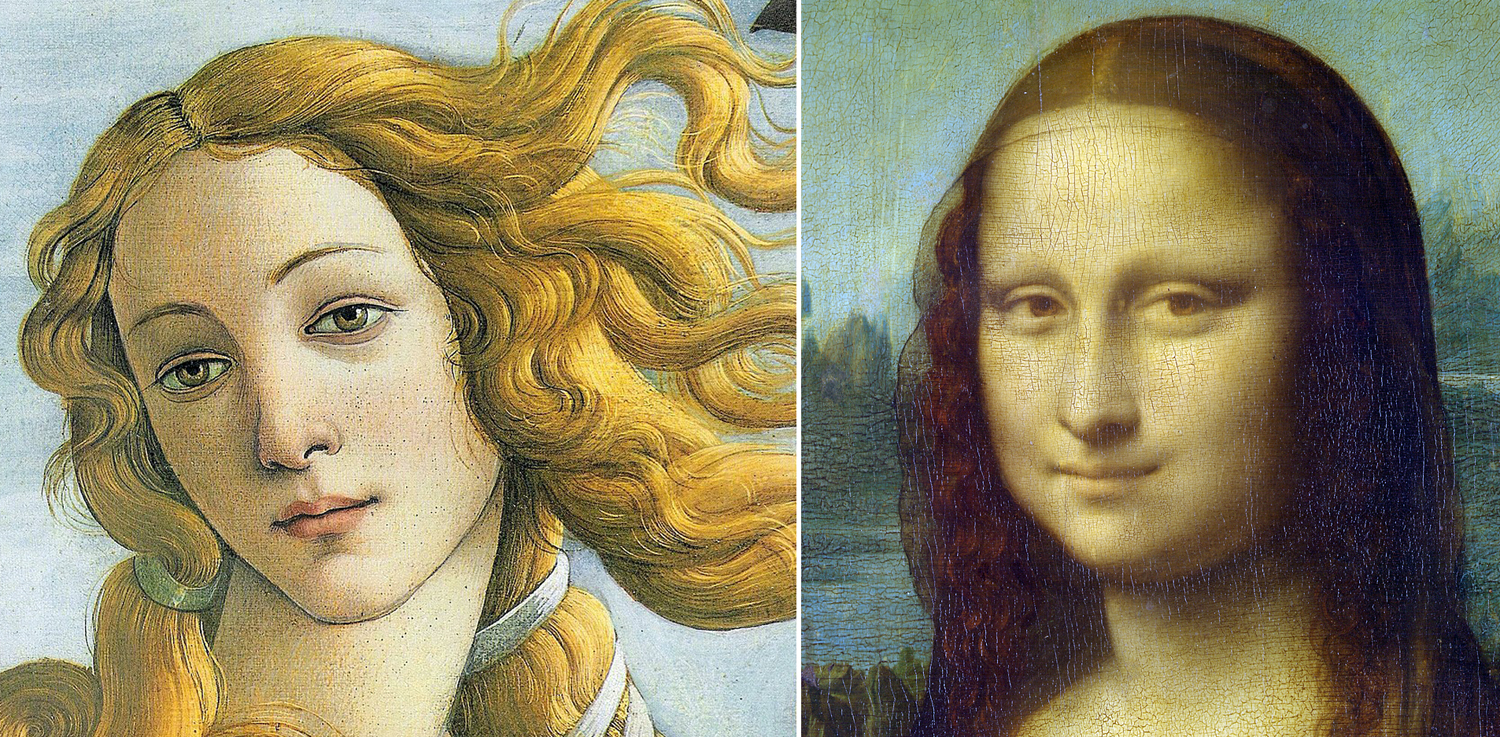

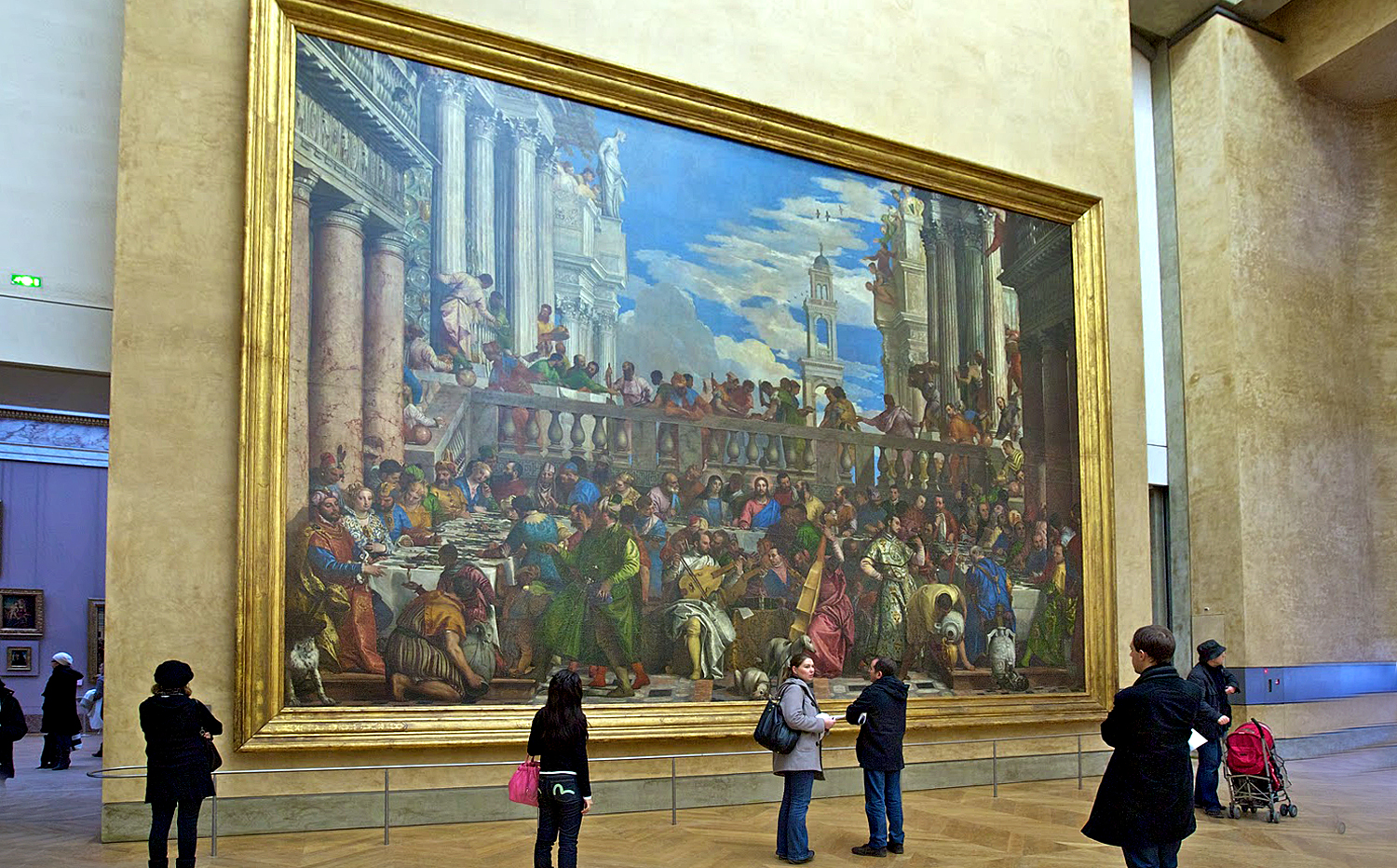
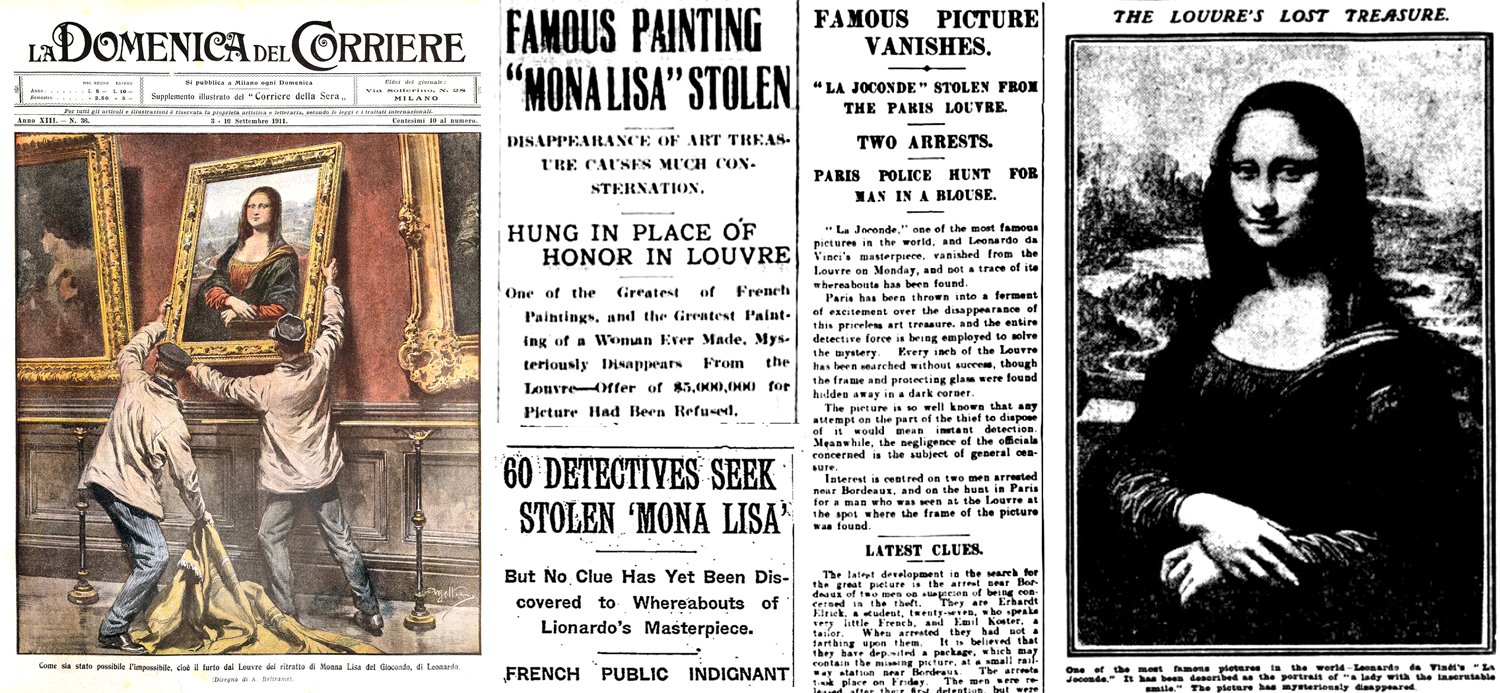
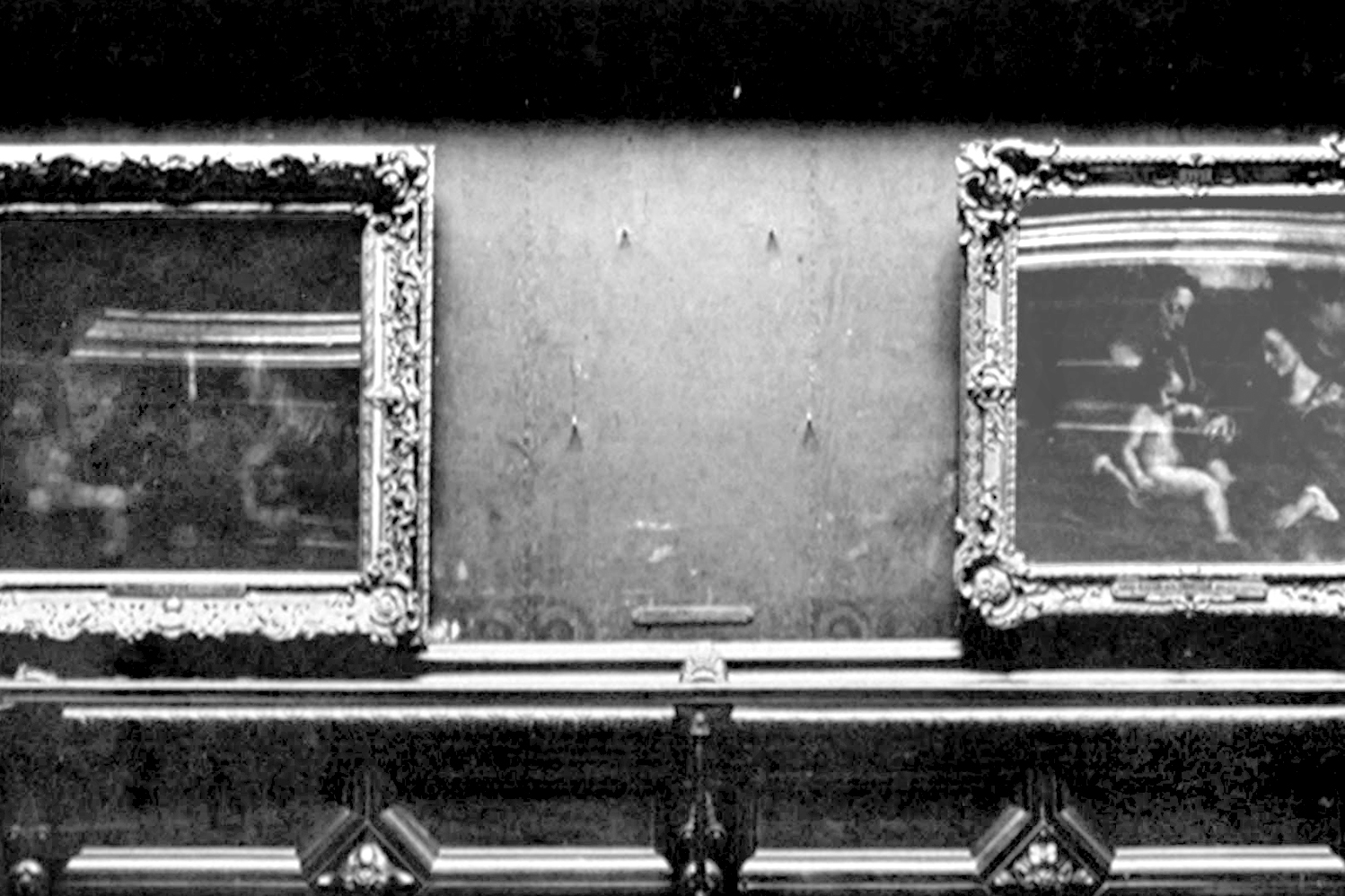

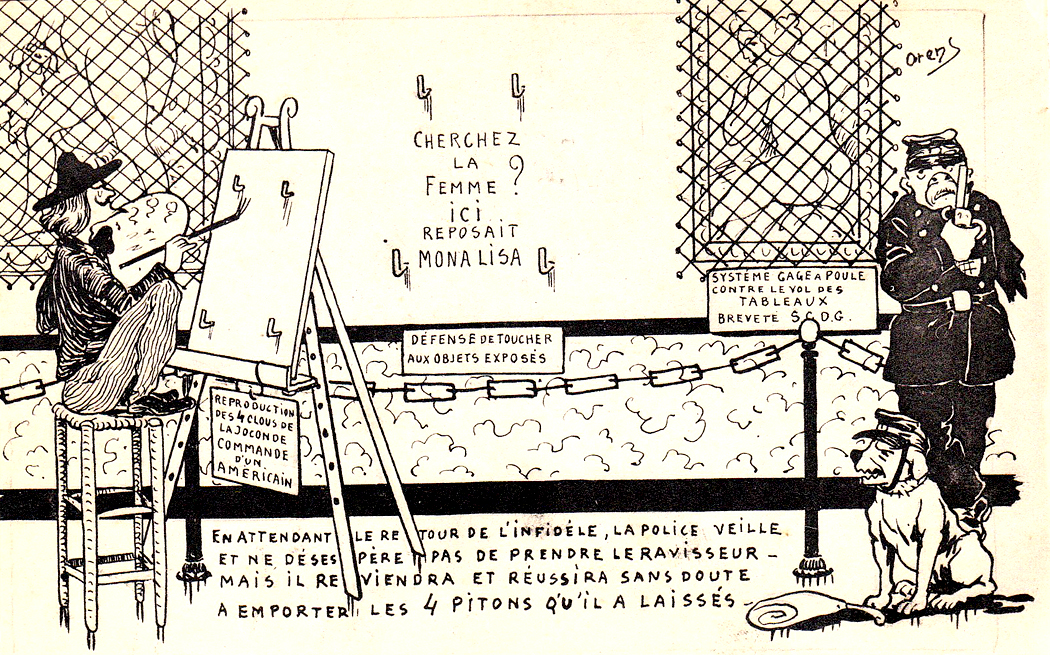

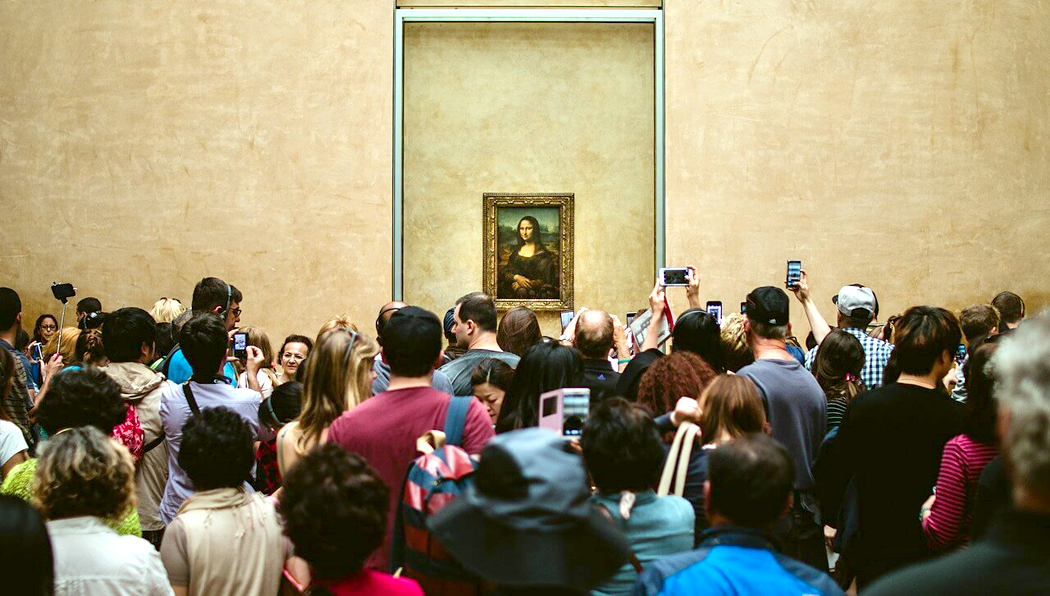
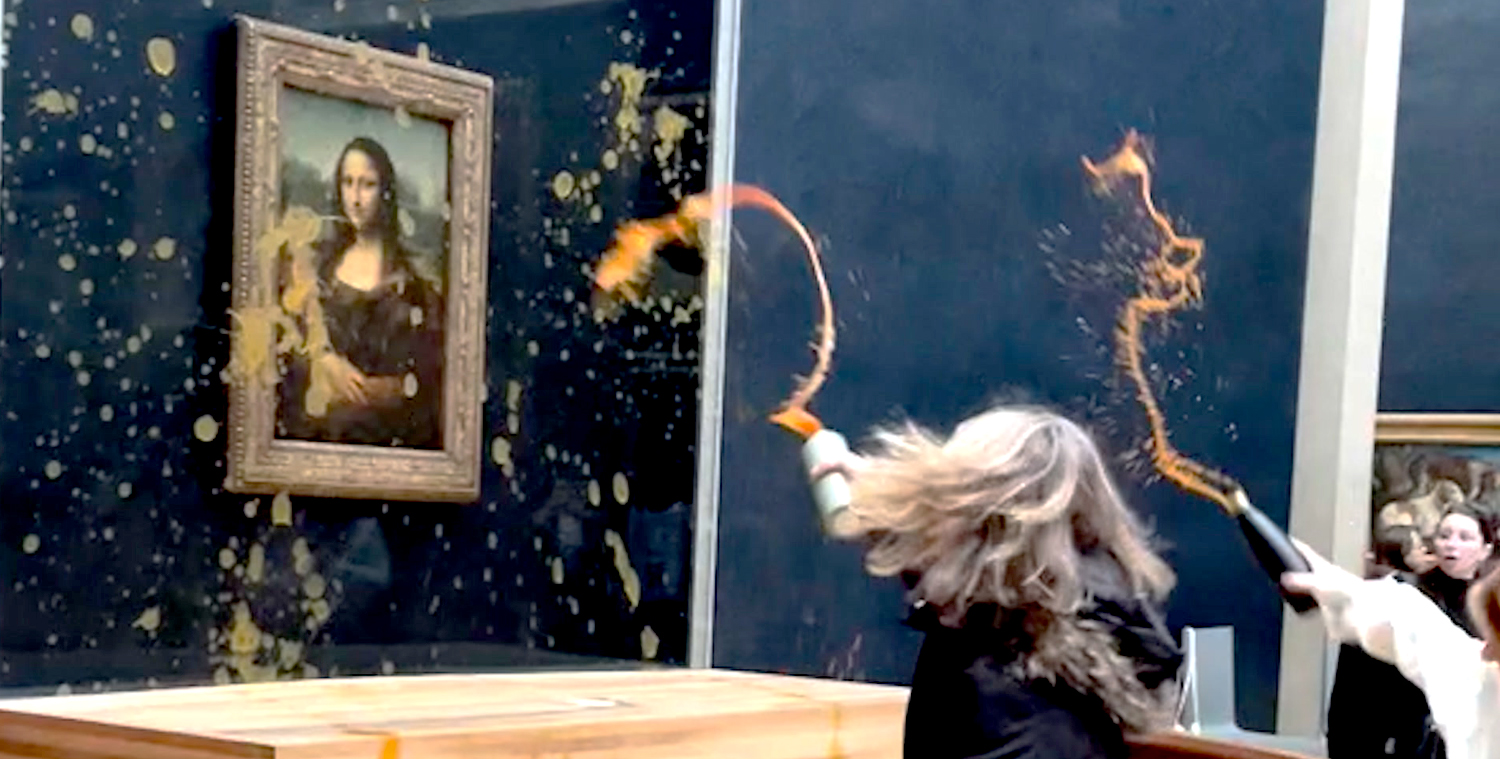


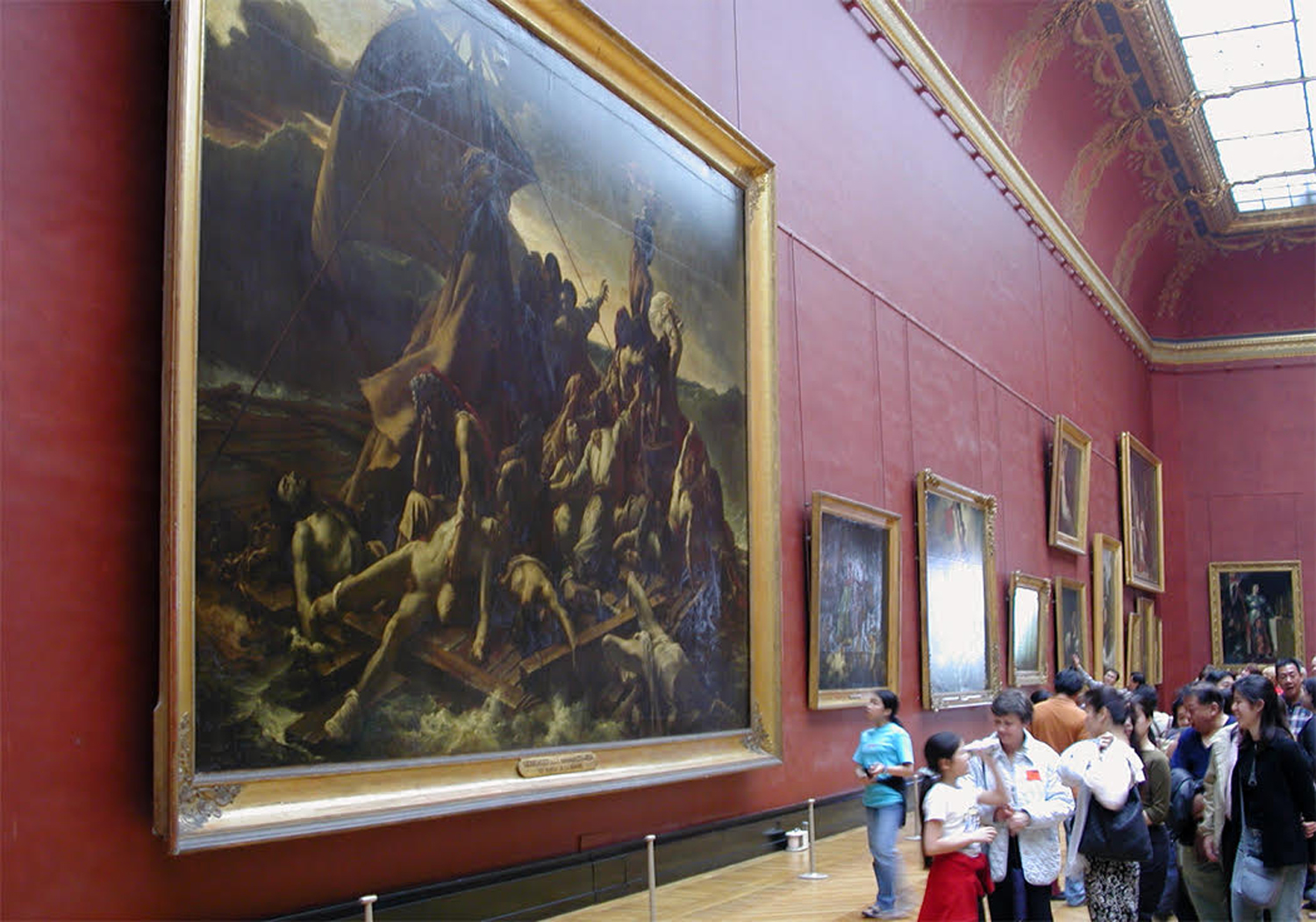

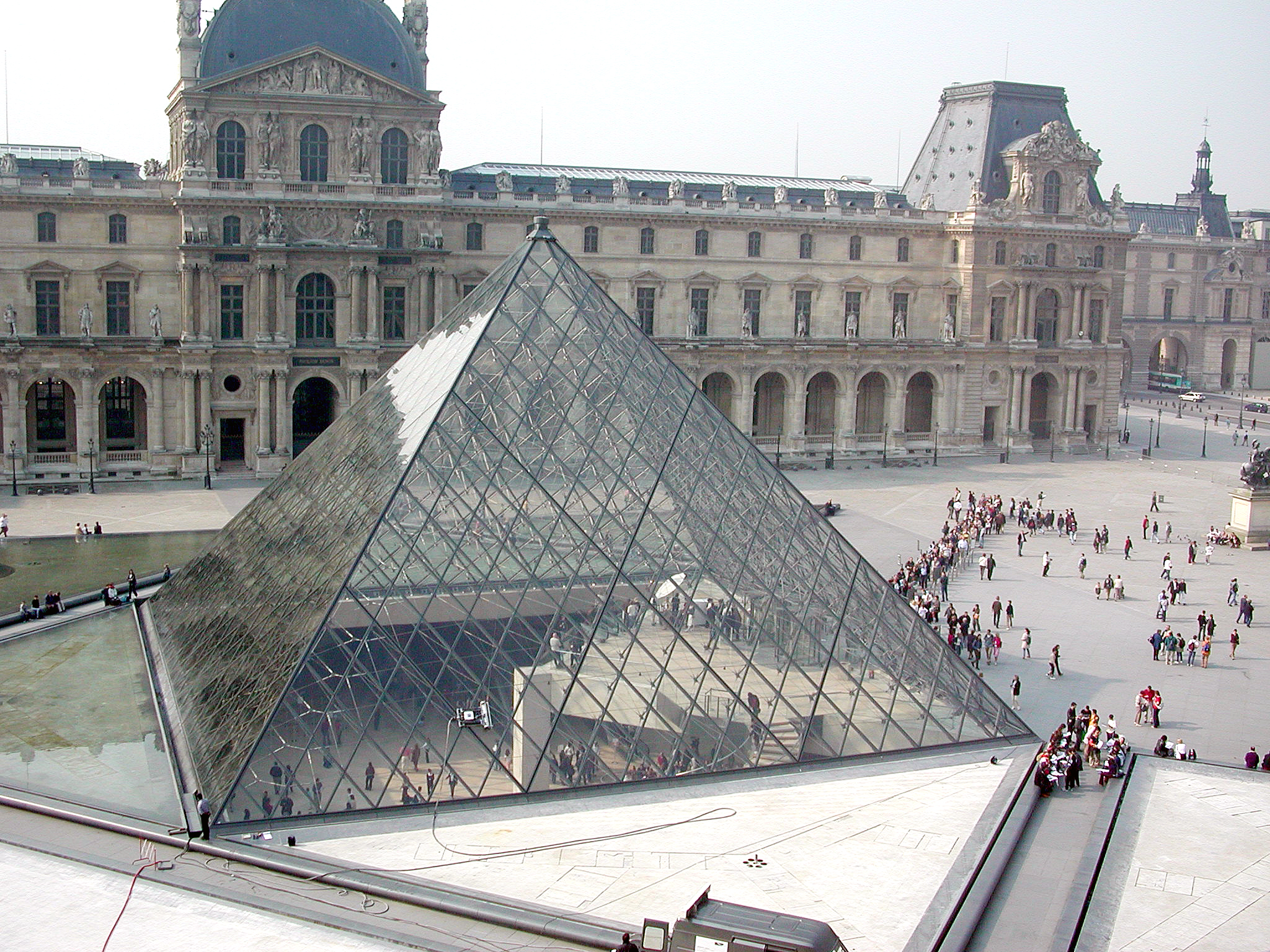
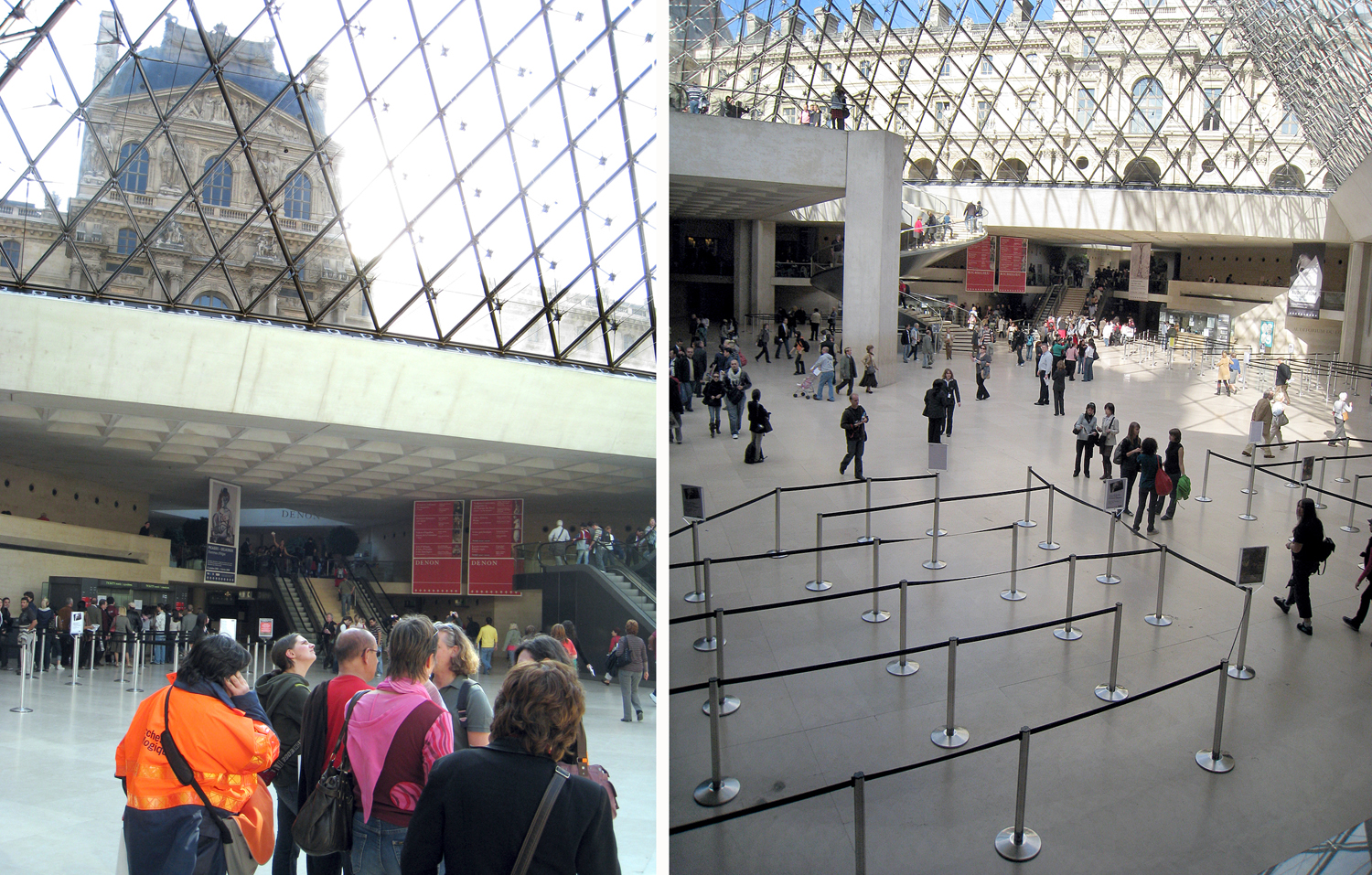
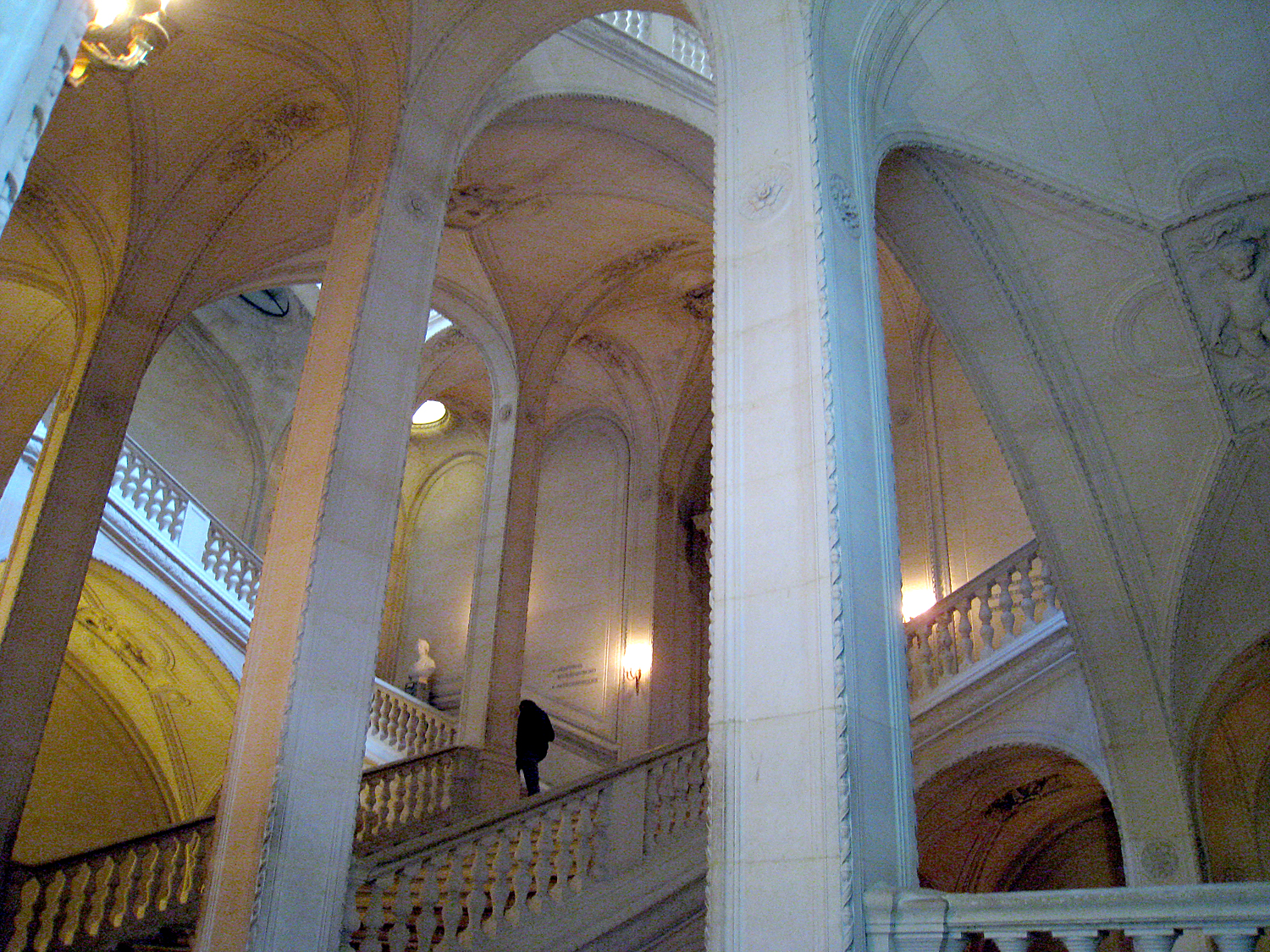


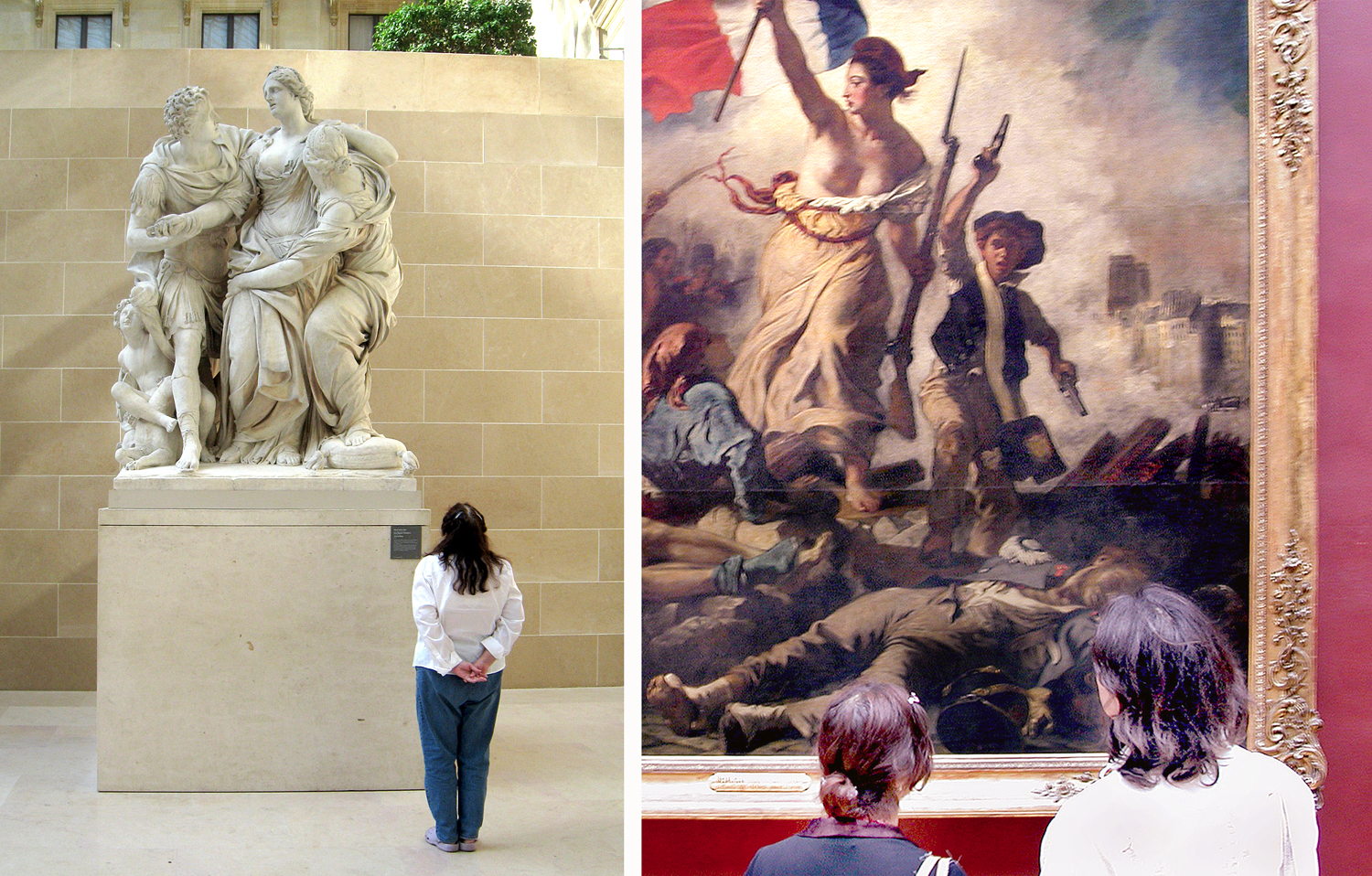


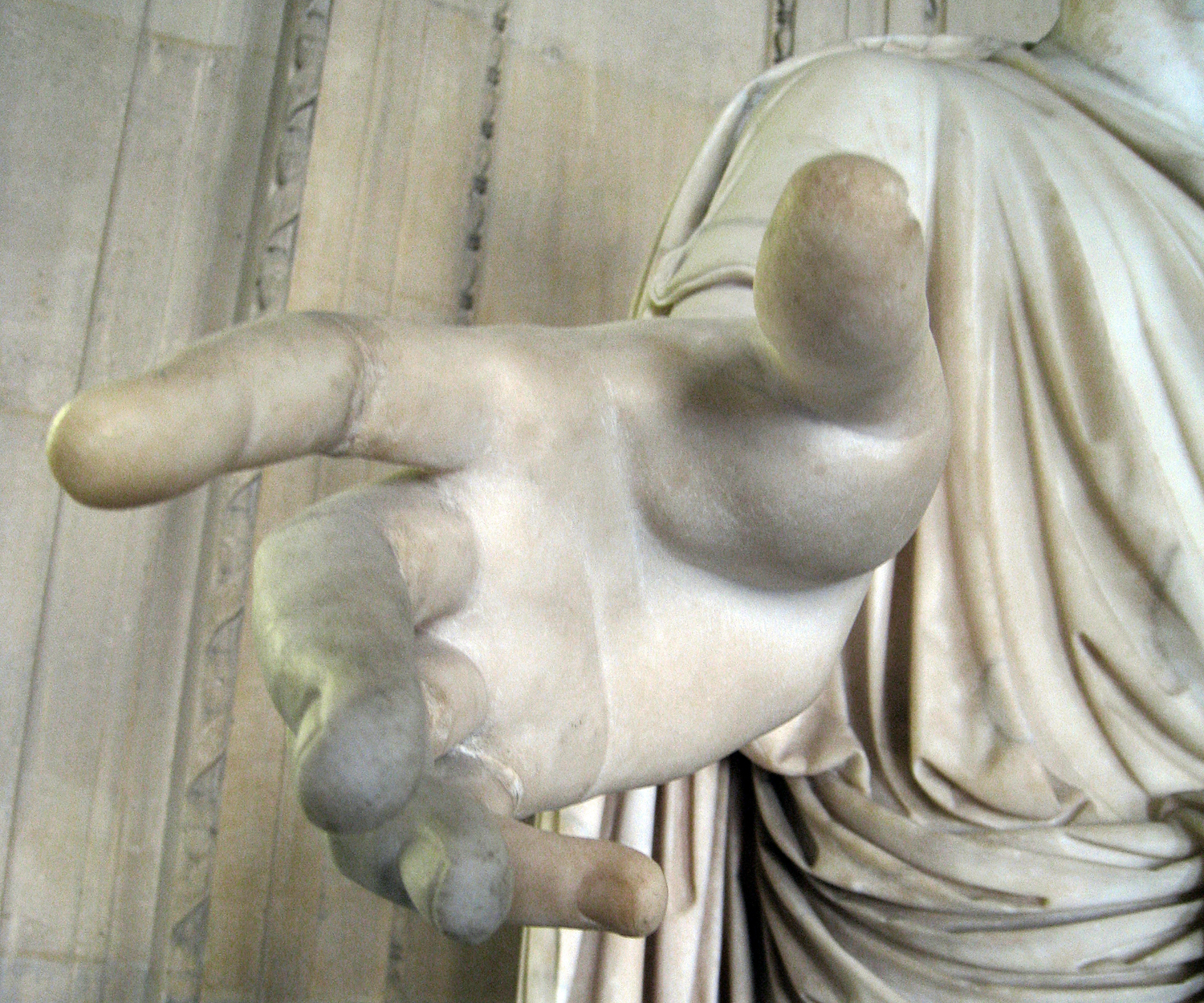
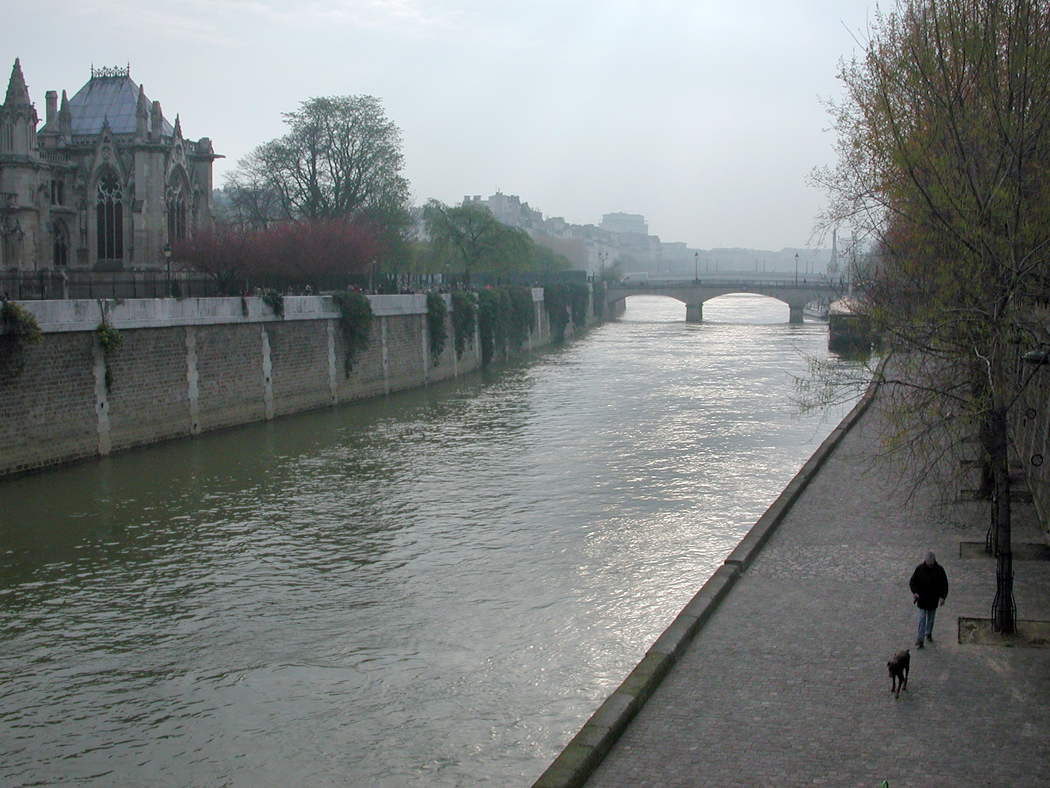

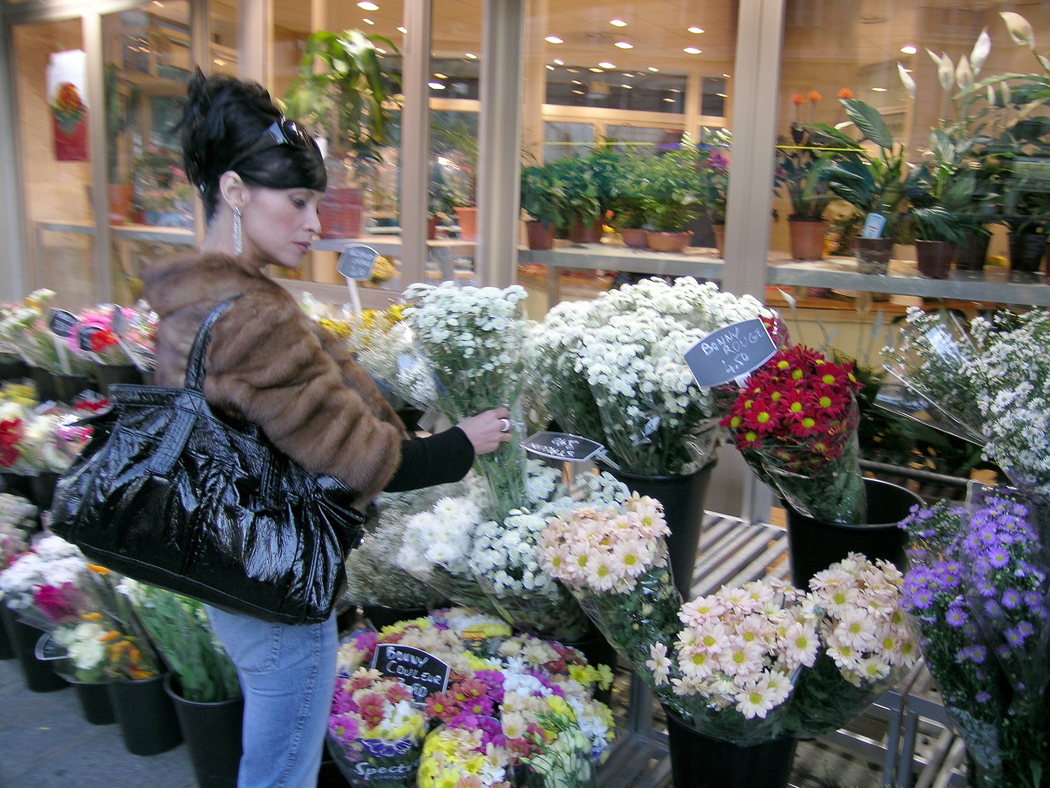

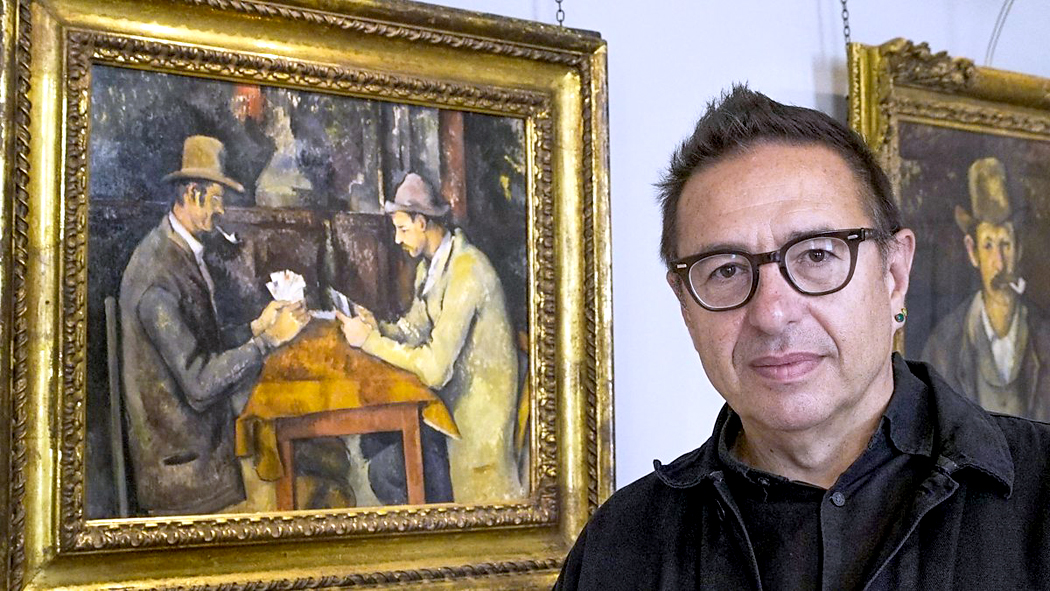

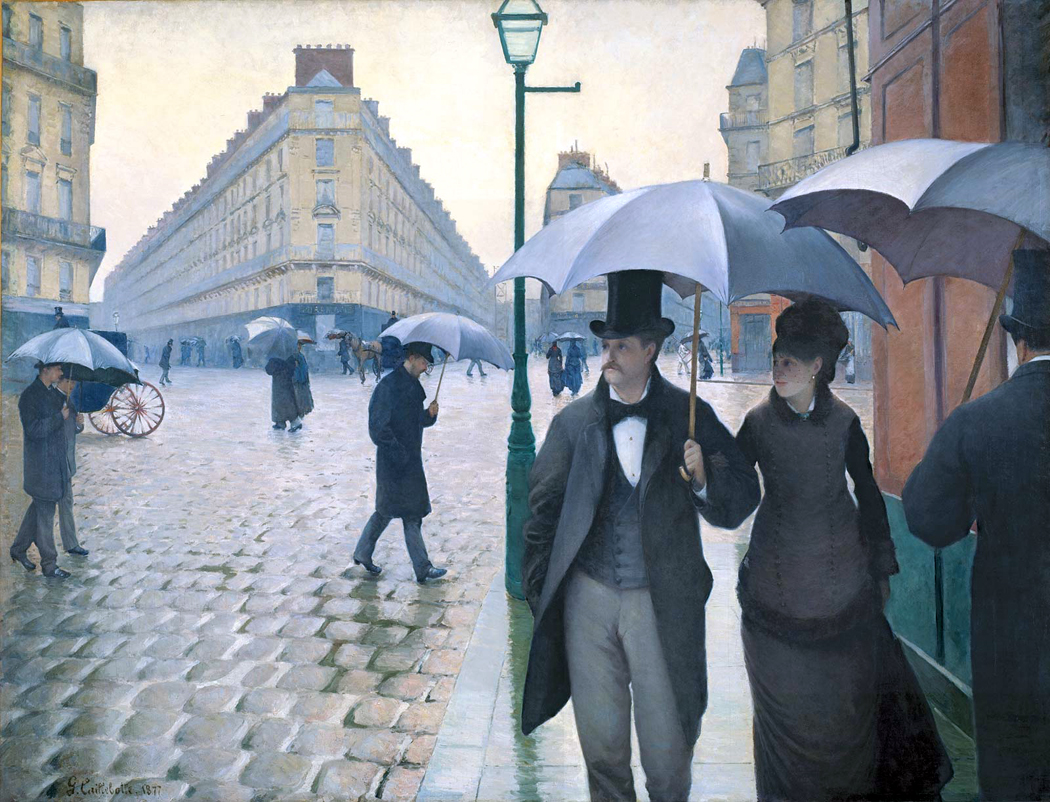
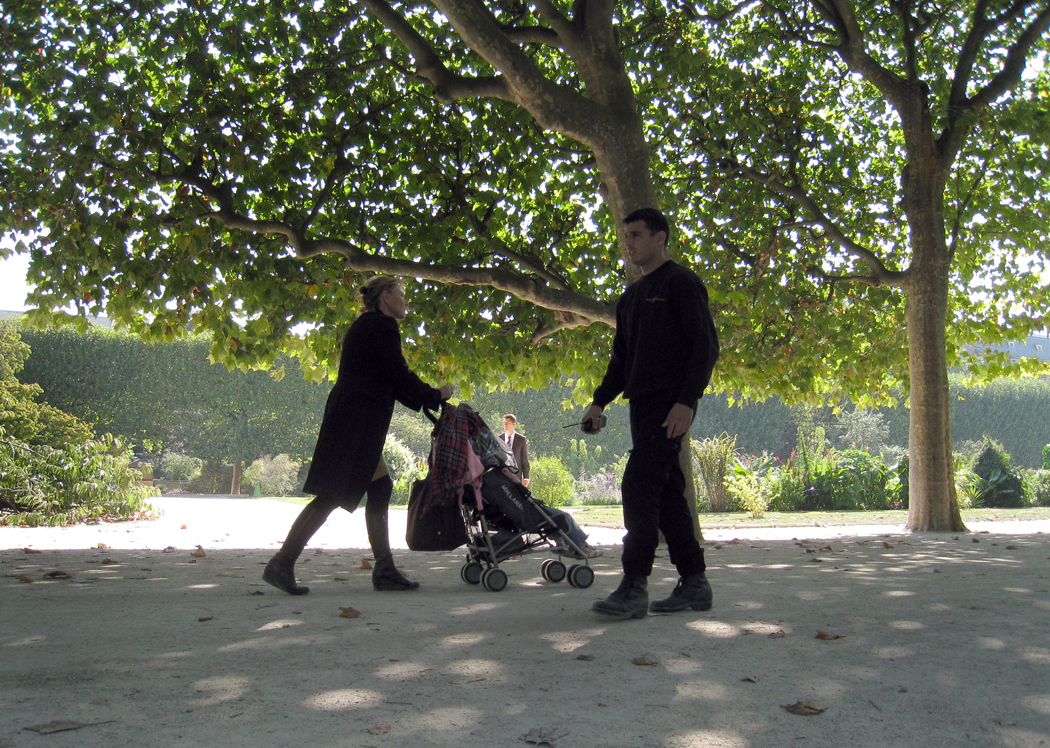
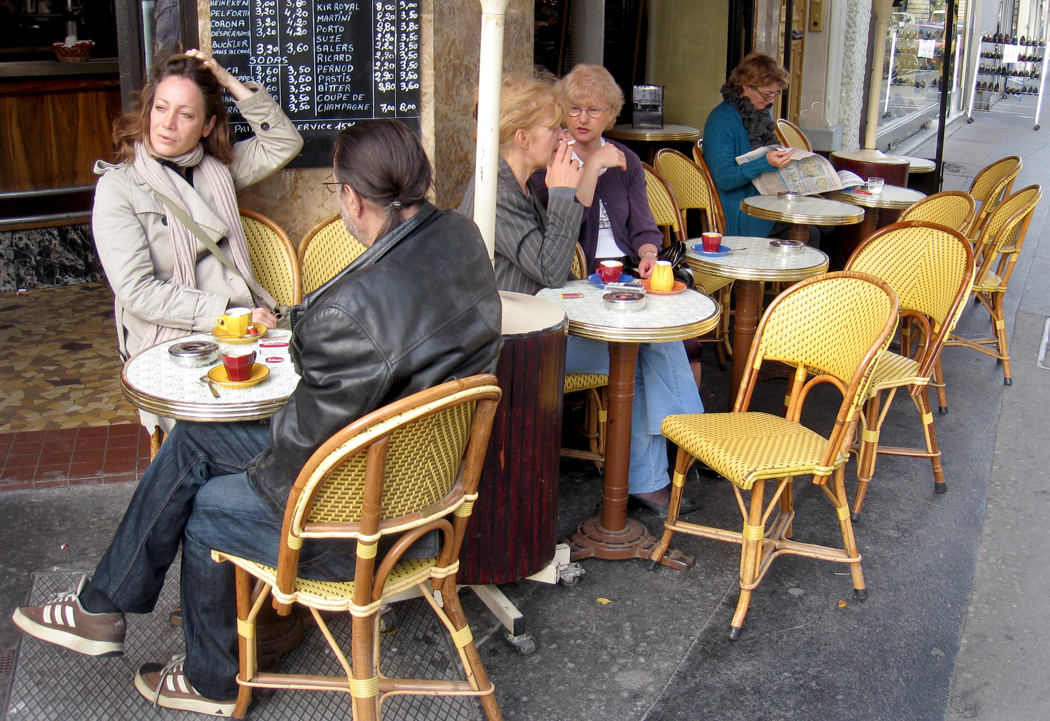
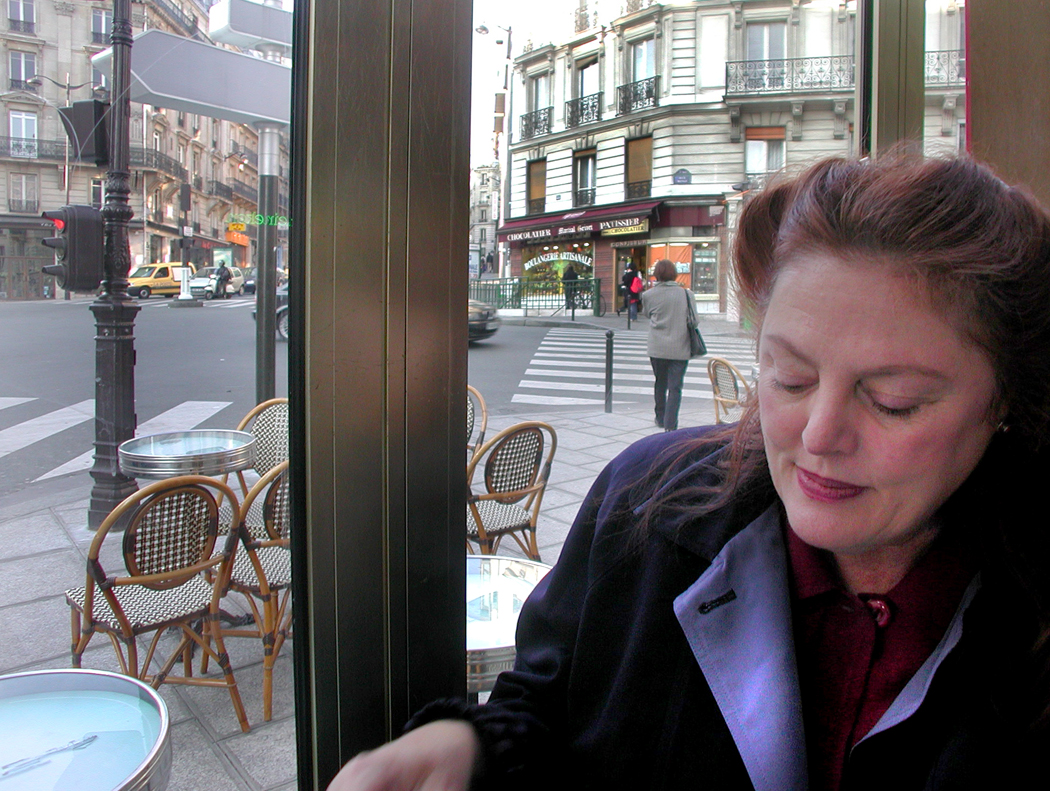
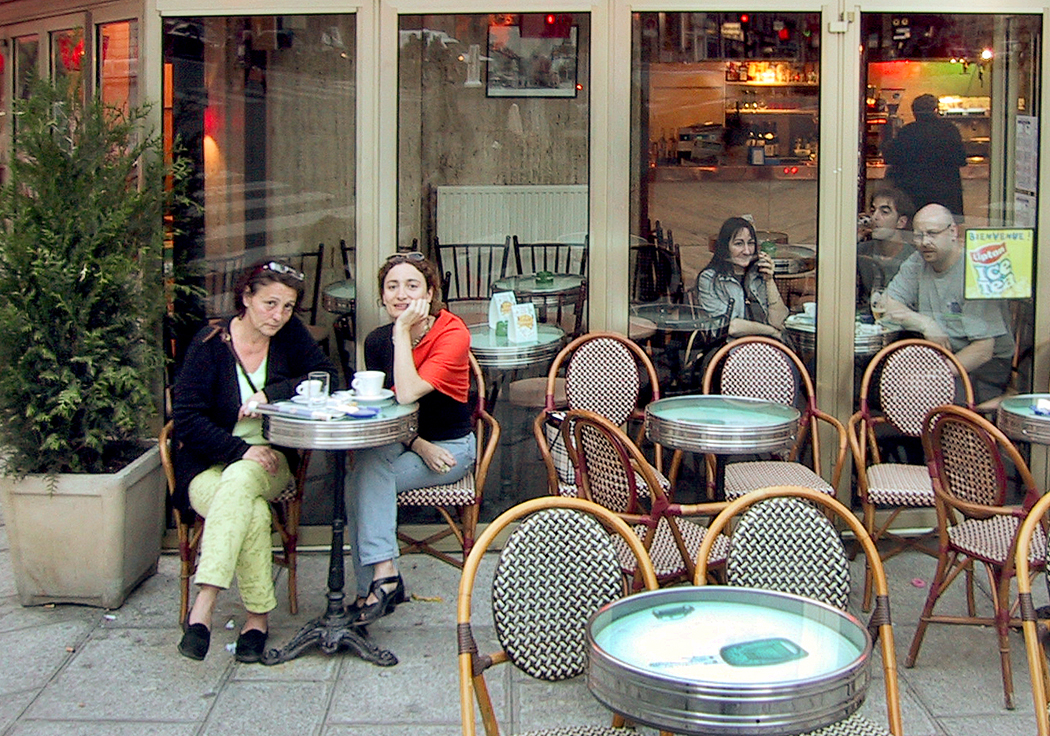
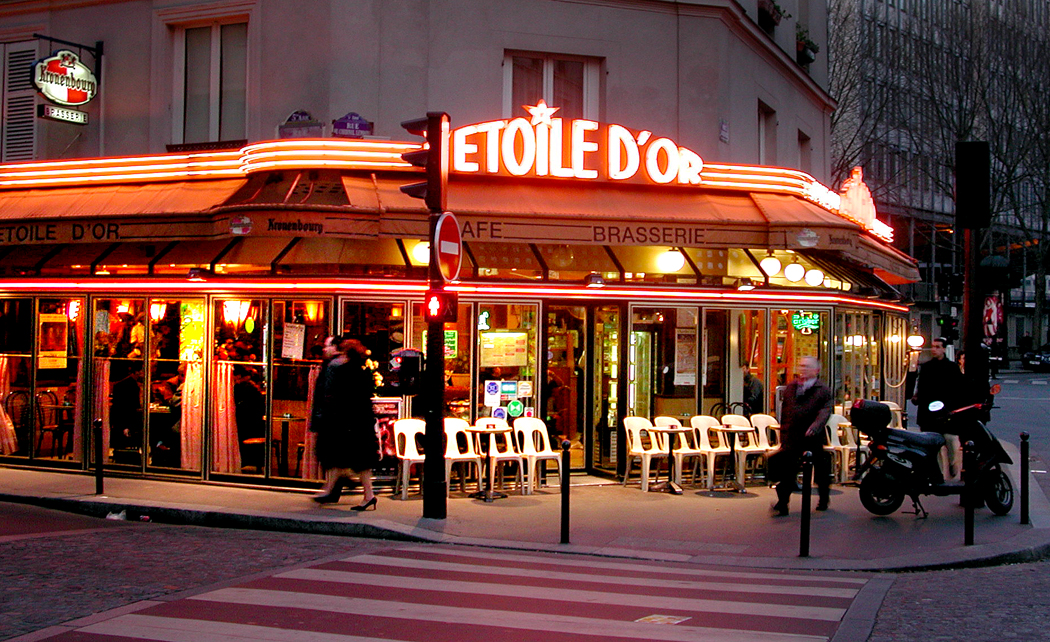


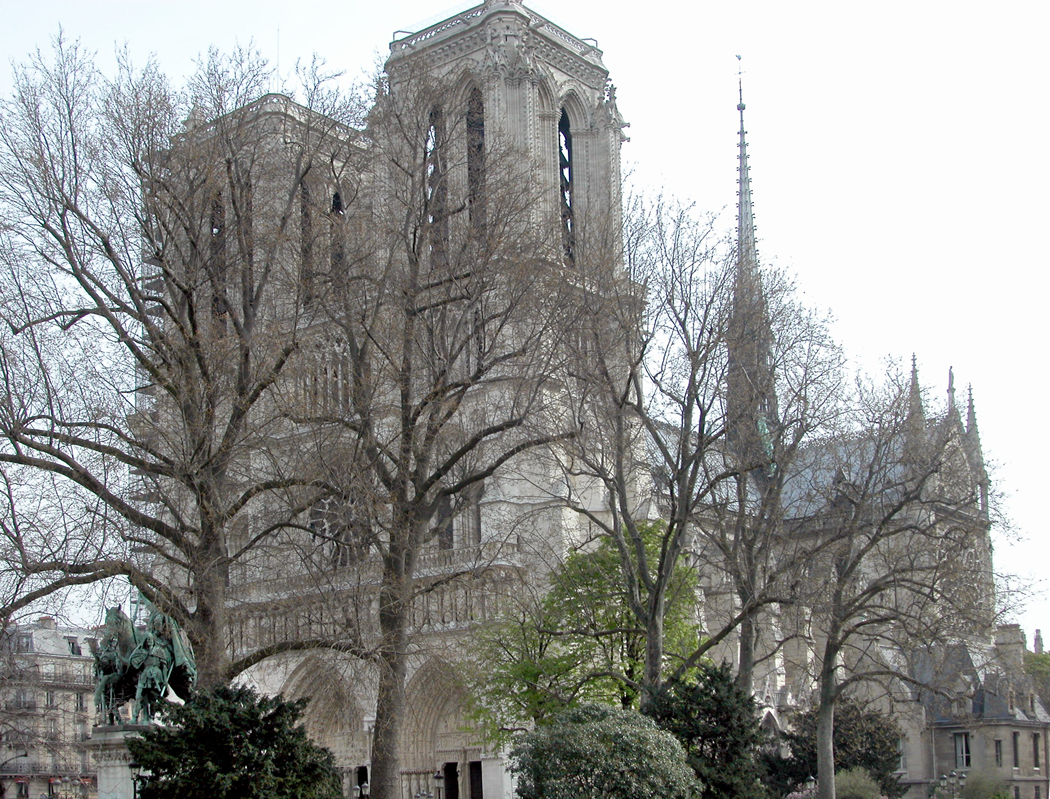
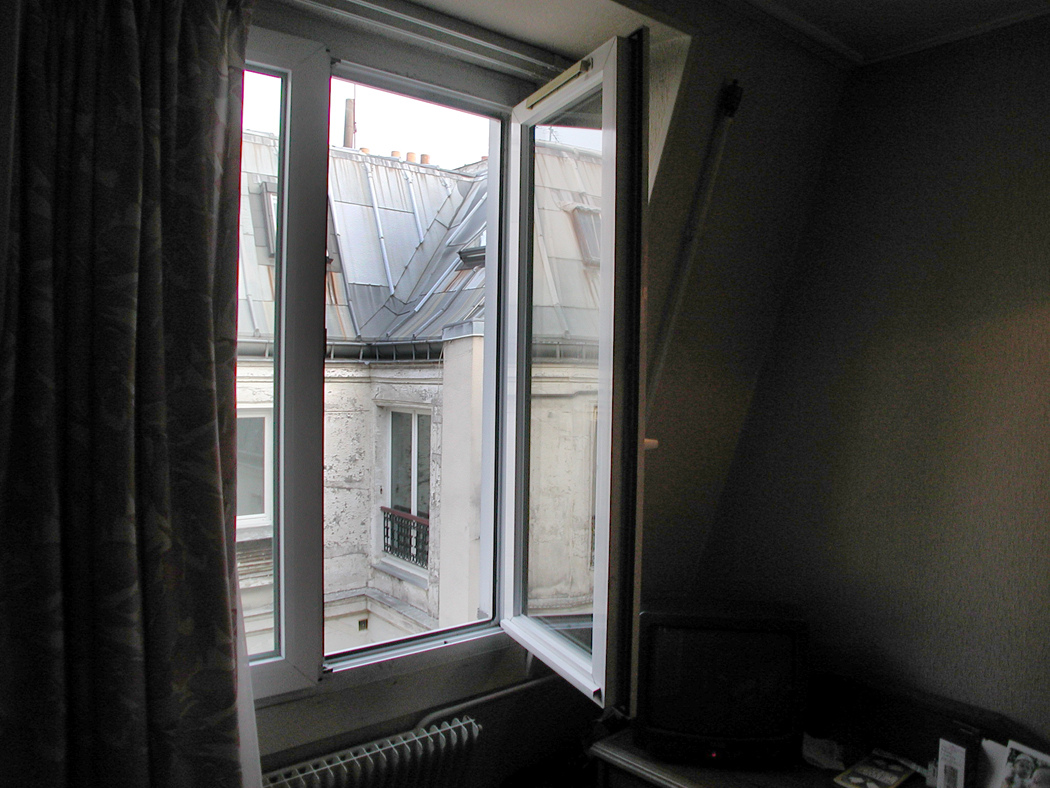

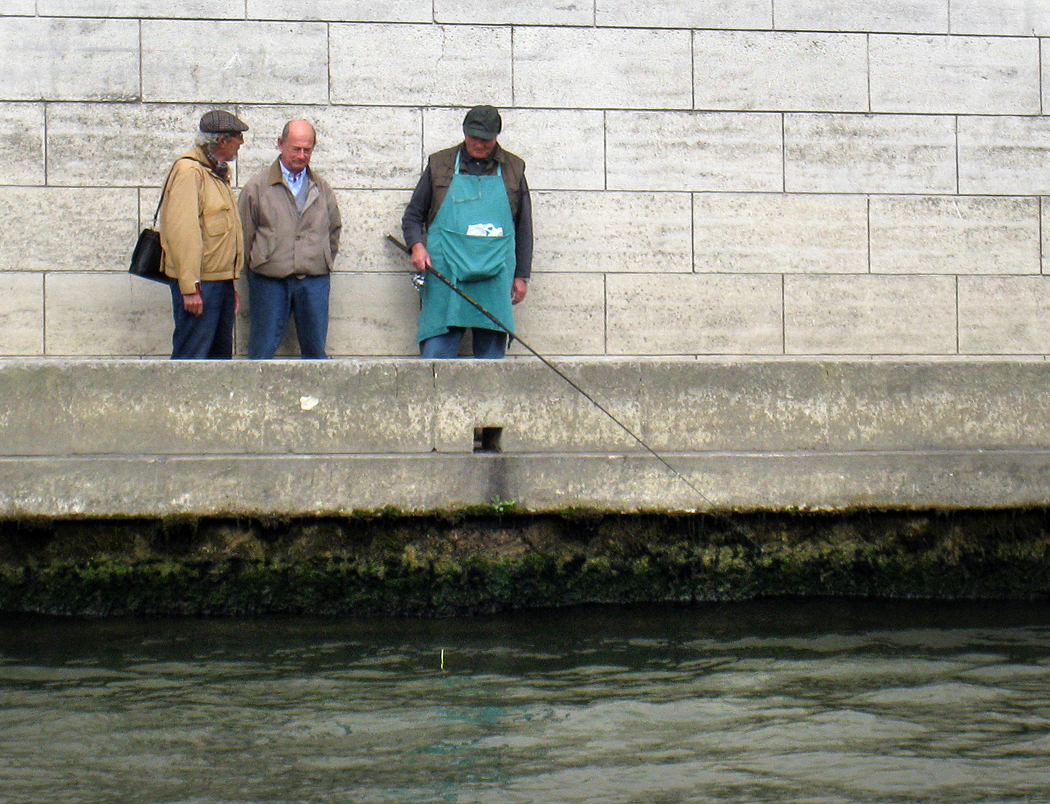
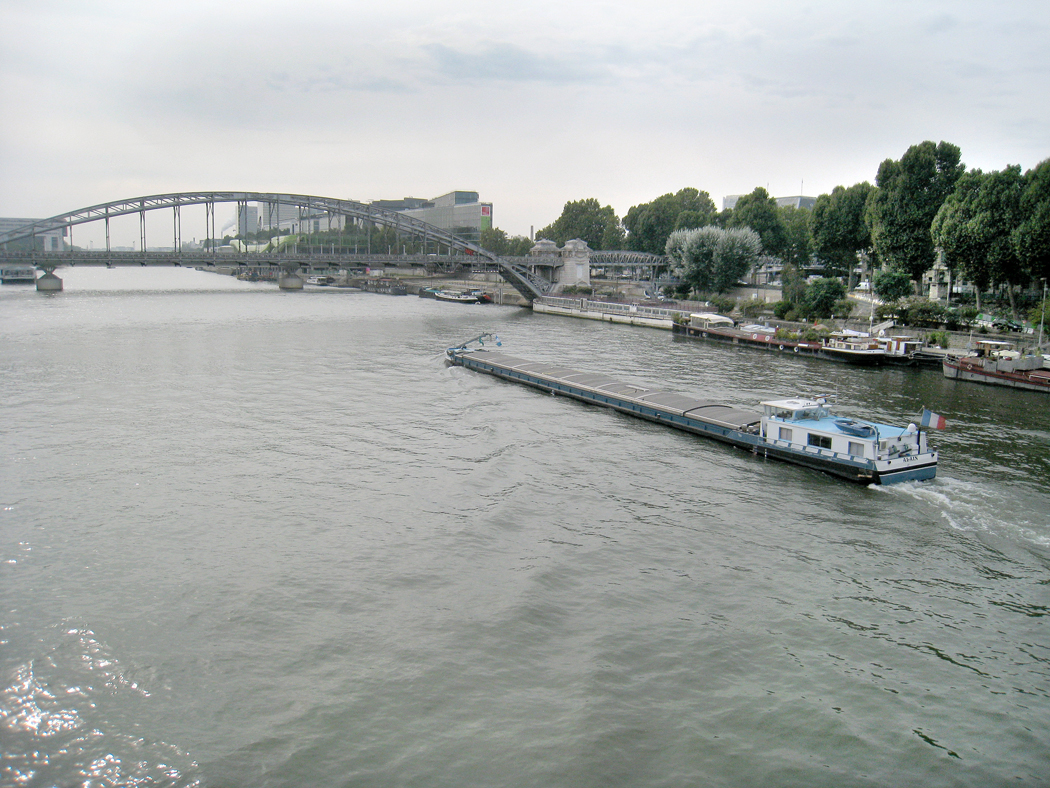
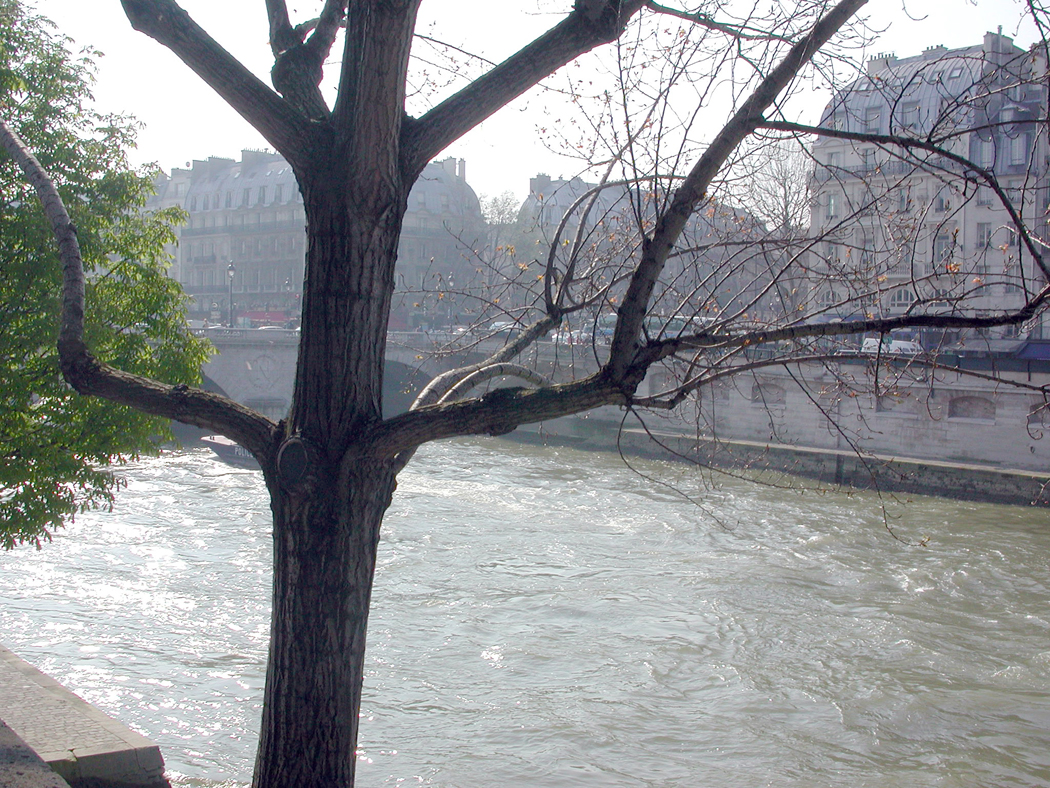

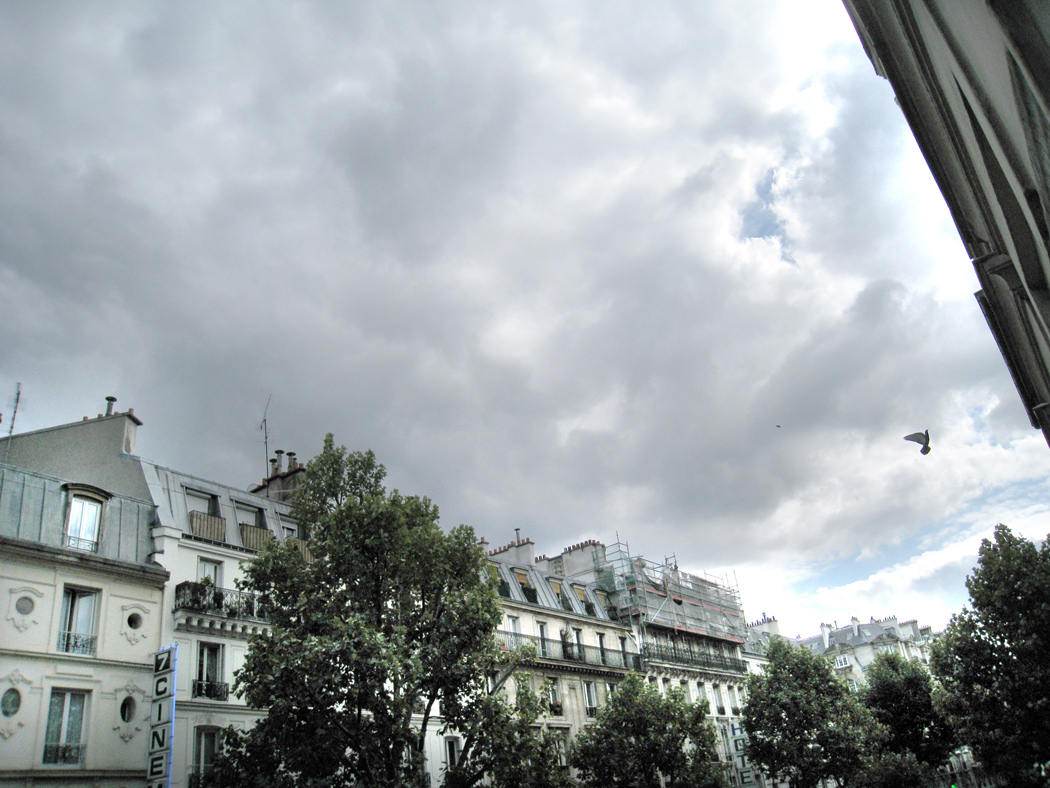
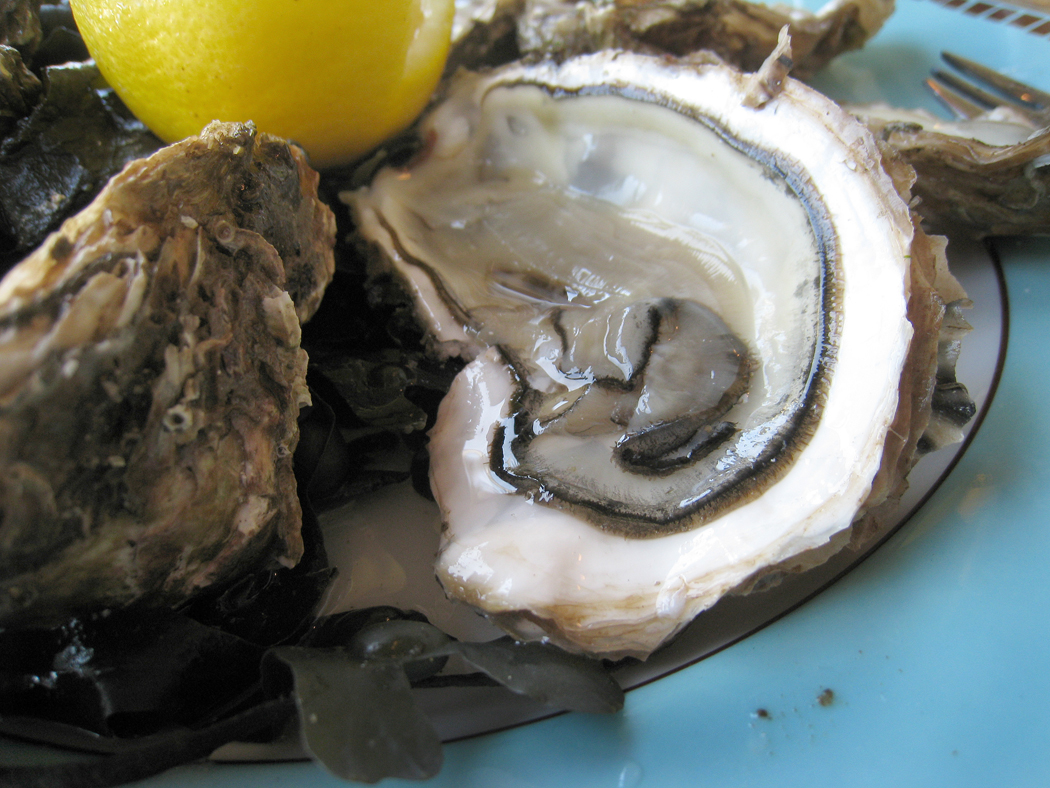
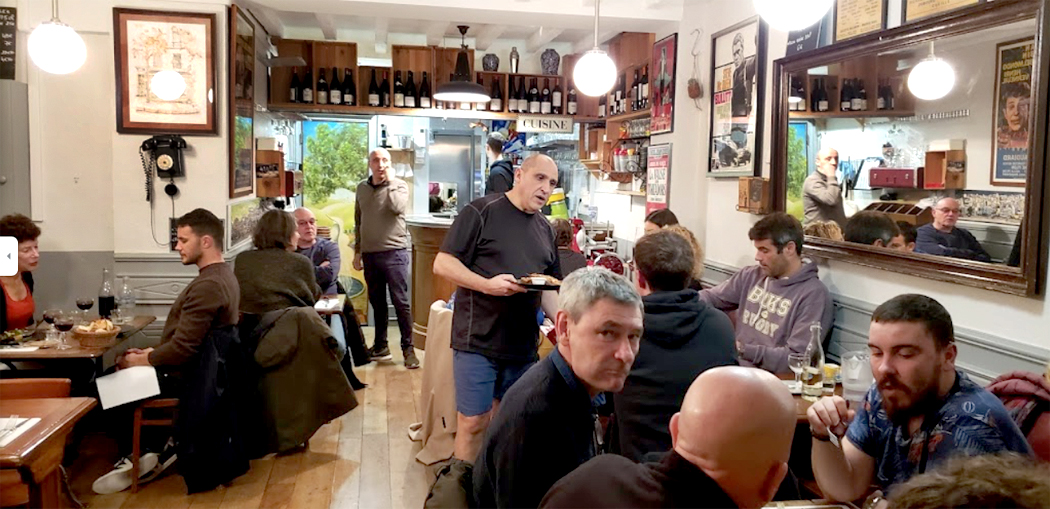
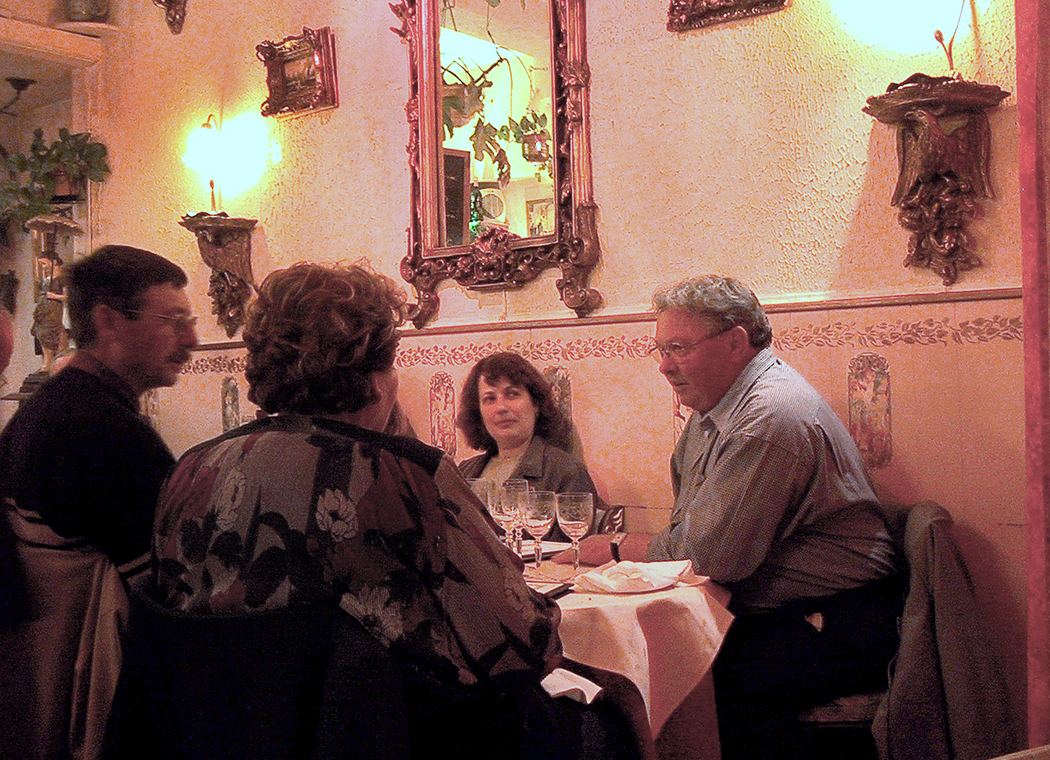

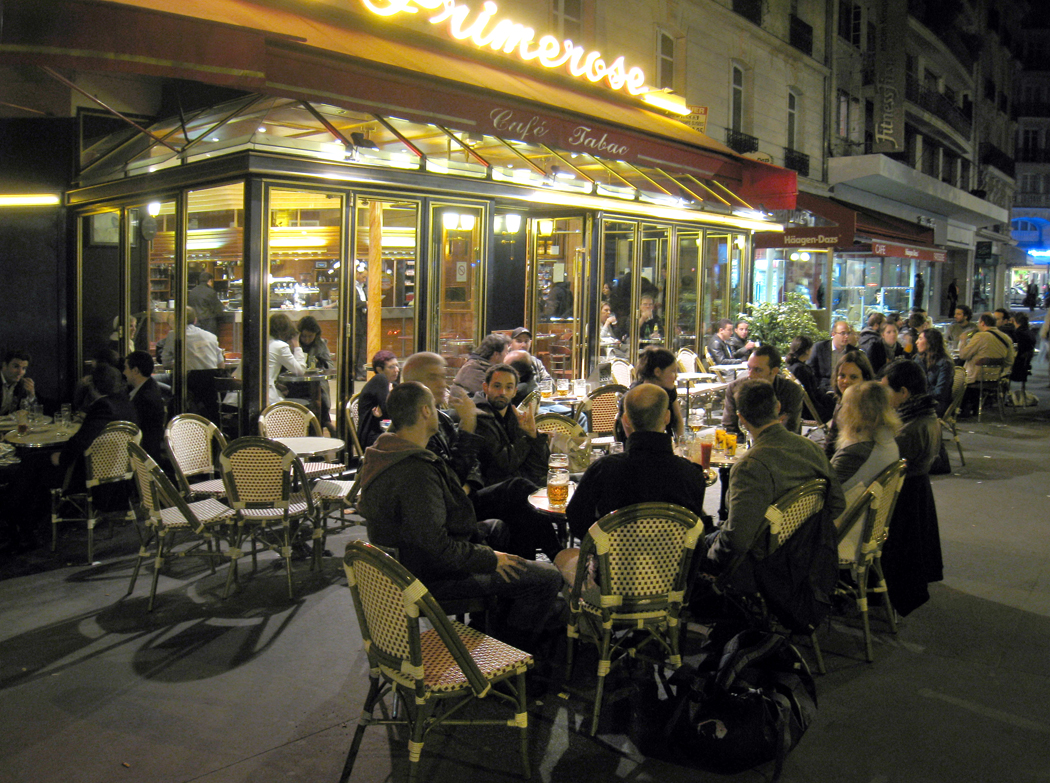


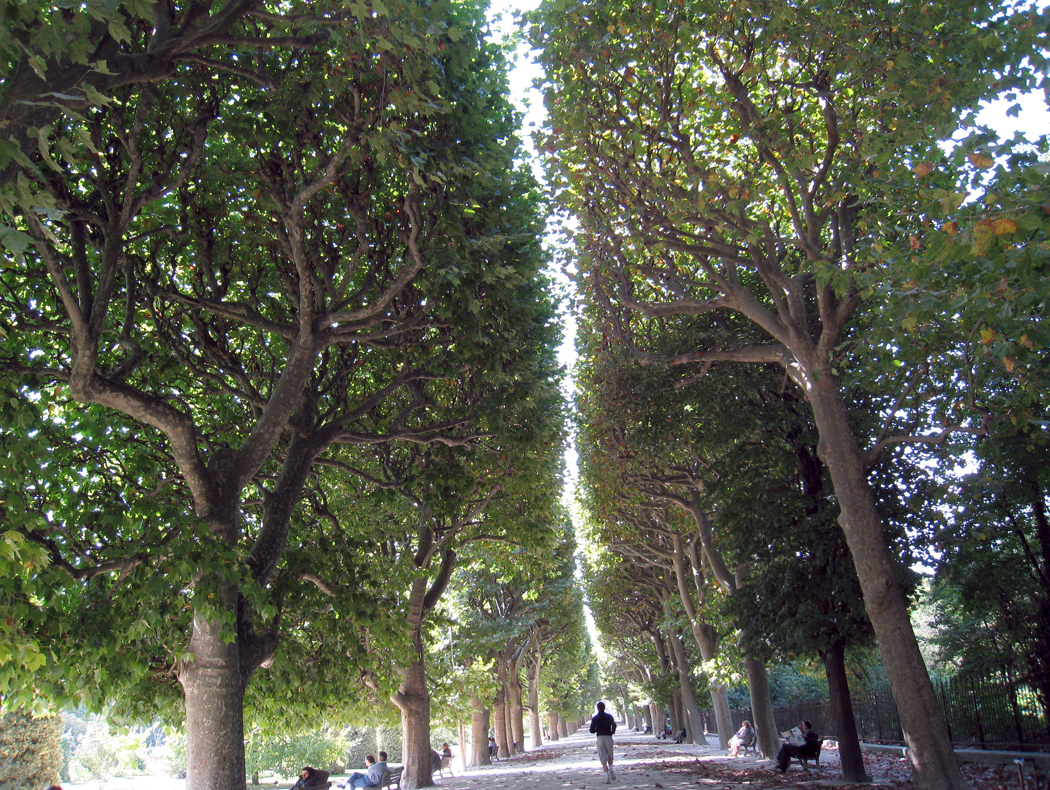
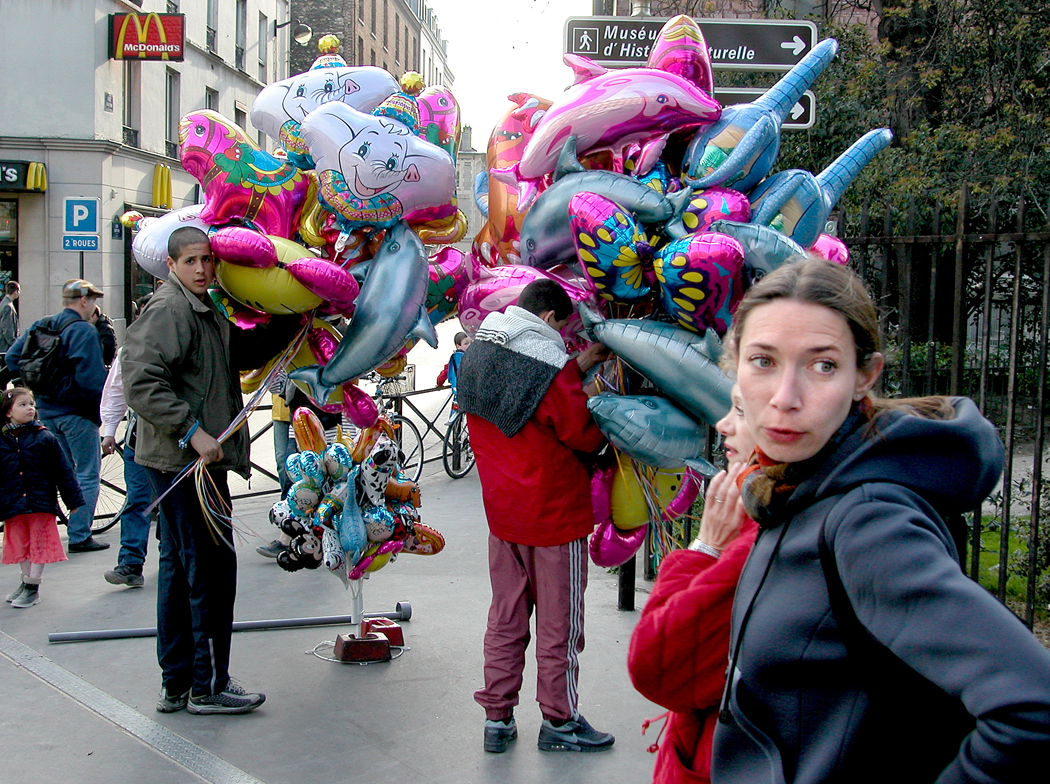
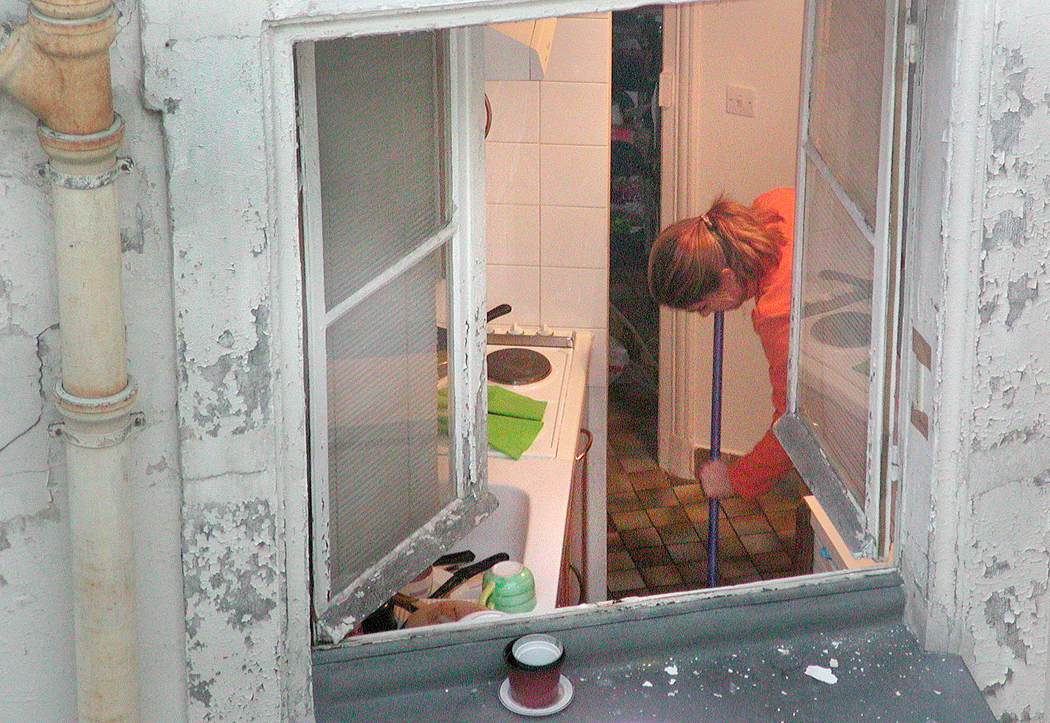
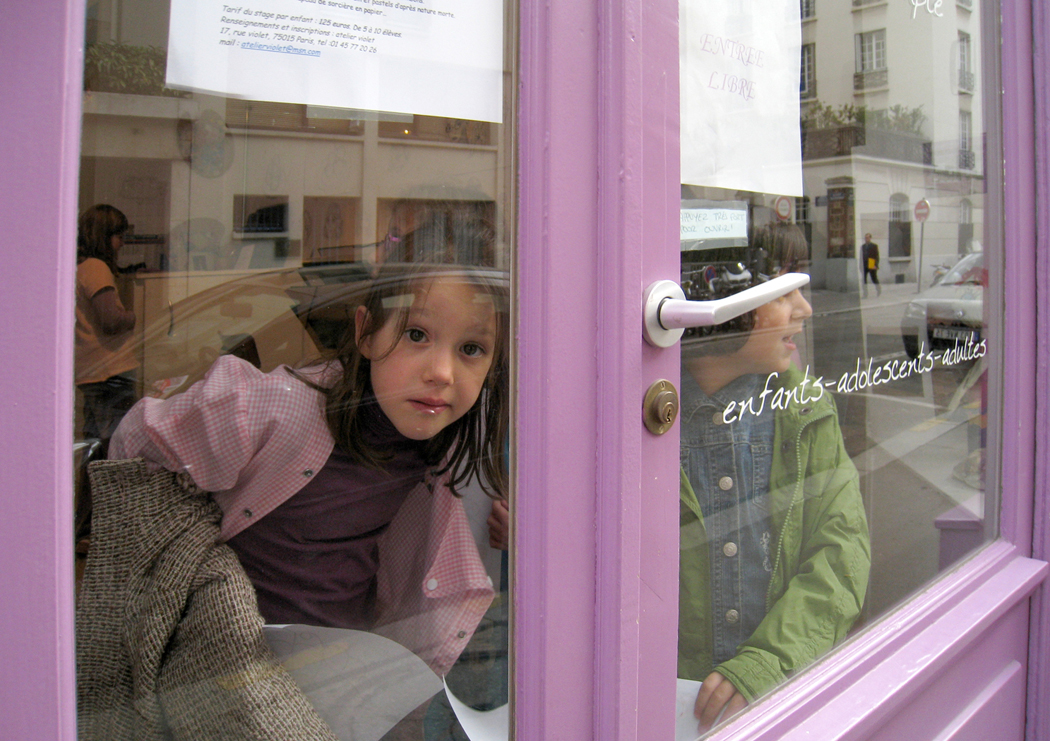


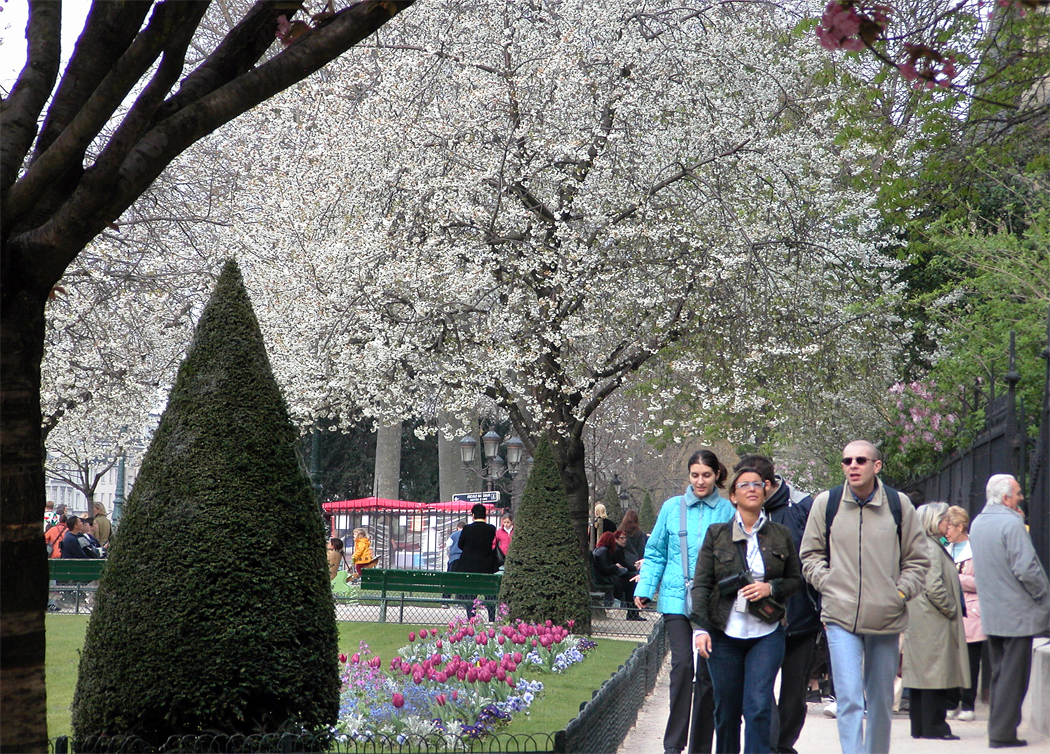
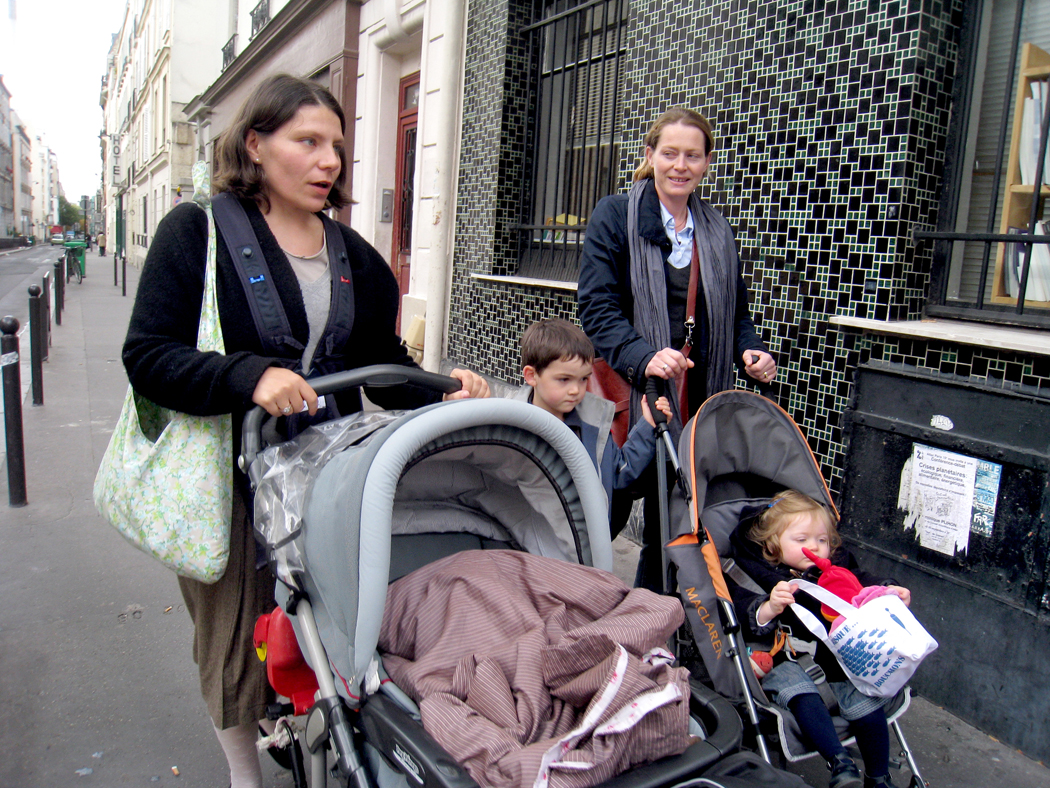
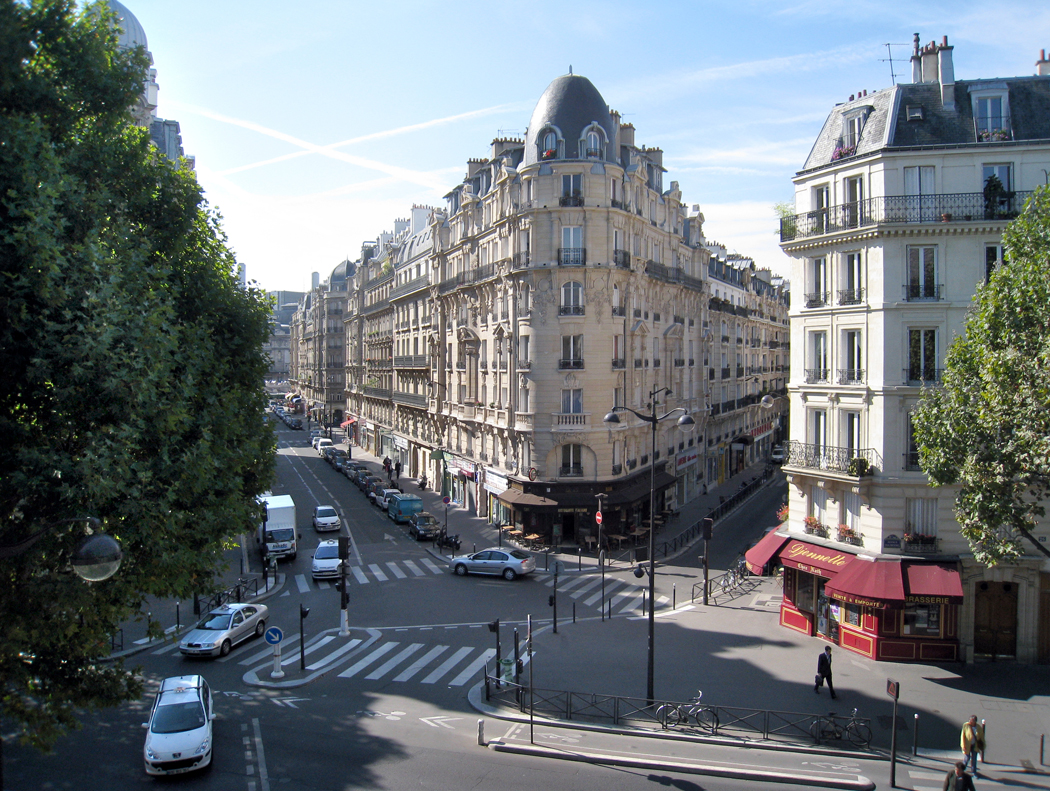


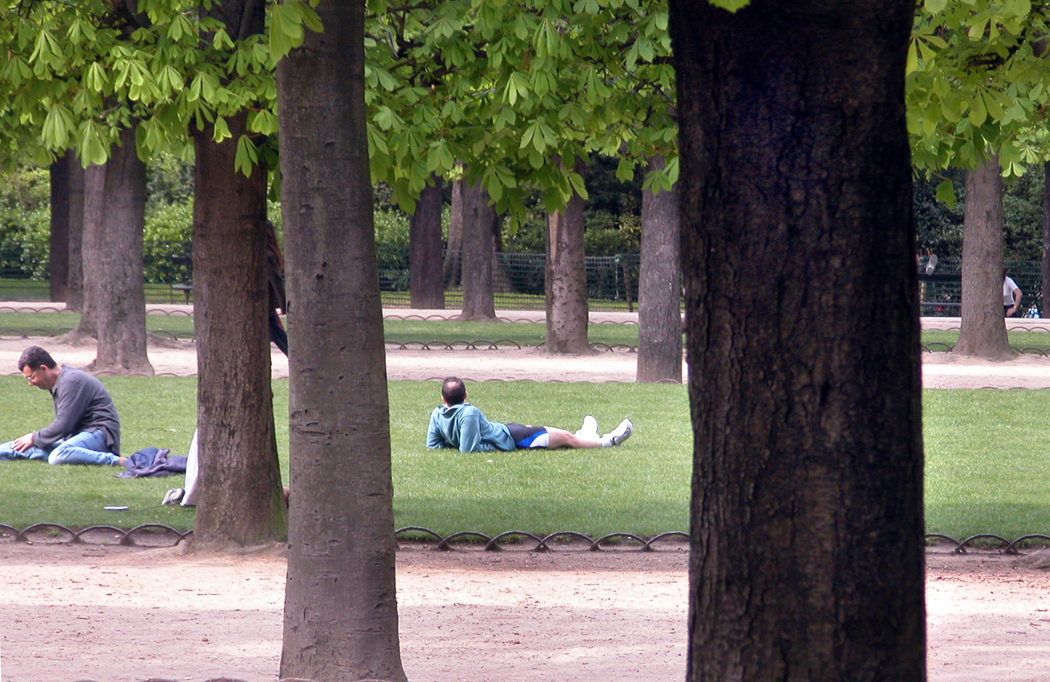

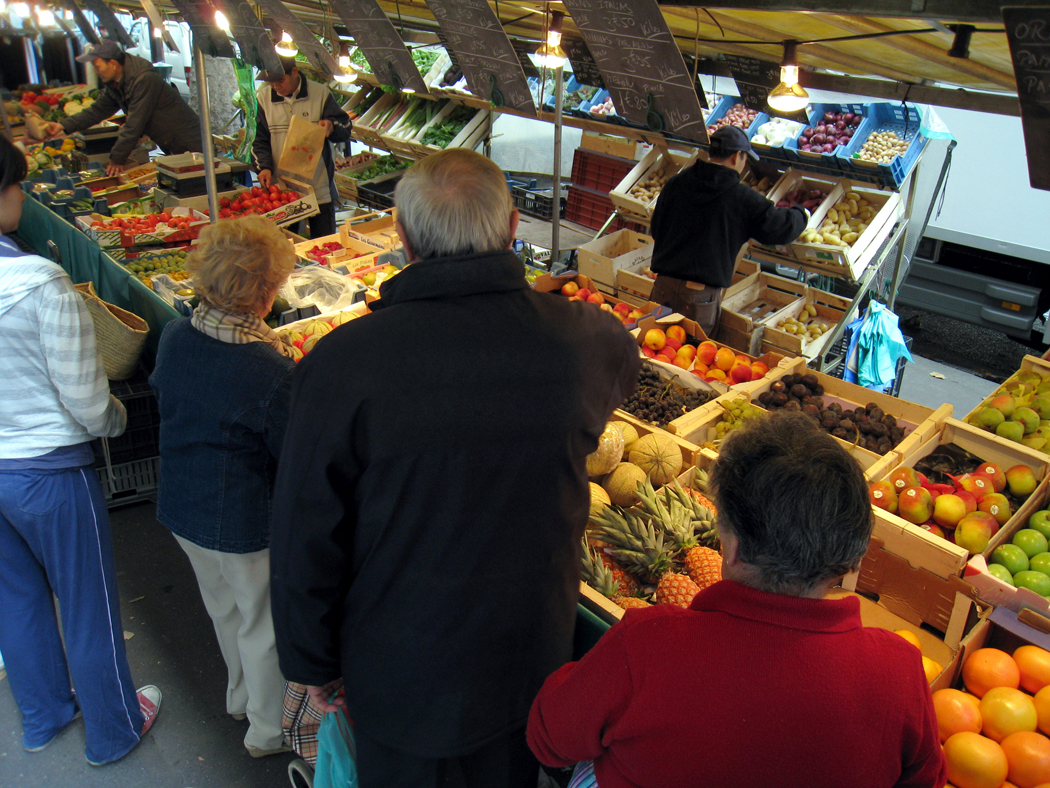

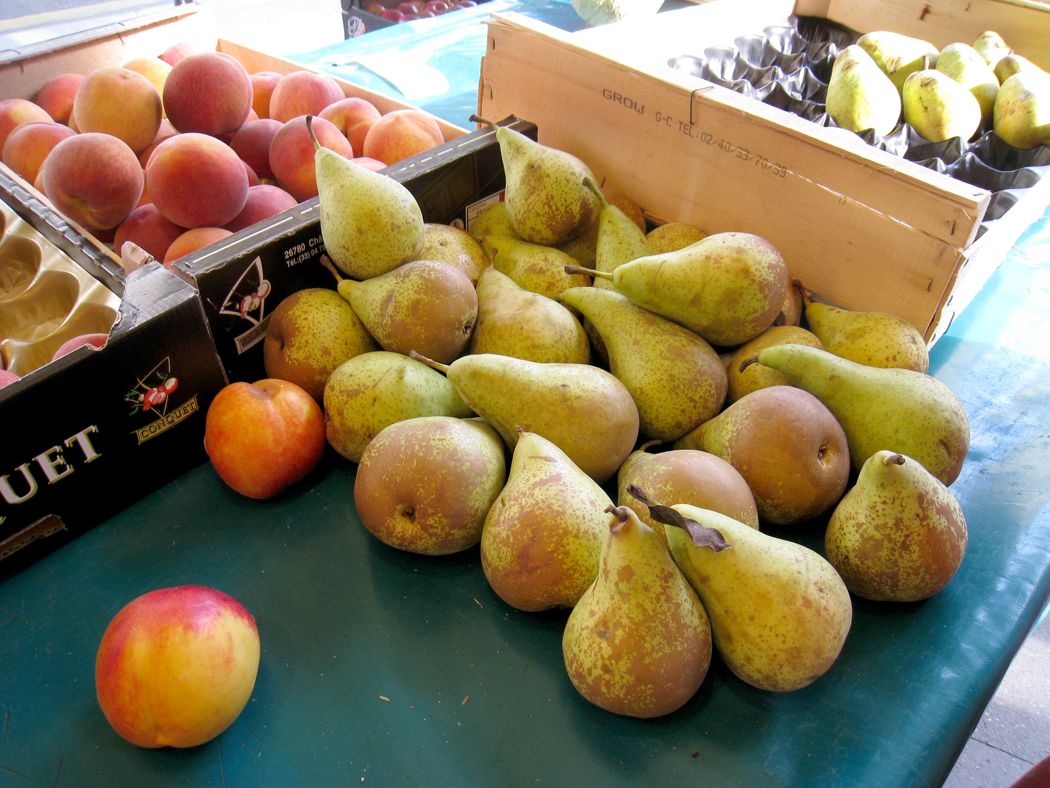


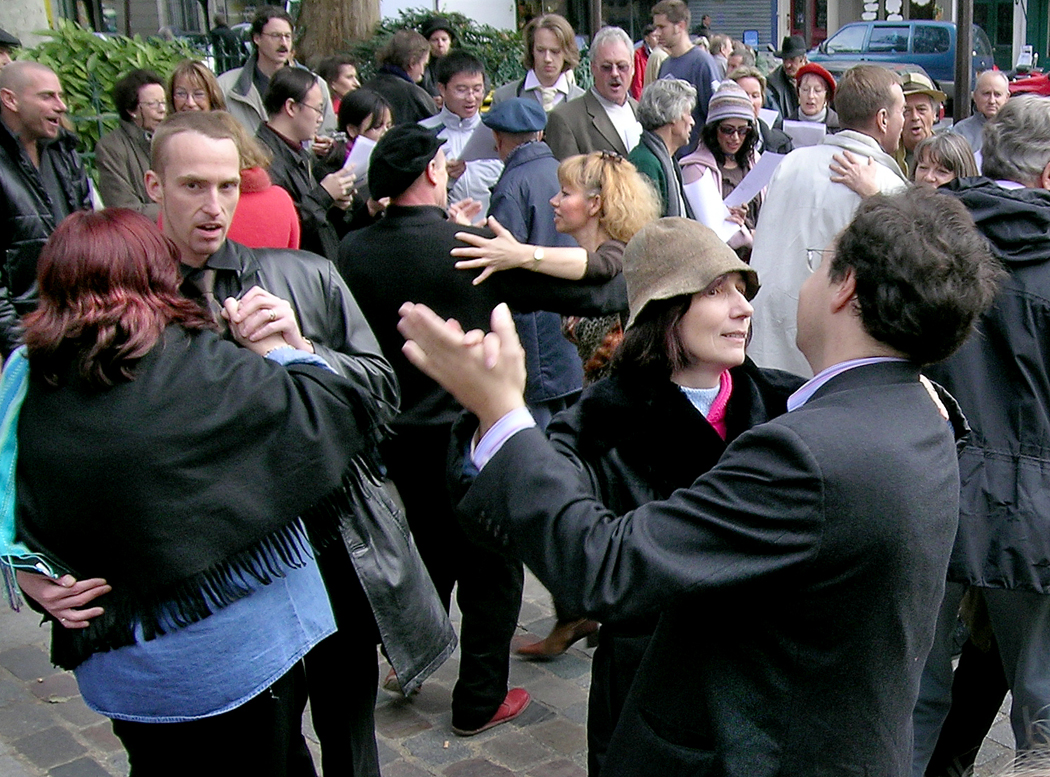


 Richard Nilsen