Archive

Tag Archives: photography

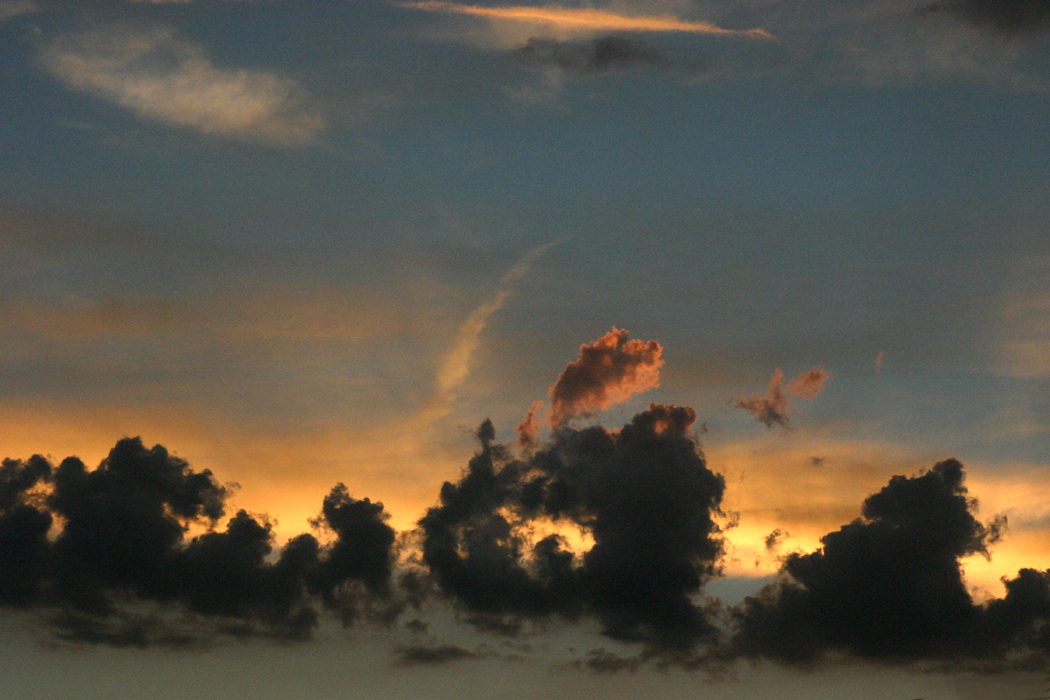
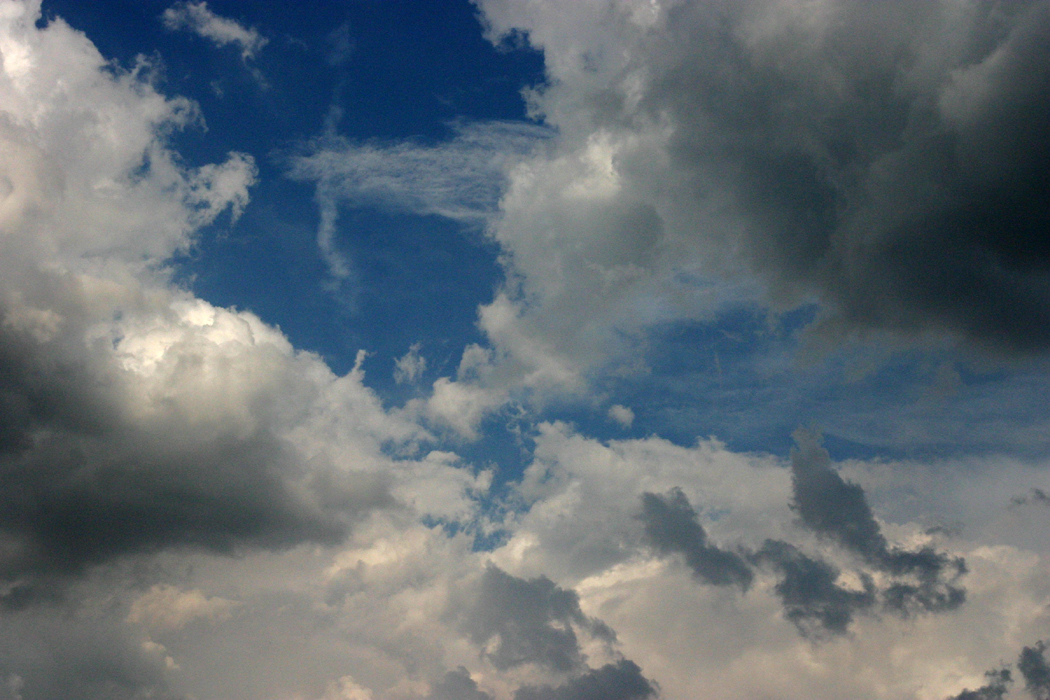
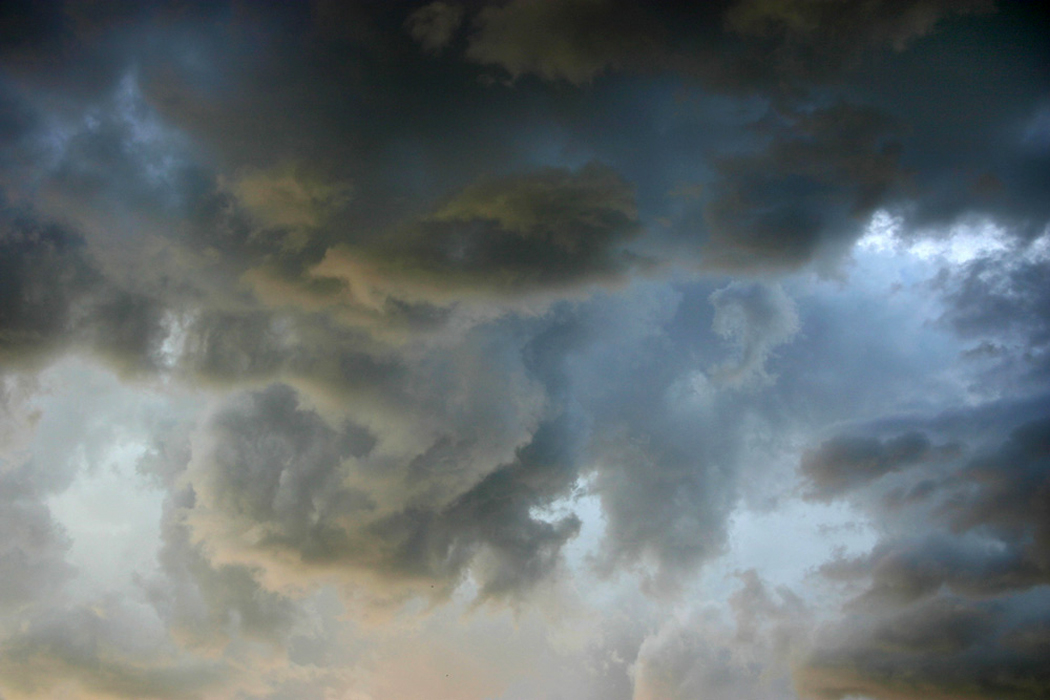
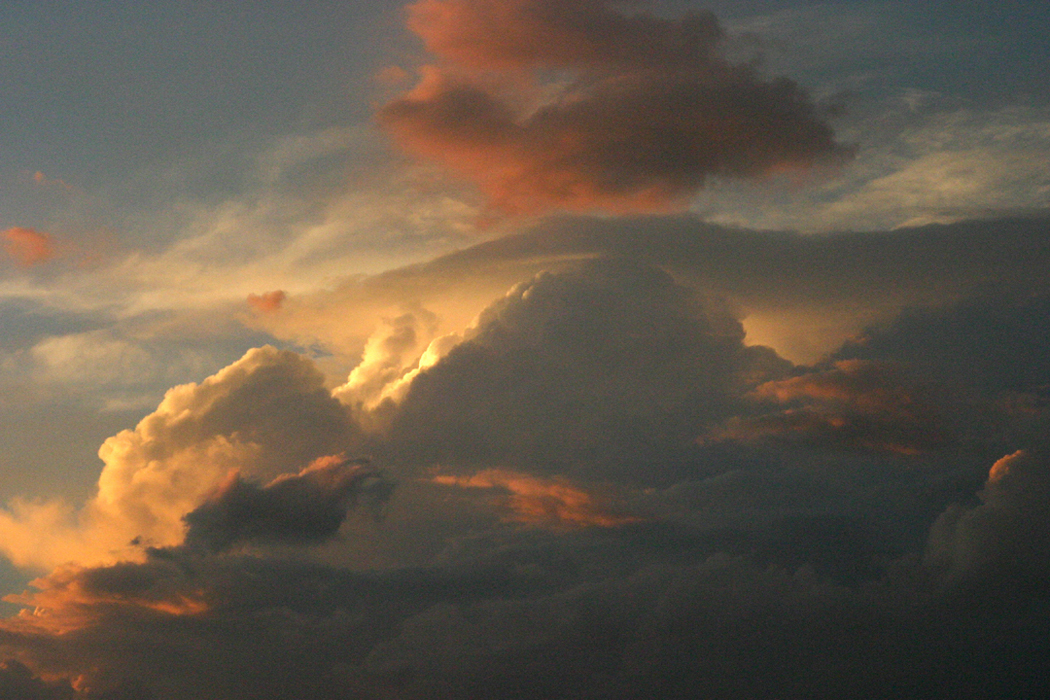
clouds134In the 1920s, a fundamental change occurred in the part of photography that was attempting to be seen as art. What had always previously been seen as a picture of something became a picture of its own.

In this, it followed the progress of Modernism in other media. What had been a photograph of a house or a boat, and judged by how well it set off the house or boat, it now became an arrangement of grey and black, of line and form.

If anyone could claim to be the leader of this shift, it would be Alfred Stieglitz. “I was born in Hoboken. I am an American. Photography is my passion. The search for truth is my obsession.”

Despite his tendency toward oracular declamation — or perhaps because of it — Stieglitz became the prophet of a new type of photography in America. Modernist. Stieglitz equivalent 1

His first work, from the late 1890s through the 1920s was mostly figurative, but he became dissatisfied with the idea that his photographs were praised for their subject matter.

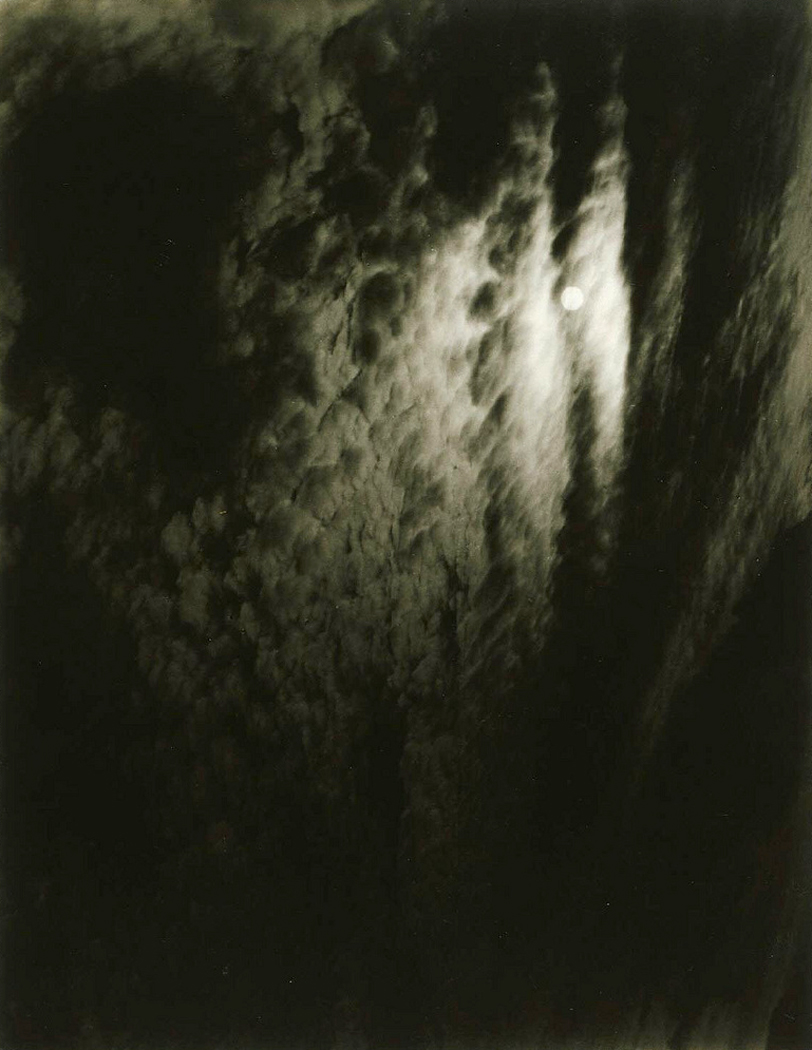
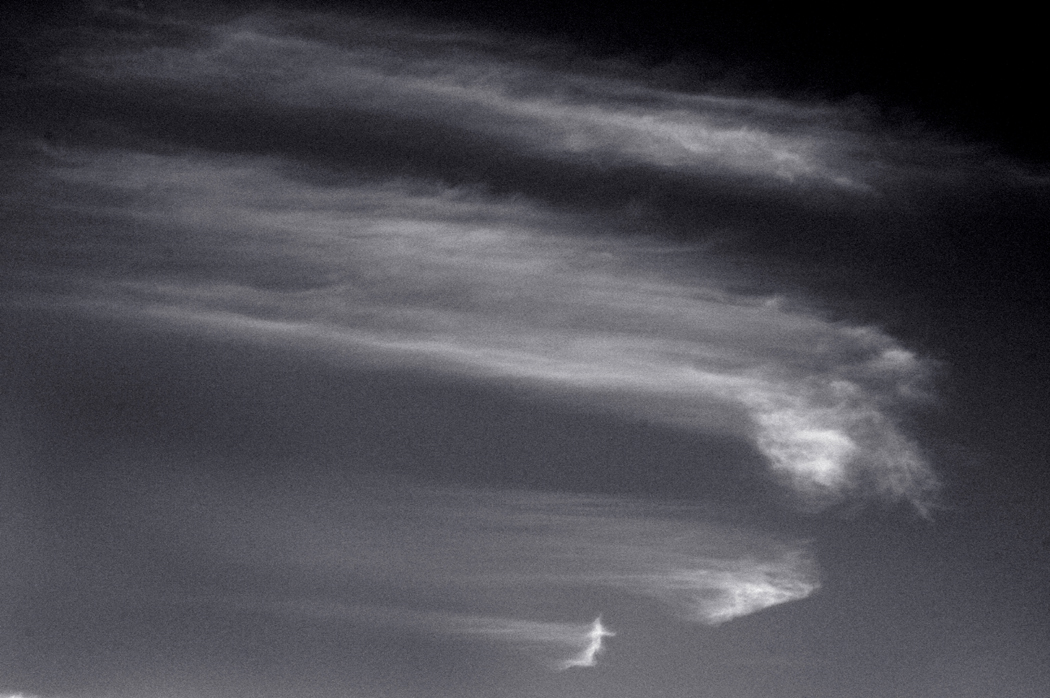
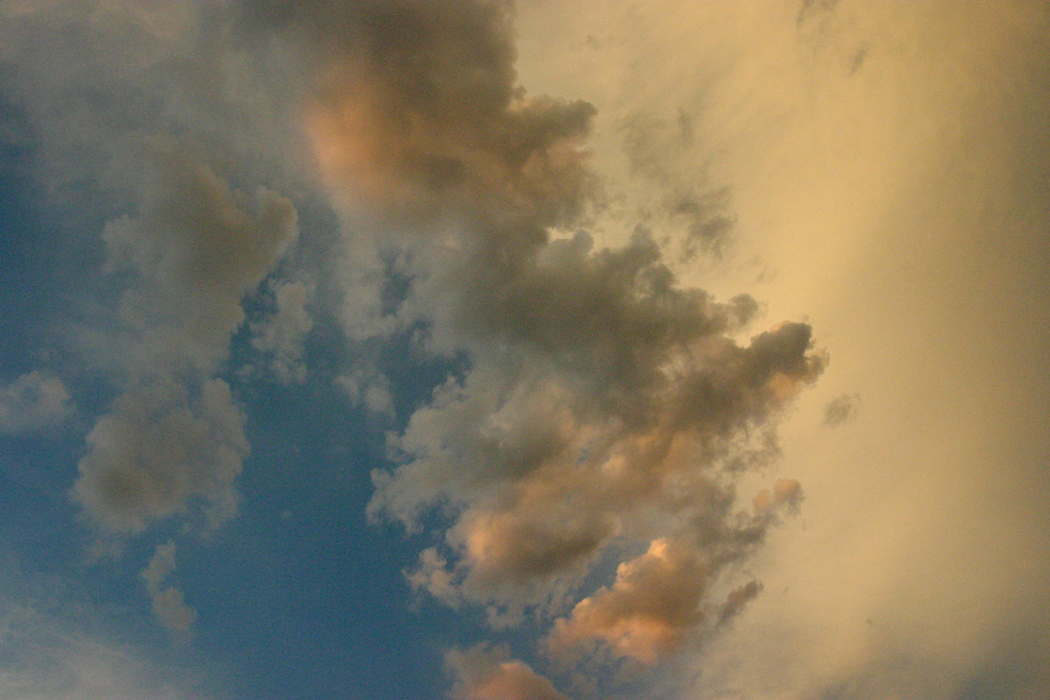
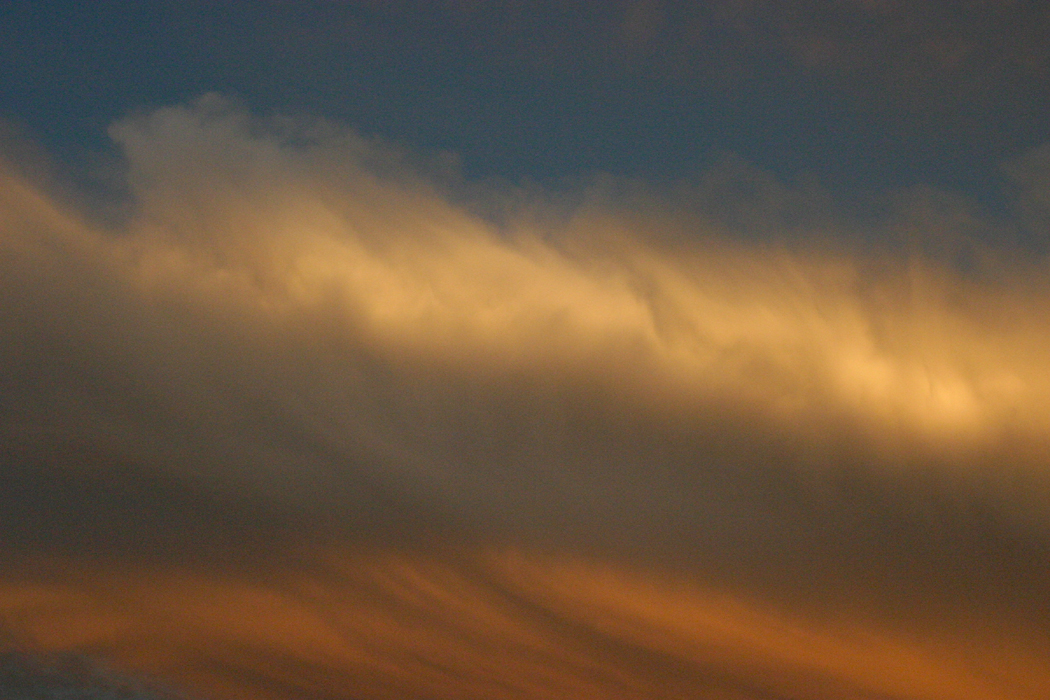
In 1922, he began photographing clouds and turning them into the equivalent of abstract paintings.

“Through clouds to put down my philosophy of life — to show that my photographs were not due to subject matter — not to special trees or faces, or interiors, to special privileges — clouds were there for everyone — no tax as yet on them — free.”

These first series of cloud abstractions he called “A Sequence of Ten Cloud Photographs.”  When he showed a new series in 1924, he renamed them “Songs of the Sky.” He continued making these prints, usually exaggerated in contrast and printed quite dark, making the blue sky black. He made them by the dozens, and by 1925, he was calling them “Equivalents.”stieglitz equivalent 2

“I have a vision of life and I try to find equivalents for it sometimes in the form of photographs…(Cloud photographs) are equivalents of my most profound life experience.”

This idea of “equivalents” was later taken up and expanded by photographer Minor White and others, but in essence, the abstraction of the clouds were to stand for “equivalent” emotional and intellectual experiences.

There is certainly a grandiosity to Stieglitz’s language, indeed to his person. But the photographs remain and many of them are deeply moving, perhaps compared to the late quartets of Beethoven.

But the underlying idea was that the medium of photography, rather than the subject matter the camera is pointed at, could be expressive: that the surface of palladium printed paper, or silver prints, and the blacks and whites of the silver on its surface, and the shapes they make, almost as if a Rohrschach test, could be sufficient for art.

Abstraction became a subset of 20th century photography, and even when there was a subject, such as a portrait or landscape, the photographer, whether Edward Weston or Paul Strand, or White or Bill Brandt, would insist on its essential abstraction as the basis of its value.

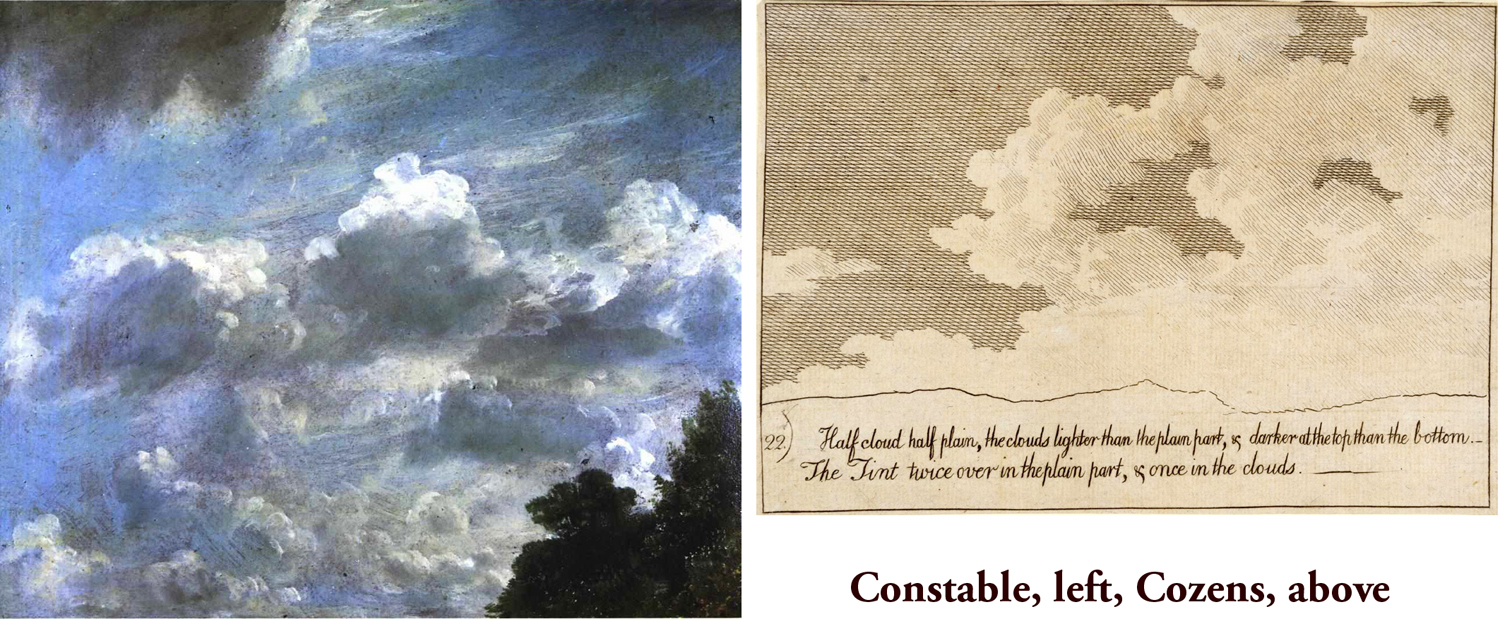
constable cozens pair But there is a problem with this: Those Equivalents that Stieglitz made are still clouds, and clouds carry with them all the baggage of subject matter. From the clouds in Renaissance paintings through the glorious cumulous in the seascapes of Aelbert Cuyp to the drawings of Alexander Cozens and countryside of John Constable. Clouds are an endless source of inspiration for the imagination of shape.

charlie brown and clouds In photography, it is almost impossible to eliminate subject matter, short of making photograms. The forms, colors, shadows, textures of the recognizable sensuous world keep intruding, no matter how extracted from context. When I was a teacher, one of the assignments I gave my students was “to photograph something so that I cannot tell what it is.” I expected them to get ultra close, or turn something upside down, or extend the contrast. But, try as they might, I could always tell what I was looking at.

I do not see this as a deficiency in photography, but a strength. Photography can keep us tethered to the world when we might wish to float free; it reminds us that our primary obligation is to the existence we occupy and work in.

clouds105 Given that, photographs of clouds still has a powerful attraction: We can see that abstraction and reality are not necessarily in opposition: We can have both at once.

Put this way, it seems obvious, a commonplace. But this “double vision” is one of the things that keeps art lively, and informs our interaction with the everyday — keeps us aware that the world is alive, not inert.

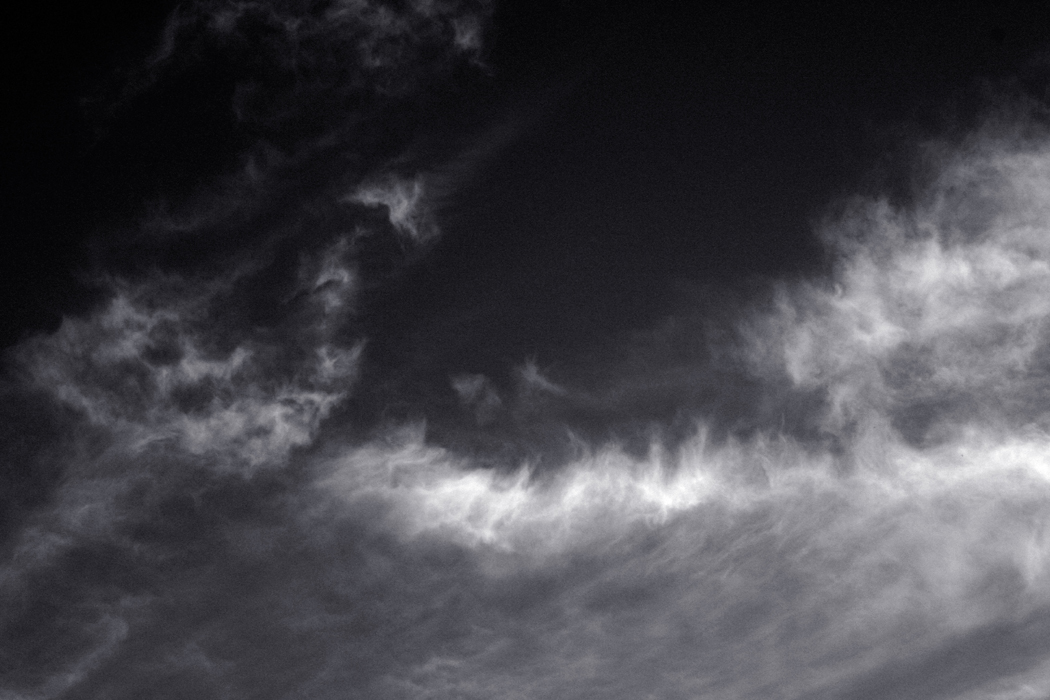
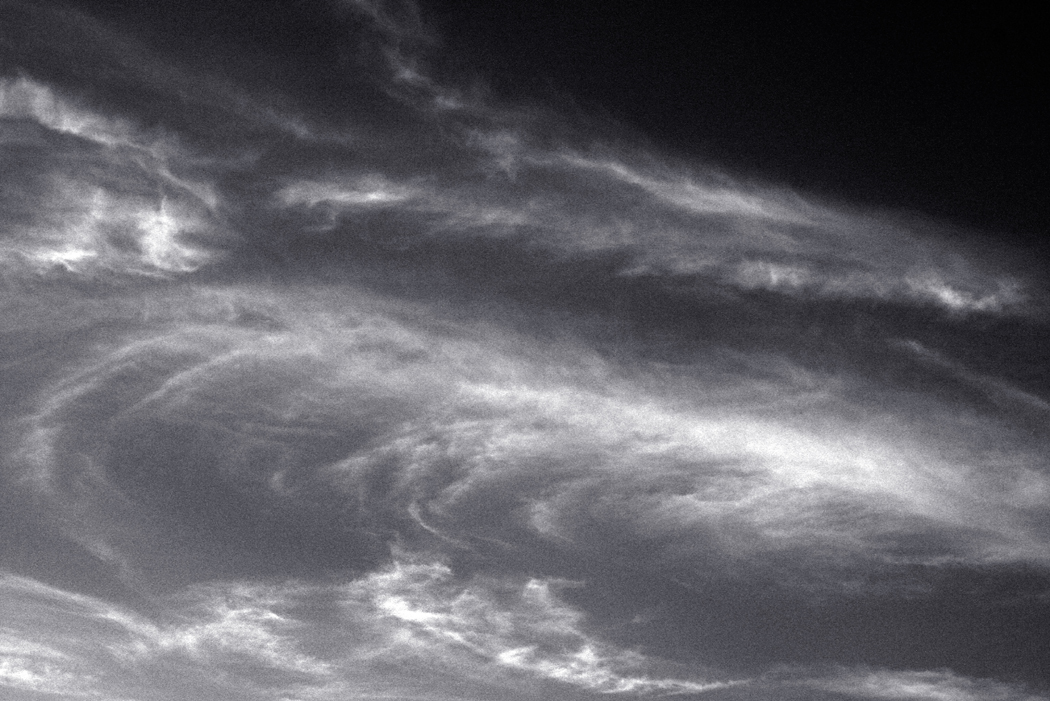
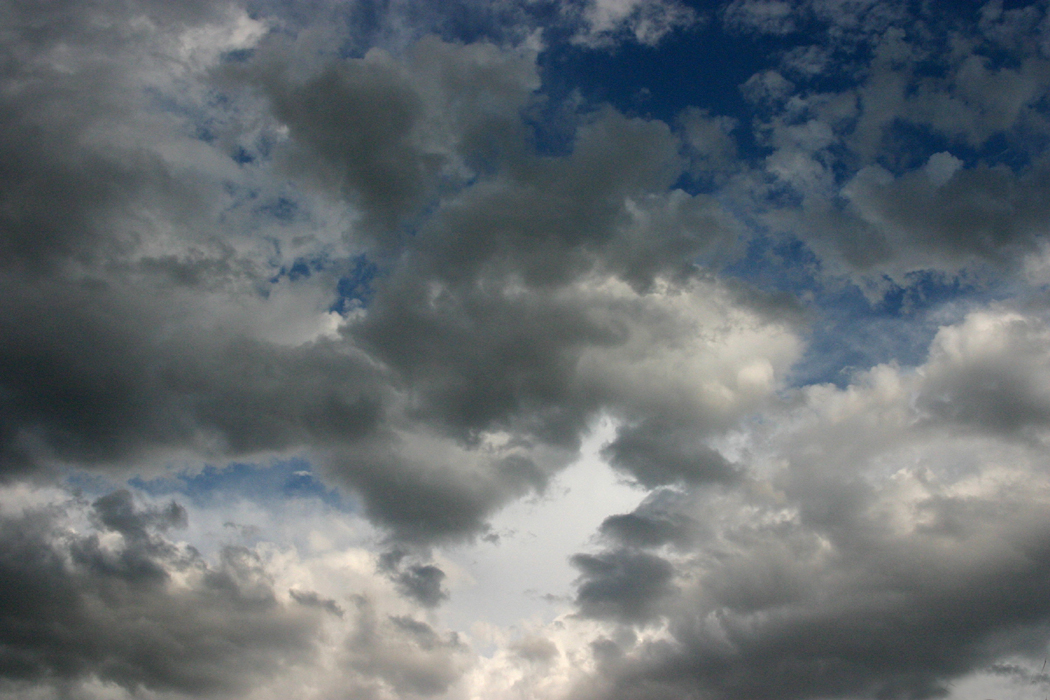
And so, I have made my own cloud photographs. The first series, seen here, are a rank imitation of Stieglitz’s Equivalents. The next blog installment will follow with the development of the idea. clouds116 clouds129 clouds115 clouds119

clouds130 clouds131 clouds139 clouds142 clouds145

curtis and isabel
Portrait photographs come in basically two varieties: the formal and the candid. These days, with selfies monopolizing the social media, almost all portraits are informal. And when asked, most people say they prefer the candid picture, perhaps because the formal portrait has fossilized into the Olan Mills mall photo, in garish color against phony backgrounds. It would be hard to make an esthetic case for these assembly-line excrescences, with their banal smiles and enforced familial geniality.olan mills family

karsh sibeliusThen, there is a prejudice against artifice: Many people prefer the snapshots because they seem more natural, more spontaneous. If you look at one of those highly massaged portraits by Yousef Karsh, there would seem nothing less spontaneous. Every light, every specular reflection in an eye, seems calculated, even marmoreal, like his portrait of composer Jean Sibelius. If we’re a “rock and roll” nation, we are one that values the brash, the riff, the off-the-cuff: Indeed, we trust it to be more “truthful” than the rhetoric of the planned, controlled and considered. As Allen Ginsberg mendaciously preached: “First thought, best thought.” (Despite the fact that his best poems, such as Howl, were thoroughly revised and rewritten; we have the typescript for evidence, with all its emendations.)karsh churchill

Yet, some of our most iconic images — the ones we remember, the ones that fix in our minds some large truth about their subjects, are exactly the careful, posed and arranged portraits, such as Karsh’s take on Winston Churchill — a photo that might have won the war all by itself.

The idea of the formal portrait survives, even in the gaudy, awful Olan Mills photos: The idea that the subject wants to be seen in his Sunday best, with his best teeth put forward for posterity: “This is how I want to be remembered.” Even though the actual life may be more squalid or confused, or complex– certainly infinitely richer. But “this version is the one with the barnacles scraped off.”

olan mills family portThe photographer Richard Avedon said, “What ends up in your scrapbook? The pictures where you look like a good guy and a good family man, and the children look adorable — and they’re screaming the next minute. I’ve never seen a family album of screaming people.”

But when done well, it isn’t the vanity of the subject that is portrayed, but the insight of the photographer. A good portrait should tell us something about the subject that the subject doesn’t want us to know, or is not aware of, or is somehow larger than the public face intended.

A photographic portrait also tells us something about the artist who makes it. This is something that Avedon always stressed.

“My portraits are always more about me than they are about the people I’ve photographed,” he said. You can spot an Avedon immediately: It’s style is uniquely his. The same can be said for Irving Penn, or for Arnold Newman, or Yousef Karsh — any of those who made a name as portraitists. An Avedon portrait — or a Penn — is a world view, consistent from image to image. avedon eisenhower

And it is in this sense that the portrait rises from vanity icon to art. The picture tells us not merely, what does this person look like, but rather the larger message: This is what being human is.

It is in the eyes, most often, that the humanity is tethered. You can see the light behind them. Nothing is worse than a picture of someone who is bored with the process of being photographed: The eyes turn into ball bearings, lifeless and extinct. A good portrait is a picture, instead, of being alive, of being in the moment, even if that moment is for posterity, or for eternity.

I bring all this up, because in the age before I became a writer, I thought I would be a photographer. It was in the days of chemicals and dim amber lights, and I became a proficient darkroom worker: My prints, I say with some pride, were as good as anyone’s. Crawford 1977 copy

And I took many portraits, working my way through the learning and development that any artist goes through: Imitation, innovation and finally, something personal that emerges.

Most of these portraits were friends or more. I went through cameras, always seeking the right one, never actually finding it: Nikons, Rolleis, Hasselblads. I went through lighting schemes, through backdrops.

And I went through the history of portraiture, from Holbein to Raphael to Rembrandt to Gainsborough to Chuck Close. The model I felt closest to was the Renaissance portrait, such as Raphael’s portrait of Baldassare Castiglione. Here was a face to look at: Eyes that had seen a good deal of the best and worst of the world: It registers. raphael castiglione portThere is also a sense of moment; this is for posterity. The figure makes a pyramid in the frame, giving it foundation and security. The background is broken into interesting shapes — the so-called negative space, not ignored, but make essential to the impact of the image.

I saw something of the same in the photographs of Avedon: formality, interesting negative space, and the centrality of eyes.

There is one major difference between these great images and the Olan Mills smile-o-thons: So many of them have equivocal expressions on their faces. They aren’t genial and smiling; indeed, it’s hard to quite know what they are expressing. There is a neutrality to their faces; not slack, as if thoughtless, but rather as if thoughts were unresolved.Henry Parrish Lippincott Hackett

In other words, the faces were not billboards flashing their message, but rather something denser, meant to be read and fathomed. Not the momentary but the monumental.

This is a portrait of Henry Parrish Lippincott Hackett, I made it in about 1973. It is a model of what I was trying to get in those years.

Of course, they were also shapes in a frame, and the graphic quality of the images counted for a lot, such as the eye of Picasso in Penn’s version, or the indistinct edge of Eisenhower’s head in Avedon’s portrait.

I used the eye in a photo I made of Pam Henry, in the mid-1970s. double picasso pam

Other imitations, conscious or otherwise can be found in other portraits I made from 1970 to about 1986, when I gave up teaching photography and became a writer at The Arizona Republic.

 My Degas:double chrysanthemums

Not a conscious imitation, but clearly a resonance of Ingres in a portrait of artist Mel Steele.double ingres mel


This is Doug Nufer in 1978, when he was officially dubbed “The World’s Most Obscene Man,” against Avedon’s portrait of Willem de Kooning. Nufer has since gone on to become one of the avant-garde literary lights of Seattle. Made from work print, 9/25/06, 12:15 PM, 16C, 5364x6131 (1182+1975), 125%, Hennessey 0823,  1/15 s, R38.2, G21.9, B47.9

double MK Elks and VenusOr, Botticelli’s Venus in a picture of Kathy Elks.

But it wasn’t all imitation. It was an education, and a slow development of what I was trying to find in portraiture. I wanted it to be formal; I wanted it to be graphic; I wanted it to be more than a snapshot reminder of who my friends were. When I was teaching photography, I ran a course on portraiture and I was not so much concerned with the usual lighting schemes or lens choices, but with engaging with the sitter, finding something human there. And while book after book told us that we should use a long lens for more natural perspective, I found that a normal lens, or even a wide angle lens brought the photographer and the sitter closer together, making interaction unavoidable: The photographer could not be aloof from the sitter, as though the sitter were a mere object, and the sitter could not be indifferent to the photographer invading his private space. The interaction was forced. Always use a short lens, I taught. Get in their faces.

Here is artist and friend, Charles Williams, who returned the favor by making a drawing of my wife and me. Charles Williams

Second lesson: Always have the sitter look into the lens, so that in the photograph, he gazes out of the picture into the eyes of the person looking at the image. This makes the portrait not a neutral event, but it forces the viewer to have a relationship with the subject. In other words, the photographer confronts the sitter; the photograph confronts the viewer. This makes for a more active work of art.

These are three photos I took for The Carolina Peacemaker, when I worked for that weekly black newspaper in Greensboro, N.C. I was looking for that directness, rather than the mere animation that most photo editors want.triple peacemaker ports

Third, no smiles. Unless they are genuine and are more than a tightened muscle at the mouth corner. There is a story about Greta Garbo, when an observer at a studio shoot said afterwards, “I couldn’t see her doing anything,” and the film director said, “But it will show up on film, just wait and see.” And of course, when the dailies were screened, every emotion ran riot across her face — primarily because she didn’t underline each one melodramatically. The film sees things you don’t. Let it do its job.double iott wolf

There were many other points in the course, but these three were most important, even if they ran counter to what is usually taught. After all, I told my students at the beginning of every class that I considered it my job as a teacher in the art department, not to train them for careers, but to make them unemployable. I wanted them to dig deeper than the stereotype. Many of them did. It was a great class.double robin reid linda olson

When I moved to Arizona and started work at the newspaper, I stopped taking as many photographs. I spent my time writing the two-and-a-half million words I pumped out in 25 years. There were photos meant to illustrate stories, but my emphasis had shifted.

Now, I still make the occasional photograph, and I still use the shorter lens, the in-your-face, and the attention to eyes.Mel BW

And I’ve gotten older, and so have my friends. You saw my Ingres-photo of brother-in-law Mel Steele. Here he is a couple of months ago, more informal — almost a snapshot, but with the lessons I learned from years of looking.


01 Cholla Organ Pipe Cactus NP Ariz
I miss the desert.

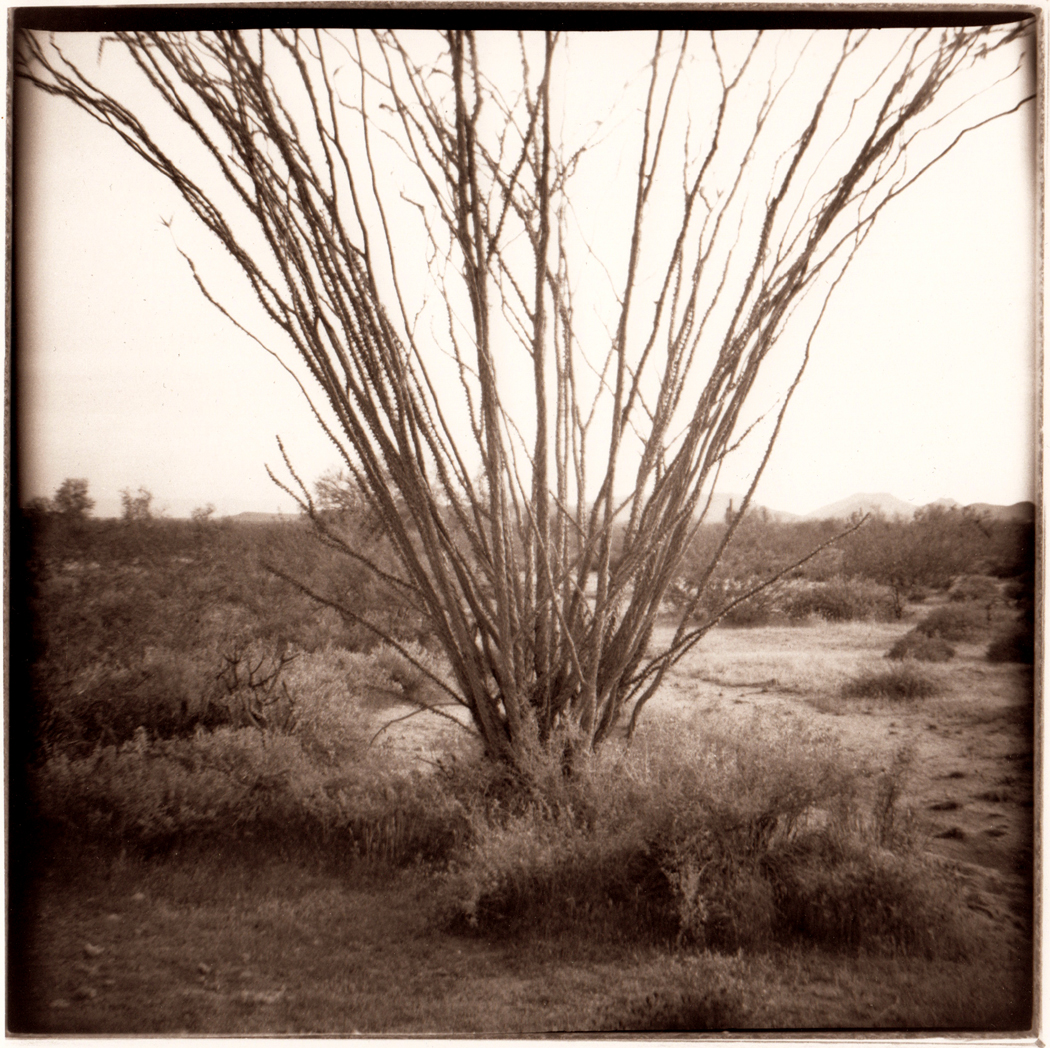
02 Ocotillo Organ Pipe Cactus NP ArizThe gravel, the dust, the prickles, the skin-shriveling heat, the raking shadows, the beige mountains turned pinkish in the afternoon, the buzzards hanging overhead, the greasewood smelling like aftershave in the rain.03 Organ Pipe Cactus Diana pair 3

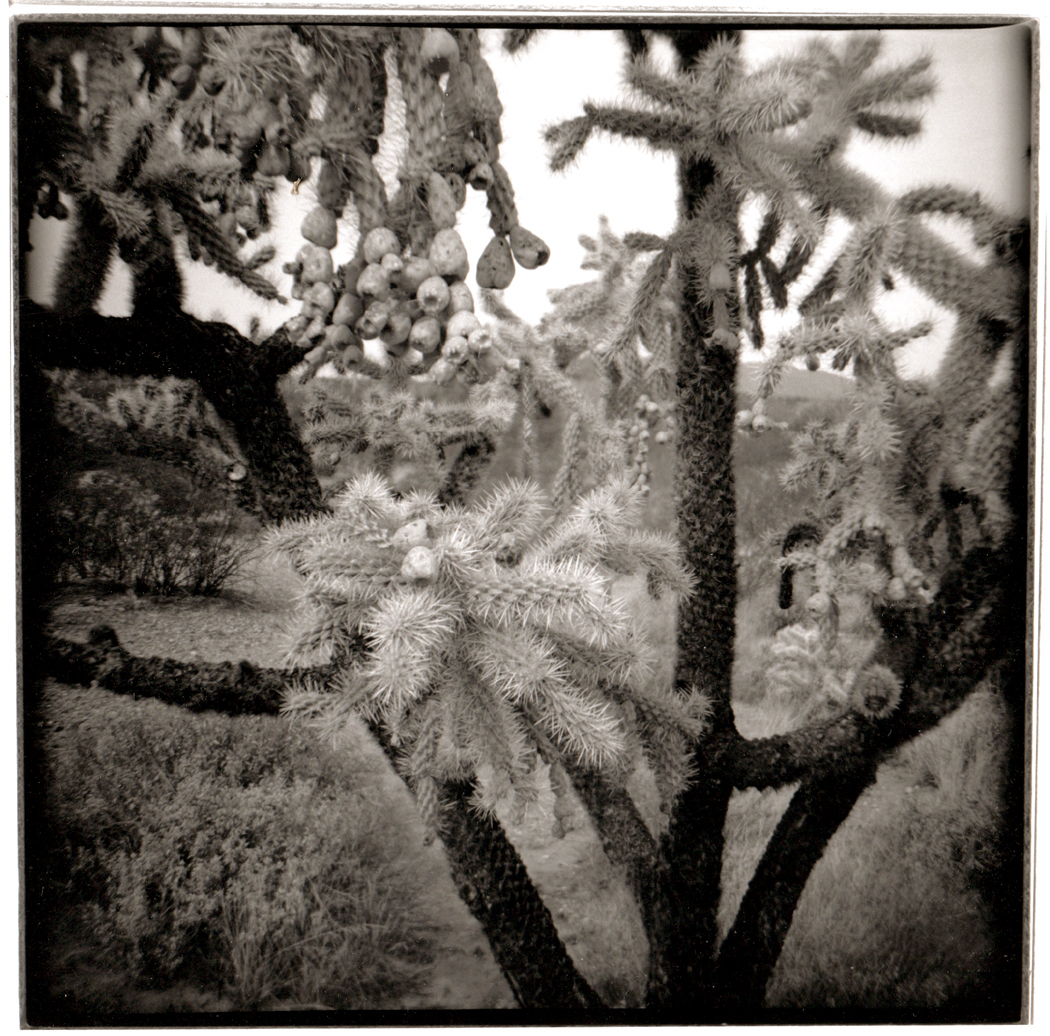
When I lived in Arizona, I lived in the city; I don’t miss the city. I used to call Phoenix “Cleveland in the desert,” but aside from the scorch and desiccation, the desert doesn’t make itself much known in the cities of Arizona. For that, you have to leave the gridlock of reticulated and decussated streets and get out to where the dust devils spin and the owls burrow. 04 Cholla close Organ Pipe Cactus NP Ariz

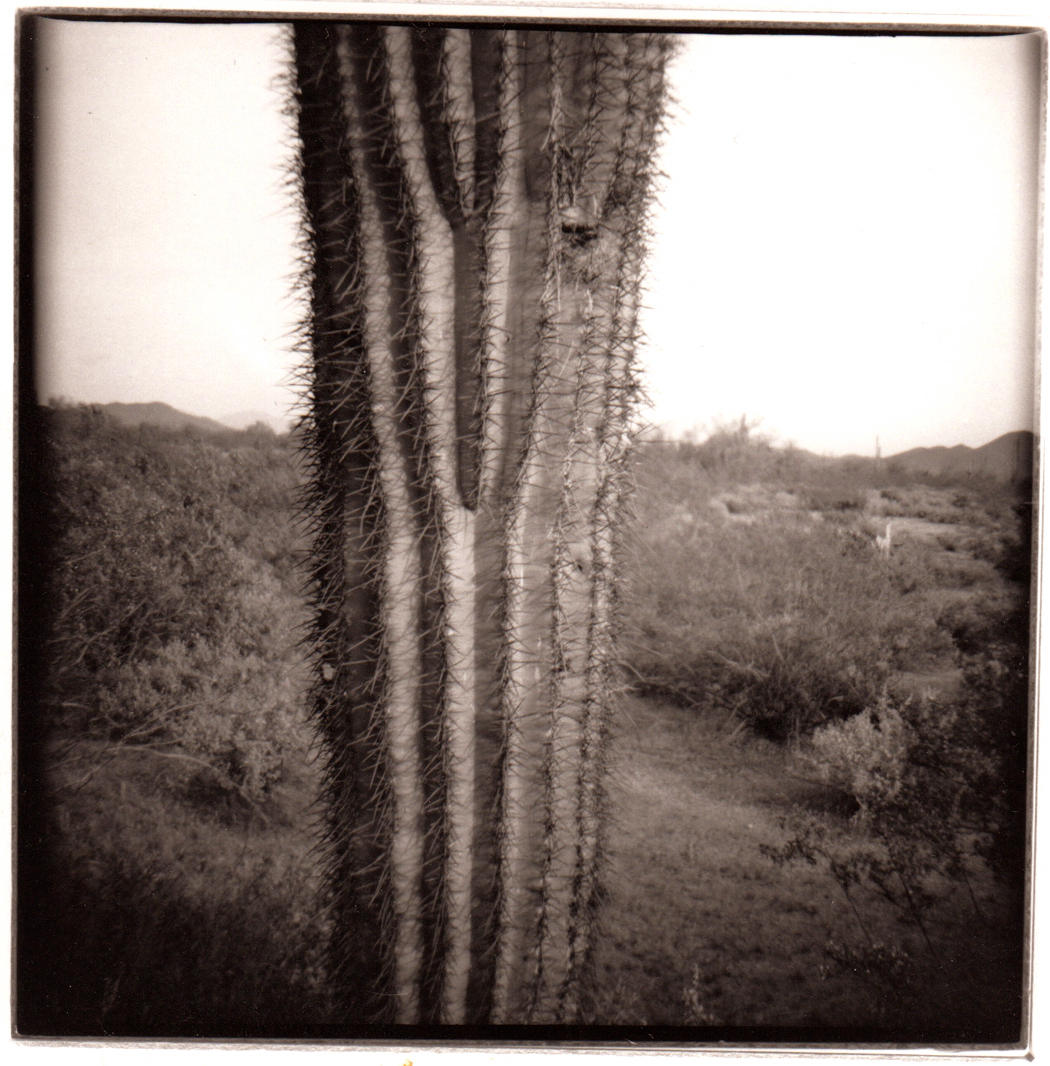
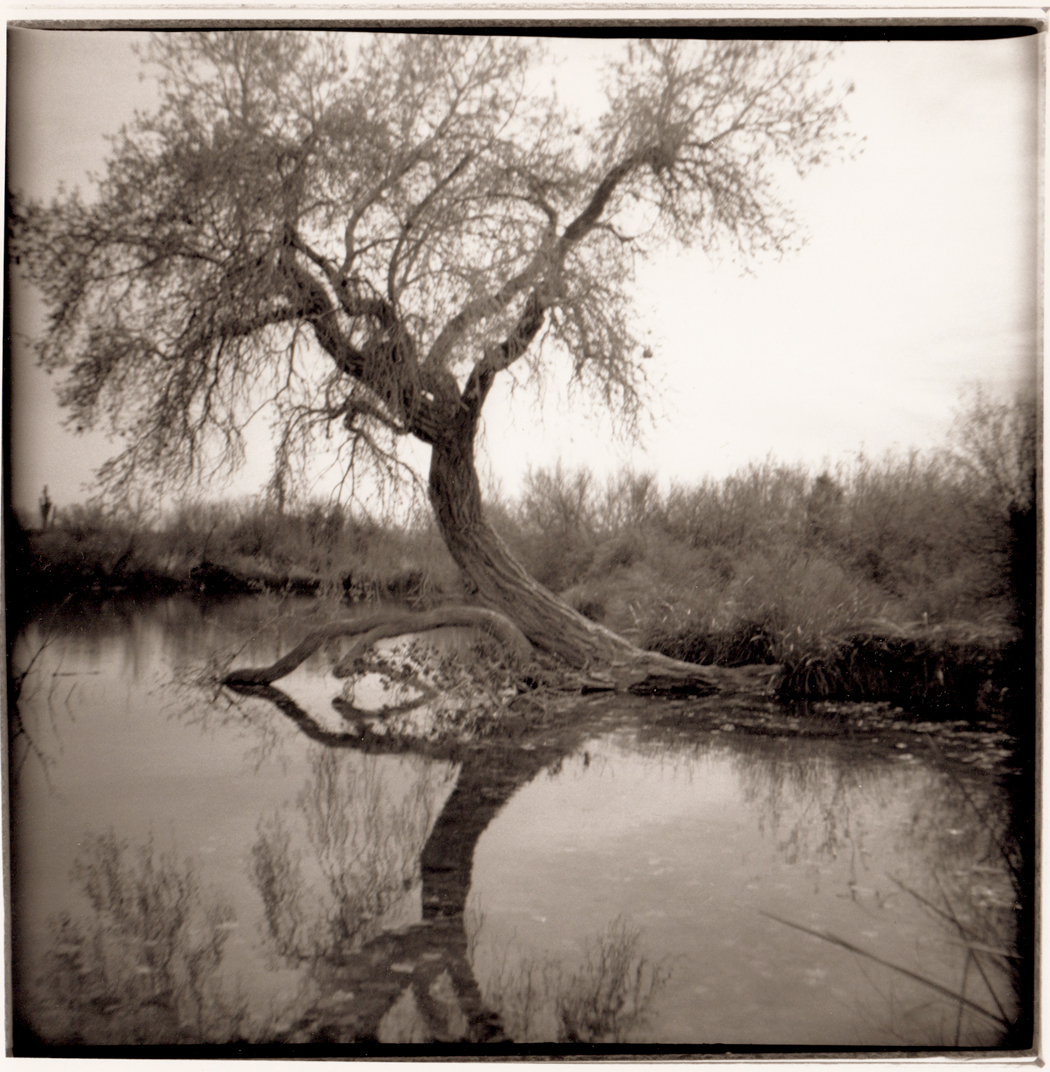
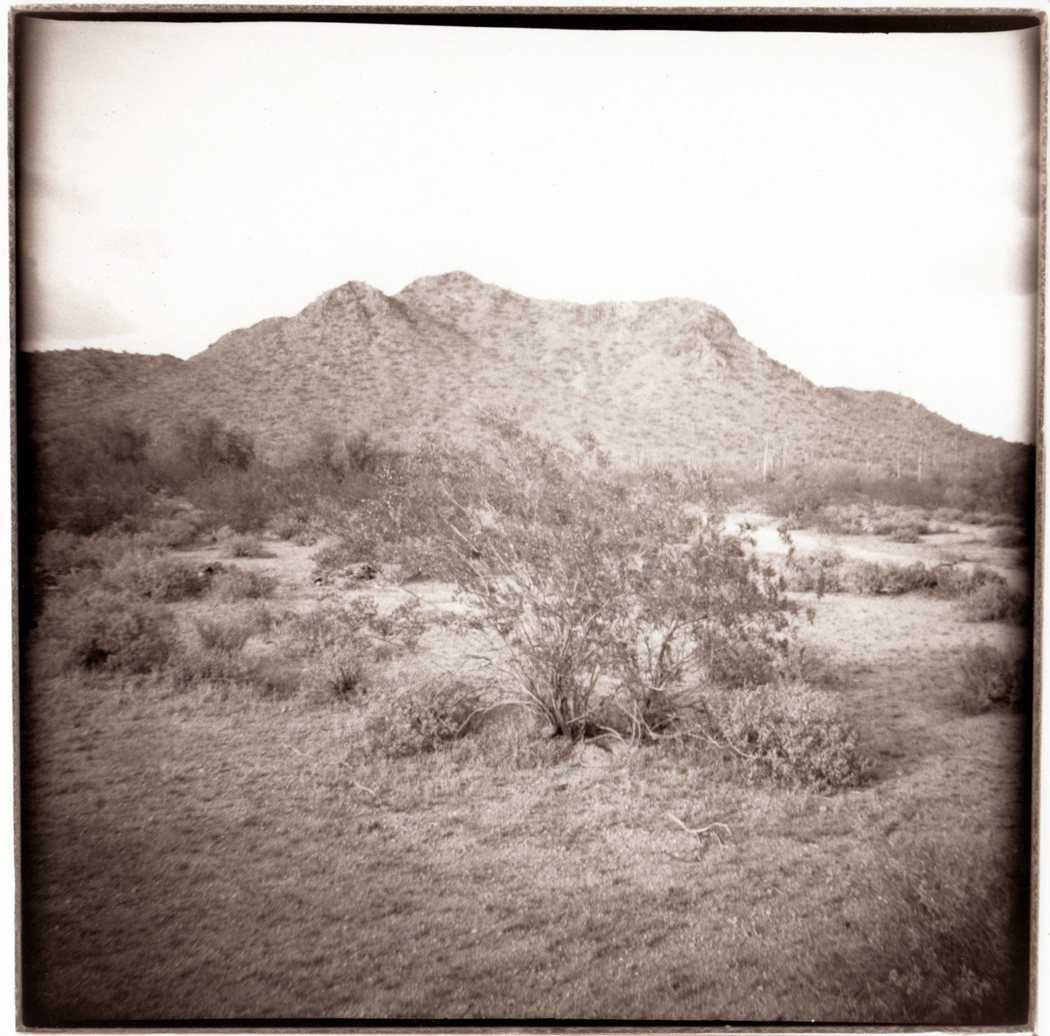
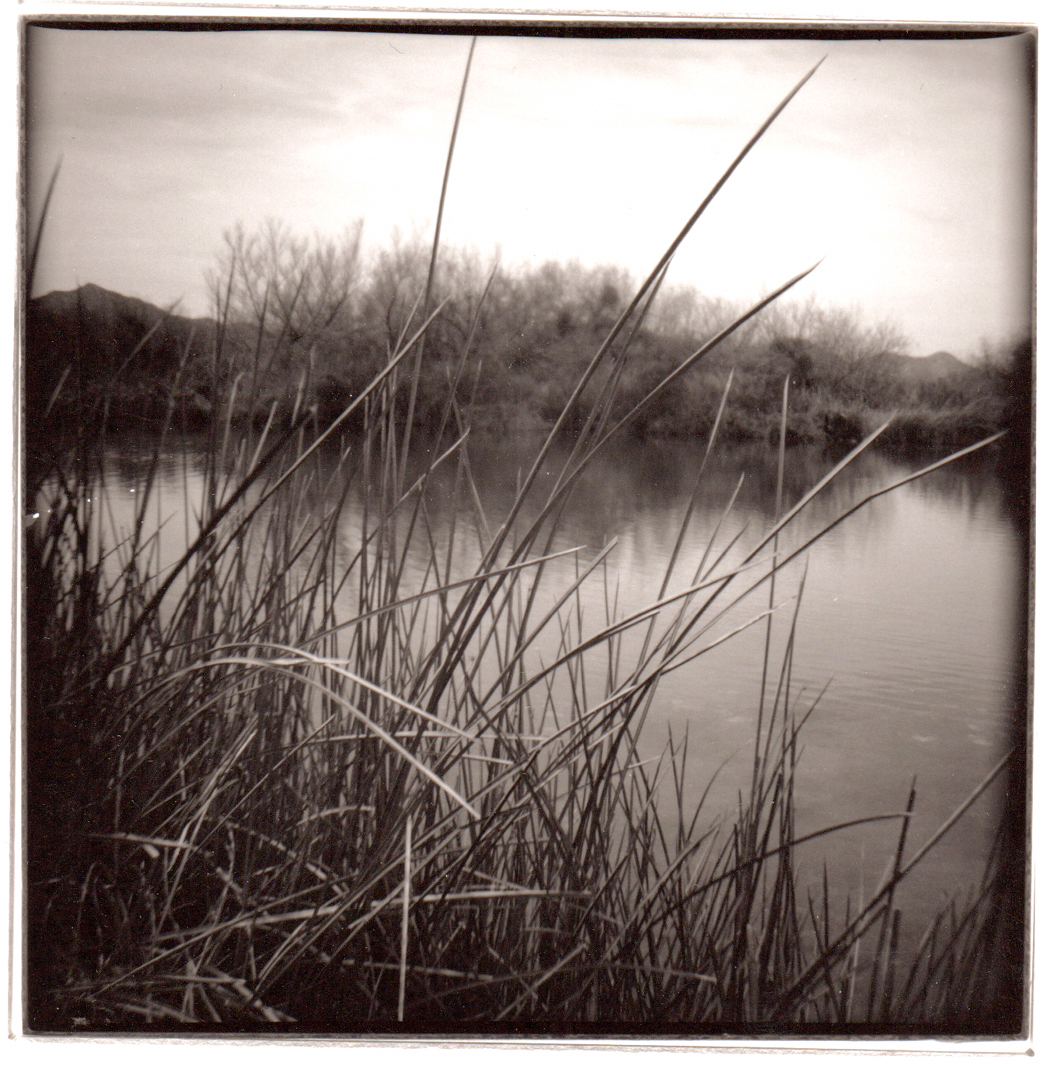
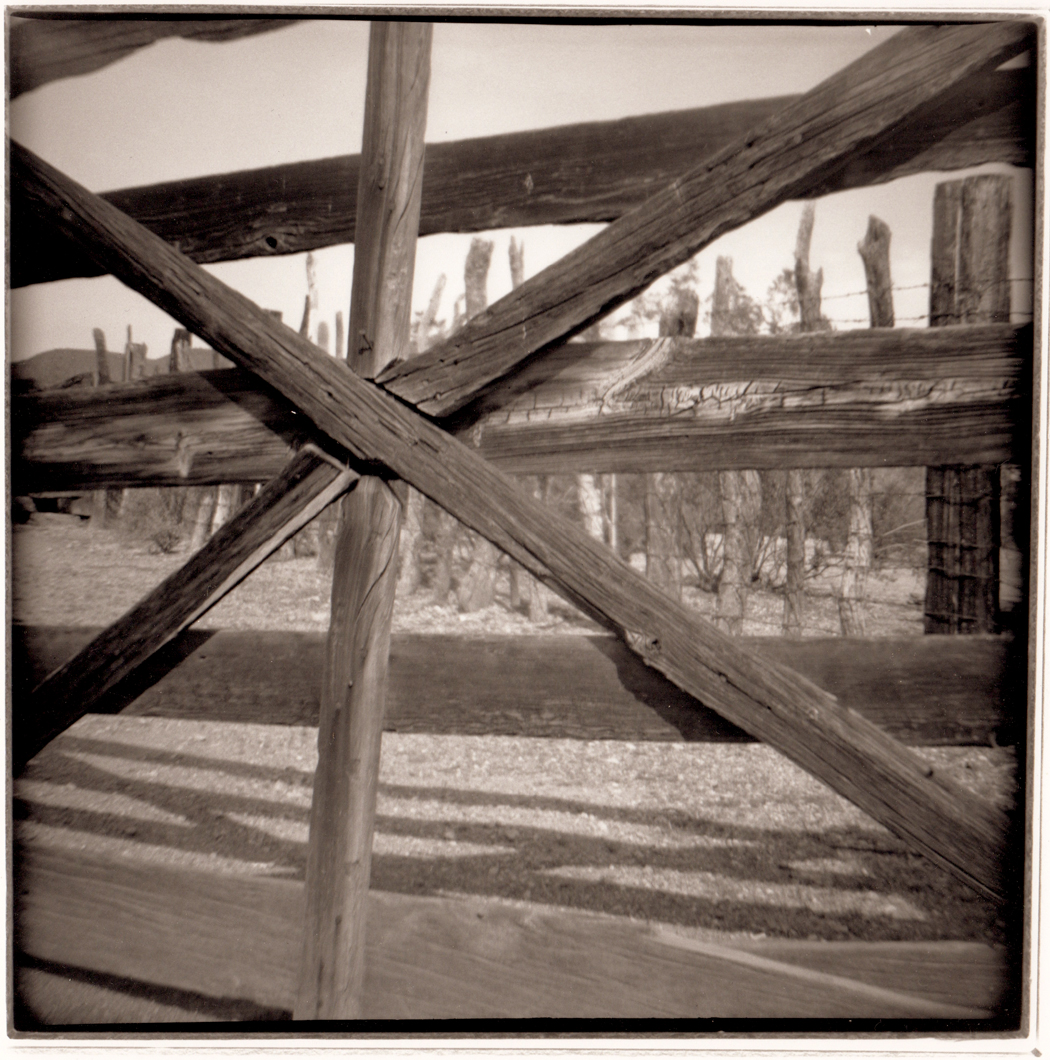
Many years ago, I took a toy camera out to Organ Pipe Cactus National Monument, south of Why, and drove the loop road past Bates Well and Quitobaquito Spring. 07 Pond Organ Pipe Cactus NP ArizThere was no sight of another anthropoid anywhere. The only hint of human occupation was an abandoned ranch, the gravel roads and an occasional descanso commemorating someone’s unfortunate death under the oven dome. The horno cósmico13 nicho trio

Click to enlarge
The Diana camera cost something like $1.99 and had a plastic lens and used old roll film. It had the solid polystyrene worksmanship you might expect from Mattel or Ron Popeil.05 Butte Organ Pipe Cactus NP Ariz After a lifetime of Nikons, Canons and Hasselblads, and having moved up to a 4X5 camera with a Super-Angulon lens, it was a kind of mortification of the flesh to bust out the Diana. A means to get away from the high-resolution, Zone-System rut. 06 Saguaro Organ Pipe Cactus NP Ariz

And now, looking at the results 20 years later, the fuzz and blur of the photos seems more like the nostalgia I feel: less like being there, more like remembering, even half-remembering.16 Organ Pipe Cactus Diana pair 4

08 dark vista Organ Pipe Cactus NP Ariz12 Wire fence Organ Pipe Cactus NP Ariz

10 Ranch fence Organ Pipe Cactus NP Ariz

 
 17 Carole as Flora in the desertCarole as Flora


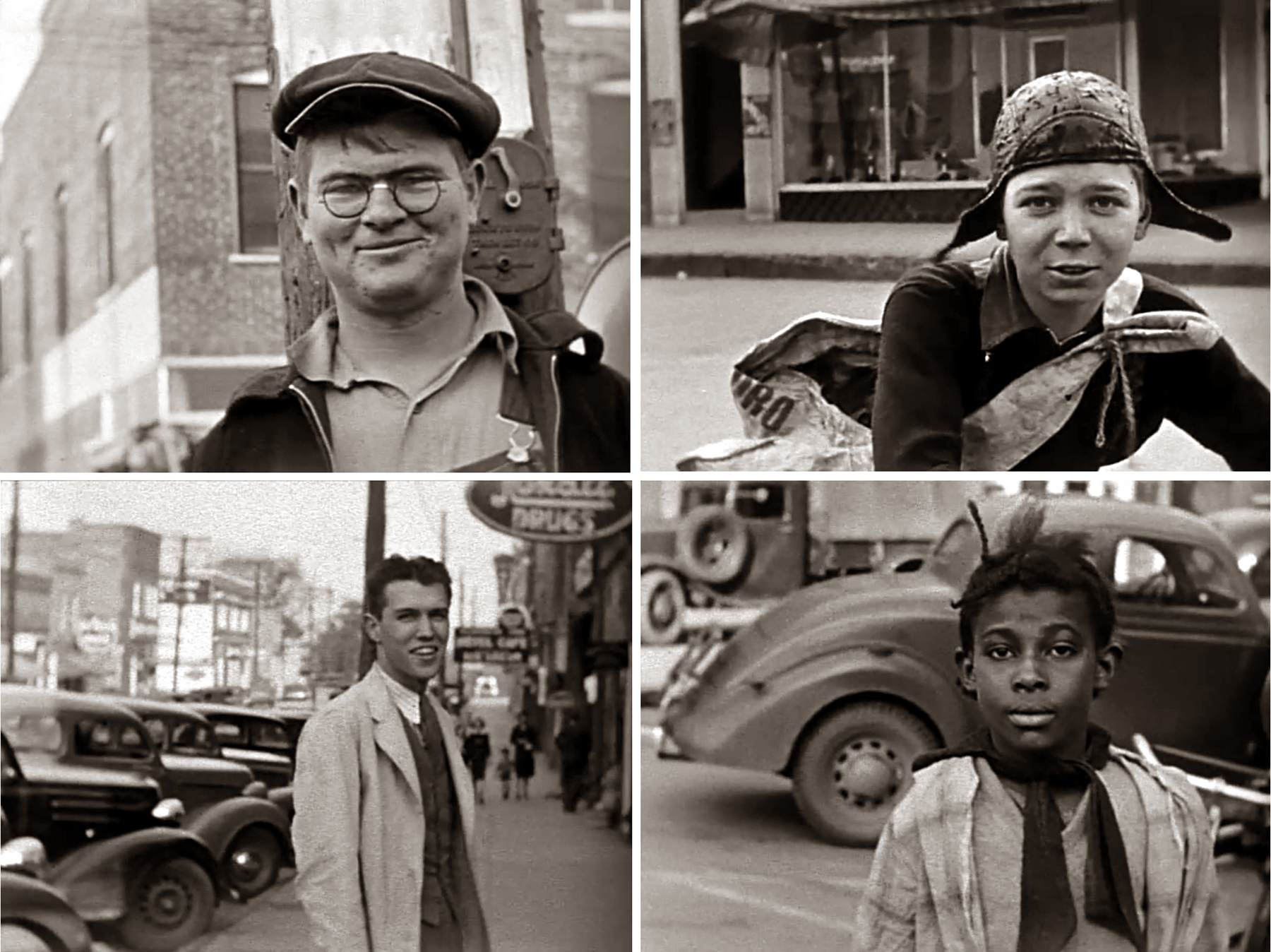
madison lede pix
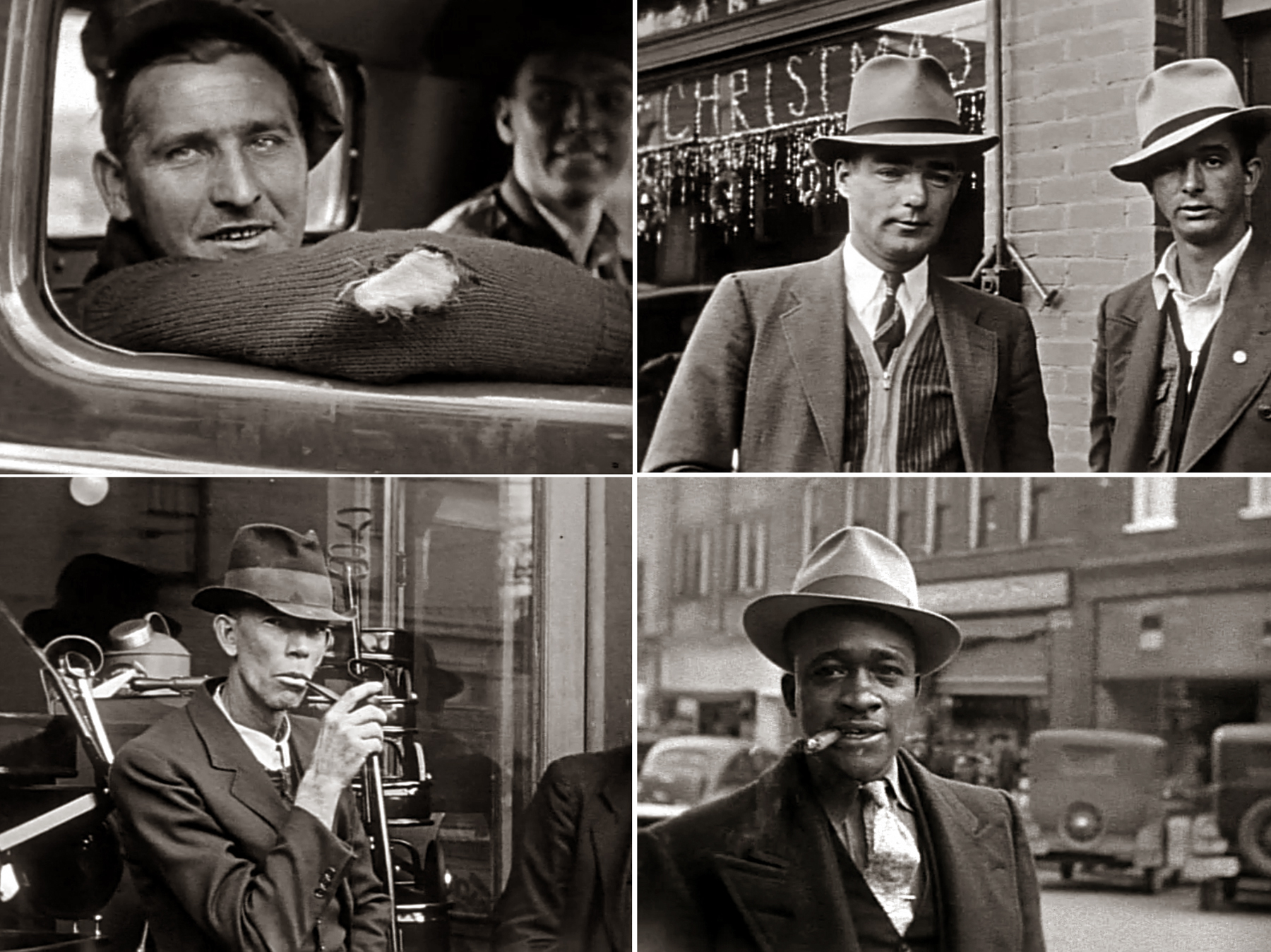
The 1930s remain in our visual imagination with a vividness that hardly exists from other eras — at least eras we didn’t actually live through. And it is through the photography of the period that this happens: It is hard to recognize how many of the canonized photographers from that era gave us documentary and quasi-documentary images of the times. Elsewhen, artists — and the photographers — often sought something more universal, or general, or eternal, but the quota of work from the 1930s screams out the time of its birth. madison color quad

Think of them: Brassai, Bill Brandt, Walker Evans, Cartier-Bresson, the whole army of photographers working for the Works Project Administration under Roy Stryker — our image trove from the 1930s is a stuffed portfolio. Madison bw quad 1

Click to enlarge
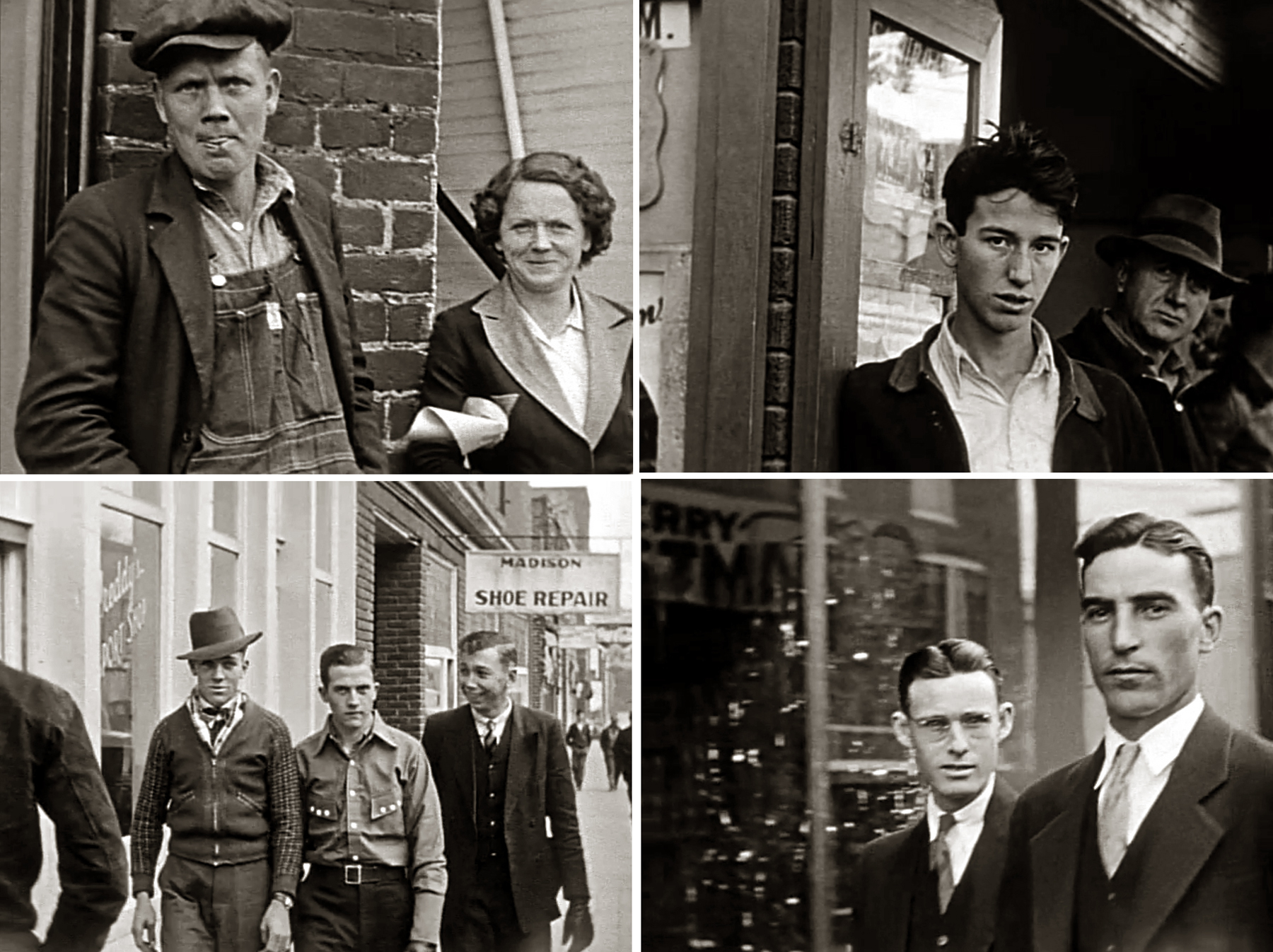
If we tend to distinguish between photography as journalism and photography as art — art with its formal concerns — then the work of Life magazine photographers falls into the first camp and the more elevated work of photographers such as Edward Weston, Imogen Cunningham or Frederick Sommer would seem to be of another genus. But especially in the prewar decade, the photographers we honor as artists often were the ones who left us with a chronicle of their times. It is hard to picture America during the Depression without the black and white images of breadlines, dustbowl farms, iron workers and iron-willed matriarchs reigning over raw wood kitchen tables in unelectrified Appalachian cabins.madison bw quad 2

(I am not forgetting later movements of “street photography,” and certainly not forgetting Robert Frank, William Klein or Garry Winogrand, but their work on one hand also seems like a throwback to an earlier era, and on the other, is more consciously concerned with formal problems, like composition, lighting and contrast — and often with even more Postmodern concerns, such as how photography makes the world look. In the ’30s, the primary concern was sociological: These people we have been privileged to look at.)madison bw quad 3

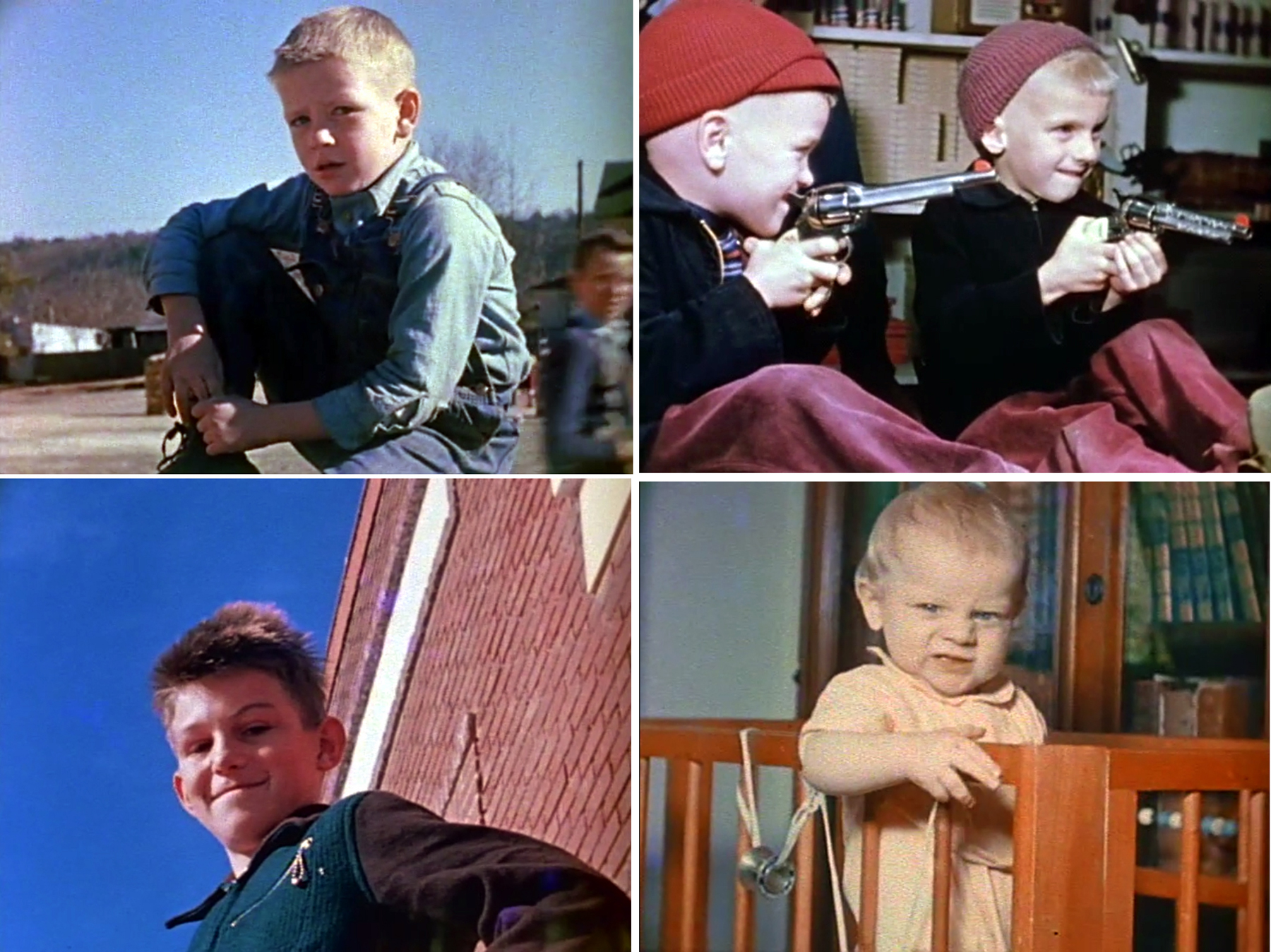
I bring all this up because a friend sent me a link to an unusual archive at Duke University of old documents, photographs and films, primarily from North Carolina. In it, there is a set of three films, or rather three reels of randomly edited home movies, from Madison, N.C., taken between 1939 and 1941 and available for download. You can find them at:

http://library.duke.edu/digitalcollections/hleewaters/Spatial_Coverage/Madison%20%28N.C.%29

madison bw quad 4These films appear to have been taken by a single person, who filmed schoolkids, class by class, streaming out of the schoolhouse, workers leaving the factory and pedestrians walking down the streets of Madison and neighboring Mayodan. At times, he attempts trick photography, and they are not always in perfect focus. The first reel is in color, the remaining two reels are black and white. It is clear he (or she) favors framing with the subject in the right half of the picture, but it seems less like a formal concern and more like a idiosyncratic tic.

madison bw quad 5Madison particularly interests me because it is where my wife grew up. She was born in 1941 and so, the images in these movies pretty closely approximates the town she knew as a little girl. A few of the teachers shown in them are teachers she knew in school. madison bw quad 6

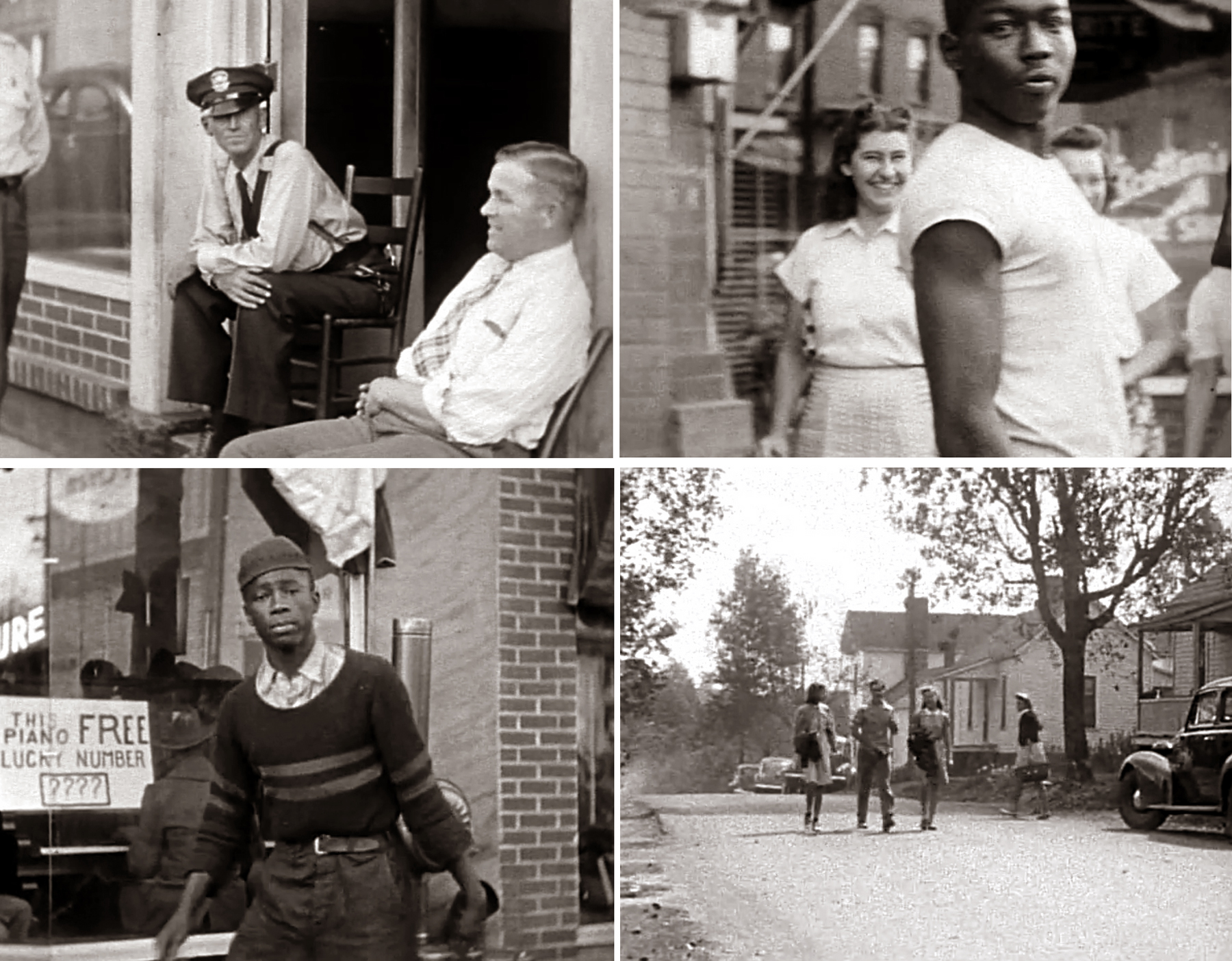
But I also found that if I excised individual frames from the motion, I could see them almost as a new source of FSA photos, or undiscovered images of Walker Evans. I have included a bunch of them with this blog post. madison bw quad 7

One has to forgive the lower quality of focus or color, taken as they are from what must be a 16mm original, but what strikes me most in them is the quality of individual human beings, the person behind the eyes that stares out at us from the pictures. It is the same face — or the same kind of face — that we see in Dorothea Lange’s California agriculture photos. There is joy, suspicion, hope, hopelessness, anger, privilege, satisfaction and shyness in these faces (sometimes as the film progresses, the same suspicious face turns friendly).

madison bw quad 8And I come to see them not so much as impersonal esthetic constructs, but as a doorway into each of them as people. Individuals, shining lights of the cosmos bound in skin. madison bw quad 9

And then, by way of looking back at the old, familiar pictures of Jack Delano, Russell Lee, Marion Post Wolcott, John Vachon, Ben Shahn and others, you come to the realization that what makes them special — what, indeed, makes them important — is not their photographic quality, not their compositional innovations or formal intent, but that through those rectangular frames burn the lives of actual beings. What brings them alive for us esthetically is exactly the quotient of compassion, of empathy, we bring to them. Do we see them as esthetic exercises? Certainly that aspect exists in them, but such aspect exists in abstract torn-paper collages, too. No, what gives them power is that connection they enable between us in our age, and those people in the pictures, in their age and we see they are us. madison color quad 2


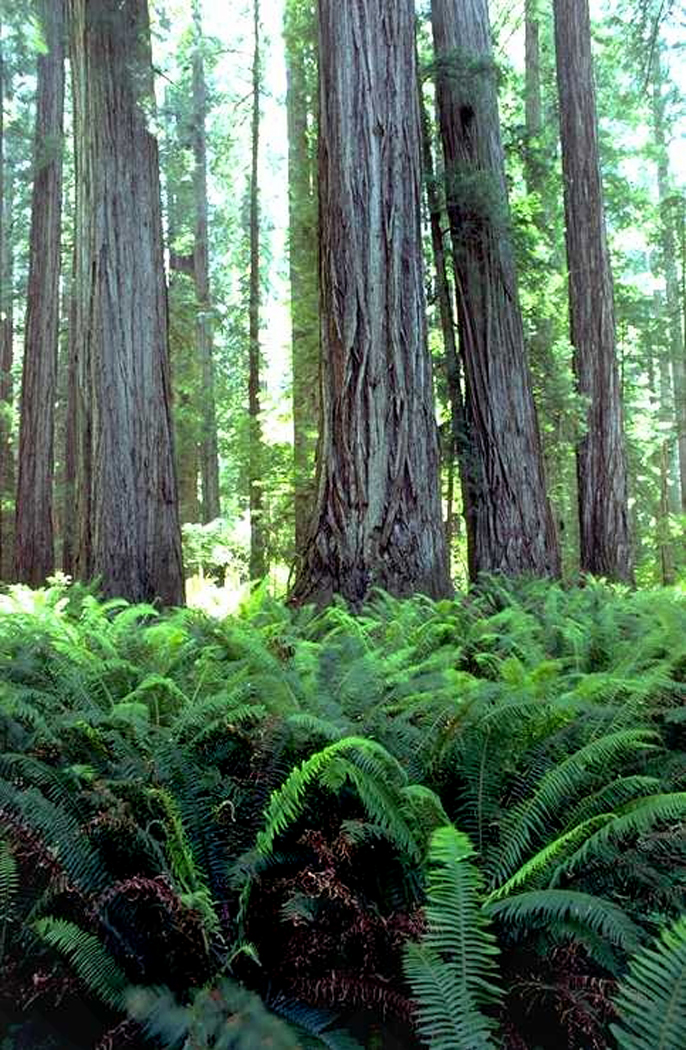
humboldt redwoodsAt a pull-off along the Highway of the Giants in the Redwoods of Northern California a lumbering, topheavy RV pulled to the side of the road and stopped. Its driver got out, walked to a spot about 25 feet behind the vehicle, raised his camera, snapped one picture, got back in and drove off.

I’d seen many people line the wife and kids up against a scenic backdrop, or ask Aunt Emily to smile in front of the Grand Canyon, but this was the first time I’d seen anyone take a picture of his truck.

In a way, it made sense. The redwoods are notoriously difficult to photograph. They seem like they’d make wonderful subjects: They are green, tall, impressive and make their own weather. But they only grow in the lowlands and river bottoms and are surrounded by dense hills. There is no way to step back and get them all in perspective. Heck, there is no way to step back and get them all in the viewfinder. One has to be satisfied with bits and chunks of tree trunk surrounded by ferny growth.redwood ferns vertical

And even that is disappointing photographically. I set up my camera at an especially impressive trunk, maybe 15 feet in diameter, covered in green moss. In front of it were the biggest ferns I had ever seen in my life, with fronds that were six feet long. I looked at them carefully in my viewfinder, with my camera set on a tripod. I groaned. Since everything was of the same immense scale, the picture looked like an ordinary patch of ferns in front of an ordinary tree.

The only solution is to put something whose size you know in front of the tree, something like the wife and kids — or your RV.

As an aside, I want to mention the obsessive proclivity of the West Coast states for naming every Department of Transportation speed bump in memory of someone. The Muriel O. Ponsler Memorial Wayside was little more than a widening in the road so cars could pull over and see the ocean. There is the Joseph and Zipporah Russ Memorial Grove in the redwoods. The habit is essentially harmless, but it helps if you pay attention to the name you are commemorating. We soon passed over a bridge named for Elmer Hurlbutt. The Hurlbutt Bridge: Someone was asleep at the switch when that got named.zion tourists

But what I meant to talk about when I started writing this column was why people make photographs when traveling. The answer seems simple at first: They make pictures to help them remember the trip, or so they can show their friends that they were, in fact, to the redwoods or the Grand Canyon.

But after years of watching people raise their Nikons to their eyes, I am not so certain anymore that the pictures are always aids to memory.

Because the pictures are made so offhandedly, and their makers so quickly jump back in their RVs and drive off to the next natural wonder, I believe they must use the photographs instead as a substitute for memory.

Instead of really experiencing the woods, with its dripping humidity and spongy forest floor, its green smells and muffled silence, they use the camera to arrest a slice of vision that they can take home and dissect, using the image rather than the trees as their primary experience of the redwoods.

It may be that we have become so acculturated to the television reality that the aromatic reality of primary experience no longer retains its validity. It must be transmuted into a Kodak moment — metamorphosed from sense experience to media experience — before it is taken seriously.

But, more likely, people have always done the same, zooming past the magic to chalk up another name on their life list of scenic destinations.

In 1937, long before television became the central fact of American life, photographer Edward Weston was using his huge, cumbersome 8-by-10 camera to photograph Zabriskie Point in Death Valley. A car pulled up with three German couples, among them were six cameras — “One woman had none, but one man had two.”

“The five enthusiasts lined up, focussed on the same view, decided on the exposure, made the picture. Four of them lined up at the other side of the turnaround, made a second picture in unison. Then they climbed back in the car and drove away.”

01 Rainbow, DelmarvaIn the early 1980s, my wife and I were both teachers and had our summers free to travel. Beginning in 1981 and for many years after, we drove all across the U.S. and Canada. I was a photography teacher at a 2-year college and carted around quite a freightload of photographic equipment, including a hefty 4X5 field camera.

Now, when we travel, I use a digital point-and-shoot that fits into my trouser pocket and weighs less than the lens shade for my old Super Angulon view camera lens. And the photos I get are just as good. (No matter how fancy the equipment, a photographer cannot get photos any better than his talent allows; cameras hardly matter). And goodbye hypo stains.

I have previously posted a passel of images from our trips out West. But we also visited the East. We have been to every state in the Union multiple times and have visited every Canadian province except Prince Edward Island, and I don’t know how we missed that.

We put thousands of miles on our old Chevy Citation every summer. It was a workhorse of a car; that’s it above, on the Delmarva Peninsula, under one of the greatest rainbows ever.

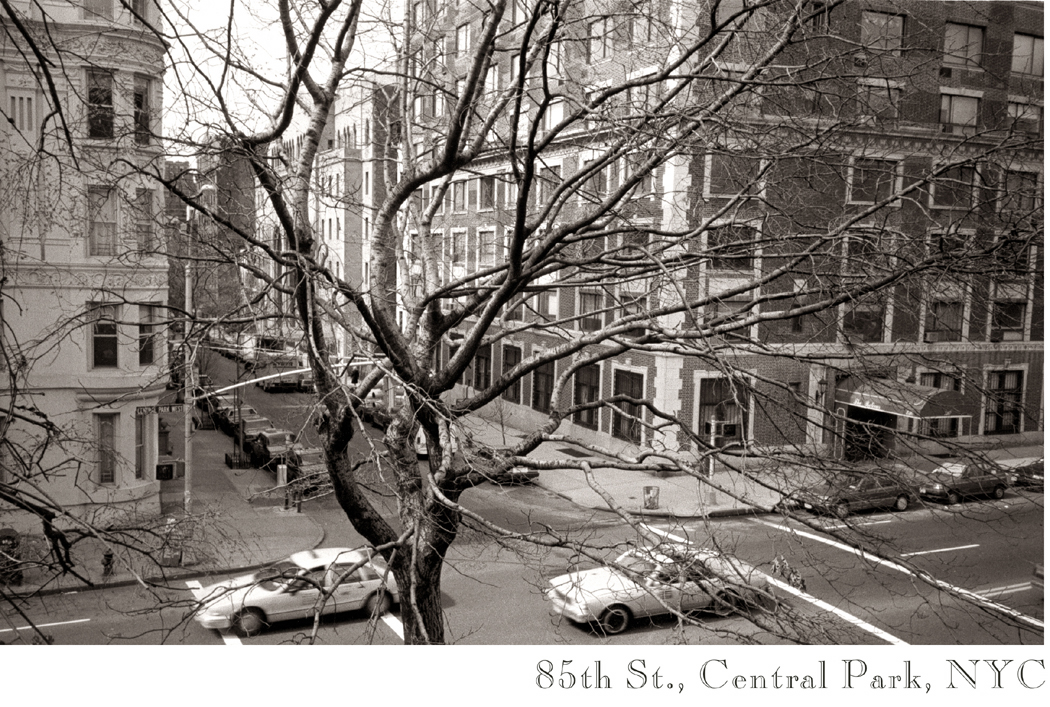
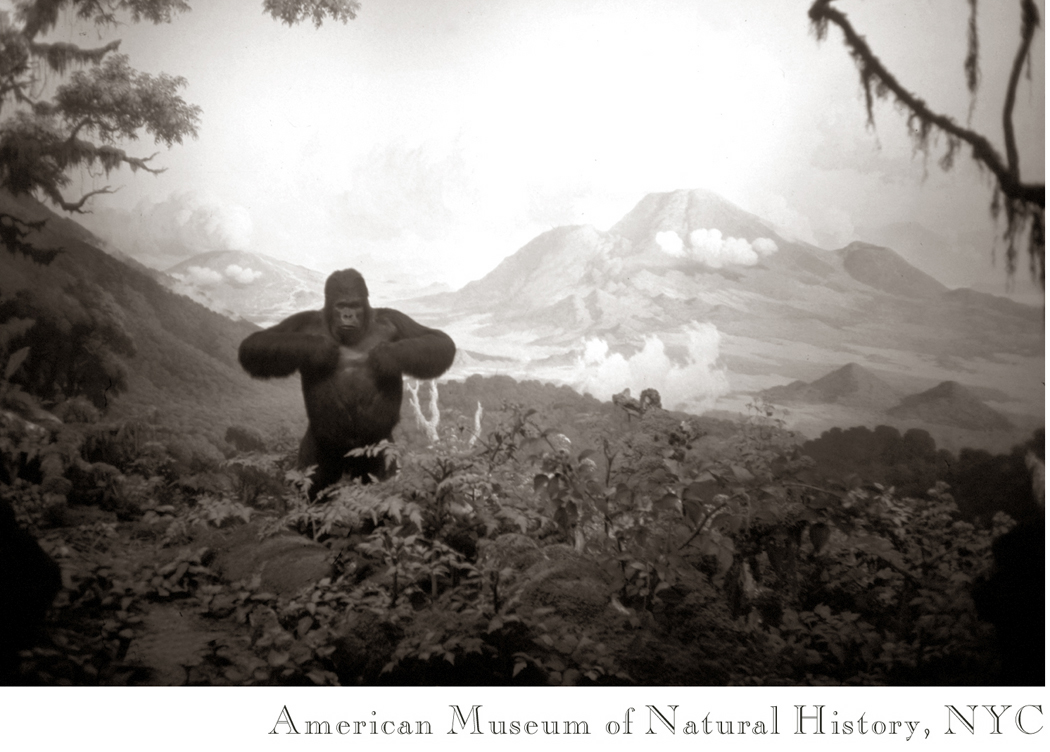
These are a few of the images I made on those trips.

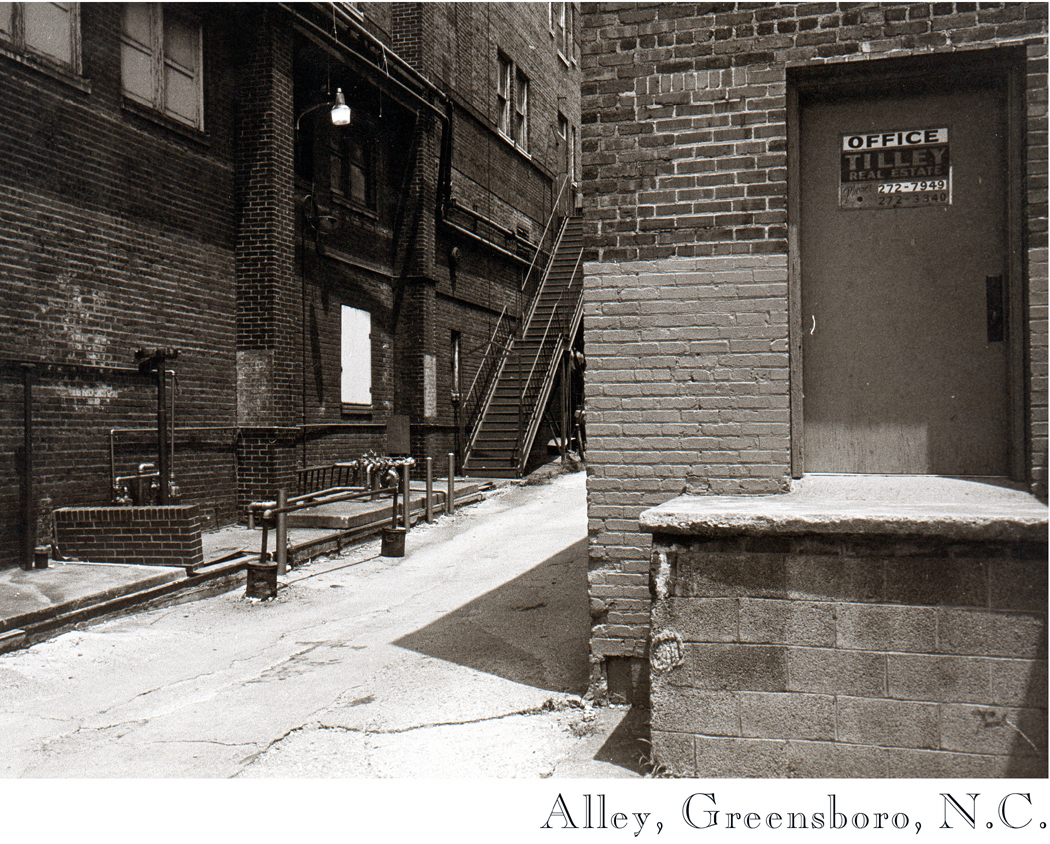
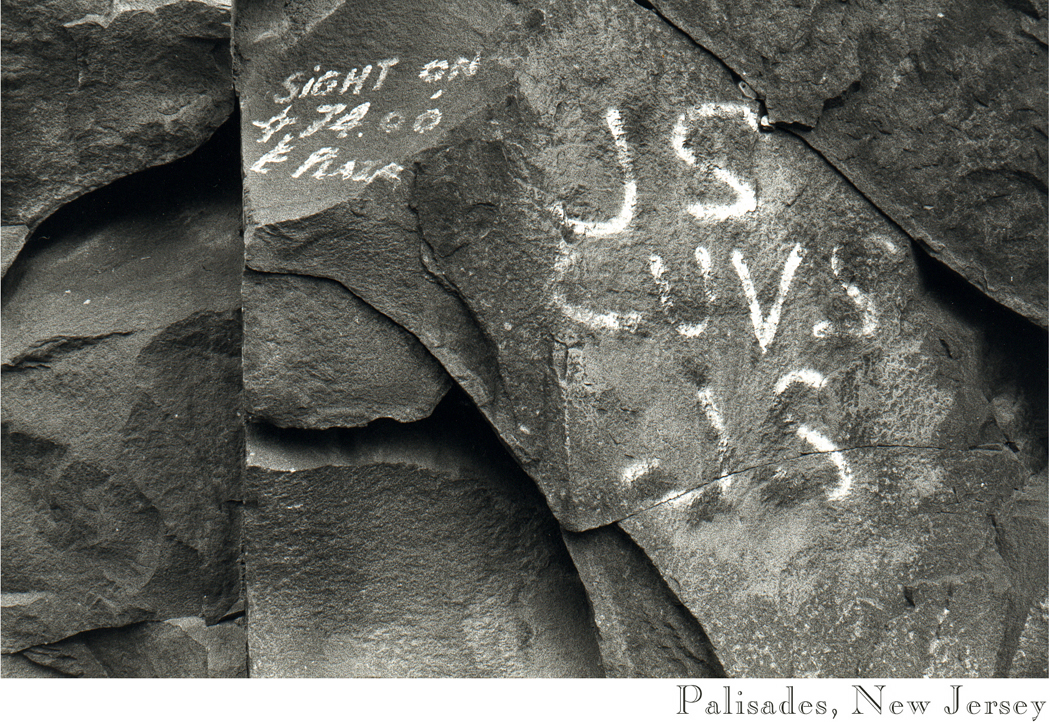
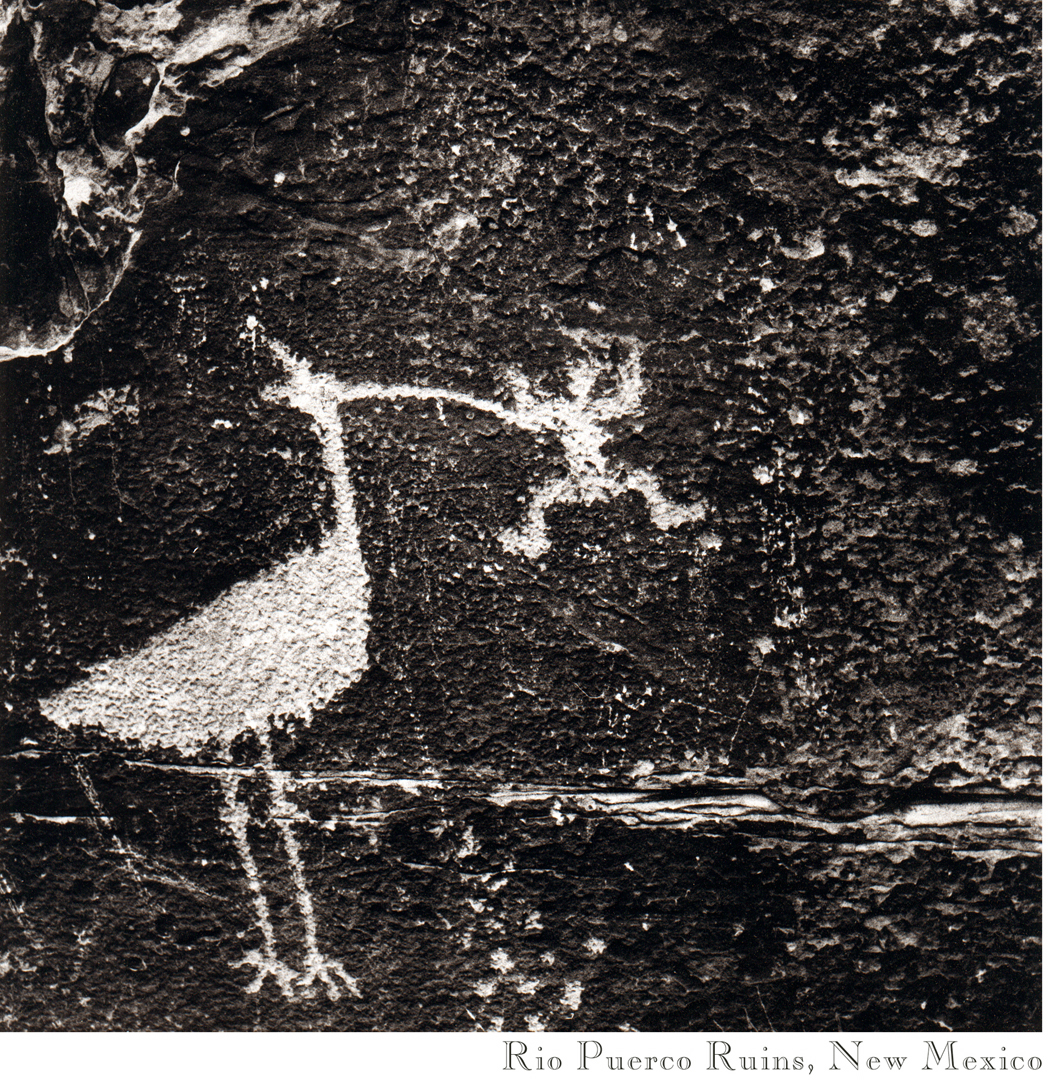
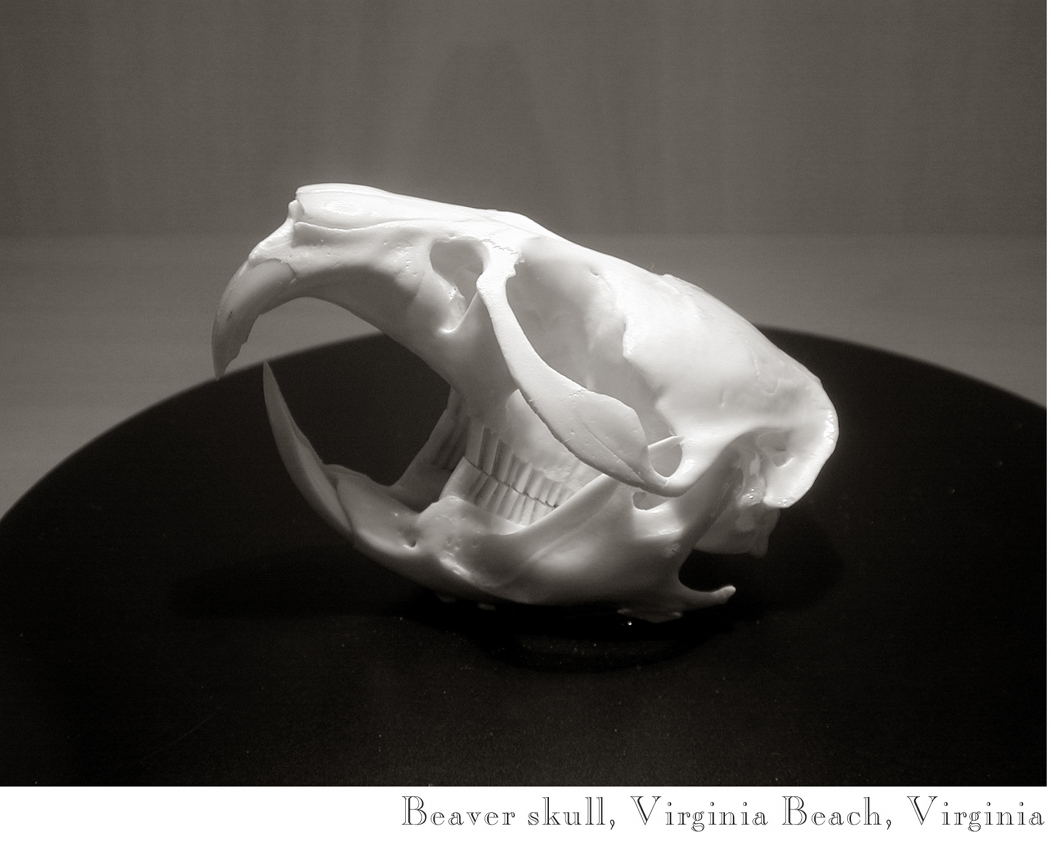
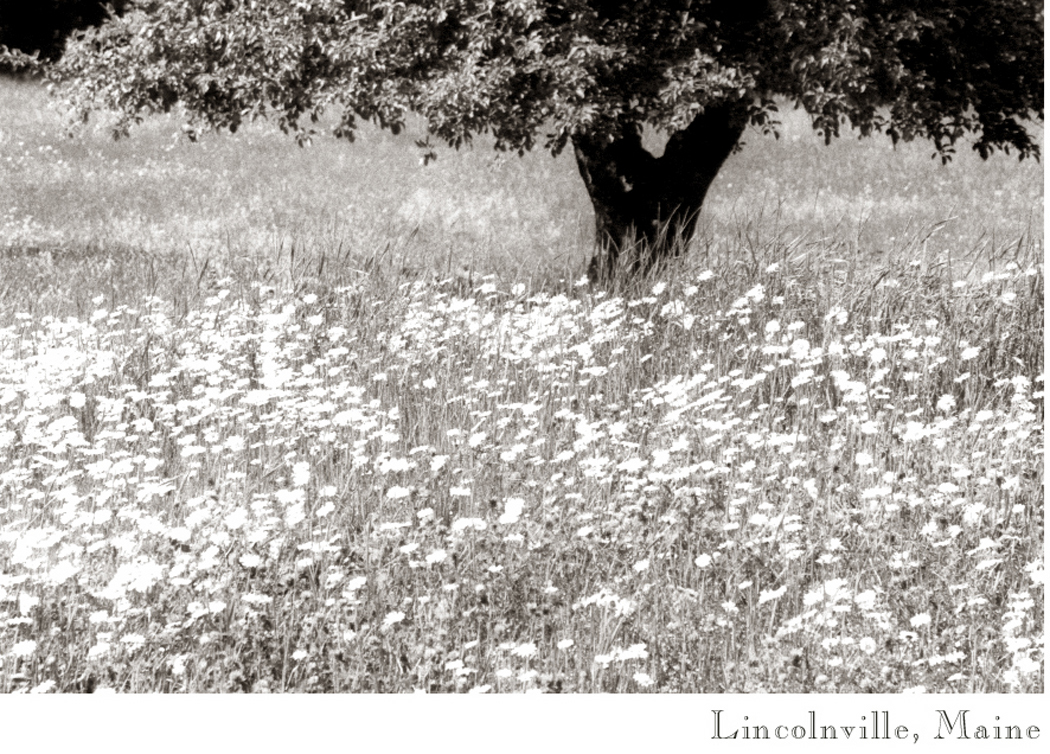
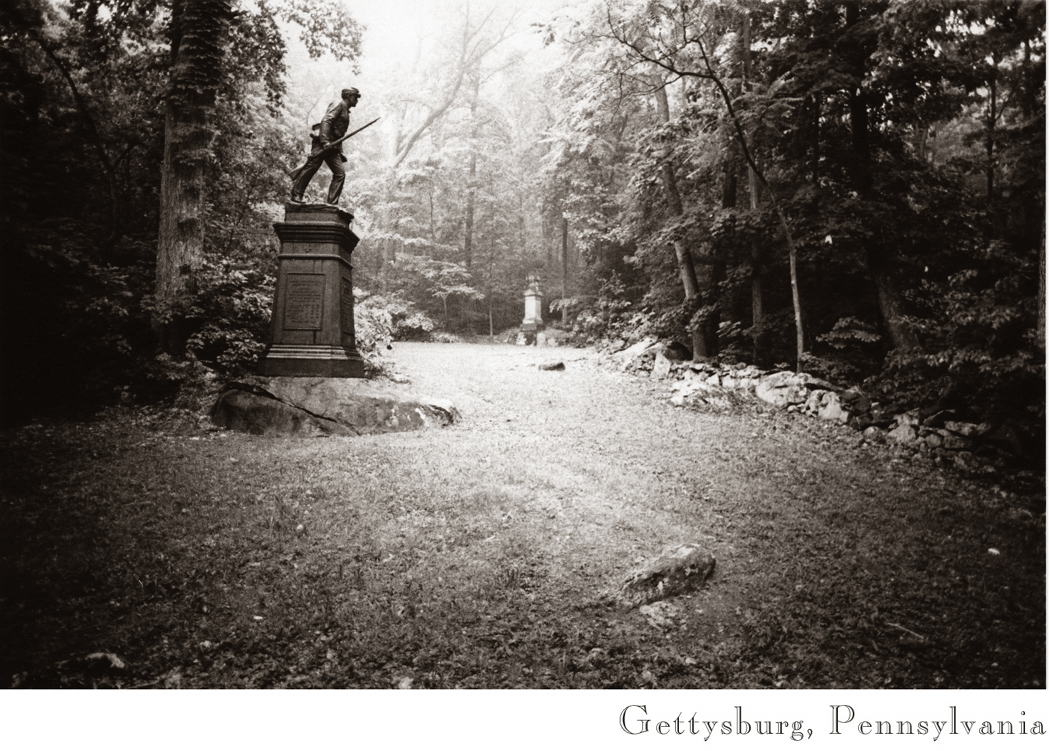
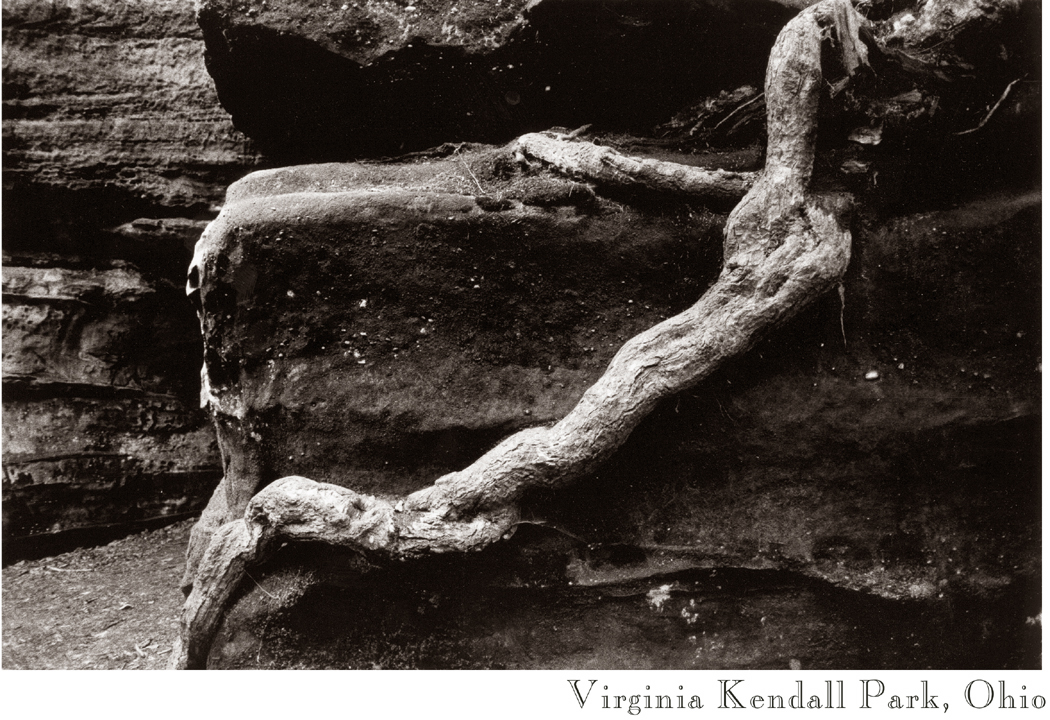
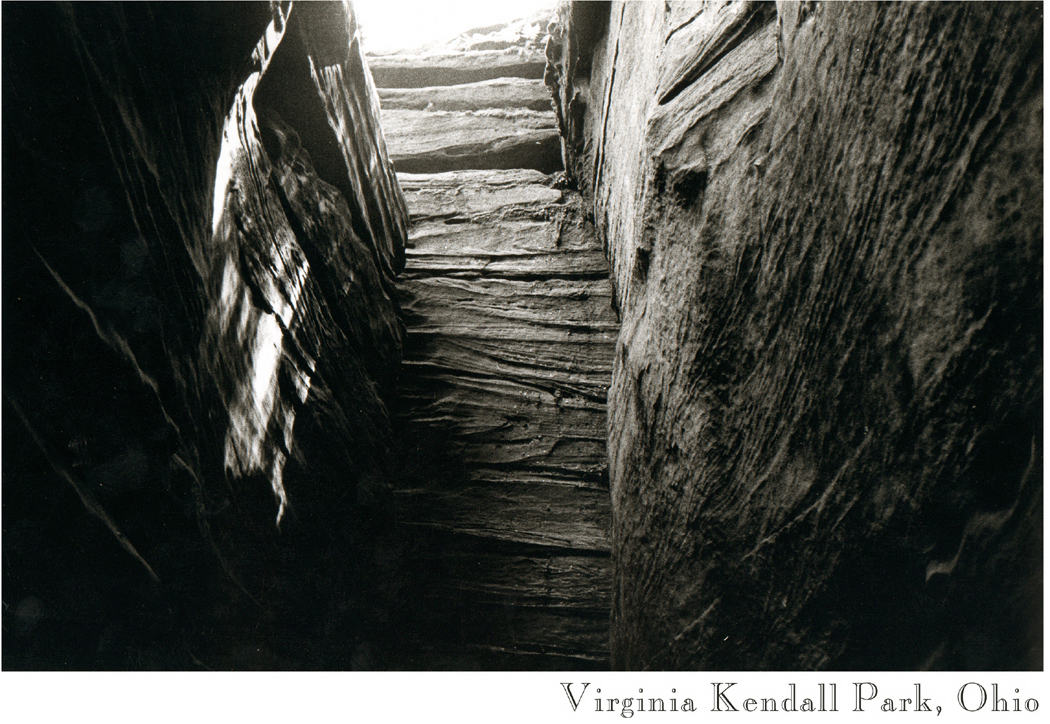
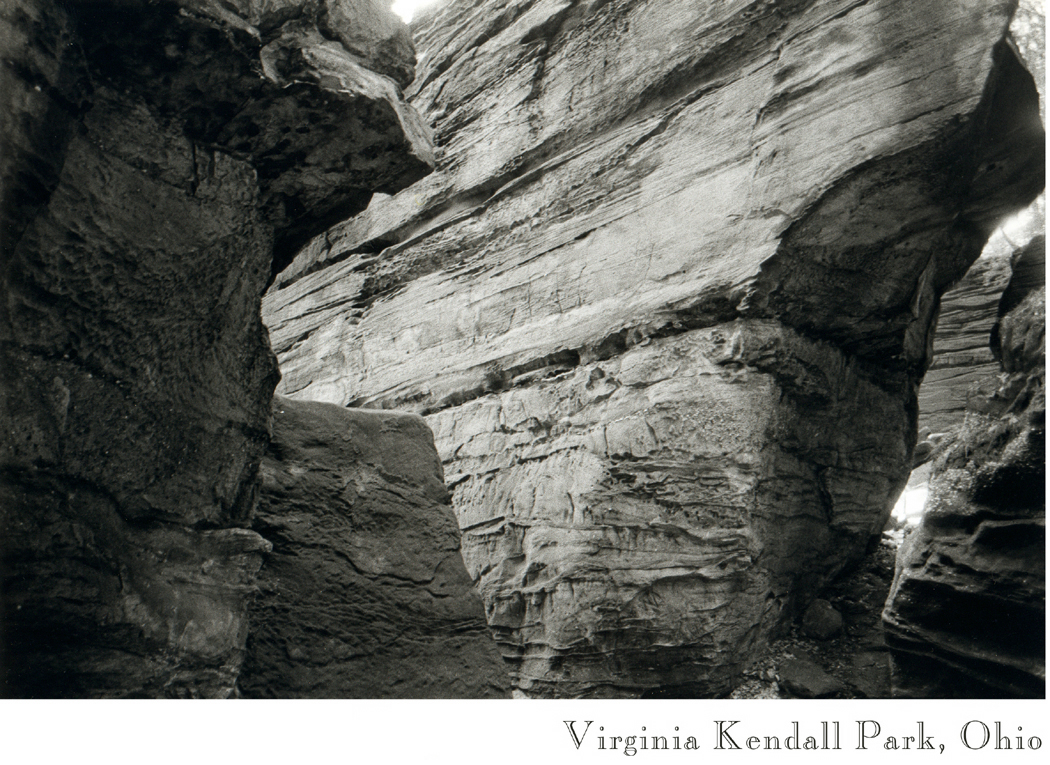
02 central park03 Gorilla, Am Mus Nat Hist0404 Chicago skyline05 Union Station, Washington06 Greensboro Alley 107 Palisades, N.J08 Petroglyph09 Tidepool maine10 Carlsbad Caverns11 Beaver skull12 I-64, Virginia13 East Lake Hunt Club14 Bayou thicket15 Brookgreen Gardens, S.C16 Buxton Sedge grass17 Maine tide wash18 Schoodic rocks 2 copy19 lincolnville maine20 Ruins of Windsor21 Sunflower 122 Gettysburg23 Blue Ridge winter24 Cows, Crawley W.V25 Va Kendall SP Ohio 126 Va Kendall SP Ohio 227 Va Kendall SP Ohio 3

Selva Oscura

WHEN you are young, it is easy to be in love with art. You may love its artifice, you may love the colors or the rhymes or the great blaring sounds of the music you listen to. Art is vibrant; it seems so alive. But most of all, you are in love with the sense of importance iart brings: It seems to validate the belief we all have when we are young that our own lives matter, that we count in the larger scheme of things.

We are all Tristan, Achilles or Holden Caulfield.

Perhaps that is why the young make so much art. They are not yet unhappy with it, not yet dissatisfied at the lies that art creates, not yet disgusted with the prettiness of it all.

Most of all, the art we make when we are young imitates the art we have come to love: Art most often imitates art, not life. There is so much bad imitation T.S. Eliot written in college, so much abstract painting of no consequence, so much herd-instinct.

I have been as guilty as anyone. In my 50 years of photography, the bulk of my work has been imitation Ansel Adams or Edward Weston or Irving Penn. I was learning to make images that I could recognize as art, because it looked like the art I knew.Old photos

Big mistake.

Go to any art gallery and you see the same process unfolding. Imitation Monet here, imitation Duchamp there, imitation Robert Longo there. Whatever the current trend is in art, there are acolytes and epigones.

At some point, as you age and if you are lucky, you let all this shed off you, and you no longer care about art. What takes its place is caring about the world, caring about the experience of being alive. It isn’t going to last long, so you begin paying attention: close attention to soak in as much as you can before you die.

In a sense, when you are young, you test your life against the art you know and love, to see whether you measure up to it; when you are older, this turns around, and you test the art against your life, to see whether the art measures up.

And if you are inclined toward art, you give up caring whether you are making “great” art, or whether you are part of the great parade of art history, and you care only about what you see, hear, touch, smell and taste. The world becomes alive and art faces to pathetic simulacrum.

When you reach this point, then you can begin making art. And you make it for yourself, not for posterity. You make it to attempt to capture and hold the world you love, or to understand the world, or to transcend it, when it becomes too difficult to endure or accept.

Week's Bay Bog Alabama

2

The first garden I made was a vegetable garden in the front yard of the North Carolina house I was renting in the early 1970s. I grew the usual tomatoes and peppers, beans and spinach. I also ventured into eggplant, which turned into the most successful part of the garden, to my surprise.

But what I really learned from my garden is the difference between the neat, orderly photographs in the seed catalogs and the rampant, weedy, dirt-clod messiness of the real thing. Gardens, I discovered, were not military rows of uniform plants, but a vegetative chaos.

The stupid thing was that I should have known this going in. All around me, trees, vines, shrubs, roadside flowers and Bermuda grass were telling me one single thing, over and over: Profusion is the order of nature. Variety, profligacy, energy, expediency, growth.

Whether it is a kudzu shell over a stand of trees, or the tangle of saplings that close over an abandoned farm field, or the know of rhizomes that run under the turf, the rule of nature is clutter.Crab Apples Sullivan Maine

The walnut tree outside the front door was old, and its bark was stratified with moss, lichen, beds of sap, and a highway of ants running up and down. From a distance it was just a tree, but up close, it was a city.

When I was a boy, there was an abandoned farm beside our property. An old, unpainted barn and farmhouse stood in the center of a field of grass and weeds. When I was maybe 8 years old, those buildings burnt down one night in a glory of flame.

In the years that followed, the course of plant succession took over. I learned my lessons from Boy Scout merit badges I earned, but even there, the story of succession seemed much more orderly than what I saw out my window. Plant succession wasn’t a clear progression from annuals to perennials to shrubs and through a clearly delineated march of one kind of tree into another till we reached climax growth. It was instead a tangle of saplings through which it was nearly impossible to walk. There was not a “baby forest” that we saw, but an overpopulated struggle for sunlight, every plant elbowing its neighbor for survival. In a forest, the trees stand a certain distance apart, their crowns touching to make a roof. But this young version was more like a thick head of hair; there was no distance between the shoots.Buxton Sedge, Hatteras NC

Everything in nature told me the same thing: busy-ness, struggle and chaos. It was all exhilarating, and I loved the tangle of it all, the textures, the smells, loam and rot, the mud and dew.

And yet, that isn’t what I saw when I looked at art about nature, whether it was glossy calendar photos or Arizona Highways’ covers on the low end, or whether it was Raphael and Delacroix on the high end.

The nature I saw in most art was tame as a housecat. And the art wasn’t really about nature at all, but about order. I wasn’t made to see the world we saunter through, but to see how our minds organize and codify it.

Whether it was 18th-century paintings or Ansel Adams’ photographs, the art was all about order. In fact, you could say that the point of the art wasn’t to make us see nature, but to understand order.

I was unsatisfied with it, and with my own art. I wanted to make an art that would look at the natural world and make images that spoke to me about what I was really seeing and feeling.

3

NDP60I recognized something of what I wanted in the arts of the Gothic, Baroque and Romantic periods, eras in art that glorified the energy and visual confusion of the world. They are arts that responded to the profuse variety of the experience. They were also arts that were devalued by the mainstream art world of the 20th century. Eliot deprecated Milton; Stravinsky insulted Berlioz; Mies van der Rohe is the anti-Gothic architect.

Yet, I loved Shelley, Schumann, Chartres. And I wanted to find a way to make that over in our new century, in a new way, and reattach art to the world around me. It had been untethered too long; too long it had been its own reason for being. Art for art’s sake? Not any more.

It can be hard — it is probably impossible — to make art completely divorced from one’s time. The visual universe is too persuasive. We cannot even know how deeply we are affected by the stylistic twitches of our own age. And I am not saying my own work is sui generis. It certainly is not.friedlander montreal

The light that knocked me off my horse on my own way to Damascus was a single book of photographs — still a fairly obscure book — by Lee Friedlander, titled Flowers and Trees, from 1981. It was spiral bound, printed in a matte finish, and had virtually no text. Inside I found a mirror of the nature I knew and felt. Nothing was framed neatly, nothing was glorified by the light poured on it, nothing we reified into monumentality. Instead there was the profusion, confusion and organicism that I recognized from my own experience.

And I realized that I had been working in that same direction for years, but had buried the photographs among the more conventional mountainscapes and detail photographs. I had several series of images that were my own immediate response to nature and they were all photographs I had made in the gardens of friends. I gathered them together and looked. The conventional photographs seemed to have no value whatsoever and these others, almost random, usually confused, and always ad hoc, seemed to breathe the life I had been looking for.

Since that time, and with the advent of digital photography, I have been liberated. I take my camera with me, point it at something I want to feed it, and let it do the chewing. I never look through the viewfinder anymore, but instead look at the larger shapes, darks and lights, that showing the digital screen on the back of my camera. I see how I see and click the shutter.Back Bay, Virginia Beach, Va

Over the years, I have made many of these sets of photographs, usually 15 to 35 pictures in a group, and printed together to be seen as a “book,” that is, a print cabinet, where my audience can spend as much or as little time as they wish and shuffle to the next.book cover

And the unit of my work is the book, not the individual photo. When I visit a garden, I vacuum it all into my lens and after processing them, spread the images out in a series. You can see the results in a book preview for Gardens/Paradisi, a book I created on Blurb.com. The whole thing is there to see via “preview.” You can find it (and buy it, if you have that much excess money) at: http://www.blurb.com/b/607398-gardens-paradisi.

For the pictures in that book, selected from those loose leaves, I have had to edit them down to a manageable few. Most of these “books” have been turned into chapters of either 9 or 15 images. I hope they still give a flavor of what I have attempted. You can find more in the other books I have made and available at Blurb.com.Giverny 3

4

If I have succeeded, I have also failed.

For in the end, my attempt to wrestle with the world has turned into an art that is also about order, about how the mind engages with the things around it. I have wound up doing exactly what my predecessors have done.

It isn’t surprising. After all, when I turn on my elders and find their efforts insufficient, I am doing nothing different from what they did when they turned on their elders. It is how art grows. Wordsworth rebels against Pope, Eliot rebels against Wordsworth, Ginsburg rebels against Eliot. One generation finds its parents lacking and tries on its own to finally express the truth.

And I can only be happy when a generation after mine points its own finger backward and wiggles it in reproach at me.

It seems we never get closer to what we are all after. Value is all in the trying.Doug's Garden

winogrand hollywood

Curiosity is the libido of art, and photographer Garry Winogrand was its visual Don Juan.

Over a 40-year career, he photographed with prodigal fascination the cities, foibles and mores of America. He pointed his Leica, with its wide- angle lens, at a roiling chaos of visual information. Anything might tickle his curiosity.

So prolific was he, promiscuous some might say, that at his death in 1984 at age 52, he left behind a third of a million exposures either undeveloped or unedited. He could never catch up in the darkroom with the conquests of his shutter button.

To be more specific: He ran through film like an alcoholic runs through gin. He left behind 2,500 rolls of film undeveloped, 6,500 rolls developed but not edited or printed and about 300 contact sheets unedited.

The pictures he did print are often enigmatic: You can’t always tell why he took a particular picture, at least until you look long and hard, and look through an entire box of them. Then, Winogrand’s odd world view takes hold and his pictures become addictive. It is a Winogrand world.

Someone once said, “The world is not only stranger than you imagine, it is stranger than you can imagine.”

This is the truth Winogrand captures in his pictures. winogrand elephant 2

winogrand monkey in carIn many cases the photographs he left are jokes we can enjoy. An elephant’s trunk stretches across the frame to catch some peanuts dropped from a hand. No elephant in the picture; no person. Just hand and trunk.

A middle-age couple sit in a convertible on Park Avenue in Manhattan; an angry monkey perches on the seat back. What does such a thing mean?

A bagpiper in full Scots drag plays a bagpipe in a men’s room in front of a rank of urinals.

Few of the pictures have titles, and for those that do, the titles tell us very little: Park Avenue, New York, for instance, for the scowling monkey, or Apollo 11 Moonshot, Cape Kennedy, Florida. That picture shows a crowd of people from the back watching — and photographing — a rocket launch, while one small woman in the foreground looks in the opposite direction and makes a picture — we can never know of what — with her Kodak Instamatic. winogrand cape canaveral

But more often than not, the punch line is equivocal; more often it looks as if there must be a joke we do not get. It is on this edge of comprehension, subtle and uncomfortable, that Winogrand’s most important photography creates its meaning. For pictures with punch lines, Elliott Erwitt is much more consistently funny. But Winogrand tells us something deeper and more disquieting. winogrand richardson 1977

Most of us live in a world where things proceed largely as we expect them to. We hardly notice the anomalies. Winogrand was never so acculturated that he had conventional expectations; it freed him up to see what was really in front of him. Nixon Attorney General Elliot Richardson in a press conference alone and isolated — small — at a folding table and surrounded by tape recorders. A man and a woman — their backs to us — stare at a gorilla in a zoo; the gorilla stares back. winogrand phonebooth pair

Other photographers made consciously surreal pictures — Les Krims, for instance, who taped dozens of photos to his mother’s nude body, or Duane Michals, who used camera trickery to show a soul departing through an apartment window.

But Winogrand isn’t surreal. His world is the everyday one in front of us all the time, but which we do not see. Nothing is more bizarre than the ordinary. winogrand underwater pair

But it isn’t just the world by itself. As Winogrand insists, it is the world wrung through a camera lens. The act of making a picture changes the world.

He often said he made pictures to find out what the world looked like in photographs. And there is an awareness in Winogrand’s work that photographs rewrite reality. He makes us question our belief in the supposed truthfulness of photographs. winogrand nyc 1970

Winogrand knew that the four edges of a picture frame are a cookie cutter that slices out a bit of reality’s dough and separates it from its context and remakes the facts. No doubt there were a bevy of reporters listening to Richardson’s comments, but because they don’t appear inside the image frame, they cease to exist. This is what Winogrand means when he talks about seeing how something looks in a picture. It is changed. Utterly and inutterably. winogrand 1991 1

Winogrand was aware that a photograph has a grammar and syntax that we have learned to read. He makes us distrust that syntax.

He also plays God, making order out of chaos. Or at least, being aware that human perception will force meaning from chaos, he creates an artificial meaning from something that has none. In doing so, he forces us to consider the very existence and nature of meaning itself. Perhaps meaning is just a pattern we have gotten used to, a habit. Perhaps all it takes to create new meaning is a new pattern. Winogrand 1984 2

It is the artistic equivalent of naming constellations in the night sky. In that sky is a confused mass of stars, but we have grouped some together and named their configuration. The Big Dipper does not exist of itself, but only in that we have invented it. Orion, Scorpio, Gemini: The boundaries of any of these constellations could be redrawn and renamed. Put together the tail of the Big Dipper with the stars Spica and Arcturus and call it ”The Great Sky Scythe.”

Winogrand realized that we create such patterns; they are not inherent in reality. Winogrand understood that perception creates reality, or at least that we have no way of knowing reality except as it is ordered by our perception. winogrand nyc

He will find four or five people walking down the street, or gathered at a party, and use the edge of his picture as that cookie cutter. He makes us see those people as a coherent group, just as we see the Big Dipper. A part of us knows we have been manipulated, but the instinctive part of us accepts the fiction. Photographs confer validity even to lies.

Yes, Winogrand presents a picture of America over the past 30 years; yes, the photographs often have a visual punch line; yes, they show sometimes grotesque people. But above all, they experiment with what the mere fact of pressing the shutter button does to reality. winogrand 1984 4

They don’t all work: That would be too much to ask of such a prolific seer. But even the boring photos play with what the camera does. An ordinary person standing with a drink in his hand at a party, someone else stands behind him. We are forced to stare at the photo until we satisfy ourselves that we understand why he took that photo.

At times no reason ever emerges. But the event, framed in the viewfinder, probably a meaningless juxtaposition of two partygoers, is forced to seem as if it were meaningful. The simple fact of its being taken creates that fiction.

The bottom line becomes not whether the picture has any meaning, but our understanding that we automatically assume it must. We see ourselves seeing. We become aware of the picture’s frame as an event in itself. winogrand street women pair

He was a peculiar man, neurotic and obsessive. His thousands of photographs of women, for instance. He took pictures over and over of women on the streets. He seems to have been sexually obsessed with them, but only as seen. They drown us in their banality, but Winogrand saw something different. Photography has made them worth ogling; it has made them into cover models, no matter how dreary the reality.

“Whenever I’ve seen an attractive woman, I’ve done my best to photograph her,” he said. “I don’t know if all the women in the photographs are beautiful, but I do know that the women are beautiful in the photographs.”winogrnd nyc 1982

Of course, everyone and his student is now playing with the ”medium as message.” But what is different with Winogrand — aside from the fact that he was doing it 30 years before the crowd — is that most of the facile youngsters doing so now almost seem to have no conscience about it. The tricks of the media hustler are used as if they were of themselves profound. winogrand nyc 1969

But Winogrand’s investigations are less glib, less pat. He is an intellectual intuiting a Postmodern truth. And there is an implied criticism of this packaged meaning. Winogrand is intuiting how images convey meaning and how they do so without any linear, verbal sense.

Others have used what he found, made theories about it. They turn what Winogrand found into sales pitches for Coke and Big Macs. But Winogrand was a discoverer, someone delighted and sometimes horrified by what he found.

W. Eugene Smith

W. Eugene Smith

Sometimes, failure is the greatest success.

That is the key to the secular sainthood of photojournalist W. Eugene Smith. He aspired to such purity of esthetic and moral vision, that, in a way, if he had succeeded, it would only have proved to himself that his sights had been set too low.

Smith is the patron saint of photojournalists. During his stint as a Life magazine photographer in the 1940s and ’50s, his picture essays — of World War II, an American country doctor, a nurse midwife and a Spanish village, among others — made his reputation as not only a fine journalist but also a photographic stylist. A Gene Smith photograph had a look all its own. schweitzer in pith helmet

Smith’s reputation as saint began in 1954, when he quit Life after a dispute over the editorial layout for a story he did on Dr. Albert Schweitzer. Smith had photographed Schweitzer in the context of his hospital at Lambarene in what was then French Equatorial Africa and concentrated on the difficulties of providing health care in the Third World. Life’s editors trimmed the essay back and made Schweitzer into a one-dimensional white hero among the natives.

From Smith’s point of view, it would be as if the editors had taken an essay of emotional depth and turned it into an Entertainment Tonight sound bite.

It wasn’t the first time Smith had fought with his editors (in fact, he had quit the magazine once before), but the Schweitzer imbroglio caused him to leave the magazine permanently. Depending on whether you were a photographer or an editor, Smith’s single-minded insistence on the integrity of his work made him a saint or a crybaby prima donna.

Zoot Sims

Zoot Sims

Time has come down on Smith’s side. No one remembers the editors’ names now.

(Smith couldn’t stand even to edit himself. When he gave his archives to the Center for Creative Photography in Tucson, Ariz., before his death in 1978, the negatives, prints, letters and notes weighed 22 tons. He could never bring himself to throw anything away — included in the archives is laundry.)

There are other great photojournalists, but there is no one like Smith.

His images from World War II were so uncompromising, half the pictures he made were censored by the government as too grisly and not heroic enough for public consumption.

“I would that my photographs might be, not the coverage of a news event, but an indictment of war,” he wrote, “the brutal corrupting viciousness of its doing to the minds and bodies of men.”

But what distinguishes his work is quite apart from journalism. Now that we have the perspective of time, we can see that Smith wasn’t really a journalist at all; he was an artist. His success is not that of showing us events, but of showing us his own mental and emotional insides. They were not bright and happy insides. schweitzer with lamp

The first thing you notice about the mass of Smith’s work is its darkness. Almost all the photographs are predominantly black. The standard Smith photograph shows a working face lighted in the darkness.

The darkness is universal and threatening, and against it, Smith pits his hero, always a working man. It matters not what else the man may be, Smith pictures him at work and at work with an intensity that shows the hero’s effort alone holding back the perimeters of darkness, whether he is a surgeon saving a baby or a mourner at work watching a corpse. country doctor

The blacks and whites of the photos take on symbolic meaning.

Smith’s world was one of alienation, darkness, maimed and diseased people, back-busting labor, sweat, hardship and fear — but against it Smith put heroism of the common man trying to make a difference. Volare Digital Capture

For Smith, every man was a working man, and the working man became Everyman. Smith could give a symphony musician a blue collar. In one photo, soloist Gregor Piatagorsky takes a drag on a cigarette and looks like Edward R. Murrow holding a cello. In another, Igor Stravinsky in short sleeves and pullover works out a point of interpretation with a violinist. This preoccupation with labor may reflect the influence of the WPA photographers of the Depression.

There are machines, tools and human flesh, often mangled by disease or accident. His subjects are constantly ”fronting the essential facts of life,” as Thoreau put it. Never are any of the people in a Smith photograph relaxed. They are always in rapt contemplation or action. Intensity beams from their faces — the kind of blade-edged intensity most people feel uncomfortable with and cannot live with. It is a grim but heroic world.

One wonders how Smith ever survived at Life, with its celebration of middle-class optimism. Smith’s mythology is more Nordic. One is sure the darkness eventually will win.

People are apt to be alone in his photos. When they are not alone, they don’t interact with each other, instead staring in different directions. And when they do interact, they do not do so with each other, but through a common task, a dying patient, a dead relative. The task is the unifying element of Smith’s world. spanish funeral

One is struck by the extent to which Smith’s own neuroses and anxieties turned the world into darkness. Smith was a great artist, not merely a photojournalist, because of the myth he made of the world. In the guise of presenting fact, he presented a version of truth.

Smith had a powerful if idiosyncratic style. He was not a stylish photographer in the ordinary sense — there is little that is self-consciously visual or artistic in Smith. Irving Penn and Richard Avedon are stylish photographers. Smith was interested in truth, not style.

Yet his design is striking, beautiful, considering how uninvolved Smith was in making things look good.

walk to paradise gardenThe “truth” was his passion, a truth he never understood as subjective. Like a good Calvinist, he was utterly convinced that his vision presented the world as it is. And it is that unwavering belief that makes his photos so compelling. They convince us that Smith’s personal vision was, and is, the truth.

There is no humor in Smith; saints rarely crack jokes. No wit, no irony. He believed in the world he created. He could not have irony about that. That is why when he tried to create a purposely optimistic photo, as in Walking to Paradise Garden, a picture of his two children walking into the light of a break in the woods, the result was mawkish and sentimental.

Smith’s strengths are not found in such uncharacteristic photographs. Smith’s strengths are found in his illumination of darkness.

The darkness is all enveloping and irreducible. It is no surprise then, that he saw his work rather like that of Sisyphus, doomed to failure.

Therefore, his greatest failure is also his greatest success: The images he made as a “portrait” of Pittsburgh in 1955-57. The photographs make a kind of composite picture of place, an attempt to present the complexities and contradictions of the Iron City, leaving nothing out.steel worker flaming coke

The series has seldom been shown separately as a group since Smith threw his hands up on the project 55 years ago, having failed to finish it to his strict satisfaction.

The story of the Pittsburgh failure — and its ultimate success — parallels almost everything in Smith’s life.

He was nearly killed on Okinawa in 1945 when a shell tore through his skull. It took two years of rehabilitation and plastic surgery before he could resume his existence.nurse midwife

Then, he produced some of the signature photo-essays in Life, including stories on Schweitzer, a country doctor, a black midwife and a Spanish village under the Franco regime.

But each photo essay was a failure in Smith’s mind, because photo-editors altered his conception of the pictures.

No doubt, Smith was a difficult man to work with, and no doubt, he was his own worst enemy. He knew no motivation except truthtelling — and that meant the truth as he knew it, told the way he envisioned it being told.

“I cannot accept many of the conditions common within journalism without tremendous self-dishonesty and without it being a grave breach of the responsibilities, the moral obligations within journalism, as I have determined them for myself,” he wrote about his Life magazine resignation.

Yet, he needed to work. He had a wife and family to support. Even so, the inner demons refused to let him take a simple assignment and complete it simply. He was incapable of being a hack.pittsburgh at night

In 1955, he was hired to illustrate a book about Pittsburgh’s bicentennial. He was supposed to provide the 50 or so pictures that would accompany the text. It was an assignment that should have lasted less than two weeks. He wound up working more than three years and taking something like 17,000 negatives.

No wonder, when he taught a course at the New School for Social Research in New York, it was called “Photography Made Difficult.”

His marriage did not survive his obsessive drive to tell truth.

The Pittsburgh photographs are the perfect introduction to Smith’s work. Instead of objective reportage, they are profoundly metaphorical. Smith felt the world a dark, cold, even malevolent place, softened only briefly and minutely by the warmth and light of human love and caring.Tamoko

The pictures obsessively show a small point of light in a dark, obscure background. Whether it is the brilliantly lit face of an millworker in a black universe, or the small touch of a bride’s hands spot-lit in a dark room, they pound home Smith’s personal world view.steel worker

When he died, in Tucson, in 1978, he was the closest thing photojournalists had to a saint, and his work is a constant reminder of what the highest goals of the profession should be.

He may have been a pain in the ass to work with, but he created a deeply moving body of work, one it is nearly impossible to be indifferent to.

Dawn, Grand Canyon National Park

Dawn, Grand Canyon National Park

It’s nice to be reminded every once in a while that we live on a planet.

That we are lodged on a wet rock spinning in cold, black, empty space and hurtling through the void, down through time like water into a storm drain.

You are not likely to notice this while waiting at a red light downtown although sometimes waiting for the thing to change will get you a glimpse of eternity. Nor are you likely to notice it on the recliner, tuning in to American Idol. Or waiting for a table at the IHOP.

Consumer culture and all of our measly daily scratching conspires to hide from us the fact that the ground under our feet is really a large bolting asteroid.
But there are places you cannot avoid the sensation.

For me, driving long distances on the prairies of Saskatchewan or Alberta will do the trick. You watch the grain elevators rise up on the horizon in front of you like the sails on a clipper ship, and watch them lower down behind you after you pass: You know you are on a sphere and every direction falls off downhill around you.

You recognize it on an airplane, too, watching miles pass under your seat like so many inches, seeing at one time Lake Superior to your aft and Lake Michigan afore. You can take in a significant arc of the planet’s circumference at 30,000 feet.

But each of these epiphanies requires that you be traveling: the moving point on a geologic ordinate and abscissa.

If you want to have the planetary feeling without racing around the globe, you can get it standing still in Arizona: with your feet planted at the edge of the Grand Canyon. In that case, you stand stock-still and let the planet do the moving.

The first time I saw sunrise at the Grand Canyon, my wife and I were camping on the North Rim outside the National Park. We had arrived with the naive assumption we could wander in late in the afternoon and get a room at the lodge. Or failing that, we could get a slot at the campgrounds.

The desk clerk took pity on us and explained that although they were completely booked, lodge and campground, for the foreseeable future, we could find a dirt road just outside the park that would take us to a place in the National Forest where people often camped.

It was dark by the time we got to that road, and when we turned into an open place where two or three other tents were set up, it was already night.

North Rim, Grand Canyon

North Rim, Grand Canyon

We slept, we dreamed, and we woke before sunrise, when the earliest glow floated in through our tent flap. And when we got out to stretch and start up the camp stove, we gasped: We were about 15 feet from the rim of the canyon. It dropped out of sight below us.

If we had pulled forward just a little farther the night before in the blackness, it would have been Thelma-and-Louise time for us. We were hard on the edge.

But more impressive, the humid late-July weather had left the entire canyon as a gigantic dish of cotton. The clouds filled in the canyon-hollow like apples in a fruit bowl. A 215-mile long fruit bowl.

The mists swirled and wisped below us, over precipices and down canyonlets, in constant motion, rising and subsiding as the new-hatched sun warmed patches of the air the mist rode upon and the breezes wafted the veils.

The Classical writer, Longinus, said that we enjoy the day-to-day things of our lives, but when it comes to awe, we get that only from the sublime. Hearth fires, he said, were nice, but erupting volcanoes make us consider a planet and cosmos larger than we are and well beyond our control. The sublime is beautiful, but it is also scary: It is the source of religious feeling.

You cannot avoid that at the Grand Canyon, with its stony layers of eons piled upon each other. The Canyon is a great wound in the Earth into which we can look and see its organs pulsating at a rate so slow as to make all of human history a mere blip on its EKG.

Sunrise is always a magic time. For me, all the more magic for how seldom I see it, being a night person and late-riser during every time of the year except vacation. Familiarity has not had a chance to dull the morning’s effect for me: Every dawn I witness is a rebirth.

The following summer, we came to the Canyon again, to the South Rim. We camped outside the park once more, and got up at 3 in the morning to drive to the rim to see the whole process of sunrise.

Even in July, it was cold in the dark. We parked at Lipan Point, where we would be able to see northeast into the canyon, where the sun should pop up. With a flashlight, I set up my 4X5 camera, with its bellows and tripod, and pointed it down into the blackness below.

By 4 a.m., the glow on the horizon widened into a band of dull brightness. I managed to focus the camera on the now-visible horizon line, and then pointed it back down into the ink.

A minivan pulled into the turnout and a few people got out, looked around at the black hole, and deciding there was nothing to see, got back in and drove off.

I moved the camera over the restraining fence and out onto a rocky knob with an unhindered view. My wife fretted I might slip off the cliff and down into the hard centuries of geology below: A very physical way to meet eternity.

By the time I got the camera set, the glow from the horizon had made the rock below us seem less like the river Styx and more like a darkened charcoal drawing. It was beginning to take on detail. I made an exposure of five minutes or so, to try to get some of the charcoal registered on my film. Dawn, Grand Canyon with river

The river below us began to reflect the lightening sky and became a glowing white streak in the sooty rock. It pointed in one direction northeast directly at the place the sun would arise, in the other direction, it curved around the coal-colored cliffs and disappeared.

The moment the sun broke the horizon, though, was the moment we realized we were sitting on a spinning round rock: The effect is unsettling and eerie.

I’ve had this happen a few rare times in my life. When the sun is still in contact with the horizon, its motion is quite noticeable. You can actually see it move.

But at that moment, the sun stopped moving, just as if Joshua had commanded it. And as the sun stopped, the Earth like a giant machine, whirring its gears began rotating forward in front of us, lurching from under our feet. An earthquake wouldn’t have felt more tactile.

It was as if we were coming over the top of some giant Ferris wheel. The still sun made our motion all the more apparent. It was Einstein in action: relativity made palpable. A shift in frame of reference.

The rock we were reeling on, trying to keep our balance, was pulling forward toward the sunrise.

”Whew! What was that?”

It didn’t take long, though, after the disc of the sun broke free from the horizon, all that motion ceased. The common light of day had re-inaned the world. We would eat breakfast, talk about baseball, read the newspaper all the quotidian fuss of our lives and rejoin the society where the search for a good five-cent cigar seems important.

A friend was telling me once about the trouble he has been having with his insurance company. He had run into a bureaucratic Catch-22 in which he needed an official letter before the insurance would take effect, but couldn’t get the letter until the insurance was working.

”Sometimes, I don’t know how the world keeps turning,” he said.

As we fight rush-hour traffic, heat up our Pop Tarts, pay our bills, worry if our taxes will devour our raise or if Congress will ever become more than monkeys squabbling over a banana;

As we worry if our daughters will safely negotiate the pitfalls of adolescence, if the rebuilt transmission can last another 30,000 miles, and we put a few more dollars into an IRA;

As we submerge ourselves once again into the inclarity of what we call our lives, it’s good to remember that there is something larger out there, with a wider frame of reference.
We need to be reminded every once in a while that we live on a planet.