Archive

Tag Archives: politics

This is a repeat posting of a piece I wrote in 2017, during the first Trump administration. But I believe it may still be apposite, although the stakes are even higher this time around.

I avoid writing about current politics for several reasons. Firstly, because the situation so quickly changes, nothing you write today may hold for tomorrow. Secondly, because it is so touchy a subject, you risk alienating your reader for minor offenses that can be taken as index markers for major disagreements. Thirdly, because politics is such a minor part of what makes a difference in our individual lives; so many other things are more important and more interesting.

Nevertheless, the chaos of the current American situation calls for some small clarification. Arguments muddy when thinking is unclear.

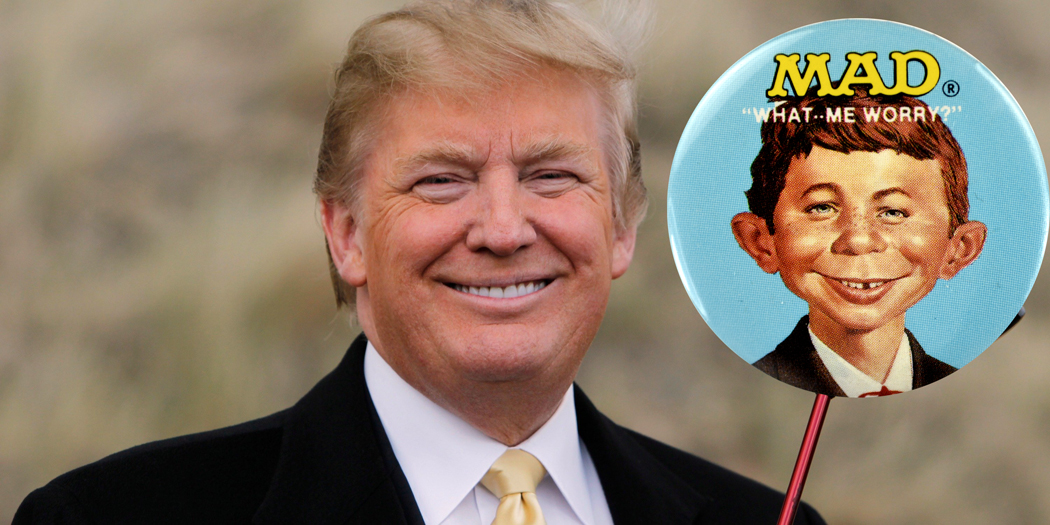
To begin, there is the issue of Donald Trump, which is a great squirt of squid juice, obscuring more lasting problems. It is easy to make fun of the Great Pumpkin, he practically satirizes himself. While he has fervent supporters, it is hard to know exactly what he stands for, because his words are so vague in application, no matter how blunt in expression. It is always possible to assume he is your ally, because you only listen to those words that honk your horn. Is he conservative? Conservatives value free trade. Is he pro-business? Business has told him they need an immigrant workforce. What does he stand for besides ignorance?

He is an obfuscation on the surface, a chaos beyond that because, of course, he has no ideology, other than Trumpism. It is not his supposed conservatism that I object to; there have been many thoughtful conservatives. Trump is not one of them; he isn’t even a conservative at all. What scares the bejeezus out of me about him is that he is so clearly unbalanced mentally. The word Andrew Sullivan has used is “bonkers,” and that can hardly be improved for accuracy. The constant wheezing about his vote count, poll numbers, inauguration crowd, all spouted against obvious and visual evidence, is a clear indication that he is unmoored from reality.

Then, there are the speeches, barely in English. They are really just sentence fragments thrown together with unattached adjectives. Yuge, sad, unbelievable, disgusting. They, as Philip Roth has counted them, are constructed from a vocabulary of a mere 77 words, reused and rearranged ad hoc. They jump around from topic to topic with little or no segue. And then, they are filled with things that are demonstrably untrue. One watches over an over when Trump says he never said this or that, followed by the videotape of him saying exactly what he now says he never said. Does he not know that his words have been recorded?

It cannot be easily said that Trump is a liar, because a liar knows what he is saying is untrue. Others manipulate statistics to make their arguments; Trump just pulls stuff out of his ass. Evidence is irrelevant.

Further, he uses these exanus pronouncements to support his chaotic policy pronouncements, which tend to be simple-minded in the extreme. Problems are usually complex and systemic; his solutions are simple-minded and blunt as a cudgel. He shows contempt for subtlety. If the problem is illegal immigration, his solution is not to consider the cause of the immigration, but to build a wall, despite the fact that the majority of the illegal immigration does not cross the desert border, but flies into our airports. My favorite joke about the wall: “Wall — cost: $12 billion; ladder — cost: $35.”

But this is not meant to be a jab at Trump, who is clearly unhinged, not very bright, not at all subtle, and basically a bully at heart. It is too easy to target him; he is a joke. A dangerous joke, who may very well destroy the world at the push of a button, but a joke nonetheless.

No, what I want to point out is that there is, beyond Trump, a basic misunderstanding of the political divisions in the country.

The divisions are very real. Between urban and rural, between liberal and conservative, between Republican and Democrat. But I want to point out that these may overlap, like Venn diagrams, the dipoles are not identical. We too often confuse conservative with Republican and liberal with Democrat. There may be overlap, but more important, their goals are different.

There is a clear difference between liberal and conservative. As they are defined nowadays (very different from when they originated and when conservatism favored a strong central government), the conservative now seeks a smaller central government and the liberal, an activist government working for the betterment of its citizens. The one favors the individual, the other, the community. The one is exclusionary, the other inclusive. And it is clear that as the political scene is currently deployed, Republicans tend to favor conservatism and Democrats tend to the liberal, although Republicans are more extremely weighted to the far-end of conservatism than the Democrats are to the left wing.

But, such thoughts of political philosophy are largely irrelevant to the actualities of politics. One should never conflate Republican with conservative, nor Democrat with liberal. The aims of ideology are to promote a world view and an action plan to enforce that world view. But that is not the aim of the Republican party. Certainly, it will use conservative ideas to further its ends when it can, but its primary driving aim is the accrual and preservation of power. This is central and should never be forgotten: Republicans will do whatever they need to to gain and keep power. Democrats have a similar, but weaker drive. Many Democrats join the party because they think they can make the world a better place. Some Republicans do that, too, but the aim of the party on the whole is not the improvement of society, but the exercise of power. It is King of the Hill on a hemispheric playing field.

This is not to say that most Republicans don’t believe, by and large, that conservative policies would help the nation, but that whether or not they do is secondary to the accretion of political power. Hence, the contorted, serpentine Congressional districts, gerrymandered into silliness in order to ensure Republican supremacy. (Yes, Democrats have done the same — in fact, they invented the procedure in the 19th century — but they were pikers compared to the modern attempt to engineer a “permanent Republican majority.”) Hence, the bald-faced hypocrisy of choosing sides on an issue solely on the basis of whether a Republican or Democrat is offering it for a vote (as with the Republican-designed Affordable Care Act, which became an unswallowable “disaster” when recycled by the Obama administration. Hence, the use of arcane Senate or House rules, or the threat of the “nuclear option,” when it favors them, and outrage when used against them.

And it is why Republicans were gulled into supporting Trump when it looked like he might win the White House back for the party, despite the problem of Trump espousing ideas contrary to longstanding Republican policies. Trump is, after all, not a Republican, except in name, and not a conservative, as it is usually defined. He is sui generis, a propounder of Trump now, Trump tomorrow, Trump forever.

One area in which Trump and Republican world views agree is that the primary lens through which to view policy is economic. Money is the gravity that holds that world together. Whether it’s tax cuts, deregulation or fear of unions and a raise in minimum wage, the heart and soul of the conservative world view is money. The very idea of “running government like a business” is a consequence of this Weltanschauung. But across the world, this idea is changing. Governments are not businesses.

There is a historical storyline here. In the feudal past, with the king at the top of the pile, government was essentially a protection racket, with each level of vassalage “wetting its beak” in the next level down, and everyone feeding on the peasants. The general welfare of the populace was not even an empty platitude. As nation states developed from the Medieval sense of monarchal real estate, the idea of decent governance took hold. Since the New Deal in the U.S., and post-war in the better part of the rest of the world, governments have assumed the duty of protecting the welfare of its populace. All through Europe, governments guarantee health care, safety, minimum living wages, shorter work weeks and longer vacations. The U.S. has resisted such things. For Republicans (distinct from conservatives, who also have many social issues) and Trump see the world through dollar-tinted glasses. It is a reversion to the Medieval model, where all wealth floats upward like a bubble in the champagne. And it is power that guarantees the income. The goal of the Republican party is not so much the institution of conservative ideas, rather it is the use of conservative ideas to protect and increase individual wealth.

The problem is, that while money can make life easier to navigate, money cannot make life worth living. For that, you need the other aspects of life that Democrats — and most of the rest of the world — embrace. Freedom from oppression, sufficient means for living, cooperative communities, aid for the less fortunate, an even playing field for all. Among the things that make life worth living are family, love, art, religion, good health, and shared interests and shared mythology.

For Trump and the Republican party both, the world they see is transactional. It is also a zero-sum game, and the winning is all. We need to recall that when we let ourselves be gulled into arguing over conservative and liberal. Those labels are merely the masks worn in the more brutal fight over who will be the alpha dog.

Originally published Feb. 17, 2017

I don’t often write about politics in this blog. My own beliefs are rather mainstream and inoffensive, on the whole. I tend to like politics as the negotiation of competing interests through compromise. But sometimes, there is something that just needs saying.

It has slowly dawned on me that we have been mistaking Donald Trump for quite some time now. I don’t know how many articles I’ve read or videos I’ve seen coming up with explanations of what Trump is really trying to do. Is he intent on creating a dictatorship? Is it world domination? Is it some clever means of manipulating the market to make himself even more rich? There are a dozen explanations put forward. Even his MAGA people don’t have a single explanation, and choose a Trump that fits their wishes. 

But I have come to the conclusion that seems to be the only one truly possible: Donald Trump is clinically insane. 

I know, we have all been saying he’s crazy for at least the past 10 years, but when we said that we didn’t really mean it. We were using a metaphor to explain the counterintuitive and counterproductive policy decisions he’s made, and the vomitation of lies that spew from his tongue. But I now mean that I think Trump is actually a madman. Spitgargling, foaming at the mouth crazy. The kind of crazy that would normally require a straitjacket  and padded room. That to attempt to understand why he does this or that is a fruitless task. There is nothing to understand. There is no secret meaning behind his policies. He is just insane, like Col Bat Guano in Dr. Strangelove. Stark, raving out of his mind. 

The scariest part of it all is the Republican congressmen and senators who line up behind him for their own craven reasons, often racist, or more often thinking they need to back up the crazy man in order to be re-elected. They repeat Trump’s crazy talk and attempt to explain “what he really means,” or, more often, just run away from town-hall meetings to avoid reasonable questions. 

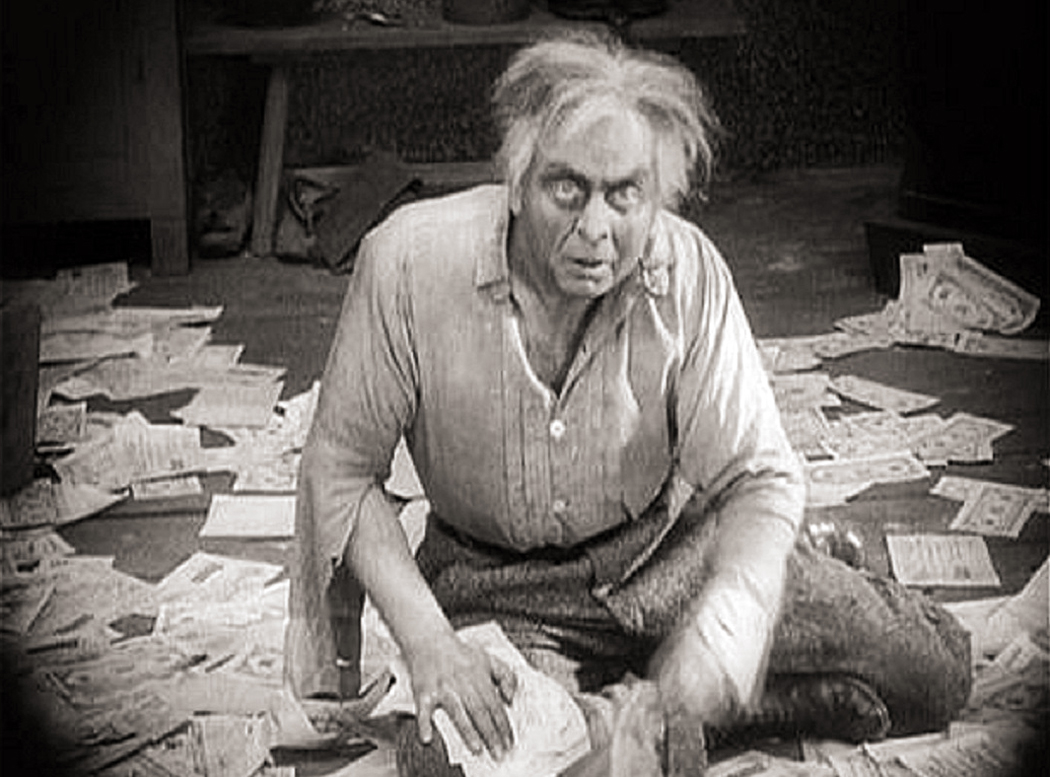
It really hit me when I remembered Fritz Lang’s 1933 German film The Testament of Dr. Mabuse, in which the famous master criminal, Dr. Mabuse (he’d been the subject of two earlier silent films by Lang) had been caught and declared insane and put in an asylum, where he wrote compulsively these scribbled nonsense notes that were smuggled out to his followers, who then used them to commit robberies, arsons, sabotage, etc. The images of Mabuse in his cell scribbling away with hysterical focus seem so much like Trump and his tweets. Both their utterances make little coherent sense. 

At one point, the police captain in the film talks about “Mabuse the criminal,” his ardent follower shoots back, “No, Mabuse the genius!” and describes admiringly how the “crimes” of the “brilliant” Mabuse will destroy a corrupt world. 

The film was banned by Joseph Goebbels, who proclaimed that The Testament of Dr. Mabuse was a menace to public health and safety and “showed that an extremely dedicated group of people are perfectly capable of overthrowing any state with violence.” Which, of course, is exactly what his boss, Herr Hitler, had already done.

Lang himself explained, “The film was made as an allegory to show Hitler’s processes of terrorism. Slogans and doctrines of the Third Reich have been put into the mouths of criminals in the film. Thus I hoped to expose the masked Nazi theory of the necessity to deliberately destroy everything which is precious to a people. … Then, when everything collapsed and they were thrown into utter despair, they would try to find help in the ‘New order’.”

Sound familiar? 

And so, I am now of the mind that Trump has no grand scheme, cryptic plan, overall policy design, but rather is a lunatic spouting inanities and non-sequiturs and a portion of the electorate suffering what they see as grievance follow him, hoping for relief, and far worse, a cadre of lawmakers who use the ravings to further their own careers. 

I hope by posting this, and having others make similar observations, we may finally reach a tipping point where the obvious insanity no longer goes normalized, and the tide shifts.

Still, it all makes me even more depressed about what is to come. 

In 2012, I posted a blog entry about the incoherence of the so-called conservative movement in America. A decade and more later, this disjunction in idea needs to be re-emphasized, and so I am reprinting it. There is very little that is conservative in current conservatism. Having devolved into a personality cult, conservatism is an immanent danger. 

I was unduly optimistic in my final paragraphs, as a large percentage of the population has been taken in by the charlatanism that leads the Republican party now. I do, however, still harbor a hope that the majority may shrink from the political mayhem that is on offer. A small hope, perhaps, but a hope nevertheless. 

Here, originally posted Dec. 13, 2012:

Contemporary American conservatism is a very strange duck. Maybe a platypus. 

To begin with, it espouses what has always previously been called liberalism: When our nation was founded, it was the conservative Hamilton who imagined a strong central government and the liberal Jefferson who feared it. 

Conservatism has traditionally been in favor of strong government. It is one of its hallmarks through history. Of course, behind that belief in central power was the heart of true conservatism: maintaining privilege for those who enjoyed it. That is why we could talk about Soviet hardline conservatives hanging on to Communism. It was their own privilege they were attempting to save. 

It was conservatives who supported the aristocracy in monarchist Europe; it was conservatives who fought reform in 19th century England and justified the subjugation of Ireland; it was conservatives who supported segregation in the American Jim Crow South. The record of conservatives on the progress of human liberation is a dismal one. 

There is a graspingness and miserliness at the heart of historical conservatism. All change threatens the status quo and that threatens those who hold the best cards.

But what remains the oddest thing about the current iteration of conservatism in America is the way it marries this retention of old social norms — even unjust ones — with a form of political radicalism that would have dumbfounded the founders. 

At the heart of the Tea Party movement is what can only be described as “soft” anarchism. One central tenet is the dictum that government is not the solution, government is the problem, and therefore, we need to eradicate government. This is not, in any way, shape or form, conservatism. It has no relation to conservatism historically, nor conservatism in ideal or theory. 

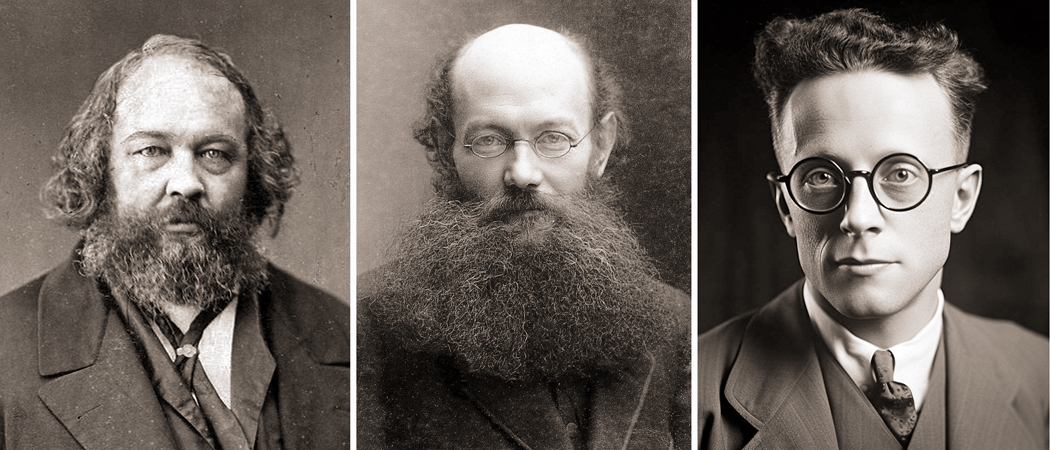
Mikhail Bakunin Peter Kropotkin Max Stirner

The philosophical grandfathers of the Tea Party, let’s face it, are Mikhail Bakunin, Peter Kropotkin and Max Stirner. Get the government out of the way and everything will be peachy-hunky.

Those who call themselves libertarians can sign on to this soft anarchism and feel their views are coherent. But so-called conservative Republicans have a hard time reconciling this anti-government sentiment with the converse idea that everyone should behave according to the Judeo-Christian norms they observe. On one hand, they extoll personal freedom, and on the other hand, they negate it to anyone who disagrees with them. 

Even more, those Republicans who have signed on to the Tea Party’s soft anarchism have a difficult time matching that up with their own drive for political power. And we must face the fact that our two-party system is just a bipolar grasping of power. Republicans can claim that government should be smaller, but a short gander at the record proves that after years of striving for the power, when they have it, Republicans use it just as much as Democrats. What’s the point of winning if you don’t get the perks? 

That’s why I call this a platypus. The parts don’t belong together.

I suppose one shouldn’t expect any political movement to be philosophically coherent. Politics remains sausage manufacturing and always will. But the part that causes thoughtful people profound disquiet comes with the reflection on history.

This marriage of one radical idea with reactionary social conservatism has a long history, and not a history that inspires much confidence or hope.

Every tyranny or reign of terror has its own version of a radical idea melded with a nostalgic longing for a past where everyone was good and righteous and behaved in the old-fashioned ways. Look at the incorruptible Robespierre; look at the agrarian virtues of Mao; look at xenophobic Stalin. 

Not to put too fine a point to it, and I don’t mean to equate one-to-one Republicans with Nazis, but the same principle is at work. No one extolled the virtues of family and marriage more than the National Socialists. Hitler loved children and dogs, as they say. The combination of reactionary social ideas with radical political ideas has fueled this kind of crackpotism since the days of Plato. 

During the last election [i.e. 2012], a healthy percentage of Americans turned away from the extremism of the Tea Party, and I don’t have a fear that this platypus will reconquer our politics. America has a long history of quietism, and has always in the past, so far, retreated from any radical departure from the comfort it finds in a stodgy middle class normality. It’s one of our country’s saving graces: We don’t go in, like the French, for theory. 

But nonetheless, this water-and-oil mixture of radicalism and reaction is something, as the doctors always say, we should keep an eye on. 

If I say we have entered a new Romantic era, you may lick your chops and anticipate the arrival of great poetry and music. But hold on. 

Nothing gets quite so romanticized as Romanticism. It all seems so — well — romantic. We get all fuzzy inside and think pretty thoughts. Romanticism means emotional music, beautiful paintings, expansive novels, and poetry of deep feeling.

Or so we think, forgetting that Johann Wolfgang von Goethe called Romanticism a “disease.” 

The surface of Romanticism may be attractive, but its larger implications are more complex. We should look deeper into what we mean by “Romanticism.”

Initially, it is a movement in art and literature from the end of the 18th century to the middle or latter years of the 19th century. It responded to the rationalism of the Age of Reason with a robust faith in emotion, intuition and all things natural. We now tend to think of Romanticism as a welcome relief from the artificiality of the aristocratic past and a plunge into the freedom of unbuttoned democracy. We read our Shelley and Keats, we listen to our Chopin and Berlioz and revel in the color of Turner and Delacroix. Romanticism was the ease of breathing after we have unlaced our corset or undone our necktie.

Yet, there is something adolescent about Romanticism, something not quite grown up. It is too concerned with the self and not enough with the community. There is at heart a great deal of wish fulfillment in it, and a soft pulpy core of nostalgia and worse, an unapologetic grandiosity. One cannot help think of Wagner and his Ring cycle explaining the world to his acolytes. Music of the Future, indeed.

I’m not writing to compose a philippic against a century of great art, but to consider the wider meanings of what we narrowly define as Romanticism.

Most importantly, one has to understand the pendulum swing from the various historical classicisms to the various historical romanticisms. Romanticism didn’t burst fully grown from the head of Beethoven’s Eroica, but rather recurs through history predictably. One age’s thoughtfulness is the next generation’s tired old pusillanimity. Then, that generation’s expansiveness is followed by the next and its judiciousness.

The classicism of Pericles’ Athens is followed by the energy of Hellenism. The dour stonework of the Romanesque is broken open by the lacy streams of light of the Gothic. The formality of Renaissance painting is blown away by the extravagance of the Baroque. Haydn is thrown overboard for Liszt, and later the tired sentimentality of the Victorians (the last gasping breaths of Romanticism) is replaced by the irony and classicism of Modernism. Back and forth. This is almost the respiration of cultural time; breathe in, breathe out. You could call it “cultural yoga.”

We tend to label the serene and balanced cultures as classical and the expansive and teetering ones as romantic. The labels are not important. Nietzsche called them Apollonian and Dionysian. William Blake personified them in his poems as reason and energy.

We are however misled if we simplify the two impulses as merely rationality vs. emotion. The twin poles of culture are much more than that.

Classicism tends to engage with society, the interactions of humans, the ascendency of laws instituted by men (and it is men who have instituted most of them and continue to do so — just look at Congress). AT its heart, it is a recognition of limits. 

Romanticism, of whatever era it reveals itself, engages with the cosmos, with history, with those things larger than mere human institutions, with Nature with a capital “N.” Romanticism distrusts anything invented by humans alone, and surrenders to those forces mortals cannot control. Romanticism has no truck with limits. 

These classical-romantic oppositions concern whether the artist is engaged with man as a social being, an individual set in a welter of humanity — or whether he is concerned with the individual against the background of nature or the cosmos.

Yet there is an egotism in the “me vs. the universe” formulation. It tends to glorify the individual as hero and disparage the community which makes life possible. 

In the 18th Century, for instance, Alexander Pope wrote that “The proper study of mankind is man.” The novel, which investigates human activity in its social setting, came from the same century. Fielding and Defoe come from that century.

The succeeding century is concerned more with man in nature, or man in his loneliness, or fighting the gods and elements. One thinks of Shelley’s Prometheus Unbound or Byron’s Manfred.

There are many more polarities to these movements in art and culture. One side privileges clarity, the other complexity. Just compare a Renaissance painting with a Baroque one. The classical Renaissance tends to line its subjects up across the canvas in a line, while the Baroque wants to draw us in to the depth of the painting from near to far. Renaissance paintings like to light things up evenly, so all corners can be seen clearly. The romanticised Baroque loves the great patches of light and dark, obscuring outlines and generally muddying up the works.

Look at this Last Supper by Andrea del Castagno. See how clear it all is. 

But the Baroque painter Tintoretto had a different vision of the same biblical event. It is writhing, twisting out into deep space, with deep shadows and obscure happenings. The Renaissance liked stability and clarity; the Baroque, motion and confusion.

One side values unity, the other, diversity. One side values irony, the other sincerity. One side looks at the past with a skeptical eye, the other with nostalgia. One side sees the present as the happy result of progress, the other sees the present as a decline from a more natural and happier past. One side unabashedly embraces internationalism, the other, ethnic identity and nationalism. If this sounds familiar, think red and blue states.

One of the big shifts is between what I call “ethos” and “ego.”

That is, art that is meant to embody the beliefs of an age, thoughts and emotions that everyone is assumed to share — or art that is the personal expression of the individual making it.

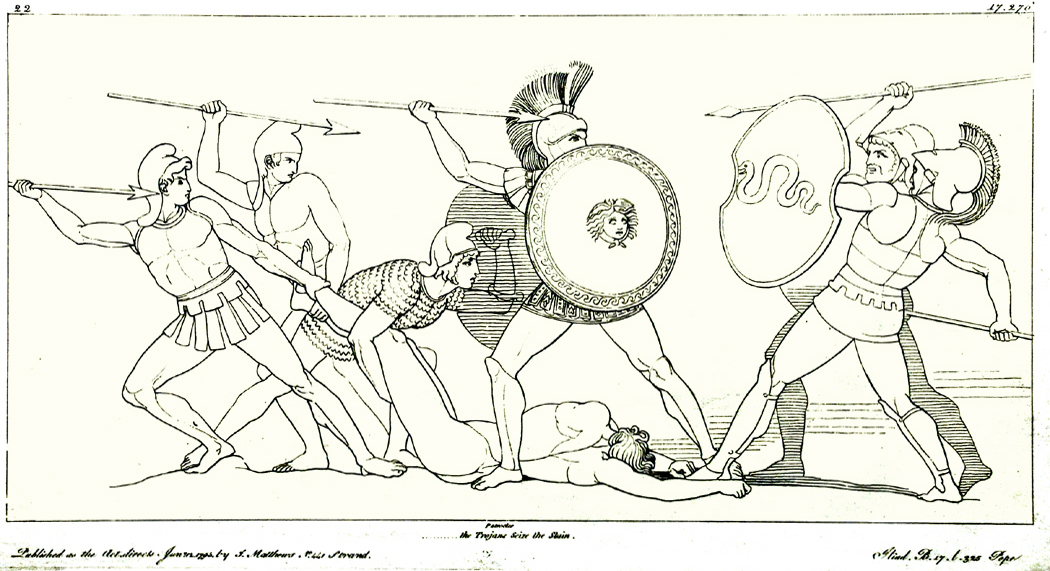
We have so long taken it for granted that an artist is supposed to “express himself,” that we forget it has not always been so. Did Homer express his inner feelings in the Iliad? Or are those emotions he (or she) described the emotions he expected everyone would understand and share? He tells of what Achilles is feeling, or Ajax or Hector or Priam — and they are deep and profound emotions — but they give no clue to what Homer was feeling.

In music, Haydn’s symphonies were written about in his day as being powerfully emotional. Nowadays, we think of Haydn as a rather witty and cerebral composer. If we want emotion, we go to Beethoven or Schubert. You cannot listen to Schubert’s string quintet and not believe it expresses the deepest emotions that its composer was suffering at the time. It is his emotion. We may share it, but it is his.

The history of art pulsates with the shift from nationalistic to international styles, from that which is specific to an ethnic or identity group, and that which seeks to transcends those limitations.

In music, Bach imitated the national styles in his English and French suites and his Italian Concerto. The styles are distinct and identifiable.

But the Galant and Classical styles that replaced it vary little from country to country. Perhaps the Italian is a little lighter and the German a little more complex, but you can’t get simpler or more direct than Mozart.

Nationalism reasserted itself in the next century, so that you have whole schools of Czech music, French, Russian. In the early 20th Century, internationalism took charge once more and for a while, everybody was writing like Stravinsky.

The main architectural style of the first half of this century is even called “The International Style.” That style is now so passé as to be the butt of jokes.

The classical eras value rationality and clear thinking, while its mirror image values irrationality and chaos.

You’re ahead of me if you have recognized that much of what I am calling Romanticism is playing out in the world and in current politics as a new Romantic age.

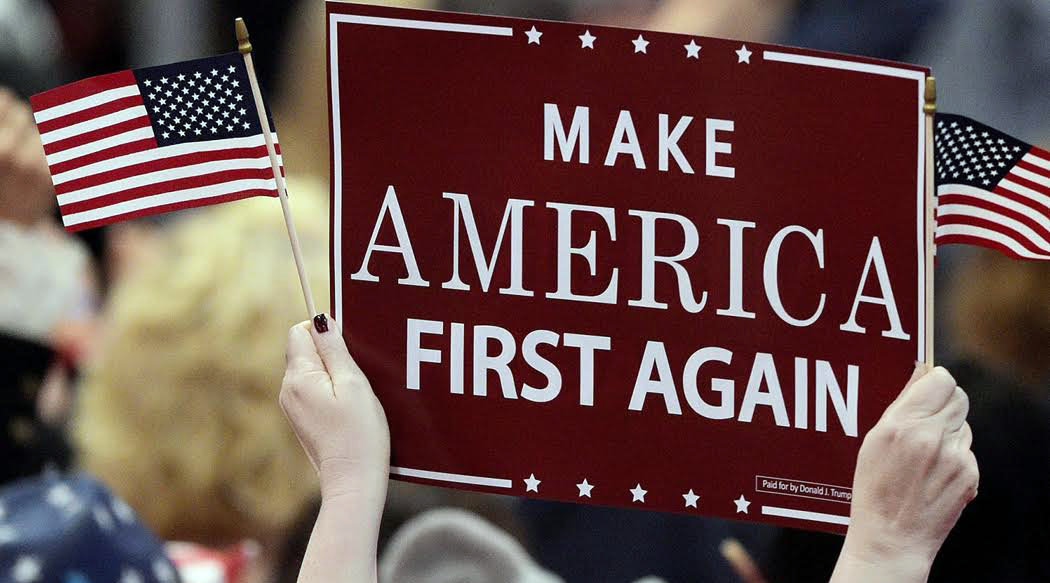
Nationalism is reasserting its ugly head in Brexit, in Marine Le Pen, Vladimir Putin — and in Donald Trump and his followers.

The mistrust or outright disbelief in science is a recasting of Rousseau. Stephen Colbert invented the term “truthiness,” and nothing could be a better litmus test of Romanticism: The individual should be the arbiter of truth; if it feels true, we line up and salute. In a classical age, the judgments of society are taken as a prime value. Certainly, there are those who resist, but by and large, the consensus view is adopted.

The previous Romantic age had its Castle of Otranto and its Frankenstein. The current one has its Game of Thrones and its hobbits, and wizards and witches. The 19th Century looked to the Middle Ages with a nostalgia; the Postmodern 21st Century looks to a pre-civilized barbarian past (equally mythologized) with a vision for a post-apocalyptic future. 

(Right-wing nostalgia is for a pre-immigrant, pre-feminist, pre-integration utopia that never actually existed. The good old days — before penicillin.) 

This neo-barbarianism also shares with its 19th Century counterpart a glorification of violence, both criminal and battlefield — as the huge armies that contend in the Lord of the Rings films, to say nothing of the viciousness of Game of Thrones

As we enter a new Romantic age around the world, one of dissociation, confusion and realignment, we need to recognize the darker side of Romanticism and not merely its decorative accoutrements.

We will have to accept some of those adages propounded in William Blake’s Marriage of Heaven and Hell:  “Sooner murder an infant in its cradle than nurse unacted desires.” And, “The tigers of wrath are wiser than the horses of instruction.” Is this not the Taliban? The Brexiteers? The Republican Party? And those elements in academia who want cover their ears and yell “nyah-nyah-nyah” when faced with anything outside their orthodoxy? 

Because it isn’t only on the right. The Noble Savage has come back to us as a new privileging of indigenous cultures over Western culture. The disparagement of European science, art, culture and philosophy as “hegemonic” and corrupt is just Rousseau coming back to bite us on the butt. (The West has plenty to answer for, but clitoridectomies are not routine in New Jersey. There is shame and blame found everywhere.) 

And the political right has discovered “natural immunity” and fear of pharmaceuticals, while still thinking it OK to run Clorox up the kiester. 

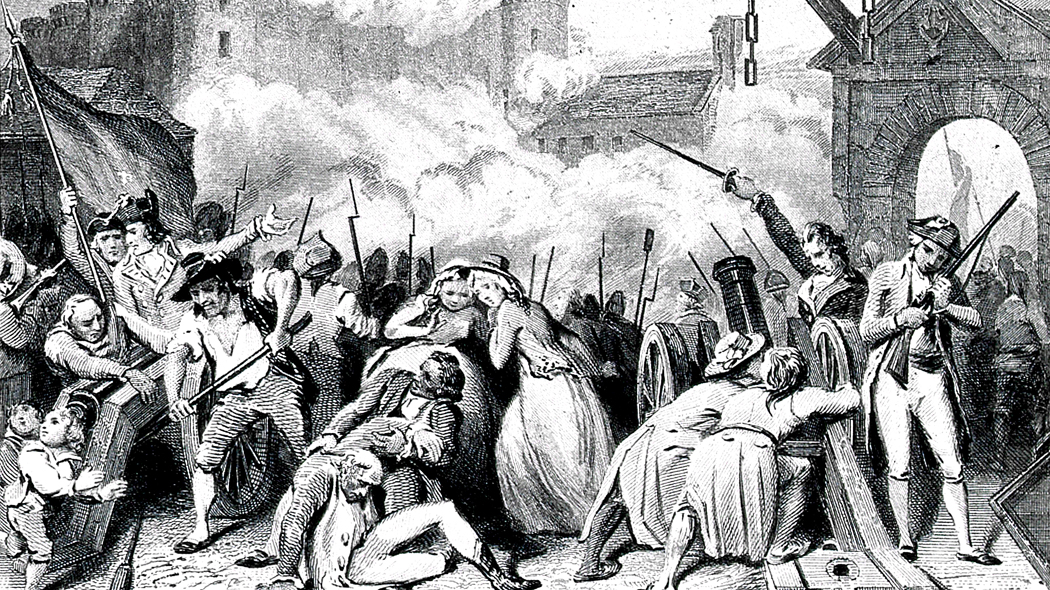
The last Age of Romanticism kicked off with the storming of the Bastille — a tactically meaningless act (only seven prisoners remained prison, four of them were forgers and another two were mentally ill) which inspired the French Revolution and all the bloodshed of Terror, but had enough symbolic significance to become the focus of France’s national holiday. We have our January 6, just as meaningless and perhaps just as symbolic. But perhaps that riot has more in common with a certain putsch in Munich. 

The first time America entered a Romantic age, in the 19th century, it elected Andrew Jackson, arguably the most divisive president (outside the Civil War) before Donald Trump, and certainly the most cock-sure of himself and the truthiness he felt in his gut. Facts be damned. For many of us, Trump feels like the reincarnation of Jackson, and this era feels like the reemergence of a Romantic temperament, and we may need to rethink just how warm and cuddly that truly is.

This piece is updated, expanded and rewritten from an April 2017 essay for the Spirit of the Senses

This is the 600th blog entry I’ve written since retiring eight years ago from the writing job I held for 25 years. But as I’ve said many times, a real writer never retires, he just stops getting paid for it. 

During my career, I wrote over 2.5 million words. Since then, I’ve added another million. If you are born a writer, you simply can’t help it. 

(In addition, since 2015, I’ve written a monthly essay for the website of The Spirit of the Senses salon group in Phoenix, Ariz., a continuation of the many salon lectures I gave there for years.)

And even when I write an e-mail to friends or family — the kind of note that for most people contains a short sentence, a quick “LOL” and an emoji — I am more likely to write what looks like an old-fashioned missive, the kind that used to come in a stamped envelope and delivered by a paid government worker. An e-mail from me will take a while to read through.They are sent not merely to convey information, but to be read. They have been written, not just jotted down. 

Over the eight years of blogifying, I’ve covered a great many topics. Many on art and art history — I was an art critic, after all — many on history and geography, a trove of travel pieces, a few frustrated political musings and a hesitant offering of oddball short stories (if you can call them by that name.) 

People say, “Write what you know,” but most real writers, myself included, write to find out what I know. The writing is, itself, the thinking. Any mis-steps get fished out in the re-writing. 

Ah, words. I love words. I love sentences, paragraphs, chapters. Although I wrote for a newspaper, where short, simple sentences are preferred, I often tested the patience of my editors as I proved my affection for words by using obscure and forgotten words and by using them often in long congregations. 

“I love long sentences. I’m tired of all the short ones. Hemingway can keep them. Newspapers can urge them. Twitter can mandate them. To hell with them.

“My ideal can be found in the long serpentine railways of words shunted hither and thither over dependent clauses, parenthetical remarks, explanatory discursions and descriptive ambiguities; sentences such as those found in the word-rich 18th century publishing world of Fielding, Sterne, Addison, Steele, or Boswell, and perhaps most gratifyingly in the grand, gravid, orotund sentences of Edward Gibbon, whose work I turn to not so much for information about the grandeur that was Rome, but for the pure sensuous pleasure to be had from those accretive tunes built from the pile of ideas and imagery (to say nothing of ironic asides), and peppered liberally with the notations of colons, semicolons, dashes and inverted commas.”

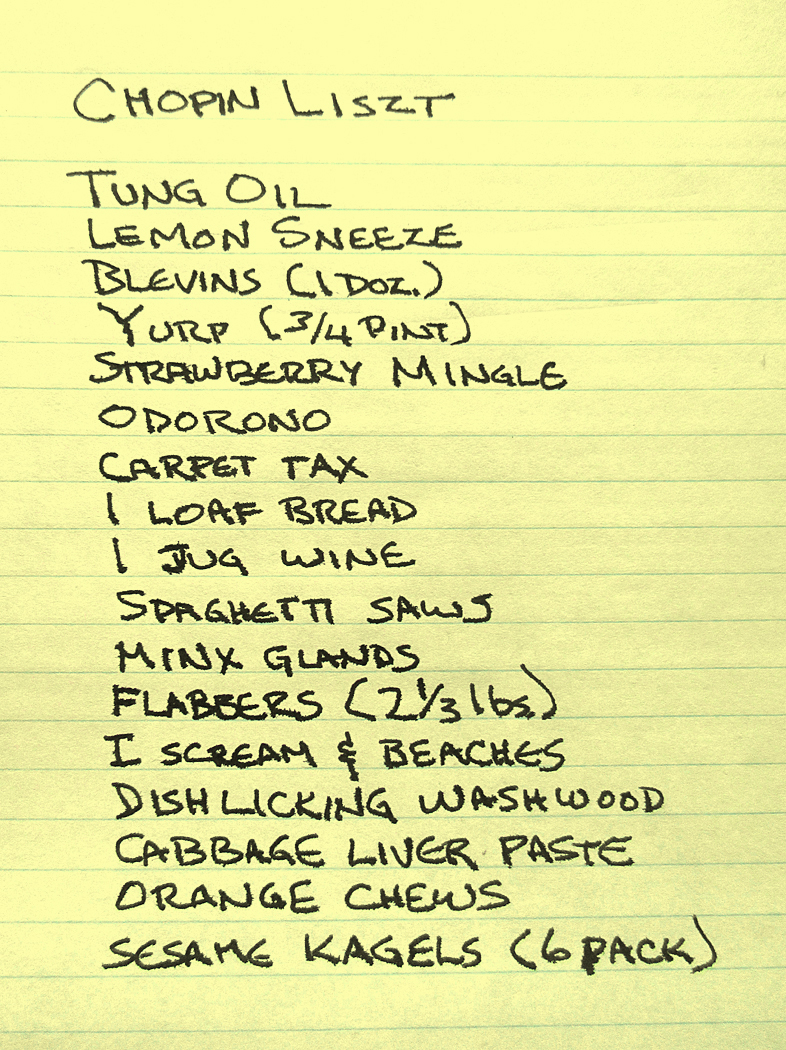
The love of words fuels a fascination with paronomasia. I make up words, play with them, coin spoonerisms and mondegreens and pepper my everyday speech with them. As music critic, I reviewed sympathy orchestras. Sometimes I have trouble trying to mirimba a name. On my shopping list I may need dishlicking washwood. 

I often give my culinary creations names such as Chicken Motocross, Mentil Soup, Ratatootattie, or  — one I borrowed from my brother — Mock Hawaiian Chile. 

When my wife came home from work, I usually asked “How did your Italian?” (“How did your day go?”)

When asked for my astrological sign, I say, “I’m a Copernicus.” My late wife was a Virago. And I’m pretty sure our Orange Bunker Boy was born under the sign of Feces. I call him a would-be Moose-a-loony.

I try to keep unfashionable words in currency. On long car trips with granddaughters, we didn’t count cows, we counted kine. I tend to refer to the girls as the wee bairns, or the kidlings. 

I have no truck with simplifying the language; I will not brook dumbification. The more words we use, the better, and the better inflected those words will be. As we lose words, the slight difference in emphasis and meaning is lost, and a simple word then has to do extra duty to encompass ideas and things that are better understood as different. 

Every word has a dictionary definition, but that definition is little but the skeleton on which the meat and muscle is hung onto. Each word has a nimbus of meaning and affect around it, which is learned by its speakers and readers through long acquaintance. You can always tell when someone has snuffled through a thesaurus, because the fancy word they choose has been stripped of its nimbus, or has an aura that is the wrong color for the spot in which it is placed. In other words, such a writer doesn’t really know the word that has been chosen. The Webster version is only a fuzzy black-and-white photo, not the real thing. 

I have written before how sometimes, instead of doing a crossword puzzle or rearranging my sock drawer, I will make lists of words. Each has a flavor and reading such lists is like perusing a restaurant menu and imagining the aroma and flavor of each offering. It is a physical pleasure, like the major or minor chords of a symphony. Here is a brassy word, there the pungency of an oboe, and over there, the sweet melancholy of a solo cello. 

I think all writers must have something of the same feel for the roundness, spikiness, warmth, dryness or wetness of words. And the way they connect to make new roundnesses, coolnesses, stinks or arousals in sentences. 

Yes, there are some writers — and I can’t pooh-pooh them — who use words in a blandly utilitarian way. Stephen King, for instance, is a great storyteller. He can force you by a kind of sorcery to turn pages. But on a word-by-word level, his writing is flavorless, almost journalistic. I suspect this is a quality he actually aspires to — to make the language so transparent as to be unobservable. I have to admit there are virtues in this, also. But not for me. 

I want a five-course meal of my words. 

Language can take either of two paths: prose or poetry. The first invests its faith in language as a descriptor of systems. It reaches its nadir in philosophy. It makes little difference if it is Plato or Foucault; philosophy — especially the modern sort — is essentially a branch of philology. It seeks to deconstruct the language, as if understanding the words we use will tell us anything about the world we live in. It tells us only about the language we use. Language is a parallel universe to the one we inhabit, with its own rules and grammar, different from the rules and grammar of the real world. 

This has been a constant theme in my own writing. When we say, “A whale is not a fish,” or “A tomato is a fruit, not a vegetable,” we are talking about language only, not about whales or tomatoes. But beyond the language we use to communicate our understanding of the world, no matter how vast our vocabulary, the world itself is infinitely larger, more complex, diverse, chaotic and unsystematic, not to be comprehensively understood by mere mortal. 

And I should clarify, by language, I mean any organized system of thought or communication. Math is just language by other means. When I use the term “language” here, I mean what the Greeks called “logos” — not simply words, or grammar, syntax or semantics, but any humanly communicated sense of the order of the cosmos. Not one system can encompass it all. 

Consider Zeno’s paradox: That in a race between Achilles and a tortoise, if you give the tortoise a headstart, no matter how little, Achilles can never catch up. Before he does, he has to go halfway, and so is still behind the tortoise, and before he goes the remaining distance he must go again halfway. Thus he can never catch up. The paradox is purely in the forms of logic, not in the reality. We all know Achilles will catch up in only a few strides. But the system — the logic, or the words — tells us he cannot. Do not trust the words, at least not by themselves, without empirical evidence to back them up. 
All systems of thought, whether religious, political or scientific, ultimately break down when faced with the weedy complexity of existence.

And so, a good deal of what we all argue about is simply the words we choose to use, not the reality. We argue over terminology. Conservative, liberal? Is abortion murder? These depends entirely on your definitions. 

Poetry, on the other hand — and I’m using the word in its broadest and metaphorical sense — is interested in the things of this world. Yes, it may use words, and use them quite inventively, but its goal is to reconnect us with our own lives. It lives, not in a world of isms, but in one of mud, tofu, children, bunions, clouds and red wheelbarrows. This is the nimbus of which I speak. 

It is ultimately our connection with our own lives that matters, with the things of this world, with the people of our lives that should concern us. It is what provides that nimbus of inexactitude that gives resonance to the words. 

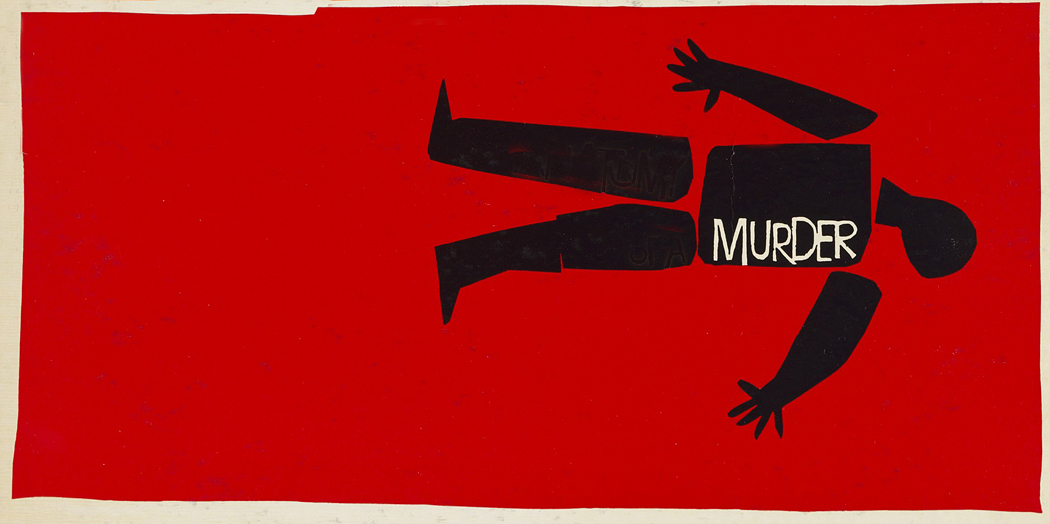
Is murder a real thing? That is, does it exist in the world, separate from the language that describes it?

This is an important question, because it illustrates one of the central issues hindering our politics. Has always hindered politics. 

Certainly, there are humans who have caused the death of other humans, but at what point do we draw the line and call it murder? It is a line that shifts over time and culture. When we kill someone during war, we generally do not call it murder, even if it a civilian who is dead. It might be “collateral damage.” When we execute a convicted killer, we do not call it murder — or at least most people don’t. And if we accidentally run over a pedestrian who steps in front of our car, we don’t call it murder, either. 

The results are the same in all cases: Someone stops being alive. 

But we make legal distinctions between murder and manslaughter. There are shades and subsets of homicide. First- or second-degree murder, felony homicide, unlawful death, voluntary and involuntary manslaughter, justifiable homicide, parricide, suicide, infanticide, fratricide, assassination, euthanasia, regicide, honor killing, revenge killing, human sacrifice, self immolation, suicide by cop, extrajudicial killing, genocide. 

The words used and the lines drawn are different, not only in different countries and cultures, but in different states in the U.S. Some states recognize third-degree murder. A few have legalized voluntary assisted suicide. There is no uniform, worldwide, universal definition of what constitutes “murder.” 

So, again, is murder a real thing, outside of language? Or is it just a word? 

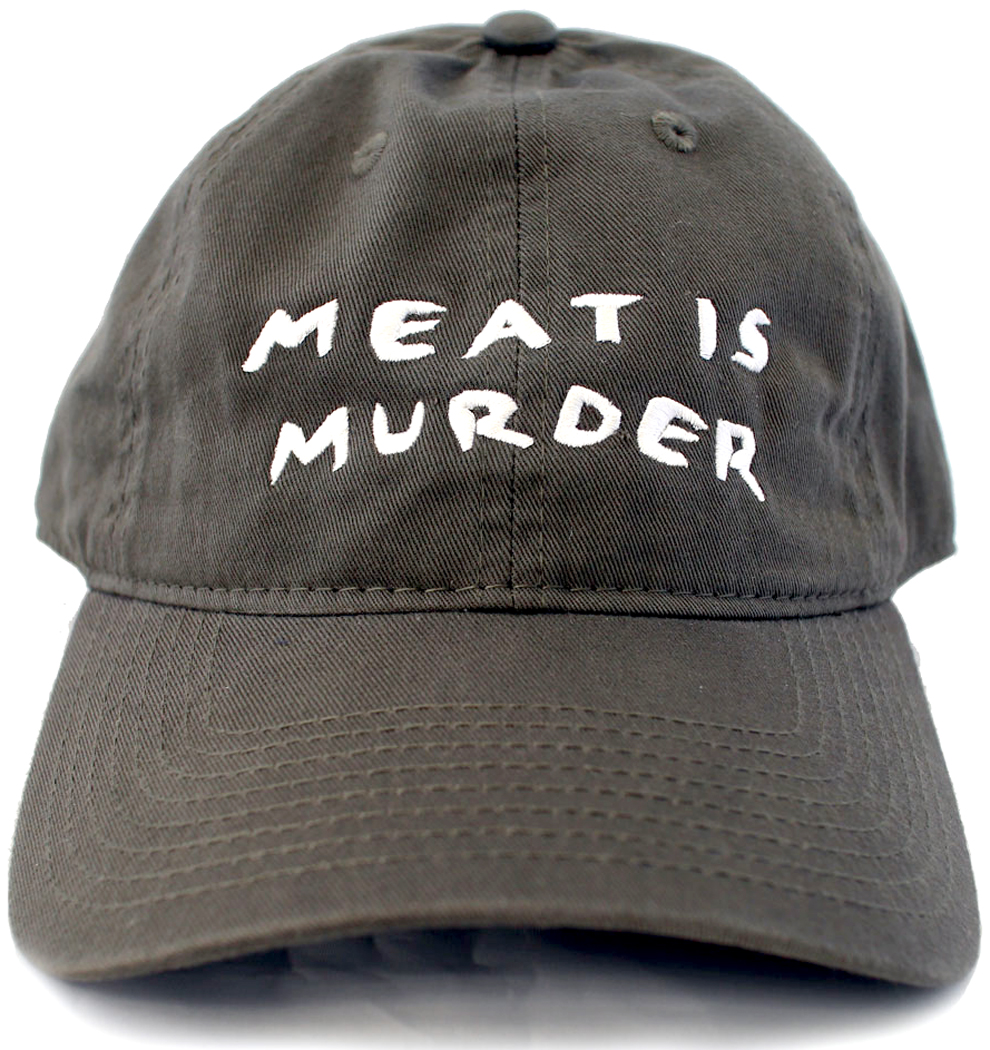
So, when we argue that abortion is murder, we are not really talking about anything real, but about language: We are arguing about the dictionary. 

I do not mean here to minimize the moral concerns over abortion, which are quite troubling, and I have no intention of changing anyone’s mind on the issue. People on both sides are intractably dug in. My concern is rather to point out the way we tend to use language as if it were a one-to-one depiction of reality. When we call abortion “murder,” we are using a conditional and contextual term as if it were categorical. 
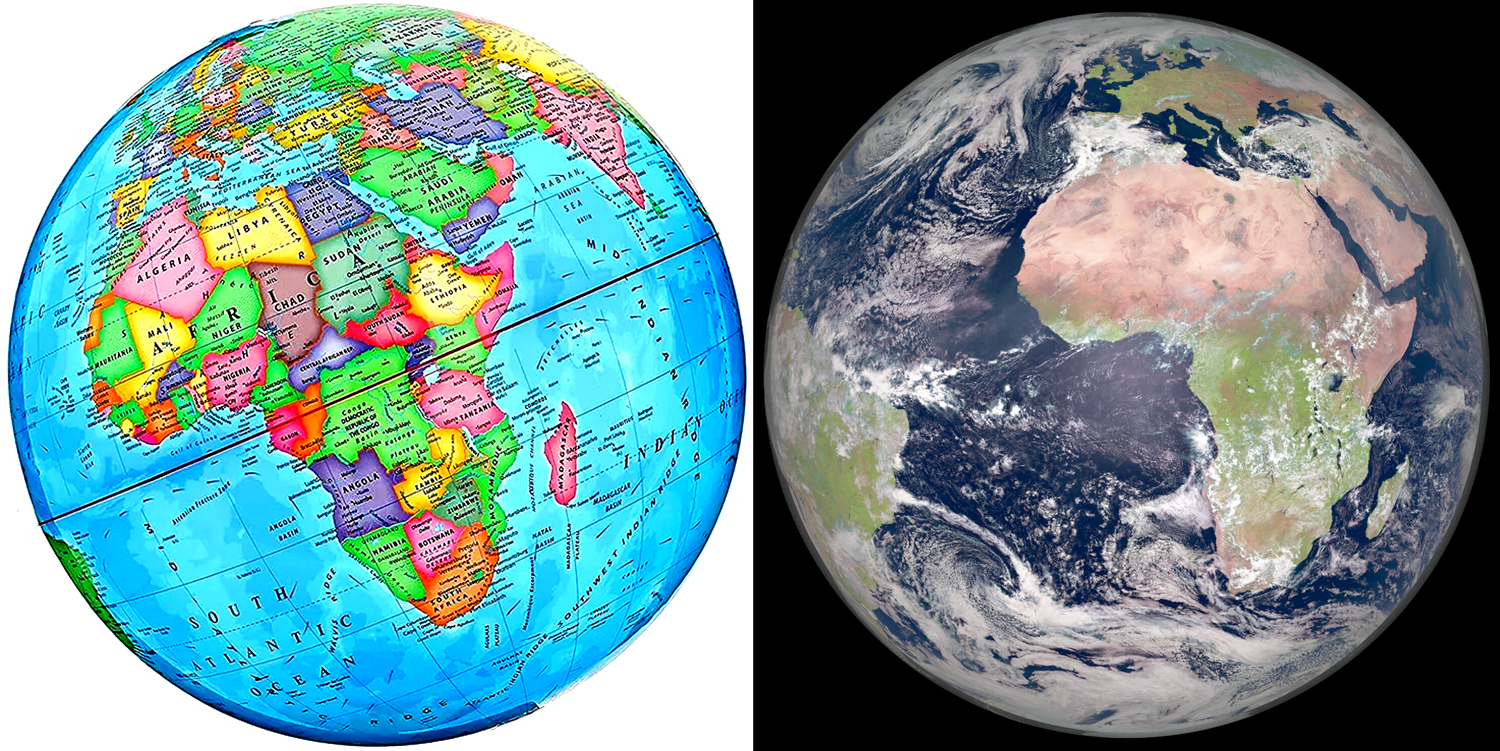
When we name something, what is the relationship between that tag and the thing itself? Not only is it arbitrary, it is constantly shifting.

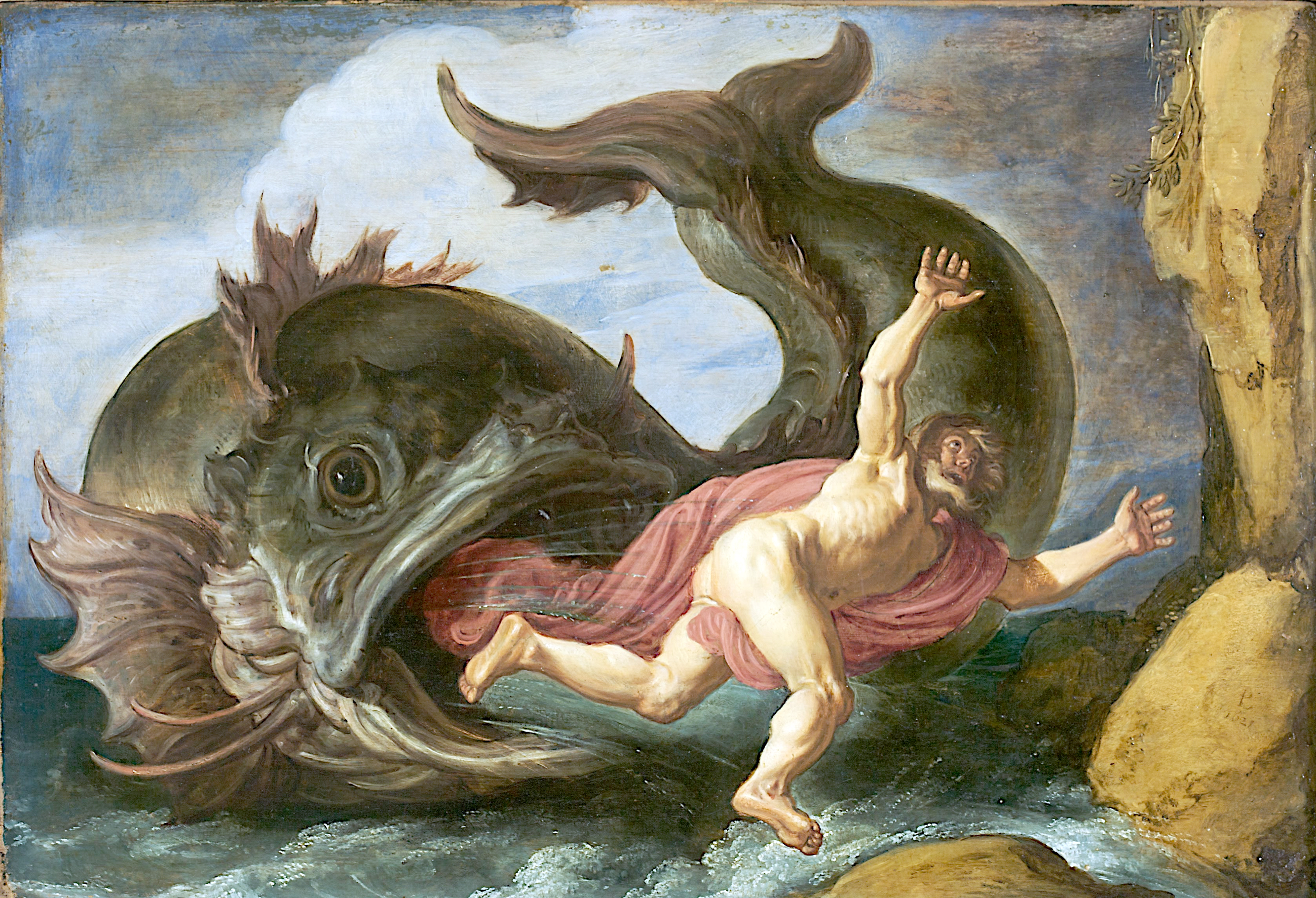
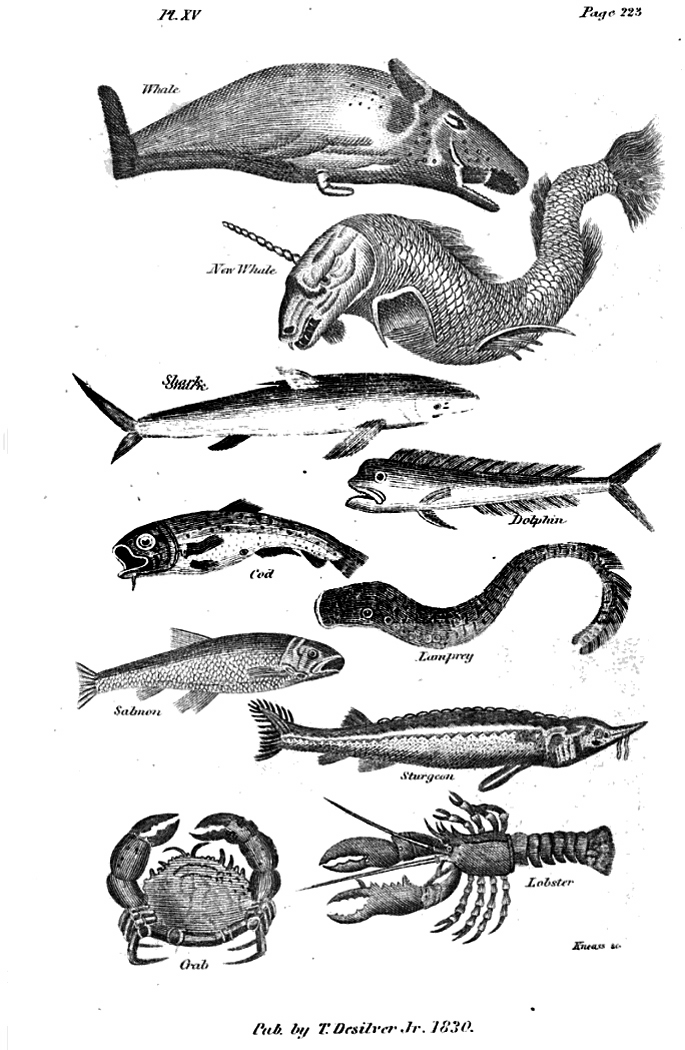
Let’s take Jonah and the whale. The King James Bible says the prophet was swallowed by a “great fish.” Does that mean it wasn’t a whale? Well, before the early 19th century, a whale was a fish. It was so categorized in books and dictionaries. In his popular History of the Earth and Animated Nature, from 1774 and reprinted well into the 19th century, Oliver Goldsmith divided the fish into “spinous fishes,” “cartilaginous fishes,” “testaceous and crustaceous fishes” and “cetaceous fishes.” A mackerel, a sand dollar and Moby Dick were all kinds of fish. After Linnaeus rearranged the orders of living things, did any of the actual animals change? Of course not. The change was linguistic, not biological. 

The logic of language and the chaos of experience are sometimes parallel, but never coexistent. Language has, for instance, nouns and verbs. Things and actions. But in experience, all things are always in action and all actions occur in things. They are a single entity; splitting them is part of the logic of language. Language consequently splits into discrete bits what cannot in life be divided. 

Sentences are written in a certain word order. Subject and predicate; modifiers and conjunctives; relative and independent clauses; semicolons and hyphens. None of these things find matches in the real world. Their logic is the logic of language. Life is other. 

And we too often (in fact, almost always) come to believe that our words match our lives. They don’t. 

I say this with some perturbation, having made my living with words. I love words. I love language. But the older I get, the more obvious it becomes that language is the “other.” It is a simulacrum of reality, but far removed. 

Take Zeno’s paradox. Here is a prime example. For millennia, logicians have argued over it. Give a tortoise a head start in a race and Achilles can never catch it. Logic proves it. Before catching the tortoise, Achilles has to go halfway to catching it. But before he goes halfway, he has to go a quarter of the way. You keep fractioning it out, and it becomes obvious, there will always be a fraction that Achilles has not yet overcome. 

But, try it empirically, and it takes Achilles only a single stride to pass the tortoise. The structure of the proposition has a self-referential reality that does not mirror the reality of experience. Two completely different things. 

This has been my beef with Plato. His idealism is only possible in language. His bed is a definition of bed. His good is a definition of good. He is writing a dictionary. If the Greeks had a fault, it is their hubris over their language. They never understood the difference between word and fact; they believed that, if the Greeks had a word for it, everything was covered. 

The voluntary or unwitting confusion of language and reality has been used by political factions for as long as there are records of language. It is how Mesopotamian kings explained their reigns, how Spartans and Athenians justified killing each other, how secessionists recruited soldiers in 1861, how the Cold War was sustained. And it is how Donald Trump herds his believers. 

I hope you noticed how I just used language to characterize what, in fact, is a heterogeneous accumulation of voters who probably each had his or her own reason for picking the Great Orange Pumpkin. Some of those reasons were poltroonish, some ignorant, some hopeful, some rebellious, some genuinely patriotic. Probably as many reasons as there were reasoners. But with language, I can imply they were both bovine and religiously zealous. Thus language can be dismissive. 

Trump uses language this way constantly, setting up dichotomies that don’t exist in reality, creating categories that only function linguistically, using insults to stick labels into opponents with a pin. “Crooked Hillary,” “Lyin’ Ted Cruz,” “Little Mario.” This is language shrinking reality. Reality is vast, multifarious, undefinable; language is a door slammed in the face of possibility.  
The very model of the world that Trump lives by — us vs. them and the sense of everything being a zero-sum game — are linguistic in origin, not reality-driven. They do not match experience. 

I clearly have my own political preferences, but I am not here trying to change votes, but to persuade that our understanding of the world is constricted by our faith in language. Language is not the only means of engaging the world. There is sound, sight, spatial reasoning, mathematics. Each with its own structure and meaning.

Consider how you decide whether to pass a car on the road. You do neither arithmetical calculation, nor verbal argument, but rather, you have a spatial sense of objects moving in time and space and you can judge quite accurately if there is time and space to get around the geezer driving 25 in a 45 zone. This is not verbal, but it is thought nonetheless. 

The life we experience is continuous and contiguous; it is not parceled into tiny bits, each distinct and definable. It is one huge swirl and swathe. Language cannot ever encompass it. Beware.

I’ve written before about why I am not a conservative (Link here), but now I want to point out that neither are Republicans.

What is conservatism? Through the centuries, it has been defined by two central guiding principles.

First, that tradition is the best guide for governance. The wisdom of centuries of ancestors has winnowed the true and lasting from the meretricious and ephemeral. We should not make ill-considered changes in the functioning of society, but only those absolutely necessary, and even those should never be done quickly, but only with judicious deliberateness.

Second, that a strong central government is necessary for the smooth running of society. A Hobbesian Leviathan to control the powers of crime, greed, violence and selfishness that are the core of basic human nature.

This sort of conservatism has been both a strength of such lasting governments as those of Great Britain, and a weakness, when entrenched interests use its tenets to prevent the furtherance of justice. In America, we have seen this most maliciously in the retrenchment against Civil Rights and the enforcement of segregation.

So, a faith in keeping things running smoothly as it has been running, and in a strong central government are what define conservatism. But this is almost 180 degrees from what those who now call themselves conservatives believe. In fact, they seek to promote the crime, greed, violence and selfishness that are the core of basic human nature. All checks removed. Yea!

For them, the central government is too strong, too invasive, and such segments of the Republican Party as the Tea Party, seek to blow up two centuries of established patterns of governance. What happened? Conservatives are meant to be wary of change.

These once-fringe elements of the Republican Party are much closer to Anarchists than to Conservatives. As Grover Norquist famously said about the Federal government, “I just want to shrink it down to the size where we can drown it in the bathtub.”

Once again: This is not conservatism. It is anarchism.

In recent decades, the Republican Party has been the conservative party, from Barry Goldwater, through Ronald Reagan and into the 1990s, but that has all changed. There is precious little conservatism in the party these days.

Of course, parties have changed over the years, over the centuries. When the Constitution was written, it was the fervent hope of all those participating that the government would be able to function without the pernicious effect of factions. That didn’t last long, as almost immediately, the Federalists began feuding with the Jeffersonian Democratic-Republicans.

But, while the parties were originally formed on ideological grounds, they soon became something else: competing teams of political power-seekers. They might as well have been football teams. They existed on patronage and party machinery. In the 19th Century, occasional third parties arose, based on political philosophy, but they either soon faded, or were absorbed into the system. Whigs, Free-Soilers, Know-Nothings.

The one that survived and prospered was the Republican Party, begun as an anti-slavery party, and, after the Civil War, the party of Reconstruction and then the party of Big Business. The logic of this evolution is not clear, except as the party was led by power-seekers who gravitated toward money.

But it was also the party fostering conservation in the natural world, and the party that undertook the breaking up of corporate monopolies. Nowadays, that is hard to credit.

Through most of the 20th Century, the contending Republican and Democratic parties were simply teams vying for power. There were liberal Republicans and quite a few conservative Democrats. Both parties contained a spectrum of inclinations. They were just teams competing for power.

But, since Goldwater, the parties began a process of ideological cleansing, with those calling themselves conservatives drifting ever more to the Republican Party. Some were motivated by genuine governing philosophies, but many were pulled toward the right by the rise of Civil Rights. There was a conscious strategy among some Republicans to appeal, mainly via dogwhistle weasel words, to abject racism.

The Republicans claimed to be conservative; they excoriated the Democrats for being “liberal,” as though that were a pejorative term.

But just how conservative are current Republicans? Not much.

It has been pointed out by many observers that the leaders of the Republican Party have made a devil’s bargain with these fringe groups to gain and keep power in Washington, but that now, the monster has begun to kill its own creator. As a smaller and smaller faction of radicals enforce their will on primary elections, otherwise sensible politicians have had to curry the favor of the nut-groups, leading to a wider and wider division between the two political parties, and into that divide has seeped an element so toxic, it could destroy the whole thing.

Donald Trump is not a conservative. He isn’t anything. There is no philosophy of government, no thoughtful consideration or principles. He says one thing one day and the opposite the next. Heck, he can even contradict himself within a single sentence — if you can acknowledge those utterances of word salad as sentences.

Trump is a creature unfit for the office, unfit even for human company. A “short-fingered vulgarian” and self-promoter, he makes me embarrassed to be an American. And not because of his politics — which are bad enough — but because he is such a poltroon. I needn’t enumerate his gaucheries, insults, lies, distortions, self-aggrandizements, arm-twisting handshakes, bilious lip-poutings, shuffling gait, knee-length neckties, blatant nepotisms and the creepy things he has said about his daughter — all these and more can be found by the thousands on the Google.

But, because the Tea Party has controlled the Republican Party, and because a minority of voters in a crowded primary managed to win Trump the nomination in 2016, the party finds itself having to defend and support the unsupportable and indefensible.

And now, no grown-ups have gotten what they wanted, or thought they wanted. Only the immature, thoughtless and xenophobic have got what they sought.

I have no doubt that many a Republican congressman and senator would be more centrist, if they did not face rabid primary challenges in their now gerrymandered districts.

Some Republicans no doubt would like to promote genuine conservative ideals, but they have been backed into a corner, and now face defending tariffs instead of free trade. They have to campaign against the very institution they are members of. And they have to excuse behavior from their party leader that they would have salivated over being able to use against any Democrat. Did Bill Clinton lie about Monica Lewinsky? A threat to our nation. Did Trump lie about Stormy Daniels? Well, he’s just being Trump. No big deal.

They are caught, not merely in a round of hypocrisy, but hypocrisy so blatant and toxic it may well end up disintegrating the Republican Party. And most of the country  — a majority of voters — will find it hard to lament the demise.

1948-1949-1953

Who are you?

I don’t mean your name or your job or your nationality or ethnicity. But who and what are you? I should like you to think about that for a moment.

Many people believe in a heaven after death where they will meet their loved ones again. But what will they look like? For that matter, in heaven, what will you look like? If you have an internal sense of who you are, what does that person look like? This is not a random question, but a way of considering one of the fundamental issues of existence and of our way of understanding that existence. If you had an entry in the dictionary, what would the picture look like next to your name? Is there even a single image that captures the totality of your existence. When Alfred Stieglitz proposed to create a portrait of Georgia O’Keeffe, he took a bookload of photographs, since one could not ever be enough.

The problem is in thinking of existence as a noun.

For most of us, the cosmos is made up of things; indeed it is the sum total of things. This is a misunderstanding of the reality we live in. It is also a misunderstanding caused by our reliance on language as a way of dealing with that reality. Language leads us astray.

1956-1959-1962

When most people consider what the world is made of, they expect to encounter nouns — that is, things. When they consider themselves, they either think of how they look in the mirror now, but more often of an idealized version of them at the peak of their existence, perhaps when they were 25 or 30 years old. It’s how we will appear in heaven. We have this peculiar idea that nouns are a static identity, that a horse is a horse, a flower is a flower and a bed is a bed. Webster’s dictionary is a catalog of reality.

I bring up beds because of Plato and his damnable idealism. He posited that all earthly beds are but a misbegotten imitation of the “ideal” bed, which does not exist in this world, but in some idealized non-material realm. There is an ideal bed, he says, and an ideal chair, ideal tortoise, ideal apple pie, ideal human, compared to which the earthly item is a knock-off. These ideals are perfect and unchanging, whereas the world we know is sublunary and corrupt.

1966-1969-1977

I’ve written before about this blindness in the ancient Greeks, that they conflated language with reality, that they truly believed that the word they knew was a perfect and complete representation in language of the reality they lived in, and further, that the logic of language replicated identically the order of the universe. Language and reality had a one-to-one relationship. It was a naive belief, of course, but one that led them to believe that nouns were a real thing, not merely a linguistic marker. We still suffer from vestiges of this superstition.

(There was at least one Greek who demurred. Heraclitus recognized that all existence was movement. “Panta Horein,” he said. “Everything flows.” It is why, he said, you cannot ever put your foot into the same river twice. Heraclitus is my hero.)

1984-1996-2015

plant-life-cycleFor in the real world, there are no nouns, there are only verbs. It is all process. A noun is just a snapshot of a verb, freezing it in a particular time and place. But the one ineluctable thing is the verb — the process, the motion, the growth, the dissolution and re-formation. A flower is not a thing, but a motion. It begins as a seed, sprouts beneath the soil and breaks its surface, grows upward, pushing out leaves, swelling into a bud at its apex, popping open the bud to a blossom, which fertilized by a moving bee, dries and drops, leaving a fruit encapsulating a new seed, which falls into the soil once more. The whole is a process, not a thing.

It is the same for you or me. When we were conceived, we were a zygote turning into a fetus, into an infant, a toddler, a boy or girl, an adolescent, a young adult, a grown-up (when we set the seed once more for the next birth) and then accept middle age and senescence, old age and death. We are not any of the snapshots we have in our albums, but the motion forward in time, always pushing up and outward.

“I am inclined to speak of things changed into other things,” writes Ovid at the beginning of his Metamorphoses. Indeed, Plato’s bed began as a seed, a tree turned into lumber, the lumber into a bedframe. Eventually the bed will rot away into the soil once more. Just because the movement is slow doesn’t mean it isn’t happening and isn’t constant. Fie on Plato. (Plato that proto-fascist — I despise the man).

 
This brings us to the recent election. I never intended to write about it, but I cannot avoid it. Plato is a fascist not merely because of the deplorable blueprint for totalitarianism in his Republic, but because that very belief in a noun-world leads to a belief that there is a stasis, a final solution, a political order that will finally and forever settle all the problems we face. Current American conservatives have this sense that if we would only do things their way, we would finally solve the problem of crime, of a stable economy, a balanced budget, of creating a smooth-running order. Oddly they share this teleological view with Marxists. They do not see politics as the constant give-and-take of contending interests, but rather as a kind of machine that could remain static and ever-functioning. They see a noun, not a verb, but politics is a verb. Panta horein.

the-whole_edited-1Just as every flower leads to a seed, so every solution leads to a new problem. There is no ultimate order, no final stasis. It is perpetual churn. Contending interests constantly change, upsetting the received order, and anyone who believes that if we only did this, or did that, everything would be hunky-peachy — well, good luck with that. But there is no end to labor; we keep working, moving, changing until we are no longer aware of the changes that will take over when we die.

I see this clearly looking at the series of pictures of myself from when I was an infant to now, when I am an old man. In between come the student, the husband, the ex-, the career, the exhaustion, the grayed hairs, the grandfather. Which is me? Instead, what I see are frames from a continuous movie and the only reality that counts is the movement, the constant flux from one being into another, no boundaries, no scene changes, no new chapter headings, but one continuous wipe, from beginning to an end now approaching close enough almost to touch. copepod

Further, I can look backward to my parents and their parents, and forward to my daughter and her children and can easily imagine their offspring and those following — all one continuous sweep. My wife had her DNA tested and that allowed her to see her background past sweep from North Carolina back through Ireland, the Mediterranean, the Levant and into Africa, mutation by slow mutation. If there were tests sophisticated enough, I’m sure we could peer back through microscopes at that same DNA to lemurs, crocodiles, placoderm fish, hydrae, algae, and various spirochetes.

And then the planet back through the accretive dust, into the exploding novae, back to the plasmic hydrogen to the Big Bang. From then, it is always moving forward in a cosmic rush, skating through space-time — the long verb.

A noun is just a snapshot of a verb.

Maelstrom

“The center cannot hold.”

This is a common saying these days from political commentators on TV or in op-ed pages. The assumption is that there is such a thing as the political center. It is an assumption that needs to be challenged.

We tend to lionize the political center, as if it were the place where sanity is found, battered on left and right by zealots and ideologues. But, in fact, there is no codified political theory that can be tagged with the label. It is, in fact, the bin for dumping the leftovers.

Those who hold genuine political thought fall down the steep slopes of the bell curve on both sides, toward conservatism and reaction on one side, and toward socialism on the other. Marx vs. Ayn Rand. Both sides hold their opinions with passionate intensity. What we call the middle is really just the no-man’s land between them where they battle it out, and with no clear victor, they fall, exhausted, between the two poles, and we have a stalemate. That is what we call the center.

In practice, this has actually worked out quite well for the rest of us, who are not card-carrying members of either side. It is as if two out-of-phase sine waves have cancelled each other out, and we live in relative peace. Politics, when done right, is the clash of interests, where no one interest prevails all the time, and compromises are reached to keep each side, not happy exactly, yet equally miffed, but just under the boiling point.

“The trick from my angle is to make my play strong enough to tie you up, but not make you mad enough to bump me off against your better judgment.”

This, then, is the center, where most of us, unafflicted by theoretical strait-jackets, try to live our lives spending the least possible time on policy and government. Government is something up with which we must put. To paraphrase Willie Loman, “Taxes must be paid.”

This doesn’t mean we don’t recognize the importance of social order, or a ruling forum that functions efficiently and cleanly, but more important than making rules about who gets to use which bathroom, are such things as the welfare of our children, our careers, the availability of food, and whether the Cubbies will ever again win the World Series. That a well-run government is necessary for some of those things is acknowledged, but just how much energy we put into politics is the issue. In ancient Athens, you were judged in part by whether or not you were politically aware and active. But for most of us in middle-class America, being politically active is rather more a badge of how misguided you are, how obsessed, how geeky.

We have, since 1789, run on the well-oiled principle that if we let the two sides fight it out, we can comfortably nestle in the hammock left in between them. There have been a few times, like the years from 1861 to 1865, when the center did not hold and the country erupted. We came close again in 1968, as those of us who lived through it remember. The pressure has been building up again. Both political parties found their basic premises threatened this election cycle. Republicans have discovered that the dissension, obstructionism and bigotry they have sowed for the purpose of maintaining power in Congress has come back to bite them. What they hold as true conservative values are shredded by the buzz words and palaver of Donald Trump, who seemingly holds no values whatsoever, outside of Donald Trump. Democrats found that a socialist roused a significant sector of their membership, driving their conventional candidate further to the left and away from the coveted “middle.”

That middle has become a vacuum as the polar sides pull apart and we suffer the pain.

The central problem is that, because the middle is not a platform, not a policy, not an ideology, it cannot clearly enunciate its principles, outside of a basic, “Don’t go nuts.” The Right and Left have manifestoes and position papers, arguing with faultless logic the rightness of their causes — albeit within the confines of the definitions they use and the axioms they leave unexamined. We in the middle have only a defensive “please go away” and “leave us in peace.”

Once in a while, however, we are called upon to slough off our natural passivity and take a stand. In the 1960s, we had to decide whether segregation was morally defensible, as a hundred years before, we had to pick a side on slavery. When we didn’t step in, as with the Know-Nothings of the 1840s, or the McCarthy era in the 1950s, the country went off the rails and the looneys took over. We face something of the same now, with Donald Trump, whose unfinished sentences pile cliche on cliche, Ossa on Pelion, and we are buried under a mountain of verbal garbage, un-thought-through, indefensible, and outright dangerous.

My great friend, the late Dimitri Drobatschewsky, grew up in pre-war Berlin. His family was forced to flee the Nazis, and his father eventually died at Auschwitz. He remembers as an adolescent hearing Adolf Hitler speaking live. “Everything he said was a banal platitude,” Dimitri recalled. “It was meaningless cliche piled on meaningless cliche. But he was such a persuasive and hypnotic speaker that I found myself, a Jew in Germany, that it was all I could do to keep my arm from raising in the Nazi salute.” Dimitri eventually left Germany for France, and after the fall of that country, joined the Free French forces under De Gaulle.

But Dimitri reminded me that Hitler didn’t usually come right out and say specific things. He let his minions do that. Hitler spoke of vague ideas, such as “Germany for the Germans,” and “Make Germany great again,” which are hardly controversial on the surface, but underneath was an unspoken agenda, heard by his followers as clear as a gong. One after another the meaningless platitudes piled up until an entire nation found themselves committing atrocities their grandchildren are still ashamed of.

One doesn’t want to pull out the Nazi trump card too easily. One gets tired of calling any opponent a “Hitler.” It too often trivializes the insult. But there is the parallel, too easily overlooked, especially by his followers. If we don’t want to discover in four or five years that we were “good Germans,” we had better decide now that even if we are not enthusiastic about the choice we have to make in November, we had better not give in to apathy, we had better make the effort to go to the polls, else we could wind up somewhere very dark, very violent, very shameful.

Dwight D Eisenhower

I want to make an argument for conservatism. This goes against my nature, because I am not in sympathy with it. Especially now, when conservatism has come to mean unpleasant things like bigotry and nativism. It’s hard to turn on a news channel and not hear some congressman spout such utter rubbish as to make you slap your forehead  in disbelief at the ignorance and hatred displayed.

But I tuned in recently to my favorite TV channel — C-Span — and listened to Dwight Eisenhower in an old kinescope announce his candidacy for president in 1952. He made an argument for the two-party system. Not, “my party is right and the other guys are evil,” but that the parties need each other to prevent us from skidding too far off the road. They are checks and balances for each other. It was such a level-headed and fair speech that I was brought up short: No one today would speak like this.

Eisenhower’s argument was that Democrats had held the presidency for 20 years and it was time to let the pendulum swing back the other way. Not Karl Rove’s “permanent Republican majority,” but more like children taking turns. “It’s my turn now.”

Power corrupts and switching parties occasionally can sweep away some of the entrenched habits of power. Eisenhower’s plea was not that Republicans were better but that a periodic change is healthy.

But what I’m talking about isn’t a Republican vs. Democrat issue. In Eisenhower’s time, the parties were not so ideologically fractured.

Southern Democrats were hidebound conservatives, and there was a liberal wing of the Republicans. It is true that most Republicans were business friendly and — aside from race — the Democrats were more concerned with “the common man” and social justice. But these were tendencies, not definitions.

I’m concerned not so much with party affiliation but with the philosophies of conservatism and liberalism. Not as they are currently defined, which is a perversion of history; people who call themselves conservative now most often espouse ideas, like “small government” that are historically liberal.

edmund burkeNo, what I mean is a kind of Burkean conservatism. This is a skeptical conservatism that worries that if we dislodge long-established traditions, we may be doing more harm than good, that what we inherited from our forefathers generally worked pretty well, and so we would be foolish to jump on some trendy bandwagon before carefully examining the wheels and axles of that wagon.

Certainly many reform movements have improved the lives of citizens, but reforms may cause as much damage as they repair. Unintended consequences. And what is deemed proper in one age may be later seen as not so. Consider the reforms of Prohibition. How did that work out?

Liberalism may be seen as a foot on the accelerator and conservatism as a foot on the brake.

Ian_PaisleyThe reason I cannot call myself a conservative is the rather tawdry historical record of conservatism. The foot on the brake meant a perpetuation of slavery in the U.S., of Jim Crow laws, and in England the subjugation of Ireland and the survival of aristocratic privilege. It has been the ugliness of Jesse Helms, George Wallace, Ian Paisley or Father Coughlin.

We are currently seeing a resurrection of such ugliness with Donald Trump. But it should be noted that Trump is not a conservative. He is not anything — unless he is a Trumpist. (Has he ever even finished a sentence?) What policy he has espoused is neither consistently liberal or conservative, but uniformly nativist and bigoted. Such attitudes are not inherently conservative. In fact, the real conservative attitude is not “the government is rotten, throw out government,” but rather “we have established government for the stability of society, and we don’t want to change it too fast.” In this, Trump and his followers — understandably angry at the failure of Washington to act like grown-ups — are not conservative, but radical.Wrecking Ball

That is why, although I despise the political positions of House Speaker Paul Ryan, I nevertheless feel sympathy for him as a genuine conservative. How can a conservative look at the proposed dismantling of our institutions and cheer on the wrecking ball?

There is an uglier aspect of conservatism that believes that keeping what you have means keeping the wealth you have accumulated, and when defined in purely economic terms, conservatism looks like selfishness on steroids. But there is a less monetary shade to keeping what you have, when what you have is a system of laws, a set of customs that have lasted some centuries, a religion that you inherited from your grandparents and a set of morals that creates stability. There is value in such things. They have worked in the past.

Politics, when seen correctly, is the contending of disparate interests. It is not the imposition of an ideology on a populace. Two parties jostling back and forth (or in a parliamentary system, many parties) make opposing cases that at any given time speak to one need or another. Neither conservative nor liberal can reach a final answer to our political problems, because those problems keep changing.

What we have now are two parallel but distinct developments. On one hand, there is an increasing self-righteousness both on right and left. One one hand you have the Grover Norquists who believe that all taxation is theft; on the other, you have those who think that all corporations and banks are thieves. These are two contending camps, and when things work properly, they give and take and work things out, leaving no one completely happy.

the-long-gameBut the parallel development in politics is what Mitch McConnell calls in his new book, The Long Game. It is the political version of playing King of the Hill, where the goal is to be on top. Not to govern better or solve problems, but to beat the other guy in a sort of game. Hence McConnell can say his political goal was to make Obama a “one-term president.” It is hardly surprising, then, that voters are fed up with Washington as it now operates — each side trying their best to undo the other. It has meant a great deal of hypocrisy, of Republicans denouncing policies they have come up with if accepted by Democrats. Obamacare was a Republican program initially. If Republicans want smaller government and fewer regulations, that doesn’t seem to obtain to abortion or gay marriage.

This is, it needs to be noted, not a problem of liberal vs. conservative, but of Republican vs. Democrat and the game-playing is unseemly.

We want to scream to all of them: “It’s not a game!

I said I had a difficult time making a case for conservatism, because I don’t feel simpatico with most conservative thought. But I do think we need a counterweight to the sometimes giddy do-goodism of the liberal side of the equation.

The bottom line is we can never solve our problems. We can sometimes ameliorate immediate difficulties, but such solutions are always temporary, to be obviated by some future historical or social development. If we are not aware of that and believe we can fix the machine so it will run smoothly in perpetuity, we will, like the poorly worded Second Amendment, hamstring our progeny.